

FIRST QUARTER 2017
This Journal covers the first quarter of 2017 from January to March and consists of two pages. There is a button at the bottom of this page that will direct you to page 2. The second page mainly features fungi and plants.
Welcome to the Website
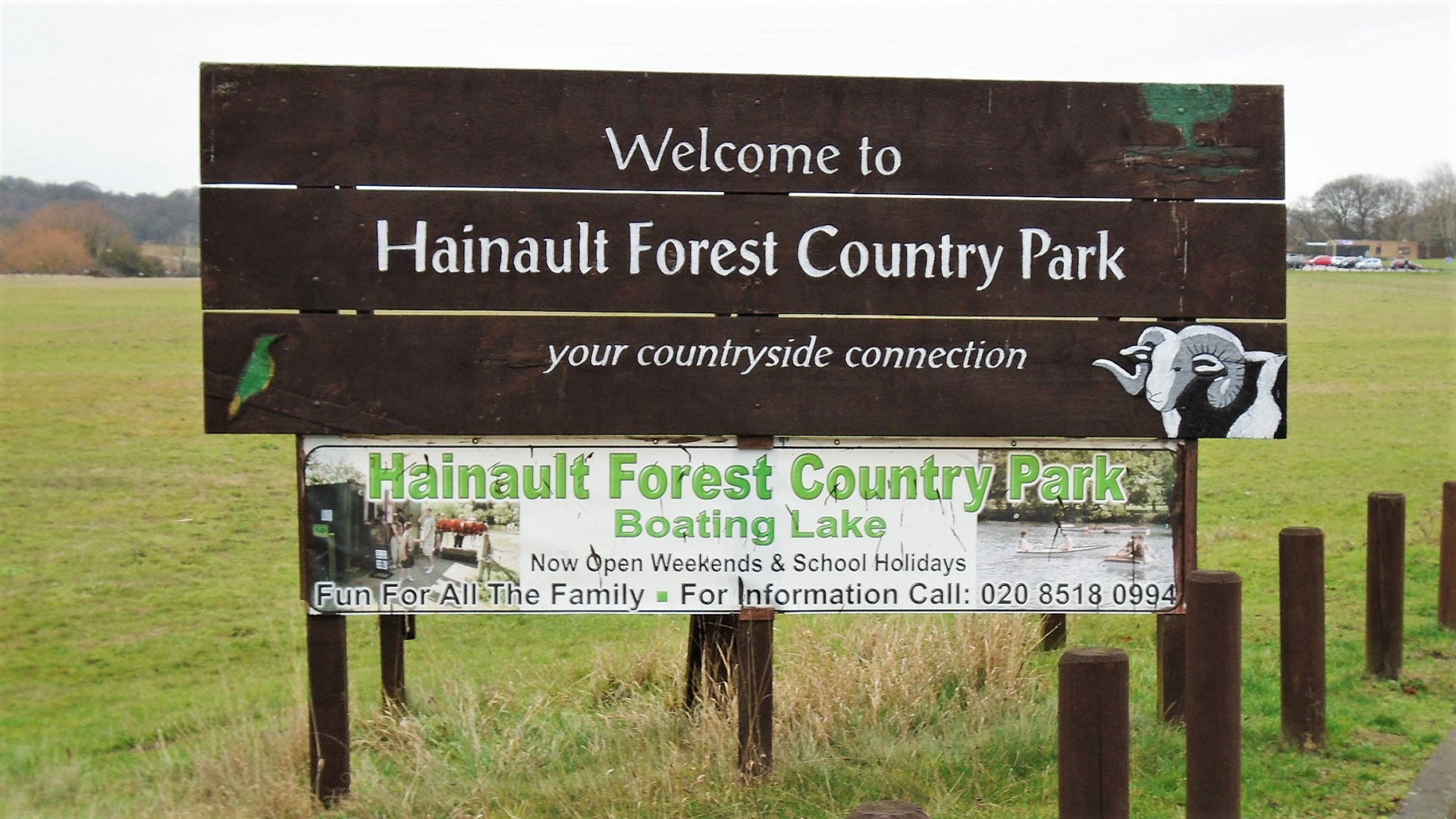
Welcome to the website's first Journal. Hainault Forest has some marvellous fauna and flora which many visitors overlook. The website hopes to show you many of the wonders that you may possibly see on your visit.
#
Dawn
7.14am
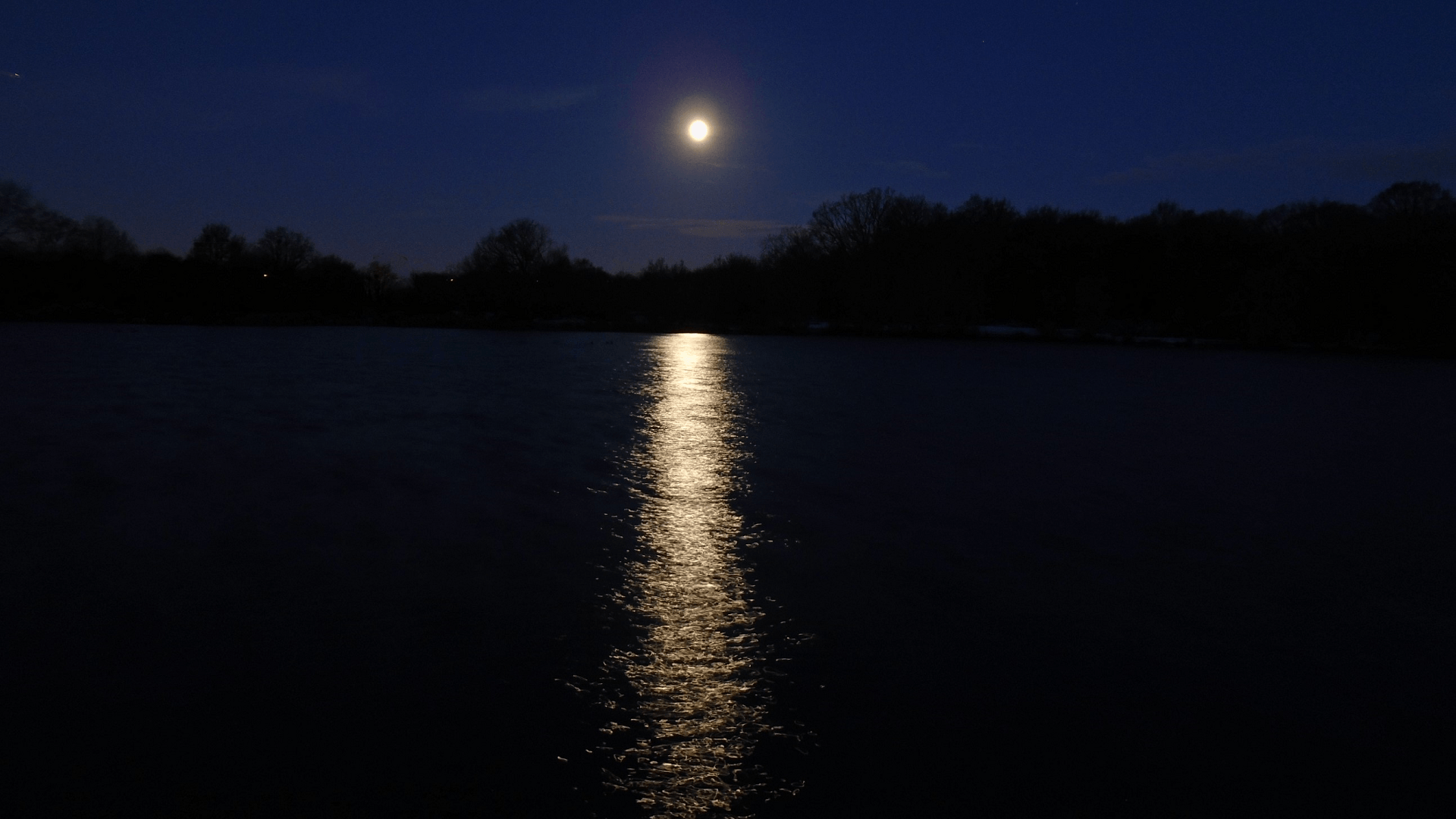
Hainault Lake with the full moon casting its reflection over the water.
#
Foxburrow Farm
Snow
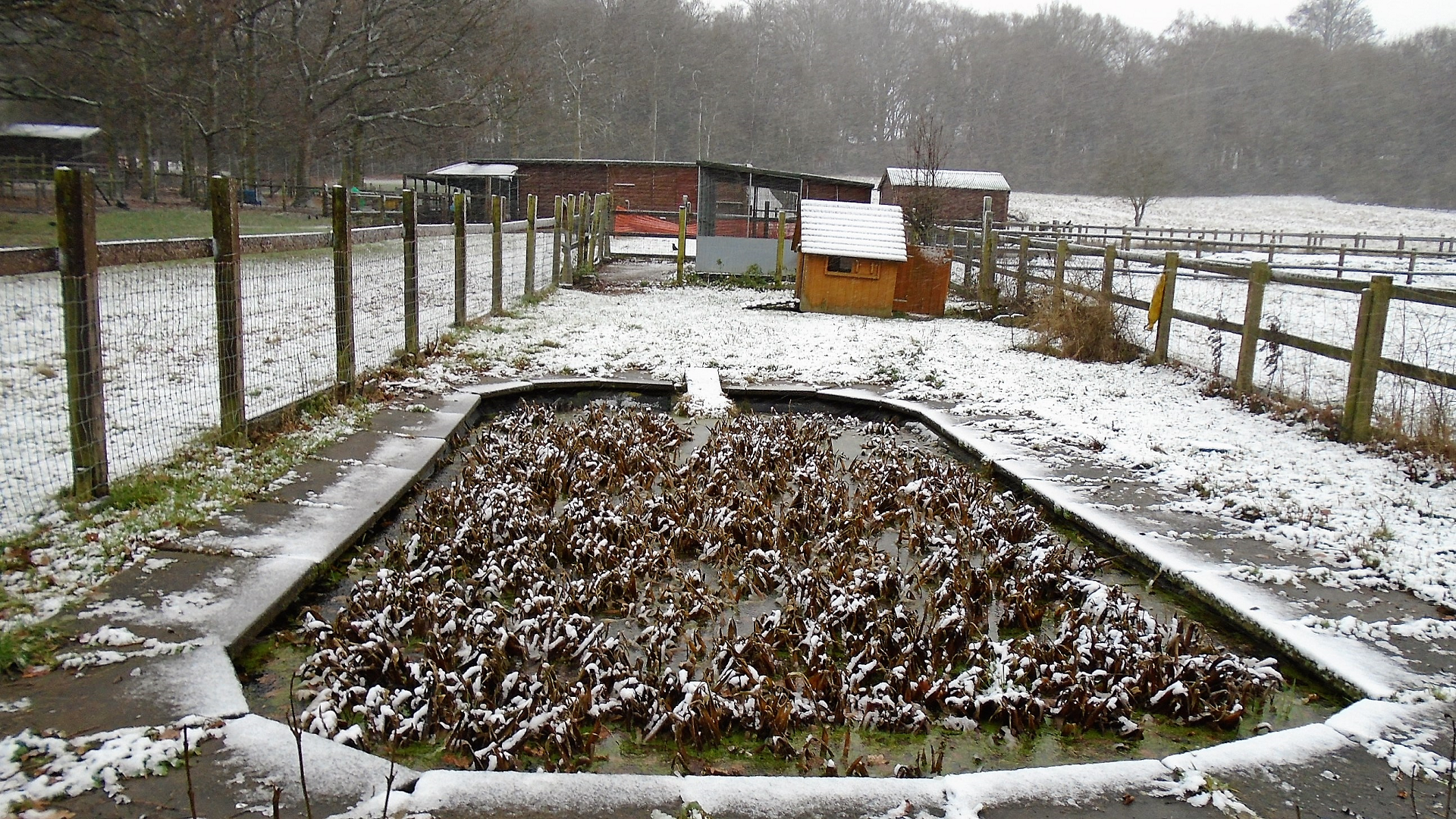
Mid-morning snow fell and settled on the 13th. Foxburrows Farm did not open due to the icy conditions. All the animals were locked away in their sheds.
#
Storm Doris
Fallen Tree
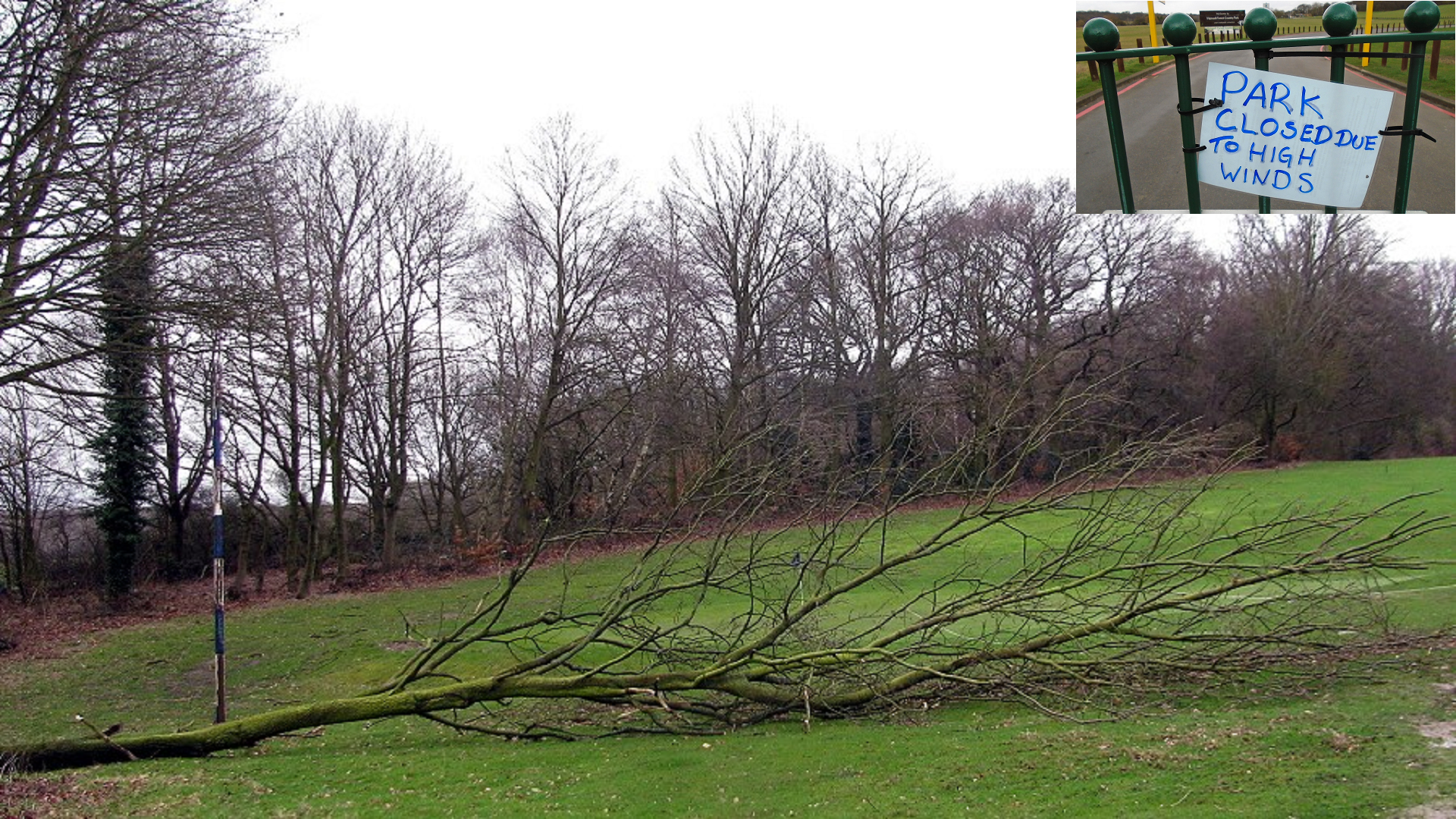
Storm Doris hit Britain on 23rd February 2017. Severe weather warnings were issued because of high winds. Hainault Forest entrance closed just before noon to safeguard visitors. This tree was blown down on Hainault Golf Course.
#
Hainault Lake
Icy Waters
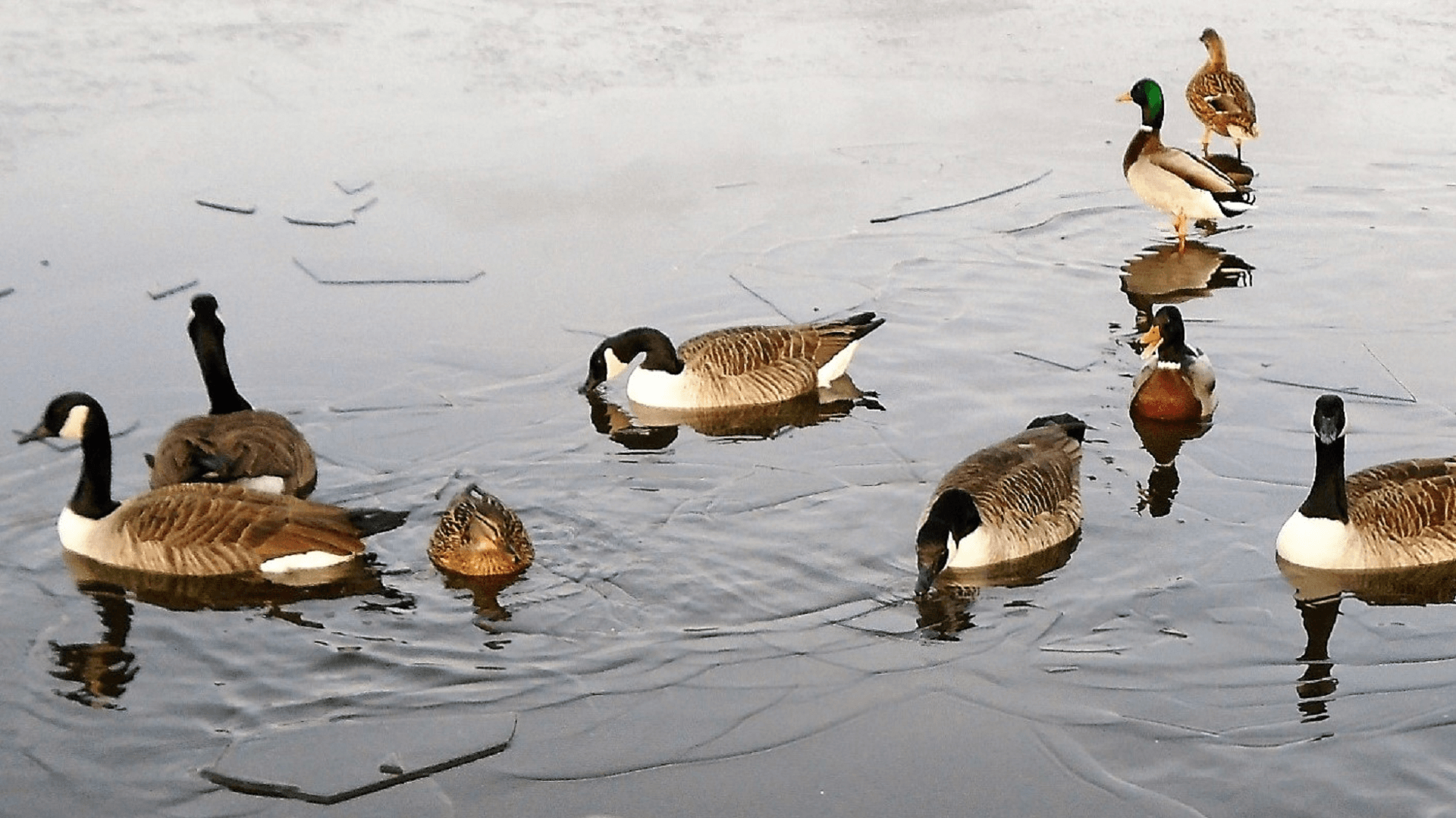
A cold start to 2017 with Geese and Mallards having to cope with icy waters.
#
Great Crested Grebe
Podiceps cristatus
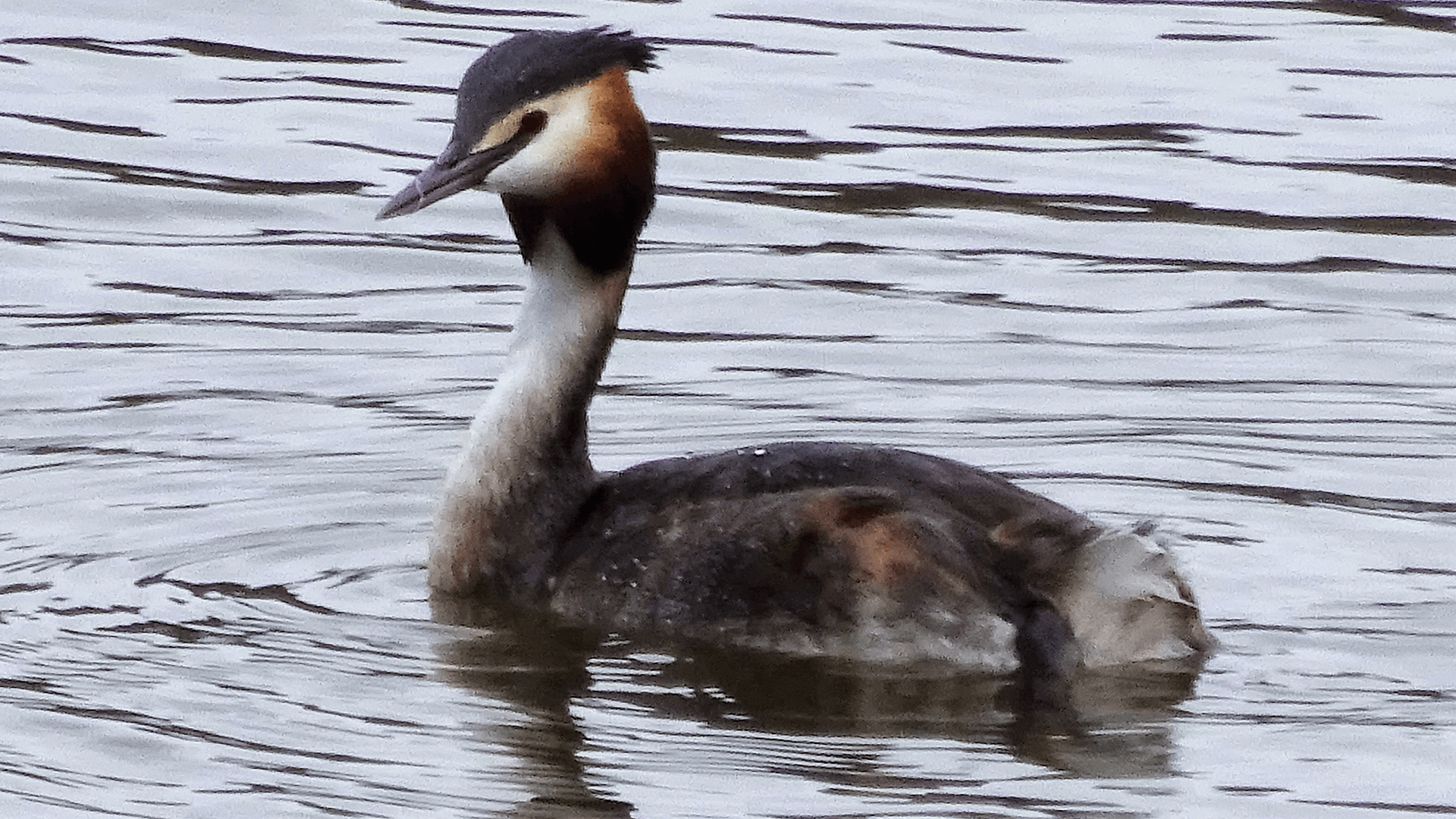
Great Crested Grebes are the largest grebe species in Britain. They dive beneath the surface to catch fish and avoid predators. Courtship behaviour usually starts in mid-winter and includes synchronized swimming, diving, head shaking, and the presentation of vegetation, as well as running on water. If a pair bonds, they will build a floating nest. While feeding, parents give their chicks feathers to ingest. The purpose of this behavior is not entirely clear, but it is thought to assist the young in regurgitating fish bones and minimizing their risk of gastric parasites.
#
Mandarin Duck
Aix galericulata

Males exhibit vibrant plumage, while females are less colourful. Introduced to Britain from Asia, the global population is estimated to be around 65,000, with a decreasing trend observed in recent years. Mandarins primarily feed on plants, seeds, and insects. In China, their native habitat, they have been viewed as symbols of fidelity and were traditionally given to brides as wedding gifts. However, in practice, Mandarins typically form pairs during the mating season and often find new partners the following autumn.

#
Tufted Duck
Aythya fuligula

The commonest type of diving duck found on Hainault Lake. Both sexes have distinctive yellow eyes. Male shown, females are brown. They feed on vegetation, insects and molluscs.
#
Ducks
Anas platyrhynchos
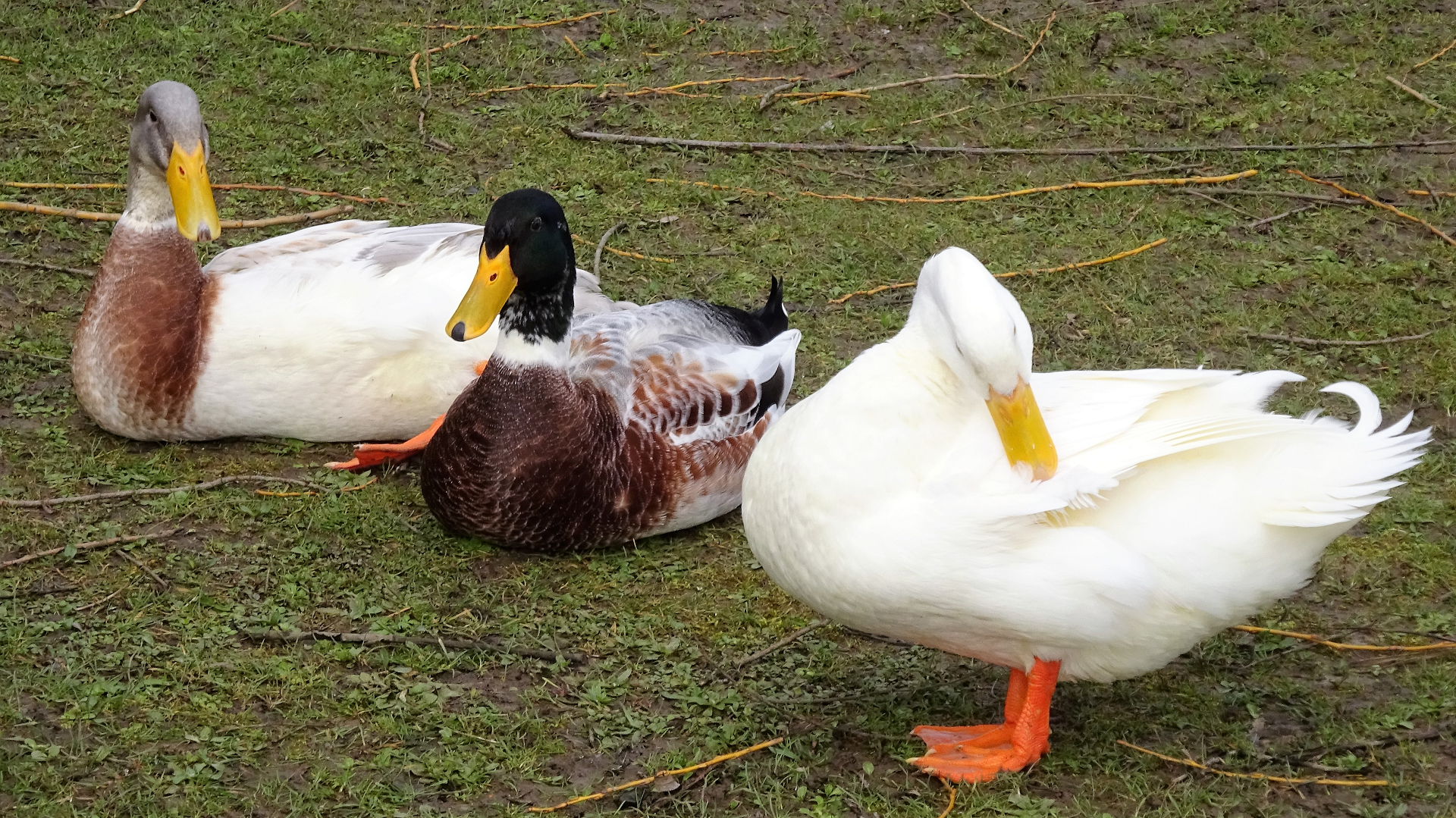
Indian Runner Ducks (two on left) stand erect and run rather than waddling. There is no evidence to support that they originate from India. Pekin ducks (right) originate from China and are sometimes mistaken for Aylesbury ducks. Most Pekins in the UK have been imported from Germany. They are pure white with orange legs.
#
Coot
Fulica atra
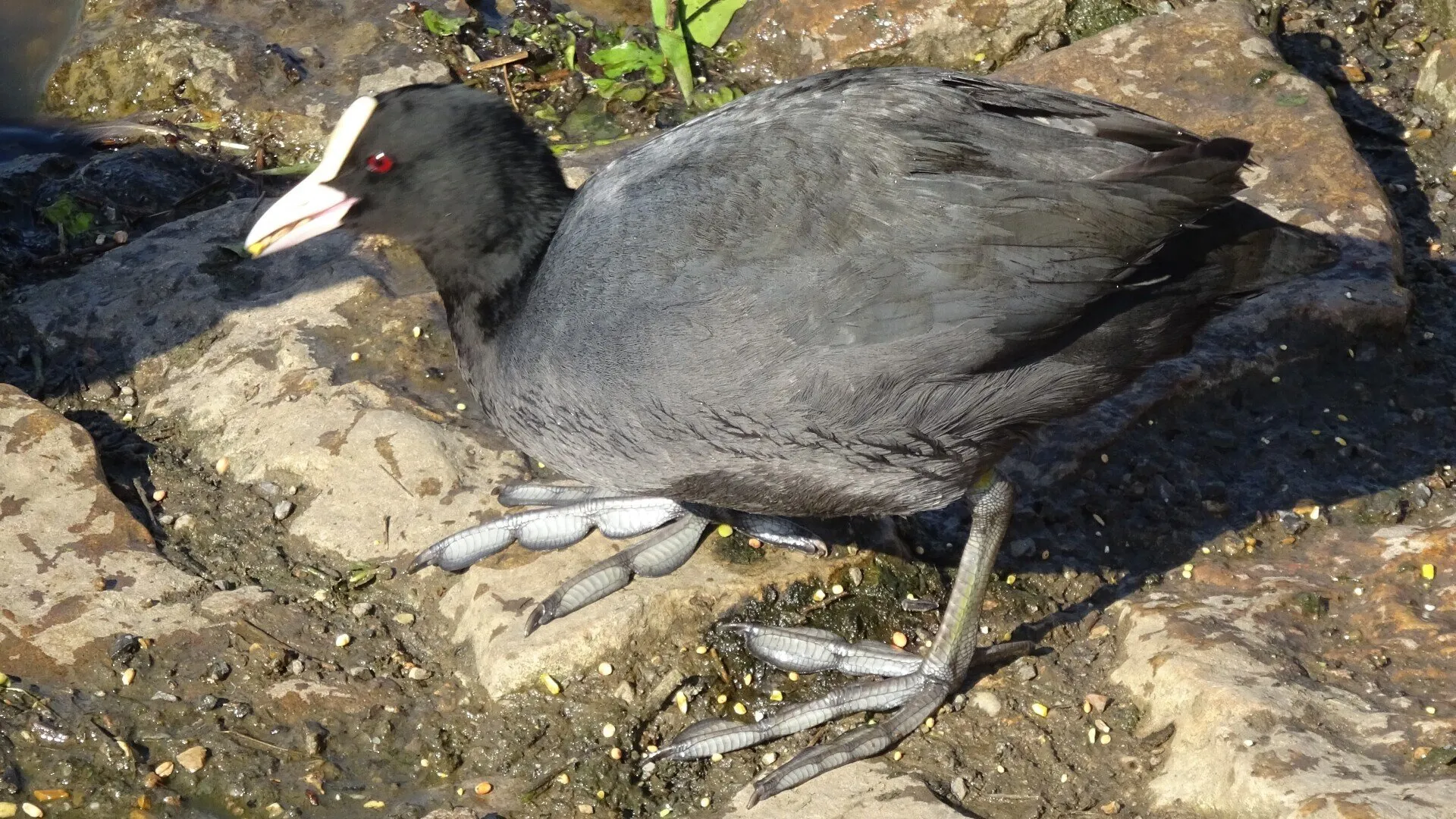
Coots are related to moorhens, but are larger, all-black with a white head patch and beak. Coots are renowned for having an aggressive nature. Resident Coots defend their territories when visitors arrive and fierce battles take place. Coots have flaps of skin on the toes which act like webbed feet when swimming.
#
Moorhen
Gallinula chloropus

The Moorhen is characterised by a red and yellow beak, a dark brown back and wings, and a blackish belly with white stripes on the flanks. They are known for being promiscuous and frequently change partners during the breeding season. Females appear to have a preference for smaller, plumper mates. Nests are constructed using dead vegetation and are typically placed among floating plants or near the water. Eggs are occasionally laid in the nests of other birds, which enables a female to increase her total egg production. Moorhens have a varied diet that includes plants, seeds, worms, insects, molluscs, and fish.
#
Grey Heron
Ardea cinerea
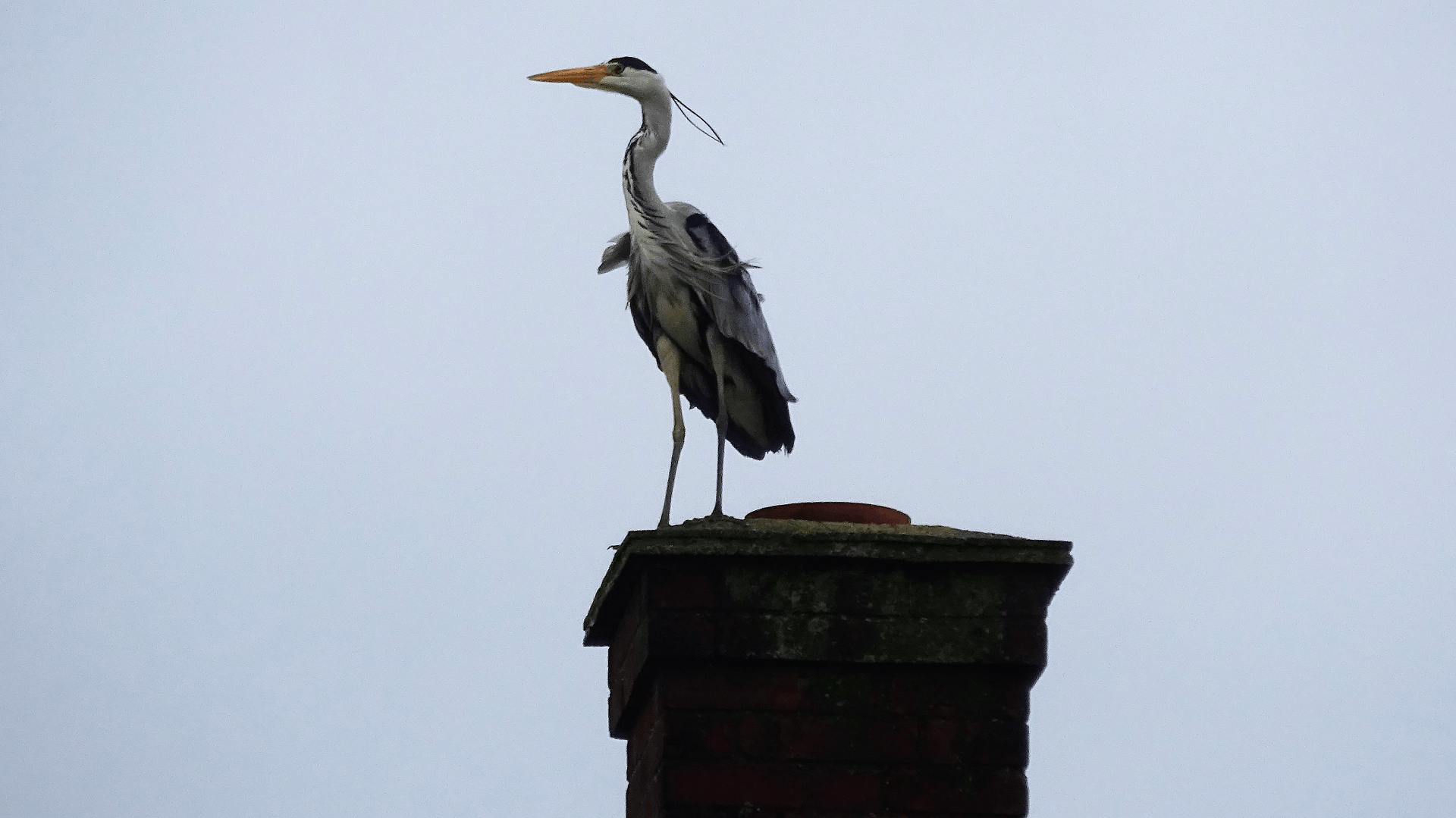
This Heron stood on a chimney in Marlyon Road for nearly ten minutes possibly looking for a garden pond to raid. Gulls upset by the Heron's presence started dive bombing until it got fed up with their attacks and flew away.
#
Common Gull
Larus canus
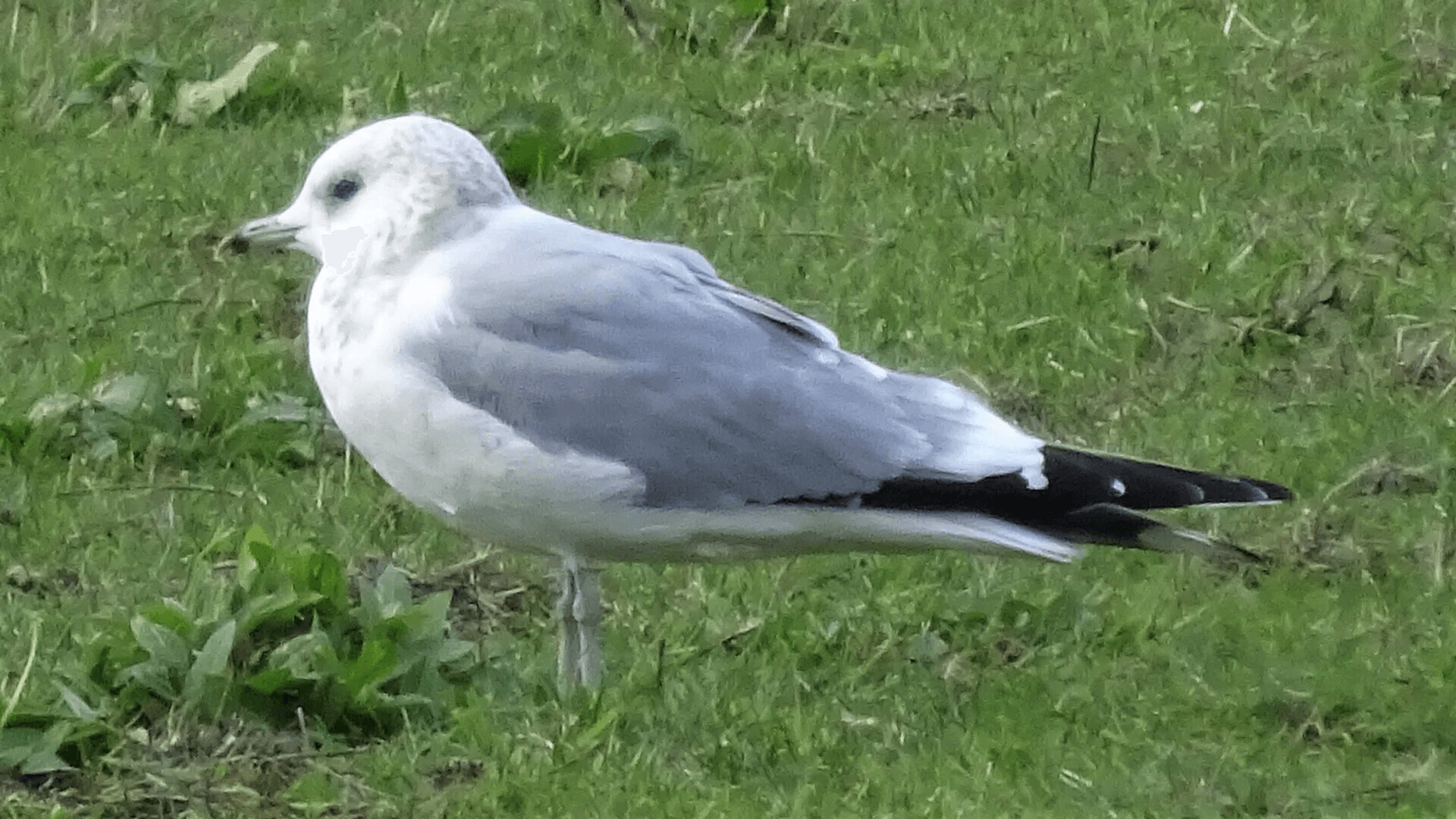
The Common Gull has greenish legs. It is not very common inland despite the name. Occasional visitors to Hainault Lake normally only turning up in very small groups. Their diet consists on worms, insects, carron, fish and scraps.
#
Kestrel
Falco tinnunculus
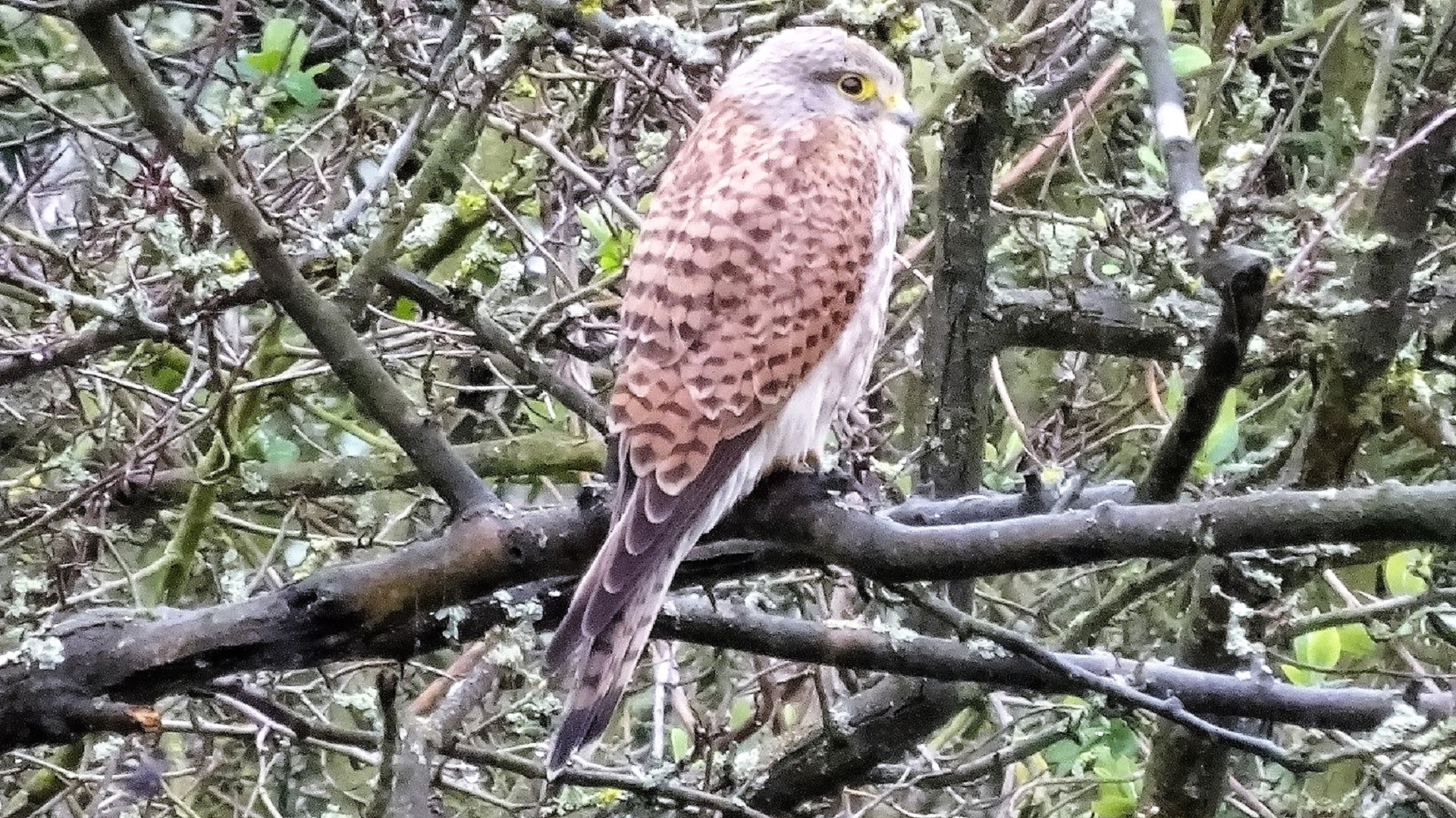
Kestrels are often seen flying over grassland areas and near Hainault Lake.
#
Treecreeper
Certhia familiaris

The only British land bird with a curved beak. It is normally seen climbing up the side of tree trunks searching for food. Treecreepers feed on Insects, arachnids and seeds.
#
Woodpigeon
Columba palumbus

Britain's largest pigeon species feeds on grain, nuts, seeds, cabbages, sprouts, peas, buds, shoots and berries.
#
Collared Dove
Streptopelia decaocto

First recorded breeding in Britain during the 1950s. The Collared Dove has a pinky-brown body, black neck collar and red eyes. It feeds on buds, shoots, grains and seeds.
#
Comma
Polygonia c-album
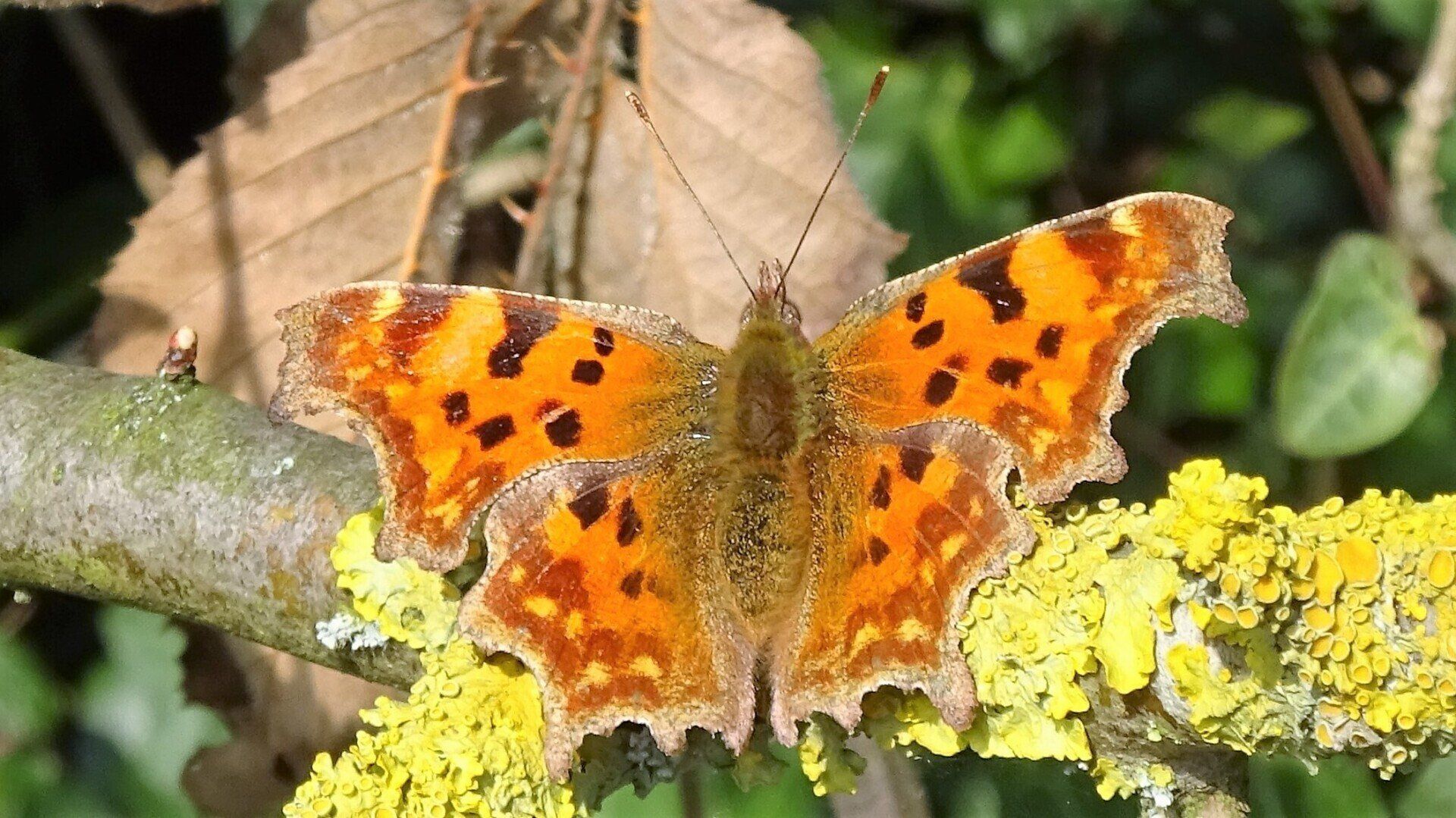
The Comma butterfly features jagged orange-brown upper wings accented with black and yellowish-brown markings. When at rest, it resembles a dried leaf. Comma butterflies prefer to rest on hedgerows in sunny areas. The name "Comma" comes from a small 'comma' mark found on the underside of their wings. Their caterpillars feed on nettles and hop plants.
#
Dark-edged Bee-fly
Bombylius major
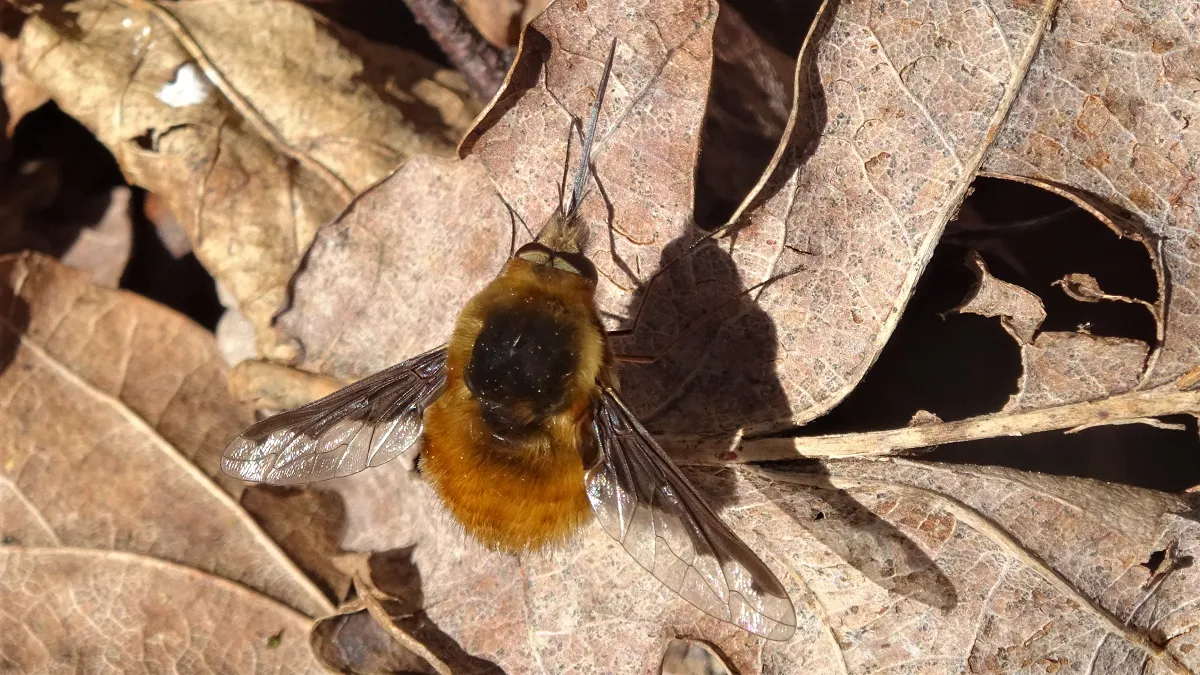
The Bee-fly is a harmless two-winged insect that resembles a small bumblebee about 12mm long. The long proboscis is used for drinking nectar and is not a stinger. Usually seen in spring resting on leaf litter or hovering above flowers. Its larvae feed on bee and wasp larvae.
#
Solitary Wasp
Nests

A bare piece of ground on Cabin Hill is covered with mounds each with a tiny hole on top. These are solitary wasp nests. The majority of wasp species are solitary insects. Many dig burrows in the ground. Having mated, a female will build a nest and forage for the benefit of her own offspring. Some solitary wasps nest in small groups alongside others of their species. They eat mostly insects and spiders.
#
Shiny Common Woodlouse
Oniscus asellus
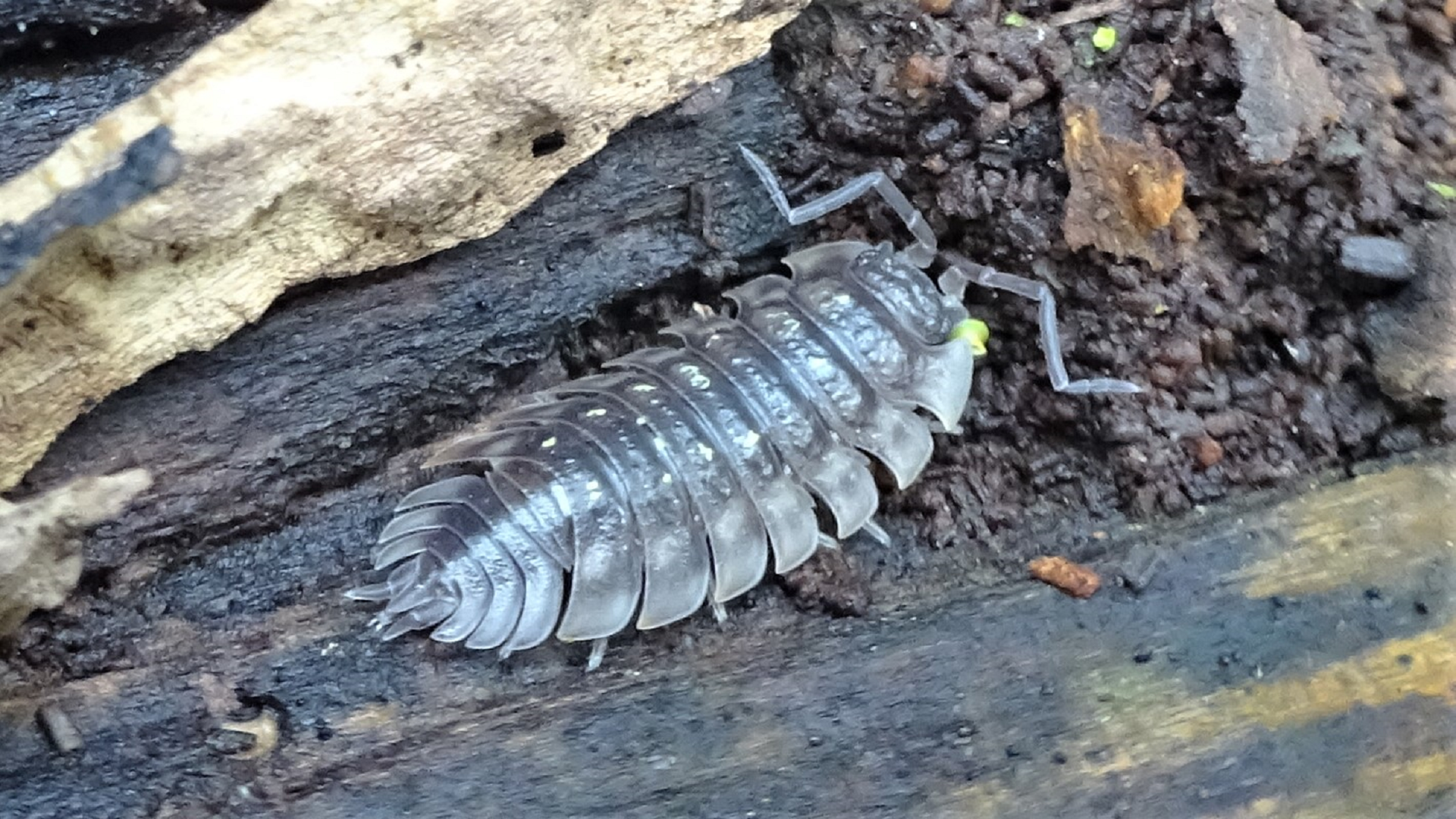
One of the largest and most common Woodlouse species in Britain and Europe, growing up to 16mm long and 6mm wide.
#
Garden Snail
Cornu aspersum
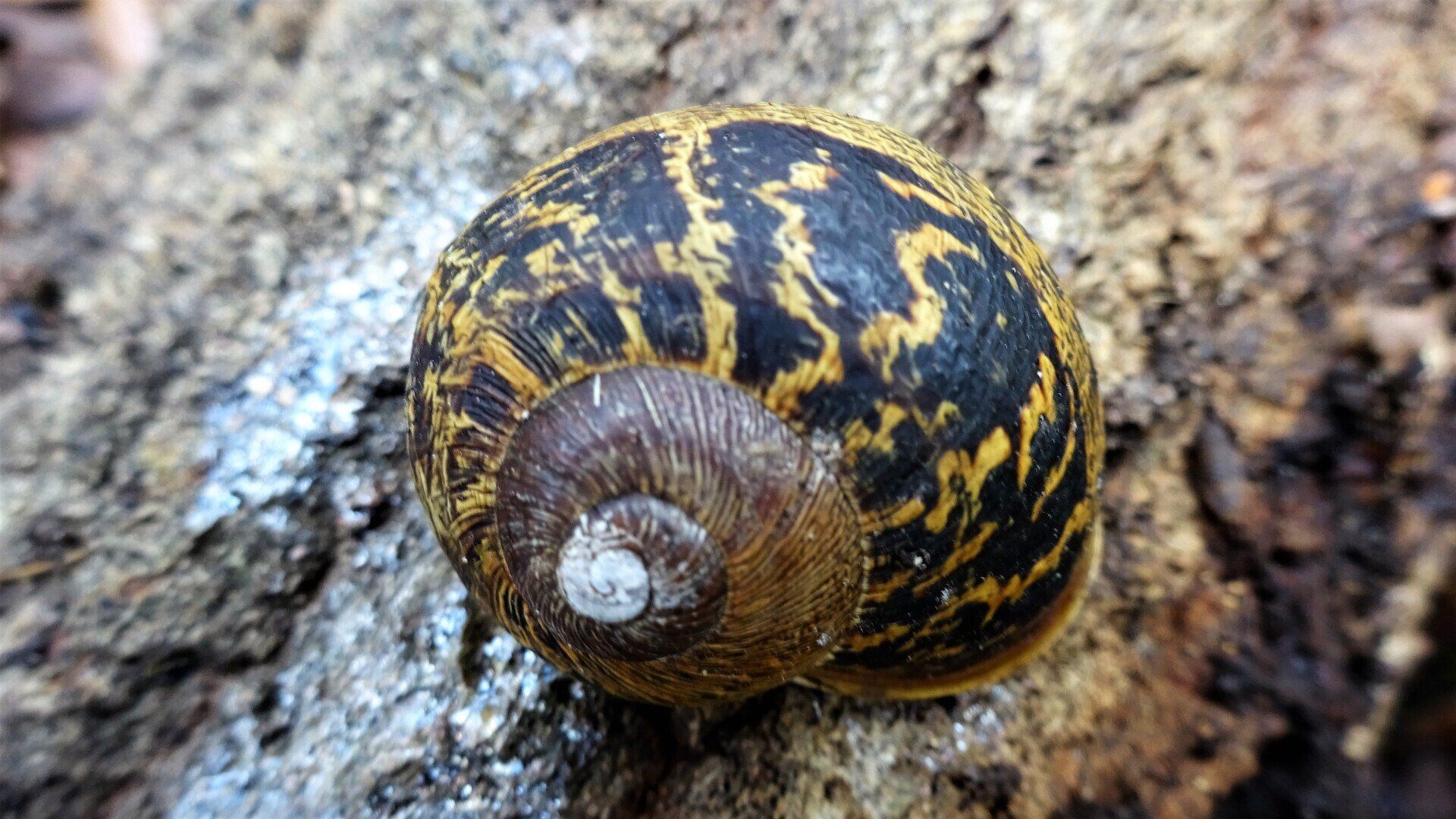
The Garden Snail has a thick shell usually brown with a variable yellowish-brown zig-zagging lines and a wrinkled surface. The shell has 4½ to 5 whorls and grows to a height of 25-35mm. This is a nocturnal species that appears during the day after rain. Often found in gardens, hedgerows and on rocks.
- Do you know?
A snail consumes food while moving, using its tongue, which has many tiny, tooth-like structures called radula to scrape food particles from surfaces and grind the food. Common dietary preferences include plants, lichens, algae, and limestone.
#
Smooth Newt
Lissotriton vulgaris

Smooth newts are the commonest British newt. They are most likely to be seen from March to October. Newts hibernate during winter among tree roots. They emerge during spring to breed in ponds. The remainder of the year is spent feeding in woodland and grassland. They are mostly active at nighttime. Their diet consists of insects, molluscs and tadpoles.
#
White Frog Spawn
Rana temporaria

Frog spawn is laid in clumps in shallow water, normally appearing before toad spawn. Tadpoles stay together in a writhing mass when they first hatch. White spawn appears when it has not been successfully fertilised. This usually breaks down naturally in the water, however sometimes the white dots develop into white or ‘transparent’ tadpoles.
#
© hainaultforest.net. All rights reserved.
This website uses necessary cookies. It does not use targeting or advertising cookies.