

SECOND QUARTER 2017
This Journal covers the second quarter of 2017 from April to June and consists of two pages. There is a button at the bottom of this page that will take you to page 2. The second page mostly focuses on fungi and plants.
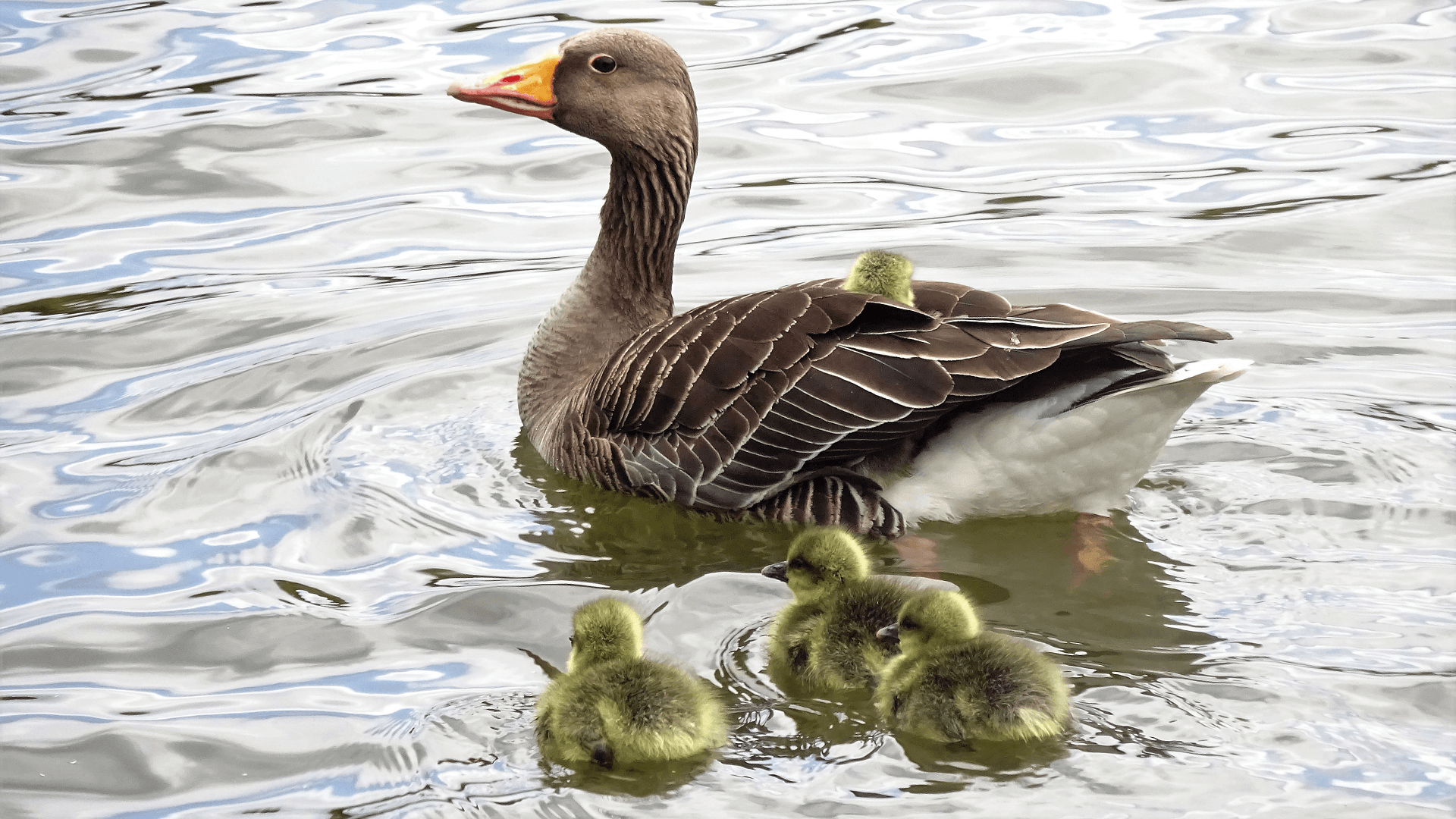
Greylag Geese
Anser anser

Greylags are the largest, heaviest grey goose species in Britain. This first batch of goslings on Hainault Lake appeared on 17th April. The average life span of a Greylag is 20 years - sometimes longer. Young geese recognize and stick close to their parents for safety. They can become 'imprinted' on humans during their first days. Later in life will often follow familiar people they feel safe with.

#
Mallard
Anas platyrhynchos
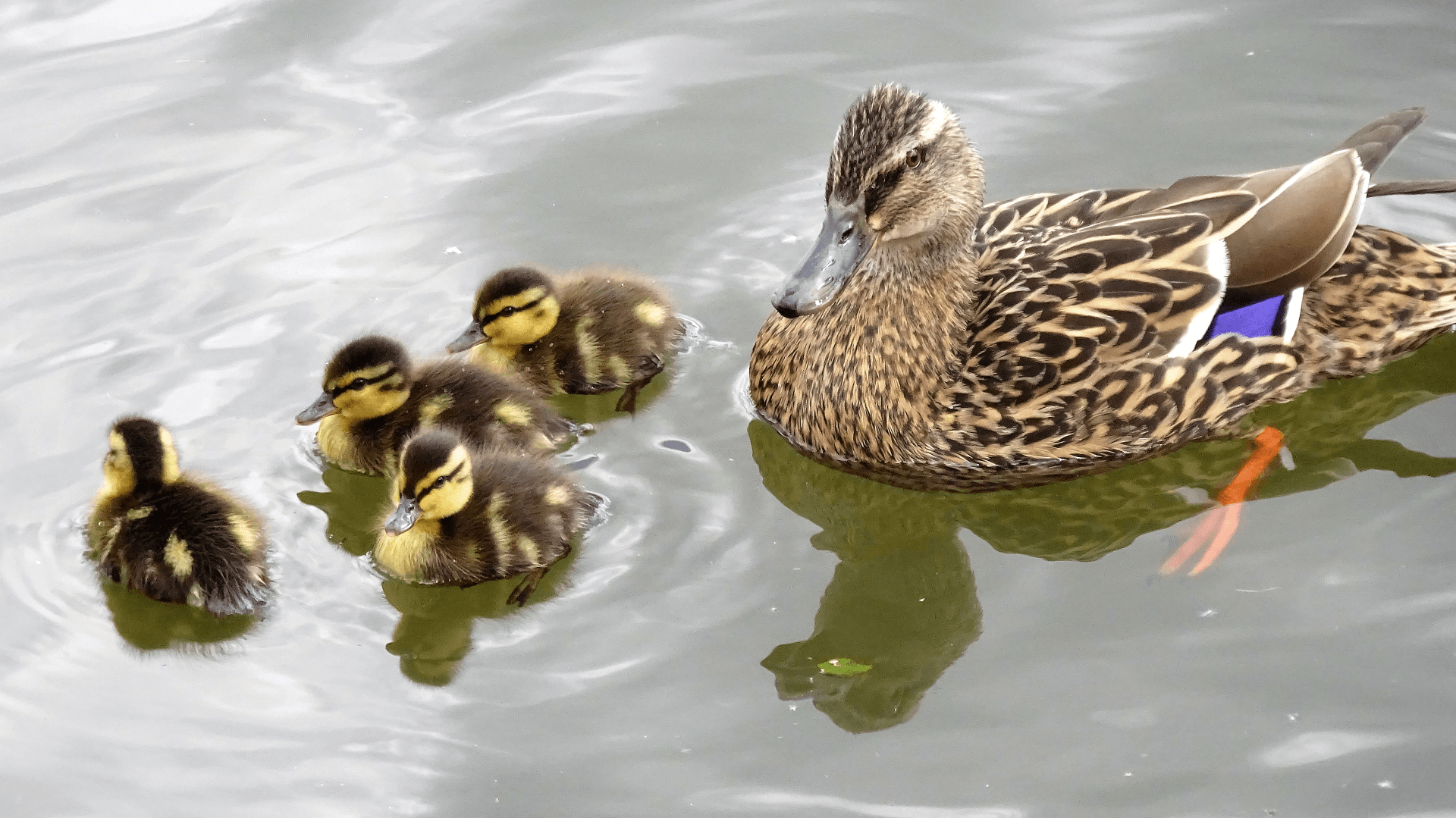
After hatching Mallard ducklings remain in the nest for at least 10 hours. This time is spent drying out and learning to use their legs. Leaving the nest for the first time they follow the female into the water. This is normally done early in the morning. The sooner the ducklings get into water to feed, the better their odds of survival. They cannot survive without their mother and it takes approximately two months before they fledge and become independent.


#
Mandarin Duck
Aix galericulata
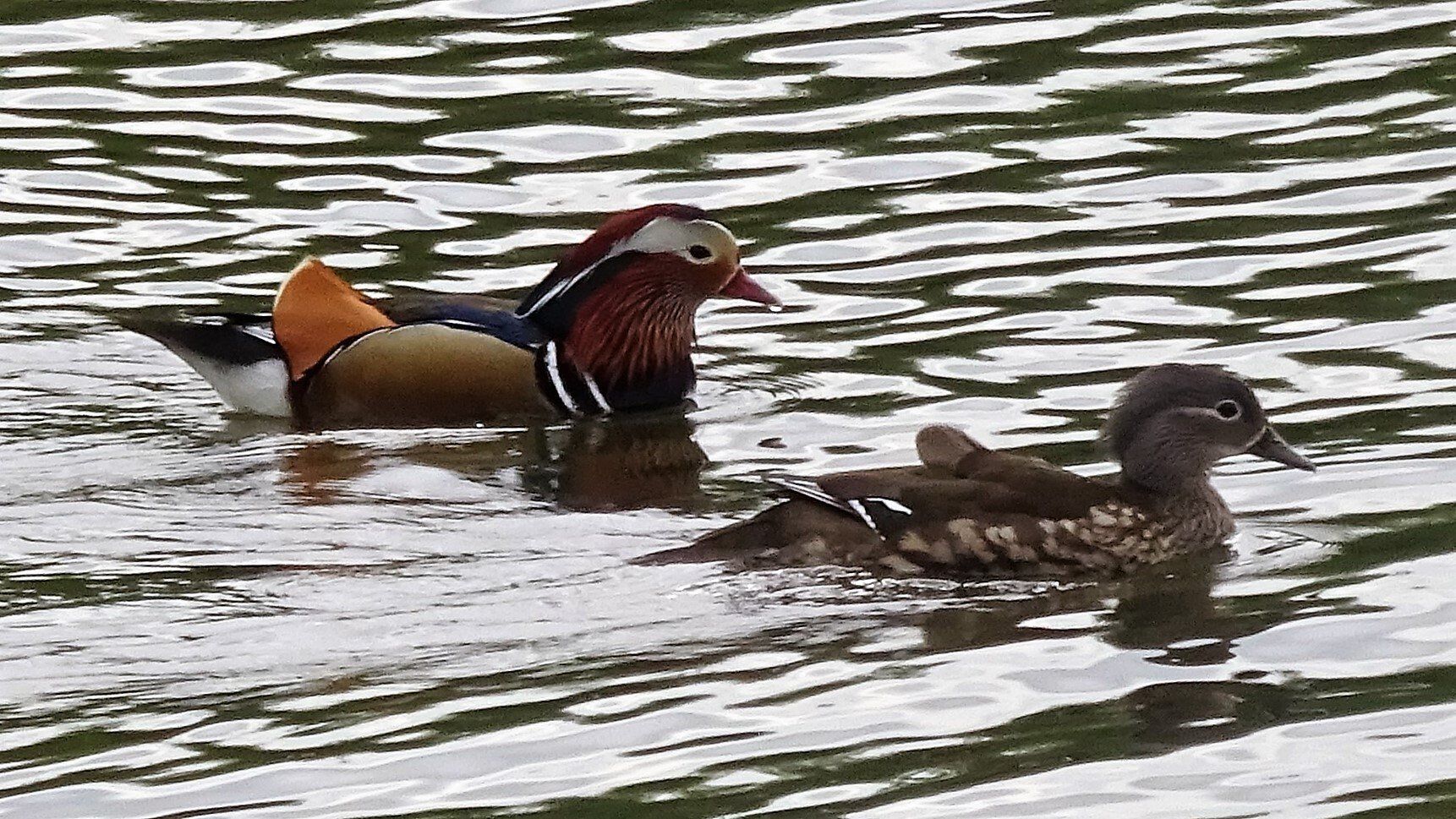
During April the Mandarin found a mate. Males are colourful, females are brown.

#
Coot
Fulica atra
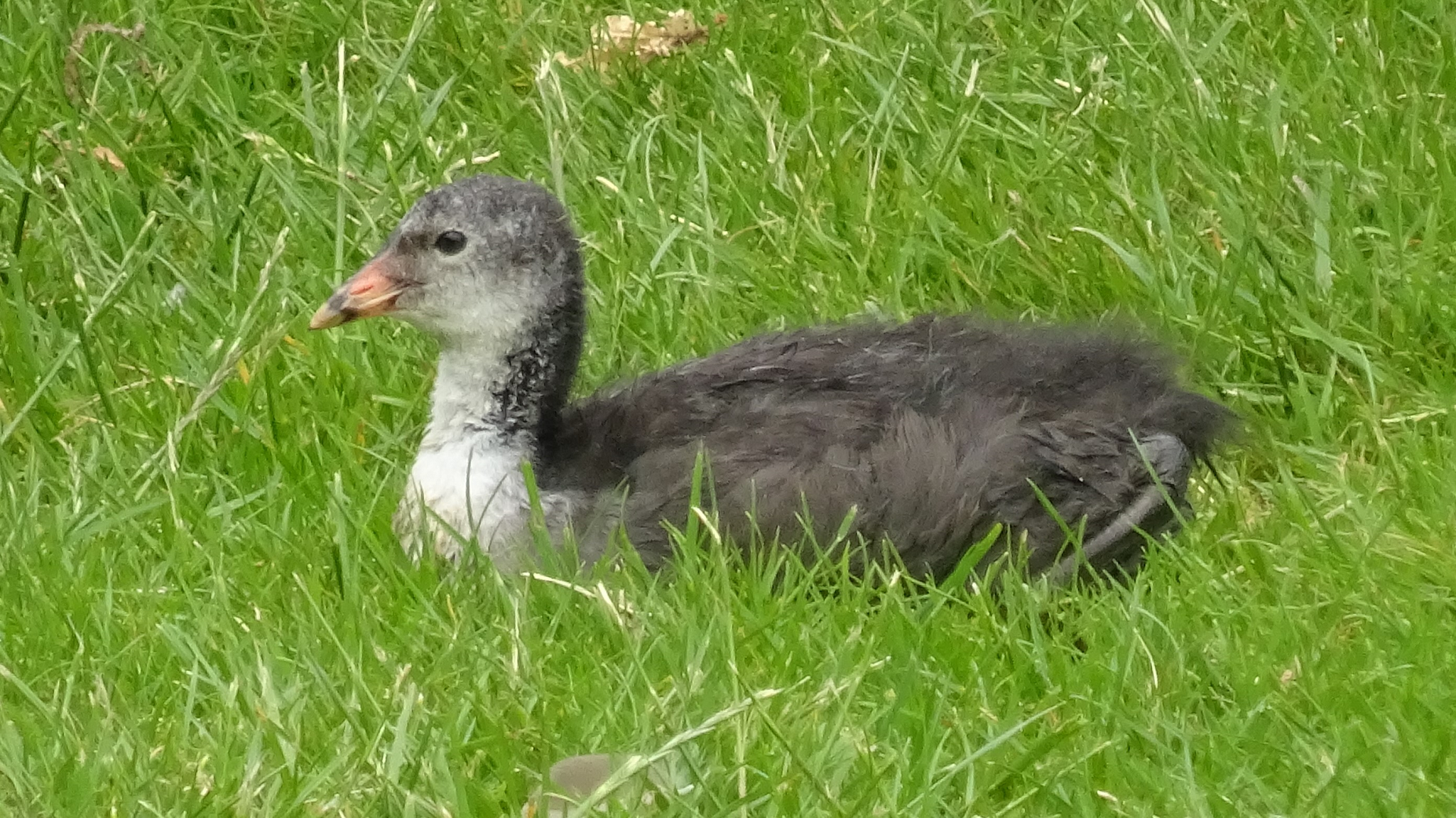
Cootlings are cared for by both parents and leave the nest after 3 or 4 days. They become fully independent around 8 weeks of age.
#
Moorhen
Gallinula chloropus
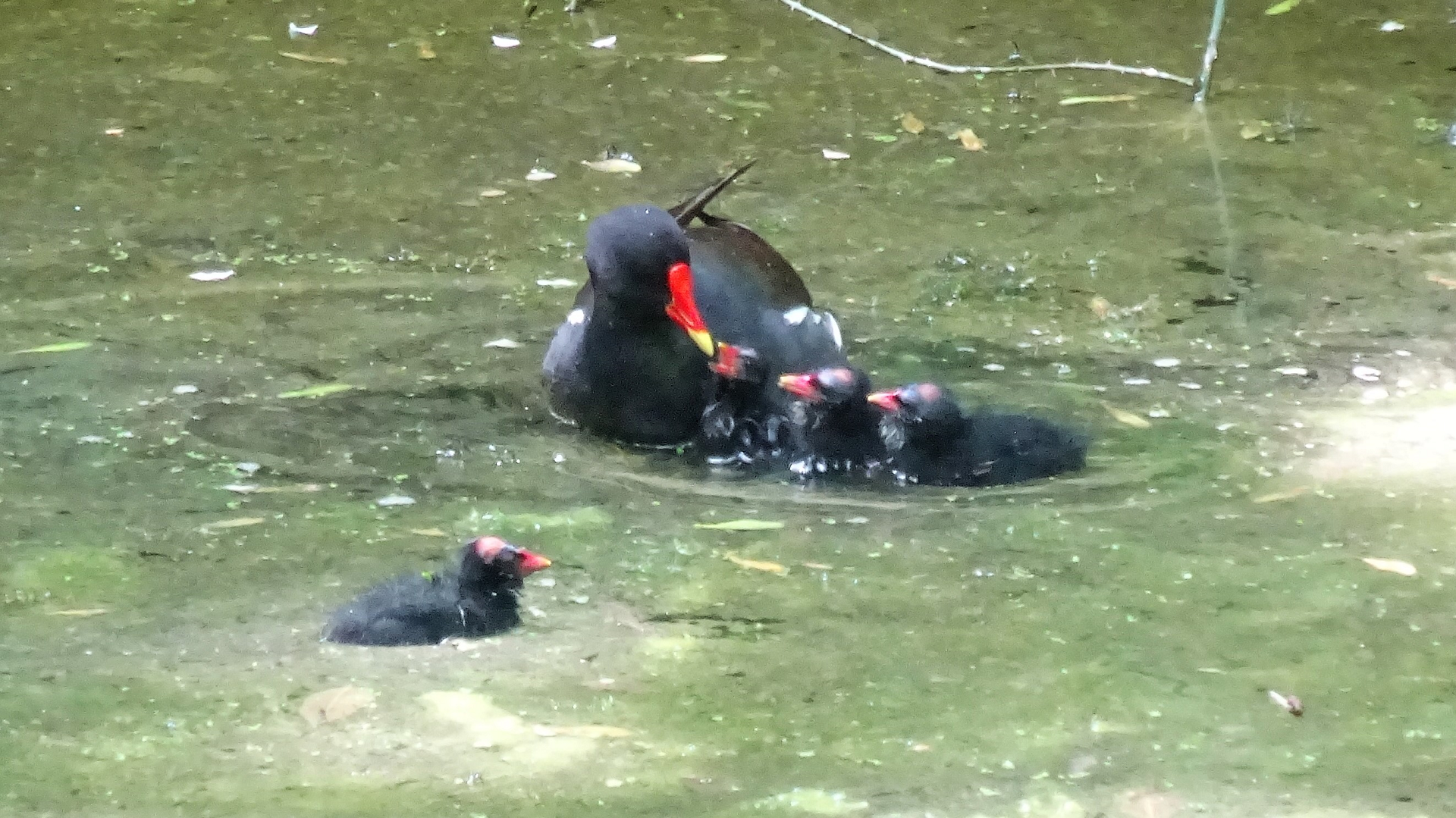
Moorhen nests are constructed using dead vegetation and are typically placed among floating plants or near the water. These young were observed at Roes Well.
#
Muscovy Duck
Cairina moschata
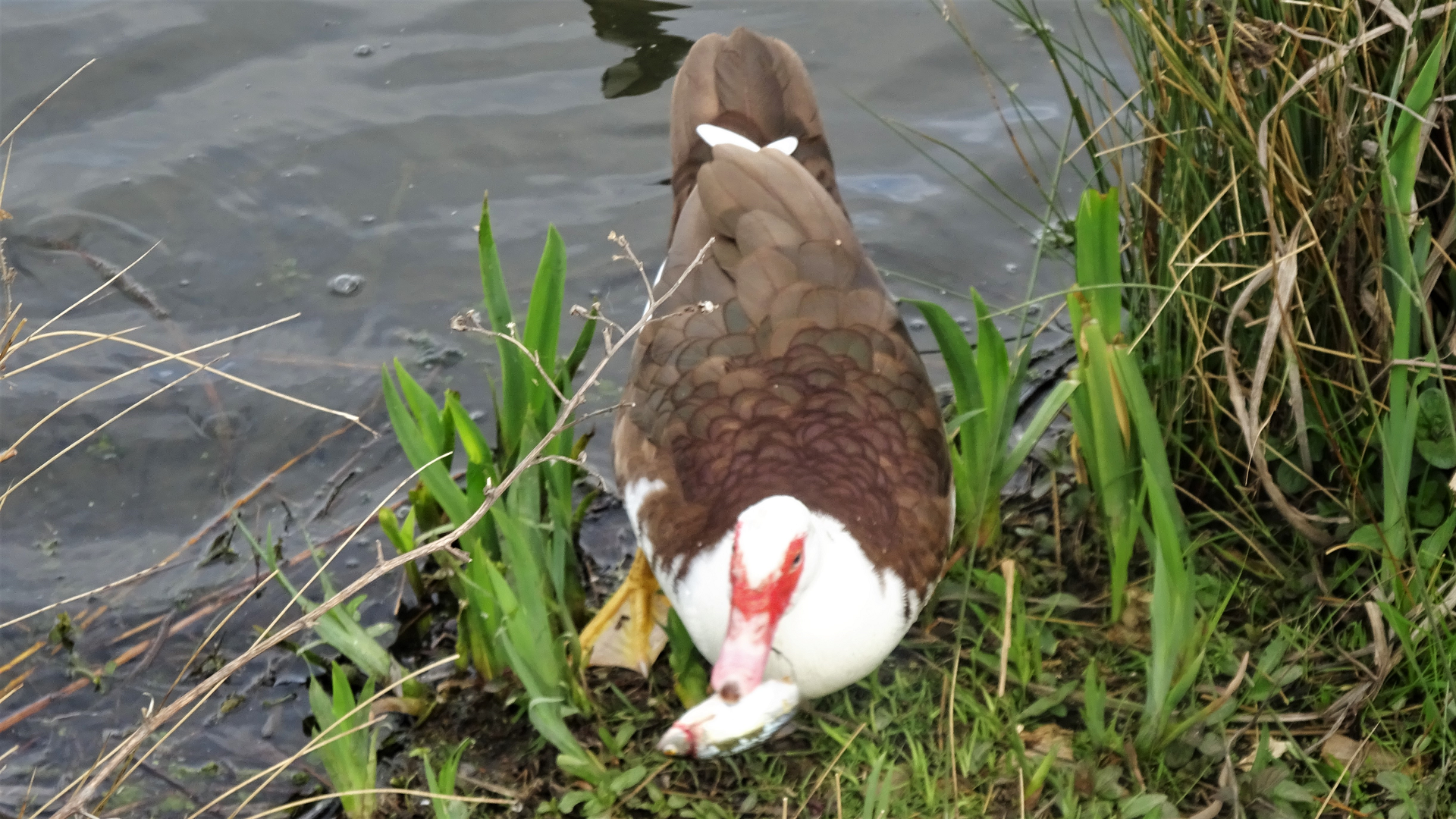
Muscovy Ducks originate from Mexico, Central, and South America. A female has lived on Hainault Lake for a number of years. Both sexes have distinctive red heads, the colour being more prominent on males. Males can be double the size of females. Their diet consists of vegetation, seeds and fish.
#
Mute Swan
Cygnus olor
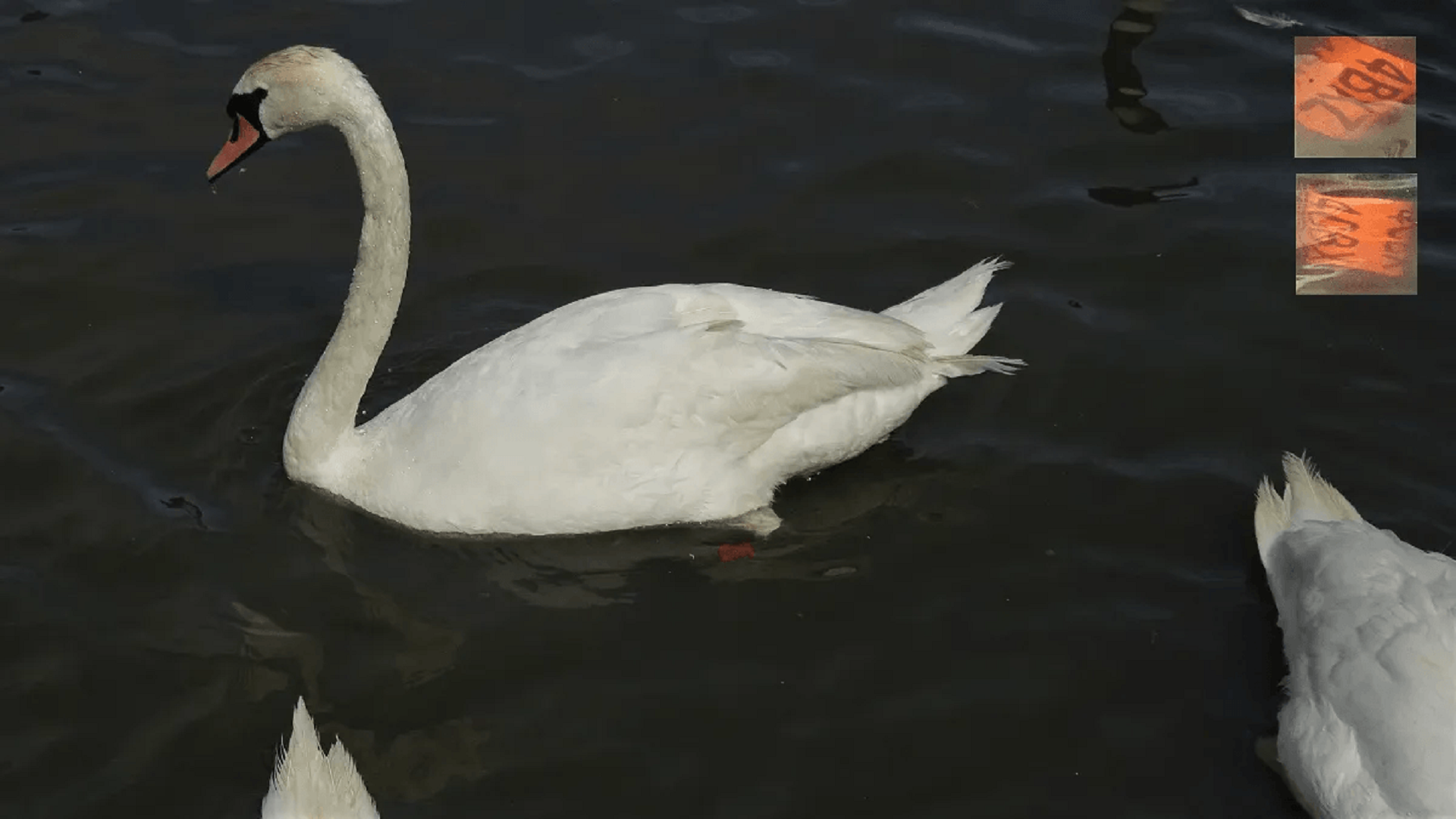
Two ringed swans visited Hainault Lake that were part of a long term study investigating the demography of Mute Swans in south east England. UPDATE: A 6-year-old Pen wearing ring 4CBX (W41764) was spotted at Hollow Pond, Whipps Cross a number of times from 2016 until 2018. The last known sighting was at Wanstead Flats on 22nd April 2018. Ring 4BXZ (W41470) was put on a 5-year-old Pen also a regular at Hollow Pond during 2016 and 2017. Sadly, she was found dead after an animal attack there on 1st November 2017. Thank you to ornithologist 'Super Andrew' for supplying this information.
#
Canada Geese
Branta canadensis

Courtship dance with plenty of neck-swaying and splashing about.
#
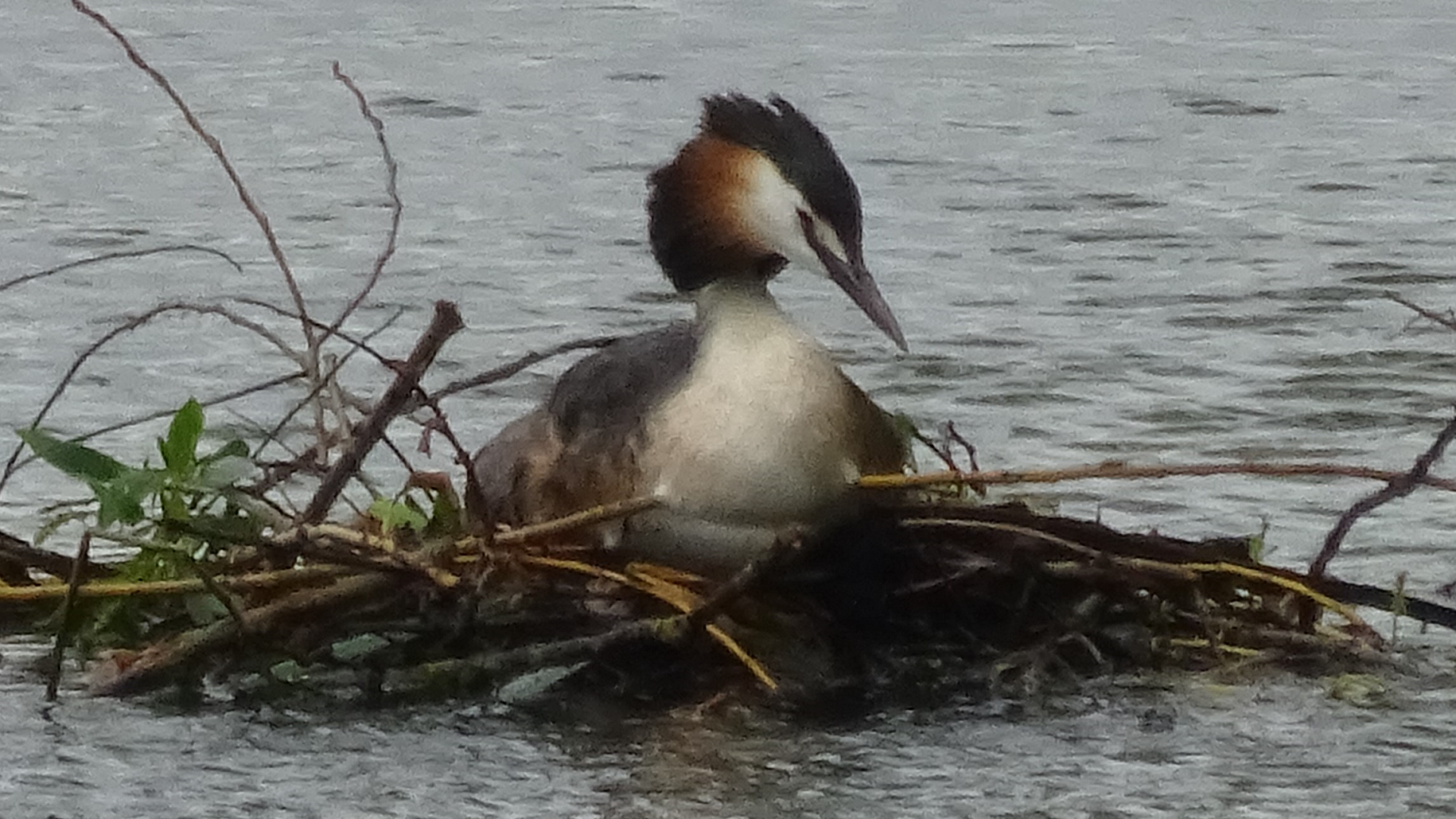
Great Crested Grebe
Podiceps cristatus
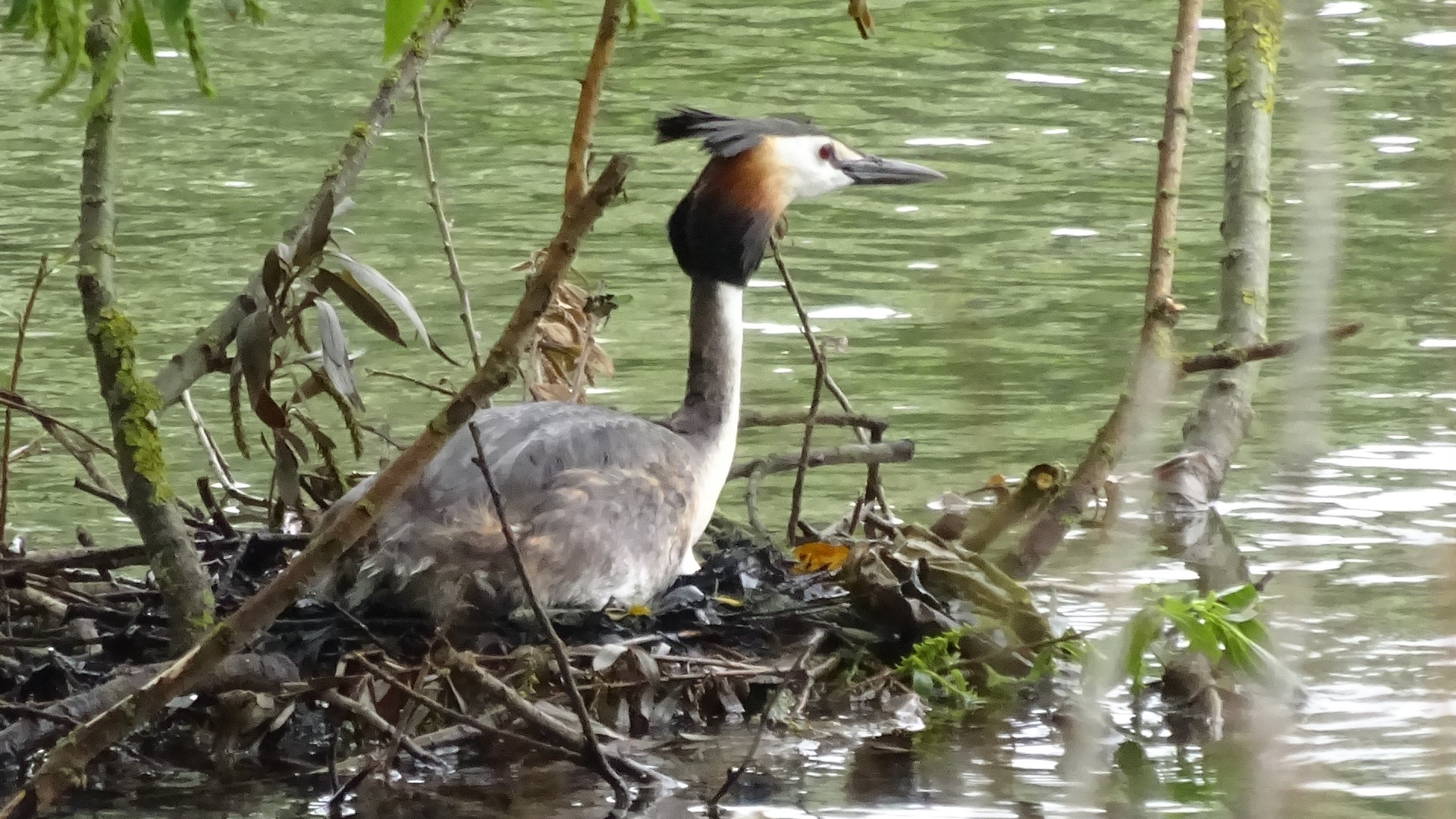
Courtship behaviour usually starts in mid-winter. If a pair bonds they will build a floating nest.
#
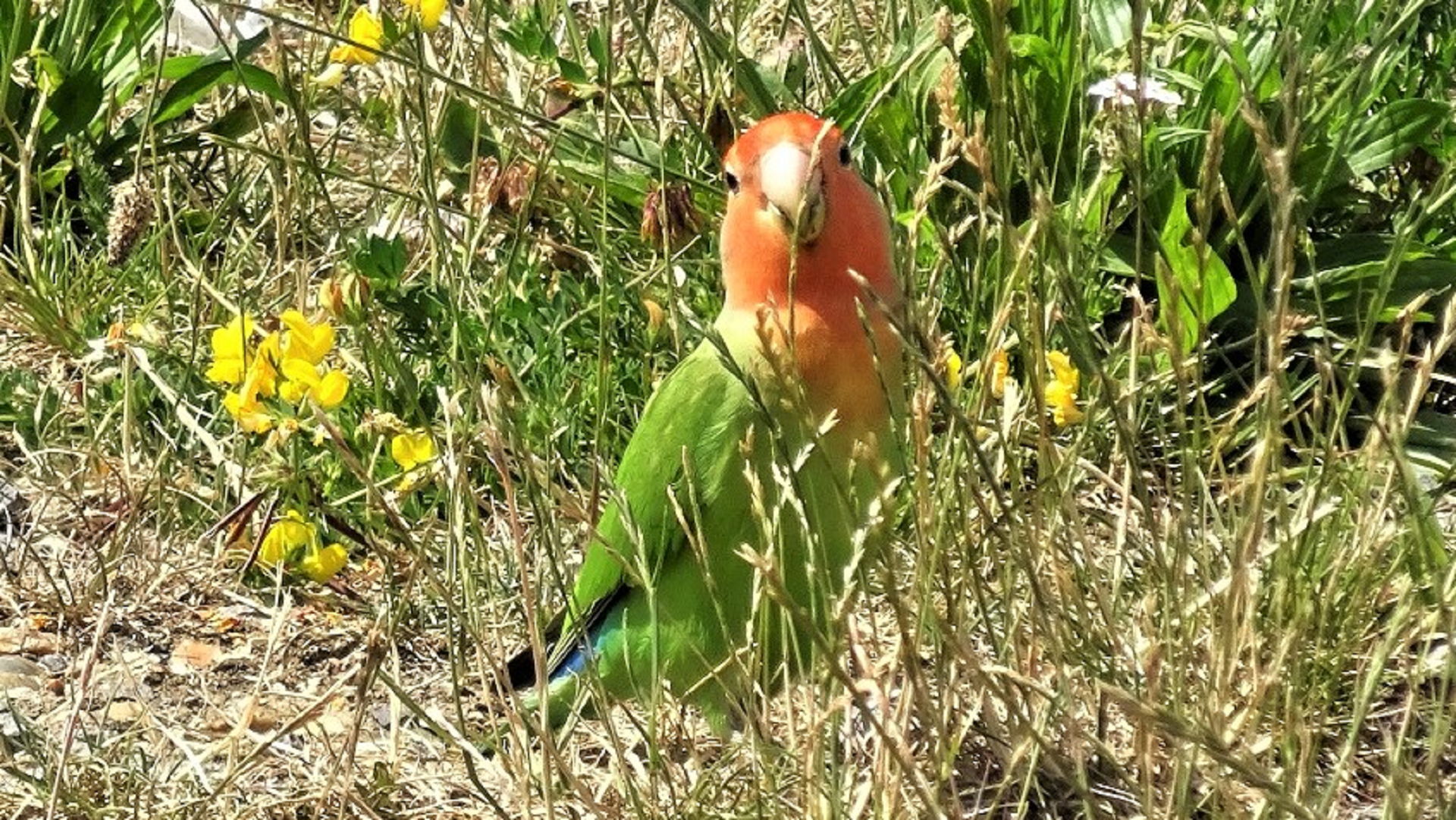
Rosy-faced Lovebird
Agapornis roseicollis
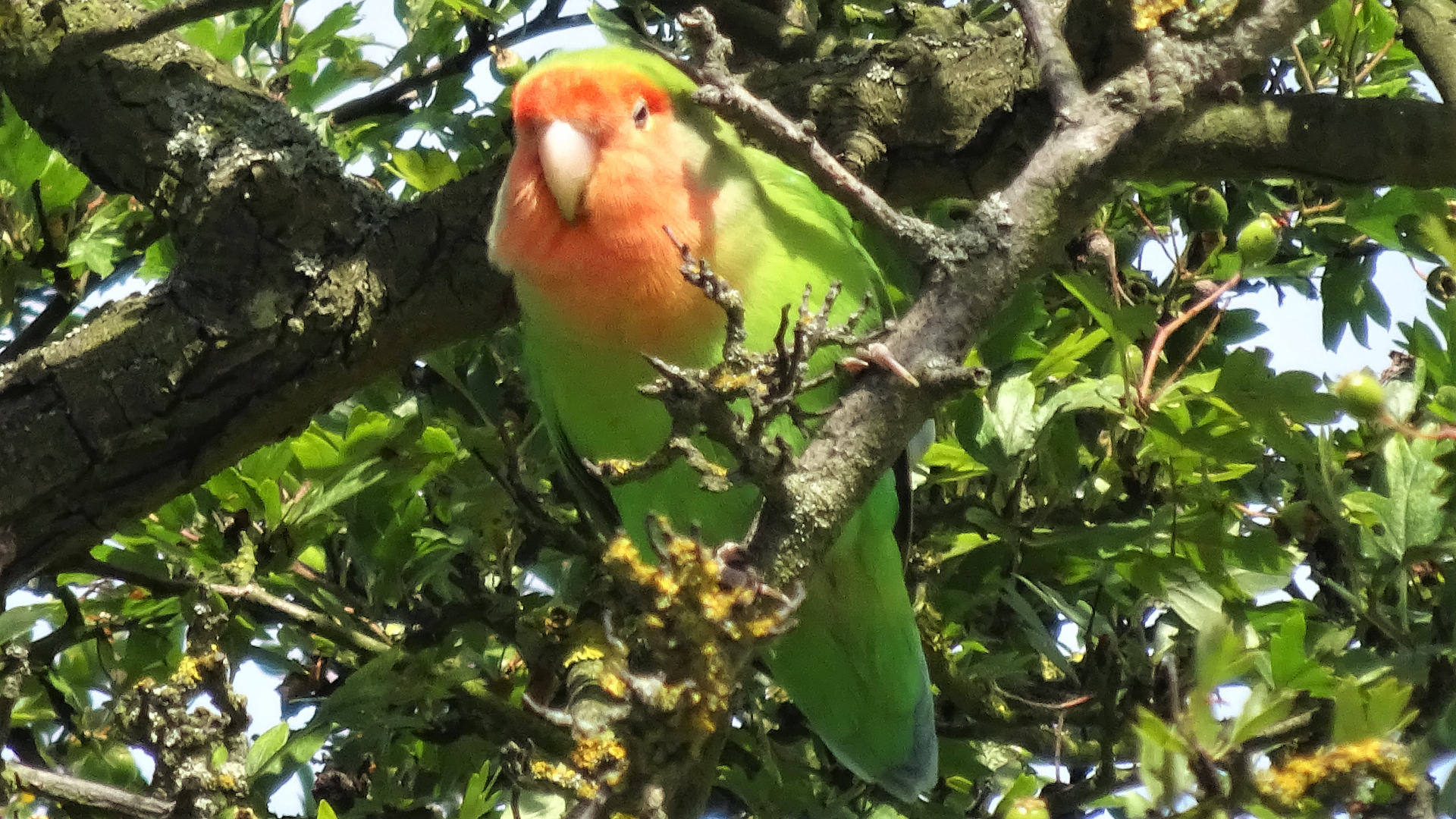
The Rosy-faced lovebird is a fairly small bird. Some escaped from Foxburrows Farm and flew into the forest.
#
Magpie
Pica pica
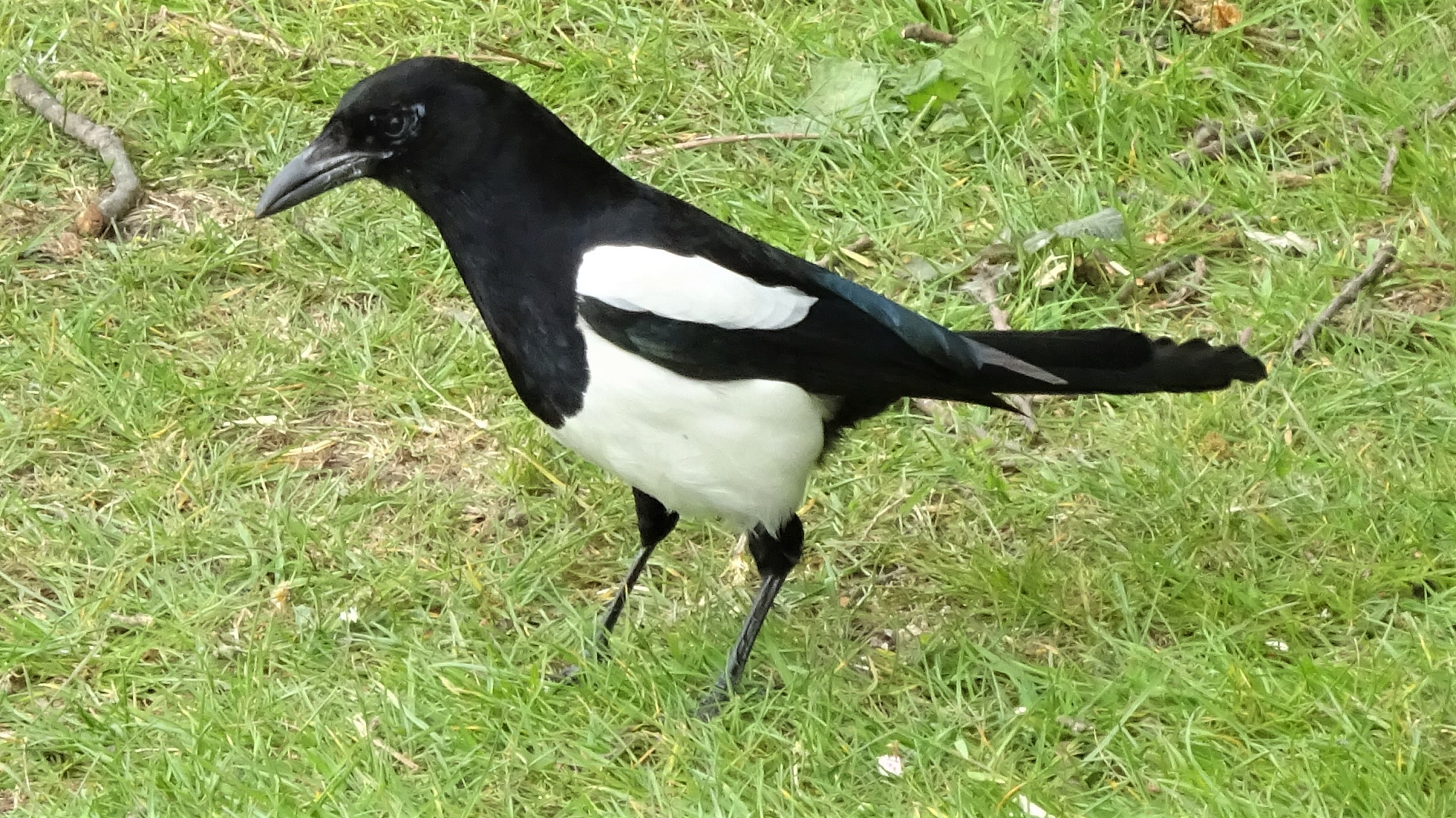
The distinctive Eurasian magpie is said to rank among the world's most intelligent creatures.
#
Marbled White
Melanargia galathea
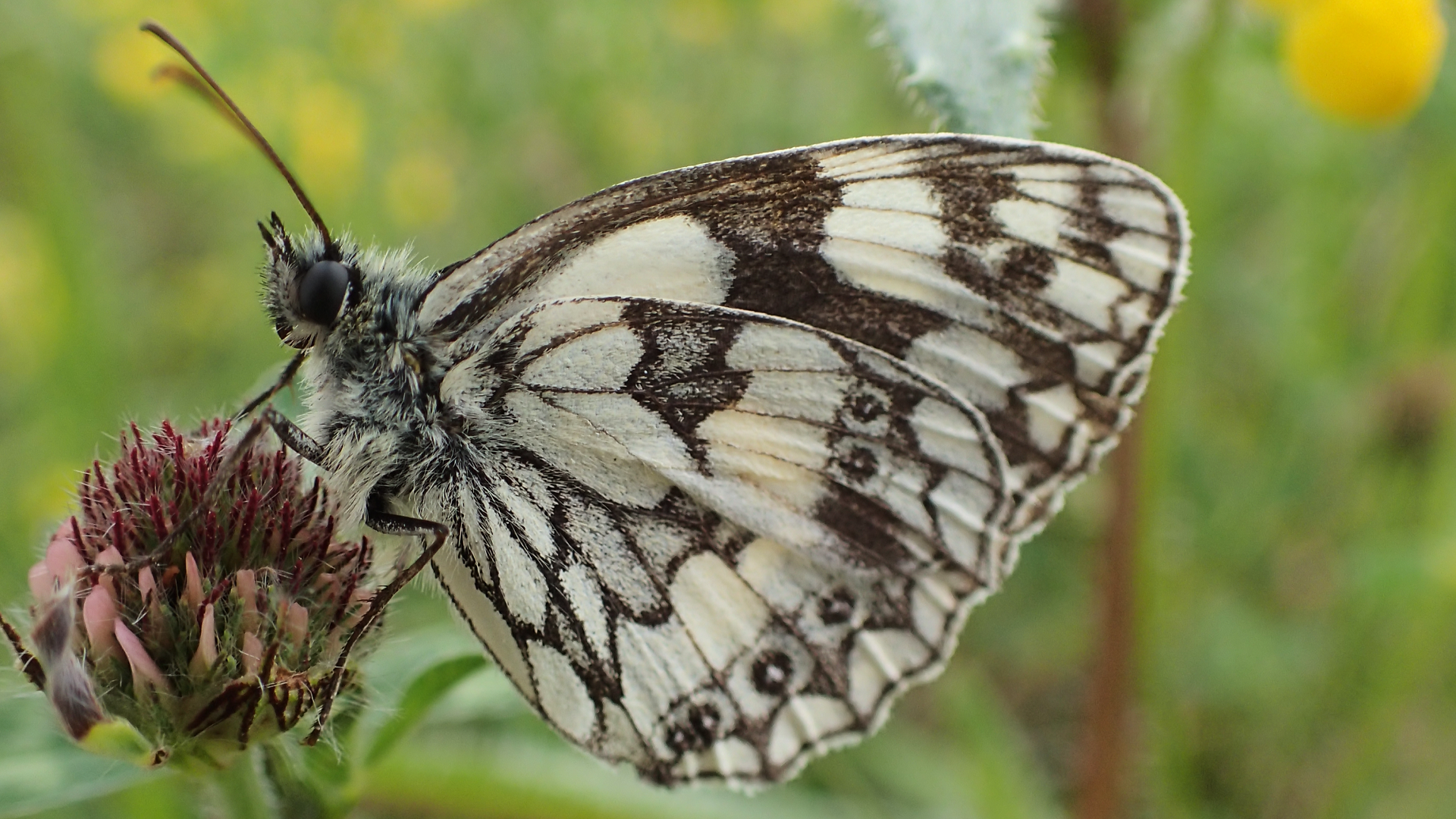
This butterfly is part of the Brown Family. It is typically observed in July and August, often found on knapweed, thistles, and other flowers in unimproved grassland.
#
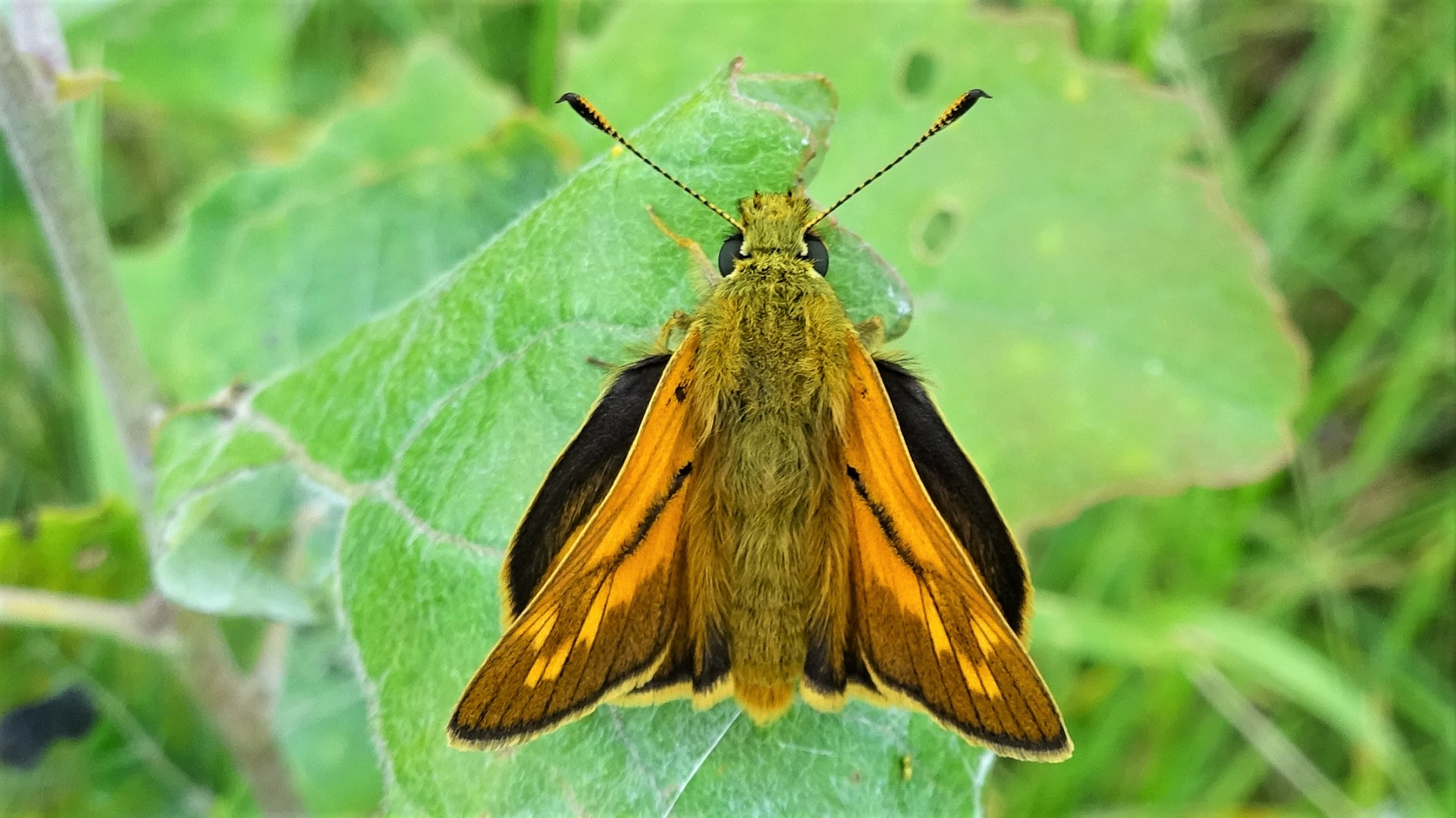
Large Skipper
Ochlodes sylvanus

This species is found in damp locations with tall grass and scrub in sheltered positions from June until August.
There is a subtle chequered pattern on the wing sides. Males have a prominent black line running through the centre of their forewings, absent on females. The males often rest on bramble in sunny spots awaiting females to arrive.
Larval foodplants include: cock’s-foot, purple moor-grass and false brome.
#
Speckled Wood
Pararge aegeria
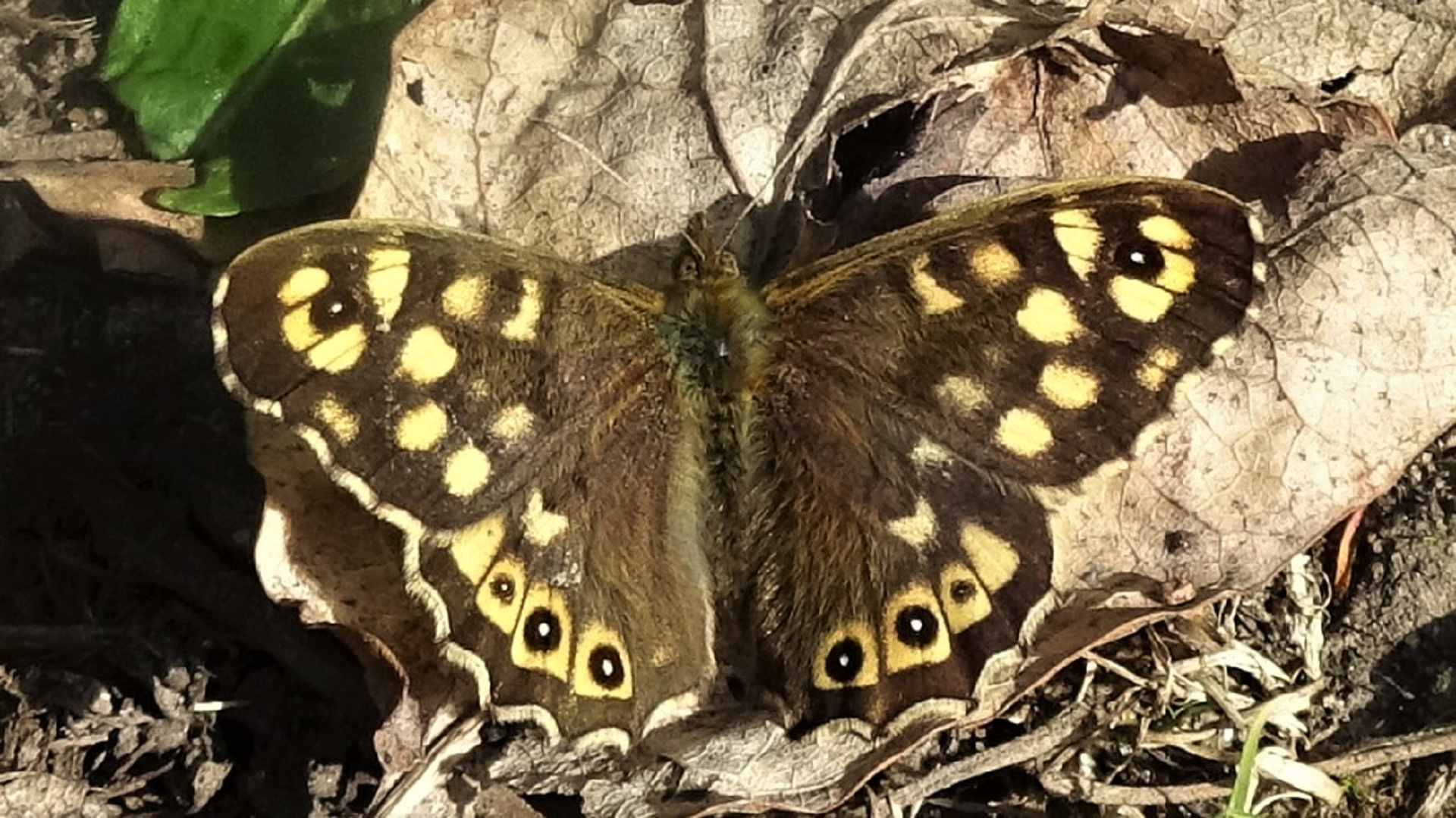
ThIs common woodland butterfly has a wingspan of approximately 45mm and is frequently seen resting on bramble along woodland paths. Adults are active in two broods: from April to early June and again from July to September. Males typically bask in sunlight and defend their territory from intruders. Both males and females tend to visit tree tops to feed on honeydew produced by aphids. This species seldom feeds on flowers, mostly doing so in early and late seasons when honeydew availability is limited. The caterpillars feed on various types of grasses, including false brome, cock's-foot, and Yorkshire fog.
#
Common Blue
Polyommatus icarus
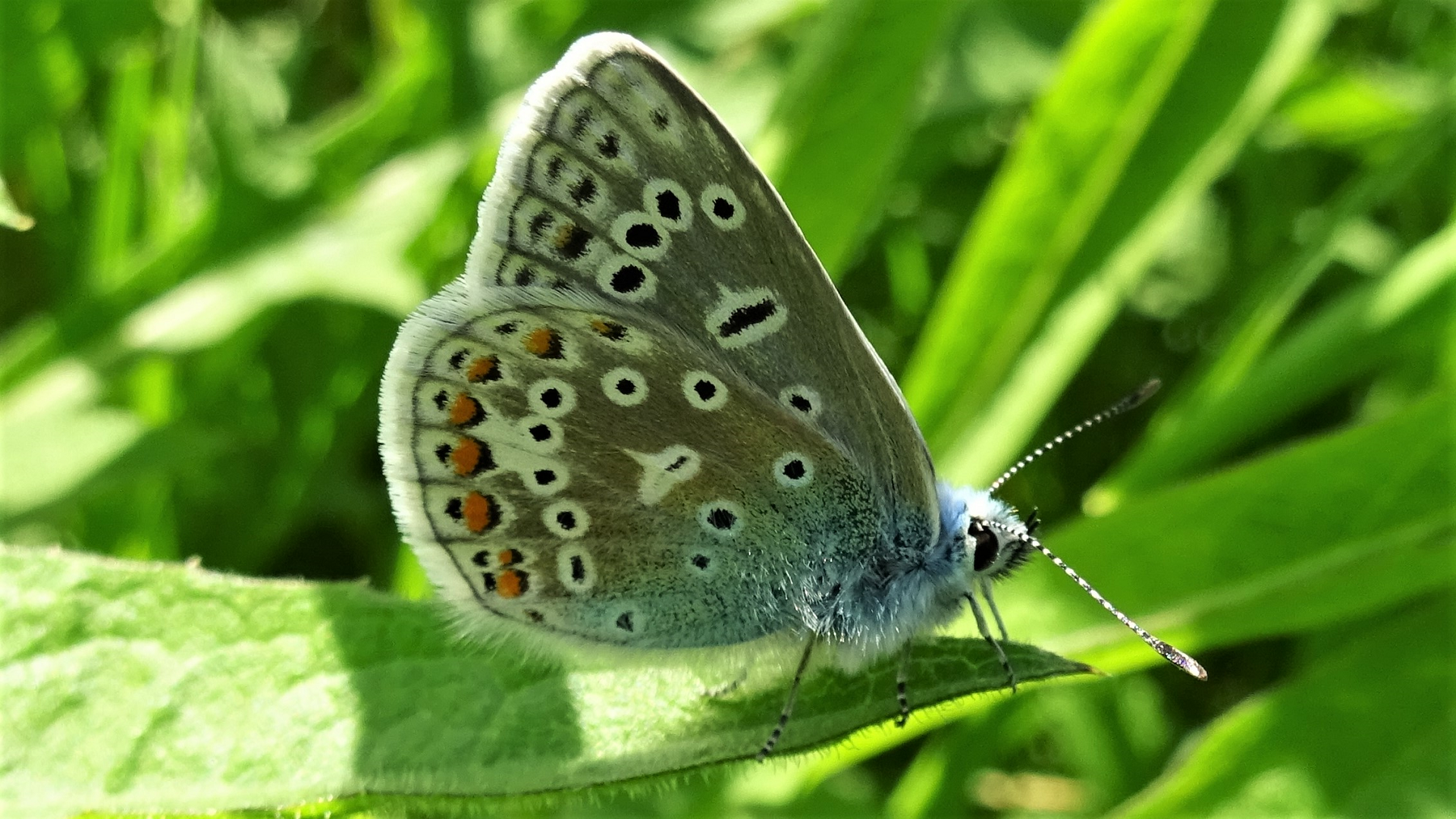
The Common Blue is a small butterfly with a wingspan of approximately 35mm, typically found in meadows during the summer and autumn months. Males are brightly coloured, while females tend to be less colourful and may appear nearly entirely brown.
#
Ringlet
Aphantopus hyperantus
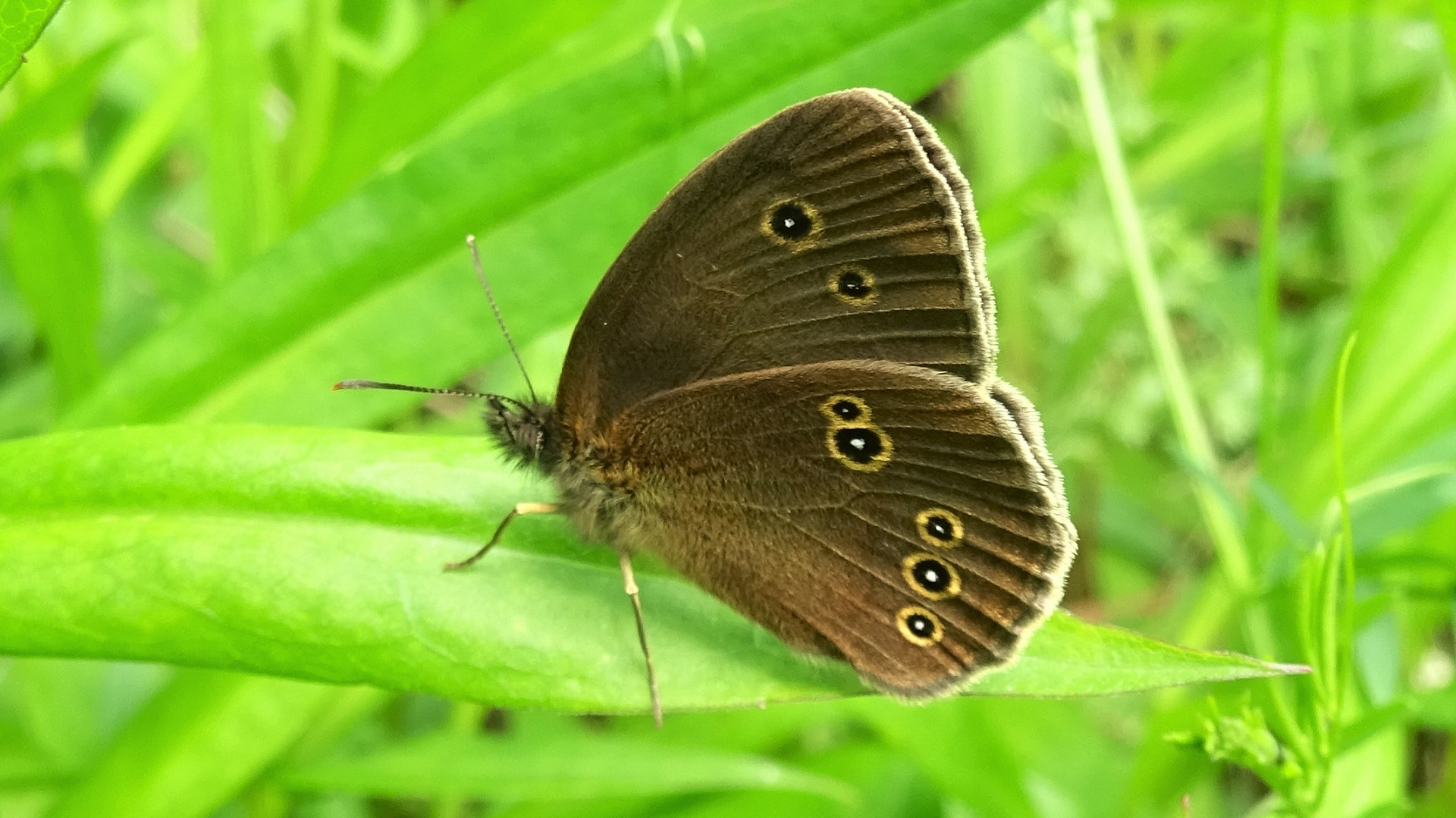
This is a medium-sized species measuring up to 50 mm in diameter. They are usually located flying near bramble along shaded forest paths. The larvae consume coarse grasses. The quantity and size of the wing spots can vary, and in some cases, the black rings may be absent.
#
Orange-tip
Anthocharis cardamines
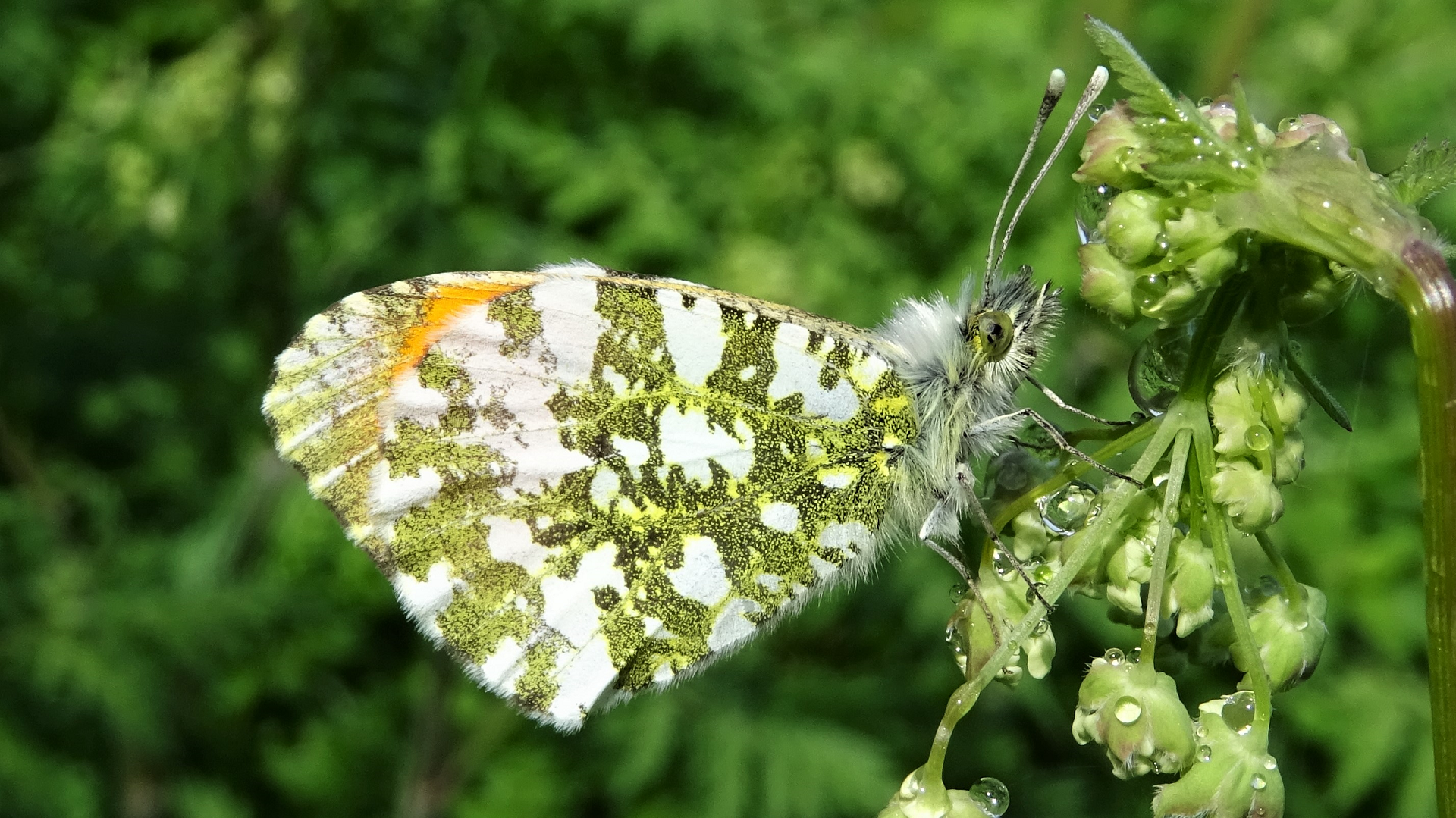
Both males and females have mottled green underwings. Males are distinguished by the orange visible when the wings are open, whilst females have no orange on the wings.
#
White Admiral
Limenitis camilla
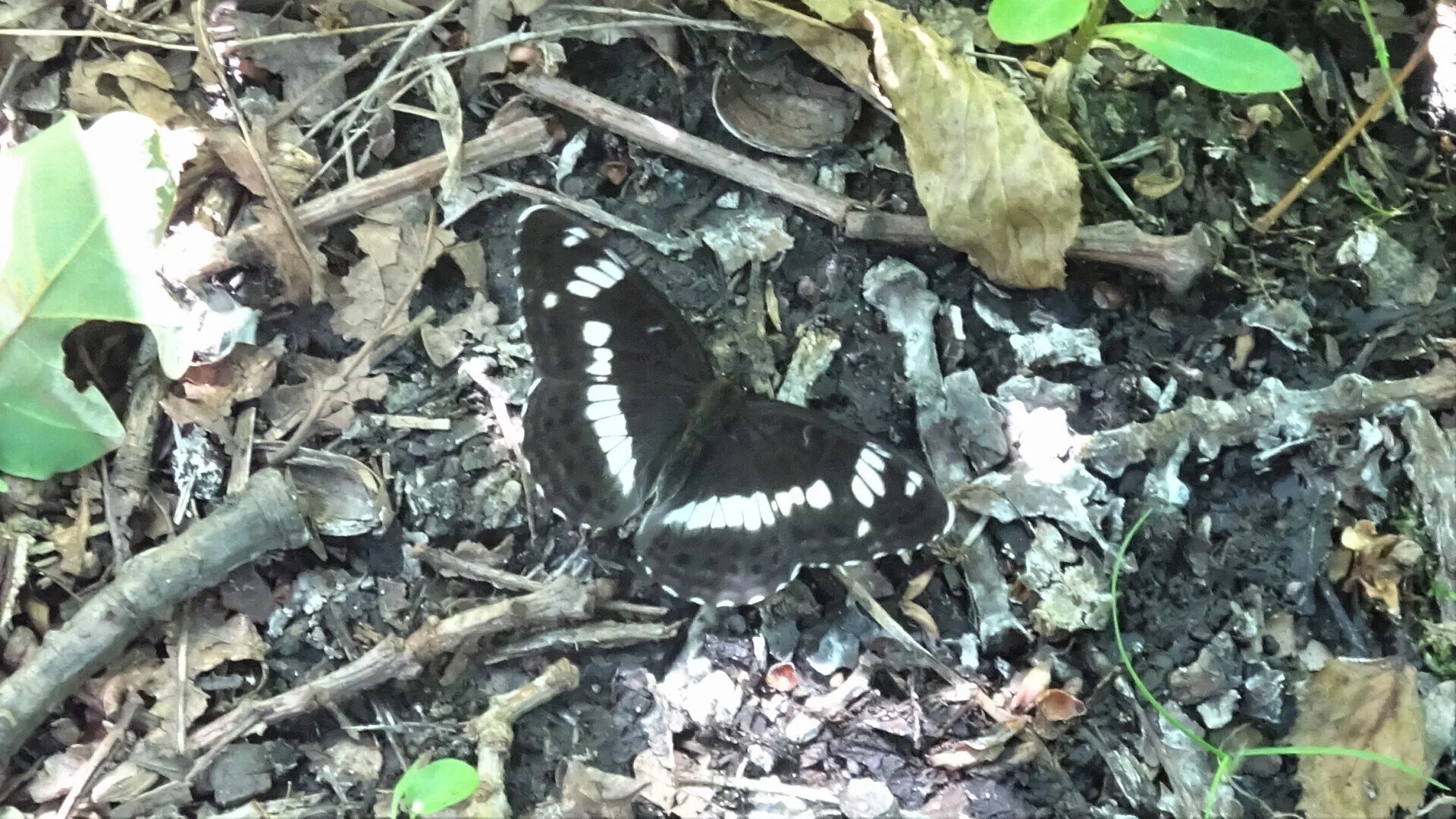
The White Admiral is active from June to August, where it can be observed visiting brambles for nectar. The green caterpillars primarily feed on honeysuckle. The wingspan of this butterfly is approximately 60mm.
#
Purple Hairsteak
Favonius quercus
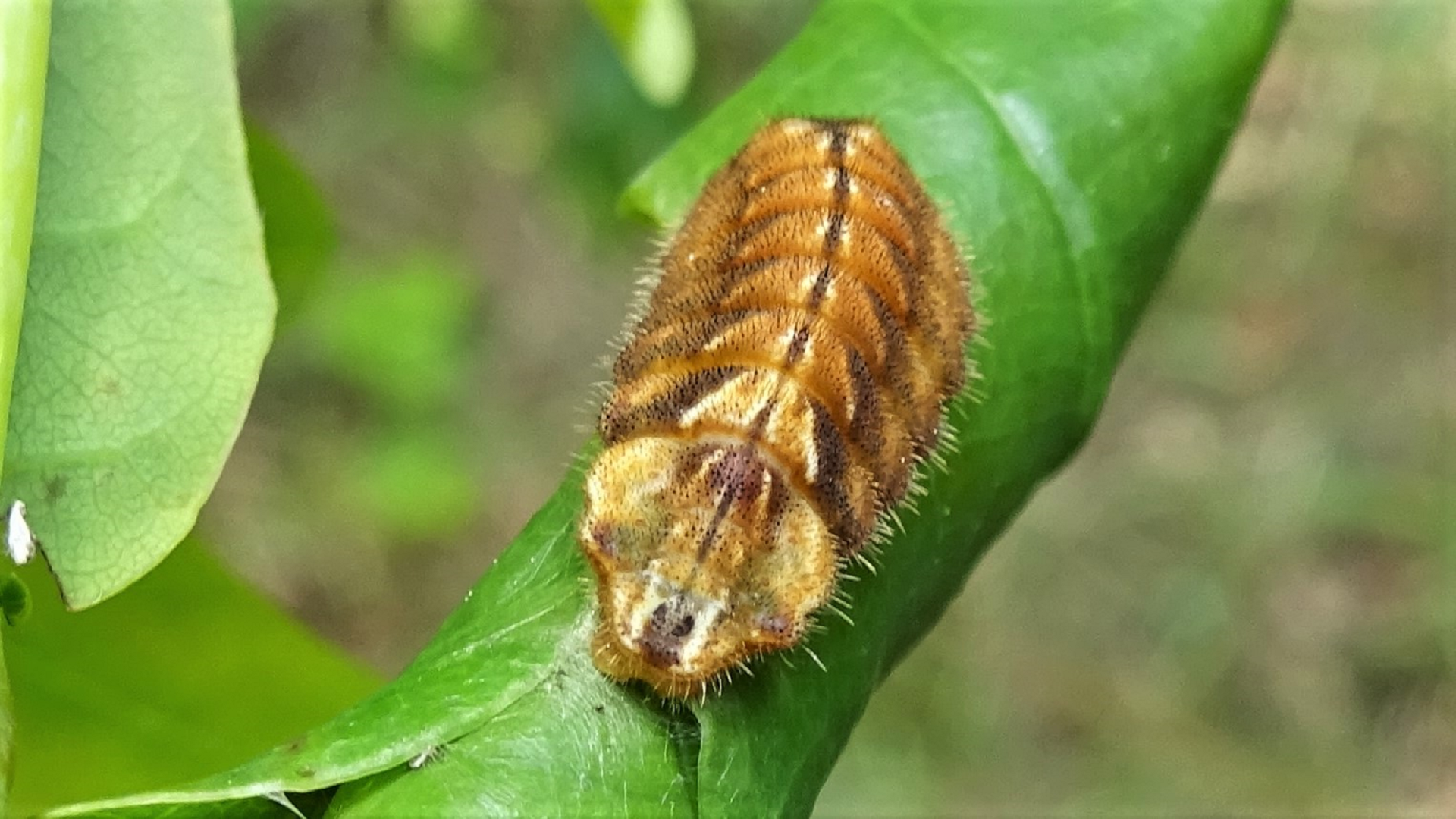
Purple Hairstreak caterpillars feed at night and remain inactive during the day. Upon hatching, the caterpillar eats its eggshell and subsequently hides within a developing oak bud for protection. After its first moult, the larva leaves the bud and builds a loosely-woven web for shelter. Materials gathered in the web help enhance its camouflage. A caterpillar goes through three moults before becoming an adult.
#
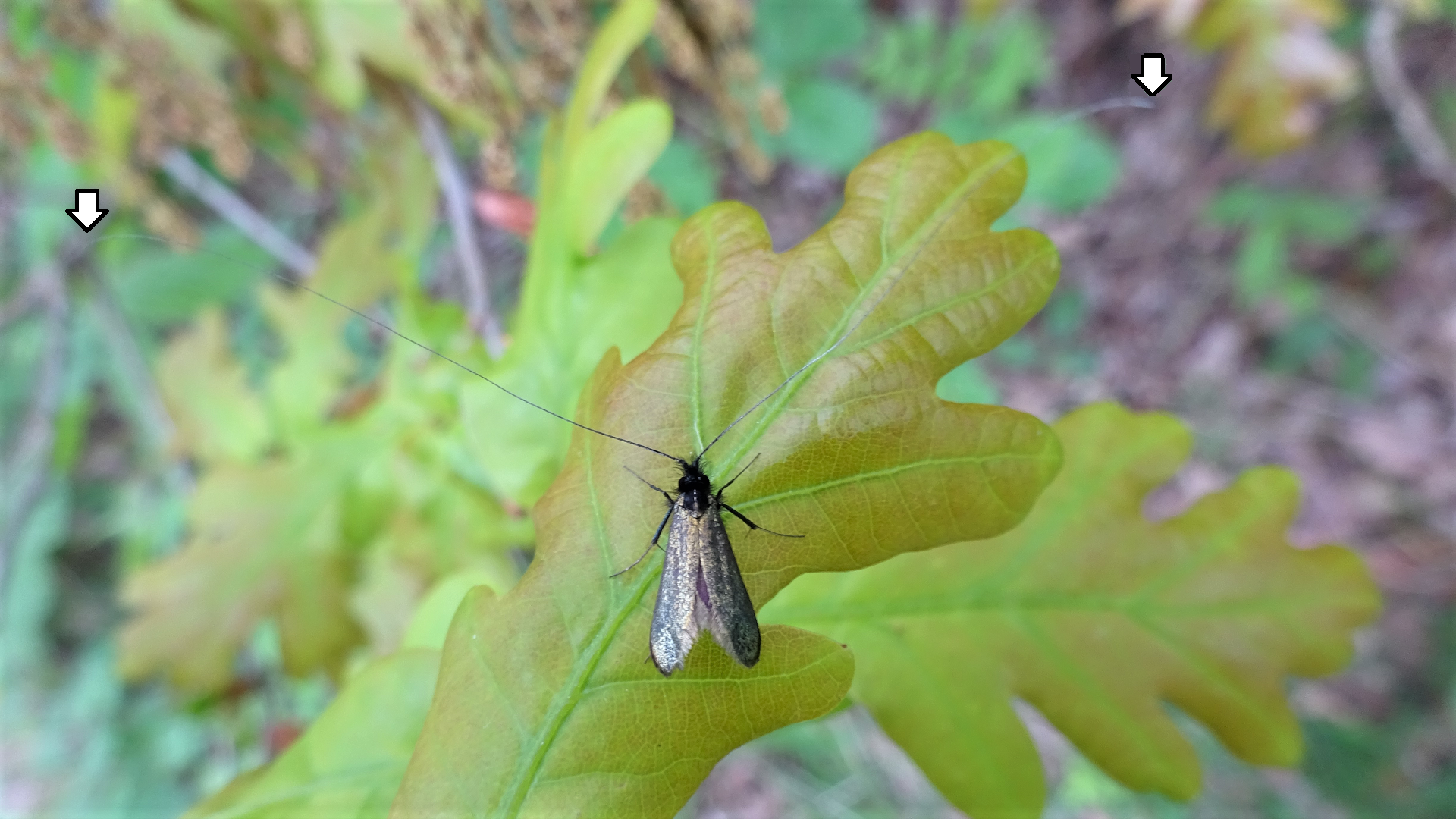
Green Long-horn
Adela reaumurella
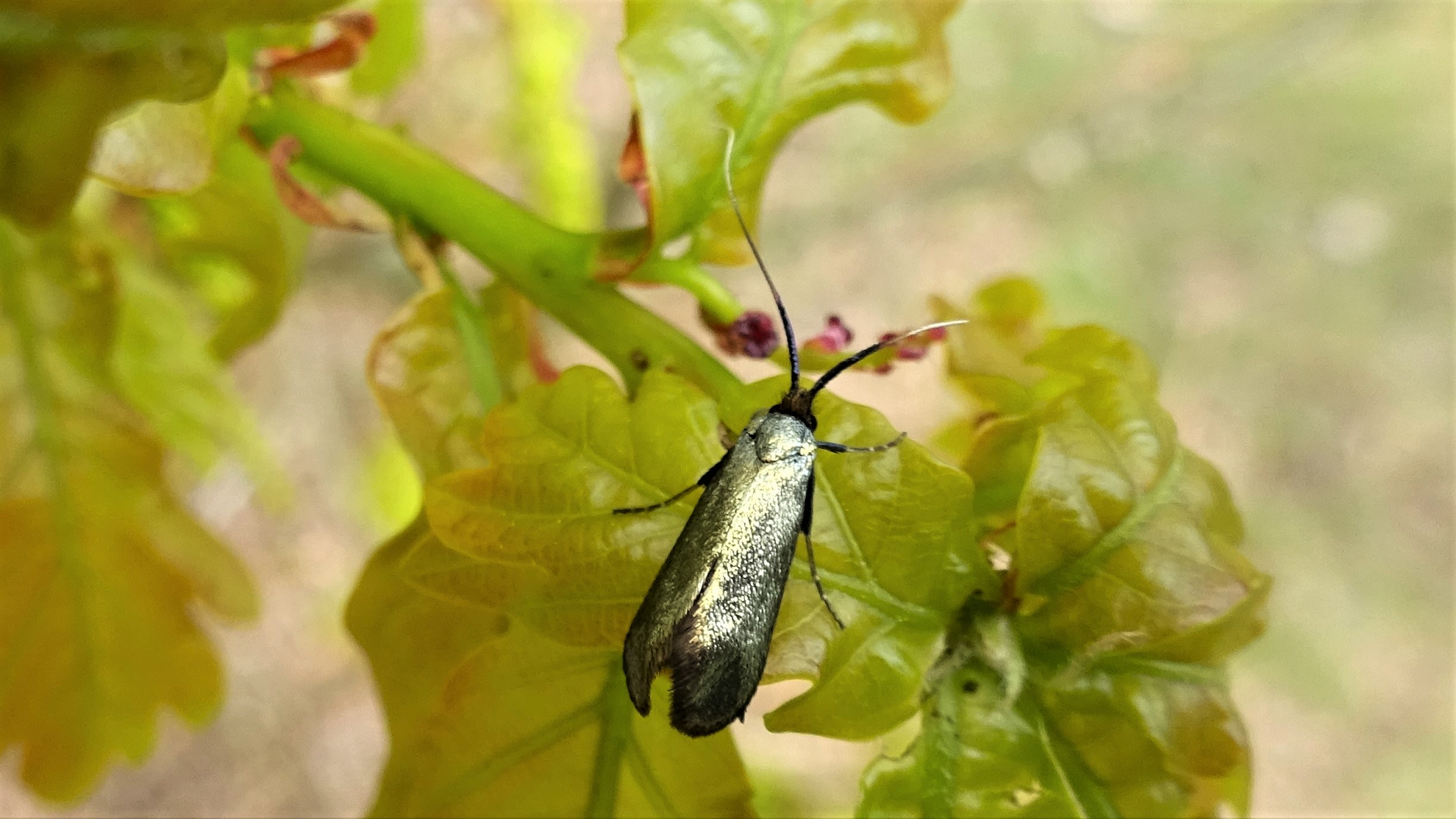
Green Long-horn moths fly in sunshine from April to June often in large swarms over bushes. They possess greenish or bronzy metallic forewings. Males have very long antennae.
#
Silver Y
Autographa gamma
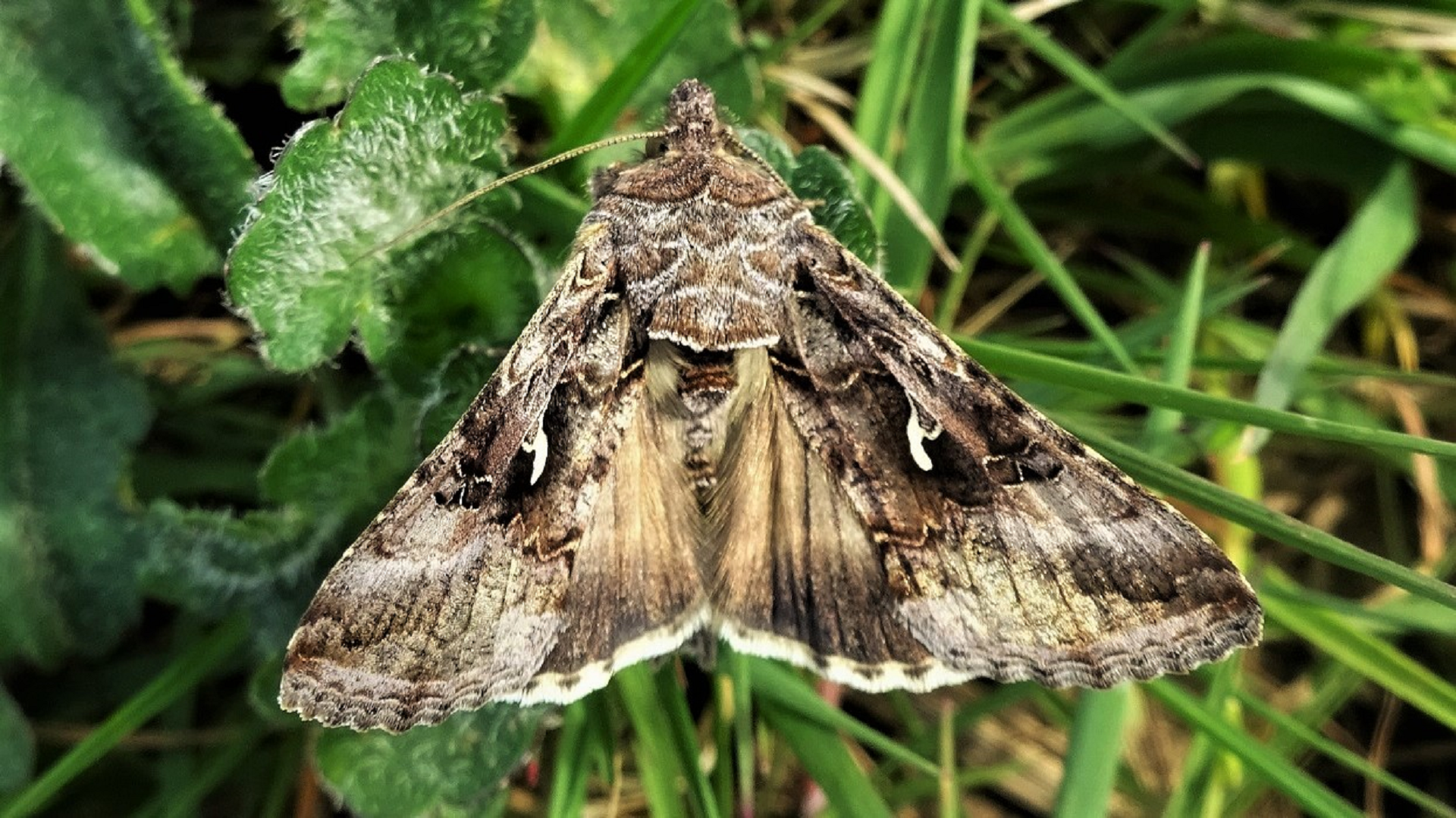
A common immigrant moth which has an unbroken silver Y-marking on each forewing.
#
Straw Dot
Rivula sericealis
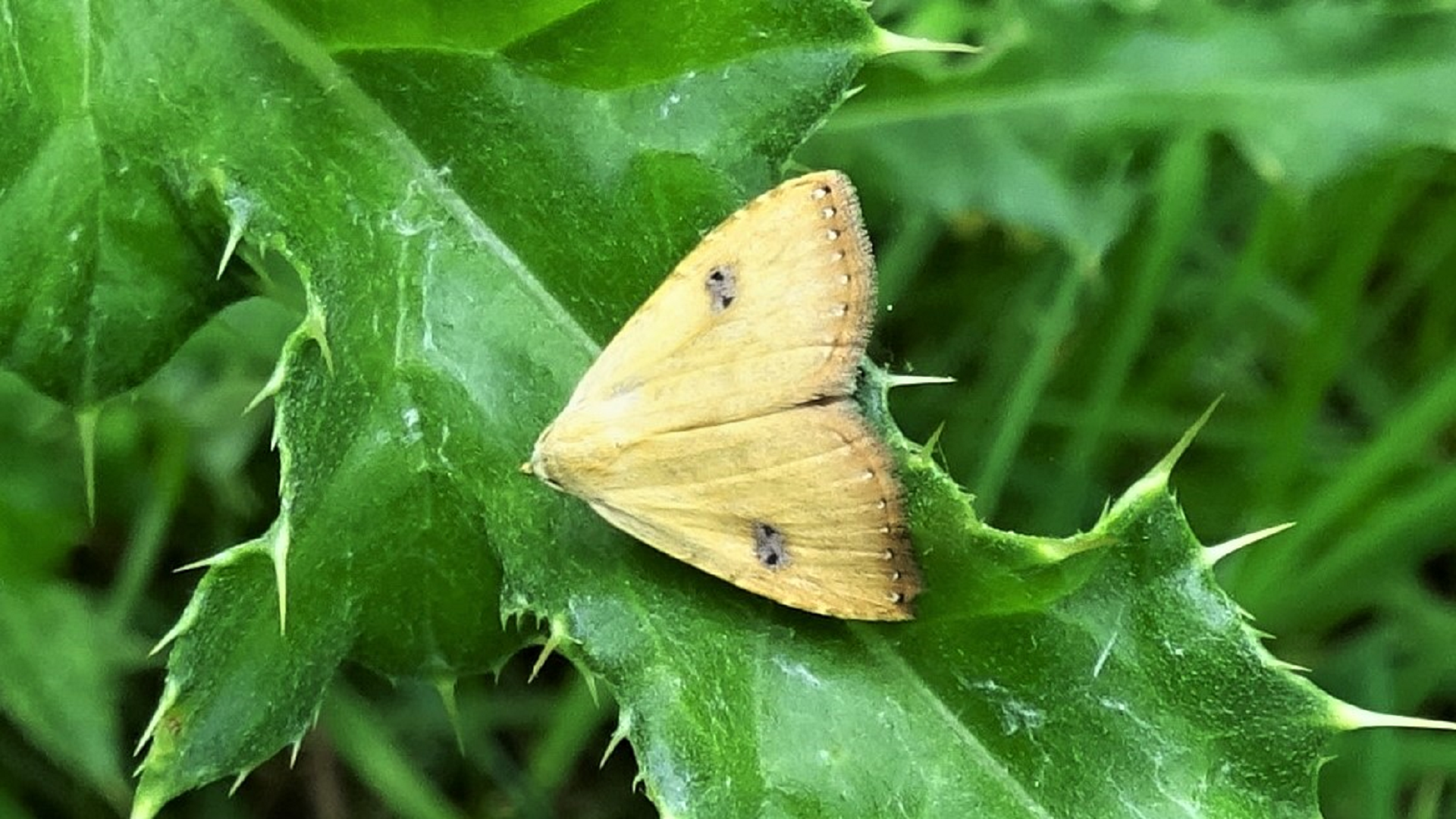
This moth flies from June to September. Its larvae feed on various grasses. Wingspan 18-22mm.
#
Blood-vein
Timandra comae
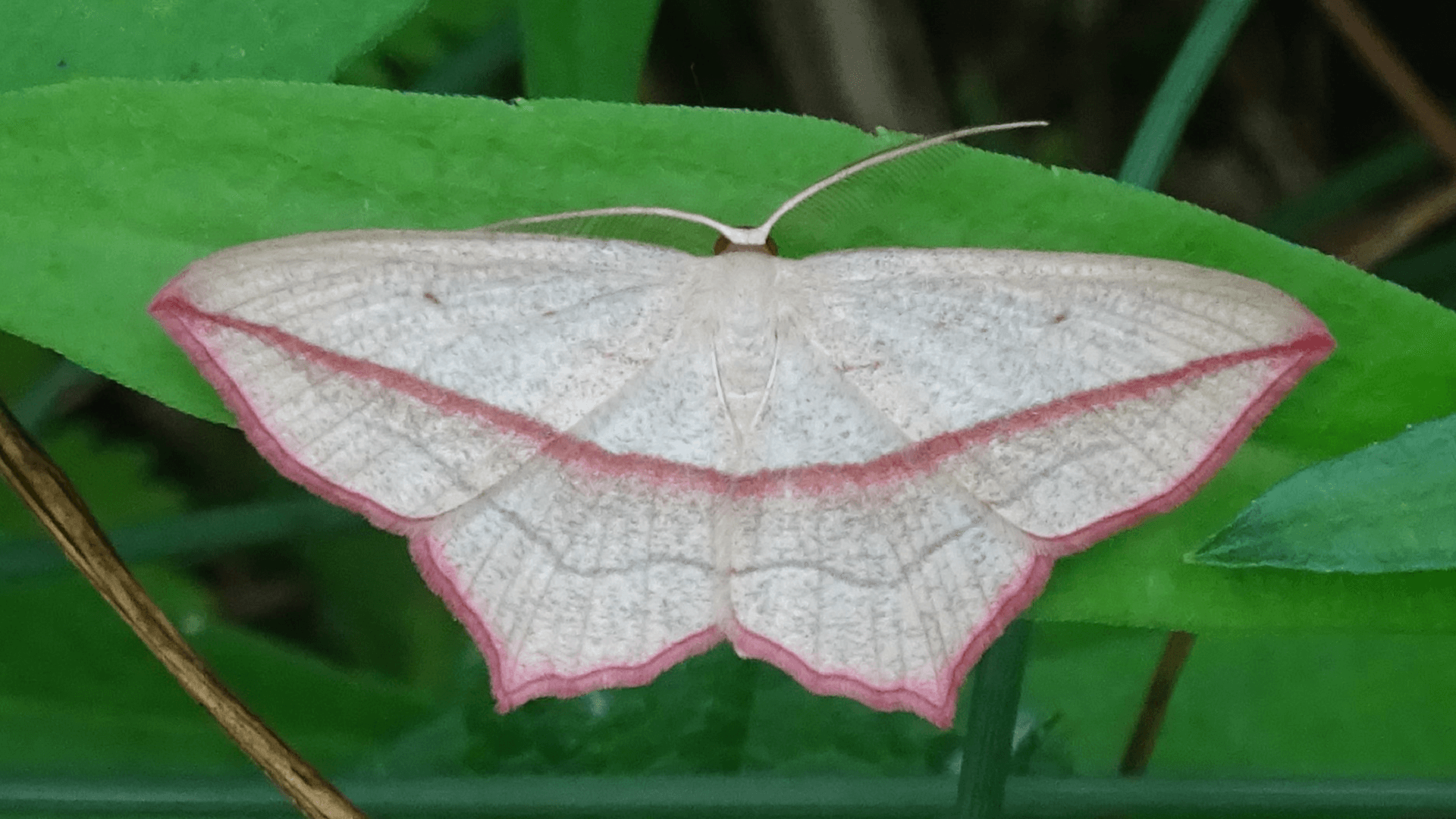
Blood-vein larvae feed on low-growing plants such as the dock plants. Adults are found in a range on habitats from May until September.
#
Winter Moth
Operophtera brumata
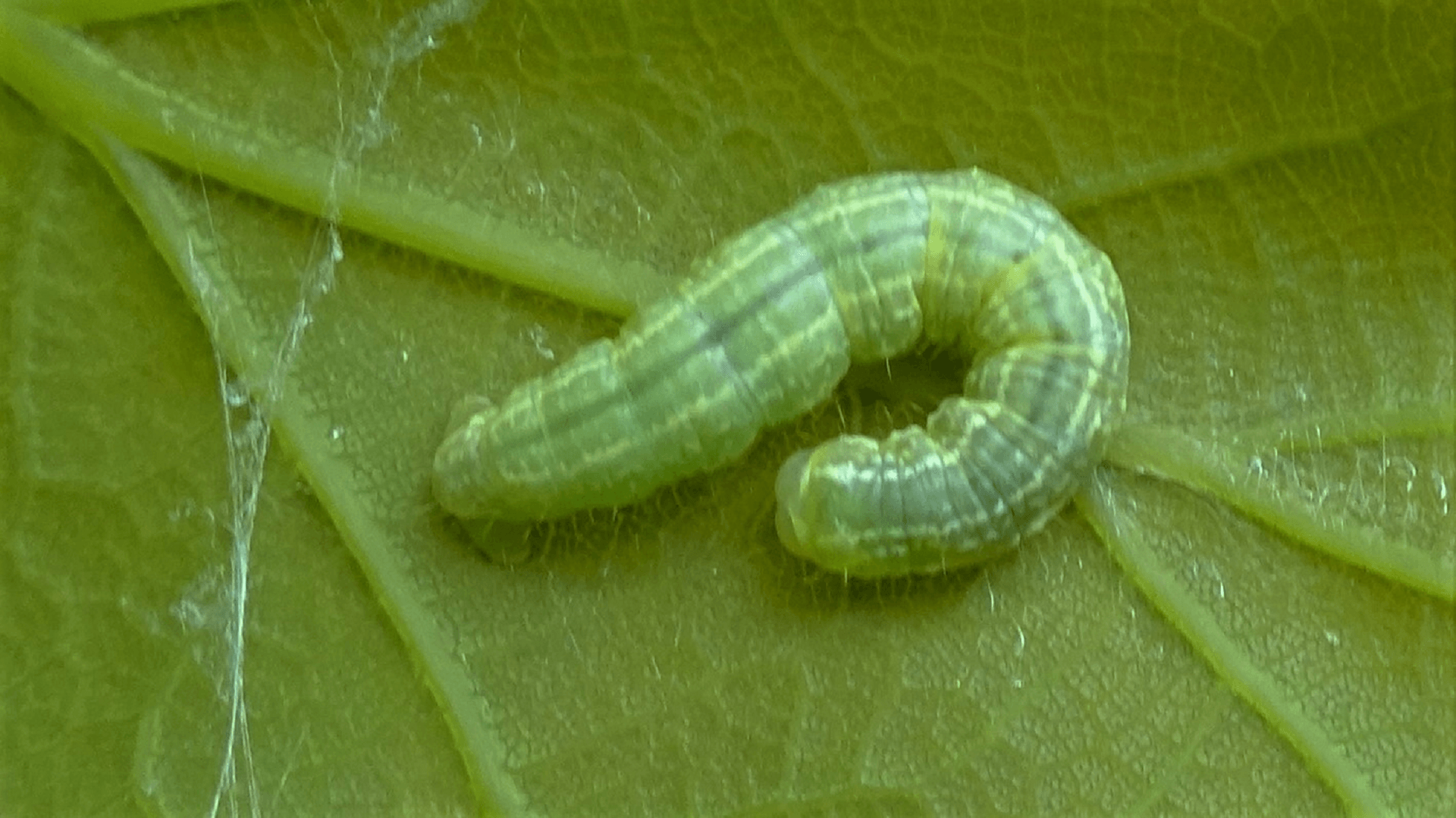
The pale green larvae of the Winter Moth hatch during spring as buds are opening and then feed on the leaves. They move from tree to tree by spinning a silk thread and using the breeze to carry them along to the next food source. Early June the larvae drop to the ground where they pupate. The adults are one of the few moth species active during the winter months.
#
Copper Underwing
Amphipyra pyramidea
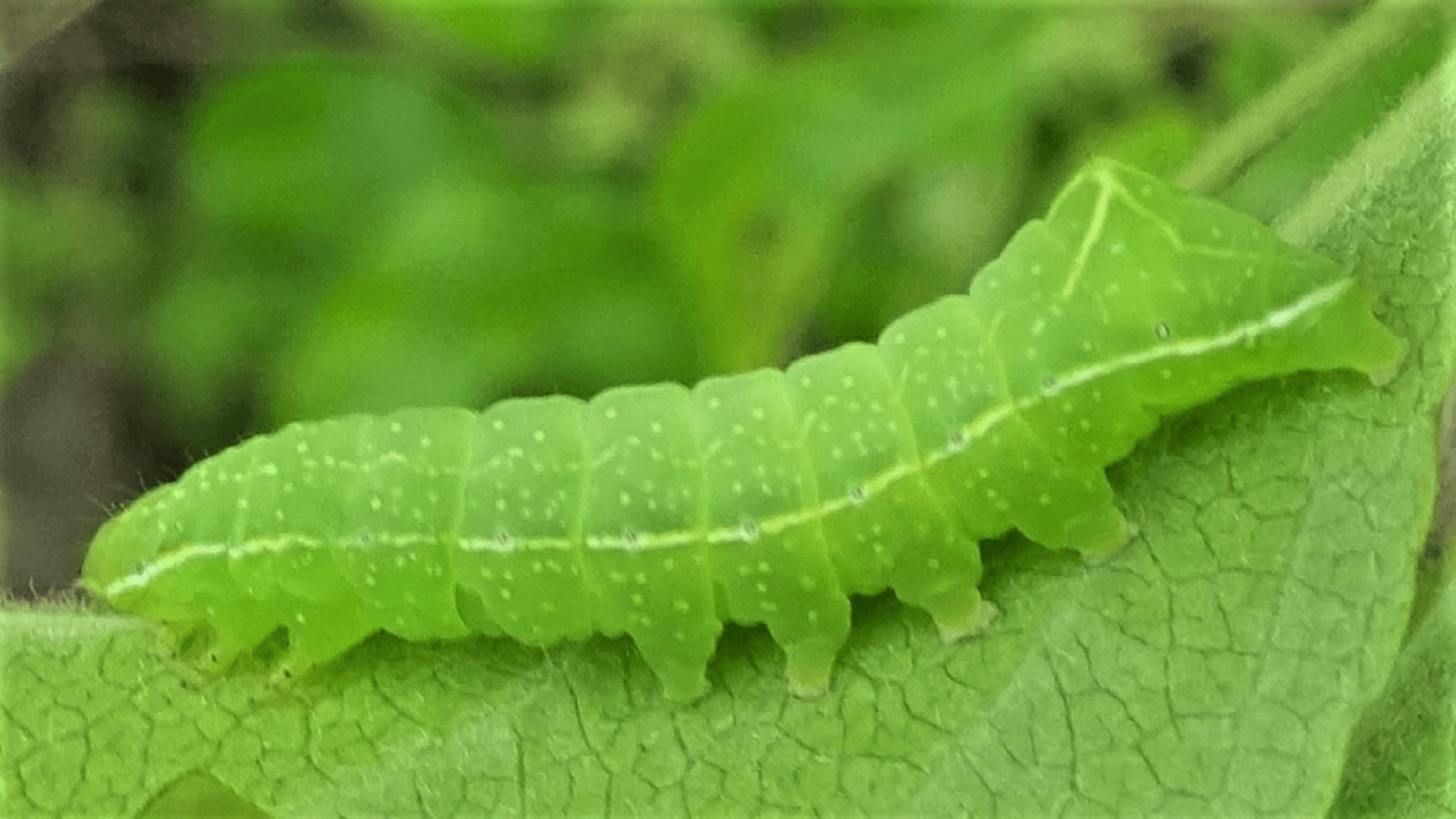
This is a larva of the Copper Underwing moth. They feed on various trees and shrubs, but mostly oak. The adults fly from August to October.
#
Yellow-tail
Euproctis similis
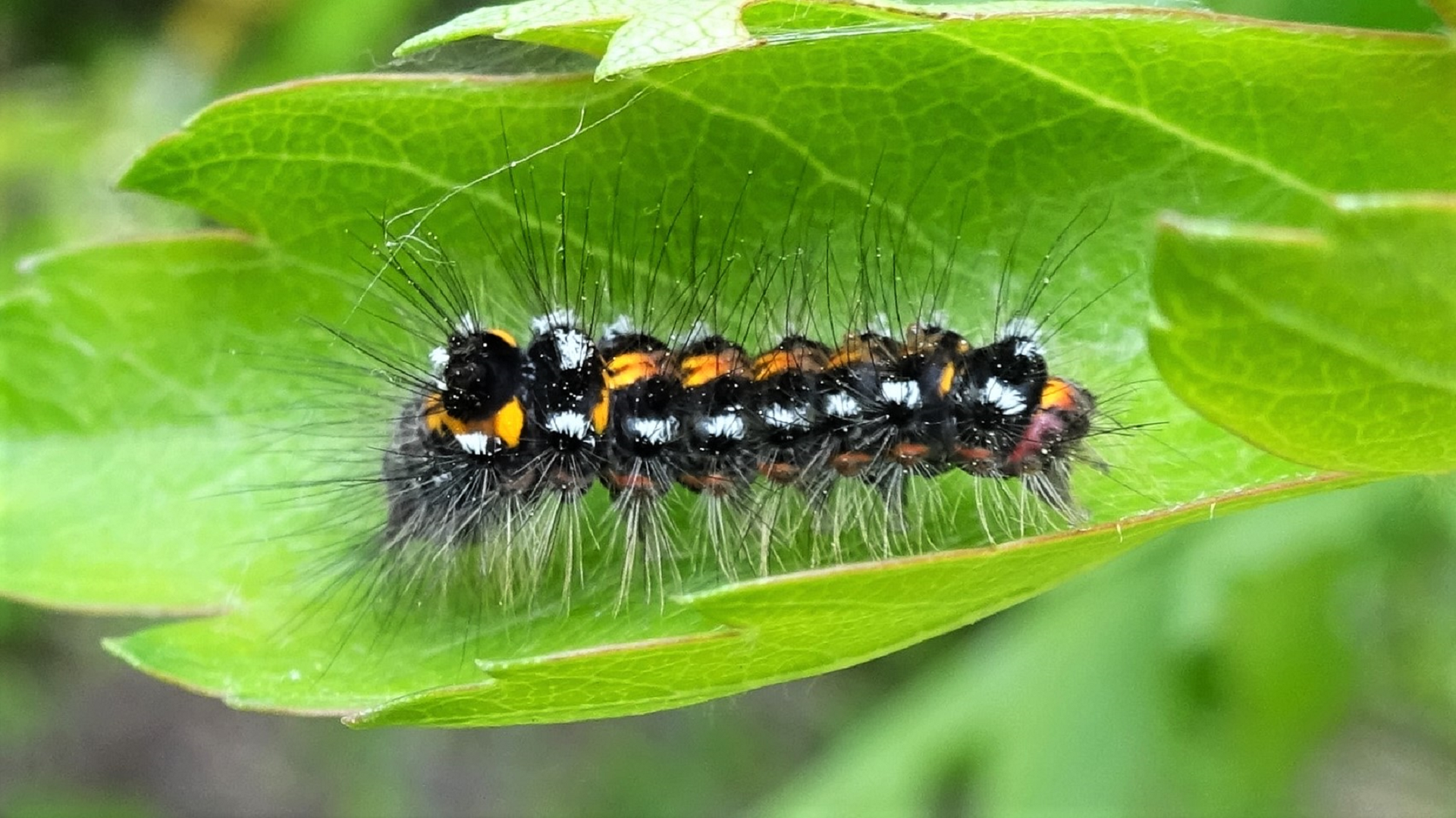
A Yellow-tail moth caterpillar on hawthorn.
#
Timothy Tortrix
Zelotherses paleana
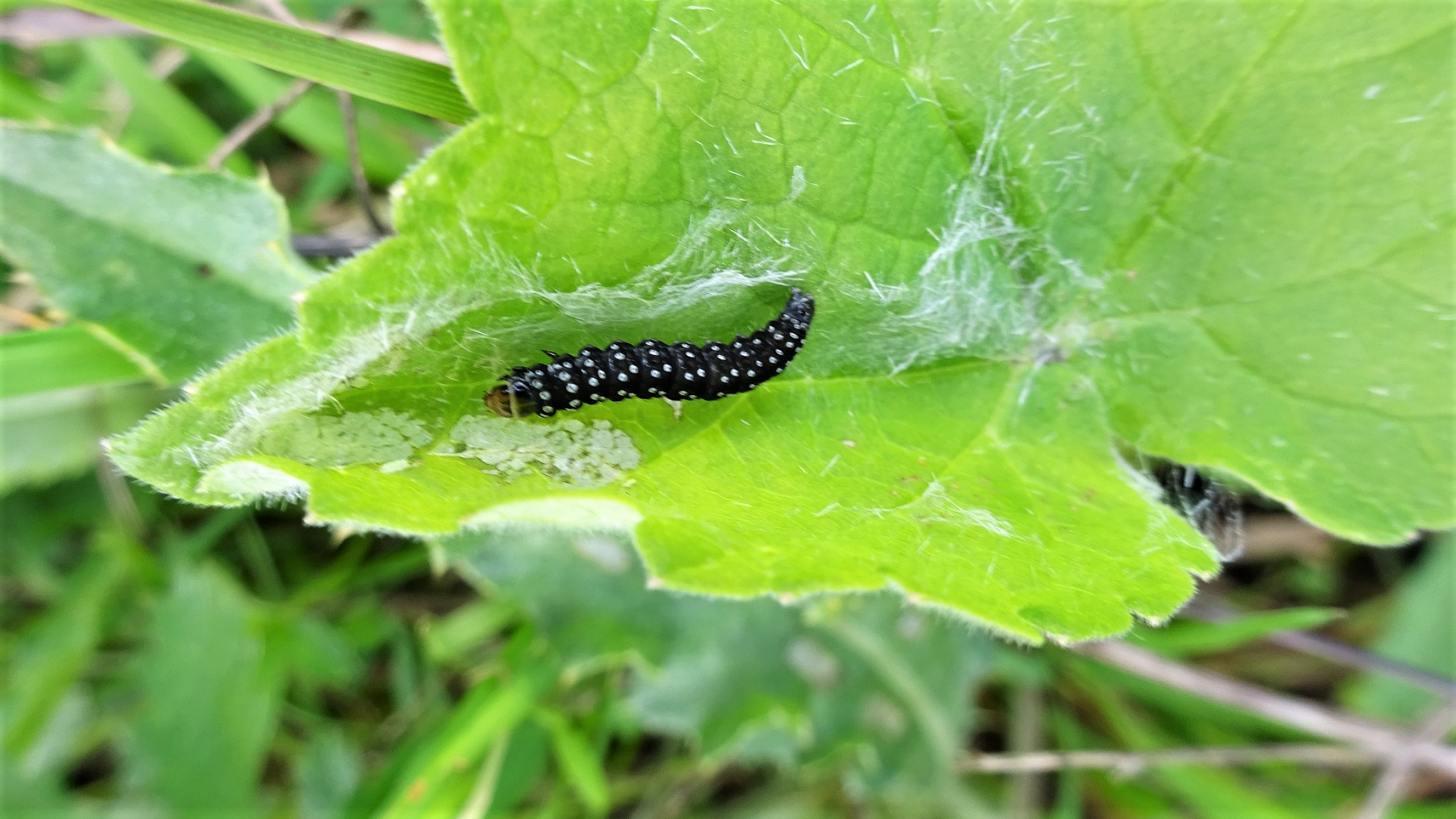
This folded Garlic mustard leaf was stuck together with threads to create a place of safety for a Timothy Tortrix moth larva. This find, verified by Brian Goodey, author of The Moths of Essex, has been added to the county database by Essex Field Club's, Peter Harvey.
#
Batman Hoverfly
Myathropa florea
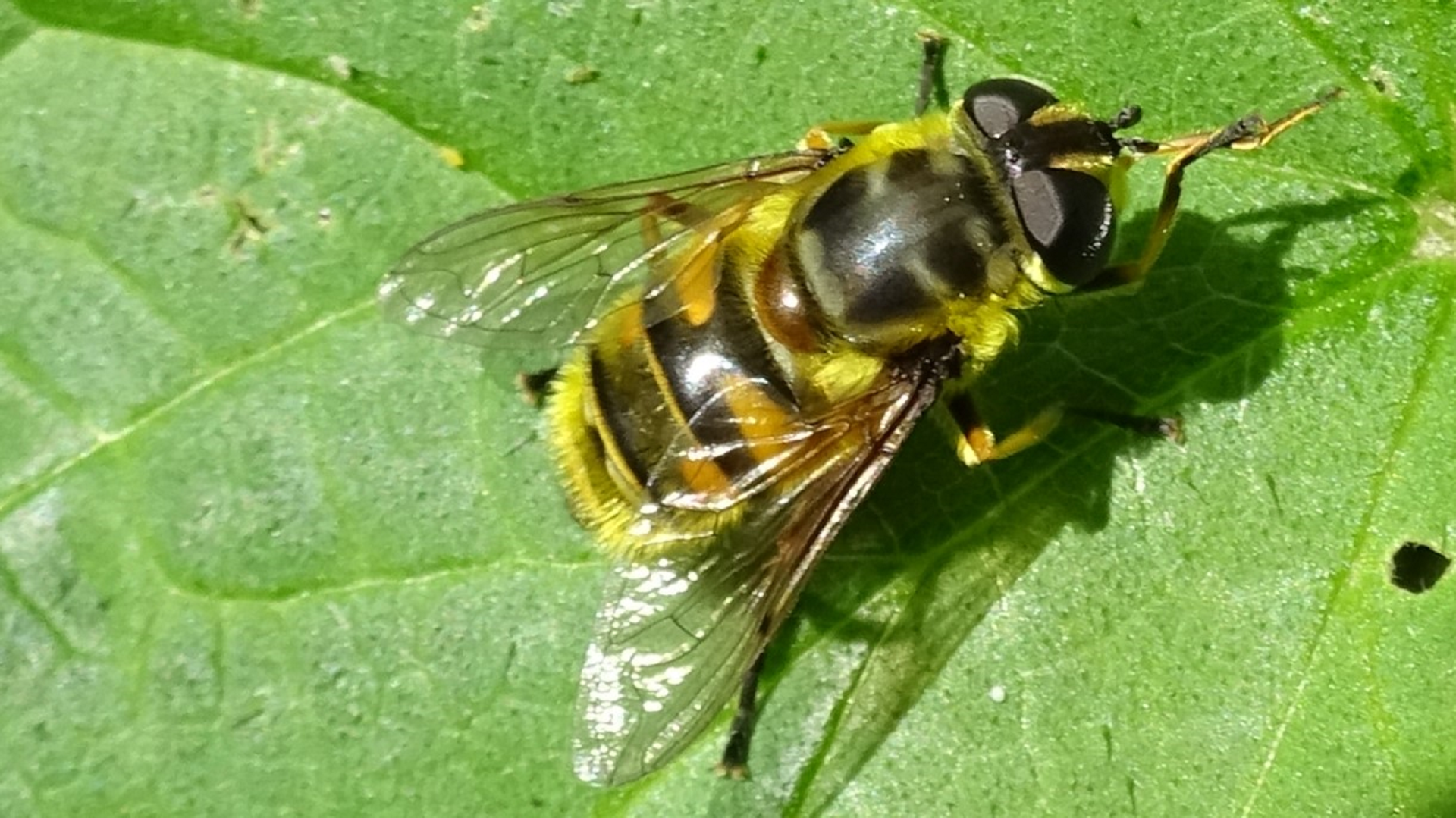
Very common in woodland where it mainly visits umbellifers and ivy from April to September. The black back marking has led to this species becoming known as the 'Batman hoverfly'. Bold colouration means this hoverfly can easily be identified. The wings measure 7-12mm in length. Larvae inhabit decaying leaves at tree bases.
#
Golden Comb Hoverfly
Chrysotoxum festivum

A distinctive hoverfly with bold markings that visits umbellifers, thistles and other flowers. It is found in tall grass areas from June to August. Uncommon.
#
Syrphus Hoverfly
Syrphus sp.
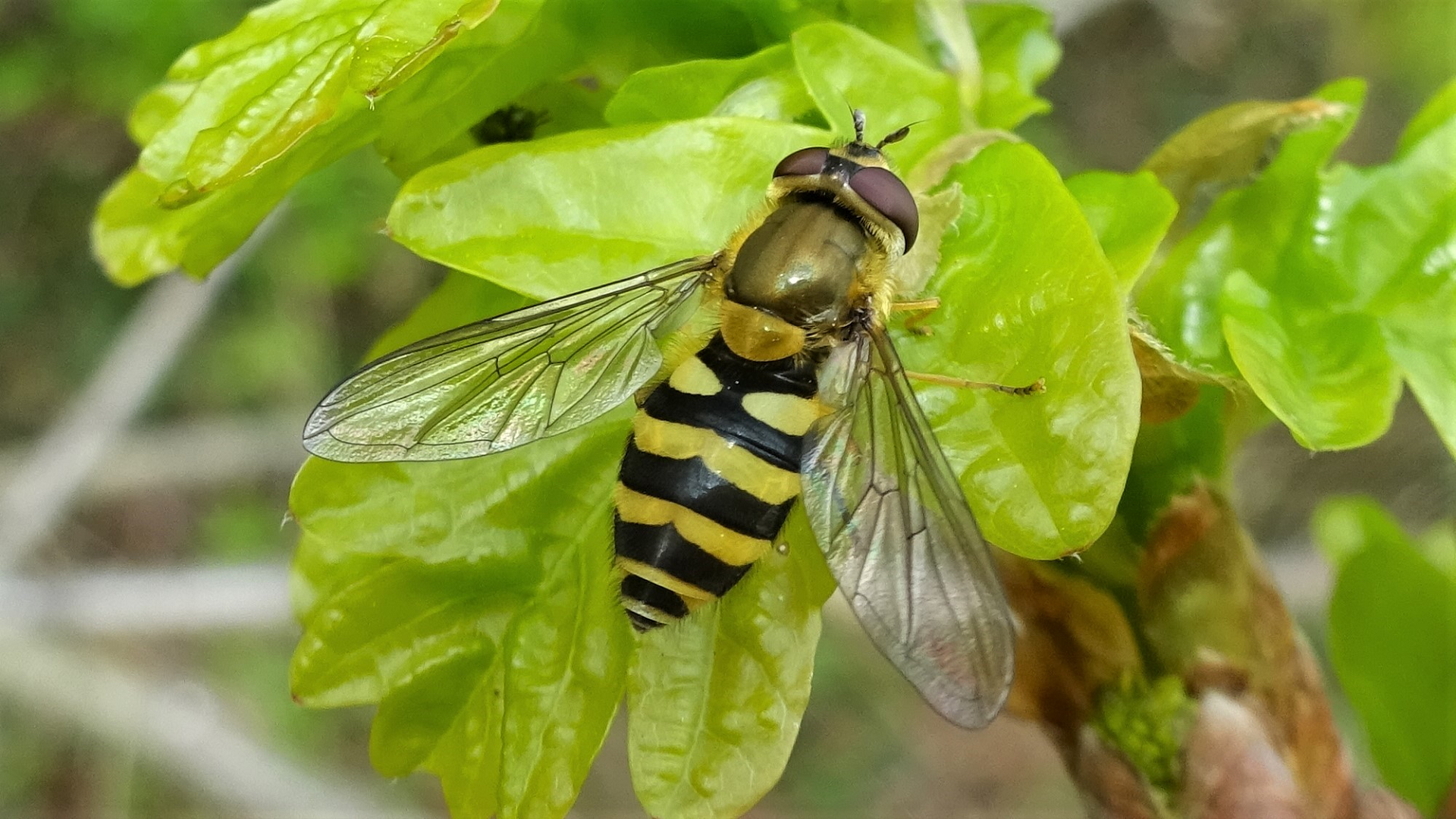
A common hoverfly with yellow and black bands seen from March to November in a variety of habitats. There are a couple of similar species and they can be difficult to tell apart. Males often vibrate their wings which causes a humming sound.
#
Hornet Hoverfly
Volucella zonaria
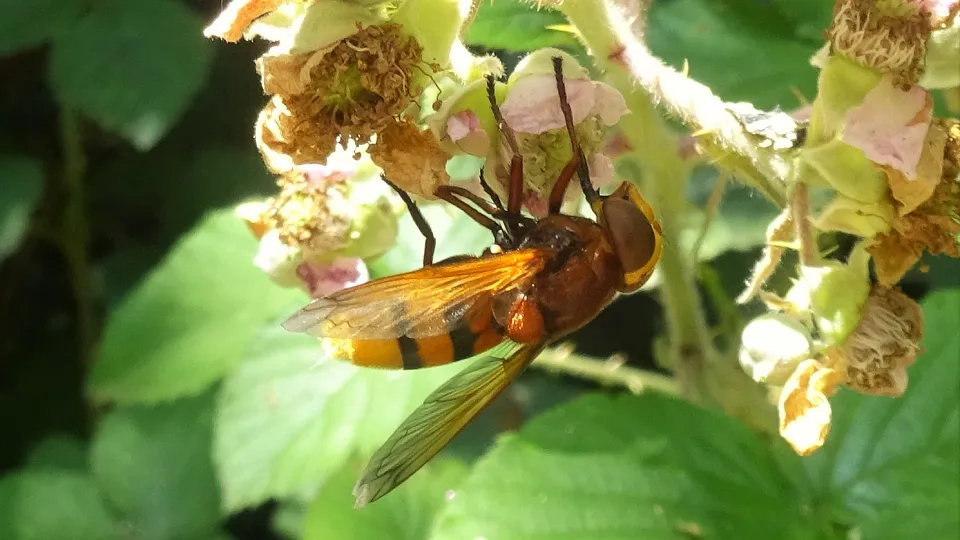
These big hoverflies fly from May until November and are sometimes mistaken for hornets. Black and yellow markings deter predators and the clever mimicry allows this species to pass freely into wasp nests to lay eggs without being challenged. The larvae that emerge from the eggs grab wasps to eat. They become adults and leave the nest during spring. Also known as the Belted Hoverfly.
#
Red Plant Bug
Deraeocoris olivaceus
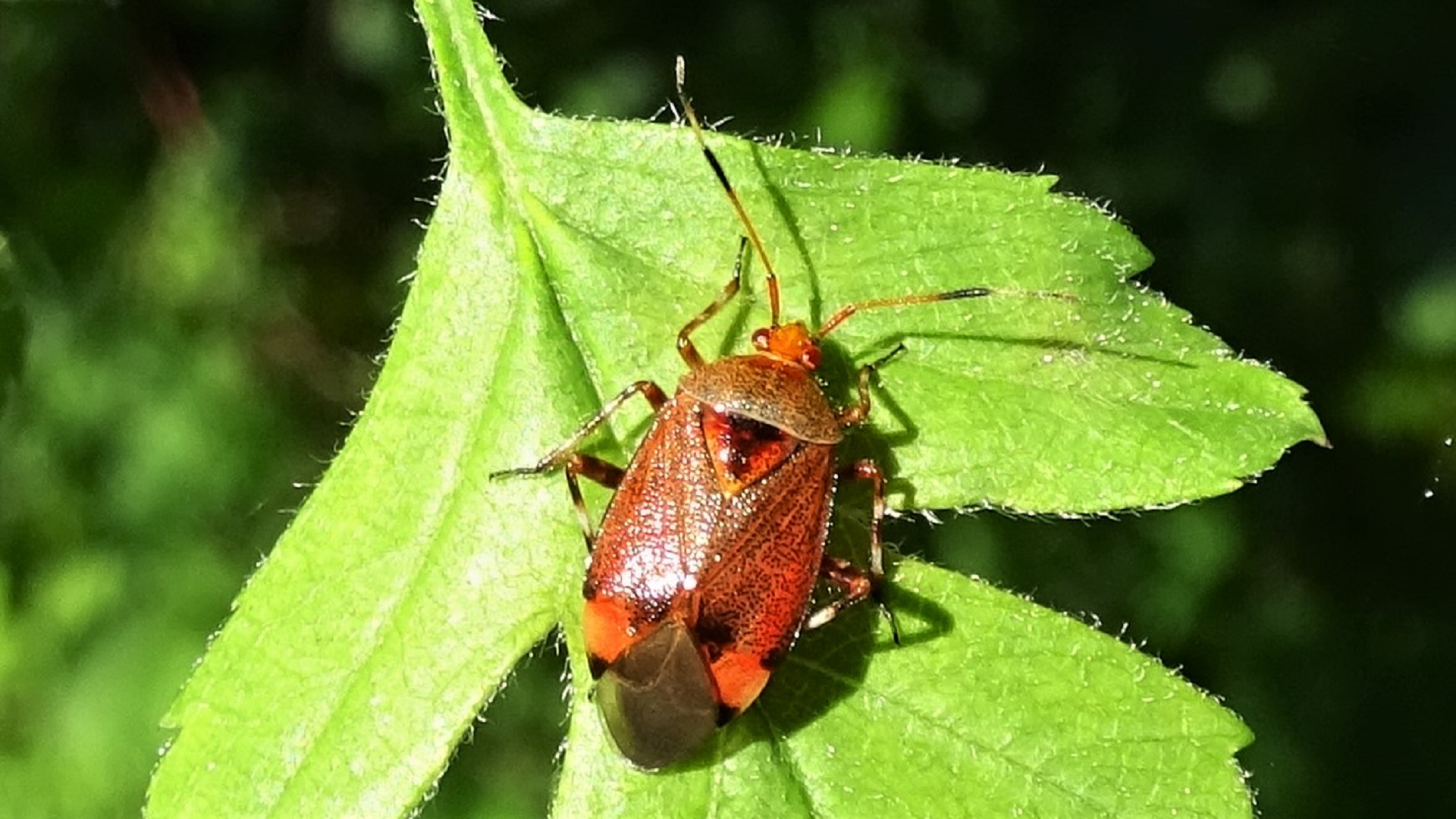
First recorded in the UK at Surrey during 1951 and now appears to be spreading across southern England. It is more common in France. Found on hawthorn. Adult season: June-July. Length 10mm.
#
Red and Black Froghopper
Cercopis vulnerata

This species has distinctive markings making it easy to identify. The colours act as a deterant to predators warning that they taste unpleasant. Adults are found in woodland, hedgerows and open grassland. They can fly and also employ the back legs to jump up to 70 centimetres. The nymphs feed on plant roots.
#
Fourteen-spot Ladybird
Propylea quattuordecimpunctata
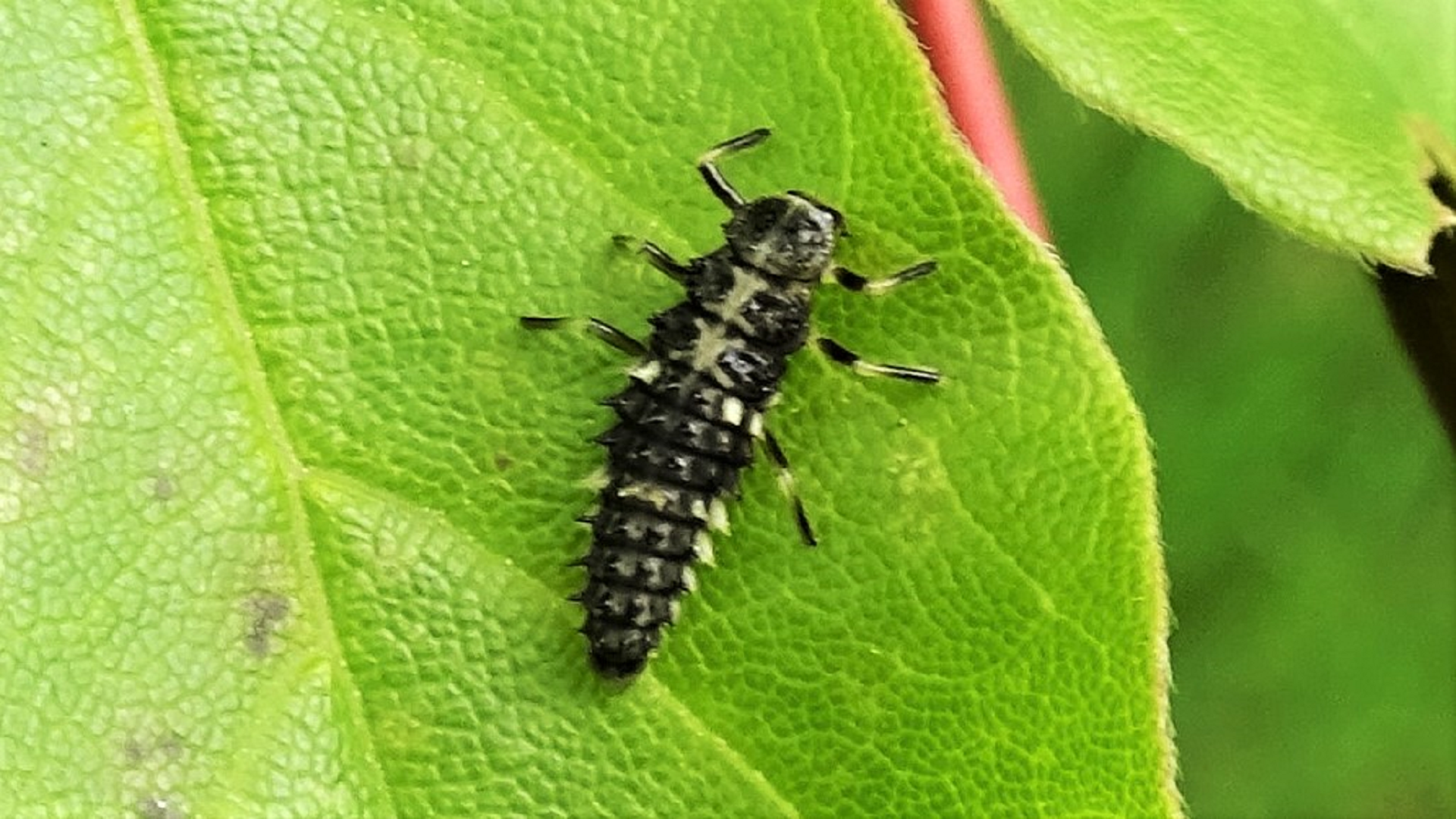
The female ladybirds lay up to 400 eggs normally in batches of about 40. These larvae emerge from eggs and moult several times before becoming pupae. At the pupa stage the larvae develop into adults.
#
Alderfly
Sialis lutaria
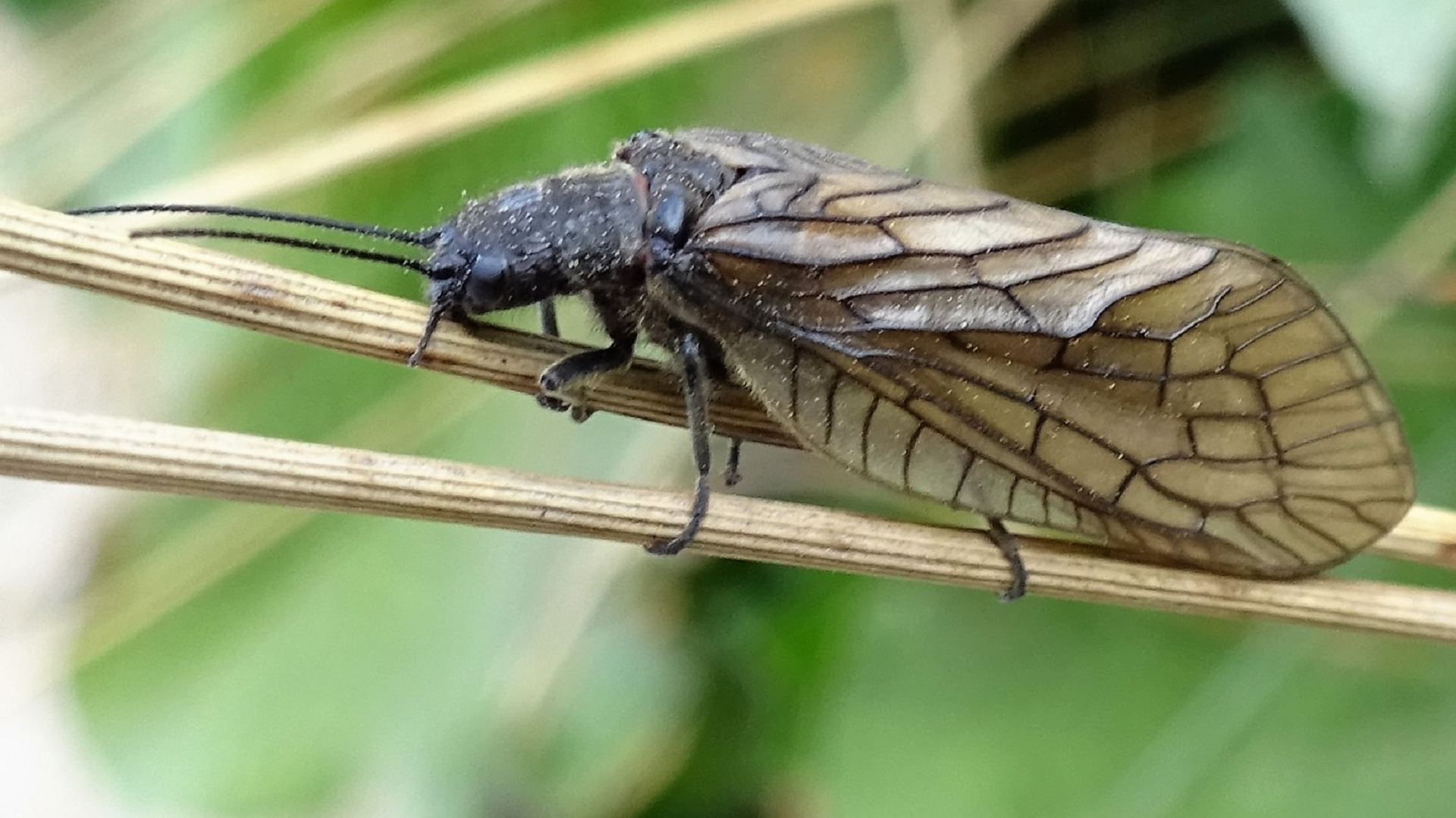
Alderflies are often found on vegetation near water. The larvae are aquatic carnivores that live in the bottom of ponds and slow-flowing streams. Mating occurs at night and the females lay their eggs on plants overhanging water. The larvae hatch and drop into the water where they develop over one or two years.
#
Conehead Nymph
Conocephalus fuscus
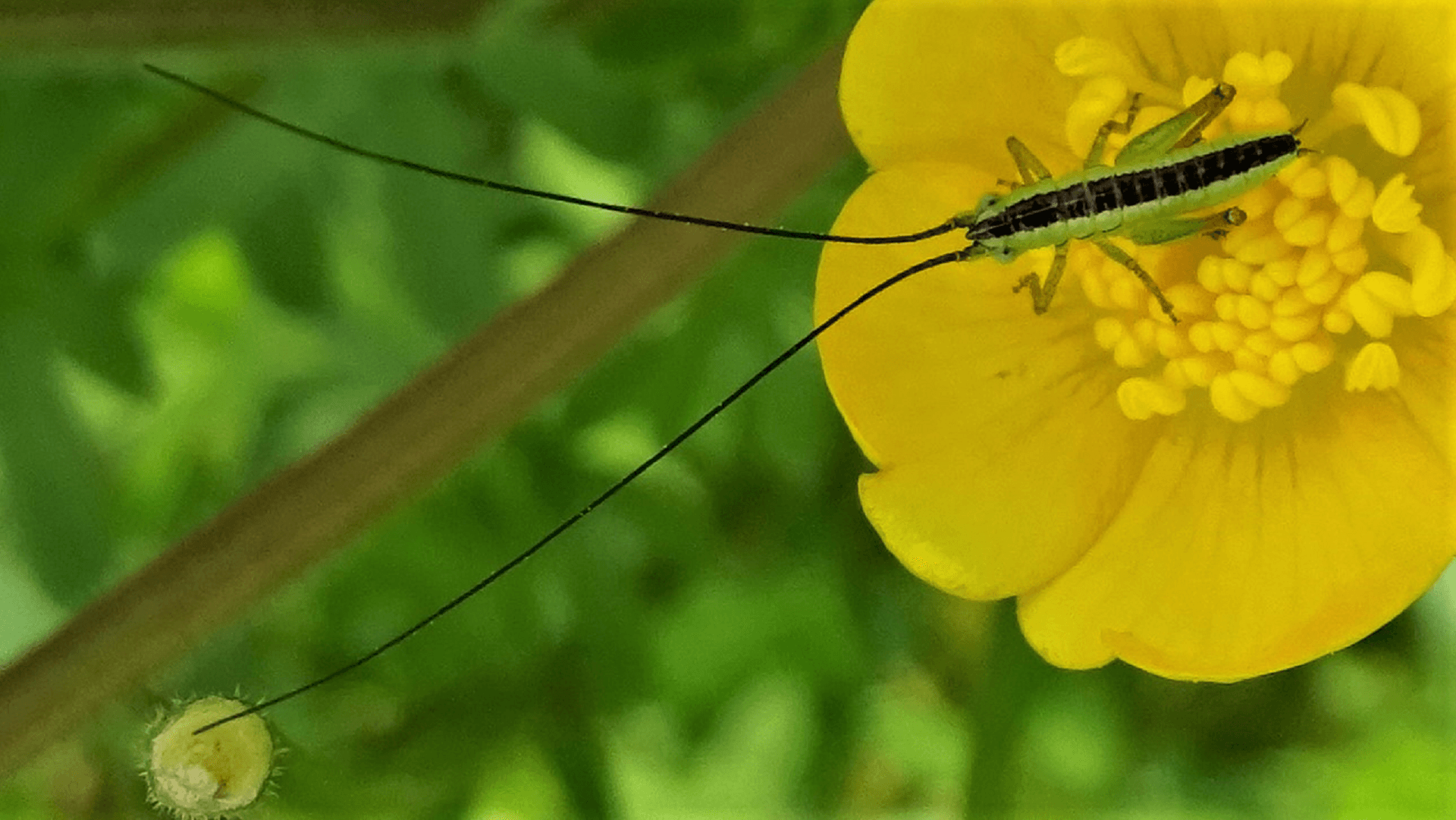
This species of Cricket mainly feeds on grass and sometimes small invertebrates. The nymphs have a black line along the back and short wings.
#
Broad-bodied Chaser
Libellula depressa
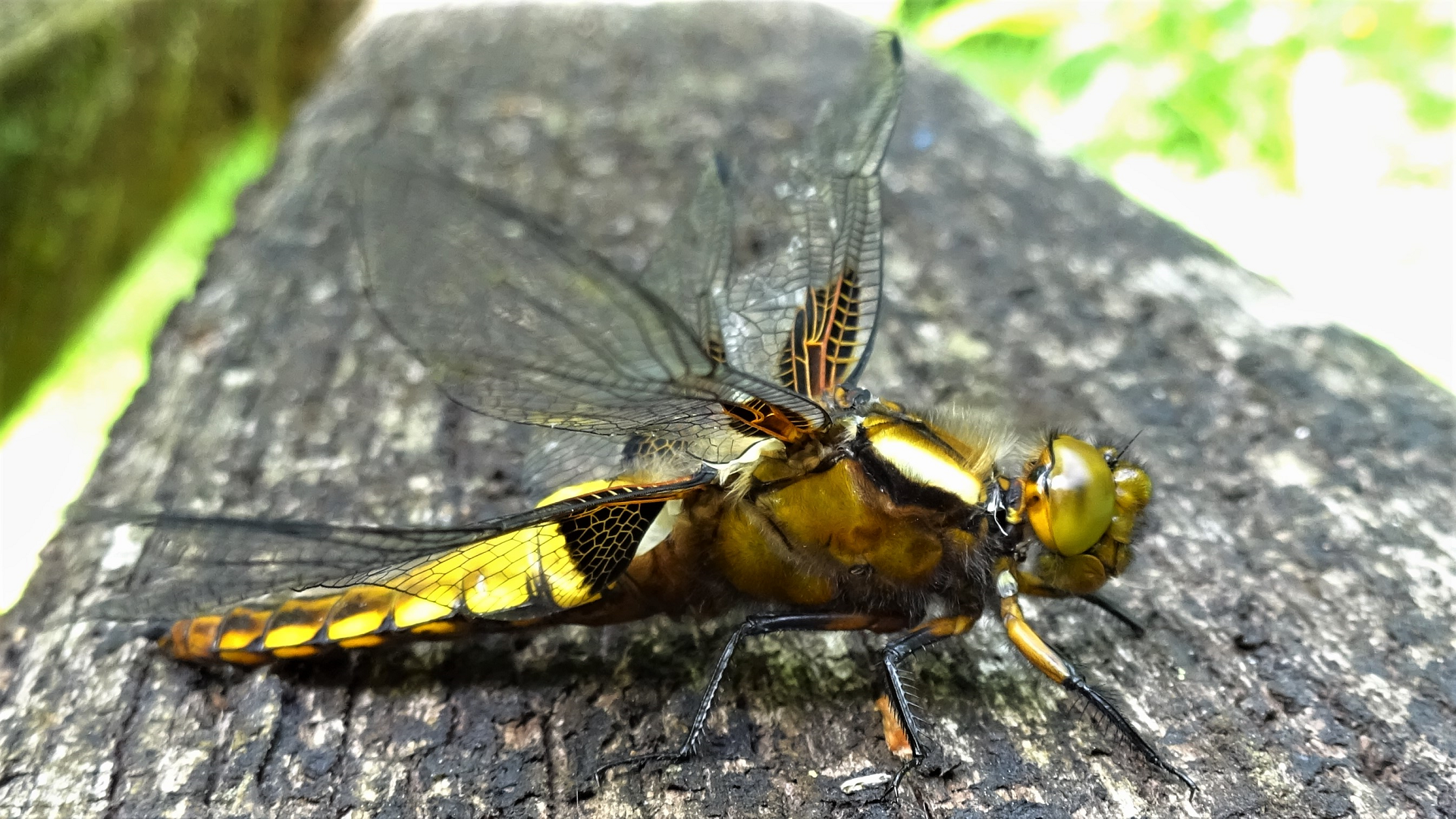
Usually found near ponds and lakes from May to July. Females are golden-brown, whereas males have a blue abdomen with yellow edges. Immature adults have similar coloration to females. This was photographed at Sheepwater.
#
Azure Damselfly
Coenagrion puella
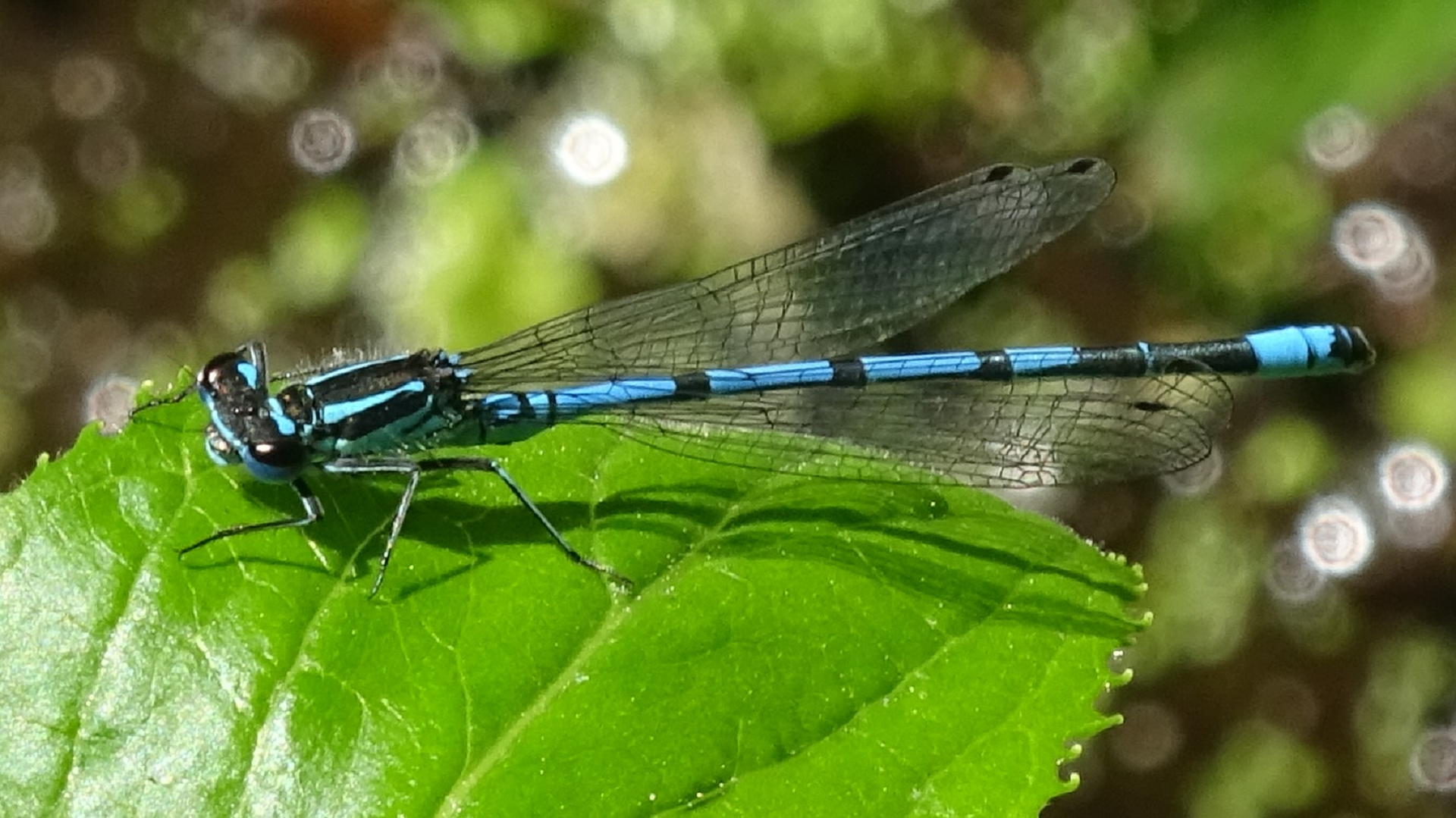
This species has narrow blue shoulder-stripes and an extra black line extending from the forewing base a third of the way across the thorax side towards the legs assist with identification. Females are usually green, although blue forms also exist. This species has a preference for still ponds and is normally seen from May to July.
#
Large Red Damselfly
Pyrrhosoma nymphula
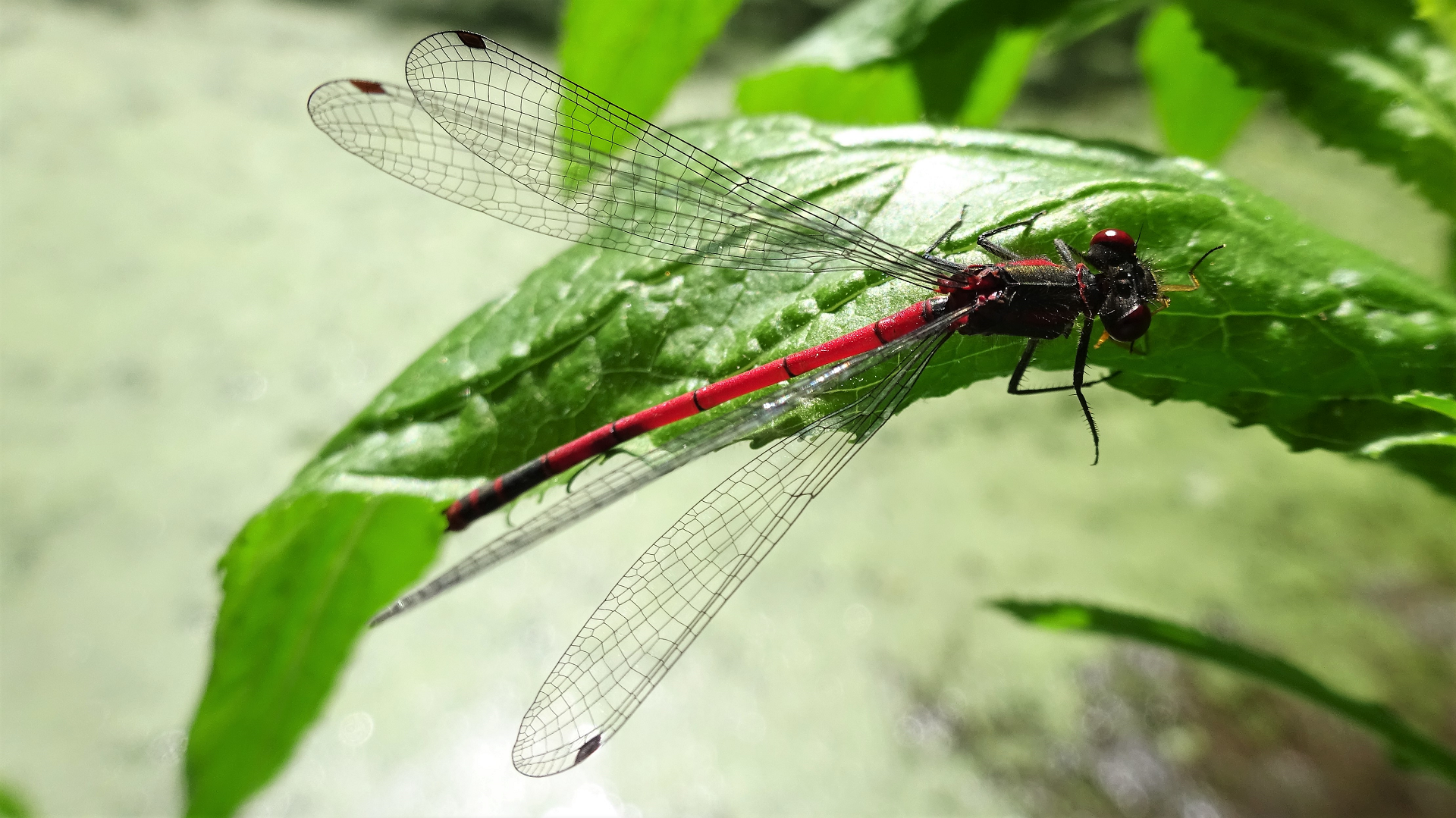
Generally one of the first damselfly species to emerge in spring usually near wetland habitats. Black legs rule this out from being the scarcer Small Red damselfly.
#
Silver Stretch Spider
Tetragnatha montana
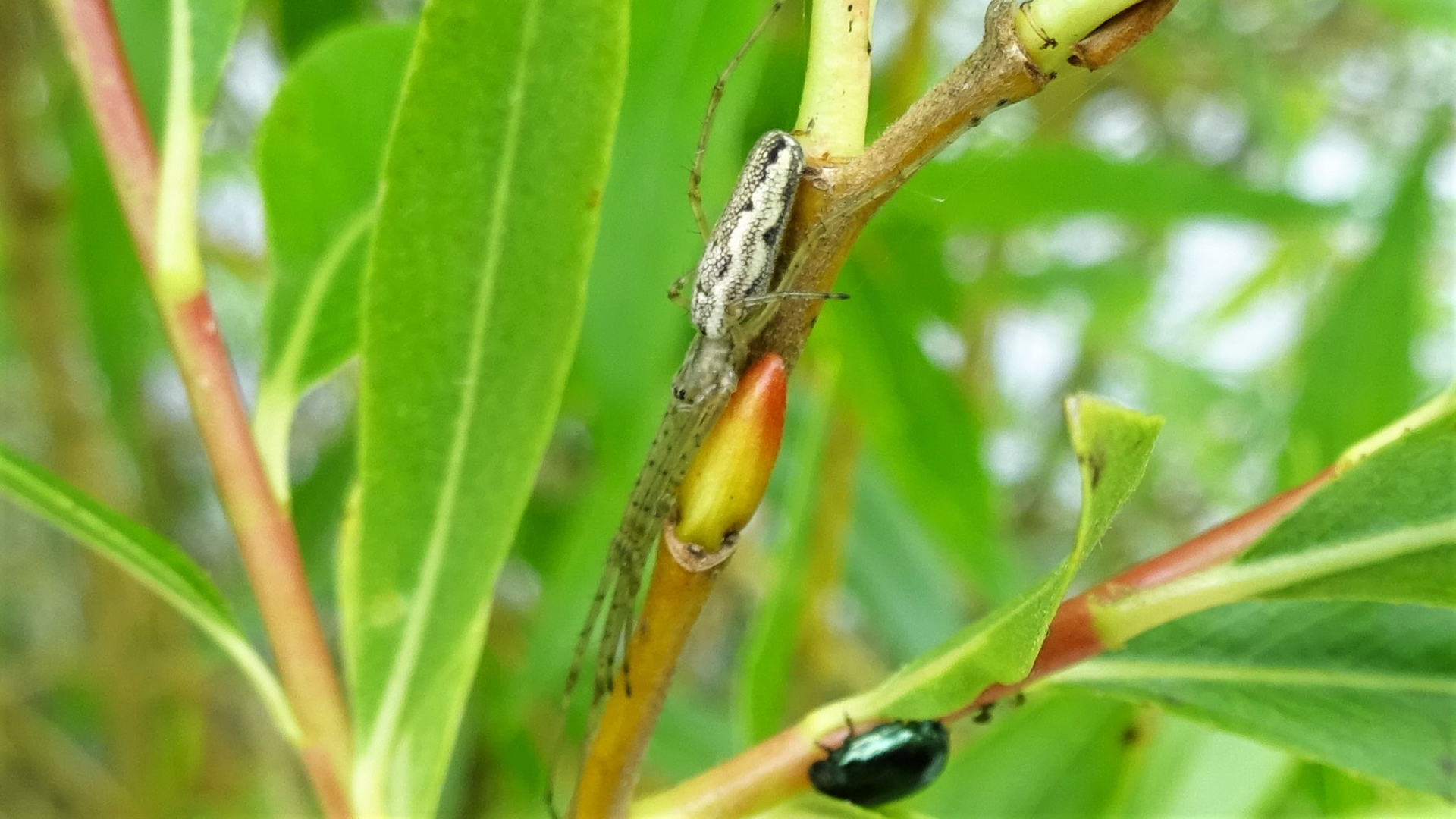
This is a species of Long-jawed Orb Weaver Spider that mainly preys on flies and mosquitoes. Its name refers to the shiny metallic body colour and the habit of extending its legs out in front when at rest.
#
European Rabbit
Oryctolagus cuniculus
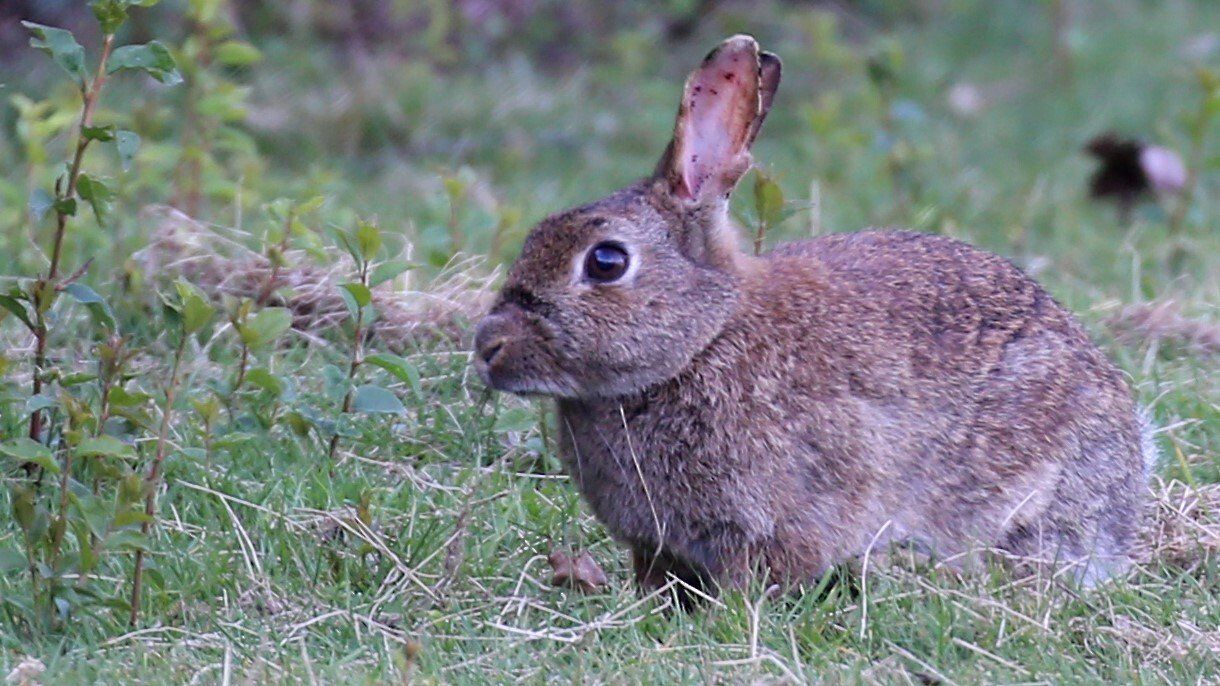
European Rabbits originate from the Iberian Peninsula and were introduced to Britain by the Normans, becoming widespread from the mid-1700s.
#
Grass Snake
Natrix helvetica
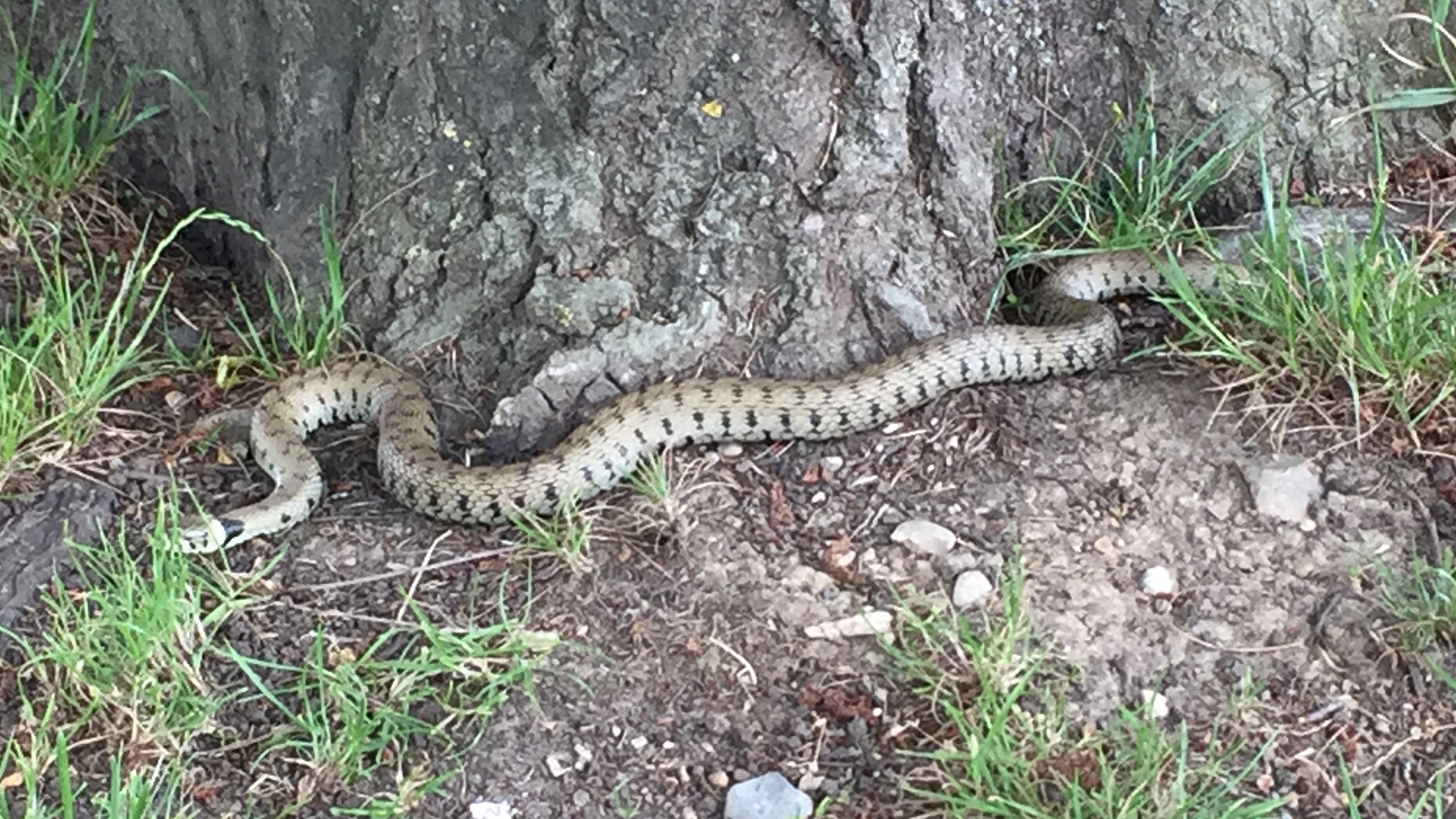
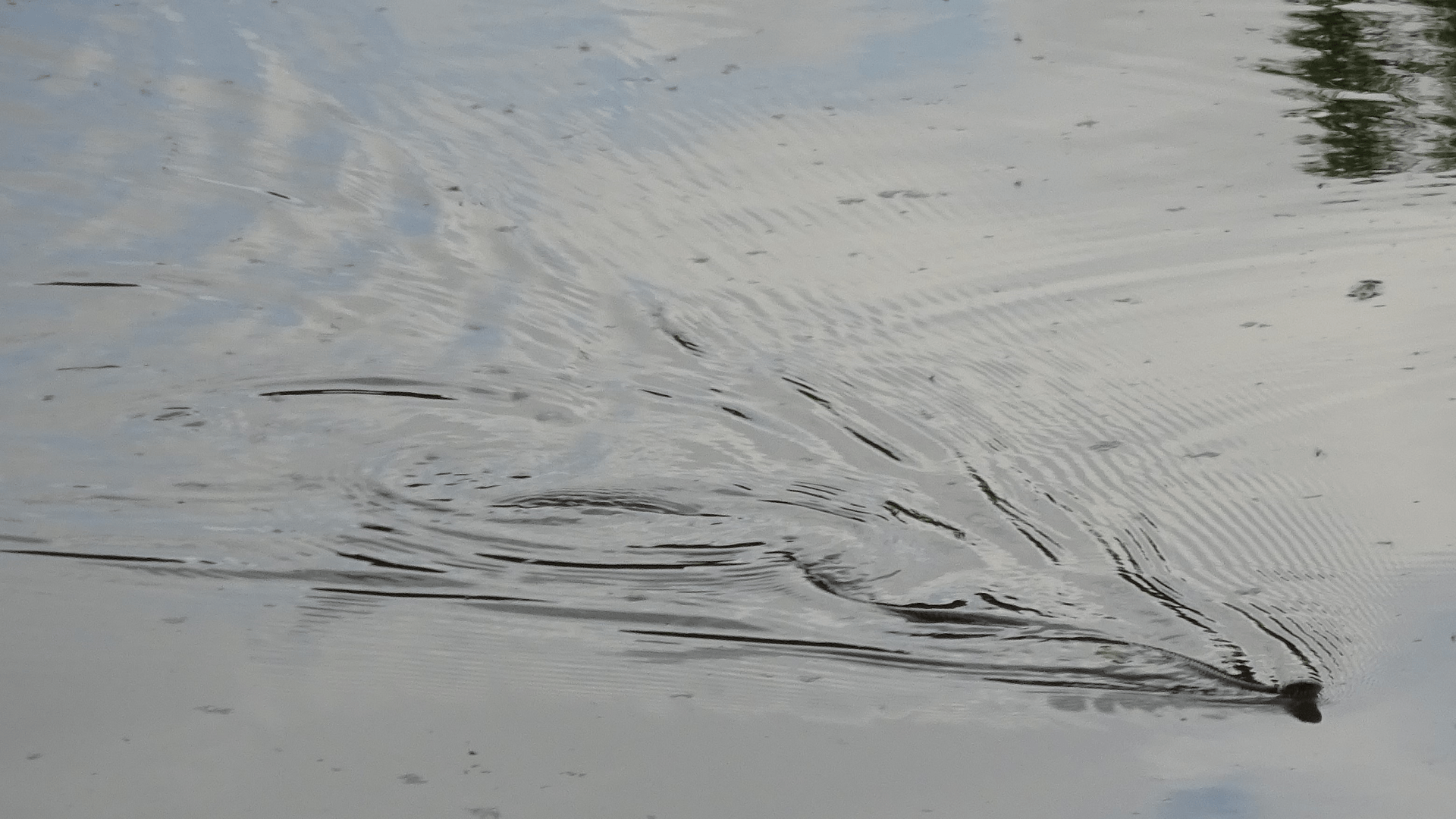
Grass Snakes have a pale yellow or orange neck collar (although this may be missing on elderly females) and a body of dark green or brown. The underside is whitish with irregular blocks of black. Grass Snakes grow up to one metre in length and occasionally a bit longer. They normally slither away when sensing vibration from footsteps. When cornered they hiss and if that fails to scare an intruder away they pretend to be dead. When handled evil-smelling fluid is released from anal glands and stomach contents are regurgitated as a defence mechanism. On rare occasions that they strike it is normally with a closed mouth. Grass Snakes are strong swimmers and enter water to hunt frogs, toads, newts and fish. Hibernation occurs from October to February under logs or in leaf litter.
#
© hainaultforest.net. All rights reserved.
This website uses necessary cookies. It does not use targeting or advertising cookies.