

FIRST QUARTER 2019
This Journal covers the first quarter of 2019 from January to March.
Kingfisher
Alcedo atthis
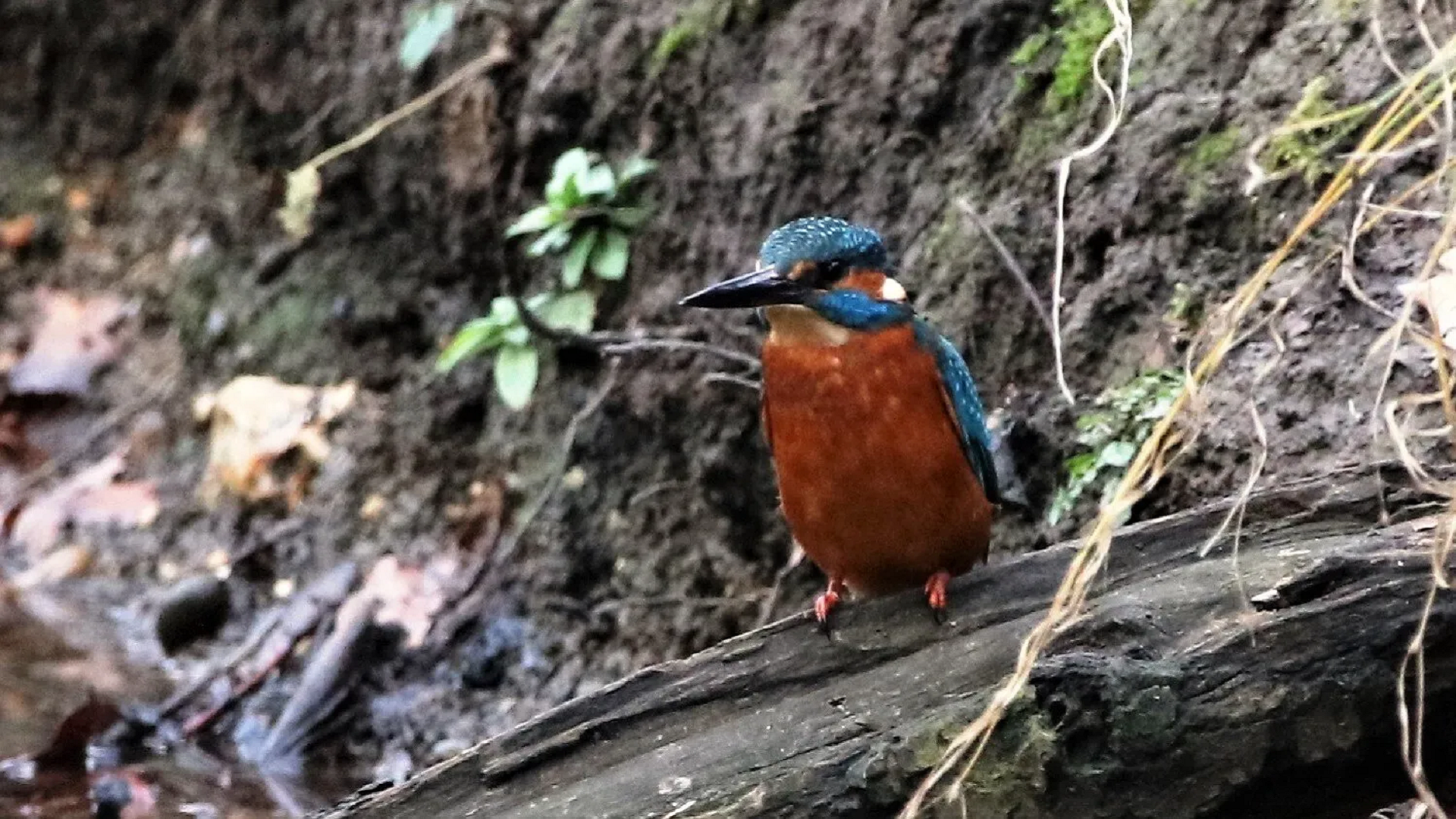
Kingfishers are rarely seen at Hainault Lake. They perch on branches from where they dive for fish, appearing as a blue flash when swiftly moving over the water's surface. Nests are made in holes close to the water.
#
Coot
Fulica atra

Coots are omnivorous birds that primarily consume plant material. They favour shallow, vegetated lakes for foraging. To find small invertebrates, they dive underwater and typically resurface with their catch before eating. This behaviour can occasionally result in conflicts with other coots over food. Coots frequently display aggressive behavior towards other coots that attempt to enter their territory.
#
Goosander
Mergus merganser
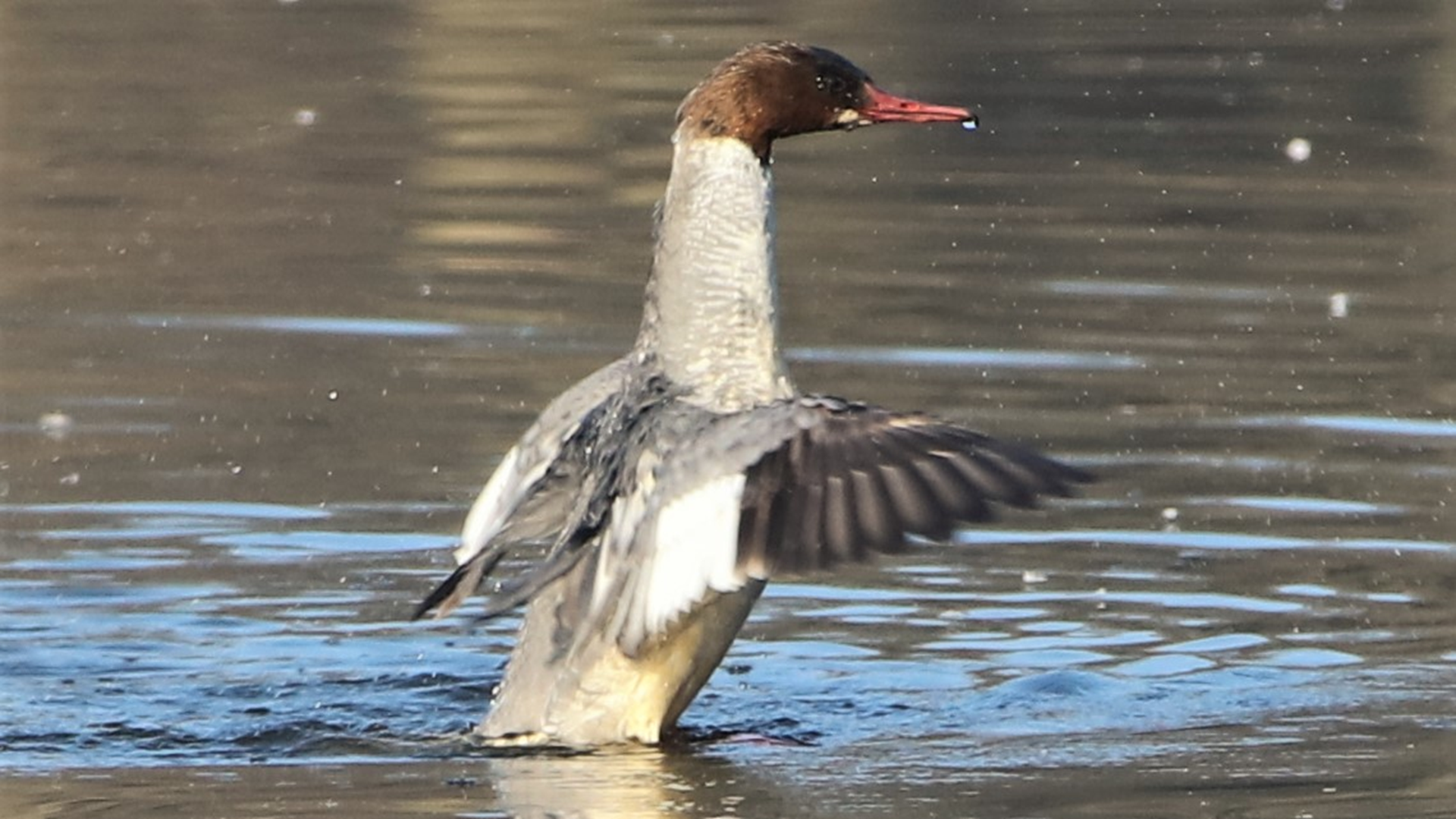
Goosander are fresh-water diving ducks that visit the South during the winter months. The drake has a dark-green bulbous head and the female has a brown head. Goosanders belong to the Sawbills, a family with serrated bills used for catching fish.
#
Manky Duck
Anas platyrhynchos
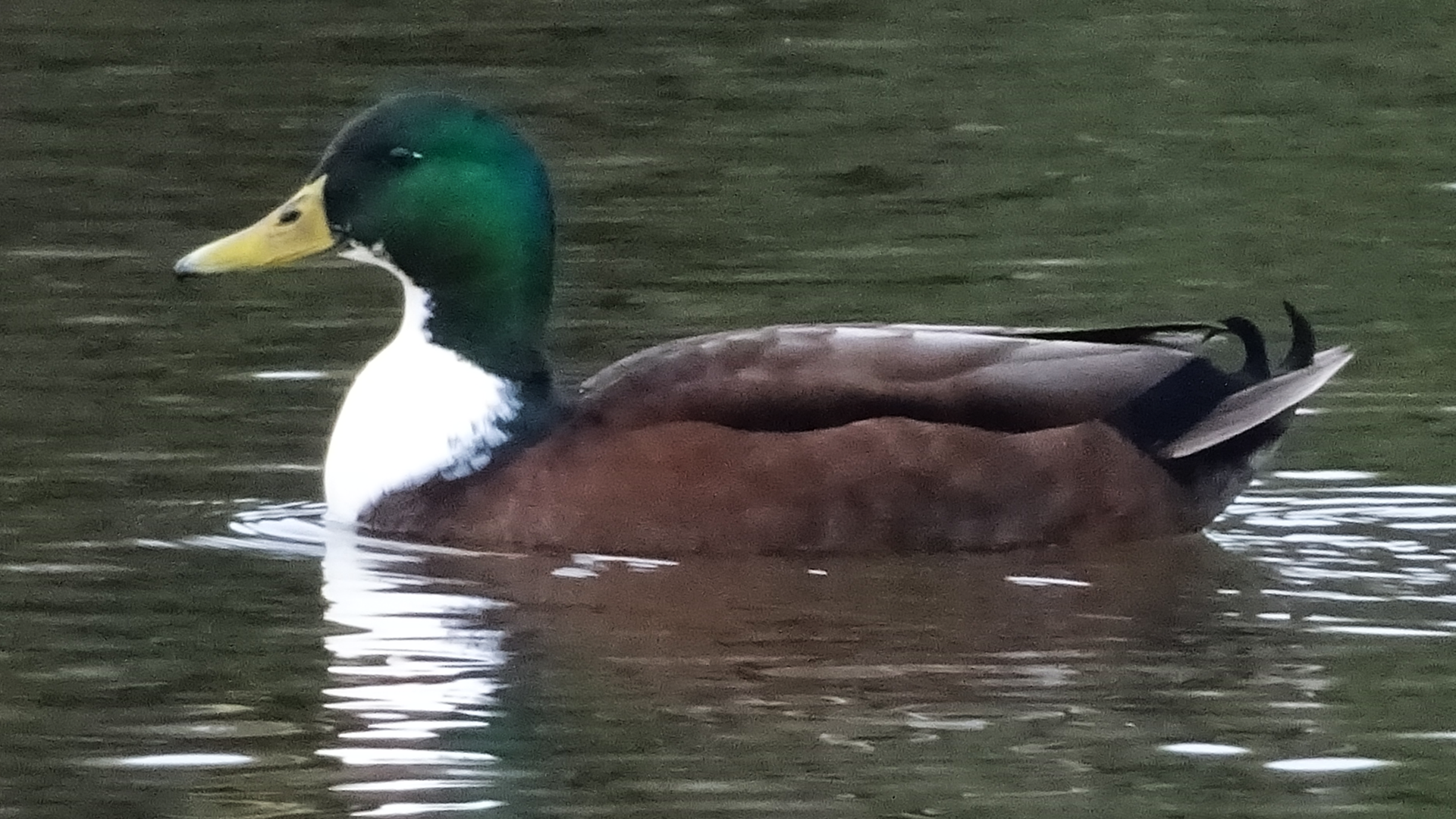
Manky Duck, also known as the Bibbed Mallard, is a type of duck that originates from the selective breeding of domestic Mallards. They are not considered hybrids, as they are derived from birds of the same species. Their diet consists of vegetation, seeds, berries, insects, and shellfish.
#
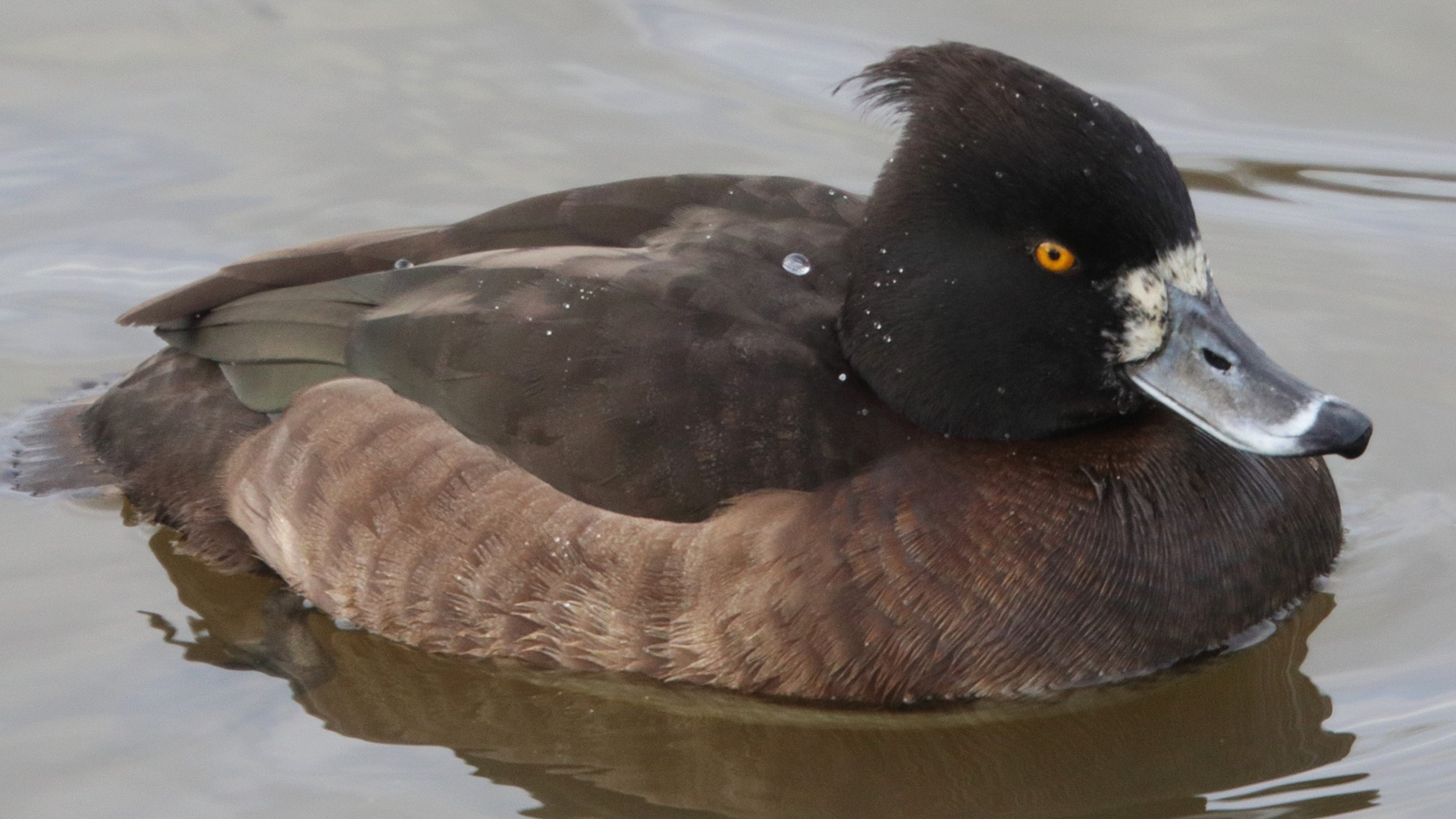
Tufted Ducks
Aythya fuligula
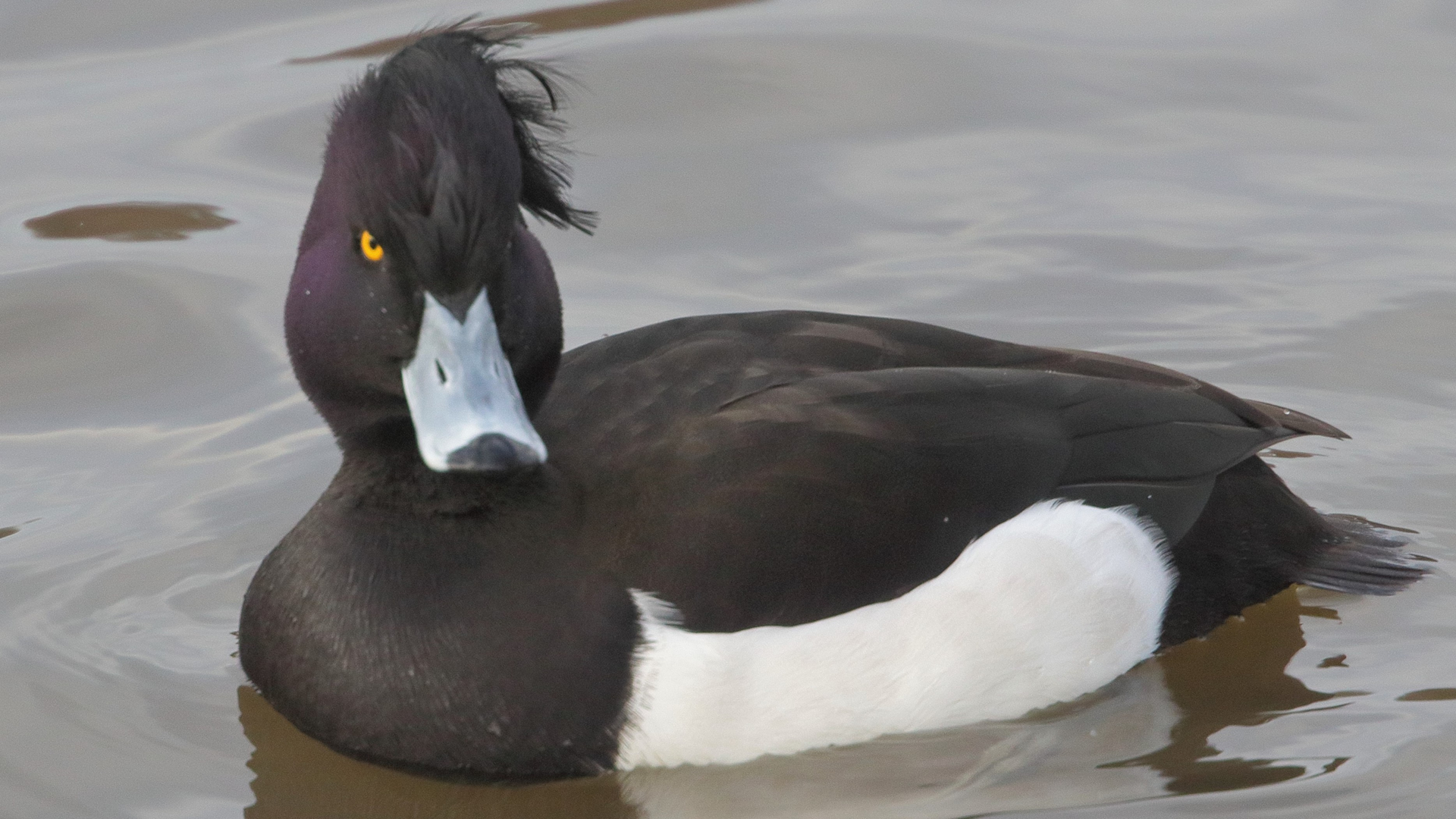
Tufted ducks are characterised by a distinct tuft on the back of their heads. This feature is particularly prominent in males and is also present, though usually shorter, in females, which gives them a unique appearance compared to other diving ducks. Males have black and white colouration, while females are brown. Tufted Ducks have their legs positioned towards the rear of their bodies, which makes them seem clumsy when walking; they are better adapted to life in the water.
#
Mallard
Anas platyrhynchos
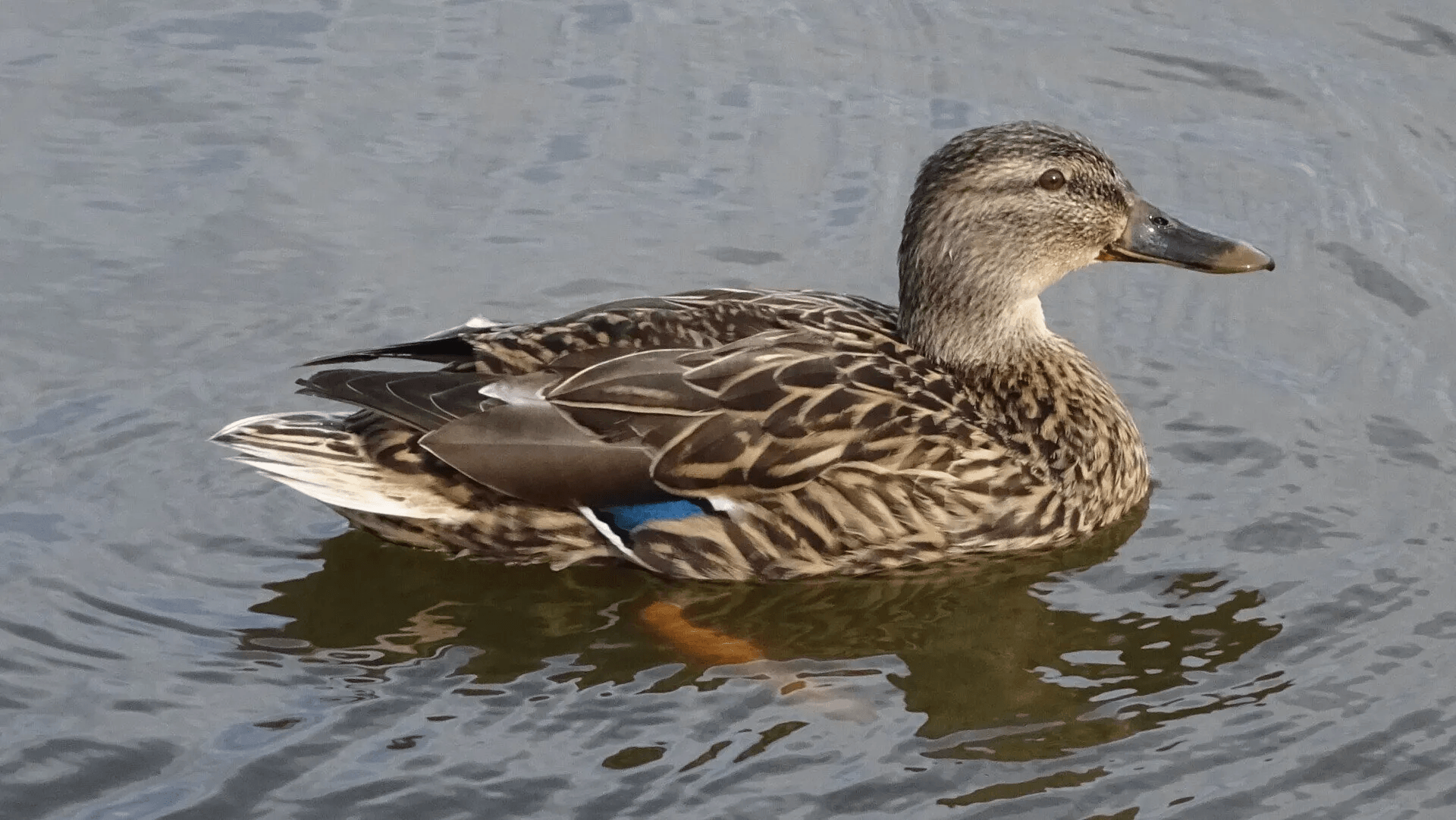
Mallards are the most common type of duck found in Britain. Female mallards are less colorful than their male counterparts. A distinguishing feature of female mallards is the blue and white speculum, which sets them apart from other brown ducks.
#
Blackbird
Turdus merula
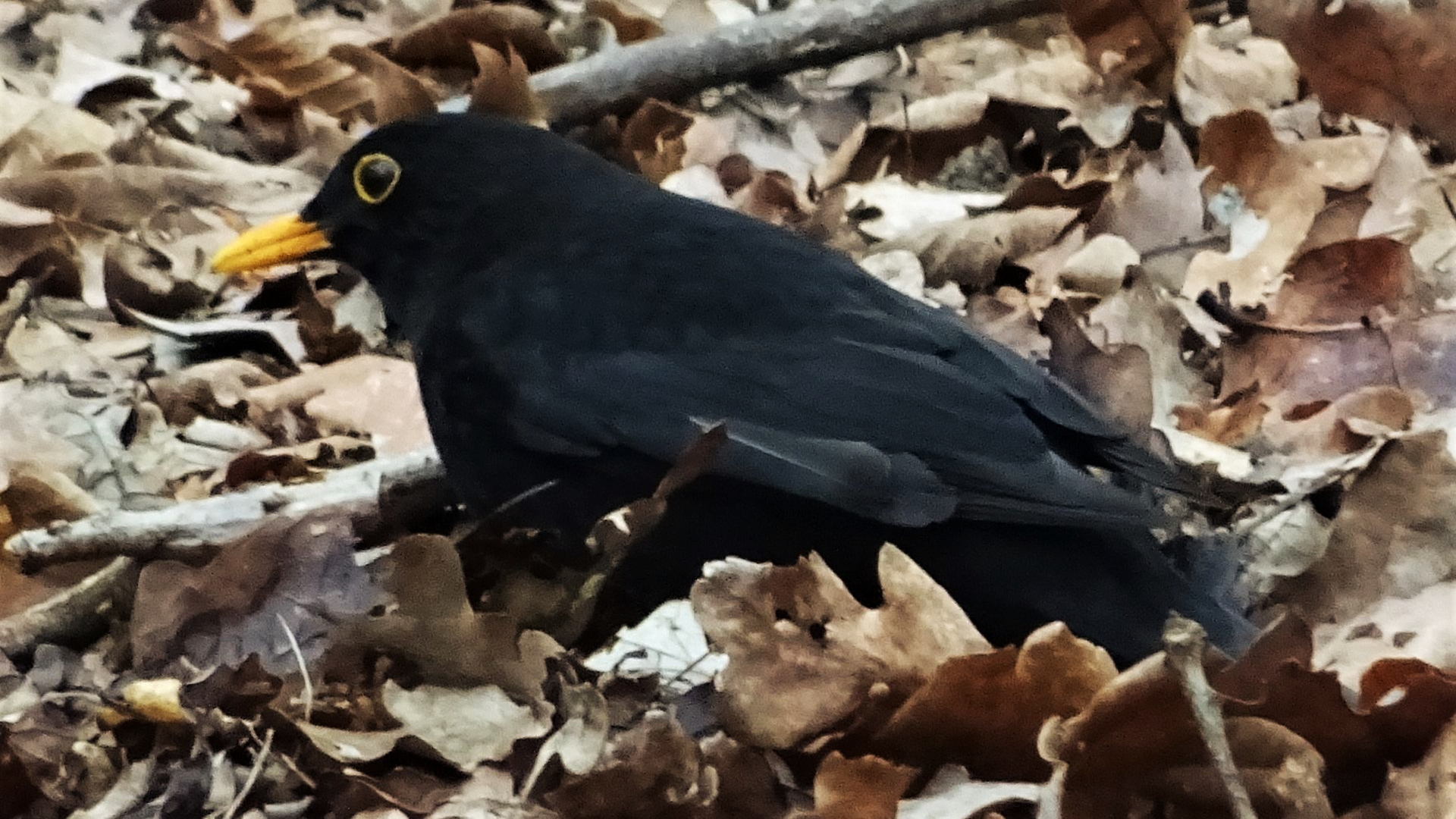
Males are black, females are brown. Both sexes have yellow beaks and eye-rings. They feed on worms, insects and berries.
#
Goldcrest
Regulus regulus
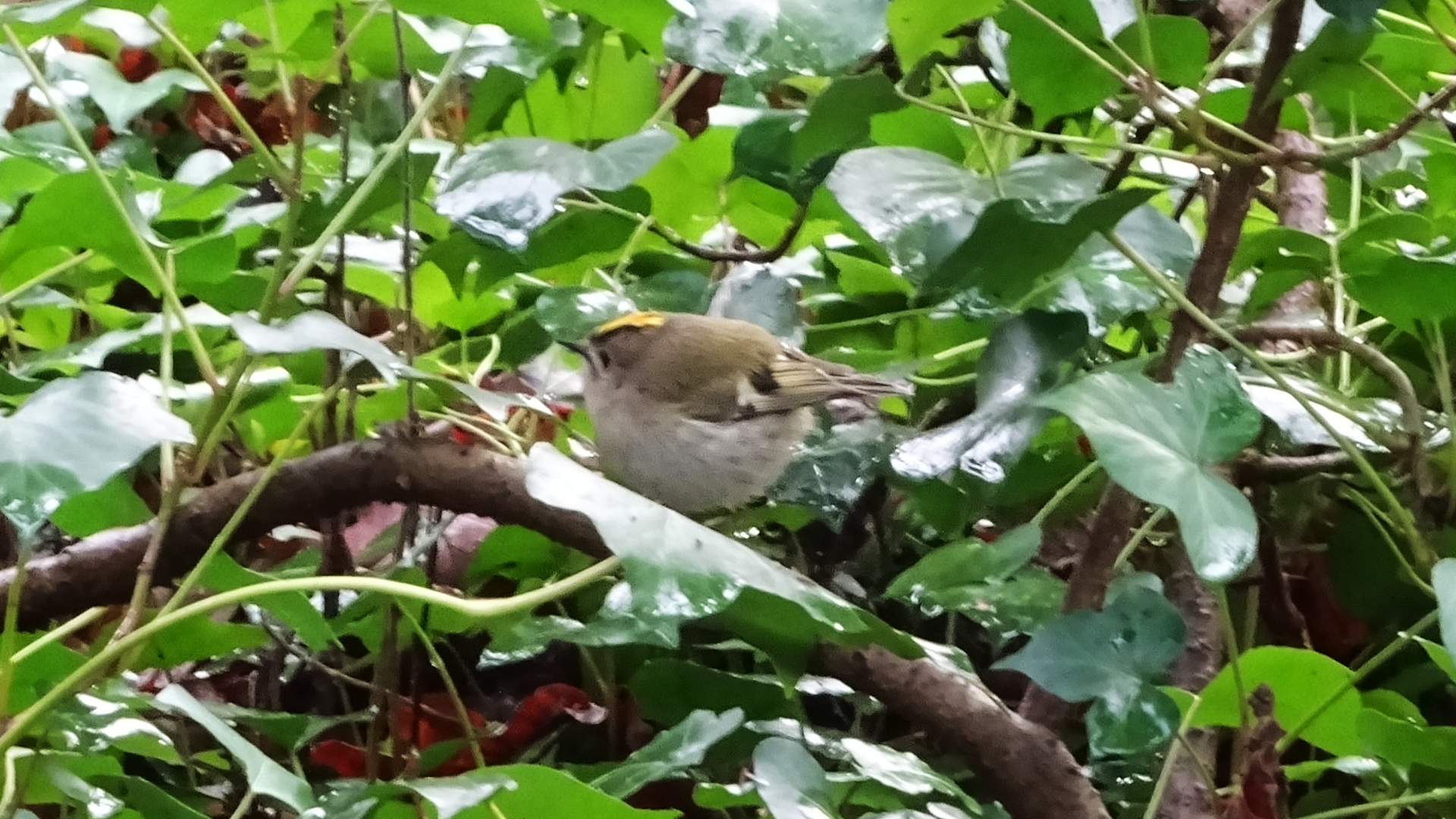
Britain's smallest bird. Males have an orange crest differing from those of females which are yellow. They feed on arachnids, insects, larvae and insect eggs.
#
Kestrel
Falco tinnunculus
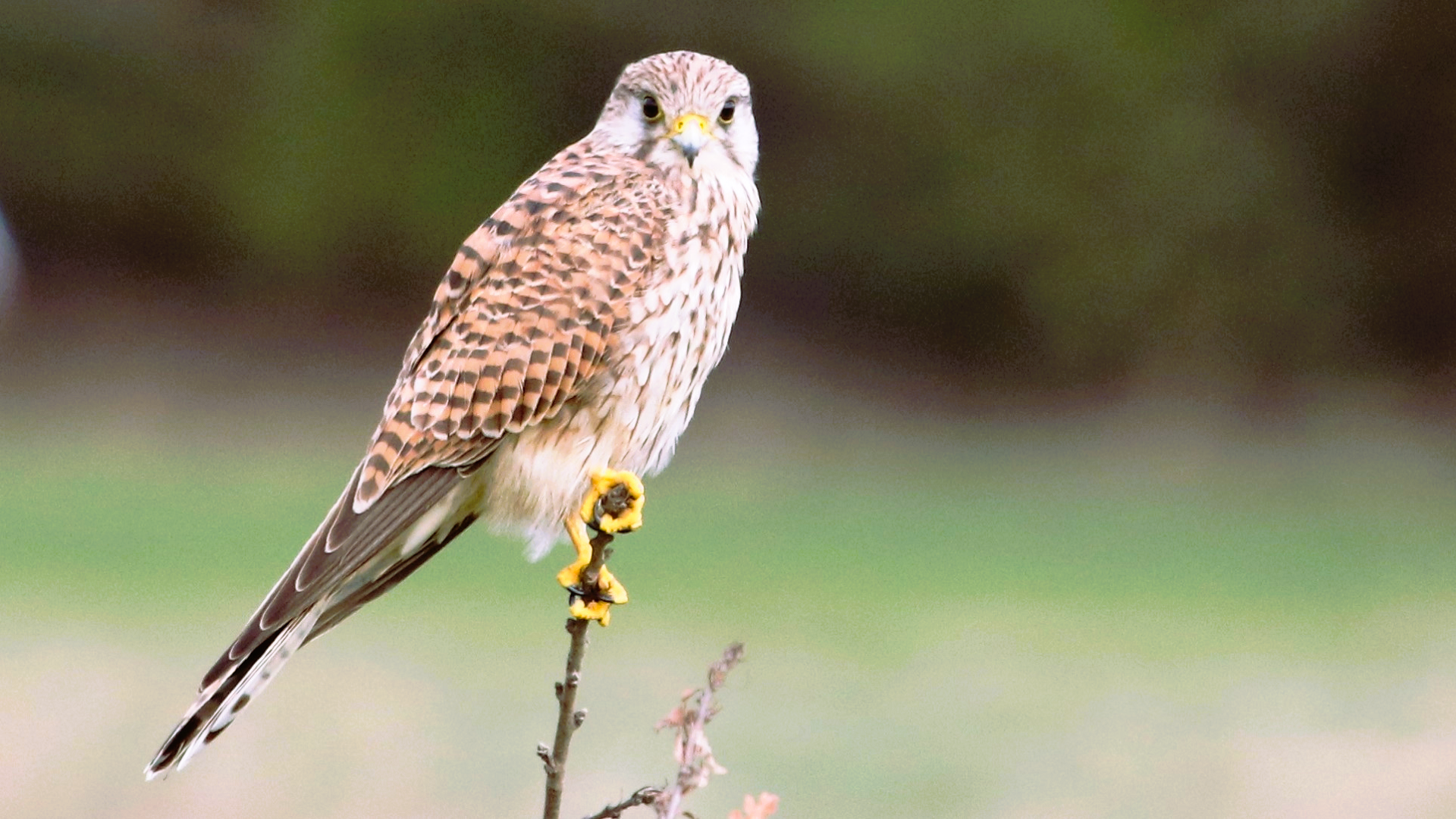
Kestrels can be identified by their hunting behaviour, which involves hovering over grasslands at heights of 10 to 20 meters before descending to catch prey. Their diet includes small mammals, lizards, and large insects.
#
Robin
Erithacus rubecula
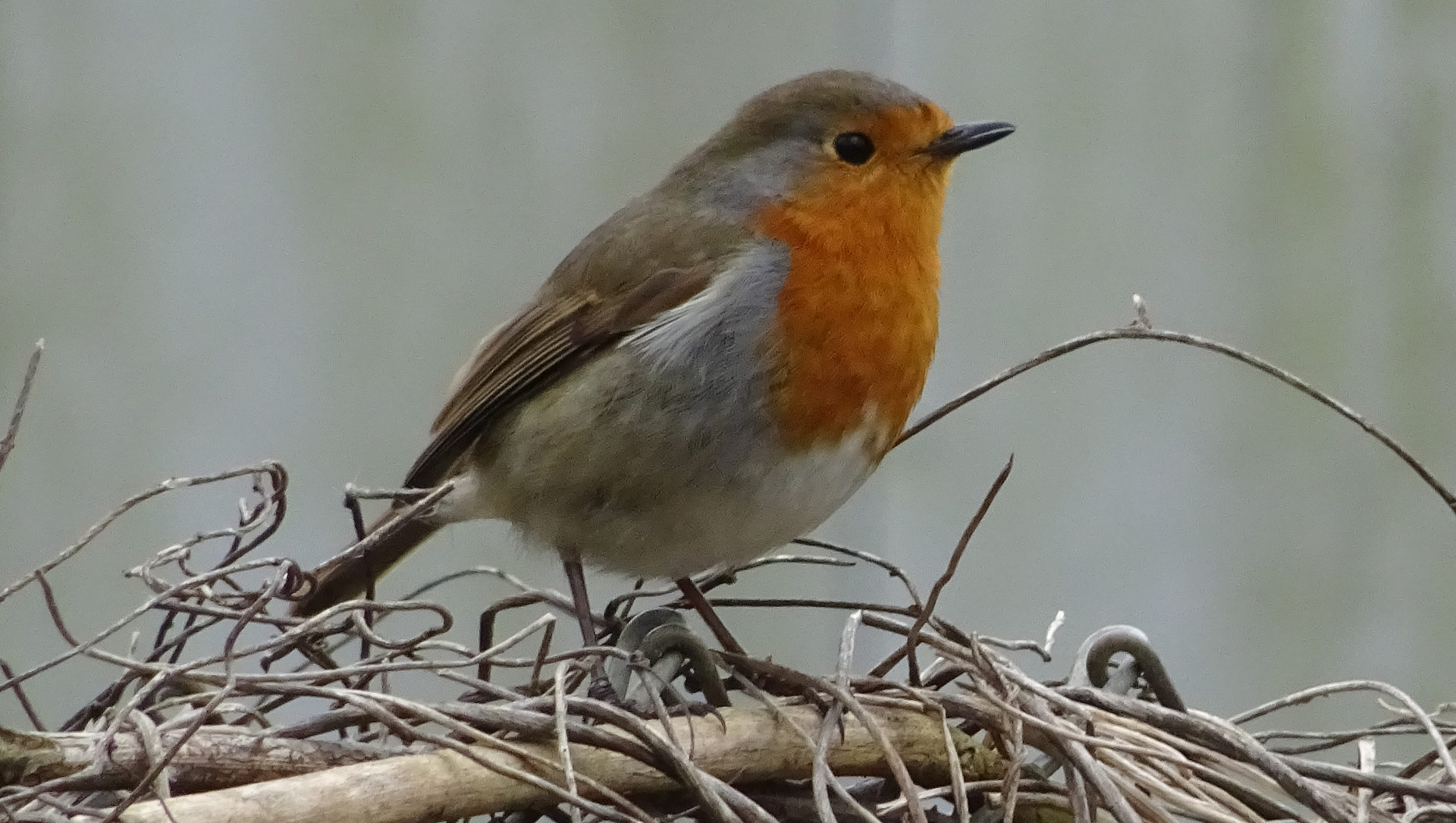
The Robin is reputed to be Britain's favourite bird.
#
Grey Wagtail
Motacilla cinerea

Grey Wagtails typically inhabit streams and can be identified by their grey back and longer tail, distinguishing them from Yellow Wagtails. Their diet consists mainly of insects.
#
Common Gull
Larus canus

Common Gulls can occasionally be observed alongside groups of Black-headed Gulls. They are slightly larger and possess greenish-yellow legs.
#
Comma
Polygonia c-album
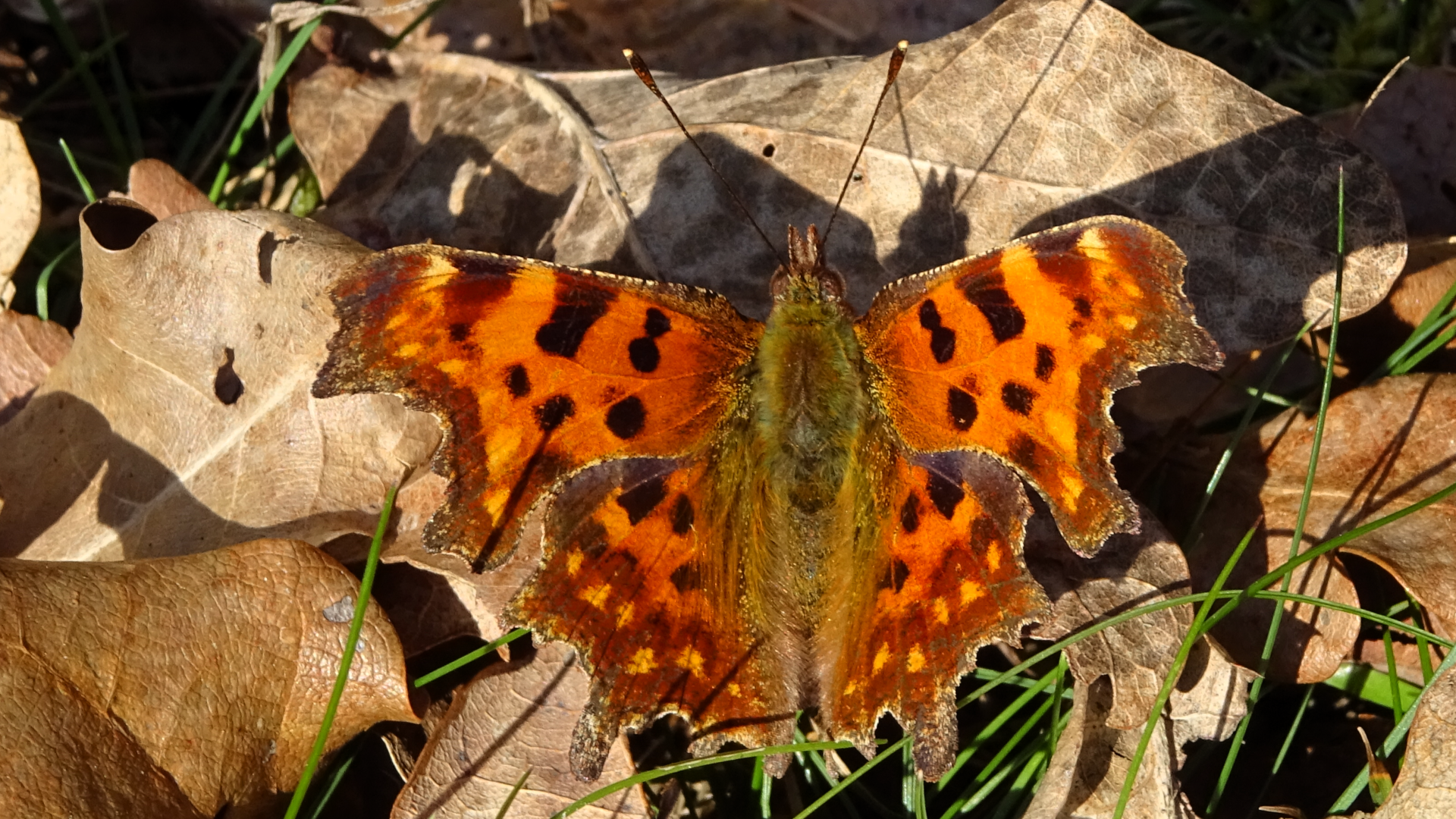
The Comma butterfly features jagged orange-brown upper wings accented with black and yellowish-brown markings. When at rest, it resembles a dried leaf. Comma butterflies prefer to rest on hedgerows in sunny areas. The name "Comma" comes from a small 'comma' mark found on the underside of their wings. Their caterpillars feed on nettles and hop plants.
#
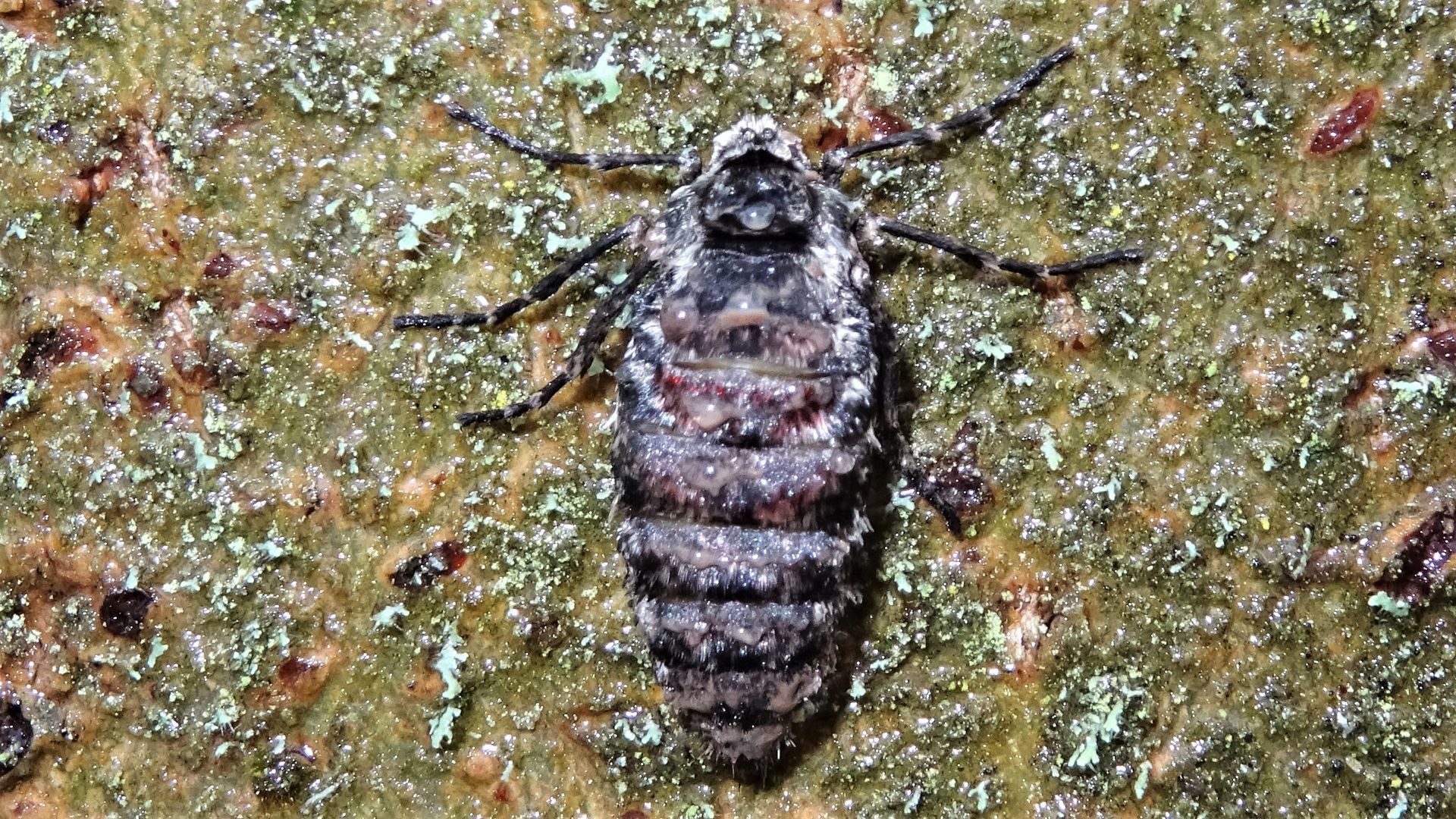
Winter Moth
Operophtera brumata
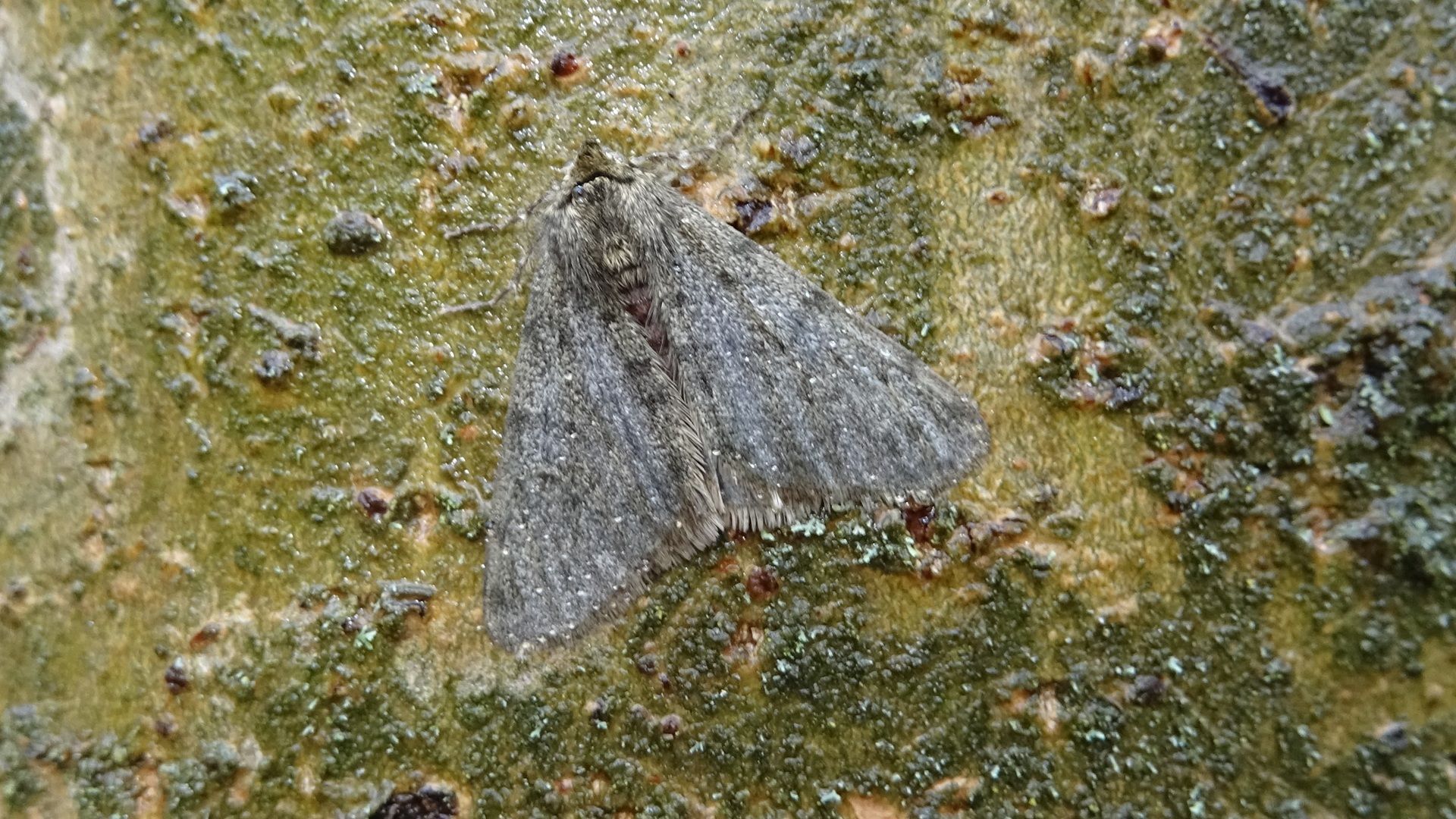
This common moth is one of the few species active during the winter. The females have almost no wings and crawl up tree trunks to await males.
#
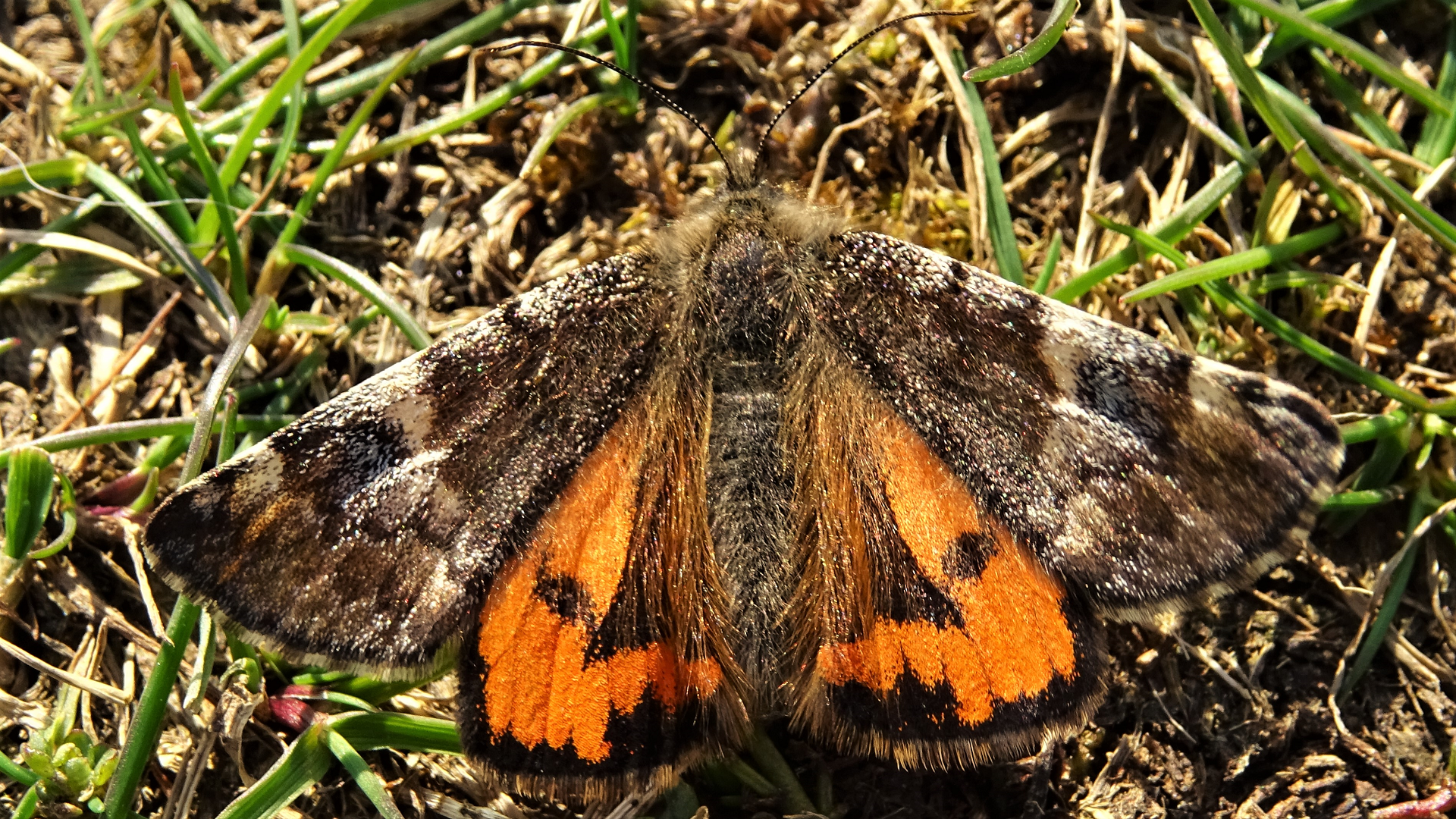
Orange Underwing
Archiearis parthenias
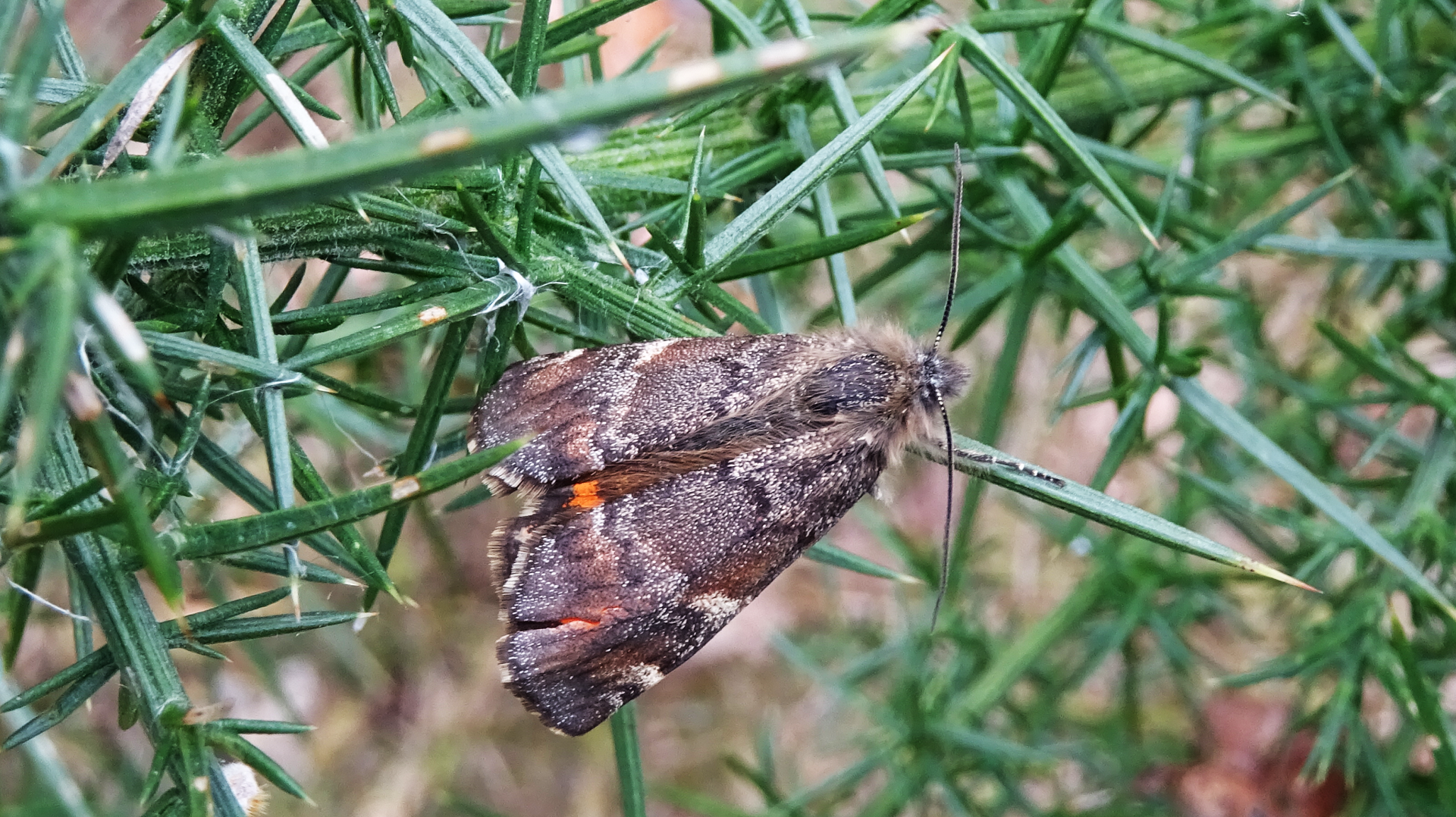
Day-flying moth seen on sunny days in March and April. They tend to stay near the top of birch trees, but are sometimes seen lower down on gorse bushes. The Orange Underwing and Light Orange Underwing are two very similar species that can only be told apart by examining the hindwing underside.
#
Square-spot Rustic
Xestia xanthographa
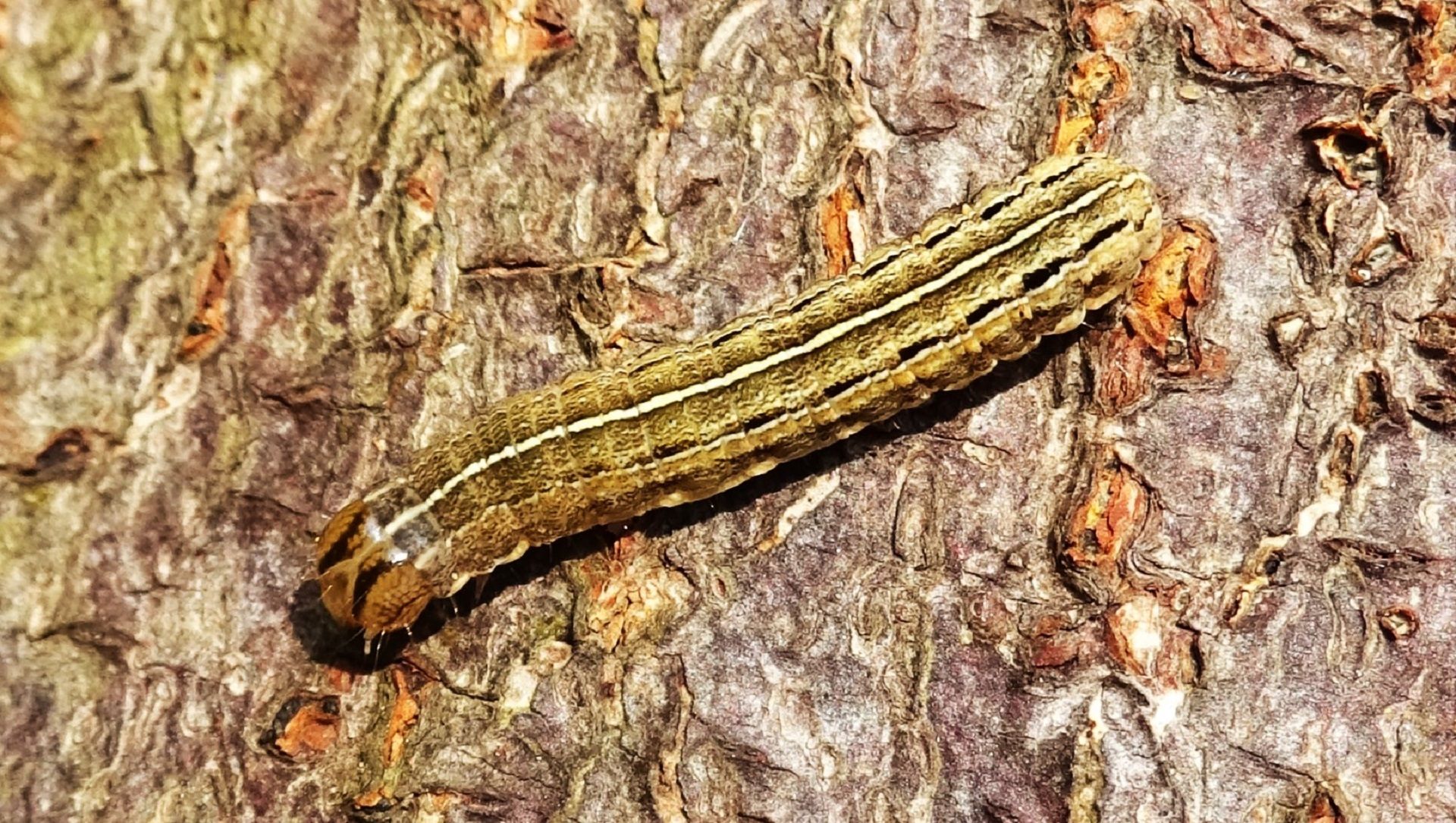
Square-spot Rustic caterpillars inhabit grasslands, particularly areas not impacted by agricultural activities. They undergo a period of dormancy during winter and emerge in the spring. Their length is approximately 20 mm.
#
Box Bug
Gonocerus acuteangulatus
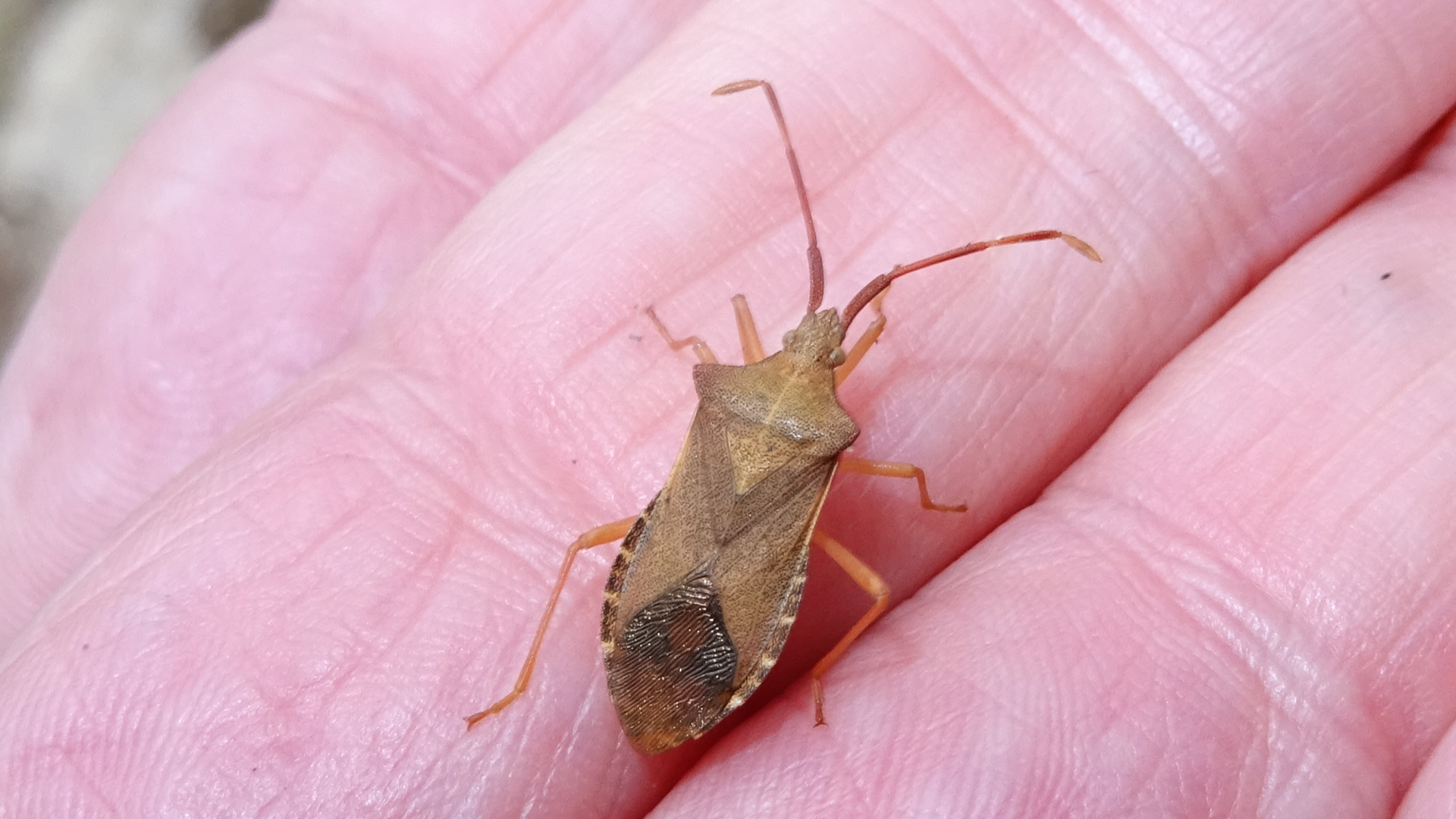
Once extremely rare and only recorded on box trees at Box Hill in Surrey. This species now feeds on different foodplants enabling it to spread. This bug was hibernating until it was disturbed by work being carried out in the forest.
#
Ground Bugs
Eremocoris podagricus
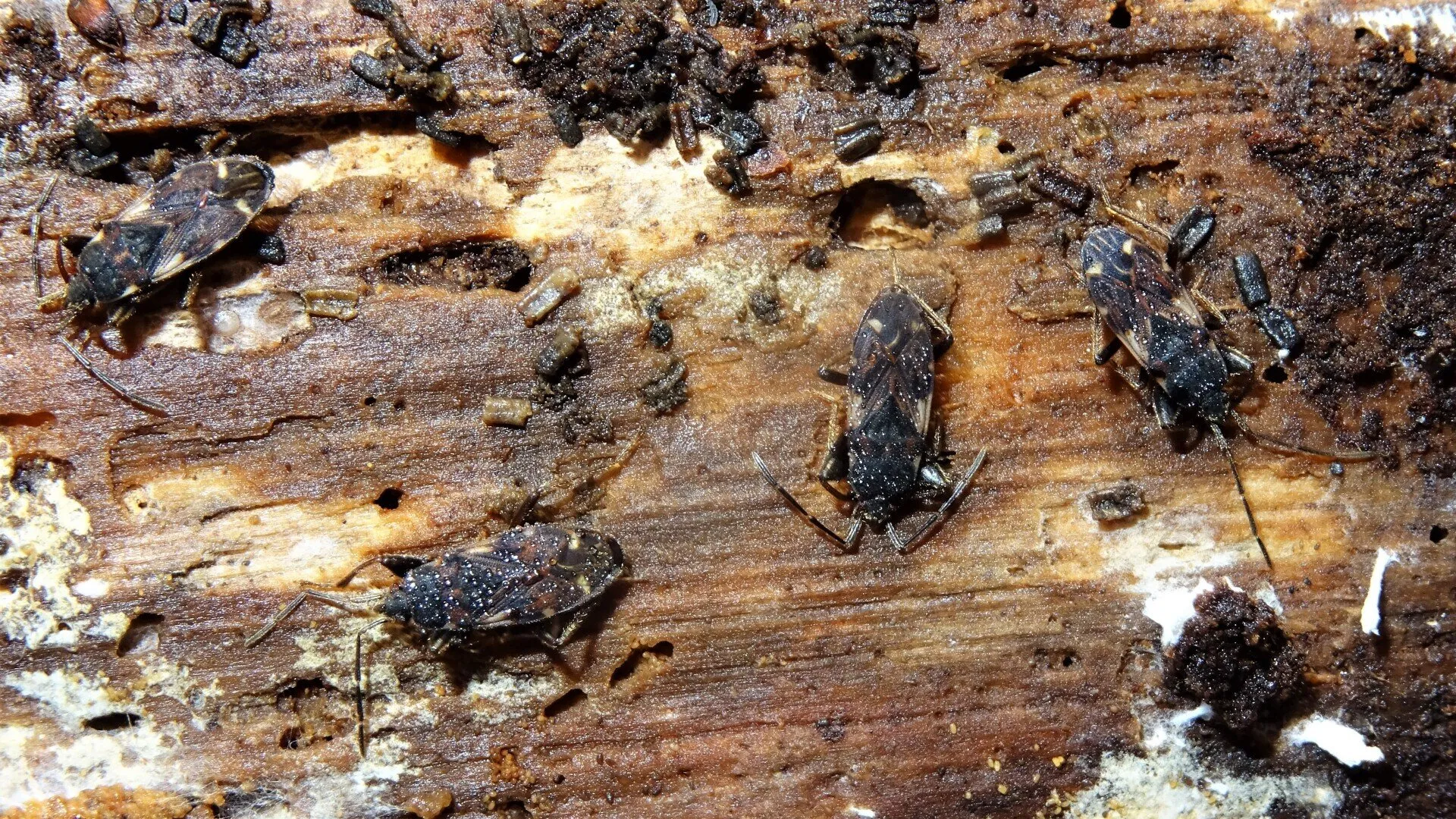
This bug is associated with moss growing beneath hawthorns and under bark on old logs. Not recorded very often which may be to them being difficult to spot due to excellent camouflage. About 6mm long.
#
Leafhopper
Tremulicerus

This leafhopper belongs to a very tough genus to identify, particularly outside the field season when it is difficult to establish host associations. Most inhabit poplar or willow, however this one was found on hornbeam. Hard to identify confidently, but possibly Tremulicerus vitreus. Length about 5mm.
#
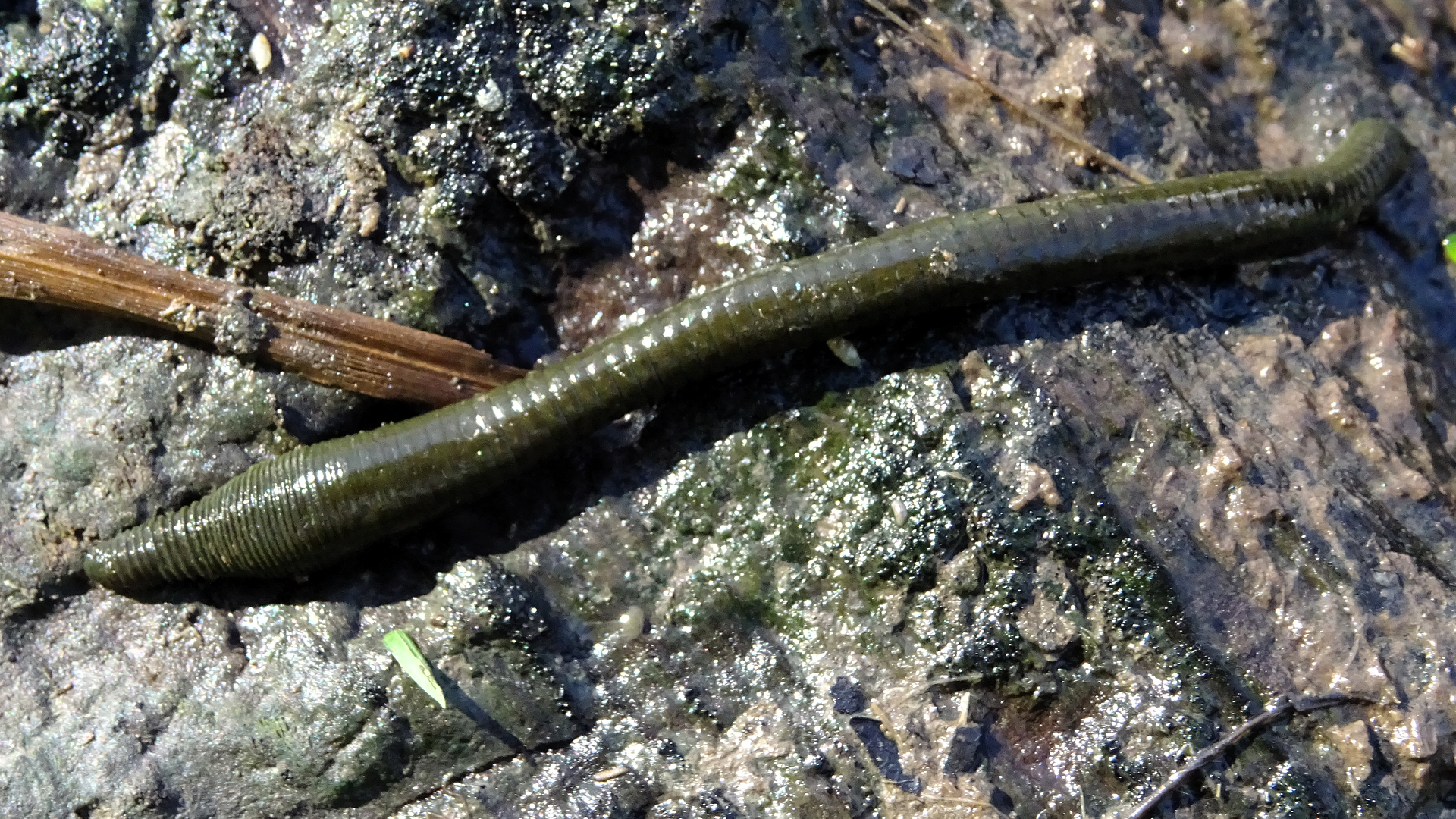
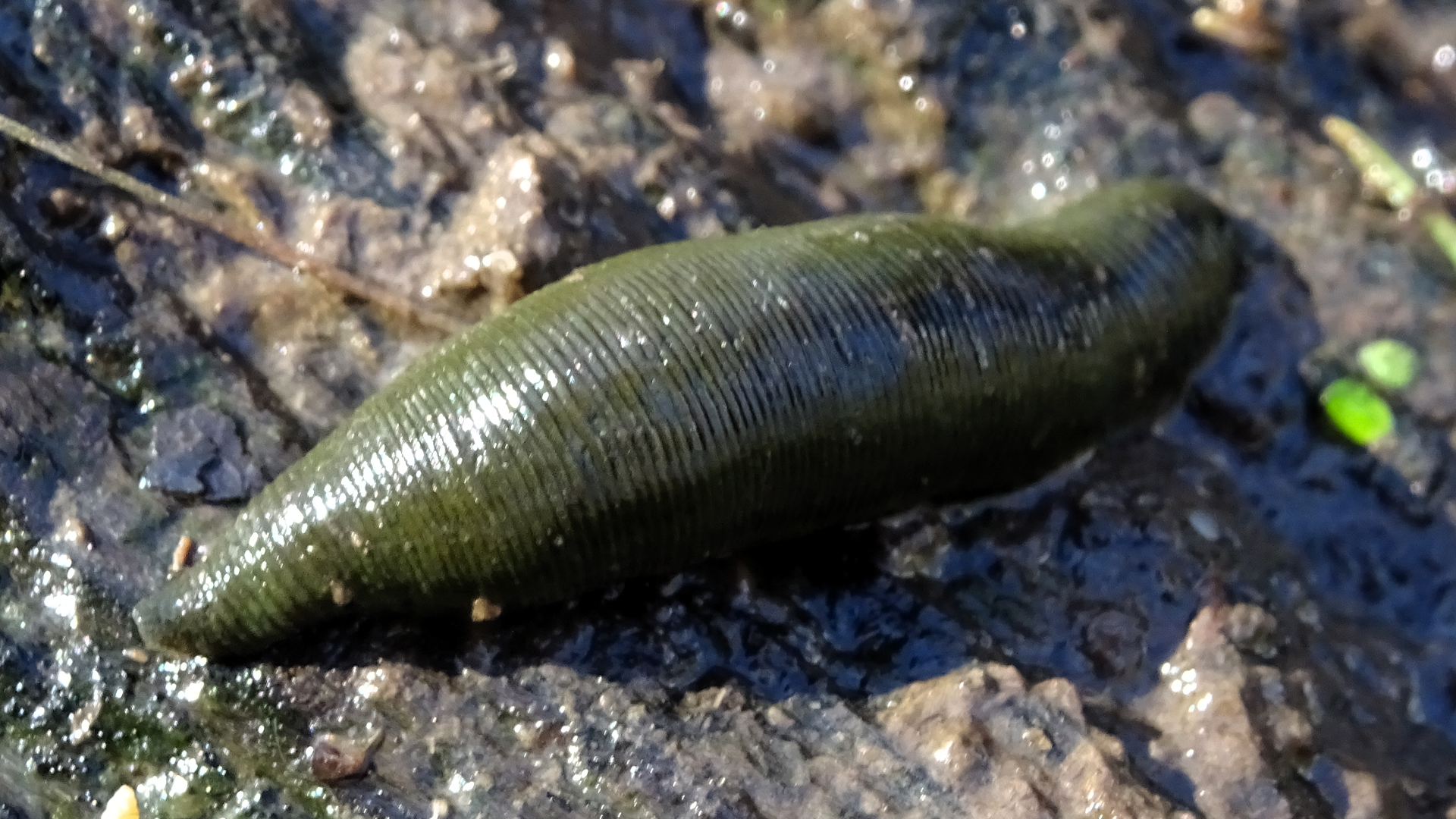
Horse Leech
Haemopis sanguisuga
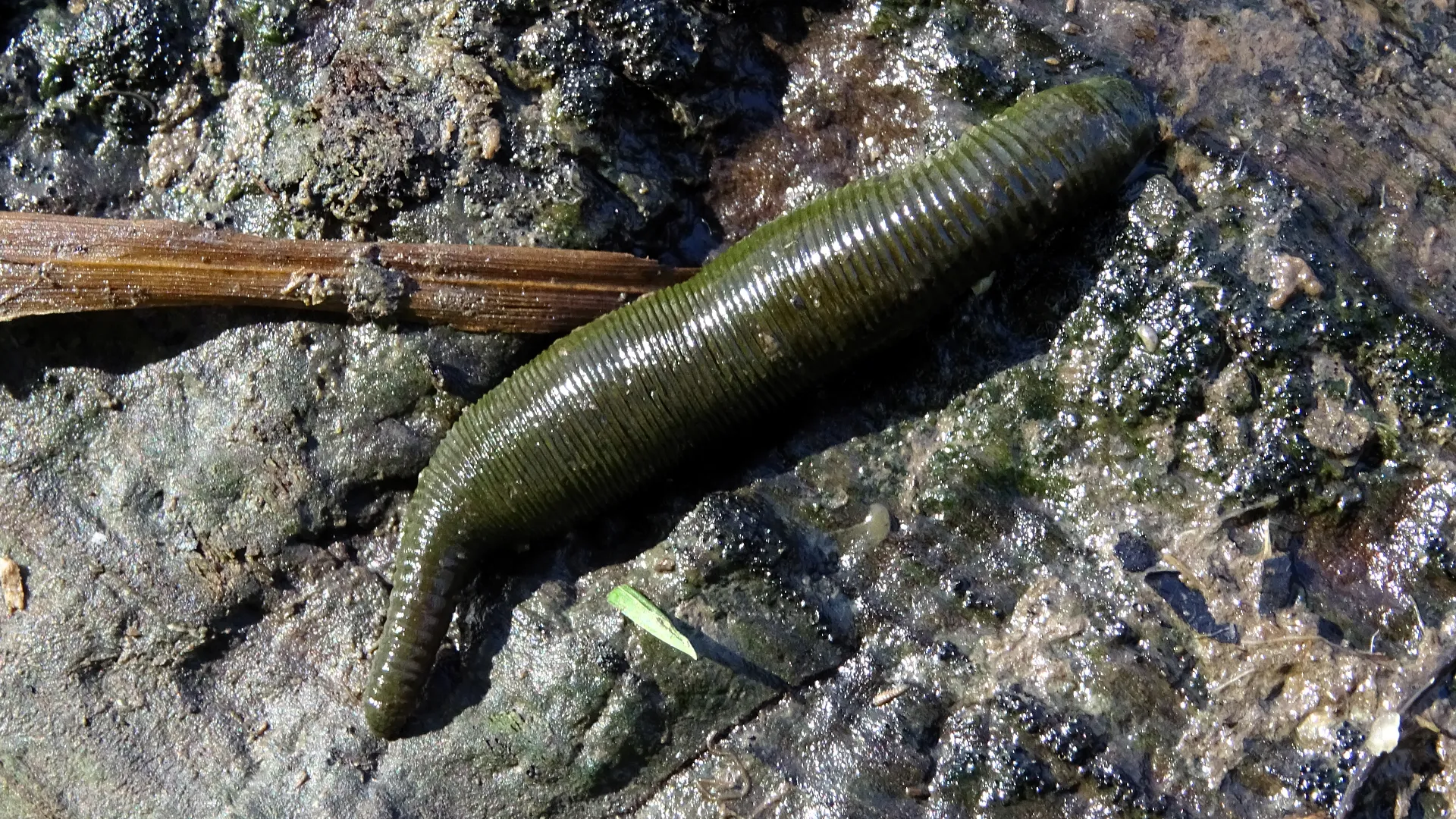
Horse leeches have colouration that ranges from brown-black to bottle-green. They are freshwater creatures found in lakes, ponds, and slow-moving streams, growing up to 10 cm in length (longer when their bodies are extended). These leeches are predatory, feeding on insect larvae, molluscs, tadpoles, and small fish. They may also travel on land in search of earthworms. Hainault Forest is home to several types of leeches, some of which may cause distress, discomfort, and minor health issues to dogs that swim in the water.
#
Potworm
Enchytraeida
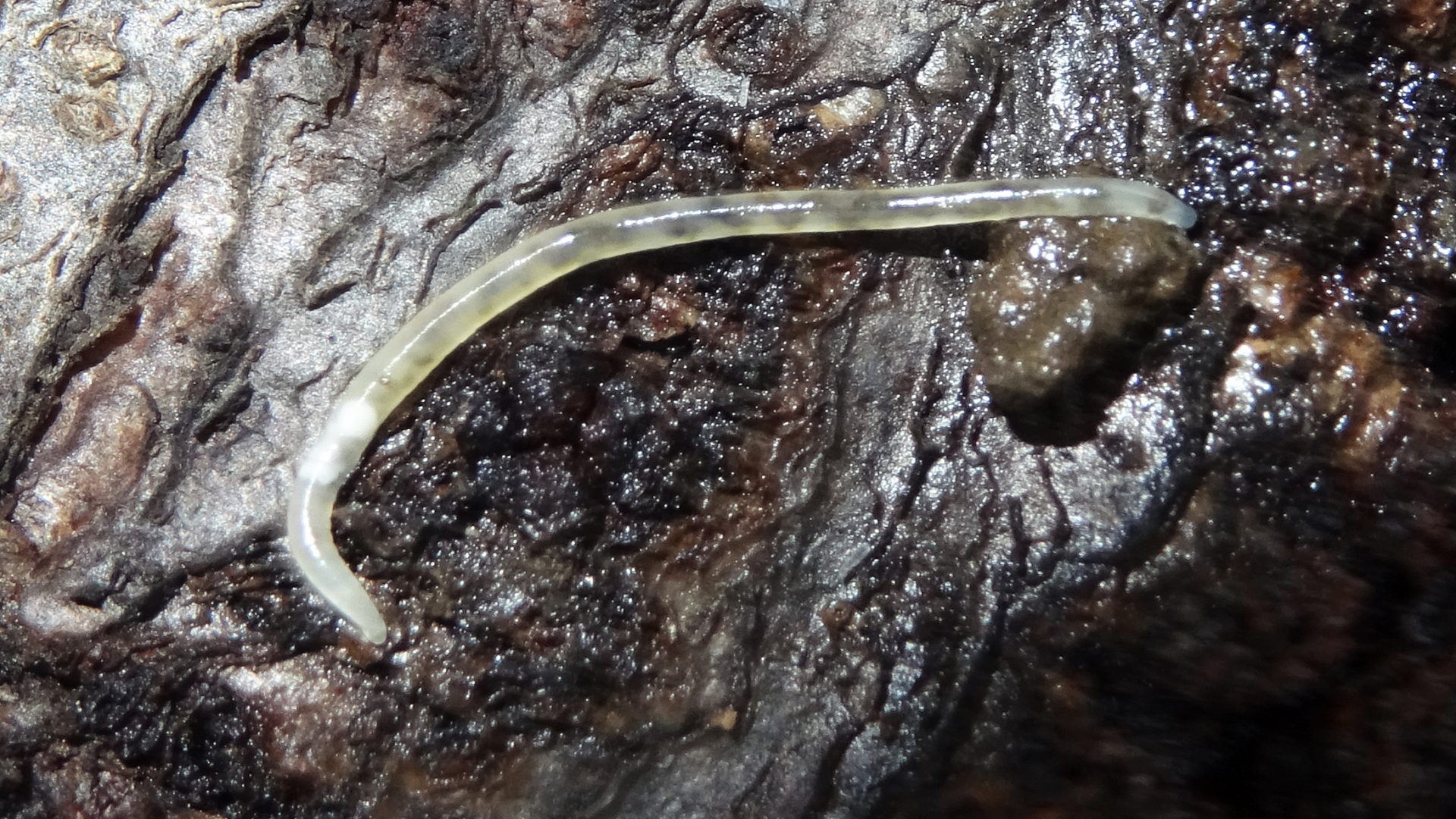
Potworms are tiny worms that live in soil and under logs. They eat organic debris helping to aerate the soil.
#
Eyed Flat-backed Millipede
Nanogona polydesmoides
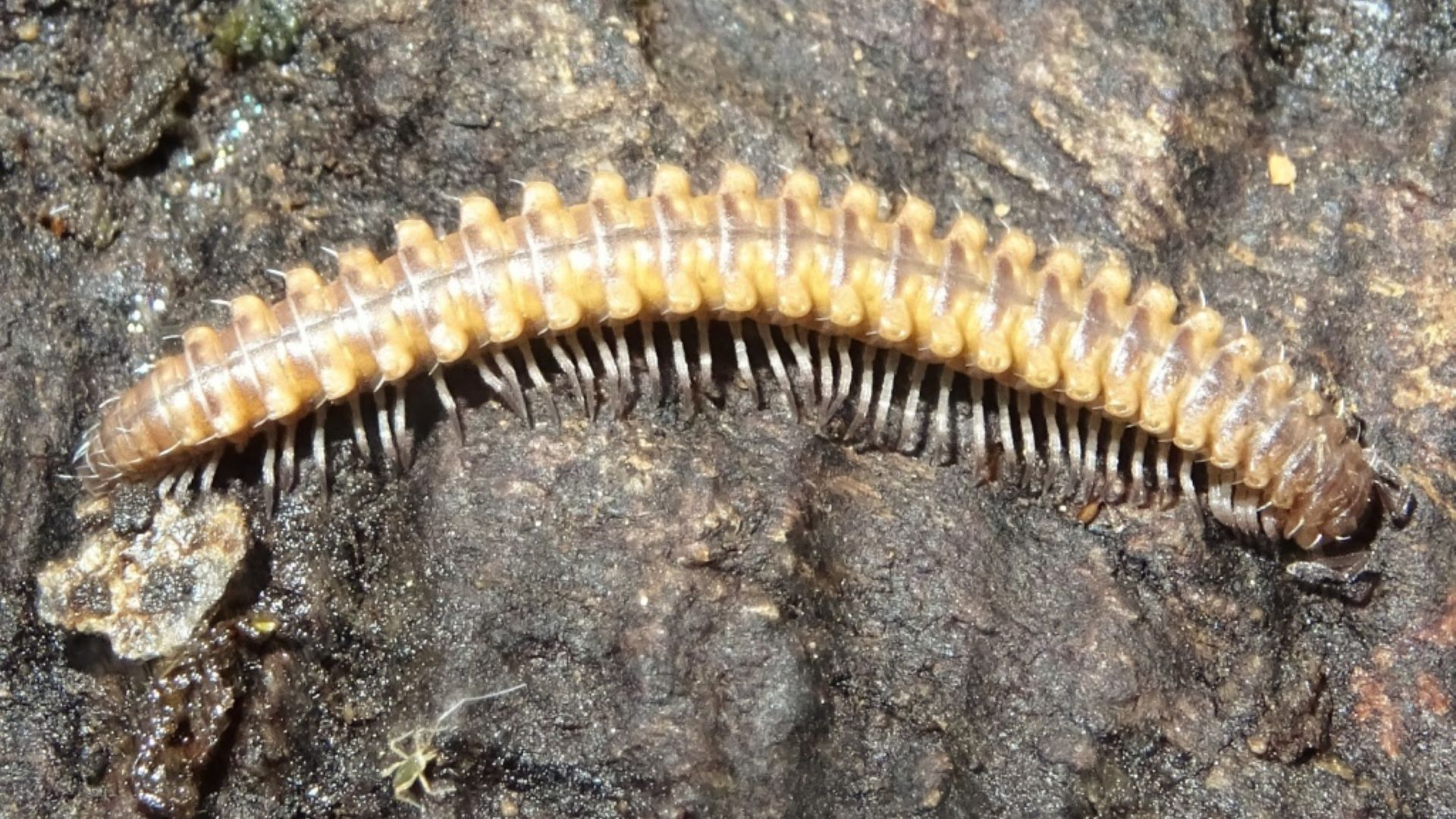
Inhabits damp woodland and meadows in leaf litter, under logs and fallen bark. There are rounded lobes lining each side of the back each containing a short backward-pointing spine.
#
Flat-backed Millipede
Polydesmus
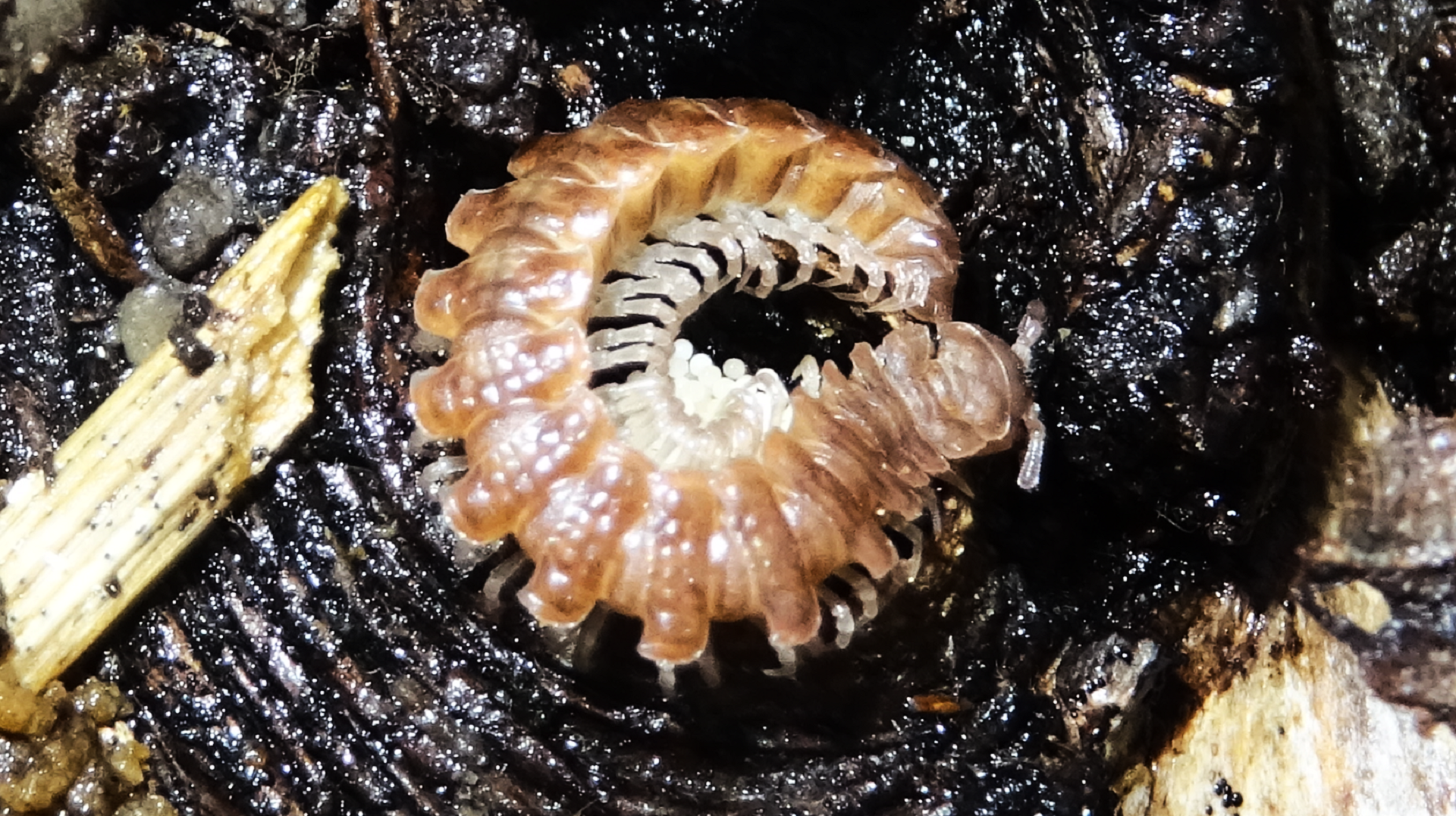
Female millipedes of certain species are known to remain with and guard their egg clutches for several days until they hatch. Their nests serve as a safeguard against predators and environmental stressors during the vulnerable egg phase.
#
Honey Bee
Apis mellifera
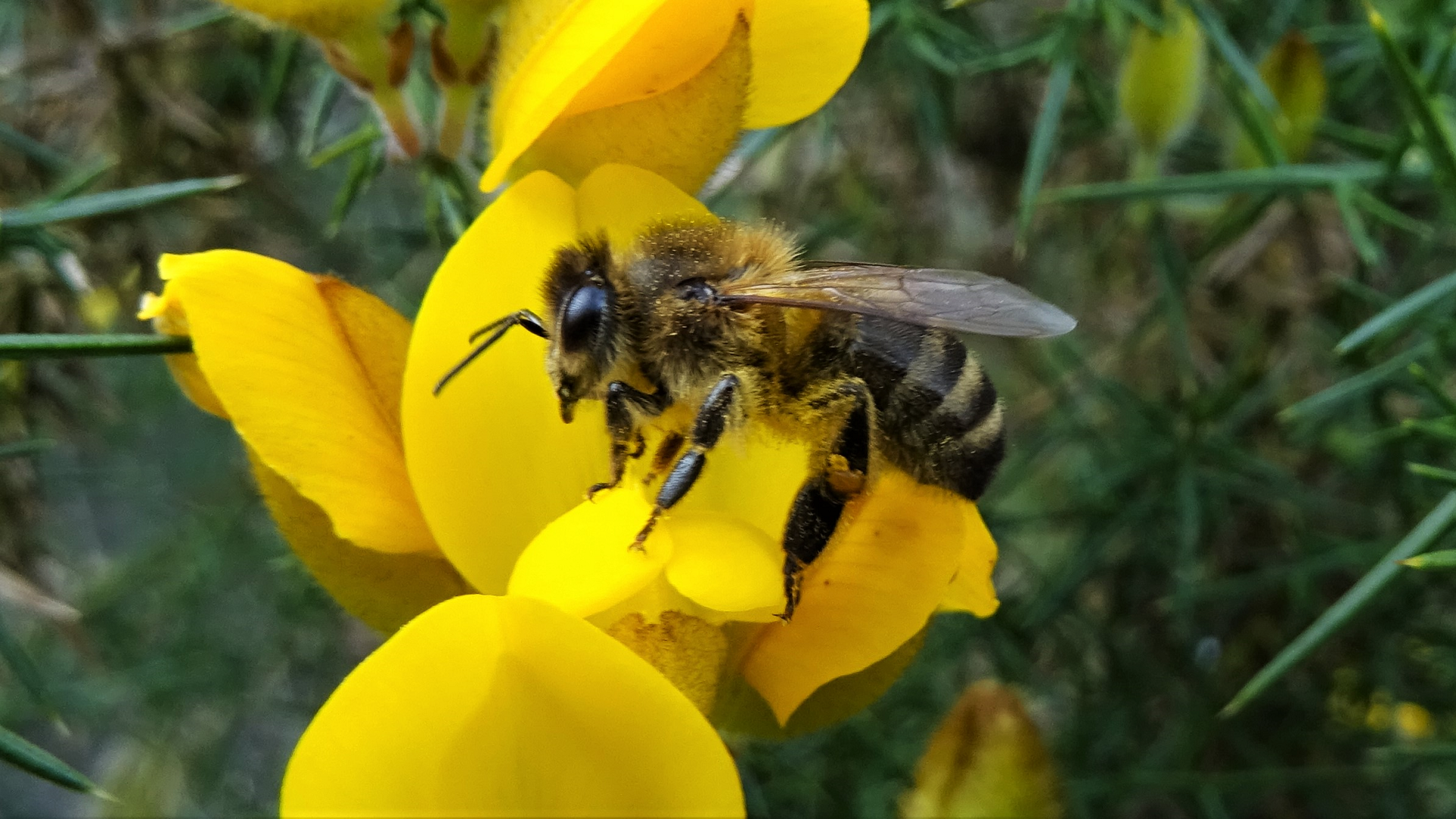
The study of bees is known as apicology (also melittology.) The genus 'Apis' is Latin for 'Bee'. Up to fifty-thousand bees may live in a single hive. Drones are evicted when winter approaches while the workers huddle together for warmth. During spring a new generation emerges. The common name should be written as 'Honey Bee', not 'Honeybee'.
#
Ichneumon
Stenichneumon culpator
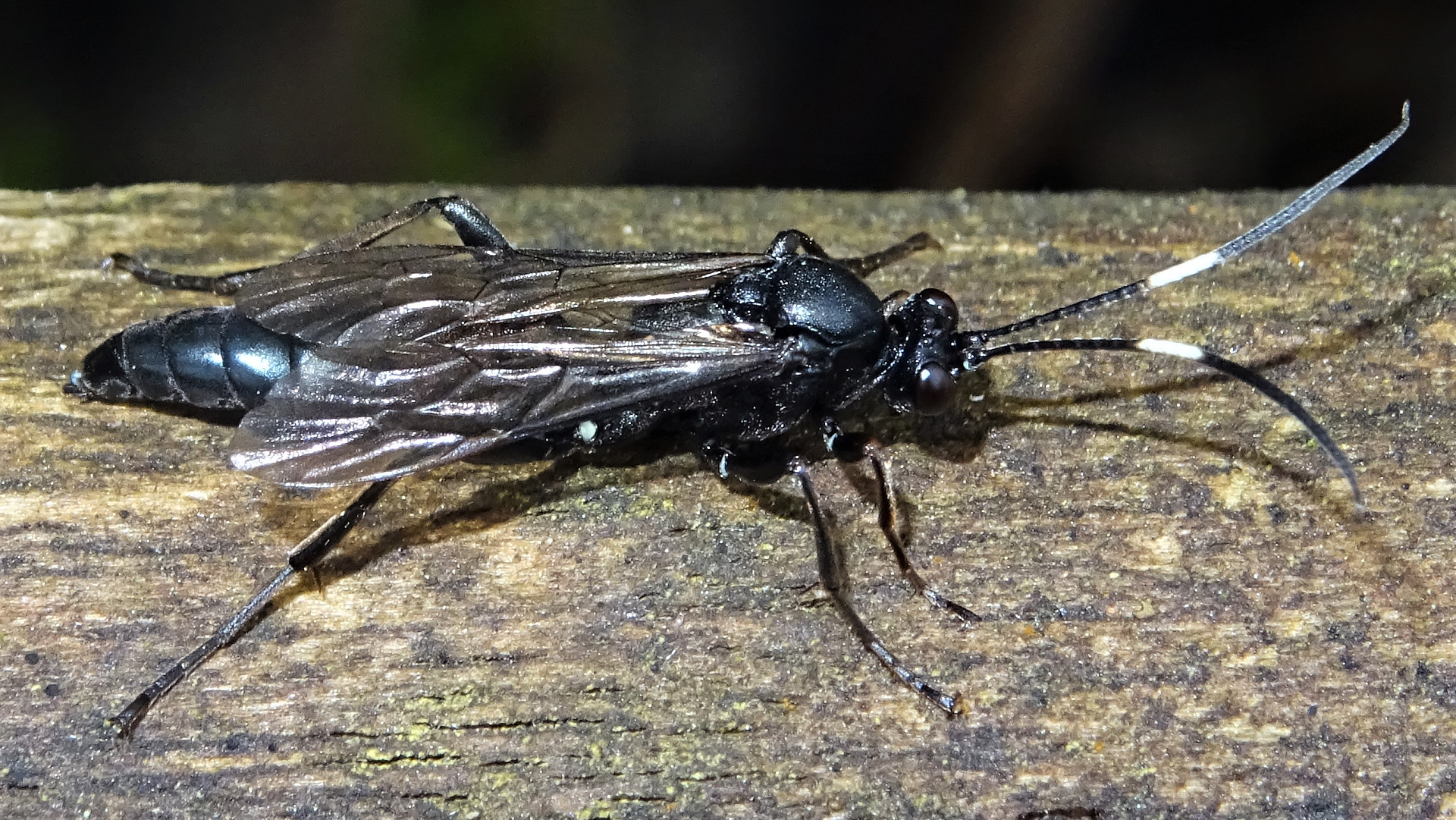
A species of black ichneumon, measuring up to 15mm in length. It is seen during the spring and summer seasons. It feeds on caterpillars.
#
Gorse Seed Weevil
Exapion ulicis
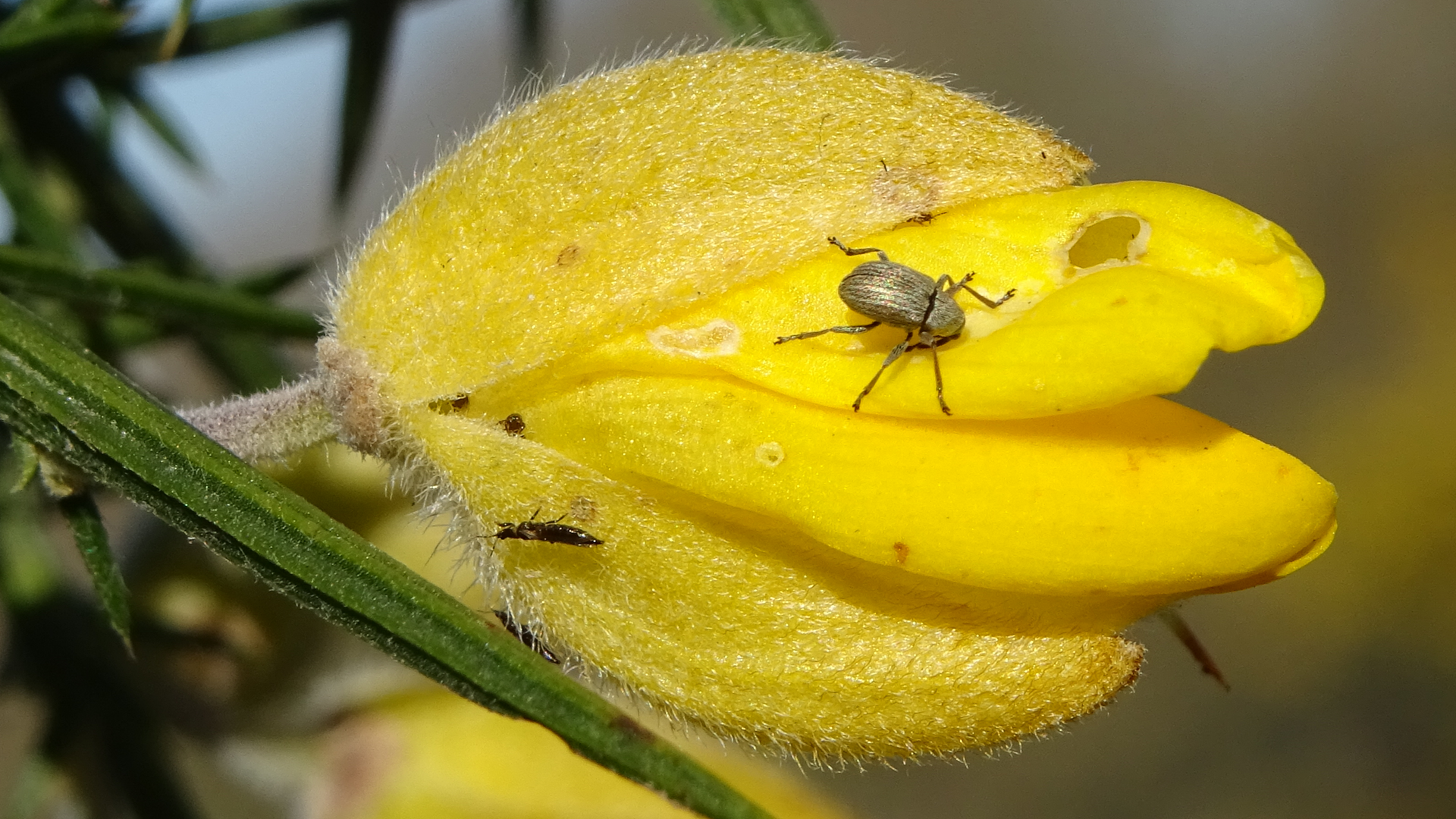
These tiny beetles measuring 2-3mm are found on gorse bushes from March to September. They dig into flowers and other soft tissues with their snouts making round holes. The larvae live inside the seed pods where they feed on seeds.
#
Common Shoulderblade
Abax parallelepipedus
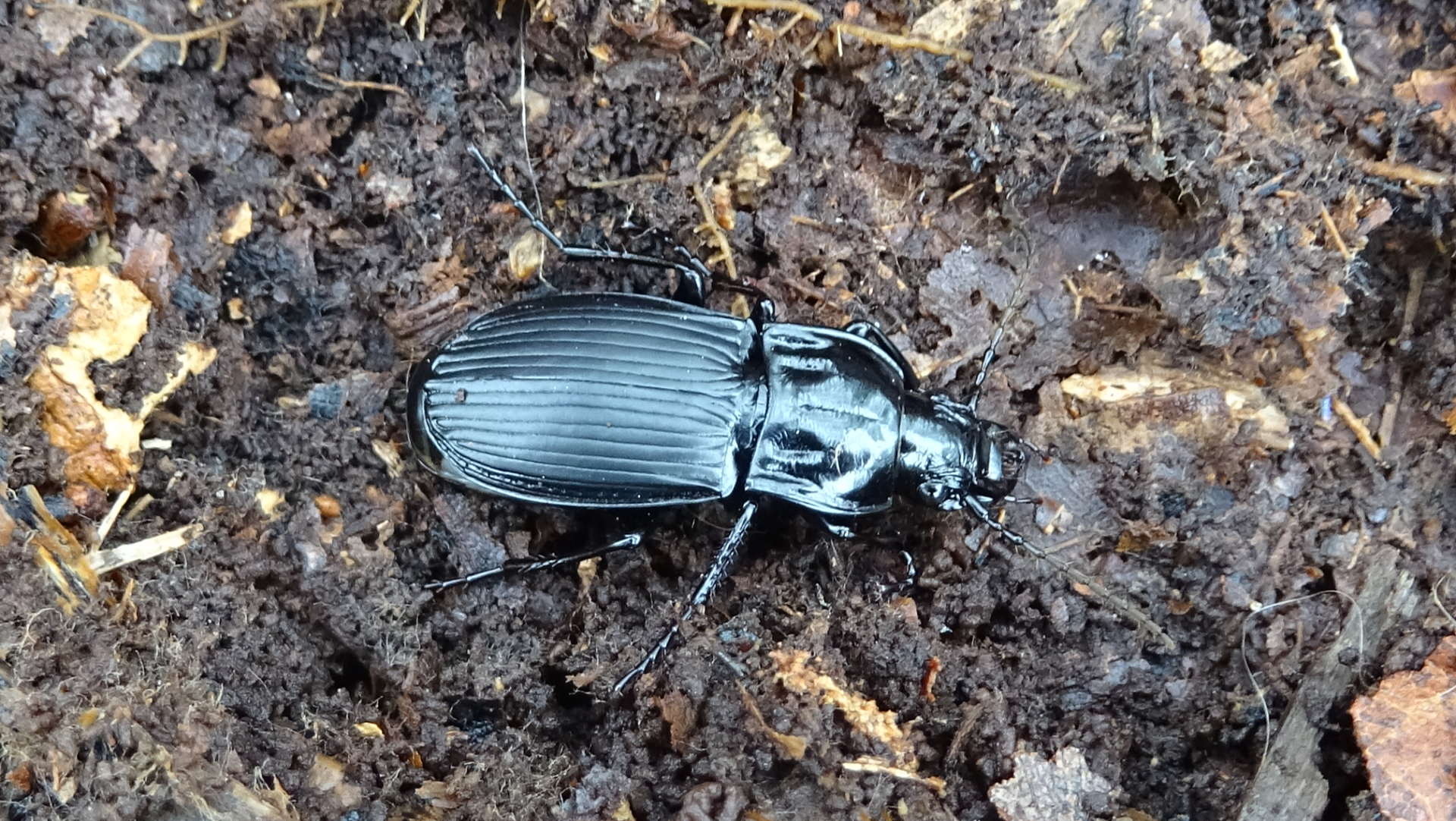
This common ground beetle is frequently seen from spring to autumn on moist soil in deciduous forests, often concealed beneath logs. It can reach a length of up to 22mm. Identification of this species is aided by two parallel indentations on the box-like pronotum and wrinkles located above the eyes.
#
Seven-spot Ladybird
Coccinella septempunctata
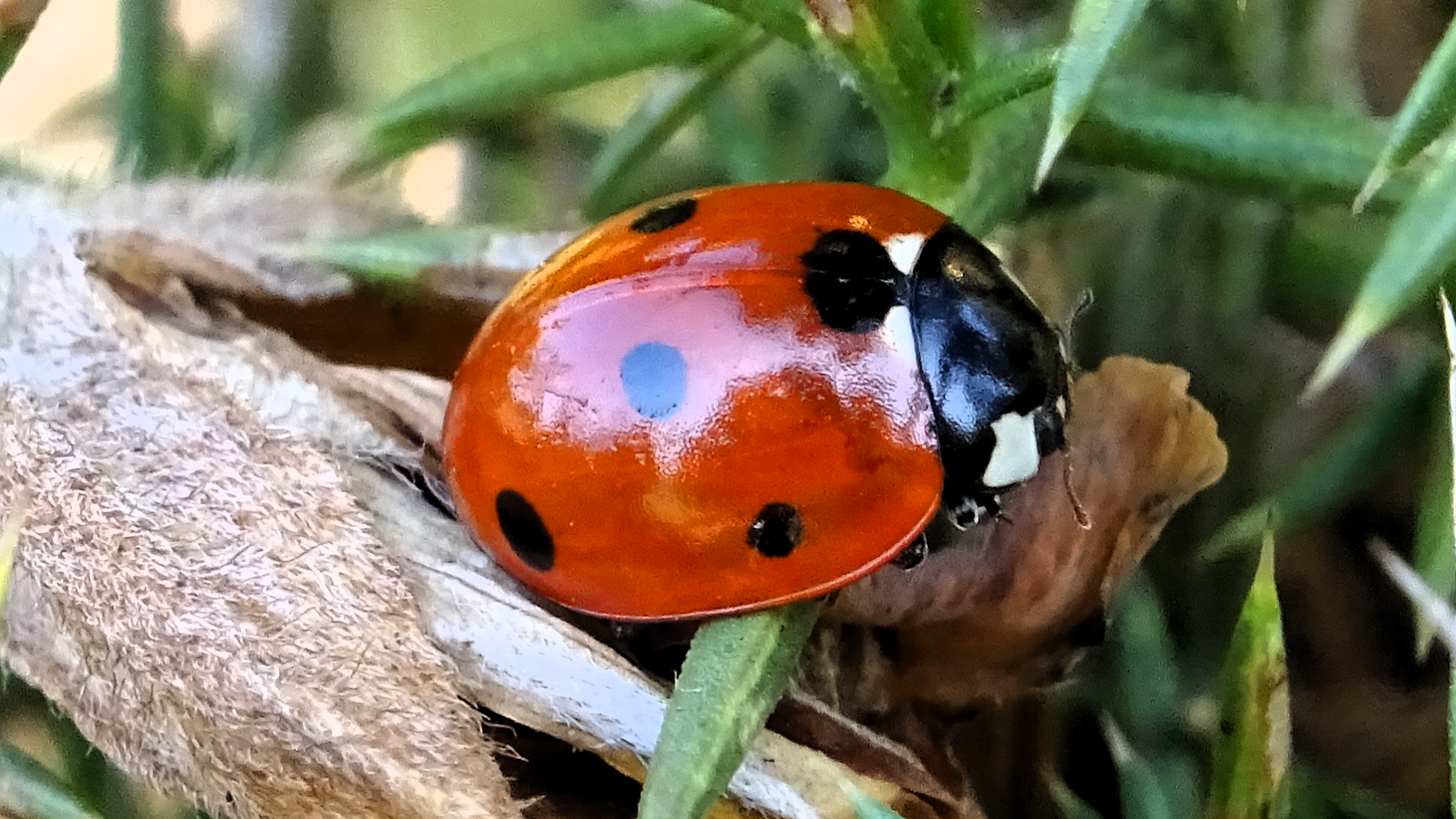
Each wing case features three black spots, with an additional spot located across both elytra behind the pronotum, resulting in a total of seven spots. These insects are known to actively prey on aphids. Adults typically overwinter under rocks, in leaf litter, and beneath tree bark. This species is among the most common ladybirds found in Europe.
#
Non-biting midge
Chironomidae
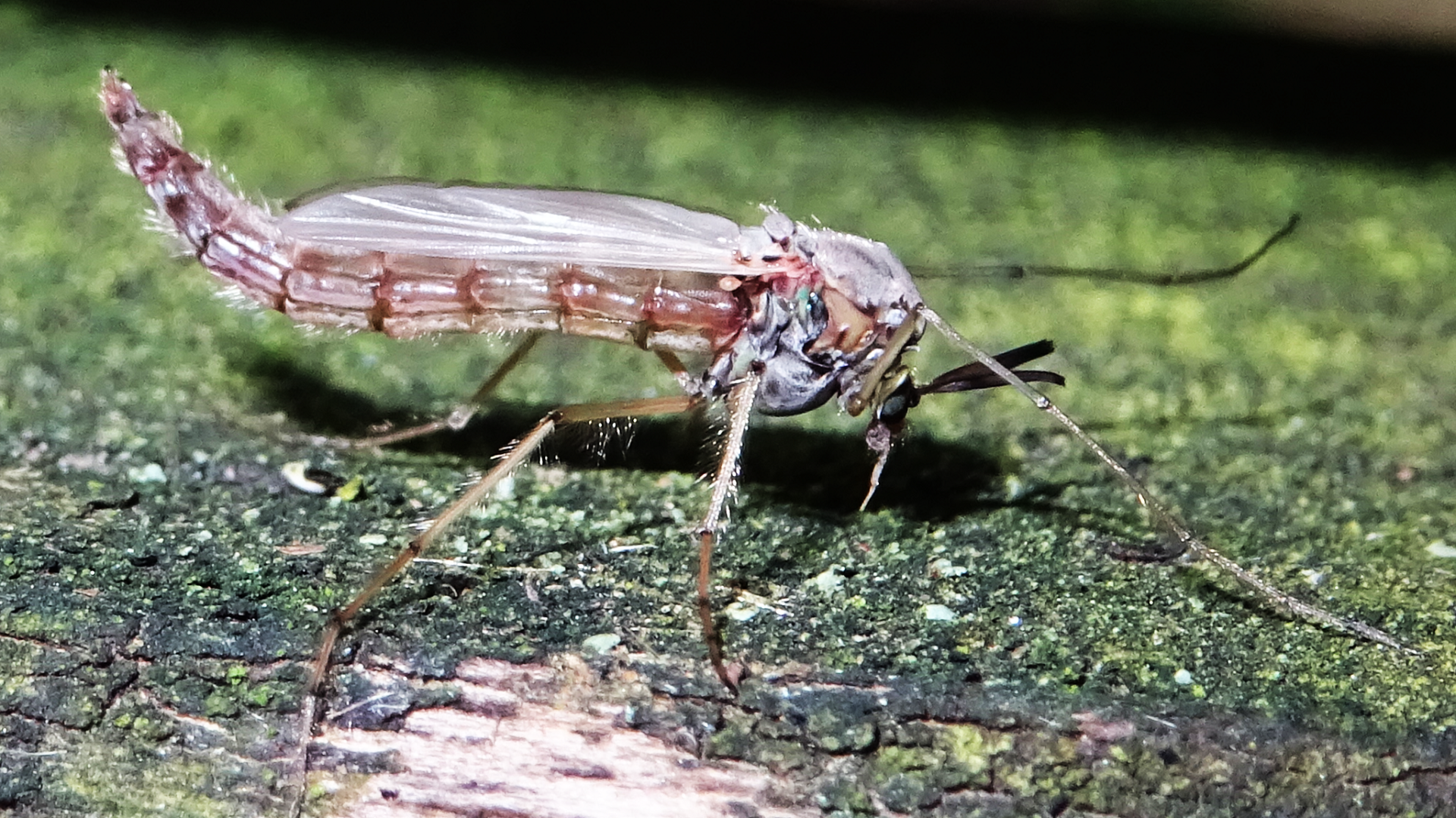
Non-biting midges are typically observed in spring and summer near bodies of water. They do not bite, but their swarming behaviour can sometimes be bothersome. The specimen shown is a male. It is not advisable to identify Chironomidae based solely on photographs, as accurate species identification requires dissection of the male genitalia.
#
Hoverfly
Epistrophe eligans
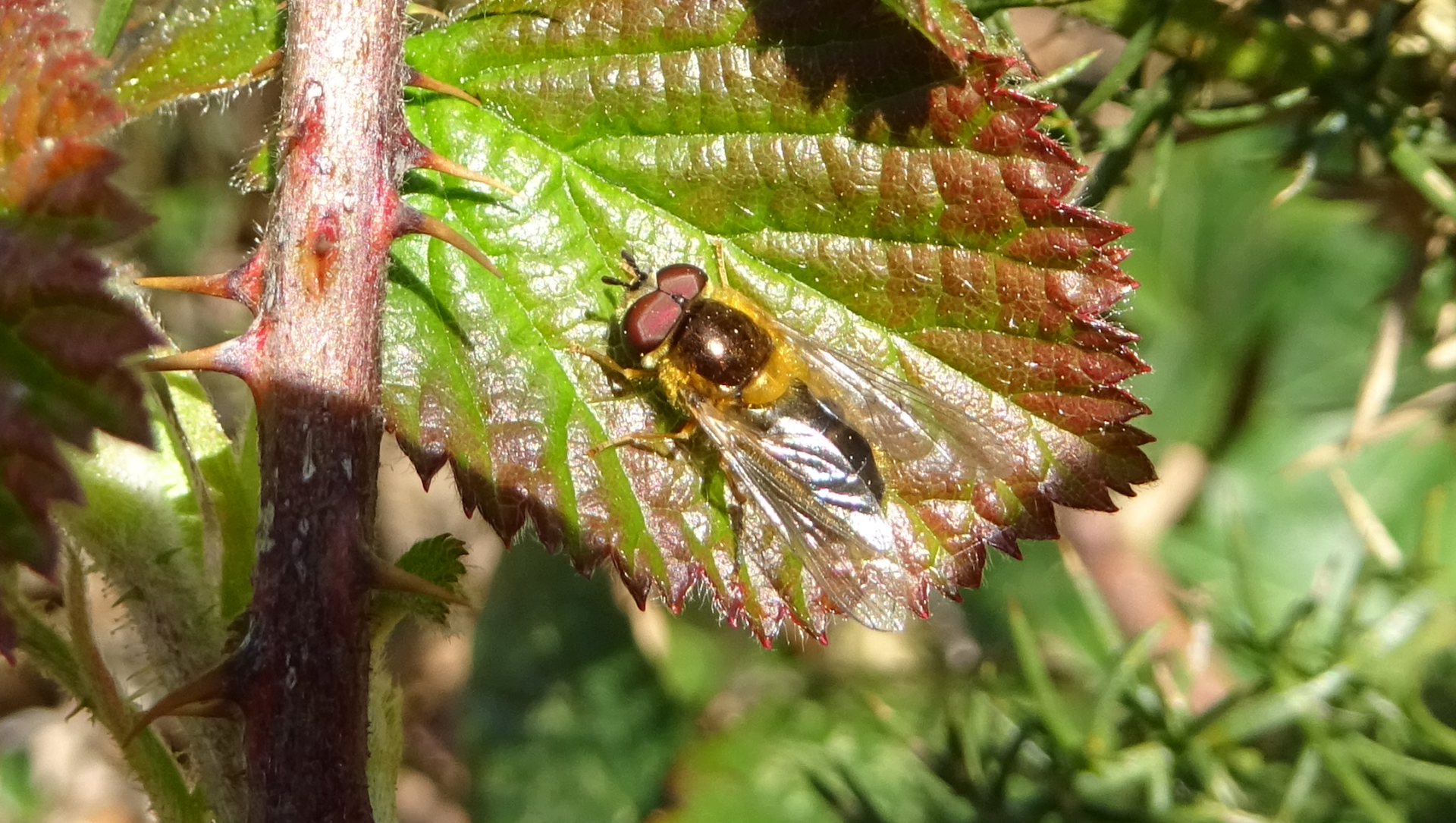
Males are often observed basking in warm sunlight. This species shows variability in the yellow striping on the abdomen, with some males having almost entirely black abdomens. The species is influenced by warm spring weather and is now appearing earlier in the year than in the past.
#
Bluebottle
Calliphora vicina
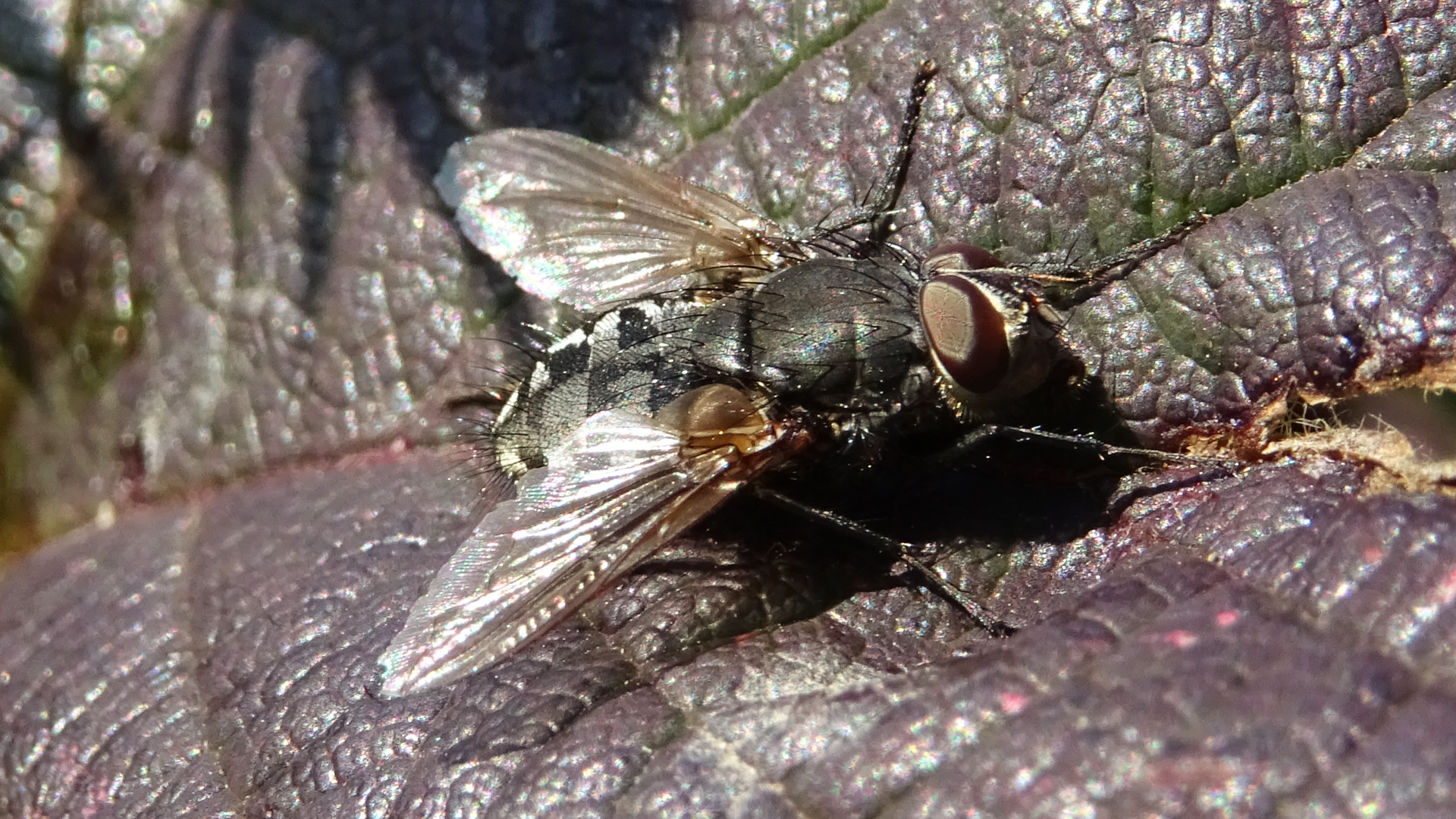
Essex Field Club recorder, Del Smith, said: "Surprisingly this is a Bluebottle, almost certainly a male. It is well worn and has overwintered. The metallic blue disappears with age and goes flat greyish or sometimes burnished."
#
Fly
Anthomyiid
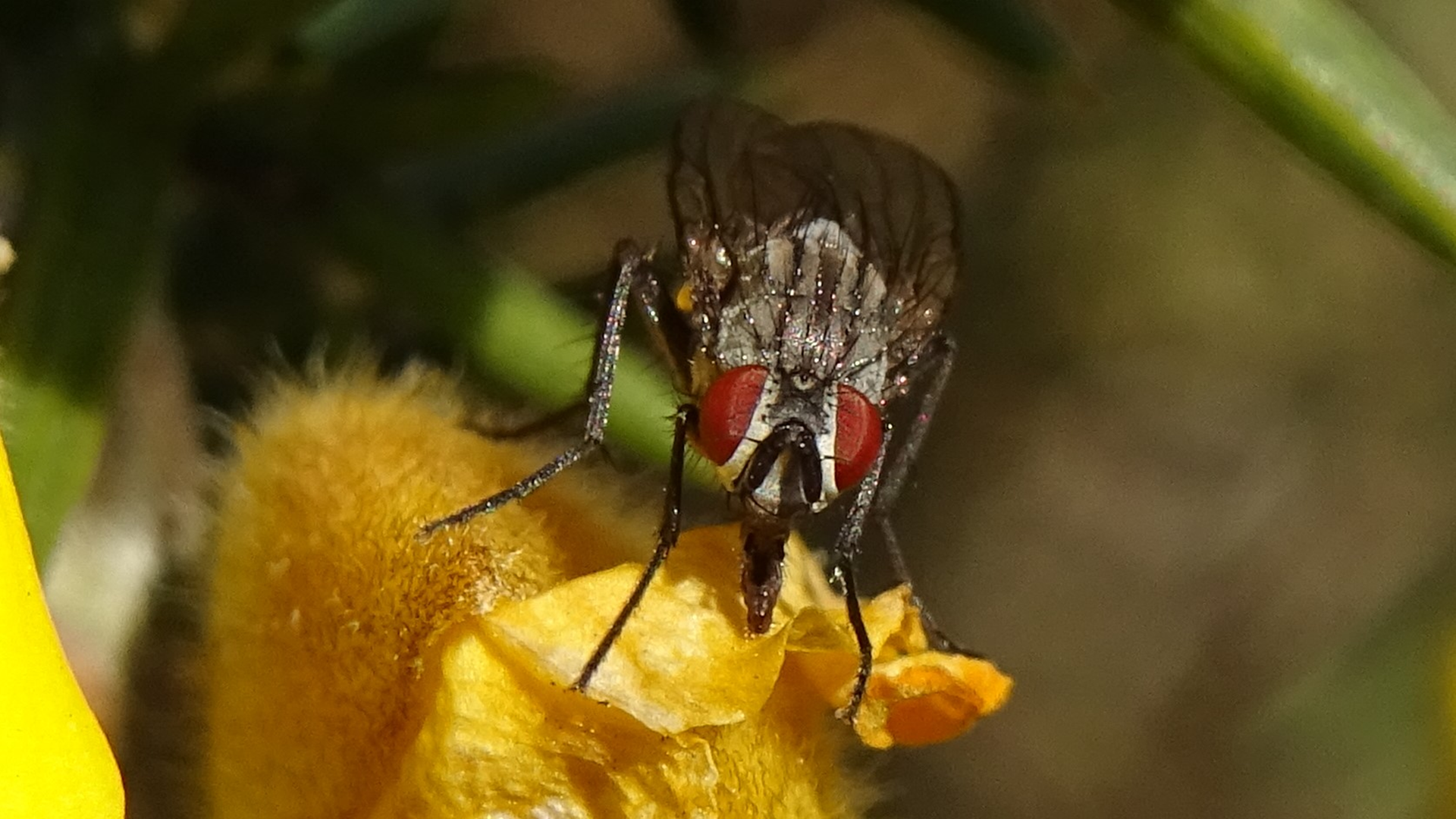
This belongs to a large, diverse family, most look like small houseflies but are often drab grey. Most are difficult to identify.
#
Face Flies
Musca autumnalis
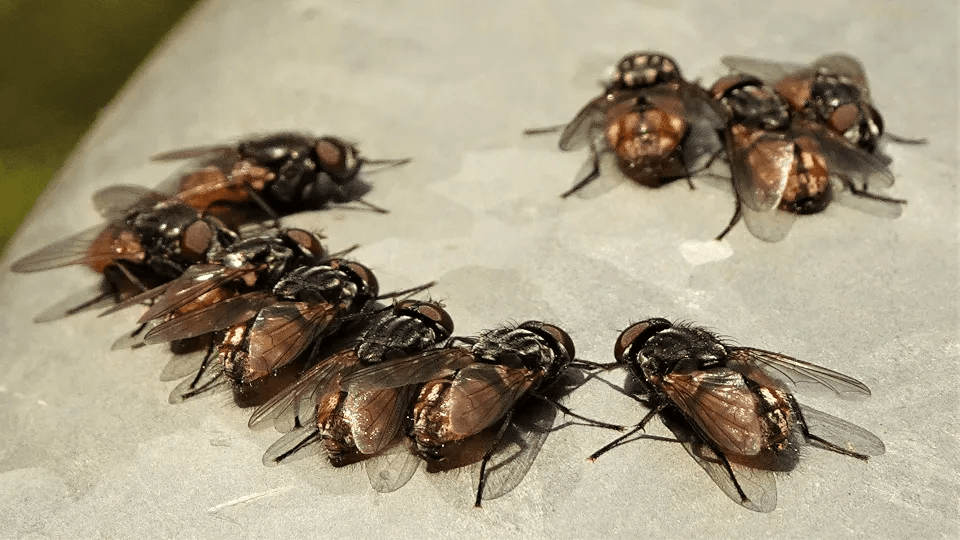
Essex Field Club Recorder, Del Smith, identified these flies resting on a metal surface at the bottom of Cabin Hill as male
Musca autumnalis. It is possible that the metal was warmed by the sun, creating a comfortable spot for them to rest.
#
Soldier Fly
Stratiomyidae
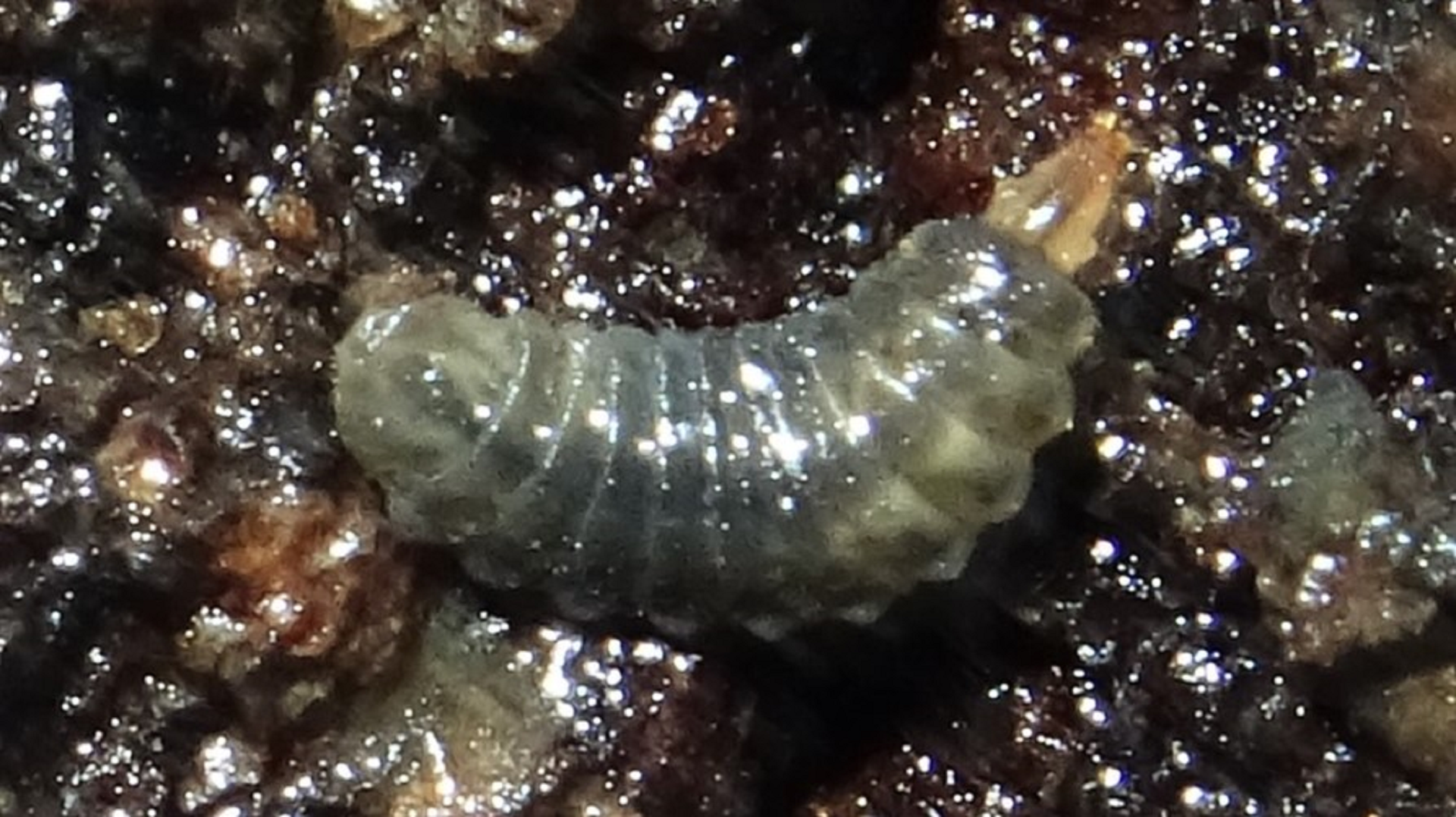
County Recorder Del Smith confirmed that this was a soldier fly larva, stating: "There are a few British soldier flies found under bark, but I wouldn't care to speculate on yours. If you collect one, send it to me and I will attempt to rear it." However, during a subsequent visit to the site, they were no longer found.
#
Common Shiny Woodlouse
Oniscus asellus
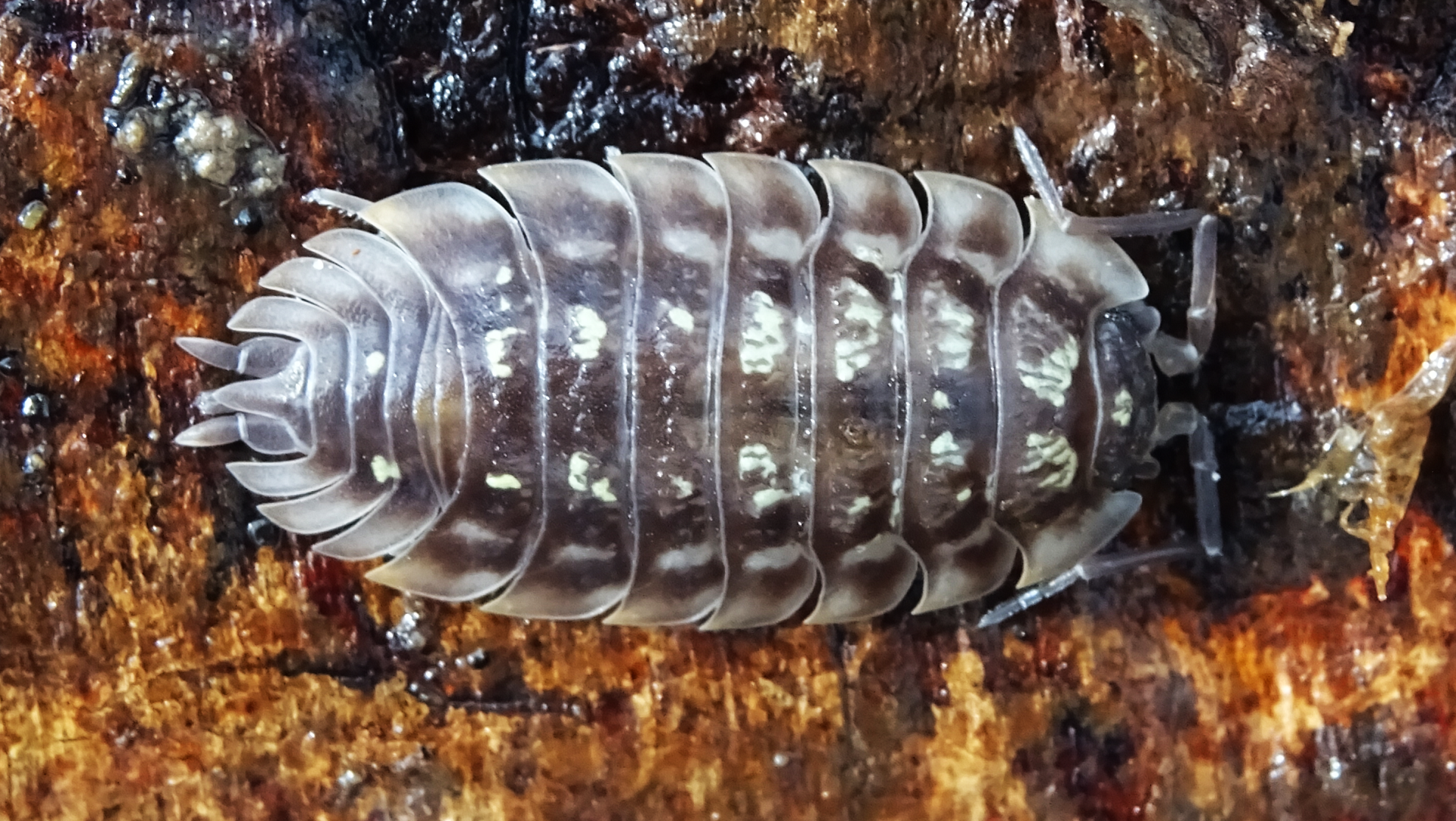
These woodlice are often found in groups beneath logs, bark, and stones. Their colouration ranges from grey to various shades of brown, featuring irregular light patches. The surface of their bodies is marked with raised areas. Adults generally exhibit a glossy appearance, while juveniles have a rougher texture. The antennae consist of three flagellal segments.
#
Common Rough Woodlouse
Porcellio scaber
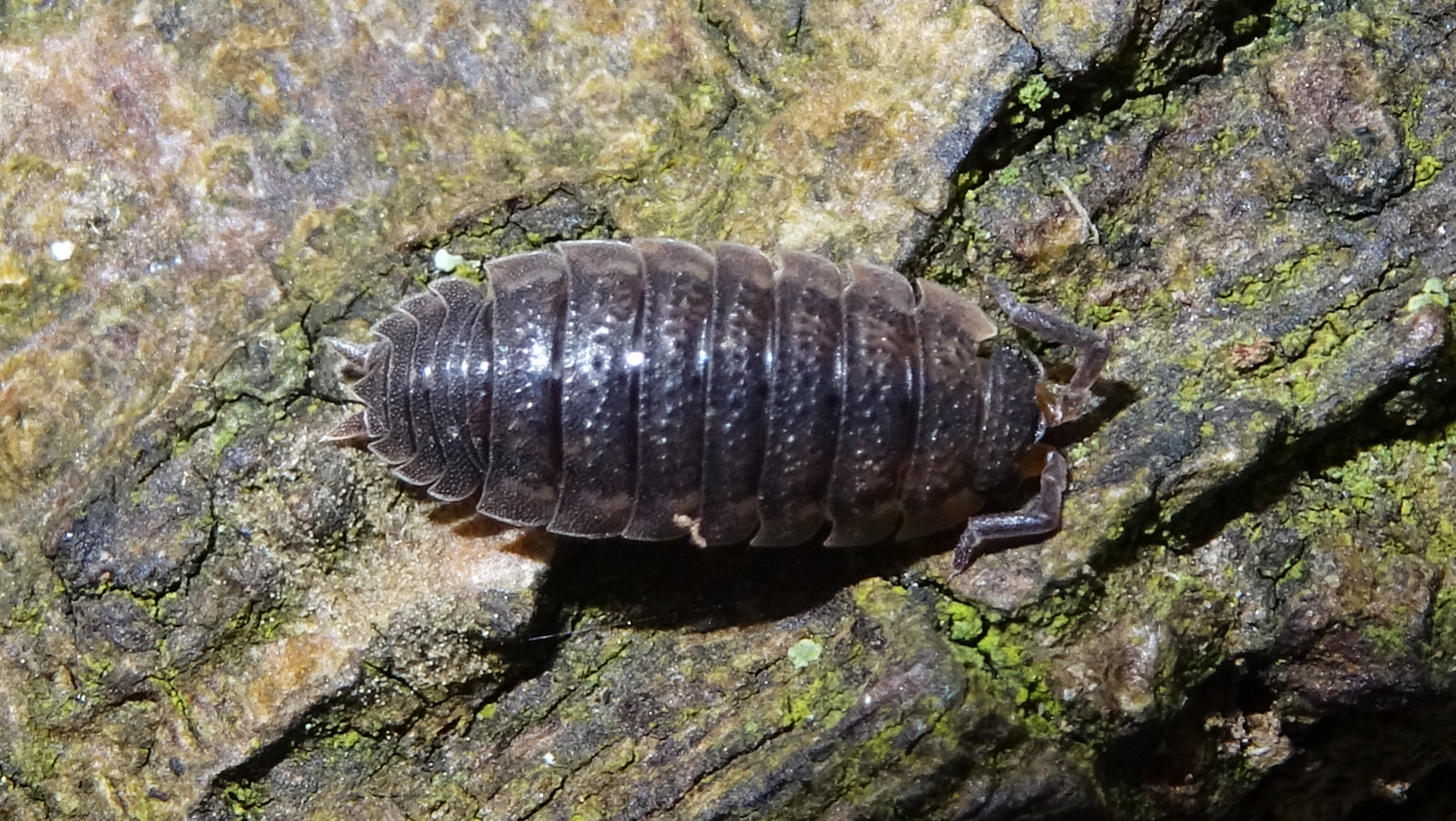
This woodlouse species is possibly the most prevalent in Britain. Typically grey in colour, some individuals may exhibit a mottled brown appearance. They can reach lengths of up to 17mm.
#
Common Pill Woodlouse
Armadillidium vulgare
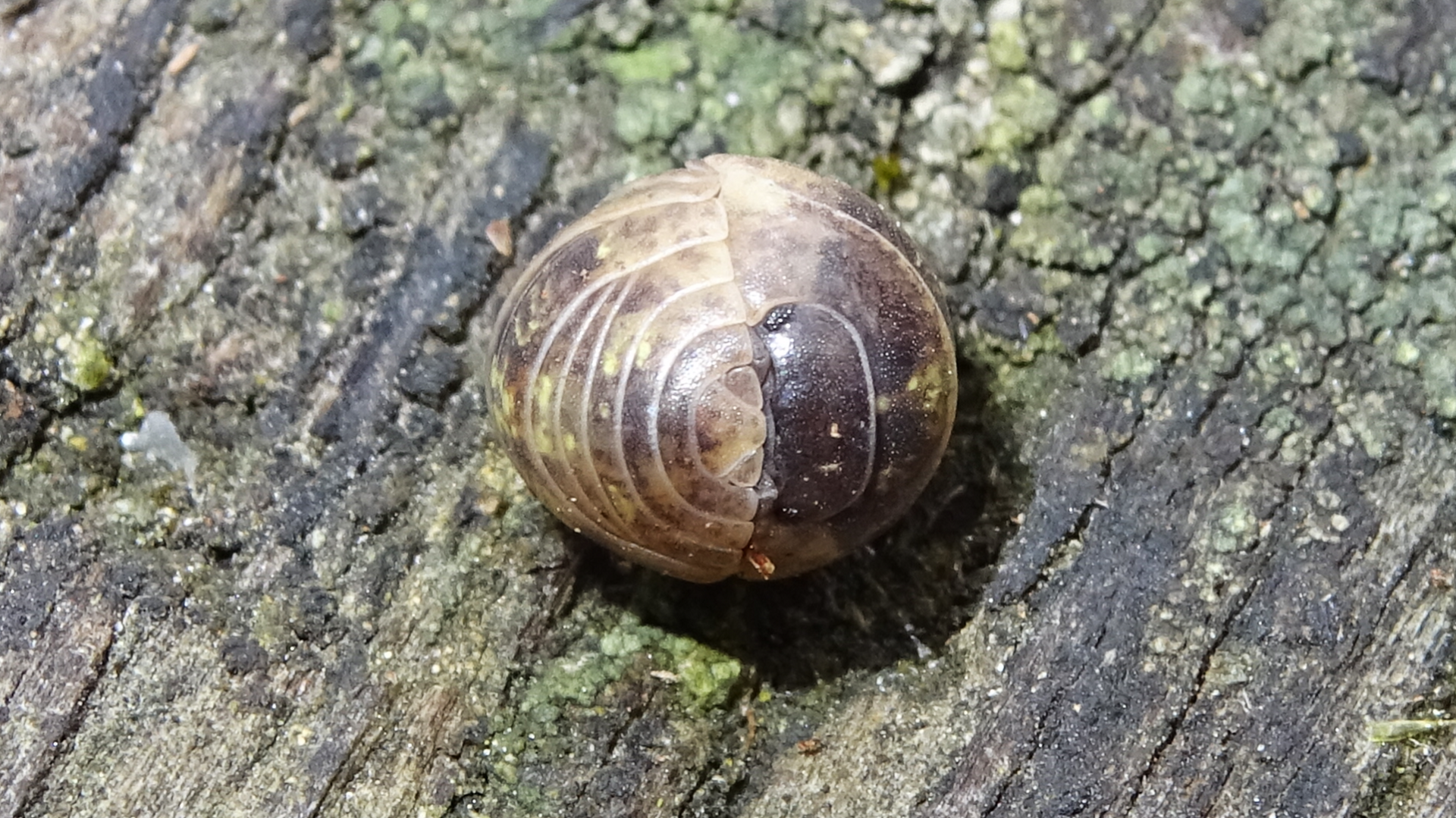
This crustacean mainly resides in moist environments, such as beneath logs and stones. It has a behaviour of curling into a ball for protection. Historically, doctors used it as a remedy for upset stomachs, which led to it becoming known as the 'Pill Bug'.
#
Southern Seed Bug
Eremocoris podagricus
Southern Seed Bugs (5-6mm) have reddish-brown patterned forewings. They are associated with moss growing beneath hawthorns in chalky and sandy locations.
#
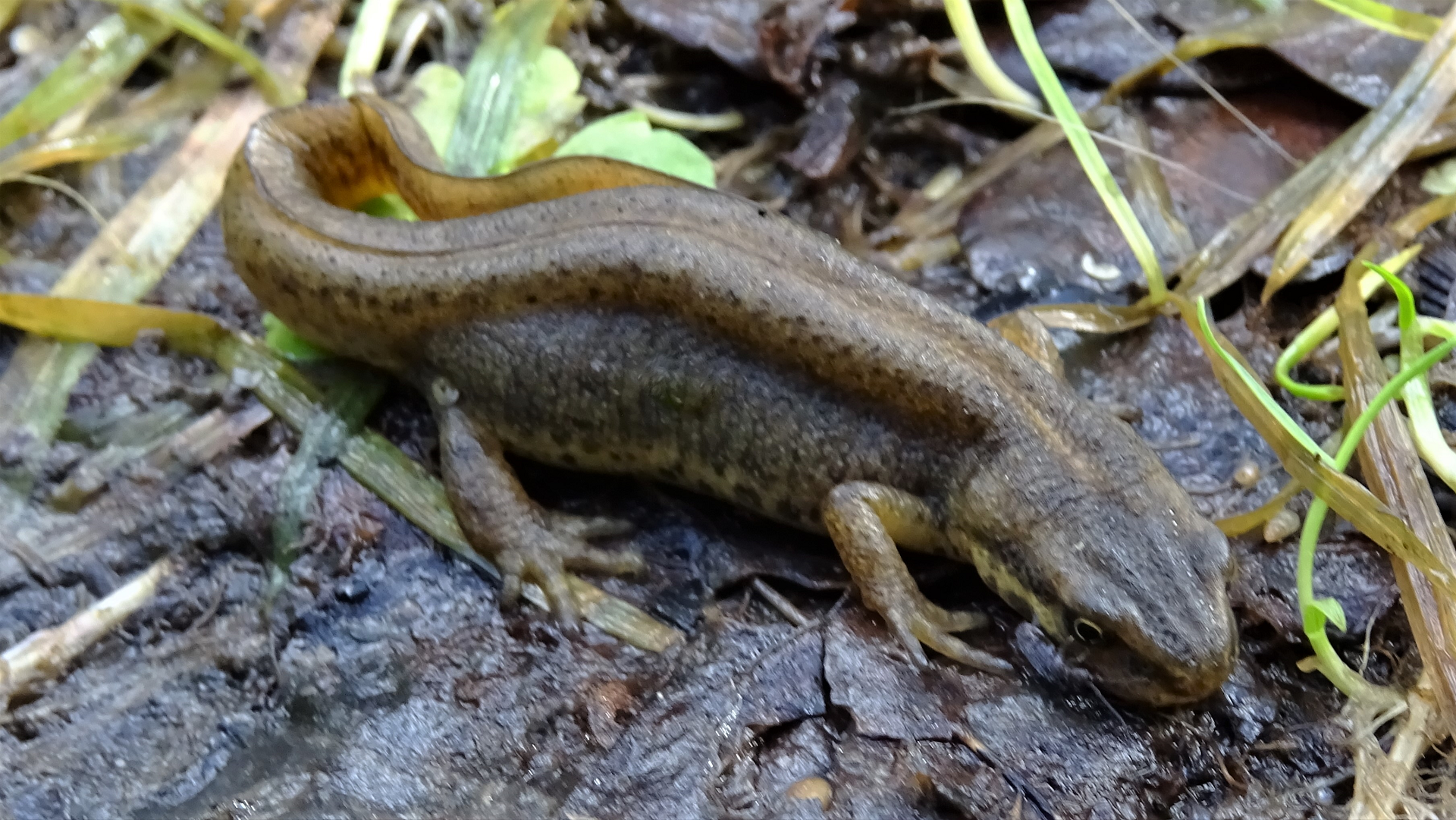
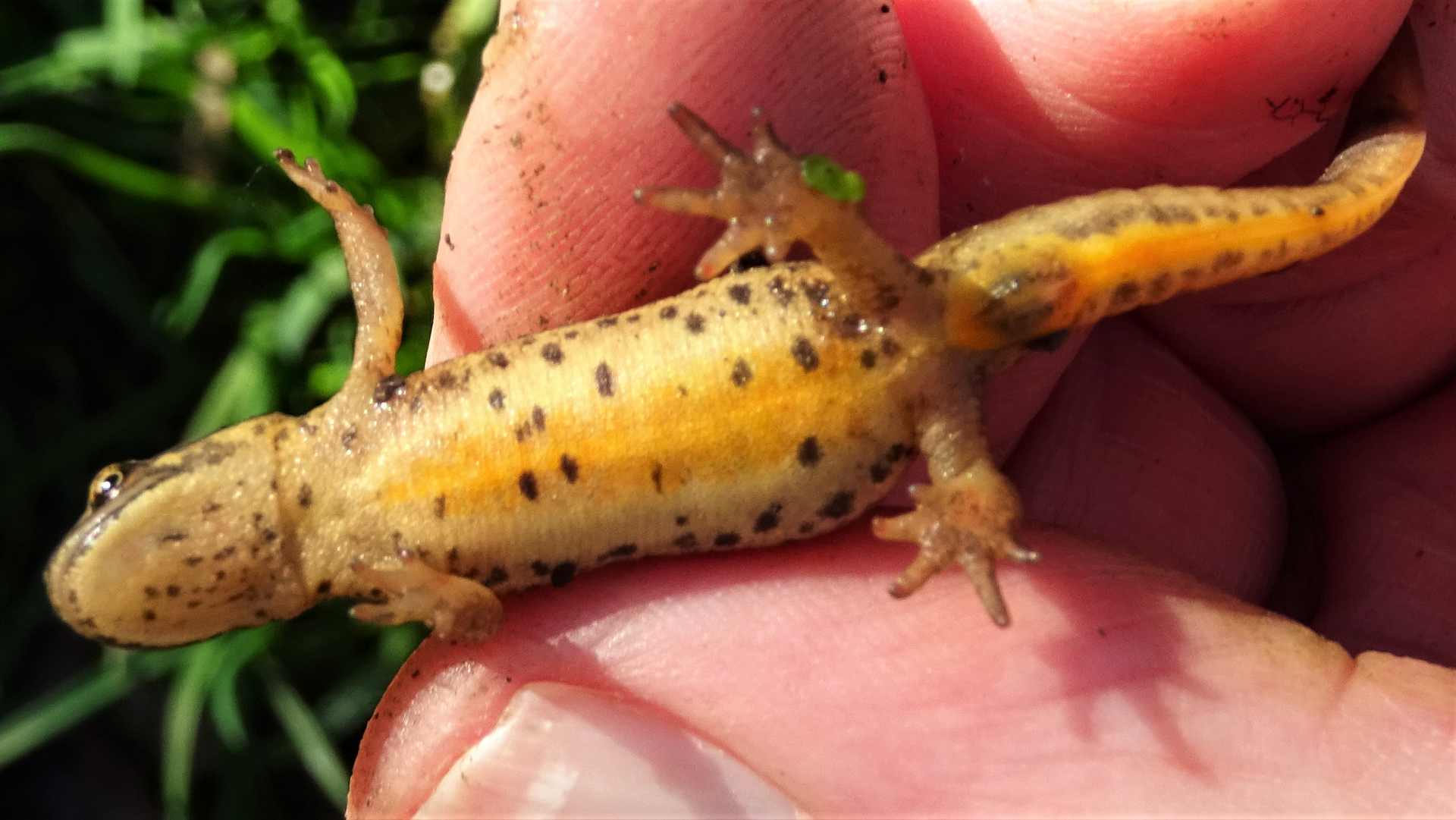
Smooth Newt
Lissotriton vulgaris
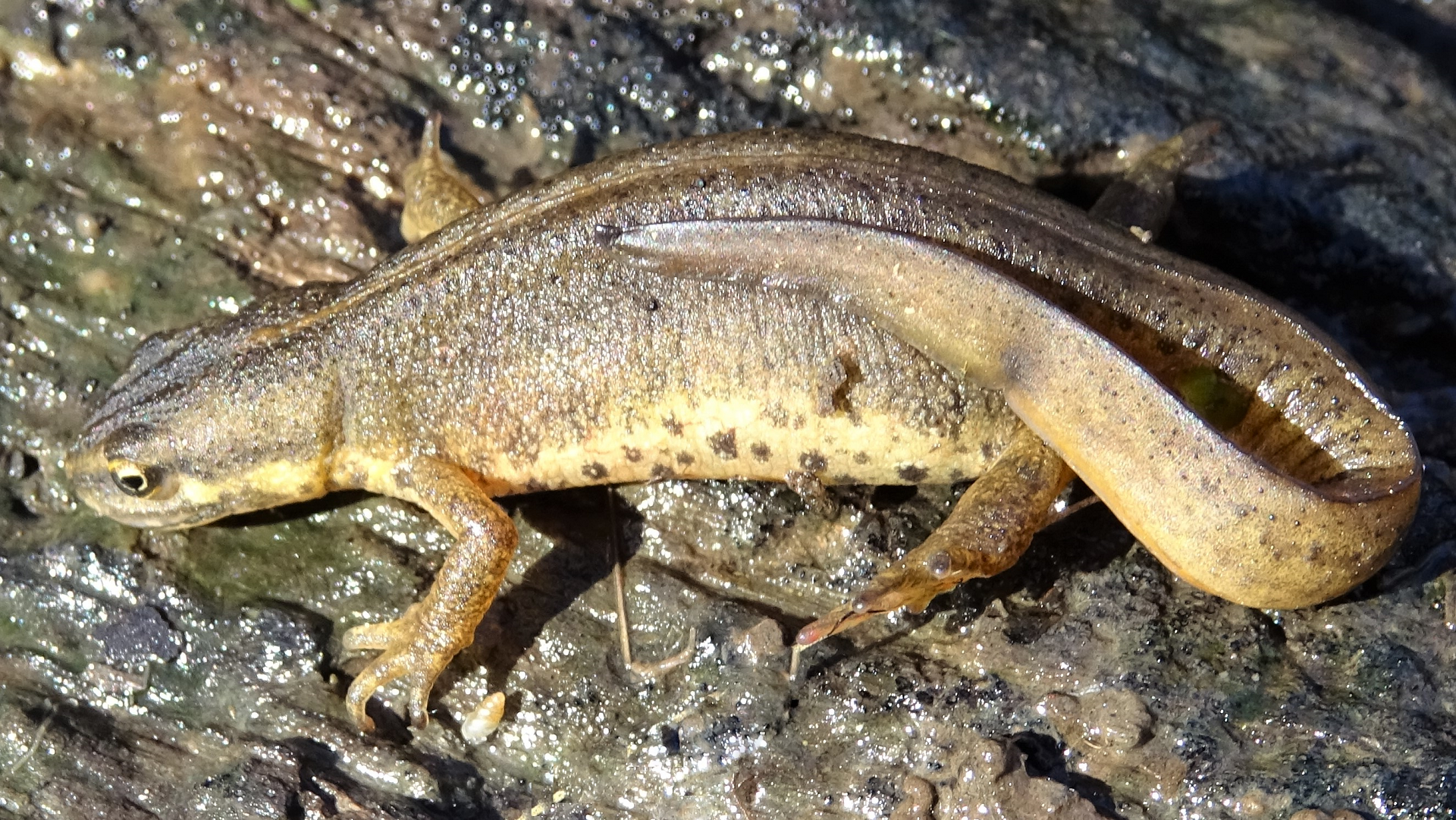
Among the three newt species found in the UK, the Smooth Newt is the most prevalent. These newts are typically observed from March to October. During the winter months, they hibernate among tree roots and become active again in the spring to breed in ponds. For the rest of the year, they feed in woodland and grassland during the night. Their diet includes insects, molluscs, and tadpoles. Smooth newts have a greyish-brown colouration with an orange belly marked by black spots. Males develop a smooth crest that extends along the full length of their body and tail during the breeding season. In the autumn and winter, their belly appears duller. They reach an approximate length of 10 cm.
#
Frog Spawn
Rana temporaria
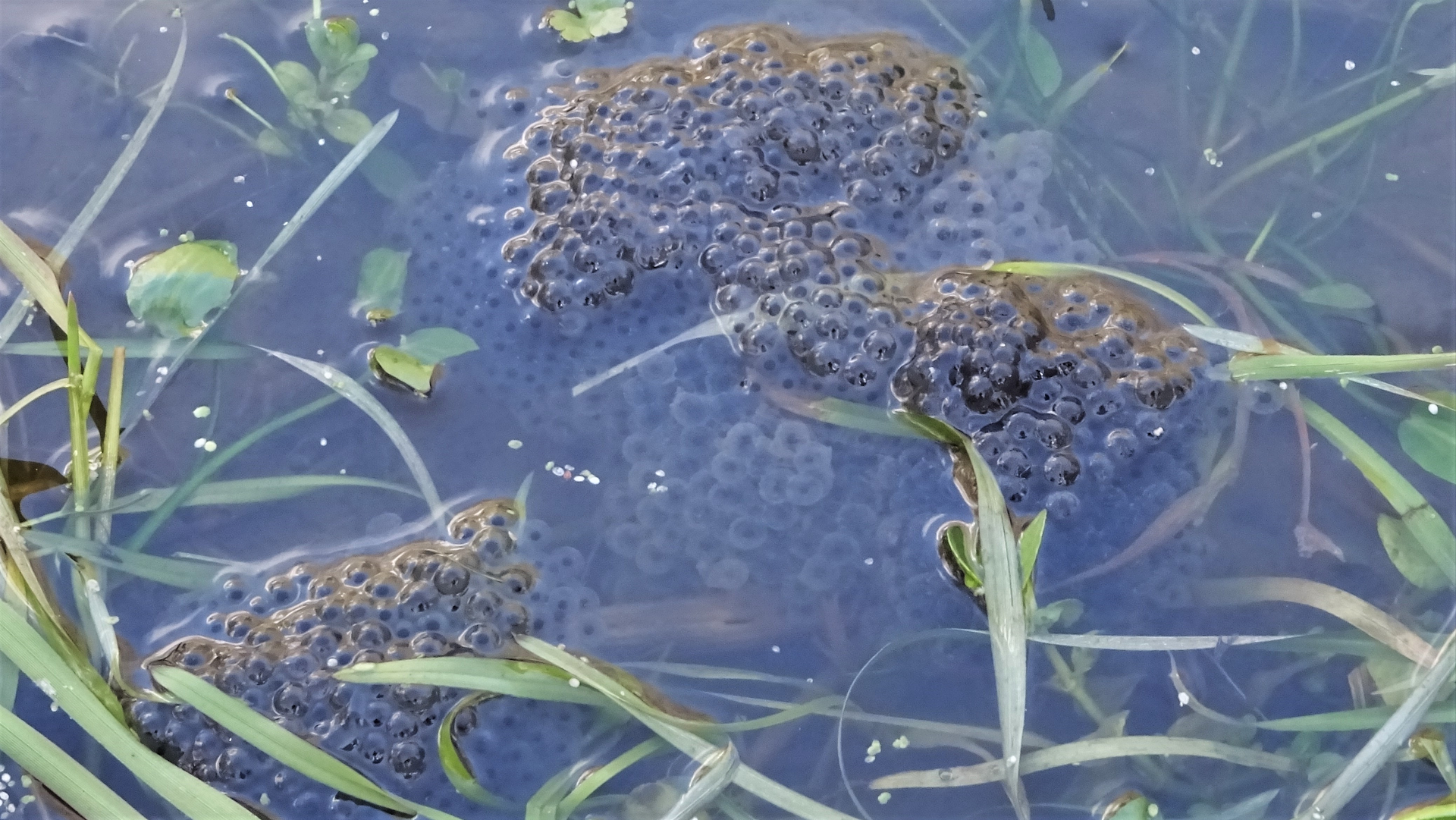
Frog spawn is laid in tight clusters early in the year.
#
© hainaultforest.net. All rights reserved.
This website uses necessary cookies. It does not use targeting or advertising cookies.