

LAST QUARTER 2019
Peeling Oysterling
Crepidotus mollis
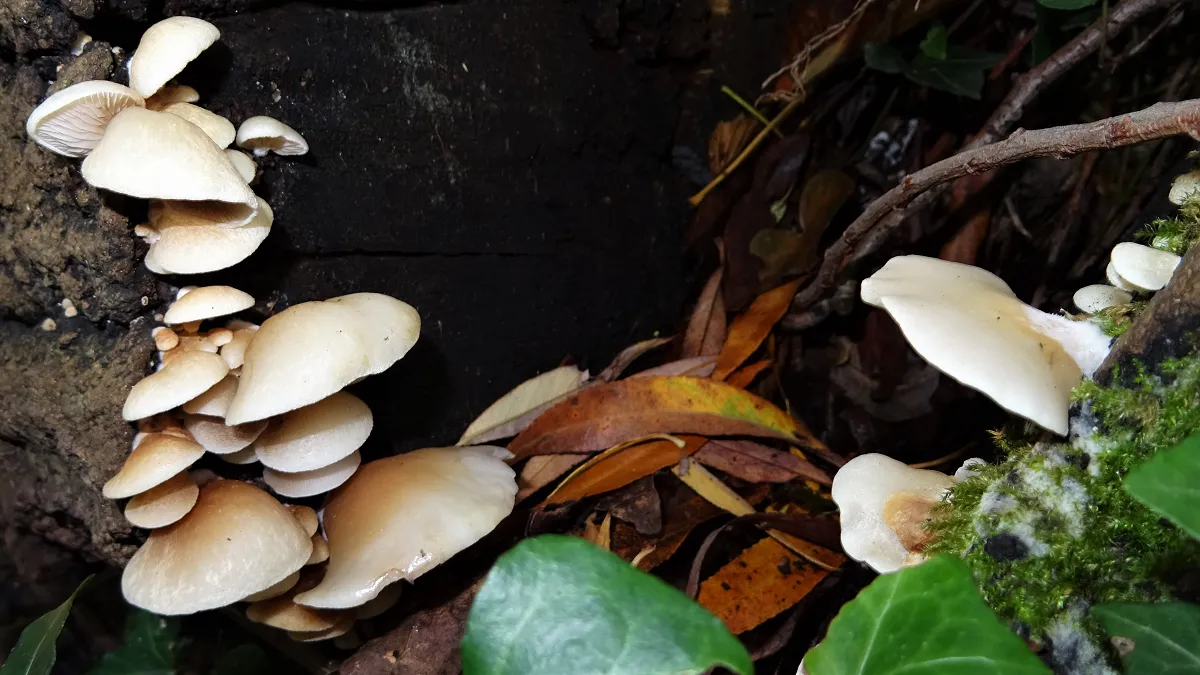
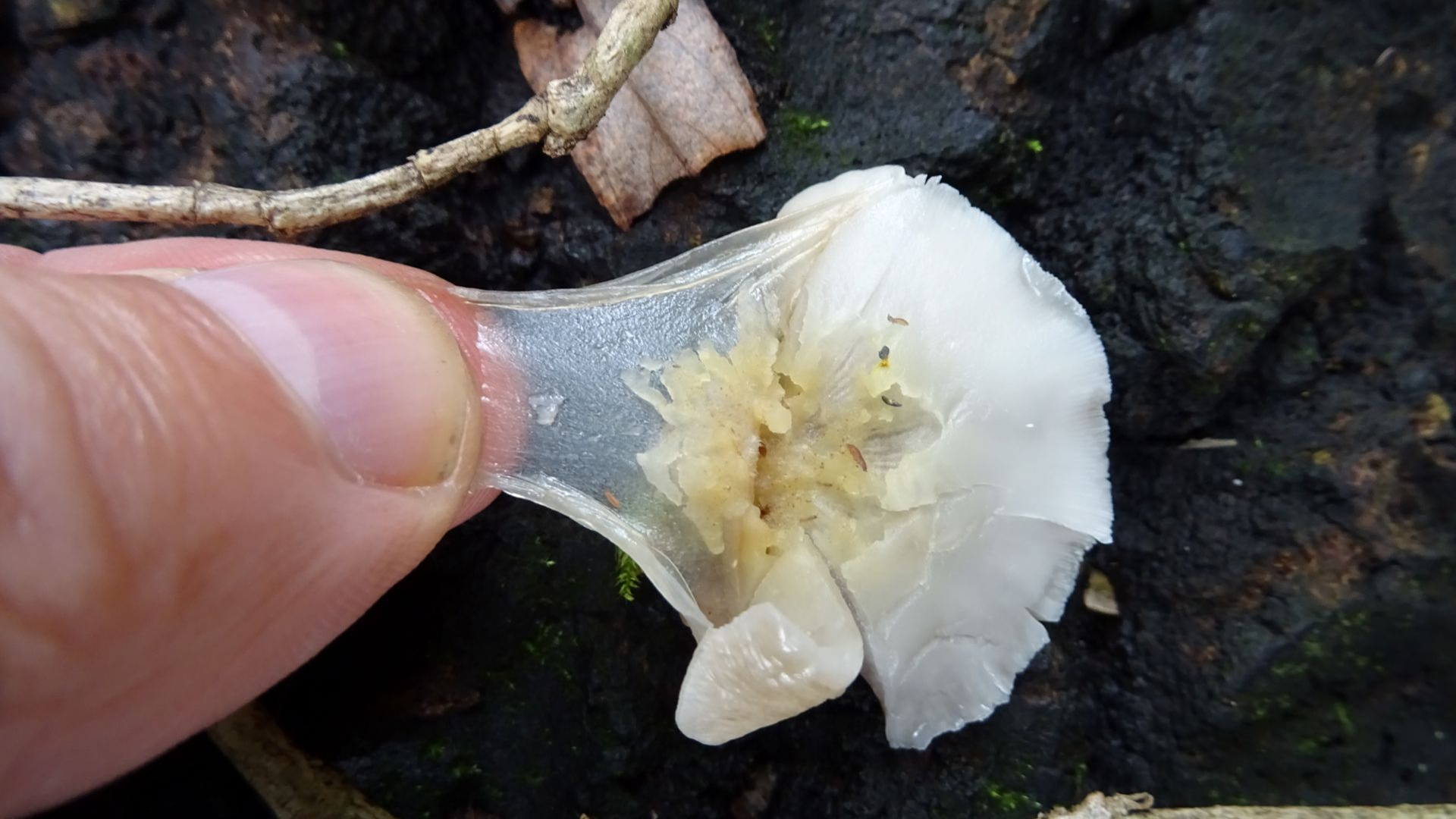
Peeling Oysterling mushrooms grow in tiers on deciduous logs and stumps during autumn. The kidney-shaped caps measure up to 6cm across and are laterally joined to the wood with little or no stem showing. The gills are pale and crowded becoming light brown when mature. There is a thin stretchy membrane covering the cap which can be peeled away if dry enough. This can be harder to do when the caps feel slimy or sticky.
#
Laquered Bracket
Ganoderma lucidum
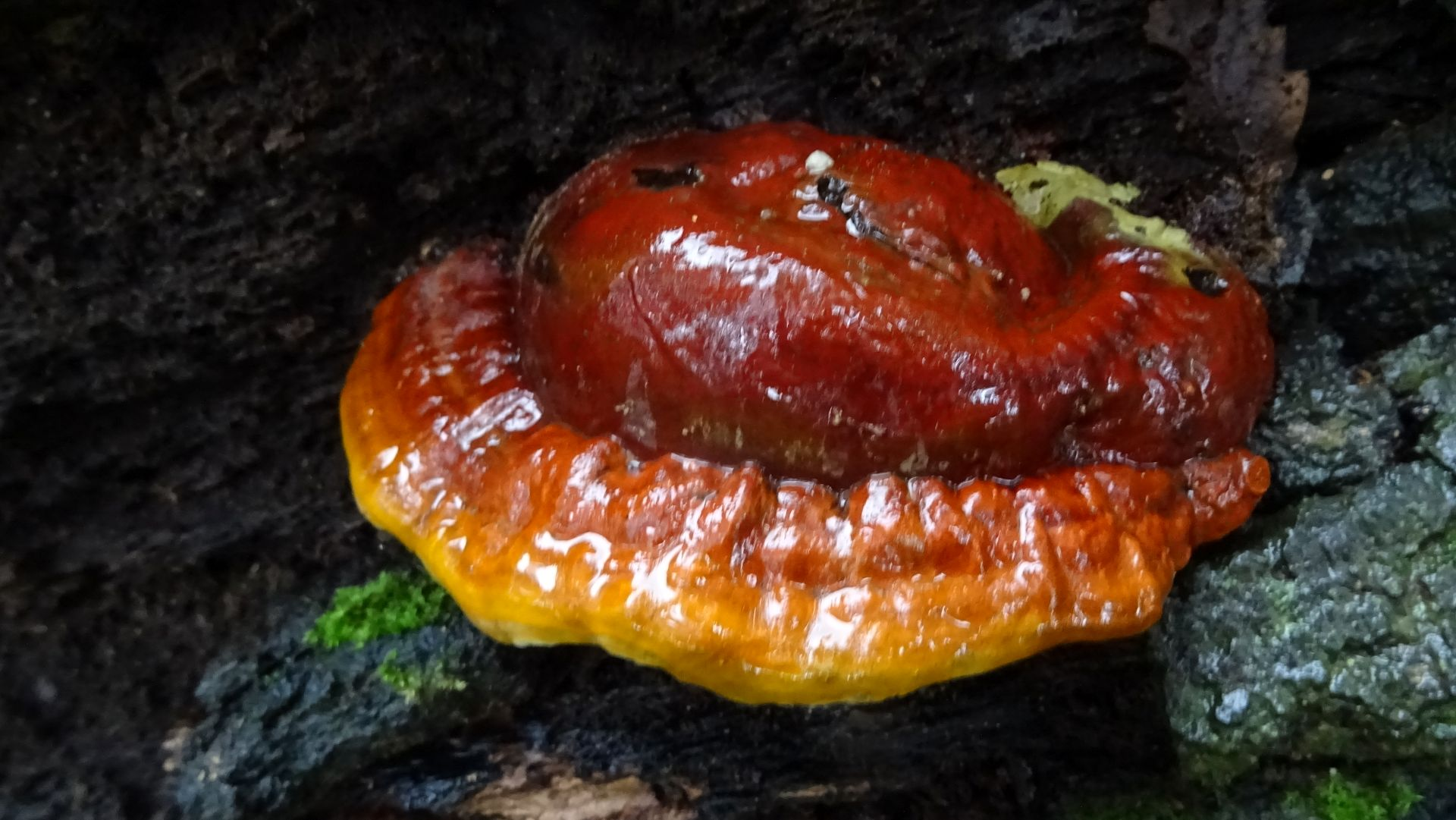
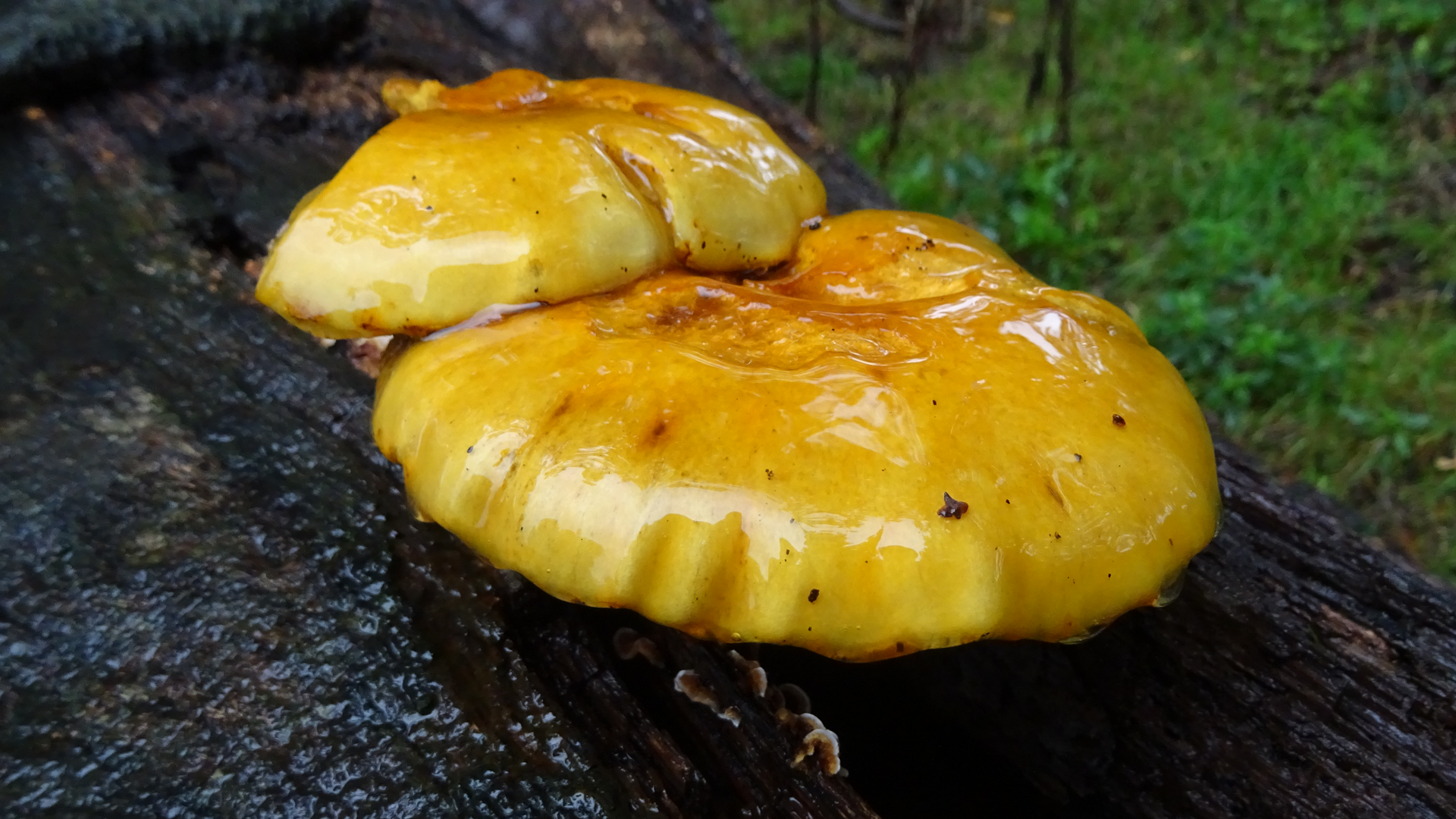
Lacquered Bracket is a smooth, shiny fungus that mainly grows on stumps and buried roots of broadleaf trees. It can be found throughout the year. The brackets are kidney-shaped and have a wavy edge. Initially, they are pale and darken with age. Caps can reach up to 25 cm in width.
#
Hairy Curtain Crust
Stereum hirsutum
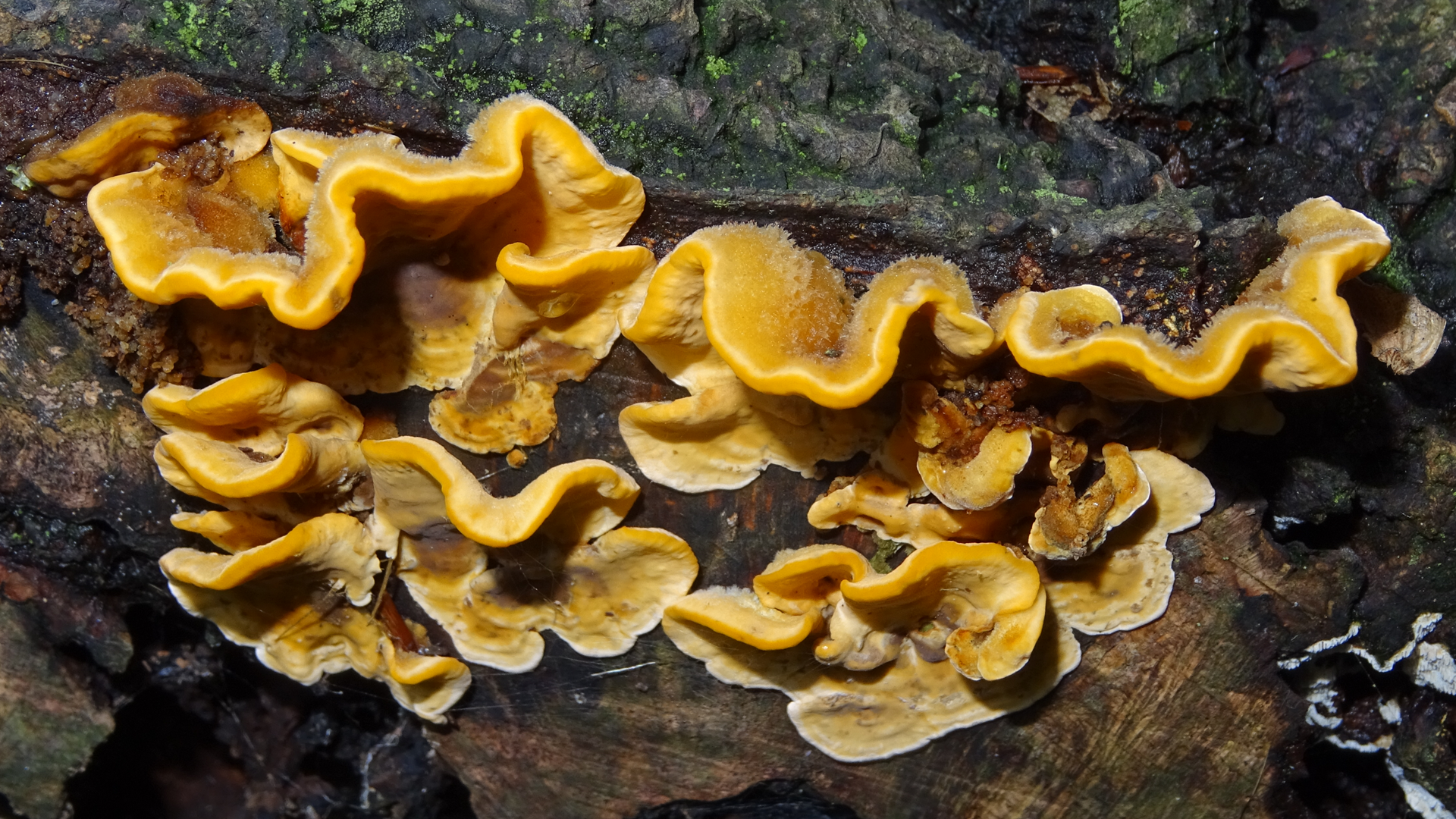
Hairy Curtain Crust
is a common bracket fungus found in layers on deciduous logs and stumps all year round. The tough, wavy, brackets have a hairy surface.
#
Smoky Bracket
Bjerkandera adusta
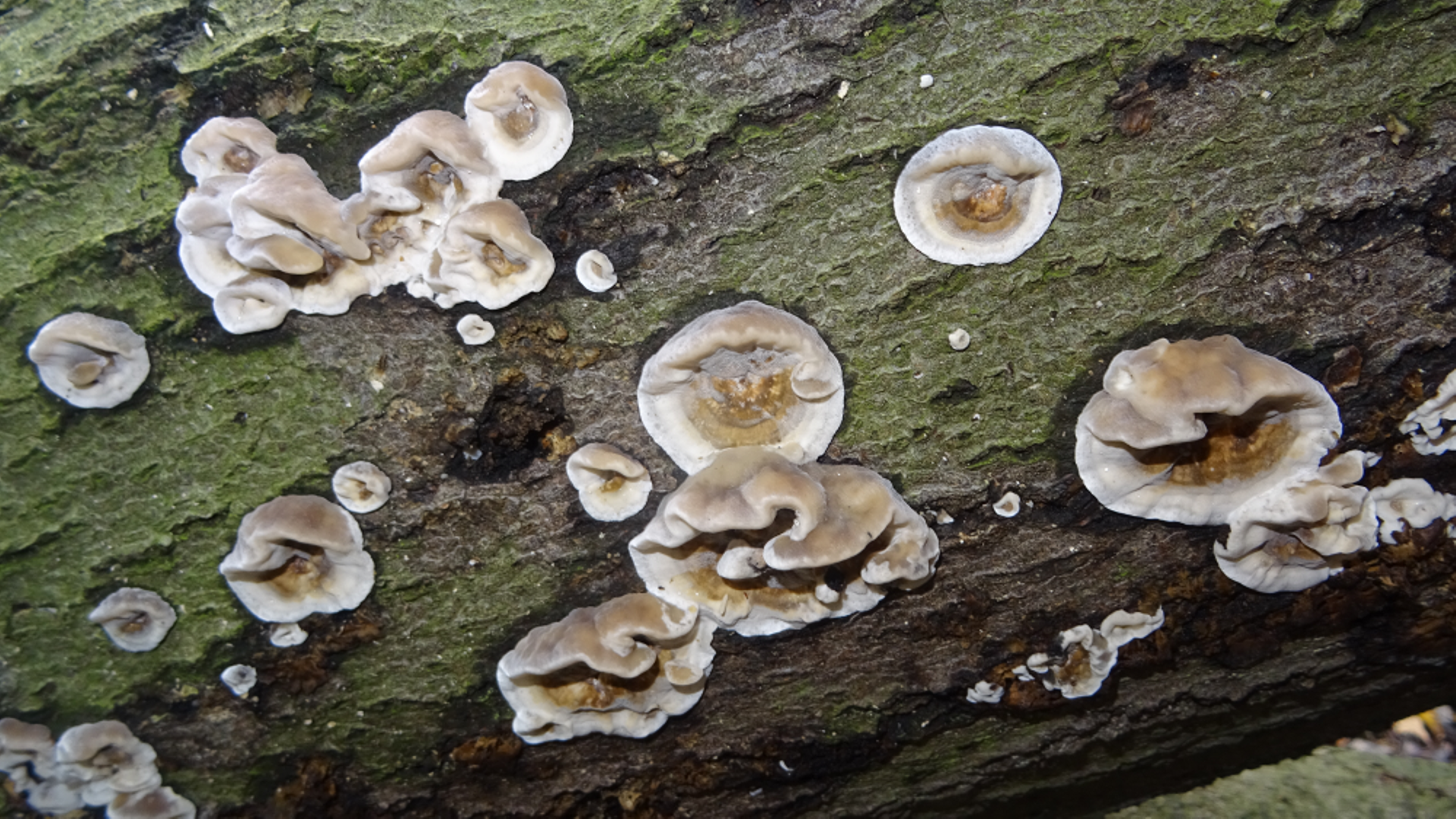
Smoky Bracket is a wood-rotting fungus that appears on fallen hardwood trunks and branches. It is variable in shape, sometimes forming brackets up to 6cm across.
#
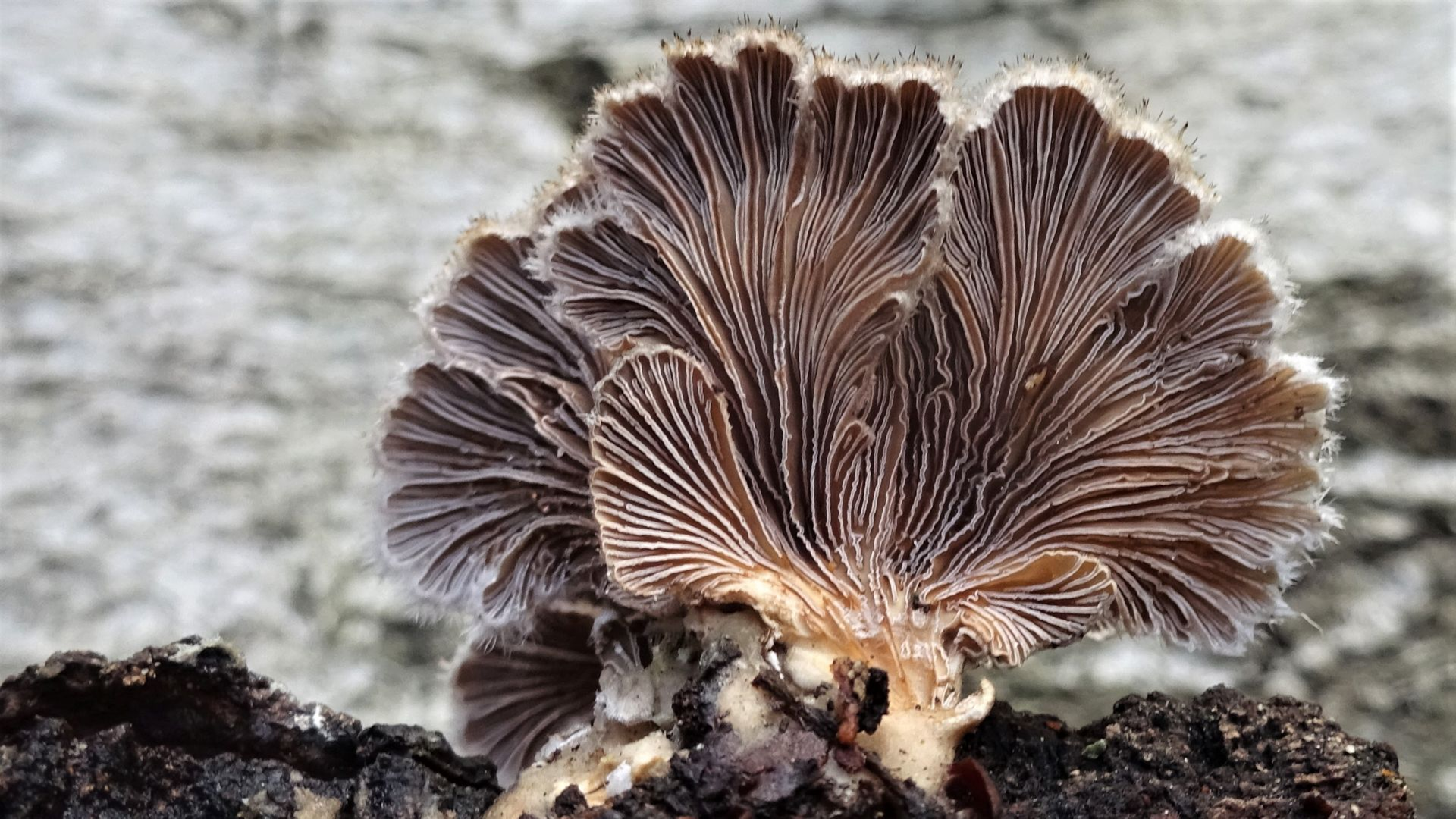
Split-gill Fungus
Schizophyllum commune
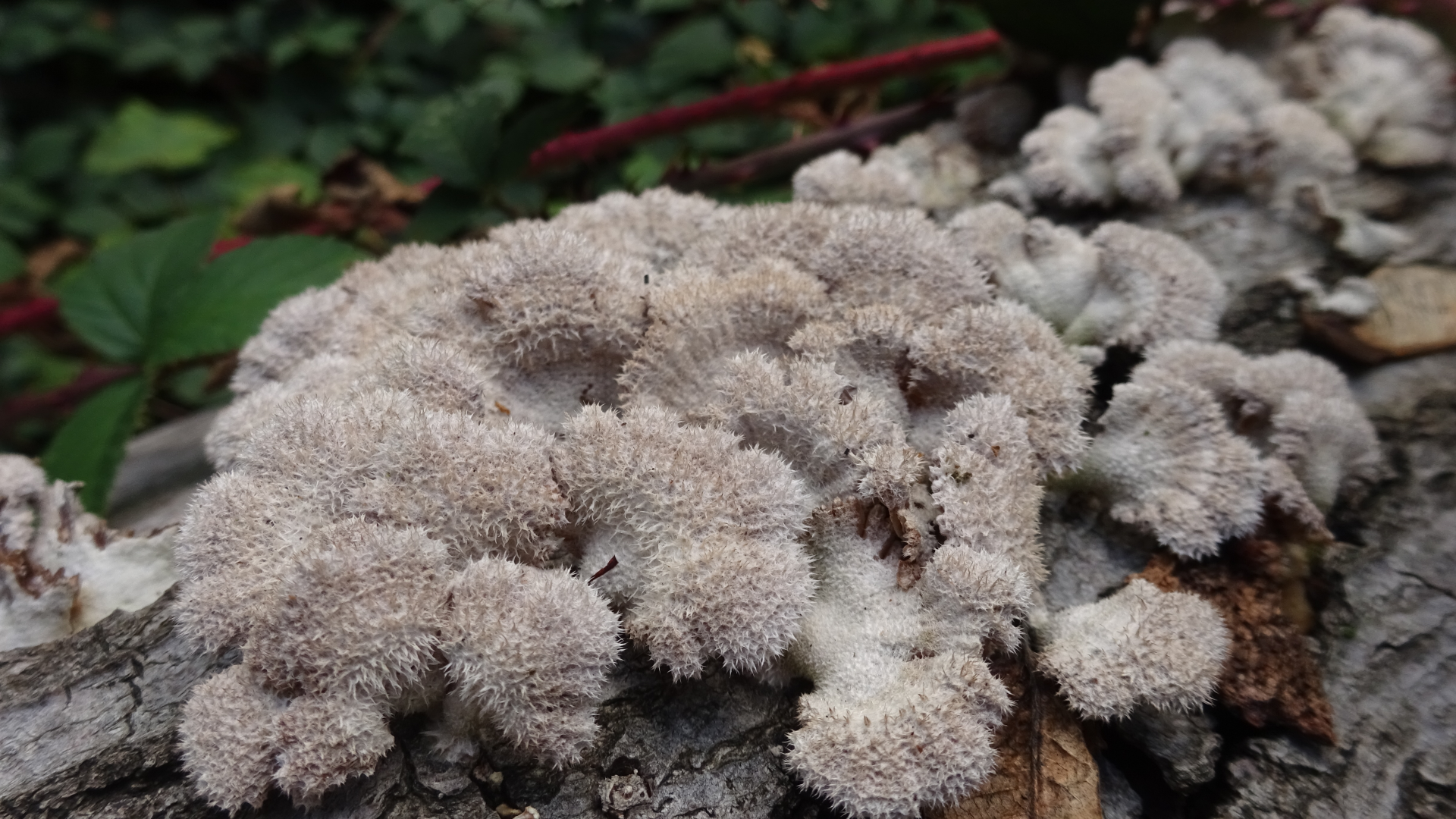
Split-gill fungus is a small white furry bracket fungus commonly found on dead wood, especially beech. It features radial gills beneath its cap. The name of the fungus comes from the appearance of the gills.
#
Birch Polypore
Piptoporus betulinus
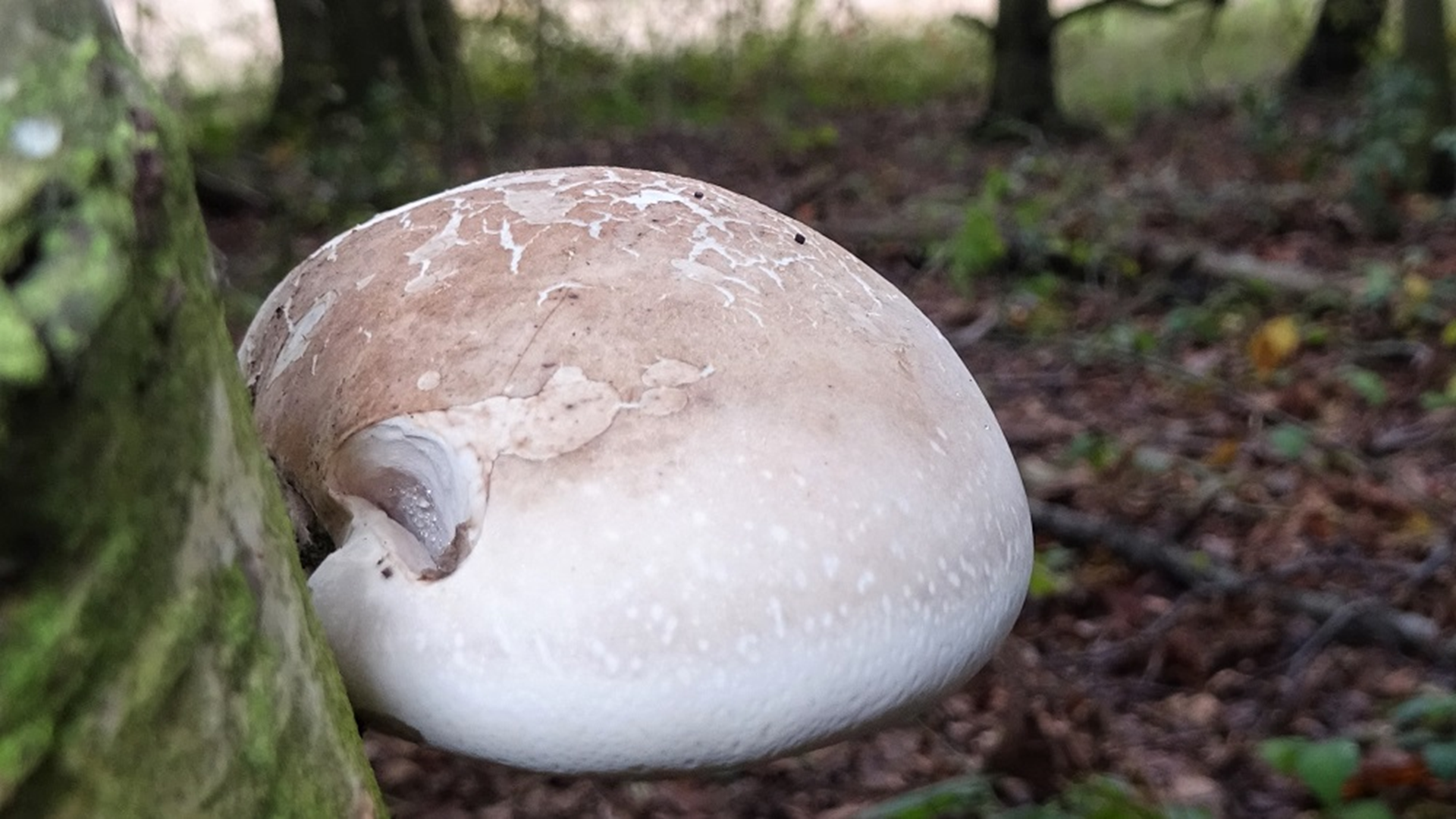
Birch Polypore is a common bracket fungus found year-through that only grows on birch trees. It has a whitish-brown cap which grows up to 20cm across and has white pores underneath.
#
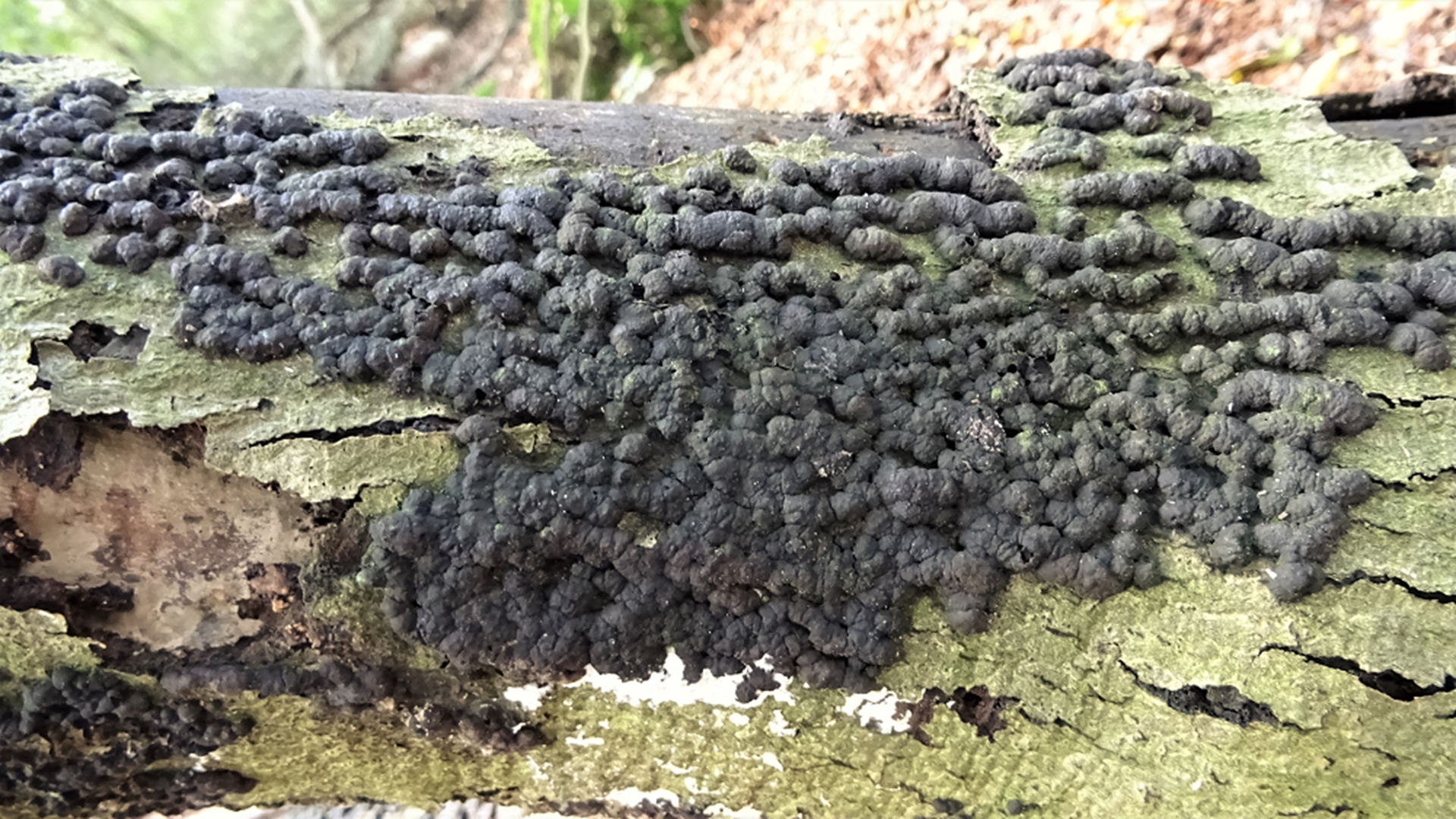
Beech Woodwart
Hypoxylon fragiforme
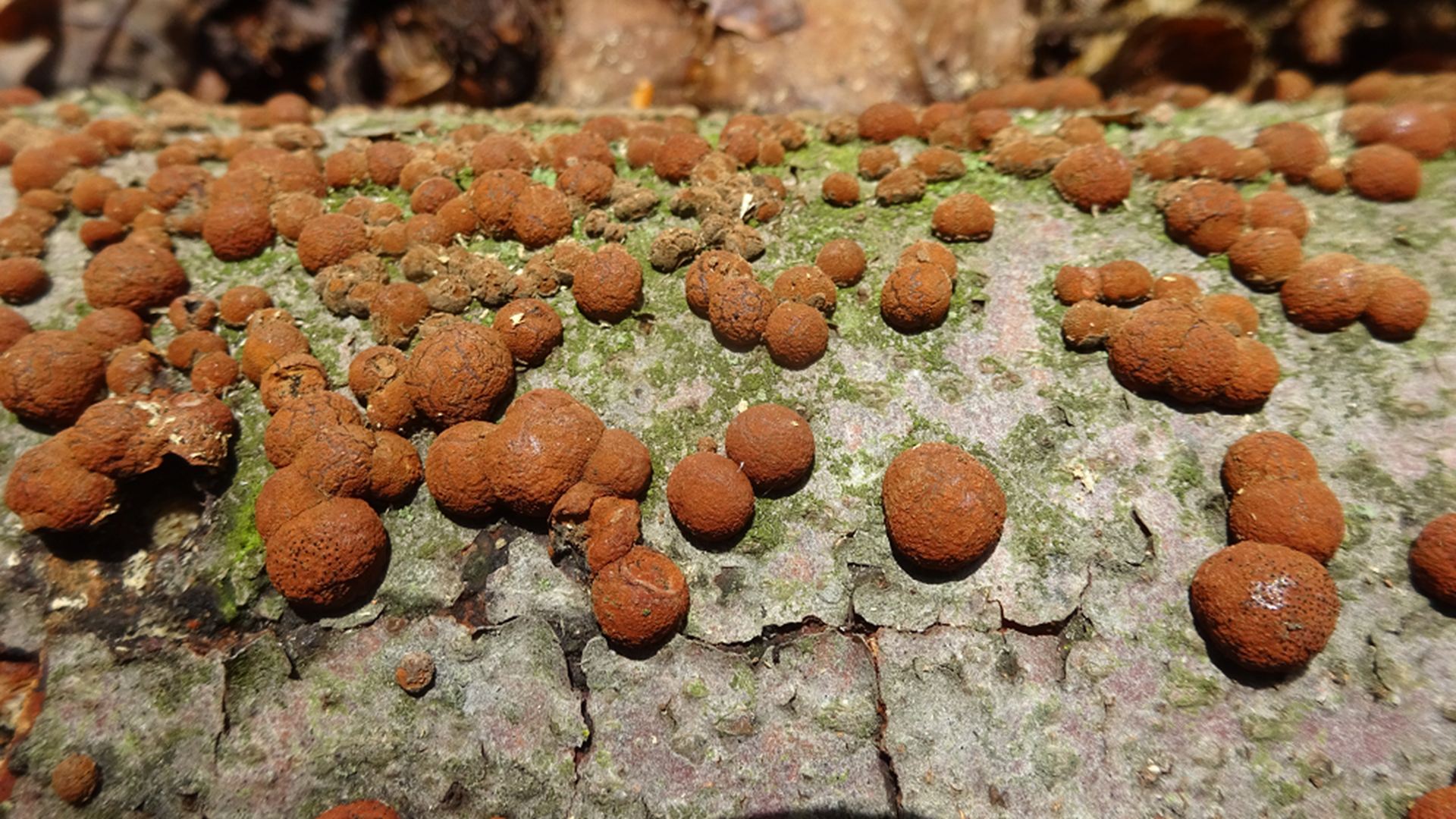
Beech Woodwart appears as small warty growths on beech wood. The brick-red rounded fruiting bodies are up to 1cm wide. With age the hard-surfaced fruiting bodies blacken.
#
Zoned Rosette
Podoscypha multizonata
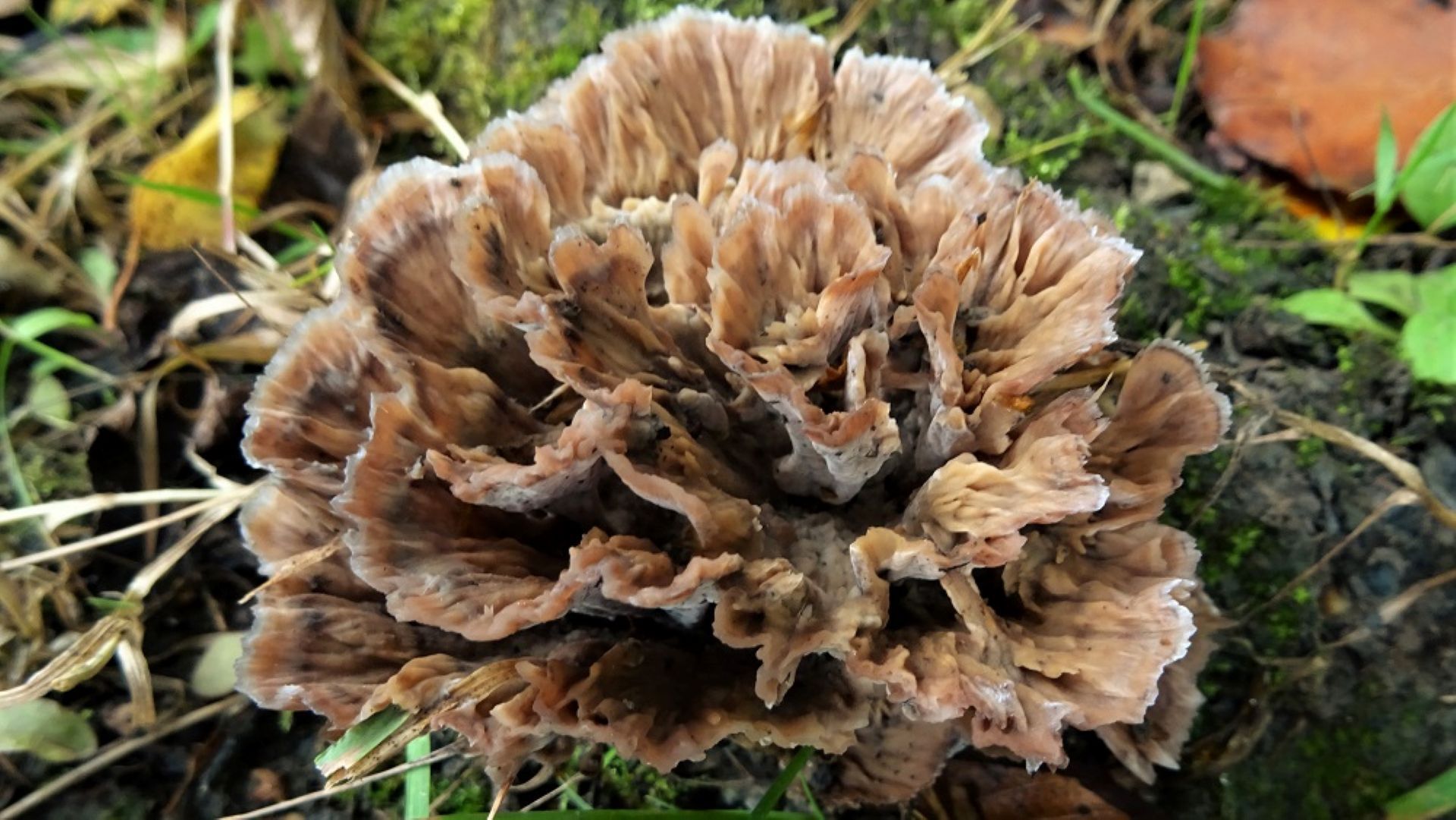
The Zoned Rosette grows from living roots of broad-leaved trees. This distinctive fungus is found on soil where it forms large, irregular, rosette-like clusters made of numerous thin, tough, fan-shaped lobes
#
Wrinkled Crust Fungus
Pheblia radiata
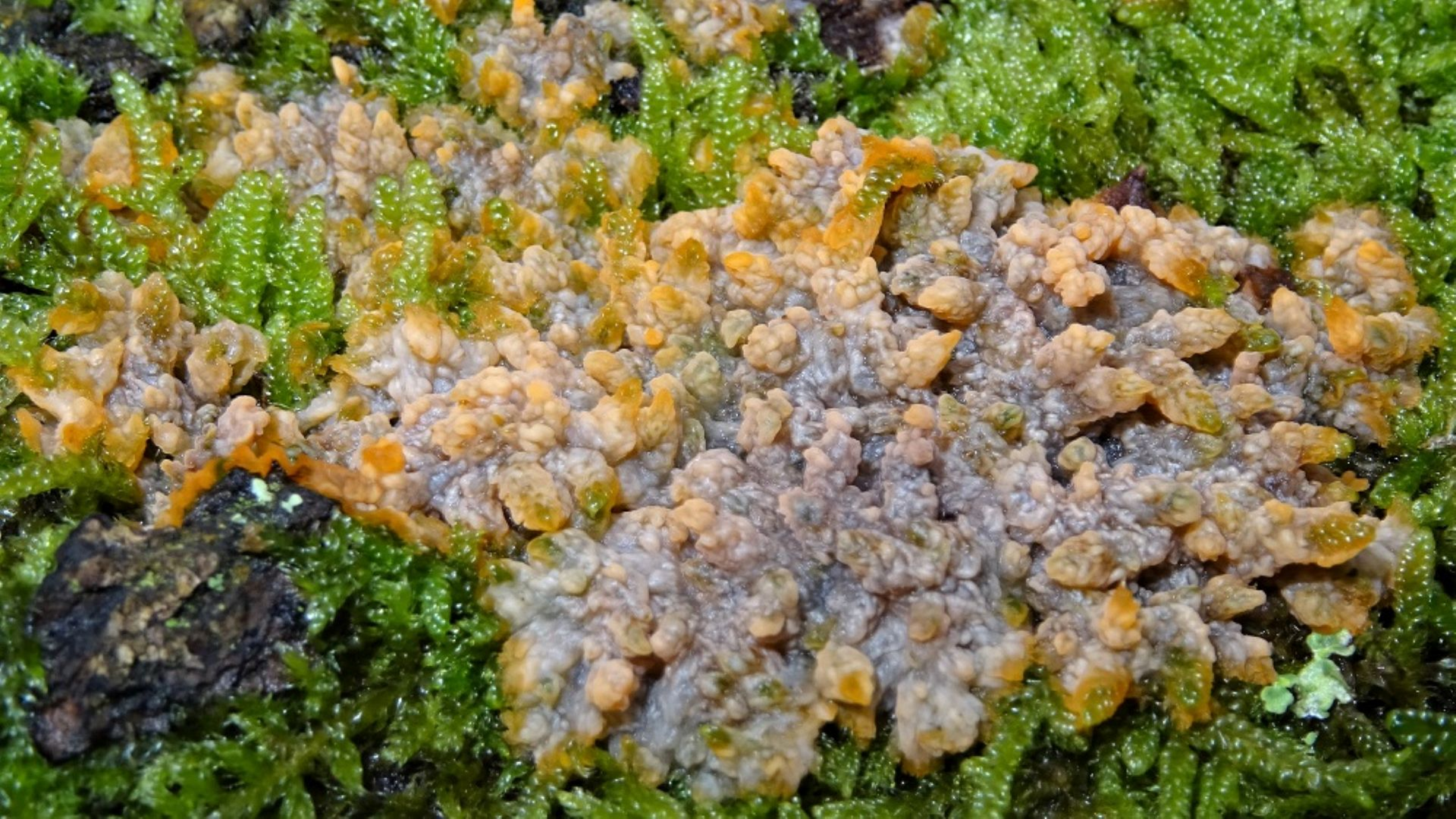
Wrinkled Crust fungus is a common sight on deciduous deadwood in Hainault Forest during autumn. It spreads across bark causing white rot and is often found growing over moss.
#
Coral Spot
Nectria cinnabarina
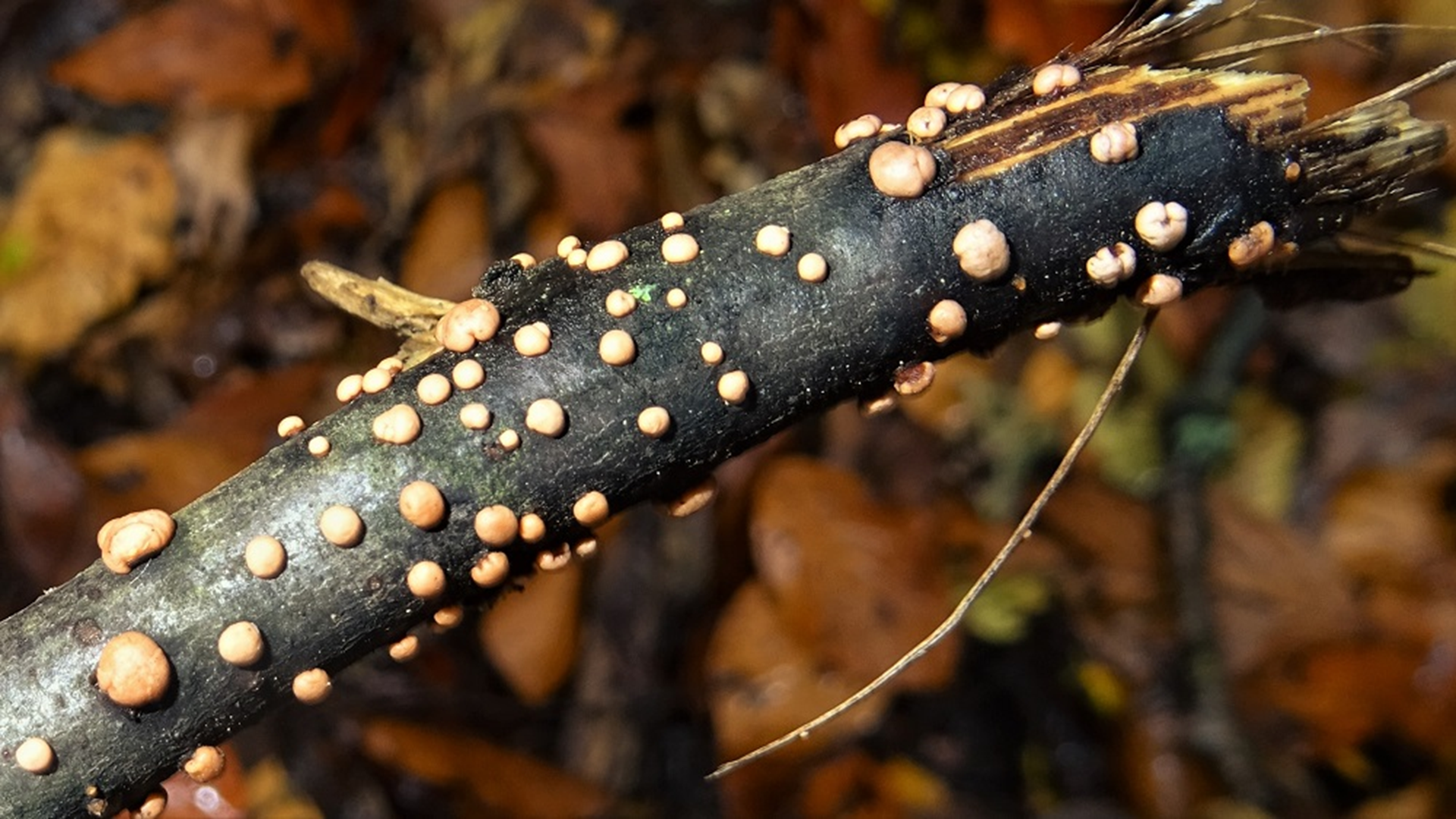
Coral Spot is a fungus that attacks dead and dying twigs and branches, particularly those belonging to sycamore, beech, chestnut and hornbeam. The spots measure 1-4mm across.
#
Jelly Ear
Auricularia auricula- judae
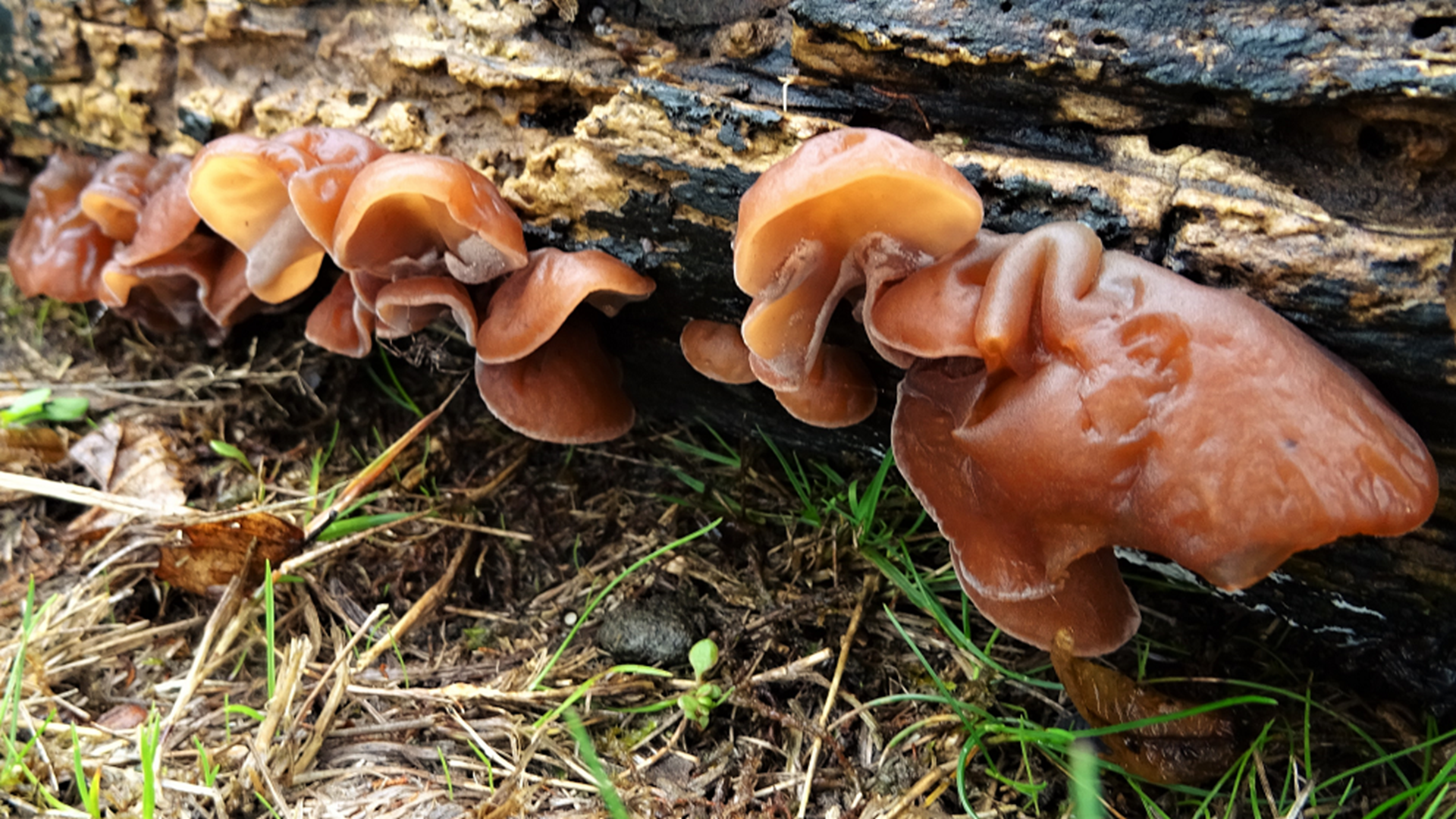
Jelly Ear
is associated with elder trees, but is also found on a range of other deciduous trees. It is soft cup-shaped fungus with 'ears' that grow up to 9cm across.
#
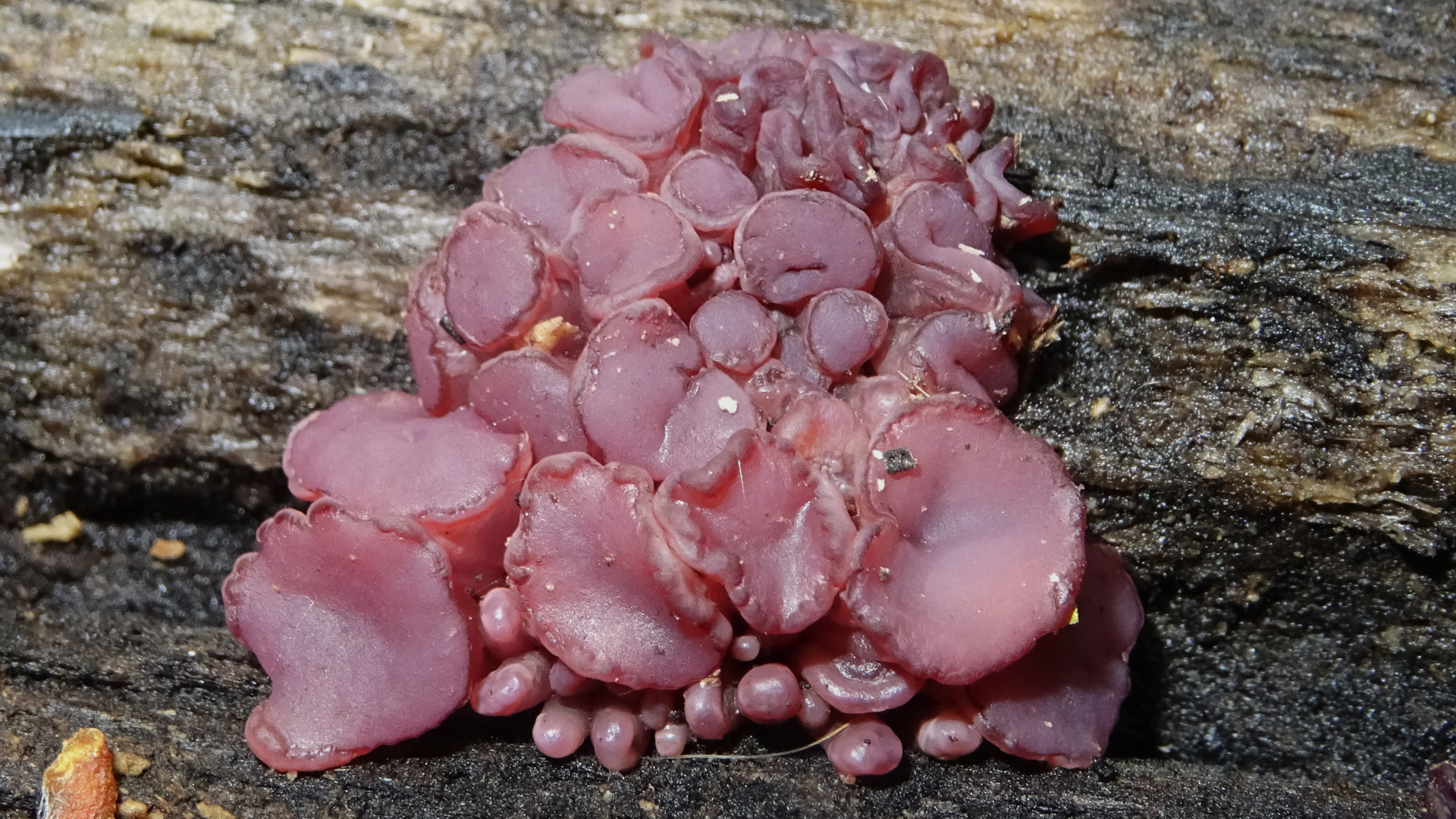
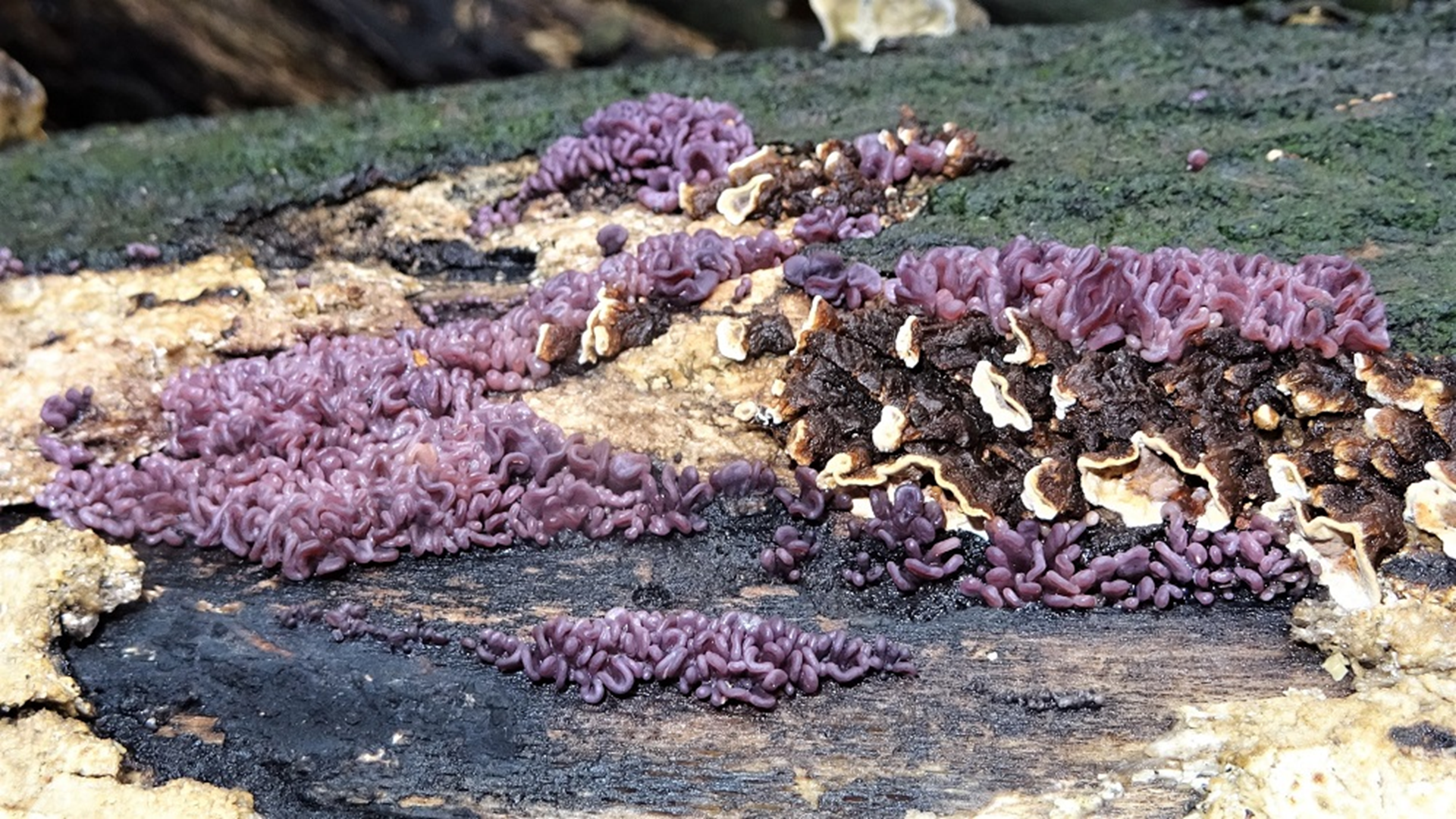
Purple Jellydisk
Ascocoryne sarcoides
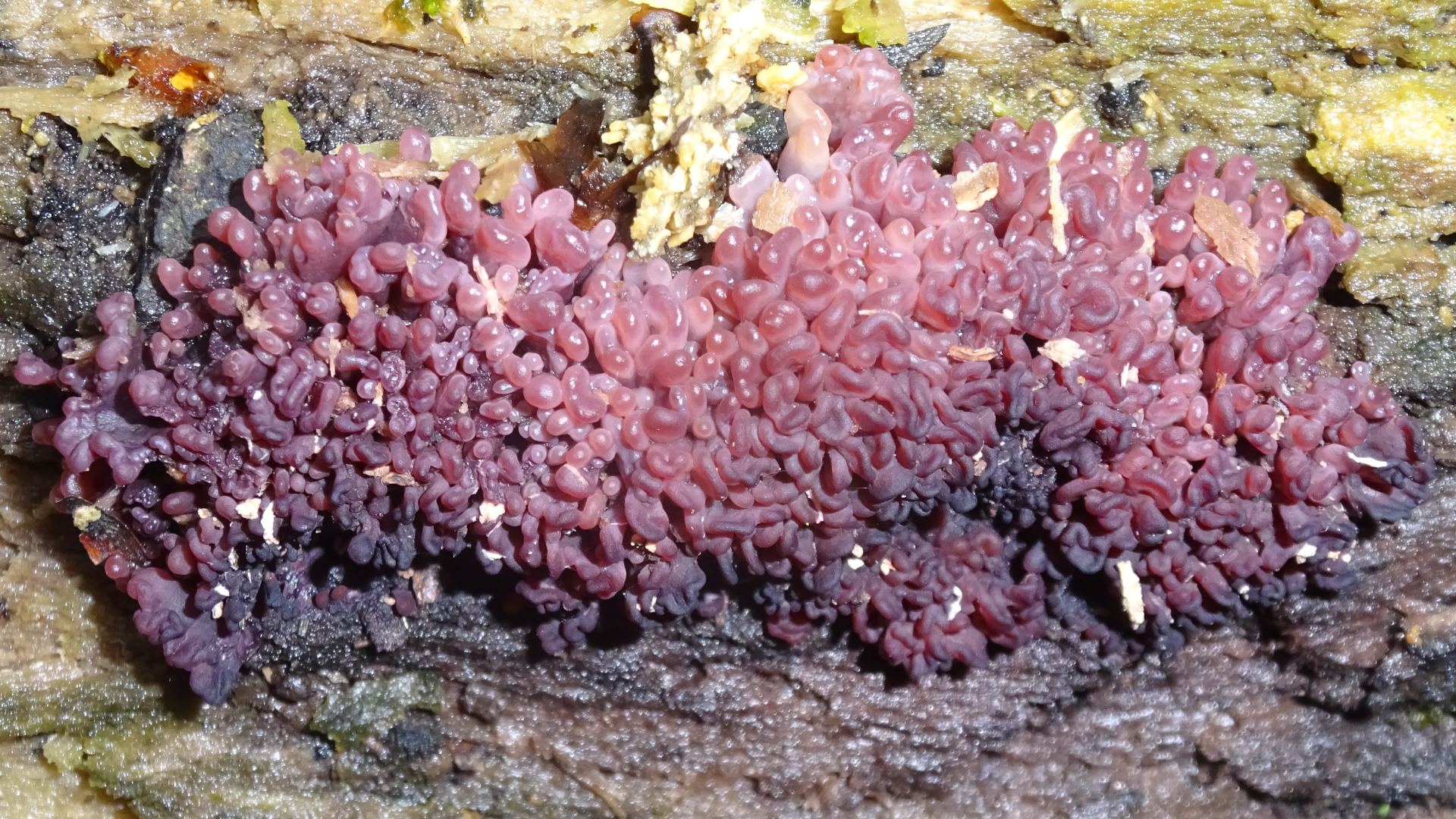
Purple Jellydisk is located on dead beech wood in the autumn. The fruiting bodies typically emerge in small clusters. They are often irregular in shape rather than resembling a disc. As the fungus matures, the disc shapes may become more apparent.
#
Yellow Brain Fungus
Tremella mesenterica
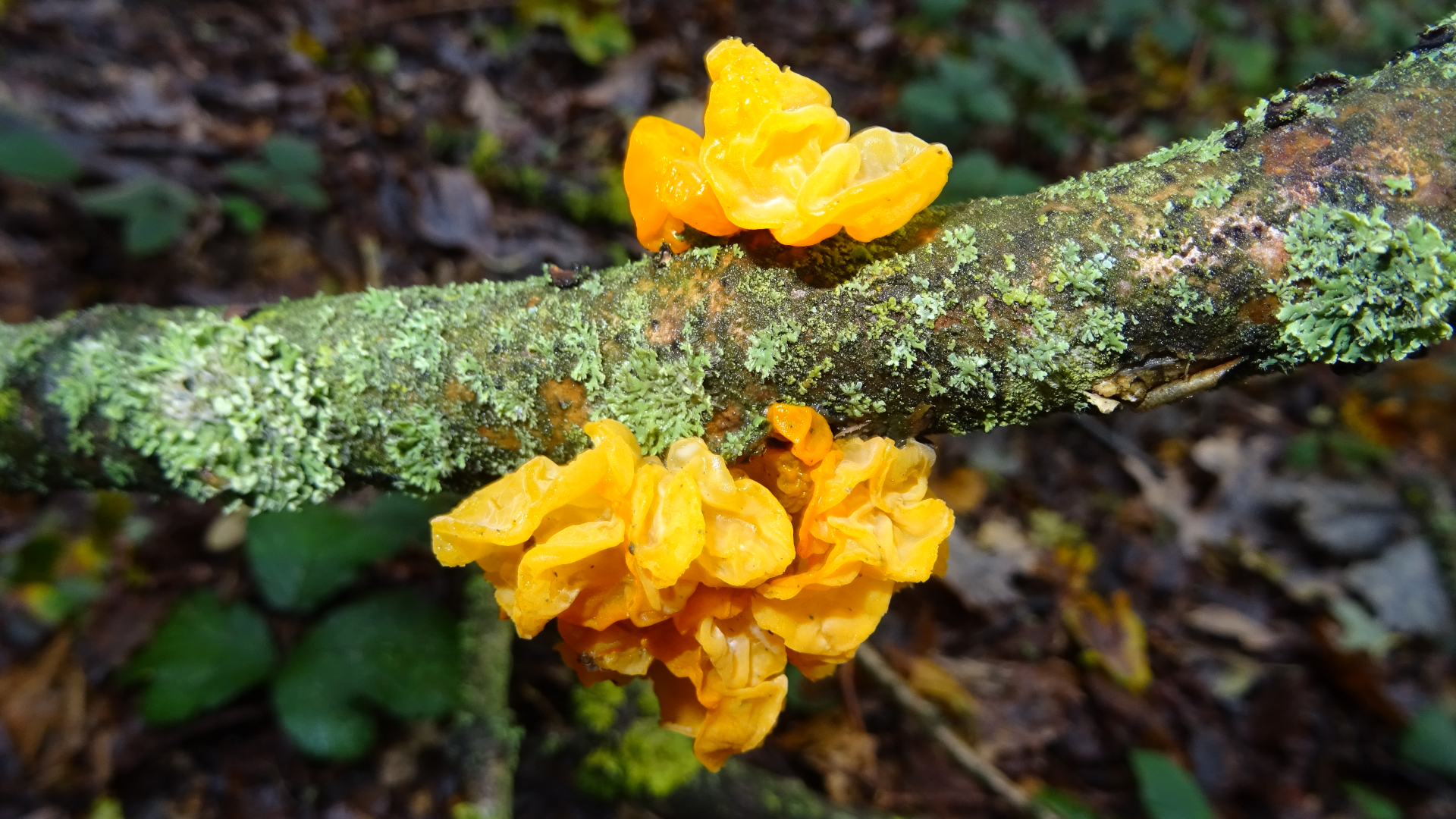
Yellow Brain is a type of fungus that normally appears in autumn and winter on the branches of deciduous trees. It can be found on both fallen branches and those still attached to the tree. Brighter specimens are seen during wetter weather, while they turn hard and a dull orange during dry periods.
#
Leafy Brain
Tremella foliacea
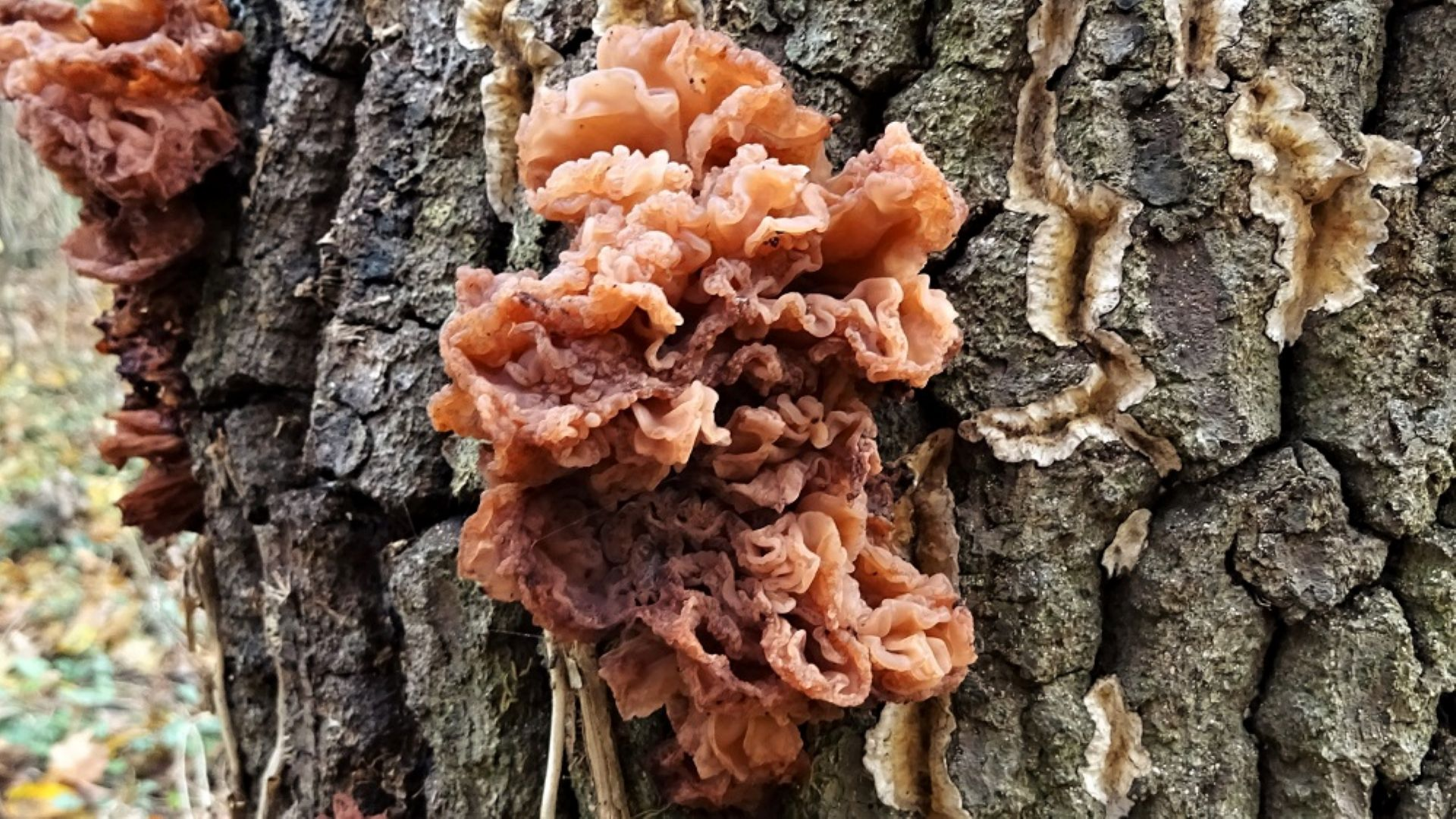
Leafy Brain Fungus, aka Brown Witches' Butter, has brown gelatinous fruiting bodies that can reach up to 20 cm across. It acts as a parasite on
Stereum species, including Hairy Curtain Crust. In this image, a crust fungus can be observed growing in proximity.
#
Witches' Butter
Exidia glandulosa
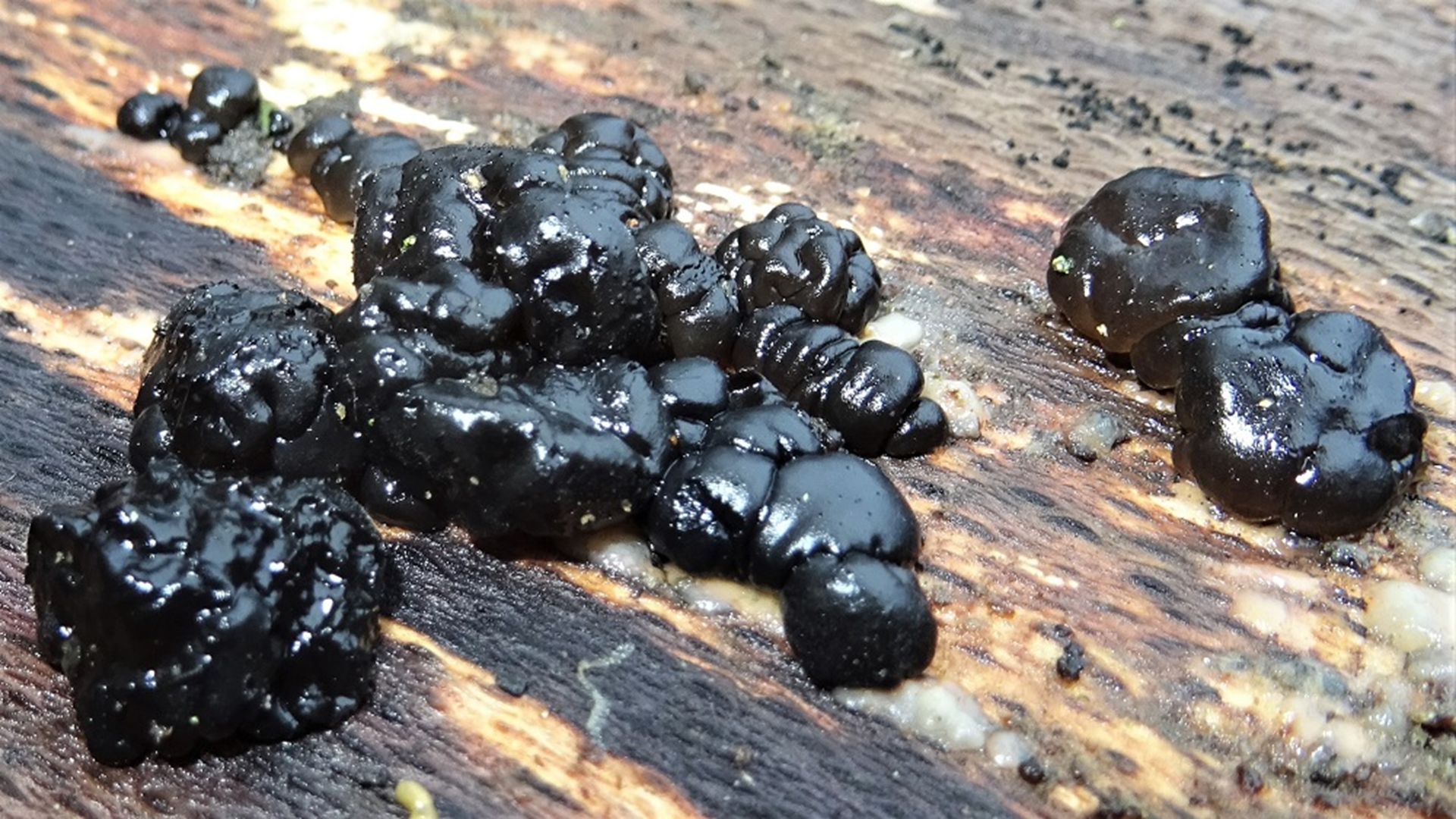
Witches' Butter has shiny black fruiting bodies that can reach up to 3 cm in width and can be found growing individually or in clusters.
#
Warty Jelly Fungus
Exidia truncata
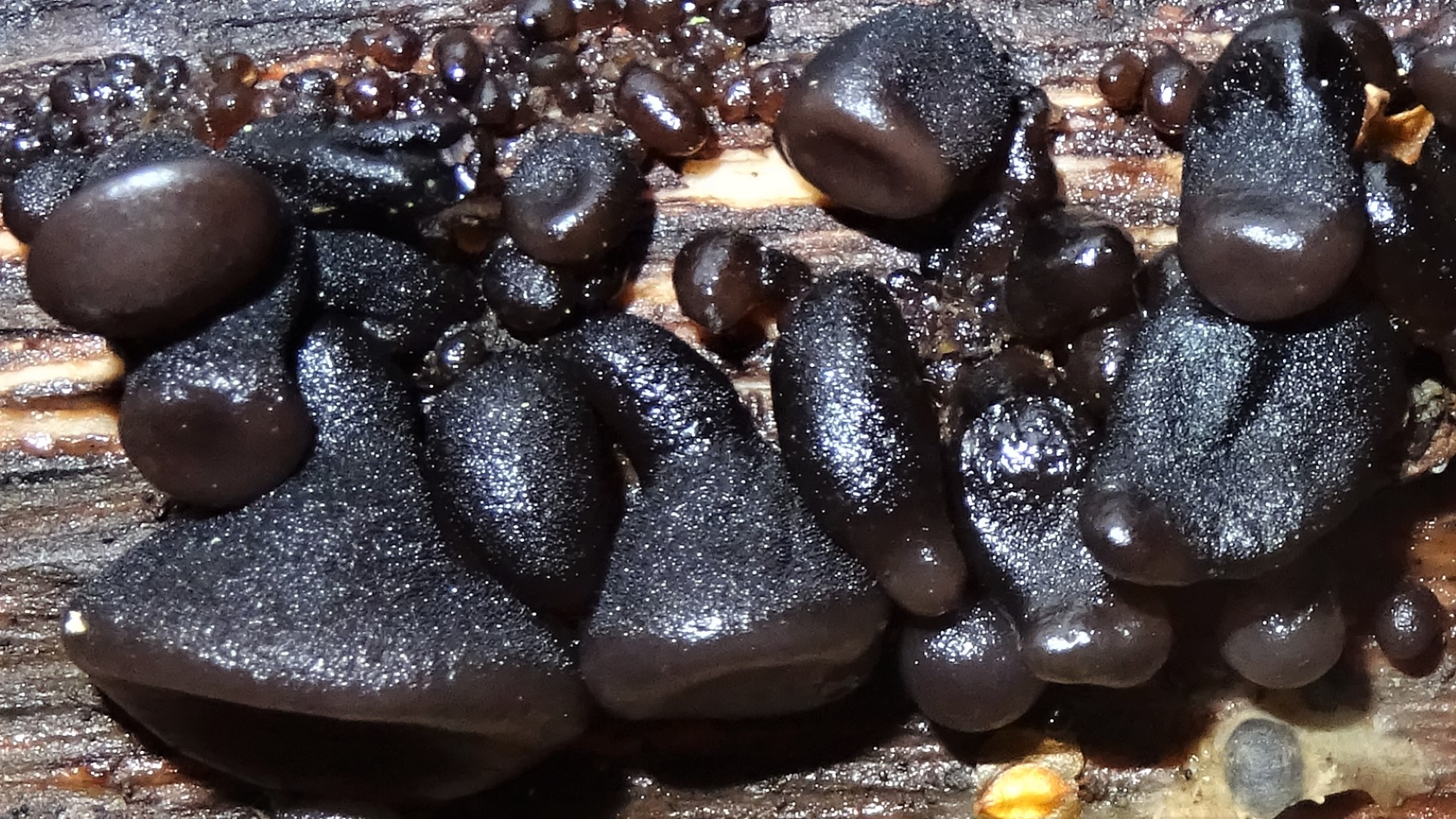
Warty Jelly Fungus
Exidia truncata is closely related to
Exidia glandulosa and is
sometimes grouped with it.
#
White Brain
Exidia thuretiana
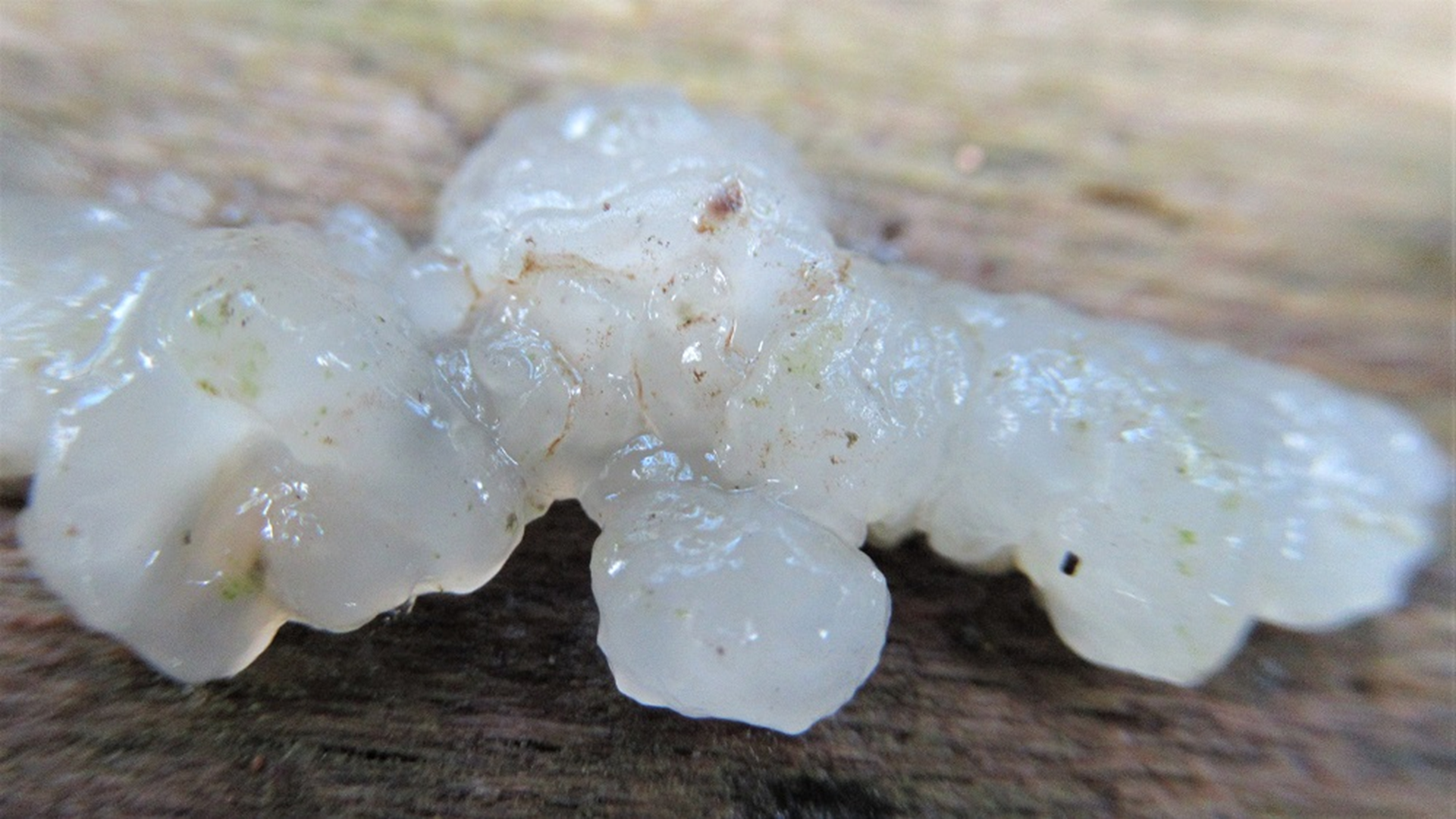
White Brain is more detectable late in the year during wet weather. It grows on rotting hardwood, particularly beech. In dry conditions, it hardens and shrivels up.
#
Lemon Disco
Bisporella citrina
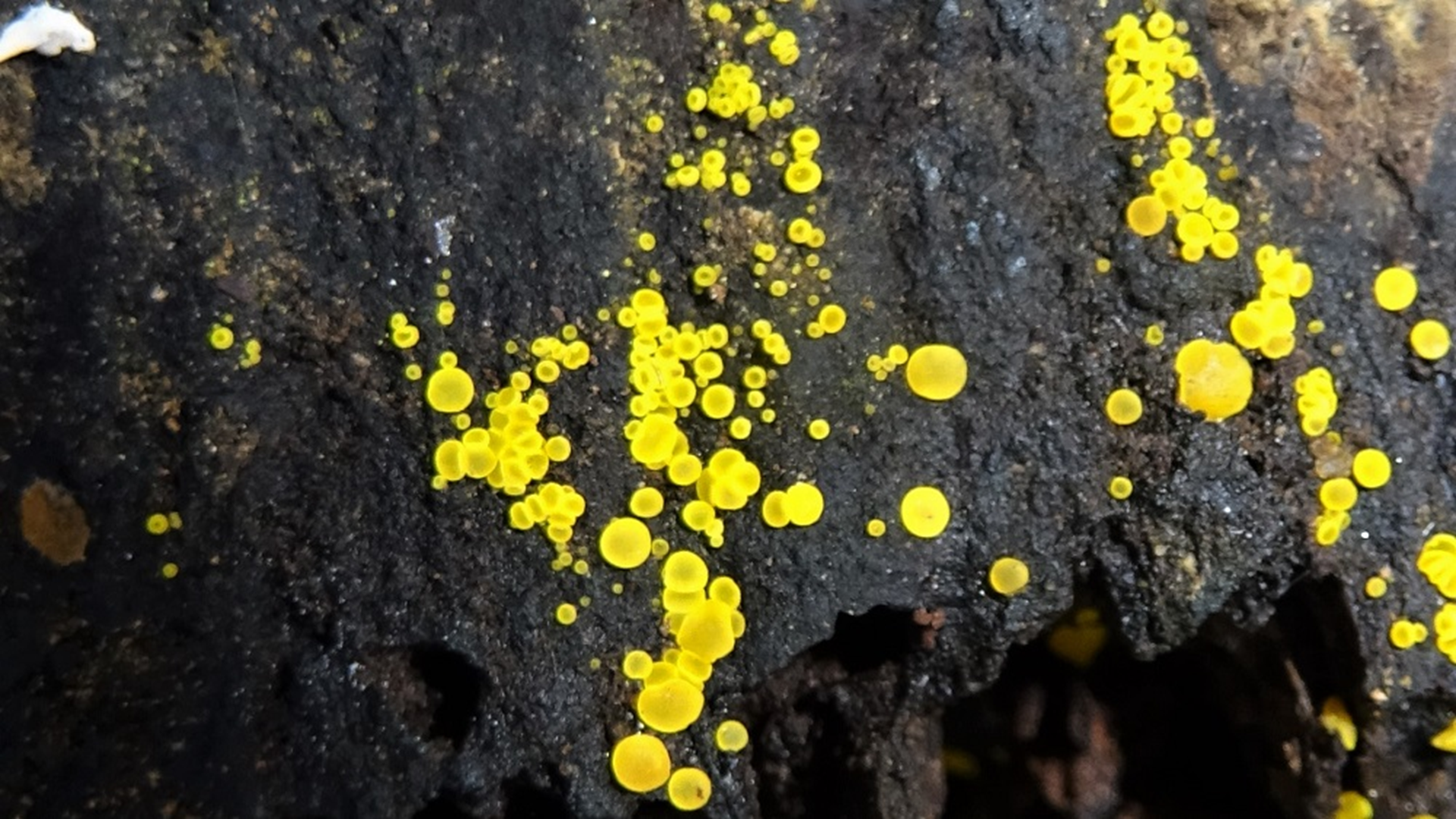
Lemon Disco is a bright lemon-yellow fungus that grows on dead wood of deciduous trees. The discs are 1-3mm diameter.
#
Slender Club
Macrotyphula juncea
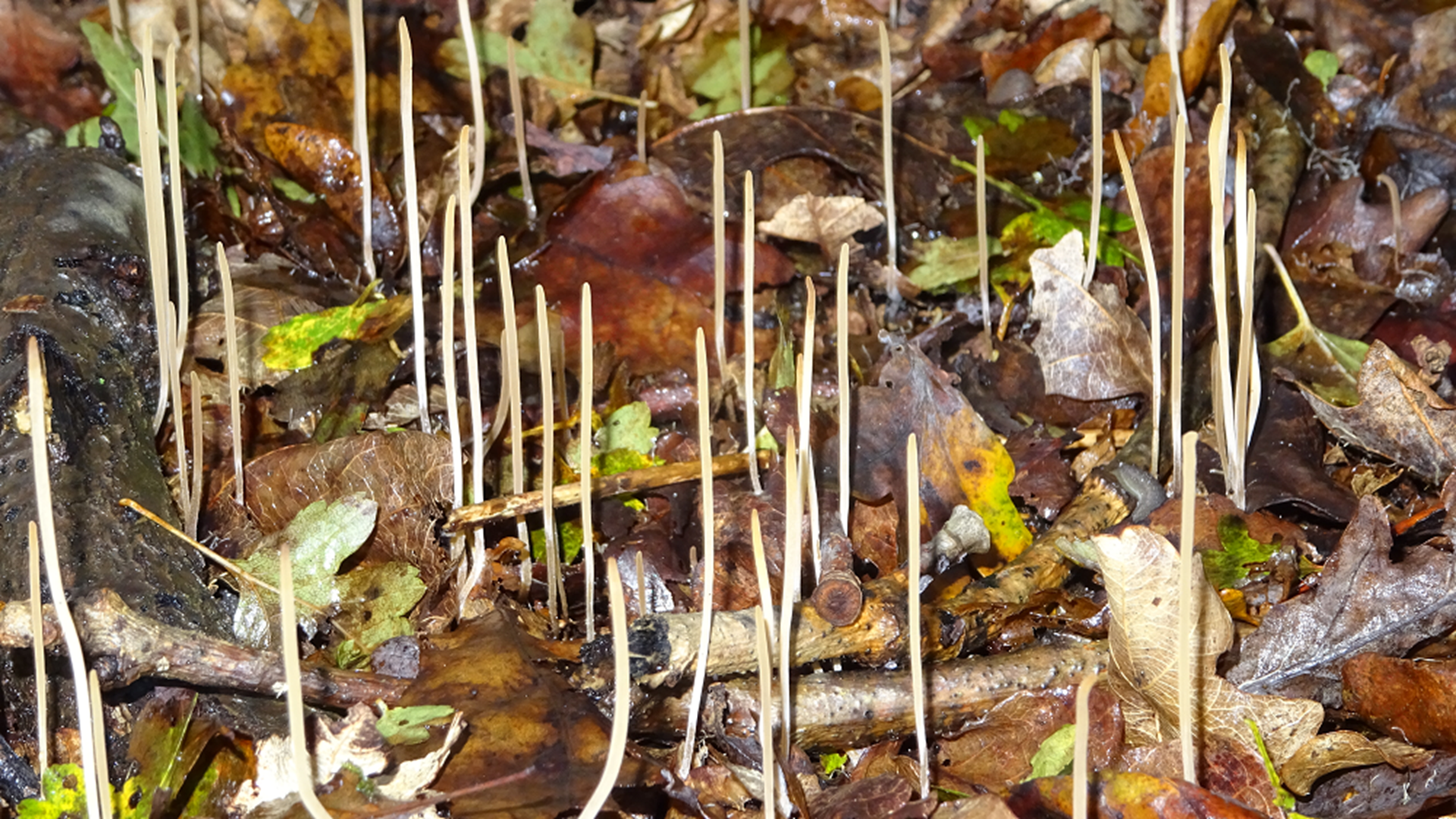
Slender Club is a thin, creamy-white fungus that can grow up to 10 cm in height in areas with leaf litter on the forest floor during autumn.
#
Moor Club
Clavaria argillacea
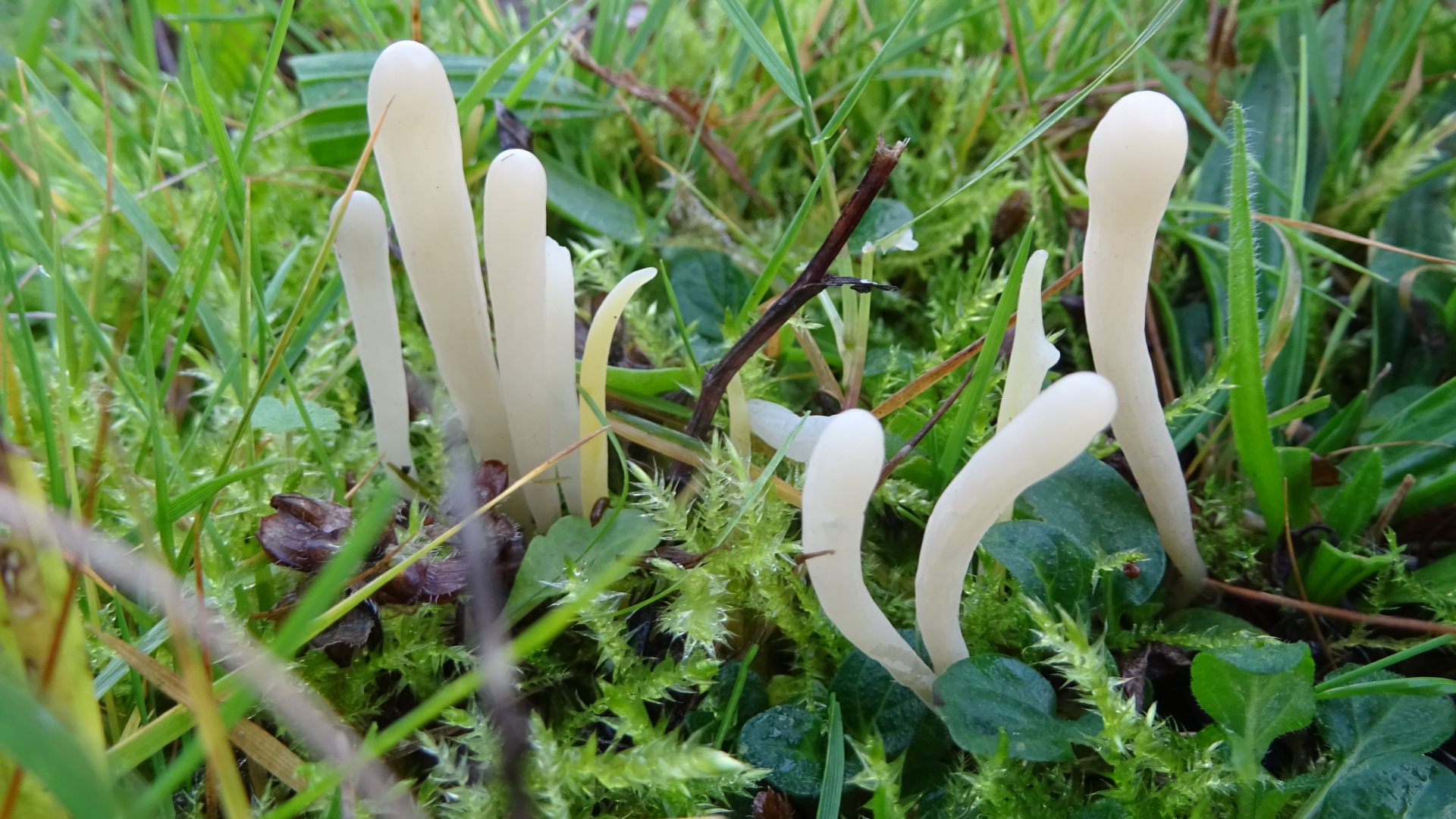
Moor Club generally grows in acidic soil near mosses. The club-shaped fruit bodies located on the grass strip near Hainault Lake measured approximately 7 cm in height, although there are accounts from other locations indicating that this fungus can attain double that height.
#
Apricot Club
Clavulinopsis luteoalba
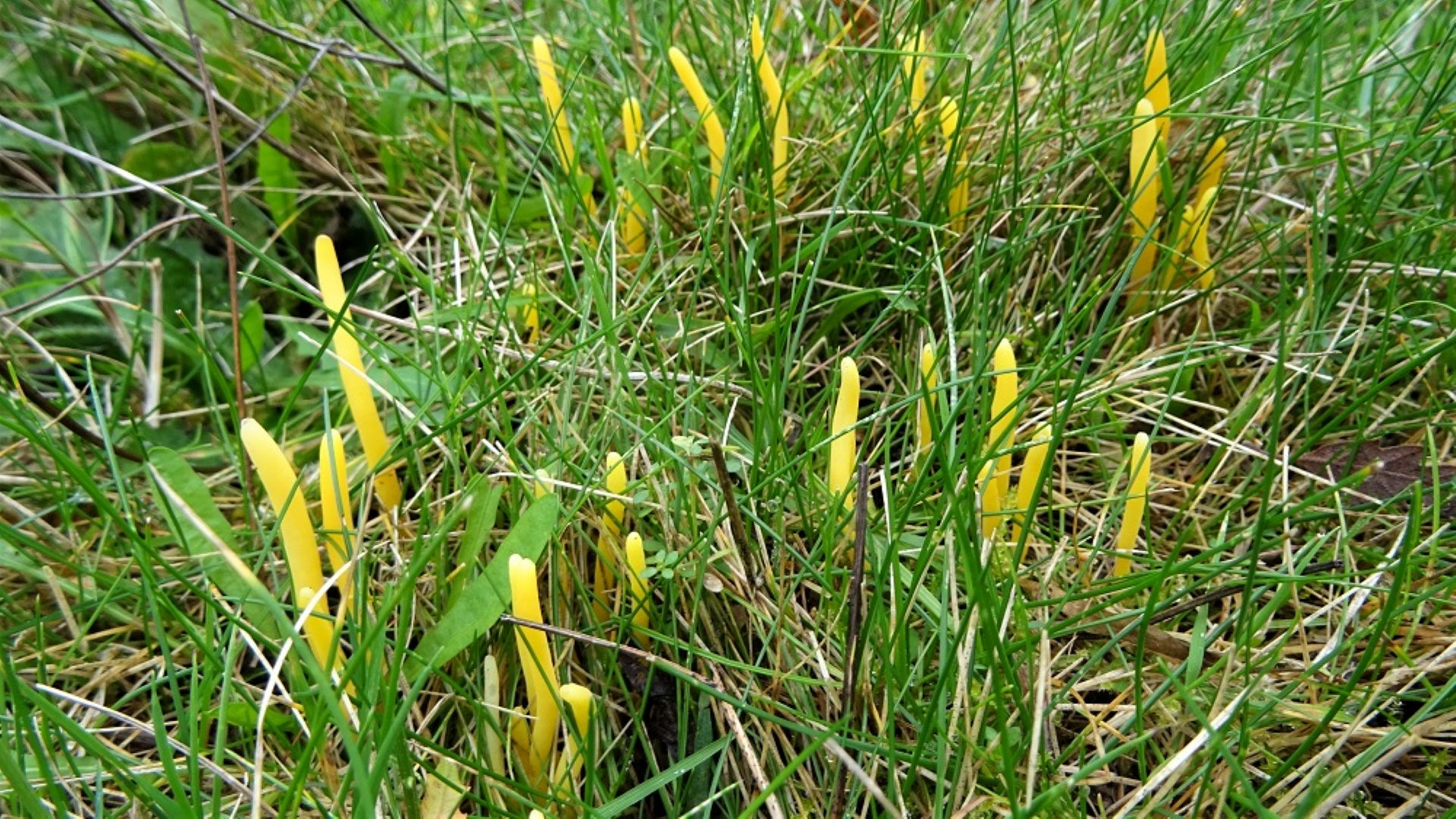
The fruiting body of Apricot Club is yellow with a white tip. This fungus grows on grassland during autumn.
#
Meadow Coral
Clavulinopsis corniculata
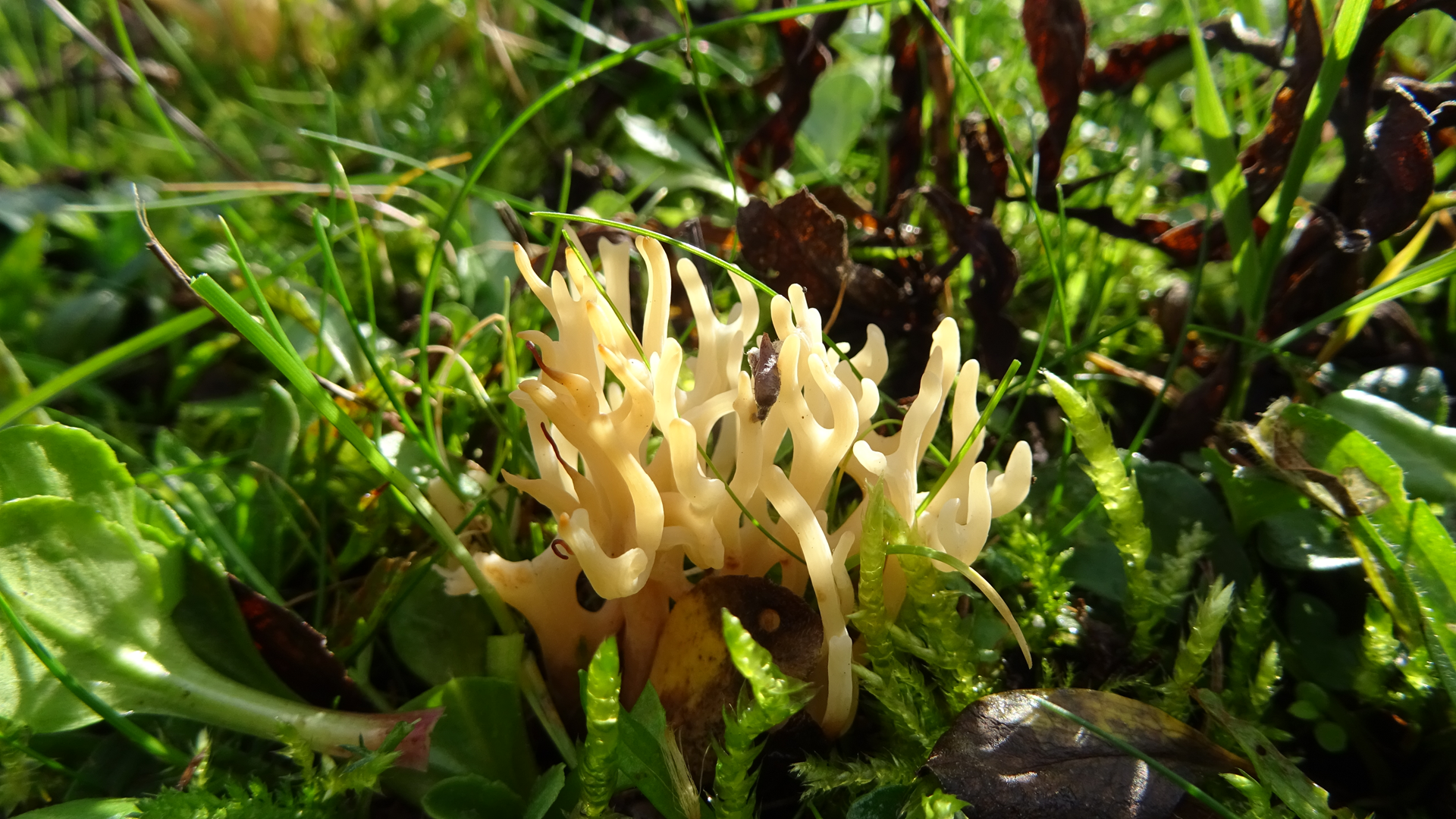
Meadow Coral is a brittle yellow fungus found on unimproved grassland.
#
Small Stagshorn
Calocera cornea
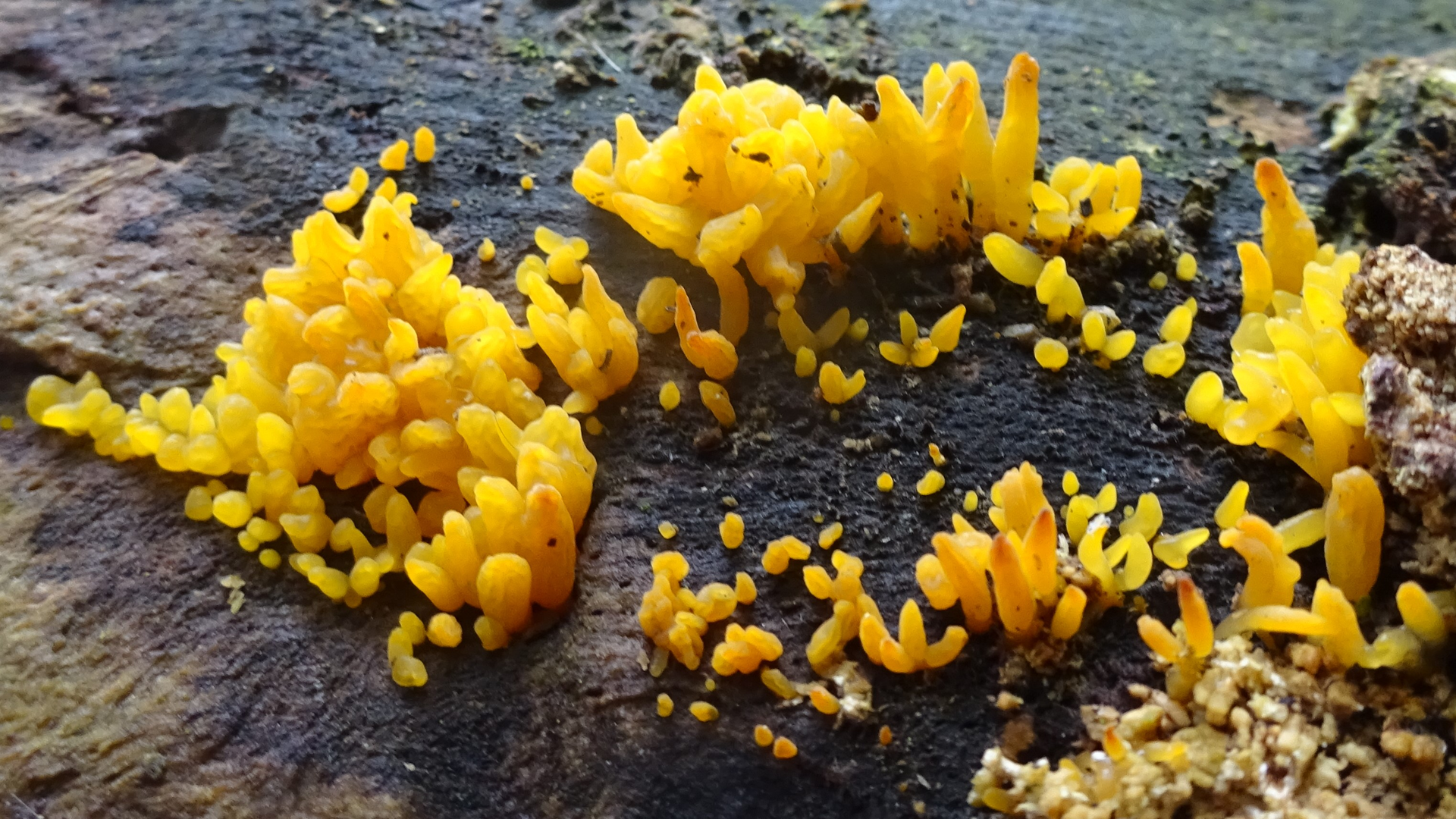
Small Stagshorn is found on decaying wood of broadleaf trees during autumn. The yellow fruiting bodies grow to a height of 10-20 mm with a diameter of up to 3 mm. This specimen is on beech.
#
Yellow Coral Fungus
Mucronella flava
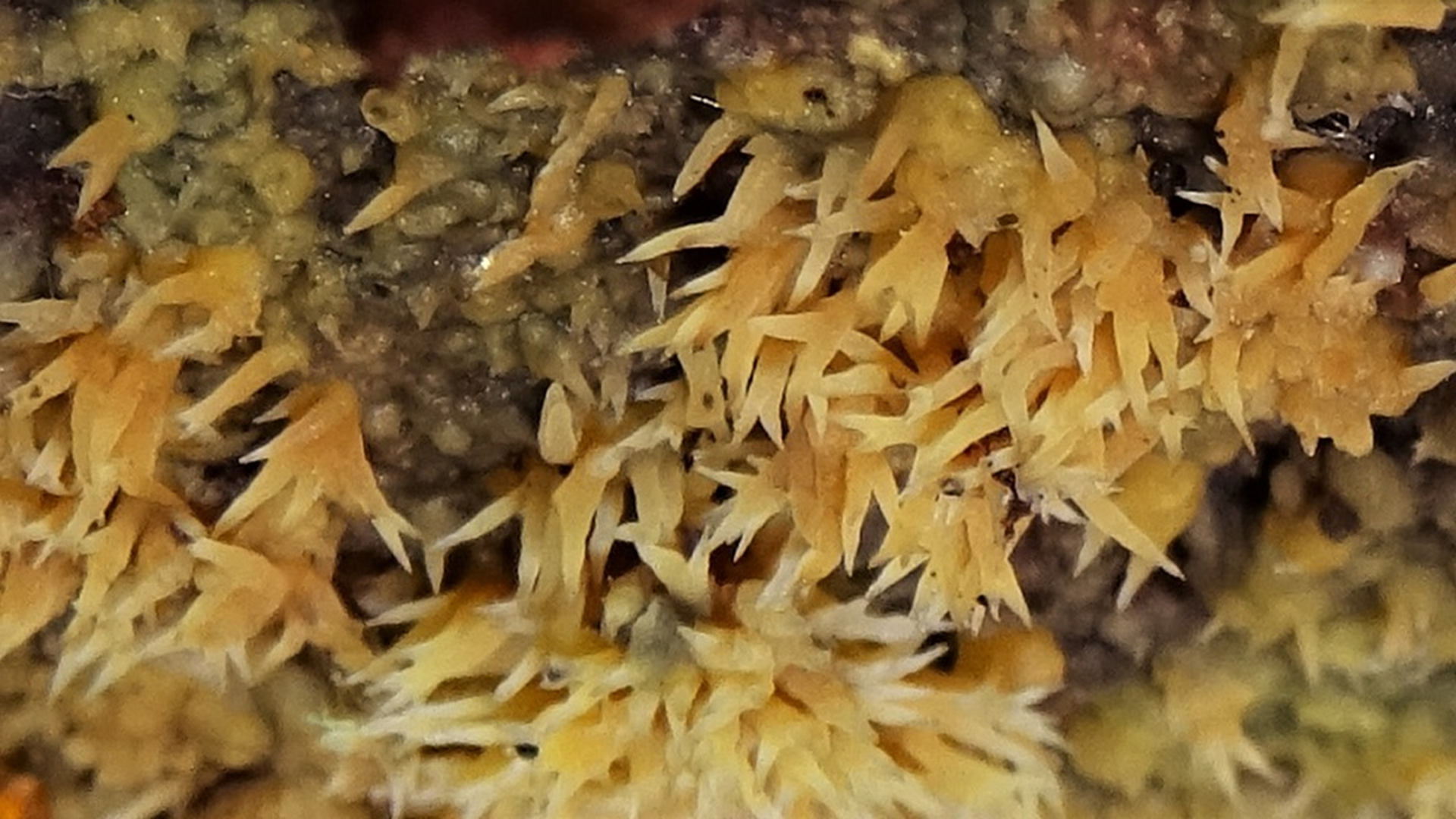
Mucronella flava is a tiny fungus with yellow, spine-like fruiting bodies that grow in clusters on rotten wood. The downward-pointing spines are usually 2–4 millimetres long. It is a saprophytic fungus that derives nutrients from decomposing organic material.
#
Hare's Ear
Otidea onotica
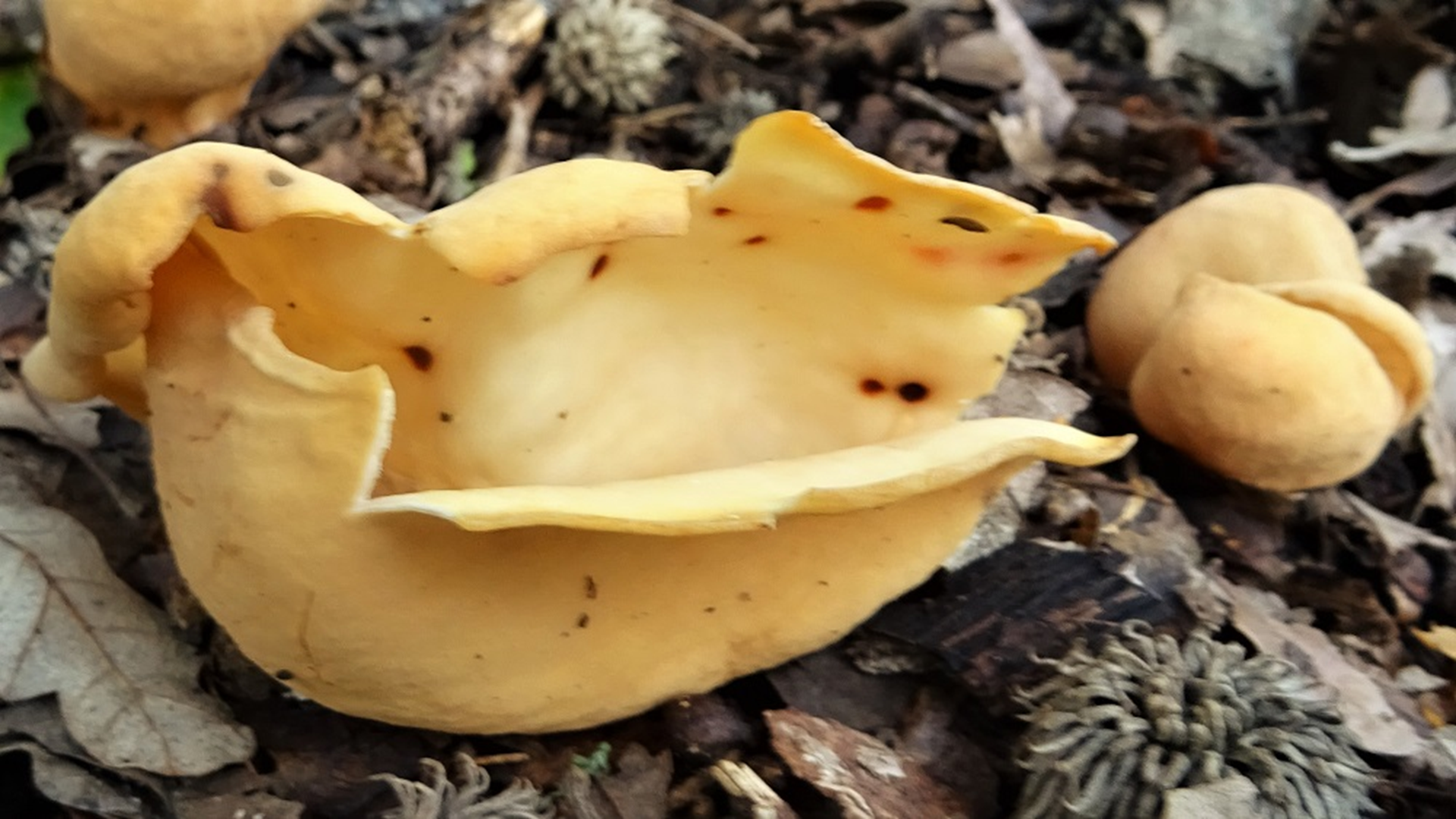
Hare's Ear is a cup-shaped fungus that grows in leaf litter beneath deciduous trees. It is commonly found in small clusters that create circular formations.
#
© hainaultforest.net. All rights reserved.
This website uses necessary cookies. It does not use targeting or advertising cookies.