

SECOND QUARTER 2019
This Journal covers the second quarter of 2019 from April to June.
#
Whitethroat
Curruca communis
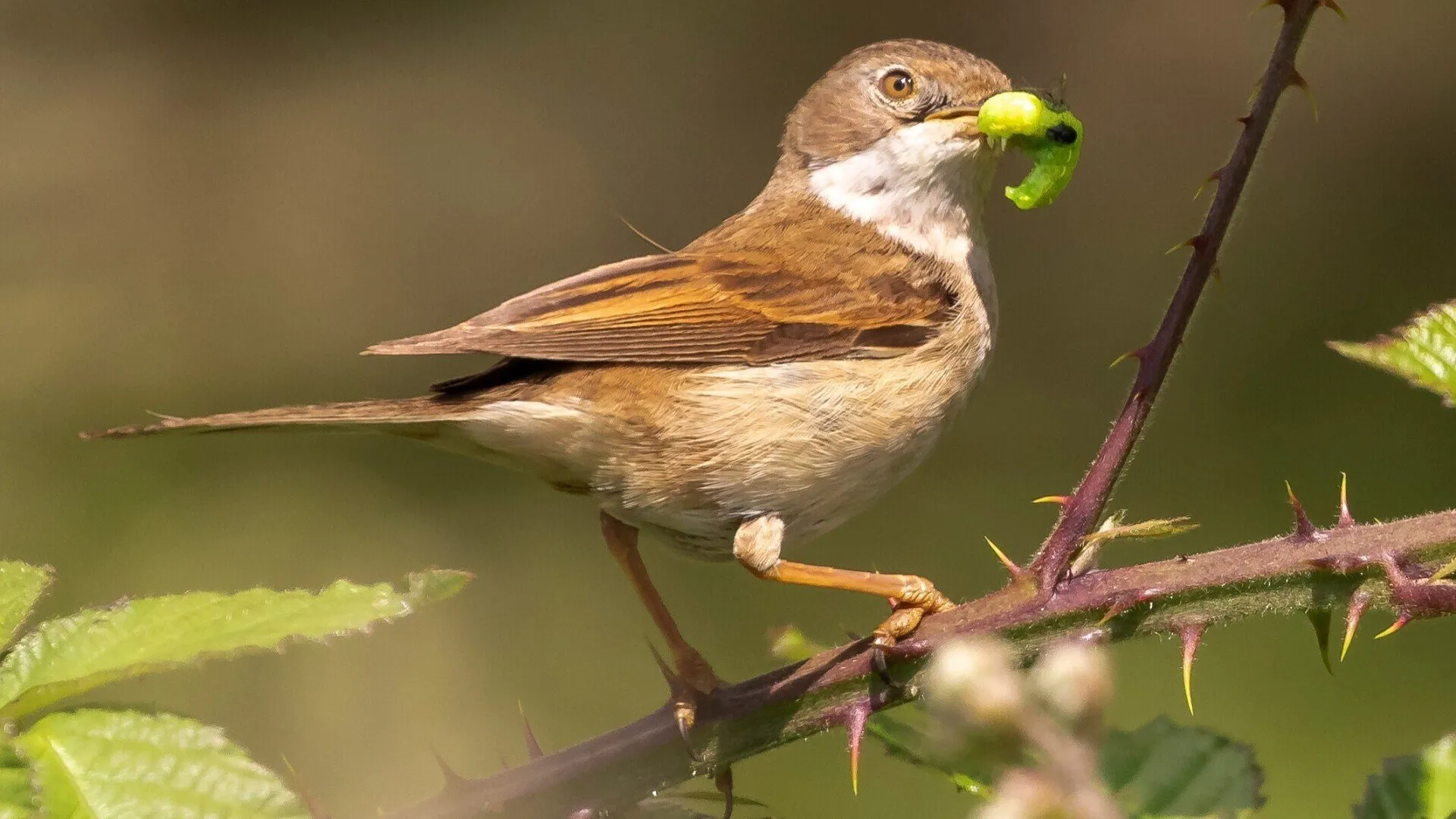
The Whitethroat is a summer migrant originating from Africa. Both males and females are mainly brown on the upper side and buff on the underside, featuring chestnut fringes on the secondary feathers. The adult male has a grey head and a white throat, while the female does not have a grey head and has a duller throat. Their diet consists of insects, berries, and fruits.
#
Mute Swan
Cygnus olor
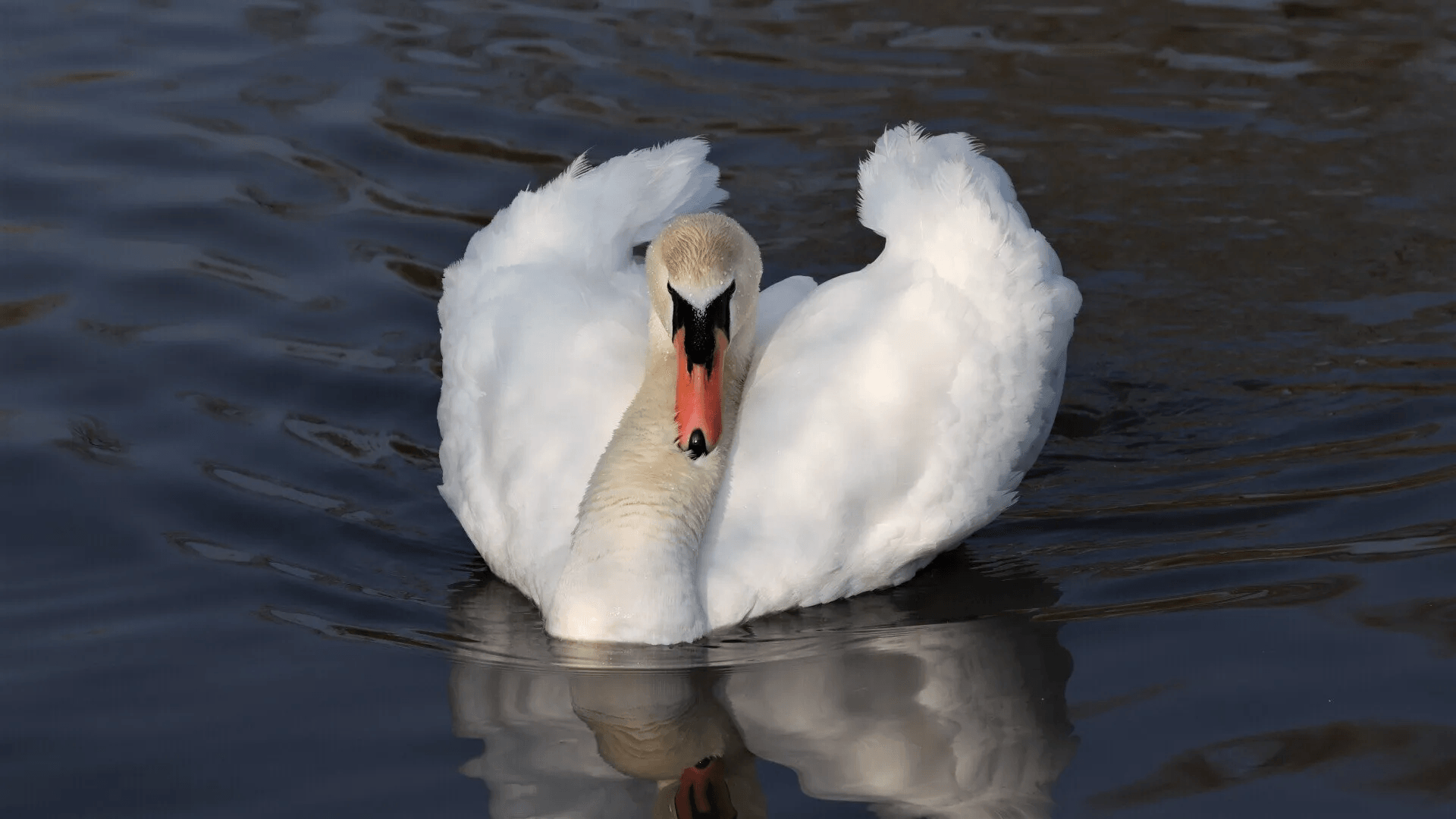
The most common type of swan in Britain is known for its gracefulness and quiet demeanour, although it can hiss or snort when necessary. Distinguishing between male and female swans is not always easy; however, during the breeding season, the black knob at the base of the male's bill becomes significantly larger than that of the female. The female, referred to as the Pen, incubates her eggs on a mound of vegetation, while the male, known as the Cob, remains vigilant, warding off potential threats. Both parents participate in caring for the nest. As the cygnets grow and become more independent, the parents gradually reduce their involvement. If the cygnets are hesitant to leave, the parents may become more assertive in encouraging them to depart. Swans primarily feed on water plants, seeds, snails, and insects.
#
Long-tailed Tit
Aegithalos caudatus

Long tailed tits are often seen flying from bush to bush in small groups.
#
Mallard
Anas platyrhynchos

Mallard Ducks typically live five to ten years spending time in and out of the water
#
Speckled Wood
Pararge aegeria
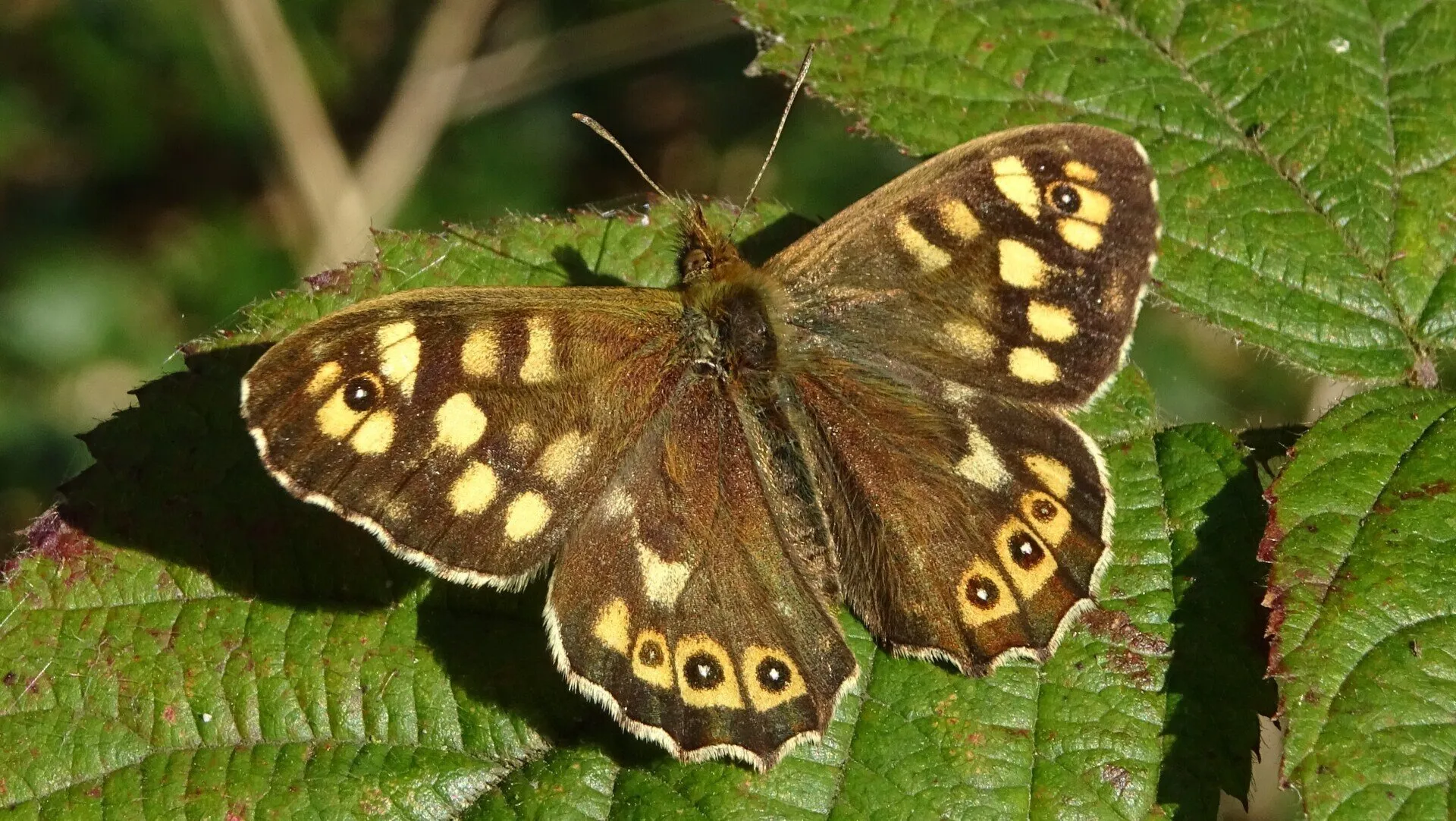
ThIs common woodland butterfly has a wingspan of approximately 45mm and is frequently seen resting on bramble along woodland paths. Adults are active in two broods: from April to early June and again from July to September. Males typically bask in sunlight and defend their territory from intruders. Both males and females tend to visit tree tops to feed on honeydew produced by aphids. This species seldom feeds on flowers, mostly doing so in early and late seasons when honeydew availability is limited. The caterpillars feed on various types of grasses, including false brome, cock's-foot, and Yorkshire fog.
#
Small Heath
Coenonympha pamphilus
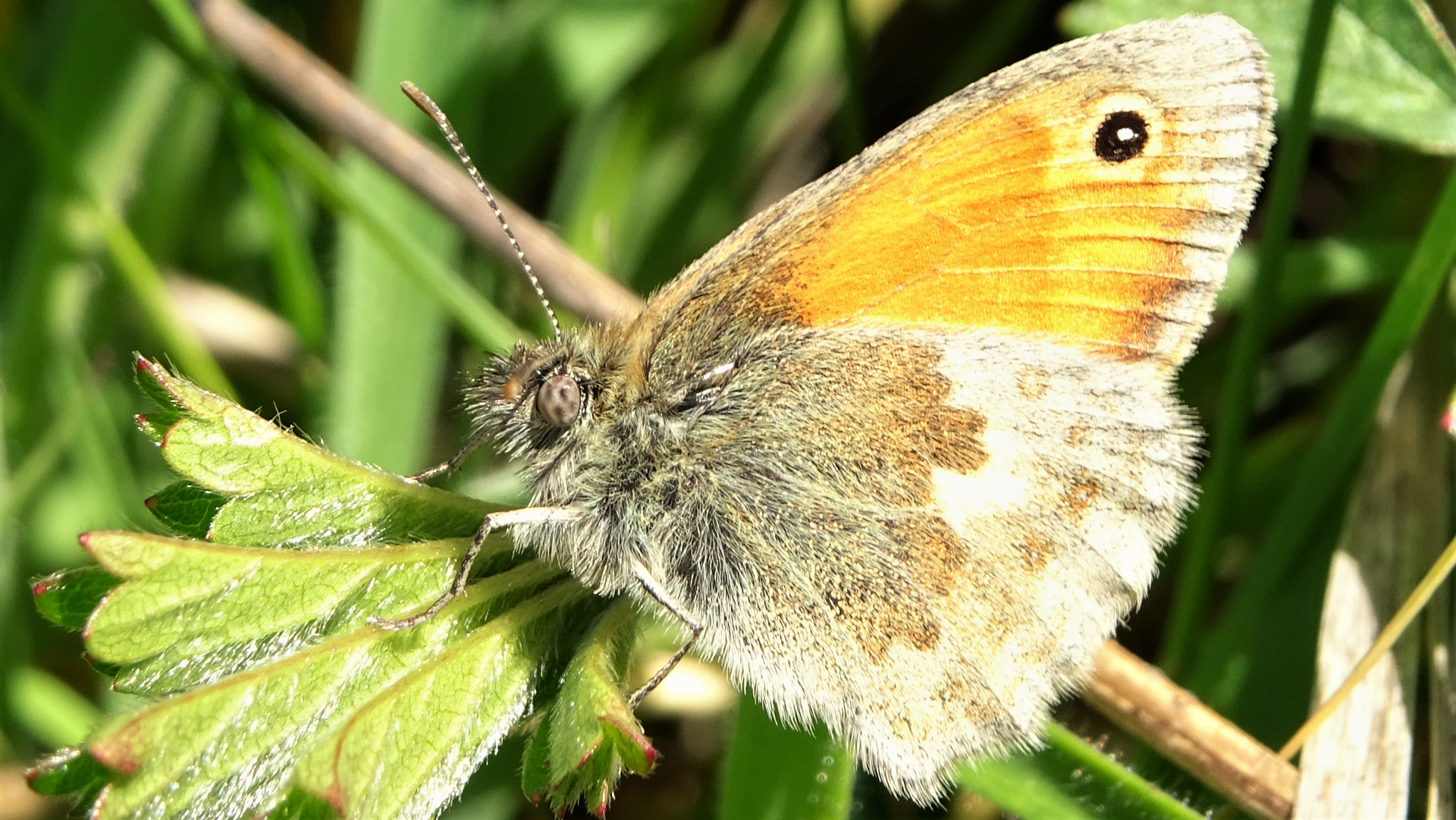
The Small Heath is the smallest brown butterfly found in the UK. It displays a fluttery flight and often rests leaning to one side. This species tends to favour heathland areas in sunny locations.
#
Gatekeeper
Pyronia tithonus
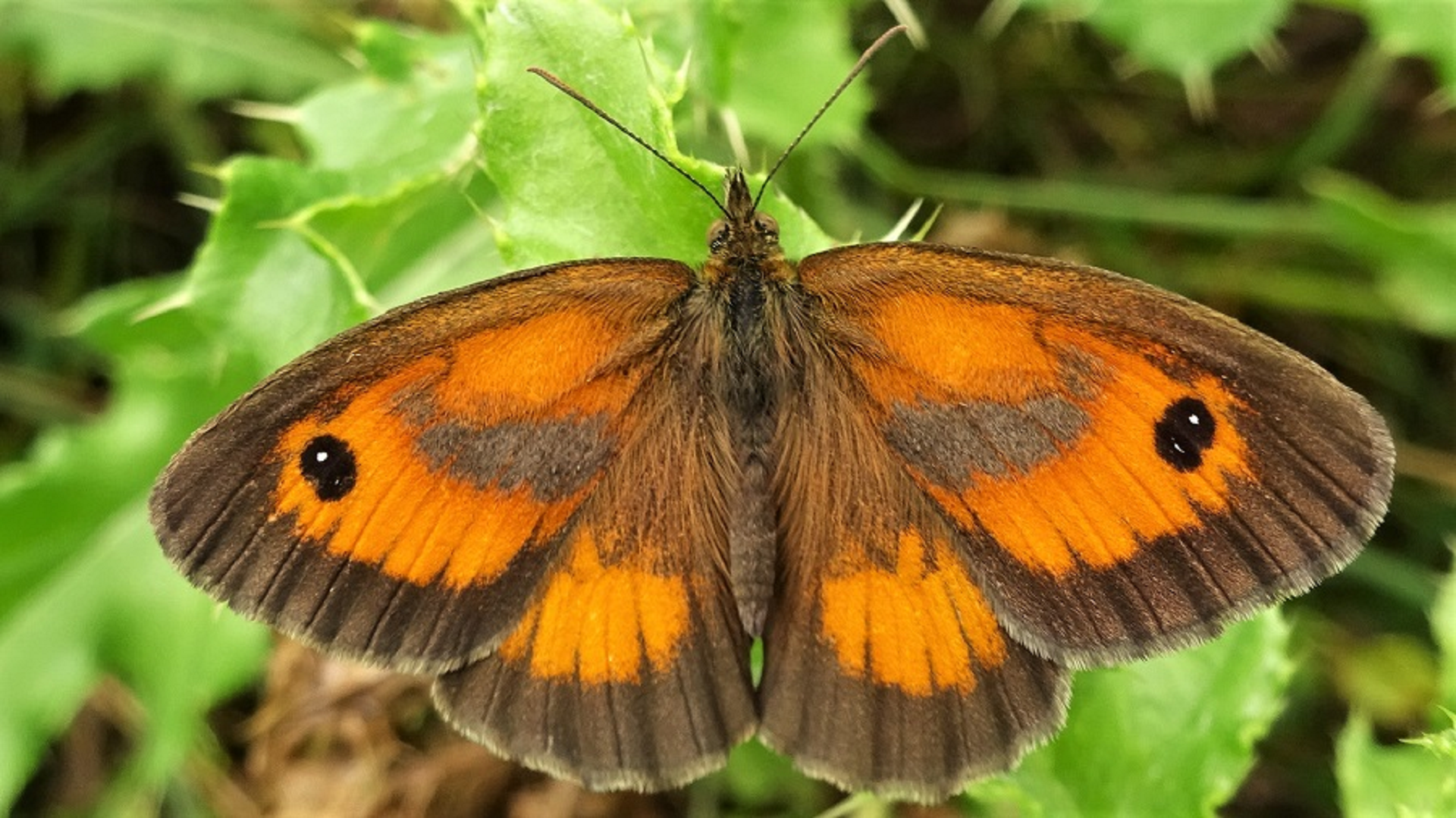
The Gatekeeper is a butterfly that can be found during the summer months. The males can be easily identified by the dark bars on their forewings, while the females are generally larger and lighter in color. This species is also referred to as the 'Hedge Brown.'
#
Green-veined White
Pieris napi
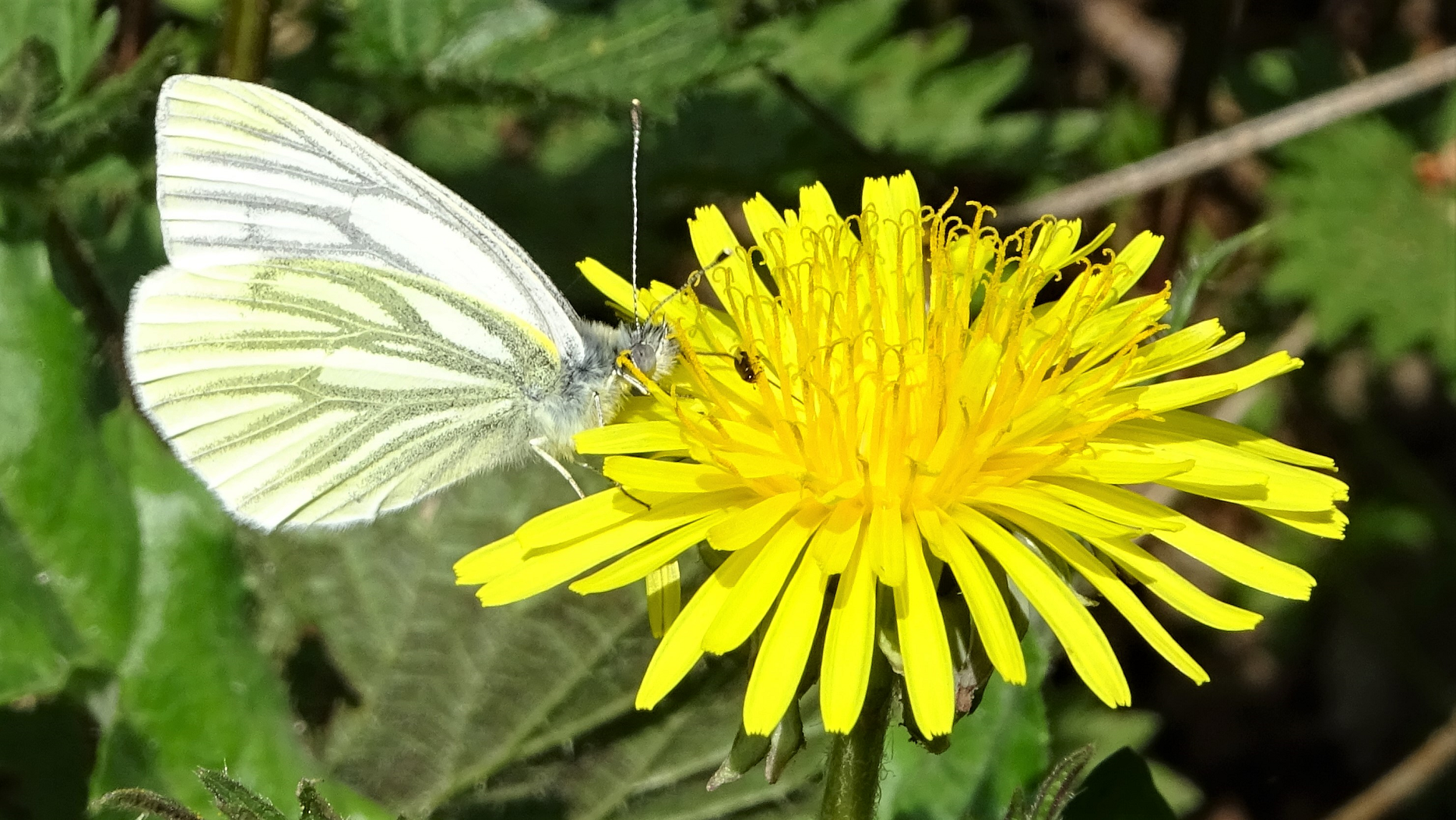
The Green-veined White is a common butterfly that is active from April to October. It inhabits various environments, particularly moist areas with abundant vegetation. The caterpillars of this species feed on plants belonging to the Cabbage family.
#
Orange-tip
Anthocharis cardamines
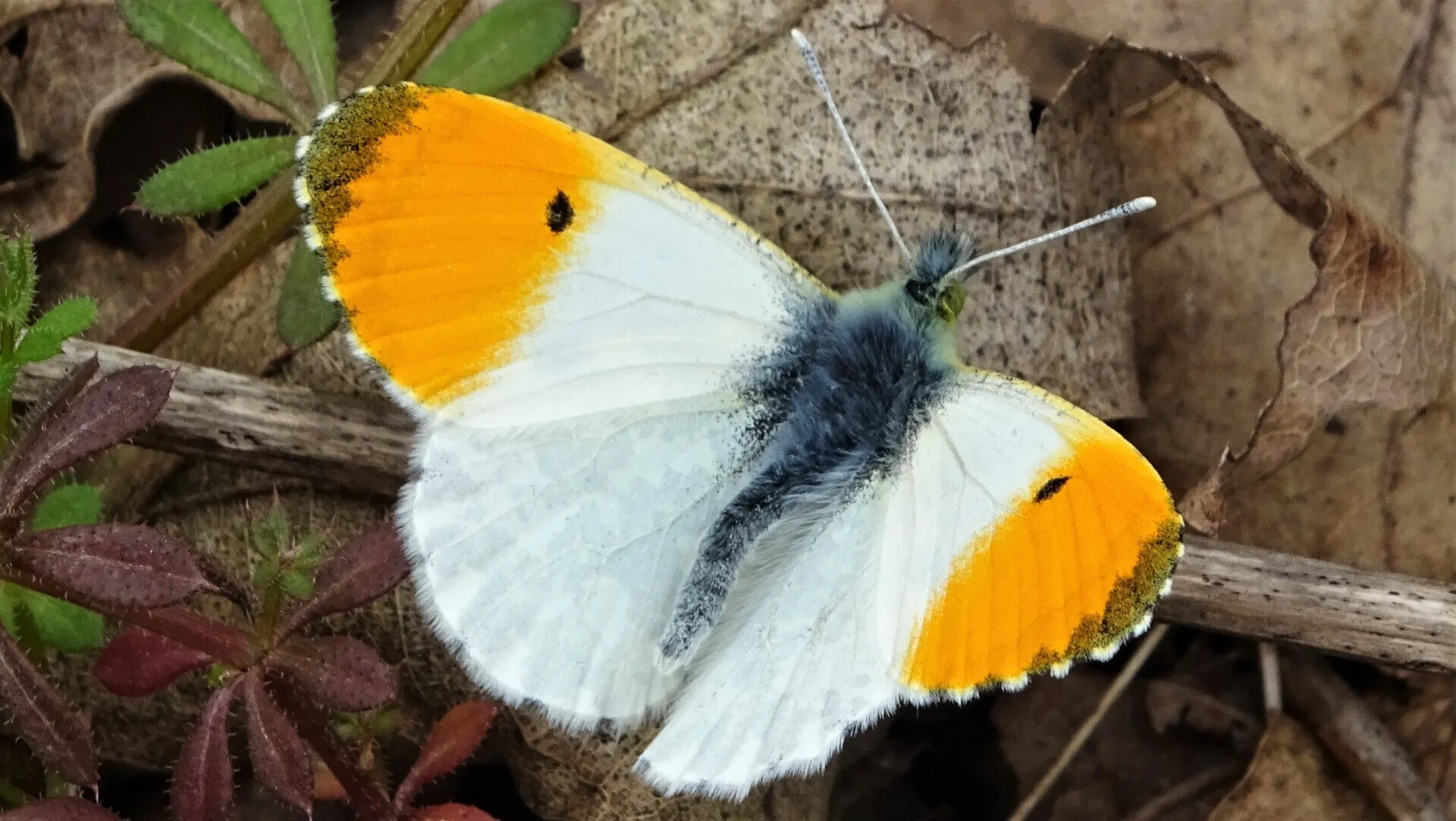
Both males and females have mottled green underwings. Males are distinguished by the orange visible when the wings are open, whilst females have no orange on the wings.
#
Purple Hairsteak
Favonius quercus
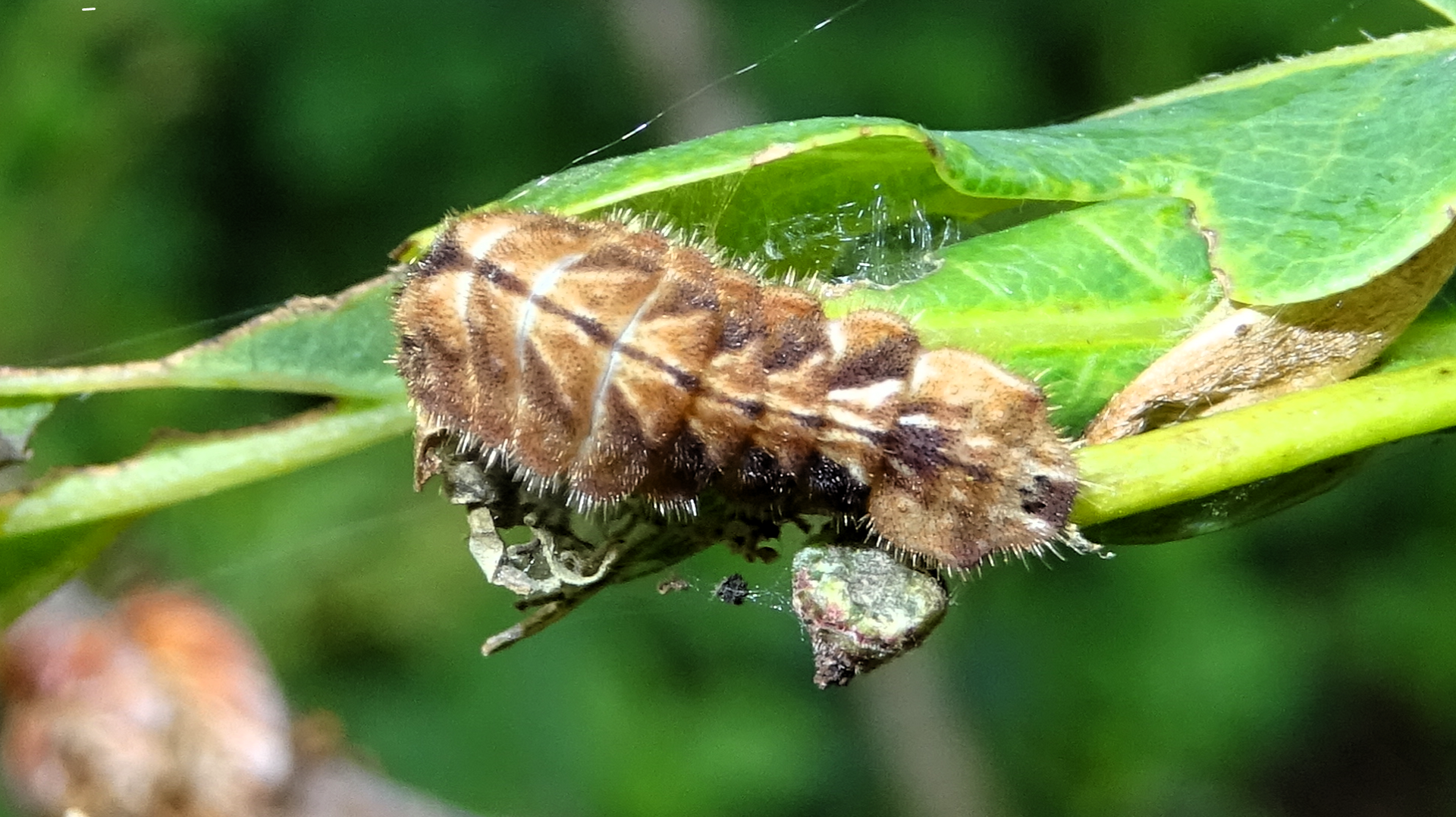
Purple Hairstreak caterpillars feed at night and rest during the day. After hatching, the caterpillar consumes its eggshell and then burrows into a developing oak bud for concealment. Following the first moult, the larva exits the bud and constructs a loosely-spun web for shelter. Debris collected in the web contributes to its camouflage. A caterpillar undergoes three moults before transforming into an adult.
#
Buff Ermine
Spilosoma lutea
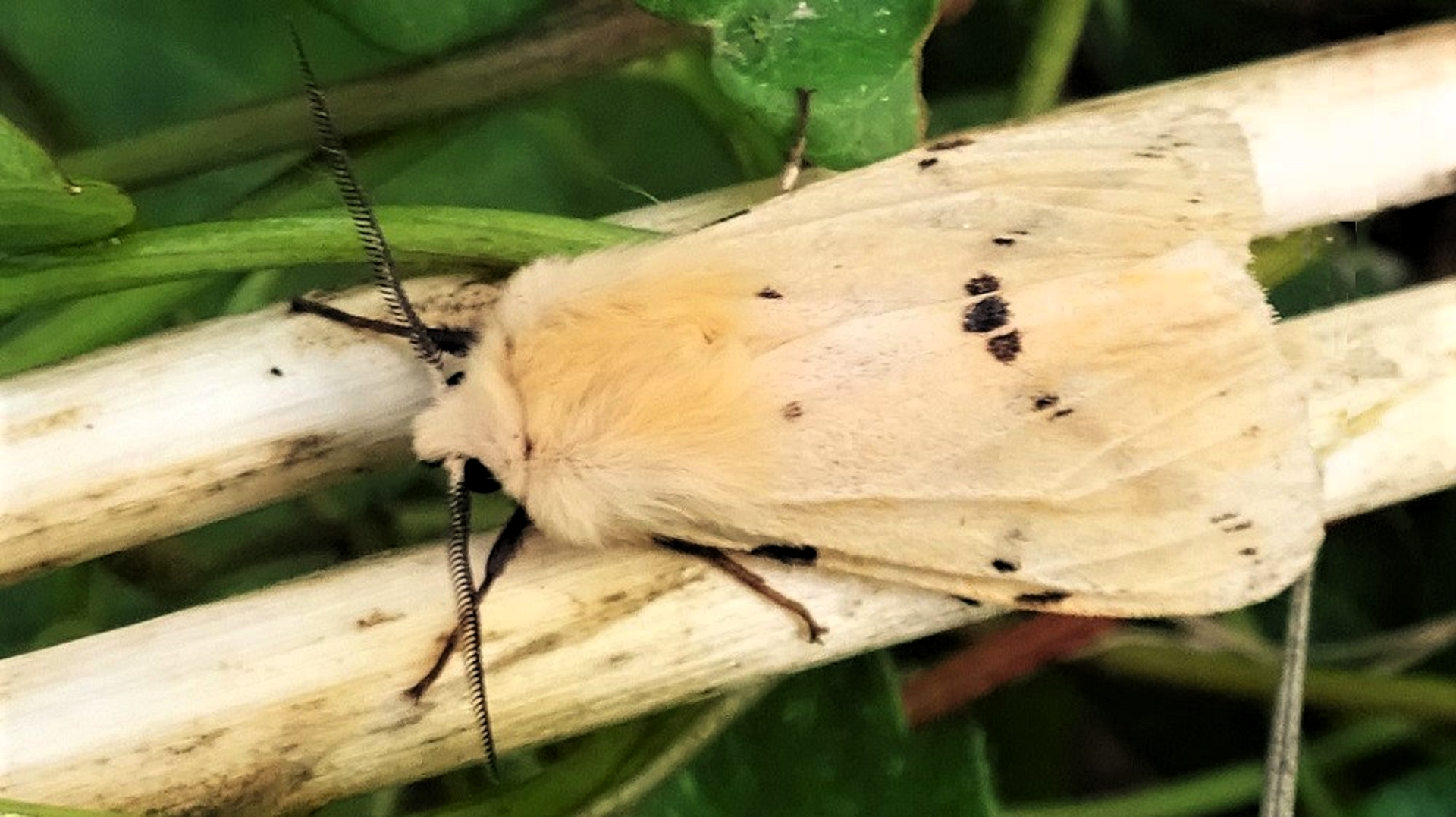
Buff Ermine moths emerge from cocoons that have spent the winter in vegetation or leaf litter. They are active from May until July. The caterpillar is dark brown and covered with reddish-orange hairs, feeding on herbaceous plants, bushes, and trees during the autumn.
#
White Ermine
Spilosoma lubricipeda
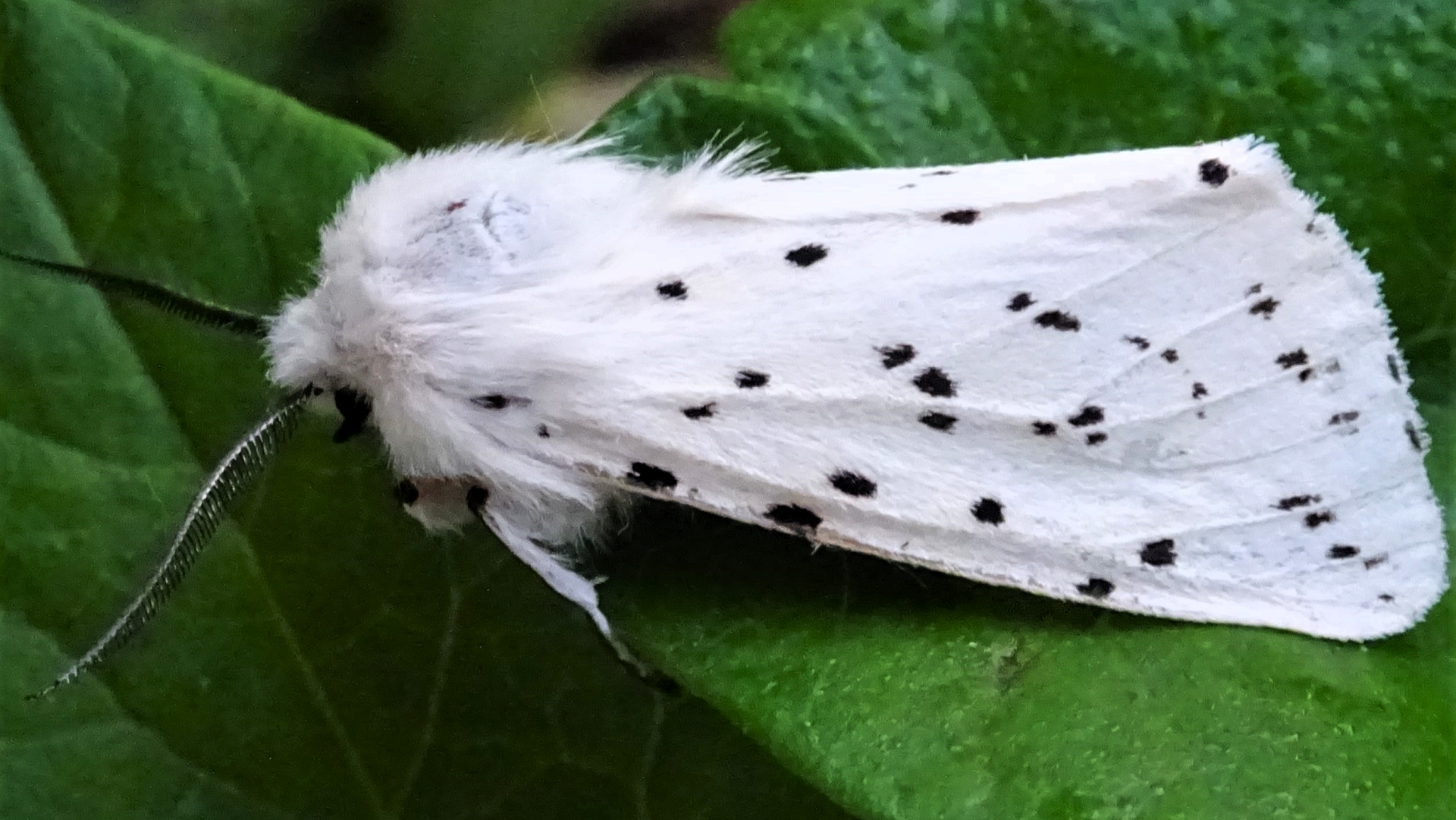
White Ermine moths are active from May to July. Prior to spinning cocoons, the caterpillars move from the leaves of dock and dandelion, which serve as their food source. In September it is common to see the caterpillars crossing paths. They are characterized by blackish fur with an orange line along the back.
#
Blotched Emerald
Comibaena bajularia
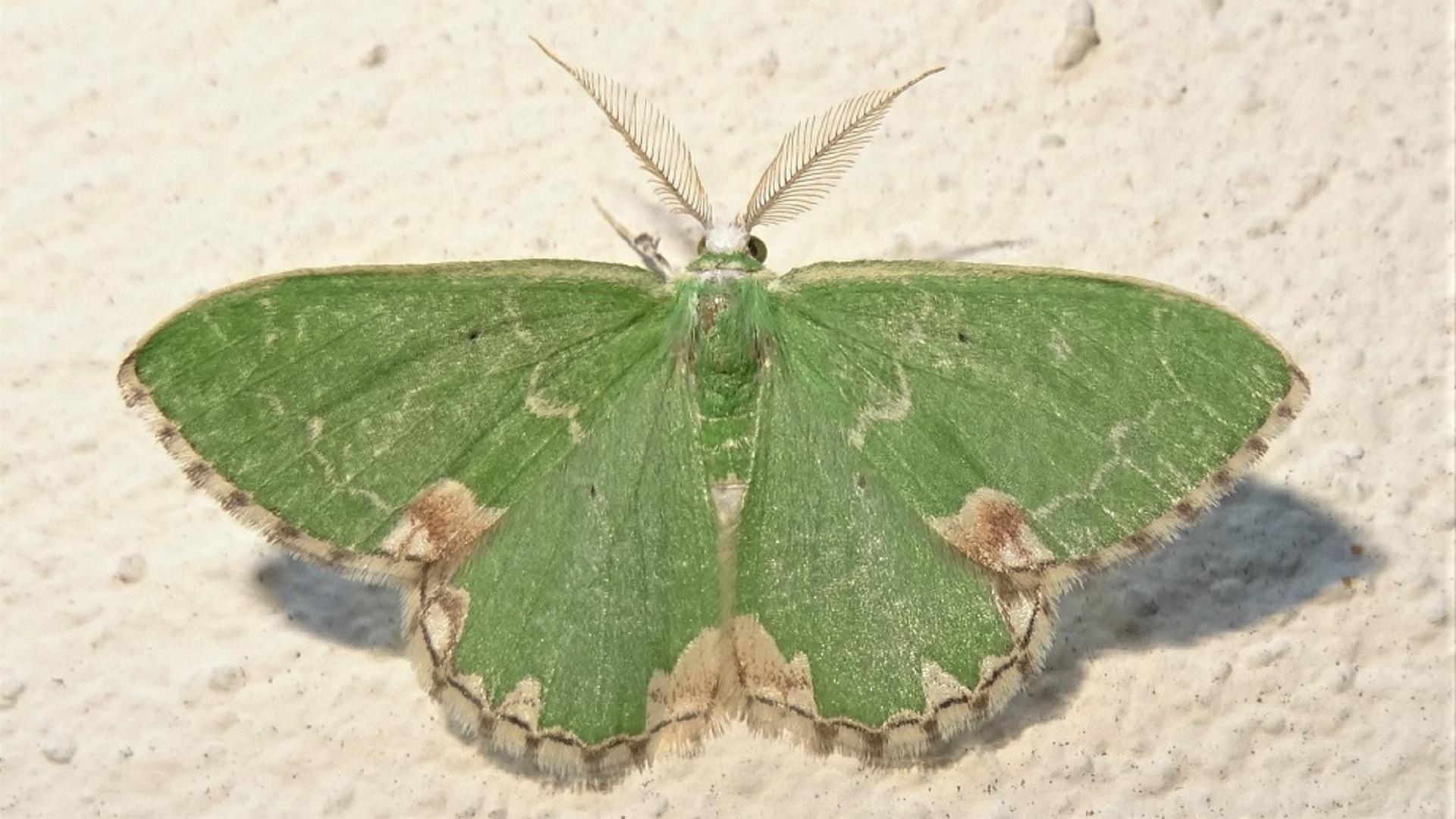
Blotched Emeralds normally fly at night, with males being more attracted to light than females. As they age, the green colour often changes to a creamy white. Caterpillars begin to emerge in late July, but they can be hard to detect because they attach pieces of leaves to their bodies for camouflage
#
Dwarf Cream Wave
Idaea fuscovenosa
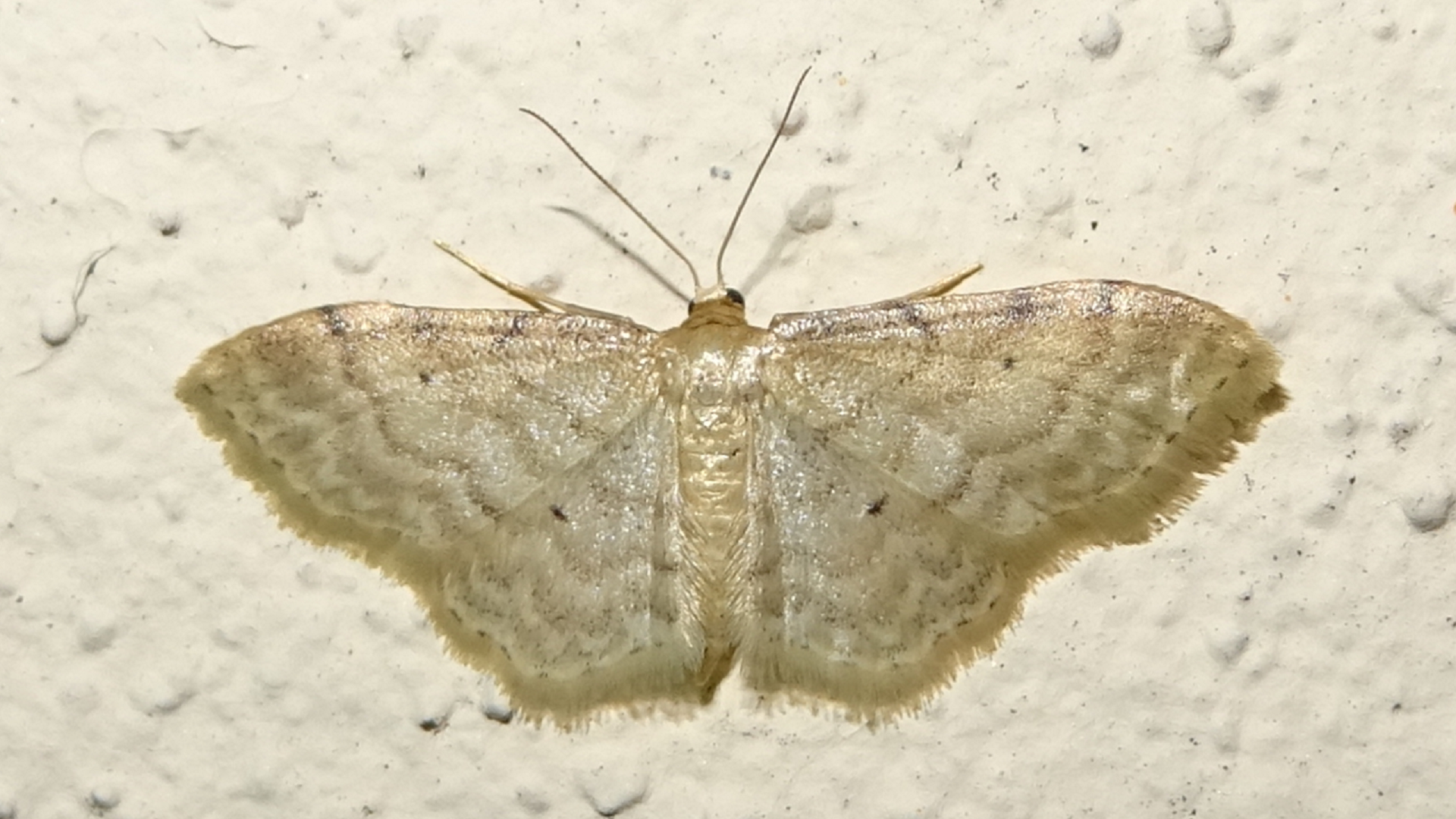
Flies in June and July. The larval foodplant is unknown, but in captivity the caterpillars have fed on dandelions, knotgrass and bramble.
#
Clouded Silver
Lomographa temerata
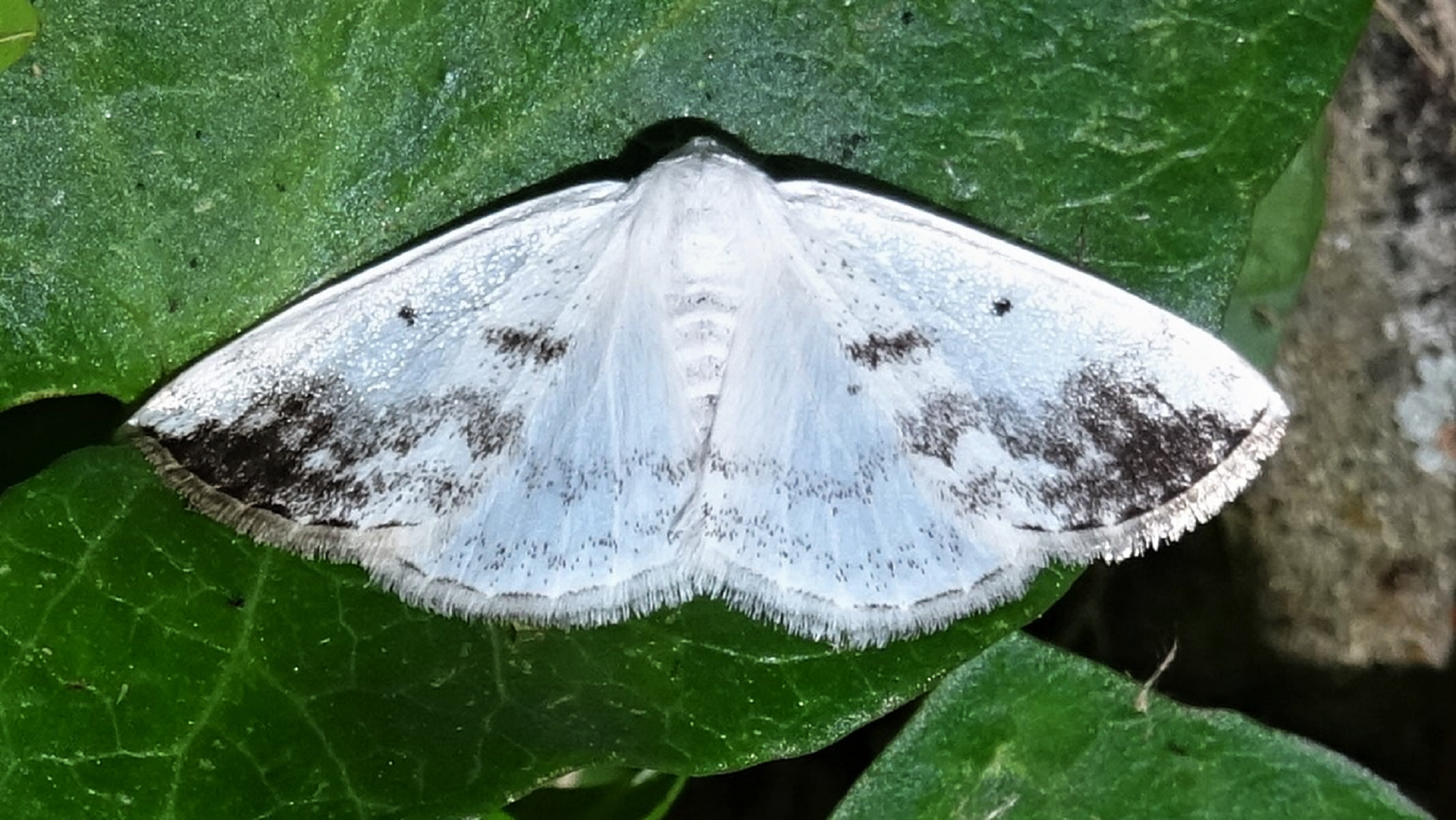
The Clouded Silver frequents woodland and suburban habitats from May to August. Its caterpillars feed on blackthorn and hawthorn.
#
Burnet Companion
Euclidia glyphica
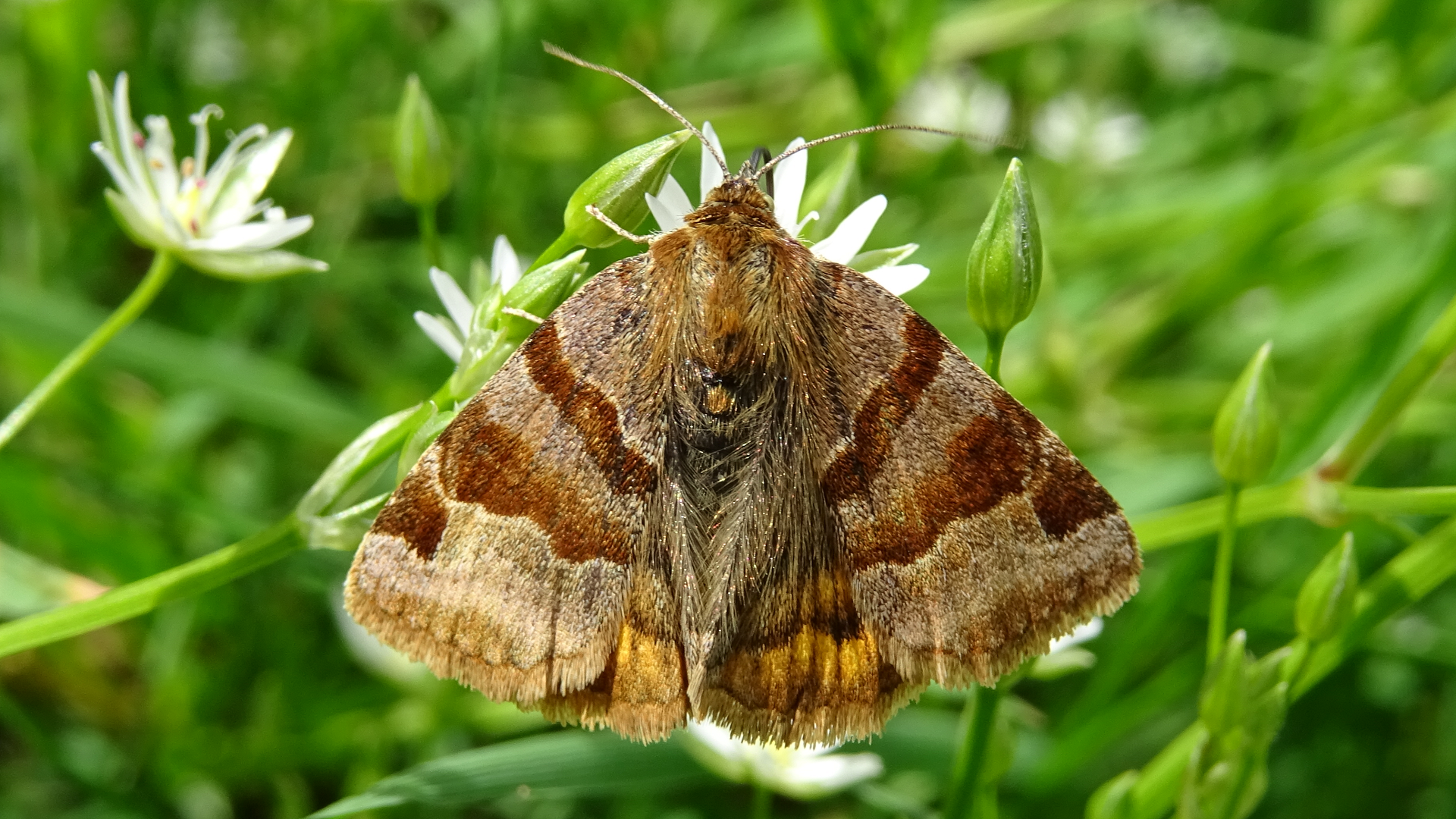
The Burnet Companion is a day-flying moth commonly observed alongside Burnet moths, which is the origin of its name. It is active from May to July. Its food sources include Clovers, Bird's-foot-trefoil, Black Medick, Lucerne, and various vetches and trefoils.
#
Blackneck
Lygephila pastinum
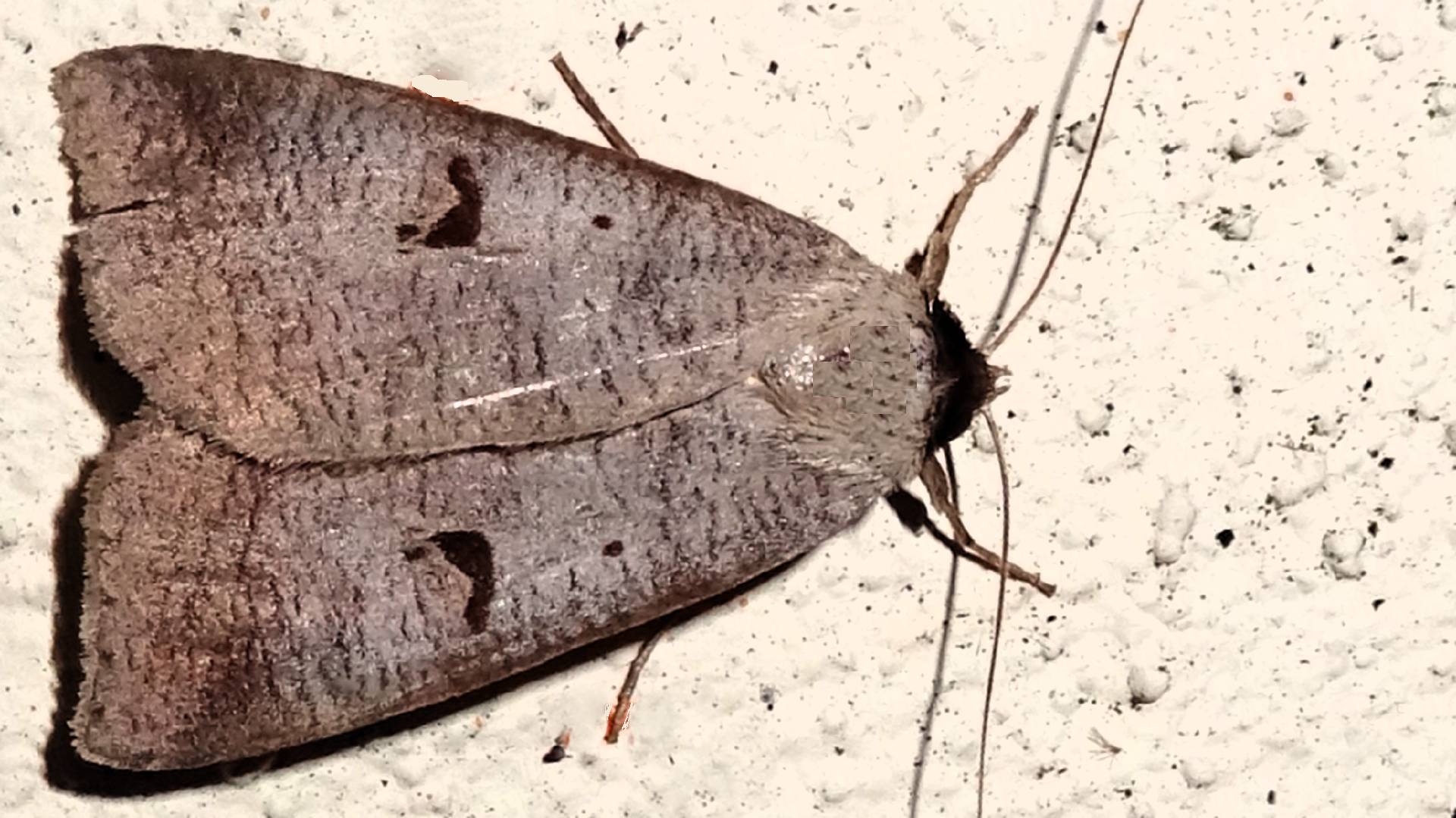
The Blackneck is a moth that flies in June and July. Its larvae feed on tufted vetch.
#
Green Pug
Pasiphila rectangulata
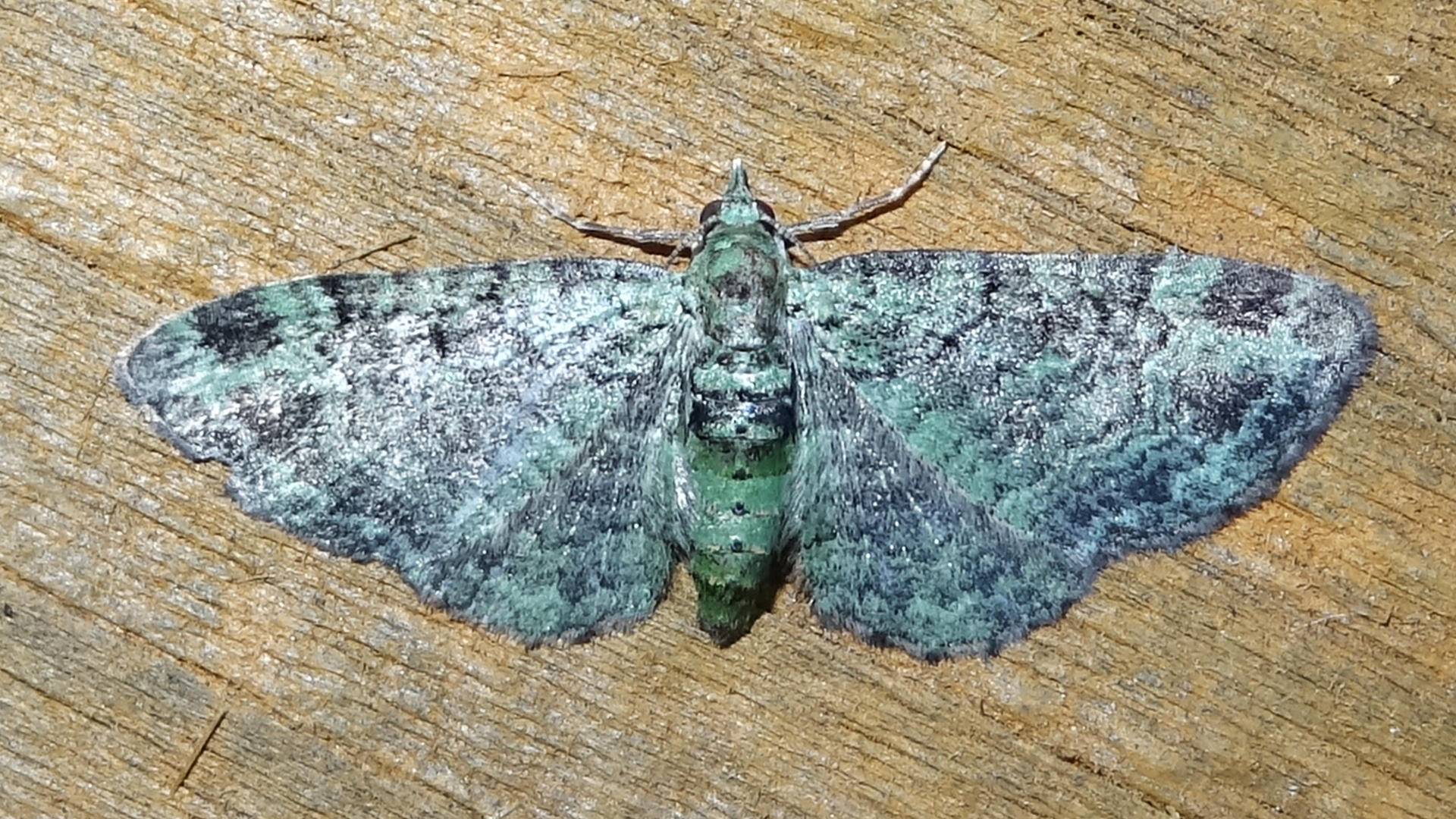
The Green Pug flies from June to August. It has variable colour, sometimes very dark forms and some that do not show any green. Larval foodplants include Apple, Pear, Hawthorn, Blackthorn and Cherry.
#
Clouded Border
Lomaspilis marginata
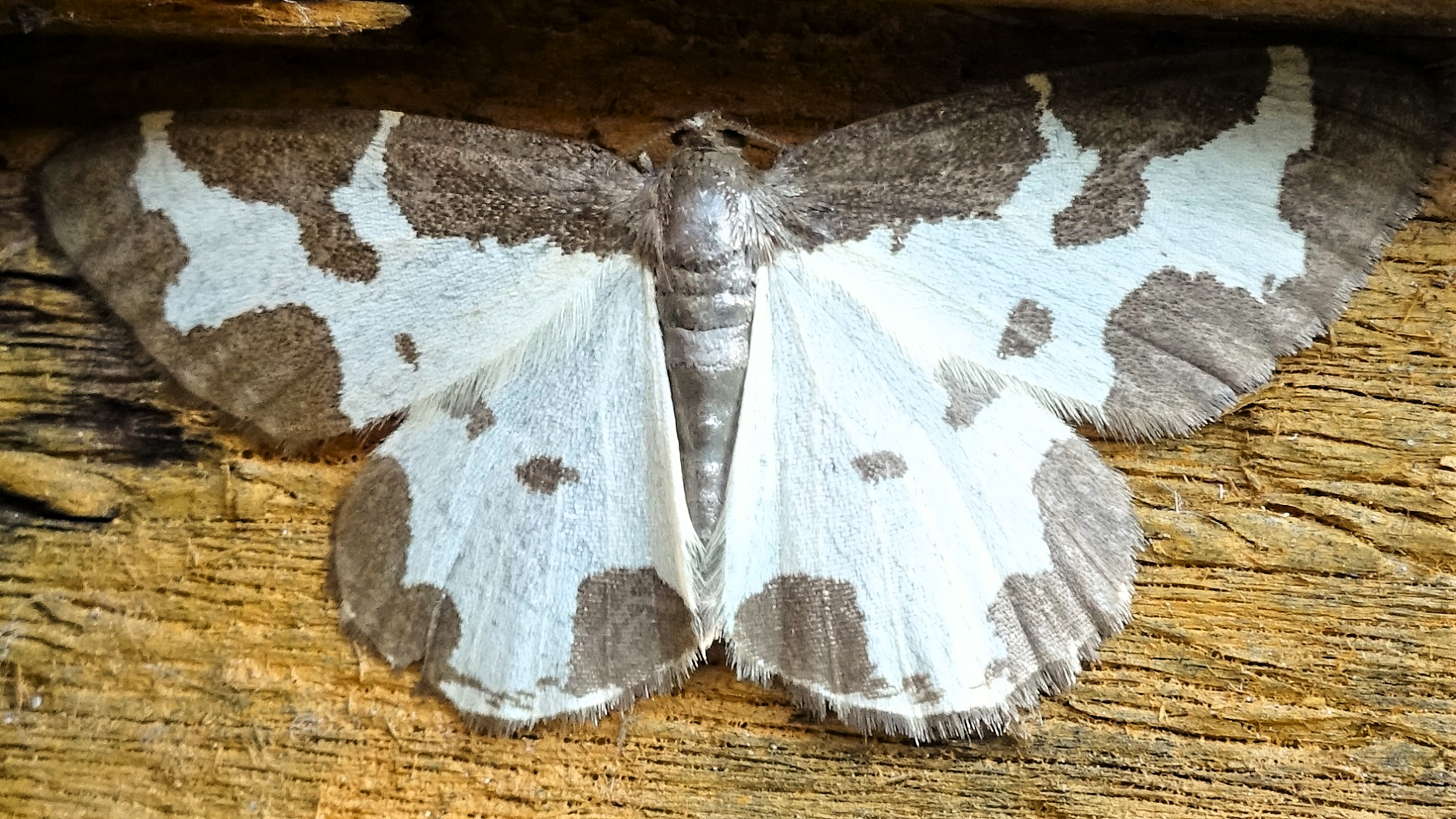
Flies from May until July. Its larvae feed on aspen, poplar, sallow and willow.
#
Lackey
Malacosoma neustria
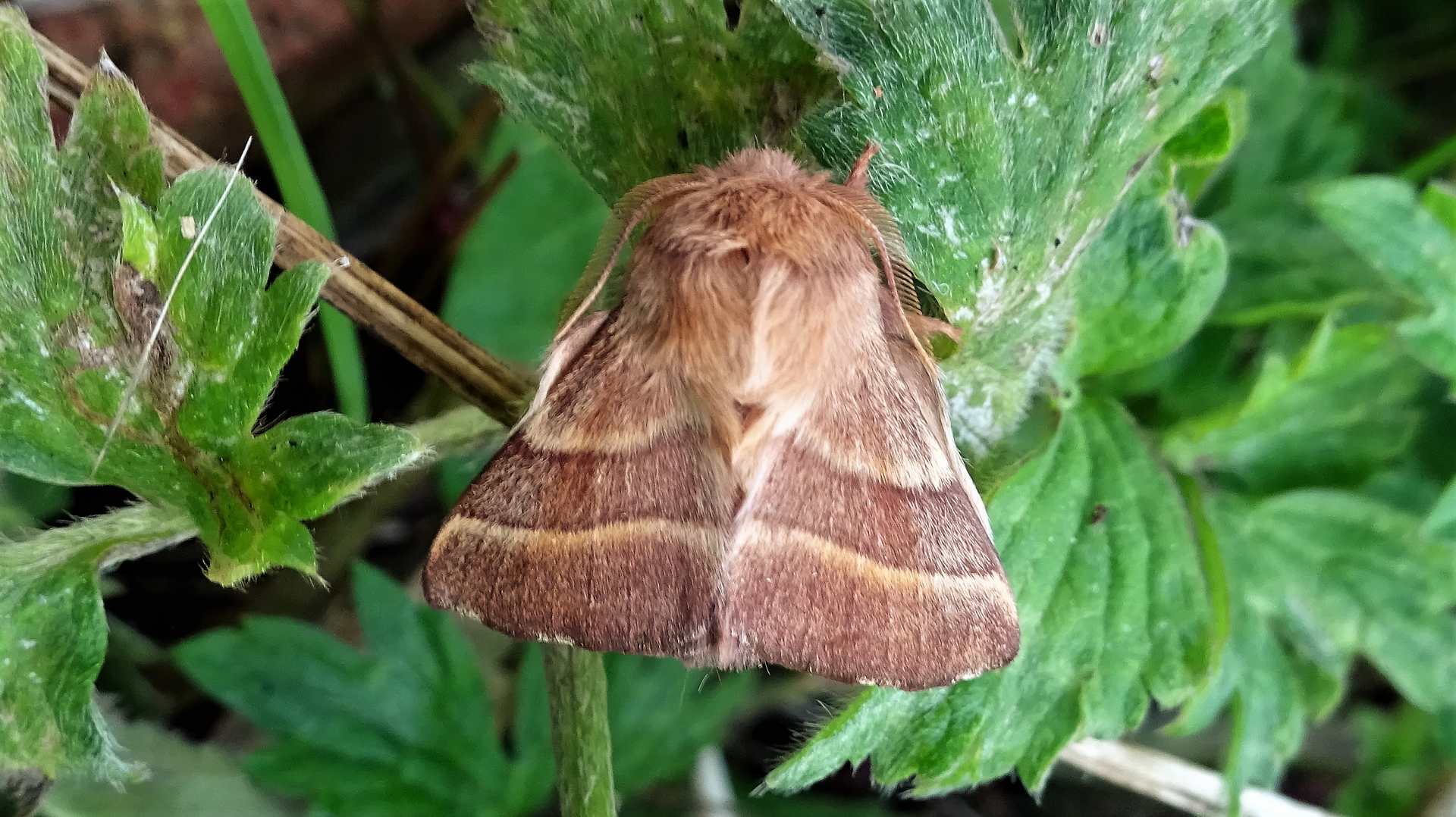
Lackey moths are brown and have a band across their wings. In contrast to its brightly coloured blue, white, and orange striped caterpillars, the moths are rather dull by comparison. The adults are active from June to August.
#
White-backed Marble
Hedya salicella
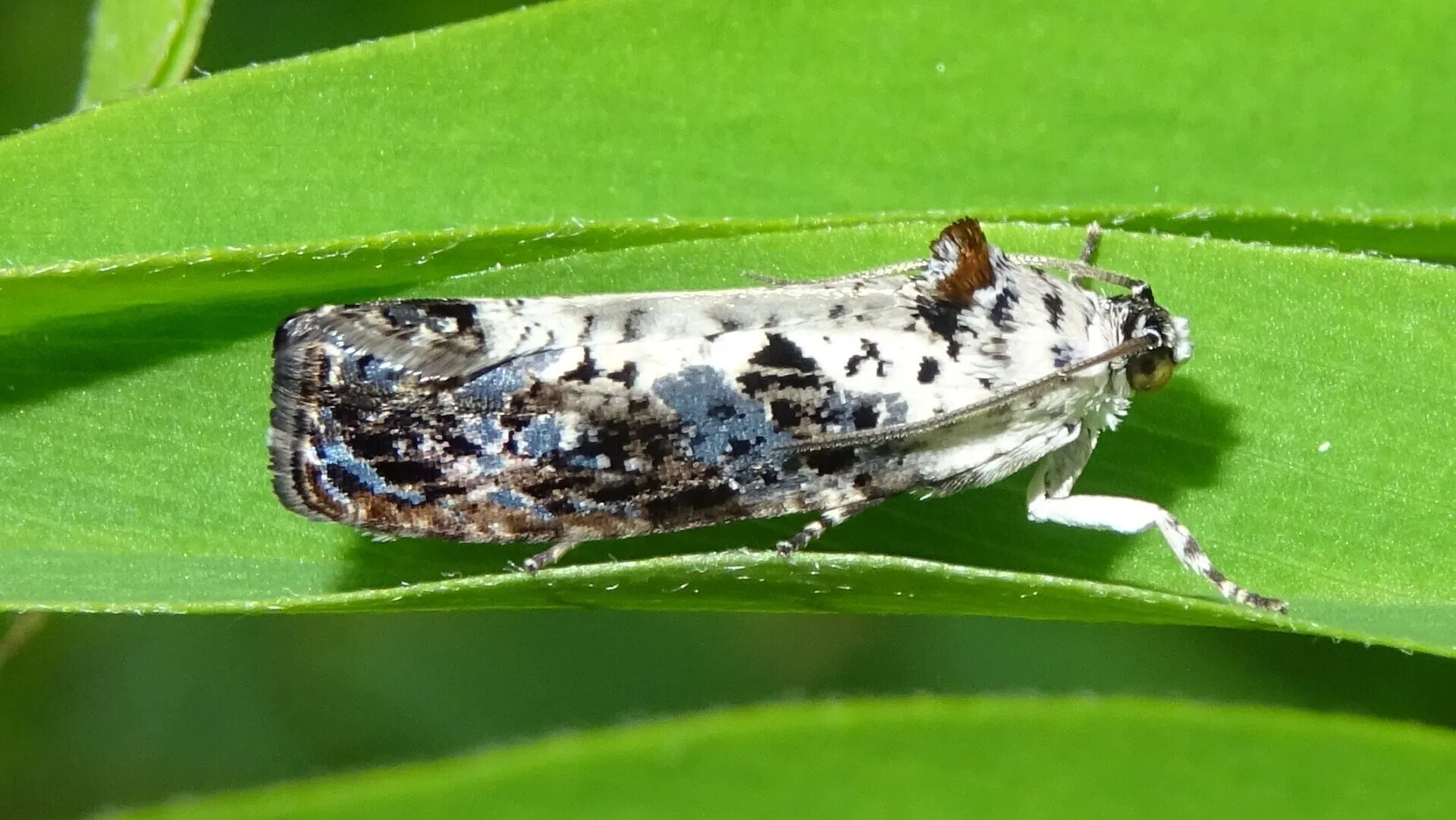
This micro-moth occurs on banks near inland water where Willow trees grow. Its caterpillars nourish themselves in spun leaves of sallow and poplar.
#
Short-cloaked Moth 74.003
Nola cucullatella
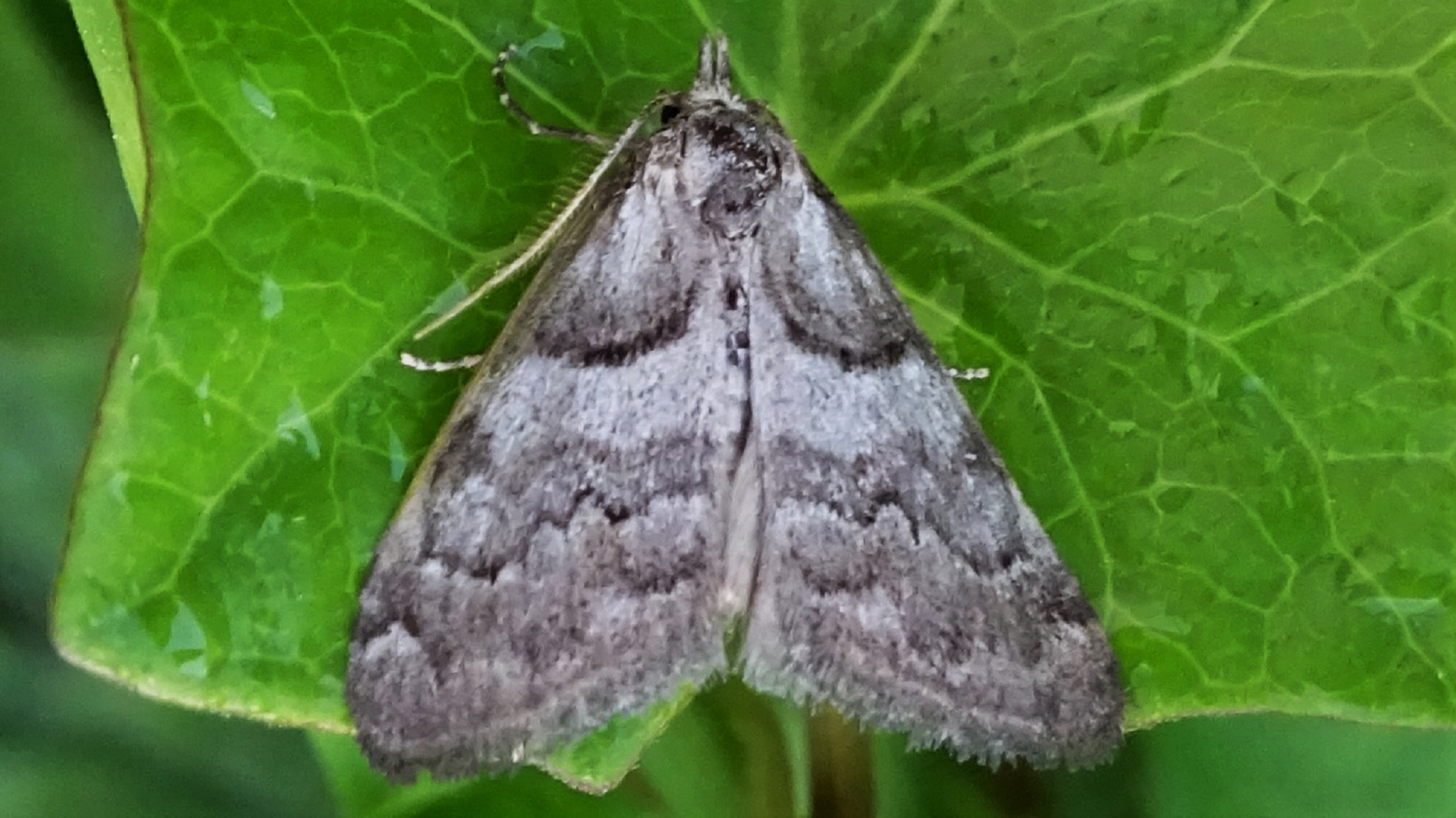
Flies in June and July. Larval foodplants include Hawthorn, Blackthorn, Apple, Pear and Plum. This is a member of the Nolidae family which is split into two sub-families, Nolinae and Chloephorinae. The first group consists of small, whitish or grey moths with fairly rounded forewings that have basal and central scale tufts (often lost). The larvae are hairy and feed on woody plants. They normally pupate in tough cocoons on the foodplant stem above the ground. The latter group are green or sometimes other colours. They feed on various trees.
#
Small Magpie
Anania hortulata
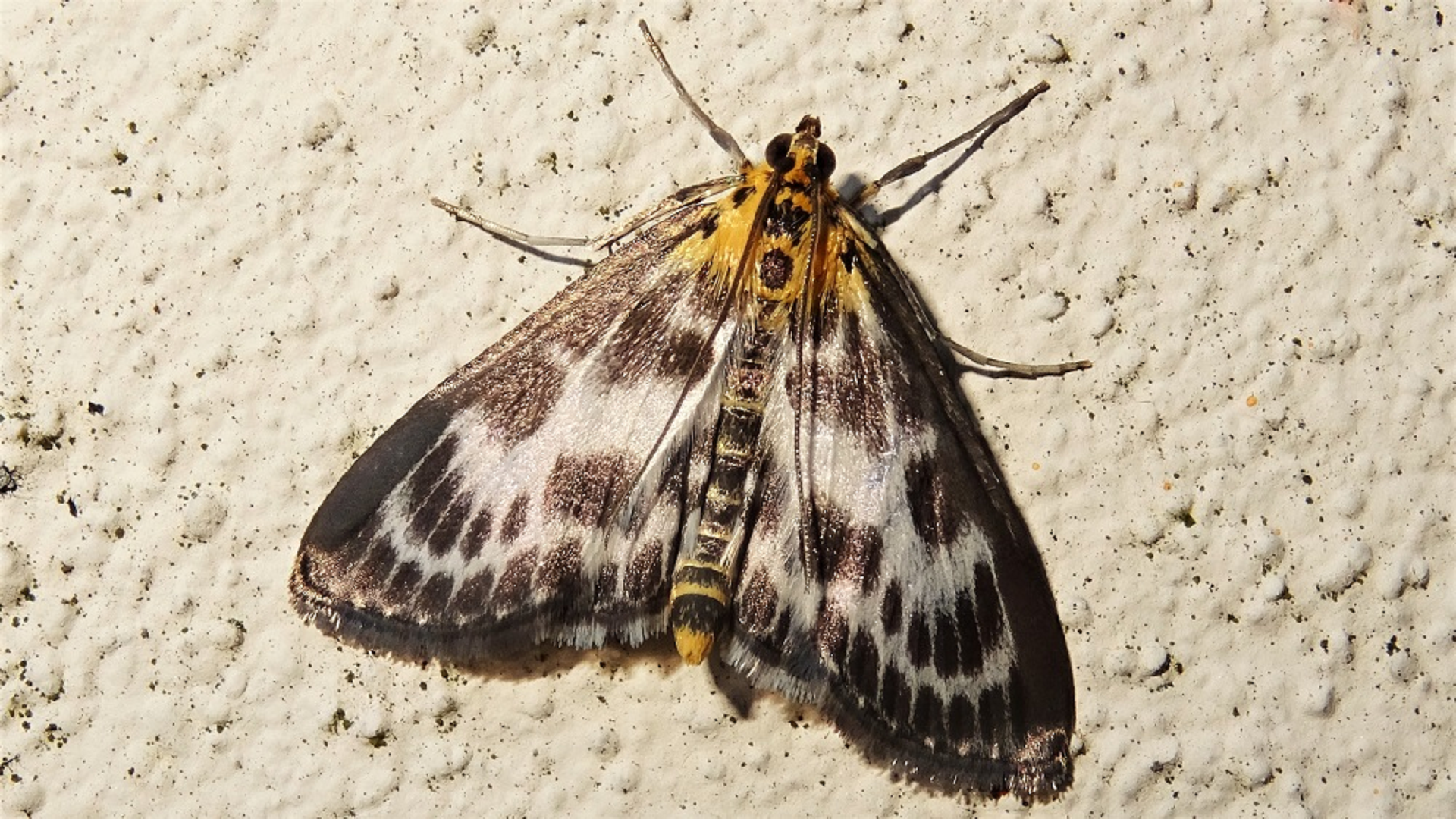
Flies in June and July. Larval foodplants include nettle, woundworts, horehounds, bindweeds.
#
Mottled Beauty
Alcis repandata
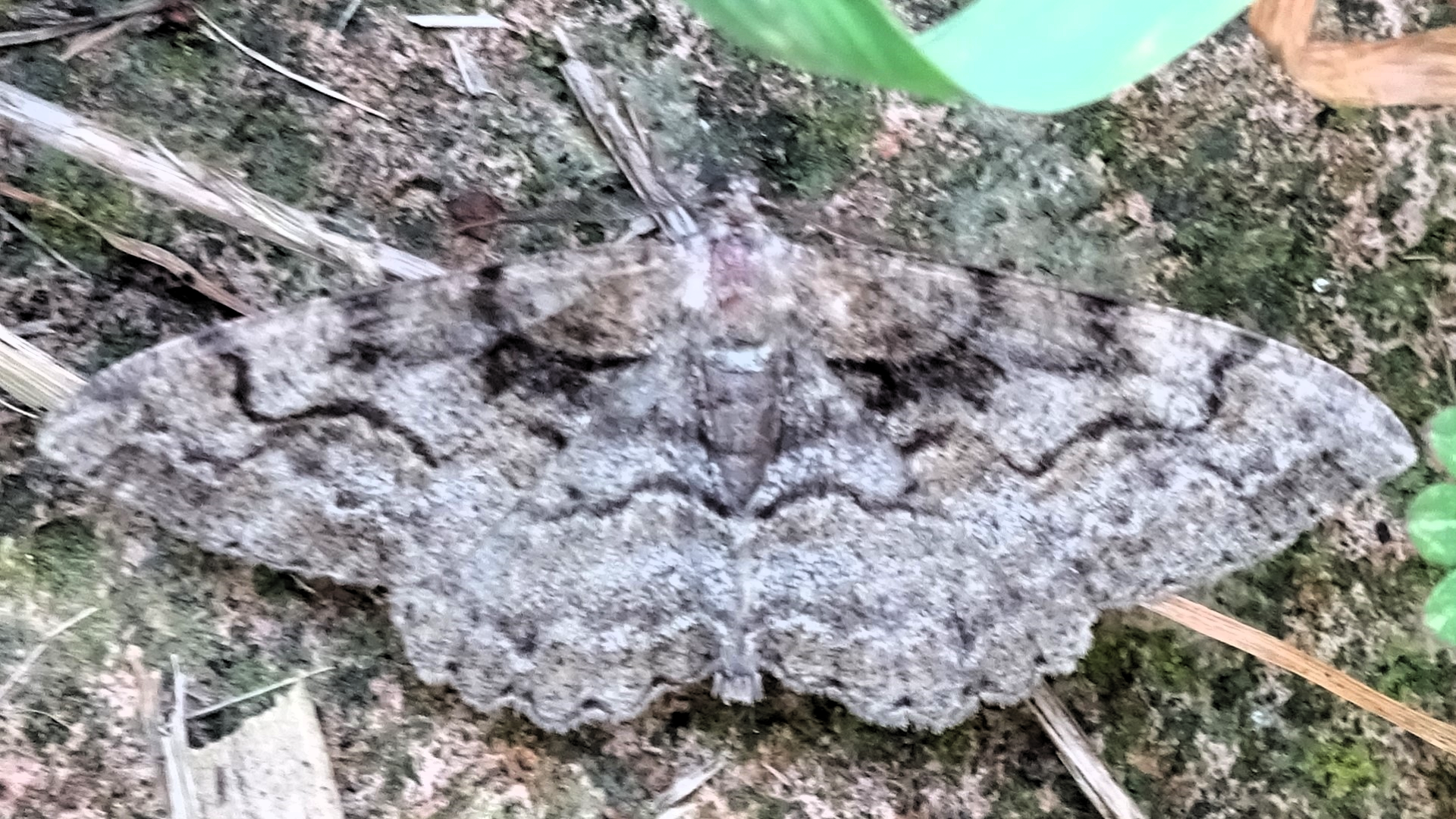
Mottled Beauty flies in June and July. Its larvae feed on woody trees. This is a rather variable species, similar to Willow Beauty but not having the cross-lines converging at the dorsum.
#
Beautiful Oak Knot-horn
Acrobasis repandana
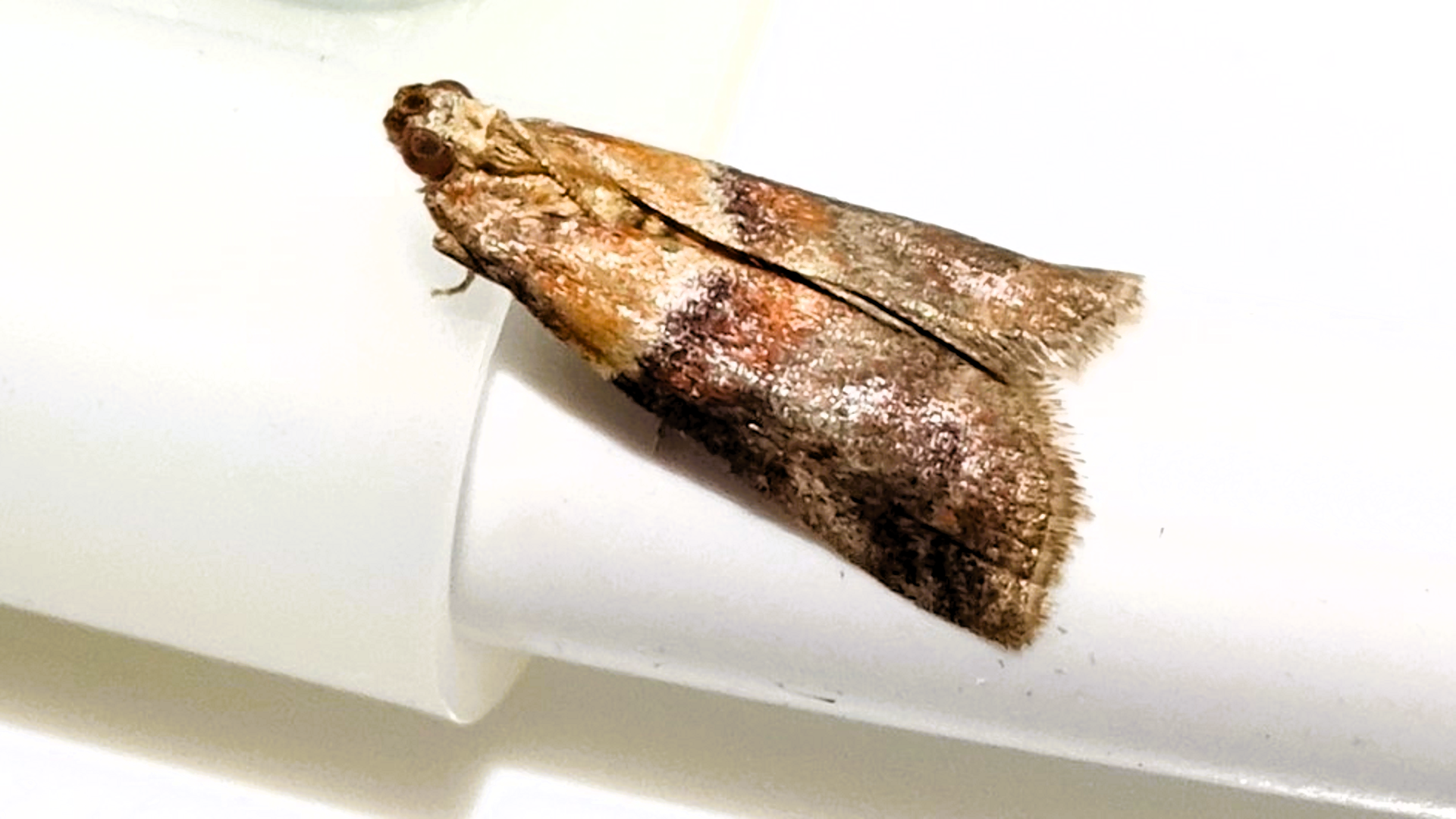
Woodland species that flies in July and August. Oak is the larval foodplant. Previously known as the 'Warted Knot-horn'.
#
Common Marble
Celypha lacunana
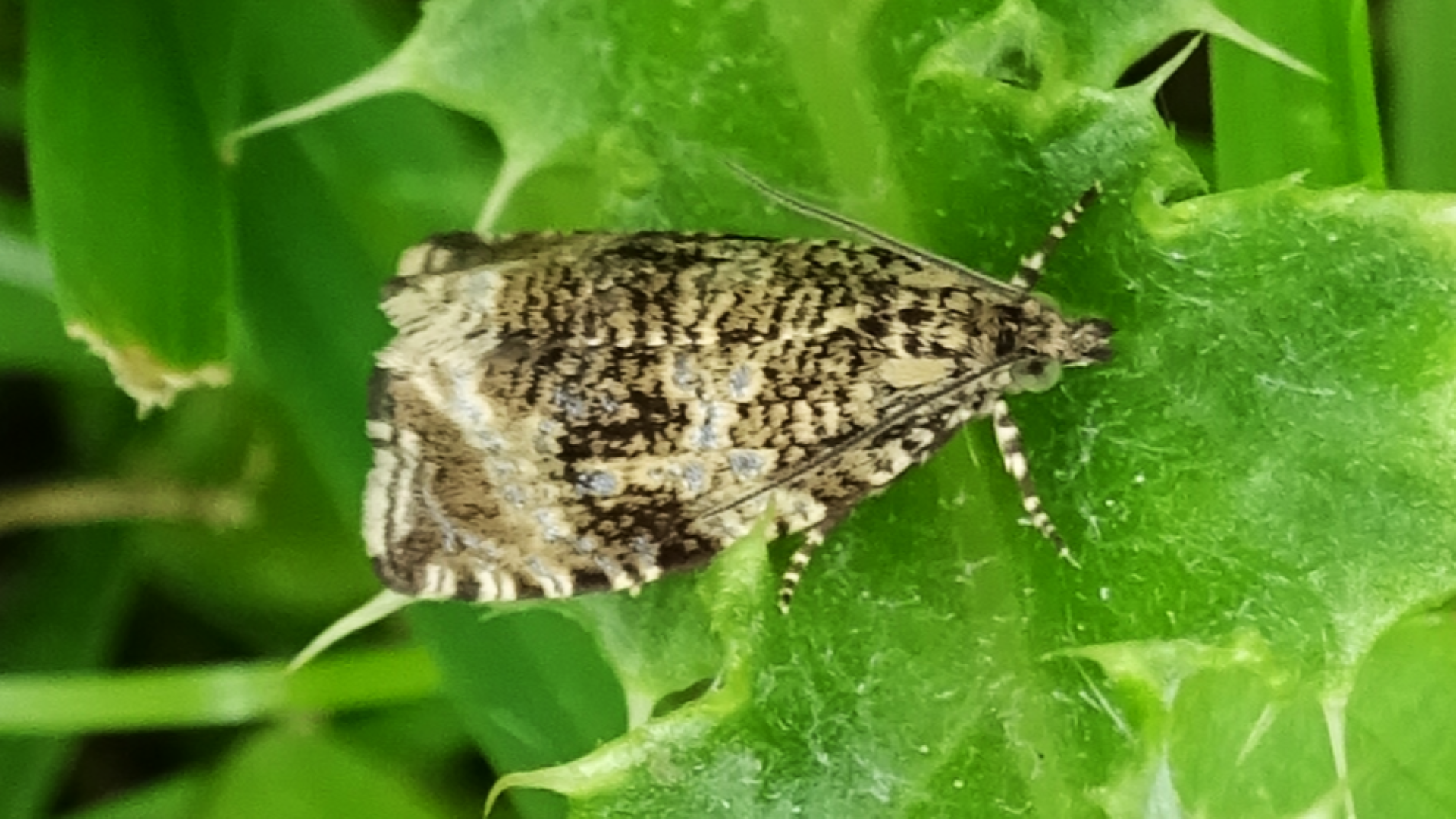
Common species that flies during the day and evening from May to September. Its larvae feed on a range of herbaceous plants.
#
Garden Straw
Acleris hastiana
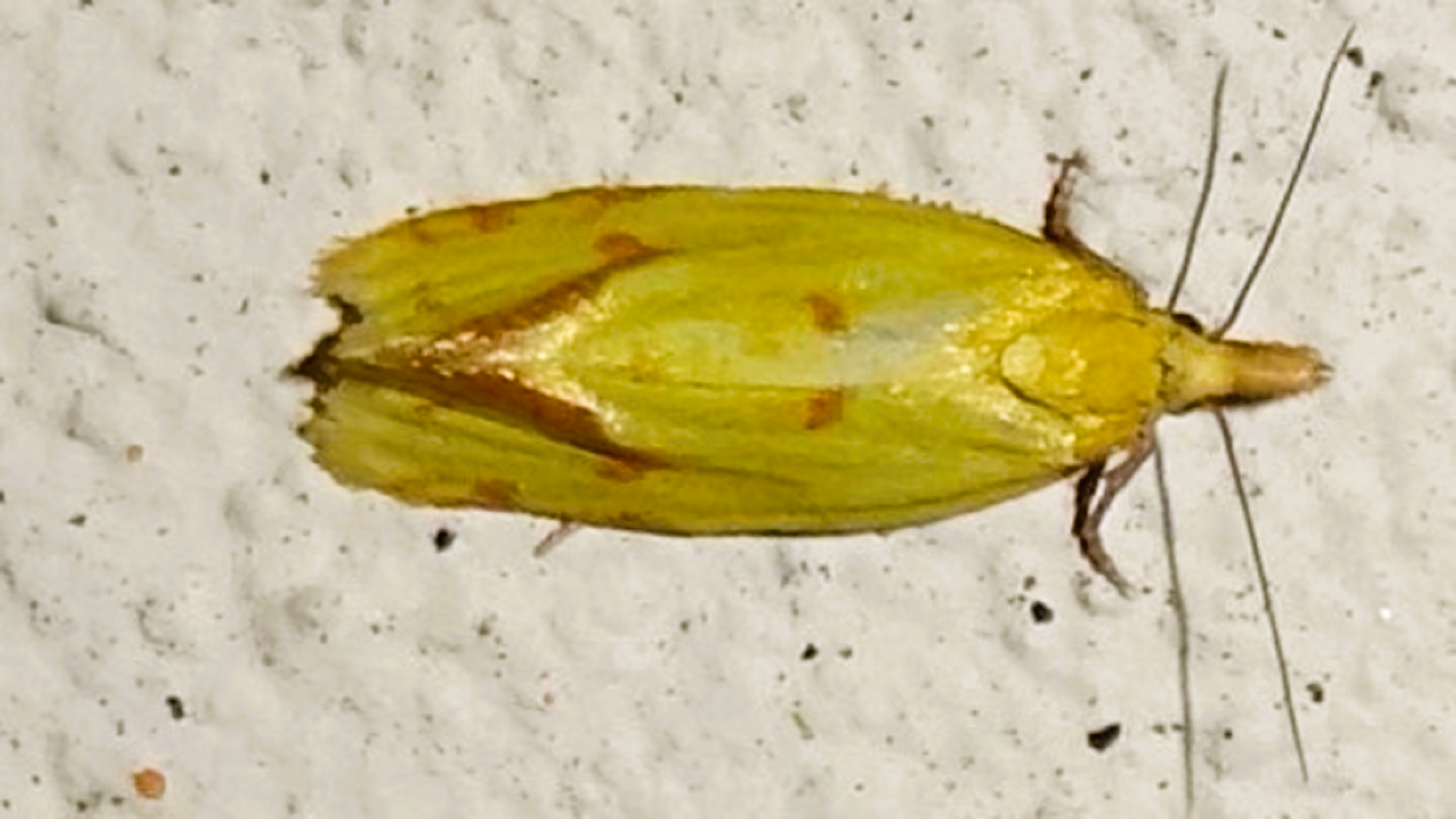
Small bright-yellow moth seen from June until August. Its foodplant is thistle. Previously known as the 'Common Yellow Conch'.
#
Common Footman
Eilema lurideola
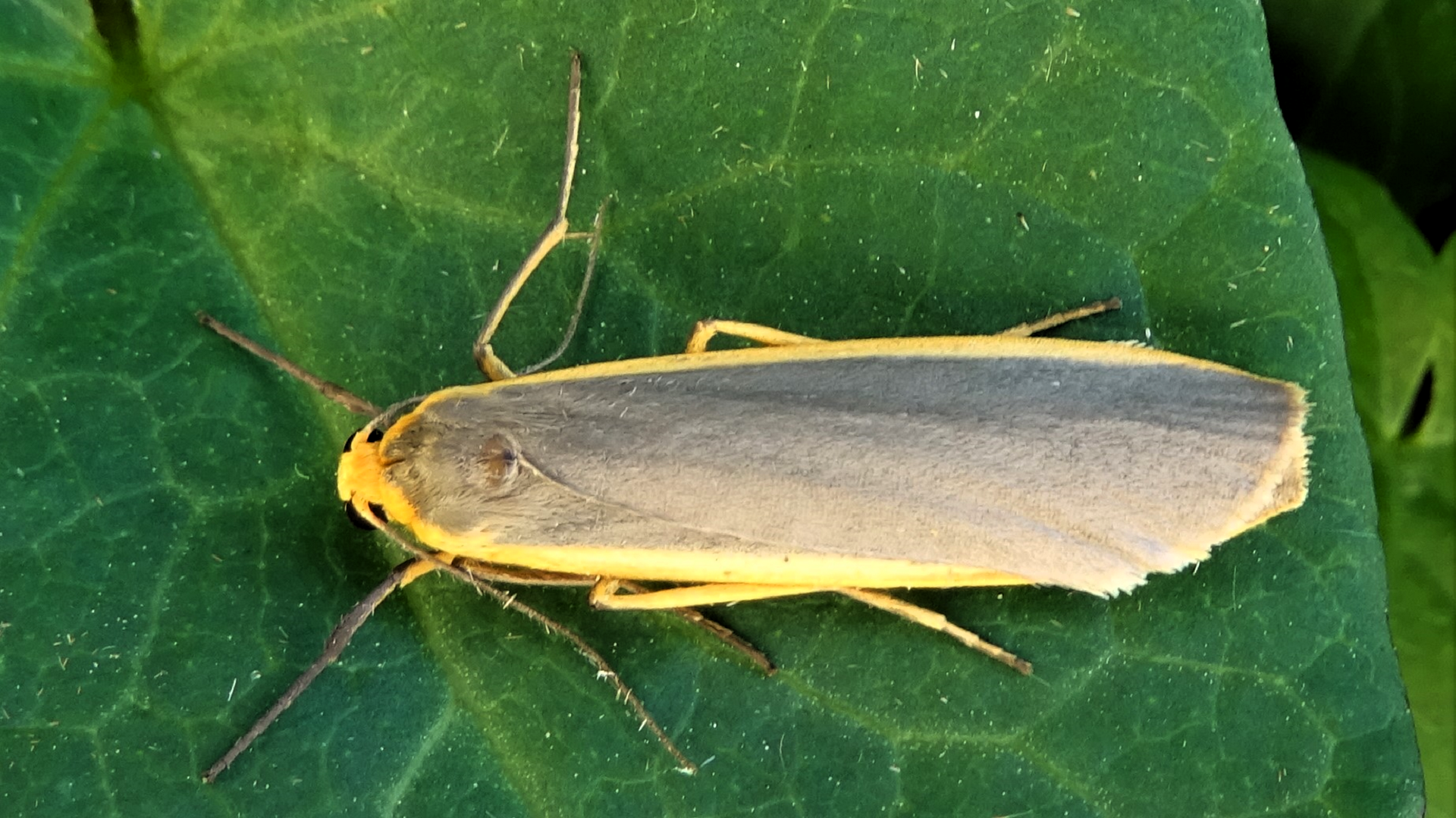
Lives in scrub, heathland and woodland during June until August. Feeds on lichens.
#
Figure of Eight
Diloba caeruleocephala
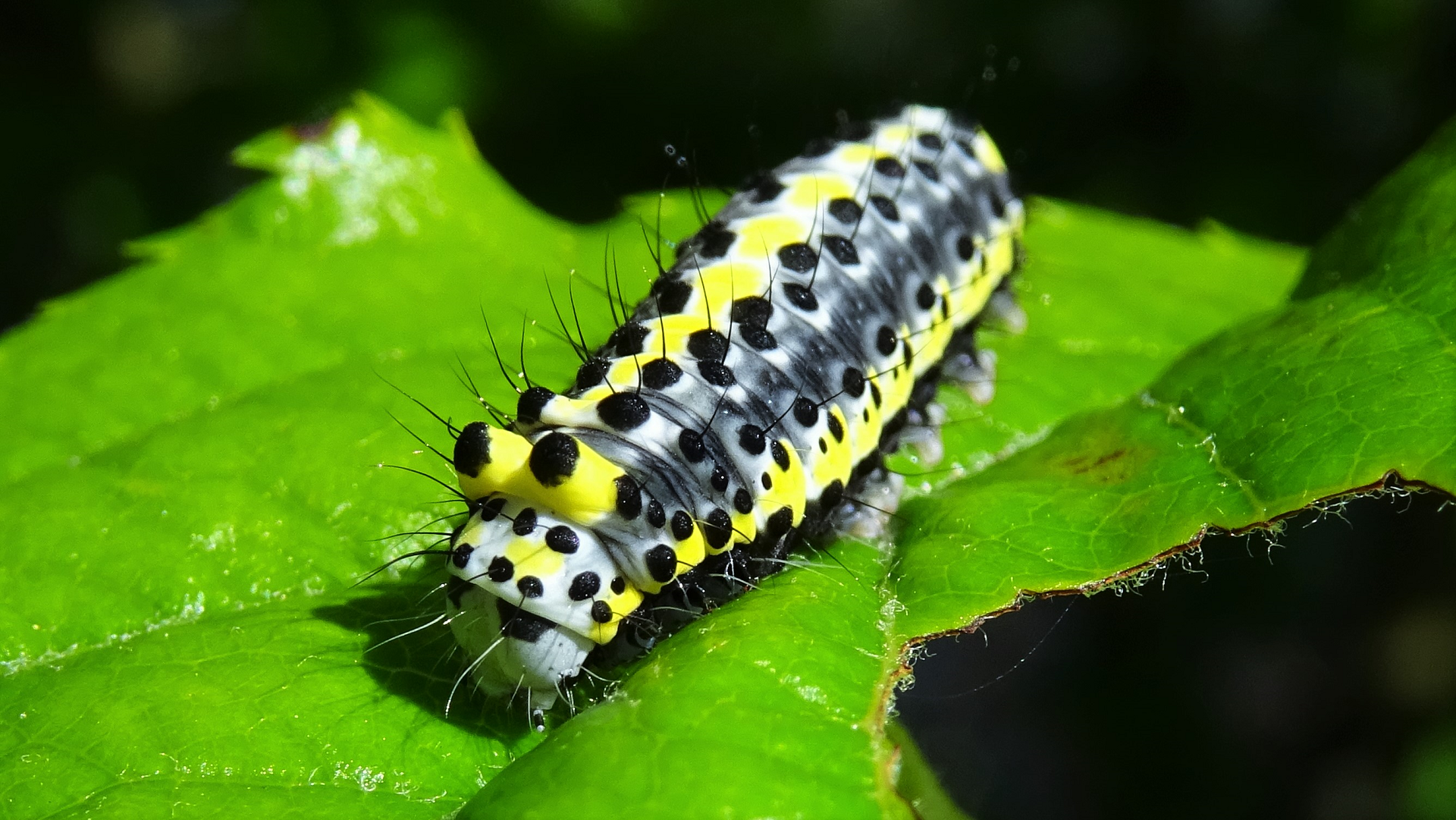
This attractive caterpillar was found on a young apple tree at the edge of Hainault Lake. It is the larvae stage of the Figure of Eight moth.


#
Common Quaker Larva
Orthosia cerasi
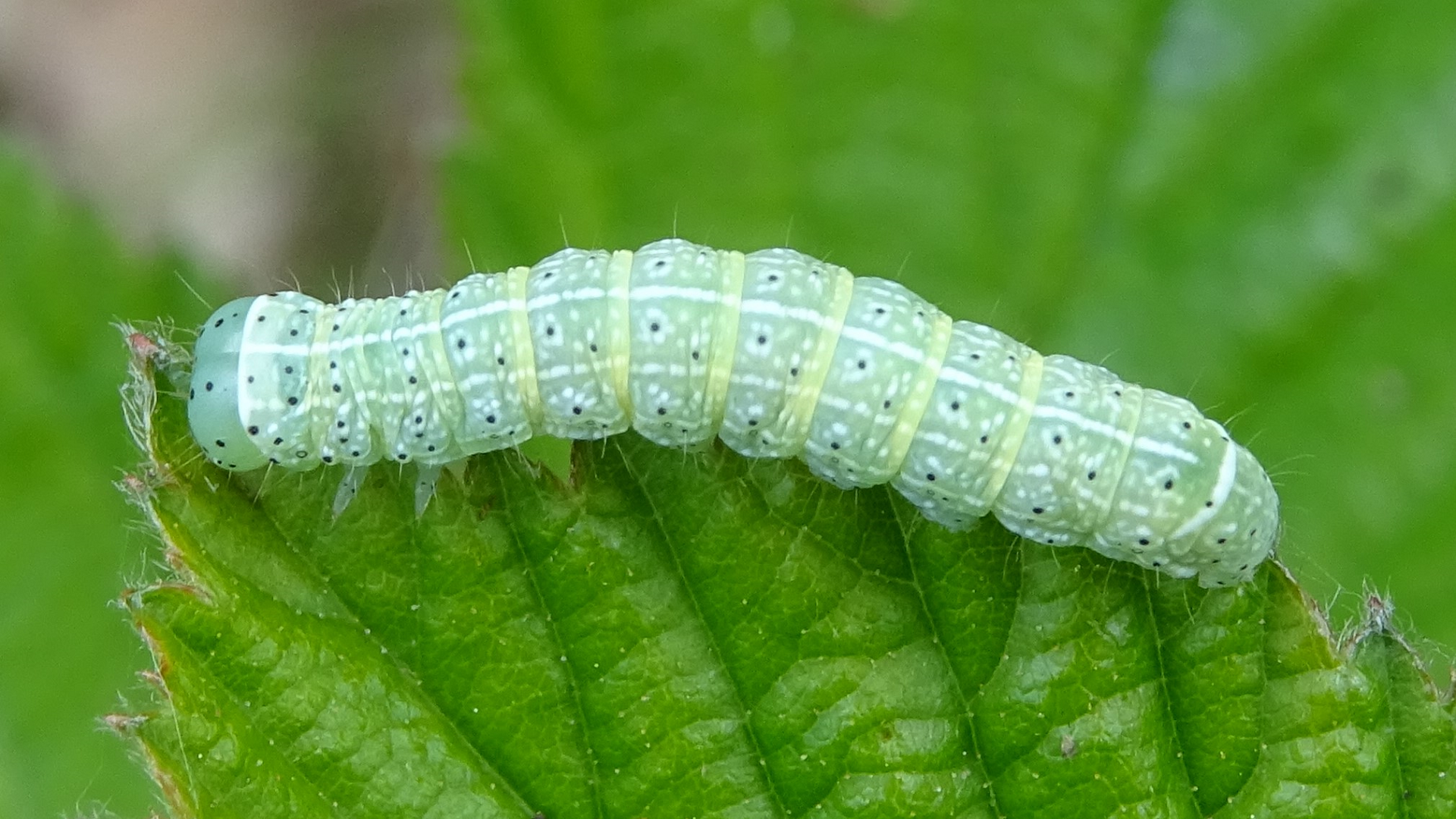
This is a Common Quaker moth caterpillar at an immature stage. The ground colour is extremely variable. Mature caterpillars are bright green. Spots on the face feet and body helped with identification along with the white line across the segment above the first claspers.
#
Knot Grass Larva
Acronicta rumicis
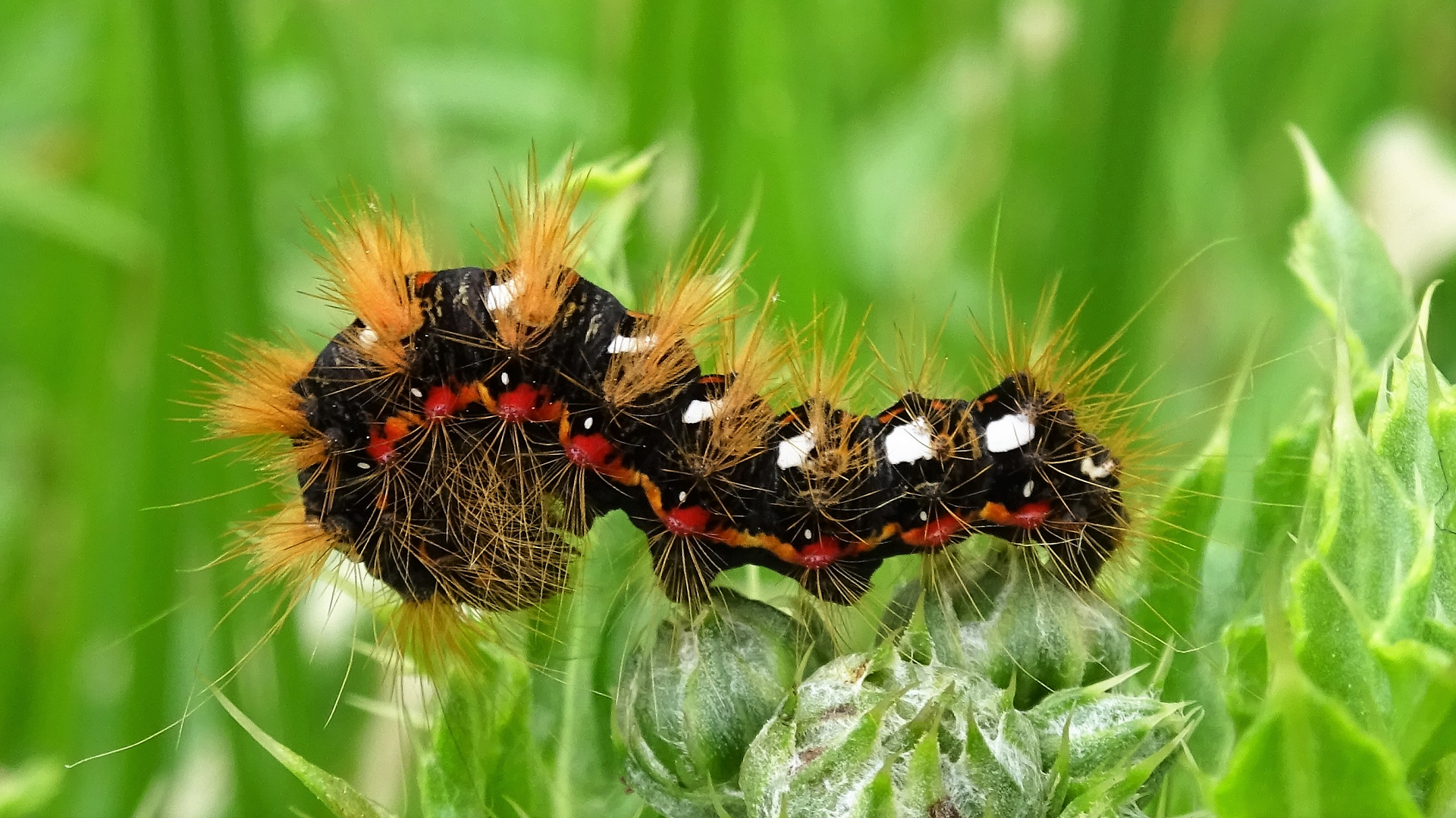
The Knotgrass moth is a common species within the Noctuidae family. It deposits eggs in clusters on herbaceous plants, where caterpillars typically emerge after about 10 days and reach full growth within approximately 30 days.
#
Caterpillar
Doomed
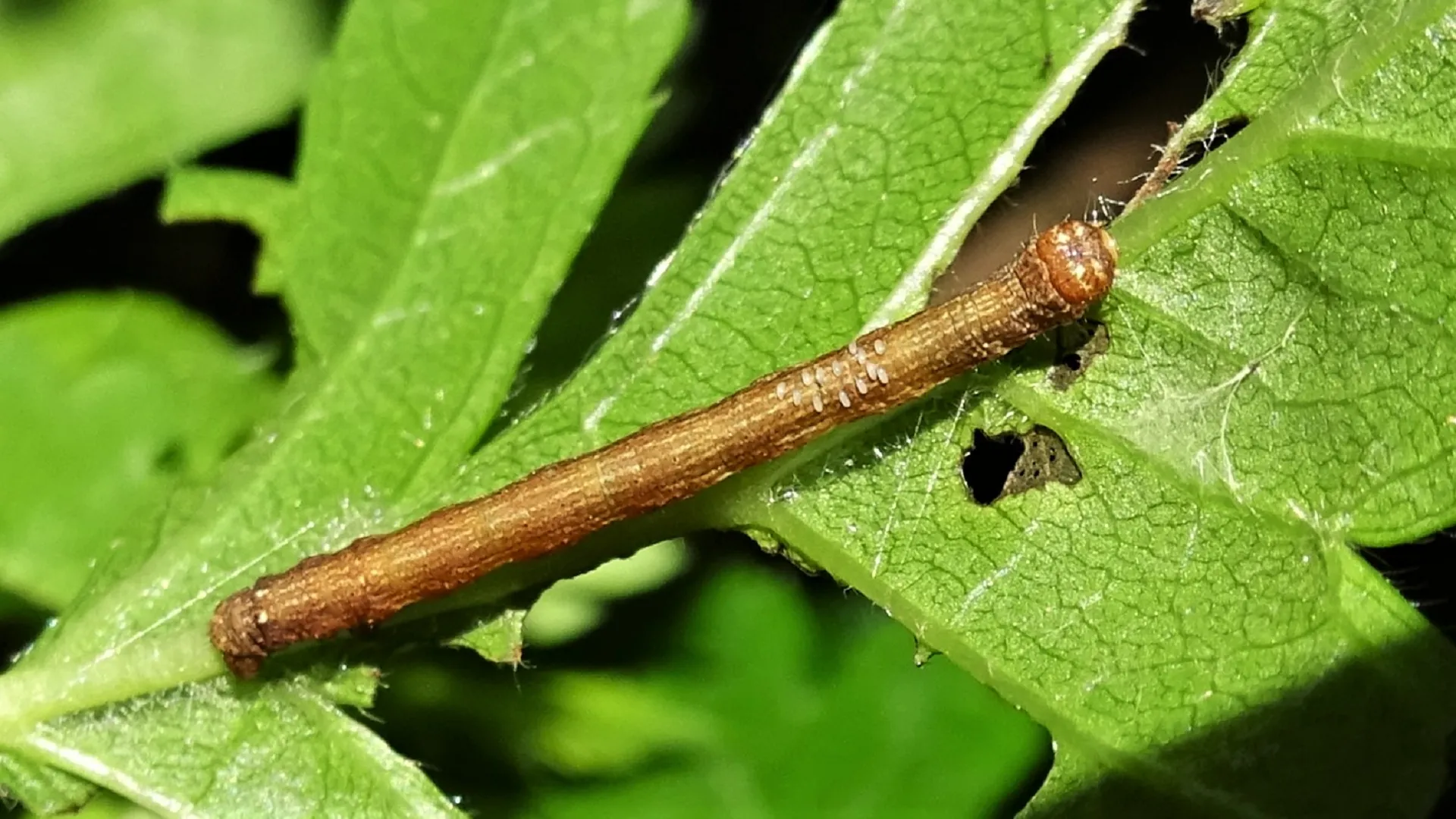
Some caterpillars utilise camouflage as a means of avoiding predators. This particular caterpillar, which resembles a twig, may not survive for long, although it might not be obvious to a casual observer. Upon closer inspection, tiny eggs can be seen on its body, indicating that this caterpillar is unlikely to survive. Parasitic larvae will hatch from the eggs and begin feeding on the caterpillar.
#
Cinnamon Sedge Caddisfly
Limnephilus marmoratus
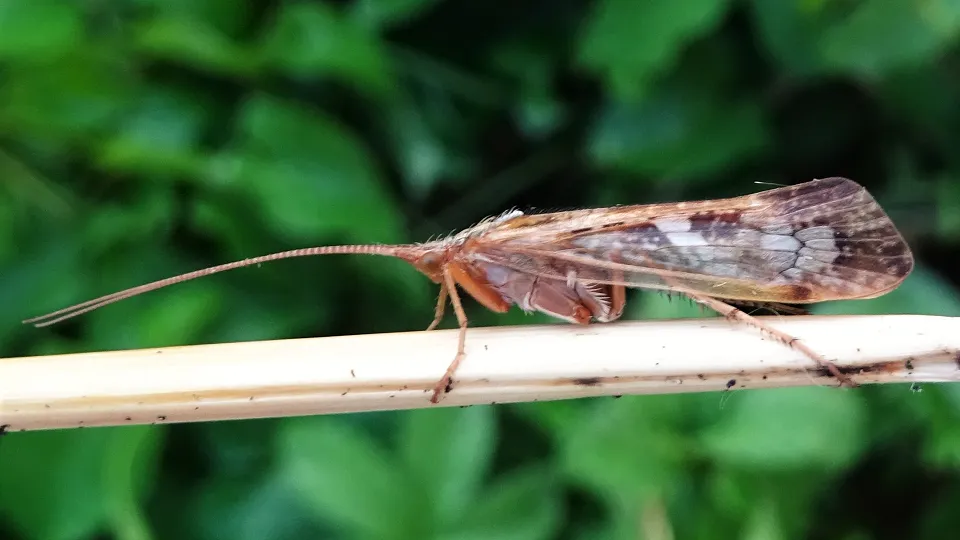
The Cinnamon Sedge Caddisfly often displays more pronounced markings compared to L. rhombicus, which can appear somewhat similar. This specimen features highly marbled wings, and the stigma does not exhibit the strength characteristic of L. decipiens. It can be found near lakes and ponds from June to October.
#
Pied Shieldbug
Tritomegas bicolor
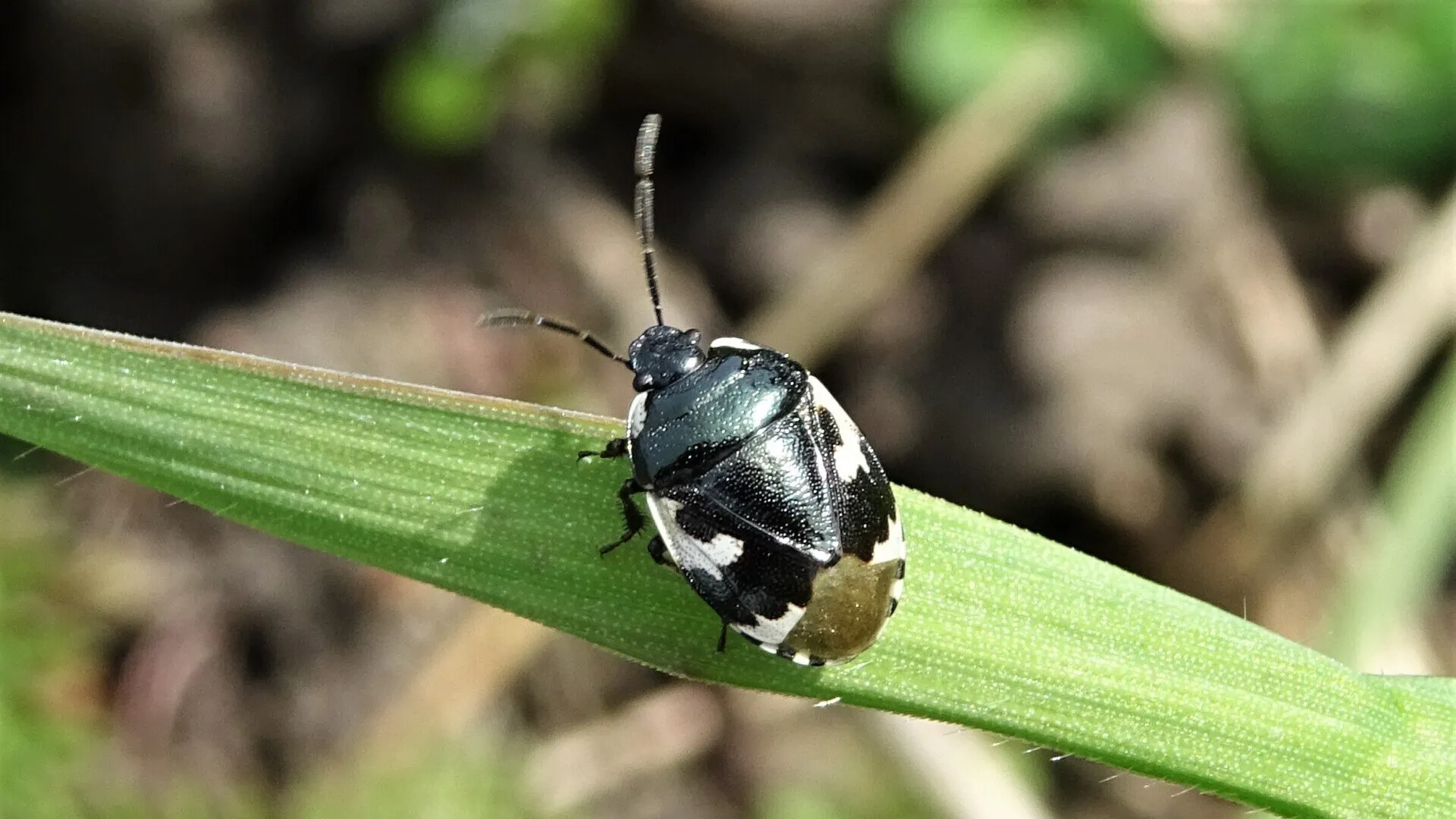
The Pied Shieldbug is a ground-dwelling bug that feeds on White dead-nettle and Black horehound.
#
Tortoise Bug
Eurygaster testudinaria
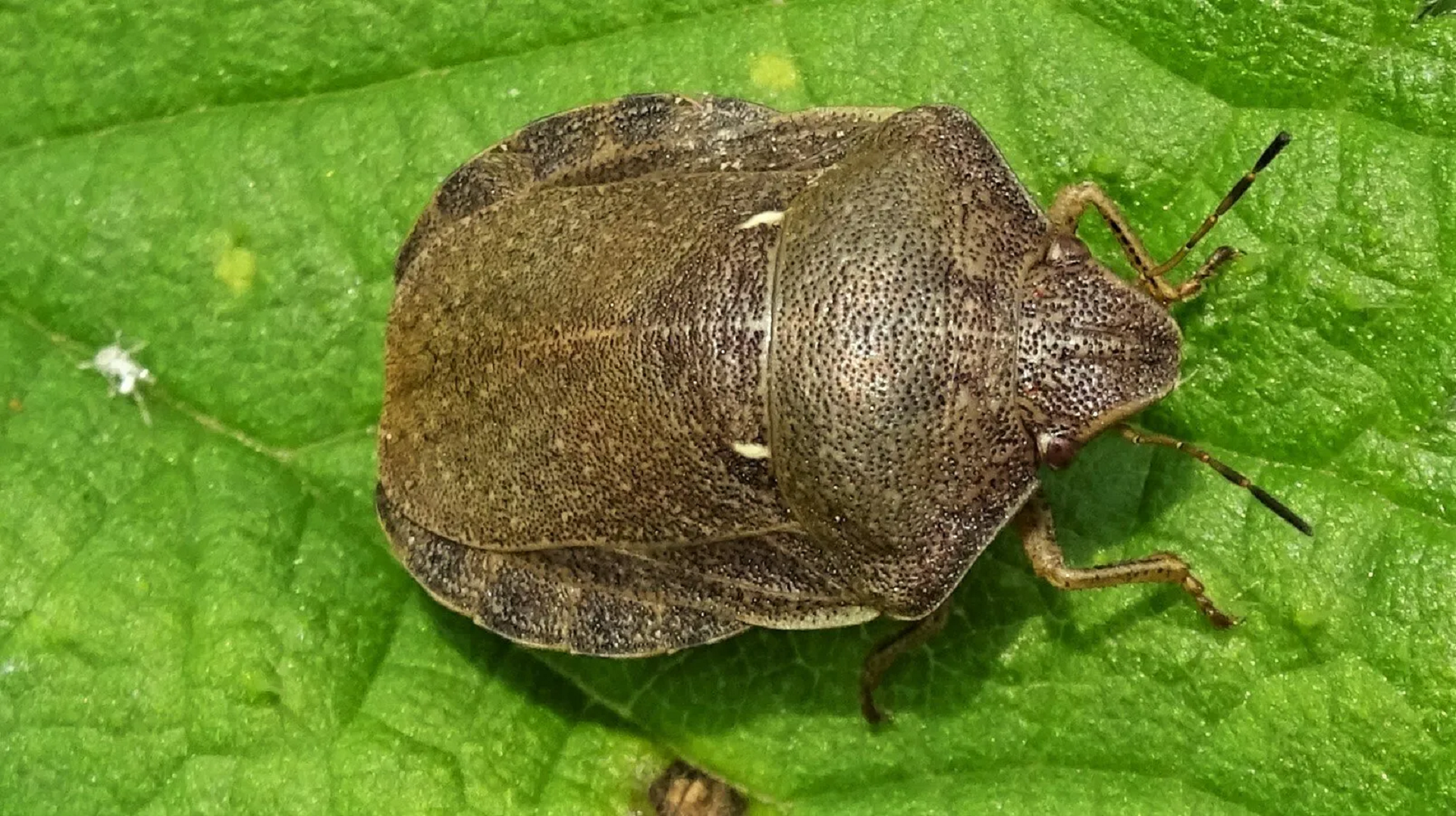
This large shieldbug is known as a 'Tortoise Bug'. Adults are up to 11mm long and usually found in habitats containing stinging nettles. This individual was found at on nettles at Woodhenge.
#
Turtle Bug
Podops inuncta
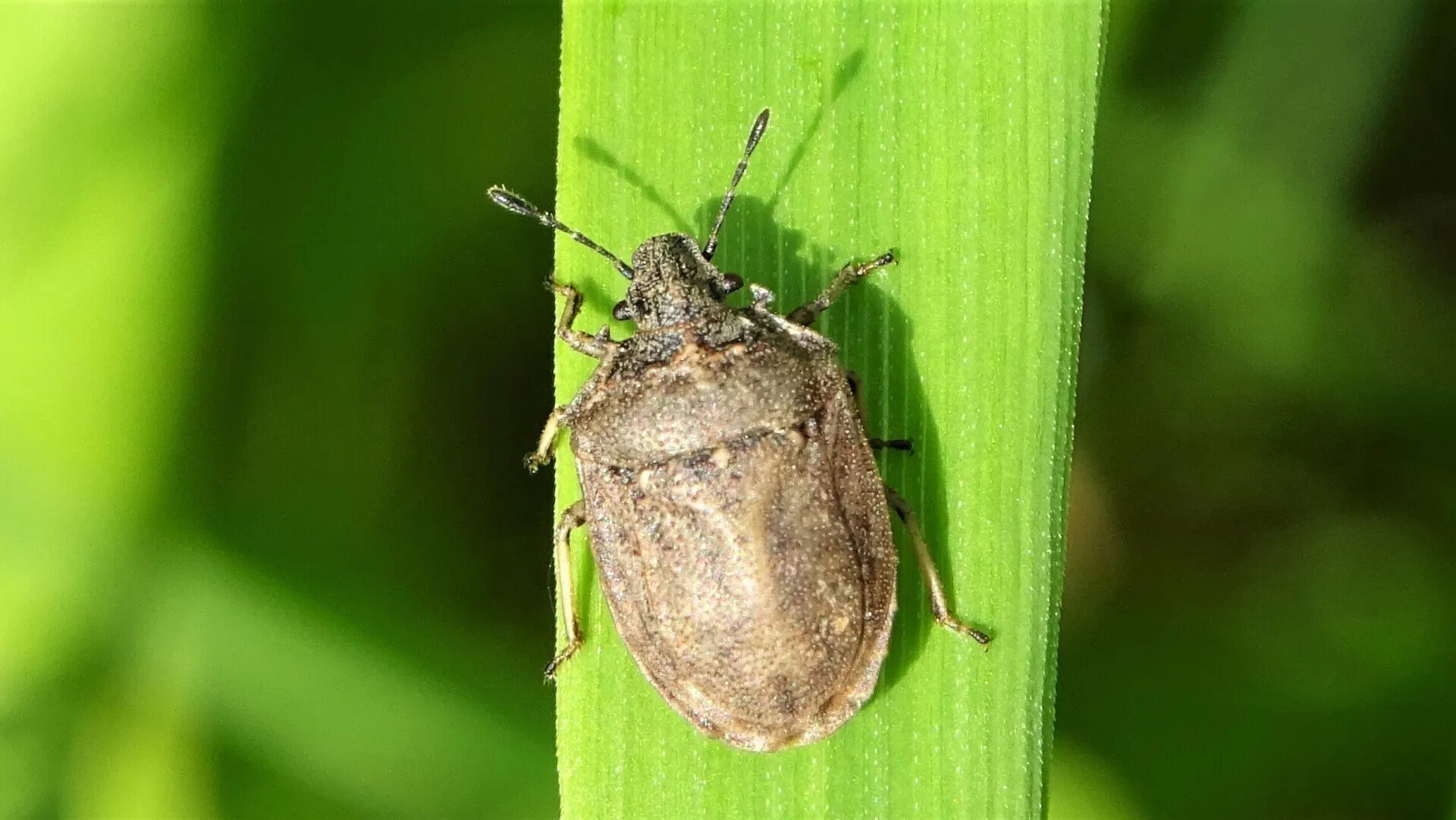
The Turtle Shieldbug is relatively small, measuring approximately 5mm in length. It features two small projections on each side of its head and a long, tongue-like scutellum that extends towards the rear of its abdomen. This specimen was discovered on a blade of grass among stinging nettles on Woodhenge mound. Grass serves as the larval foodplant.
#
Hairy Shieldbug
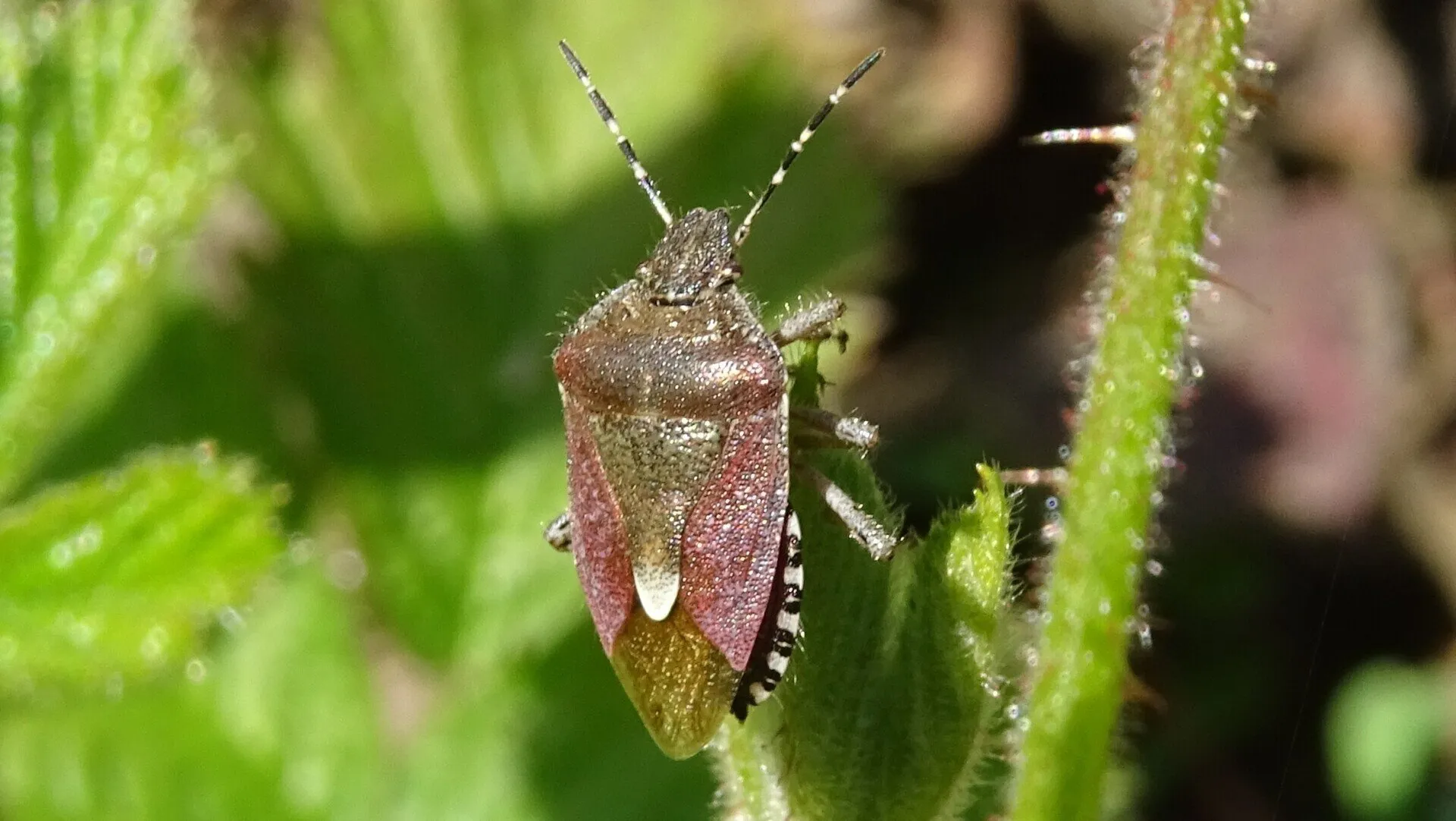
Dolycoris baccarum
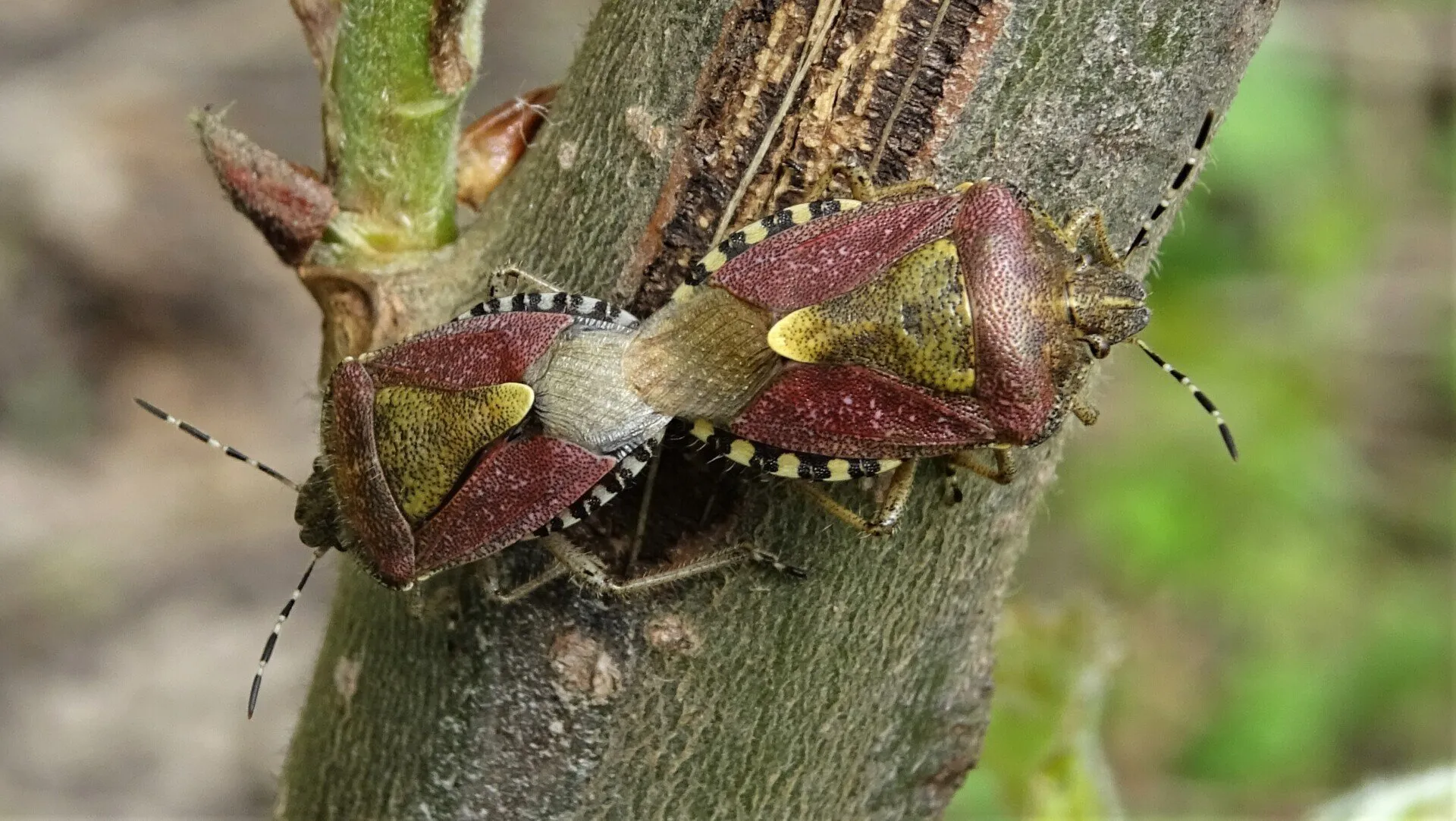
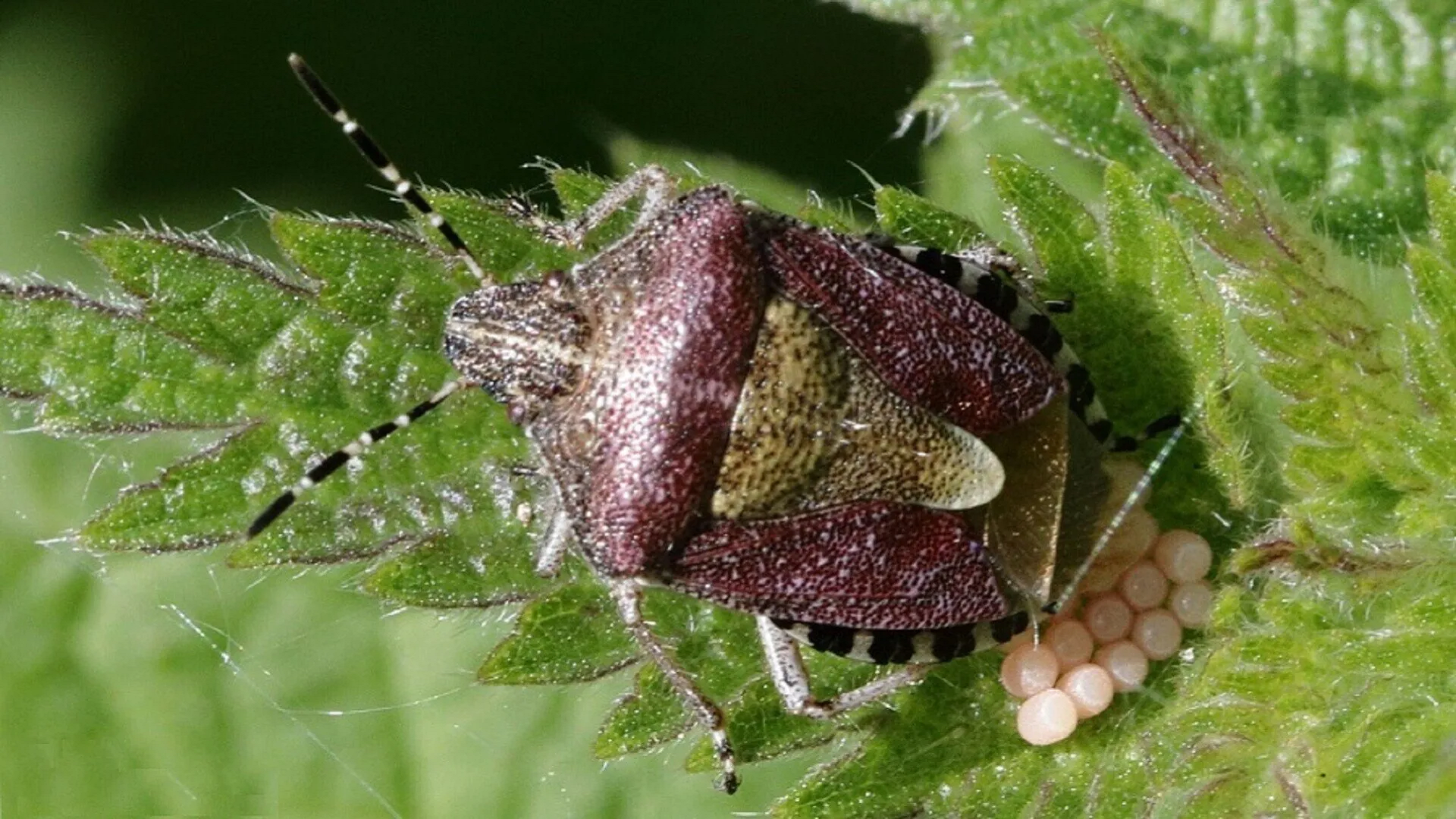
Hairy shieldbugs appeared in large numbers during April, especially near log stacks in Joan's Glade where over fifty were counted in just a couple of square metres. Larval foodplants include Blackthorn and other members of the Roasaceae family.
#
Forest Shieldbug
Pentatoma rufipes
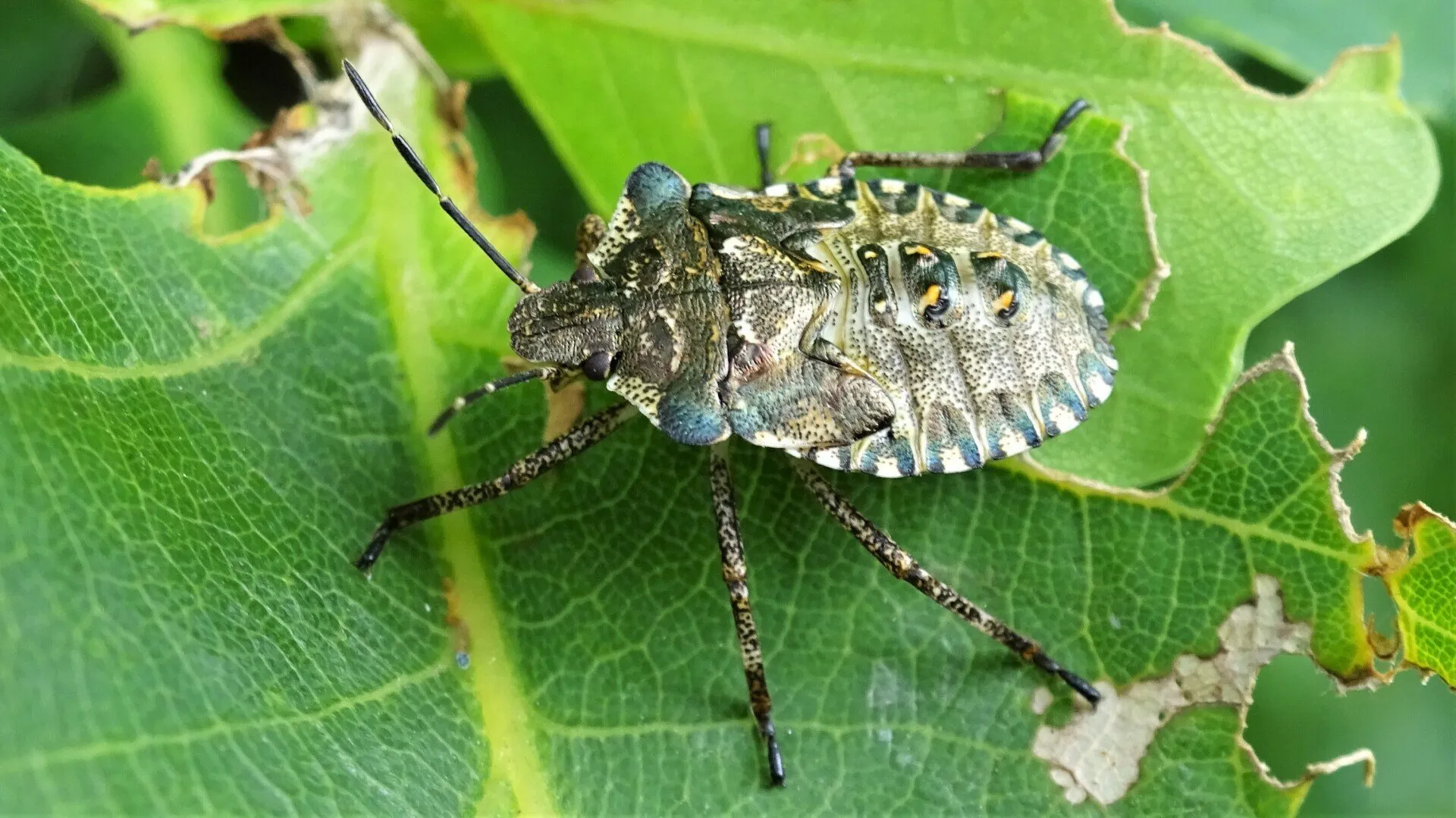
This is a final instar nymph of a Forest Shieldbug (aka Red-legged Shieldbug). The species overwinters as young nymphs which feed mostly on oak and a variety of other deciduous trees. Adults feed on fruits, caterpillars and other insects.
#
Bishop's Mitre
Aelia acuminata
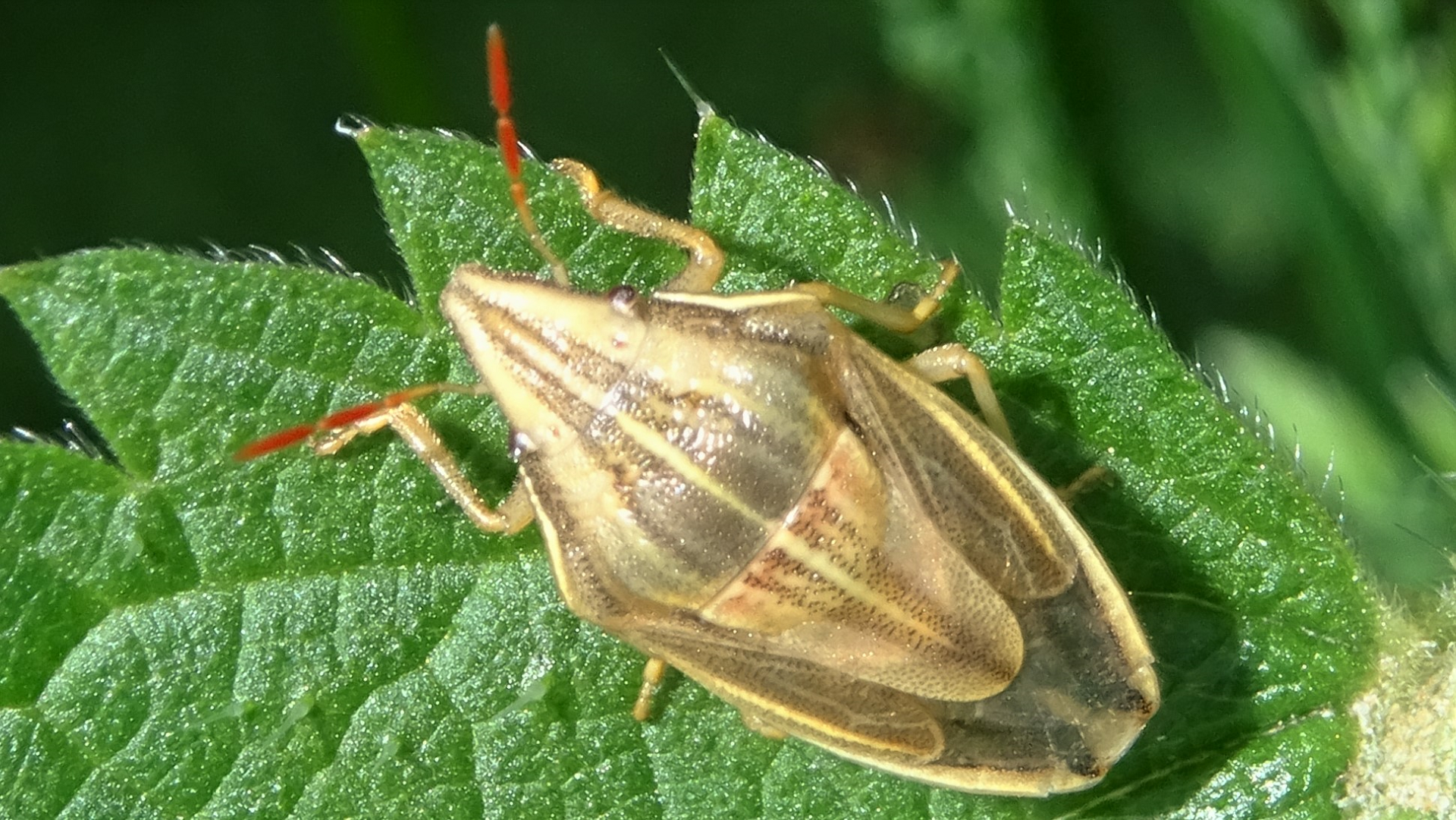
This distinctive striped Shieldbug has a pointed head like a Bishop's mitre, hence its common name. This was found on stinging nettles at Woodhenge. Its larvae feed on ripening seeds of a variety of grasses. Length about 8mm.
#
Cinnamon Bug
Corizus hyoscyami
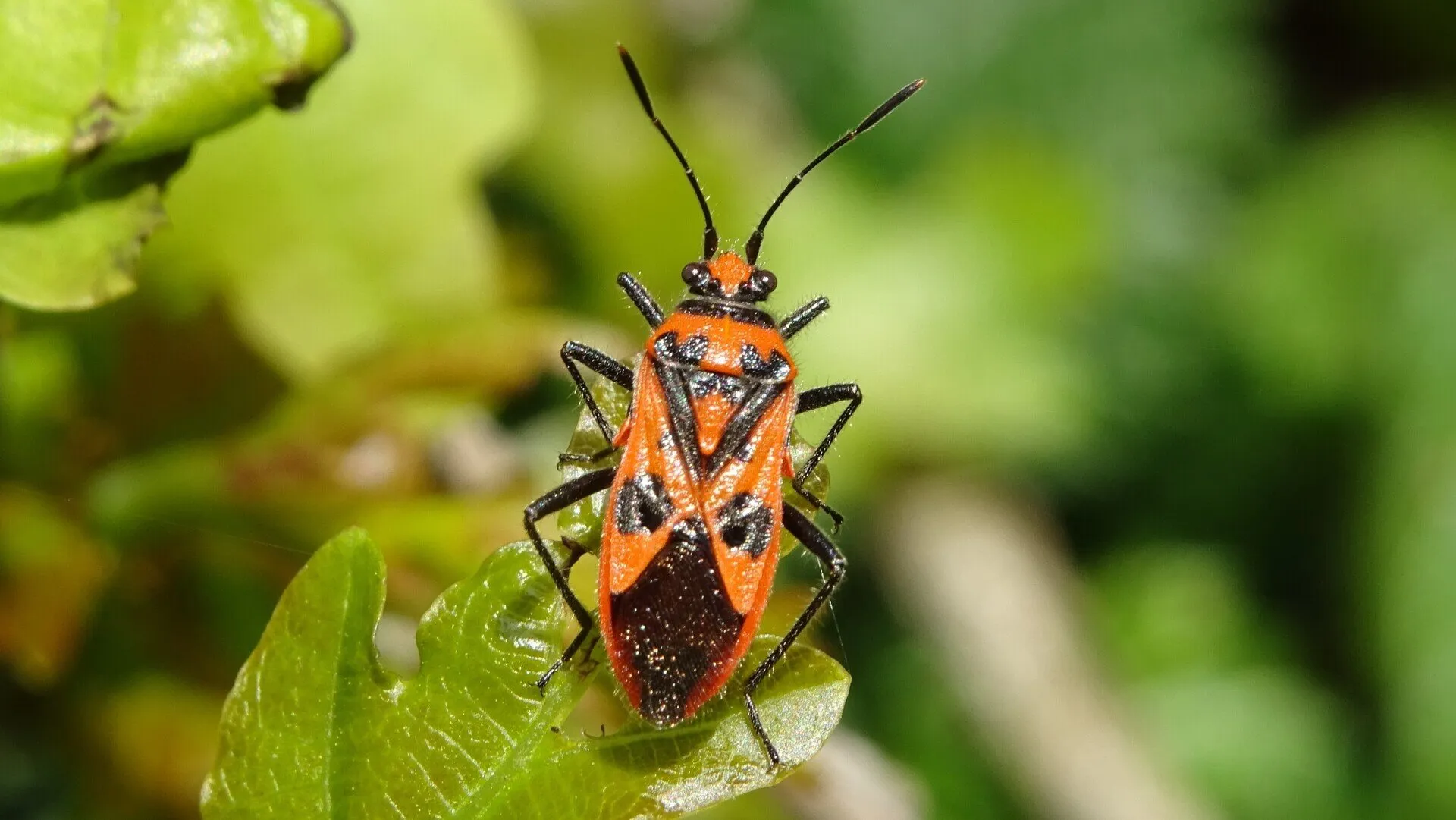
The Cinnamon Bug is a brightly coloured plant bug that measures approximately 9mm. It was once primarily found along coastlines, but it is now being observed more inland.
#
Hypericum Rhopalid
Rhopalus subrufus
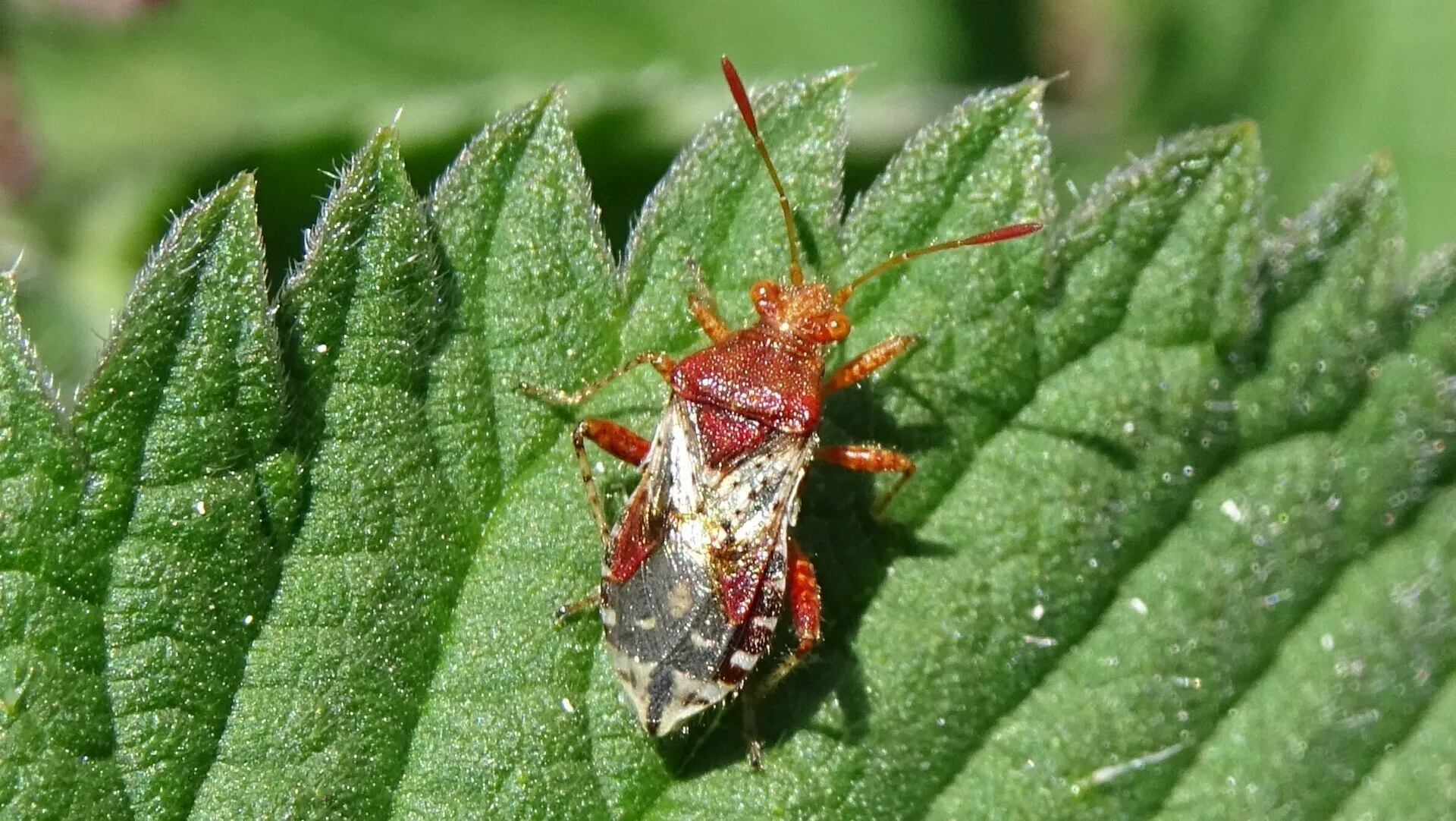
Found on stinging nettles at Woodhenge this lovely red bug is associated with woodland clearings. The adults overwinter and the new generation appears in August. Length about 7mm.
#
Fine Streaked Bugkin
Miris striatus
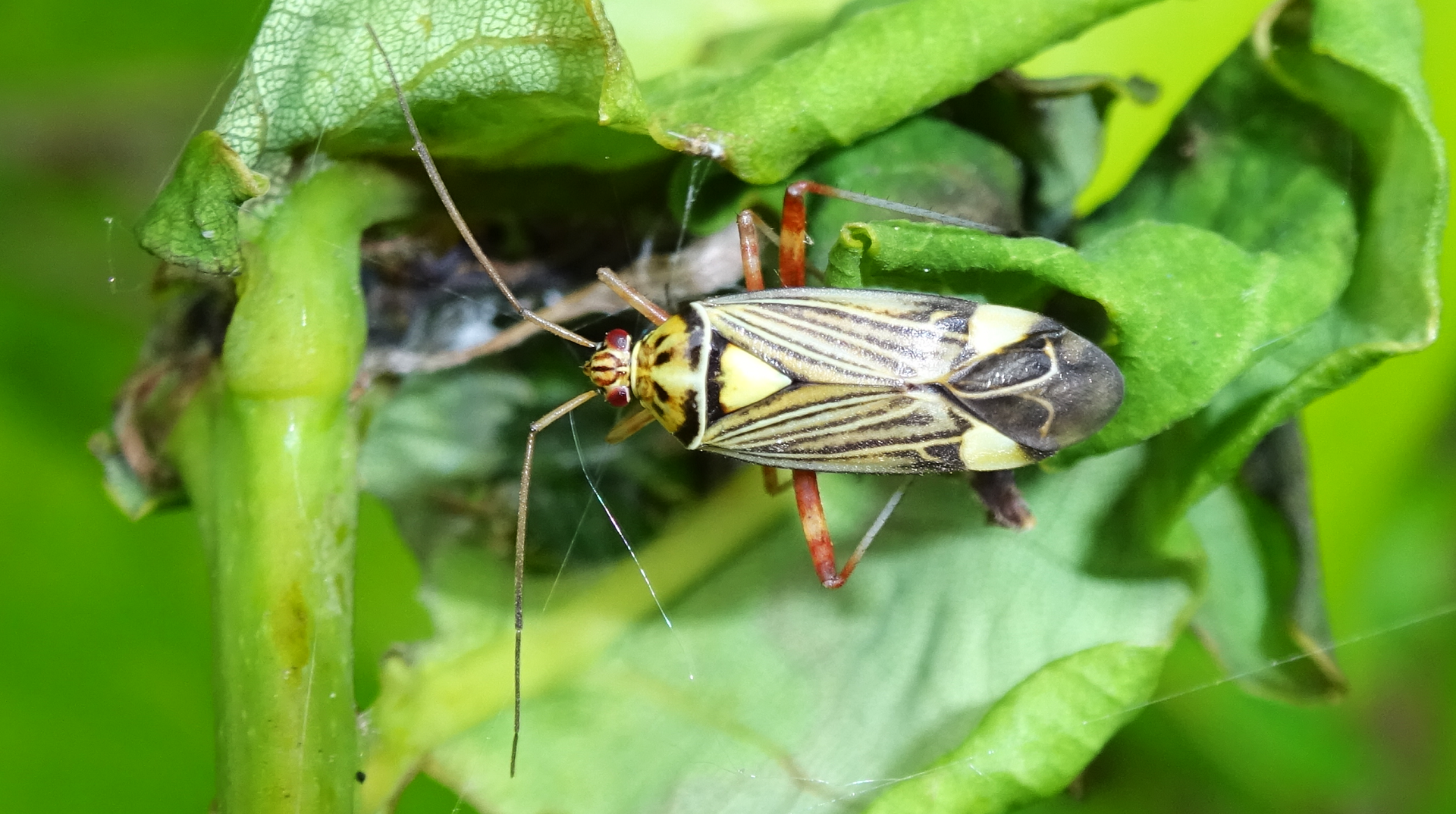
Nymphs of this species typically hatch from eggs in April and develop into adults by late May or early June. This specimen is an adult. These insects are usually found on oak and hawthorn trees, feeding on aphids, insect eggs, and the larvae of beetles and moths.
#
Potato Capsid
Closterotomus norwegicus
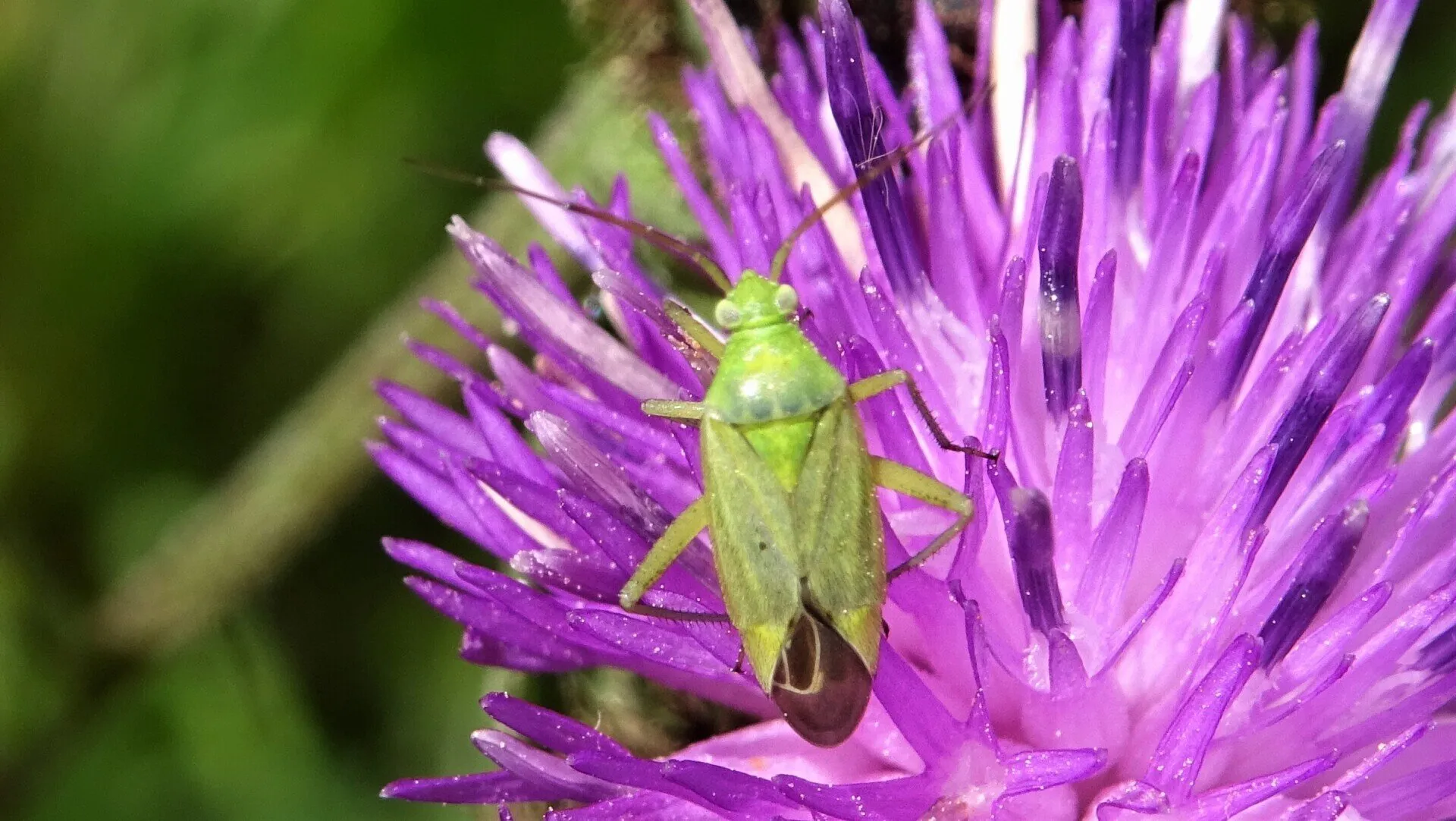
Adults (7mm) are found in meadows from May until October where they feed on a wide range of plants, particularly nettles, composites and clovers. The two spots on the pronotum are often absent, so are the dark markings at the top of the scutellum. Mature males are tinged reddish-brown. The tibial spines are shorter than the width of the tibia, and the length of the 2nd antennal segment is roughly equal to the 3rd and 4th combined.
#
Meadow Plant Bug
Leptopterna dolabrata
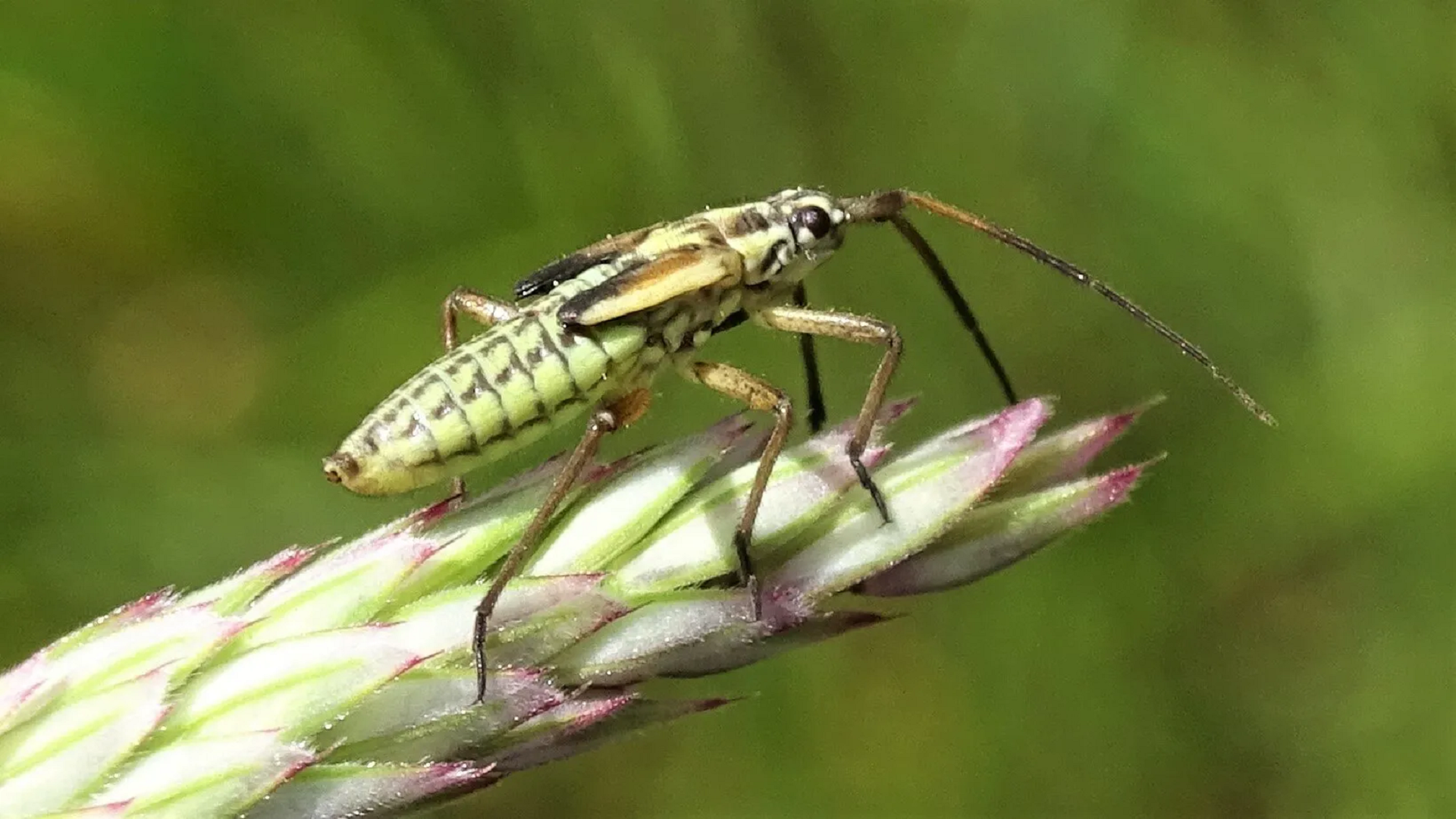
A large bug (8mm) with a preference for damper habitats where it feeds on grasses. There are two very similar species, both of which are sexually dimorphic. Males are always fully-winged while females are usually partly-winged. Leptopterna species often have reddish or orange-yellow forewings. They have a transverse furrow between the eyes and the legs and antennae are covered in long dark hairs. The second antennal segment of the female is thinner than the base of the front tibia. In males the colour darkens with age, from black and yellow to black and orange-red. The length of the 2nd antennal segment is much greater than the 3rd and 4th combined. Normally seen from June until September.
Nettle Groundbug
Heterogaster urticae
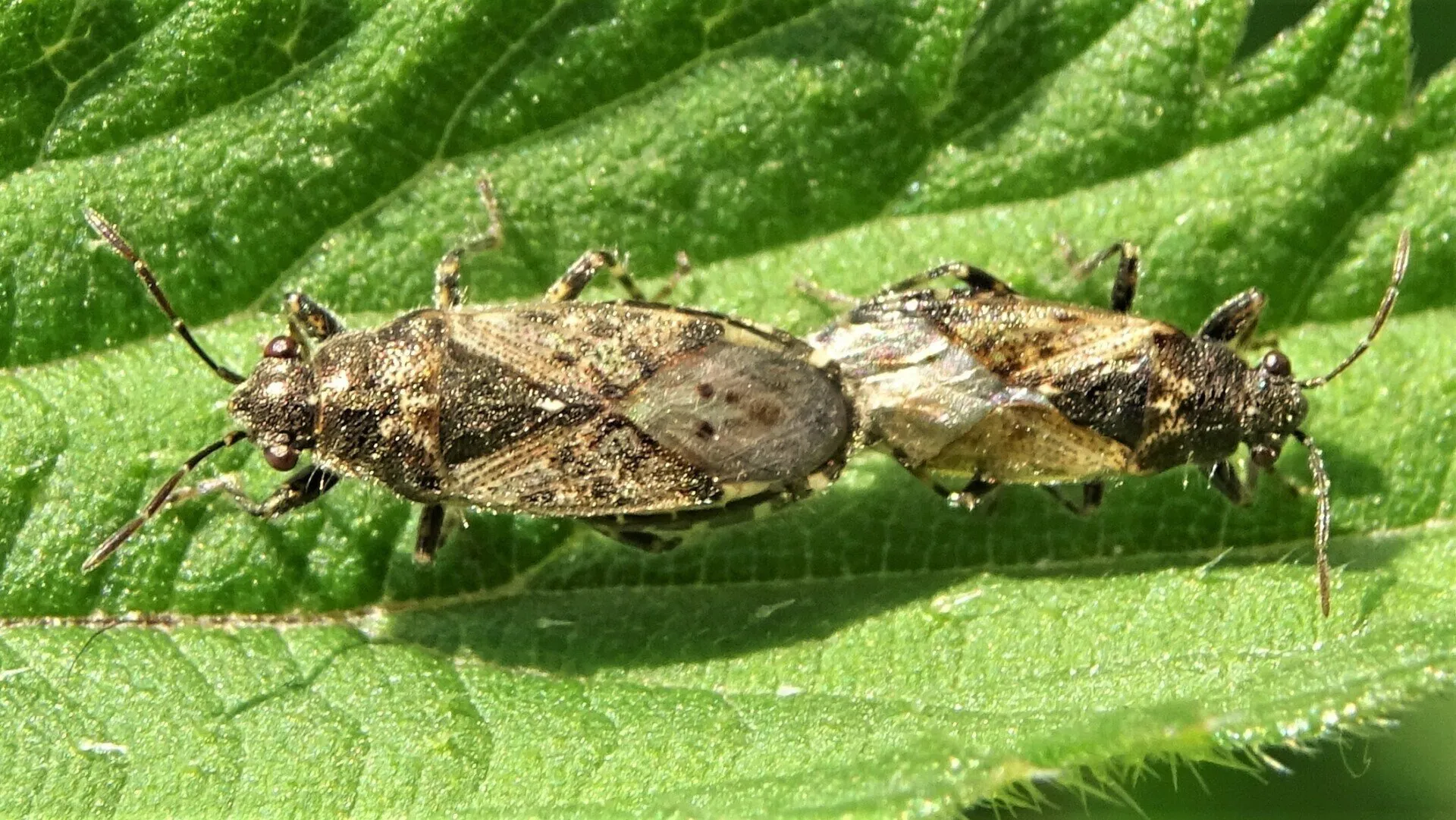
Nettle Ground Bugs have alternate dark and light markings on the legs and connexivum and the tibiae have three dark bands. The head and pronotum are covered in long erect hairs. Adults ( 6-7mm) overwinter, emerging and mating during spring; couples may remain joined together for several days. The new generation is complete from late summer onwards. They live on nettles.
#
Creeping Thistle Lacebug
Tingis ampliata
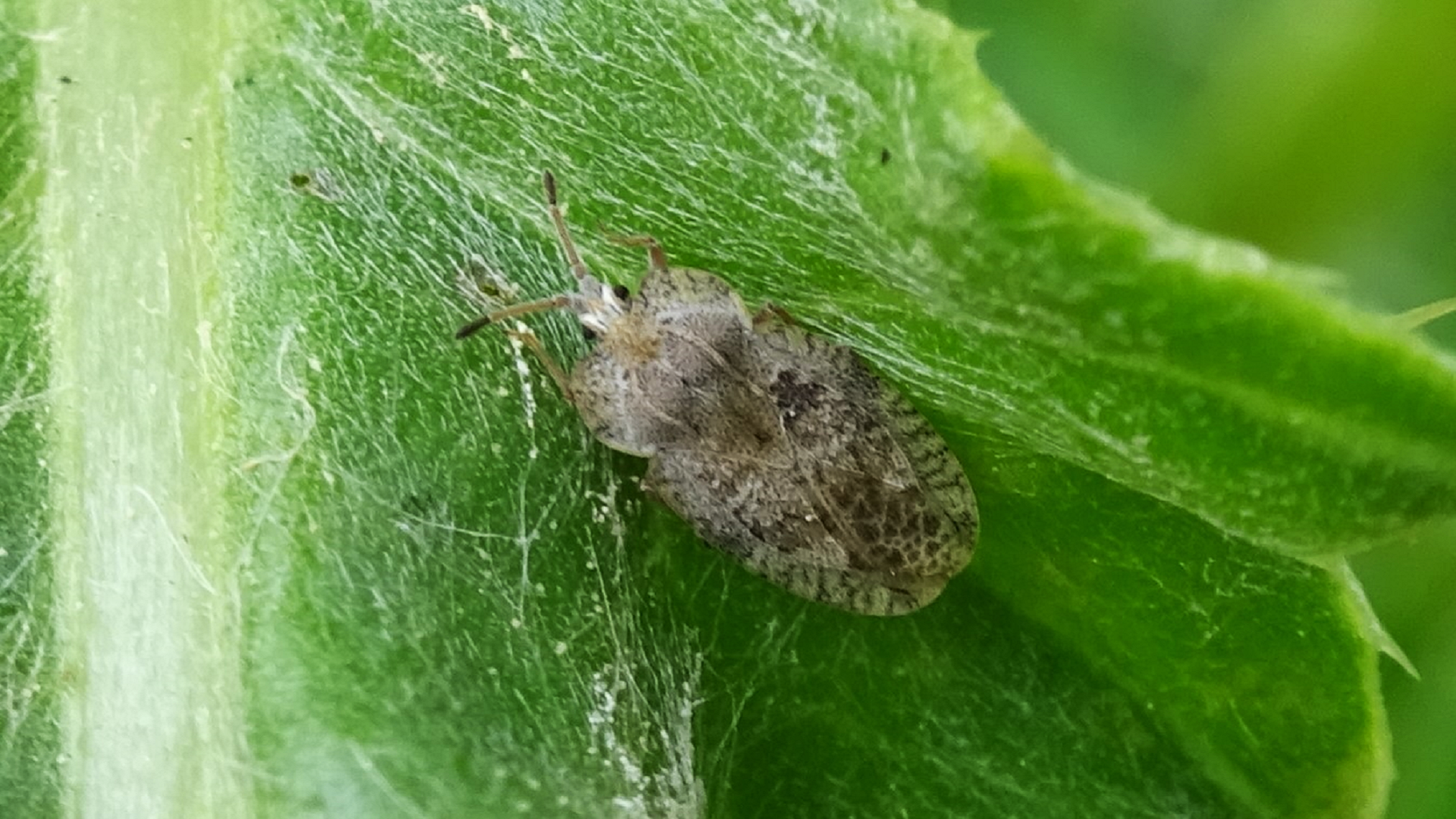
Common Lacebug (3-4mm) that lives on Creeping Thistle. It is covered in white powdery waxy deposits and has four rows of meshes at the edge of the pronotum and forewings. The fourth antennal segment is wider than 3rd and there are three small projections located between the antennae. This species overwinters as an adult and is found on the foodplant in the spring and early summer.
#
Oak Leafhopper
Iassus lanio
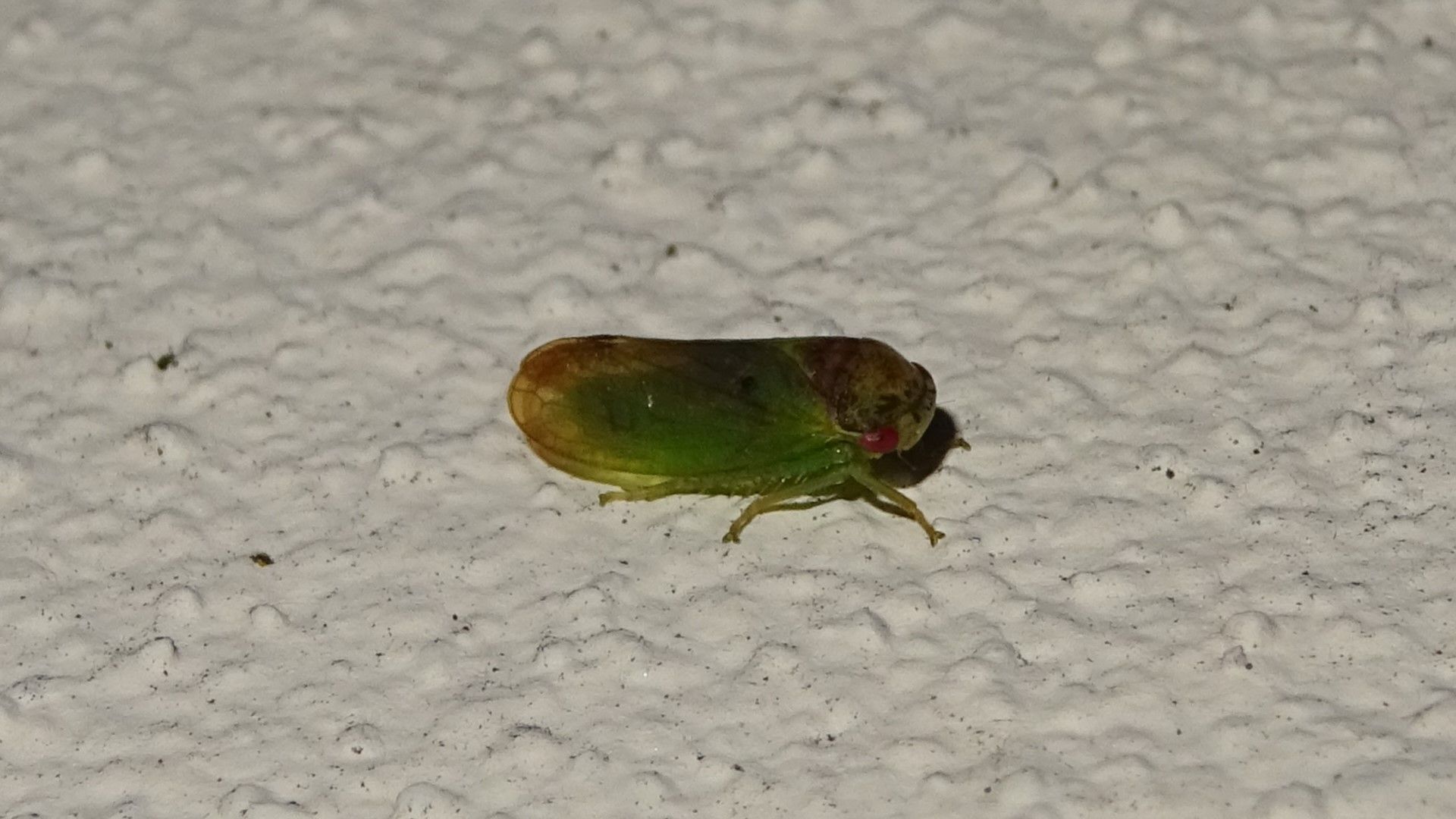
A large, broad Leafhopper (6-8mm) with forewings that vary in colour from green to light-brown. The vertex, pronotum and scutellum are heavily dark-mottled. This common species lives on Oak trees and is seen from June until October.
#
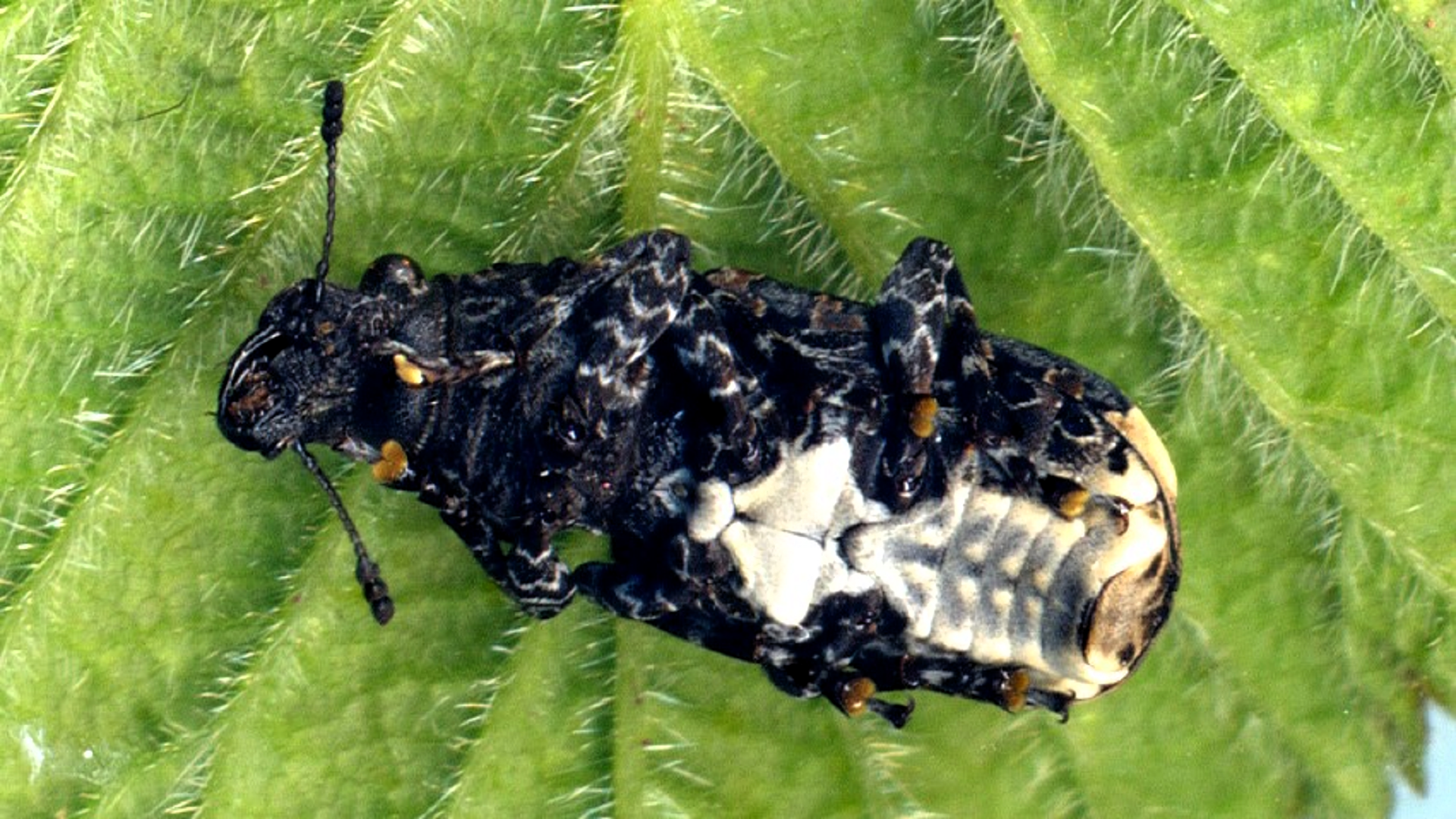
Cramp-ball Fungus Weevil
Platyrhinus resinosus
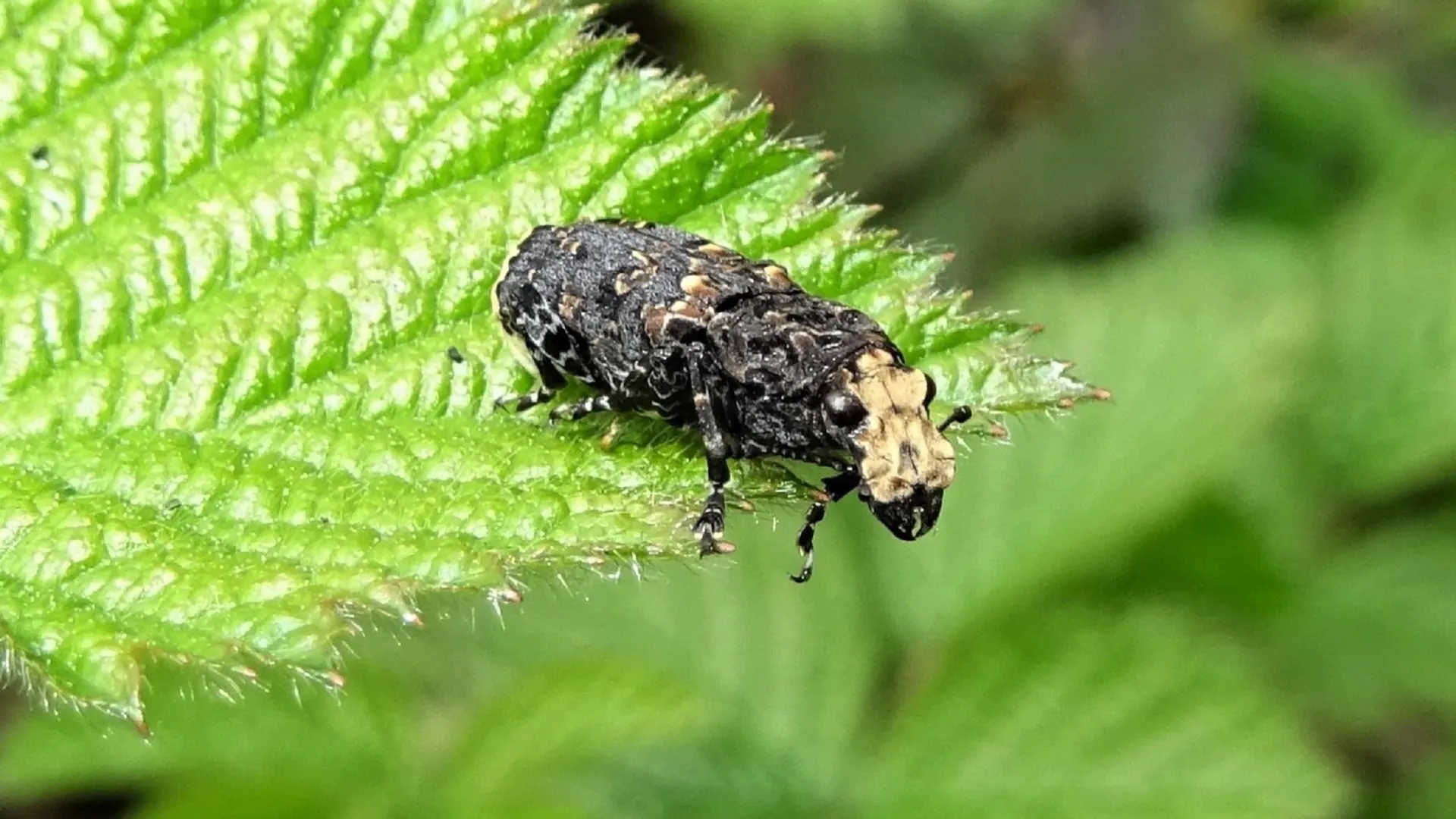
This small weevil breeds in habitats that contains crampball fungus, which usually grows on dead ash wood.
#
Leafhopper
Adarrus ocellaris
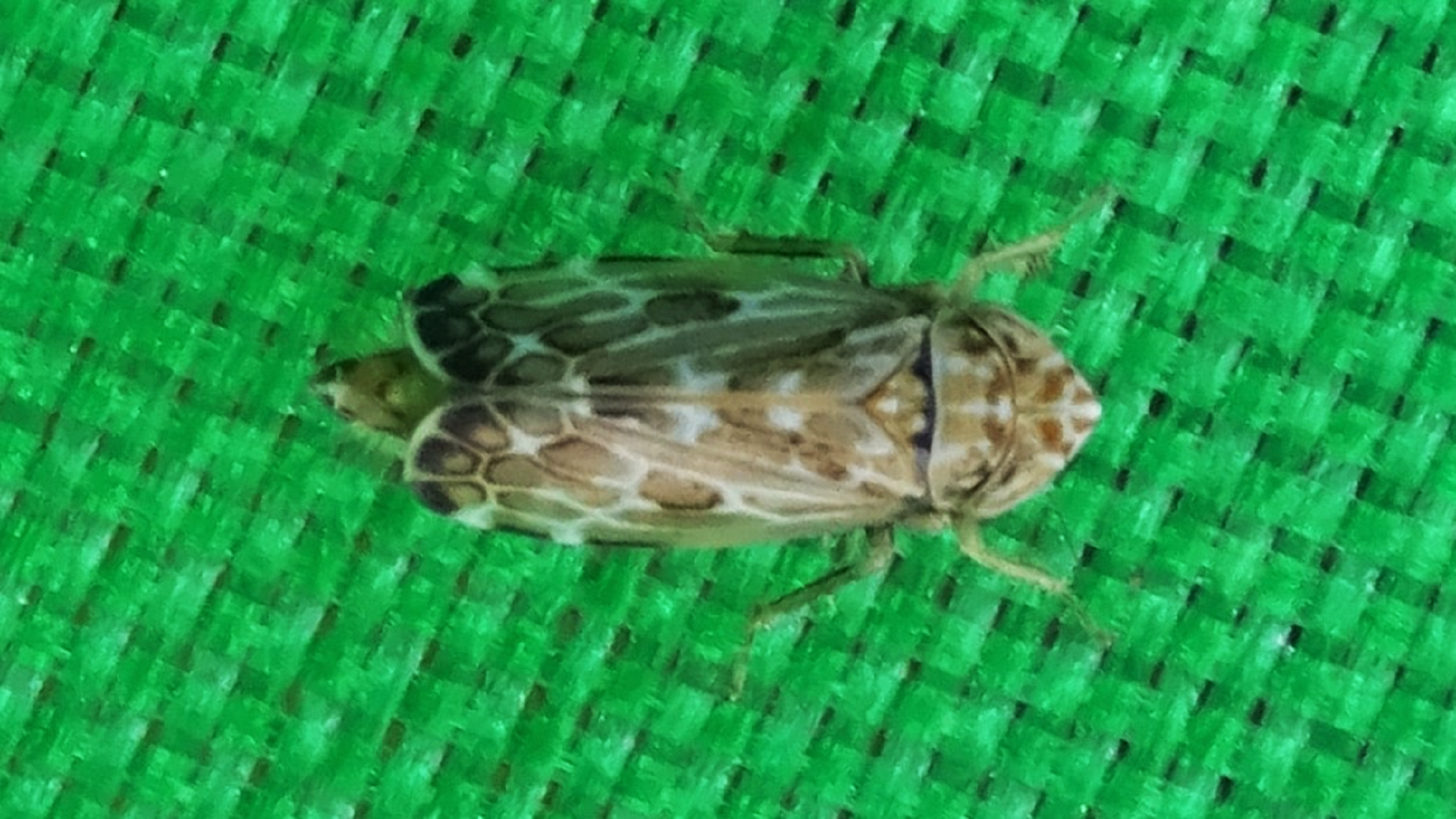
A common leafhopper with a preference for grassland habitats. This small species, measuring 3-4mm, is observed from May to October.
Cream-streaked Ladybird
Harmonia quadripunctata
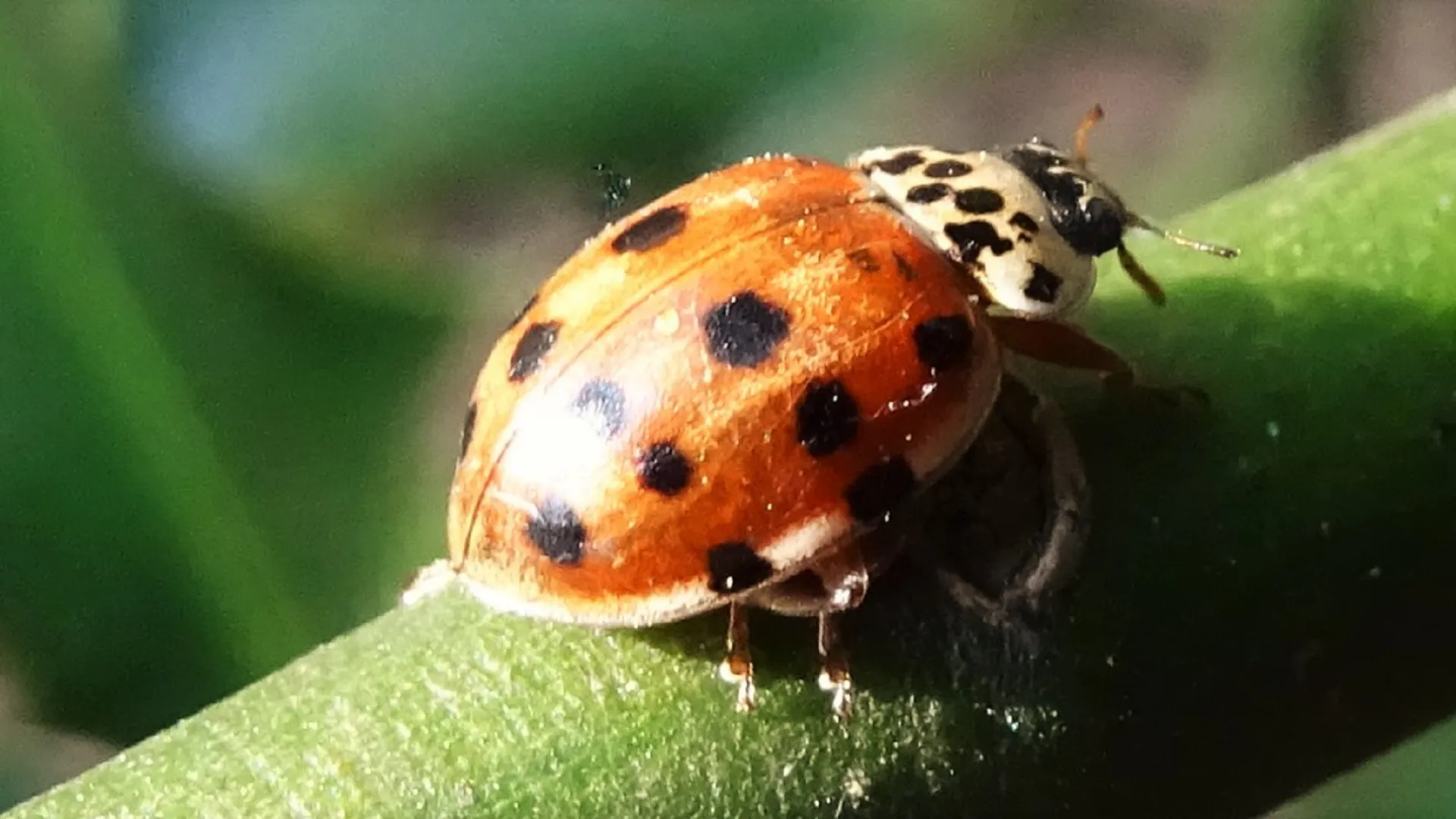
A medium-sized ladybird, measuring 5-6mm, commonly found on pine trees and nettles.
The colouration varies, featuring bright red, brown, and yellow forms, while some individuals may appear nearly entirely black. Many possess pale streaks on their wing cases. Up to 18 black spots may be present, although some individuals may lack spots. Due to typically having two spots on the edge of each wing case, it is sometimes referred to as the 'Four-spot ladybird.' This species preys on aphids found on trees and overwinters in groups beneath the bark.
#
Black Clock Beetle
Pterostichus madidus
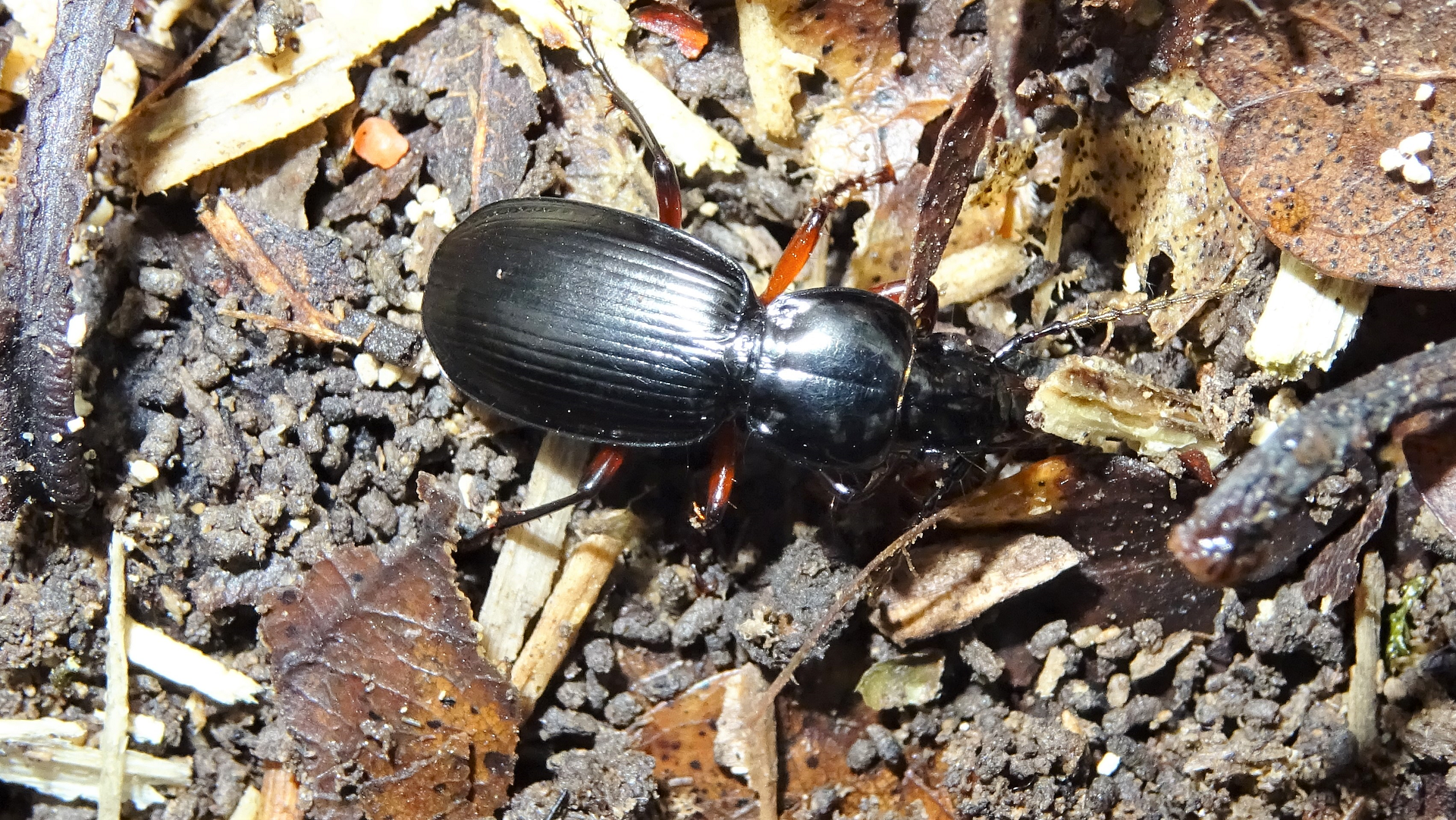
This species has a length of 15-20mm and features a shiny, well-rounded pronotum, with legs that are either black or wine-red. It is typically located under logs during spring and summer. These organisms are predatory, feeding on caterpillars, slugs, and ground-dwelling invertebrates. Adults mate in the autumn, and the larvae overwinter.
#
Aphid Lion
Neuroptera
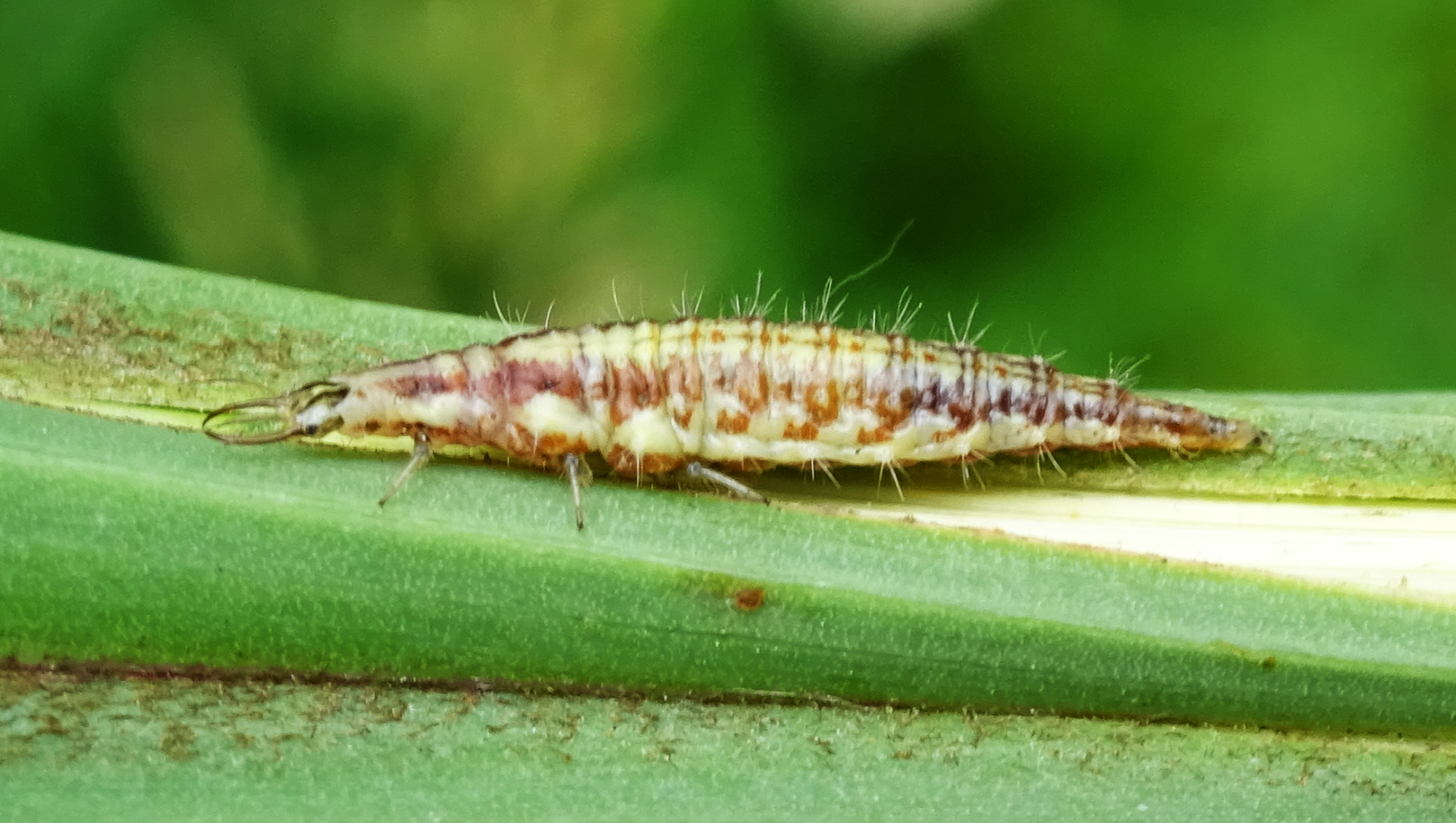
Lacewing larvae, referred to as 'Aphid Lions,' are predatory insects that use a venom to paralyze their prey before consuming their bodily fluids. They are beneficial to gardeners, as they can consume more than 200 insect pests in a week. However, if their food supply diminishes, they may resort to cannibalism. The larval stage lasts for approximately 2 to 3 weeks.
#
Spotted Lacehopper
Tachycixius pilosus
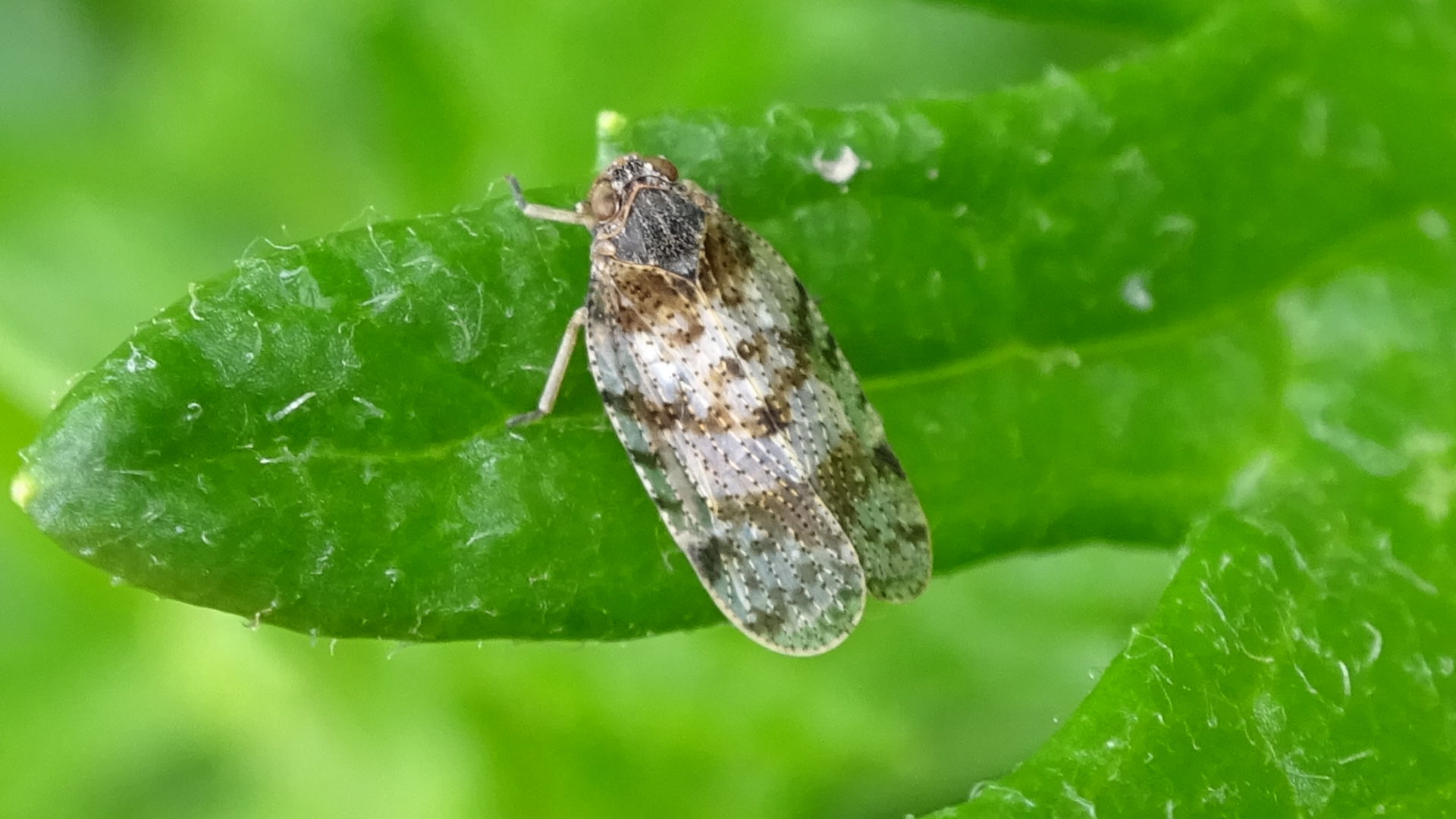
Found on deciduous trees and shrubs from May until July. It has three keels on the scutellum and dark spots between the veins at the apex of the forewing. There are also usually three short dark stripes along the forewing edge. The forewings range from being fairly plain to nearly totally dark. Its larvae feed at the base of various grasses. About 5mm.
#
Orange-bearded Bluebottle
Calliphora vomitoria
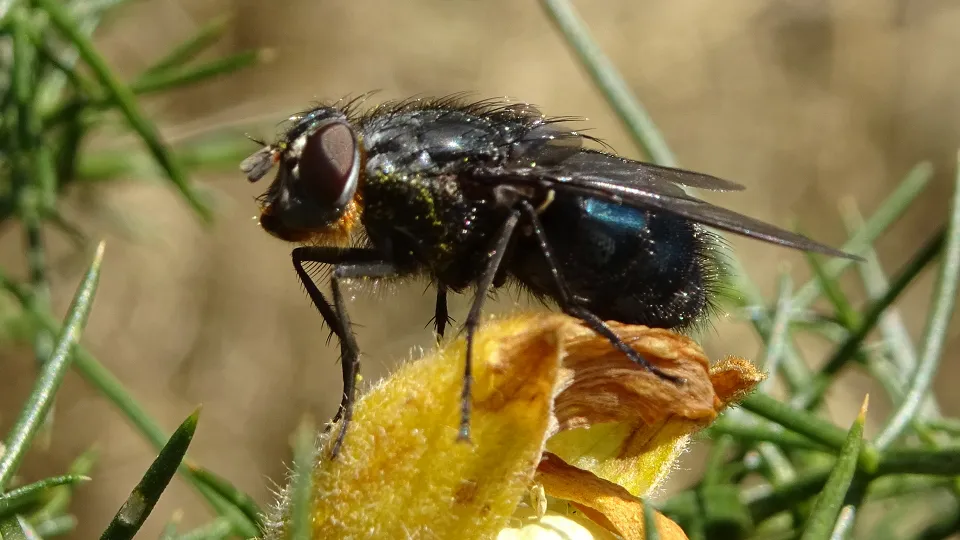
This is an orange-bearded blowfly with a shiny blue body that is larger than a typical housefly. The adults consume nectar and females lay their eggs on decaying meat. They generally travel together and when one finds a food source it emits a pheromone to notify others in the group. Forensic scientists can often approximate the time of death of a body by examining blowfly eggs and maggots. Thank you to Essex Field Club recorder Del Smith for the identification.
#
St. Marks Fly
Bibio marci
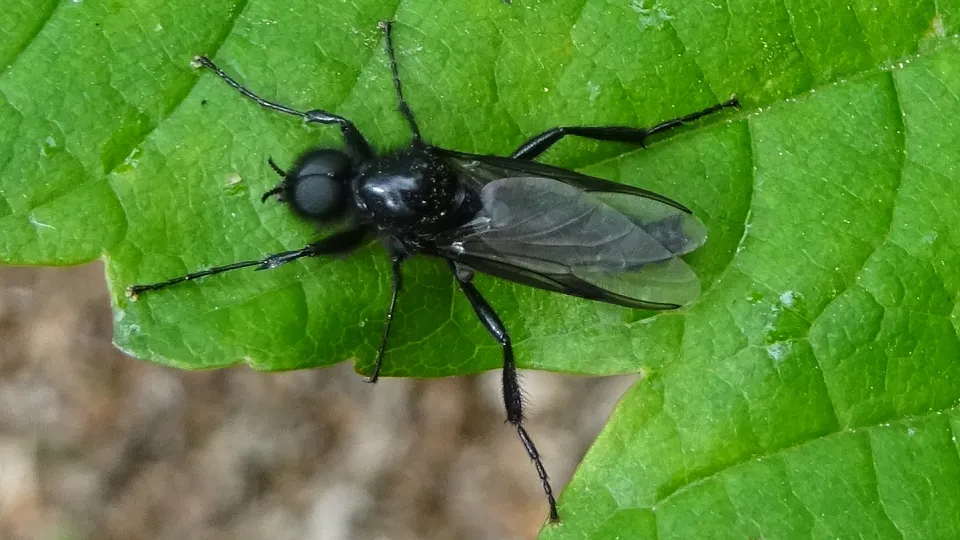
These flies are observed around St. Marks Day on April 25th. Males possess large bulbous eyes, while females have larger bodies, but their heads and eyes are comparatively smaller.
#
Eared Leafhopper
Ledra aurita
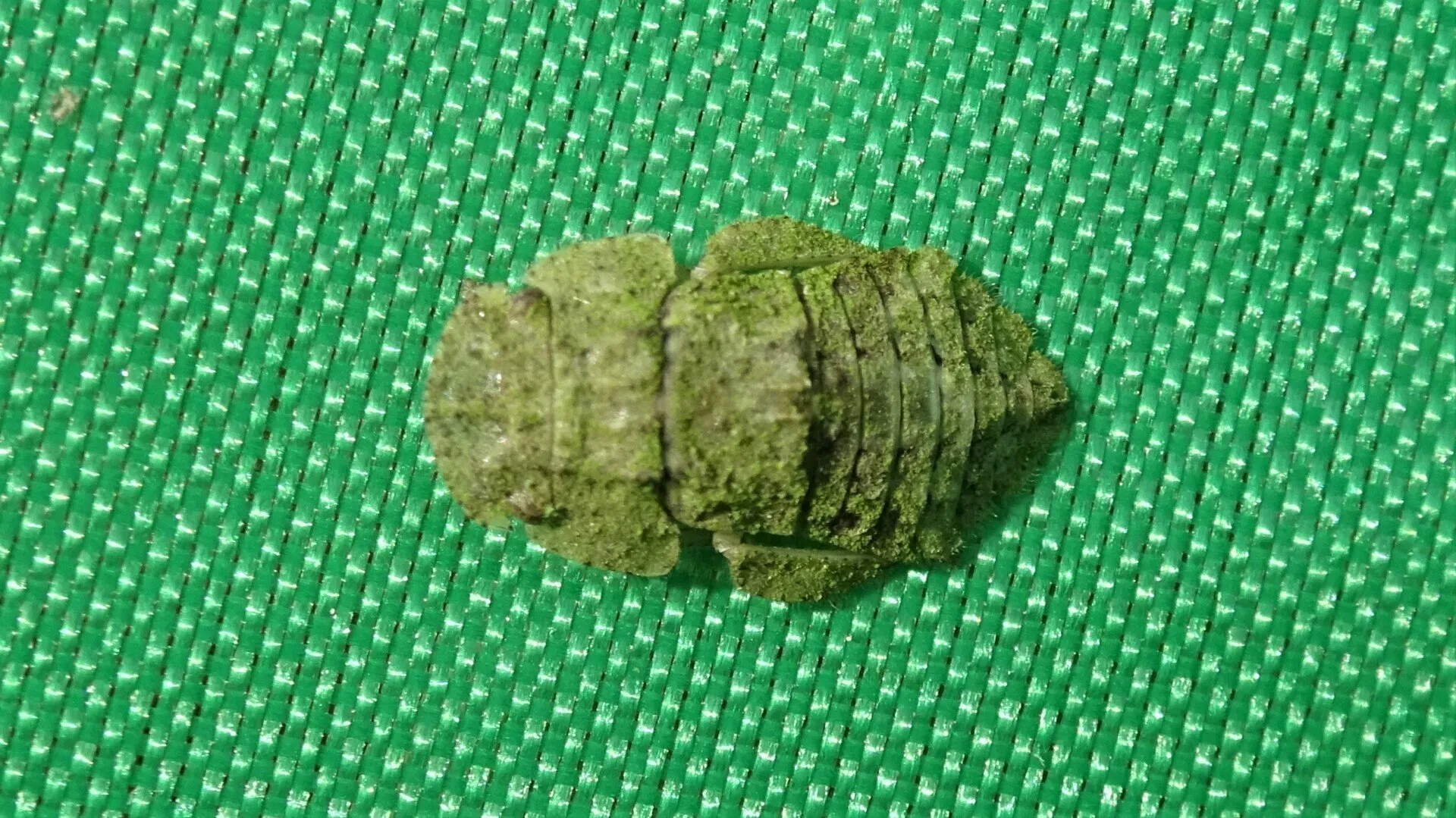
When flat against bark on a lichen-covered Oak tree this Cicadellidae family member is barely noticeable due to excellent camouflage. This is the nymph stage of a large grey leafhopper which is the only Ledrinae species found in Europe.
#
Rufous-shouldered Longhorn
Anaglyptus mysticus
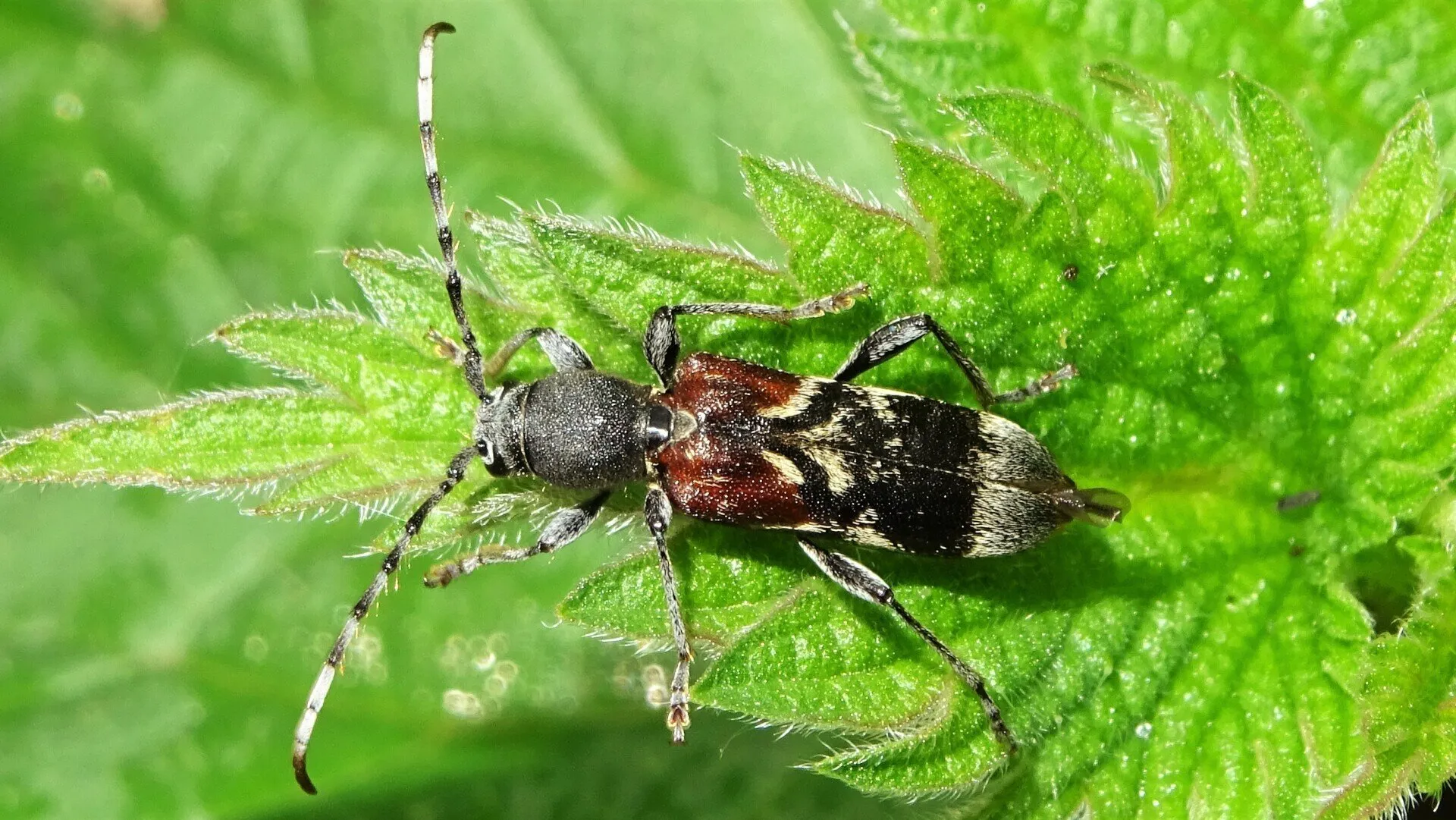
Up to 13 mm in length, this longhorn beetle is characterised by its reddish, black, and white elytra. The thorax may be grey or black. It is found in hedgerows along woodland paths, particularly in areas where hawthorn is present. The larvae burrow beneath the bark, creating galleries filled with very fine wood dust. The development period for larvae typically spans 2-3 years. Pupation takes place in autumn within a gallery made parallel to the wood grain, and new adults begin to emerge around April.
#
Thistle Tortoise Beetle
Cassida rubiginosa
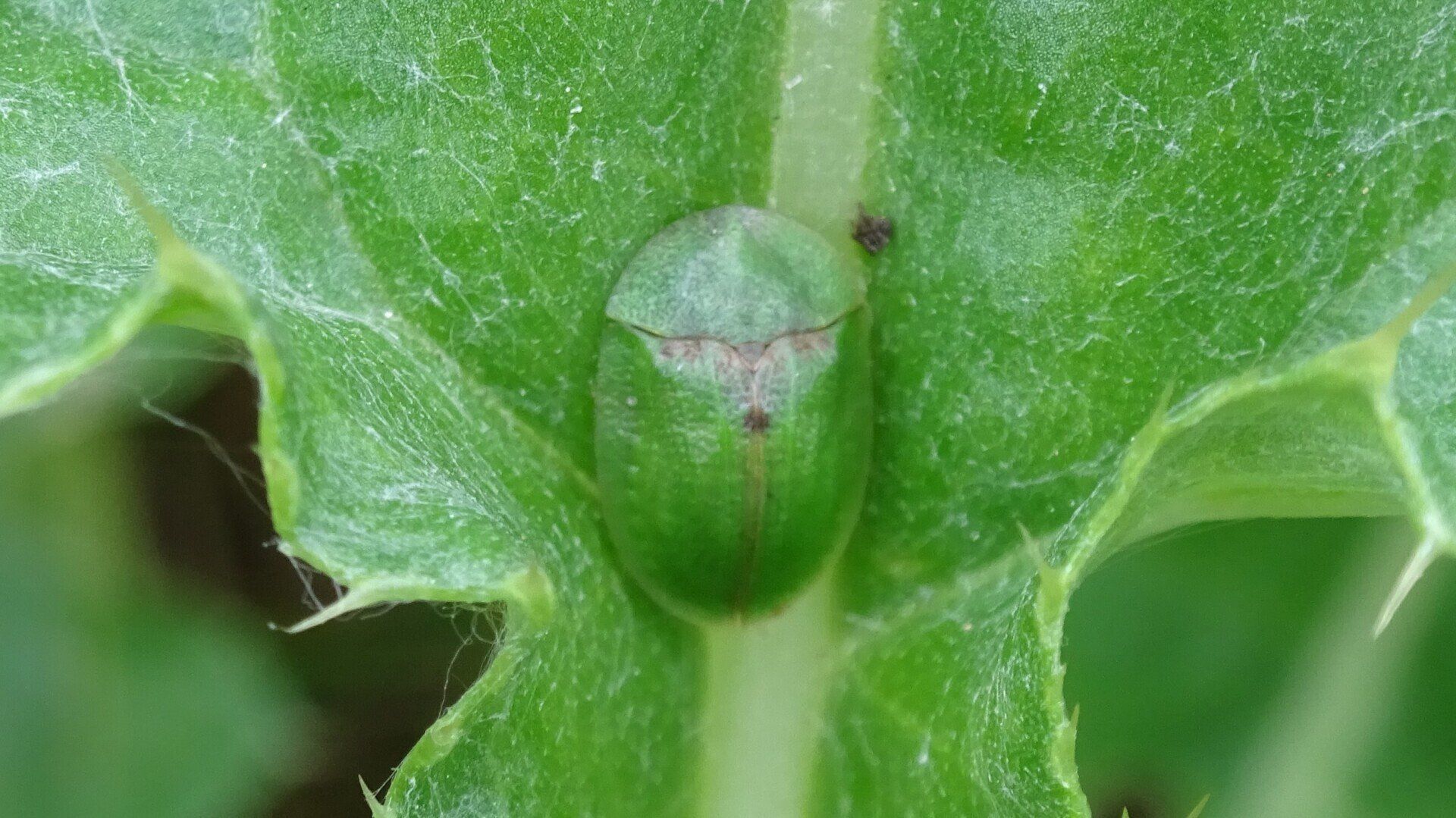
This Beetle inhabits tall sward and scrub containing Creeping Thistle. When sitting flush against a thistle leaf its colouration blends in so well that it can be difficult to spot.
#
Devil's Coach-horse
Ocypus olens
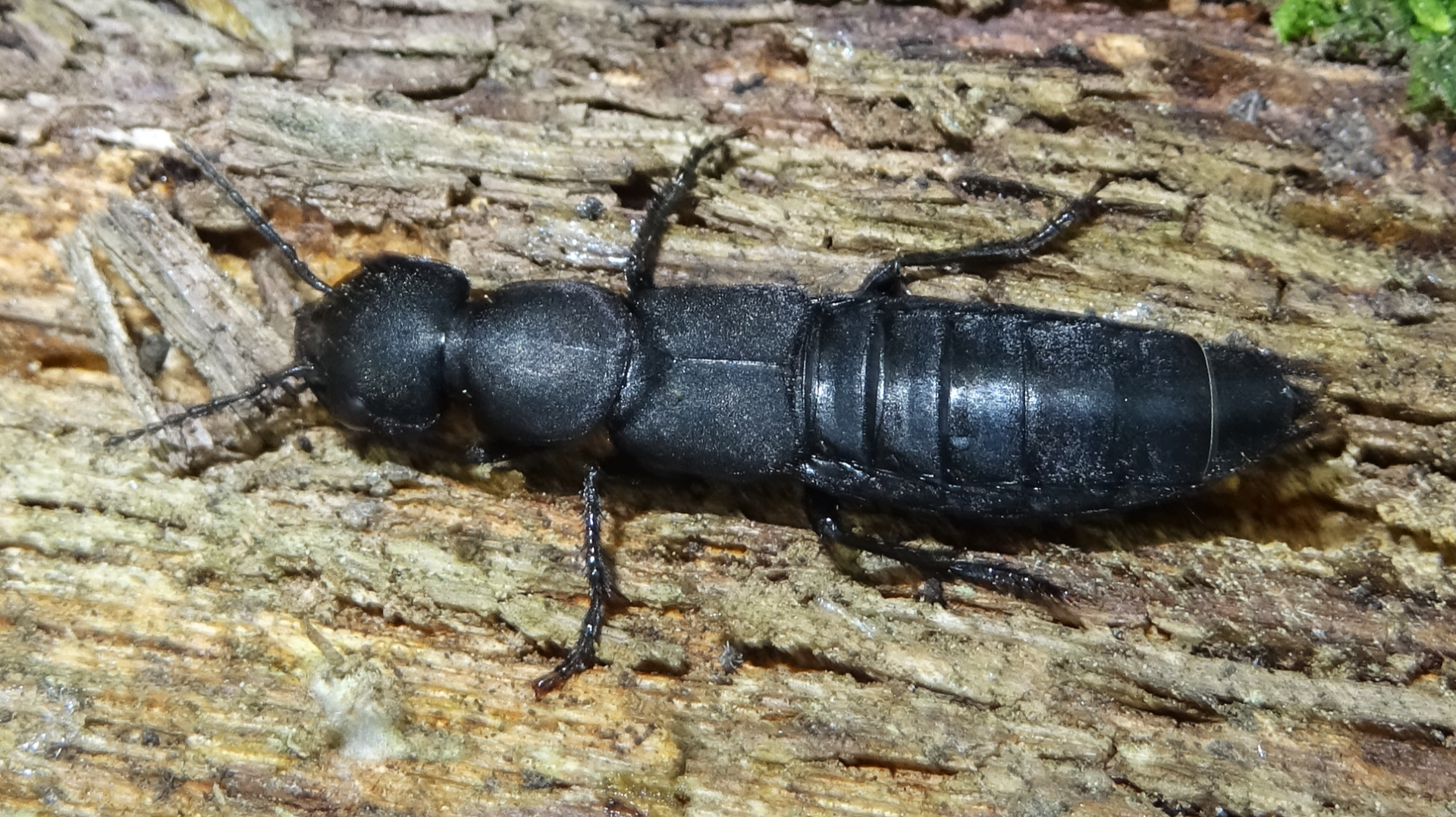
Ferocious nocturnal predator that hunts invertebrates and can give a powerful bite. When threatened the abdomen curls up like a scorpion's tail. It is best not to handle these Beetles because a foul-smelling substance can be released from the abdomen. They fly but prefer to run, something they do very well. During daytime Devil's Coach beetles often hide under logs, stones and in compost heaps. They are up to about 30mm long and normally seen from mid-spring to late autumn. Females lay their eggs in soil and the larvae hatch and spend the winter as pupae, emerging during the following spring as adults.
#
Soldier Beetle
Cantharis decipiens
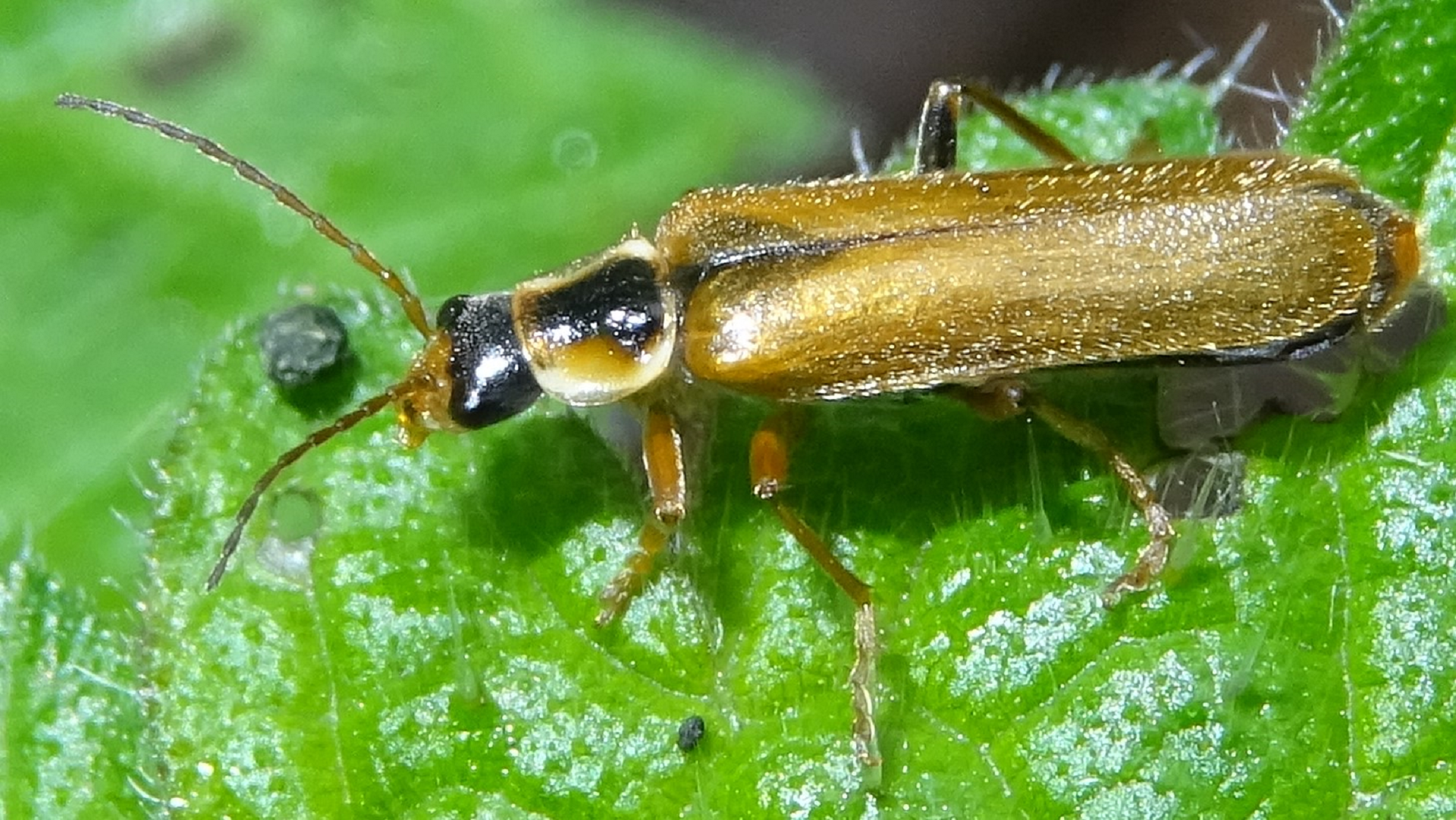
Beetle distinguished from similar species by the brownish body and black mark on the pronotum which is rounded at the base. The mark does not reach the front edge of the pronotum. This species is found on various trees and shrubs, including bramble and hawthorn. Normally seen from spring to late summer.
#
Large Red Damselfly
Pyrrhosoma nymphula
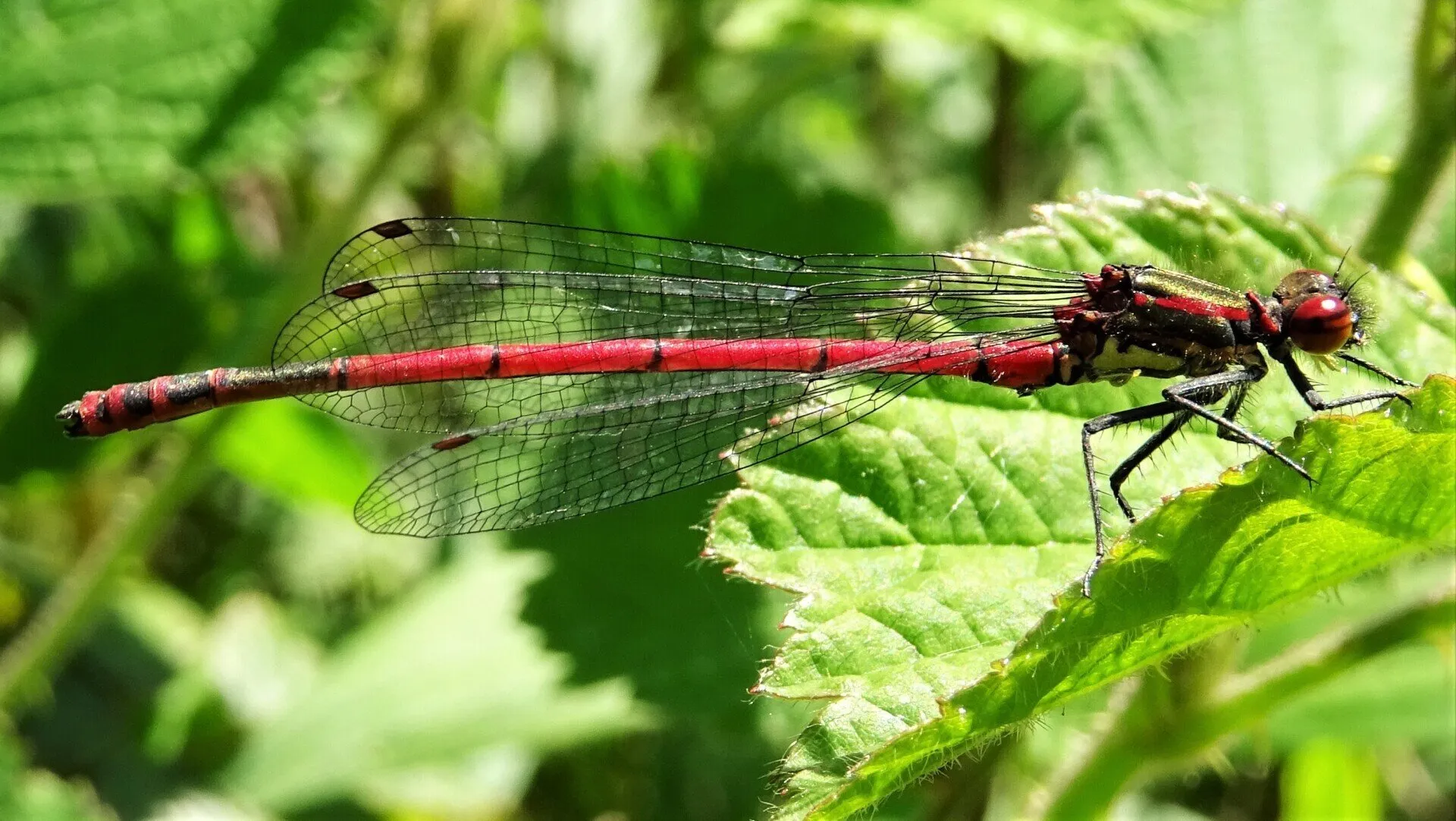
Normally the first dragonfly species to emerge in spring. They are normally seen near wetland habitats. Black legs rule this out from being the scarcer Small Red damselfly.
#
Blue-tailed Damselfly
Ischnura elegans

Blue-tailed Damselfly is one of the commonest species of damselfly in the UK. Both sexes have two-toned diamond-shaped spots on the front wings.
#
Large Ocelot
Epiphragma ocellaris
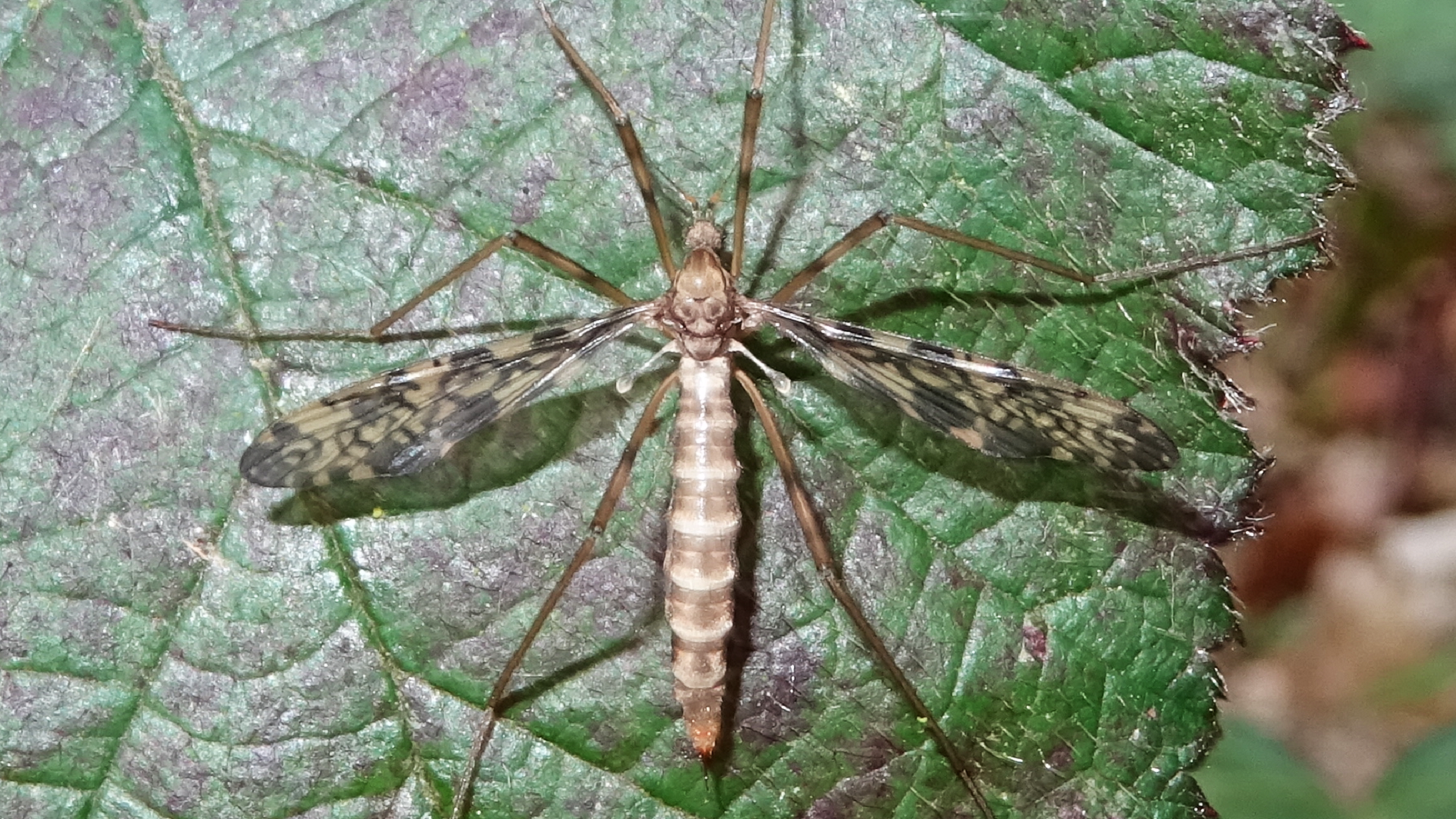
This species lives in woodland where it flies in May and June. It is distinctive with circle patterns on the wings, banded thighs and a brown striped abdomen. Its larvae live in dead wood.
#
Ants and Aphids
Special Relationship
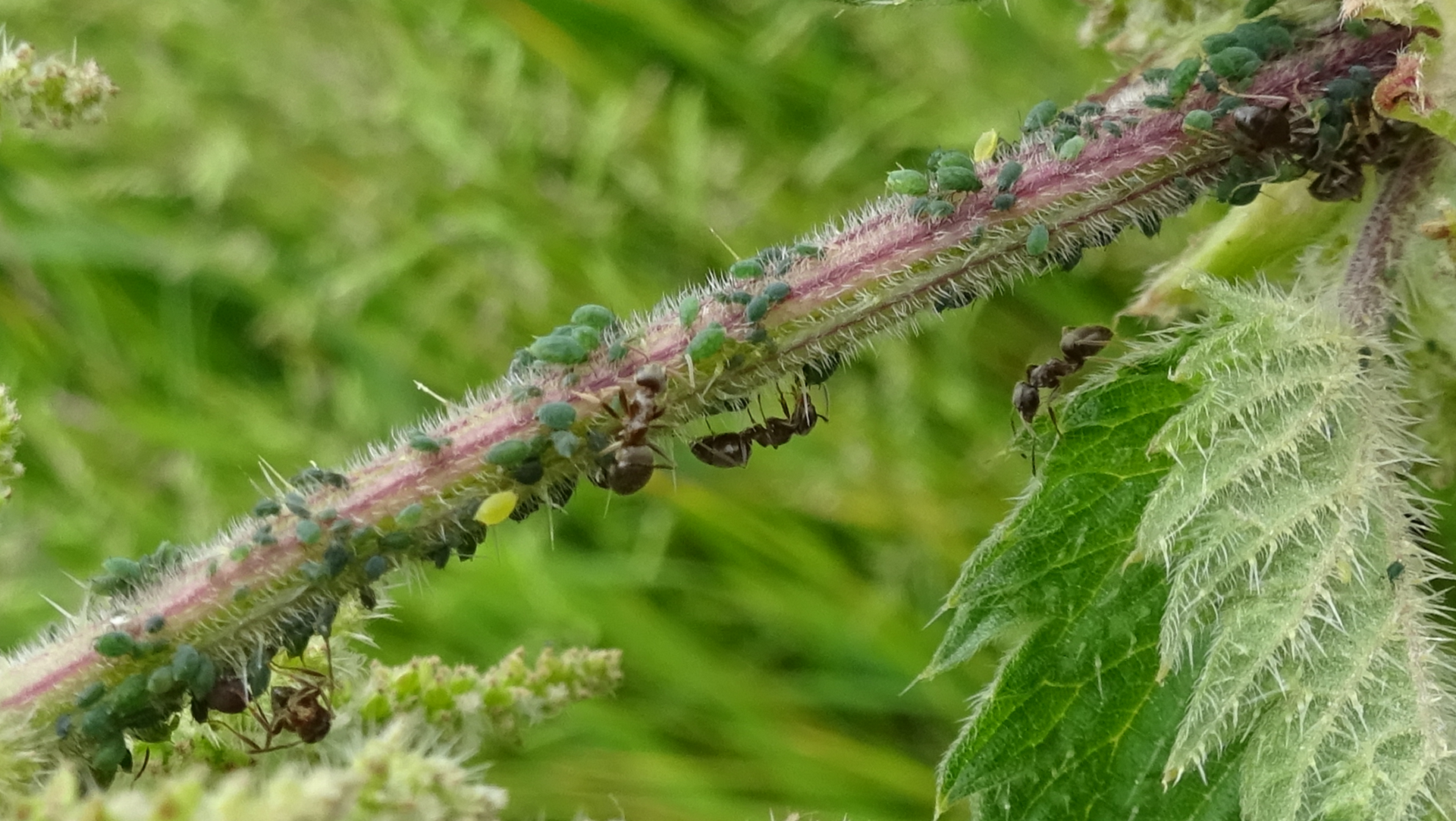
Ants act like bodyguards protecting aphids from predators. For performing this service they get rewarded with a sugary aphid excretion called honeydew. Some aphids are unable to excrete by themselves and rely on ants milking them which is achieved by having their antennae stroked. When a host plant has been exhausted of nutrients the ants carry the aphids to a new plant. Ants fear losing their honeydew source so sometimes rip wings from mature aphids to prevent them flying away.
#
Hedgehog Slug
Arion intermedius
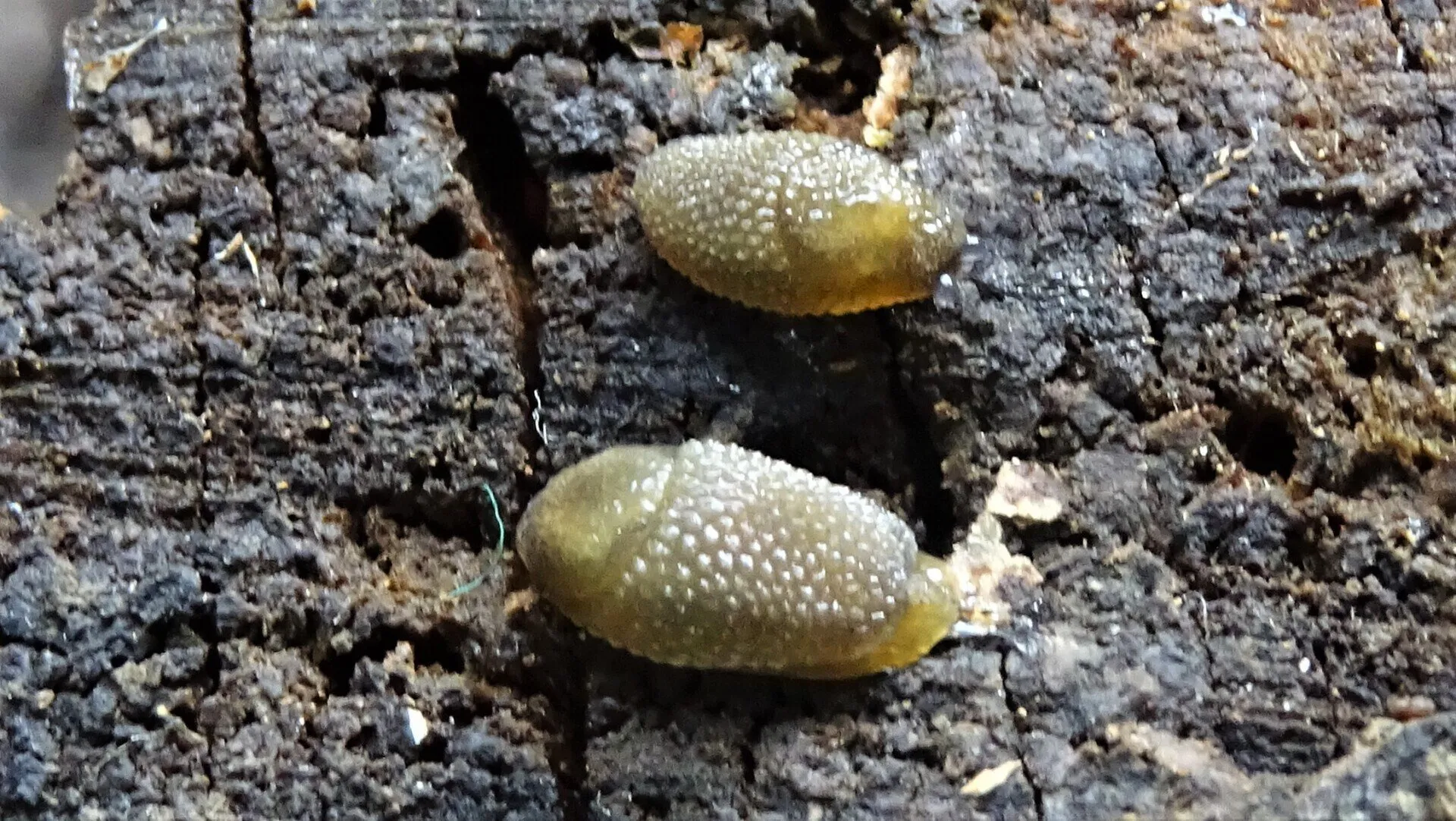
The Hedgehog Slug (1.5-2cm long) varies in colour and patterning. It may be white, grey or orange. The tentacles are grey and the sole is yellow or orange. When stimulated it becomes very compact and the body becomes roundish similar in shape to a hedgehog, with the tubercles on the dorsal surface somewhat resembling prickles. This species feeds on plants and fungi in grassland and forests.
#
Brown-lipped Snail
Cepaea nemoralis
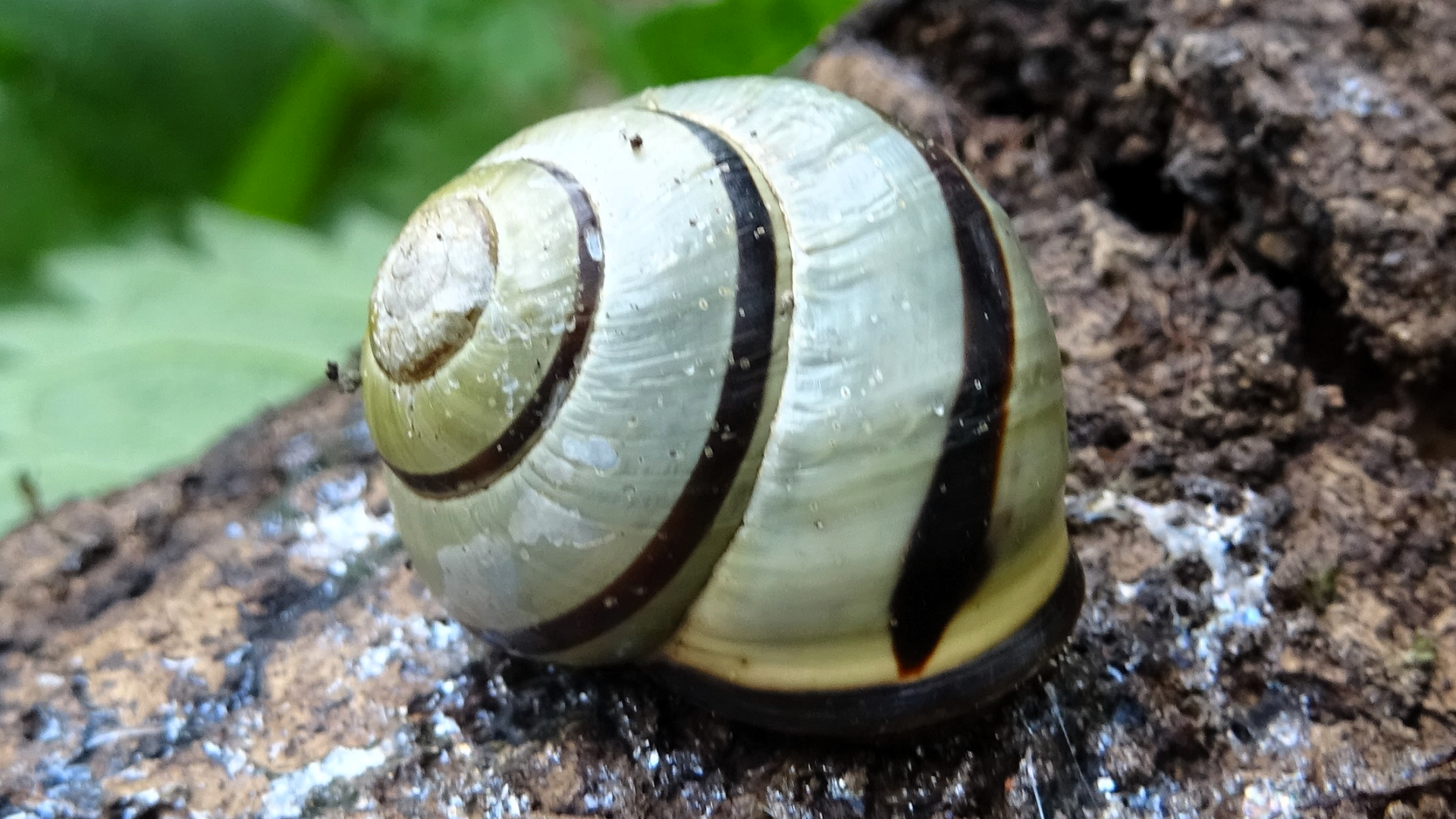
Land snails are mainly nocturnal and are seen more at night or very early in the morning. They need to stay moist in order to survive so normally stay out the sun and have a preference for damp, dark habitats. They hibernate during winter. In soaring temperatures they bury themselves underground and wait for cooler conditions to return.
#
Dwarf Snail
Punctum pygmaeum
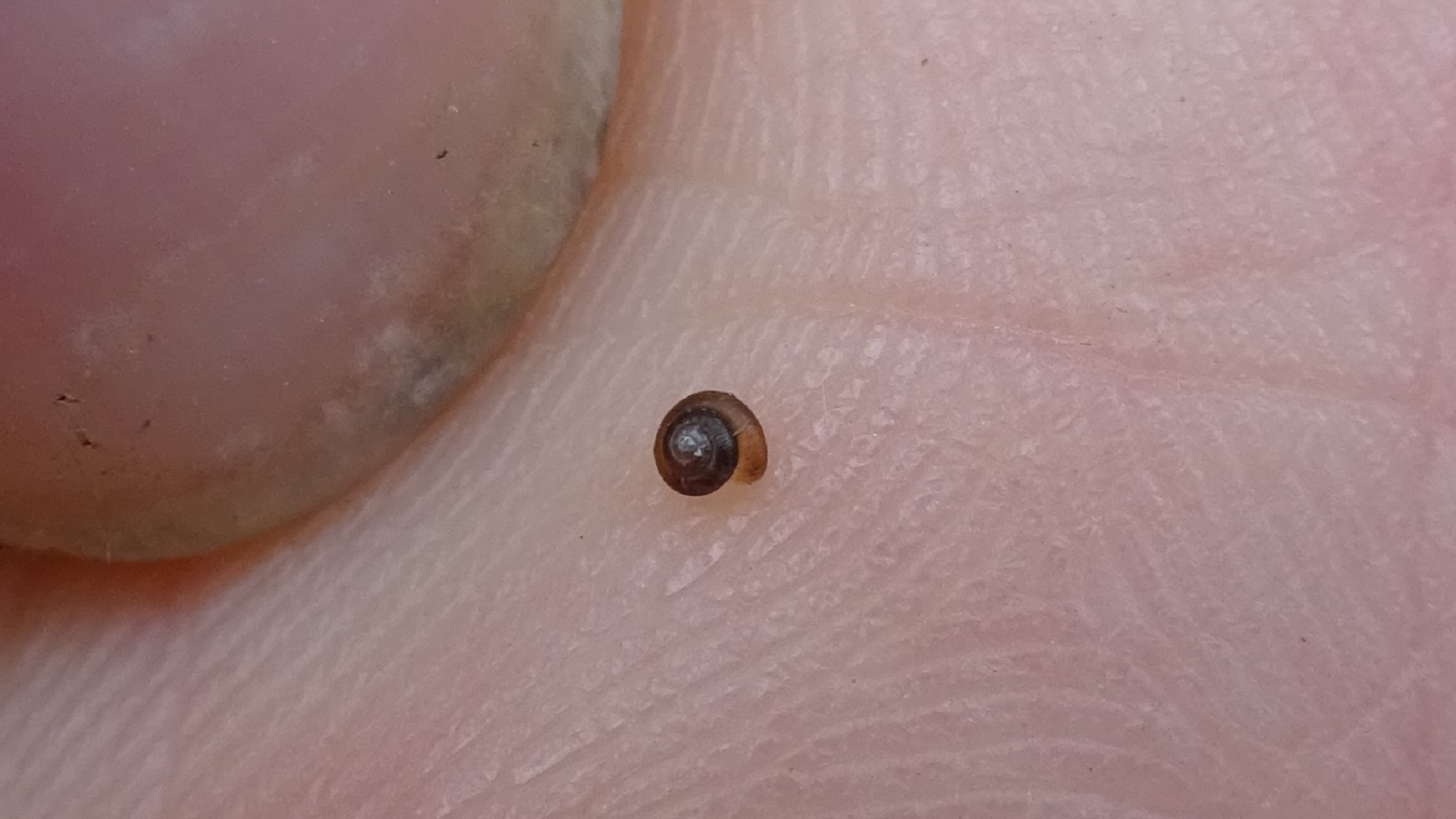
The smallest species of British land snail. Adults only grow to a diameter of 1.5mm. The growth rings are raised into sharp ridges. This specimen was found by Essex Field Club recorder Simon Taylor at Lambourne End.
Do you know? A snail spends a lifetime carrying a home on its back in the form of a whorled shell consisting mostly of calcium carbonate.
#
Garlic Snail
Oxychilus alliarius
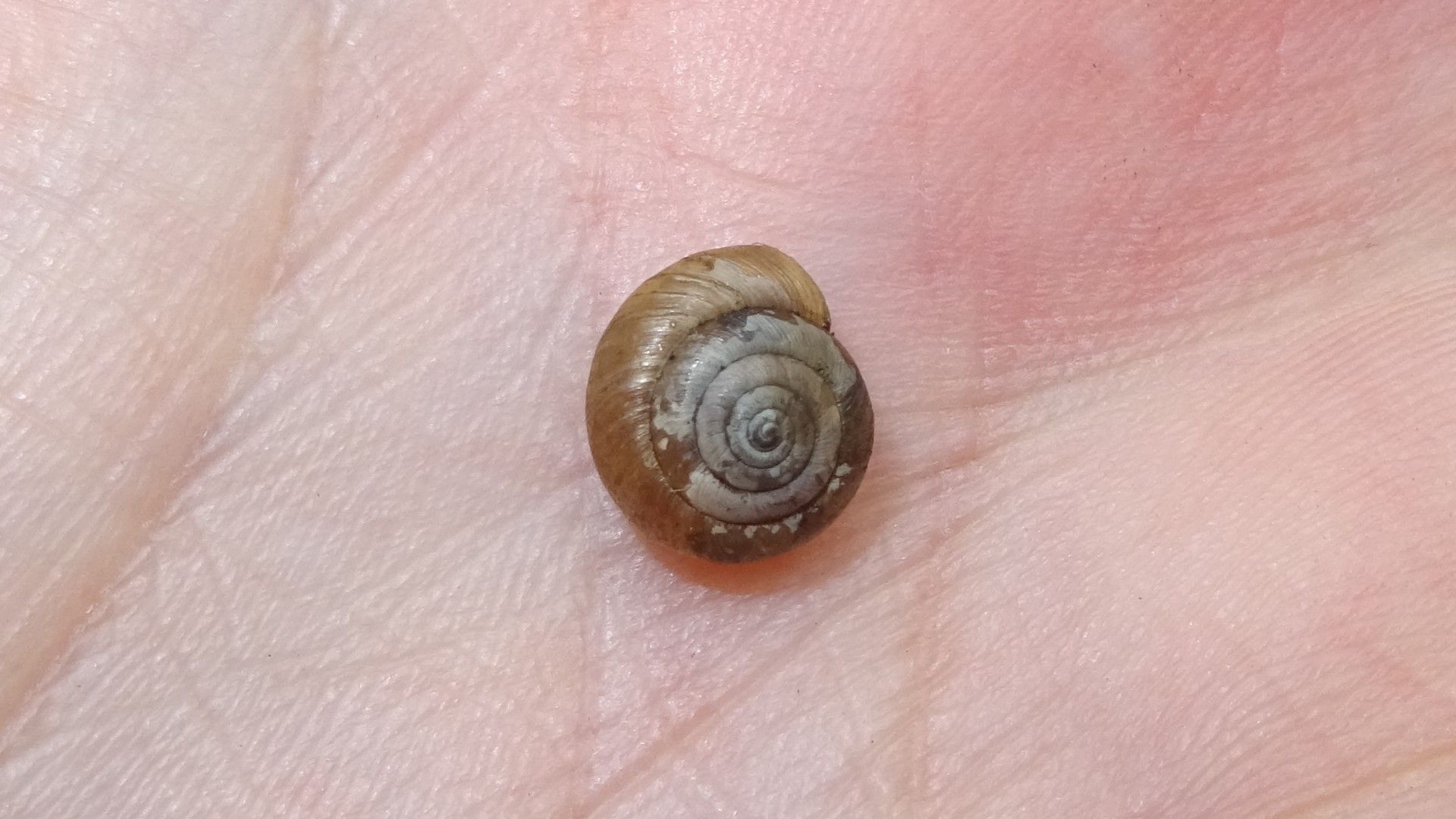
The Garlic Snail has a glossy translucent brown shell measuring 6-8 mm which is closely coiled with a low spire. The snail itself is bluish-grey. If picked up the snail produces a secretion that smells strongly of garlic. There are other species that release a weaker garlic aroma so it was good that recorder Simon Taylor was on site to confirm identification. If the last part of the mantle within the shell was dark then it would be
Oxychilus navarricus helveticus, which also smells of garlic albeit slightly less strongly.
#
Badger
Meles meles
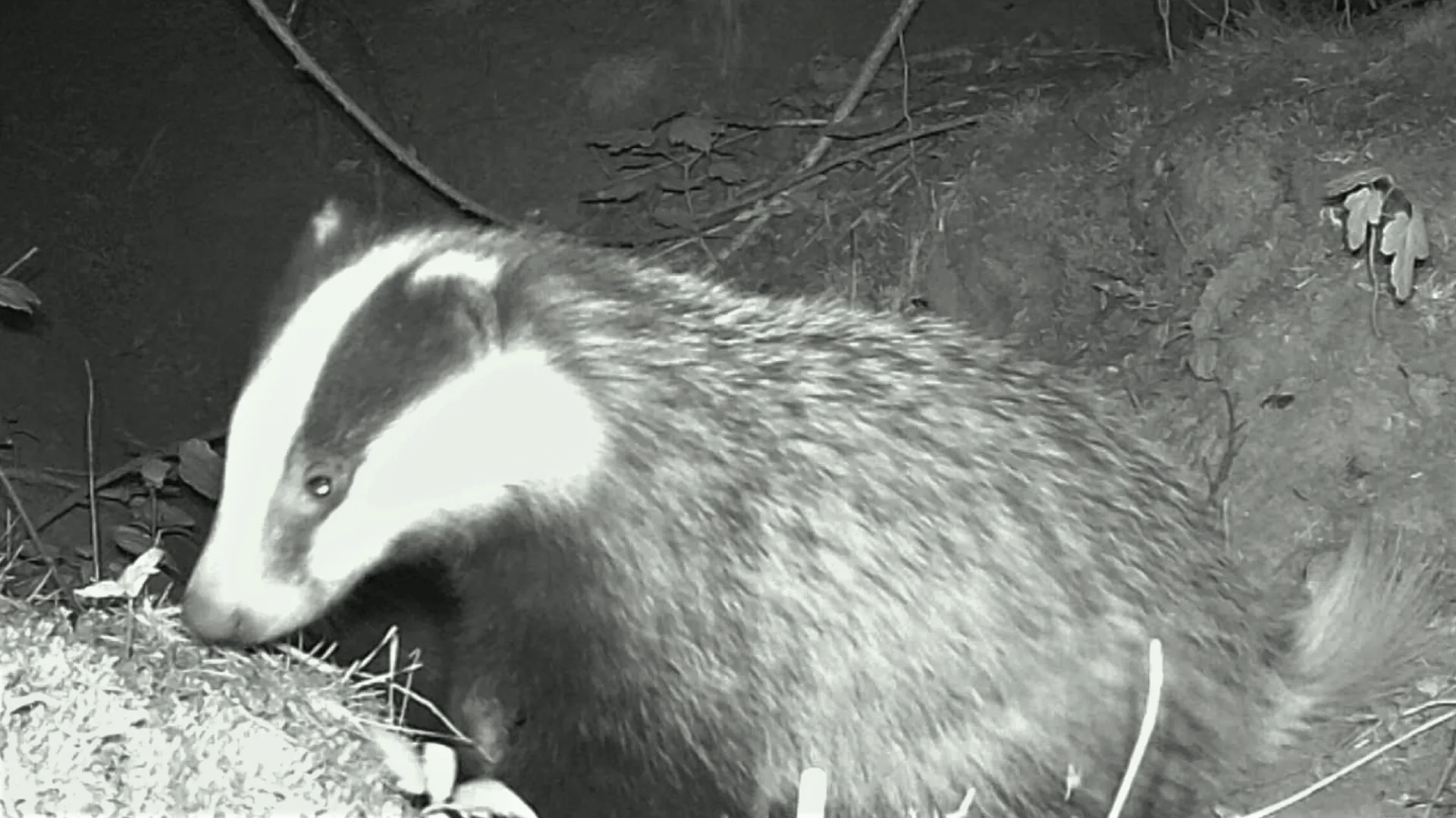
Badgers are mainly omnivorous. They are usually wary of humans and will often flee to the nearest sett if they sense danger.
#
© hainaultforest.net. All rights reserved.
This website uses necessary cookies. It does not use targeting or advertising cookies.