

THIRD QUARTER 2019
This Journal covers the third quarter of 2019 from July to September.
Common Tern
Sterna hirundo
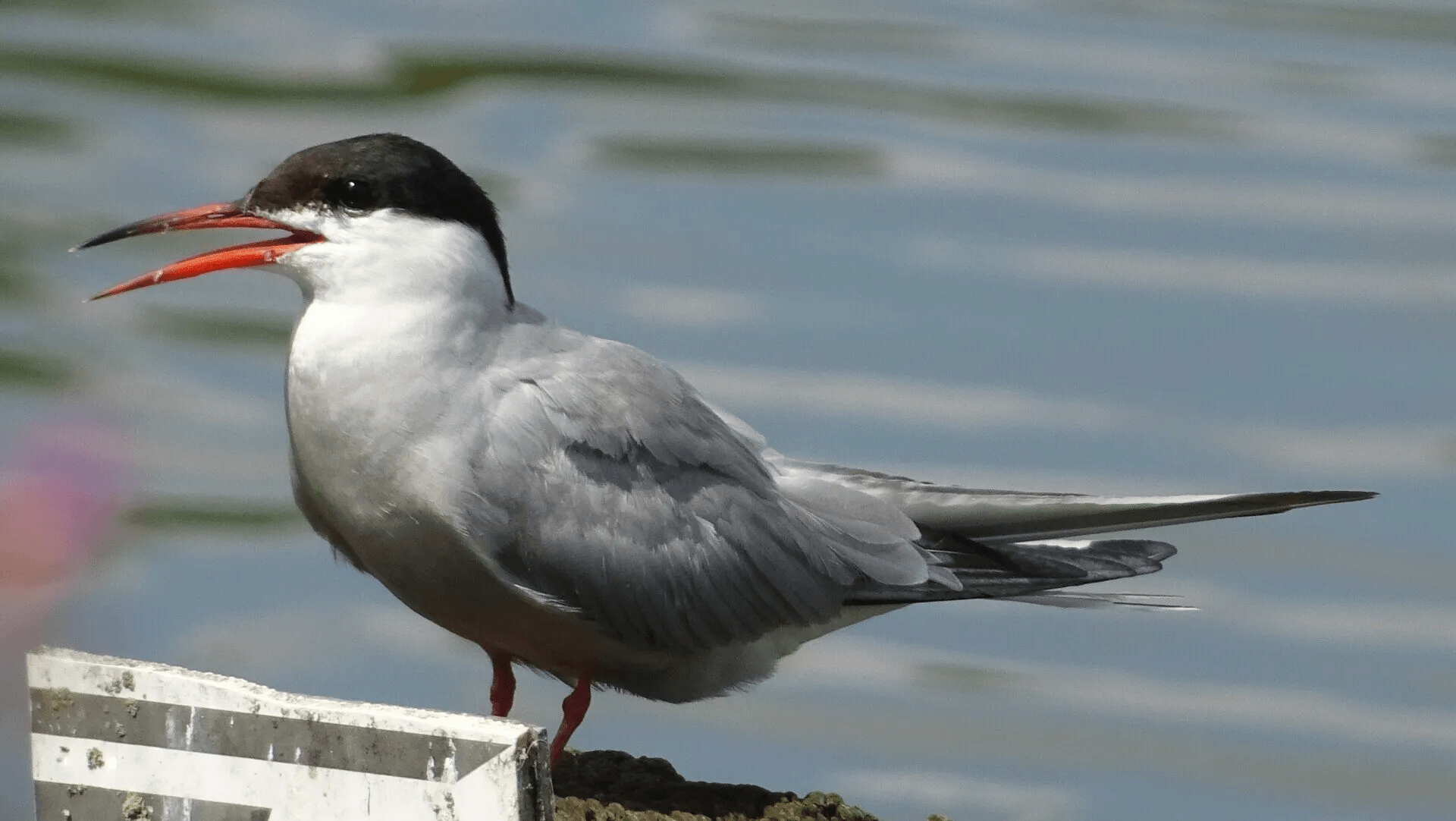
Common Terns have a silvery-grey and white appearance, with red bills that have black tips. They can be observed hovering over Hainault Lake before diving to catch fish. These birds are infrequent visitors to the area and are not usually seen in large groups.
#
Barnacle Goose
Branta leucopsis

The Barnacle Goose is a medium-sized, social bird with a black head, neck, and breast, along with a creamy-white face. This appearance is complemented by a white belly, a blue-grey striped back, and a black tail. Barnacle Geese typically fly in groups and long formations, producing various barking or yapping noises.
#
Tufted Ducklings
Aythya fuligula
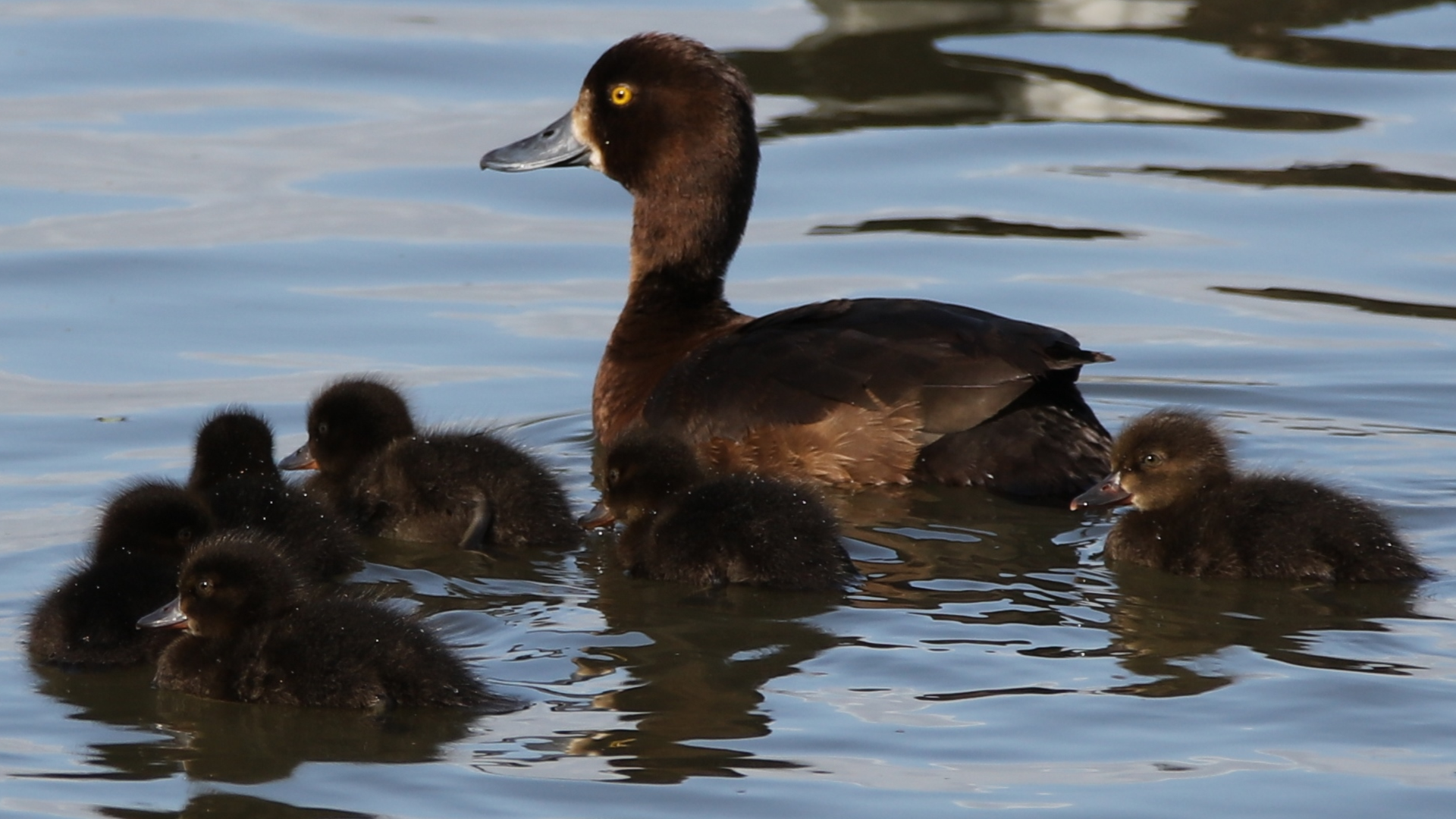
Ducklings with their mother on Hainault Lake. Tufted Ducks like to conceal their nests in plenty of vegetation.
#
Canada Goose
Branta Canadensis
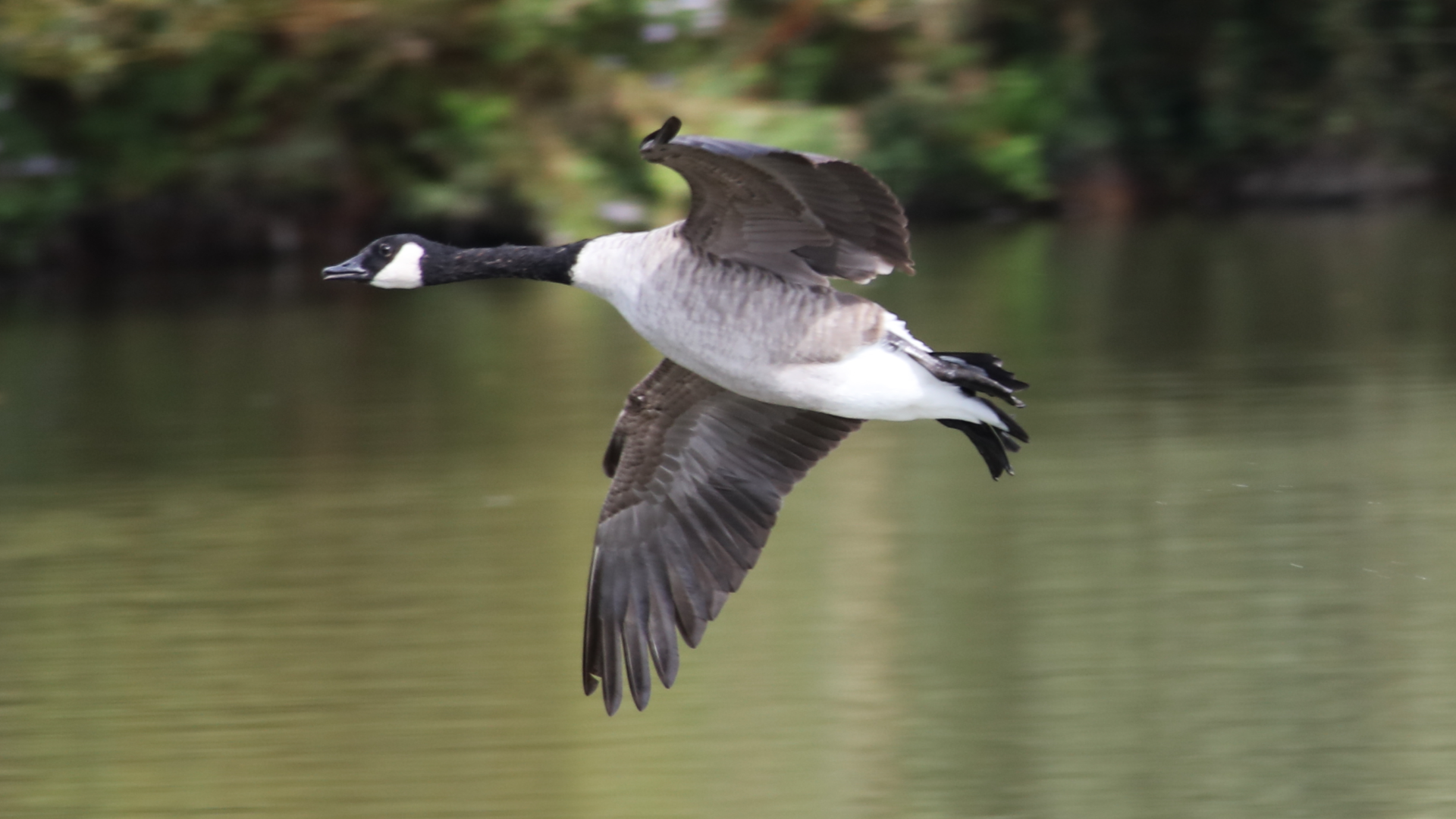
Britain's largest black-necked goose is often seen inland. it was originally introduced from North America and has become widespread across the country. They usually prefer open grassy places near water. Its call is characterised by a loud double-trumpeting sound.
#
Moorhen
Gallinula chloropus
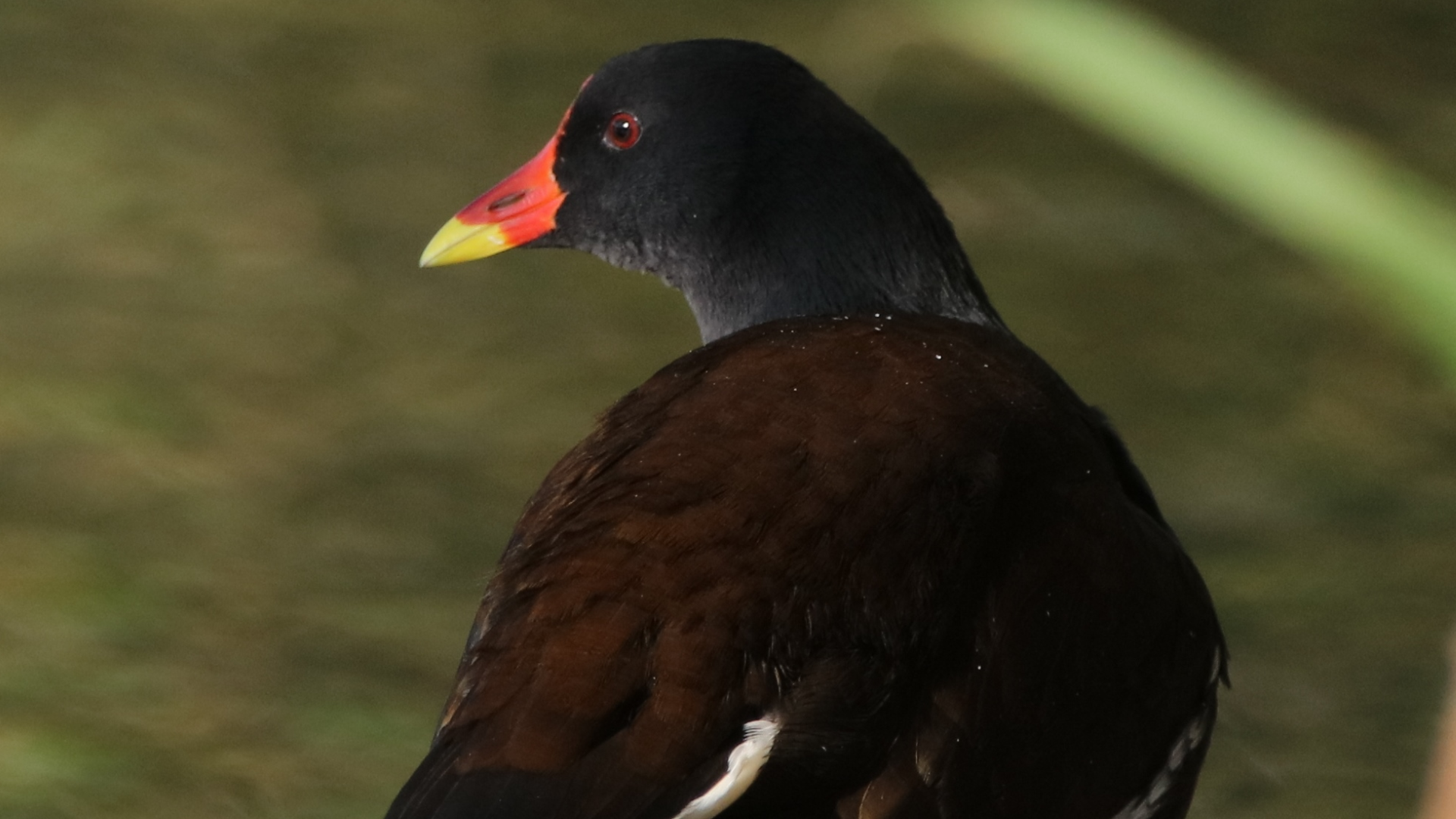
The Moorhen is characterised by a red and yellow beak, a dark brown back and wings, and a blackish belly with white stripes on the flanks. They are known for being promiscuous and frequently change partners during the breeding season. Females appear to have a preference for smaller, plumper mates. Nests are constructed using dead vegetation and are typically placed among floating plants or near the water. Eggs are occasionally laid in the nests of other birds, which enables a female to increase her total egg production. Moorhens have a varied diet that includes plants, seeds, worms, insects, molluscs, and fish.
#
Small White
Pieris rapae
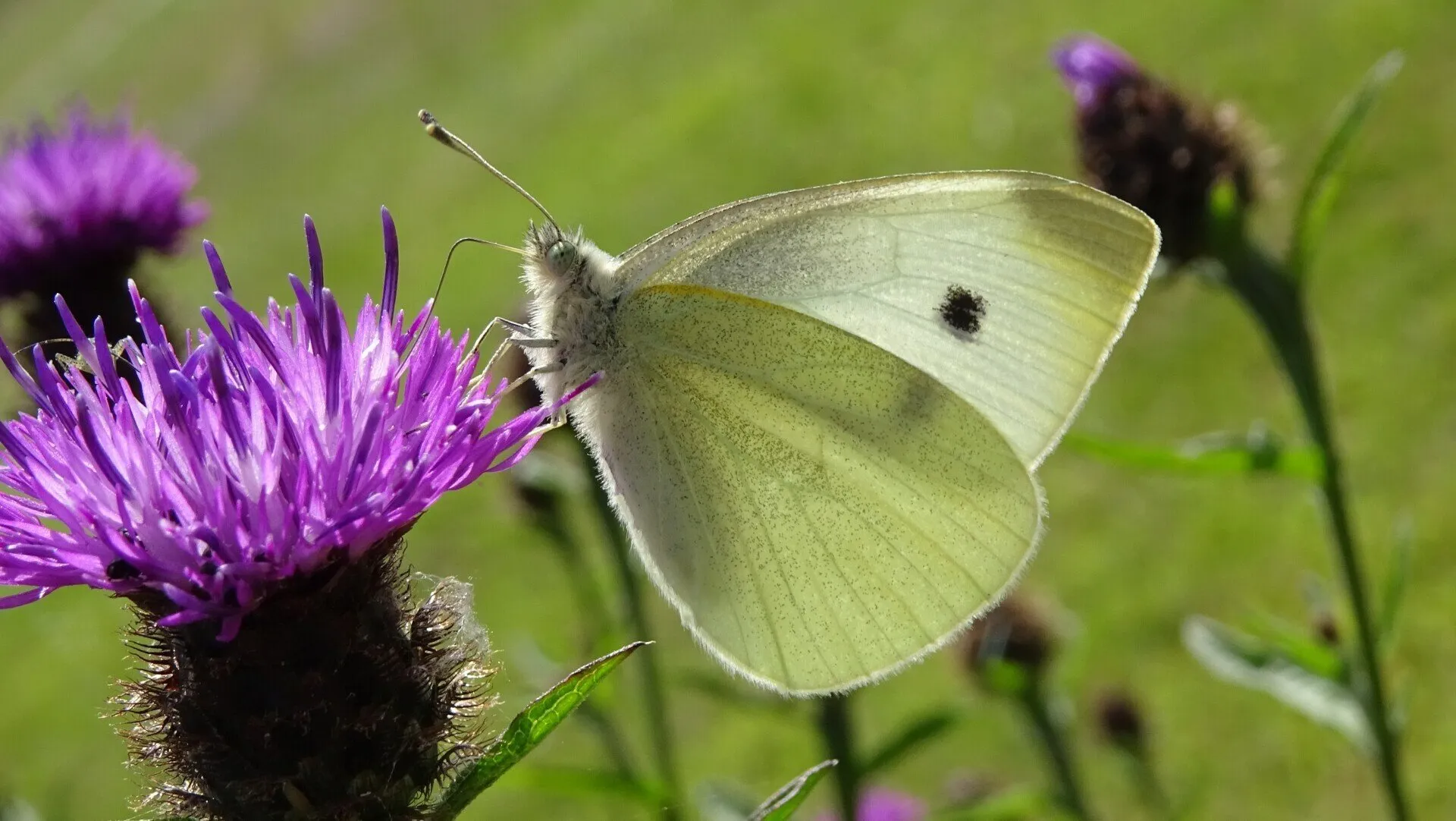
Similar to the Large White, but smaller in size. The caterpillars consume plants from the Cabbage family.
#
Painted Lady
Vanessa cardui
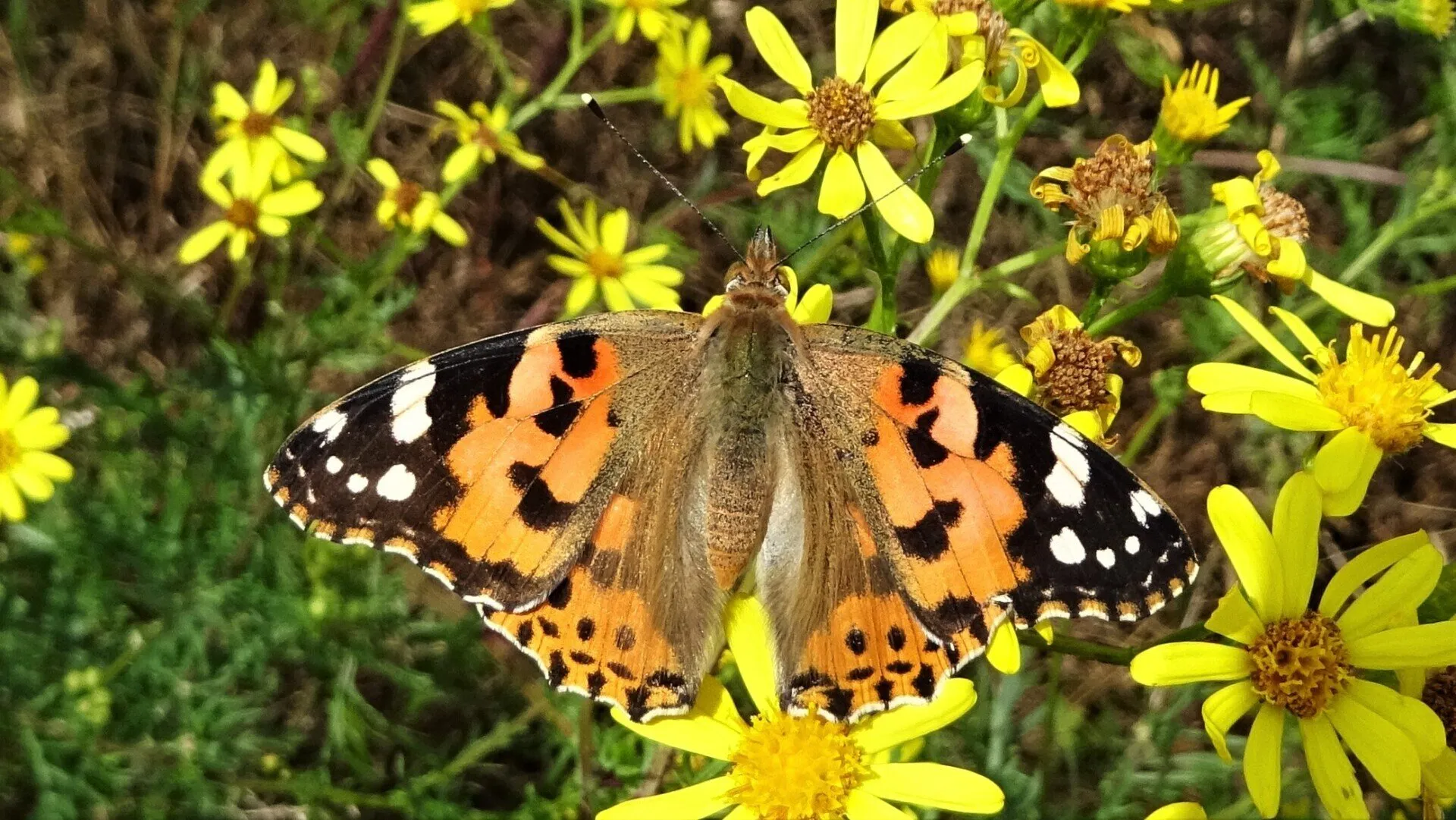
The Painted Lady butterfly comes from the Mediterranean annually and is typically observed in Britain between July and September.
#
Green-veined White
Pieris napi
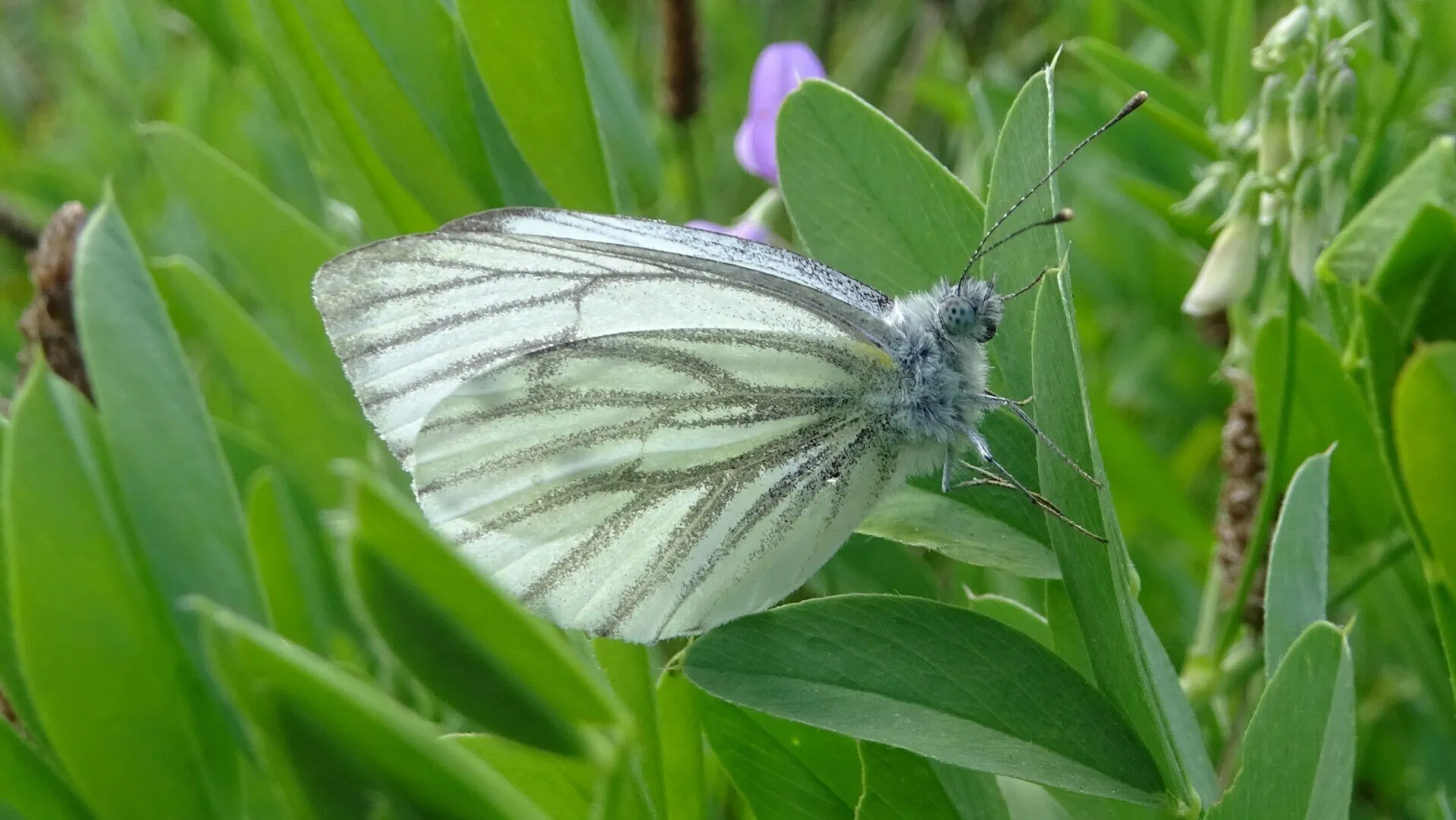
The Green-veined White is a common butterfly that is active from April to October. It inhabits various environments, particularly moist areas with abundant vegetation. The caterpillars of this species feed on plants belonging to the Cabbage family.
#
Clouded Yellow
Colias croceus
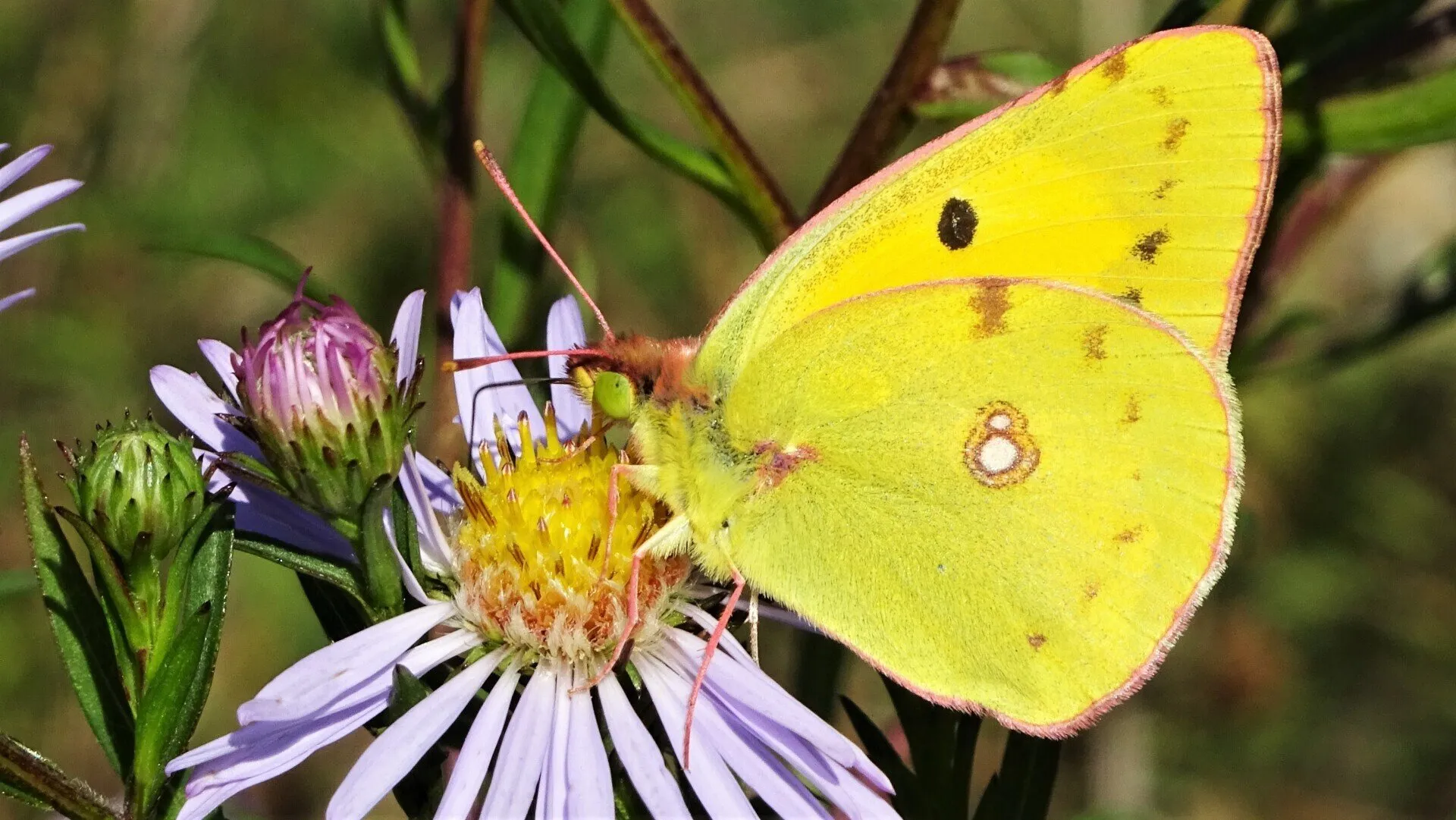
An immigrant, typically from North Africa and Southern Europe. The numbers fluctuate, and there are years when they are not seen in Hainault Forest.
#
Netted Tortrix
Acleris forsskaleana
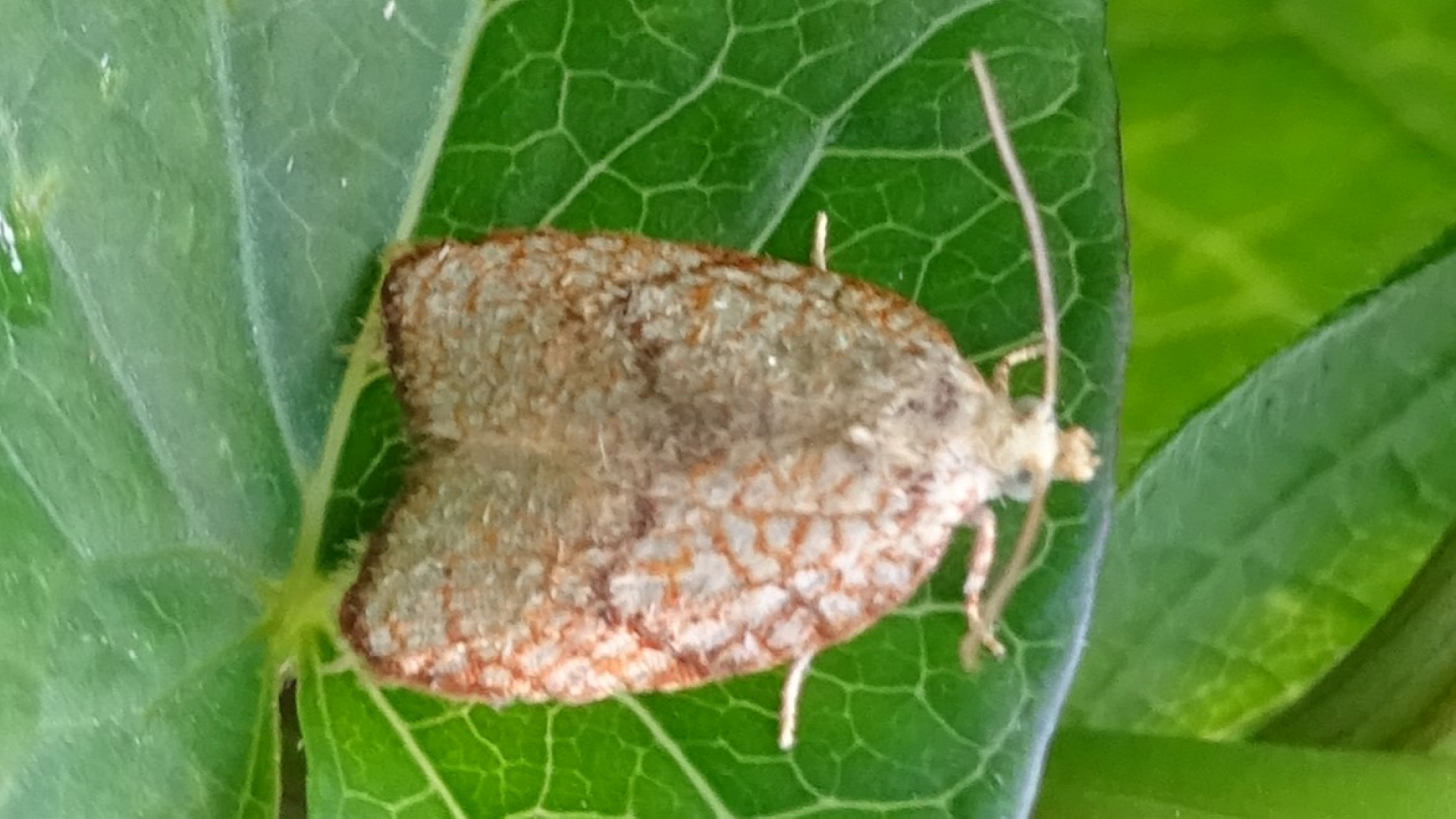
Found in woodland and gardens. This species flies from July until September. Its larvae feed on Field Maple and Sycamore. It was originally known as the 'Maple Button'.
#
Scarce Footman
Eilema complana
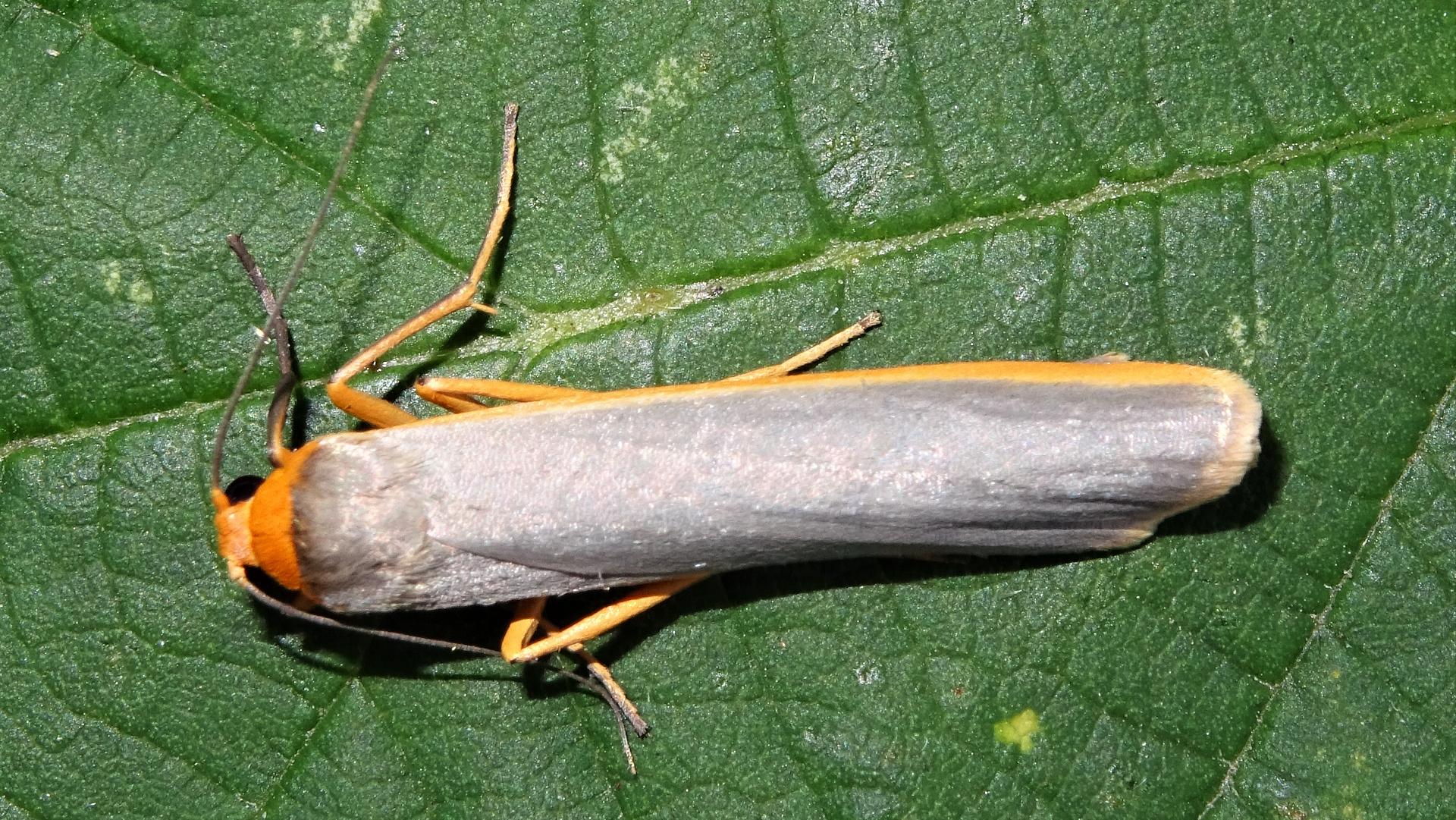
The Scarce Footman is observed in July and August. It resembles the Common Footman, but it holds its wings more closely to its body when at rest.
#
Scalloped Oak
Crocallis elinguaria
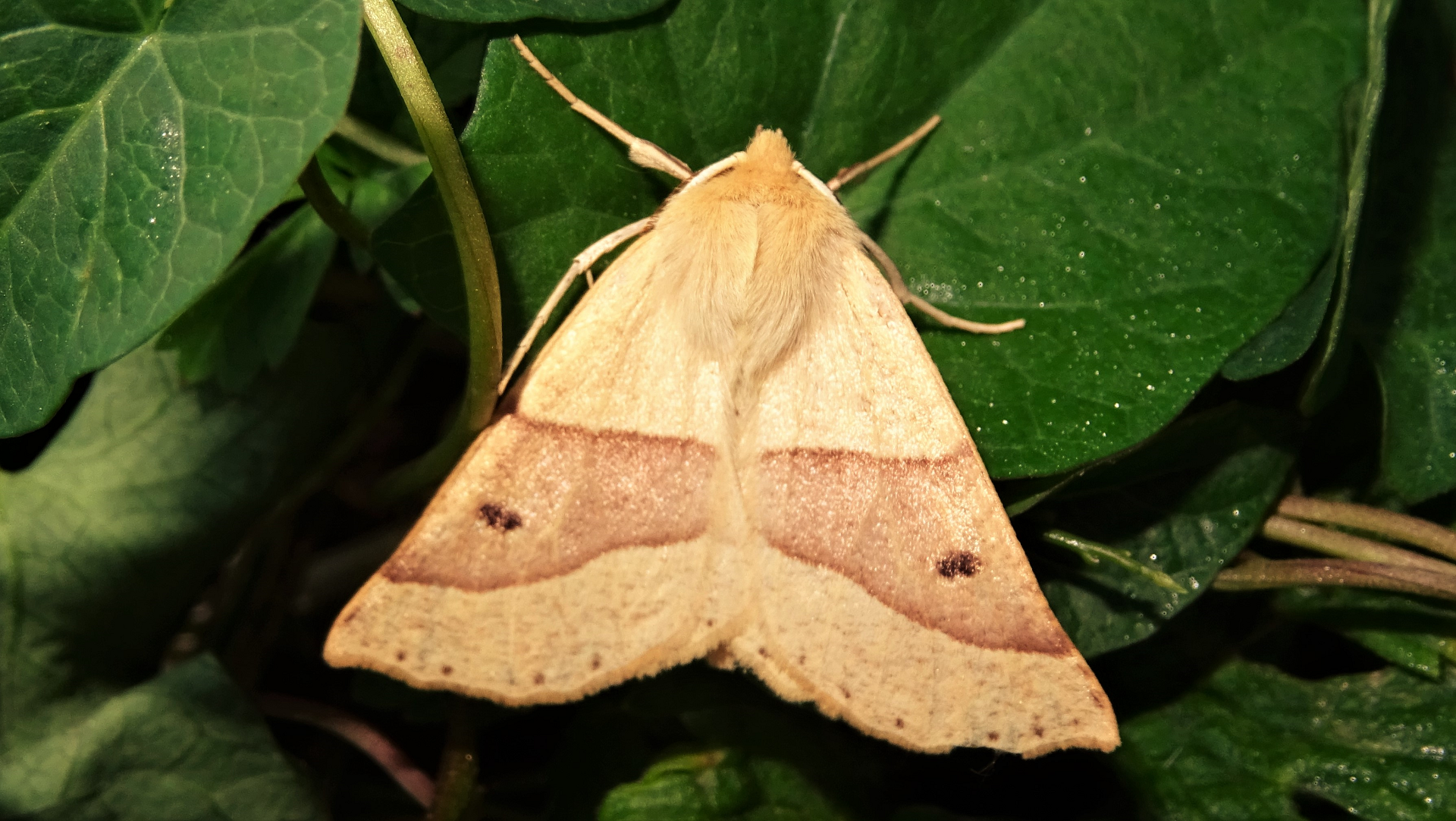
The Scalloped Oak is a moth that is typically active during the months of July and August.
#
Scarce Silver-lines
Bena bicolorana
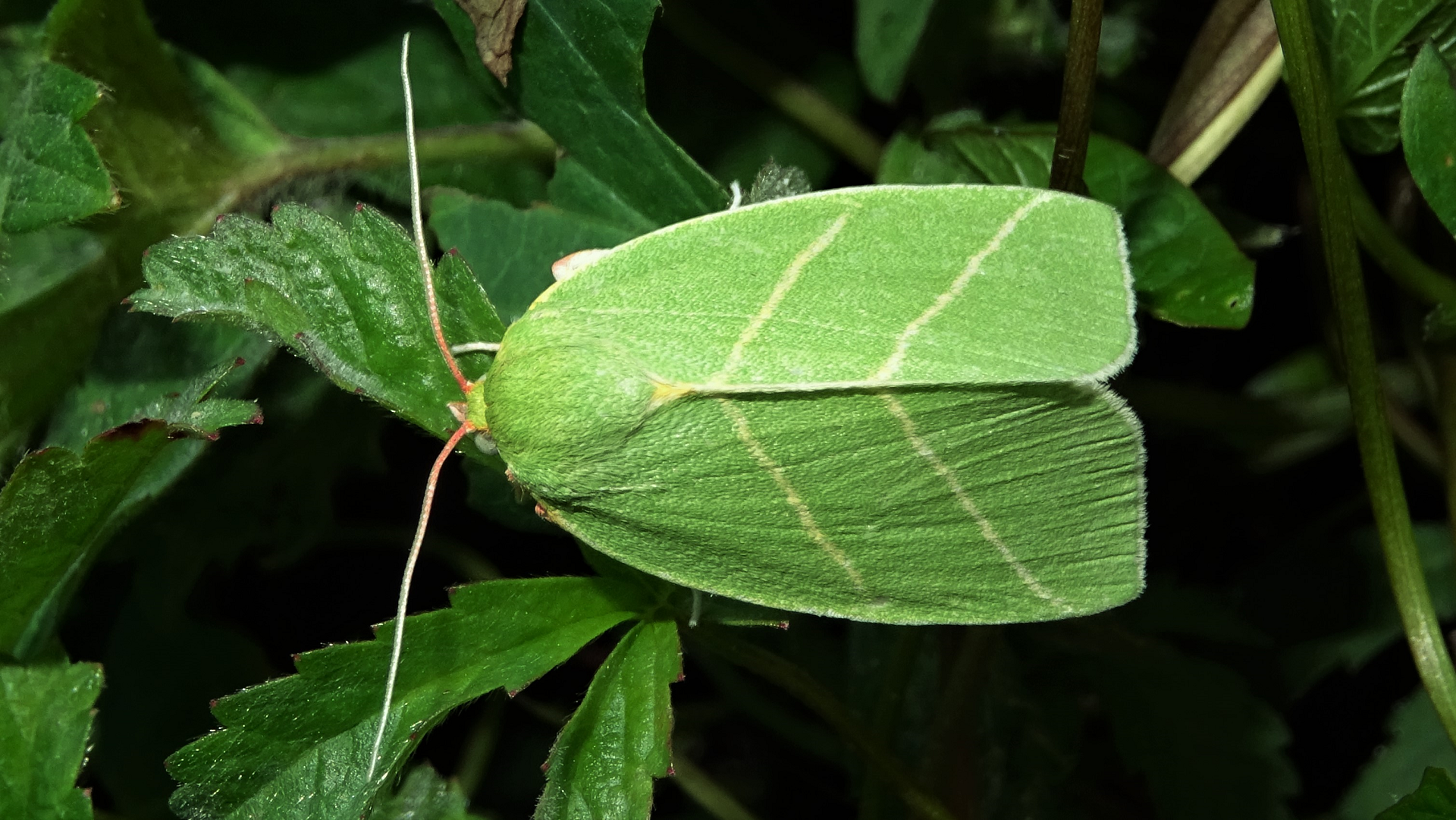
Scarce Silver-lines is a bright green moth whose caterpillars feed on oak leaves. It can be seen flying from June to August and is drawn to light. It is not as rare as its name implies. The wingspan can reach up to 45mm.
#
White Plume 45.030
Pterophorus pentadactyla
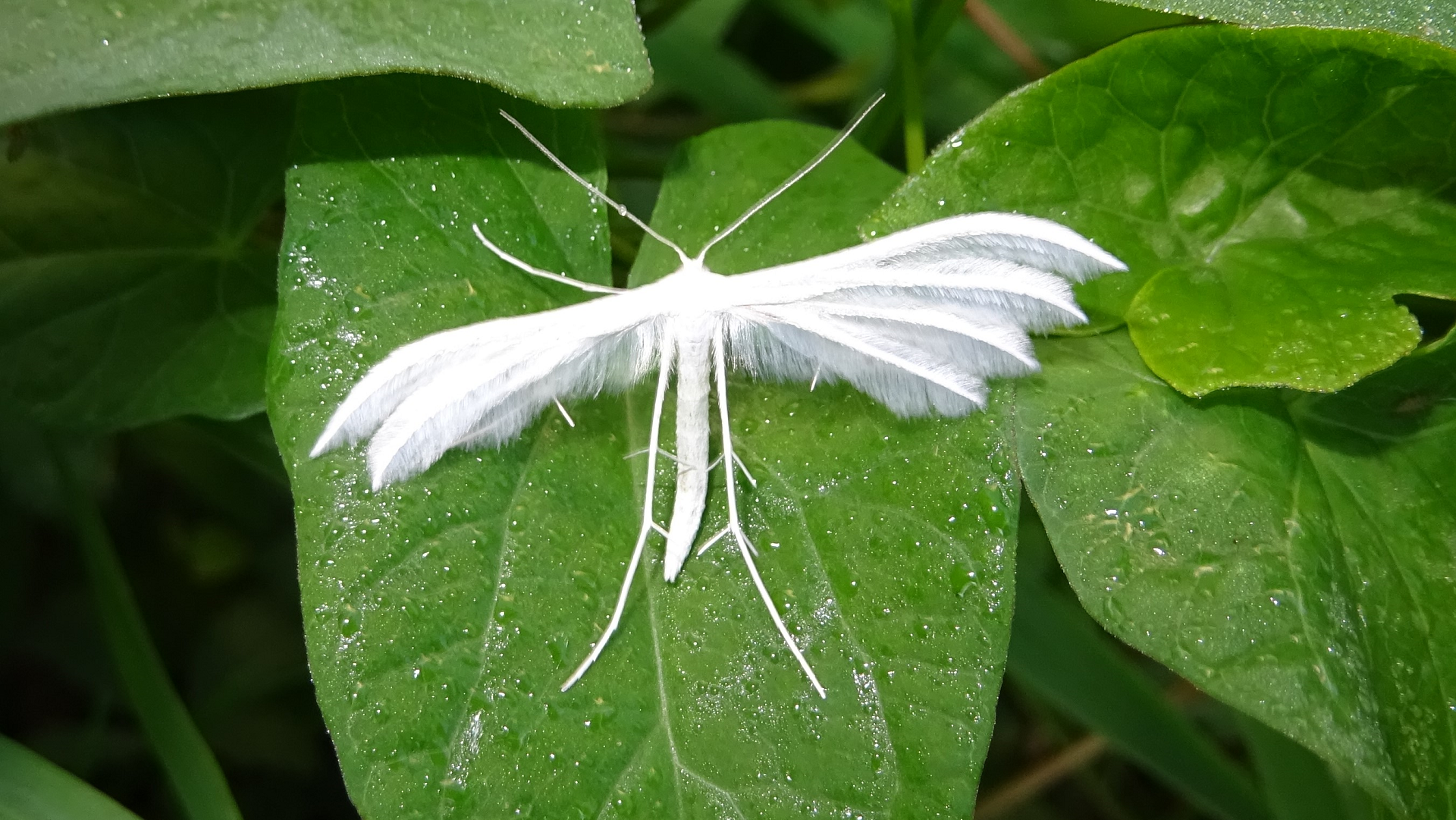
One of the largest and most distinctive plume moths, this species is found in meadows, gardens, and waste areas, typically flying in June and July during the evening. It is a relatively common moth with a wingspan ranging from 26 to 34 mm. The larval foodplant for this moth is bindweed.
#
Marbled Beauty
Bryophila domestica
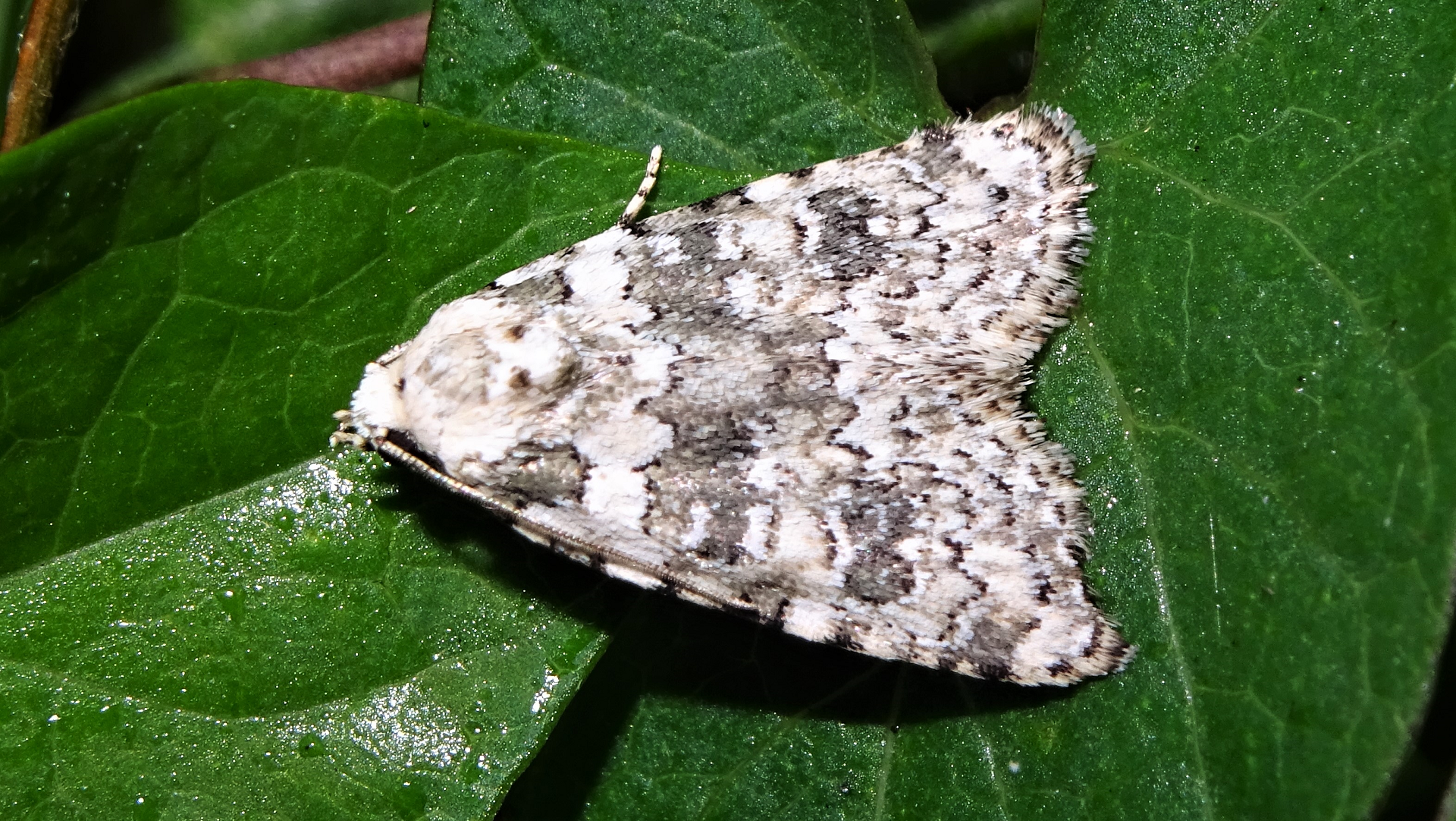
Marbled Beauty is an attractive moth that blends in effectively with its surroundings when it rests on rocks and stone during the day. It is active in July and August and can be drawn to light. The caterpillars primarily feed on lichens found on walls and rocks. The wingspan measures 20-25 mm.
#
Gypsy Moth
Lymantria dispar
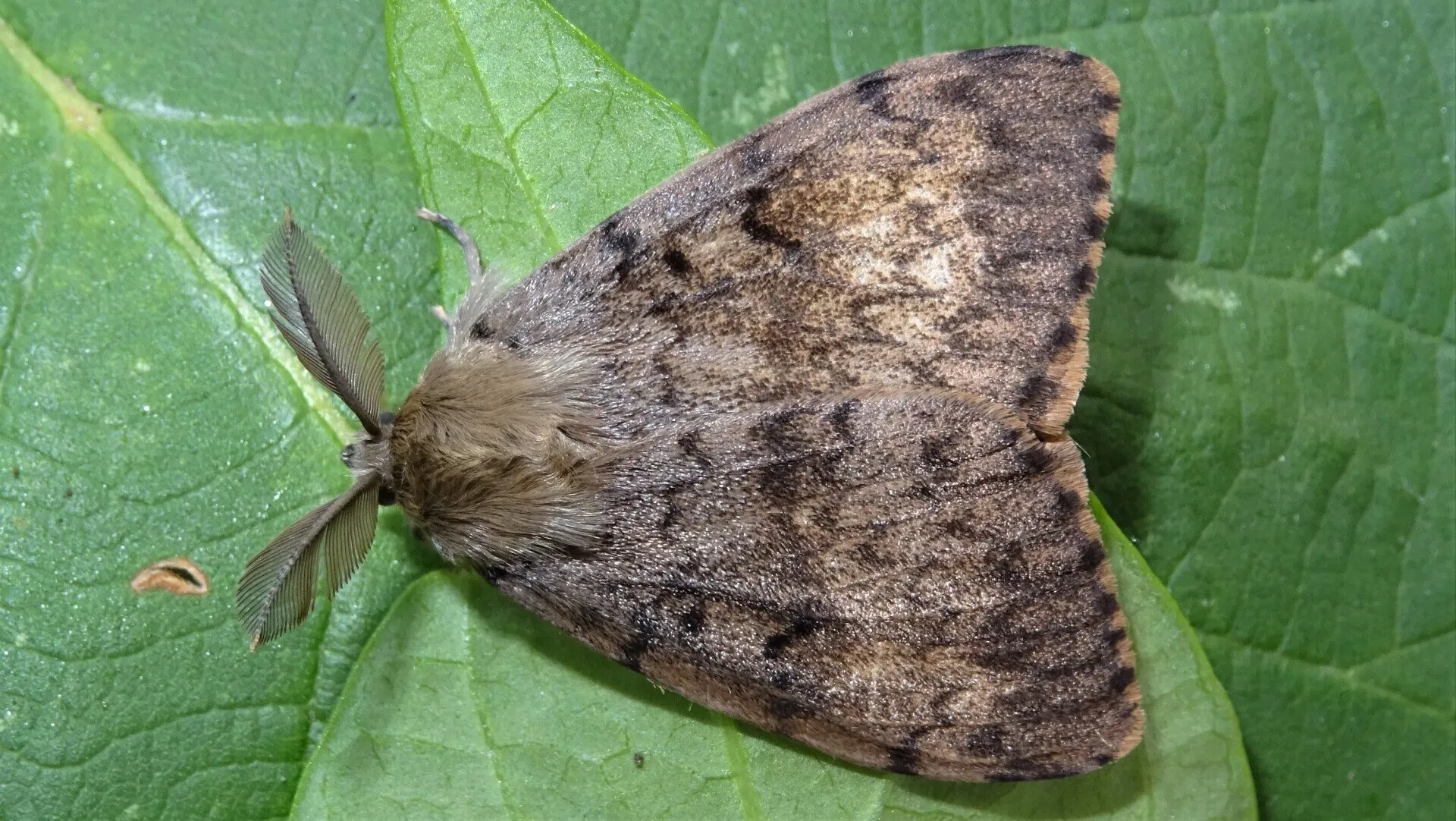
This species was once prevalent across East Anglia in the early 19th century but was thought to have died out in this country about 1900. Since the mid-1990s, it has reestablished itself, though in limited numbers. The females do not fly well.
#
Shaded Broad-bar
Scotopteryx chenopodiata
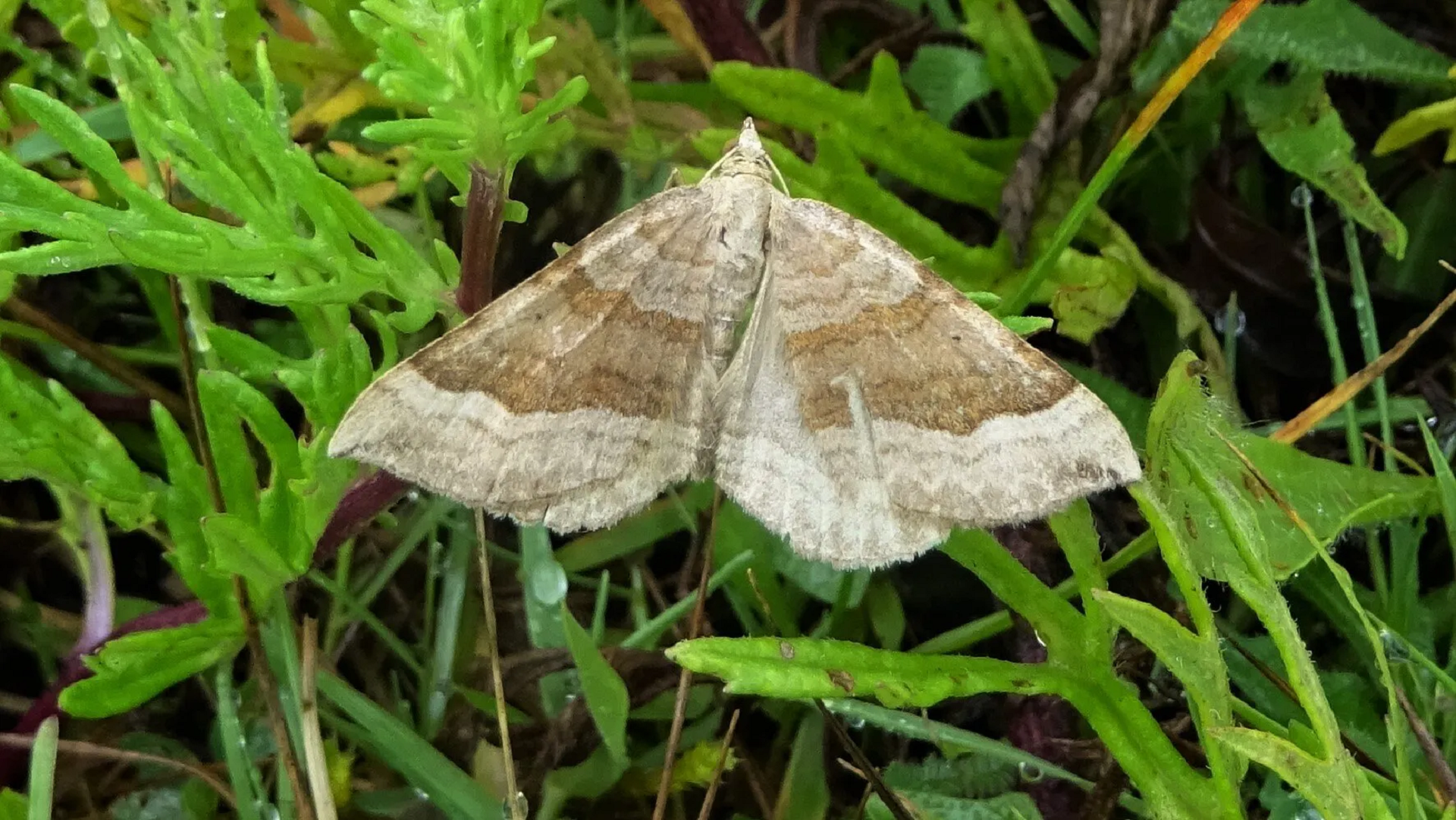
A common moth is found throughout the UK in July and August. This particular one was spotted flying around goat's rue, vetches, and clover, the latter two of which are recognised as larval food plants. The wingspan can reach up to 30mm.
#
Oak Marble
Eudemis profundana
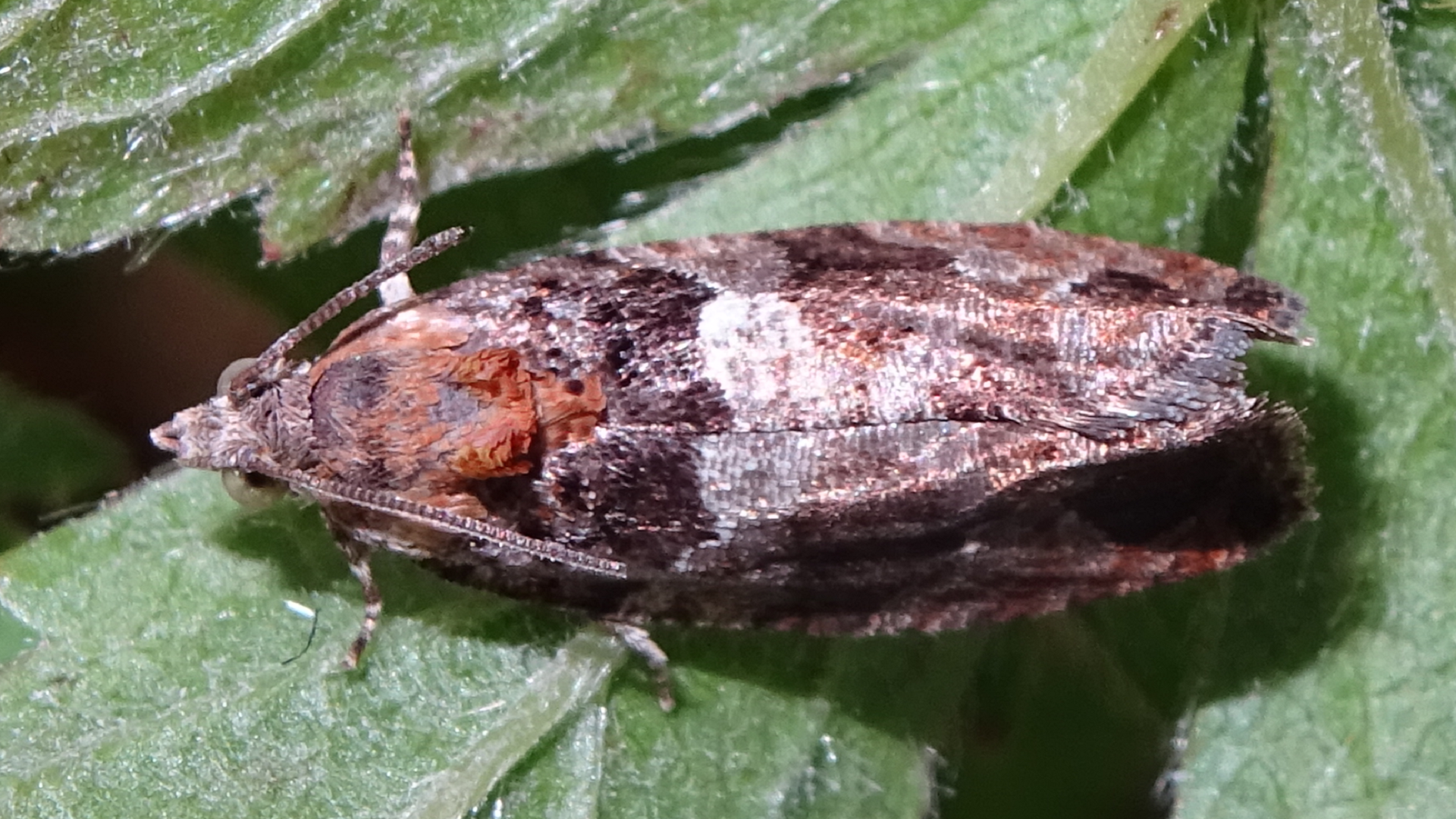
Flies during July and August in oak woodland and scrub. It is a variable species with broad, rounded forewings and general marbled appearance to the wing pattern. There is often a characteristic orange tuft on the thorax. Oak is its foodplant. Previously known as the 'Diamond-back Marble'.
#
Vapourer
Orgyia antiqua
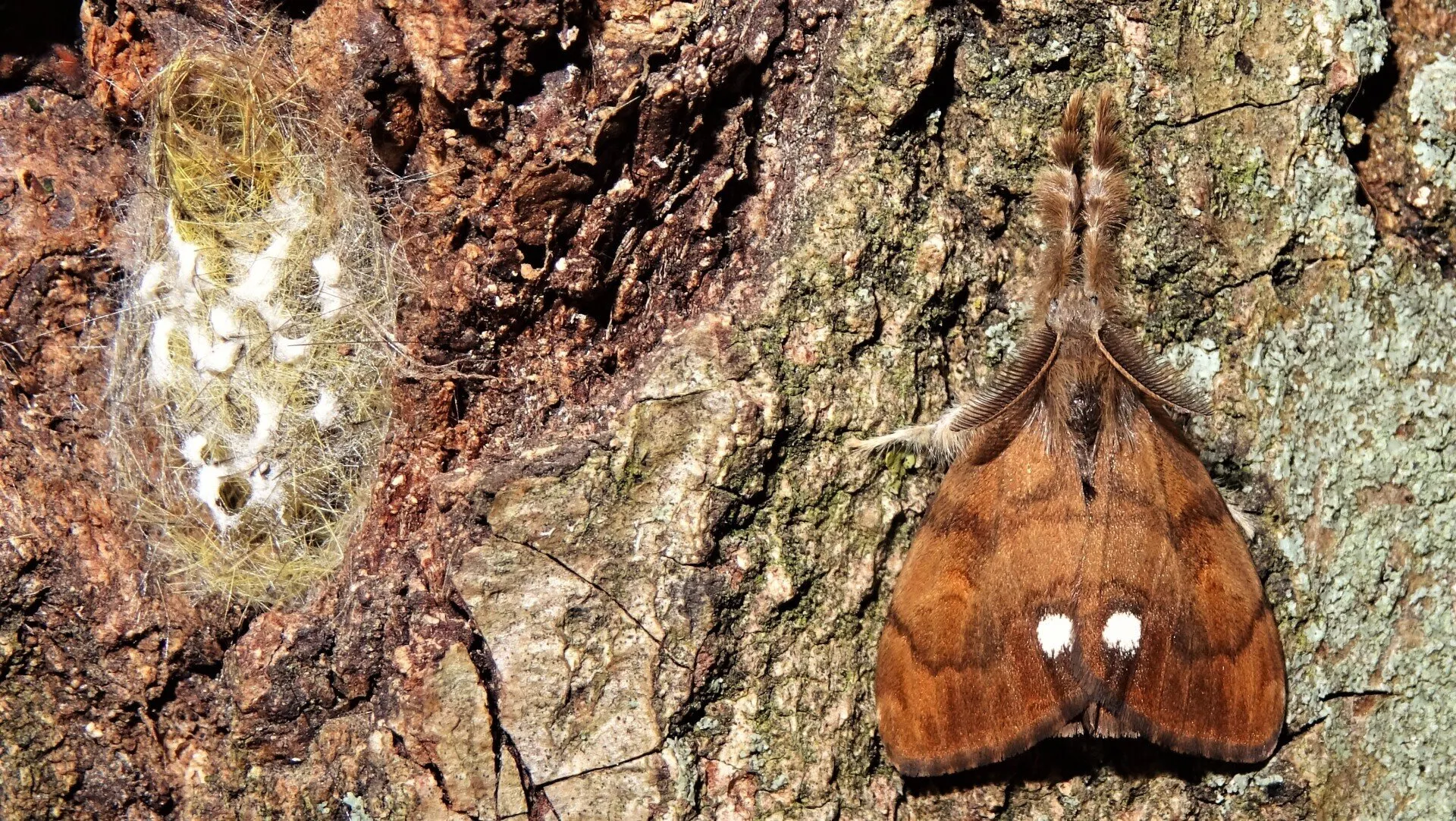
Males fly from July to September. Females are almost wingless and therefore stay on the cocoon they emerge from, waiting for a mate to arrive. Eggs are usually laid on the cocoon from which a female has emerged. The Latin name
Orgyia antiqua translates to "Ancient Orgy" in English. However, in this context,
Orgyia refers to "outstretched arms," which describes the behaviour of this species extending its front legs.
#
Iron Prominent
Notodonta dromedarius
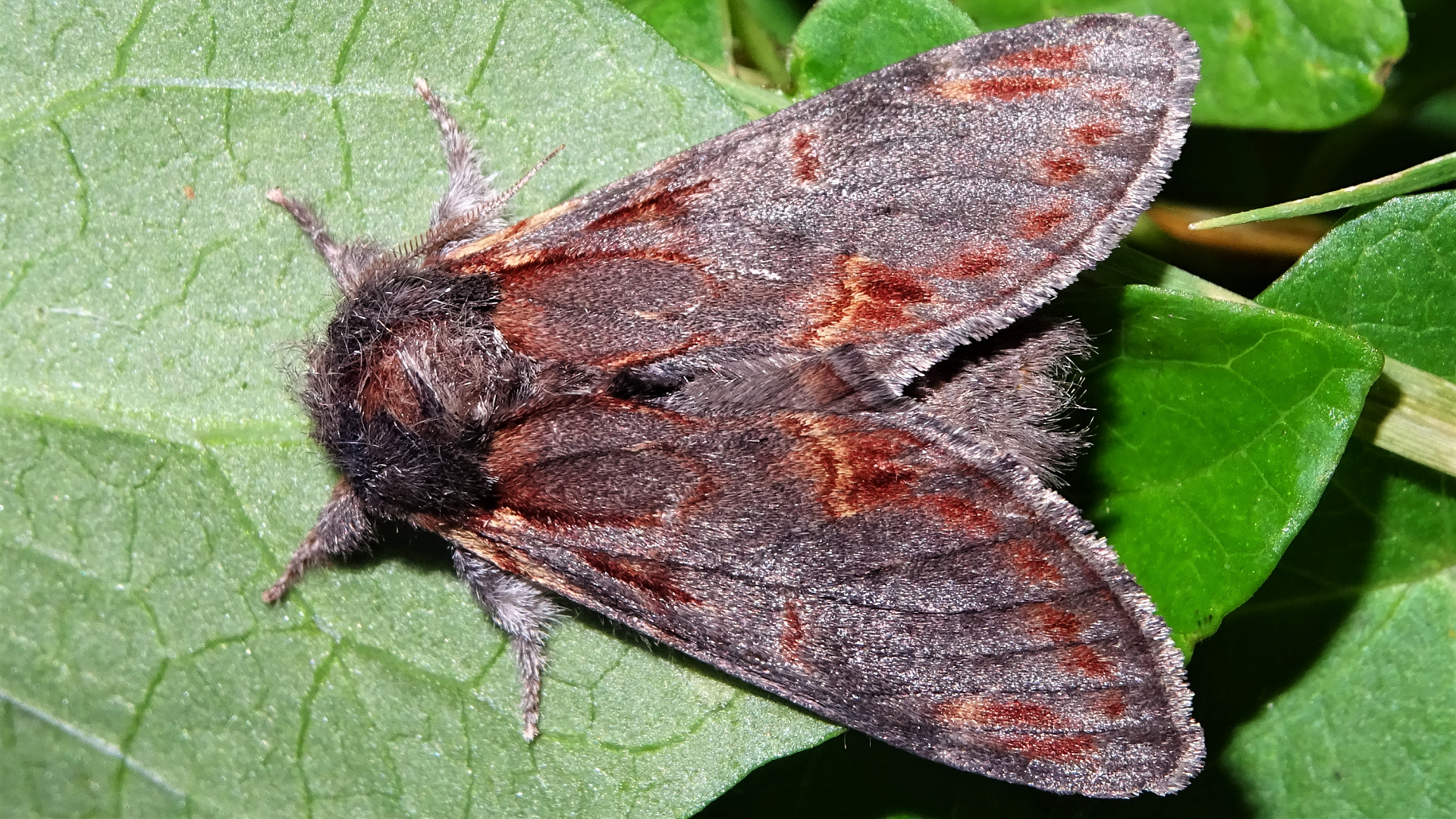
The Iron Prominent has two broods each year. The first occurs in June and July, while the second takes place in August. Its greenish hump-backed larvae primarily feed on birch trees. The maximum wingspan is 40 mm.

#
Canary-shouldered Thorn
Ennomos alniaria
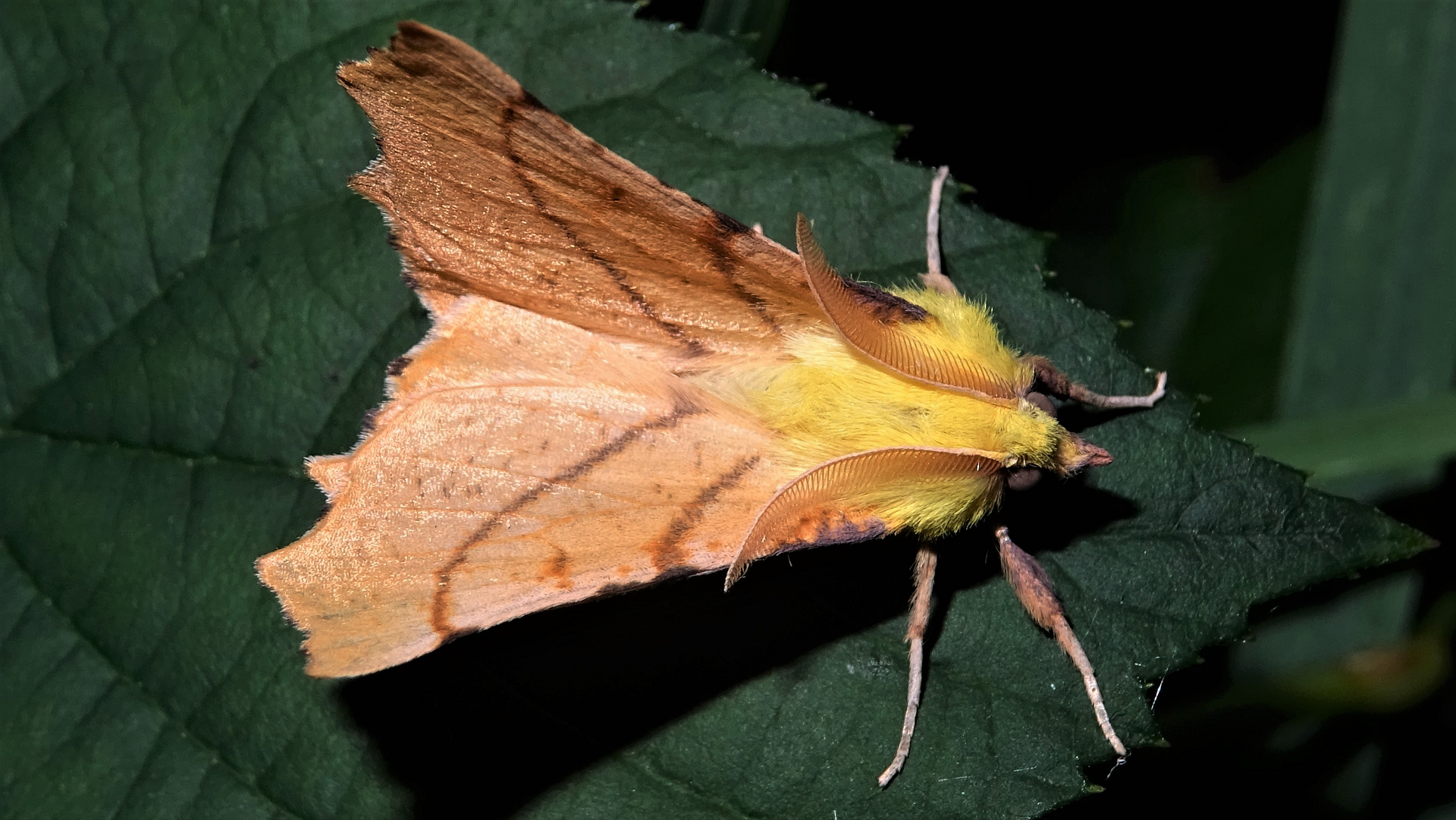
The Canary-shouldered Thorn visits woodland and gardens where the larvae feed on a range of deciduous trees. Maximum wingspan 42mm.
#
Oak Eggar
Lasiocampa quercus
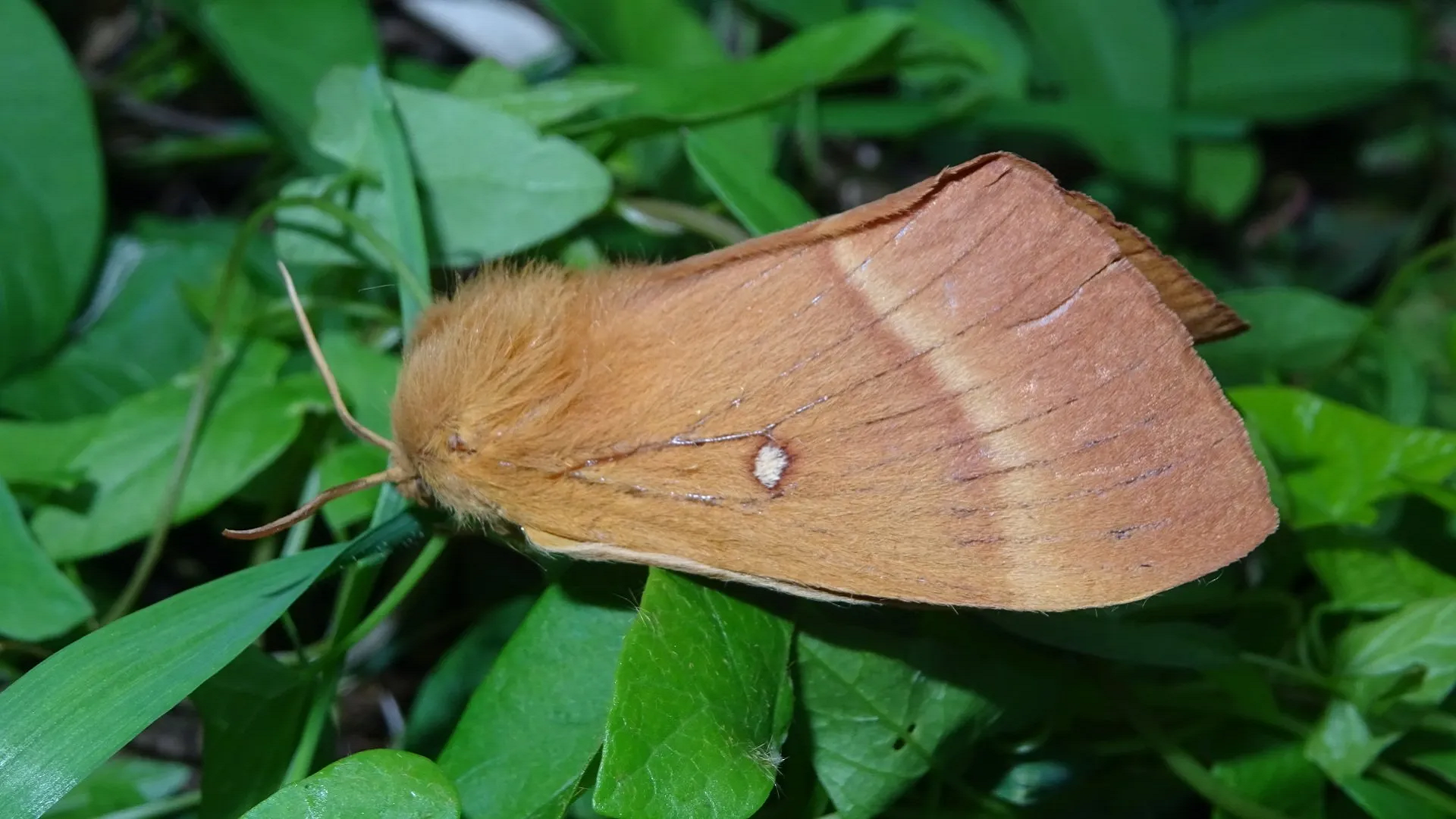
The Oak Eggar is a large moth with a wingspan reaching up to 75mm. Despite its name, it does not feed on oak; the name comes from its acorn-shaped cocoon. Males are active during the day, while females are active at night. This picture shows a female.
#
L-album Wainscot
Mythimna l-album
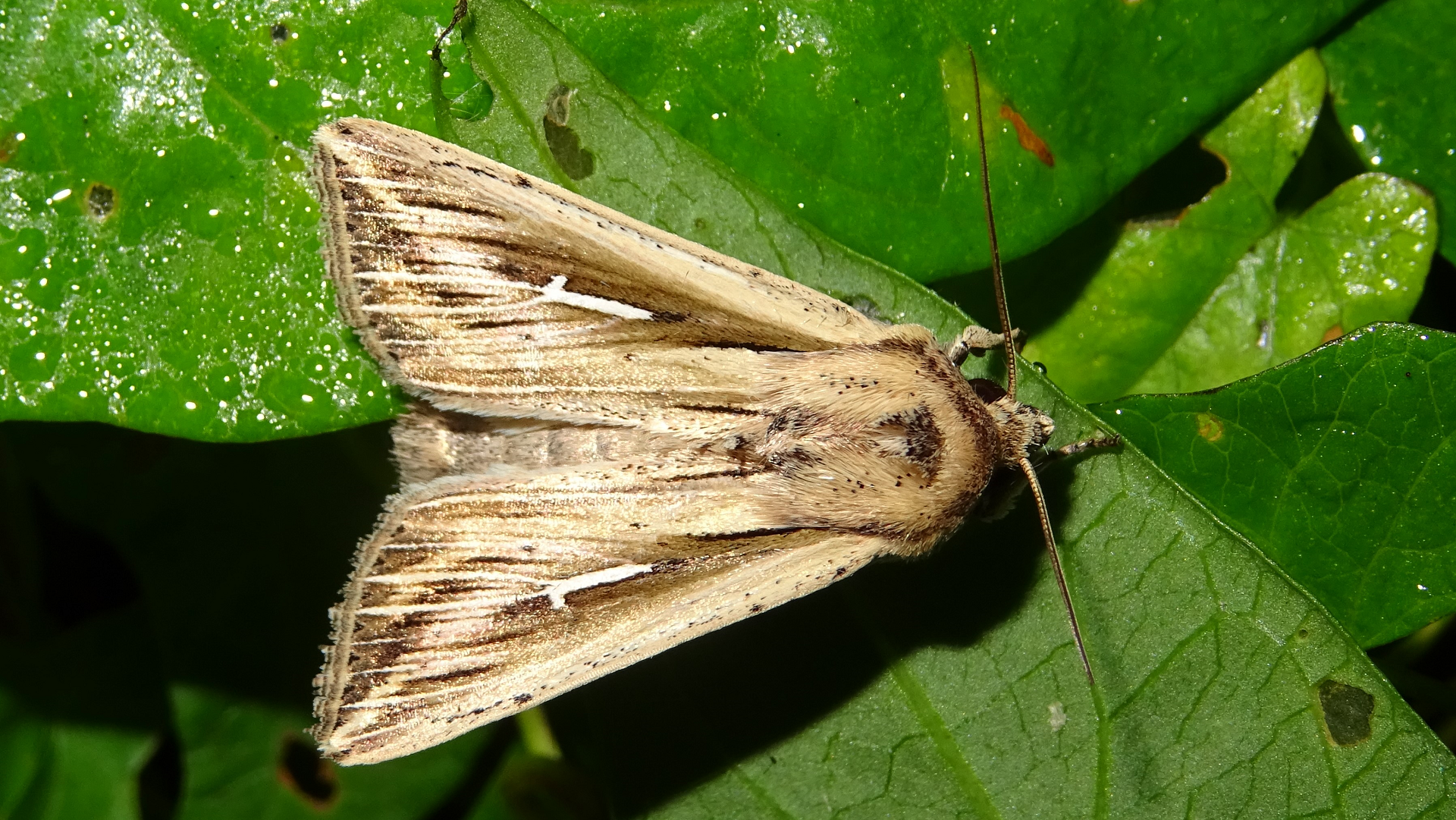
This moth is generally considered a coastal species in the UK. Inland, it favors brackish ditches. Among the various wainscot species, this one is identifiable by a white 'L' on the wings. There are two generations annually, with the first appearing in July and the second in September and October. The caterpillars feed on different types of grasses. The maximum wingspan can reach 35mm.
#
Figure of Eight 73.033
Diloba caeruleocephala
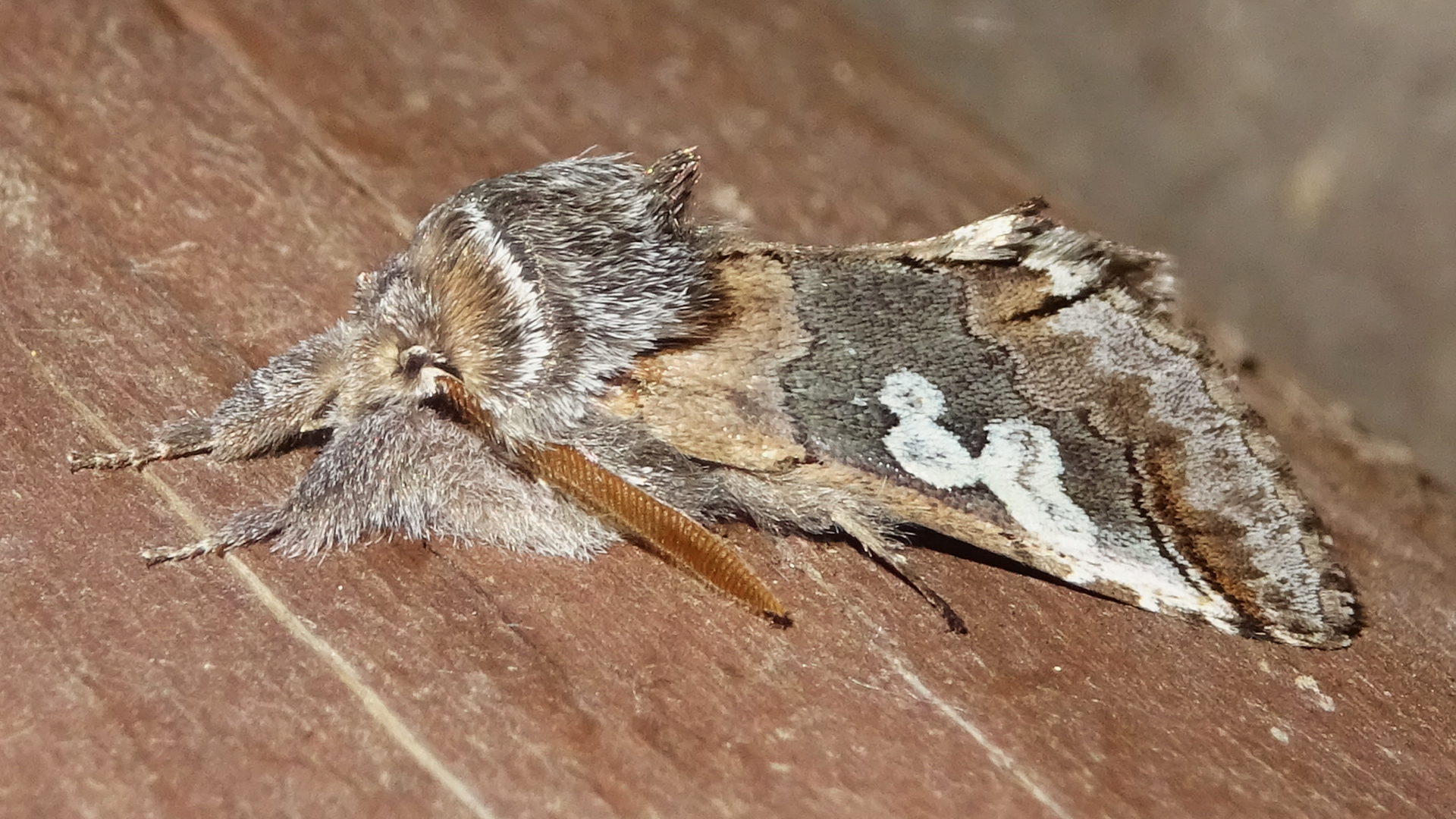
The term 'Figure of Eight' comes from one or both of the creamy-white markings on the forewing that can resemble the number 8. Males possess feathery antennae. This species is active from September to November, with a maximum wingspan of 40mm.
#
Centre-barred Sallow
Atethmia centrago
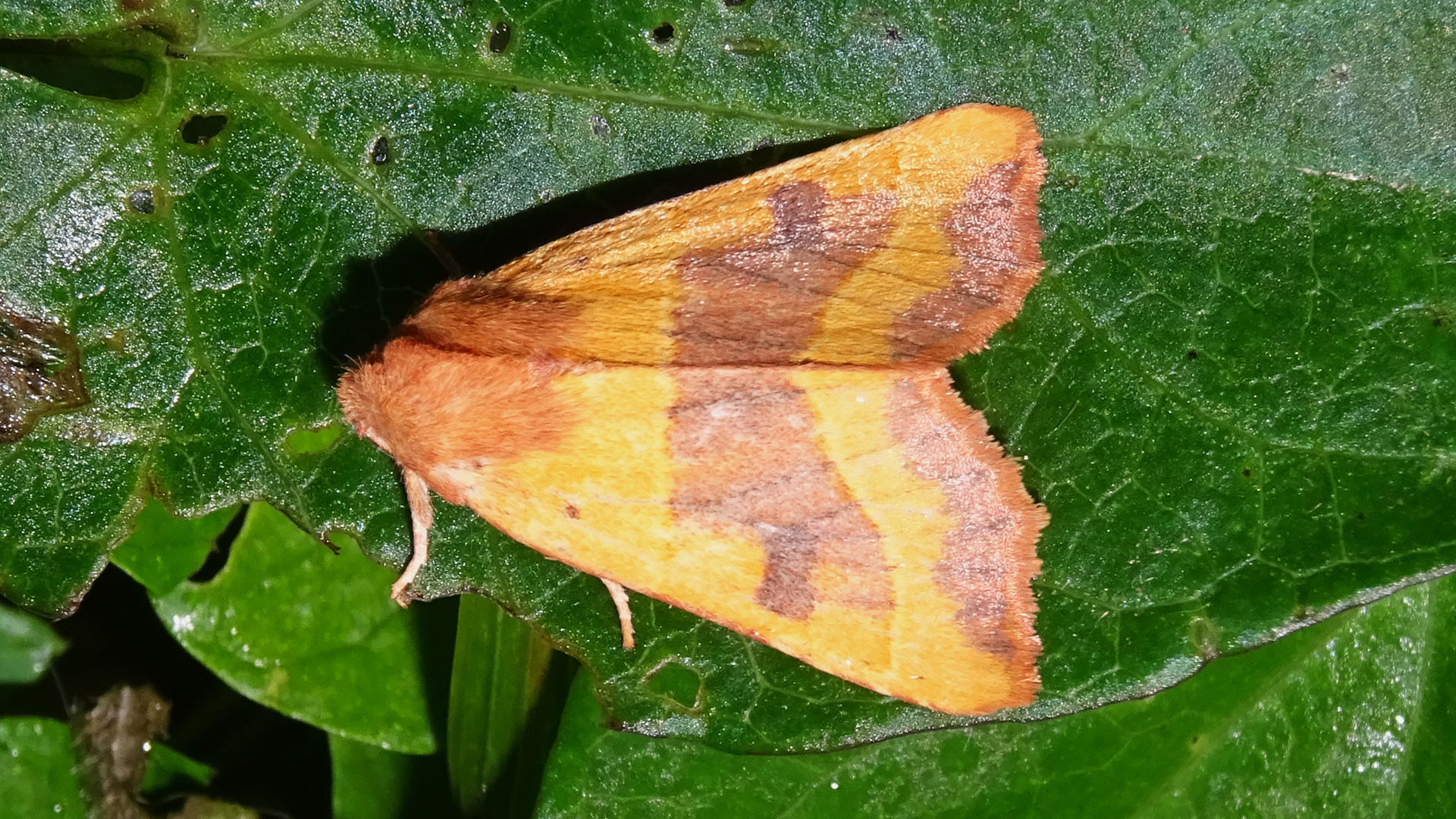
Centre-barred Sallow can be found in woodlands and hedgerows during late autumn. After hatching, the larvae burrow into the buds of ash trees and subsequently feed on the leaves and flowers. The maximum wingspan is 36mm.
#
Orange Swift 03.001
Triodia sylvina
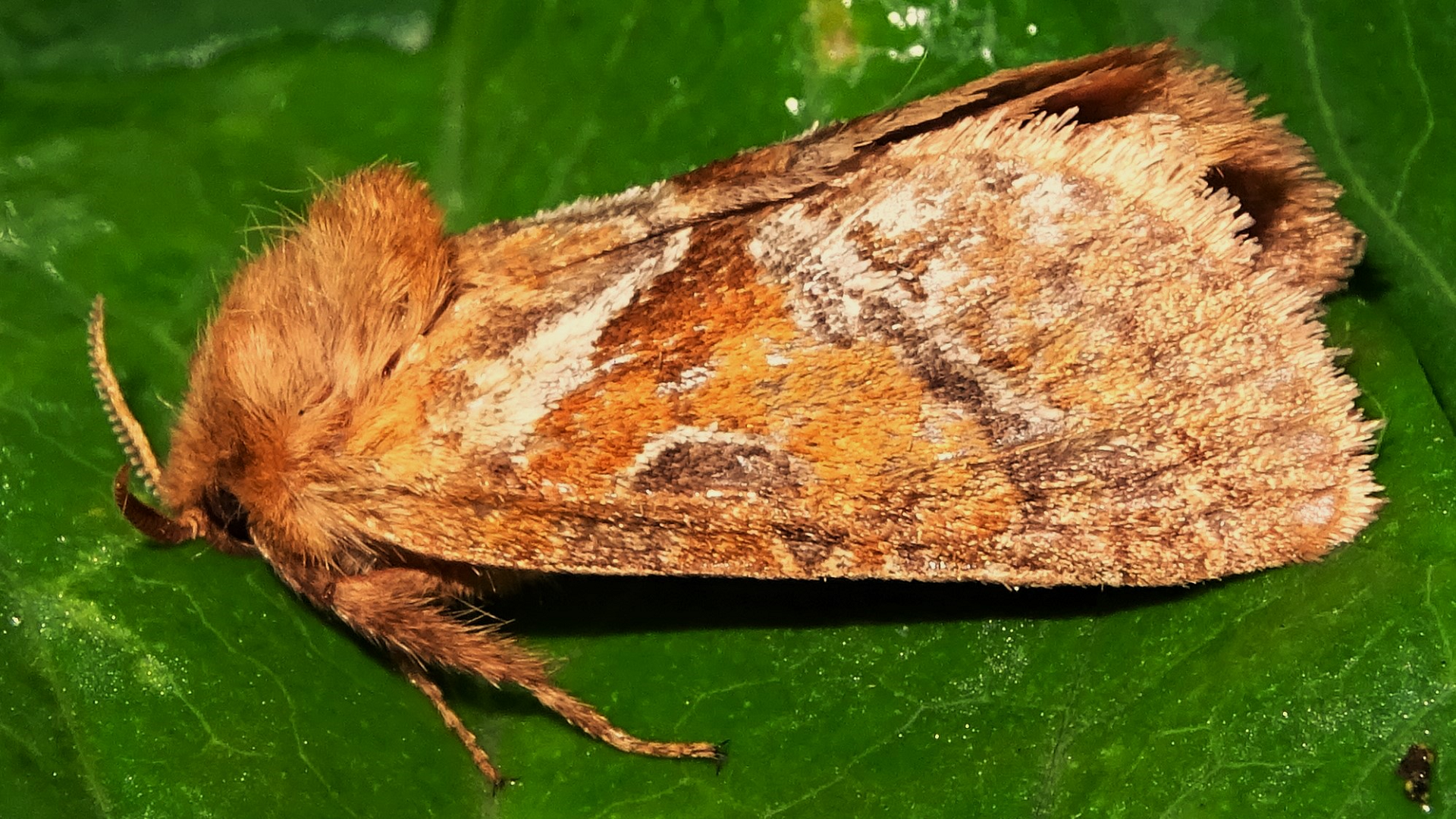
Flies from July to September and can be found in rough grassland and gardens. Males are more brightly coloured than females and are larger. This species overwinters twice as a larvae.
#
Kent Black Arches 74.002
Meganola albula
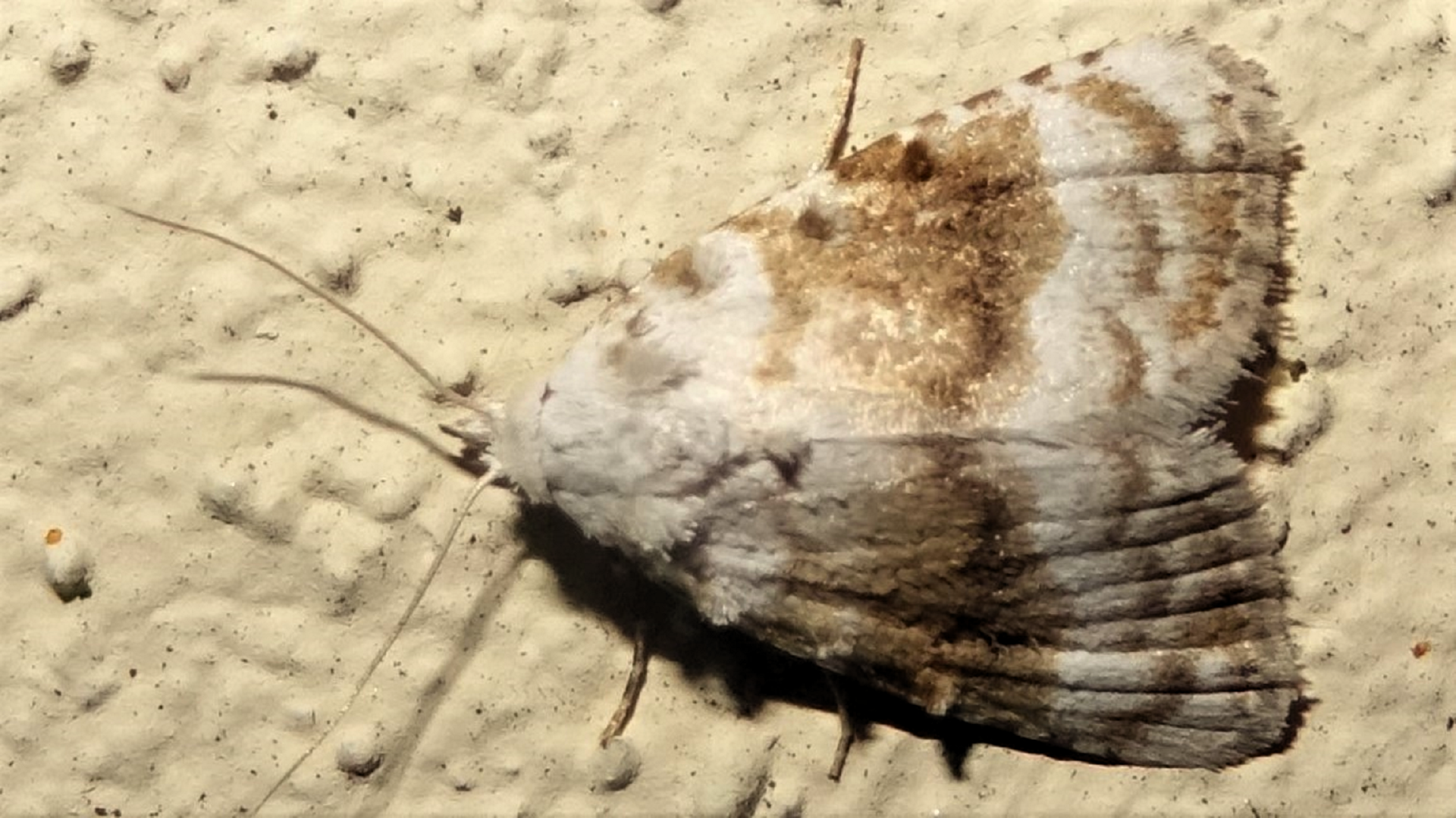
This species flies from June to September. This tiny moth has a preference for locations containing lots of bramble.
#
Cream-bordered Green Pea 74.011
Earias clorana
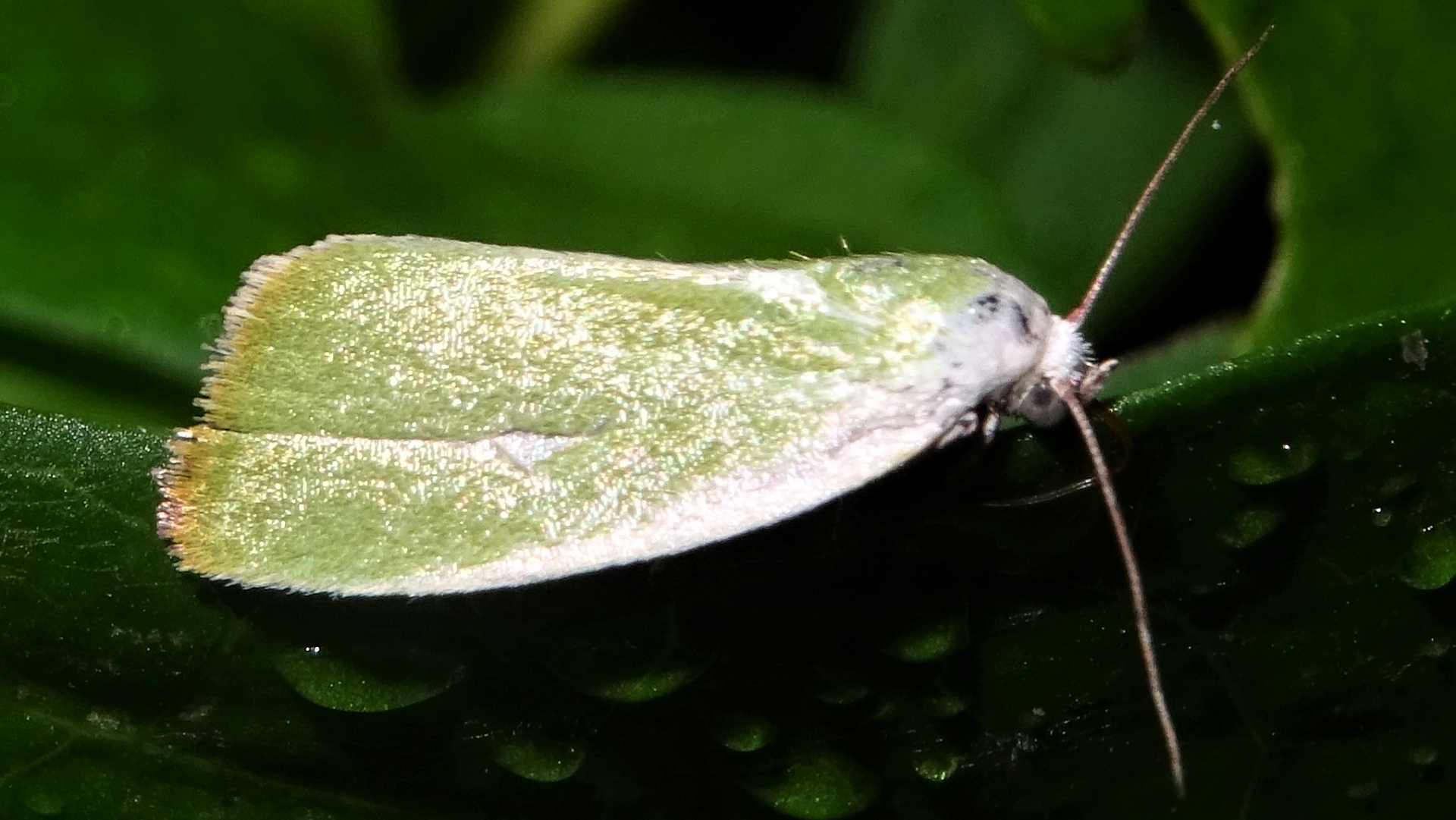
This species is on the wing from May to July. It is found in woodland where its foodplants sallow and willow grow.
#
Oak Processionary
Thaumetopoea processionea
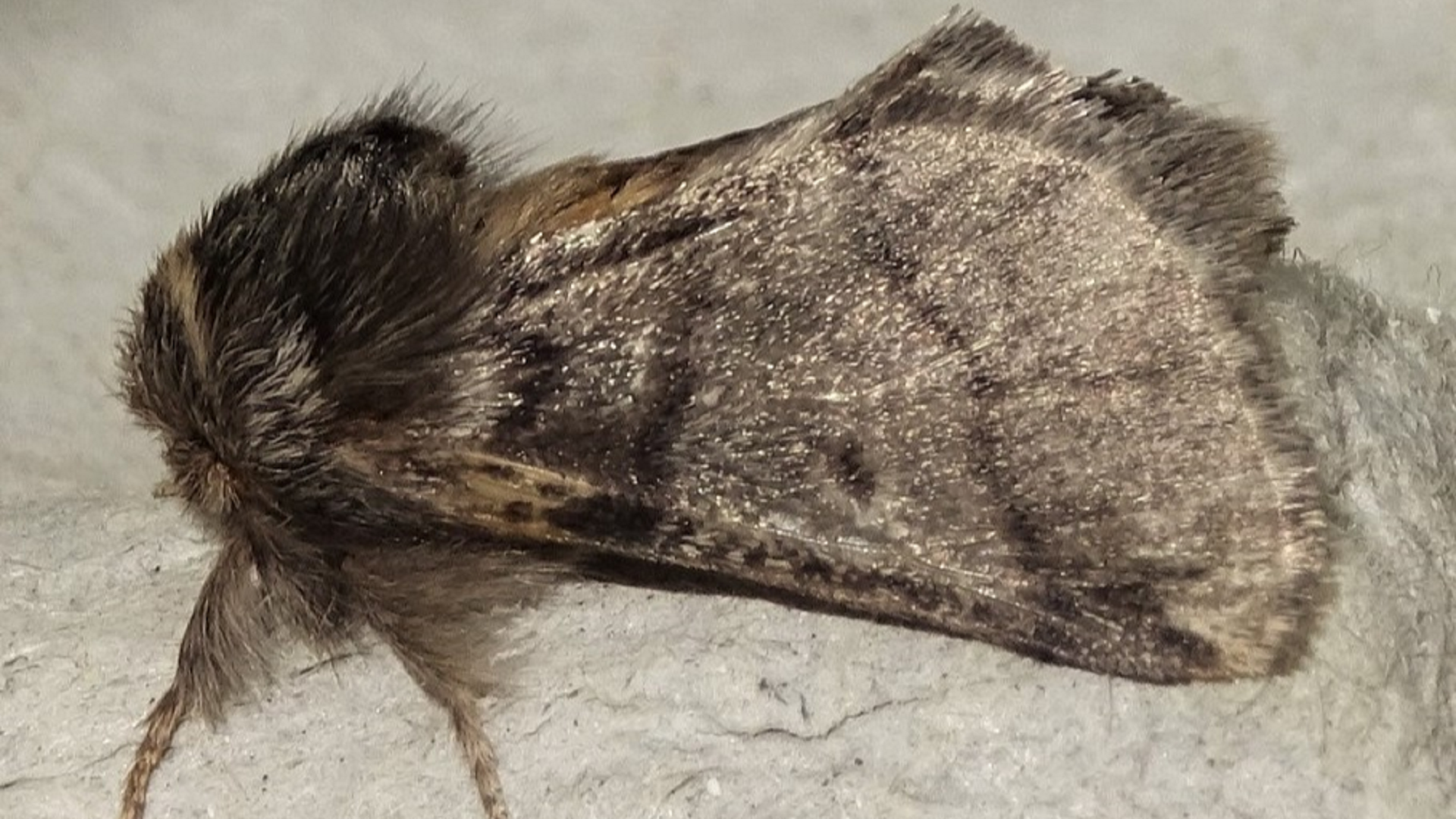
Oak Processionary moths were accidently introduced to England in 2005. They are now established in Greater London and are able to defoliate whole oak trees. Their larvae can cause rashes, eye irritation and breathing problems. They should not be touched. The larvae are usually seen from late May until July and adults fly from July until September.
#
Yellow-barred Brindle
Acasis viretata
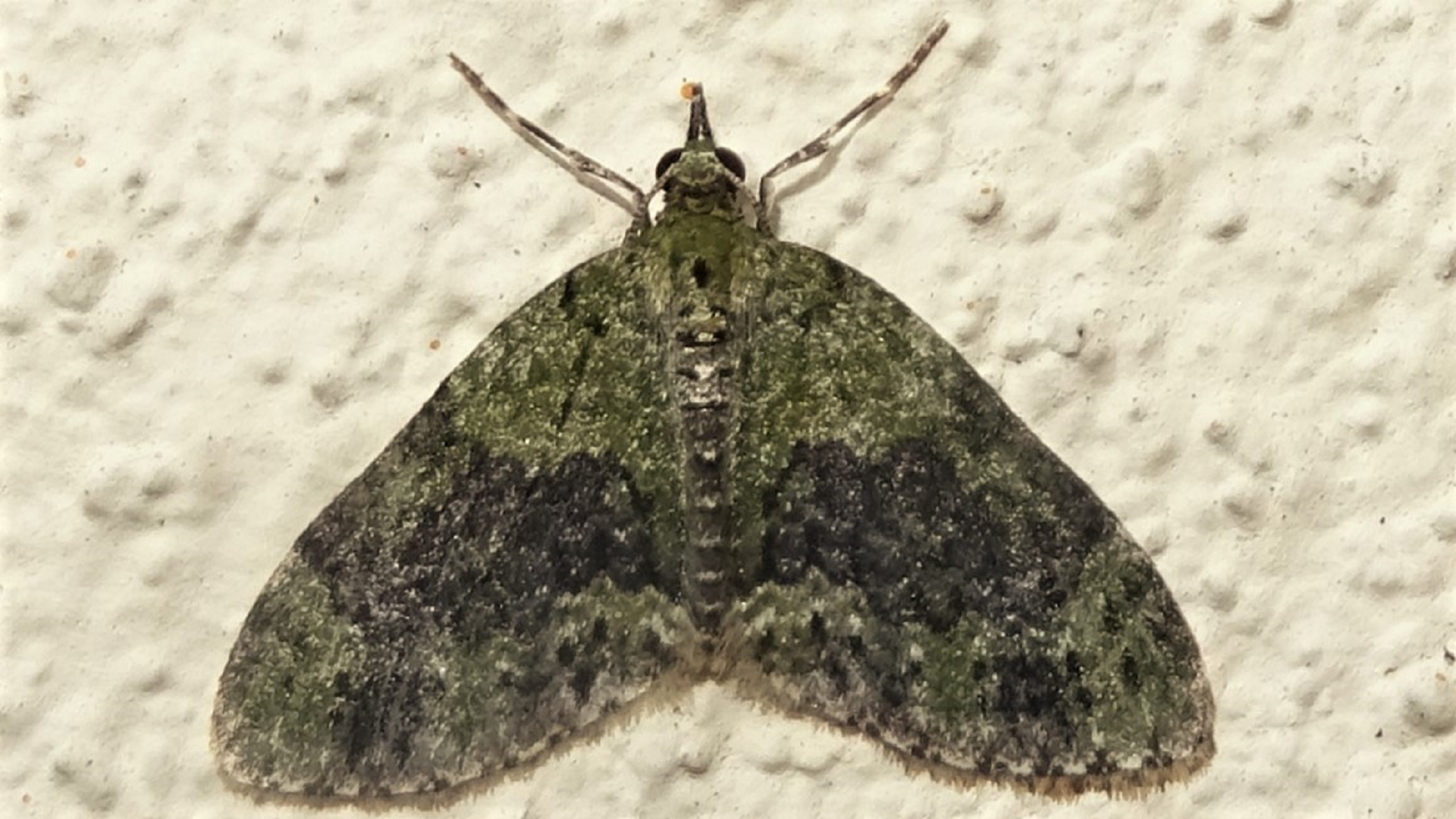
Flies from May until September in two broods. Fresh specimens are green before fading to yellow. Its larvae feed on Holly, Ivy, Privet, Dogwood and Hawthorn.
#
Ruby Tiger
Phragmatobia fuliginosa
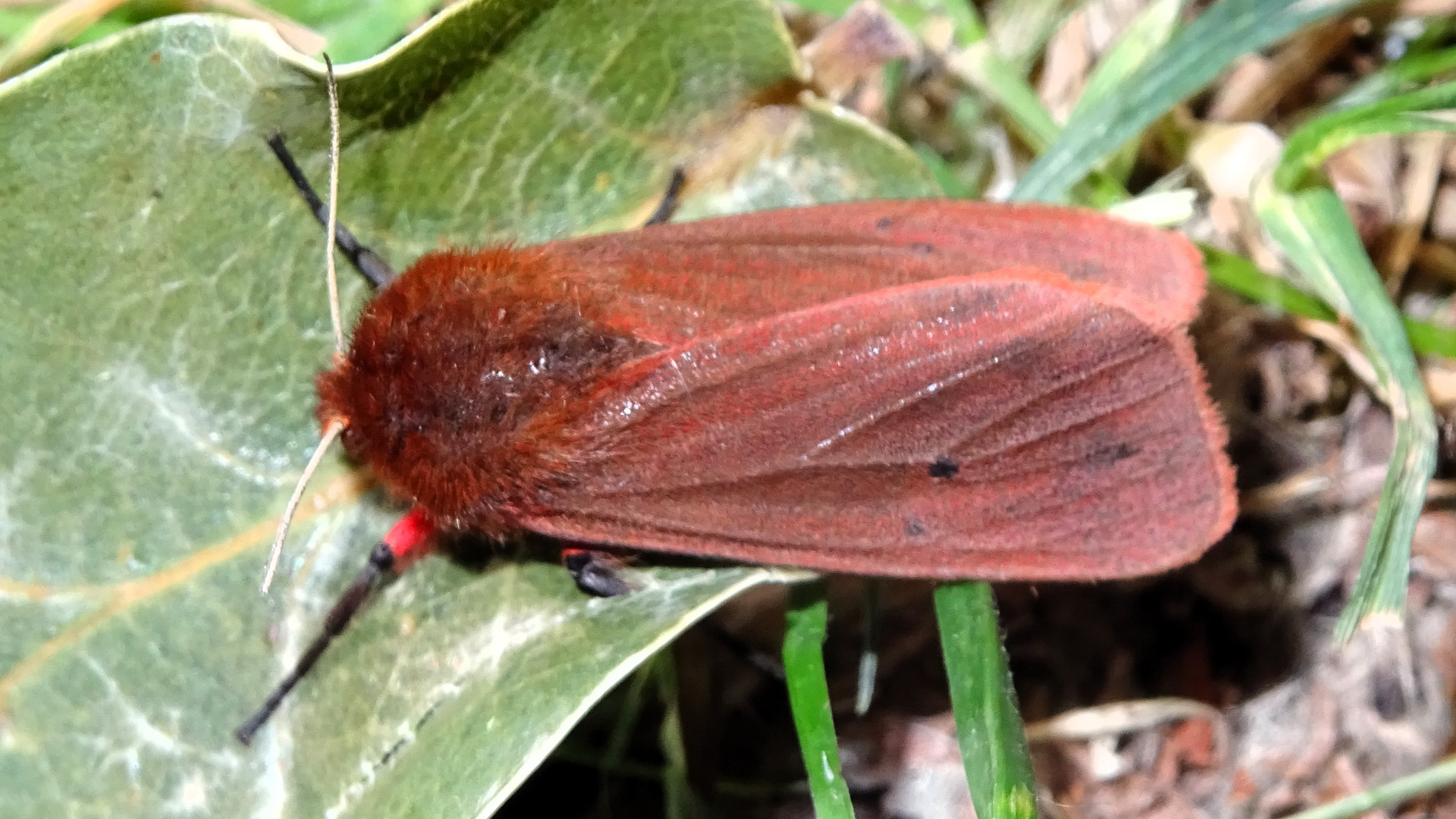
The Ruby Tiger flies from April to September. It is a reddish-brown moth with bright red and black-dotted abdomen. The larvae feed on herbaceous plants.
#
Lime-speck Pug
Eupithecia centaureata
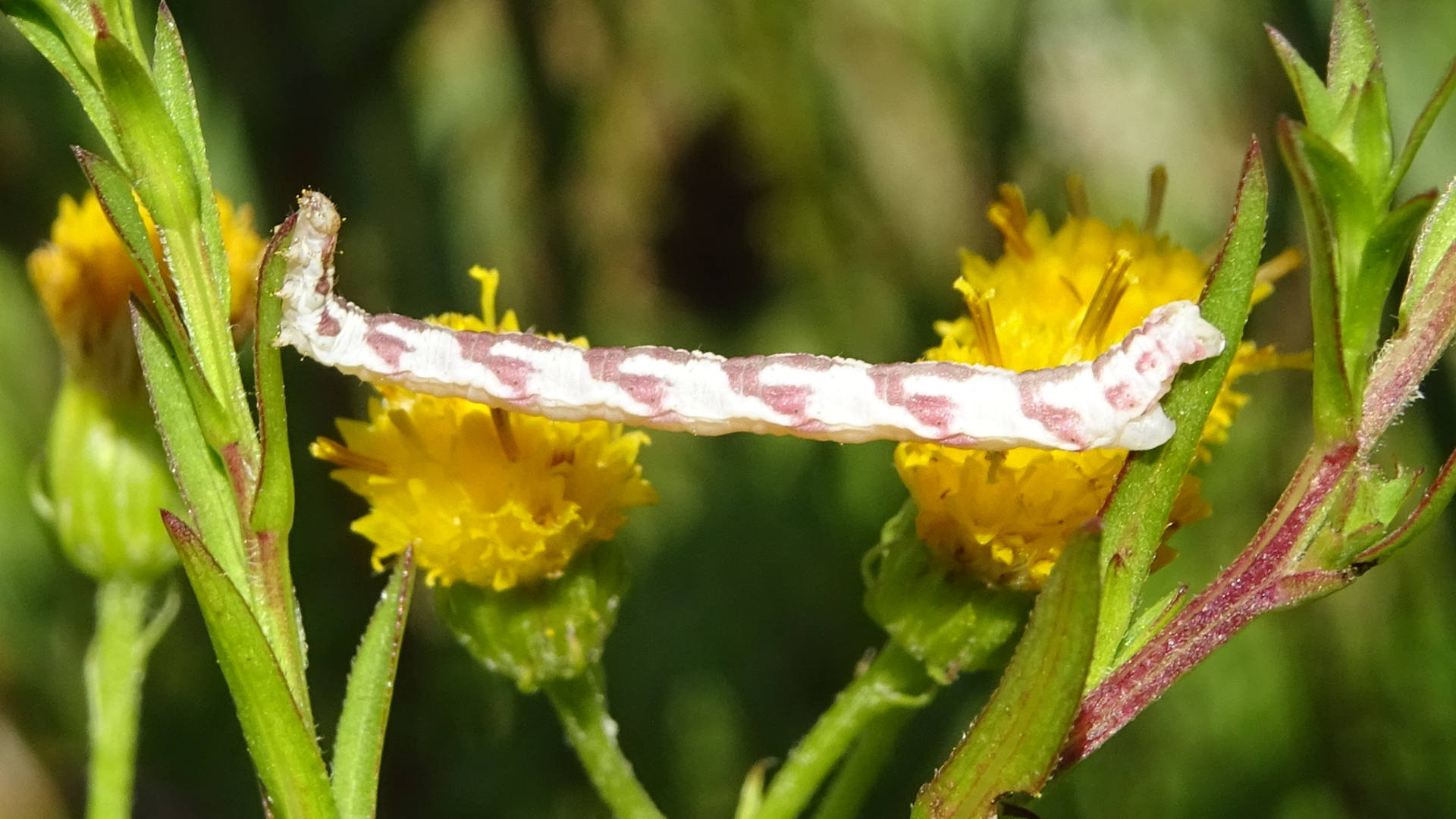
This is a Lime-speck pug moth caterpillar positioned between stems. It consumes the flowers of different plants and can be observed on Michaelmas daisy, ragwort, and yarrow during the autumn.
#
Hairy Shieldbug
Dolycoris baccarum
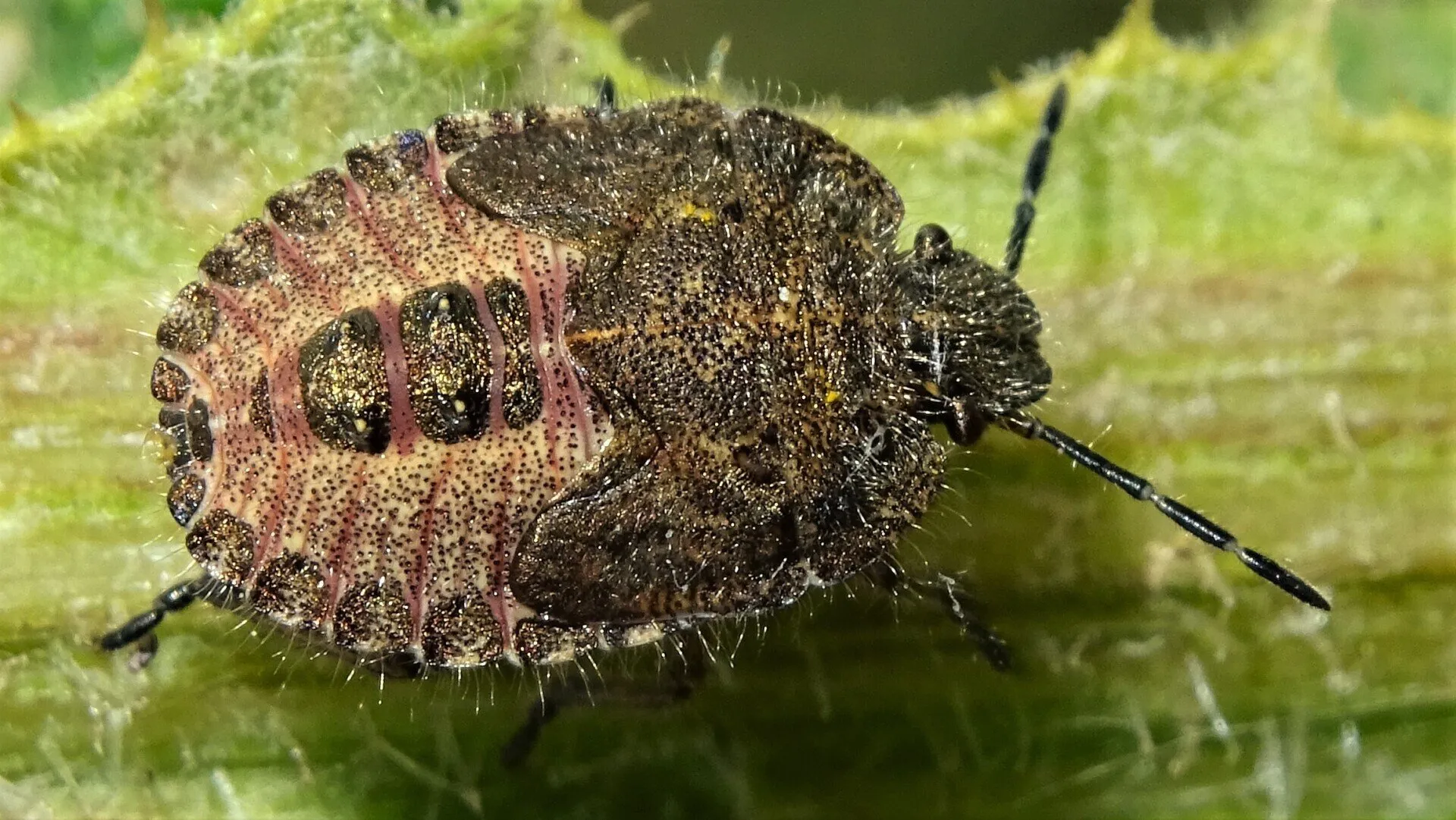
This is a late instar nymph of the Hairy Shieldbug. These instars are hairy like the adults and may be found on a wide range of plants.
#
Broadened Planthopper
Asiraca clavicornis
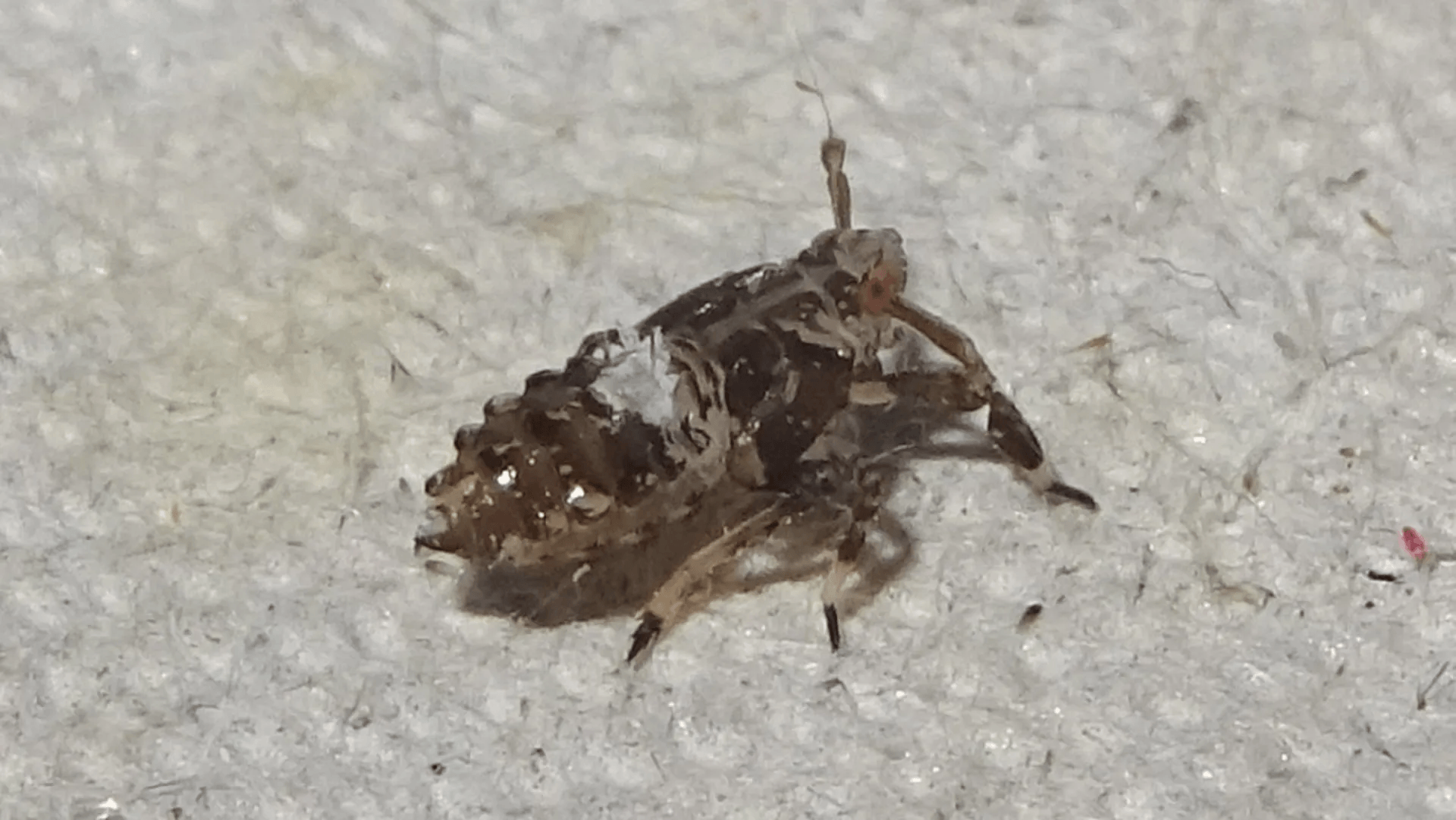
This small creature, measuring no more than 4mm, is an instar of the Broadened Planthopper.
#
Adonis Ladybird
Hippodamia variegata
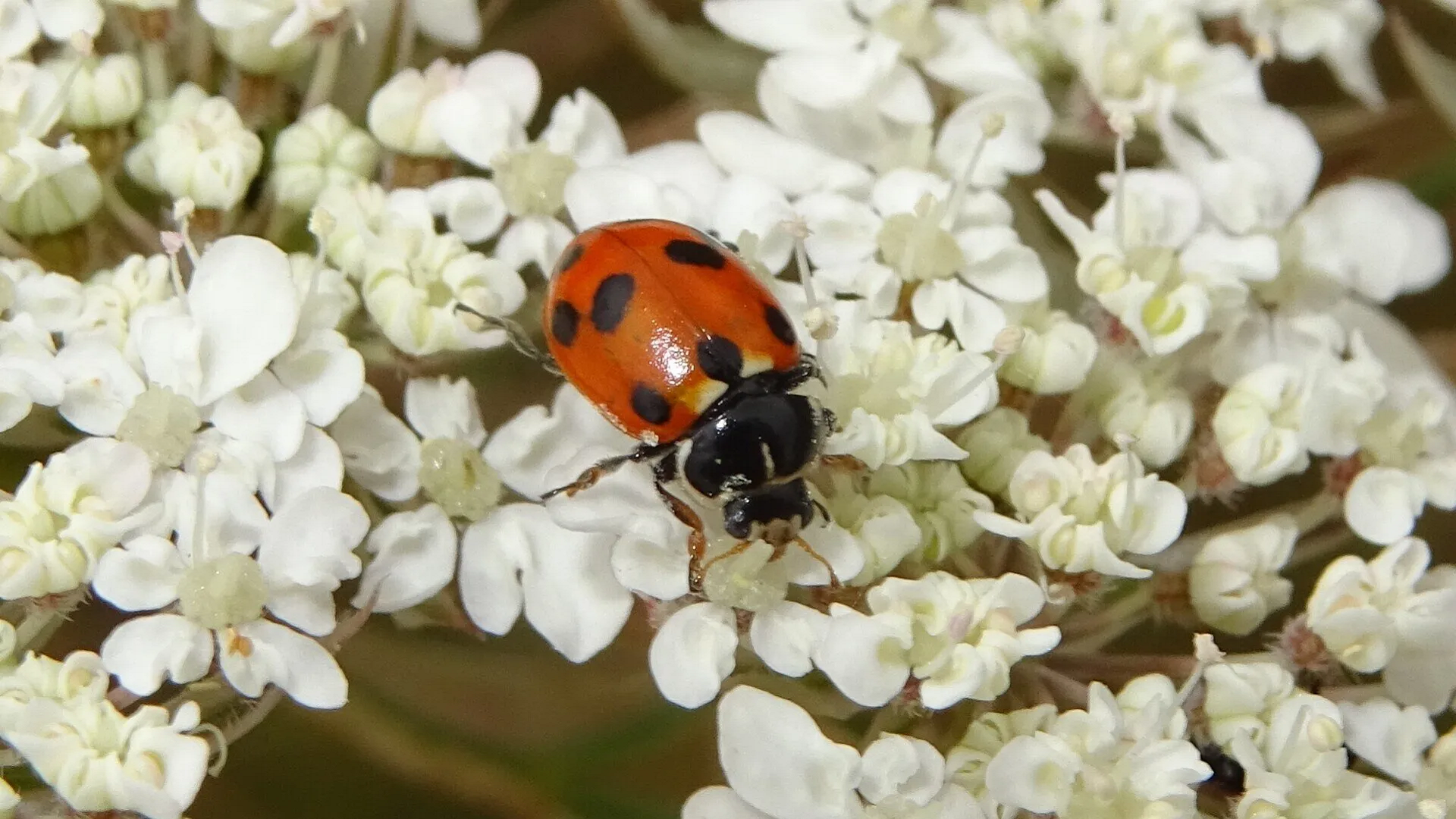
The Adonis Ladybird measures between 4 and 5 mm in length. Its body is more elongated compared to other ladybirds, and it has between 3 and 15 spots, mostly located towards the back. These ladybirds are regularly seen on wild carrot and other low-growing plants on warm summer days.
Twenty-two Spot Ladybird
Psyllobora vigintiduopunctata
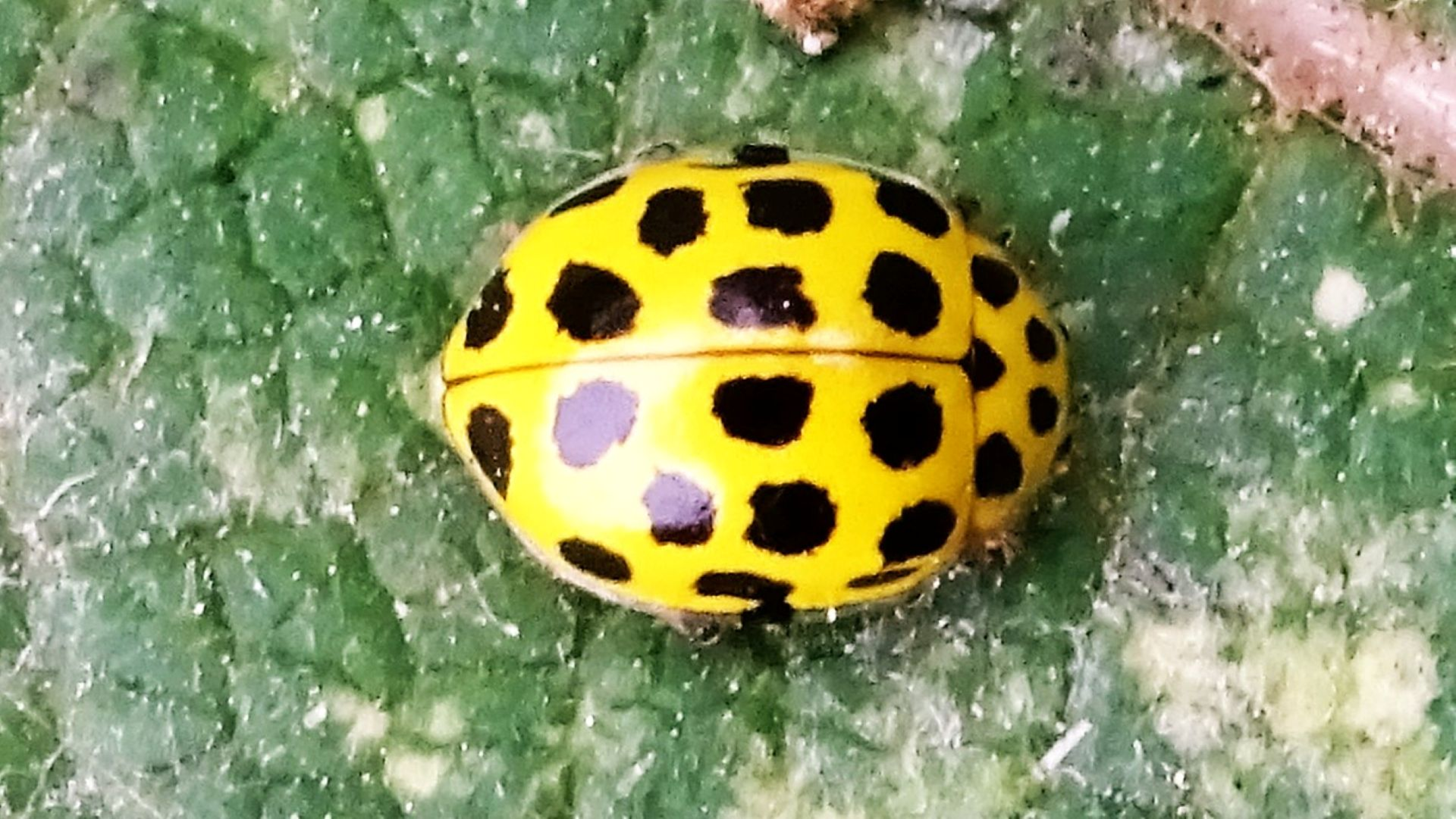
The Twenty-two Spot Ladybird is a small, bright yellow beetle that can reach a length of approximately 4mm. It consumes mildew and is typically observed from April to September.
#
Stag Beetle
Lucanus cervus
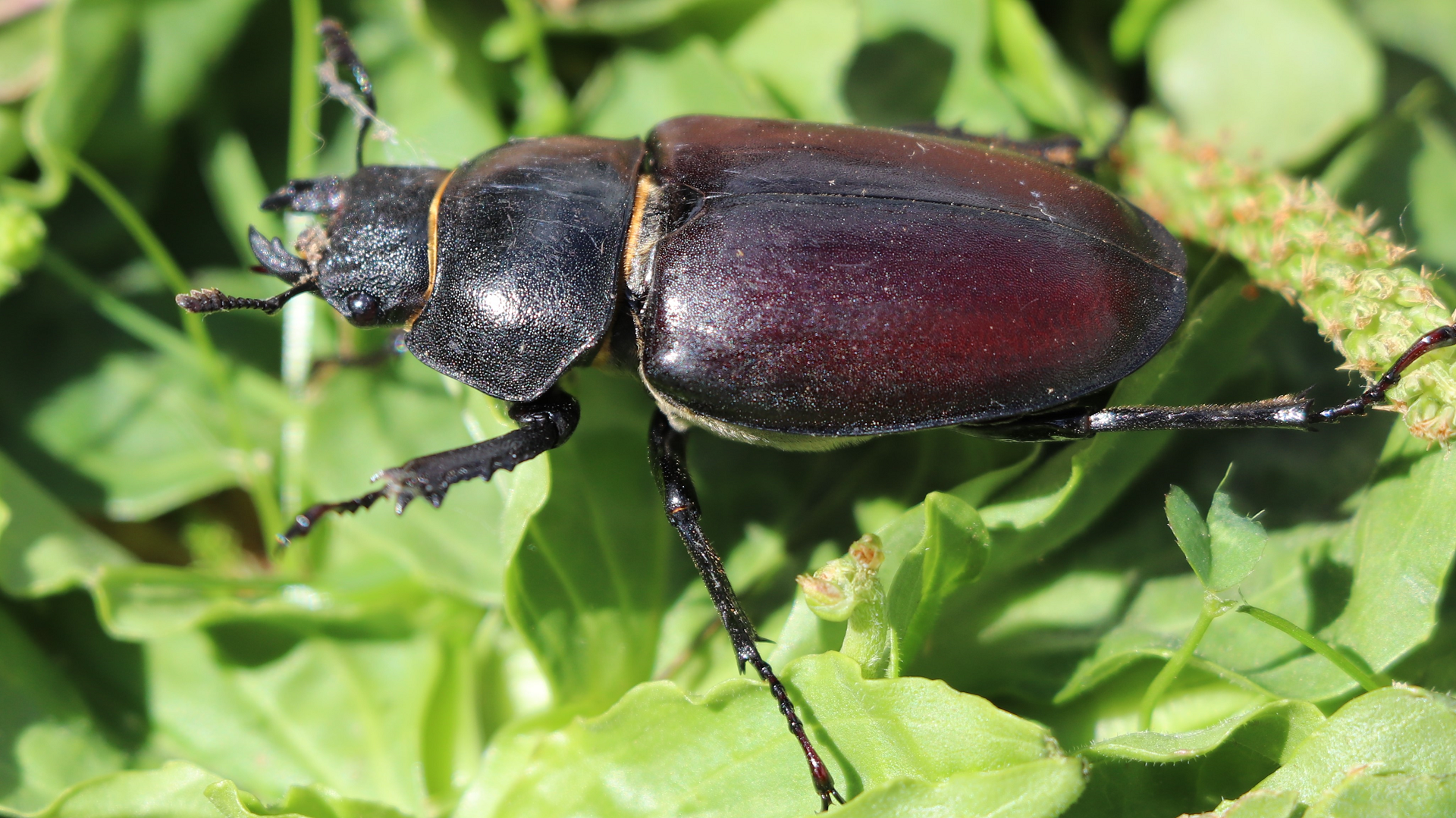
Stag beetles are the largest beetle species found in the UK. Their populations have decreased due to the loss of dead wood habitats. The image shows a female; males possess enlarged jaws that resemble antlers, the reason for the name 'Stag.' Although males may appear intimidating they pose no threat to humans. The larvae develop underground, feeding on decaying wood before emerging as adults.
#
Ground Beetle
Ophonus ardosiacus
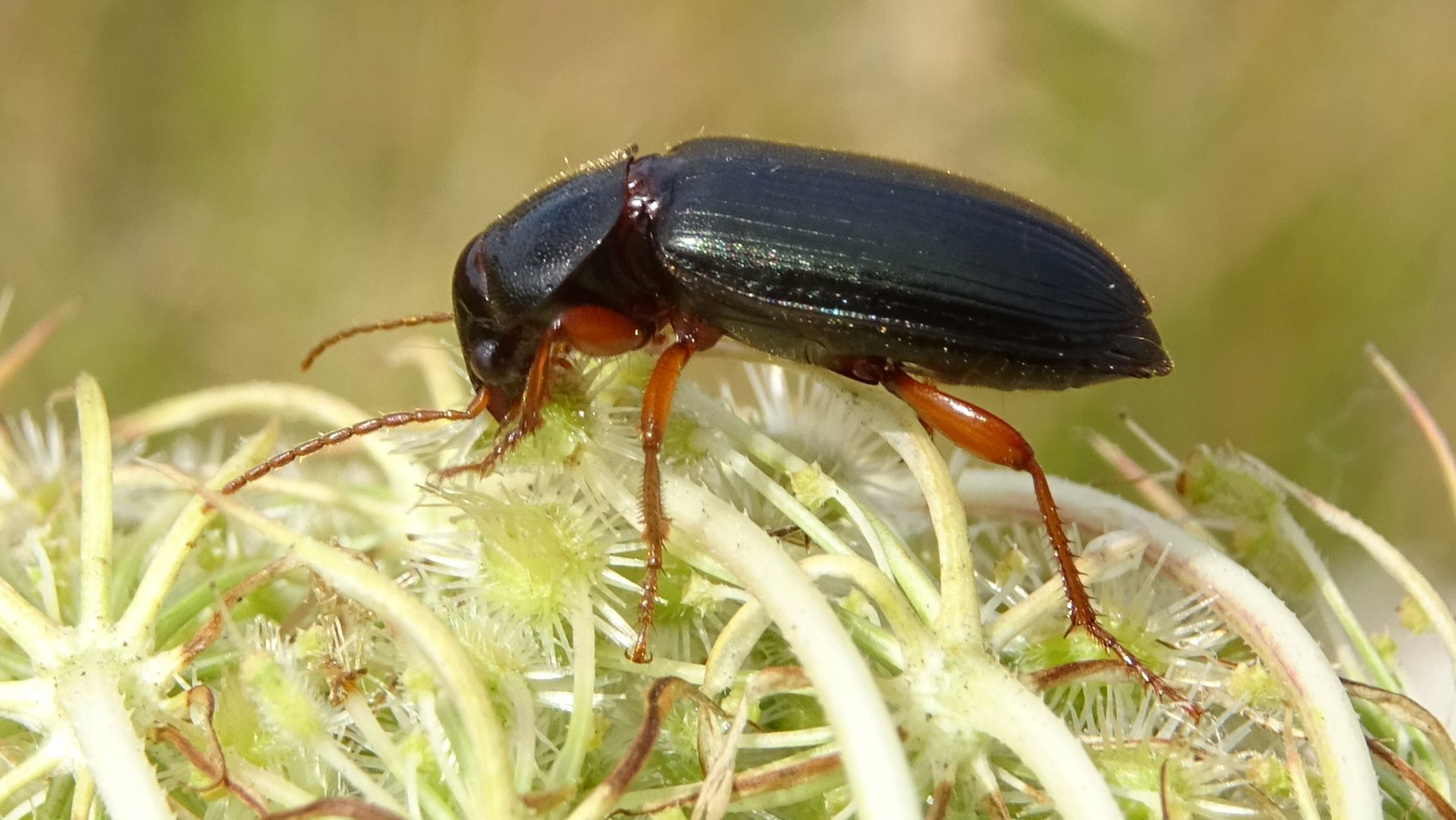
This species inhabits open grassland with chalky and clay soils. The beetles are active from March to September, with their highest numbers occurring between May and August. Adults are visible year-round and hibernate in matted vegetation or soil. Their diet mainly consists of seeds from various plants, particularly wild carrot.
#
Wood-carving Leafcutter Bee
Megachile ligniseca
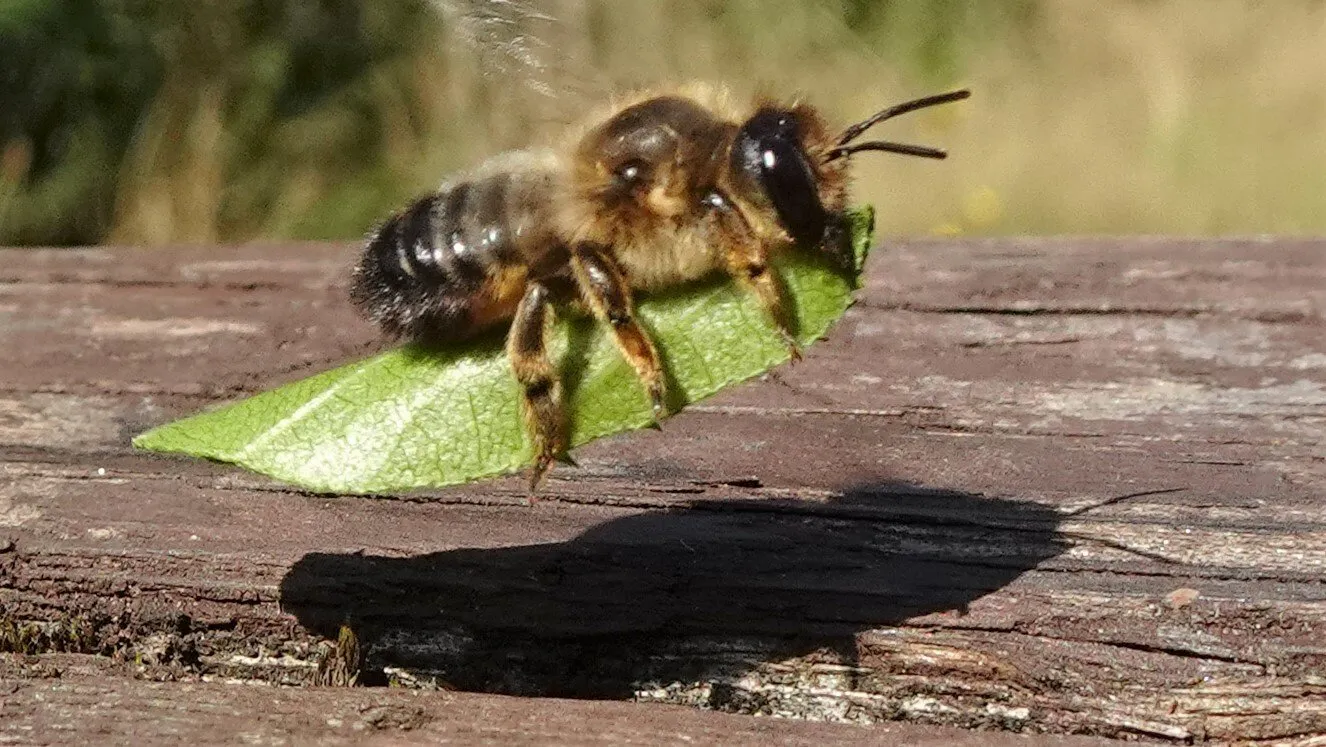
These are solitary creatures that create nests in decaying wood. Their nests are constructed in natural cavities and are made with fragments of leaves that they have removed from plants. This particular bee was in the process of building a nest in a crack on a picnic table.
#
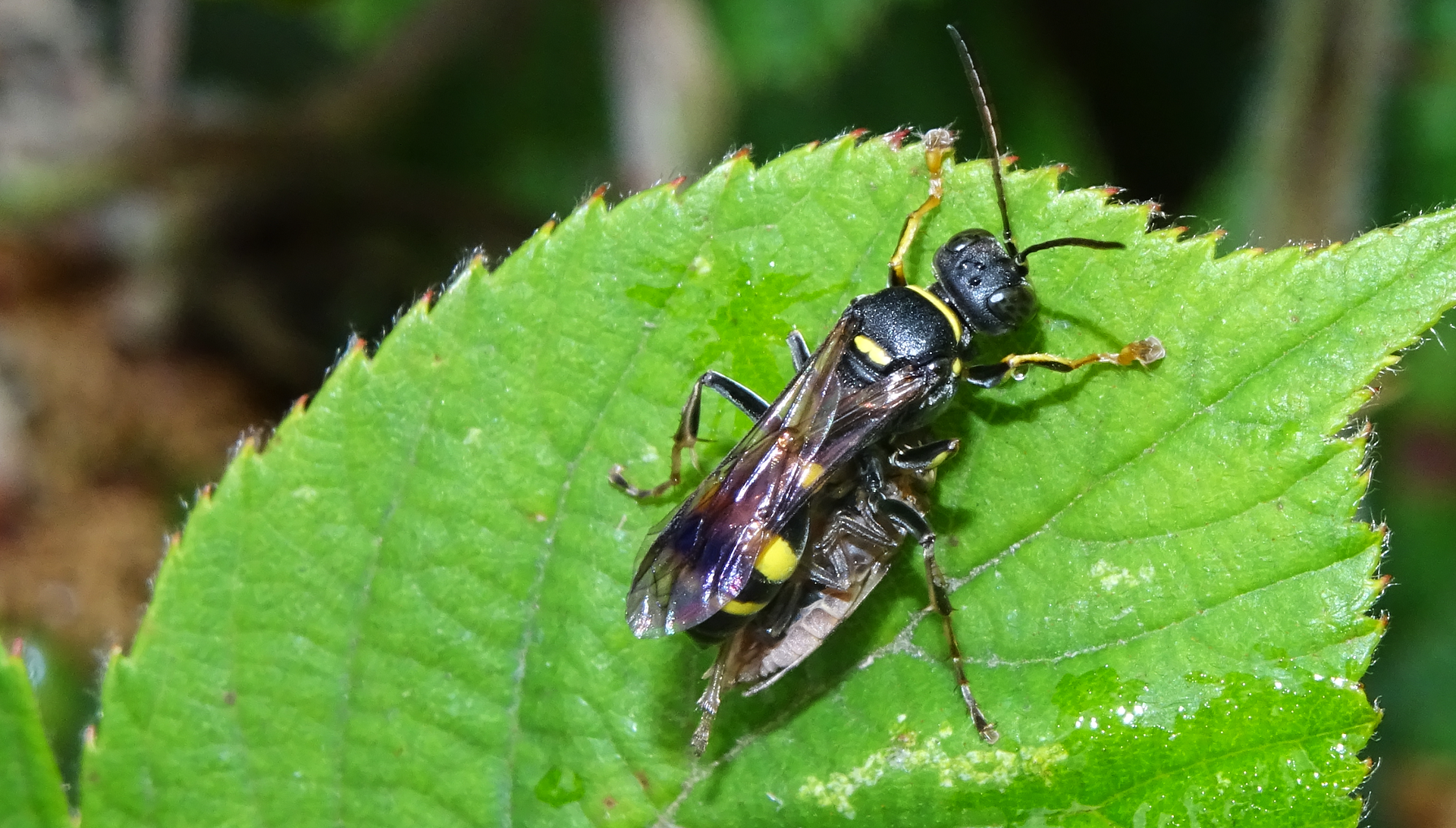
Solitary Wasp
Lestiphorus bicinctus
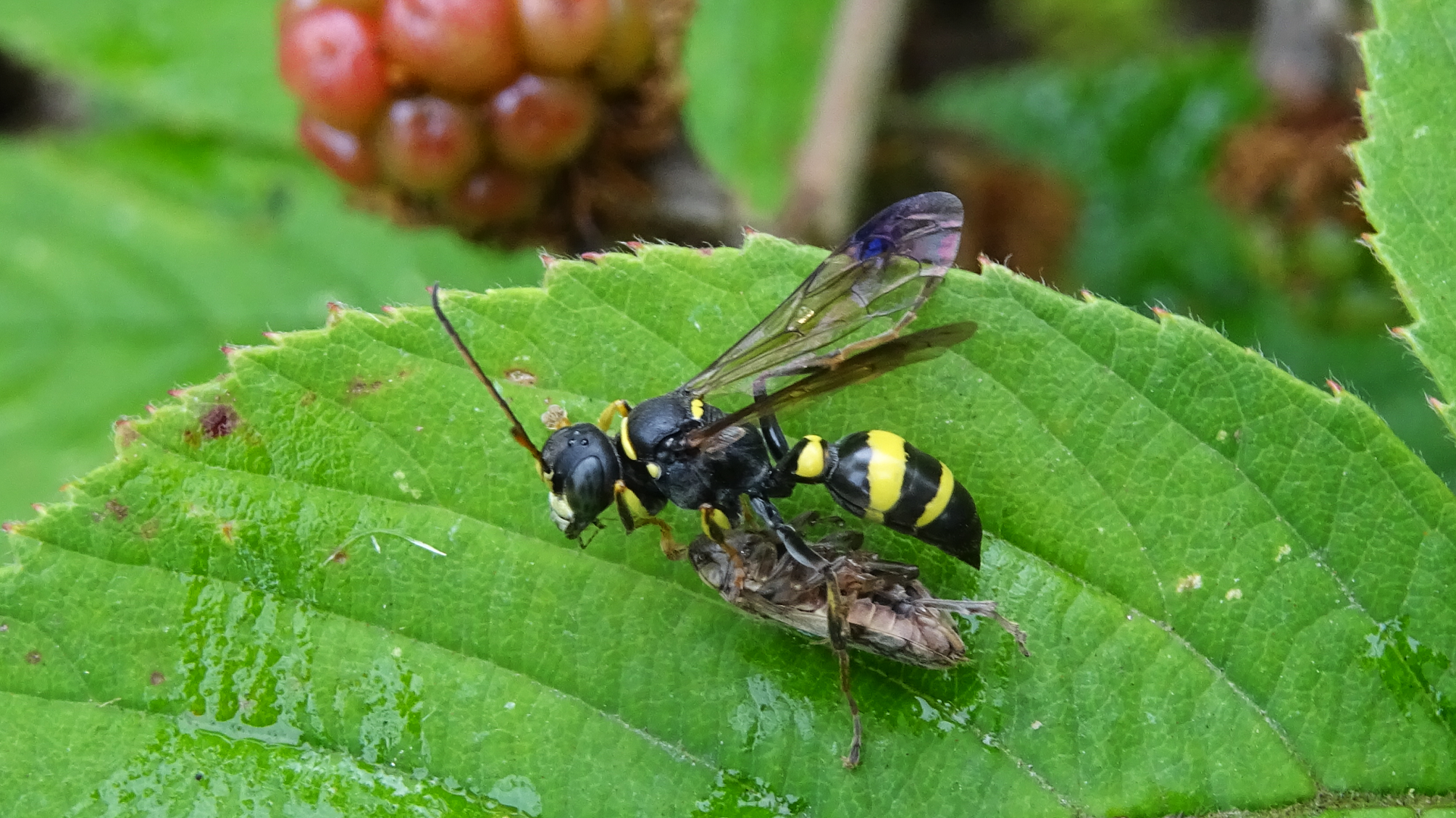
This wasp is often found in sunny locations, particularly in deciduous woodlands, and is linked to scrub and brambles. It features a yellow-banded, slender abdomen and dark markings on the forewing. It is not considered particularly common.
#
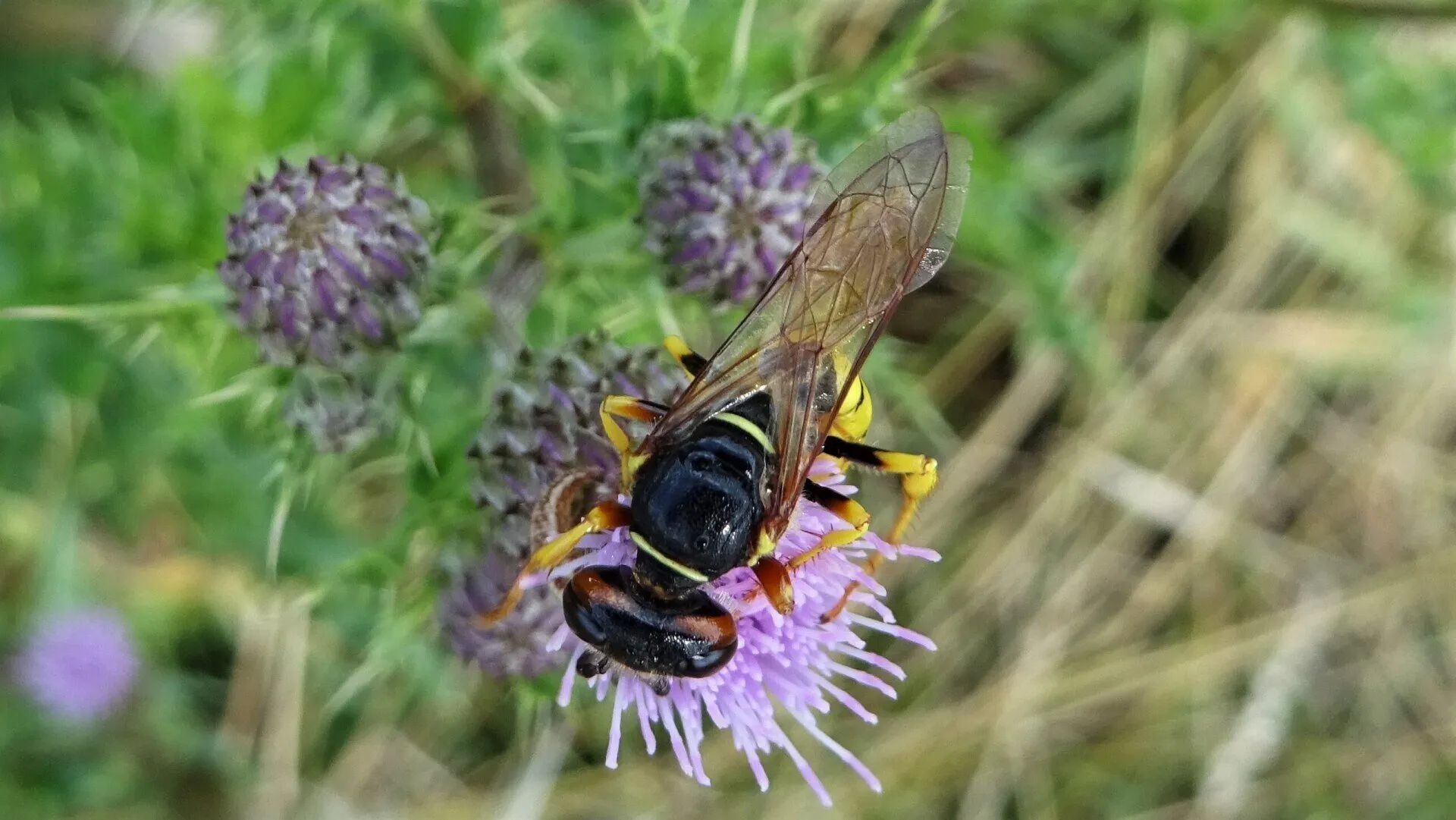
Bee Wolf
Philanthus triangulum
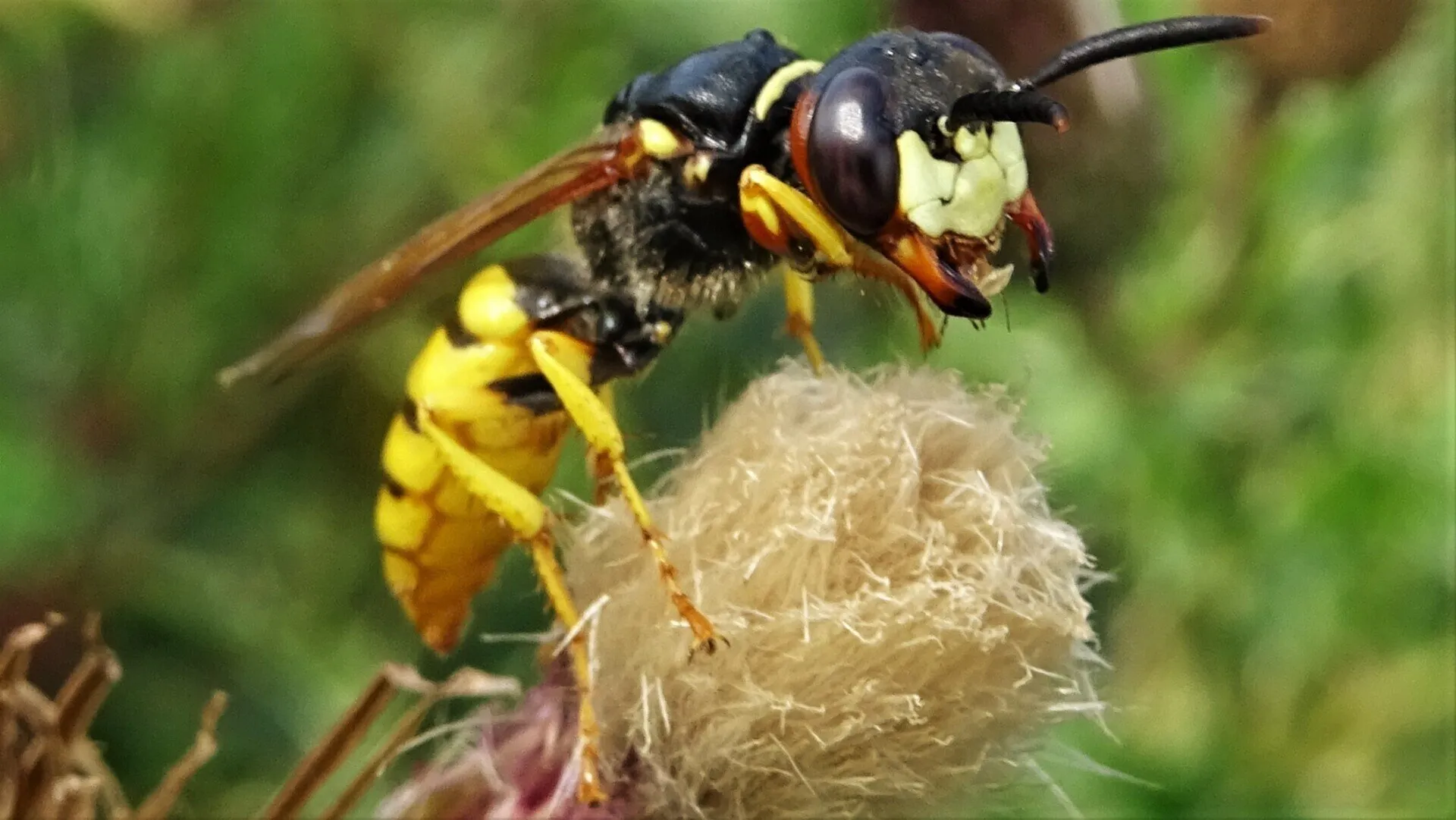
The Bee Wolf was regarded as a rare and vulnerable species in the UK. It is commonly referred to as the 'Bee Killer' due to its predation on honey bees. Its population is gradually increasing in southern England.
#
Banded General
Stratiomys potamida
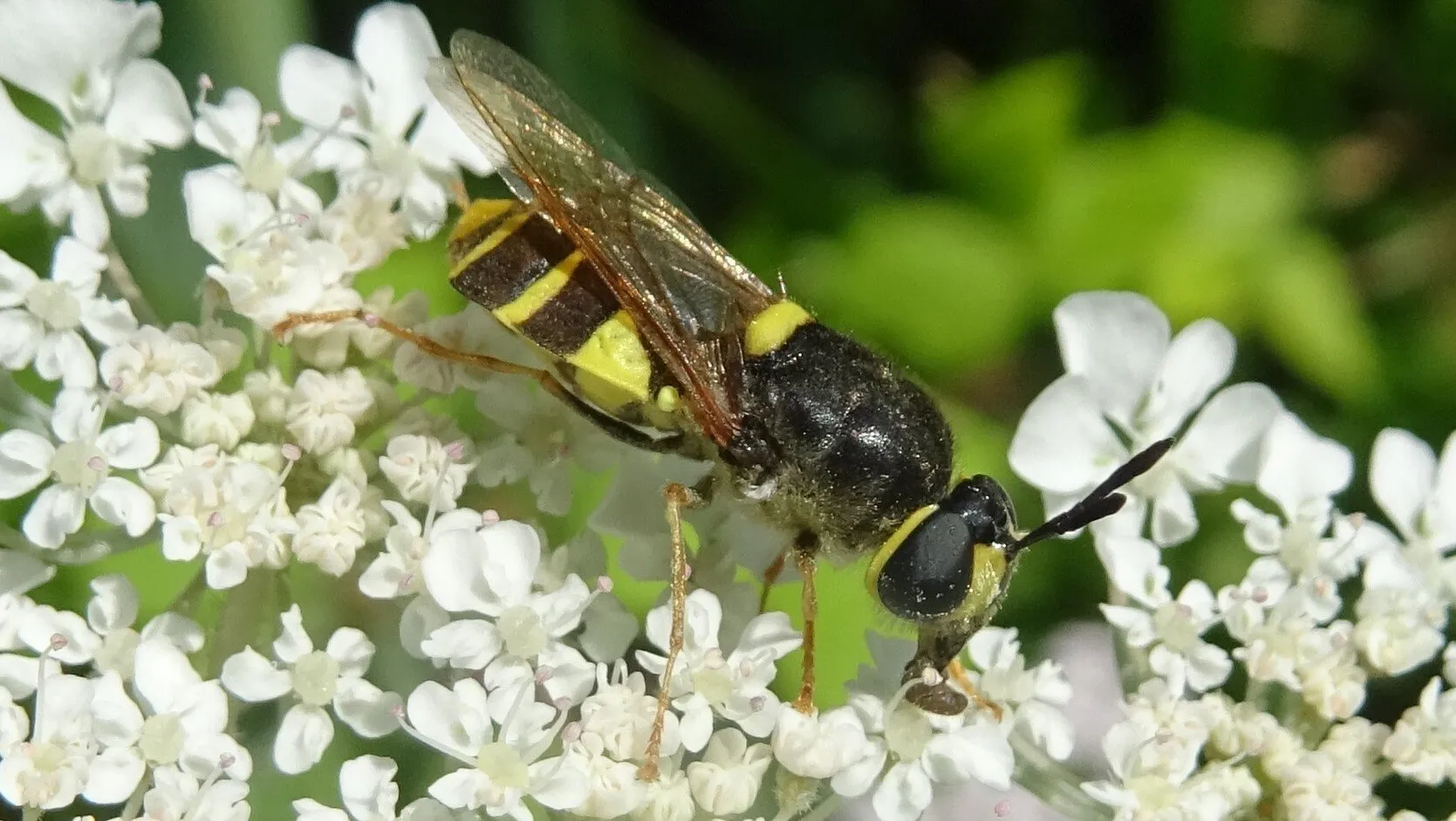
This is slow and cumbersome soldier fly that visits umbellifers and bramble in wet areas from June to August. It looks like a very flat wasp with bright yellow markings. It carnivorous larvae are found in the lake, ponds and ditches. Essex Field Club recorder Del Smith said: "Quite a few Essex records, but never common. One record for Hainault in 1983. A striking fly, I spent a huge amount of time recording diptera in Dagnam Park in 76-85 and never found it. It's a bit hard to miss so I doubt it was present then. Going by the records I have it doesn't seem to be increasing either."
#
Superb Anthill Hoverfly
Xanthogramma pedissequum sensu lato
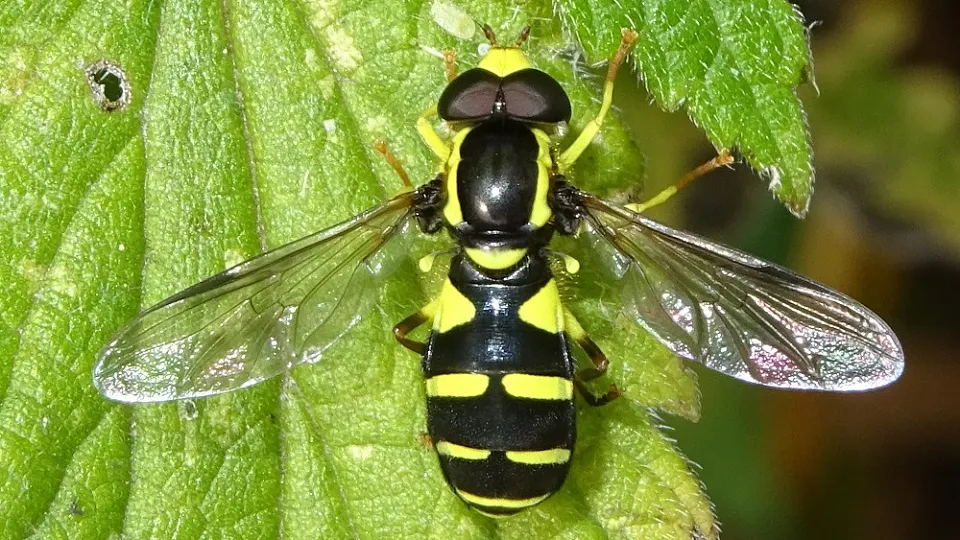
These hoverflies are found in meadows and along woodland paths from May to September. Males may sometimes be seen hovering over bare ground. The larvae feed on aphids located in ant nests.
#
Chalcid Wasp
Ormyrus
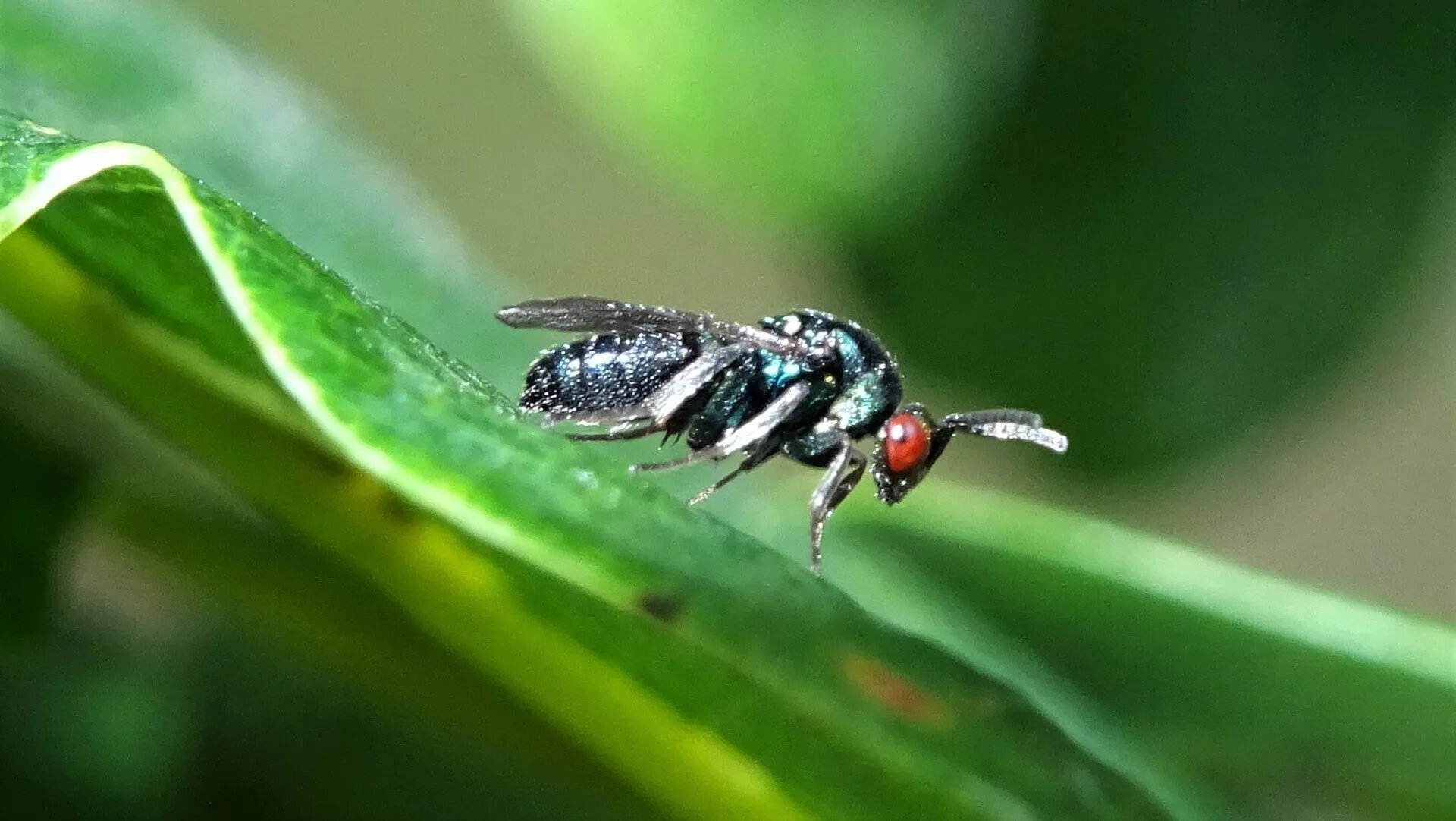
The Chalcid Wasp belongs to the family Ormyridae, which includes at least 120 species. These small parasitic wasps, measuring about 3 mm, have metallic colouration. They lay their eggs on other insects, and the larvae that hatch subsequently consume their host. Chalcids play a beneficial role in managing invasive pest populations. In the summer, they can be found on oak leaves as they search for gall-forming insects to prey upon.
#
Rose Sawfly
Arge pagana

The Rose Sawfly features an orange abdomen and black sides on its thorax. Like all sawflies, it utilizes a small saw to create parallel cuts in the fresh shoots of a host plant for egg-laying. The larvae hatch shortly after and proceed to feed on the leaves. This species is commonly found on Dog rose.
#
Long-legged Fly
Poecilobothrus nobilitatus
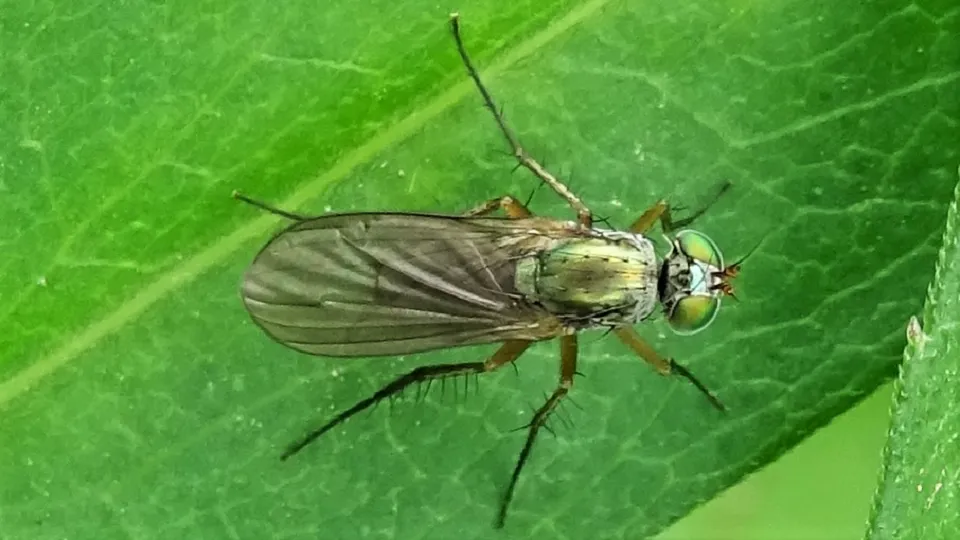
The long-legged fly is a lime-green metallic fly found in moist areas, often resting on plants or on the surface of water and mud. Males have white wing tips, which they flap to attract females during a courtship display prior to mating. These flies are normally observed from May to August.
#
Blue-winged Tachinid
Phasia hemiptera
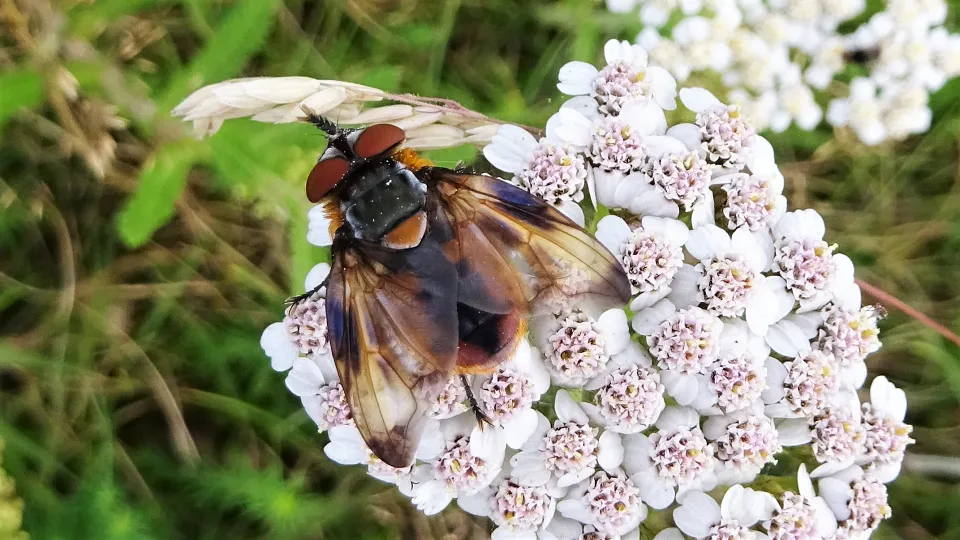
This distinctive tachinid fly is normally found in hedgerows and woodlands from May to August. The females deposit their eggs on shieldbugs, and upon hatching, the larvae consume the host.
#
Fruit Fly
Tephritis formosa
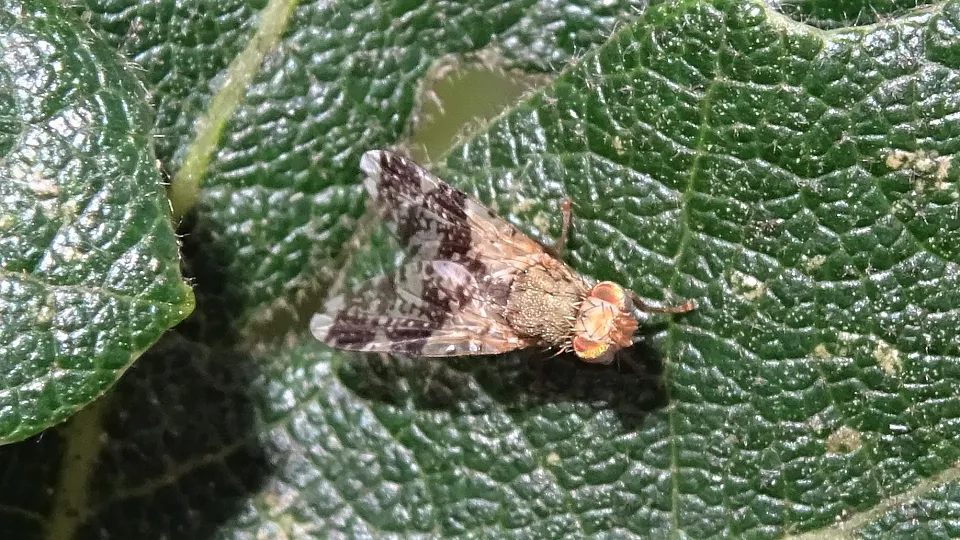
This specied inhabits meadows and grasslands, where its larvae feed on the flower heads of hawk's-beard, cat's-ear, and sow-thistle, leading to the formation of galls. The adults range from 4 to 6 mm in size, with females being slightly larger than males.
#
Grouse Wing
Mystacides longicornis
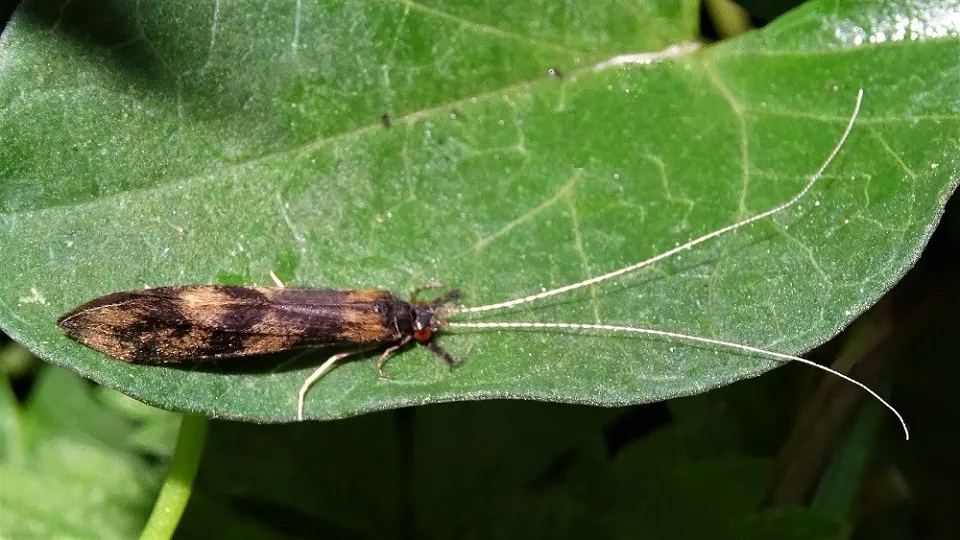
This species of caddis fly has red eyes, striped wings, and long antennae. It measures 6-9 mm in length.
#
Banded Demoiselle
Calopteryx splendens
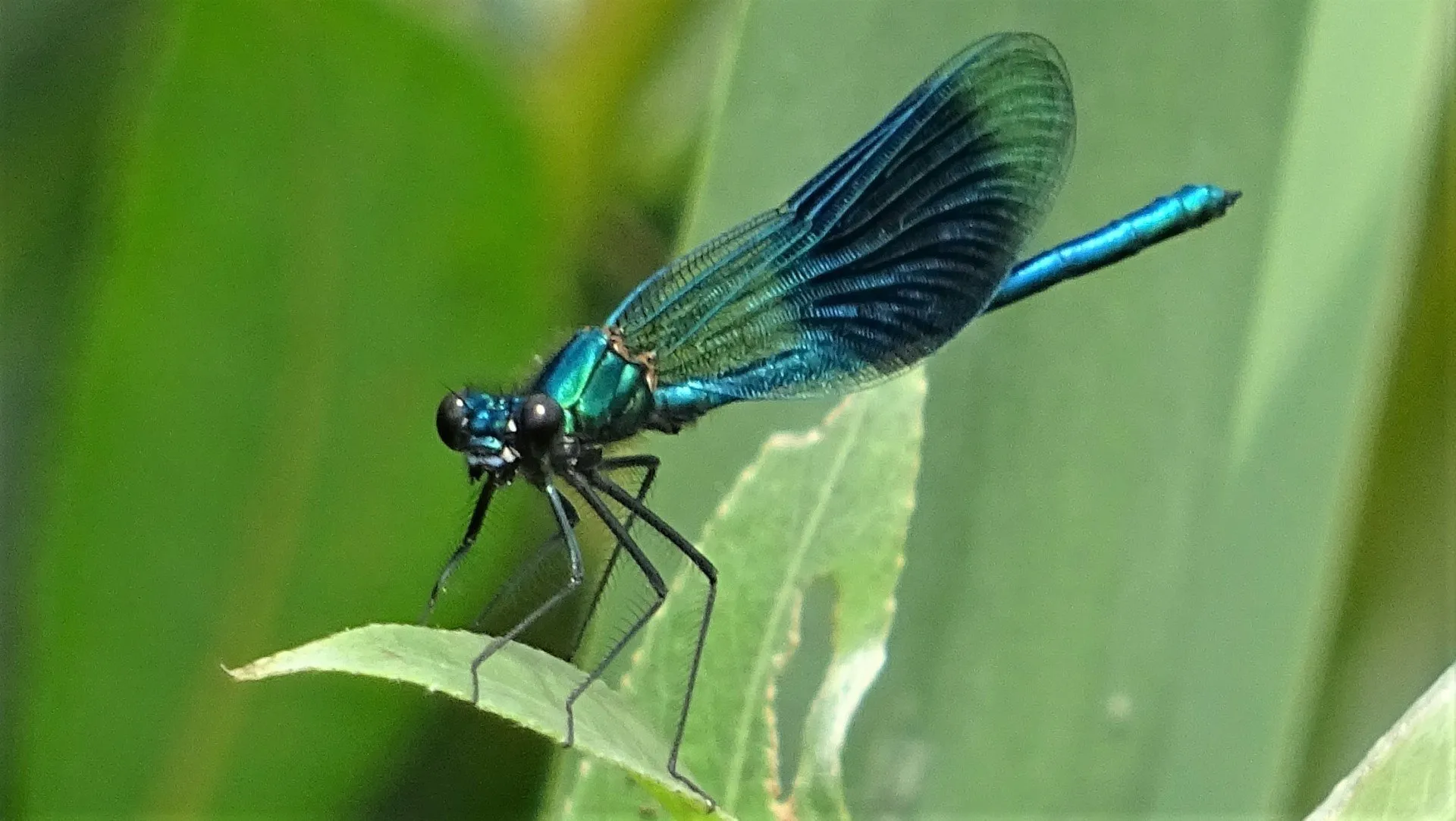
These stunning damselflies are found around lakes and slow-flowing waters. Males are blue with a dark band on their wings, while females are typically greenish and feature a white spot on their wings.
#
Orb-weaver Spider
Neoscona
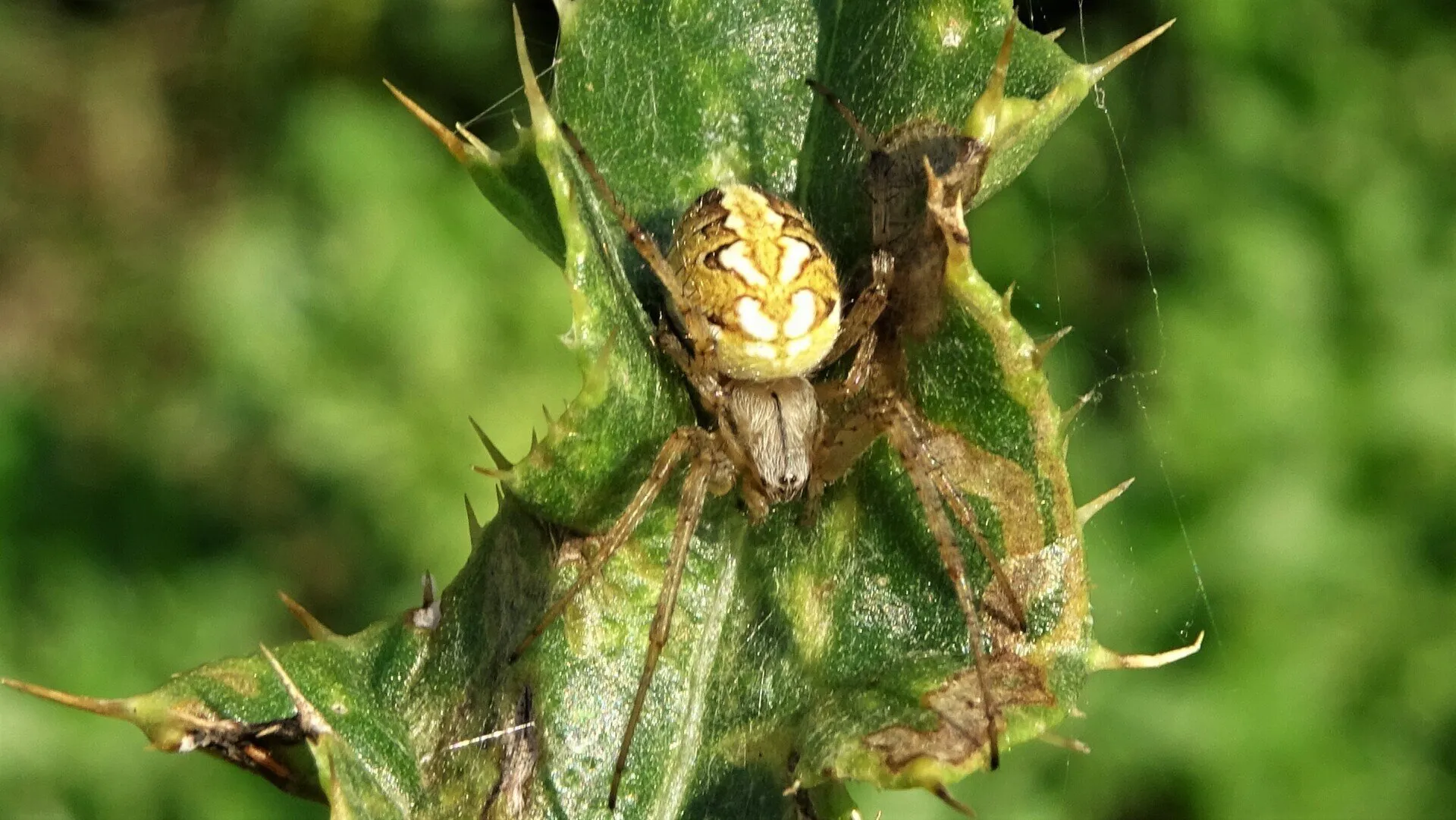
The ground colour of Neoscona spiders can vary, but their pattern is quite distinctive. While they can be found in open grasslands, this species tends to prefer gorse and heather. It is commonly found in south-east England.
#
Wasp Spider
Argiope bruennichi
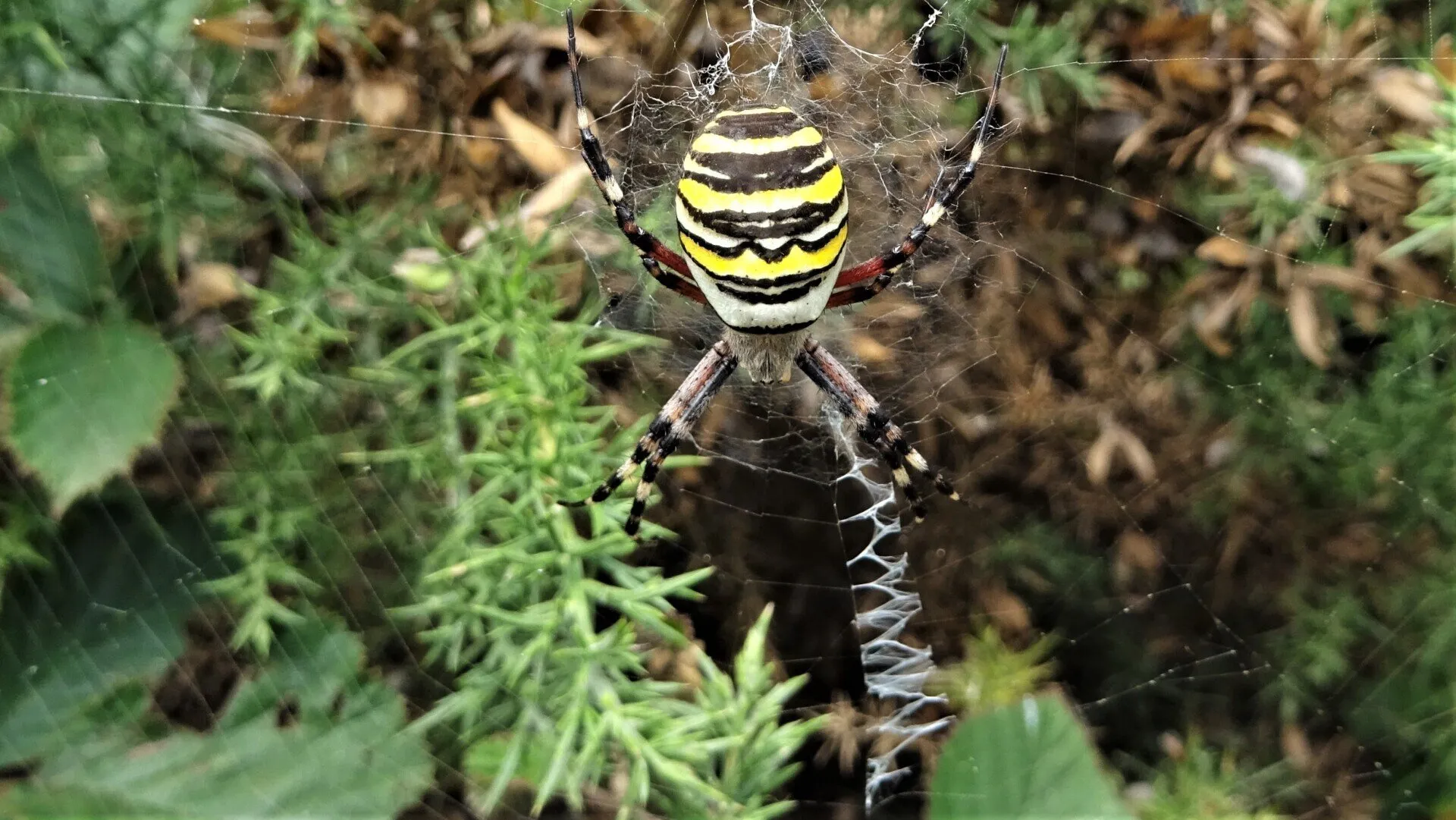
The Wasp Spider is distinct and not likely to be confused with any other spider found in Britain. It is typically observed in late summer and early autumn, constructing its web above ground level in grass or low plants. This position is effective for capturing grasshoppers, which serve as its main food source.
#
Black Slug
Arion ater agg.
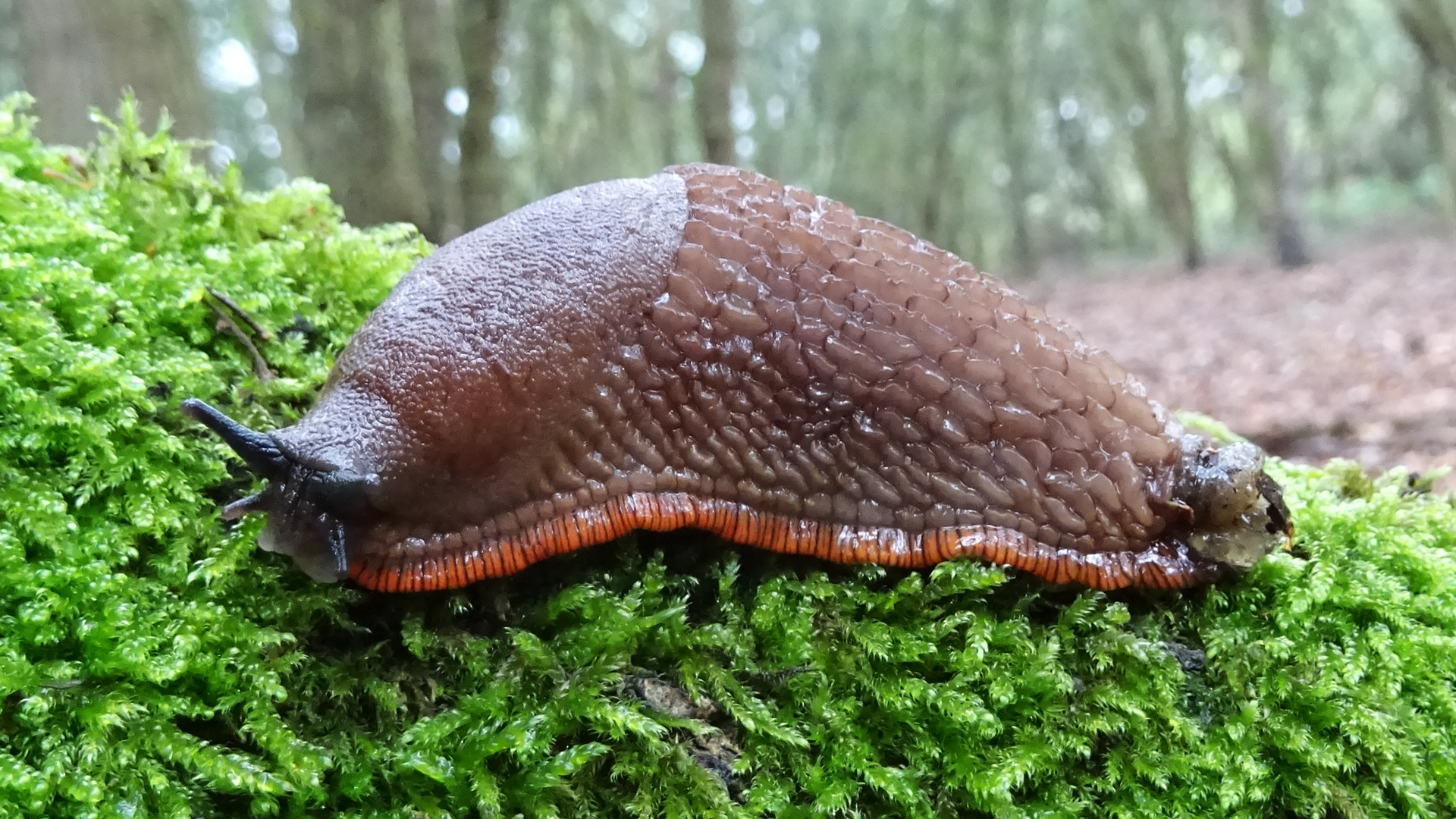
There are three types of Black Slug, and distinguishing between the species requires dissection, which has not been performed on this particular slug. These slugs can be found in various colors including black, brown, grey, orange, or reddish, and they can grow up to 18 cm in length. The foot fringe, which features black bands, can vary in colour, appearing as orange, yellow, grey, or red; in Hainault Forest, an orange fringe is generally observed. The sticky mucus produced by this group of slugs is colourless. These slugs inhabit well-vegetated areas from March to October, usually becoming active after rainfall or at night. Their diet mainly consists of vegetable matter, with a preference for decaying plants, carrion, and dung.
- Do you know? A group of slugs can be called a rout, a walk, or a cornucopia.
#
Ichneumon
Enicospilus cerebrator
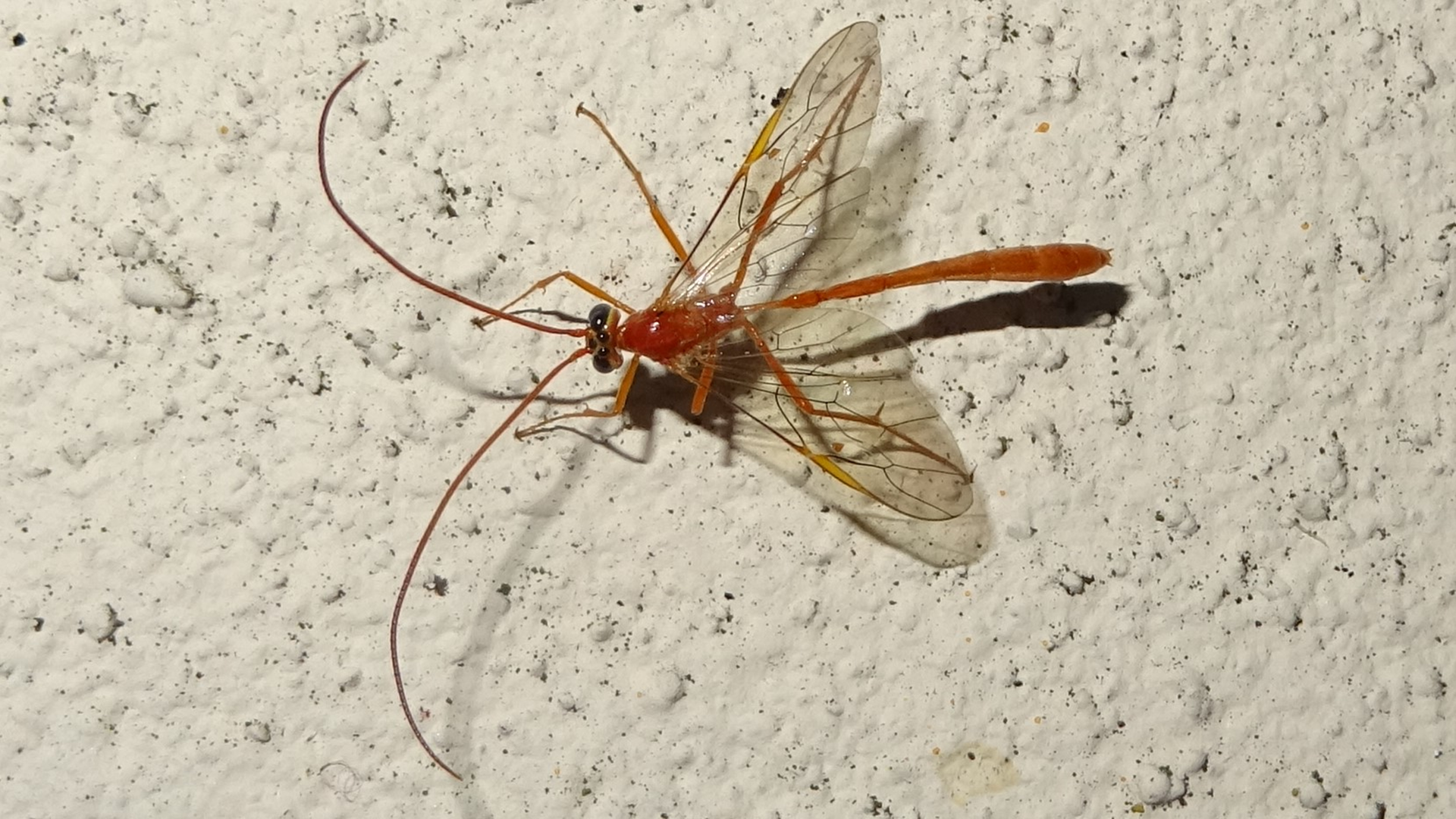
This ichneumon cannot be identified to species from a photograph. It was sent to Dr. Gavin Broad at the Natural History Museum to examine. He confirmed it to be a male
Enicospilus cerebrator, late in the season. Not many British records exist for this species.
#
© hainaultforest.net. All rights reserved.
This website uses necessary cookies. It does not use targeting or advertising cookies.