

FIRST QUARTER 2020
This Journal covers the first quarter of 2020 from January to March.
Slime Mould
Stemonitis sp.
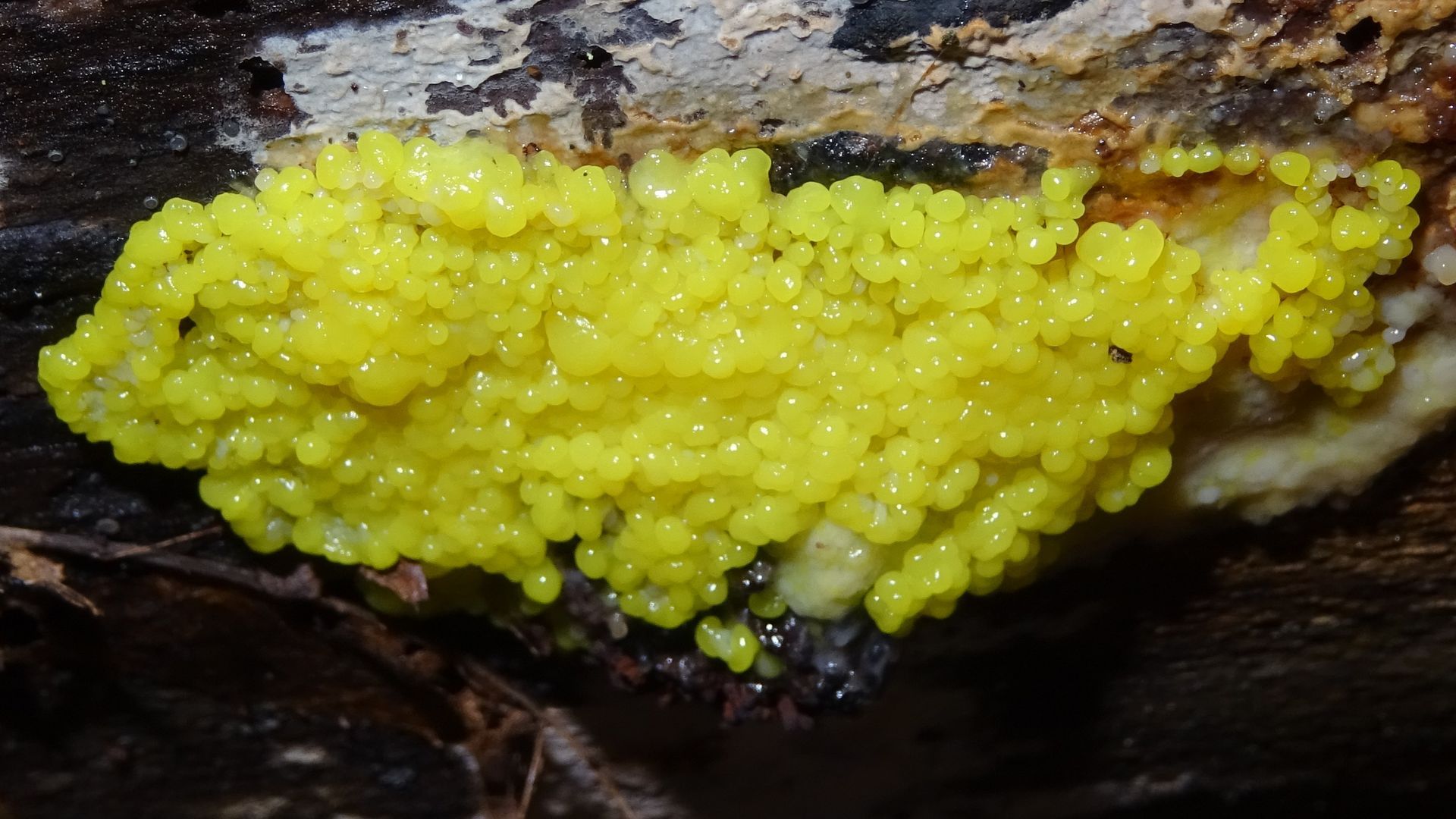
This is an early stage of a
Stemonitis
slime mould. It is a distinctive genus recognised for having clusters of tall brown sporangia that develop on slender stalks on decaying wood. Distinguishing between the various species can be challenging and generally requires a microscope or DNA sequencing to analyse the later phases accurately.
#
Hanging Bladder Slime Mould
Badhamia utricularis
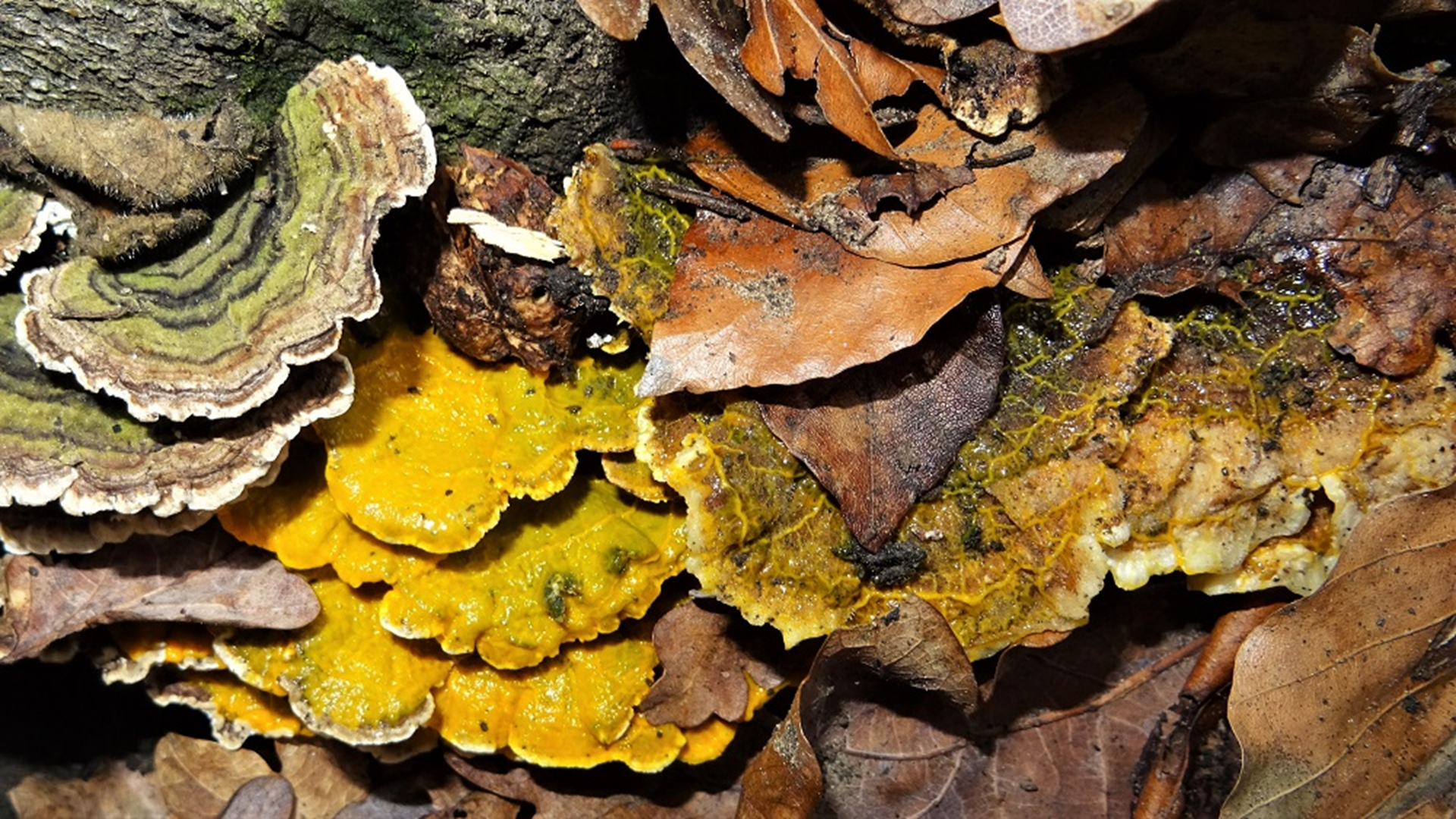
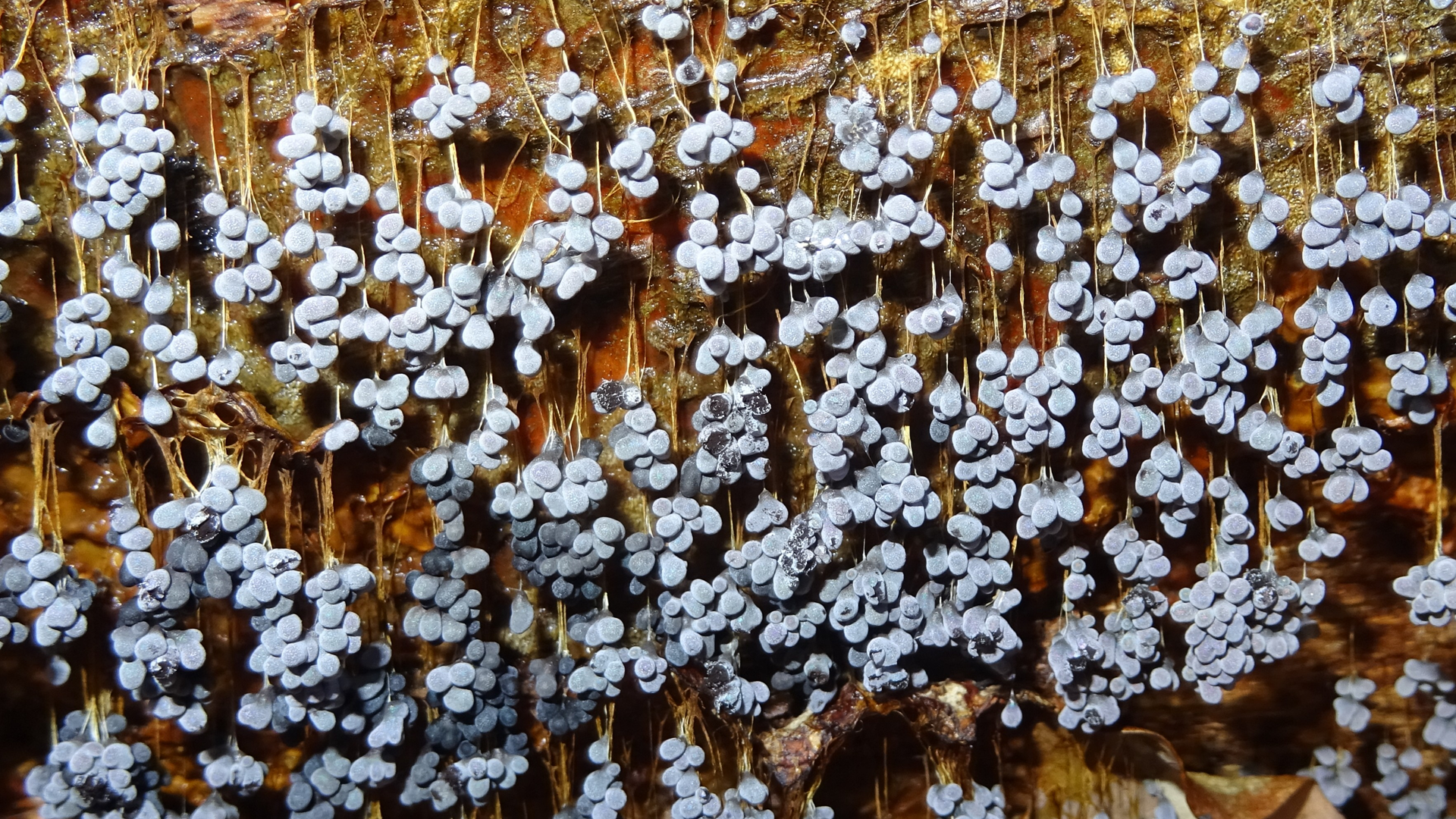
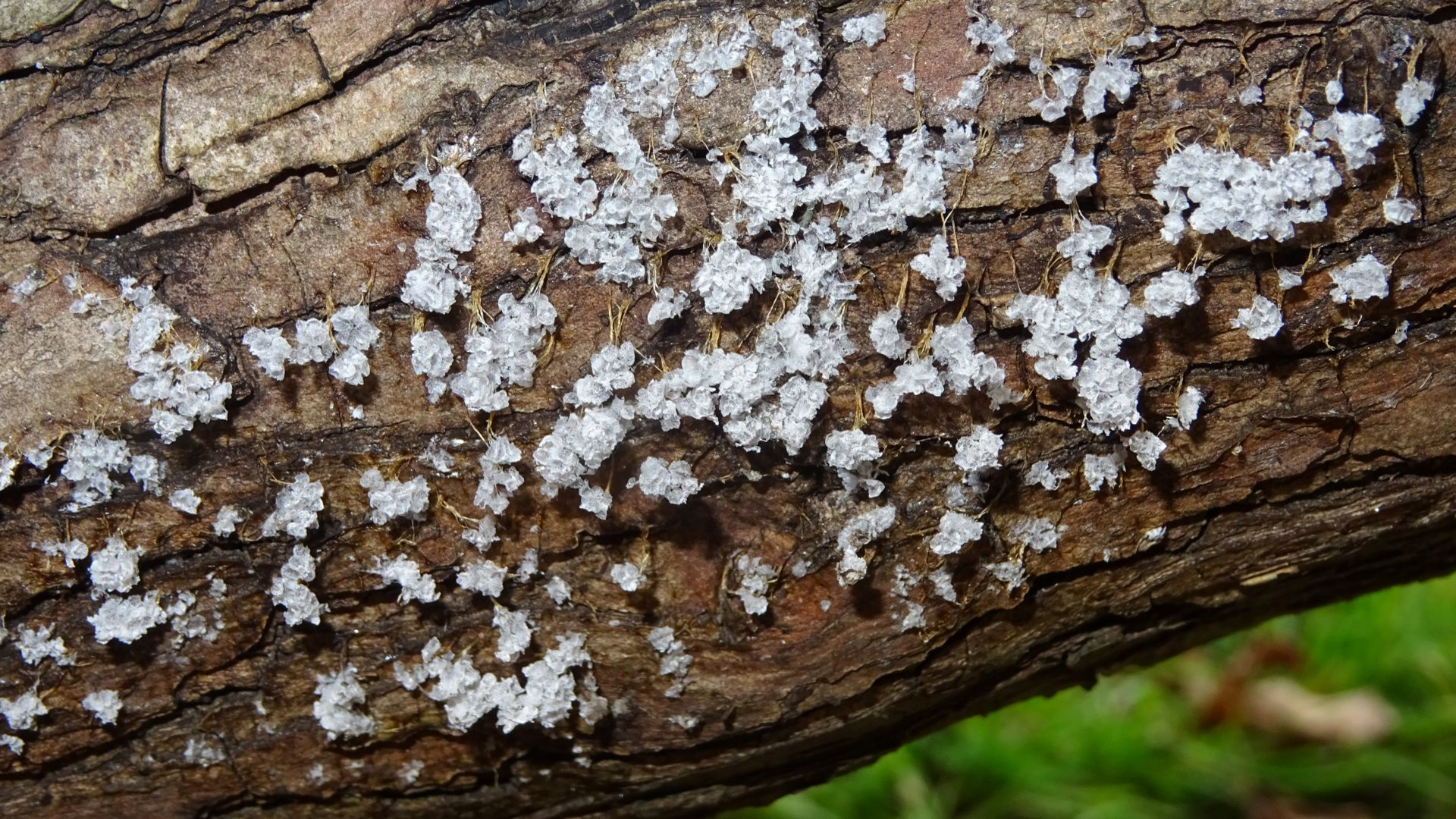
Hanging Bladder Slime Mould was frequently observed on deciduous logs in the beech woodland during January. Bright yellow plasmodium covering turkey tail fungus suggested the species, though it was not conclusive. The presence of grey bladders suspended on brownish stalks was a clear identifying feature. This slime mould feeds on crust fungi. The bladders are sporangia that open to release spores. "Utricularis" in the scientific name means "bladder," a reference to the shape.
#
Bleeding Oak Crust
Stereum gausapatum
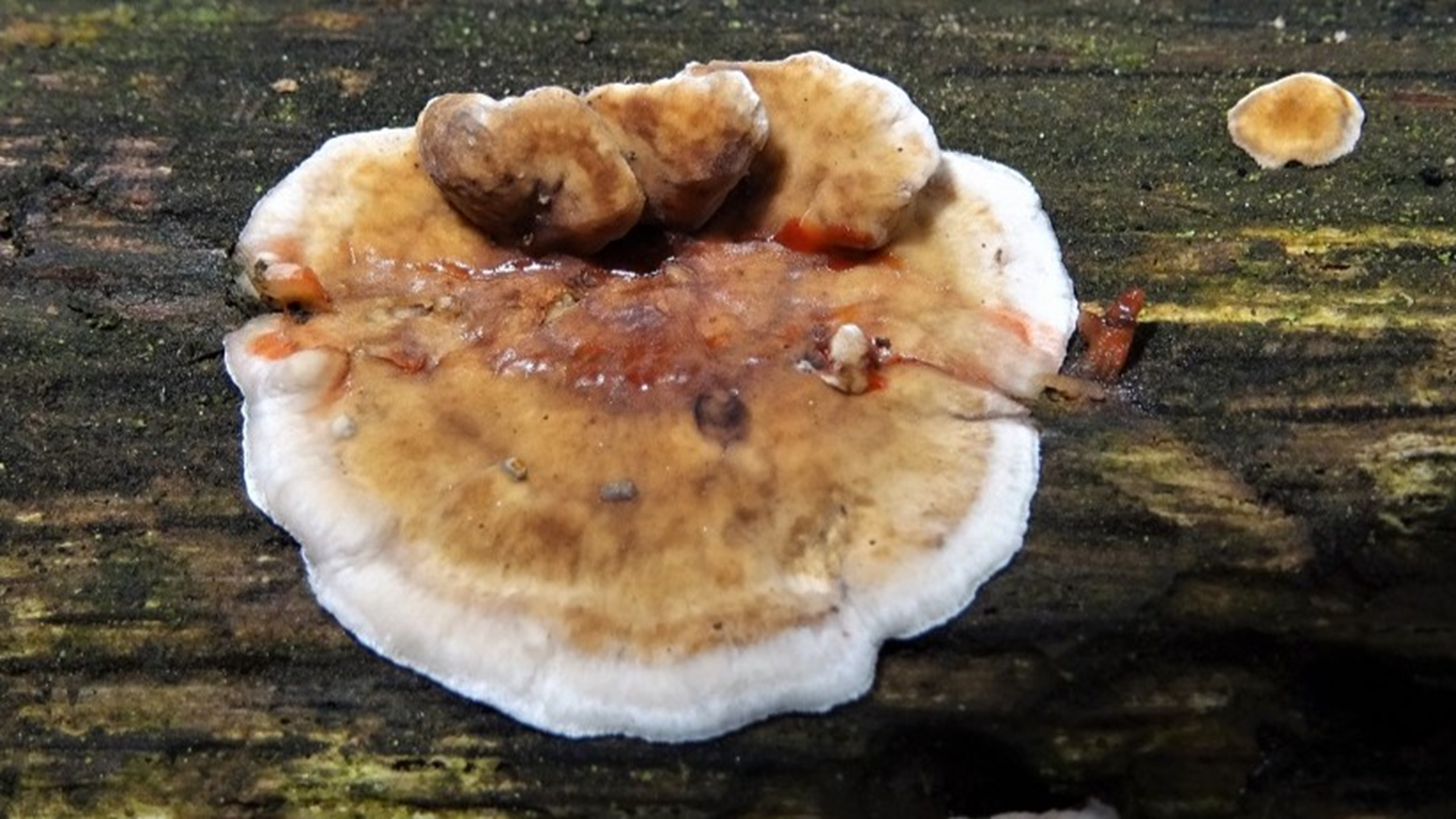
This fungus appears as circular crusts that sometimes develop into overlapping brackets. It is brown and leathery, featuring a whitish margin. It can be found on dead oak branches and logs throughout the year. When the fungus is damaged, it releases a blood-coloured fluid, creating the appearance of bleeding.
#
Honey Fungus
Armillaria mellea
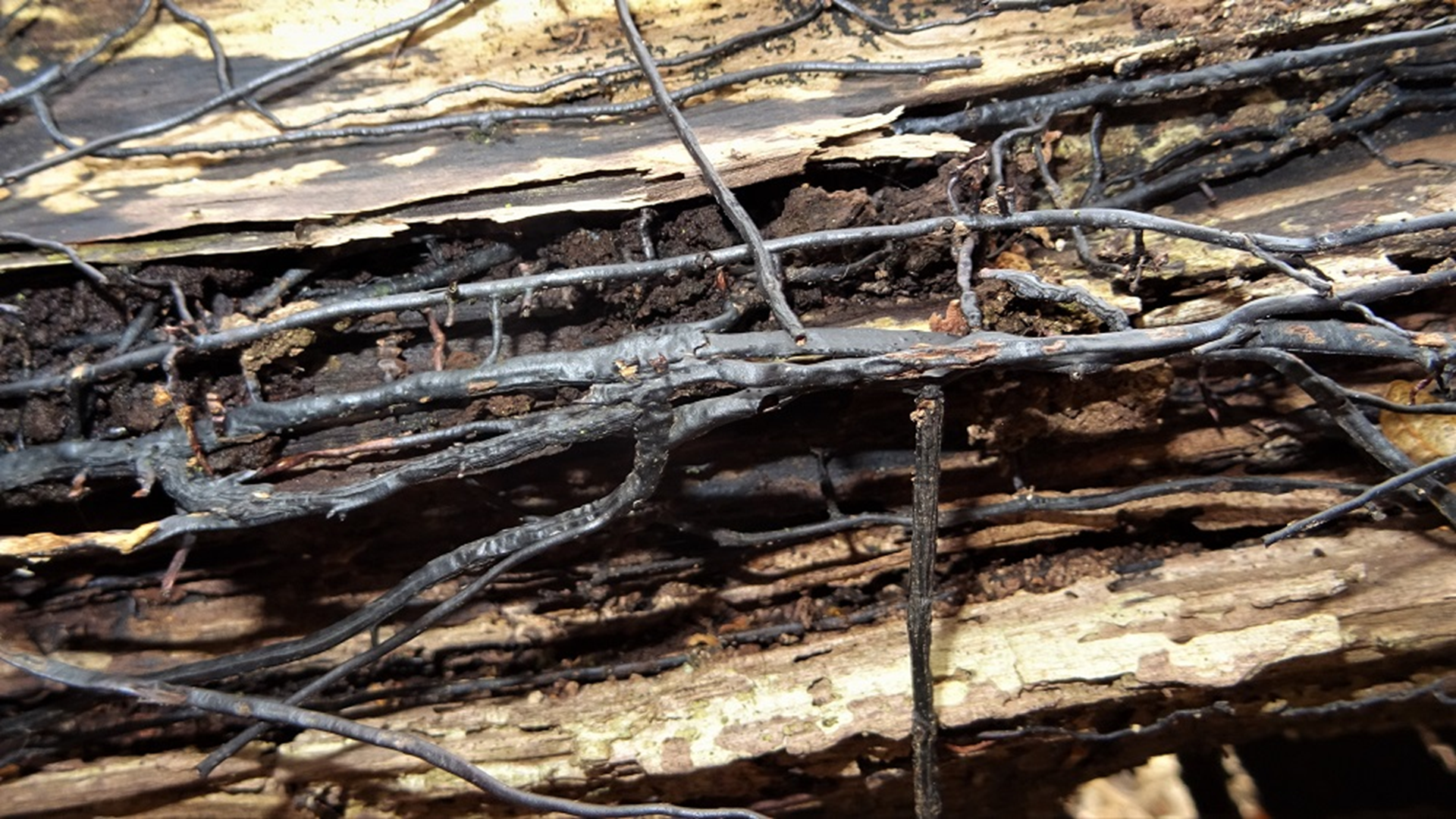
Honey fungus is harmful to trees. It develops a network of black strands known as 'bootlaces' beneath bark, The bootlaces usually go unnoticed until they push the bark from the tree, resulting in the death of the host.
#
Coral Spot
Nectria cinnabarina
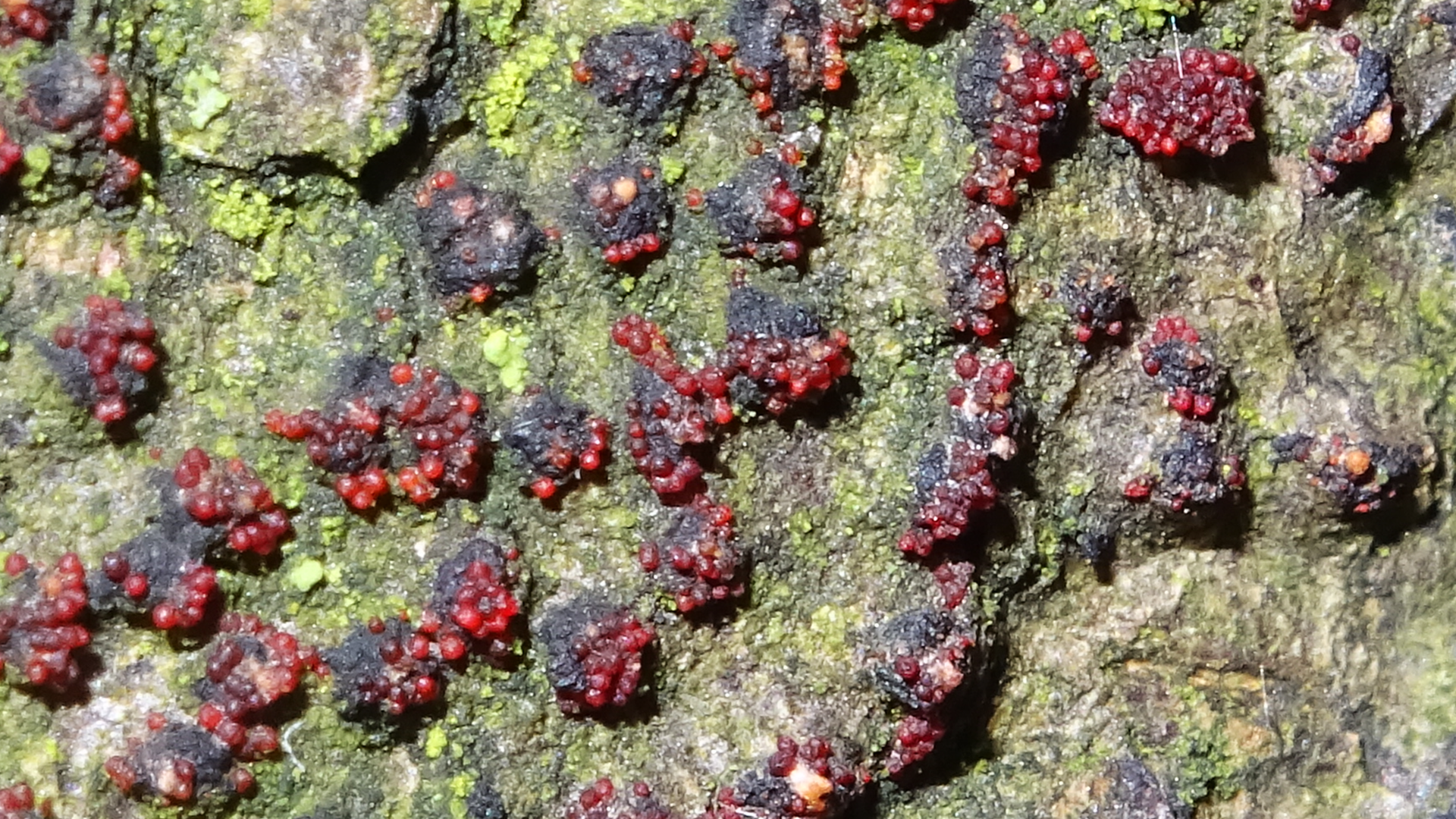
Emily, a ranger with Redbridge Vision, found clusters of ascomycete fungus
Nectria cinnabarina
on a fallen beech branch. There are around sixty different species of
Nectria fungi in Britain. They typically appear as small, rounded, brightly coloured fruiting bodies, some of which are associated with canker and other tree infections.
#
Wooly Woodwart
Lasiosphaeria ovina
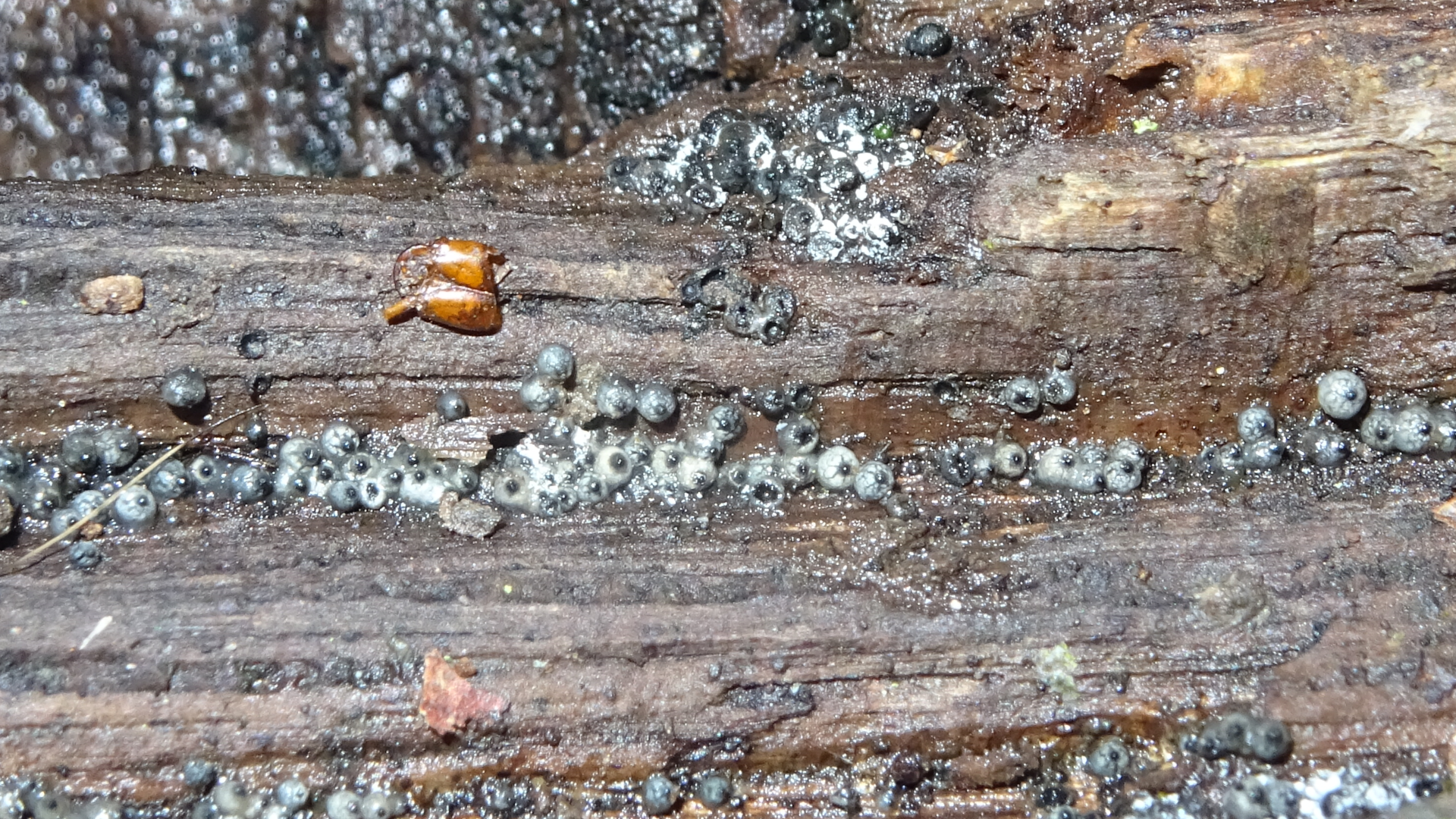
This tiny stalkless fungus belongs to the class Ascomycota. It grows gregariously on the underside of very rotten, damp deciduous wood, including beech, oak, silver birch and ash. The fruiting bodies (perithecia) are spherical with a central papillate ostiole, a raised, projection on the surface that houses a pore for spore release. The diameter can reach up to 0.6mm.
#
Ascomycete Fungus
Lachnum brevipilosum
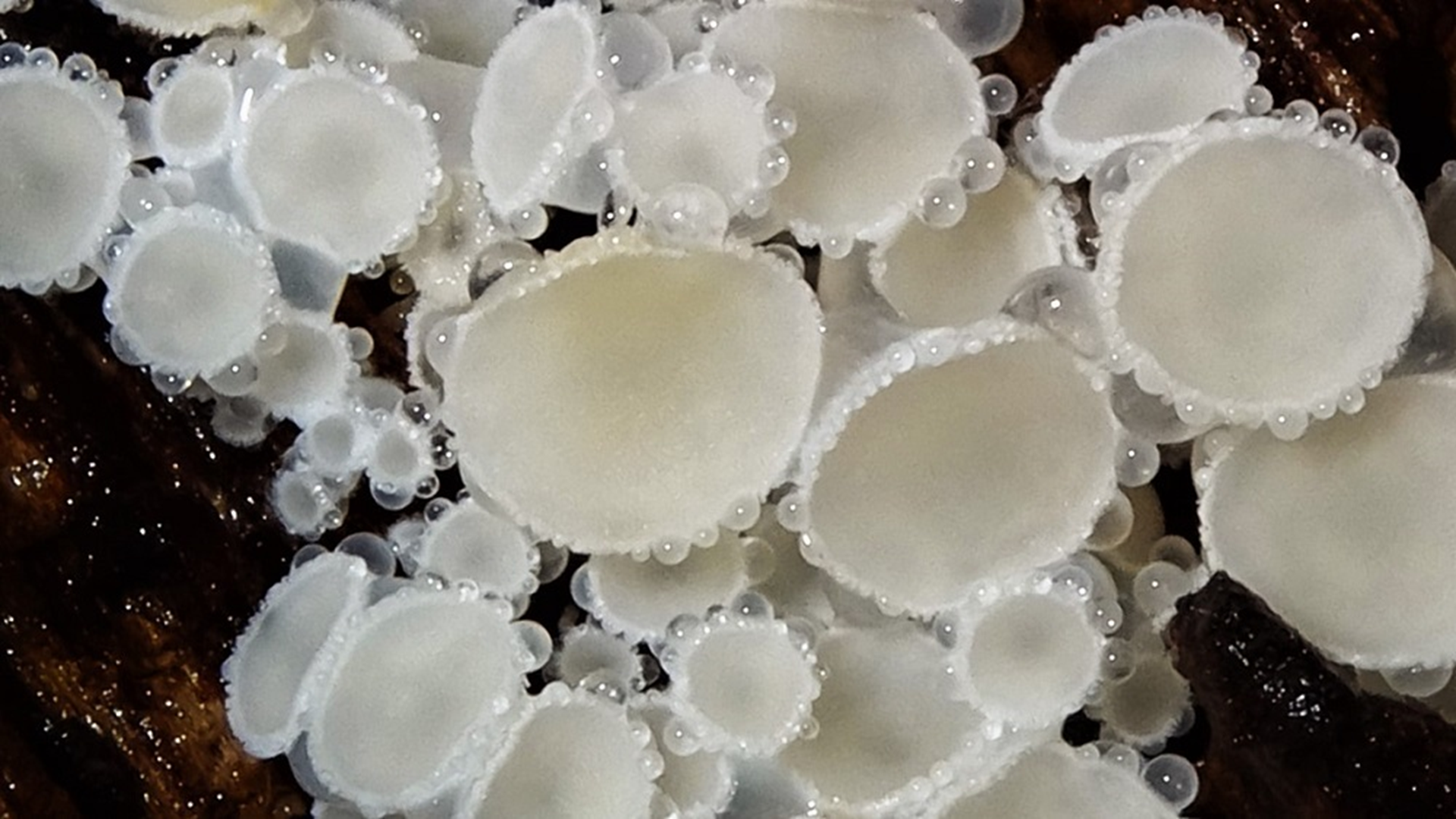
Lachnum brevipilosum is a small ascomycete fungus that can occasionally be observed in clusters beneath damp logs, with caps measuring only 1-2 mm in diameter.
#
Hazel
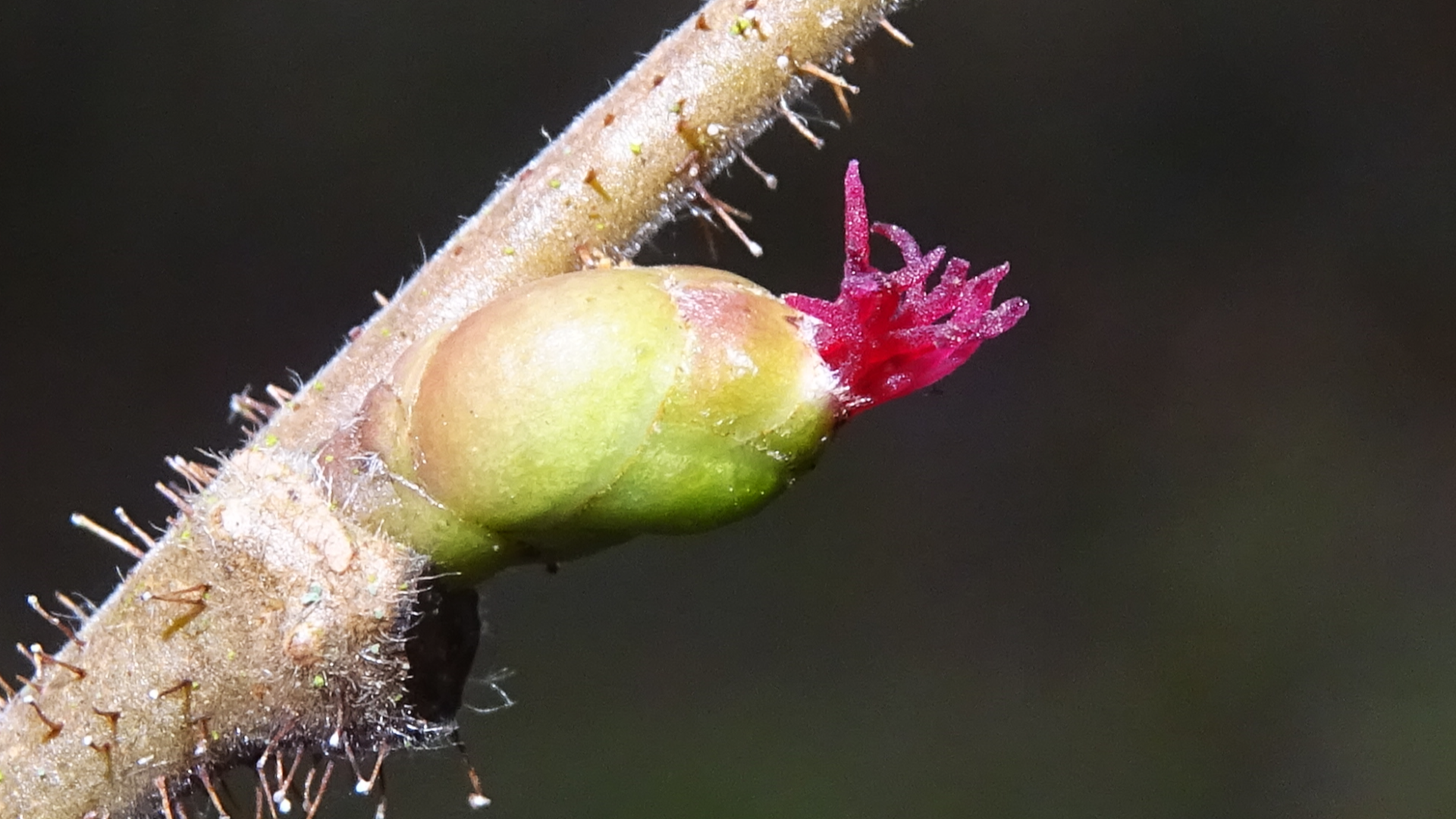
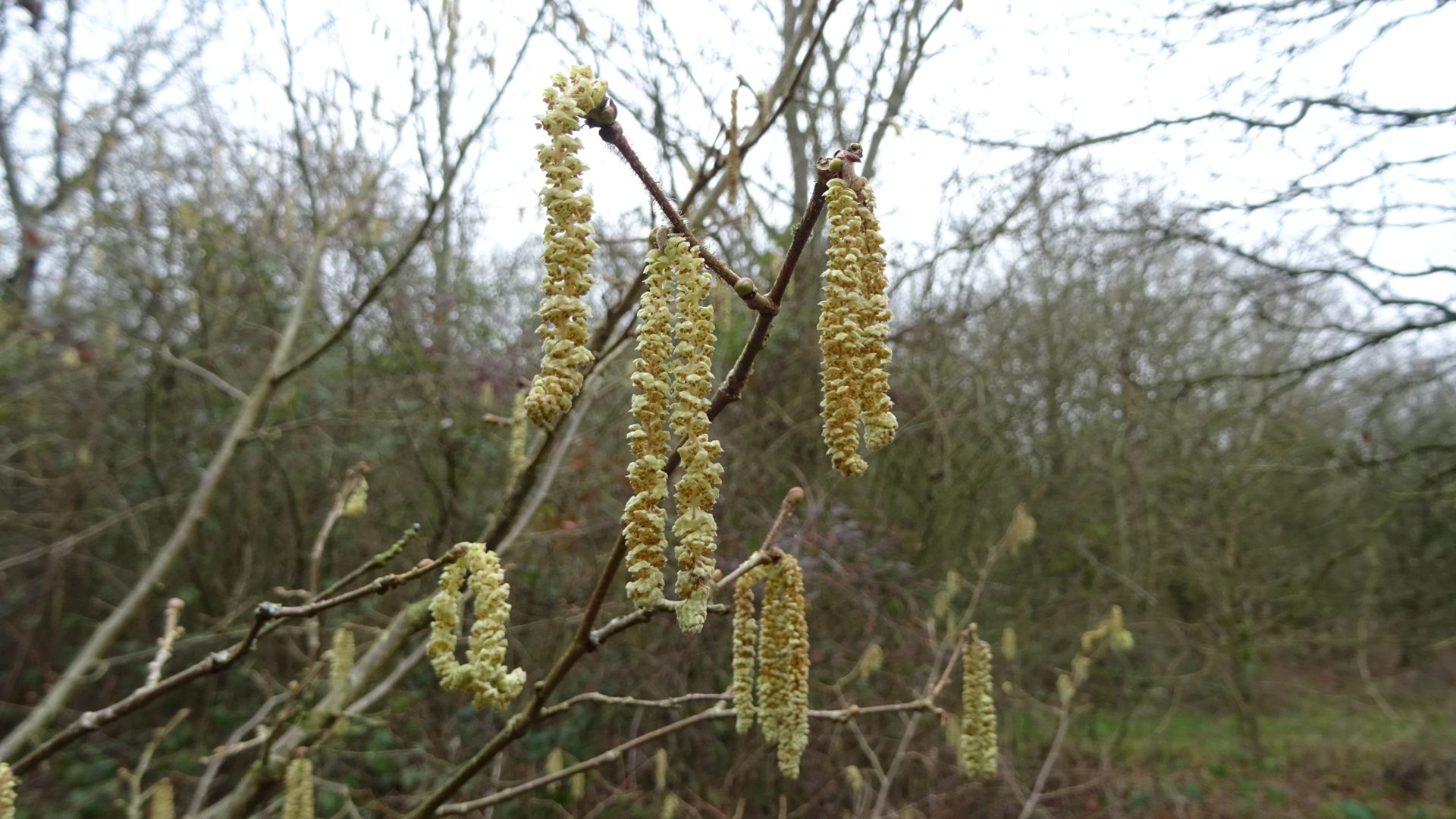
Female flowers on hazel trees typically appear in early January. They are difficult to see, as they are only a few millimetres in size. In contrast, the long catkins, which are the pollen-producing male flowers, are much more prominent.
#
Elderberry
Sambucus
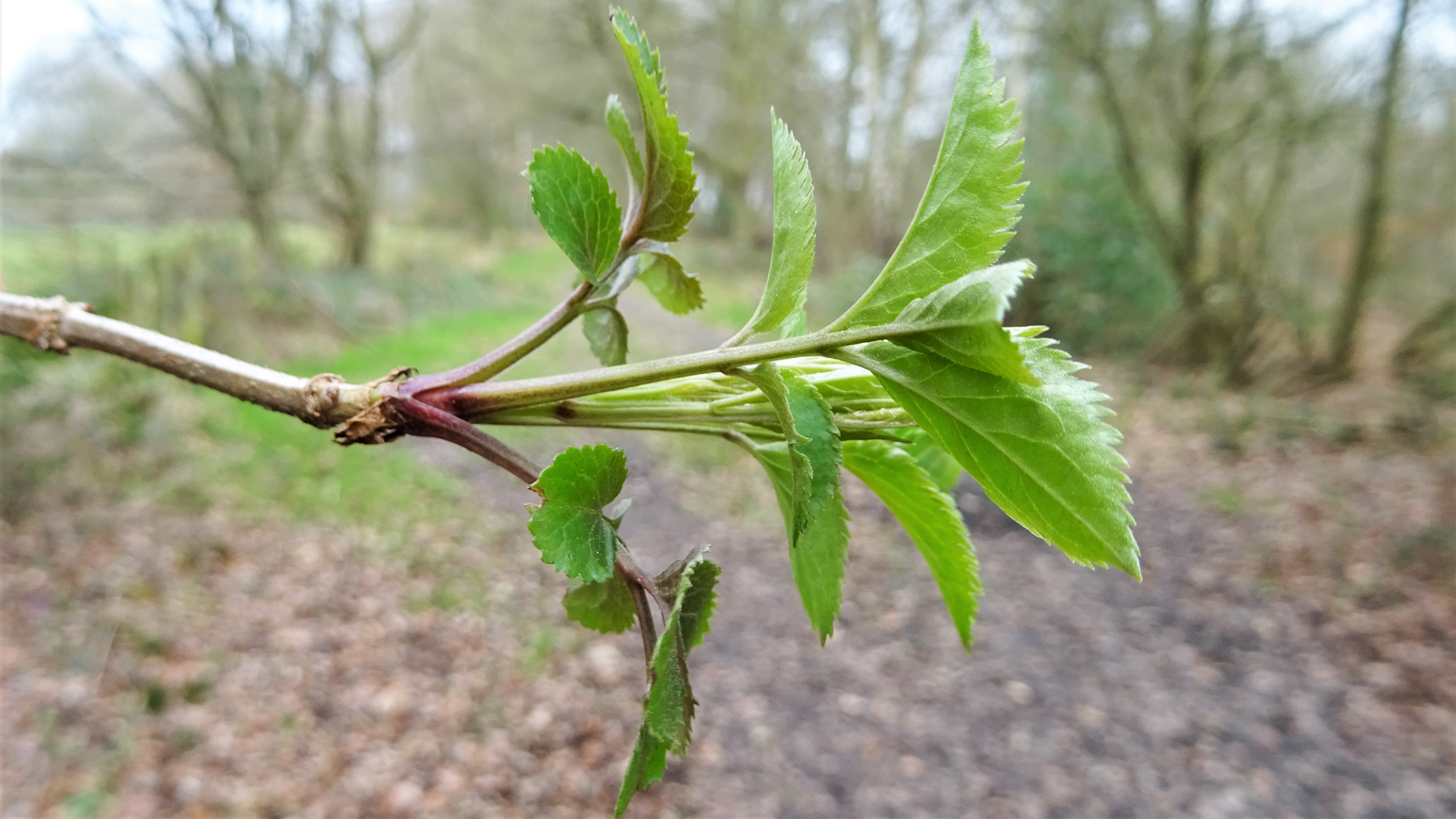
Elderberry leaves usually start developing early in the year.
#
Crack Willow
Salix fragilis
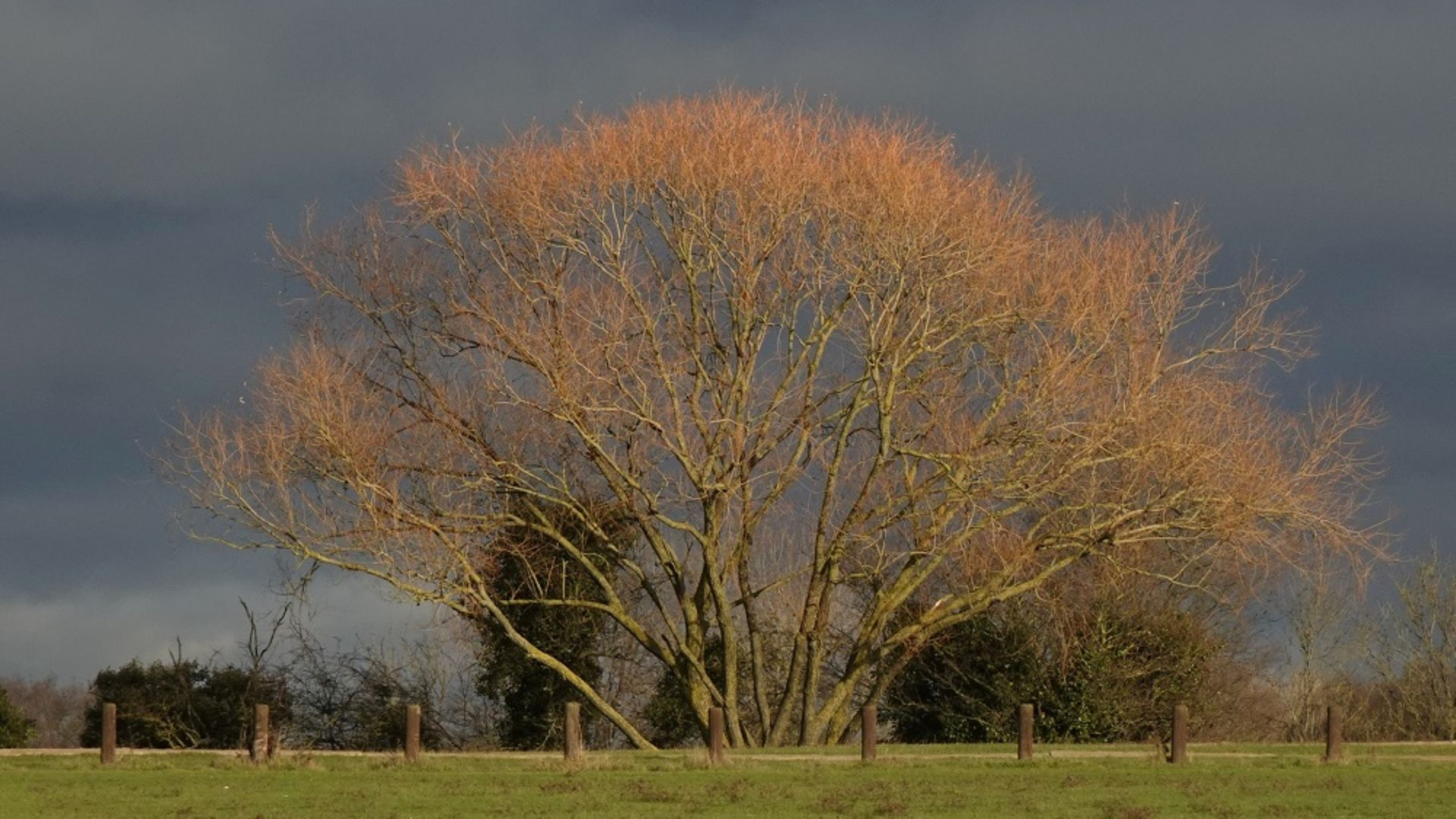
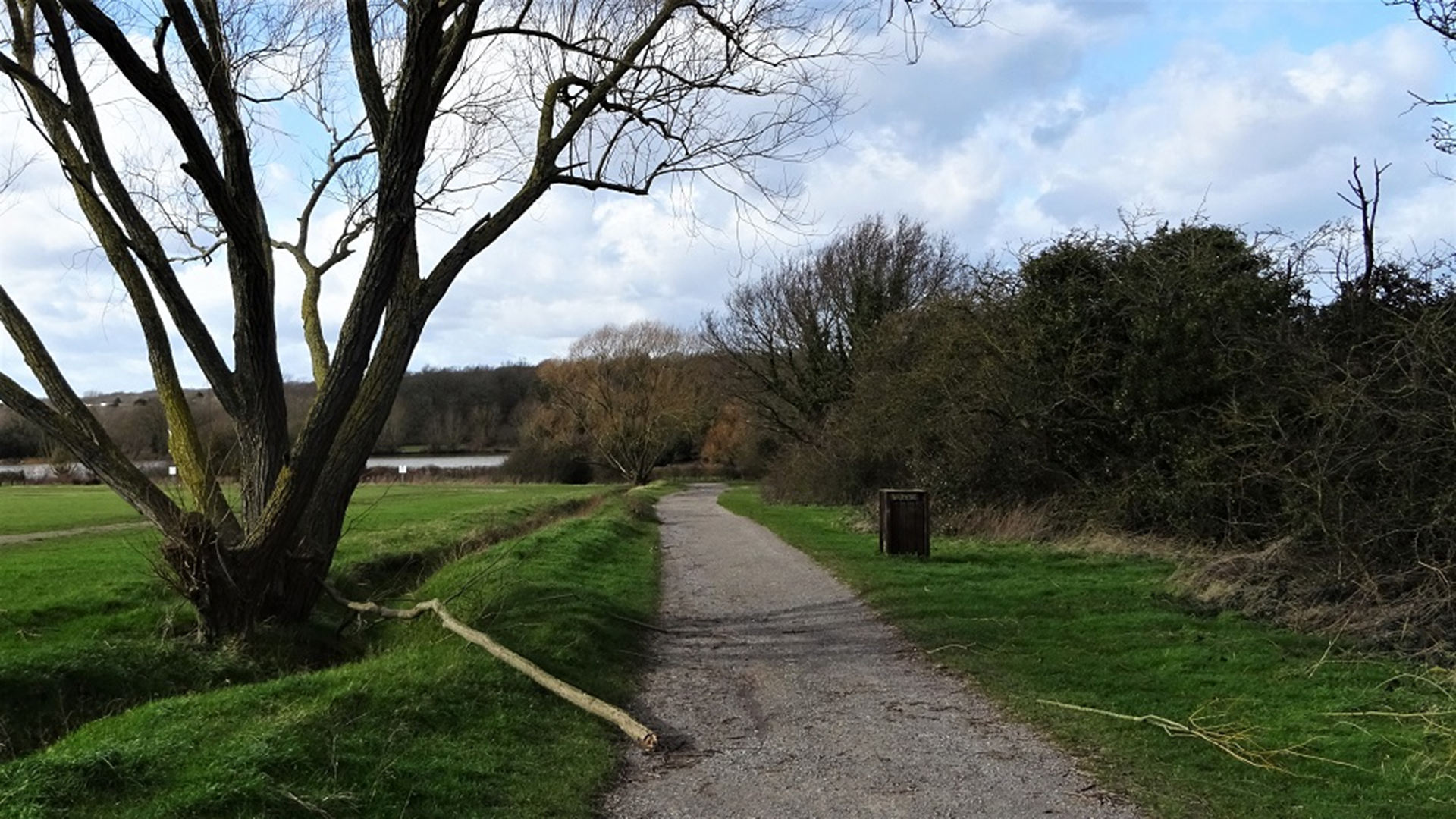
A Crack Willow tree located along the path between the Global Cafe and Hainault Lake. The branches are quite fragile and can easily break off in strong winds, producing a loud cracking sound. The tree's twisted trunk is also known to split or "crack" open as it grows, which contributes to its name too.
#
Snowdrop
Galanthus
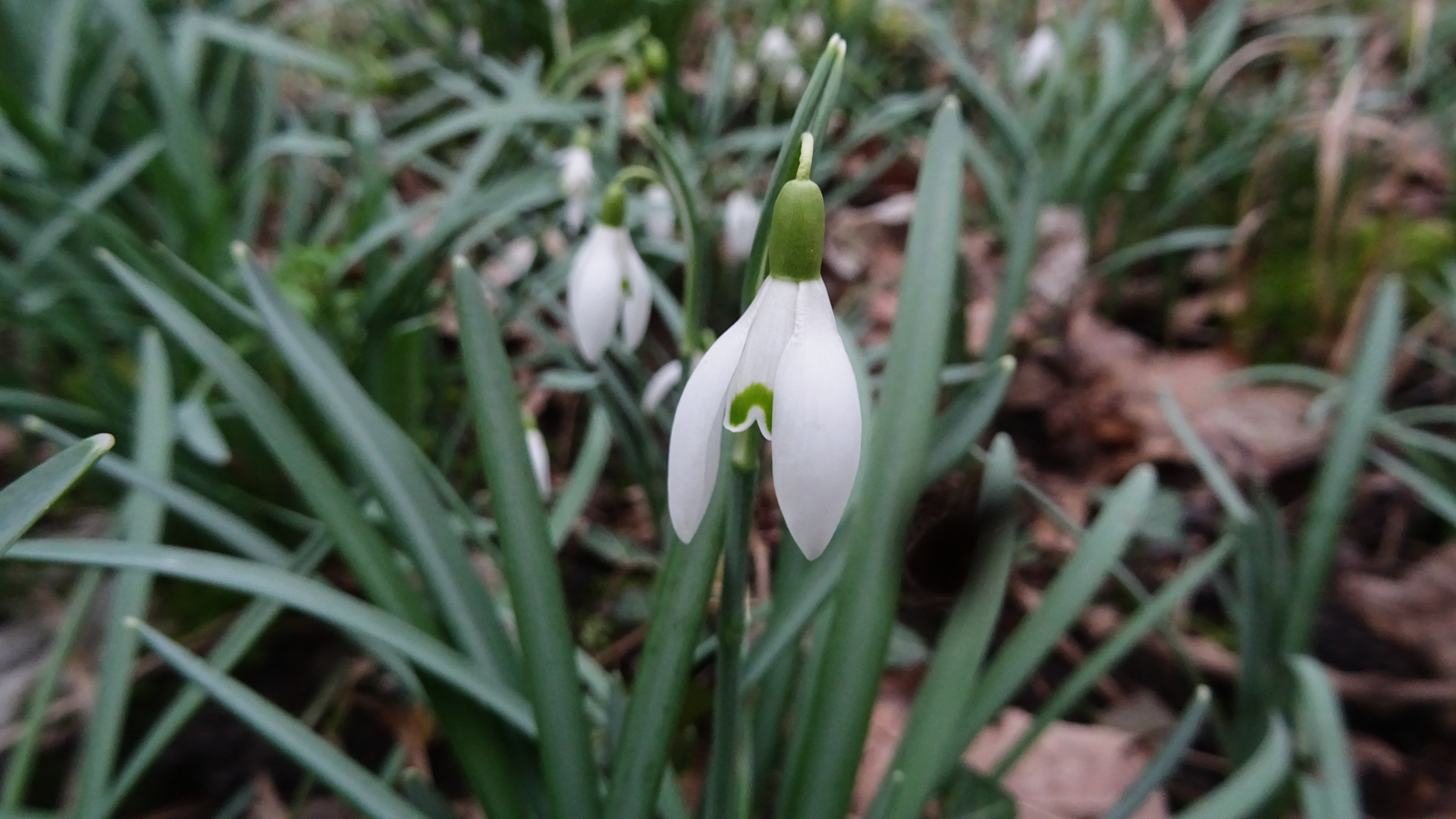
Snowdrops typically bloom from January to March. They have nodding white flowers and narrow greyish-green leaves. Commonly located in damp woodland areas, they indicate the approaching arrival of spring. Snowdrops are members of the Daffodil family.
#
Cherry Plum
Prunus cerasifera
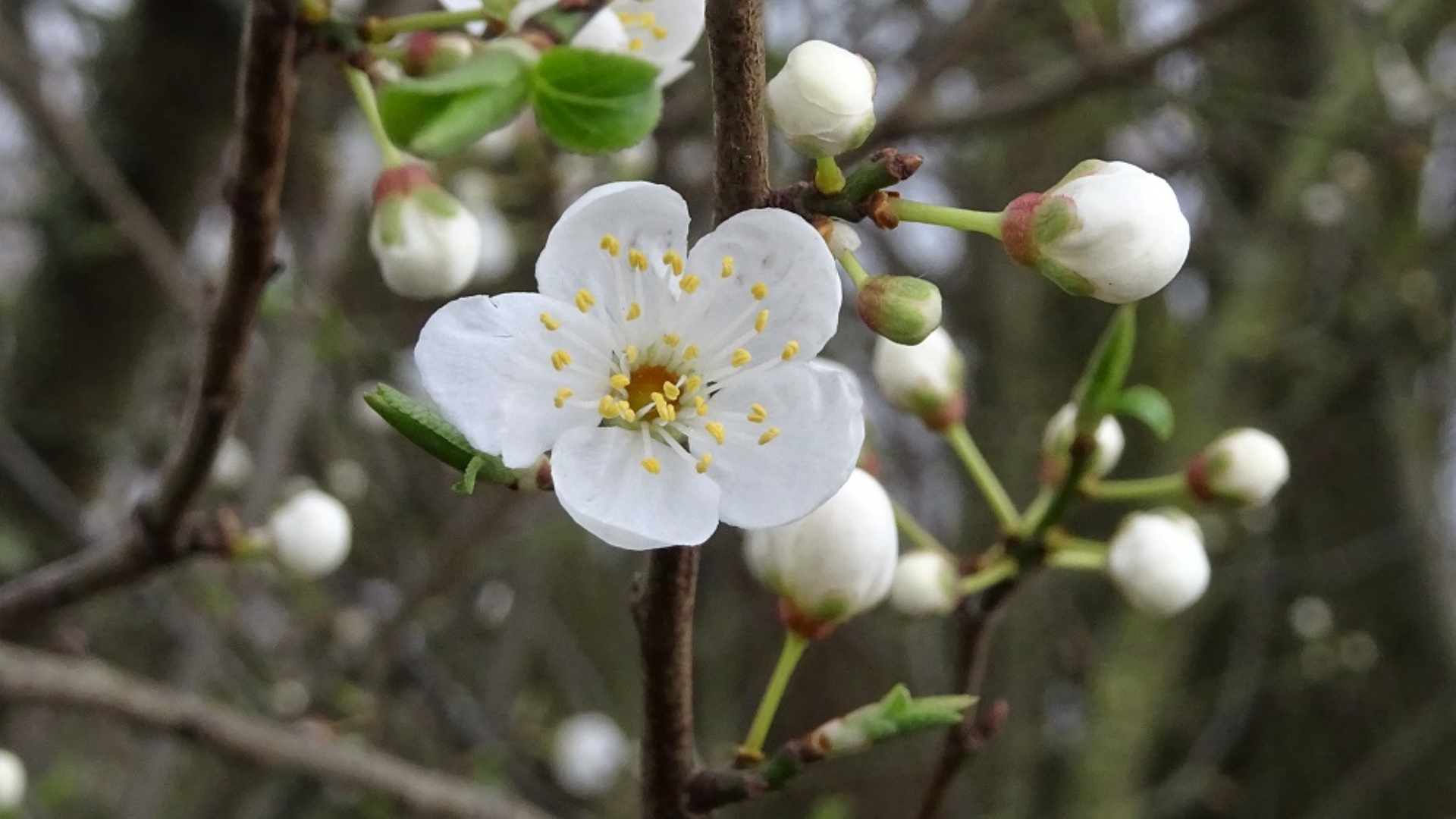
Cherry plum is an early flowering plant, one of the first trees to bloom in spring, often beginning in mid-February before the leaves have emerged. The flowers, which are white or pale pink, measure about 2 cm in diameter, featuring five petals and numerous stamens.
#
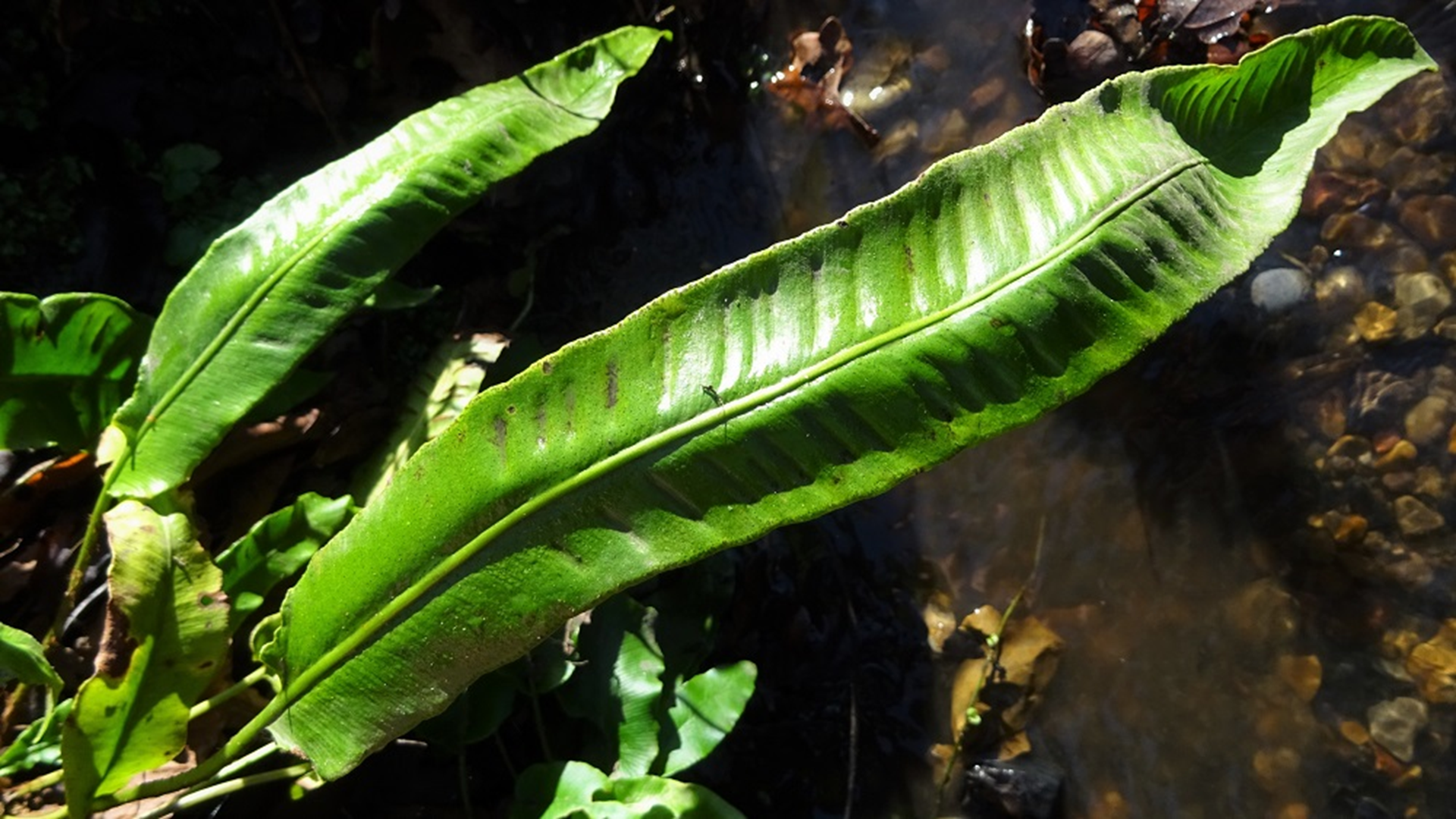
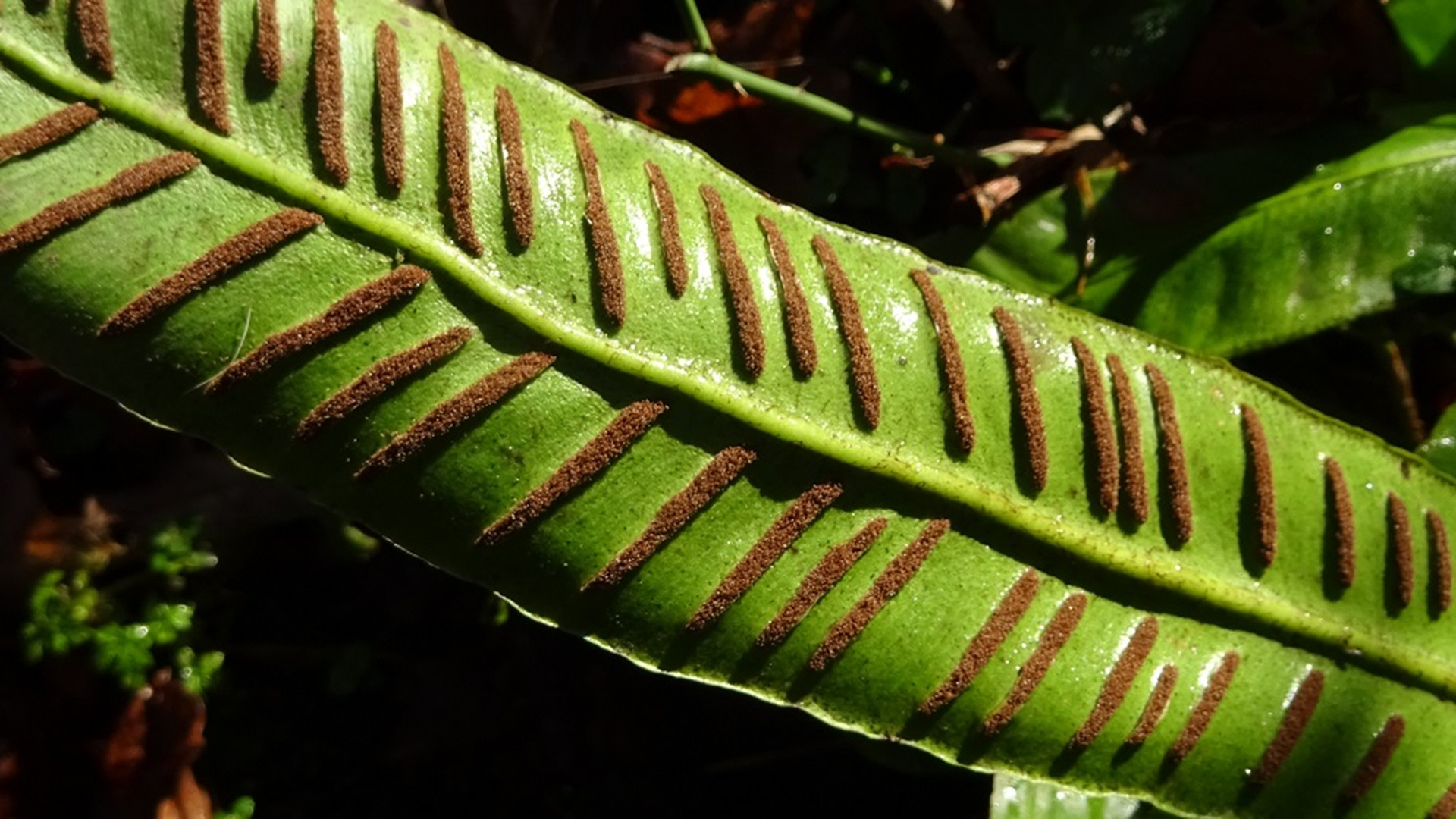
Hart's tongue
Asplenium scolopendrium
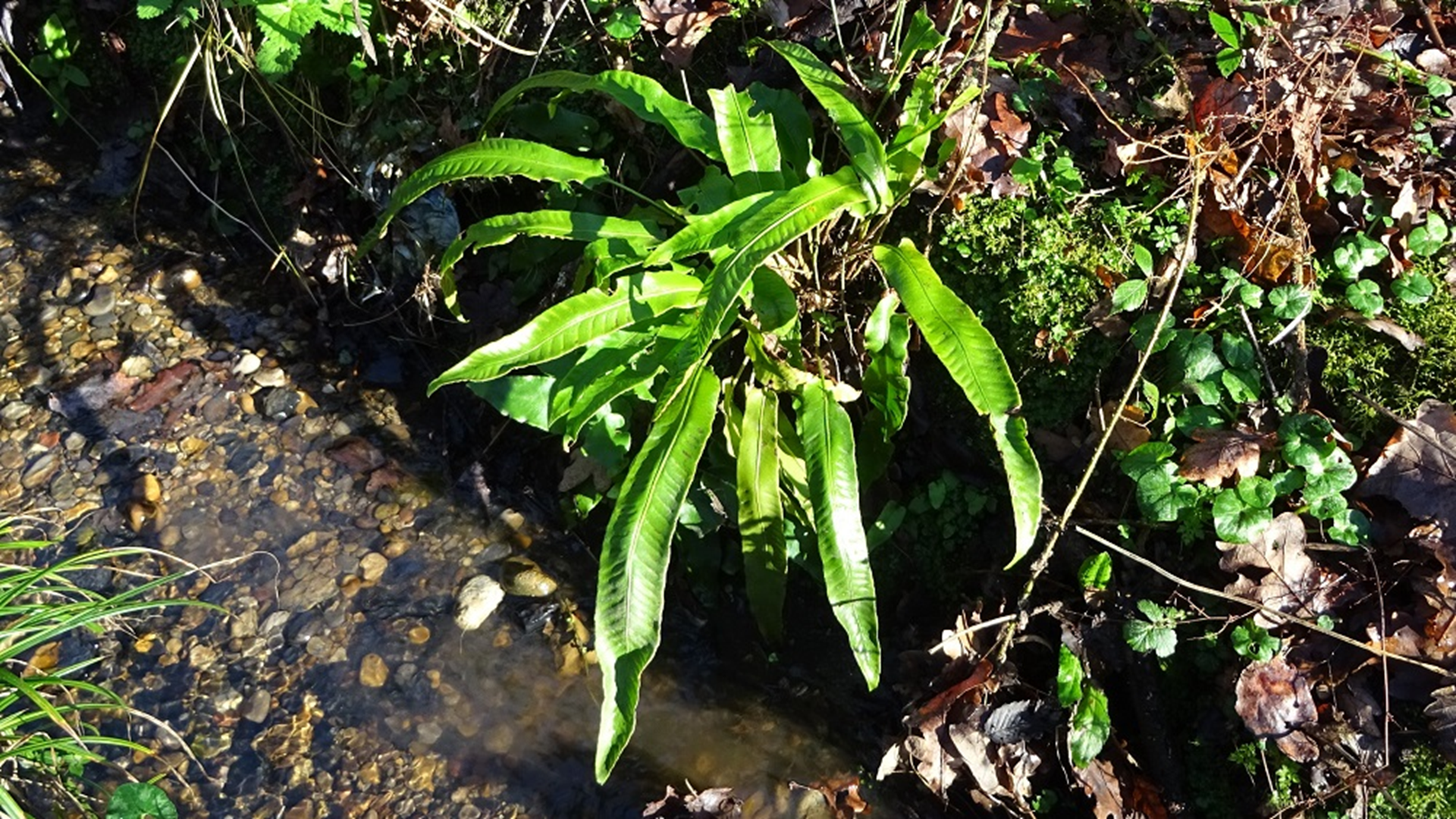
Hart's tongue is a fern that prefers damp, shaded areas.The fern has a shape that resembles a deer’s tongue, which is reflected in its name; a hart is an adult male deer. The long, glossy green leaves, known as fronds, feature pointed, curly tips. The plant can grow up to 60 cm in height and is visible year-round. Orange-brown spores develop in lines on the undersides of the fronds.
#
Great Mullein
Verbascum thapsus
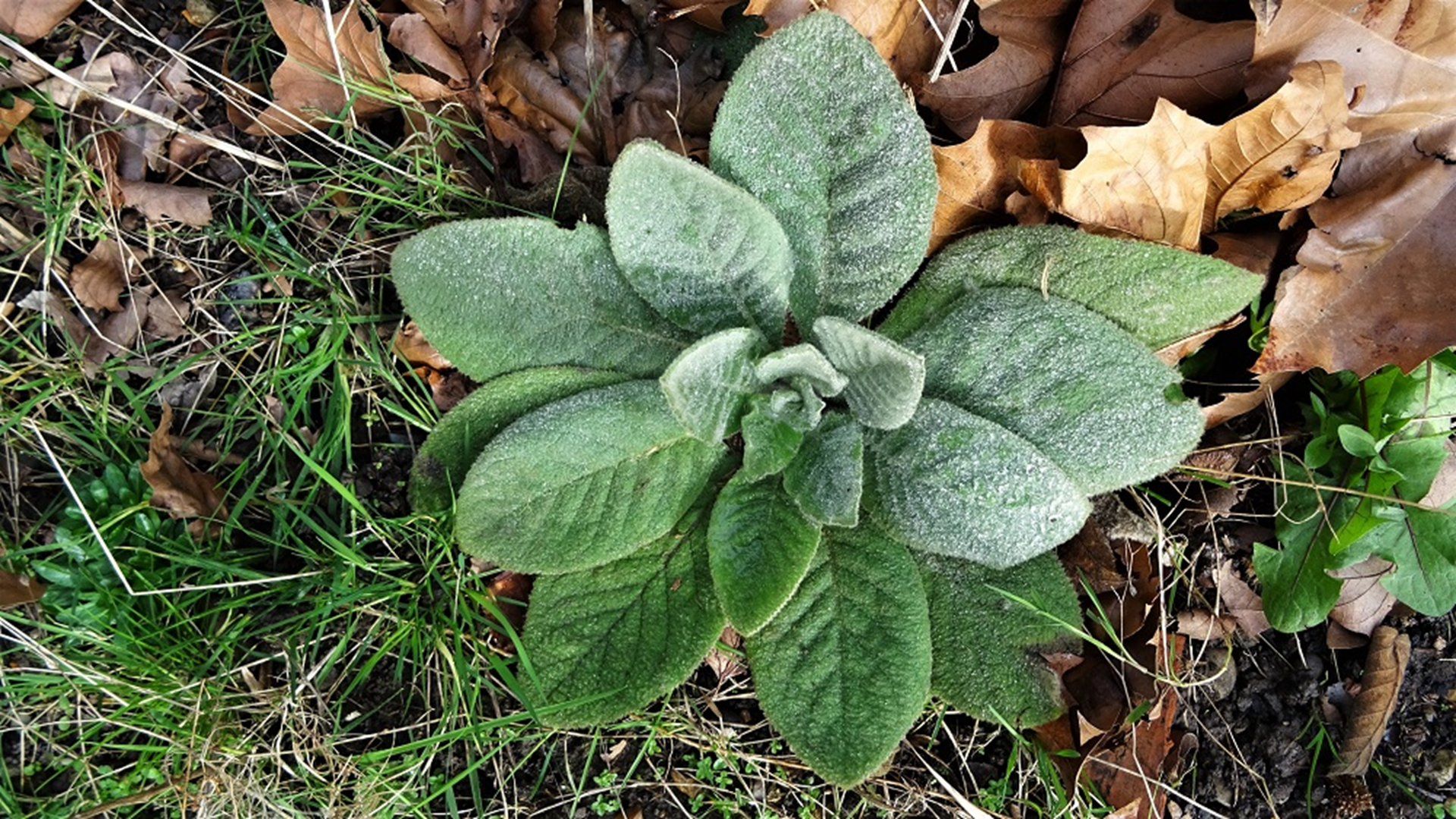
Great Mullein is also called Aaron's rod. It belongs to the Figwort family. The leaves are covered in woolly, thick white hairs. It sends up a tall spike that can reach 2 metres in height and produces flat yellow flowers by autumn.
#
Serpentine Leafmine
Stigmella aurella
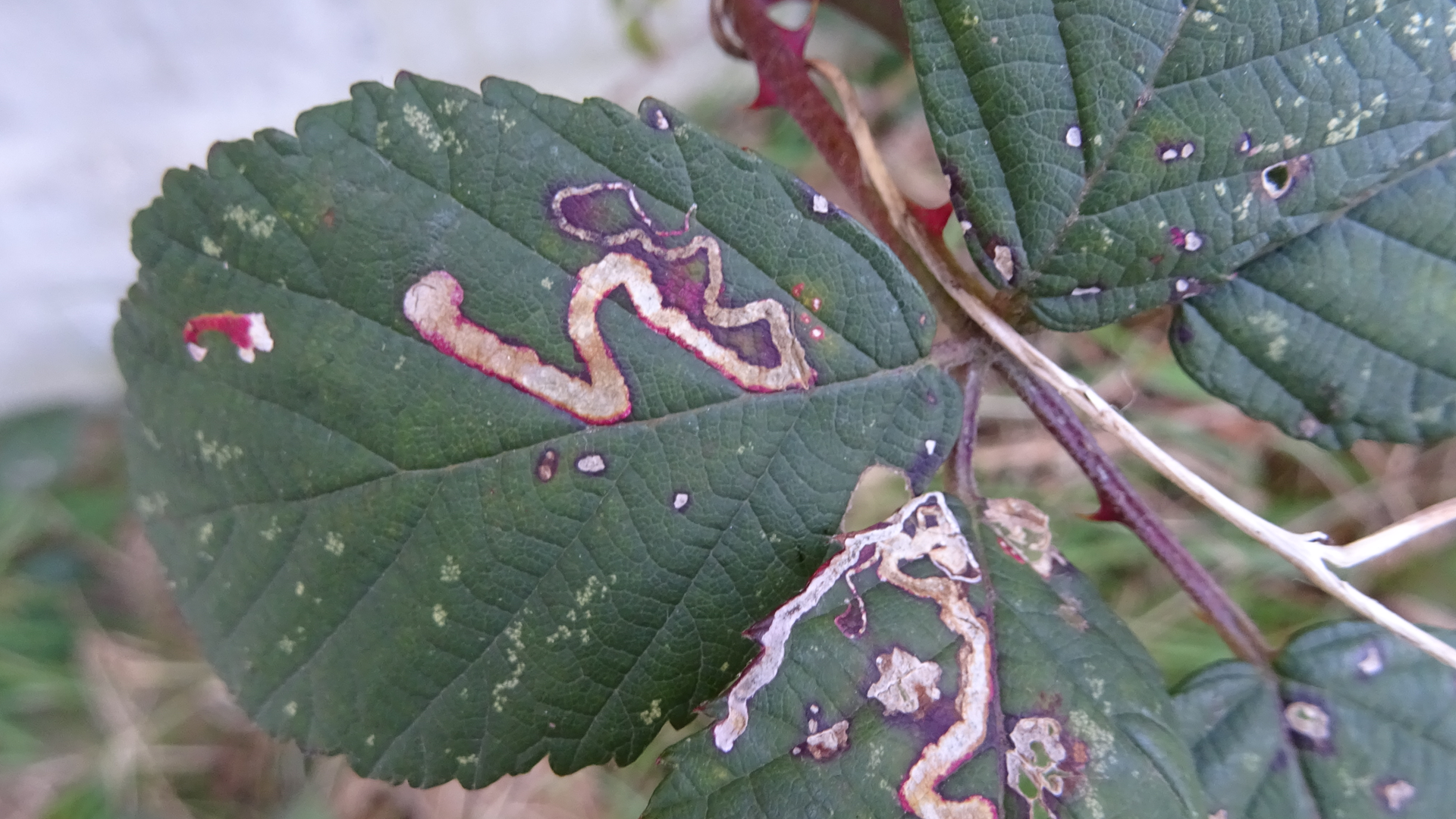
A white snake-like leaf mine is often noticed on bramble leaves during the winter months. This pattern is caused by a Golden Dot micro moth larva, scientifically known as
Stigmella aurella. The larva creates a path that widens as it feeds and increases in size. The larva of this species is amber-yellow with a yellowish-brown head.
#
Douglas Fir
Cone
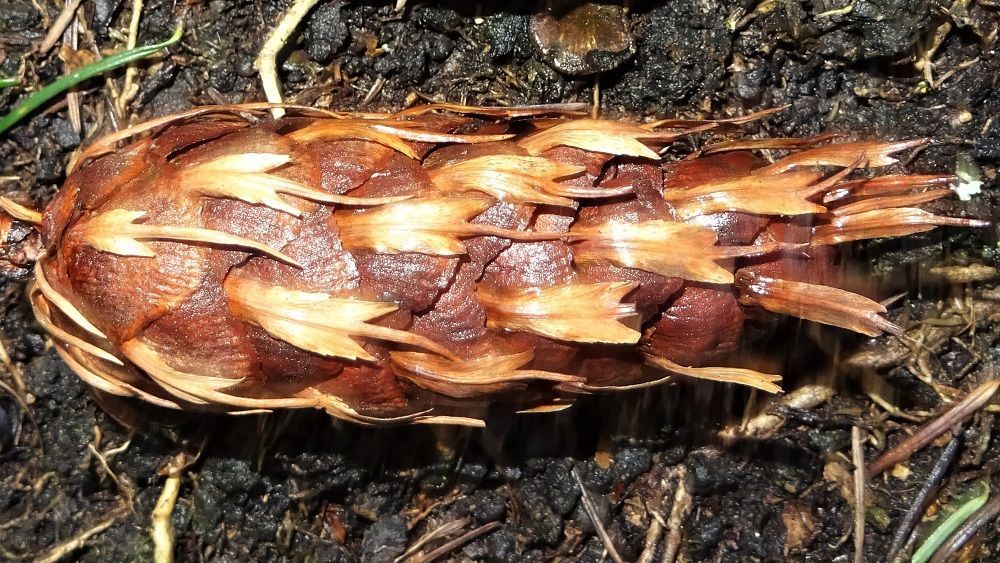
Scales on Douglas Fir cones have three pointed tips.
#
Black Pine
Cone
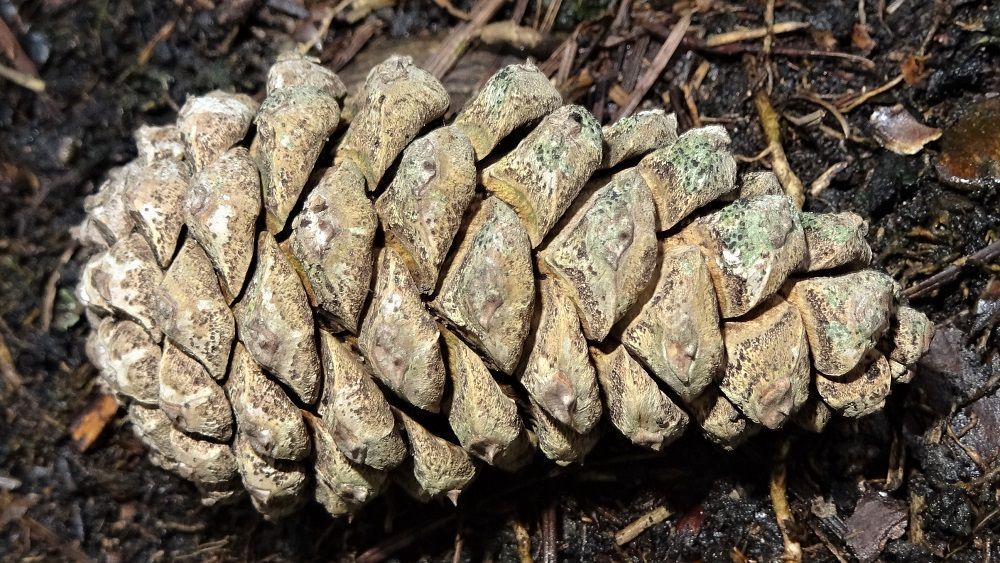
Scales on the cones of Black Pine are thick with rounded ends. The cones have a slightly curved appearance. There is also a a prickle on the scar of the scale which distinguishes the cones from those of the Scots Pine.
#
Geology
Flint
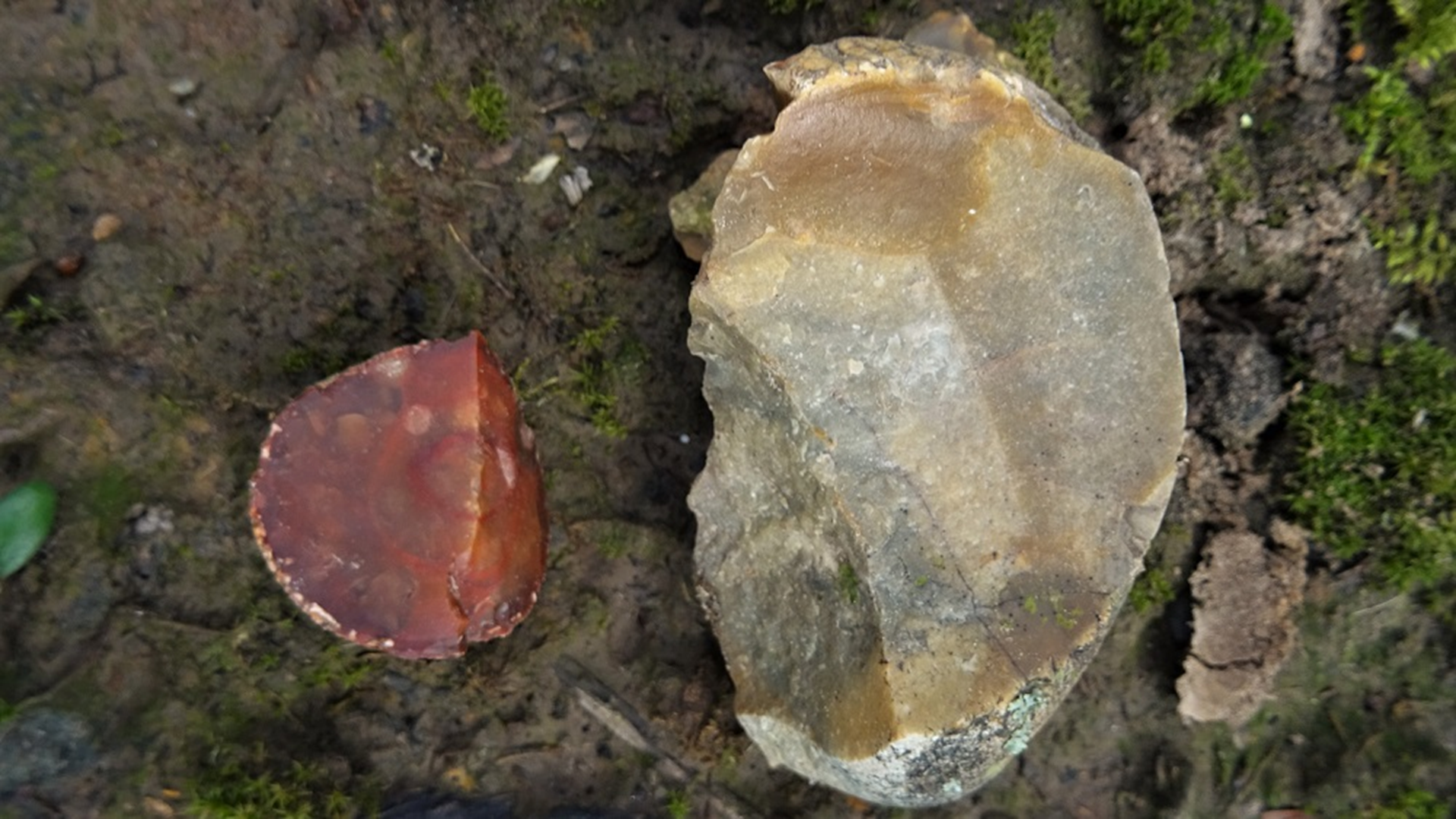
Flint was used to make cutting tools and for starting fires during the Stone age. It is a sedimentary form of quartz that has a crystalline structure only visible when magnified. Flint has various colour forms and a glassy or waxy appearance. A thin layer (cortex) on the outer suface usually has a rough whitish texture. When heated in fire flint turns red, and often cracks from the moisture within its structure, resulting in small chips flying through the air.
#
The Weather
Storms, Winds and Waves
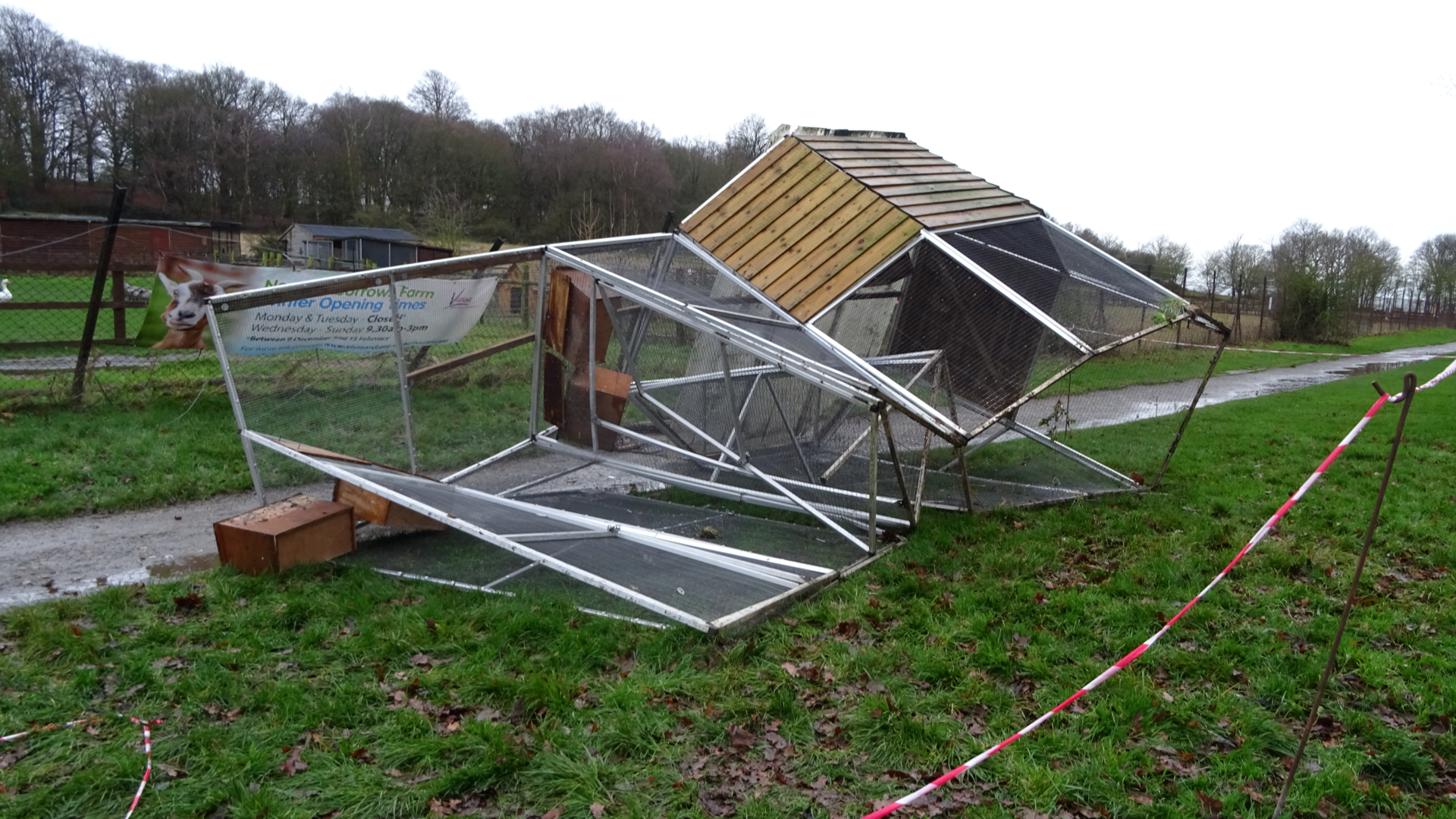
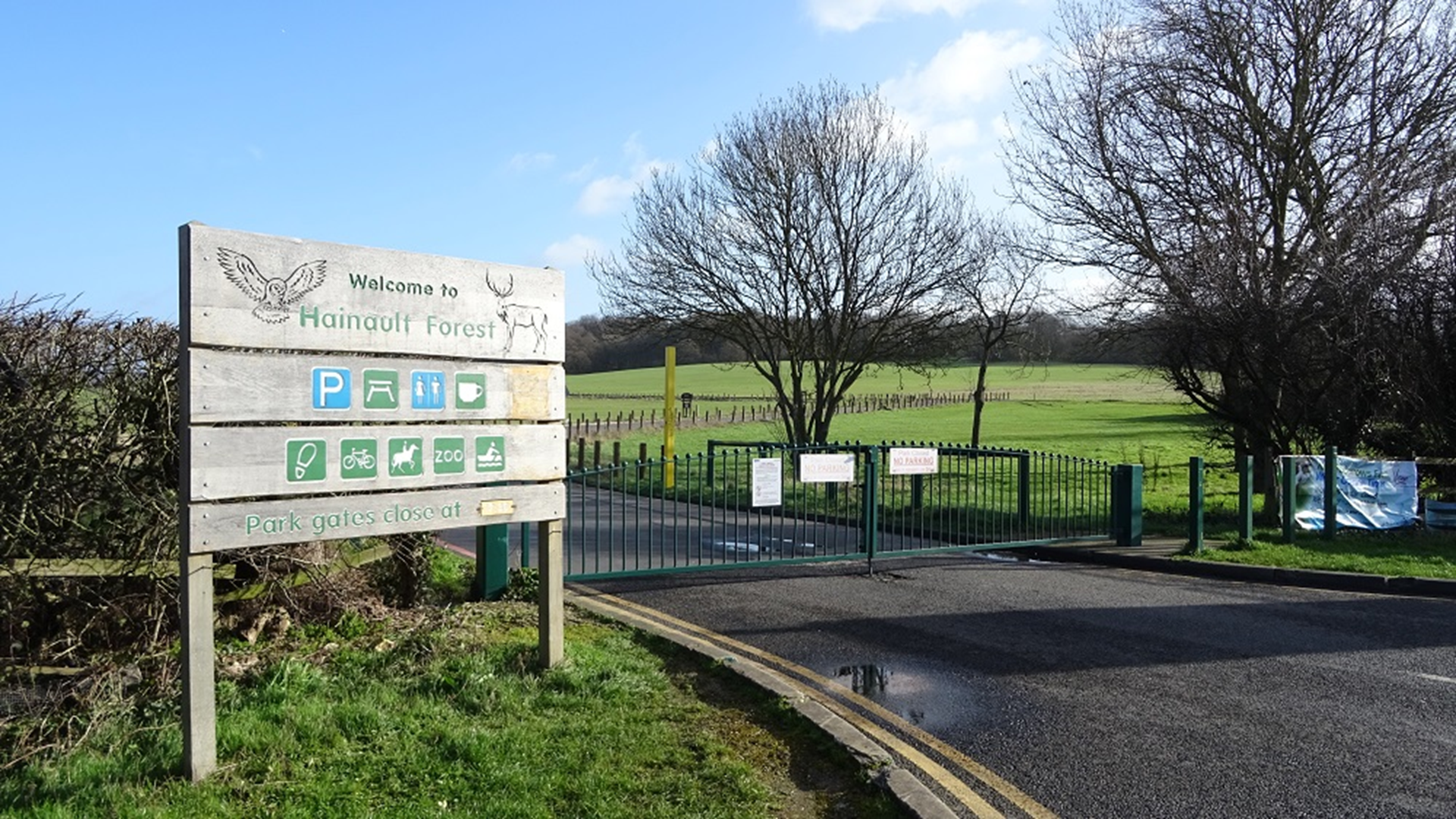
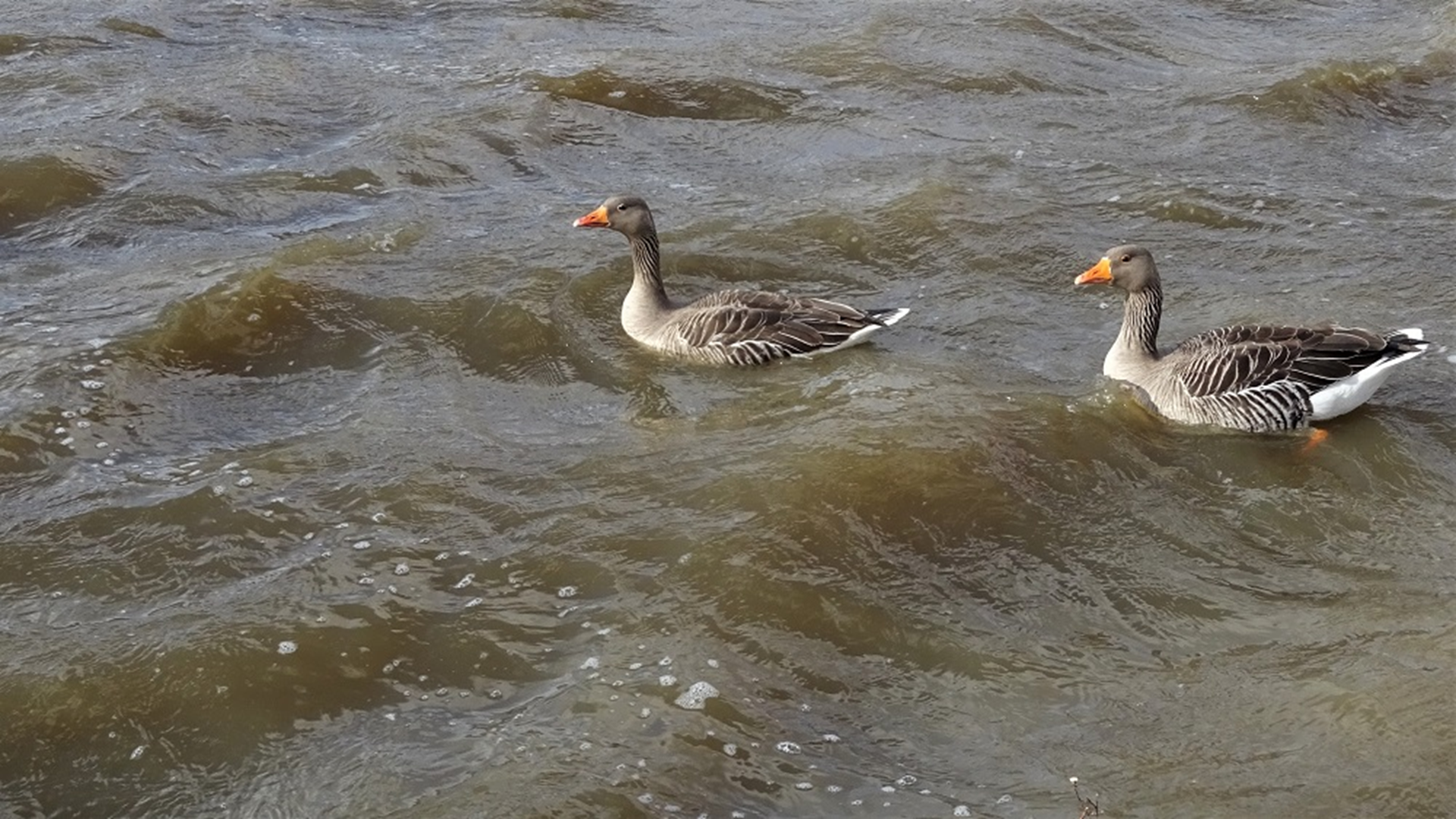
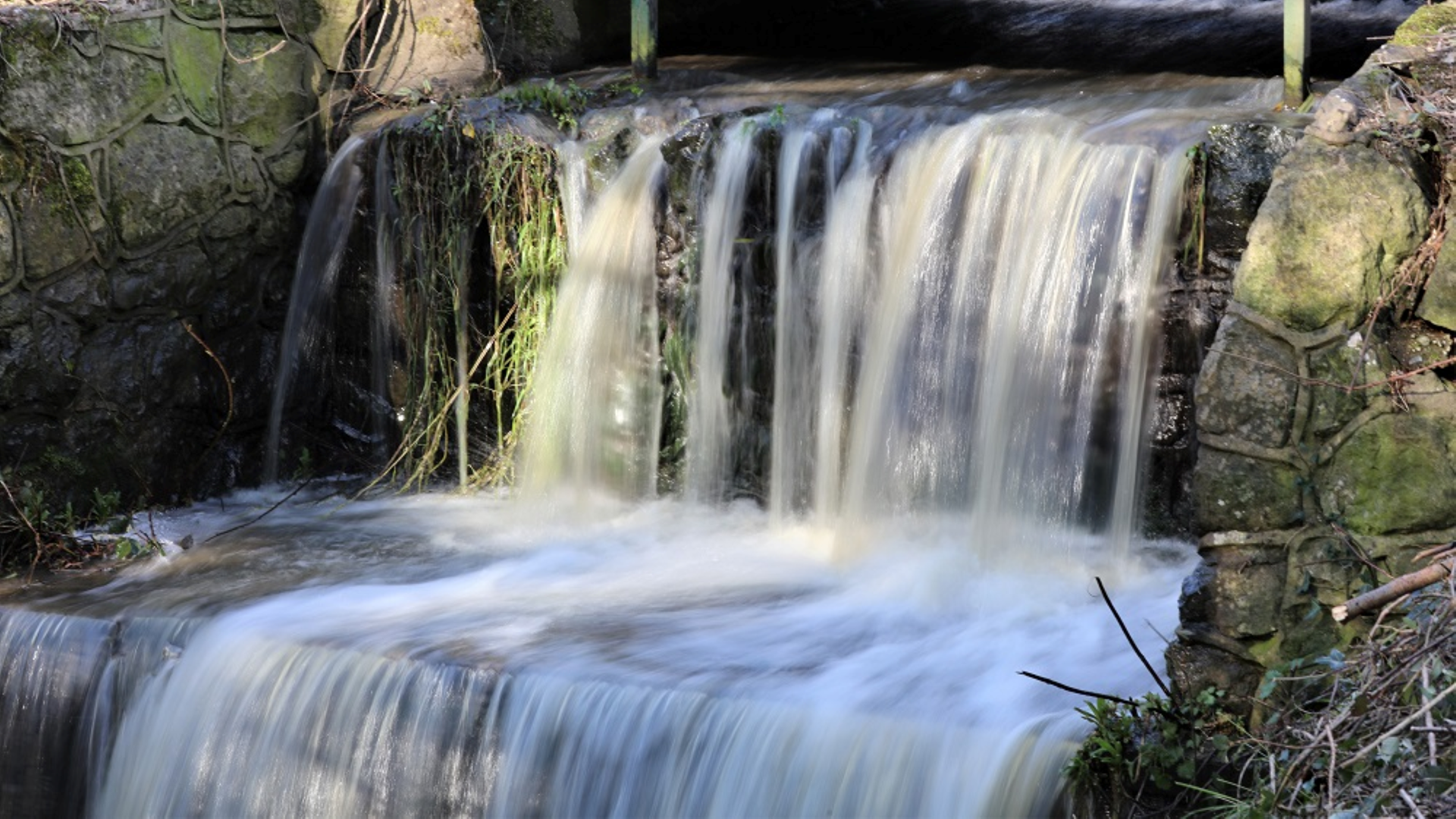
Strong winds in mid-January caused a bird aviary at Foxburrow Farm to be dislodged. As a result, all the budgerigars escaped. Bad weather continued into February and on the 10th the main entrance gates were shut in anticipation of Storm Ciara, Storm Dennis and the after-effects. Branches broke from trees and waves on Hainault Lake looked reminiscent of something seen at the seaside. There was
no let up in the weather with February proving to be extremely wet and miserable.
#
© hainaultforest.net. All rights reserved.
This website uses necessary cookies. It does not use targeting or advertising cookies.