

SUPPLEMENT 2020
The Covid lockdown resulted in limited opportunities to go outside. This page features wildlife pictures taken outside of Hainault Forest during that time...
House Sparrow
Passer domesticus
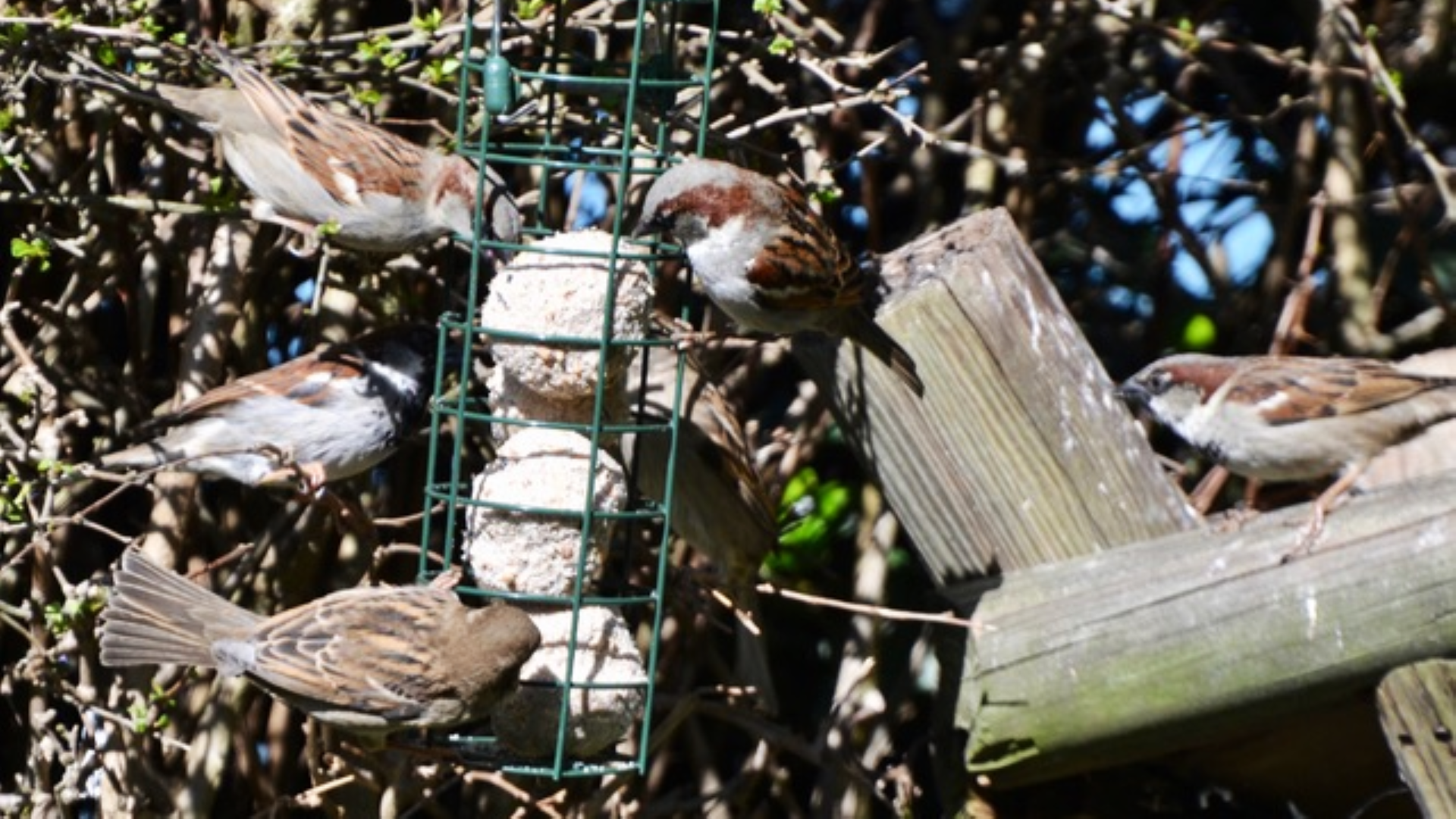
The covid lockdown may prevent getting out at the moment, but there are still some pleasures in life like watching birds in the garden. Over the years sparrows have almost disappeared from Aldborough Hatch, but last summer a gang of them appeared in Ron Jeffries' front garden and they have visited him ever since - all through the winter and now as spring approaches. Twice a day some twenty visitors descend into Ron's front garden - and they do not seem to have heard about social distancing! Ron said: "In a world where we do not know what the next day - let alone week or month - holds for us, it is so comforting to sit in and watch sparrows enjoying their breakfast and dinner!"
#
Wickford
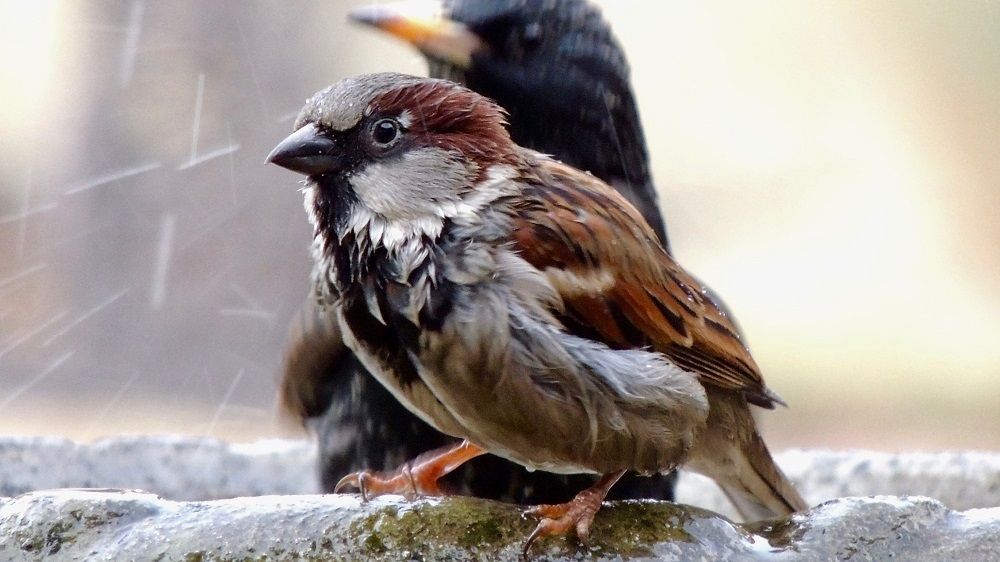
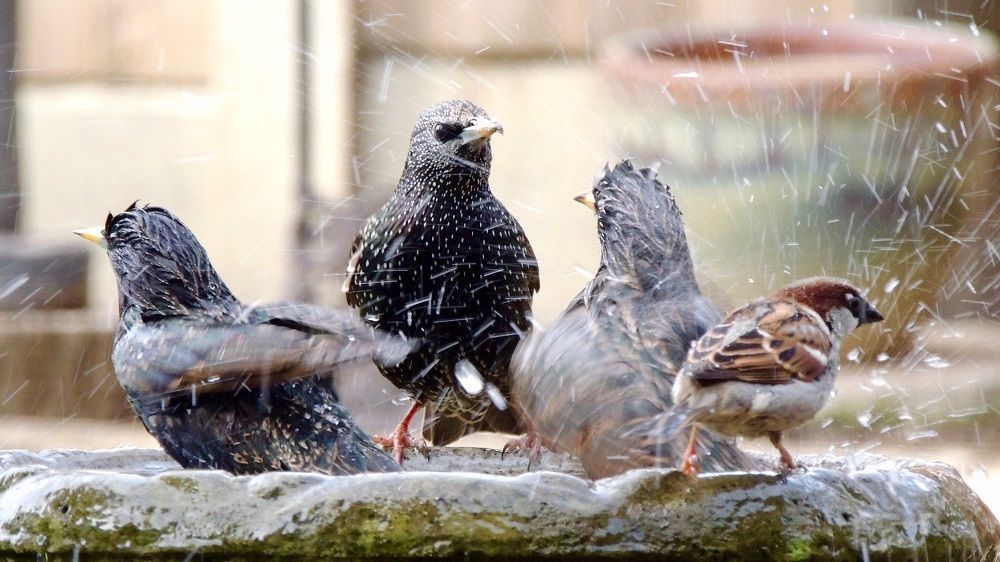
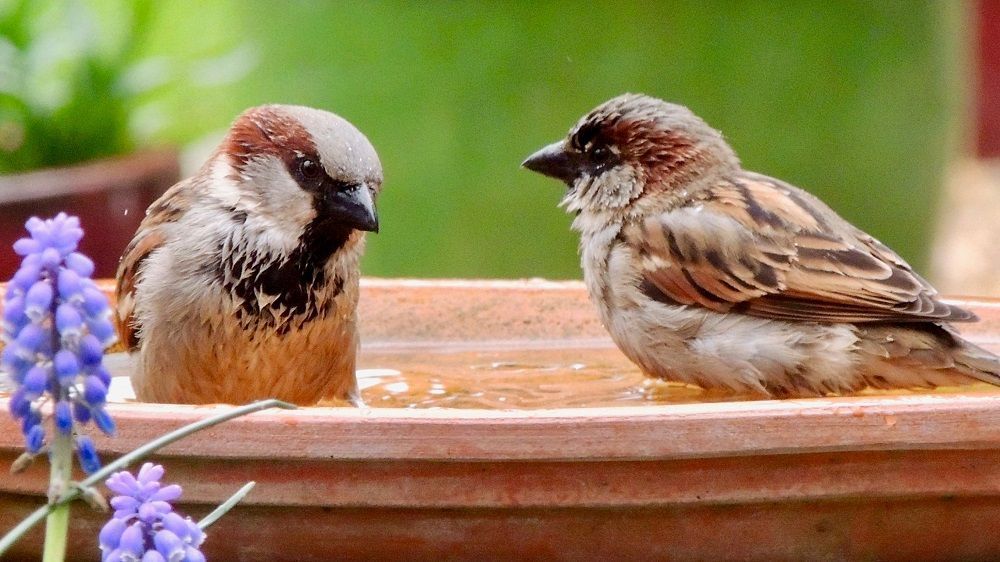
Birdbath
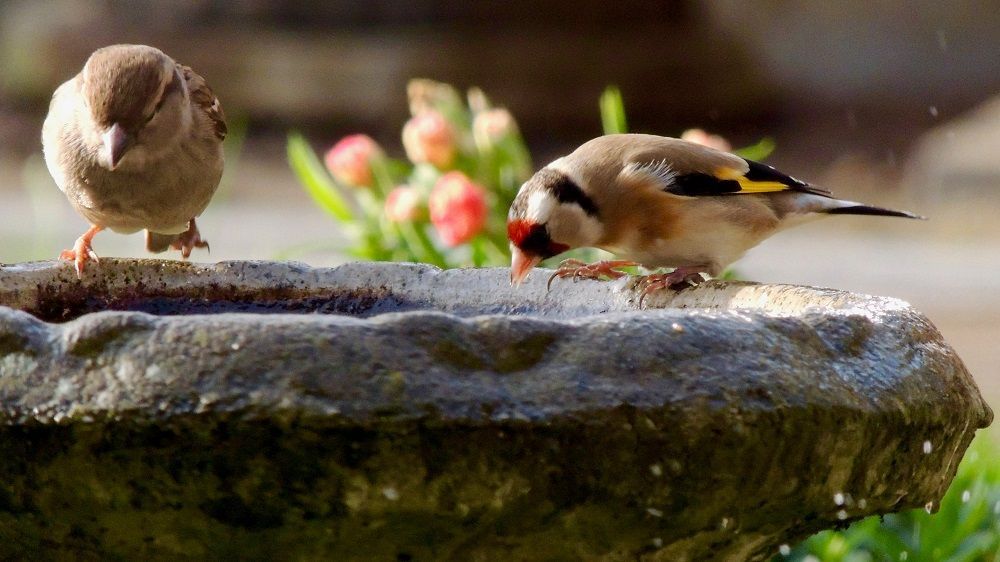
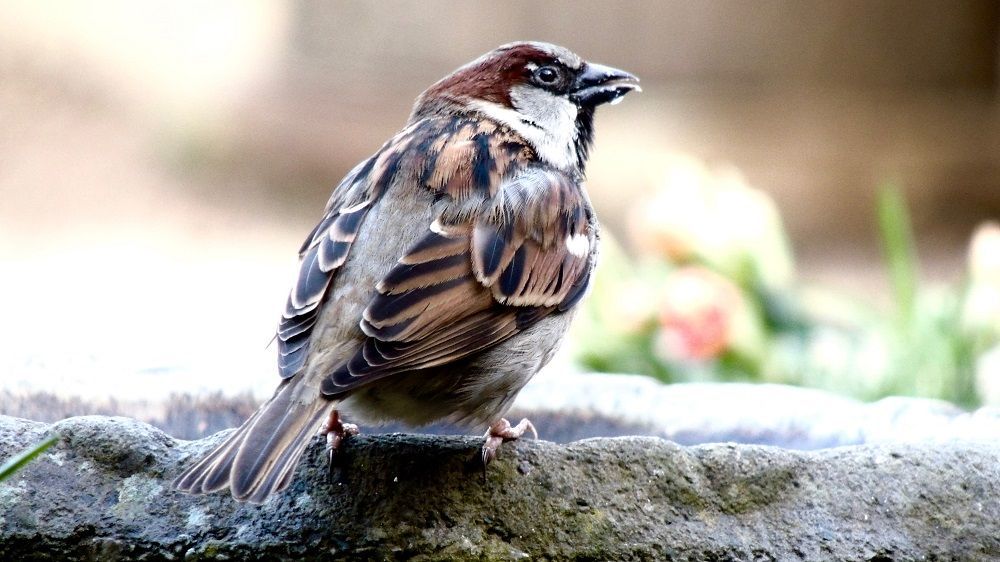
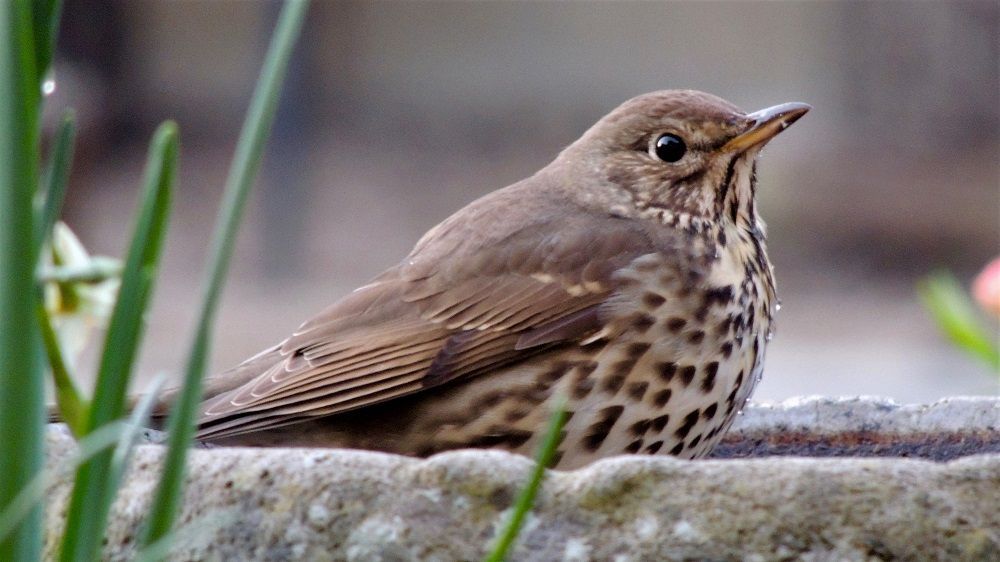
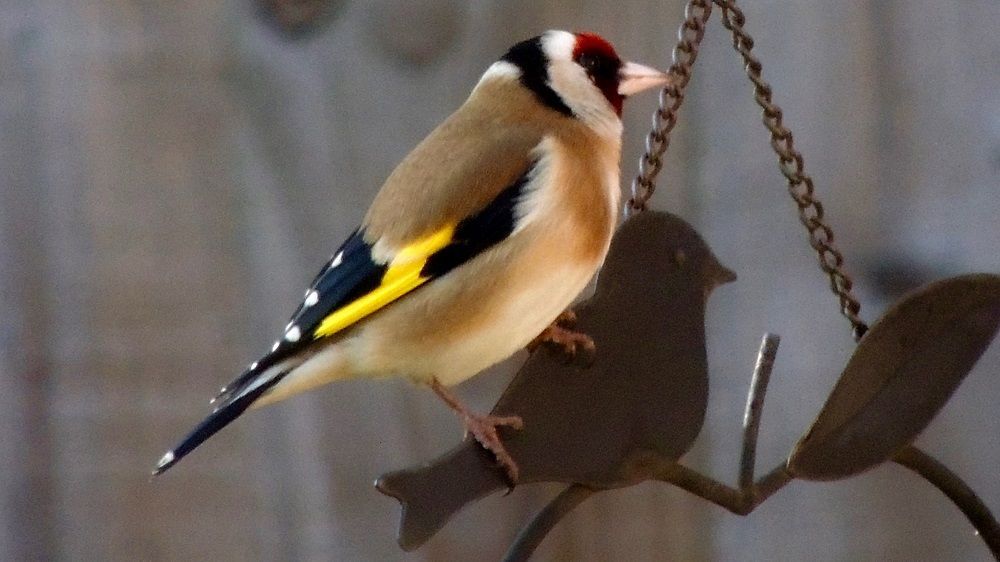
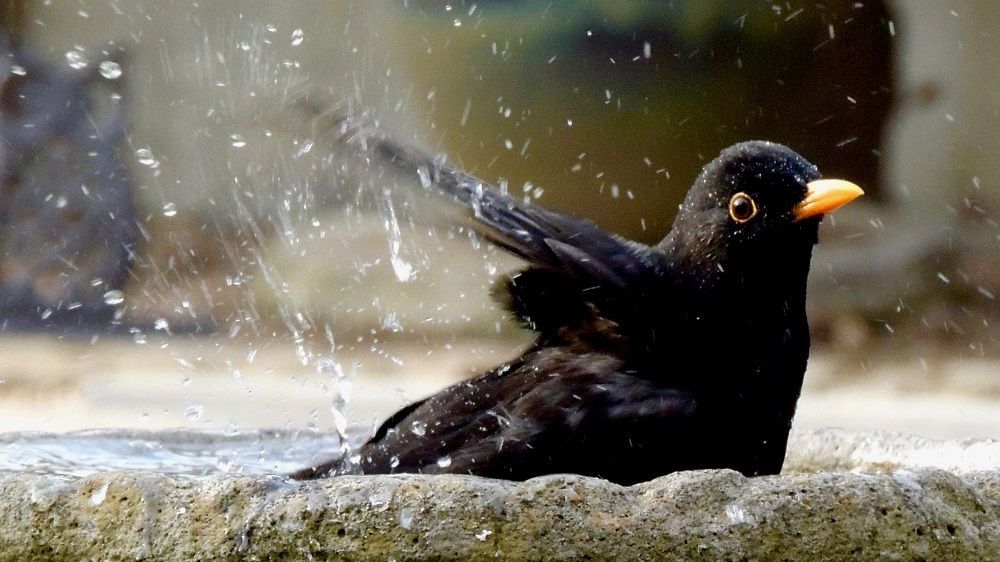
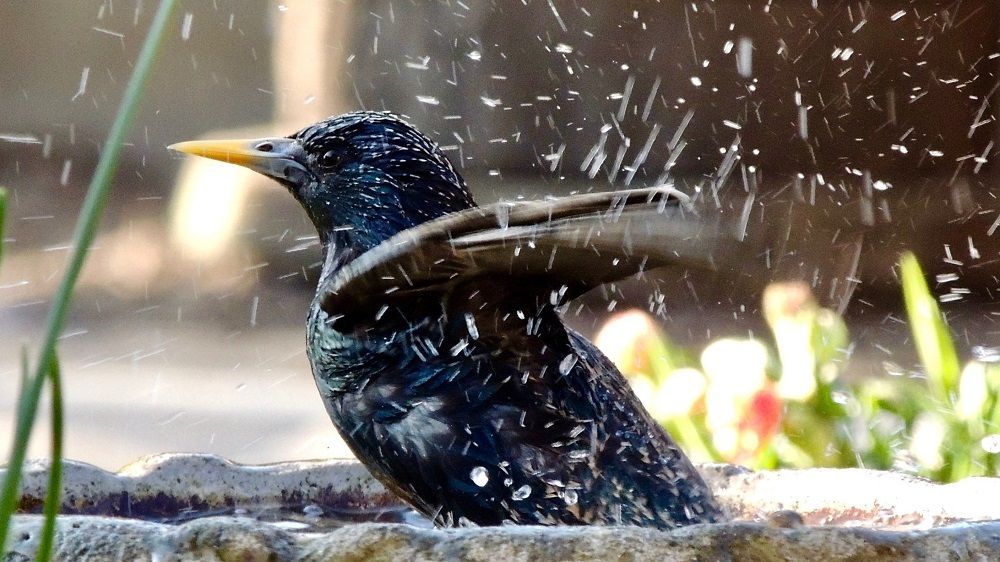
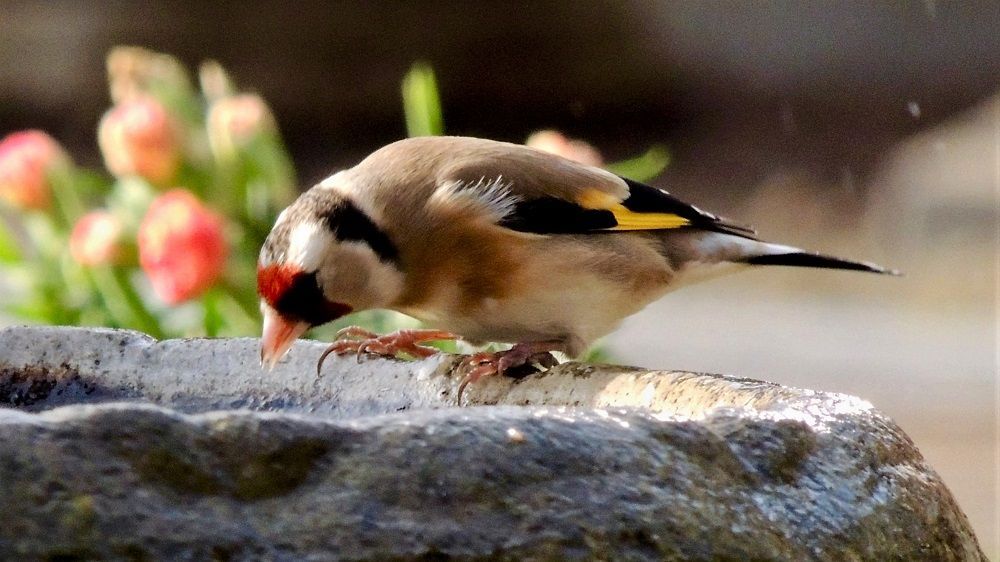
Birds can be attracted to a garden by placing food outdoors. Different foods may attract different species. Goldfinches, for example, prefer nyger seed, most effective when placed in feeders designed with small openings to prevent larger birds accessing it. Robins can become accustomed to eating live mealworms, and they can often be hand-fed once they develop a taste for them. Providing dense shrubs and trees can also encourage the bird population. Thrushes, in particular, are fond of holly bushes. Halving an apple and placing it on the lawn may attract blackbirds or magpies. Greenfinches are known to enjoy sunflower hearts. Crows and jackdaws love red peanuts. Additionally, installing a bird bath can further entice birds to visit. David Hale from Wickford has a very successful bird bath in his garden as these lovely pictures show...
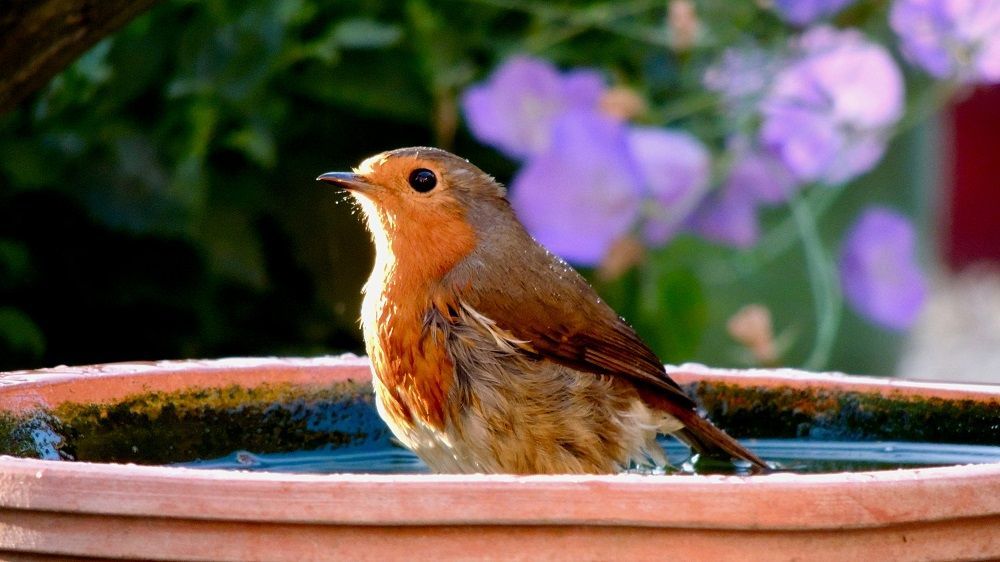
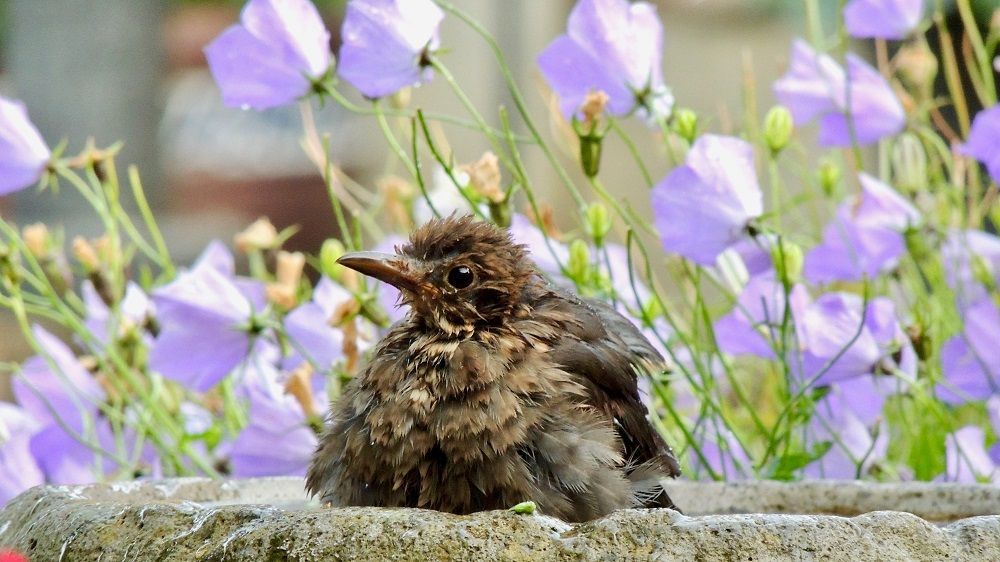
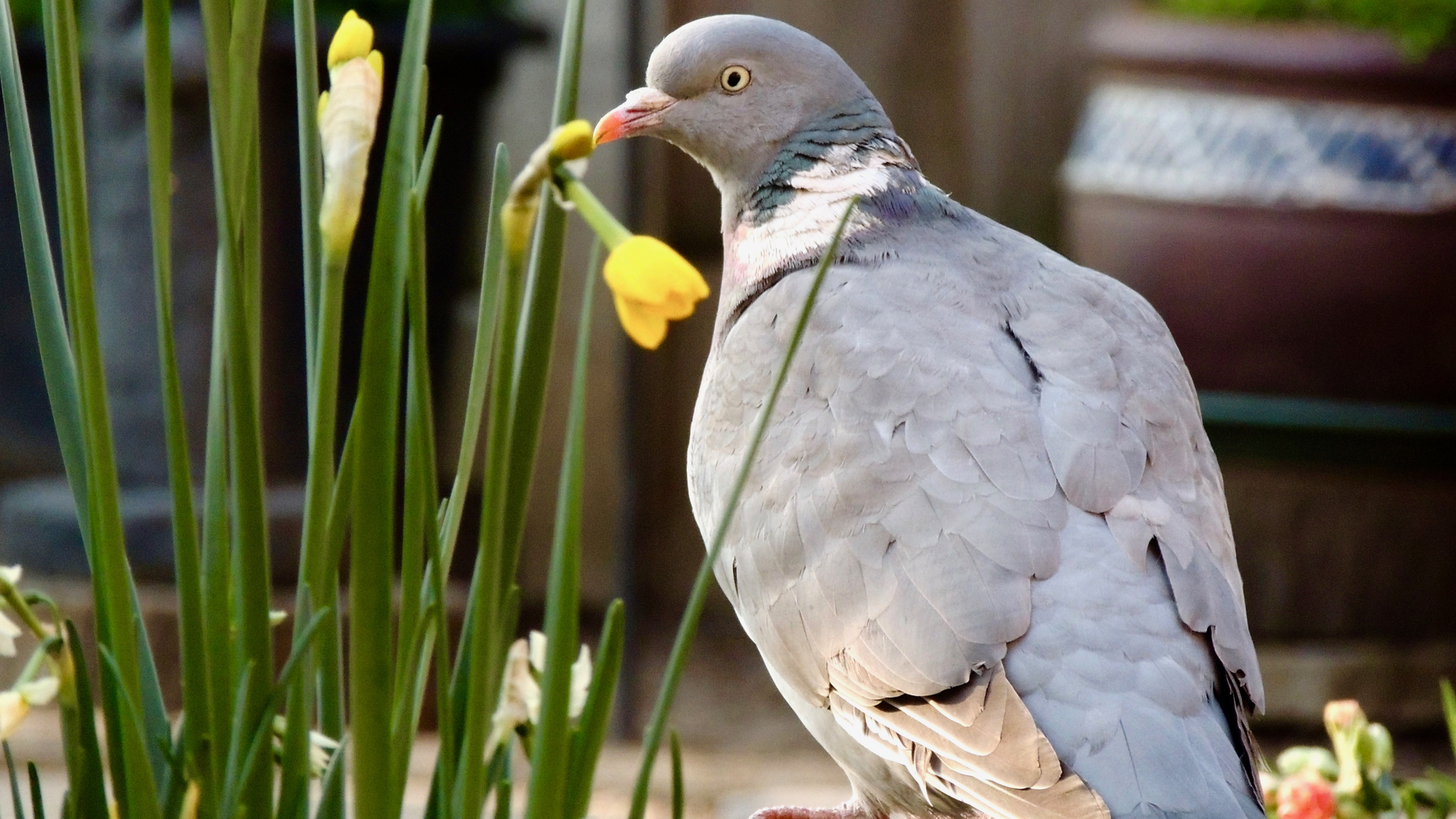
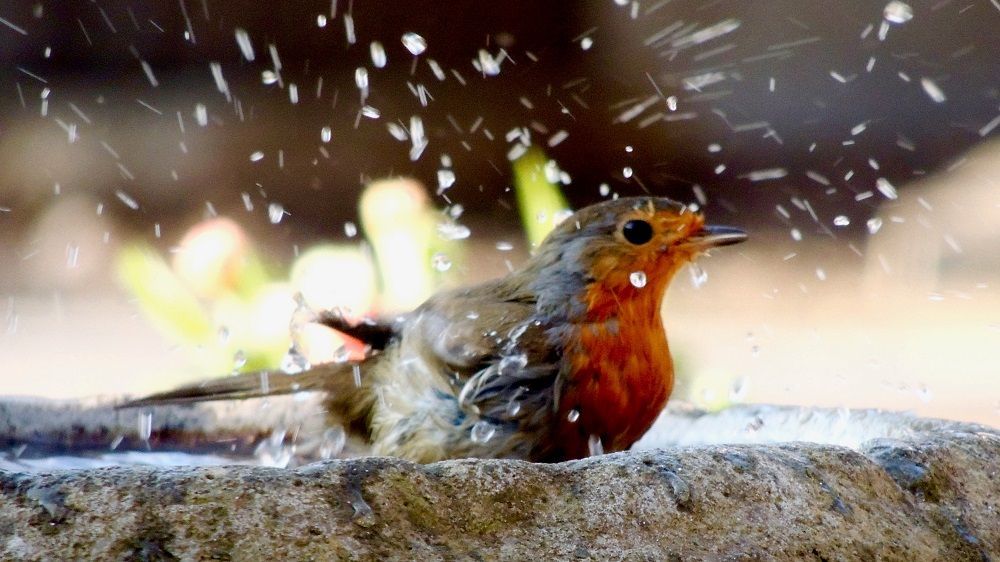
#
Wren
Troglodytes troglodytes
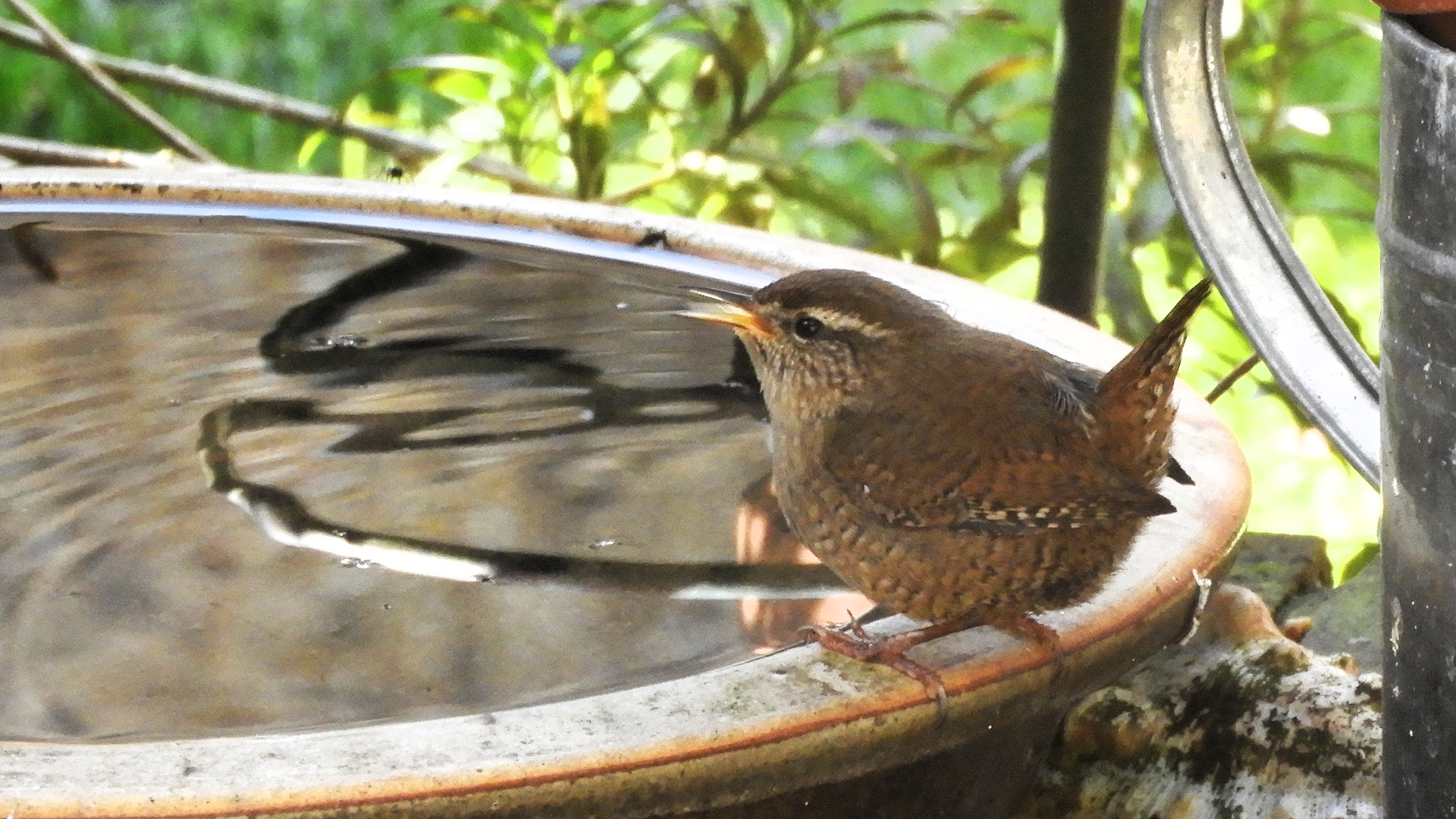
A bird bath in Debi's garden in Newbury Park attracted this tiny wren. Providing water can be extremely important for our feathered friends.
#
Log Deer
Stay Safe
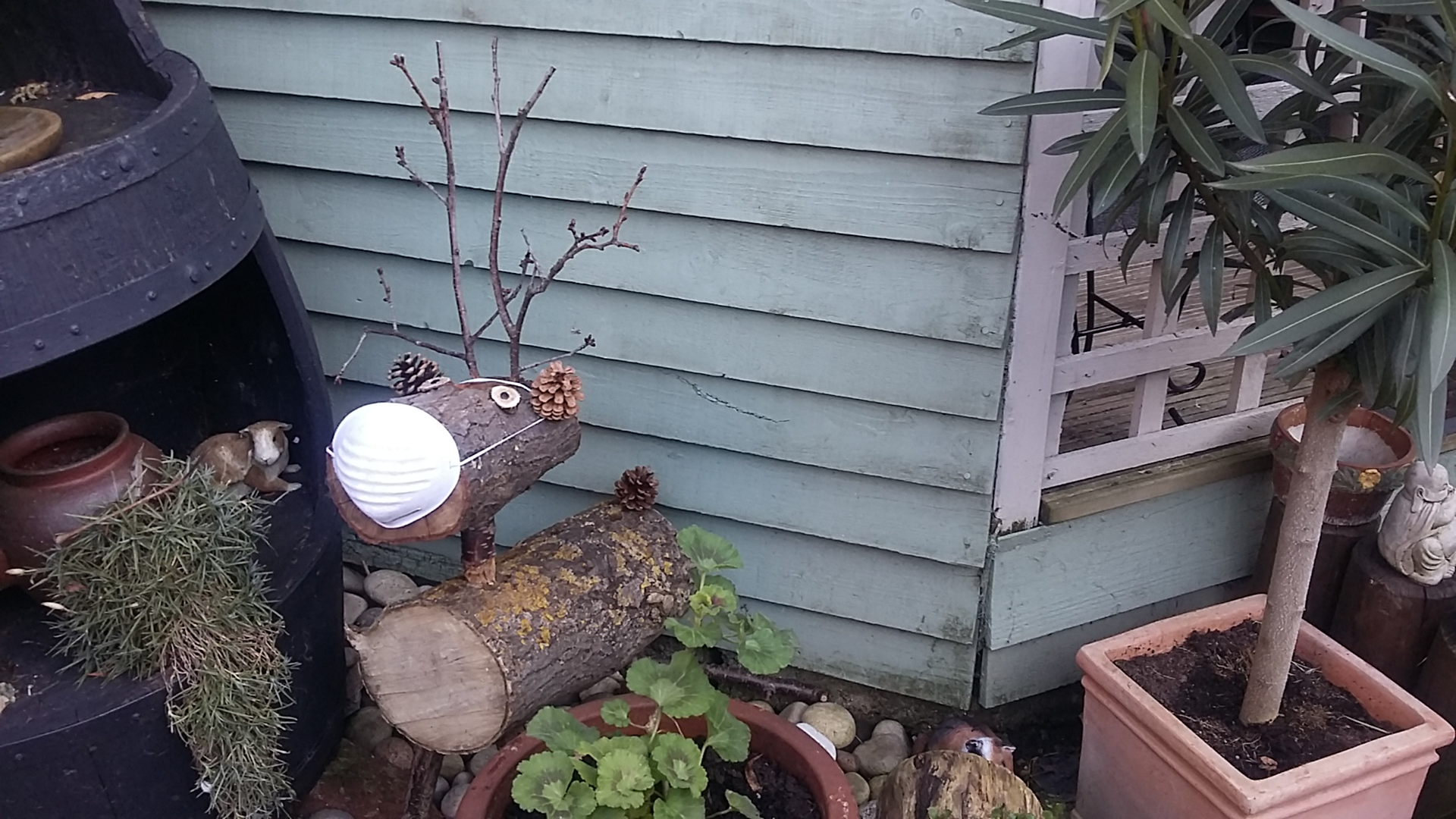
A face mask may offer protection, but in times of deer-vastating pandemics old deers may be better staying indoors.
#
Hedgehog
Drawing to Relax
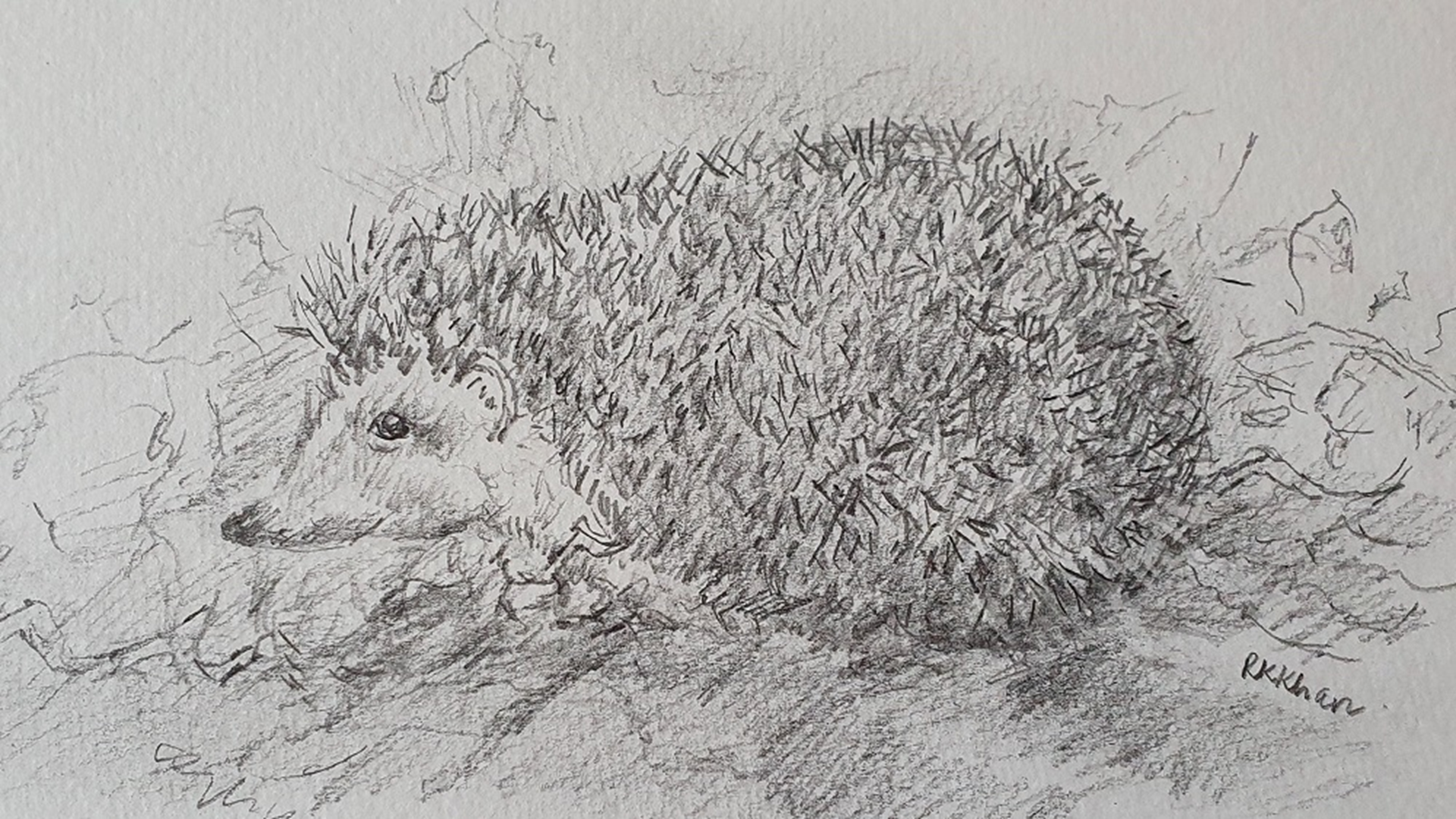
Rosemarie Khan from Kingsbridge sent an email with an excellent picture of a hedgehog. She finds that drawing is an excellent way to relax, particularly while she is having to stay indoors longer due to the covid restrictions. When spring approaches hedgehogs emerge from hibernation and if you are lucky you may see them in your garden after it turns dark. It is okay to feed them, but never on milk or bread which can make them very ill. Put out clean water every night and tinned catfood; either chicken, turkey or rabbit, but avoid fish. Putting out after sunset won't attract flies.
#
A Guide to
Using Parks Safely
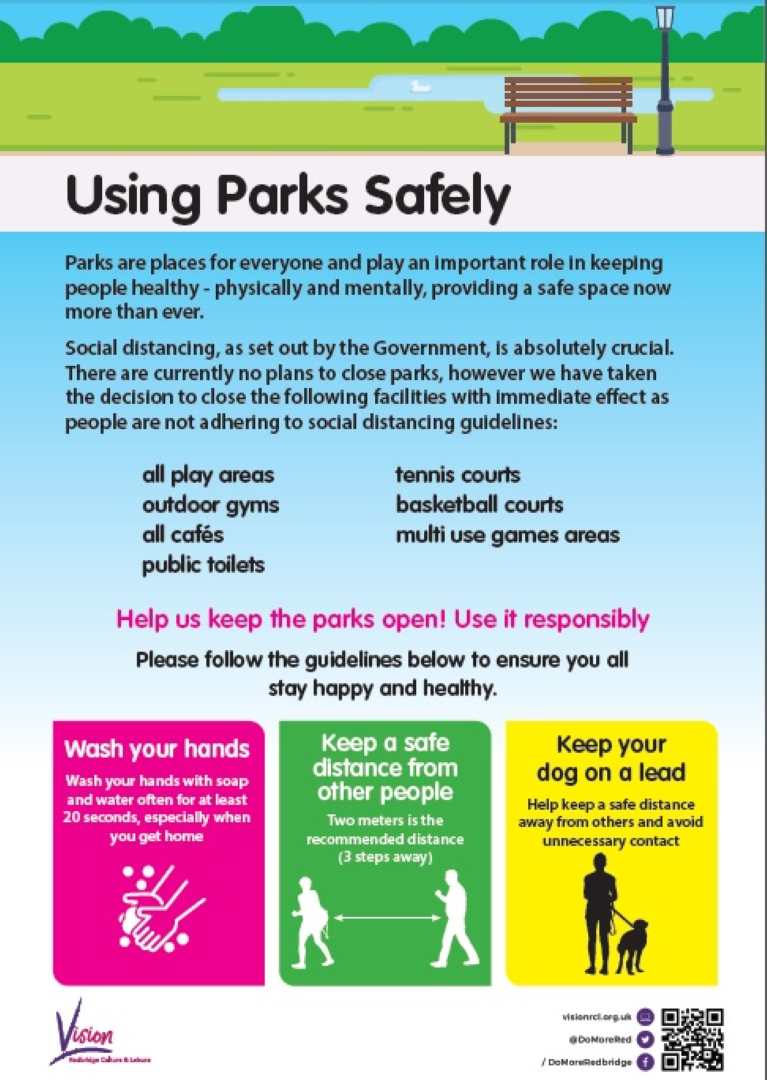
Following these guidelines by Redbridge Vision will help ensure that our parks remain open at these times of uncertainty. Please follow the rules and stay safe. Thank you.
#
Grey Squirrel
Sciurus carolinensis
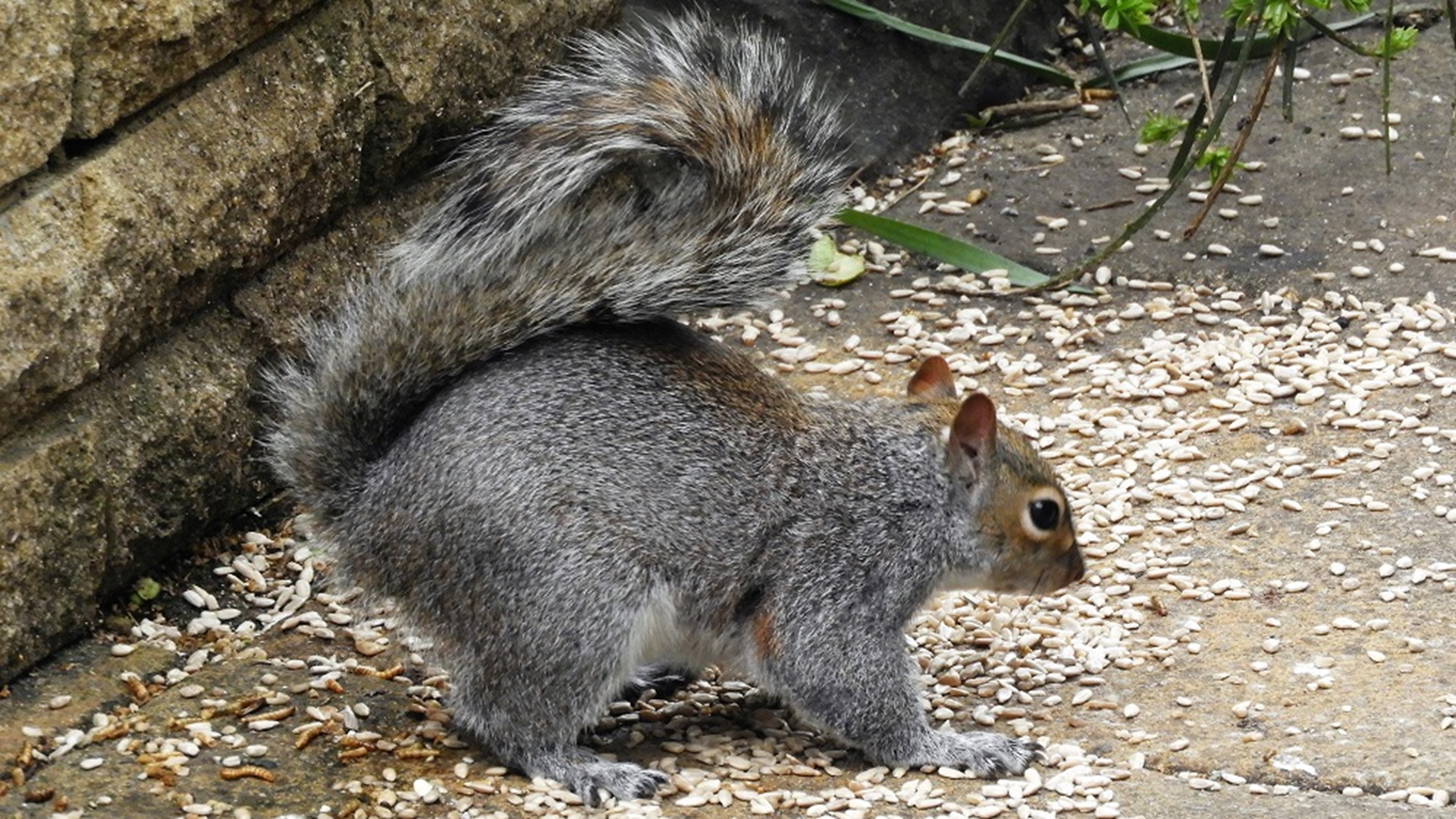
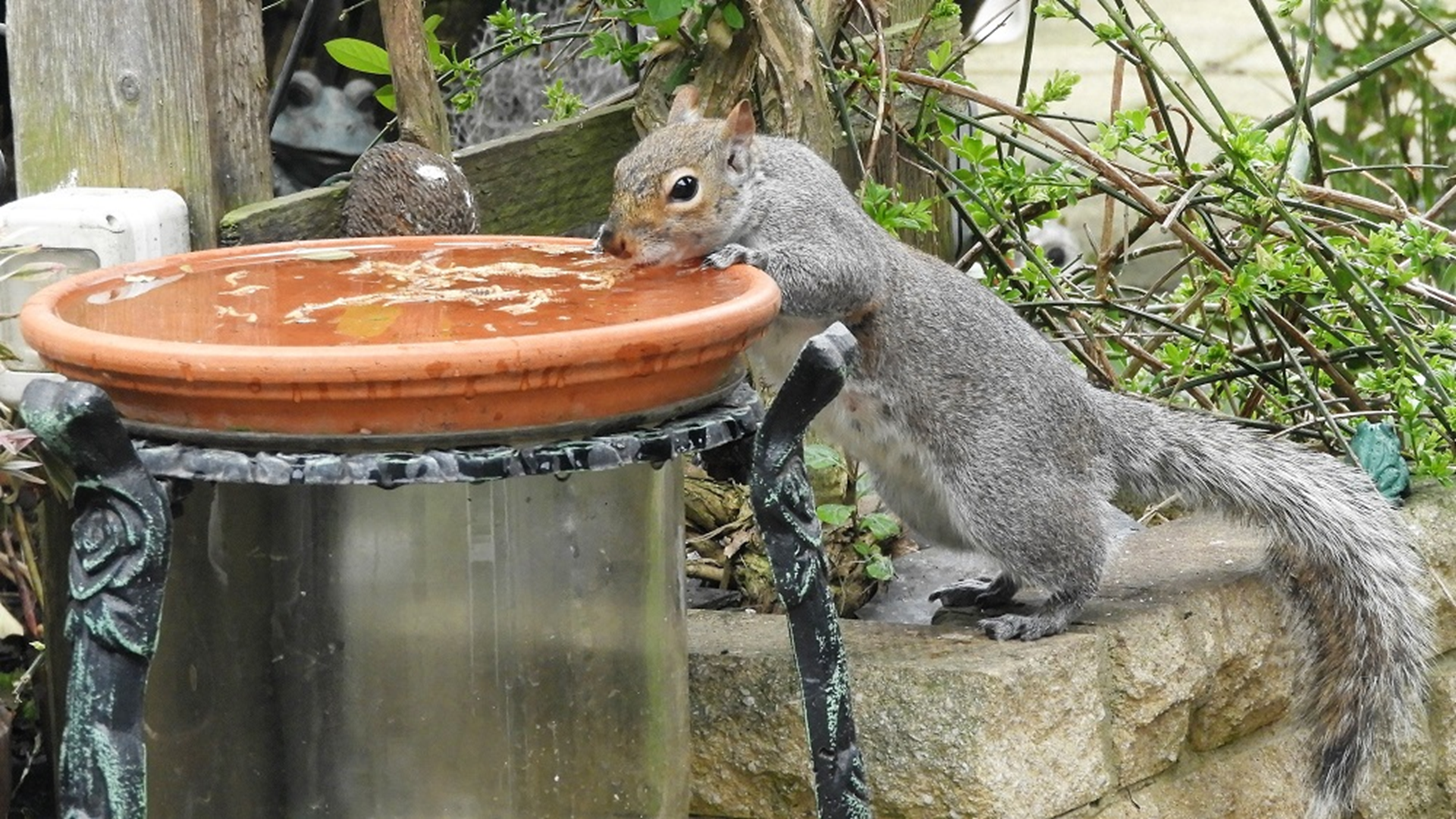
Grey squirrels love visiting bird tables! You can find anti-climbing devices designed to keep them from scaling the support poles, but keep in mind that if the table is positioned close to a tree, bush, or shed, the squirrel might just leap over. It's quite entertaining to set up an obstacle course that they have to navigate for a tasty reward. Once they finish the birds' food, squirrels may treat themselves to a cheeky drink from the bird bath.
#
Blackbird
Turdus merula
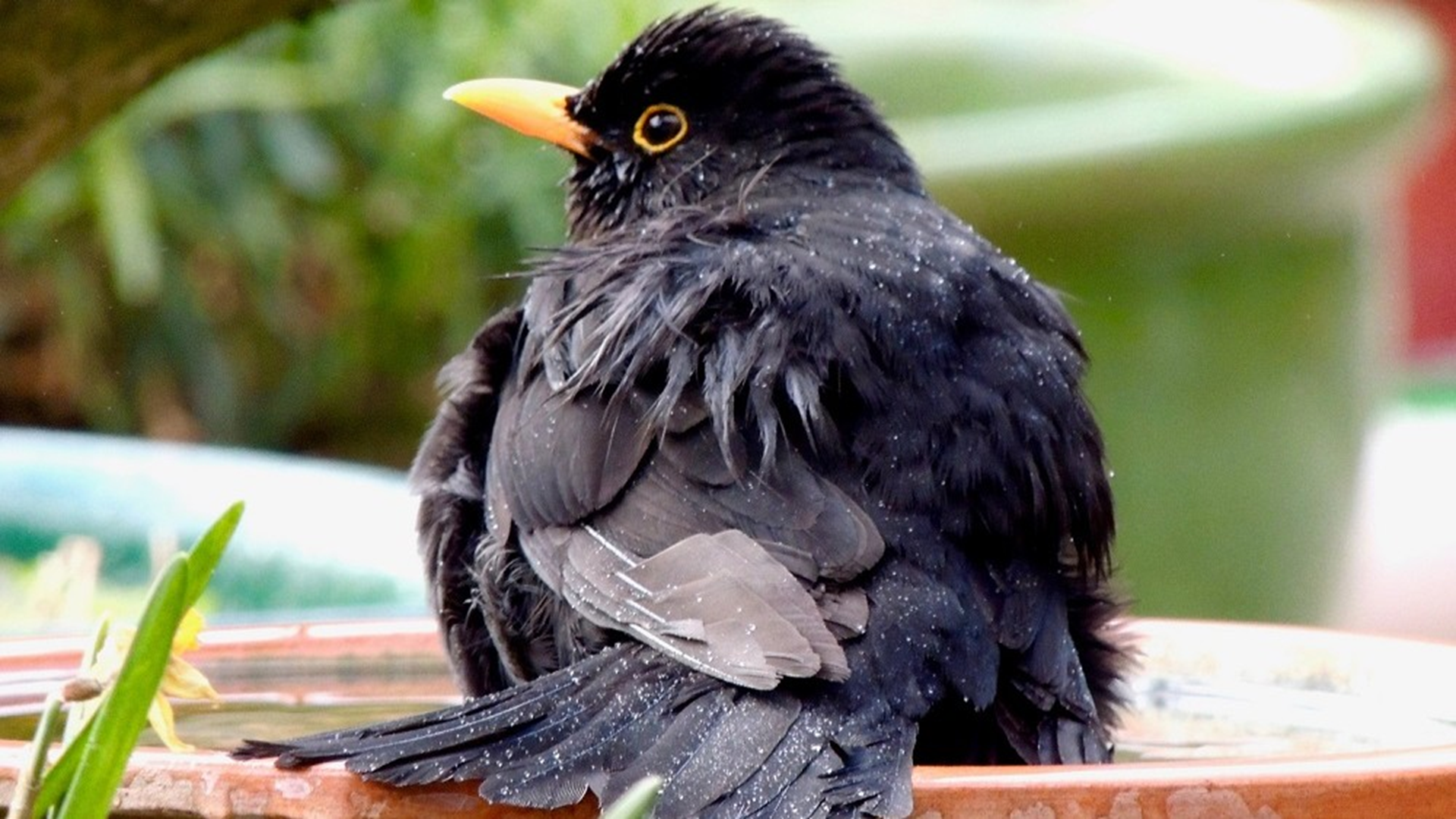
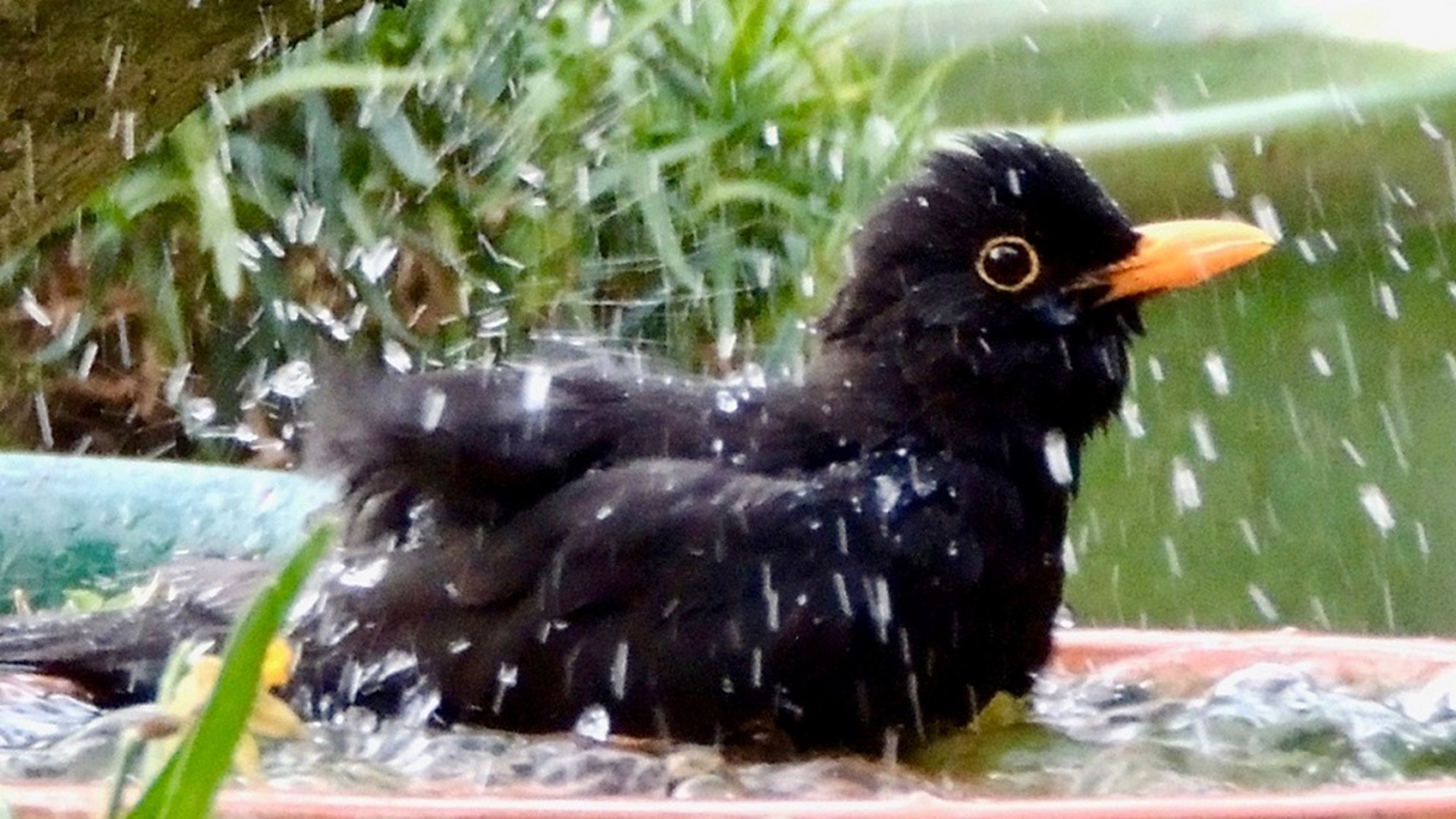
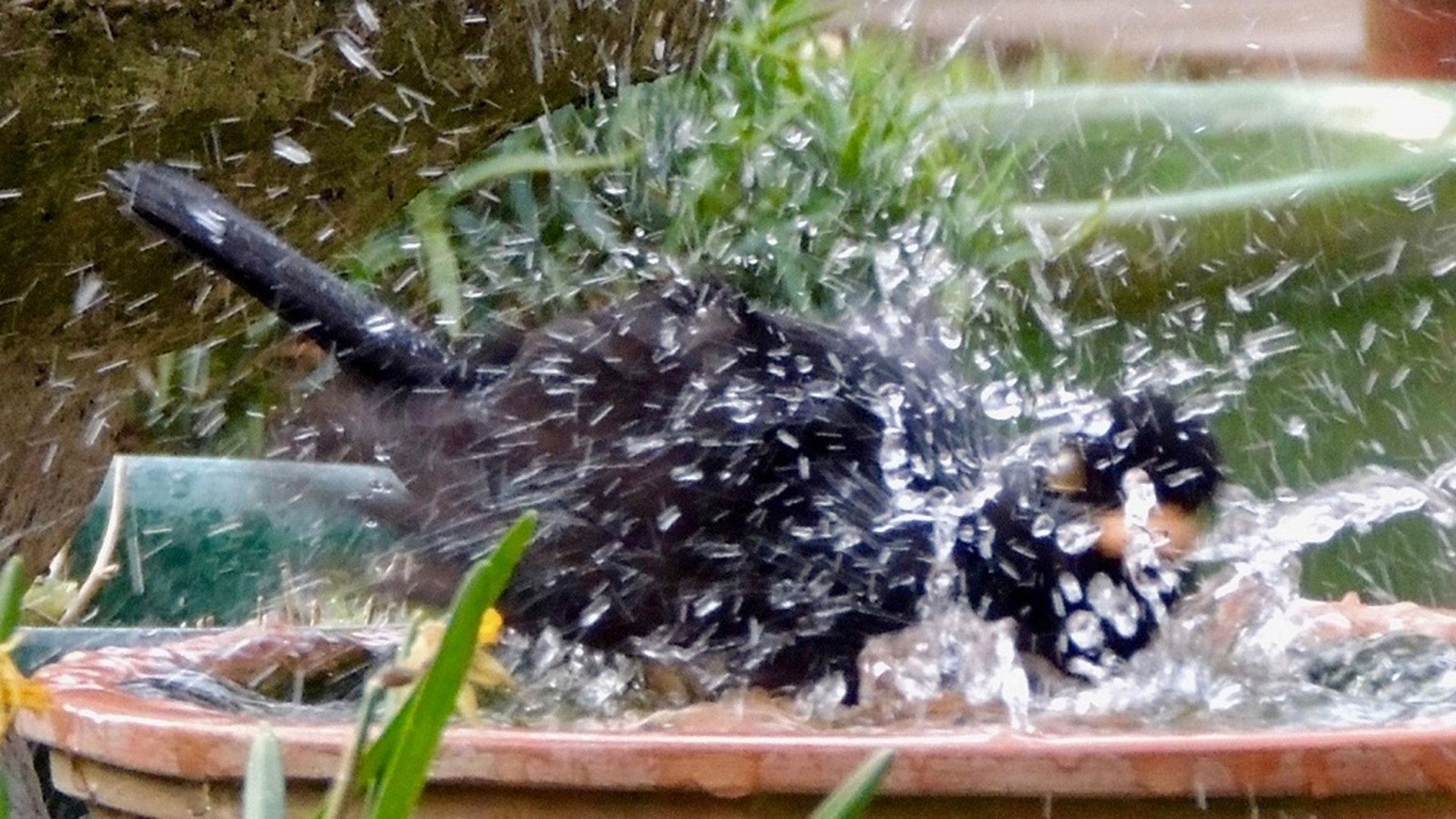
Blackbirds often come to bird baths and are quite eager bathers. Blackbirds love to splash about and can spend a good amount of time enjoying their water play. They favour shallow, wide, and sturdy bird baths, usually no deeper than 5-6 cm.
David said: "The Mealworms are making two pairs of Blackbirds lives much easier. Entertaining us each morning with their quick to and fro back to their young. Their nests must be very close, only away for a minute or two before mopping up more beak fulls. When you study them like this, you notice their clever survival tactics. We have seen a change of route back to one of the nests if our two young Magpies are about. A direct back and forth each time would soon direct the Magpies to a nest full of tasty young."
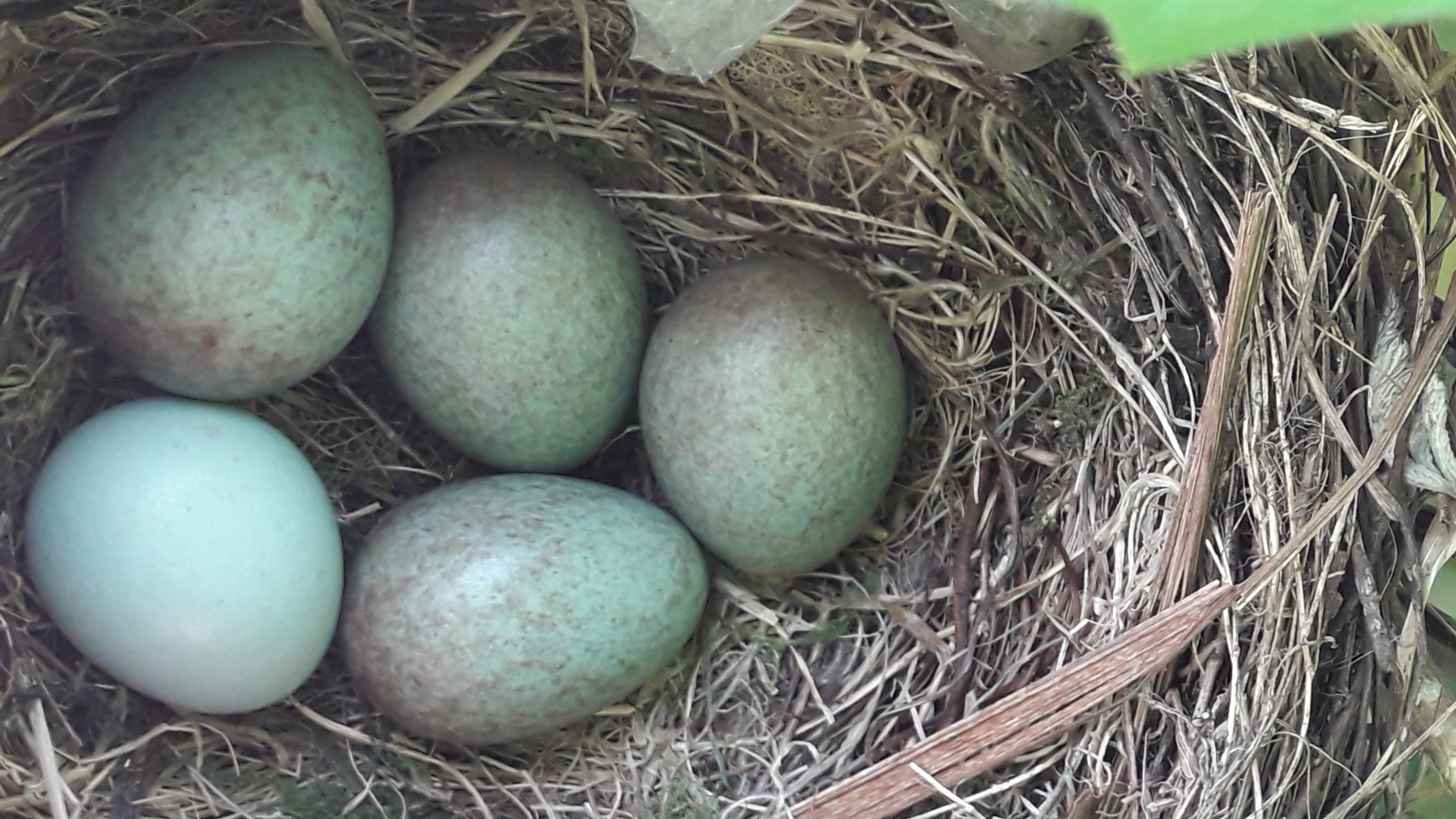
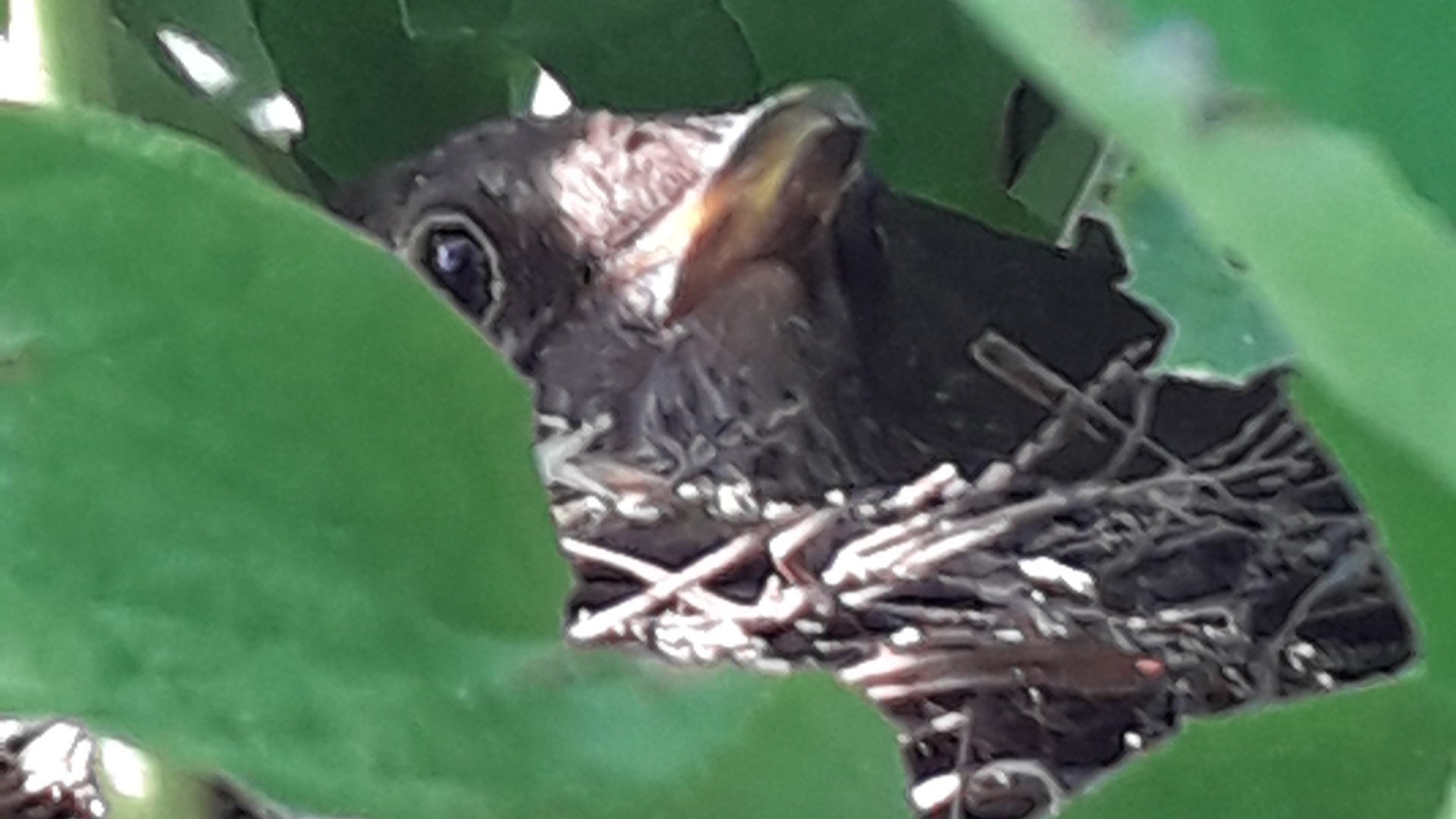
While pruning shrubs in her garden Elaine discovered a nest. She reached up and took a quick snap with her mobile to find out if the nest was occupied, then walked away. Not wanting to disturb the bird's normal activity she took the decision not to cut back the bush as intended, putting the welfare of the nest first. No harm done. Five minutes later mother blackbird was back on the eggs. Elaine took the second picture from some distance away.
#
Blue Tit
Cyanistes caeruleus
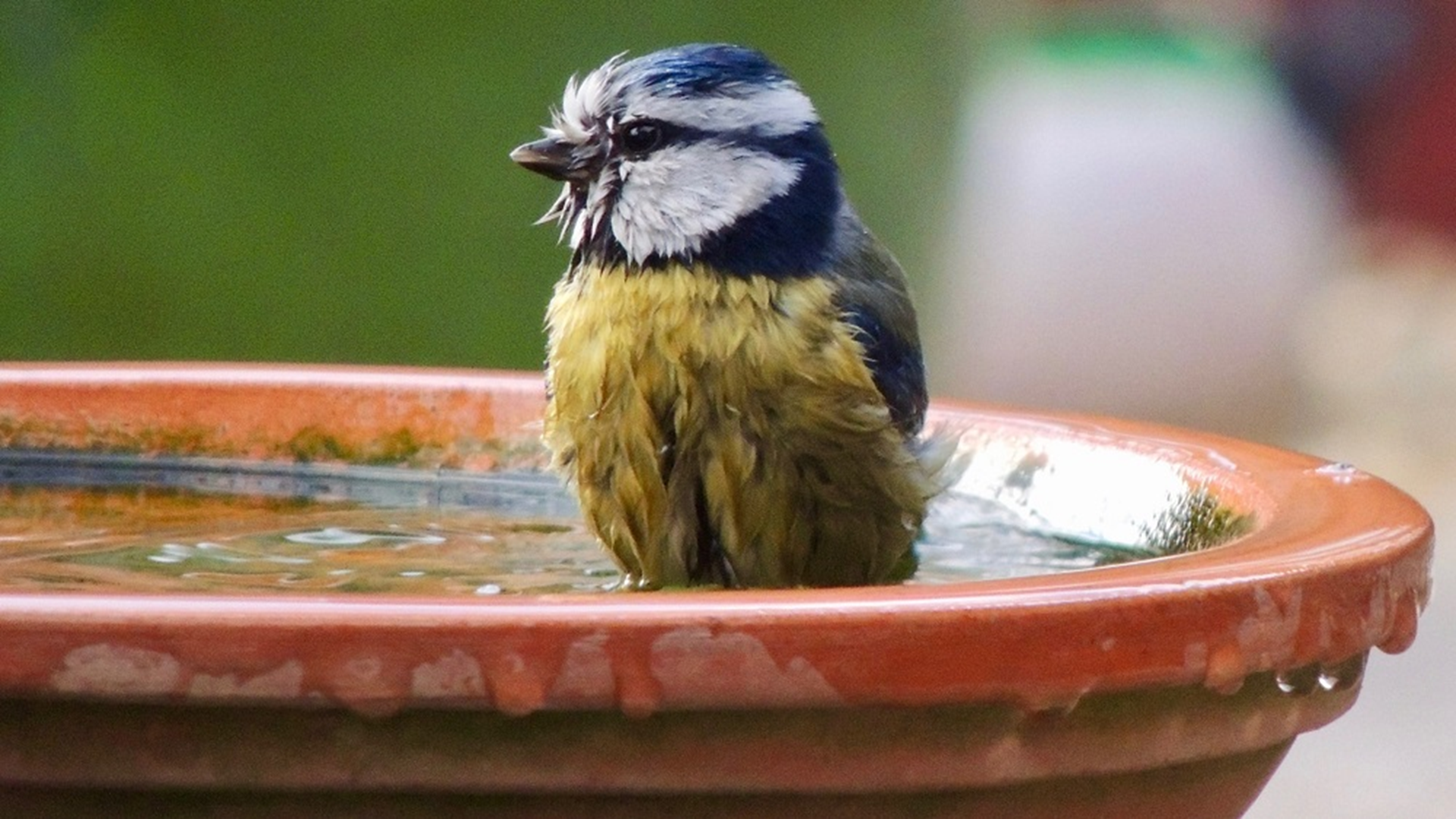
An i
#
Starling
Sturnus vulgaris
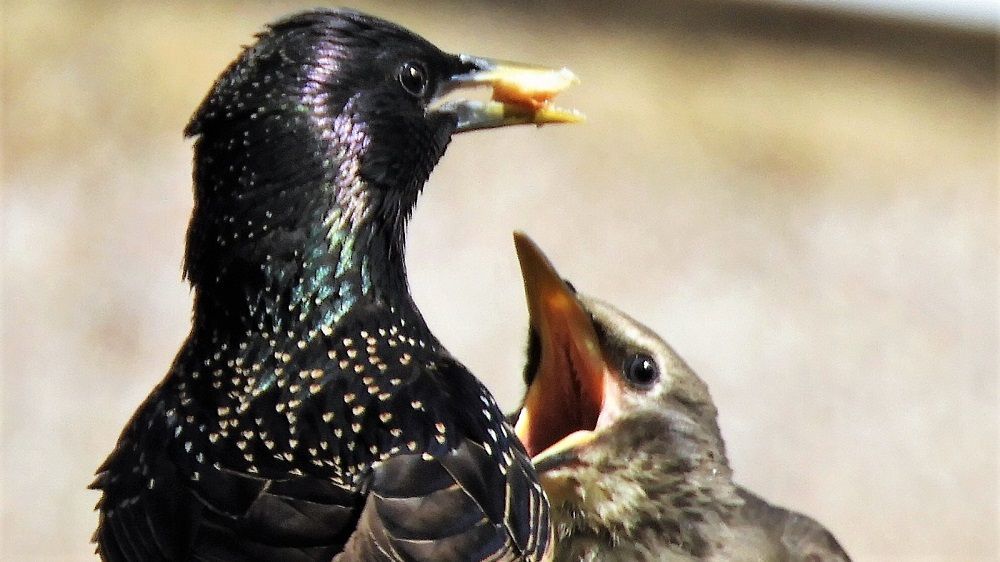
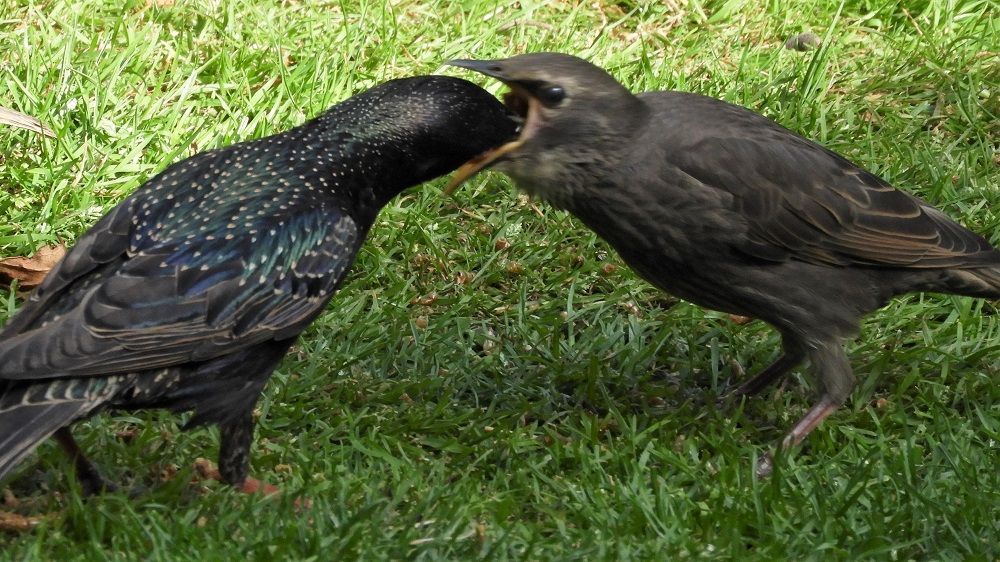
Spring is an excellent time for watching birds in the garden; the time of year when they start producing young. A young starling with its parent has been visiting Debi's garden. Juveniles do not have speckled backs like the adults.
#
Collared Dove
Streptopelia decaocto
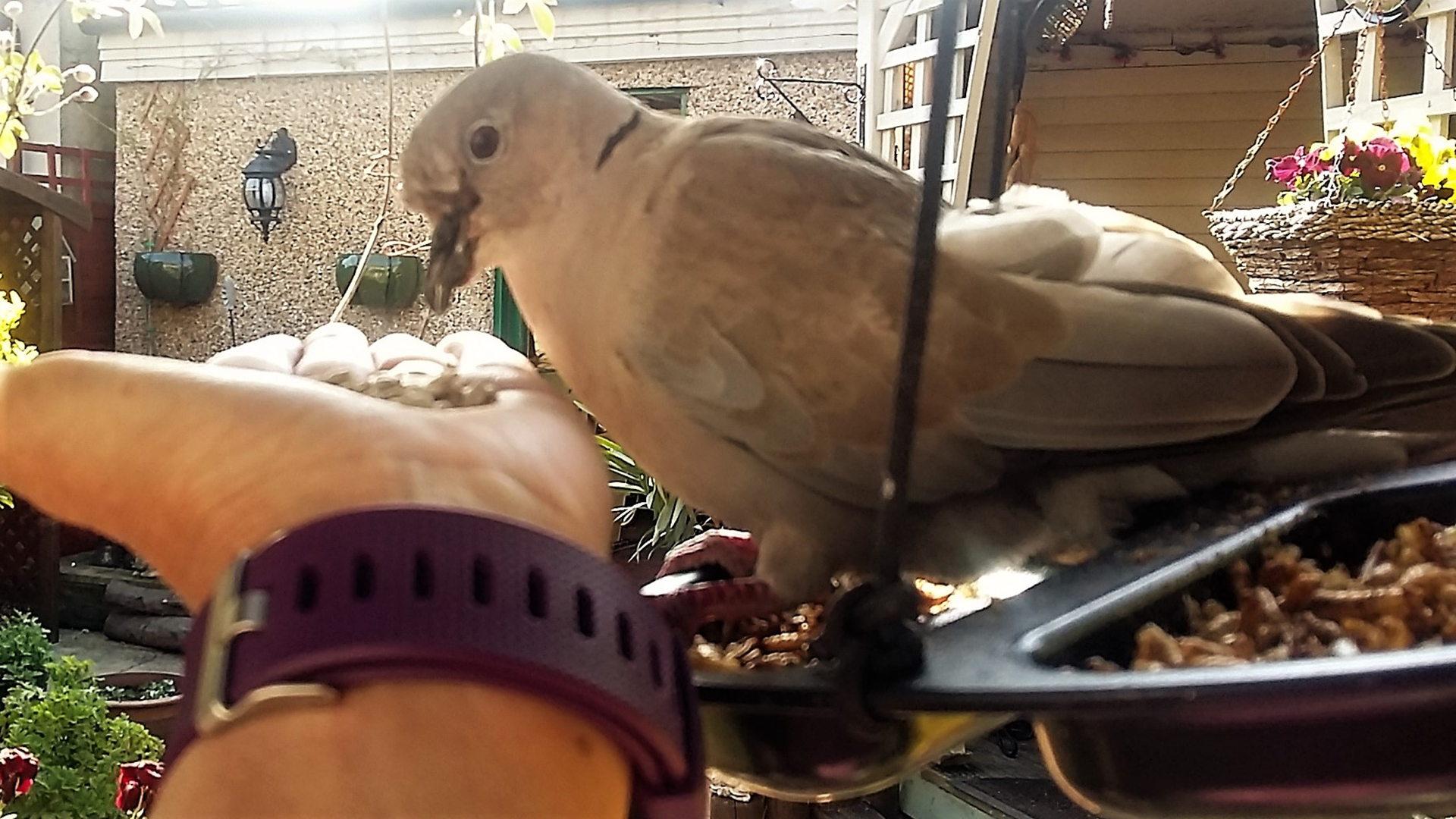
Collared doves began breeding in Britain in the 1950s and are typically spotted alone or in pairs. They have pinky-brown feathers, a black neck collar, and red eyes. Their diet includes buds, shoots, grains, and seeds. Occasionally, they come together in flocks when food is plentiful. They communicate with each other through a cheerful cooing sound. Debi had a wonderful experience holding out some food and soon had a dove eating from her palm.
#
Robin
Erithacus rubecula
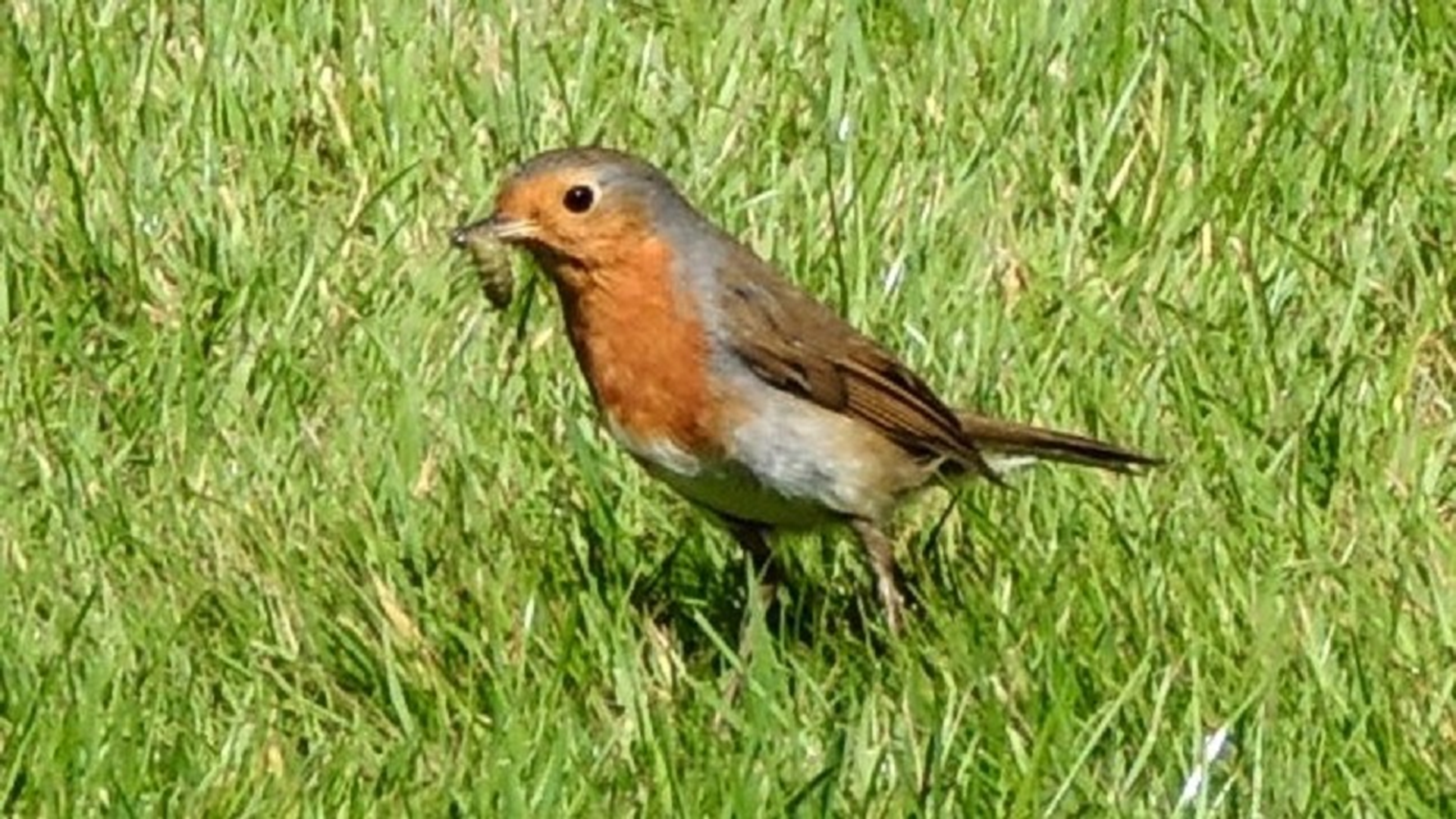
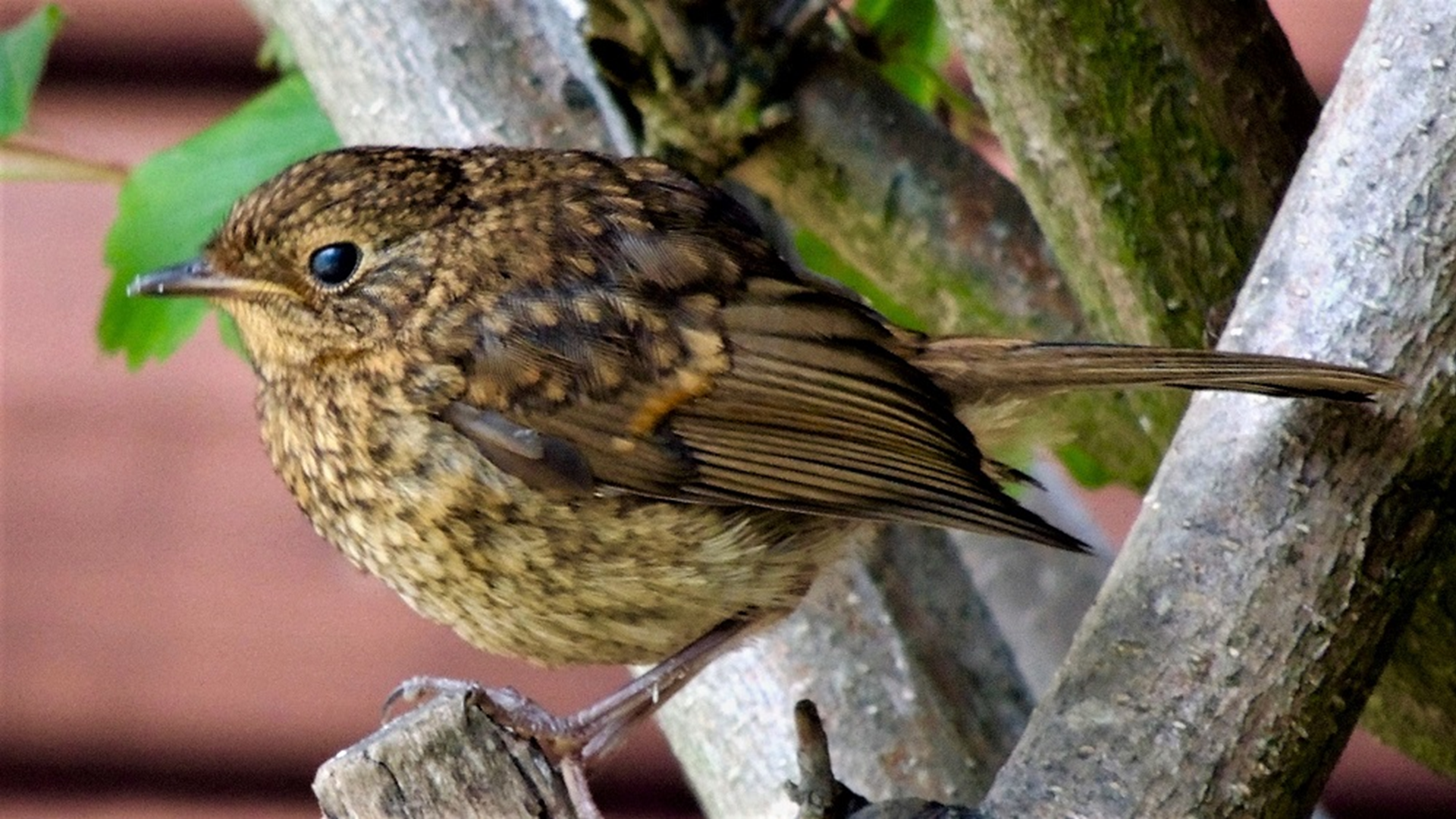
During April, David spotted this robin gathering grubs on his lawn. Later, in June, a young robin was visiting his garden. Until robins gain adult colouration they have speckled breasts looking very thrush-like in appearance. Dull colours helps juveniles blend into the background making them less noticeable to predators. Robins were once placed in the Thrush family, but modern taxonomy now places them in the Old World Flycatcher family.
#
Blue Tit
Cyanistes caeruleus
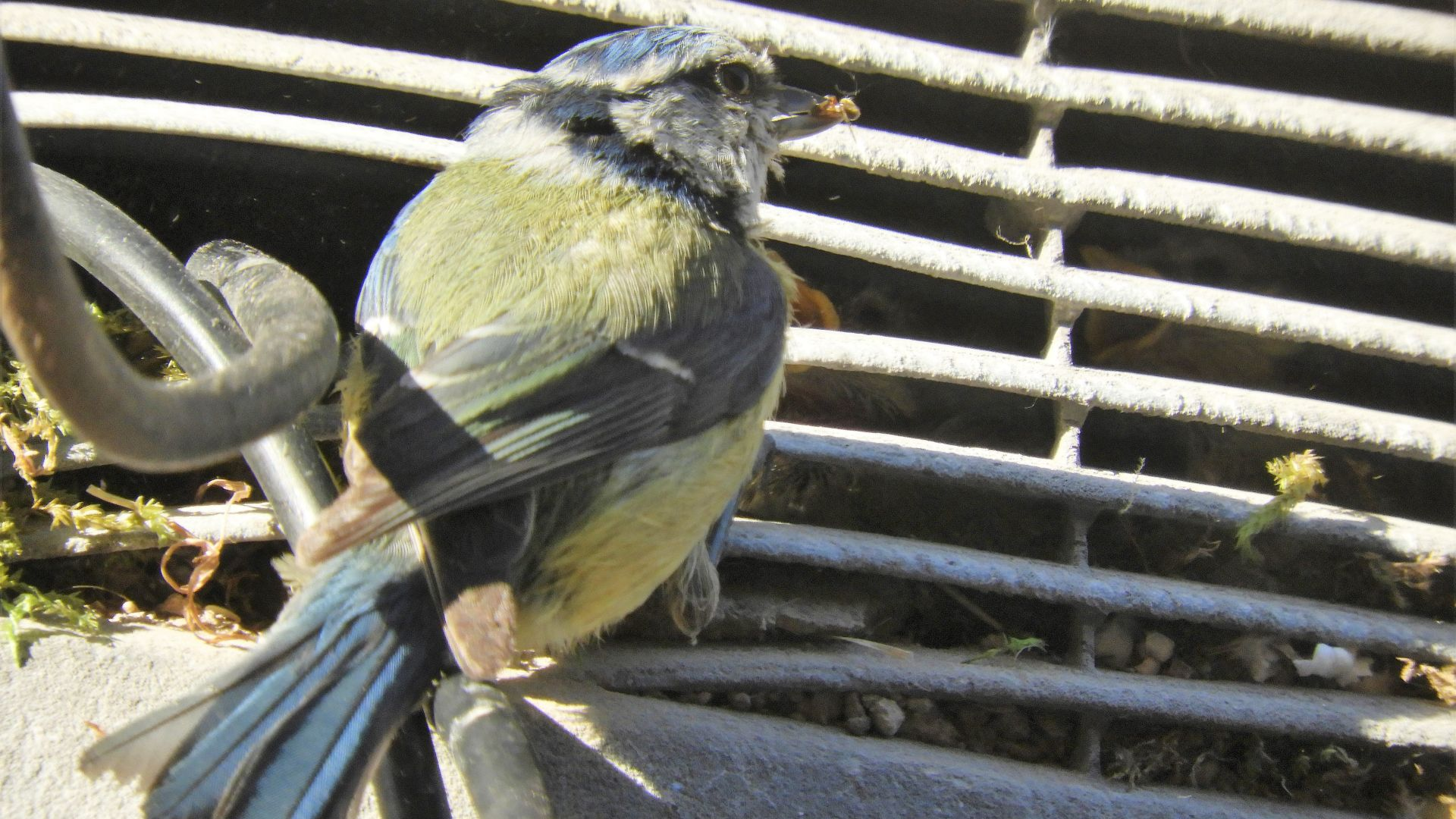
Debi took this picture of a Blue tit using an air vent on her house as a nesting place. The nestlings were very tiny and didn't look like they were ready to fledge.
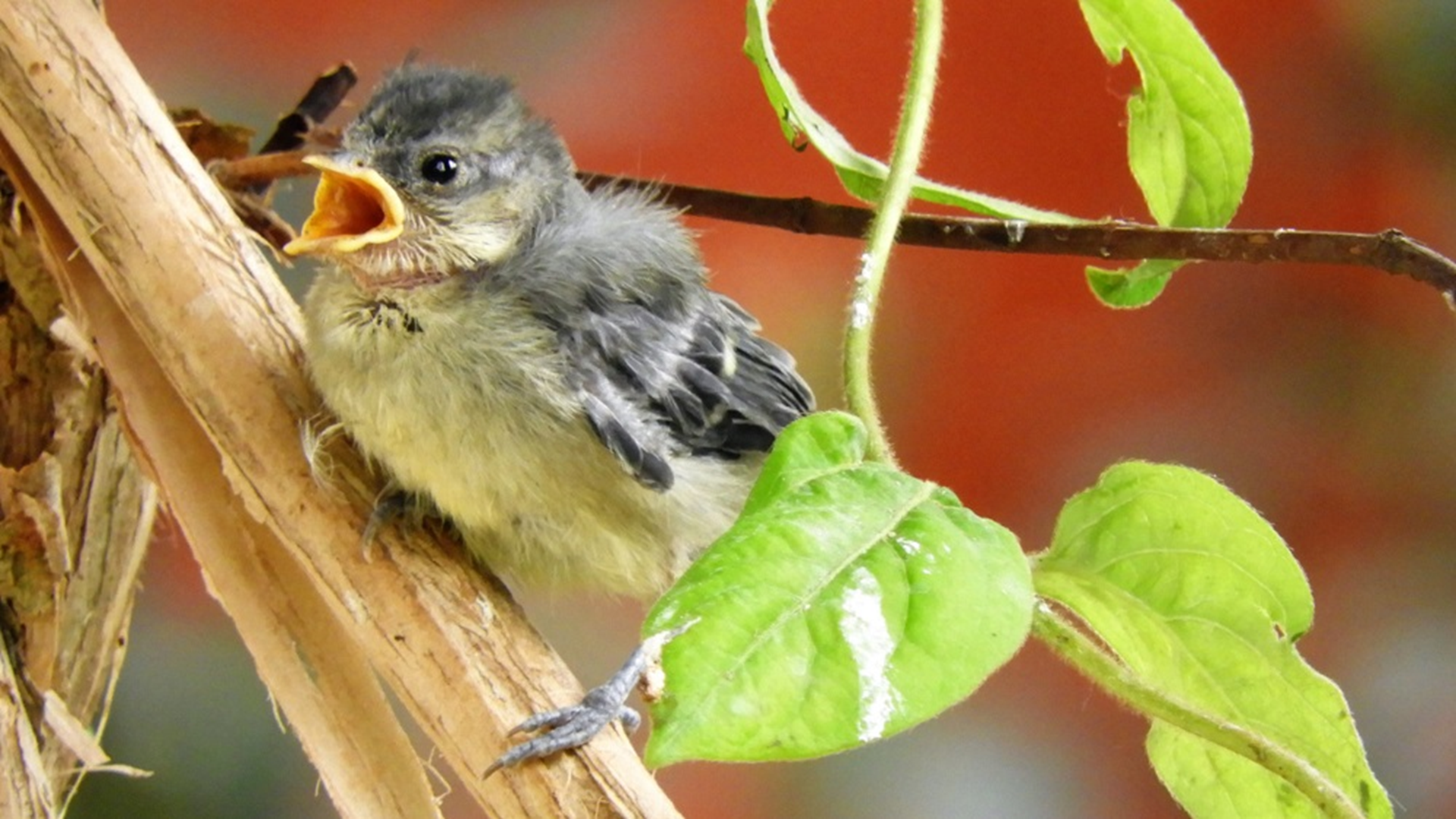
A little later in the day Debi emailed: "One of the little Blue Tits is on our path now in the back garden. It's so tiny, I'm not sure if it's supposed to be out just yet. Should it just be left to its own devices do you think? Looks too little to fly. Hope it doesn't starve. It's gone into the plants now so it's under cover which is probably safer for it. I can hear it's parents calling to it. "
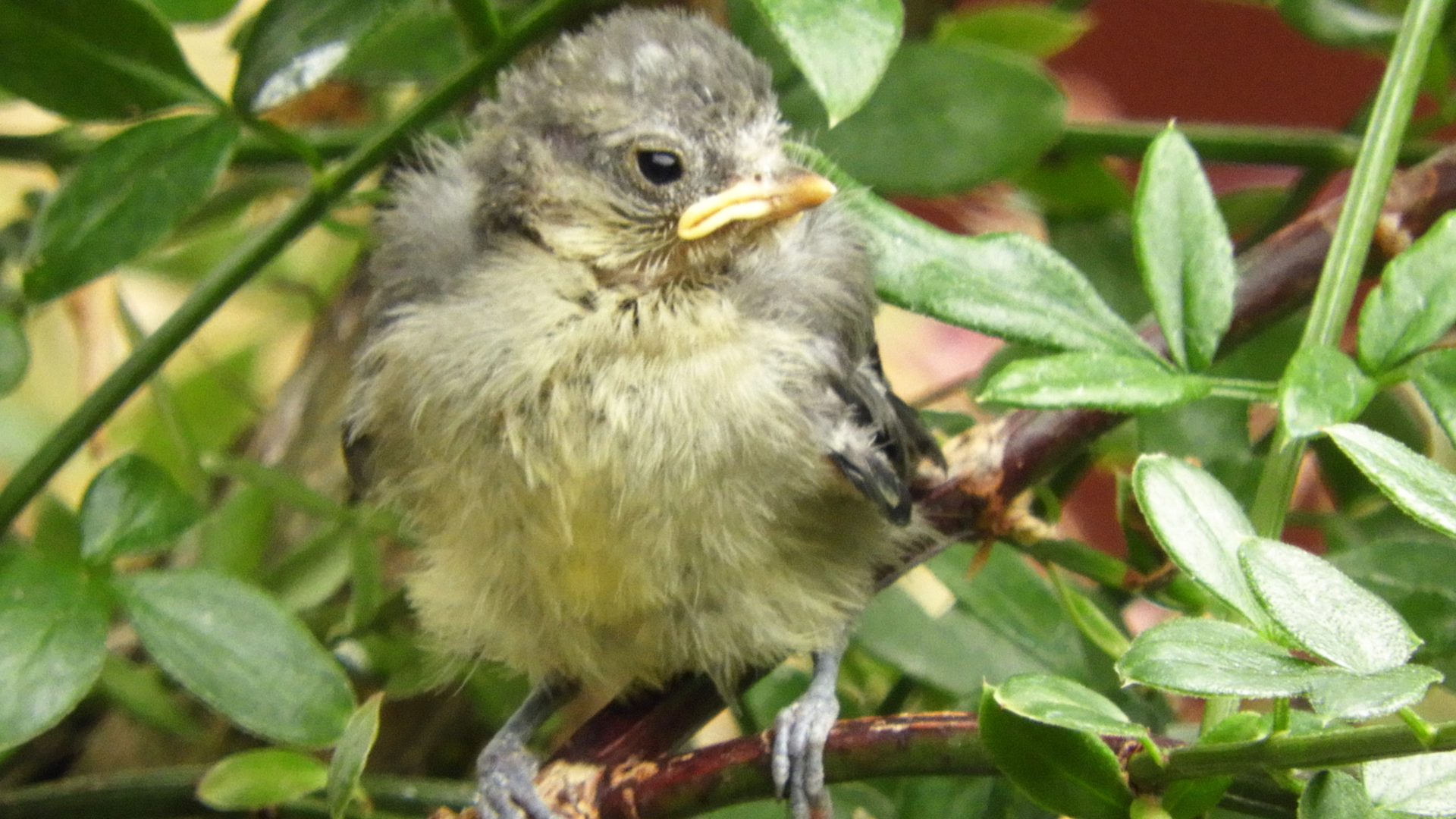
So what do you do if a young bird appears to leave a nest too early? The best advice is to leave it alone, because it has a better chance of survival in the care of its parents. If a young bird is in a place such as a busy road then there is no harm putting it somewhere safer, however don't move it too far away otherwise the parents won't be able to hear where it is. Birds do not have a good sense of smell so handling a young bird won't cause it to be abandoned. Adult birds are able to look after their young much better than human intervention can. There is a strong possibility the parents will be nearby waiting for you to leave the scene.
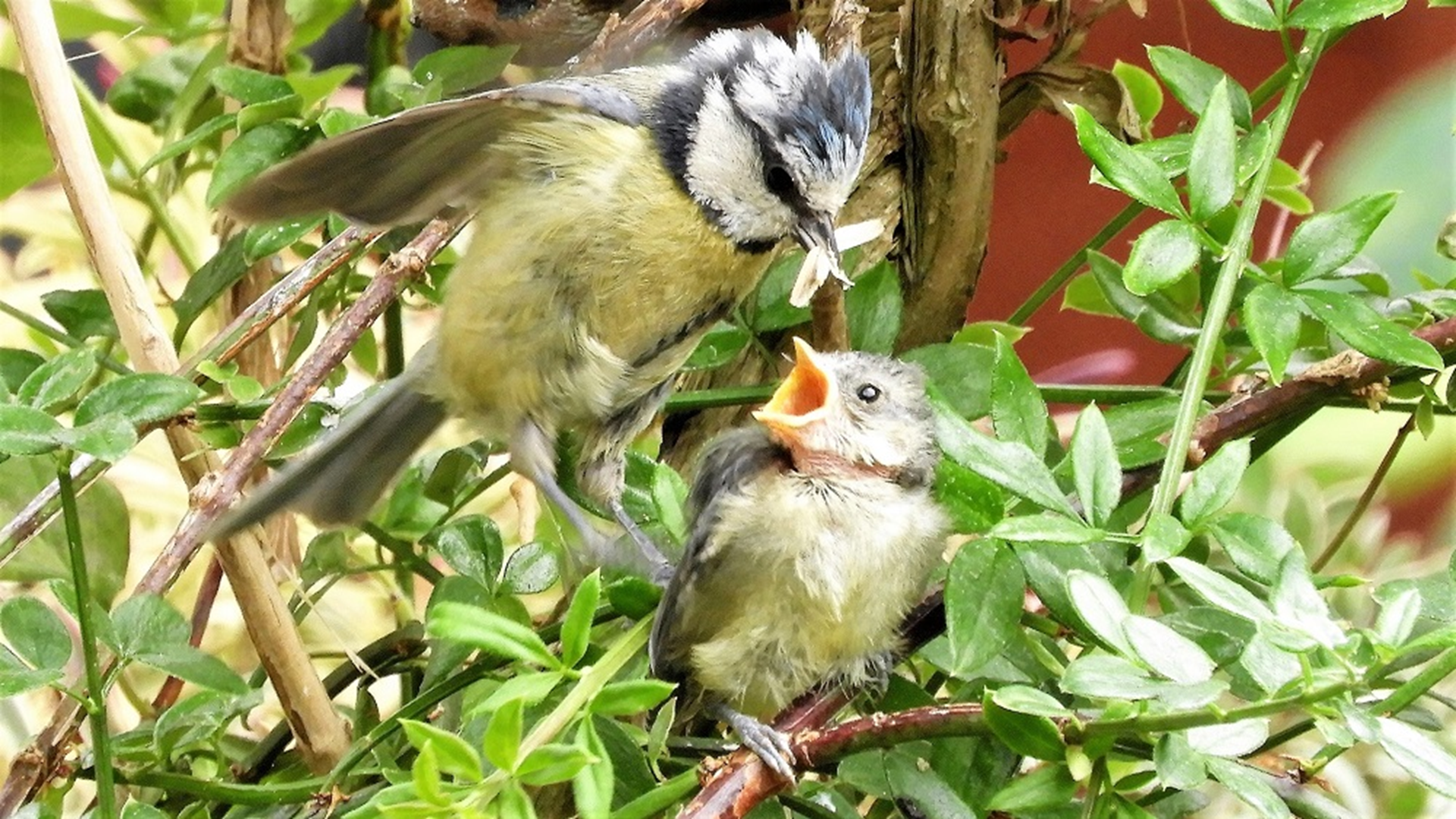
Debi left the young bird alone and sent another message soon after: "Mum has found it and is feeding it! Yay."
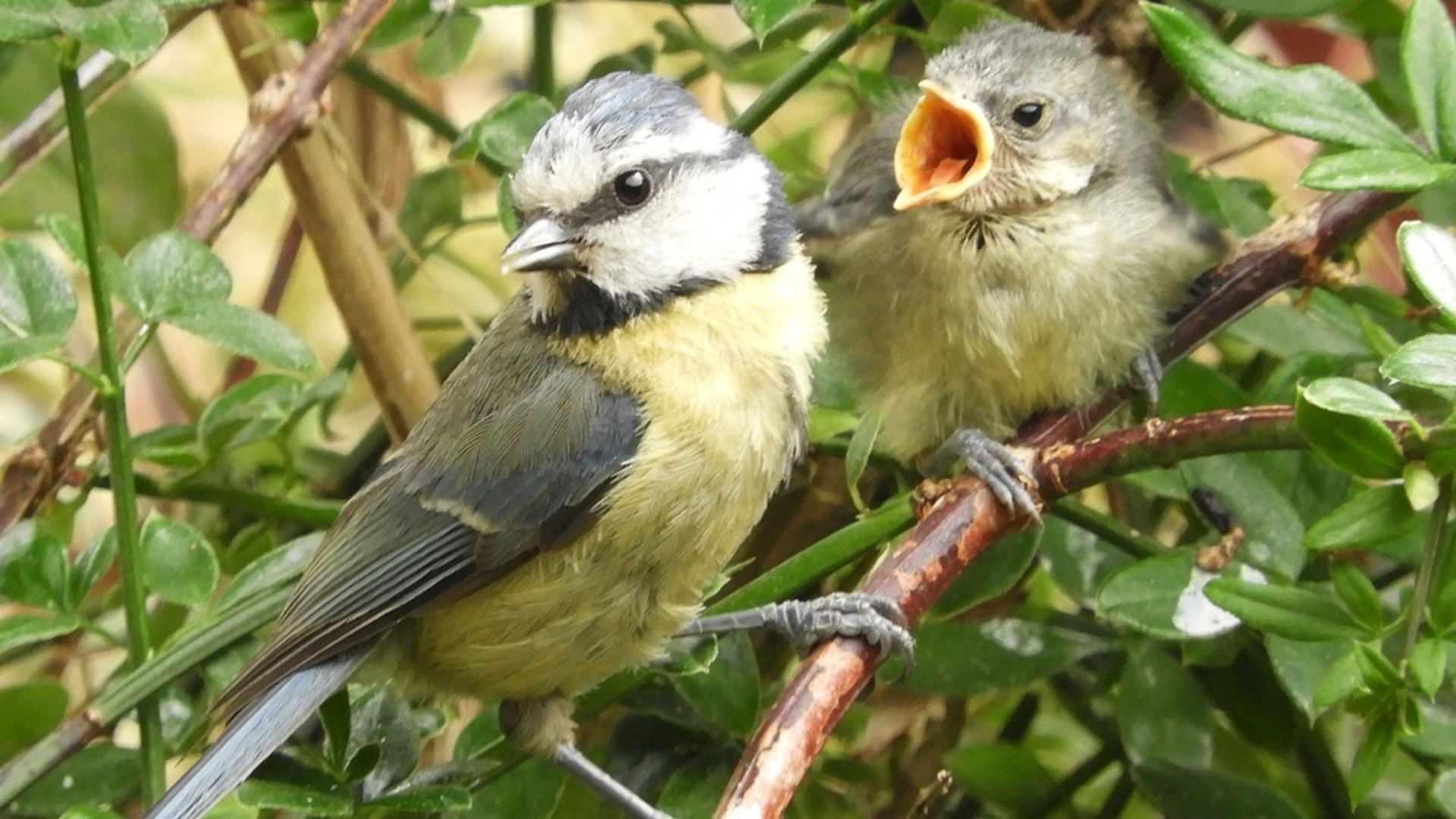
Debi sat out for three hours watching the baby grow before her very eyes.
All worked out well in the end.
#
Charles Darwin
Staying Safe
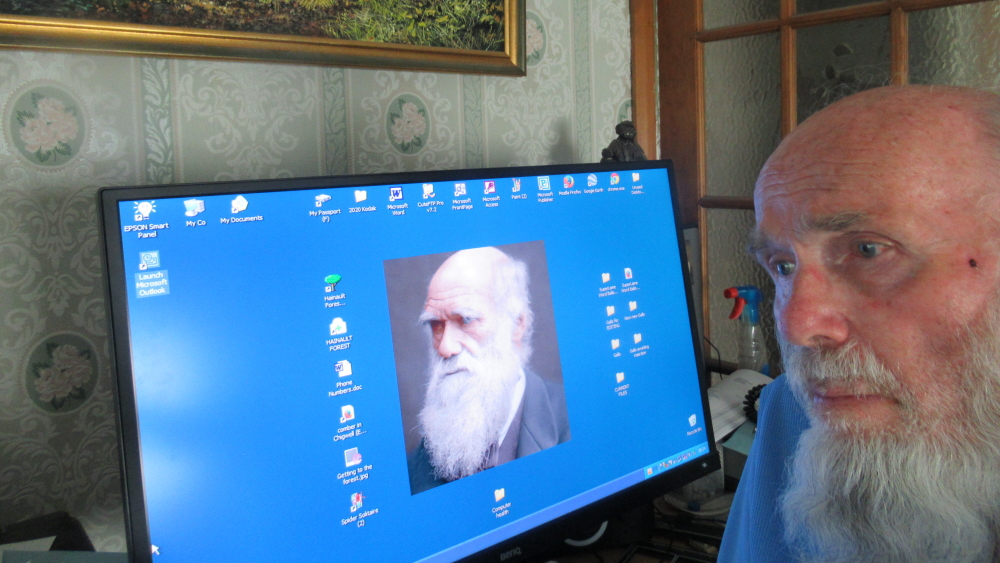
Charles Darwin sits at his PC obeying the covid lockdown restrictions. Unfortunately, there will be no world trips on the Beagle this year!
#
S
S
#
Hawthorn Shieldbug
Acanthosoma haemorrhoidale
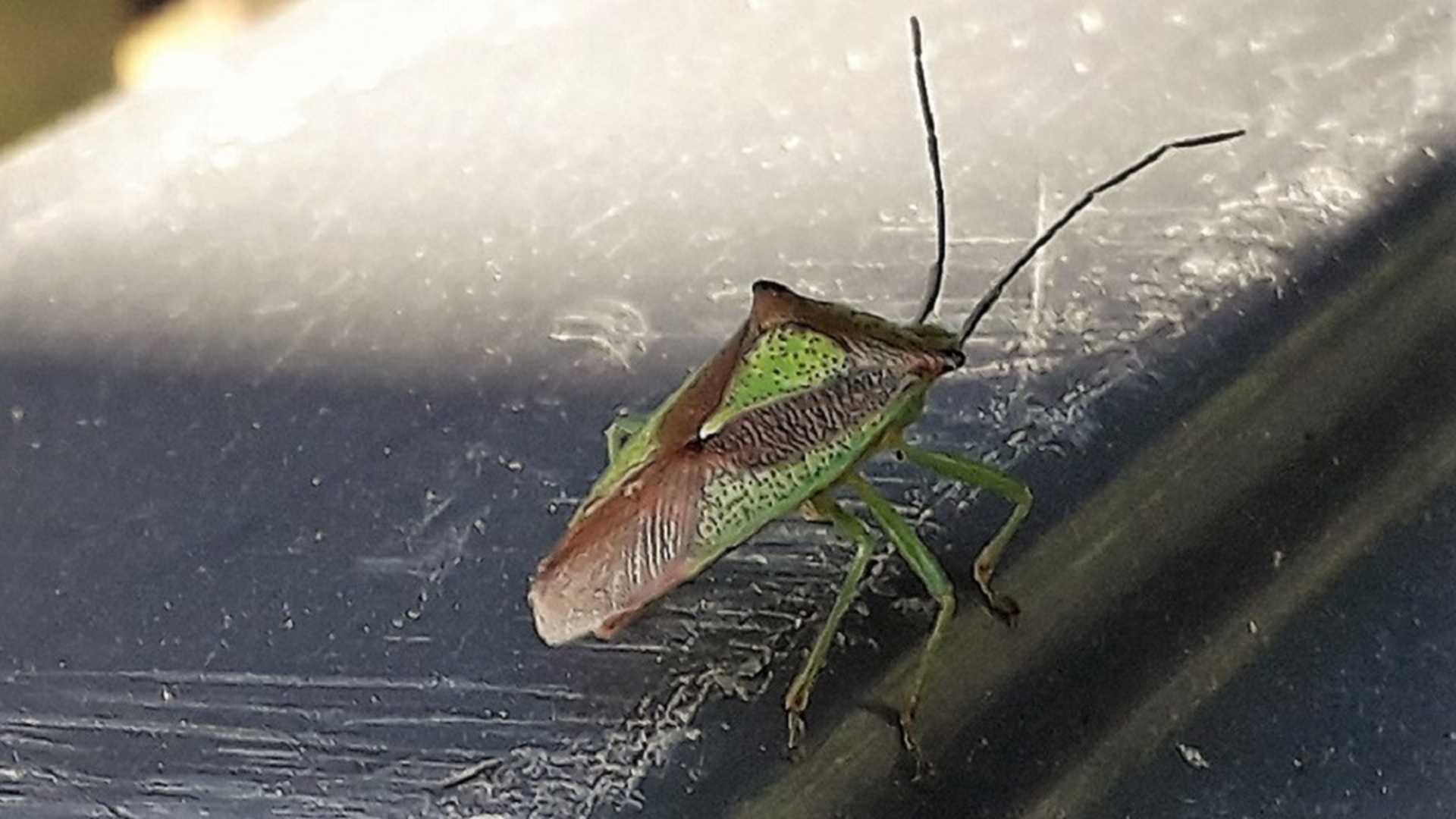
A Hawthorn Shieldbug in Elaine's garden, a distinctive species which is sometimes confused with the smaller Birch Shieldbug. They emerge in spring to mate with the resulting larvae appearing in May. The larvae feed mostly on hawthorn berries.
#
Puss Moth
Cerura vinula
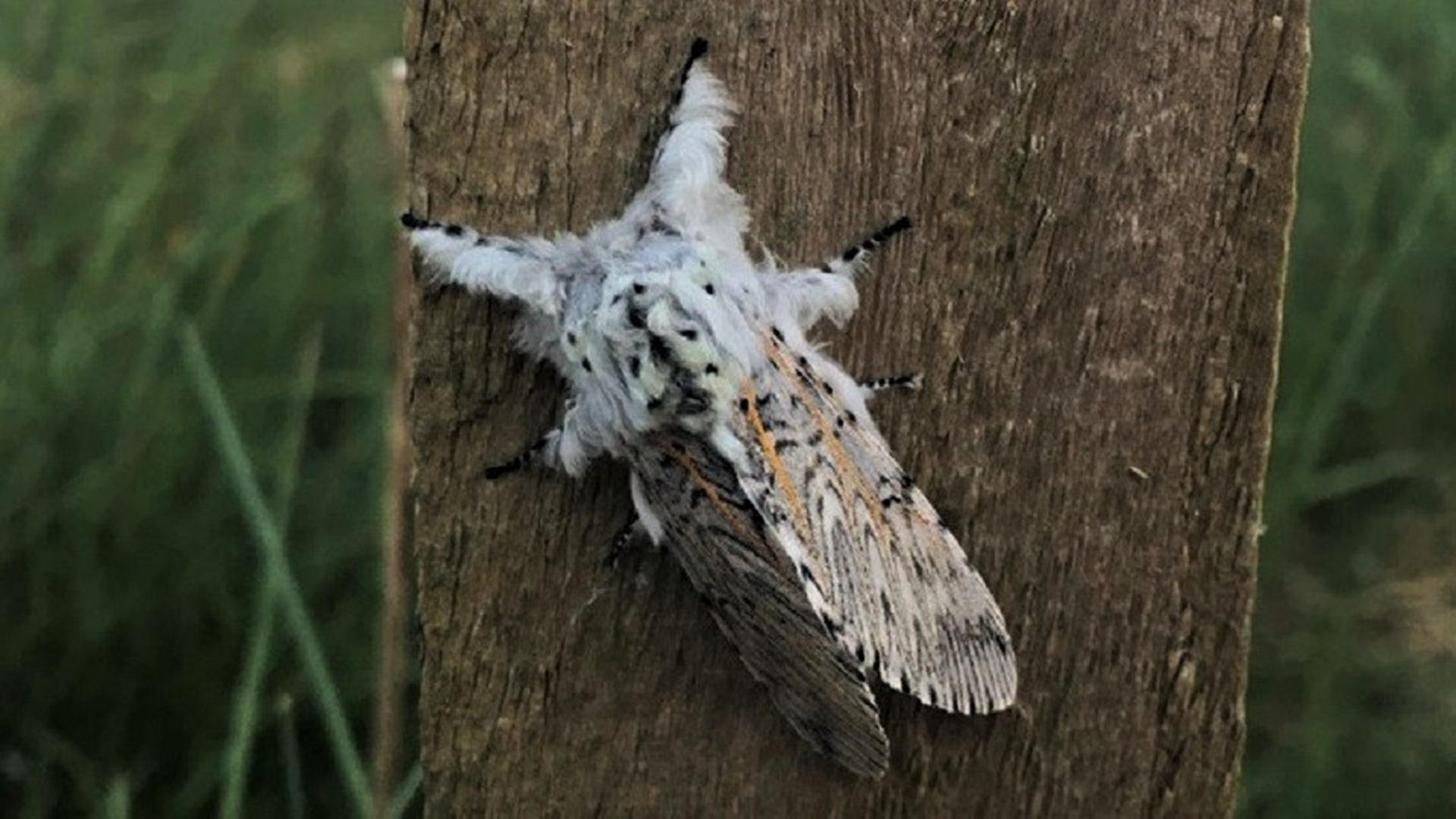
Ian Gilbert, a former resident of Hainault, emailed this lovely picture of a Puss Moth from the Scottish Borders: "This beasty was on one of the tree posts in the field. The post is 3” (7.62cm) wide."
The Puss Moth lays its eggs on the upper surface of willow or poplar leaves, usually in small groups of two or three, hatching into caterpillars about 14 days later.
#
Blossom
Rosaceae
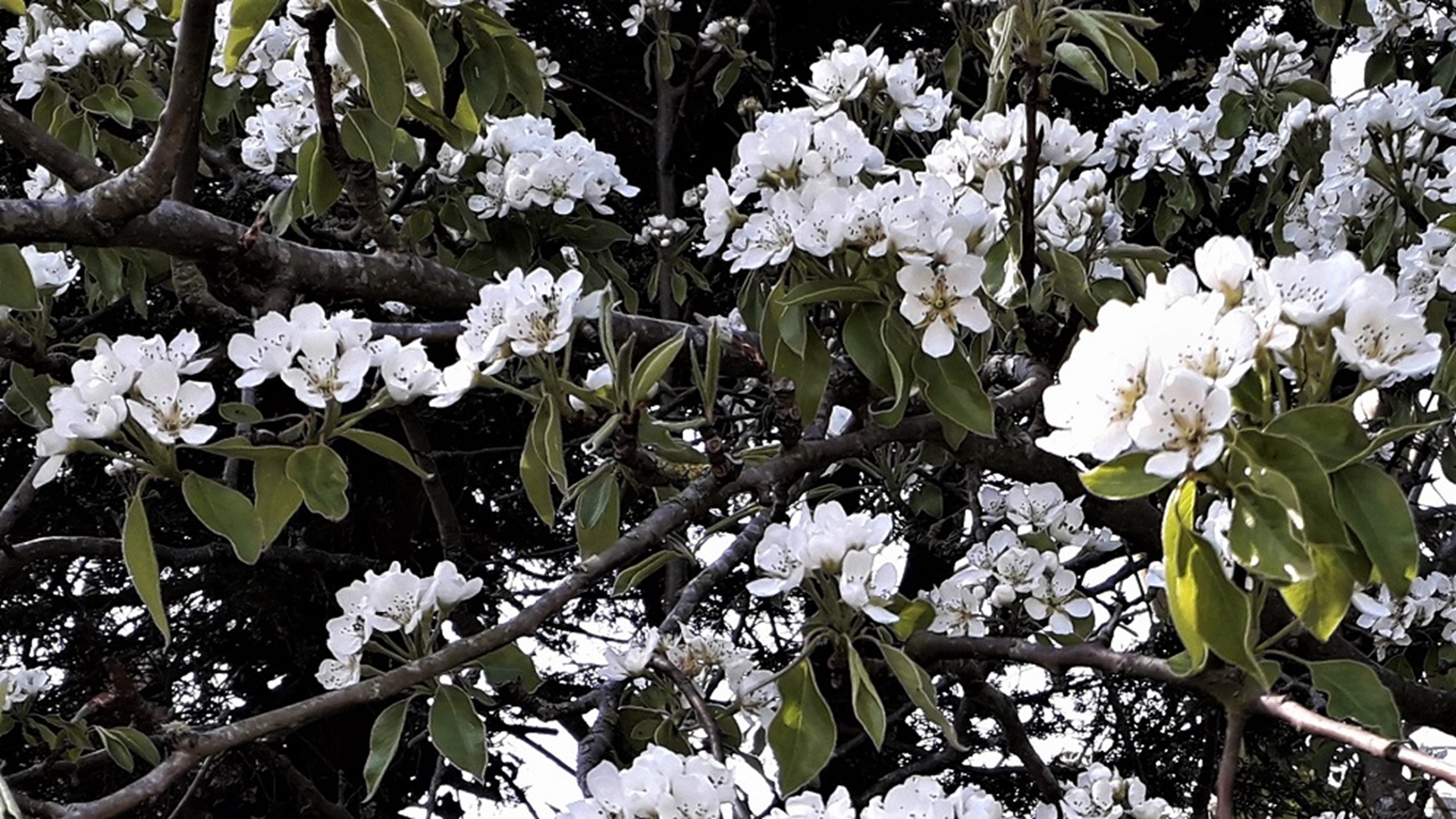
Apple and pear trees are part of the Rose family. Pear trees tend to be relatively small and have an irregular crown shape. The branches produce short shoots from which rounded leaves, white flowers, and fruit emerge. In gardens, apple and pear trees are typically grown as cultivated varieties. Plants in the Rose family characteristically have flowers with five petals.
#
Lesser Trefoil
Trifolium dubium
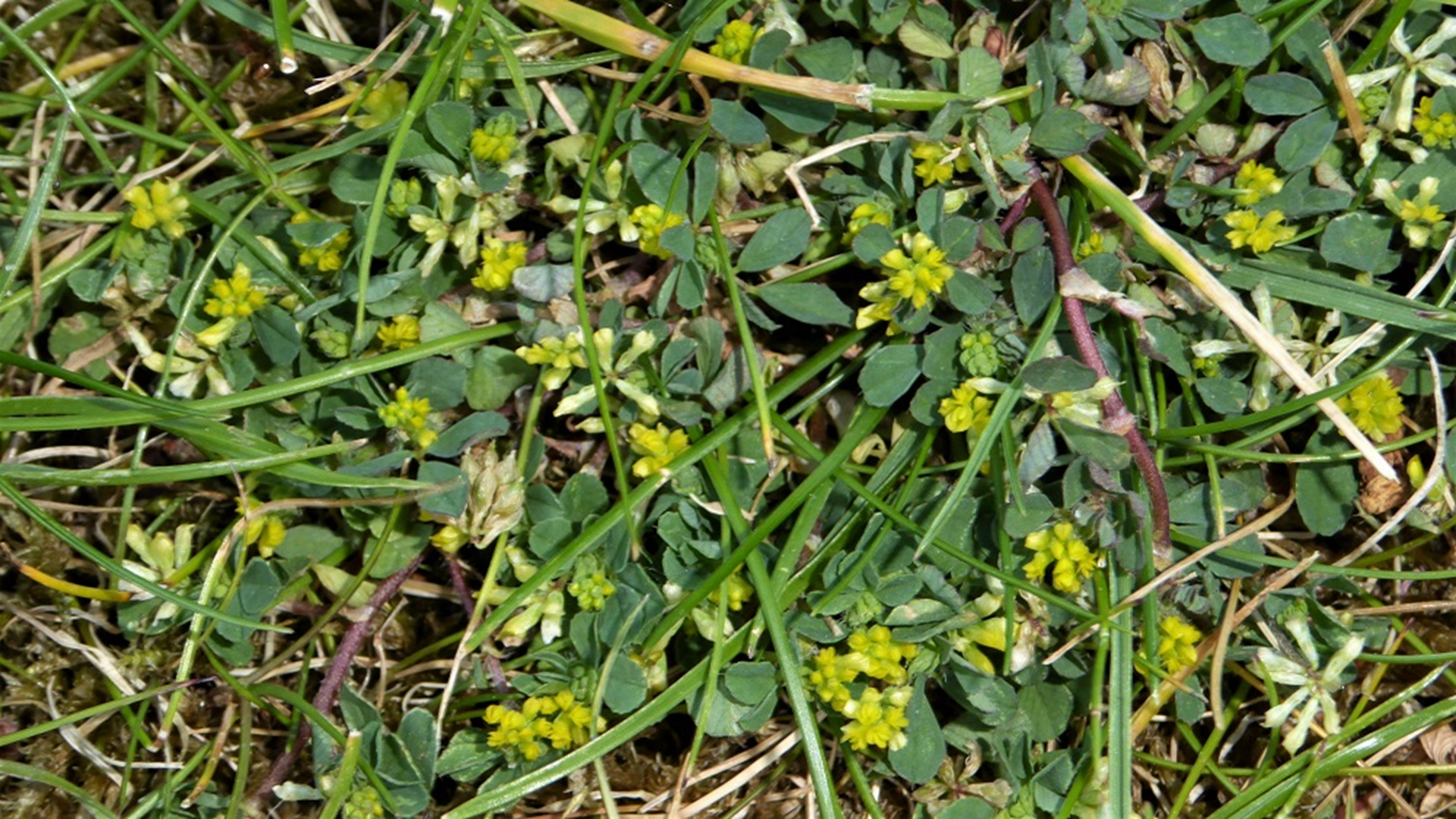
Lesser trefoil is an annual related to the clover family which spreads by creeping runners and seed. It anchors itself into the soil with a deep tap root.
#
Pendulous Sedge
Carex pendula
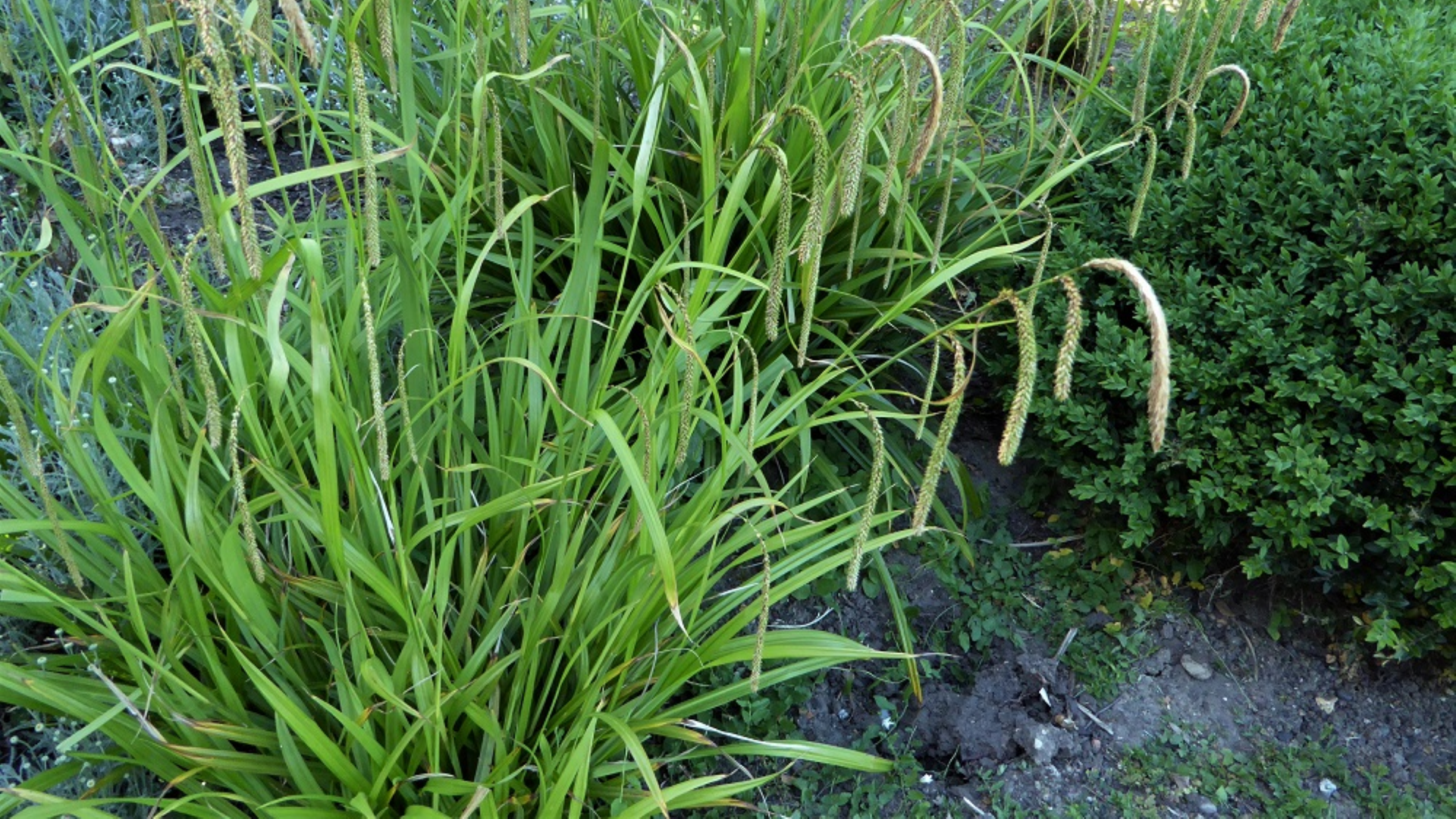
Pendulous sedge likes damp shady places.
#
Wood Avens
Geum urbanum
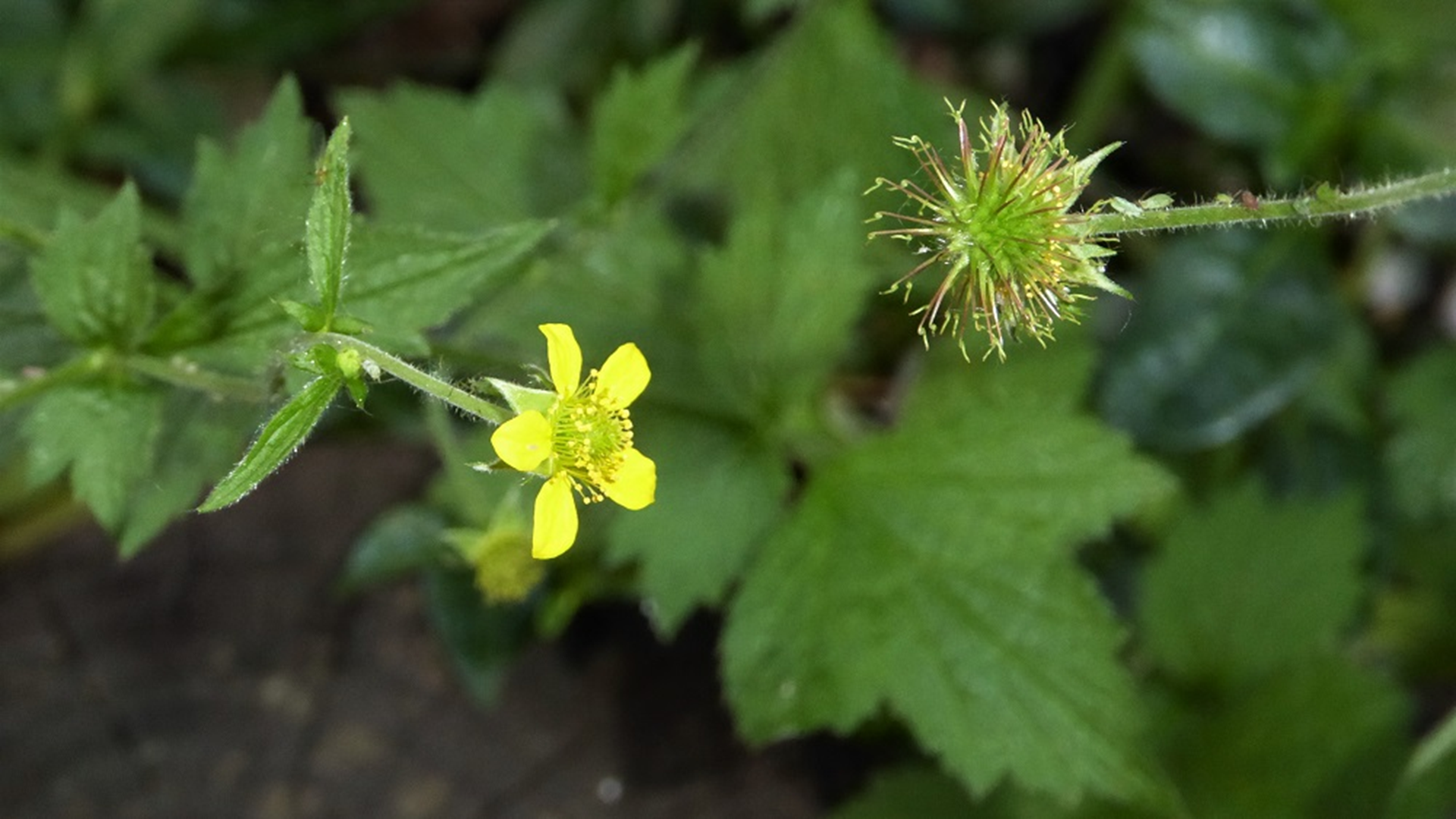
Wood avens is a common plant of woodland and hedgerows. It also known as 'Herb Bennet', a plant reputed to have healing powers. Drooping yellow flowers appear in loose groups on thin stems from May to August. Spiky seed heads hook themselves onto passing creatures which enables the seed to get spread over a wide area. The flowers have five petals and the downy three-lobed leaves have a toothed margin.
#
S
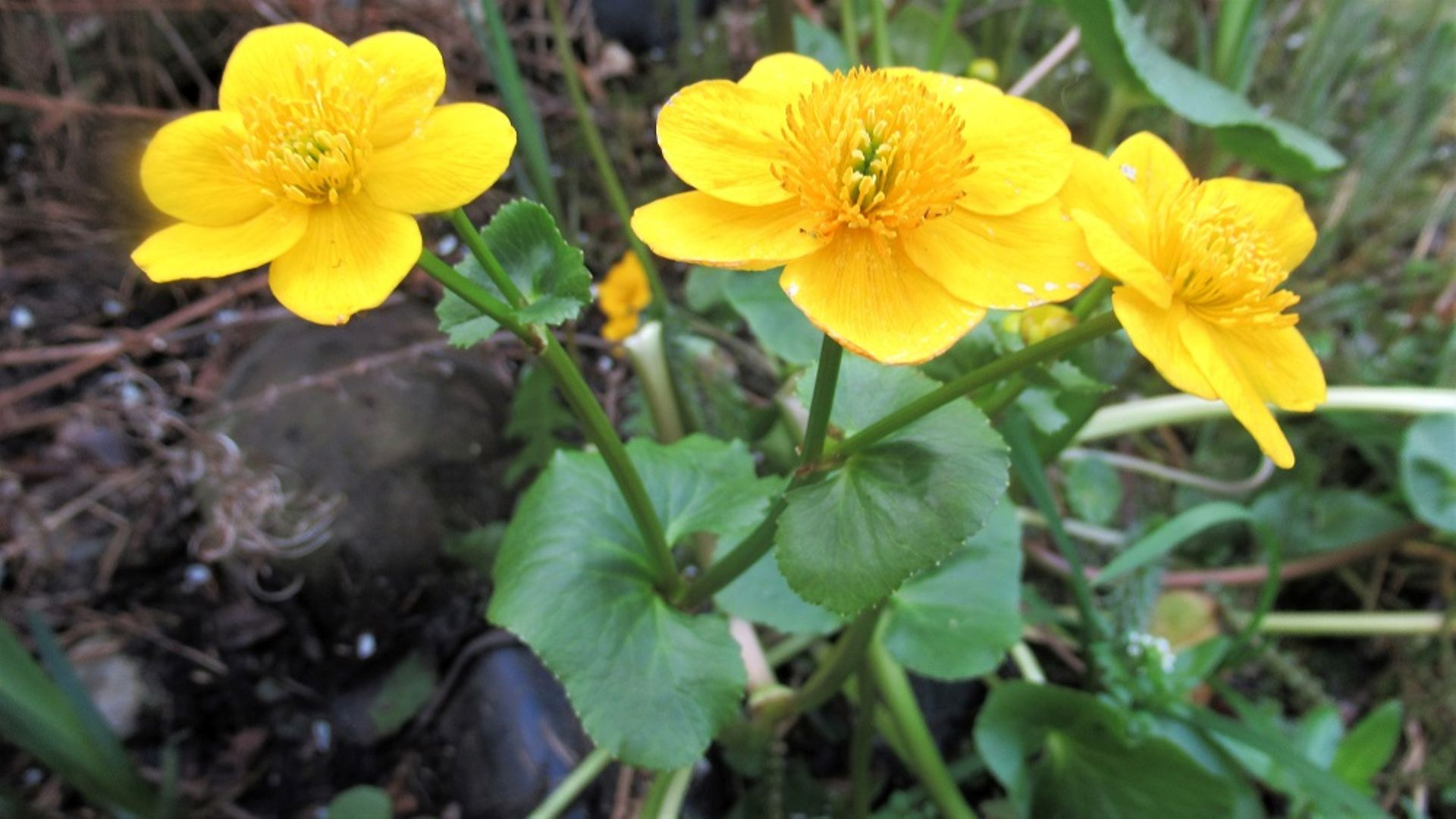
Marsh Marigold is a member of the Buttercup family that likes to grow at pond edges and other wet locations. It is a low, stout-stemmed perennial, with shiny, dark green, kidney-shaped leaves that are spirally arranged.
#
Rose Campion
Silene coronaria
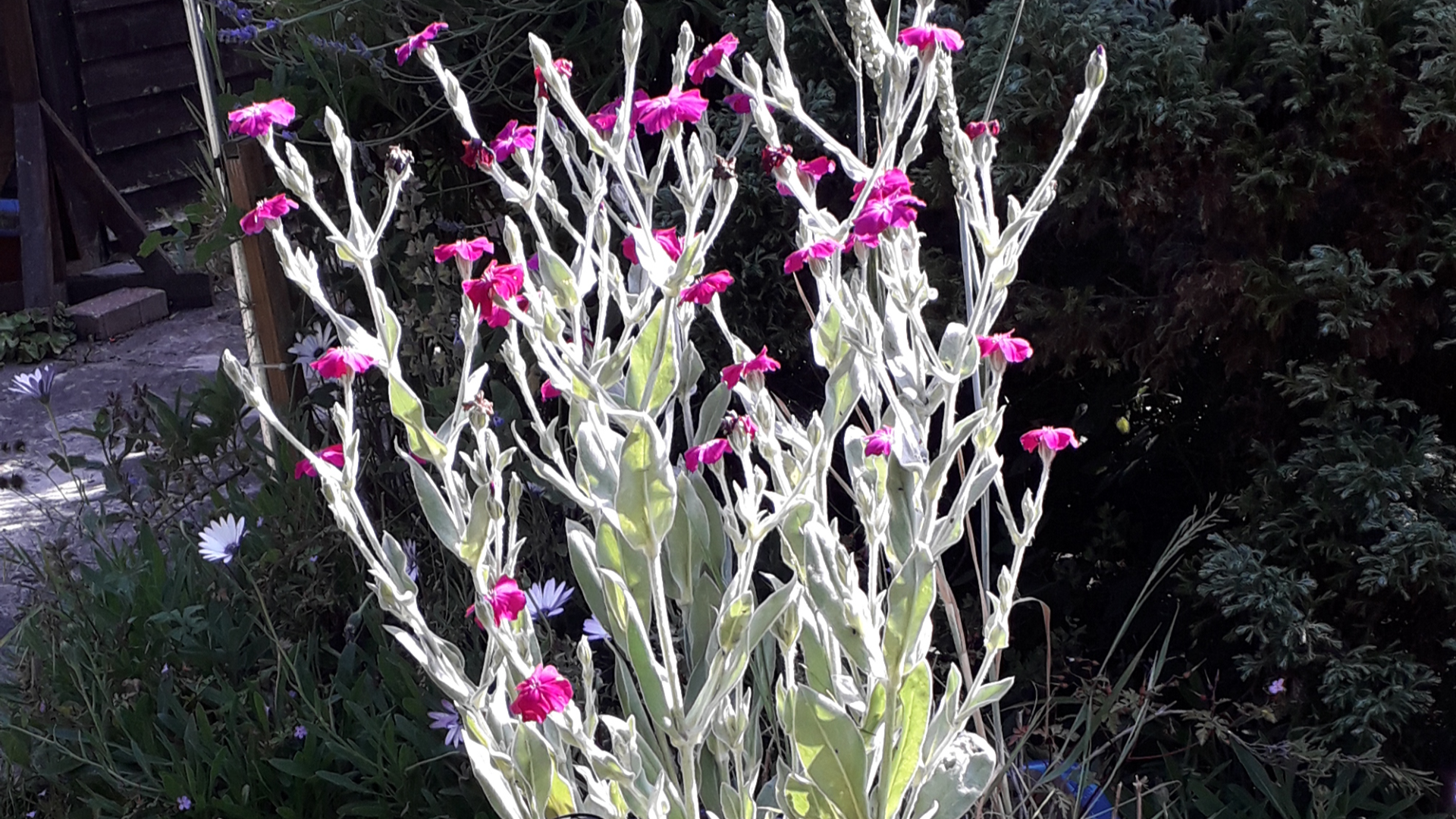
Rose campion is a perennial that grows up to 80cm tall. It produces magenta flowers and single grey felted leaves. Flowers usually appear around June and July. It is a hybrid related to red campions and white campions found in the forest.
#
S
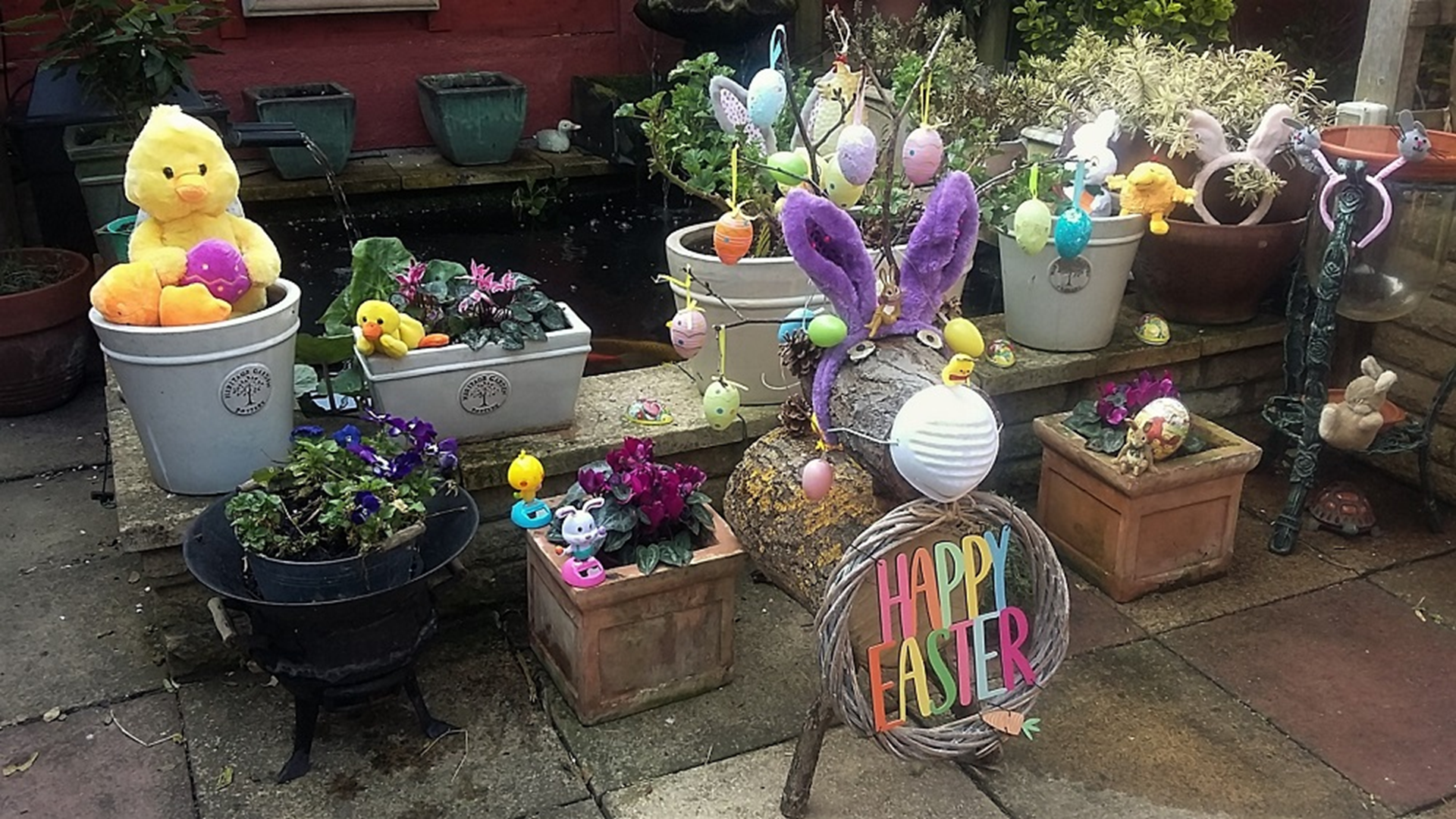
A log deer for Easter. Eggcellent!
#
Harlequin Ladybird
Harmonia axyridis
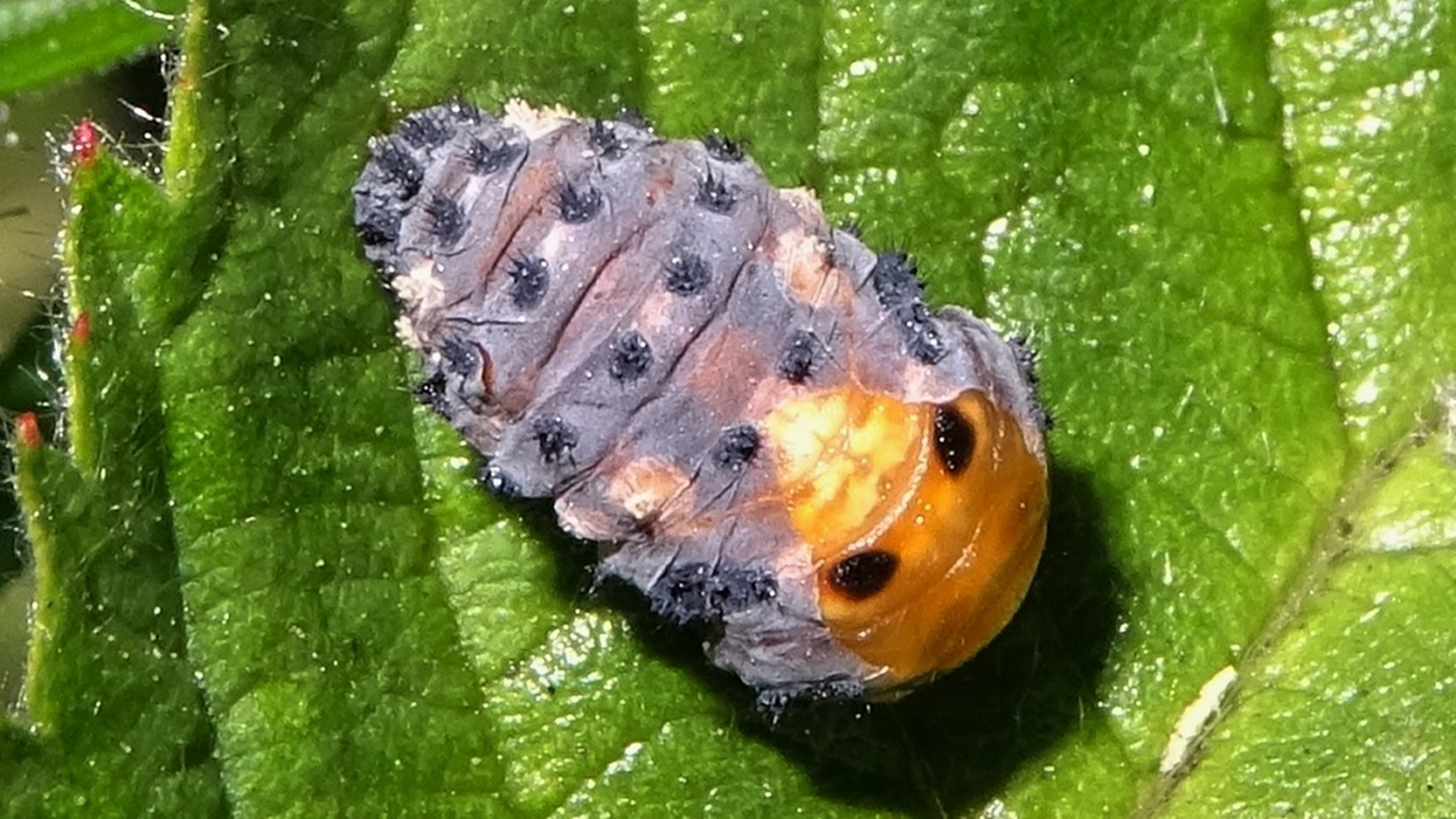
This picture shows a Harlequin ladybird larva shedding its skin as it progresses to the pupa stage.
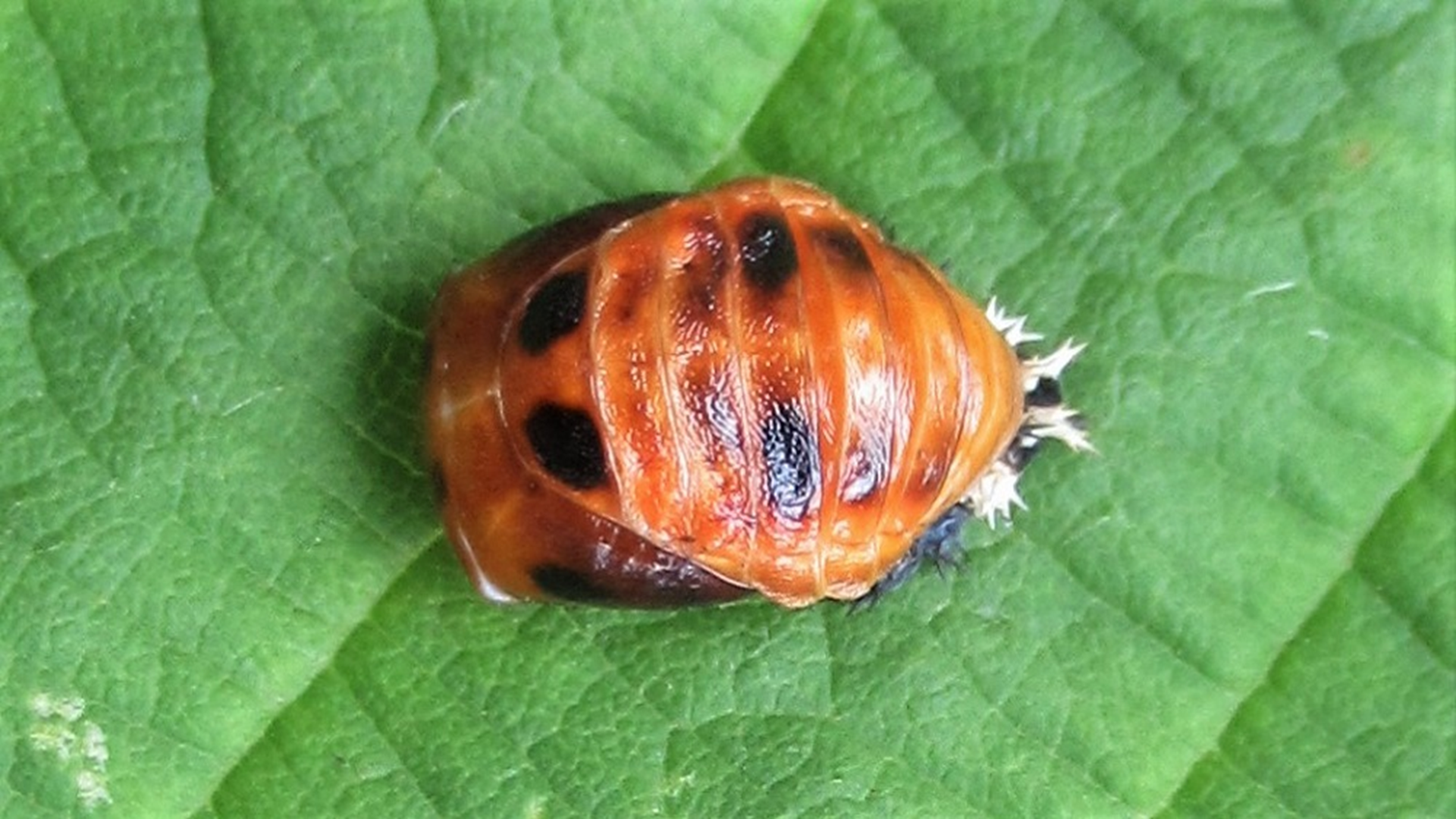
A Harlequin ladybird at the pupa stage.
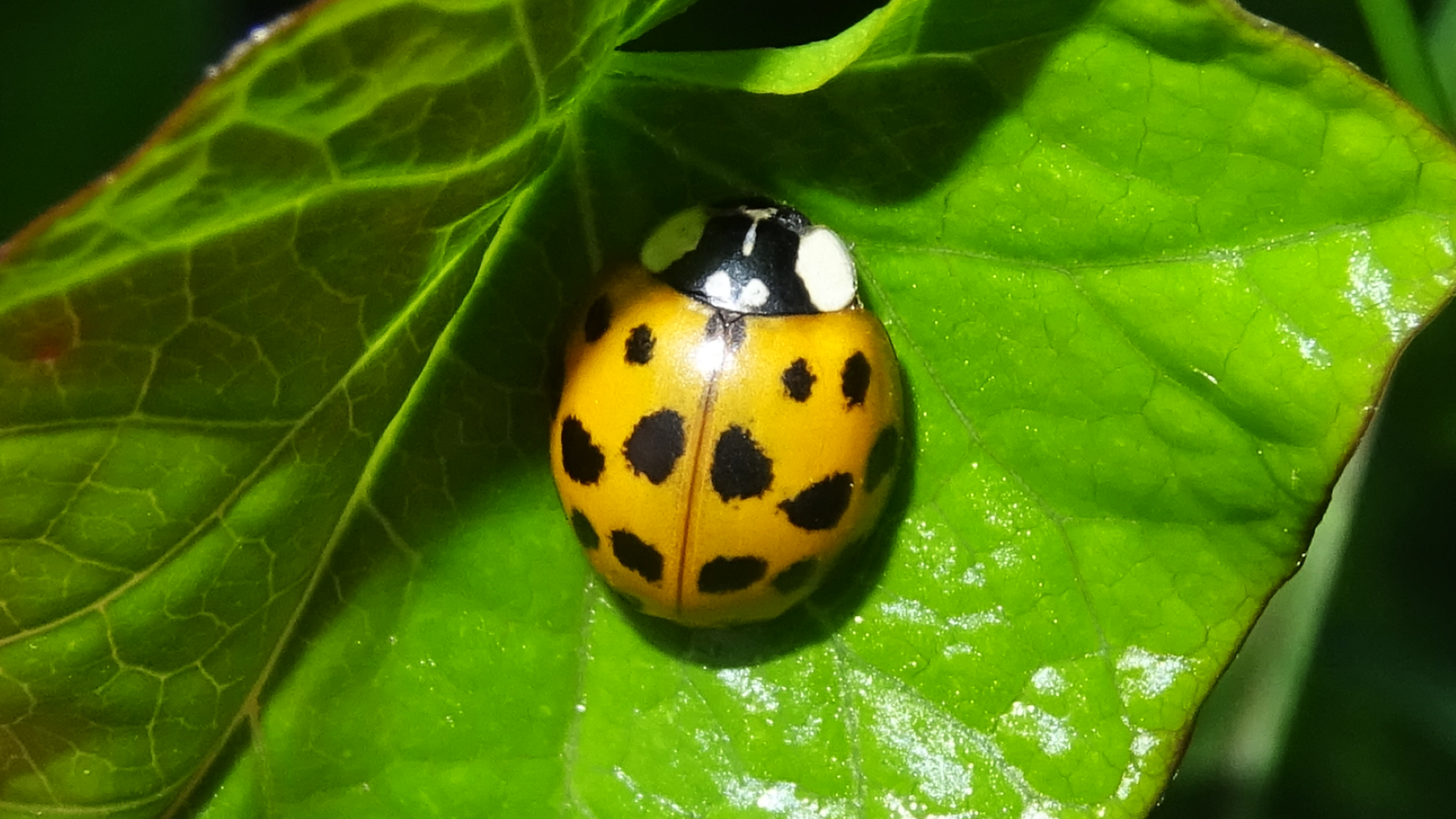
This is a typical 19-spot Harlequin ladybird
Harmonia axyridis f. succinea.
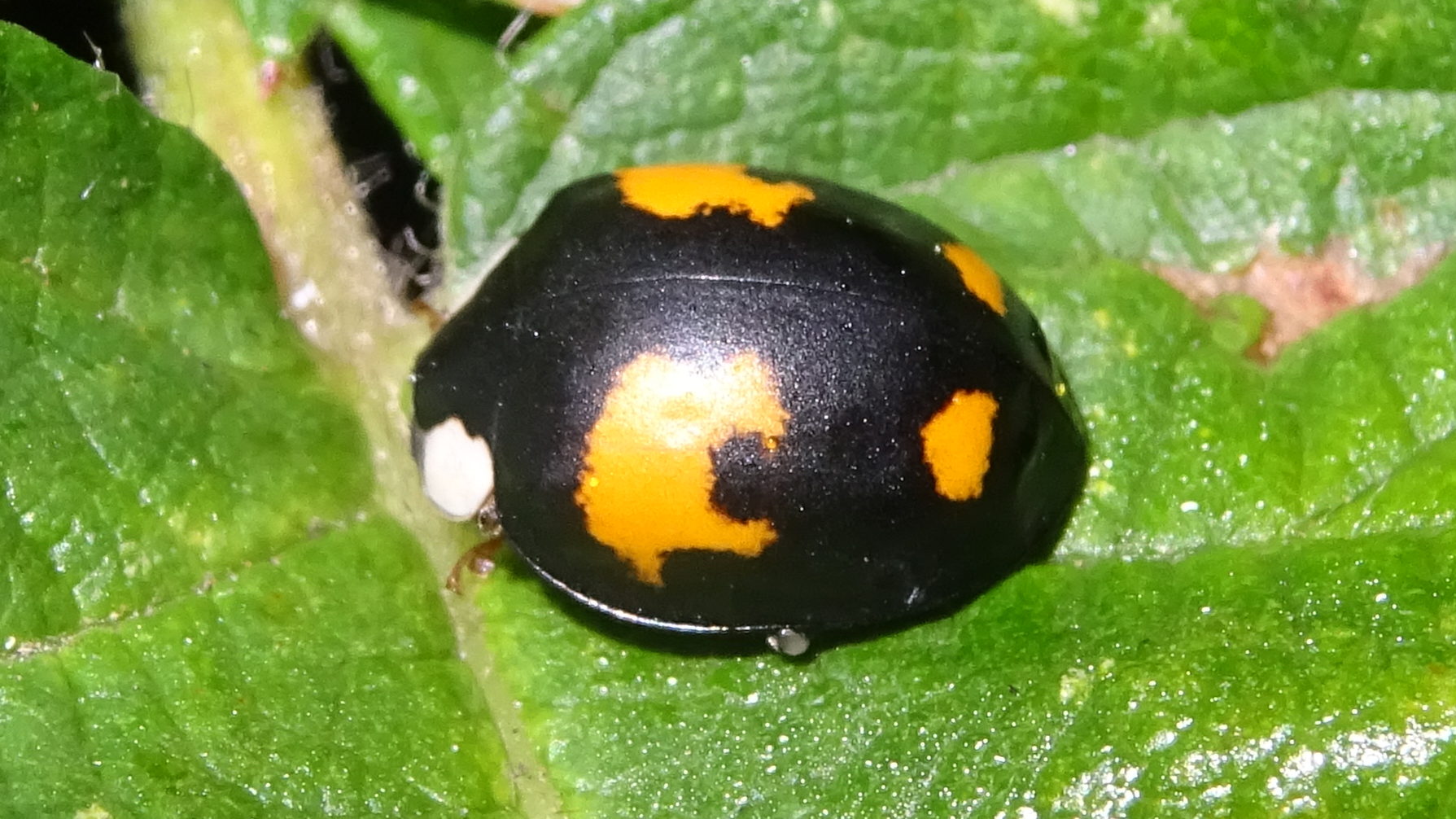
This version with irregular-shaped spots is
Harmonia axyridis f. spectabilis.
#
Dragonfly
Darter
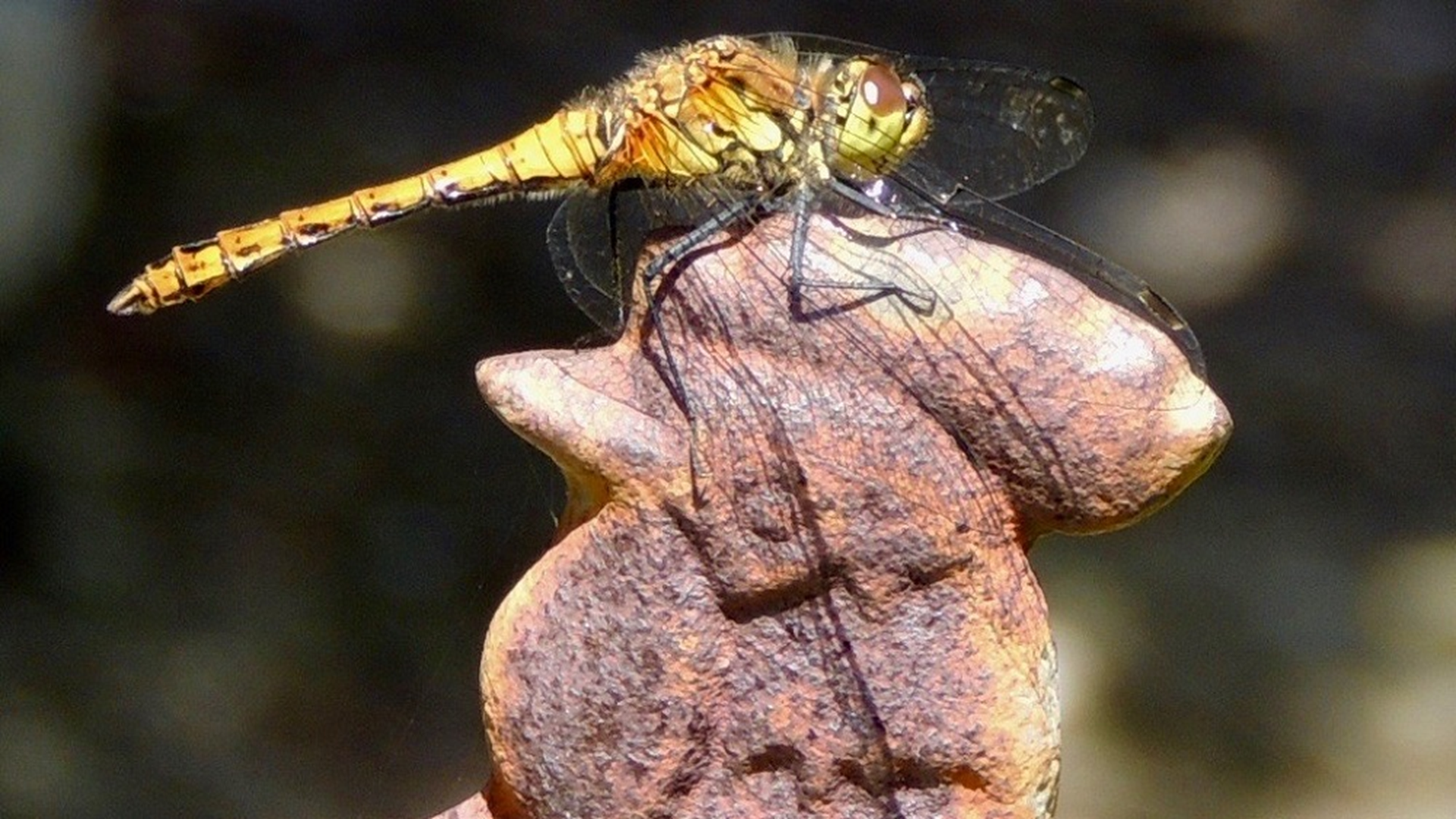
There are several species of darter dragonflies, which are small and can be difficult to identify when immature. Darters like to sit with wings forward on open perches and bare surfaces, making short flights to chase passing prey. They frequently return to the same perch.
#
Damselflies
Large Red/Common Blue
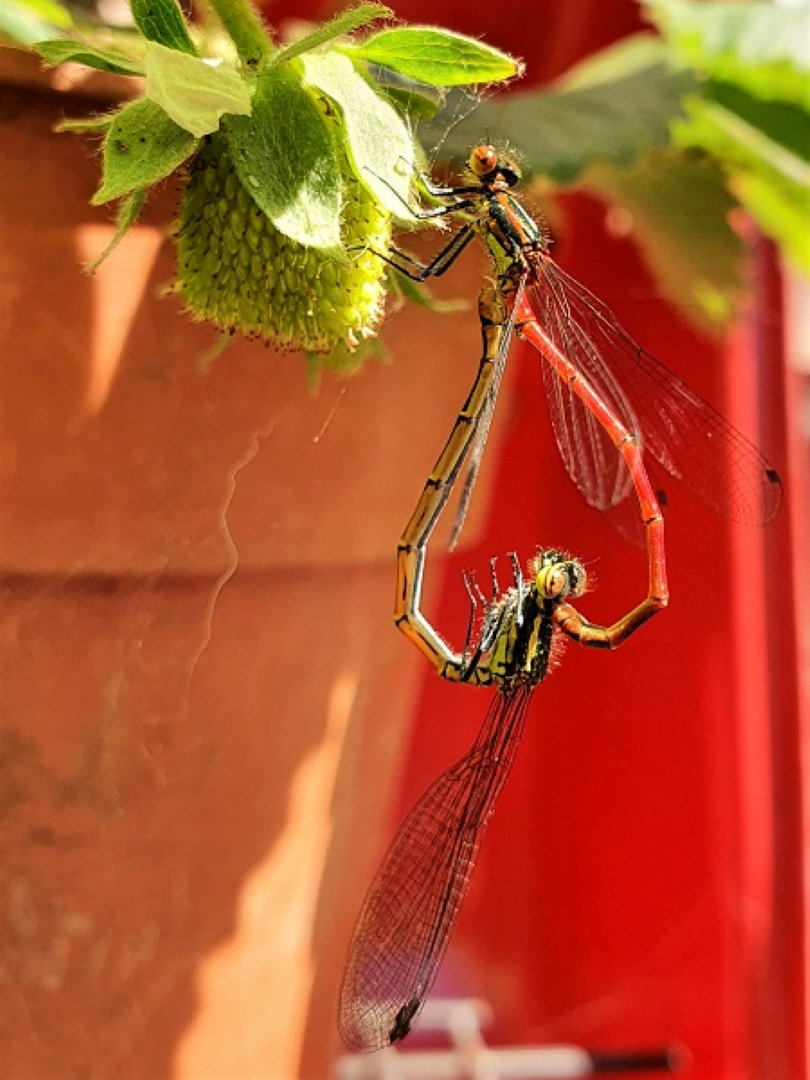
This picture shows a pair of Large Red Damselflies mating. The male(top) holds the female at the back of the head with his tail. The female bends her tail forward forming a 'wheel' to retrieve a sperm sac from underneath the body of the male.
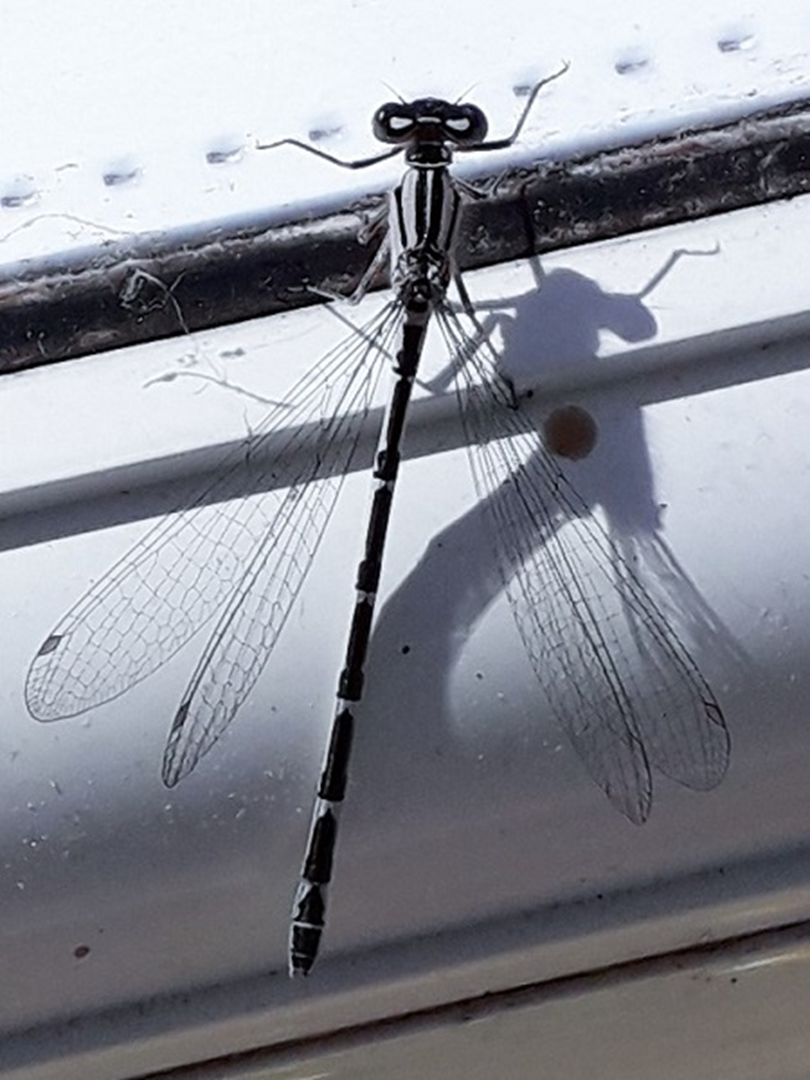
The Common Blue Damselfly is one of the most abundant damselflies widespread across Britain. This particular one was found was on a window frame in Elaine's conservatory.
#
Reed Canary Grass
Phalaris arundinacea
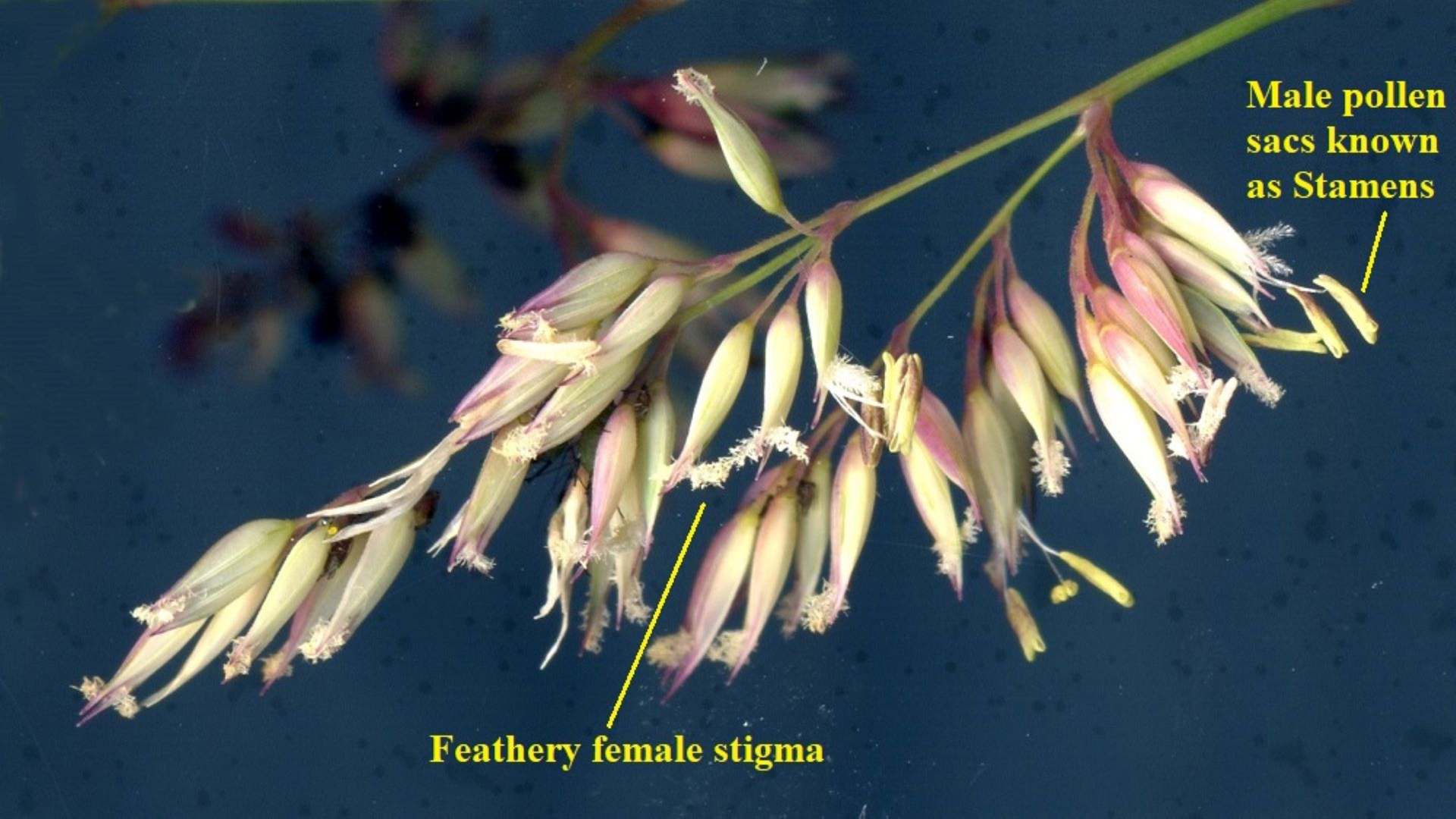
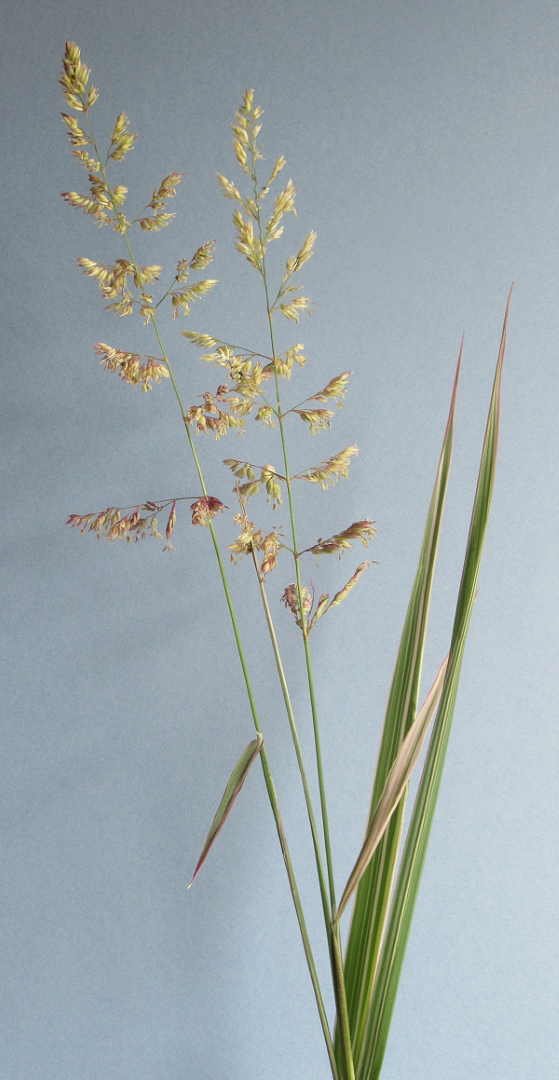
Reed Canary Grass when flowering is a tall grass of wet areas. Brian Ecott emailed these pictures and scans...
"I have an ornamental variety (var picta) which has green, white and purple striped leaves growing by the pond side. If a leaf is pulled gently from the stem a large transparent ligule is found. The ligule is an important identification aid with all grasses. A scan of a spikelet shows the male and female parts of the flower and demonstrates beauty in close up. The pollen sacs off-load an excess of pollen into the air and the grains are captured by the feathery stigmas."
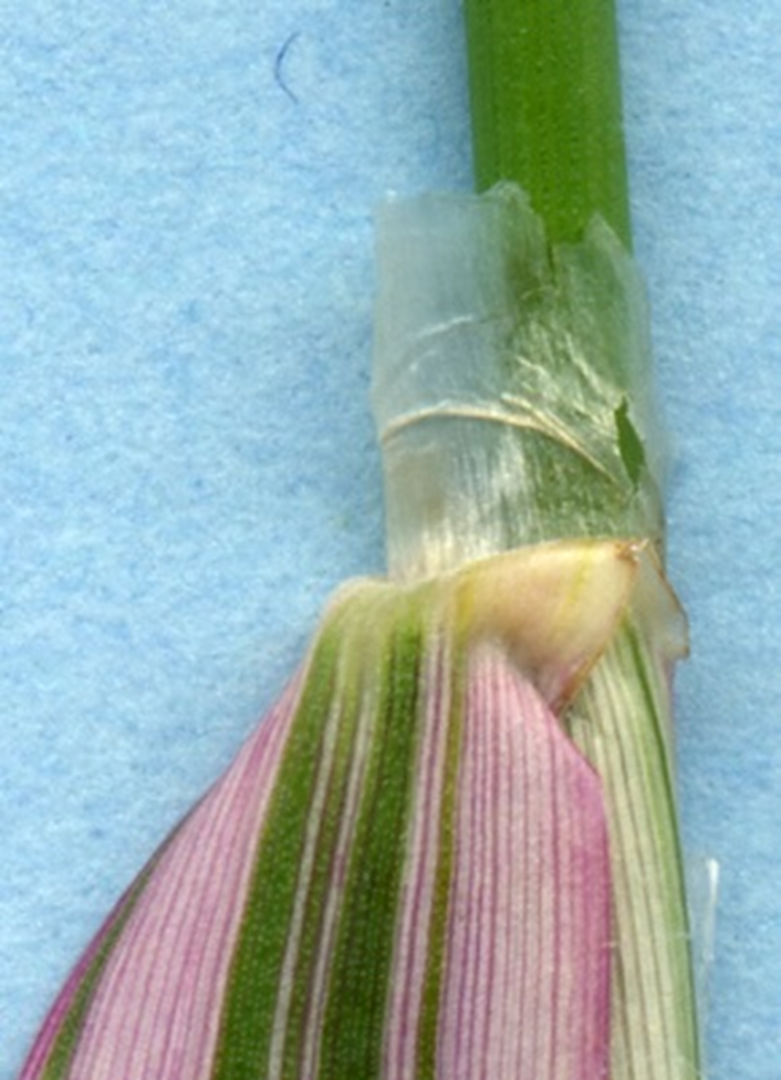
"This is wind pollination, no bees or insects are involved and the excess pollen in early June is a very debilitating allergen to many Hay-fever sufferers."
Reed Canary Grass text by Brian Ecott.
#
Hedgehog
Erinaceus europaeus
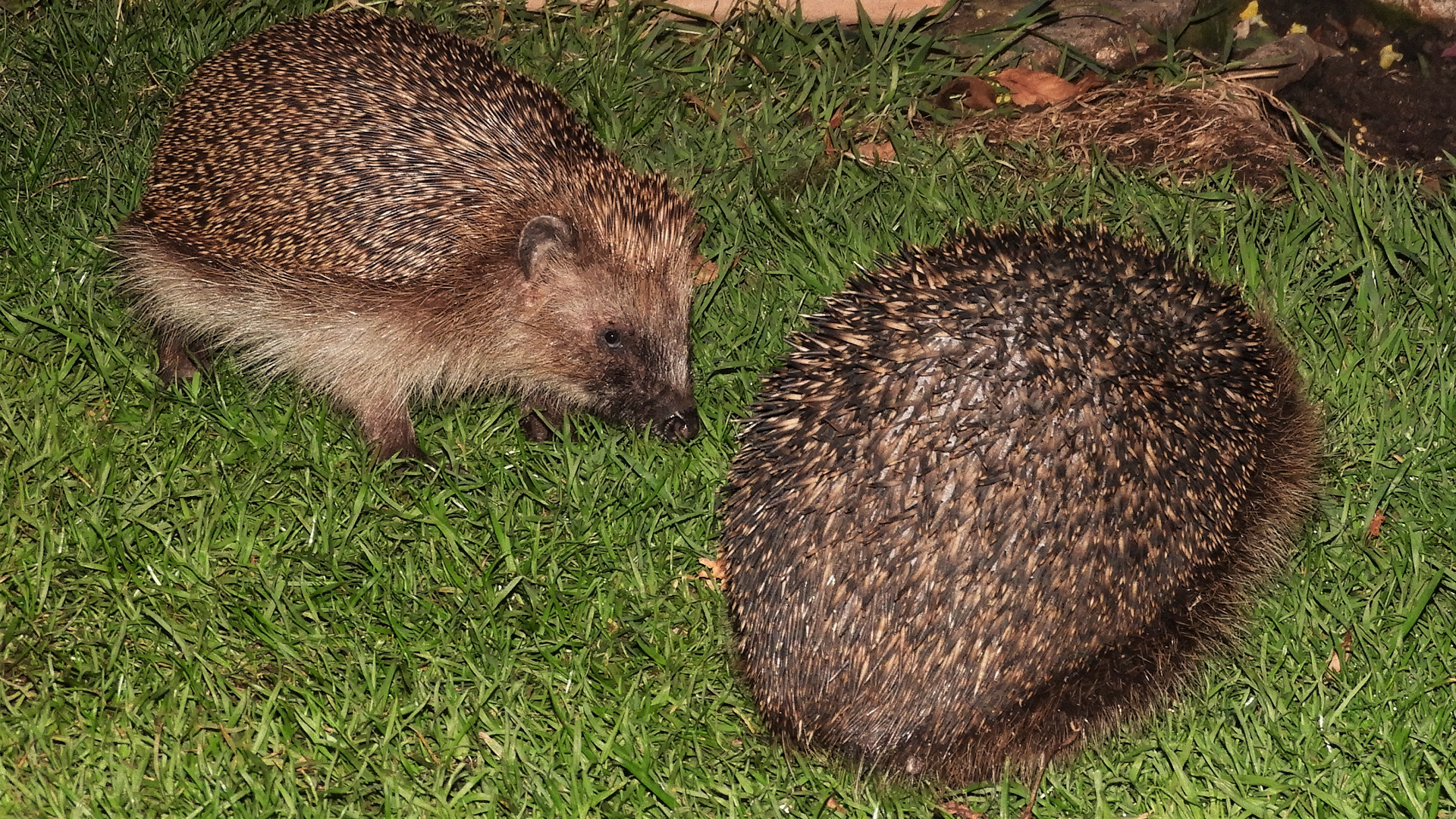
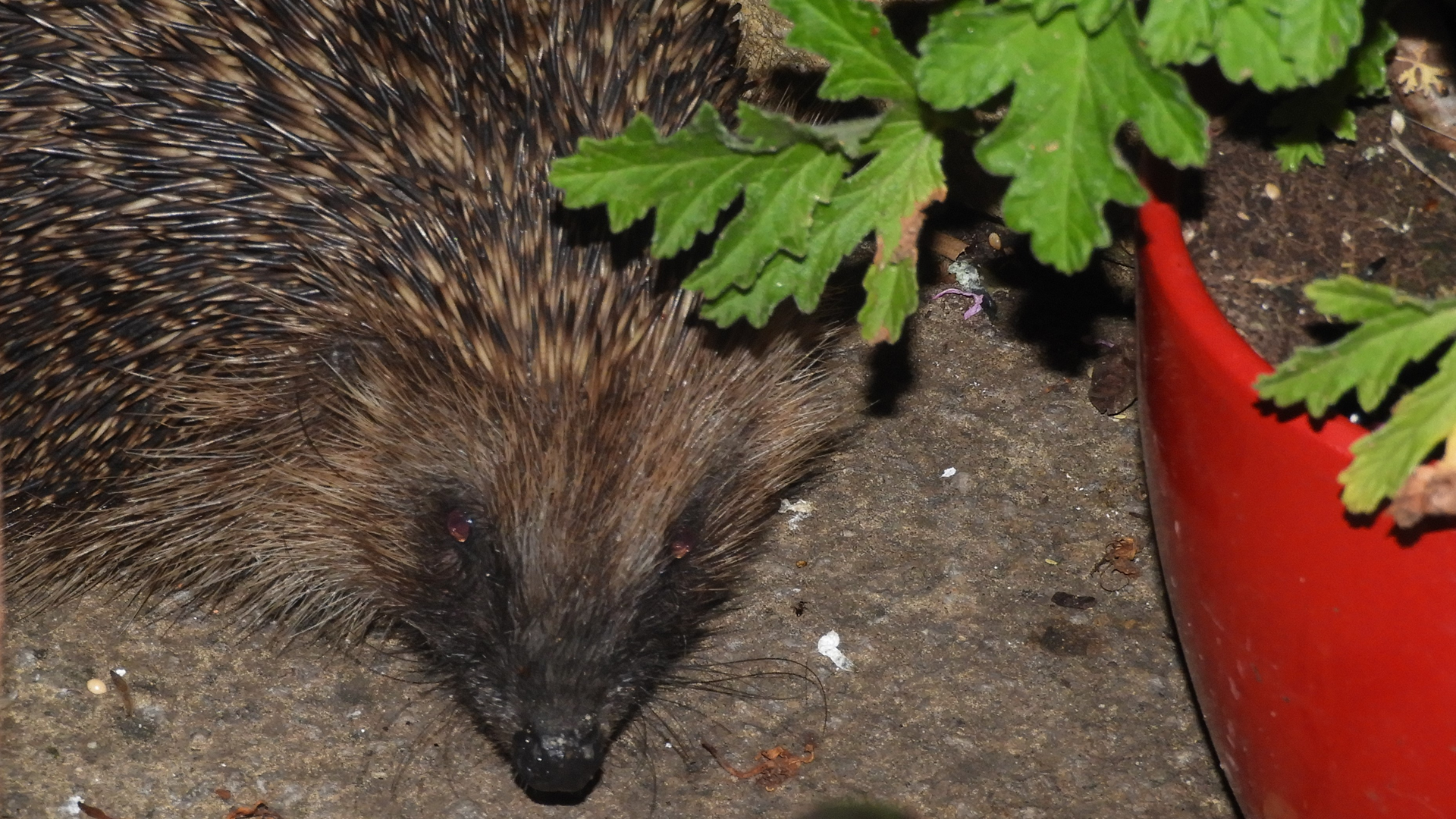
Hedgehogs mainly feed on worms and various insects, but they may also consume carrion, frogs, young rodents, small birds, eggs, and fallen fruit when the opportunity arises. They drink water from dew, puddles, and ponds. If there is a pond in a garden, it is important that it has sloping sides or an escape ramp to allow hedgehogs to exit easily. It is not advisable to provide milk for hedgehogs; a bowl of water is more suitable. The hedgehog is the only spiny mammal in the UK, with a loose coat that includes approximately 6,000 spines. Although hedgehogs have five toes on each foot, footprints typically show only four. Their front feet are broader than their back feet, resulting in longer and narrower prints.
#
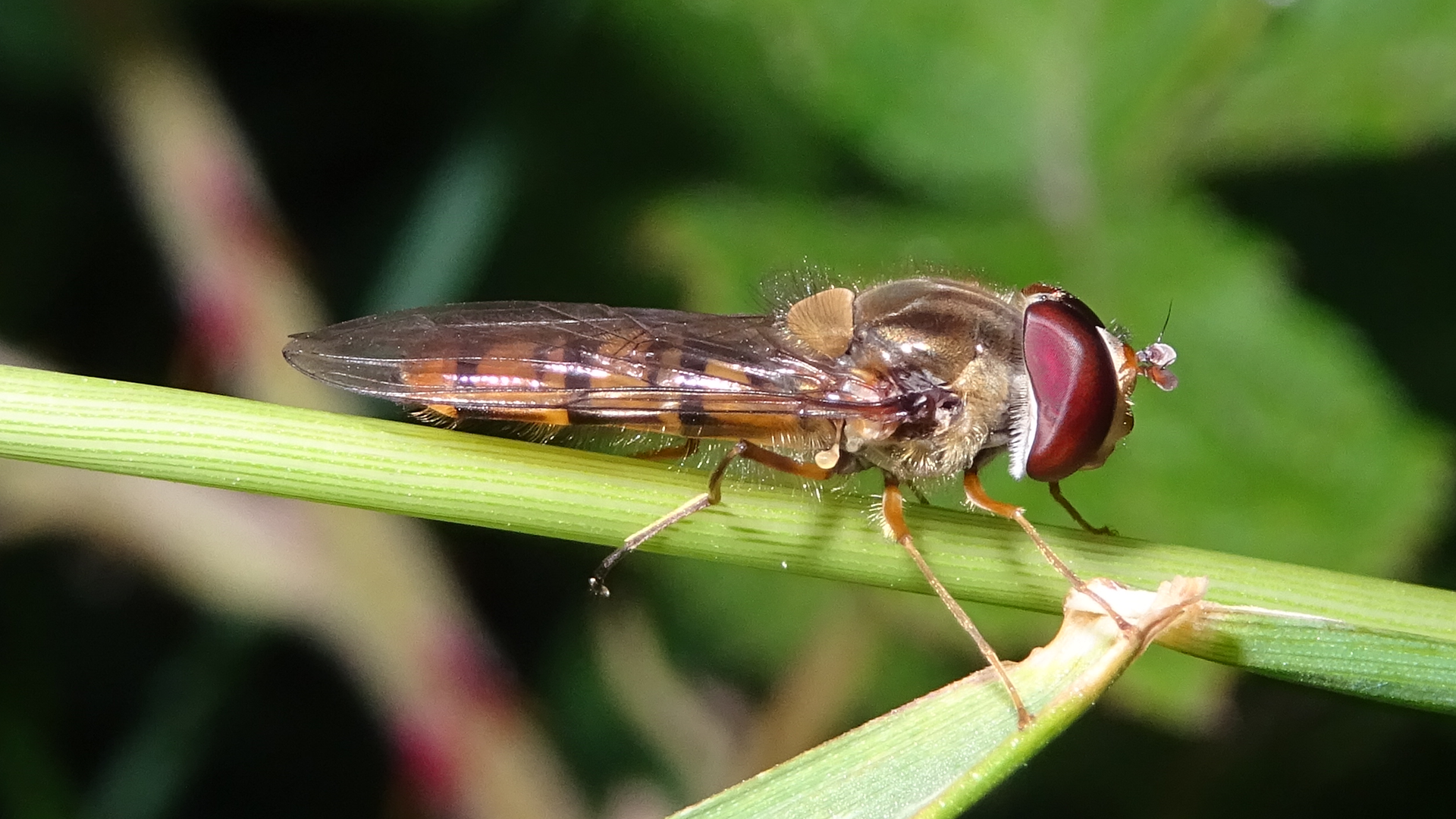
Marmalade hoverfly
Episyrphus balteatus
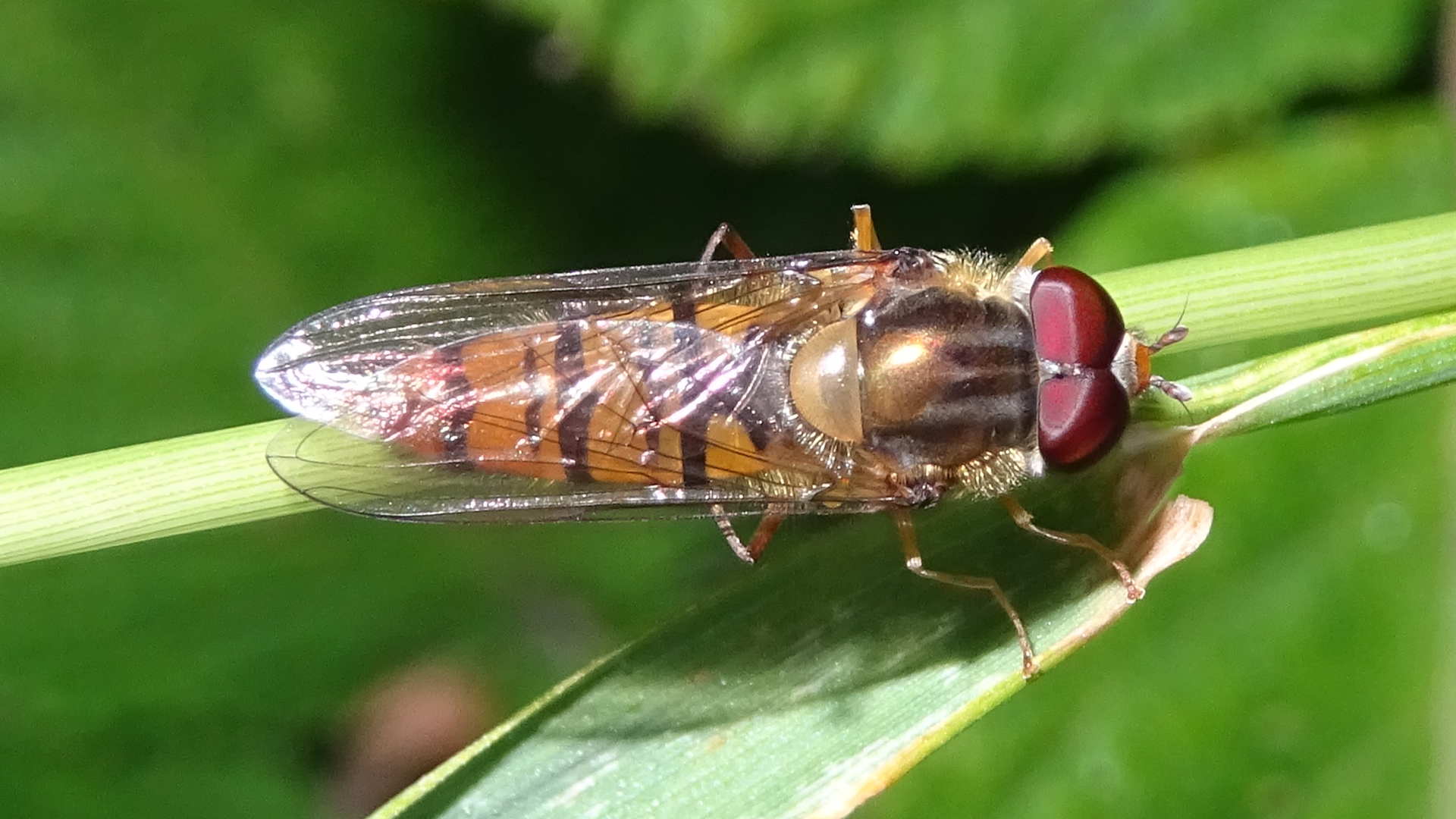
Marmalade hoverfly is a small hoverfly measuring 9-12mm. The upper surface of the abdomen is patterned with orange and black bands. Two further identification features are the presence of secondary black bands on the third and fourth dorsal plates and faint greyish longitudinal stripes on the thorax. Males have eyes that touch at the top of the head. This species can be found at all times of the year visiting flowers for pollen and nectar. Its larvae feed on aphids.
#
Buff Tip
Phalera bucephala
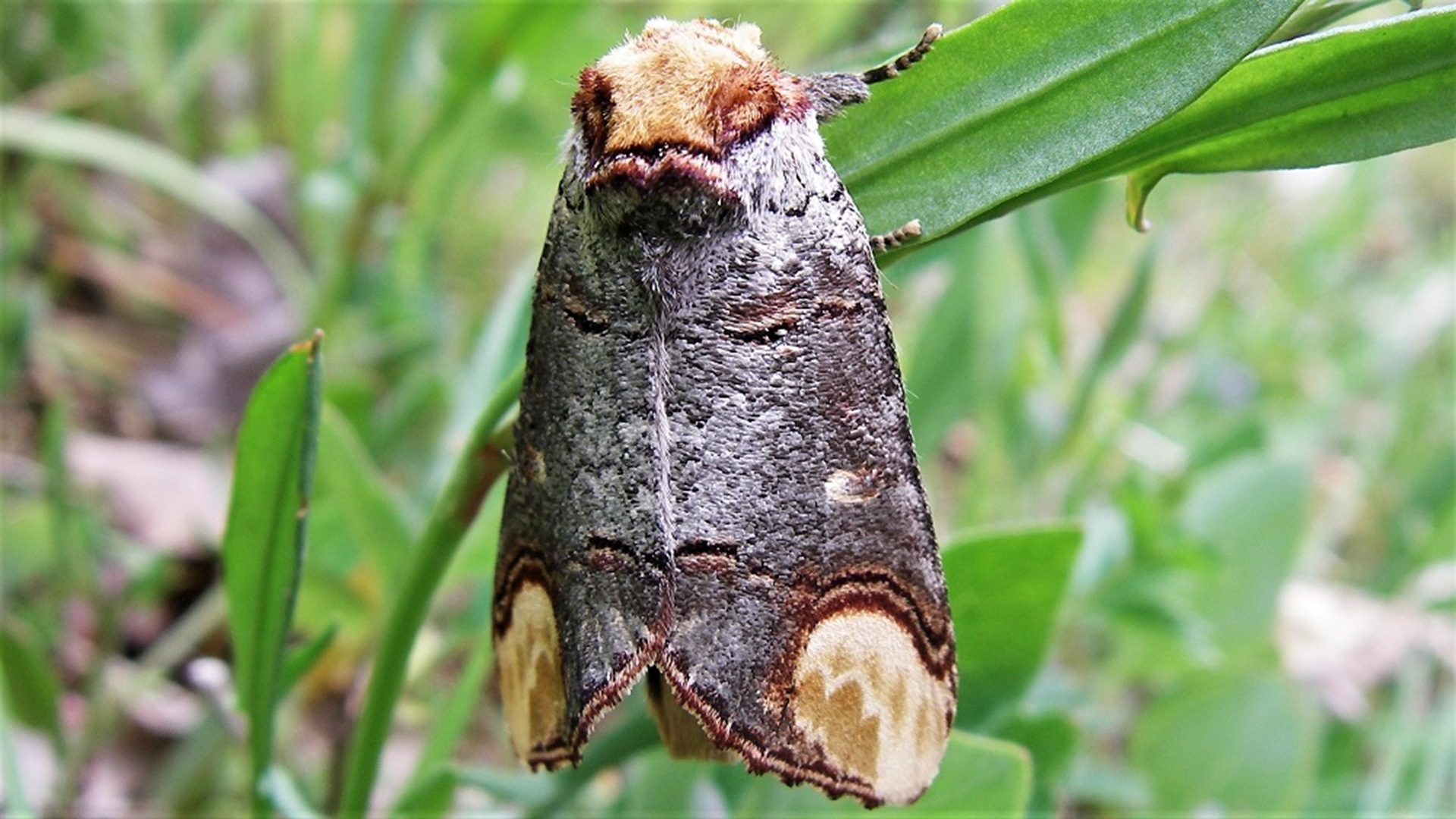
A splendid picture of a Buff-tip moth on the heathland at Chigwell Row.
#
Mallard Ducks
Social Distancing
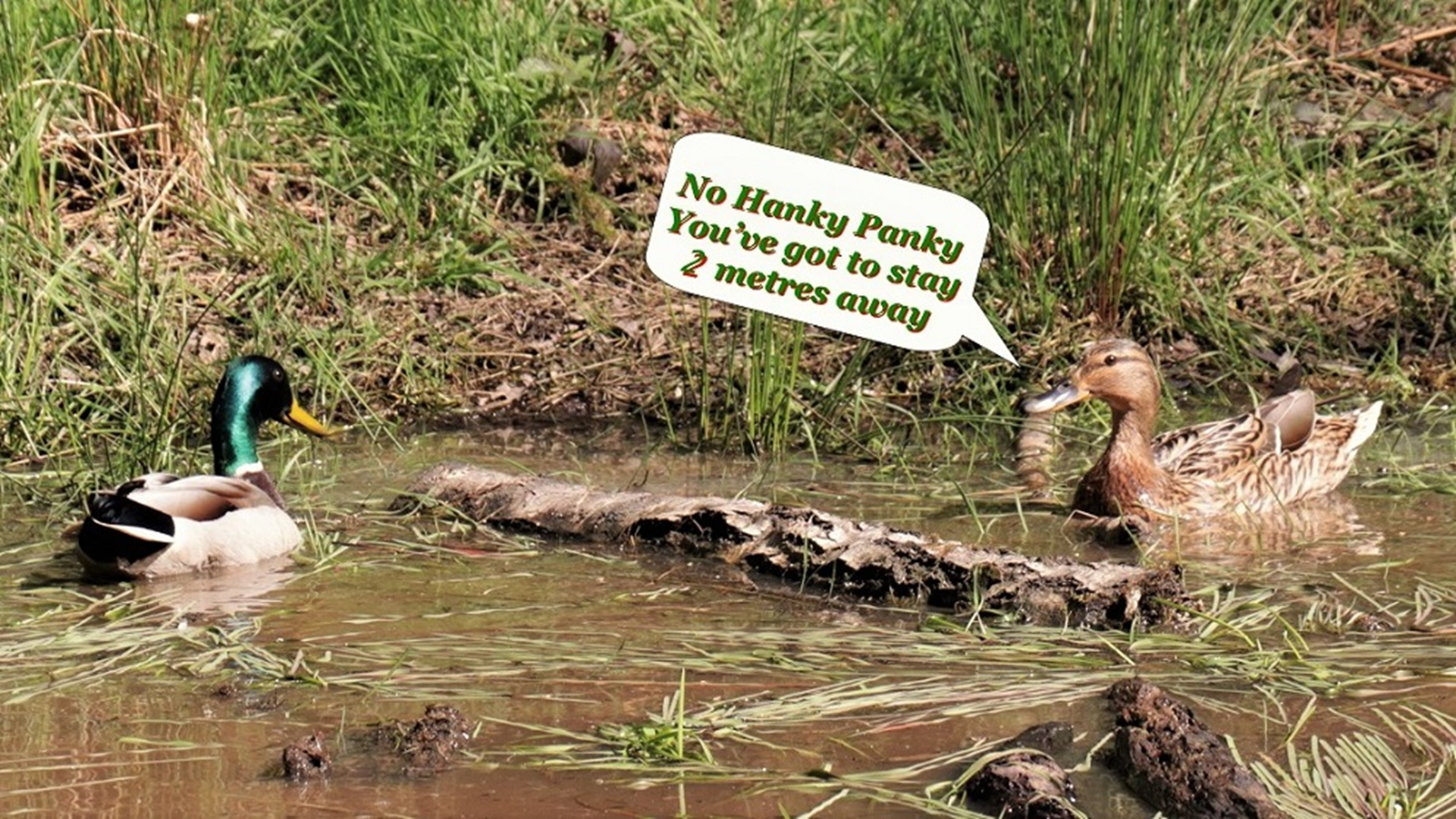
Our photographers are adhering to Government guidelines about social distancing. Mike Rumble provided this picture as a reminder to everyone to keep safe.
#
Thank you to everyone who has contributed to the Supplement.
© hainaultforest.net. All rights reserved.
This website uses necessary cookies. It does not use targeting or advertising cookies.