

LAST QUARTER 2024
This Journal covers the last quarter of 2024 from October to December.
Tufted Duck
Aythya fuligula
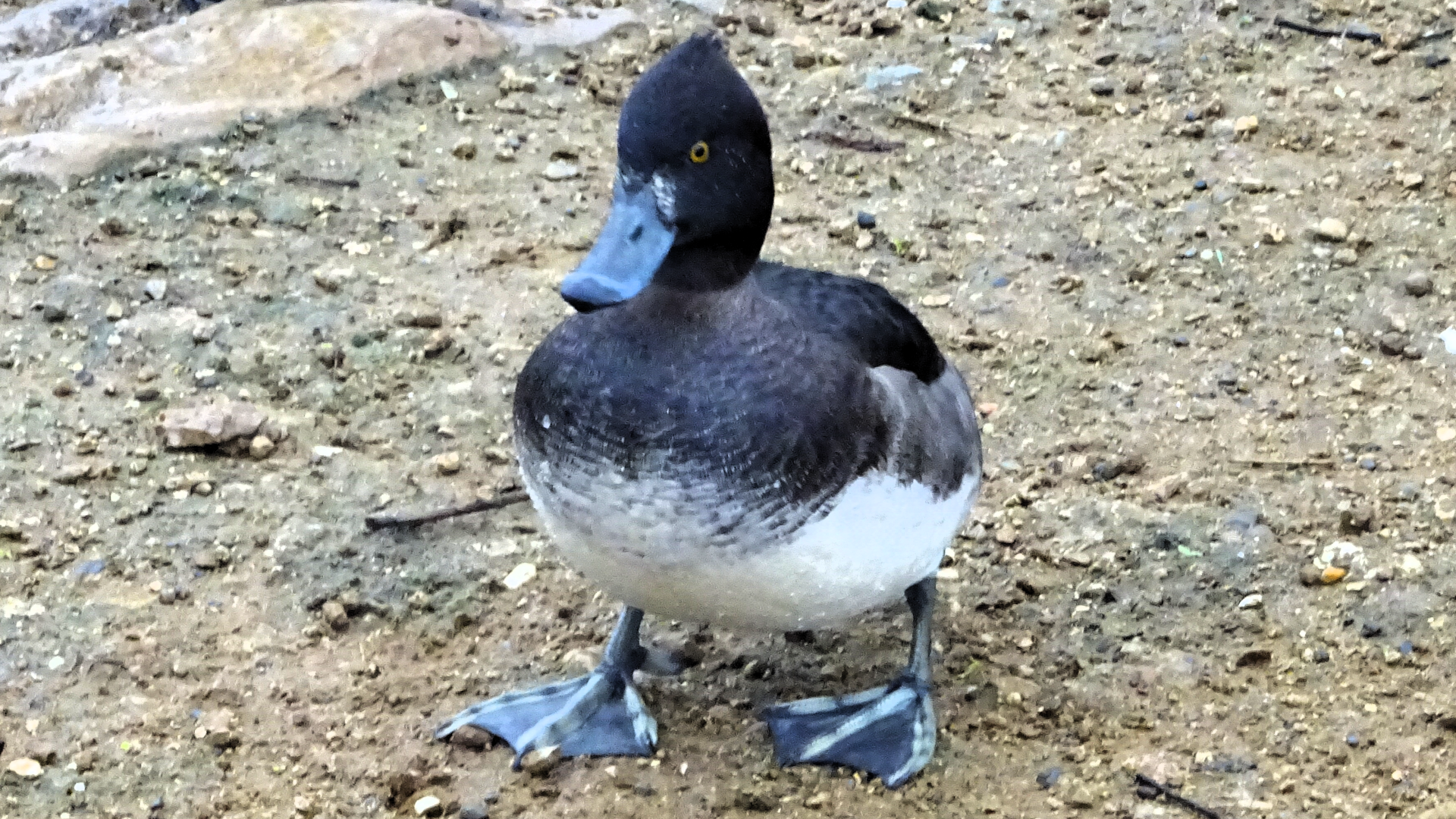
Tufted ducks are characterised by a distinct tuft on the back of their heads. This feature is particularly prominent in males and is also present, though usually shorter, in females, which gives them a unique appearance compared to other diving ducks. Males have black and white colouration, while females are brown.Tufted Ducks have their legs positioned towards the rear of their bodies, which makes them seem clumsy when walking; they are better adapted to life in the water.
#
Goosander
Mergus merganser
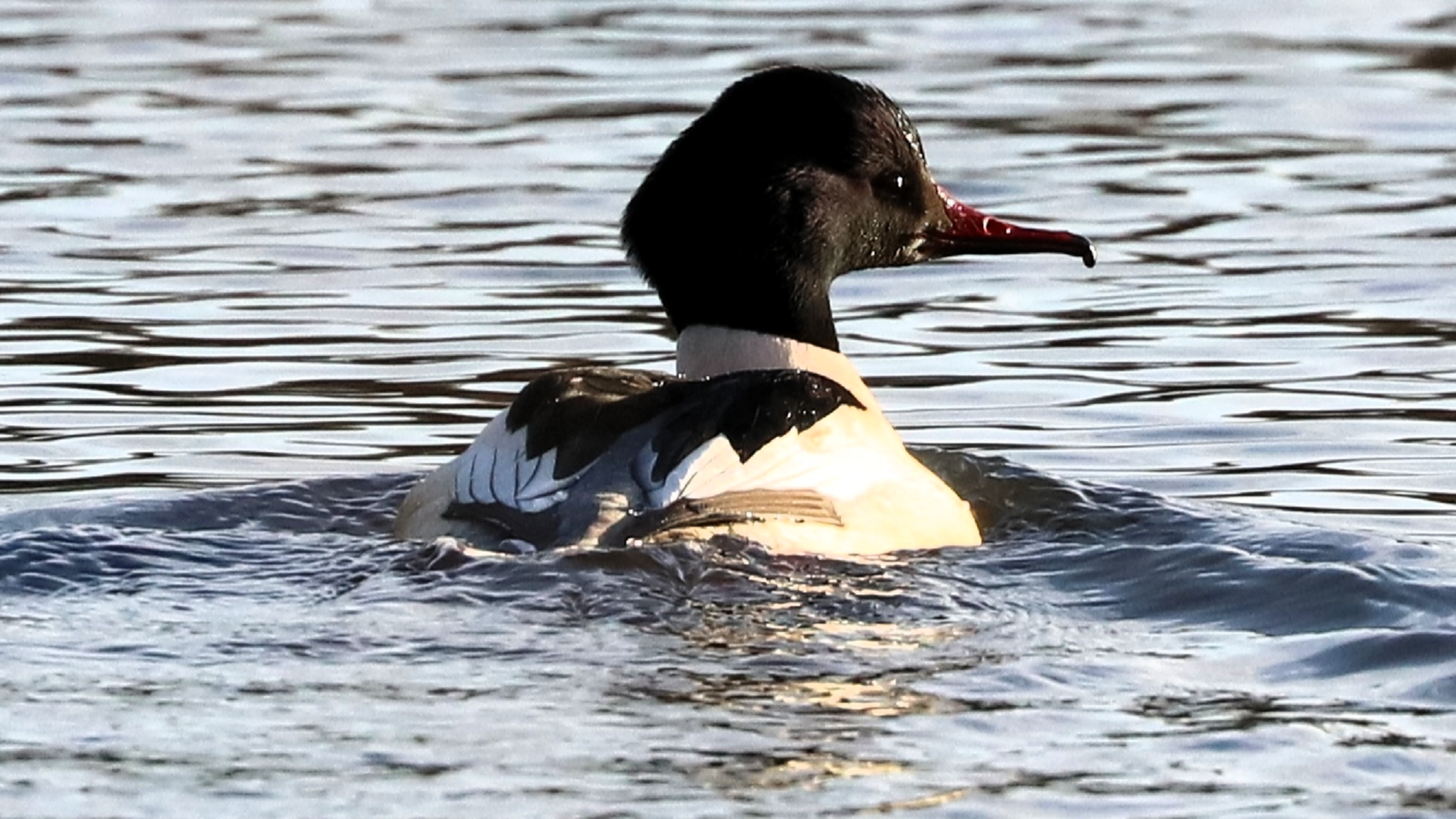
Goosanders are infrequent winter visitors that typically remain at Hainault Lake for only a few days. Their diet consists mainly of fish. The male has a rounded head and a white breast, while the female has a brown head.
#
Egyptian Goose
Alopochen aegyptiaca
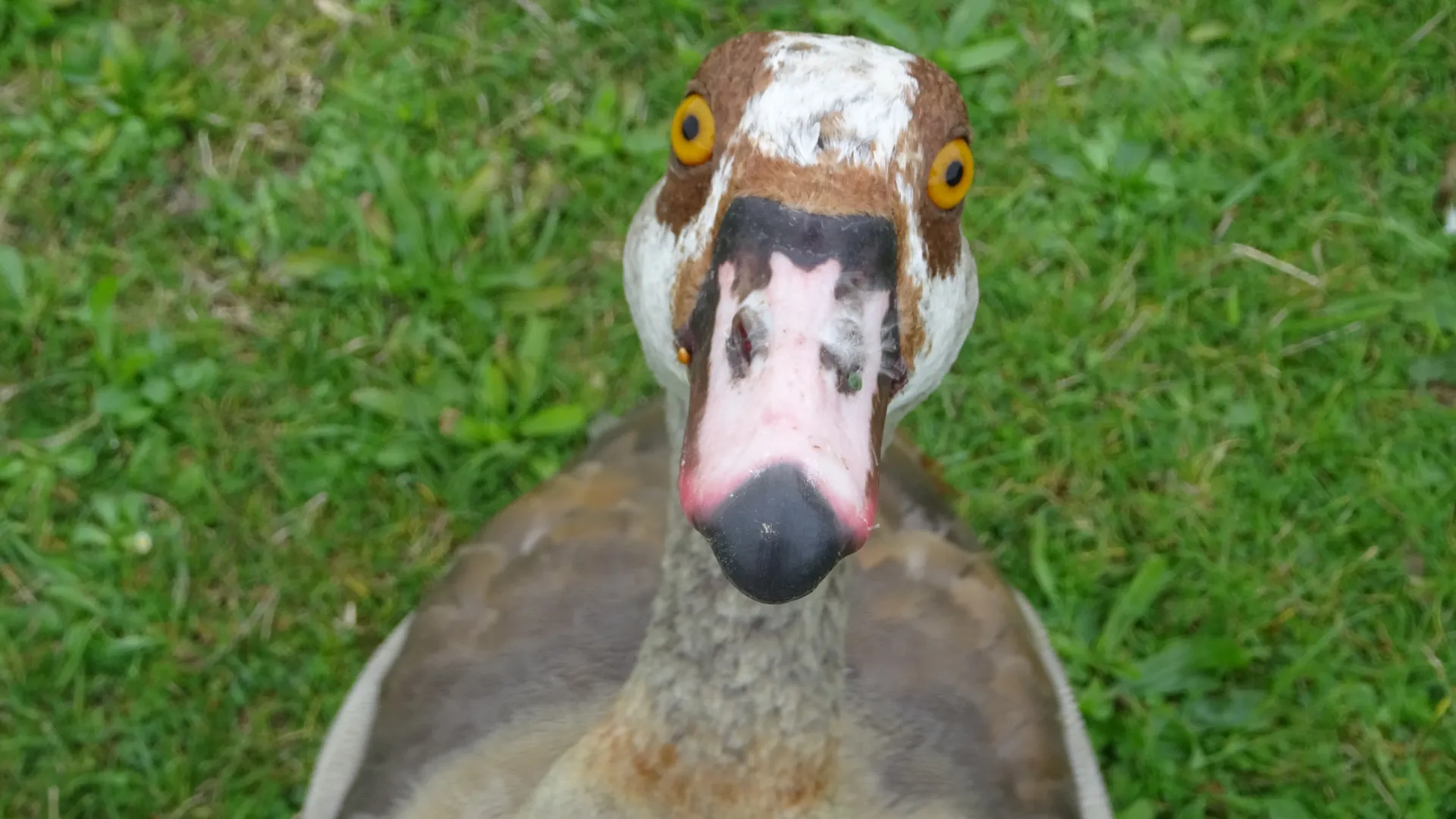
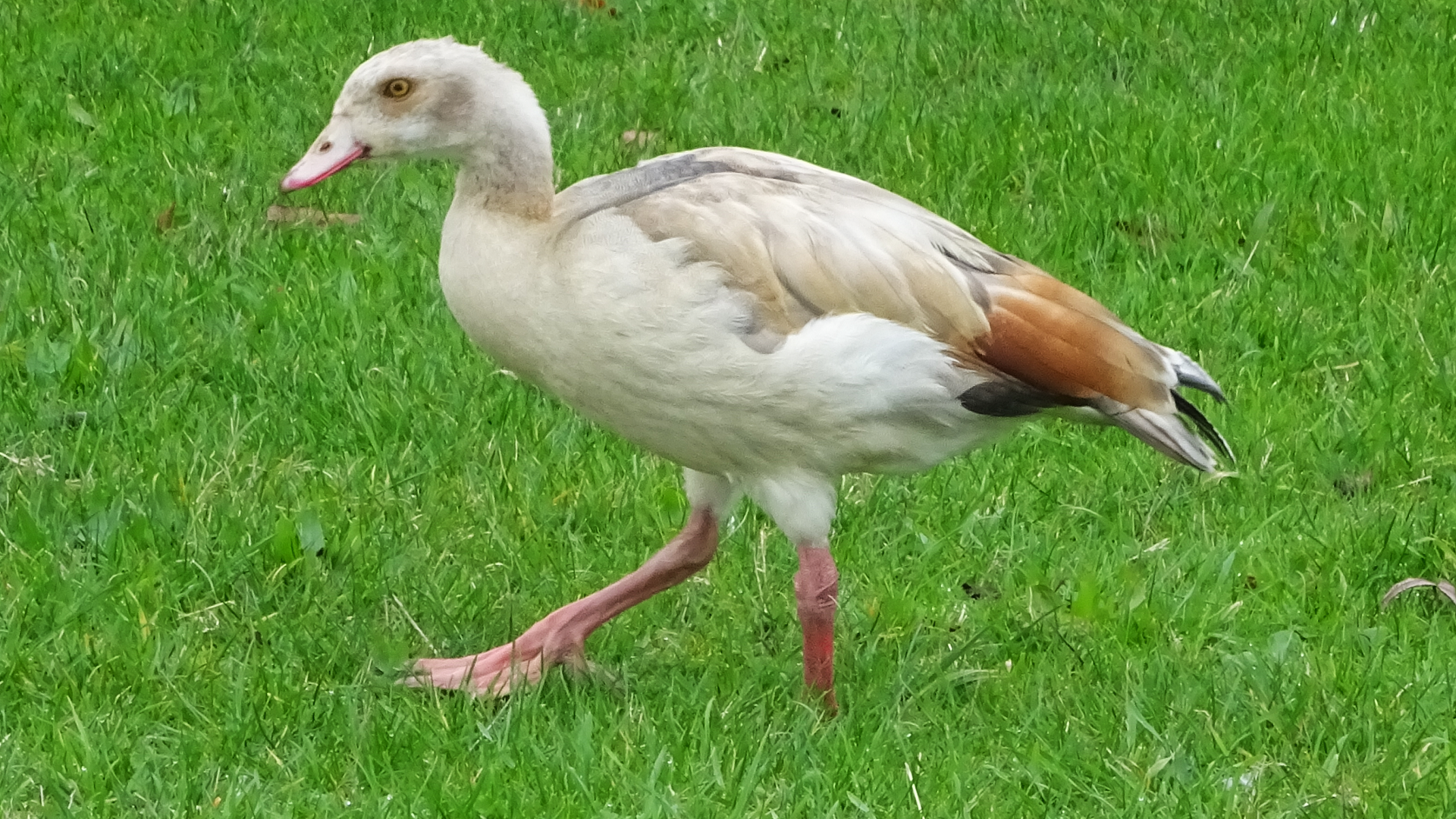
Egyptian geese have a preference for open grassland near freshwater where they can nest in tree cavities and have been known to move into crow and raptor nests. Young Egyptian Geese do not have dark eye patches like the adults.
#
Mute Swan
Cygnus olor
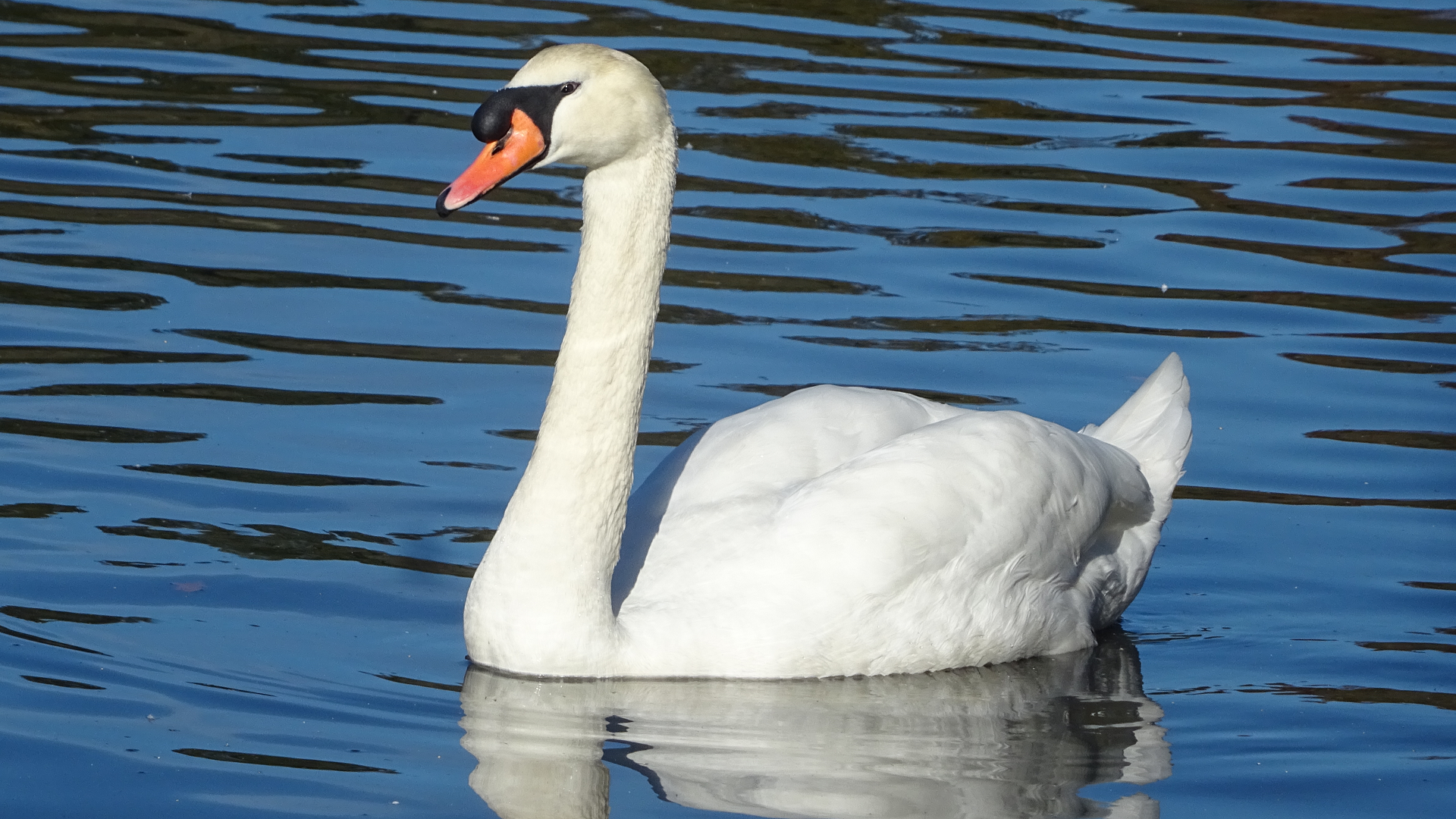
The most common type of swan in Britain is known for its gracefulness and quiet demeanour, although it can hiss or snort when necessary. Distinguishing between male and female swans is not always easy; however, during the breeding season, the black knob at the base of the male's bill becomes significantly larger than that of the female. The female, referred to as the Pen, incubates her eggs on a mound of vegetation, while the male, known as the Cob, remains vigilant, warding off potential threats. Both parents participate in caring for the nest. As the cygnets grow and become more independent, the parents gradually reduce their involvement. If the cygnets are hesitant to leave, the parents may become more assertive in encouraging them to depart. Swans primarily feed on water plants, seeds, snails, and insects.
#
Little Egret
Egretta garzetta
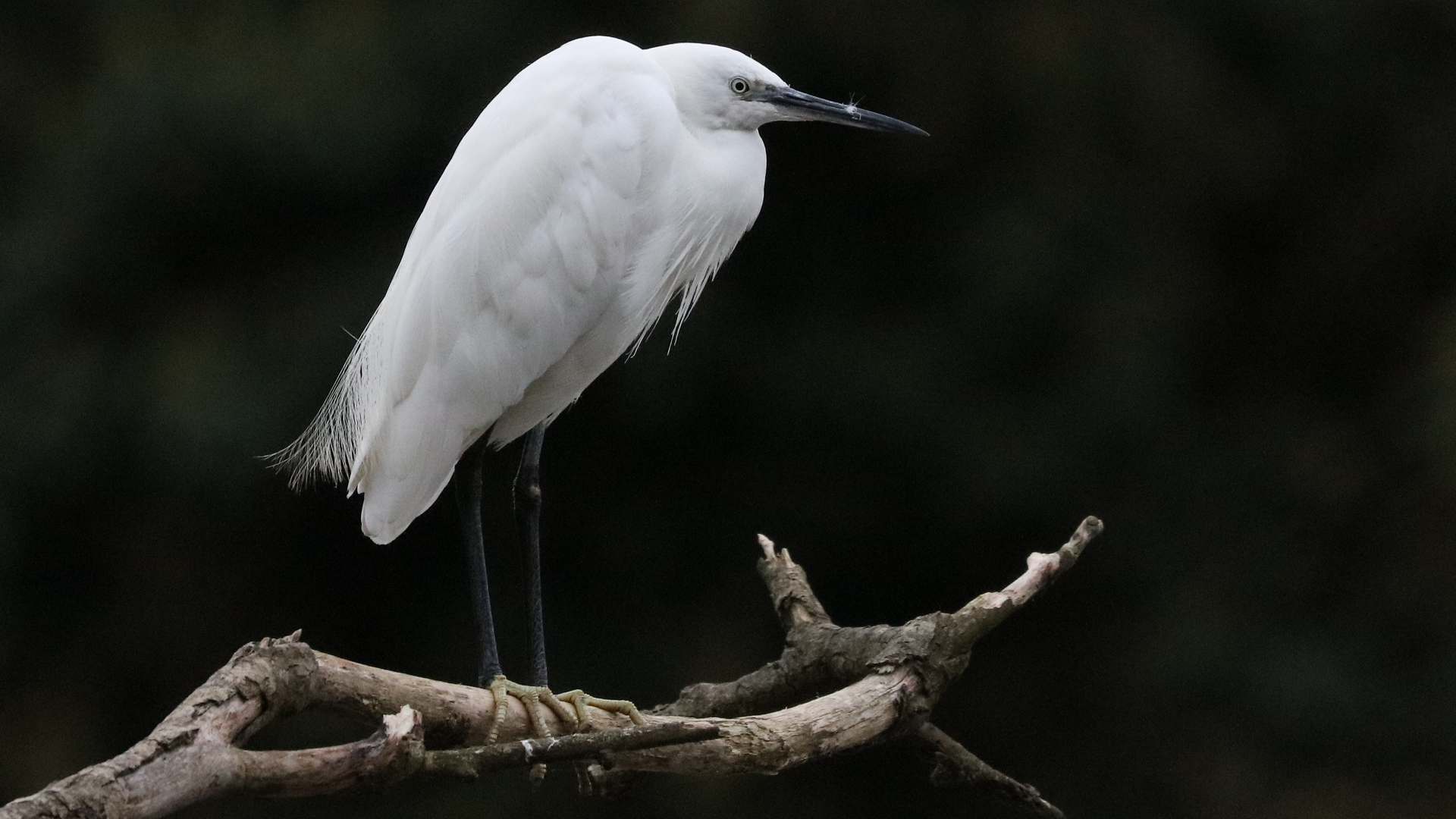
Little Egrets are winter visitors thought to have first appeared in England in the 1950s. The species is now well established in Britain, with a growing population. This small member of the Heron family has a white head, back, and chest, black legs and bill, and yellow feet. It feeds on fish.
#
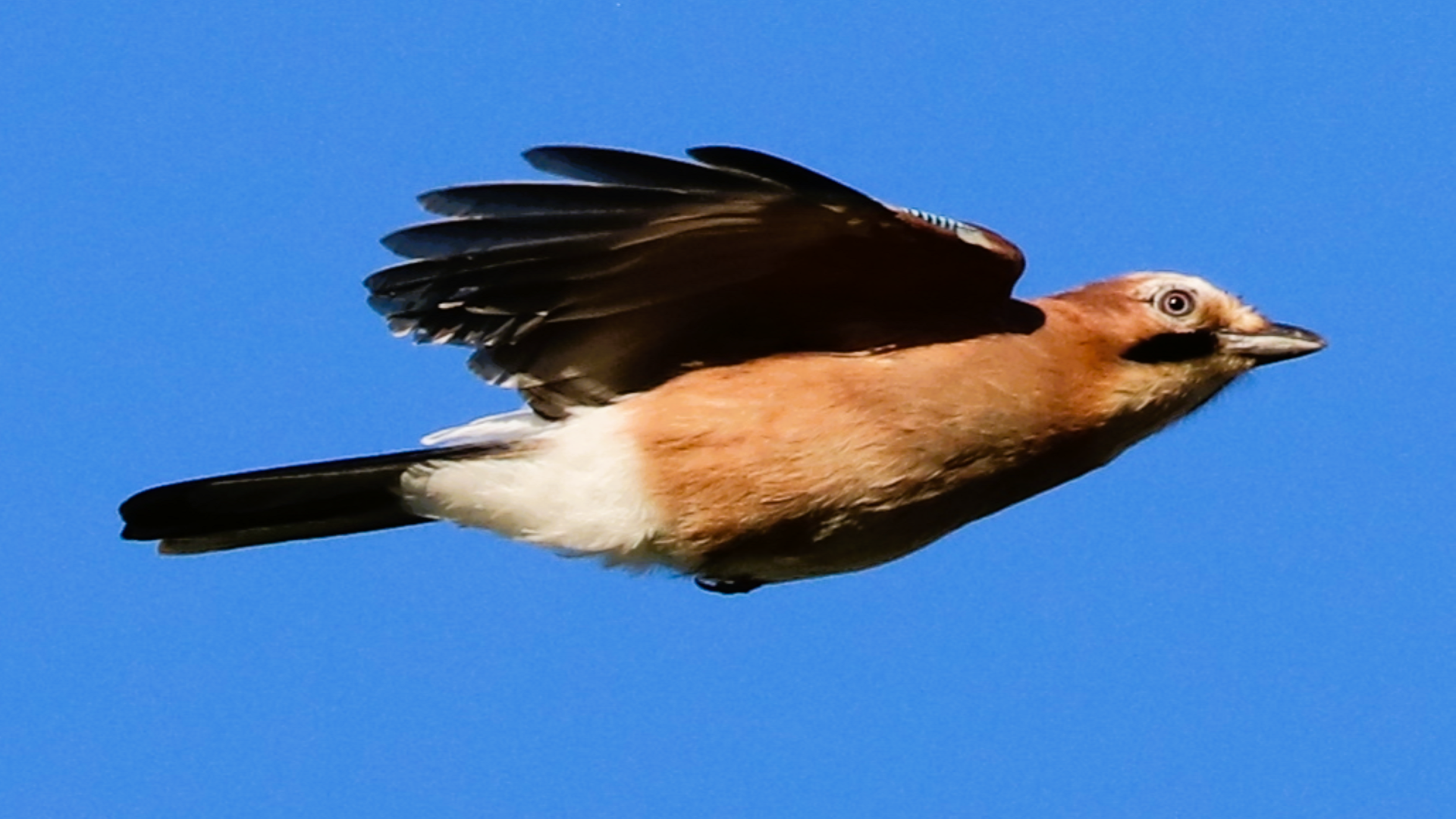
Jay
Garrulus glandarius
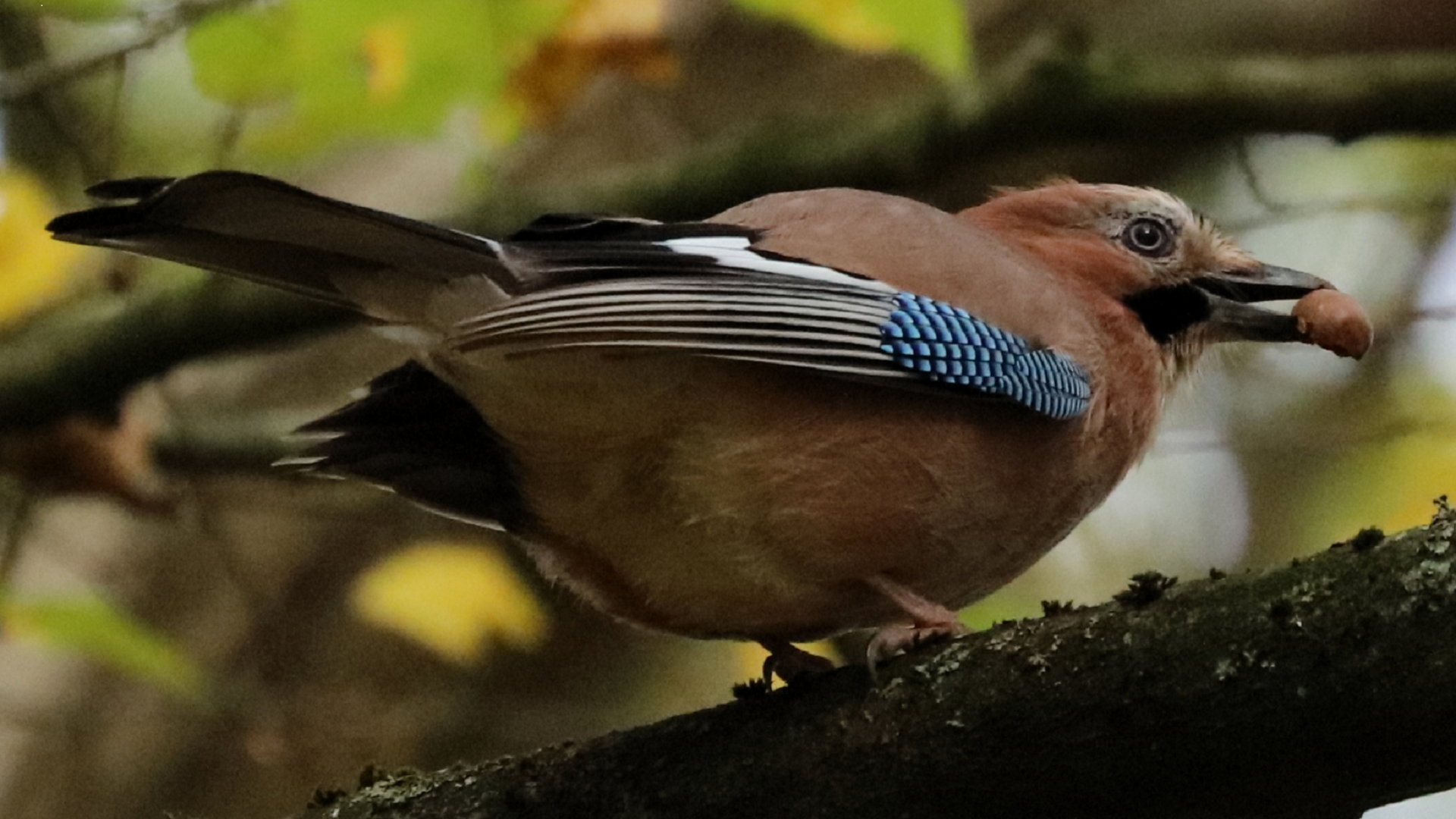
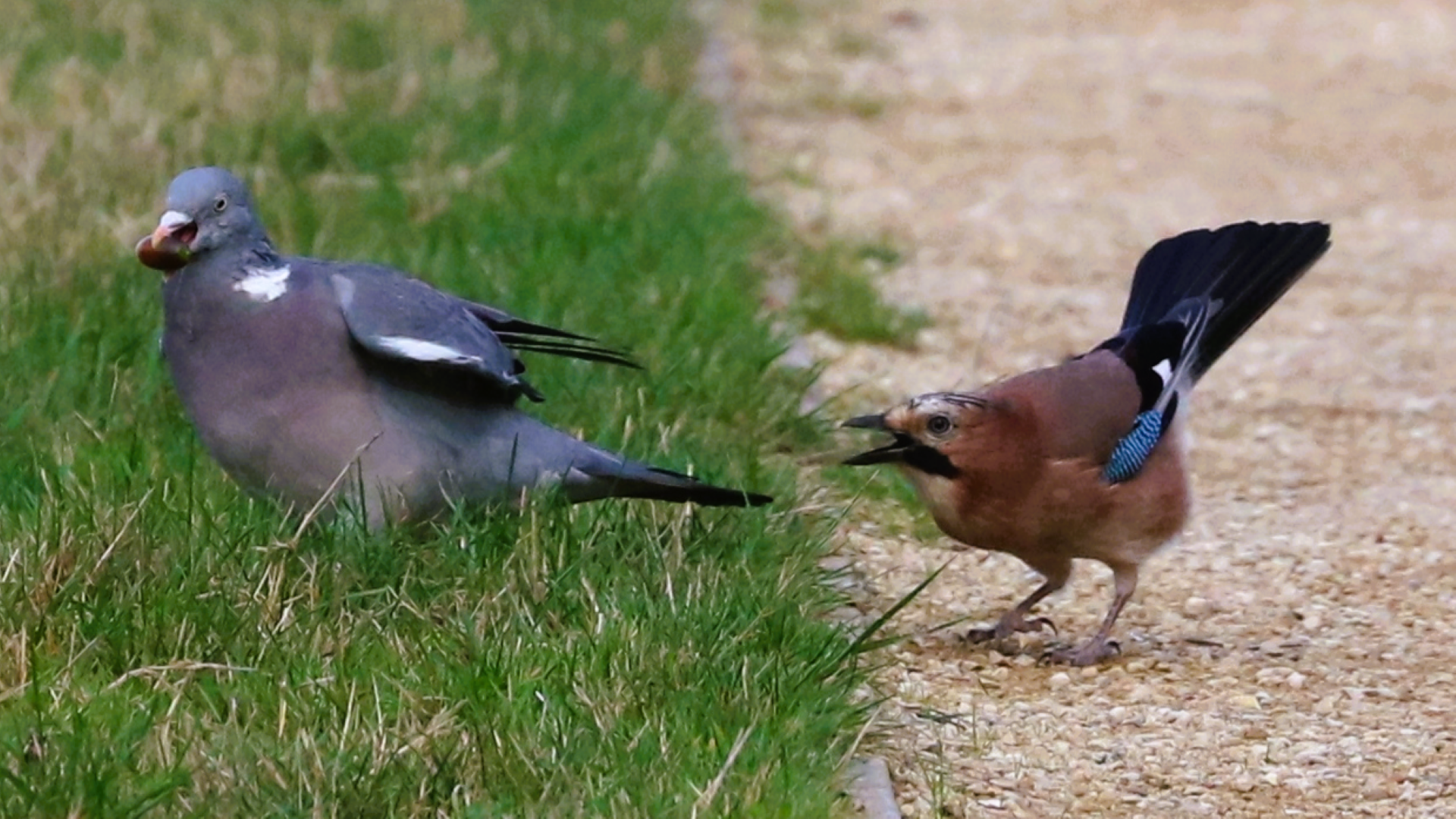
Jays are notoriously shy birds and their distinctive shriek in the woods is probably heard more than they are seen. However, this winter there has been an obvious increase in numbers in Hainault Forest and they have been spotted more than usual, often in pairs. Jays are clever mimics and can make calls that sound like buzzards, owls and other animals.
#
Robin
Erithacus rubecula
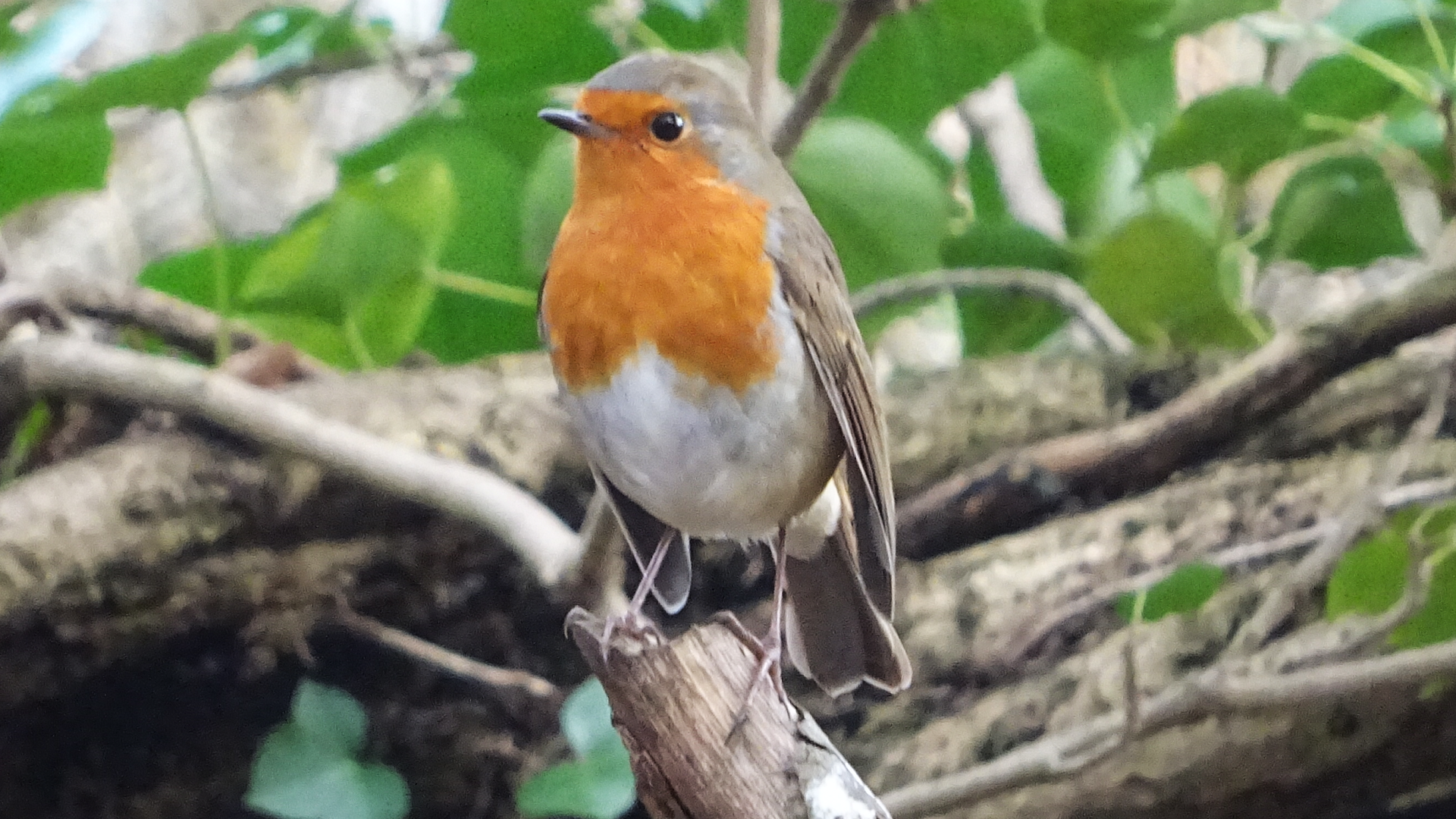
Robins sing throughout the year. They are friendly (and curious) towards humans. They feed upon seeds, fruit, insects, worms and other invertebrates.
#
Kestrel
Falco tinnunculus
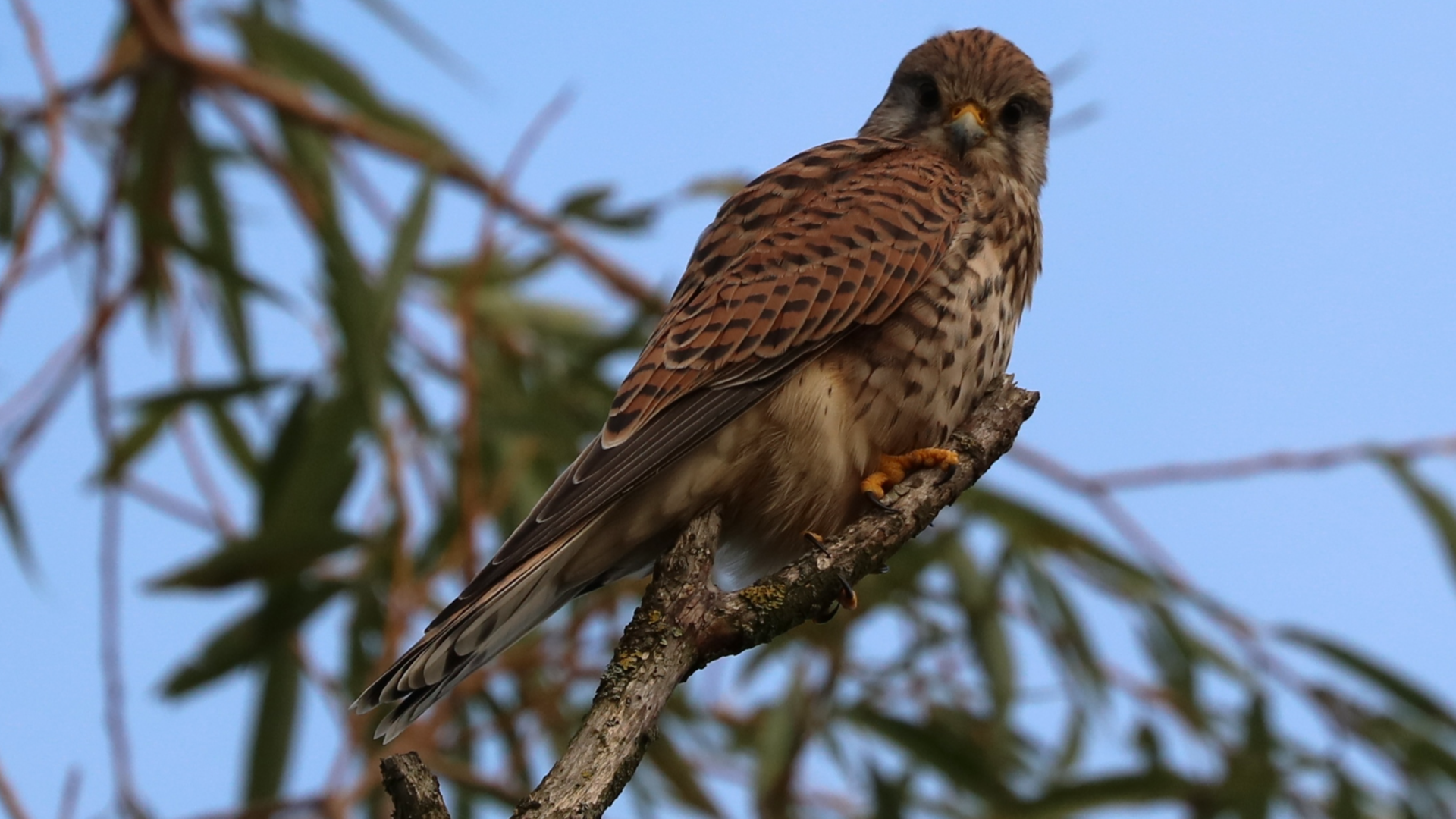
The Kestrel is a small bird of prey known for its distinctive hovering flight when searching for prey in the meadows. They mainly consume small mammals such as voles and mice, but will also feed on small birds and insects.
#
Foxburrow Farm
Peafowl
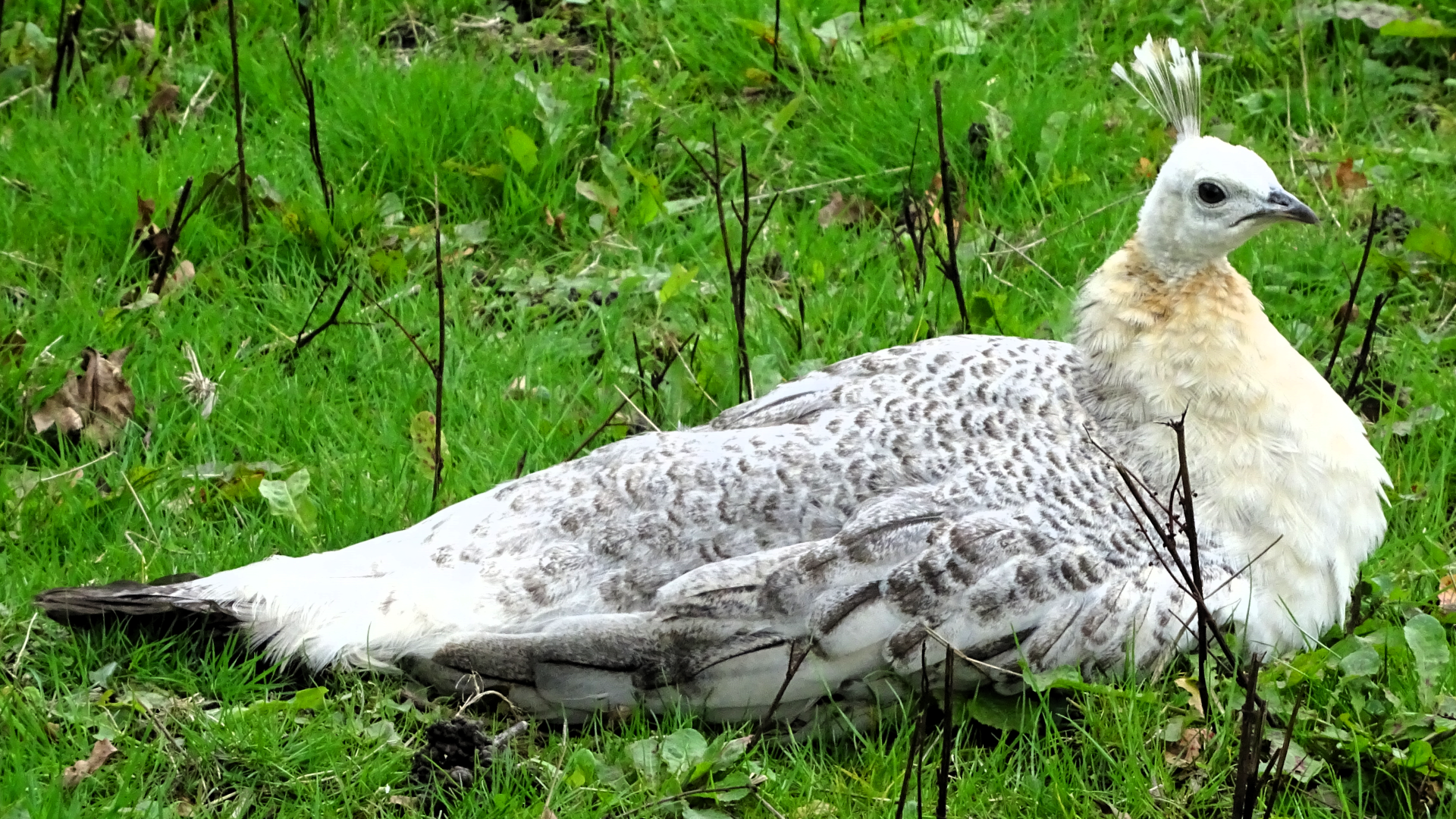
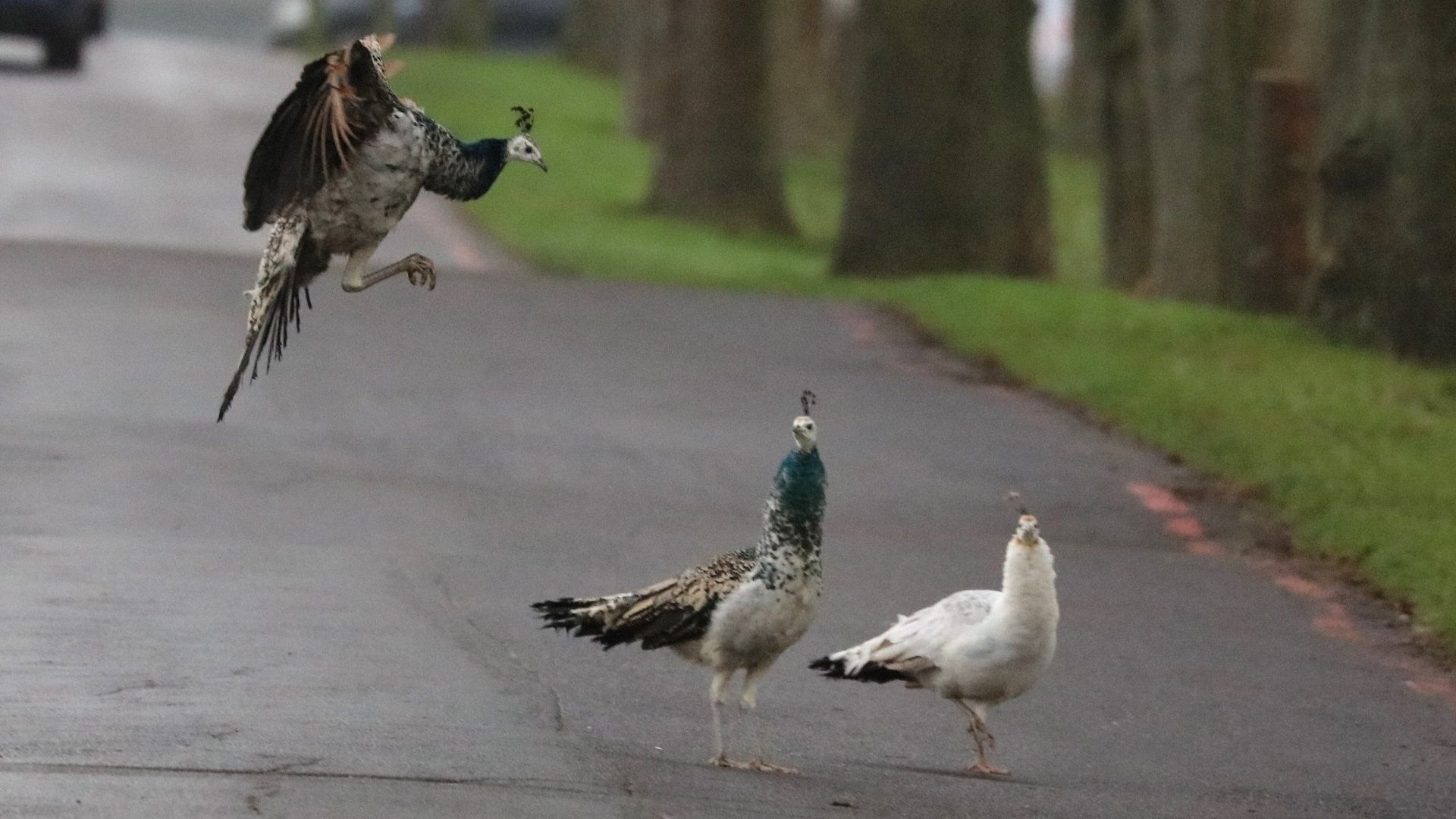
Female peafowl are known as 'Peahens'. Females have drabber colours and shorter tails than male 'Peacocks'. They also have a different call when communicating. Peafowl can be seen in Foxburrow Farm unless they decide to escape! (see below). In captivity peafowl usually feed on seed, grain, fruit and insects. In the wild they have also been known to consume small mammals, reptiles and amphibians.
#
Orange Ladybird
Halyzia sedecimguttata
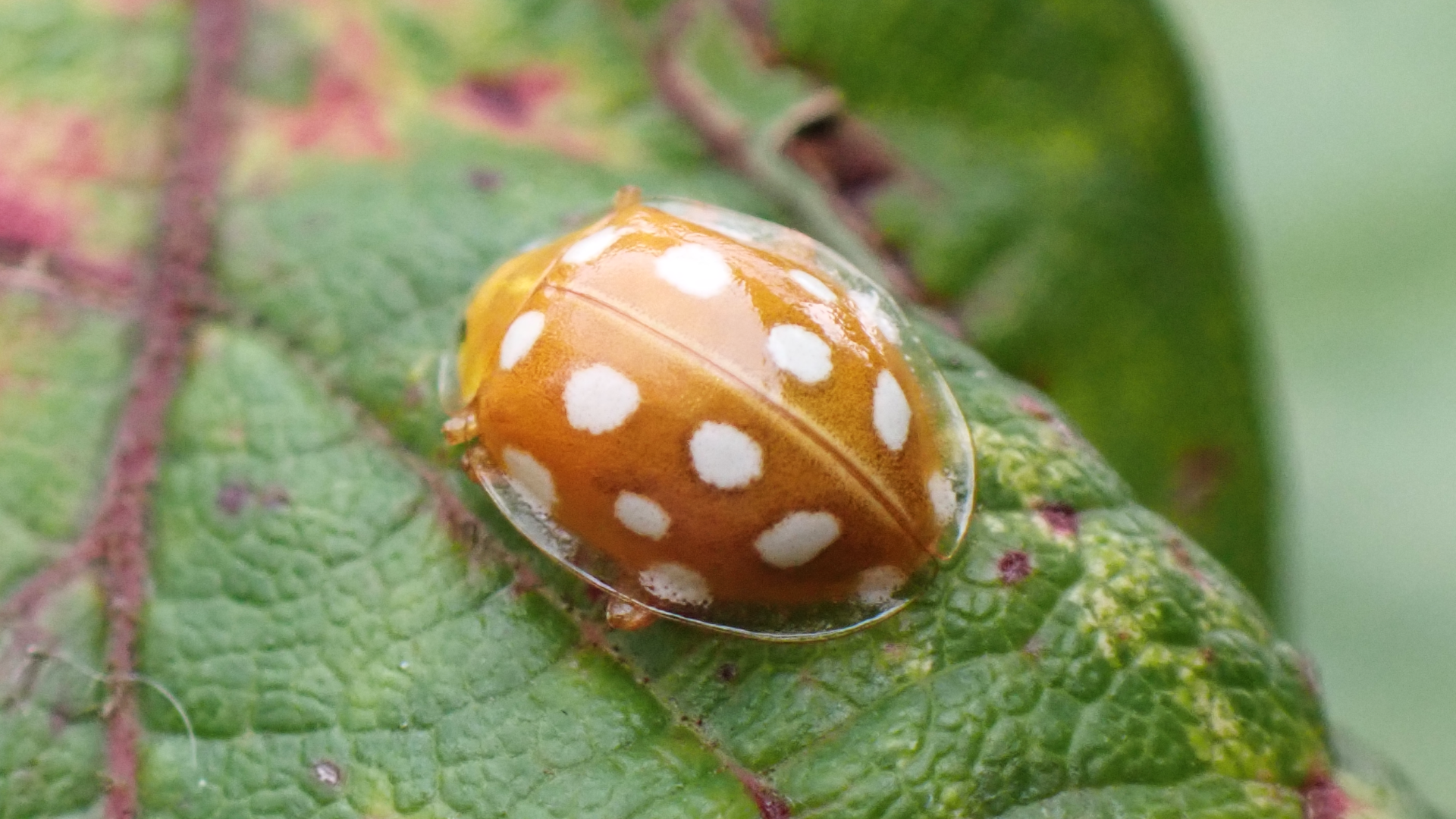
The Orange Ladybird has up to 16 whitish spots. The wing cases have transparent edges. This species feeds on mildew on trees like sycamore, ash and beech. It hibernates in leaf litter.
#
Harlequin Ladybird
Harmonia axyridis

Vision's office at Foxburrow Barn had a Ladybird infestation. Sometimes ladybirds enter buildings through cracks in window frames or gaps around doors when seeking shelter. The Harlequin ladybird is an invasive species from Eastern Asia that established itself in Britain during 2004 and is now widespread across south-east England. It is very variable in colour and markings and measures 8-10mm in length. As the weather cools ladybirds get prepared for hibernation (diapause). Some species do this alone in cracks while others form large clusters in sheltered places. When warm weather arrives they wake up to mate and egg lay.
#
Eared Leafhopper
Ledra aurita
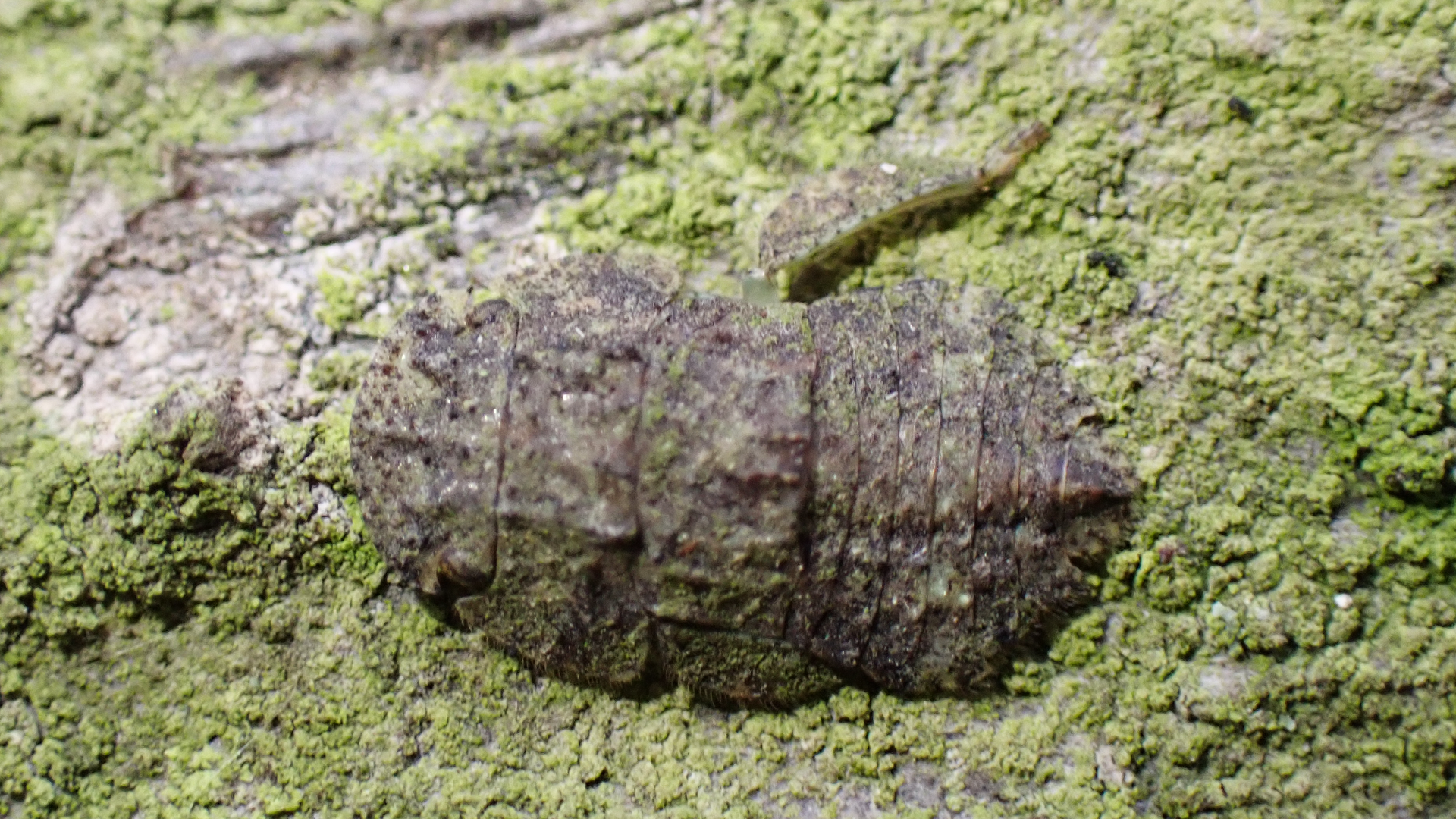
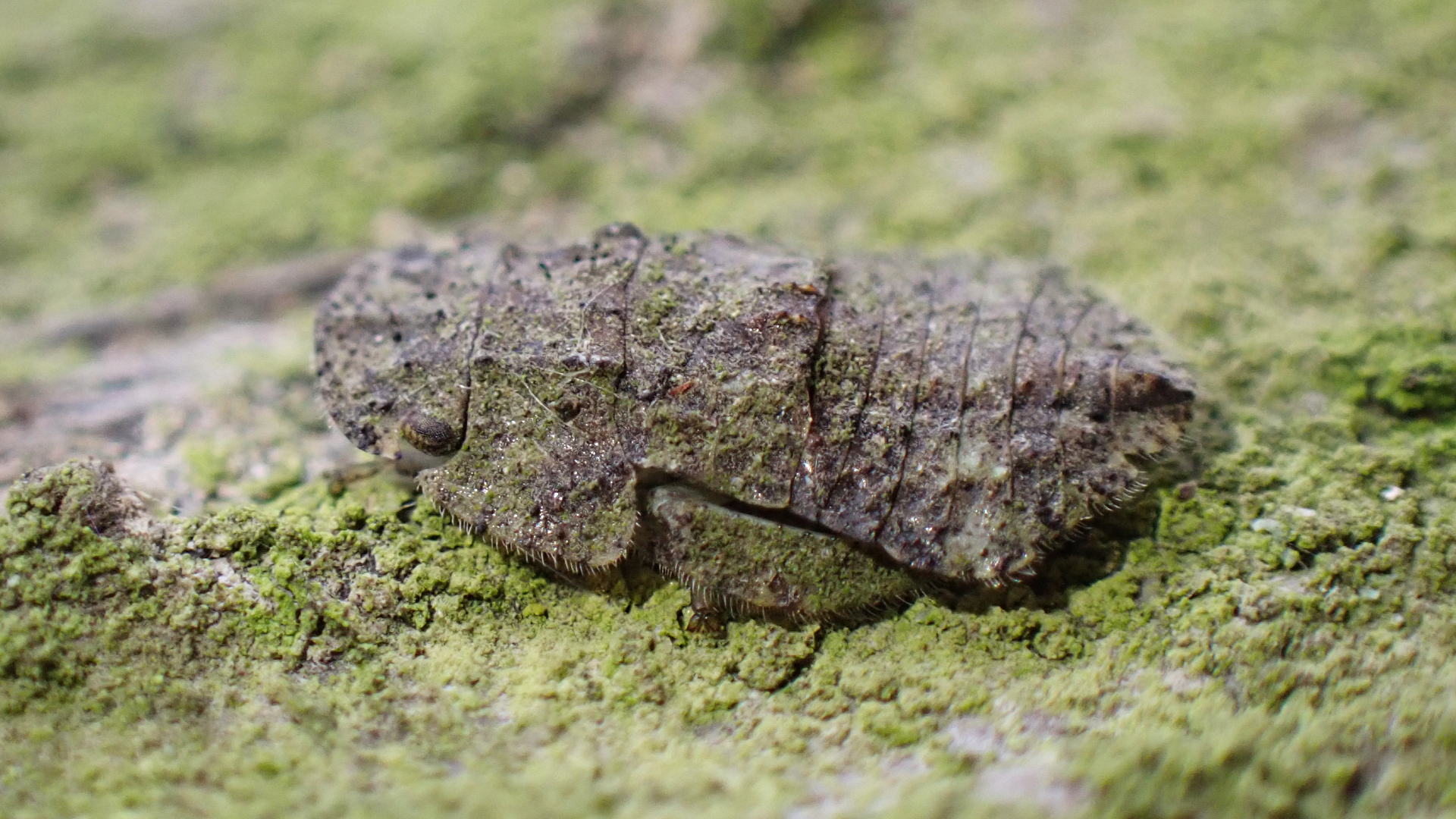
Flat against bark on the lichen-covered tree the Eared Leafhopper is well camouflaged. This is the only Ledrinae species found in Europe. This specimen was about 10mm long. Adults have ear-like projections on the pronotum and are seen from May until September. They are larger measuring up to 18mm in length. Adults can stridulate quite loudly if handled.
#
Winter Moth
Operophtera brumata
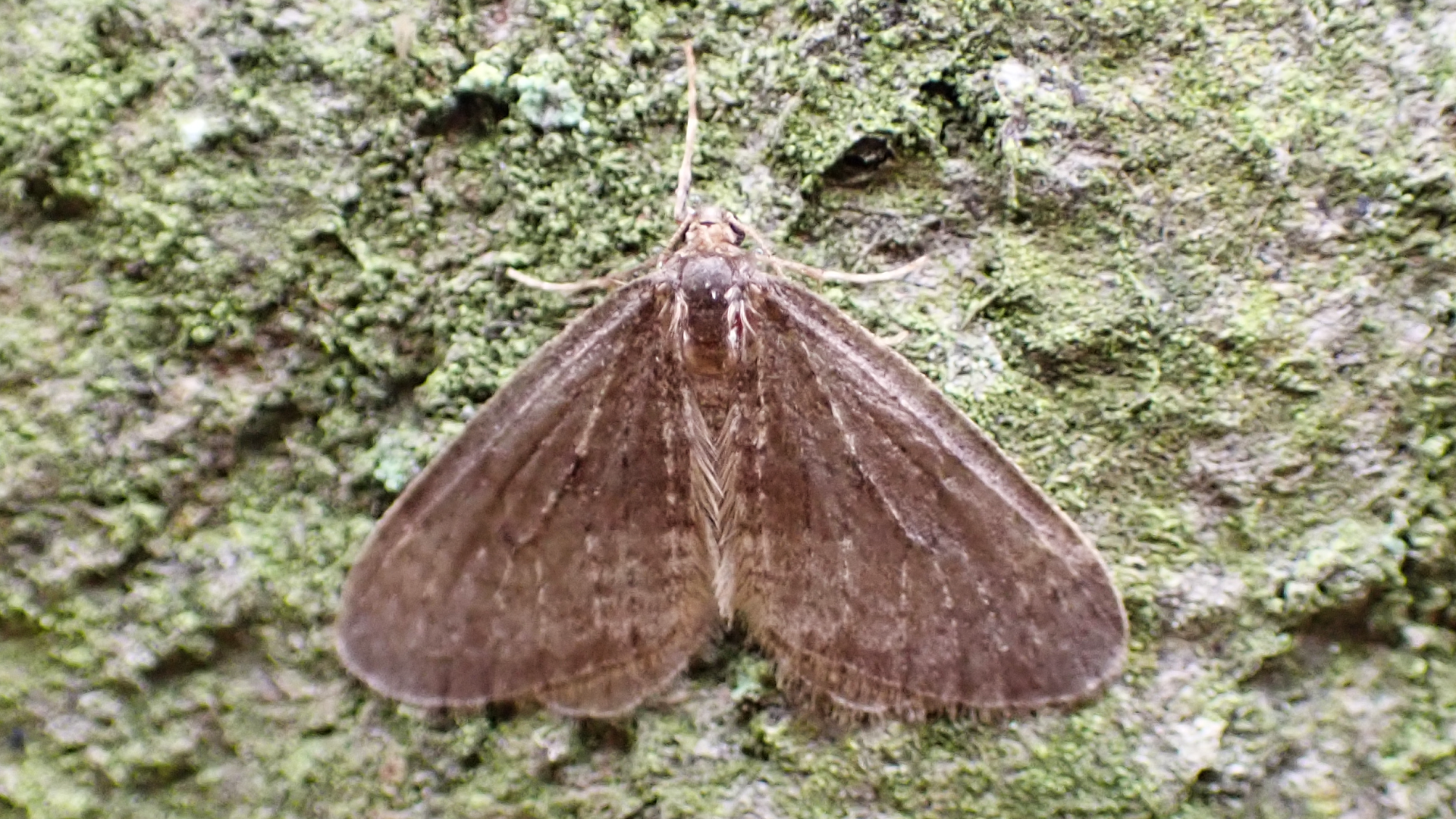
The Winter Moth is a common sight from November until February resting on tree trunks. Females are almost wingless, and crawl up tree-trunks waiting for males to arrive. Its larvae feed on broadleaved trees.
#
Grey Shoulder-knot
Lithophane ornitopus
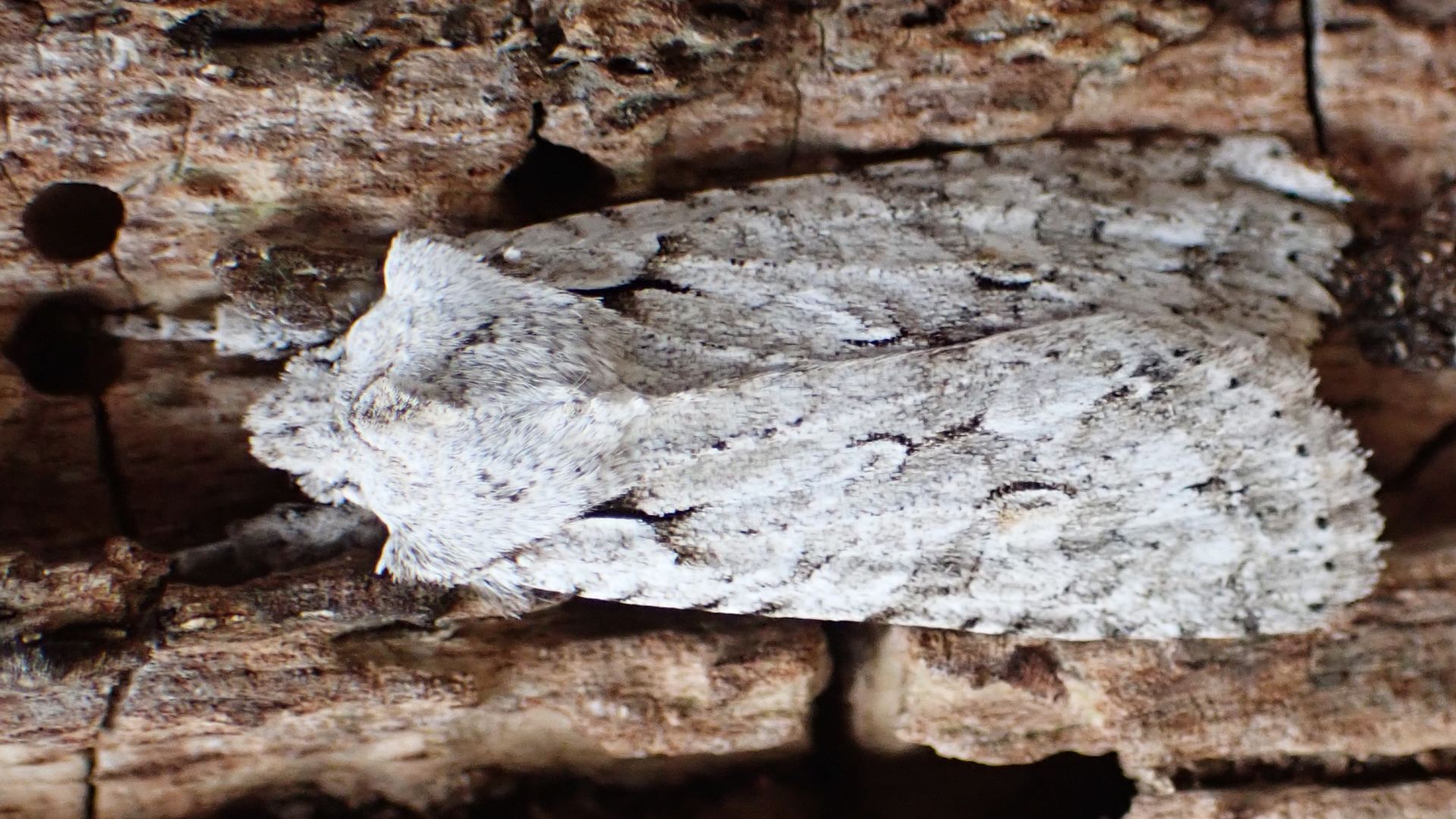
The Grey Shoulder-knot moth is on the wing from September to May in broad-leaved woodland. There is a bold, black, antler-like mark at the forewing base. Oak is the larval foodplant.
#
Vapourer Moth Larva
Orgyia antiqua
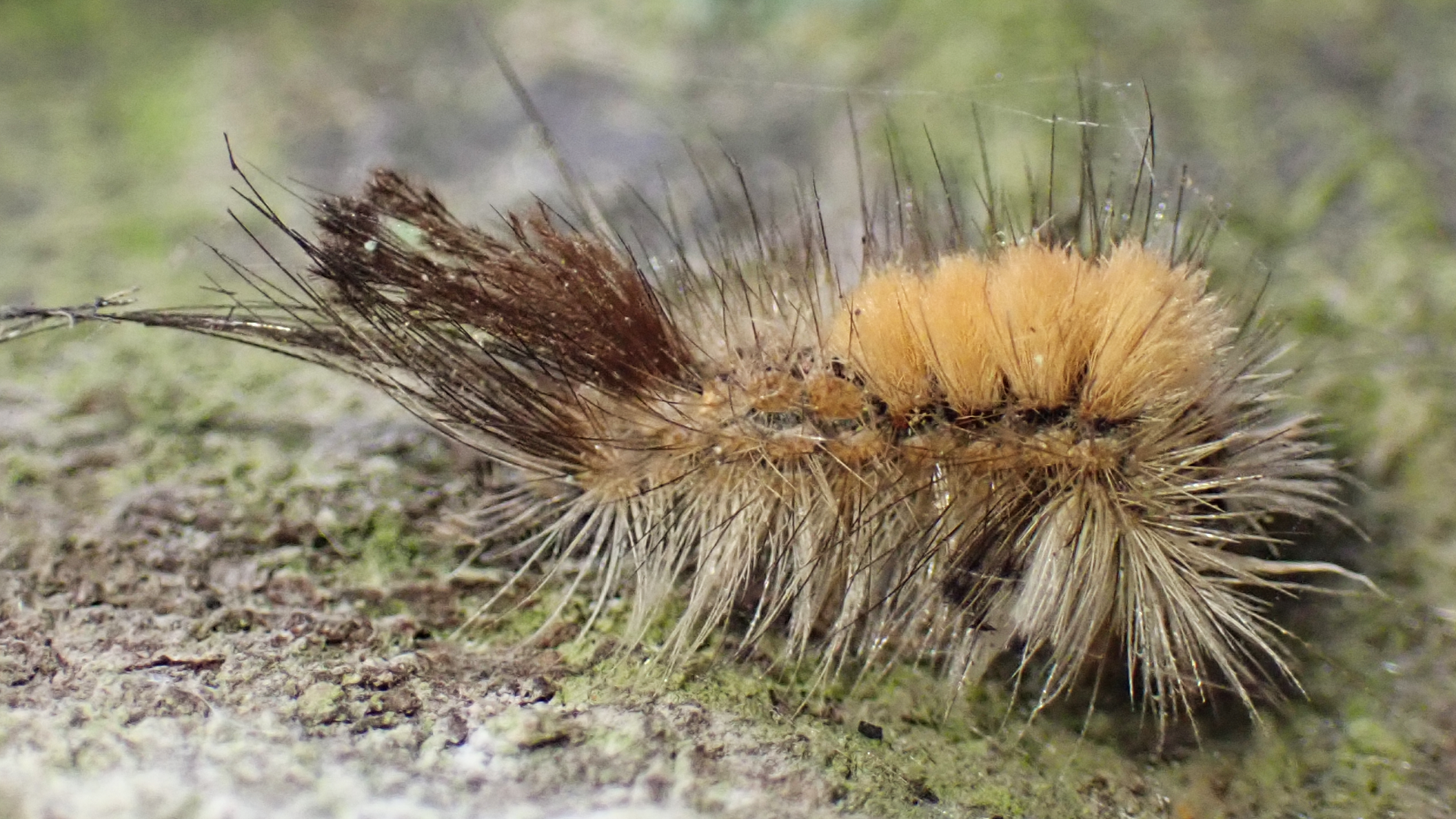
Vapourer caterpillars are usually seen from May until September so this young larva (1cm long) was an unexpected find at the end of December. Moults of caterpillars have been seen at this time of year, but this one was moving meaning that this larvae was alive and kicking.
#
Orb Web
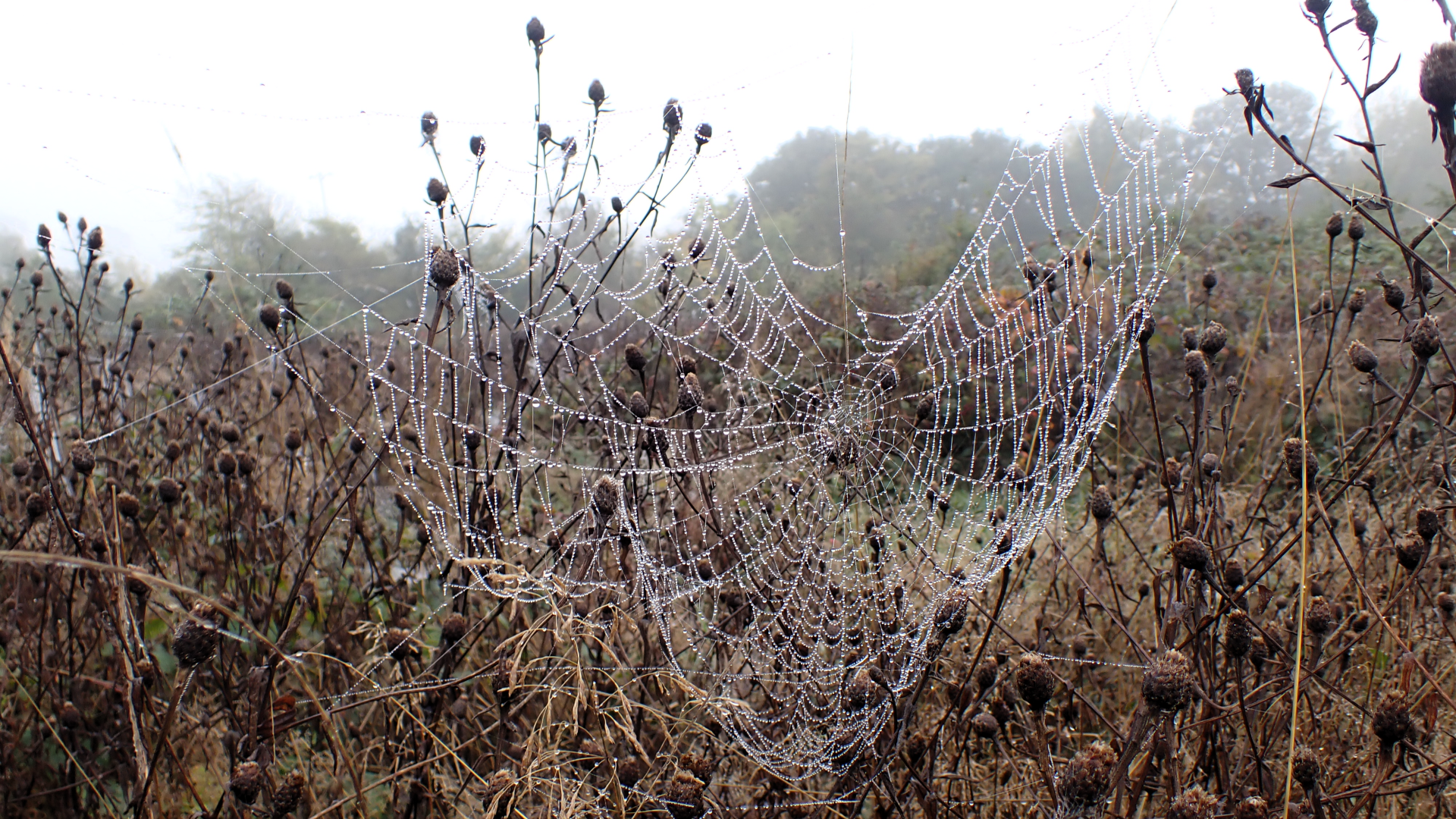
Webs are an efficient way for spiders to trap prey because it means they do not spend energy chasing a meal. However, spinning a web is not cost free and a huge amount of energy is spent making the silk. Over time the silk loses adhesiveness and becomes ineffective. Many spiders resort to eating their web daily to recycle the silk proteins enabling them to spin a fresh web.
#
Fly Agaric
Amanita muscaria
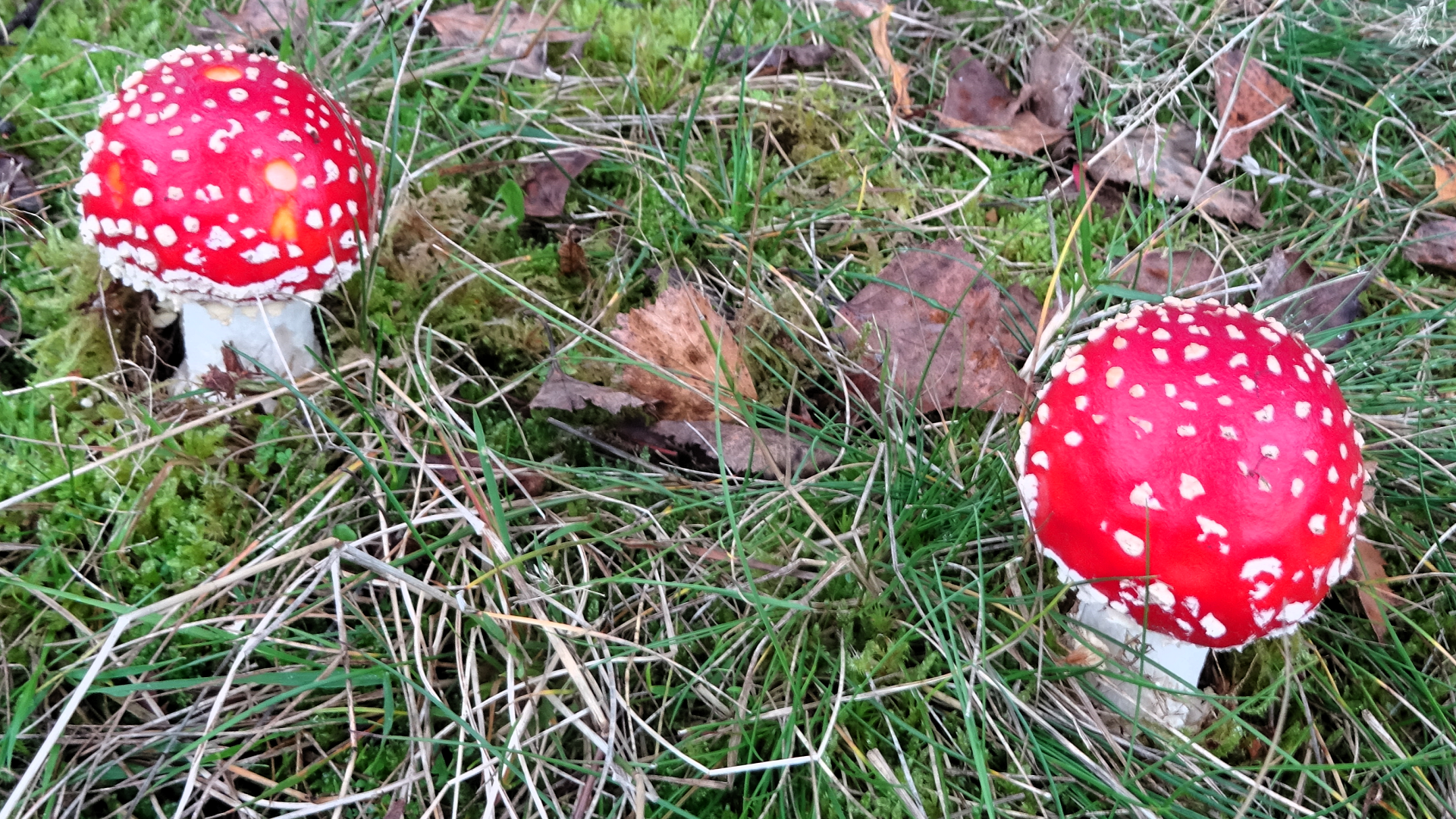
The Fly Agaric mushroom is associated with silver birch roots which radiate from the tree. There is a beneficial relationship between the fungal threads (mycorrhiza) and tree roots called symbiosis. The fungi provide the tree roots with water, essential nutrients and chemicals. The tree supplies carbohydrates to the fungi, which, lacking chlorophyll cannot make their own sugar.
#
Deer Shield
Pluteus cervinus
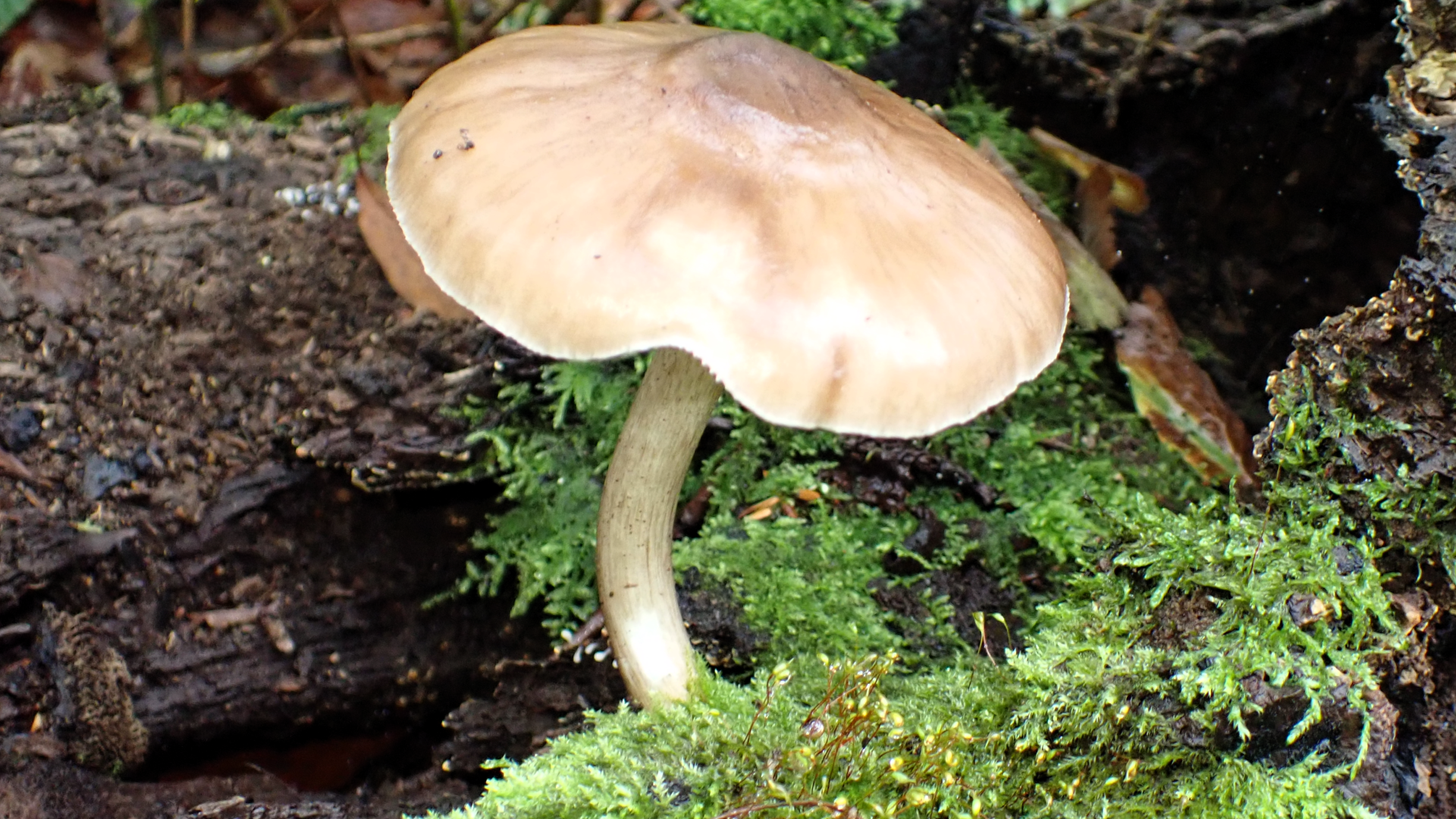
Deer Shield is a wood-rotting fungus that occurs mainly on hardwood stumps either solitary or in small groups.
#
Burgundydrop Bonnet
Mycena haematopus
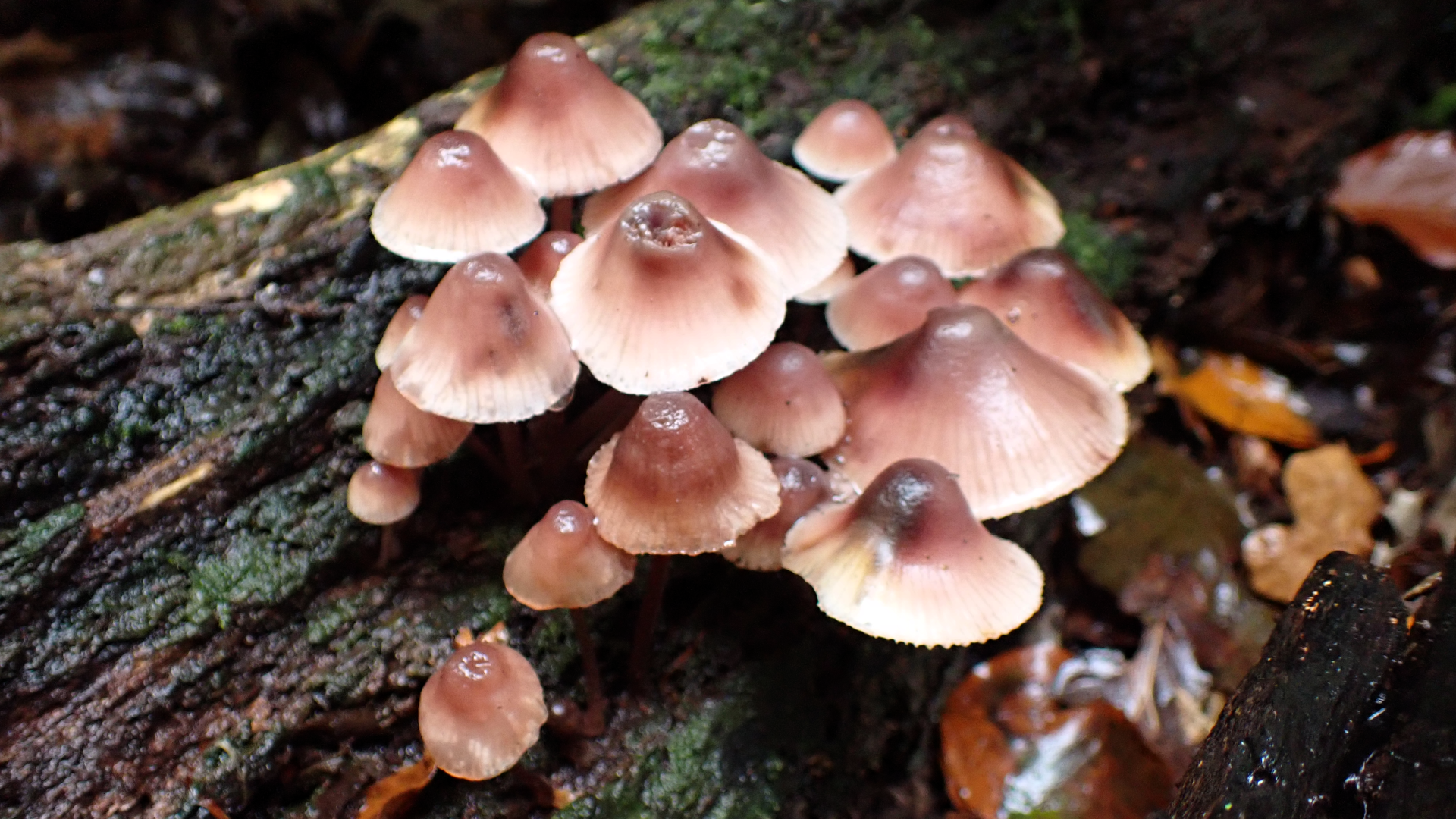
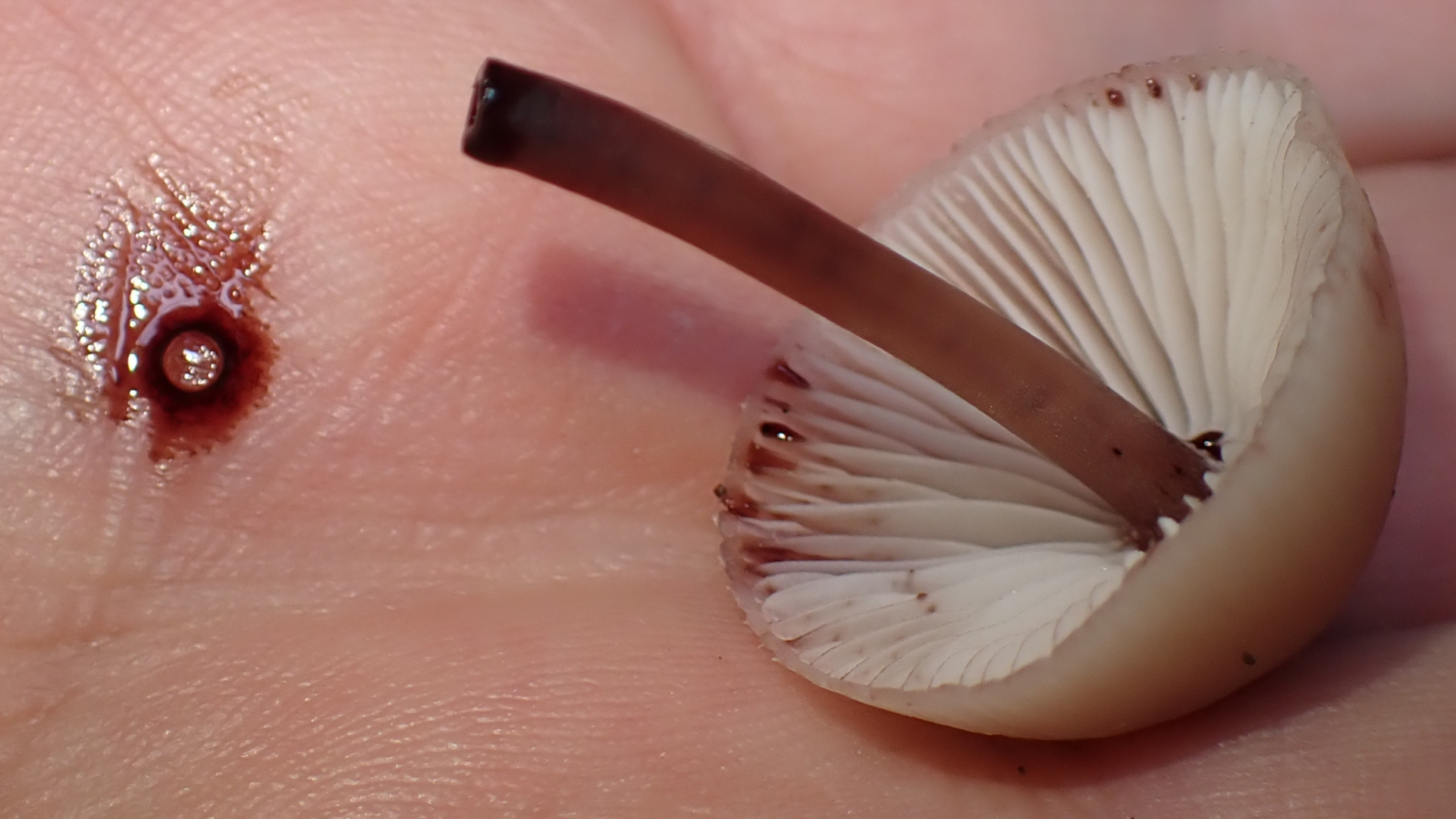
This saprobic bonnet mushroom grows on stumps and fallen trunks of deciduous trees (in this case beech) in well-shaded damp locations from June until November. The caps are 20-40mm across when mature. When the stems are broken a dark red fluid is released.
#
Angel Bonnet
Mycena arcangeliana
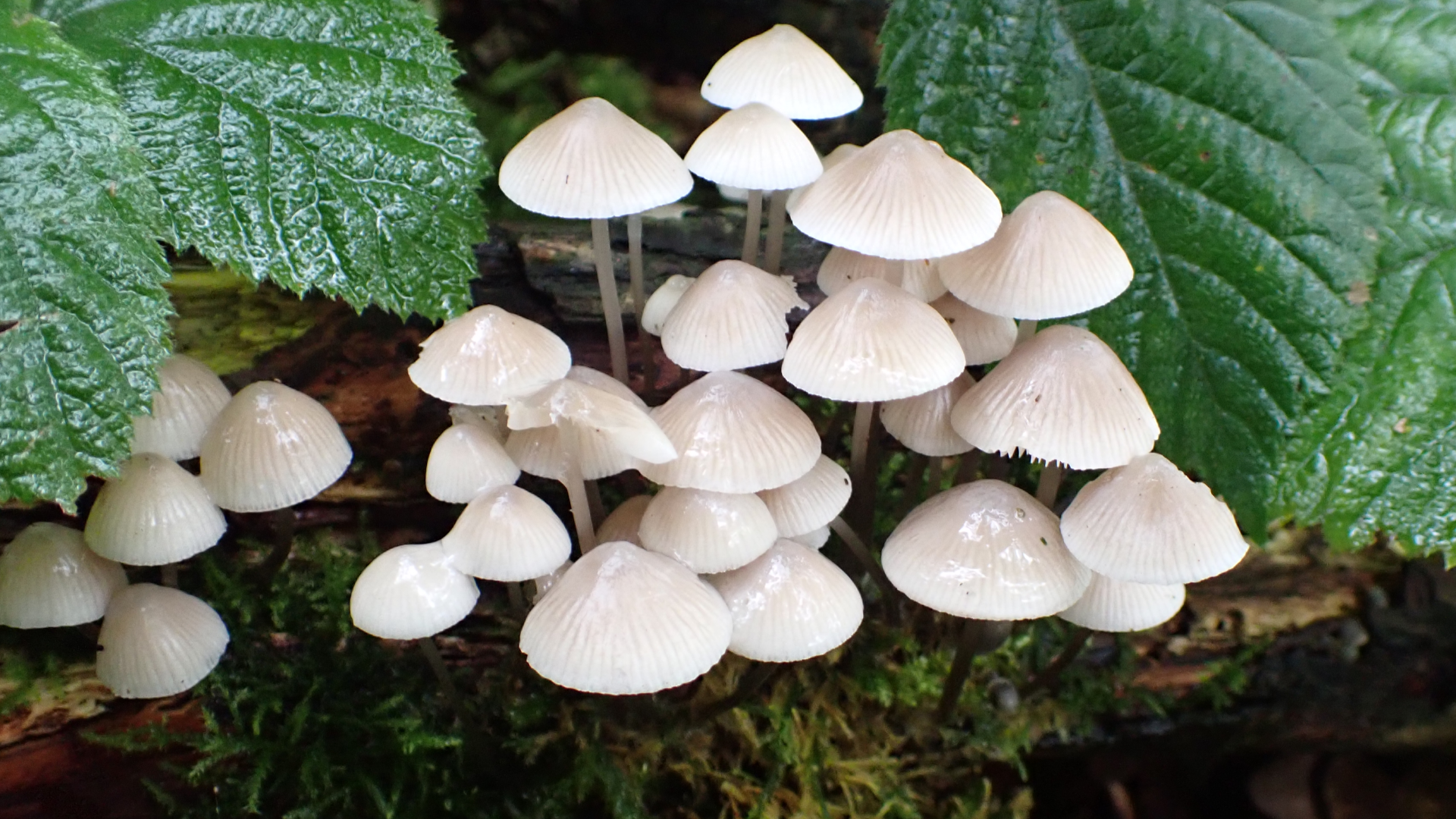
Angel Bonnets are usually found on stumps and fallen trunks of beech or ash trees, and occasionally other dead hardwoods. The caps measure up to 25mm across. This mushroom smells of iodine.
#
Steely Bonnet
Mycena pseudocorticola
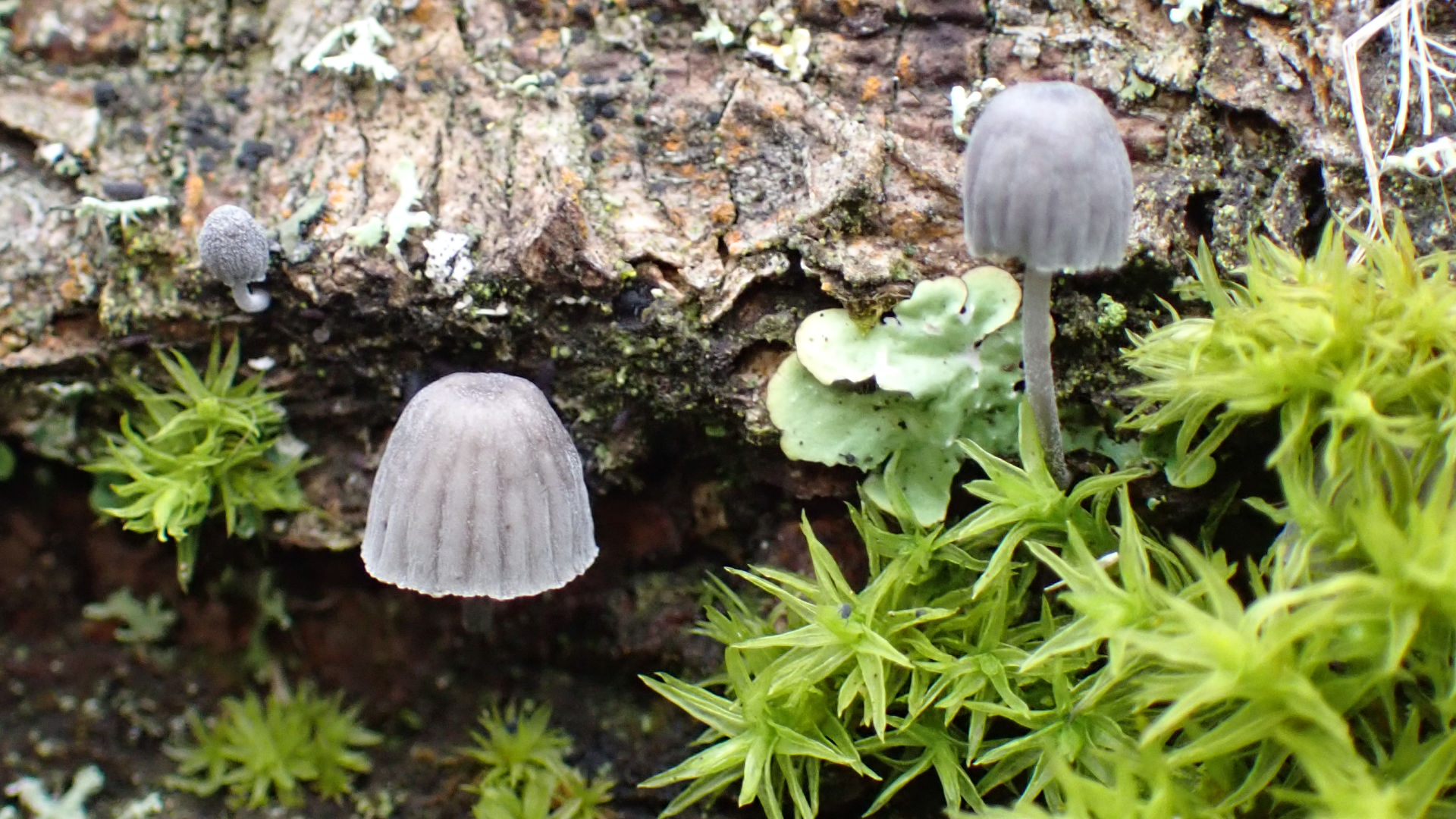
A tiny saprotrophic species that usually grows on moss-covered dead deciduous trees during autumn and winter.
#
Rosy Bonnet
Mycena rosea
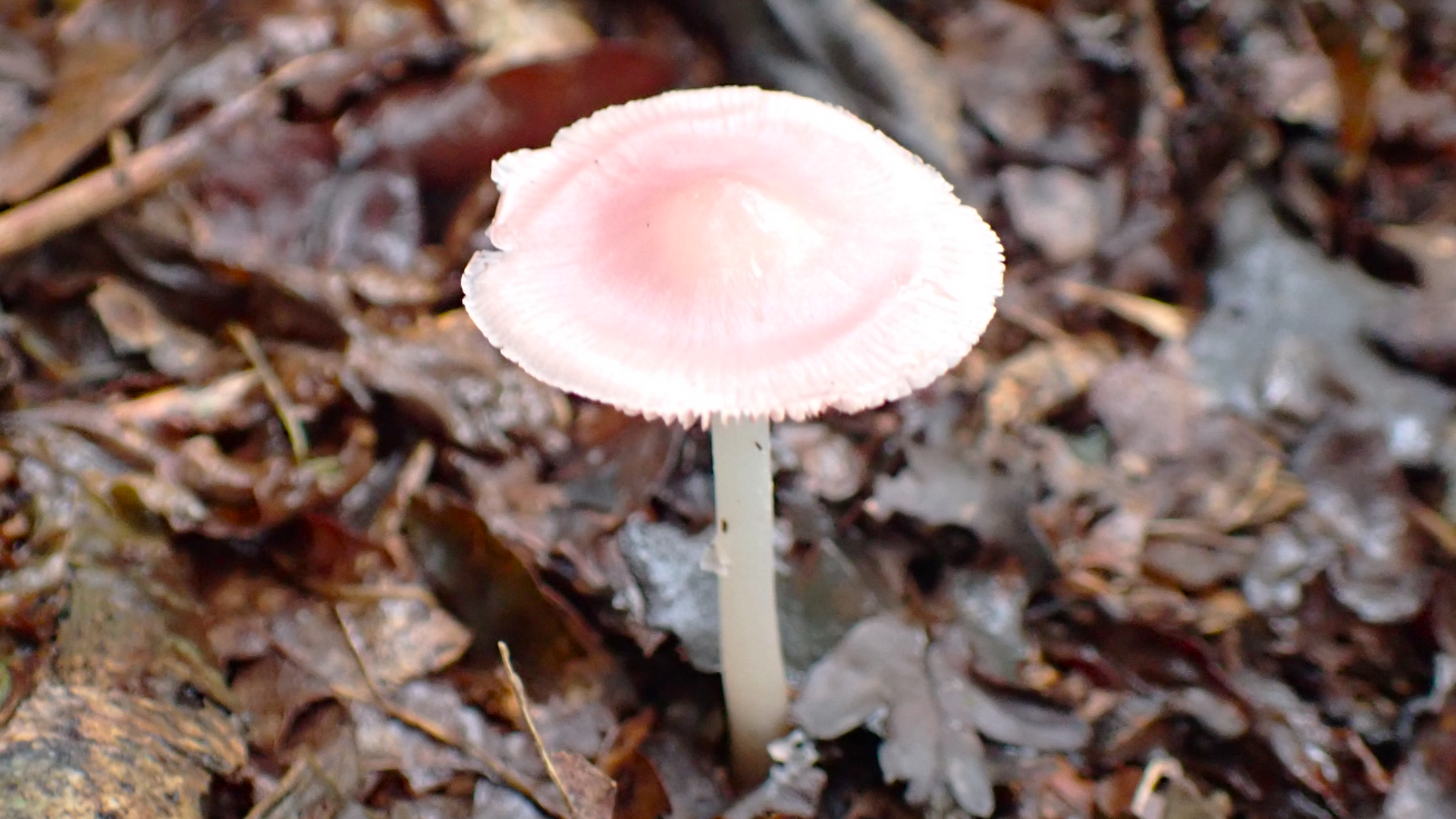
A common woodland species often found in leaf litter. Caps measure up to 60mm diameter and are pinkish with a whitish margin.
#
Pleated Inkcap
Parasola plicatilis
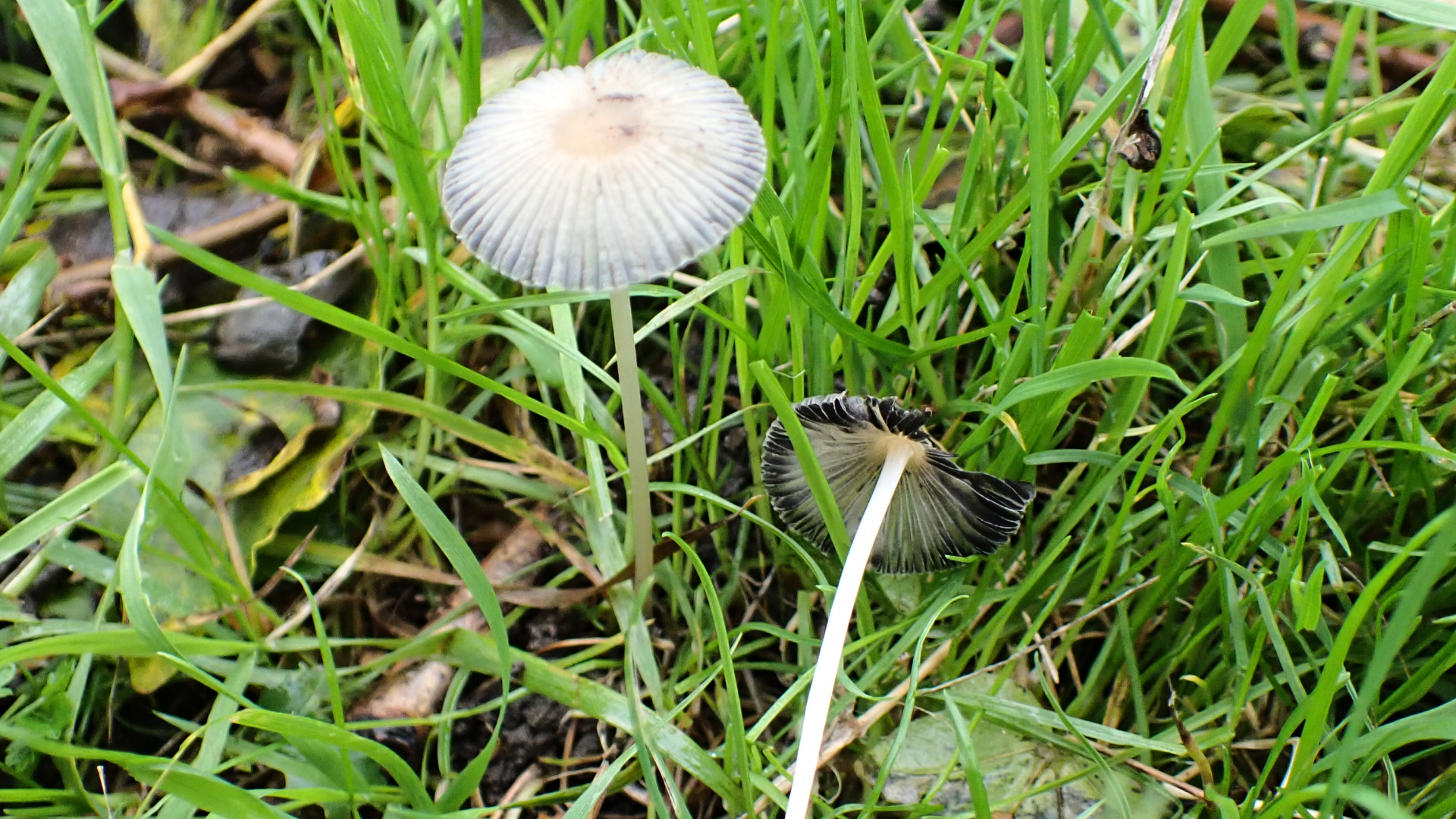
Delicate member of the Inkcap family that often disolves into a black slime within 24 hours. The heavily ribbed cap has a diameter of 10-20mm, is initially egg-shaped, then convex and finally flat.
#
Shaggy Parasol
Chlorophyllum rhacodes
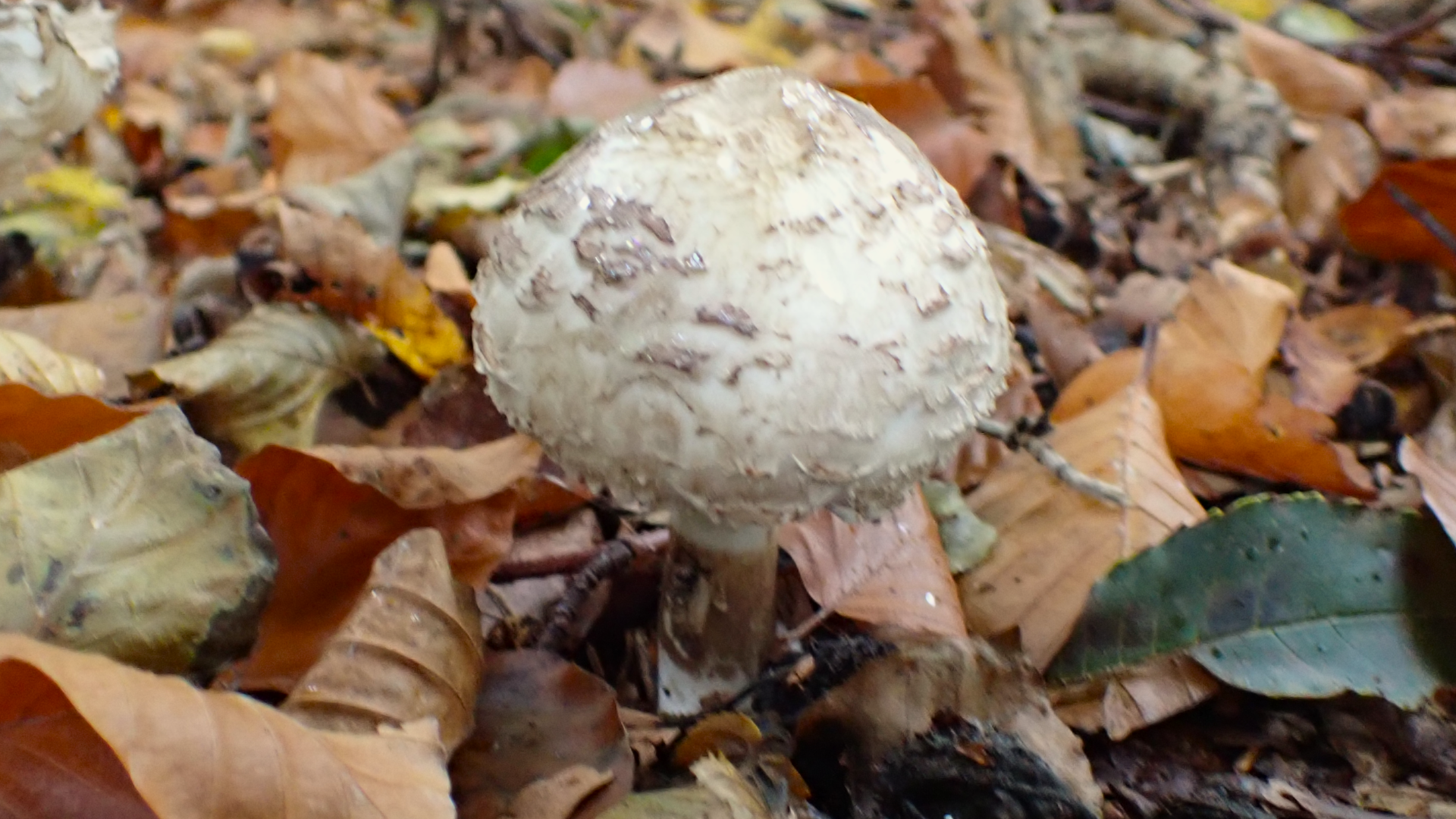
The Shaggy Parasol normally has a stockier appearance than the Common Parasol. The rounded white cap flattens and has dark brown scales giving it a 'shaggy' look. The flesh bruises red when damaged.
#
Butter Cap
Rhodocollybia butyracea
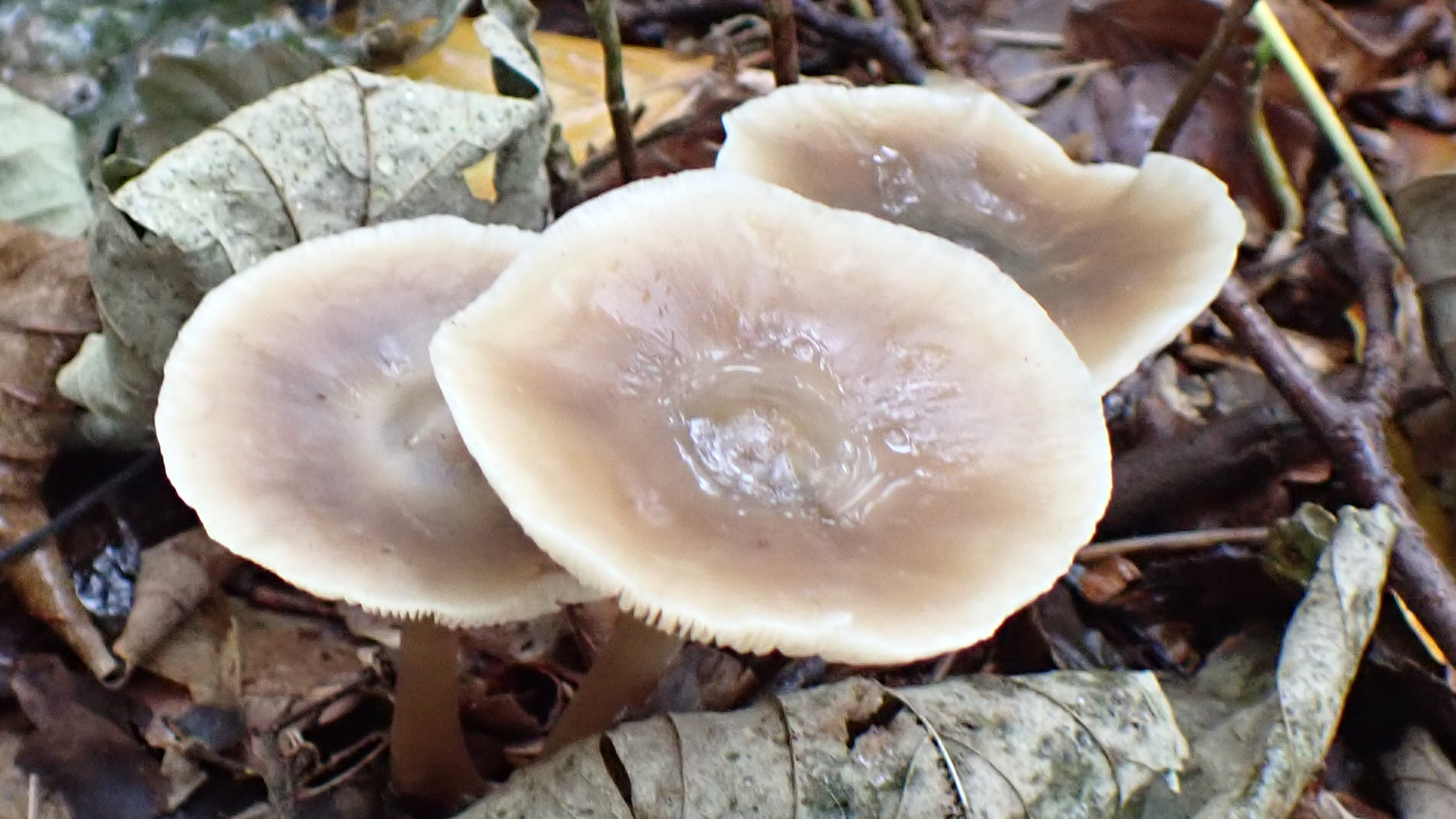
A very common woodland fungus also known as 'Greasy Toughshank'. It has variable colouration. Sometimes the centre of the cap is dark (var. asema) and sometimes it is light (var. butyracea). These mushrooms are often found in groups or fairy rings.
#
Parrot Waxcap
Gliophorus psittacinus
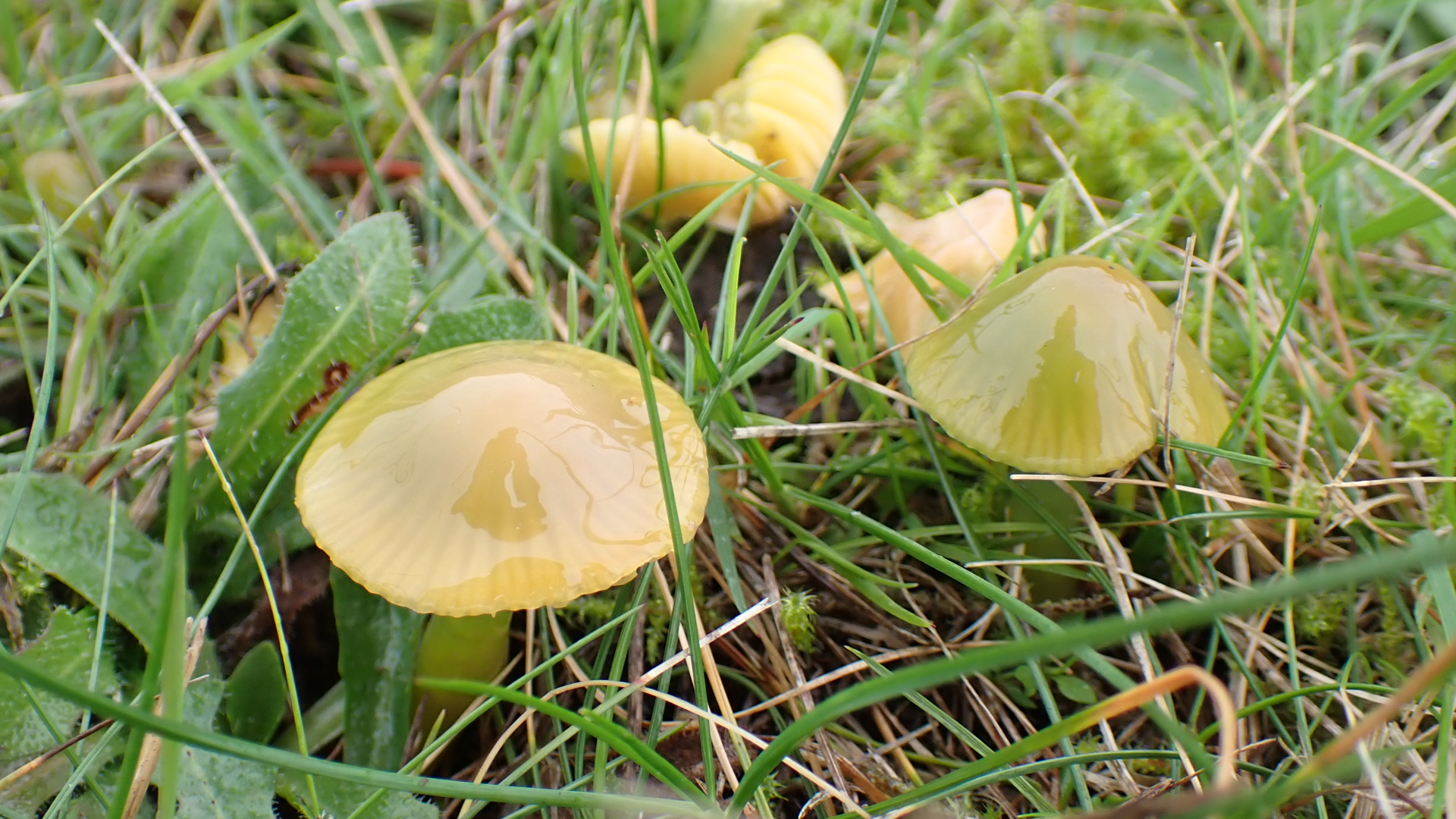
A familiar grassland fungus often found in Hainault Forest during autumn. The slimy cap (20-40mm) goes through several colour changes; green to yellow, then orange to purple.
#
Fairy Ring Champignon
Marasmius oreades
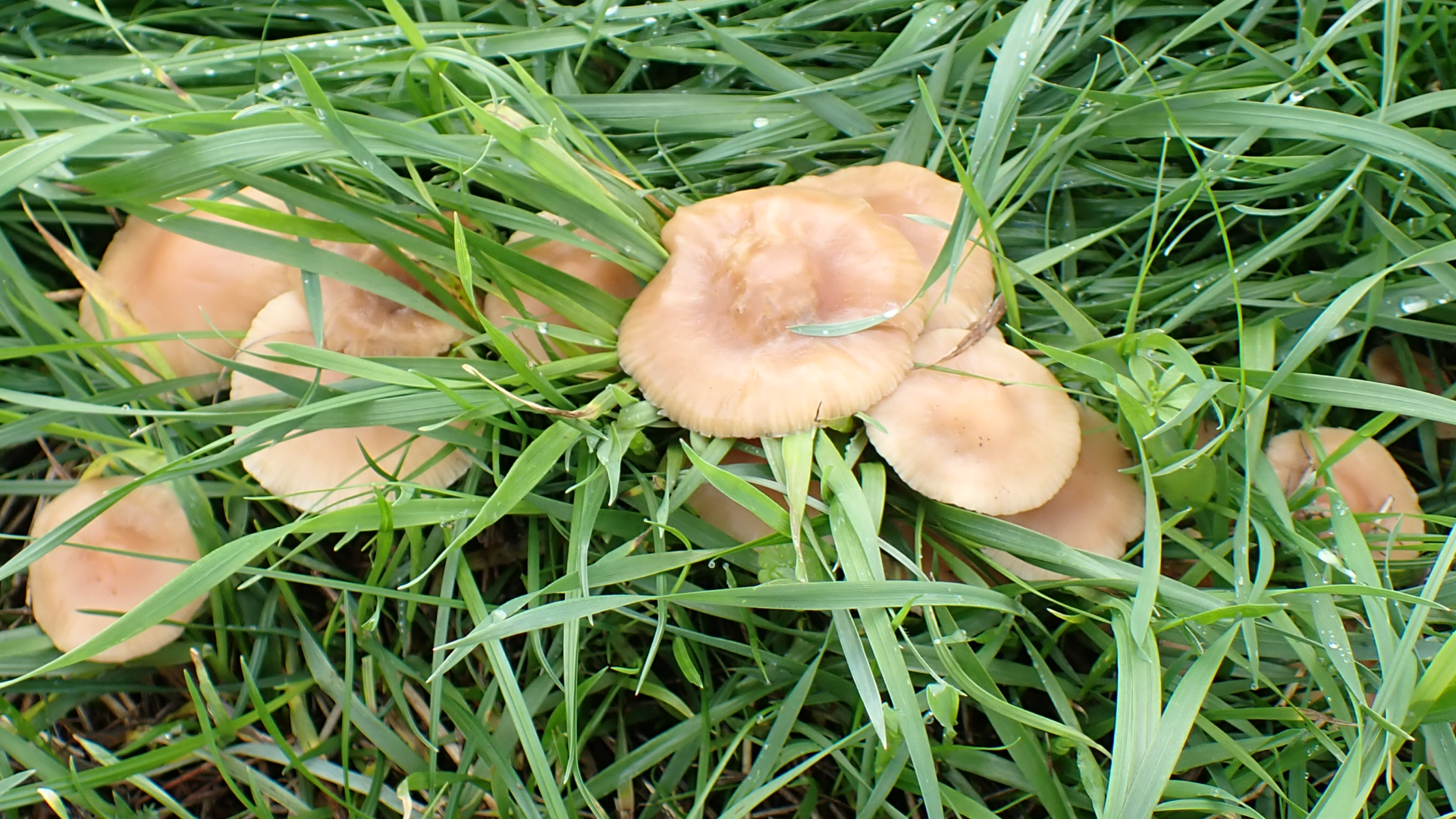
A half-ring of Fairy RIng Champignon appeared in the short grass in the middle of Romford Road (dual carriageway). The caps ranged from 20 to 50mm across.
#
White Saddle
Helvella crispa
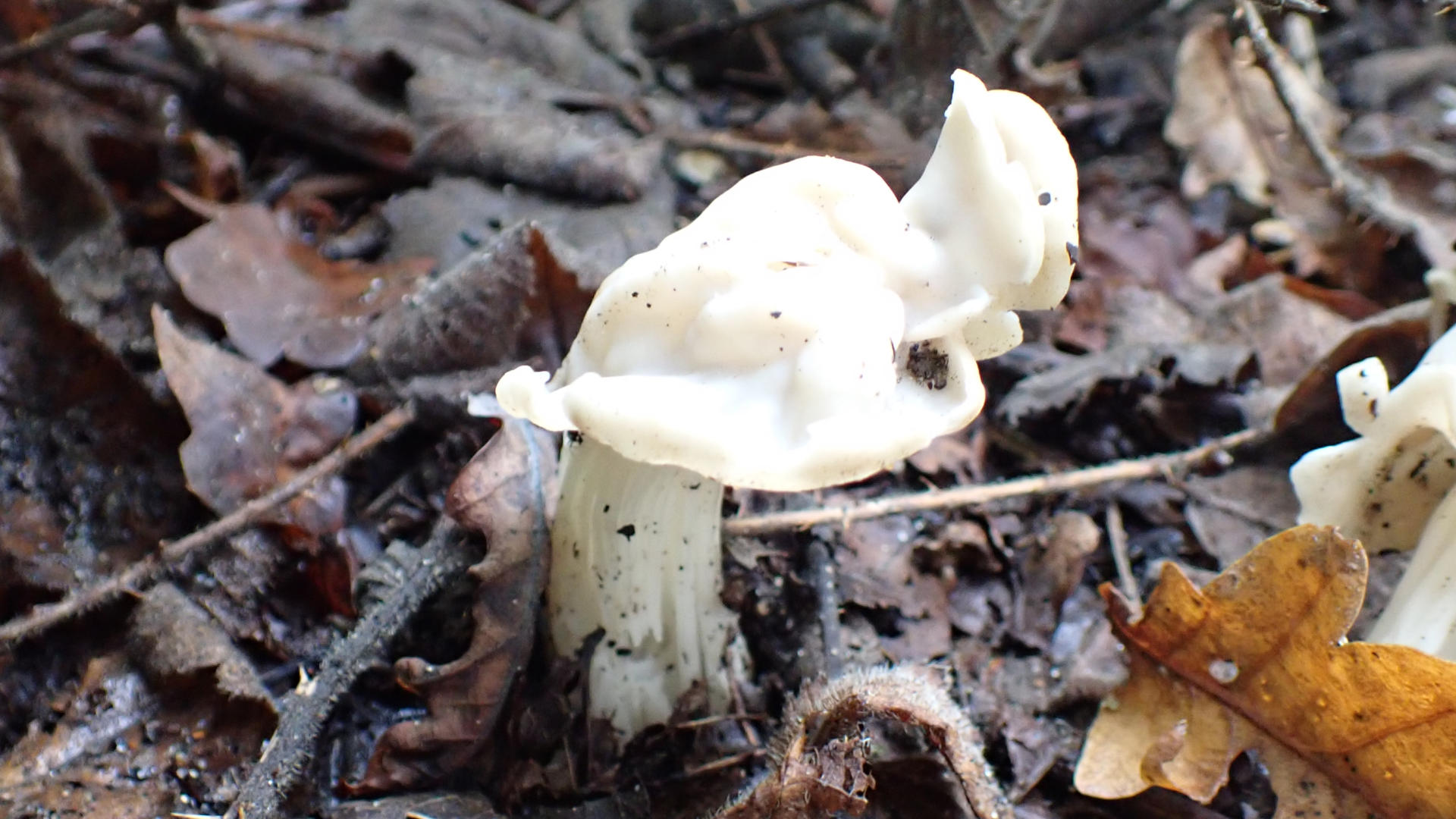
These mushrooms with saddle-shaped caps have caps 30-80mm across. The upper surface is smooth whereas the underneath feels slightly downy. The furrowed stipe tapers upwards and measures 40-80mm in length.
#
Common Puffball
Lycoperdon perlatum
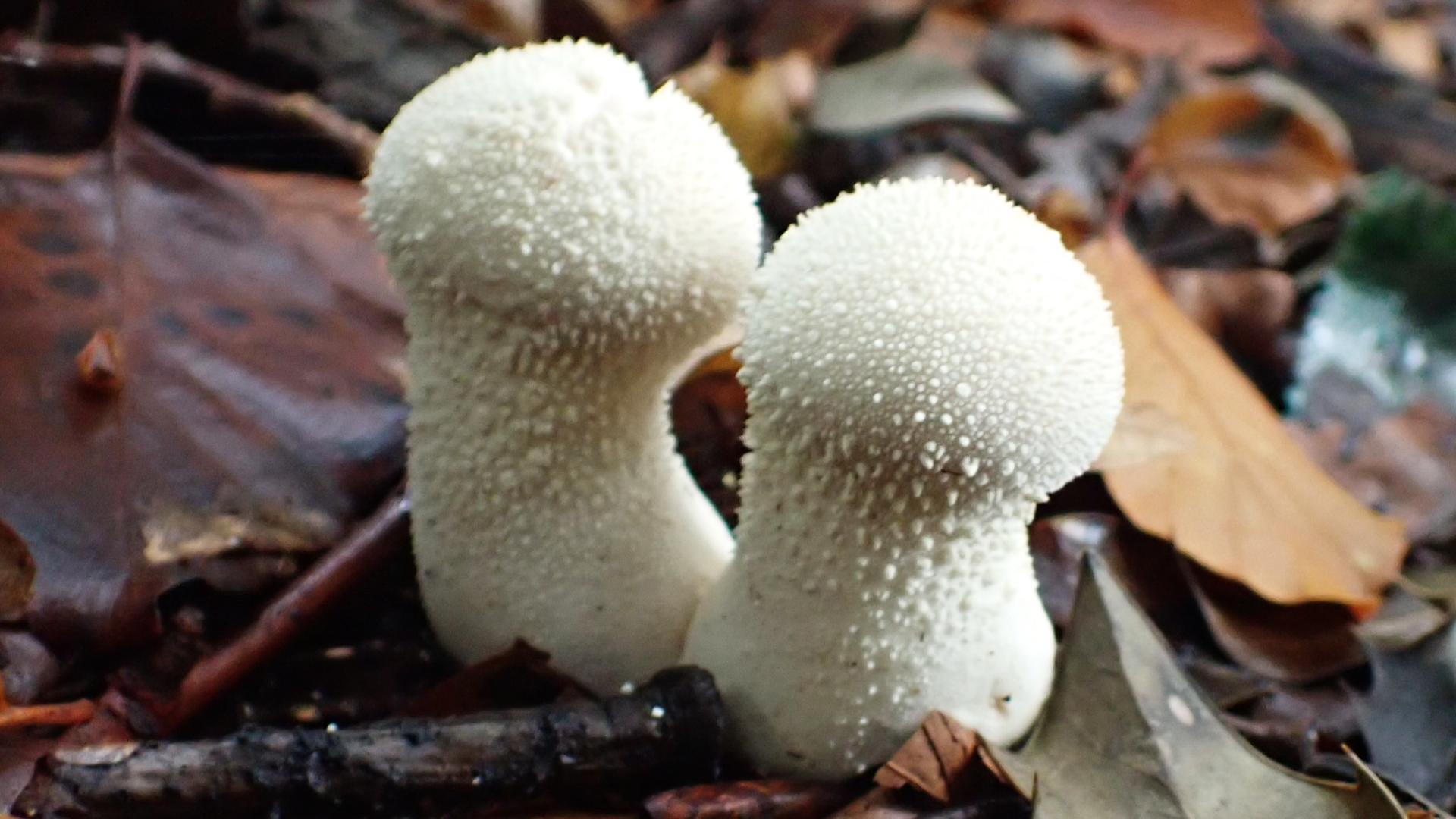
Normally found in small, scattered, groups in leaf litter under trees during summer and autumn, standing 40-80mm tall. Mature specimens release spores through a hole in the top which get dispersed by wind and rain.
#
Stump Puffball
Apioperdon pyriforme
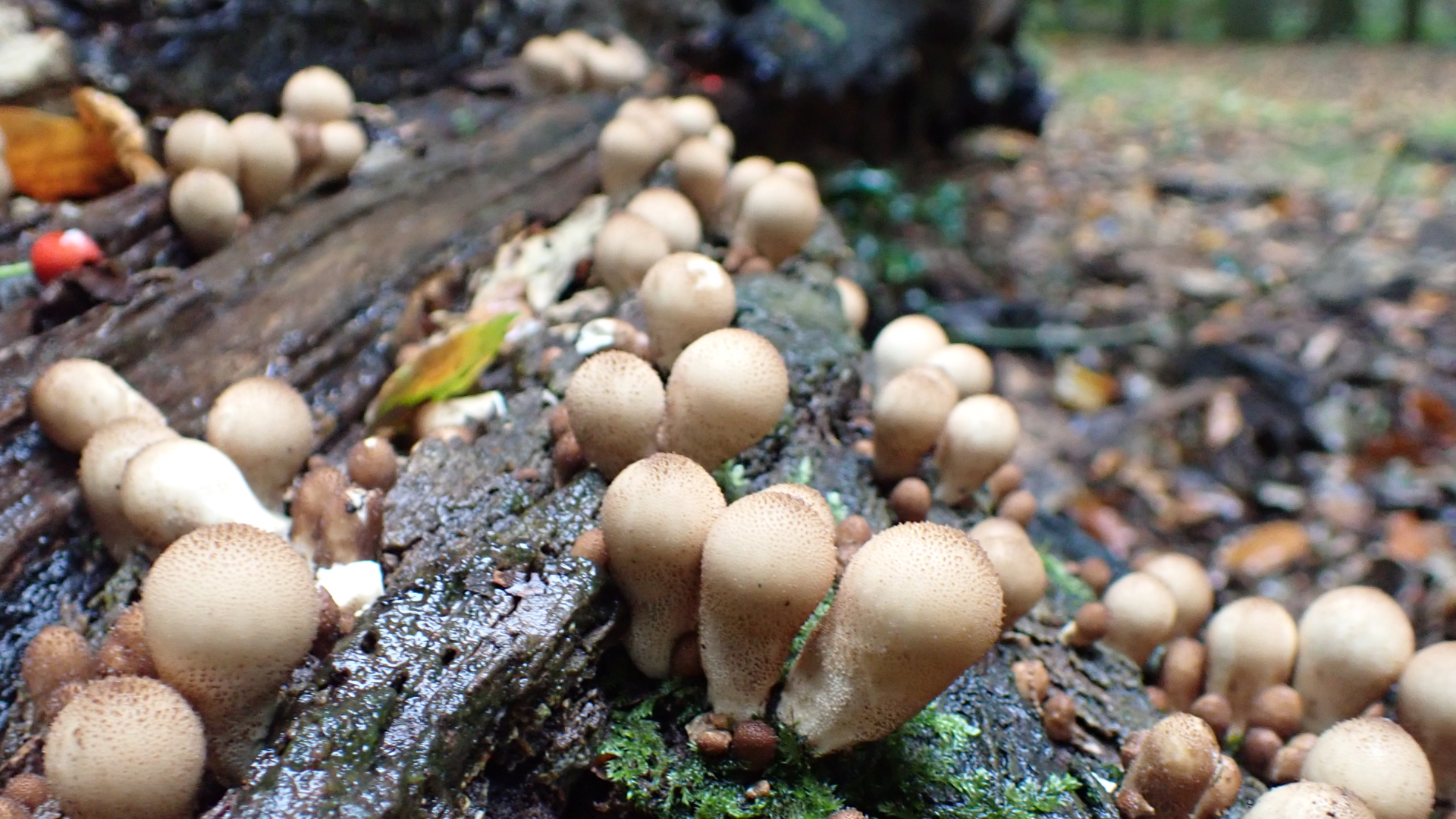
Stump Puffballs are the only puffballs that grow on wood. The club-shaped fruiting bodies measured up to 30mm across and 40mm tall. On a fallen beech tree.
#
Trooping Funnel
Clitocybe geotropa
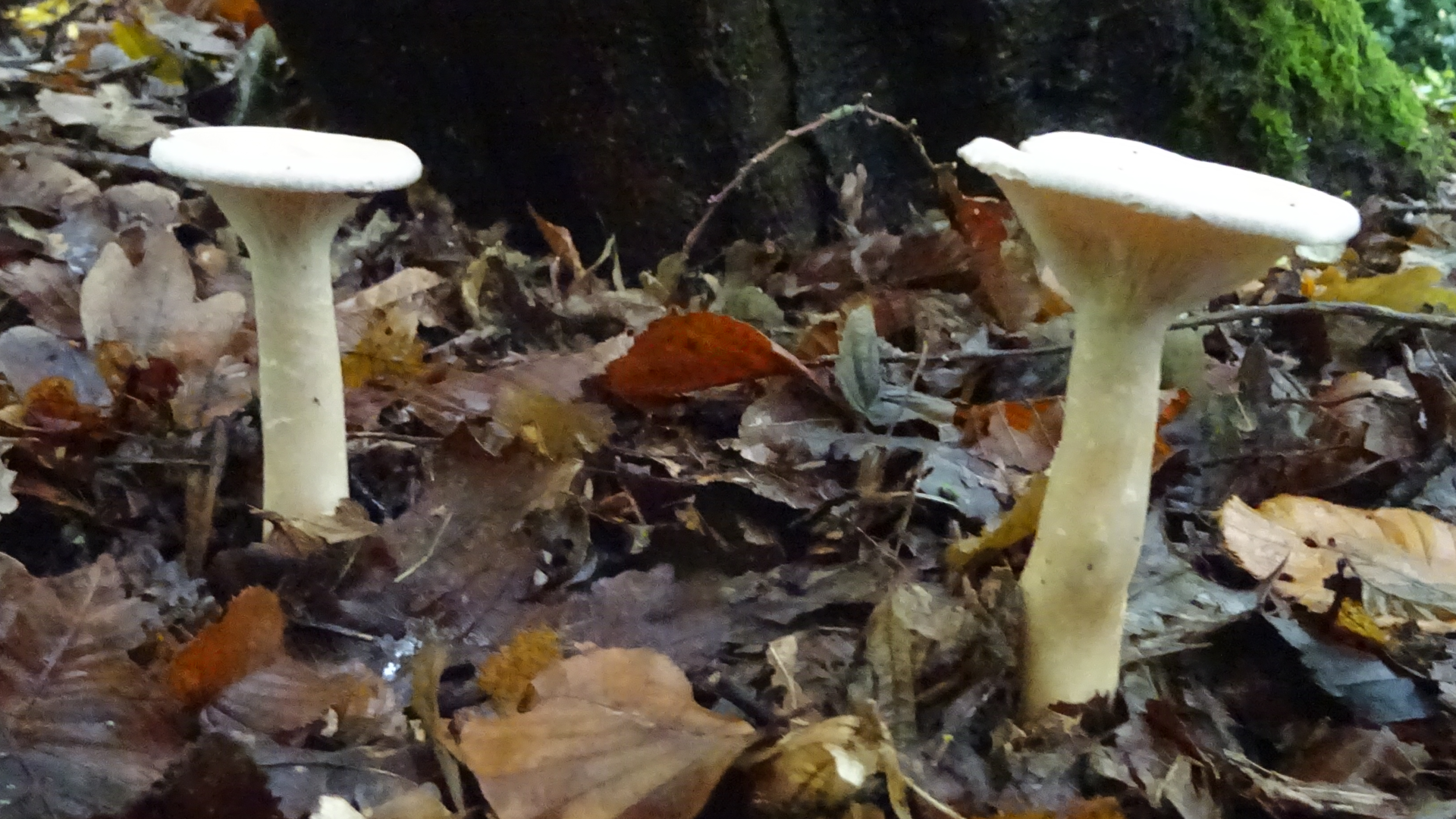
Trooping Funnels often grow in rings in deciduous woodland, although occasionally solitary mushrooms occur. The creamy-buff caps are typically 10-15cm across when fully grown with a fairly broad central umbo on top.
#
Willow Bracket
Phellinus igniarius
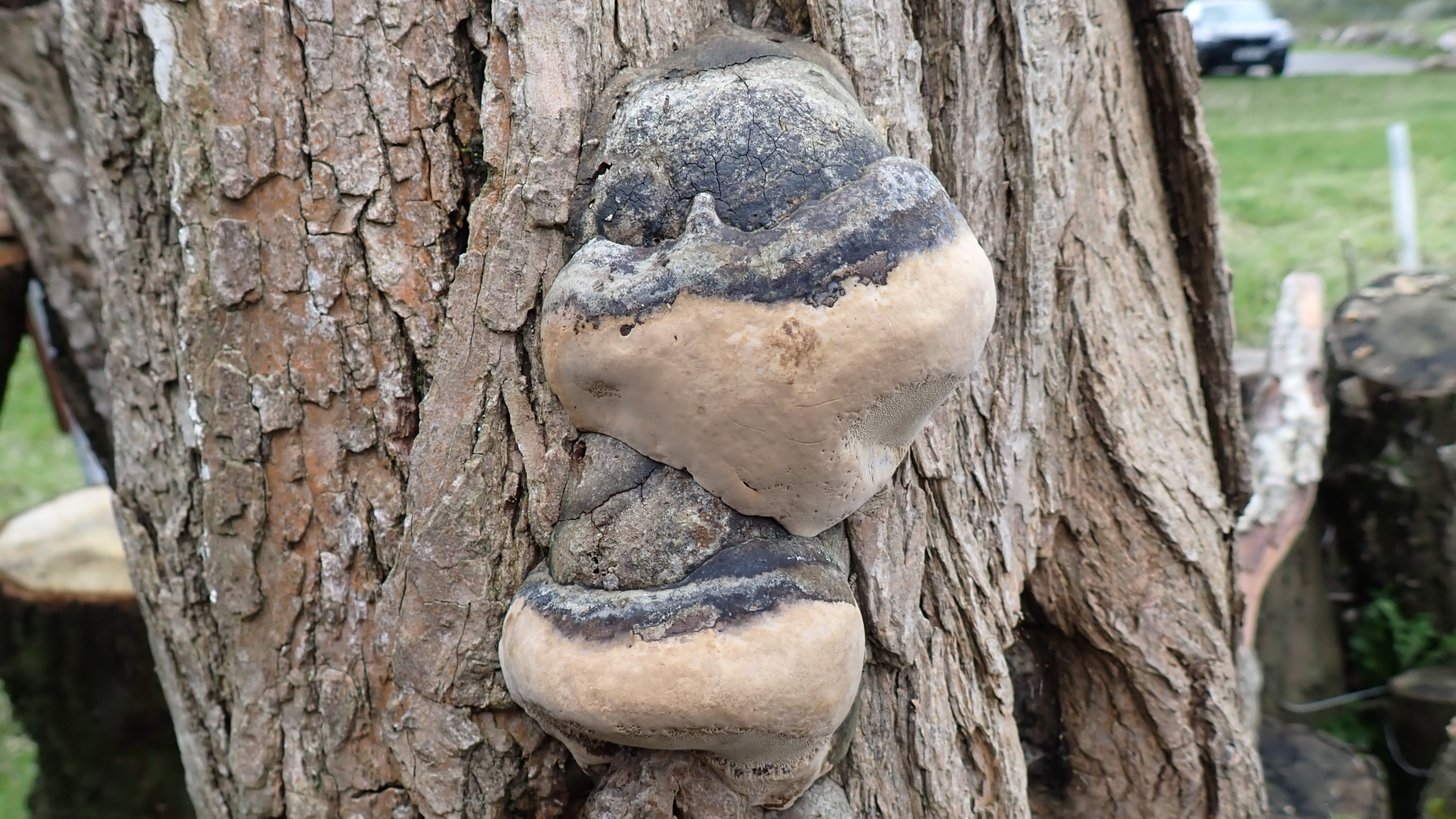
Very tough fungus associated with willow trees, seen all year round on lower trunks of older trees. It grows in concentrically ridged layers with a fresh layer forming each year. The new layers are light-brown and feel like velvet. Older layers turn grey, then blacken and often develop cracks.
#
Candlesnuff
Xylaria hypoxylon
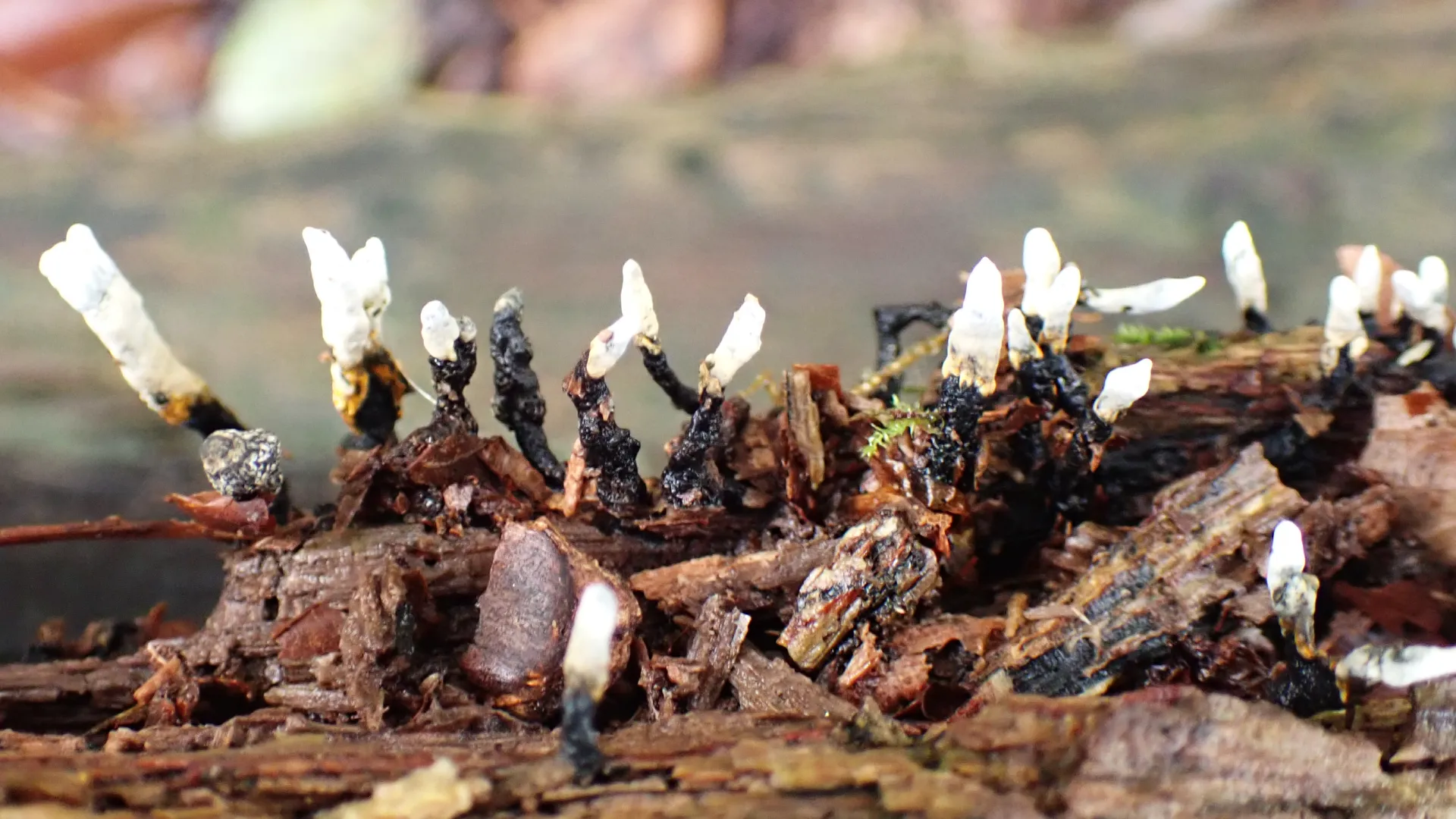
A very common wood-rotting fungus seen all through the year. It has stick-like or forked fruiting bodies with black bases and white powdery tips. Height 10-60mm.
#
Turkeytail
Trametes versicolor
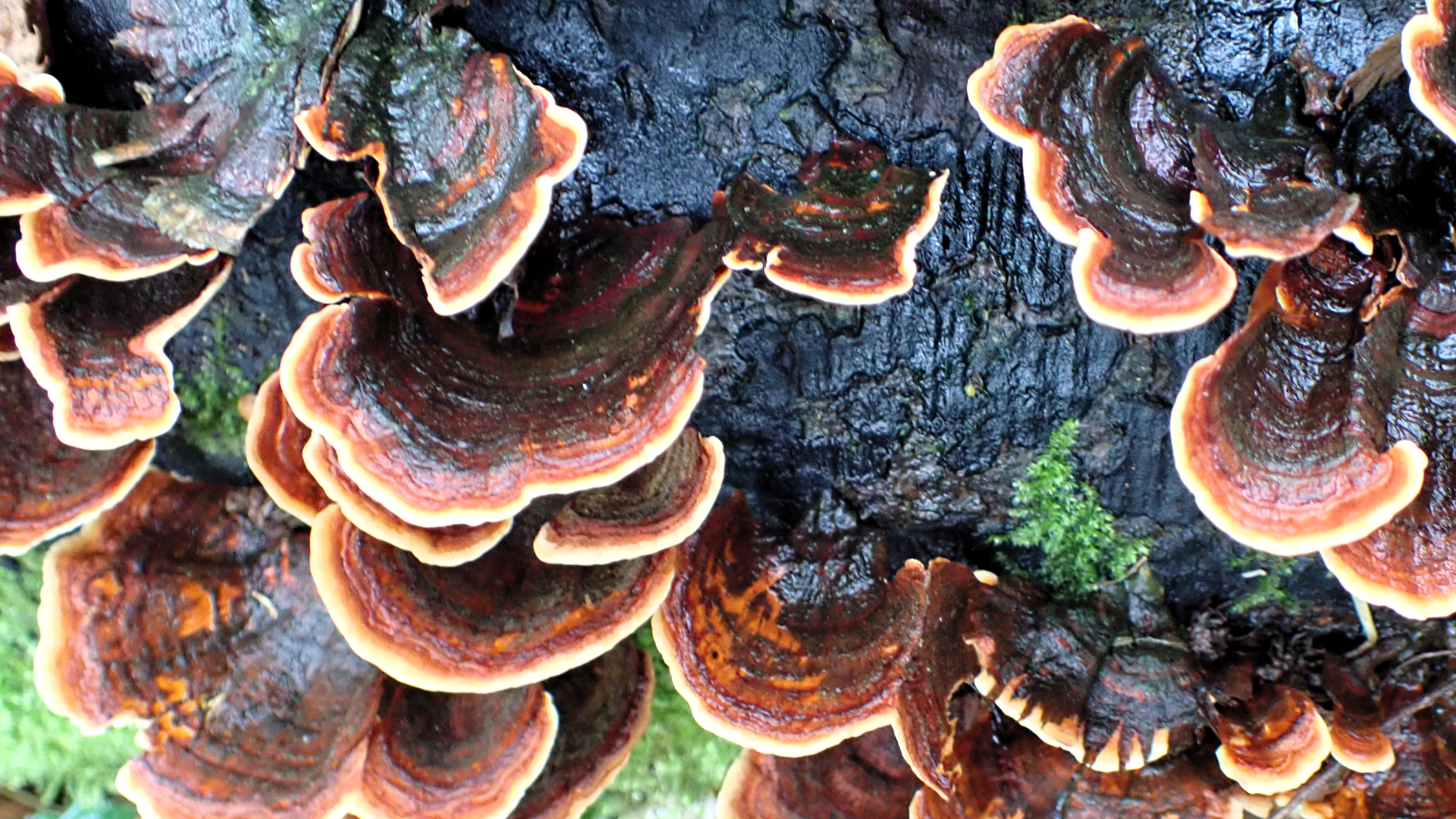
Usually occurs in large, tiered groups on hardwood throughout the year. Fan-like with variable coloured concentric rings, the thin, wavy, edge is always white or creamy. The brackets measure 4-10cm across.
#
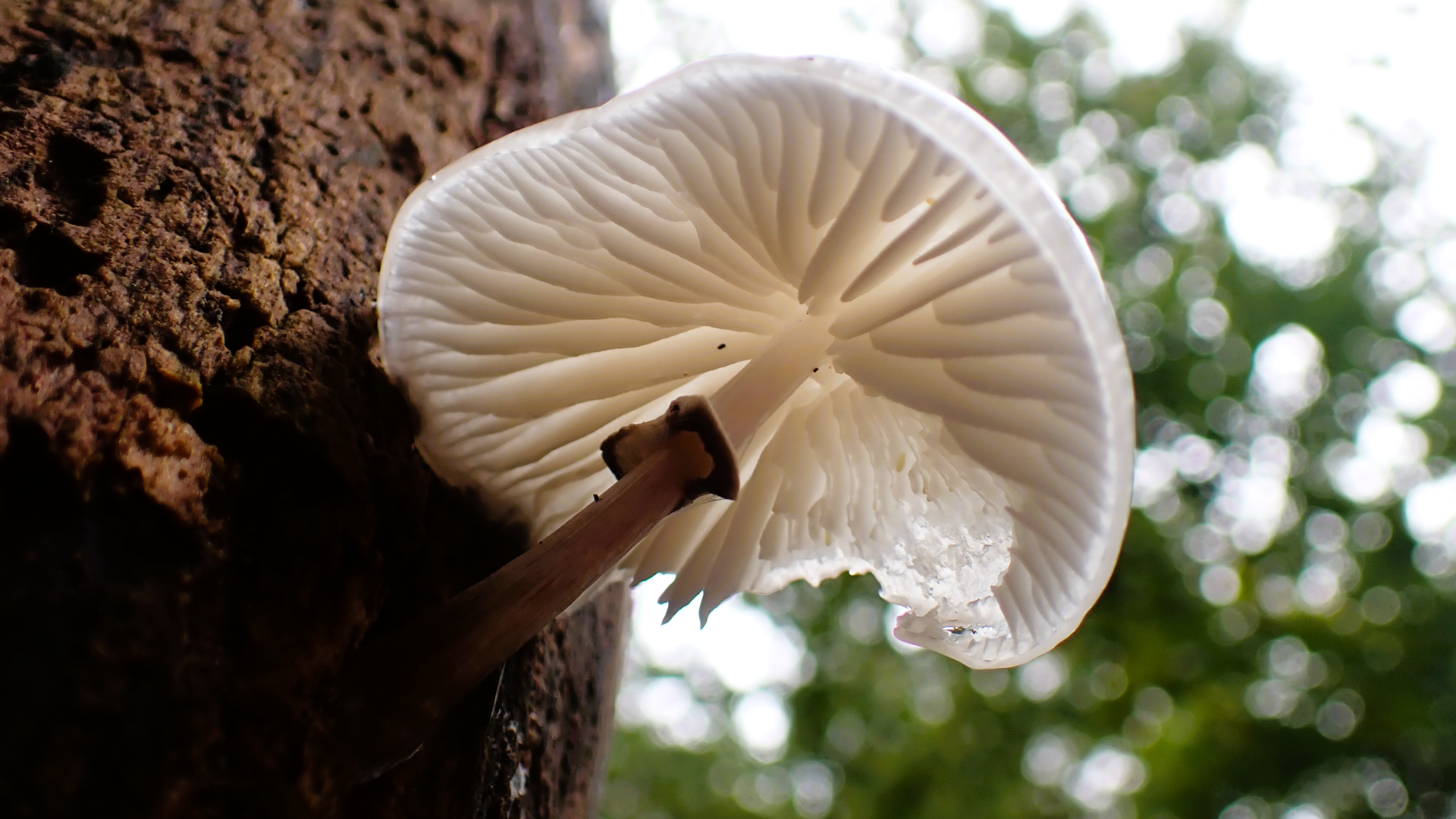
Porcelain Fungus
Oudemansiella mucida
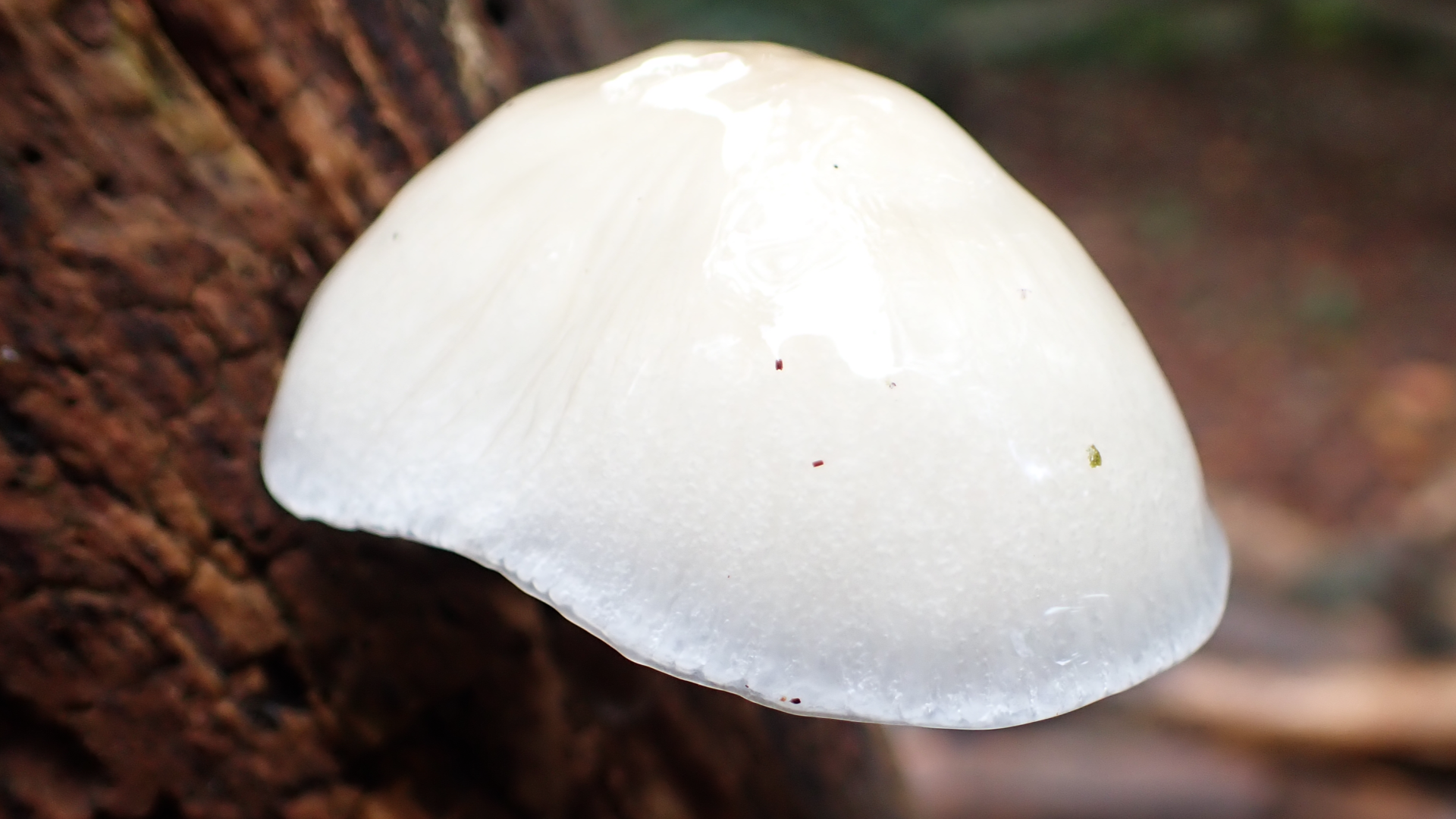
Porcelain Fungus has a delicate translucent appearance. It is normally found on fallen beech trees and branches and is also known as 'Slimy Beech Tuft'. Only two caps have been seen so far this year and both appeared to have been chewed by something (possibly a deer).
#
Common Parasol
Macrolepiota procera
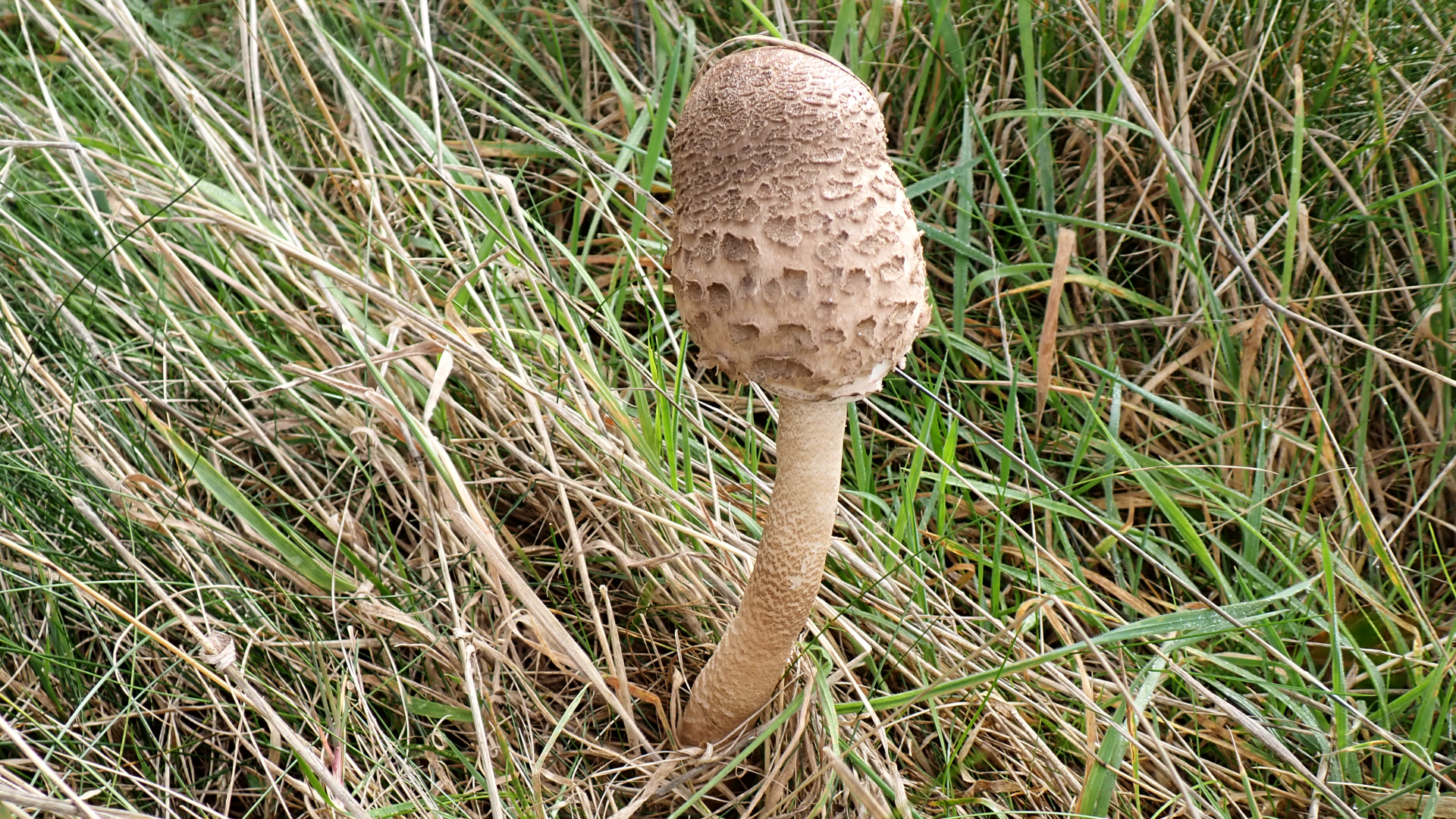
The Common Parasol has a whitish-buff cap covered with large dark brown scales. The cap is initially egg-shaped, flattening and developing a dark central bump.
#
Sulphur Tuft
Hypholoma fasciculare
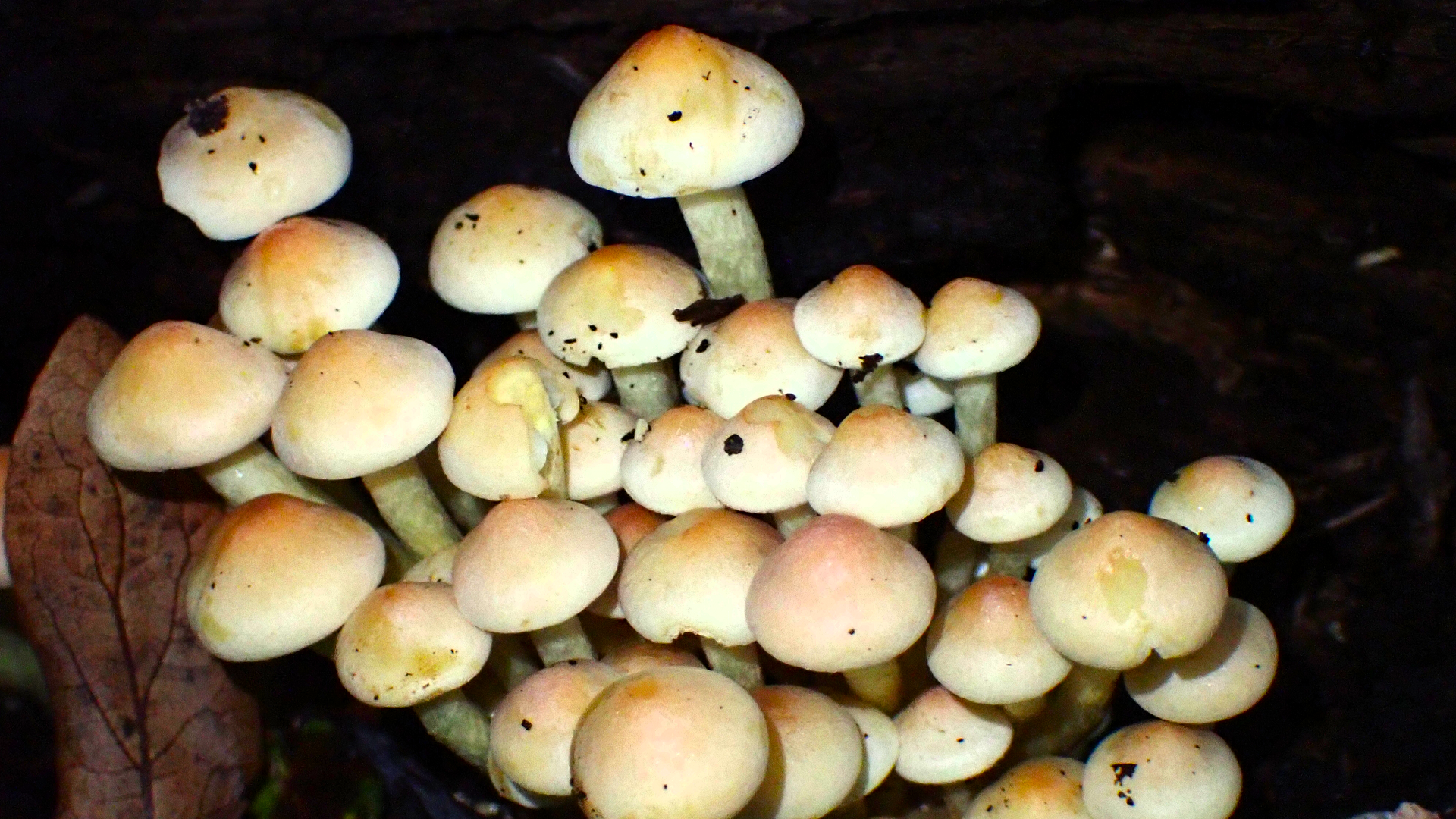
This common species grows in tufts throughout the year on deadwood.
#
Yellow Shield
Pluteus chrysophaeus
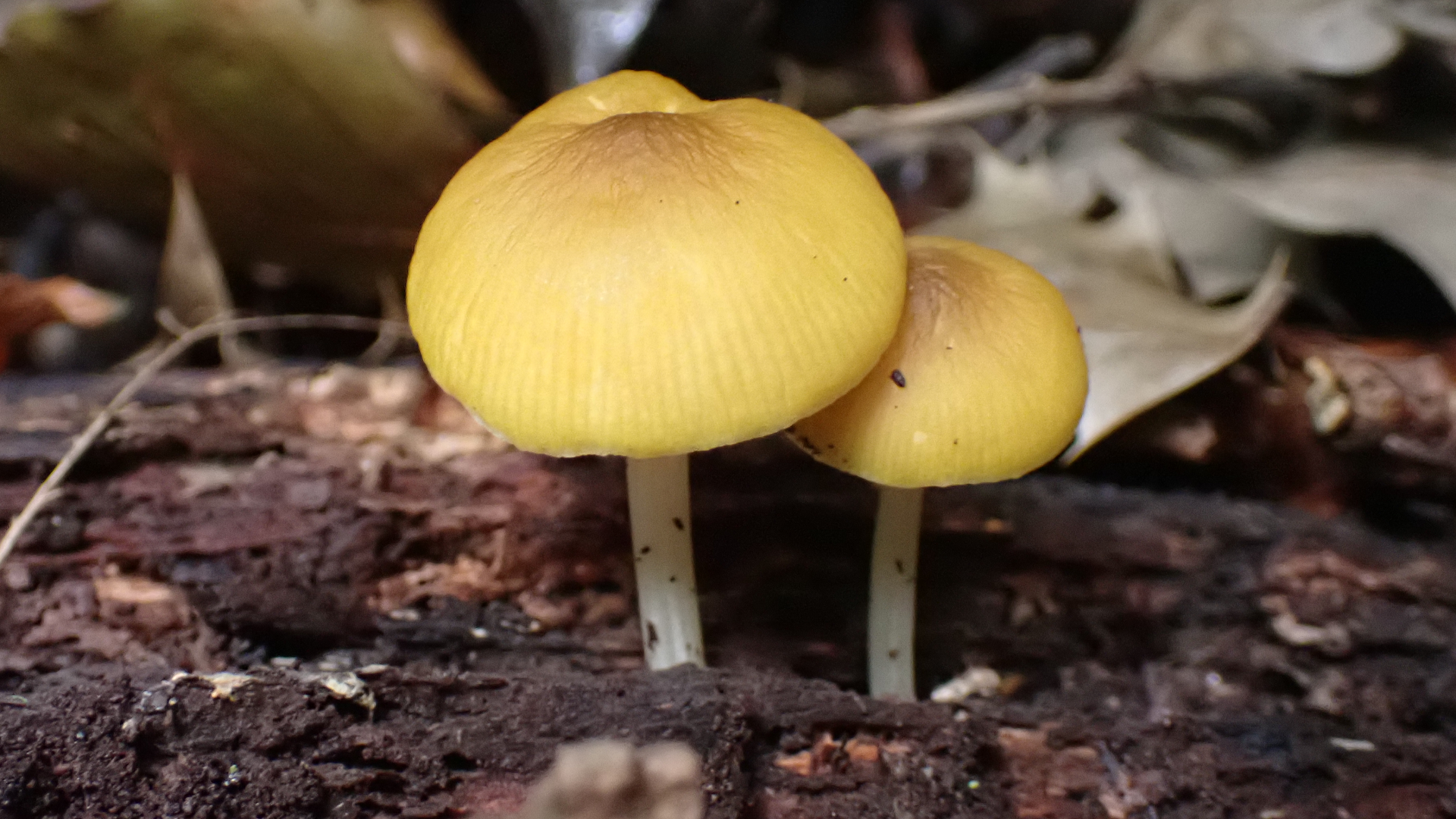
A saprobic mushroom that grows on dead beech hardwood. It is usually found solitary or in small groups during late summer and autumn. When the caps flatten they measure 20-40mm across.
#
Yellow Brain
Tremella mesenterica
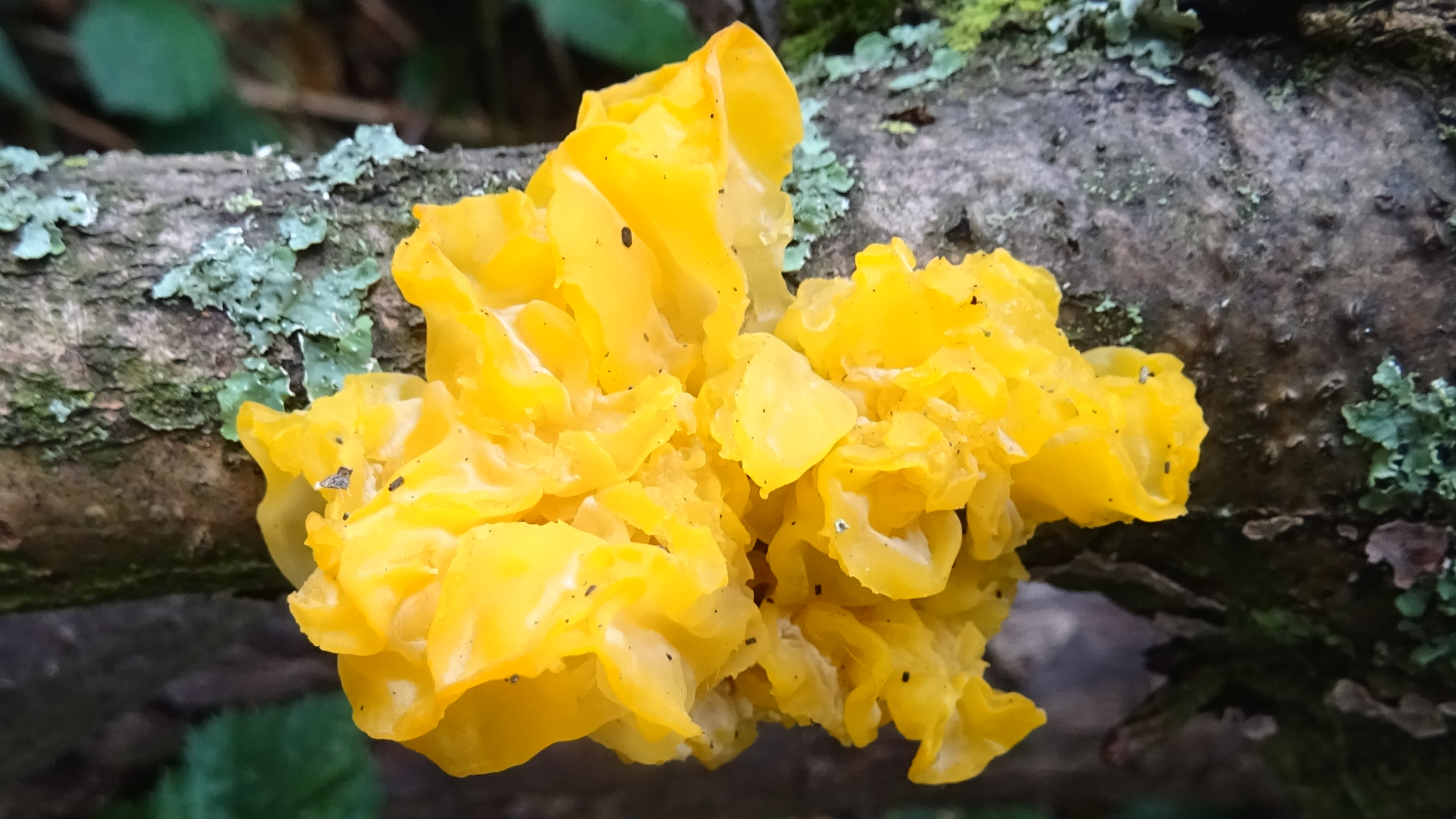
Yellow Brain has a bright yellow fruiting body that mainly appears during autumn and winter on fallen deciduous branches. It turns hard and orange when dried out.
#
White Brain
Exidia thuretiana
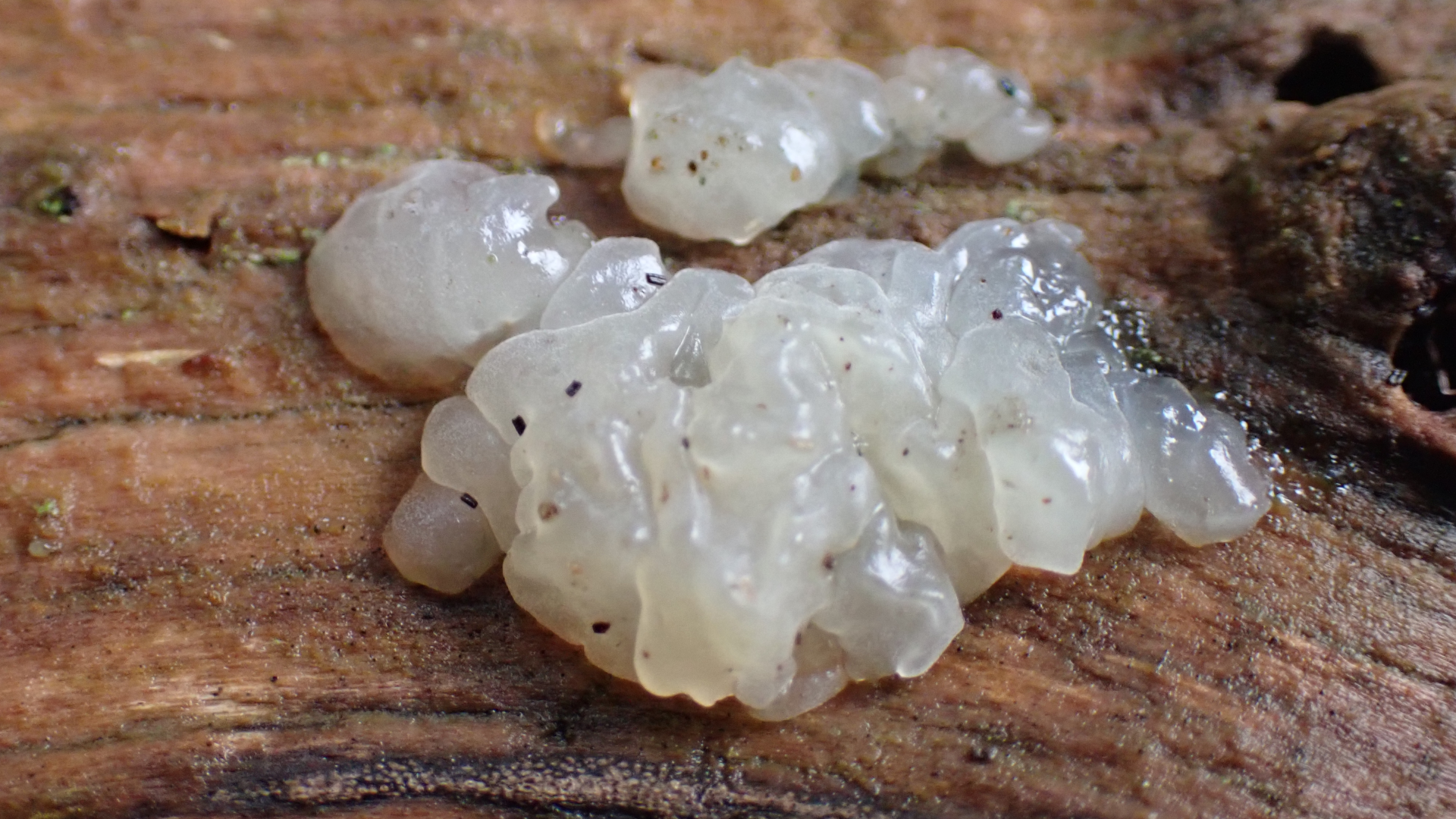
Found on rotten hardwood, particularly beech, during autumn and winter. In dry weather the fruiting bodies shrink becoming hard and leaving just a transparent rubbery spot on the host wood.
#
Witch's Butter
Exidia glandulosa
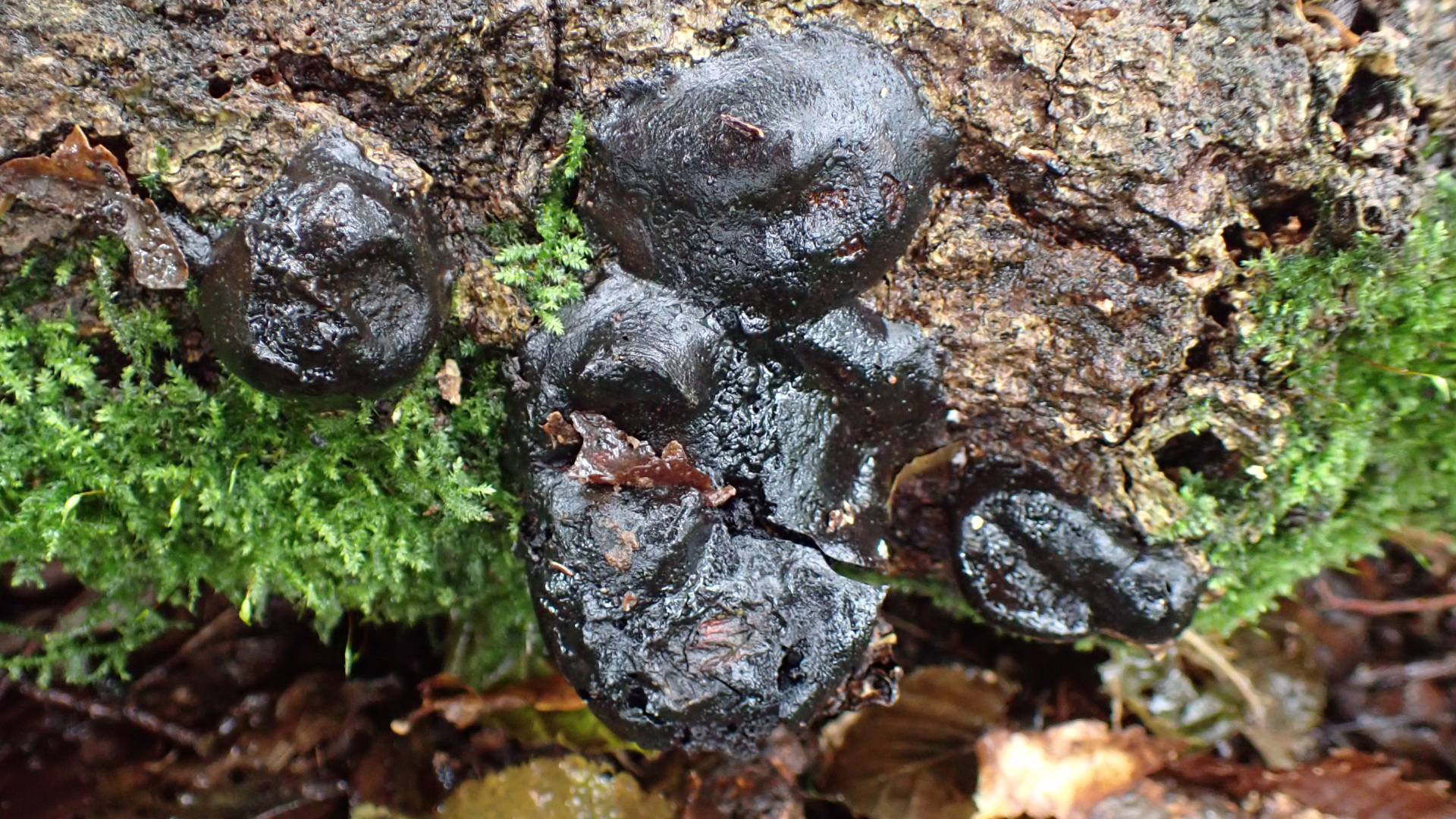
Witches' Butter appears on deciduous dead wood during autumn and winter. The fruiting bodies attach to the wood using tiny stems. More noticeable after prolonged wet weather when they become plump and fleshy.
#
Short-haired fringed disc
Lachnum brevipilosum

The stalked cups of this fungus measure 1-2mm across. They can be found all through the year on dead deciduous wood laying on damp ground. Because of their tiny size the cups can easily go unnoticed. This fungus
does not have a widely established common name in English, however in Dutch it is known as "Korthåret frynseskive" which translates as "Short-haired fringed disc".
#
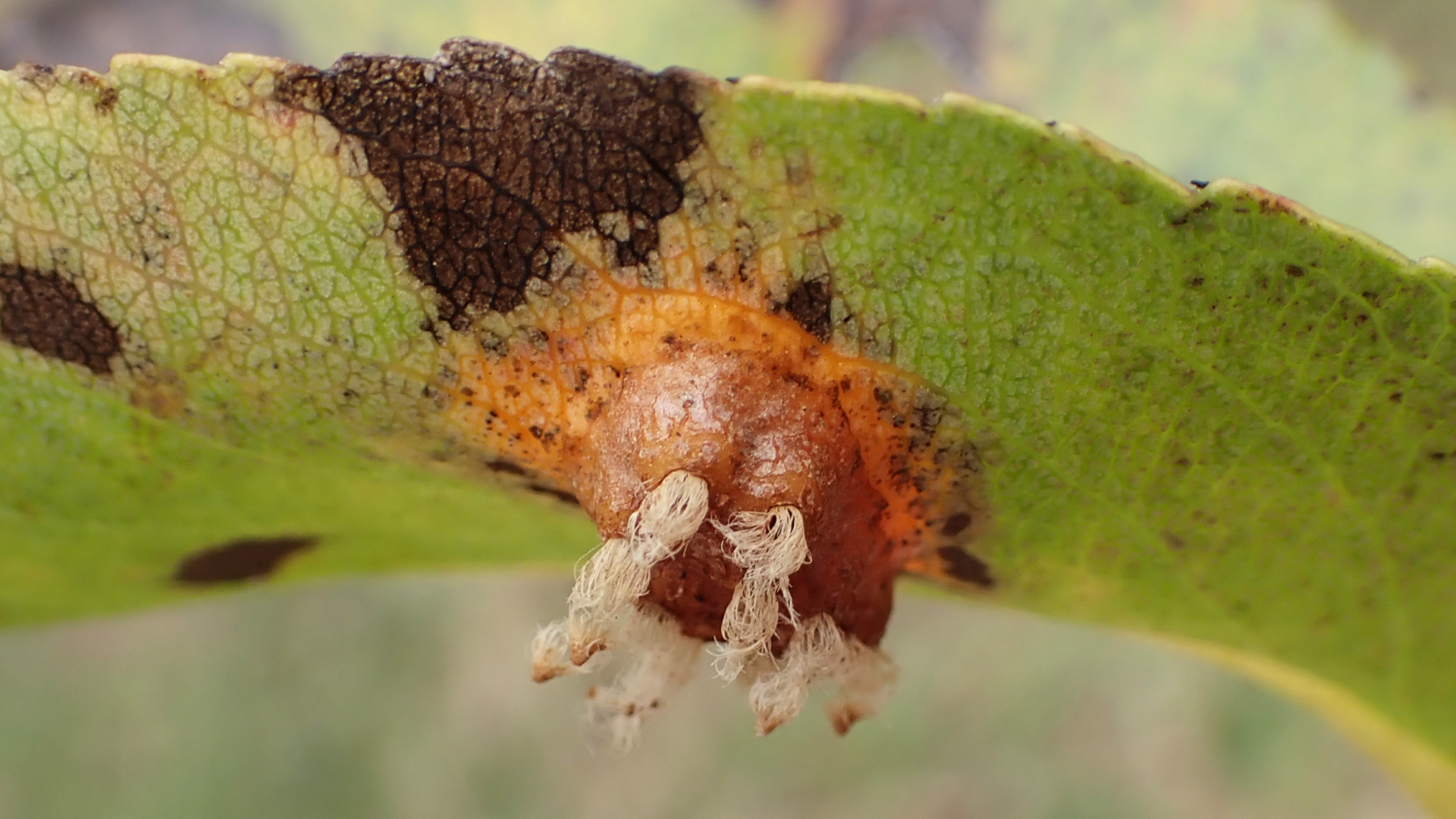
European Pear Rust
Gymnosporangium sabinae
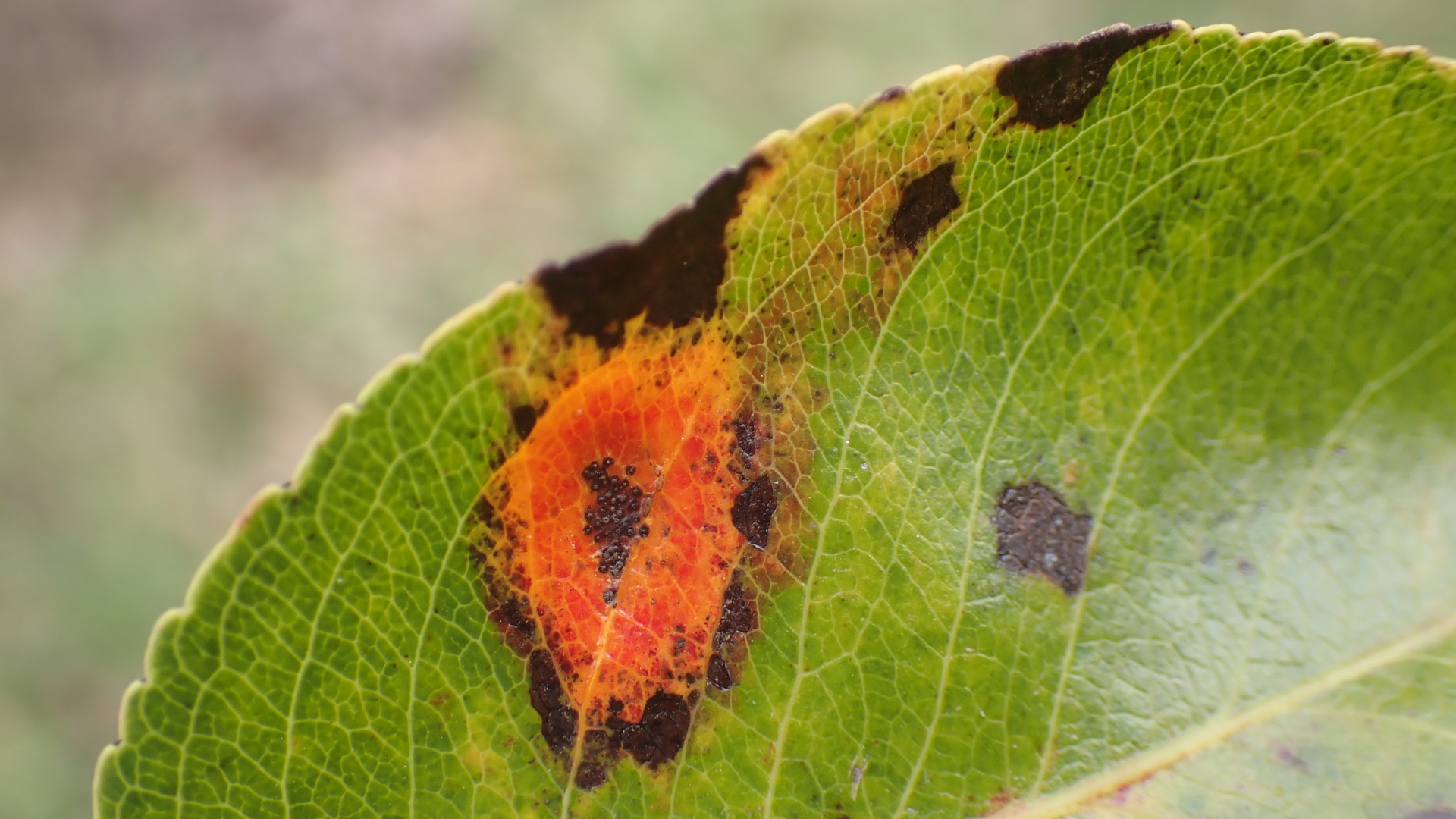
Juniper trees play host to this fungus during winter and pear trees become the secondary host in the summer. This rust fungus needs both juniper and pear trees to complete its life cycle. On pear trees the fungus creates orange patches on the upper surface of leaves. Blisters appear on the underside of pear leaves in which spores develop. The spores are spread by the wind to infect juniper trees.
#
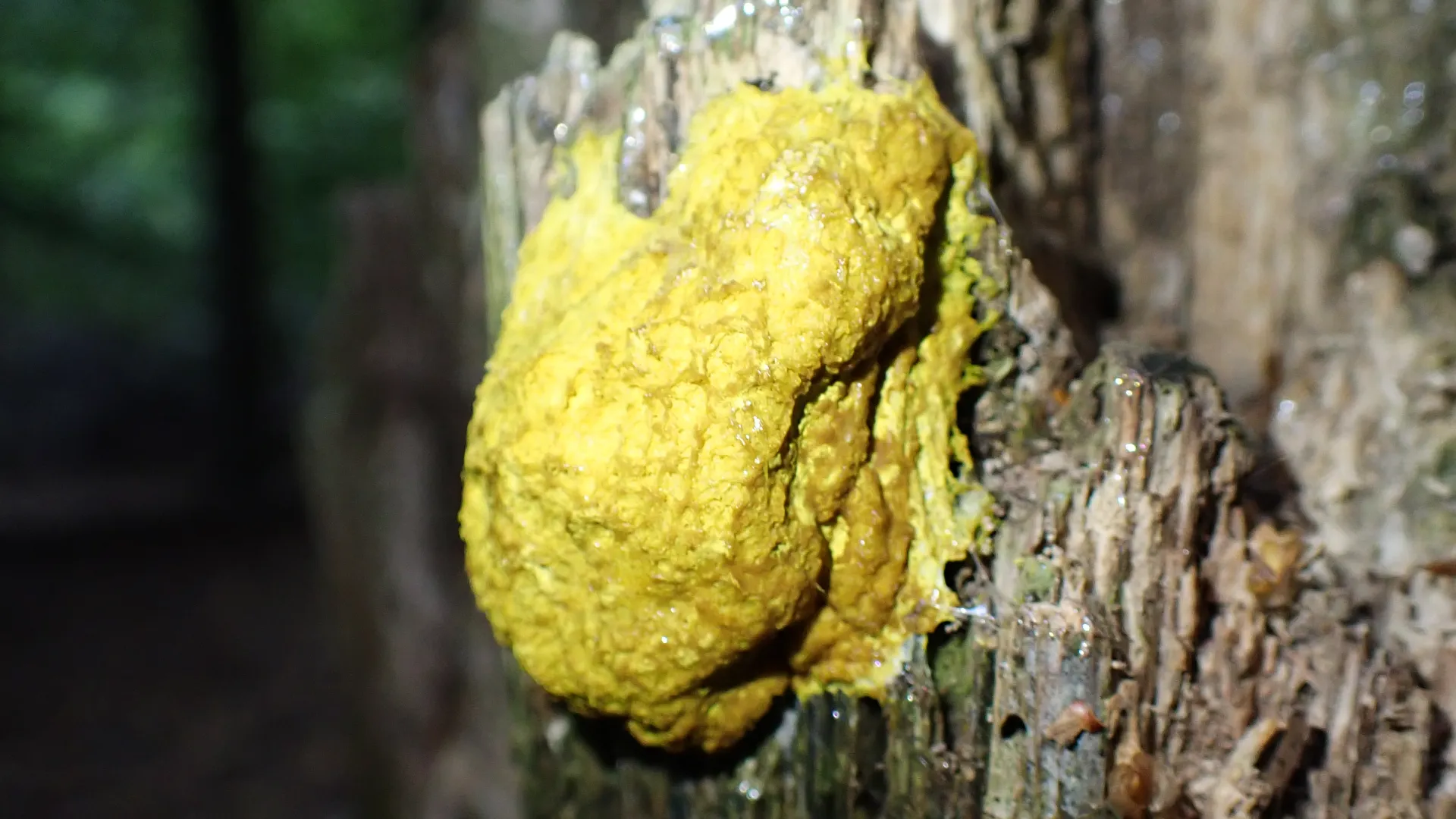
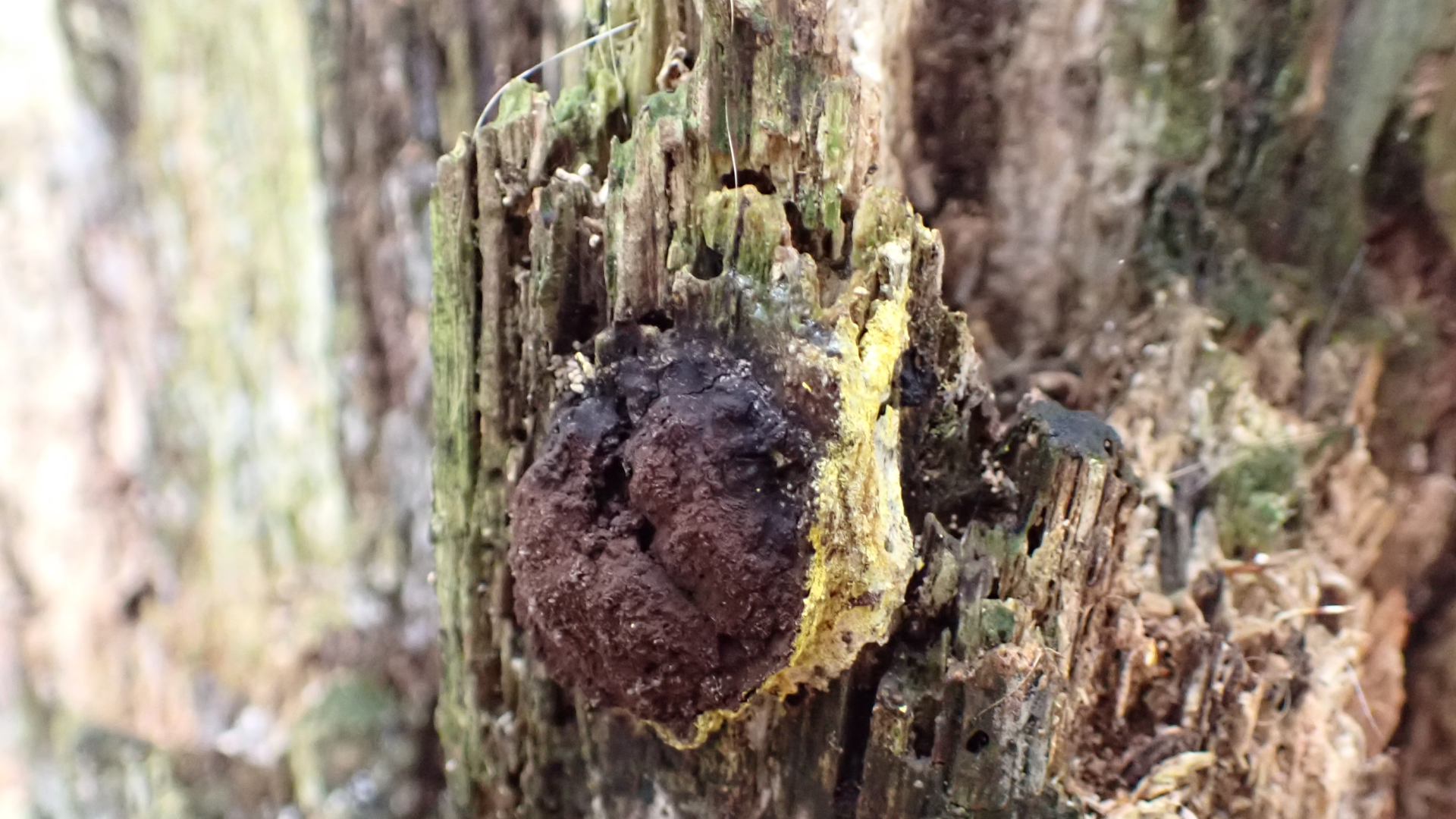
Scrambled Egg Slime Mould
Fuligo septica
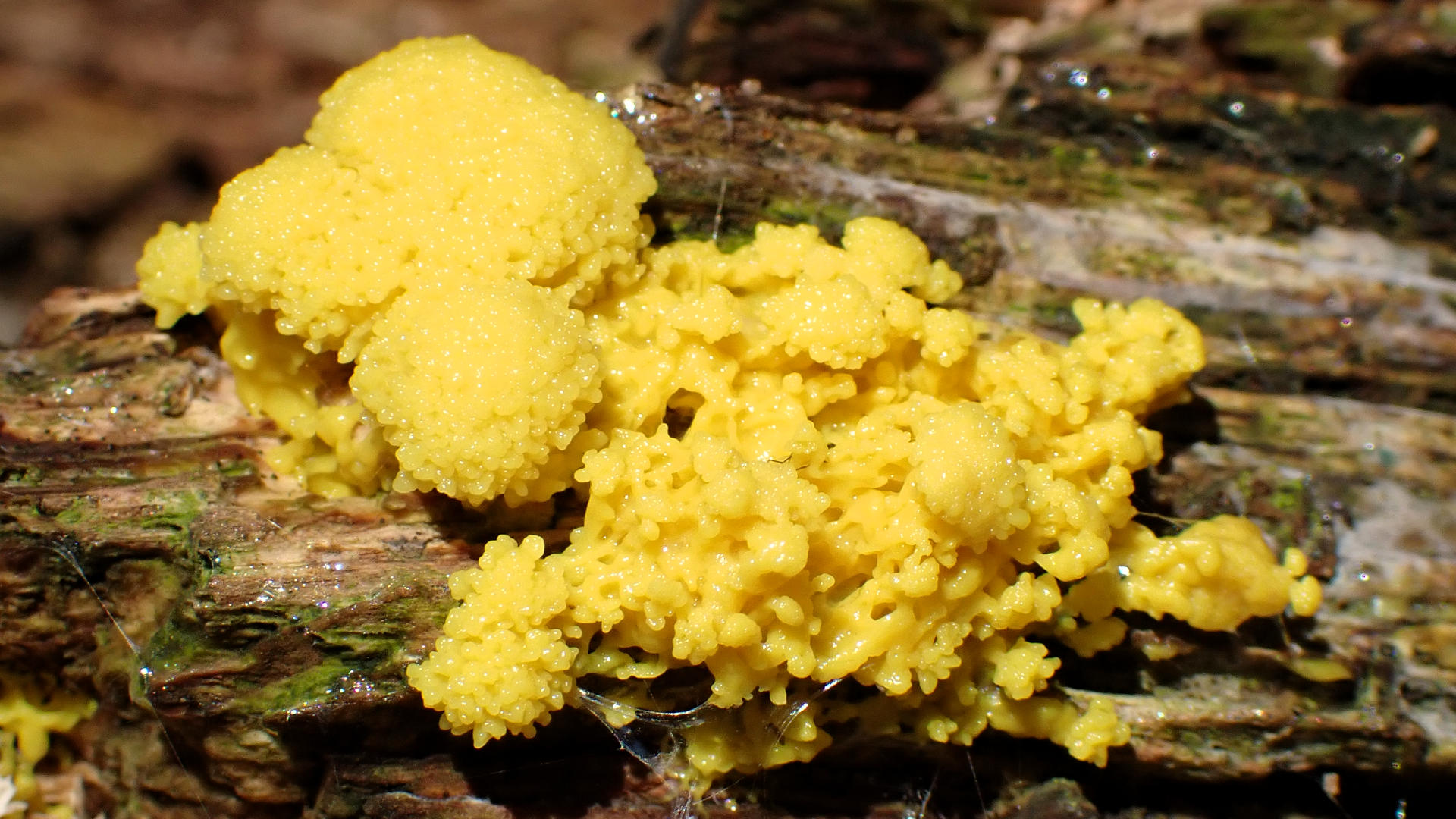
Not surprisingly this slime mould is known by the common name Scrambled Egg. It grows on dead wood and is usually found on stumps and fallen trees. The scrambled egg hardens, then darkens and disintegrates to release spores.
#
Thank you to everyone that have contributed to this Journal.
© hainaultforest.net. All rights reserved.
This website uses necessary cookies. It does not use targeting or advertising cookies.