

THIRD QUARTER 2024
This Journal covers the third quarter of 2024 from July to September.
Grey Heron
Ardea cinerea
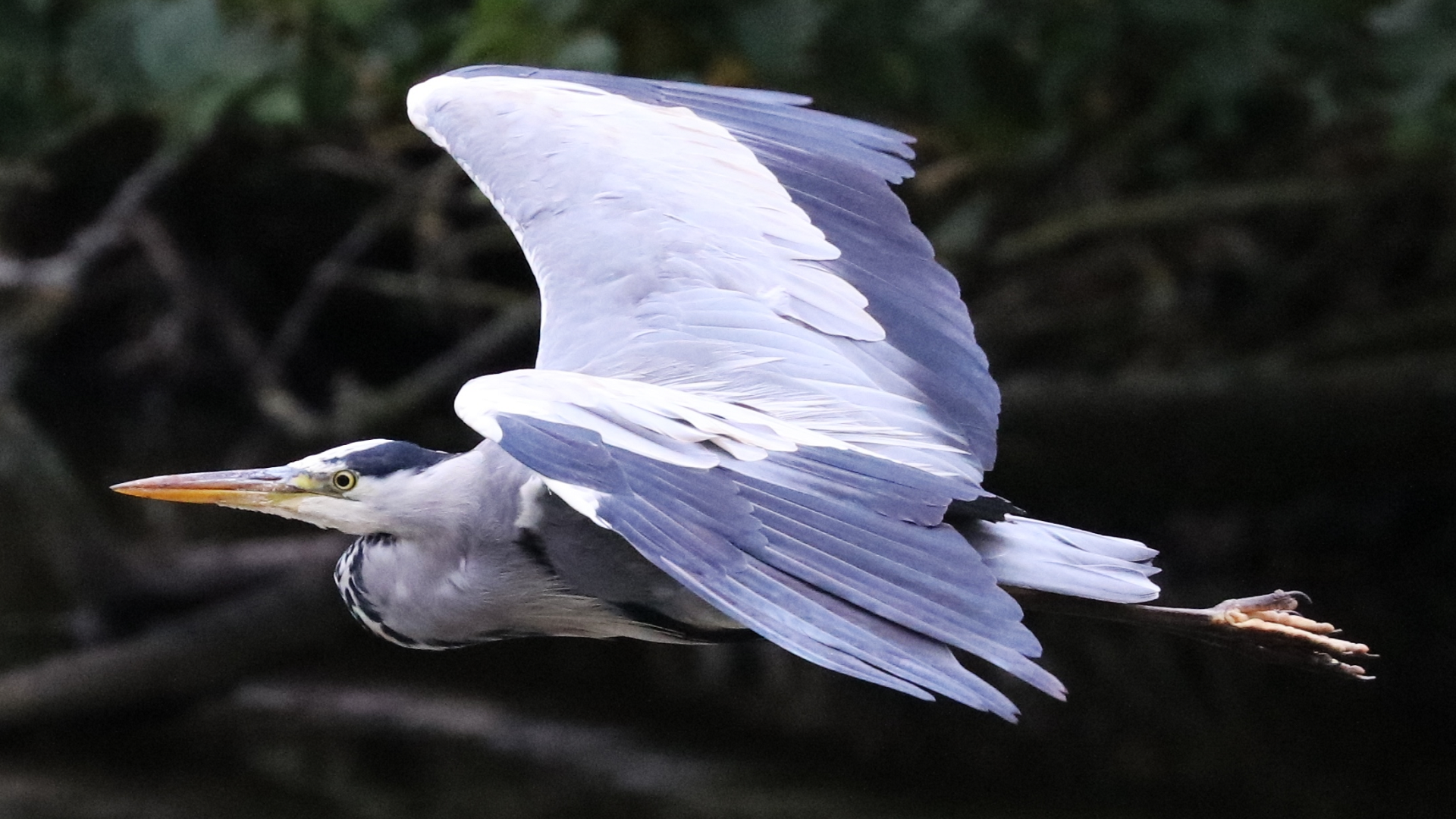
Britain's largest long-legged wading bird often frequents Hainault Lake to hunt for fish. When a fish is captured, it is typically thrown into the air and swallowed head-first to prevent the scales and fins from getting caught in the throat. Herons can also be found standing in meadows, poised to catch small mammals and amphibians with their long bills.
#
Egyptian Goose
Alopochen aegyptiaca
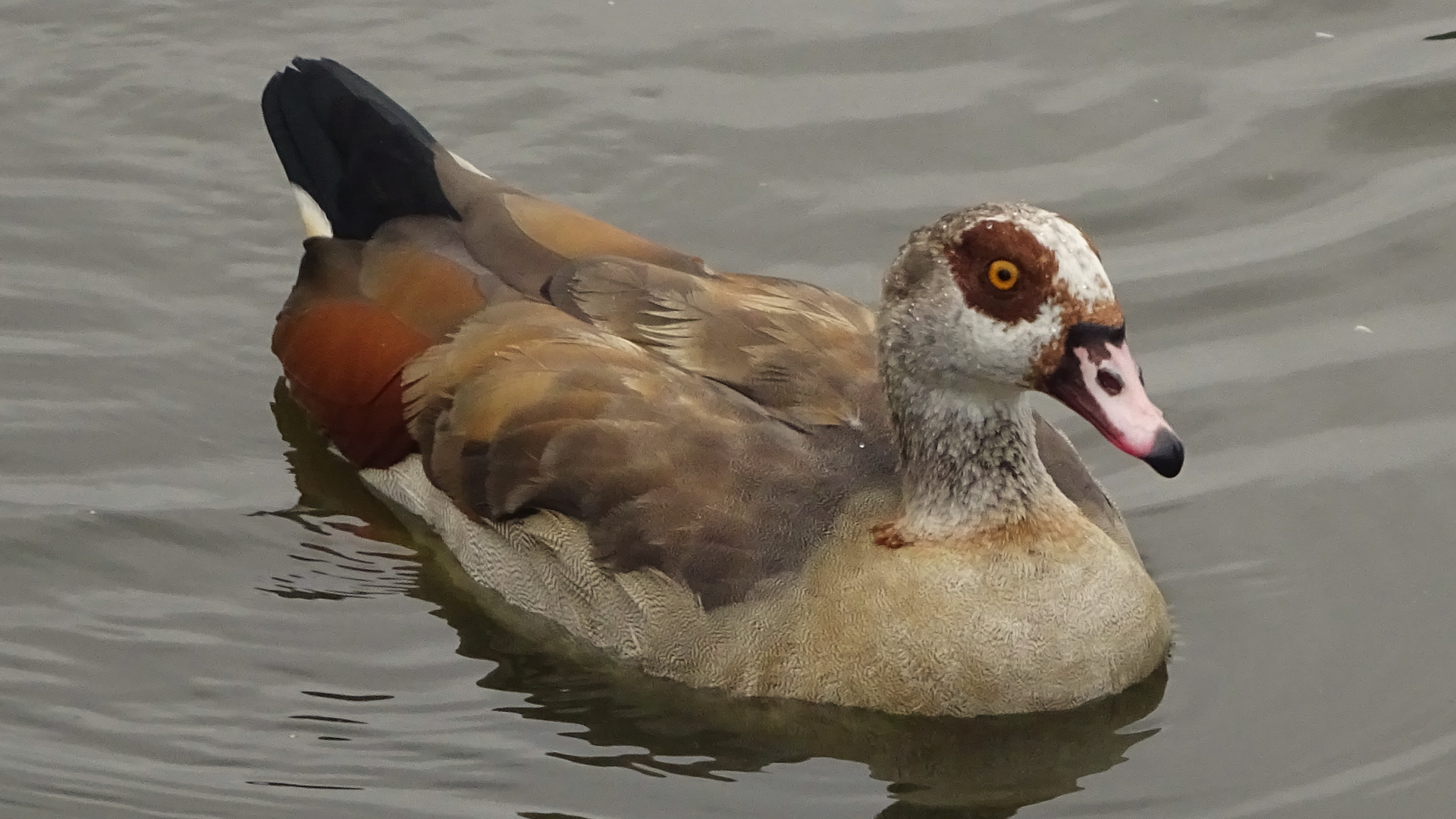
The Ancient Egyptians kept Egyptian Geese as pets as early as 3100 B.C., making them one of the oldest domesticated species. Today, they are the most widespread African waterfowl, found in many countries worldwide after their introduction. They often breed early in the year, usually nesting in tree cavities near freshwater.
#
Mallard
Anas platyrhynchos
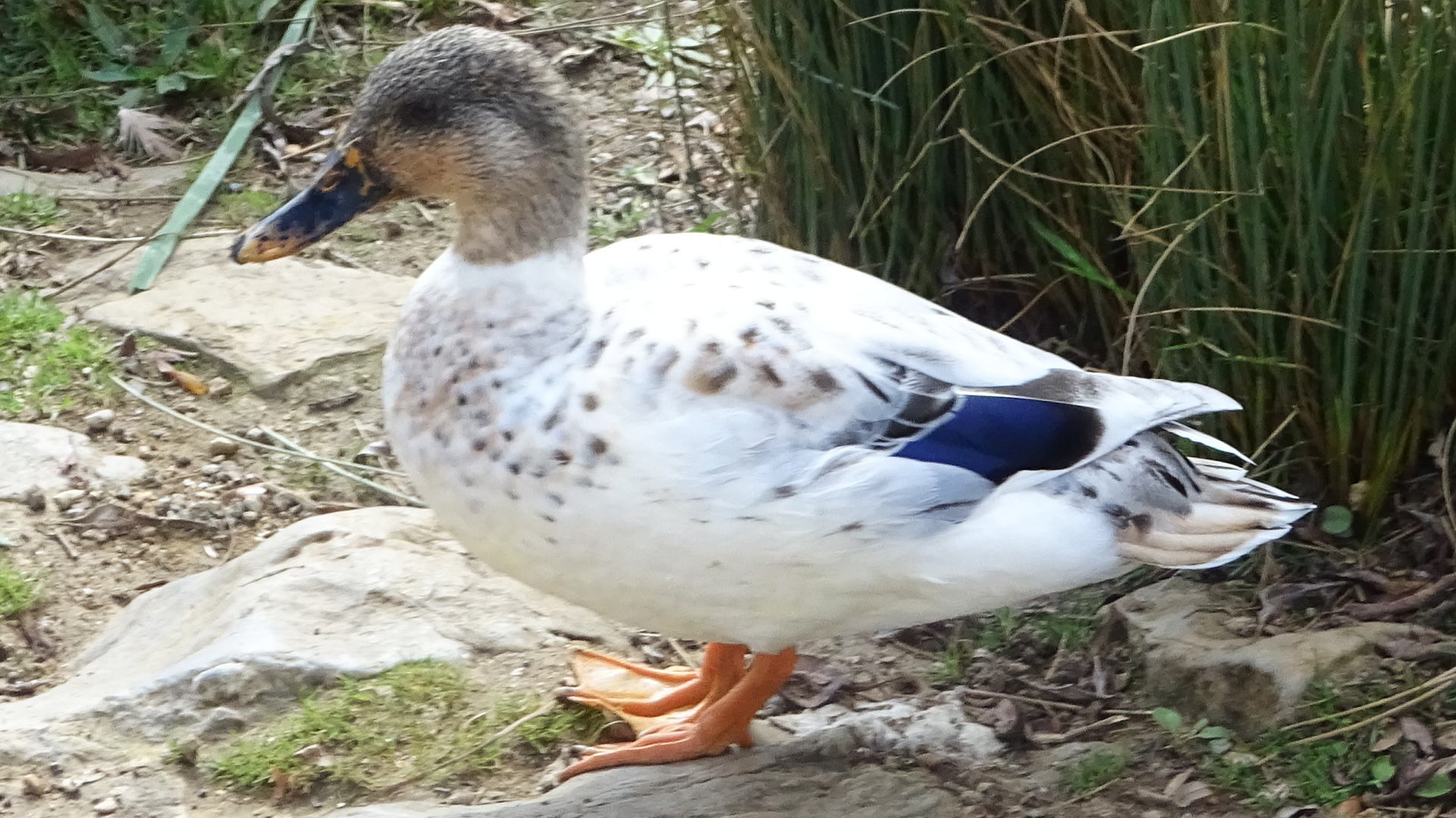
The wild Mallard is considered the ancestor of all domestic ducks (with the exception of Muscovy ducks) making hybrids possible between the different types.
#
Long-tailed Tit
Aegithalos caudatus
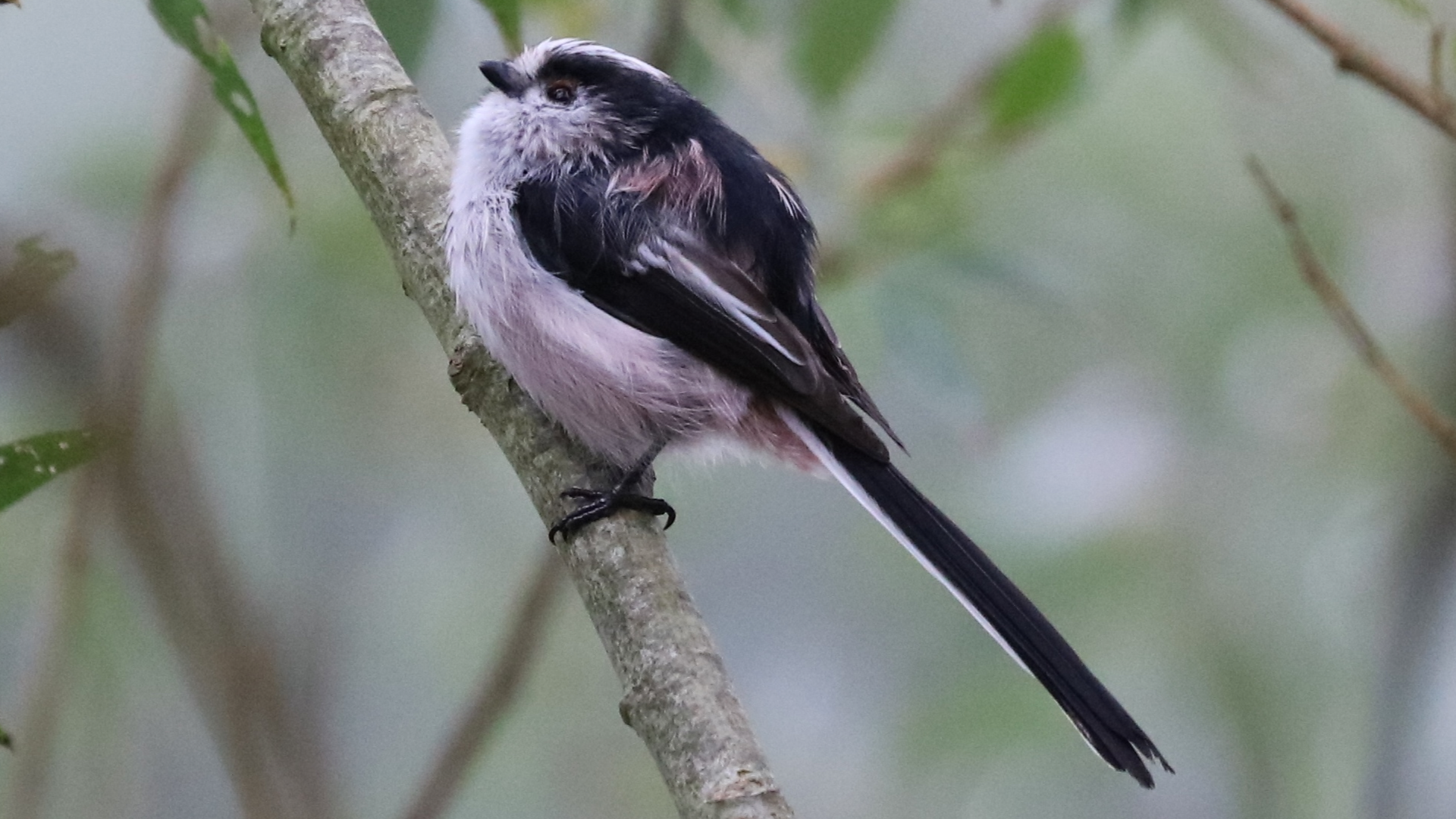
Long-tailed Tits are usually seen in small noisy groups flying around woodland trees and hedgerows. They feed on insects, sometimes switching to seeds in autumn and winter.
#
Common Tern
Sterna hirundo
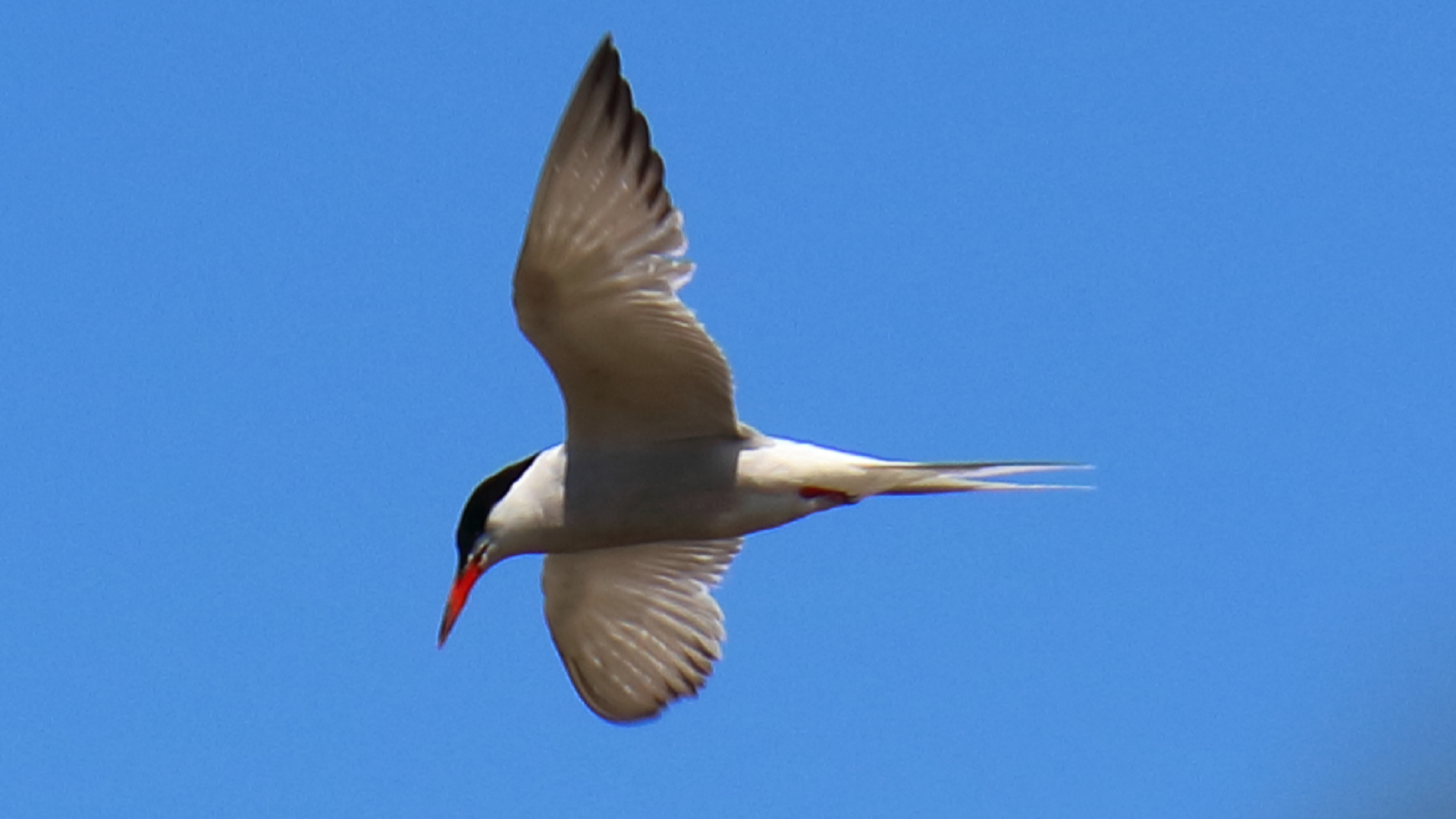
Common Terns are occasional summer visitors. They hover over the lake looking for fish before diving to snatch one from the water.
#
Cormorant
Phalacrocorax carbo
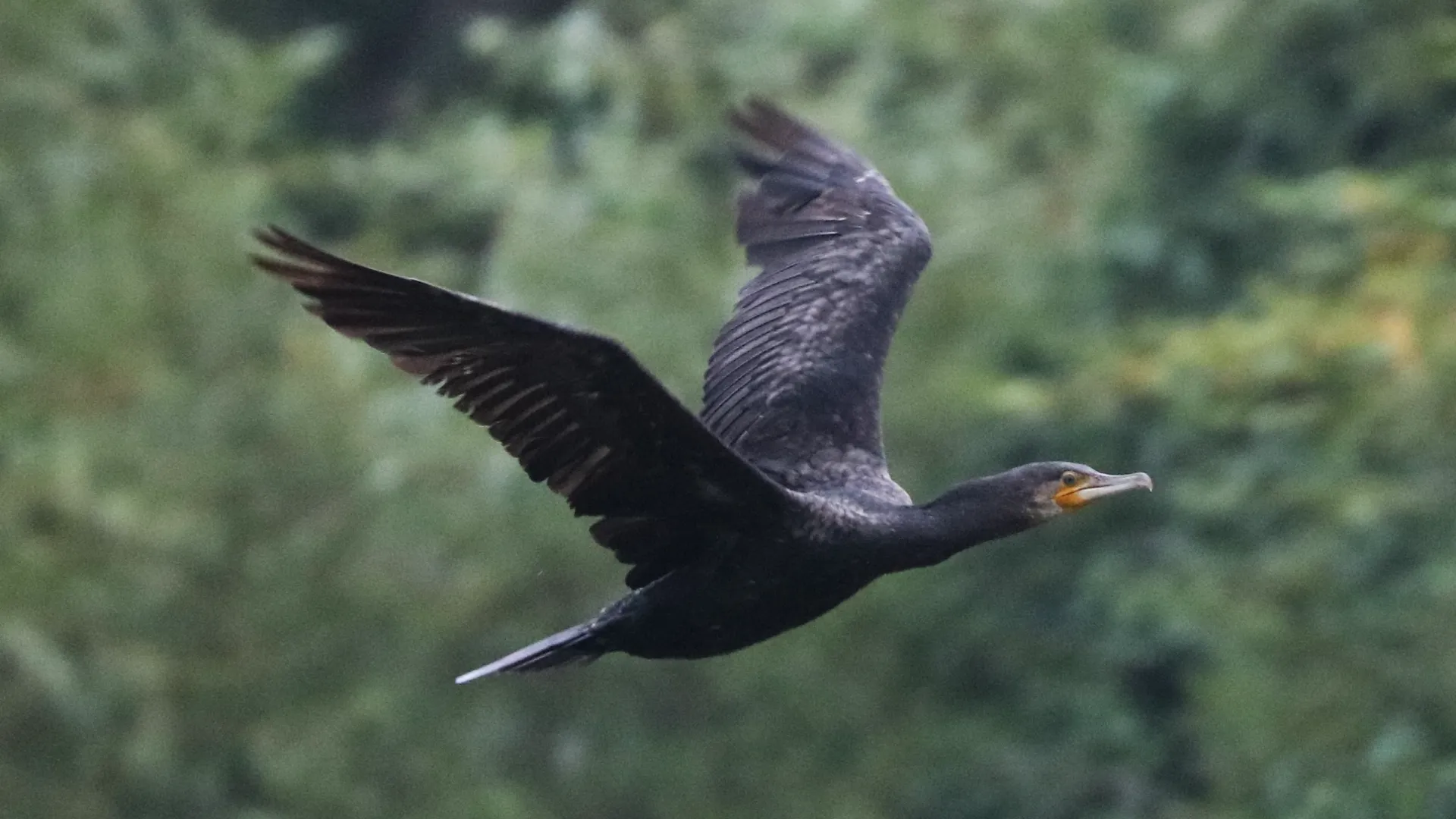
Cormorants are seen at Hainault Lake year-through, with larger groups appearing in winter. They have dark bodies with white and yellow facial markings. The bills are usually pointing upwards. To dry the wings cormorants often stand with them outstretched. During the breeding season white thigh patches develop. Male and females are similar in appearance. Juveniles are whitish underneath. For many centuries in China, trained cormorants have been utilized for fishing. A collar is placed around the bird's neck, enabling it to swallow small fish while preventing it from consuming larger ones. The fisherman retrieves the larger fish from the bird's throat and retains them for personal use.
#
Canada Goose
Branta Canadensis
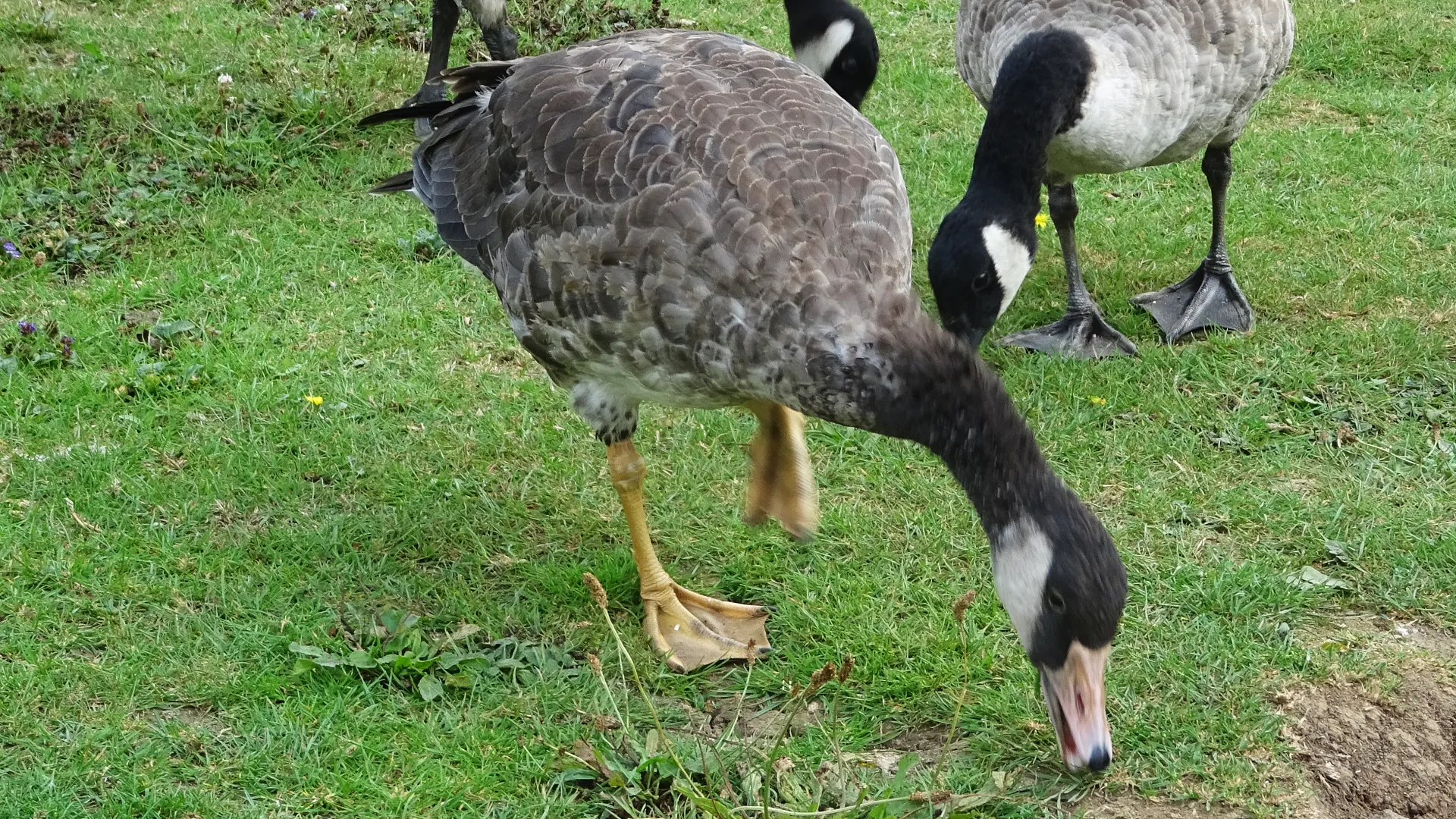
A young Canada Goose gradually gaining adult colouration.
#
Pheasant
Phasianus colchicus
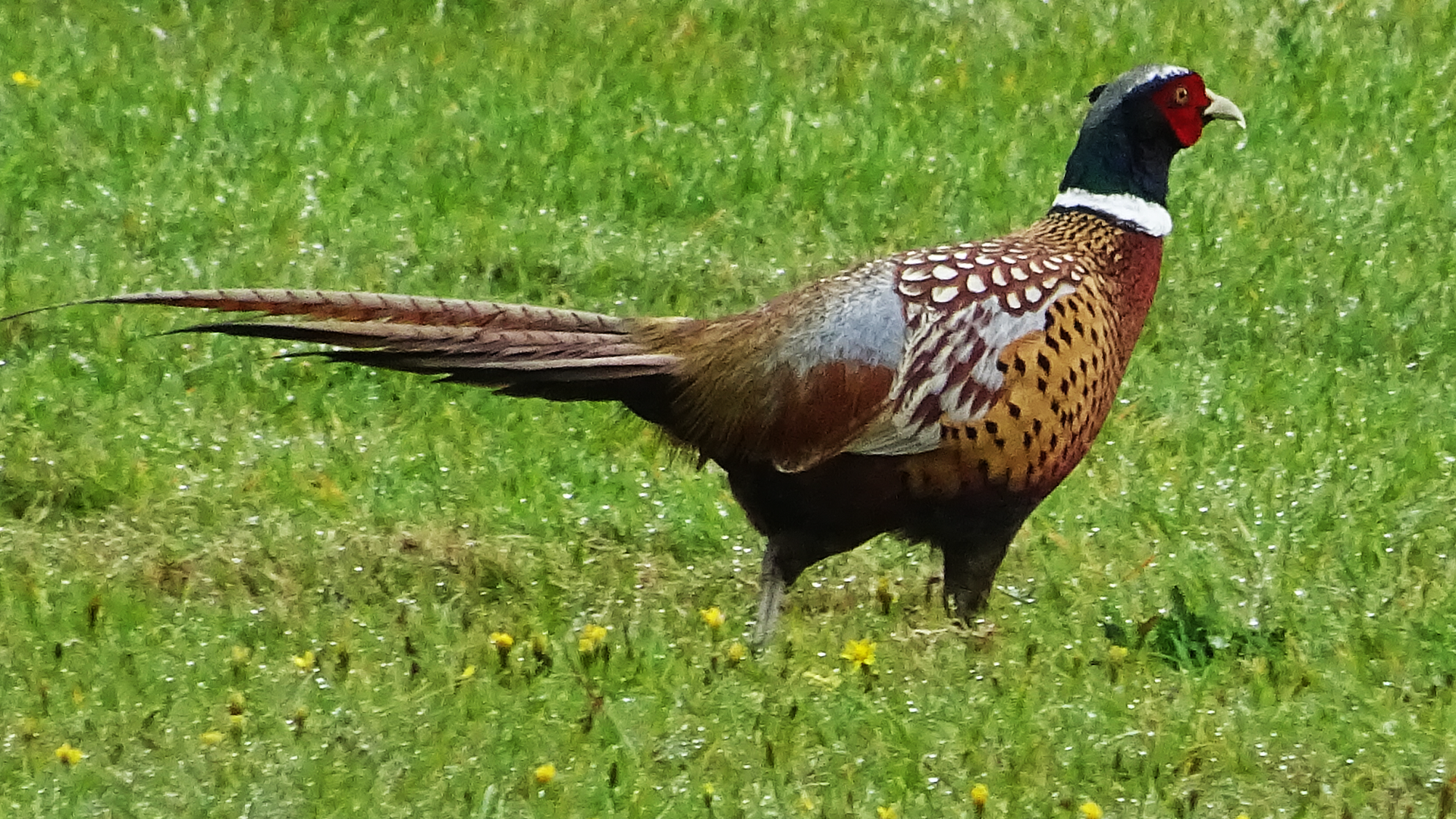
The male Pheasant is a handsome long-tailed bird with bright-coloured plumage. Females are dull brown by comparison.
#
Marbled White
Melanargia galathea
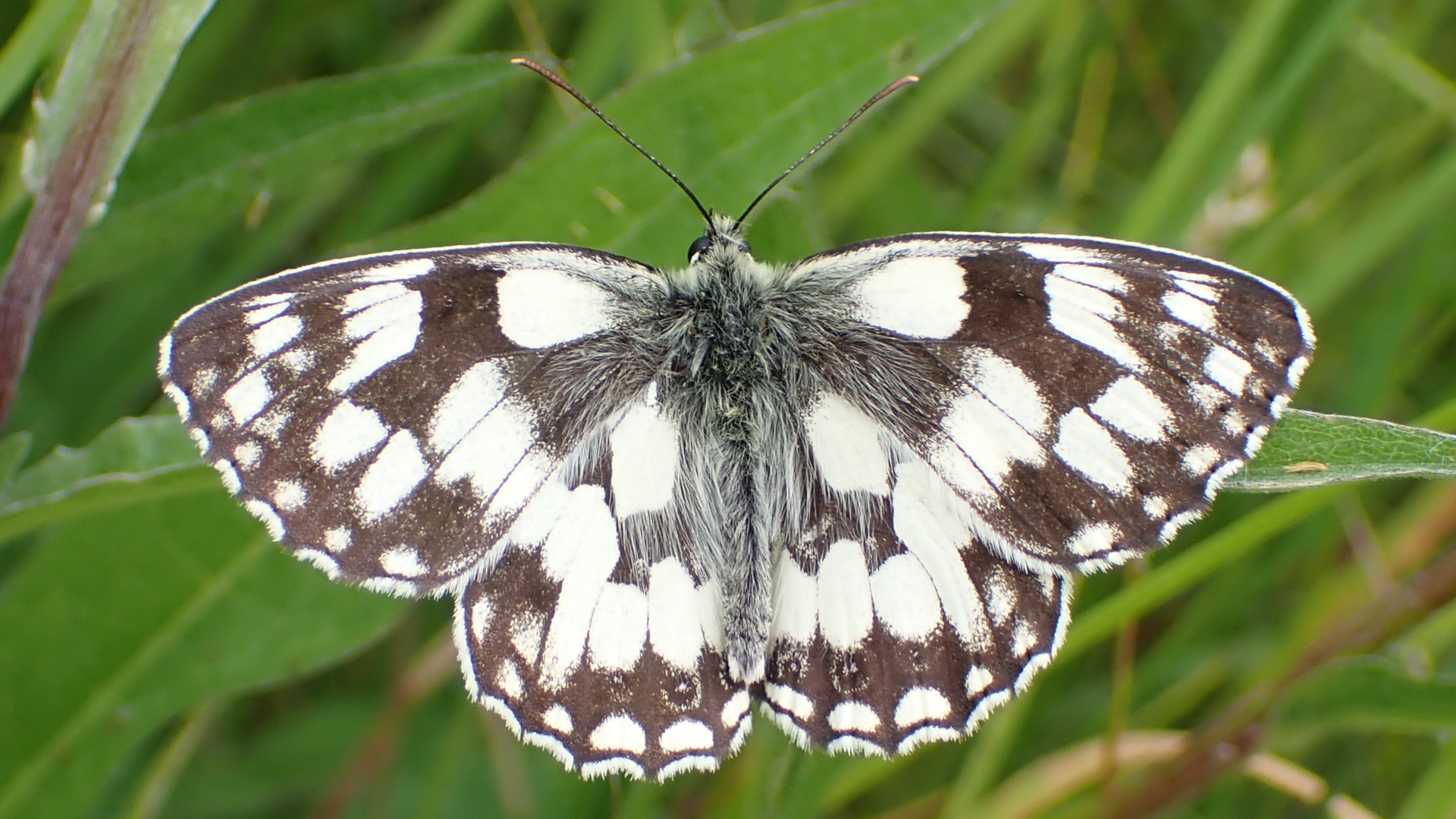
The butterfly is part of the Brown Family. It is typically observed in July and August, often found on knapweed, thistles, and other flowers in unimproved grassland.
#
Essex Skipper
Thymelicus lineola
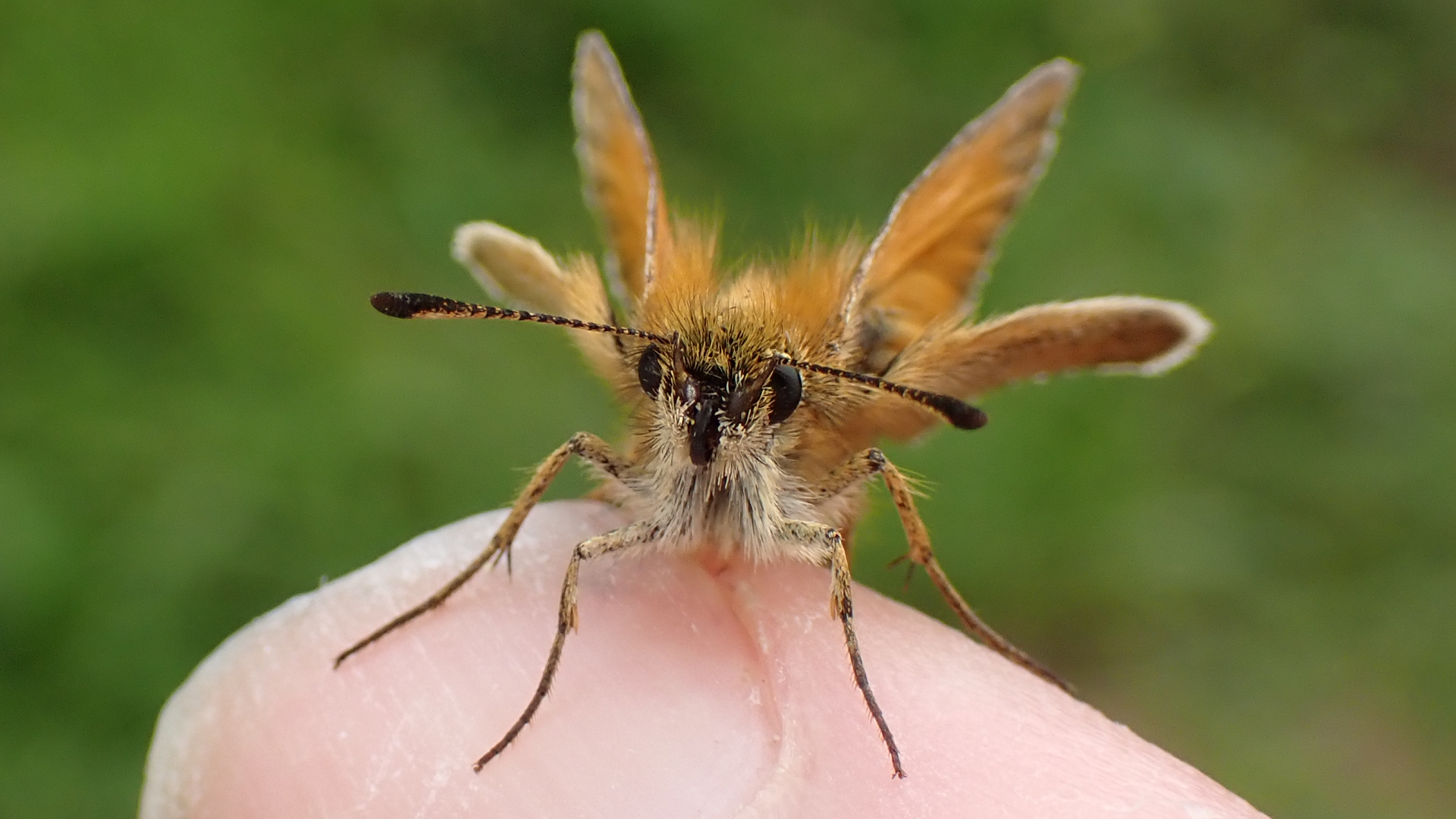
Essex Skippers are similar in appearance to Small Skippers and both are often recorded as an aggregate. To identify an Essex Skipper the antennae must be viewed from the front to see if they look like they have been dipped in black ink. This identification cannot be made looking at the back of the antennae. After the butterfly has flown onto your finger gently turn it to face the camera.
#
Speckled Wood
Pararge aegeria
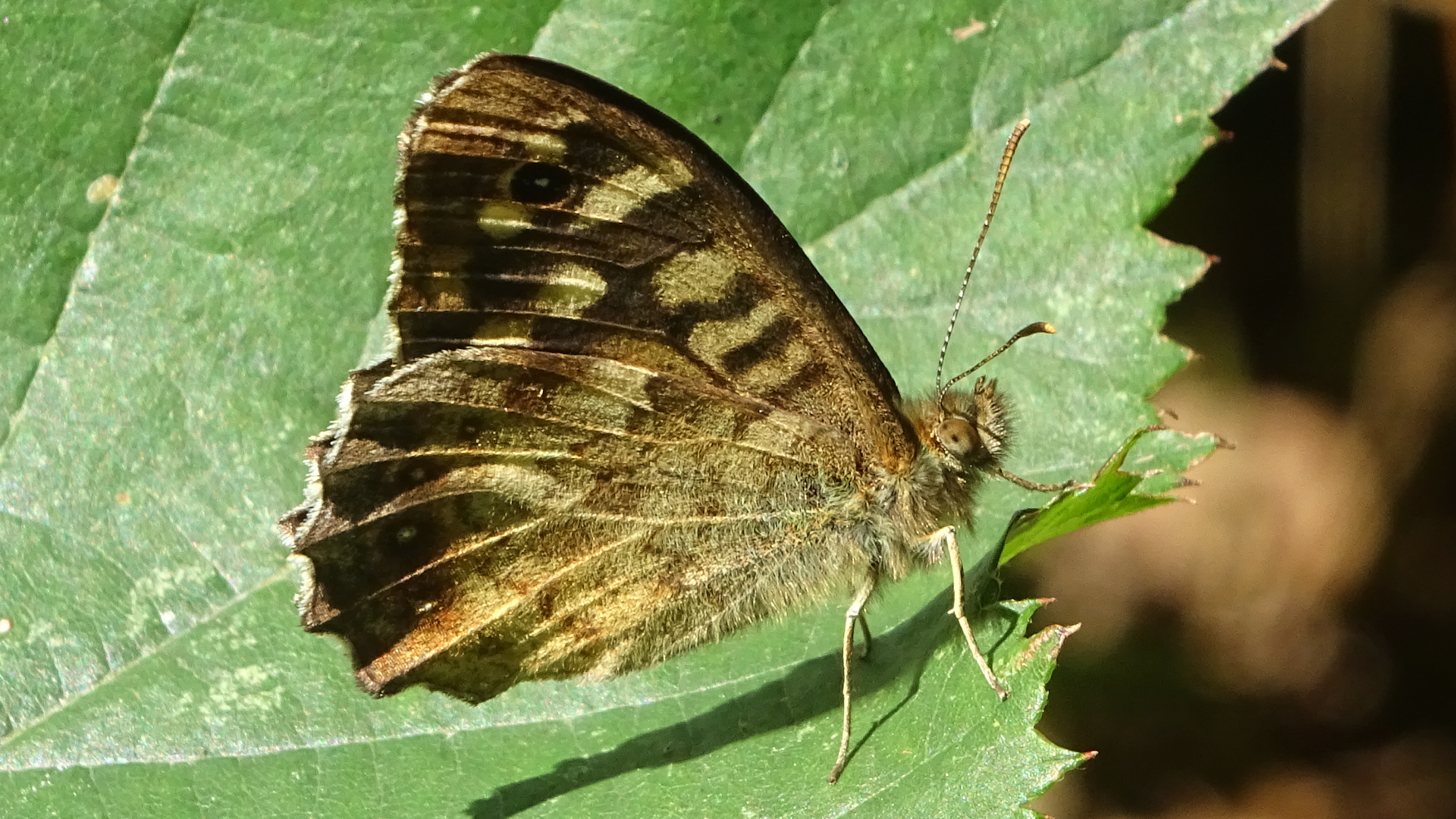
ThIs common woodland butterfly has a wingspan of approximately 45mm and is frequently seen resting on bramble along woodland paths. Adults are active in two broods: from April to early June and again from July to September. Males typically bask in sunlight and defend their territory from intruders. Both males and females tend to visit tree tops to feed on honeydew produced by aphids. This species seldom feeds on flowers, mostly doing so in early and late seasons when honeydew availability is limited. The caterpillars feed on various types of grasses, including false brome, cock's-foot, and Yorkshire fog.
#
Meadow Brown
Maniola jurtina
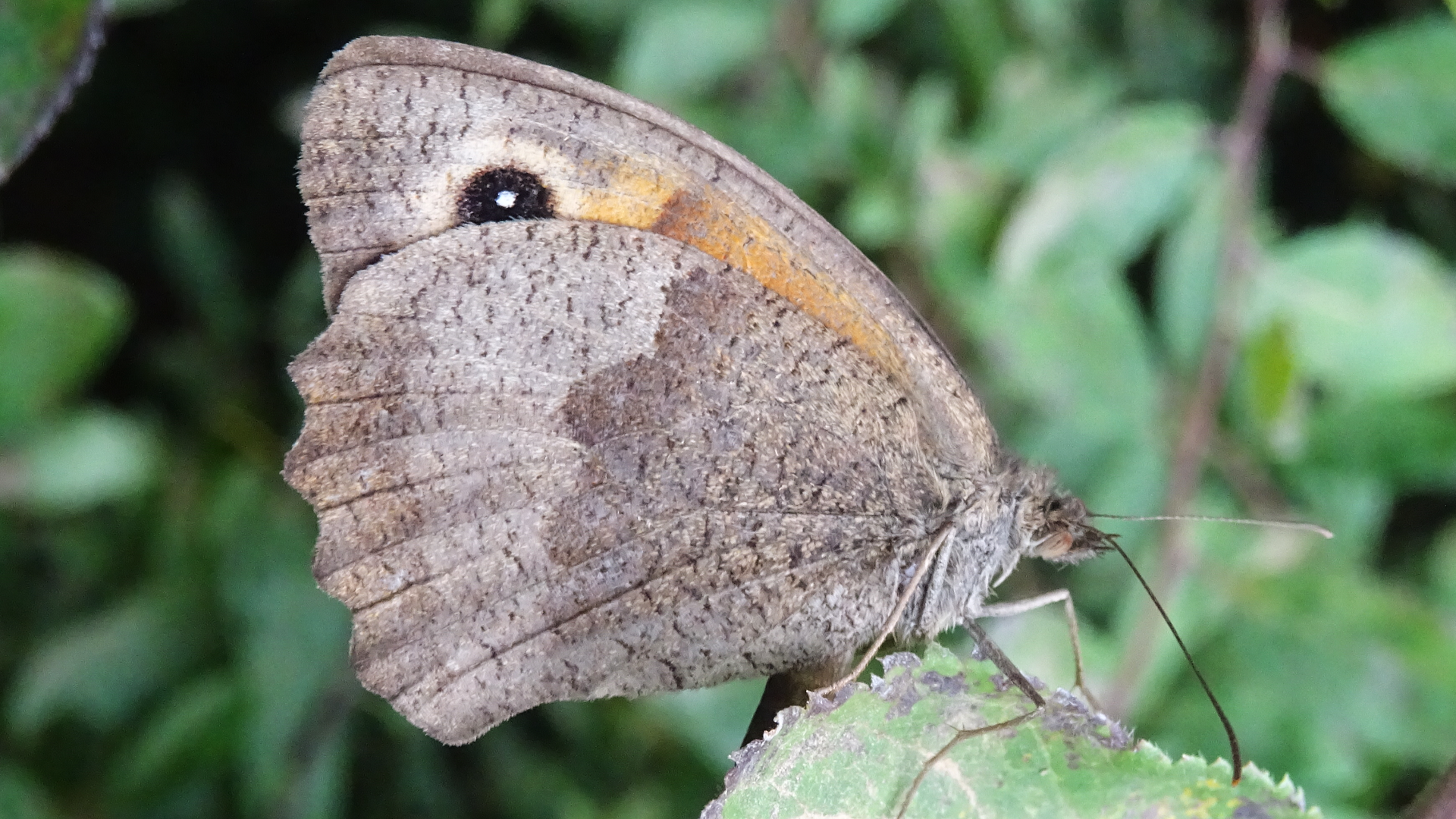
A common butterfly found in meadows above low vegetation. Adults can be seen flying in overcast conditions when many other butterflies remain inactive. They often rest with their wings closed.
#
Ringlet
Aphantopus hyperantus
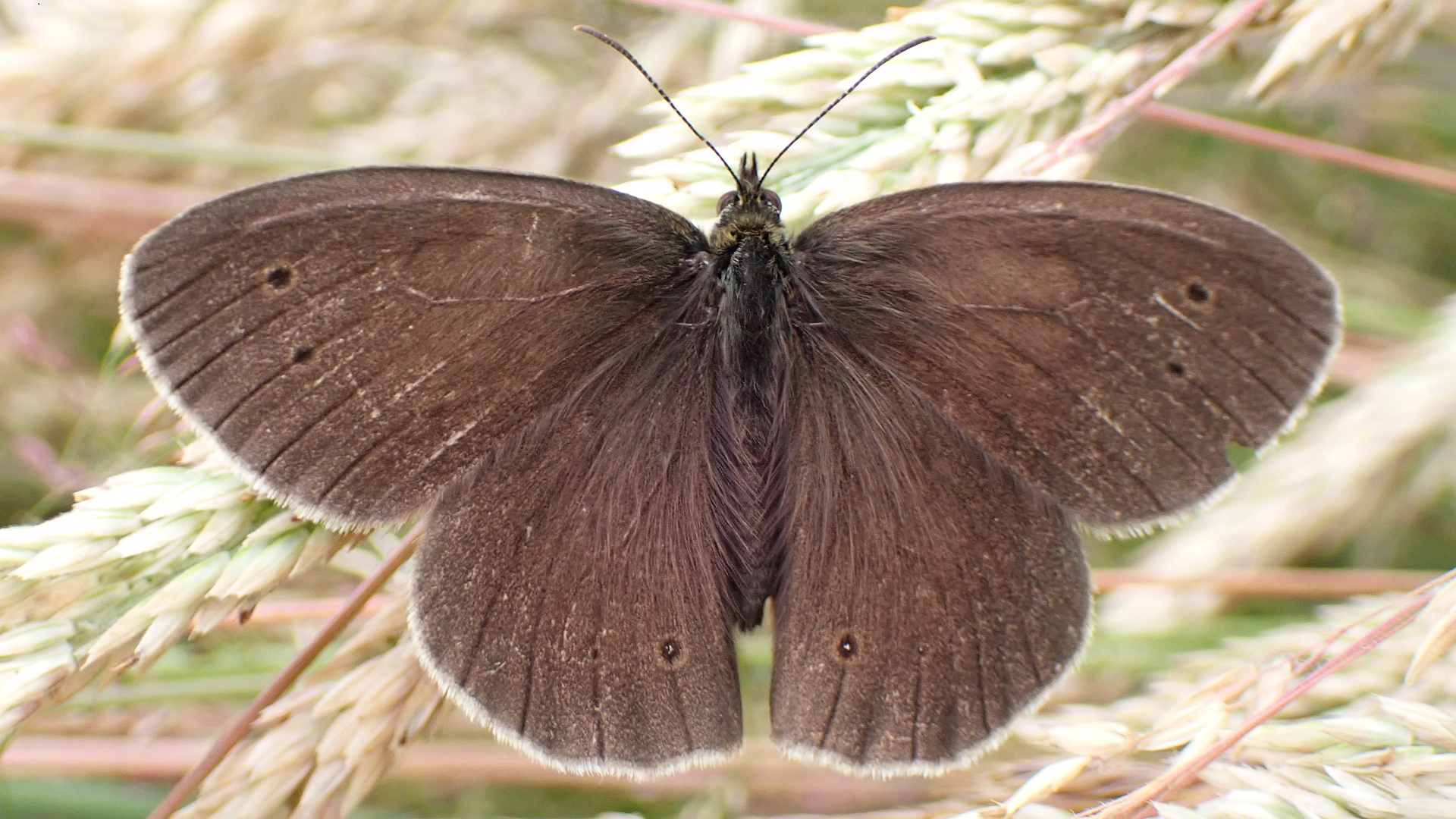
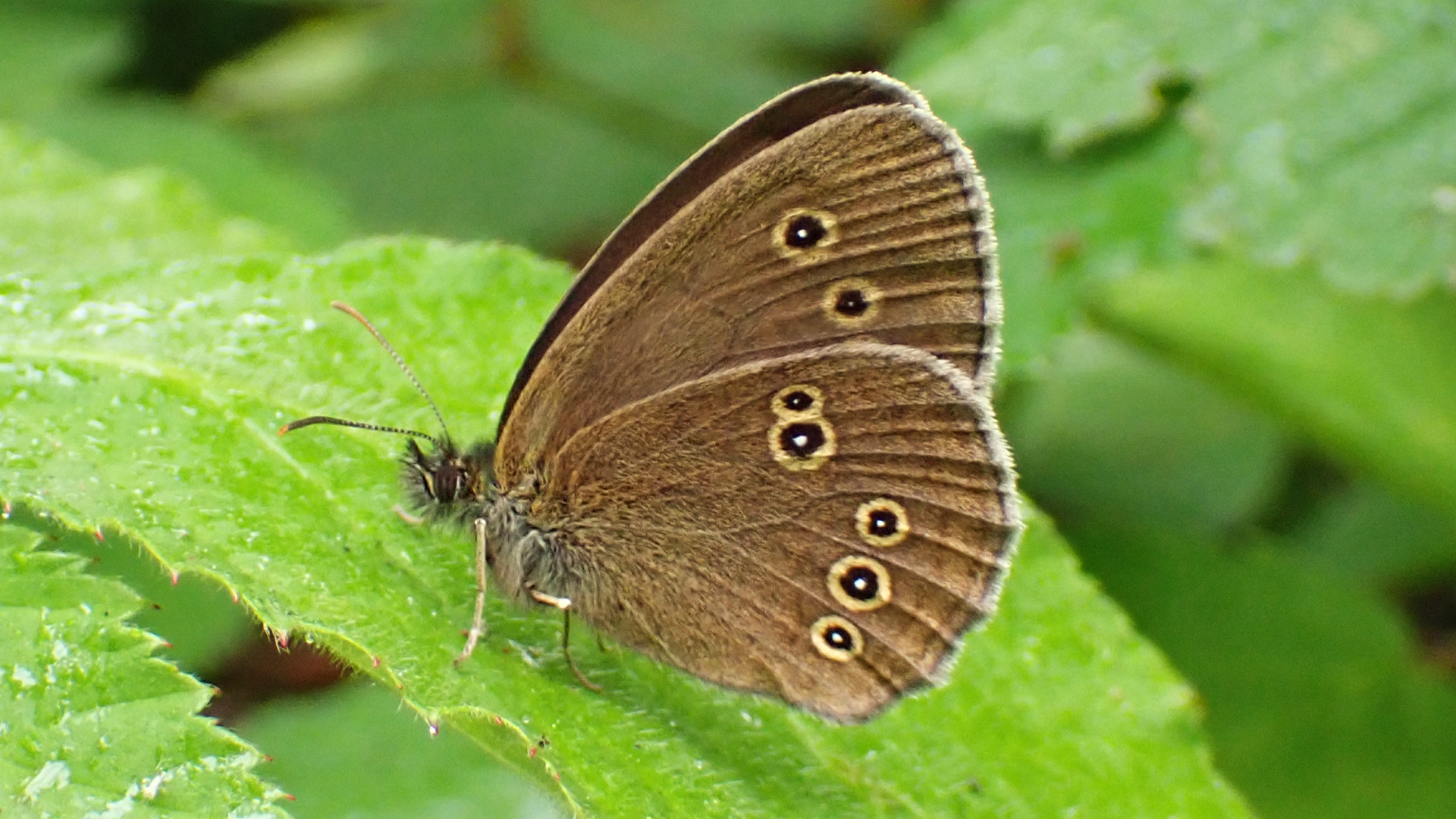
This is a medium-sized species measuring up to 50 mm in diameter. They are usually located flying near bramble along shaded forest paths. The larvae consume coarse grasses. The quantity and size of the wing spots can vary, and in some cases, the black rings may be absent.
#
Painted Lady
Vanessa cardui
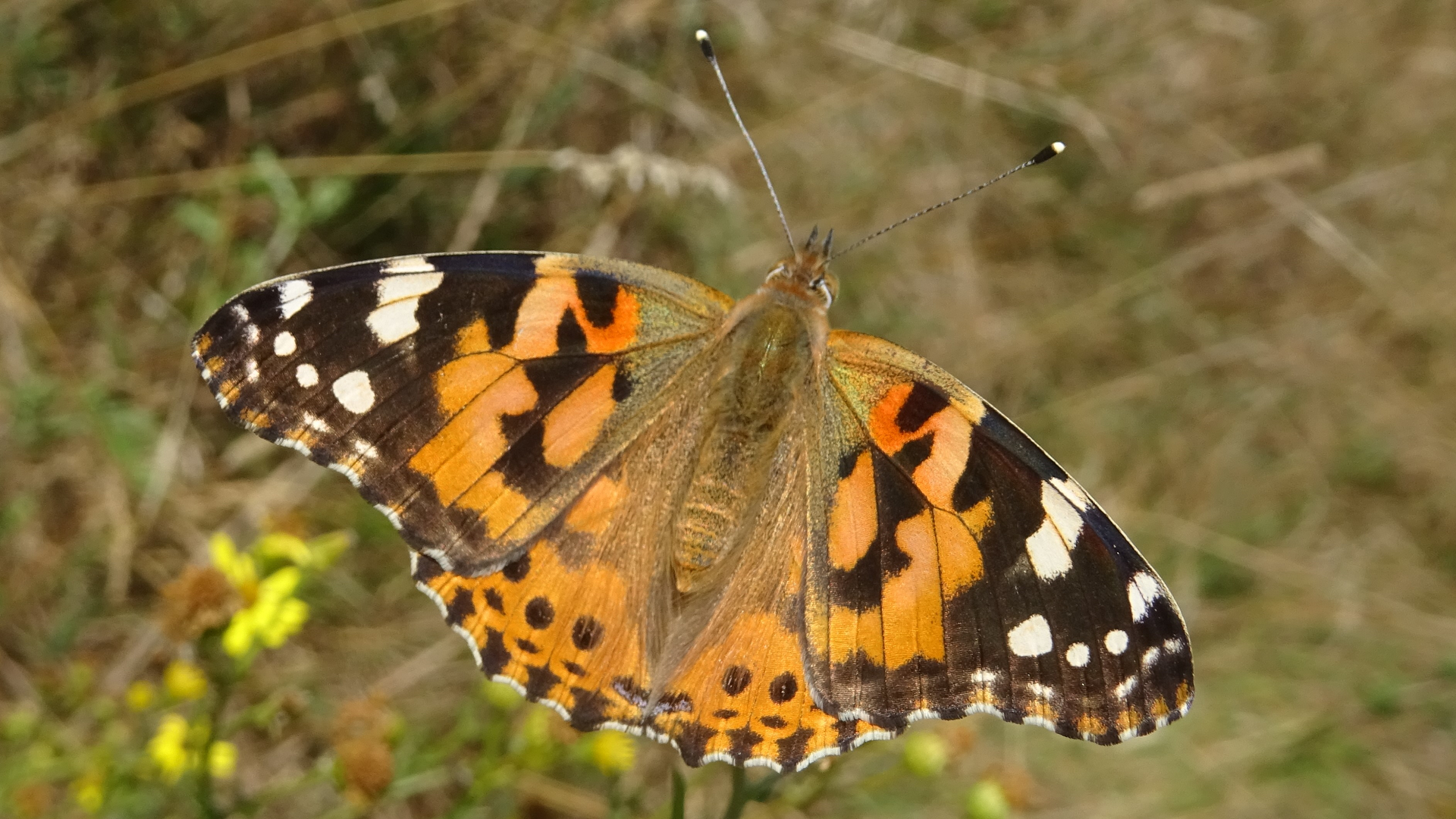
The Painted Lady butterfly comes from the Mediterranean annually and is typically observed in Britain between July and September.
#
Green-veined White
Pieris napi
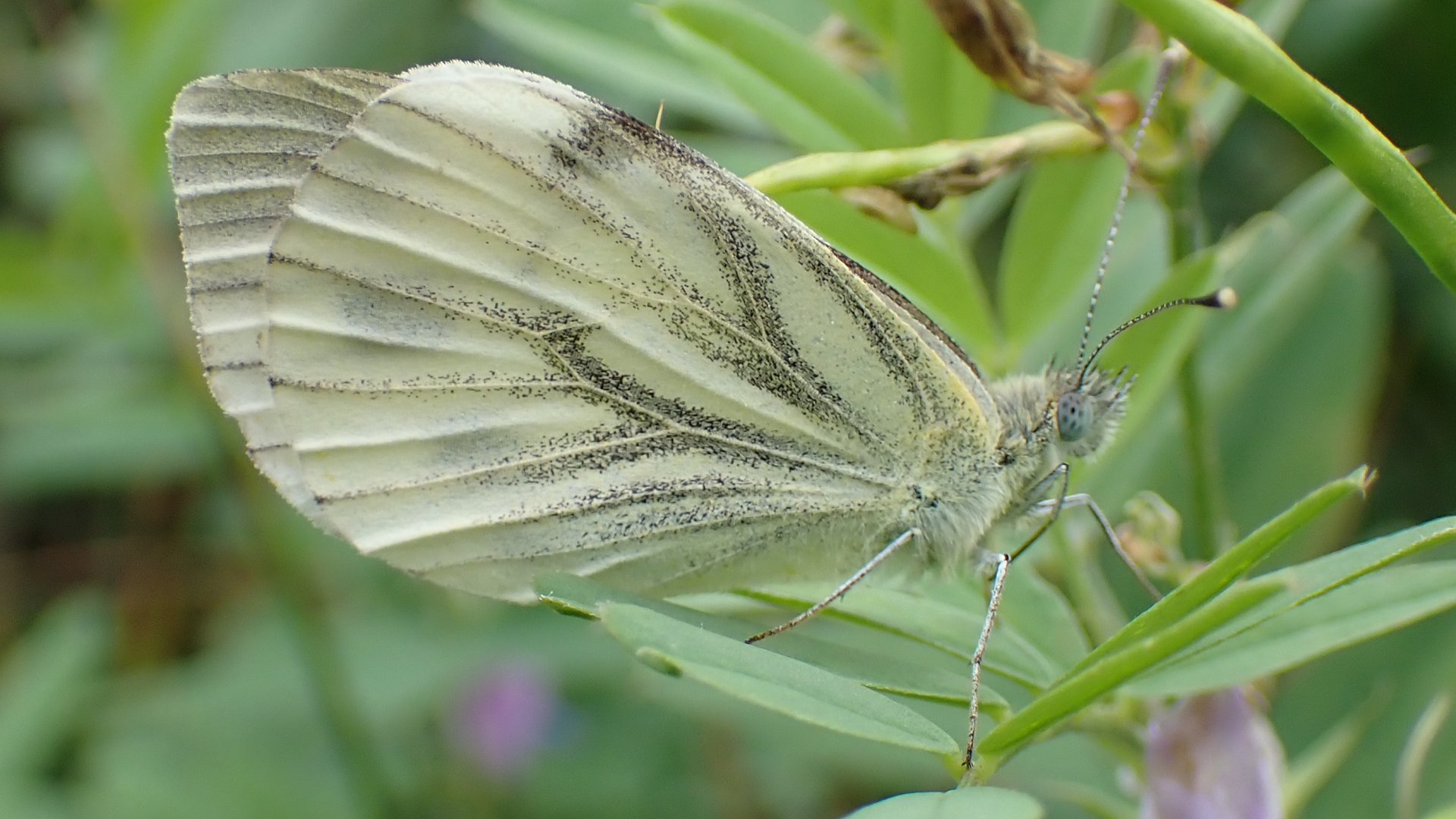
The Green-veined White is a common butterfly that is active from April to October. It inhabits various environments, particularly moist areas with abundant vegetation. The caterpillars of this species feed on plants belonging to the Cabbage family.
#
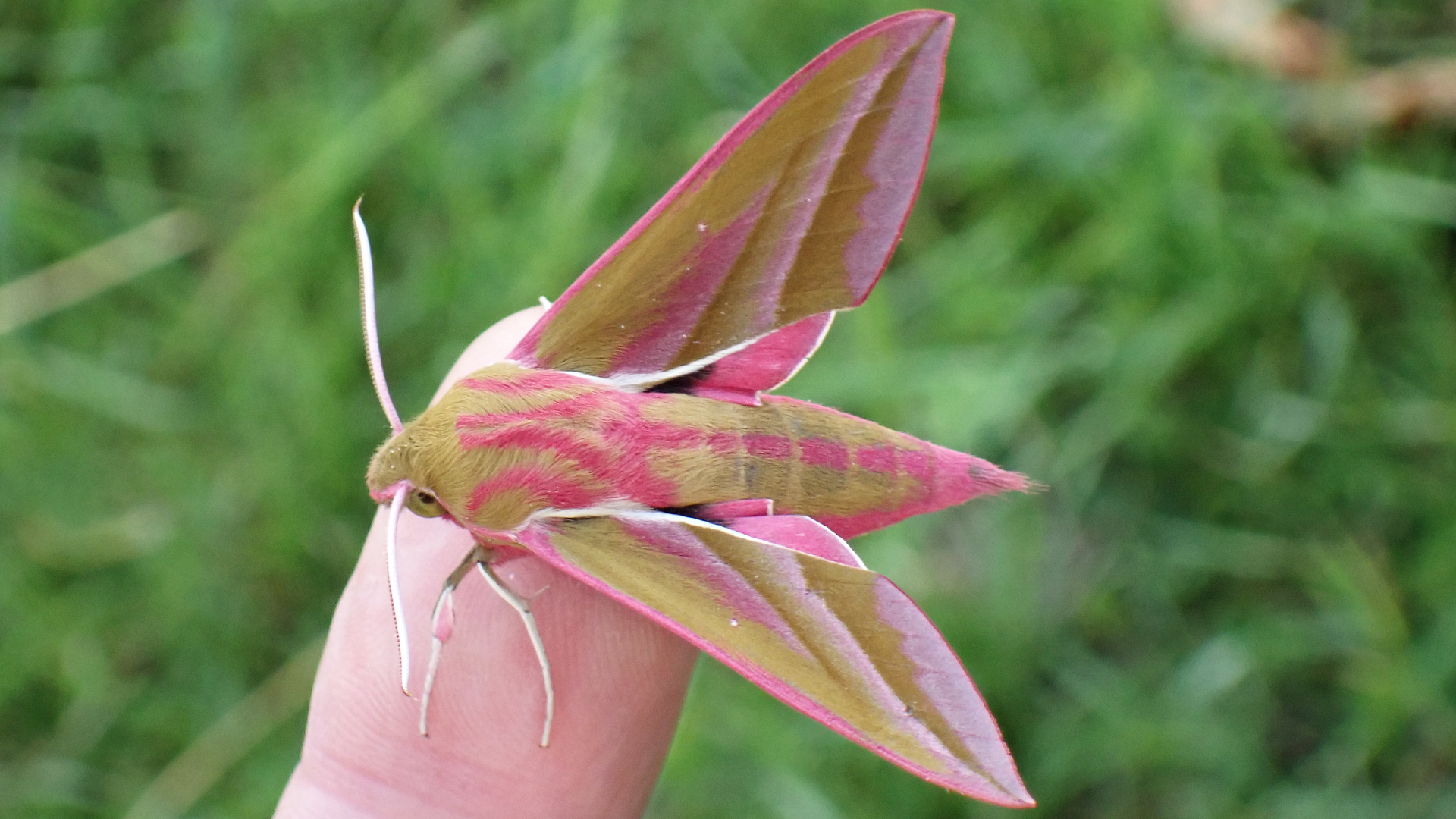
Elephant Hawk-moth
Deilephila elpenor
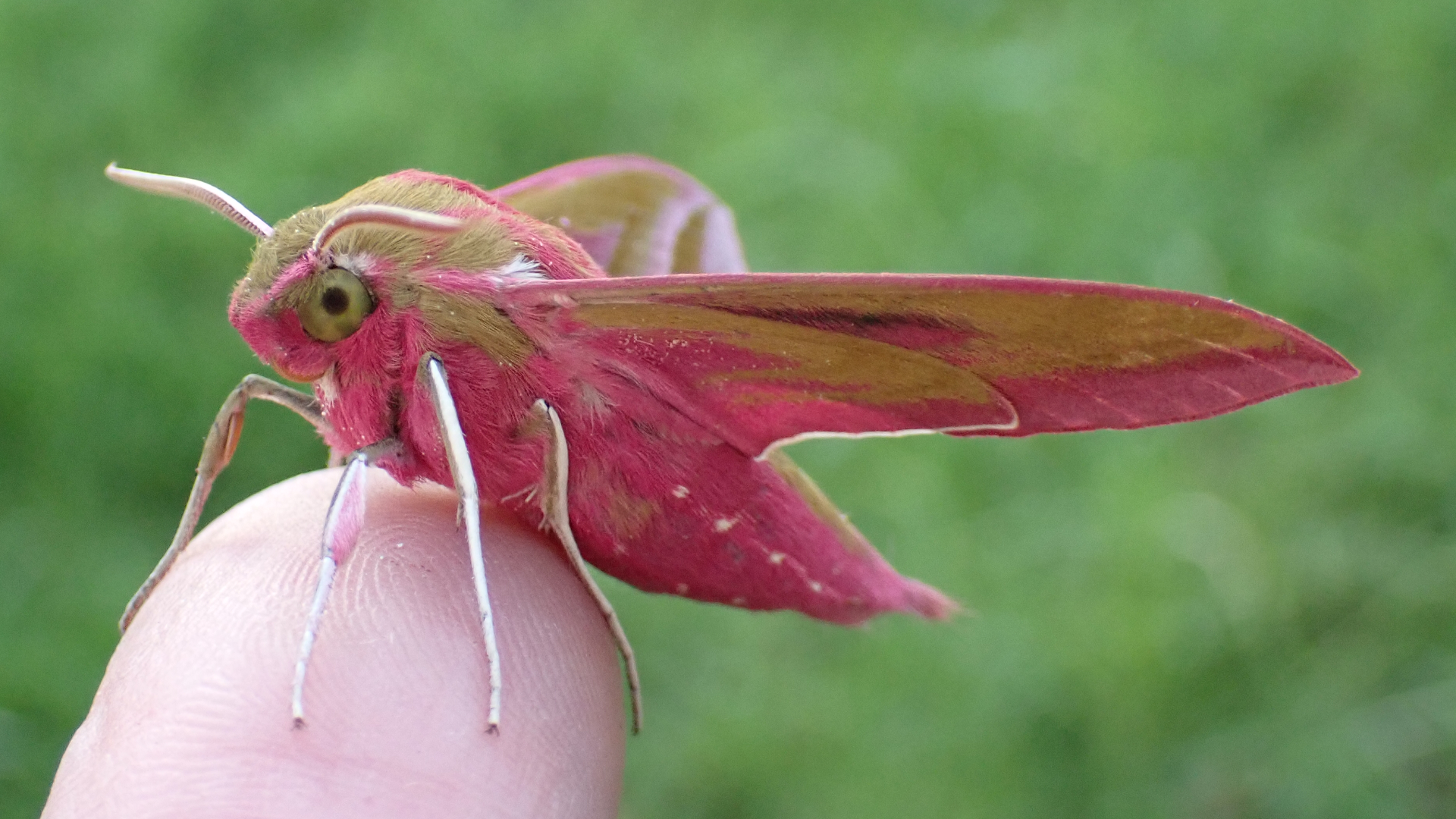
These beautiful moths fly from May to August. The common name is a reference to its large caterpillars that are shaped like an elephant's trunk, are up to 7cm long and have two large eye spots. The caterpillars hide among leaves during the day and feed at night. Larval foodplants include willowherbs, bedstraws and fuschia.
#
Six-spot Burnet
Zygaena filipendulae
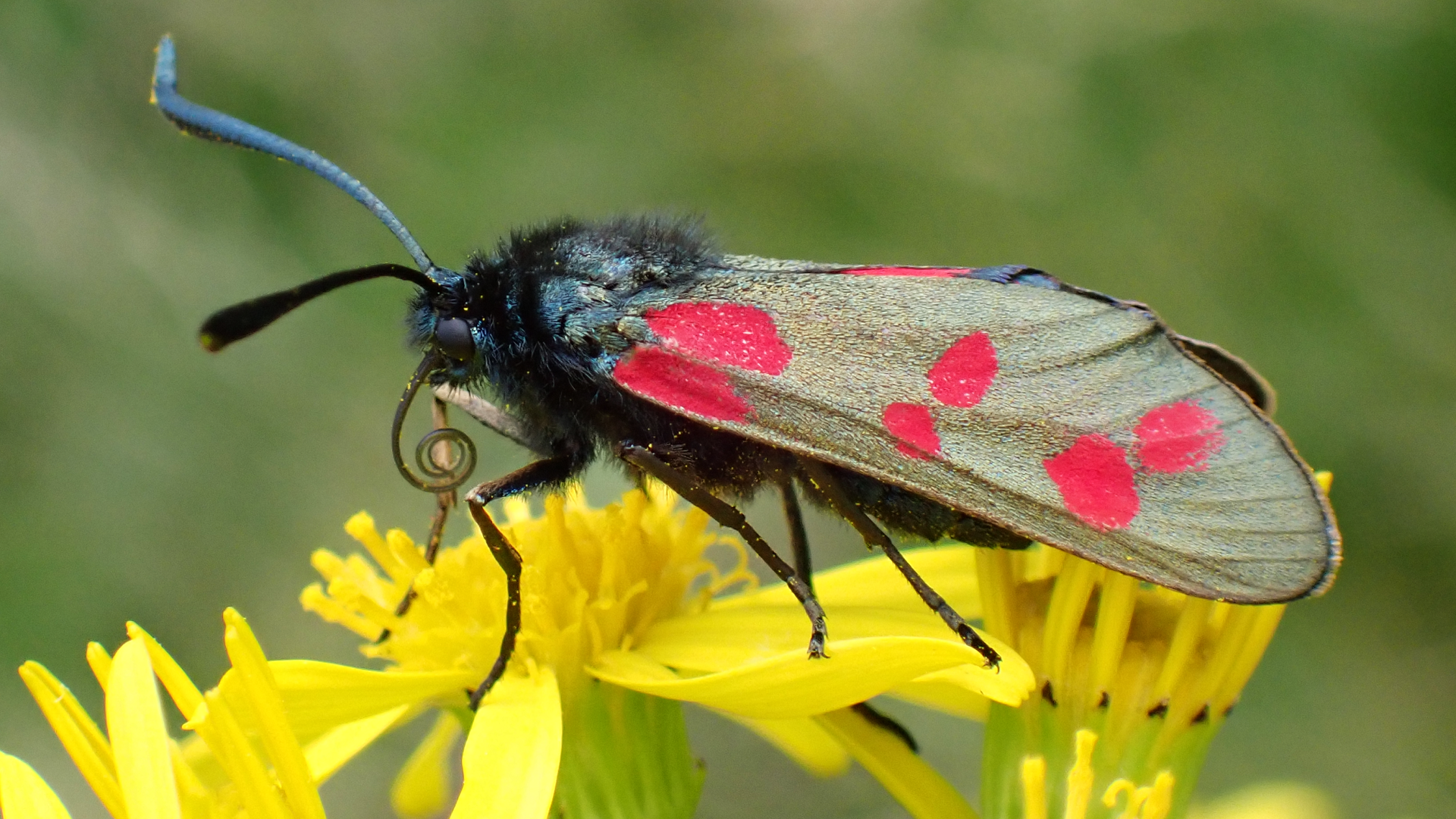
Common species found in grassland habitats during the summer months where its foodplant Bird's-foot Trefoil grows.
#
Common Grass-moth
Agriphila tristella
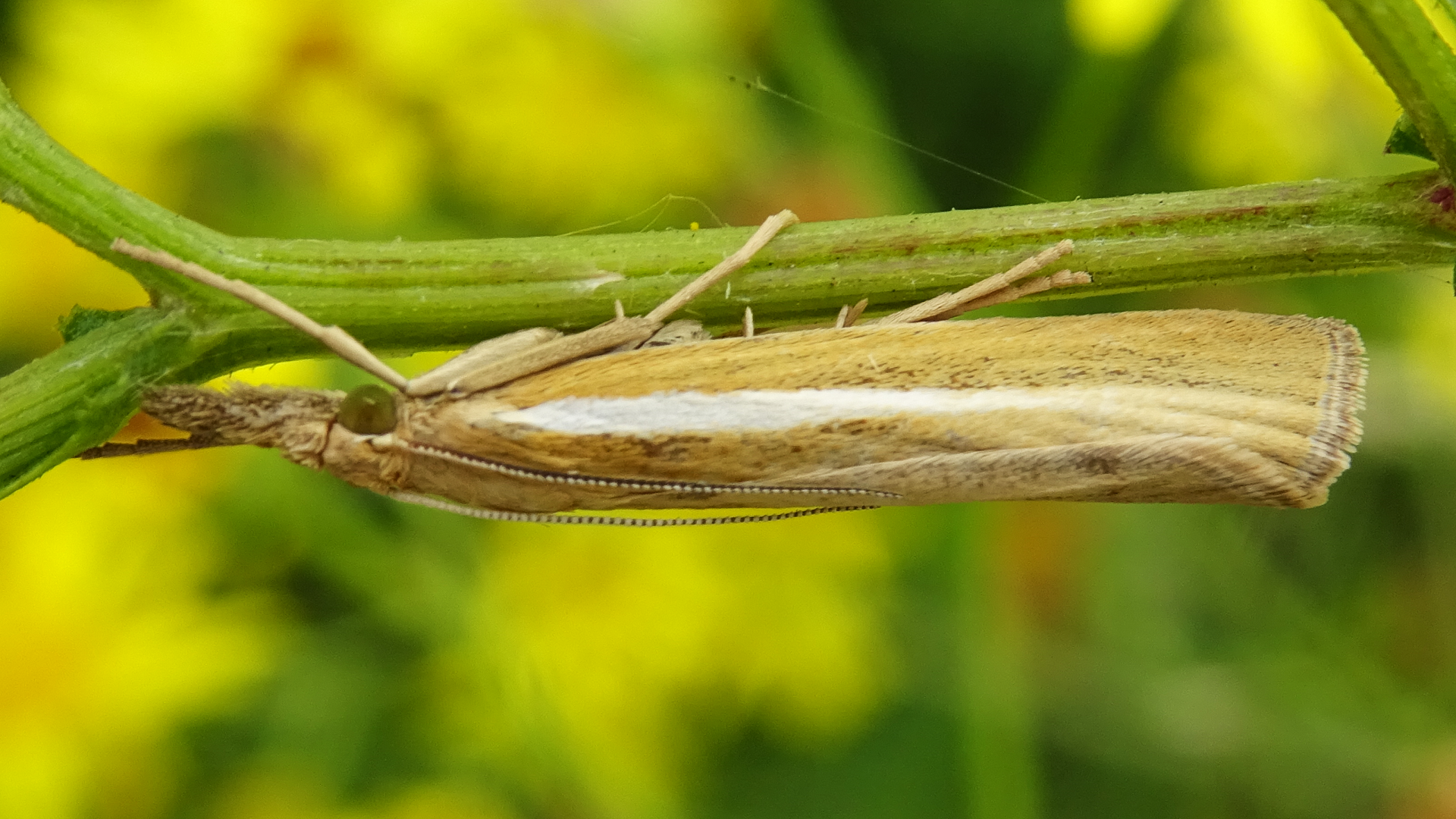
A very common micro-moth that flies from June until September. Its larvae feed on various grasses. This species is easily disturbed when walking through long grass. Previously known as the 'Common Grass-veneer'.
#
Pearl Grass-moth
Catoptria pinella
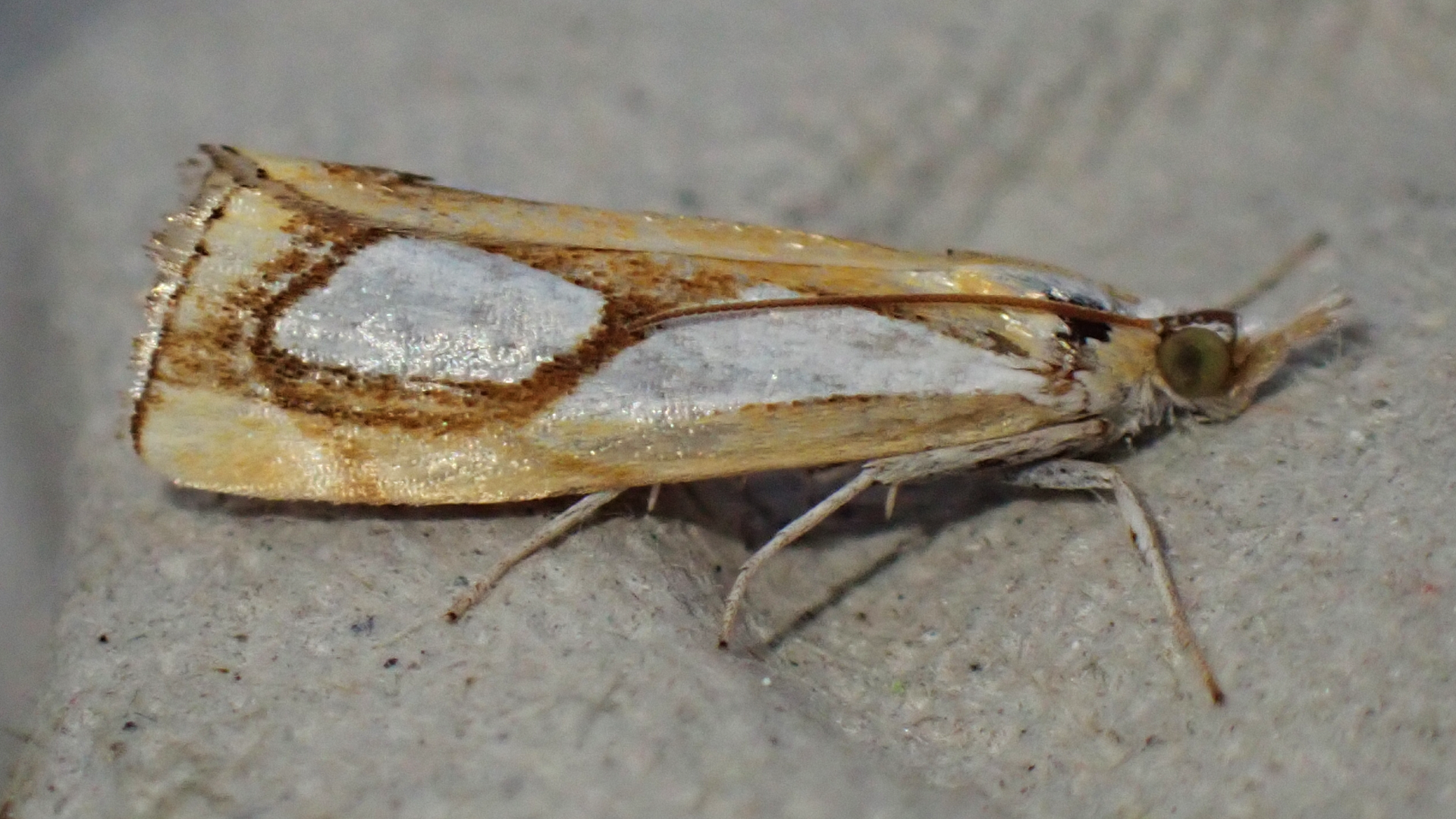
Flies in July and August. Its larvae feed on grass.
#
Rush Veneer
Nomophila noctuella
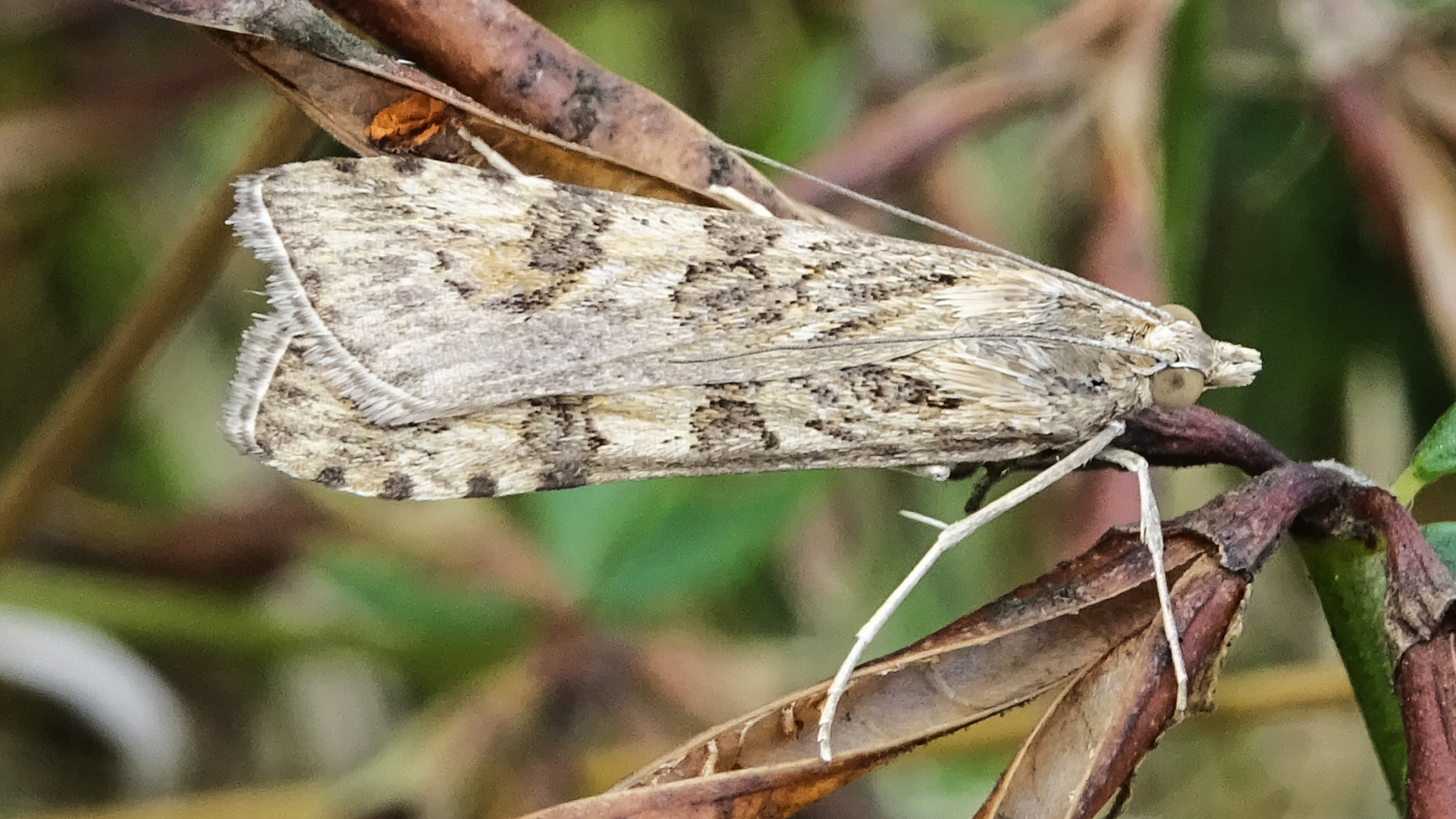
The Rush Veneer moth, a common and widespread immigrant, forms a very elongated and narrow shape when at rest. Its larvae feed on clover. This moth is usually seen from July until October.
#
Moth
Aproaerema sp.
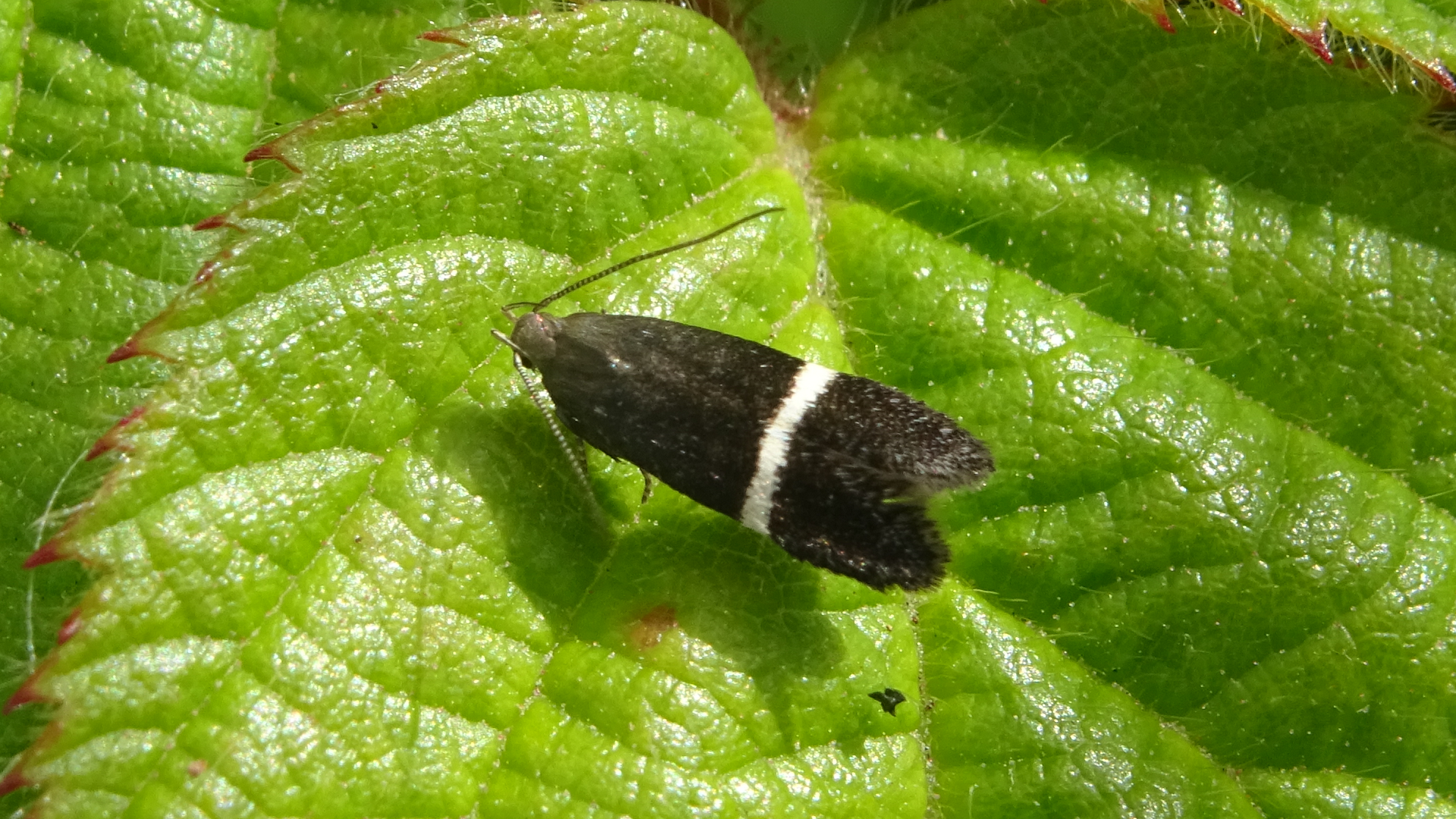
This is one of several moths belonging to the family Gelechiidae that are very similar in appearance. The family sometimes referred to as 'Twirler moths' are usually tiny with narrow fringed wings.
#
Codling Moth
Cydia pomonella
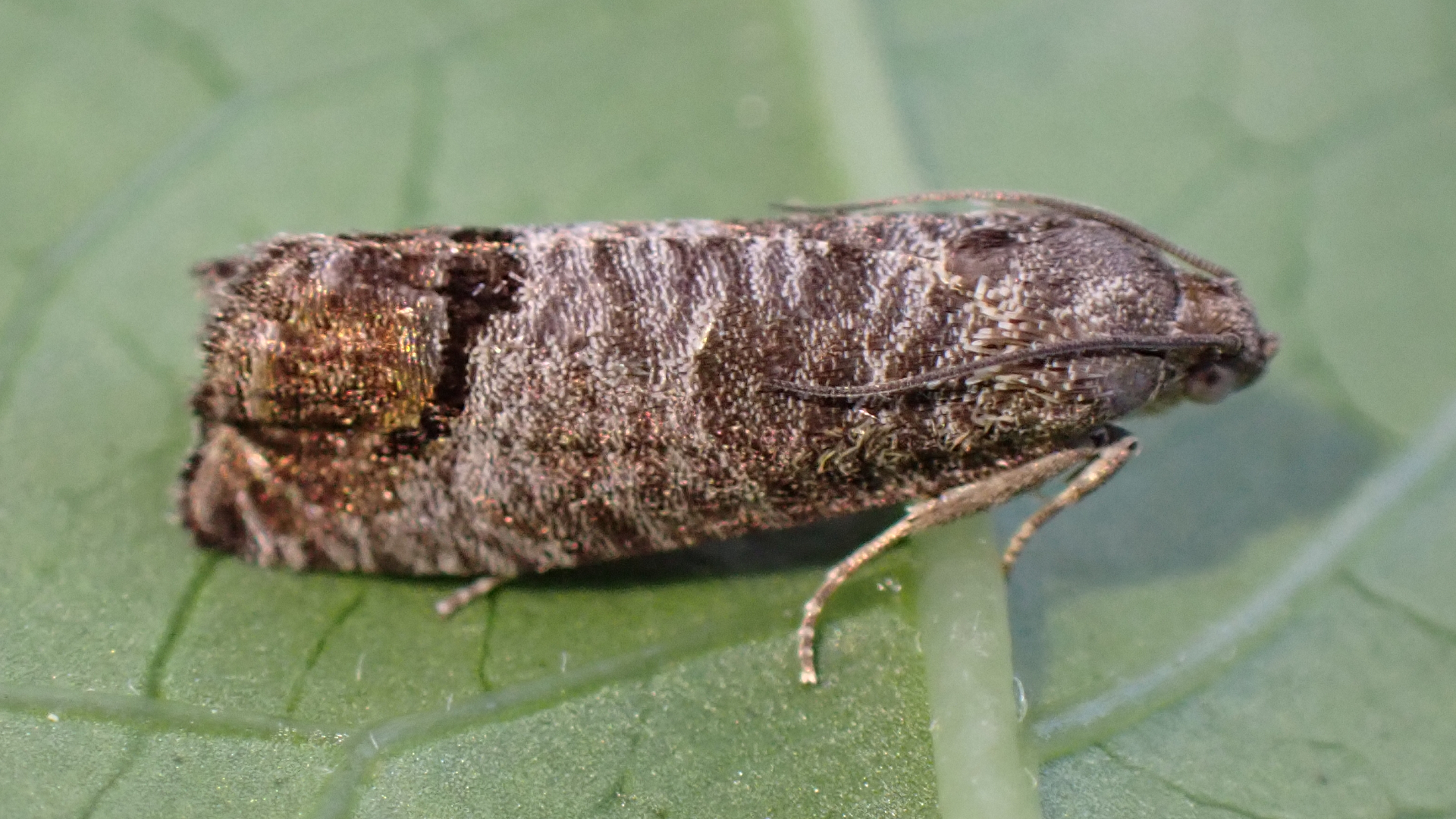
Common species found in woodland, gardens and orchards, especially where fruit trees are present. It is seen on the wing from June until September.
#
Marbled Piercer
Cydia splendana
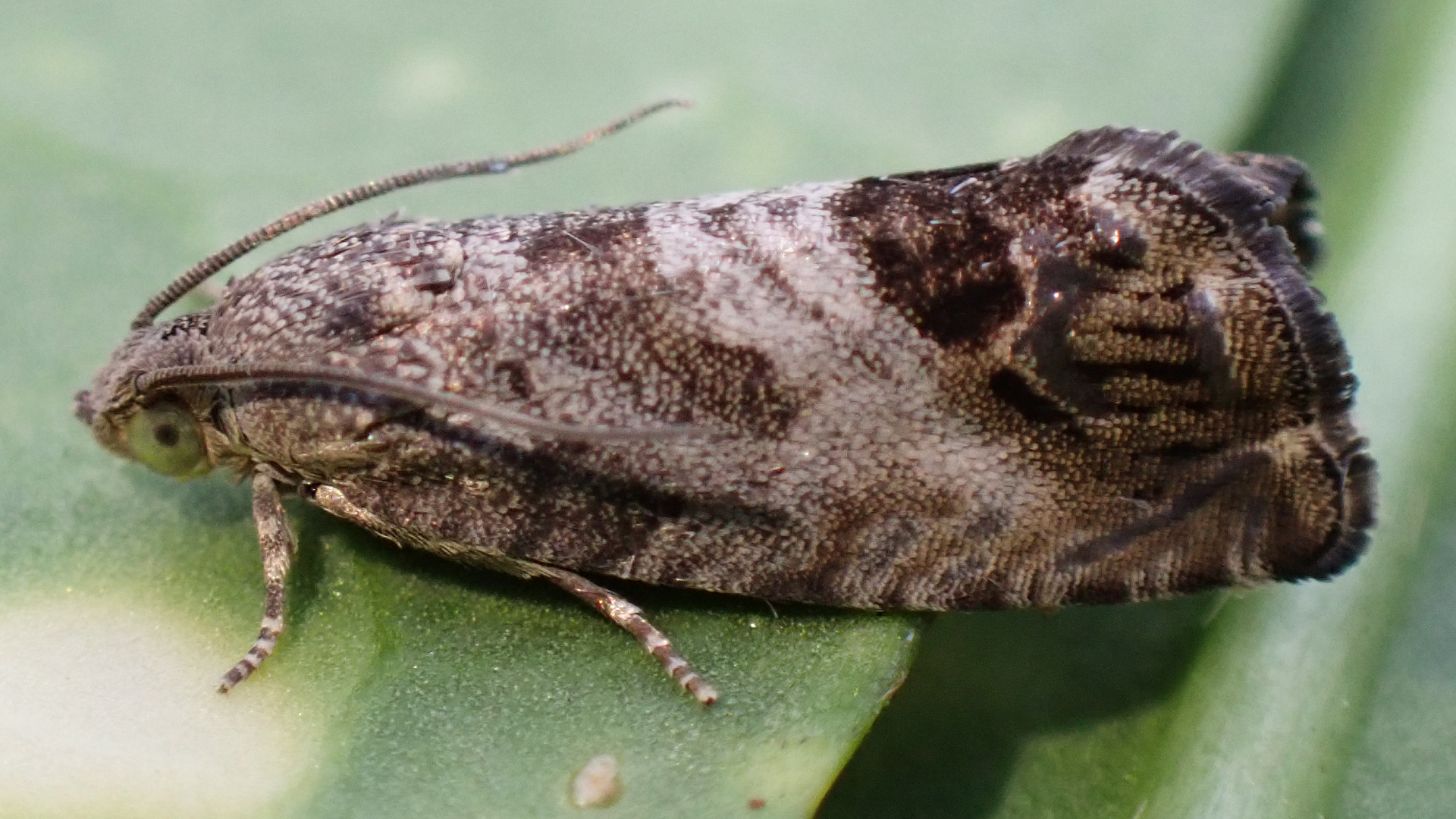
Common species found in woodland, heathland, scrub and other locations where the larval foodplants oak and sweet chestnut grow. The adults fly in July and August.
#
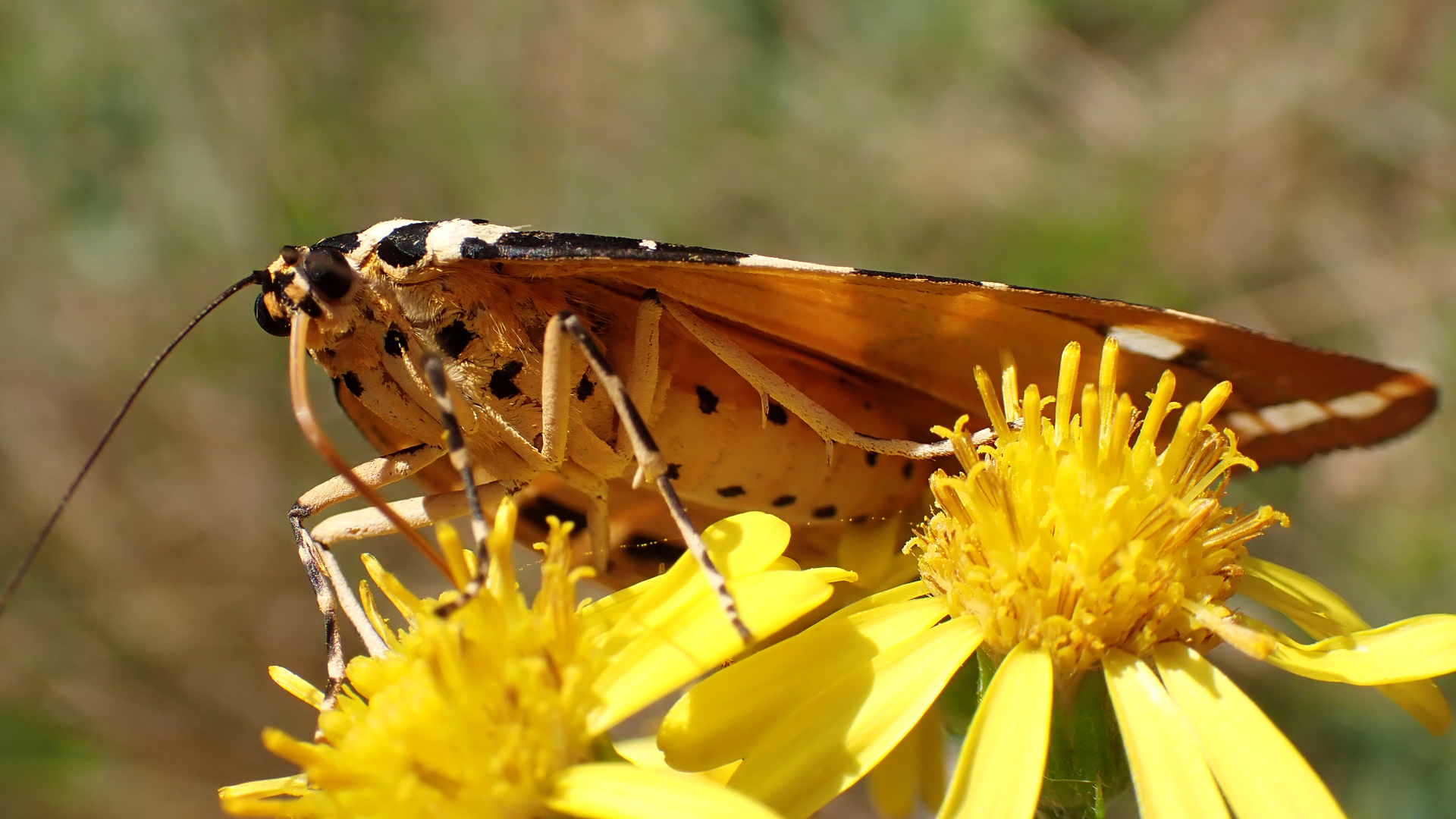
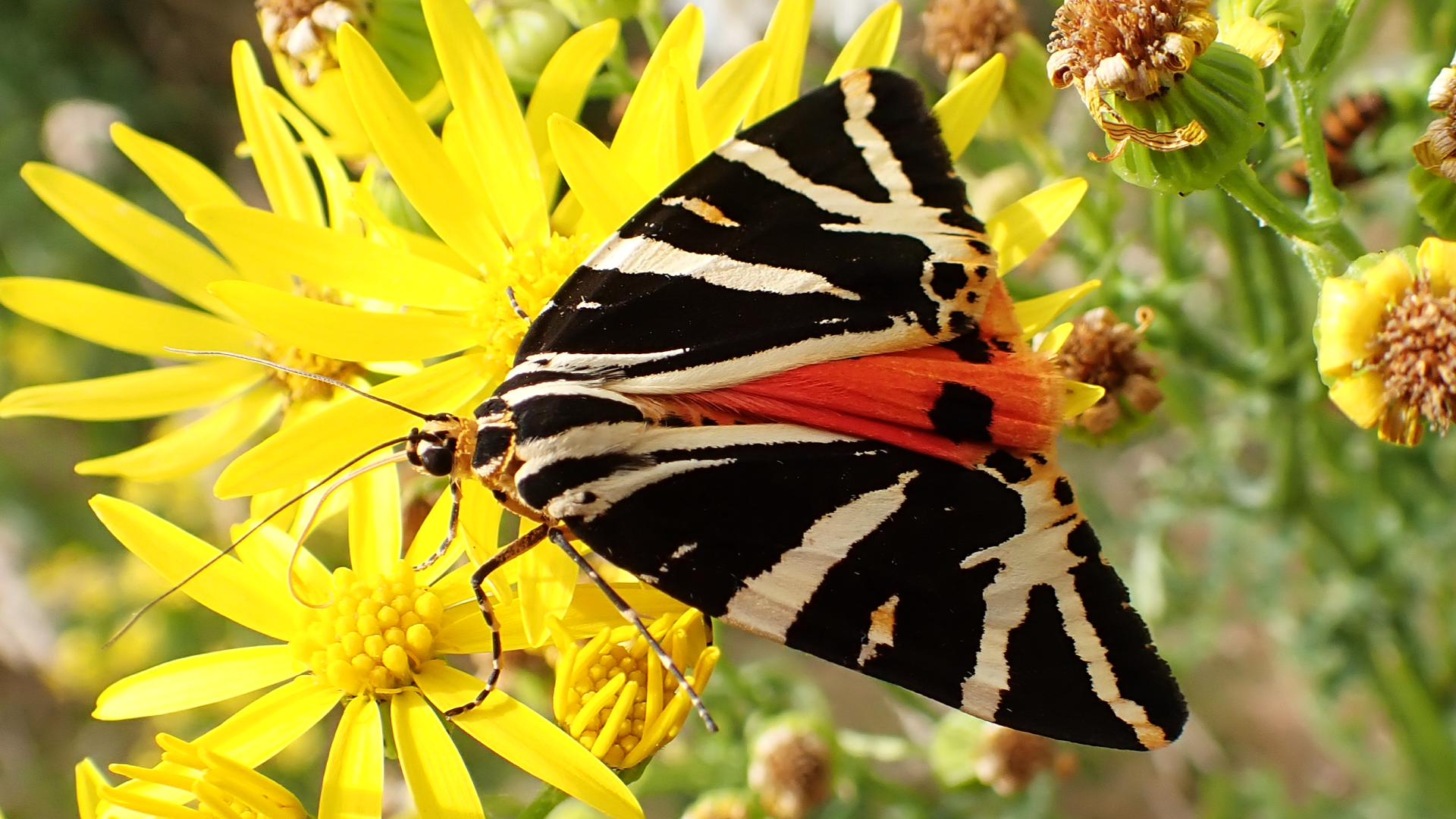
Jersey Tiger
Euplagia quadripunctaria
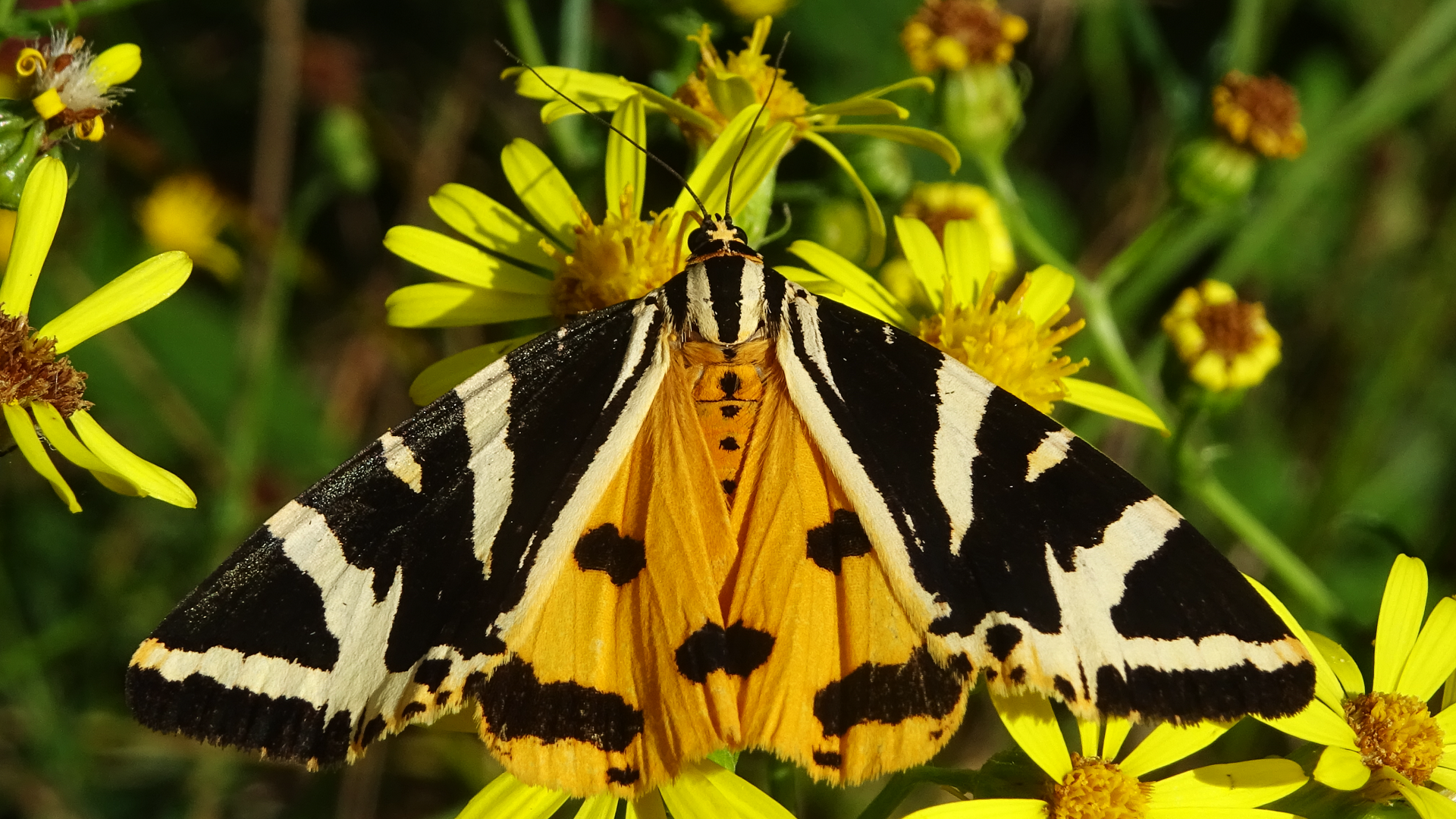
Originates from the Channel Islands and since 2017 has become a prolific sight in the Hainault area. It flies during daytime from July to September and many people mistake it for an orange-coloured butterfly when flying. The larvae feed on nettles, hemp-agrimony, plantains and other shrubs.
#
Puss Moth
Cerura vinula
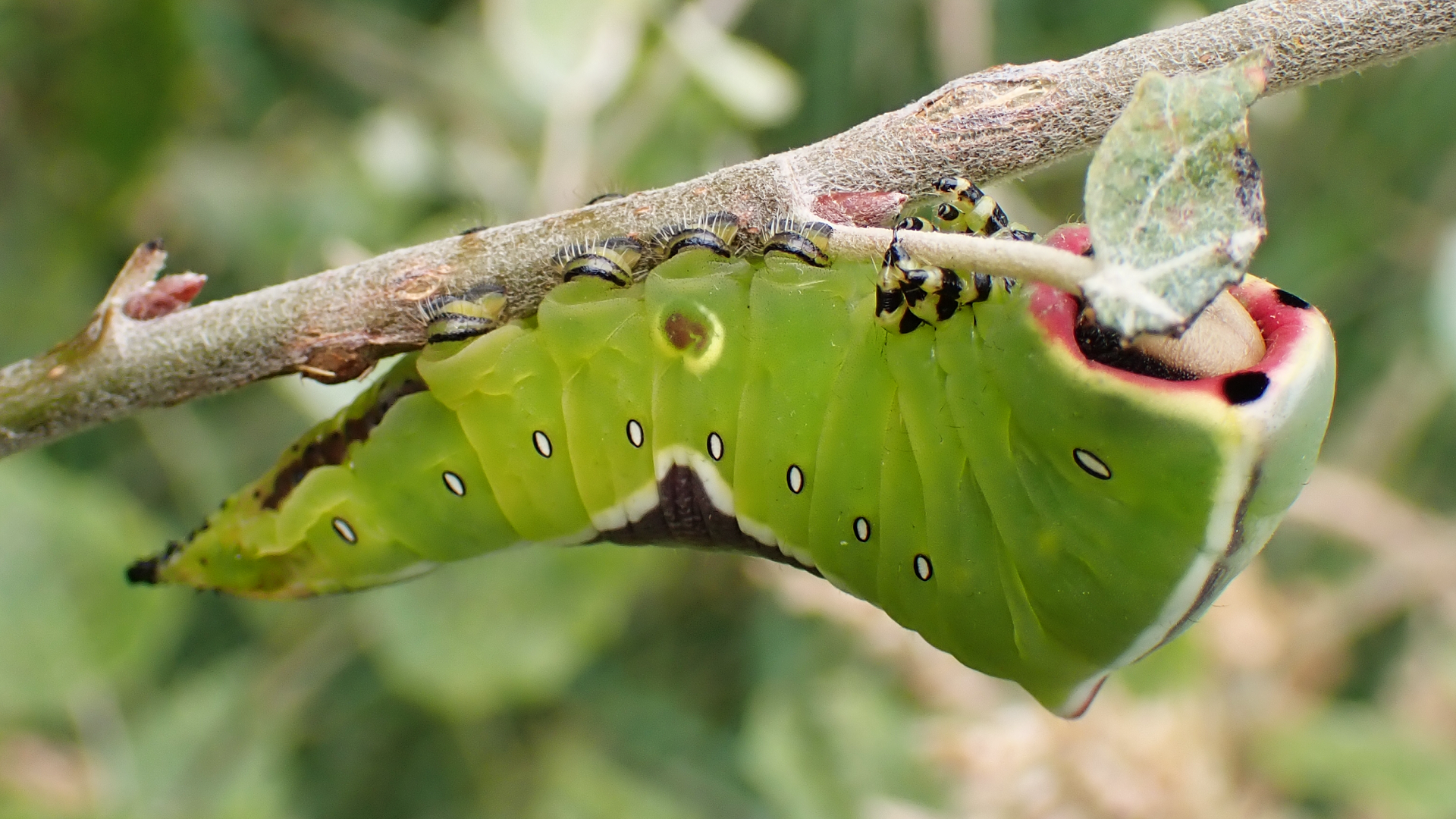
Caterpillars of the Puss Moth measure up to 65mm long. They are bright green with purple and white markings. When threatened they rear up revealing their 'face' before dispensing formic acid. The larvae inhabit poplar and willow from July until September.
#
Pebble Prominent
Notodonta ziczac
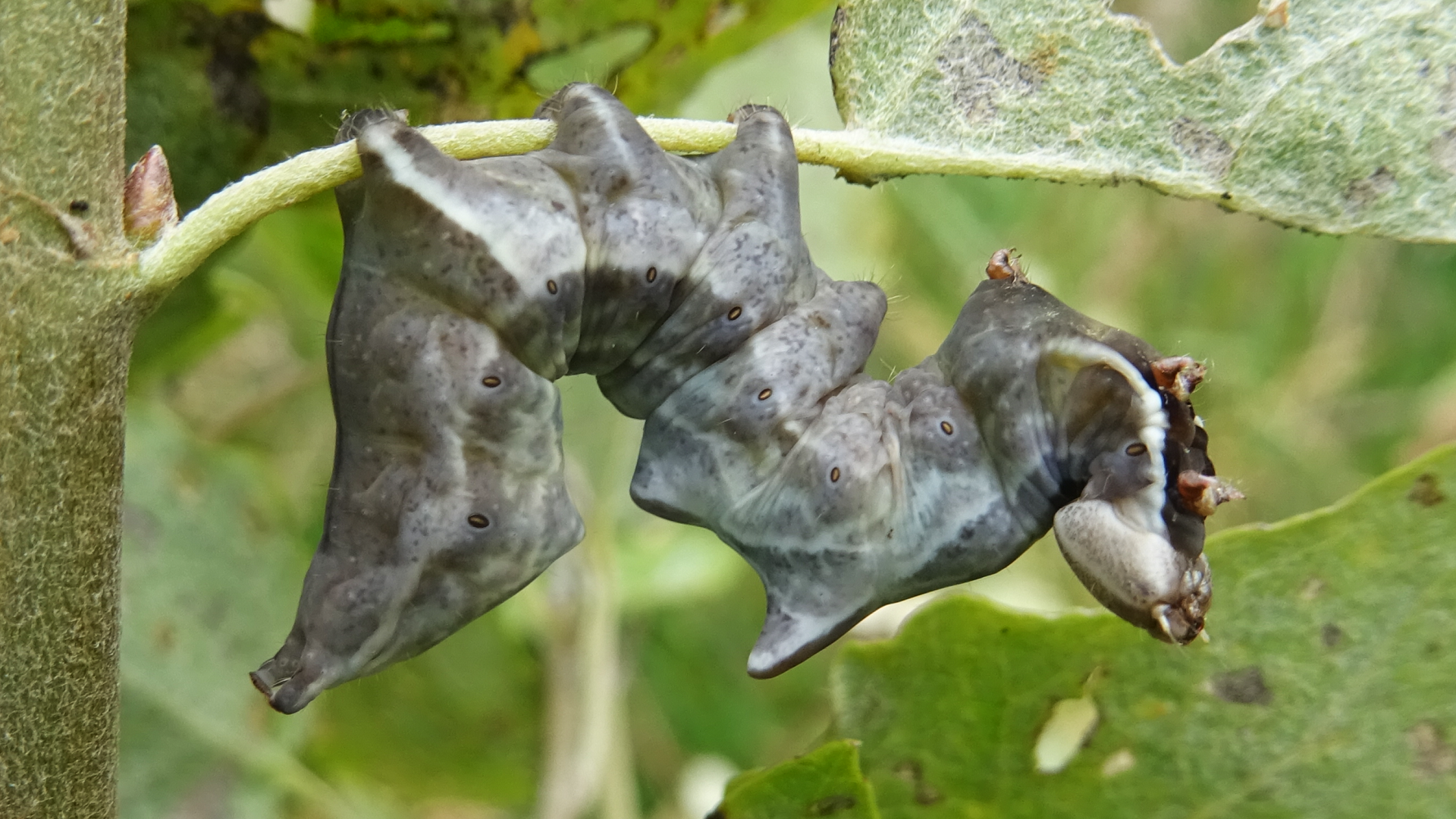
The Pebble Prominent moth inhabits woodland, scrub and heathland. Its larvae feed on poplar, sallow, willow and aspen.
#
Buff-tip
Phalera bucephala
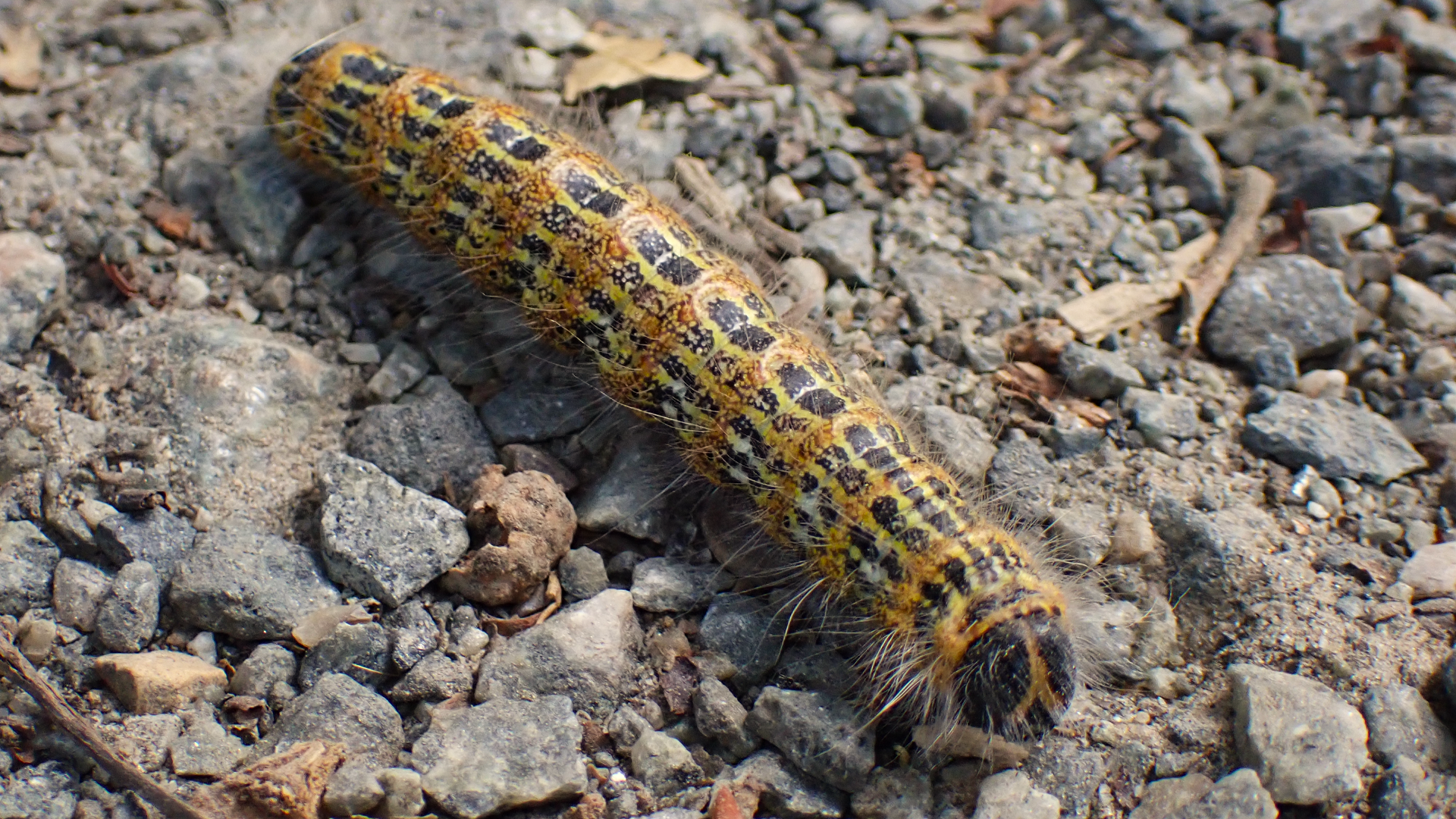
Mature Buff-tip moth larvae have a distinctive upside-down 'Y' on the face.
#
Vapourer Moth
Orgyia antiqua
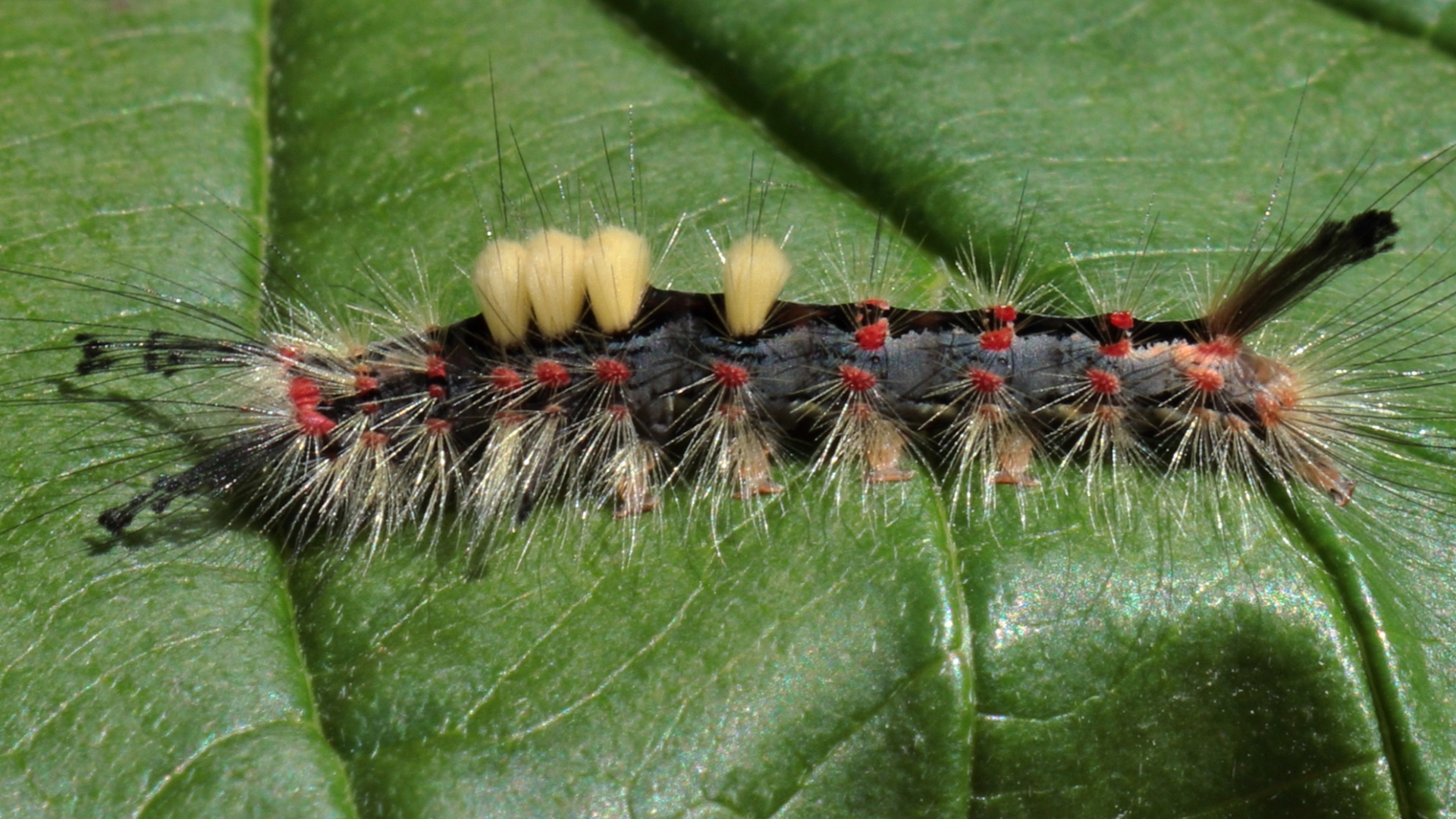
Larvae of the Vapourer moth feed on a range of broadleaved trees and shrubs. This species overwinters as an egg on the maternal cocoon with a mass of other eggs.
#
Knotgrass
Acronicta rumicis
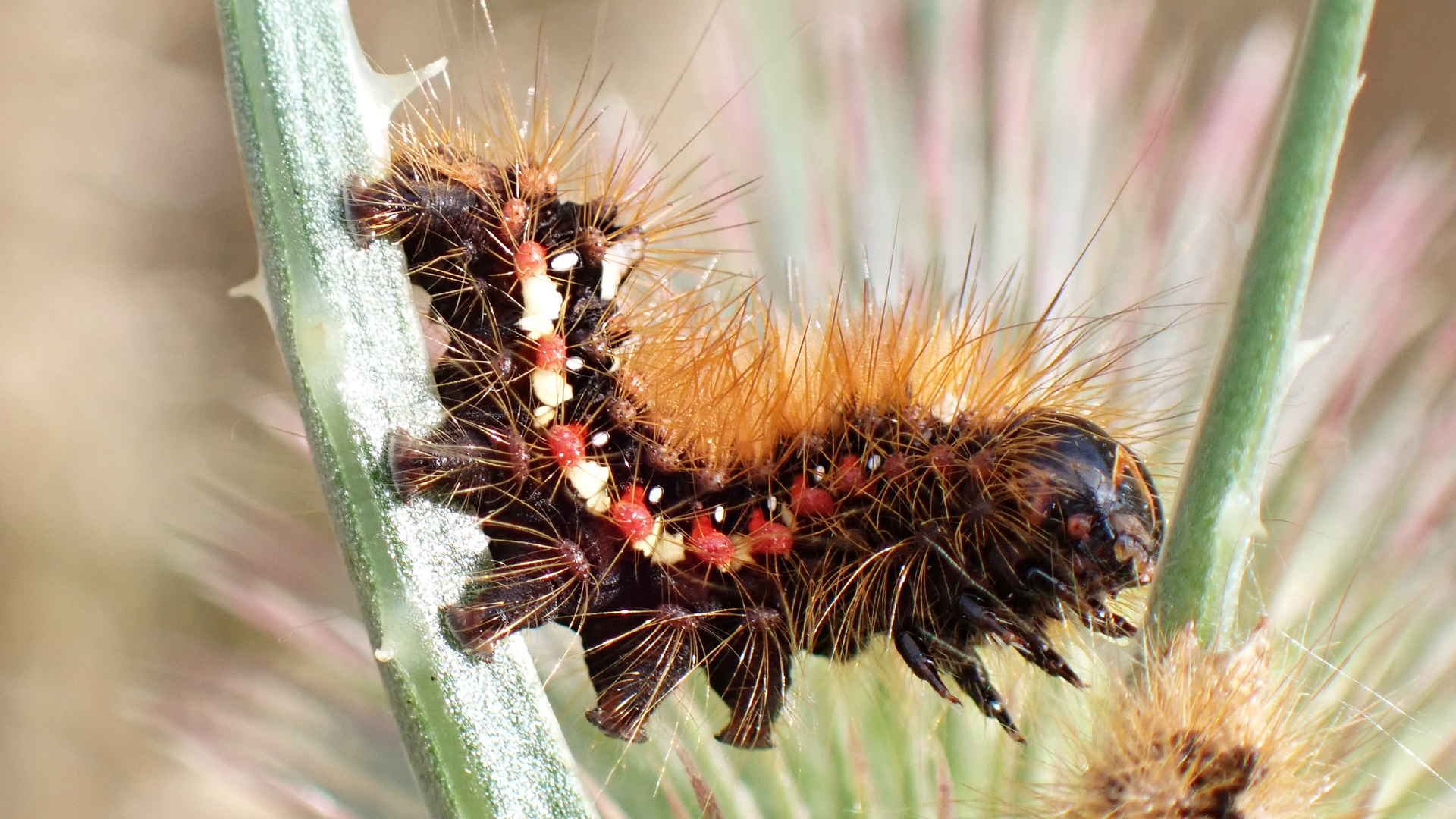
The hairy larvae of the Knot Grass moth feed on herbaceous and woody plants. This species pupates on the ground and spends winter as a pupa.
#
Iris Sawfly
Rhadinoceraea micans
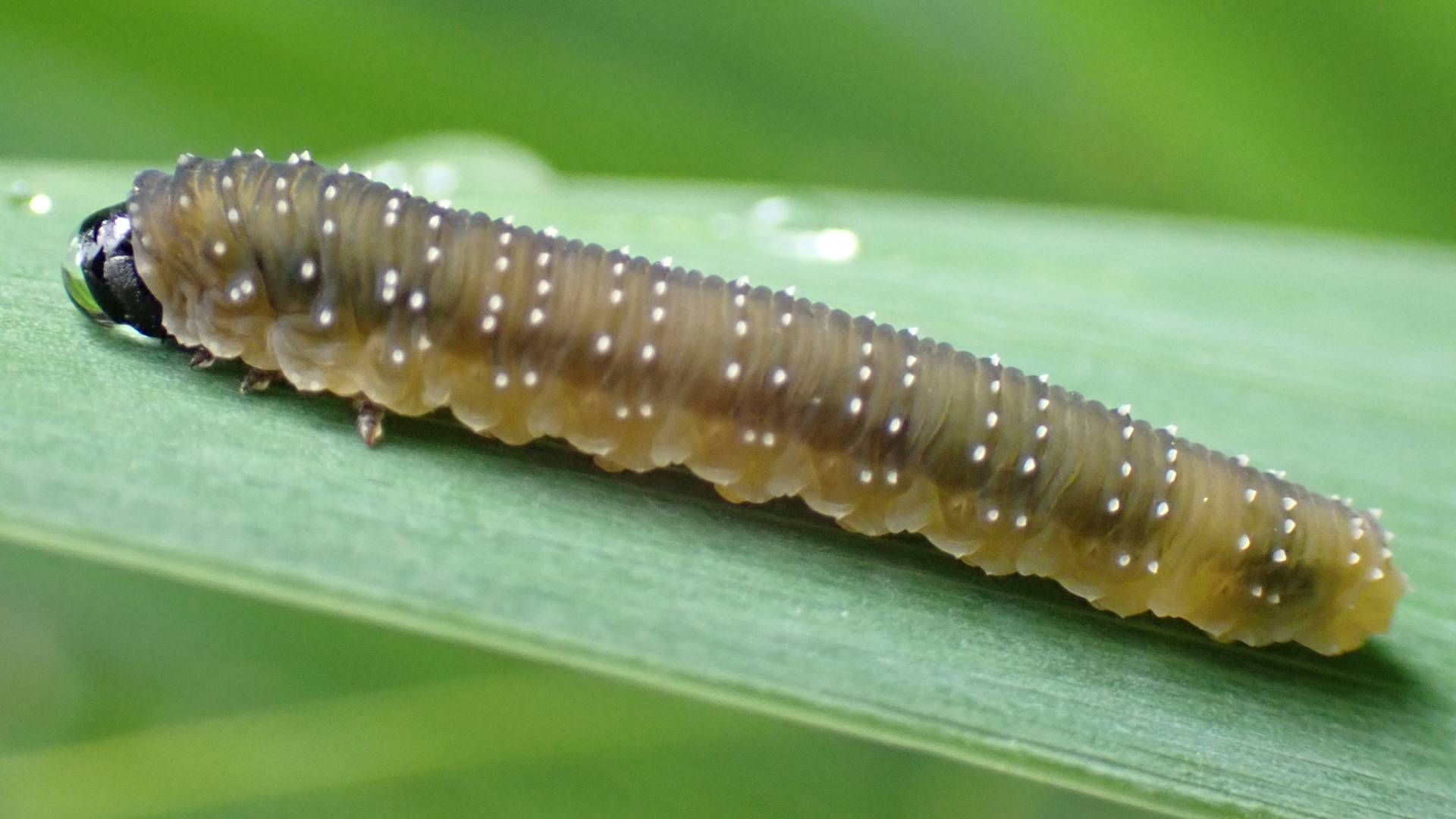
Late instars of the Iris Sawfly are brownish and have white spots. Early instars are rather plain in appearance. The larvae are found on iris plants.
#
Woodland Wood Ant
Myrmica ruginodis
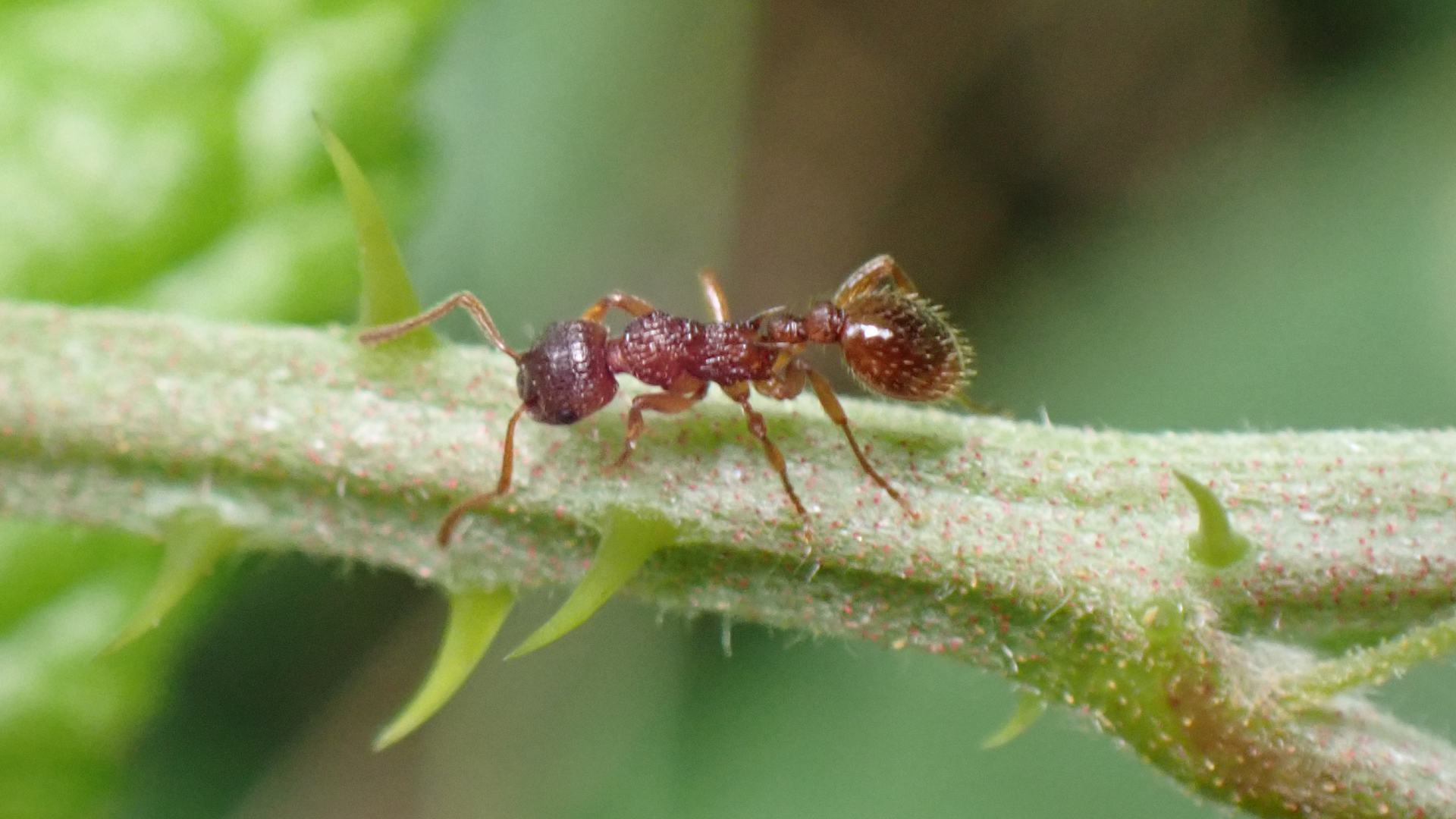
Over fifty species of ant exist in Britain, seven belong to the Myrmica family which typically have deep red colouration and the ability to inflict a weak sting. This is the most common Myrmica found in Britain. It lives in small colonies containing between 100-300 members and each colony may contain many egg-producing queens. Nests are built in tree trunks, decaying timber and under stones. There are two sub-species, one which has queens noticeably larger than the workers, the other with queens almost the same size as the worker. This aggressive woodland species feeds on insects and arachnids. Mating flights occur in July and August.
#
Rose-stem Girdler
Agrilus cuprescens
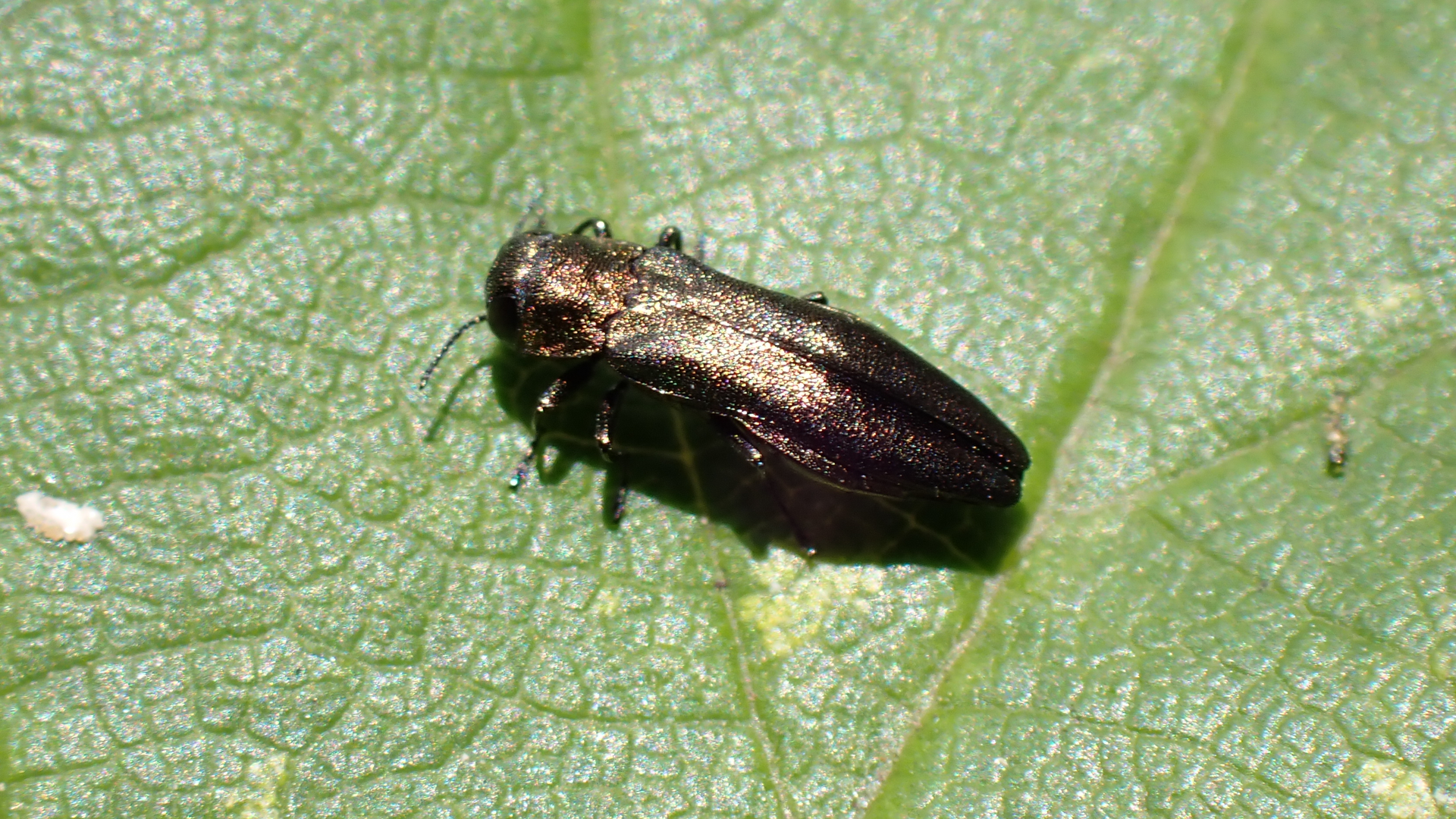
This metallic wood-boring beetle belongs to a group known as Jewel Beetles. Close examination is required due to its similarity with other species. Thank you to Adrian Knowles and Rob Smith at Essex Field Club for the identification. This species likes to bask on bramble leaves in the sun and is a fairly recent arrival to Essex. The copper-coloured adults have a narrow tapering end to the abdomen. Morning is their preferred time for feeding, mating, and egg laying. They like to rest on foliage during the evening. Females must feed prior to laying eggs. Temperature affects how long their eggs take to hatch which can be from four to fourteen days.
#
Gorse Shieldbug
Piezodorus lituratus
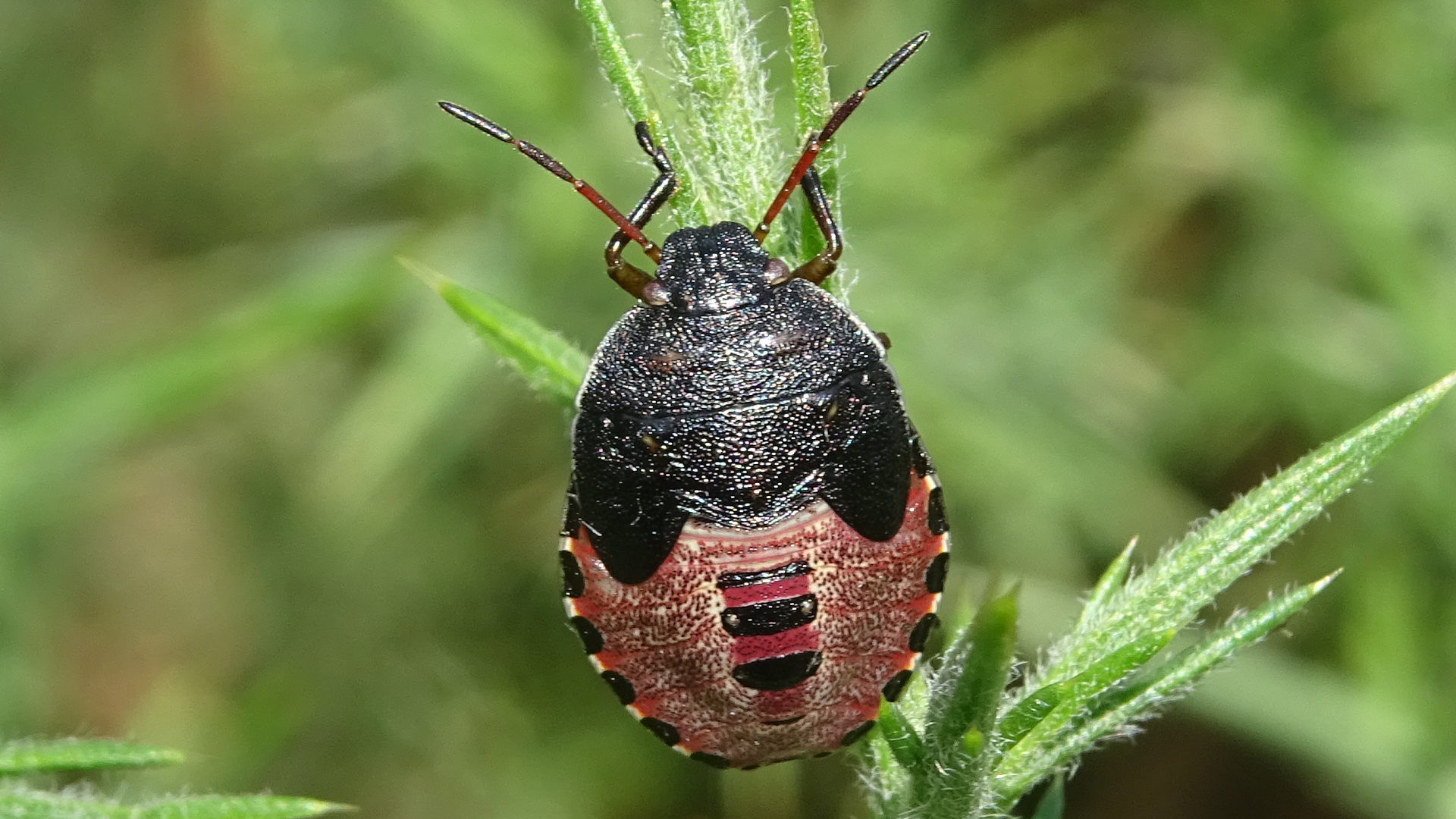
A Gorse Shieldbug final instar nymph. New adults appear during late summer.
#
Tortoise Shieldbug
Eurygaster testudinaria
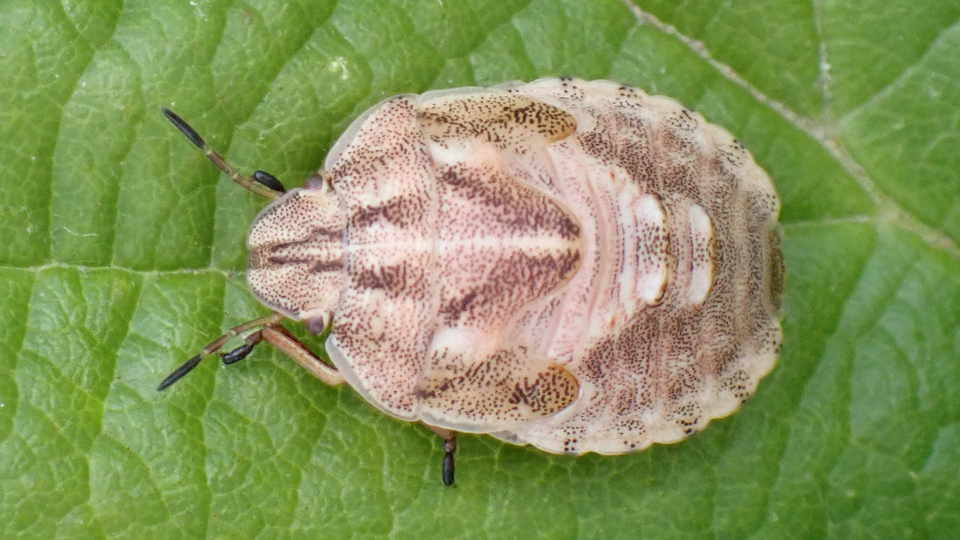
This is a final instar nymph. The nymphs feed on various grasses.
#
Box Bug
Gonocerus acuteangulatus
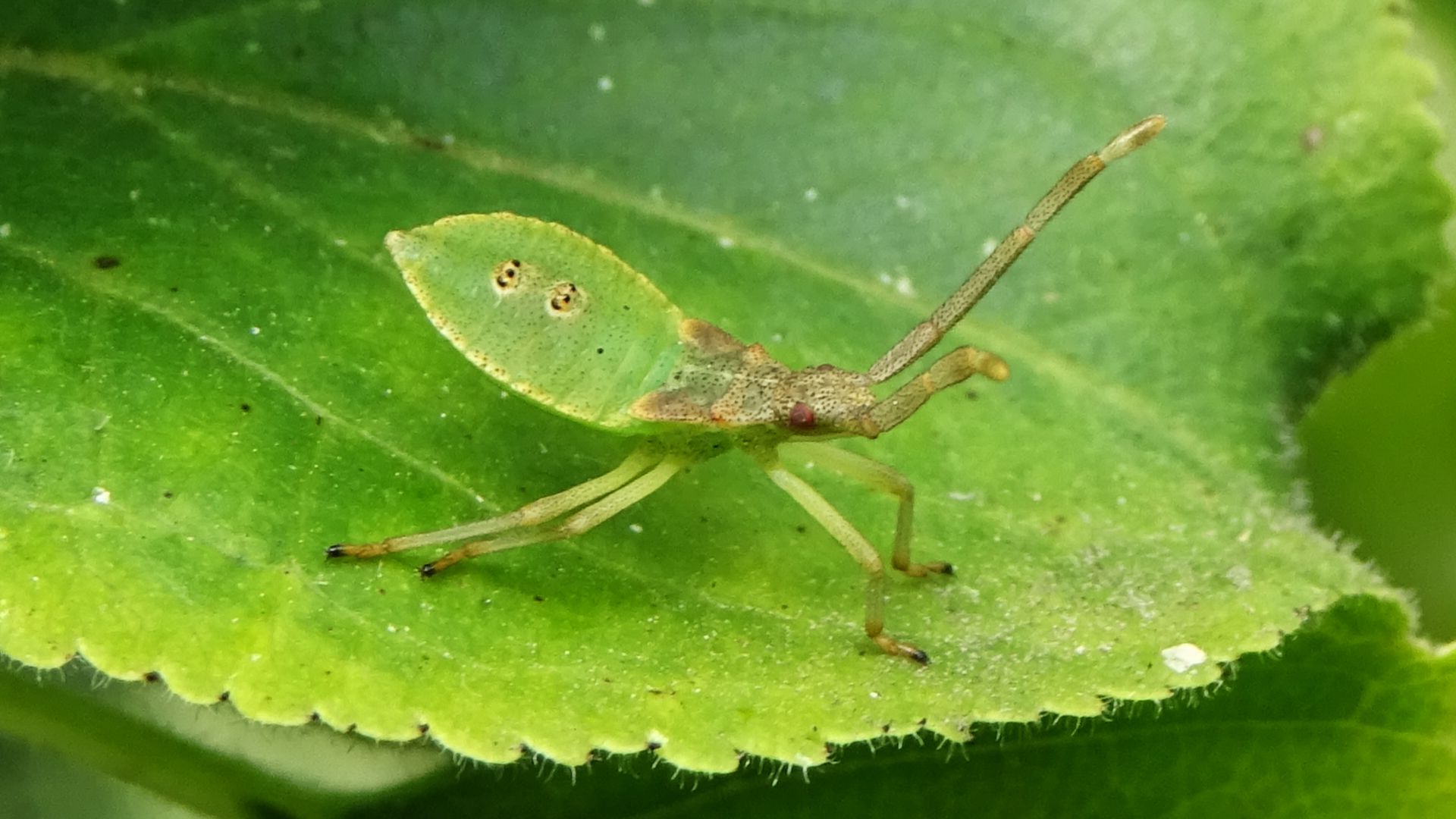
The Box Bug (11-14mm) was once only recorded in Britain at Box Hill in Surrey where it fed on box trees. When this species shifted to other foodplants such as buckthorn and hawthorn its range increased and is now seen in many other areas. This is a late instar.
#
Thick-antennae Plant Bug
Heterotoma planicornis
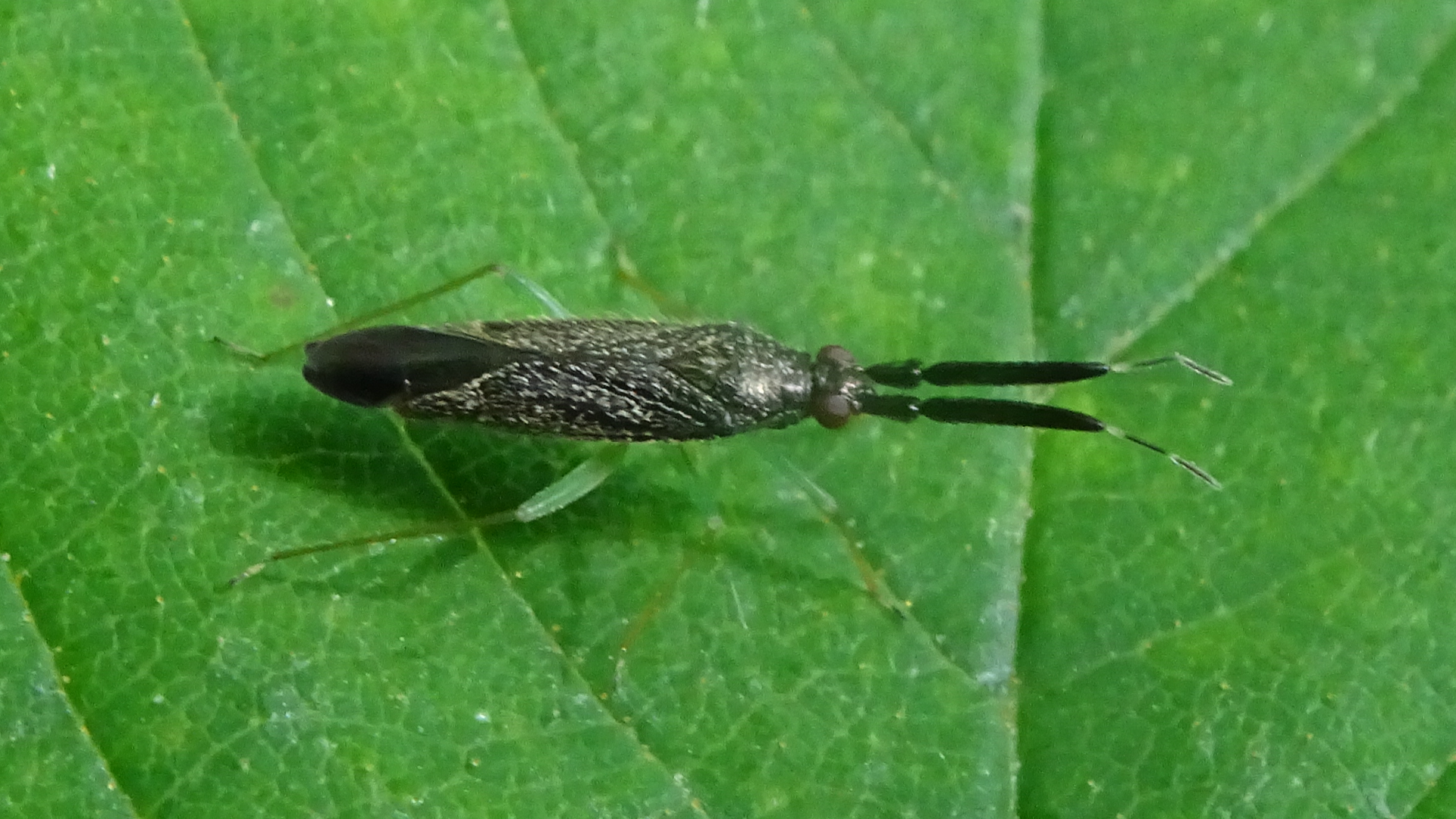
This common bug is found on trees and shrubs, especially nettles. It is easy to identify by the broad, flattened, second antennal segment, dark brown body colouration and green legs. As well as feeding on plant buds and unripe fruits it consumes small insects. Its eggs hatch during May with the reddish nymphs turning into adults from June. Adults about 5mm long are usually seen from July until October.
#
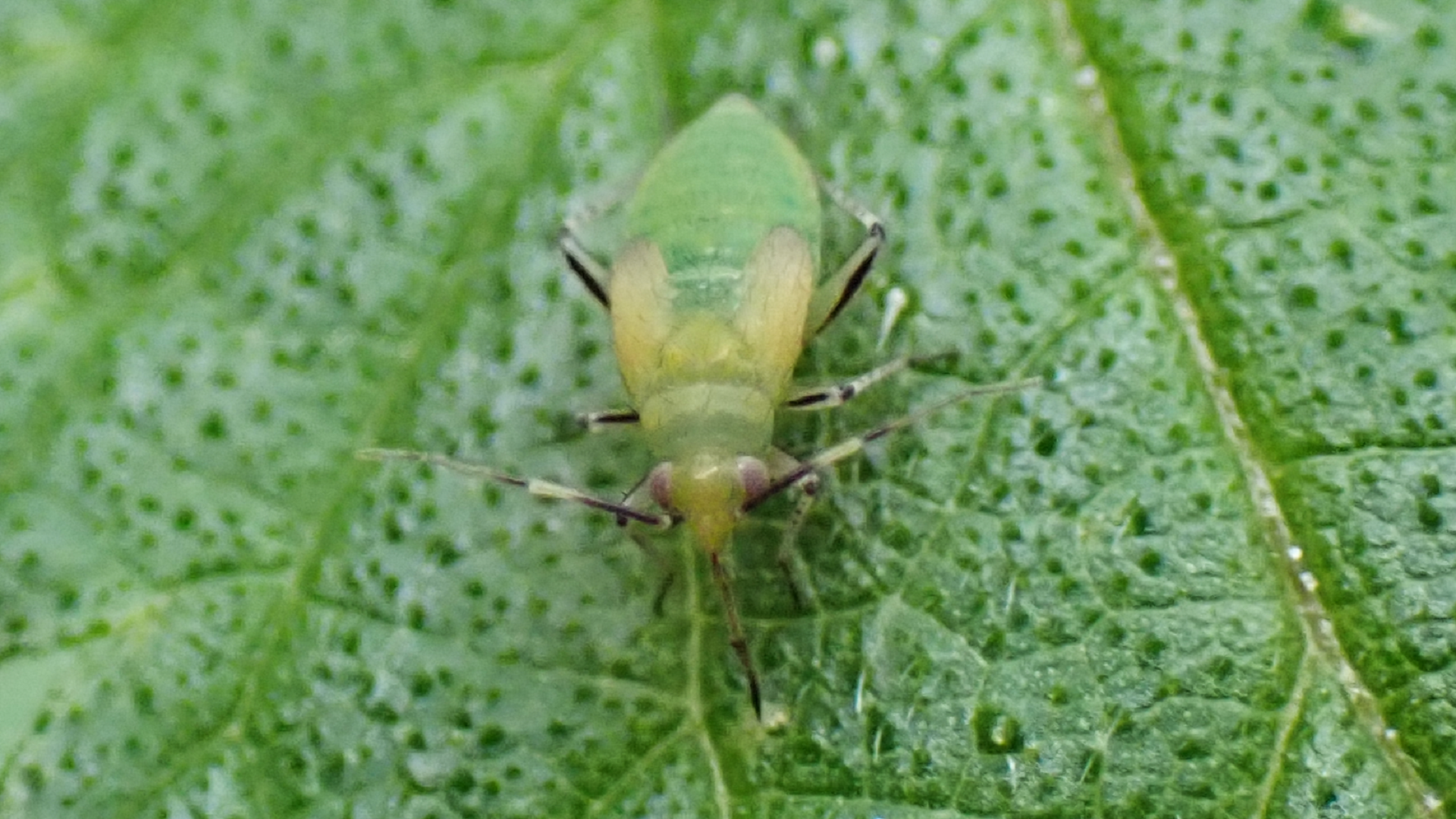
Nettle Leaf Mirid
Plagiognathus arbustorum
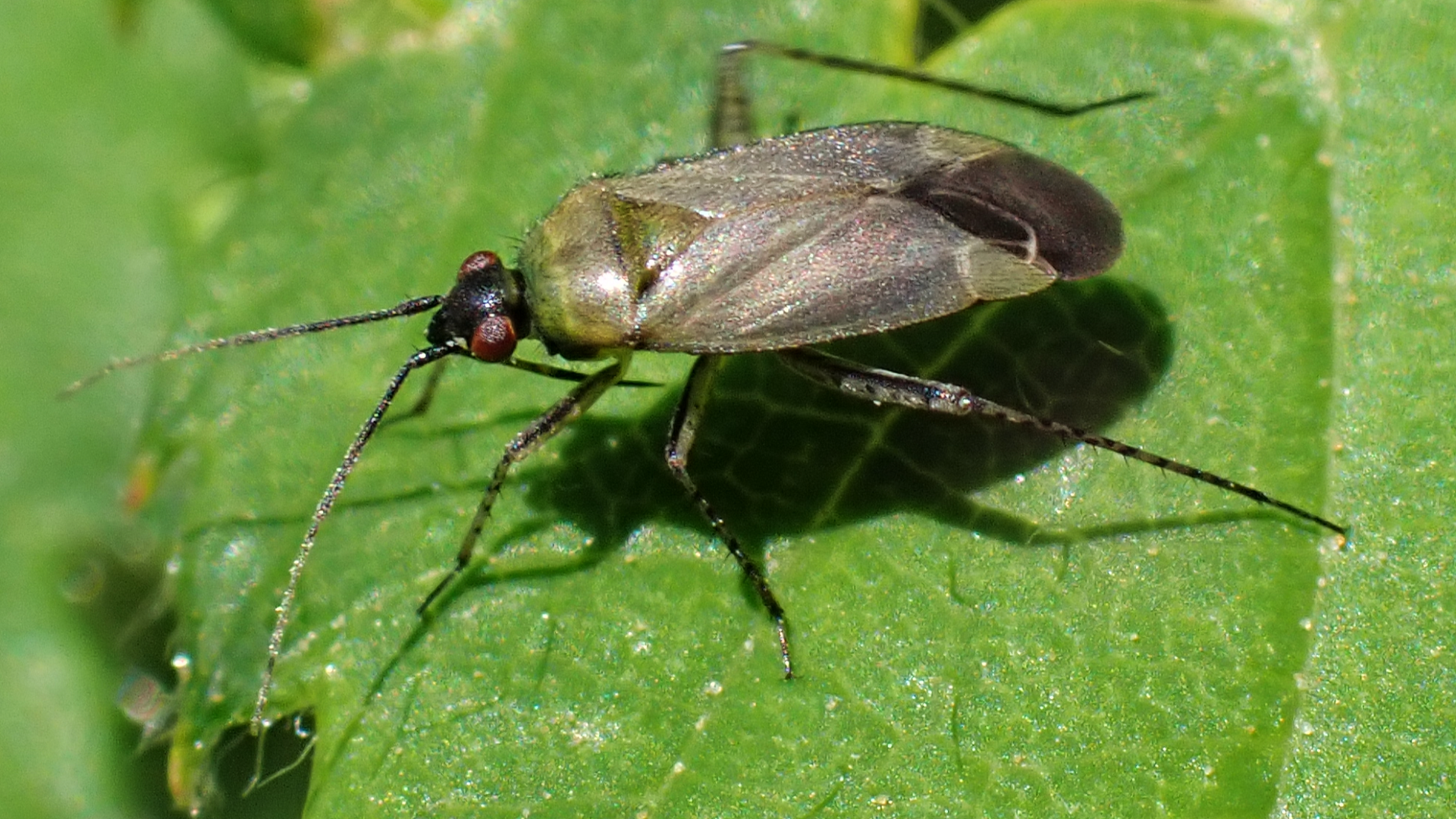
This is an extremely common bug found on nettles. The adults have a ground colour that varies from pale olive-green to almost black. The dark edges of the hind femora are a useful identification characteristic. Adults are about 4mm long; nymphs are smaller.
#
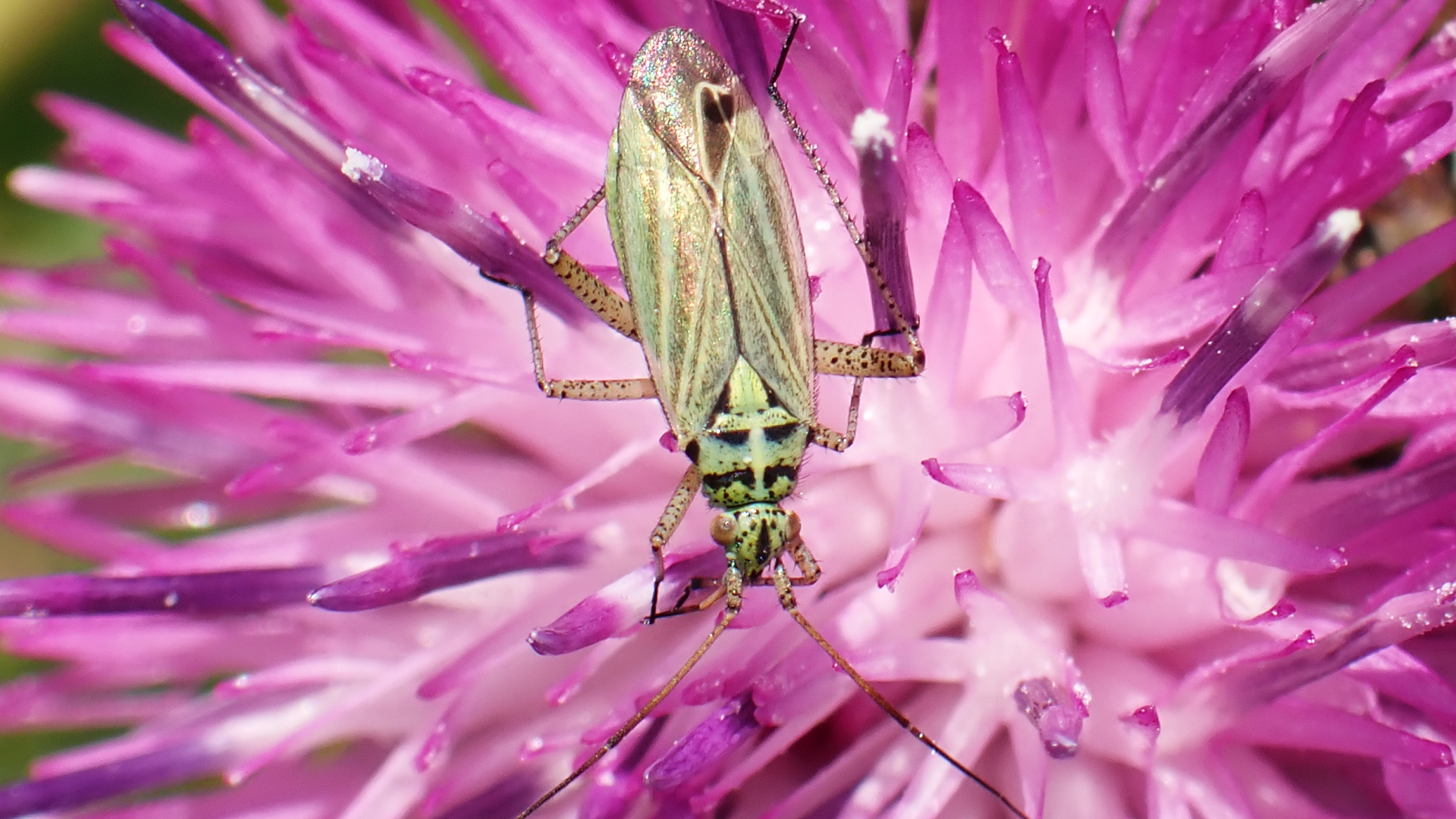
Knapweed Plant Bug
Oncotylus viridiflavus
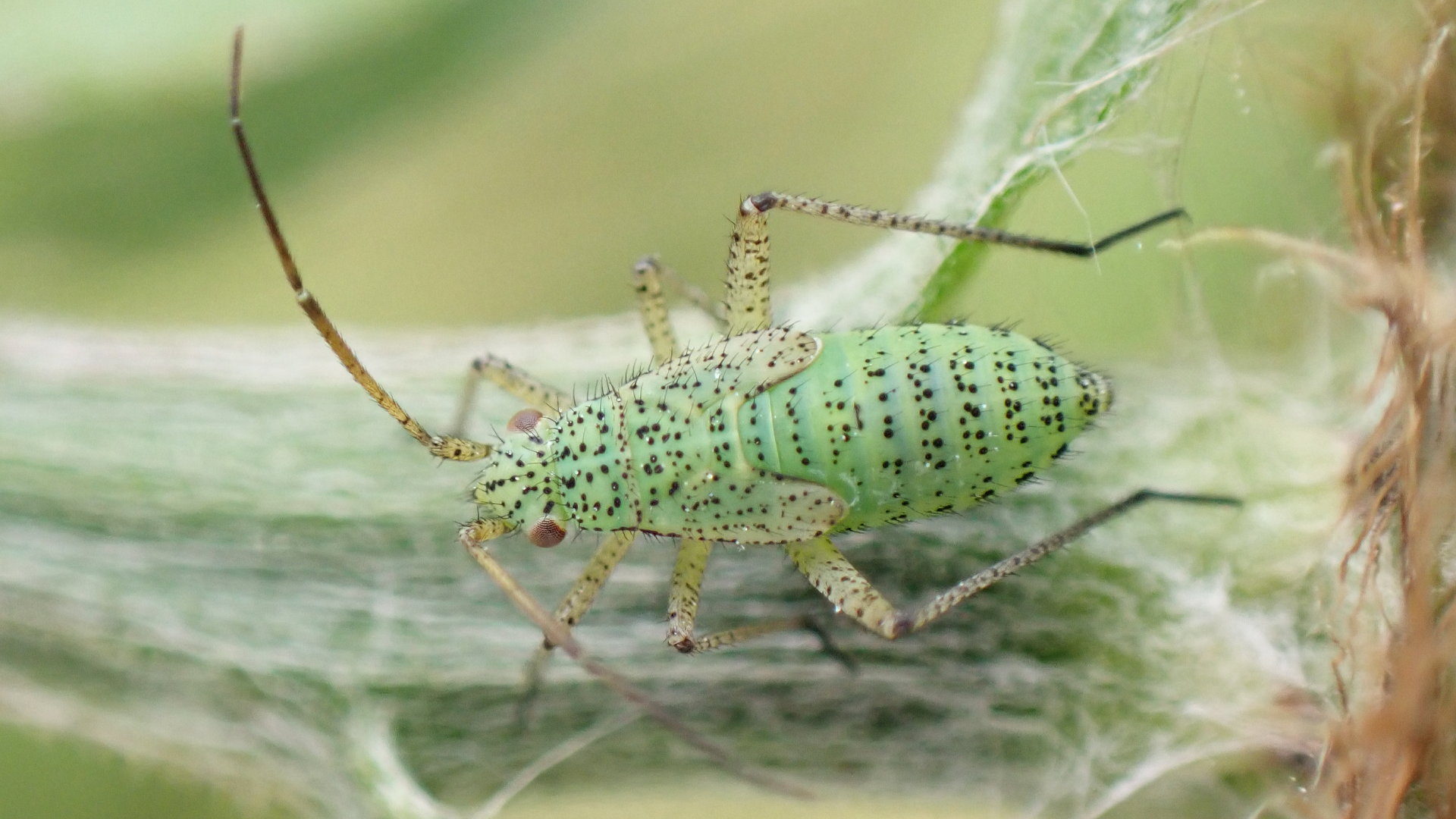
This tiny mirid bug feeds on common knapweed and is often seen on flowerheads. Adults, 5-6 mm, appear from July until September. This distinctive species is unlikely to be mistaken for any other.
#
Nettle Leafhopper
Eupteryx urticae
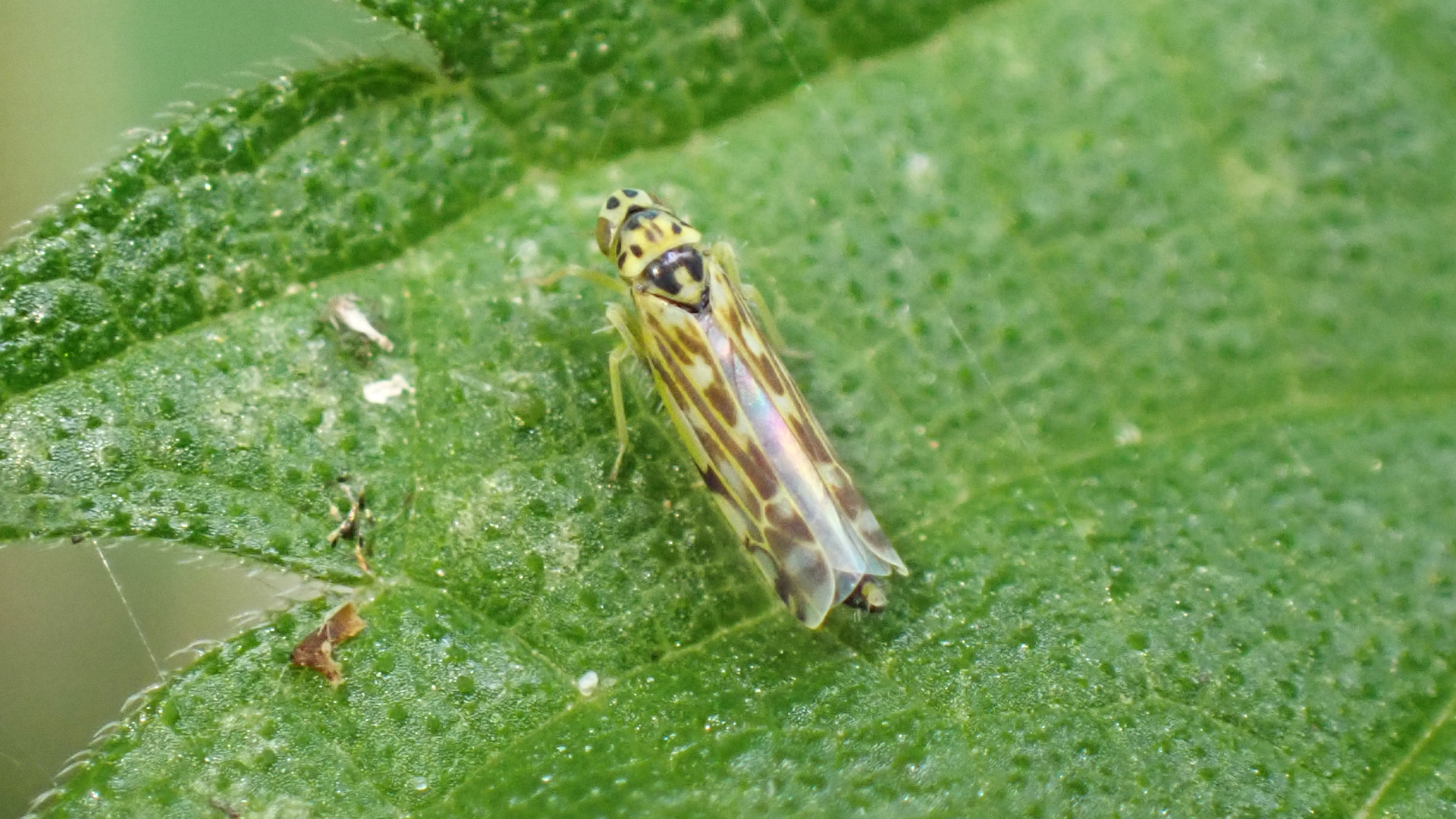
A spectacular leafhopper measuring 3mm in length usually encountered on nettles from May to November. These tiny insects, sometimes referred to as 'hoppers', are plant feeders that suck sap. Leafhoppers are generally thinner and smaller than froghoppers, they also have a row of prominent, regular spines on the rear tibiae.
#
Nettle Plant Bug
Liocoris tripustulatus
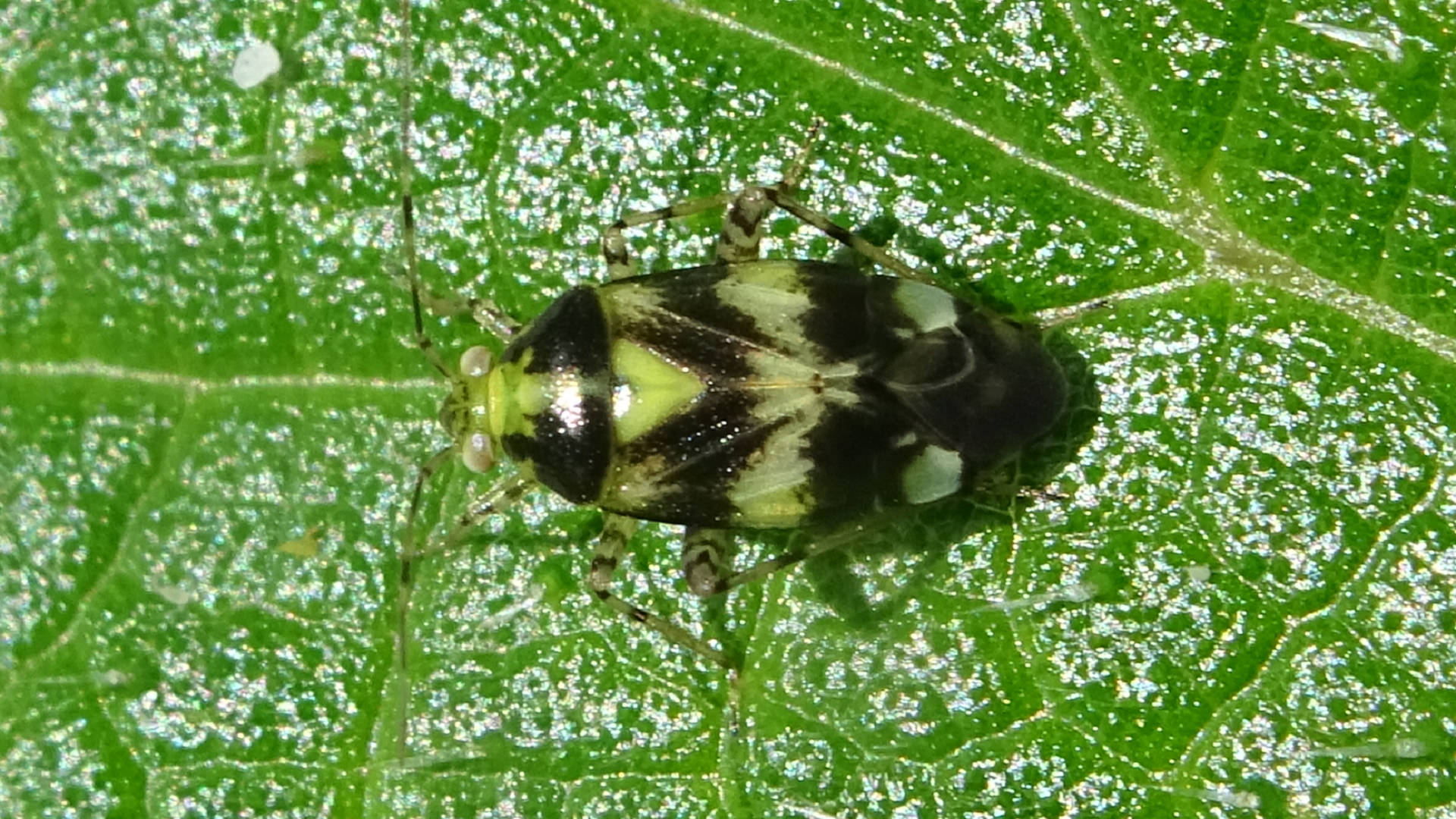
This common bug, 4-5 mm in length, is associated mainly with its host plant, stinging nettles. It can be found as an adult throughout the year with varying colouration that is strongly related to age. In spring following hibernation, the ground colour is generally darker and the cuneus more orange-yellow. When the new generation of adults appear in mid-summer they are normally lighter with less intense markings.
#
Ruddy Darter
Sympetrum sanguineum
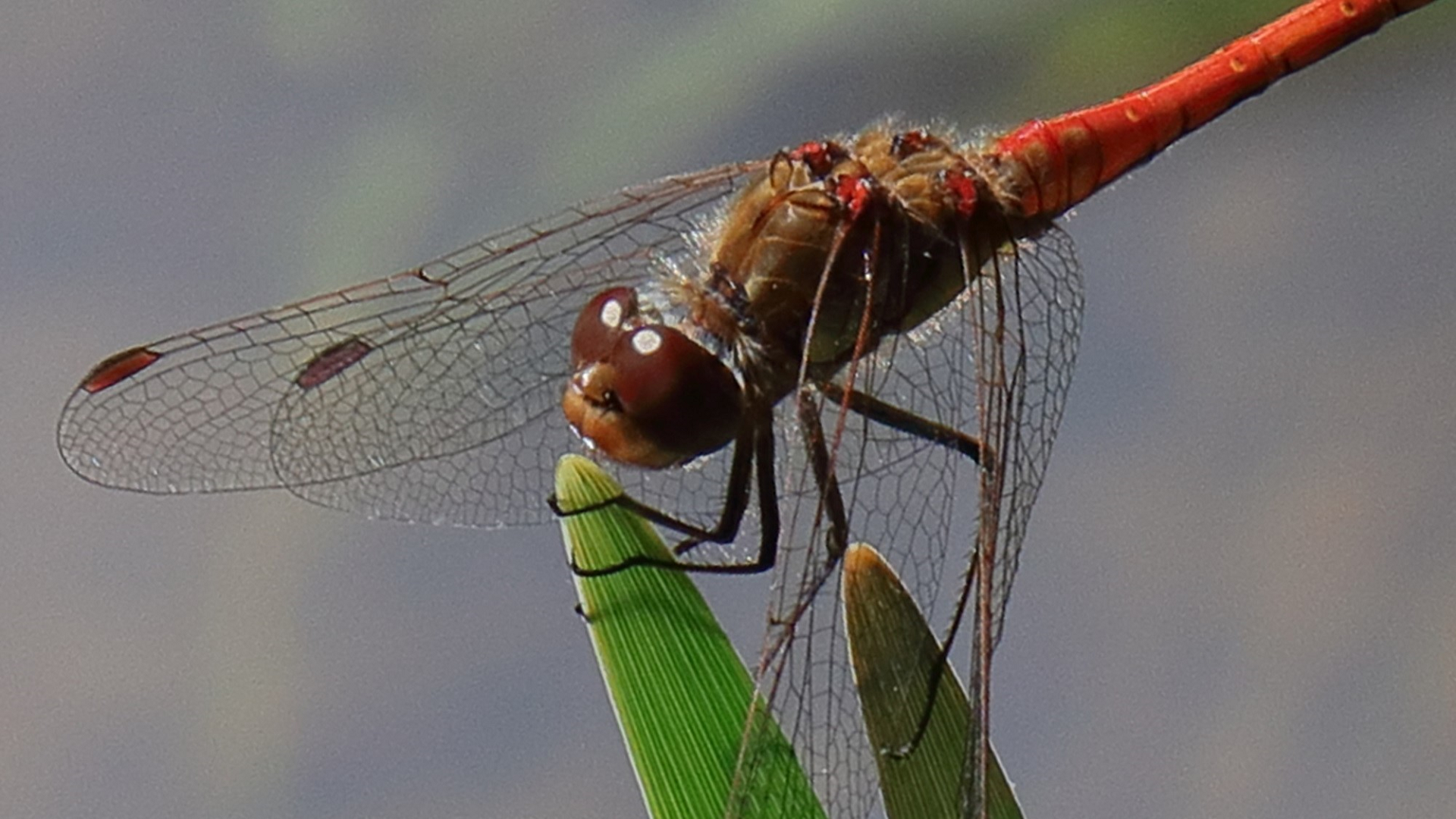
Common around well vegetated ponds. Males are red and have club-shaped abdomens. Females have ochre-yellow abdomens with black markings and are not club-shaped. Both sexes have black legs.
#
Long-winged Conehead
Conocephalus fuscus
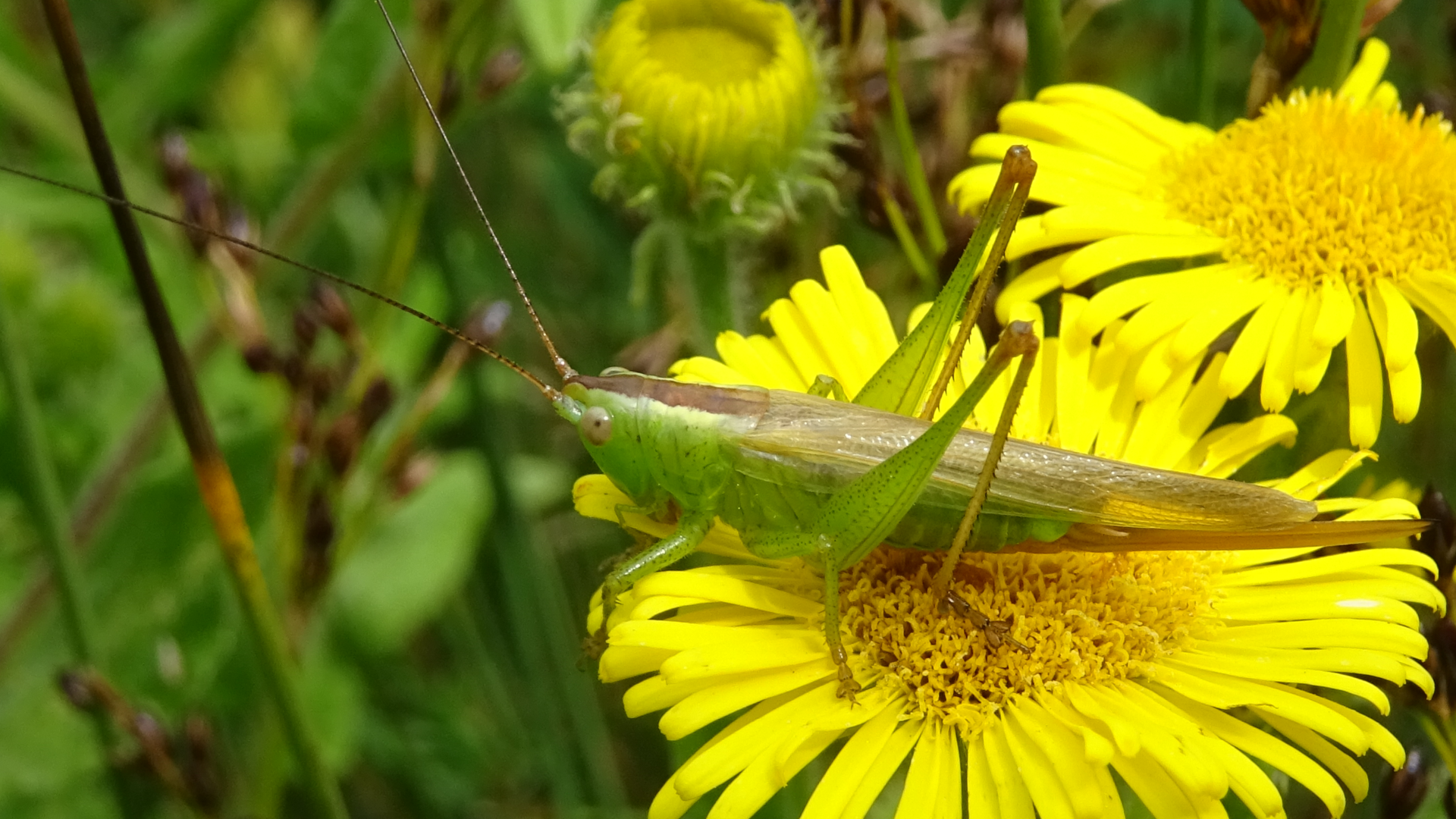
These bush-crickets mainly feed on grass and sometimes small invertebrates. The common name is derived from the angled shape of the head. Females have a large ovipositor protruding at the rear which is used to lay eggs. Adults are about 20mm long. Nymphs have short wings and a black stripe along the back.
#
Mayfly
Cloeon dipterum
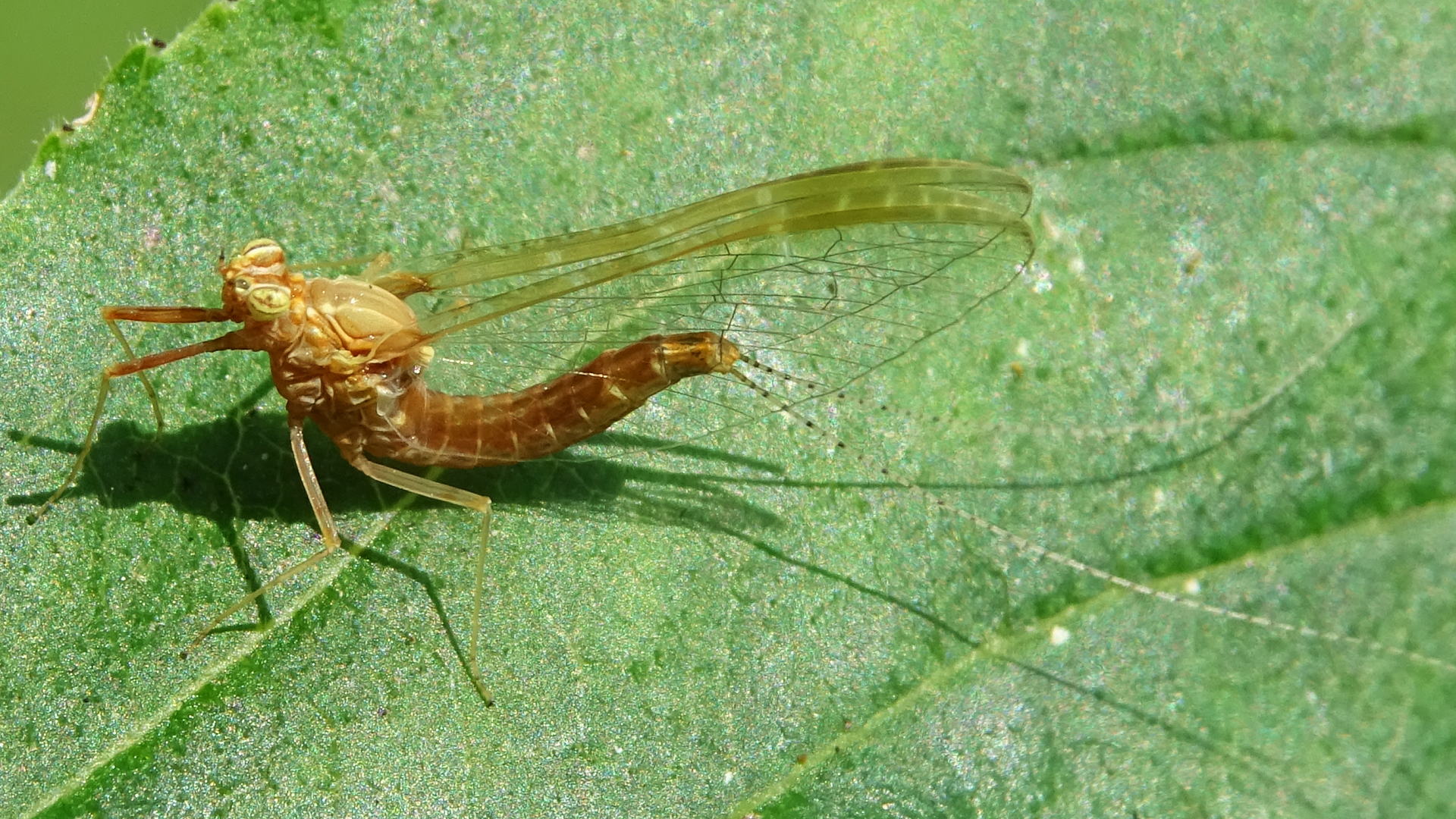
A tiny mayfly (5mm length) resting on a buckthorn leaf. It is the commonest British mayfly species, often found around small lakes and ponds from May until October. Males have turbinate (top-shaped) eyes that are believed to assist in locating isolated females in a mating swarm. Females are ovoviviparous producing eggs that form inside the maternal body. The eggs hatch as soon as they are released and hit the water. The aquatic larvae consume algae and pond detritus. Adults do not feed, instead their main motive for living is to mate.
#
Non-biting Midge
Chironomus agg,
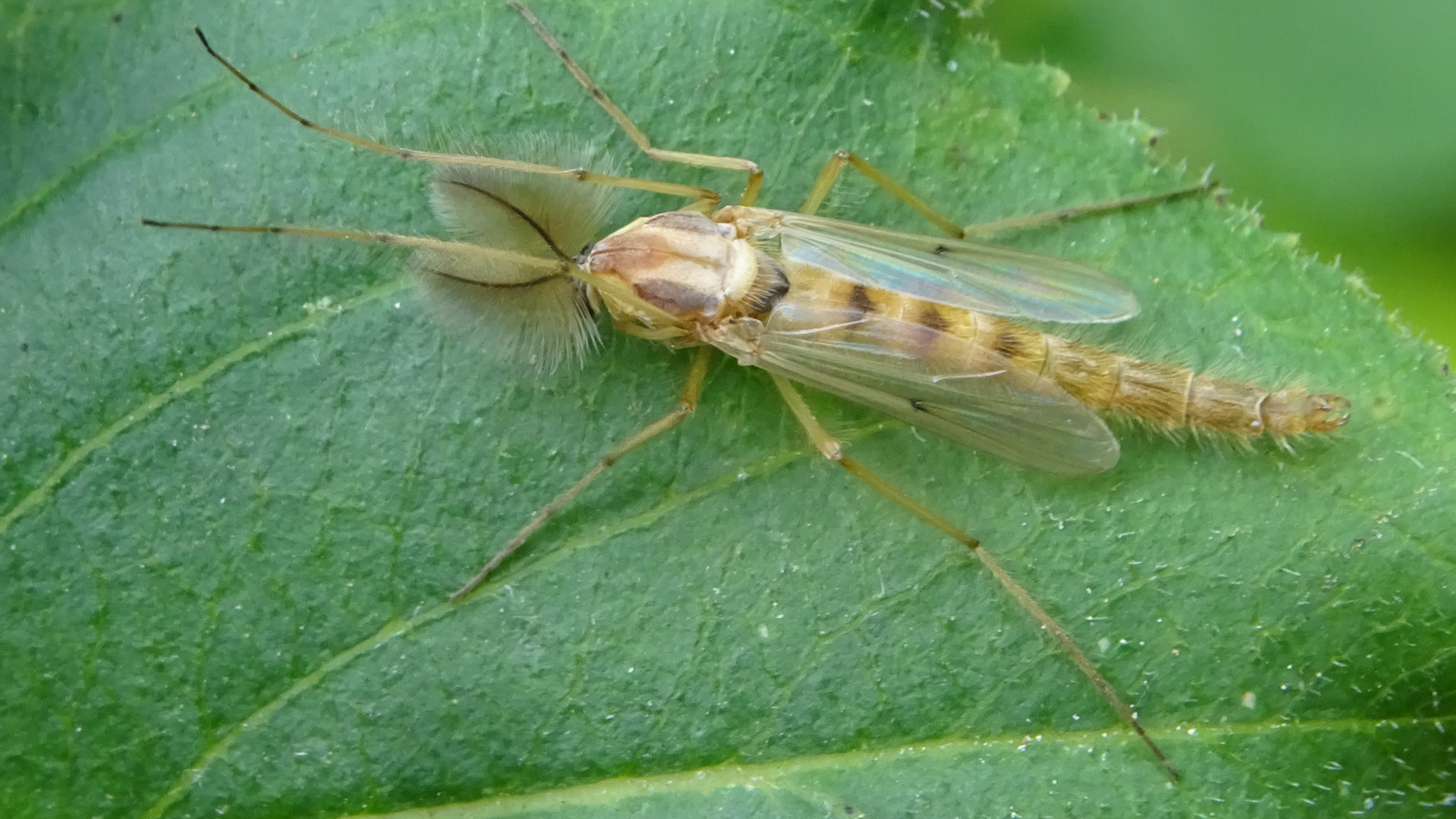
Non-biting midges are found around water when females are ready for egg laying. Their larvae, known as 'bloodworms', live at the bottom of lakes and rivers. Males have prominent plumes on the head.
#
Thick-headed Fly
Sicus ferrugineus
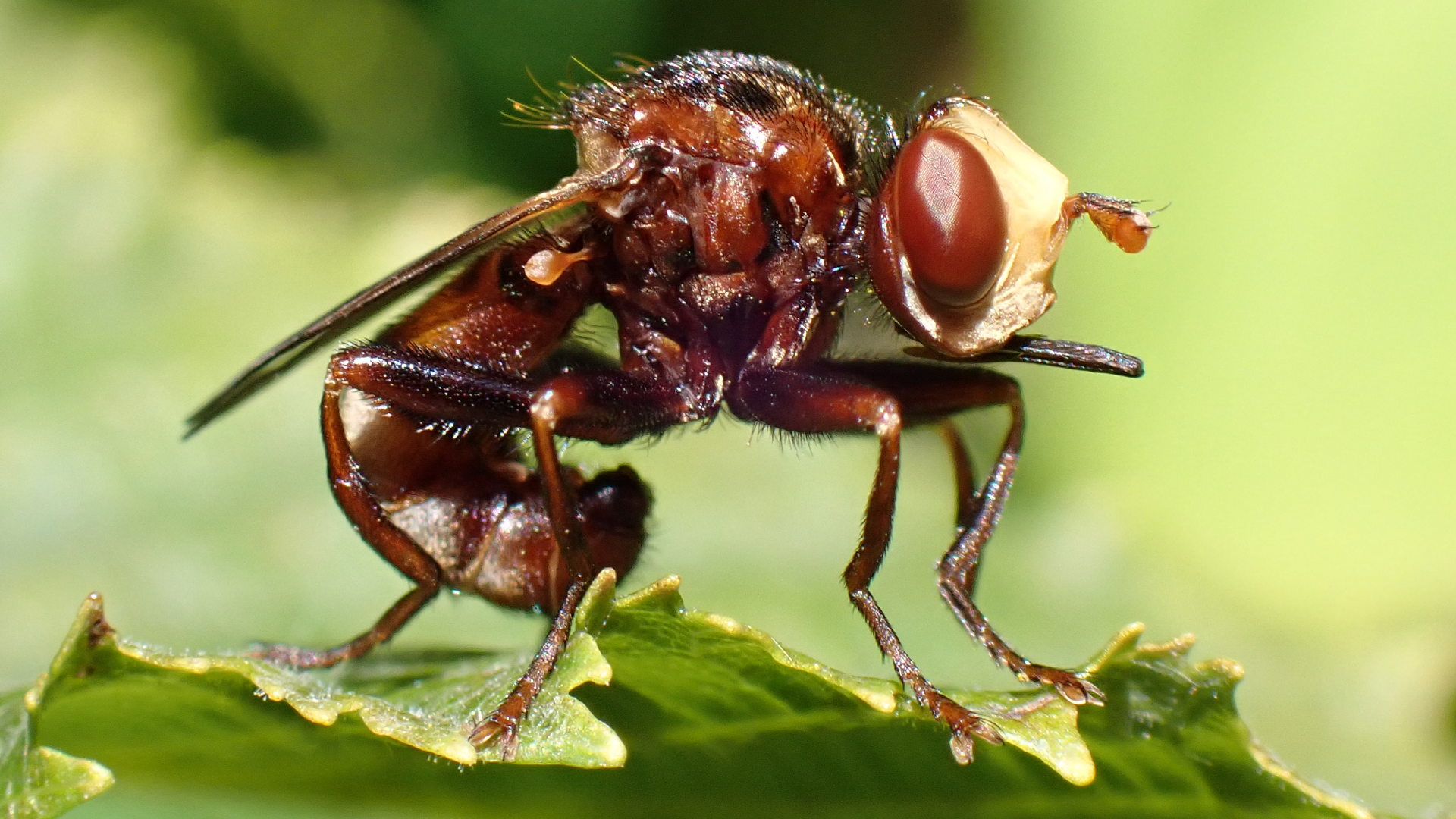
The Thick-headed Fly has a brown body and a large yellow head with large brown eyes. It is 8-13mm long. Flying from May until September this species is often found resting on hedgerows with the abdomen is folded forward. It feeds on nectar and pollen.
#
Woodland Red Ant
Myrmica ruginodis
Over fifty species of ant exist in Britain, seven belong to the Myrmica family which typically have deep red colouration and the ability to inflict a weak sting. This is the most common Myrmica found in Britain. It lives in small colonies containing between 100-300 members and each colony may contain many egg-producing queens. Nests are built in tree trunks, decaying timber and under stones. There are two sub-species, one which has queens noticeably larger than the workers, the other with queens almost the same size as the worker. This aggressive woodland species feeds on insects and arachnids. Mating flights occur in July and August.
#
Wasp Spider
Argiope bruennichi
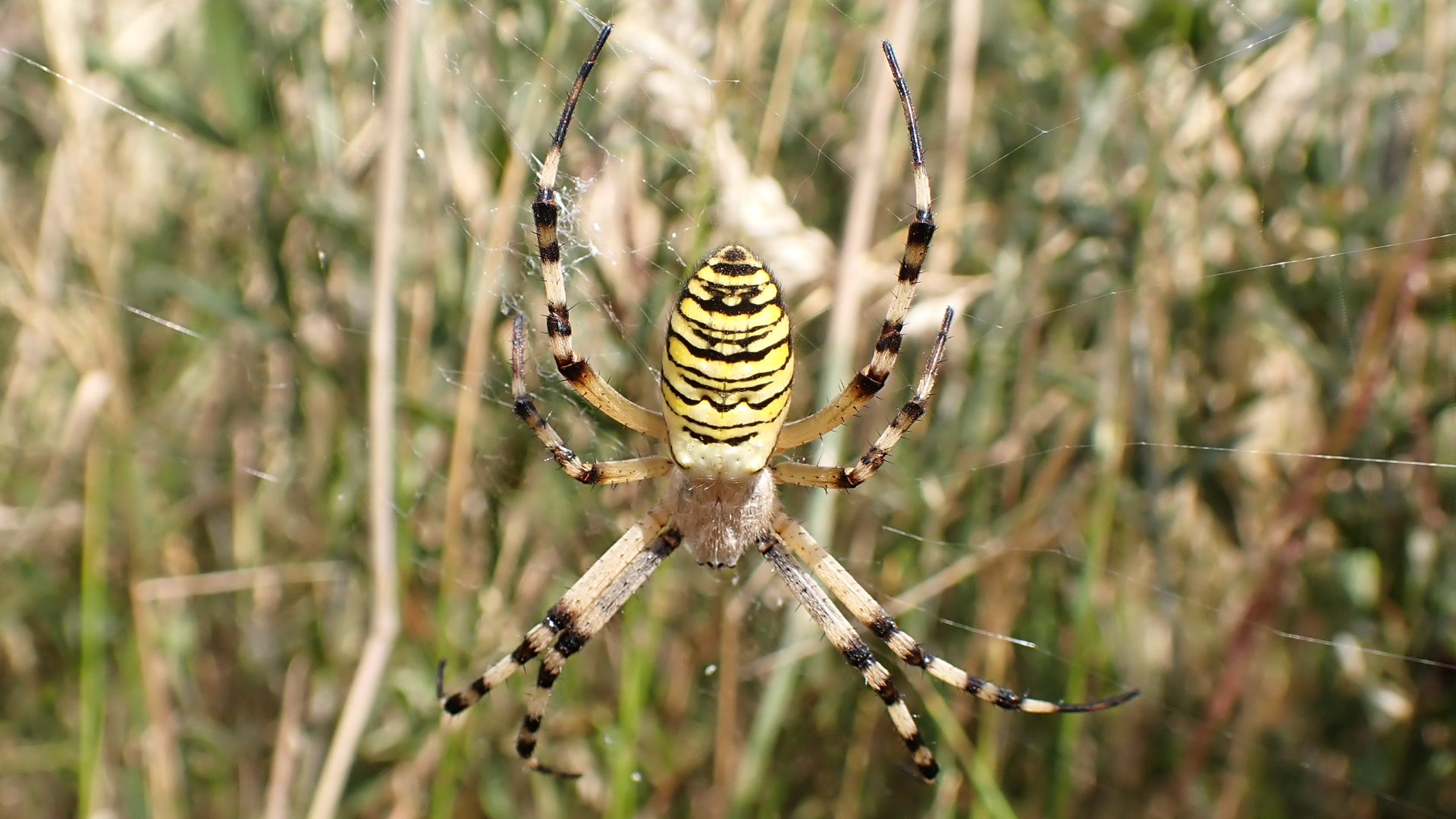
Wasp Spiders build large orb webs in grassland which catch grasshoppers and crickets. Males often get eaten by females too so have to take care when mating. They often wait at the web's edge ready to pounce when the female moults into a mature form. At this time her jaws are soft so he is less likely to become a victim. Males are smaller than the females and pale brown.
#
Cross Spider
Araneus diadematus
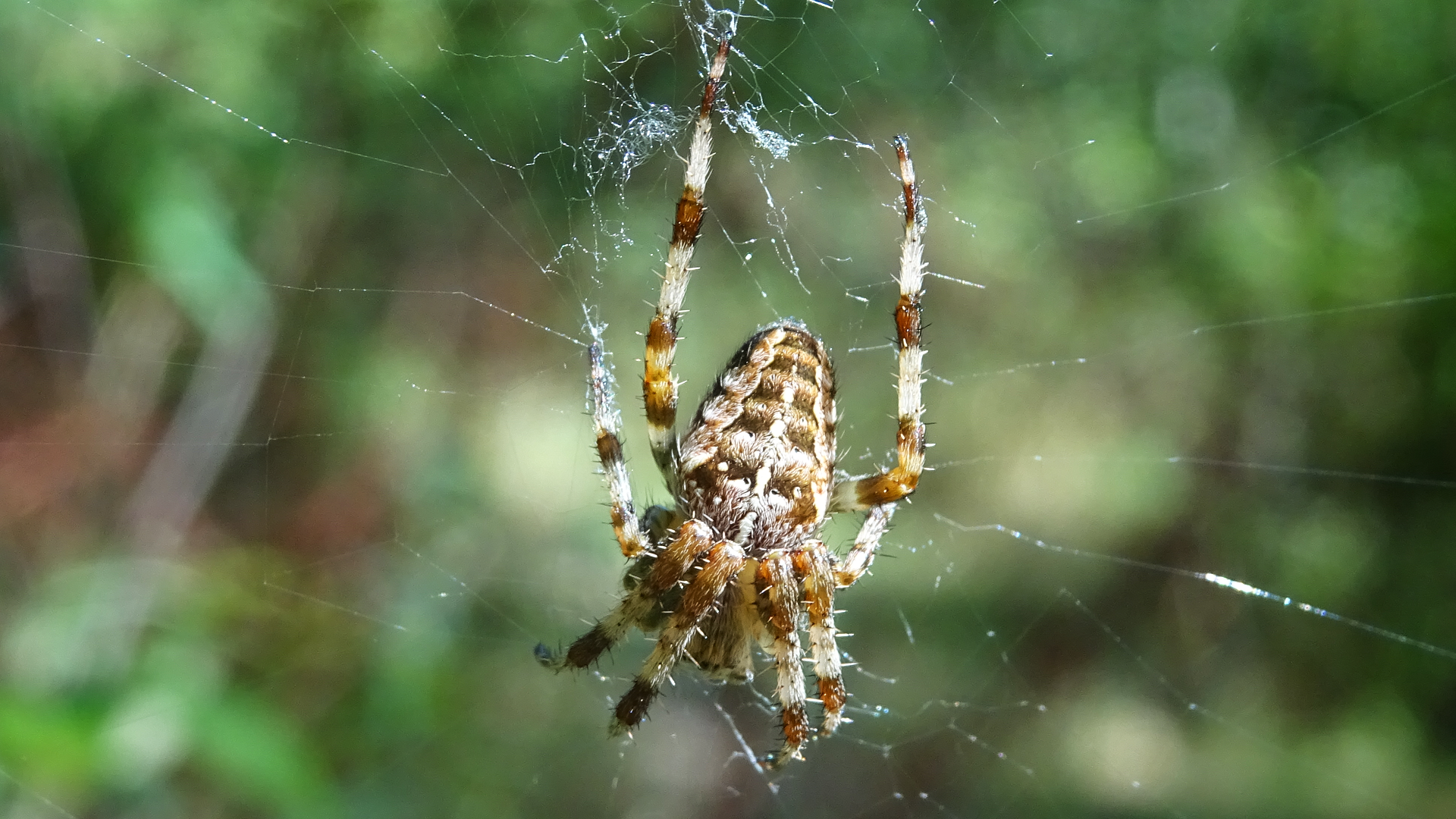
The Cross Spider, so-called because of the cross marking on the dorsal abdomen, is also known as the Garden Spider. Their webs are often found on hedgerows during autumn. If disturbed the spider vibrates its web until it becomes a blur presumably this is to bewilder potential predators.
#
Nursery Web Spider
Pisaura mirabilis
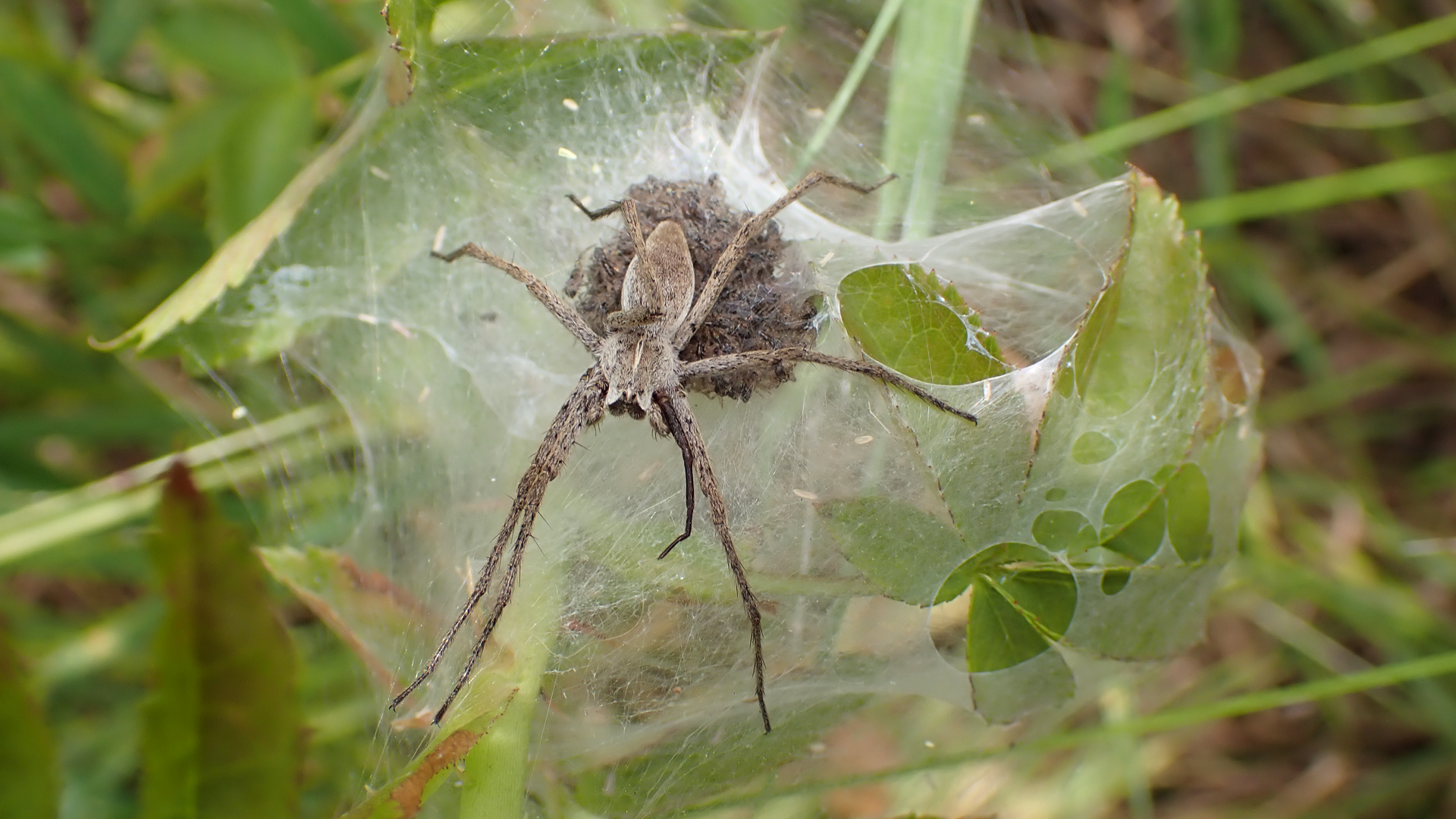
Nursery web spiders bask on brambles and nettles. They do not use webs to snare prey instead they prefer to sprint after and grab their meals. The female carries around an egg-sac until the time for hatching approaches. She then builds a webbed tent on vegetation which will provide protection for the young until they leave the nest.
#
Common Shrew
Sorex araneus
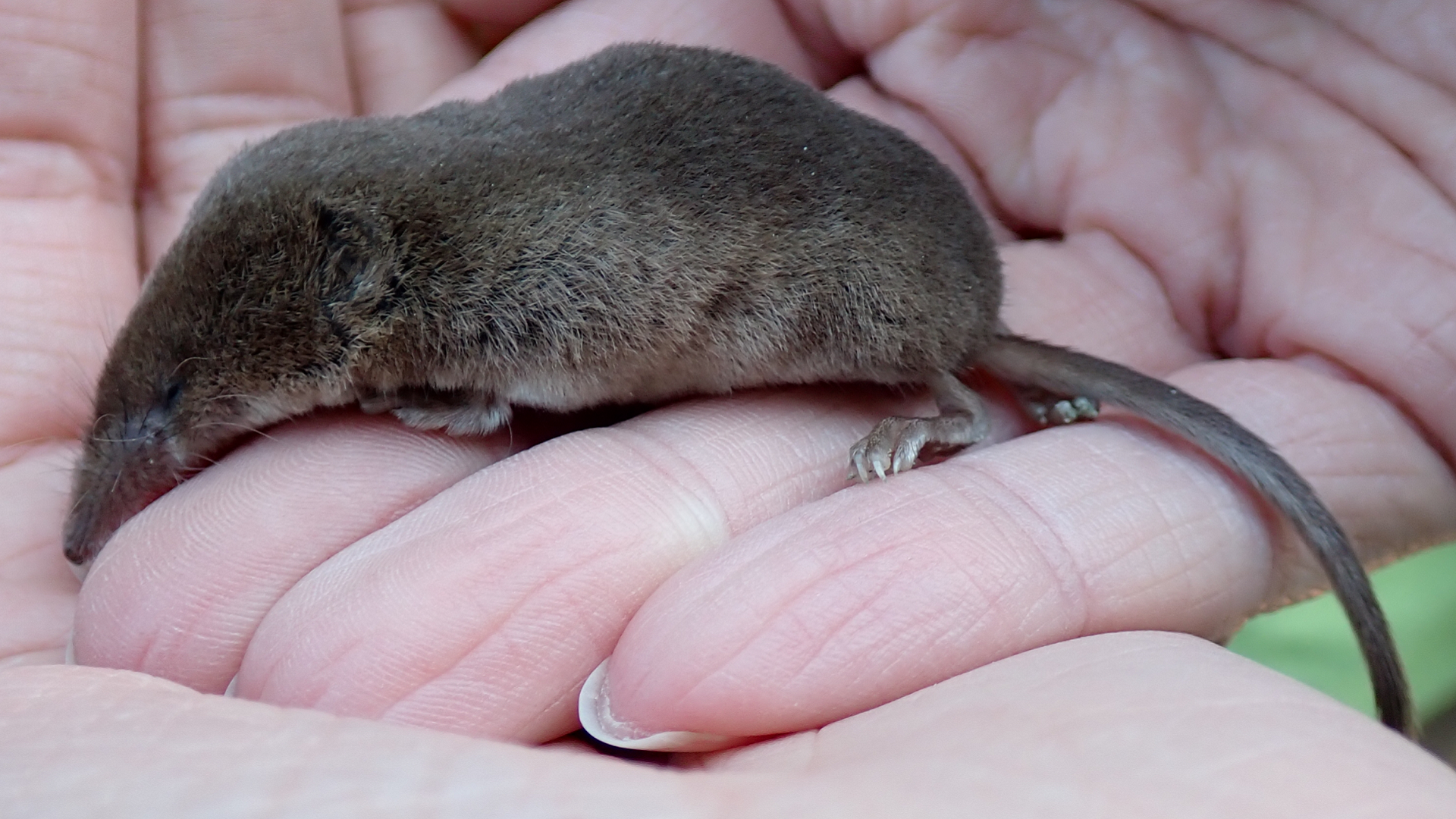
Common Shrews are insectivores that need to feed every 2-3 hours to survive. They have a keen sense of smell and use their long noses to search for food in the undergrowth. The common shrew has tiny eyes, very small ears and a dark brown body which is greyish underneath.
#
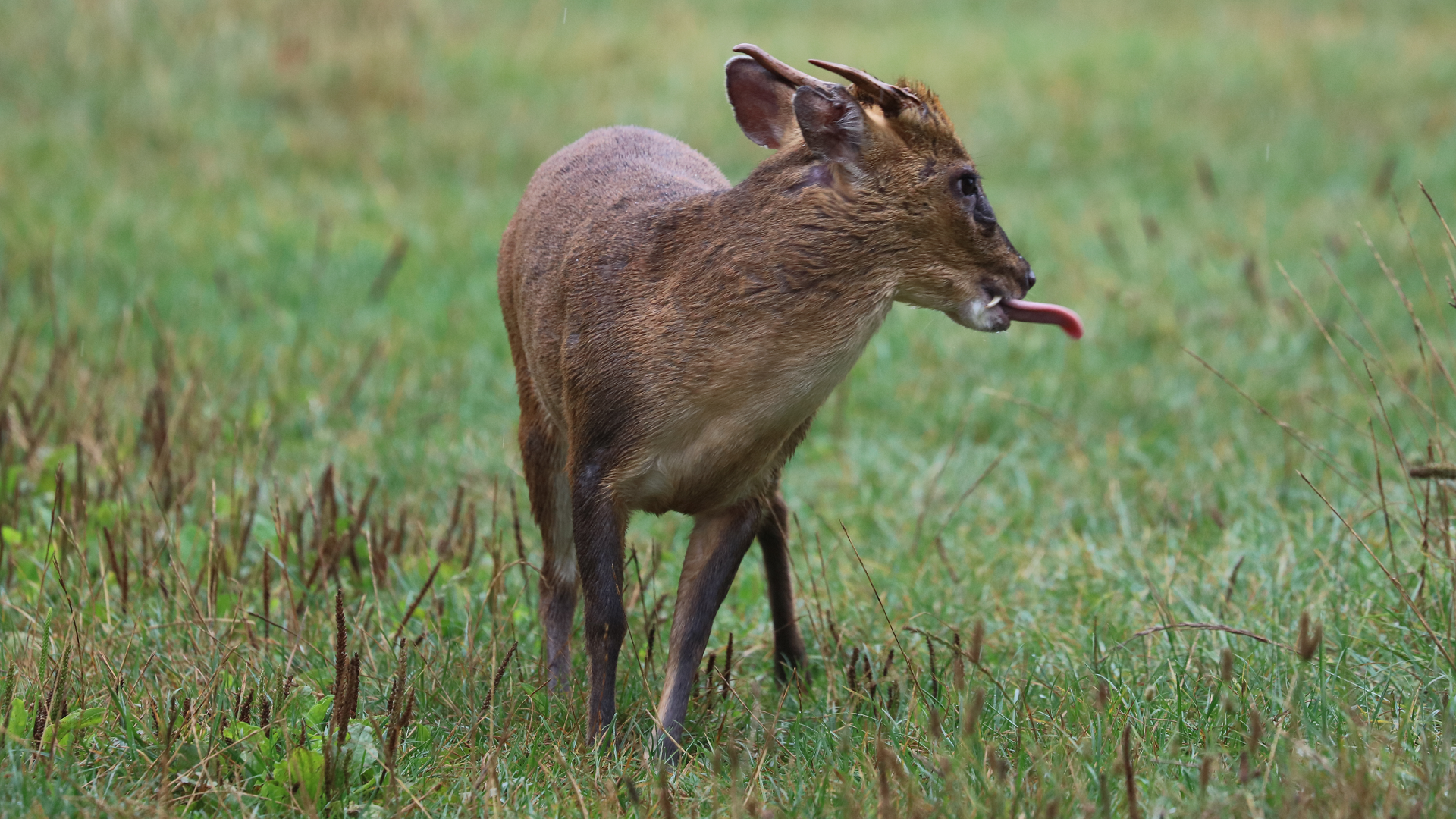
Muntjac Deer
Muntiacus
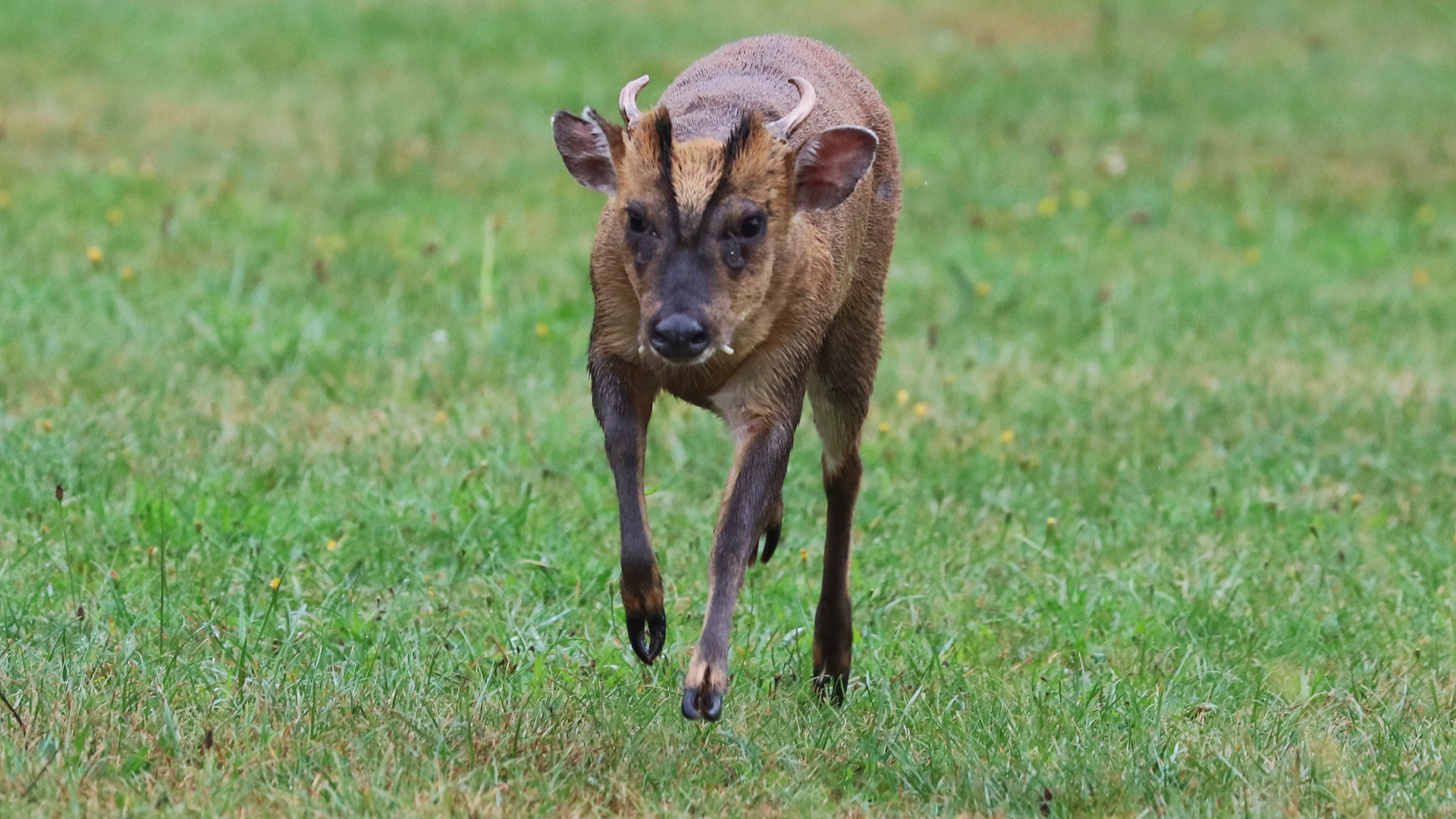
Unlike other types of deer Muntjac are fairly solitary creatures, so they use scent-marking more than other deer to communicate. They have scent glands (the long v-shaped slits) on the forehead which they rub against trees or the ground. In front of the eyes there are also pre-orbital glands which the Muntjac often licks with its long tongue. It is thought they do this to recognise their own scent. Males scent-mark more frequently than females and dominant males more than their underlings.
#
Globe Thistle
Echinops agg.
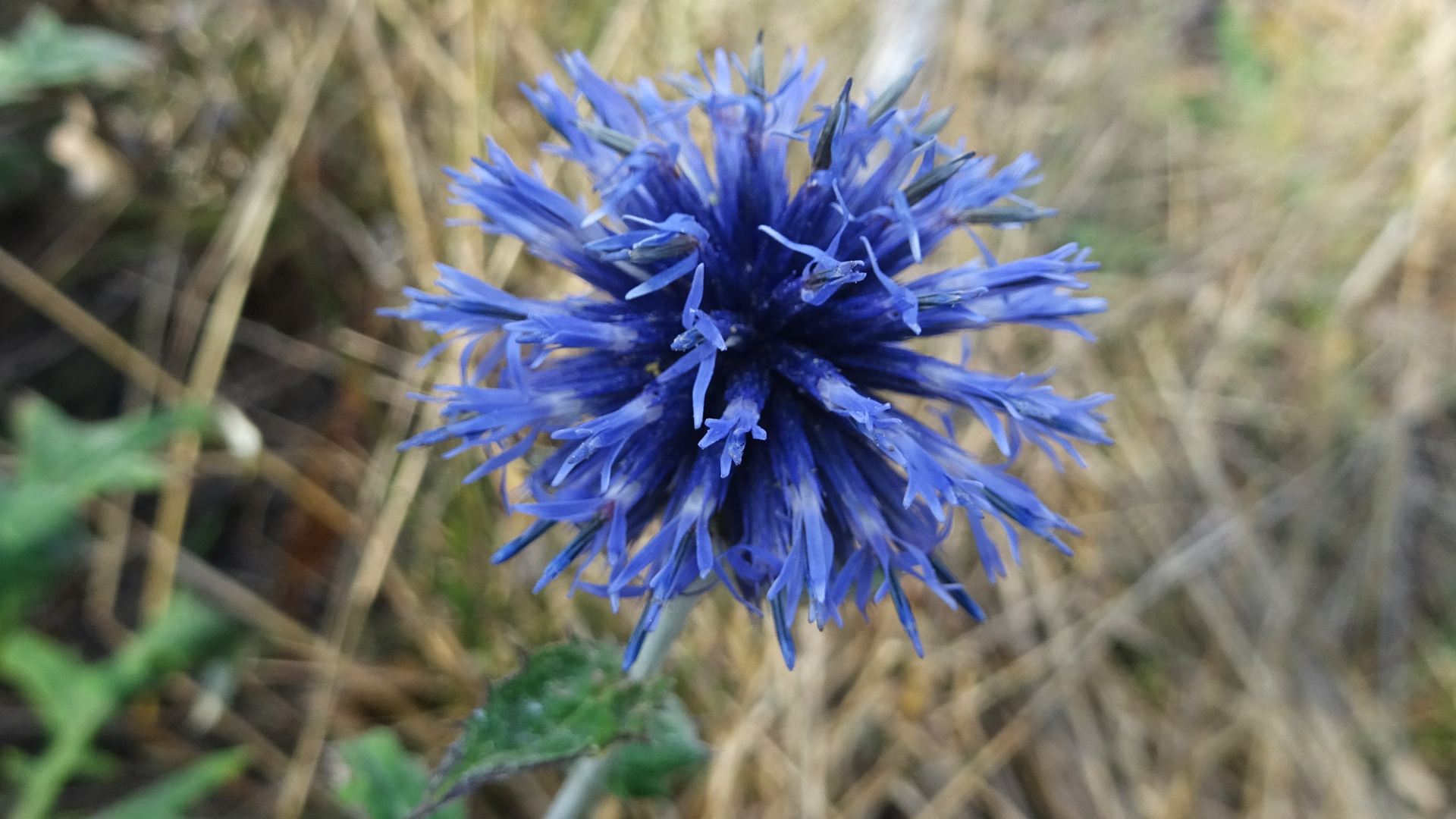
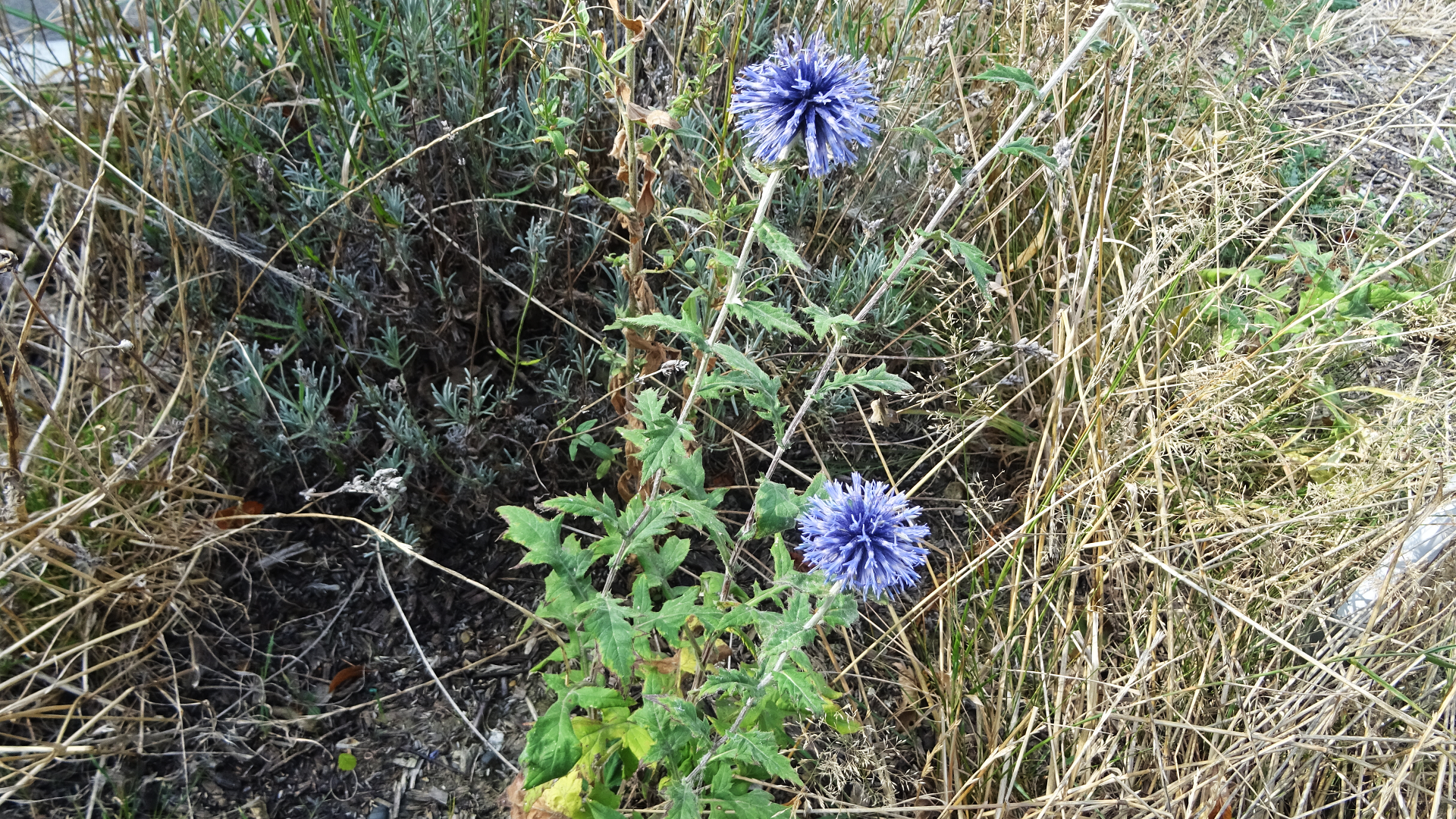
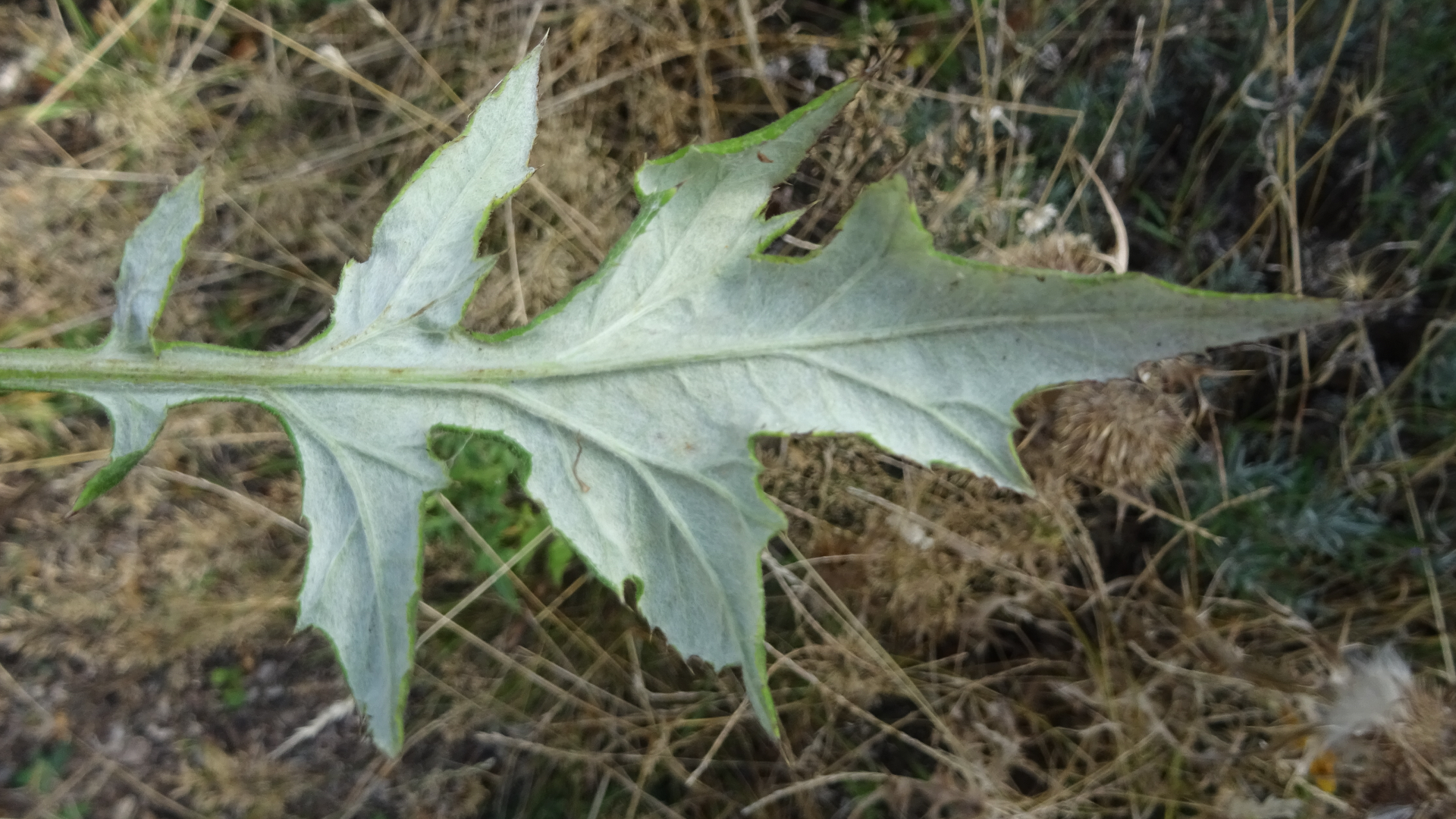
Perennial found on rough ground. This composite is likely to have been deliberately planted or a garden escape of which there are several species and hybrids. The plants grow up to about 50 centimetres tall.
#
Weld
Reseda luteola
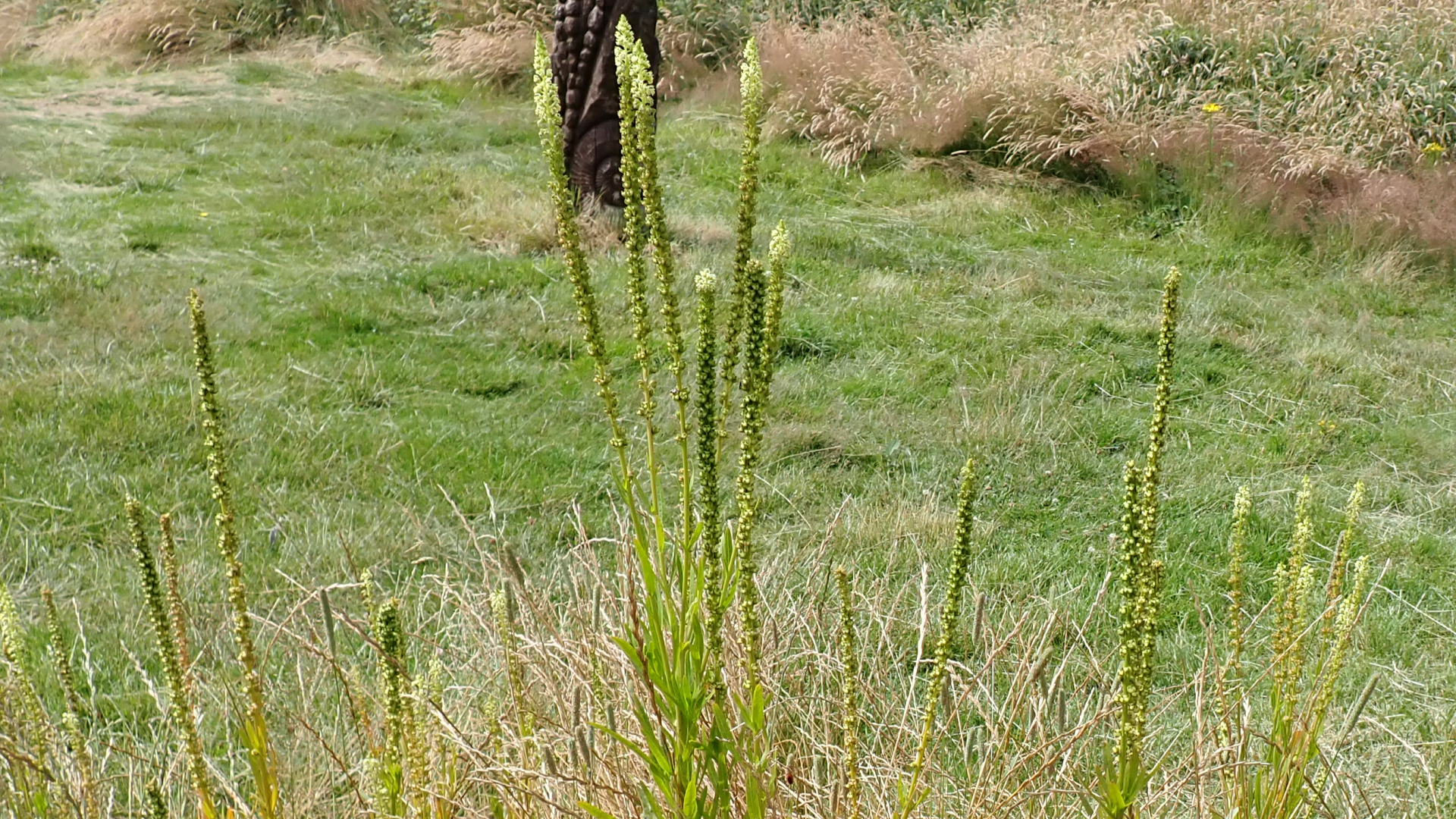
Weld is a hairless biennial, also known as Dyer's Rocket, seen from June until September. Its develops yellow flowers on tall spikes that grow up to 2 metres tall and has unlobed, wavy-edged, lanceolate leaves. Historically, the Romans made a yellow dye from the flowers to colour wedding garments and also robes worn by the Vestal Virgins.
#
Hop Trefoil
Trifolium campestre
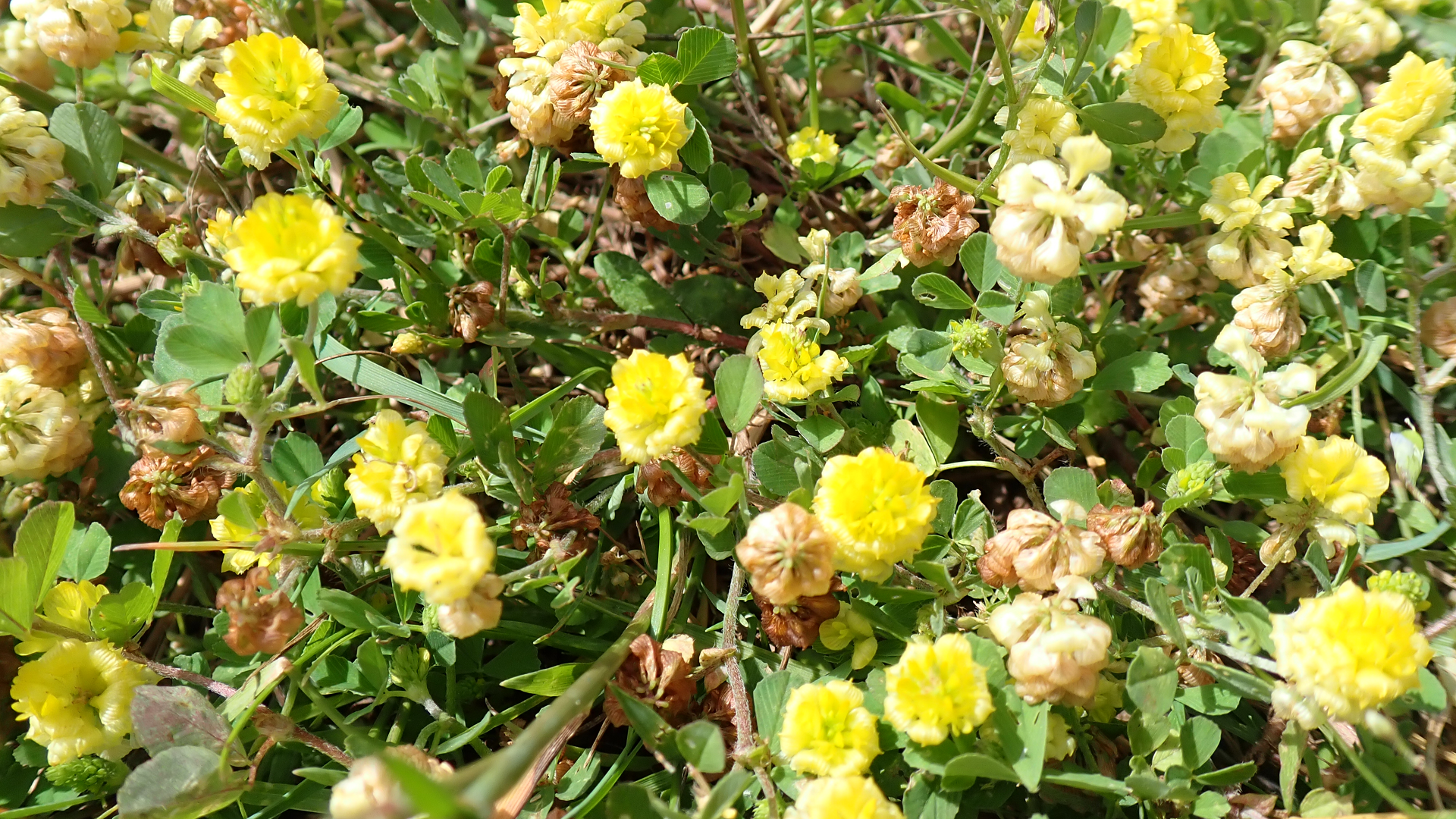
Short, hairy annual with long-stalked trefoil leaves found in dry grassland. The roundish yellow flowers (10-15mm) appear from May until September. Dead flowers turn light-brown and hide the pods. Not a very common plant in Hainault Forest.
#
Greater Bird's-foot Trefoil
Lotus pedunculatus
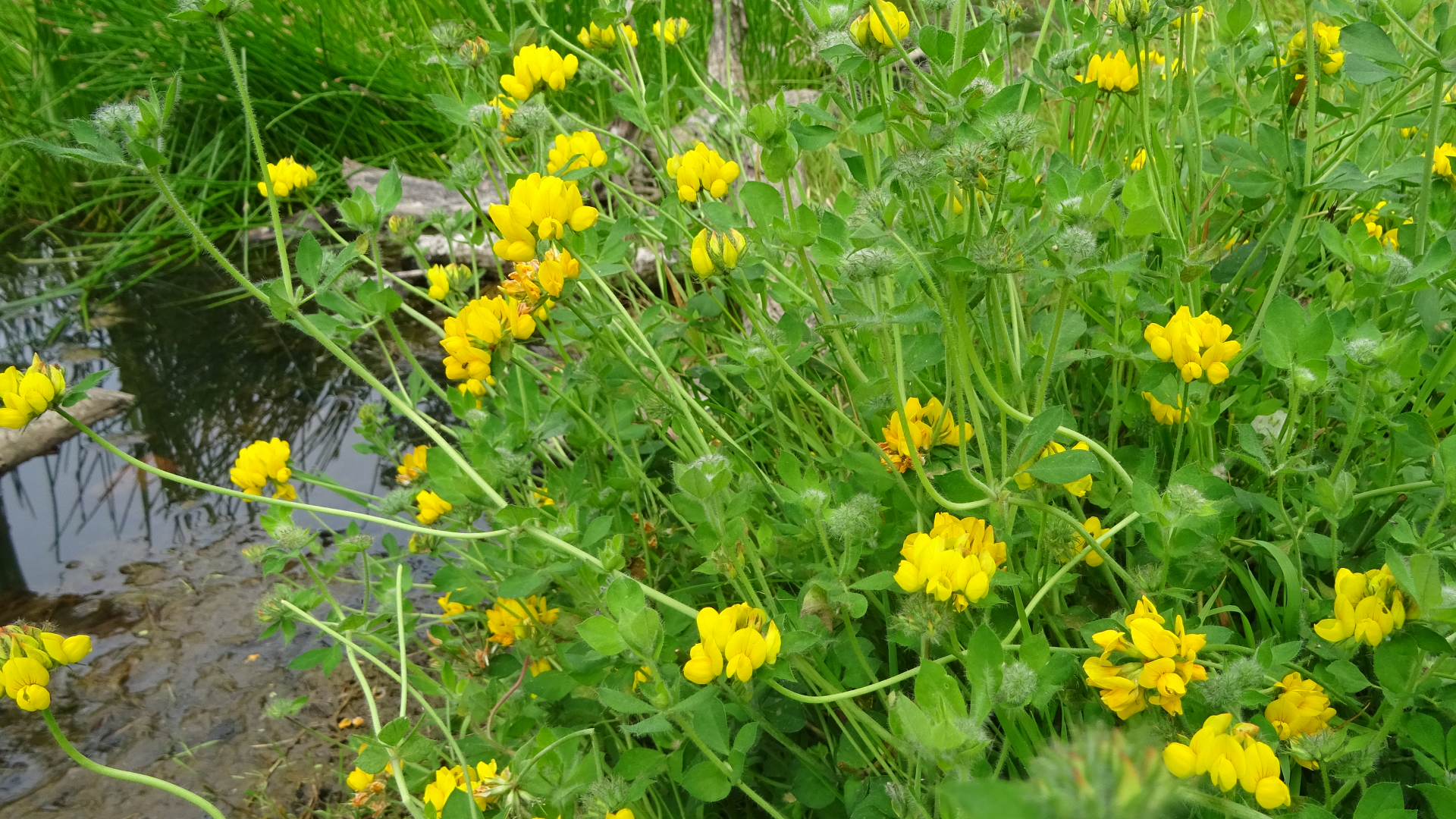
Perennial found in damp locations from June until August. Its yellow or orange-yellow flowers (10-18 mm) appear together in groups of 5 to 12. The hollow stemmed plants grow to a height of roughly 50 cm. They are stoloniferous, with greyish, often downy leaves and have spreading sepals when in bud.
#
Tufted Vetch
Vicia cracca

Perennial found in rough grassland that bears bluish-violet flowers (10-12 mm) at equal distances on one side of a central stem (raceme). Flowers nearer the stem base open first. Plants can reach a height of two metres, however they are usually shorter. Pinnate leaves with up to twelve pairs of leaflets end in branched tendrils. Flowers appear from June until August.
#
English Stonecrop
Sedum anglicum
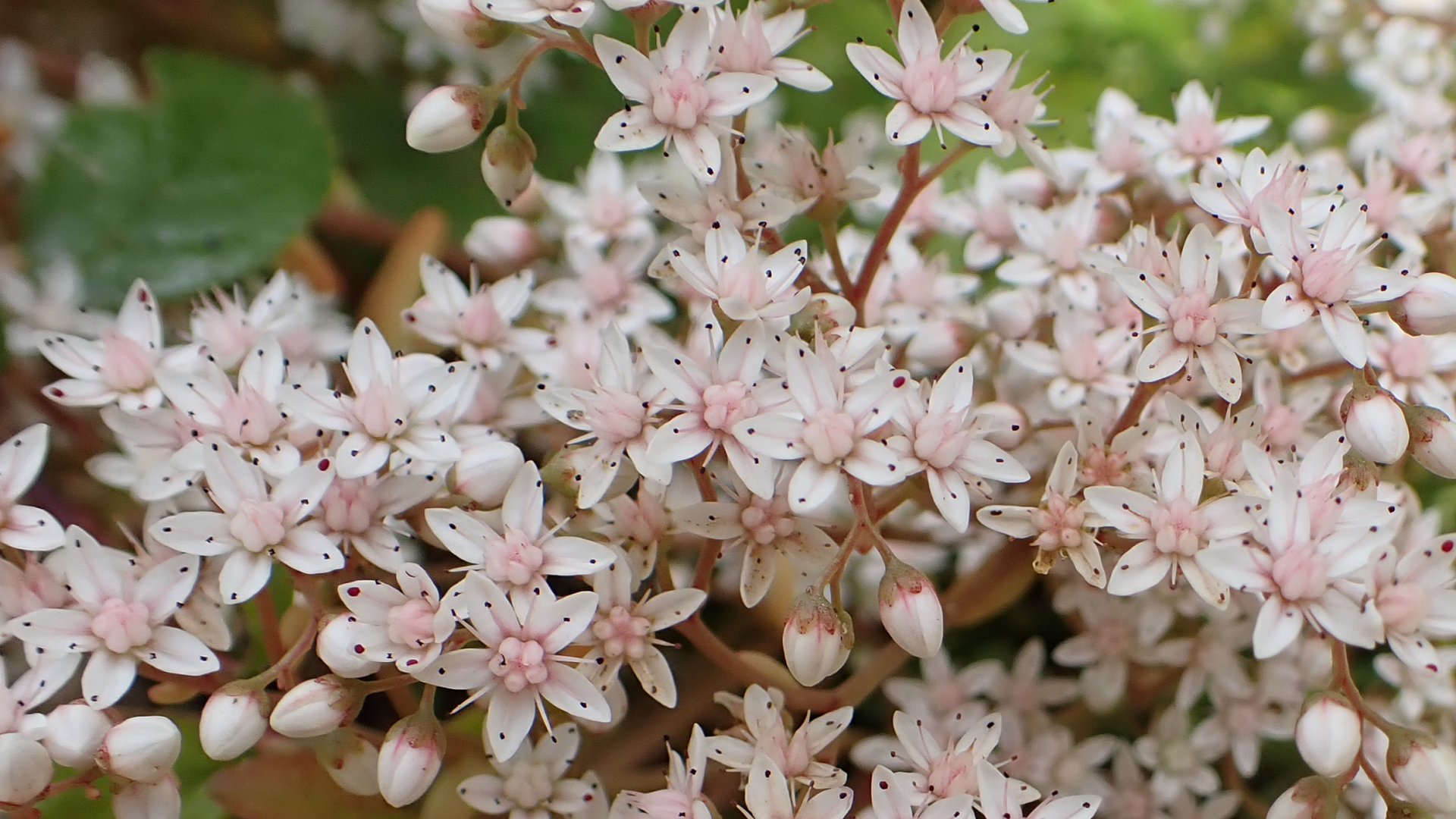
This creeping perennial can be found at the edge of the lake path not far from the outflow where there are several small mats growing up to 5 cm high. The five-petalled flowers, 11-12 mm across, are on dense leafy stems. The leaves, 3-5 mm long, are fleshy and cylindrical. This plant is usually associated with coastal paths.
#
Water Plantain
Alisma plantago-aquatica
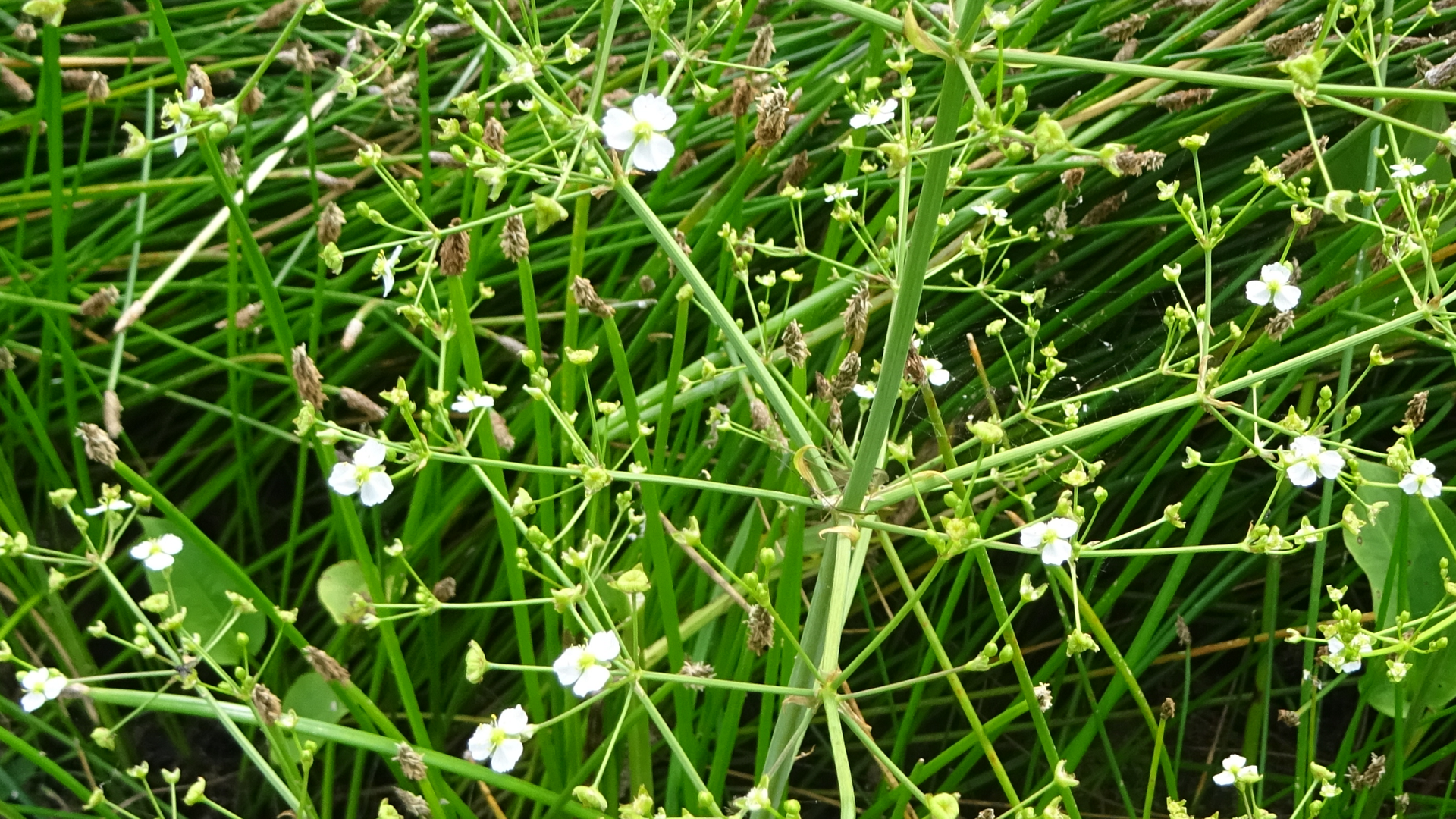
A tall, hairless, oval-leaved, perennial with a preference for shallow water and muddy banks. It blooms from June until September, producing tiny pink-tinged flowers on branching stems.
#
Purple Loosestrife
Lythrum salicaria
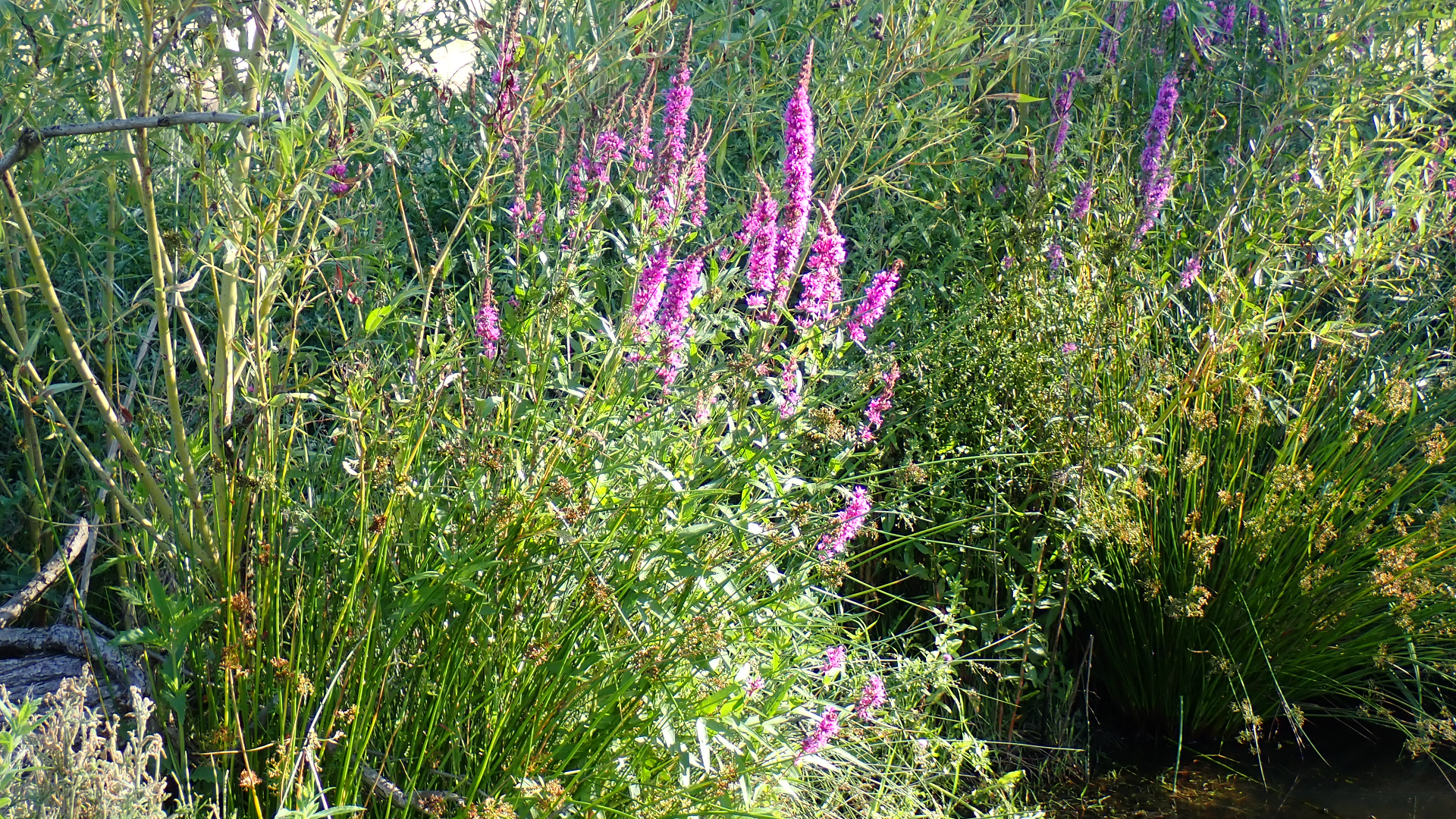
Purple loosestrife is a common plant that grows up to 1.5 metres tall in wet habitats with purple flowers appearing on spikes from June until August. Its long green leaves grow in opposite pairs up the stem.
#
Black Horehound
Ballota nigra
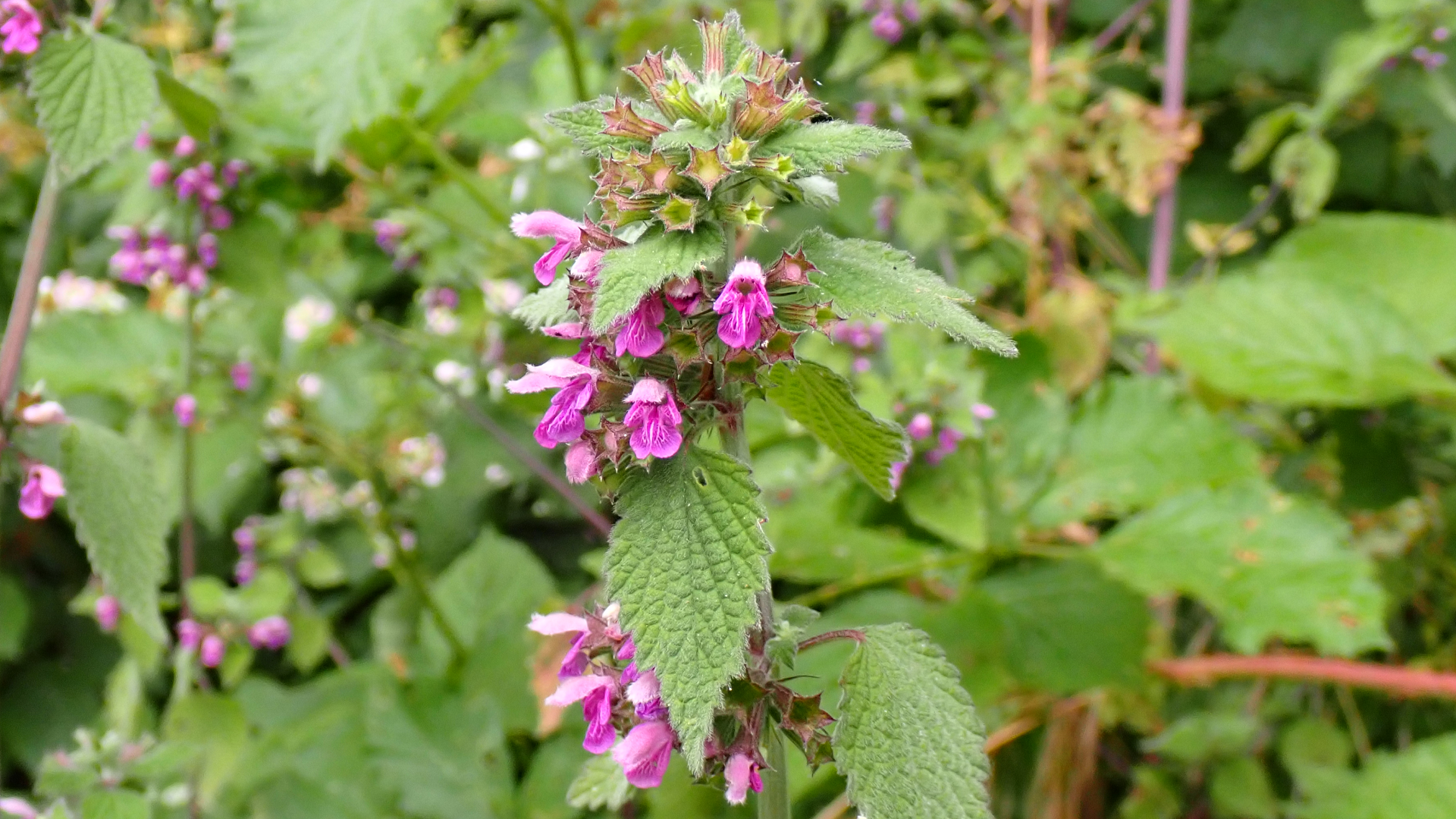
Black Horehound has pinkish hooded flowers arranged in whorls around the top of its square stems from June until September. The leaves are hairy with toothed edges. It has a pungent smell, especially when the leaves are crushed and is known colloquially as 'Stinking Roger'. Black Horehound belongs to the Mint family.
#
Water Mint
Mentha aquatica
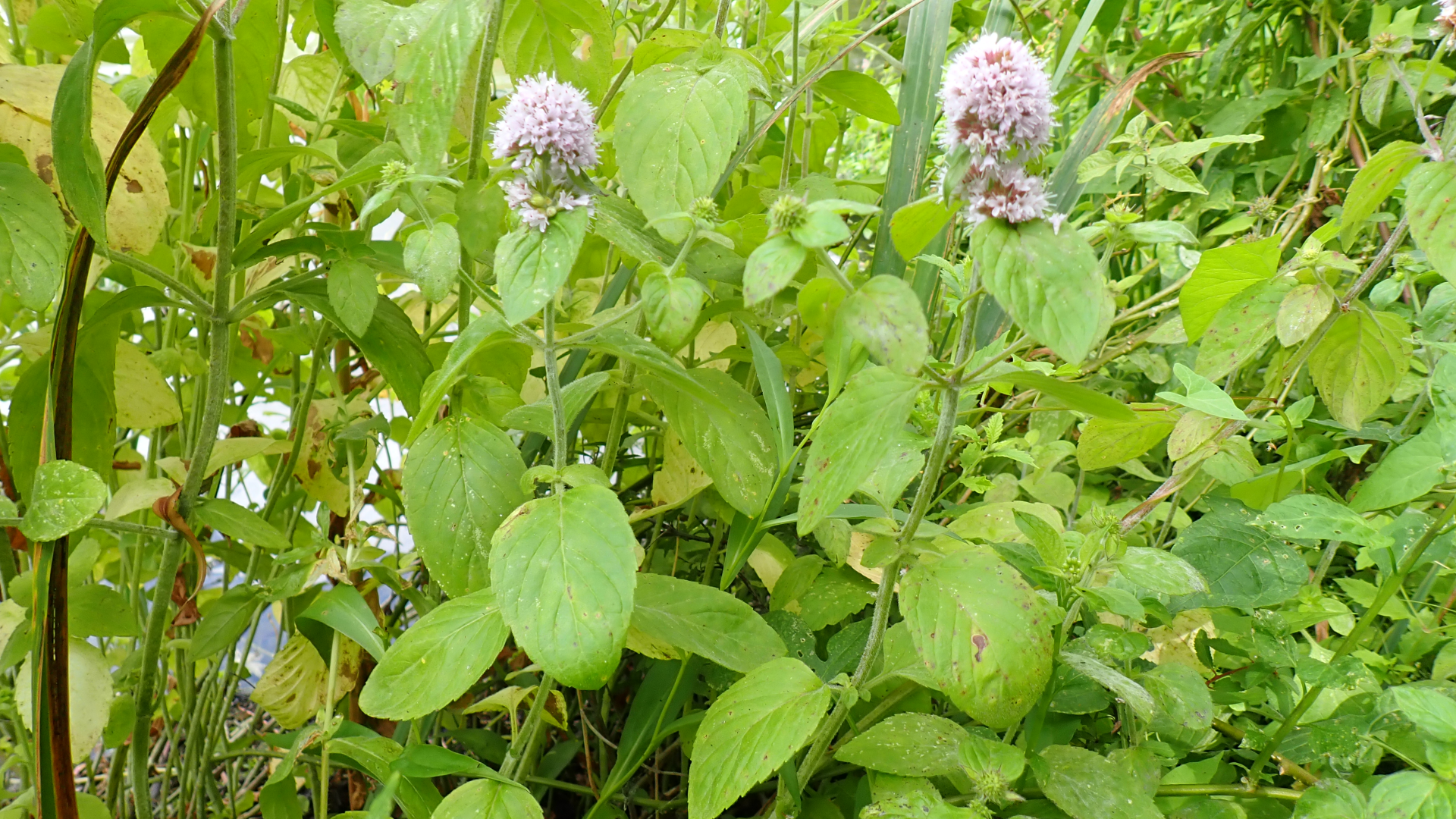
A common aromatic perennial found by Hainault Lake and the forest ponds due to its preference for damp habitats. The green or purplish square stems may be hairy or almost hairless. It has clusters of lilac-pink flowers and aromatic, dark green leaves. Water Mint spreads vigorously using creeping runners with flowers appearing from July until October.
#
Meadow Cranesbill
Geranium pratense
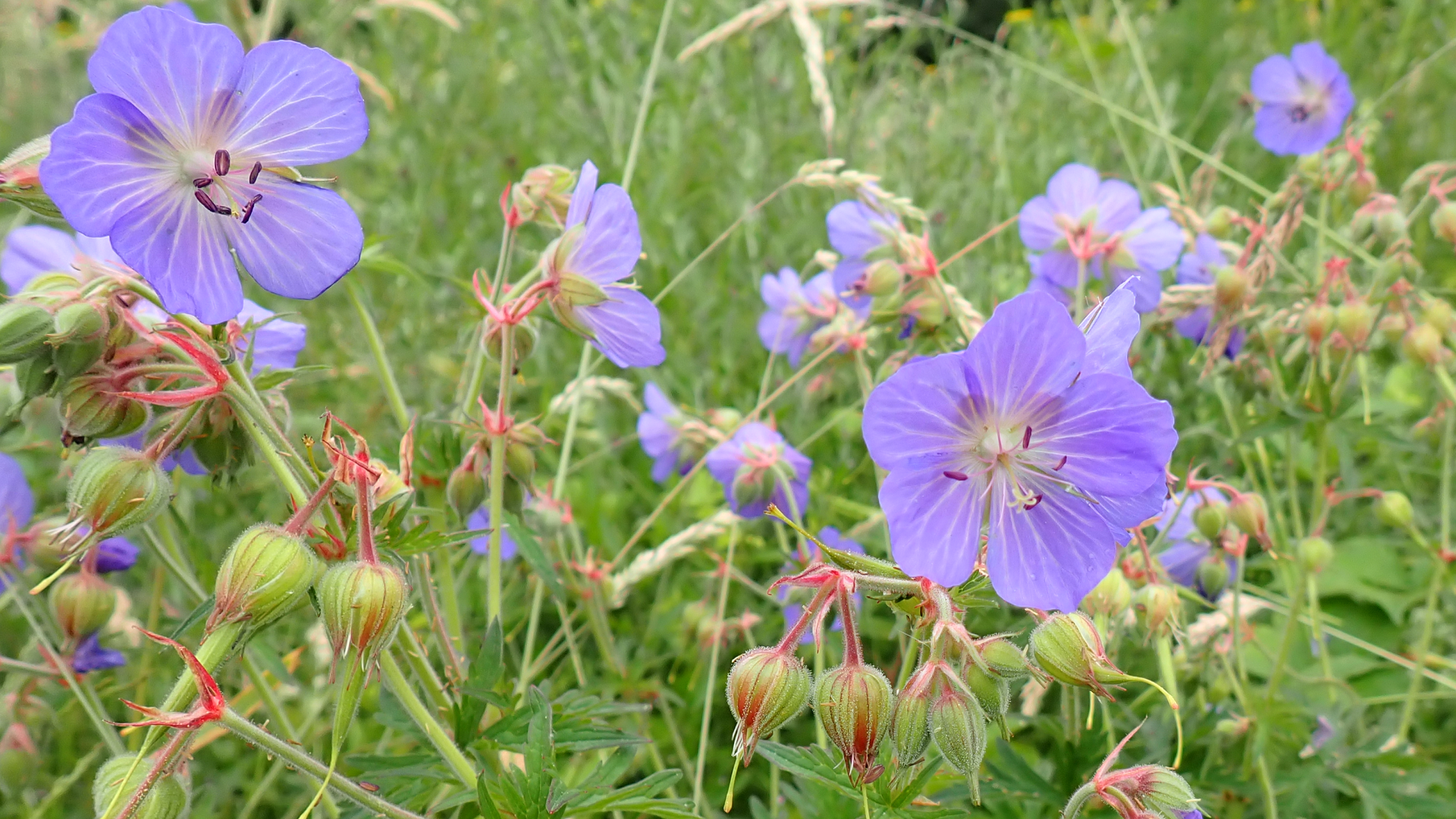
Found in meadows in sunny locations. Its large blue flowers change into pointed, bill-like seed pods. The leaves are lobed and deeply divided.
#
Perforate St. John's Wort
Hypericum perforatum
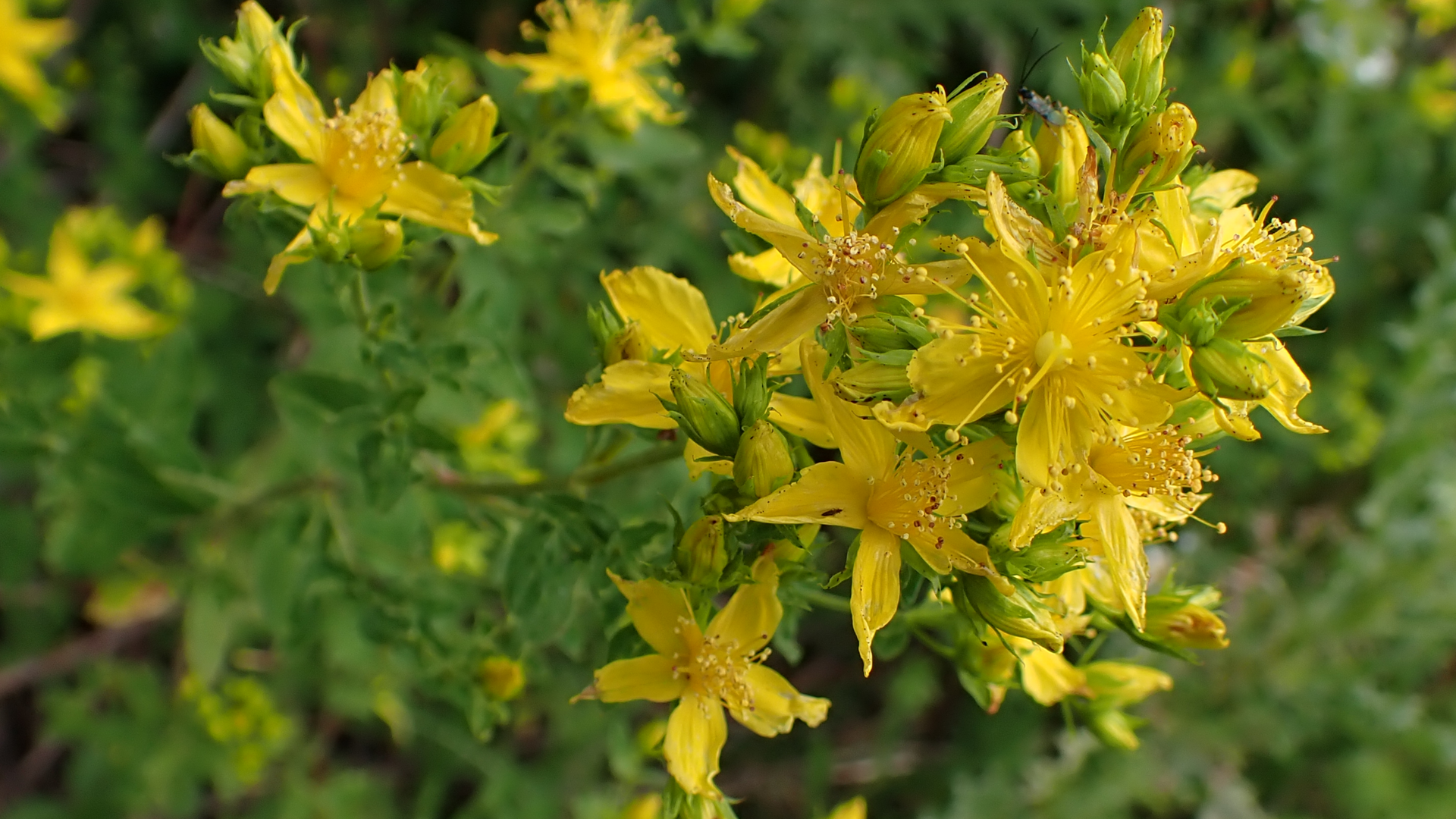
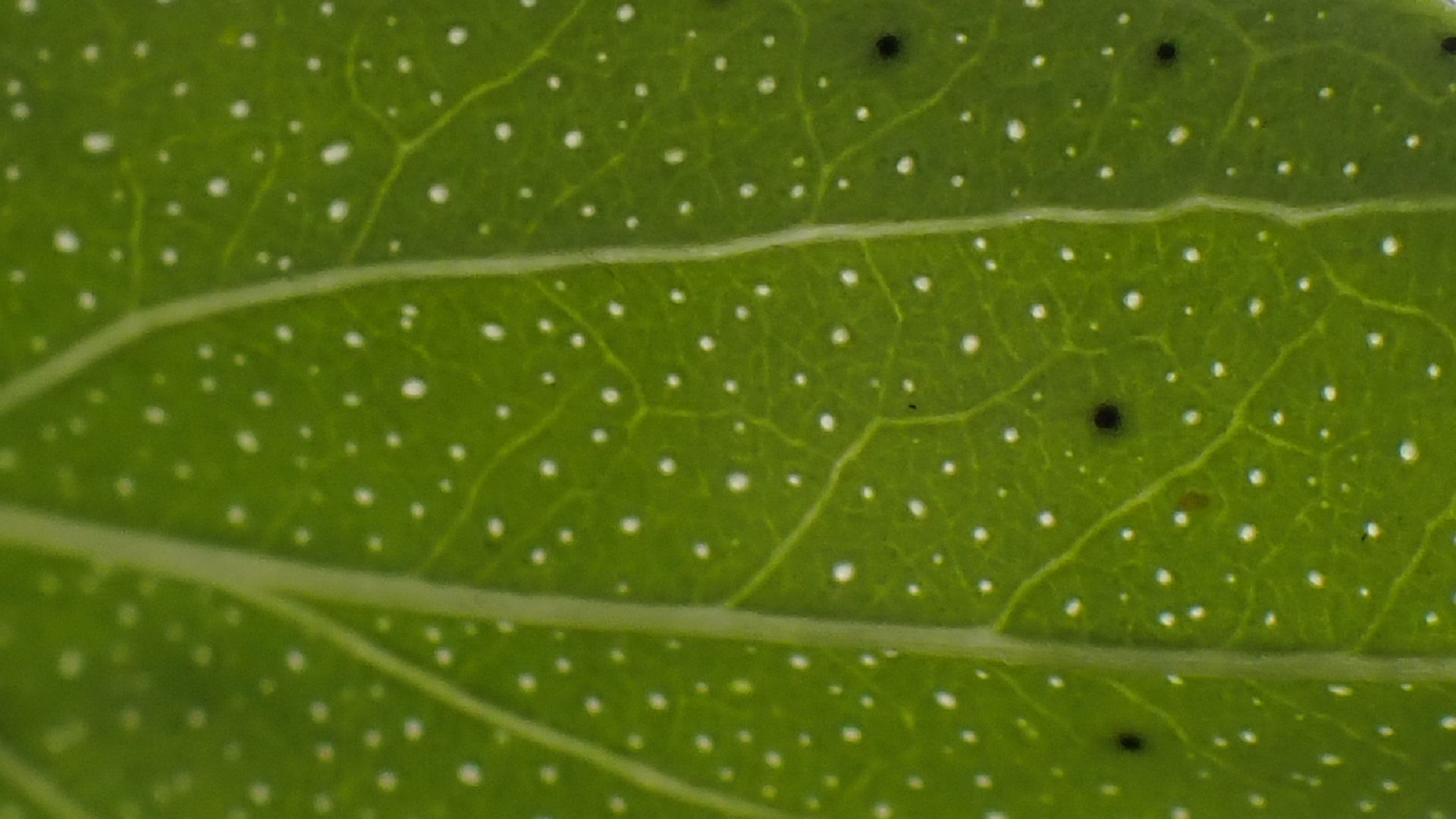
This plant of hedgerows and rough grassland grows up to 80 cm tall. Holding a leaf up to the light will reveal lots of tiny perforations - a useful characteristic when identifying this species. Its yellow flowers appear from June until September.
#
Common Centaury
Centaurium erythraea
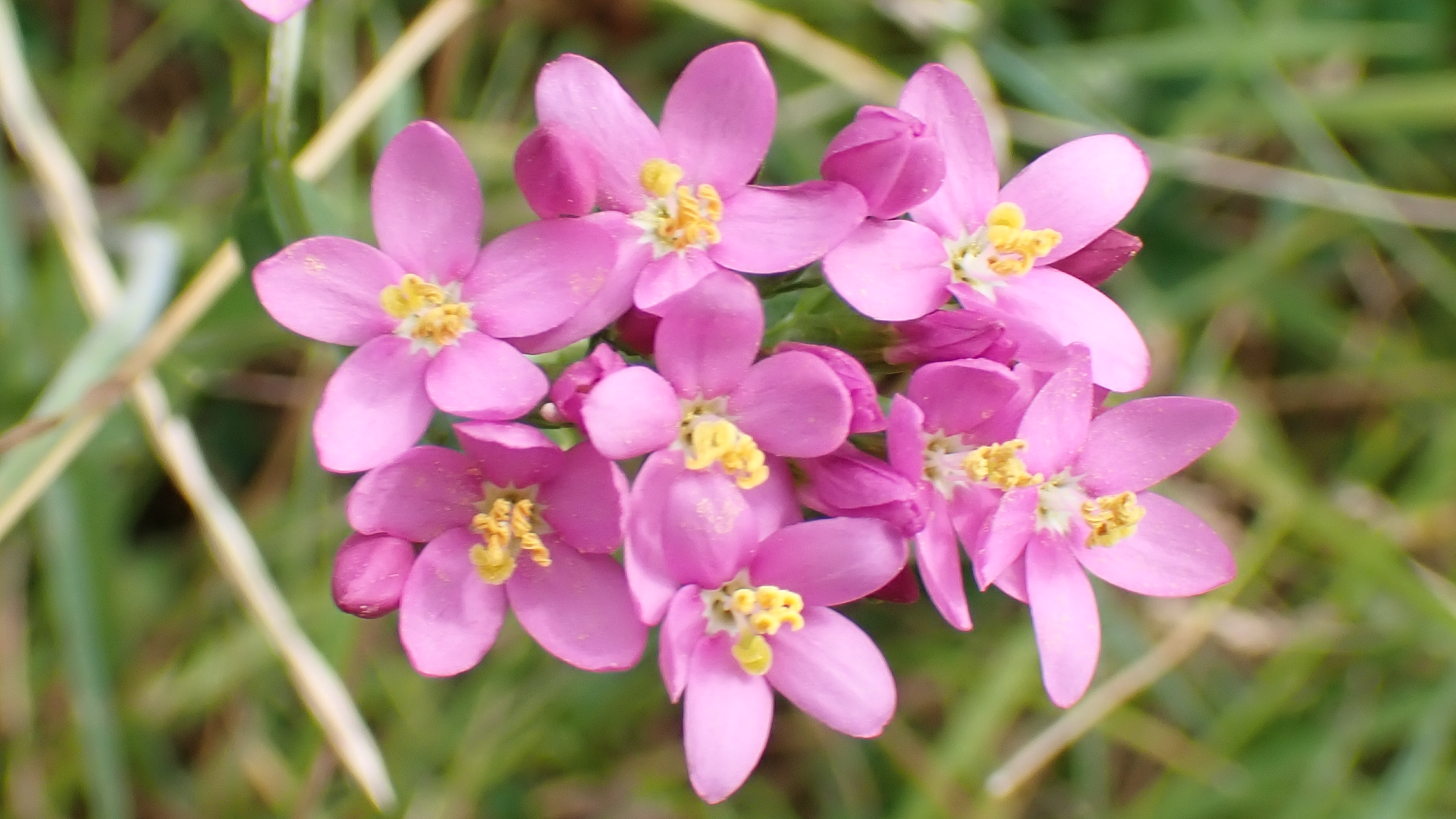
Low-growing grassland plant commonly found in the cattle fields on the east side of Hainault Forest. It blooms from June until September producing pink five-petalled flowers that close in the afternoon. There is a basal rosette of oval leaves and leaves also appear in opposite pairs up the stem.
#
Codlins and Cream
Epilobium hirsutum
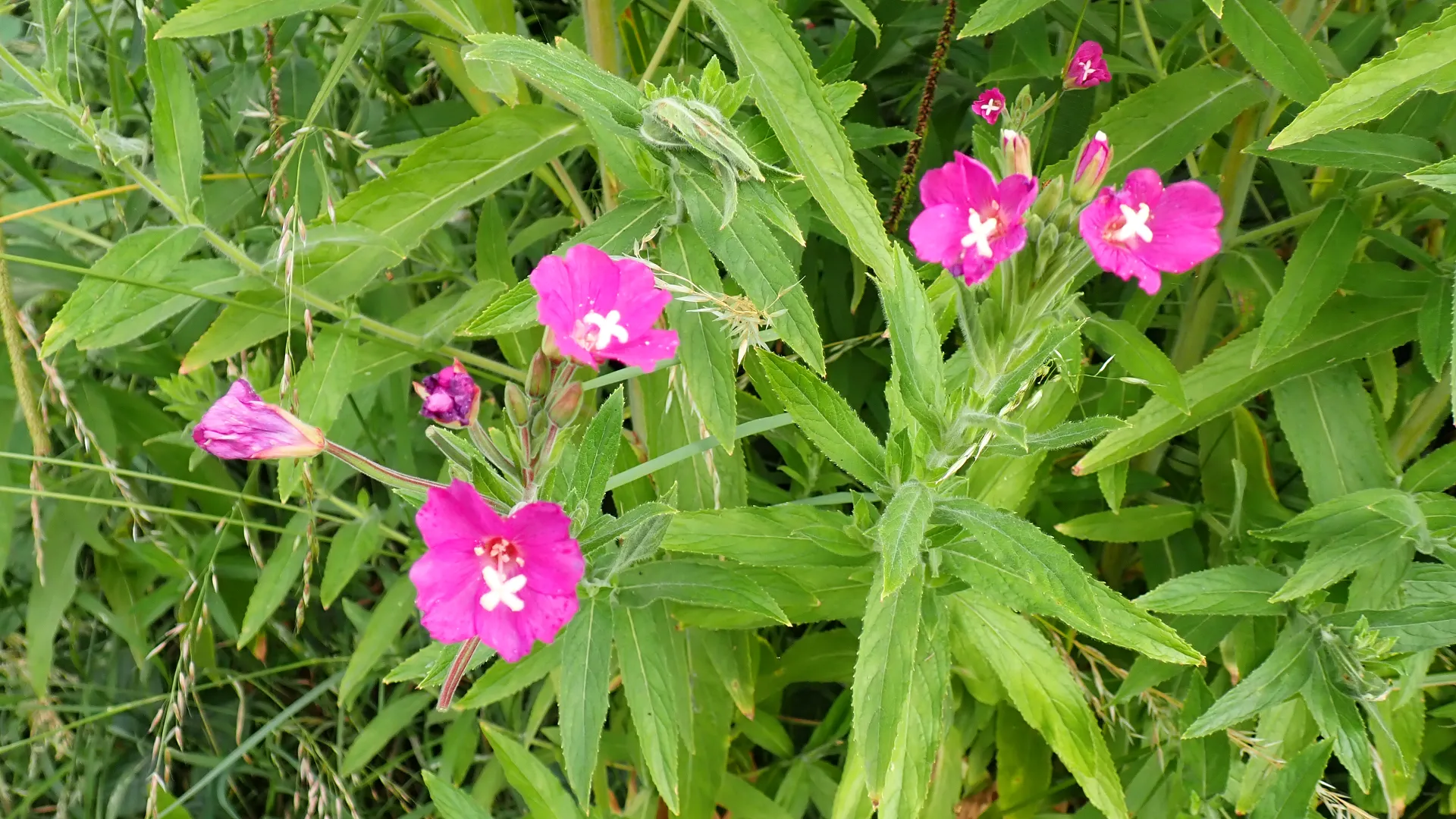
Also known as Great Willowherb, this is a tall, hairy, plant that grows up to 2 metres tall. It has a preference for damp areas. Flowers appear from July to August which turn into fluffy seeds that are dispersed by the wind. The lanceolate leaves sit opposite each other on the stems.
#
Sneezewort
Achillea ptarmica
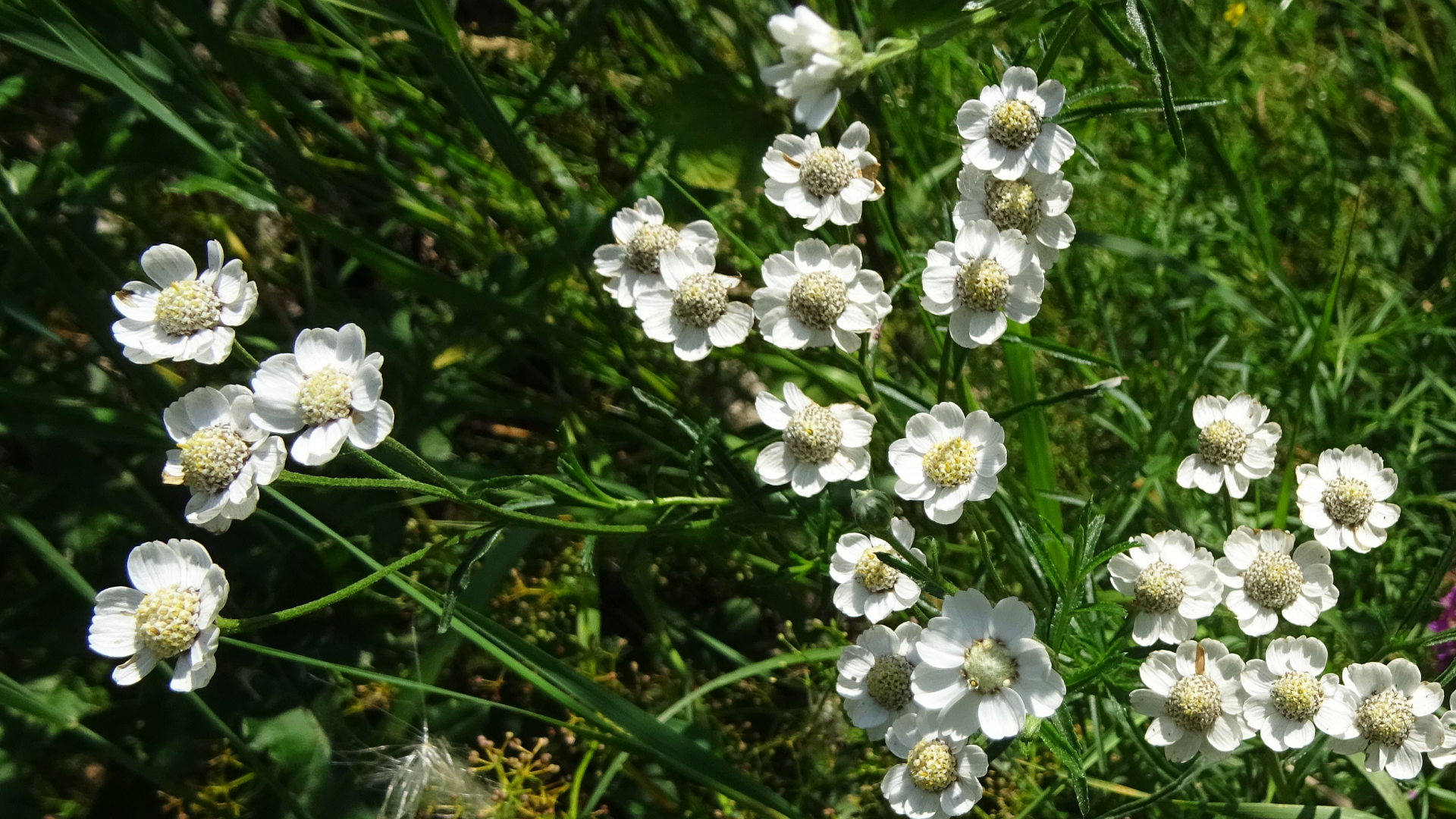
Sneezewort has a liking for damp acid grassland particularly on heavy clay-based soils. Flowers appear from July until September.
#
Fleabane
Pulicaria dysenterica
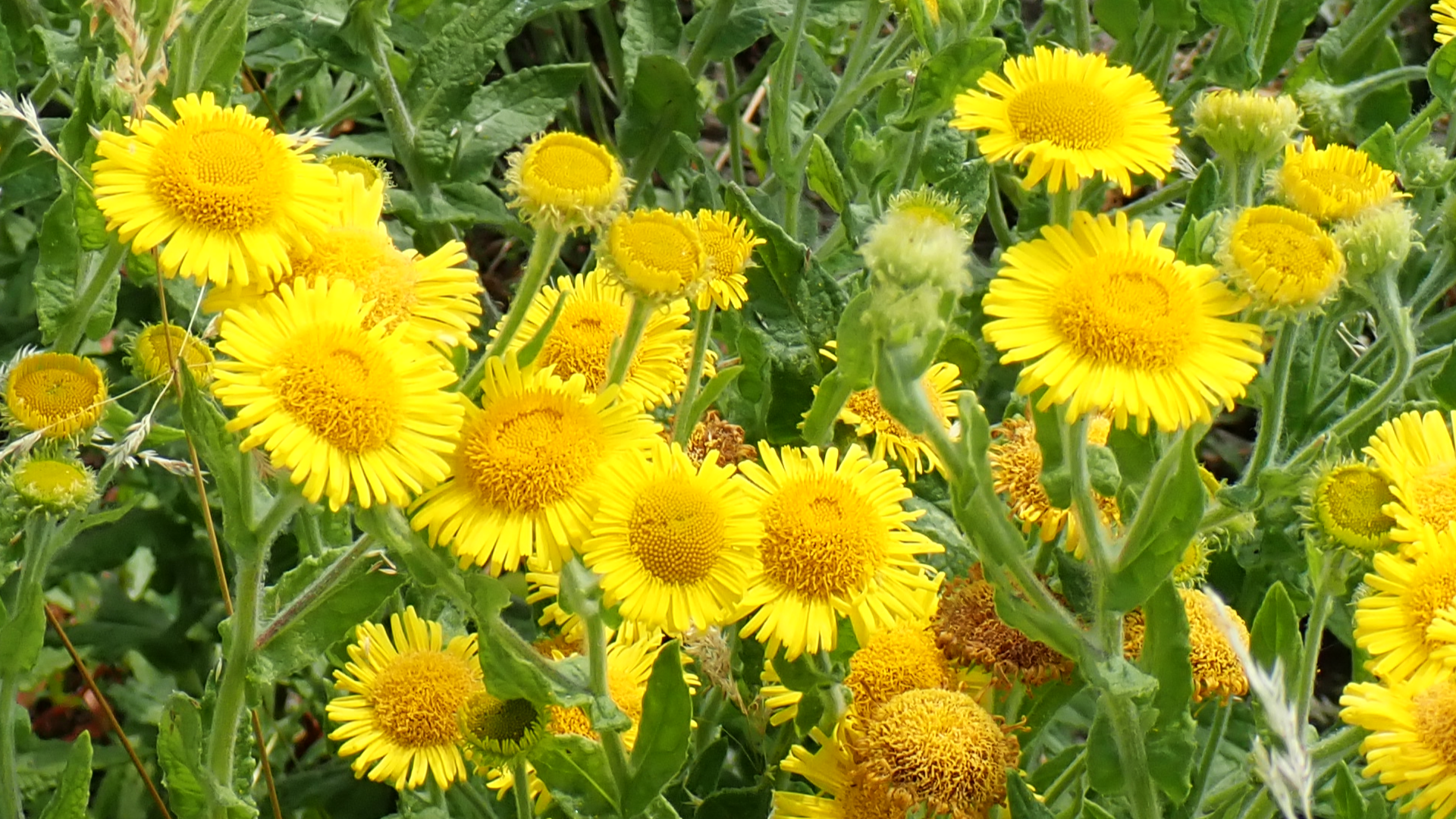
Common Fleabane is a perennial found in damp habitats during August and September. Its golden-yellow composite flower-heads (15-30 mm across) grow on erect stems. The basal leaves usually wither before the flowers appear.
#
Hemp Agrimony
Eupatorium cannabinum
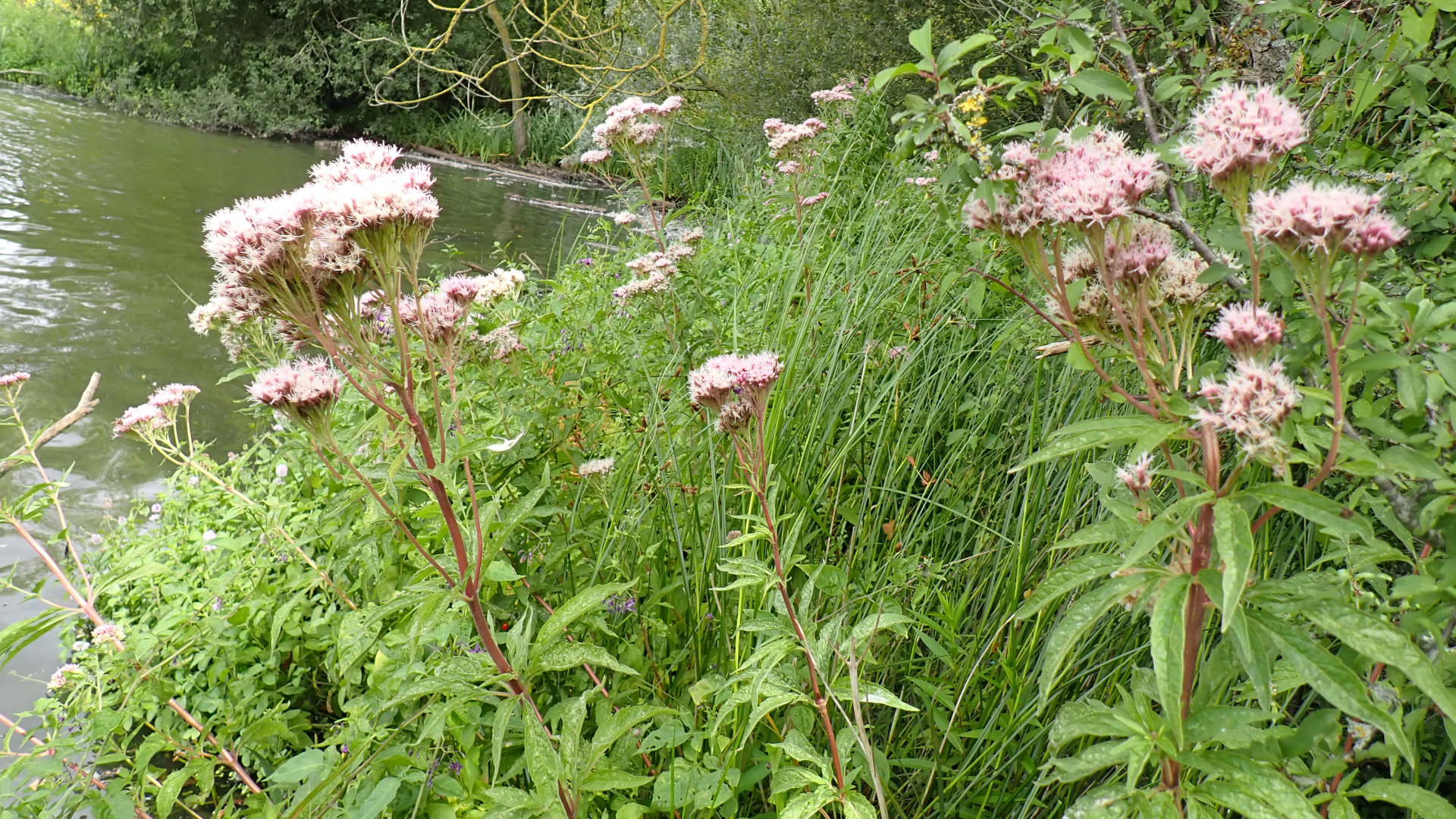
Hemp Agrimony is a tall perennial that flowers from July until September. It favours damp locations and is found growing on the banks of Hainault Lake.
#
Teasel
Dipsacus fullonum
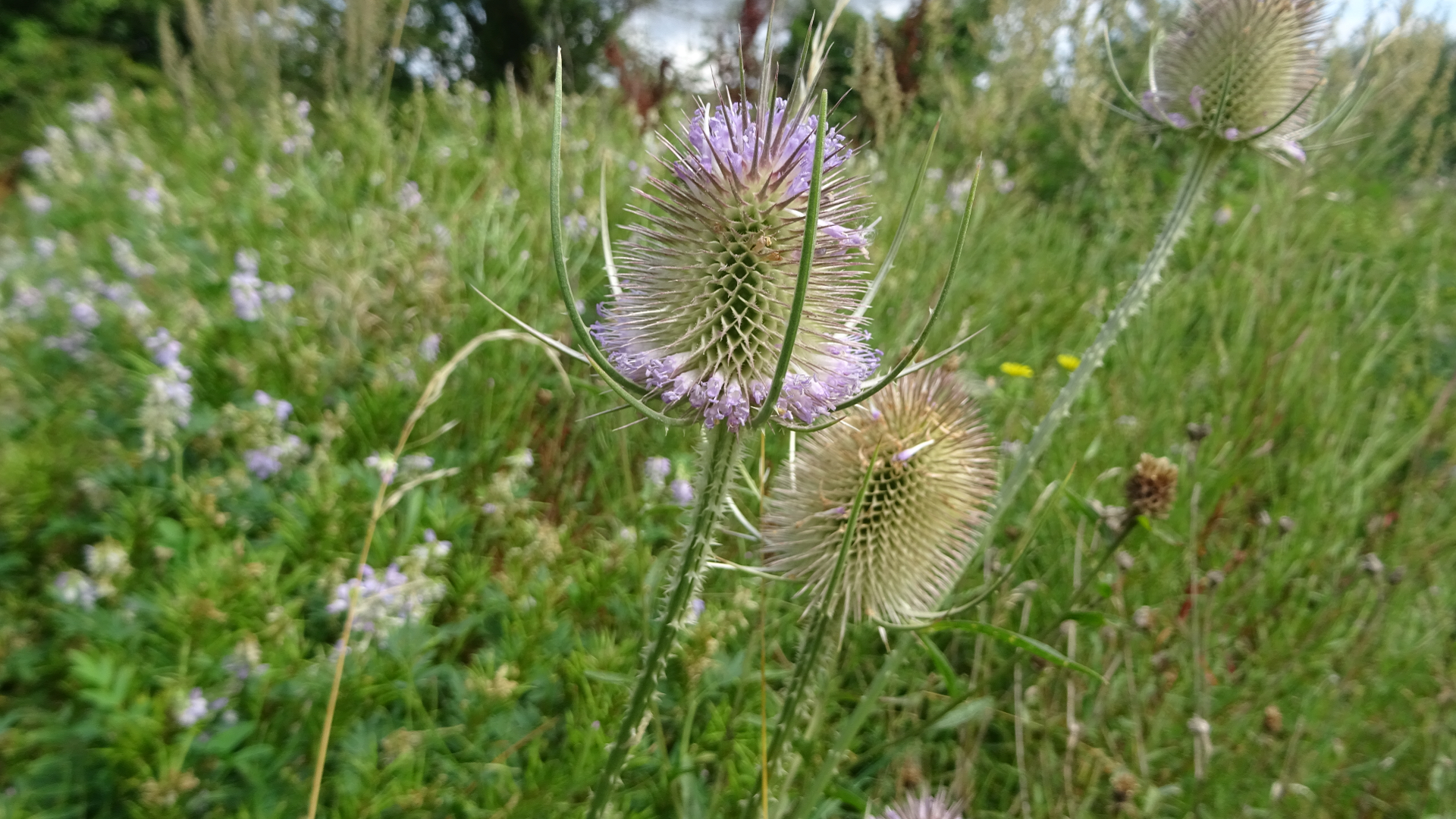
Teasel has prickly stems and conical seed heads. During July and August the spiky flower heads display rings of purple flowers. When the flower-heads have gone to seed the plant attracts goldfinches and other birds.
#
White Water Lily
Nymphaea alba
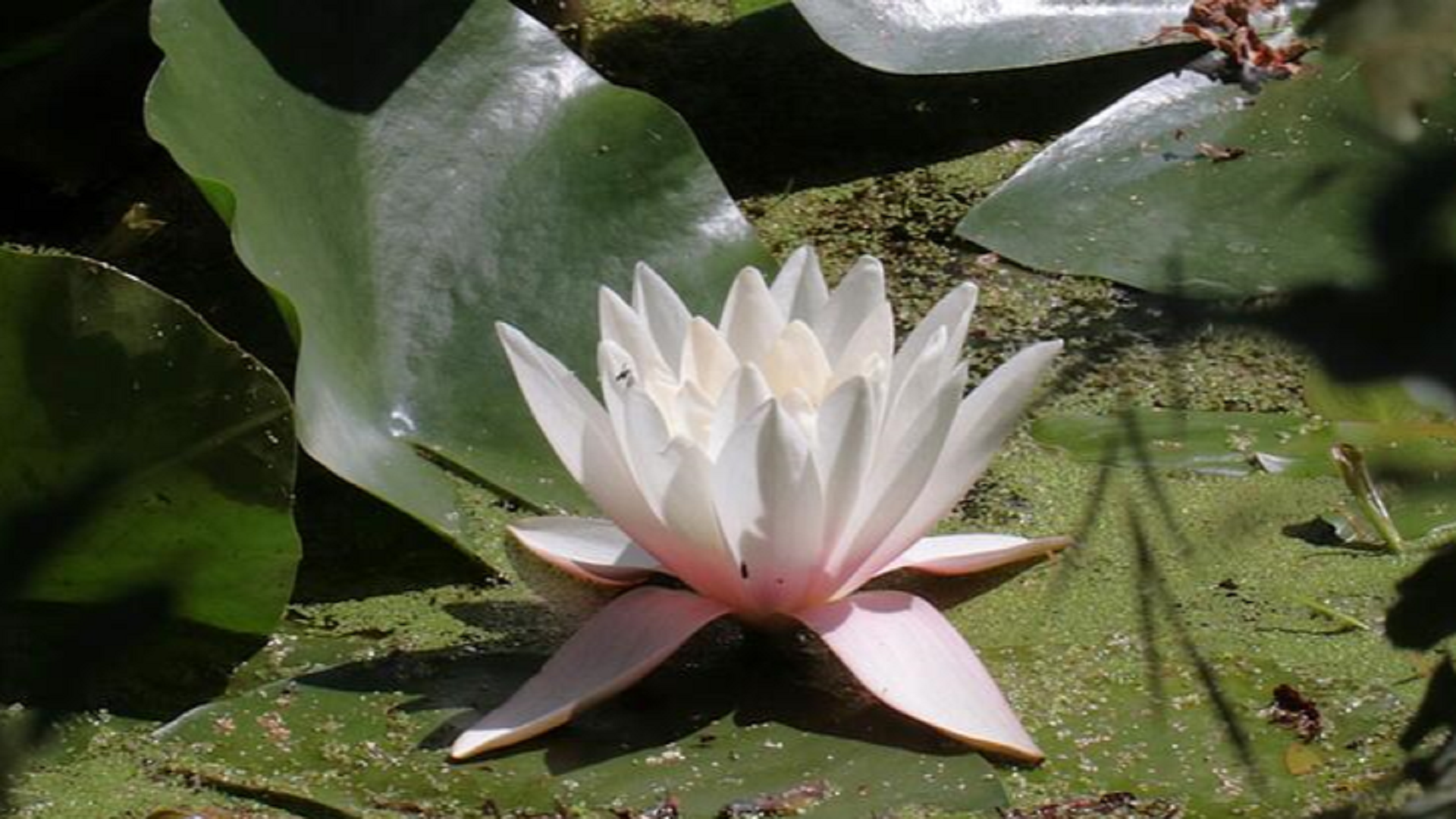
Water Lilies have a preference for still waters such as that at Sheepwater. Flowers up to 20 cm across appear from June until September. The roundish leaves measure up to 30 cm in diameter.
#
Lesser Burdock
Arctium minus
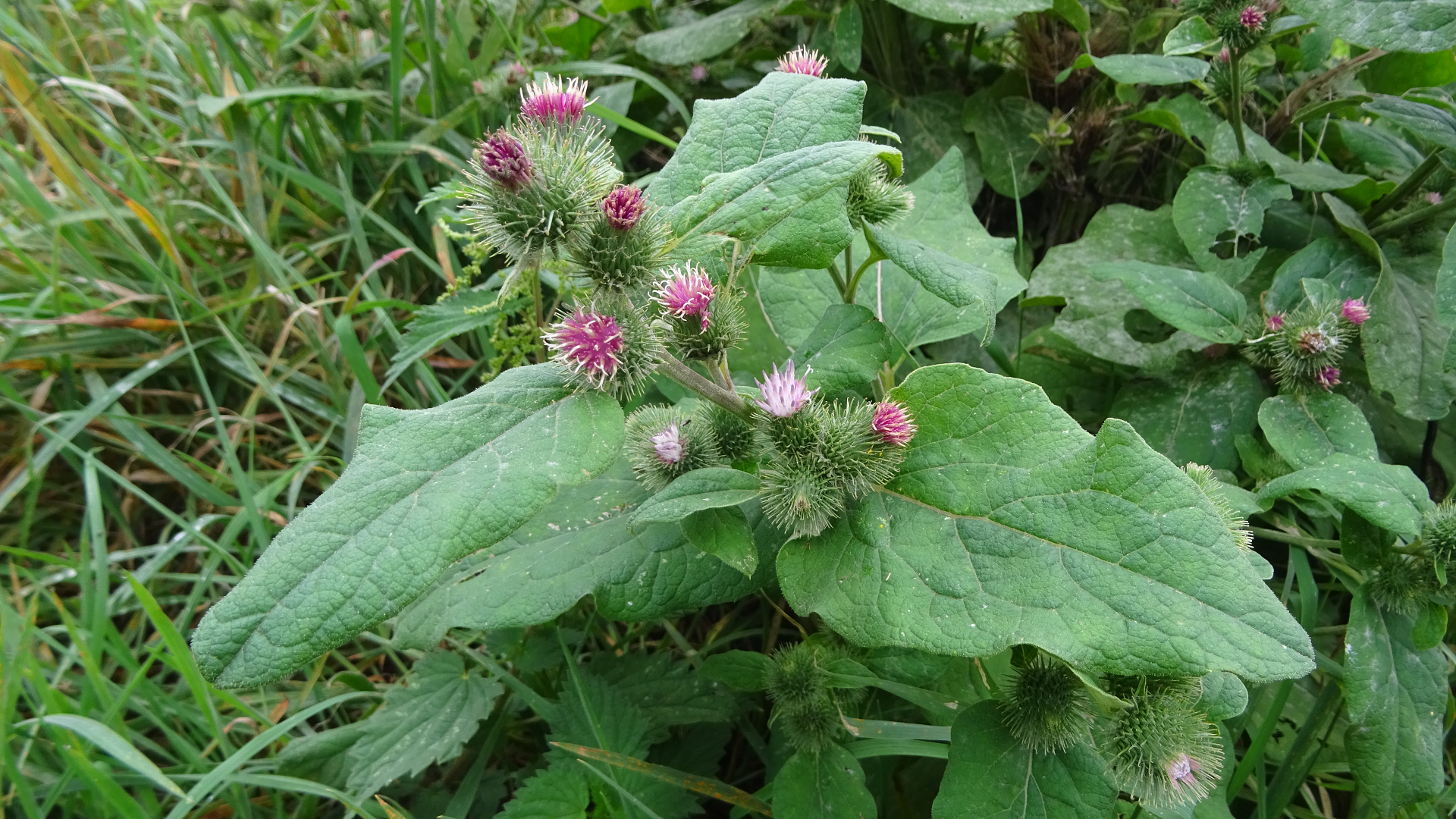
A biennial with purple flowers usually found near Hainault Lake from July to September. It is tall, thick-stemed with large, downy, heart-shaped leaves. The heads have no rays but are surrounded by spiny bracts.
#
Cuckoopint
Arum maculatum
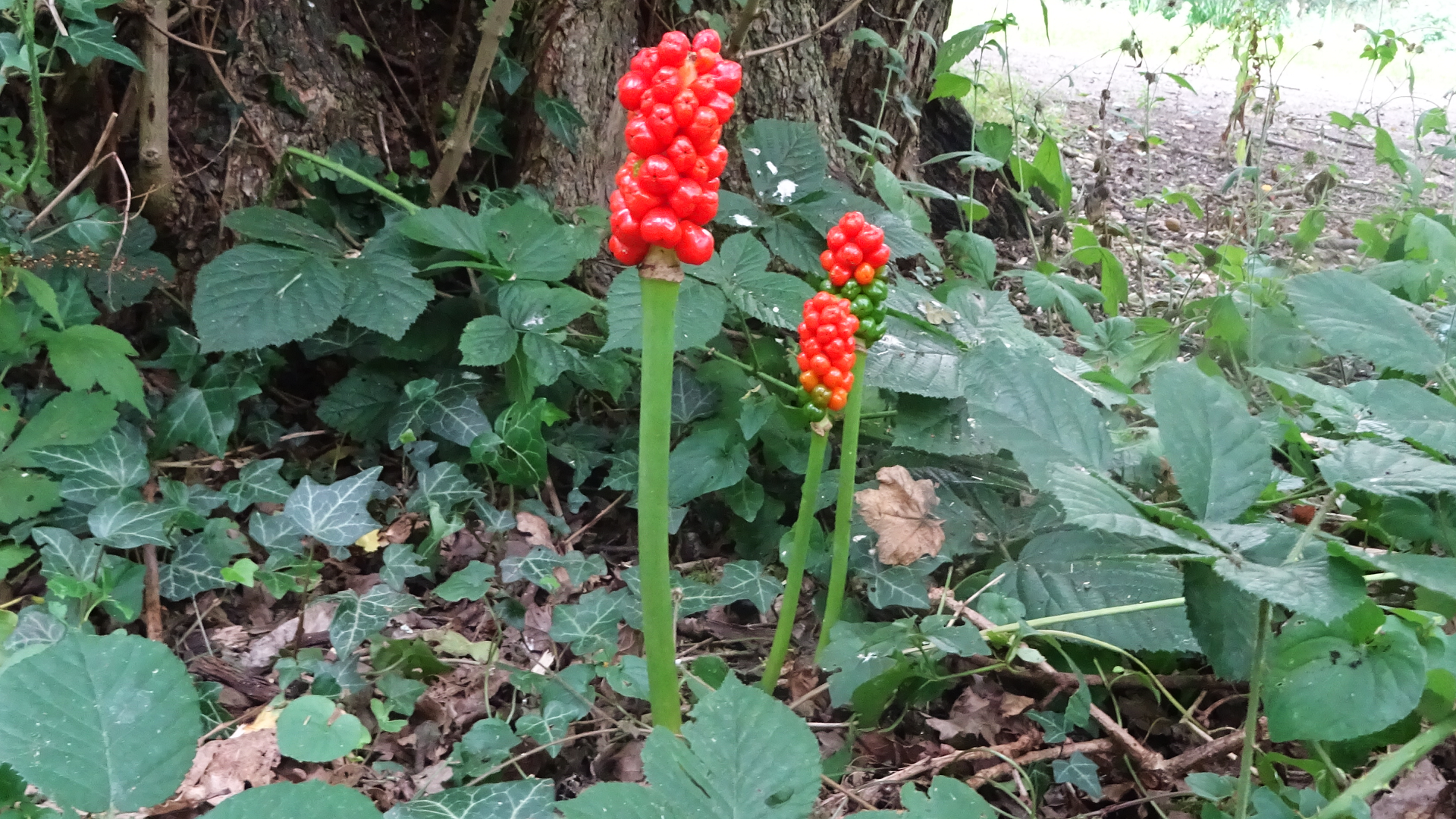
Berries of this woodland plant appear after the flowers have withered. The berries are toxic to many animals, including humans. However, they are harmless to birds, which eat them and spread the seeds.
#
Bracken
Pteridium aquilinum
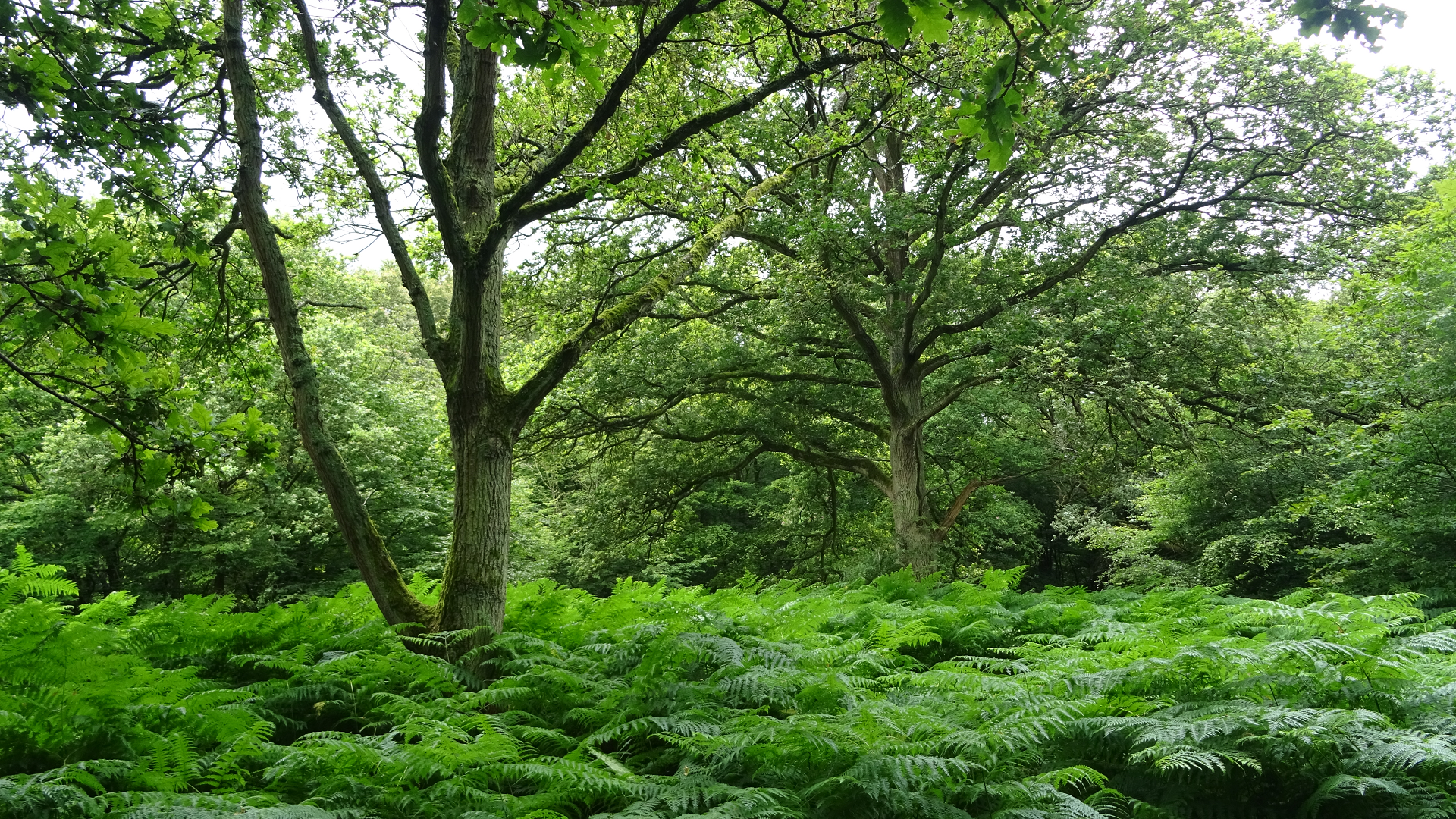
Bracken is a large fern that covers large areas of the forest floor. Its large, green, branched fronds start appearing during spring and die back to brown in winter. Being a true fern it does not produce flowers or seeds, but spreads by using spores in bodies called 'sori', which form continuous lines on the undersides of the fronds.
#
Heather
Calluna vulgaris
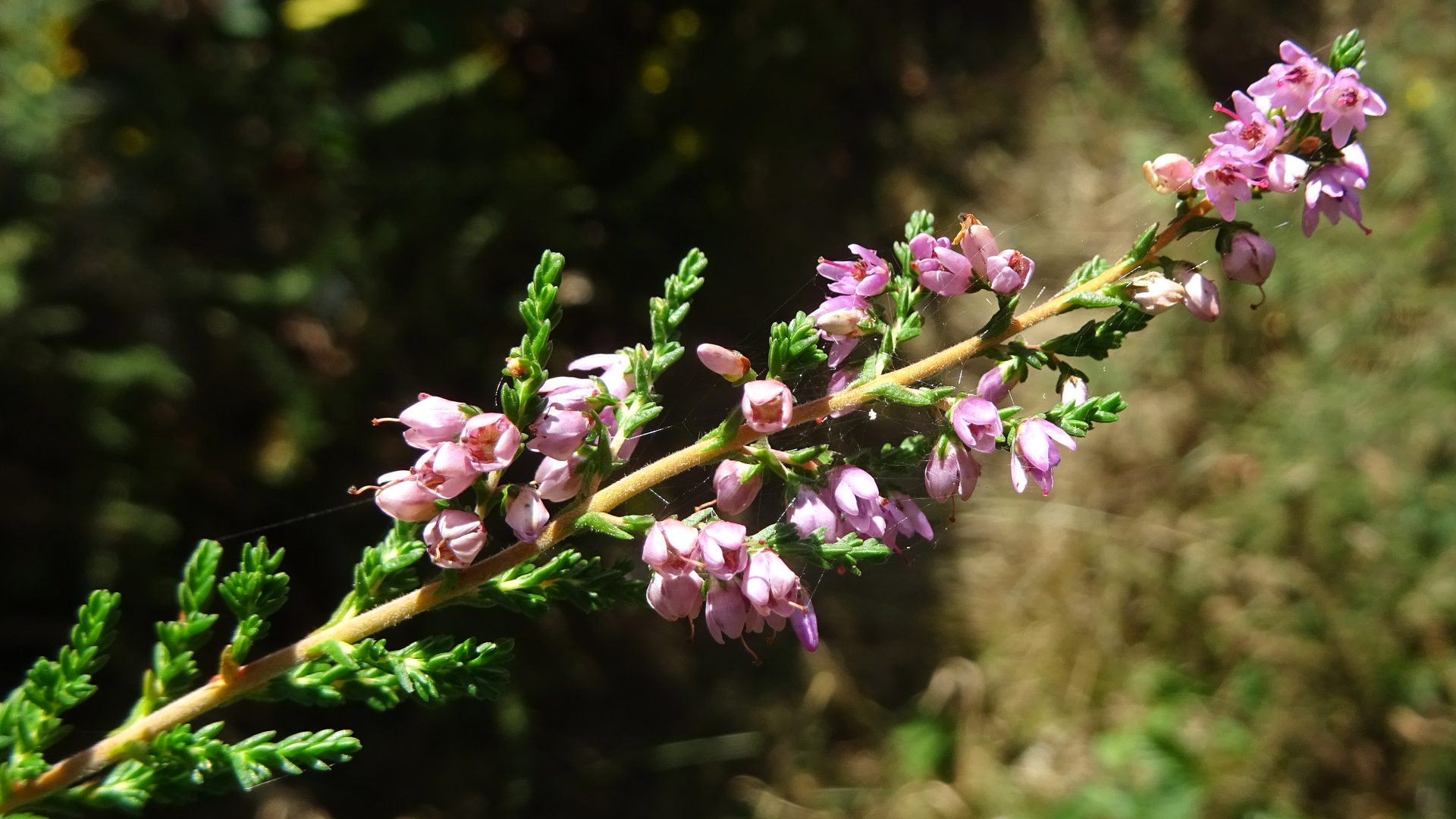
It has been a poor time for recording plants in the Heathland located in the corner of the forest at Chigwell Row. The Heather is now struggling to survive and the Slender St. John's Wort, Fox and Cubs and Petty Whin haven't been recorded this year.
#
Dwarf Gorse
Ulex minor
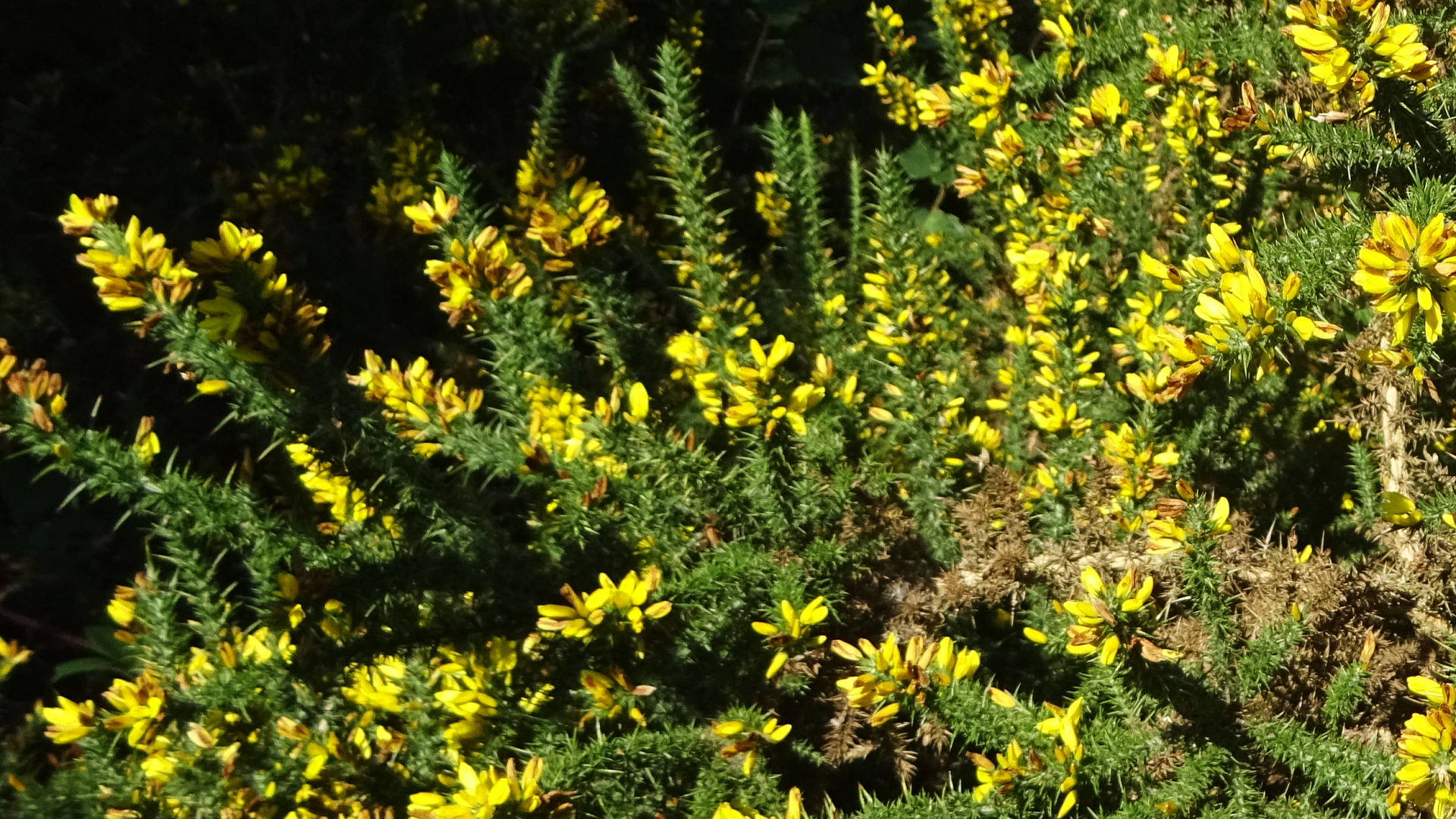
Dwarf gorse is a low-growing evergreen shrub mainly restricted to heathland habitats. It normally grows about 30 centimetres high, but in shaded, ungrazed locations can grow to one metre tall. It is often found with heather. It is one of the plants doing well in the heathland, but along with bramble is to the detriment of other plants.
#
Bramble
Rubus agg.
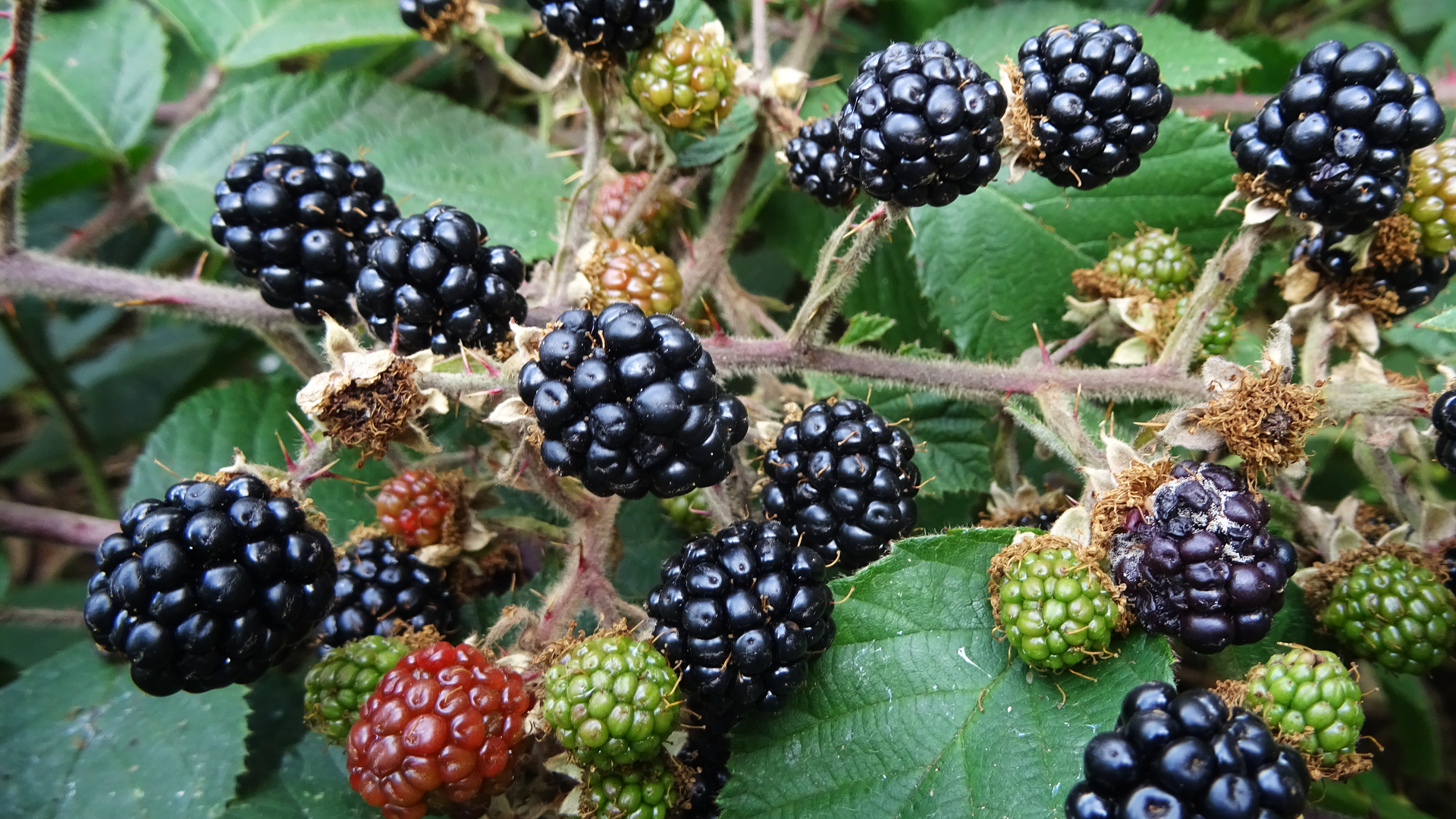
Blackberries the fruits that appear on bramble after the flowers become a vital food source for all types of creatures.
#
Bittersweet
Solanum dulcamara
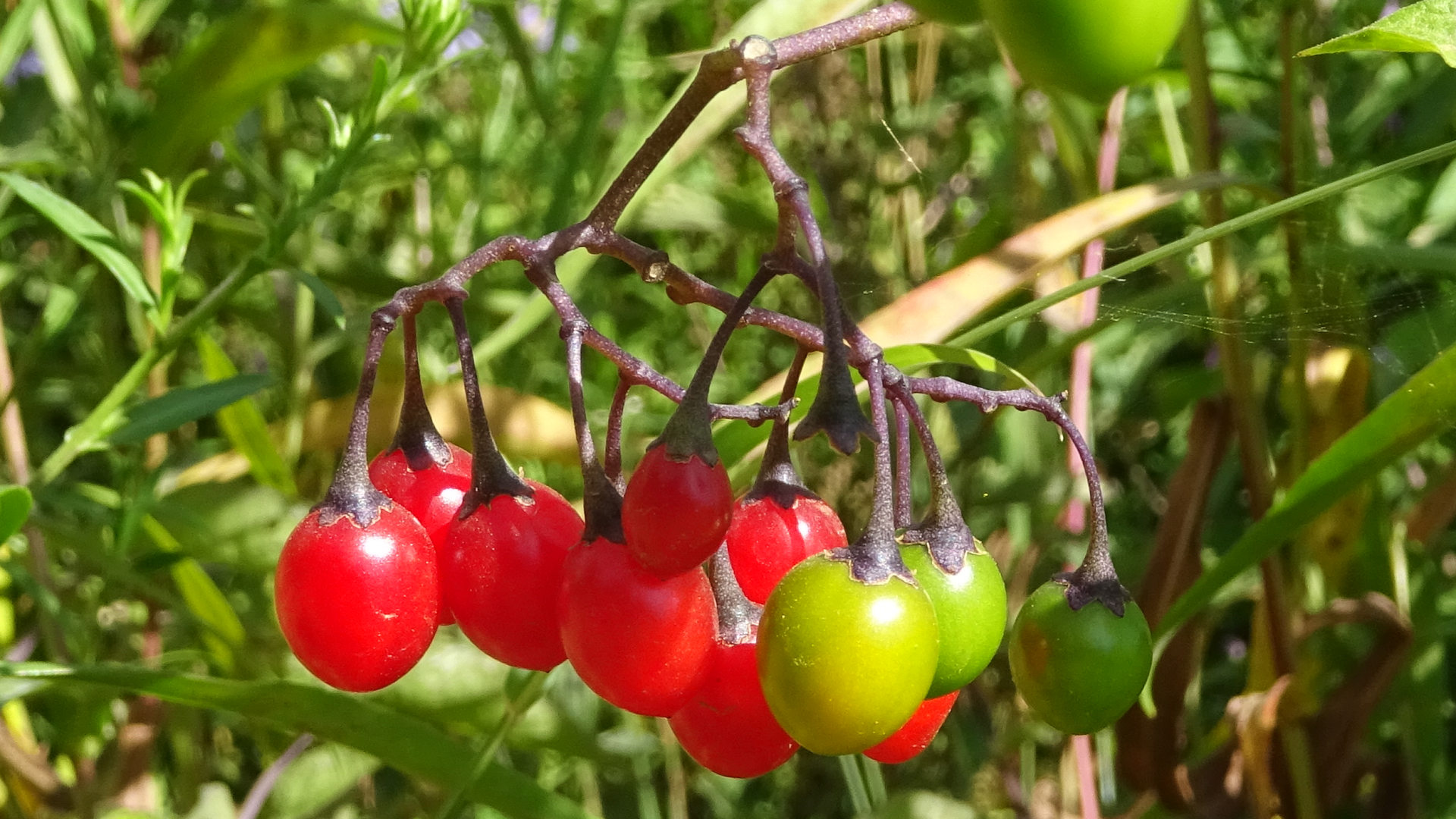
The tiny oval berries of Bittersweet found on hedgerows during autumn are poisonous. Bittersweet belongs to the Nightshade family.
Silk Button Gall
Neuroterus numismalis
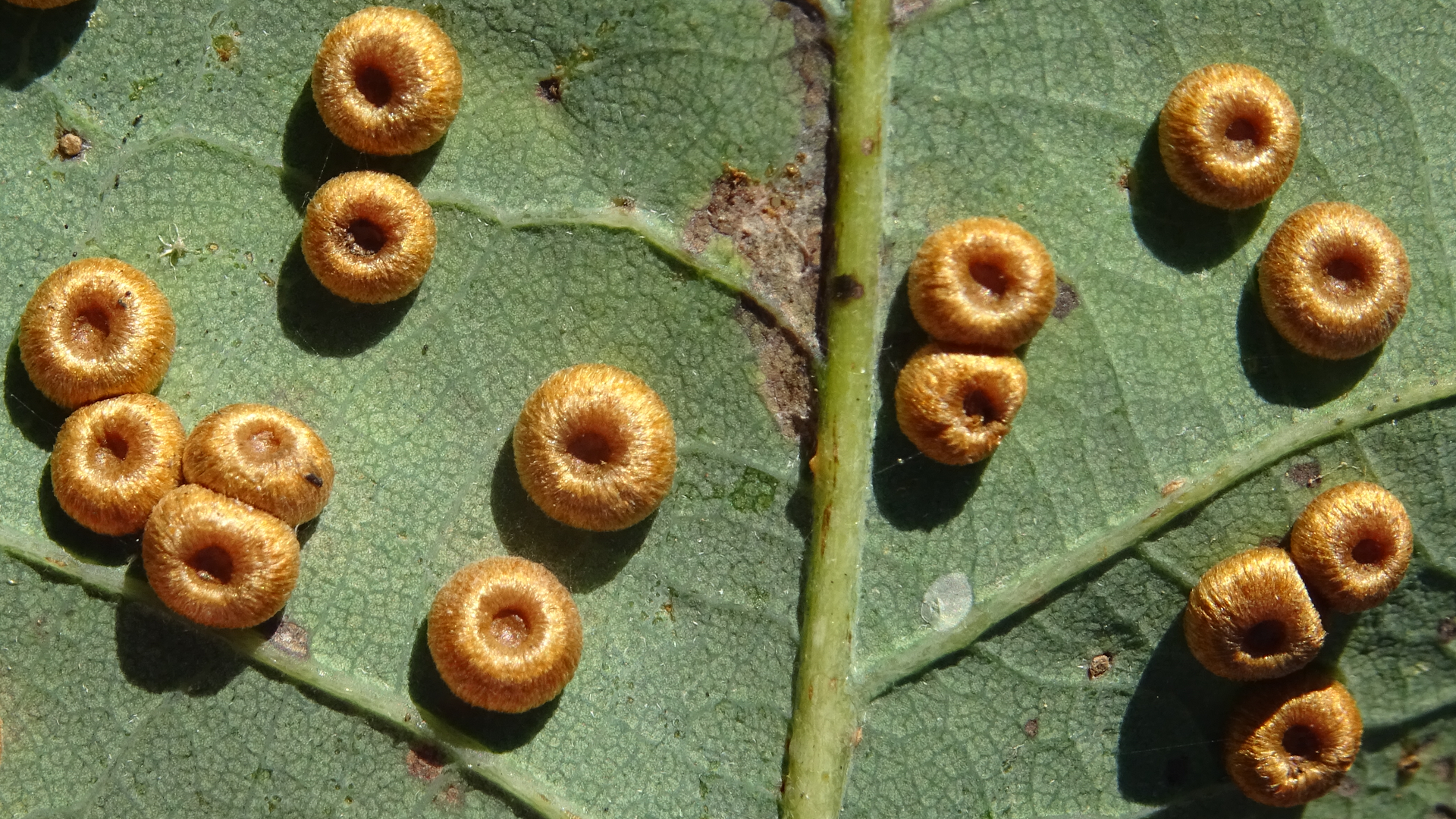
The agamic generation of a gall wasp produces Silk Button Galls on the underside of oak leaves. These galls are round, thick, and are up to 3mm in diameter. They typically appear in large quantities during the autumn season.
#
Common Spangle Gall
Neuroterus quercusbaccarum
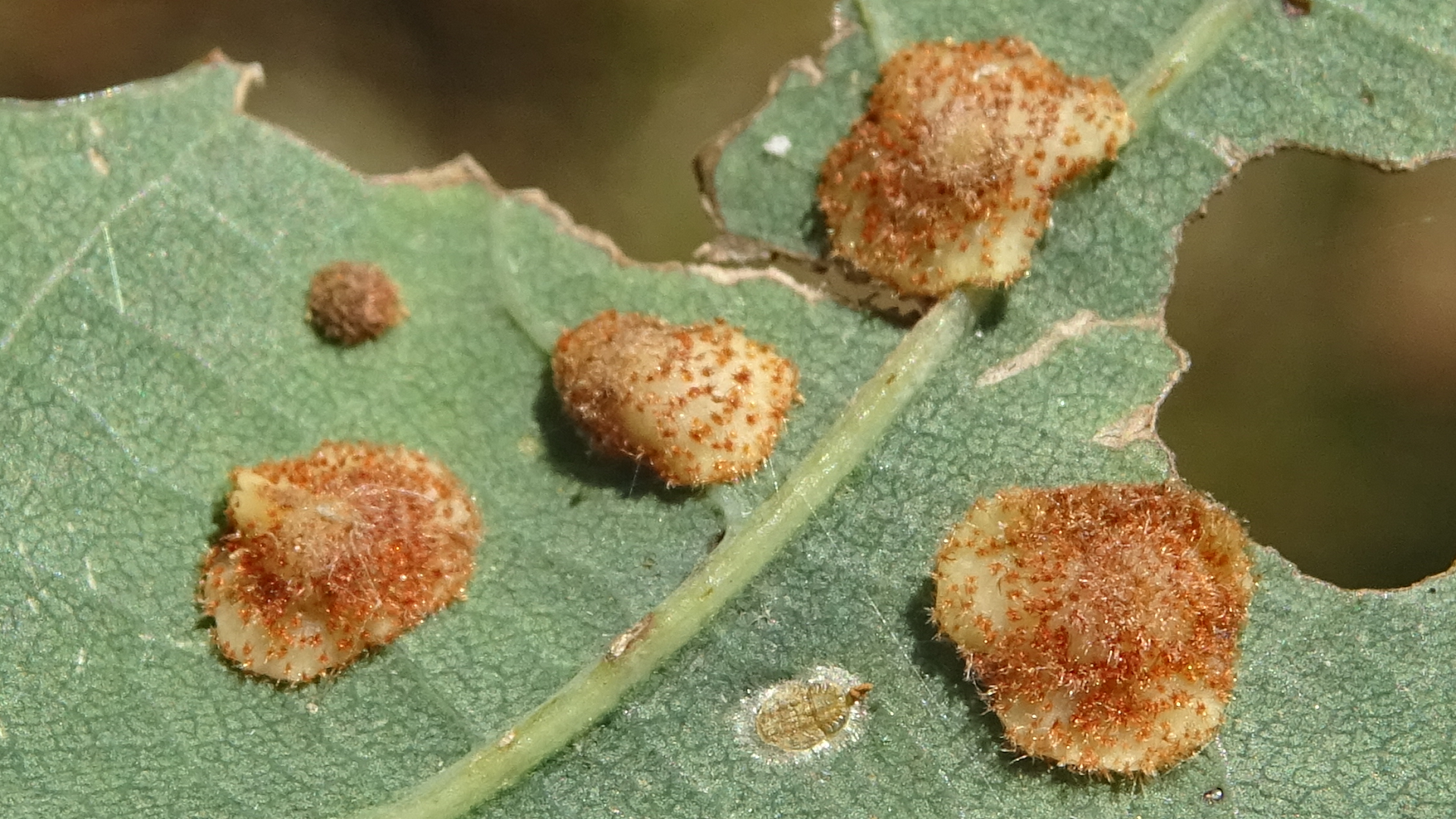
Common Spangle Galls found on oak leaves are produced by the asexual generation of a gall wasp, which is the same species responsible for the currant galls. These disc-shaped galls are topped with tufts of reddish hairs. In autumn, they detach from the leaf, and the larvae remain in the leaf litter to overwinter.
#
Dead Moll's Fingers
Xylaria longipes
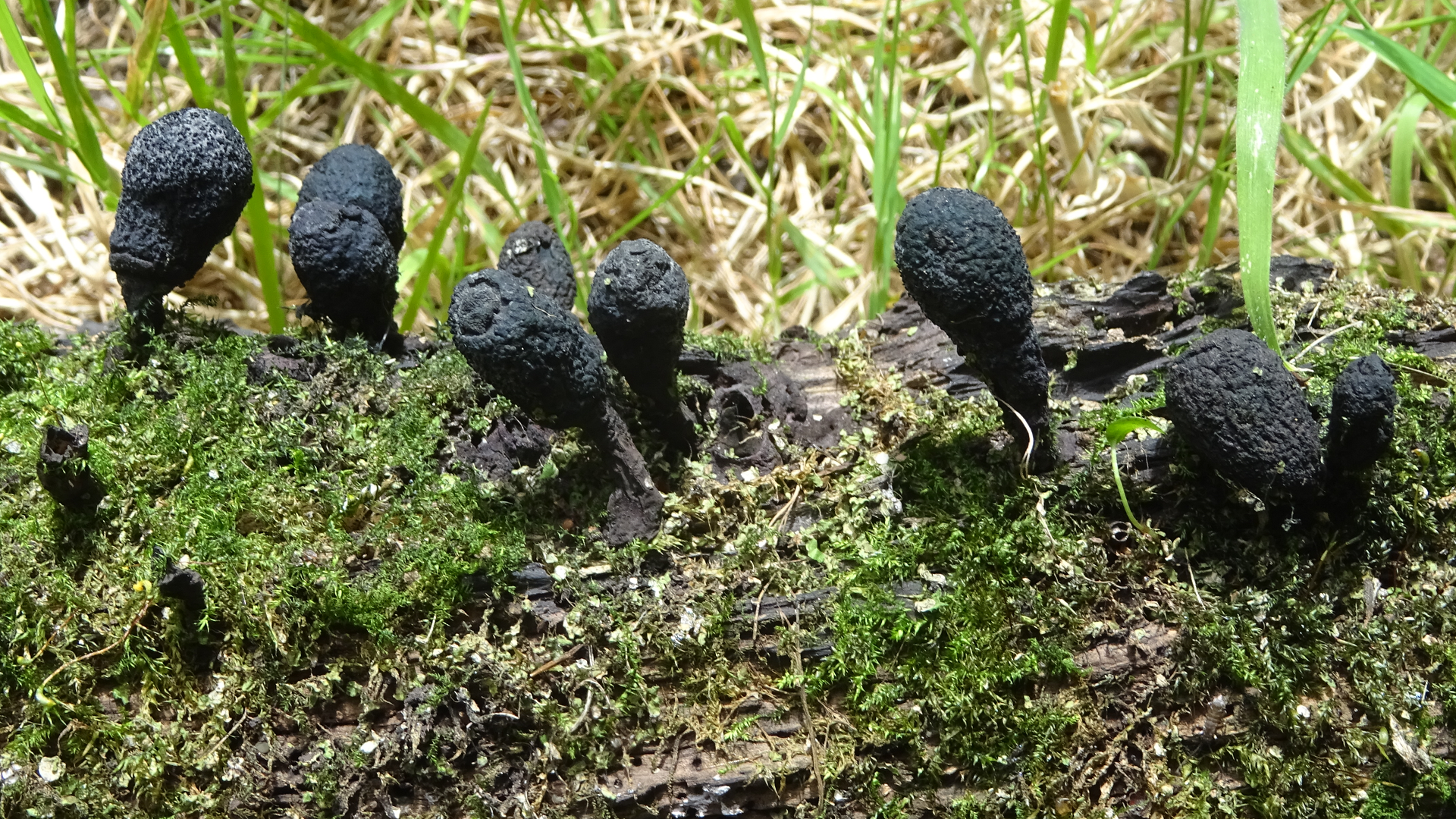
The fungus Dead Moll's Fingers is found in damp habitats where it feeds on dead or dying wood. Its club-shaped fruiting bodies are 2-8 cm in height, and up to 2 cm thick. The fingers usually appear in tufts similar to fingers of a dead hand.
#
The Lightning Tree
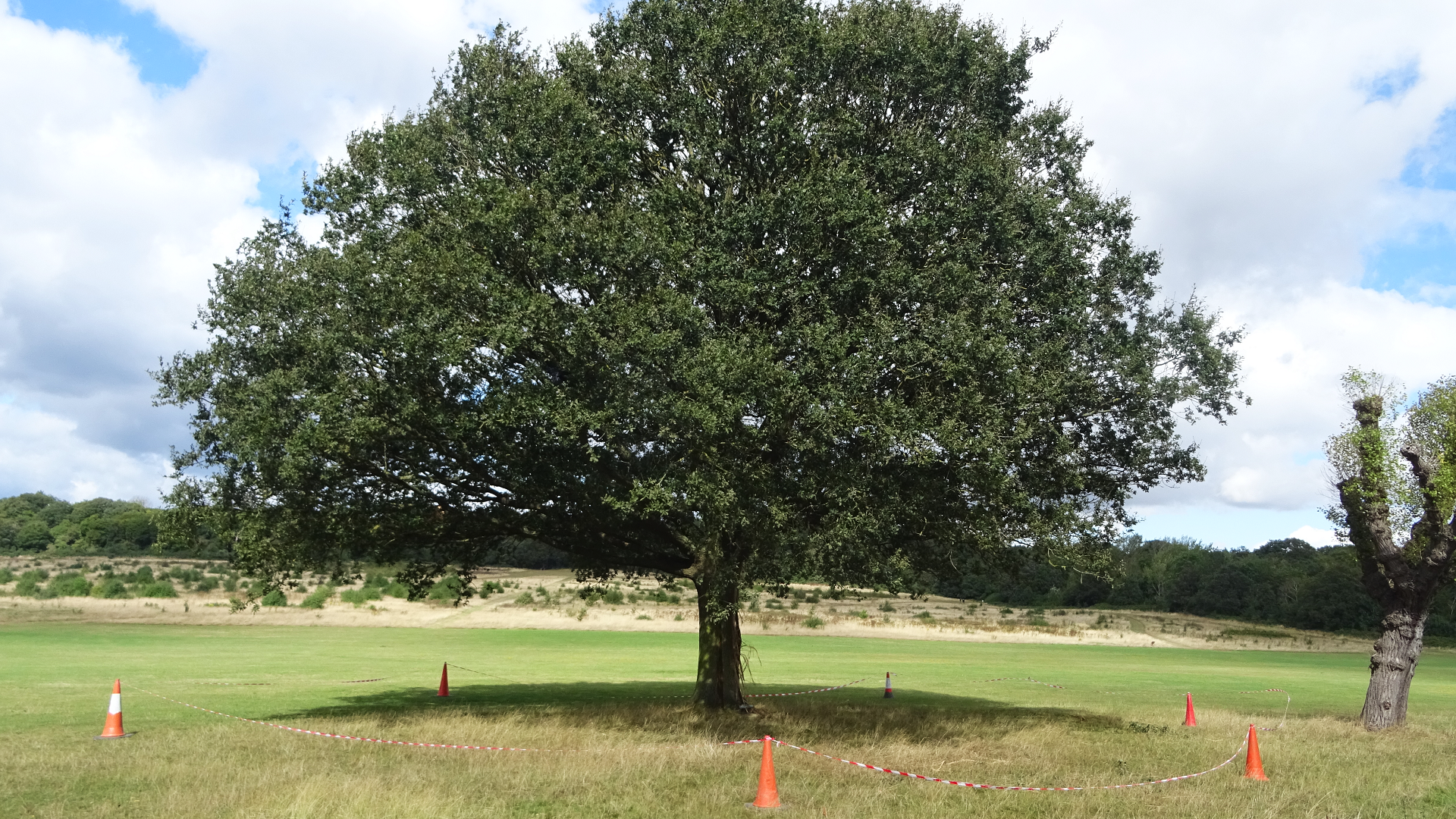
The Oak tree, near Foxburrow Barn, planted to commemorate the jubilee of the London County Council 1889-1939, was taped off for safety reasons following a violent storm that shook Hainault around 2am the previous weekend. Lightning is a discharge of electricity in the air caused when clouds accumulate an electrical charge and is why you should never stand under trees during a thunderstorm.
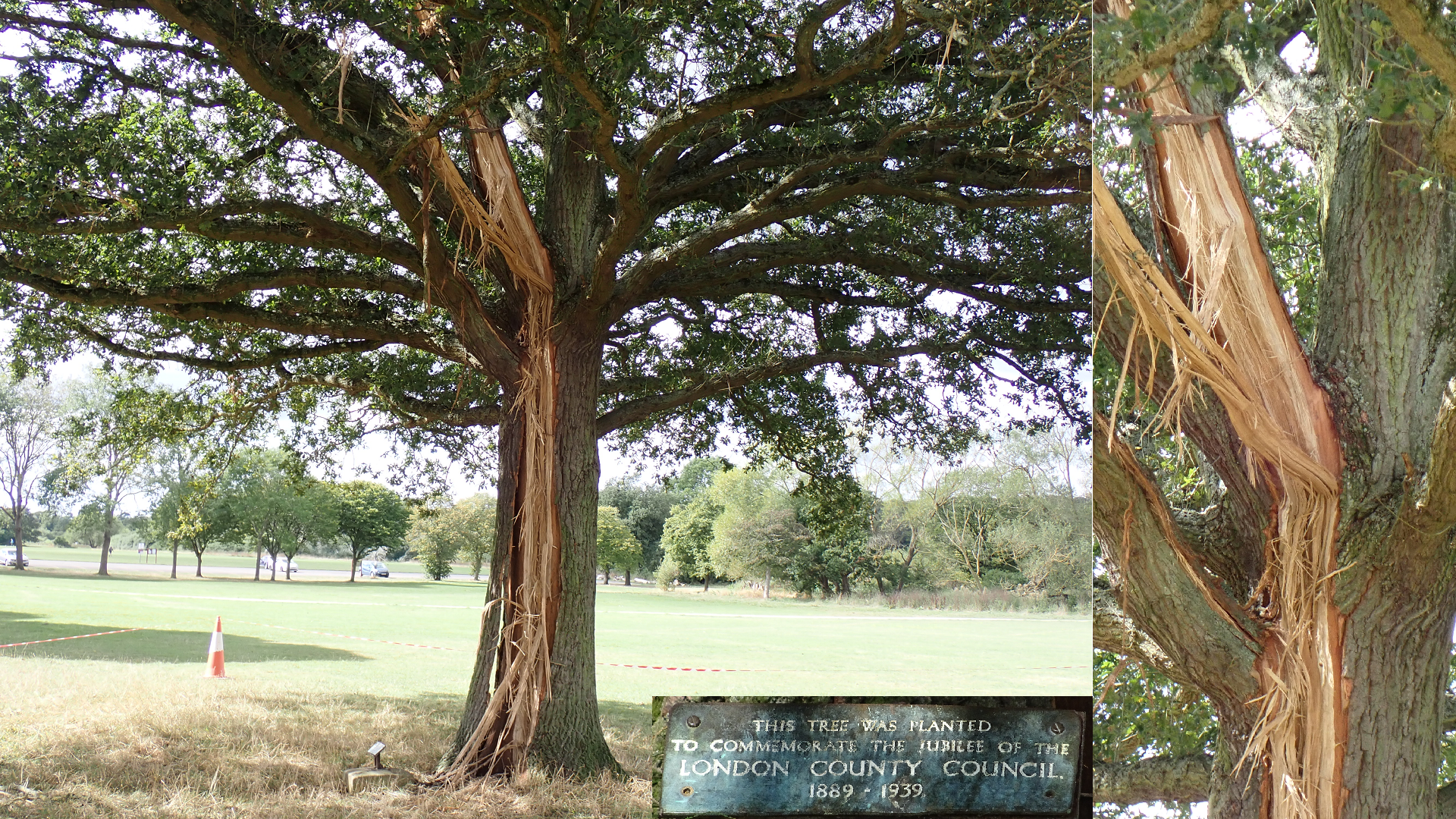
#
Thomas the Tank Engine
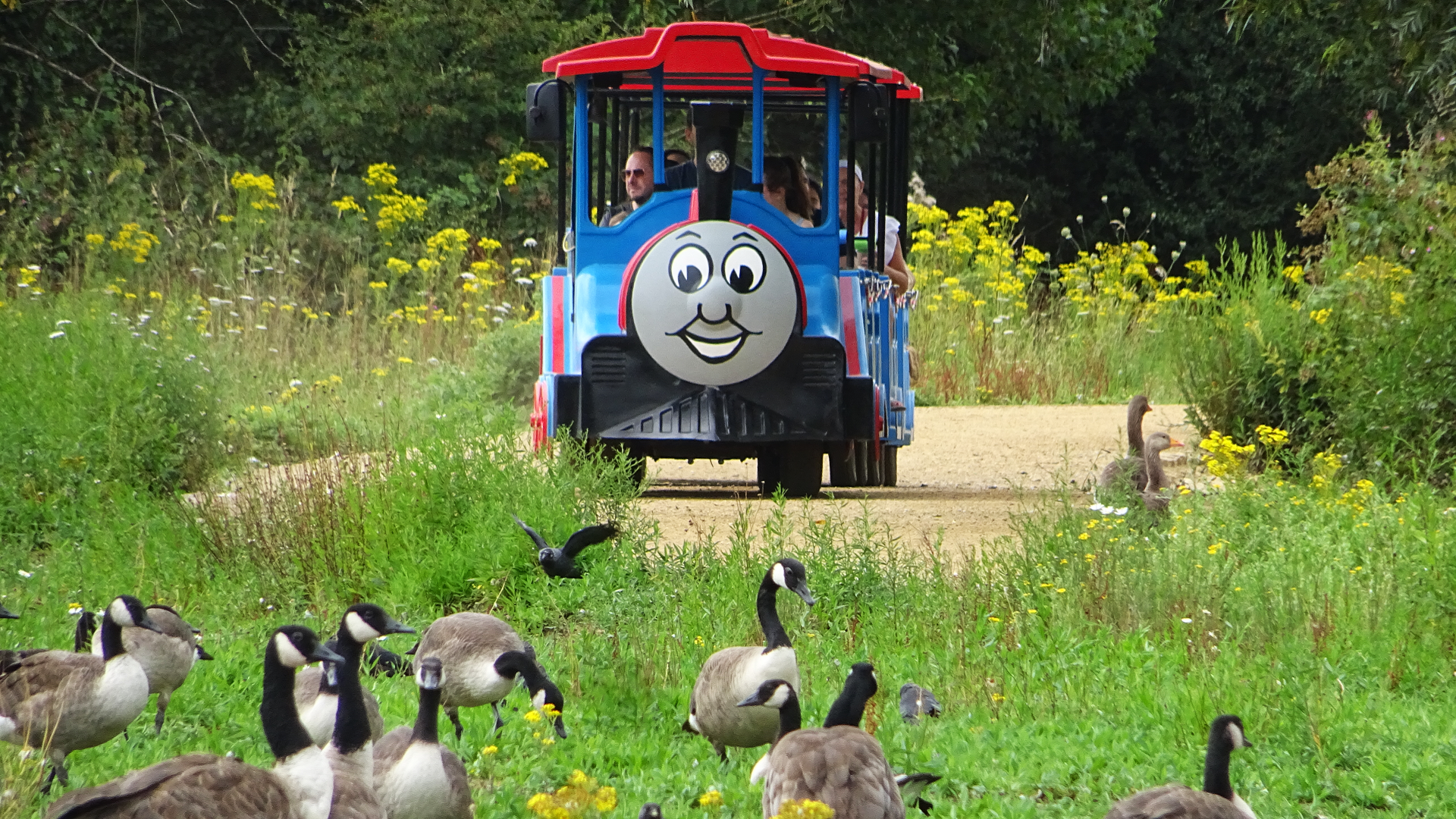
"Hello Geese!" shouted Thomas, as he rounded the bend. "Honk! Honk!", the Geese replied. Thomas was excited: "I'm dropping these passengers off at the 1856 Cafe and then picking up some more. This route around the lake is very popular during the school holidays!"
#
Thank you to everyone that have contributed to this Journal.
© hainaultforest.net. All rights reserved.
This website uses necessary cookies. It does not use targeting or advertising cookies.