

FIRST QUARTER 2025
From January 2025 to March 2025.
Welcome to the year with...
...a frosty start
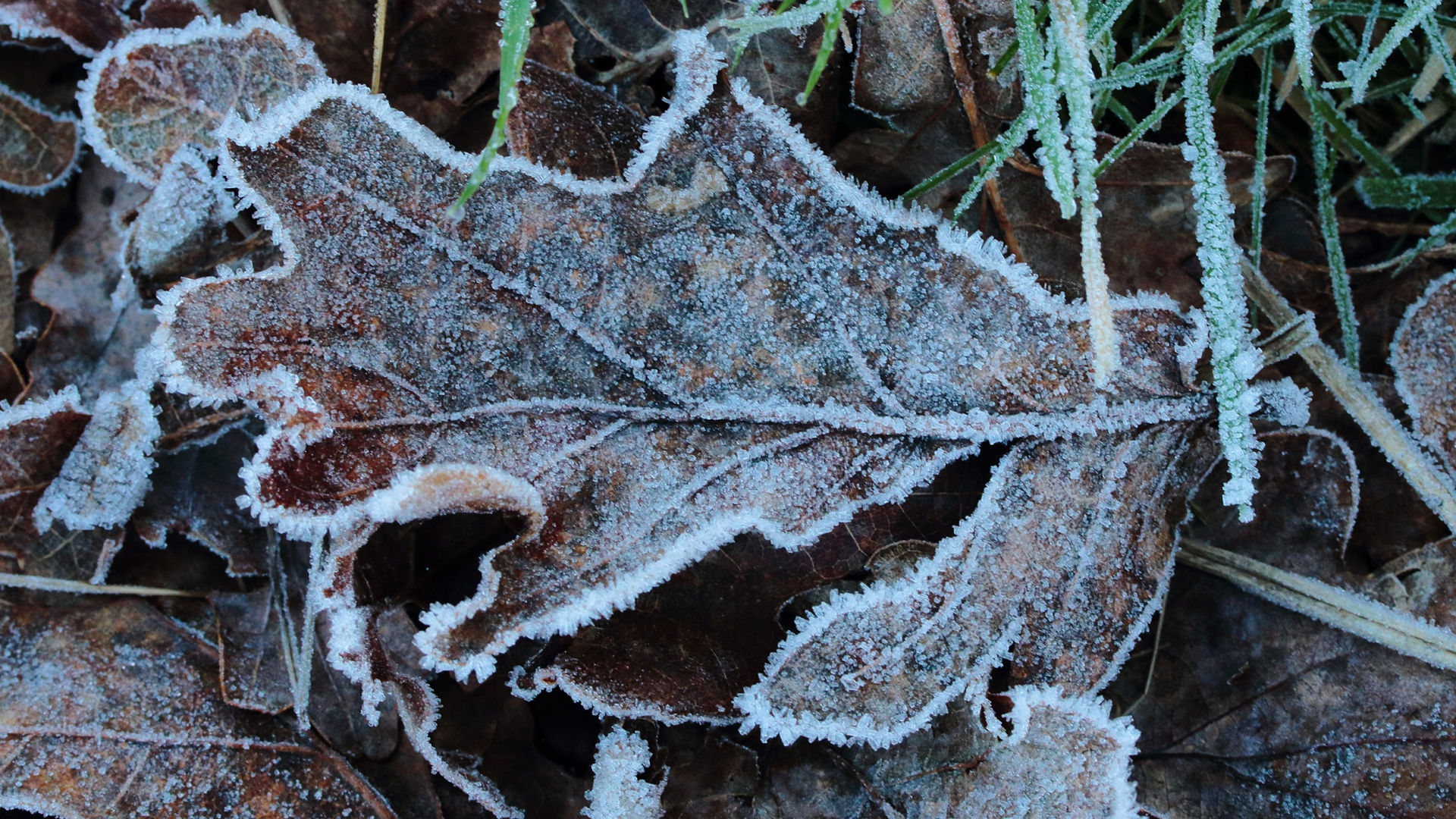
During winter if the night sky is clear with light winds, sufficient moisture is in the air, and the temperature falls between 0 °C and 4 °C, there is a strong possibility of frost forming on the ground and outside surfaces in the morning. This type of frost is known as 'hoar frost'.
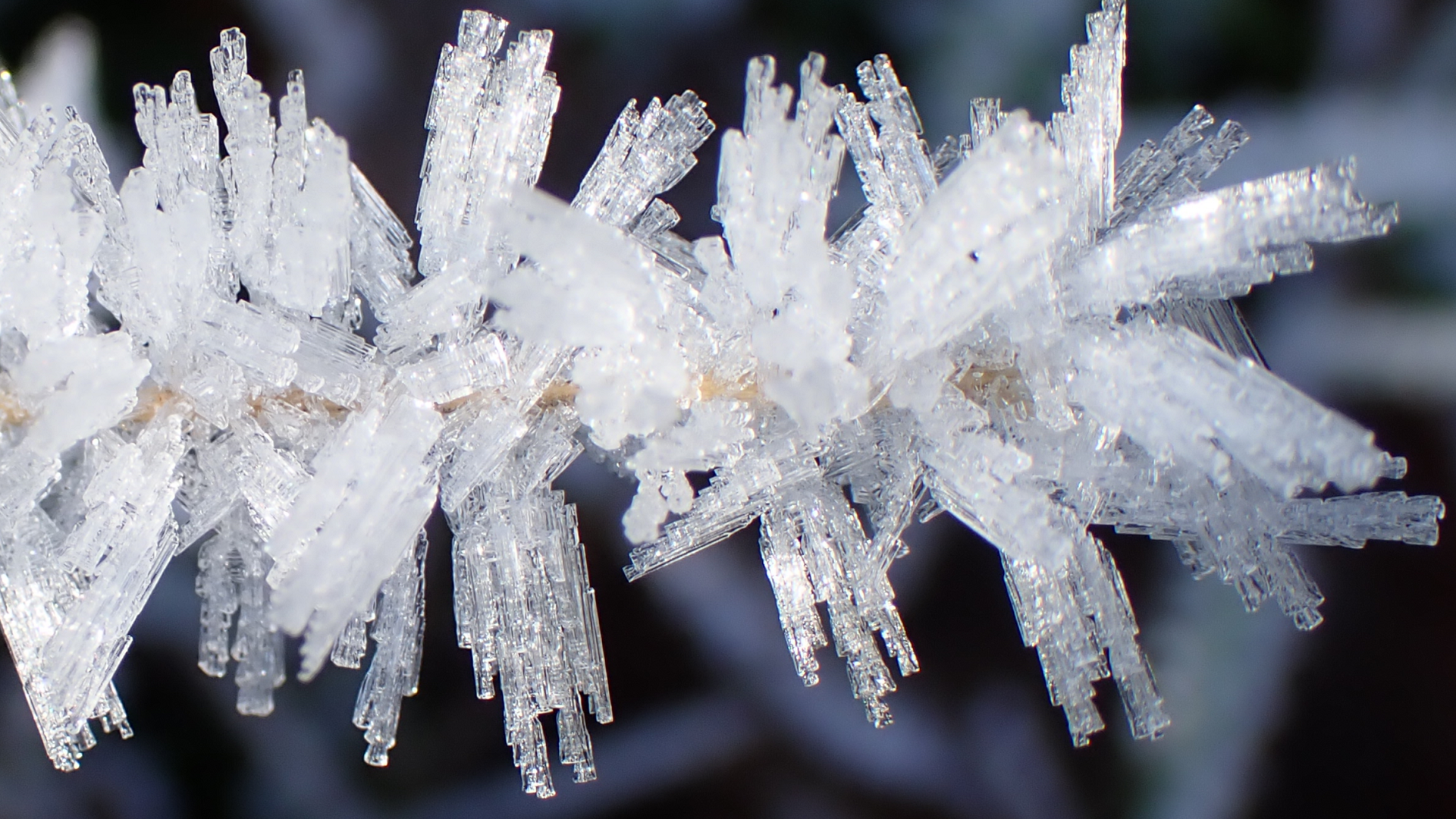
Frost crystals grow from water vapour in the air. They are formed by direct condensation of water vapour turning to ice at temperatures below freezing; going from a gas state to a solid state with no melting in between. Snow crystals form on suspended dust particles high in the clouds, unlike frost crystals that develop on surfaces near the ground. When water freezes it forms a hexagonal crystal lattice caused by bipolar molecules being attracted to each other.
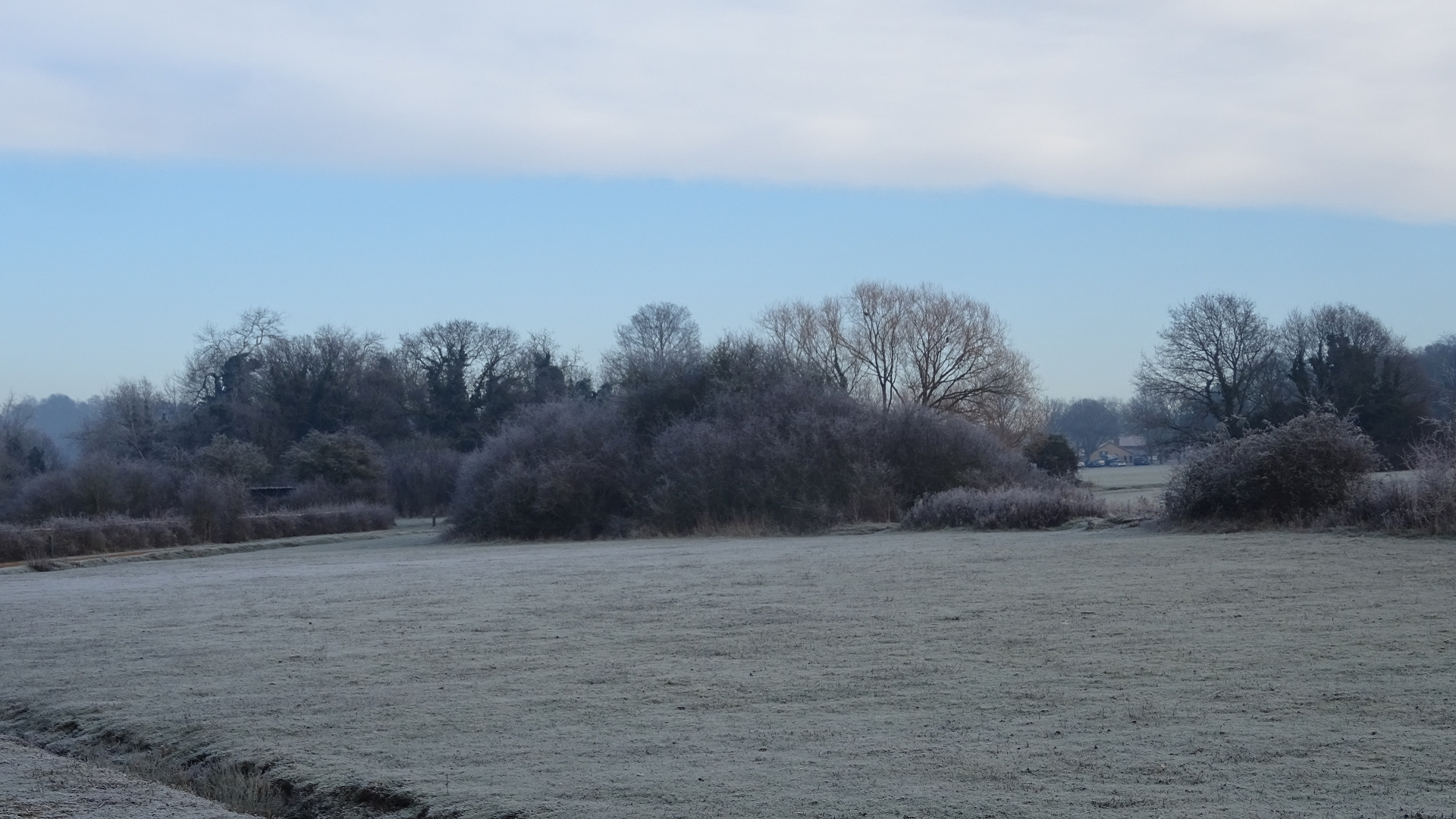
Frost is not frozen dew. If the temperature of an object on which the water condenses is above the freezing point of water, the condensation is observed as dew. However, if the temperature of an object is below freezing point, the water vapour develops ice crystals and the condensation is perceived as frost.
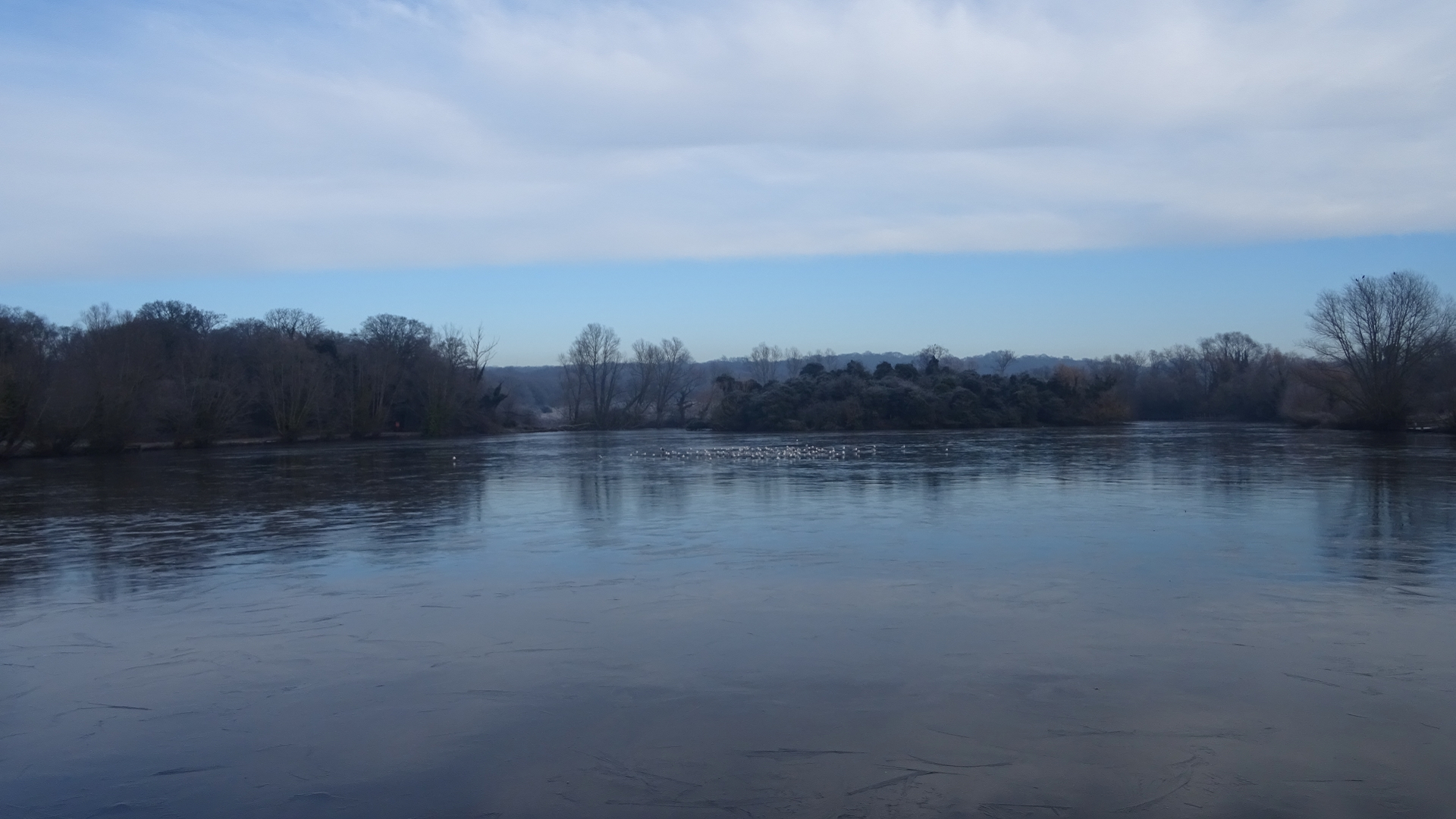
Hainault Lake topped with ice about a centimetre thick.
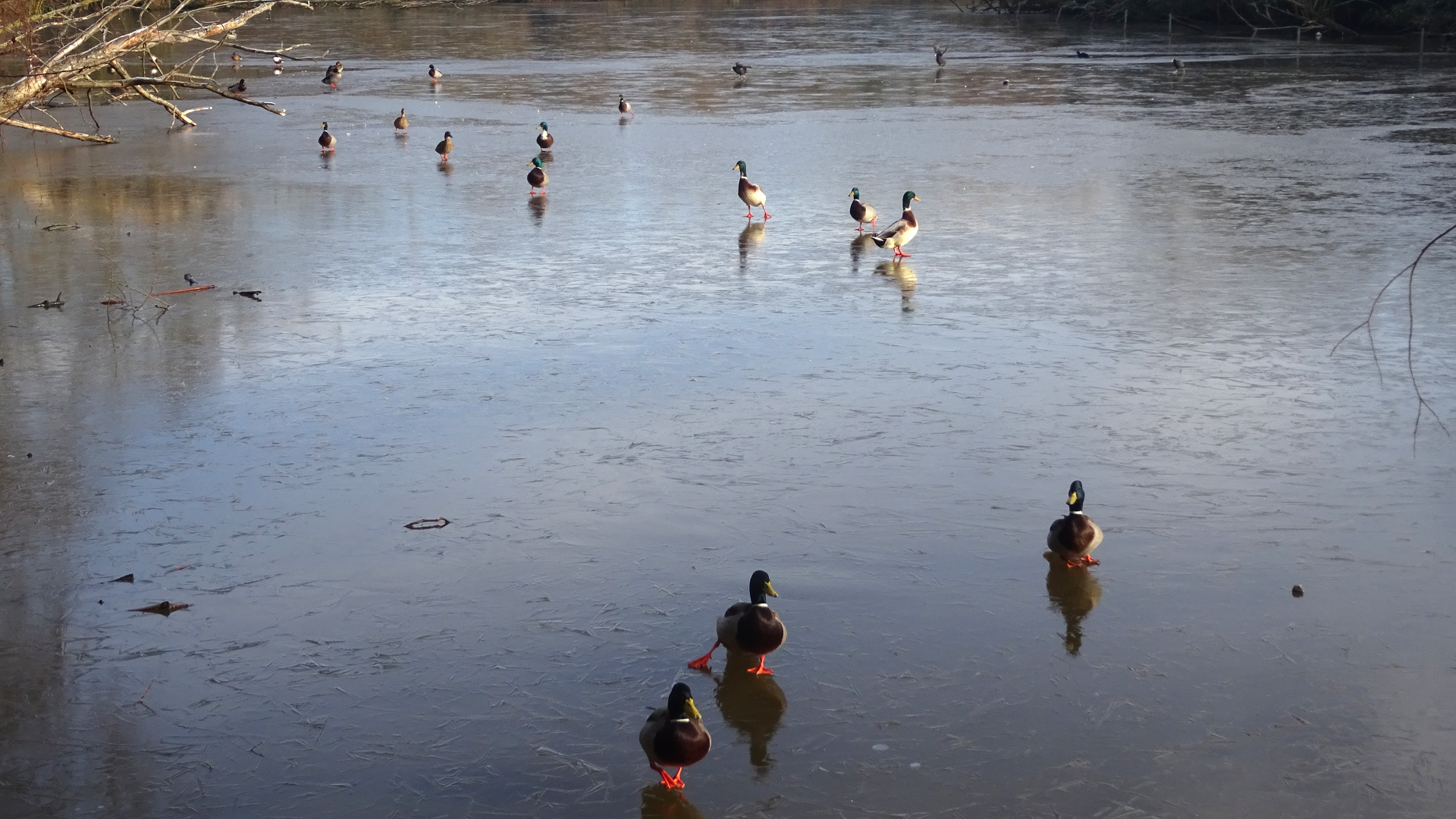
It is not easy for ducks to waddle on a frozen lake and they often slip and slide. In winter food can be difficult to find and they will usually appreciate a visitor providing bird seed or duck pellets to help them through the leaner times.
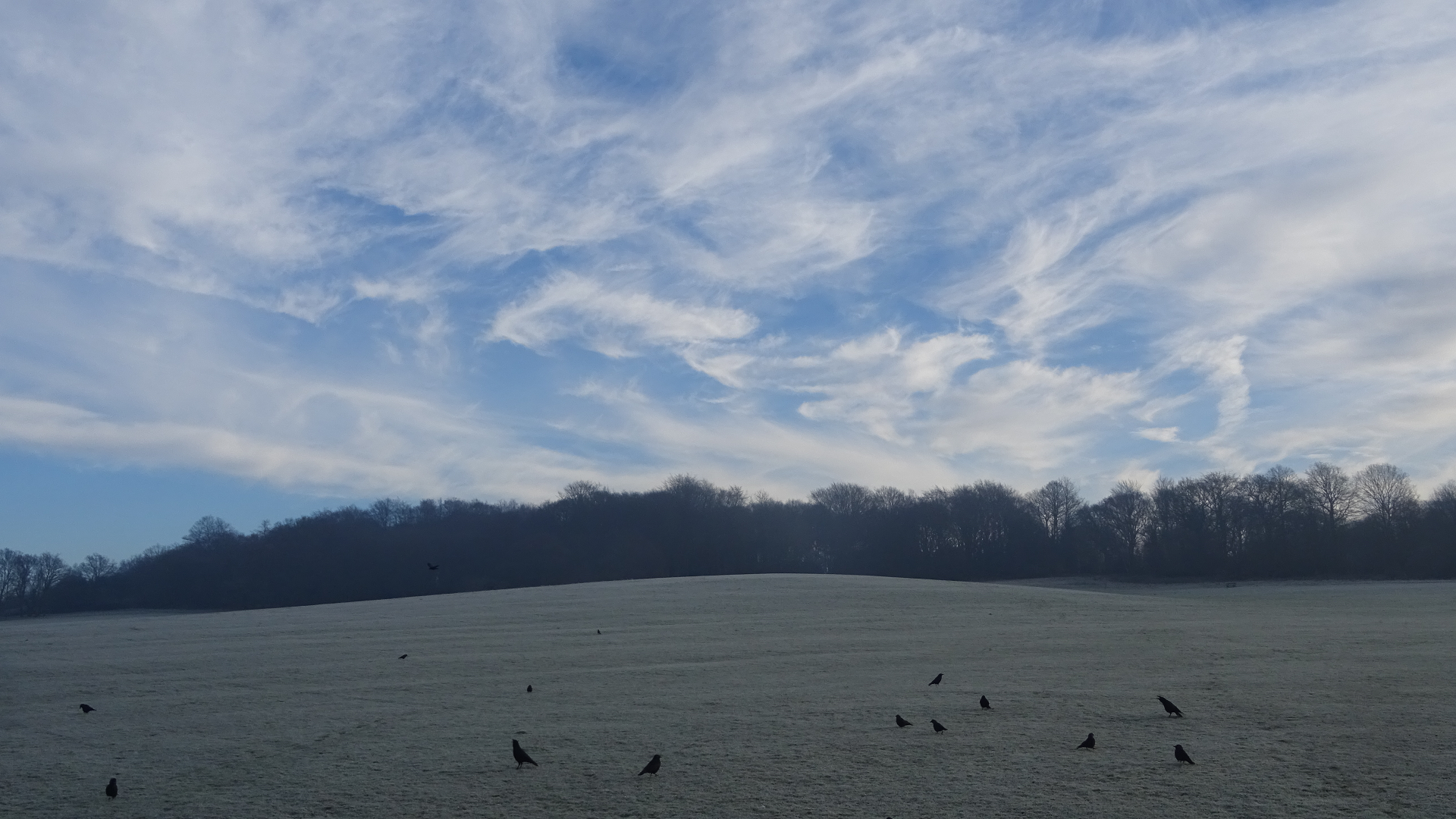
Frost-laden ground on Hog Hill with wispy, feathery, clouds overhead. Cirrus clouds are made entirely of ice crystals and are often the first sign of an approaching warm front.
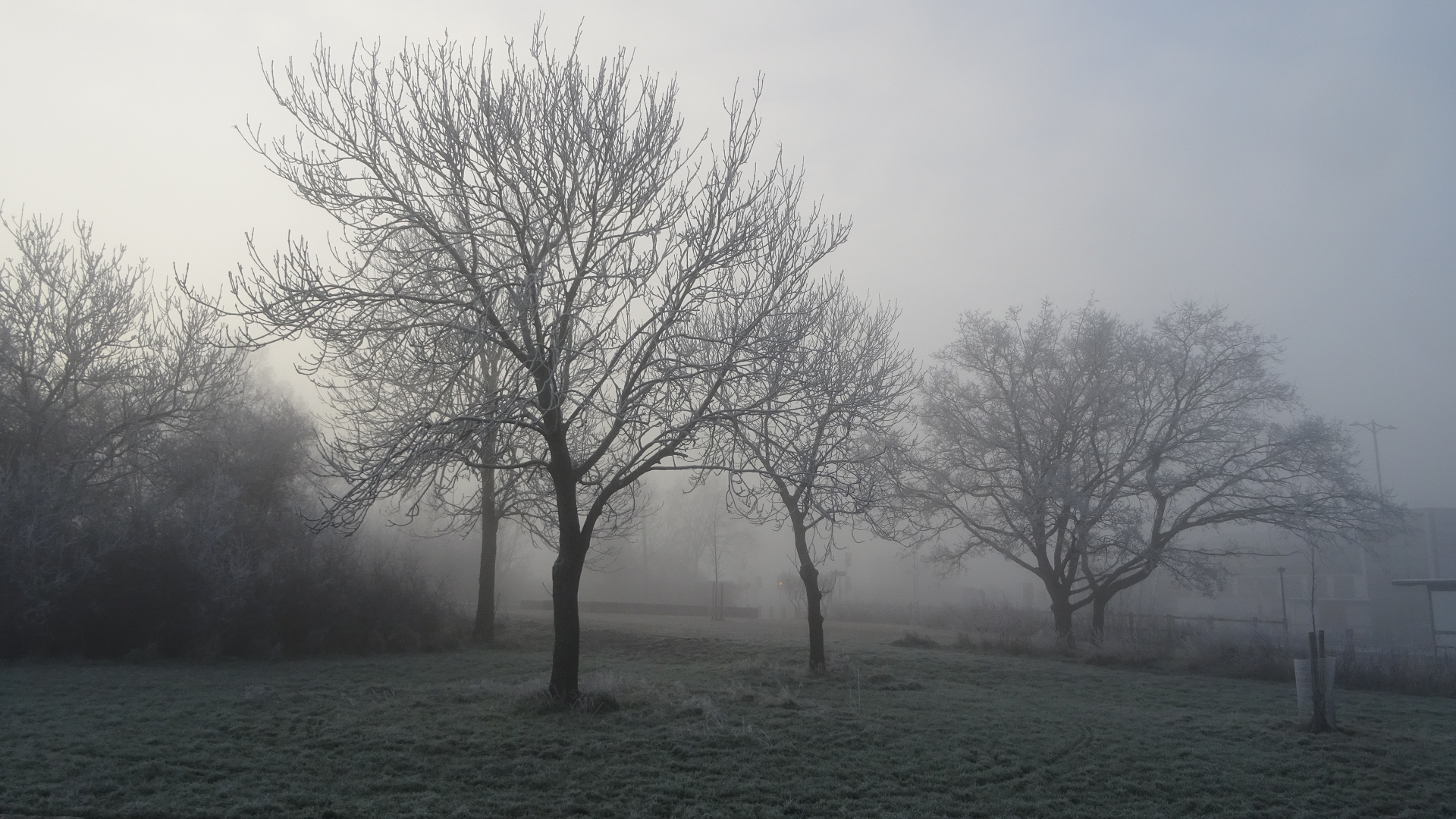
Fog occurred several times during January. Fog is a cloud that has formed near the ground caused when water vapour condenses and molecules combine to make tiny water droplets that hang in the air. This normally happens after rain when there is lots of moisture in the air. When air cools it can't hold as much water vapour causing it to condense into cloud droplets.
#
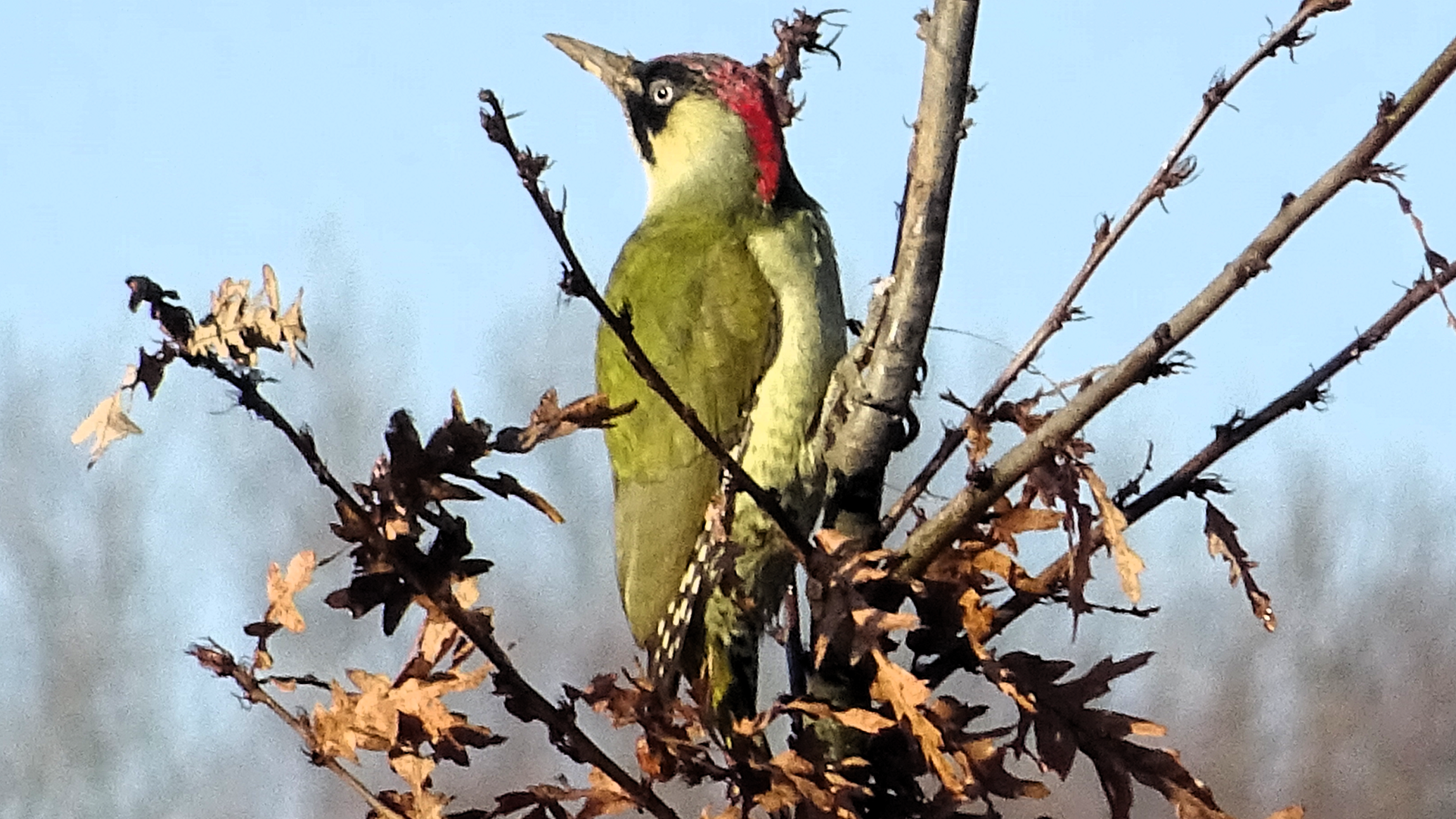
Green Woodpecker
Picus viridis
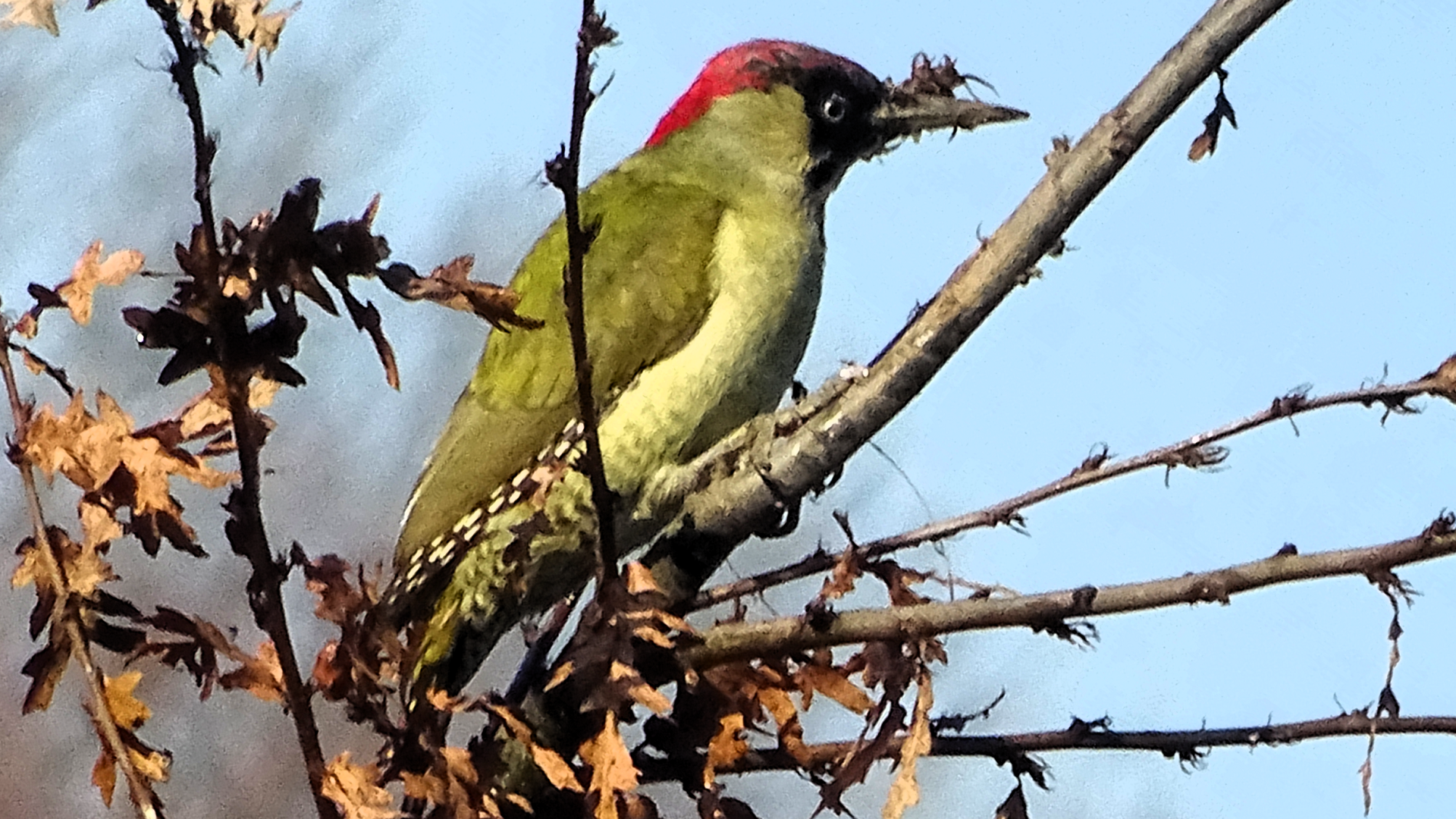
This Green Woodpecker spent at least twenty minutes on this bush in the scrub on Millennium Hill. The moustache indicates whether the bird is male or female; all black indicates a female; a red centre indicates a male. The Green Woodpecker seems to be on the increase at Hainault Forest. They are now frequently seen near Hainault Lake and on Millennium Hill.
#
Great Spotted Woodpecker
Dendrocopos major
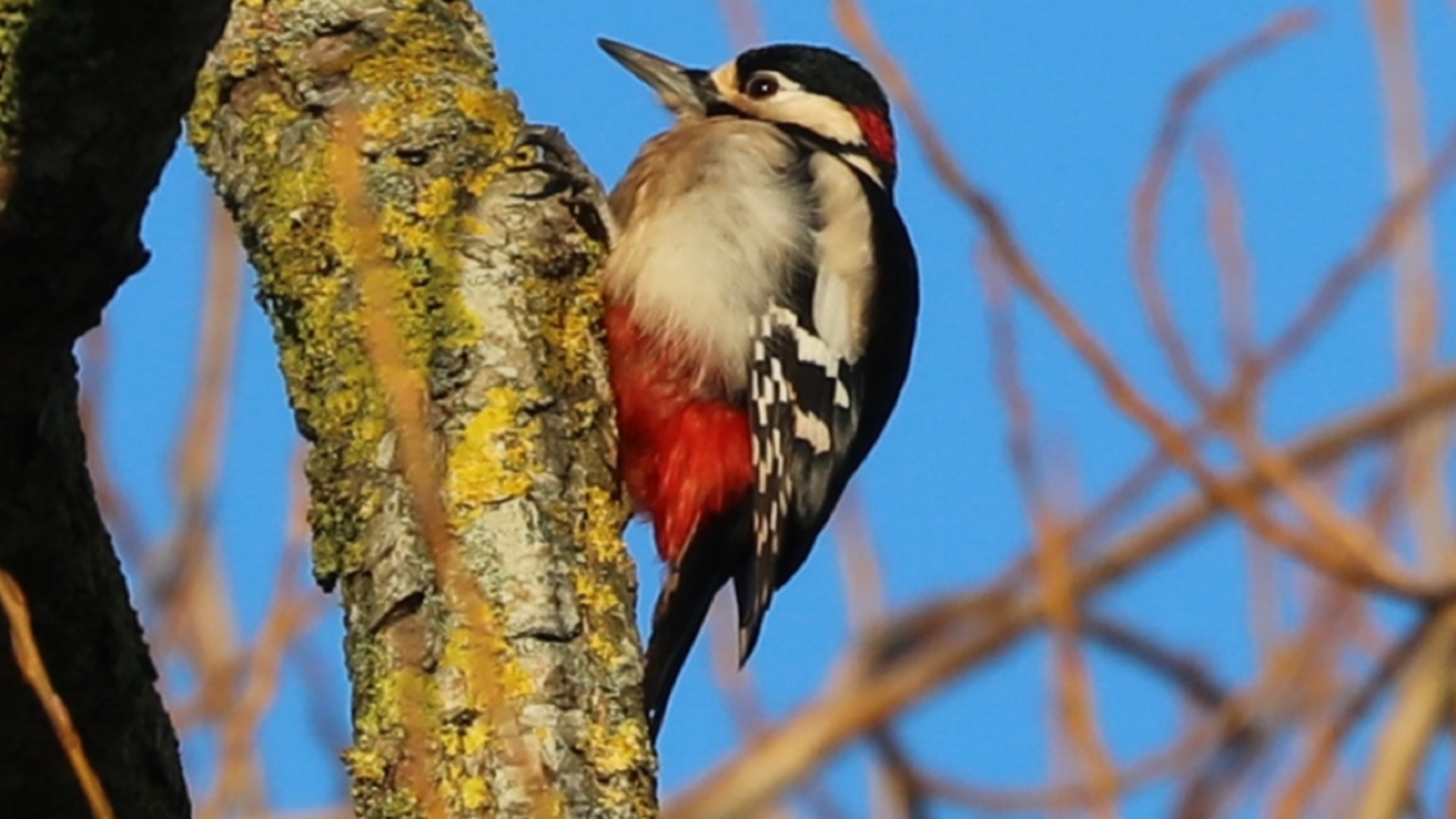
Great Spotted Woodpeckers drum on trees to advertise their territory. Males drum more often than females, mainly early in the year until the young have fledged.
#
Goldfinch
Carduelis carduelis
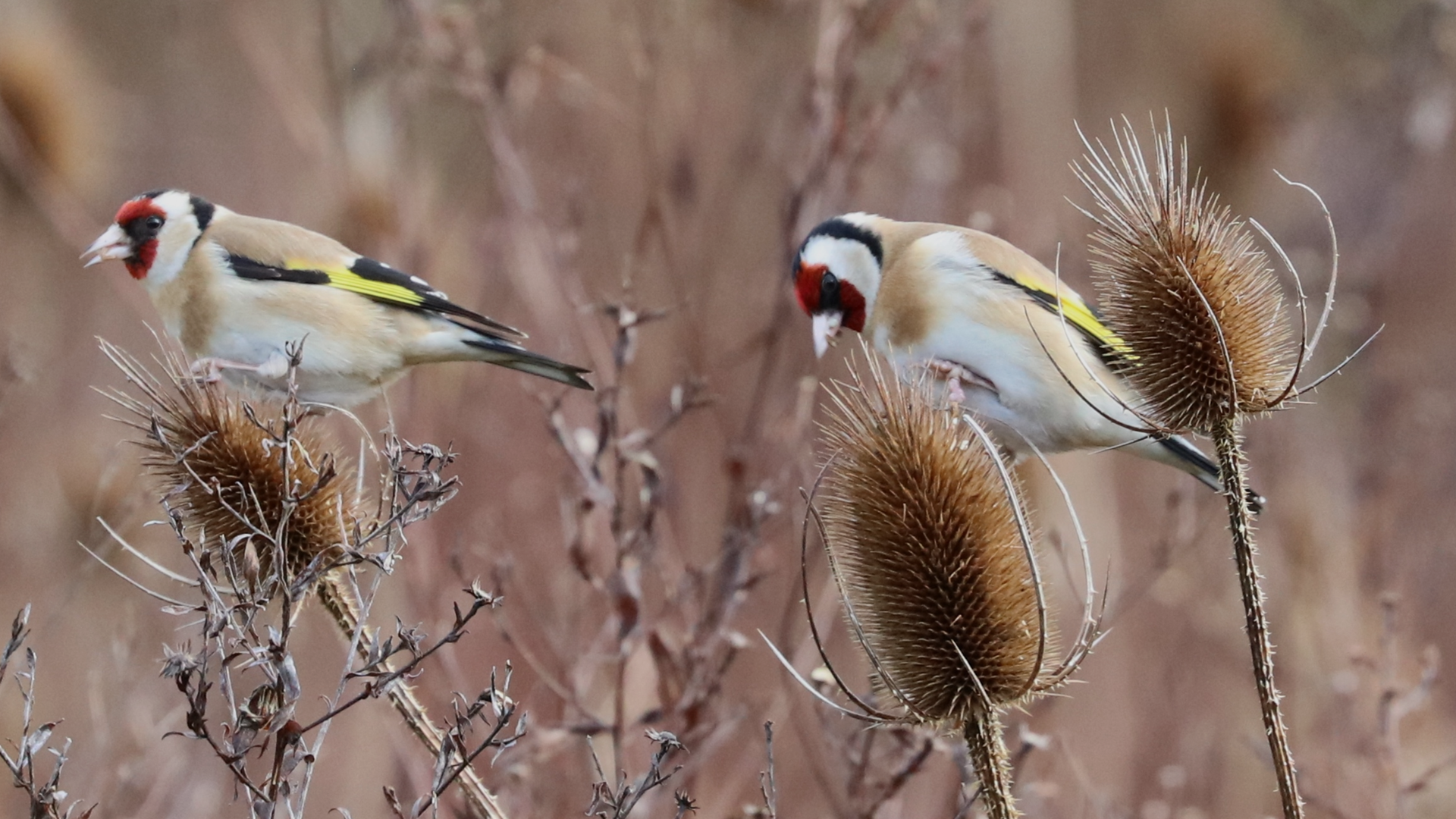
By far the most common type of finch seen in Hainault Forest usually appearing in large groups. They feed on seeds of thistle, teasel and other plants. Their fine beaks allow them to extract otherwise inaccessible seeds from plants. In the past the species was also called the 'Thistle Finch' due to its liking for thistle seed.
#
Shoveler
Anas clypeata
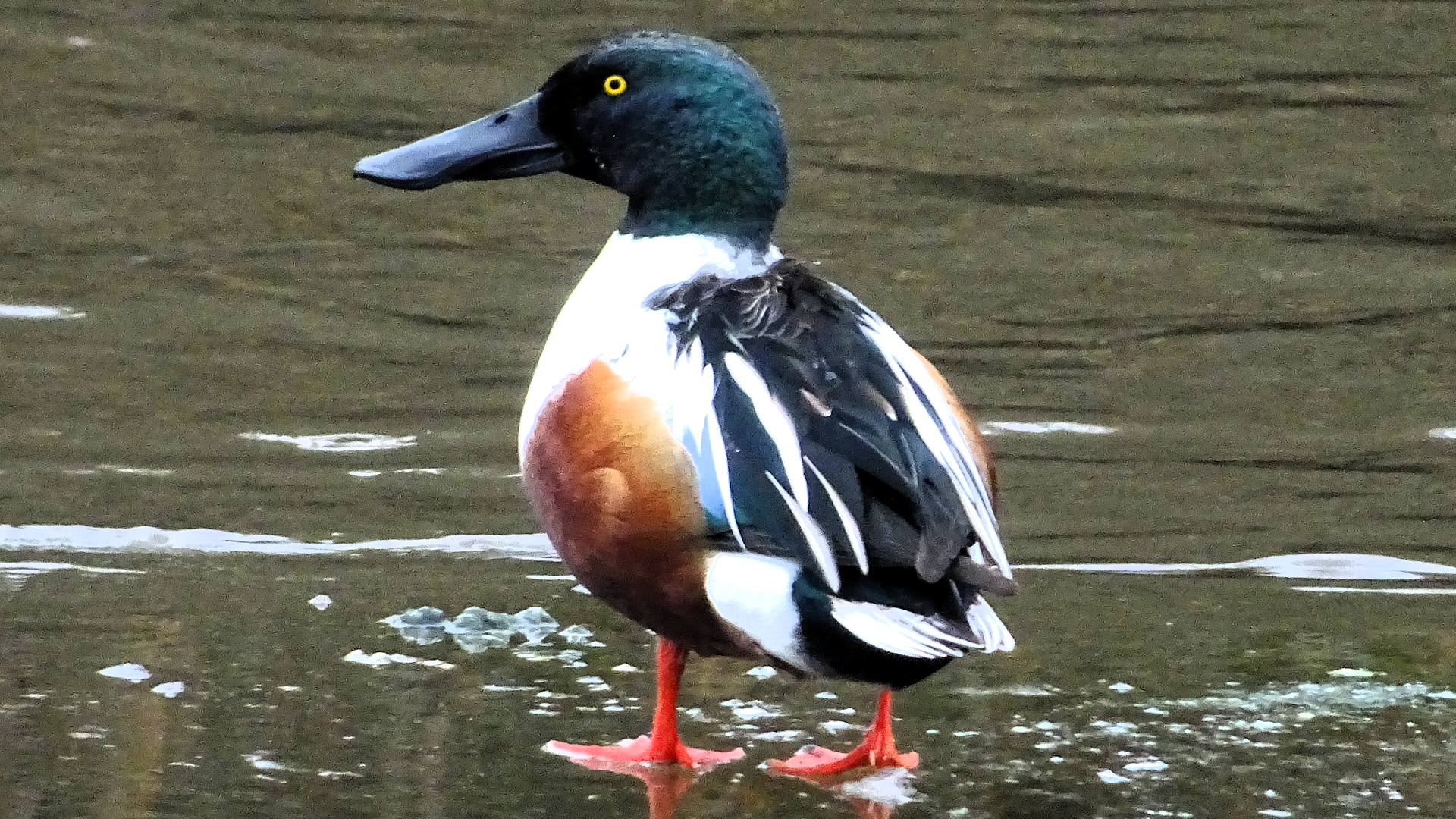
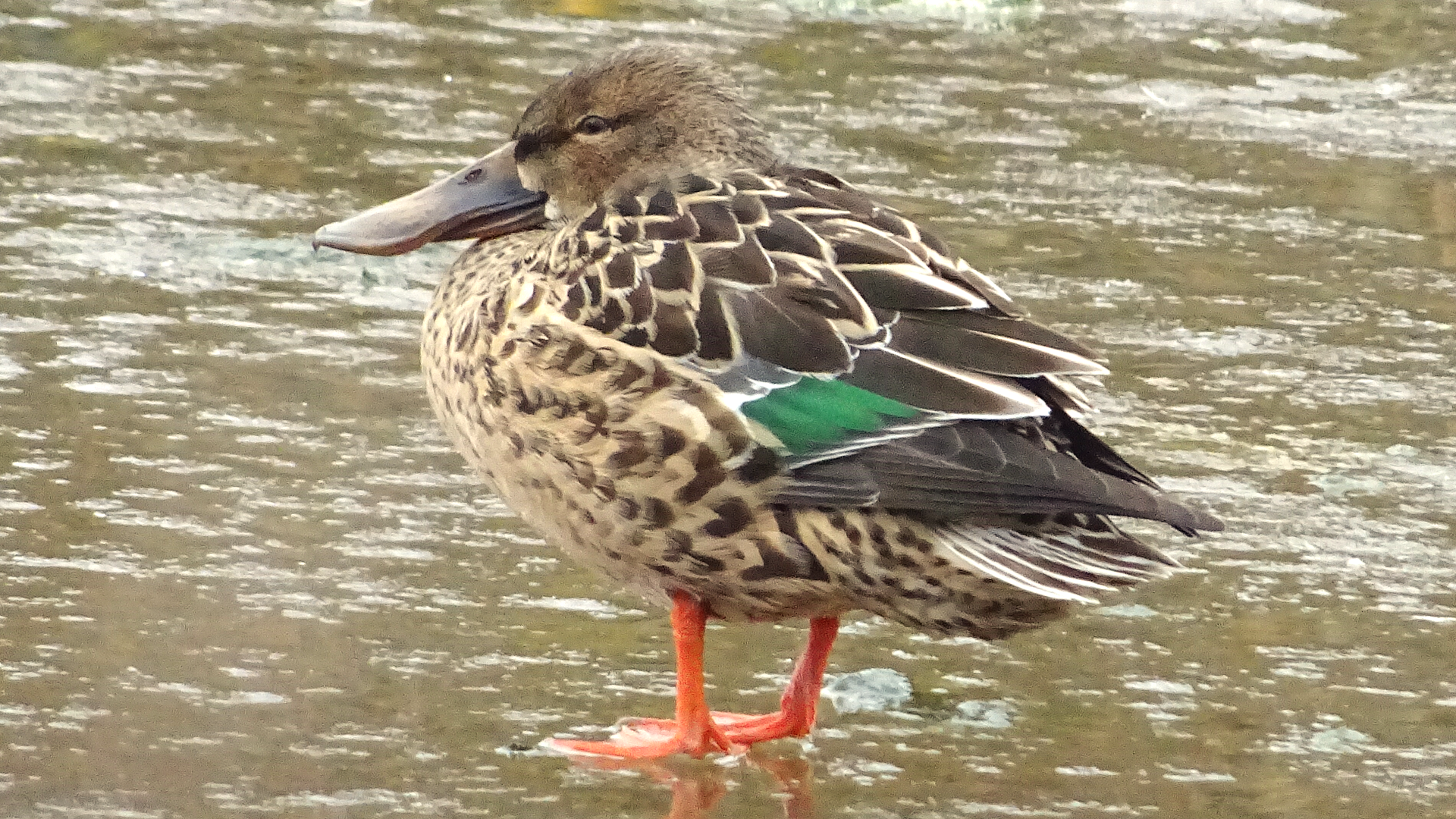
Shovelers are surface feeding ducks with large spatulate bills. They are winter visitors often seen at Hainault Lake and Fairlop Waters. They trawl for insects and plant material with their bills in the water. Females are mottled brown. During winter Shoveler ducks are normally seen swimming in circles using their long beaks to trawl the water. When the lake froze over they stood on the ice giving a rare view of their legs.
#
Gadwall
Anas strepera
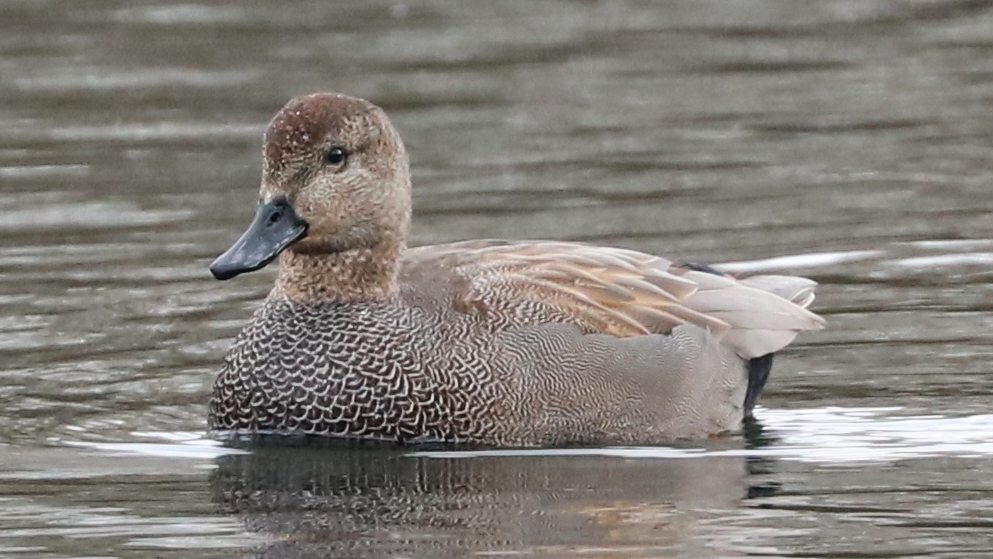
Gadwalls are infrequent visitors to Hainault Lake, but are more common at nearby Fairlop Waters where the picture above was taken. Drakes have grey plumage and a black rear. Females are brown with a black speculum. They feed on stems, leaves and seeds.
#
Long-tailed Tit
Aegithalos caudatus
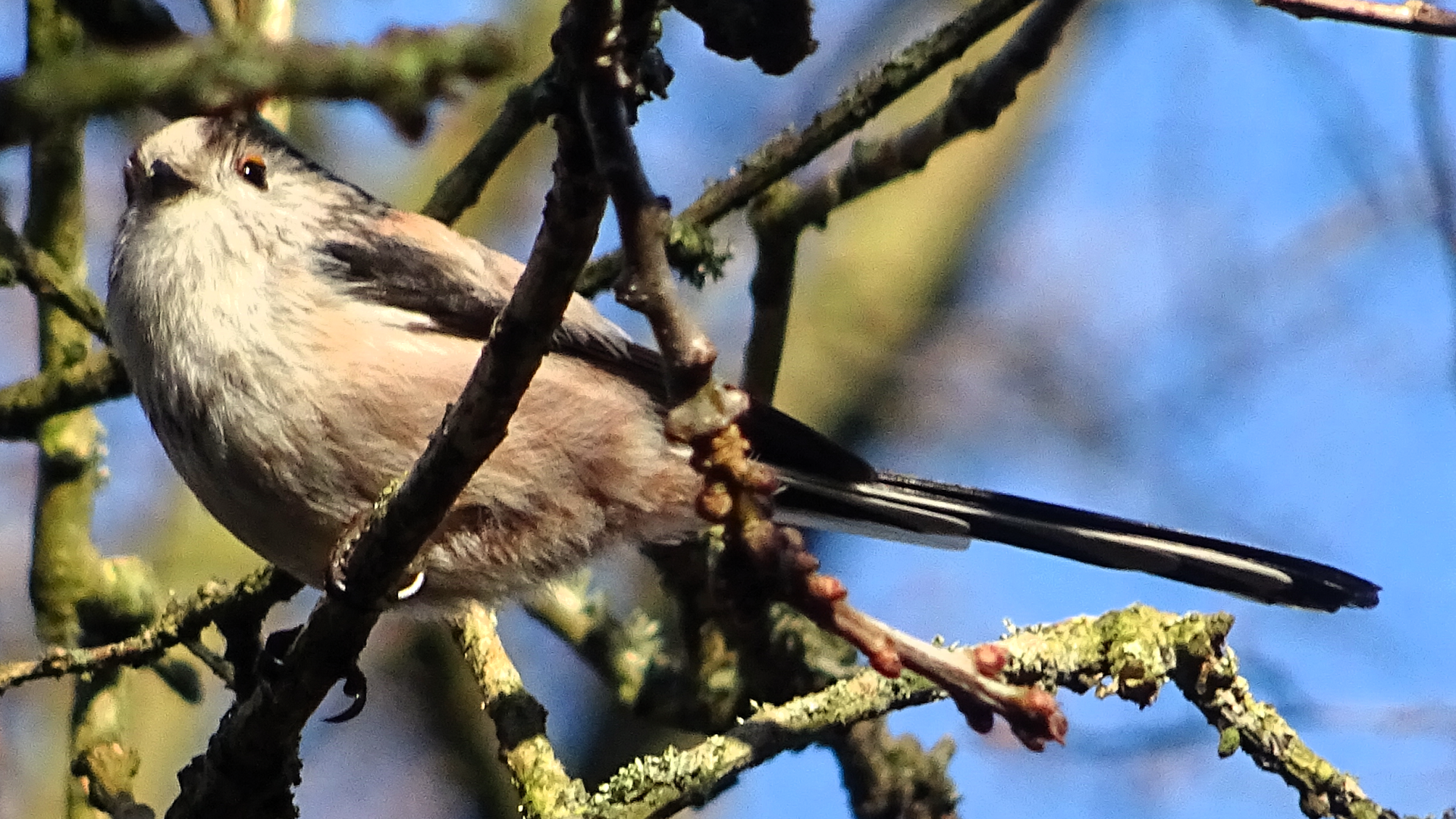
Long-tailed Tits are usually seen in small noisy groups flying around woodland trees and hedgerows. They feed on insects, sometimes switching to seeds in autumn and winter.
#
Dunnock
Prunella modularis
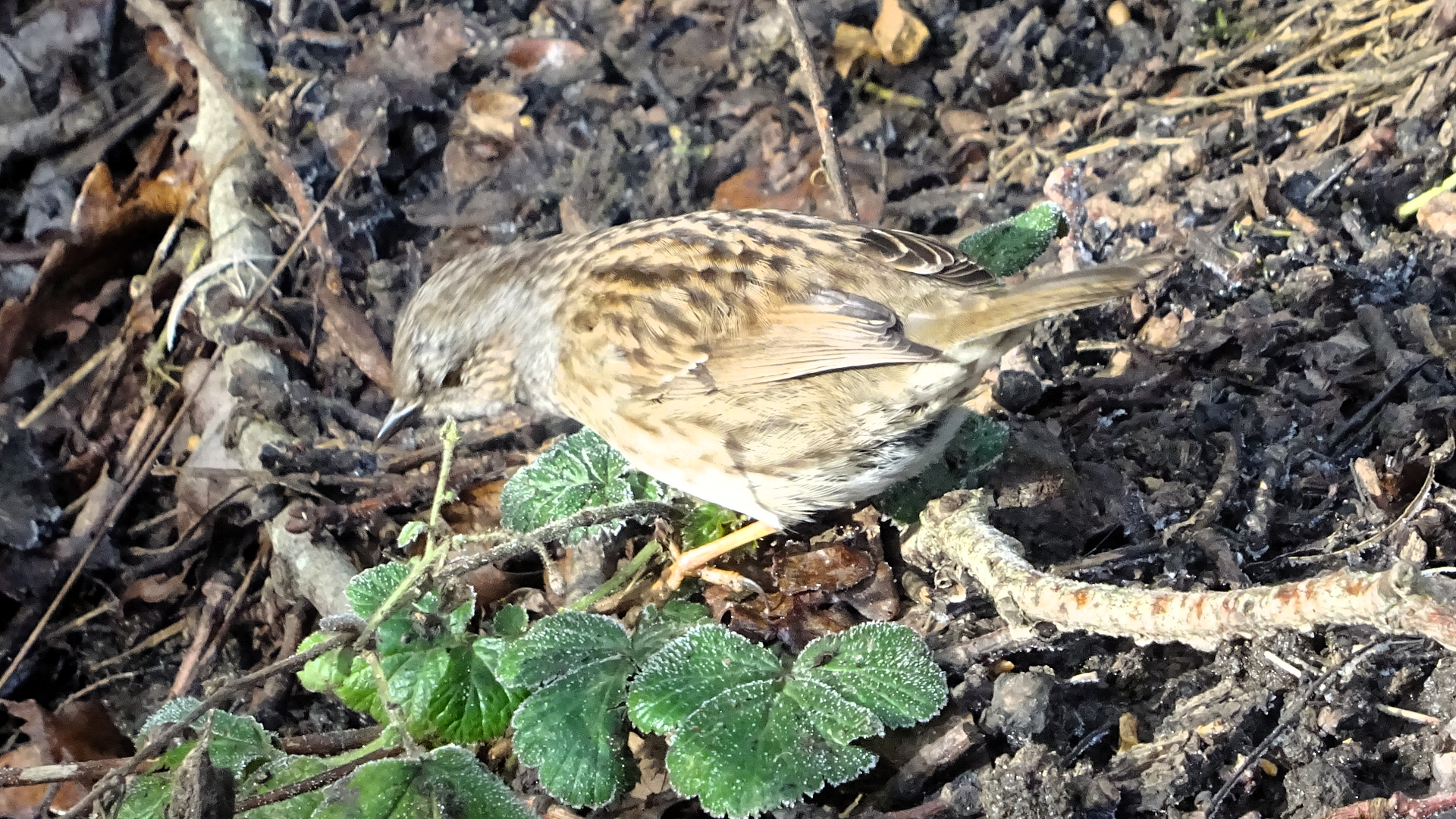
Dunnocks are small brown and grey birds. They are shy birds usually seen alone, or in pairs, on paths or close to bushes. They feed on insects, arachnids, worms and seeds.
#
Black-headed Gull
Chroicocephalus ridibundus
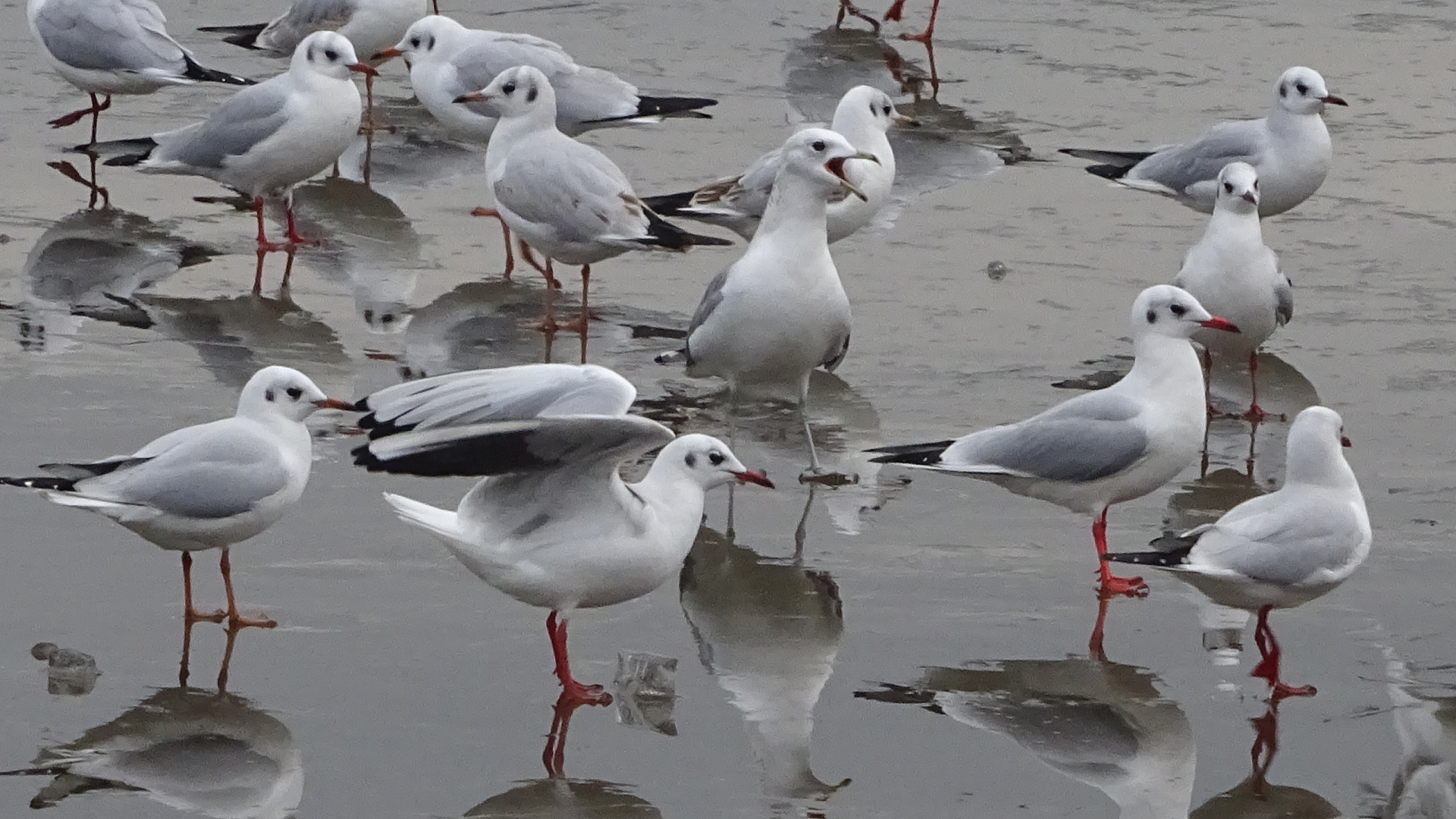
Black-headed Gulls are seen at Hainault lake throughout the year, but are more numerous during the winter. They have a dark spot on the side of the head which totally covers the head when the breeding plumage occurs in the summer. They are often accompanied by an occasional Common Gull or Lesser Black-backed Gull, which can usually be easily picked out from the crowd by their larger size and different coloured legs. Can you spot the odd one out?
#
Lapwing
Vanellus vanellus
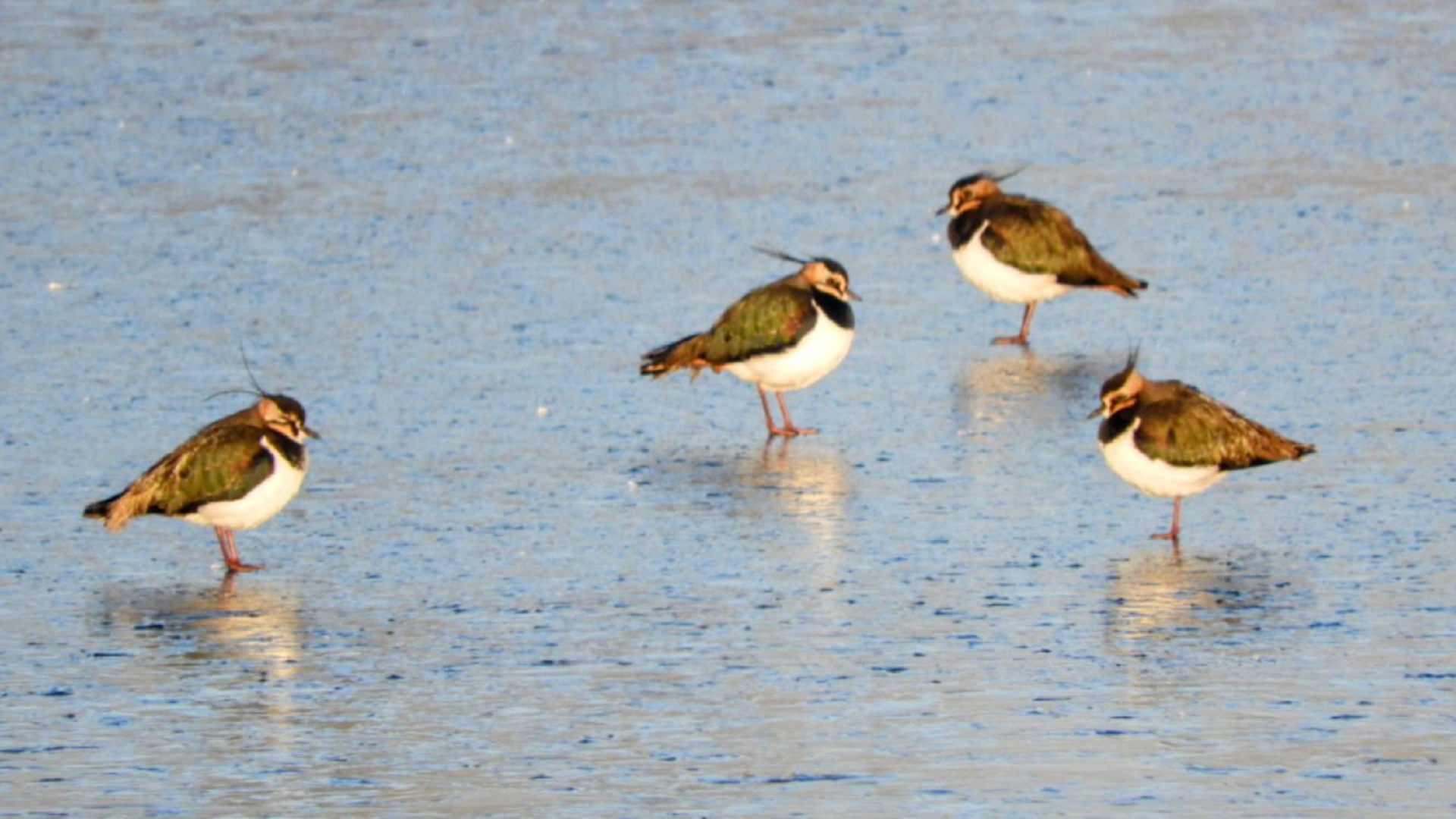
Lapwings standing on a frozen lake at Fairlop Waters, not a species usually found on Hainault Lake. Also known as the 'Peewit' due to its characteristic call. This is now a Red List species due to a recent decline in numbers.
#
Grey Heron
Ardea cinerea
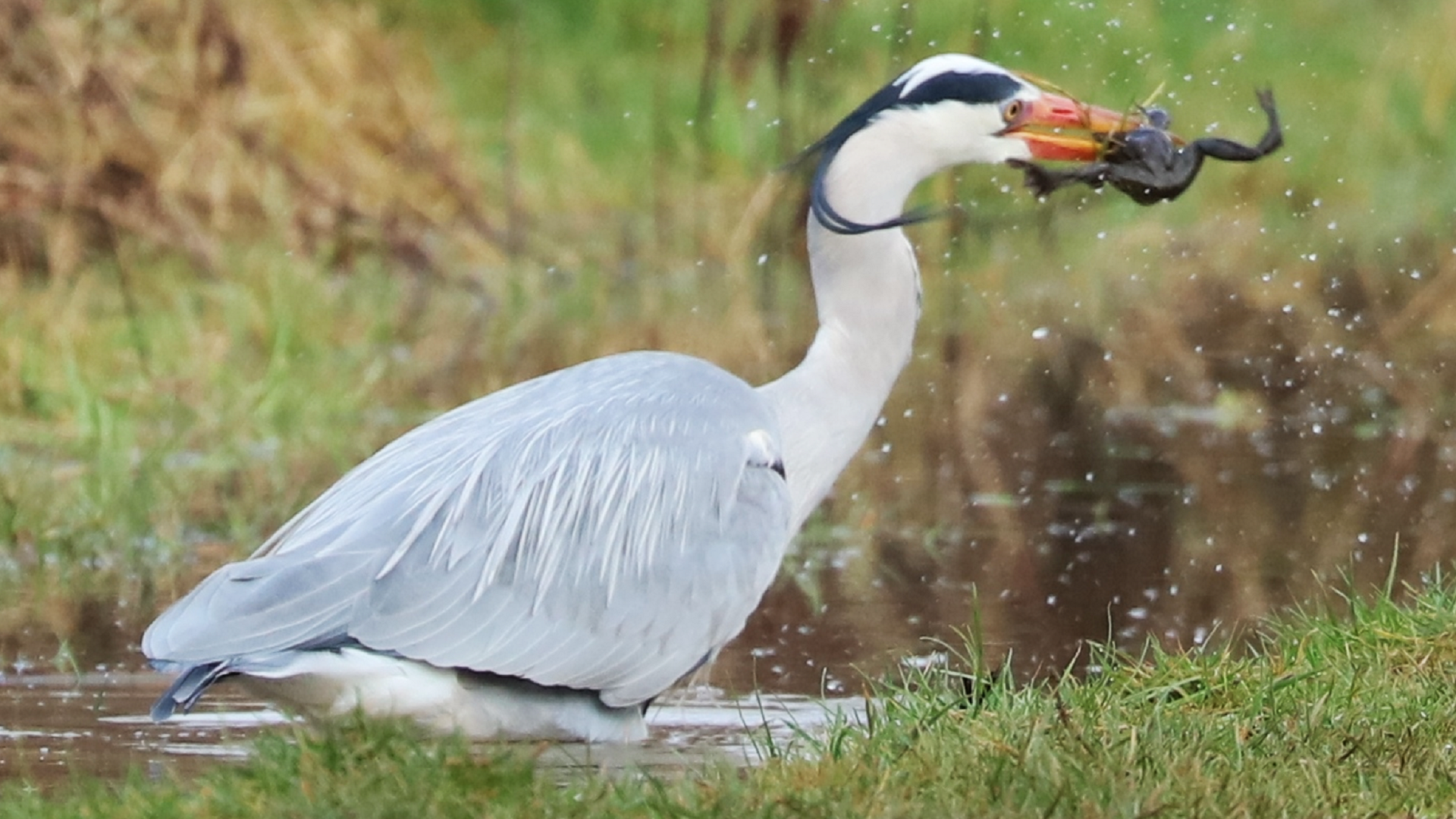
A Grey Heron having a successful hunting trip in the ditch at the back of Hainault Lake.
#
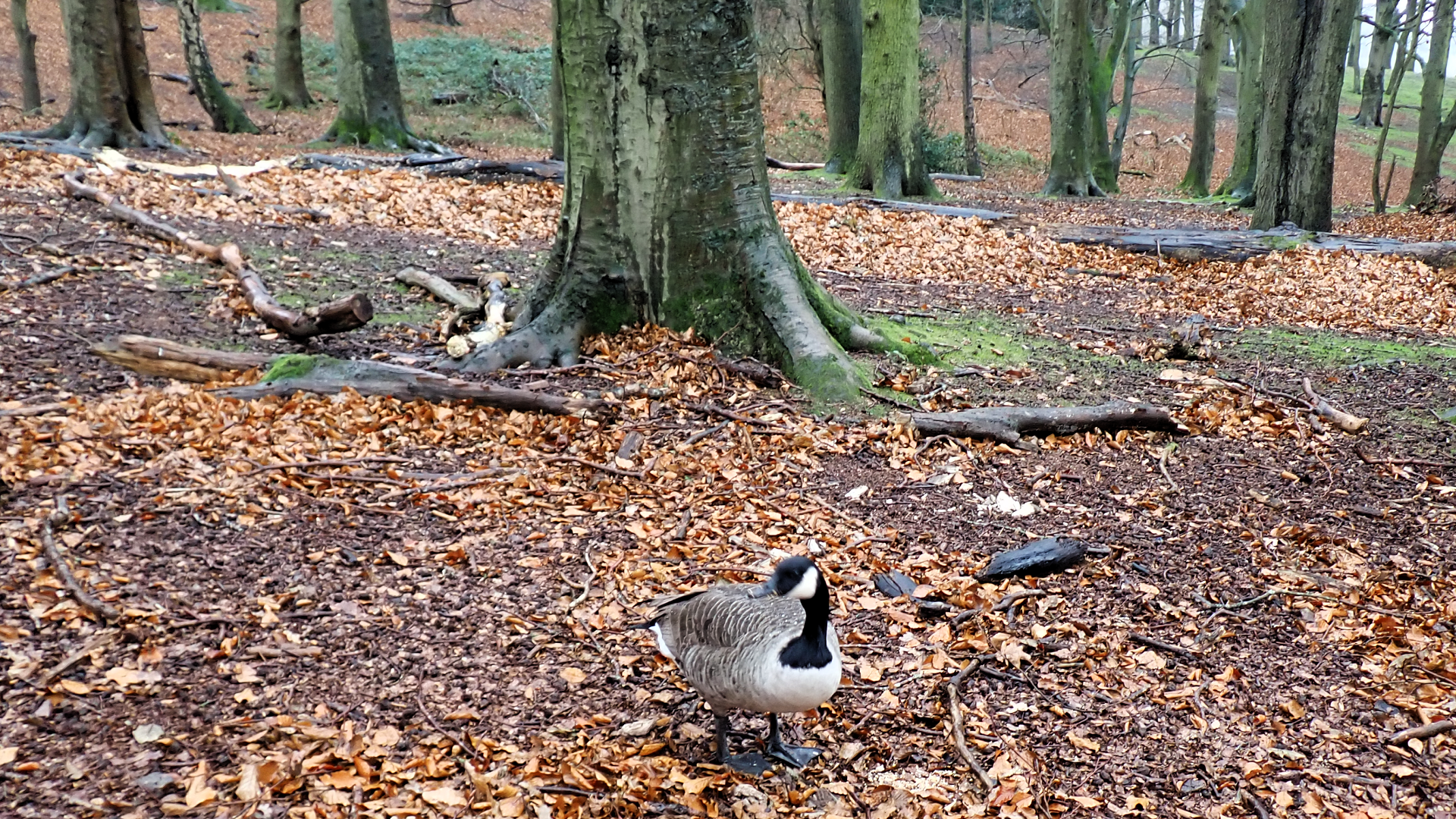
Canada Goose
Branta Canadensis
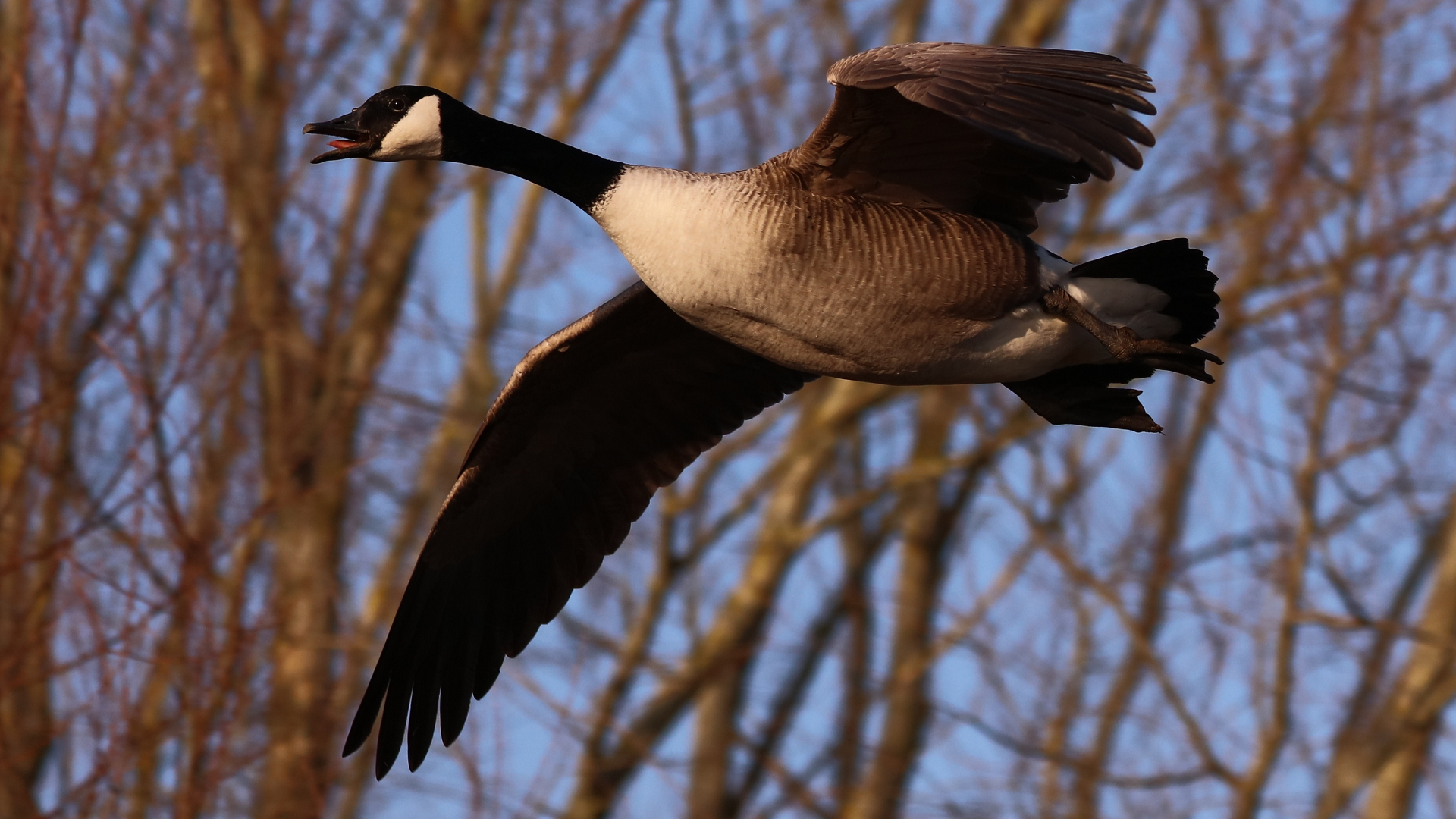
Britain's largest black-necked goose is often seen inland. it was originally introduced from North America and has become widespread across the country. They usually prefer open grassy places near water. Its call is characterised by a loud double-trumpeting sound.
#
Peacock
Aglais io
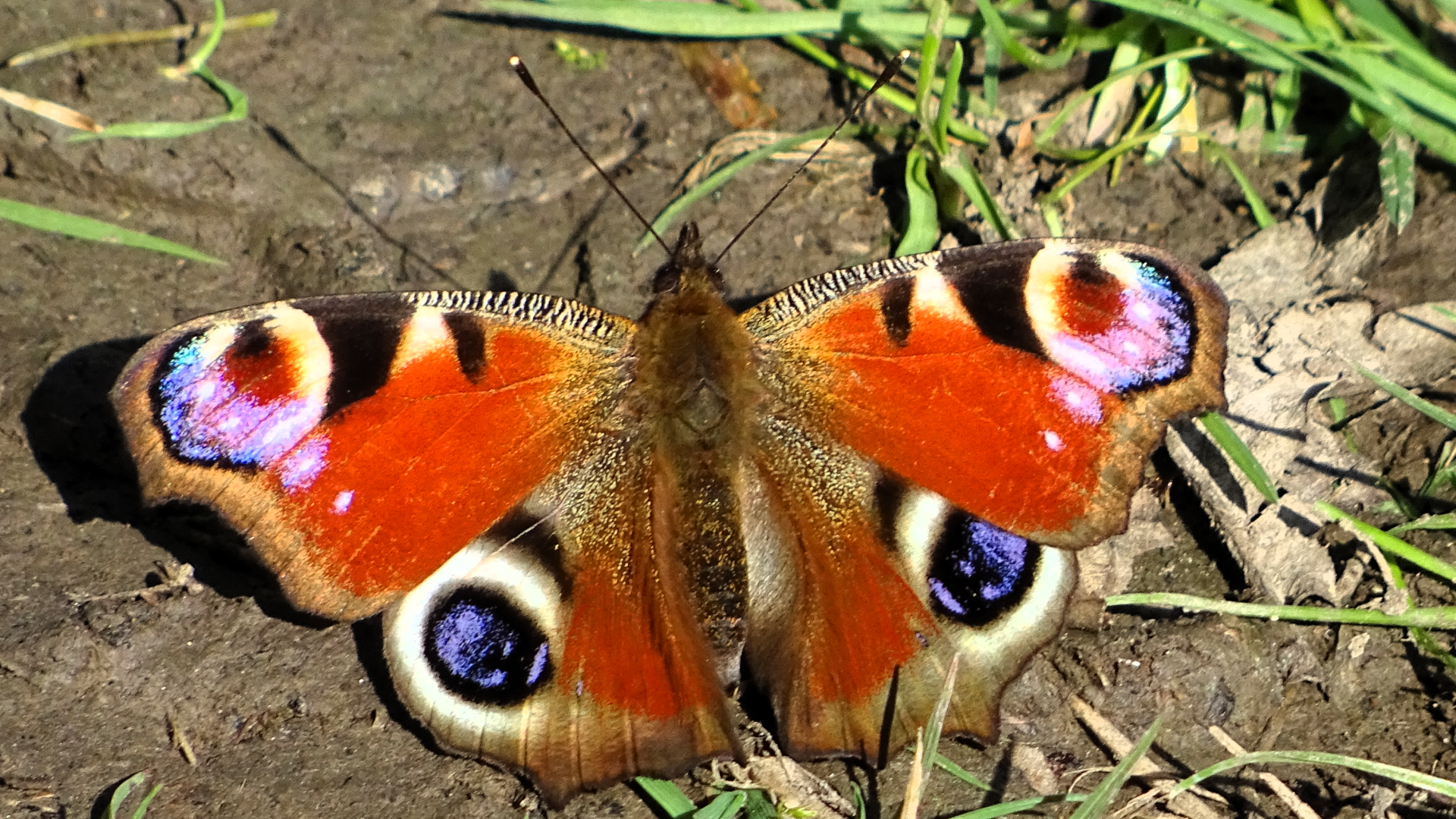
The Peacock Butterfly has spectacular wing spots that have evolved to startle and deter predators. The wing undersides resemble dead leaves. Peacocks are often found along sheltered woodland paths where they lay eggs on stinging nettles from which blackish caterpillars emerge to feed.
#
Comma
Polygonia c-album
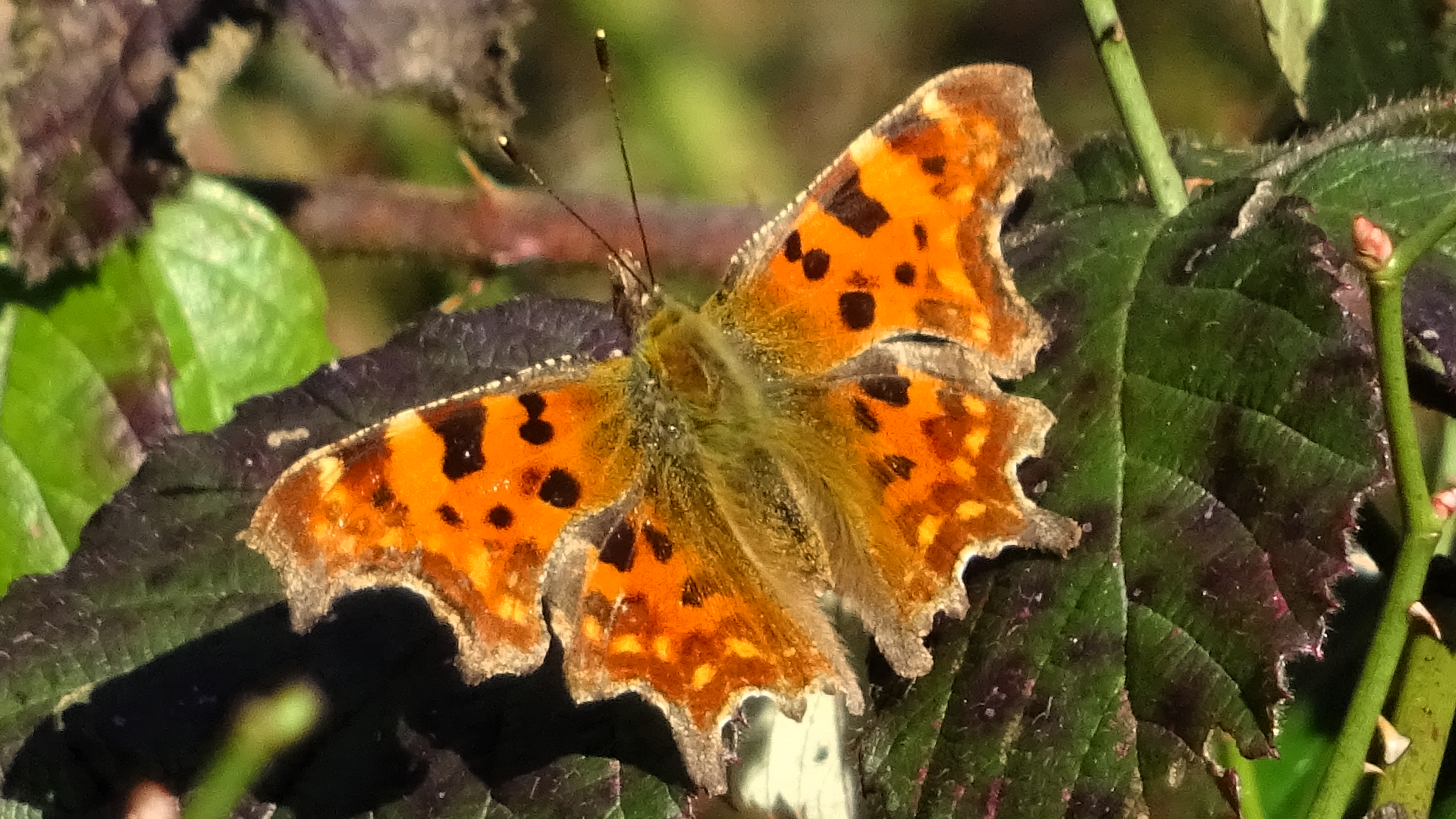
The Comma butterfly features jagged orange-brown upper wings accented with black and yellowish-brown markings. When at rest, it resembles a dried leaf. Comma butterflies prefer to rest on hedgerows in sunny areas. The name "Comma" comes from a small 'comma' mark found on the underside of their wings. Their caterpillars feed on nettles and hop plants.
#
Mallard
Anas platyrhynchos
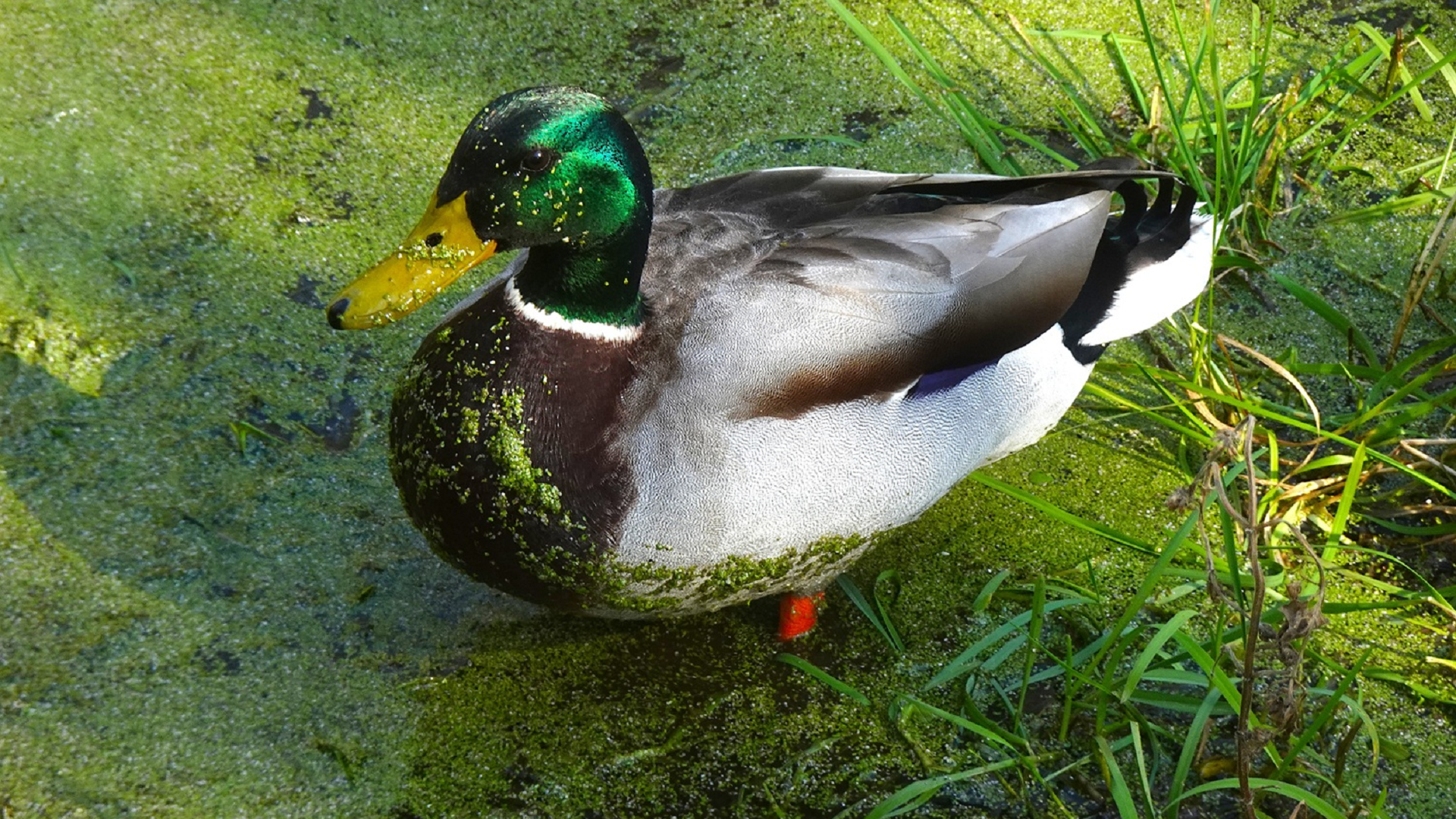
Common collective nouns for groups of Mallards include 'flock,' 'herd,' and 'badling.'
#
Oak Beauty
Biston strataria
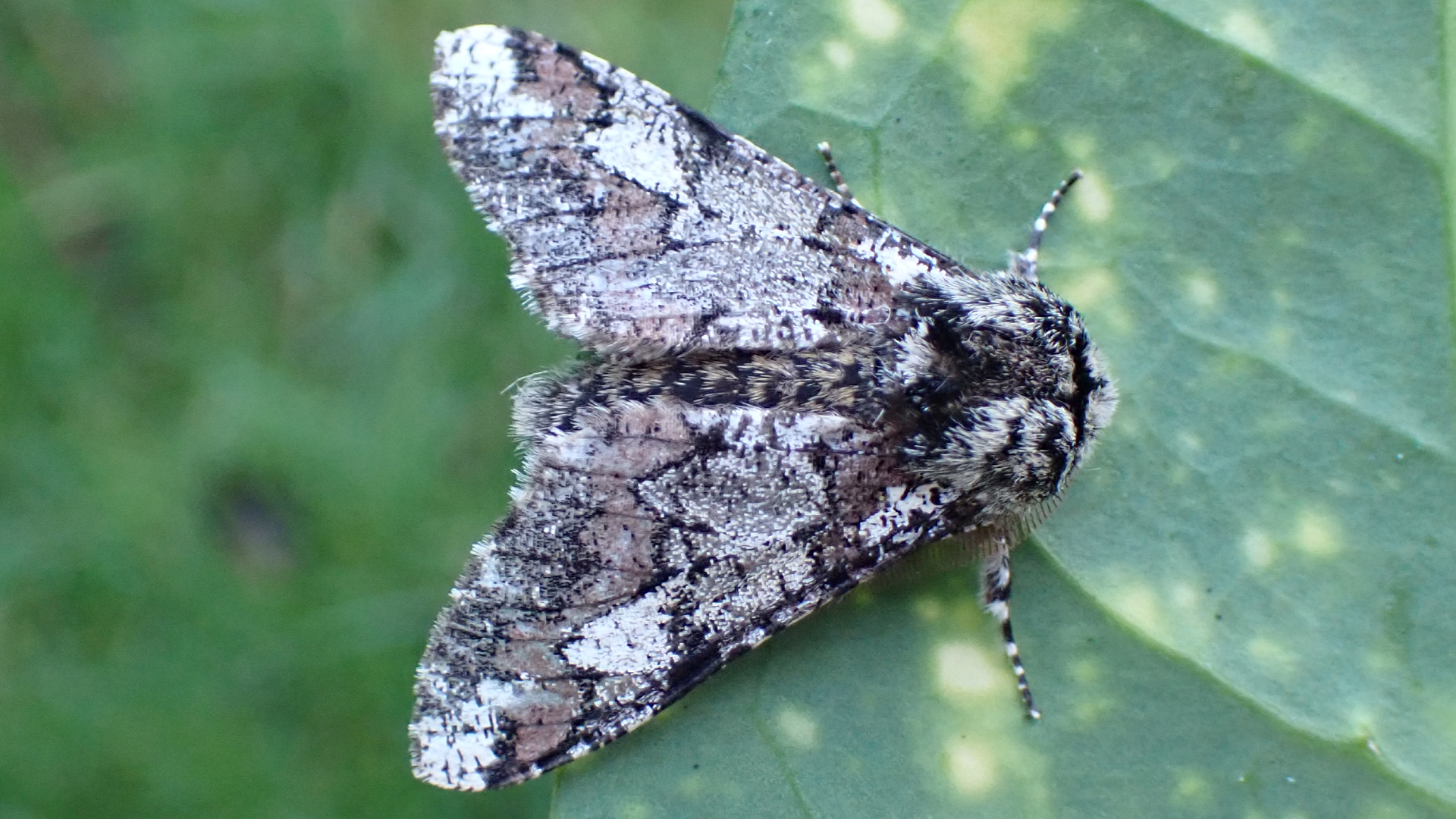
The Oak Beauty is a common species that flies from February until April. It larvae feed on broadleaved trees.
#
Spring Harbinger
Tortricodes alternella
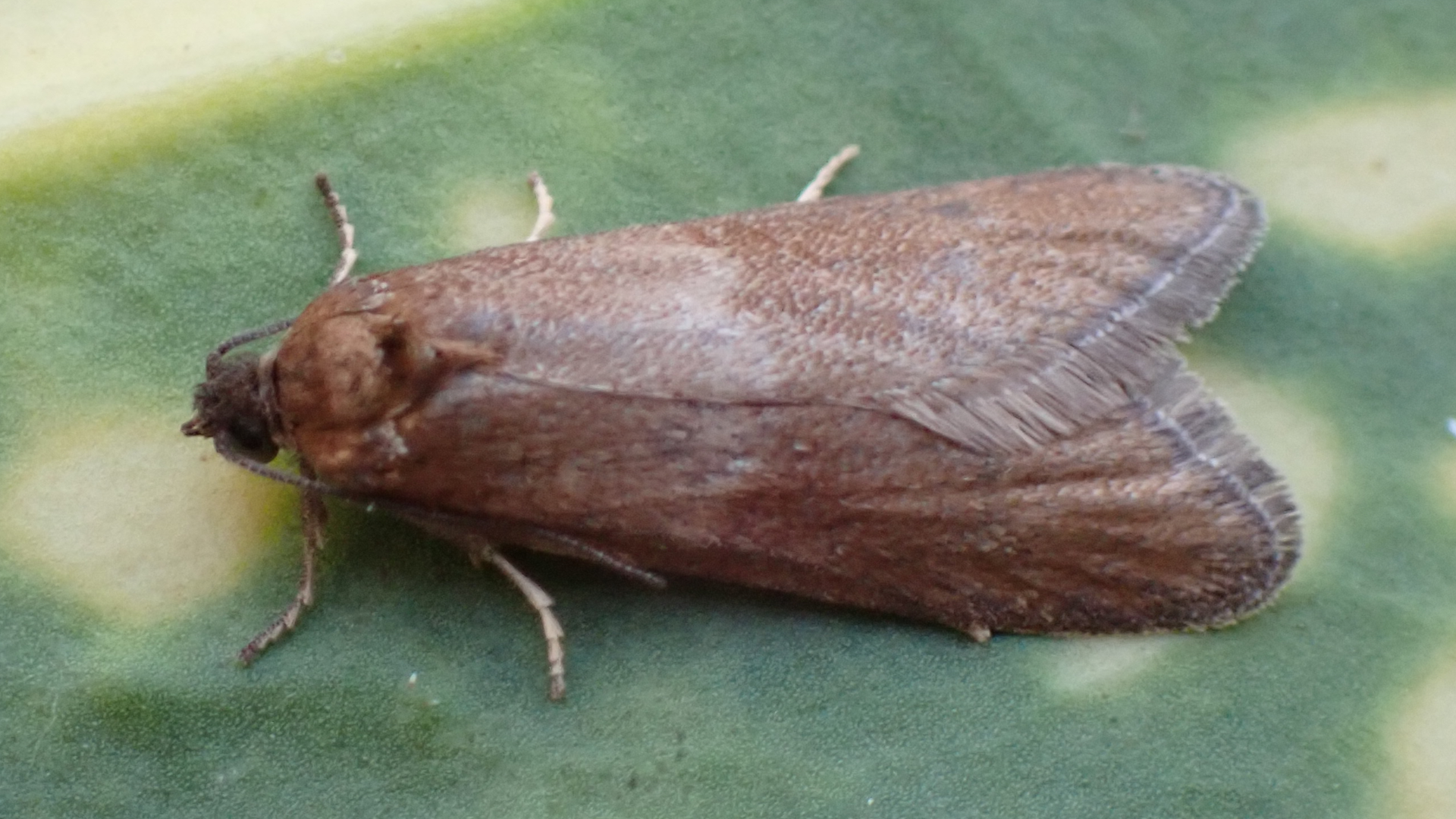
This species flies from February until April. It is one of the earliest of the Tortricids to emerge in the year. It larvae feed on oak, hawthorn and other deciduous trees. Previously known as the Winter Shade.
#
Grey Shoulder-knot 73.202
Lithophane ornitopus

On the wing from September to May in broad-leaved woodland. There is a bold, black, antler-like mark at the forewing base. Oak is the larval foodplant.
#
Ground Bug
Eremocoris podagricus
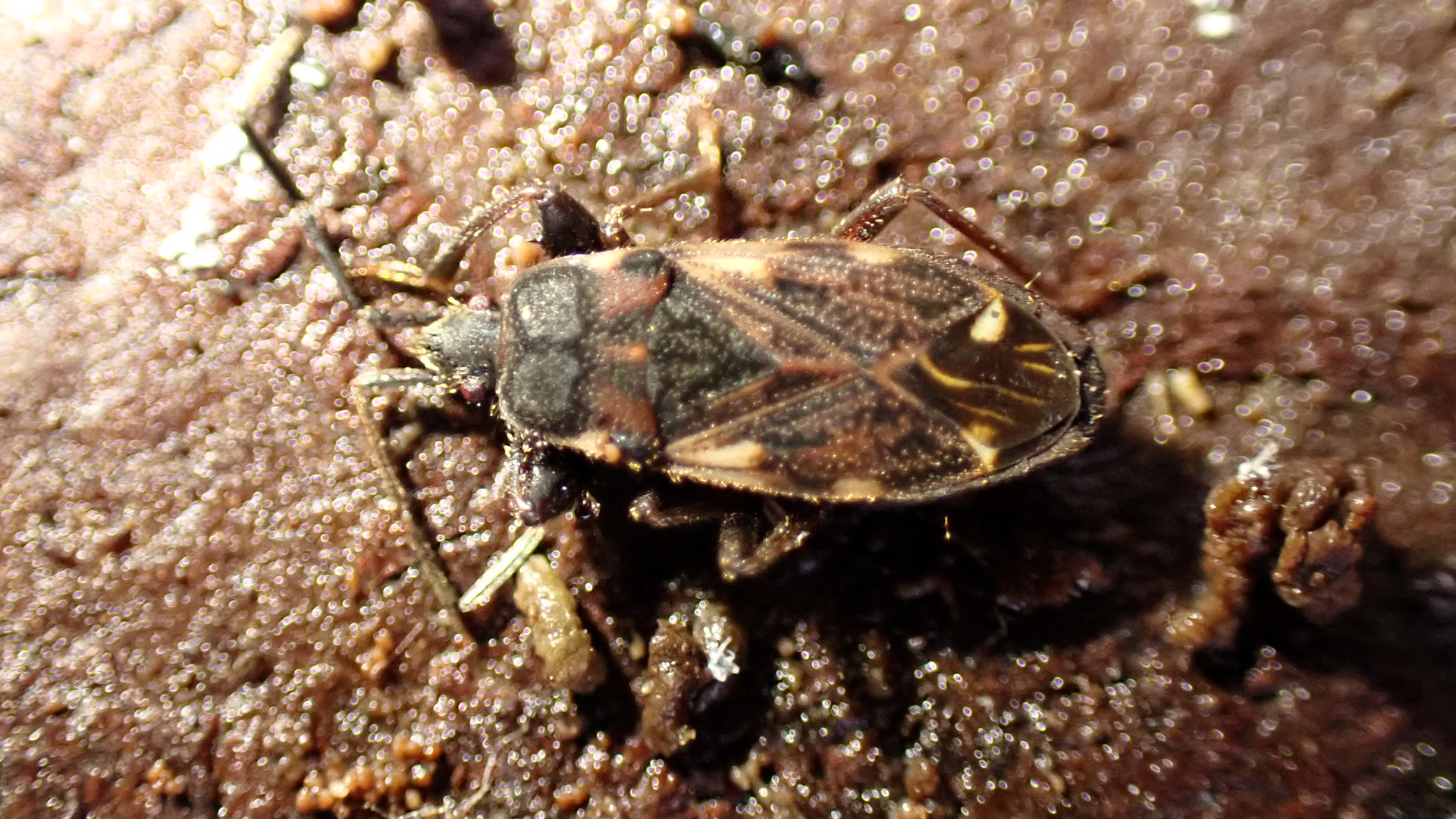
Southern Seed Bugs (5-6mm) have reddish-brown patterned forewings. They are associated with moss growing beneath hawthorns in chalky and sandy locations.
#
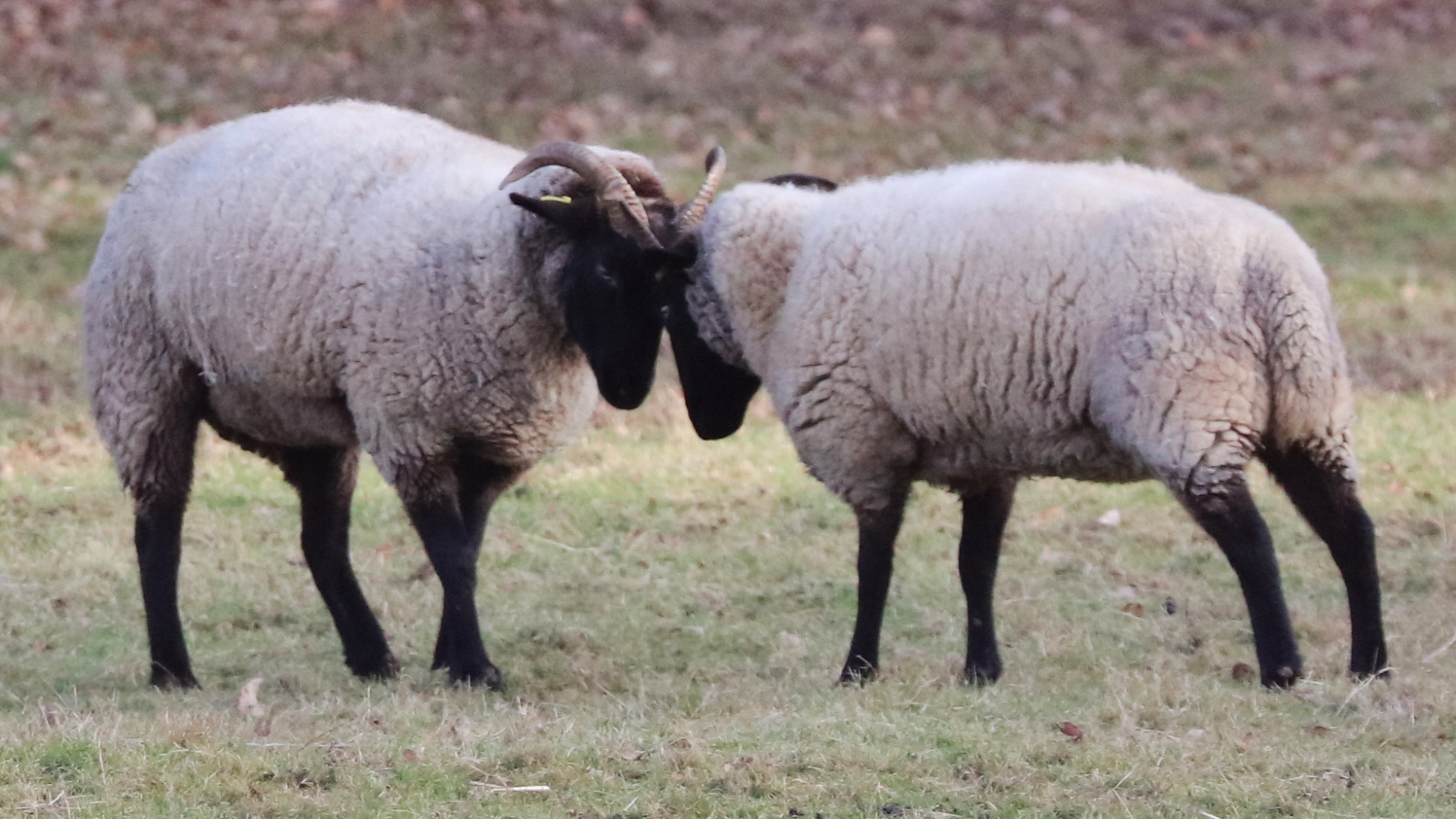
Foxburrow Farm
Norfolk Horn
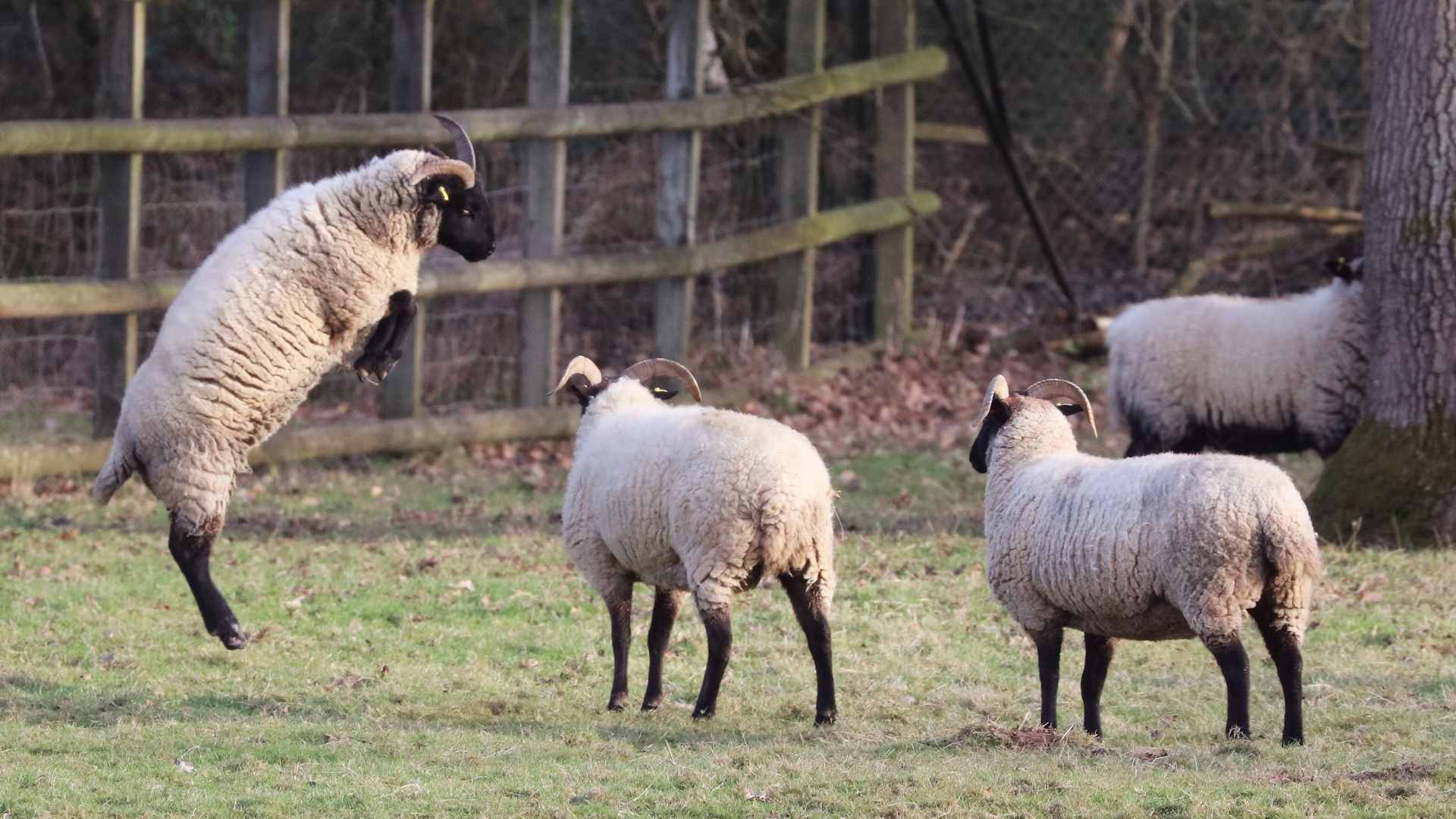
Norfolk Horn sheep at Foxburrow Farm. A woolly jumper!
#
European Gorse
Ulex europaeus
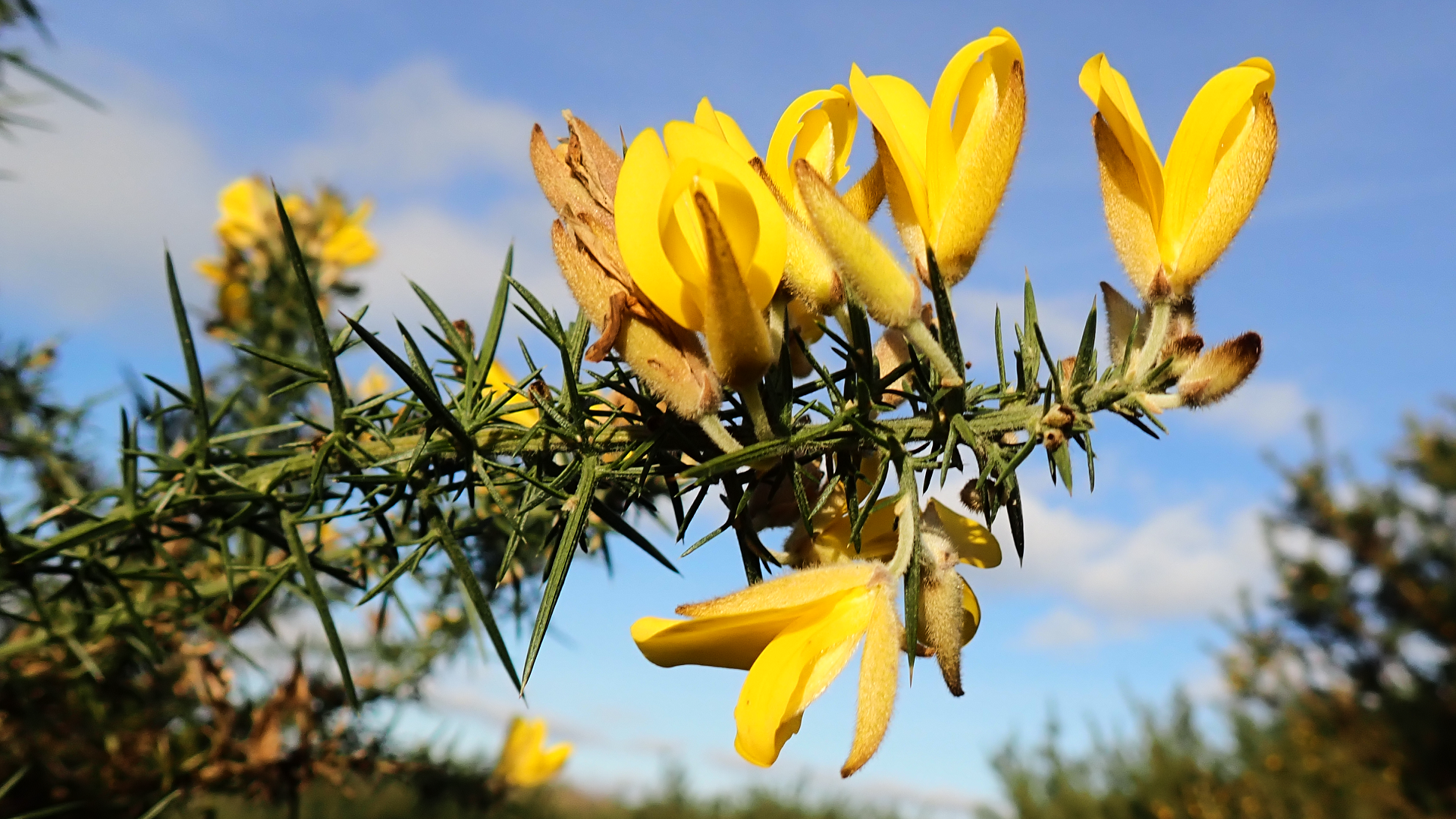
A common spiny evergreen shrub growing up to 2 metres high. Its yellow flowers (15-20mm) appear mainly between January and June. The green needle-like leaves are furrowed. During summer the seed pods can often be heard popping open on sunny days. Usually found on light acid soils.
#
Wood Spurge
Euphorbia amygdaloides
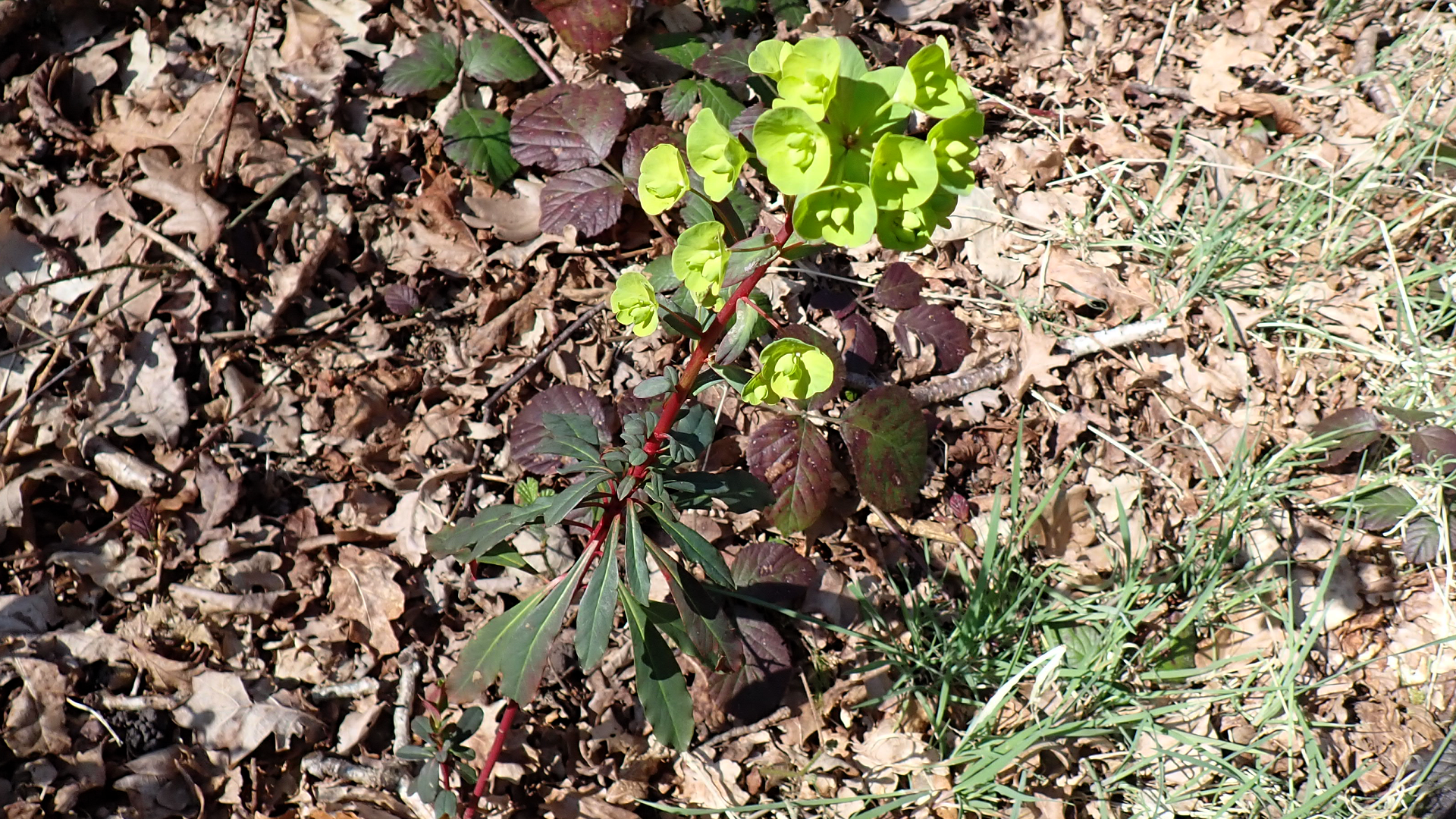
Woodland perennial up to 90cm tall which has greenish-yellow cup-shaped flowers that appear from March to May.
#
Hazel Coppice
Corylus
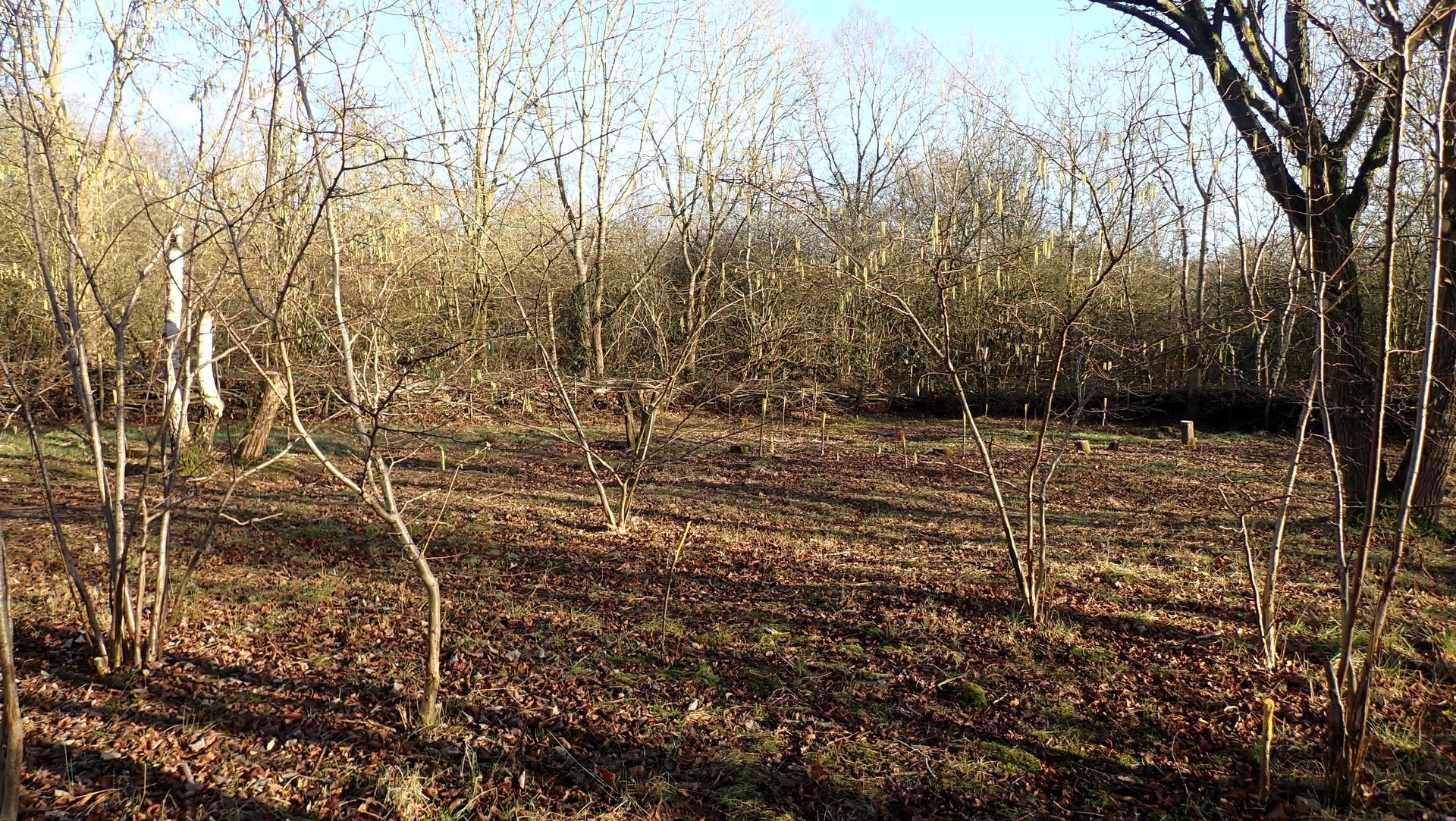
This area was overgrown with bramble and difficult to walk through. When pointed out to the forest rangers that this was once a Hazel plantation they decided the area needed special attention, so with the assistance of volunteers they cleared the undergrowth and coppiced many of the trees. Coppicing is a process that dates back to Stone Age times. Trees are felled at the base to allow new shoots to grow. This was originally done to produce timber that could be used for firewood or building a dead hedge. A dead hedge has been build around this area utilising the wood produced by coppicing.
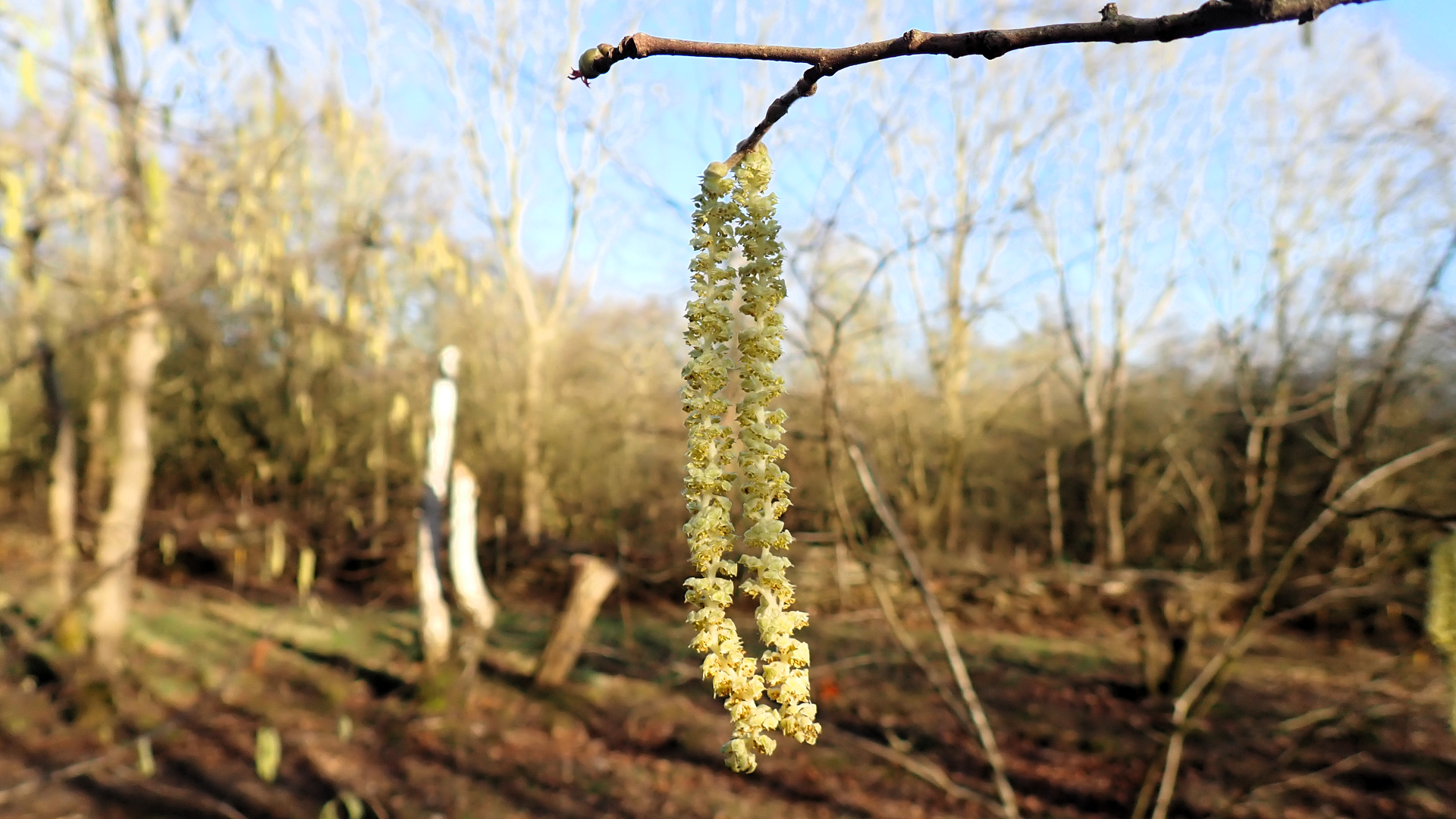
Nowadays coppicing is usually done to improve the health and biodiversity of woodland. Opening up the canopy to allow sunlight in is beneficial to species at ground level. It allows more woodland plants to thrive which in turn helps other wildlife. Trees are often cut in rotation with wood harvested in a section one year, another section the next, and so on. Hazel is normally coppiced on an eight-year cycle. Coppicing can greatly extend the life of a tree. The long, hanging, male flowers known as 'catkins' produce pollen. Female flowers are very small and often go unnoticed. Can you see the female flower in this picture?
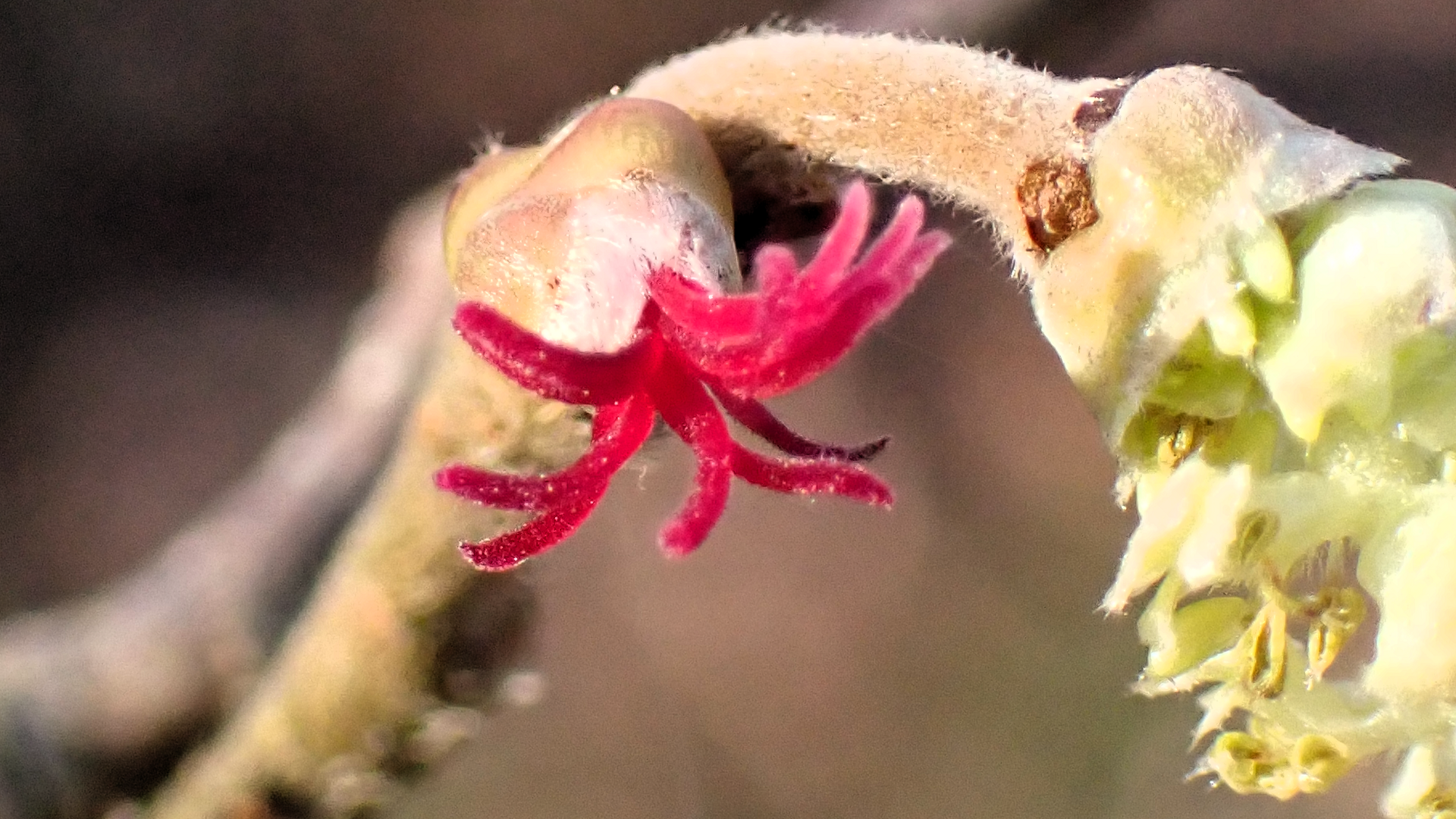
The beautiful red styles belonging to the female flower are only about 4mm long. A hazel tree contains both male and female flowers (monoecious) but needs to cross-pollinate with another tree to produce nuts.
#
Cones
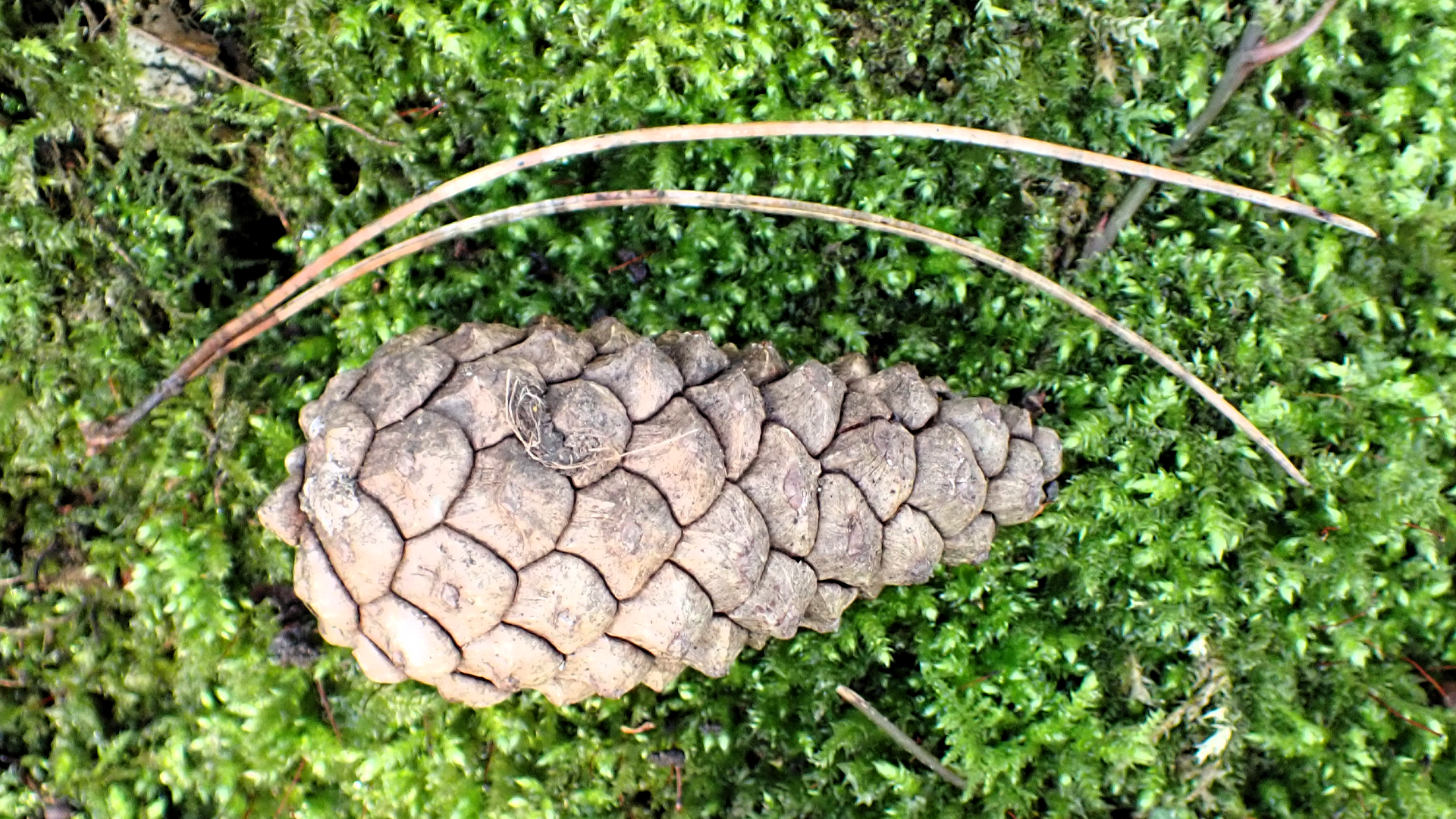
Pine trees have woody fruiting bodies called cones, which can be either male or female. Male cones usually have a relatively short existence and being small often go unnoticed. Female cones are larger and more conspicuous. Initially the cones are green later turning brown. During spring male cones appear in clusters at the tips of the branches each one loaded with pollen which is dispersed on the wind. Pollen enters the female cone and after pollination has taken place seeds develop. Seeds can take 2-3 years to form before being dispersed on the wind or by animals that eat them. Female cones open only when the weather is suitable for the seeds to be spread. They close up in wet weather to protect the seeds and open up again in drier conditions. The above picture shows a Scots Pine cone and needles.
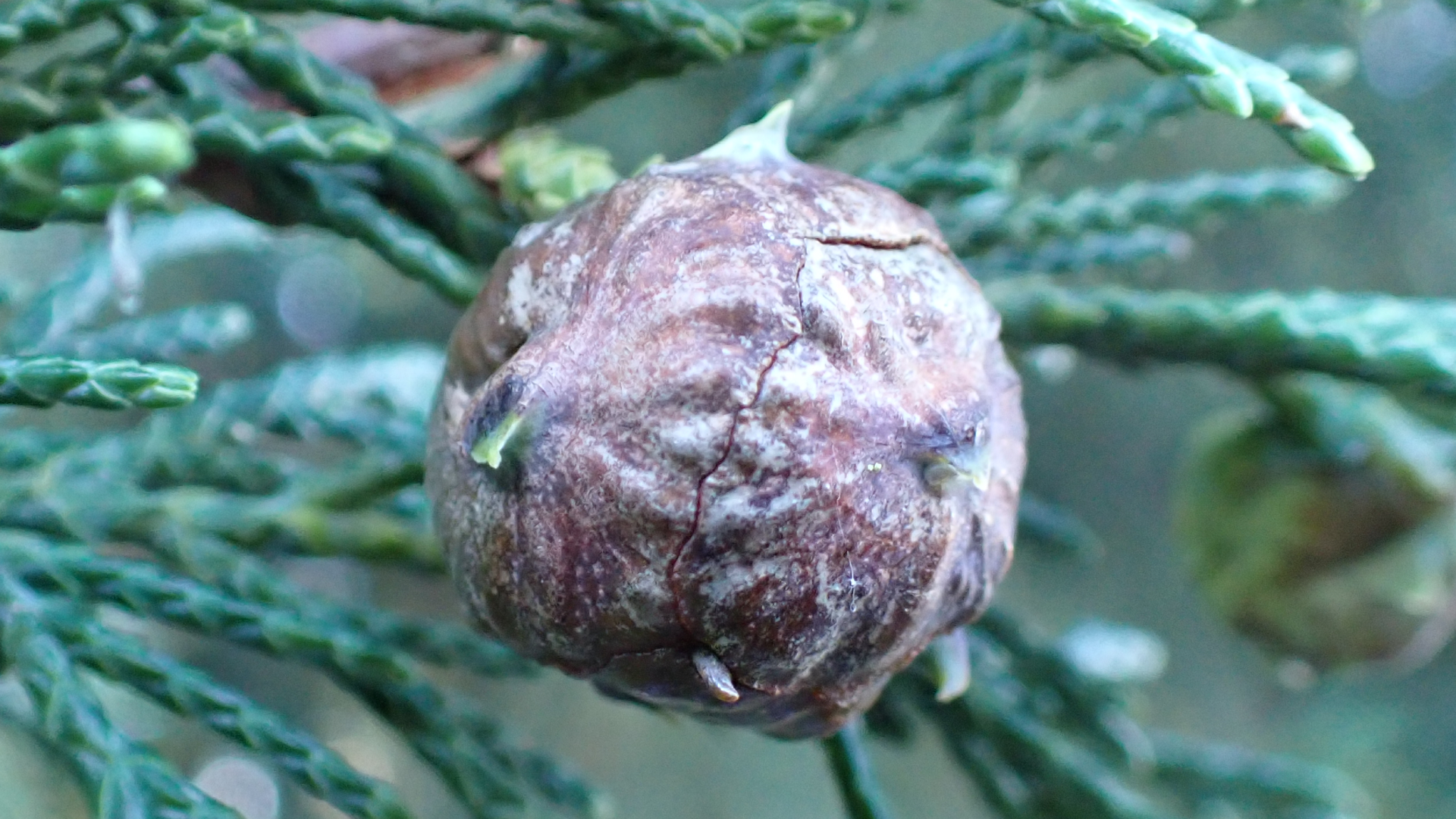
Cones can be conical or round-shaped. This spherical cone belongs to a Cypress tree.
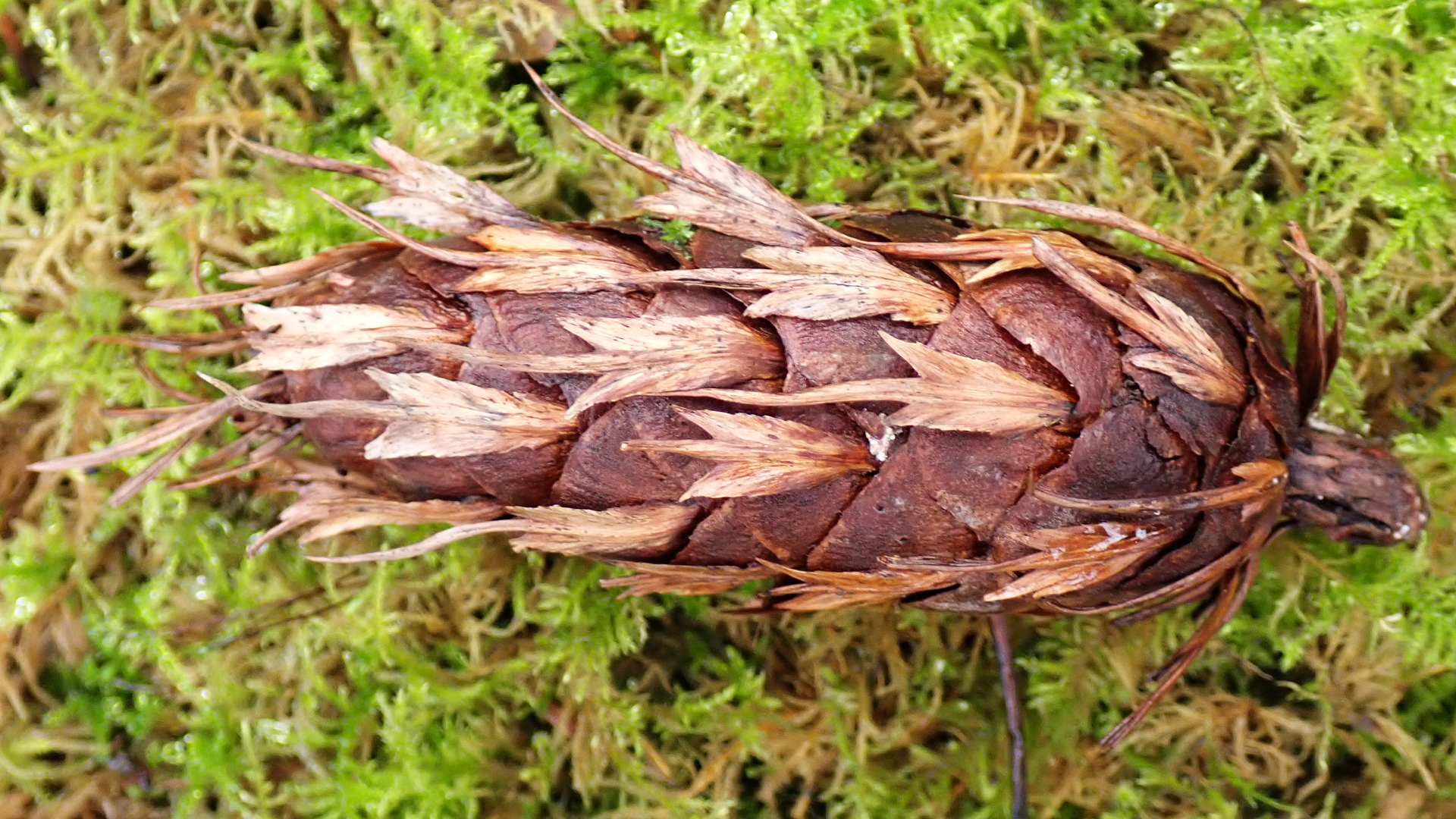
A Douglas Fir cone.
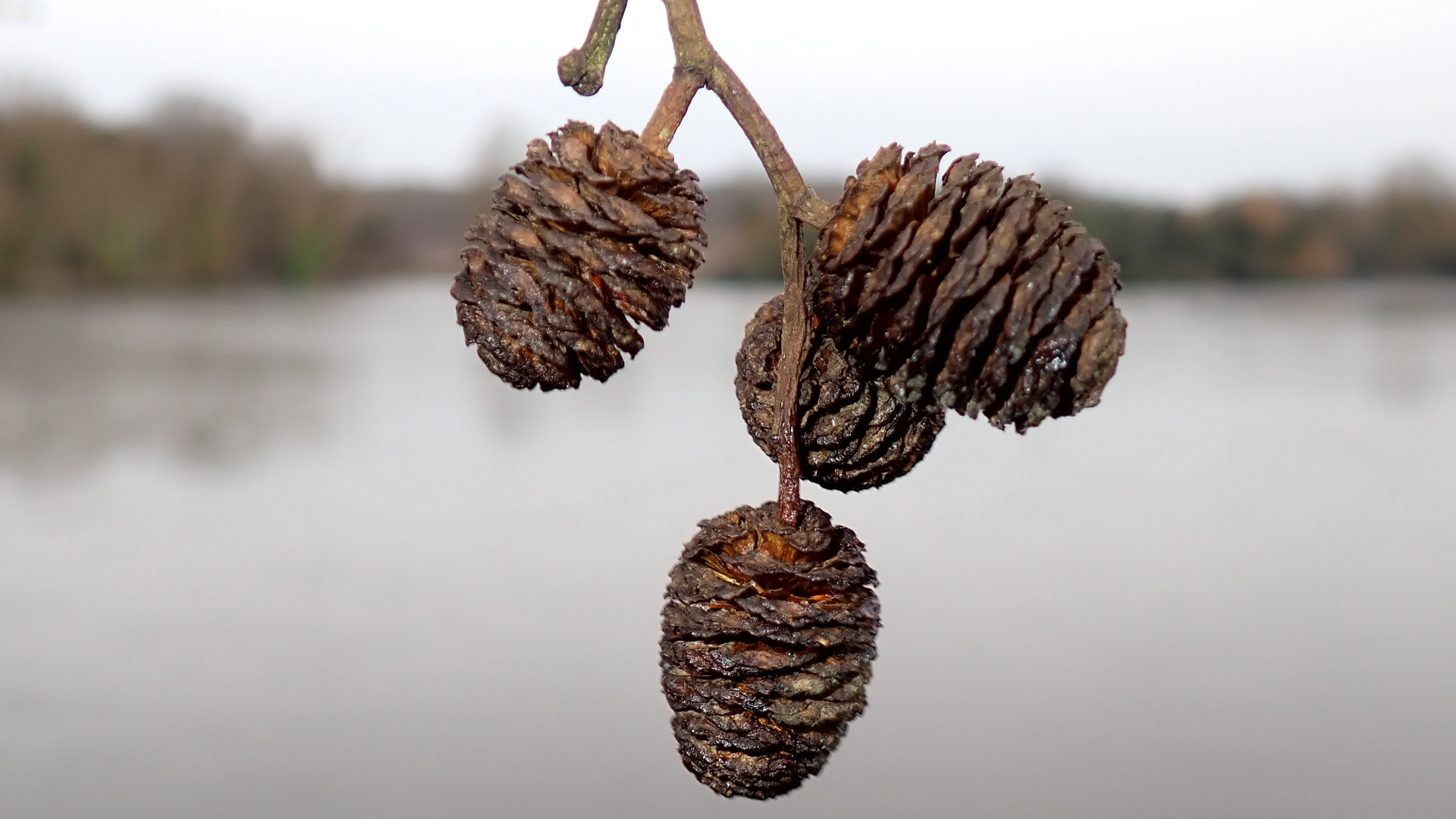
Cones are not exclusive to coniferous trees. Grey Alder and Common Alder also bear cones. Alder trees are the only native deciduous trees to produce cones.
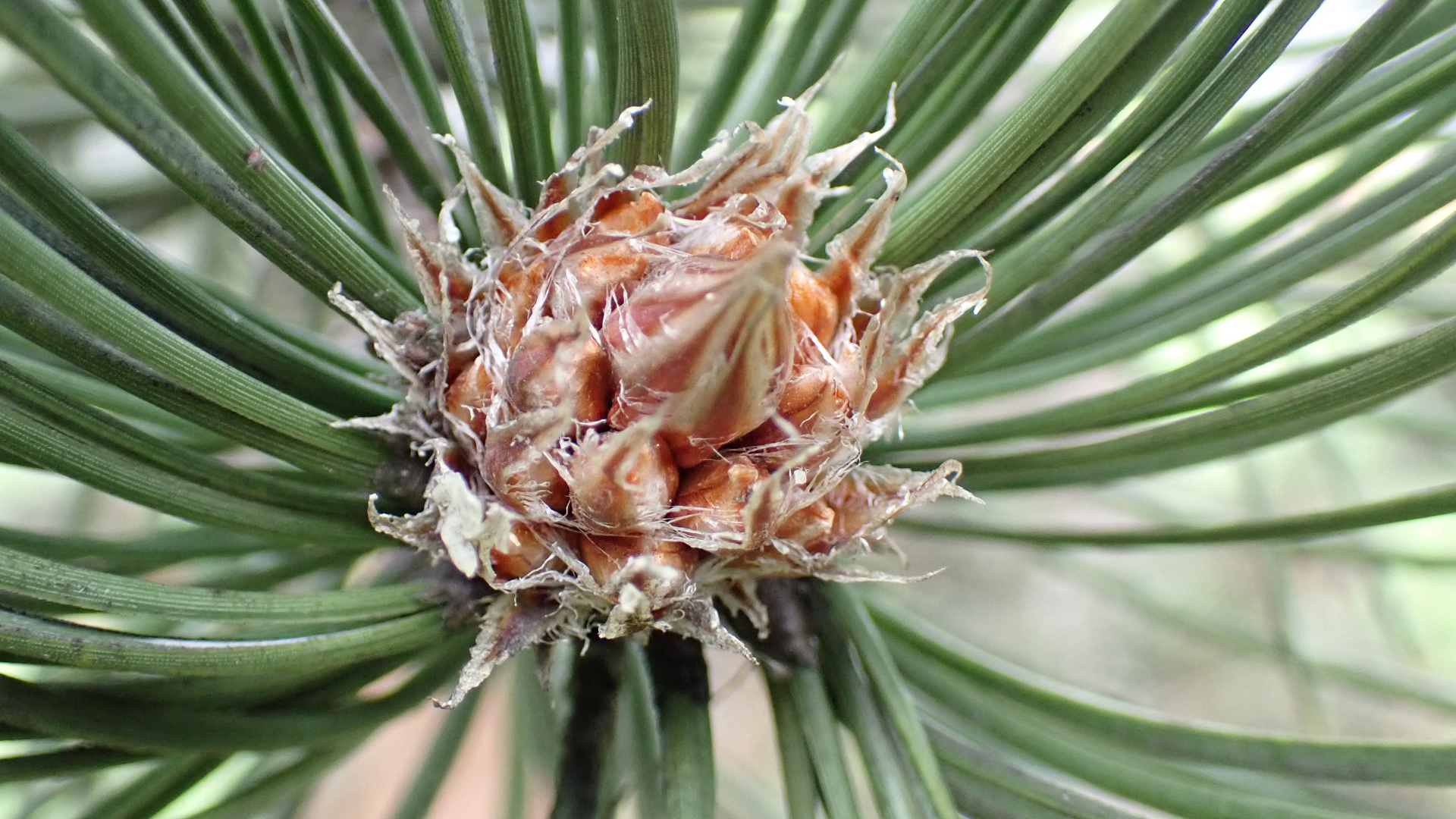
Black pine trees
Pinus nigra have been planted
in the centre of the A1112 dual carriageway. These tiny male cones appeared on the branch tips.
#
Holly
Ilex aquifolium
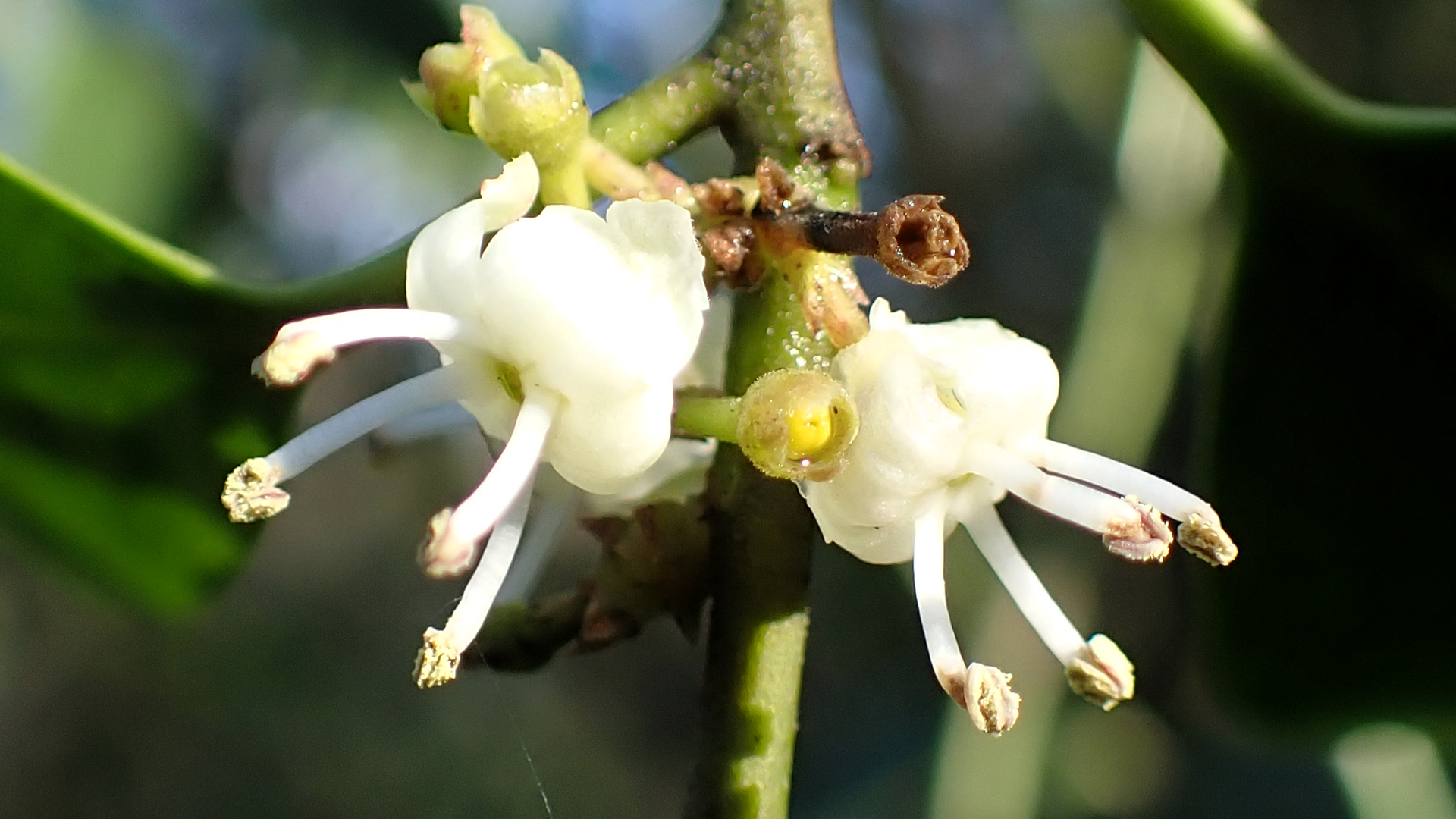
Holly produces creamy-white flowers that are either male or female. Male flowers have prominent pin-like structures that produce pollen called stamen. Female flowers have four stamen that don't produce pollen. Holly plants are dioecious, meaning they require separate male and female plants in order for pollination to take place. In the middle of a female flower there is a fat green ovary, once the flowers are pollinated they develop into bright red berries. Berries only grow on female plants. Female leaves have serrated edges, male leaves are often straighter and plainer.
#
Wedrell's Plain
Lambourne End
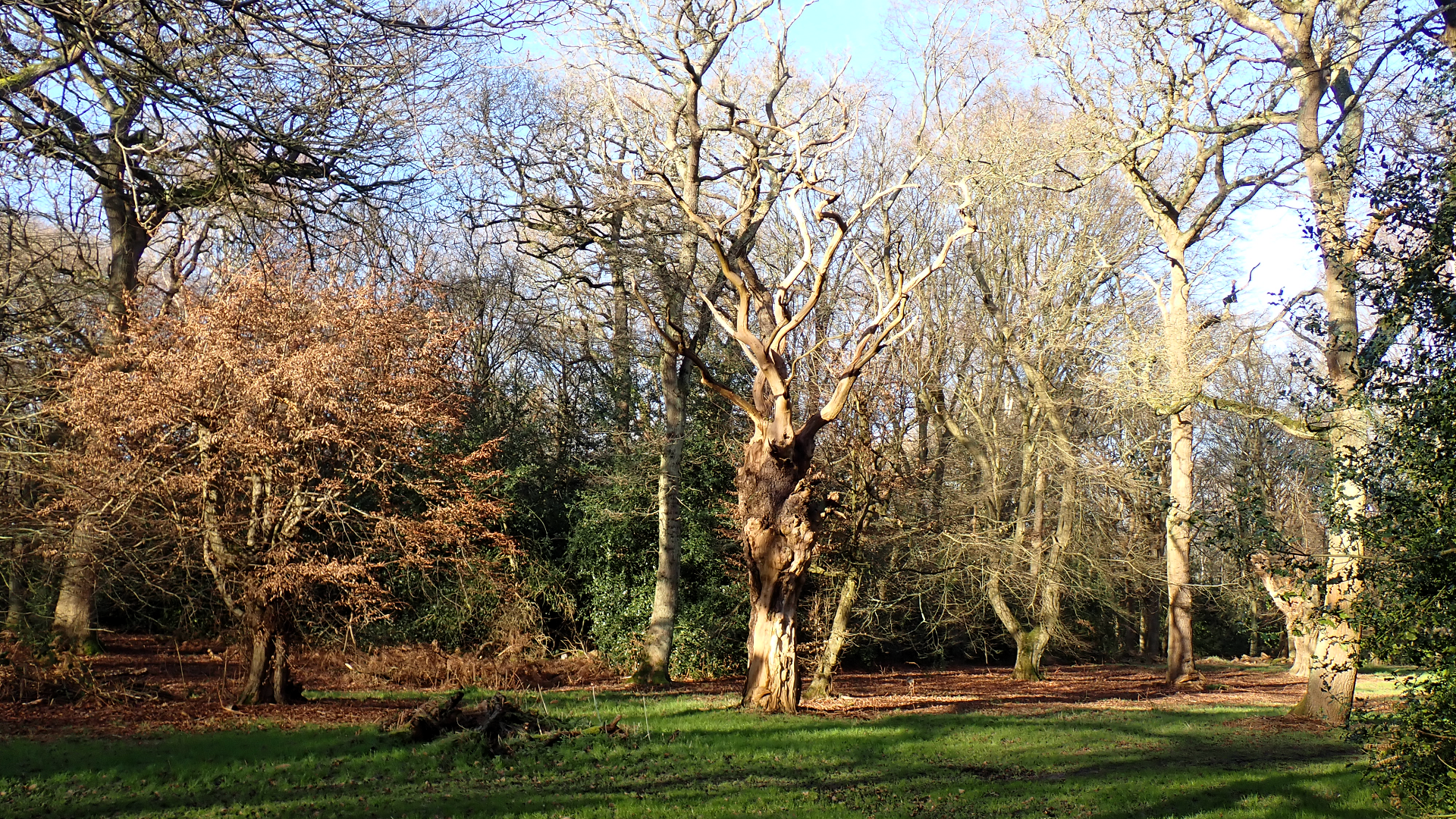
Wedrell's Plain looking picturesque in the winter sun.
#
Fallow Deer
Skeleton
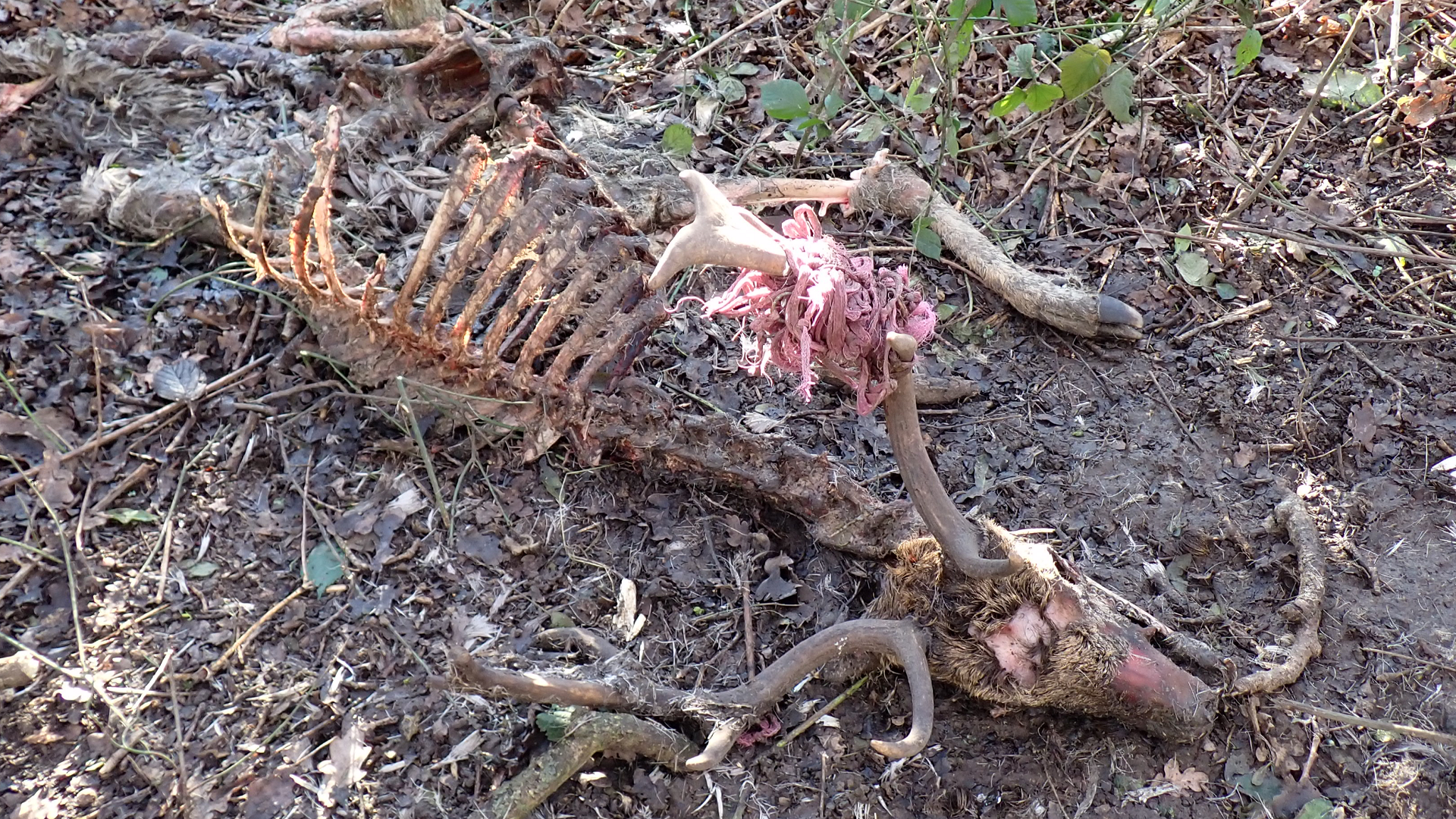
A near-complete skeleton of a Fallow Deer in the forest near Lambourne End. It appeared to have pinkish rope wrapped around an antler. The upper eye socket was empty, possibly pecked away by birds. The eyeball next to the ground was still in place.
#
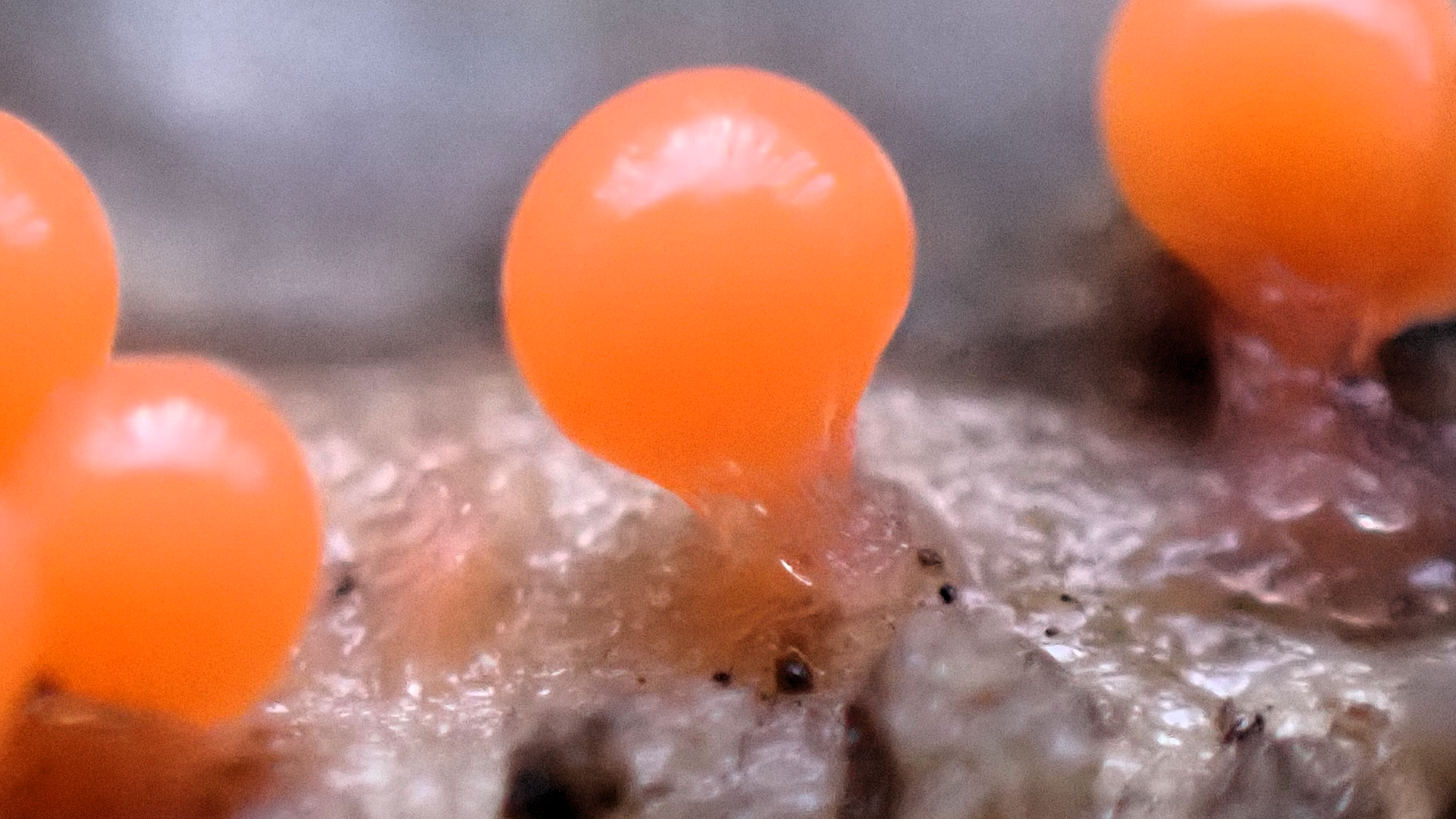
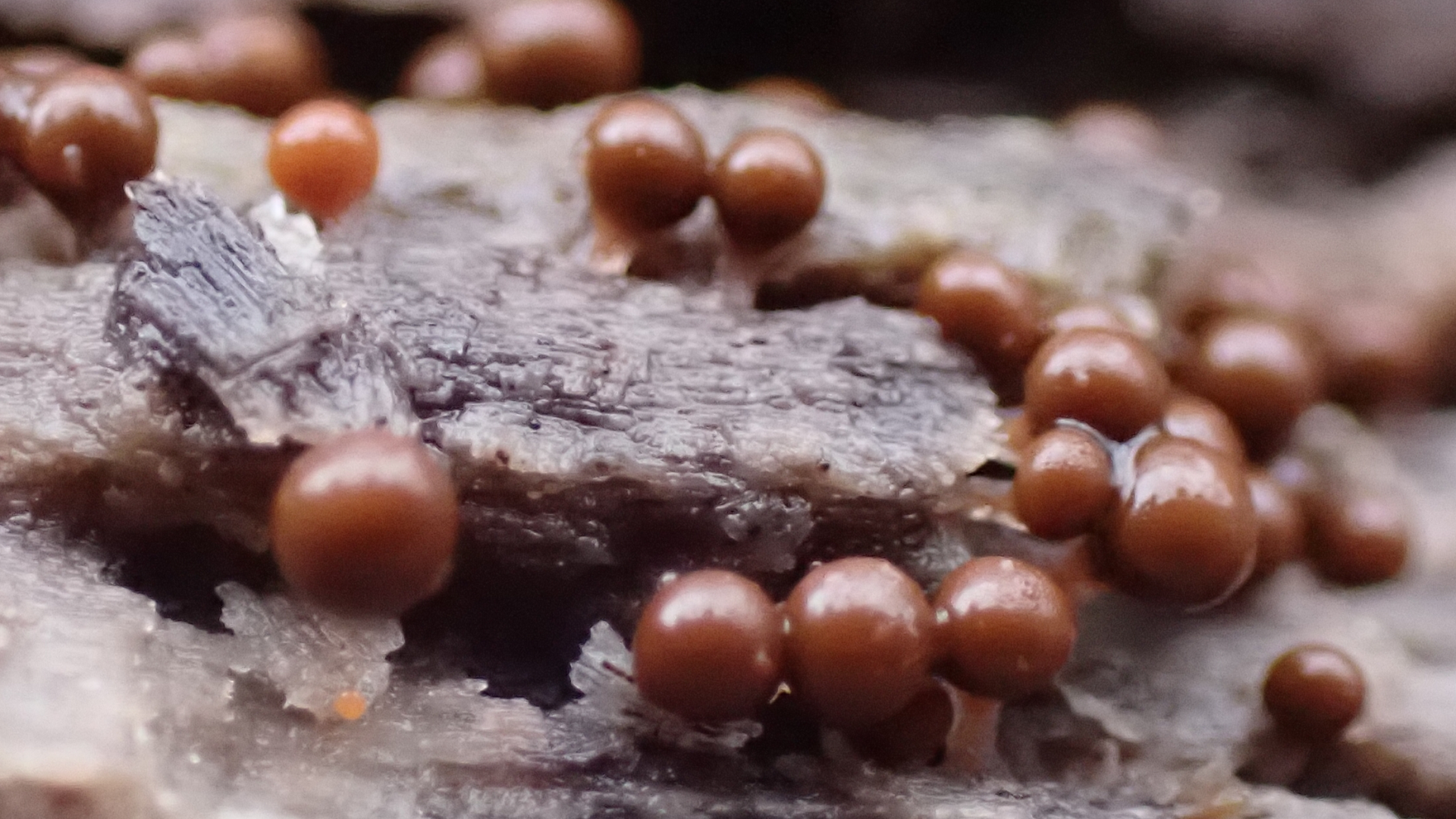
Slime Mould
Trichia decipiens
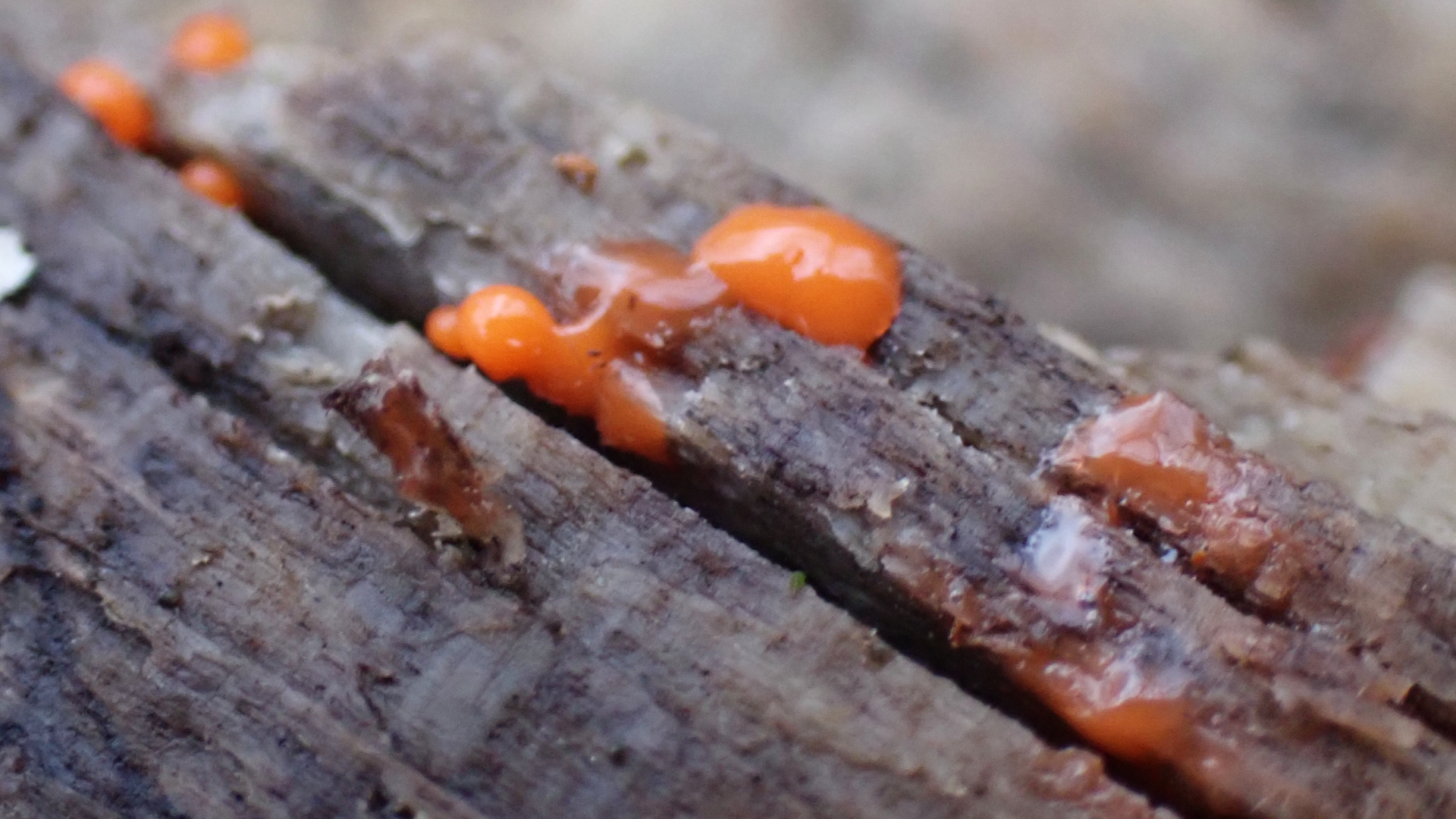
At the end of December 2024 a rotten decorticated beech log on Dog Kennel Hill had a patch of orange plasmodium on its surface. Round shapes were beginning to show in the slime. Two days later orange fruiting bodies had developed. The sporangia turned dark brown during January 2025 and the sporing process was observed to determine the species.
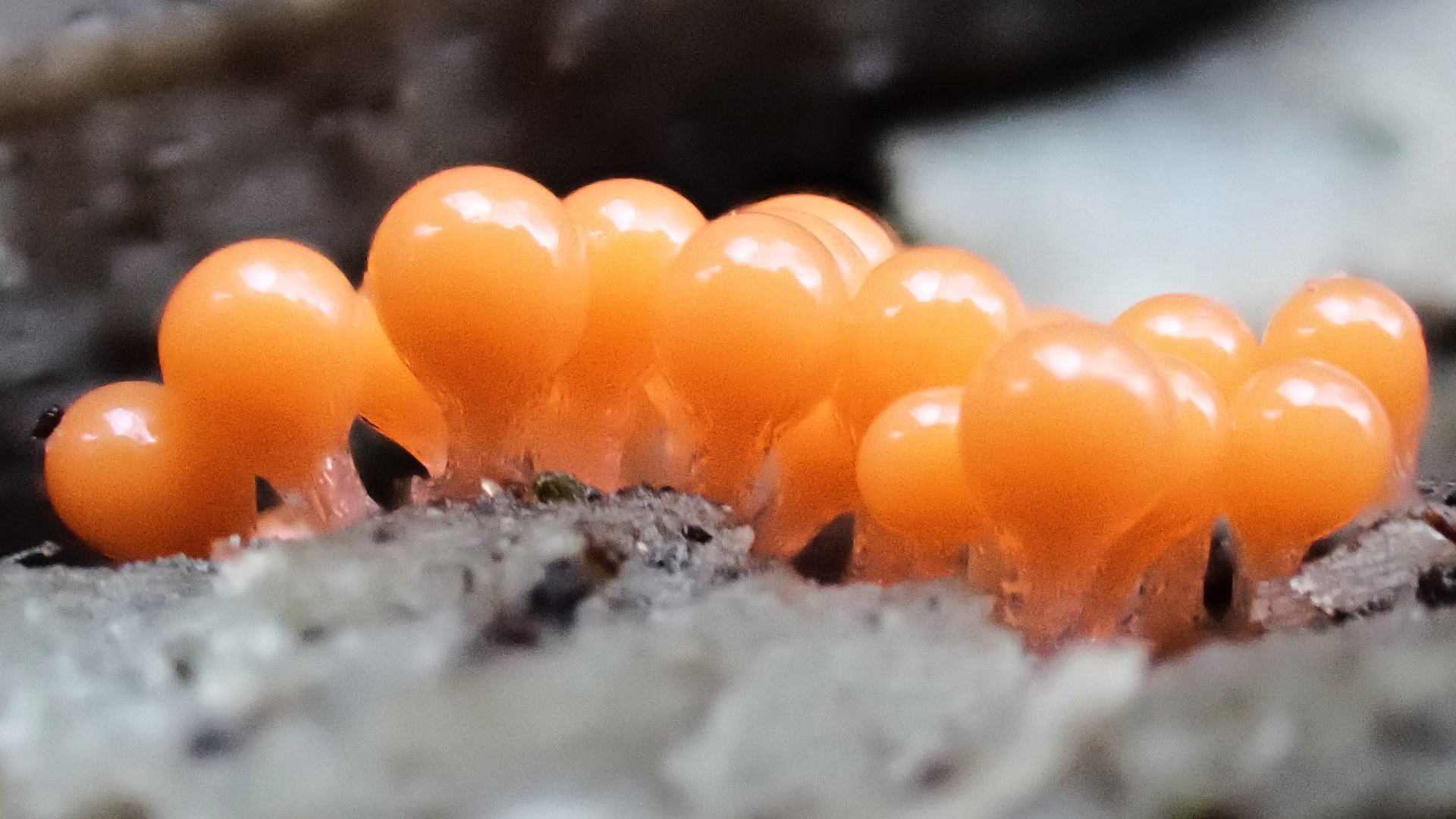
#
Slime Mould
Trichia sp.
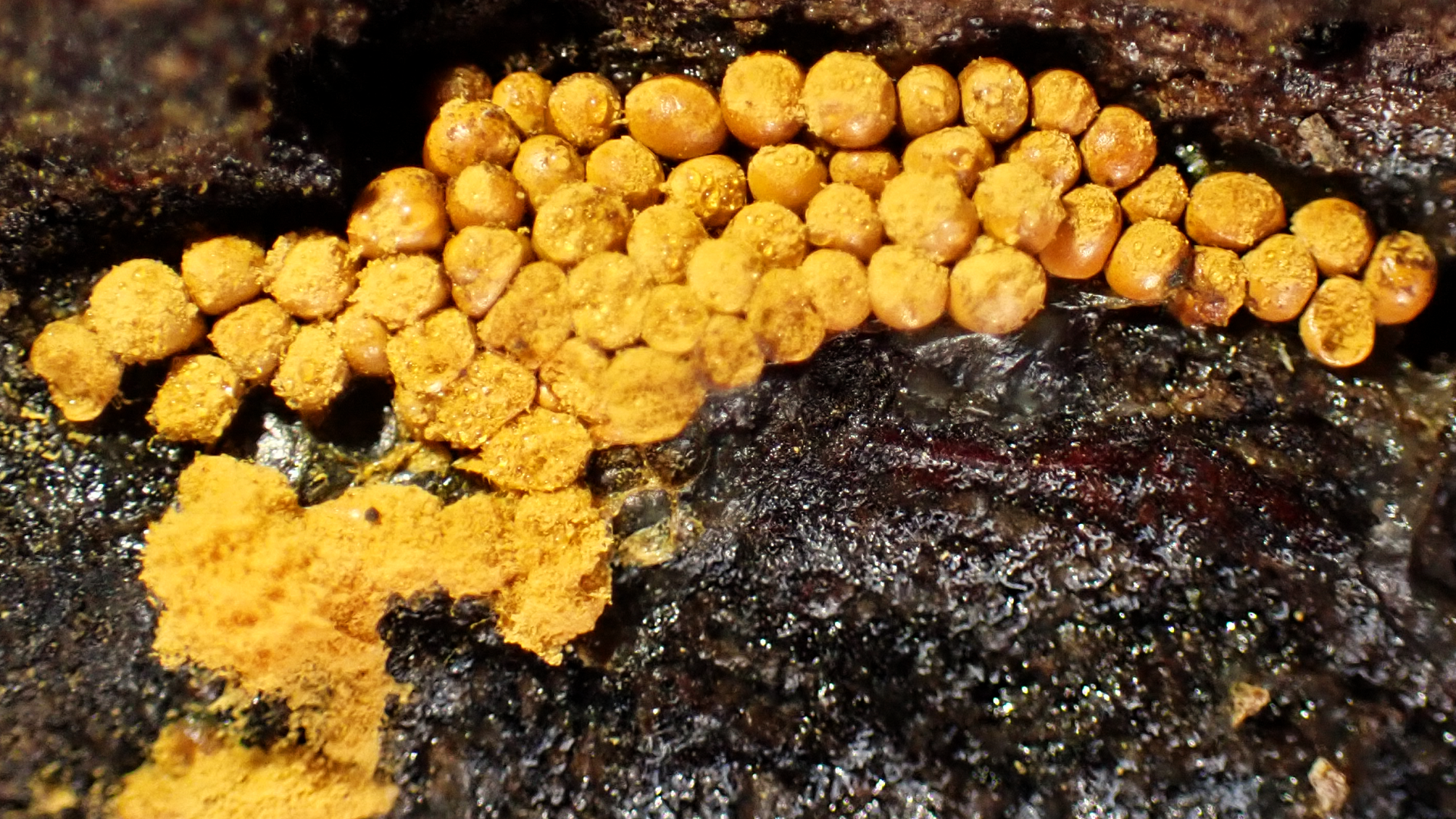
Trichia is a genus of slime molds in the family Trichiidae. Due to similarity of several species the identity of this specimen is inconclusive. The golden-yellow sporocarps were found on a very rotten hardwood log in crowded groups. Possibly Trichia affinis, but not confirmed.
#
Scarlet Elfcup
Sarcoscypha austriaca
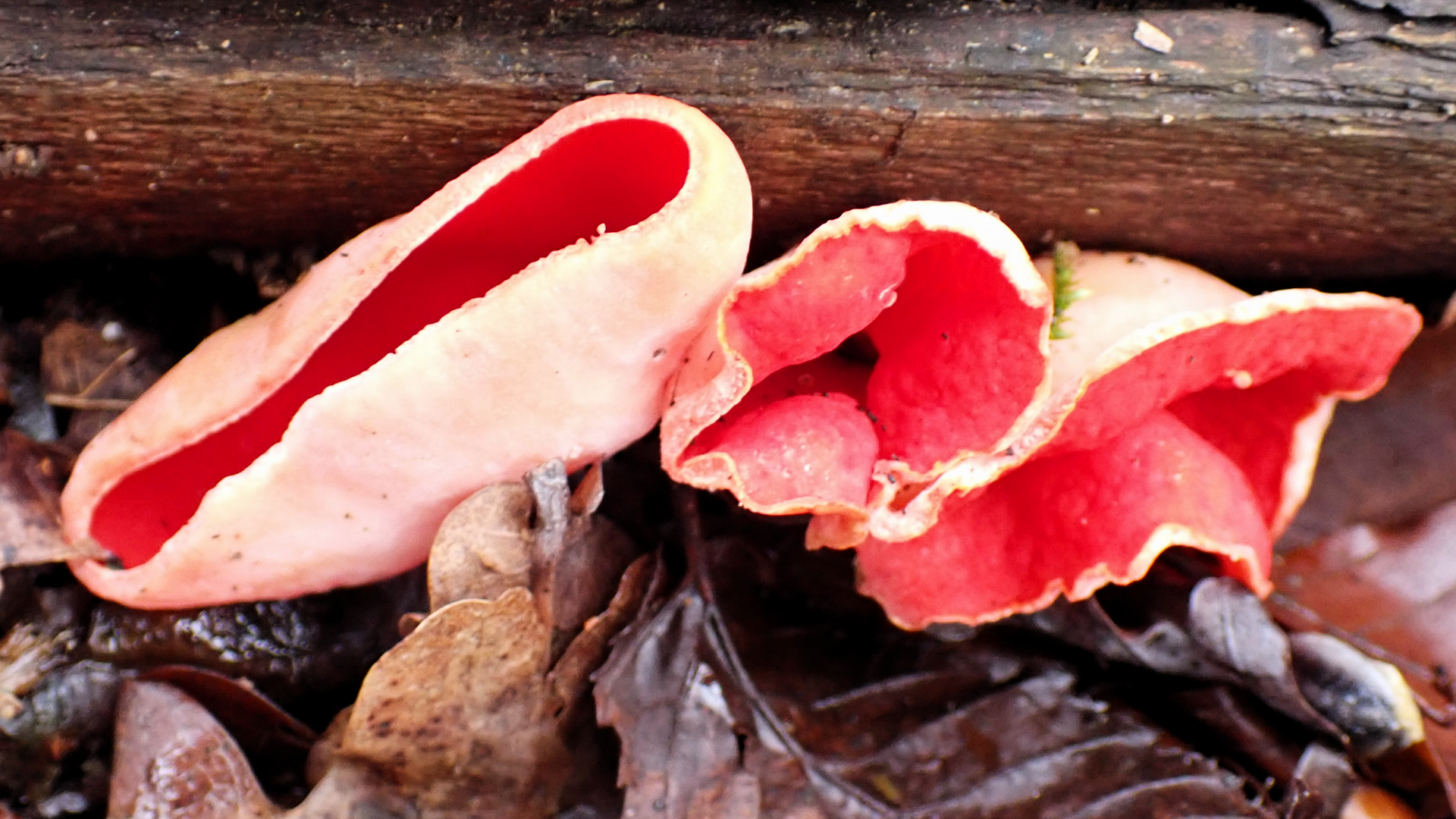
Usually appears during winter months on dead twigs. It has a preference for damp shaded locations where it is usually found partially buried in moss.
#
Marmalade Hoverfly
Episyrphus balteatus
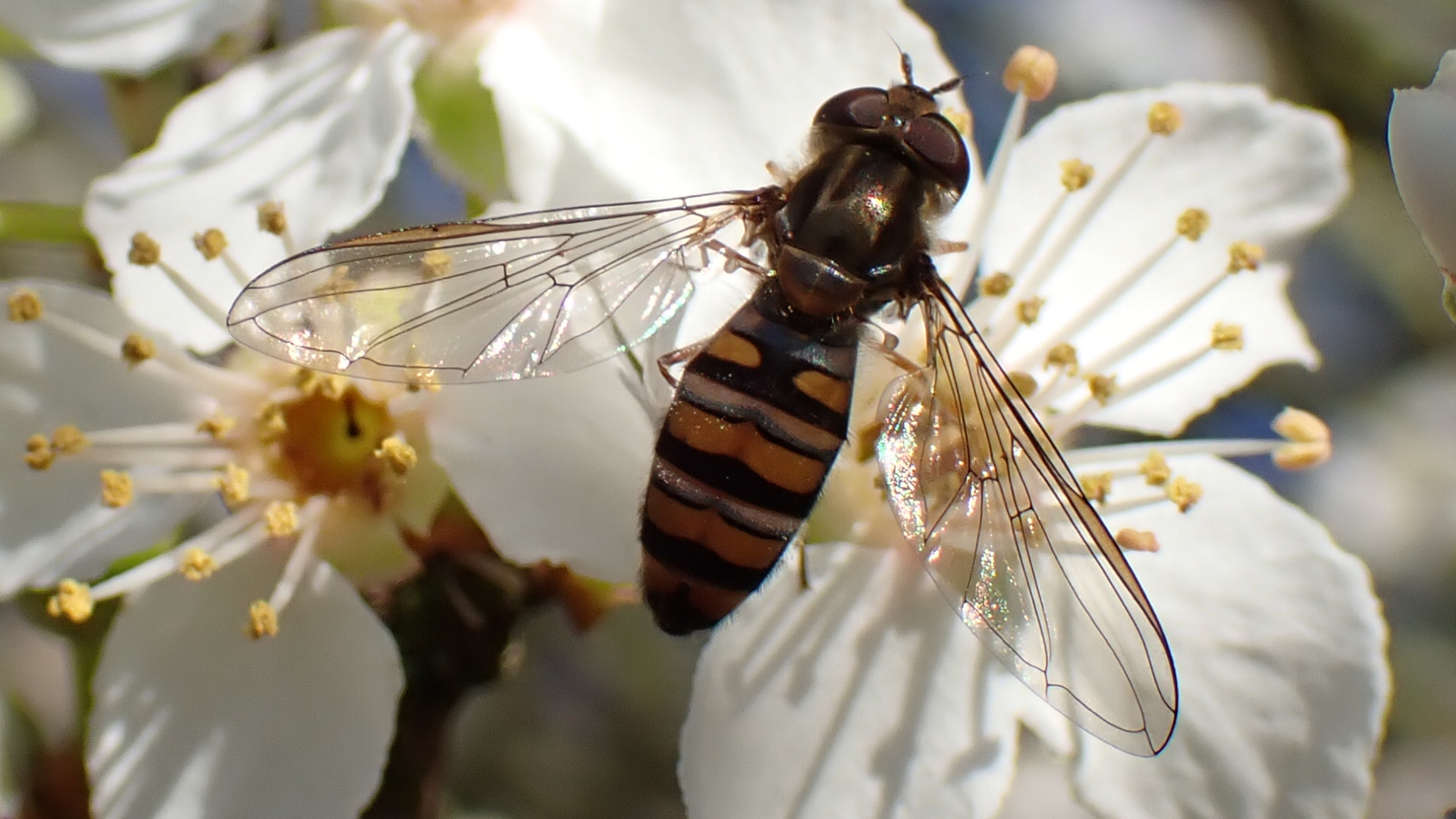
Marmalade Hoverfly is the commonest British hoverfly. Its colouration is influenced by temperature with darker specimens often seen during colder months and brighter specimens appearing in summer.
#
Thank you to everyone that have contributed to this Journal.
© hainaultforest.net. All rights reserved.
This website uses necessary cookies. It does not use targeting or advertising cookies.