

SECOND QUARTER 2025
This Journal covers the last quarter of 2025 from April to June.
Garden Warbler
Sylvia borin
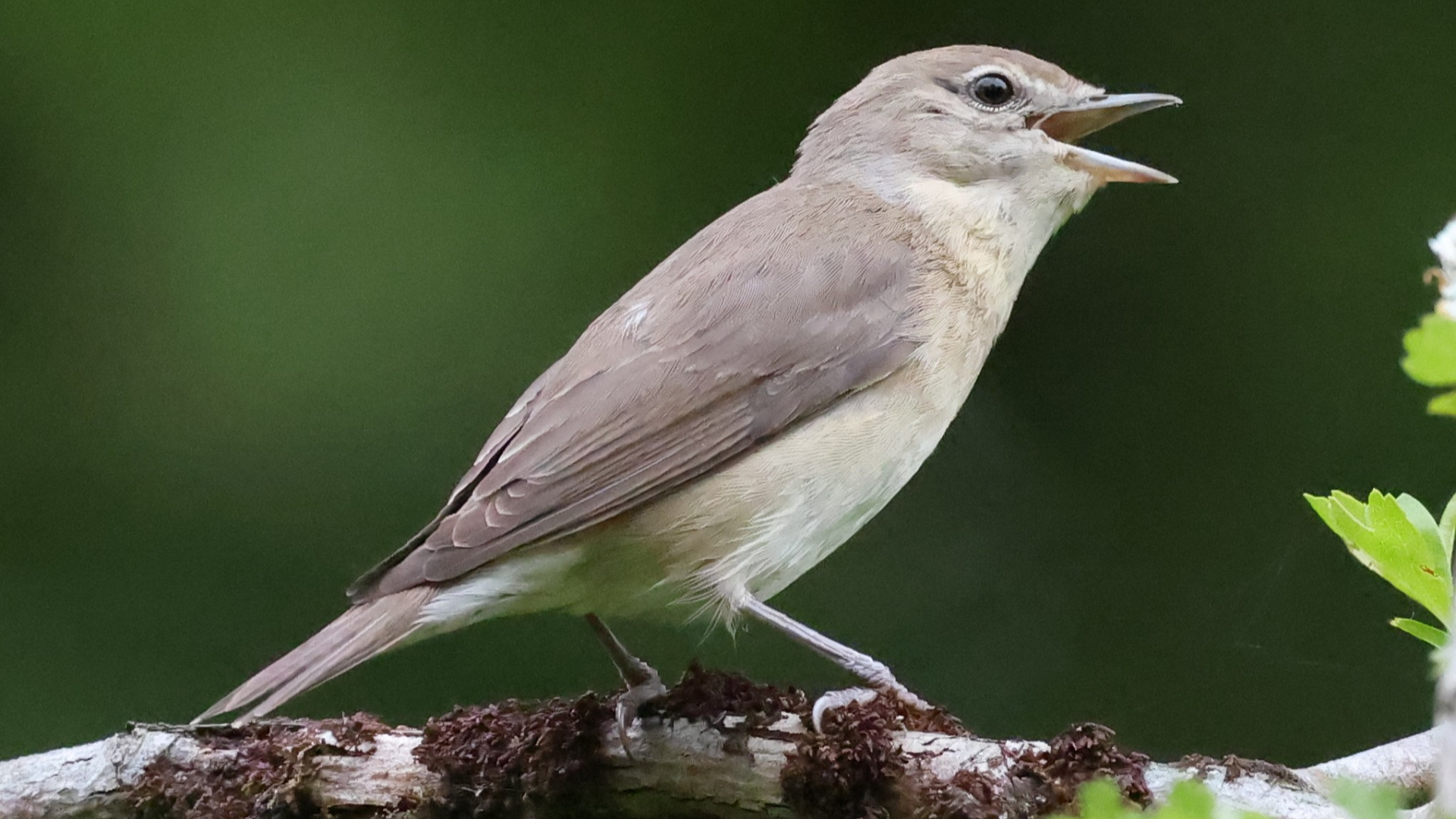
The Garden Warbler is a very plain bird that visits Britain in the summer months. Its name is misleading because it prefers the cover of trees and bushes in woodland where it feeds on insects and berries. This is the first record the website has for Hainault Forest.
#
Blackcap
Sylvia atricapilla
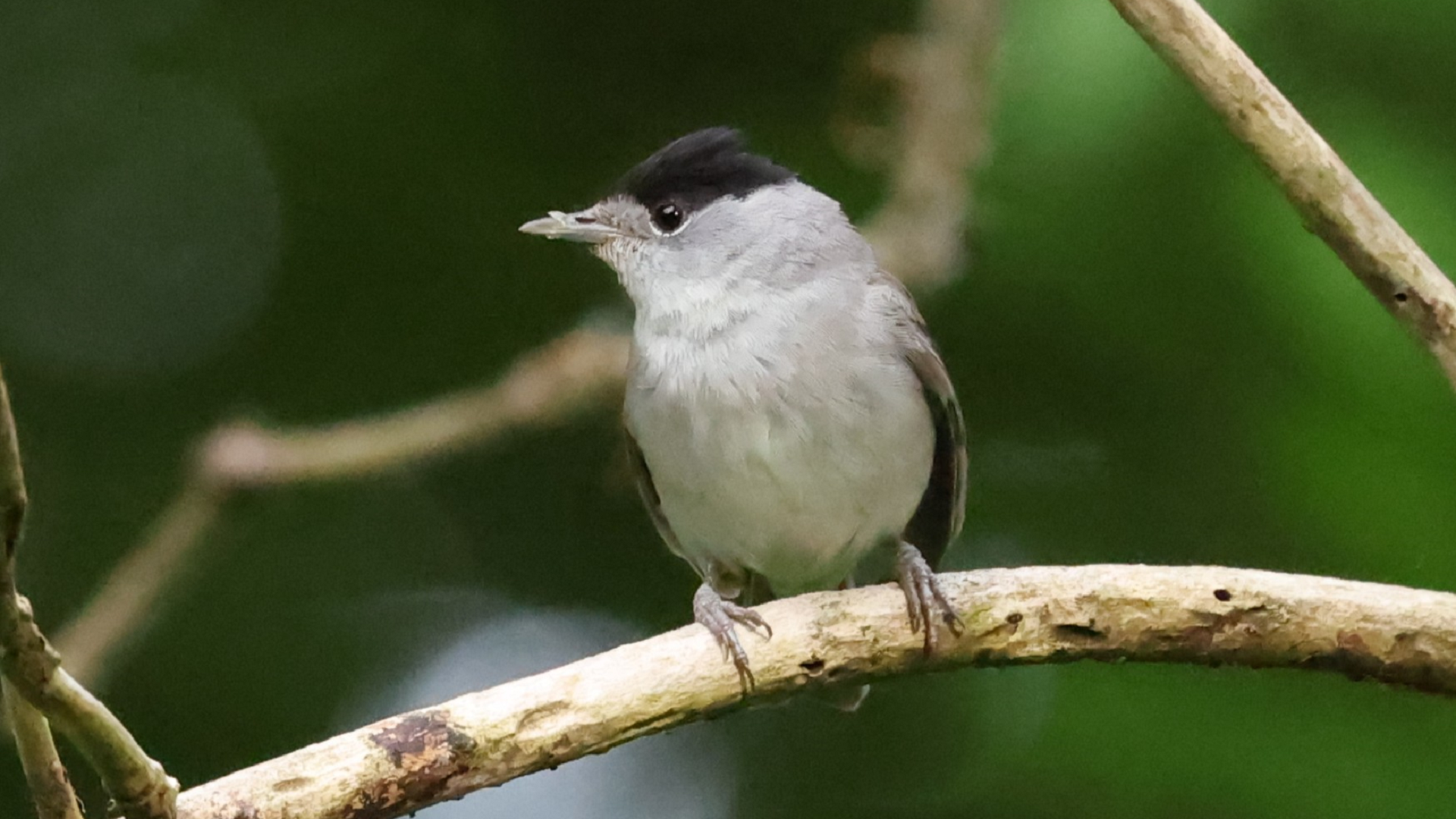
The Blackcap is a greyish bird that belongs to the Warbler family. Males have black caps while those of females are chestnut brown. It is mainly a summer visitor from Europe, but now more are spending winter in Britain.
#
Lesser Black-backed Gull
Larus Fuscus
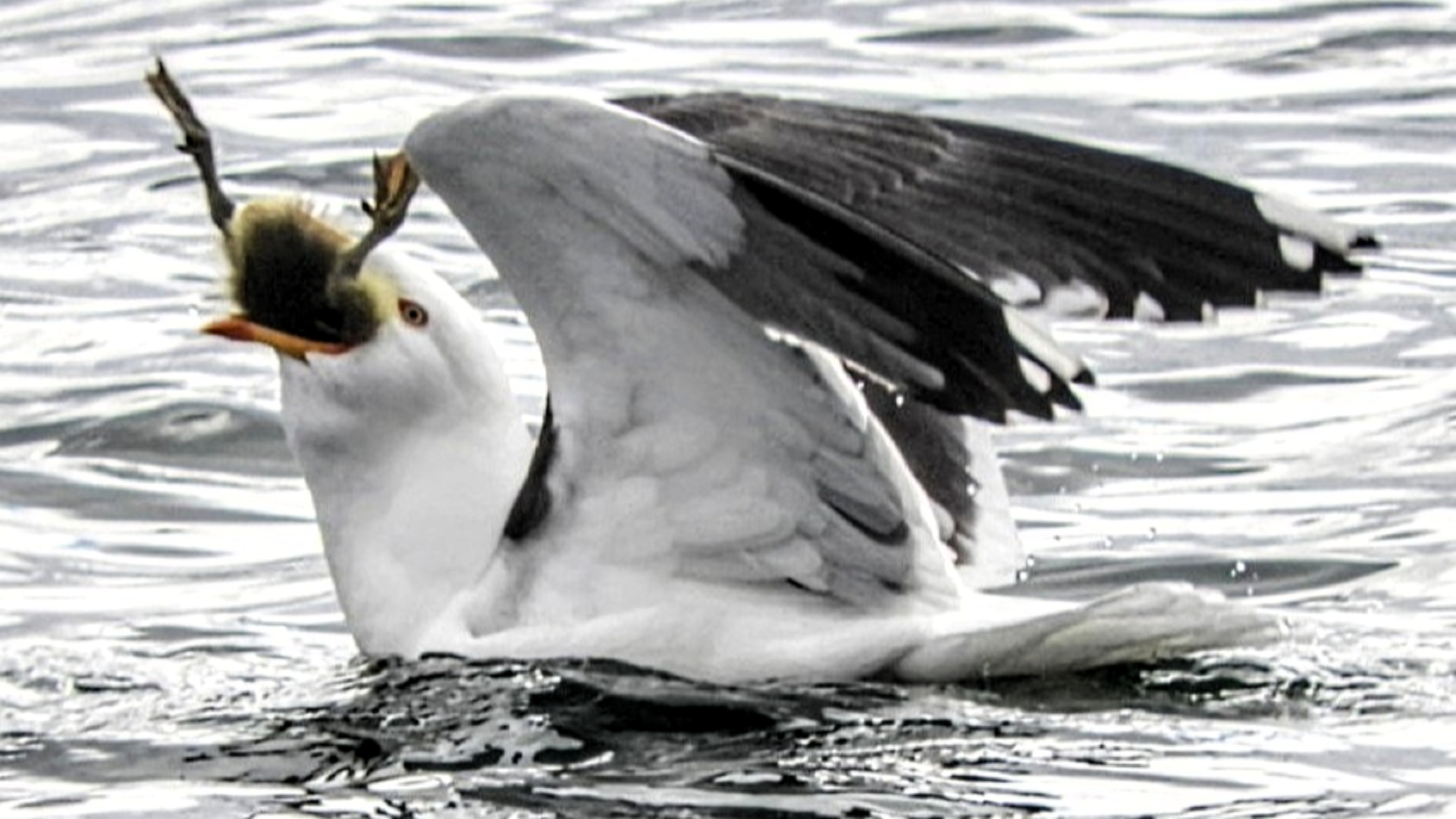
Debi was at Fairlop Waters when a Lesser Black-back Gull grabbed a gosling. The young gosling was swallowed whole!
#
Coot
Fulica atra
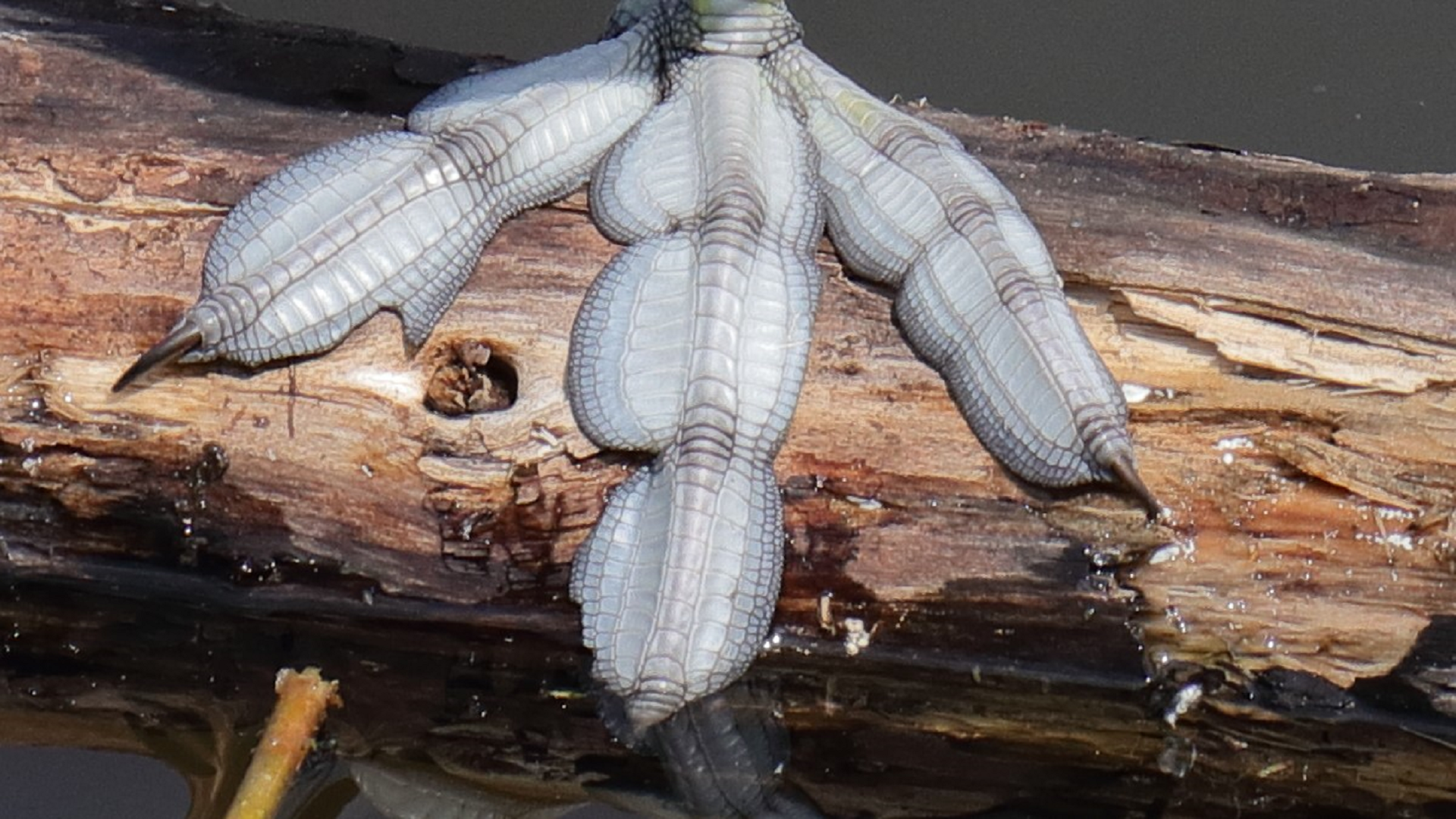
The Coot lacks webbed feet, but it does possess webbed toes. Each toe features a hinged flap that enhances the foot's surface area, improving propulsion while swimming. When walking, the foldable flaps enable the coot to move more gracefully compared to having webbed feet like a duck.
#
Greylag Goose
Anser anser
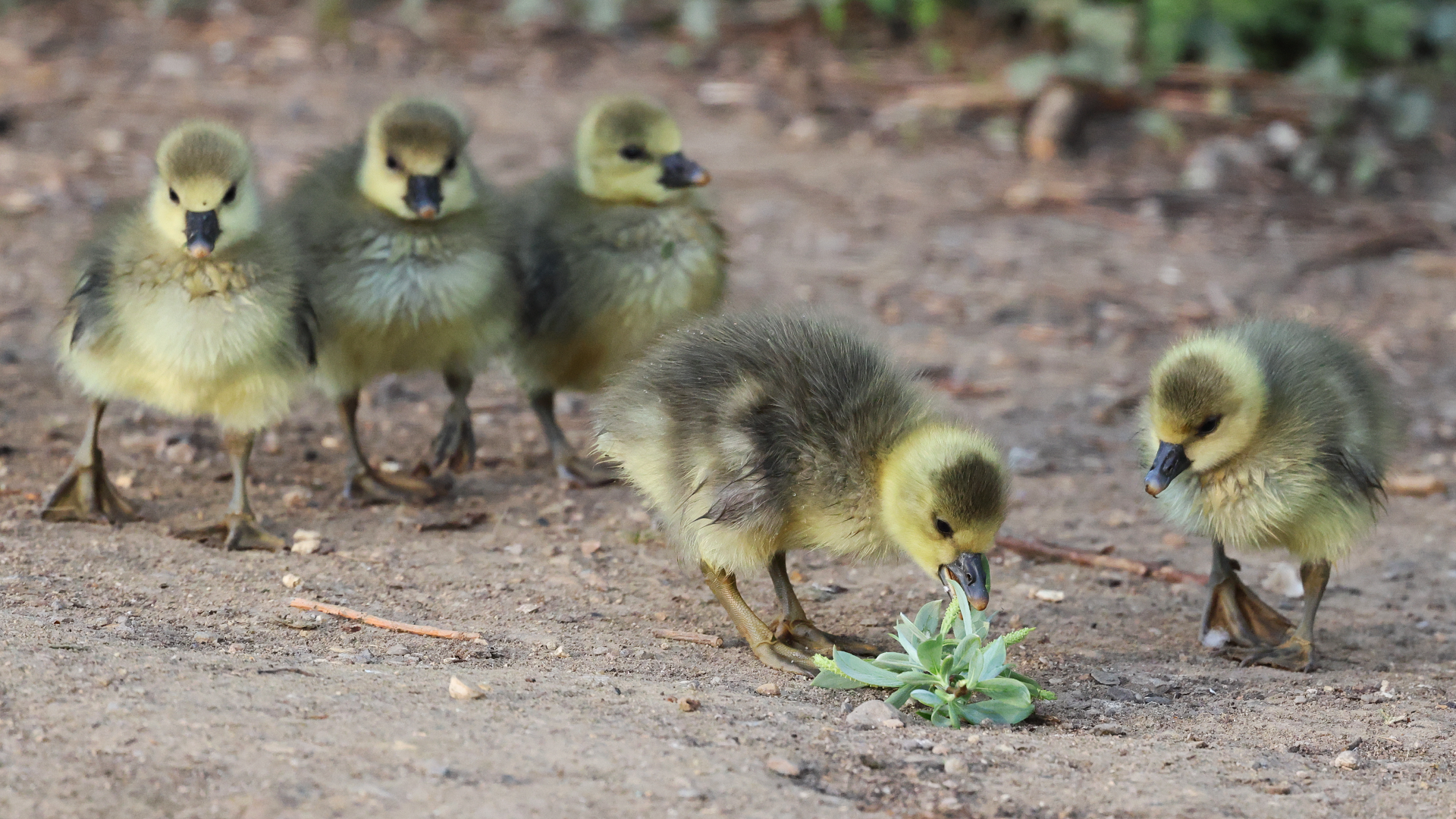
Greylag goslings typically emerge around mid-April at Hainault Lake. Both parents care for the goslings, which are prepared for flight in approximately eight weeks. The parents exhibit protective behavior and participate actively in the nurturing of their young. The goslings reach full maturity at 8 to 9 weeks of age.
#
Canada Goose
Branta Canadensis
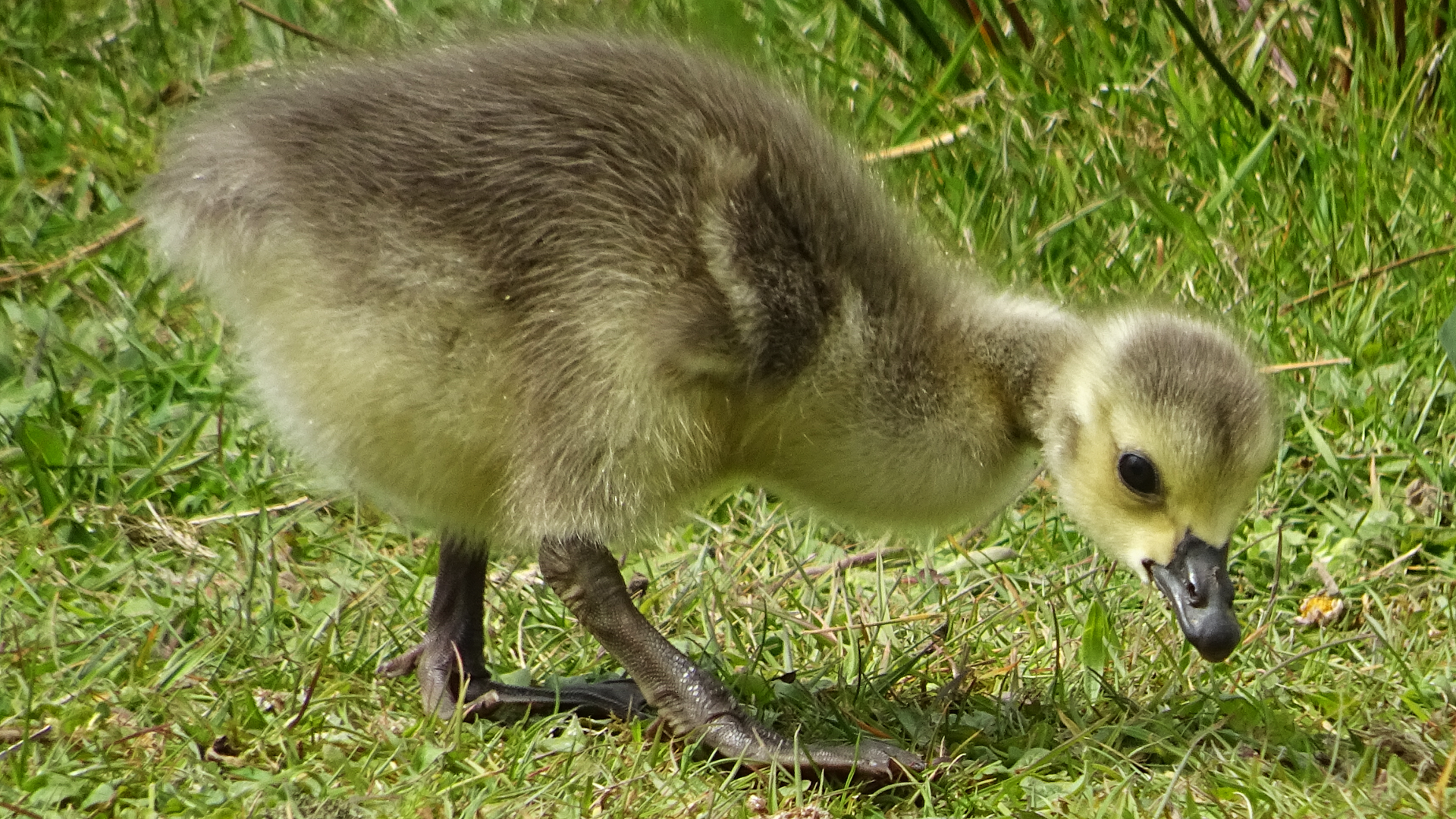
A young Canada Goose.
#
Comma
Polygonia c-album
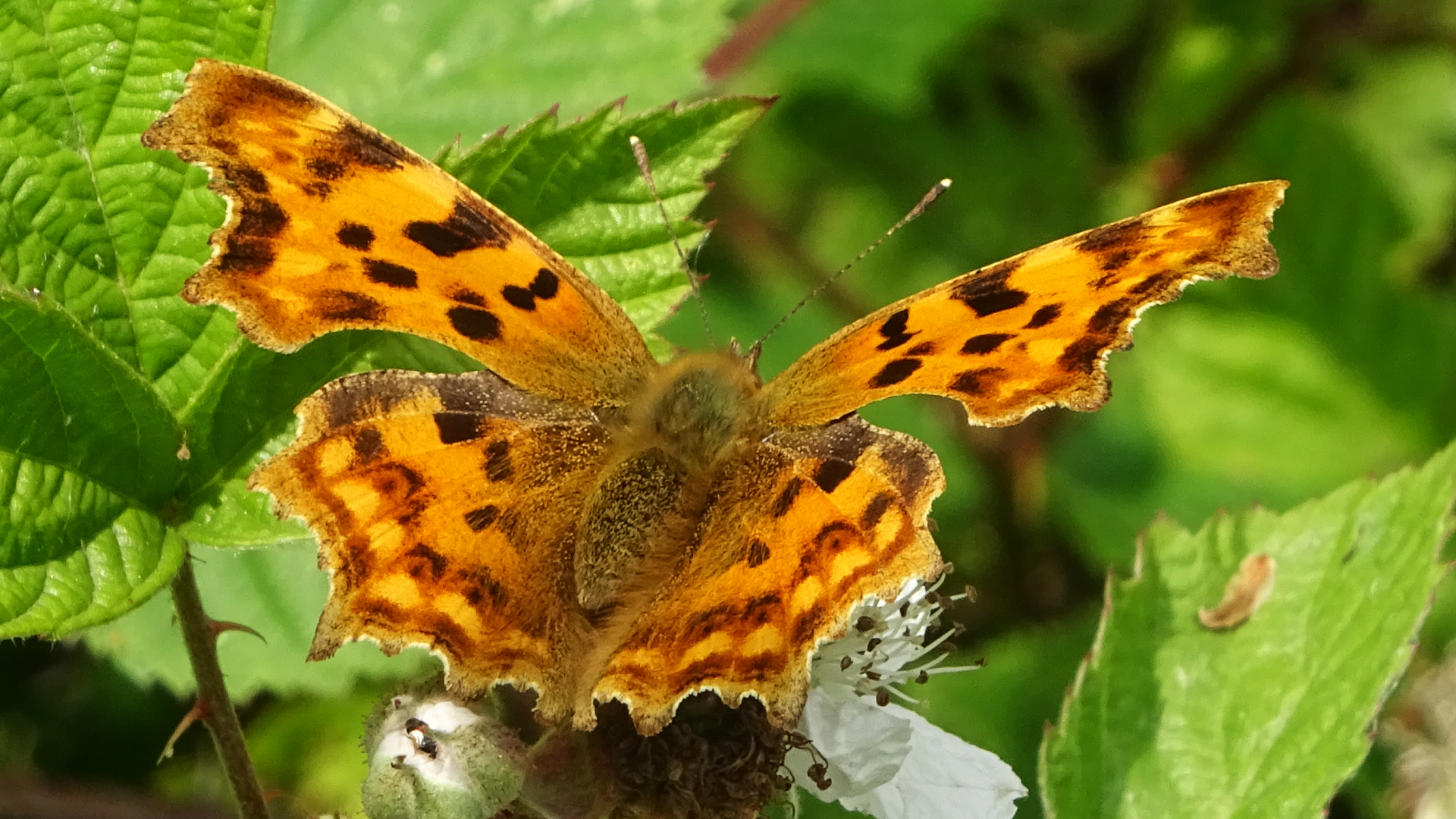
The Comma butterfly features jagged orange-brown upper wings accented with black and yellowish-brown markings. When at rest, it resembles a dried leaf. Comma butterflies prefer to rest on hedgerows in sunny areas. The name "Comma" comes from a small 'comma' mark found on the underside of their wings. Their caterpillars feed on nettles and hop plants.
#
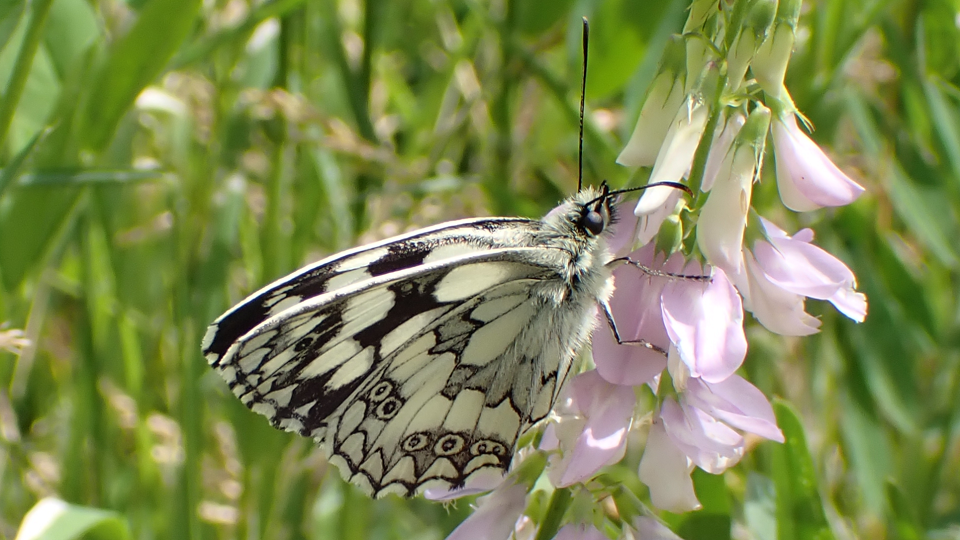
Marbled White
Melanargia galathea
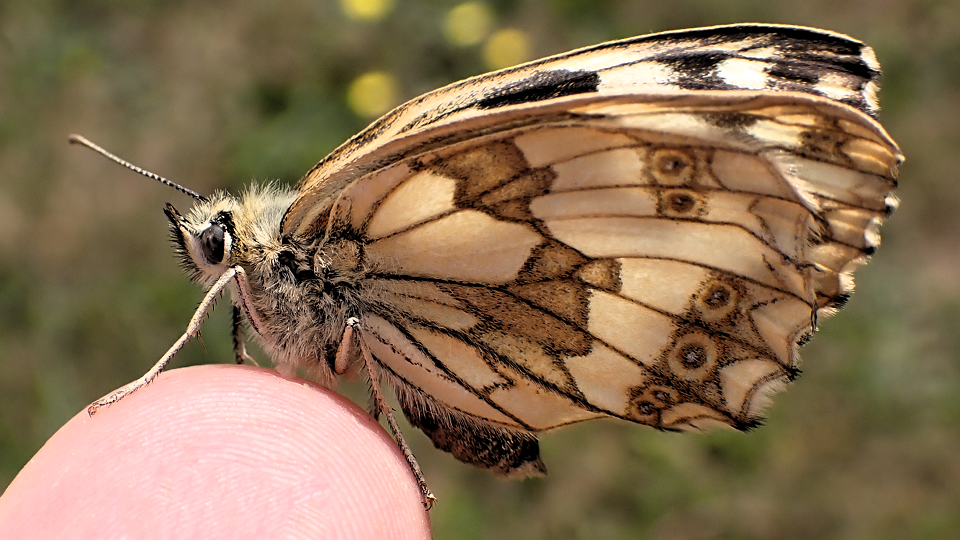
Since the wildflower meadow has been allowed to flourish near Foxburrow Road entrance this beautiful species is now becoming a regular sight where once it was an infrequent visitor.
#
Green-veined White
Pieris napi
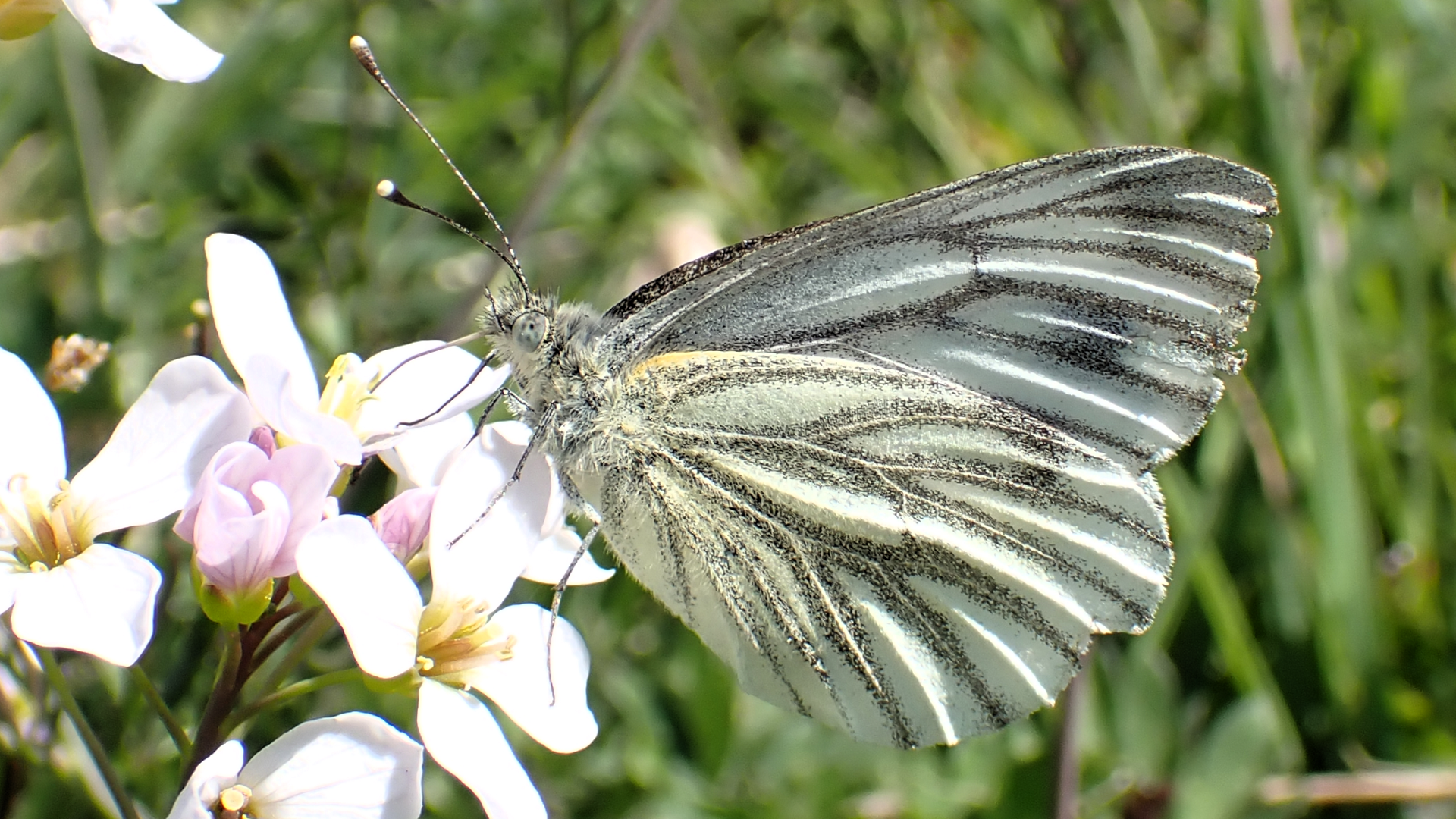
The Green-veined White is a common butterfly that is active from April to October. It inhabits various environments, particularly moist areas with abundant vegetation. The caterpillars of this species feed on plants belonging to the Cabbage family.
#
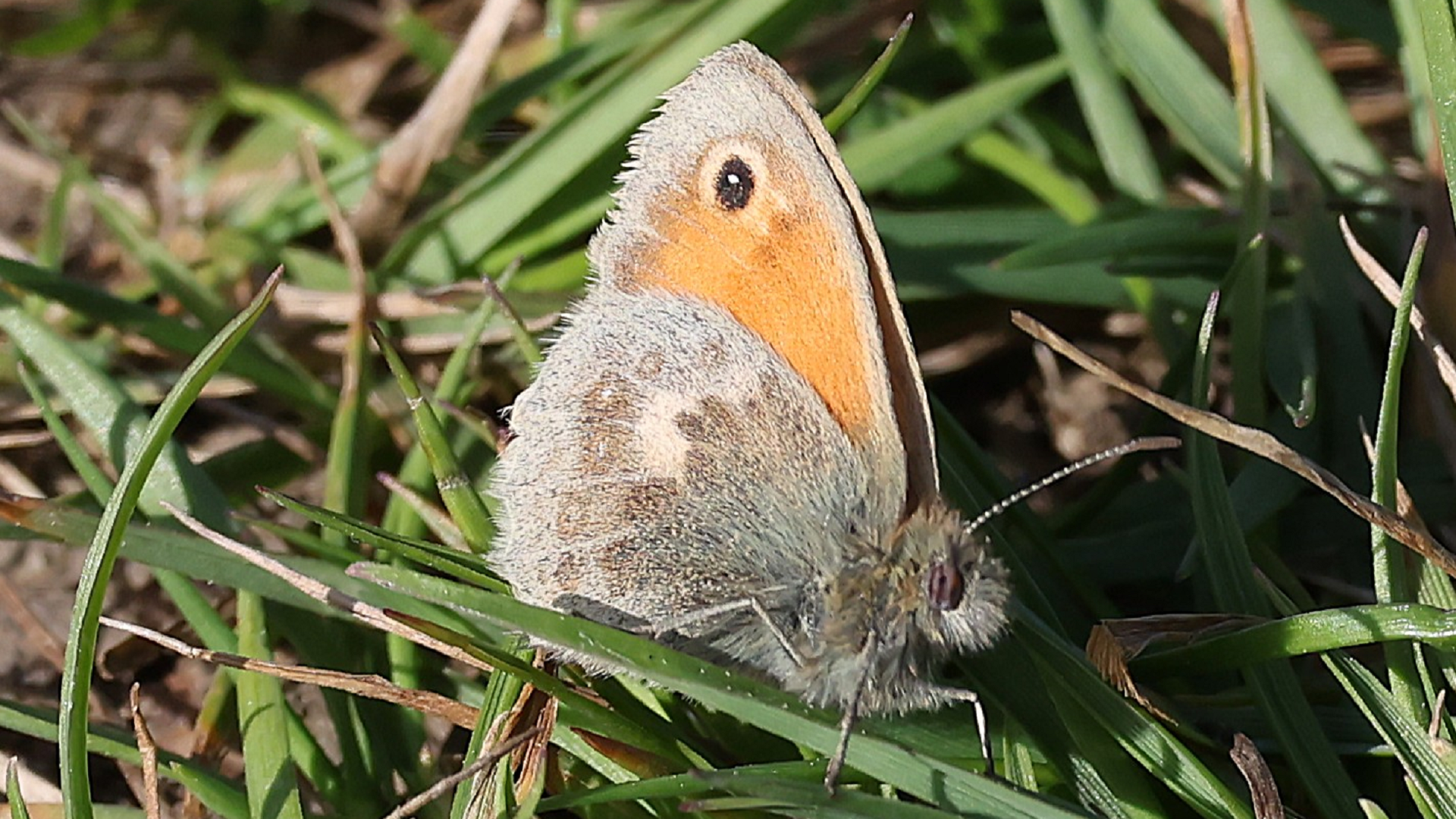
Small Heath
Coenonympha pamphilus
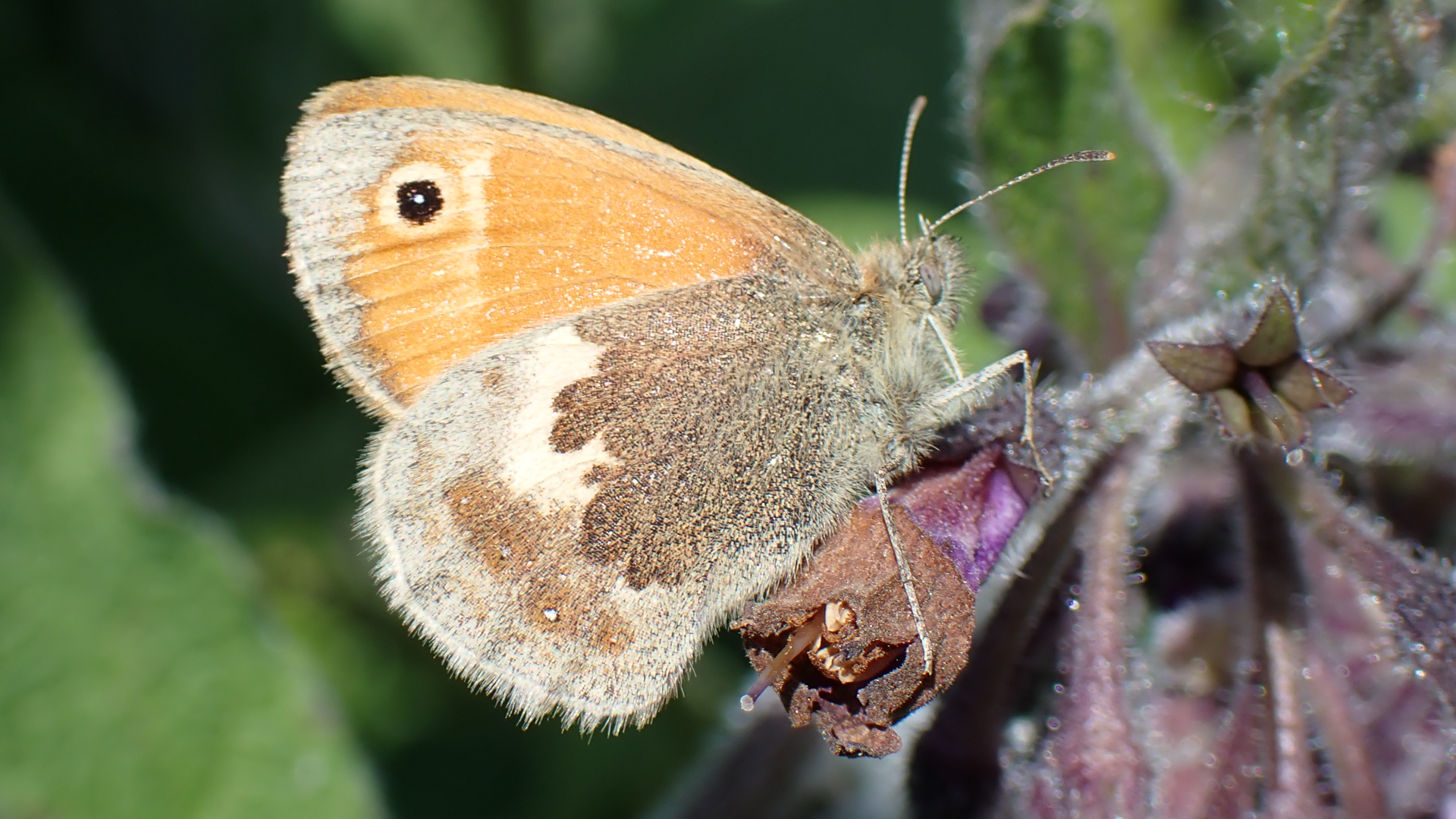
The Small Heath is the smallest brown butterfly found in the UK. It has a fluttering flight and often rests with wings closed and leaning to one side. This species tends to favour heathland areas in sunny locations.
#
Large Skipper
Ochlodes sylvanus
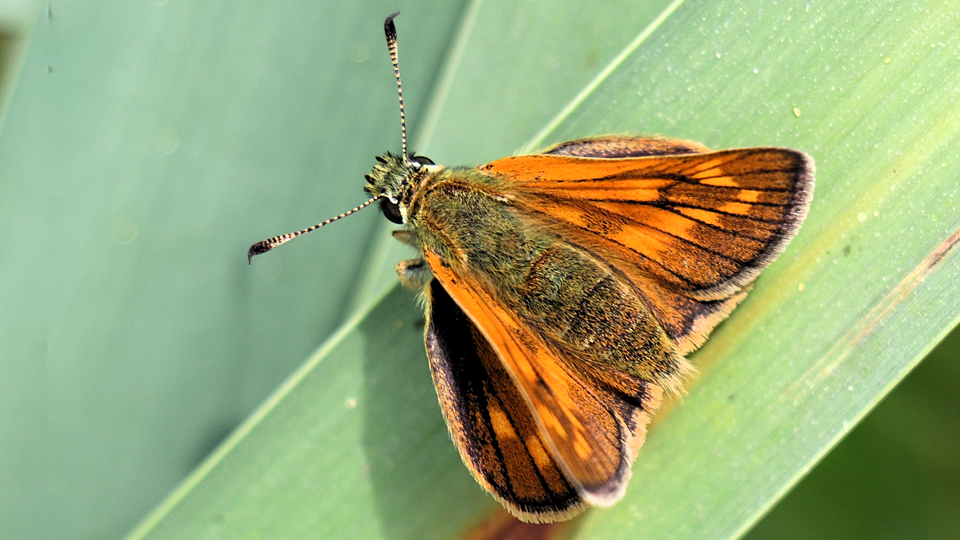
The absence of a thick black line through the fore-wing centre means this is a female. Females lay their eggs on various grasses.
#
Speckled Wood
Pararge aegeria
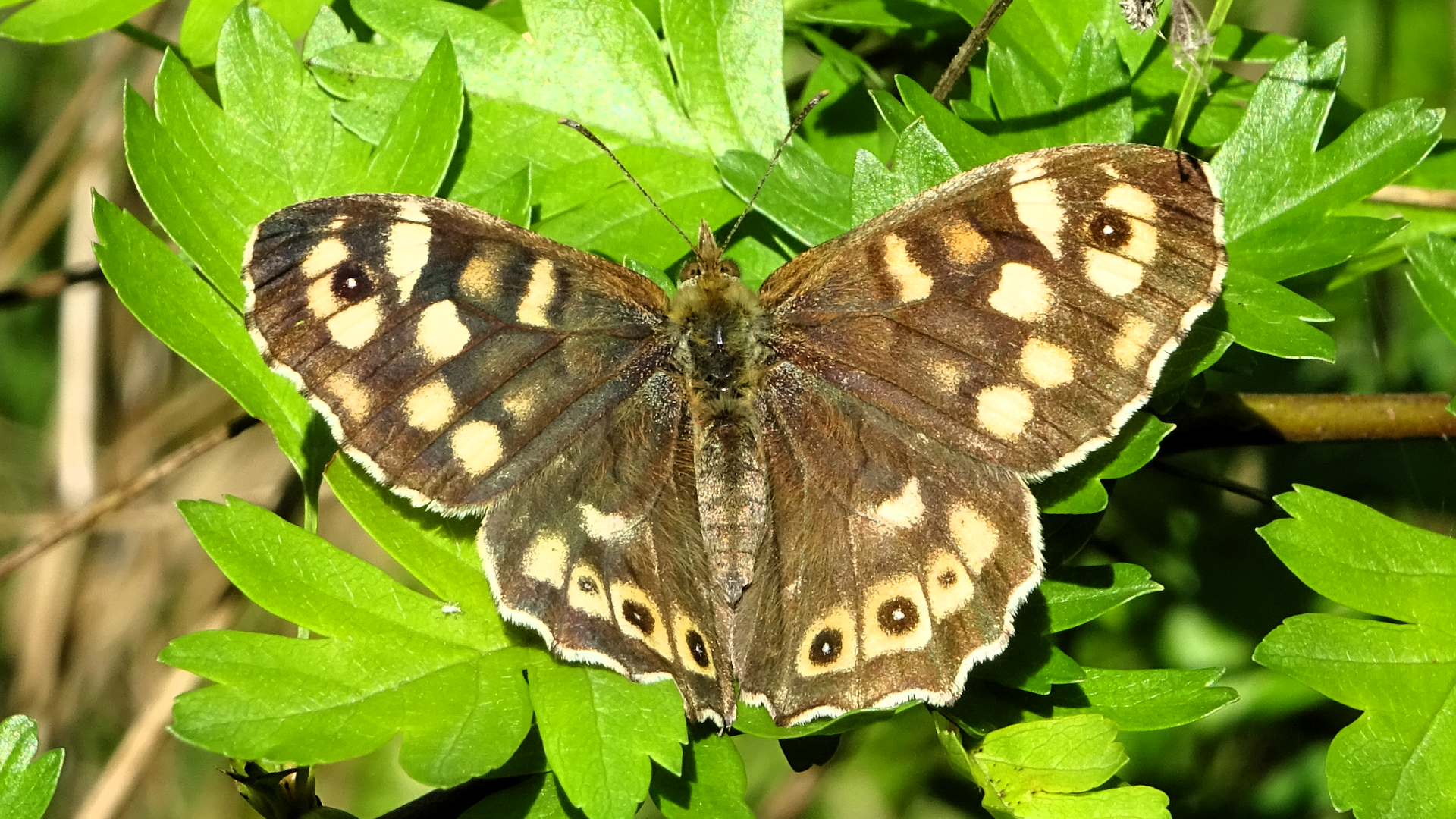
ThIs common woodland butterfly has a wingspan of approximately 45mm and is frequently seen resting on bramble along woodland paths. Adults are active in two broods: from April to early June and again from July to September. Males typically bask in sunlight and defend their territory from intruders. Both males and females tend to visit tree tops to feed on honeydew produced by aphids. This species seldom feeds on flowers, mostly doing so in early and late seasons when honeydew availability is limited. The caterpillars feed on various types of grasses, including false brome, cock's-foot, and Yorkshire fog.
#
Green Hairstreak
Callophrys rubi
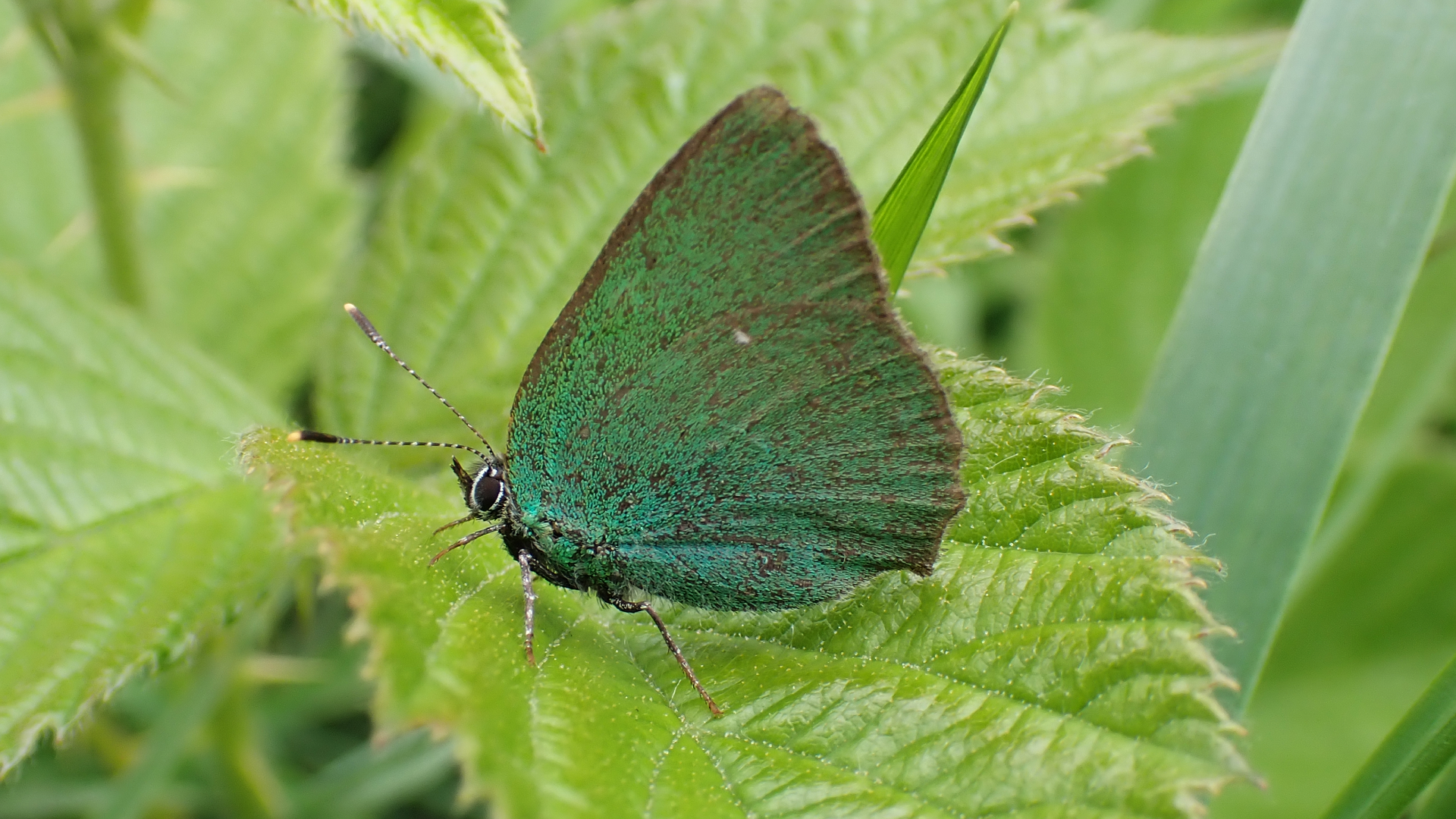
The Green Hairstreak butterfly often rests with its wings closed. In some specimens, the white streak on the wings may be absent.
#
Orange-tip
Anthocharis cardamines
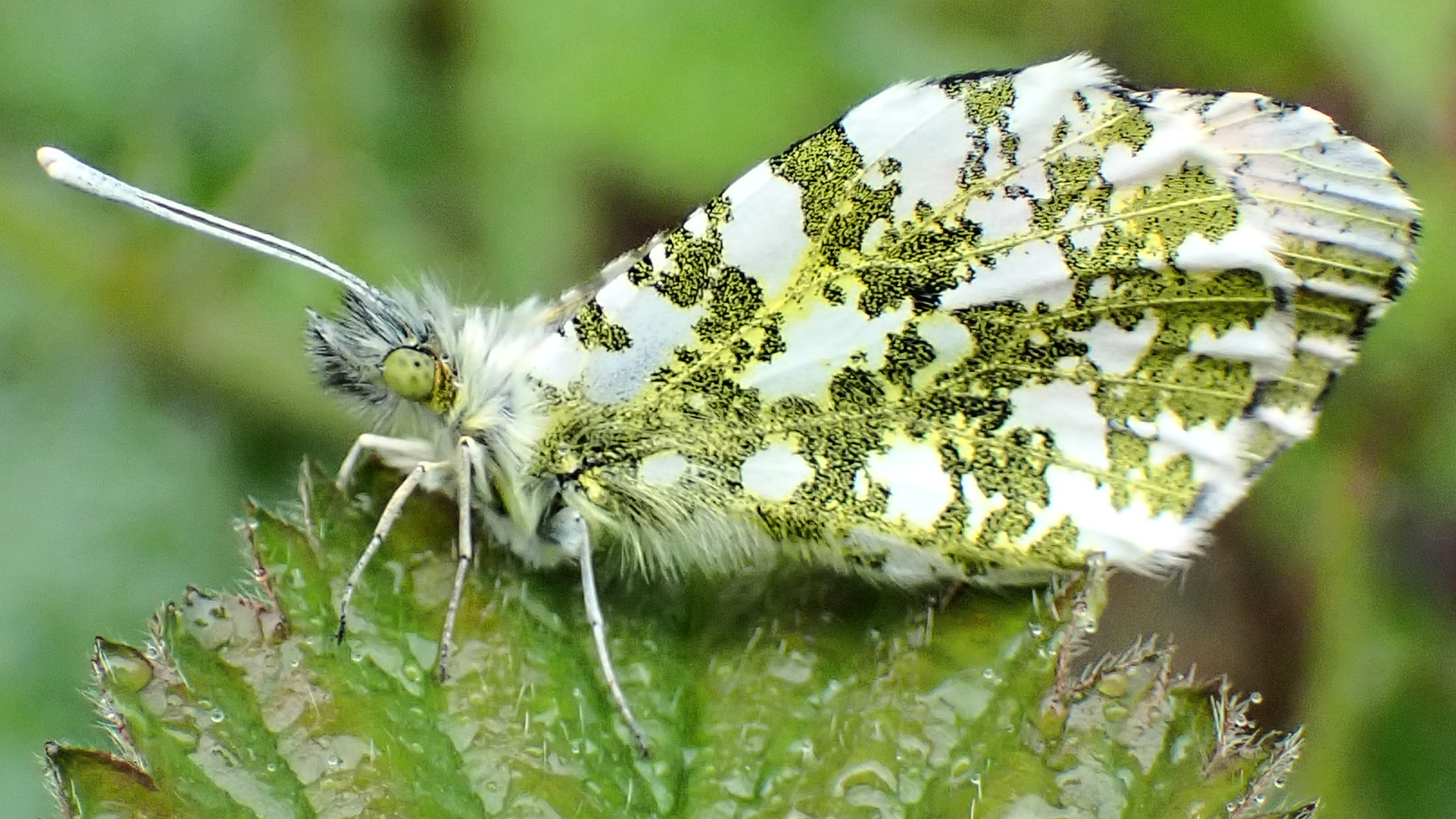
Both males and females have mottled green underwings. Males are distinguished by the orange visible when the wings are open, whilst females have no orange on the wings.
#
Blood-vein
Timandra comae
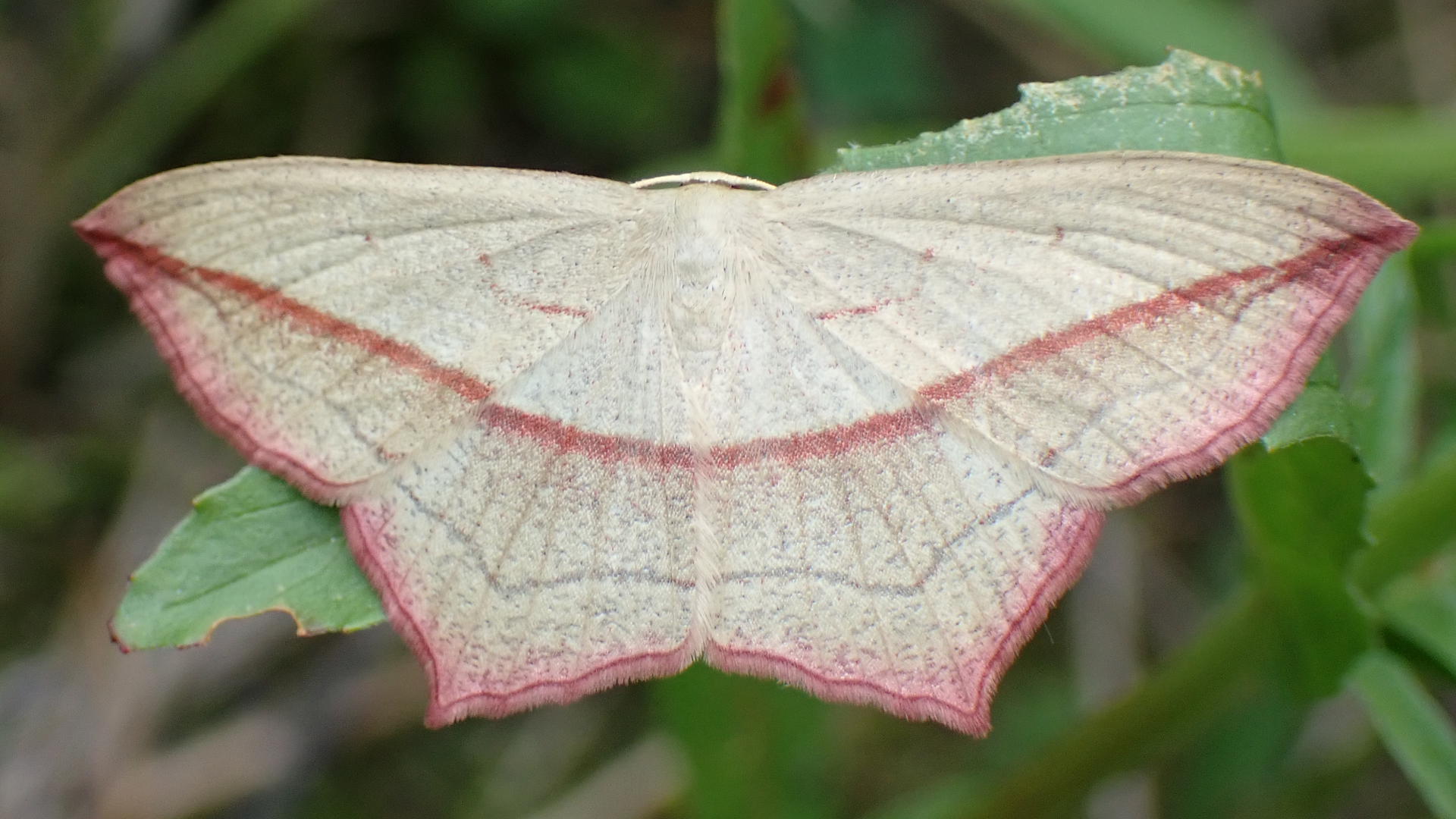
The Blood-vein is a common moth found in a range of habitats. Its foodplants include: Docks, Common Orache and Common Sorrel.
#
Orange Beauty
Commophila aeneana
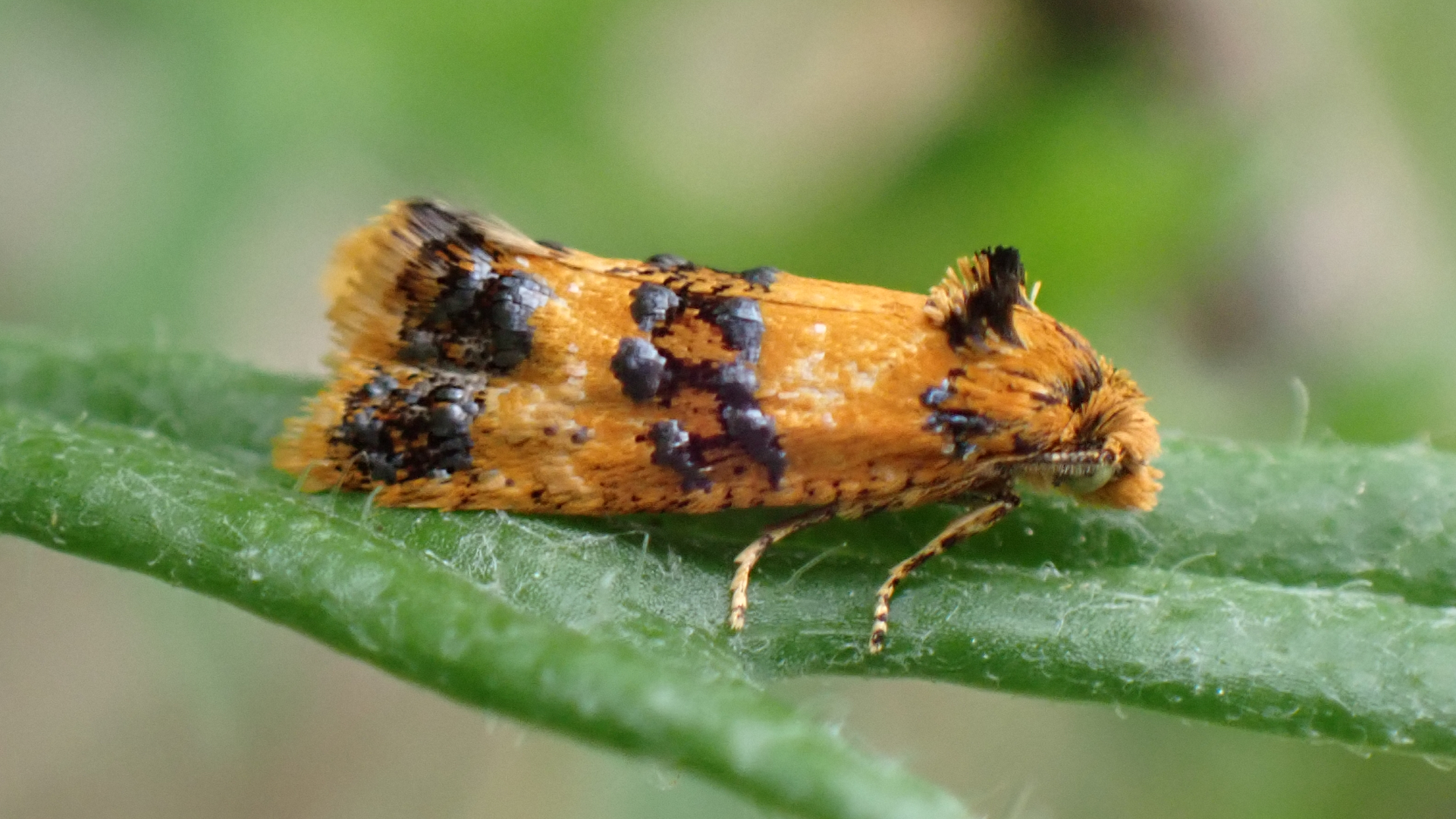
Adults are on the wing from May until July. Its larvae feed on roots of ragwort.
#
Hoary Tortrix
Eucosma cana
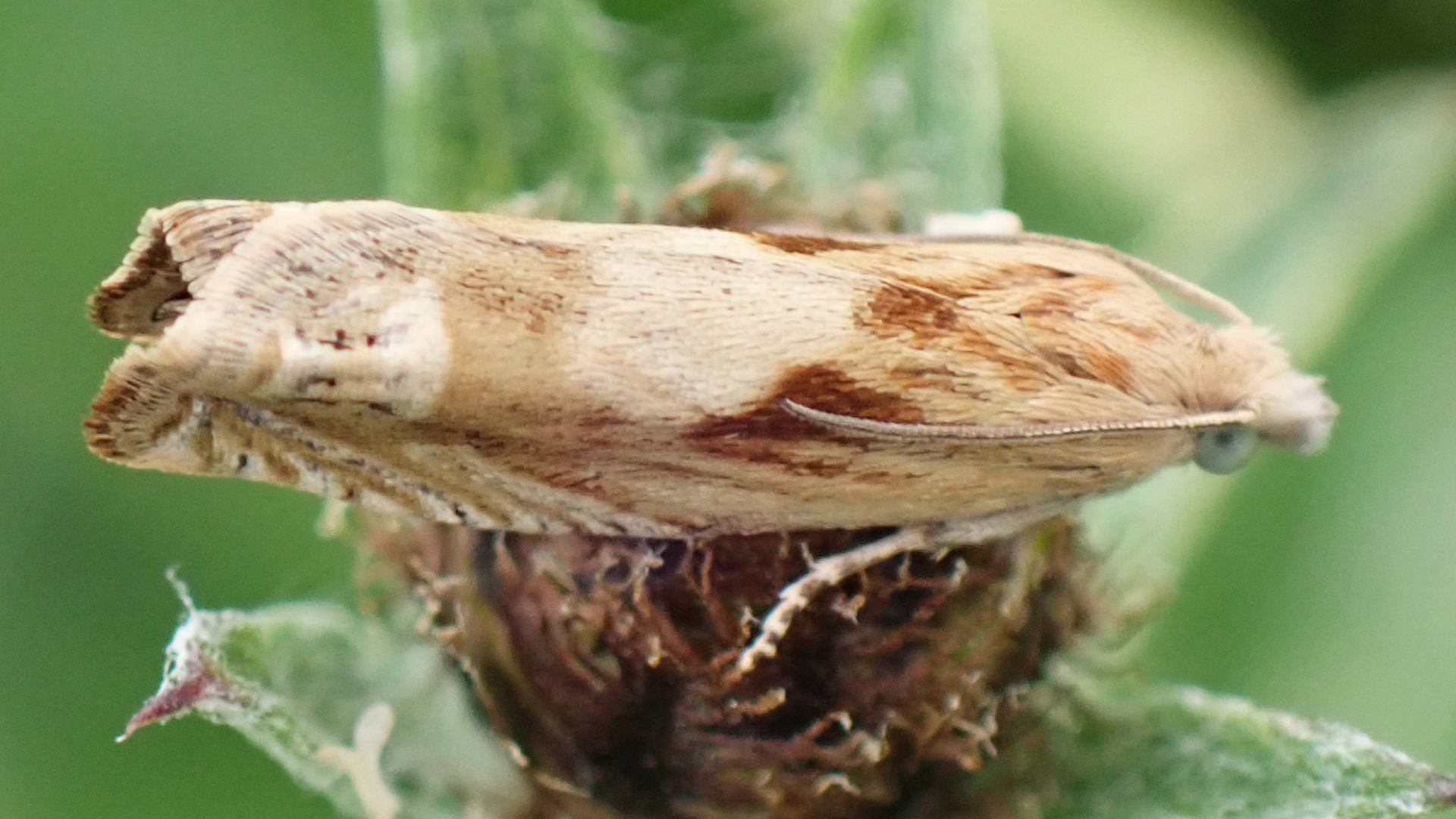
This species is found from June until August in rough grassland where thistle and black knapweed grows. Formerly known as the 'Hoary Bell'.
#
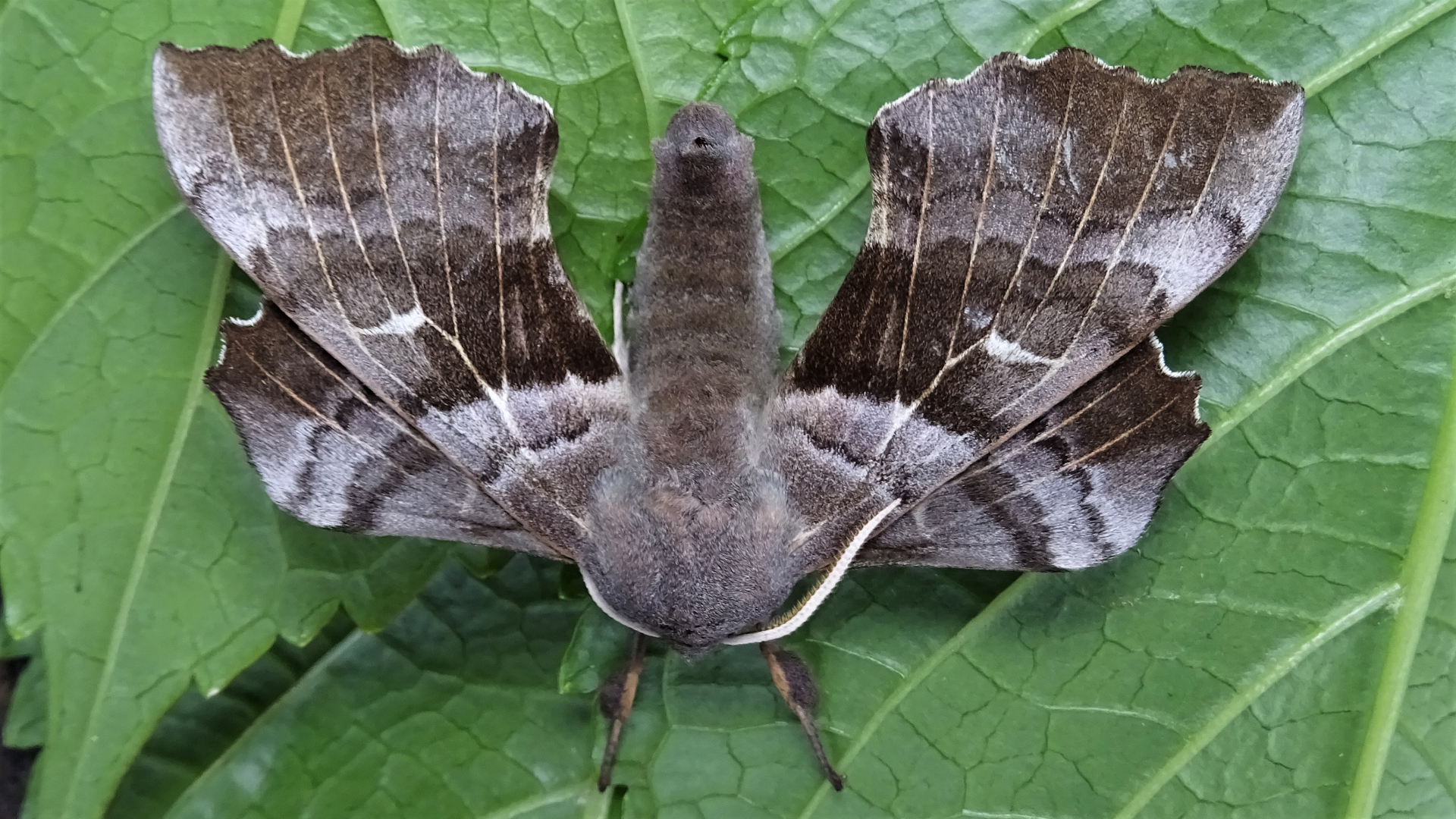
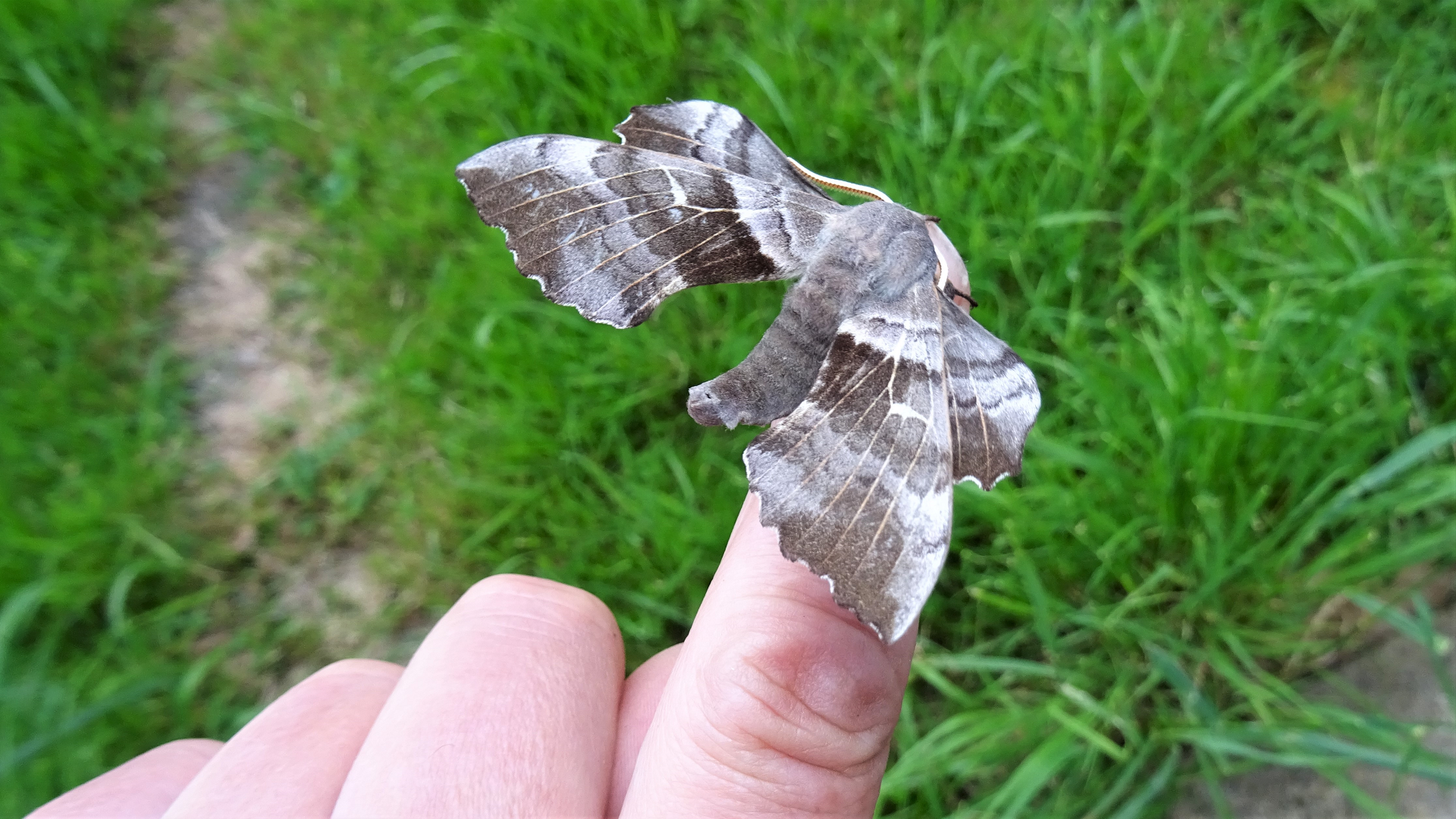
Poplar Hawk-moth
Laothoe populi
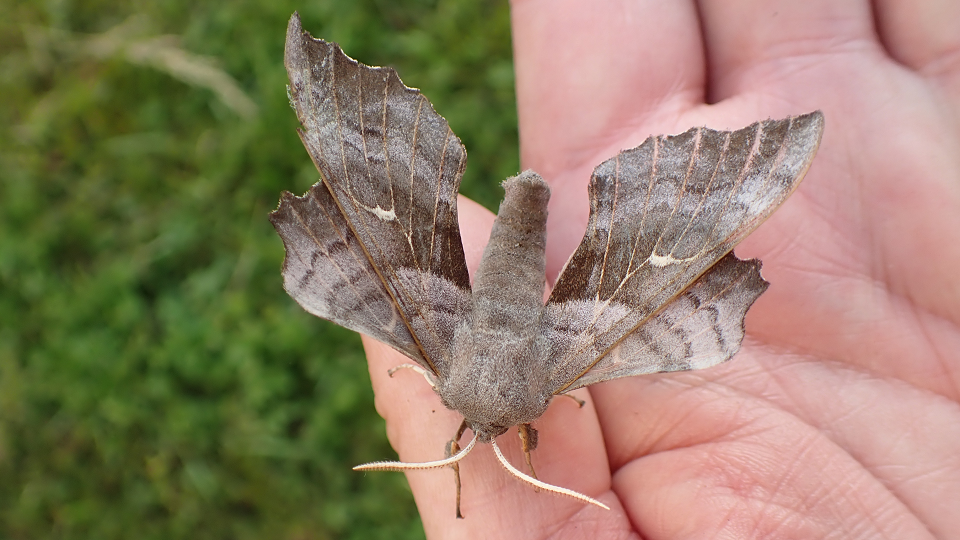
The Poplar Hawk-moth is a large moth that flies from May to July with a wingspan between 6 and 9cm. They rest with the abdomen curved up and hindwings further forward than the forewings. If disturbed they flash reddish-brown patches on the underwings. The adults do not feed. Their larvae consume poplar, aspen, sallow and willow.
#
Lime Hawk-moth
Mimas tiliae
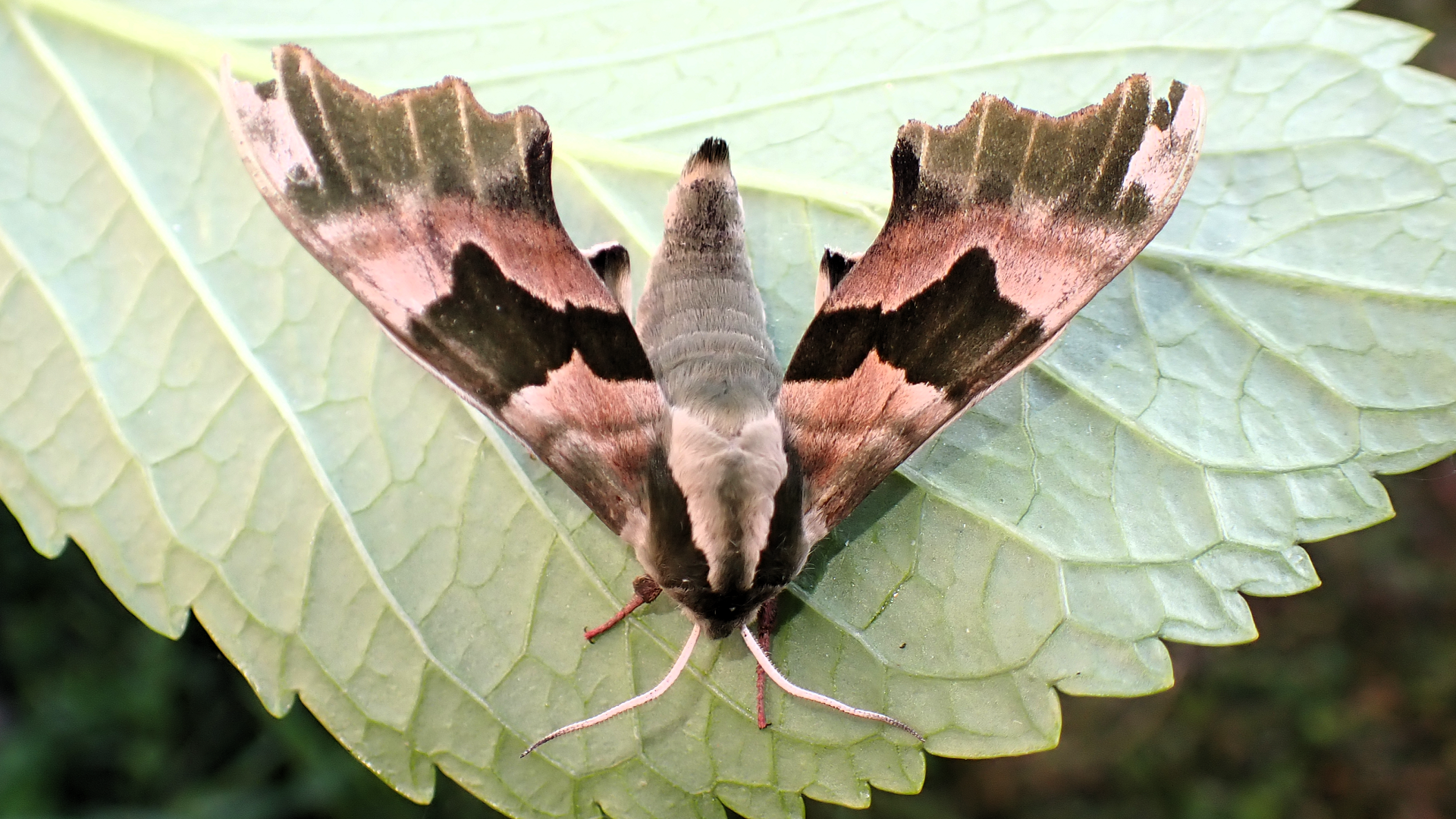
The Lime Hawk-moth is a large distinctive green and pink moth, usually on the wing from May until July. There is also a common red-brown form with brick-red central markings (f. brunnea). Foodplants include lime, elm, birch and alder.
#
Hedge Beauty
Alabonia geoffrella
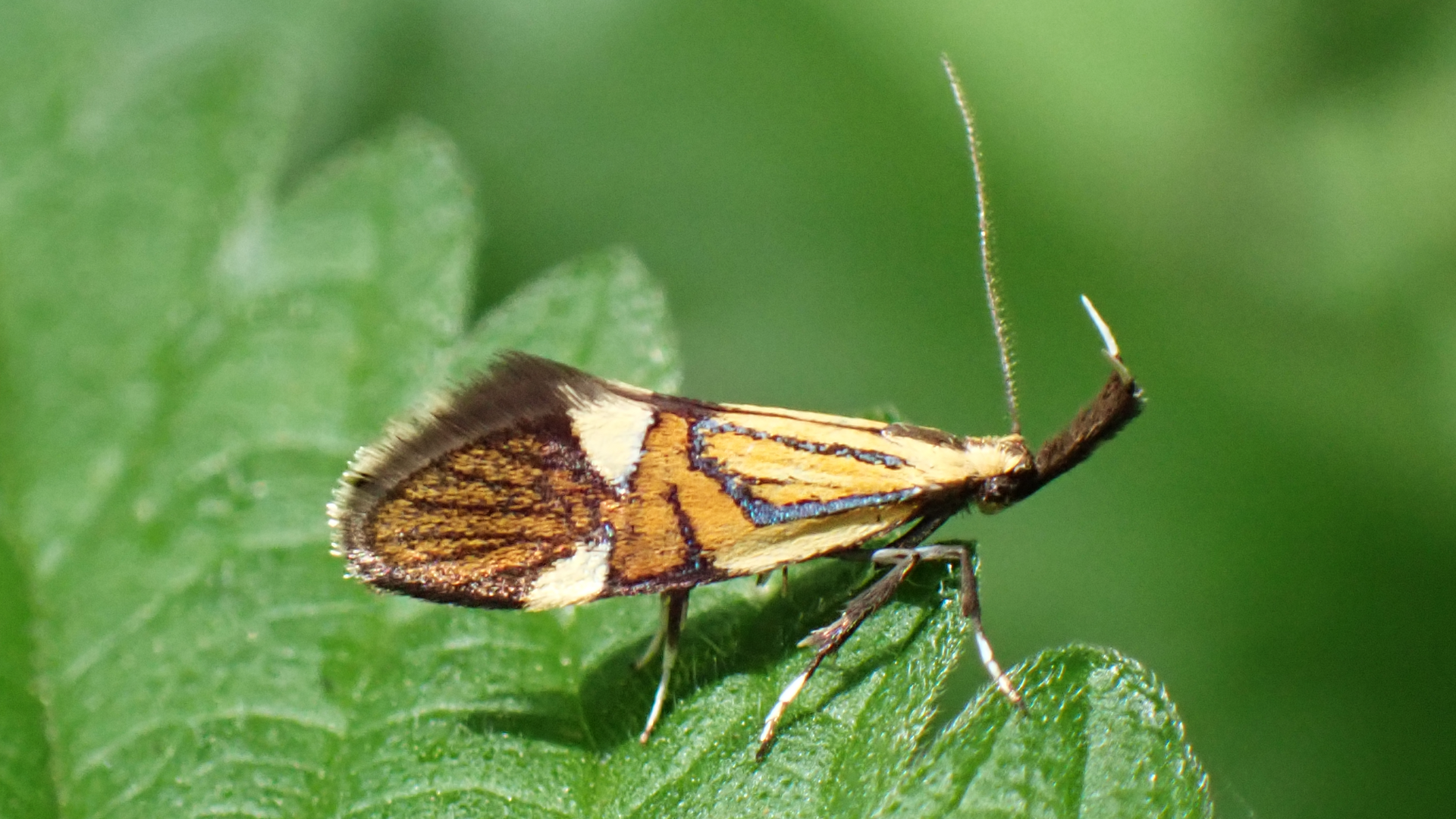
The Hedge Beauty is a colourful day-flying woodland species often seen in May and June on bramble during sunny mornings. Its larvae feed on rotten tree bark. Formerly known as the 'Common Tubic' and often referred to as "Geoff" by moth enthusiasts.
#
Light Orange Underwing (Possibly)
Archiearis notha
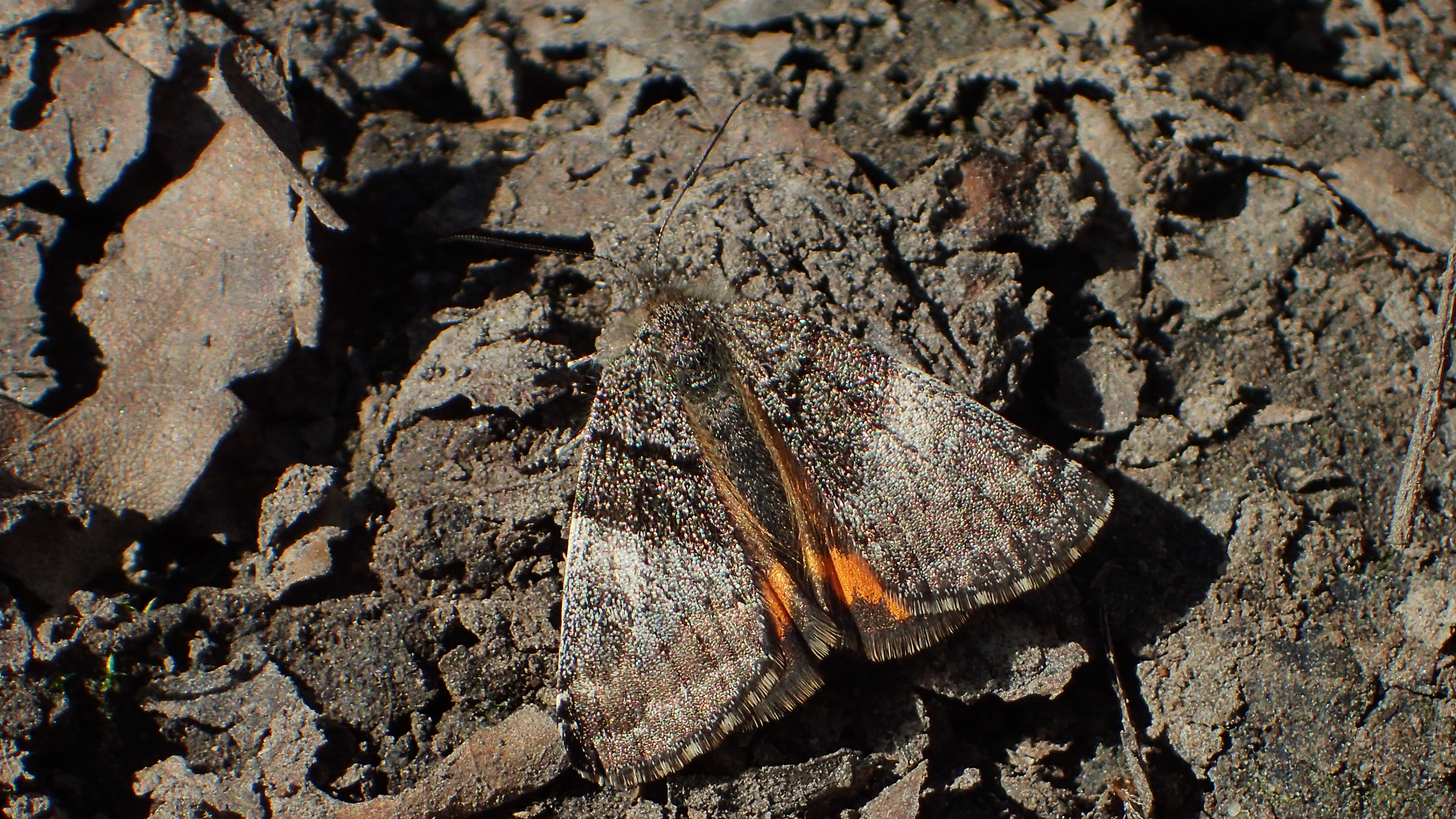
This moth was spotted on a path at the back of Hainault Lake. Although not able to check the hindwings, Simon thought this was Light Orange Underwing Archiearis notha, a view shared by Essex Field Club specialist Rob Smith, who suggested it was a very strong candidate for being a female based on markings and wing shape.
#
Silver Grass-miner
Elachista argentella
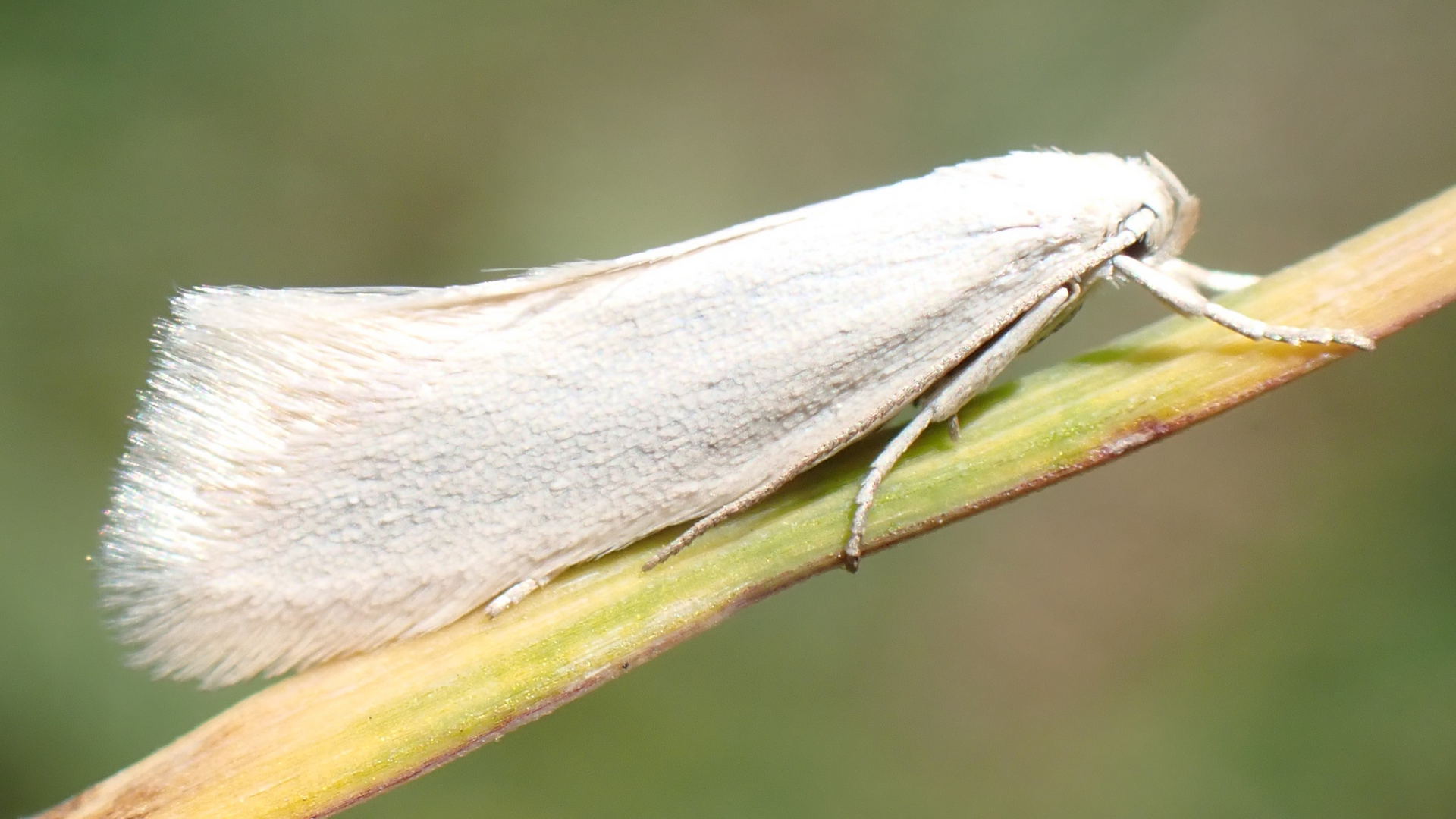
The Silver grass-miner flies from May until August and is often disturbed in grassland areas. Its larvae feed on various grasses. Previously known as the Swan-feather Dwarf.
#
Tare Case-bearer 37.047
Coleophora amethystinella

Bronze-coloured micro-moth easily identified by its orange eyes and eyelashes. Not recorded much in the past but numbers now appear to be on the increase. Found during May and June in meadows that contain its foodplant Smooth Tare. Previously known as the 'Coast Green Case-bearer'.
#
Mother Shipton
Callistege mi
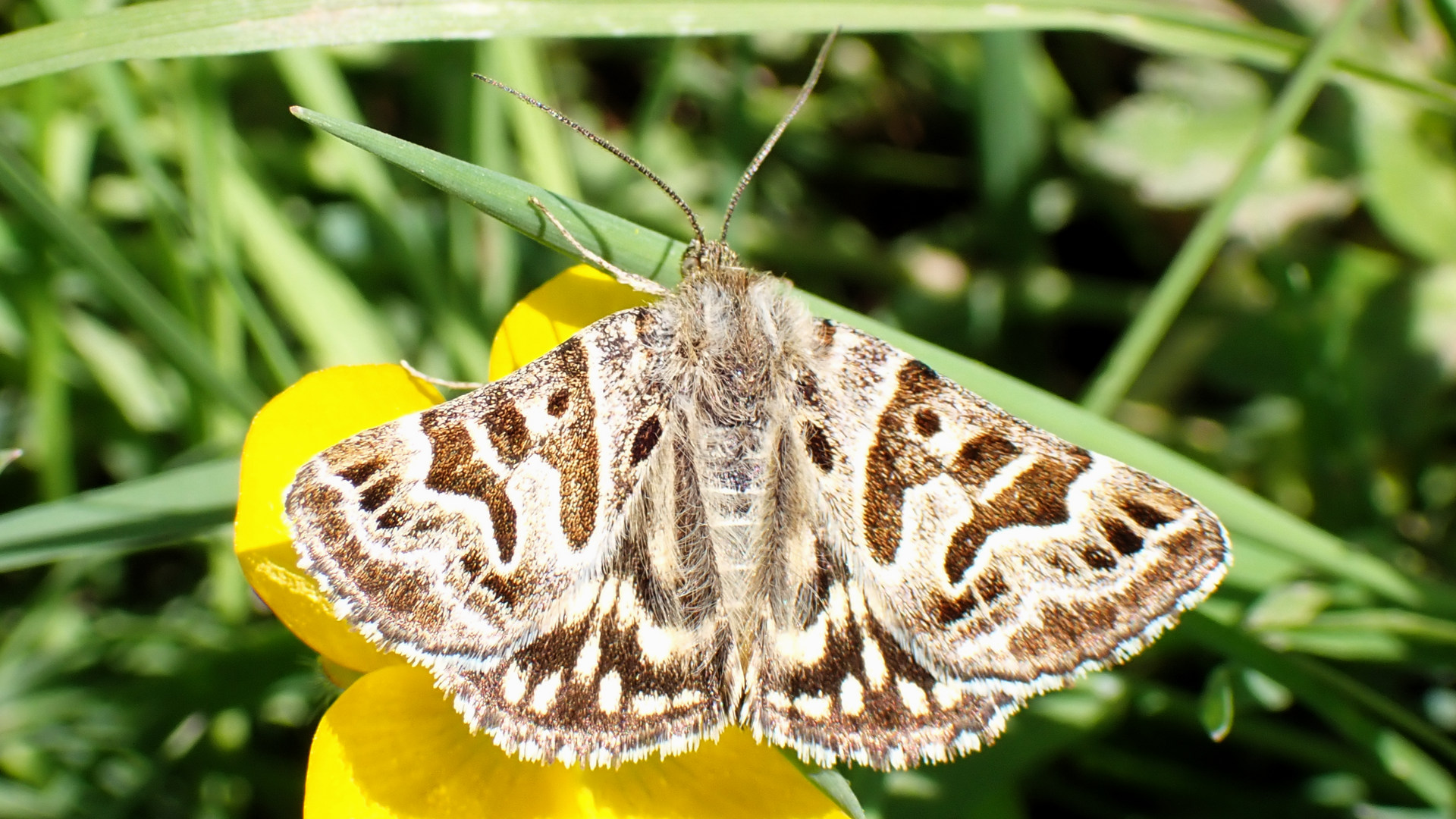
Day-flying moth found in meadows when the sun shines. Its name is a reference to 'Old Mother Shipton', the 16th Century witch whose face can be seen on the wings.
#
Coronet
Craniophora ligustri
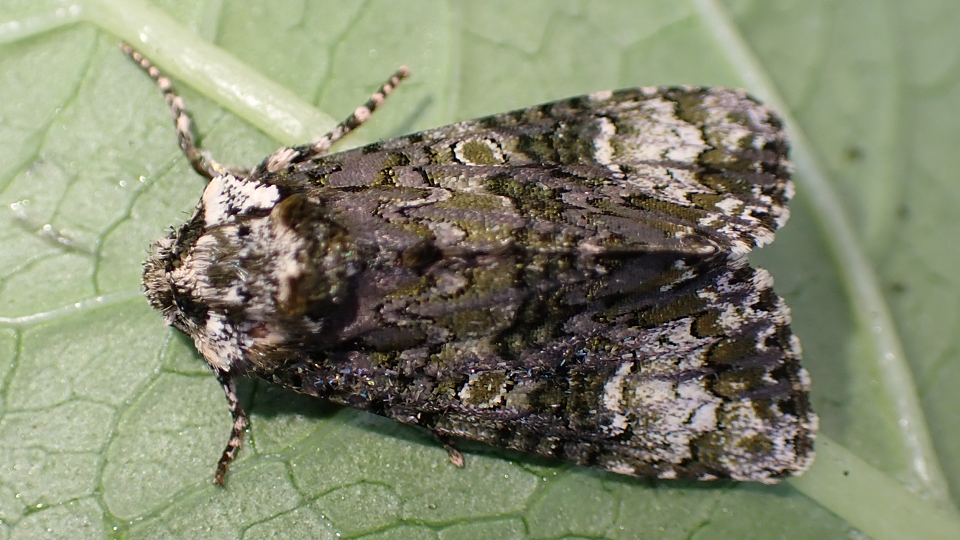
The Coronet flies from May until August. The forewing colour varies from intense yellowish-green and purple to black and white. Its foodplants are ash and wild privet.
#
Orange-spot Daisy Moth*
Dichrorampha alpinana
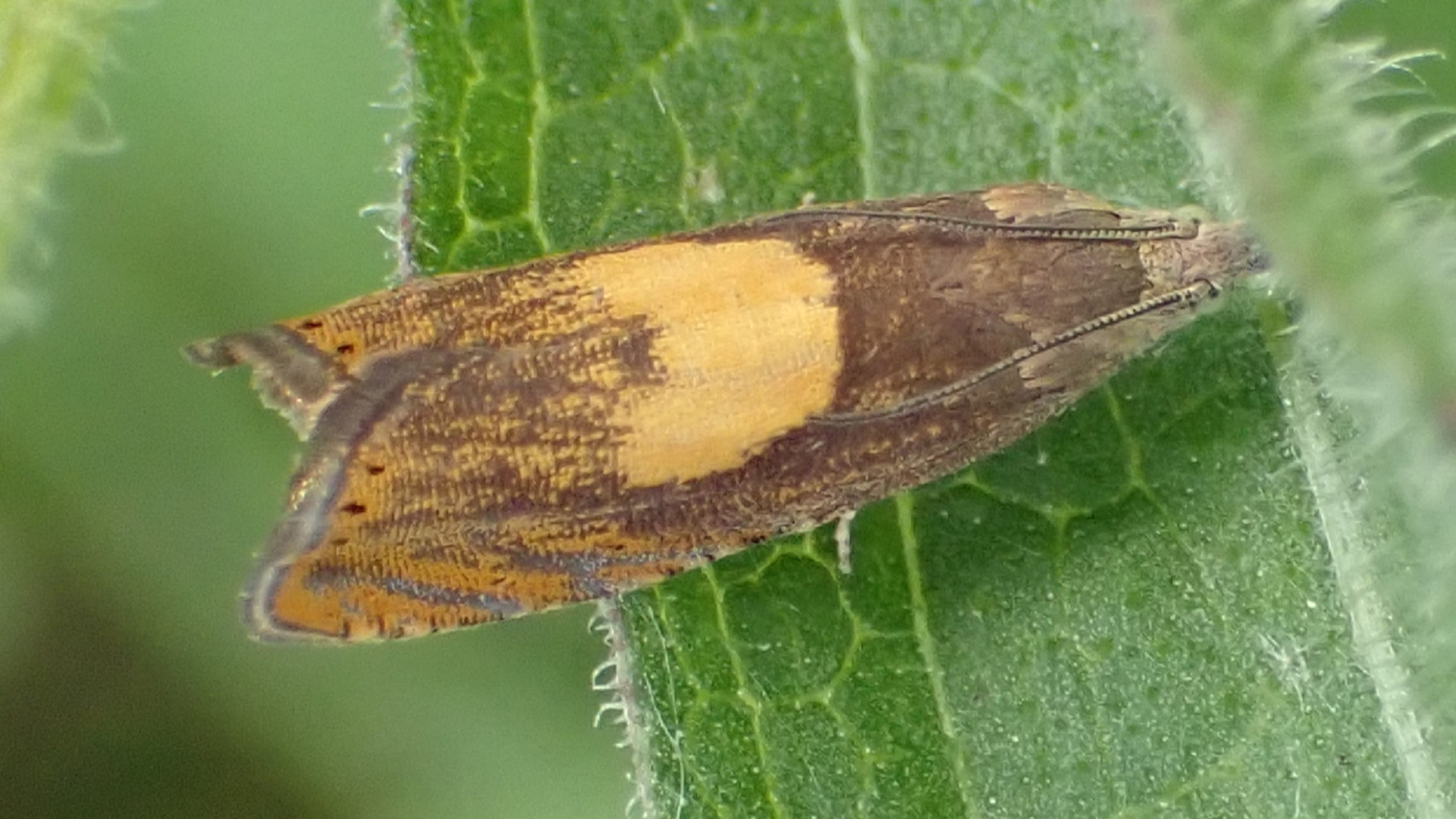
The website has listed this attractive specimen as Orange-spot Daisy Moth Dichrorampha alpinana, but it should be noted that Orange-spot Tansy Moth D. flavidorsana is very similar. The two species can only be accurately told apart by genitalia dissection so this record can only be regarded as plausible.
*This moth was flying in morning sunshine in a habitat dominated by oxeye daisies pointing to D. alpinana, but without dissection there is no way to be 100% sure.
#
Six-spot Burnet
Zygaena filipendulae
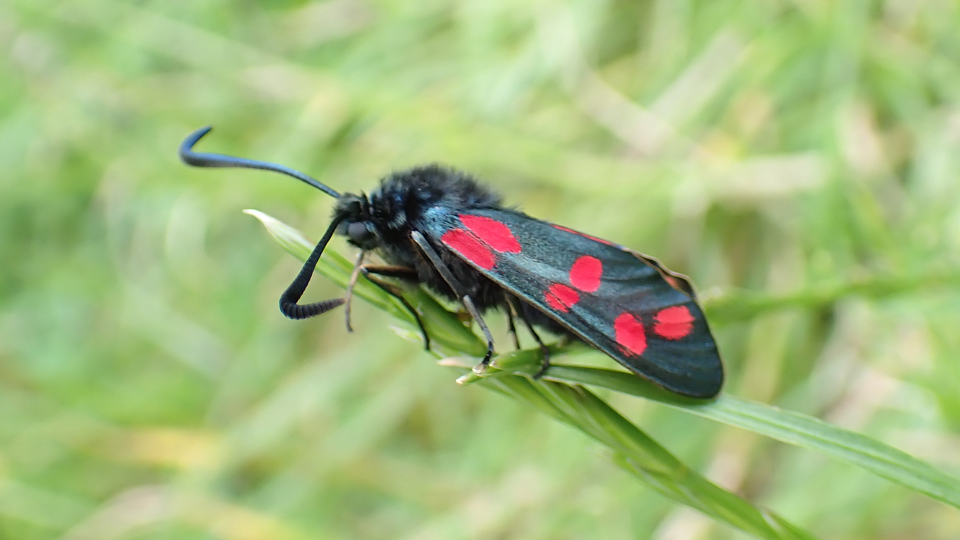
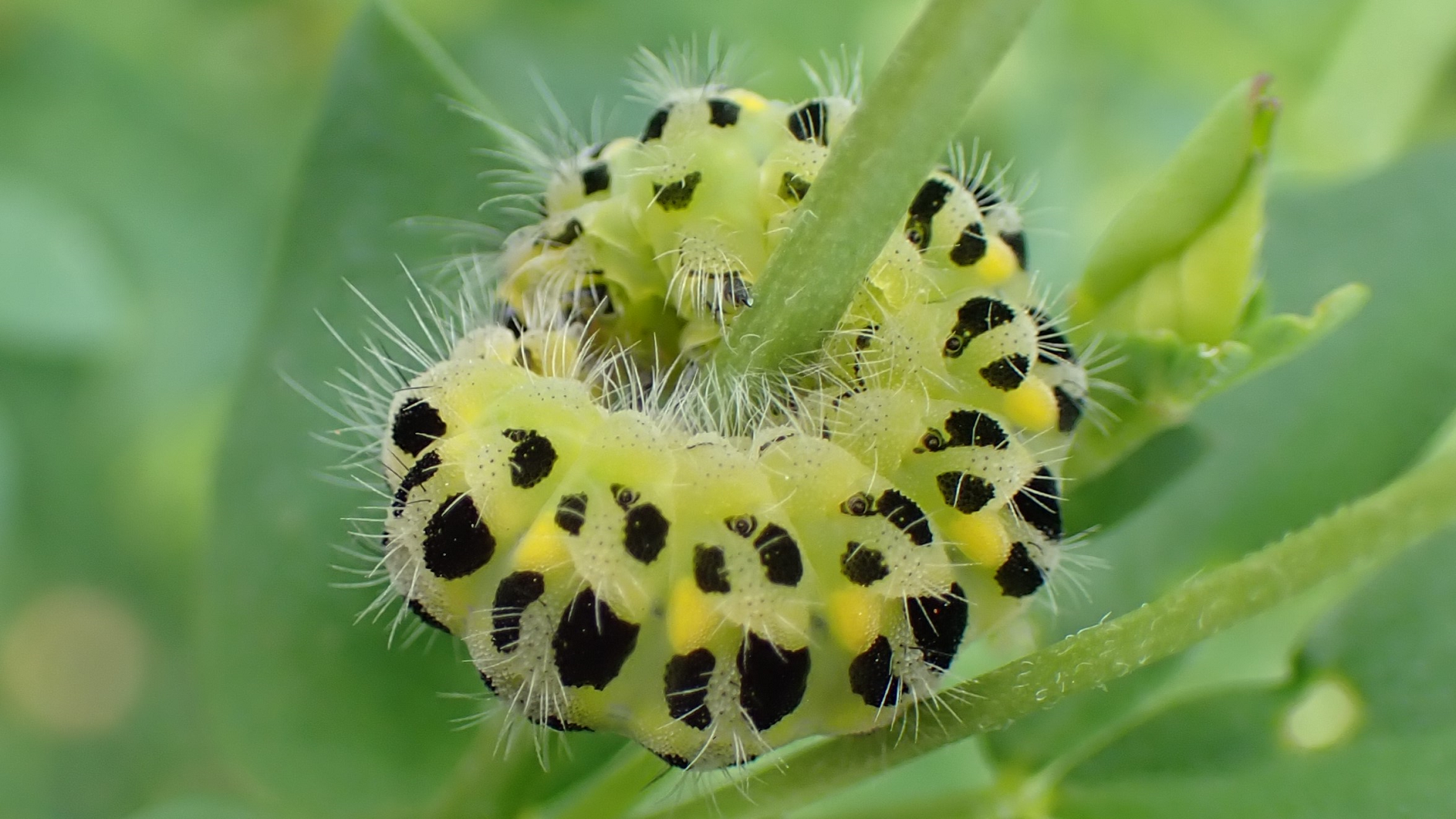
The yellow caterpillars of the Six-spot Burnet feed on Common Bird’s-foot Trefoil and occasionally on Greater Bird’s-foot Trefoil.
#
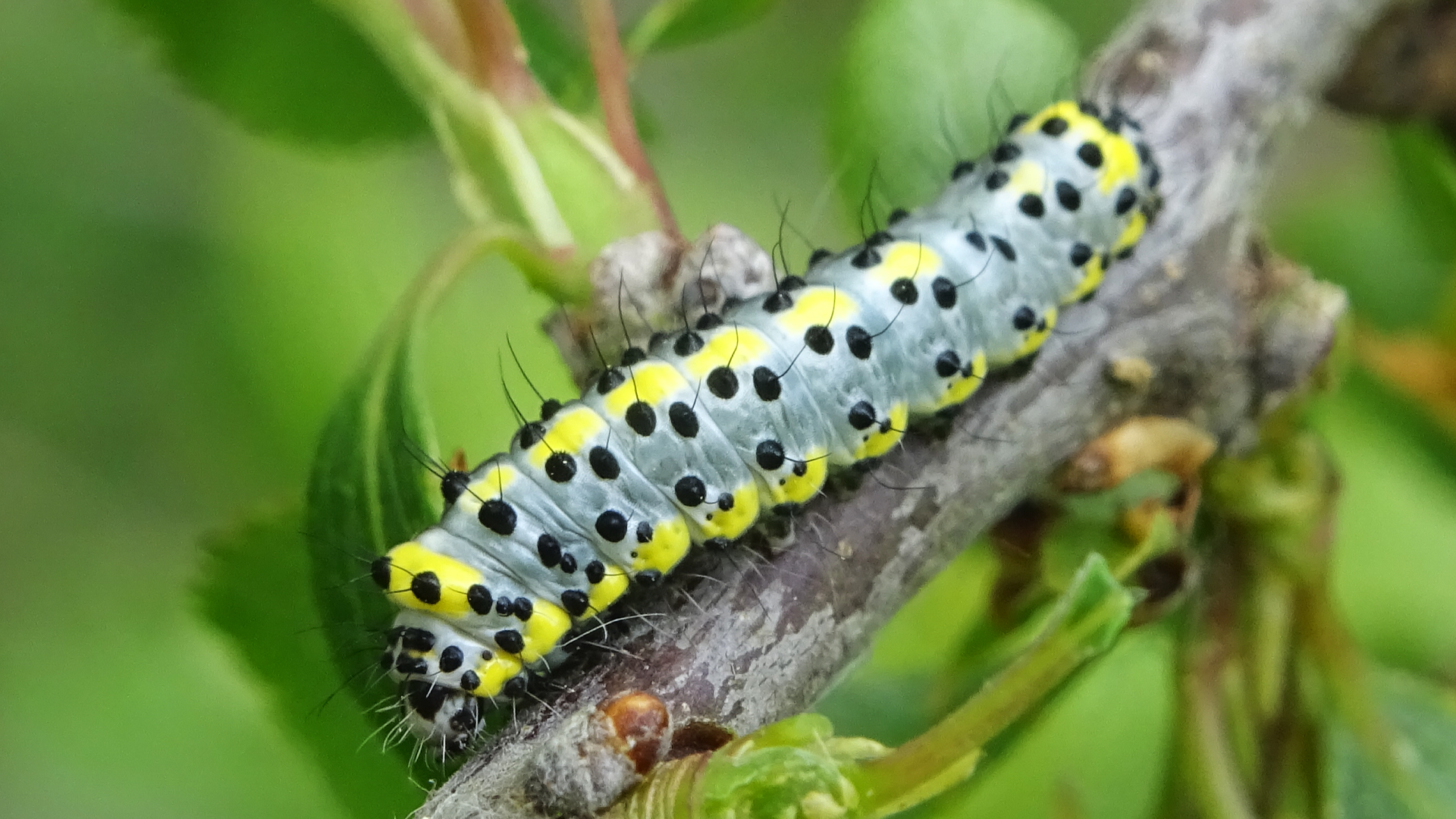
Figure of Eight 73.033
Diloba caeruleocephala
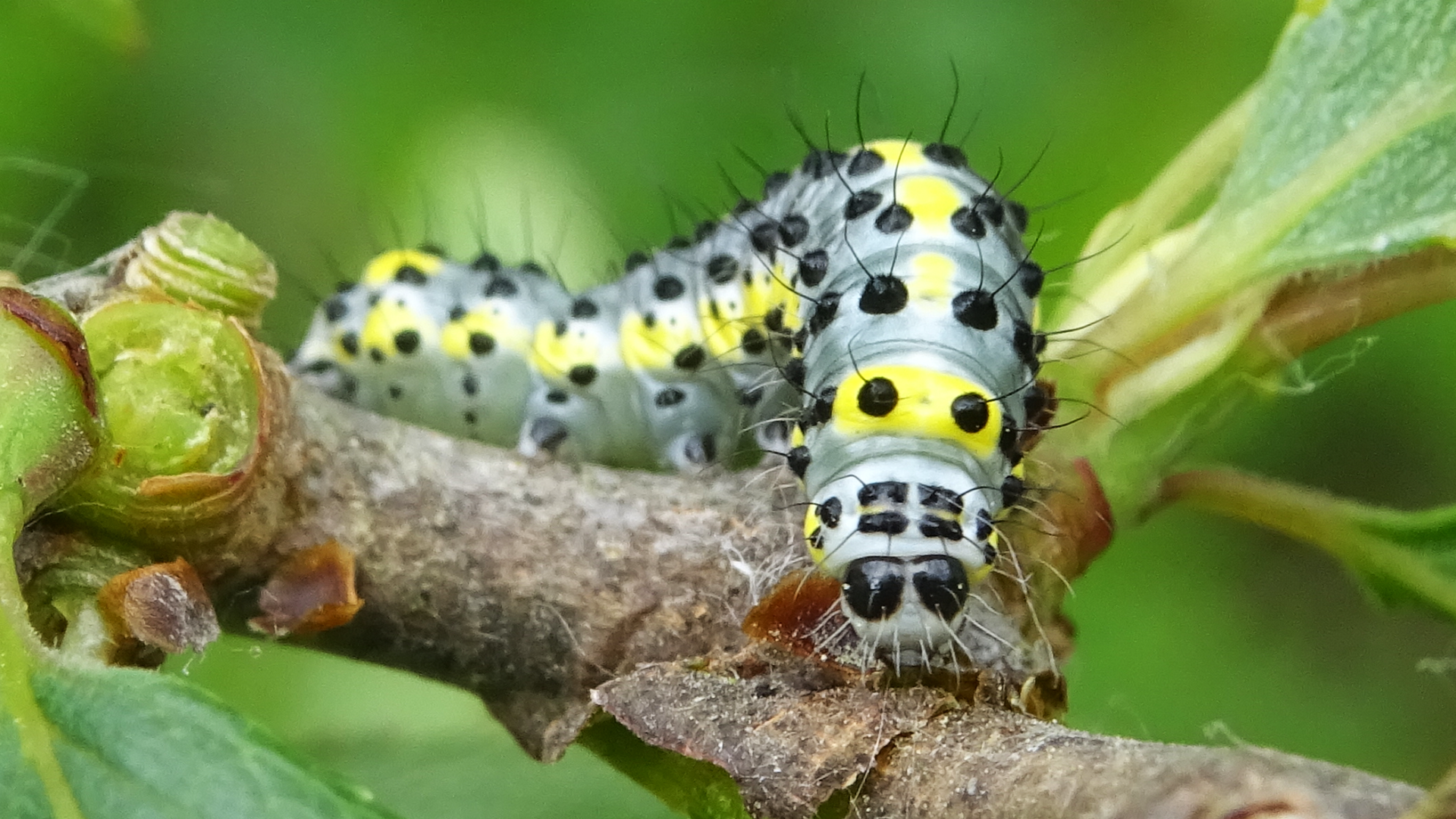
A colourful caterpillar of the Figure of Eight moth. Larval foodplants include blackthorn, hawthorn, plum, cherry and crab apple.
#
Puss Moth
Cerura vinula
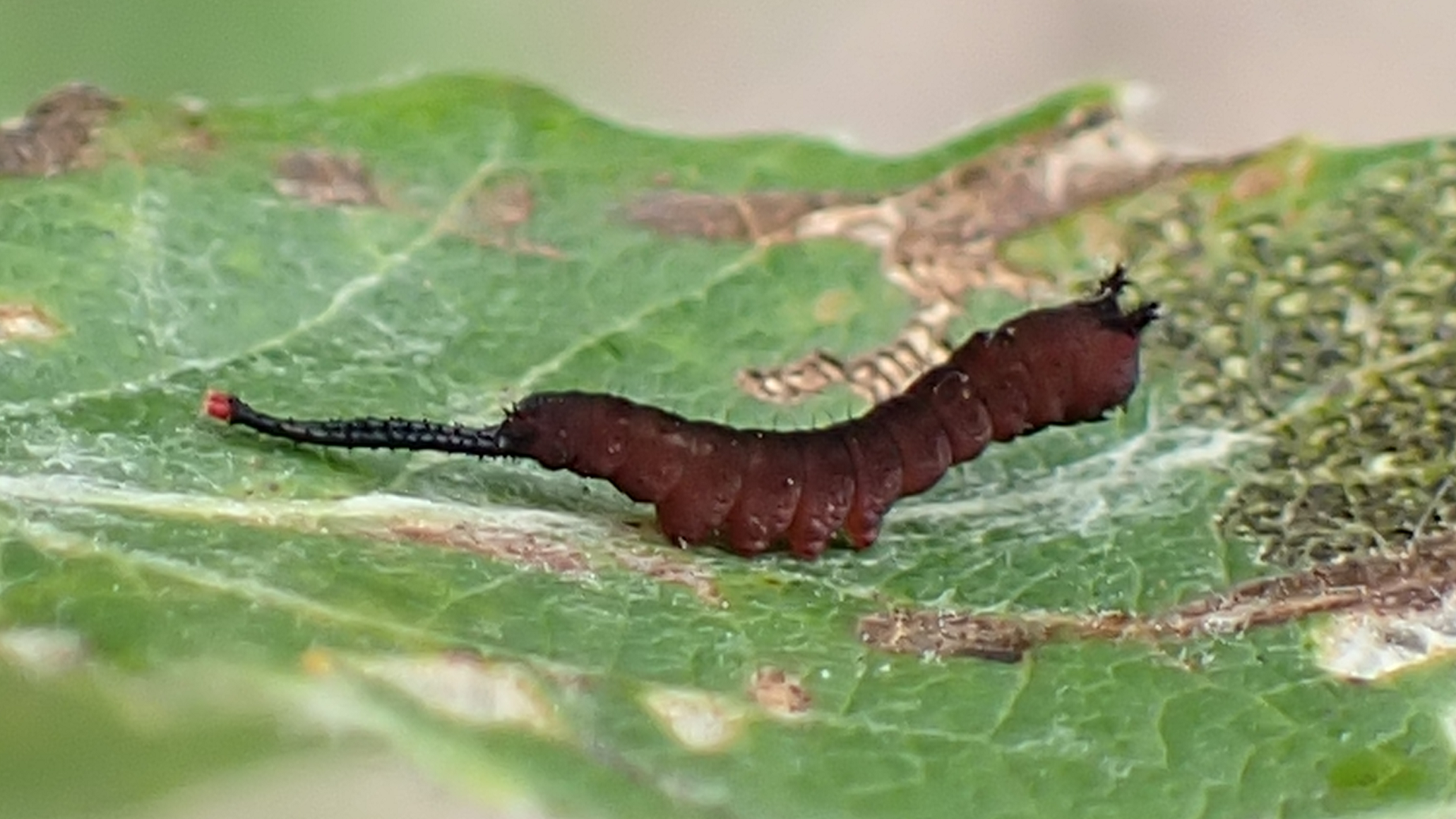
A newly hatched Puss Moth caterpillar under a centimetre long. The caterpillars, grow to 65mm long, becoming bright green with purple and white markings.
#
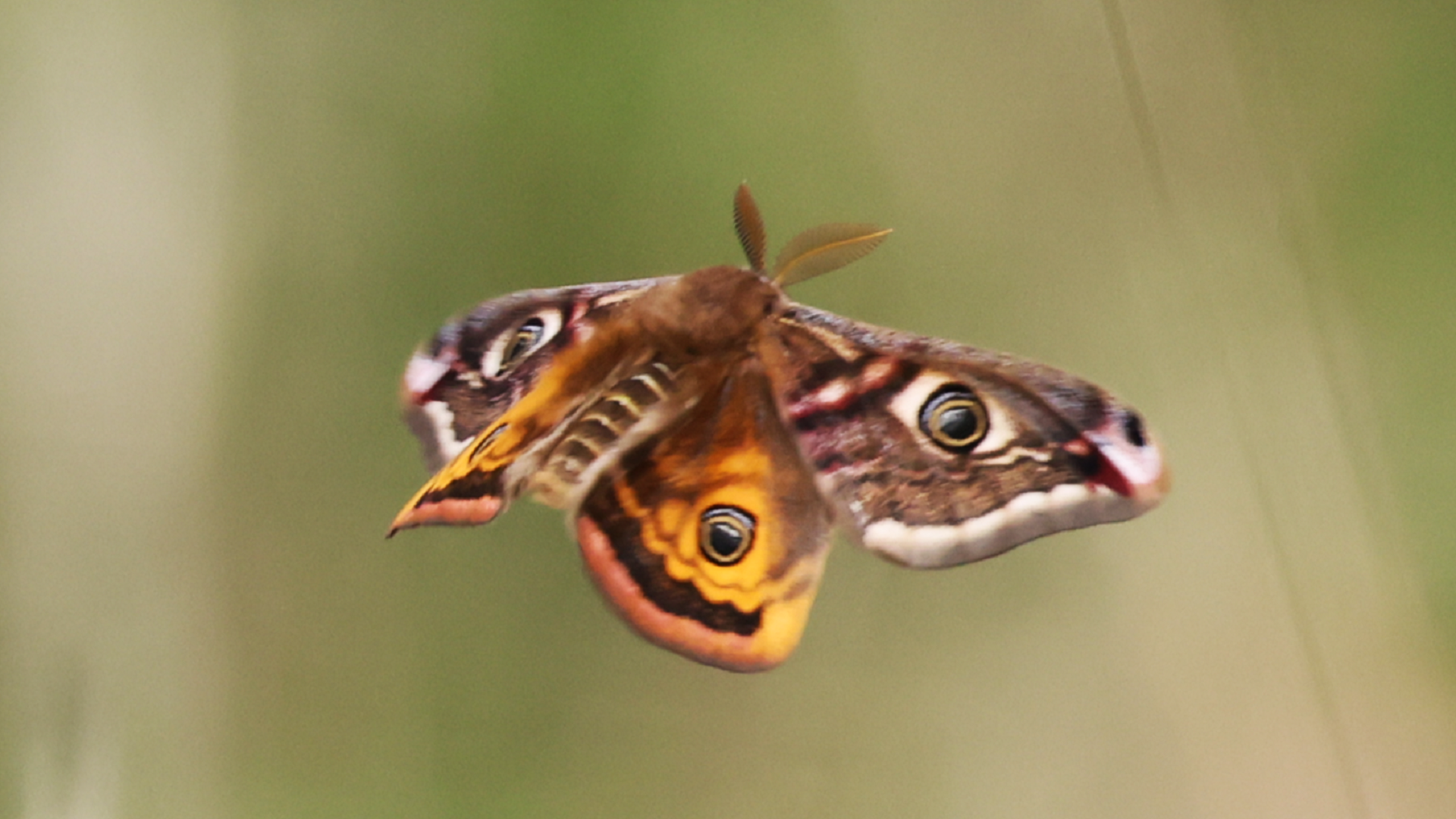
Emperor Moth
Saturnia pavonia
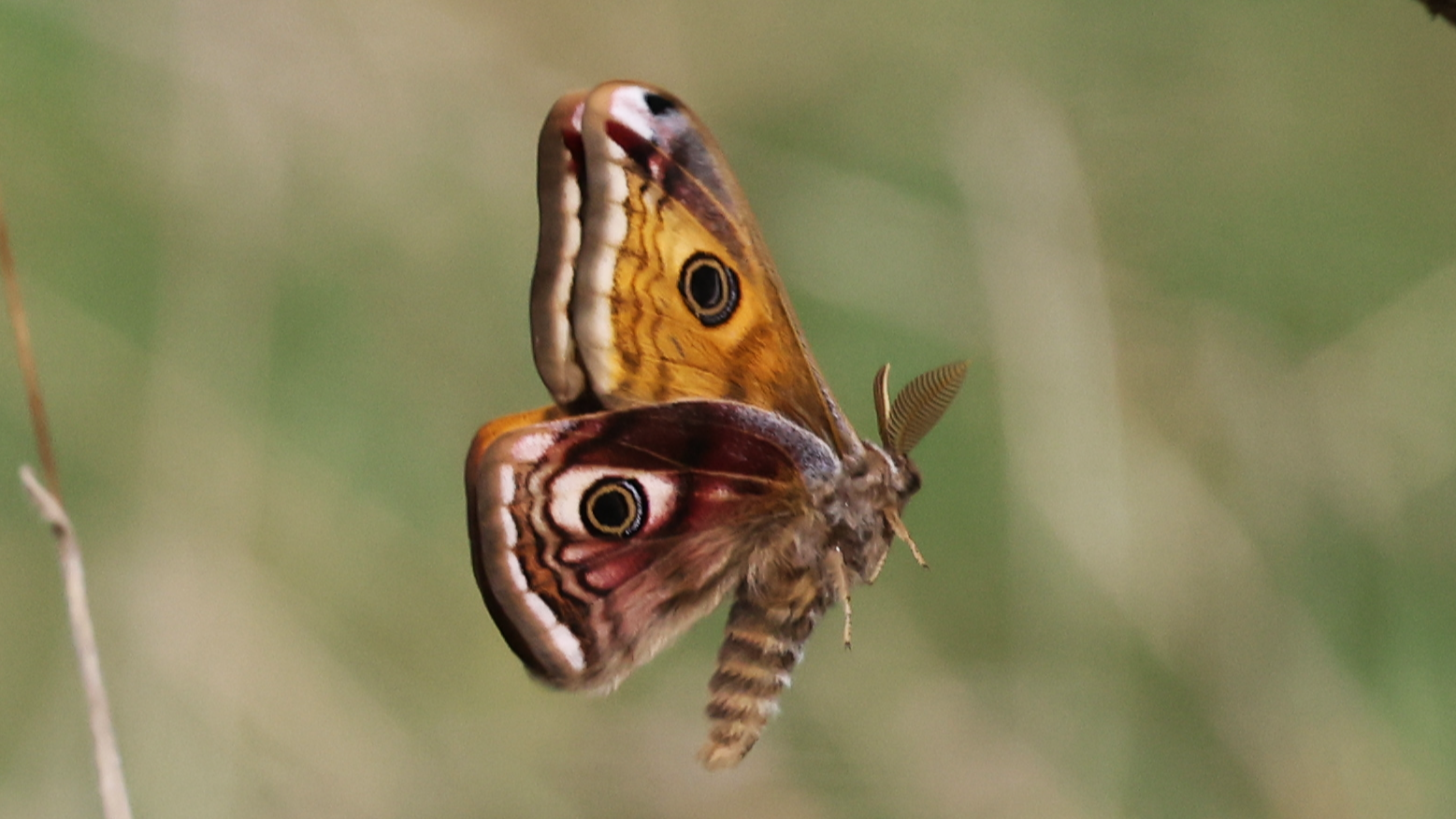
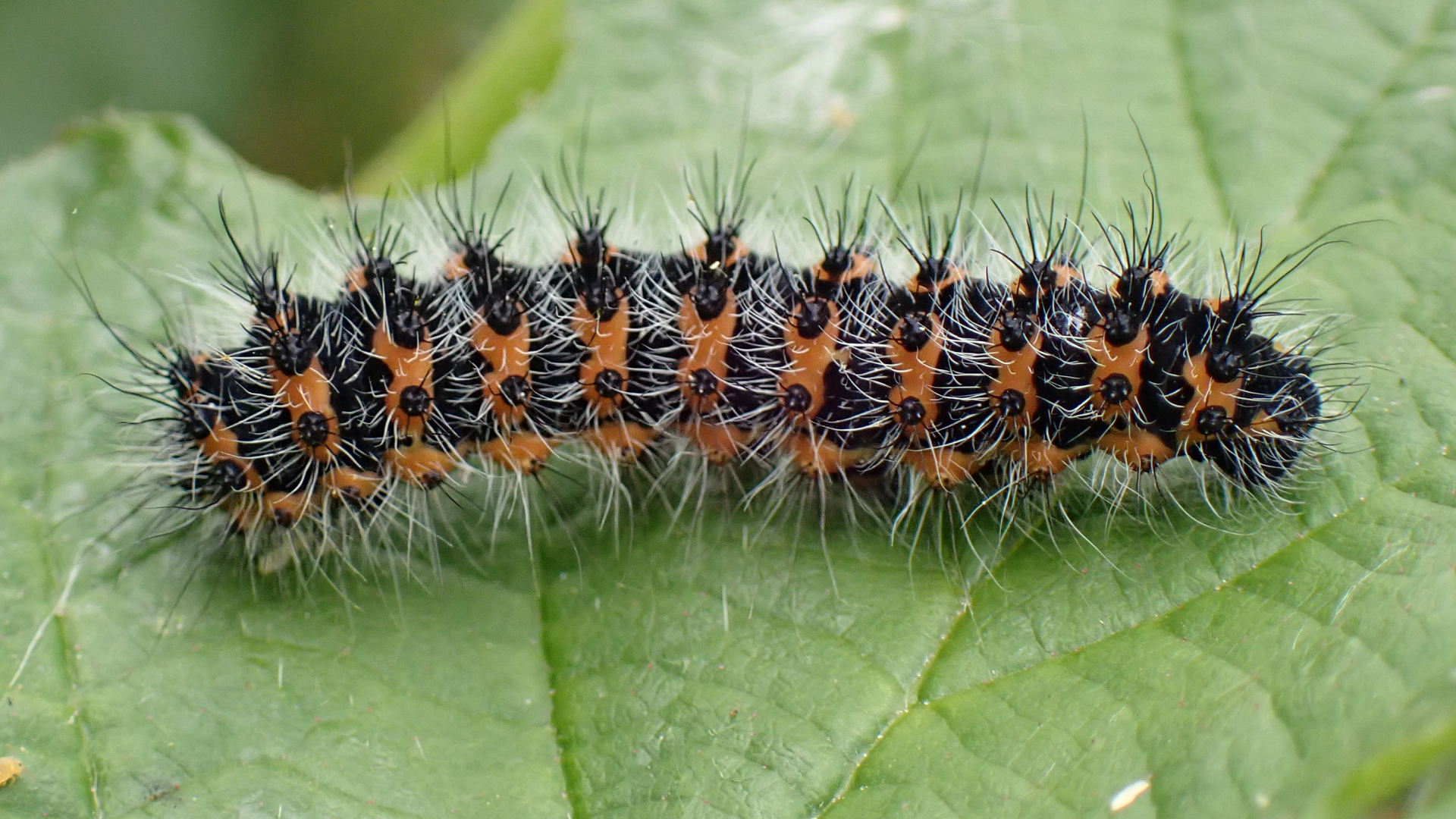
When it comes to beauty the Emperor Moth reigns supreme. It is a widespread moth that frequents hedgerows, woodland and heathland, but is rarely seen. Males have bright orange hindwings and fly during the day. The slightly larger females are greyer and fly at night. This species is on the wing during April and May. Initially orange and black, when larvae of the Emperor Moth are fully grown they turn green and black with yellow spots.
#
Large Red Damselfly
Pyrrhosoma nymphula
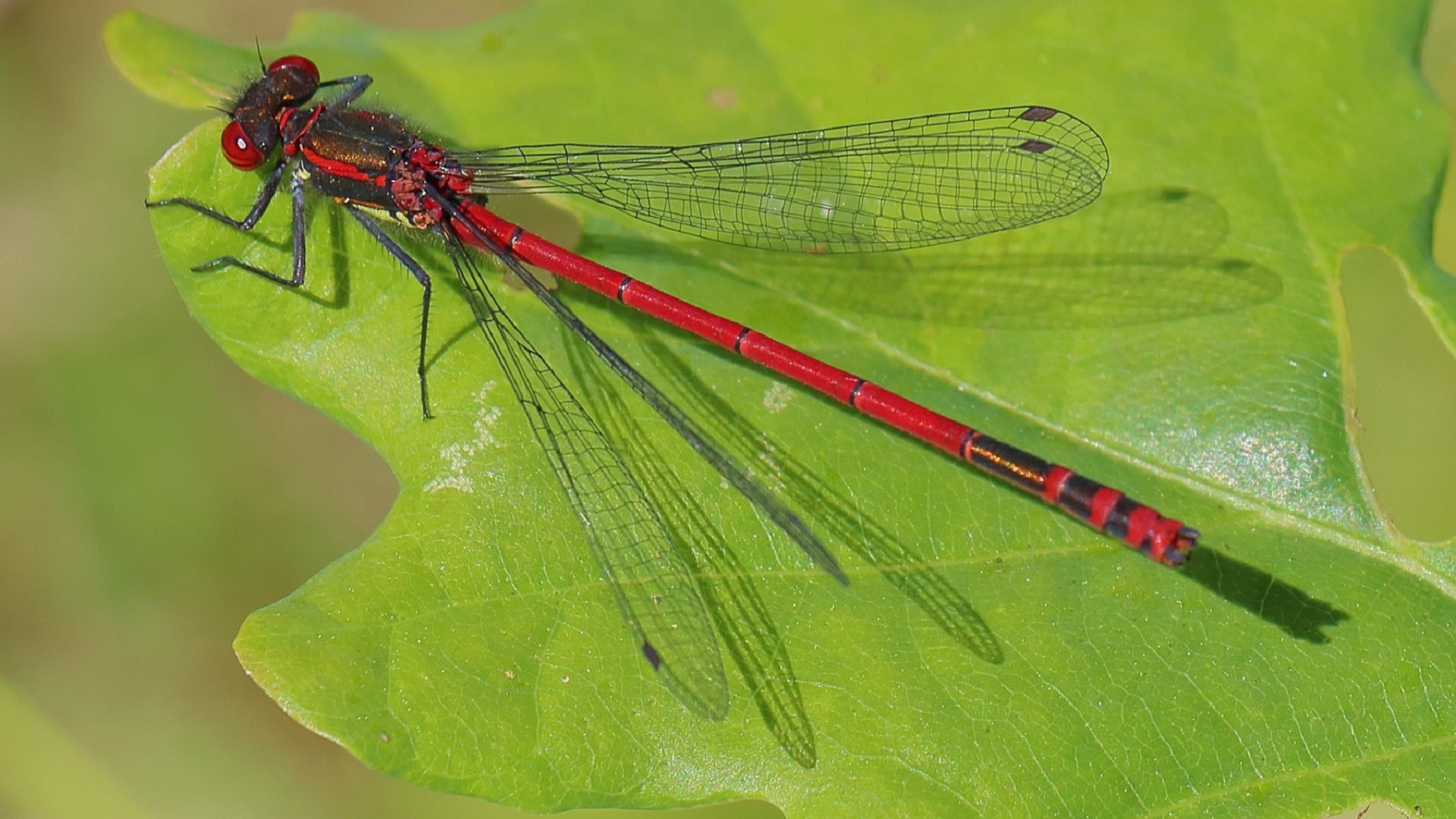
Generally one of the first damselfly species to emerge in spring usually near wetland habitats. Black legs rule this out from being the scarcer Small Red damselfly.
#
Four-spotted Chaser
Libellula quadrimaculata
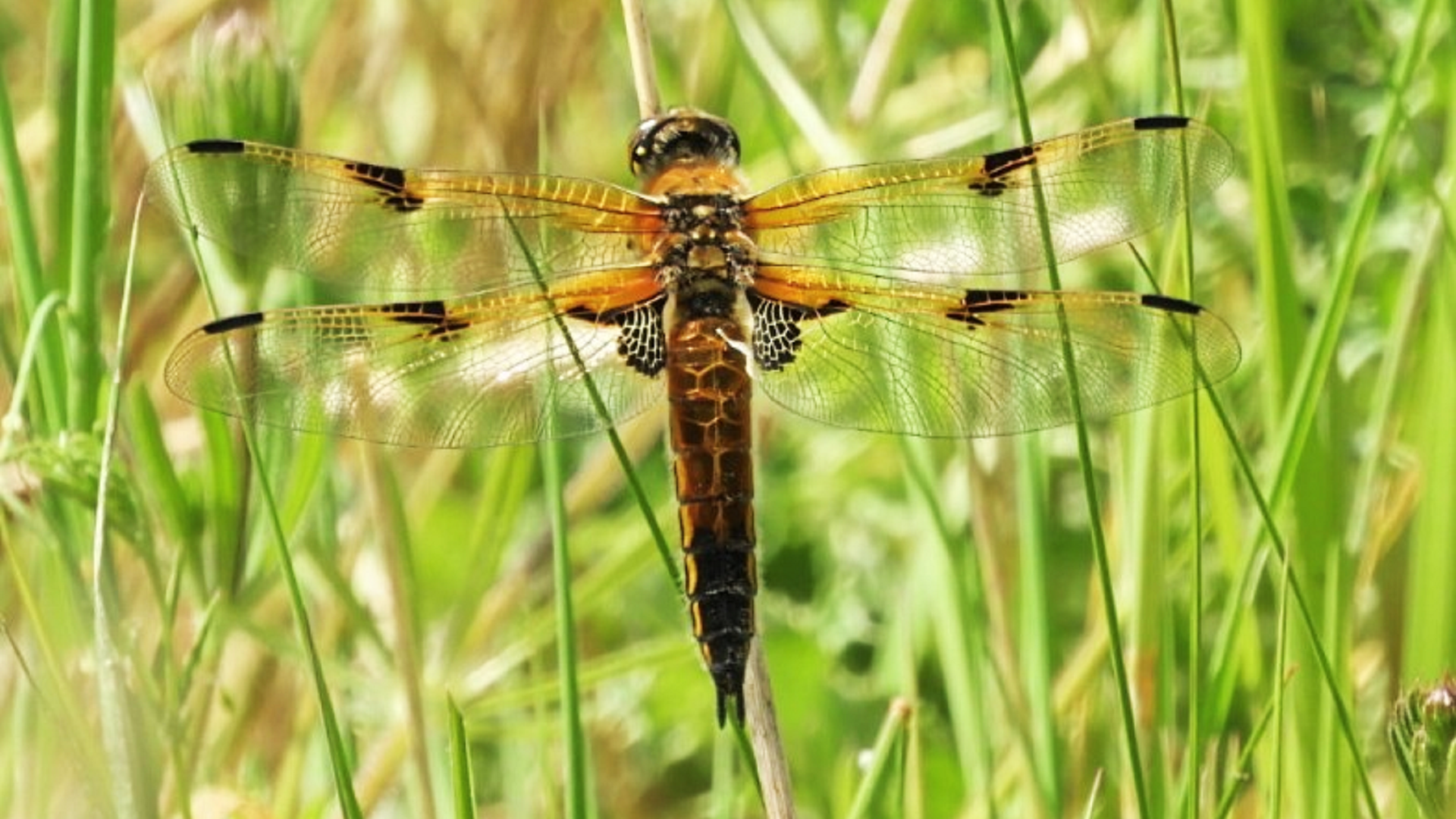
The Four-spotted Chaser is a dragonfly that flies from May until September often found hawking for insect-prey around heathland, lakes, ponds and woods. It gets its name from the two dark spots at the front edge of each wing. Males and females are golden-brown, darkening towards the tip of the body. There are yellow spots along the sides. Debi photographed this at Fairlop Waters.
#
Golden-bloomed Grey Longhorn
Agapanthia villosoviridescens
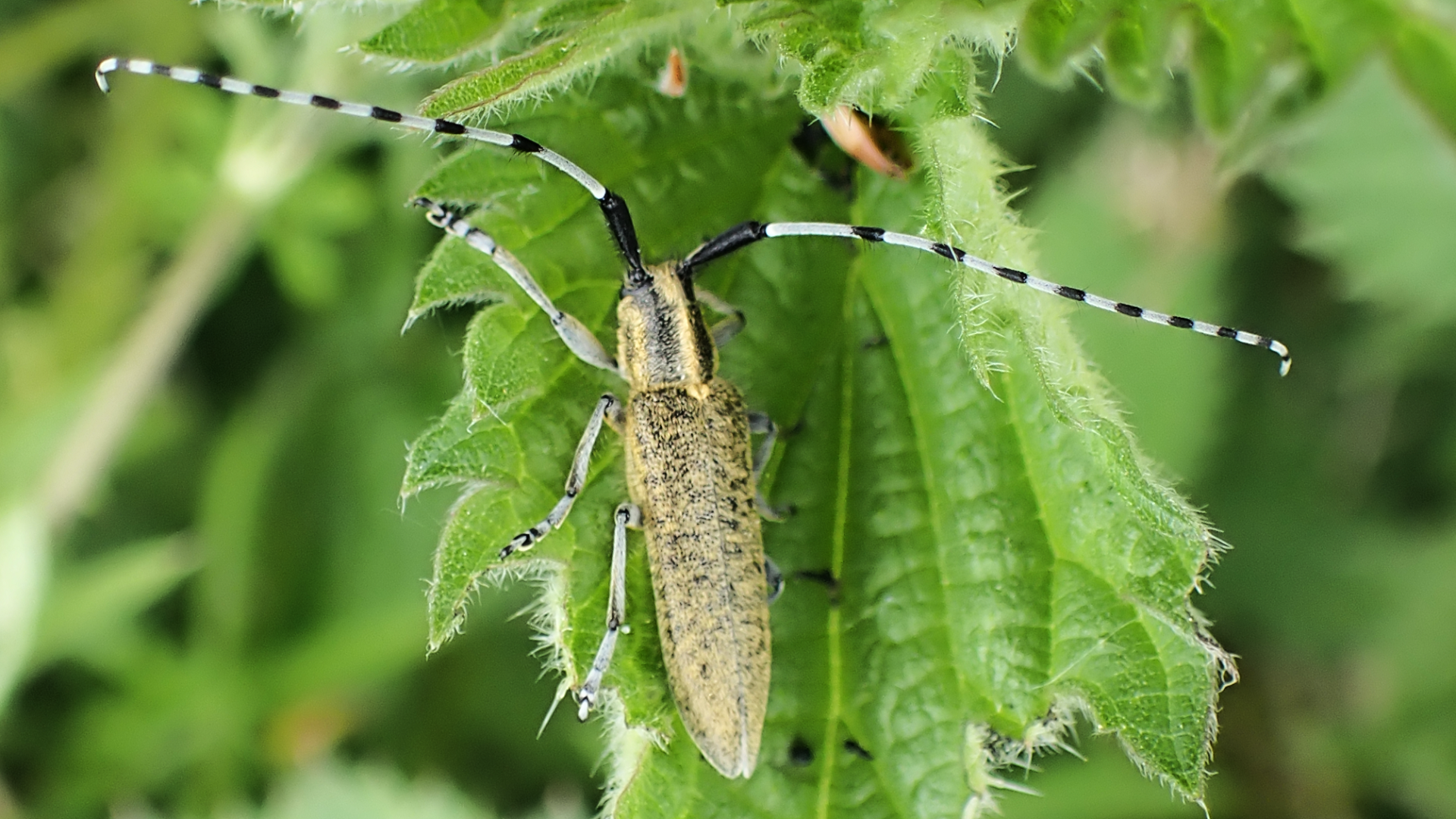
A bristly beetle (18-20mm) with banded antennae and golden elytra and thorax. Typically seen in meadows and hedgerows where nettles, hogweed and cow parsley grow during May and June.
#
Red-headed Cardinal
Pyrochroa serraticornis
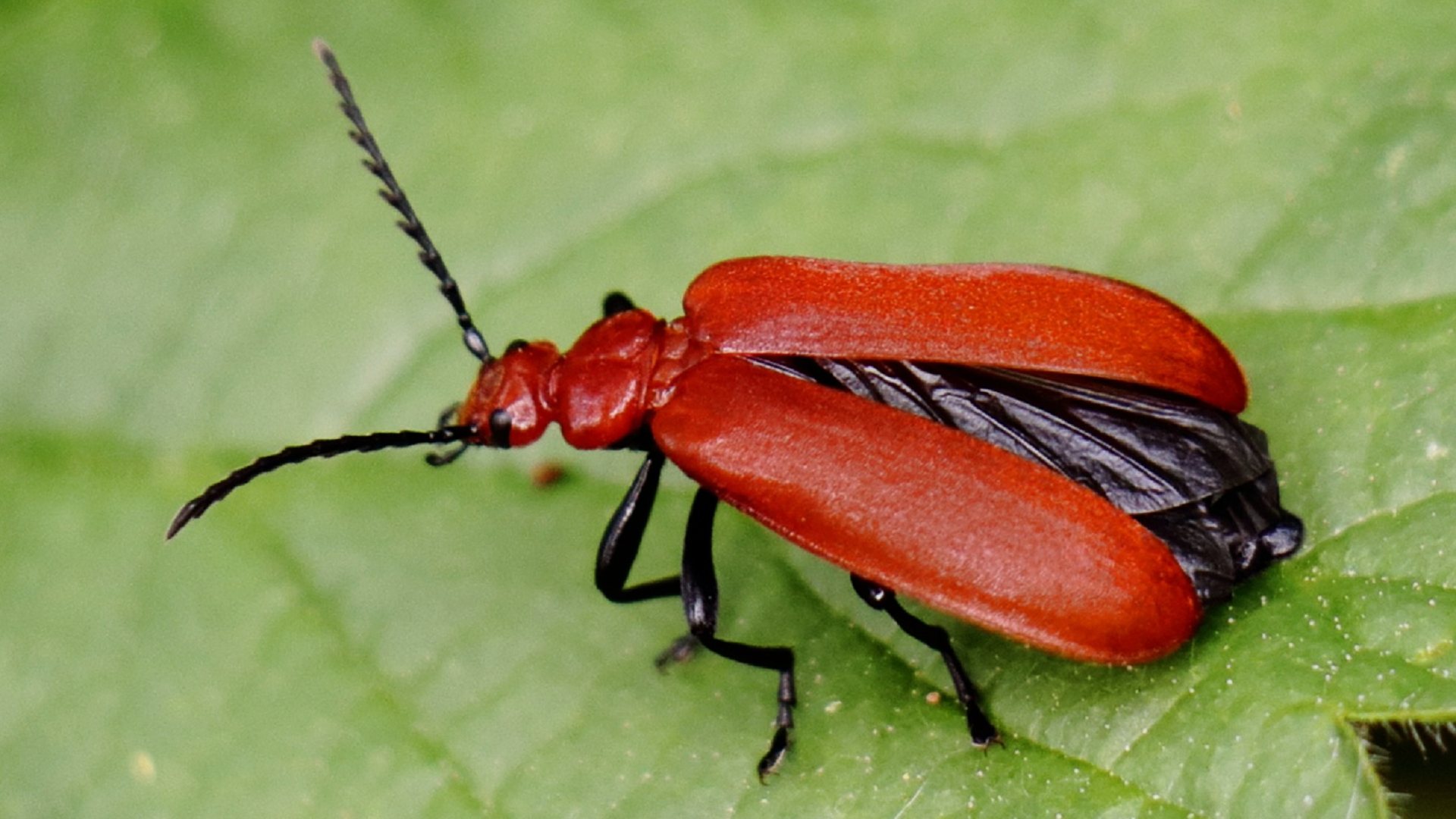
Red-headed Cardinal is a predatory beetle that feeds on insects. The second part of the scientific name is a reference to the serrated antennae.
#
Apple Fruit Rhynchites
Tatianaerhynchites aequatus
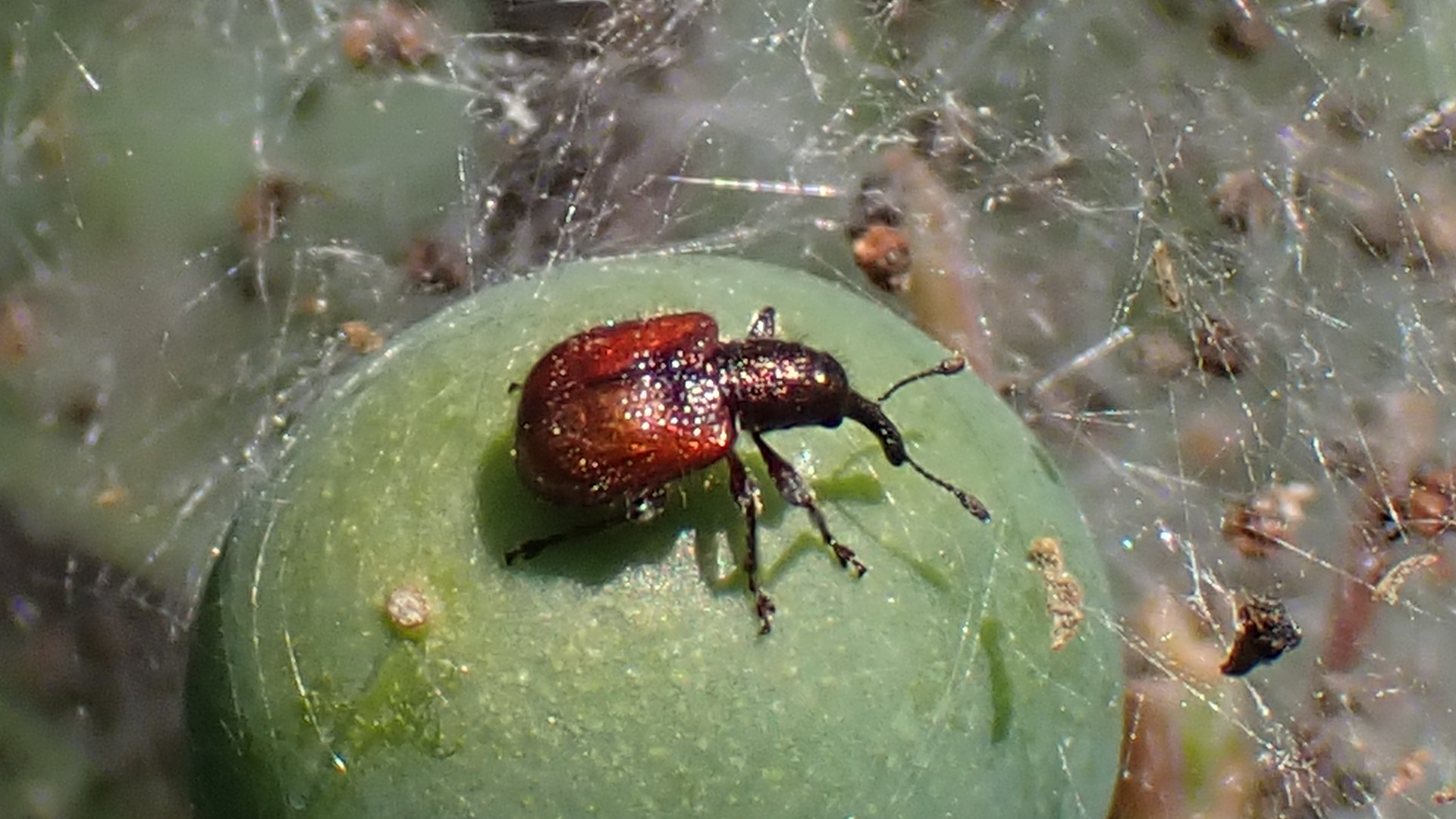
This hairy weevil is associated with blackthorn, hawthorn, apple, quince, almond, pear and rowan. The reddish-brown wing cases have a central dark line and are studded with rows of holes. This specimen was sitting on a sloe.
#
Green Dock Beetle
Gastrophysa viridula
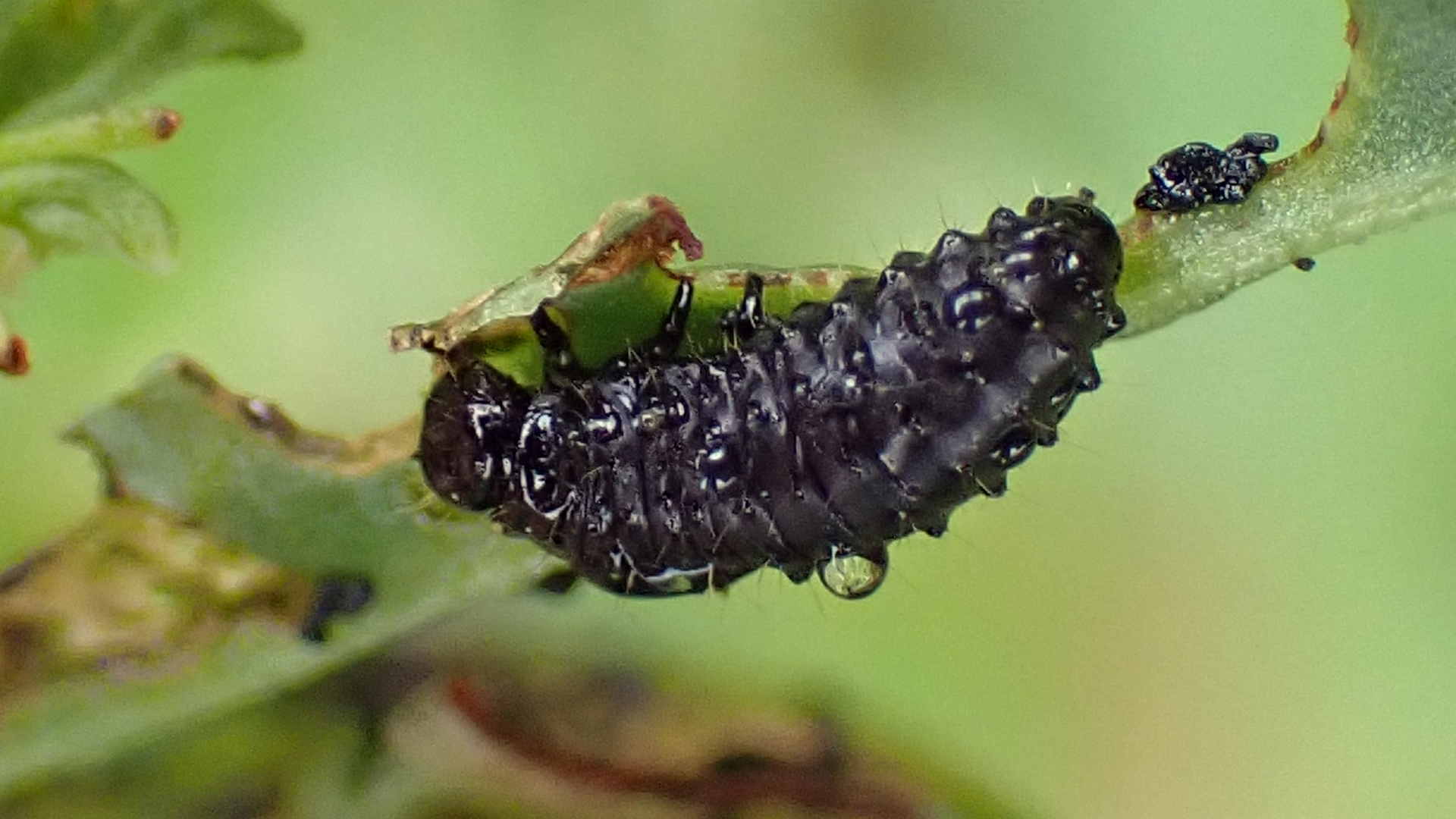
Black nymphs of the Green Dock Beetle are found on the larval foodplant dock in May.
Vernal Shieldbug
Peribalus strictus

This greenish-brown shieldbug (9.5-11mm) is covered in dark punctures. The antennae are distinctively banded with the final two segments mostly black. There is a pale tip to the scutellum, a banded connexivum and a rather concave edge to the pronotum behind the eyes. Rarely recorded with most historic sightings likely to be migrants. This is the first known record for Hainault Forest.
#
Woundwort Shieldbug
Eysarcoris venustissimus
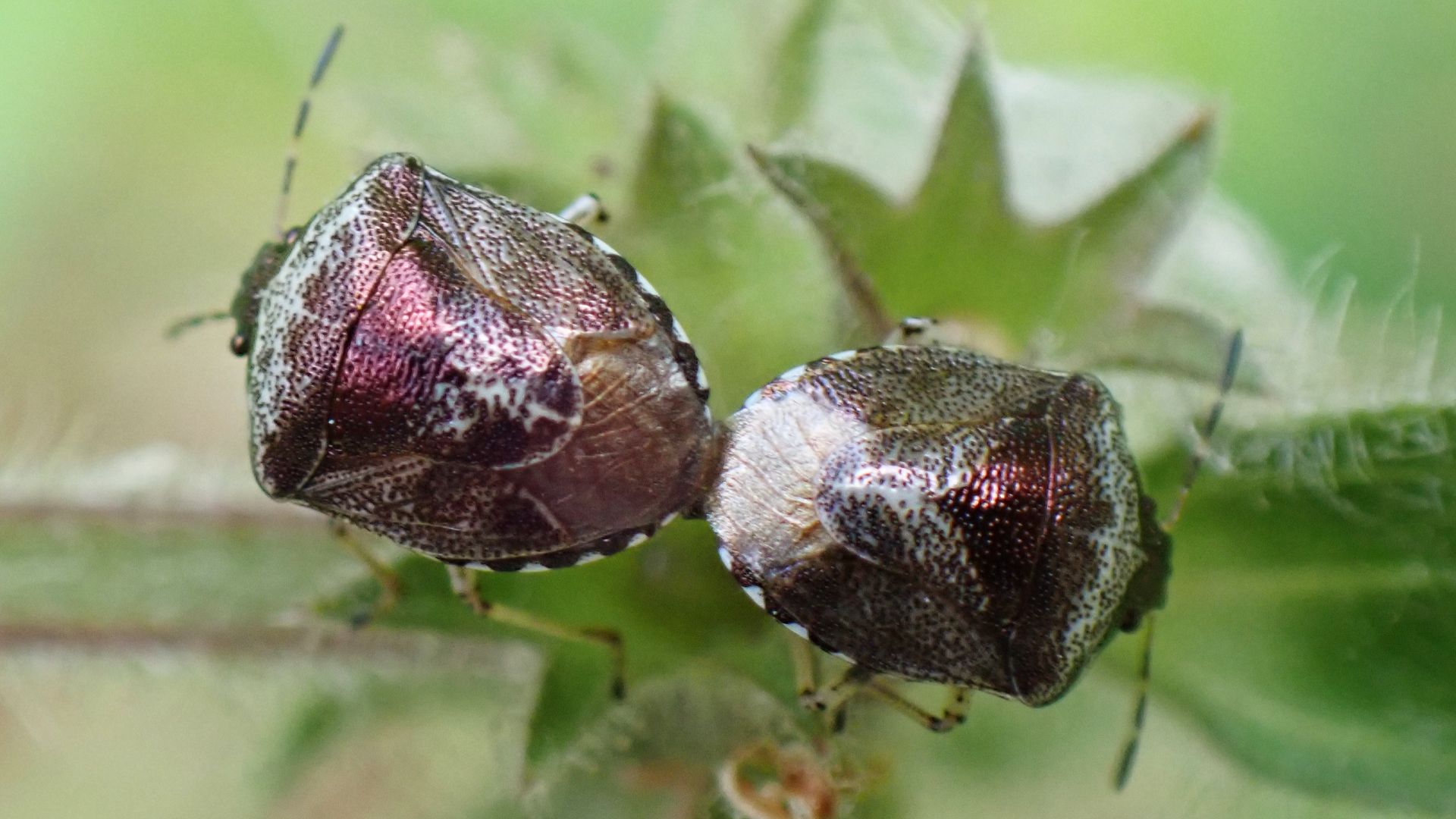
The small greyish-bronze shieldbug (5-7mm) feeds mainly on hedge woundwort and occasionally on other plants in the same family. The head and the front of both the pronotum and scutellum are copper coloured, while the connexivum is marked with black and white. During the 19th century this species was considered rare but is now becoming more widespread.
#
Parent Bug
Elasmucha grisea
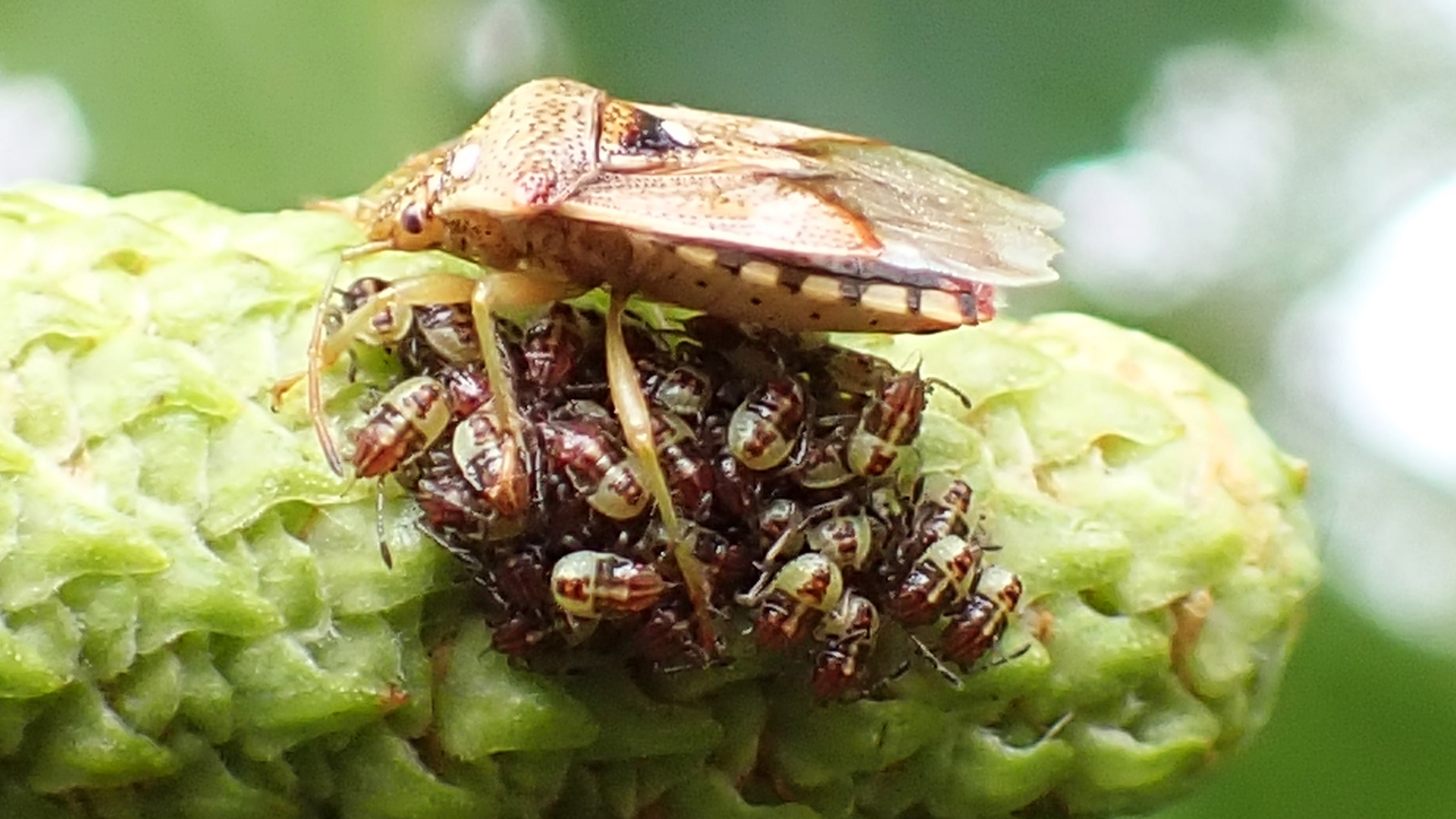
The Parent Bug is a loving shieldbug that cares and protects its eggs and young. Females have glands that discharge a foul smelling secretion to deter predators. The larvae disband at the end of the third instar at which point the female leaves as they are able to fend for themselves.
#
Gorse Shieldbug
Piezodorus lituratus
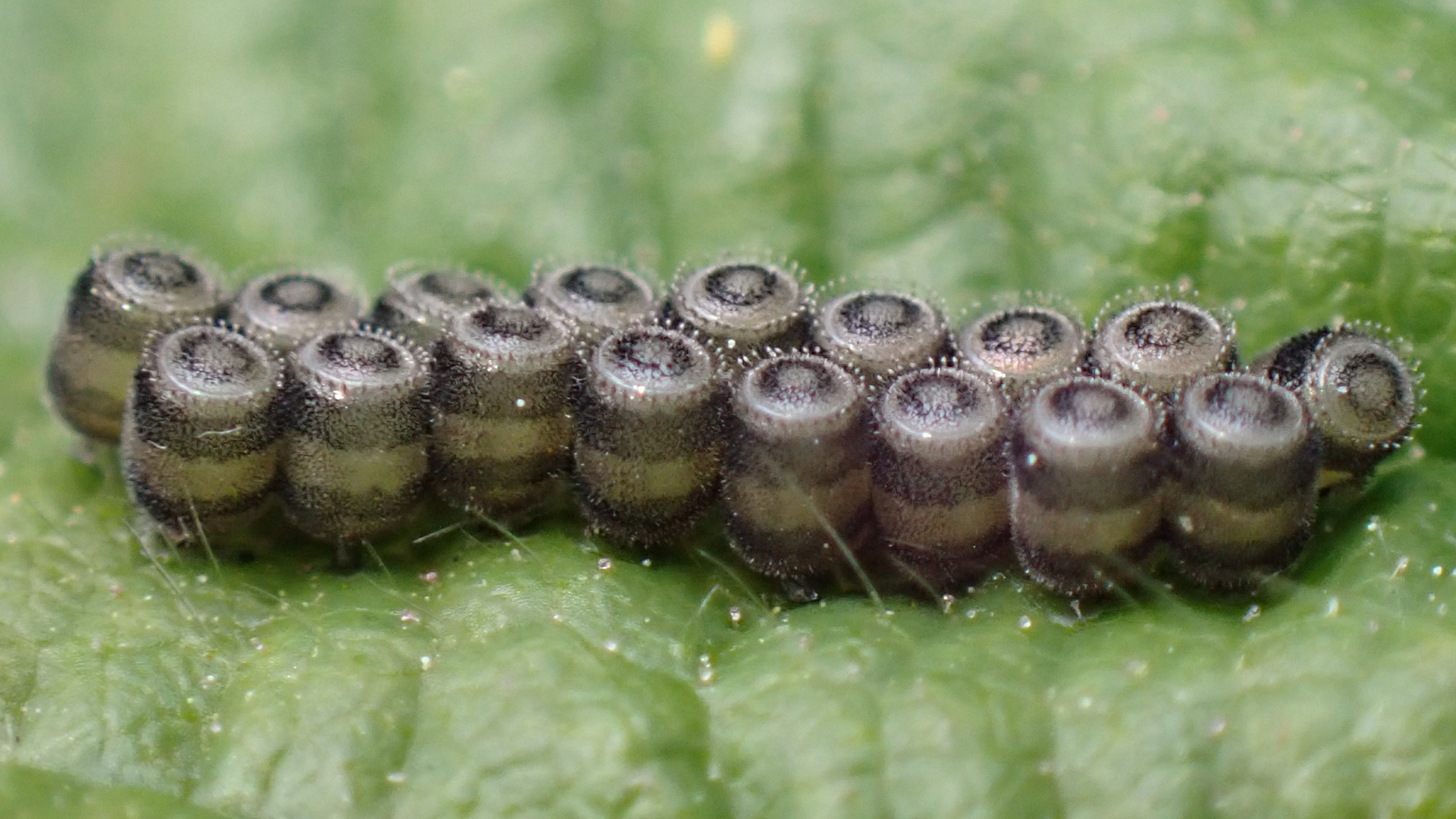
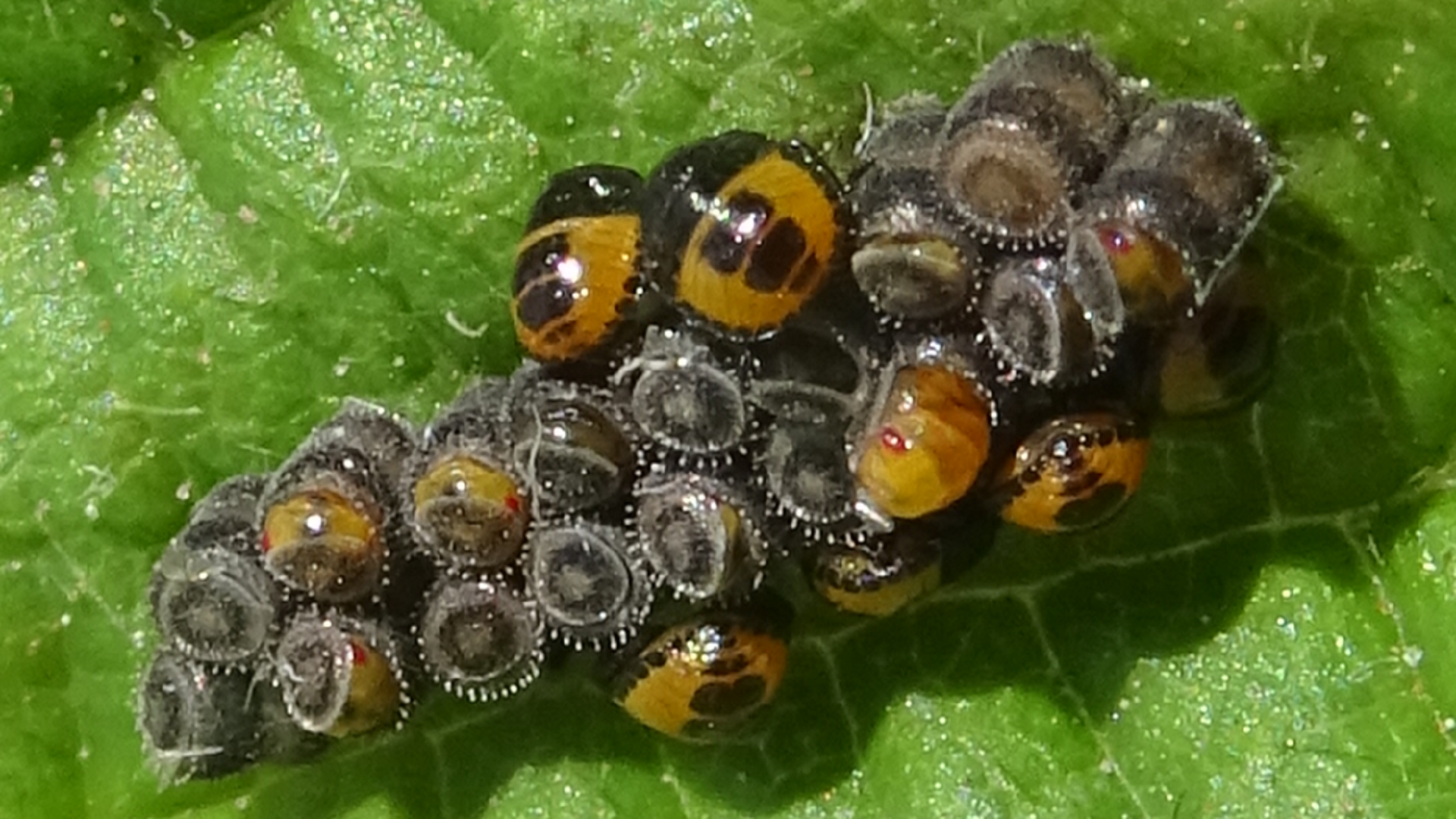
Seventeen barrel-shaped Gorse Shieldbug eggs. This line of eggs was roughly 8mm long. When the eggs hatched orange instars emerged. They will go through several more stages before becoming adults. Foodplants they use include gorse, broom, and Dyer's greenweed.
#
Green Shieldbug
Palomena prasina
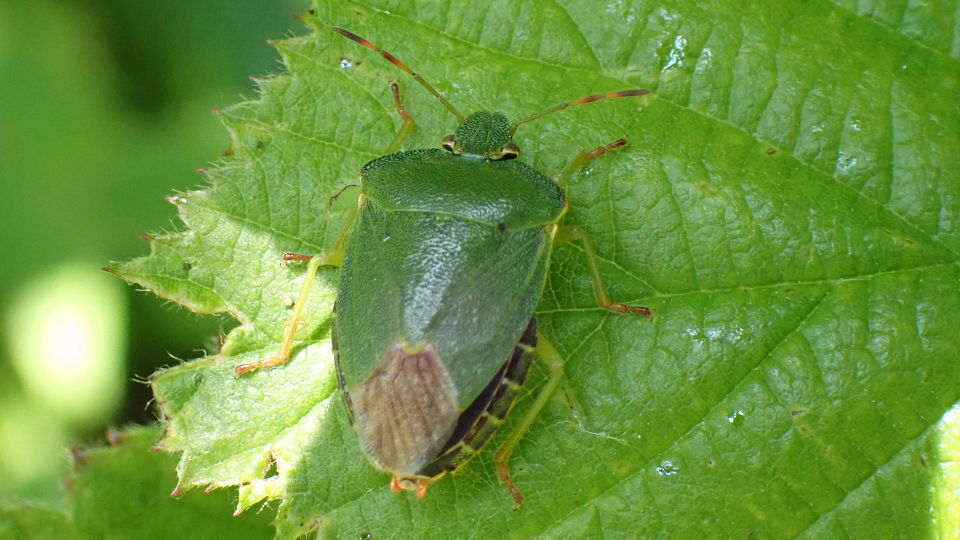
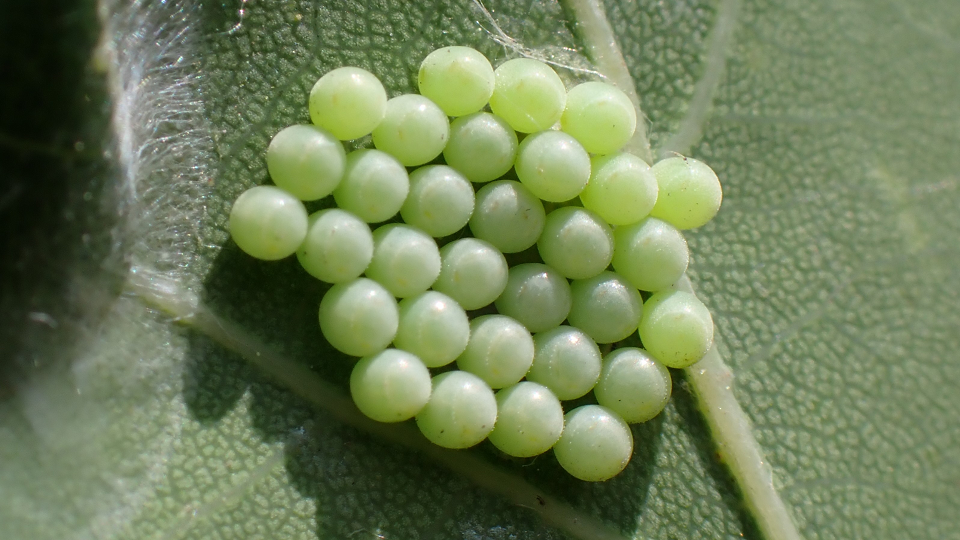
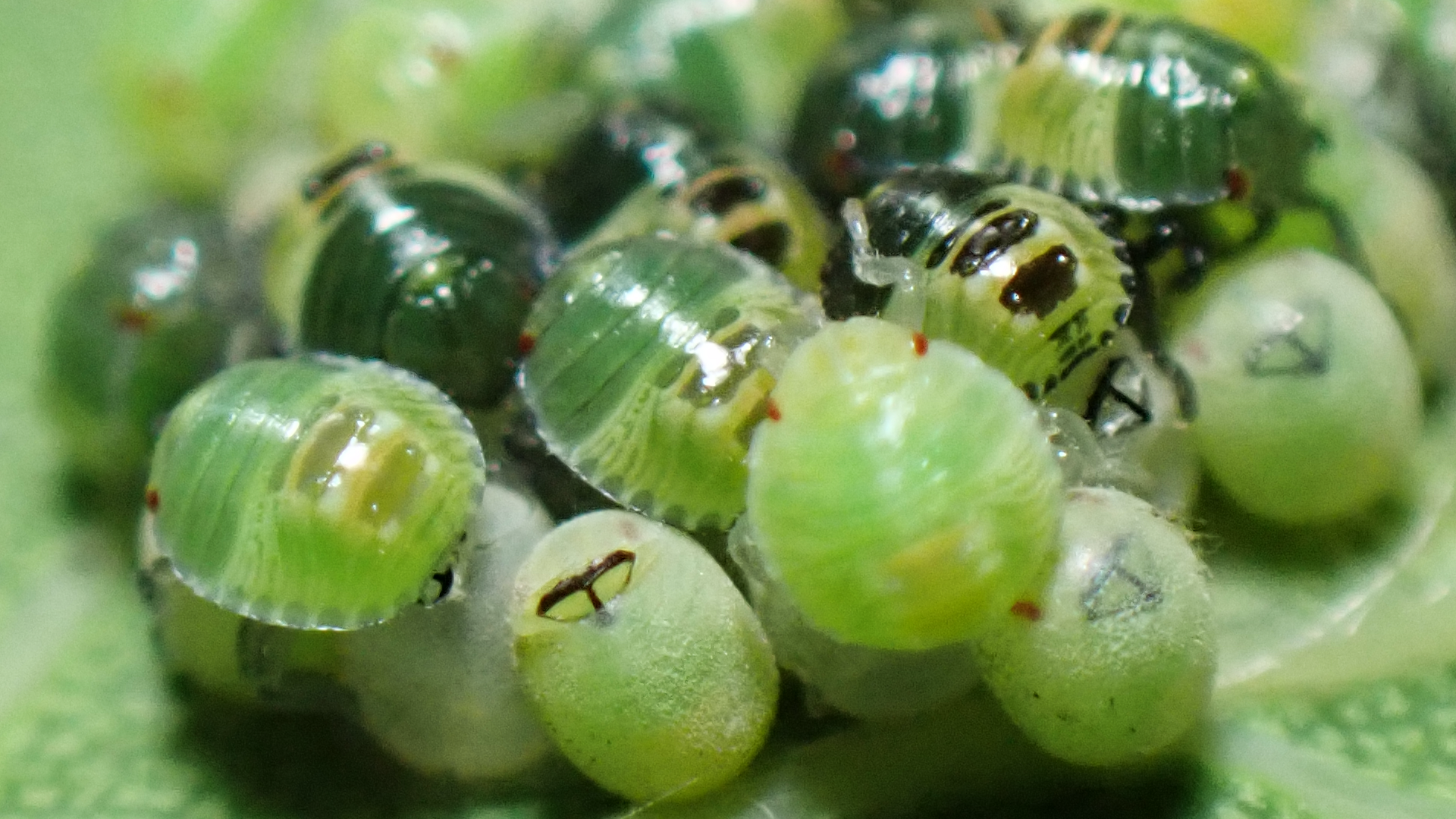
Green Shieldbugs feed on a wide range of plants. Adults overwinter and emerge in spring to mate. Females lay their eggs on the undersides of leaves. Unlike the Parent Bug many other types of shieldbug lay and abandon their eggs. Eggs of the Green Shieldbug blend in with the colour of the vegetation so are fairly well camouflaged. The instars are light-green when first hatching out. They darken and within an hour or two there is a pattern on the back.
#
Hairy Shieldbug
Dolycoris baccarum
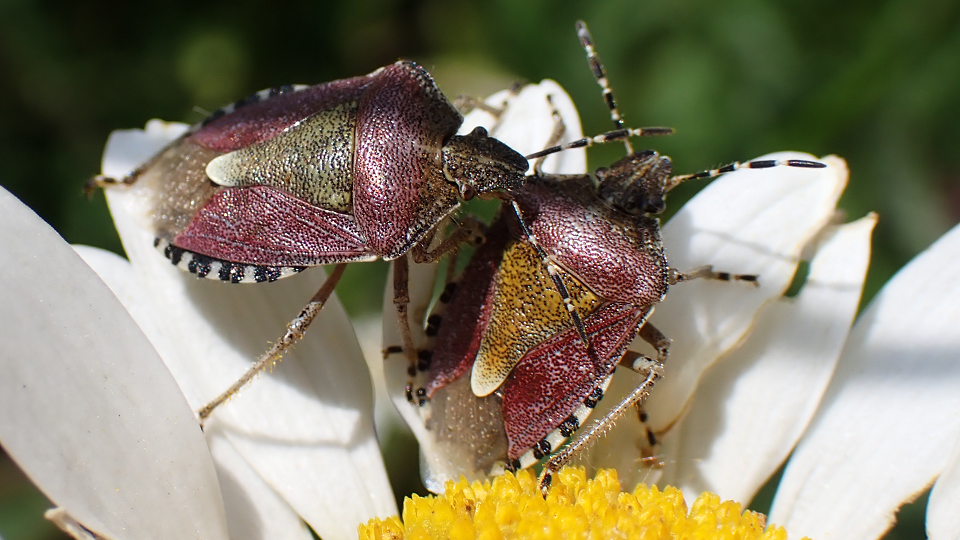
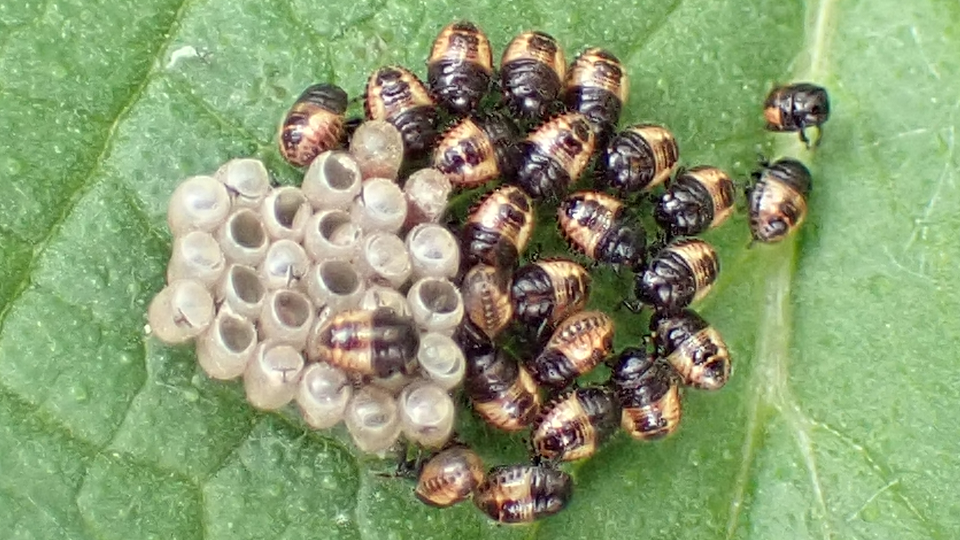
The Hairy Shieldbug aka Sloe Bug is covered in long hairs. It is found throughout the year along woodland rides and on hedgerows. This species overwinters as an adult and emerges during spring to mate. Larval foodplants include Blackthorn and other members of the Roasaceae family. When a shieldbug nymph emerges from the egg the top pops open like the lid on a tin of beans.
#
Shieldbug Eggs
(Parasitized)
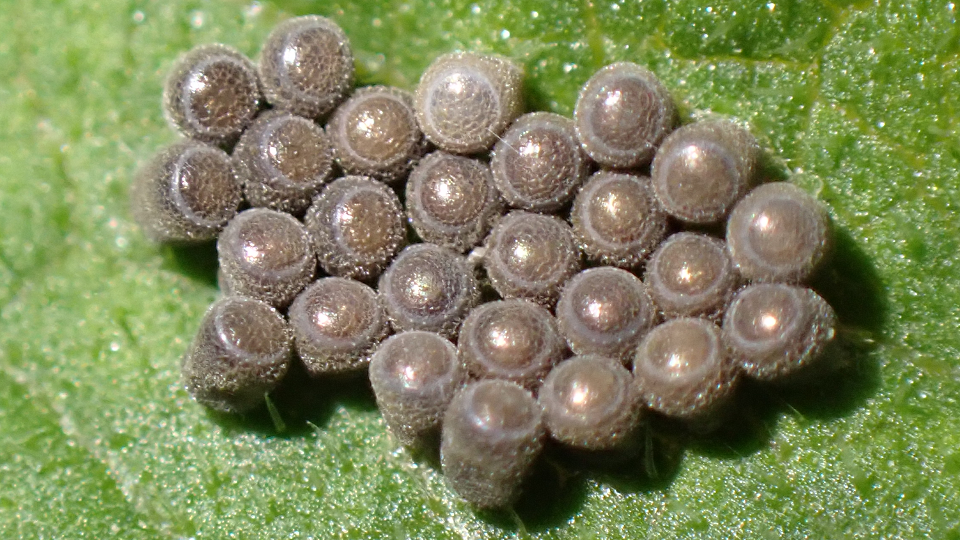
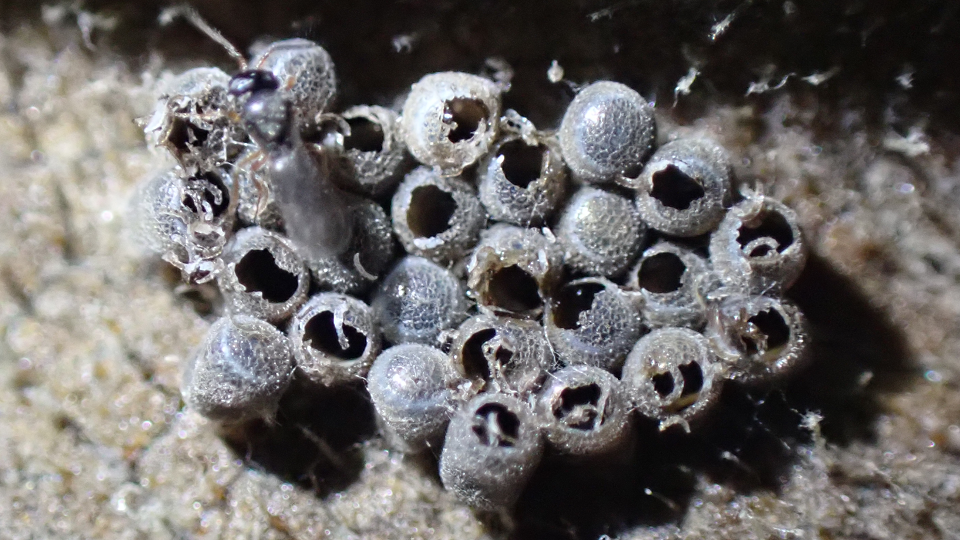
Not all shieldbug eggs hatch successfully. These eggs may look normal but a tiny wasp has laid an egg in each egg. When a new wasp emerges from a parasitized egg (see below) it chews its way out instead of popping open the top.
#
Tortoise Shieldbug
Eurygaster testudinaria
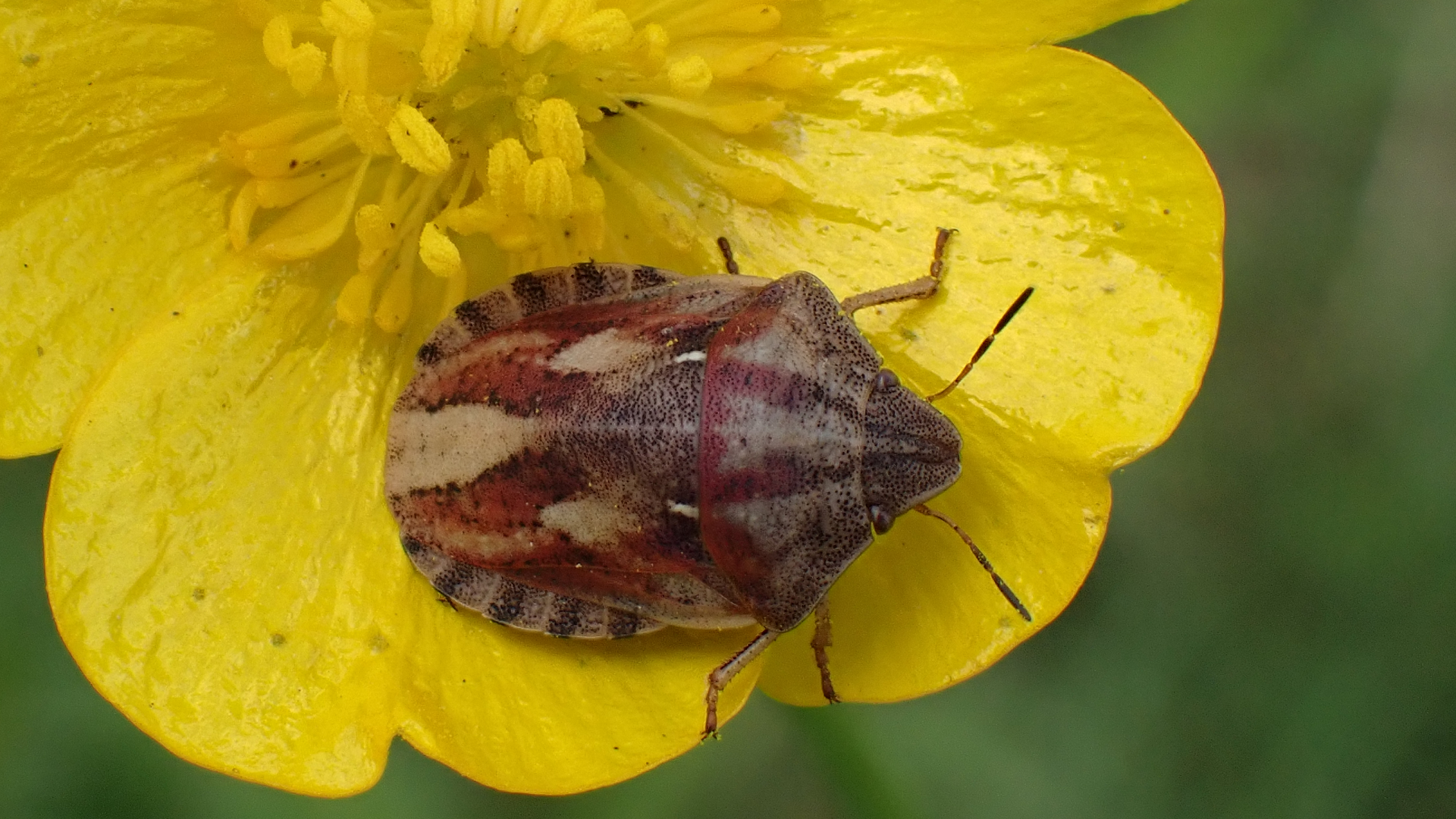
Markings and ground colour vary on the Tortoise Shieldbug. There is a noticeable central depression at the front of the head. The nymphs feed on various grasses. Length 9-11 mm.
#
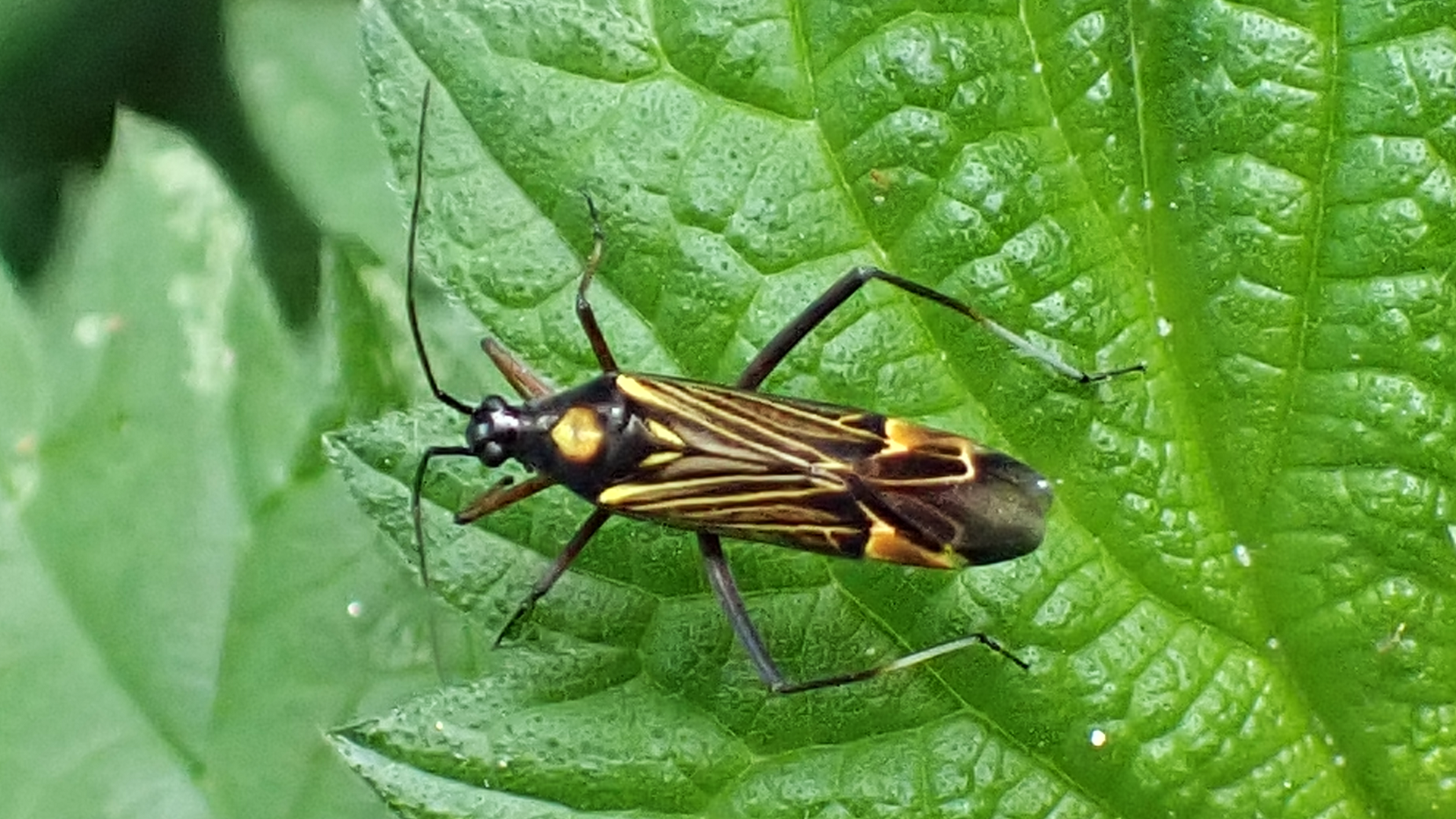
Fine Streaked Bugkin
Miris striatus
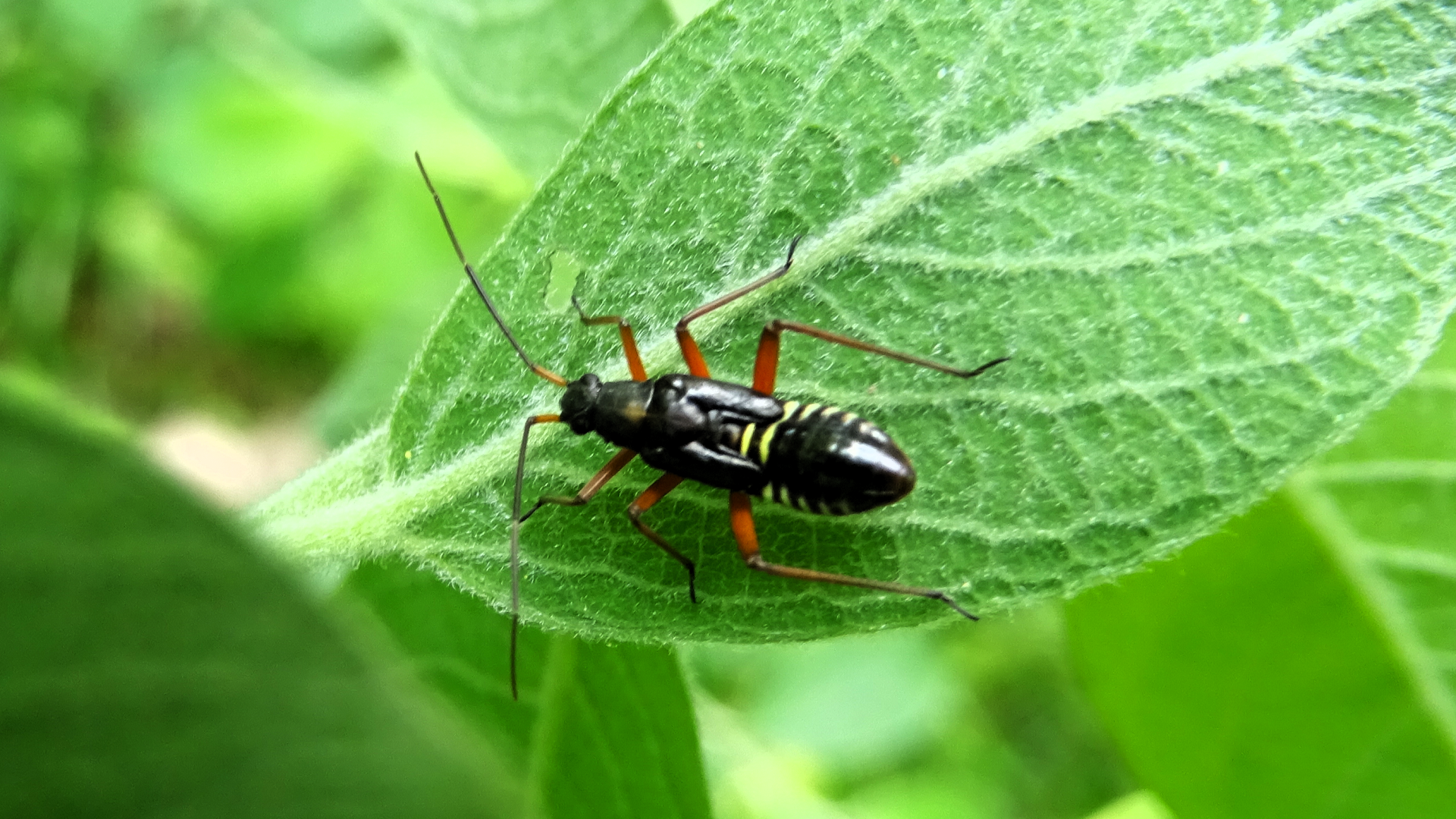
This distinctive predatory species is associated with Oak and Hawthorn. The dark ant-like nymphs have yellow markings and reddish-brown legs. Adults (9-11mm) appear from May until July. They feed on aphids, eggs and larvae of other insects.
#
Hypericum Rhopalid
Rhopalus subrufus
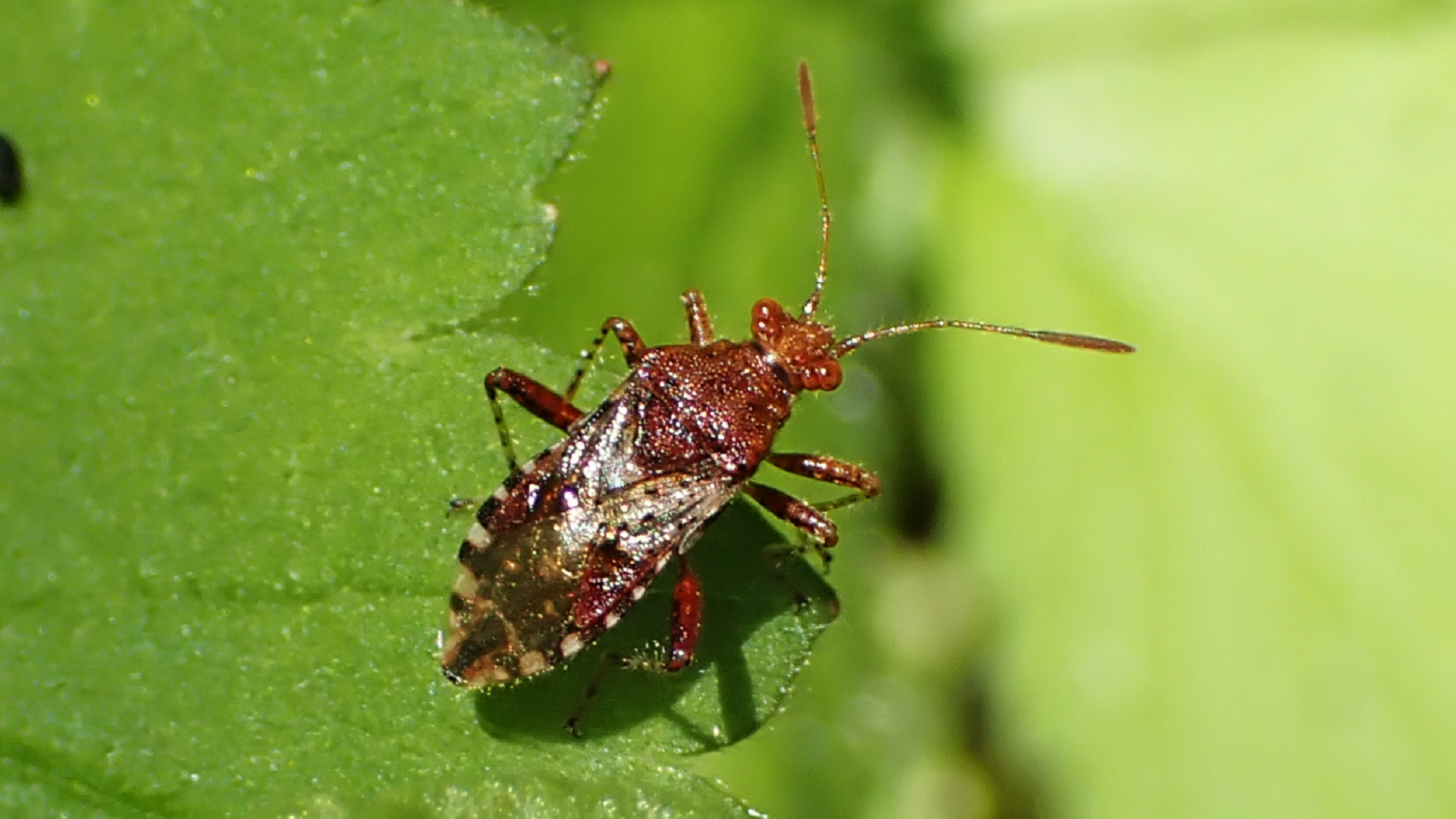
Hypericum Rhopalid is a bug associated with stinging nettles and woodland clearings. It is about 7mm long.
#
Black and Red Froghopper
Cercopis vulnerata
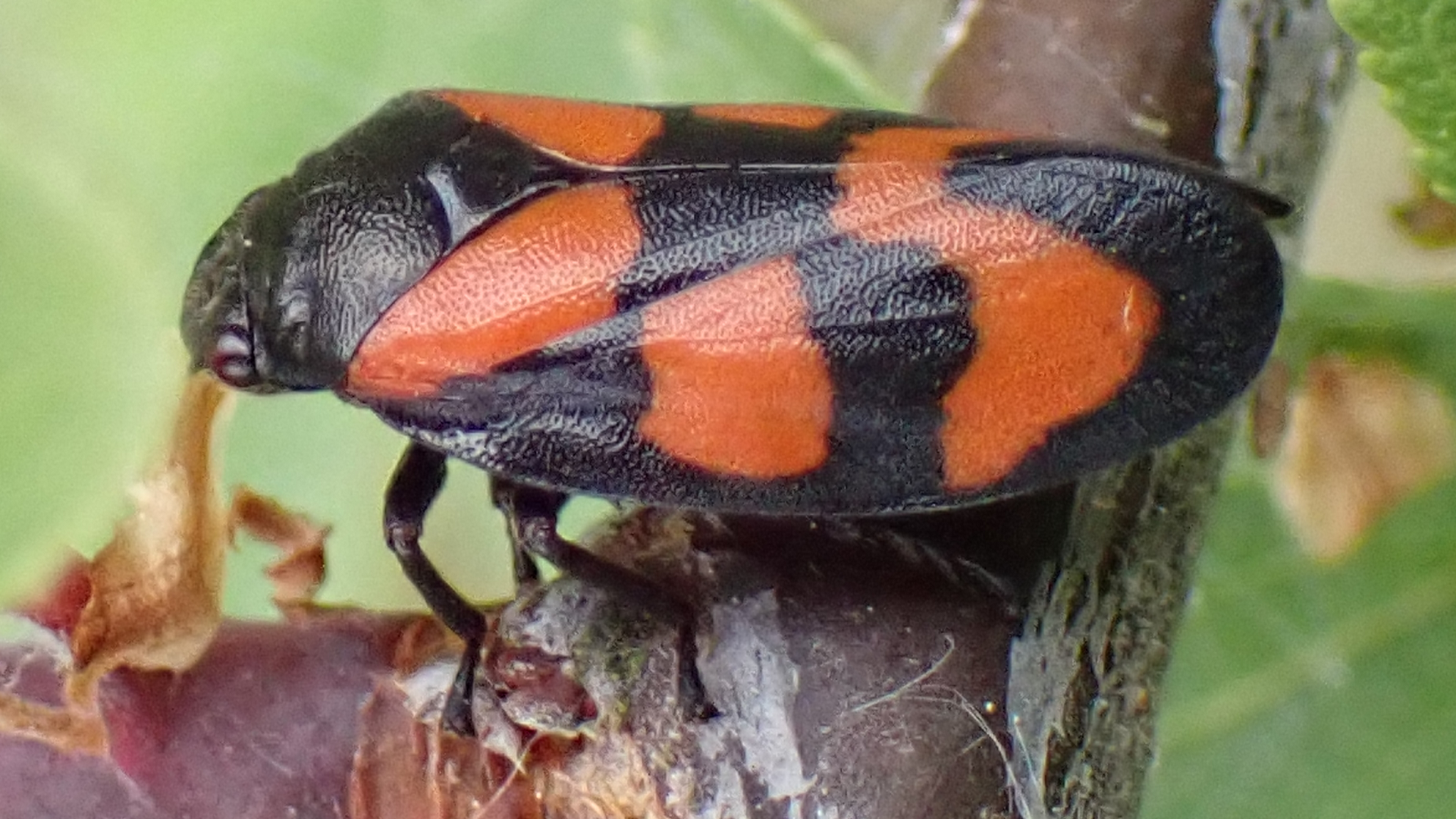
Nymphs of this large conspicuous froghopper are seldom seen because they feed on underground roots. Adults appear from April until August. They can be up to 11mm long.
#
Common Froghopper
Philaenus spumarius
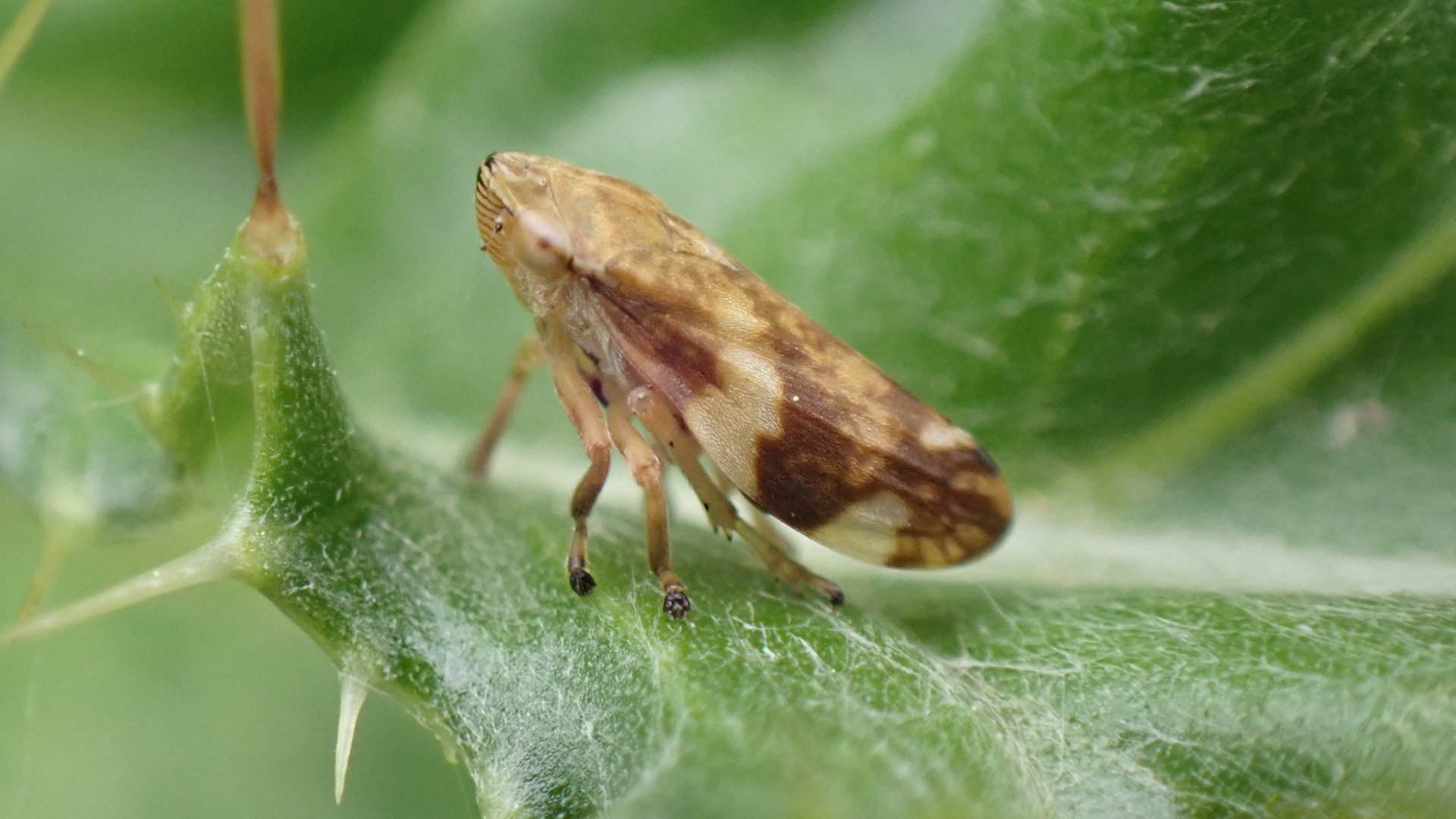
The frothy bubbles known as 'Cuckoo-spit' found on vegetation in grassy areas during spring are caused by tiny green Froghopper larvae. The adults (5-7mm) appear from June until September.
#
Leafhopper
Alebra albostriella
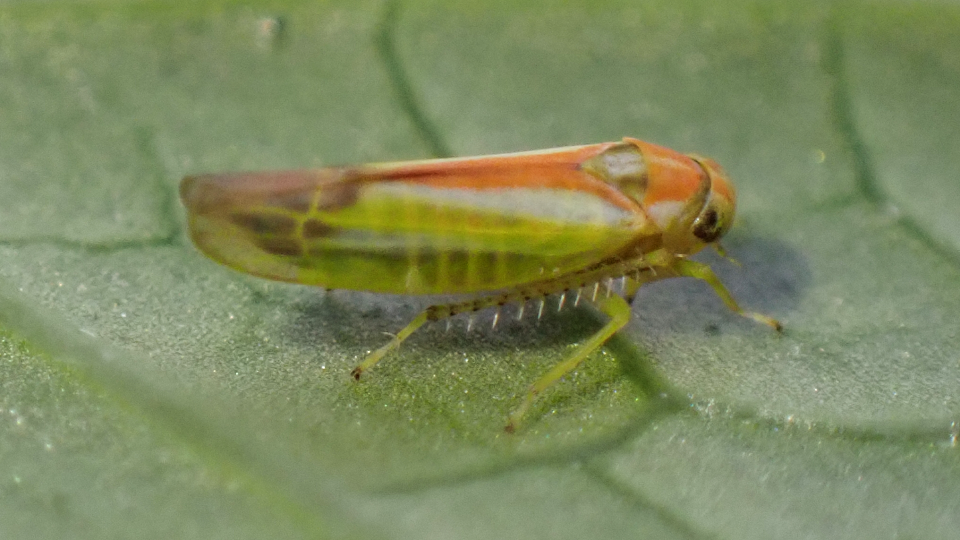
Measuring 4mm long, this pretty Leafhopper was attracted to a UV light. The colouration and dark spots at the base of the tibial spines identify this as a male of the species. There are distinct differences between leafhoppers and froghoppers. Leafhoppers are normally more slender and smaller, while froghoppers are typically larger and stouter. Froghoppers produce cuckoo spit on plants, leafhoppers do not. Froghoppers have only a few stout spines on their legs, leafhoppers have rows of spines.
#
Leafhopper
Edwardsiana sp.
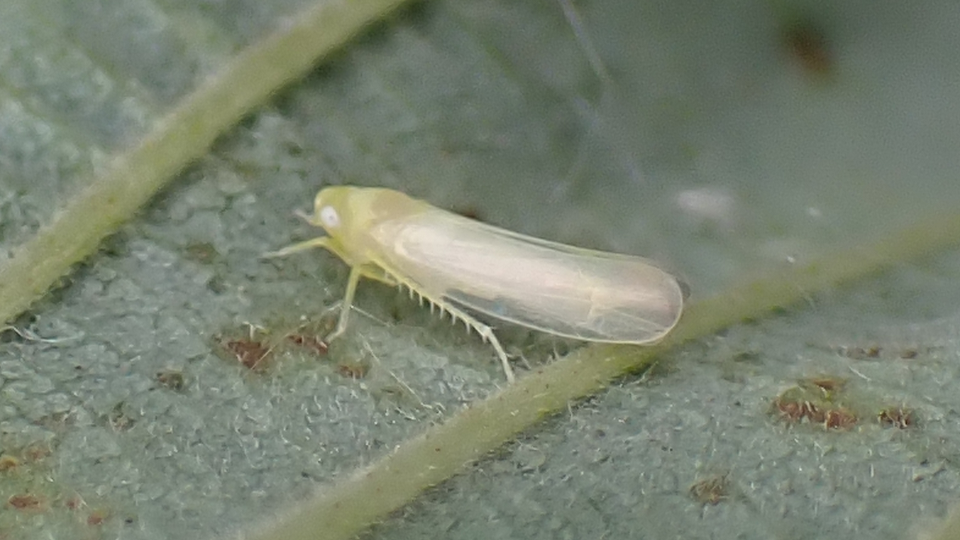
This tiny Leafhopper found near Hainault Lake was 3-4mm in length. Being on an alder leaf it is possibly Edwardsiana alnicola, but without examination under a microscope there is no way to be certain of the exact species.
#
Silver Birch Aphid
Euceraphis betulae
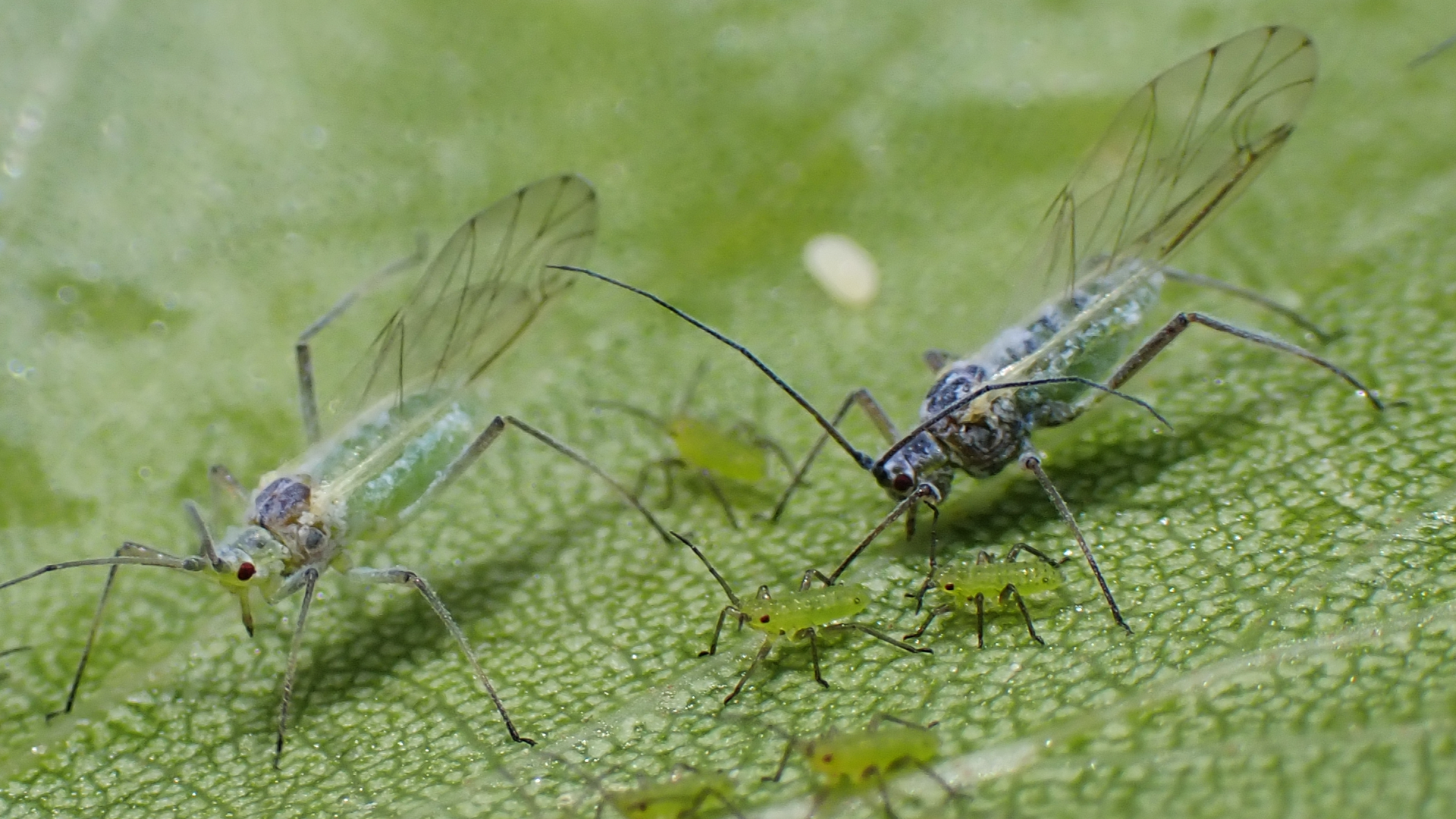
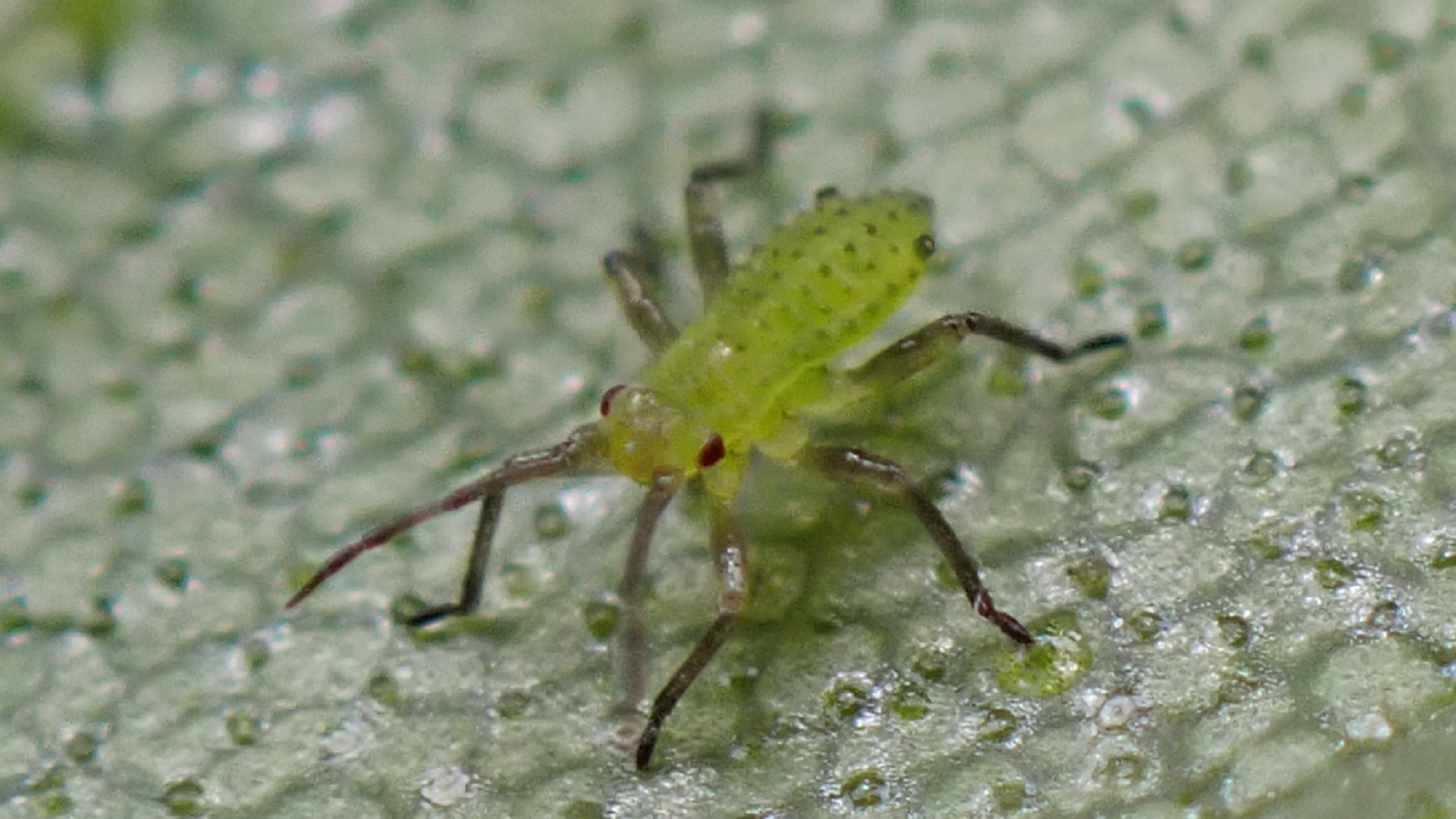
As its name implies this species of aphid is found on silver birch. Mainly green, however the body, antennae and legs of the adults may be coated in pale-blue wax giving a furry appearance. Several generations appear each year from spring to autumn. During summer all the adults are winged females that reproduce without mating in a process known as parthenogenesis. In autumn sexual reproduction takes place between winged males and wingless egg-laying females. The eggs overwinter and hatch the following spring. Leaves they inhabit can get very sticky due to honeydew produced by these aphids.
#
Broad Centurion
Chloromyia formosa
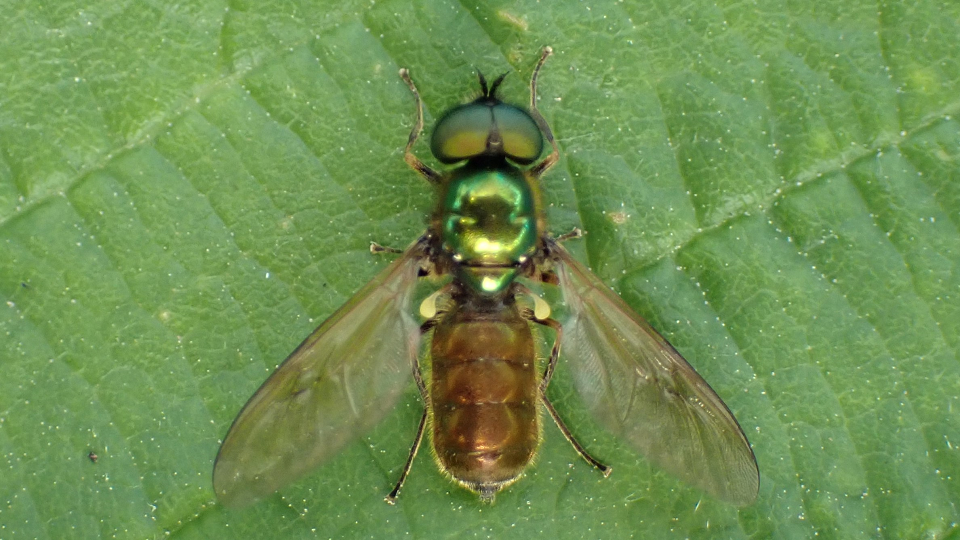
The Broad Centurion is a soldier fly. The male has a bronze abdomen whereas with the female it is blue-green. There are similar species, but this one can be distinguished by the eyes being covered in thick black hairs. The flight season is from May until August, when it can be found nectaring on flowers in scrub, on hedgerows and in woods. Its larvae feed on decaying organic matter.
#
Fruit Fly
Urophora sp.
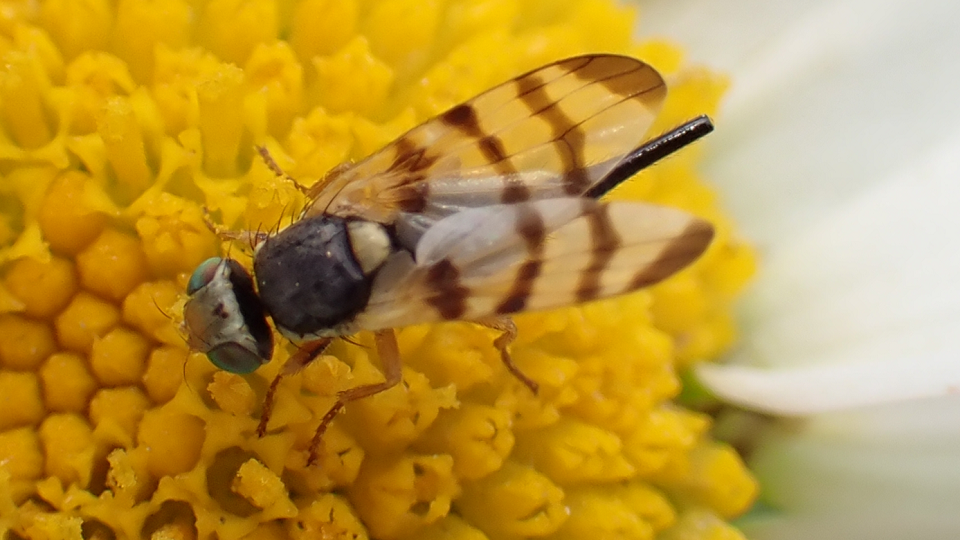
This well-marked fruit fly is a member of the family Tephritidae. This is possibly Urophora jaceana, one of several flies that cause galls on knapweed. Because several species are similar it has only been recorded to genus.
#
Twin-striped Grey Long-palp
Tipula vittata
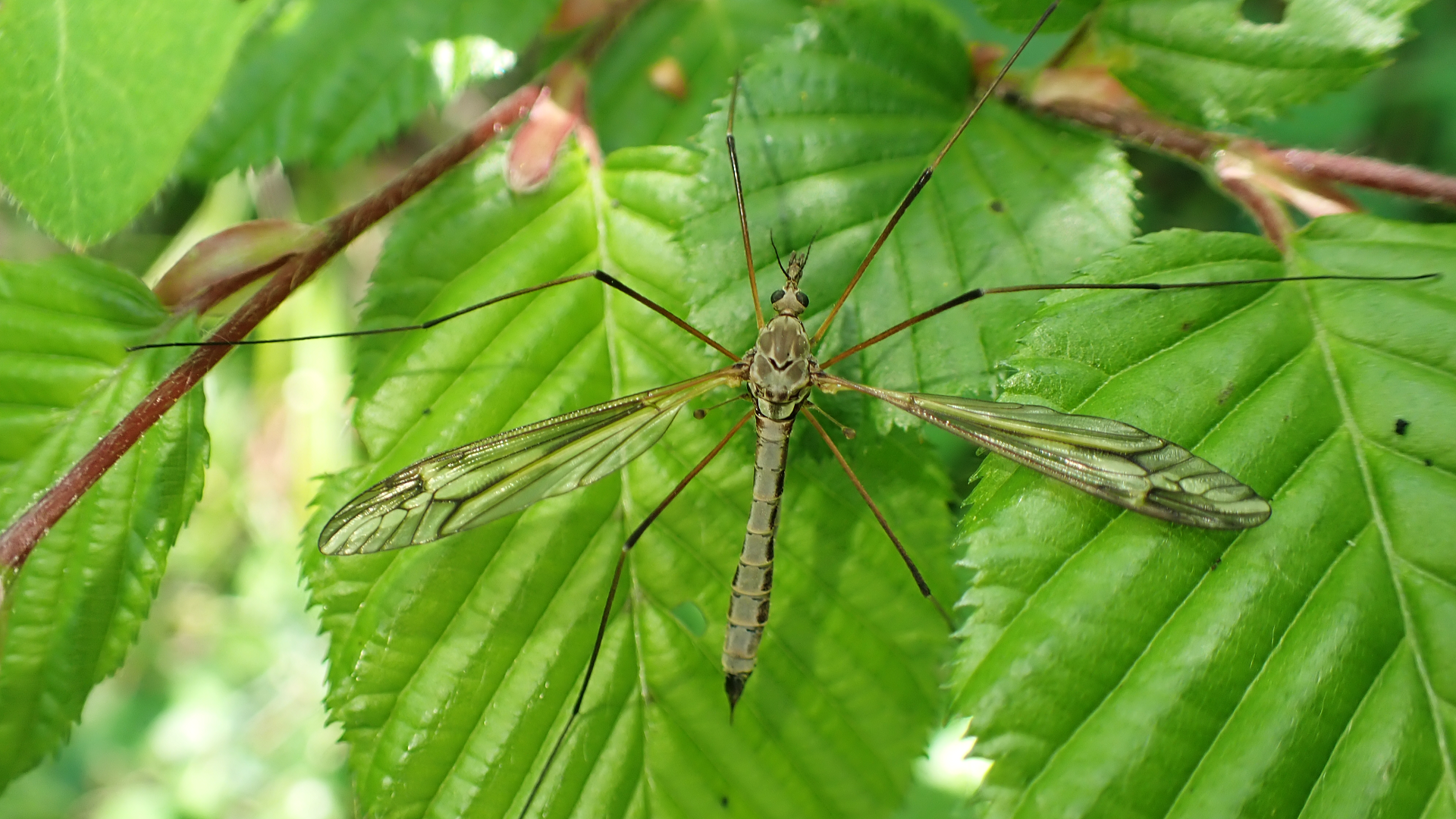
There are over 350 British different cranefly species, this is one of the less recorded ones. It flies in April and early May and has a large grey abdomen with a black line on each side. Both wings are 17-20mm long and have a white line that extends to the tip. This species is usually found near streams, ditches and marshy woodland. Its larvae are aquatic.
#
Band-winged Stilt-leg
Rainieria calceata
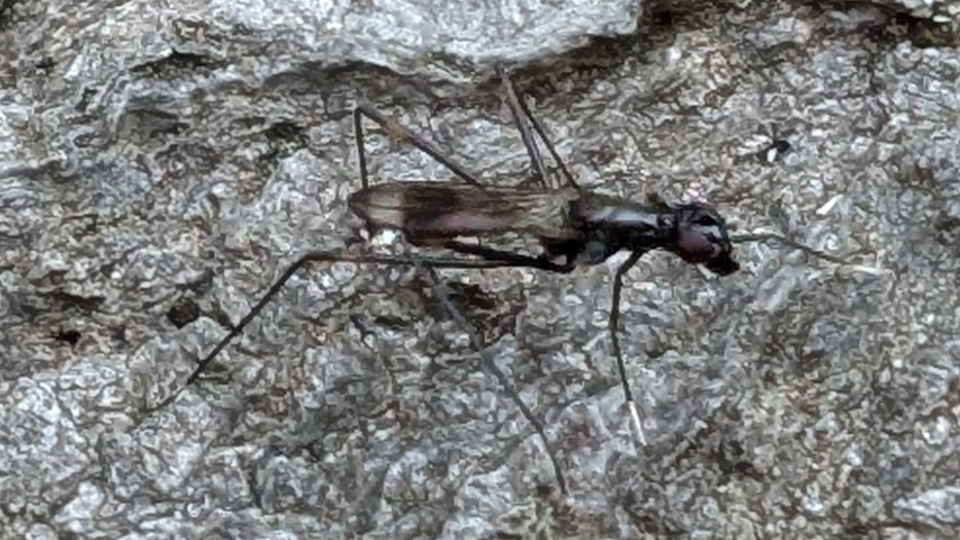
Rob Smith discovered a dozen Band-winged Stilt-leg flies at Epping Forest. In the afternoon he visited Dog Kennel Hill in Hainault Forest and found one resting on a beech log. Because this is such a scarce species, Darwyn Sumner, who runs the national recording scheme was contacted for confirmation. The main colony is in Windsor Great Park and this species is having difficulty establishing other colonies because it is short of old growth beeches with the necessary fungi and rot holes. Rob's record is probably the first in Essex - what a great find!
#
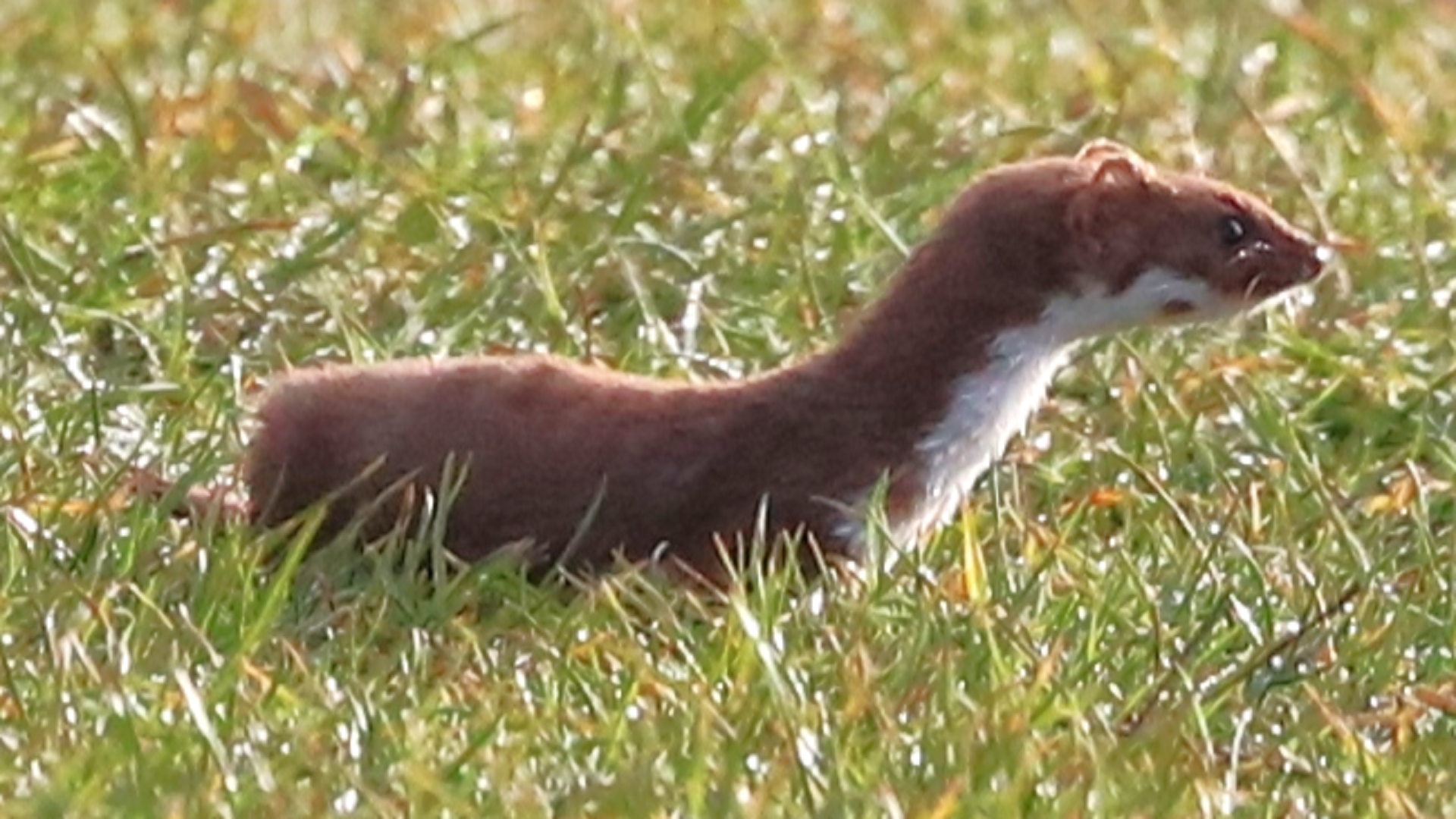
Weasel
Mustela nivalis
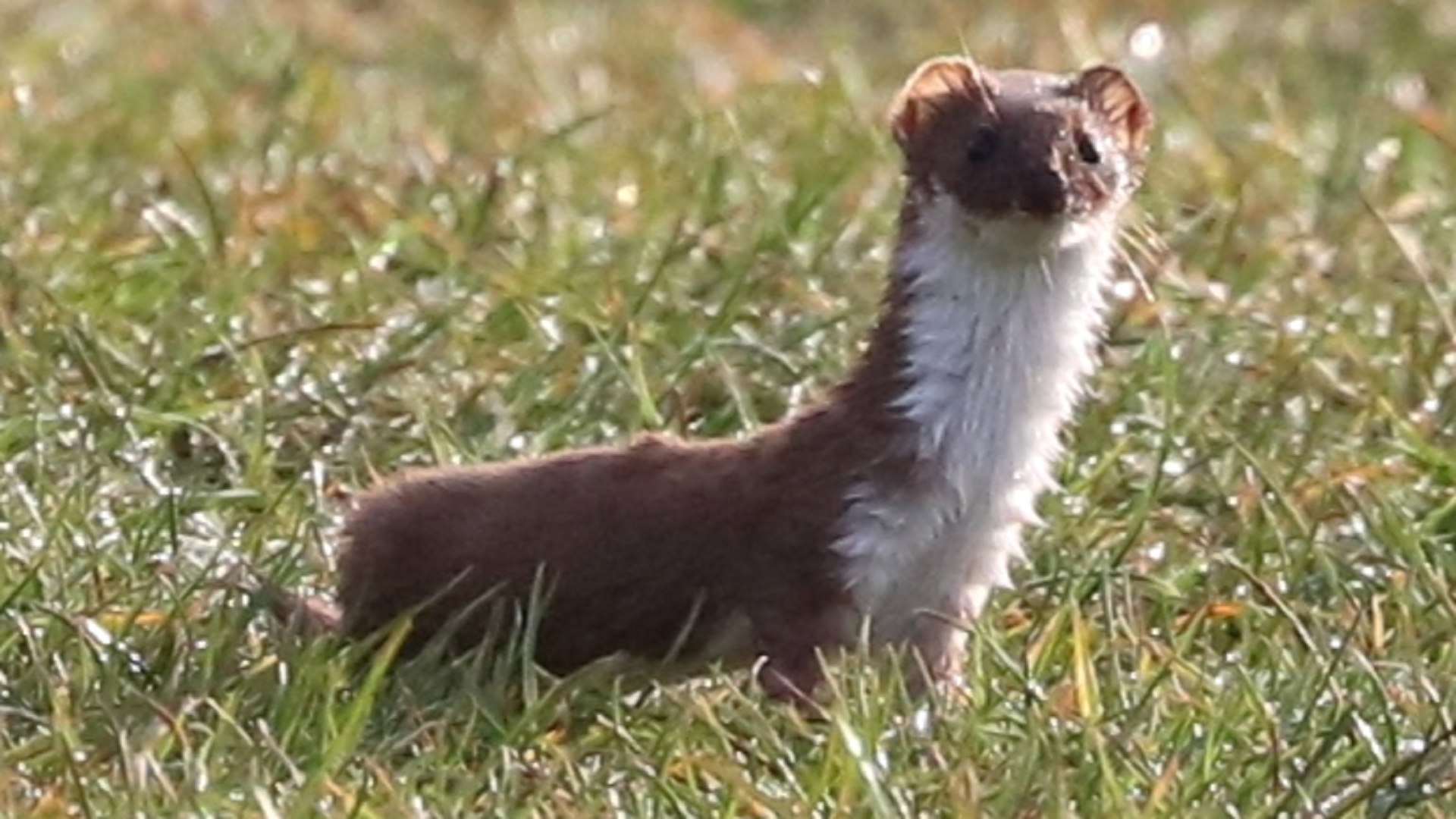
Weasels are up to 25cm in length. They are similar to Stoats, but the Stoat has a black-tipped tail and is larger, measuring up to 40cm long. Weasels feed on small mammals, reptiles and birds. They hunt prey throughout the day and night and are skilled at running, climbing and swimming.
#
Walnut
Juglans regia
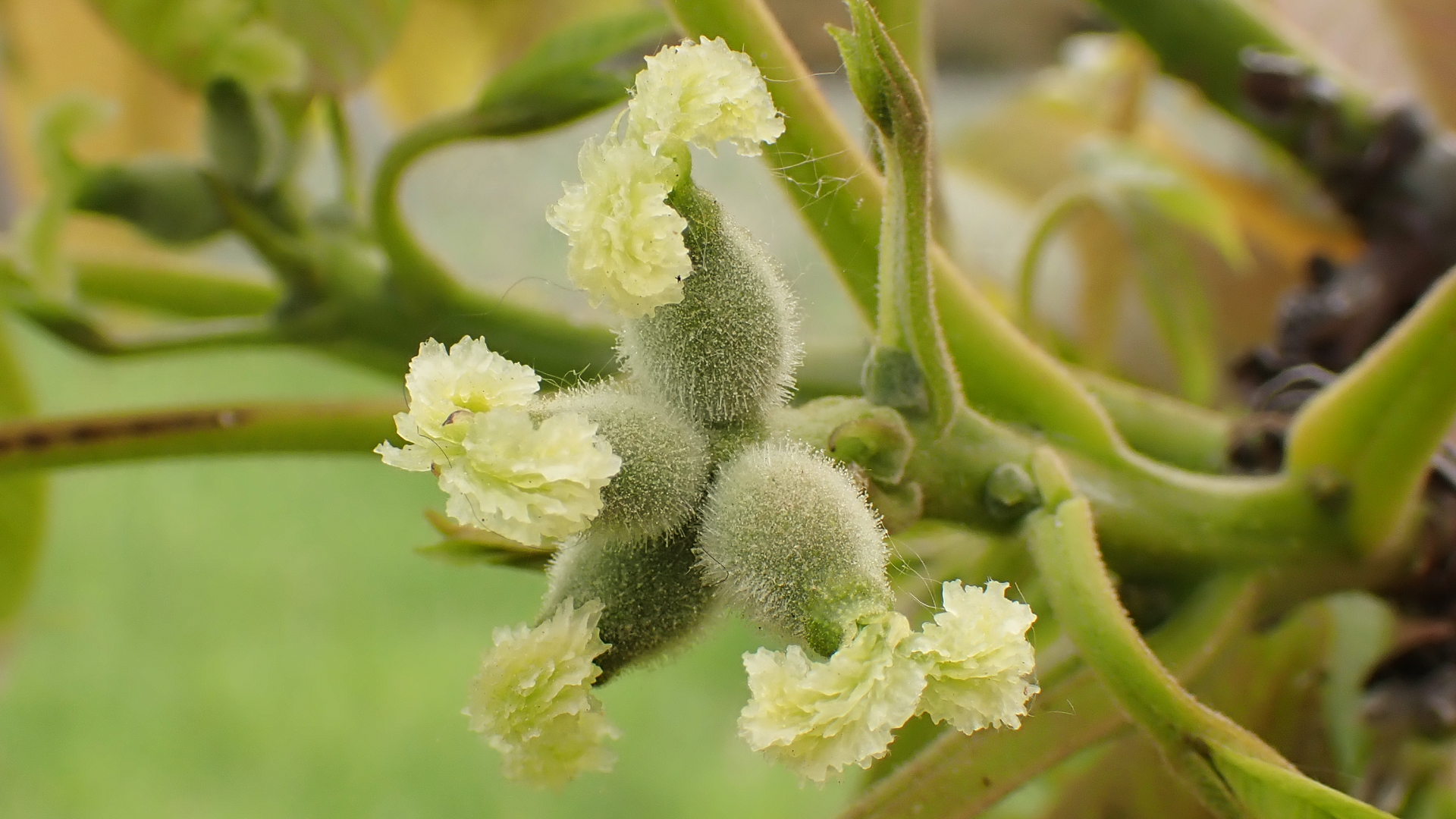
A Walnut tree that stood near Sheepwater is no longer there, however one still exists in Hainault Forest. Grown by Bob Cable and donated to the Country Park as a 3 year old sapling it was planted on 24th August 2009. Now well established the tree produced these yellow flowers in May.
#
Bee Orchid
Ophrys apifera
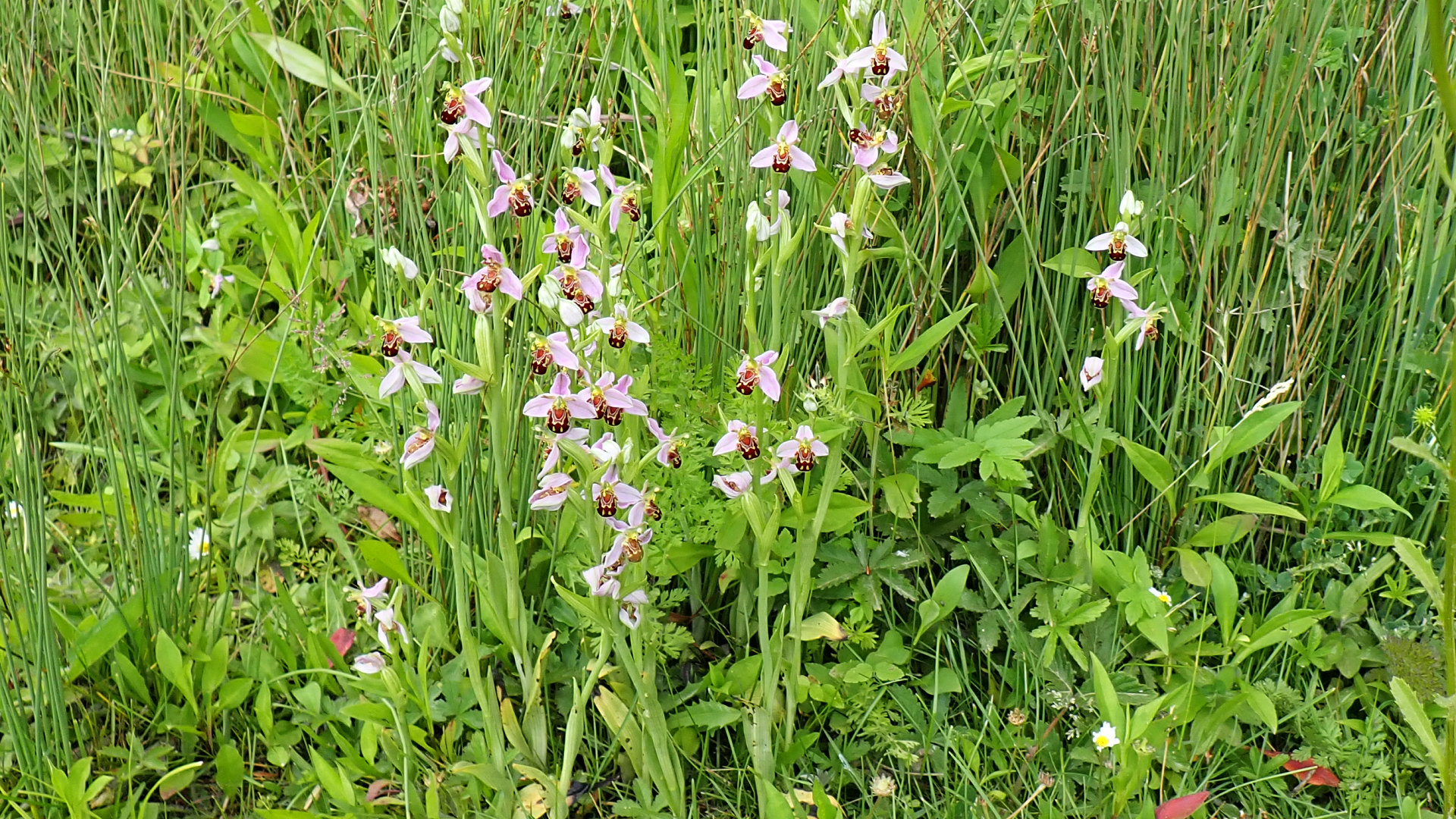
2025 has been a good year for Bee Orchids with over three times as many spikes appearing near Hainault Lake than twelve months ago. A total of 134 spikes were counted.
#
Betony
Betonica officinalis
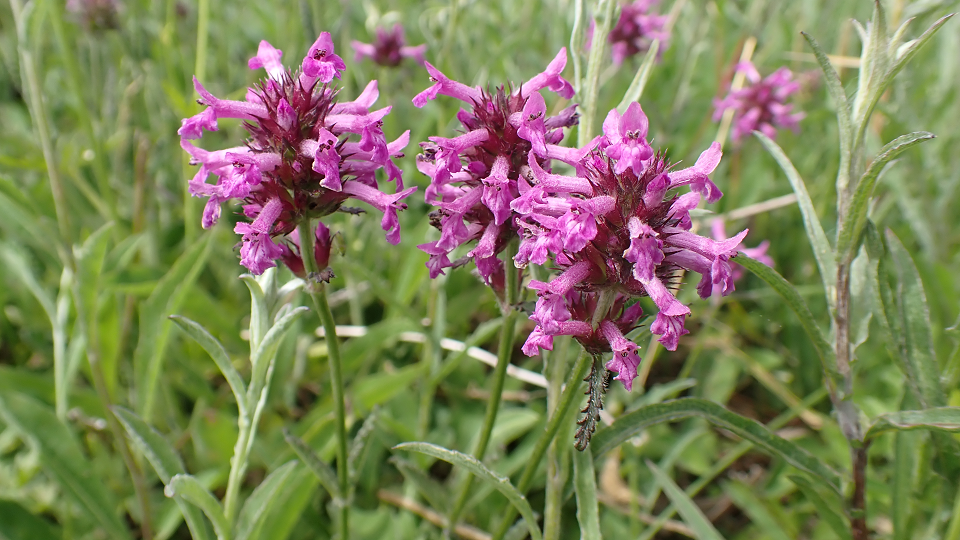
Betony has a preference for sunny or semi-sunny places on well-drained soils, growing well on heavy clay. The pretty purple flowers grow on square stems. It is a member of the mint family.
#
Lady's Bedstraw
Galium verum
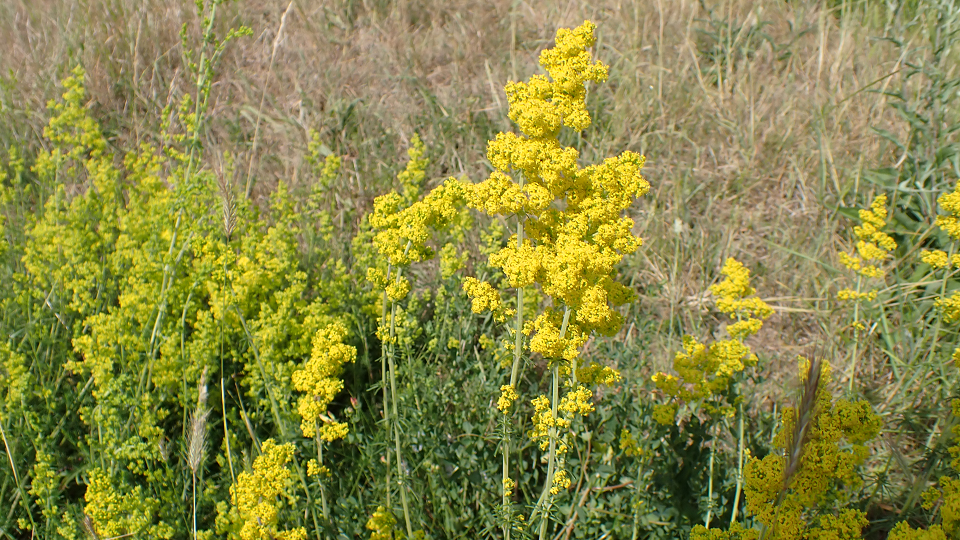
The angular stems of Lady's bedstraw contain dense clusters of tiny, yellow flowers and narrow leaves that appear in whorls. The plant was once used to fill pillow cases and also to curdle milk when making cheese.
#
Hedge Bedstraw
Galium mollugo
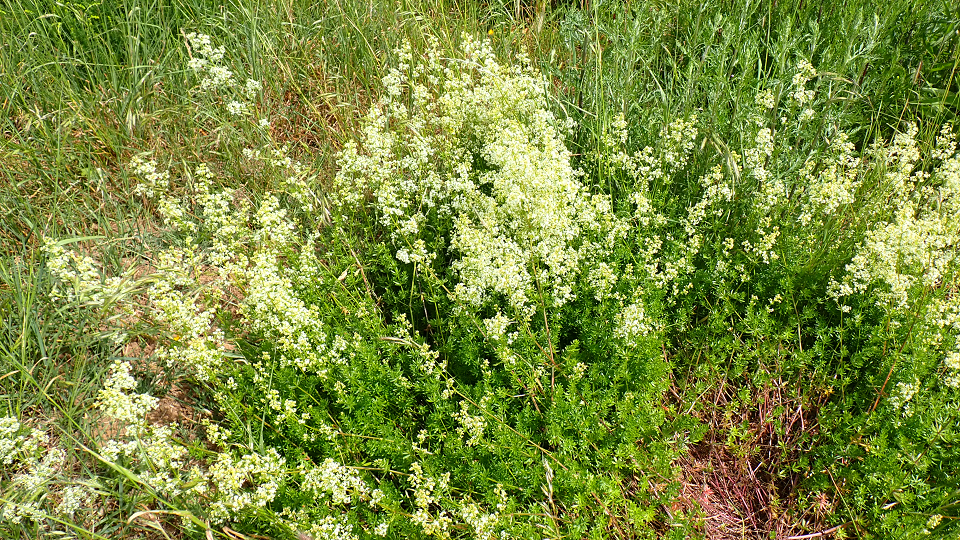
Hedge Bedstraw has white, four-petaled flowers that appear from late spring. The smooth, hairless, square stem grows erect, but tends to sag when taller due to the weight of the flower clusters. Elliptic leaves grow in circular whorls up the stem.
#
Goat's-rue
Galega officinalis
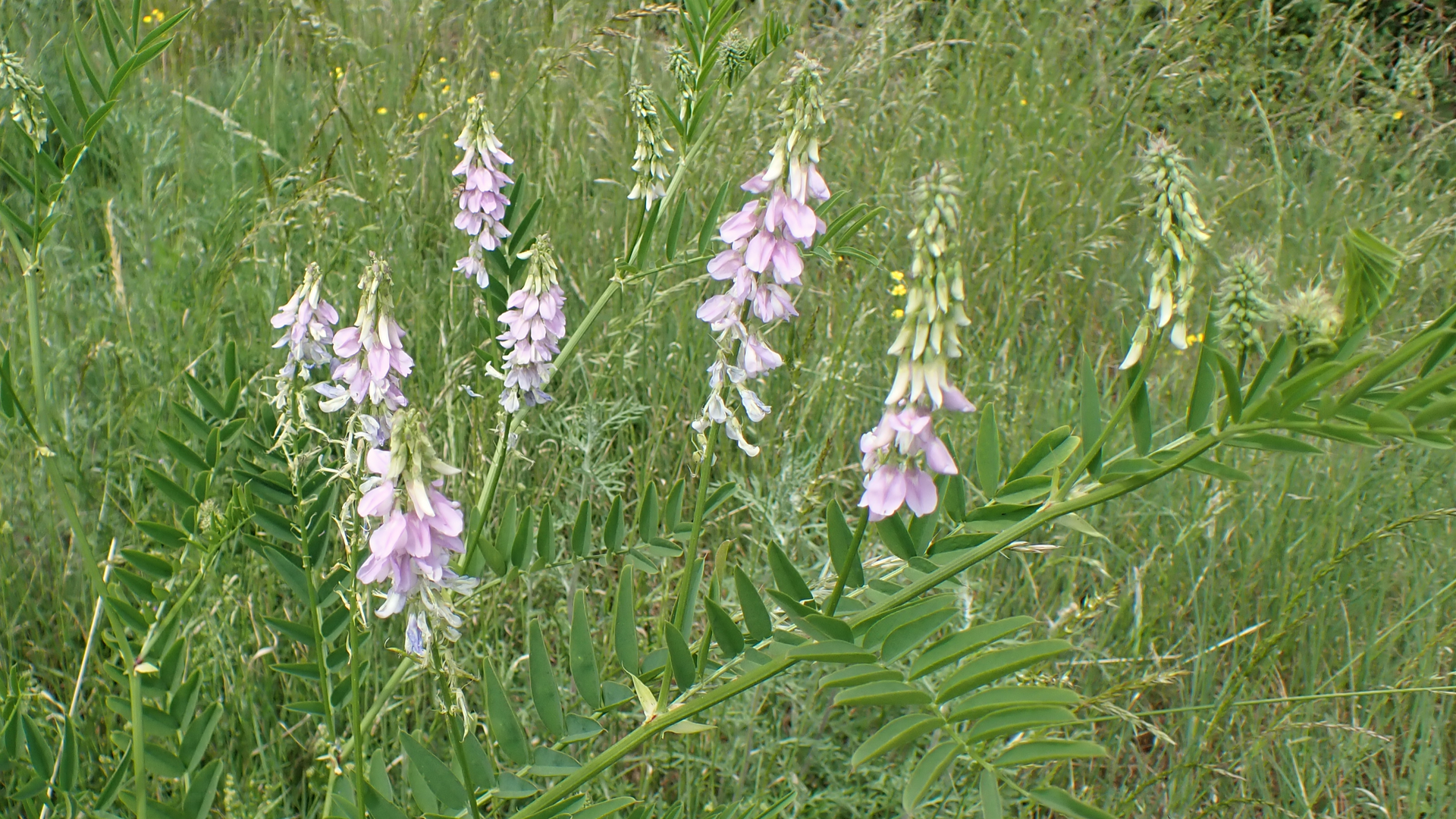
Goat's-rue is an invasive plant that can be toxic to mammals, but a popular food source for many insects. It is a robust, bushy perennial developing a clump of stems with pinnate leaves, The white, lilac or purple flowers are borne in erect racemes.
#
Ransoms
Allium ursinum
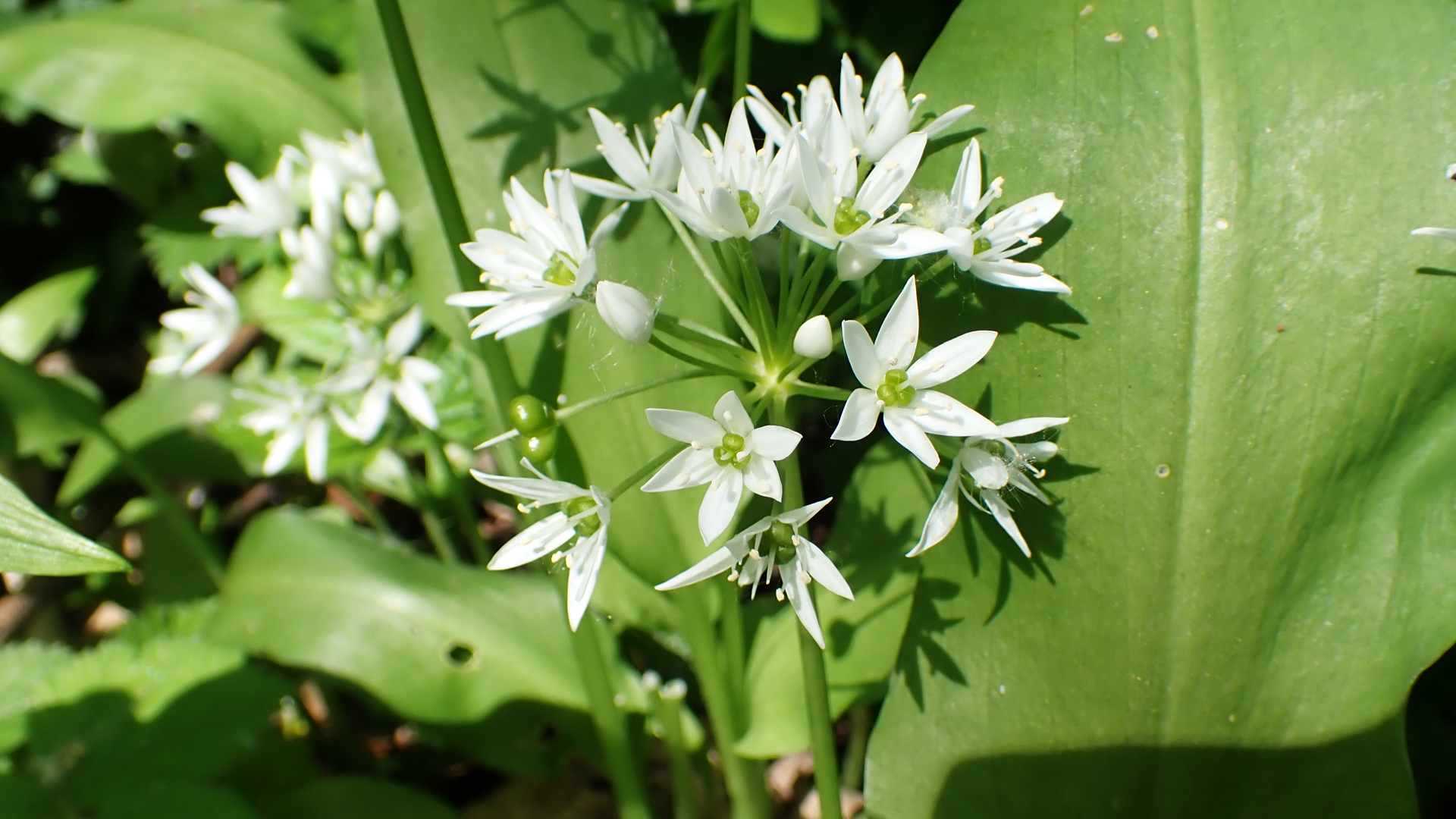
Ransoms, also known as 'Wild Garlic', is not common in Hainault Forest. It has a preference for shaded damp places. Flowers on long narrow stalks form in clusters on top of triangular stems. The star-like flowers have six long narrow petals that taper to a point and six stamens bearing white anthers and white pollen. In the middle is a green three-lobed ovary.
#
Cherry Laurel
Prunus laurocerasus
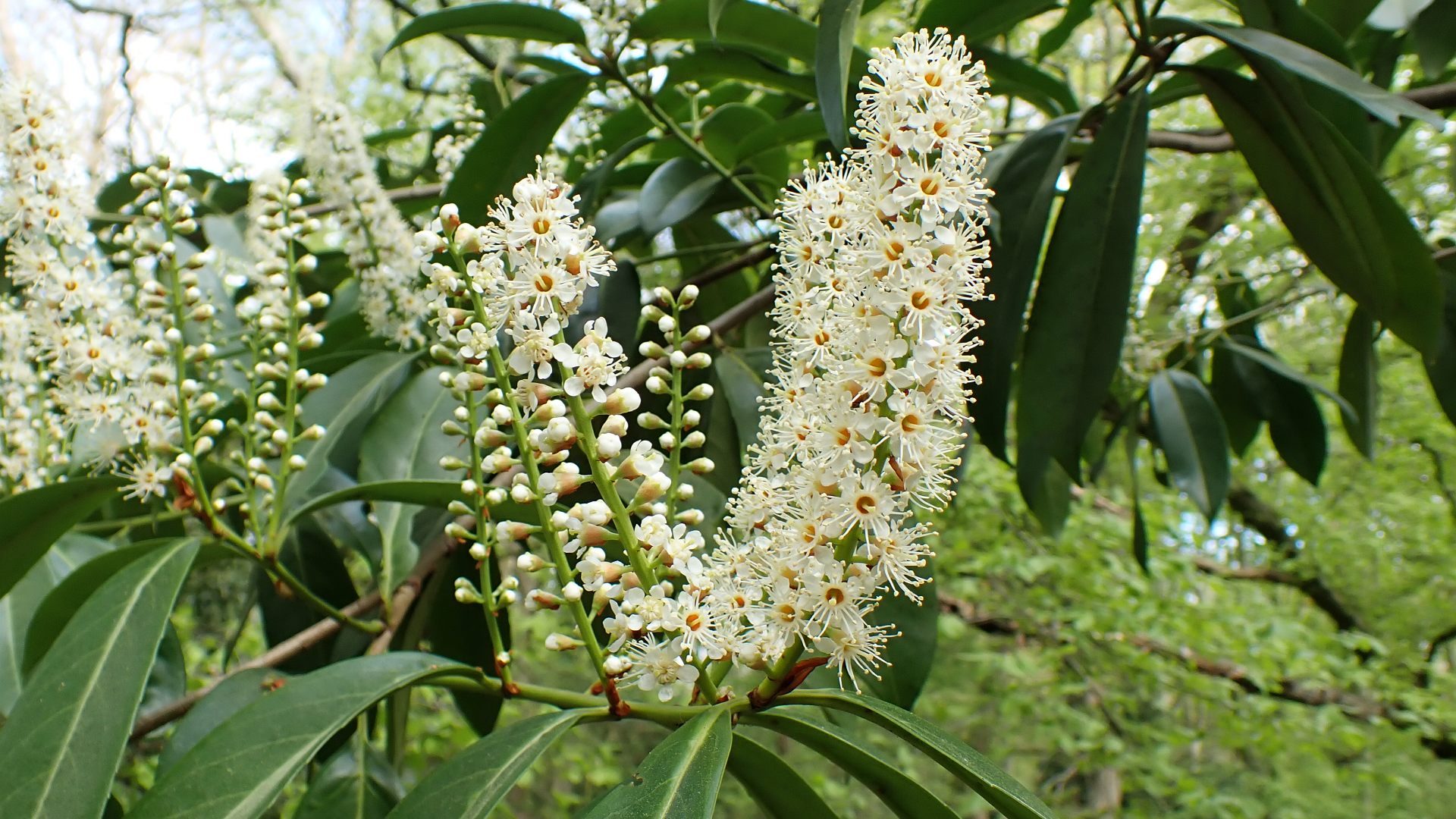
Cherry Laurel is an ornamental plant. It has large glossy, toothless, evergreen leaves and white flower spikes that fully open in April. Bitter black berries appear in autumn. This species was introduced to Britain in 1576. Found by the path leading to Roes Well.
#
Striped Pea Gall
Cynips longiventris
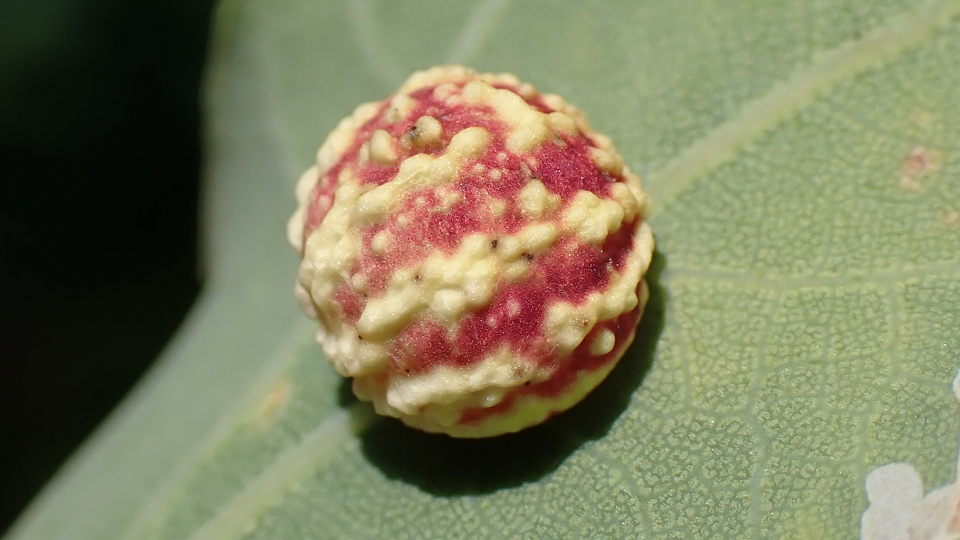
Striped Pea Galls found on oak leaves are caused by winged agamic female gall wasps. These are now becoming more widespread across Essex.
#
Anemone Gall
Pseudoneuroterus saliens
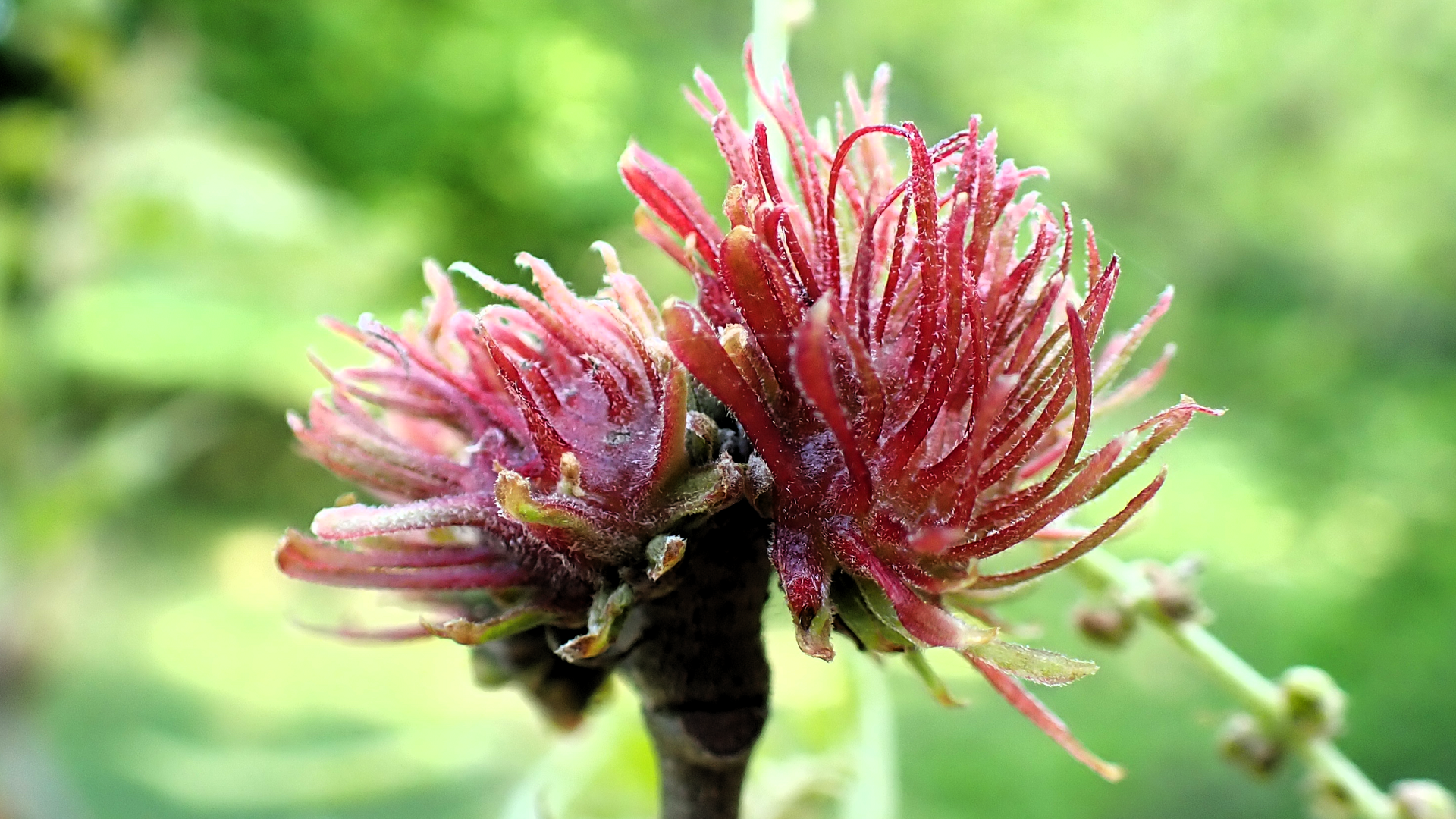
Anemone galls develop on fertilized female flowers of Turkey oak. Their formation is triggered by the sexual generation of a gall wasp. Multiple larvae inhabit each gall and emerge as adults in the summer. The first documented occurrence of this gall in the UK took place in 2004.
#
Cluster Gall
Andricus lucidus
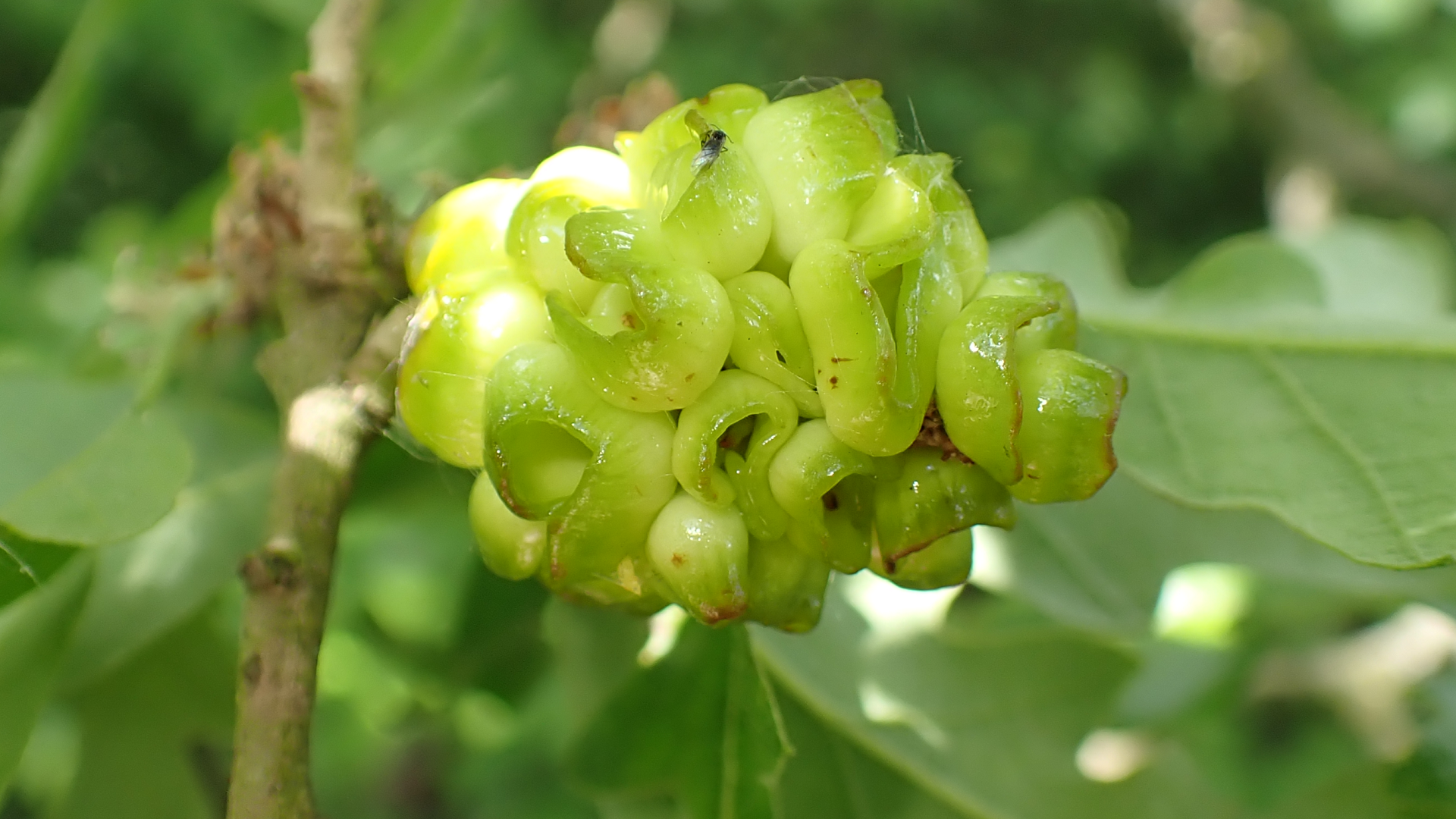
Cluster Galls were first recorded in the UK in the 1990s, having originated from the Mediterranean region. These galls result from the sexual generation of a gall-wasp. The flower-like clusters can reach sizes of up to 35mm across and consist of dish-shaped galls that interlock. Initially, the galls are green with a shiny, waxy surface, later turning reddish-brown and hard. The asexual generation of this gall-wasp produces Hedgehog Galls.
#
Oak Apple
Biorhiza pallida
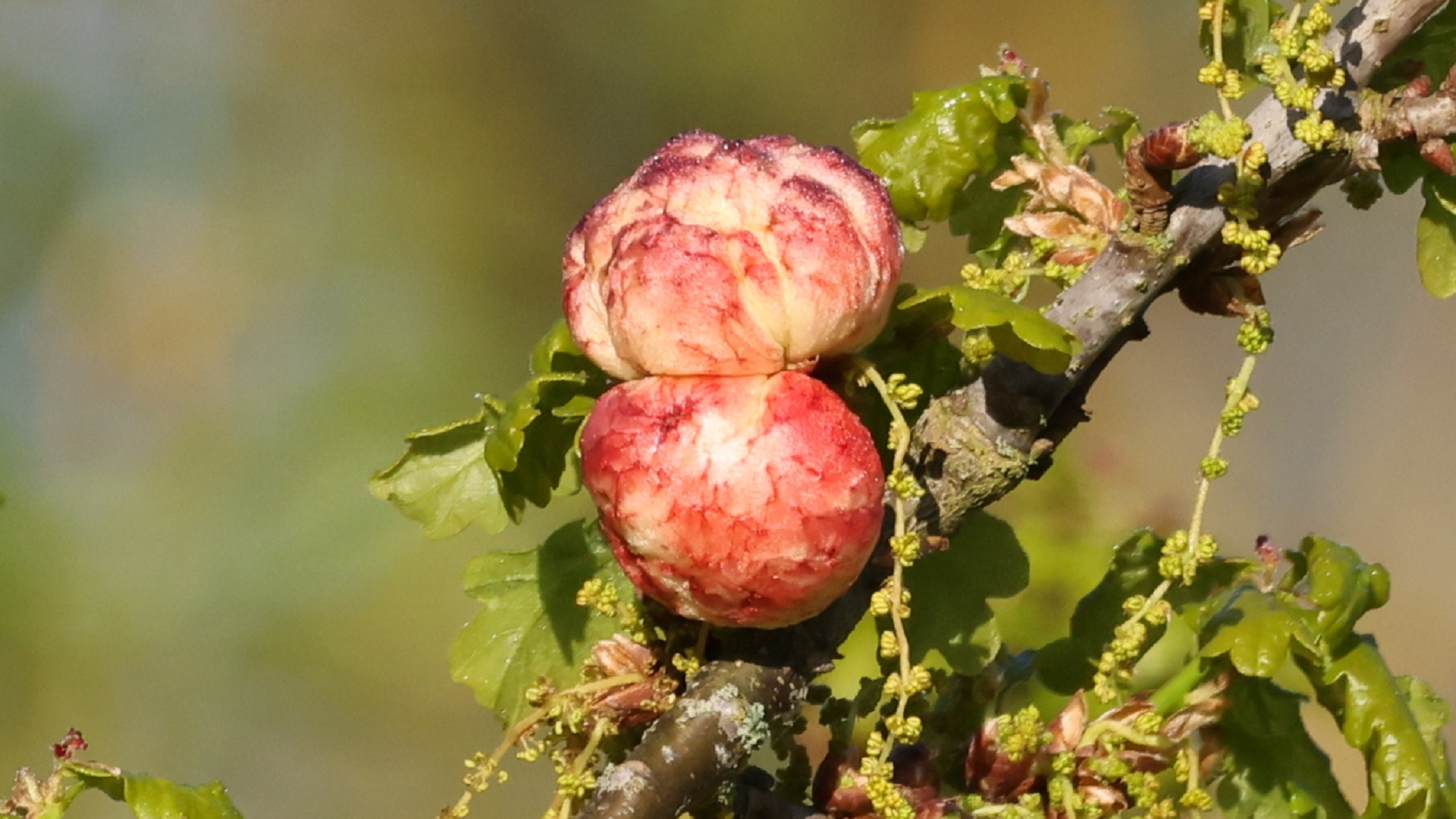
Oak apples on English oak trees result from the larvae of a gall wasp. The eggs laid in oak buds lead to the formation of spongy, apple-like growths. Each 'apple' contains multiple chambers, each housing a larva. These growths are not suitable for consumption.
#
Striped Pea Gall
Cynips longiventris
Striped Pea Galls occur on oak leaves due to the asexual generation of a gall wasp.
#
Thank you to everyone that have contributed to this Journal.
© hainaultforest.net. All rights reserved.
This website uses necessary cookies. It does not use targeting or advertising cookies.