

Hainault Forest

THIRD QUARTER 2025

This Journal covers the third quarter of 2025 from July to September.

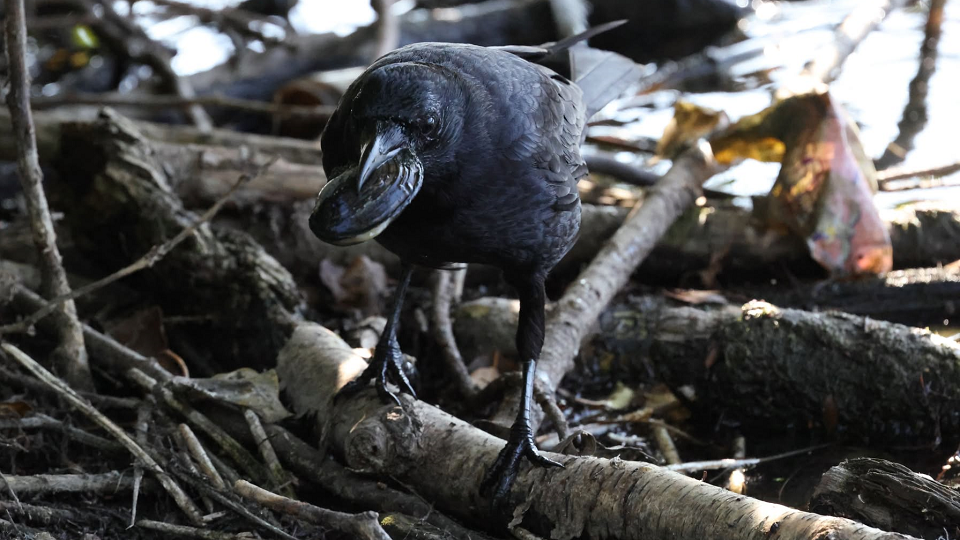
Carrion Crow

Corvus corone

Carrion Crow
Corvus corone

Crows sometimes fish for freshwater mussels, a task made easier when the water level drops in lakes due to dry weather. Once grabbed the mussel may keep its shell tightly closed making it difficult for predators to get inside. Crows have learnt to drop shells from height onto hard surfaces to break them open enabling them to access the edible flesh inside.

#

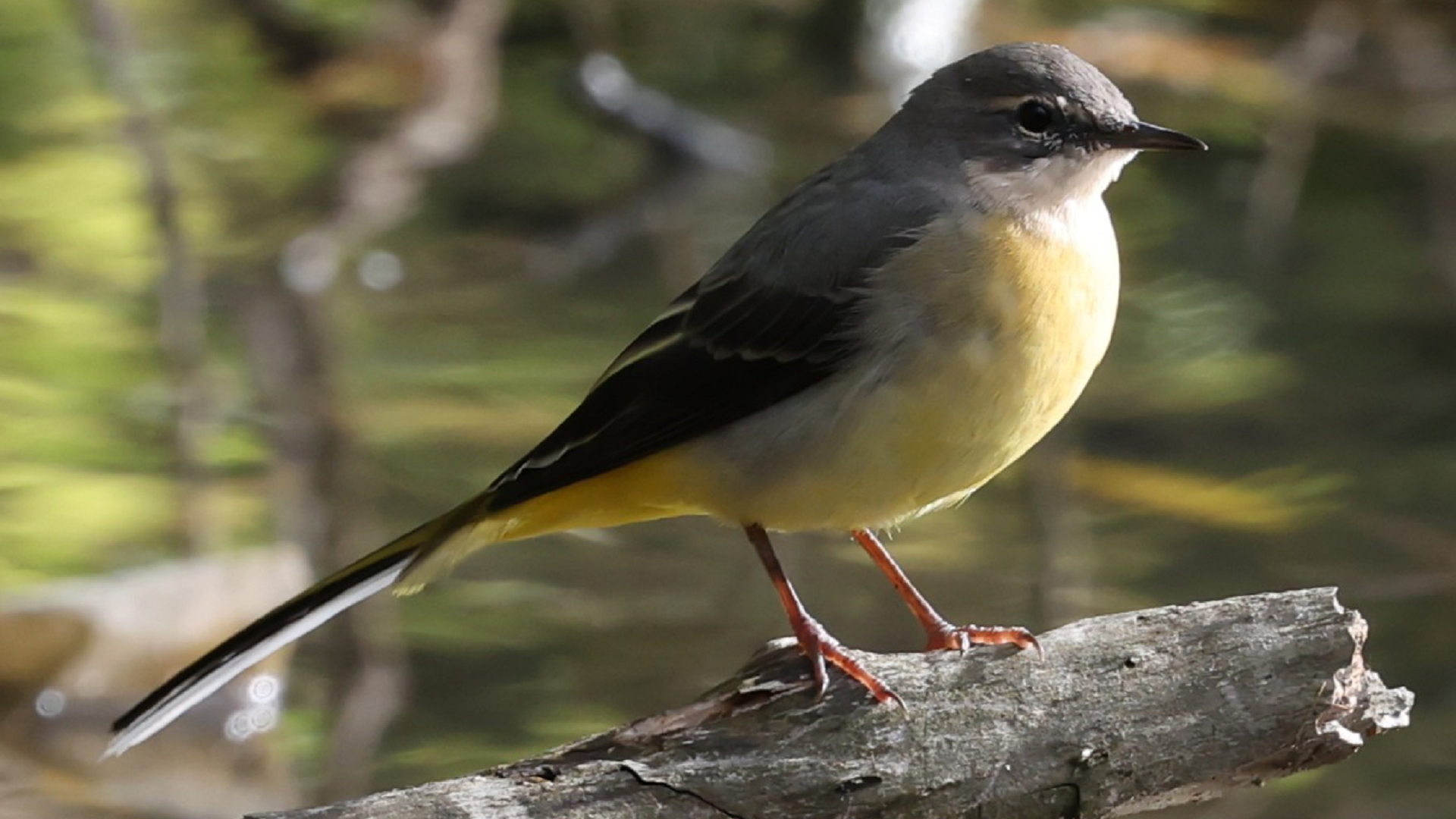
Grey Wagtail

Motacilla cinerea

Grey Wagtail
Motacilla cinerea

Grey Wagtails are resident throughout the year. Their diet consists of insects. They usually frequent streams and can be distinguished from Yellow Wagtails by the grey back and longer tail.

#

Swallow

Hirundo rustica

Swallow
Hirundo rustica

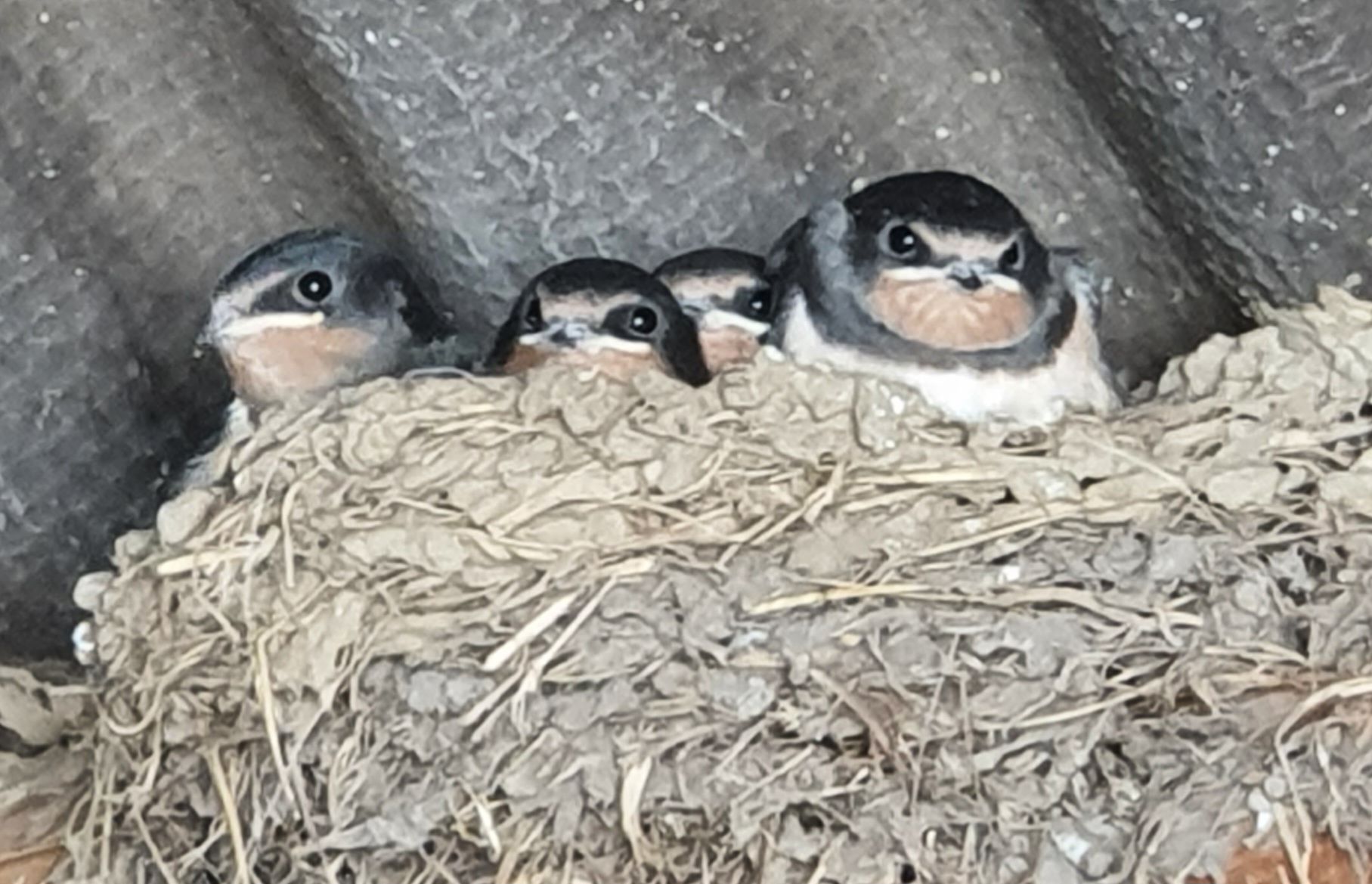
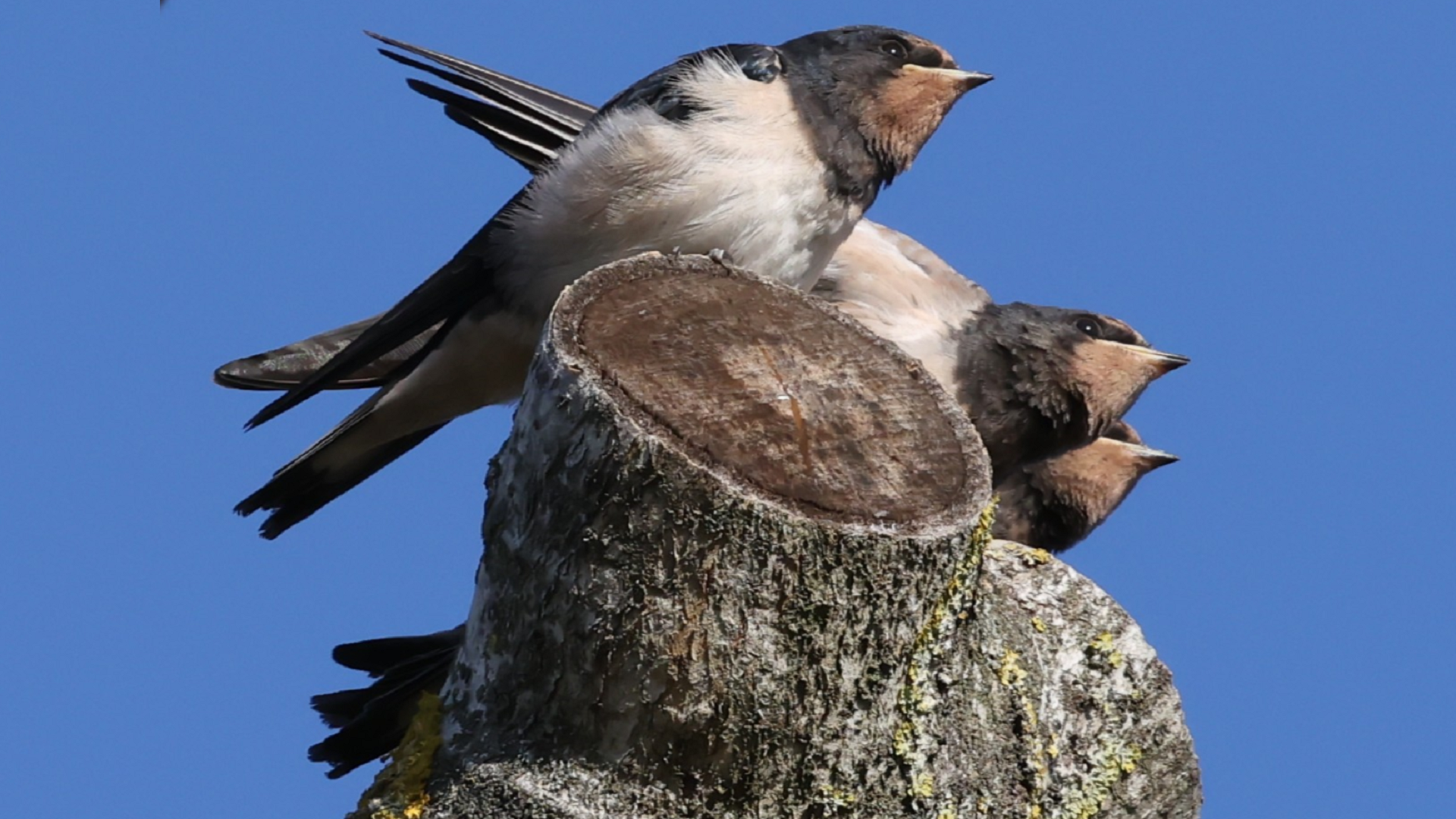
Swallows are summer visitors. They build nests in sheltered locations. The nests made with a mixture of mud, saliva and straw, can sometimes be found under eaves, in garden sheds, and other outbuildings. Nests are lined with feathers for comfort and warmth. There is usually 4 or 5 eggs in a clutch. Both parents feed the chicks regurgitated insects. Chicks typically leave the nest roughly 18-23 days after hatching. Under the watchful eye of their supportive parents it may take the chicks up to two hours to get airborne once they have left the nest. The parents fly alongside the chicks until they are able to go it alone unsupervised. After fledging, swallows normally return to the nest for a few weeks before leaving for good. These young birds fledged on 6th August and within a few days were venturing further from the nest. Once they become independent they will join with other swallows in flocks. During autumn they begin a hazardous flight to South Africa where they will spend winter, braving stormy weather and possible starvation on the way.

Swallow
Hirundo rustica

#

Wren

Troglodytes troglodytes

Wren
Troglodytes troglodytes

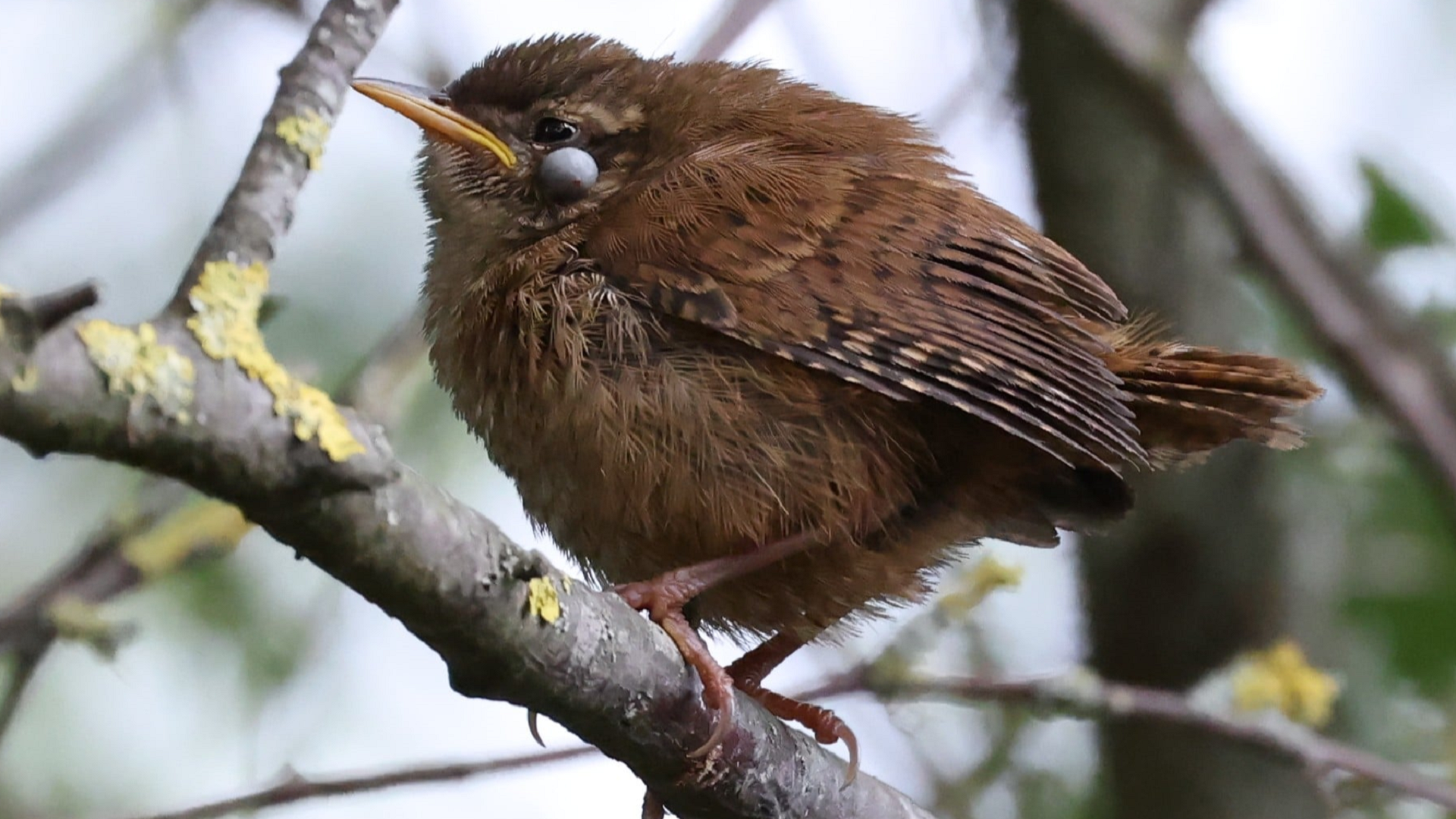
Wrens spend a lot of time on the ground which gives ticks an opportunity to attach themselves. A bird's head, neck and face are especially vulnerable.  Ixodes brunneus is a specific species known to feed on passerine birds, including wrens. A dust bath, the process of rolling about in loose dirt or dust, helps birds rid their bodies of parasites. Ticks seeking a blood meal can transmit diseases and sometimes cause paralysis, or blindness if located near the bird's eyes.

#

Nuthatch

Sitta europaea

Nuthatch
Sitta europaea

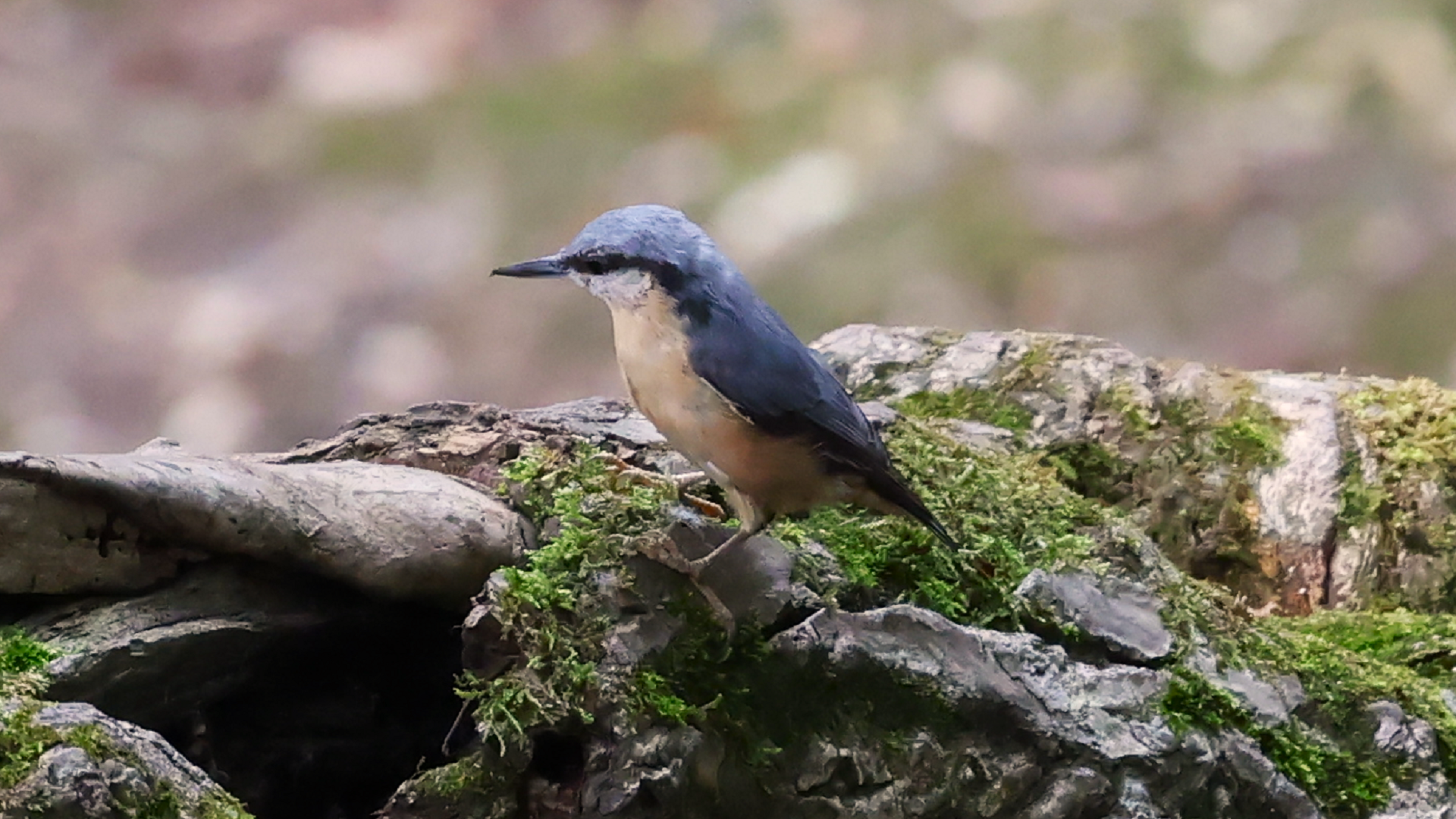
During summer when insects and arachnids become abundant Nuthatches usually switch to feeding on those instead of seeds.

#

Green Woodpecker

Picus viridis

Green Woodpecker
Picus viridis

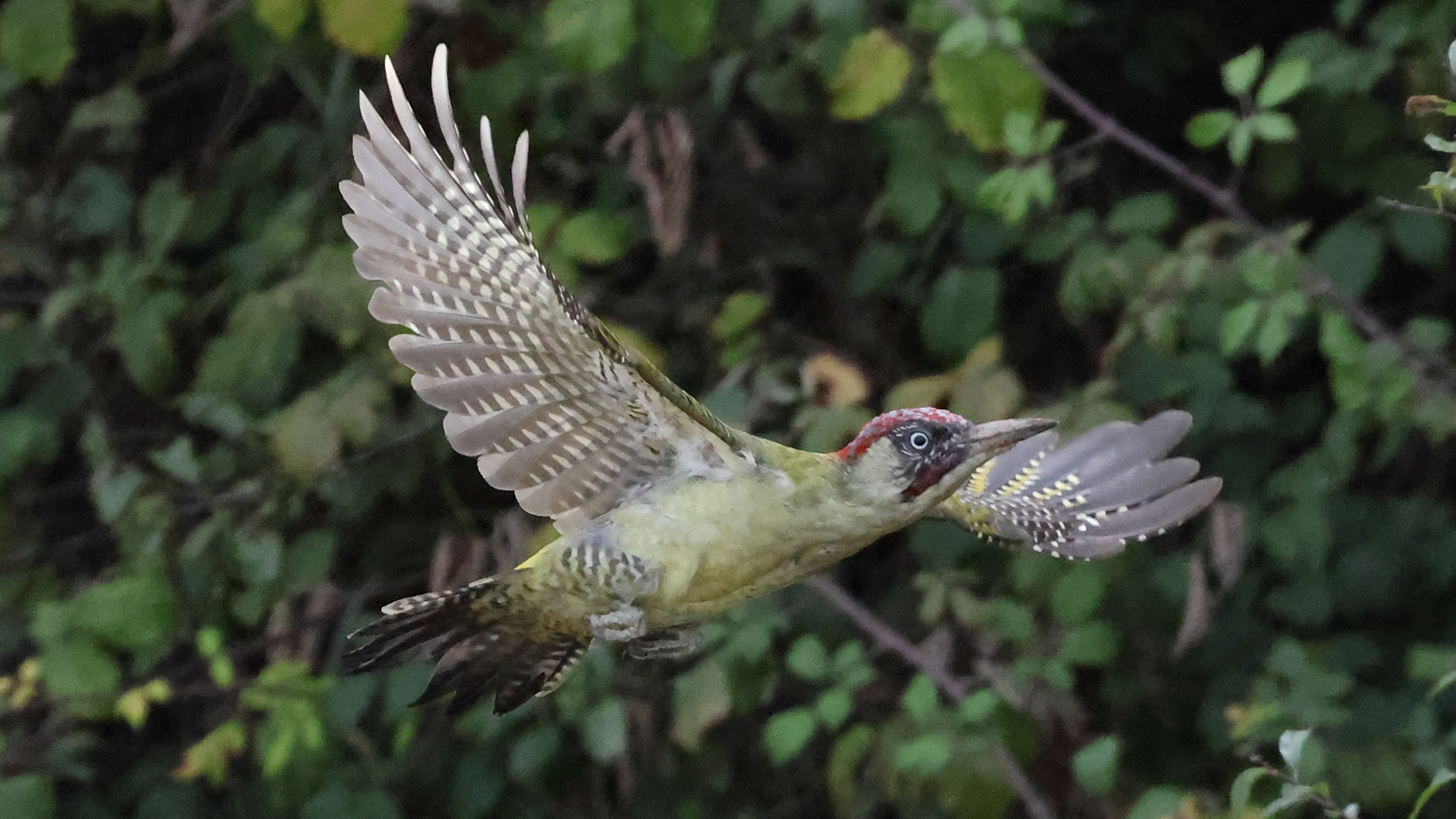
Green Woodpeckers nest in trees, but unlike other woodpecker species are rarely heard drumming against trees. They have undulating flight and a laughing call of "Yah-yah-yah!" Males possess red moustaches, enabling them to easily be told apart from females.

#

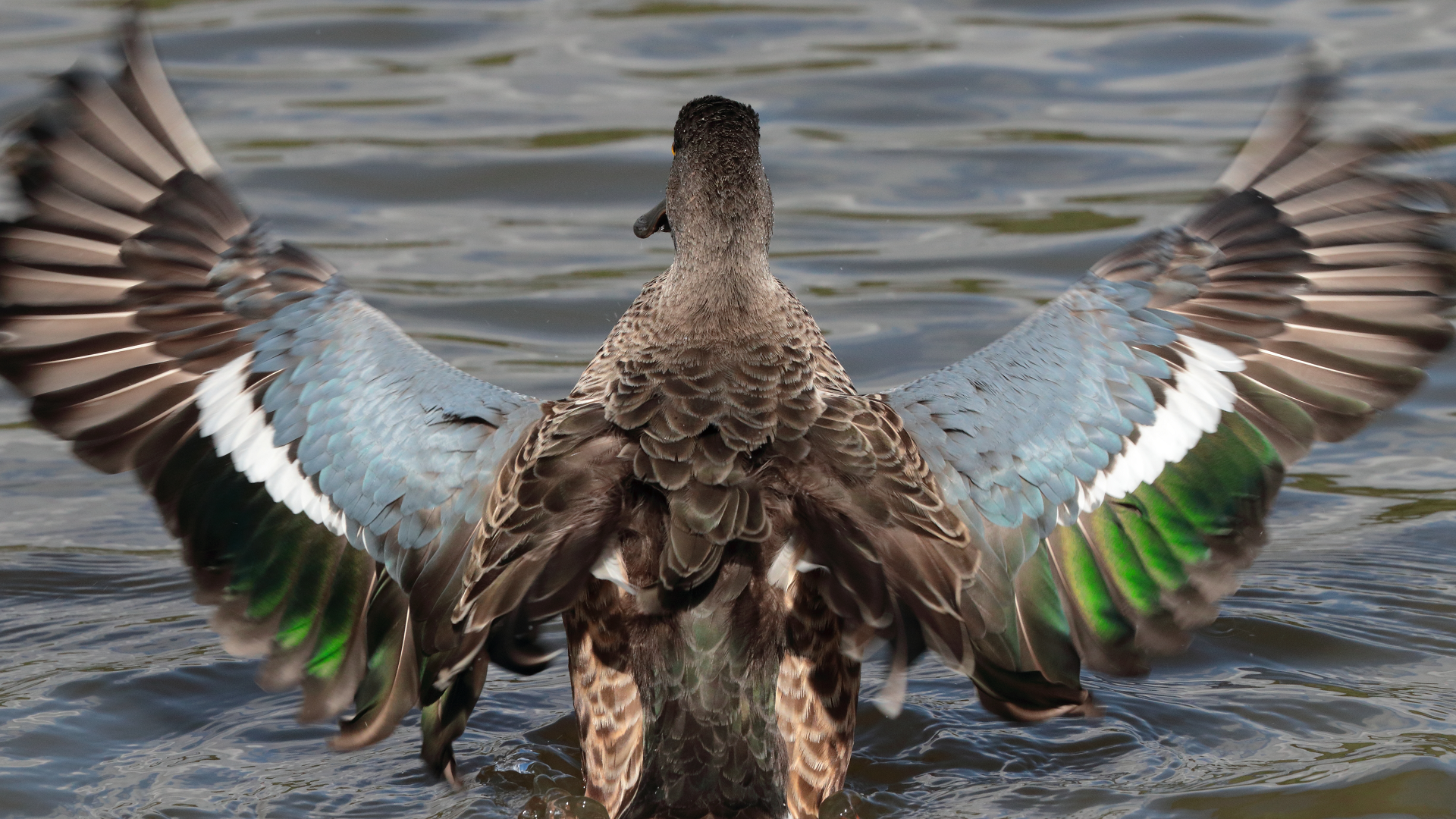
Shoveler

Anas clypeata

Shoveler
Anas clypeata

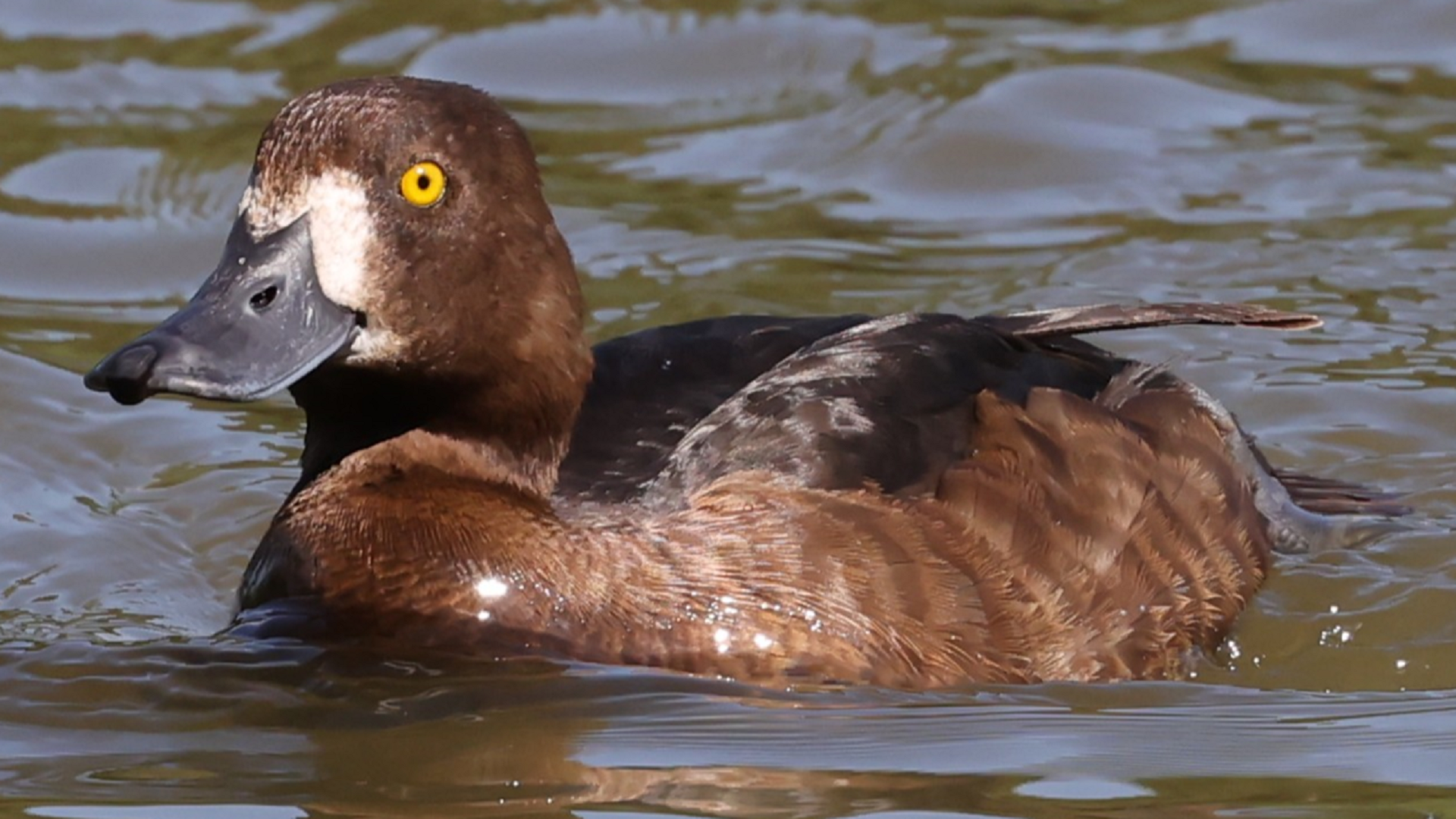
Shovelers are surface feeding ducks with large spatulate bills. These winter visitors are often seen at Hainault Lake. They trawl for insects and plant material with their bills in the water. Females are mottled brown with colourful speculum which are revealed when they spread their wings.

#

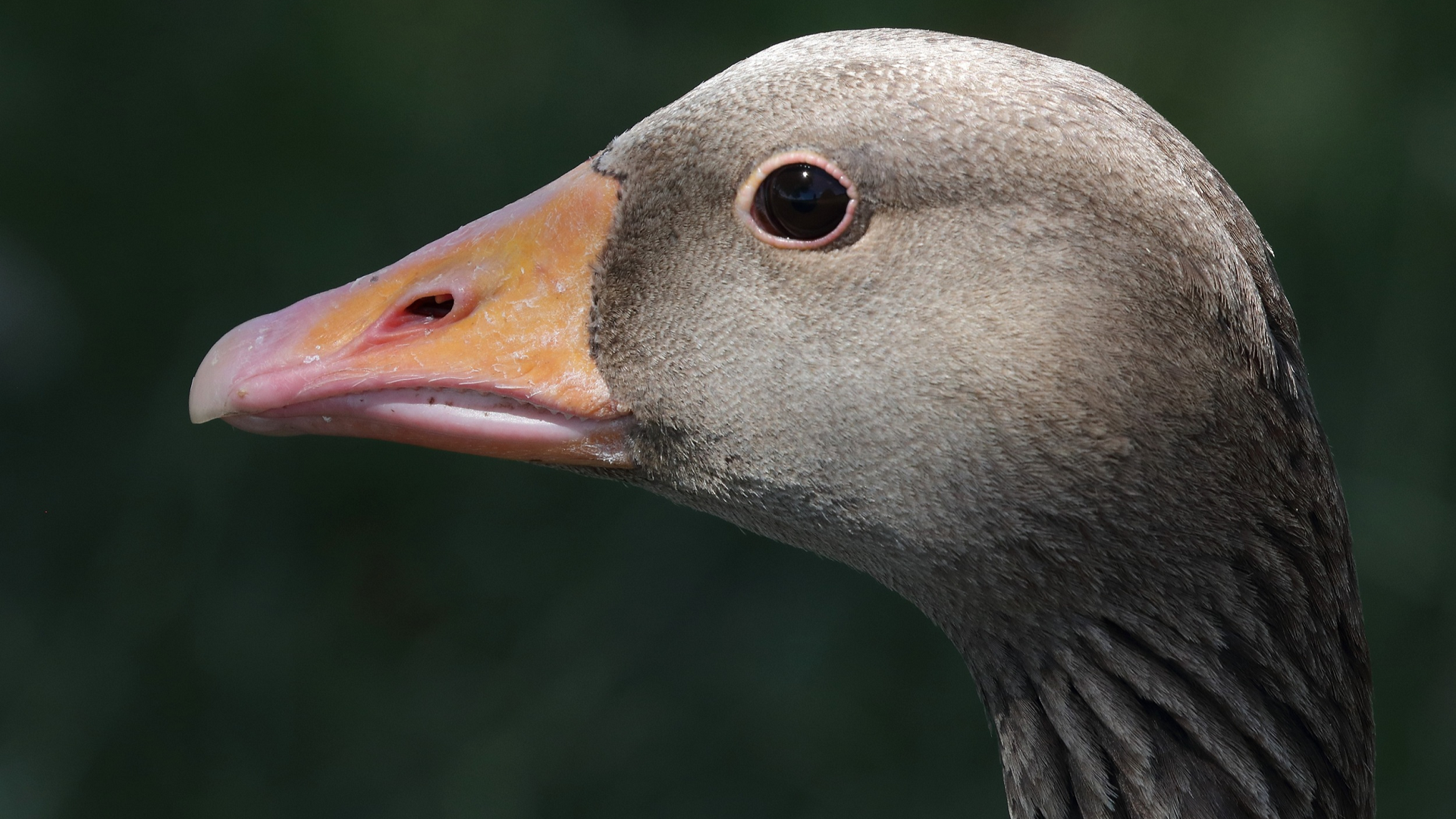
Greylag Goose

Anser anser

Greylag Goose
Anser anser

The Greylag is the commonest native goose.

#

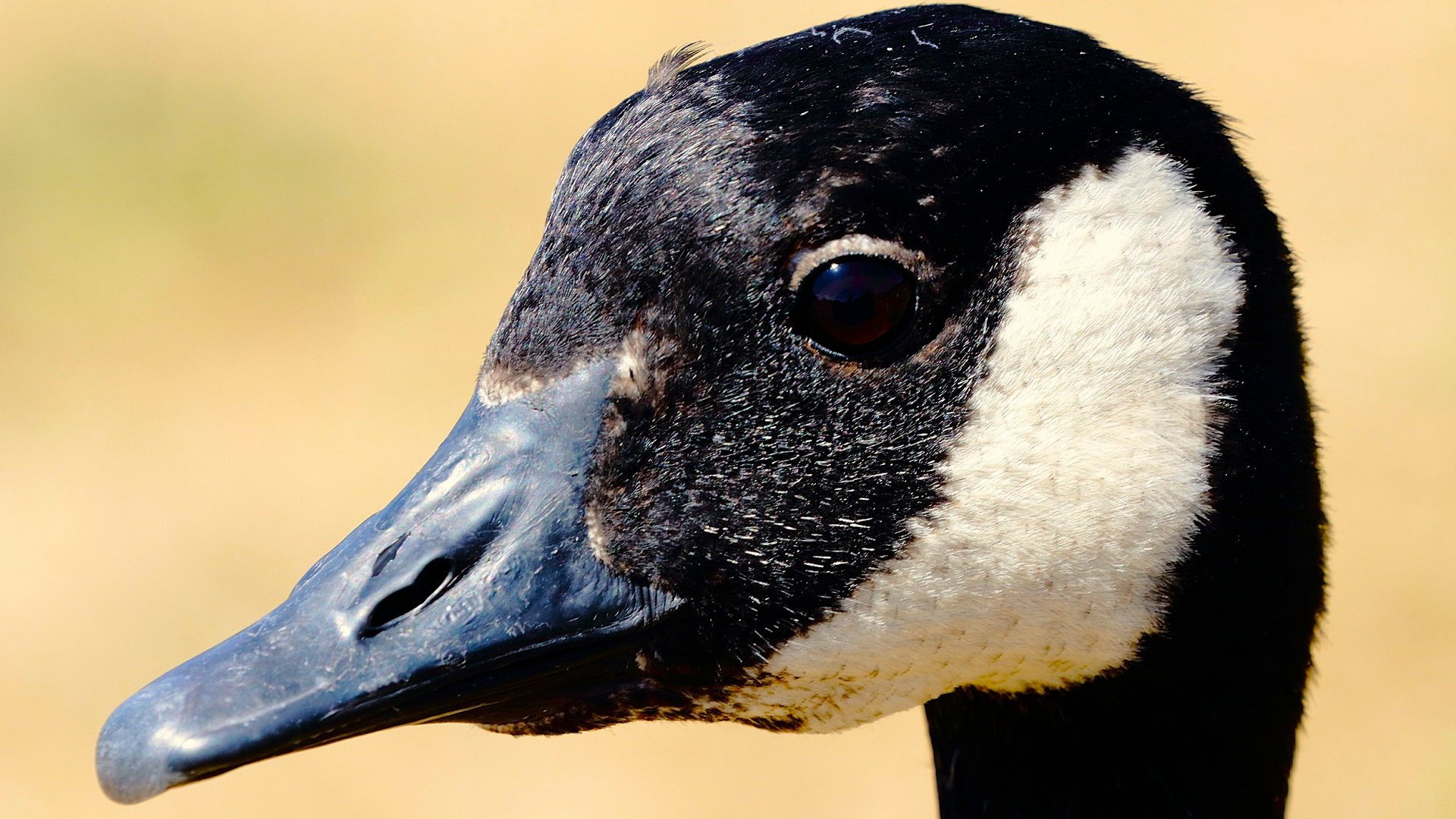
Canada Goose

Branta canadensis

Canada Goose
Branta canadensis

The Canada Goose has a distinctive black head and neck, and a large white patch on the throat.

#

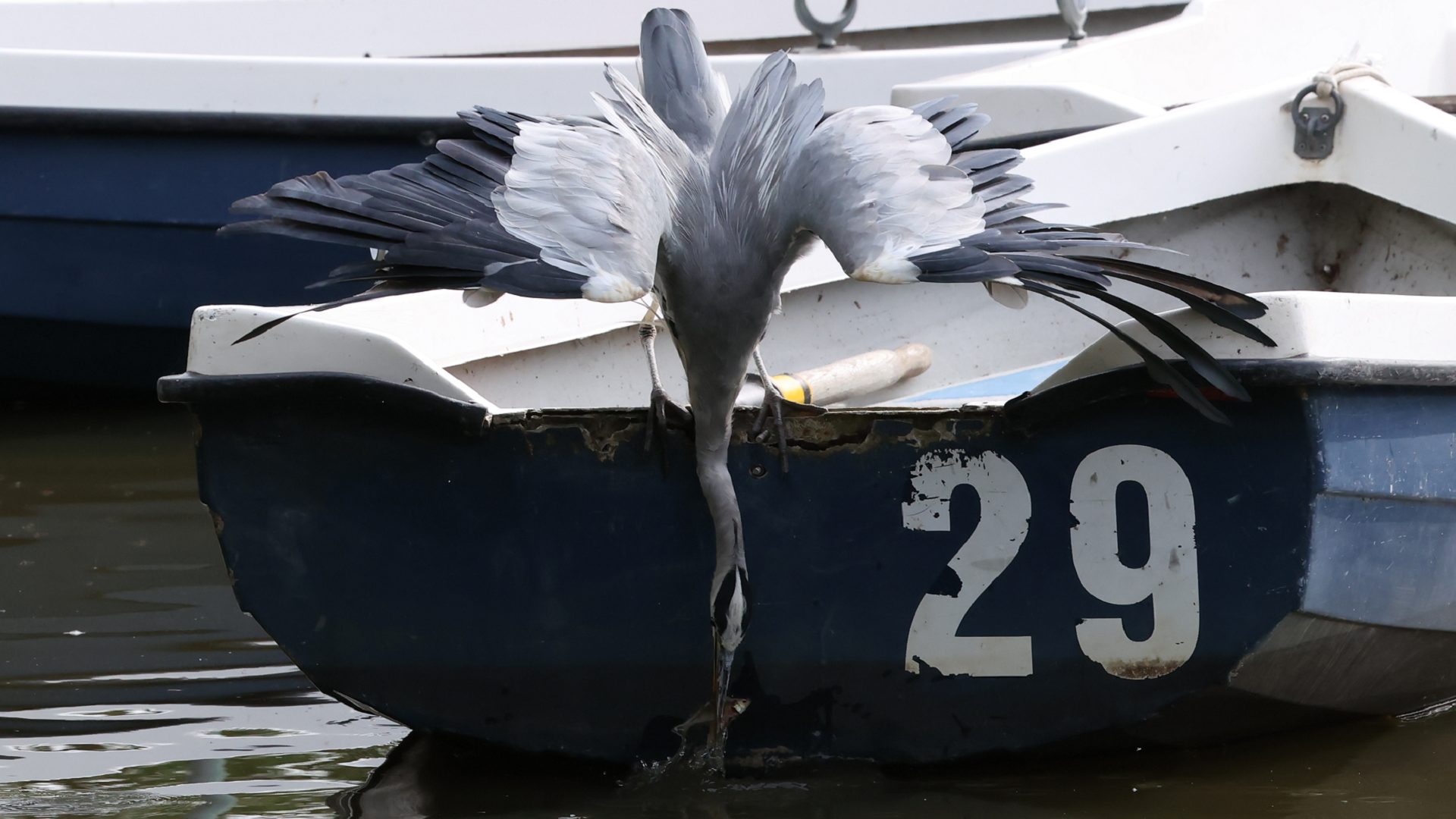
Grey Heron

Ardea cinerea

Grey Heron
Ardea cinerea

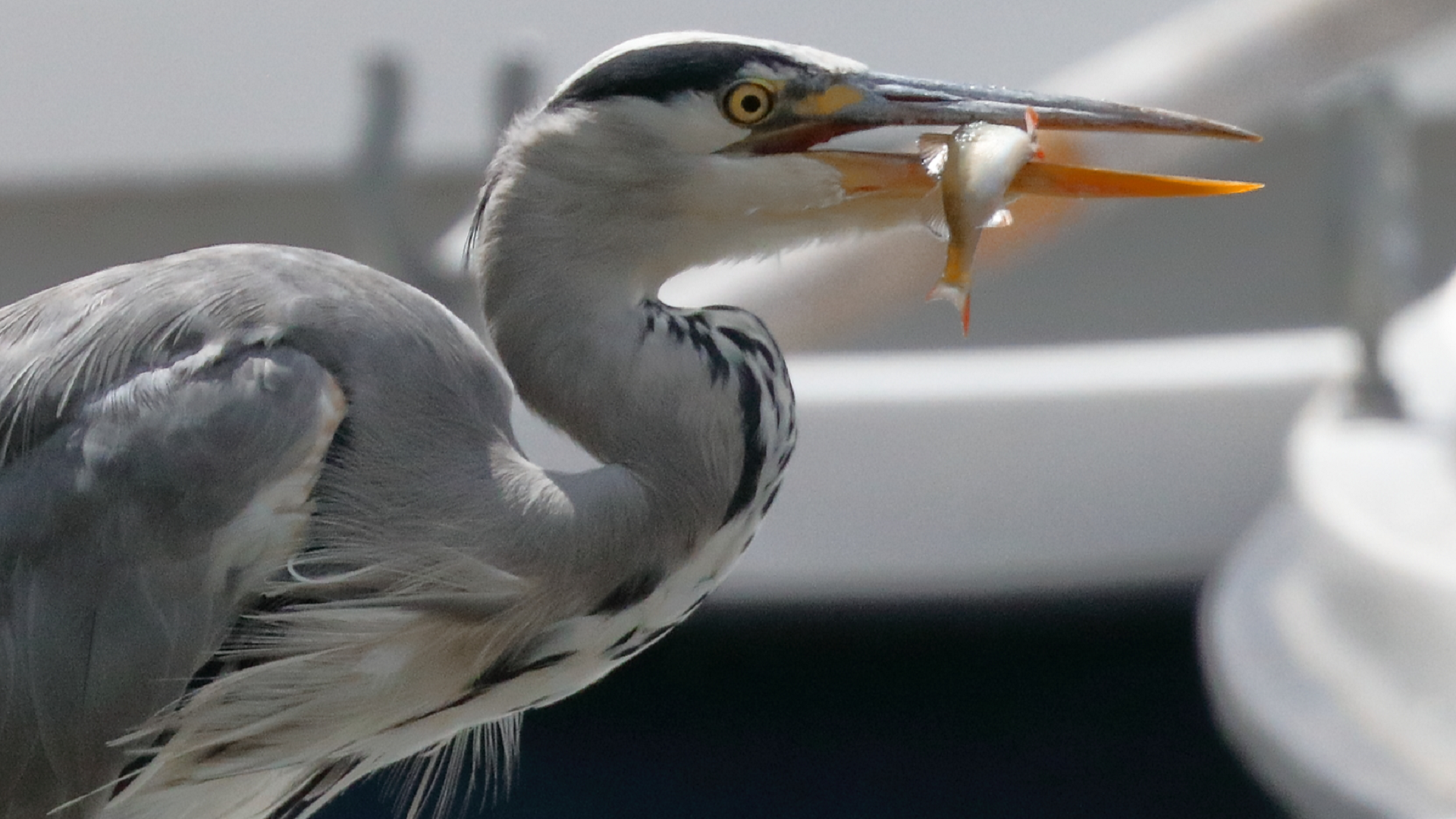
It is not uncommon to spot a heron standing on the rowing boats. They like to perch near the water waiting for an opportunity to catch fish. When a fish is caught the heron usually tosses it into the air to be swallowed head-first so that the scales and fins don’t catch in the throat.

Grey Heron
Ardea cinerea

#

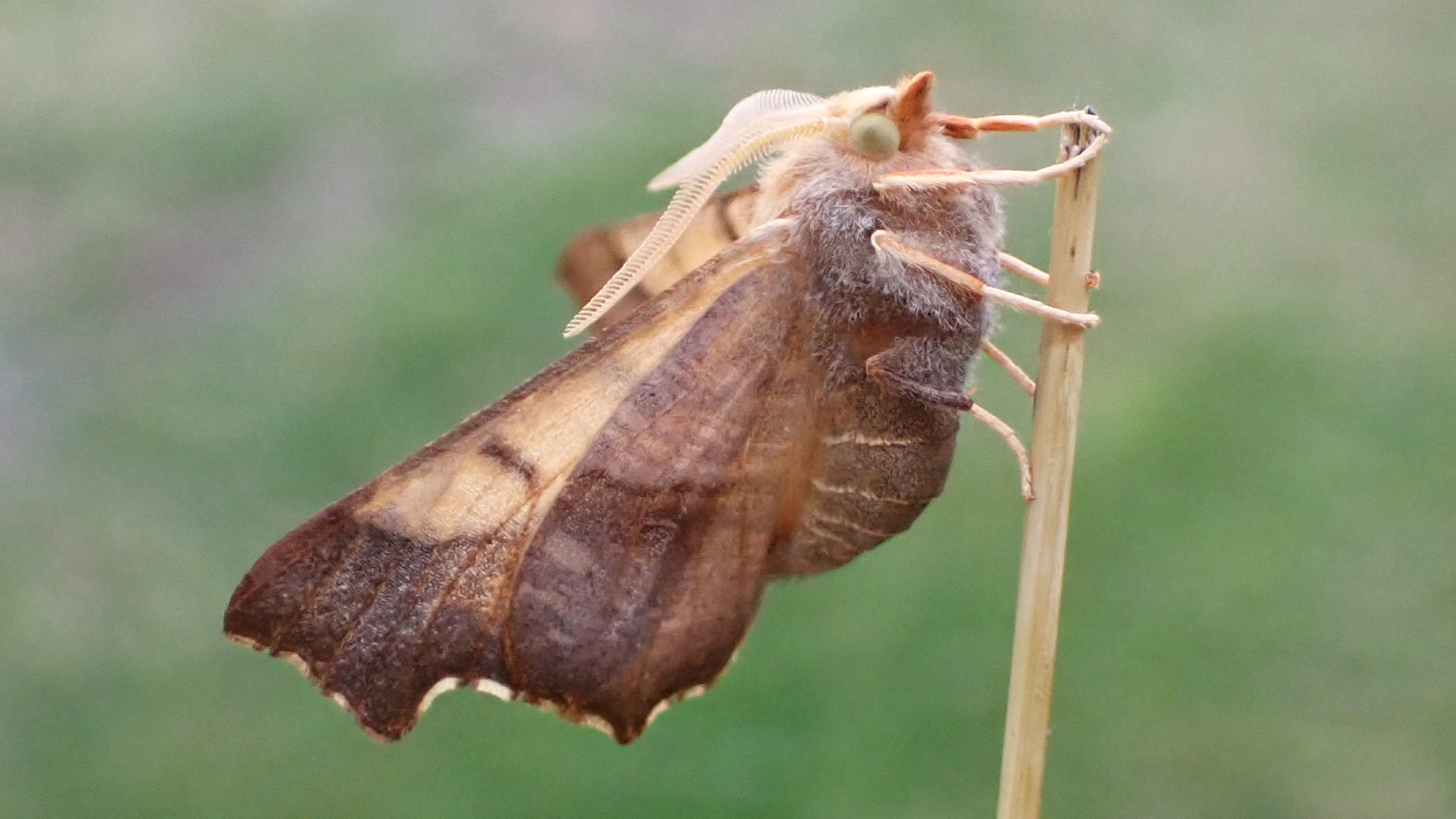
Purple Thorn

Selenia tetralunaria

Purple Thorn
Selenia tetralunaria

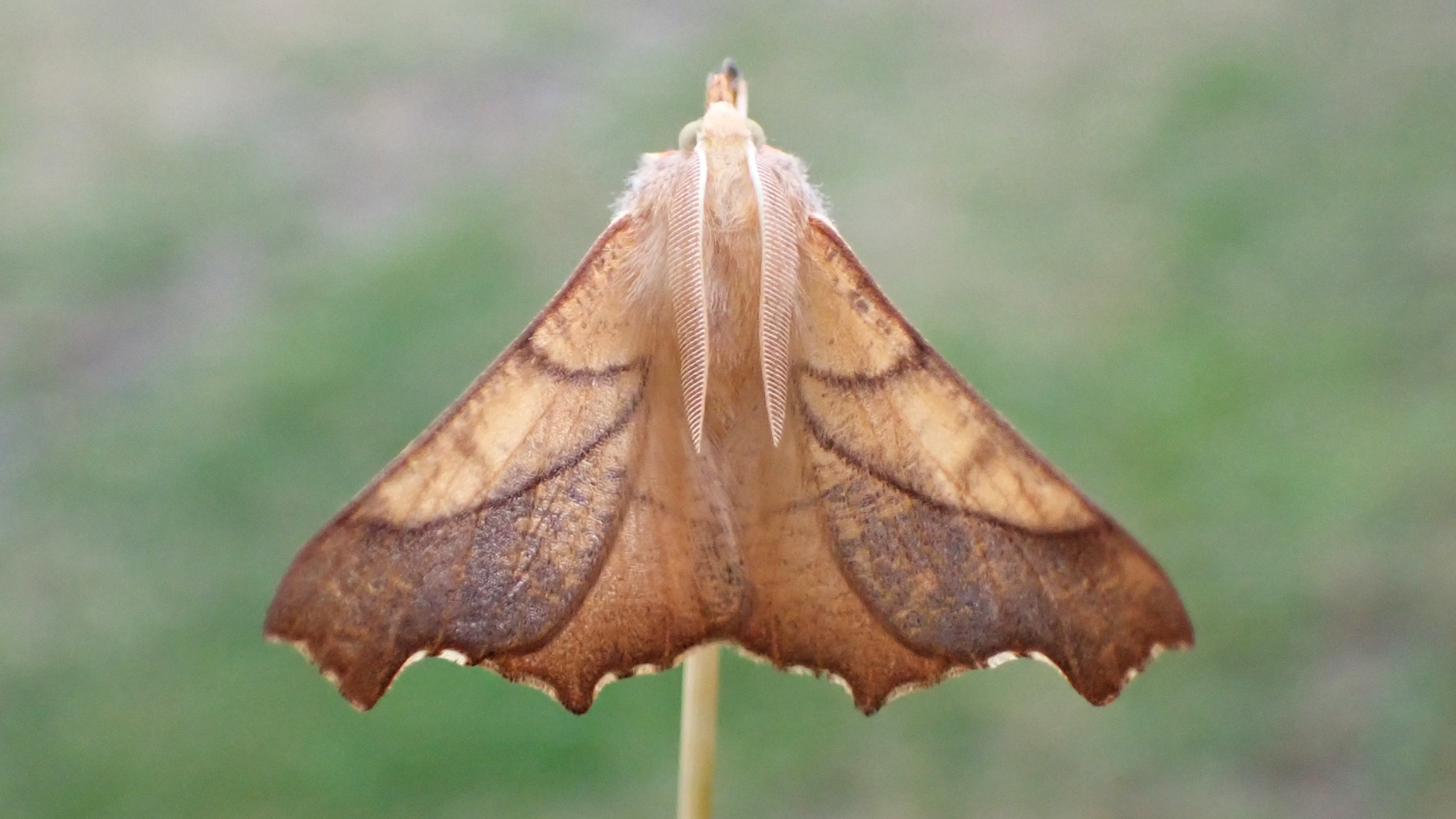
There are two generations of the Purple Thorn each year. The first generation which flies in April and May has more purple in its colouration. The summer generation that appears in July and August has smaller and paler individuals. This moth can be found in woodland, heathland and scrub. Its larvae feed on broadleaved trees such as Hazel and Birch.

#

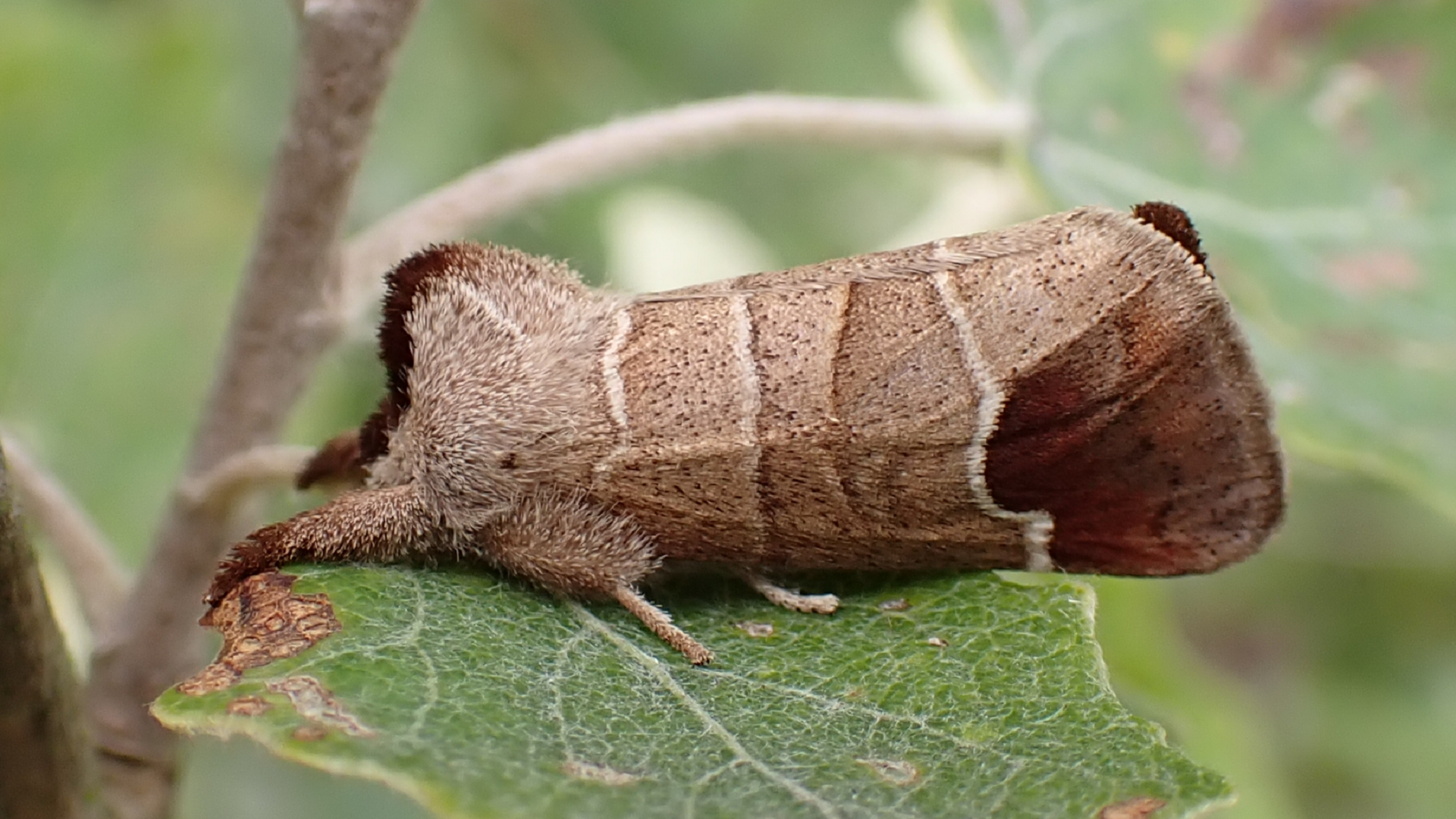
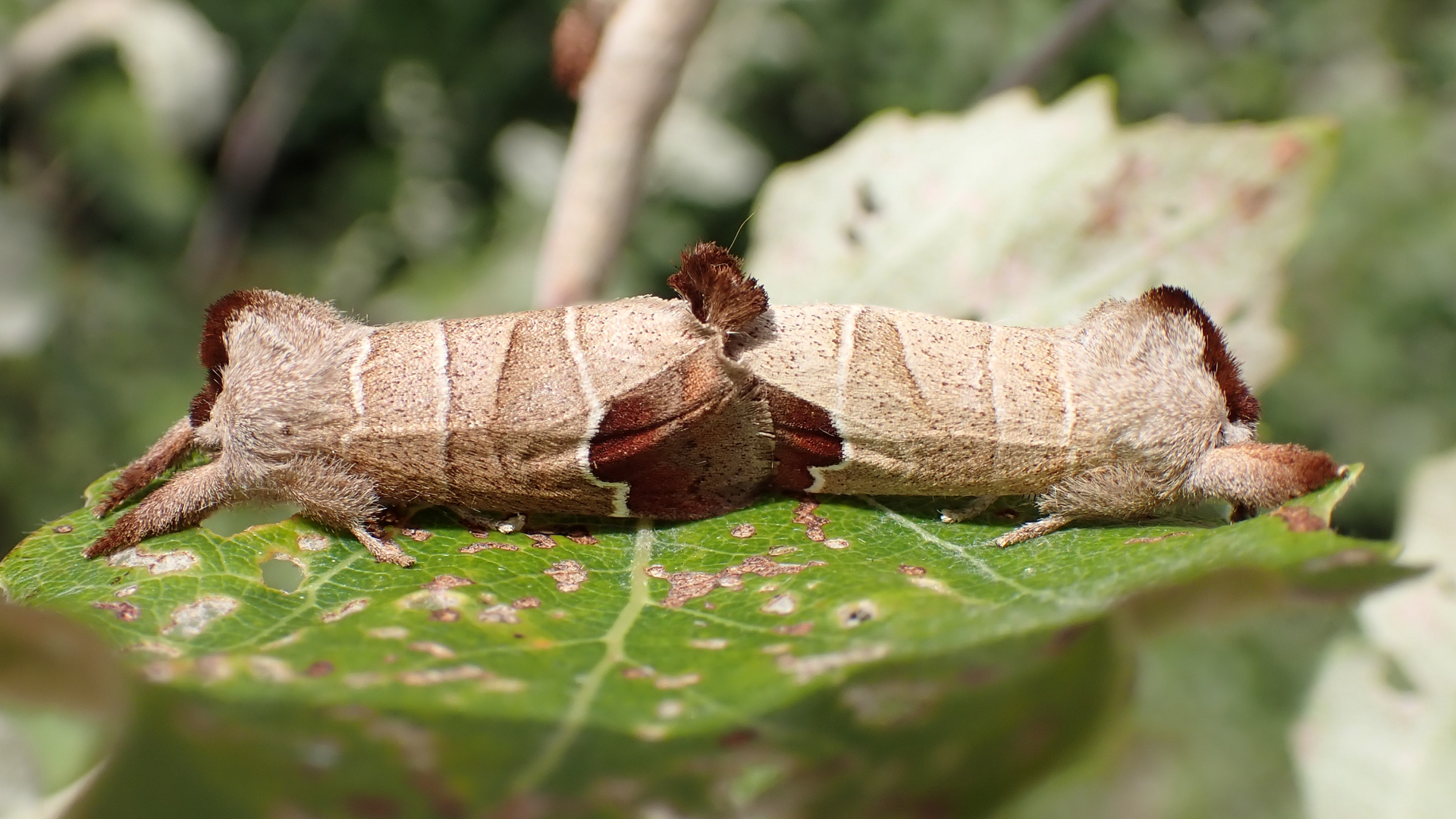
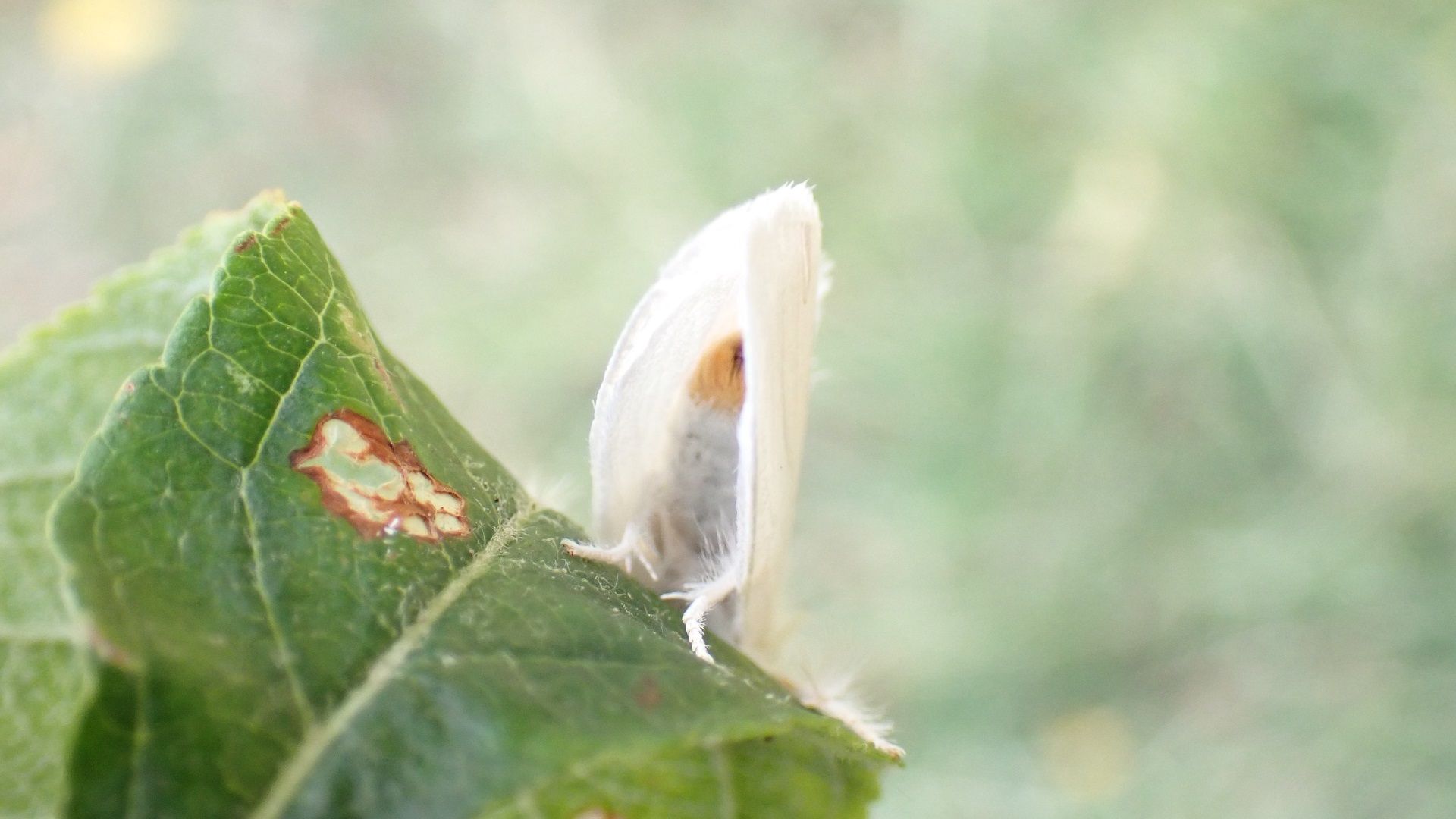
Chocolate-tip

Clostera curtula

Chocolate-tip
Clostera curtula

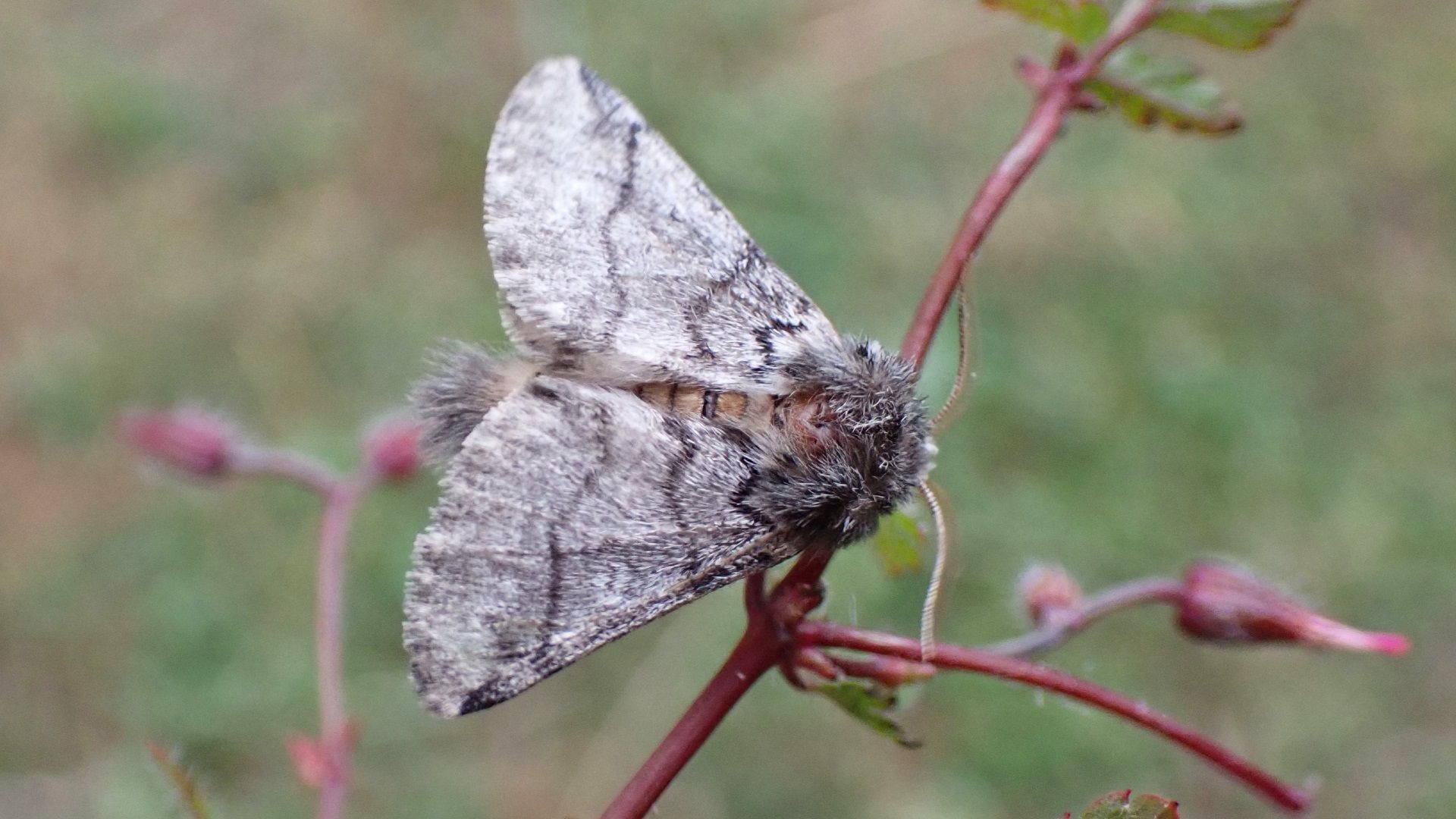
Chocolate-tip moths can be found in woodland, scrub and on hedgerows. Foodplants include Aspen, Poplar, Sallow and Willow.

#

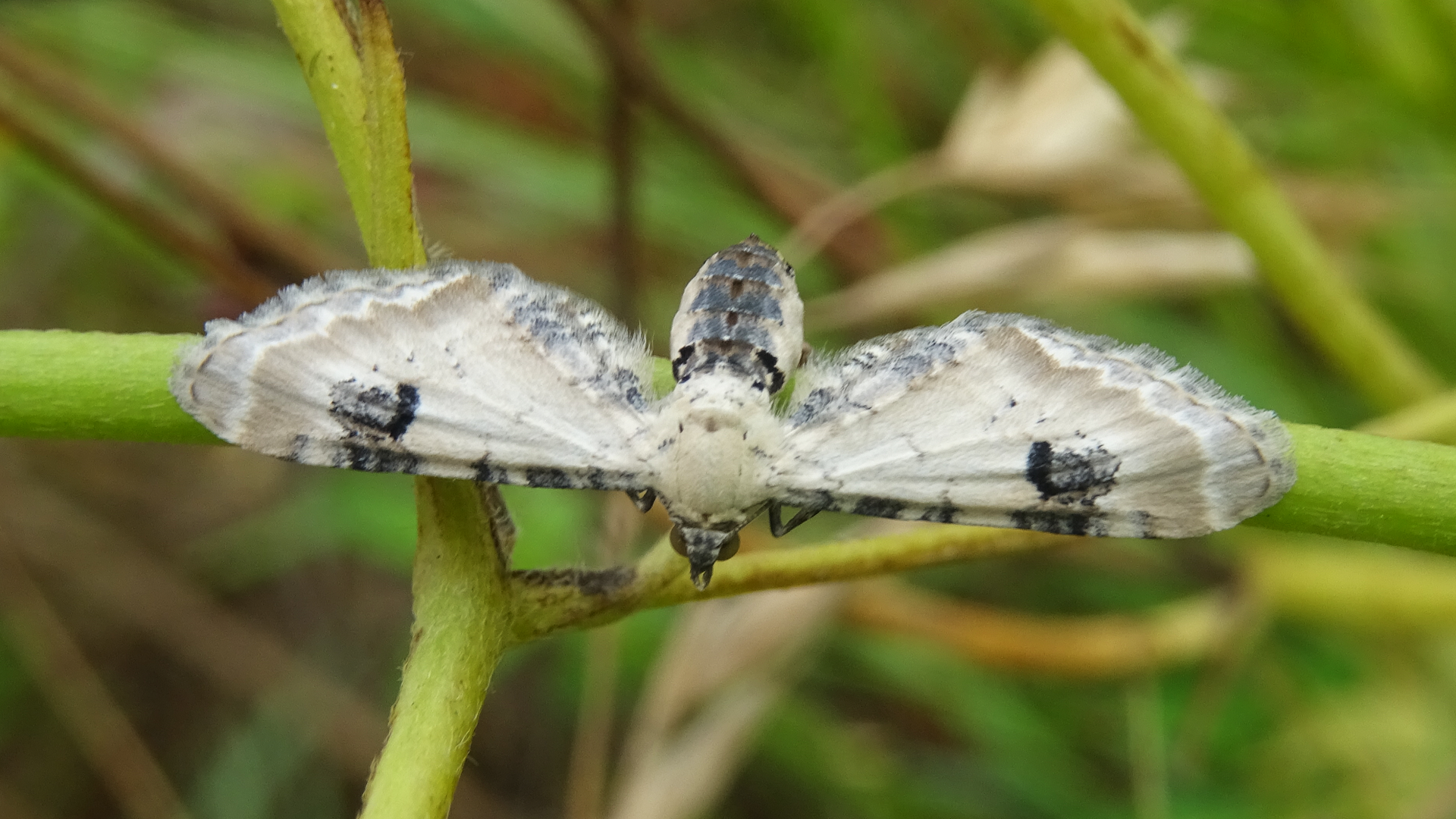
Lime-speck Pug

Eupithecia centaureata

Lime-speck Pug
Eupithecia centaureata

This moth species flies from April to October in two broods. Its larvae feed on a wide range of plants.

#

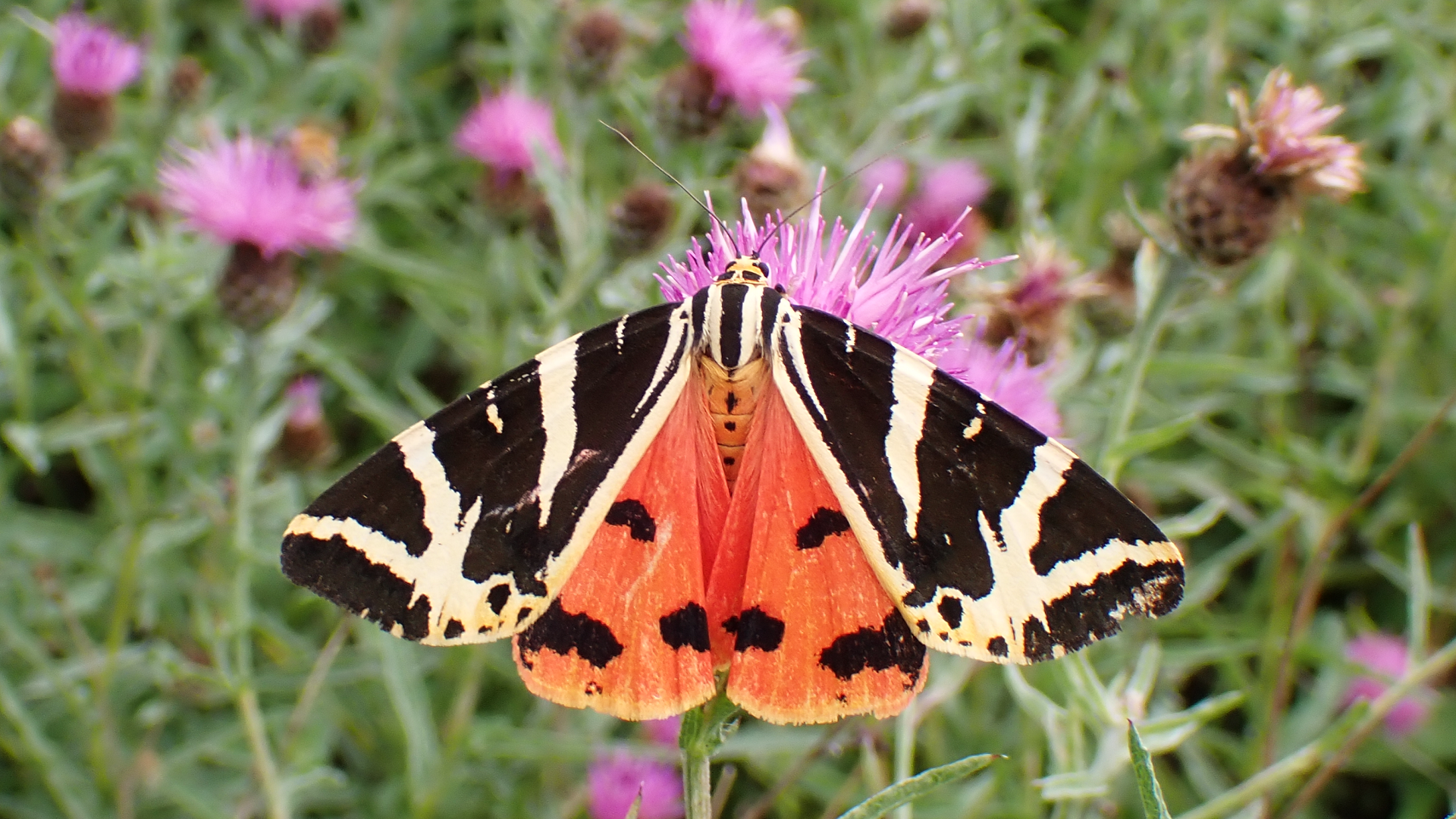
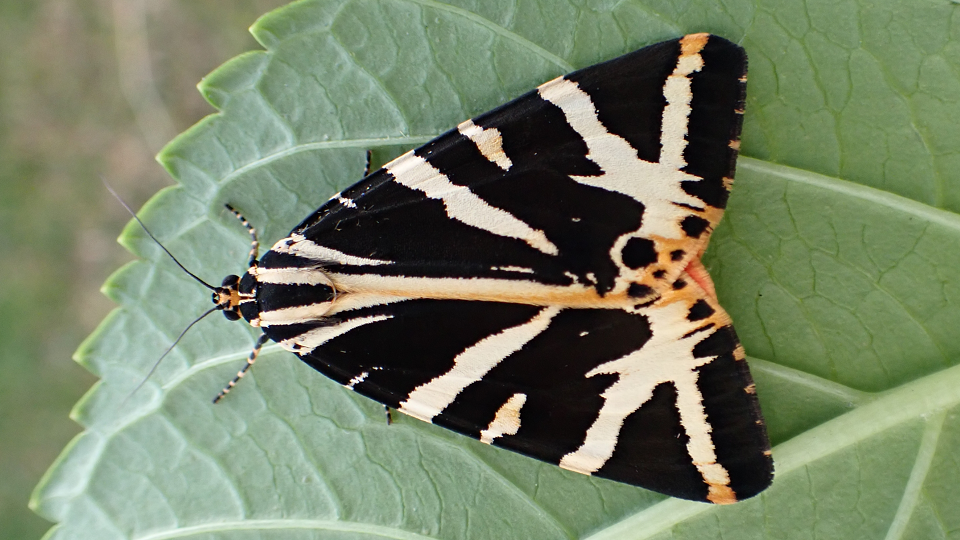
Jersey Tiger

Euplagia quadripunctaria

Jersey Tiger
Euplagia quadripunctaria

A moth that originates from the Channel Islands. Since 2017 it has become a prolific sight in Hainault flying during daytime from July to September. Many people mistake it for an orange-coloured butterfly when flying. The larvae feed on nettles, hemp-agrimony, plantains and other shrubs.

#

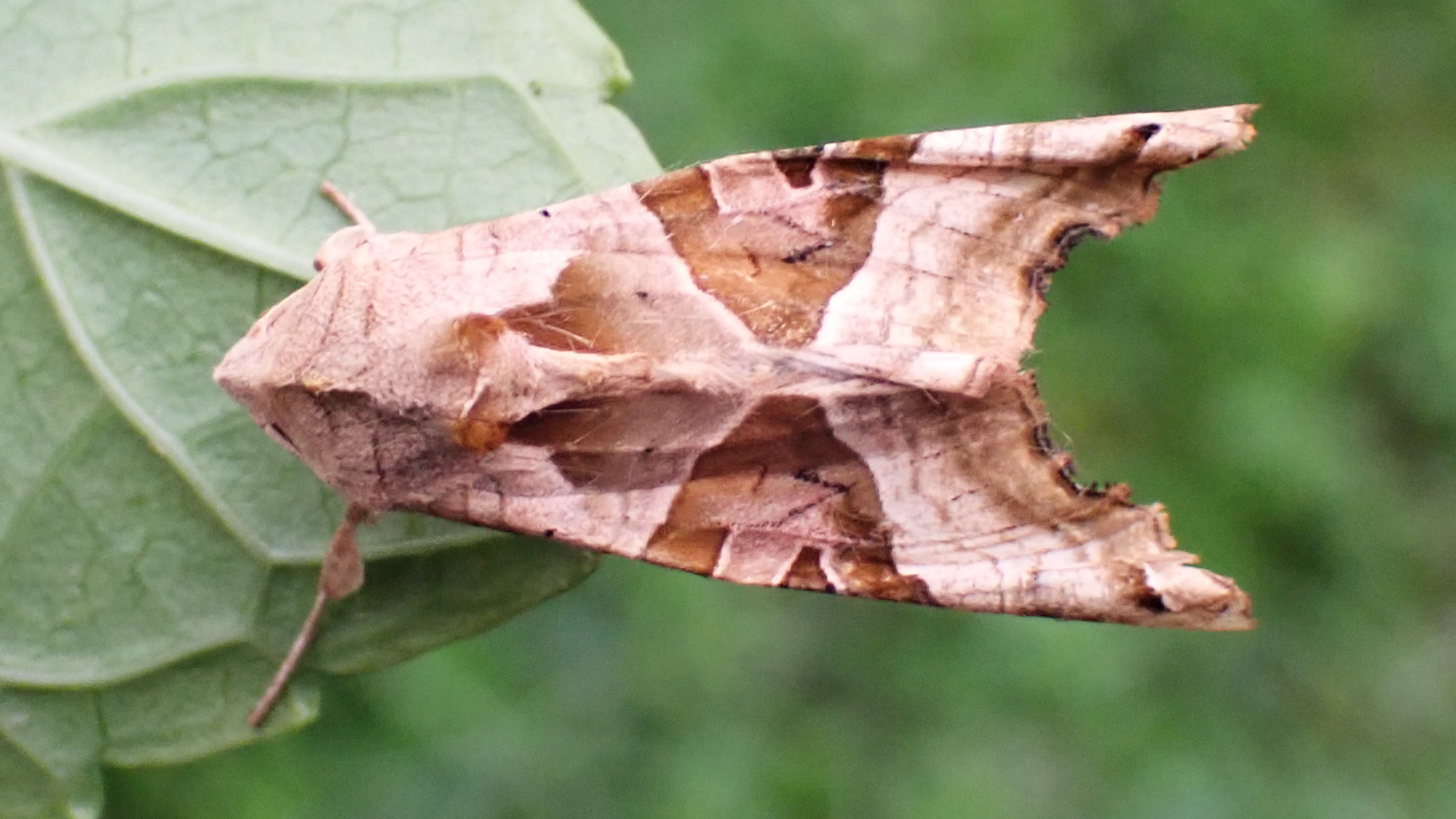
Angle Shades

Phlogophora meticulosa

Angle Shades
Phlogophora meticulosa

The Angle Shade is a common moth that has two generations each year, the first in spring and the second in autumn. Its larvae feed on herbaceous and woody plants. It has excellent camouflage and can be mistaken for a crumpled leaf when resting.

#

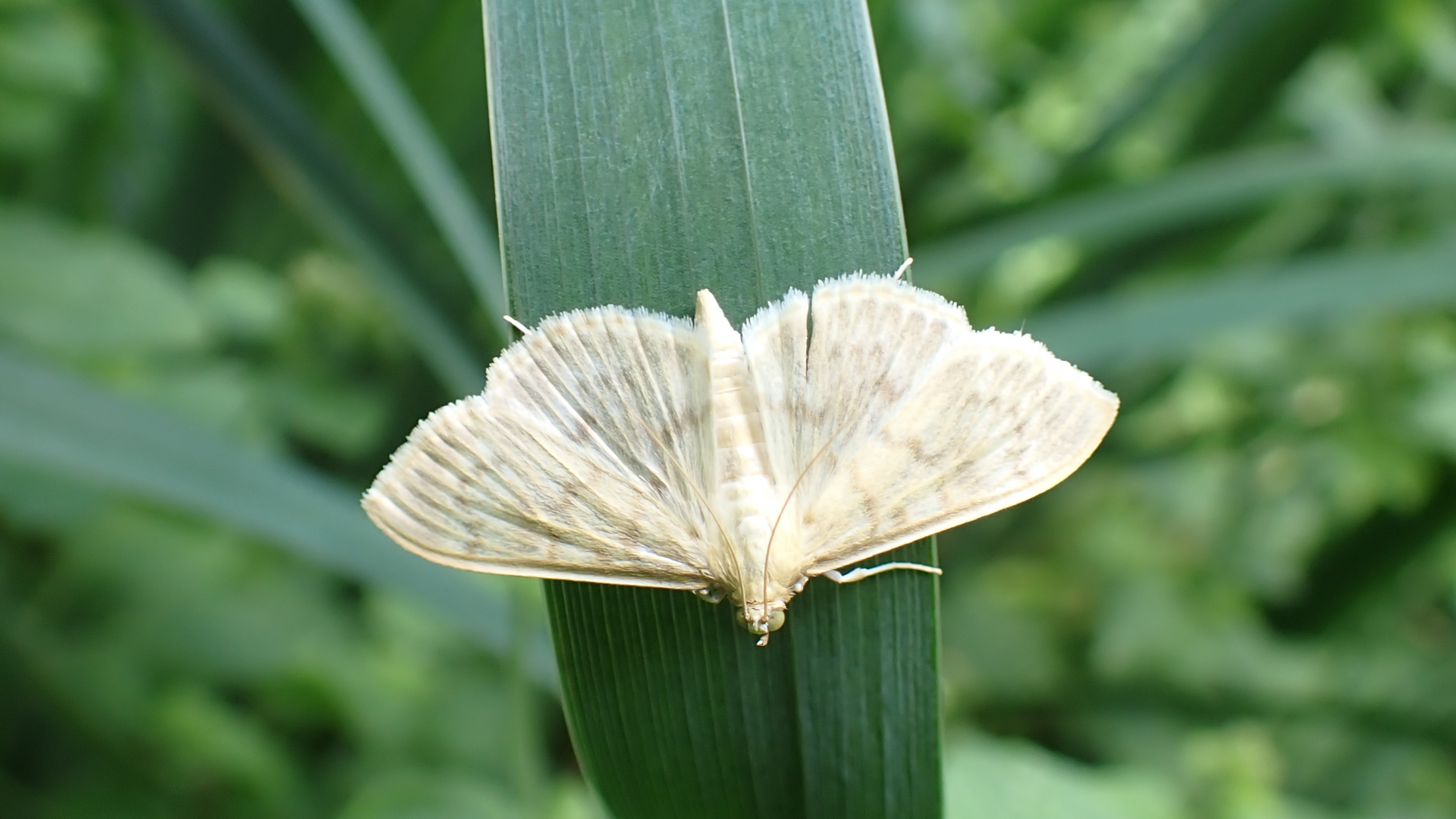
Mother of Pearl

Patania ruralis

Mother of Pearl
Patania ruralis

The Mother of Pearl is a micro-moth, but with a wingspan up to 4cm it is larger than many macro-moths! It is easily disturbed in stinging nettle patches during August. It likes to rest on the underside of leaves. The wings are iridescent like mother of pearl when viewed from different angles, hence its common name. Its larvae mainly feed on stinging nettles, living in folded leaves spun together.

#

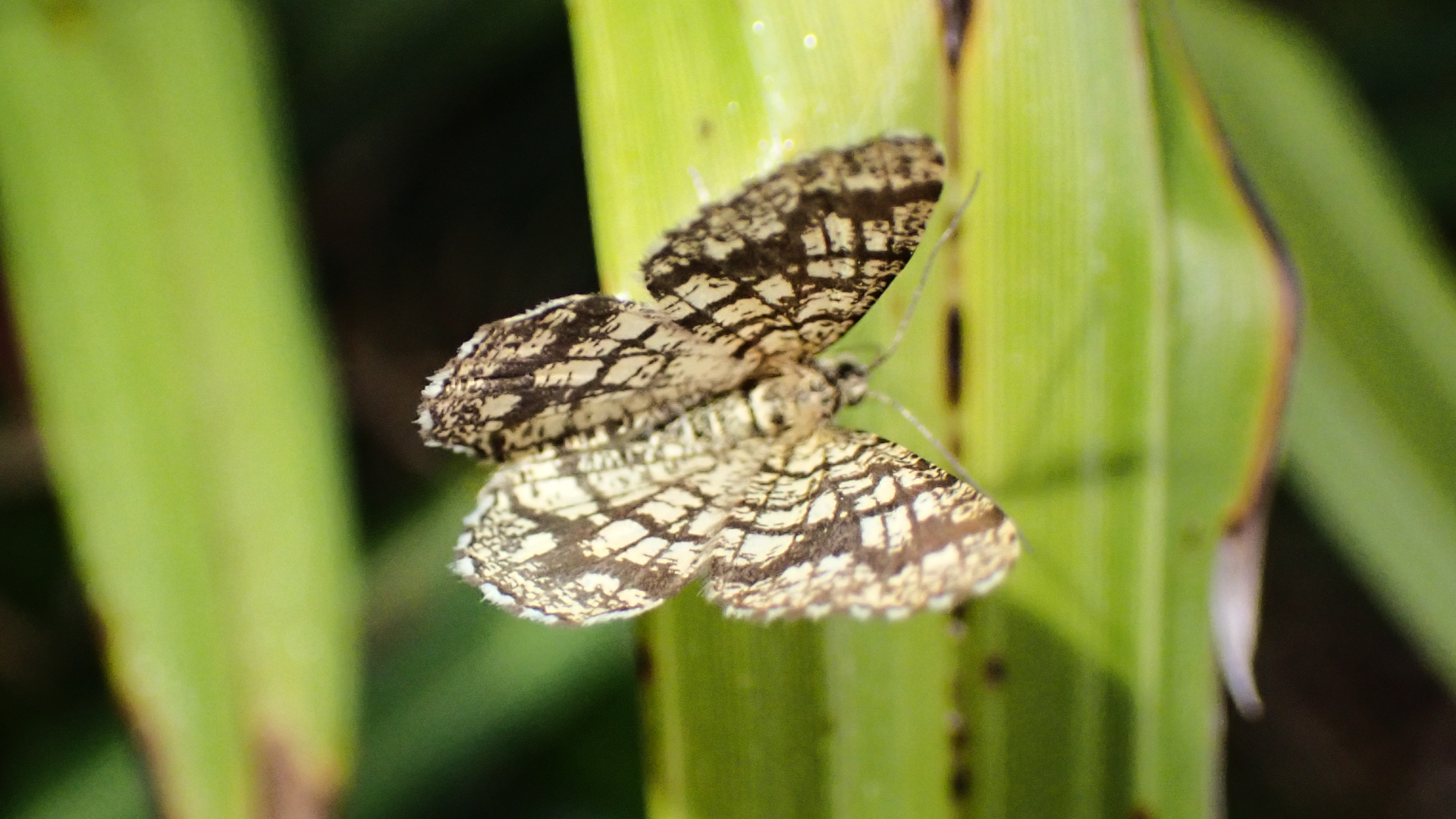
Latticed Heath

Chiasmia clathrata

Latticed Heath
Chiasmia clathrata

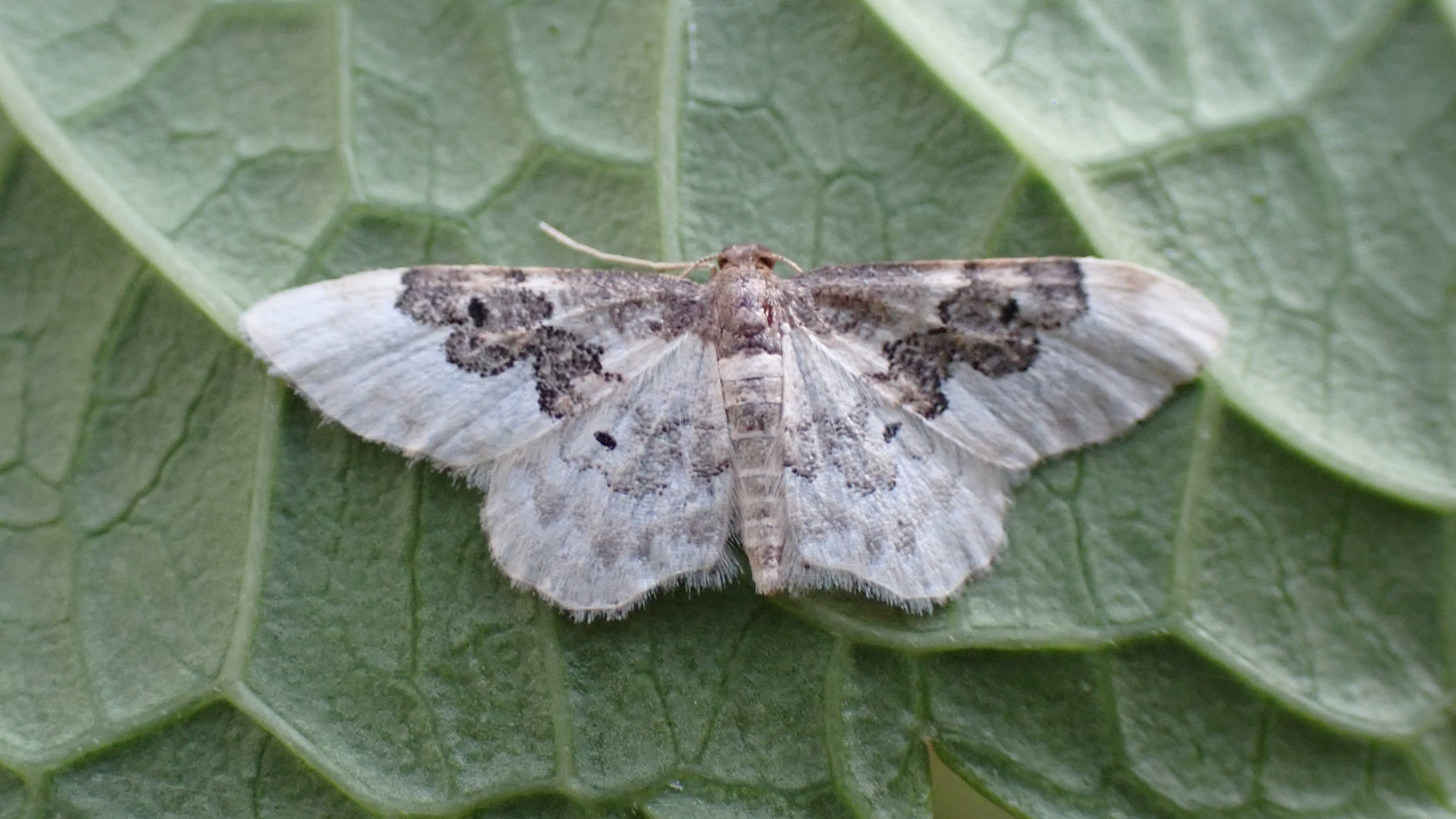
This smallish macro-moth has several named forms and subspecies. The ground colour ranges from white to yellow. Its larvae feed on members of the Pea family such as Clover, Trefoil and Lucerne.

#

Straw Underwing

Thalpophila matura

Straw Underwing
Thalpophila matura

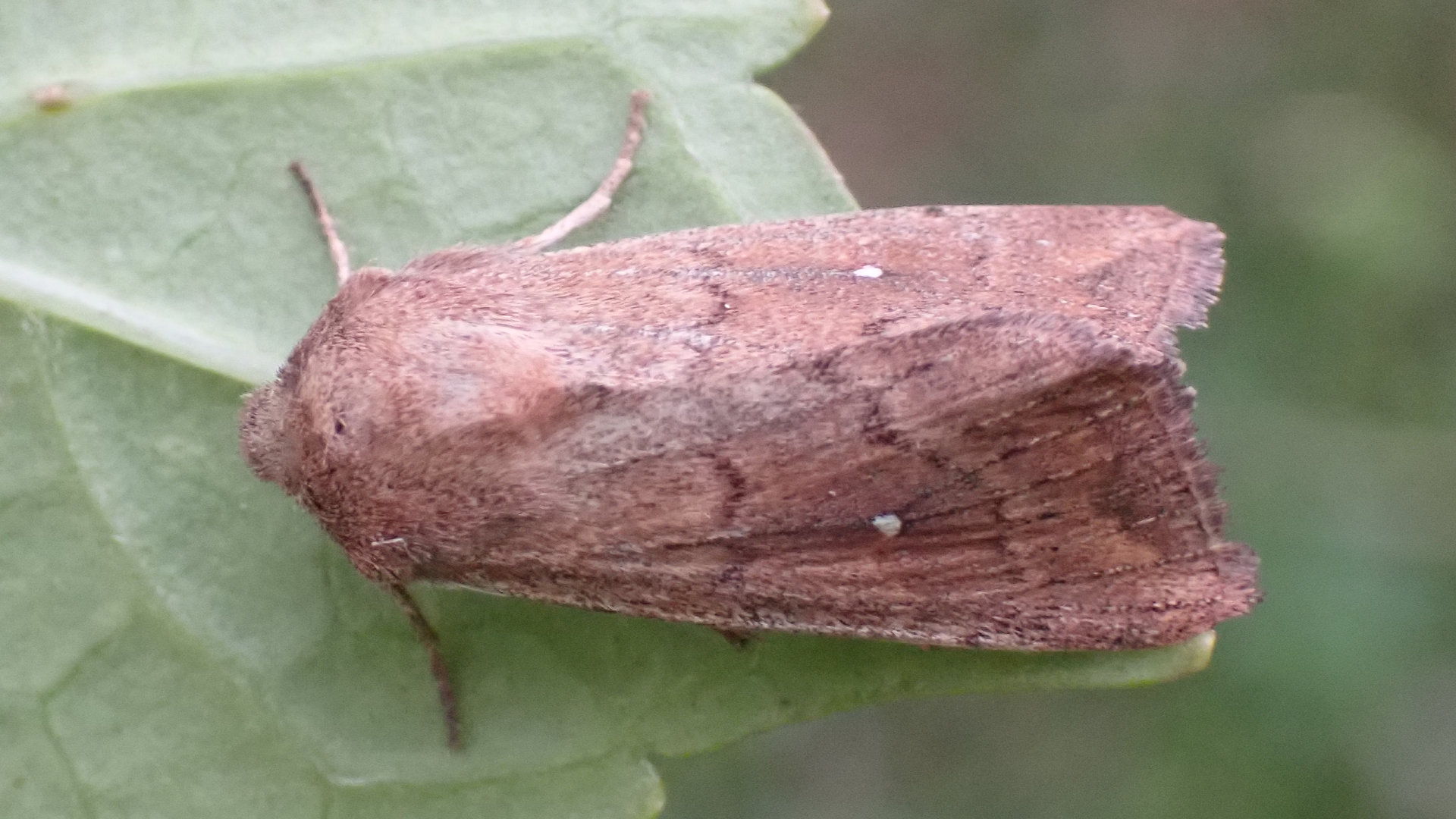
The Straw Underwing is a common moth on the wing in July and August. Its larvae feed on various grasses. The underwings are straw-coloured.

#

Oak Processionary

Thaumetopoea processionea

Oak Processionary
Thaumetopoea processionea

Contact with hairs of Oak Processionary caterpillars can cause severe, occasionally life-threatening, symptoms. However, adults do not pose the same health problems. Adults fly from July until September.

#

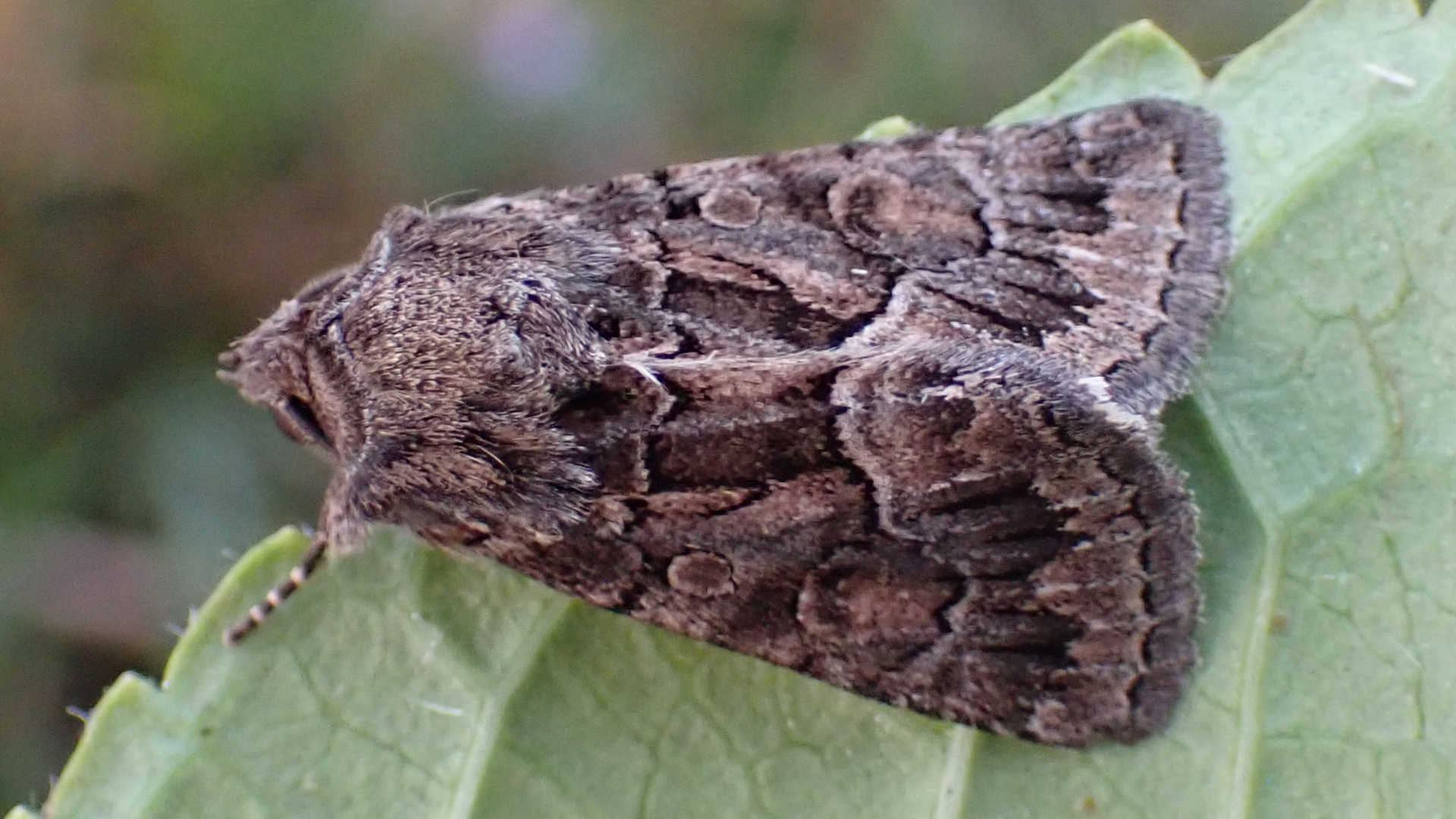
Square-spot Rustic

Xestia xanthographa

Square-spot Rustic
Xestia xanthographa

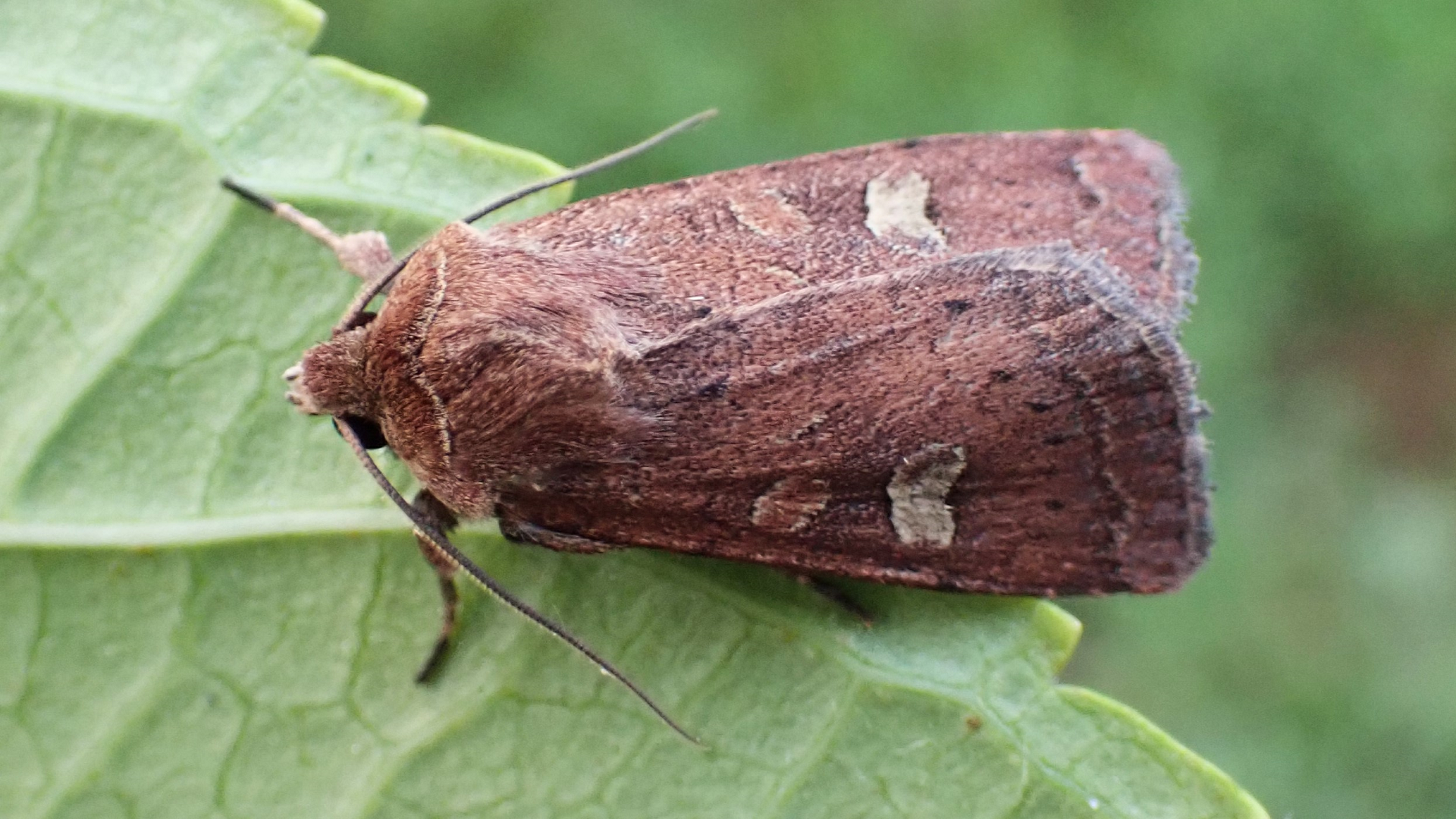
The Square-spot Rustic is on the wing from July until October. Its larvae feed on grasses and small herbaceous plants.

#

Lesser Broad-bordered Yellow Underwing

Noctua janthe

Lesser Broad-bordered Yellow Underwing
Noctua janthe

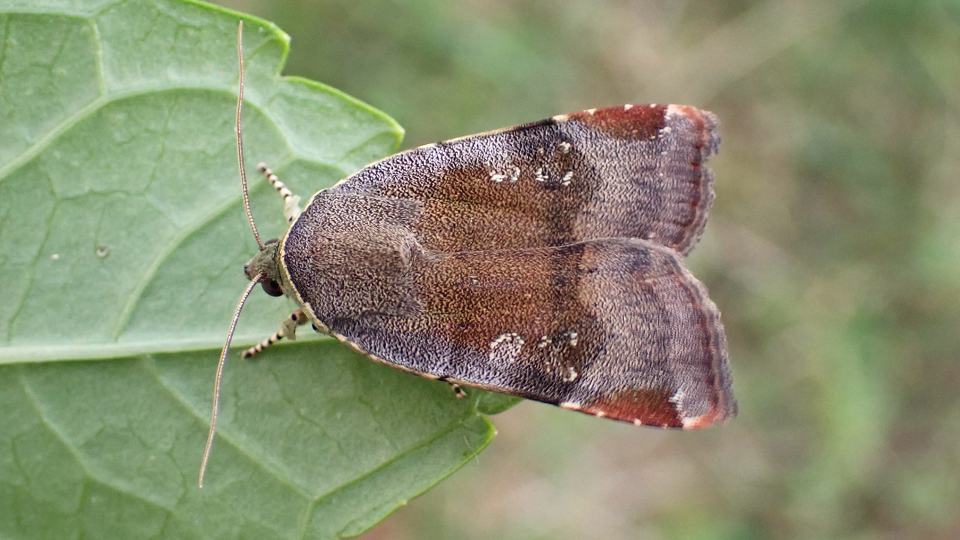
The Lesser Broad-bordered Yellow Underwing moth has one generation a year flying from July until September. Its larvae feed on Herbaceous plants.

#

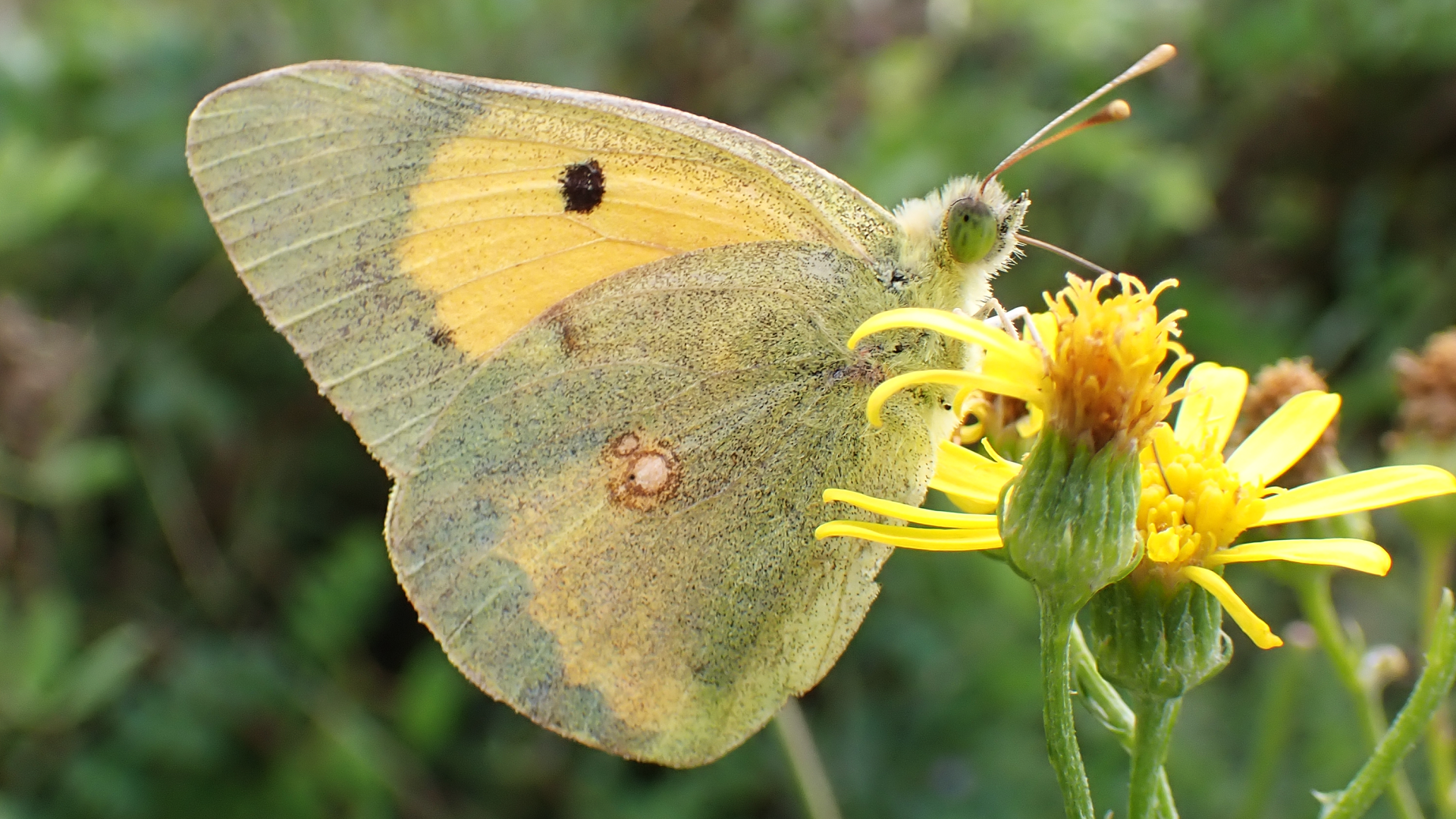
Clouded Yellow

Colias croceus

Clouded Yellow
Colias croceus

The Clouded Yellow butterfly is an immigrant normally originating from North Africa and Southern Europe. Numbers vary and some years we don't see them at Hainault Forest.

#

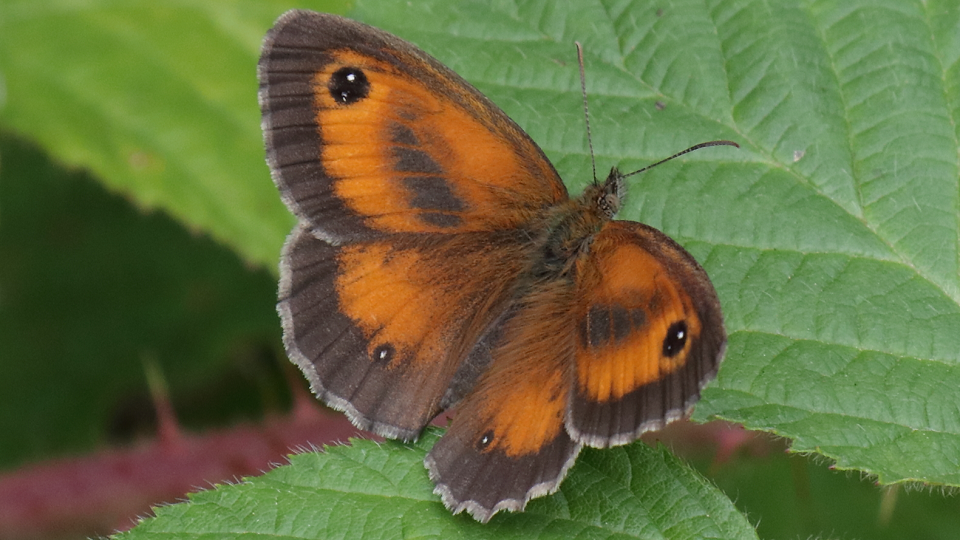
Gatekeeper

Pyronia tithonus

Gatekeeper
Pyronia tithonus

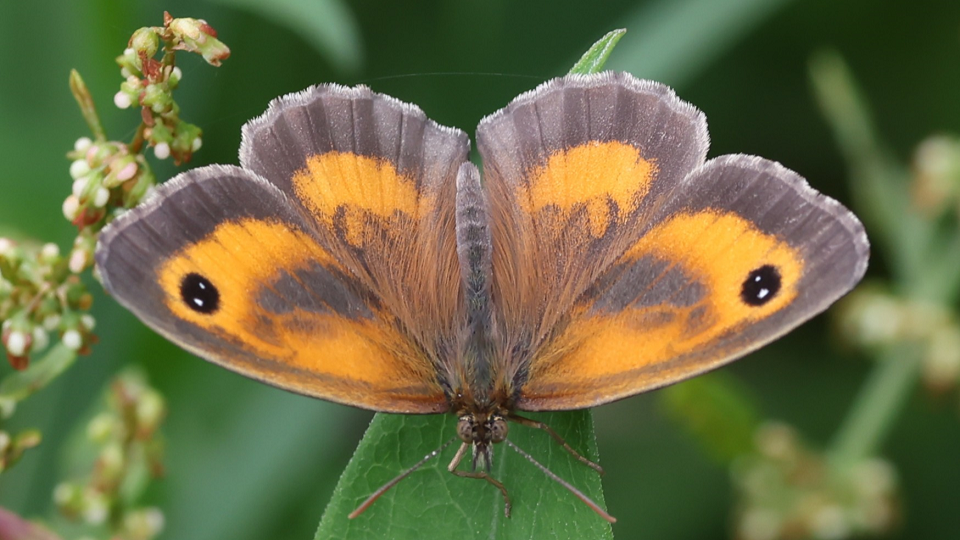
The Gatekeeper is a common butterfly that flies during summer. The sexes are easy to tell apart because males have distinctive dark bars on the forewings. The larger female is usually lighter in colour. This species is also known as the 'Hedge Brown'.

#

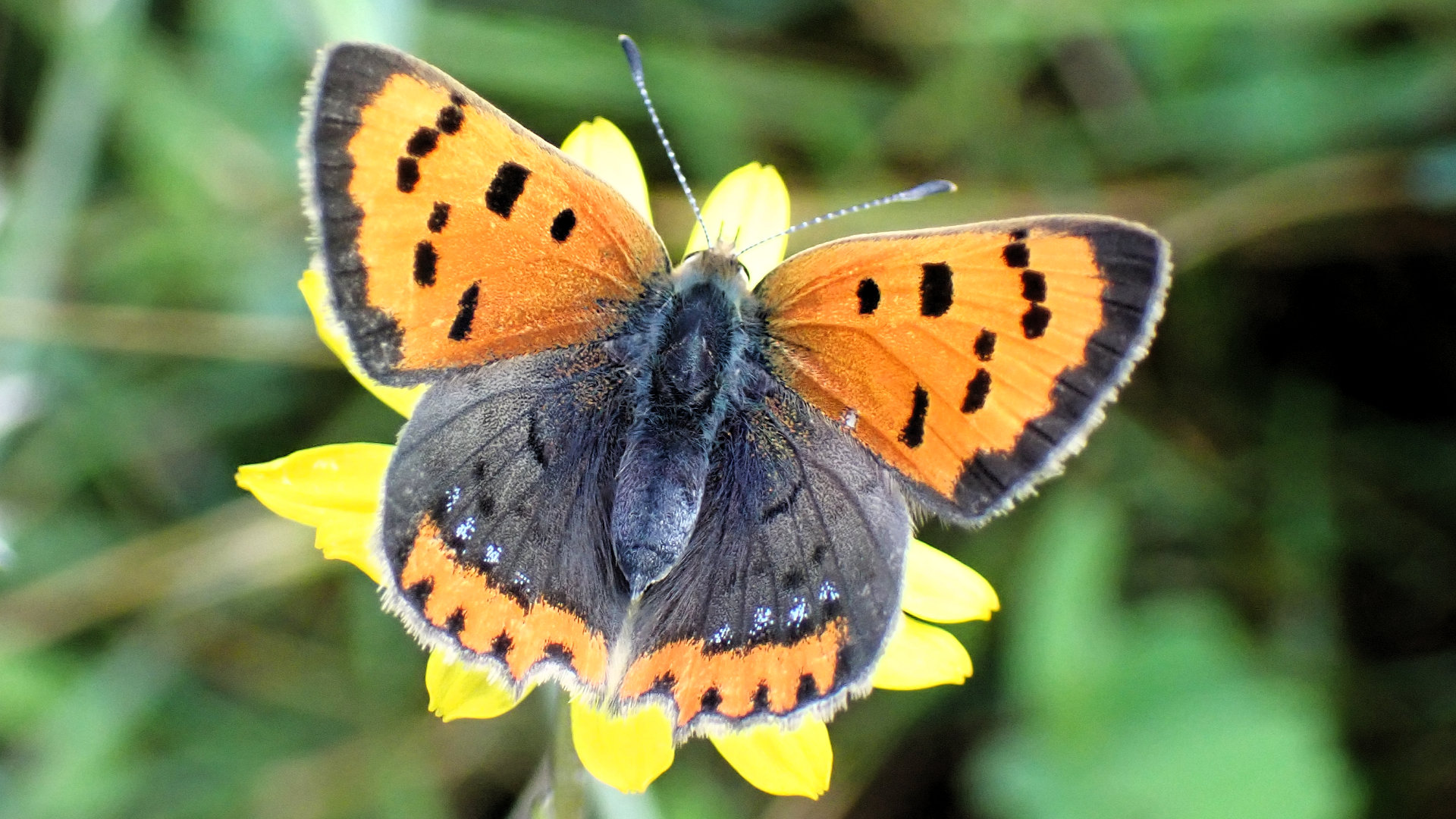
Small Copper

Lycaena phlaeas

Small Copper
Lycaena phlaeas

Small Copper butterflies are usually found in the meadows. They are fairly solitary creatures and it is rare to see more than one or two together. Males are territorial, and often act aggressively towards any passing insects, returning to the same spot when the chase is over. The caterpillars feed mainly on Sheep's sorrel.

#

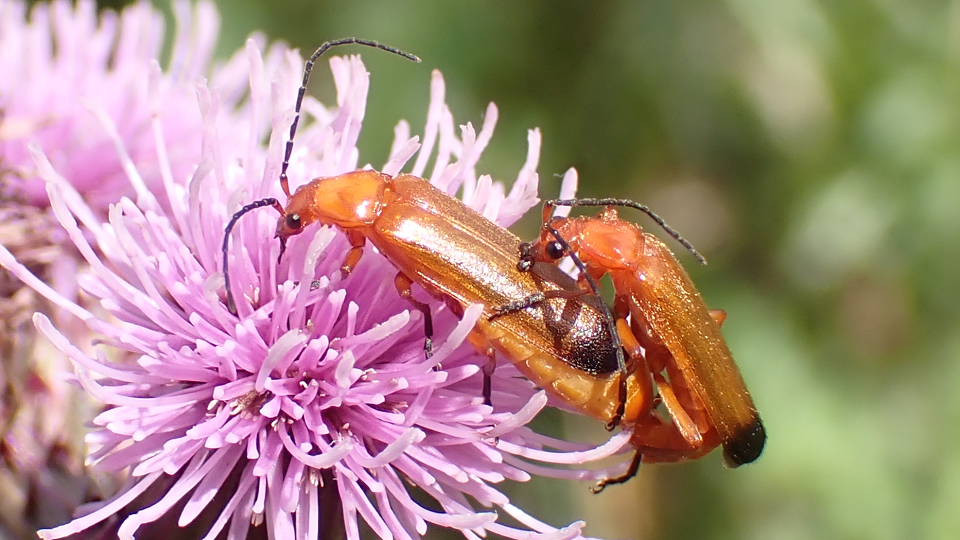
Common Red Soldier Beetle

Rhagonycha fulva

Common Red Soldier Beetle
Rhagonycha fulva

This Soldier Beetle has a reddish-orange body with a black tip. Adults are a common sight in the meadows during July and August when they visit flowers of Knapweed, Wild Carrot, Cow Parsley and Hogweed. They feed on nectar, pollen and other insects.

#

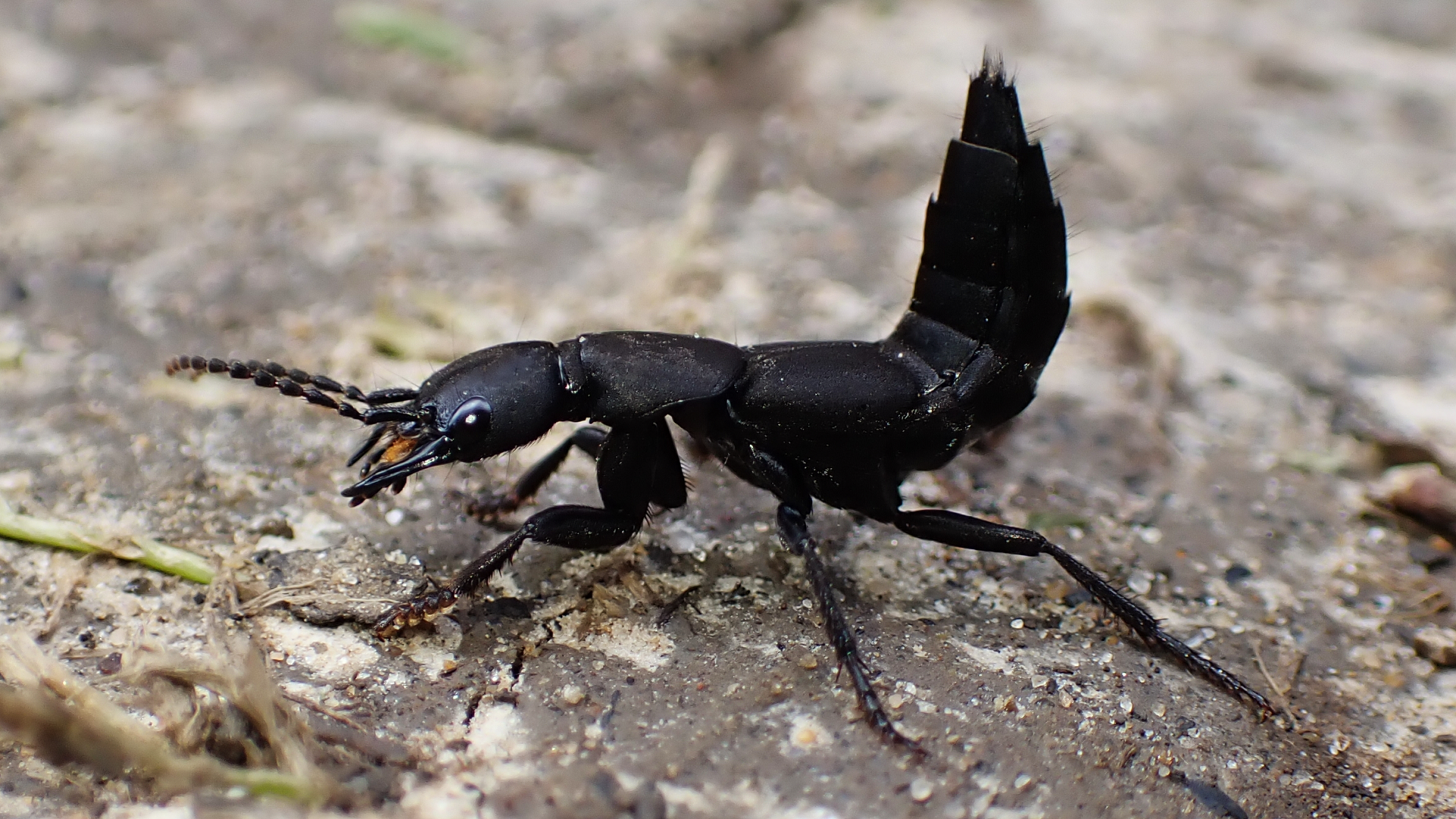
Devil's coach horse

Ocypus olens

Devil's coach horse
Ocypus olens

The Devil's coach horse beetle hunts invertebrates after dark. It curls up its abdomen like the tail of a scorpion when defending itself.

#

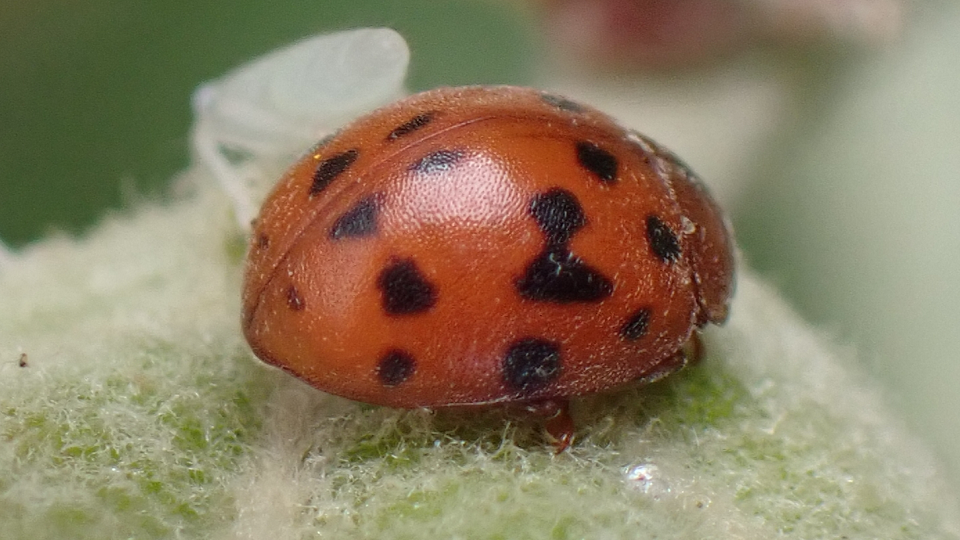
24-spot Ladybird

Subcoccinella vigintiquattuorpunctata

24-spot Ladybird
Subcoccinella vigintiquattuorpunctata

The Twenty-four Spot Ladybird has a dusty appearance. It feeds on fungal moulds and is mostly found on grasses, thistle, nettle, mugwort, knapweed and other low vegetation.

#

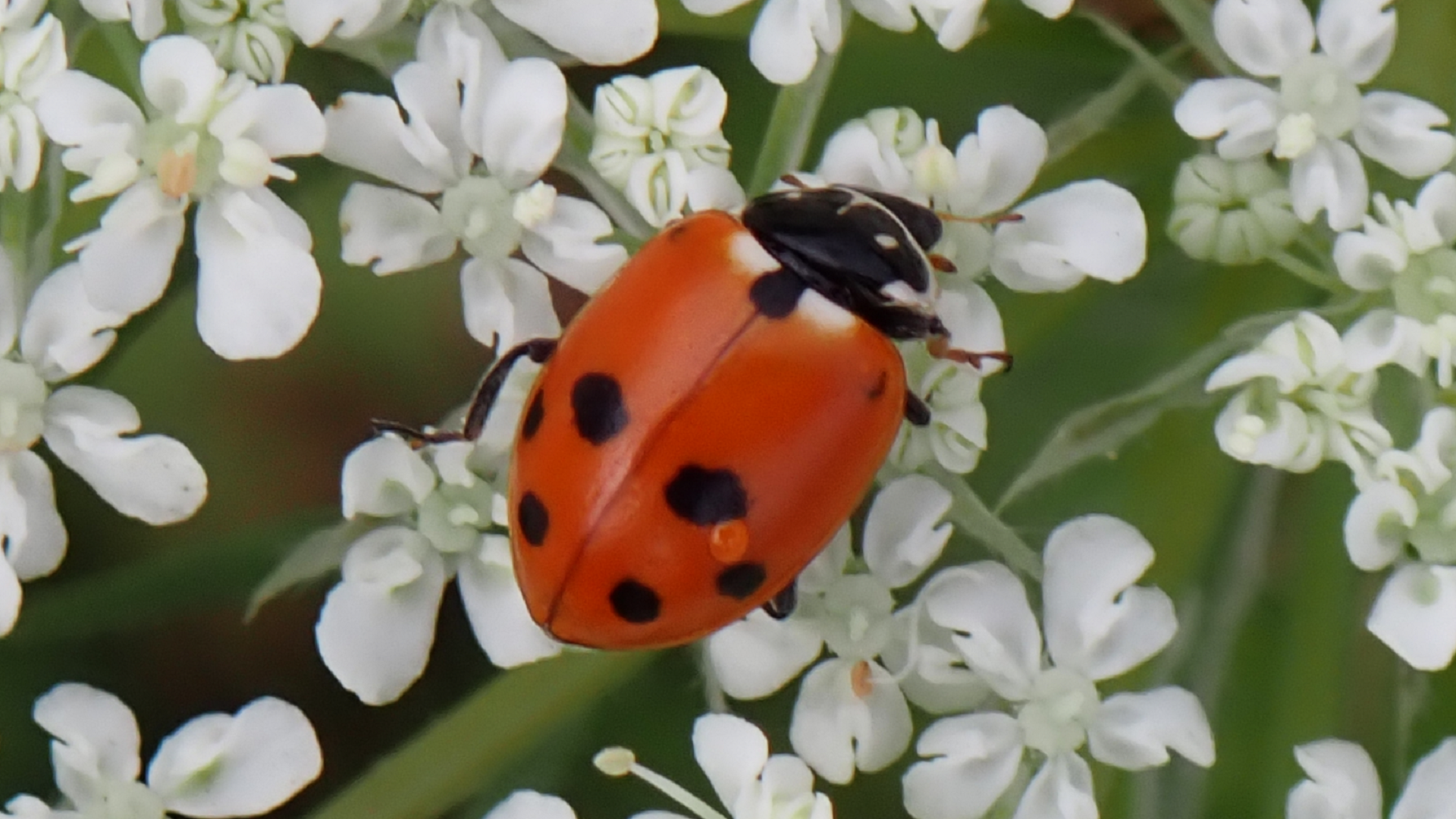
Adonis Ladybird

Hippodamia variegata

Adonis Ladybird
Hippodamia variegata

The body of the Adonis Ladybird (4-5mm) is more elongated than other ladybirds with the number of spots varying from 3 to 15 with most located towards the rear. This species is found on wild carrot and other low vegetation on warm summer days.

#

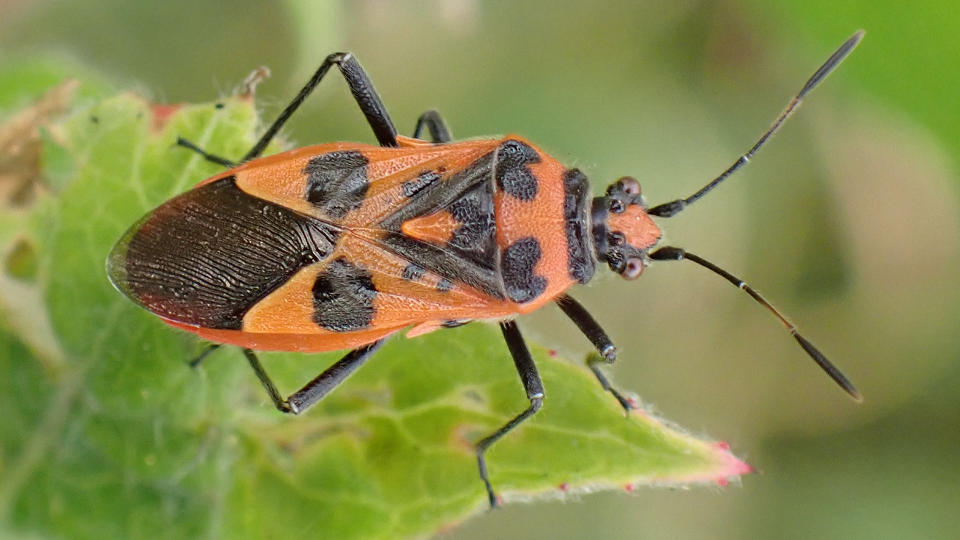
Cinnamon Bug

Corizus hyoscyami 

Cinnamon Bug
Corizus hyoscyami

A brightly coloured bug was once considered a coastal species but is now becoming more frequent inland. About 9mm long.

#

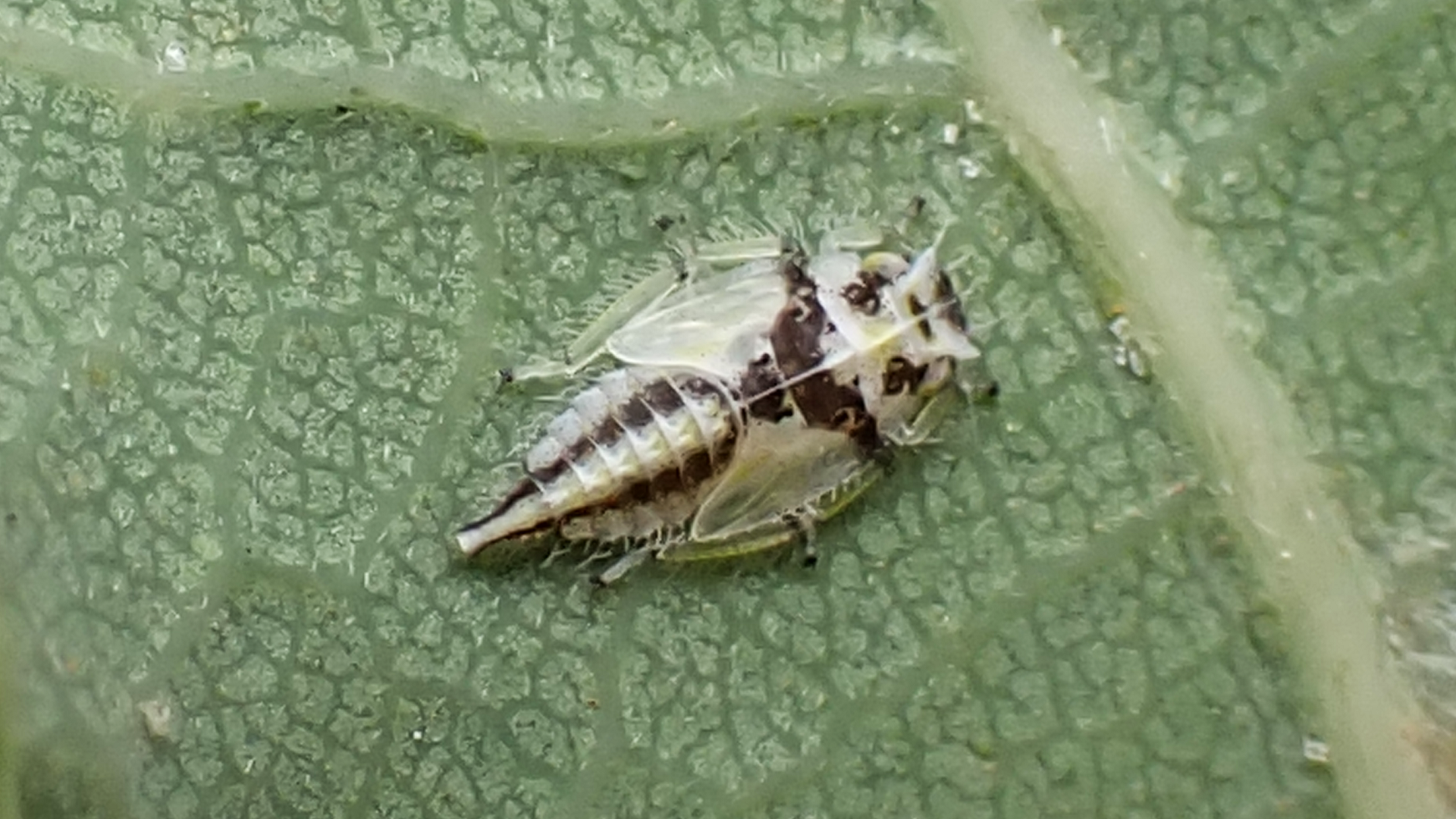
Leafhopper

Eurhadina

Leafhopper
Eurhadina

Leafhoppers in the genus Eurhadina normally have a flattened appearance, particularly at the nymph stage. This nymph discovered on an oak leaf measured about 2mm long.

#

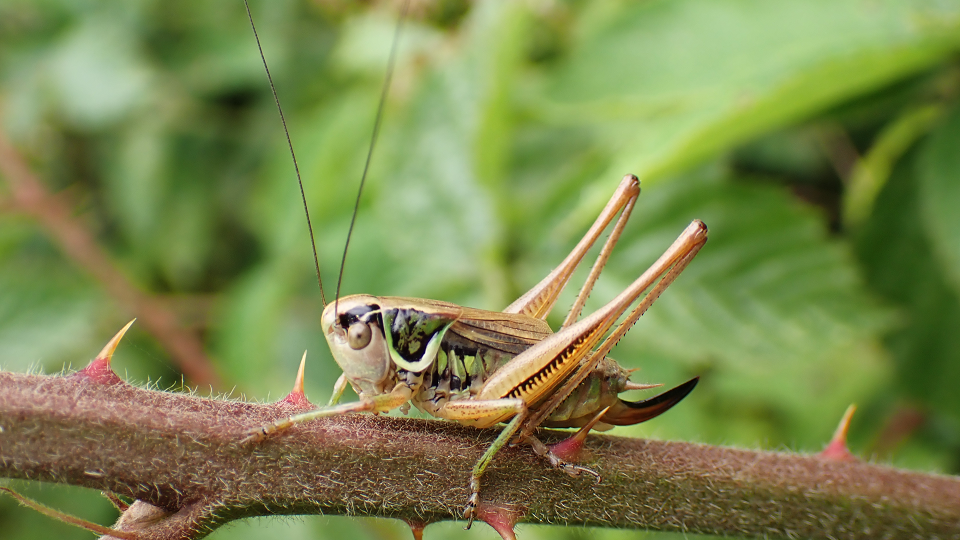
Roesel's Bush-cricket

Metrioptera roeselii

Roesel's Bush-cricket
Metrioptera roeselii

Roesel's Bush Cricket is omnivorous, but mainly feeds on grass and other greenery. There are two forms; one short-winged that cannot fly and a less common fully-winged form that can. Found in long grass and scrub, this species usually has a cream-coloured edge to the pronotum and three yellow spots on the thorax. Nymphs appear late May and June and adults (13-26mm long) in July and August. 

#

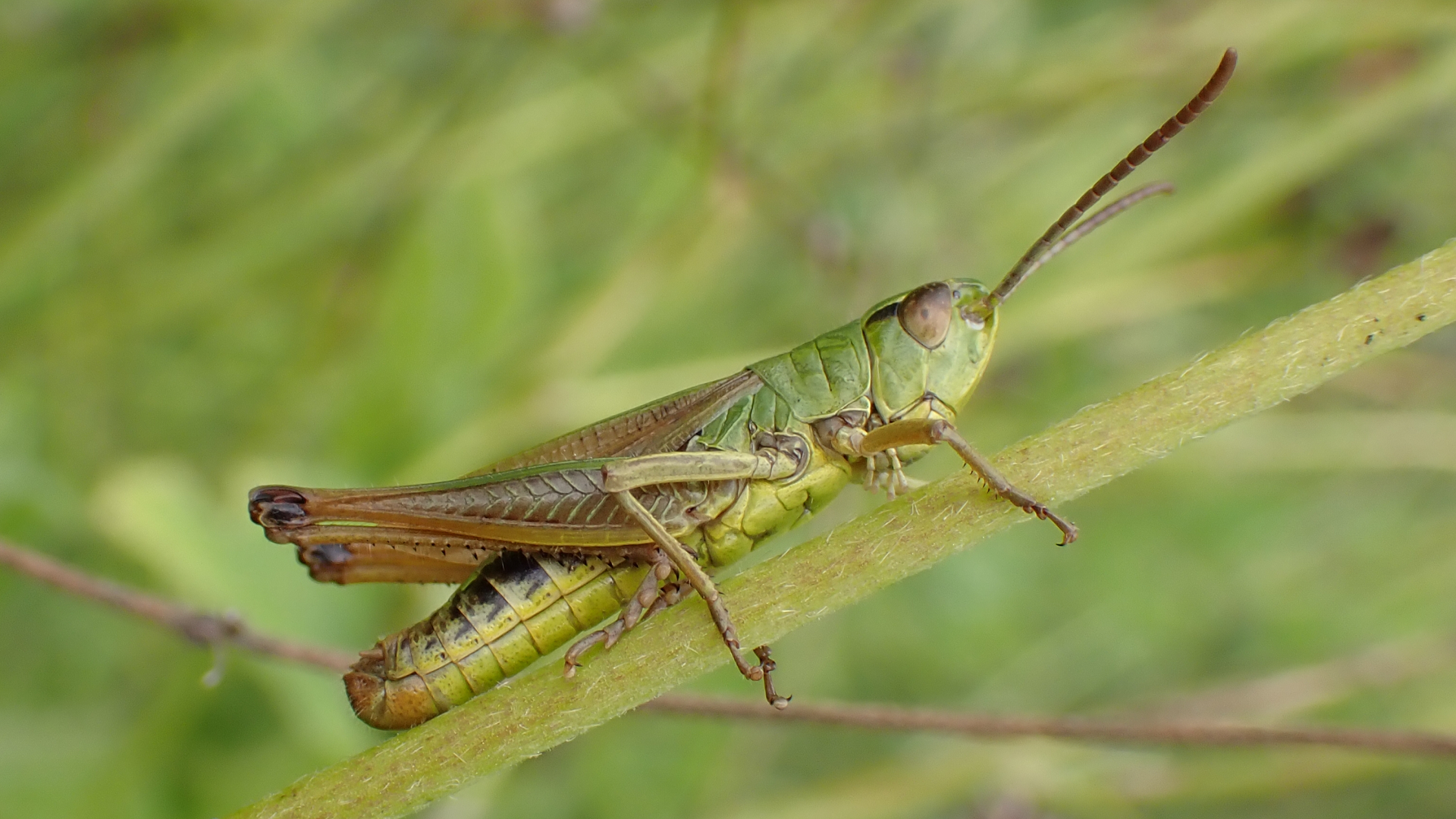
Meadow Grasshopper

Pseudochorthippus parallelus

Meadow Grasshopper
Pseudochorthippus parallelus

The Meadow Grasshopper is a common insect often found in long grass during the summer months. Females grow to approximately 2cm and are larger and less active than males that grow to about 1.5cm. Males are long-winged, while females are usually short-winged. This species has parallel pronotal side-keels and normally has black 'knees' on its hind legs.

#

Willow Emerald Damselfly

Chalcolestes viridis

Willow Emerald Damselfly
Chalcolestes viridis

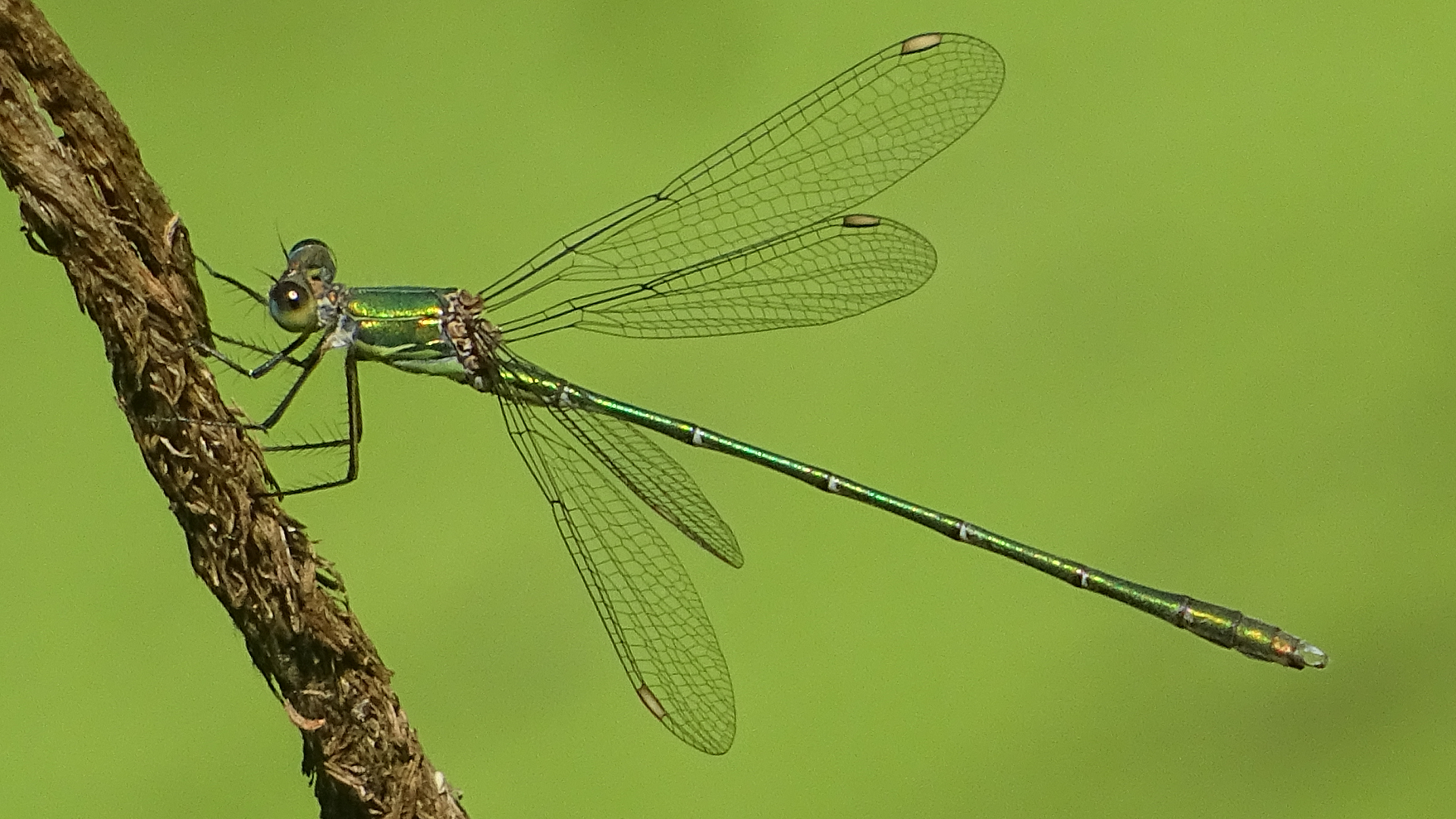
The Willow Emerald Damselfly is usually seen from July near water where eggs are deposited in willow and alder bark. Large pale wing-spots and a prominent spur on the side of the thorax are distinguishing features that help to identify this species.

#

Southern Hawker

Aeshna cyanea

Southern Hawker
Aeshna cyanea

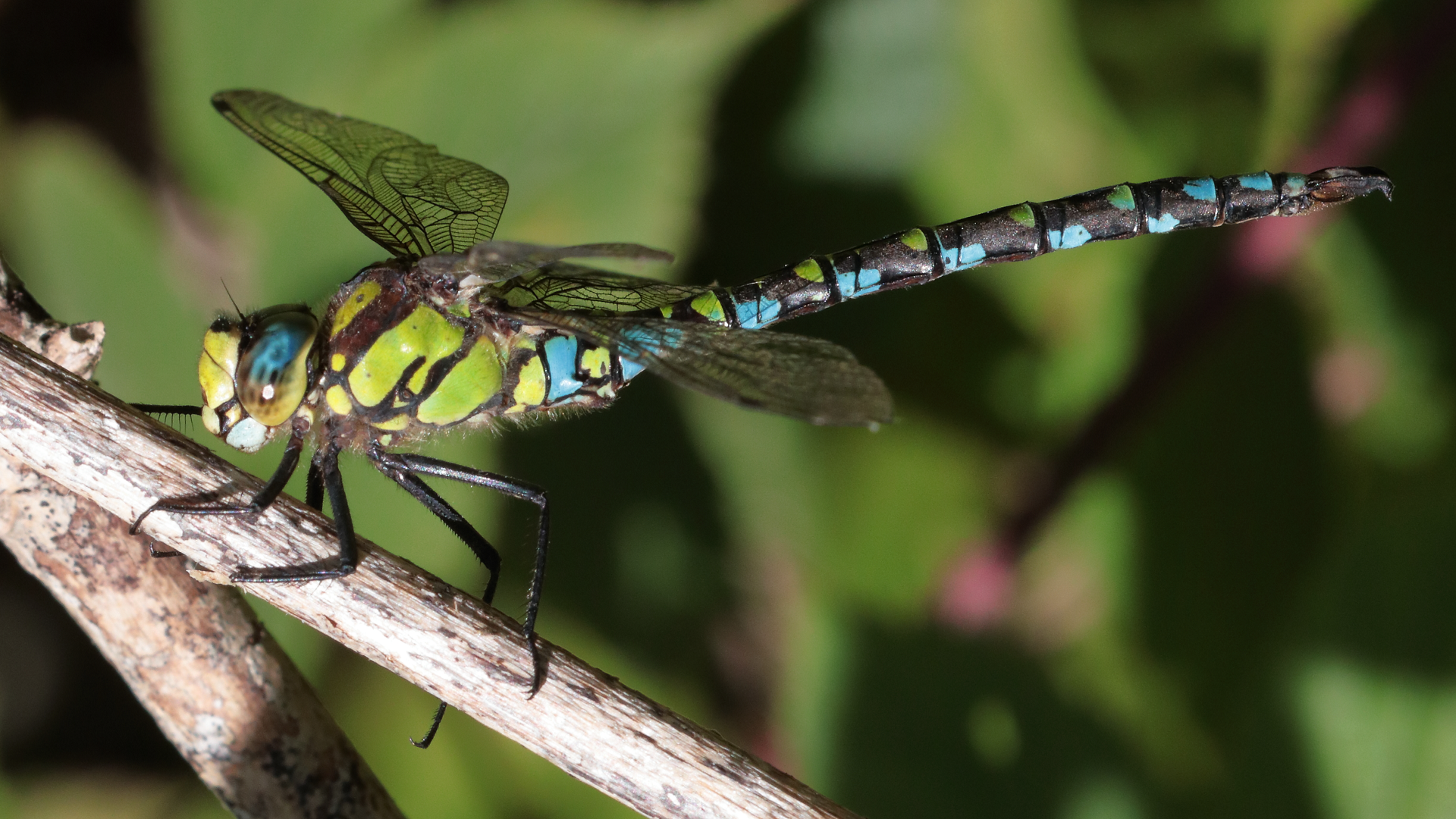
Southern Hawker dragonflies hunt along woodland paths often late into warm evenings and often away from water. They are large, solitary, and inquisitive. Males are dark with bright blue and green markings. Males have eyes that are blue above, females have eyes that are greenish-brown from above.

#

Black-tailed Skimmer

Orthetrum cancellatum

Black-tailed Skimmer
Orthetrum cancellatum

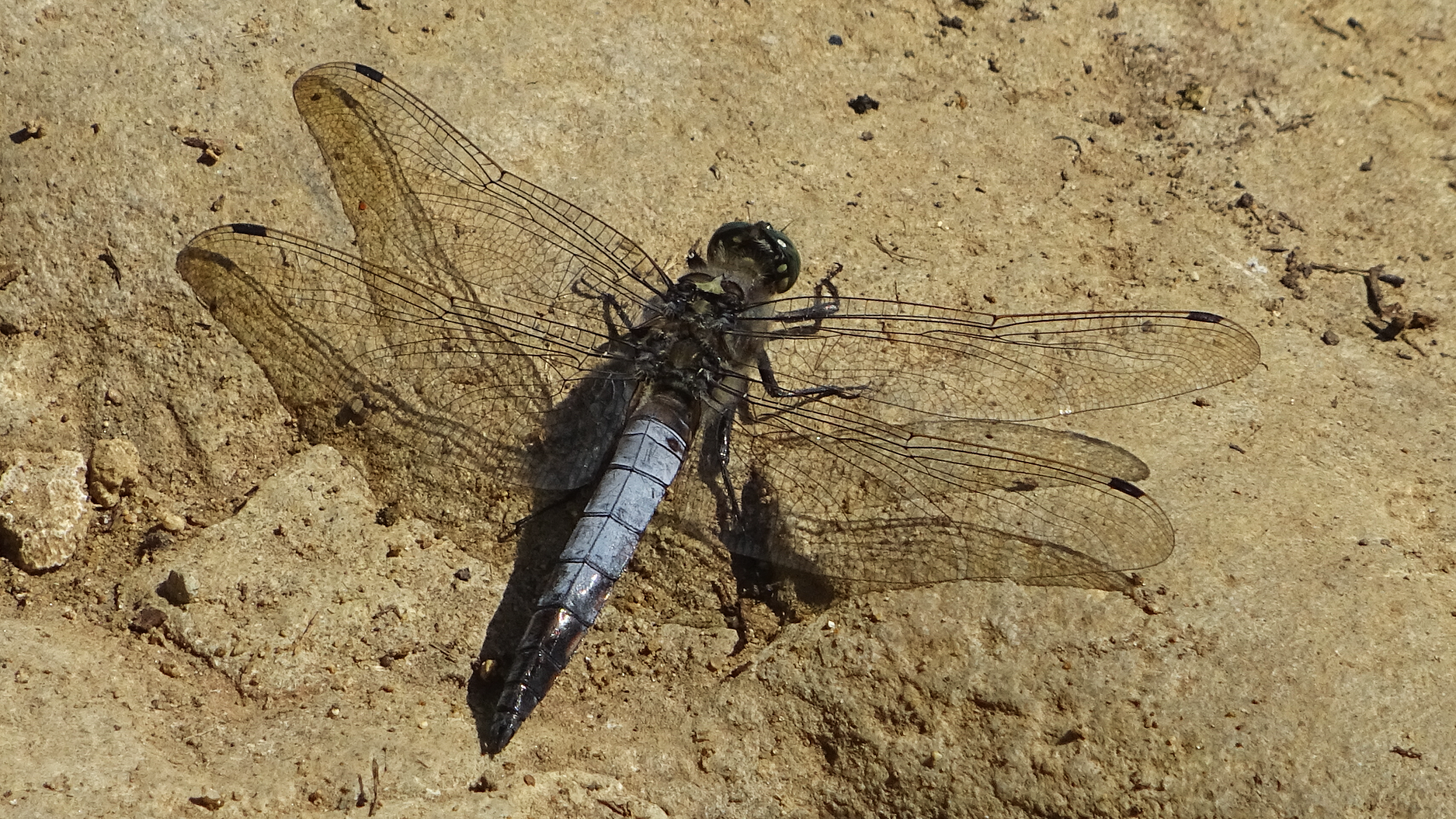
This species of Dragonfly is on the wing from May to August. Mature males are blue, females and immatures are yellow.

#

Ruddy Darter

Sympetrum sanguineum

Ruddy Darter
Sympetrum sanguineum

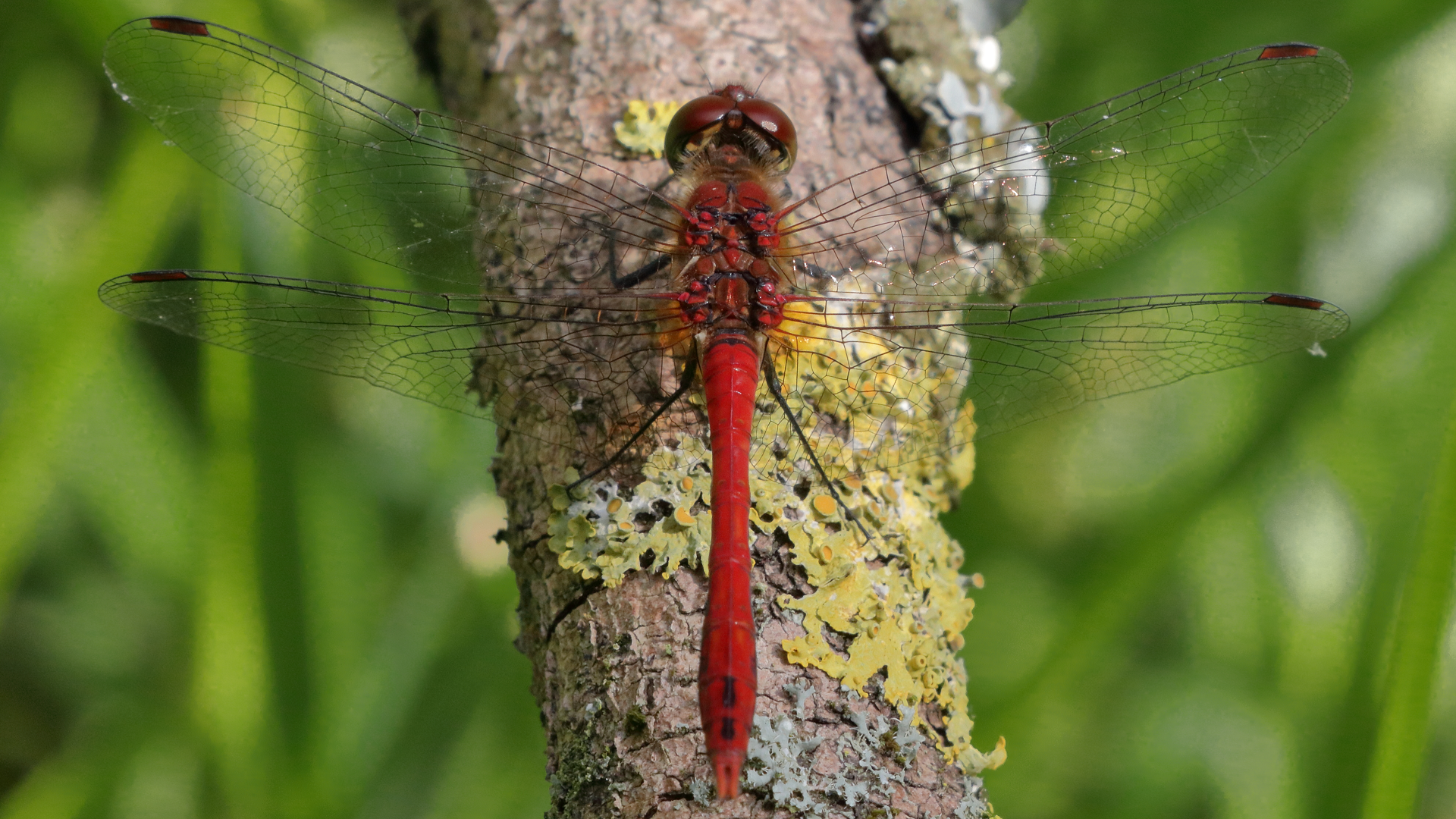
The Ruddy Darter is common around well vegetated ponds. Males are red and have club-shaped abdomens. Females have ochre-yellow abdomens with black markings and are not club-shaped. Both sexes have black legs.

#

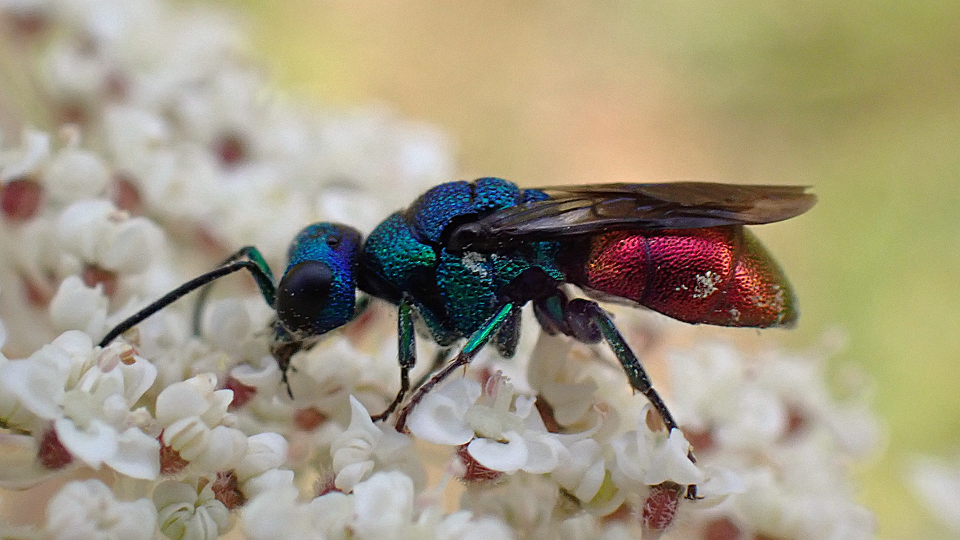
Jewel Wasp

Chrysididae

Jewel Wasp
Chrysididae

Members of the family Chrysididae are known as Jewel or Cuckoo Wasps. They are small (4-11mm) and their bodies often have a metallic iridescence. Their eggs are laid in nests of unrelated species. The larvae hatch to feed on eggs and young belonging to the host before eating the host's food supply. Chrysidids are always solitary, usually flying on hot, dry, sunny days. There are a number of similar-looking species.

#

European Hornet

Vespa Crabro

European Hornet
Vespa Crabro

The European Hornet is a large brown and yellow social wasp measuring up to 35mm in length. They fly with a deep buzz and may seem threatening, but are not normally aggressive unless provoked. Queens wake from hibernation during May to establish new nests which are often built in hollow trees. Workers emerge in June and often go unnoticed because they do most of their hunting in tree canopies. If a nest is encountered, back away quickly and quietly without any arm flapping and it is likely the Hornets will not feel threatened. European hornets are primarily carnivorous, feeding on a variety of insects, tree sap, fruit, and nectar. They sometimes raid spider's webs for food. Caterpillars are often taken back to the nest for their grubs to feed upon.

European Hornet
Vespa Crabro
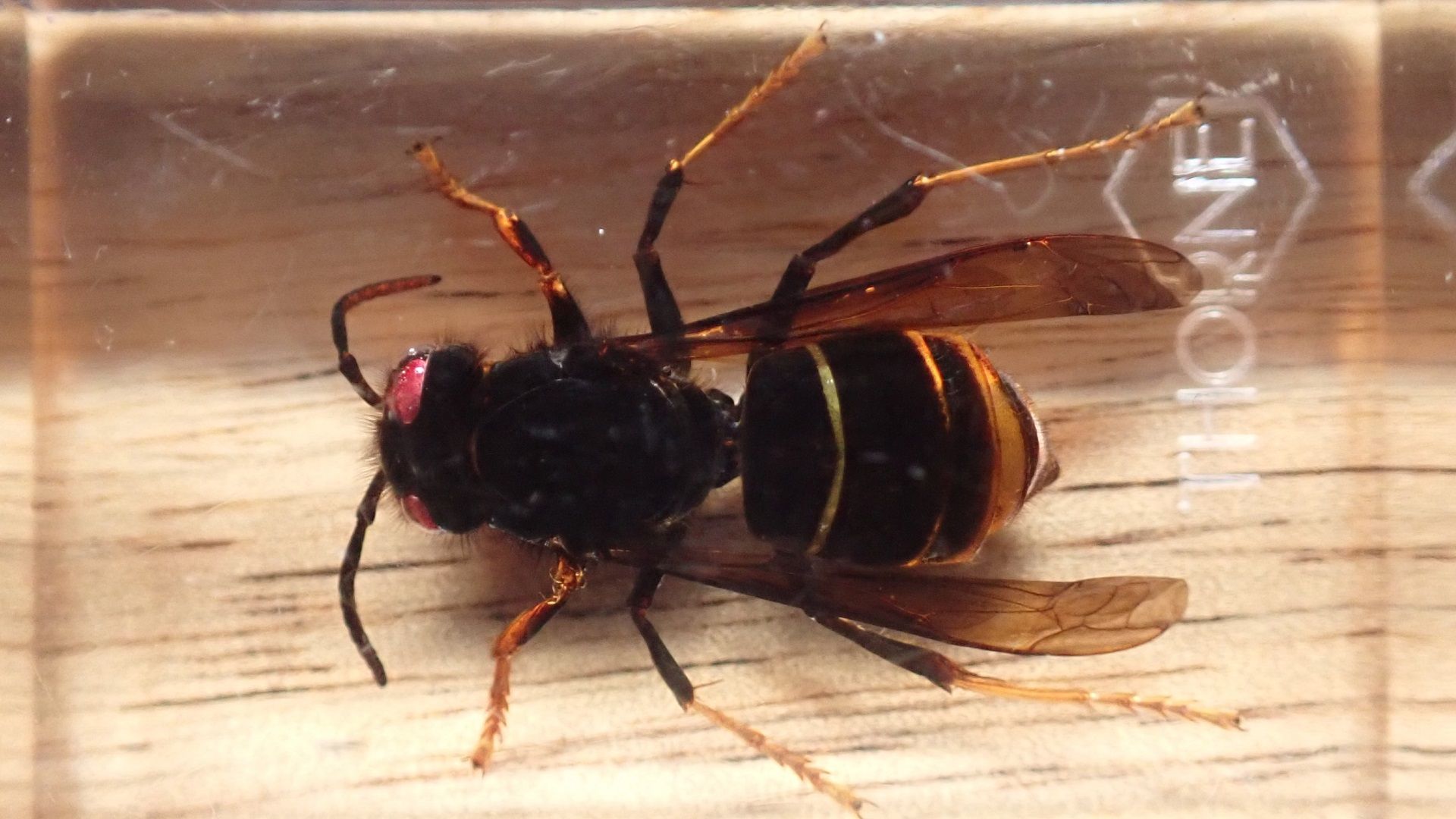
Asiatic Hornet
Yellow-legged Hornet

This picture shows an Asiatic Hornet otherwise known as the Yellow-legged Hornet. It is smaller and has a far darker body than the European Hornet. The two species can also be told apart by the yellow legs. European Hornets are not a major pest of bee hives. However, the Asiatic Hornet currently spreading across Europe can be a problem for beekeepers. Fortunately, the Asiatic variety hasn't reached Hainault Forest yet (except in resin!).

#

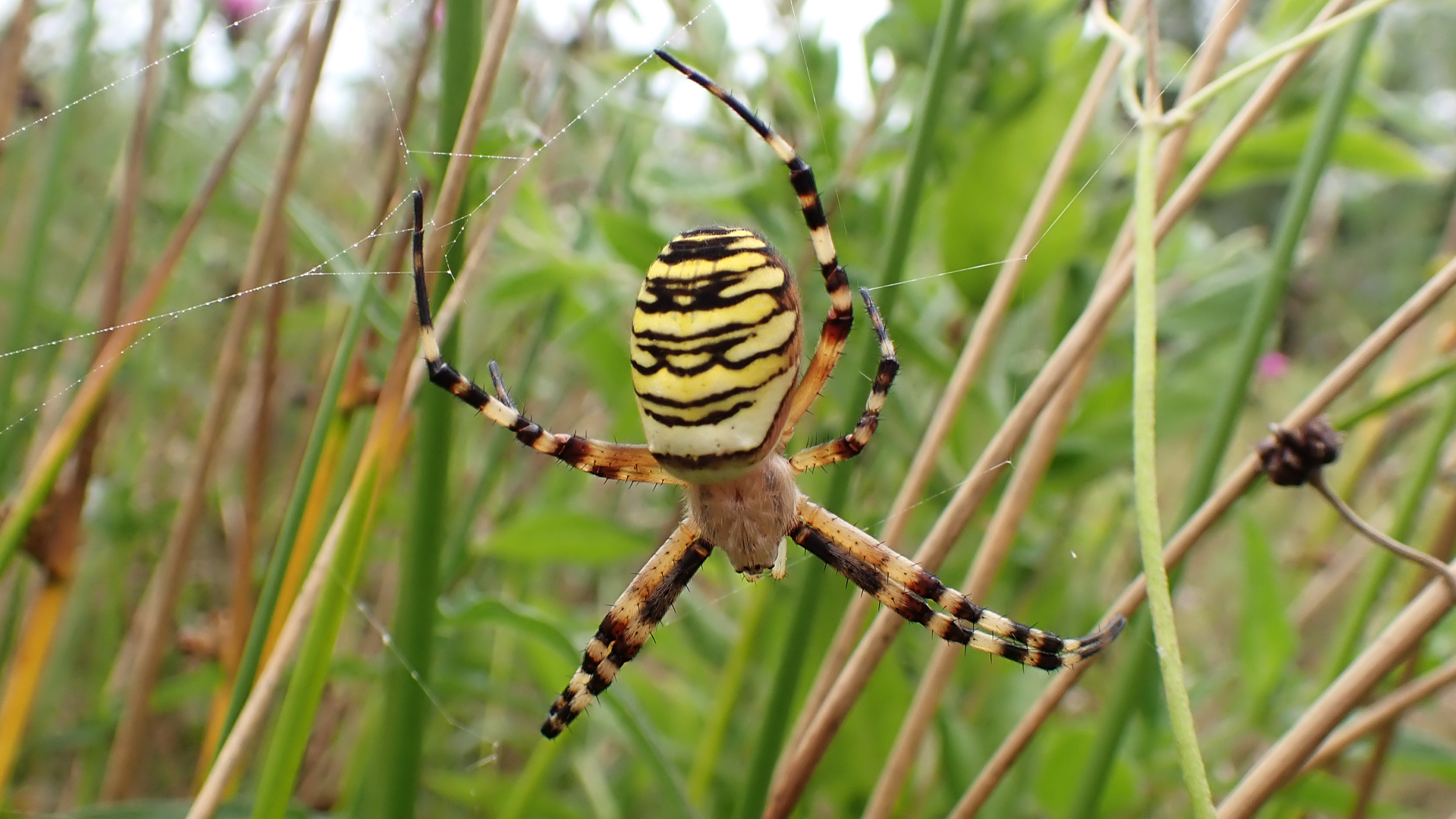
Wasp Spider

Argiope bruennichi

Wasp Spider
Argiope bruennichi

Wasp Spiders build large orb webs in grassland which catch grasshoppers and crickets.

#

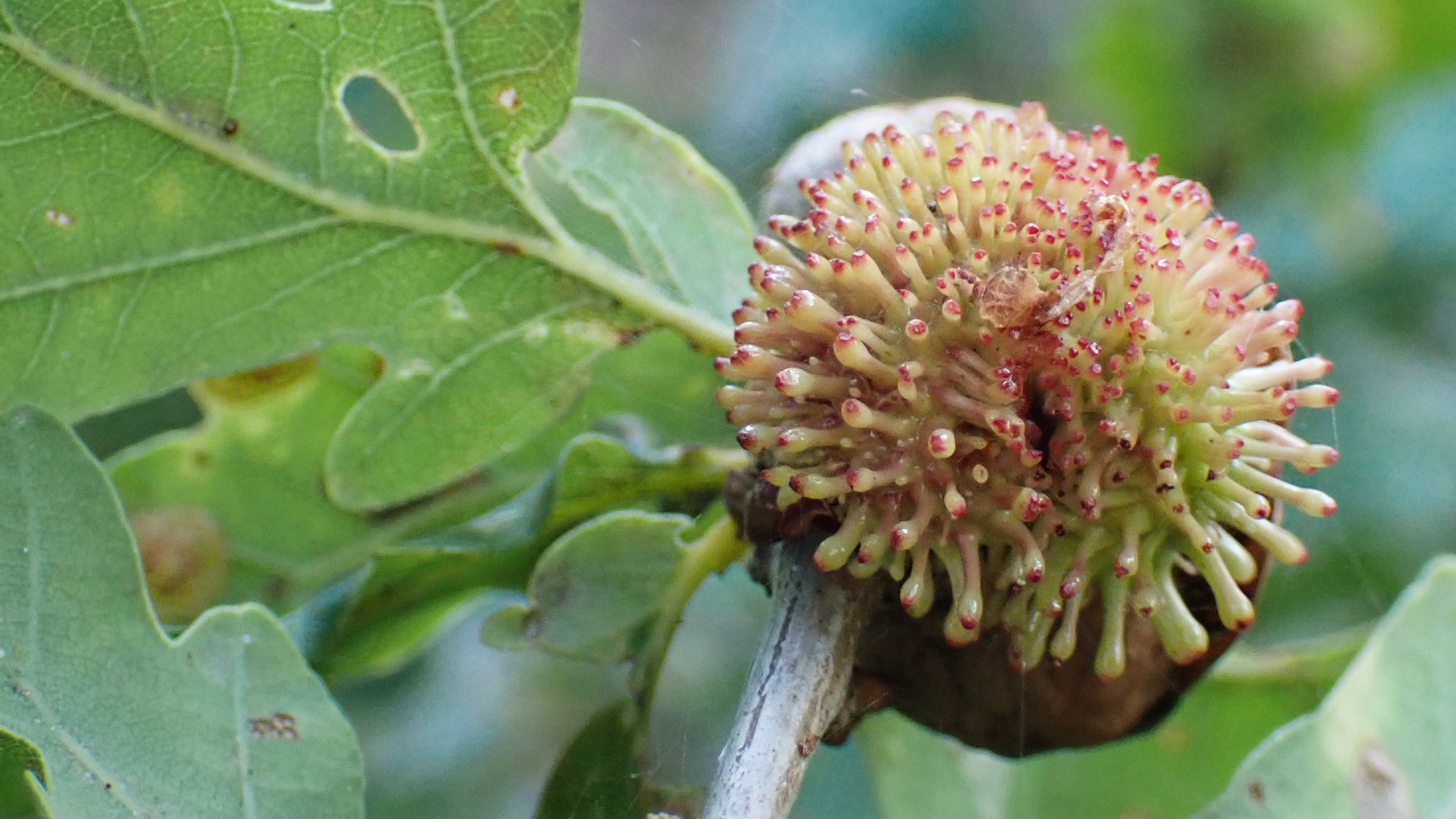
Hedgehog Gall

Andricus lucidus

Hedgehog Gall
Andricus lucidus

Hedgehog Galls are caused by an agamous generation of a gall wasp on English Oak. They grow on buds, producing roughly a hundred spines about a centimetre long. The spines have rounded tips.

#

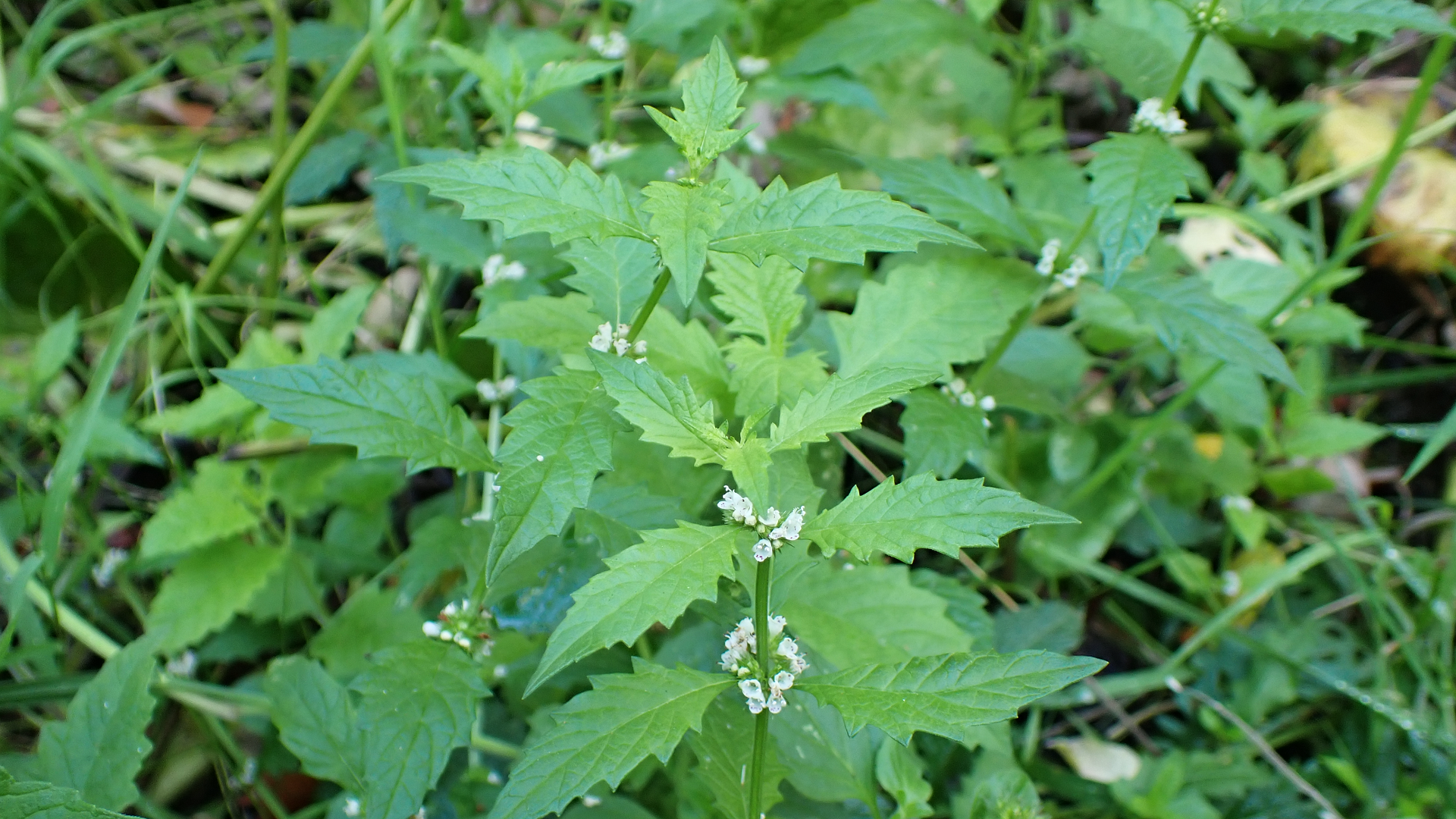
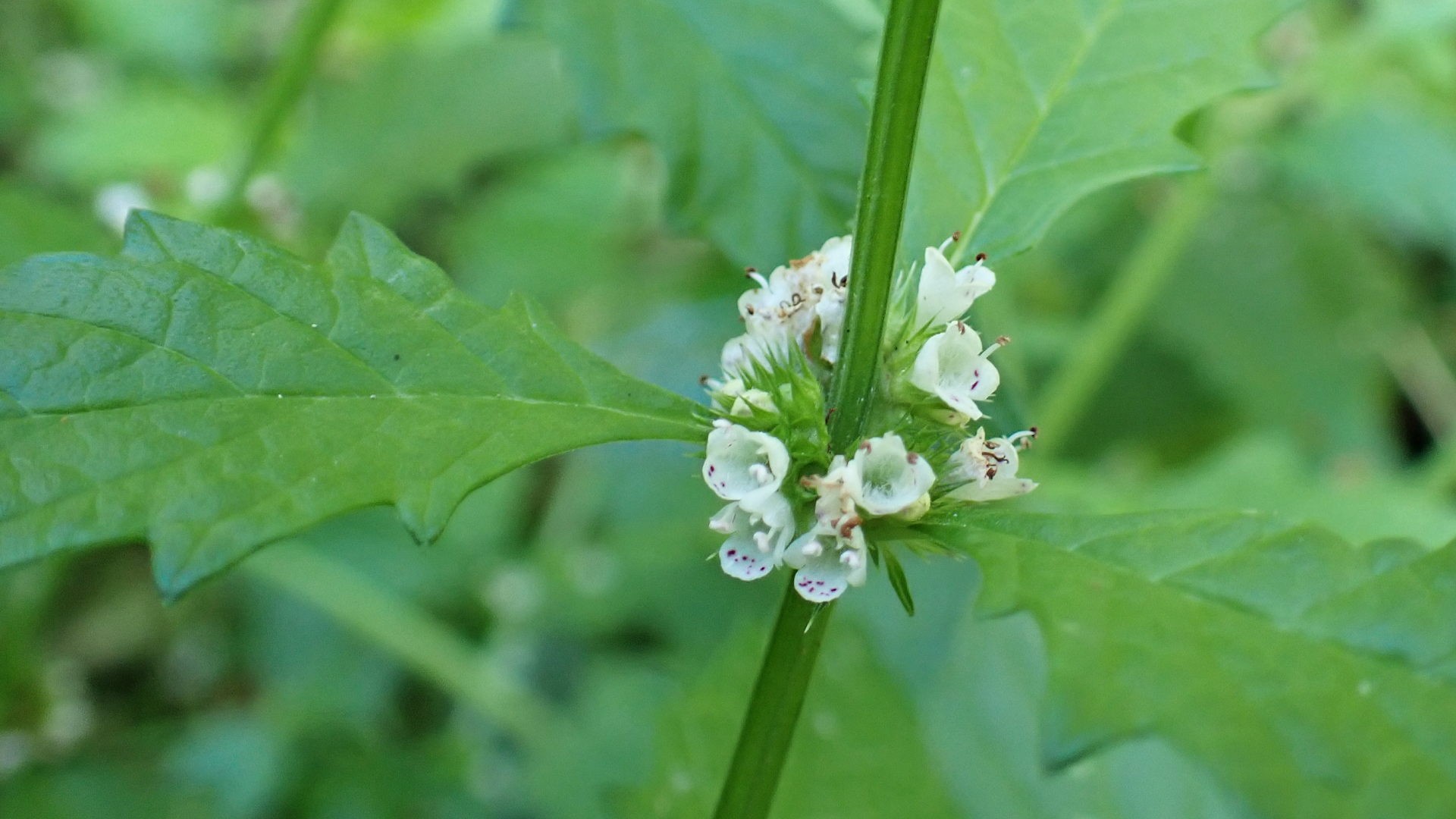
Gypsywort

Lycopus europaeus

Gypsywort
Lycopus europaeus

Gypsywort grows in wet locations. It is a member of the Mint family. The leaves possess a mild scent with an overall fragrance being fairly mild and not especially strong. The plant is named after its traditional use by Romany people for dyeing.

Gypsywort
Lycopus europaeus

#

Red Clover

Trifolium pratense

Red Clover
Trifolium pratense

Red clover is a common perennial plant, widely found in grassy areas. It has pinkish-red flower heads and trifoliate leaves. The green leaflets are marked with a white V-shape. The plant provides a valuable source of nectar for bees.

#

Common Mallow

Malva sylvestris

Common Mallow
Malva sylvestris

Common mallow has pink purple-striped flowers with five petals, hairy stalks and five-lobed leaves. Plants are seen from June to October and are usually found on waste ground and along footpaths.

#

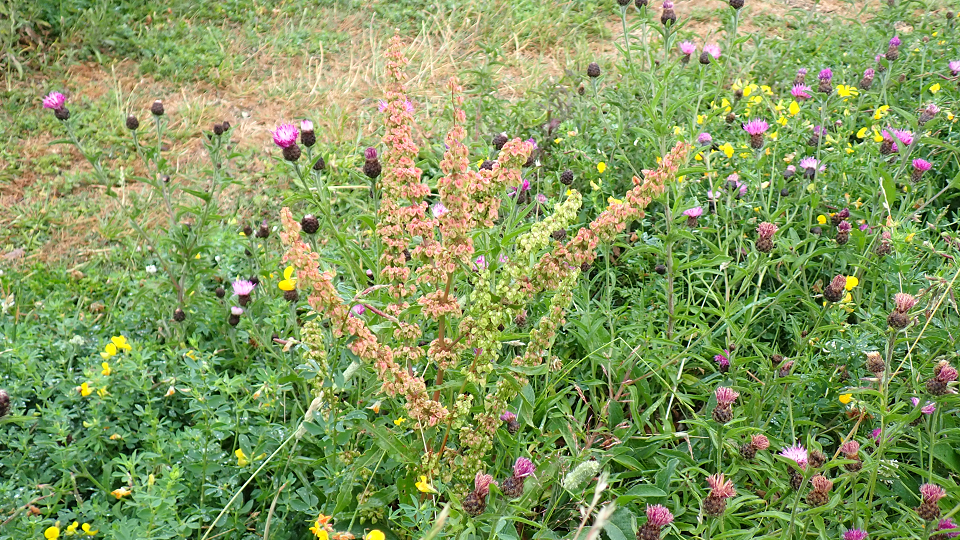
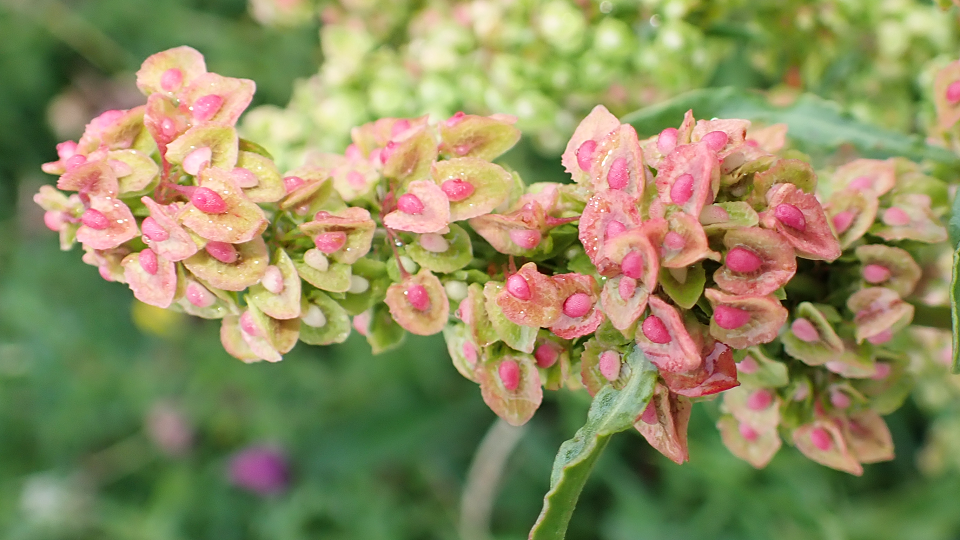
Curled Dock

Rumex crispus

Curled Dock
Rumex crispus

Curled Dock grows up to one metre tall usually on disturbed ground. It is very hardy and can survive several months submerged in floodwaters. The tall flower spikes are densely packed with flowers and seeds. The leaves are slender with wavy edges and normally taper to a point.

Curled Dock
Rumex crispus

#

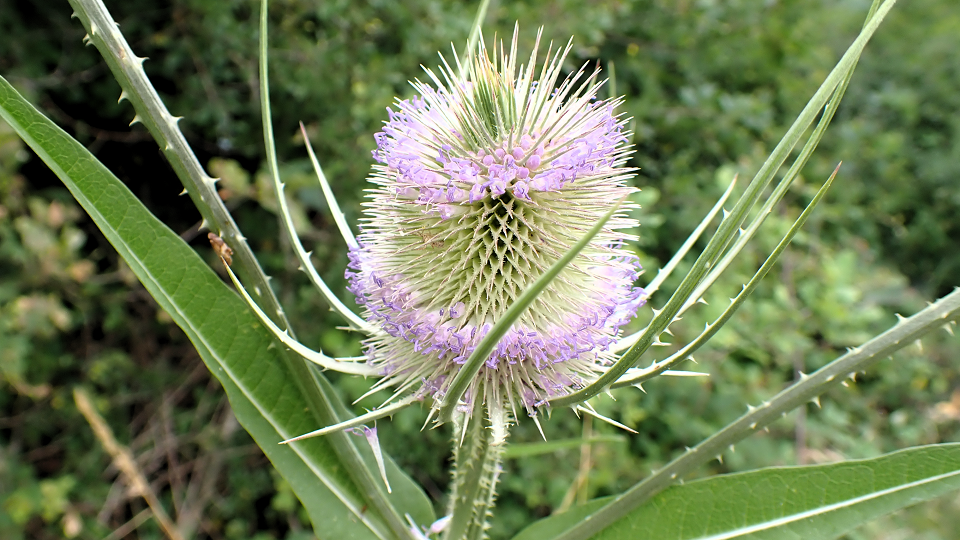
Teasel

Dipsacus fullonum

Teasel
Dipsacus fullonum

During July and August the spiky flower-heads of Teasel display rings of purple flowers. The plant attracts goldfinches and other birds which feed on its seeds.

#

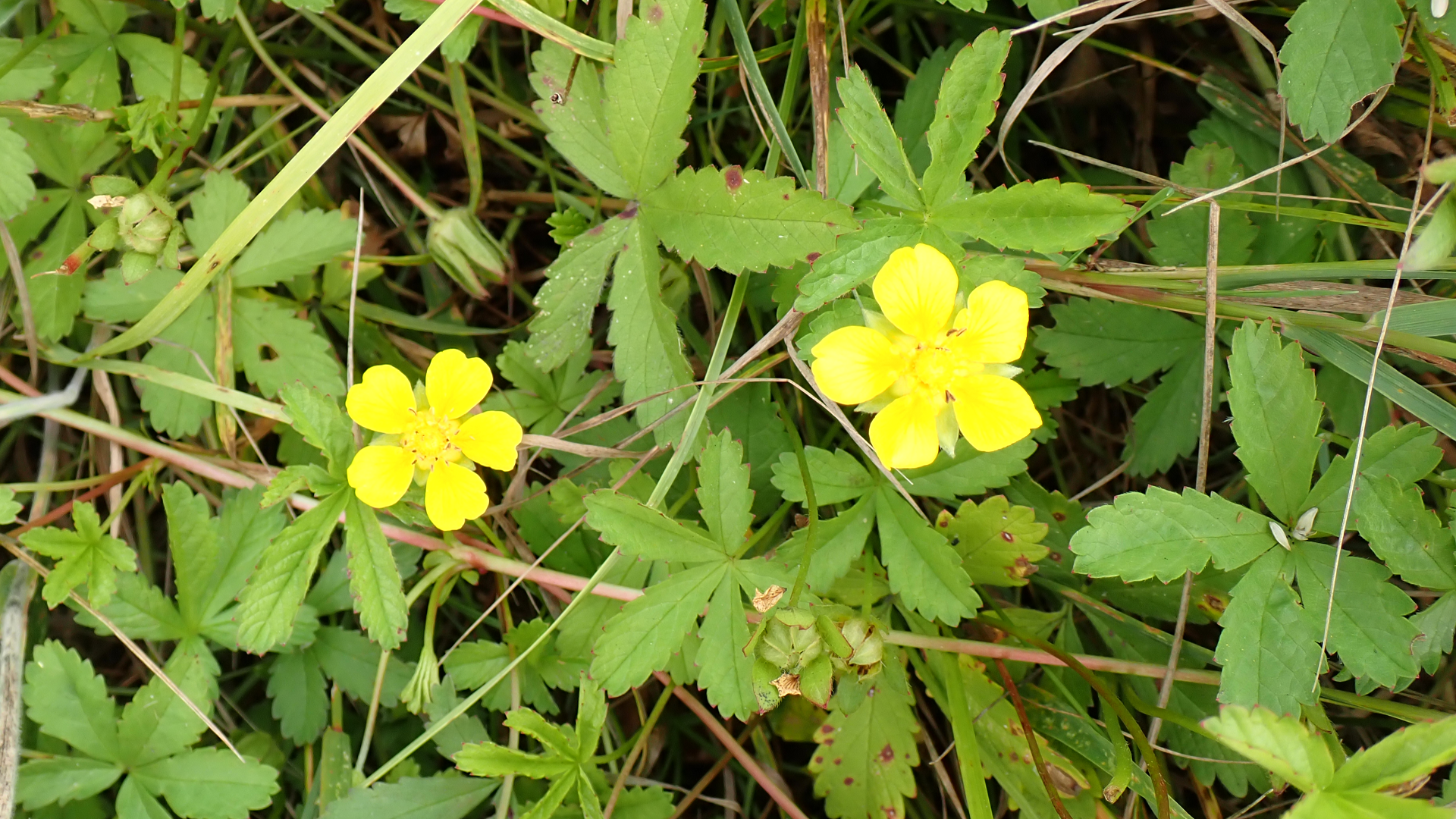
Creeping Cinquefoil

Potentilla reptans

Creeping Cinquefoil
Potentilla reptans

Creeping Cinquefoil is a perennial that spreads using long rooting runners. The solitary yellow flowers have five yellow notched petals surrounding twenty stamens and many pistils. The palmate leaves are divided into five (sometimes seven) toothed leaflets.

#

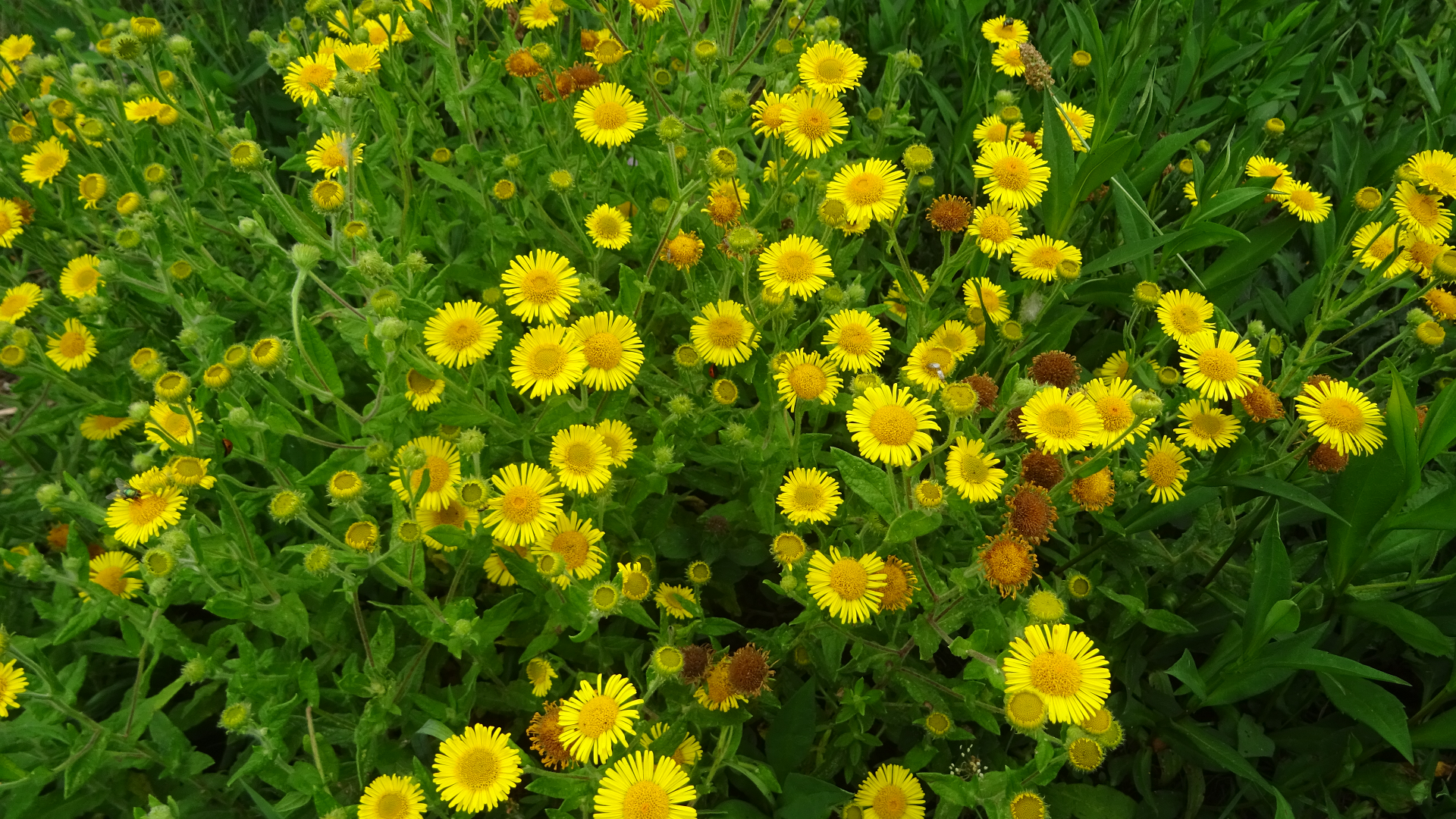
Common Fleabane

Pulicaria dysenterica

Common Fleabane
Pulicaria dysenterica

Common Fleabane is a perennial found in damp habitats during August. Its golden-yellow composite flower-heads (15-30mm across) grow on erect stems. The basal leaves often wither before the flowers appear.

#

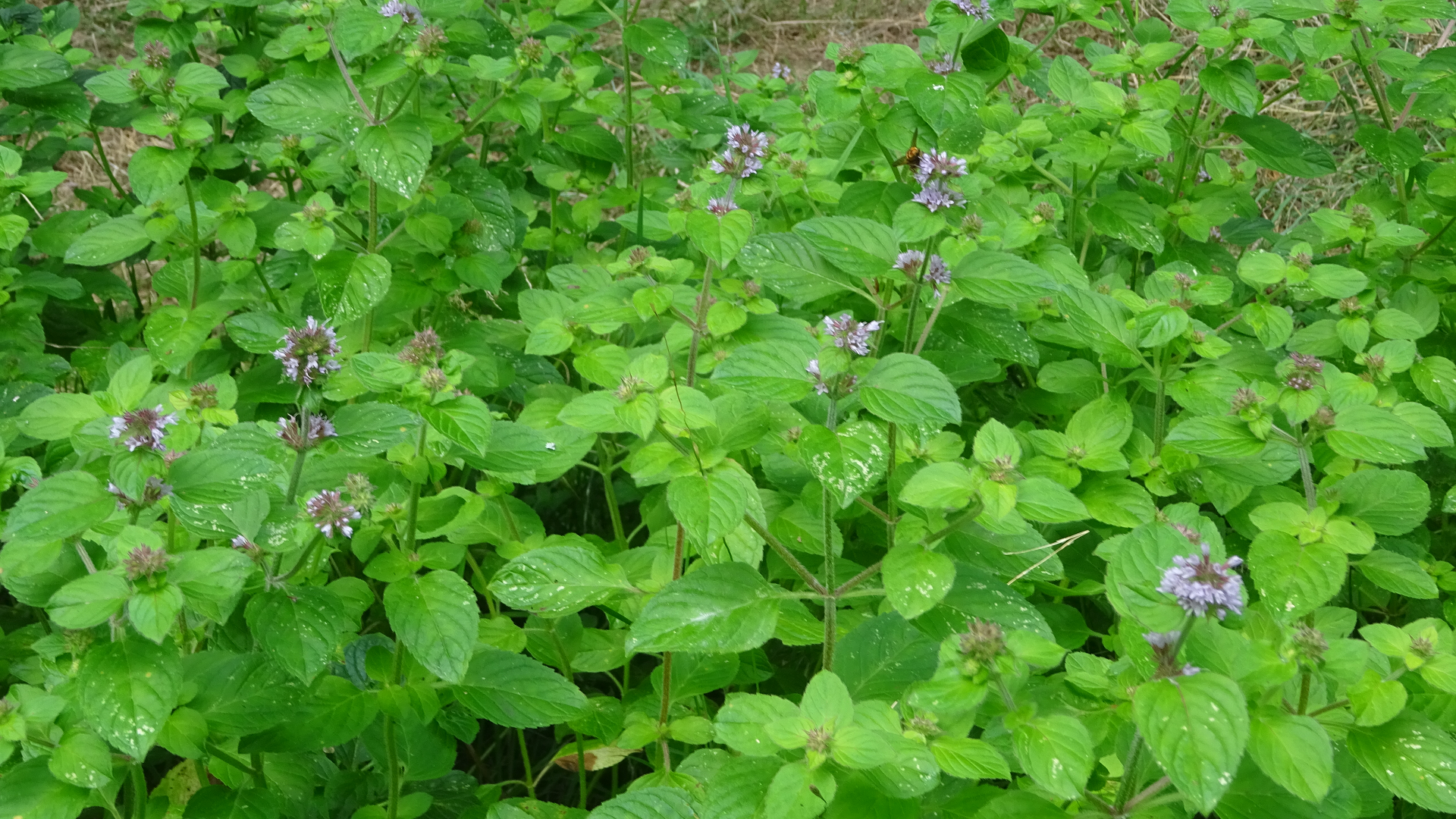
Water Mint

Mentha aquatica

Water Mint
Mentha aquatica

Water Mint grows in freshwater habitats and during August can often be found near Hainault Lake, Roes Well and Sheepwater. It has clusters of lilac-pink flowers and aromatic, dark green leaves.

#

Mugwort

Artemisia vulgaris

Mugwort
Artemisia vulgaris

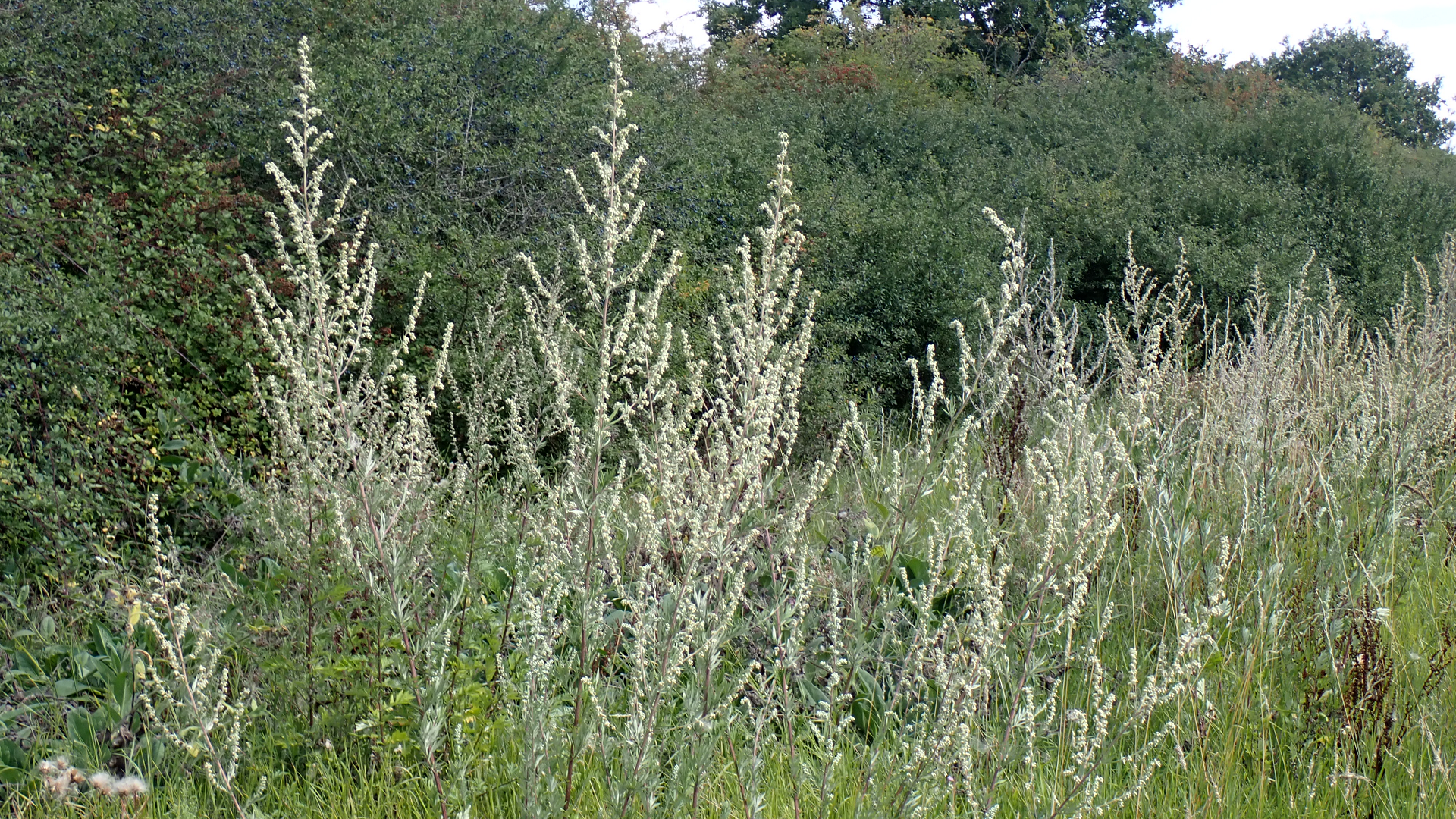
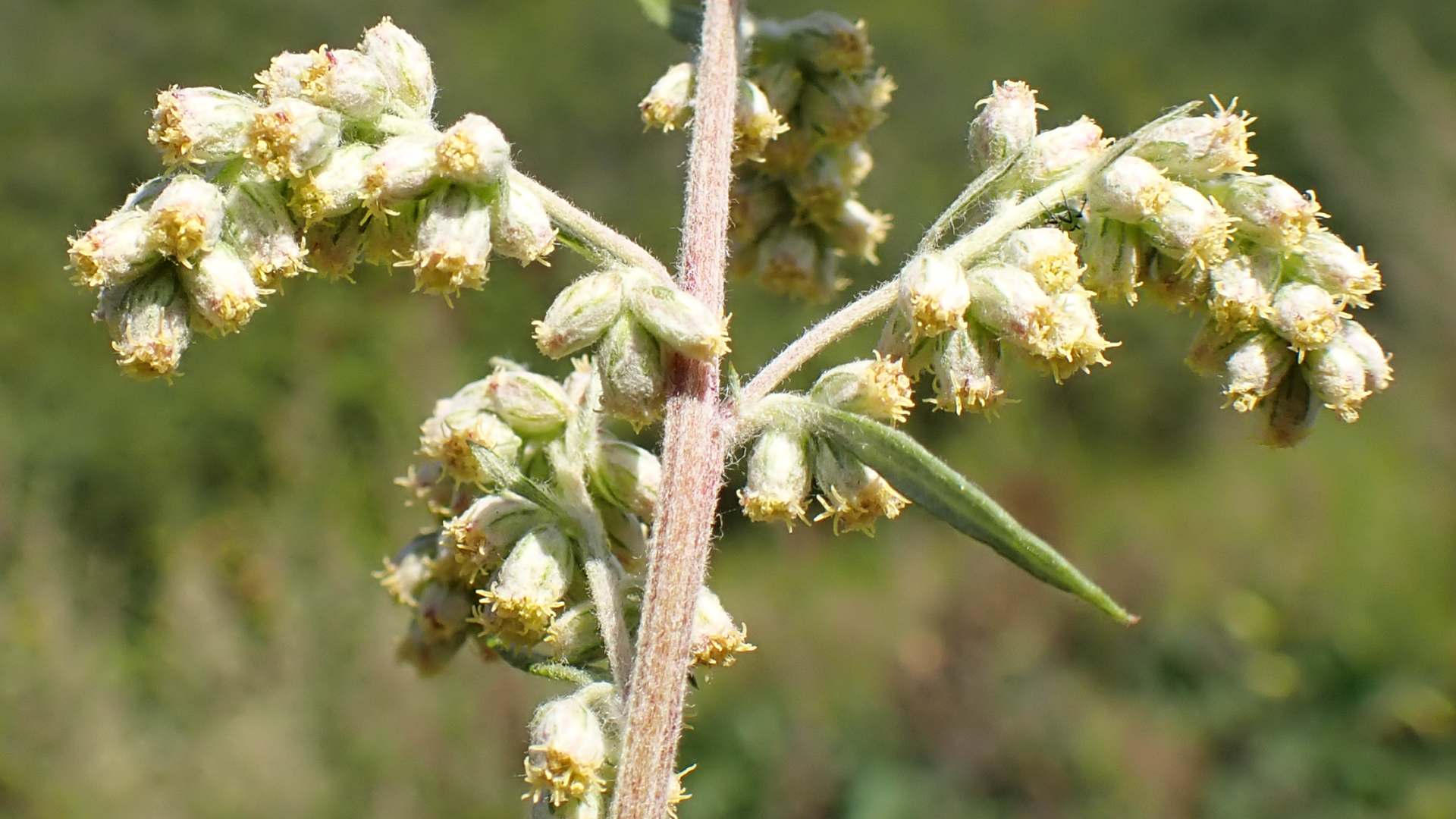
Mugwort is a perennial often found on disturbed ground from May until September. It has erect reddish-brown stems that grow up to 1.5m tall. The tiny flowers, 3-4mm long, are wind pollinated.

Mugwort
Artemisia vulgaris

#

Flame Shield

Pluteus aurantiorugosus

Flame Shield
Pluteus aurantiorugosus

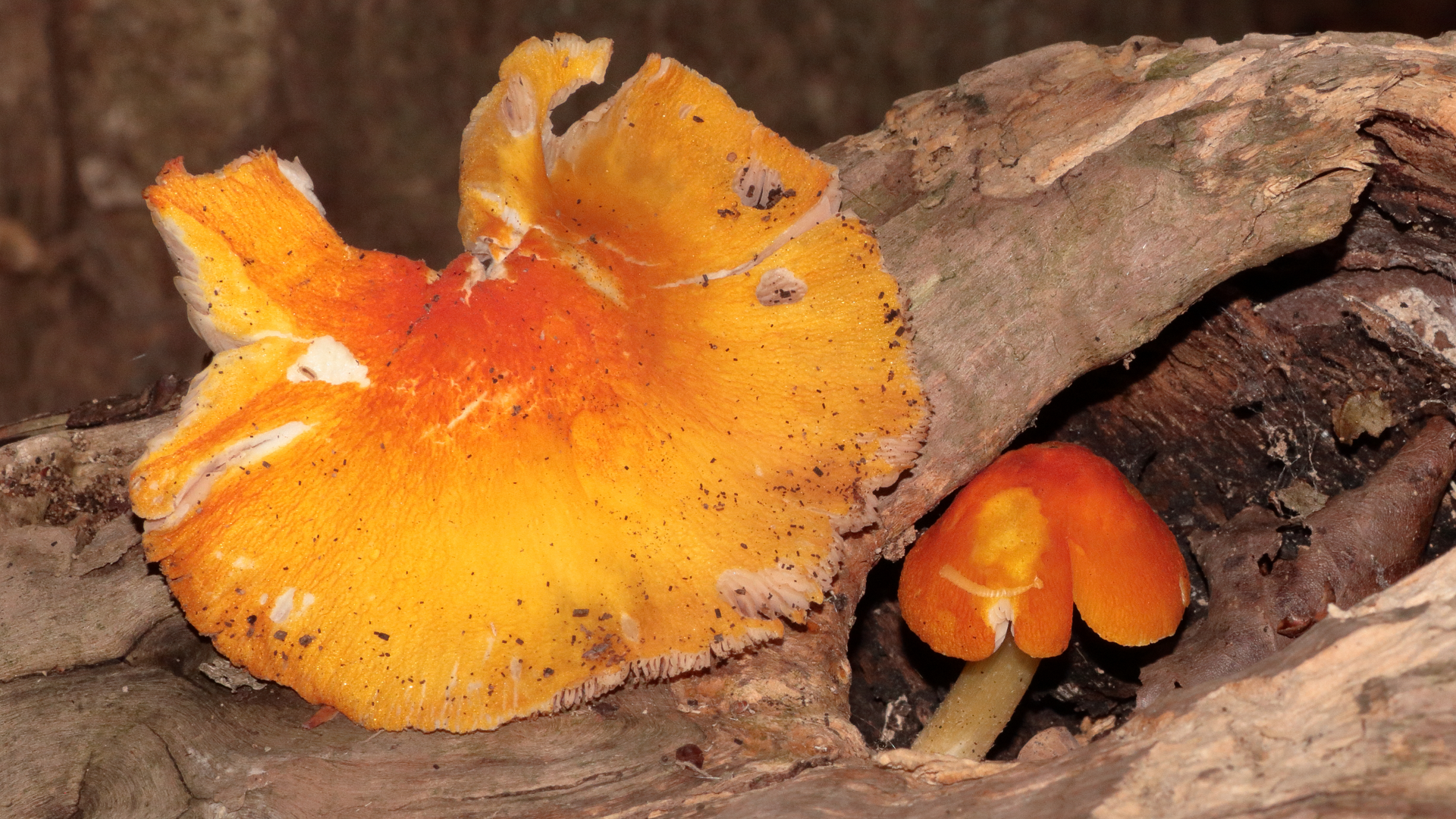
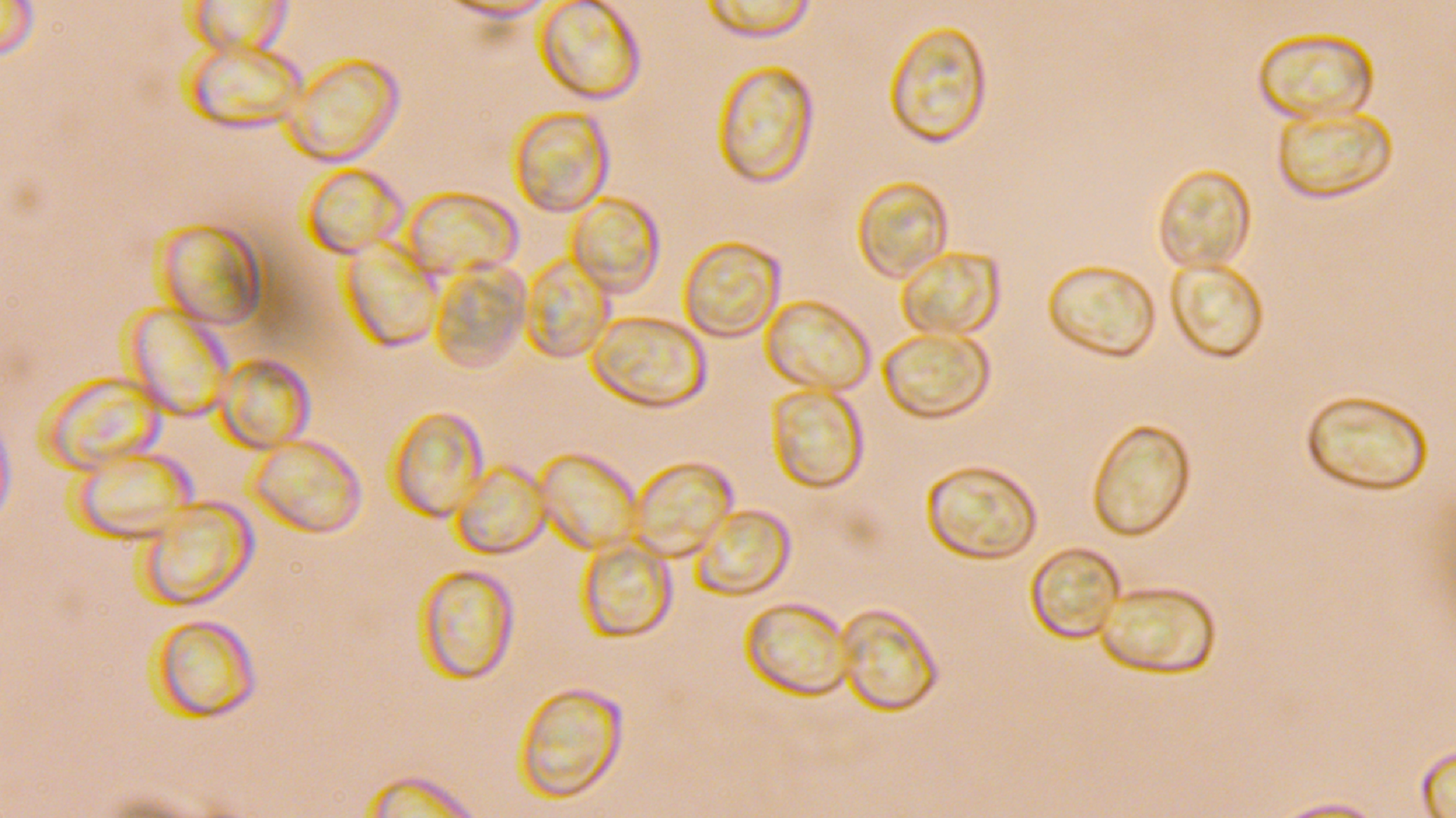
Fire Shield is not a common fungus and this is the first record the website is aware of in Hainault Forest. One fruiting body was found inside a cavity on an old deciduous log, the damaged cap of another was discovered loose on the ground. This species is said to have a preference for living in cavities on deciduous trees. The spores are smooth and ellipsoidal and measure 5.5-7.5 x 4.5-5.5µm.

Flame Shield
Pluteus aurantiorugosus

#

Coral Slime Mould

Ceratiomyxa fruticulosa

Coral Slime Mould
Ceratiomyxa fruticulosa

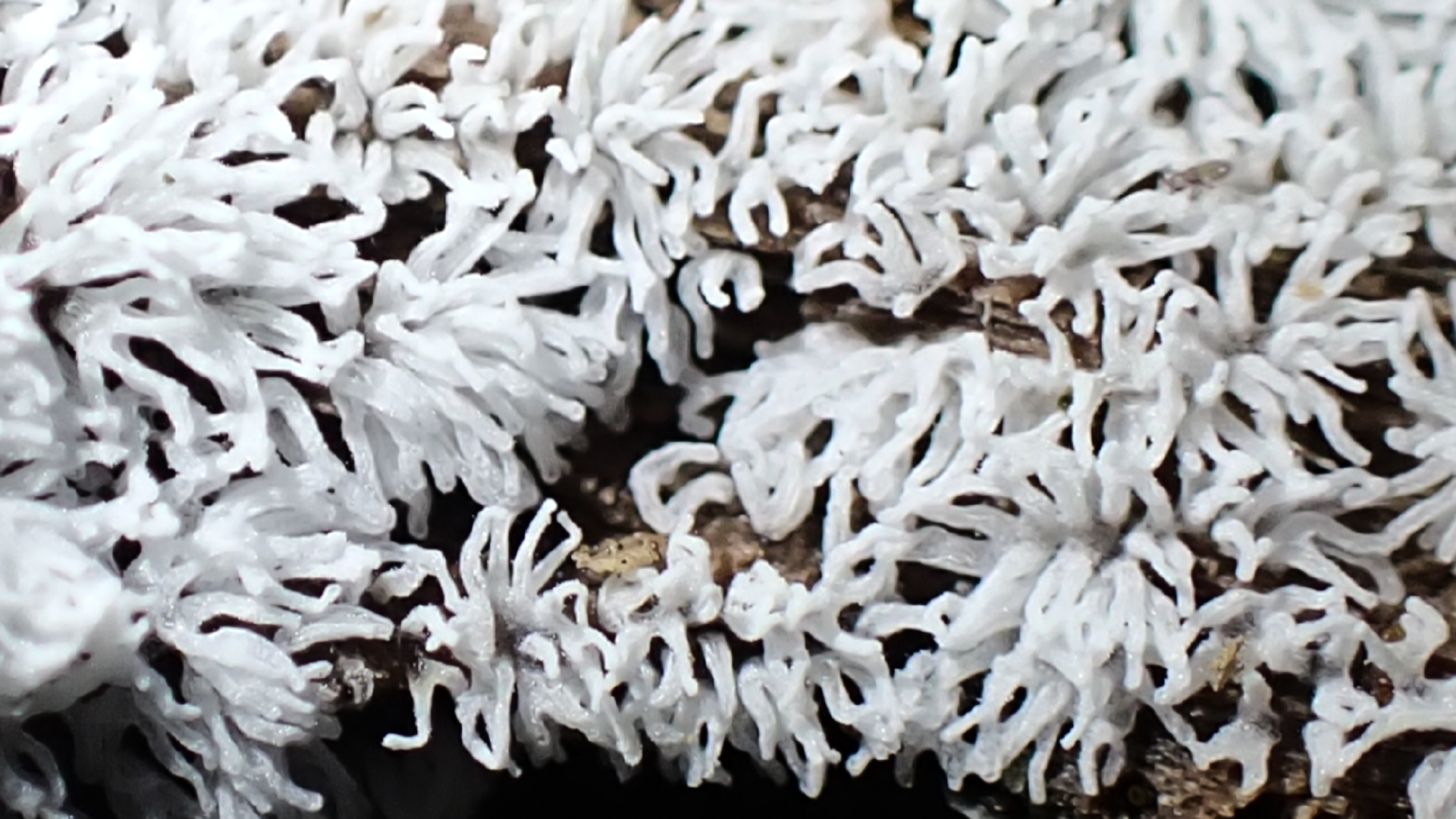
Fairly common in Hainault Forest, this slime mould normally appears after damp weather, in white and sometimes yellow forms. When mature the fruit bodies remain soft and watery. They can cover large areas of fallen trunks, branches and stumps. Up to 4mm tall.

#

Brian Ecott

An Amateur Naturalist

Brian Ecott

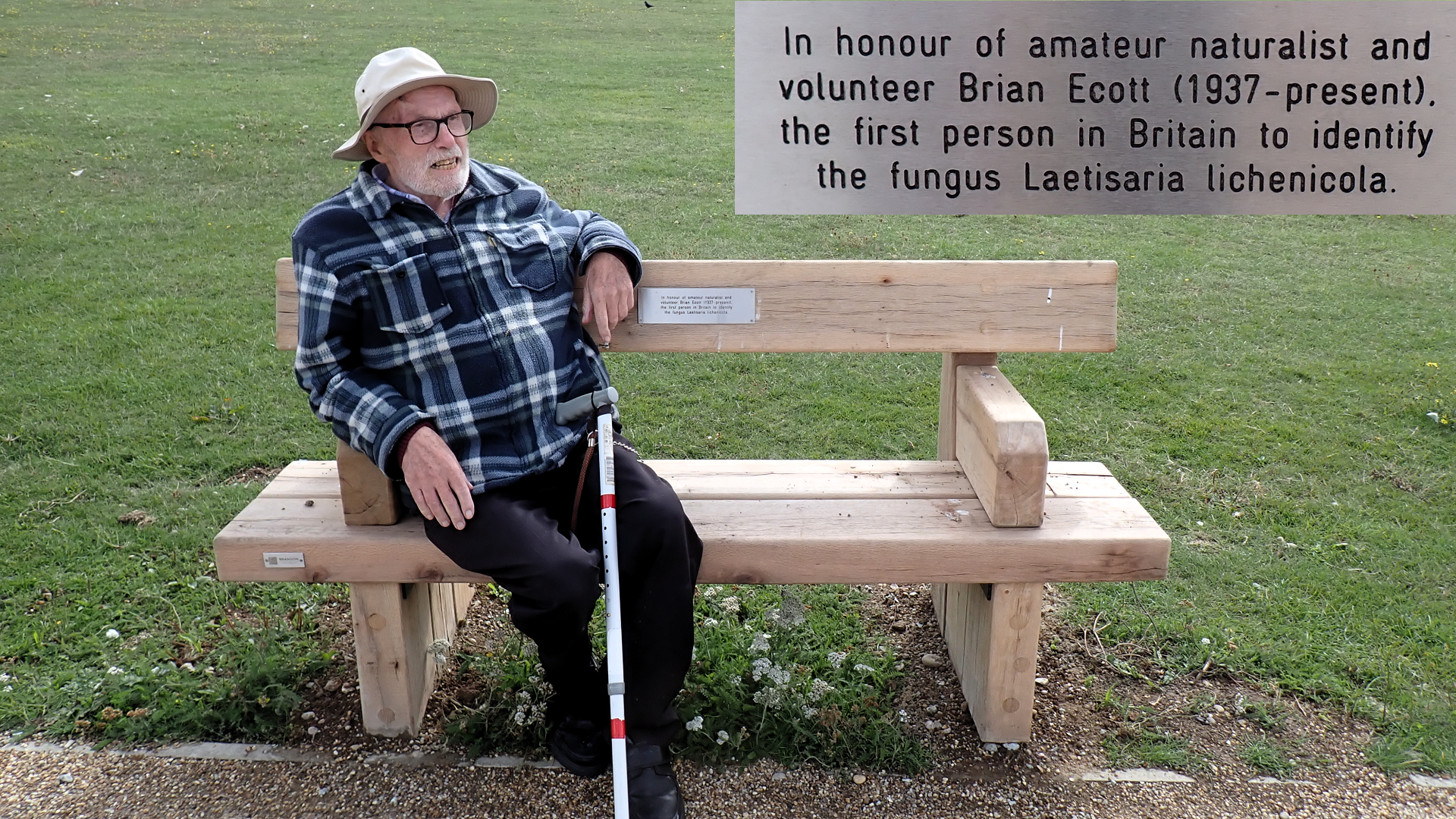
Brian Ecott, creator of the original Hainault Forest Website, enjoying a seat commissioned in recognition of his wildlife recording work. It was provided to make a convenient resting place for him between the bus stop and the cafe. A visitor to the forest since boyhood, Brian has submitted thousands of records over the years. His noteworthy claim to fame is identifying the fungus Laetisaria lichenicola which received a mention in British Wildlife Volume 28 No.2 in 2016. Although fairly widespread, the fungus had been overlooked by the experts, proving that amateur naturalists can play an important role in recording wildlife!

Laetisaria lichenicola

The Full Story

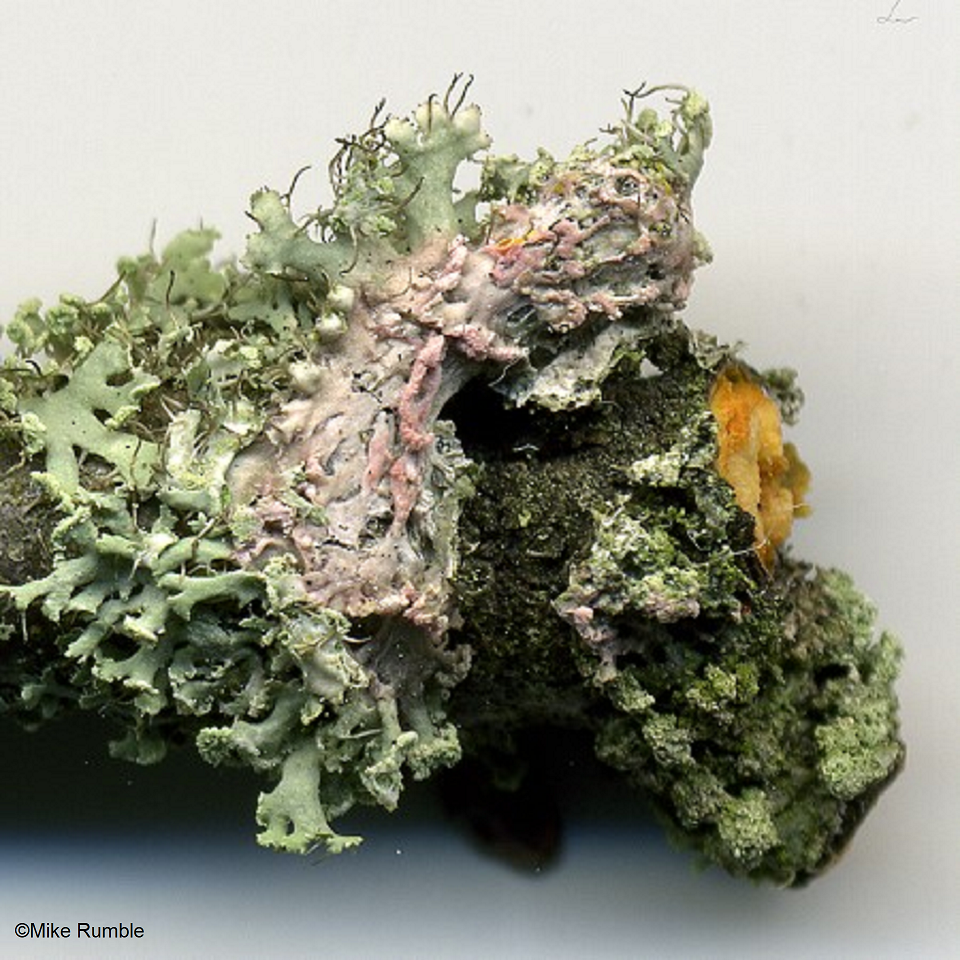
On Sunday January 3rd 2016 with Mick Rumble in tow, Brian Ecott was searching the abundant lichens in Hainault Forest that are very noticeable during the winter months. Discovering pink-coloured Physcia tenella. he asked Mick to take some pictures. Brian searched books and the internet for an answer eventually finding a paper published in America during 2011 showing a pink portion of lichen. Armed with this information, Brian emailed John Skinner, Lichenologist for the Essex Field Club and London Natural History Society. John asked him to keep the specimens dry and send them to him for forwarding to Mark Powell a specialist lichenologist who would examine the specimen under the microscope. Details were forwarded to Dr Brian Coppins, Lichenologist at the Royal Botanic Gardens, Edinburgh who agreed that this was indeed Laetisaria lichenicola. No official records existed of this fungus in the UK until Brian's record which put Hainault Forest firmly on the map.


Brian received the following e-mail  from Mark Powell on the October 3rd 2016:

"You really started something with your discovery of Laetisaria lichenicola. It has been added to just about every county in which it has been looked for. Last week was the Autumn meeting of the British Lichen Society in the North Yorks Moors and L. lichenicola was found several times and was much discussed. I now use your discovery as an example of how organisms are often identified in reality. Rather rarely (with lichens at least) is the 'answer' arrived at by carefully working through a dichotomous key. Browsing images is a valid means of arriving at a tentative identification as long as this is followed up by appropriate validation. This is exactly what you did, had a suspicion based on morphological appearance and then took the trouble to send a specimen for validation".

#

Thank you to everyone that have contributed to this Journal.

© hainaultforest.net. All rights reserved.

This website uses necessary cookies. It does not use targeting or advertising cookies.