

Mirid bugs, also known as plant bugs, belong to a large and diverse family of true bugs. They have a mouthpart that pierces plants to suck sap.
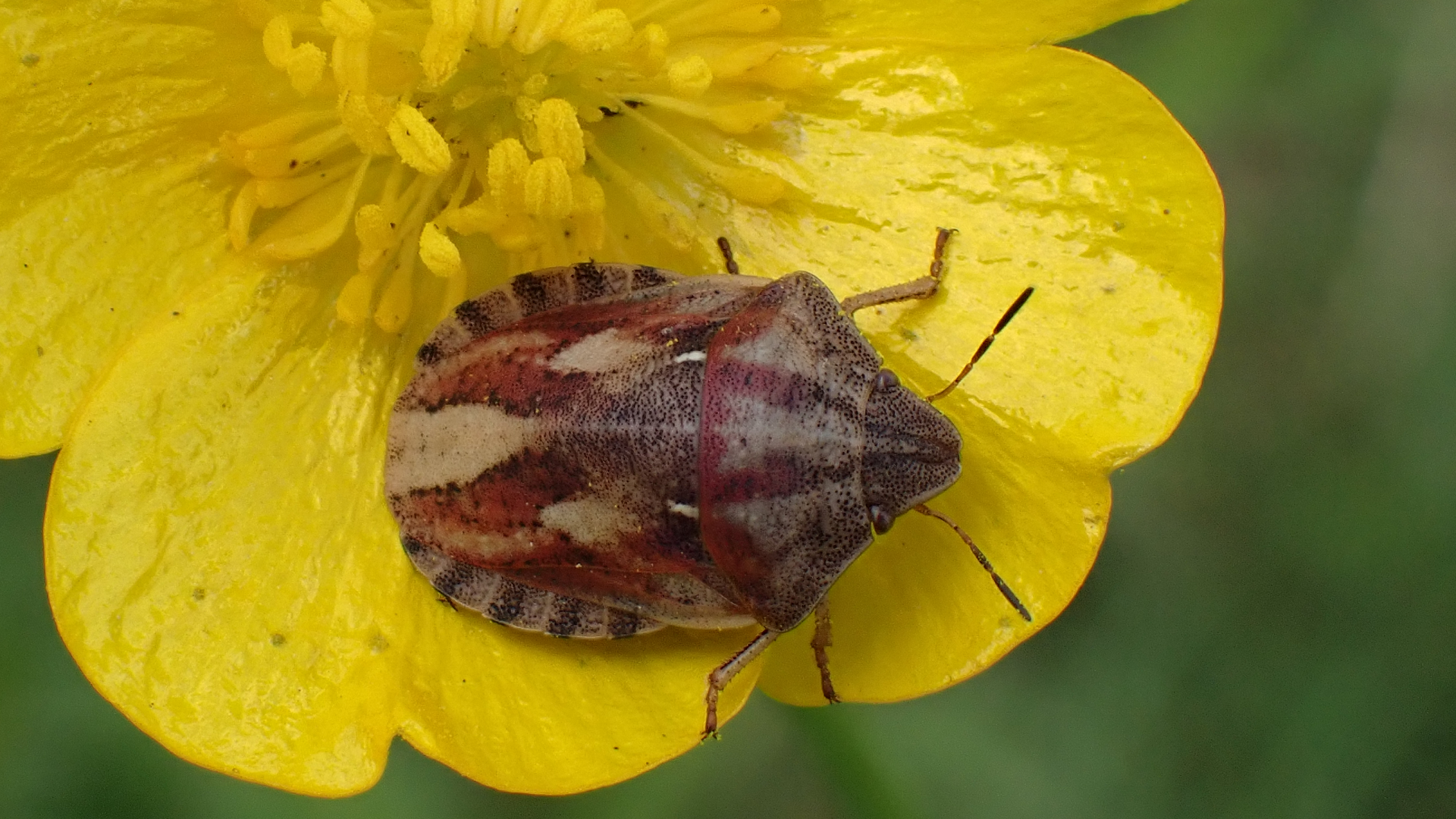
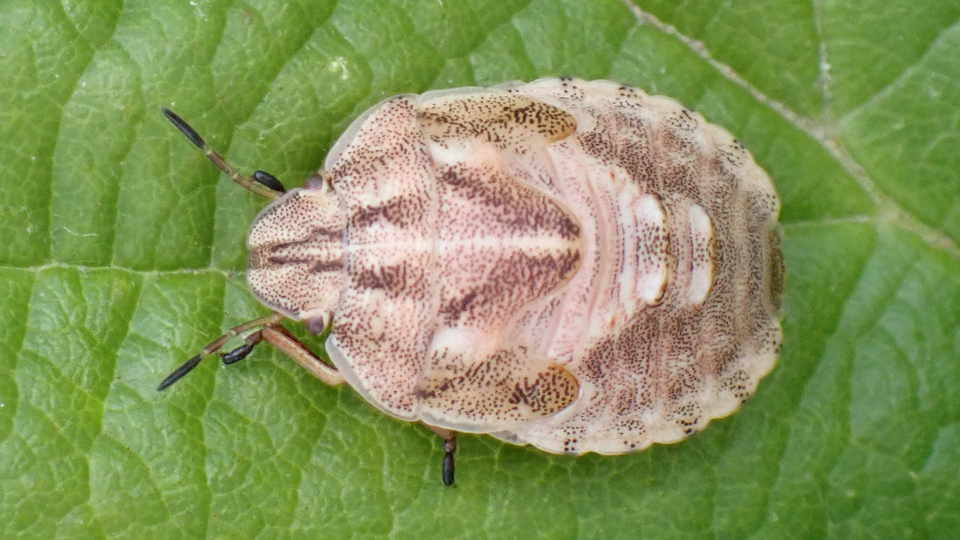
Tortoise Shieldbug
Eurygaster testudinaria
Markings and ground colour vary on the Tortoise Shieldbug. There is a noticeable central depression at the front of the head. The nymphs feed on various grasses. Length 9-11 mm.
#
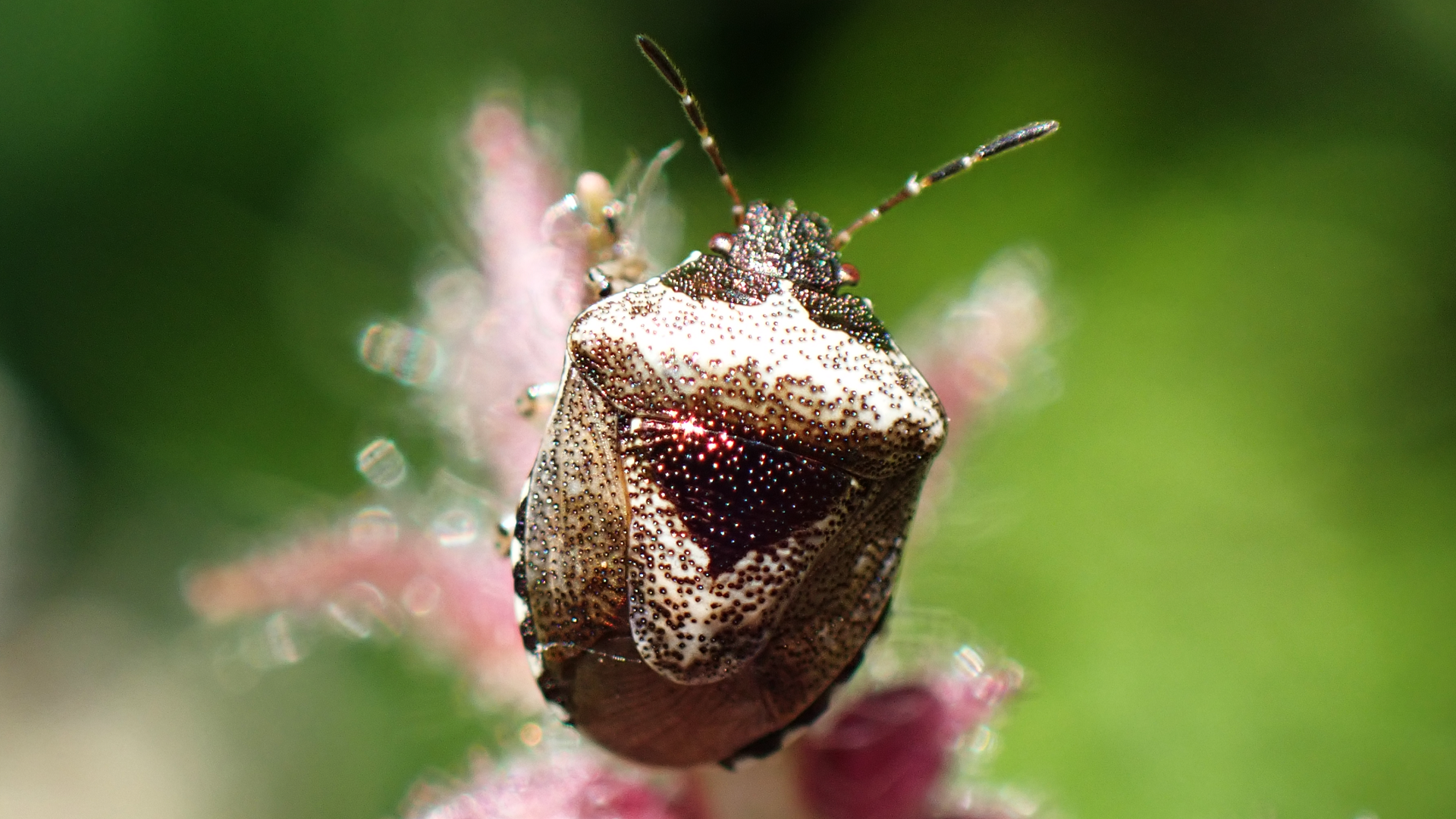
Woundwort Shieldbug
Eysarcoris venustissimus
Tiny greyish-bronze species (5-7mm) found on hedge woundwort and occasionally black horehound and nettles. The head, front of the pronotum and scutellum are copper coloured, while the connexivum is decorated with black and white.
#
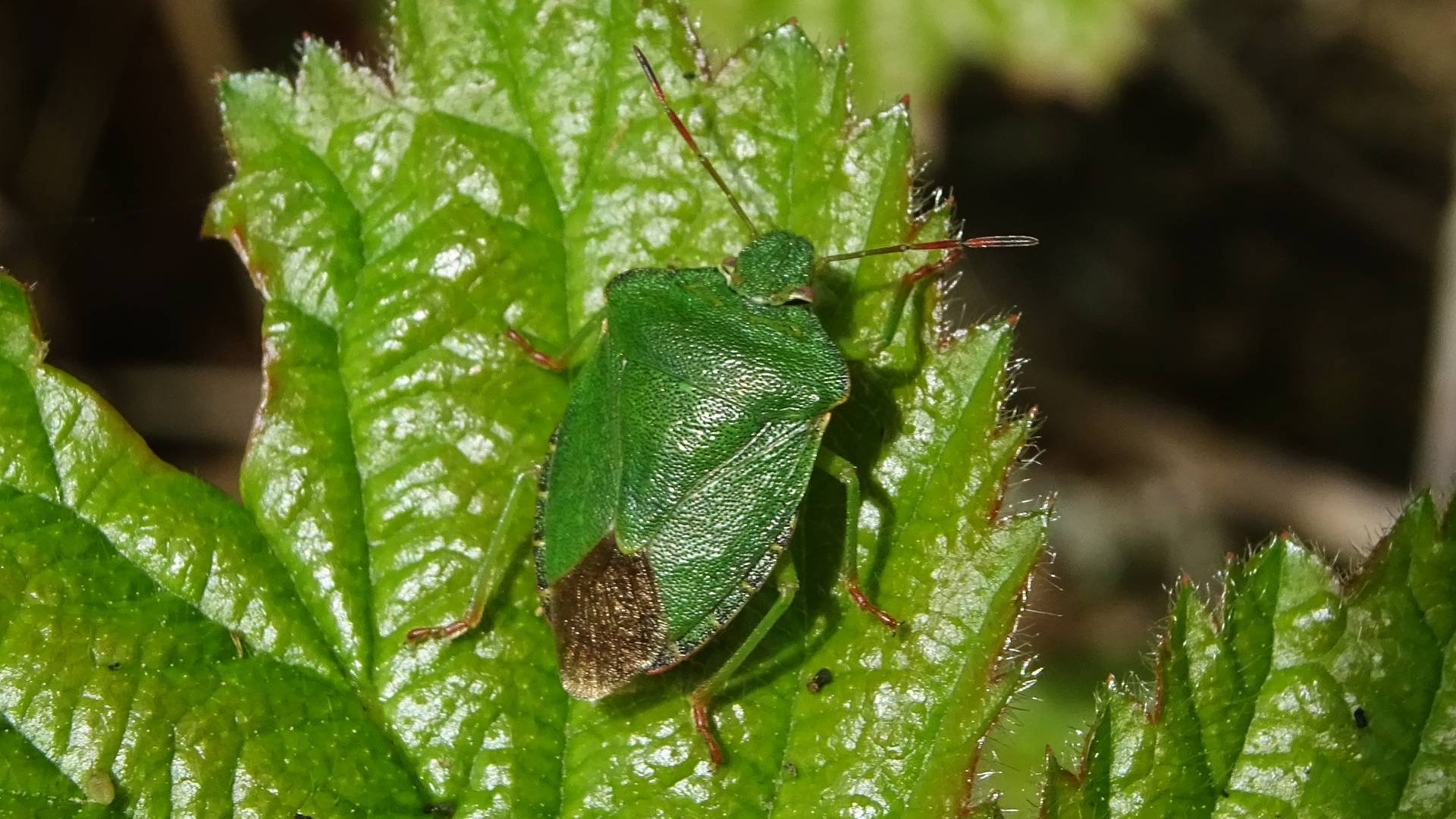
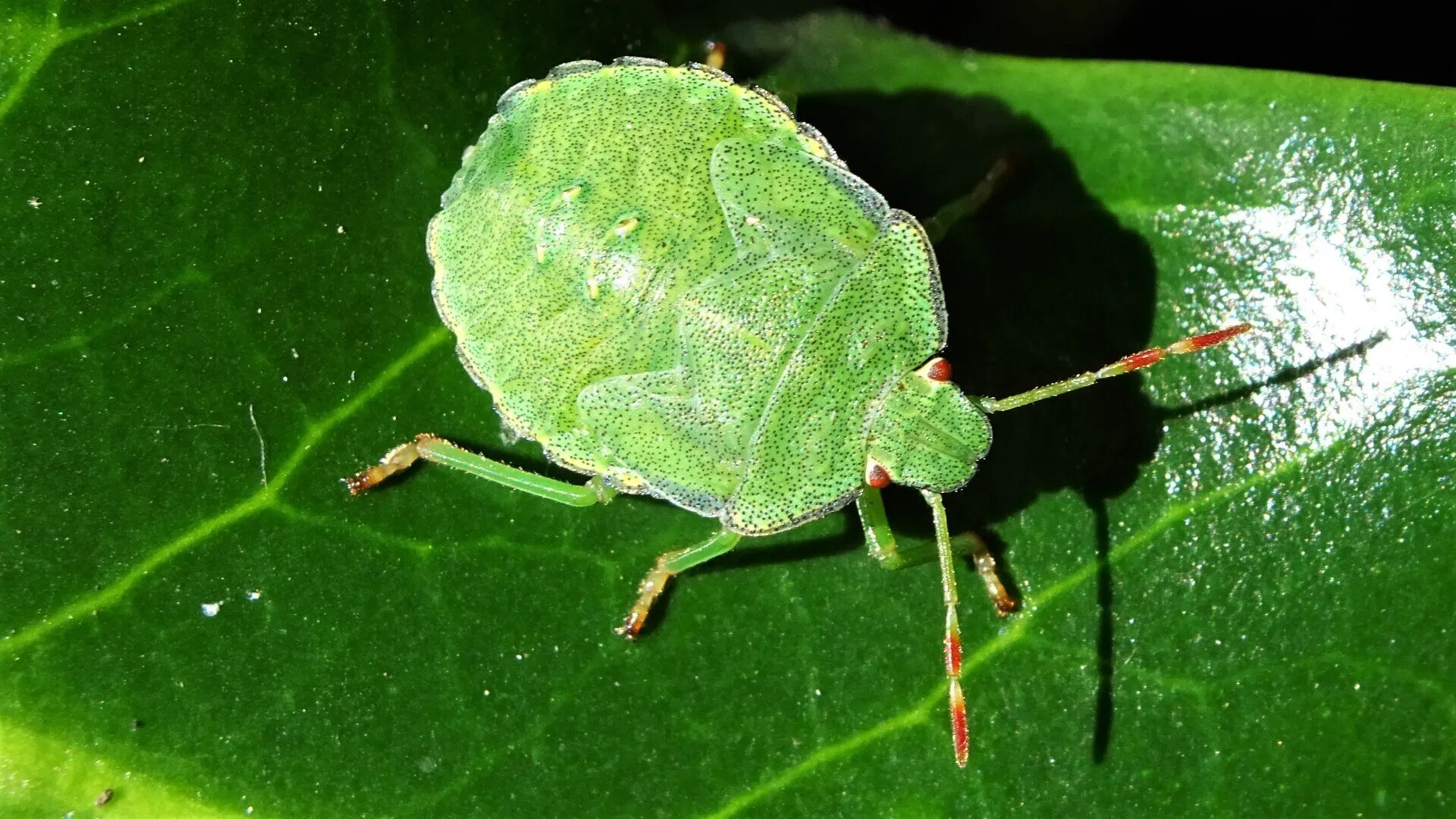
Common Green Shieldbug
Palomena prasina
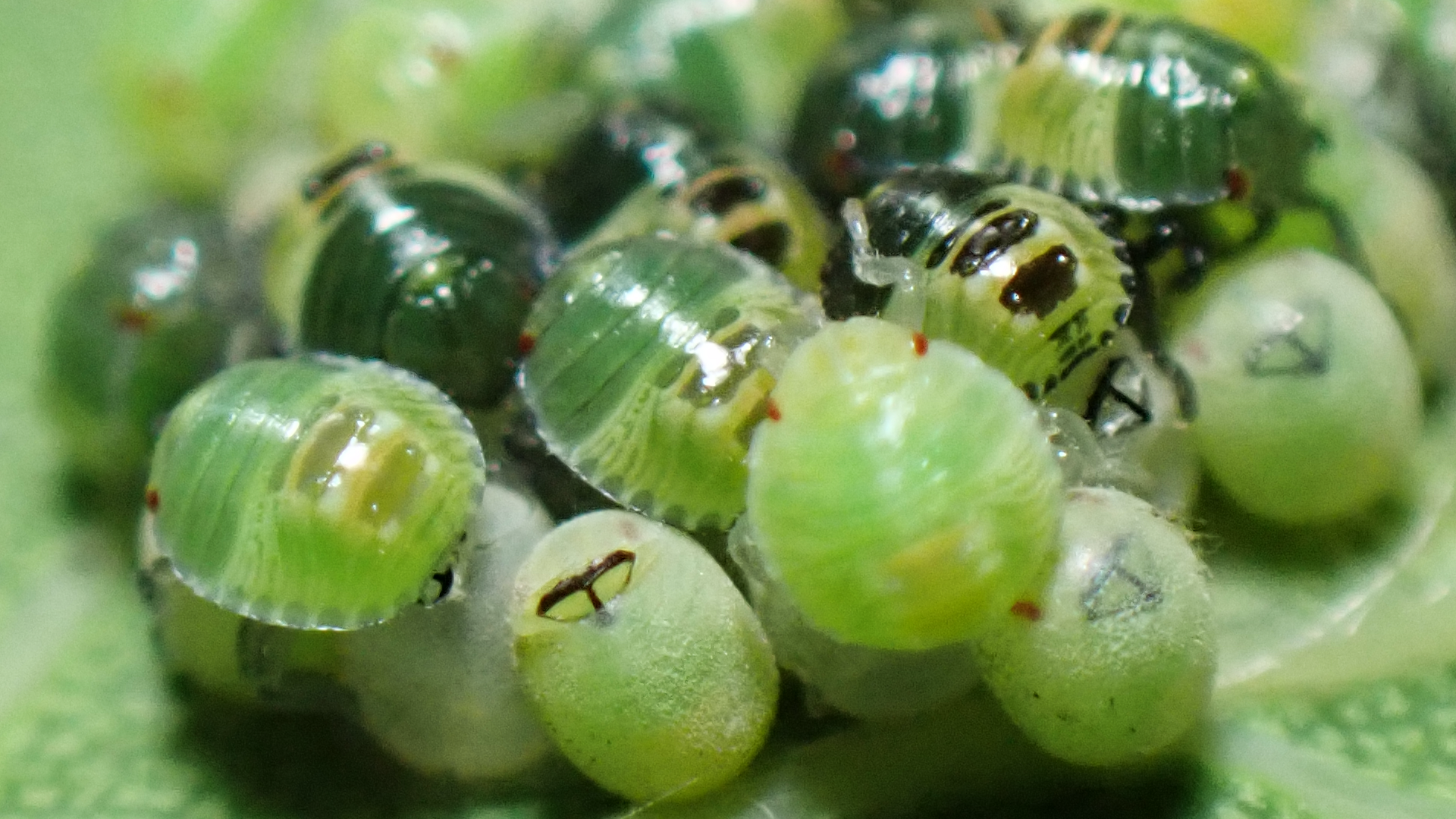
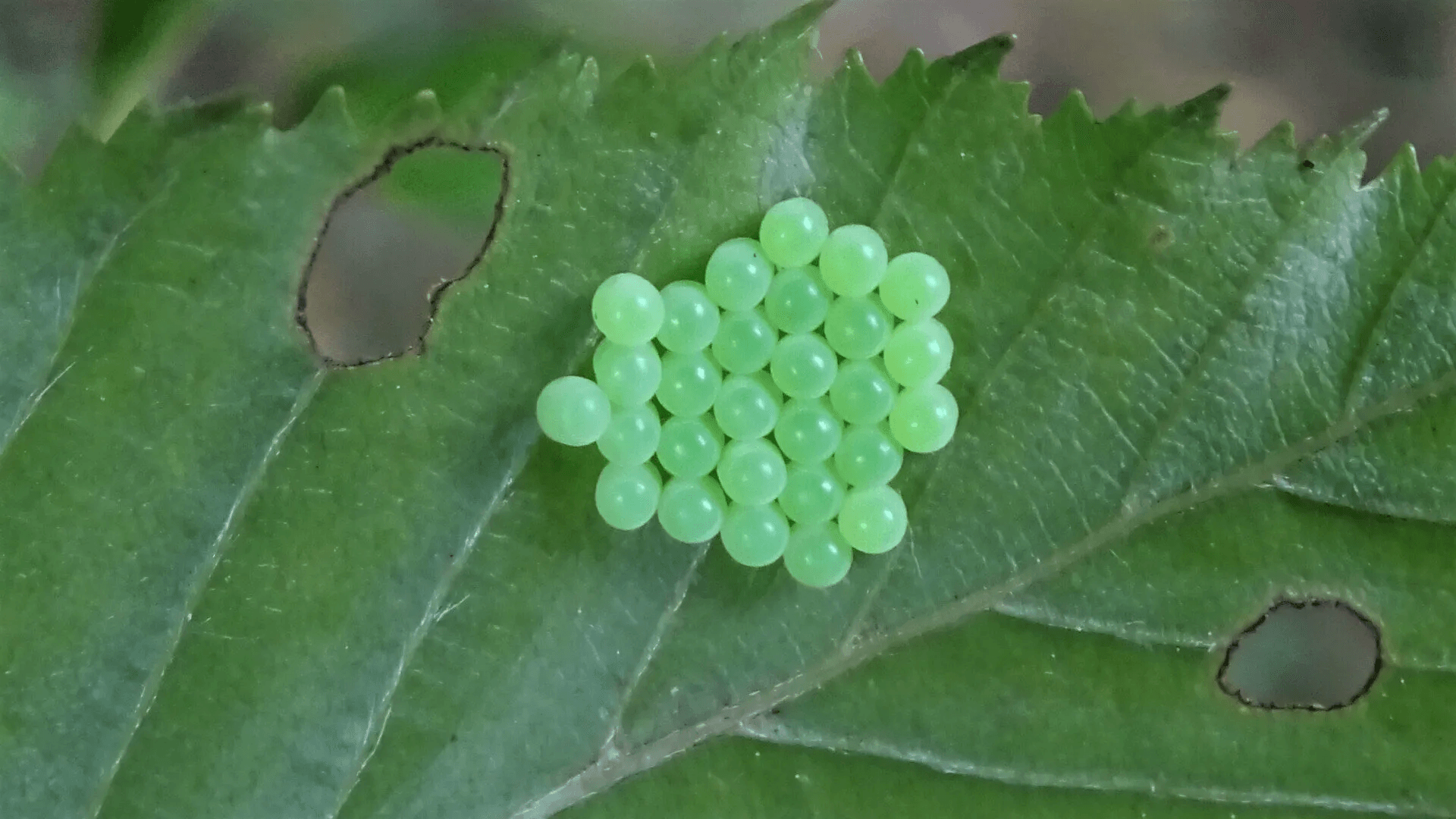
During spring and summer adults (12-13mm) are bright green, finely punctured with dark spots. The antennae has reddish segments and there is a dark wing membrane. As winter approaches this species turns darker. Instars are light-green when they hatch from their eggs. They darken and within an hour or two there is a pattern on the back.
#
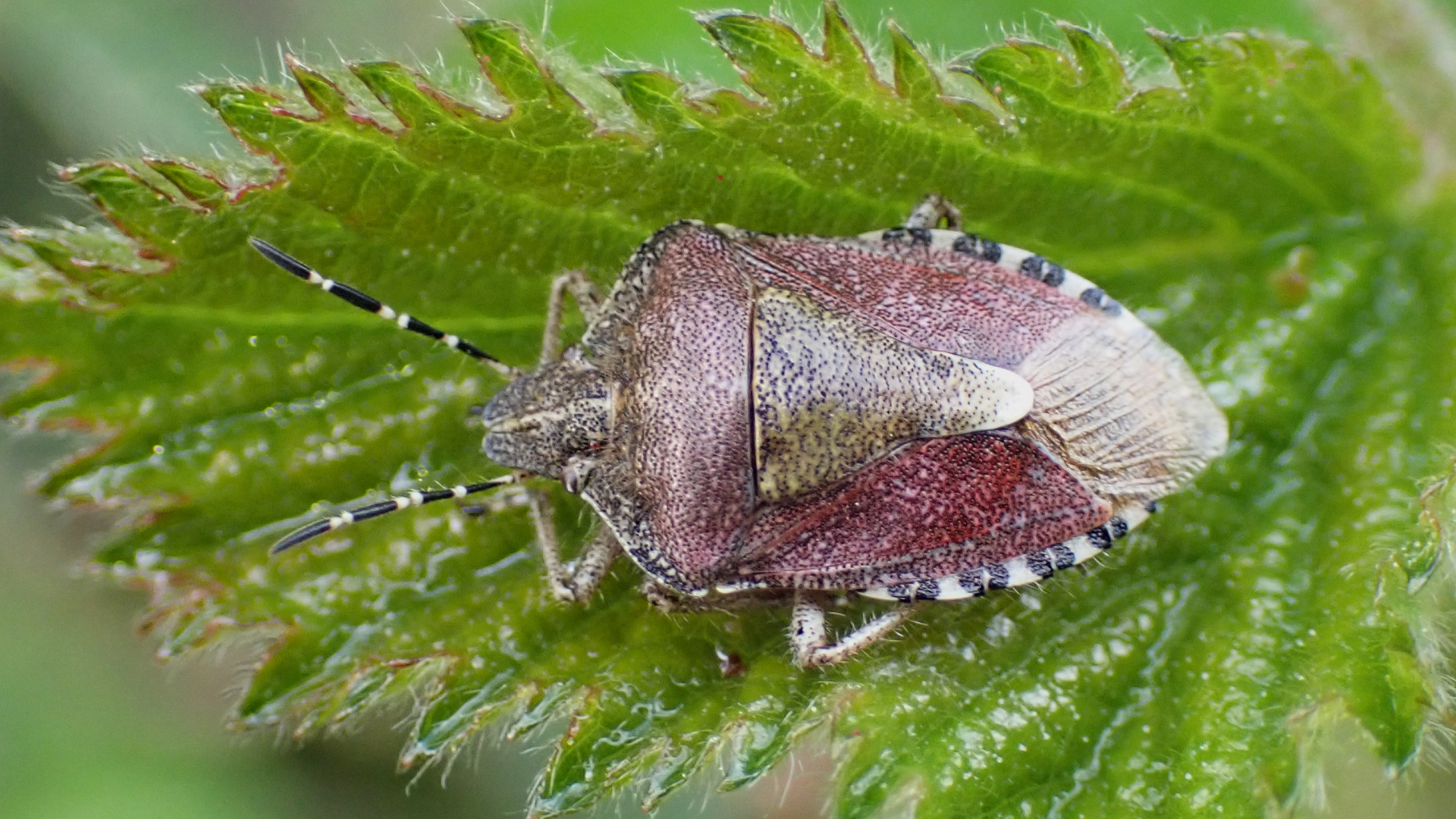
Hairy Shieldbug
Dolycoris baccarum
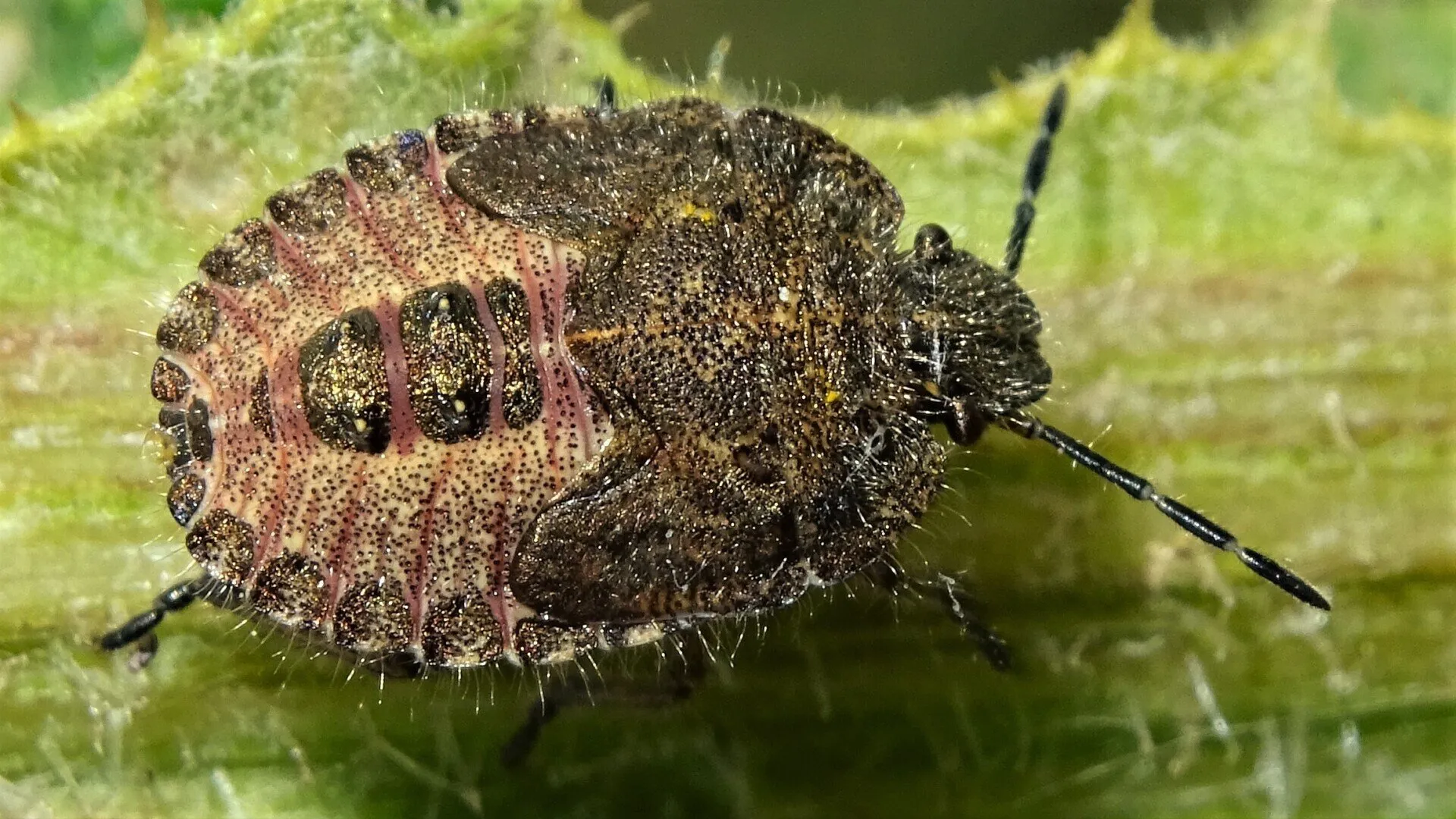
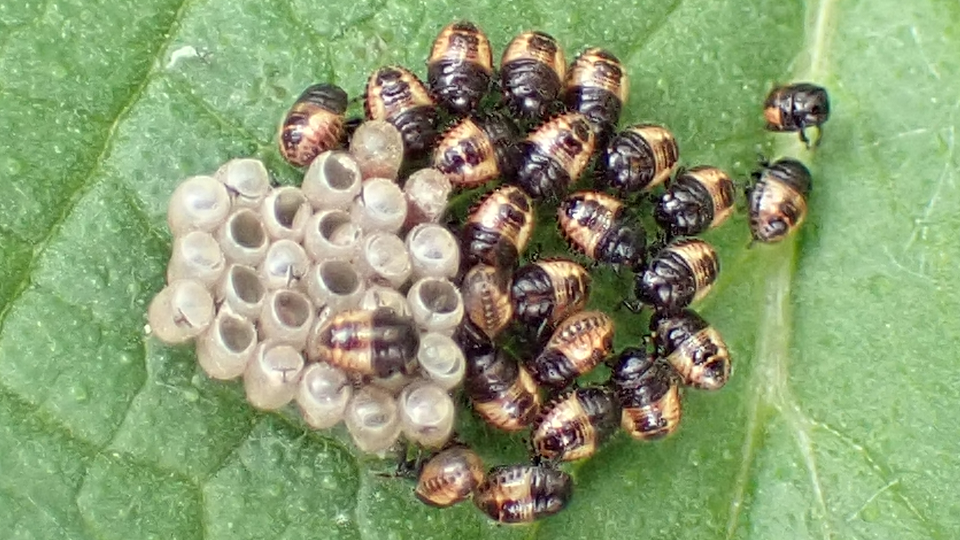
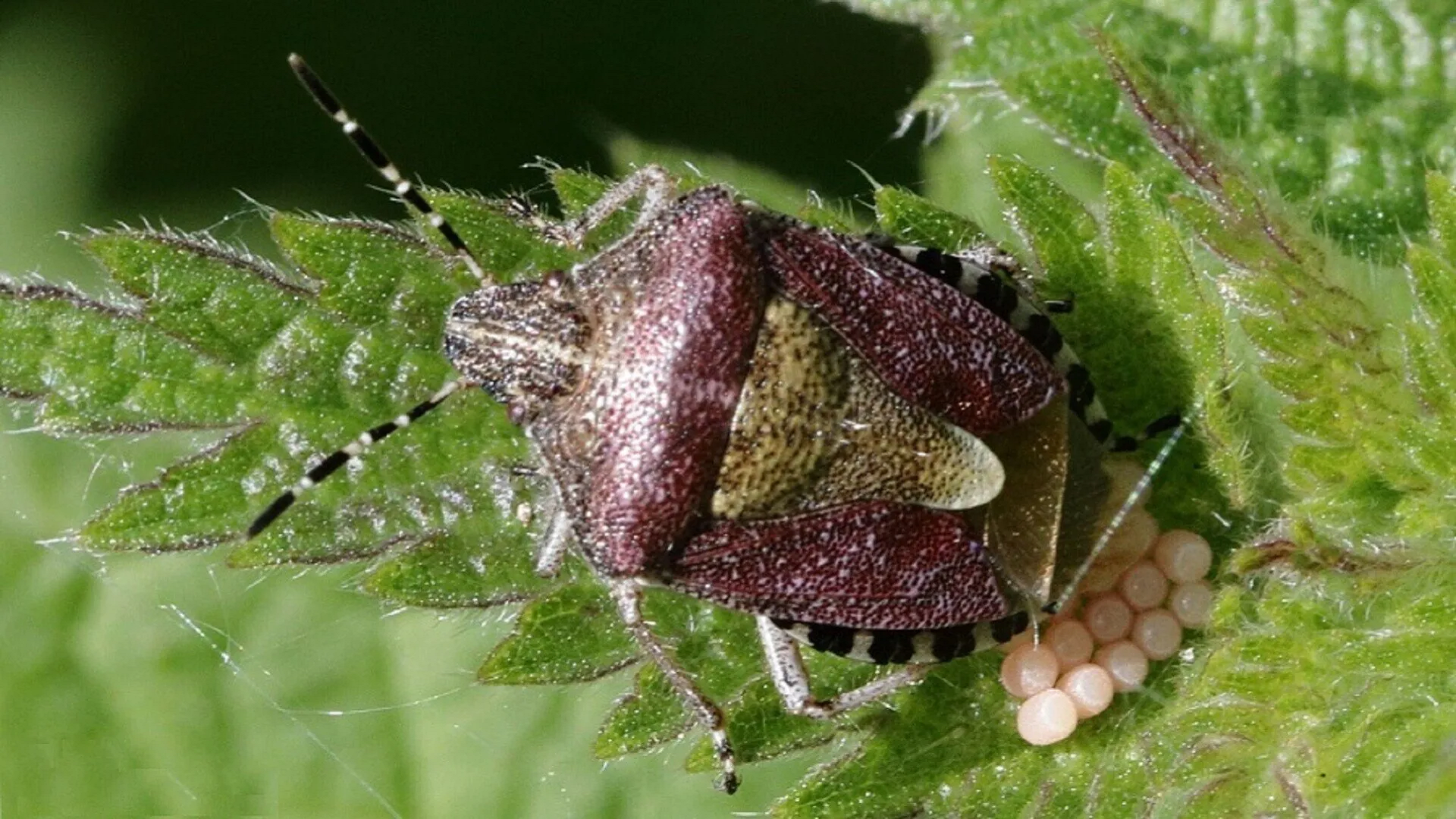
The Hairy Shieldbug is covered in long hairs. It is found throughout the year along woodland rides and on hedgerows. This species overwinters as an adult and emerges during spring to mate. Larval foodplants include Blackthorn and other members of the Roasaceae family. This species is also known as the Sloe Bug.
#
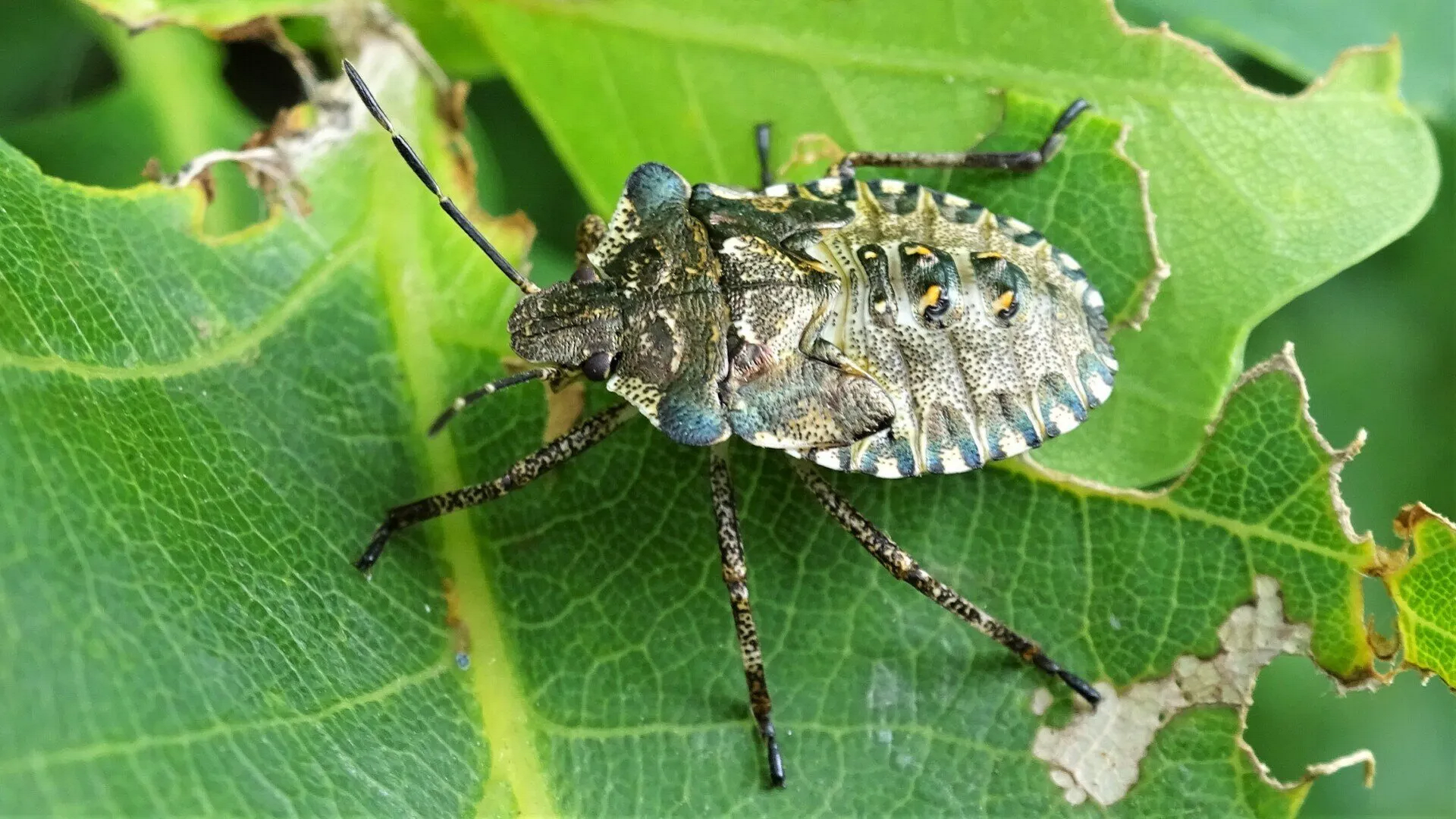
Forest Shieldbug
Pentatoma rufipes
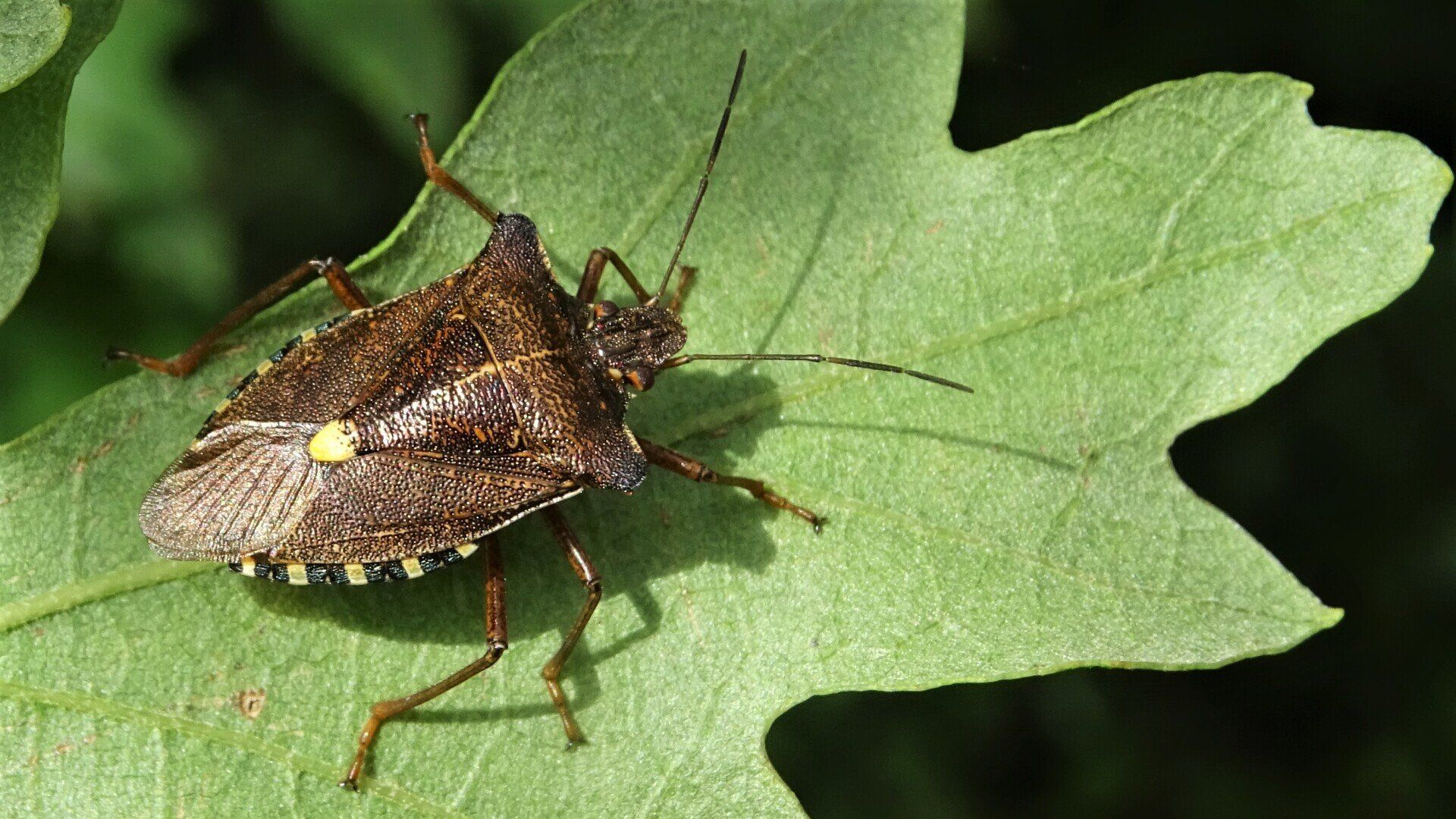
This species has orange/brownish legs and slightly hooked projections at the front of the pronotum. The spot at the tip of the scutellum ranges from orange to cream. These shieldbugs overwinter as young nymphs which feed mainly on Oak. New adults are generally seen from July until November, with egg laying taking place in August. The adults (11-14mm) are omnivorous, feeding on fruits and insects.
#
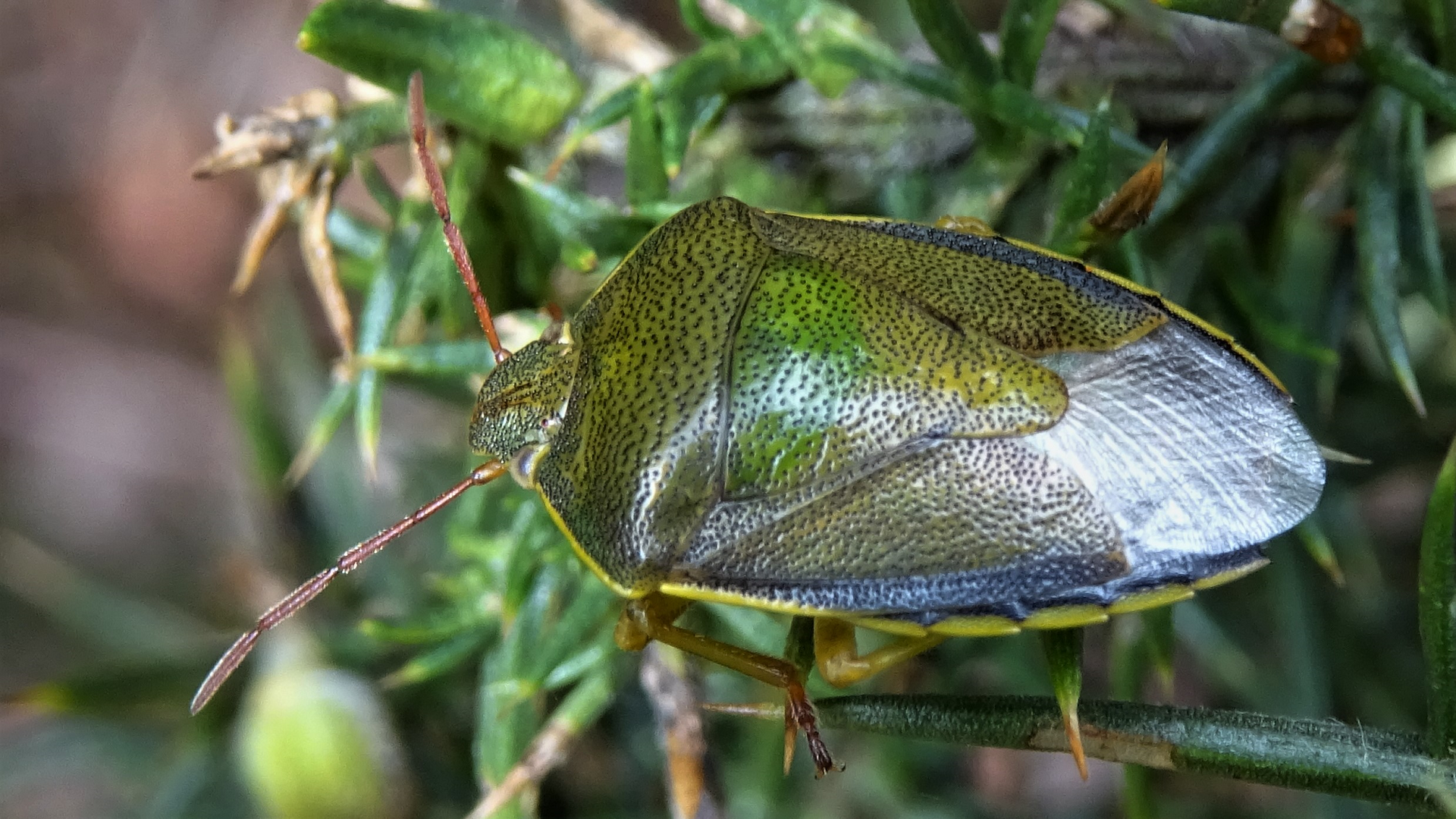
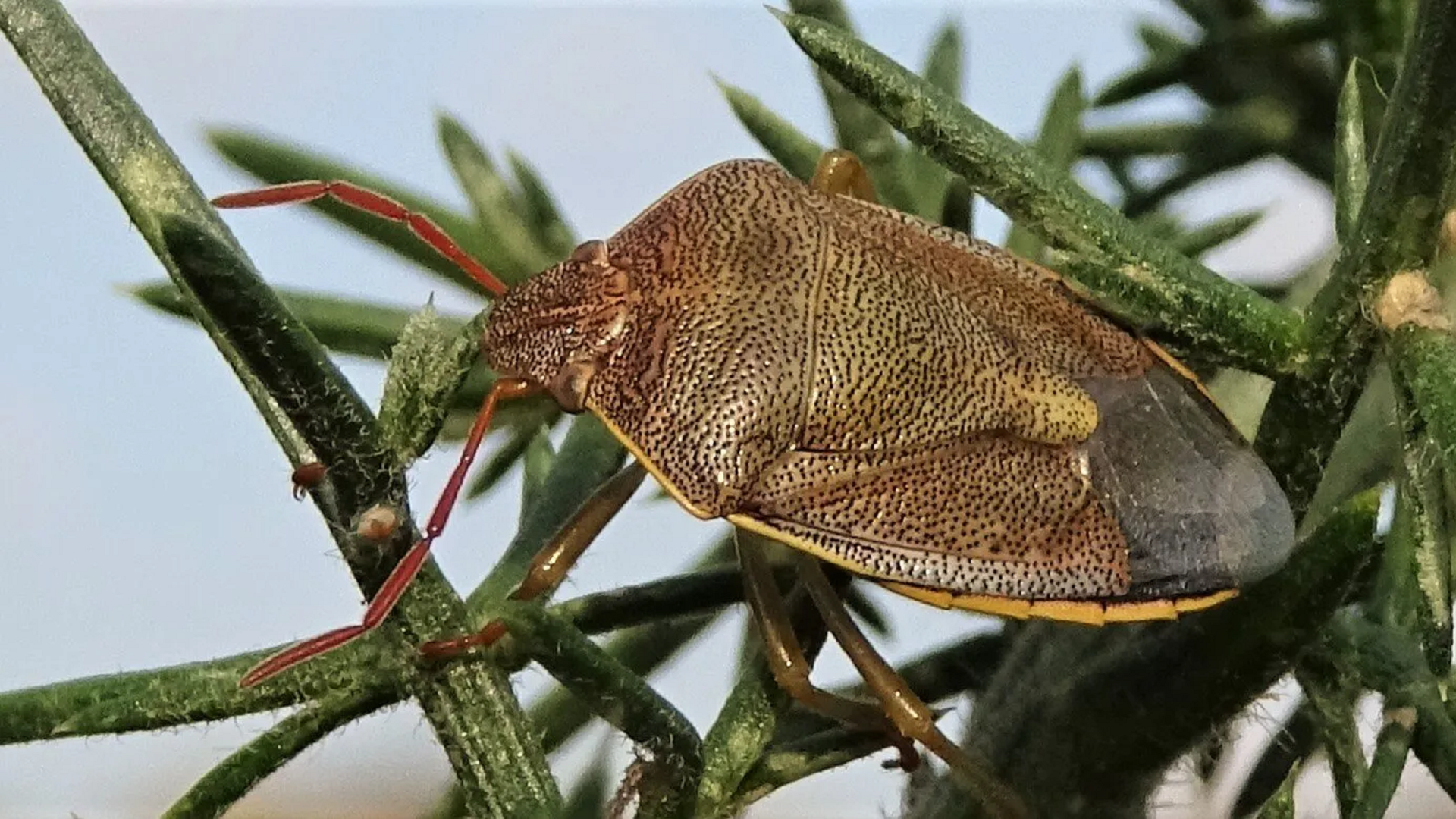
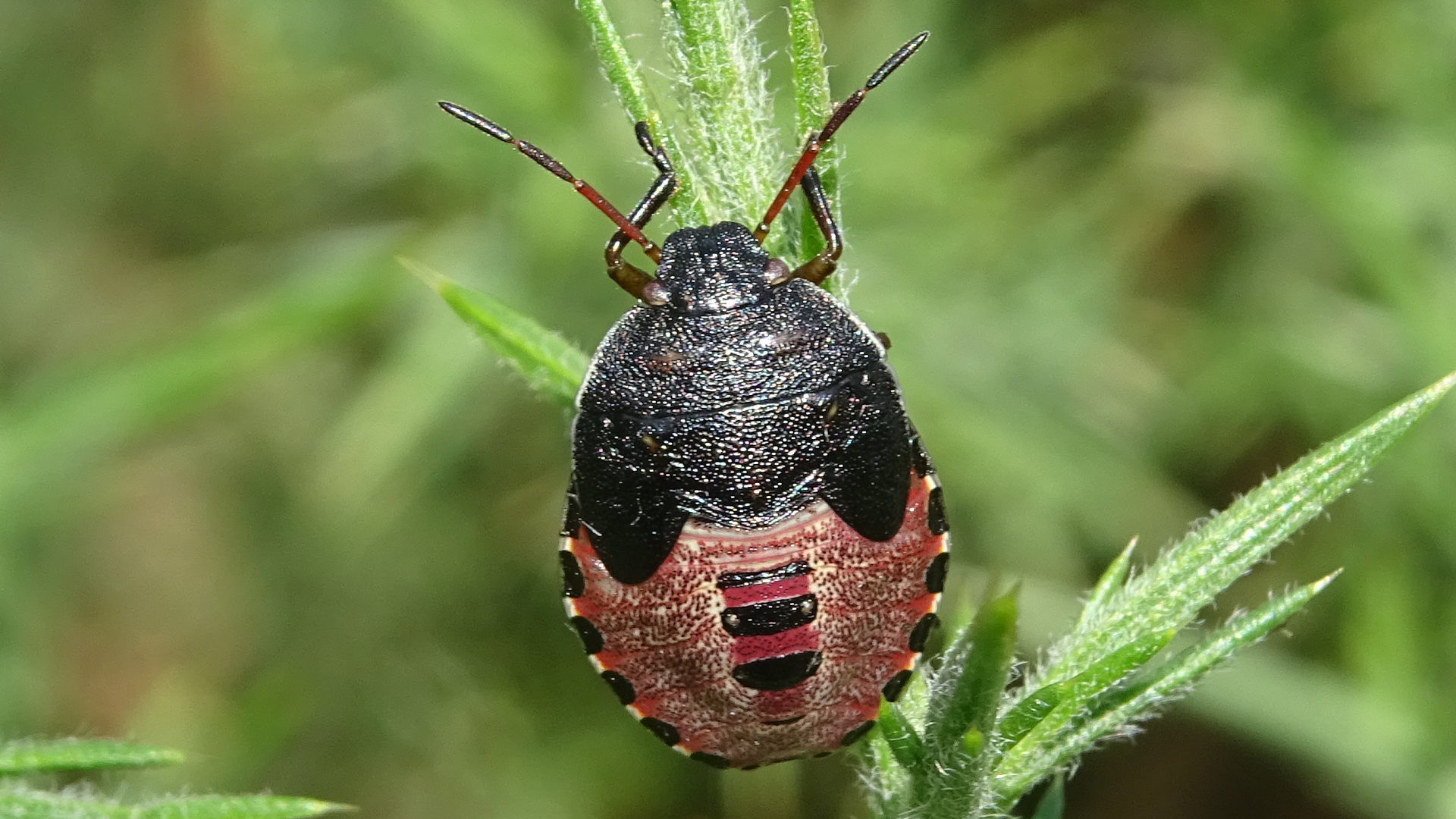
Gorse Shieldbug
Piezodorus lituratus
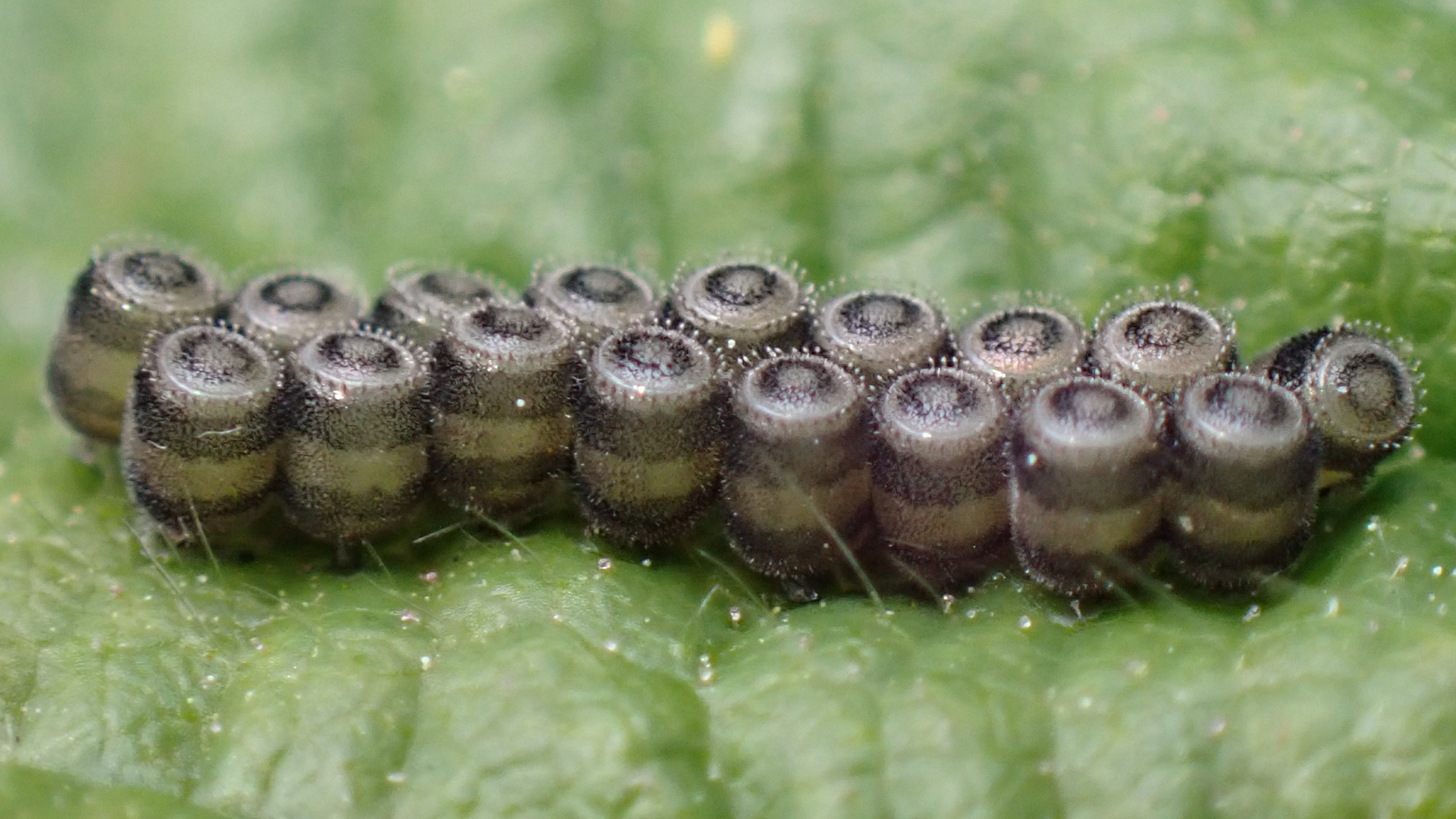
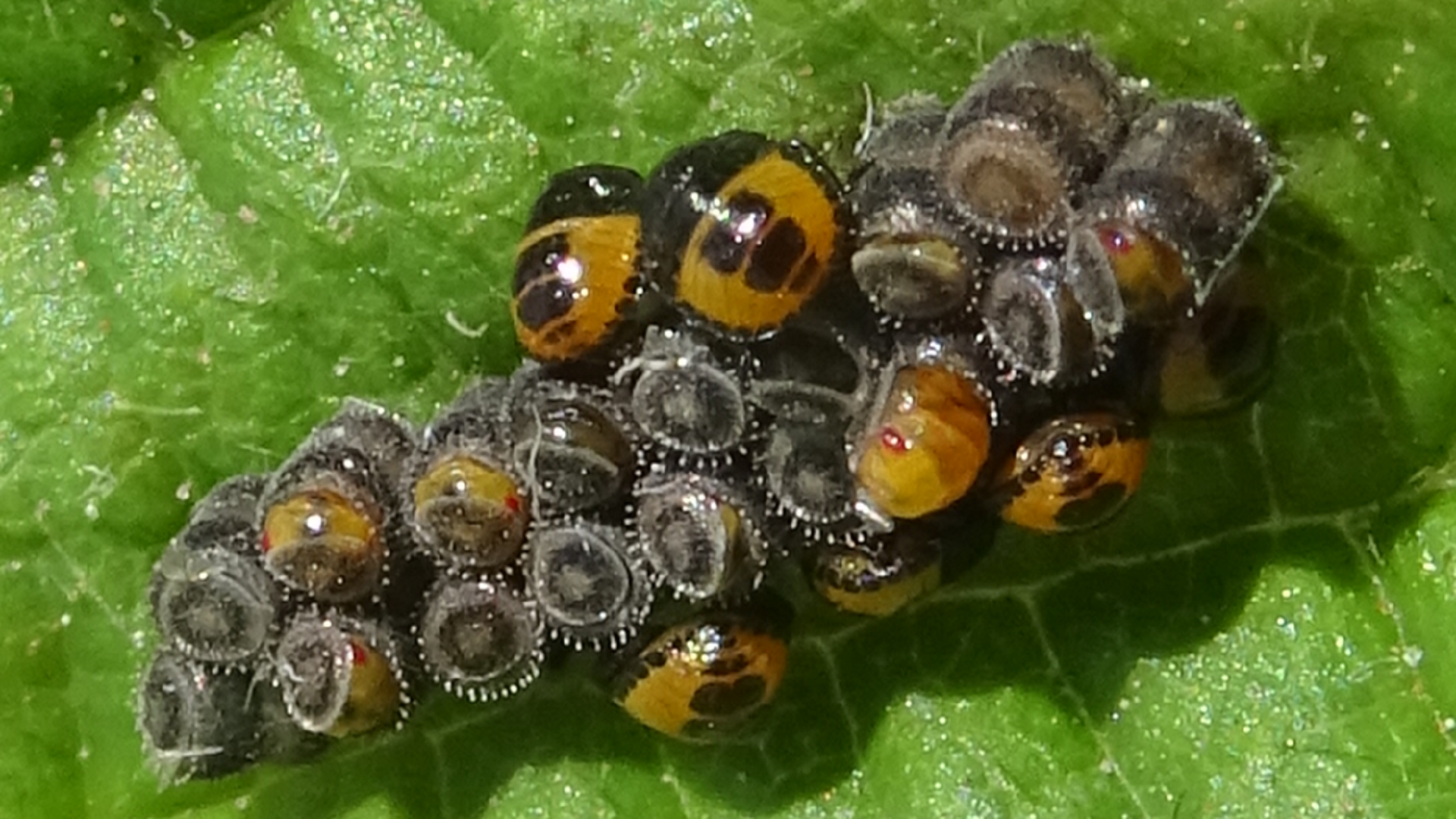
Adults (10-13 mm) that emerge and mate during spring are mainly green, while the new generation appearing late summer have purplish-red markings. They usually become darker before hibernation. Mainly found where European gorse is present. The eggs are barrel-shaped. When the orange instars emerge they will go through several stages before becoming adults. Foodplants they use include gorse, broom, and Dyer's greenweed.
#
Bronze Shieldbug
Troilus luridus
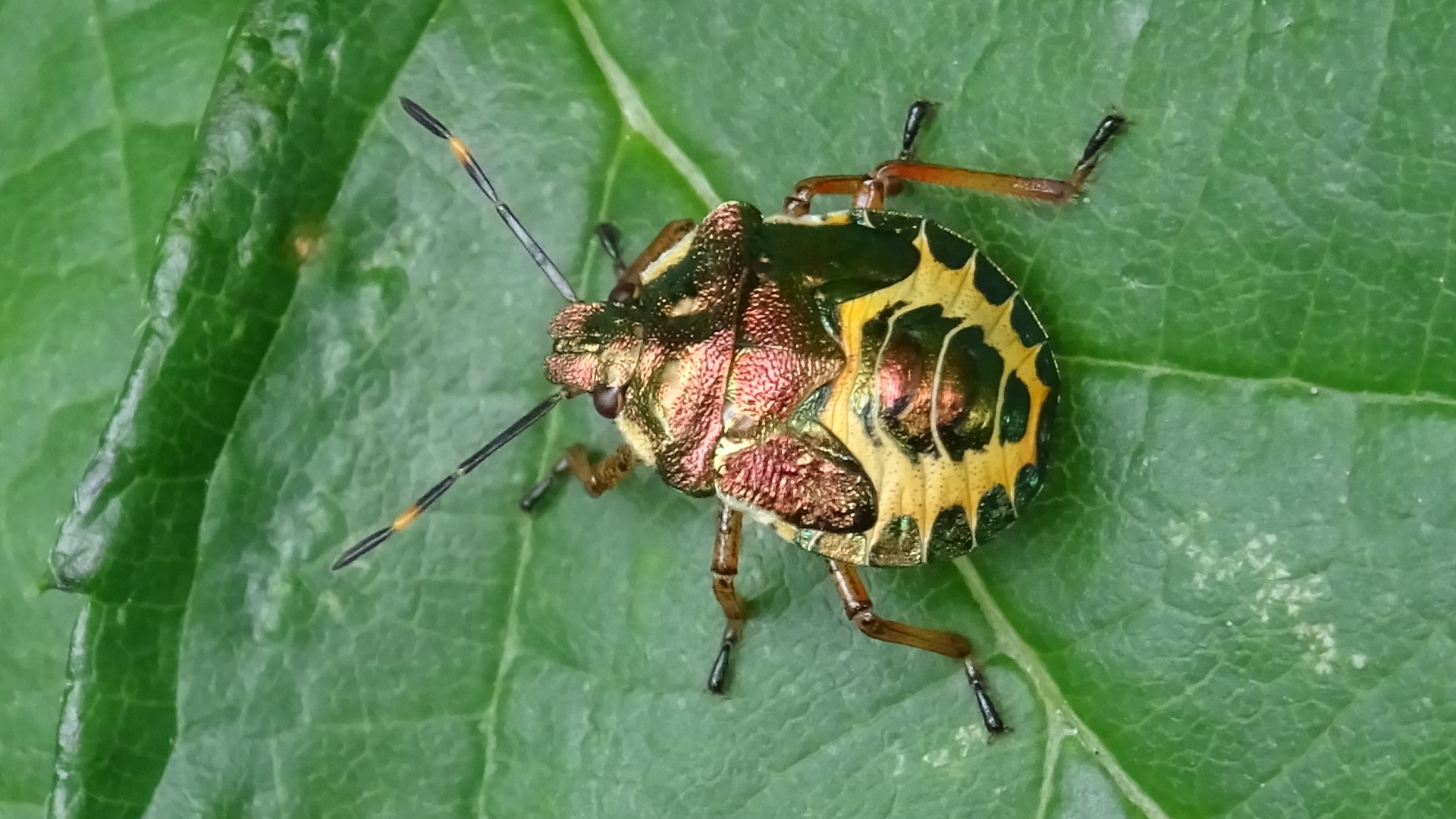
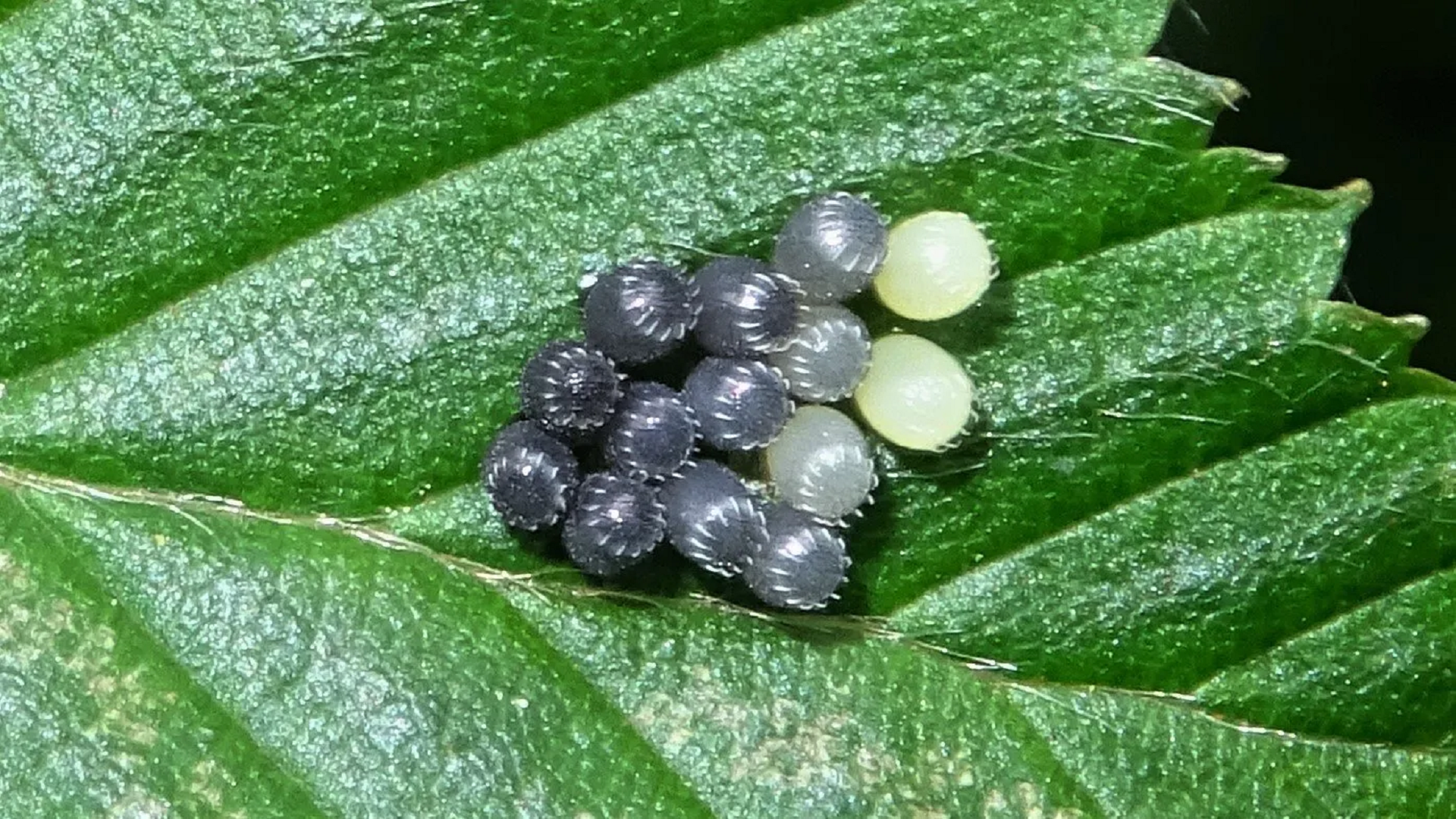
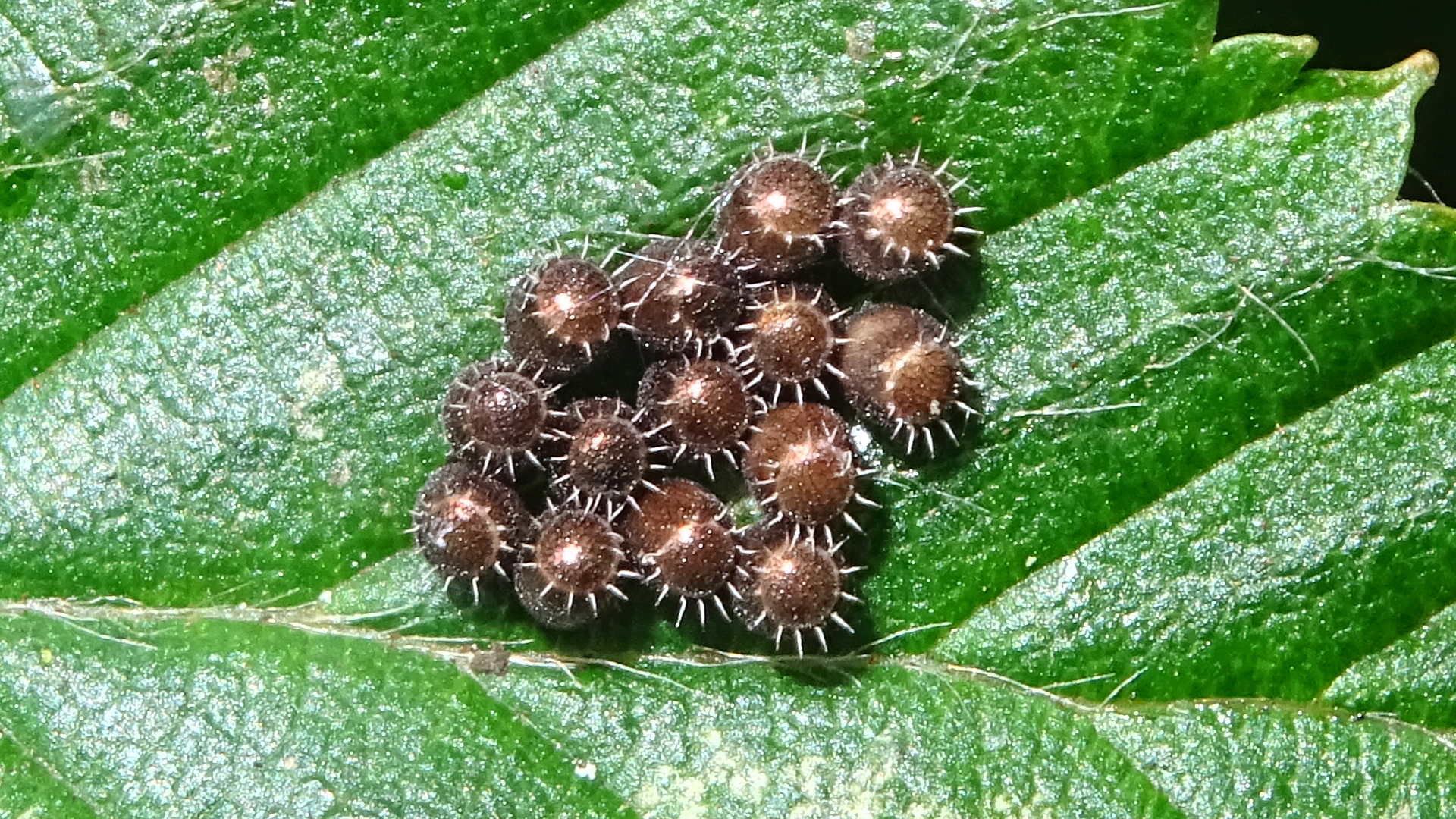
A predatory woodland bug measuring 10-12mm in length. The penultimate antennal segment is orange banded and the legs are brown. There is one generation each year. Once hatched the nymphs feed on plants as well as other insects, especially caterpillars. The next generation of adults usually appear from July onwards.
#
© hainaultforest.net. All rights reserved.