

LICHENS
Lichens are composite organisms created through a symbiotic relationship between a fungus and algae or cyanobacteria. The fungus offers structure and protection, while the algae generate food through photosynthesis. They are found on soil, rocks and trees.
Crustose Lichens can only be removed by cutting the bark on which they grow. Stem and leaves of these crust-like thalli cannot be differentiated. They lack true roots and a vascular system.
Crustose Lichen
Opegrapha ochrocheila
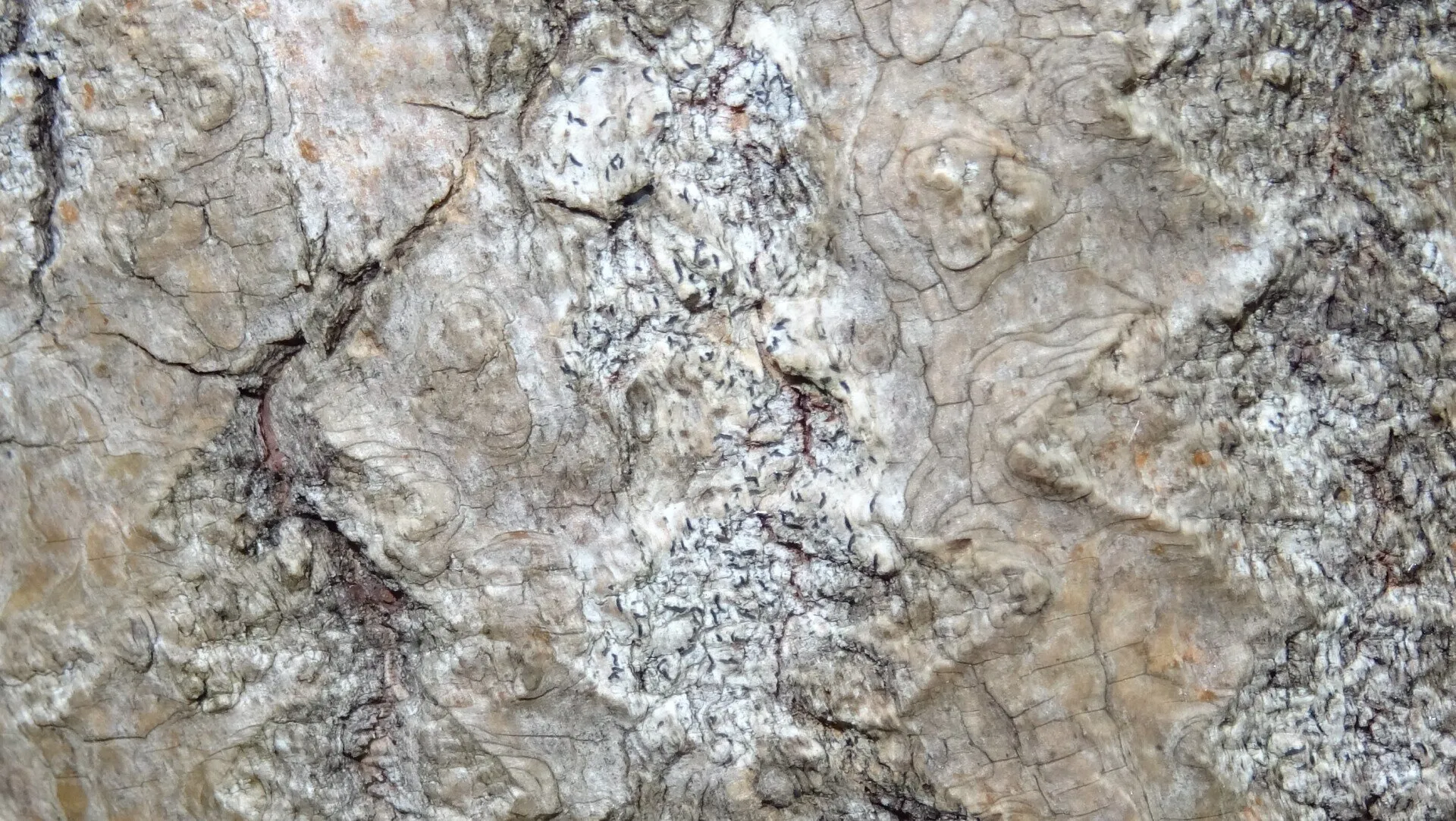
The thallus is very thin, light grey and sometimes tinted green or brown. It may be immersed in the substrate. The black apothecia measure 2.5mm or smaller. Examined with microscope.
#
Crustose Lichen
Lecanora barkmaniana
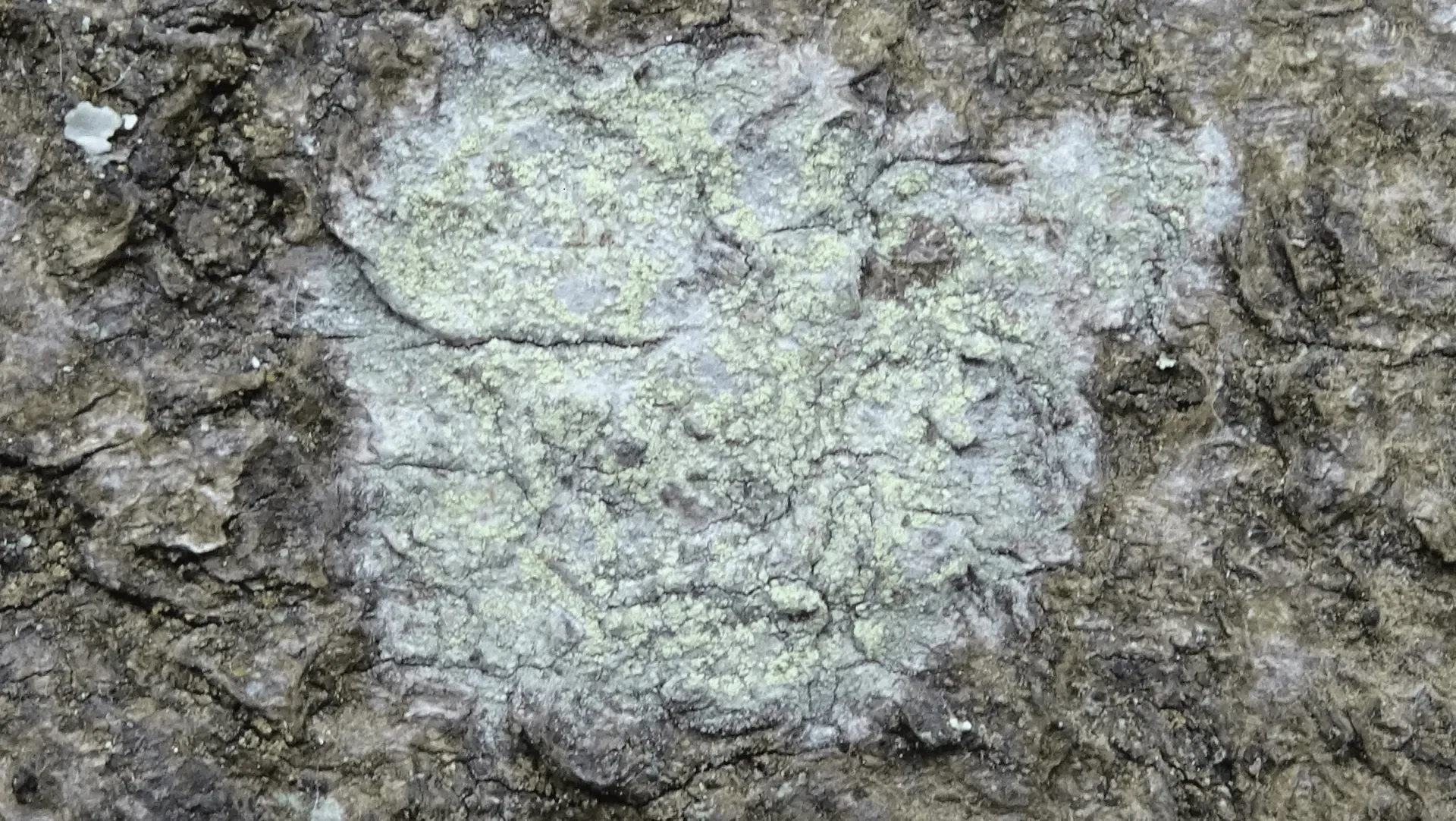
A lichen possibly under-recorded that is spreading rapidly on nutrient-enriched or dusty trees. It has a light grey thallus with a lighter grey prothallus. Dotted soralia with light yellow-green soredia spread over most of the thallus. The rare light brown disc apothecia have crenulate edges. Pycnidia, flask-shaped fruiting bodies, bearing conidiophores and conidia on the interior are absent.
#
Crustose Lichen
Lecidella elaeochroma
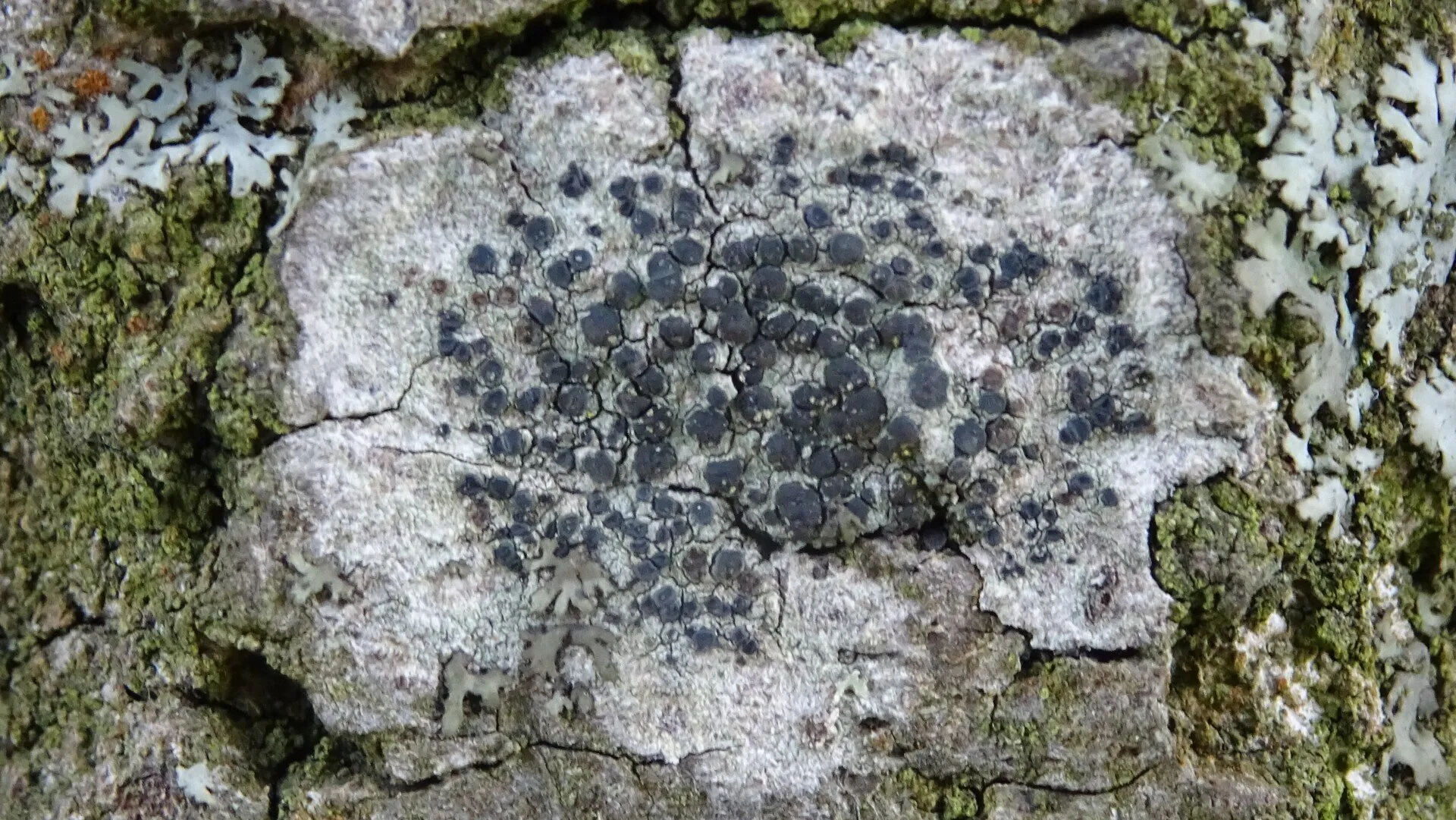
Often found on the bark of young ash trees. The vegetative body of the lichen known as the thallus is greyish-white to light greyish-green. The spore-bearing discoids (apothecia) are small and black. Very common.
#
Crustose Lichen
Lecanora chlarotera
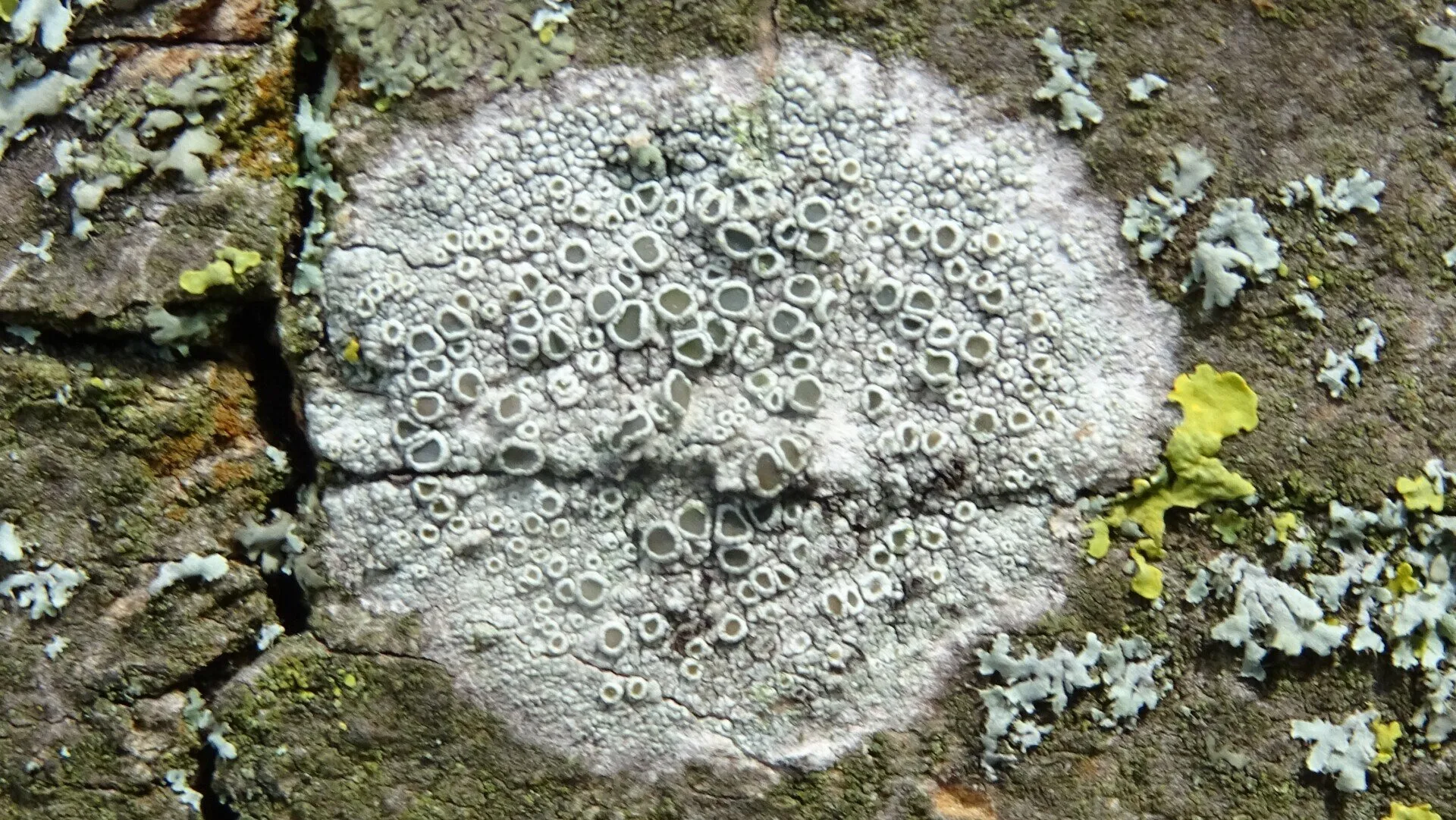
The spore-bearing discoids (apothecia) have thick edges and range in colour from buff to chestnut brown. Very common.
#
Crustose Lichen
Lecanora muralis
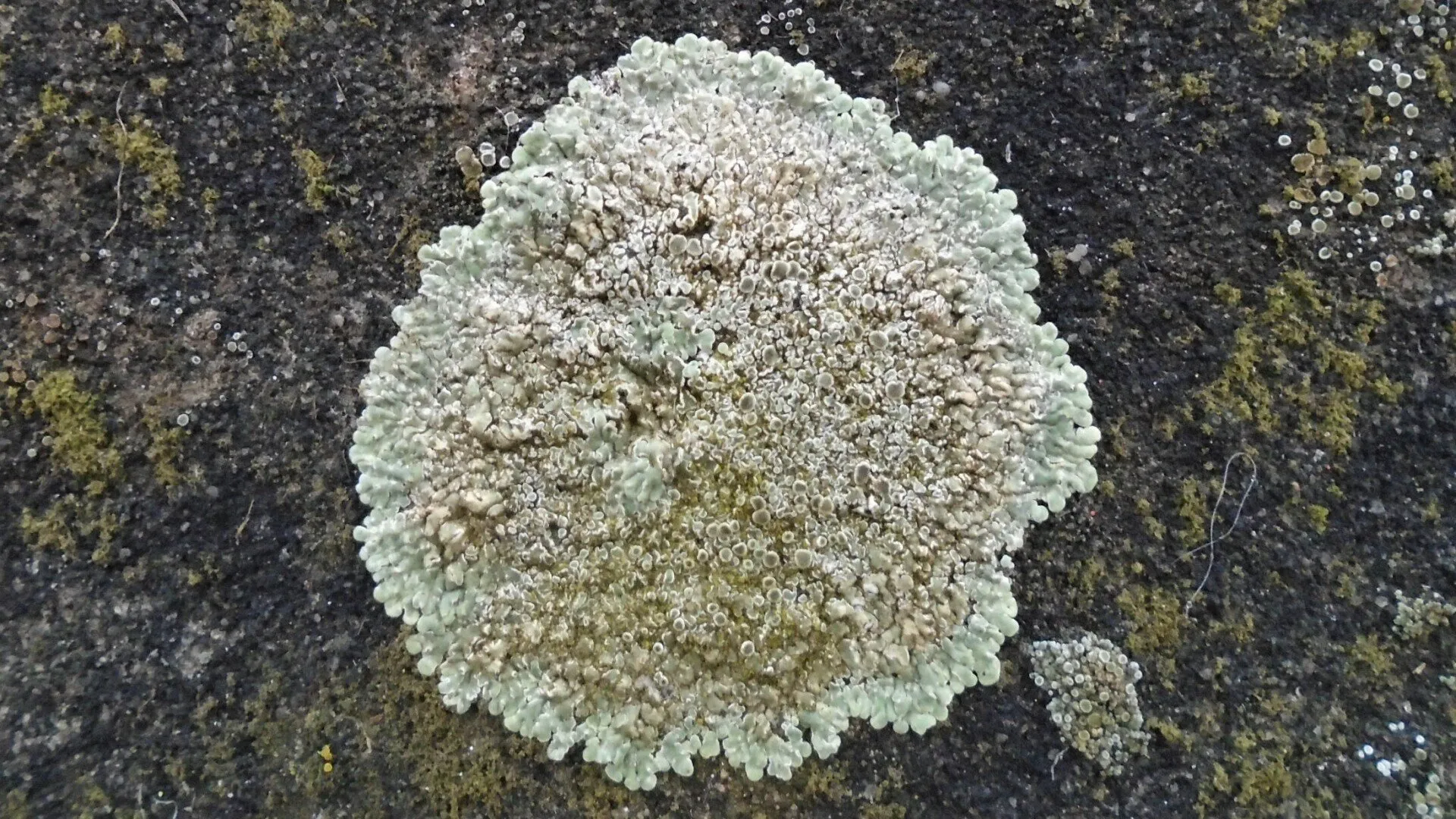
Waxy-looking greenish-grey to yellow-grey crustose lichen that grows on rocks, concrete walls and pavements. It may be tightly or loosely attached to the substrate, normally growing in rosettes radiating from a centre filled with disc-like fruiting bodies (apothecia). Occasionally found on bark.
#
Crustose Lichen
Graphis scripta
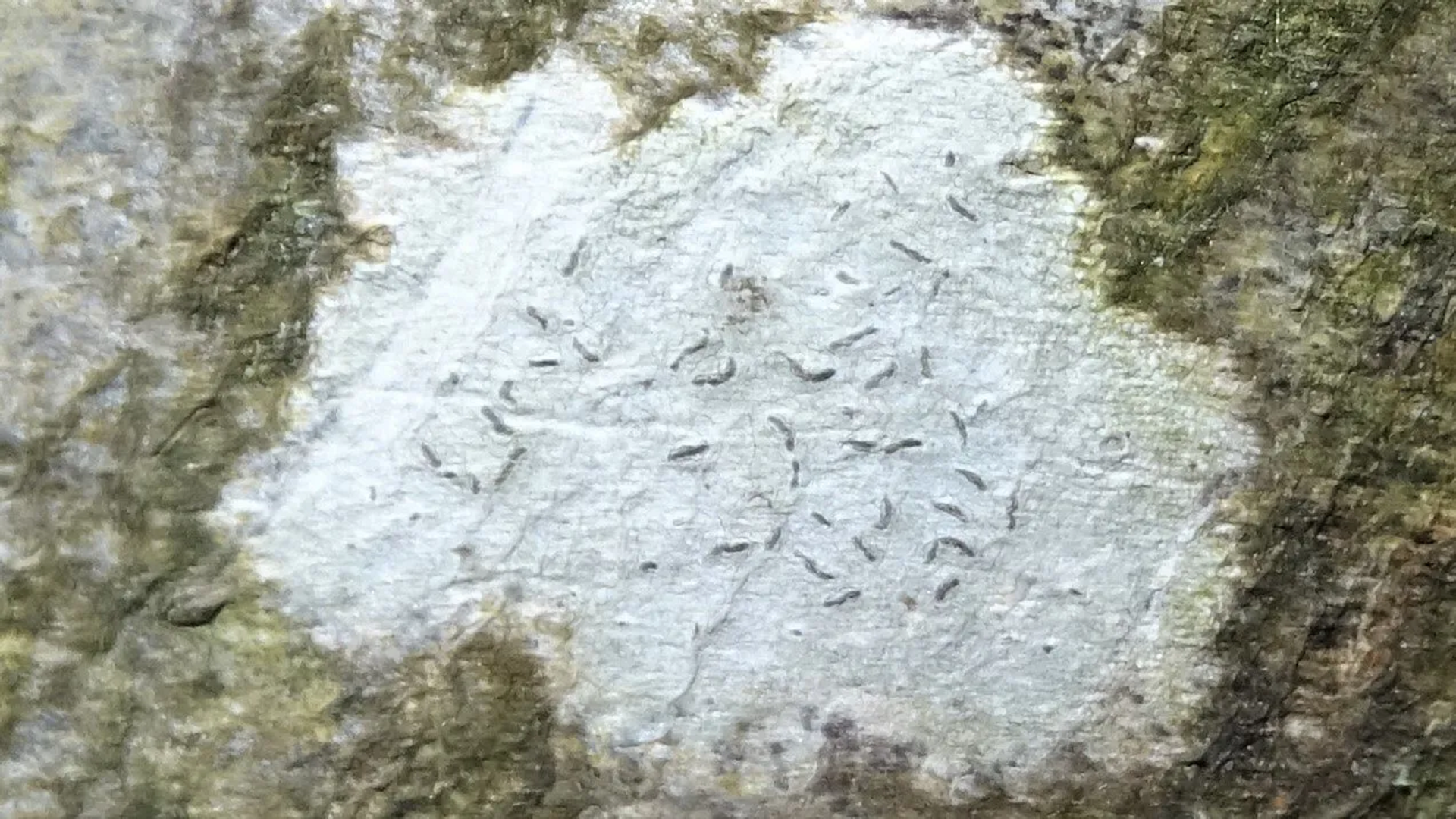
The smooth or wrinkled thallus is white or grey. The apothecia can be curved or arranged in a radiating pattern like that of a star, with raised unfurrowed edges. Found on smooth-barked trees.
#
Crustose Lichen
Candelariella aurella
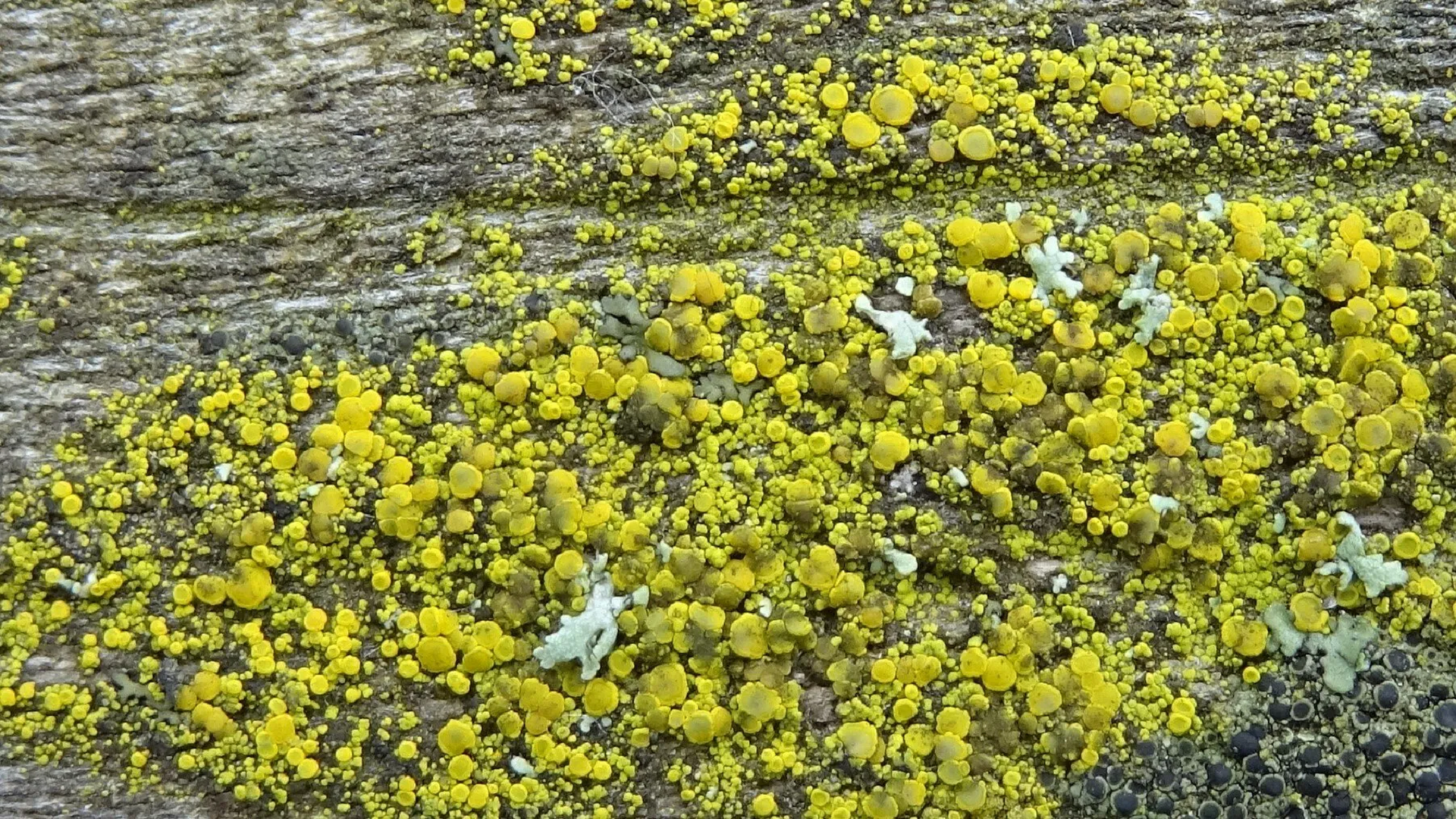
A mustard-yellow crustose lichen known as the Hidden Gold-speck lichen, or Egg-yolk lichen. It is common on nutrient-enriched calcareous rocks, bricks, mortar and wood that are exposed to sunlight. This was growing on a wooden gate.
#
Crustose Lichen
Arthonia spadicea
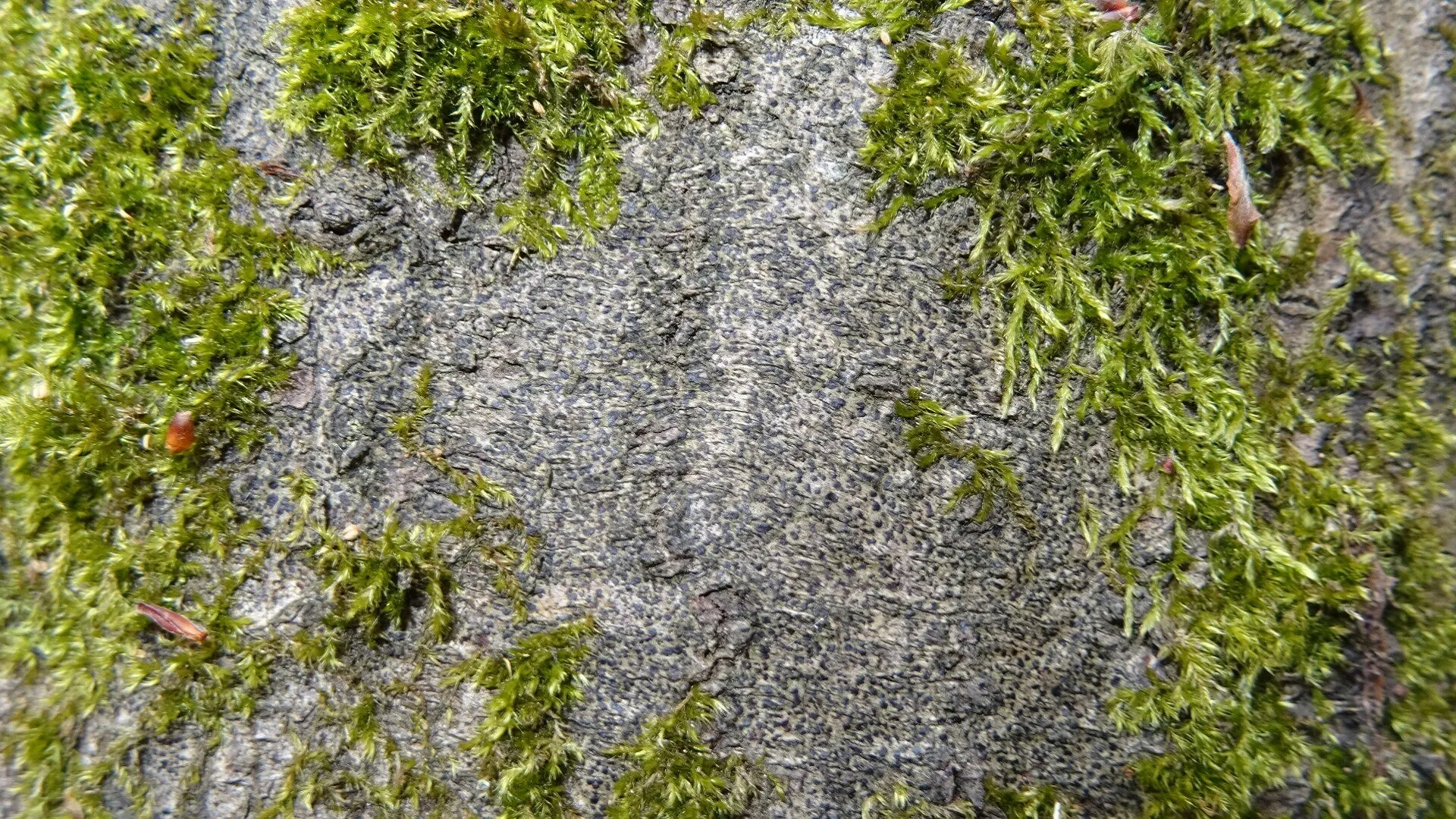
A lichen of shaded bark.
Arthonia comes from the Greek language meaning 'to sprinkle'. This species has the appearance of sprinkled tar spots. The apothecia grow to about 1.5mm long.
#
Fruticose Lichens are shrub-like with branches that attach to twigs with a sucker-like holdfast.
Fruticose Lichen
Evernia prunastri
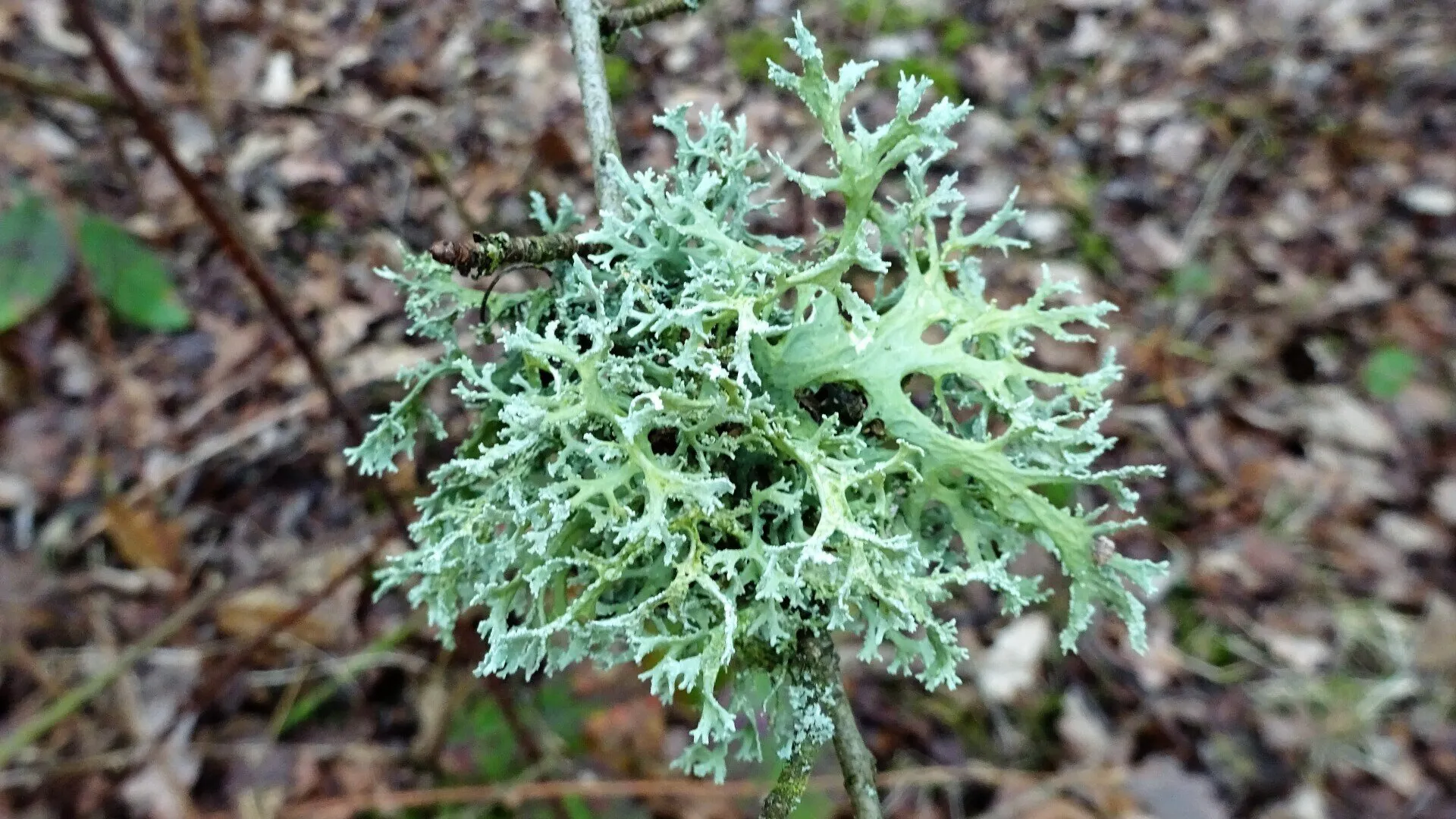
Always quite soft and drooping, particularly when damp. Its branches are green on top and white below. The upper green surface is caused by algae, whereas the lower white surface algae is absent. Dorsiventral is the term used when a lichen or plant has different dorsal and ventral surfaces. The dissimilarity in the upper and lower surfaces is more noticeable in young thalli when the thallus is turned over. Coarse soredia form along the ridged lobe margins which looks rather untidy. Sometimes known as 'Oak Moss' even though it is a lichen and not a moss.
#
Fruticose Lichen
Ramalina farinacea
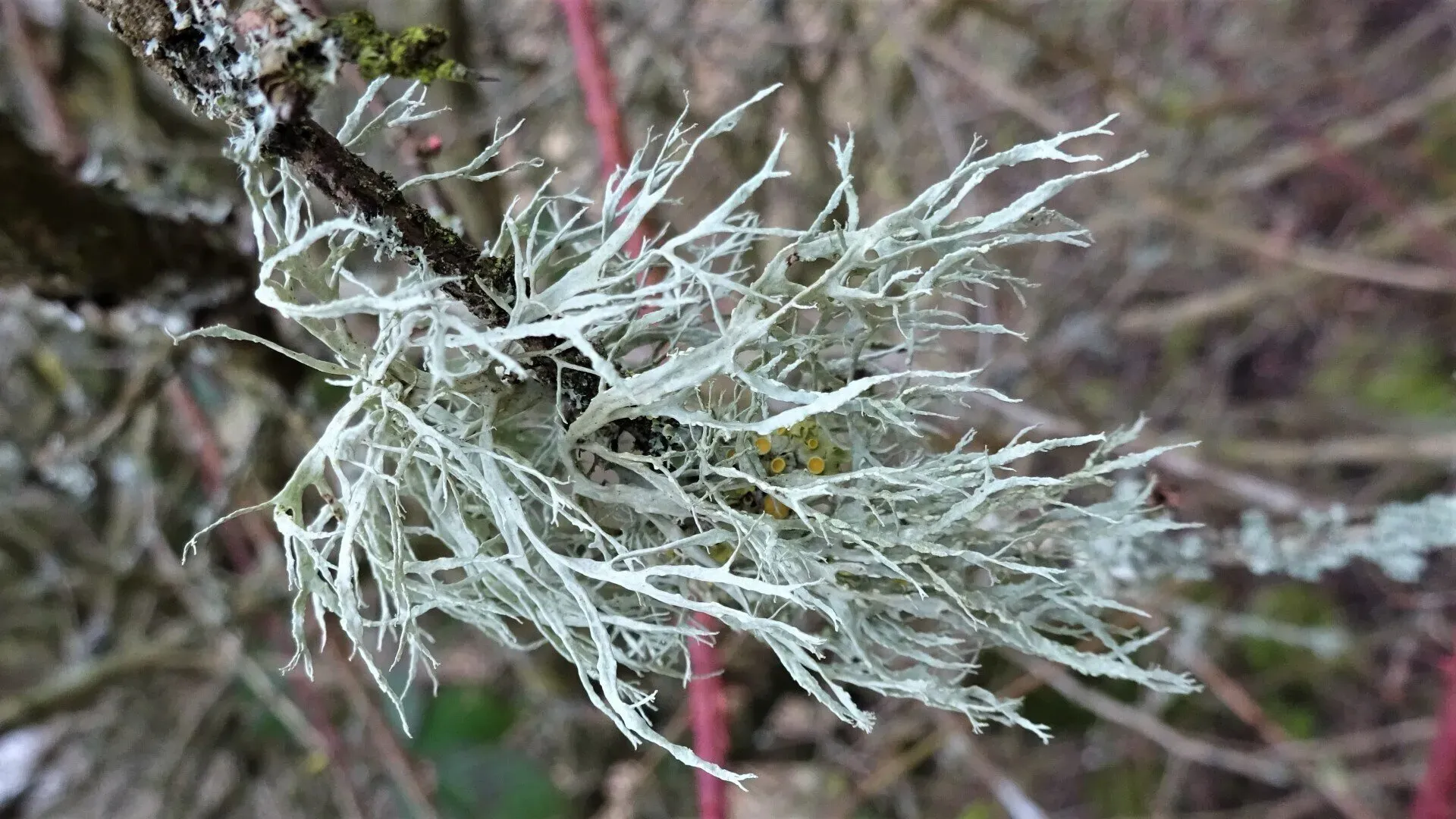
This lichen does not have fruiting bodies instead it uses soredia to reproduce and has oval soredia-creating organs called soralia that form on the slender lobes.
Farinacea means 'flour-like', the name referring to the structure of the soredia. Until the 1990s this lichen was quite rare due to its sensitivity to sulphur dioxide, but is now seen frequently.
#
Fruticose Lichen
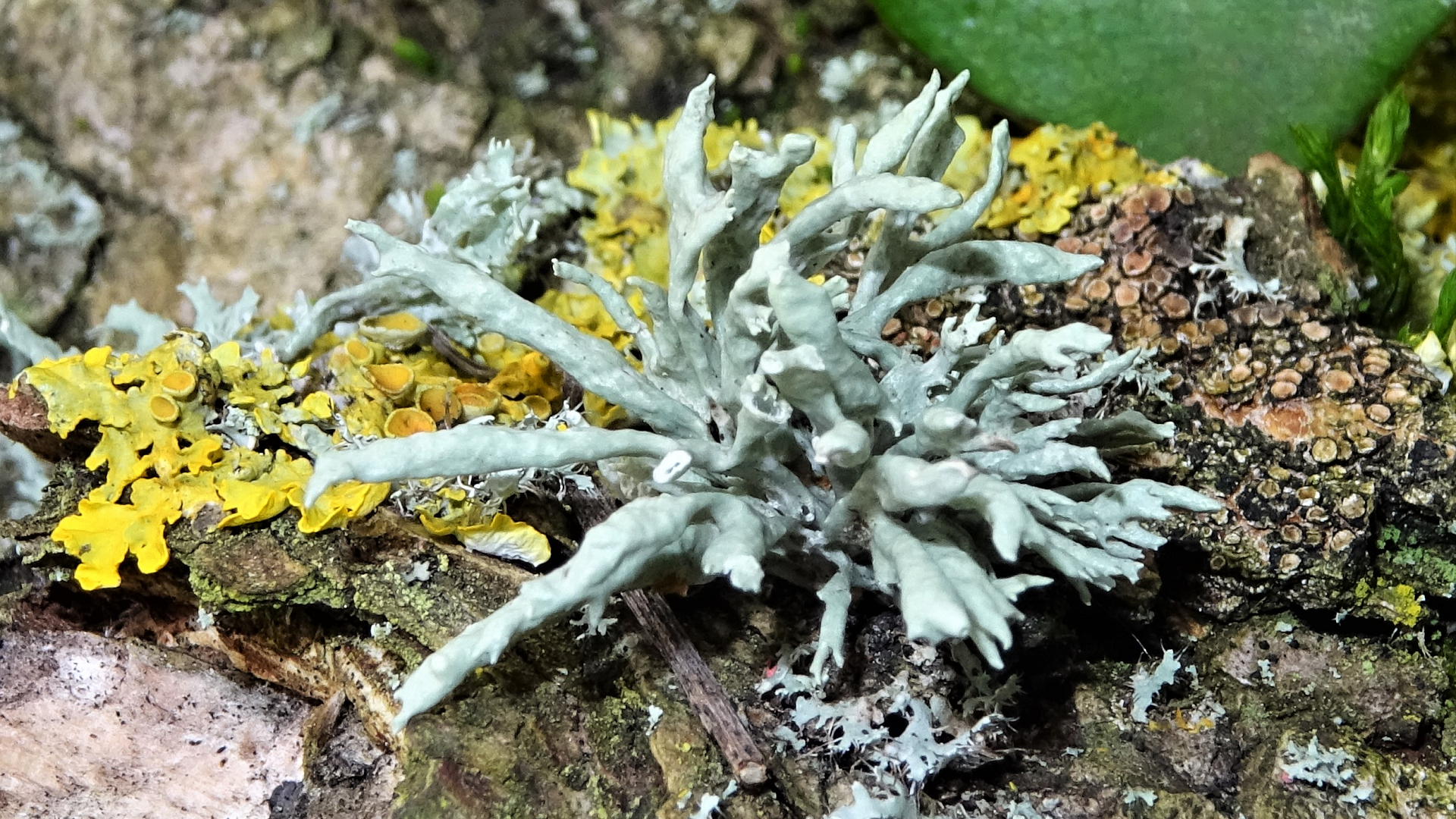
Ramalina fastigiata
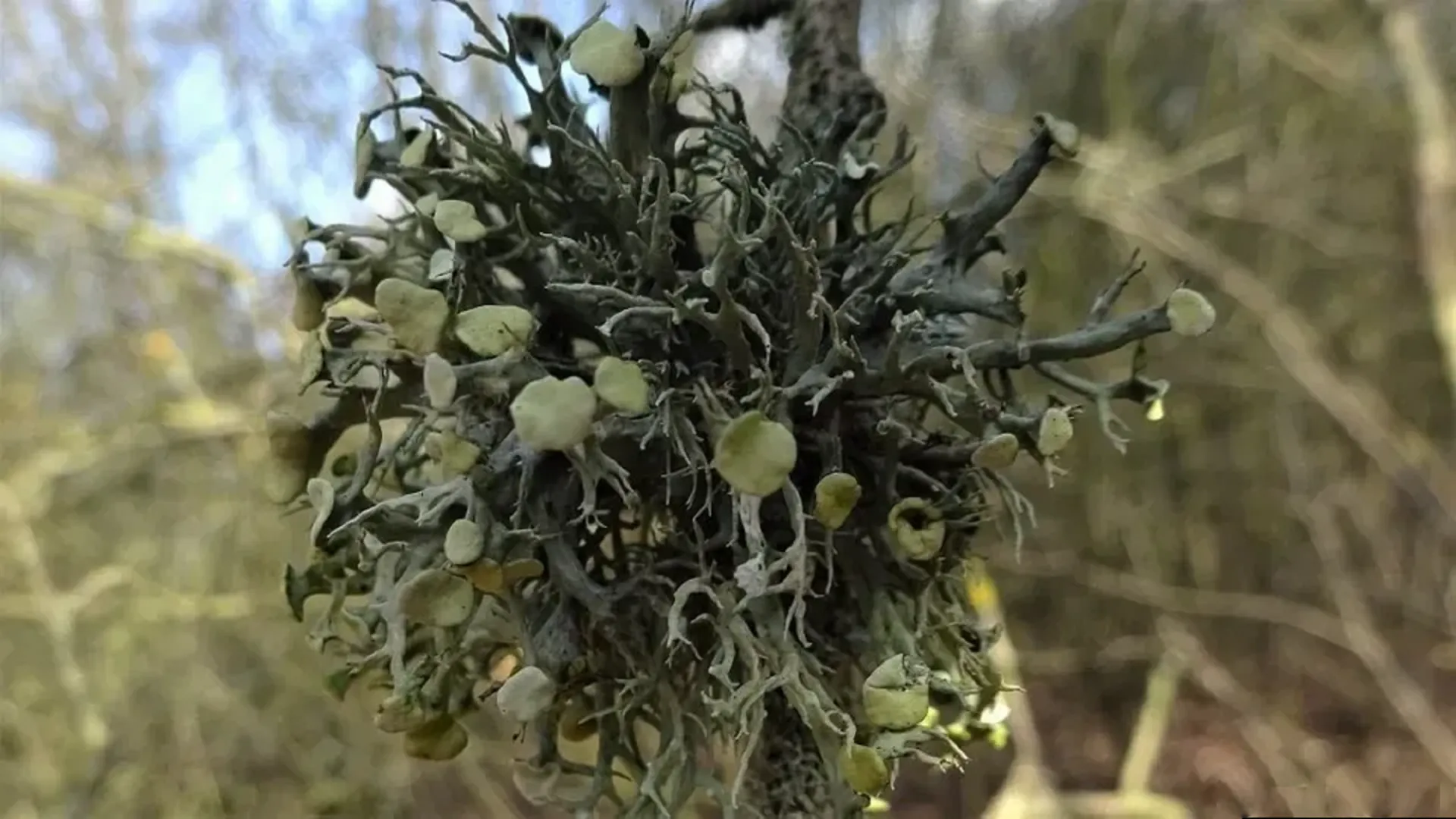
This species develops round fruiting bodies for reproduction. During the early 1970s this species was believed to no longer exist in Essex, but now is considered rather common. This specimen was growing on hawthorn. The hollow lobes and presence of apothecia (discoid spore-bearing structures) give it a distended appearance. Apothecia are highly noticeable in well-formed specimens.
#
Fruticose Lichen
Usnea subfloridana
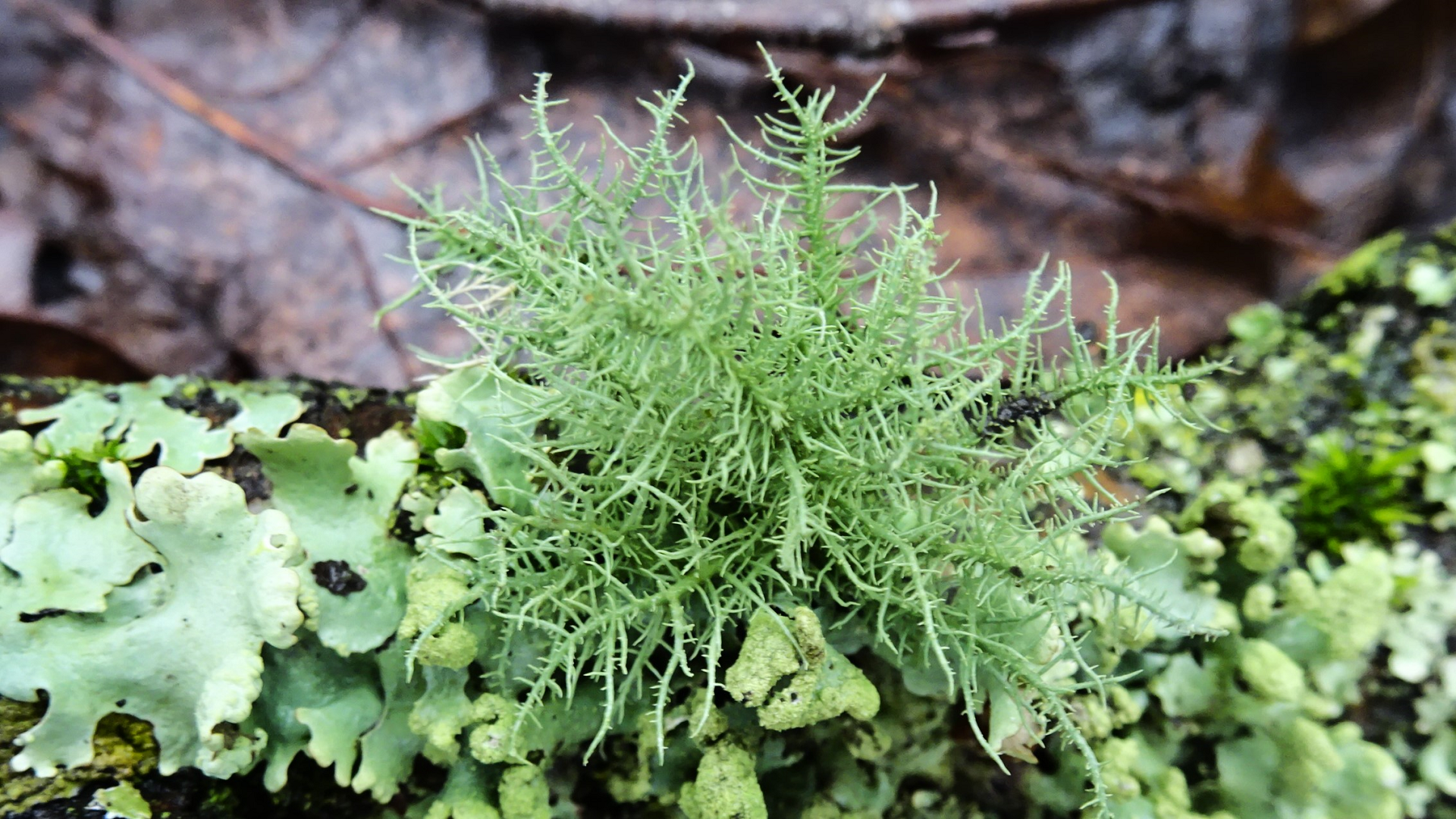
A 'beard lichen' particularly sensitive to sulphur dioxide pollution. Its presence indicates the presence of good quality air. Thalli are usually found isolated on the uppermost tree branches. Branches of Usnea are round in cross-section and when carefully stretched a tough central cord becomes visible. This specimen was discovered on the ground after a branch became dislodged by storm Doris.
#
Foliose Lichens attach to surfaces by hyphae in the lower cortex using small root-like structures called rhizines.
Foliose Lichen
Hypogymnia physodes
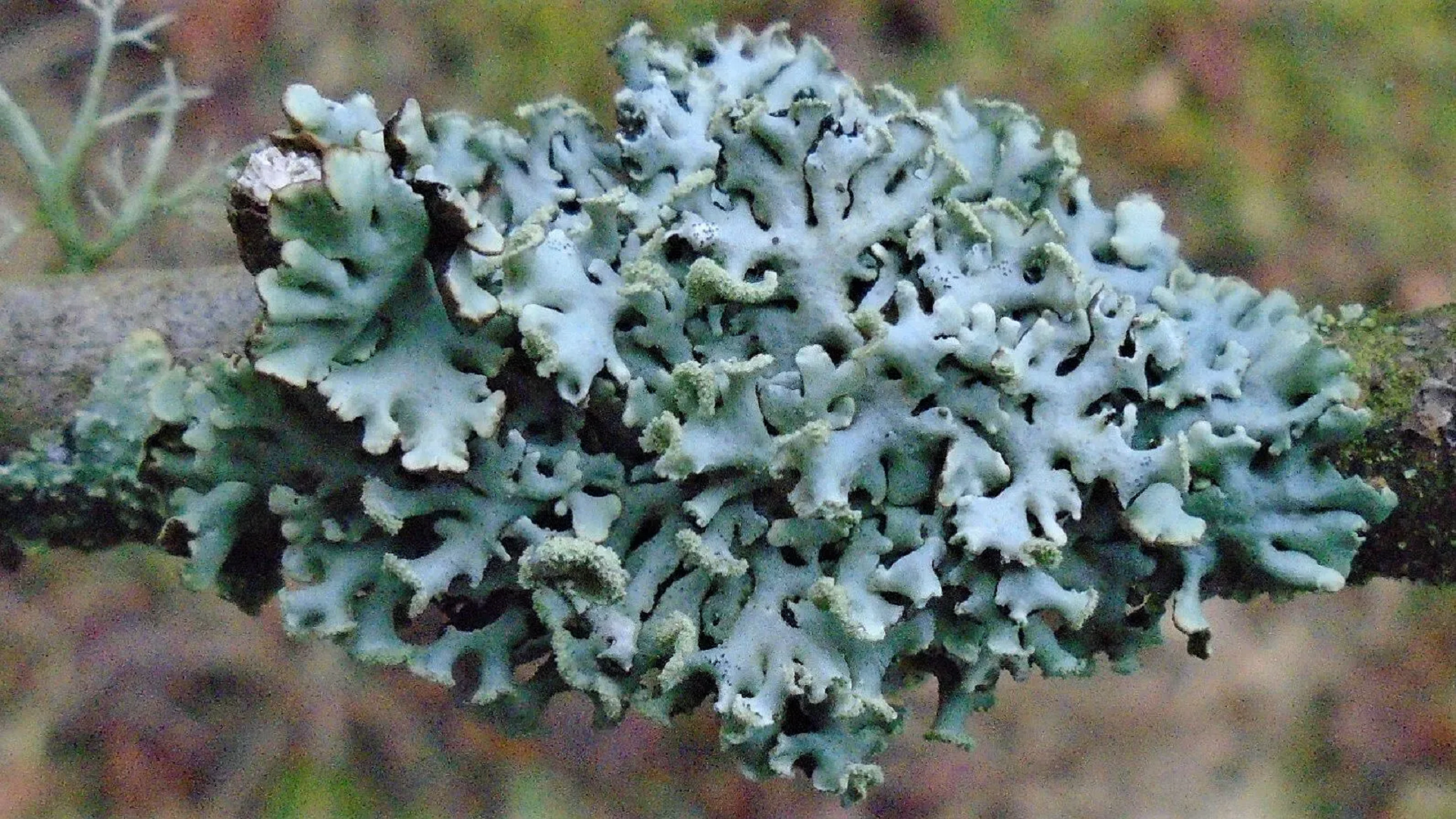
The smooth greyish-green lobes are flat to convex and dark brown or black underneath. There are no rhizines. The tips are frequently turned up. Common on acid-barked trees.
#
Foliose Lichen
Parmelia perlata
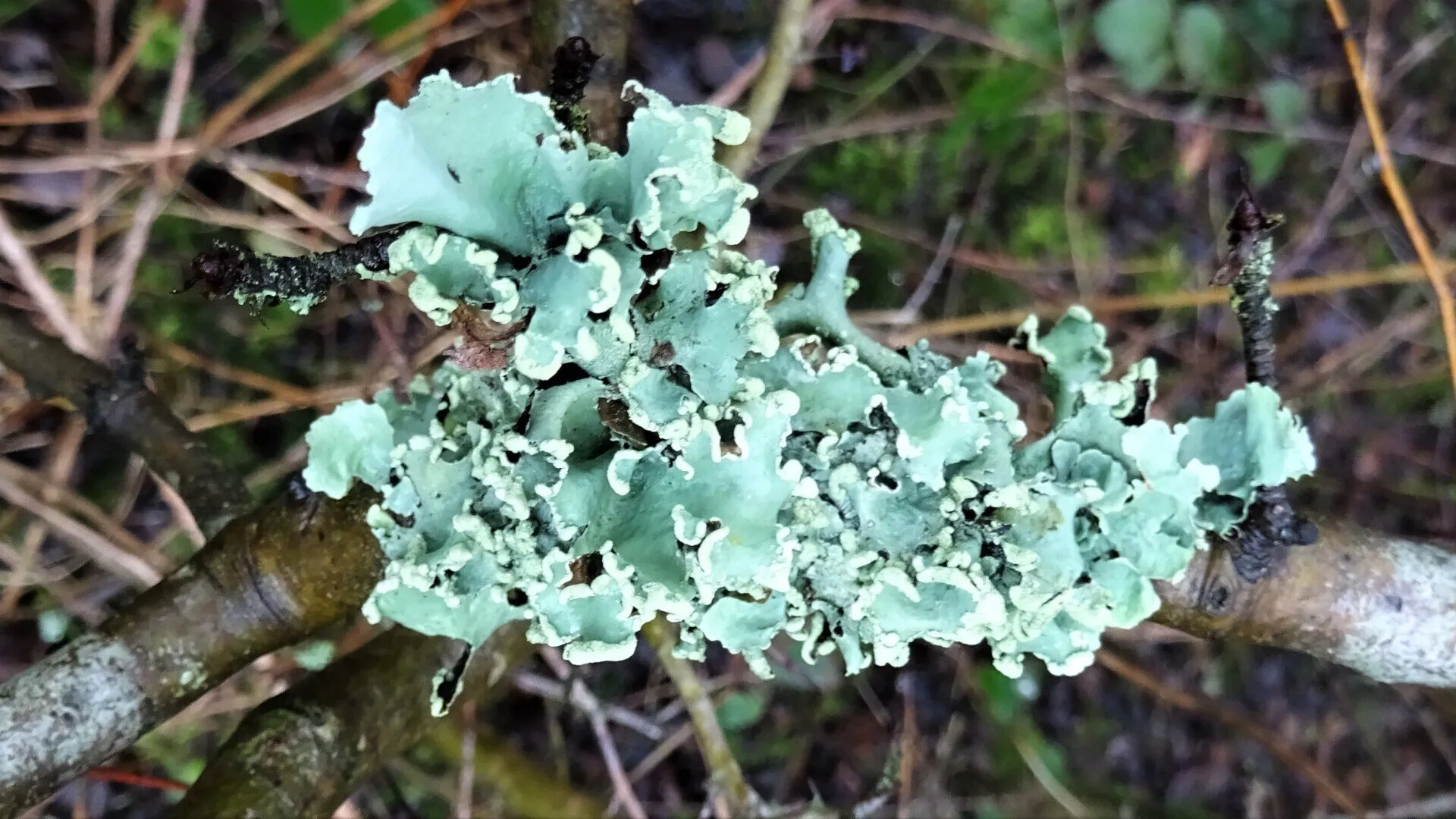
The lobe edges are covered in a fine dust. These microscopic structures are known as soredia. On hawthorn.
#
Foliose Lichen
Parmelia subaurifera
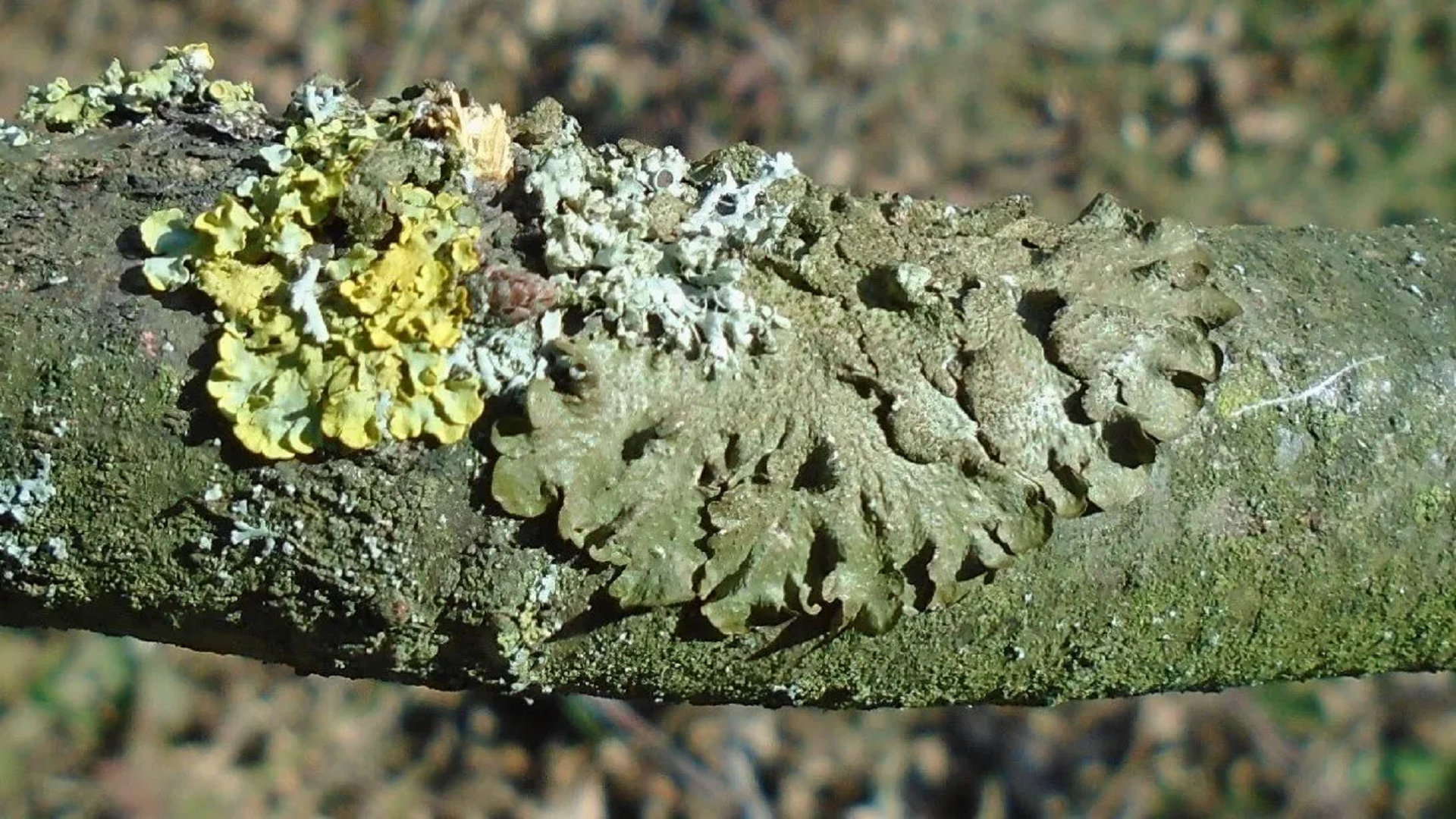
An olive-green leafy lichen.
#
Foliose Lichen
Parmelia subrudecta
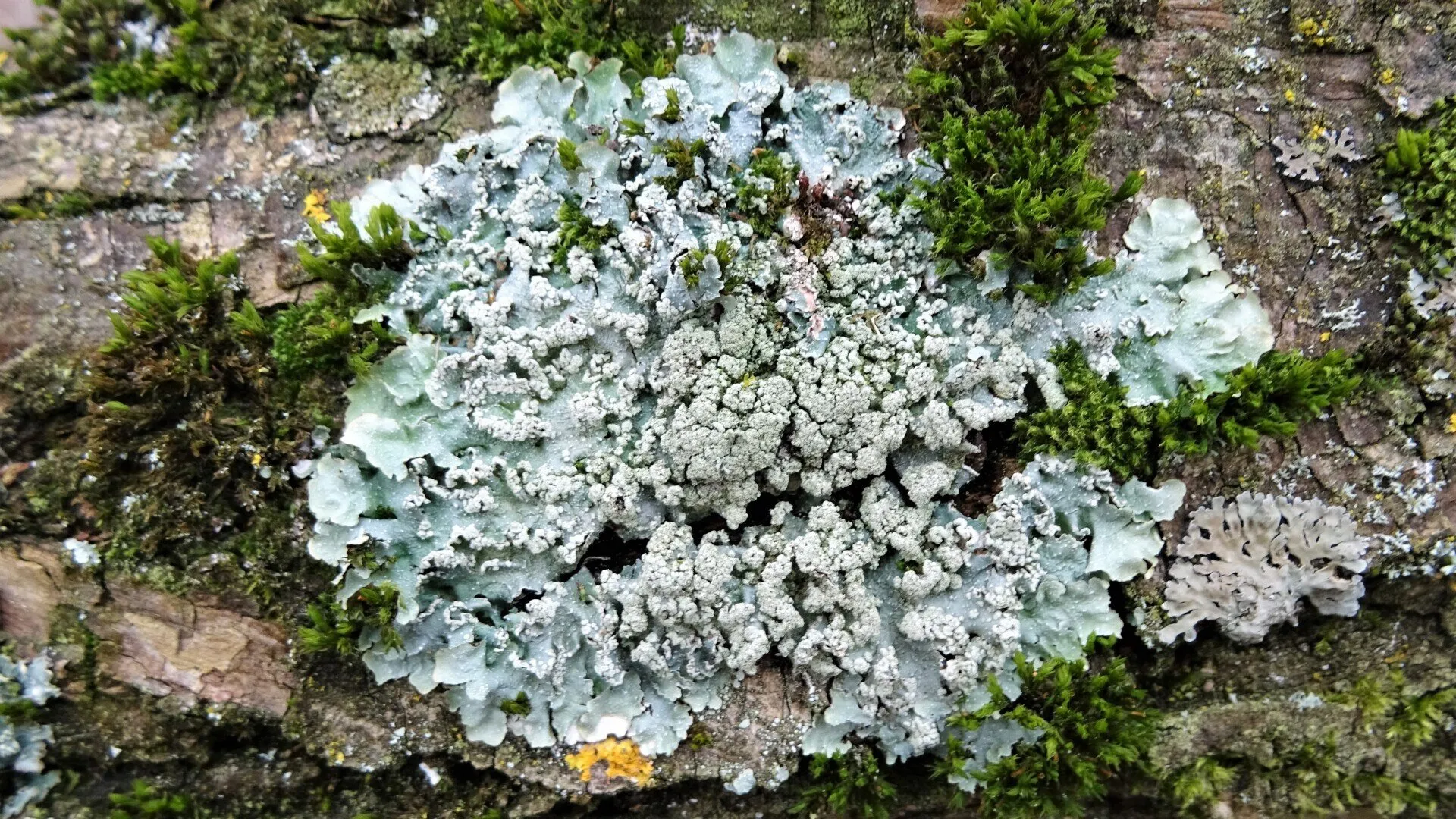
A lichen with rounded lobes at the edge. The central lobes have soredia.
#
Thank you to John Skinner and Brian Ecott for the identifications.
© hainaultforest.net. All rights reserved.