

HISTORY OF CHIGWELL ROW
NO.1 ROSE COTTAGE
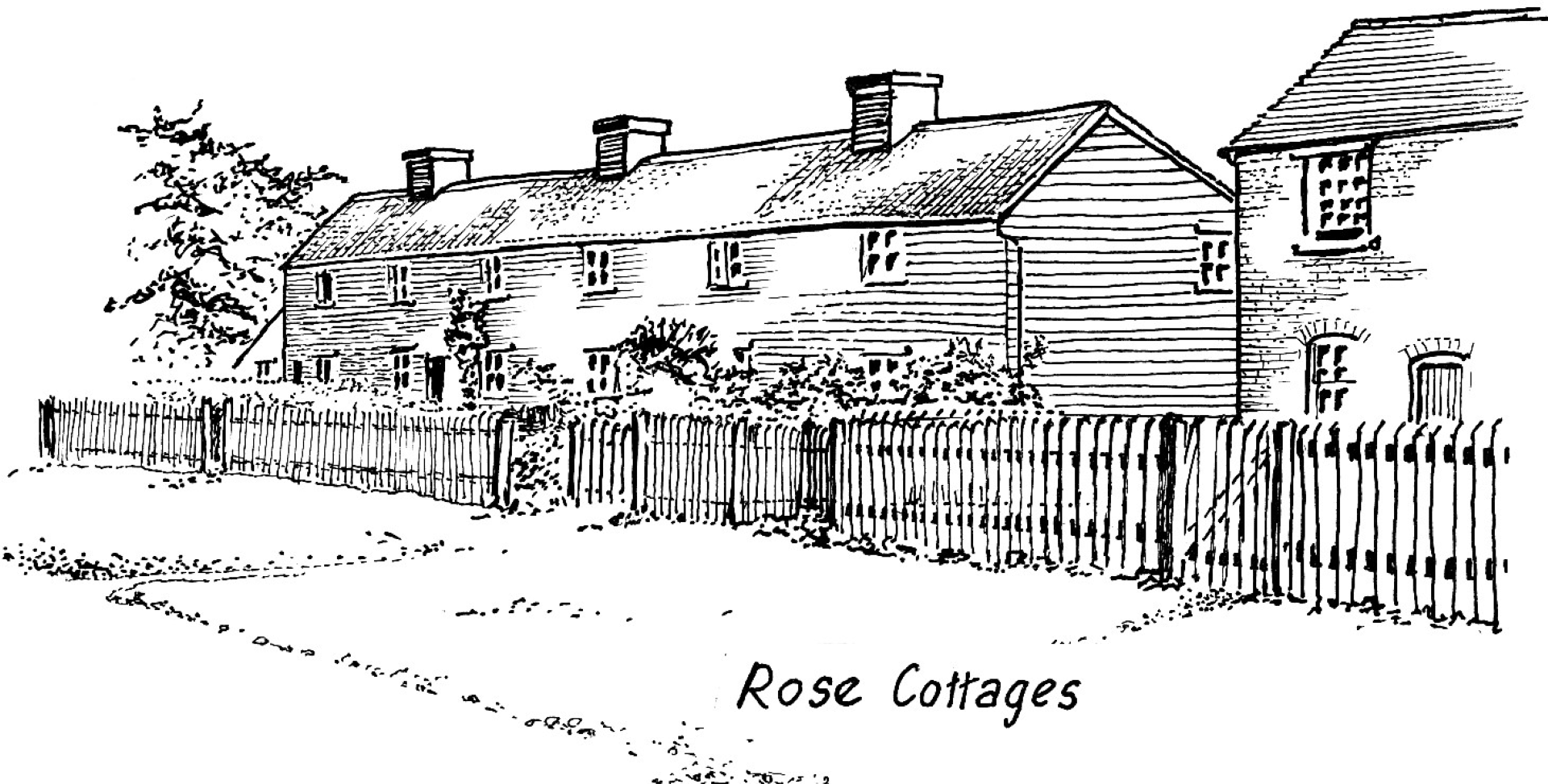
Charles and Naomi Ann Martin resided at No. 1 Rose Cottage, a wooden building typical of many found in the village at that time. Charles worked as a farm labourer, a common occupation in the area. On the 1911 Census the couple were recorded as having three sons and a daughter. Naomi (same name as mother) was the eldest of the children. She was described as "feeble-minded", a term used to describe individuals with a mild form of mental deficiency that required care, supervision, and control. The three sons were Charles (same name as father), Alfred and Laurie.
SHOOTING RABBITS IN THE FOREST
During the early 1900s, rabbit was as common at meal times as chicken is today. Farmers had a legal right to kill rabbits to protect their crops, but to do likewise in Hainault Forest could lead to a summons and fine. Rabbits were sometimes exchanged by locals and skinned on the bar at The Beehive public house in Lambourne End. Newspaper reports suggest Charles Martin was not adverse to ignoring the forest bye-laws from time to time.
This newspaper article appeared in 1904...
"SPORT" IN THE FOREST - Charles Martin, labourer, Chigwell Row, was summoned for a breach of the Hainault Forest bye-laws by firing a gun in the Forest.-- Forester Thurlow said he heard the report of a gun and subsequently saw defendant carrying a gun.-Mr. J. W. Atkinson, who defended, said there was no evidence that defendant fired the gun.-The Chairman: It is the old story, Mr. Atkinson, Not guilty, but don't do it again.-Dismissed.
In 1906, the outcome was different...
Charles Martin, a labourer, of Chigwell Row, summoned for attempting to shoot a rabbit in Hainault Forest, and for damaging a fence, on July 31, was fined 20s. and 4s. costs in each case, at Stratford on Monday.
CHARLES THE SON GOES TO WAR
Charles (eldest son) had been working as a farm labourer from the age of 14. Life would change for the family after he joined the British Army in 1916 to fight in World War I. When the war began there were plenty of young volunteers willing to serve King and Country. Lord Kitchener's poster campaign stating "YOUR COUNTRY NEEDS YOU" encouraged men to join up. Despite over one million enlisting it was not enough to keep pace with mounting casualties on the Western Front. As a consequence the Government introduced conscription in January 1916. At first single men between 18 and 41 were affected. Conscientious objectors, men who objected to fighting on moral grounds, were often sent to the front to perform civilian jobs and non-fighting roles. Conscription later expanded to include married and older men. The medically unfit, clergymen, teachers and certain industrial workers were exempted.
Charles Martin found himself at the Battle of the Somme where British and French forces faced soldiers from the German Empire. Conditions were horrific. Heavy rain created swamp-like conditions and it was difficult to stay warm when the temperature fell below freezing. There was a sustained bombardment of shells, constant danger from machine guns and artillery, and gas attacks to contend with. Disease also took hold in the trenches. 18th November 1916 was officially the last day of the Battle of the Somme and also the day when Charles Martin was sadly killed just south of Serre. The battle ended after 141 days by which time over three million men had fought with more than one million being killed or wounded.
WAR DIARY or INTELLIGENCE SUMMARY
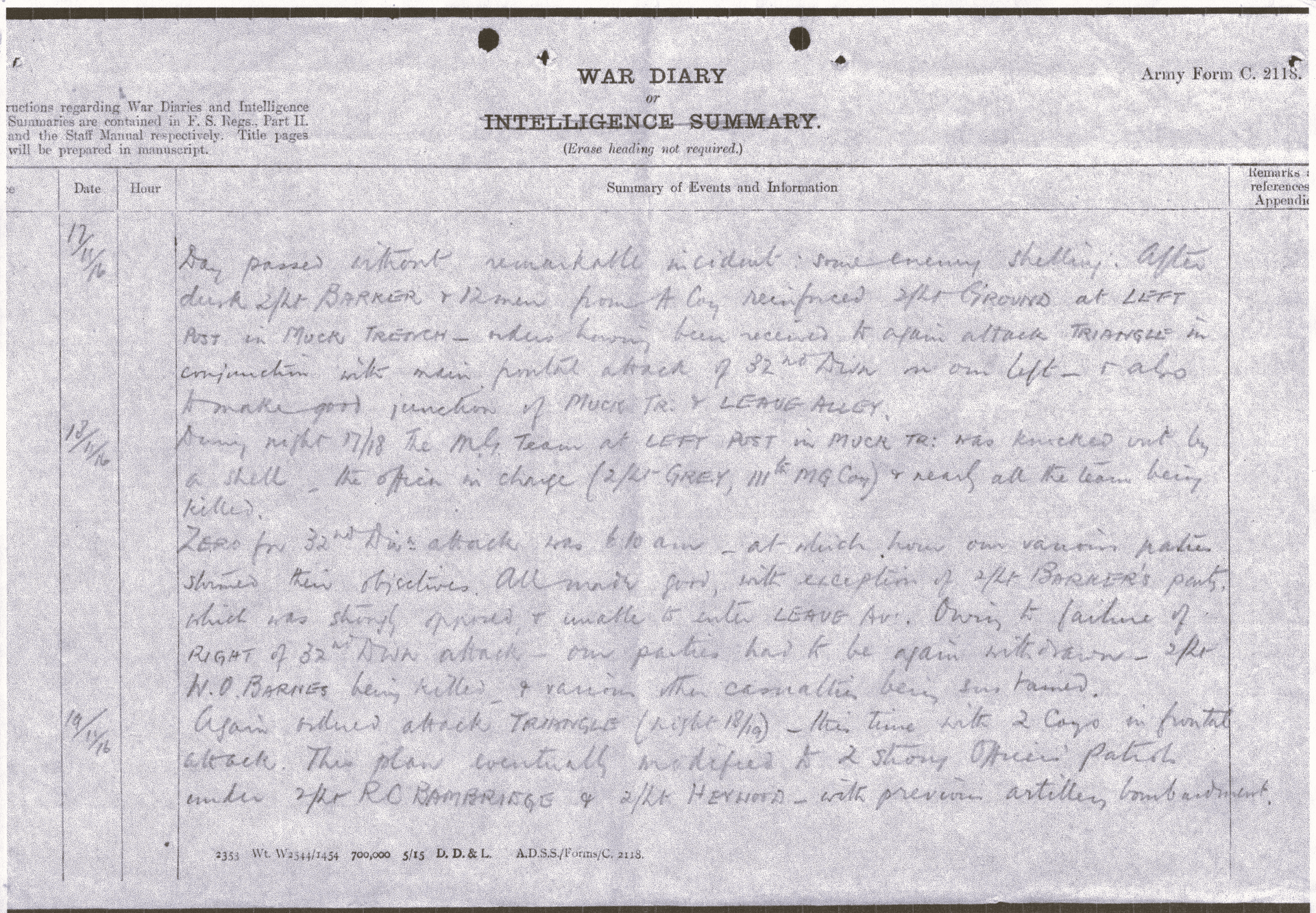
This Intelligence Summary recorded events on the battlefield...
"17/11/16
Day passed without remarkable incident: some enemy shelling. After dusk 2/LT BARKER & 12 men from A Coy reinforced 2/LT GROUND at LEFT POST in MUCK TRENCH - orders having been received to main attack TRIANGLE in conjunction with main frontal attack of 32nd Divn on left - and also to make a good junction of MUCK TR: in LEAVE ALLEY.
18/11/16
During night 17/18 the MG Team at LEFT POST in MUCK TR: was knocked out by a shell, the officer in charge (2/LT GREY, 111th MG Coy) & nearly all the team being killed.
Zero hour for 32nd Divn's attack was 6.10am - at which hour our various parties attacked their objectives. All made good, with exception of 2/LT BARKER'S party, which was strongly opposed and unable to enter LEAVE AV. owing to failure of RIGHT of 32 Divn attack - our parties had to be again withdrawn - 2/LT W.D. BARNES being killed - & various other casualties being sustained.
19/11/16
Again orders attack TRIANGLE (night 18/19) - this time with 2 Coys in frontal attack. This plan eventually modified to 2 strong Officers' Patrols under 2/LT R C BAMBRIDGE & 2/LT HEYWOOD - with previous artillery bombardment."
THE ROLL OF INDIVIDUALS
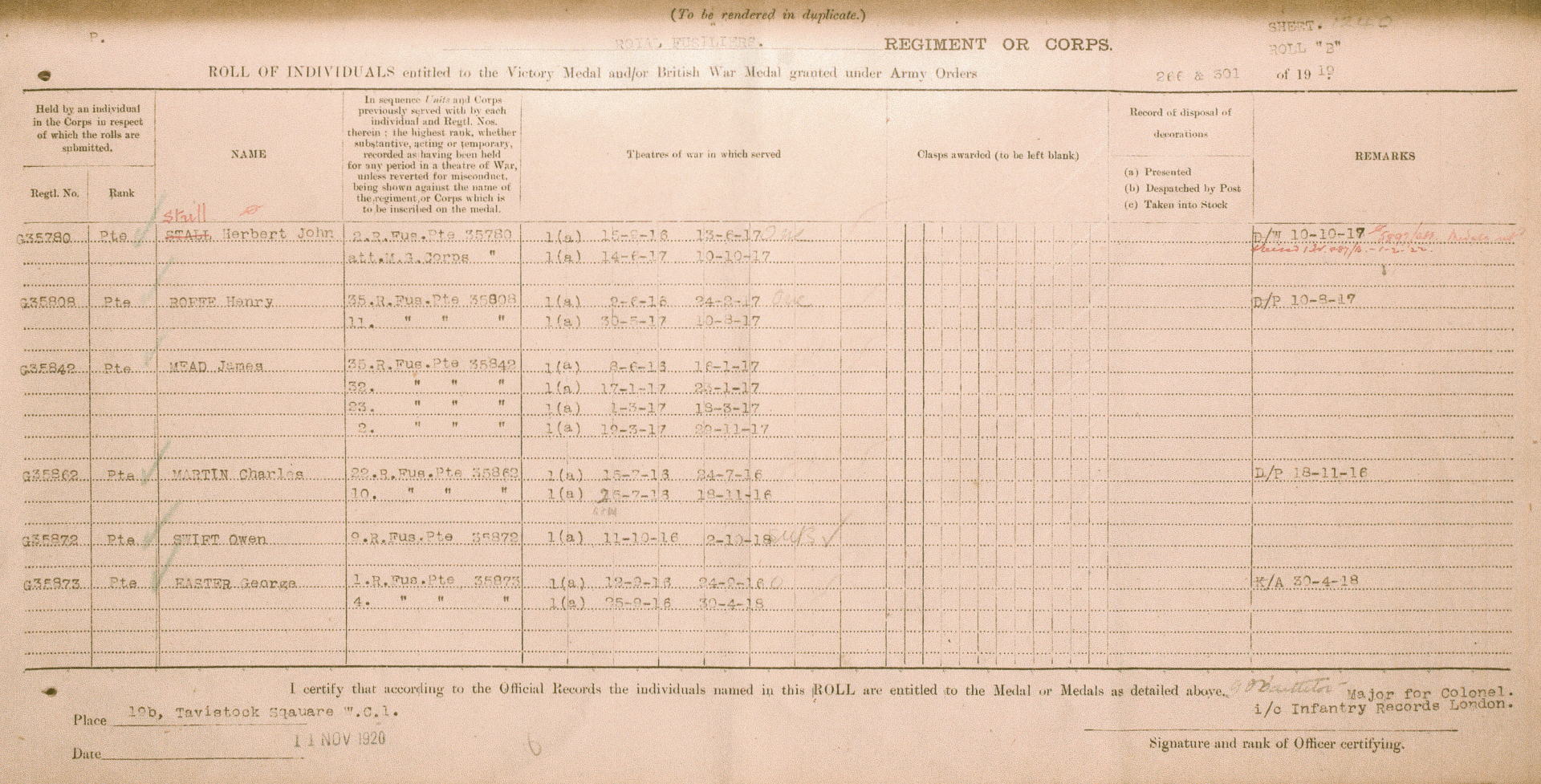
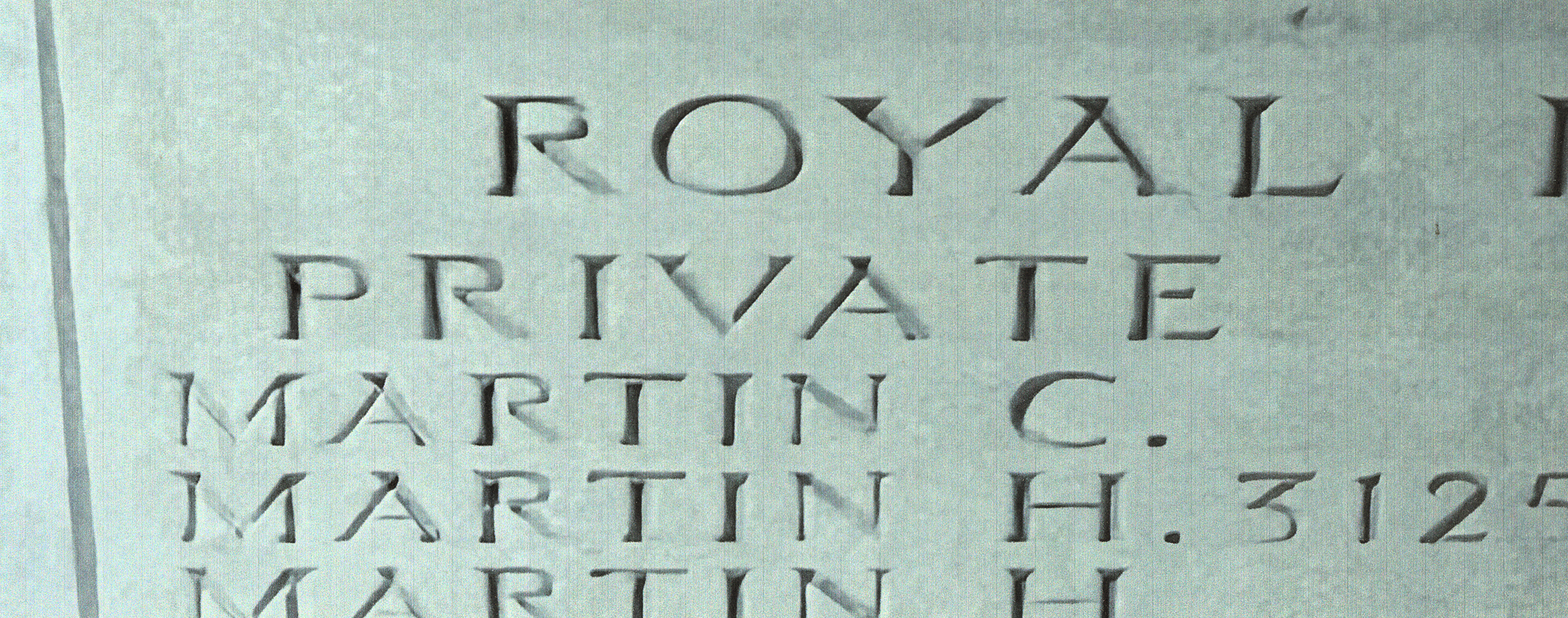
Servicemen named on the Roll of Individuals were entitled to medals. Charles Martin served with the 22nd (Kensington) Battalion, Royal Fusiliers (City of London Regiment) from 14th July 1916 until 24th July 1916 and then with the 10th (Stockbrokers) Battalion, Royal Fusiliers (City of London Regiment) from 25th July 1916 until 18th November 2016.
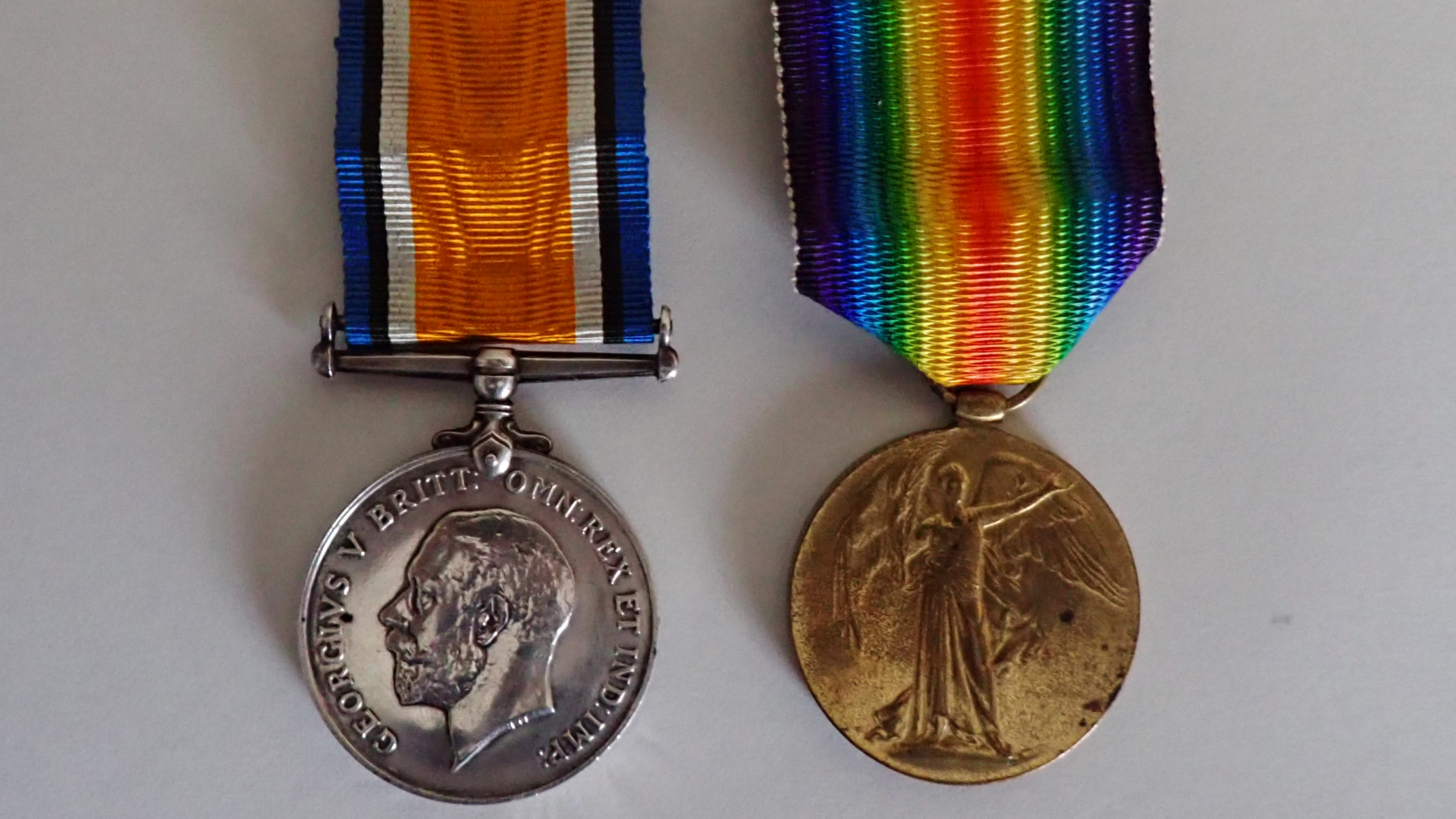
The British War Medal (left) was awarded to British and Imperial forces personnel who served between August 5th, 1914, and November 11th, 1918, or in later campaigns until 1920. To qualify, a recipient needed to have entered a theatre of operations or serve overseas for at least 28 days.
The Allied Victory Medal (right) was awarded to those in the Allied Forces who served in a theatre of war between 1914 and 1918. The medal featured a winged figure of Victory and had "THE GREAT WAR FOR CIVILISATION 1914–1919" inscribed on the reverse side. After much discussion it was decided that it should have a double rainbow ribbon. Never awarded alone but issued with the British War Medal.
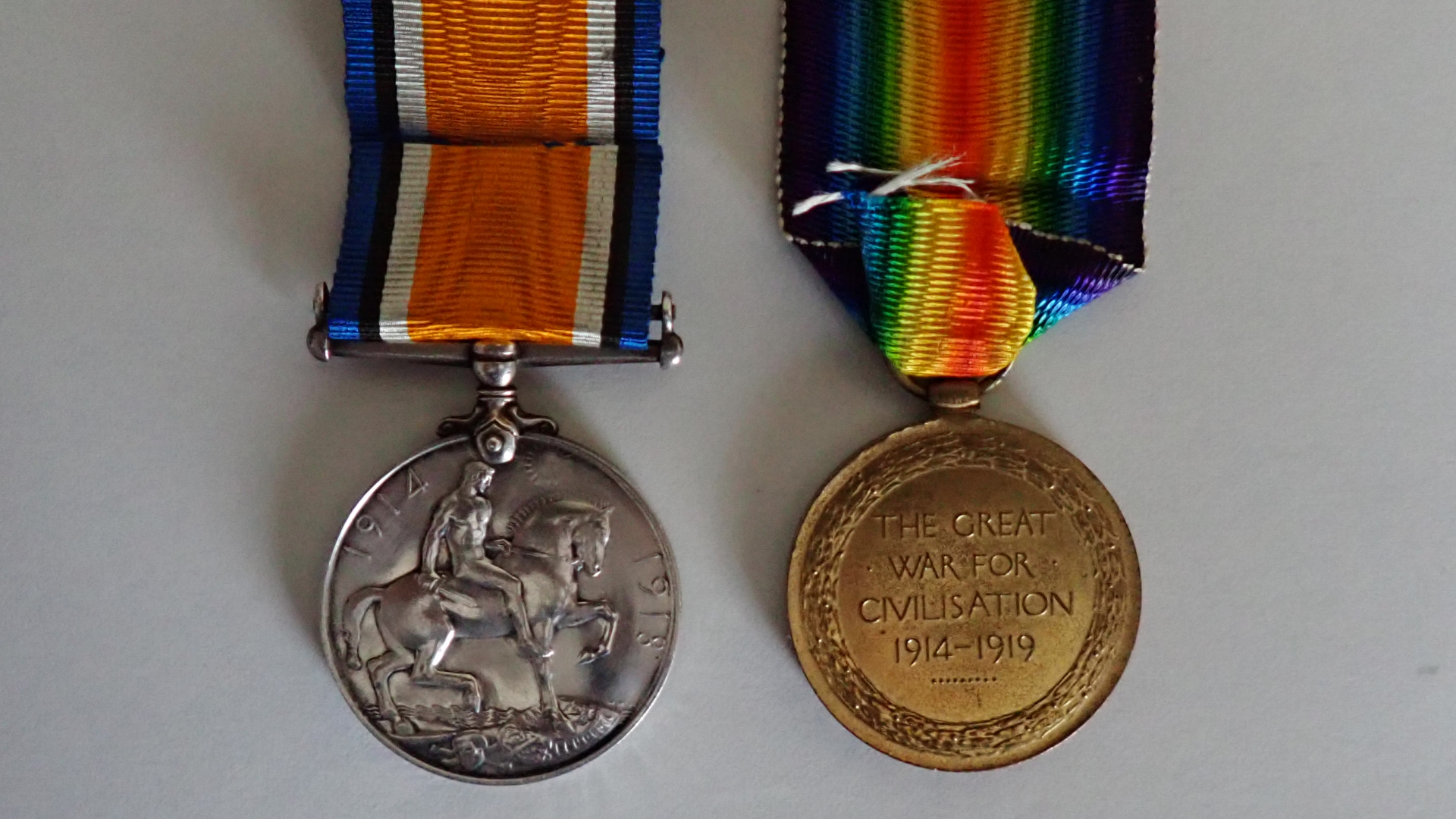
These medals are engraved 'GS-35862 PTE.C.MARTIN. R.FUS.' around the edge.
WAR PENSION
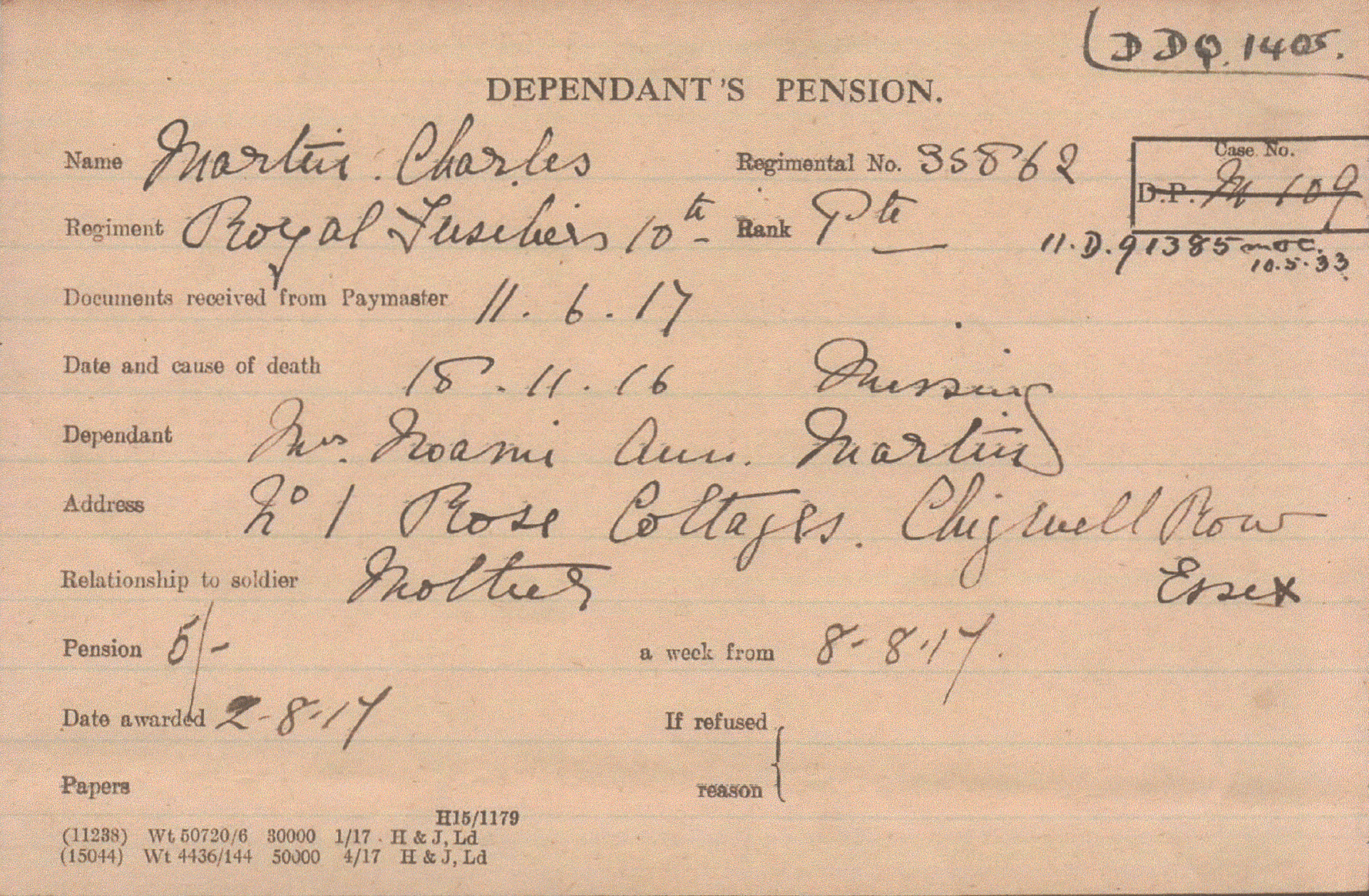
The British Government instructed the Ministry of Pensions to make payments to families of soldiers killed in The Great War. Payments were made to widows, children, and sometimes parents if they were dependent on their child. Charles Martin's mother Noami received a war pension of 5 shillings (25p) a week from 8th August 1917 after his death. The pension amount depended on factors such as the soldier's rank, marital status, and the number of children. Many families found the pensions insufficient to meet their needs and had to rely on charities for additional support. Some families were denied pensions if the soldier was executed for military offences such as cowardice or desertion.
DEAD MAN'S PENNY
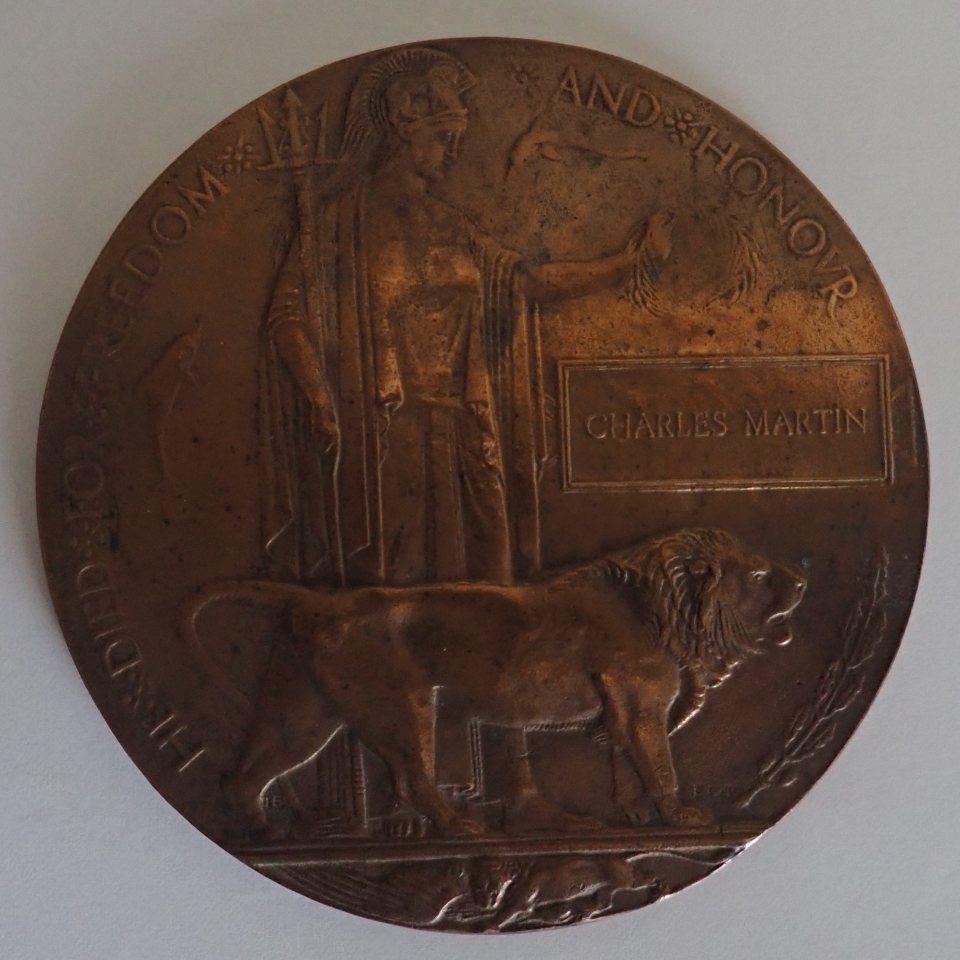
Bronze memorial plaques about 120mm (4.7in) in diameter, often known as "Dead Man's Pennies", were issued to next of kin of British and Empire service personnel who died as a result of the First World War. The plaques featured the figure of Britannia with a lion and carried the words: "HE DIED FOR FREEDOM AND HONOUR". The plaque also contained the decease's name. Approximately 1,355,000 plaques were issued, made from a total of 450 tonnes of bronze. They were sent to families with a commemorative letter and scroll from King George. 600 plaques were issued to commemorate women with a modified inscription of 'SHE' instead of 'HE'.
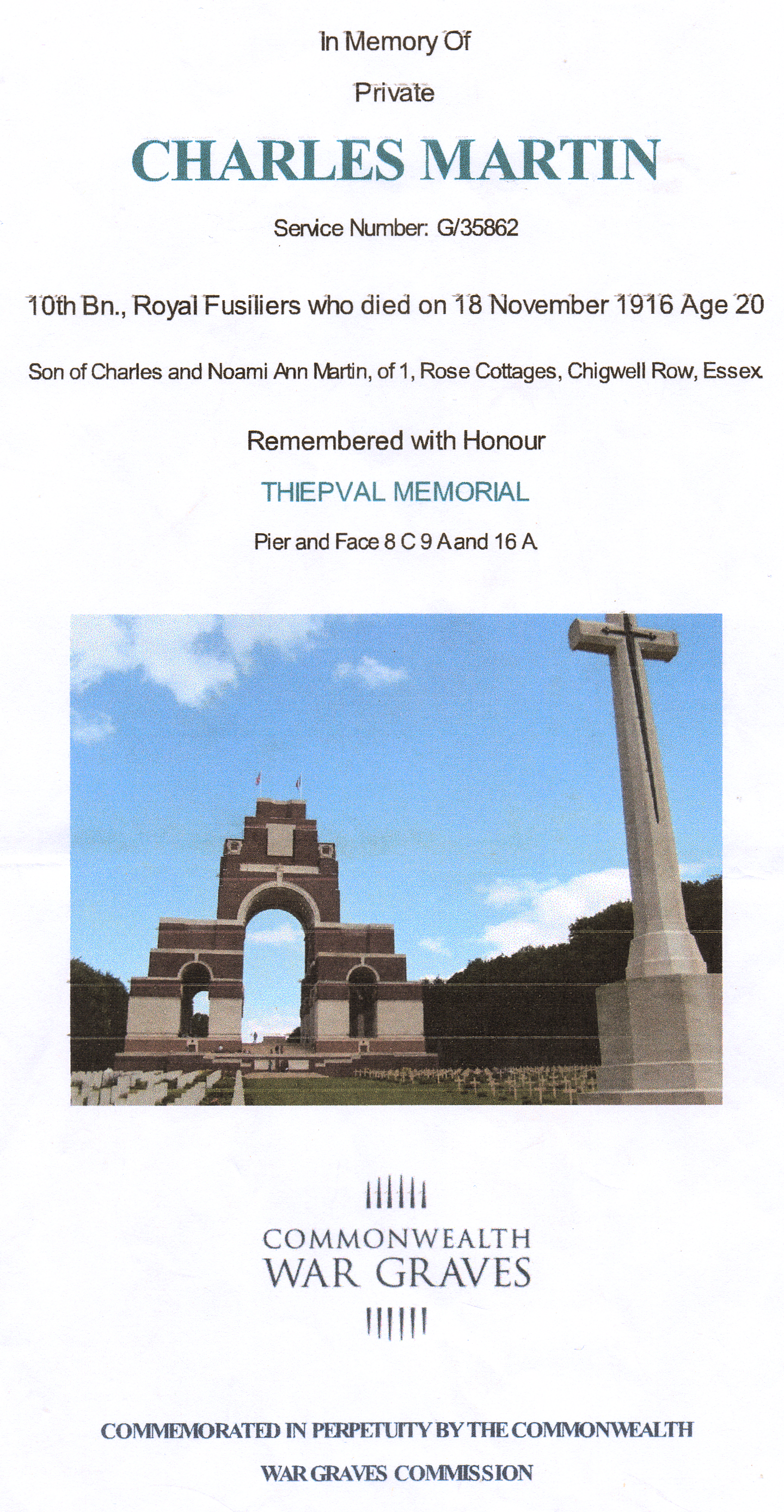
Charles Martin (father) was interred at All Saints' Church, Chigwell Row, in March 1933.
The medals and plaque were accompanied with scanned documents which provided useful information about Charles Martin's service record. Other details were researched and written by Raymond Small. Thank you to Elaine Wiltshire for additional assistance and Peter Comber for his sketch of Rose Cottages.
© hainaultforest.net. All rights reserved.