

PETER COMBER'S FUNGI FORAY
When Peter Comber passed away on 22nd December 2024 Hainault Forest lost a knowledgeable and very likeable mycologist. Peter lived in Chigwell Row his entire life becoming an expert on fungi, having made a lifetime study of them in the local area. This page dedicated to Peter shows his pictures and most of the text was written by him.
Fly Agaric
Amanita muscaria
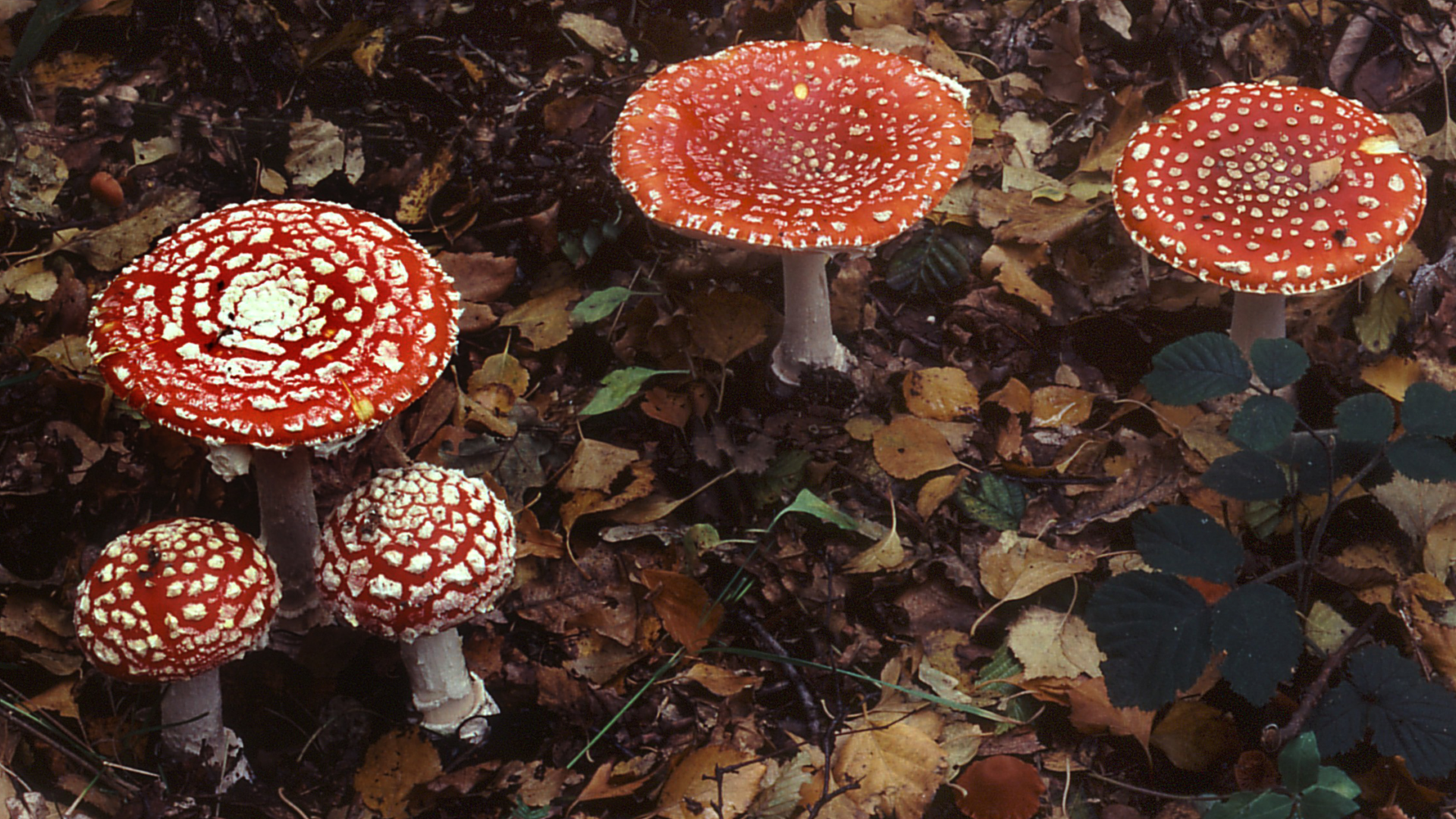
Of the many hundreds of different fungus fruit bodies that can be found in Hainault Forest in the autumn, the one you are most likely to notice is the Fly Agaric
Amanita muscaria. Some years it is very common and always appears under Birch. It is one of many that have a mycorrhizal attachment with specific native trees. Both the tree and the fungus benefit from this symbiotic relationship. The Fly Agaric is closely related to the deadly poisonous Death's Cap
Amanita phalloides which fortunately for us is rather rare.
#
False Death's Cap
Amanita citrina
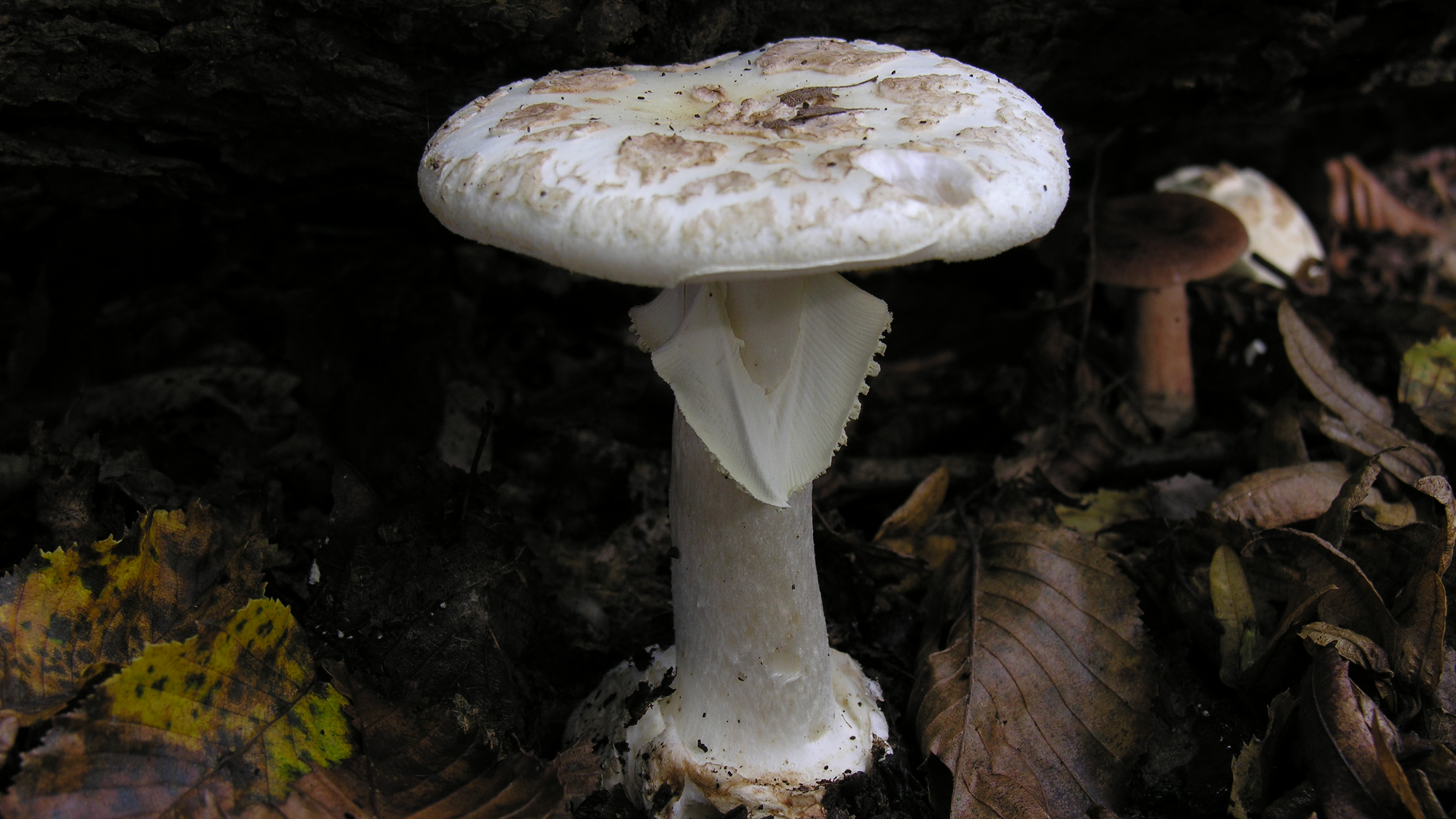
The False Death's Cap
Amanita citrina is common but not poisonous. It is a solitary species and grows in the older parts of the woodland.
#
Butter Cap
Collybia butyracea
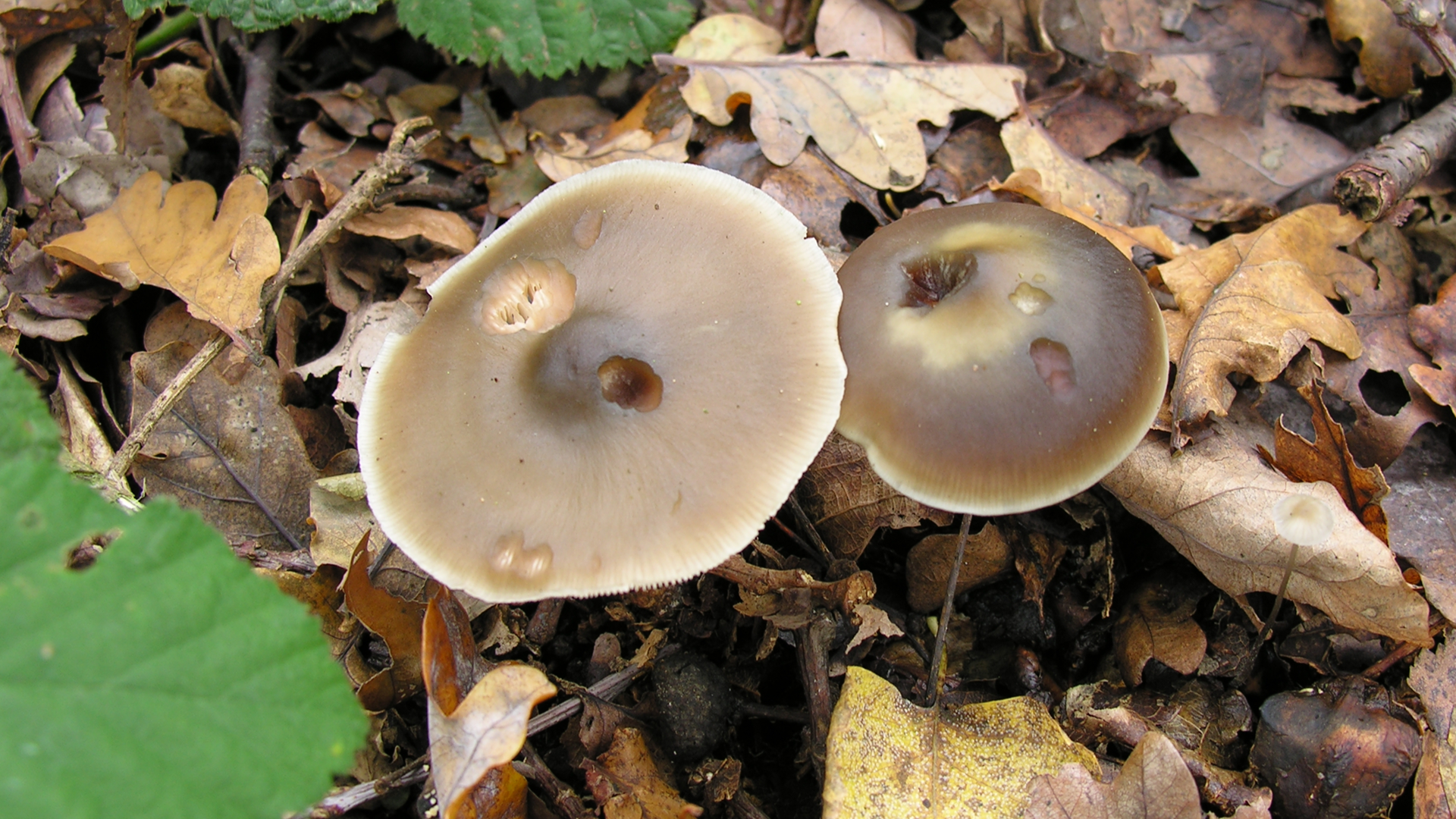
The Butter Cap
Collybia butyracea, with its 'greasy' cap is common throughout the woodland.
#
Amethyst Deceiver
Laccaria amethystea
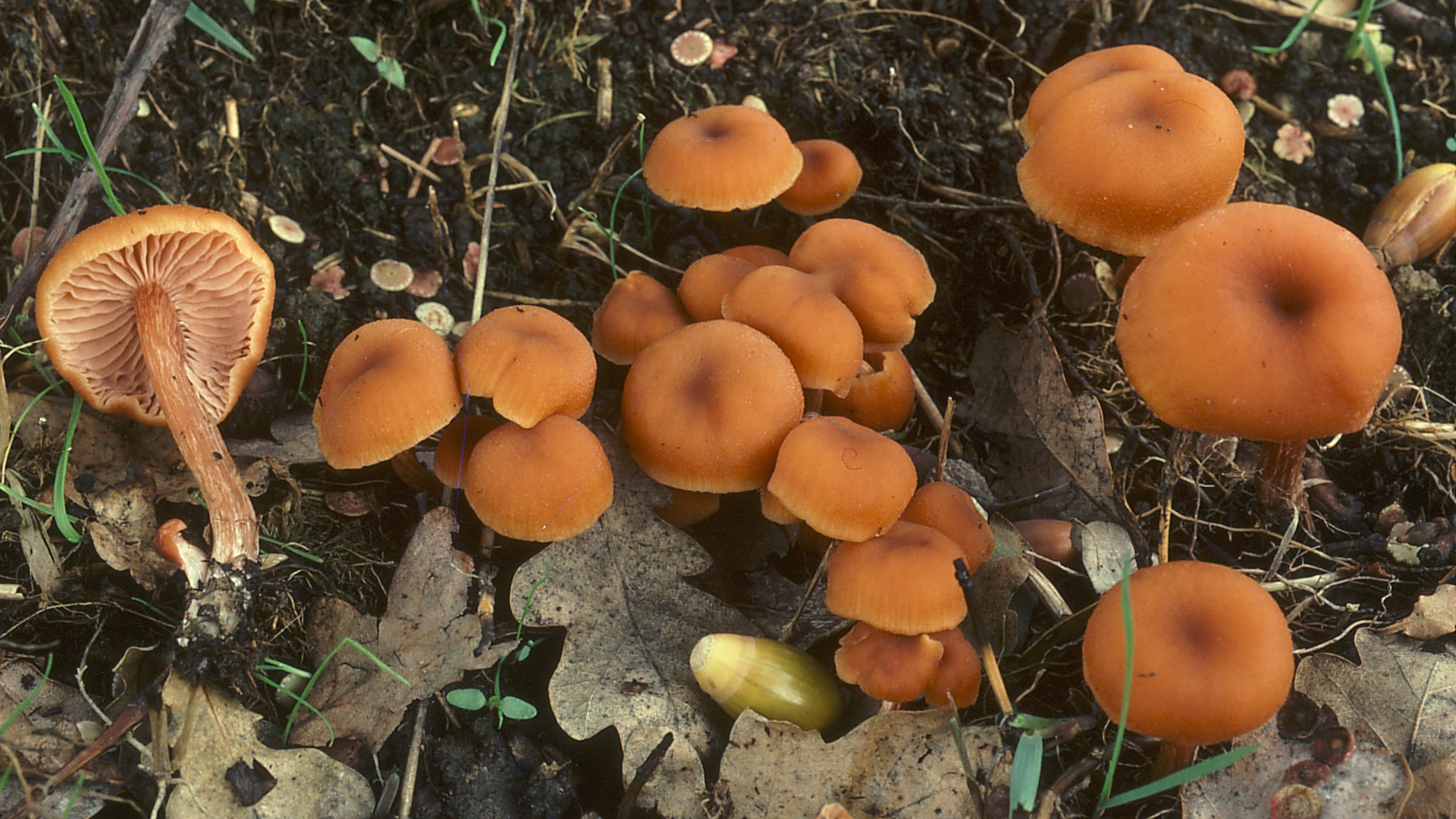
The Deceiver
Laccaria laccata is
reddish-brown in colour. Another colourful species is the Amethyst Deceiver
Laccaria amethystea, a deep violet colour especially intense in wet weather, both are common.
#
Clouded Agaric
Clitocybe nebularis
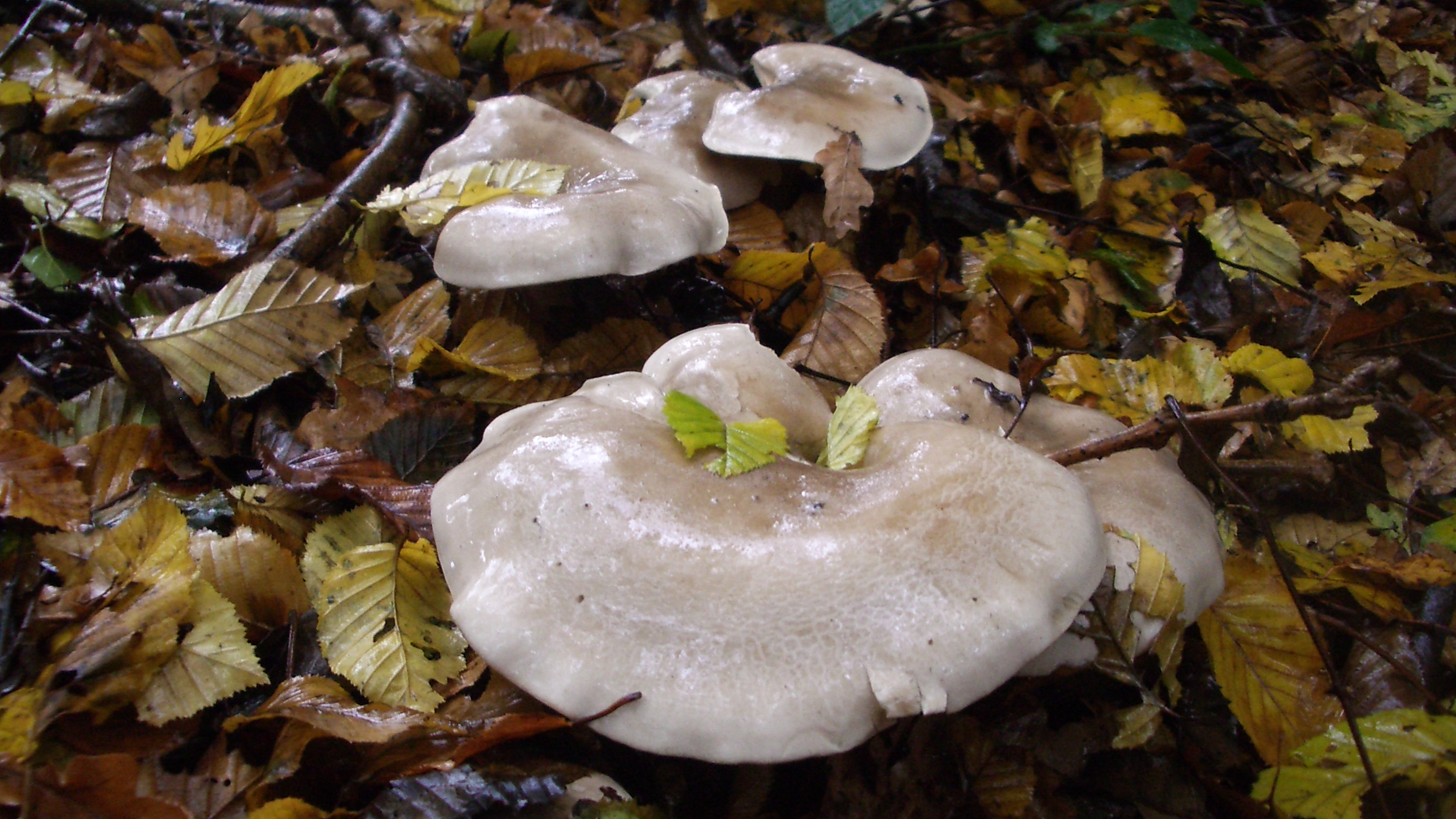
Later in the season the Clouded Agaric
Clitocybe nebularis will appear. It can be quite large, up to 10" (25cm.) across, and can often be seen in a large ring.
#
Penny Bun or Cep
Boletus edulis
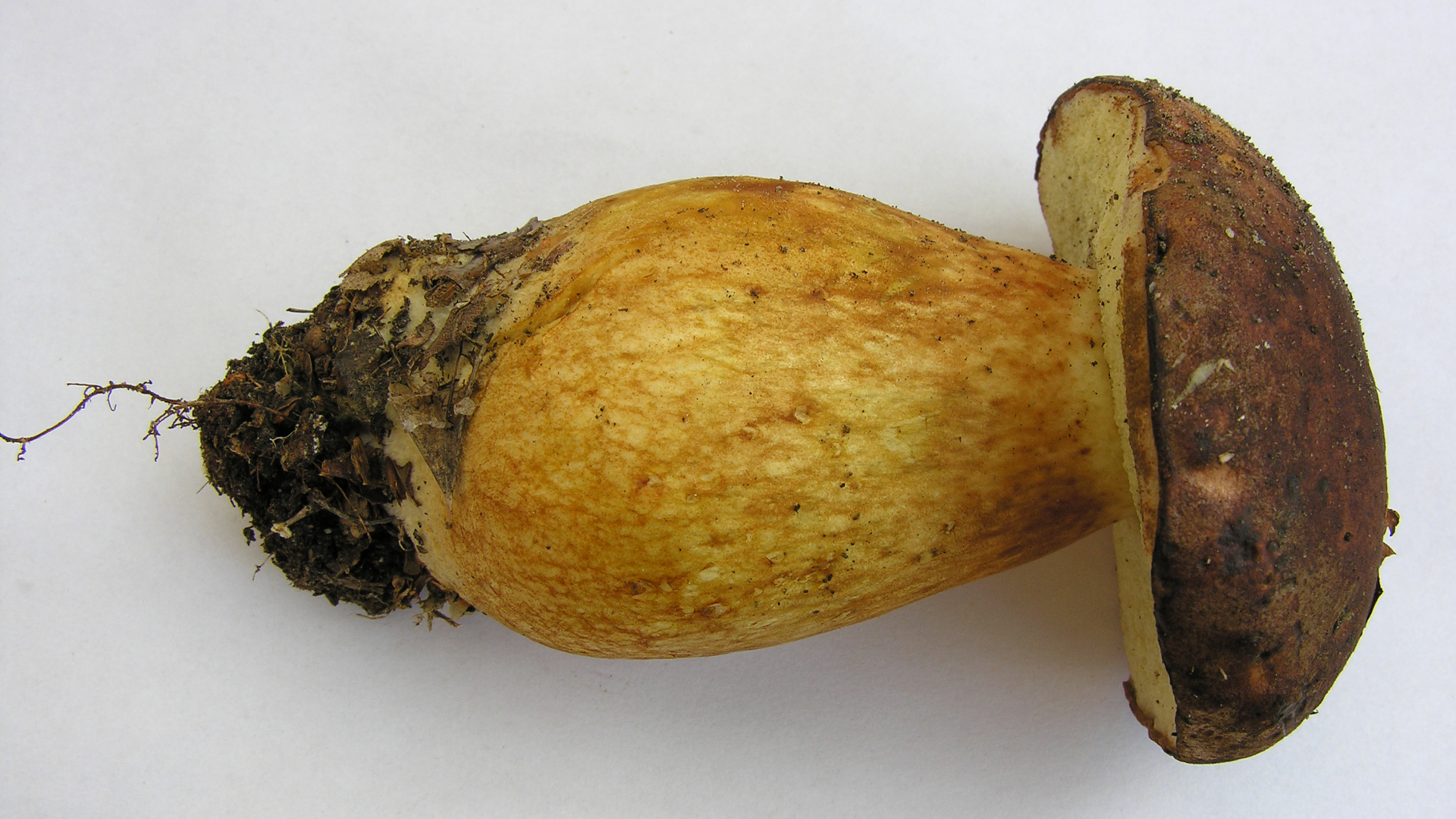
Most ground growing species have gills under their caps, but some have pores. One of the best edible 'boletes' is the Penny Bun or Cep
Boletus edulis. It is associated with young oaks in Hainault, but is not very common.
#
Common Puffball
Lycoperdon perlatum
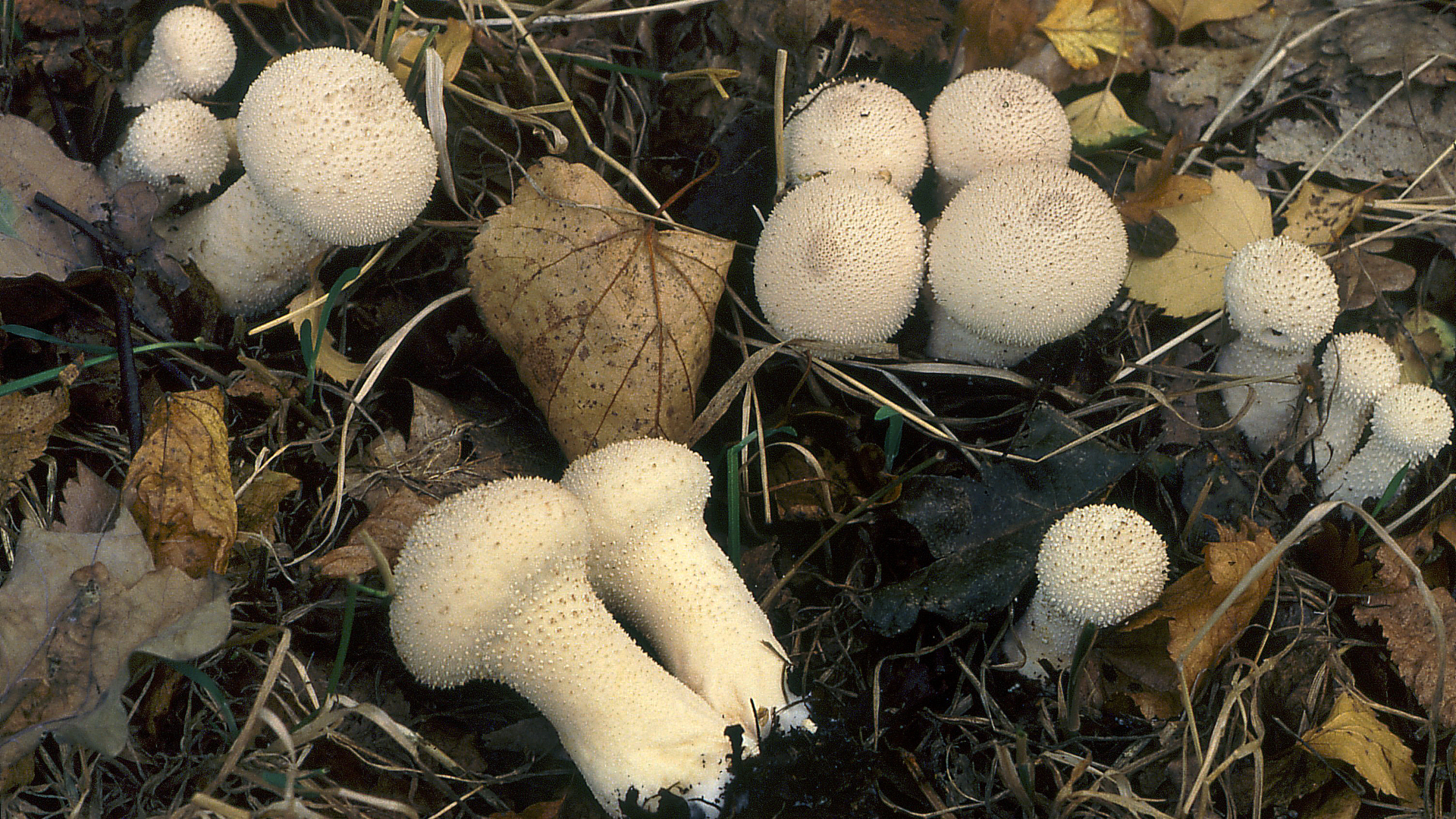
The Common Puffball
Lycoperdon perlatum
lives up to its name. It is one puffball most likely to be found growing in a group. When ripe, the spore discharge is very visible when it is disturbed.
#
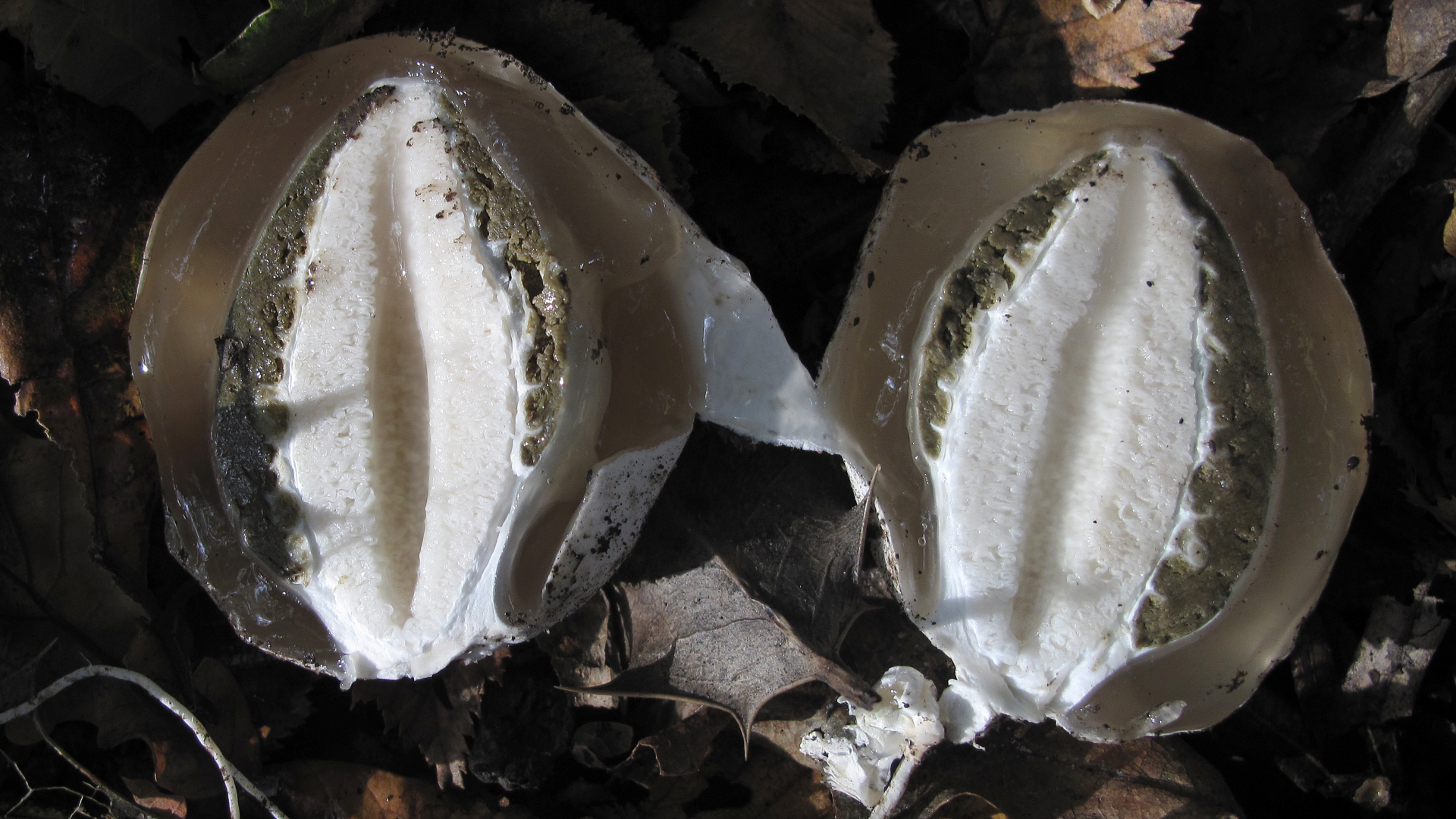
Common Stinkhorn
Phallus impudicus
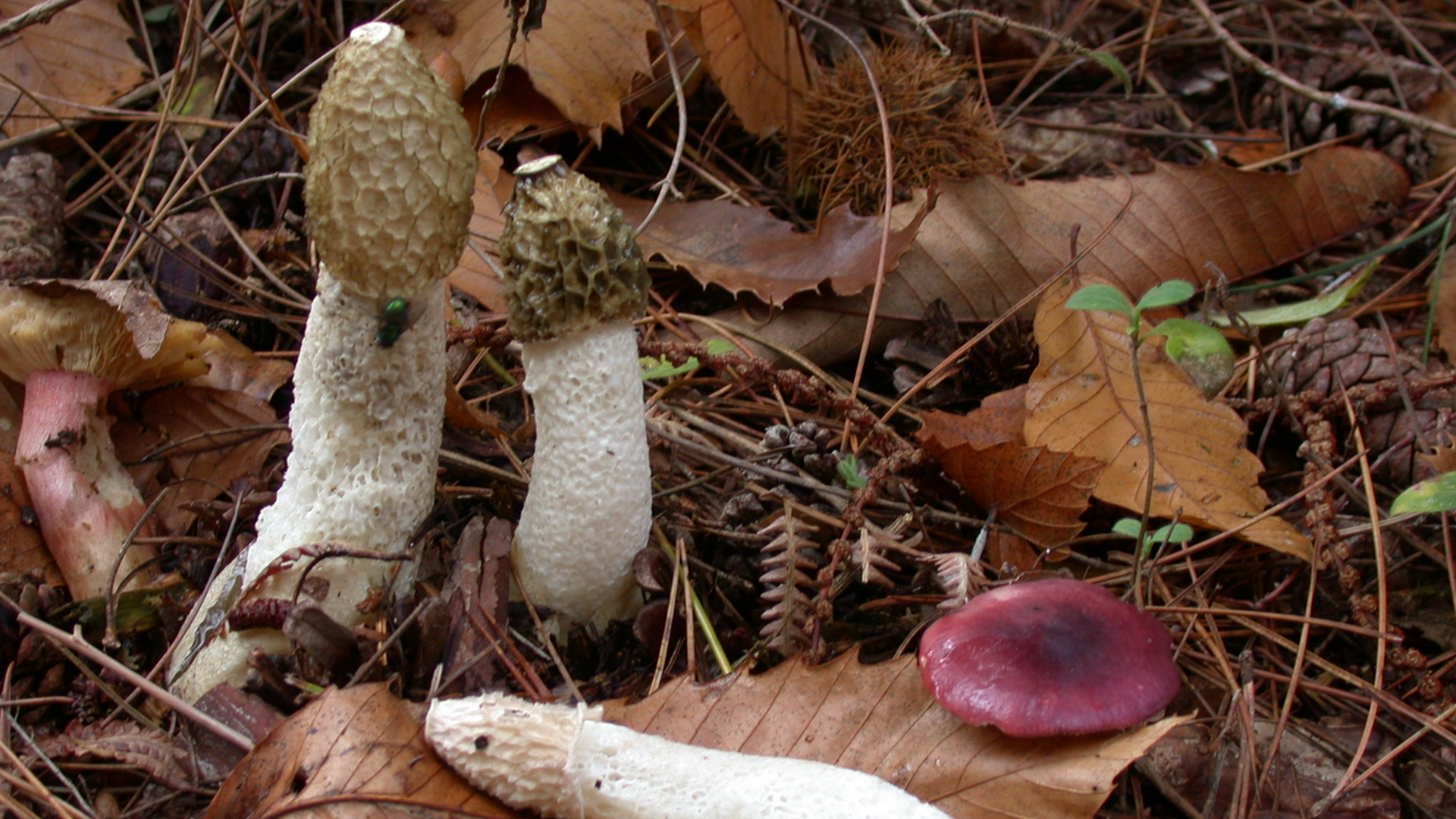
Fungus fruit bodies are very diverse, none more so than the Common Stinkhorn
Phallus impudicus. Its distinctive foetid smell is smelled before it is found. It expands quickly from an 'egg' and is loved by flies, the method by which its spores are distributed. The picture above also shows the purple cap of
Russula sanguinaria.
#
White Saddle
Helvella crispa
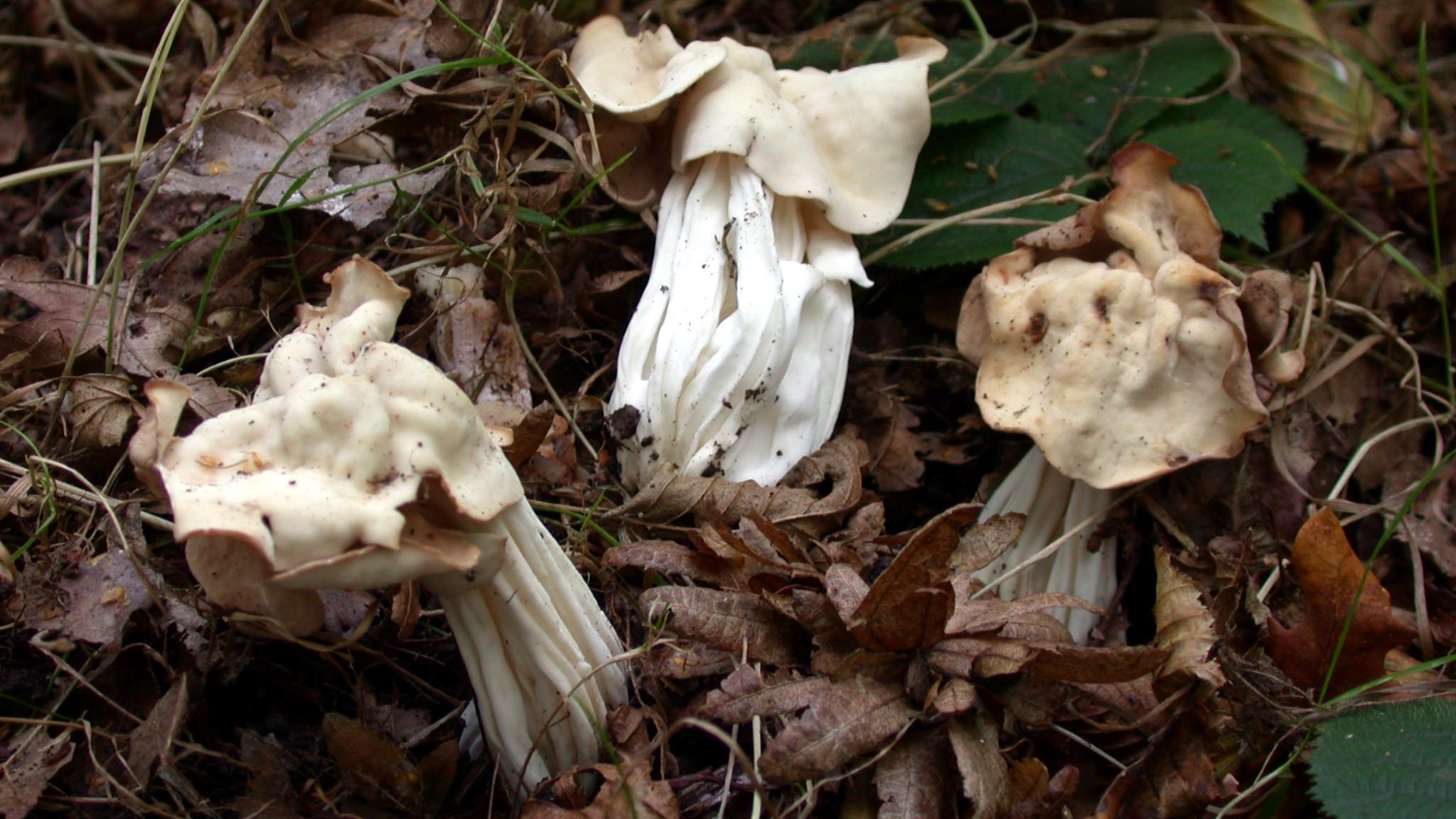
The White Saddle
Helvella crispa is quite common in autumn.
#
Sulphur Tuft
Hypholoma fasciculare
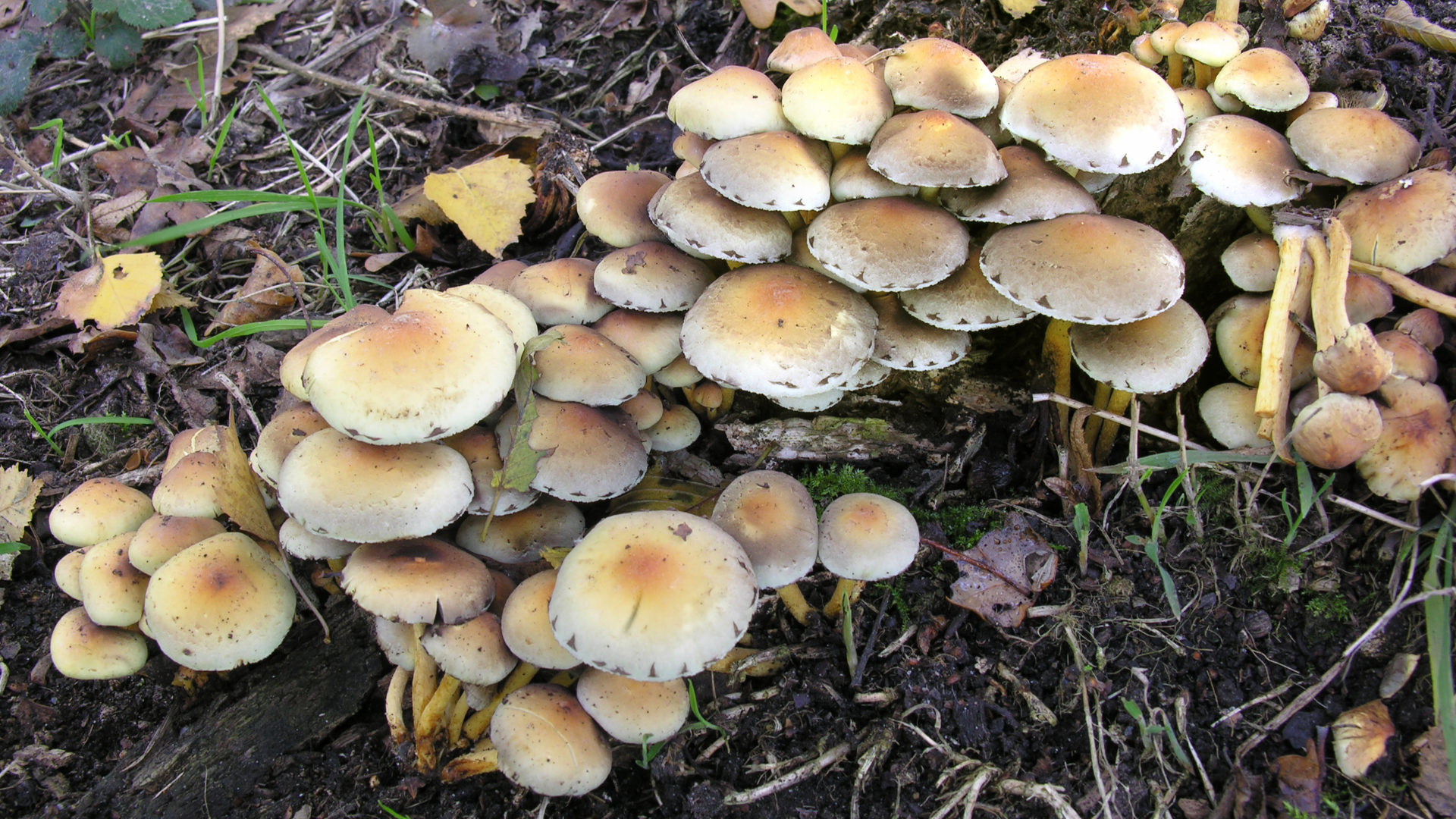
Many fungi are saprophytic, and inhabit dead wood - it's natures way of disposing of dead organic debris. The Sulphur Tuft
Hypholoma fasciculare is an attractive species growing in large numbers, often completely covering a stump.
#
Iodine Bonnet
Mycena filopes
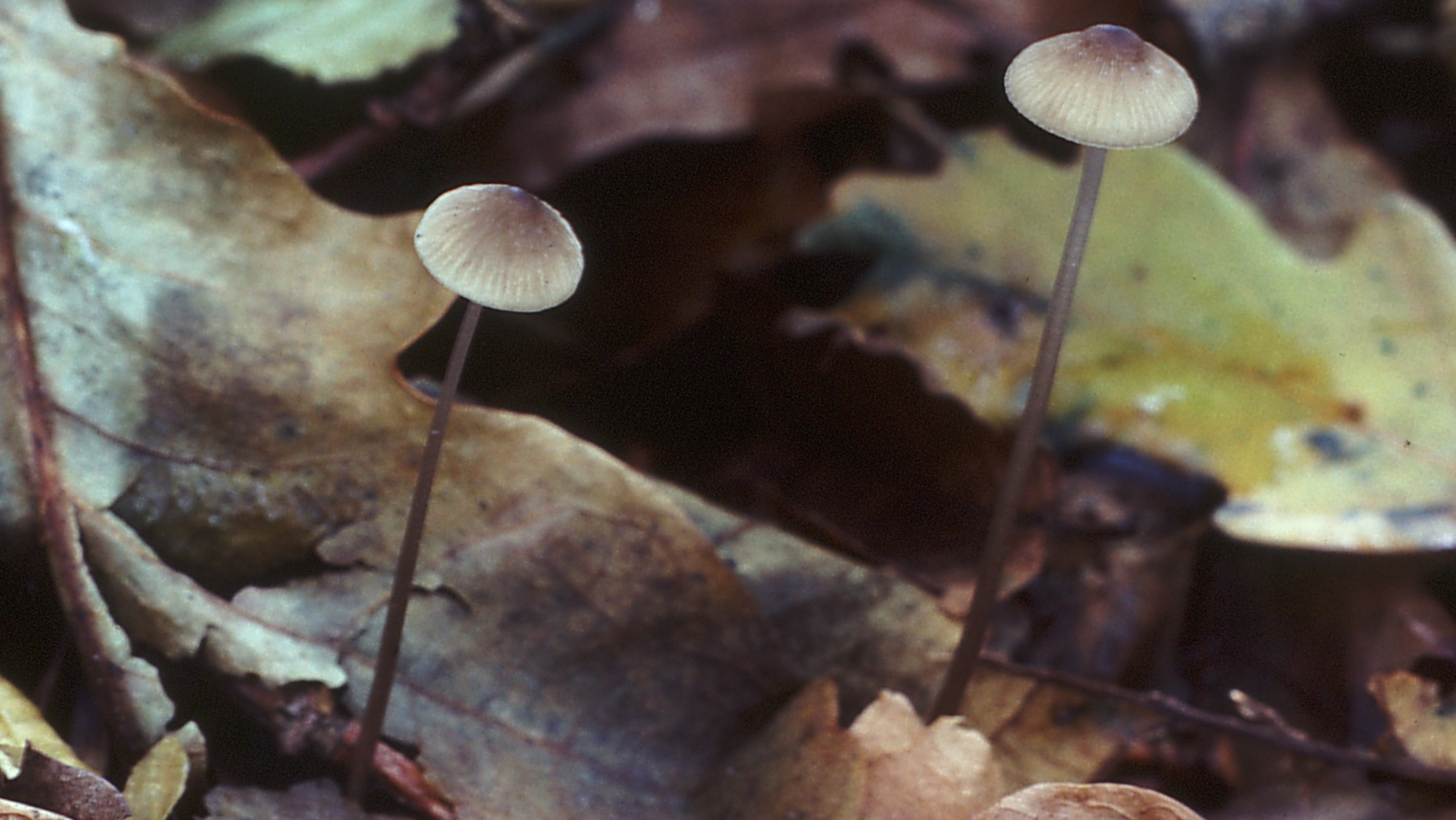
With a similar habitat the more delicate Mycena's such as Iodine Bonnet
Mycena filopes are common.
#
Dripping Bonnet
Mycena rorida
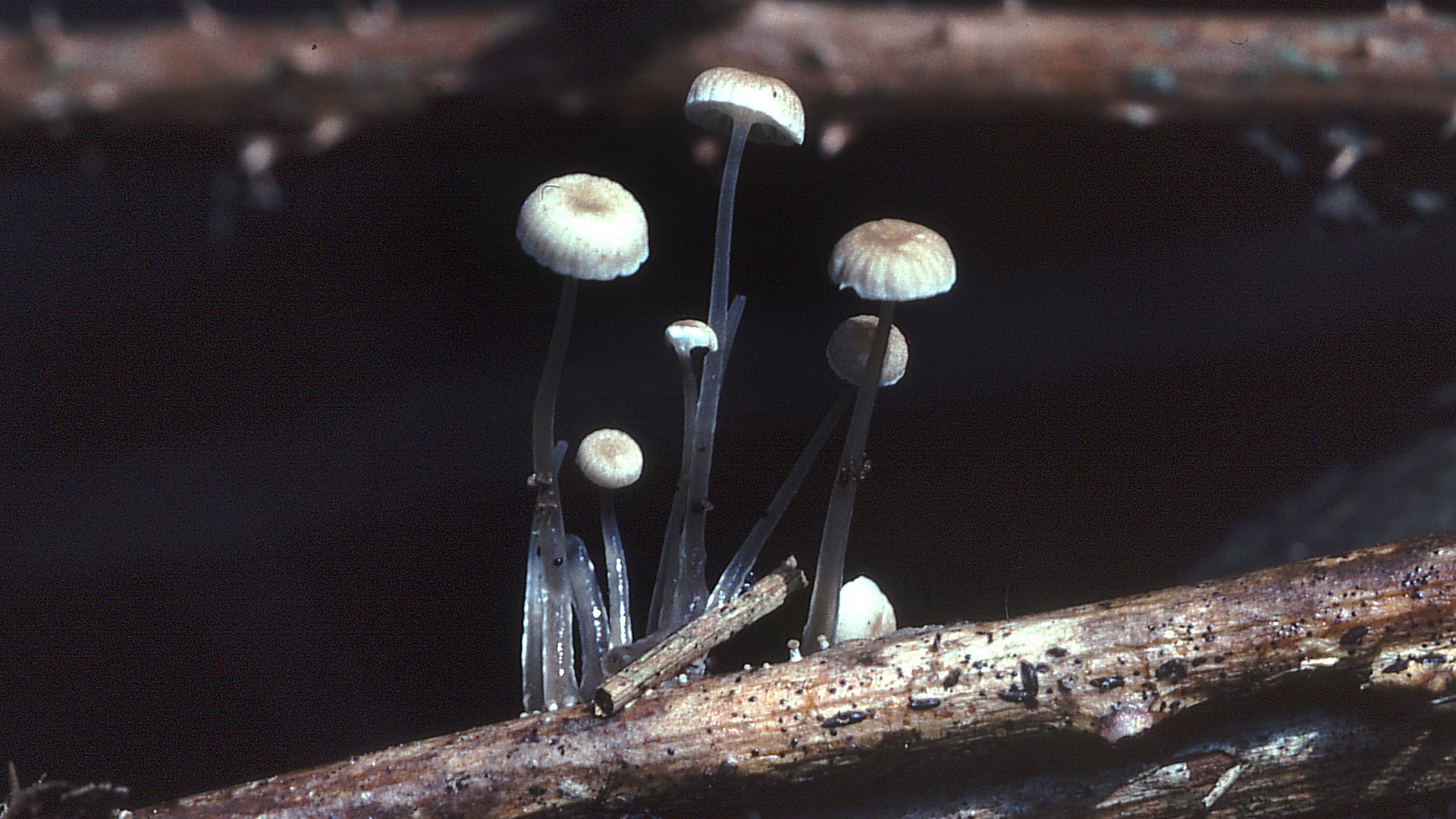
A tiny fungus with stem covered in a thick coating of slime, The fruiting body creates a bluish-green bioluminescent glow that is cold to the touch.
#
Smoky Bracket
Bjerkandera adusta
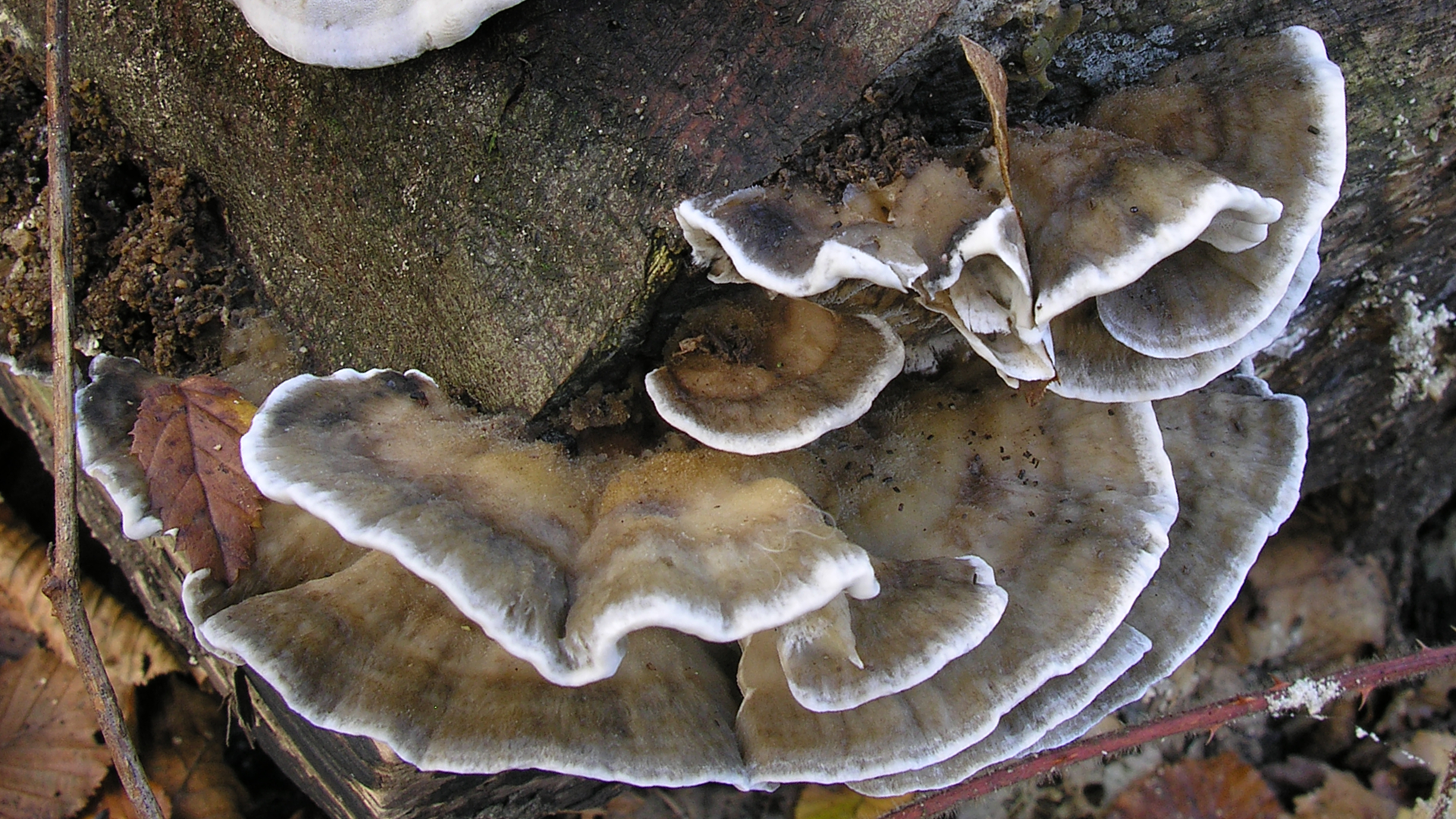
Small bracket fungi abound on fallen timber etc. Typical is Smoky Bracket
Bjerkandera adusta, a common one, as is the orange coloured False Turkey-tail
Stereum hirsutum just two of many similar species.
#
Tripe fungus
Auricularia mesenterica
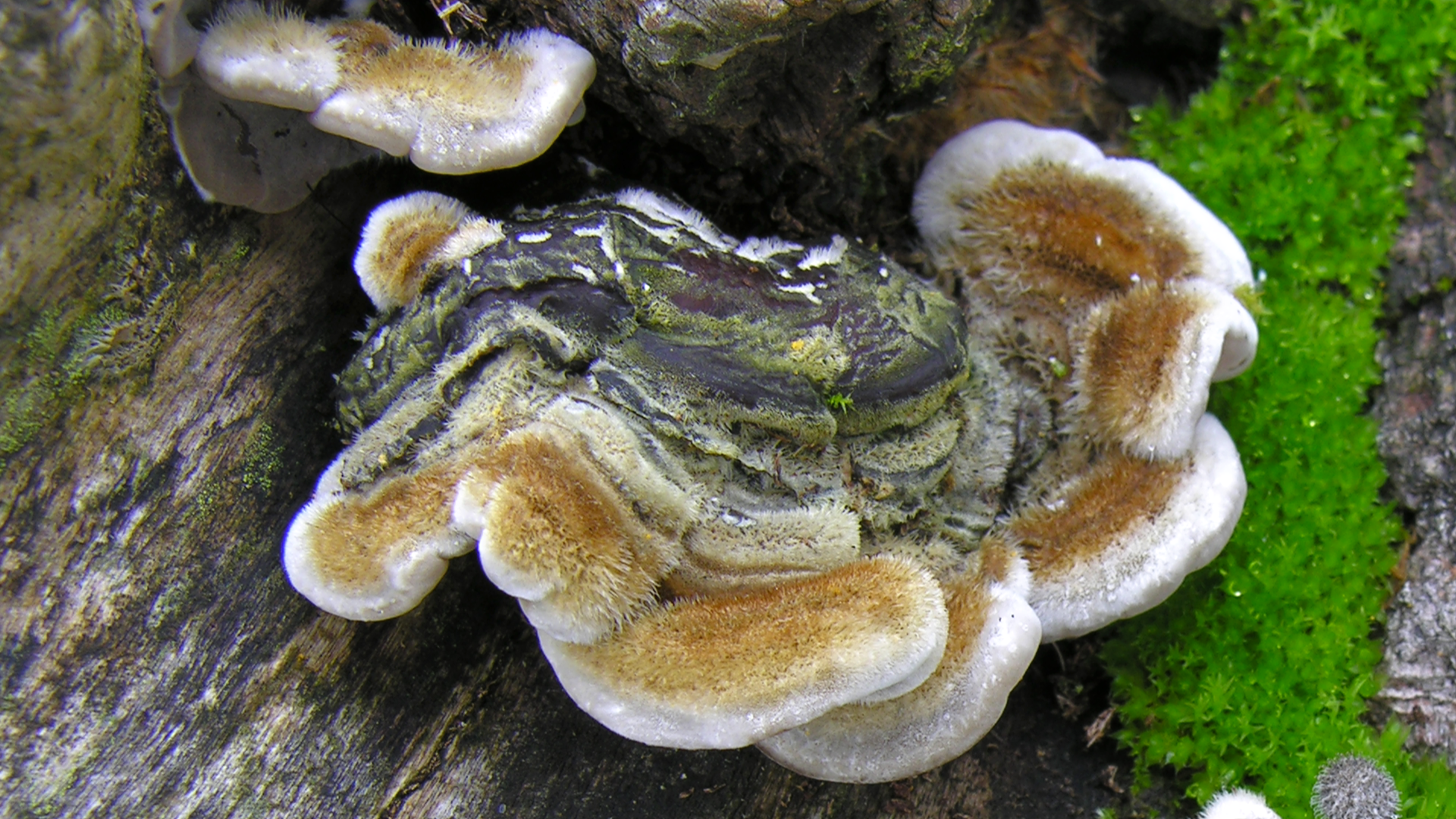
A common sight before Dutch elm disease, but now less common due to the disappearance of many elm trees.
#
Beefsteak fungus
Fistulina hepatica
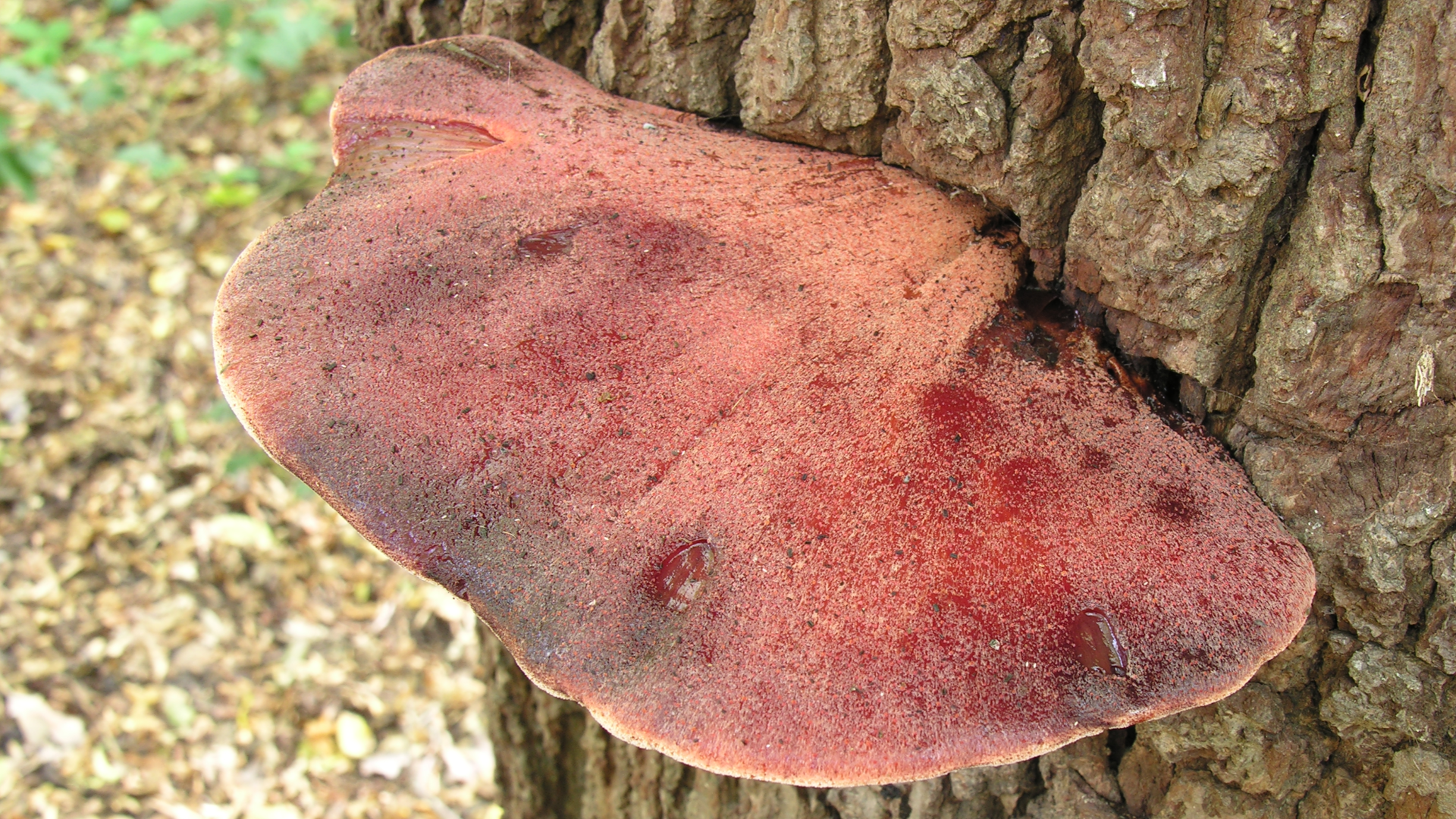
Larger brackets include the Beefsteak fungus
Fistulina hepatica which feeds on the heartwood of Oak trees. It is edible but definitely an acquired taste!
#
Birch Polypore
Piptoporus betulinus
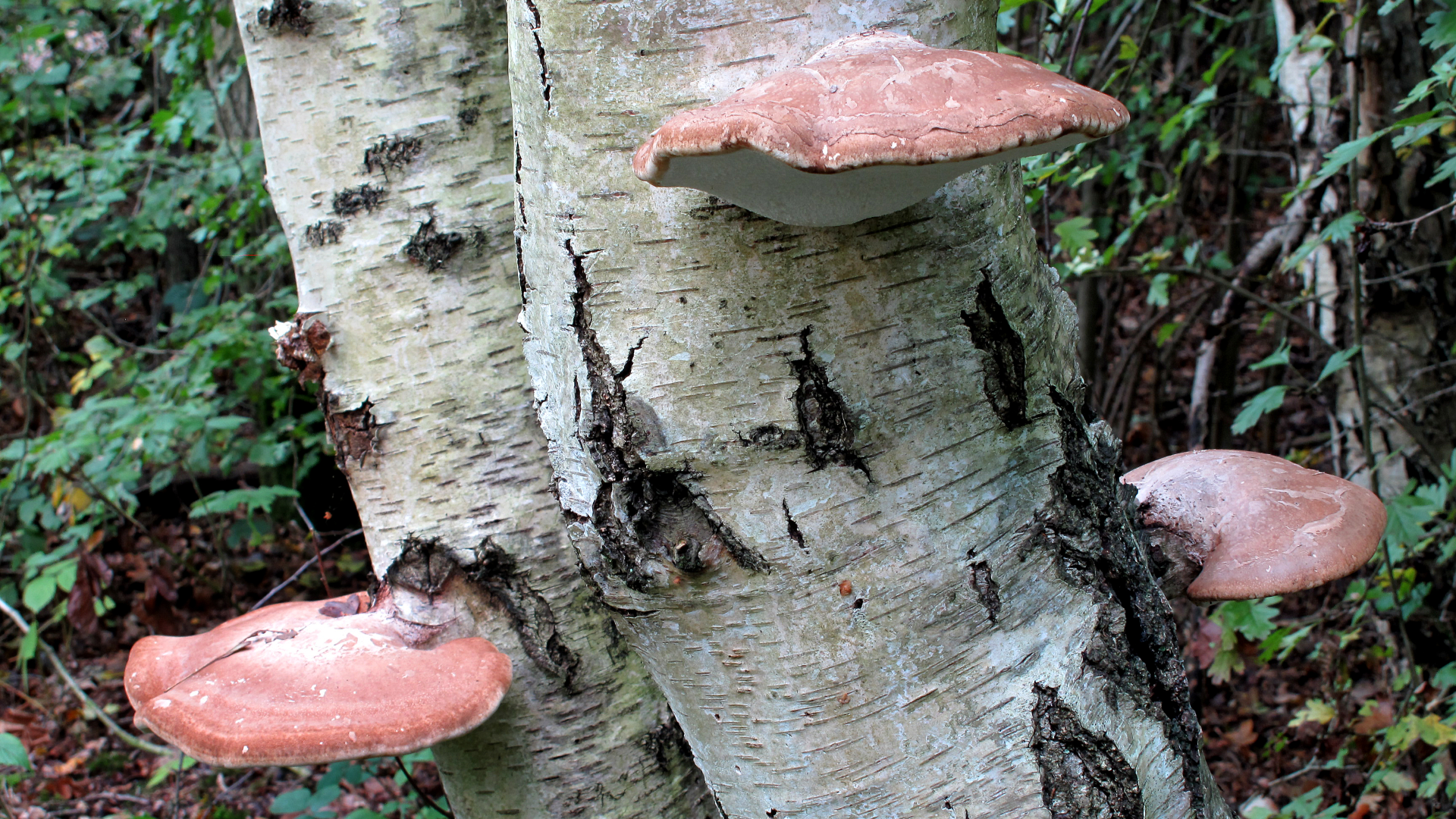
All the old Birch trees eventually succumb to the very common Birch Polypore
Piptoporus betulinus. It is also known as the Razor Strop Fungus.
#
Dead Man's Fingers
Xylaria polymorpha
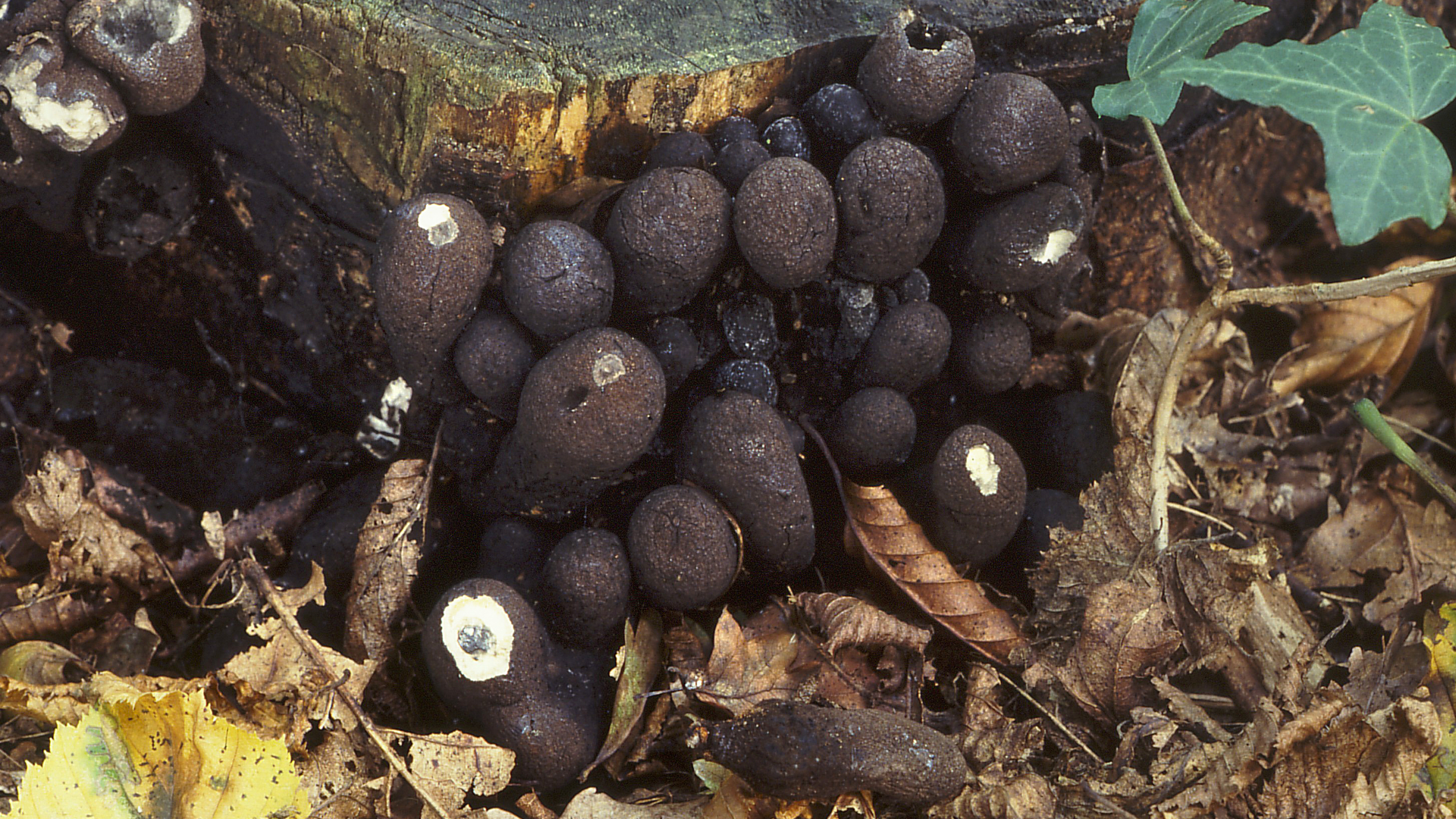
Dead Man's Fingers
Xylaria polymorpha grows on stumps. It is easy to see where it gets its name.
#
Yellow Club
Clavulinopsis helvola
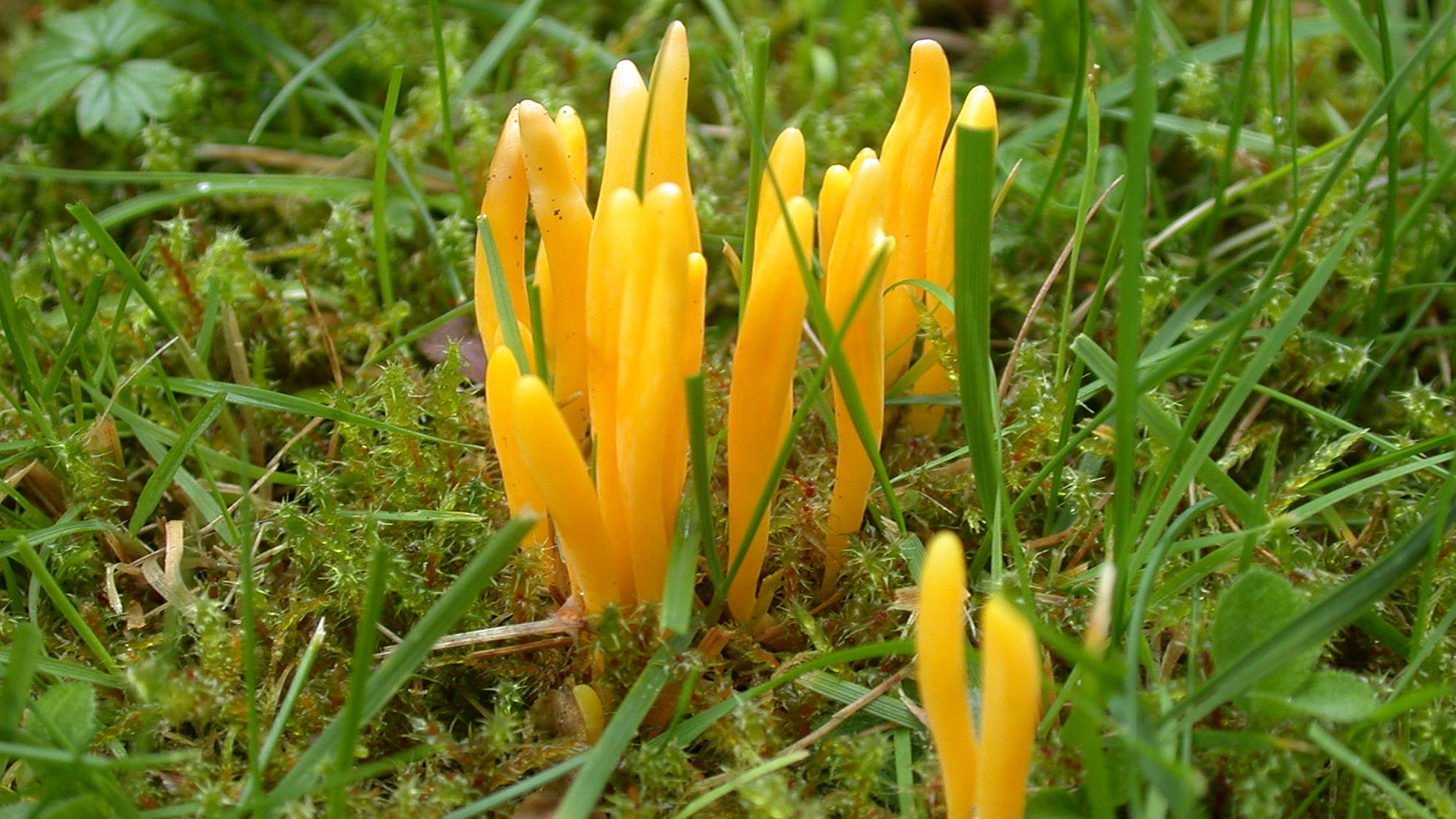
Grassland species occur in the open areas, particularly in wet spells. Club fungi such as
Clavulinopsis helvola can appear in large numbers.
#
Fairy Ring Champignon
Marasmius oreades
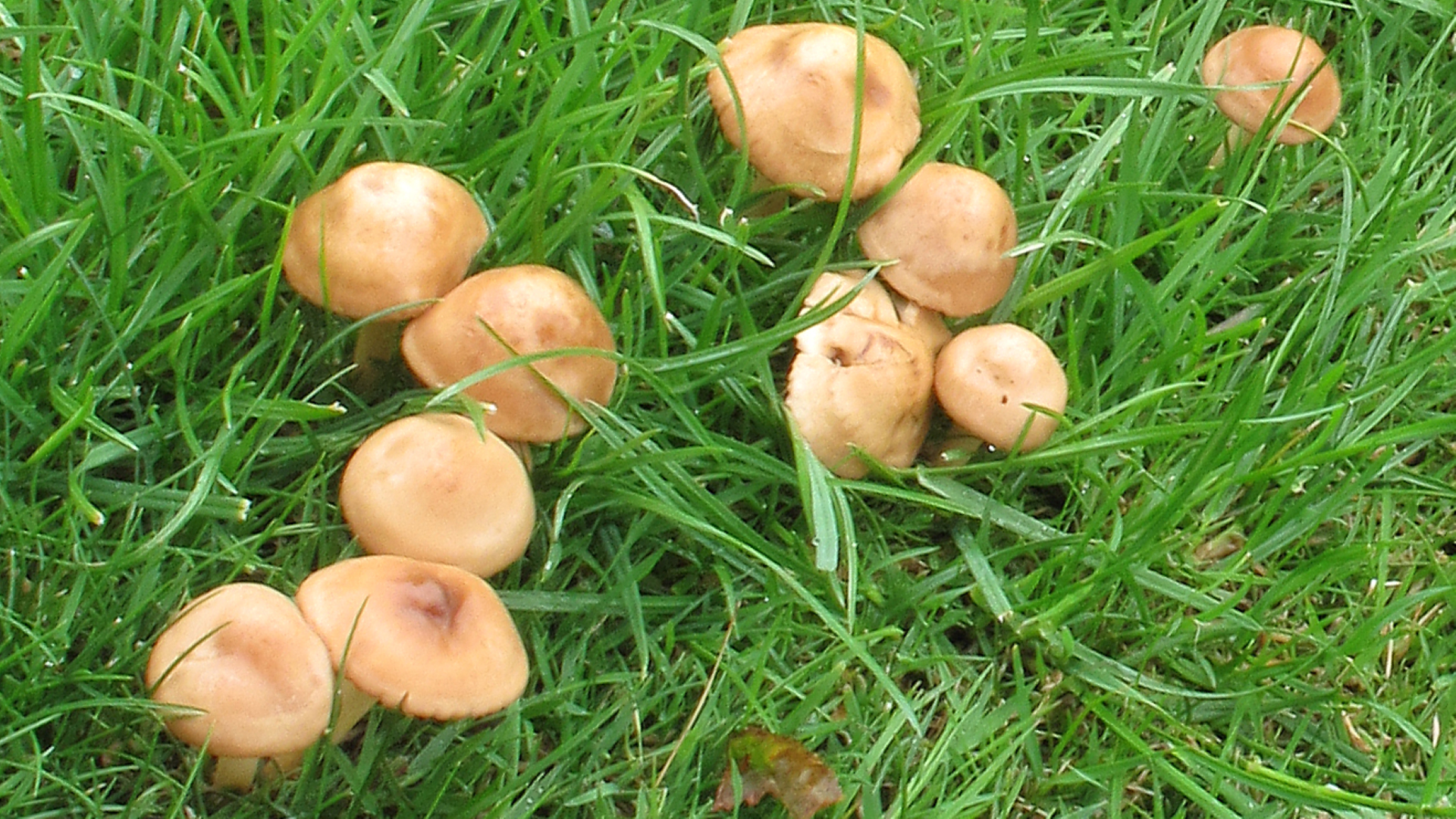
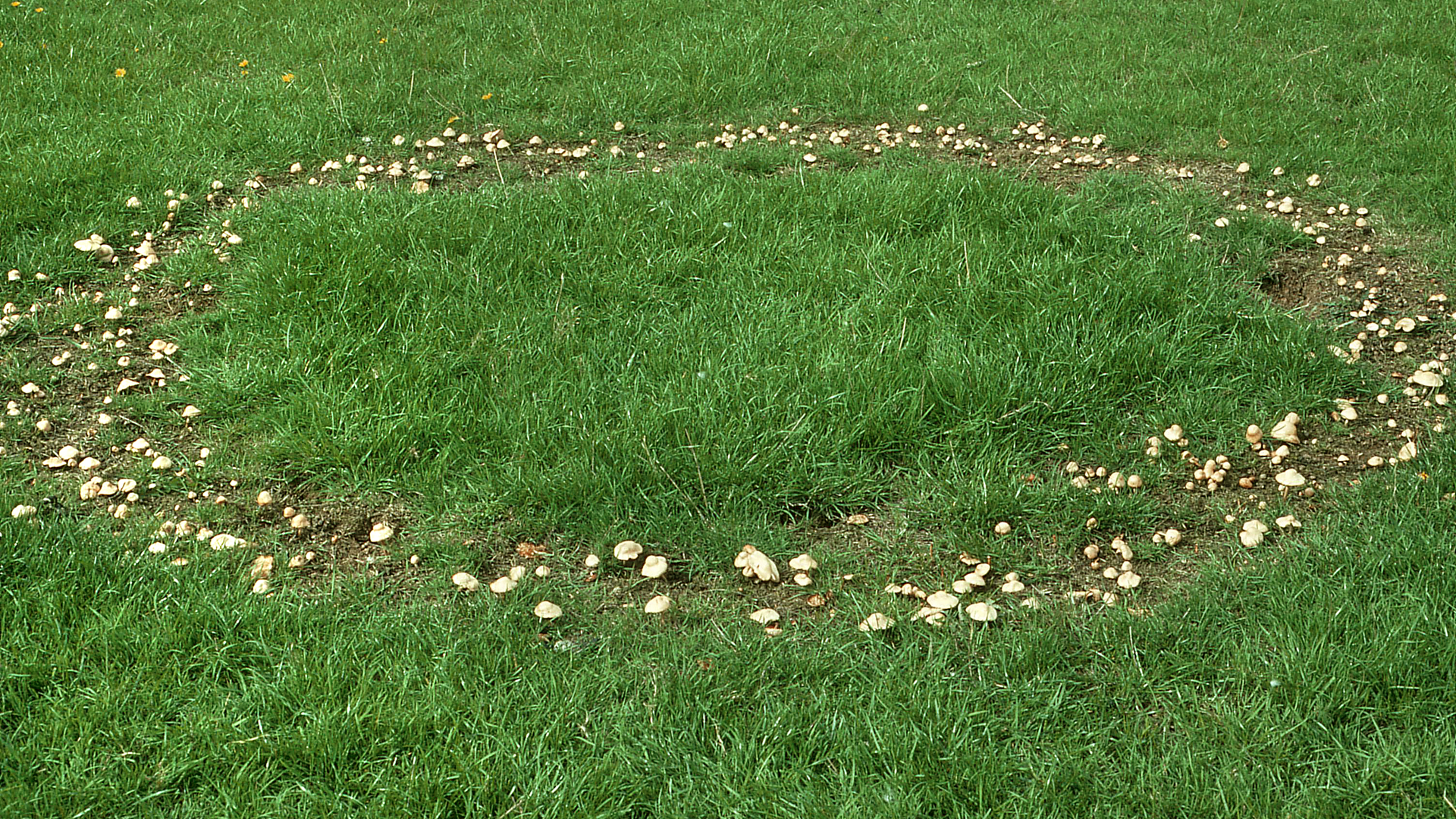
Fairy Ring Champignon Marasmius oreades is common and grows in distinctive rings in the meadow east of the lake. The rings are up to 60 years old, and are mostly about 2 metres in diameter. They increase in size every year by a few centimetres.
#
Common Inkcap
Coprinus atramentarius
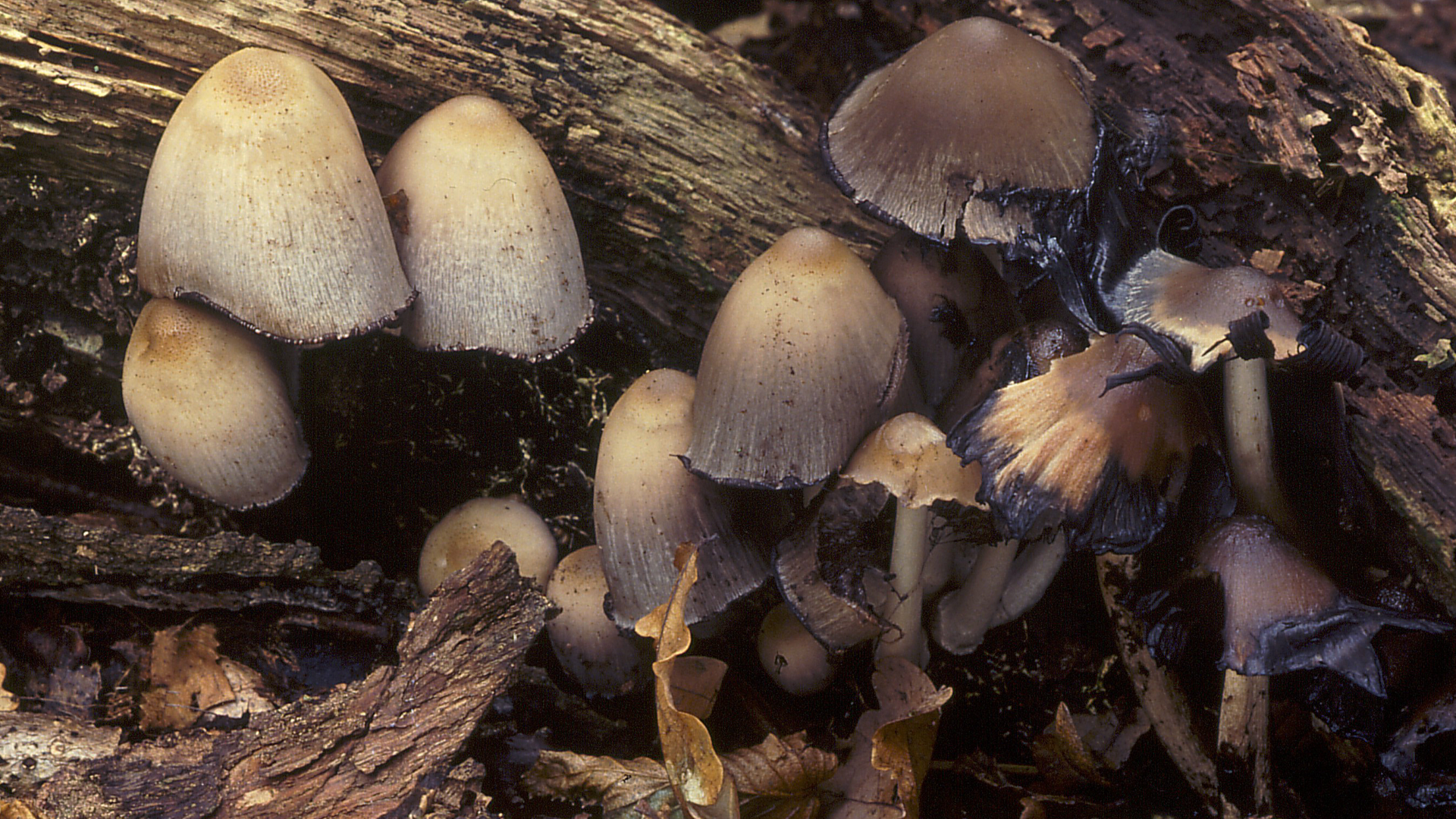
Common Ink Cap
Coprinus atramentarius grows clustered on the ground in woods etc. from buried wood. It gets its name because it deliquesces into an inky mess. Edible when young but can cause alarming symptoms when eaten with alcohol. Another ink cap
Coprinus lagopides, is found on burnt wood and bonfire sites. It does not fully deliquesce. There are several short lived delicate species of ink caps closely resembling this one.
#
Honey Fungus
Armillaria mellea
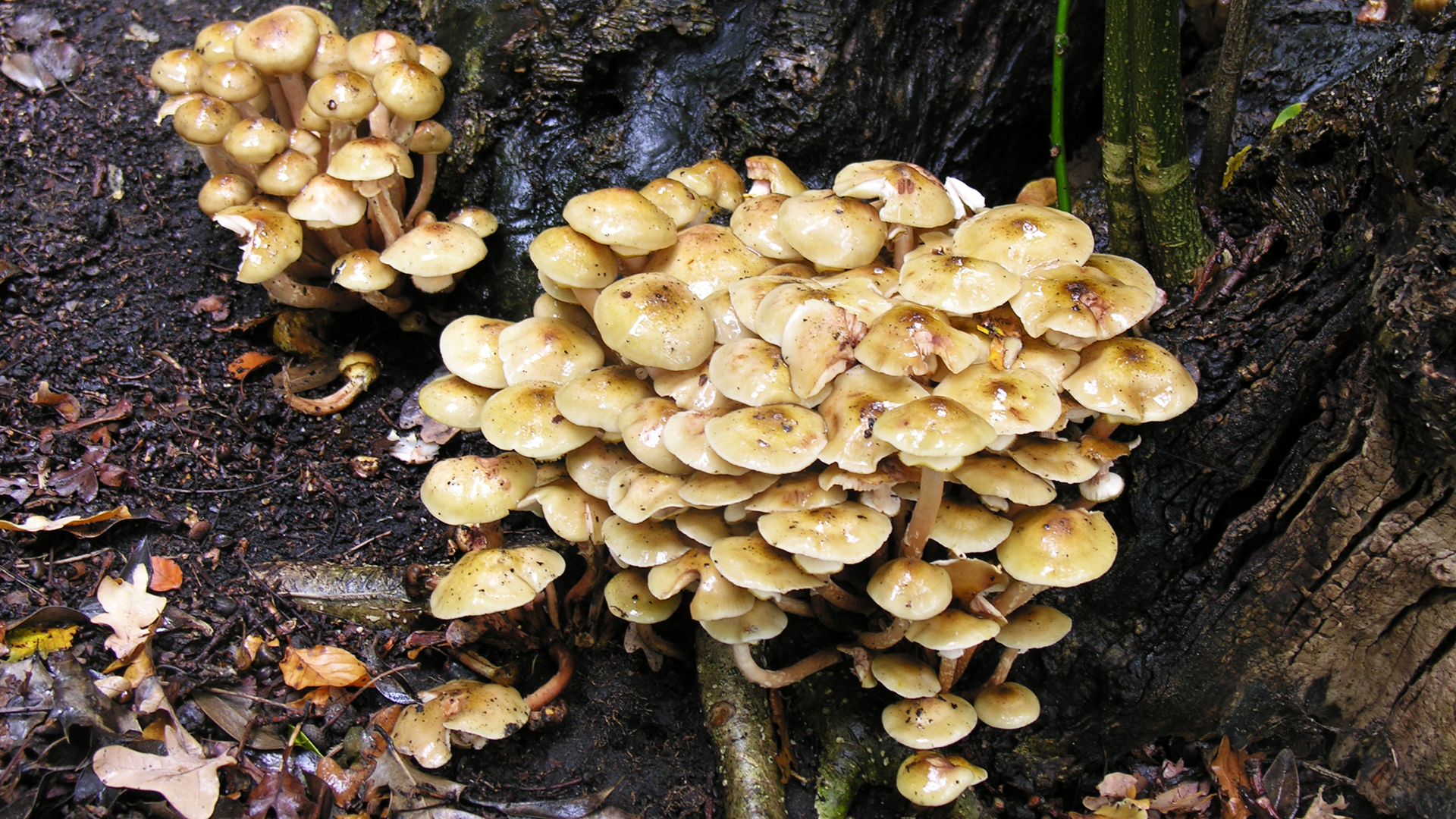
Honey fungus
Armillaria mellea, so dreaded by gardeners, is common and very aggressive in nature. It can attack any tree with fatal consequences.
#
Tiered Tooth
Hericium cirrhatus
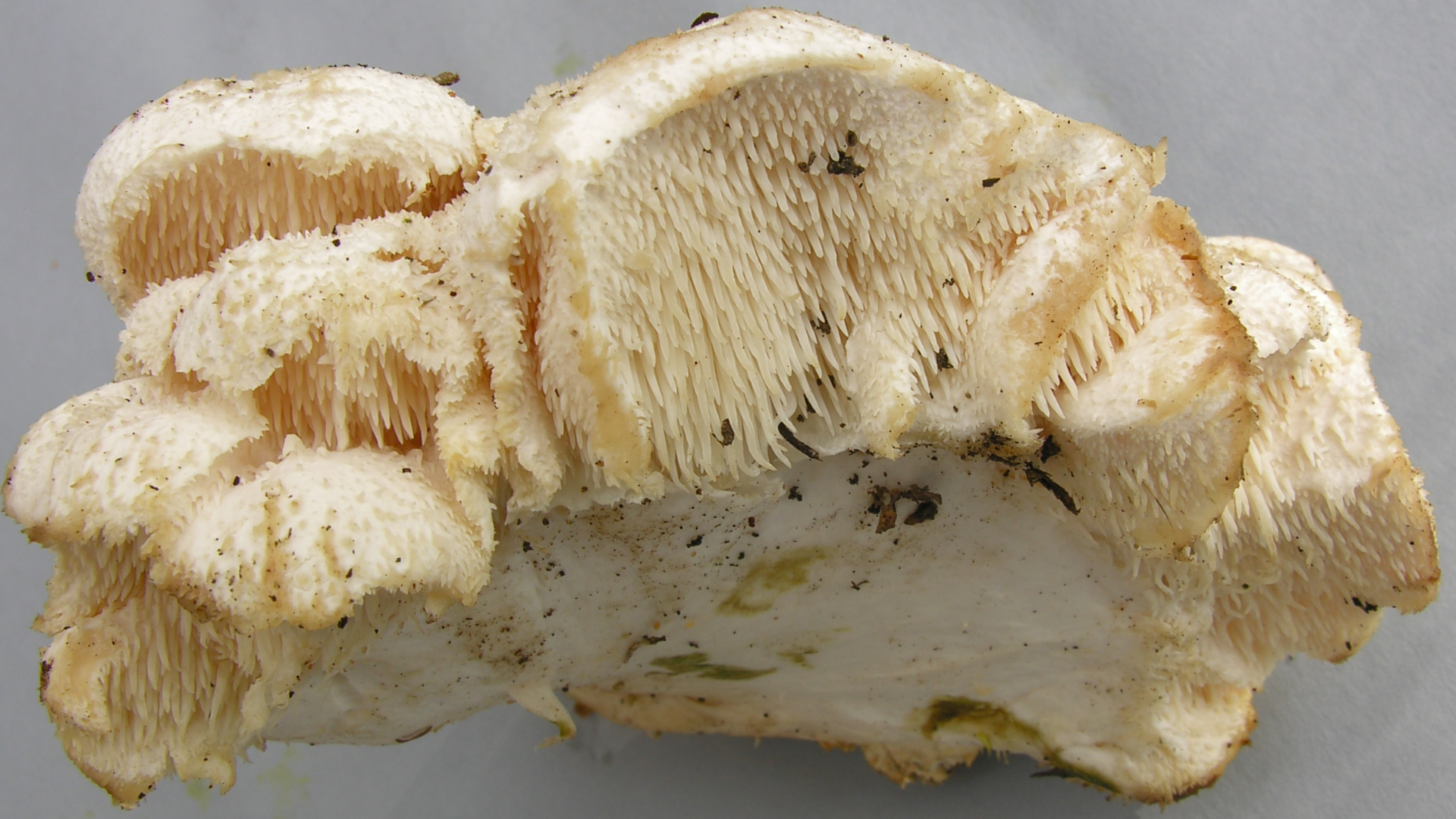
With some of Hainault being ancient woodland, rare species are bound to turn up from time to time. A few that have been identified are:
Hericium cirrhatus with soft spines, growing on a beech trunk brought down in the 1987 gales.
#
Redlead Roundhead
Stropharia aurantiaca
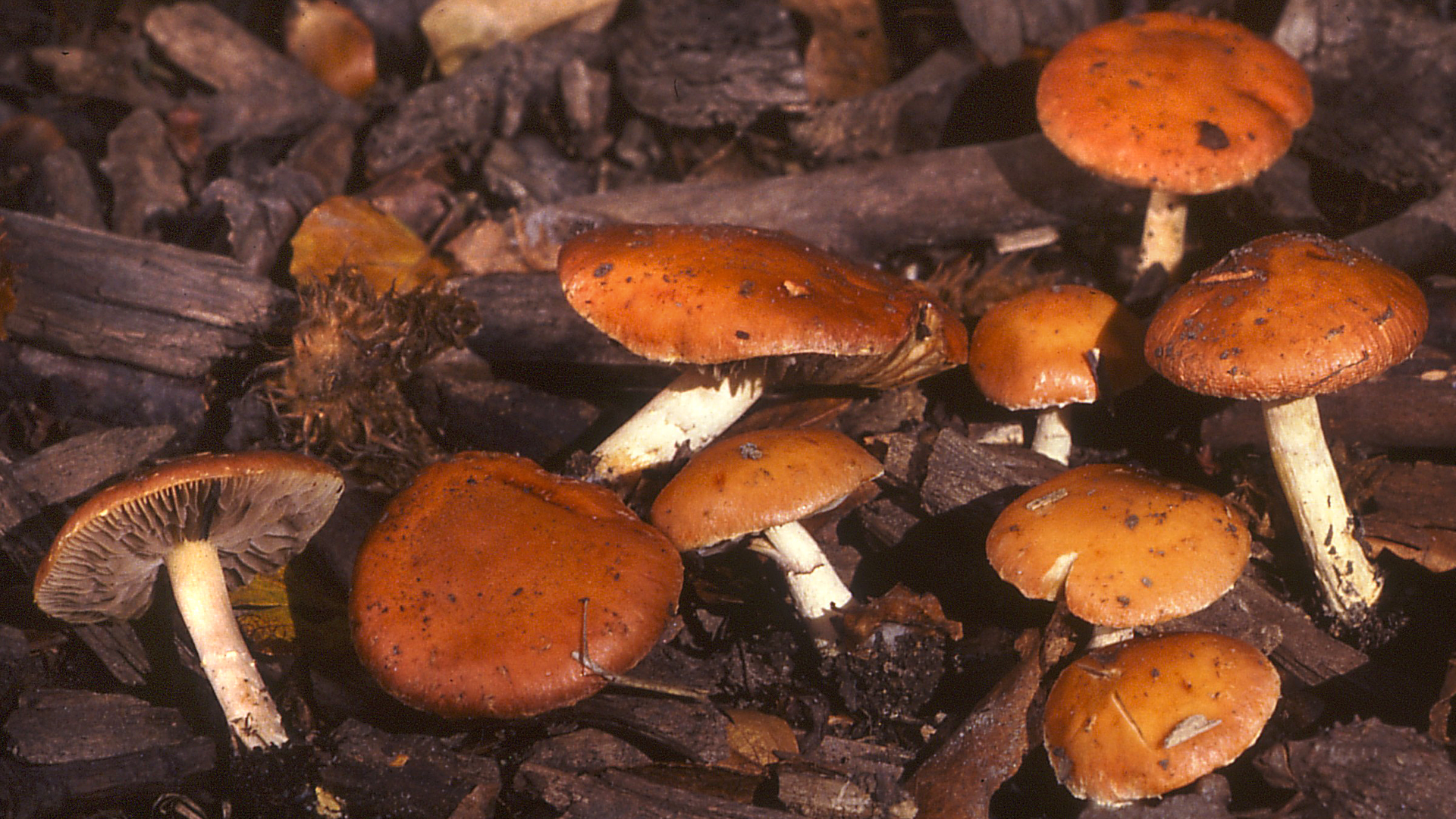
Stropharia aurantica was found growing on a horse ride.
#
Collared Earthstar
Geastrum triplex
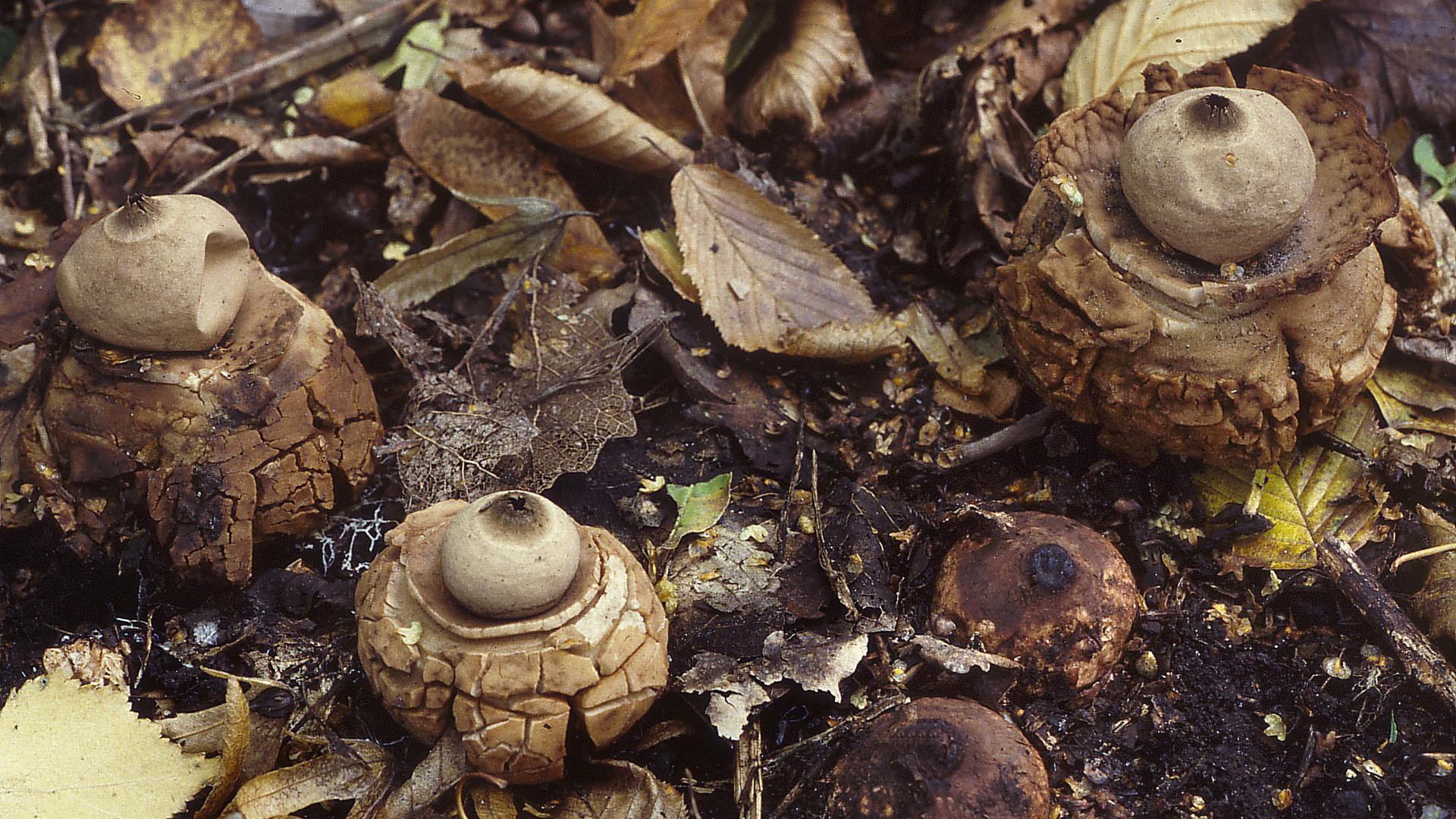
Collared Earthstar
Geastrum triplex is unusual in Hainault.
#
Zoned Rosette
Podoscypha multizonata
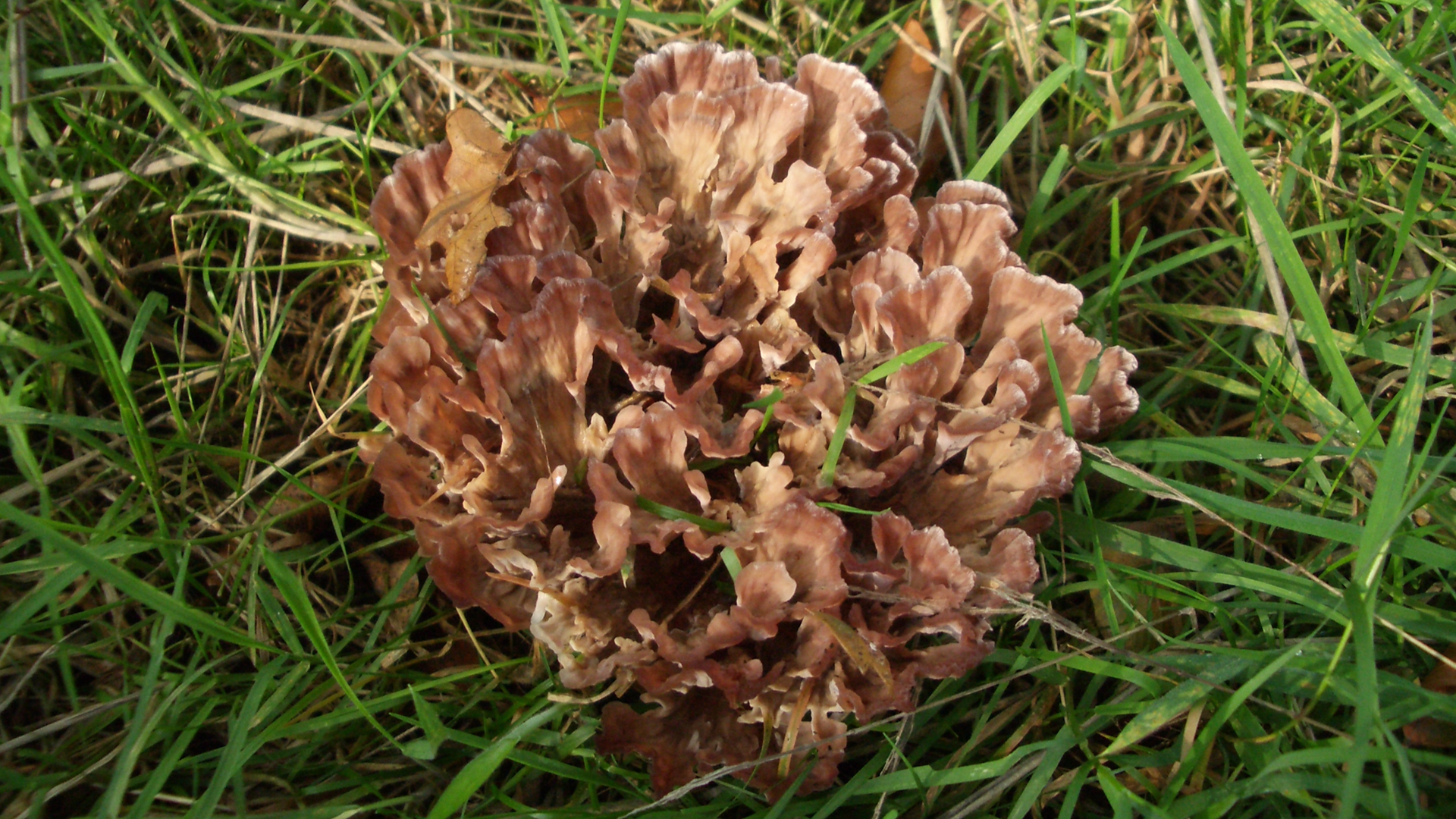
Zoned Rosette
Podoscypha multizonata looks anything but a fungus! Found in Hainault Lodge, it has since been found elsewhere.
#
Leucoagaricus meleagris
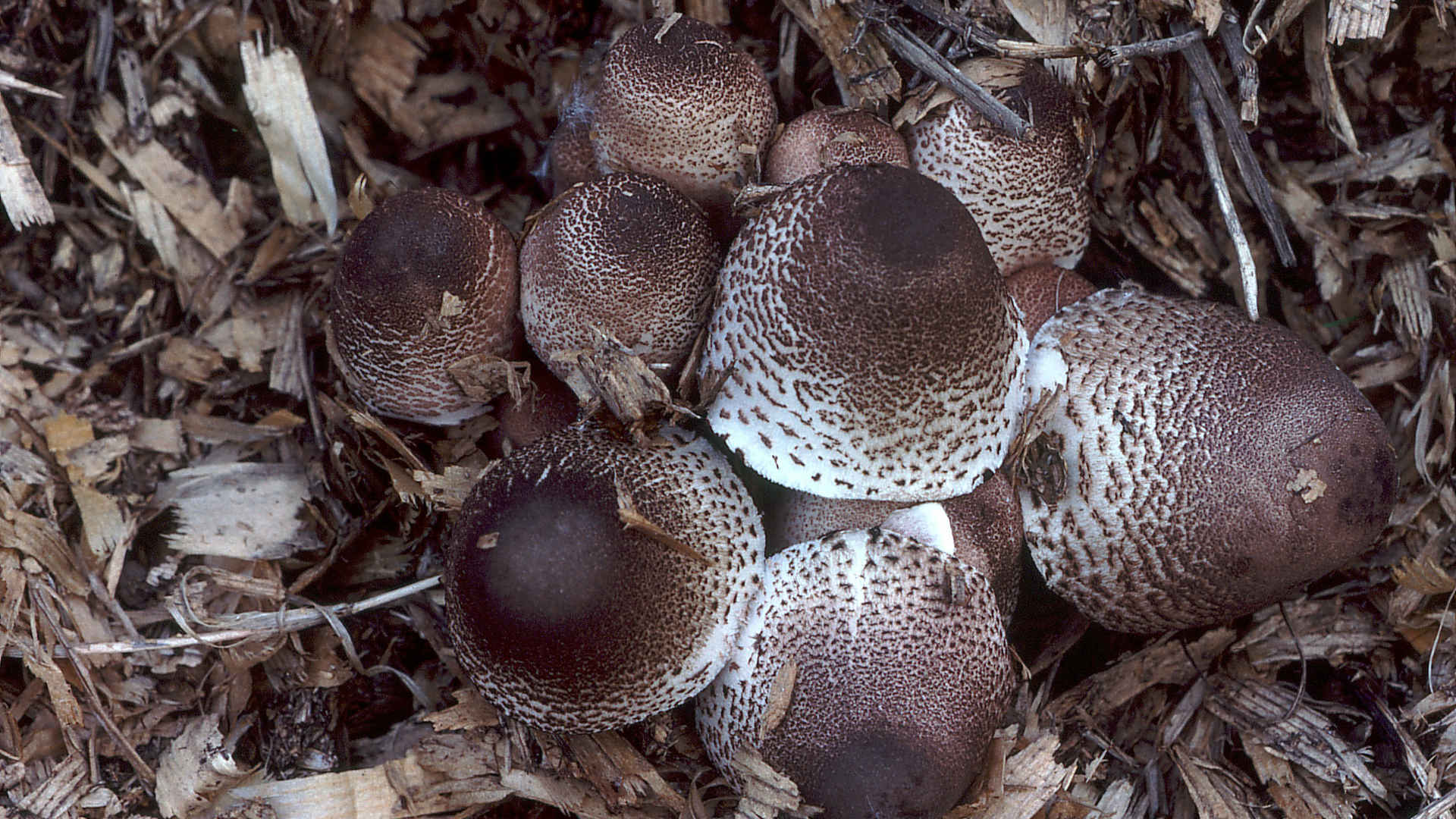
The very rare
Leucoagaricus meleagris found growing on wood chip animal bedding is a species normally found in much warmer climates. It requires a high temperature to grow and produce fruit bodies.
#
© hainaultforest.net. All rights reserved.
This website uses necessary cookies only.