
Slime moulds were once classed as fungi but have now be given their own kingdom. They are single-celled amoeba-like organisms that crawl about in a slime feeding on nutriments. When they have taken on enough nourishment they group together to form fascinating structures that release spores. They show signs of intelligence in the way they search for food and are important decomposers.
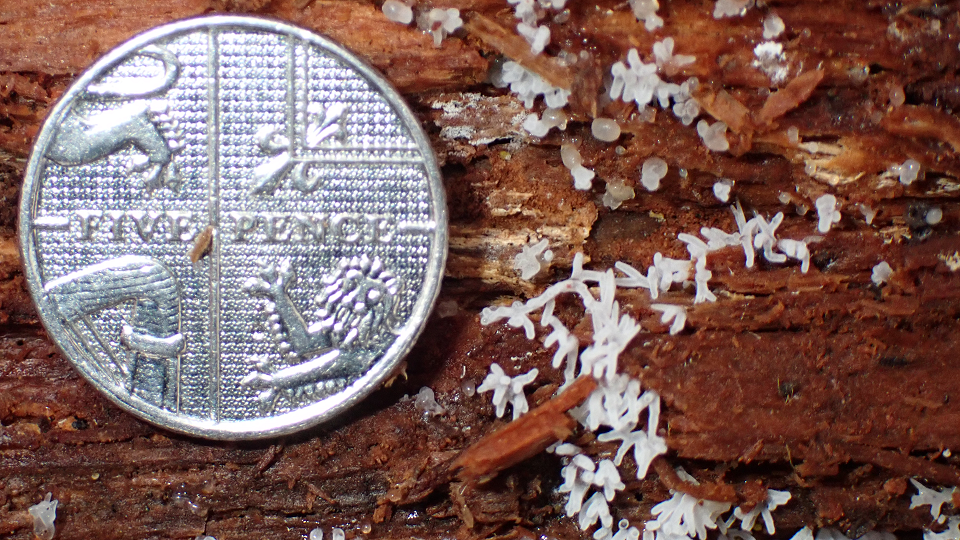
Coral Slime Mould
Ceratiomyxa fruticulosa
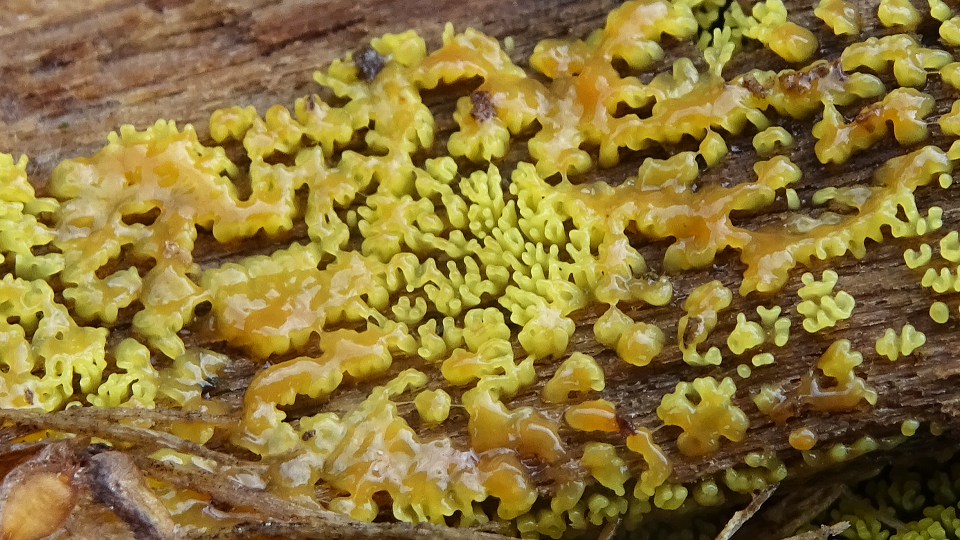
Ceratiomyxa
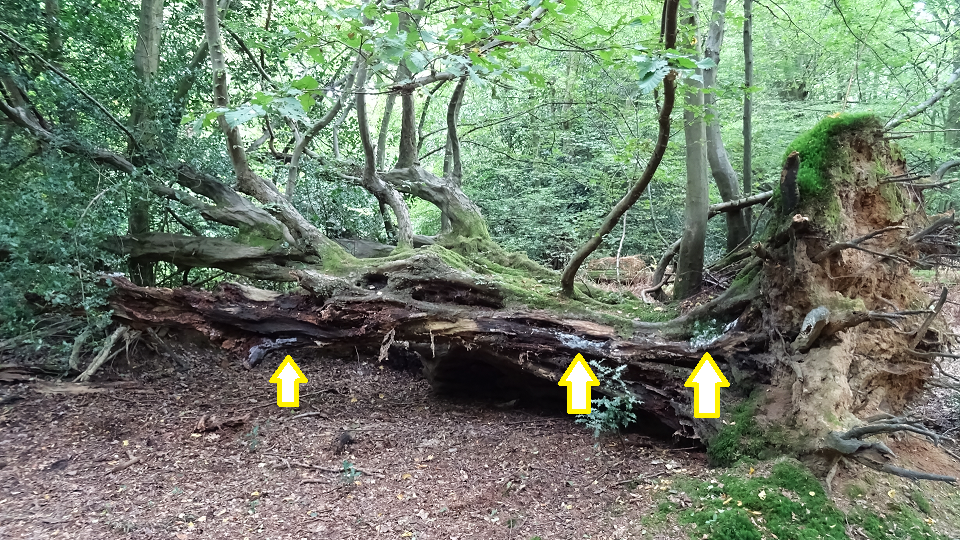
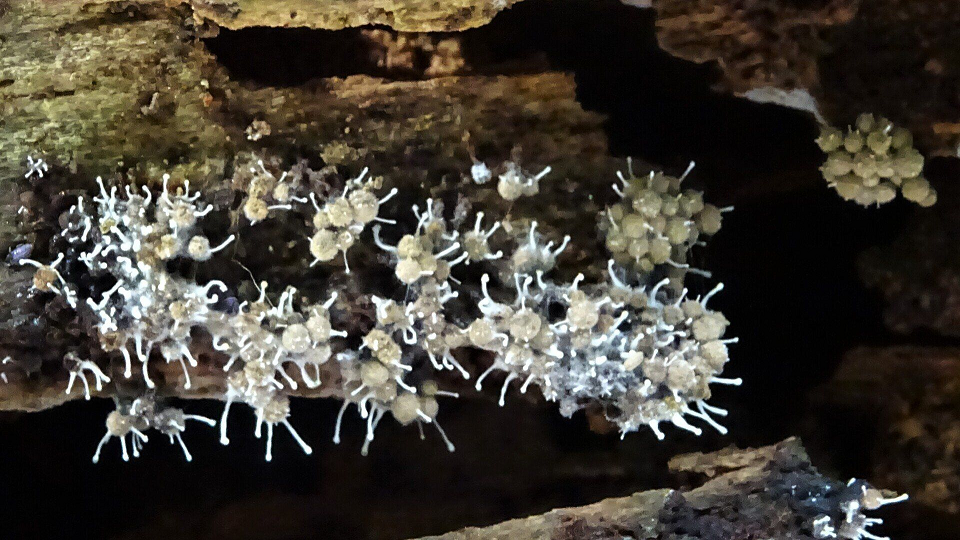
species are different from other slime moulds because their spores grow on the external surfaces of the fruit body. Fairly common in Hainault Forest, normally appearing after damp weather, in white and yellow forms. When mature the fruit bodies remain soft and watery. They can cover large areas of fallen trunks, branches and stumps. Up to 4mm tall.
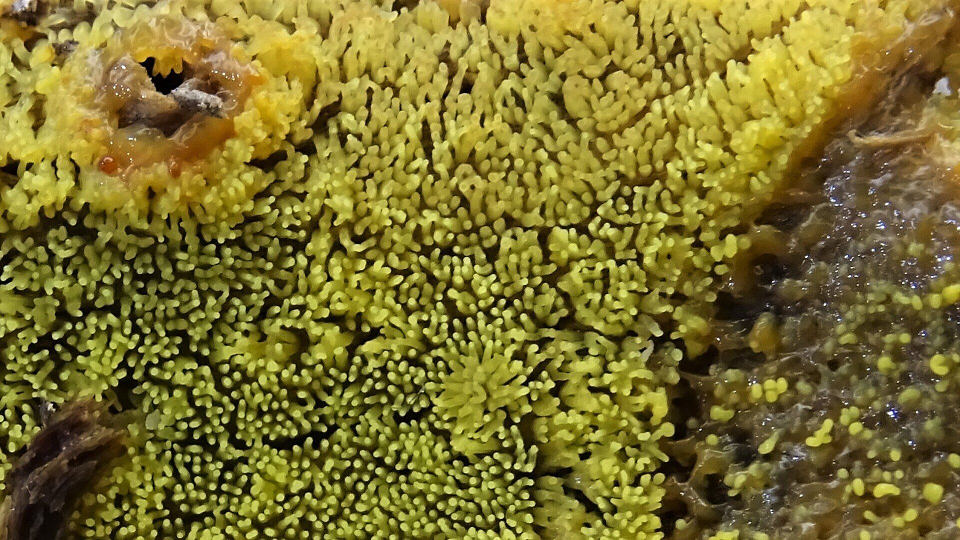
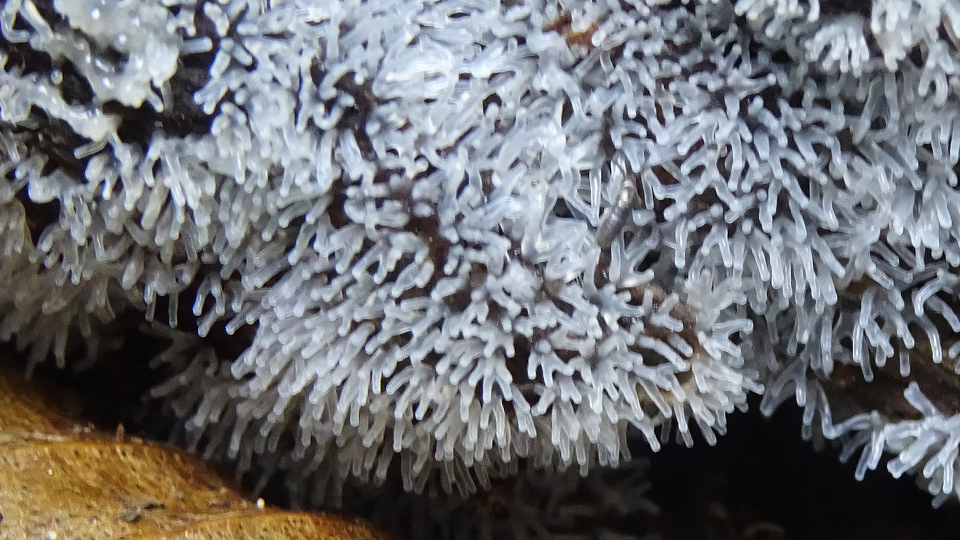
Honeycomb Slime Mould
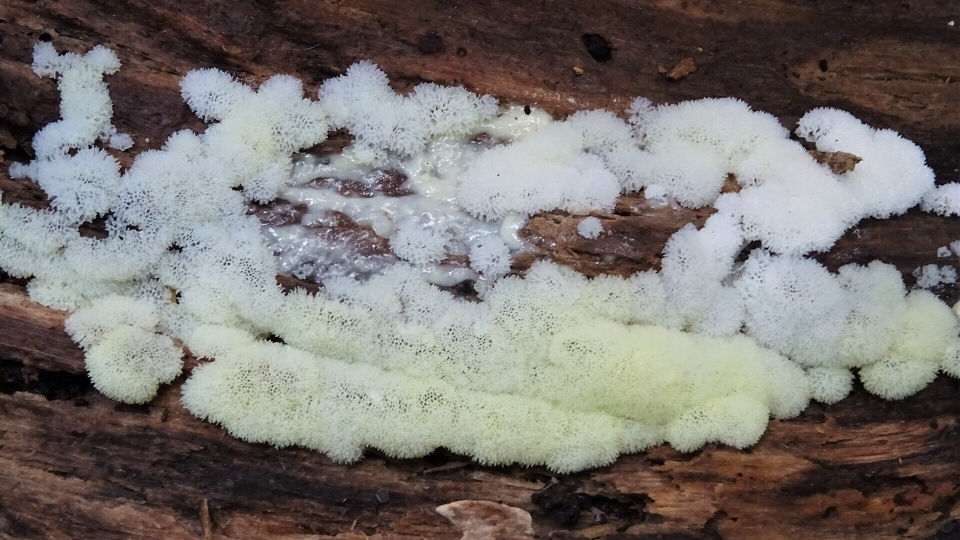
Ceratiomyxa porioides

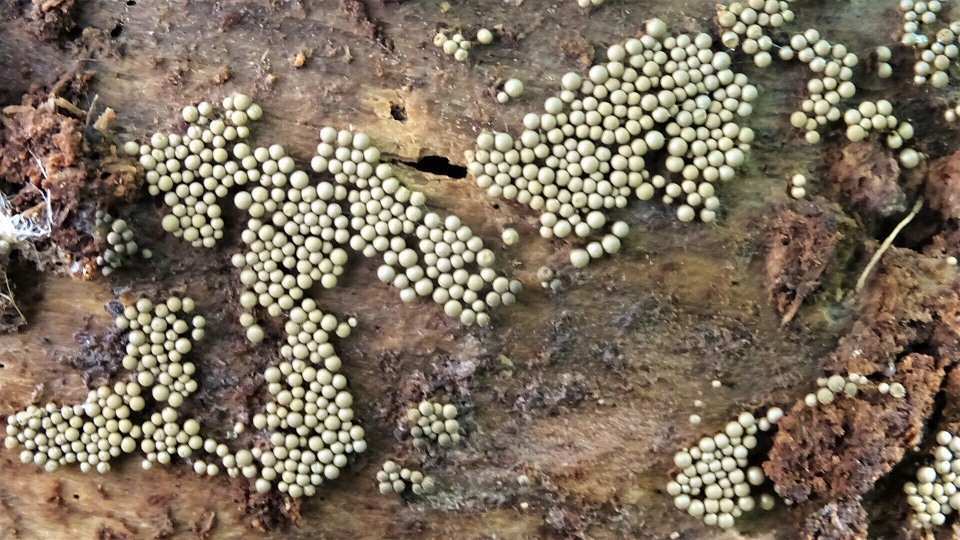
A recent arrival to Britain from the Mediterranean, possibly the result of climate change. It can be mistaken for a resupinate fungus, however it is much softer and easily breaks up when touched. The first Essex record was discovered by Raymond Small growing on a fallen silver birch in Hainault Forest on 24th September 2021, confirmed by Professor Bruce Ing. Only three UK records existed in 2020, but there has been a significant increase in authenticated sightings since.


Arcyria ferruginea

Members of the
Arcyria Family generally produce stalked or sessile, brightly coloured sporangia.
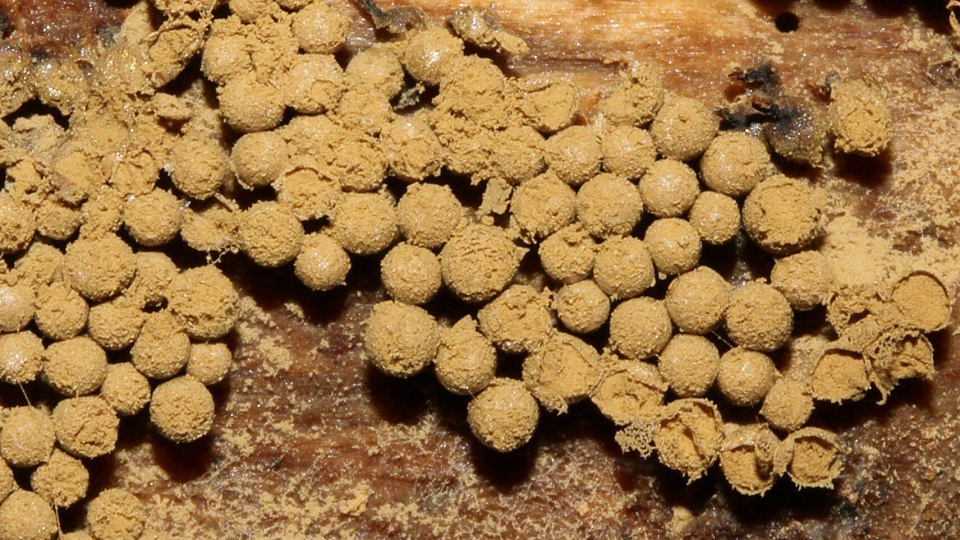
Arcyria ferruginea is a winter species with fruitbodies that develop from a rose-red or creamy white plasmodium. It grows in crowded colonies 1-2 millimetres tall on rotten trunks and stumps. 'Ferru' means iron and is a reference to rusty colouration seen in the latter stages. The colour changes to brick red and brown prior to sporing. It was found in Hainault Forest on a fallen decorticated Scots pine. It is not common. Thank you to Professor Bruce Ing for verifying this sighting.


Lead Shot Slime Mould
Cribraria argillacea
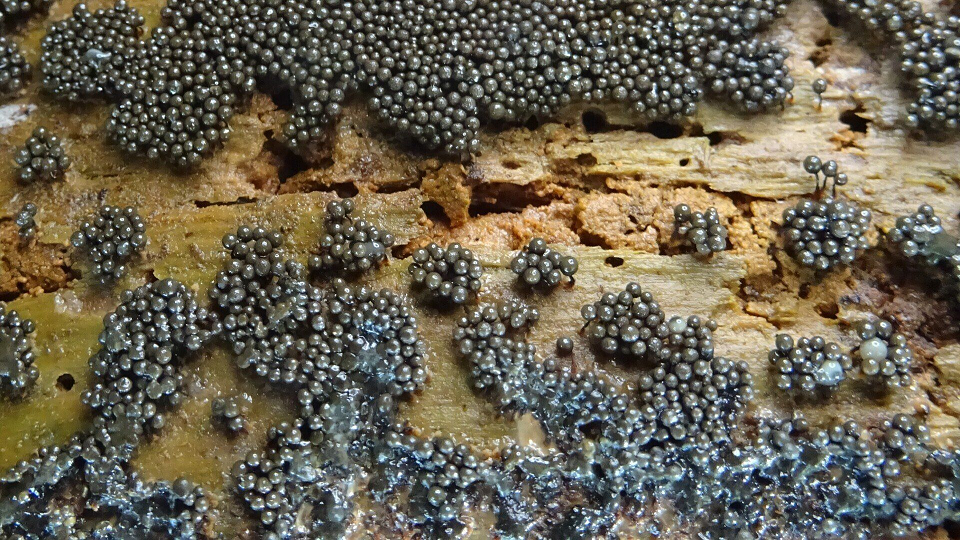
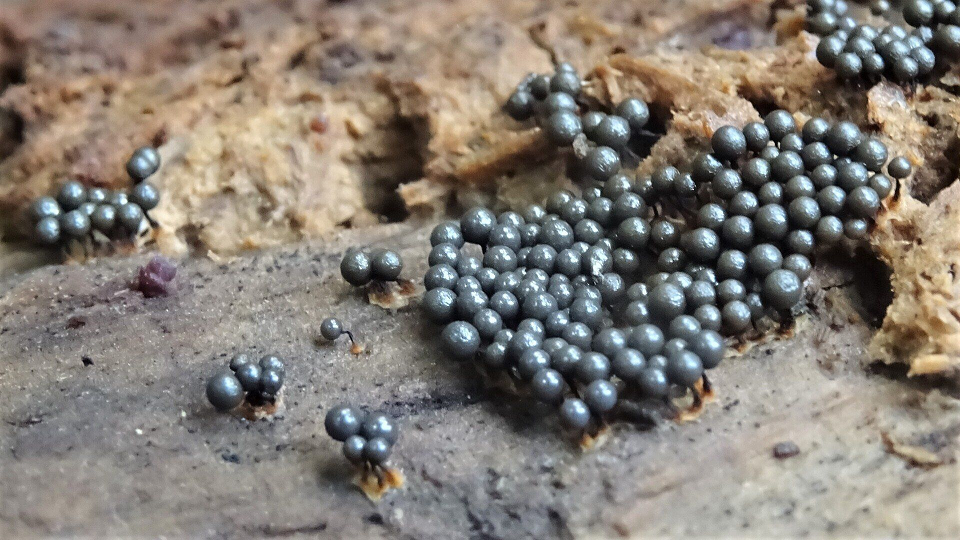
Looks similar to lead shot and is normally associated with conifers. This was found on a decorticated pine trunk on Hog Hill in Hainault Forest. The characteristic lead shot appearance of the freshly formed plasmodium, the reduced peridial net, together with shortish stalk and large fruit-body makes this species fairly easy to identify. The dark stalks are seldom more than 1mm high. It turns clay-brown before breaking up to release spores.
Metatrichia floriformis
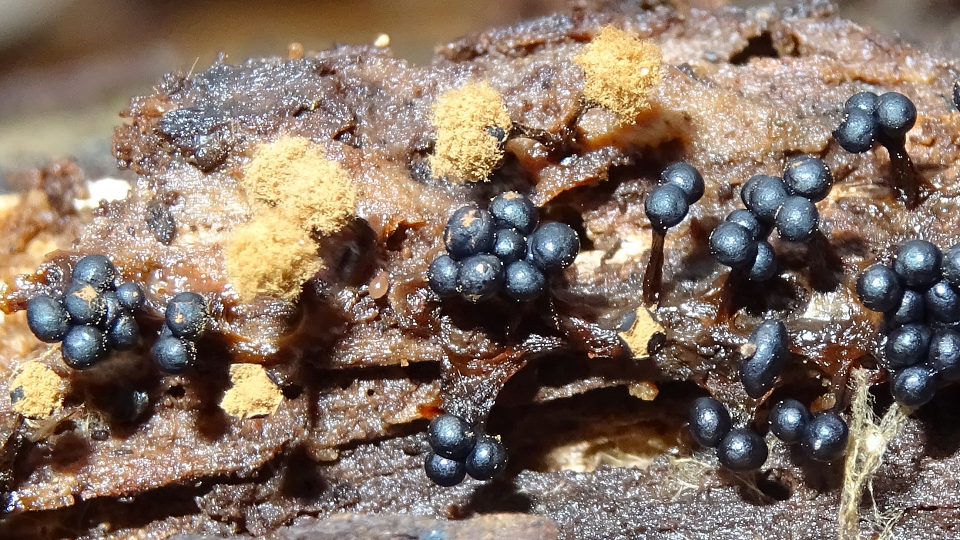
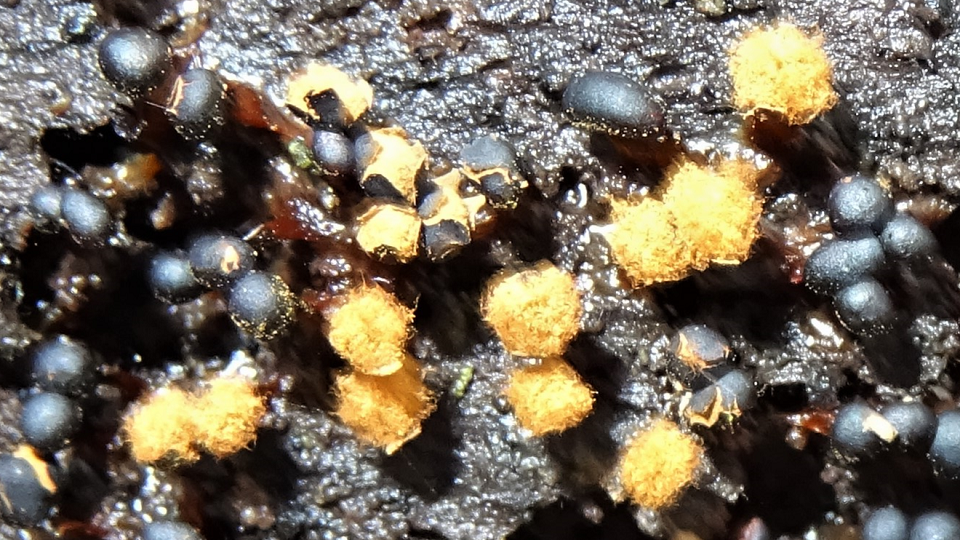
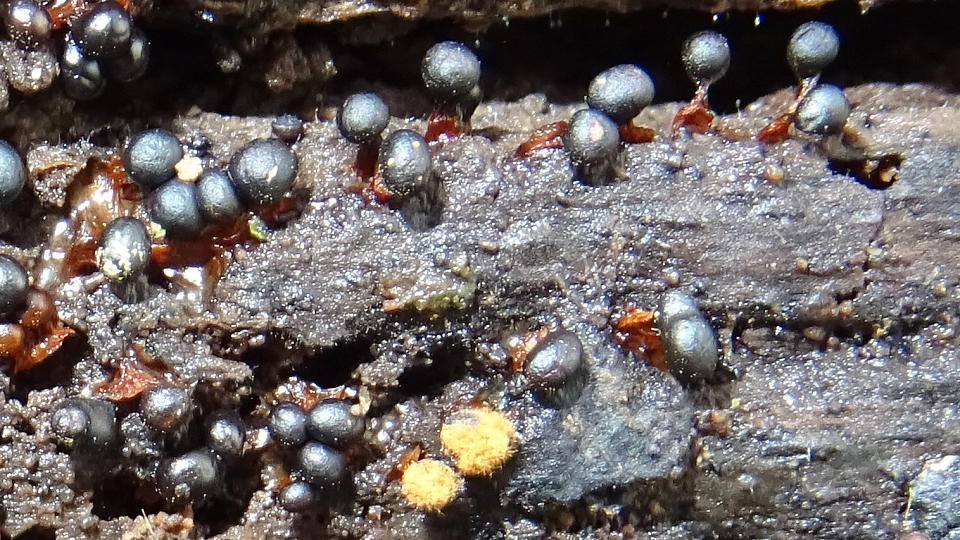
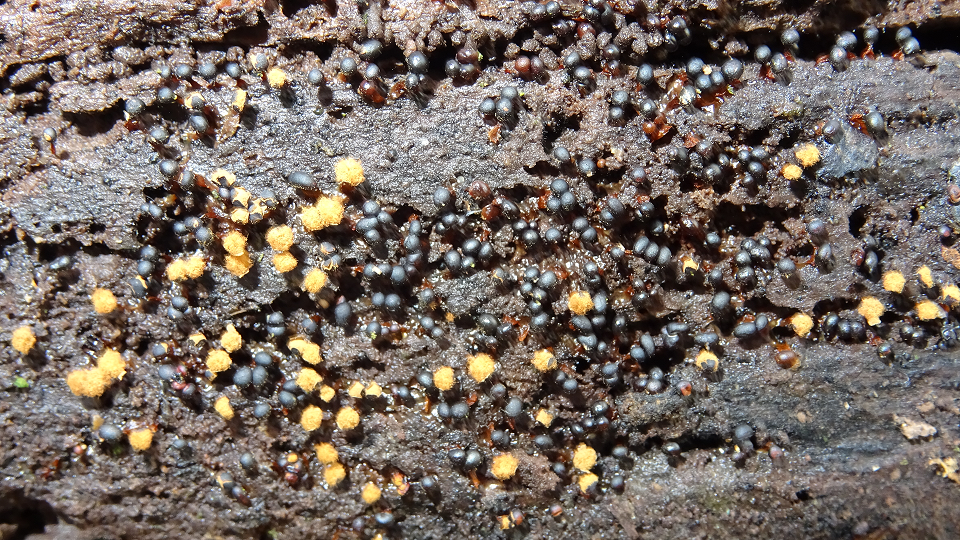
This slime mould has dark-red to black plasmodium. It grows on rotting logs. The sporocarps are supported by dark-red stalks and grow in clusters of 2-16. The shiny black globose sporangia split to reveal fluffy orange tops. Note the petaloid tops of the sporocarps as they burst open which is a characteristic of this slime mould.
© hainaultforest.net. All rights reserved.