

Waterfowl are aquatic birds, mainly consisting of ducks, geese, and swans, that typically inhabit areas near water. They possess features such as webbed feet, waterproof feathers, and specialized bills for filtering food. Additionally, the term can encompass related birds like coots, moorhens and grebes. Other birds that also visit Hainault Lake have been included on this page for convenience.
WATERFOWL
Mute Swan
Cygnus olor
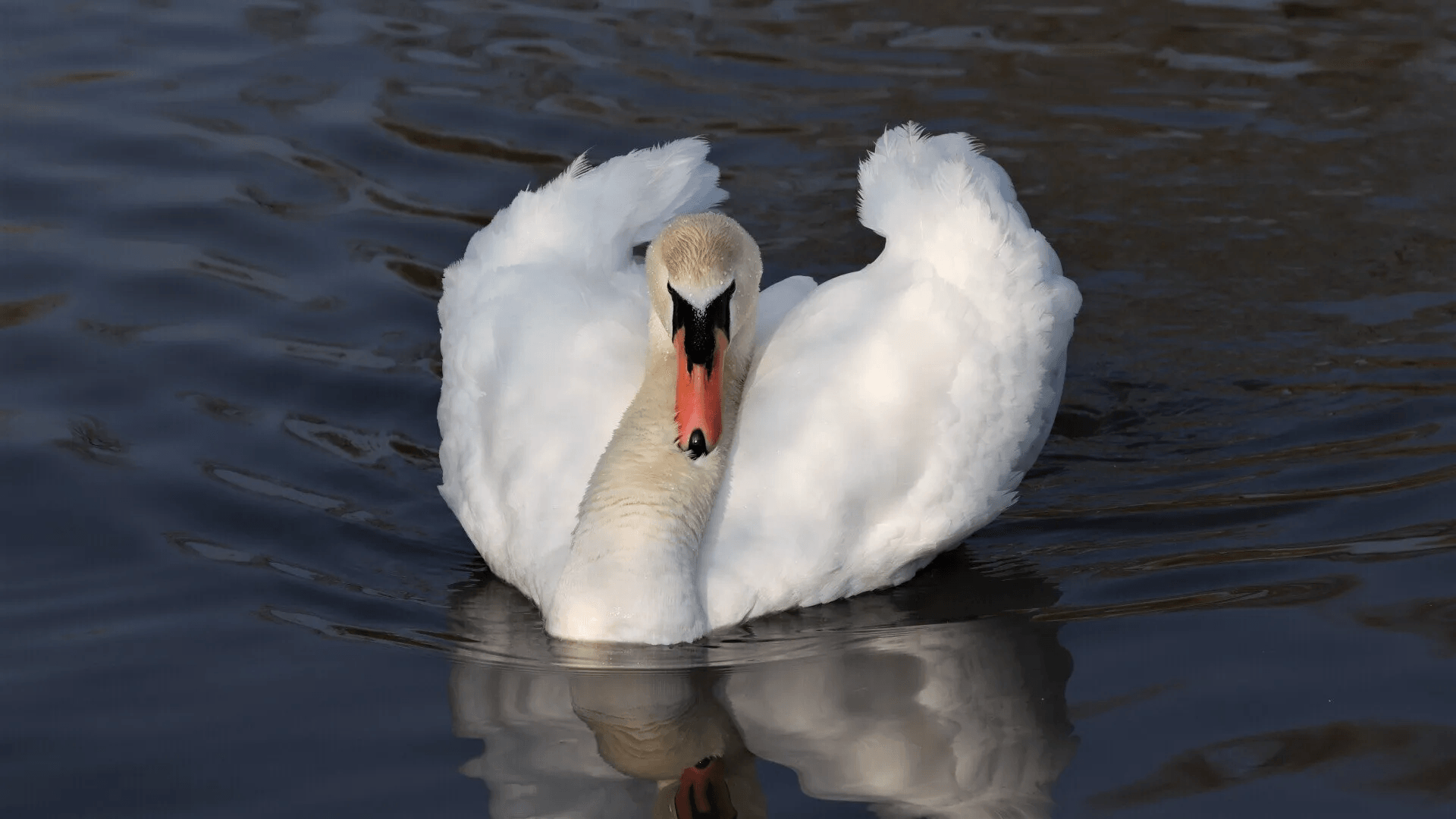
The most common type of swan in Britain is known for its gracefulness and quiet demeanour, although it can hiss or snort when necessary. Distinguishing between male and female swans is not always easy; however, during the breeding season, the black knob at the base of the male's bill becomes significantly larger than that of the female. The female, referred to as the Pen, incubates her eggs on a mound of vegetation, while the male, known as the Cob, remains vigilant, warding off potential threats. Both parents participate in caring for the nest. As the cygnets grow and become more independent, the parents gradually reduce their involvement. If the cygnets are hesitant to leave, the parents may become more assertive in encouraging them to depart. Swans primarily feed on water plants, seeds, snails, and insects.
#
Canada Goose
Branta Canadensis
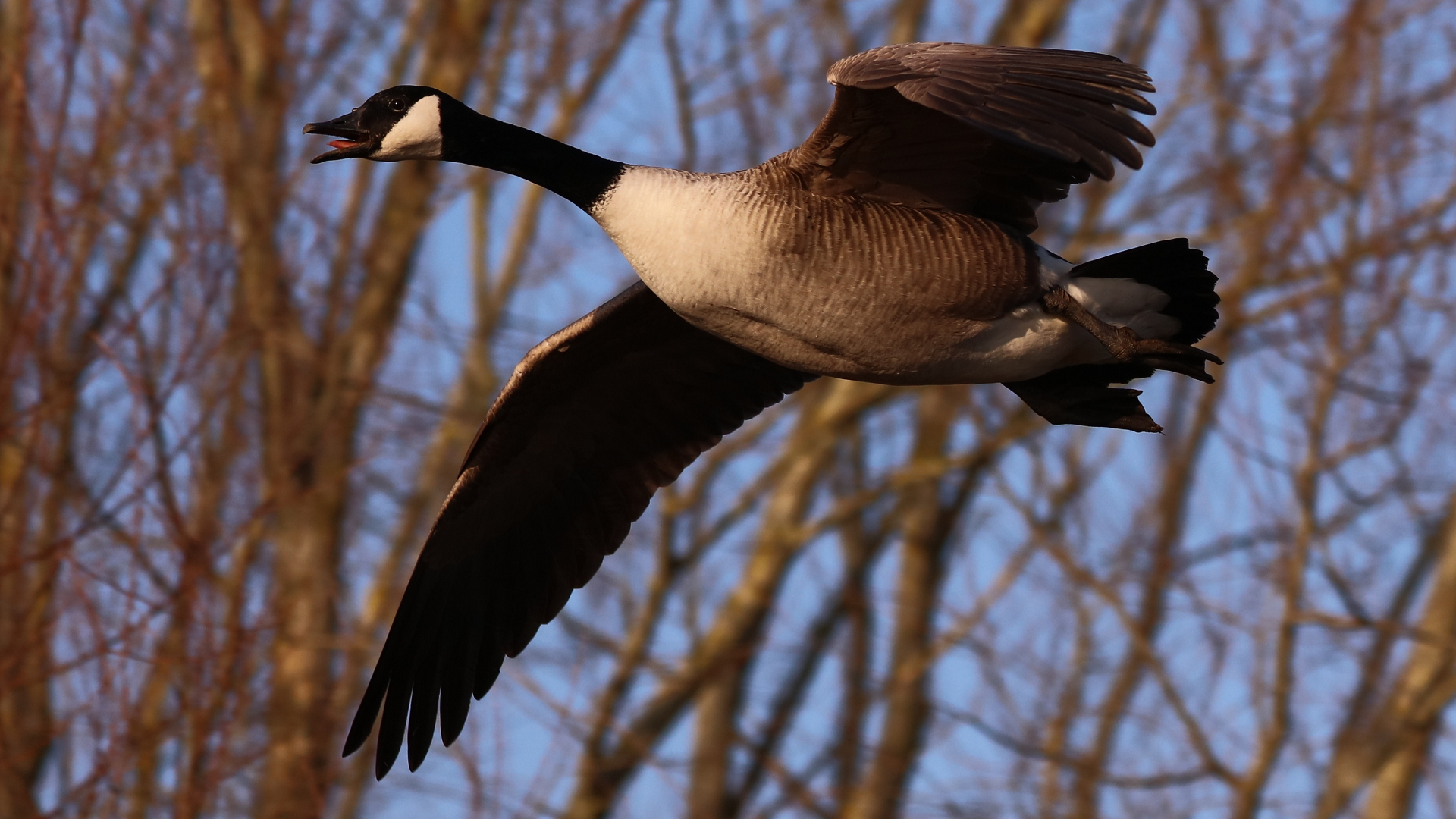
Britain's largest black-necked goose is often seen inland. it was originally introduced from North America and has become widespread across the country. They usually prefer open grassy places near water. Its call is characterised by a loud double-trumpeting sound.
#
Greylag Goose
Anser anser
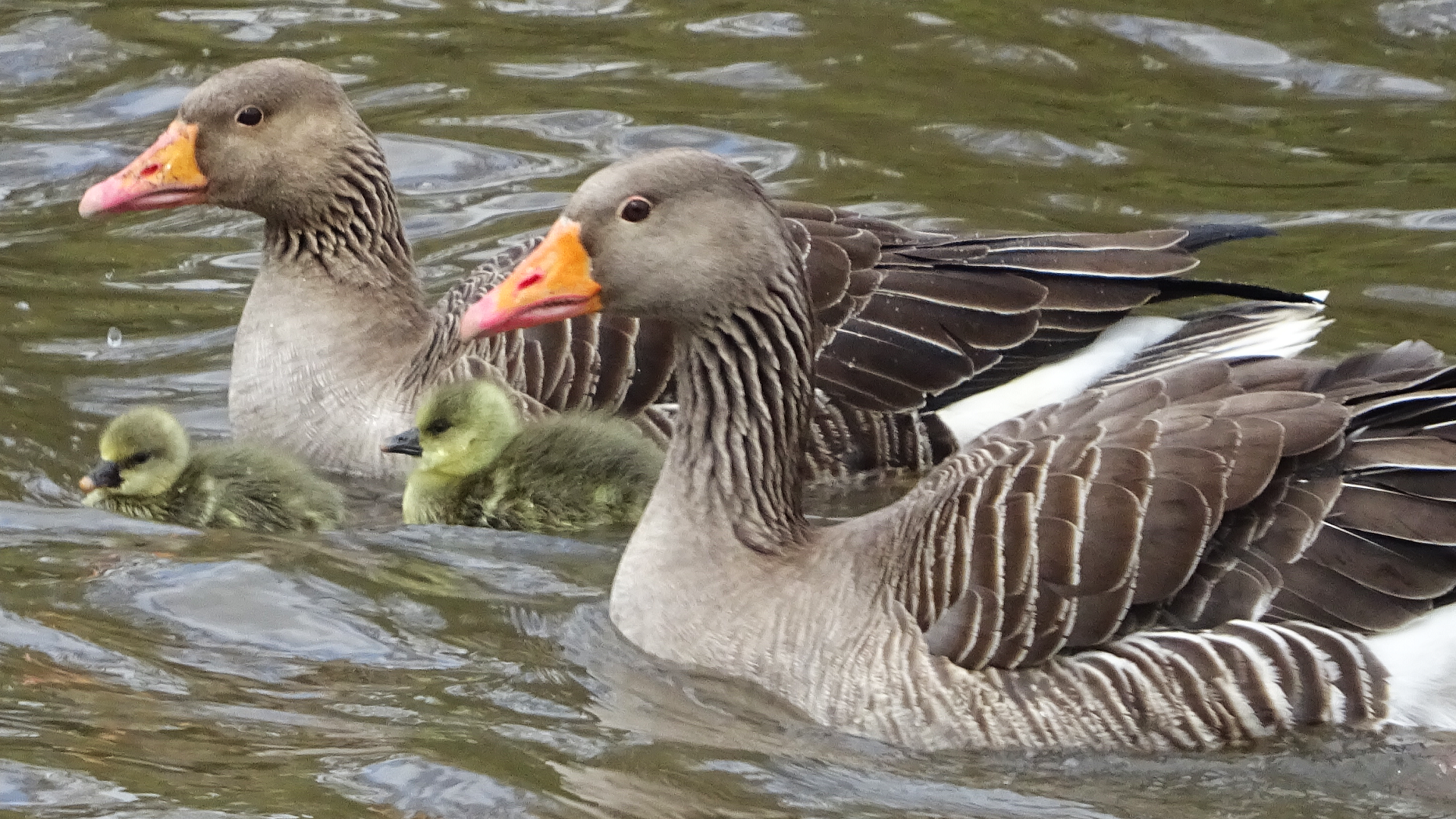
Greylag goslings normally emerge around mid-April at Hainault Lake. Both parents care for the goslings, which are prepared for flight in approximately eight weeks. The parents exhibit protective behavior and participate actively in the nurturing of their young. The goslings reach full maturity at 8 to 9 weeks of age.
#
Barnacle Goose
Branta leucopsis

The Barnacle Goose is a medium-sized, social bird with a black head, neck, and breast, along with a creamy-white face. This appearance is complemented by a white belly, a blue-grey striped back, and a black tail. Barnacle Geese typically fly in groups and long formations, producing various barking or yapping noises.
#
Egyptian Goose
Alopochen aegyptiaca
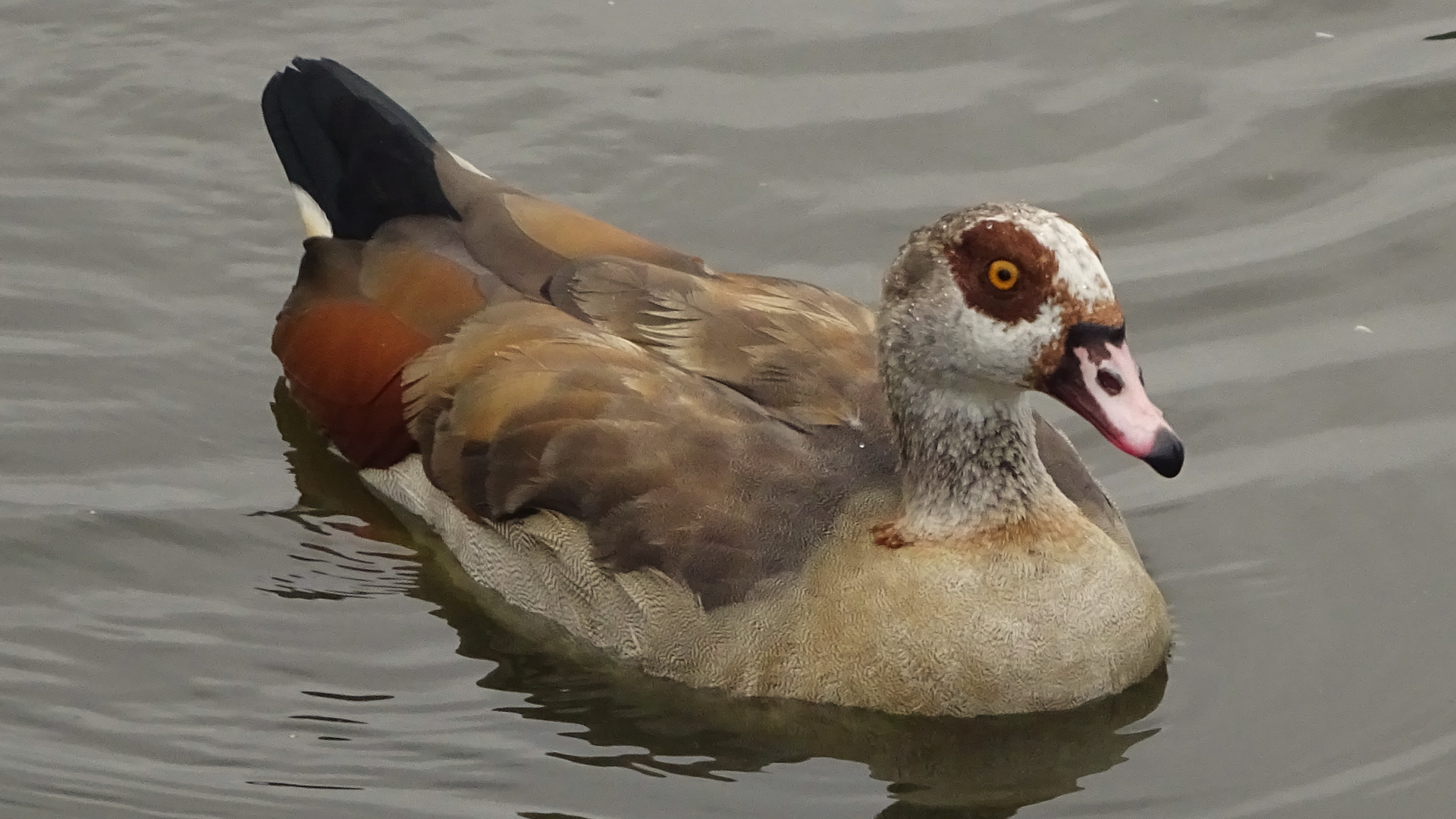
The Ancient Egyptians kept Egyptian Geese as pets as early as 3100 B.C., making them one of the oldest domesticated species. Today, they are the most widespread African waterfowl, found in many countries worldwide after their introduction. They often breed early in the year, usually nesting in tree cavities near freshwater.
#
Mandarin Duck
Aix galericulata
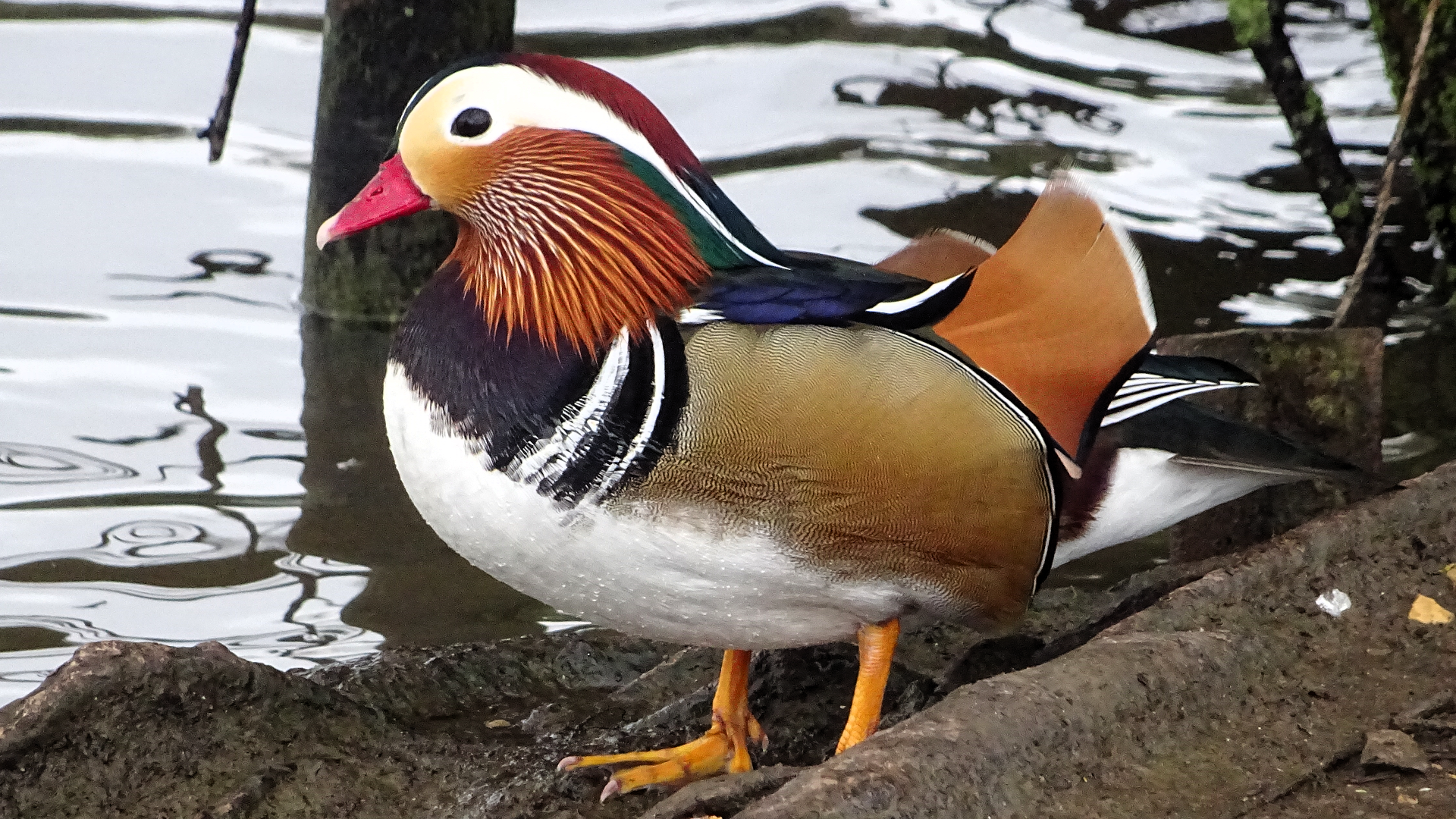
Males exhibit vibrant plumage, while females are less colourful. Introduced to Britain from Asia, the global population is estimated to be around 65,000, with a decreasing trend observed in recent years. Mandarins primarily feed on plants, seeds, and insects. In China, their native habitat, they have been viewed as symbols of fidelity and were traditionally given to brides as wedding gifts. However, in practice, Mandarins typically form pairs during the mating season and often find new partners the following autumn.

#
Shoveler
Anas clypeata

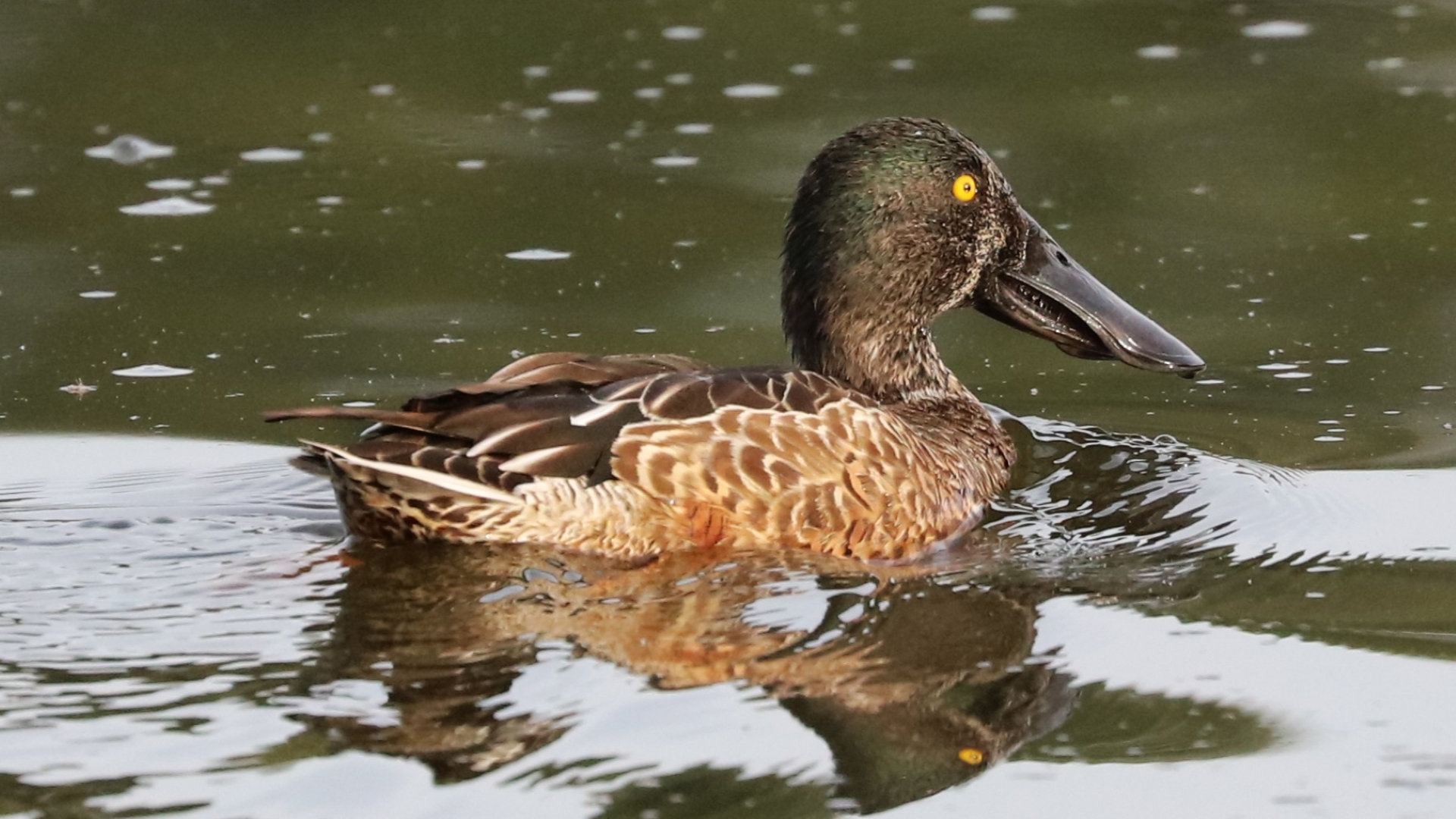
Shovelers are surface feeding ducks with large spatulate bills. They are winter visitors often seen at Hainault Lake and Fairlop Waters. They trawl for insects and plant material with their bills in the water. Females are mottled brown.
#
Gadwall
Anas strepera
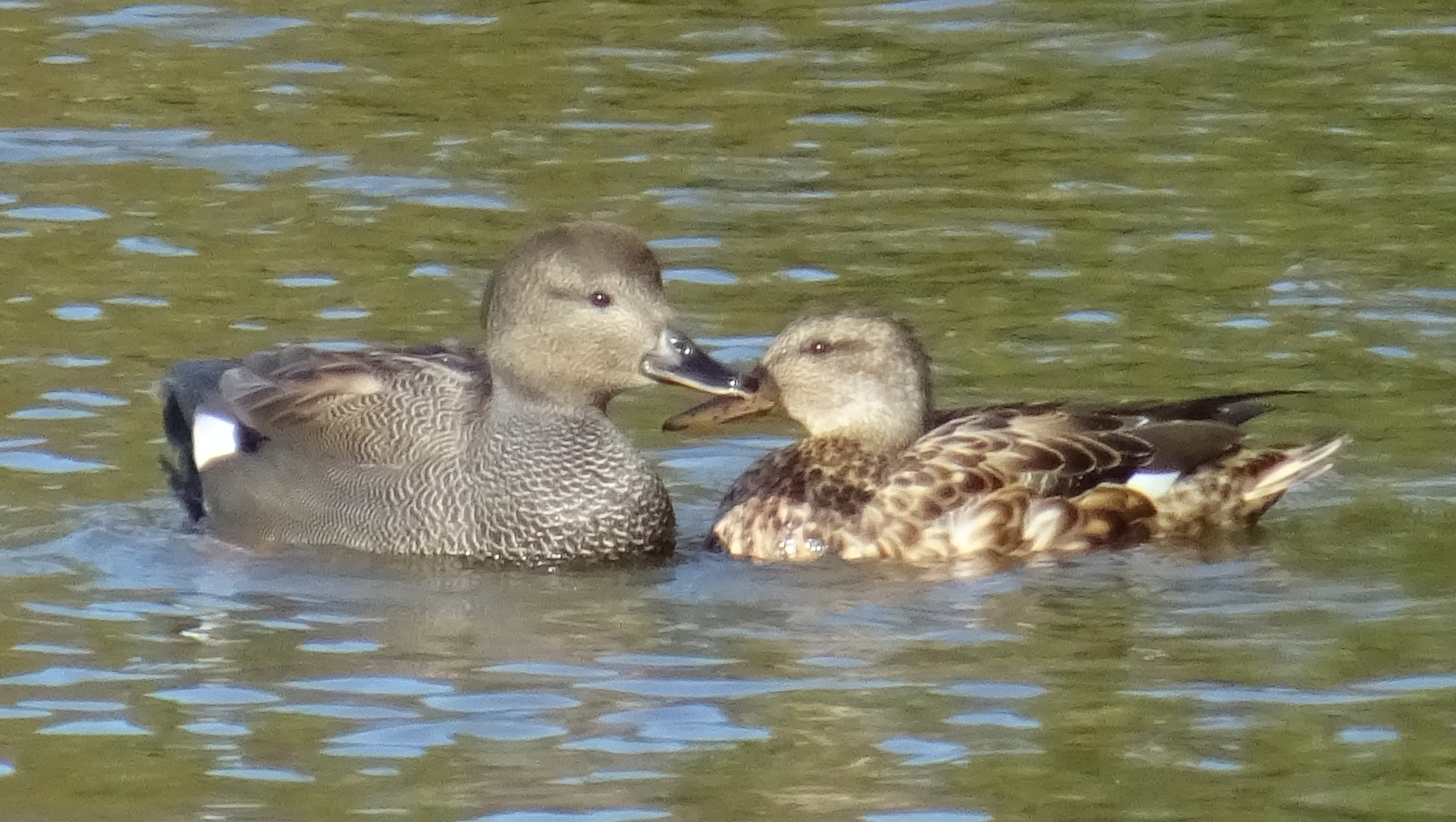
Gadwalls are infrequent visitors to Hainault Lake. Drakes have grey plumage and a black rear. Females are brown with a black speculum. They feed on stems, leaves and seeds.
#
Mallard
Anas platyrhynchos
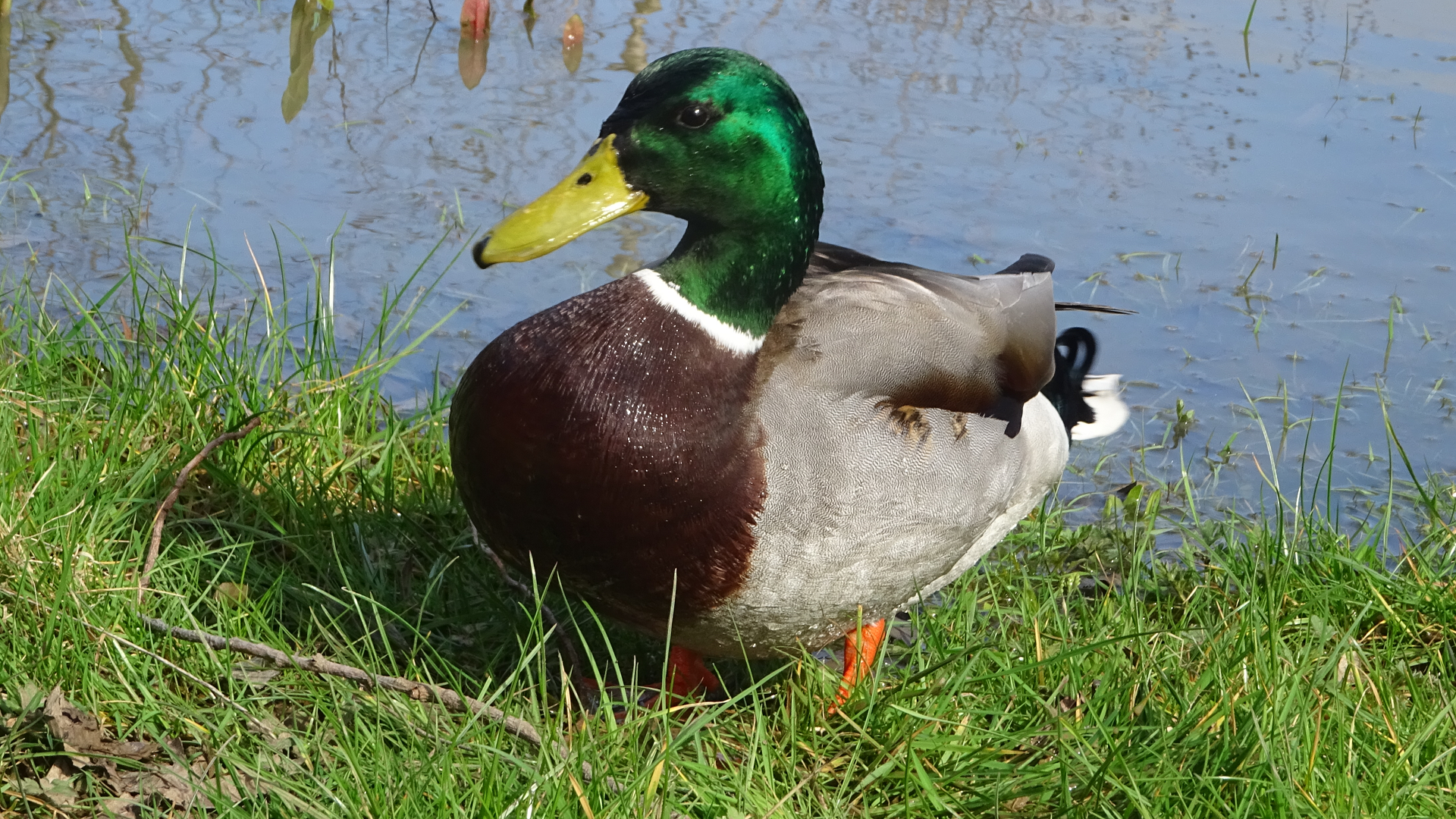
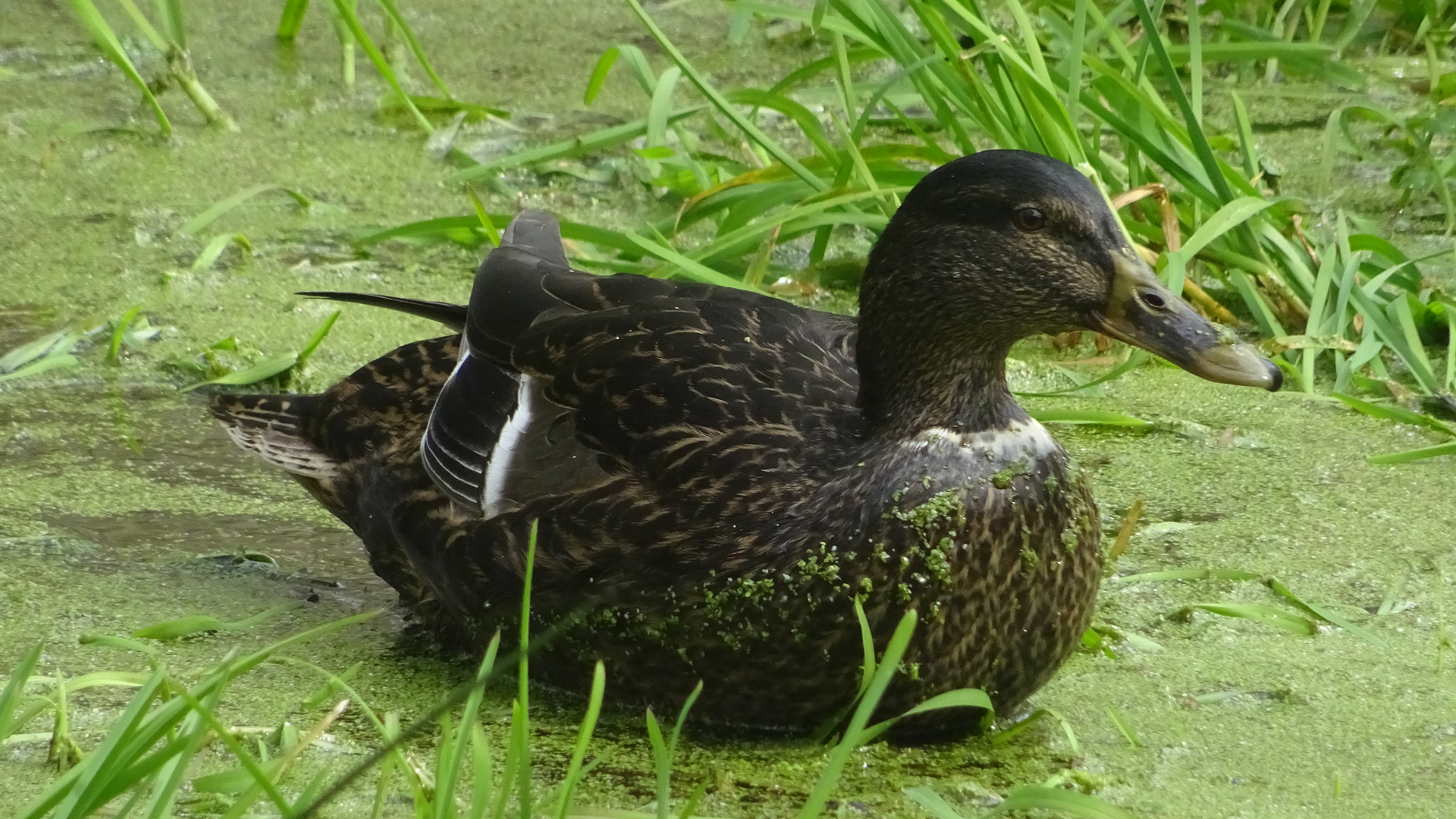
The Mallard is a dabbling duck that primarily feeds at the surface rather than diving. Dabbling ducks possess feet located centrally on their bodies, which facilitates walking on land. Drakes (males) exhibit glossy bluish-green heads, while females have brown heads. Both genders feature white-bordered blue patches on their wings, referred to as 'speculum,' which become more prominent in flight. Early autumn, drakes undergo a moulting process called the 'eclipse,' during which they lose colour as they shed their flight feathers. Typically, Mallards have a lifespan of 5-10 years, spending considerable time in both aquatic and terrestrial environments. Their diet includes vegetation, seeds, berries, insects, and shellfish. Mallards usually pair up in the autumn and engage in courtship throughout the winter. After hatching, ducklings remain in the nest for at least 10 hours to dry off and learn to use their legs. They generally leave the nest for the first time early in the morning, following the female into the water. The earlier the ducklings access water to feed, the higher their chances of survival. They rely on their mother and take approximately 50-60 days to fledge and attain independence. If a female has a successful brood, she often returns to the same nesting site the following year.
#
Tufted Duck
Aythya fuligula
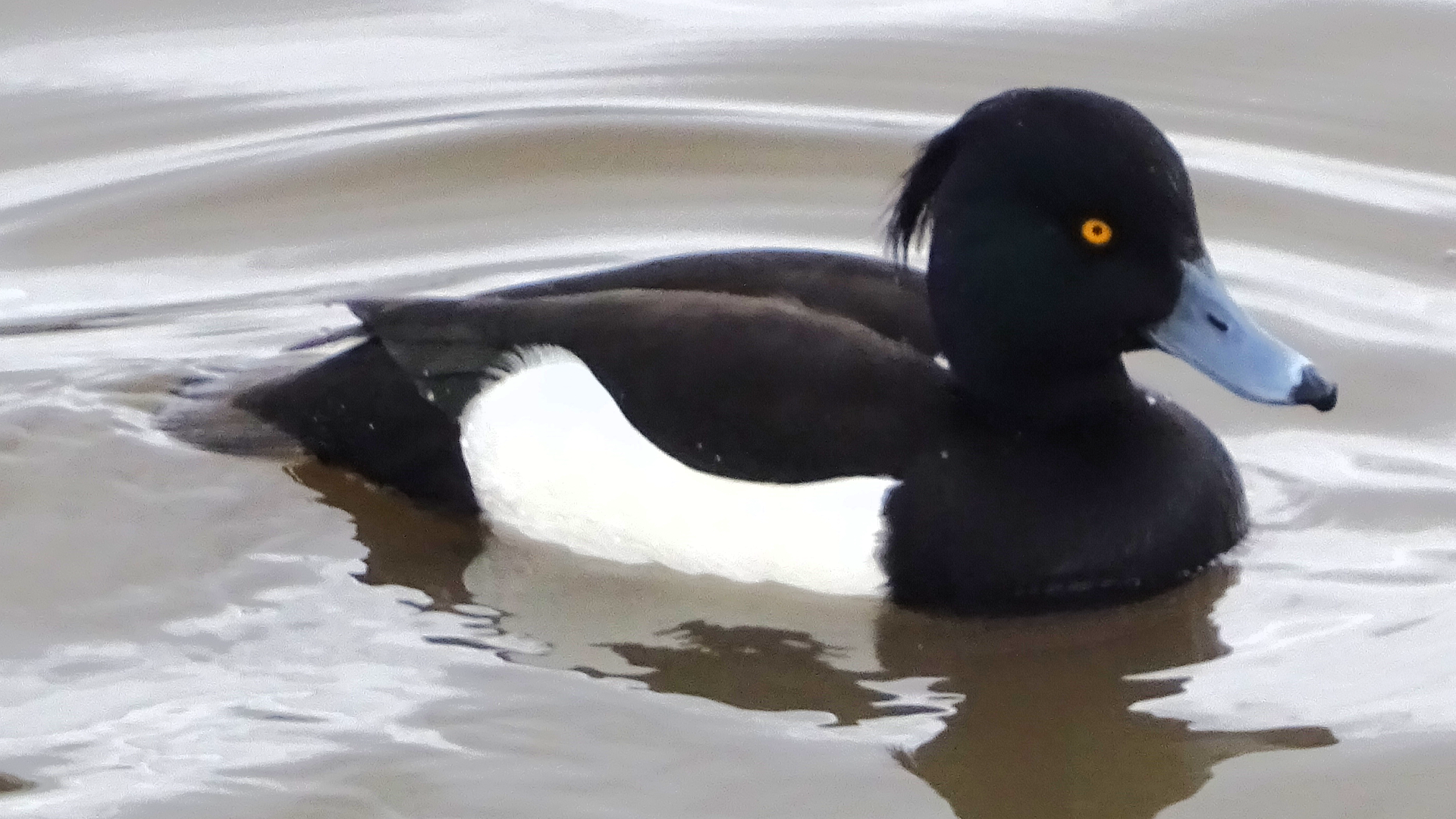
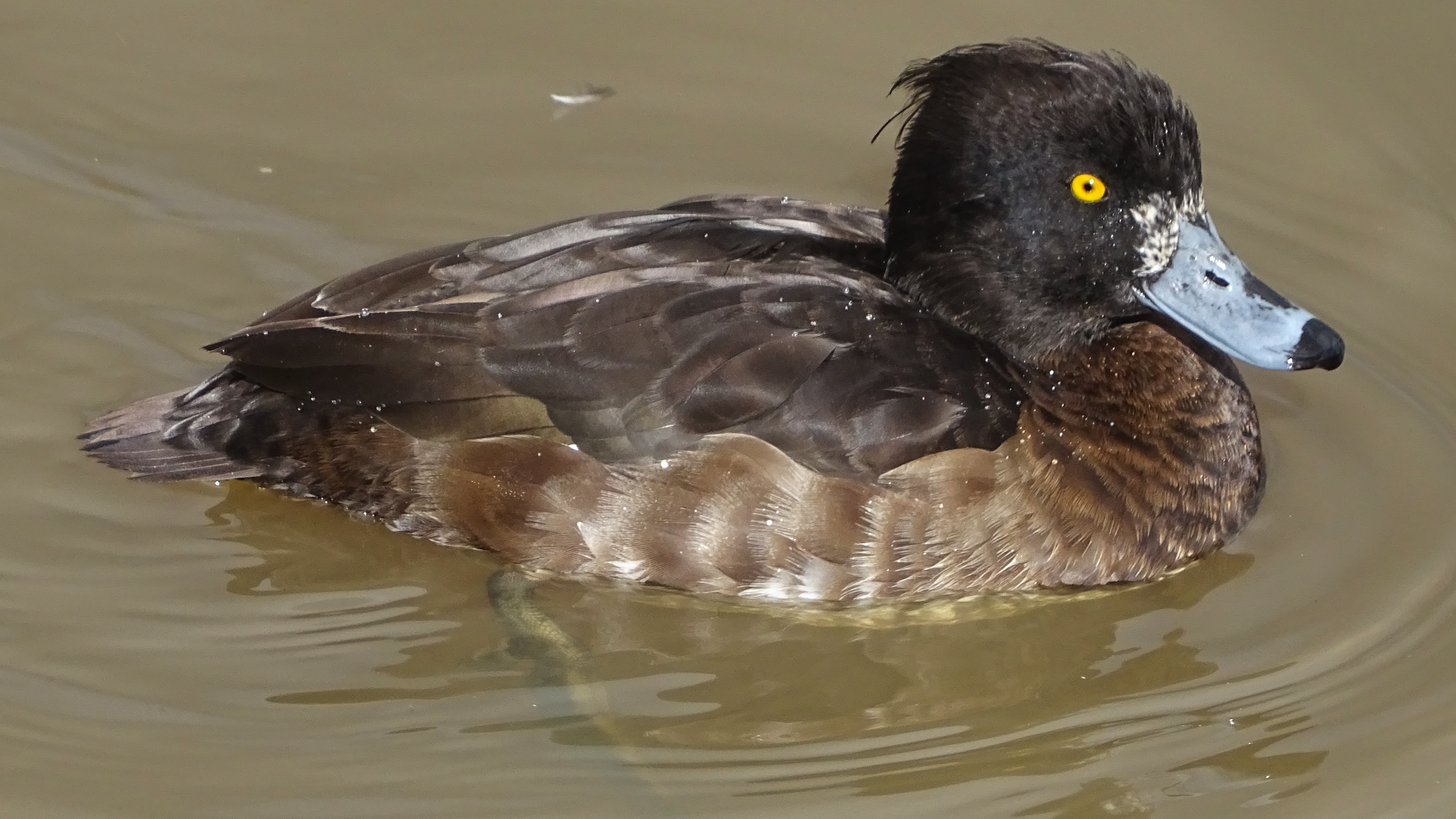
Tufted ducks are characterised by a distinct tuft on the back of their heads. This feature is particularly prominent in males and is also present, though usually shorter, in females, which gives them a unique appearance compared to other diving ducks. Males have black and white colouration, while females are brown. Tufted Ducks have their legs positioned towards the rear of their bodies, which makes them seem clumsy when walking; they are better adapted to life in the water.
#
Teal
Anas crecca
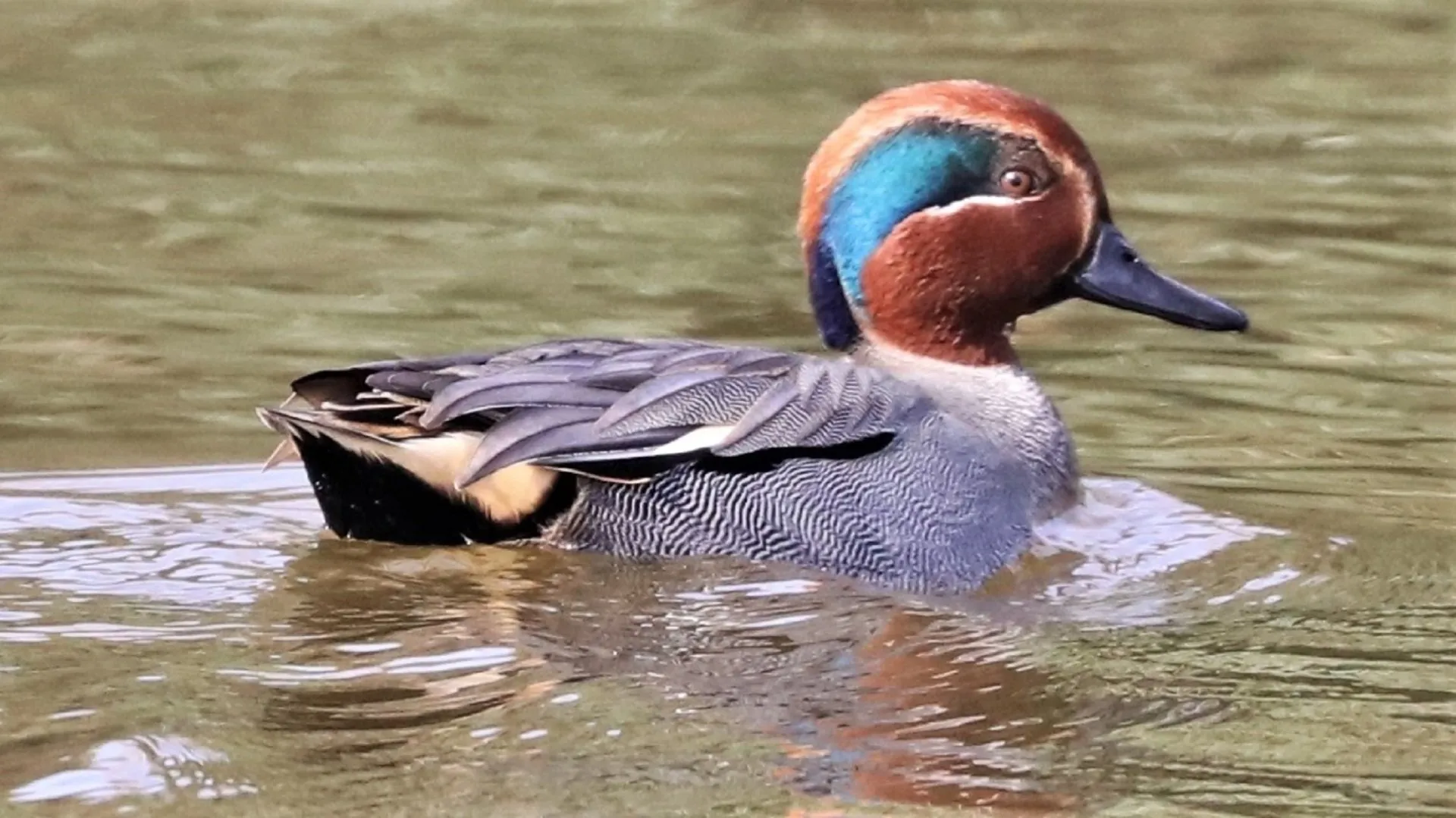
Teals are small dabbling ducks that sometimes appear at Hainault Lake during the winter. Males have colourful heads, while females are mottled brown. Both sexes display bright green wing patches in flight. Teals primarily feed on seeds and small invertebrates.
#
Pochard
Aythya ferina

In winter and spring, male Pochards have bright reddish-brown heads, black breasts and tails, and light grey bodies. The females are brown, with greyish bodies and light cheeks. Pochards dive to search for molluscs and insects in the mud. After foraging on the silty bottom, they may have mud on their faces. They also consume plants, seeds, and small fish.
#
Goldeneye
Bucephala clangula
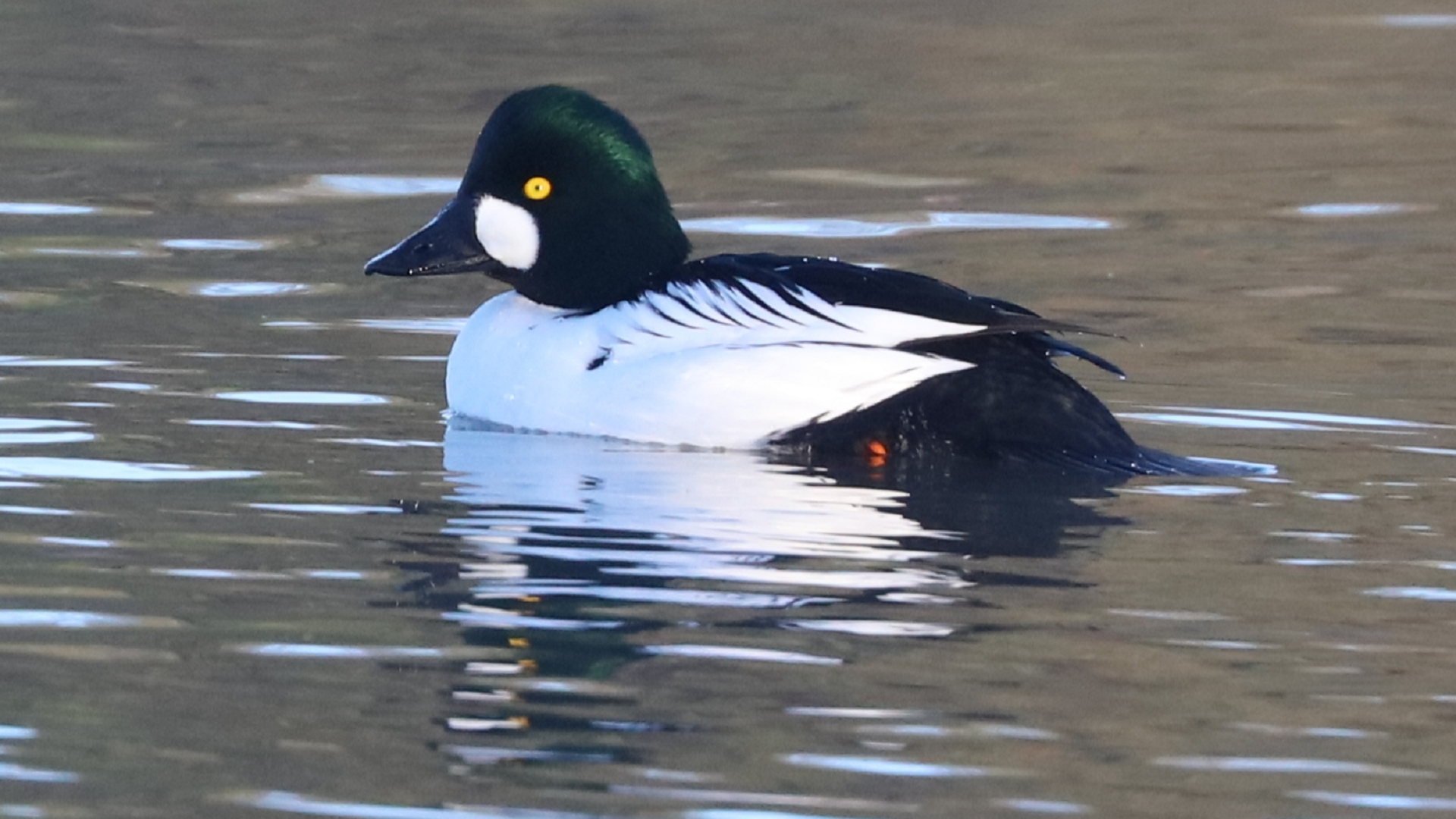
The Goldeneye is a medium-sized diving duck that is seldom observed on Hainault Lake. Males have black and white plumage, with greenish-black heads featuring circular white patches near their yellow eyes. Females are smaller and have mottled grey feathers with chocolate brown heads. This species primarily feeds on mussels, insect larvae, small fish, and vegetation.
#
Goosander
Mergus merganser
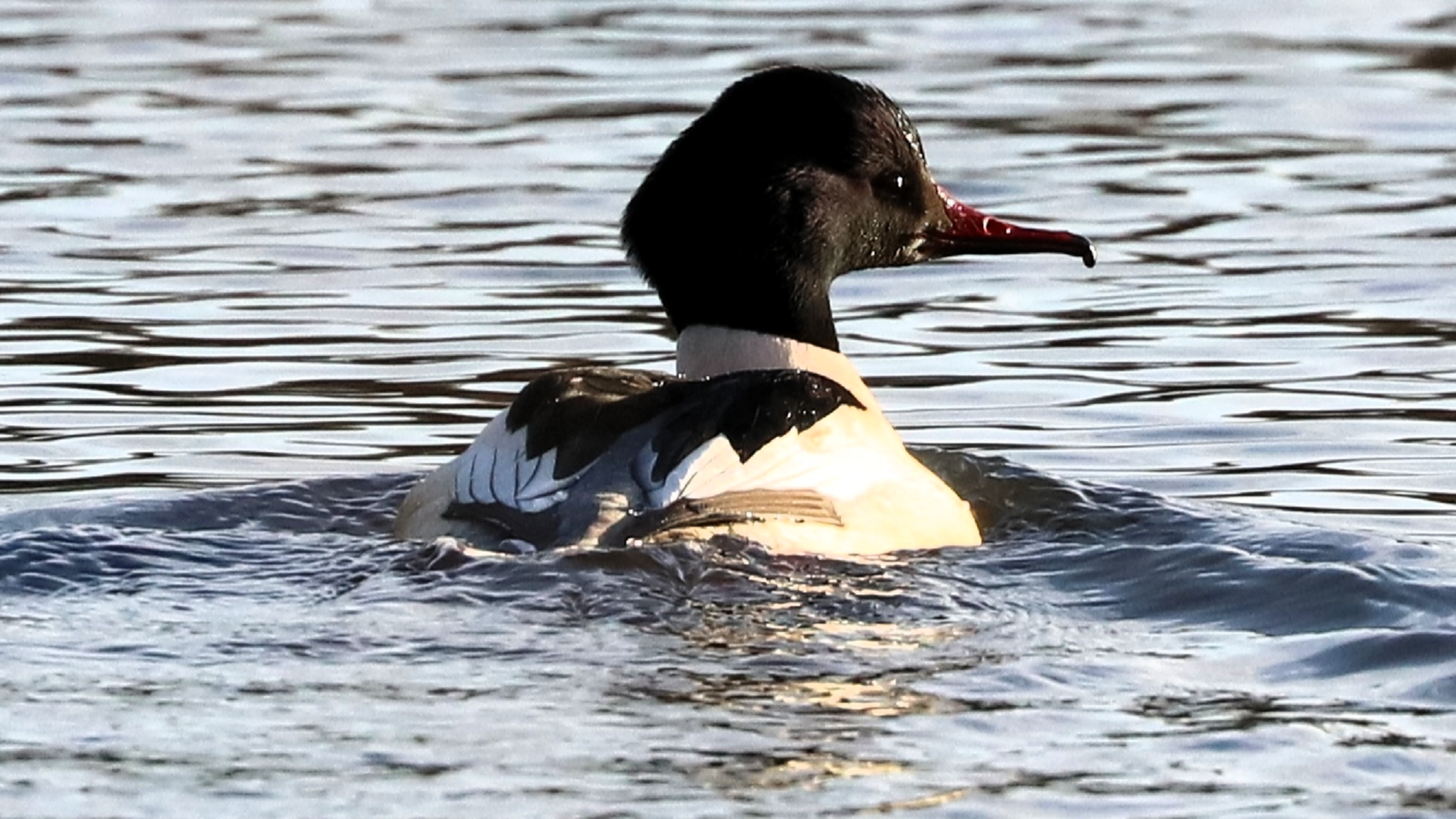
Goosanders are infrequent winter visitors that typically remain at Hainault Lake for only a few days. Their diet consists mainly of fish. The male has a rounded head and a white breast, while the female has a brown head.
#
Coot
Fulica atra
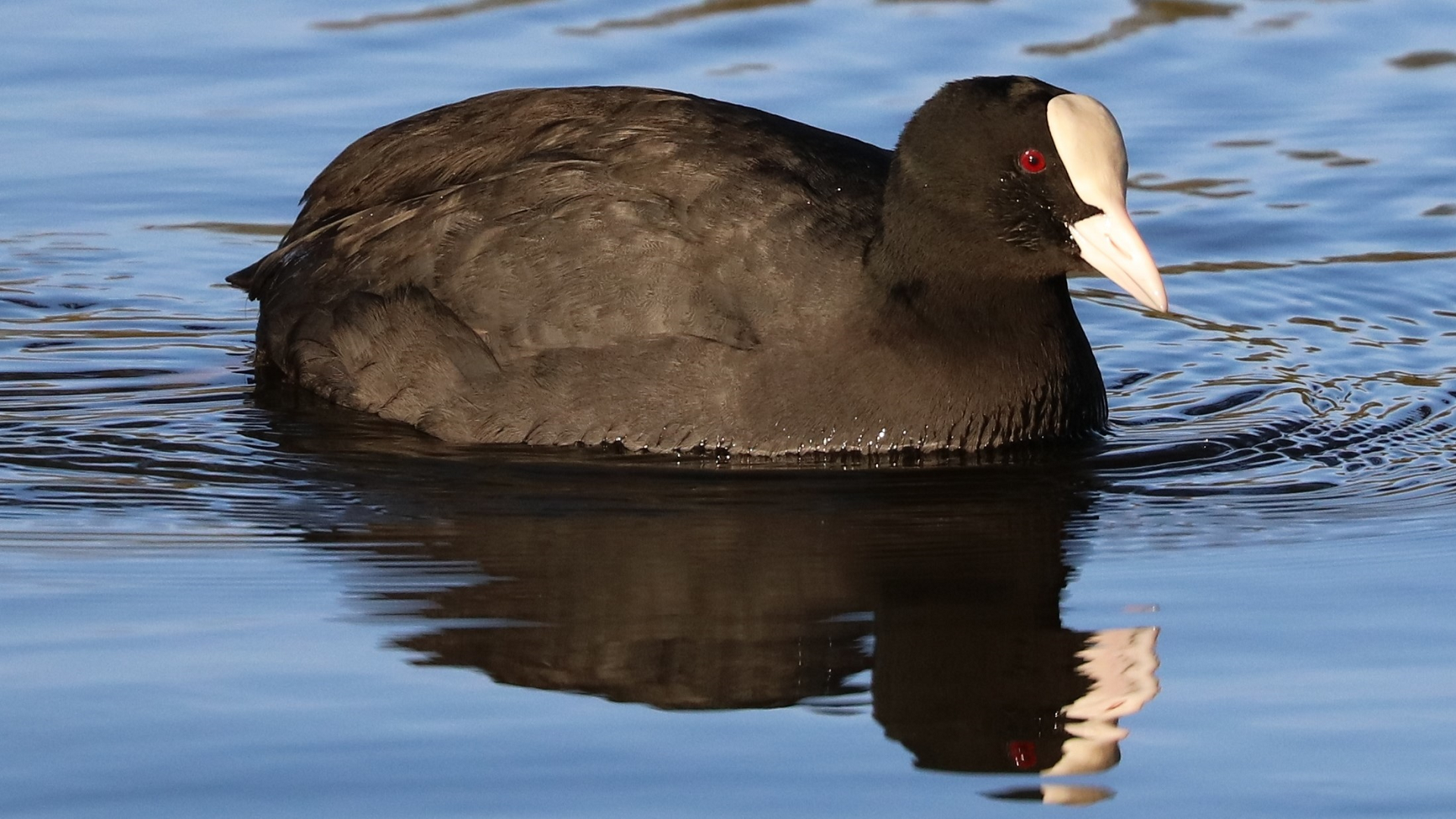
Coots are omnivorous birds that primarily consume plant material. They favour shallow, vegetated lakes for foraging. To find small invertebrates, they dive underwater and typically resurface with their catch before eating. This behaviour can occasionally result in conflicts with other coots over food. Cootlings are cared for by both parents and leave the nest after 3 or 4 days. They become fully independent around 8 weeks of age. A group of coots is referred to as a "cover" or "covert."
#
Moorhen
Gallinula chloropus

The Moorhen is characterised by a red and yellow beak, a dark brown back and wings, and a blackish belly with white stripes on the flanks. They are known for being promiscuous and frequently change partners during the breeding season. Females appear to have a preference for smaller, plumper mates. Nests are constructed using dead vegetation and are typically placed among floating plants or near the water. Eggs are occasionally laid in the nests of other birds, which enables a female to increase her total egg production. Moorhens have a varied diet that includes plants, seeds, worms, insects, molluscs, and fish.
#
Water Rail
Rallus Aquaticus
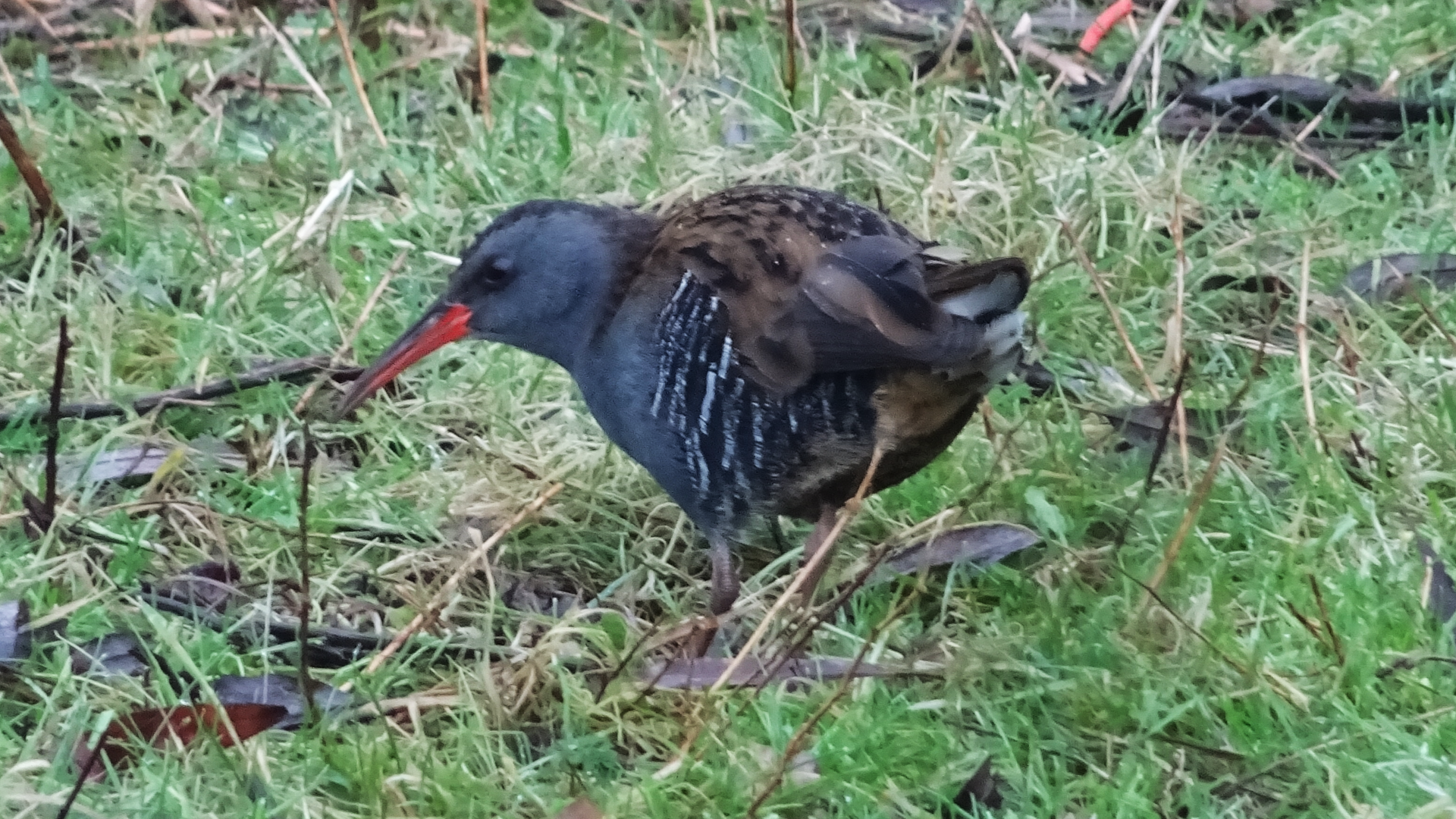
The Water Rail has a grey body, black and brown streaked upperparts, black and white barring on the flanks, a long red bill and pale pink legs. They are secretive birds that usually fly under the cover of dark. Water Rails are related to coots and moorhens.
#
Great Crested Grebe
Podiceps cristatus

Great Crested Grebes are the largest grebe species in Britain. They dive beneath the surface to catch fish and avoid predators. Courtship behaviour usually starts in mid-winter and includes synchronized swimming, diving, head shaking, and the presentation of vegetation, as well as running on water. If a pair bonds, they will build a floating nest. While feeding, parents give their chicks feathers to ingest. The purpose of this behavior is not entirely clear, but it is thought to assist the young in regurgitating fish bones and minimizing their risk of gastric parasites.
#
Little Grebe
Gachybaptus ruficollis
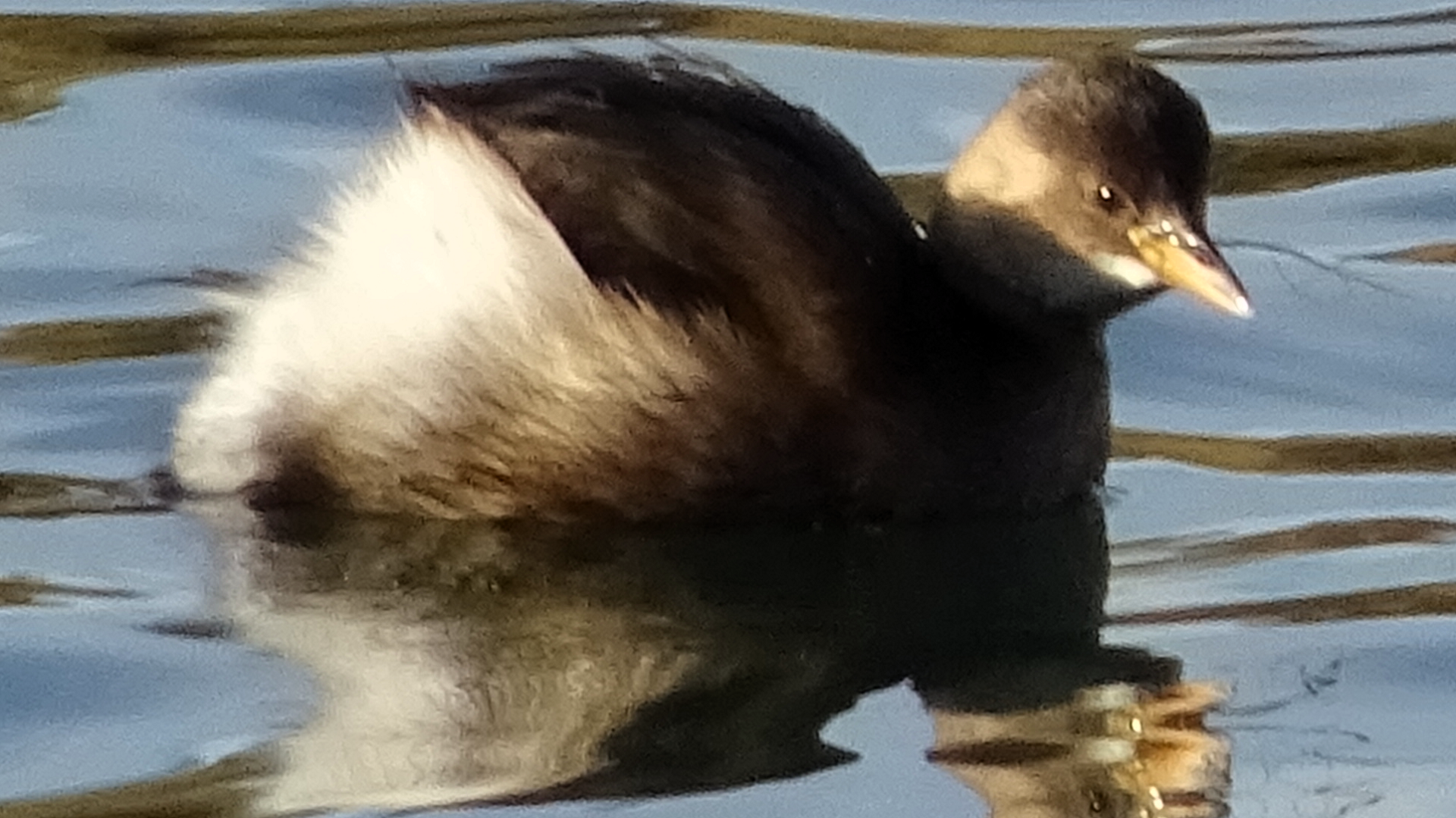
During summer, the adult is primarily dark on top, with a rufous neck, cheeks, and flanks, along with a bright yellow, pointed bill. In winter, the coloration changes to a brownish-grey for non-breeding birds, and a fluffy-looking rump is typically present. Juveniles feature yellow bills with black tips, as well as black and white streaks on their cheeks and sides of the neck. Nests are constructed on floating vegetation. The breeding call consists of repeated weet-weet-weet sounds that resemble a whinnying horse. They dive to catch fish. Chicks are sometimes seen riding on the backs of swimming adults, although they are capable of swimming shortly after hatching. This species is the smallest grebe found in Britain and is commonly referred to as the 'Dabchick.'
#
Grey Heron
Ardea cinerea
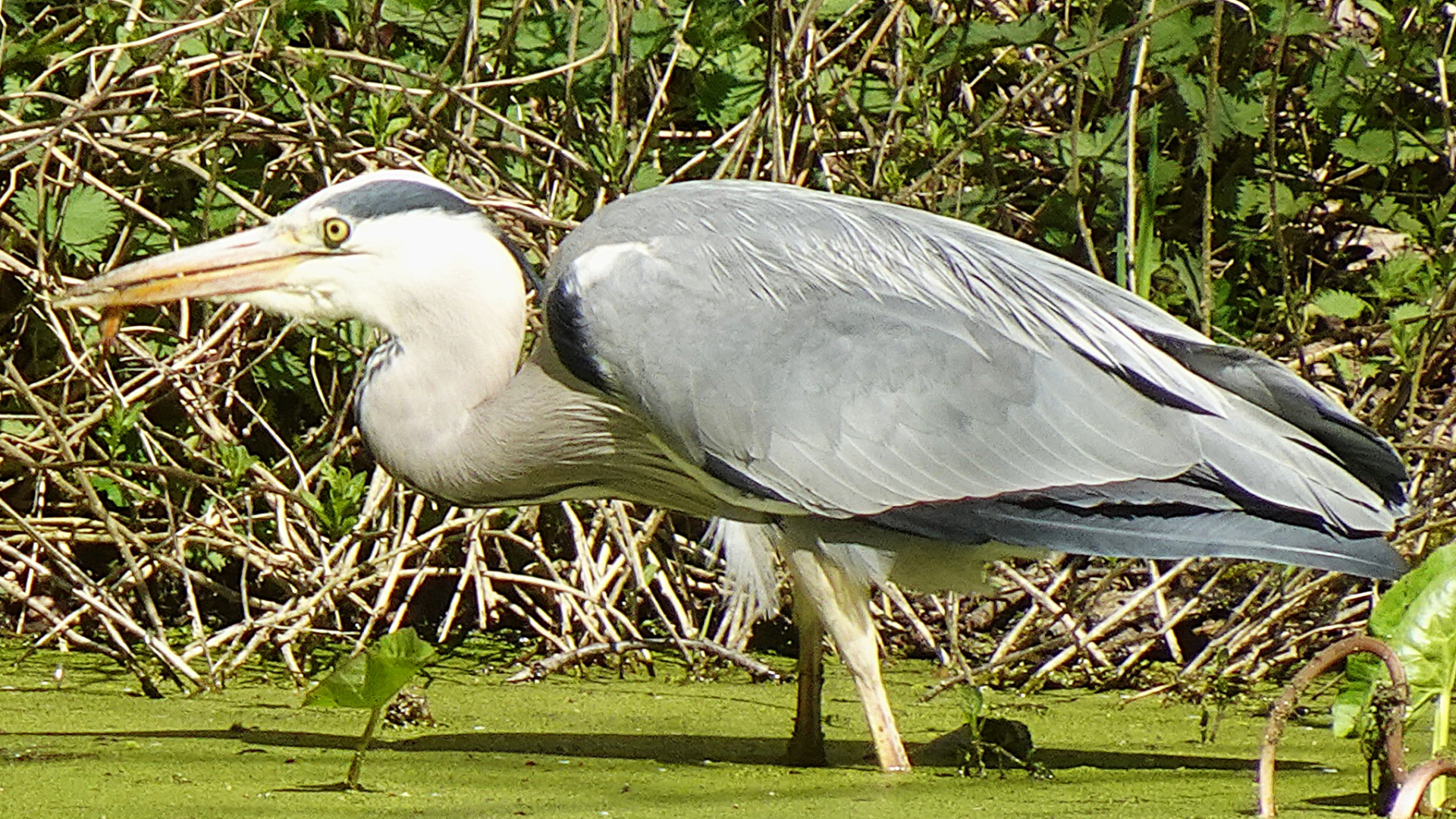
Britain's largest long-legged wading bird often frequents Hainault Lake to hunt for fish. When a fish is captured, it is typically thrown into the air and swallowed head-first to prevent the scales and fins getting caught in the throat. Herons can also be found standing in meadows, poised to catch small mammals and amphibians with their long bills.
#
Great White Egret
Ardea alba
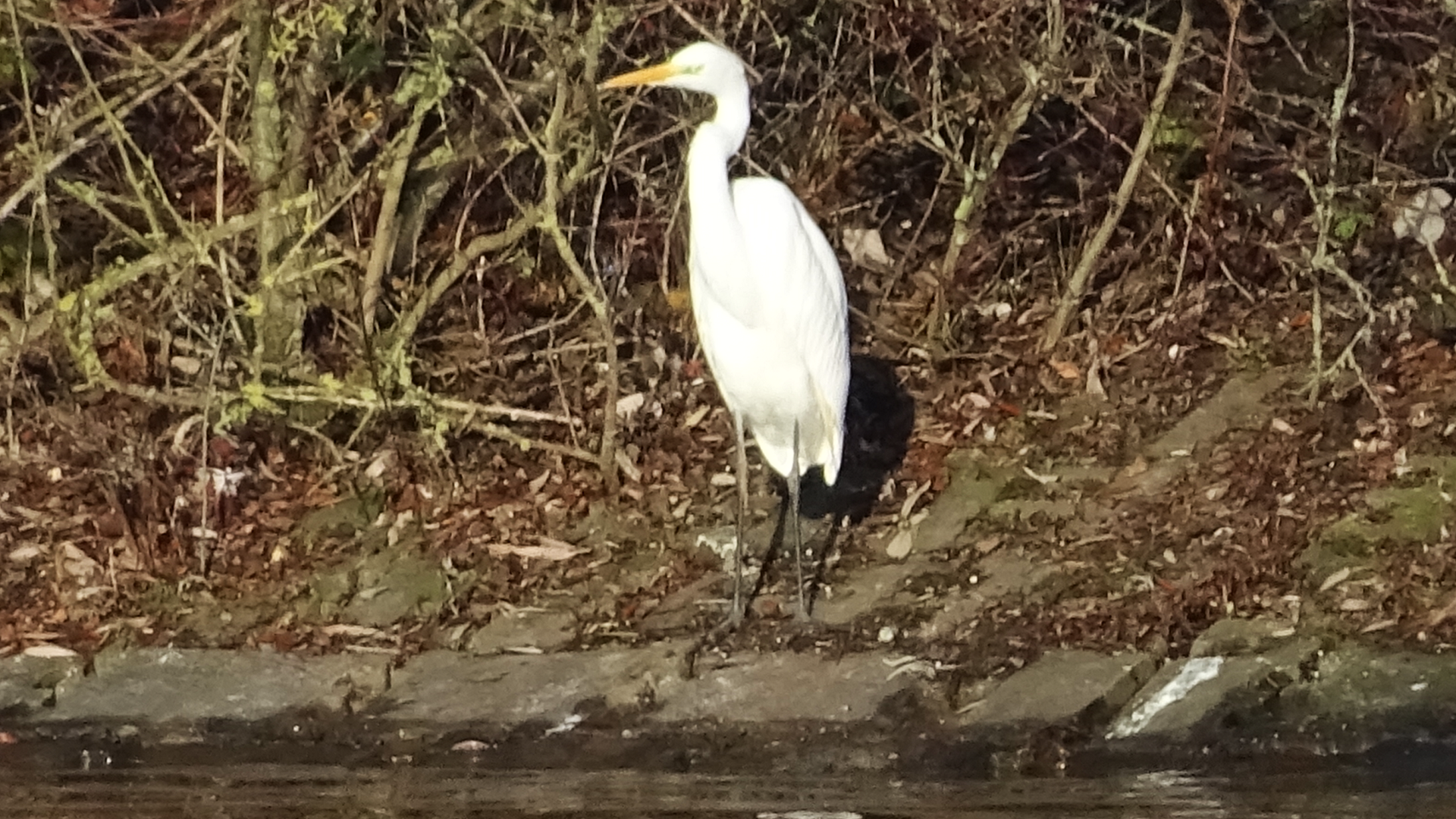
A large bird that is part of the Heron family. It may resemble the Little Egret, but is significantly larger and has black feet instead of yellow. The bill is yellow, which darkens during the breeding season. Its diet consists of fish, insects, and amphibians, which it catches using its sharp bill.
#
Little Egret
Egretta garzetta
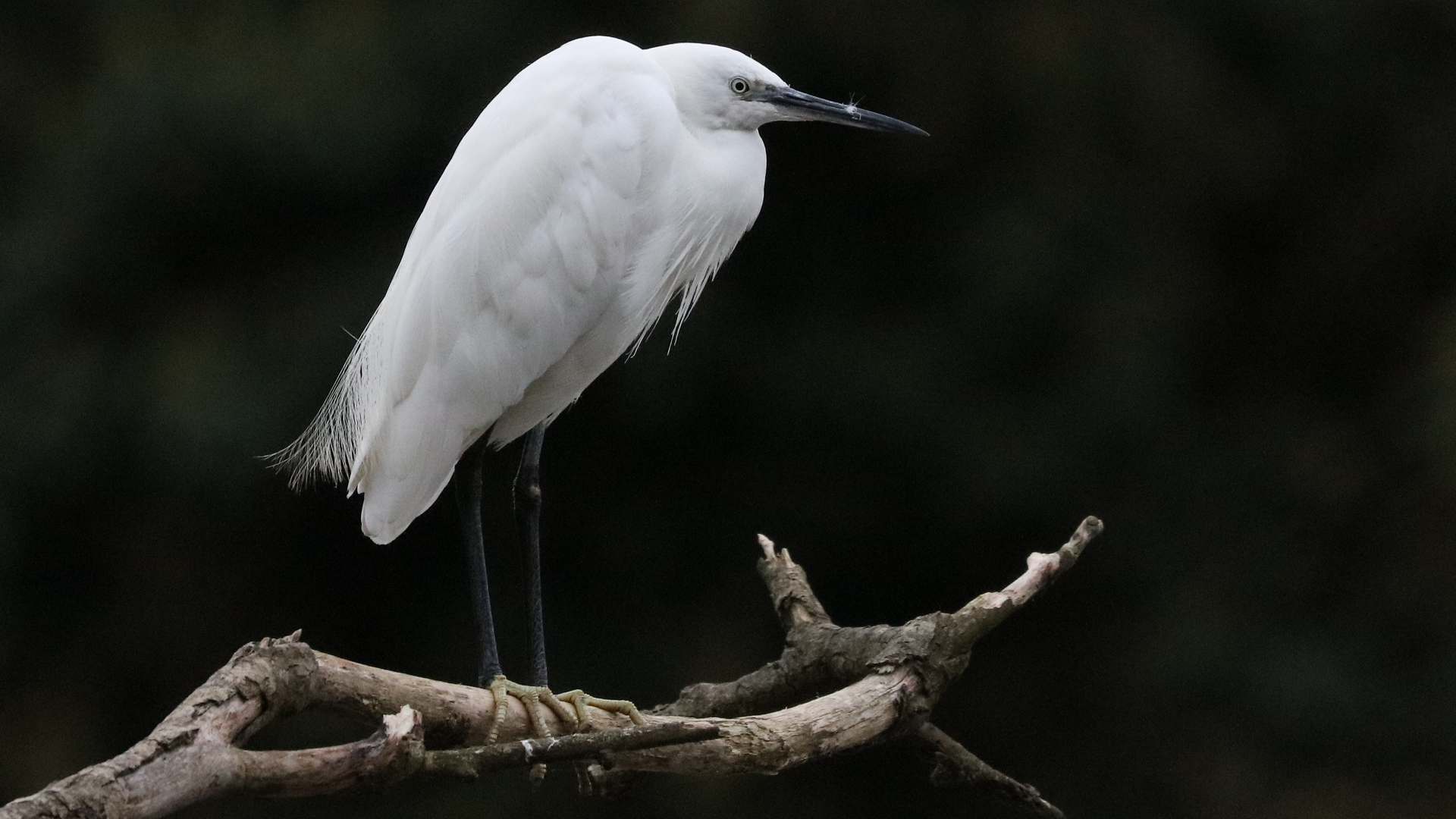
Little Egrets are winter visitors thought to have first appeared in England in the 1950s. The species is now well established in Britain, with a growing population. This small member of the Heron family has a white head, back, and chest, black legs and bill, and yellow feet. It feeds on fish.
#
Cormorant
Phalacrocorax carbo
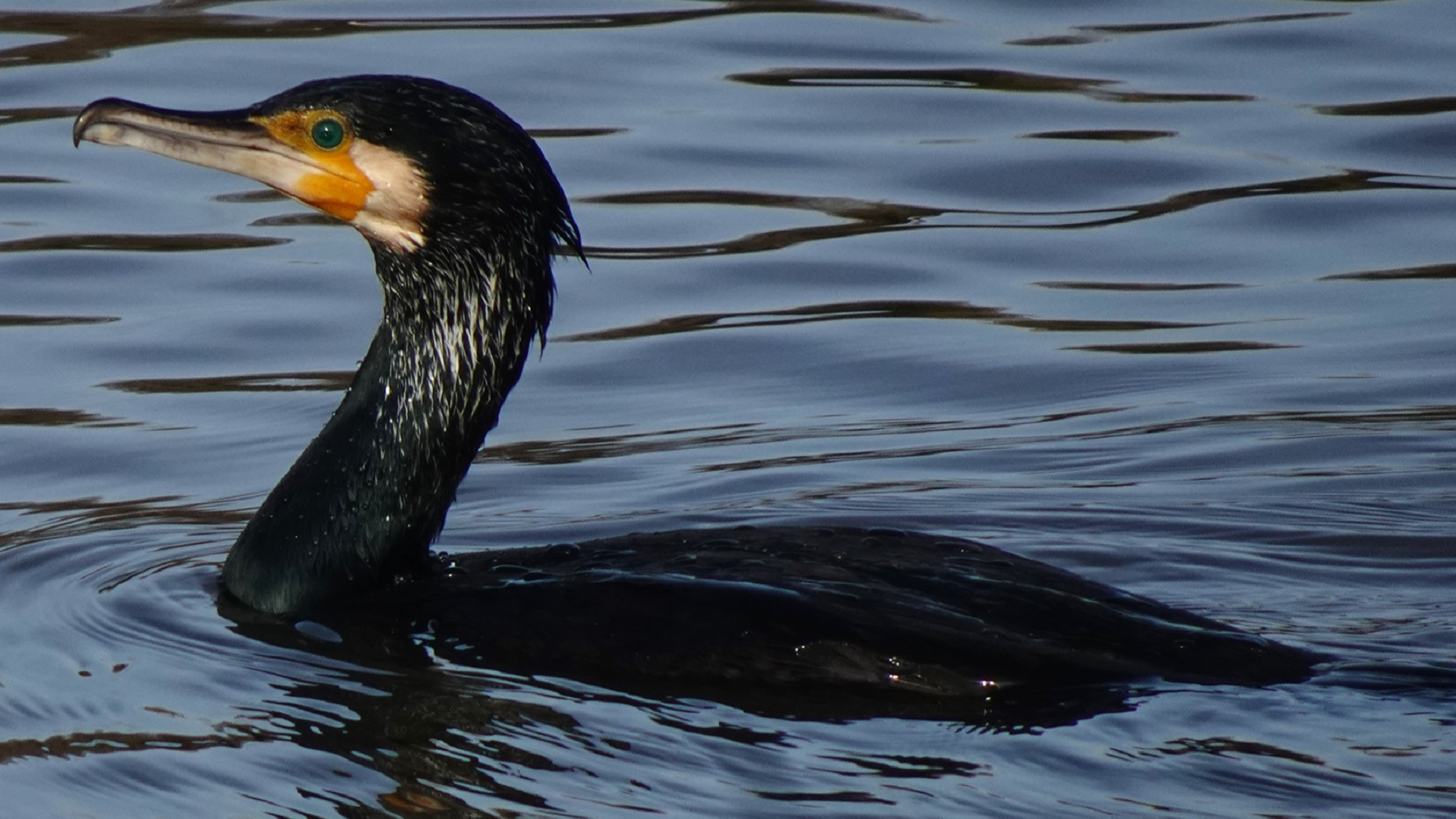
Cormorants are seen at Hainault Lake year-through, with larger groups appearing in winter. They have dark bodies with white and yellow facial markings. The bills are usually pointing upwards. To dry the wings cormorants often stand with them outstretched. During the breeding season white thigh patches develop. Male and females are similar in appearance. Juveniles are whitish underneath. For many centuries in China, trained cormorants have been utilized for fishing. A collar is placed around the bird's neck, enabling it to swallow small fish while preventing it from consuming larger ones. The fisherman retrieves the larger fish from the bird's throat and retains them for personal use.
#
Kingfisher
Alcedo atthis
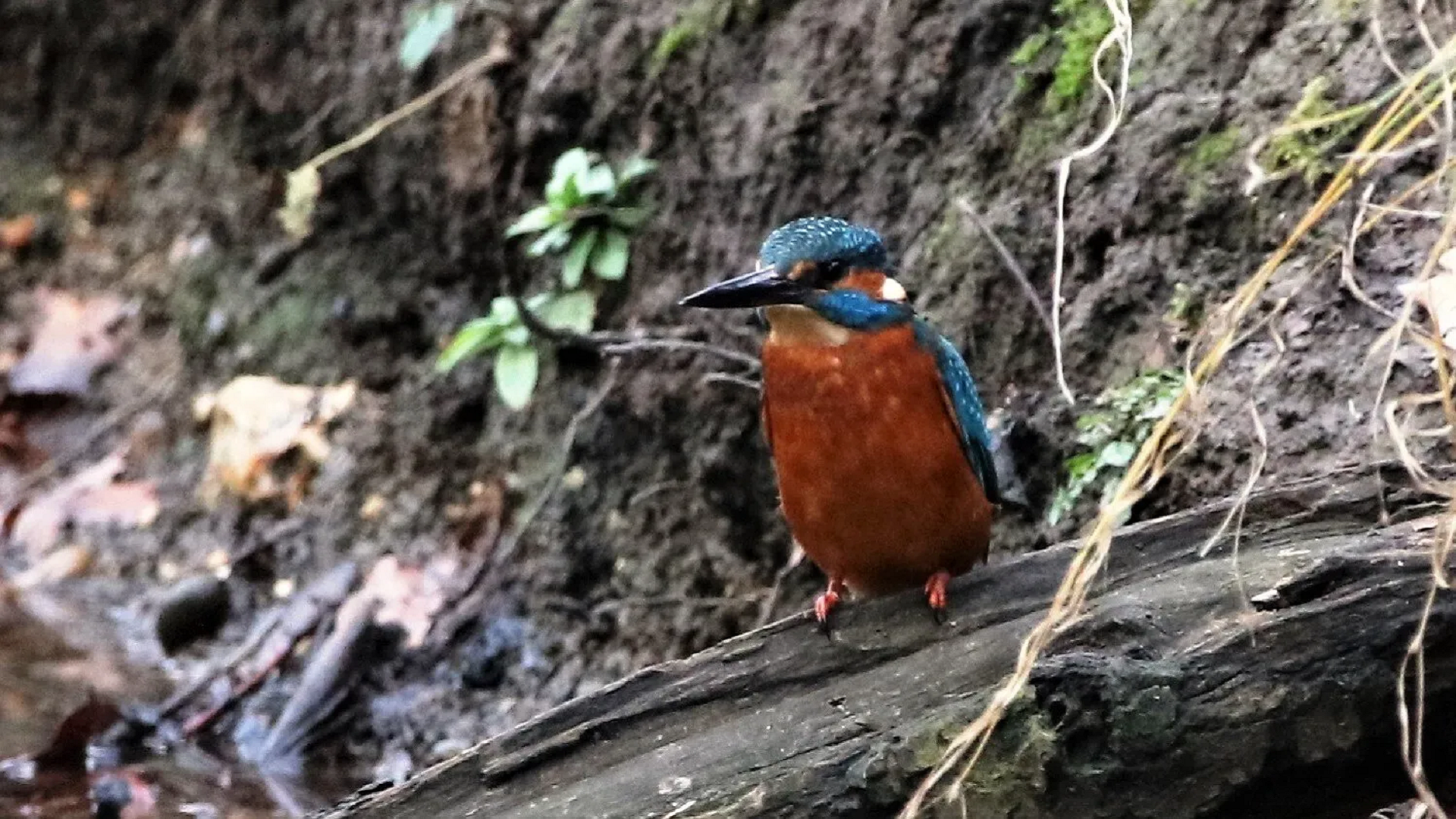
Kingfishers are rarely seen at Hainault Lake. They perch on branches from where they dive for fish, appearing as a blue flash when swiftly moving over the water's surface. Nests are made in holes close to the water.
#
© hainaultforest.net. All rights reserved.