

FIRST QUARTER 2018
Velvet Shank
Flammulina velutipes
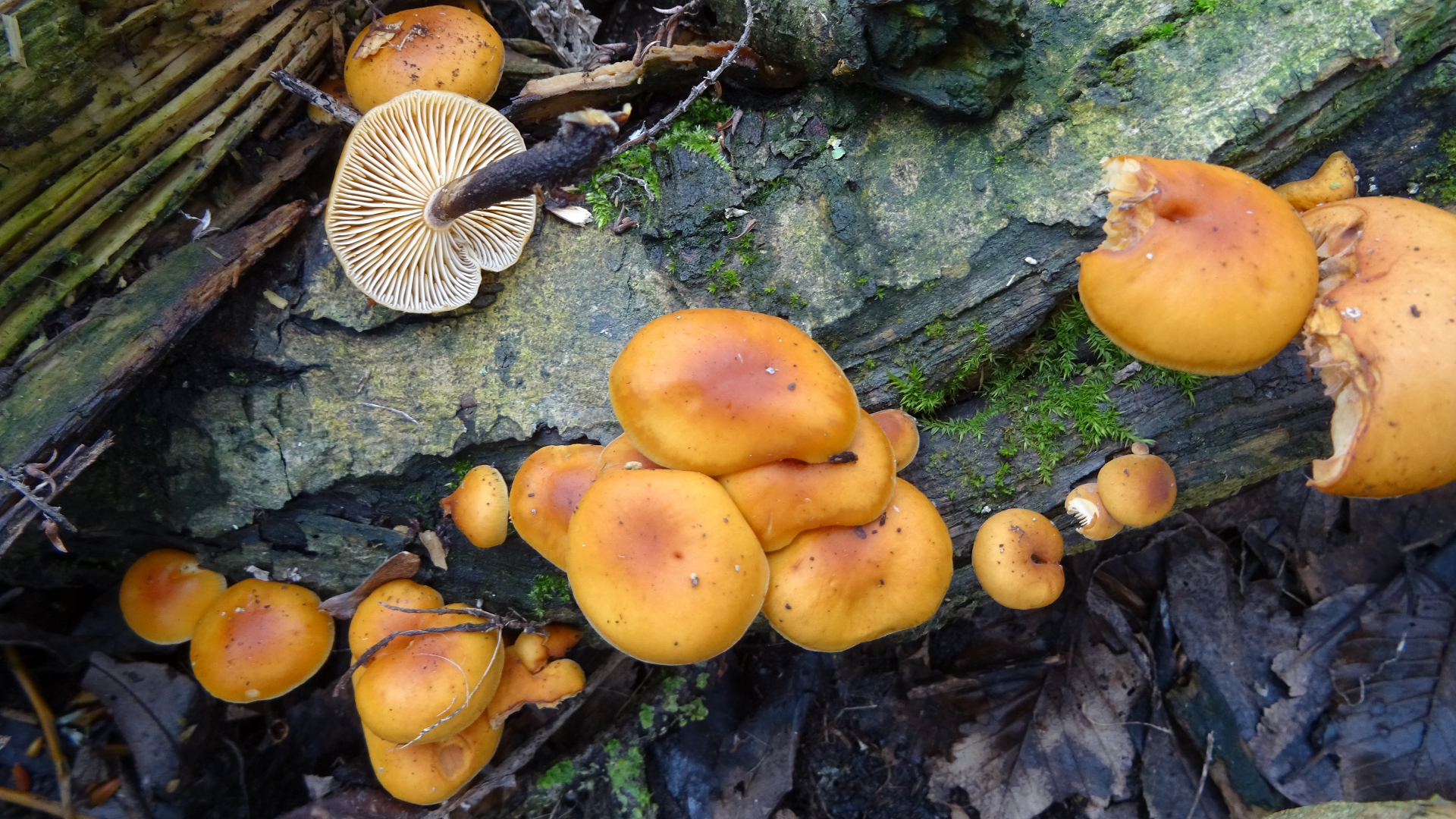
This fungus is usually observed on deadwood during winter, especially following frosty conditions. It features orange-brown caps that range from 40 to 120 mm in diameter. The dark stem has a velvety texture at the base and can reach lengths of up to 100 mm.
#
Witches' Butter
Exidia glandulosa
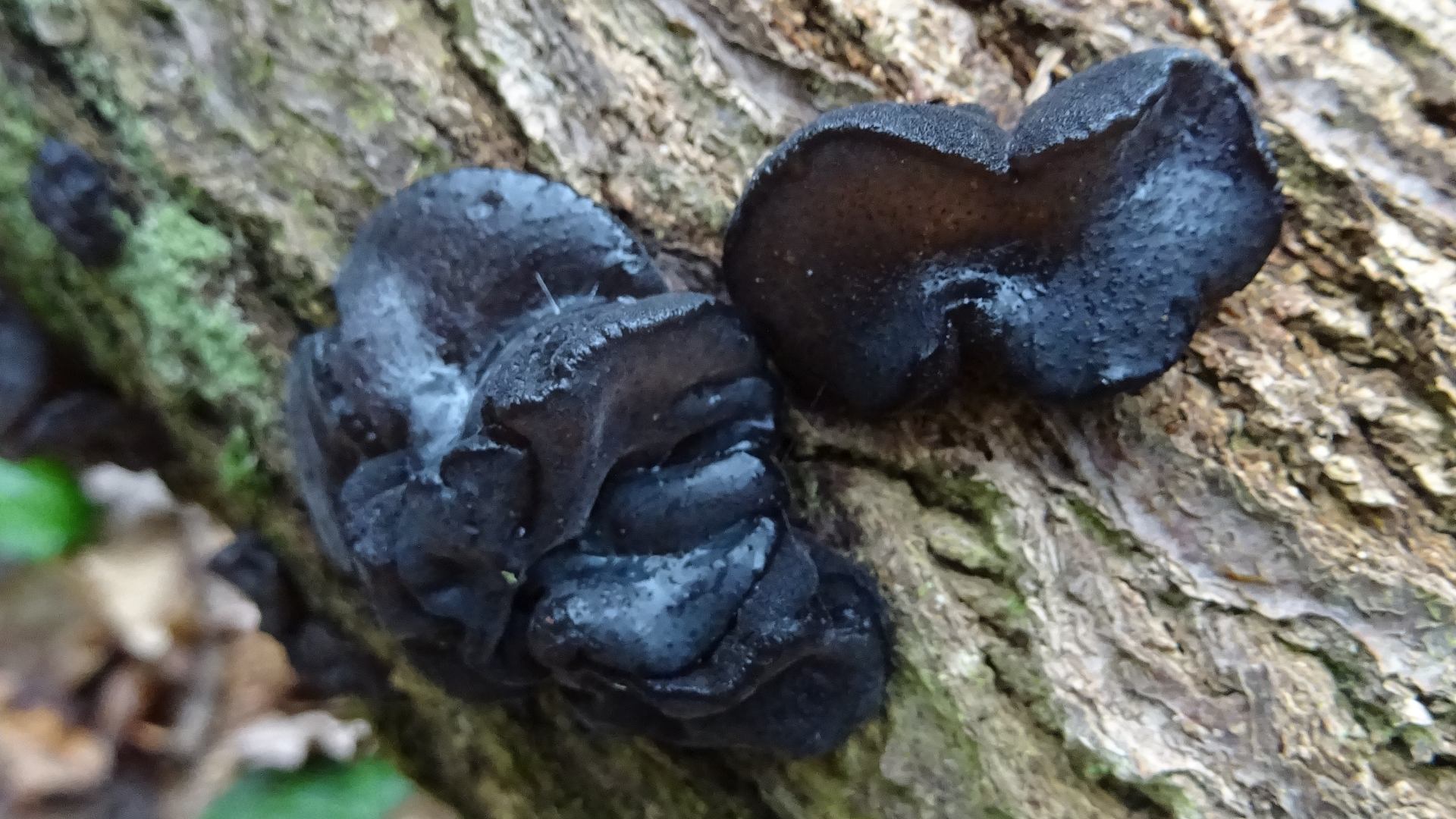
Found on dead wood from deciduous trees during the autumn and winter. The fruiting bodies are connected to the wood by tiny stems. They become more noticeable after extended periods of wet weather, taking on a plump and fleshy appearance.
#
Silver Leaf Fungus
Chondrostereum purpureum
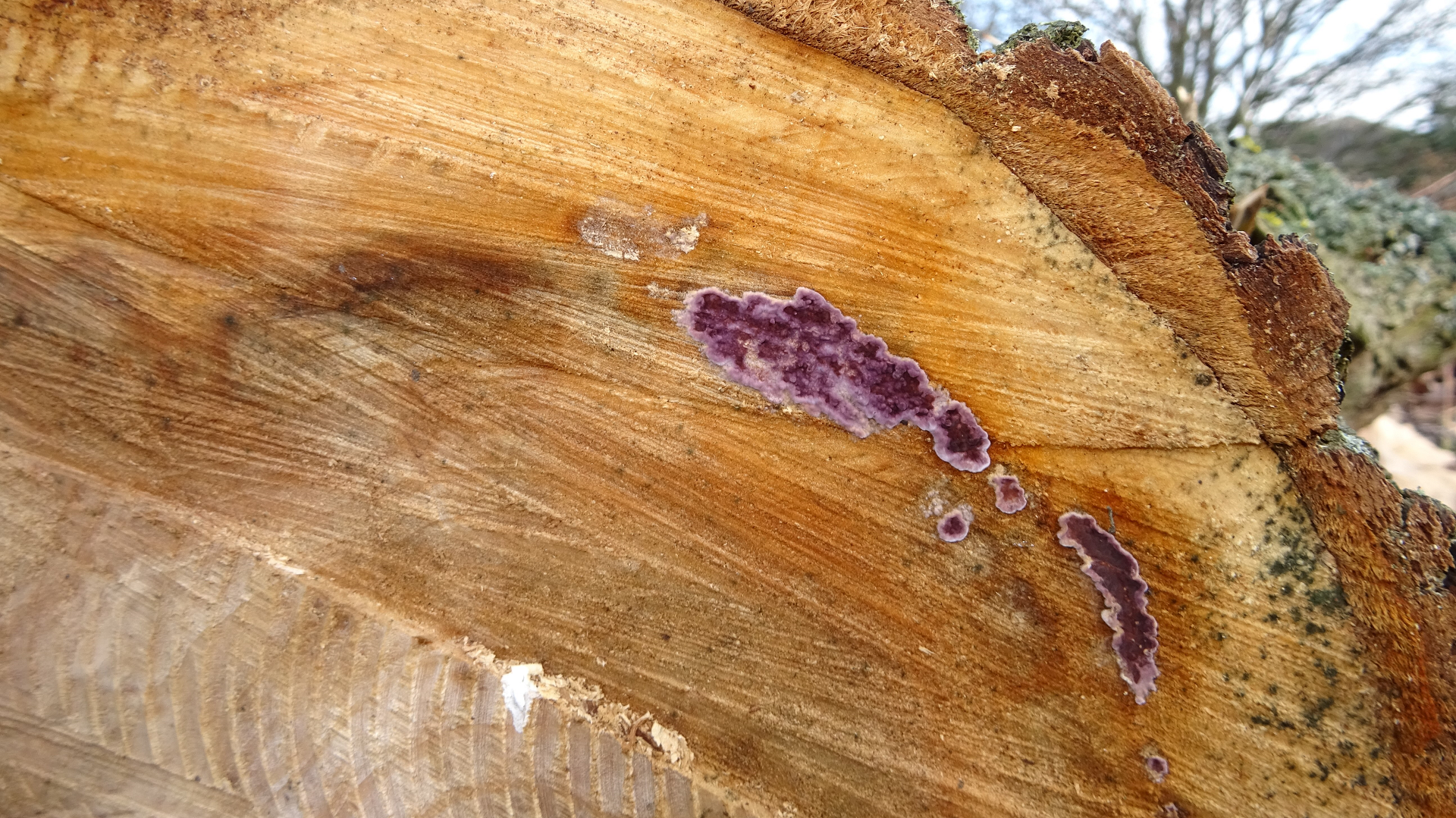
This crust fungus creates purple patches with a pale border on dead deciduous wood. It starts as a crust and can develop into brackets that reach up to 30mm in diameter. It frequently appears on the ends of sawn logs and is known to cause silverleaf disease in plum and cherry leaves.
#
Turkey tail
Trametes versicolor
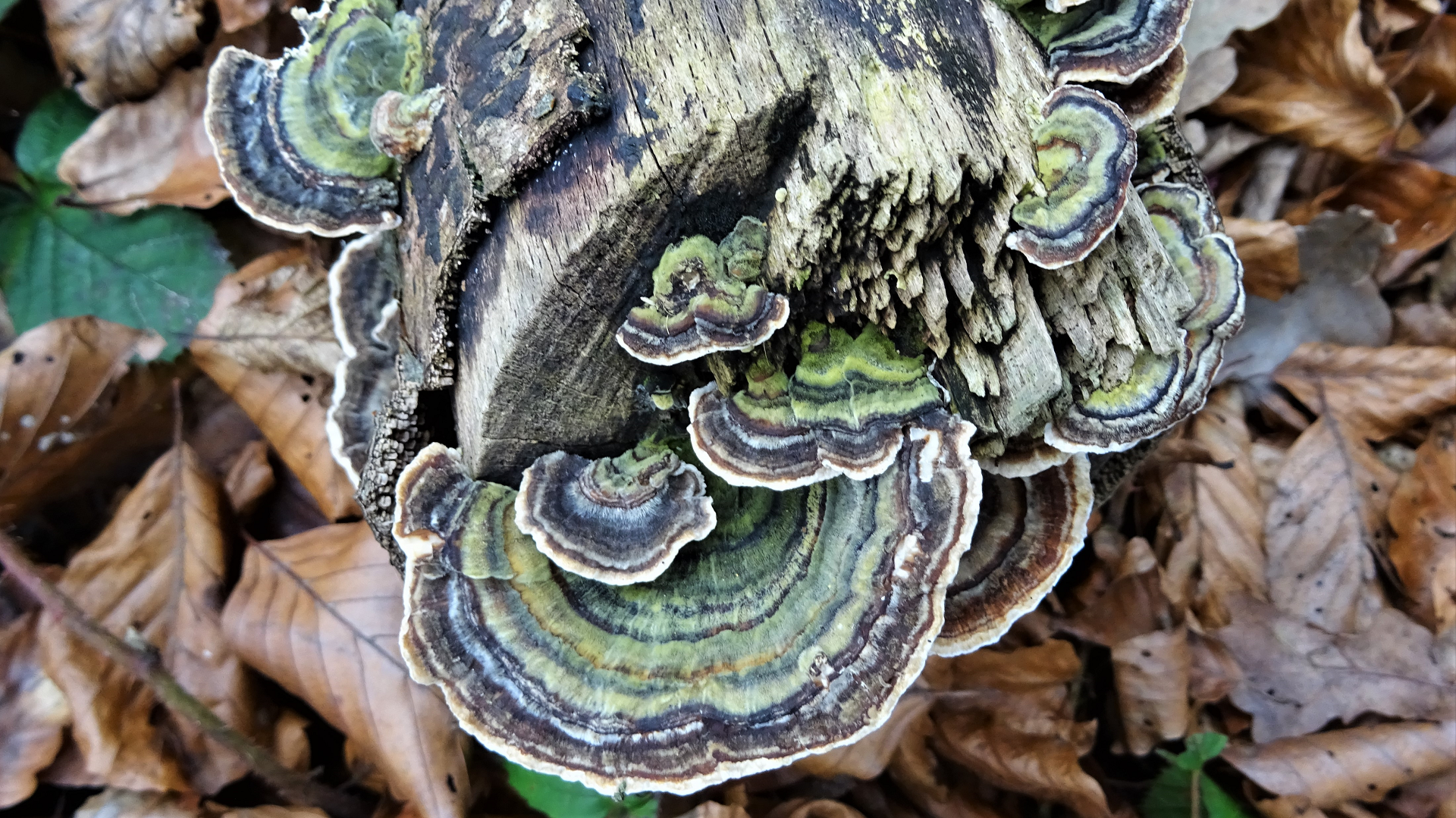
A green variant of Turkey tail fungus. The colours can differ, but the edge is consistently white or creamy.
#
Willow Bracket
Phellinus igniarius
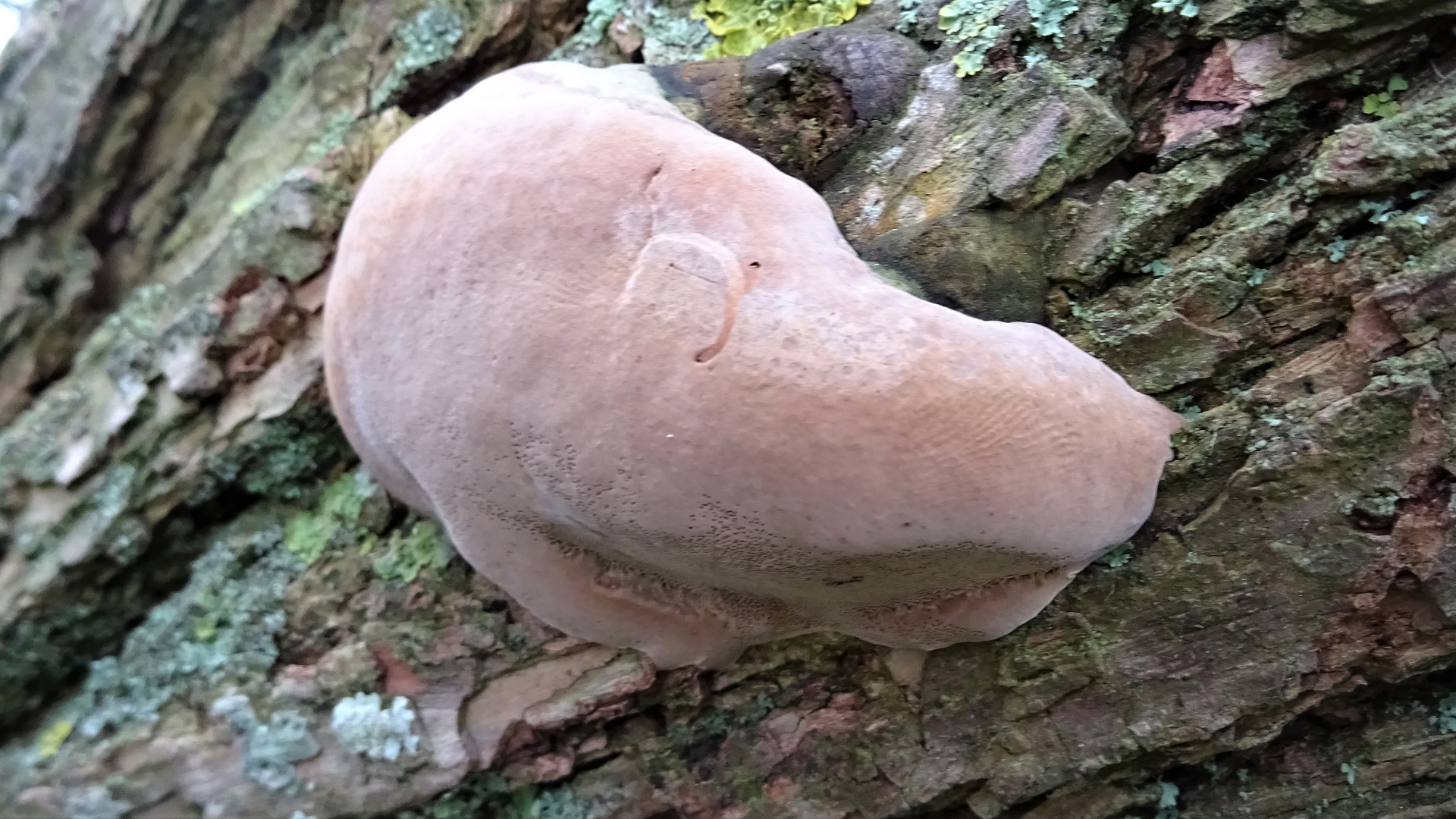
This fungus, which is associated with willow trees, can be observed throughout the year on the lower trunks of older trees. It grows in concentric ridged layers, with a new layer forming each year. The fresh layers are light brown and have a velvety texture. As the layers age, they turn grey, then blacken, and often develop cracks.
#
Toothed Bracket
Inonotus nodulosus
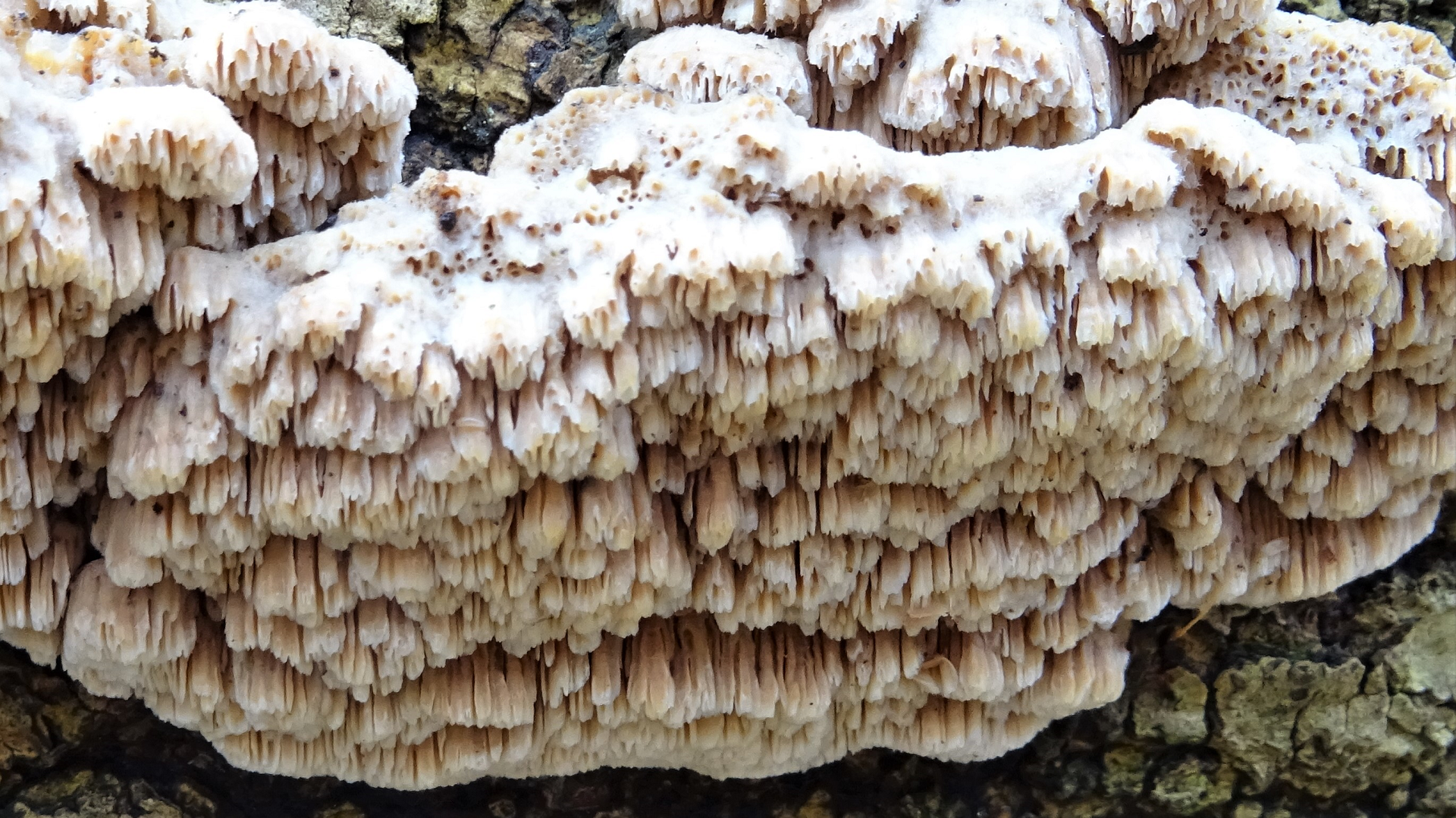
An interesting bracket fungus that forms masses of conjoined fruiting bodies. Thank you to Brian Ecott for the identification.
#
Jelly Ear
Auricularia auricula-judae
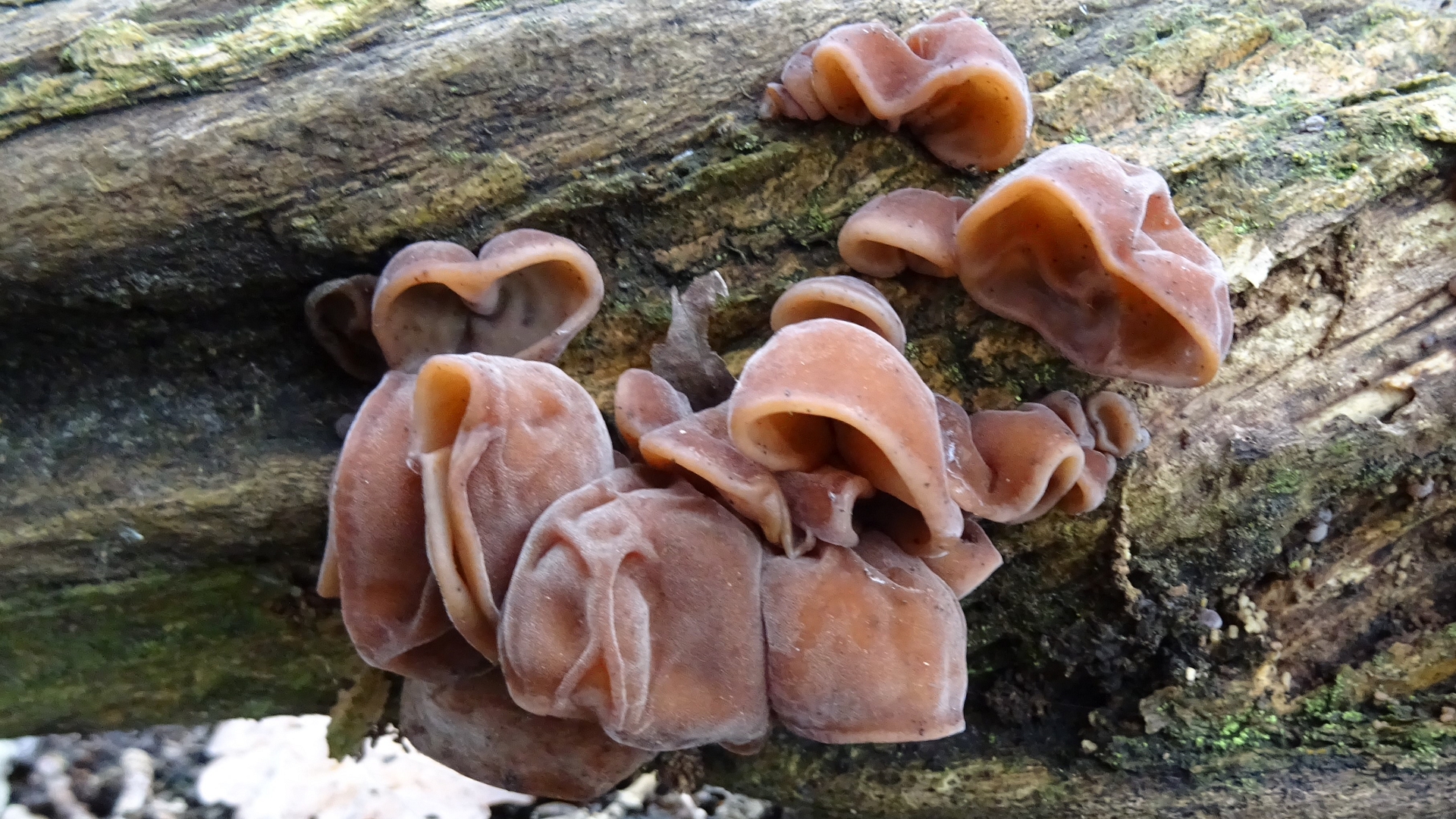
A fungus that can be found on tree trunks and branches throughout the year, particularly in autumn and winter. It starts out very soft with a velvet-like texture and becomes smoother as it matures. It grows on deciduous trees, especially Elder.
#
Short-haired fringed disc
Lachnum brevipilosum
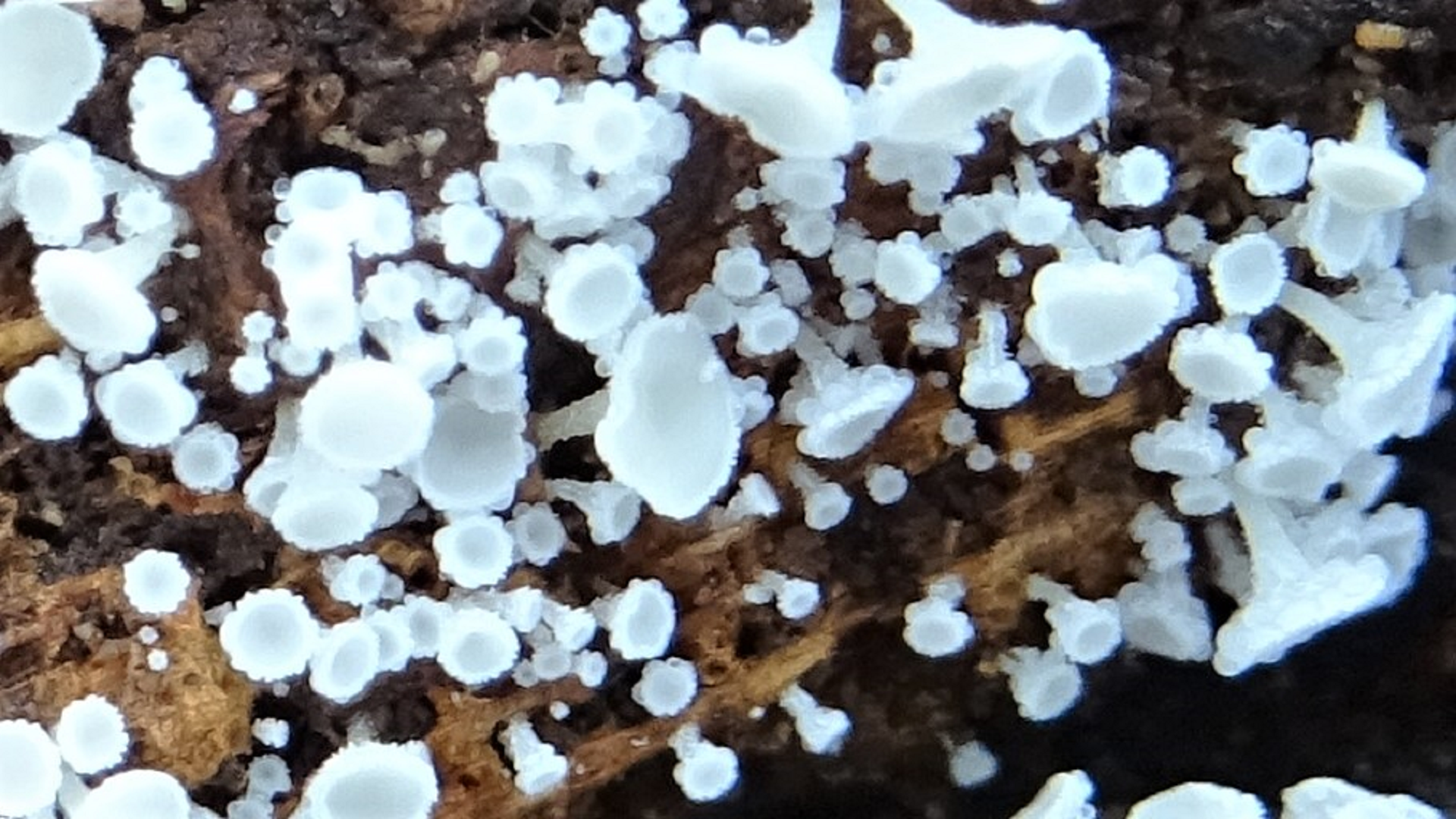
The stalked cups of this fungus measure 1-2mm across. They can be found year-through on dead deciduous wood laying on damp ground. Because of their tiny size the cups can easily go unnoticed. This fungus does not have a widely established common name in English, however in Dutch it is known as "Korthåret frynseskive" which translates as "Short-haired fringed disc". Brian Ecott identified it and a picture was sent to Peter Comber for confirmation.
#
Canker
Nectria
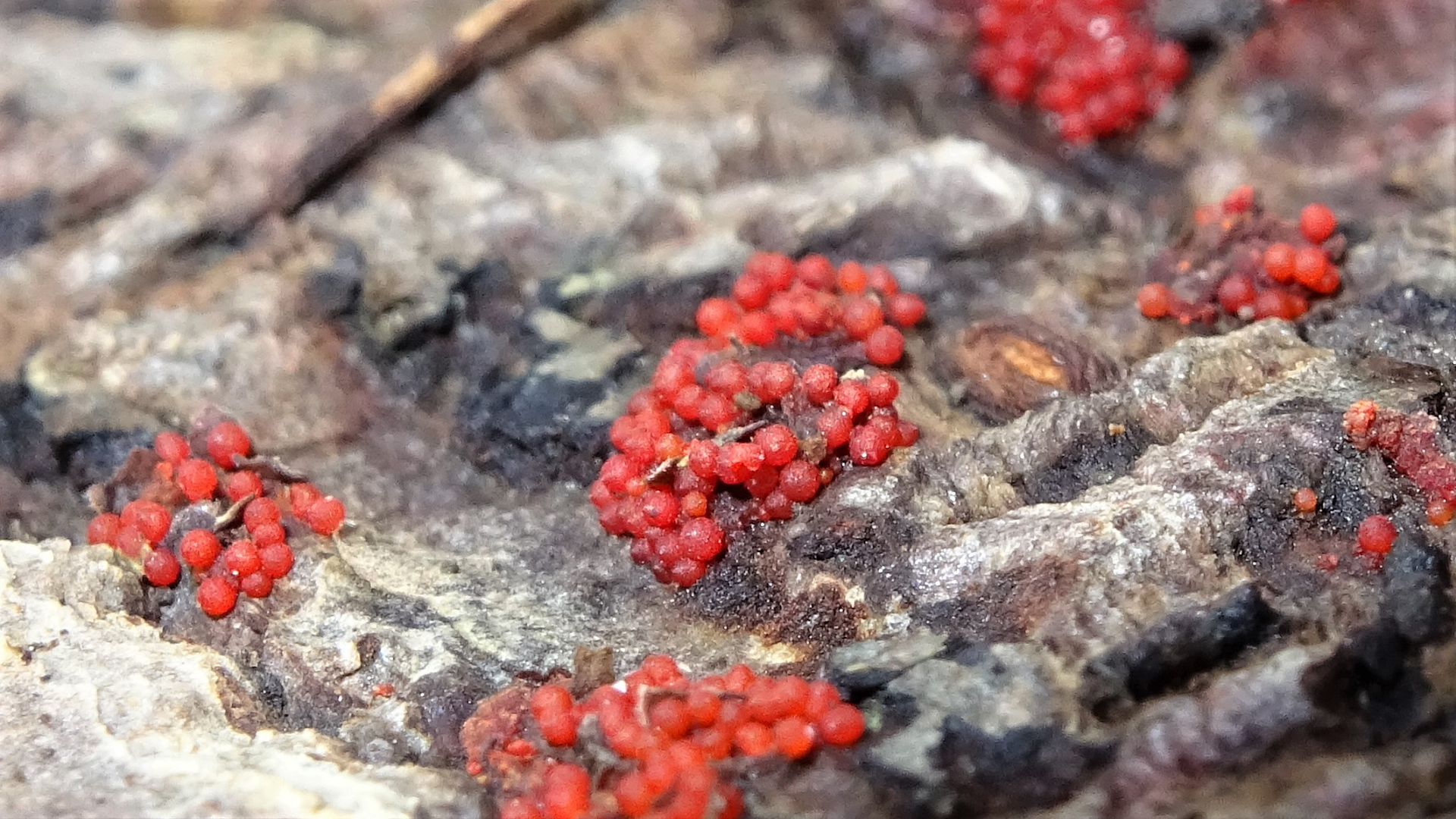
These cinnamon-red clusters found on decaying deciduous wood contain spores in the sexual stage of a fungus. Several similar species produce reddish-orange fruiting bodies.
#
Dust Lichen
Lepraria incana
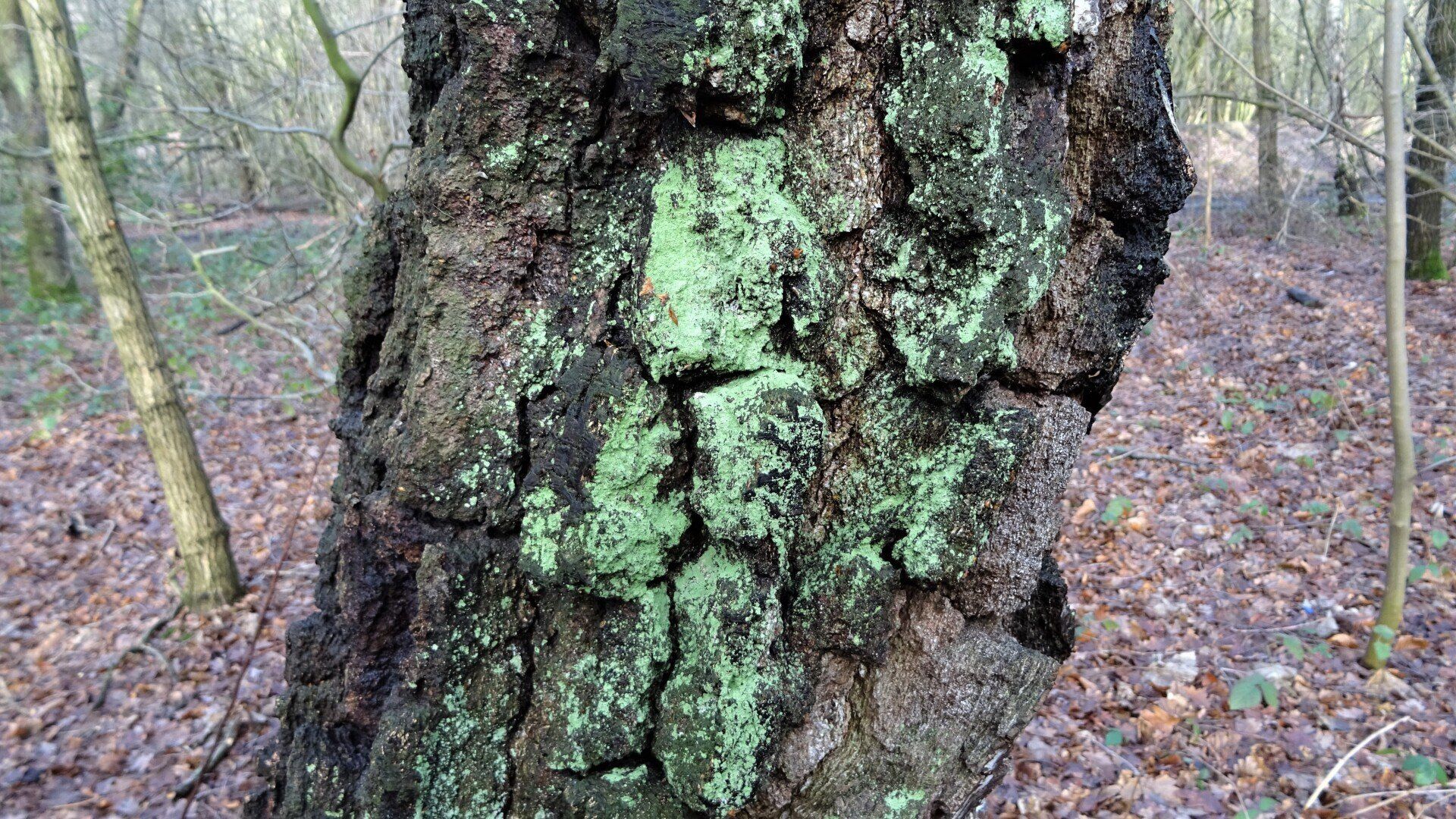
A powdery lichen that grows on old silver birch trees. It is the commonest lichen in Eastern England.
#
Foliose Lichen
Parmelia subrudecta
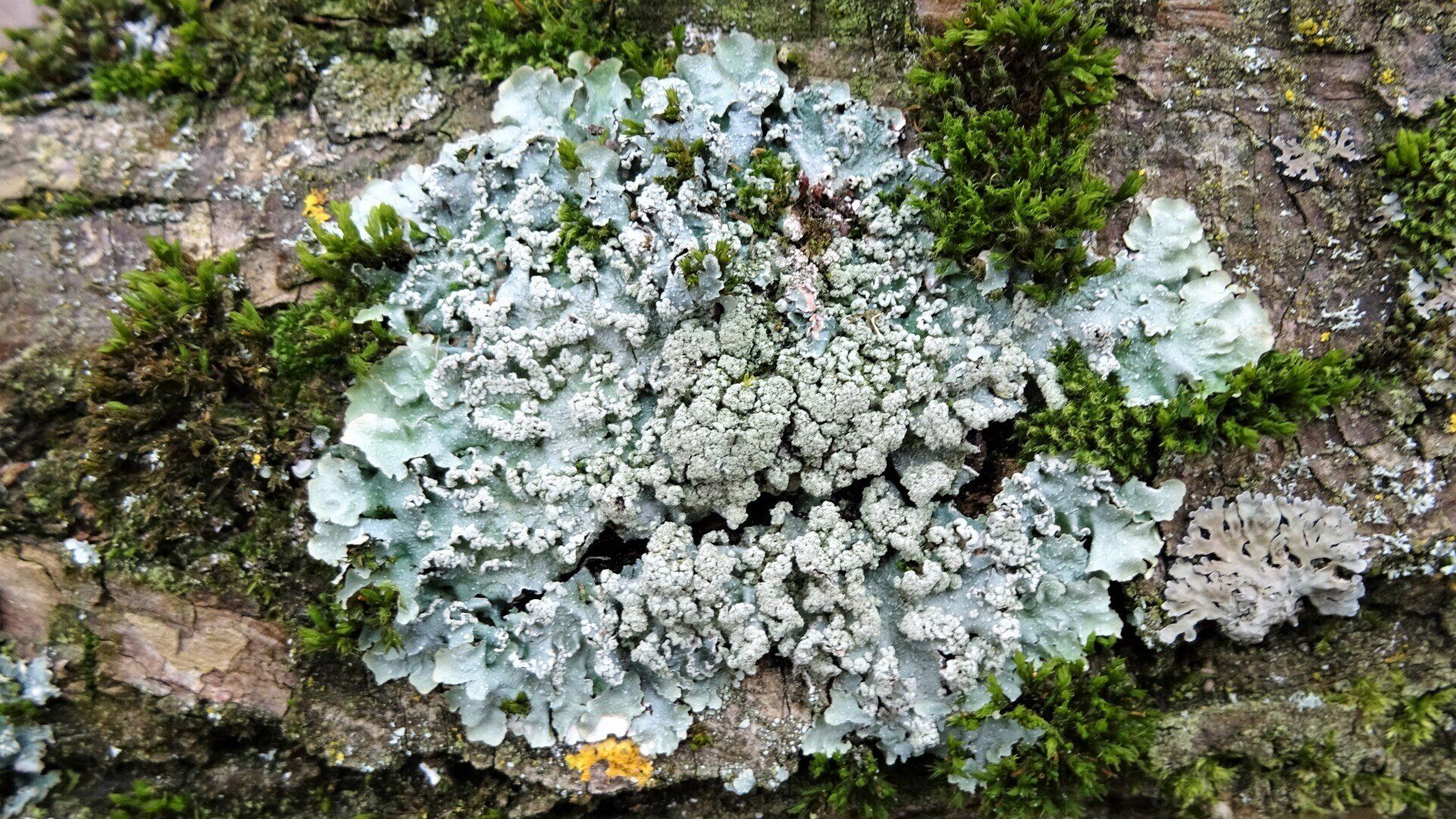
This species has rounded lobes at the edge. The central lobes contain soredia.
#
Cup Lichen
Cladonia fimbriata
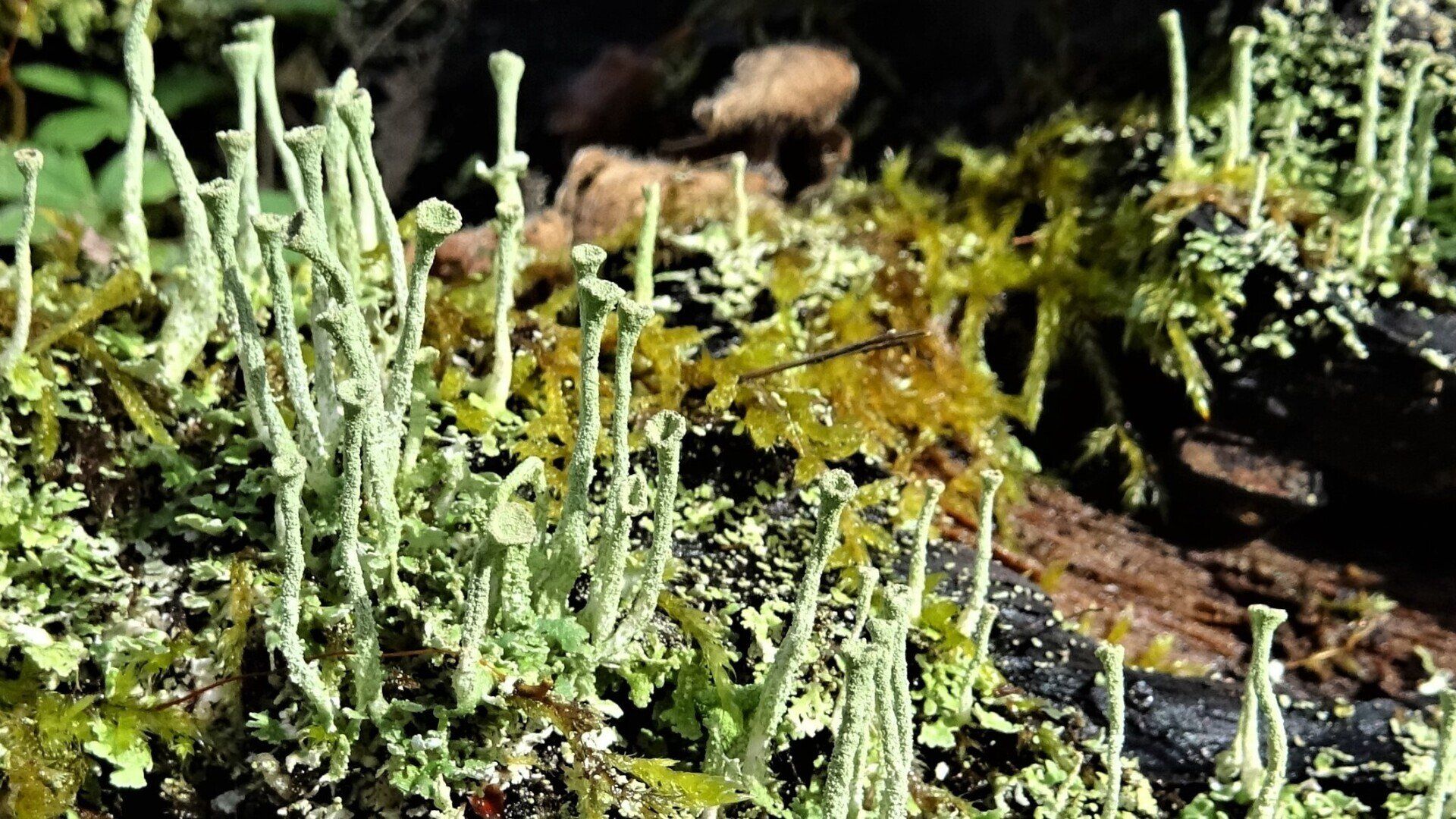
A pixie-cup lichen with a long stalk that resembles a 'golf tee'. It thrives in clean air and is found on decaying logs.
#
Frutiose Lichen
Ramalina fastigiata
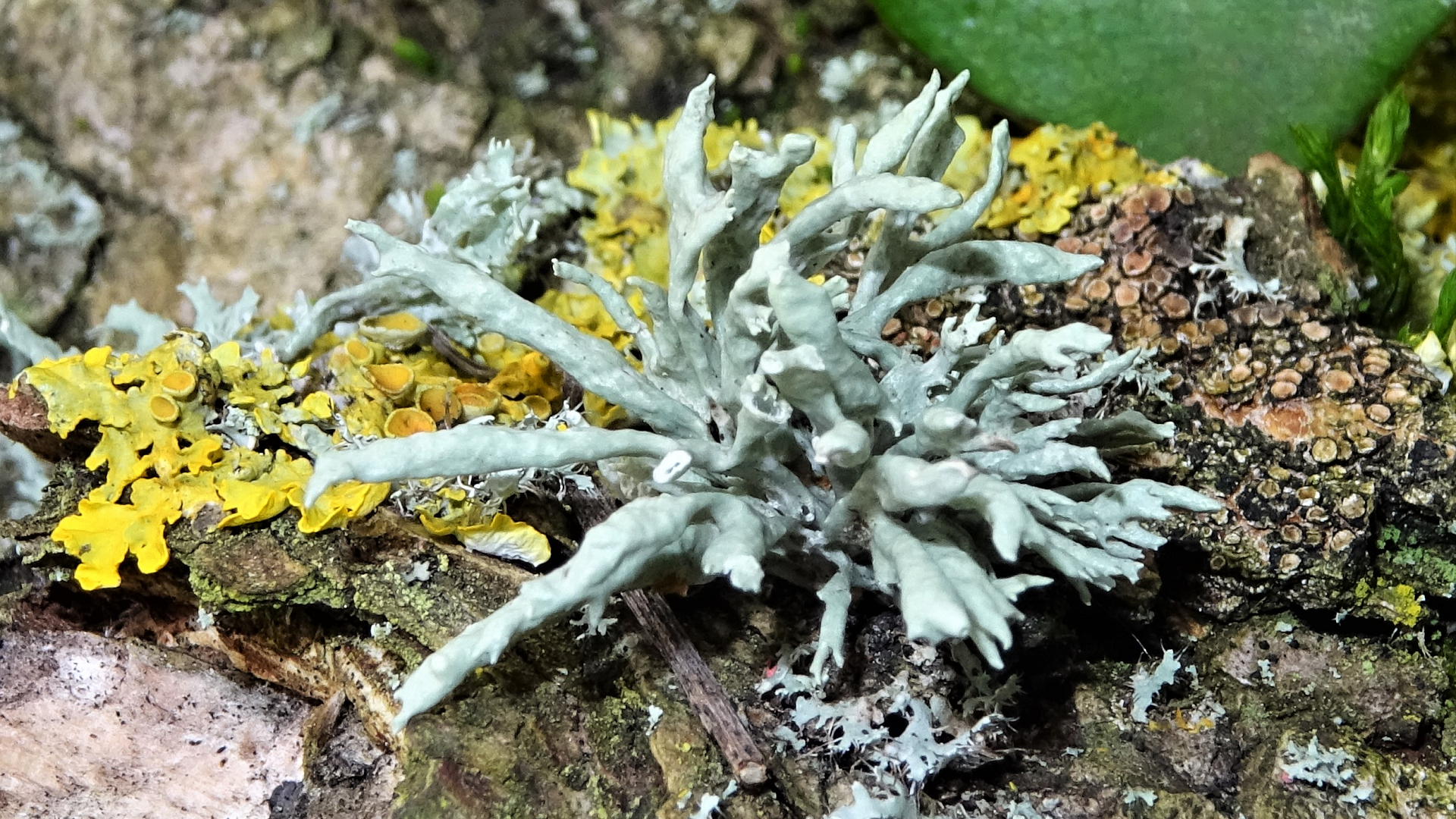
This lichen produces round fruiting bodies for reproduction. In the early 1970s, this species was thought to be extinct in Essex, but it is now regarded as relatively common.
#
Slime Mould
Metatrichia floriformis
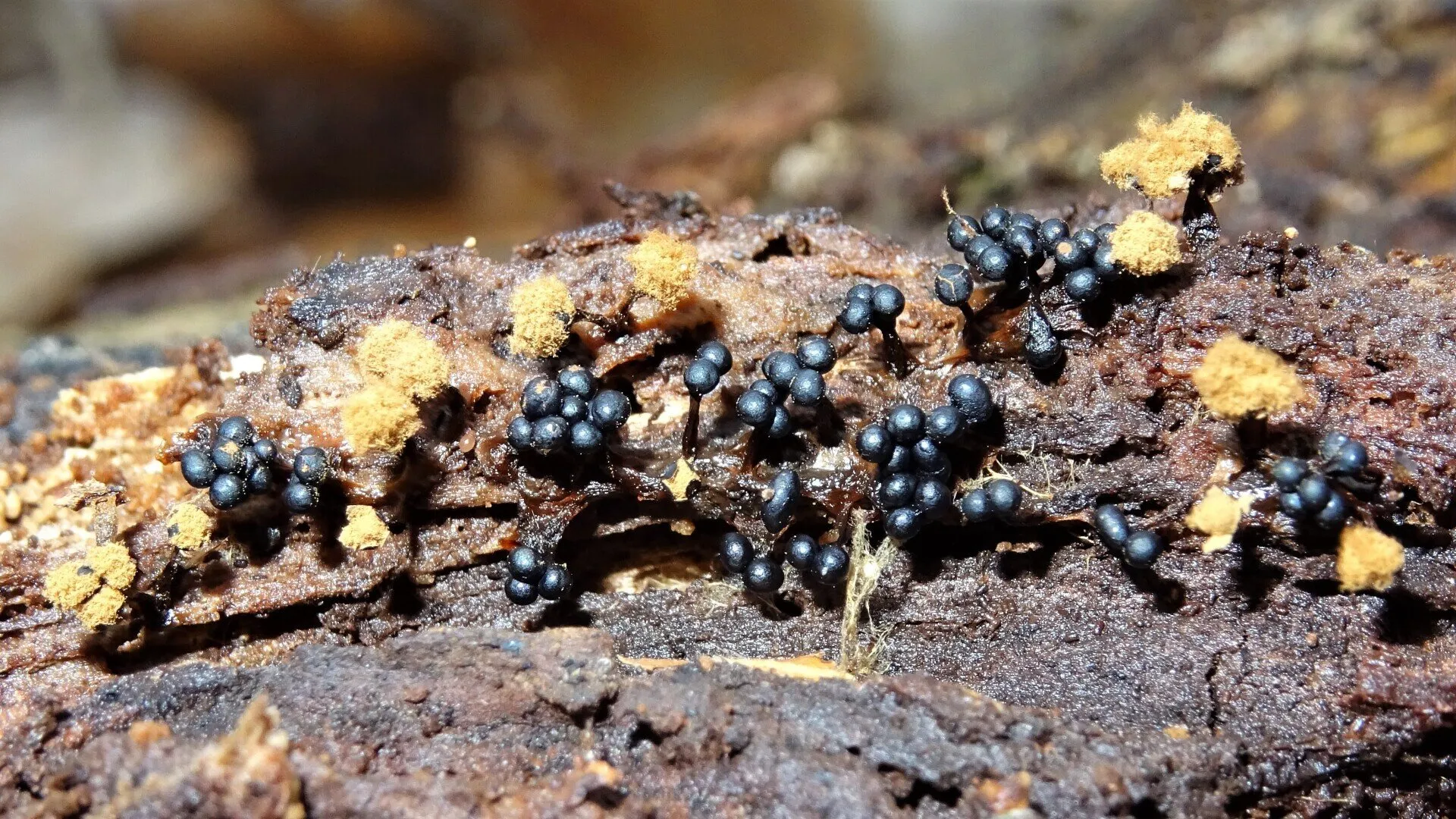
This slime mould has a purplish-brown plasmodium and typically grows on rotten logs. Its sporocarps resemble small black caviar eggs and are supported by dark red stalks, forming clusters of 2 to 16. The glossy black globose sporangia open up to expose fluffy orange tops.
#
Snowdrops
Galanthus nivalis

When Snowdrops bloom, it indicates that spring is approaching. They are relatively uncommon in Hainault Forest and these are likely to be a garden escapes.
#
Barren Strawberry
Potentilla sterilis
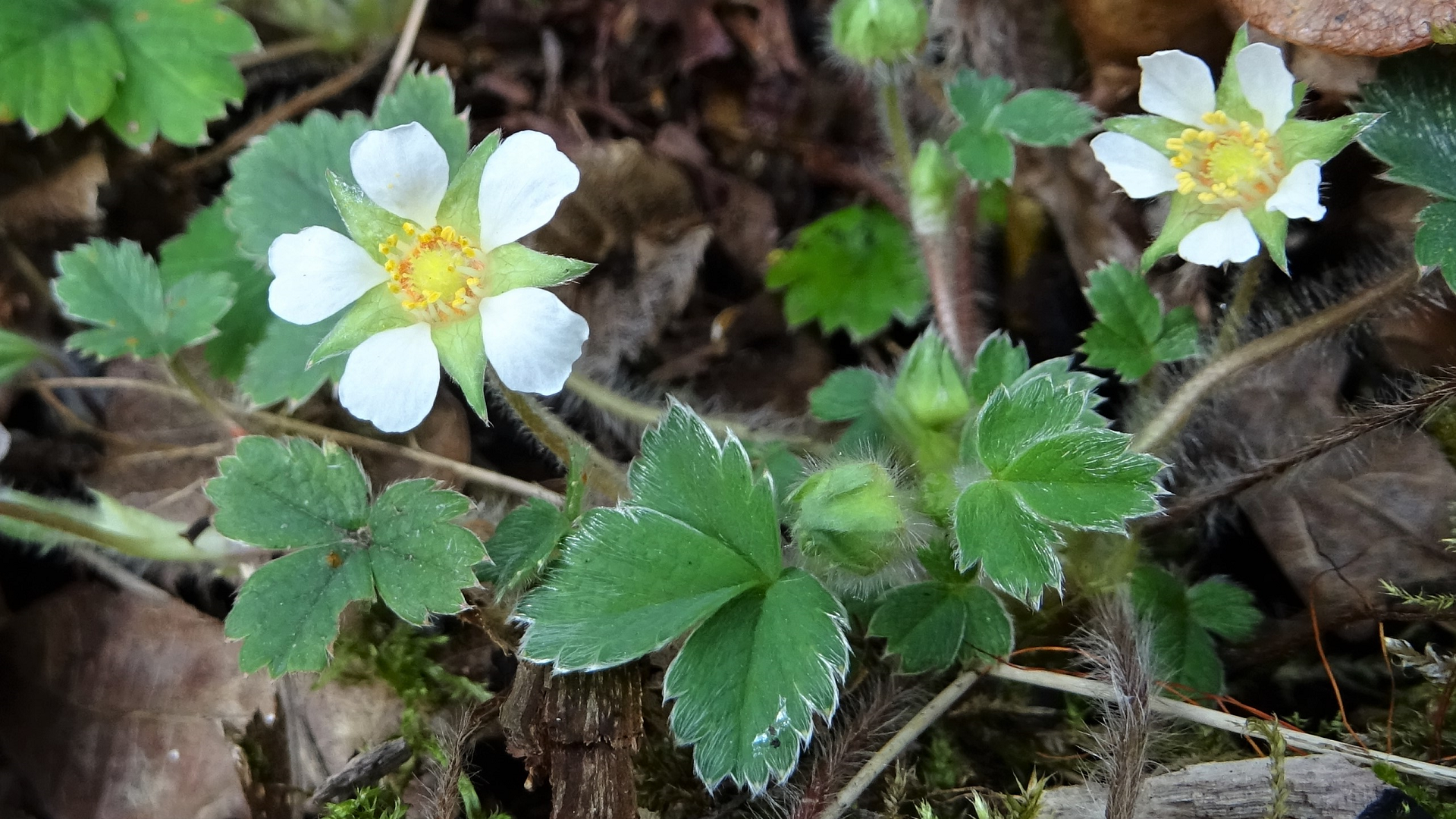
Barren Strawberry has a hairy stem and toothed oval leaflets, with lower leaves that are either ternate or palmate. The small solitary flowers are 8-15mm in diameter and have white petals that are slightly notched with spaces in between. This plant is found near Roes Well.
#
Coltsfoot
Tussilago farfara

Coltsfoot grows around the edges of Hainault Lake. The leaves follow after the flowers and are shaped like a colt's foot.
#
Daisy
Bellis perennis

The Daisy is a perennial that remains green throughout the year and forms clusters of dark green, spoon-shaped leaves. The individual flower-heads, are yellow-centred and have a pink tint. They begin to bloom in the spring.
#
Common Primrose
Primula vulgaris
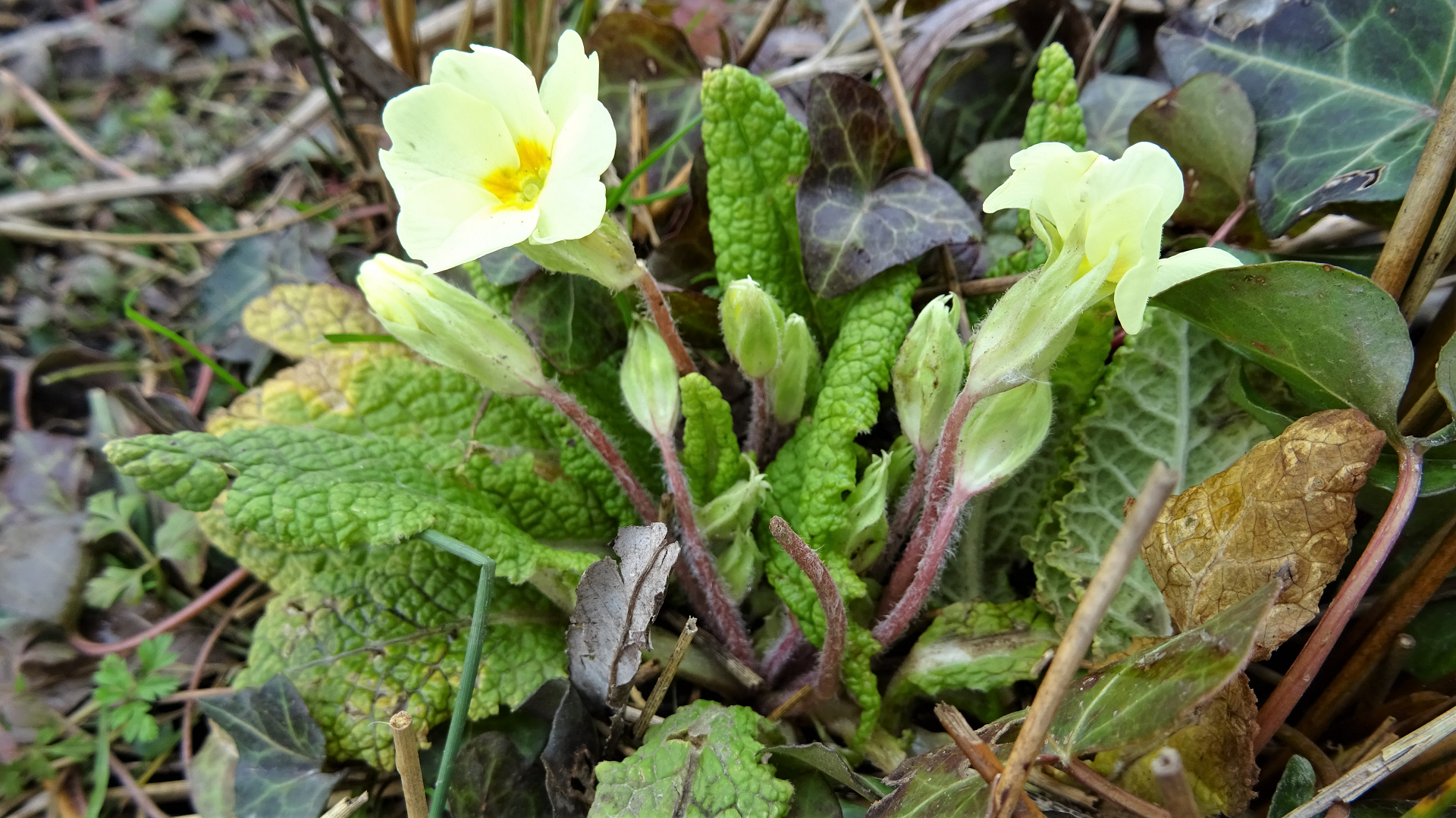
The Primrose is a low perennial plant featuring large, oval leaves that are hairy on the underside. Flowers bloom from February to May, each occurring singly on stalks (pedicels) that extend from the leaf rosette. The leaves gradually narrow towards the base.
#
Ivy-leaved Speedwell
Veronica hederifolia

Ivy-leaved Speedwell is a common annual that usually blooms by March, often found growing alongside paths.
#
Common Groundsel
Senecio vulgaris

Groundsel grows on disturbed ground. It produces clusters of yellow flowers that develop a fluffy appearance when the seeds are formed.
#
Curled Bristle Moss
Ulota crispa
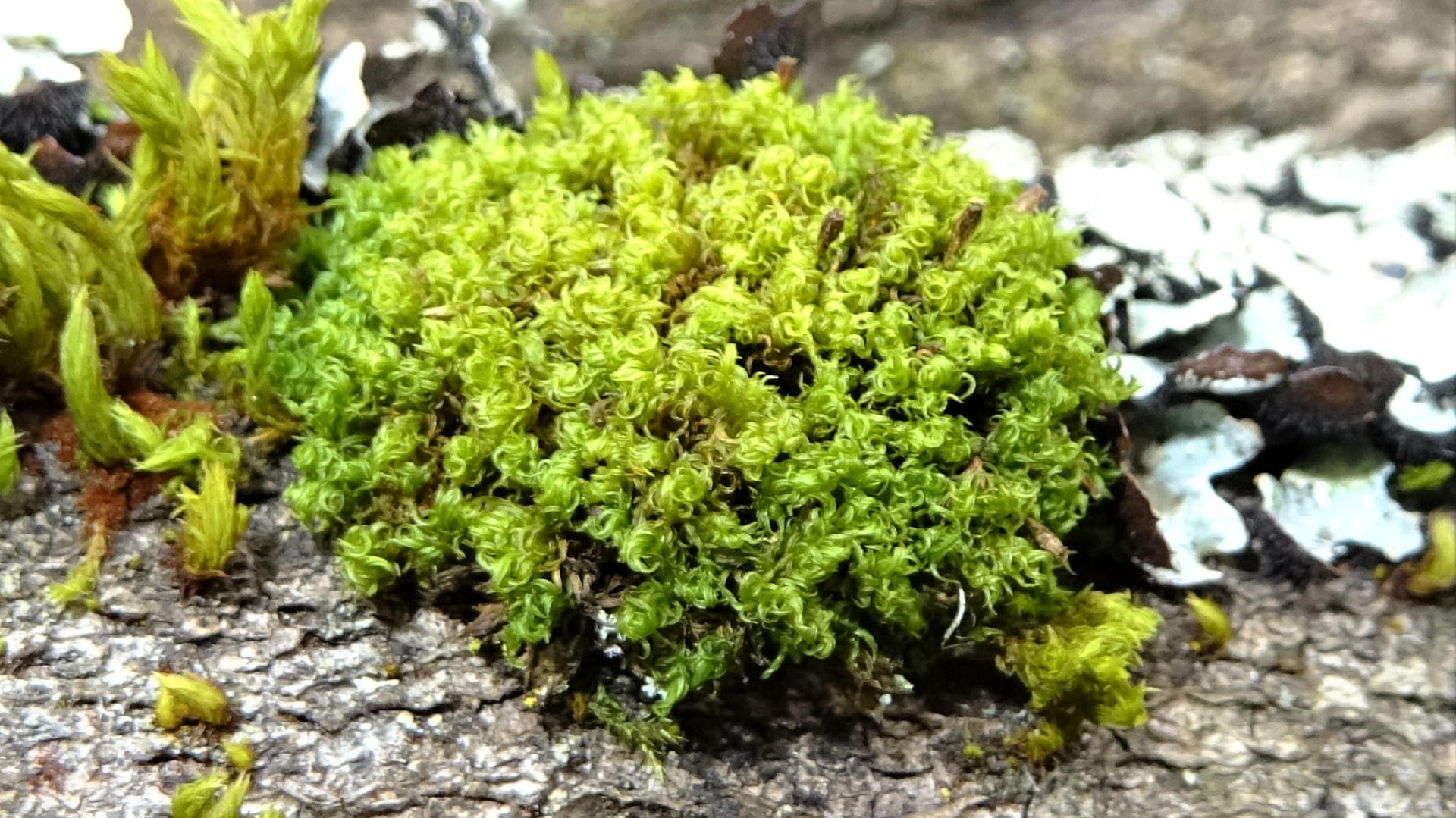
A type of moss commonly found in dense clusters on tree bark.
#
Dilated Scalewort
Frullania dilatata
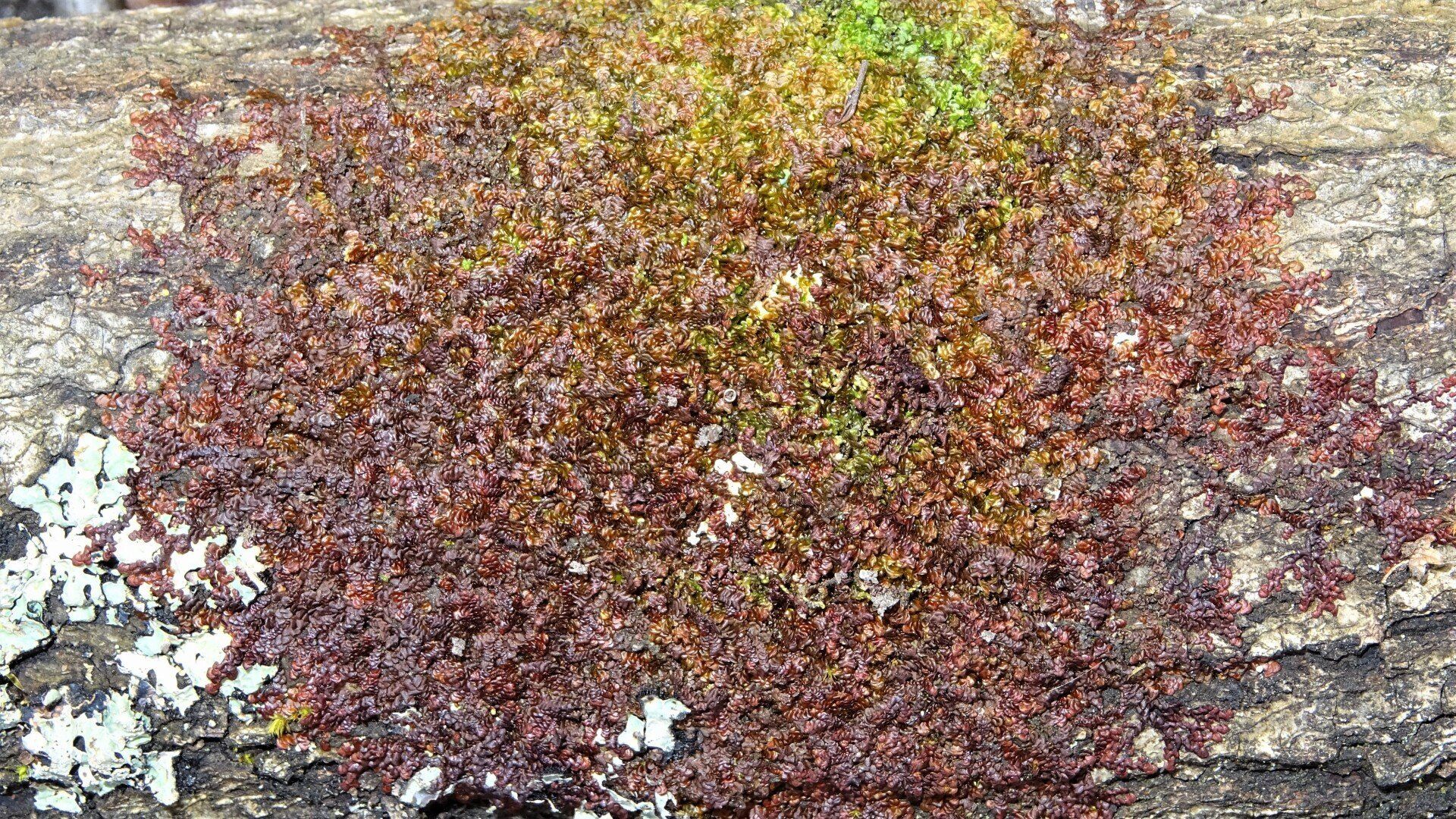
This liverwort is easily identifiable from a distance due to its formation of dark purple round patches on tree bark. It is typically well pigmented, although younger growth may appear green.
#
Forked Veilwort
Metzgeria furcata
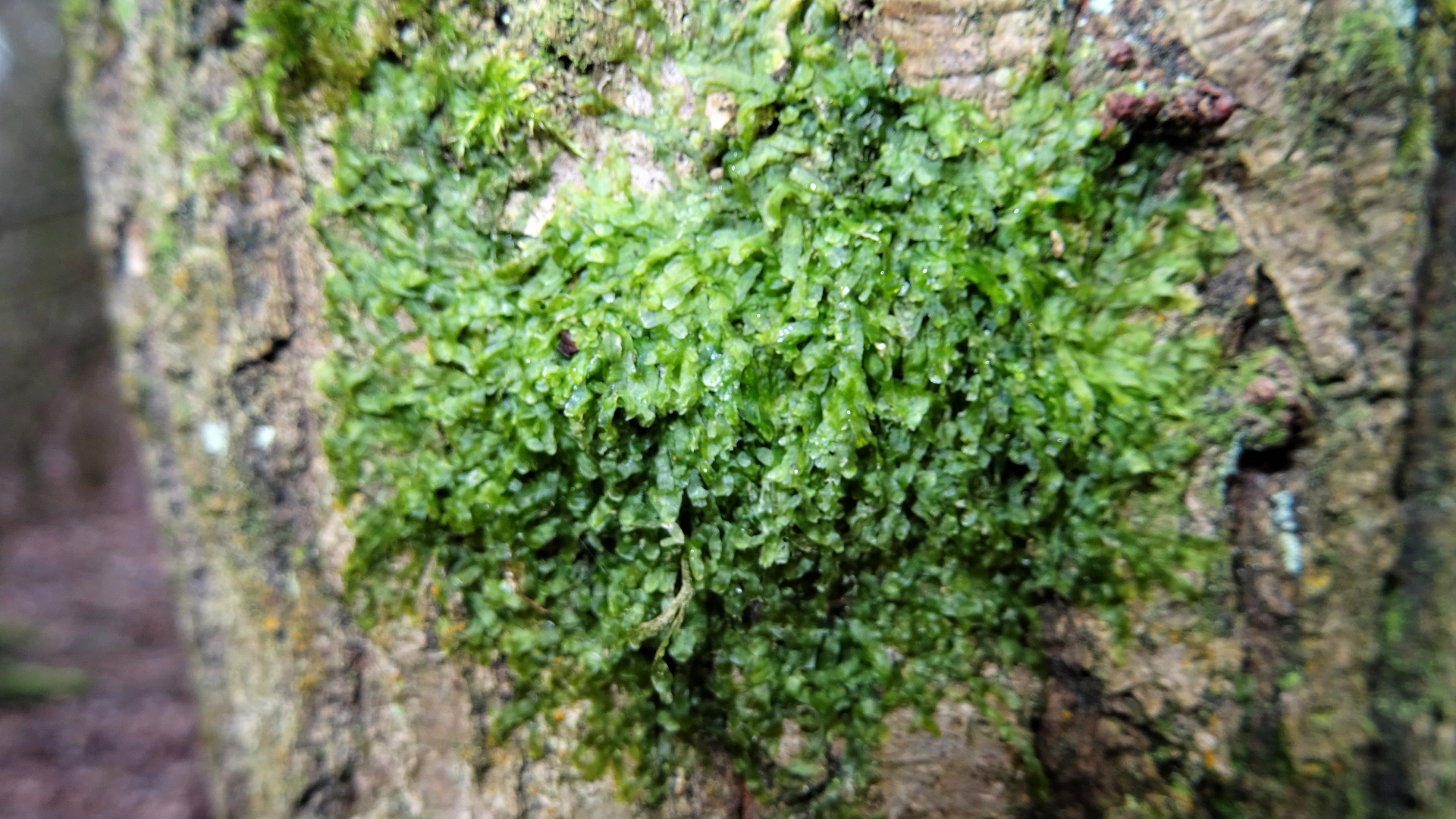
This year, the most common liverwort in Hainault Forest is found on old ash trees. The yellowish-green patches stand out against the various shades of green on the trunks.
#
Thank you to everyone who has contributed to this Journal.
© hainaultforest.net. All rights reserved.
This website uses necessary cookies. It does not use targeting or advertising cookies.