

SECOND QUARTER 2018
This Journal covers the second quarter of 2018 from April to June and consists of two pages. There is a button at the bottom of this page that will take you to page 2. The second page mainly focuses on plants and lichens.
Canada Goslings
Branta canadensis
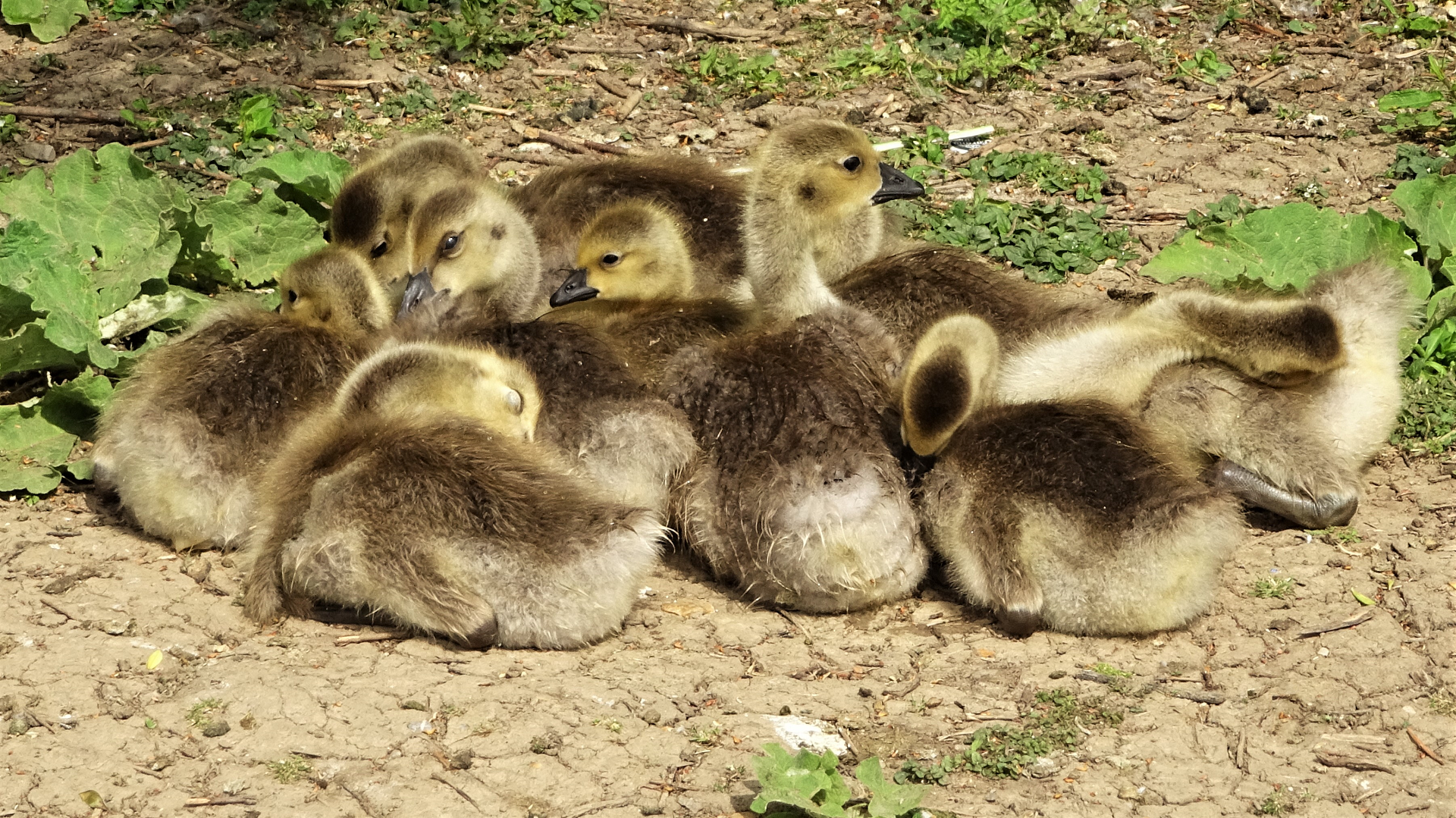
Goslings huddled together on the Lake path.
#
Barnacle Goose
Branta leucopsis

The Barnacle Goose is a medium-sized, social bird with a black head, neck, and breast, along with a creamy-white face. This appearance is complemented by a white belly, a blue-grey striped back, and a black tail. Barnacle Geese typically fly in groups and long formations, producing various barking or yapping noises. During summer the geese breed in the Arctic.
#
Pied Wagtail
Motacilla alba
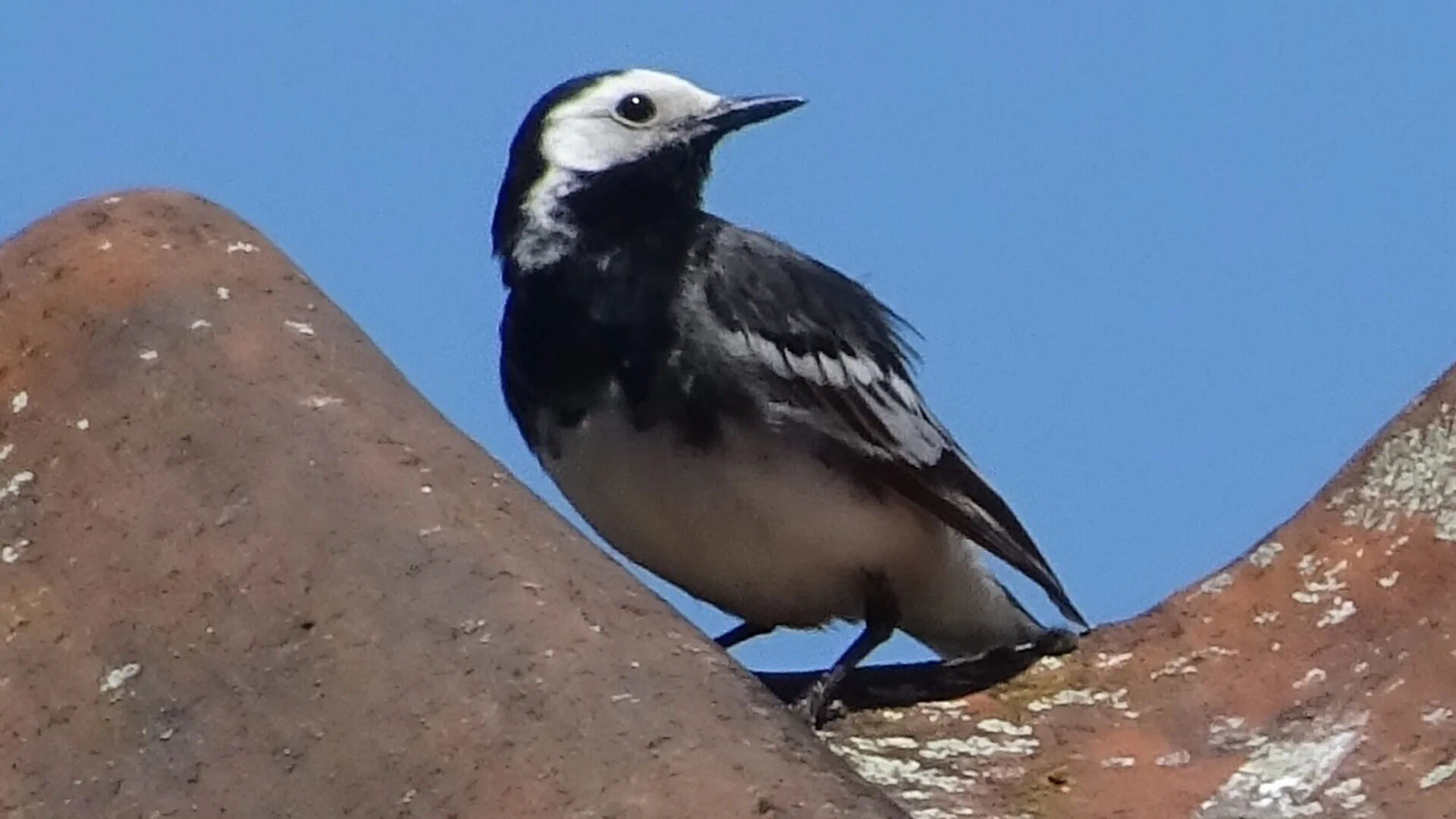
Pied Wagtails are habitual tail-wagglers often seen in open spaces like grassy meadows and car parks searching for food.
#
Dunnock
Prunella modularis

The Dunnock is a small brown bird often seen on hedgerows. It eats insects, arachnids, worms and seeds.
#
Green Woodpecker
Picus viridis

Green Woodpeckers spend a lot of time on the ground searching for their favourite food... ants. If disturbed there is likely to be a yelp and a flash of yellow tail-feather as they seek the safety of a tree out of harm's way.
#
Great Tit
Parus major

Great Tits construct their nests with moss and twigs.
#
Common Blue
Polyommatus icarus
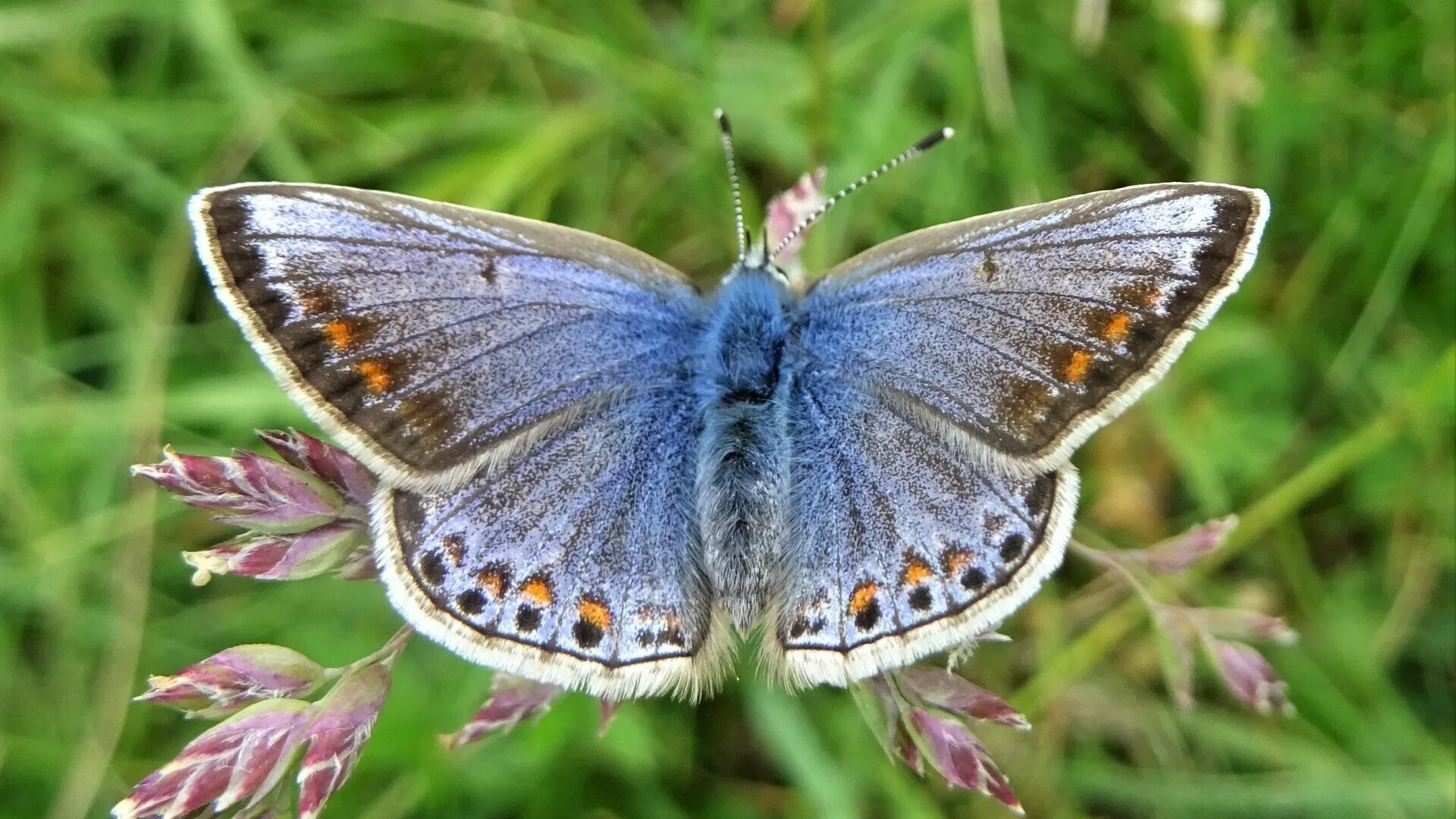
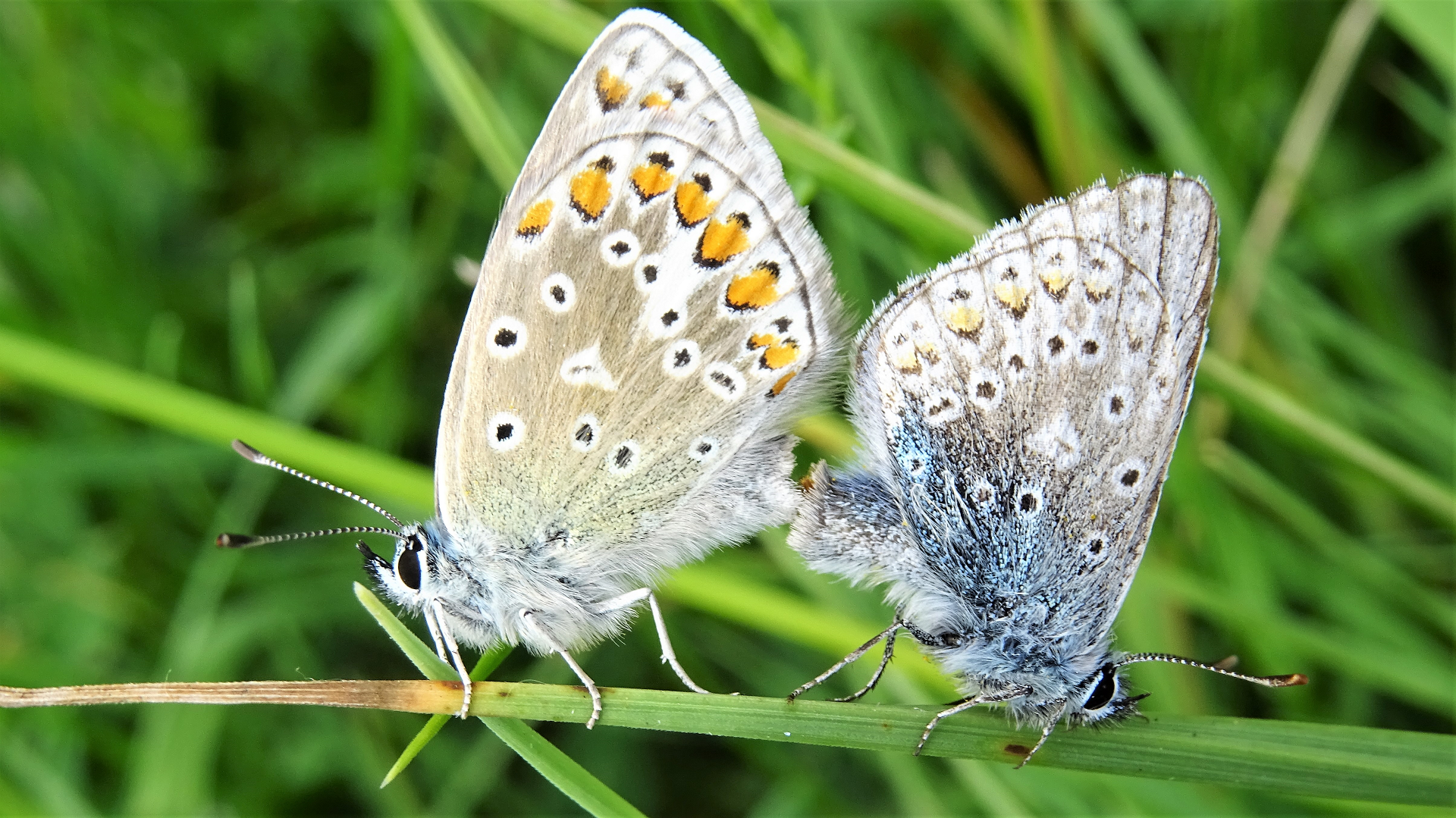
The Common Blue is a small butterfly with a wingspan of approximately 35mm, typically found in meadows during the summer and autumn months. Males are brightly coloured, while females tend to be less colourful and may appear nearly entirely brown.
#
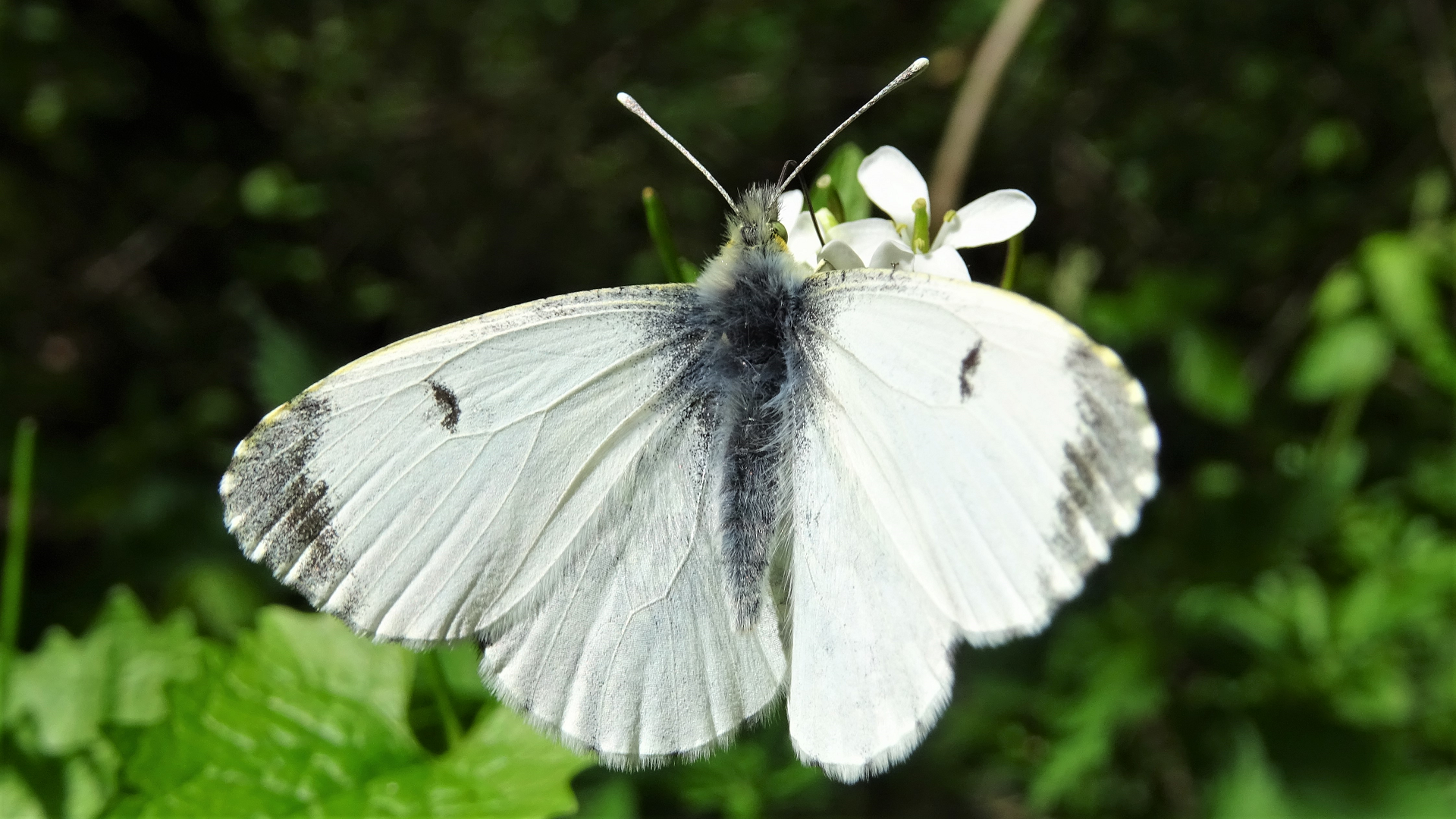
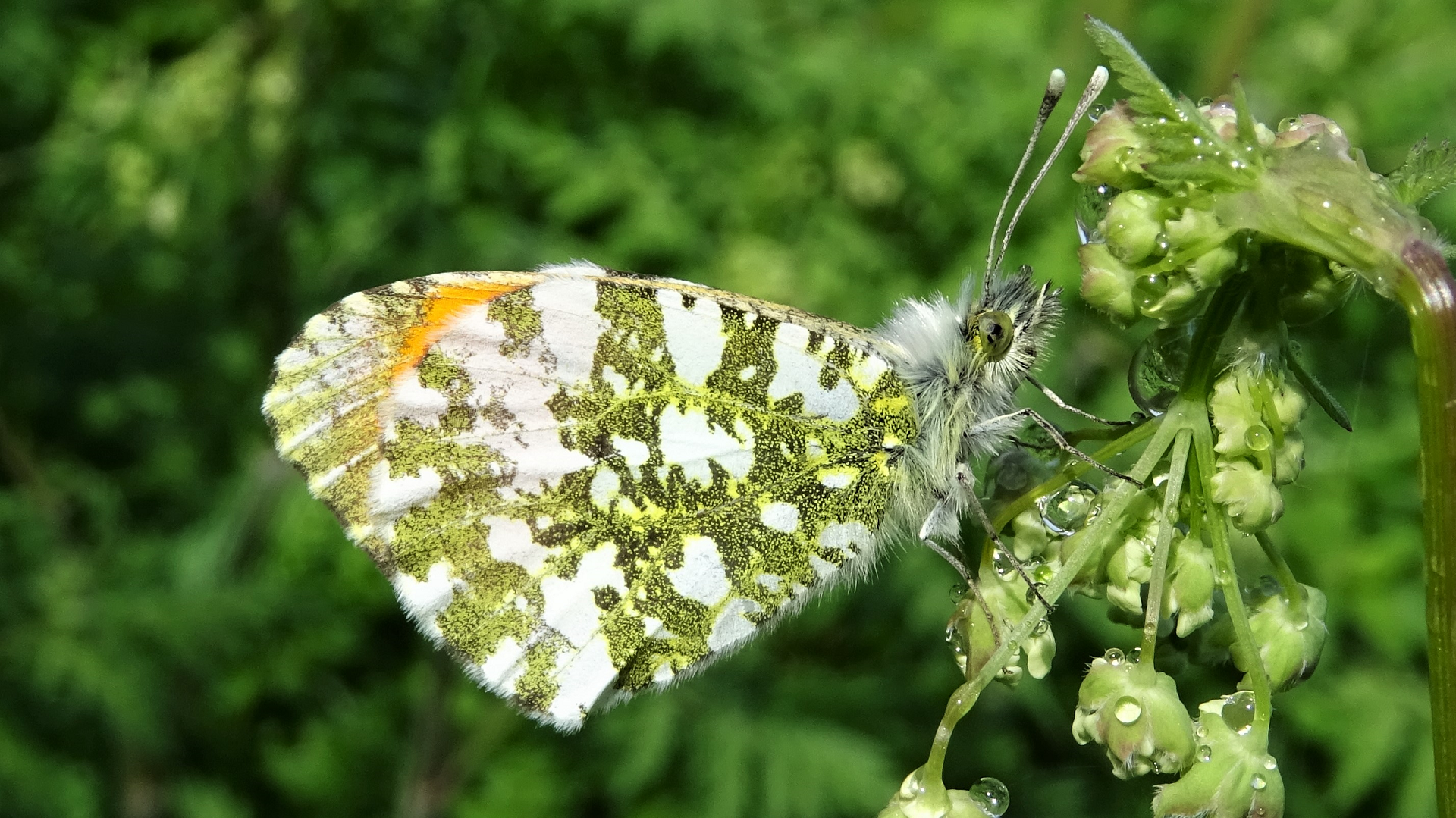
Orange-tip
Anthocharis cardamines
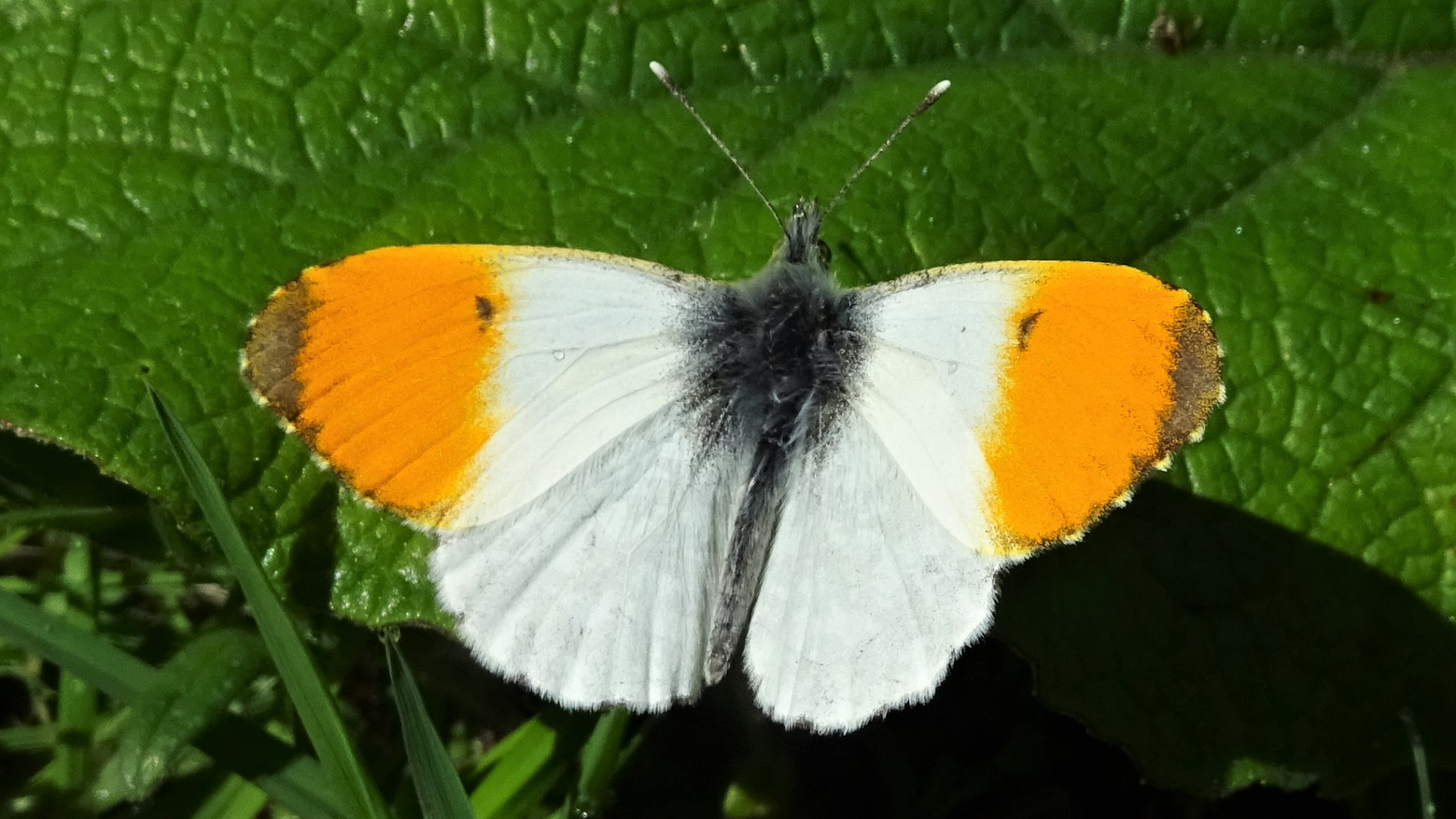
Males are distinguished by the orange visible when the wings are open, whilst females have no orange on the wings. Both sexes have mottled green underwings.
#
Brimstone Butterfly
Gonepteryx rhamni

Brimstone Butterflies are known to rest under bramble, making them challenging to see. Can you spot one in this picture?
#
Feathered Leaf-cutter
Incurvaria masculella
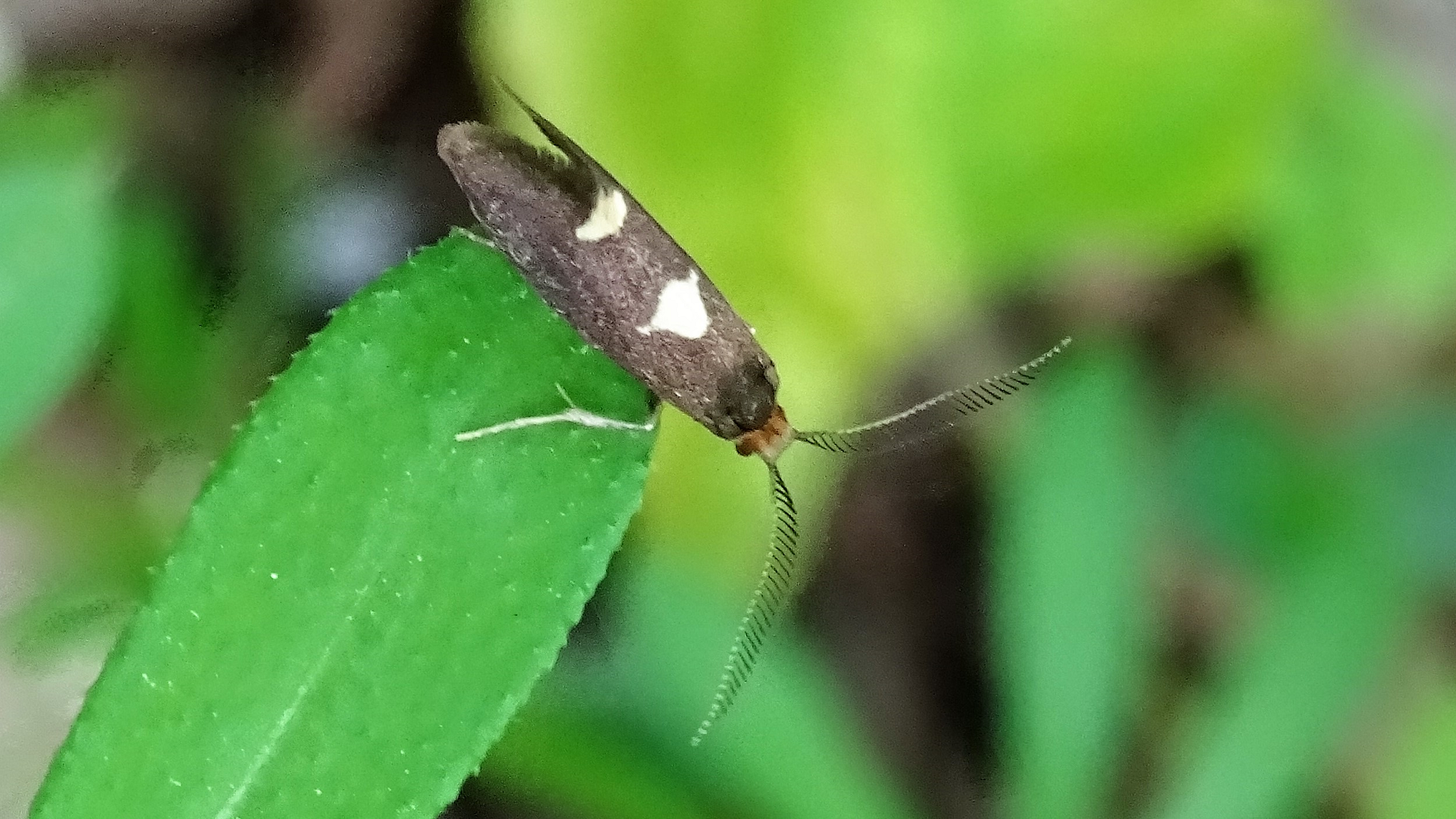
Males are similar to
Incurvaria pectinea, as both have feathered antennae, which is a trait not commonly found in micro moths. This species exhibits more distinct contrasting features and is also referred to as "Feathered Bright."
#
Yellow-barred Long-horn
Nemophora degeerella
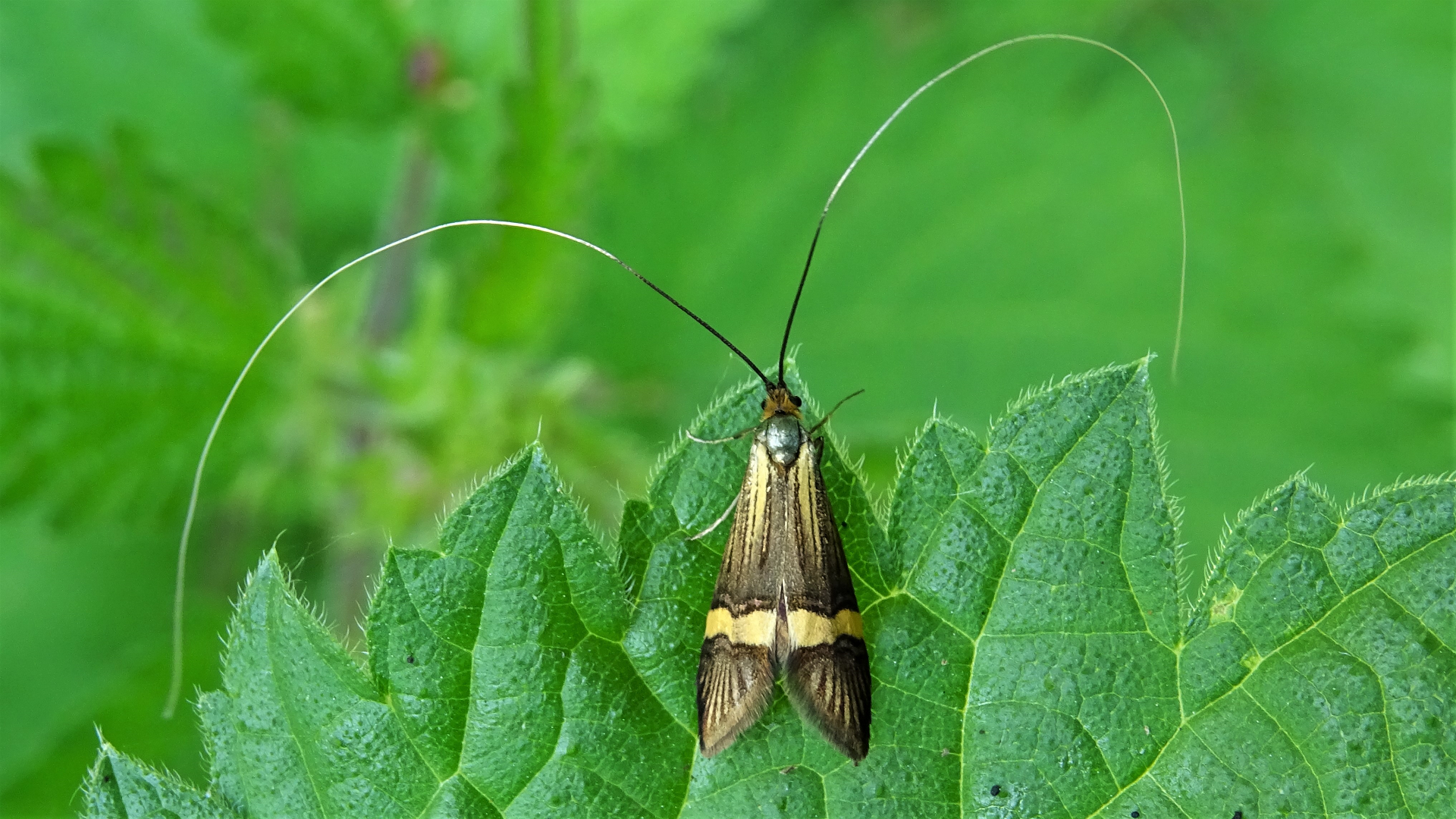
These moths are commonly observed in large groups fluttering around bushes in sunny weather during May. Males possess long antennae, while females have shorter ones. The larvae consume leaf litter found on the ground.
#
Green Longhorn 07.006
Adela reaumurella
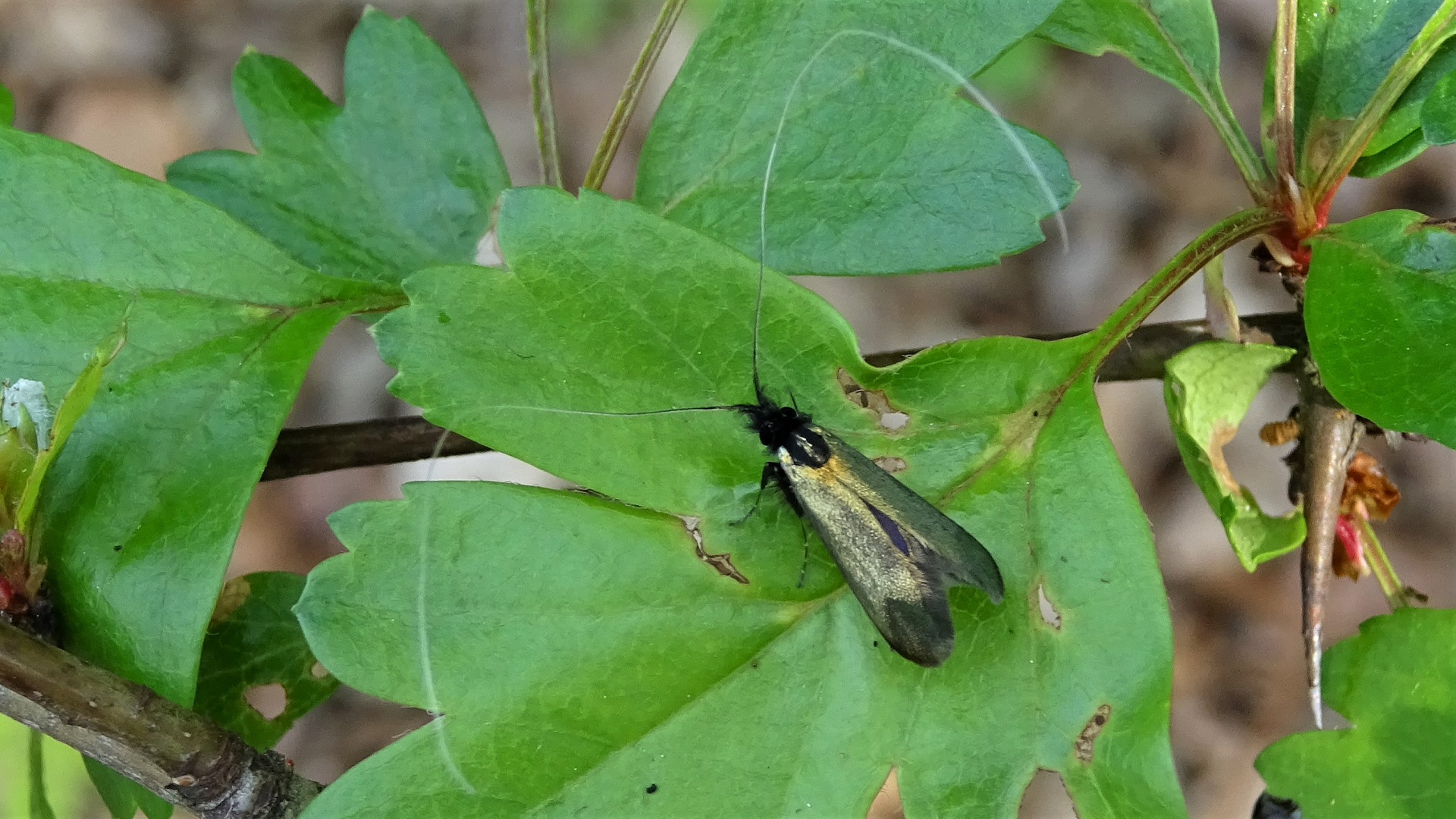
Daytime flyers with bronzy or metallic greenish forewings. The males have long, whitish antennae, antennae belonging to females are shorter. When not dancing over hedgerows in the sunshine they rest on trees and other vegetation in large numbers.
#
Common Plume
Emmelina monodactyla
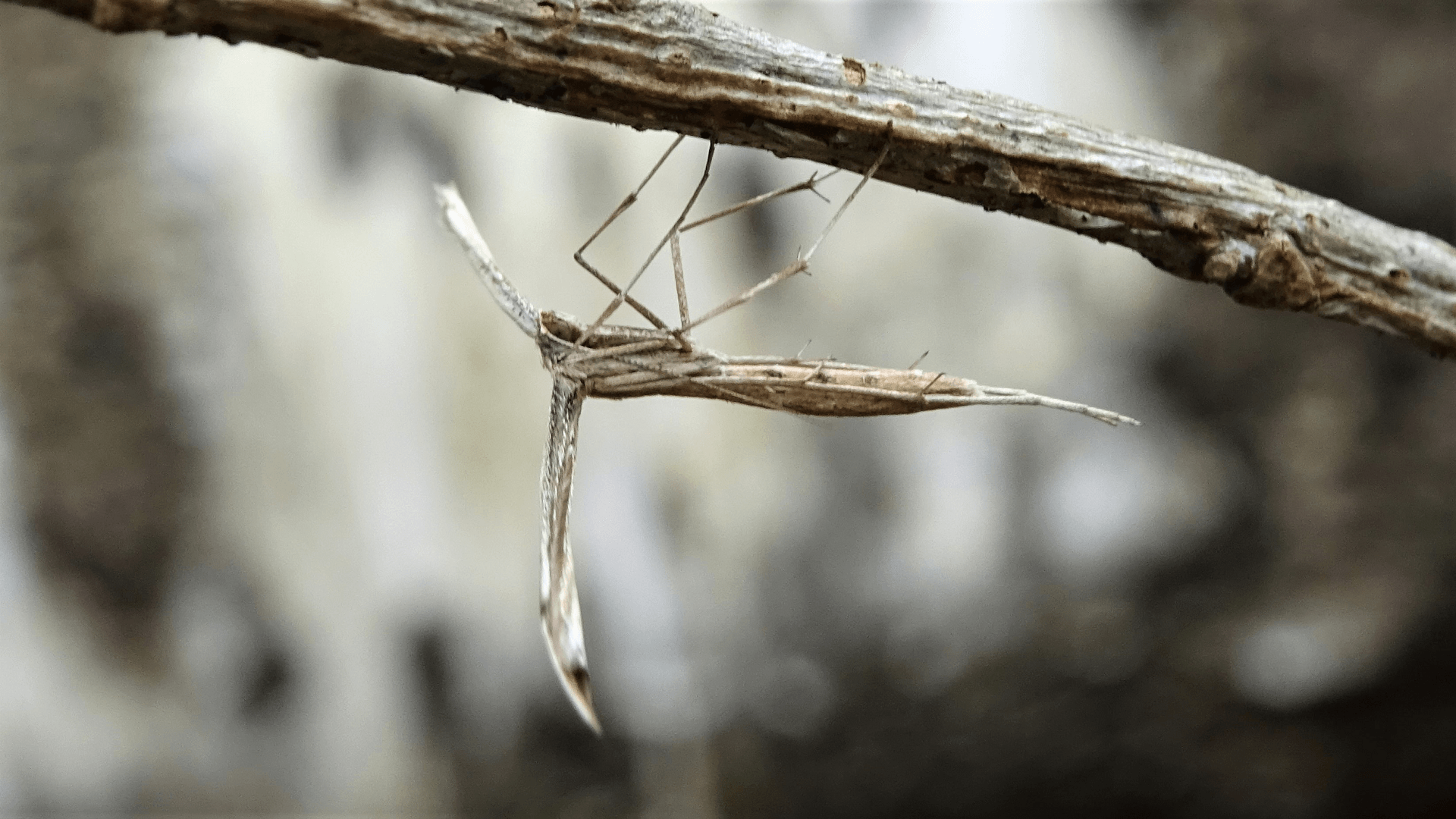
A Plume Moth at rest with the wings folded.
#
Mint Moth
Pyrausta aurata
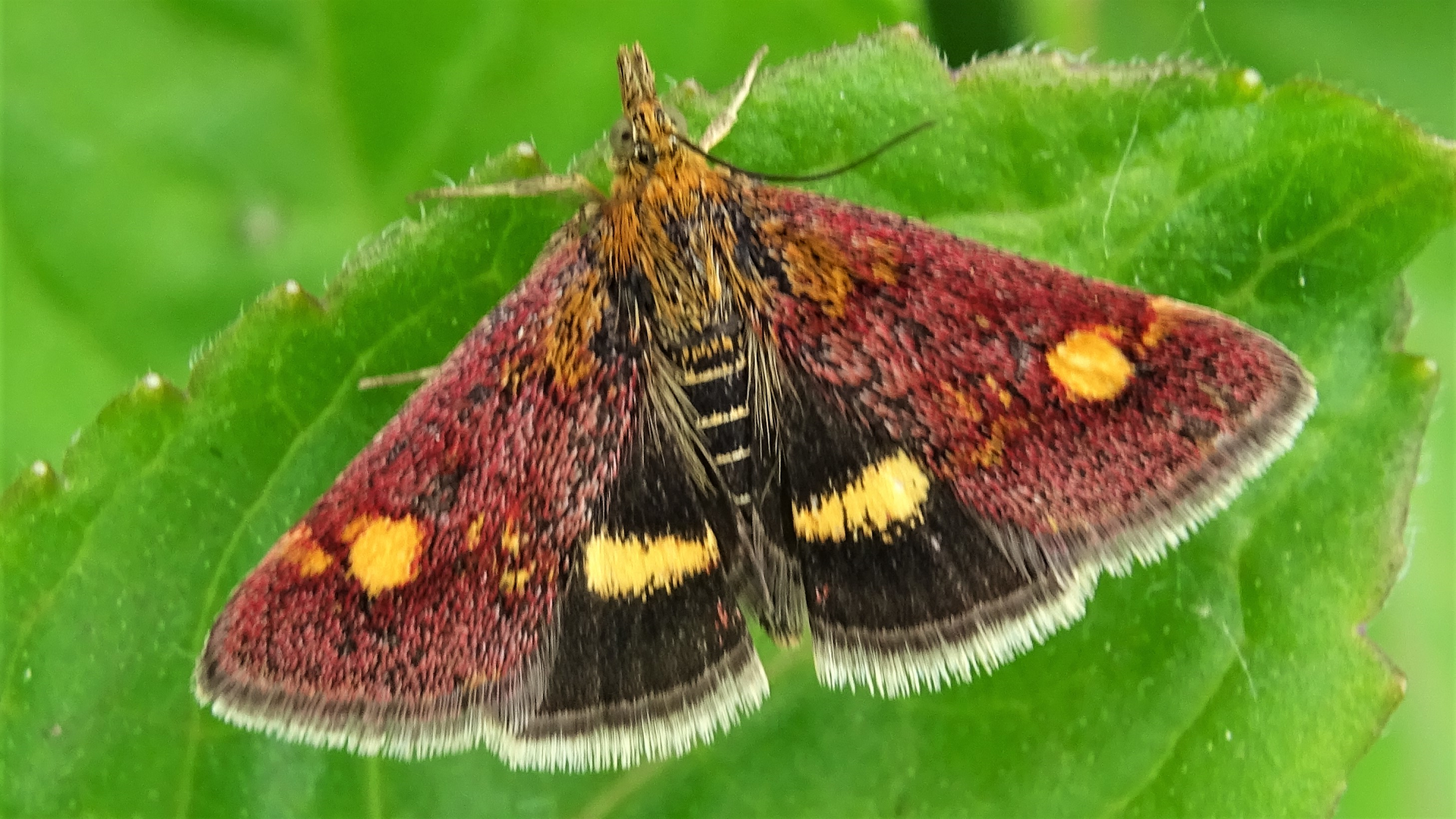
This small moth is active both during the day and at night. It is frequently observed on Water Mint along the perimeter of Hainault Lake from May to August on sunny days. It is also referred to as the Small Purple & Gold.
#
March Tubic
Diurnea fagella
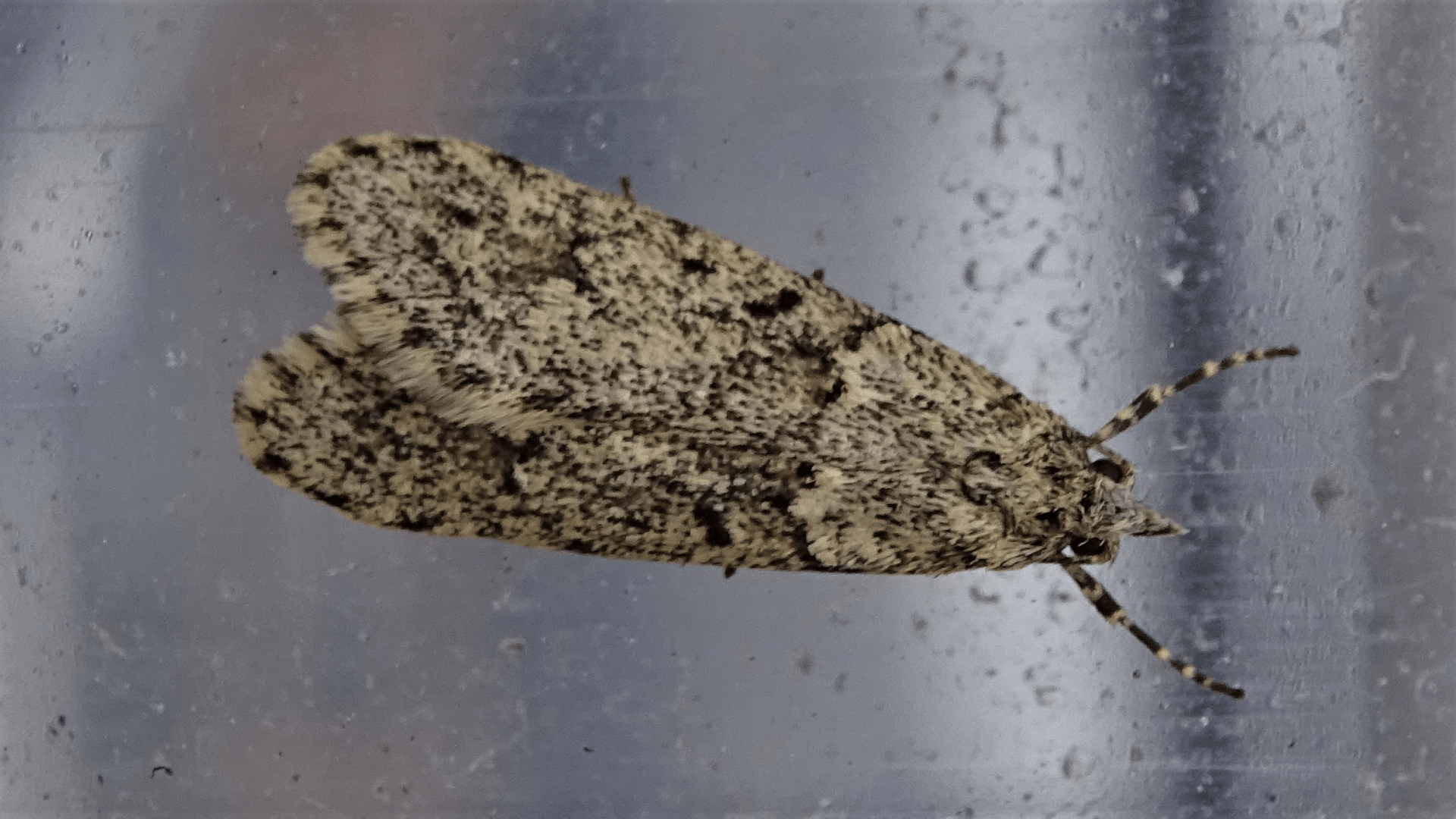
An early spring species often found resting on beech trunks at Dog Kennel Hill. Males are larger than females. Females cannot fly, but have been known to glide to the ground. This particular individual was photographed on the bus shelter near Hainault Forest's main entrance.
#
Yellow Shell
Camptogramma bilineata
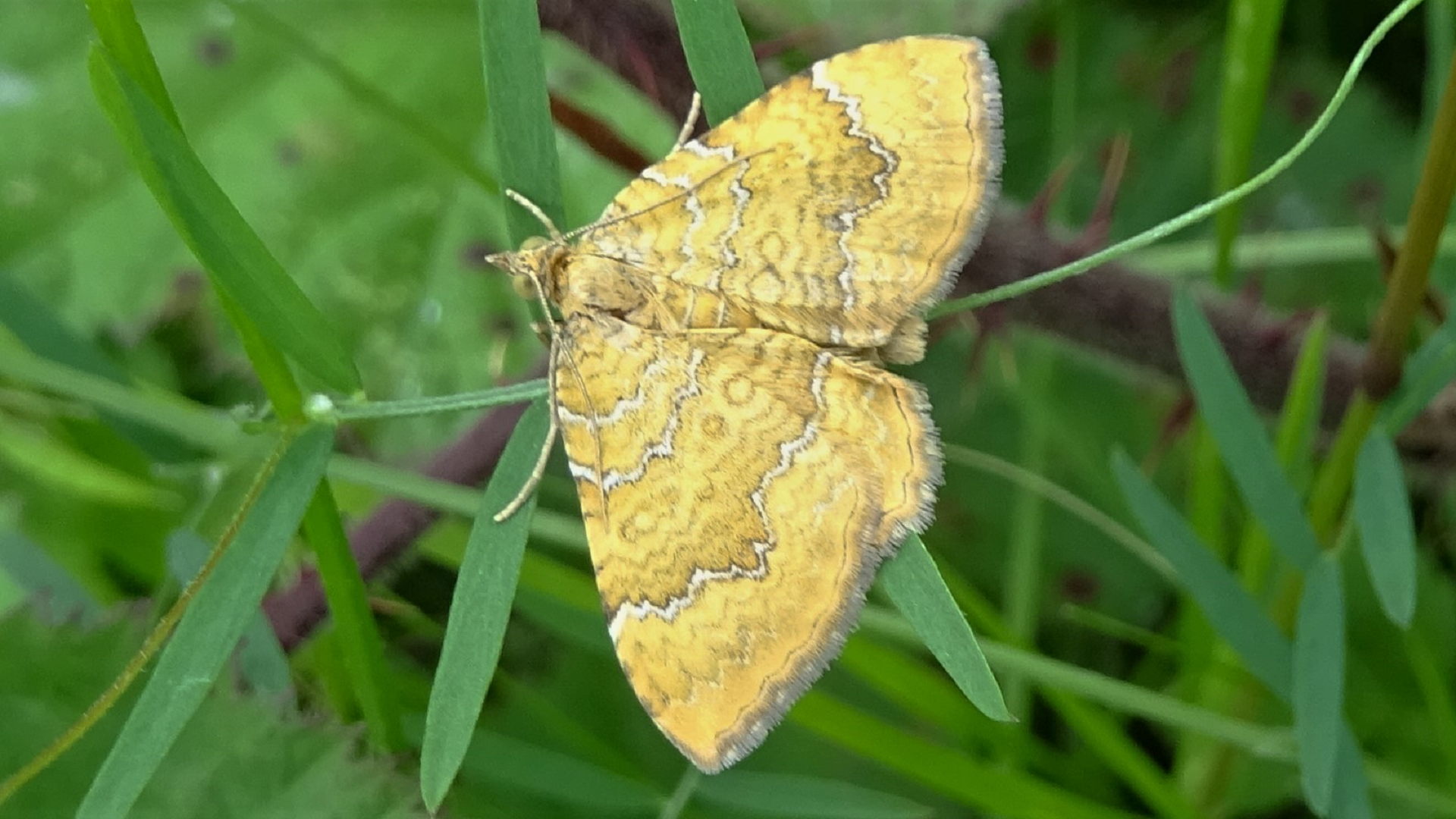
A day-flying moth commonly observed in meadows from June to August. Its colouration and patterning exhibit considerable variability. The larvae feed on plants such as bedstraw and cleavers.
#
Burnet Companion
Euclidia glyphica
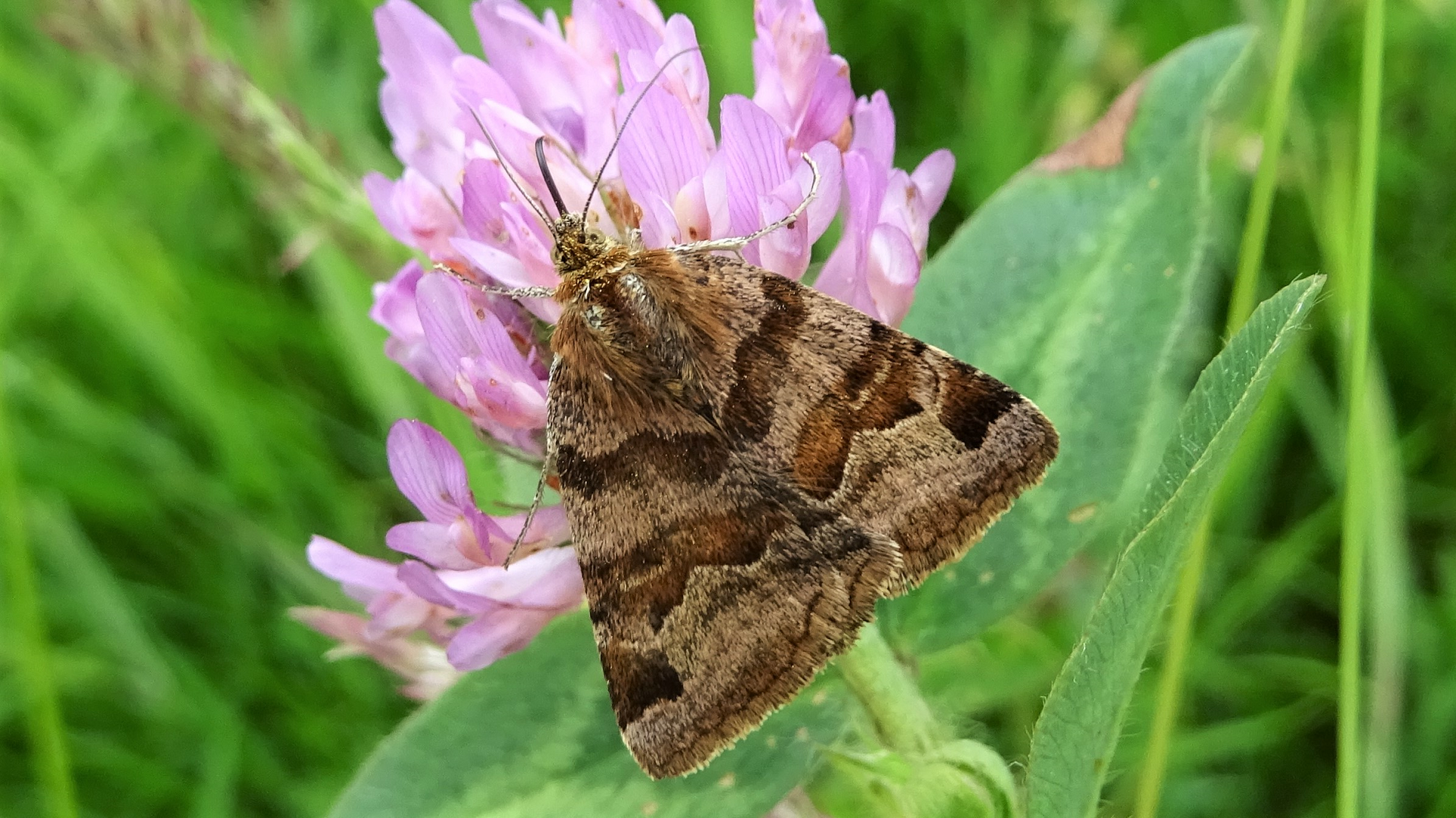
A day-flying moth frequently seen in locations similar to those visited by Burnet moths, which is the reason for its name.
#
Vapourer Moth
Orgyia antiqua
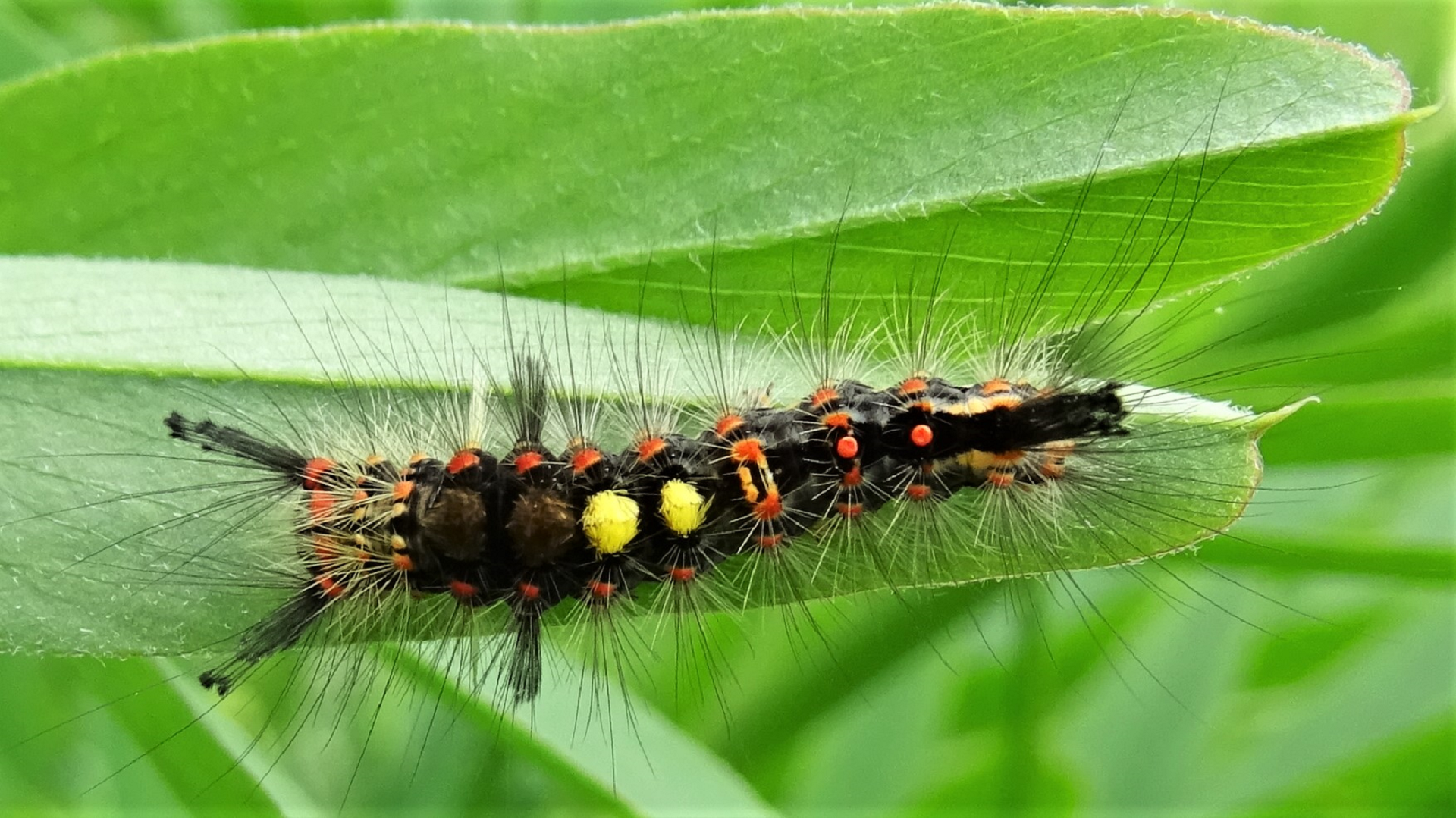
Vapourer moth larvae are very distinctive. The dark body has several large hair tufts. The larval stage usually takes place from May until September. Full-grown larvae are seen on various tree and shrubs during late summer.
#
Forest Cuckoo Bumblebee
Bombus sylvestris
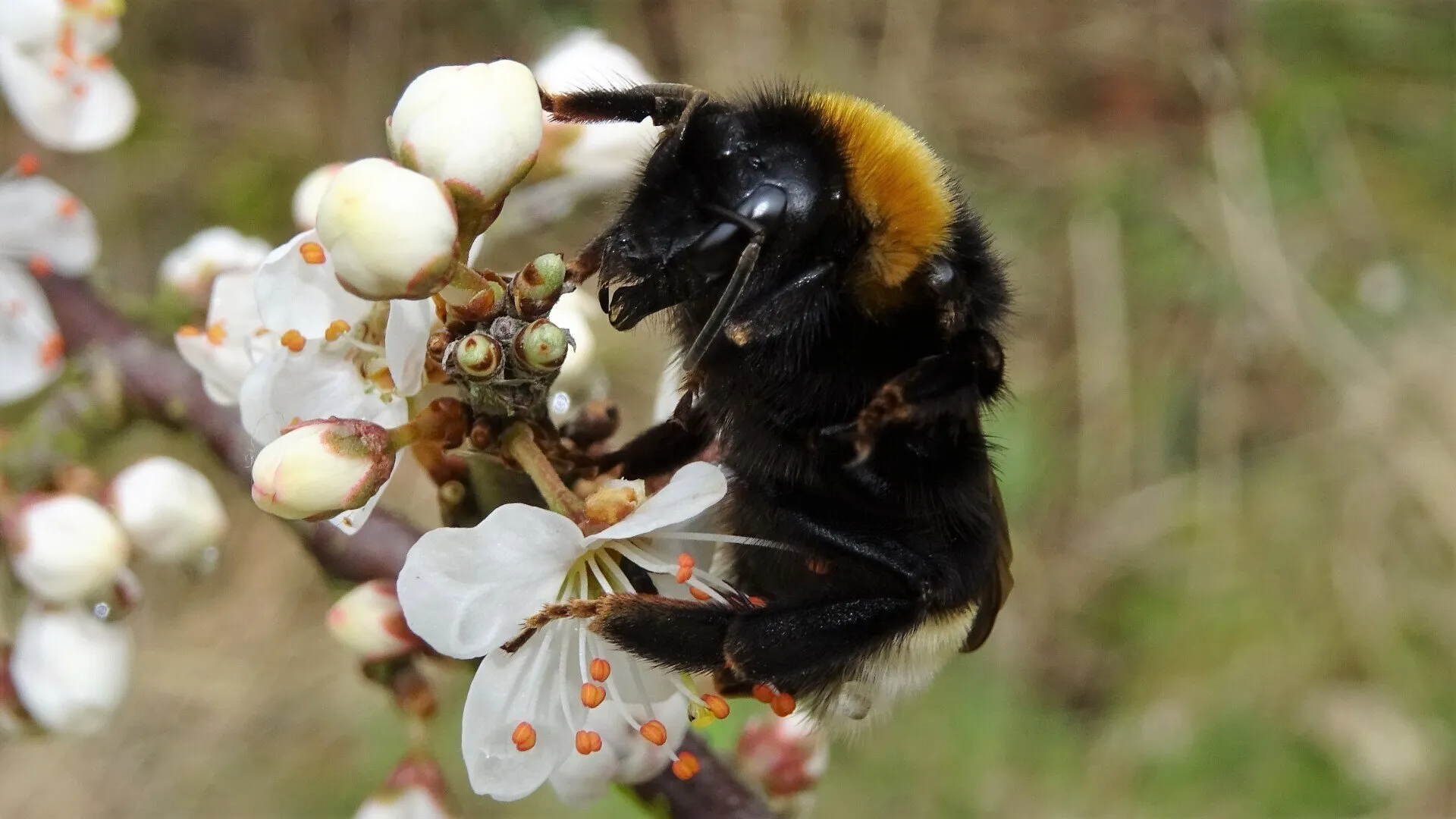
This species does not build a nest but occupies those of other bumblebees instead. Females begin searching for a host in April and are frequently observed resting on flowers in sunny conditions. The face is approximately as wide as it is long, and the wings are dark. They visit flowers to feed on nectar and pollen but do not gather any resources to feed their offspring.
#
Gooden's Nomad Bee
Nomada goodeniana
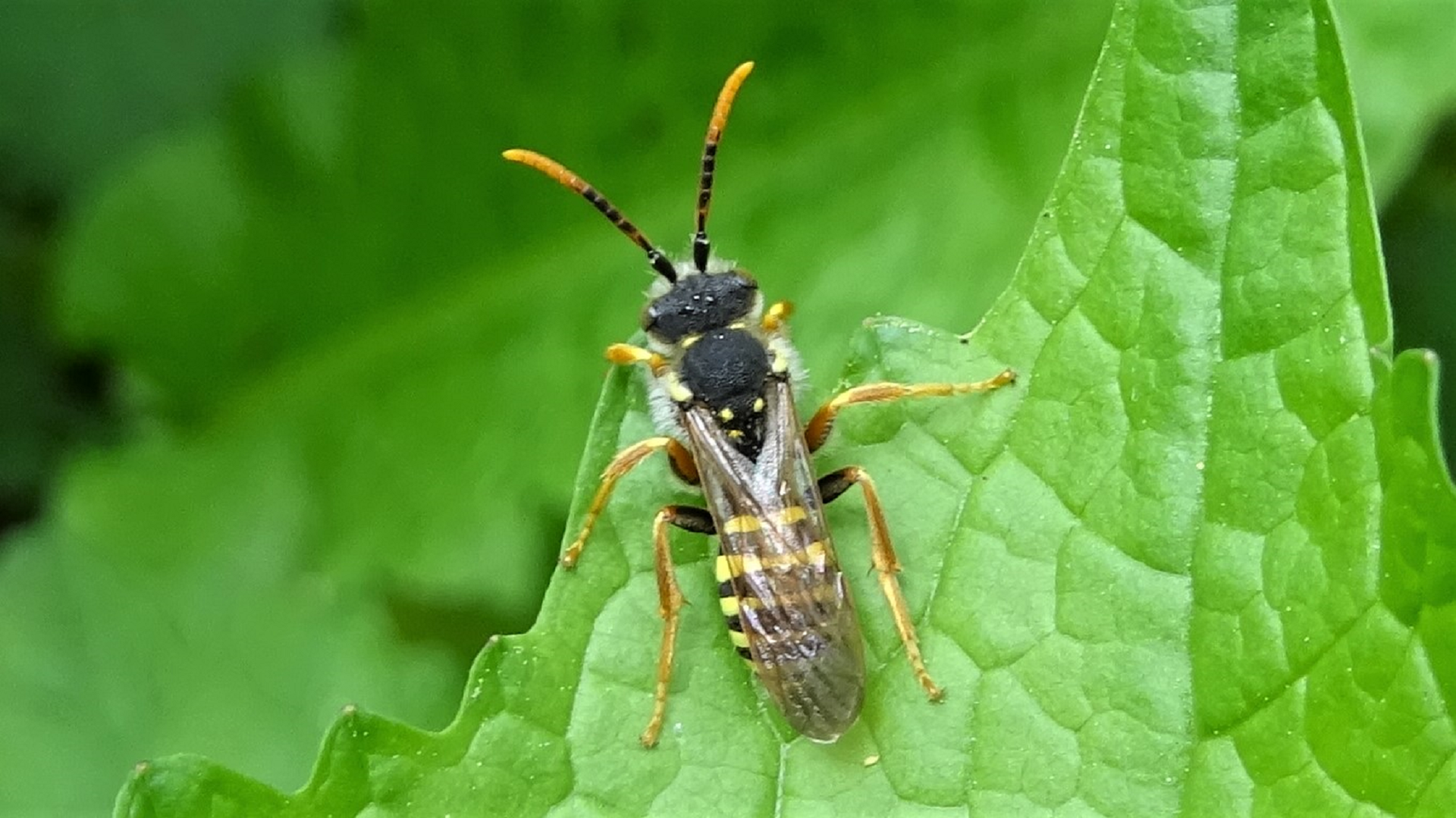
This is a type of cuckoo bee. It has a wasp-like appearance with bright yellow and black stripes on its abdomen, along with orange antennae and legs. These bees do not build nests; instead, they are kleptoparasites that target pollen stores in solitary bee nests and lay their own eggs inside. They typically fly from April to June.
#
Cuckoo Wasp
Chrysididae
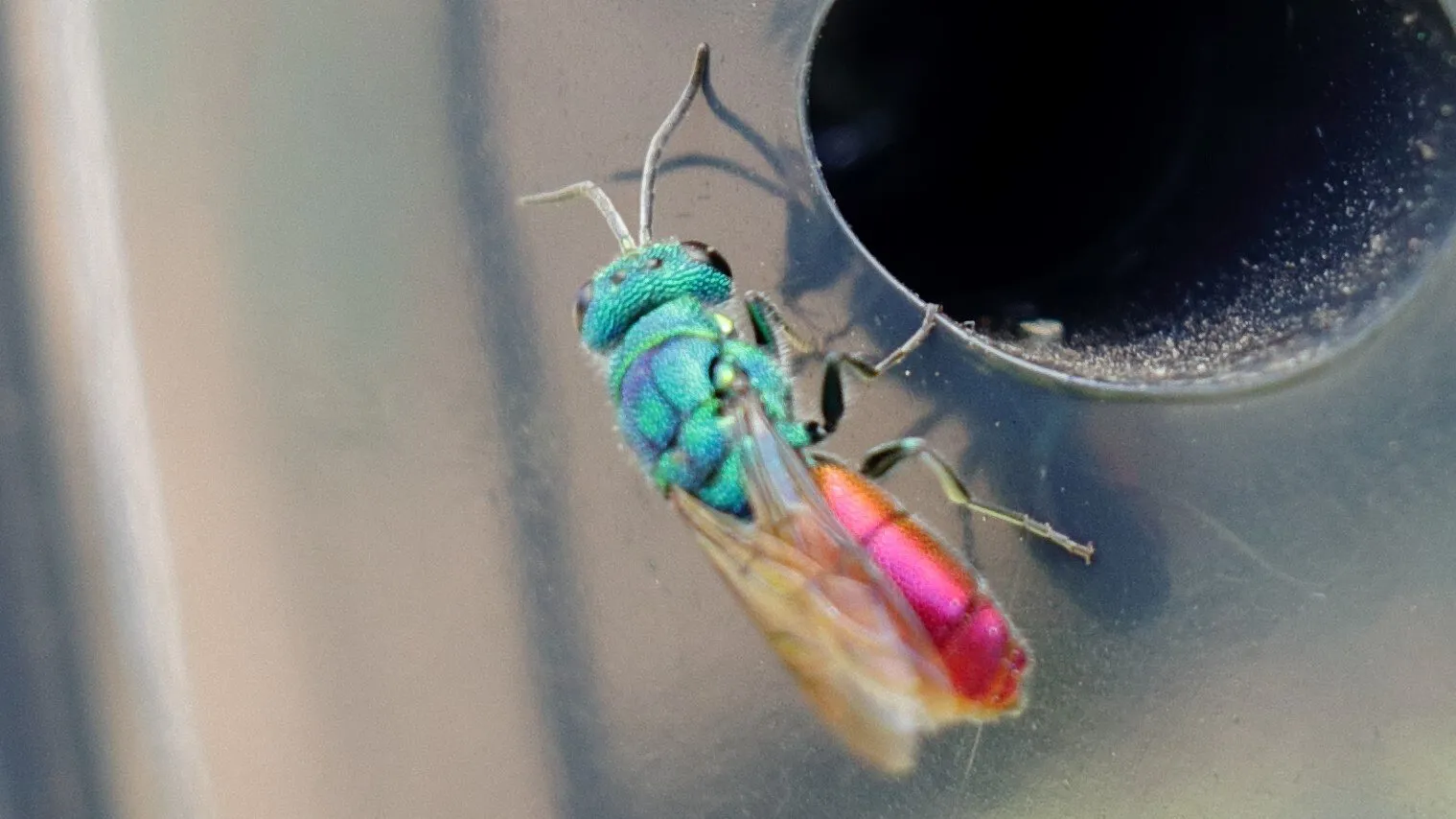
There are several cuckoo wasps that look very similar. They are relatively small, ranging from 4-11mm, and generally have metallic bodies. Their eggs are deposited in nests of different species. The larvae emerge to feed on the eggs and young of the host before consuming the host's food source. These are solitary creatures that usually fly on warm, dry, sunny days.
#
Broad-bodied Chaser
Libellula depressa
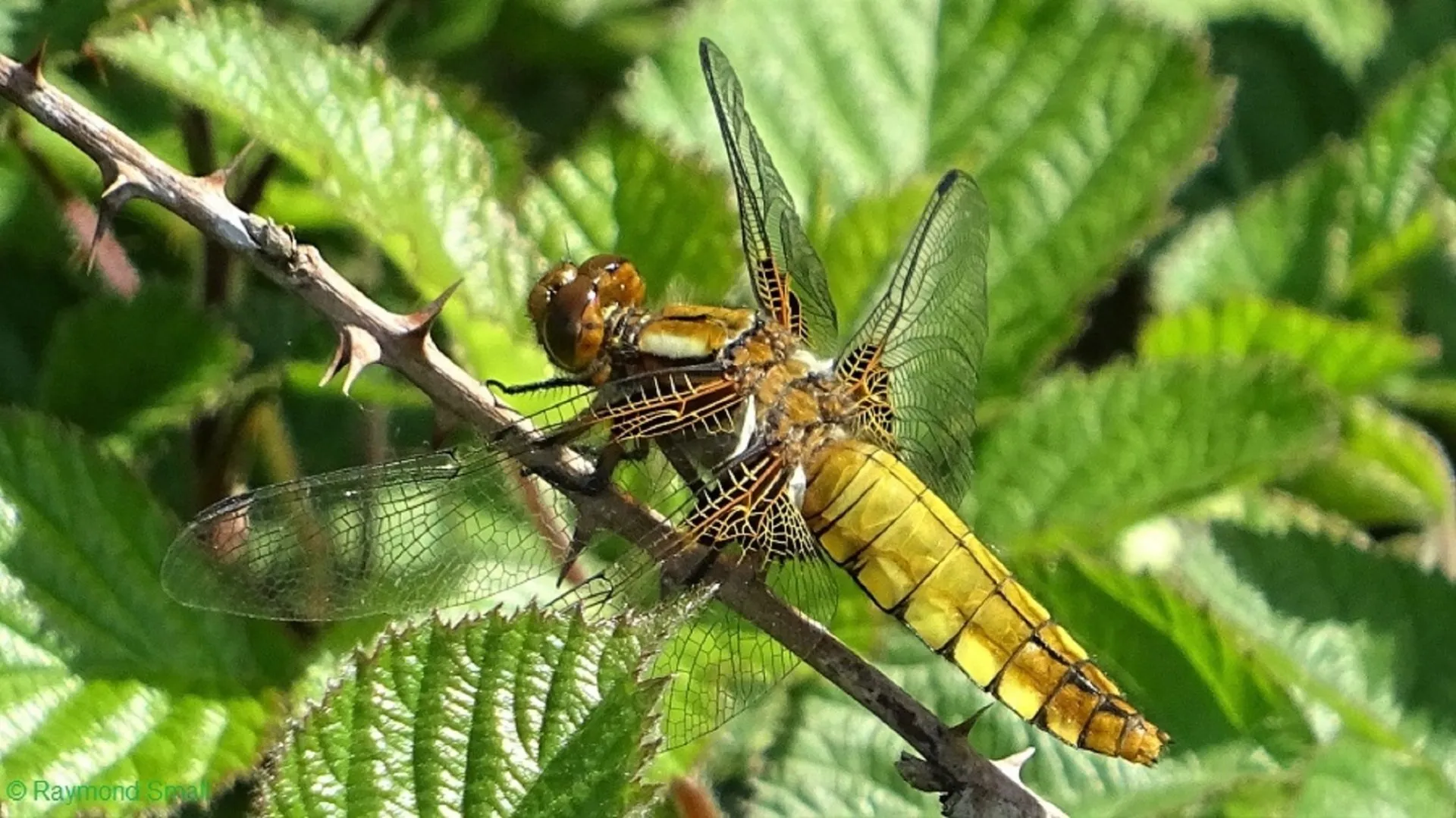
Females are yellow while males are blue. Both sexes feature very dark brown wing bases and yellow spots on the sides of their bodies.
#
Banded Demoiselle
Calopteryx splendens
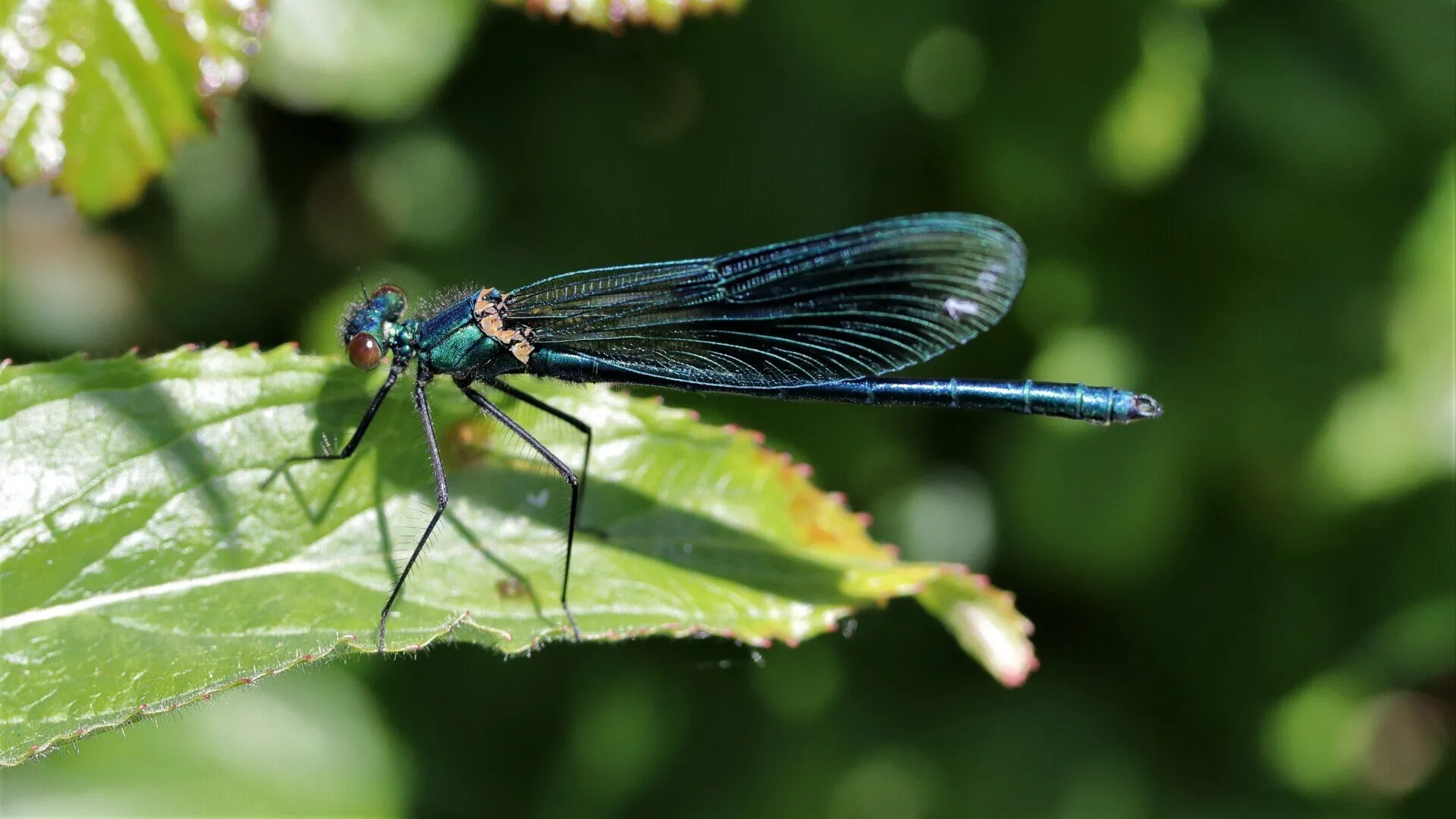
A damselfly with translucent wings featuring dark bands, usually seen near slow-flowing streams and lakes on vegetation along the banks during June and July. The male exhibits a metallic-blue body, while the female has a metallic-green body.
#
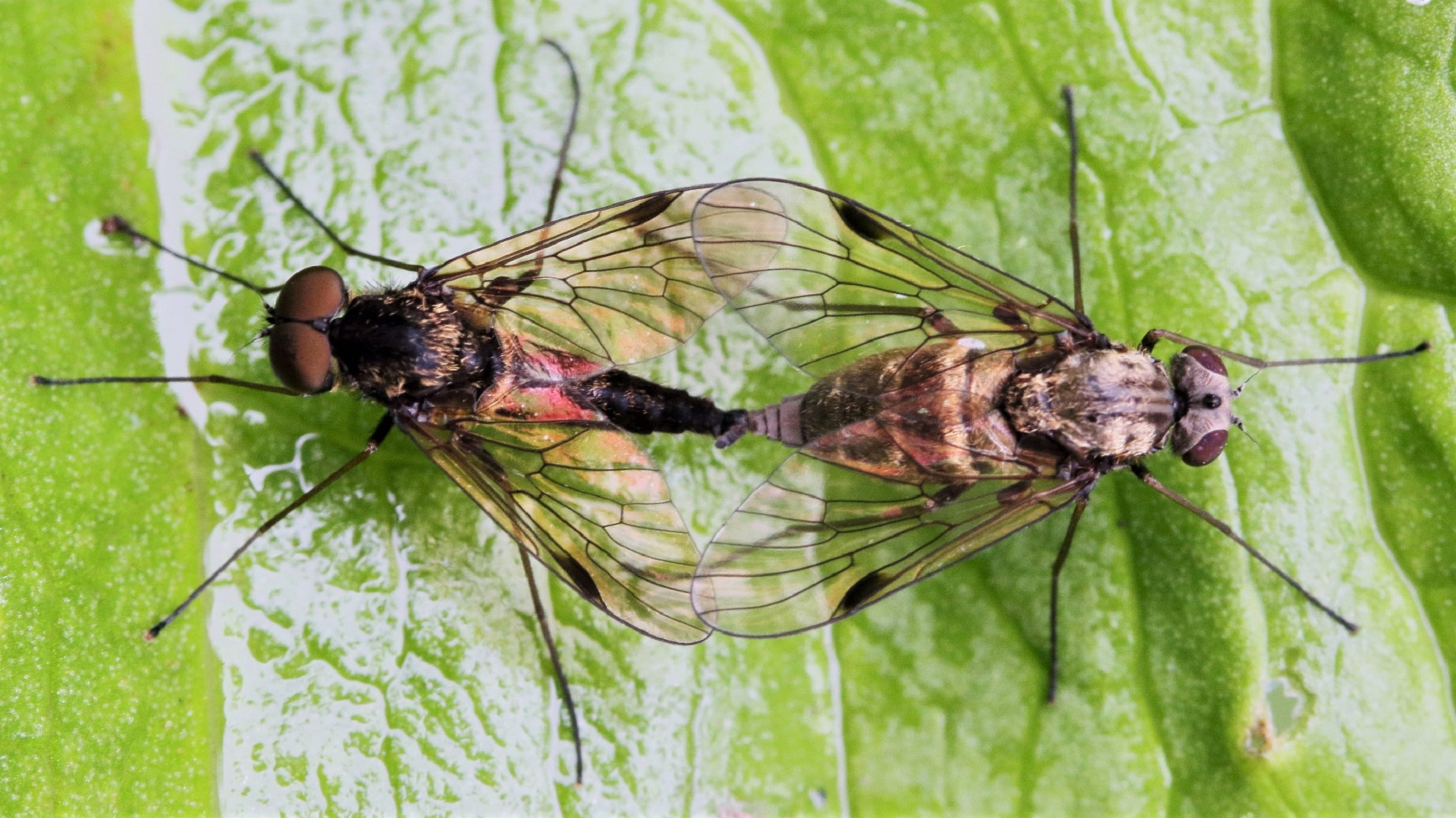
Black Snipefly
Chrysopilus cristatus
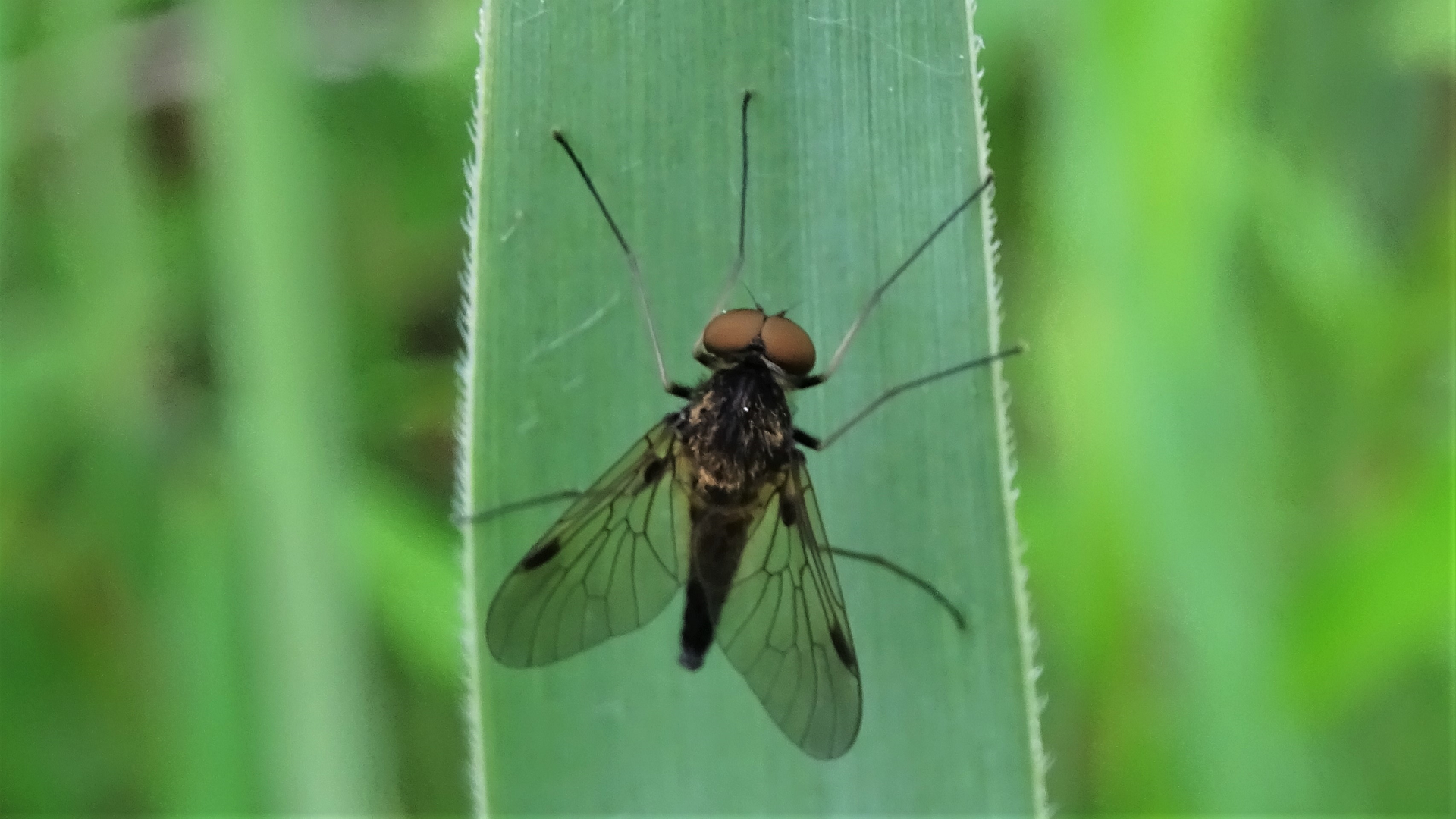
This species is found in damp, shaded areas and is typically observed from May to July. It preys on small organisms that come close to its perch. Its larvae that exist in leaf mould also exhibit carnivorous behaviour. The female is plumper and has a creamy hairy abdomen. Males are slimmer with a hairy brown abdomen. Hairs wear off with age in both sexes.
#
Footballer Hoverfly
Helophilus pendulus
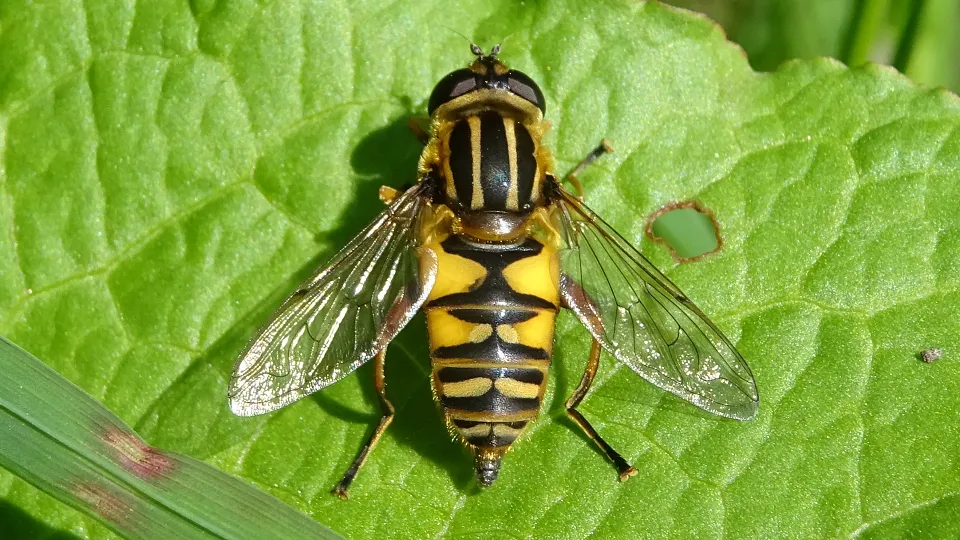
A species frequently observed on various flowers from May to October. The face is yellow with a central black stripe. The wings measure between 8 and 11.5mm in length. Females can be recognised by the conical point at the end of their abdomen. The common name is derived from the resemblance of the stripes to those found on certain football shirts.
#
Great Pied Hoverfly
Volucella pellucens
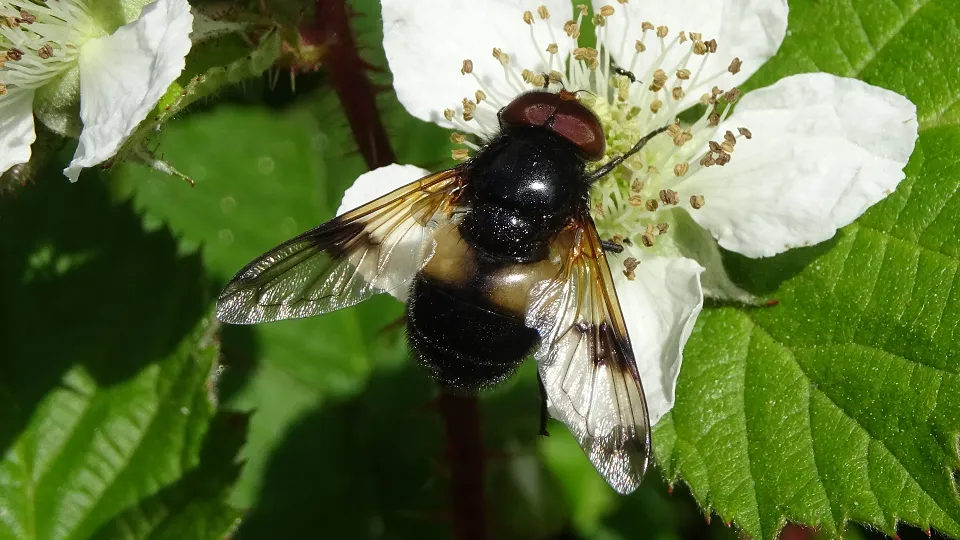
This is one of the largest hoverflies in Britain. It can be found in woods and copses, where it visits bramble and hogweed. It features an ivory-white waistband and dark patches on its wings. The peak flying months are June and July, but they can also be seen as late as October. The larvae inhabit wasp and bumblebee nests.
#
Thick-legged Hoverfly
Syritta pipiens
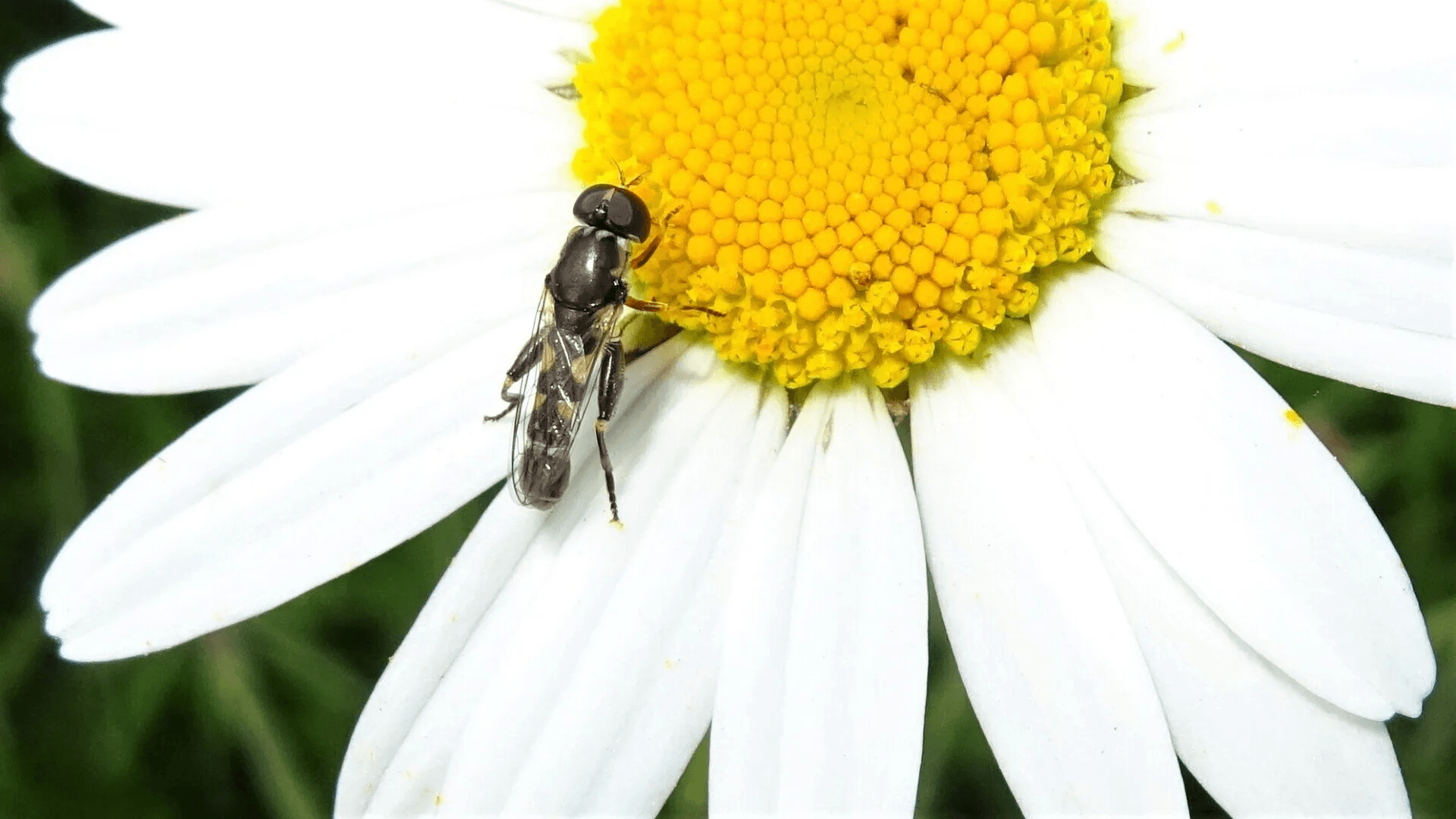
This is a common fast-flying species that visits ox-eye daisy and fleabane. Broad hind femora gave rise to the common name. Its larvae feed on rotting organic matter.
#
Cleg
Haematopota
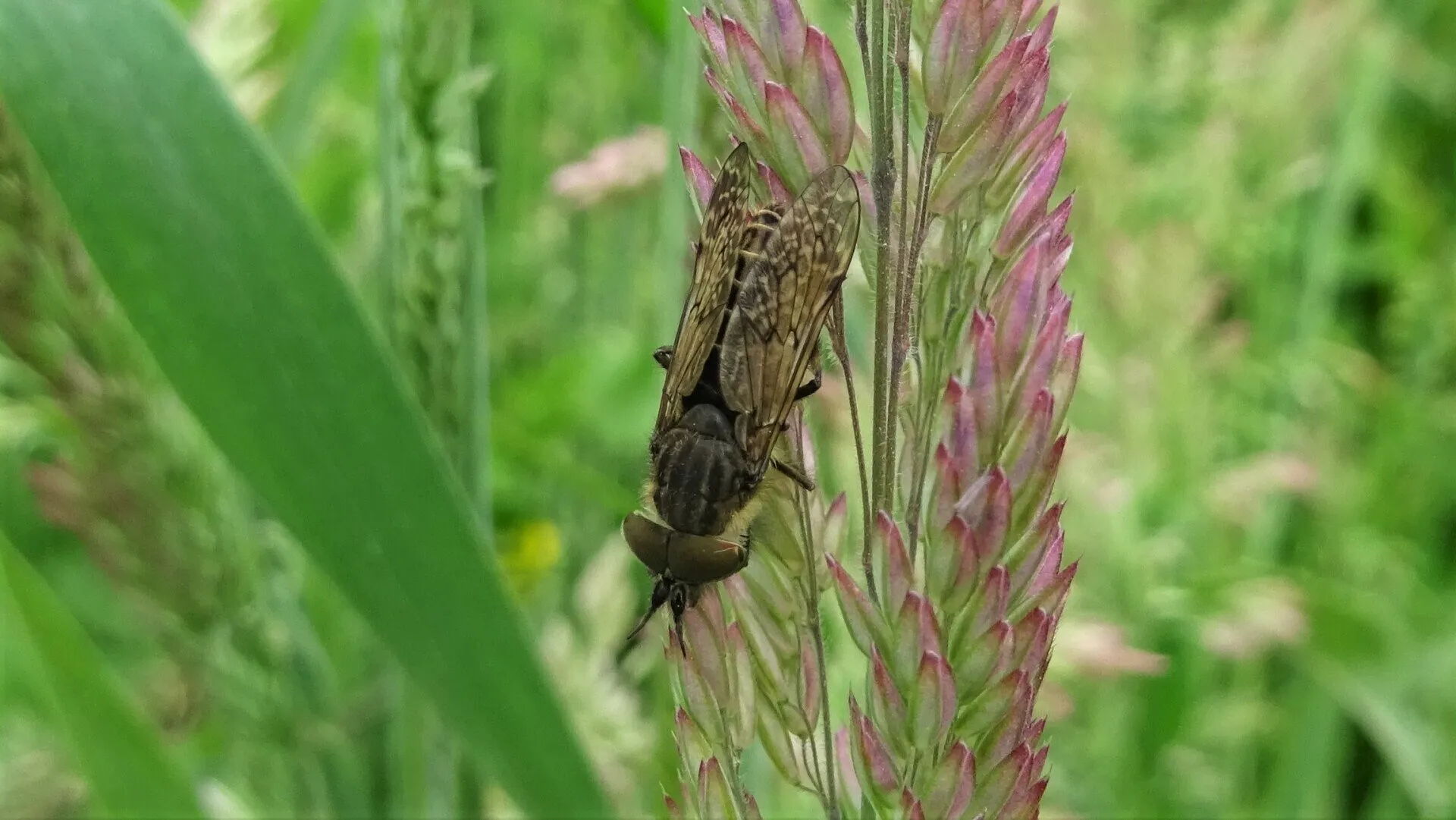
Clegs belong to the horse-fly family Tabanidae. They usually live around livestock and damp woodland. Males feed on nectar and are harmless, whereas females are blood-sucking insects able to give a painful bite. Clegs are generally seen from May to October.
#
Phantom Cranefly
Ptychoptera contaminata
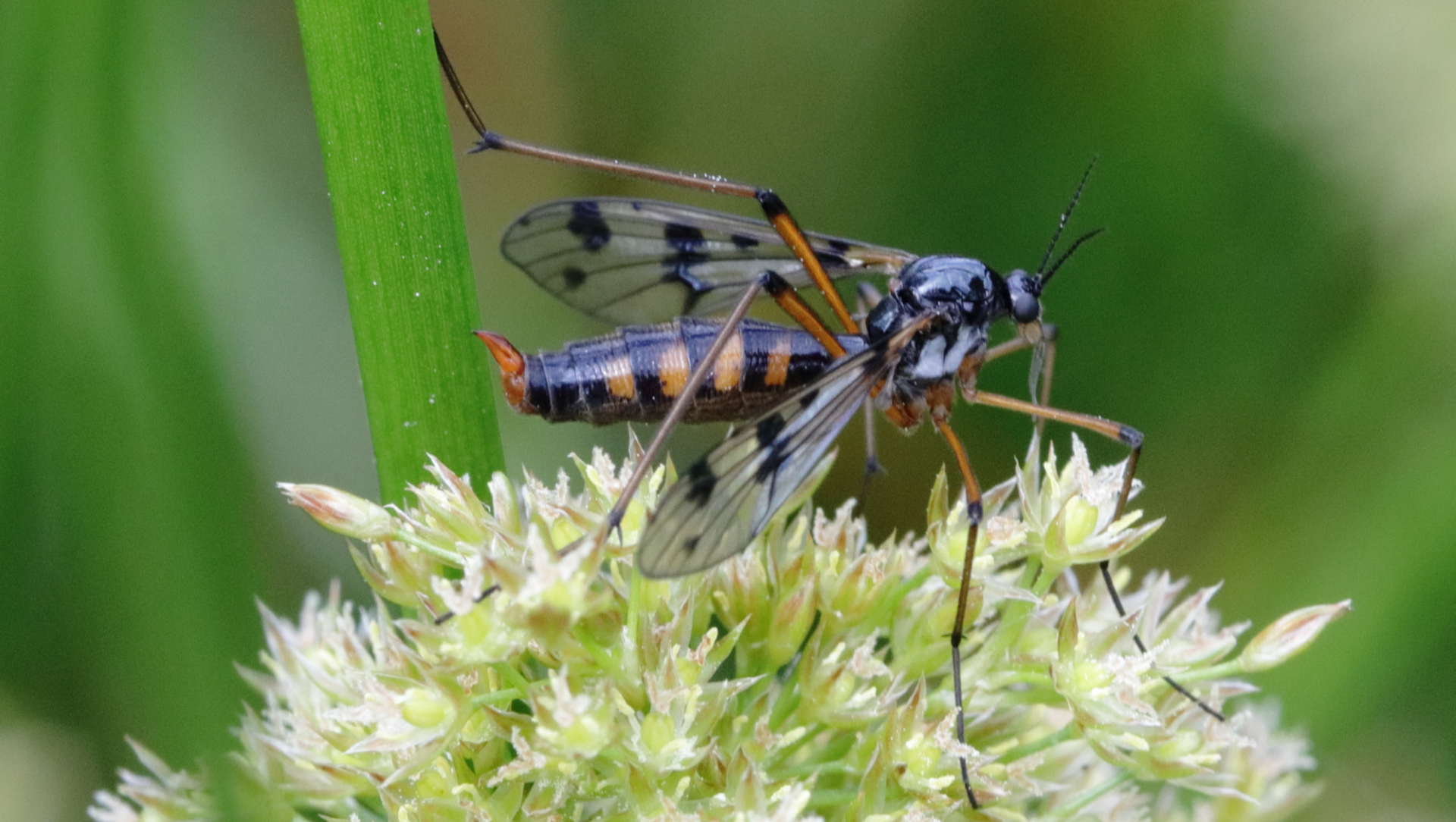
The Ptychopteridae are a small family of Phantom Craneflies that have long or thready antennae and are superficially similar in appearance to
tipuloid families. Verified by Essex Field Club recorder, Del Smith.
#
Sawfly
Tenthredo arcuata/brevicornis/notha/schaefferi agg.
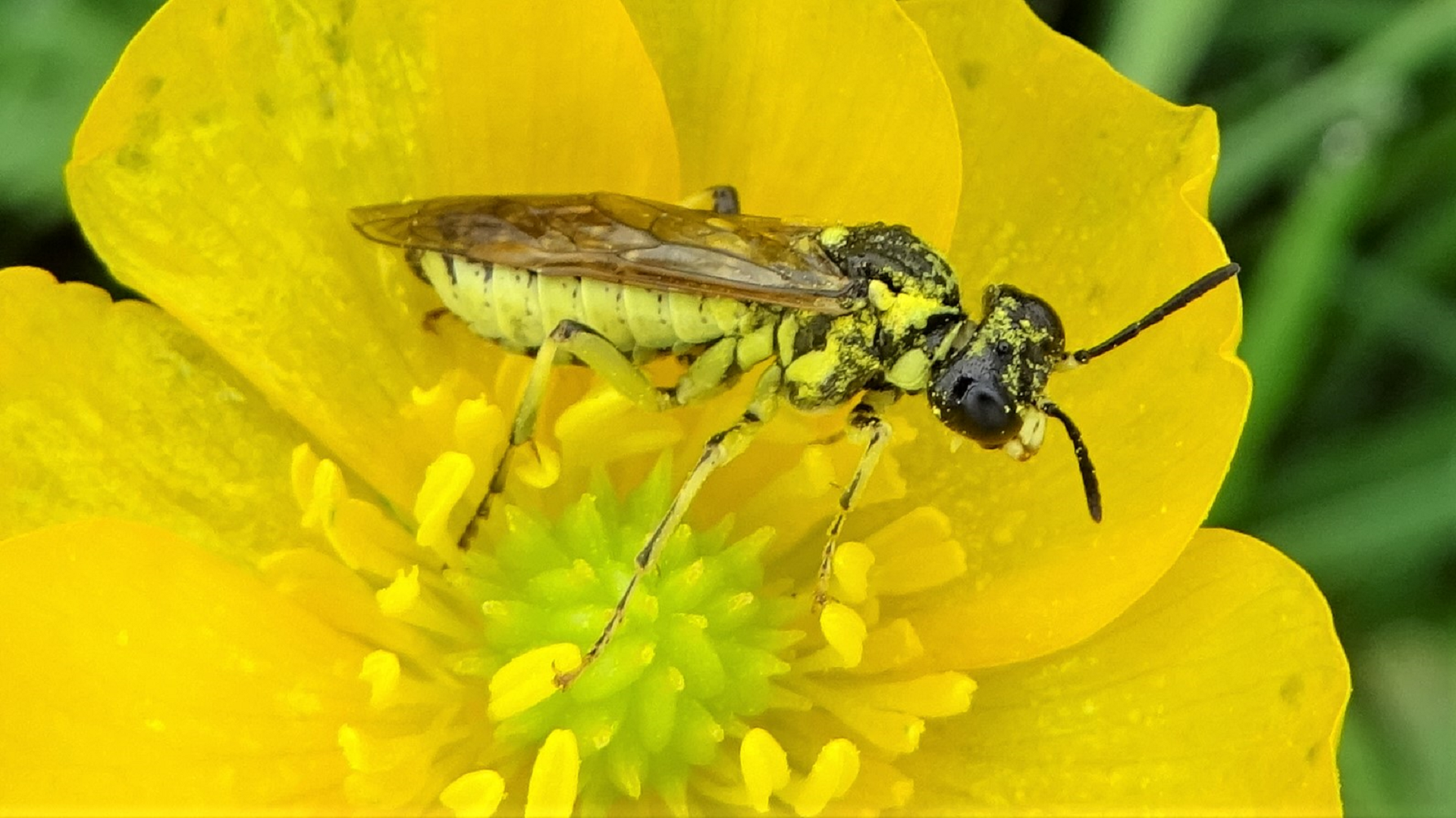
This is one of four species of sawflies that are challenging to differentiate. They are found on plants like meadow vetch, white clover, buttercups, and bird's-foot trefoil from April to August.
#
Brassica Bug
Eurydema oleracea
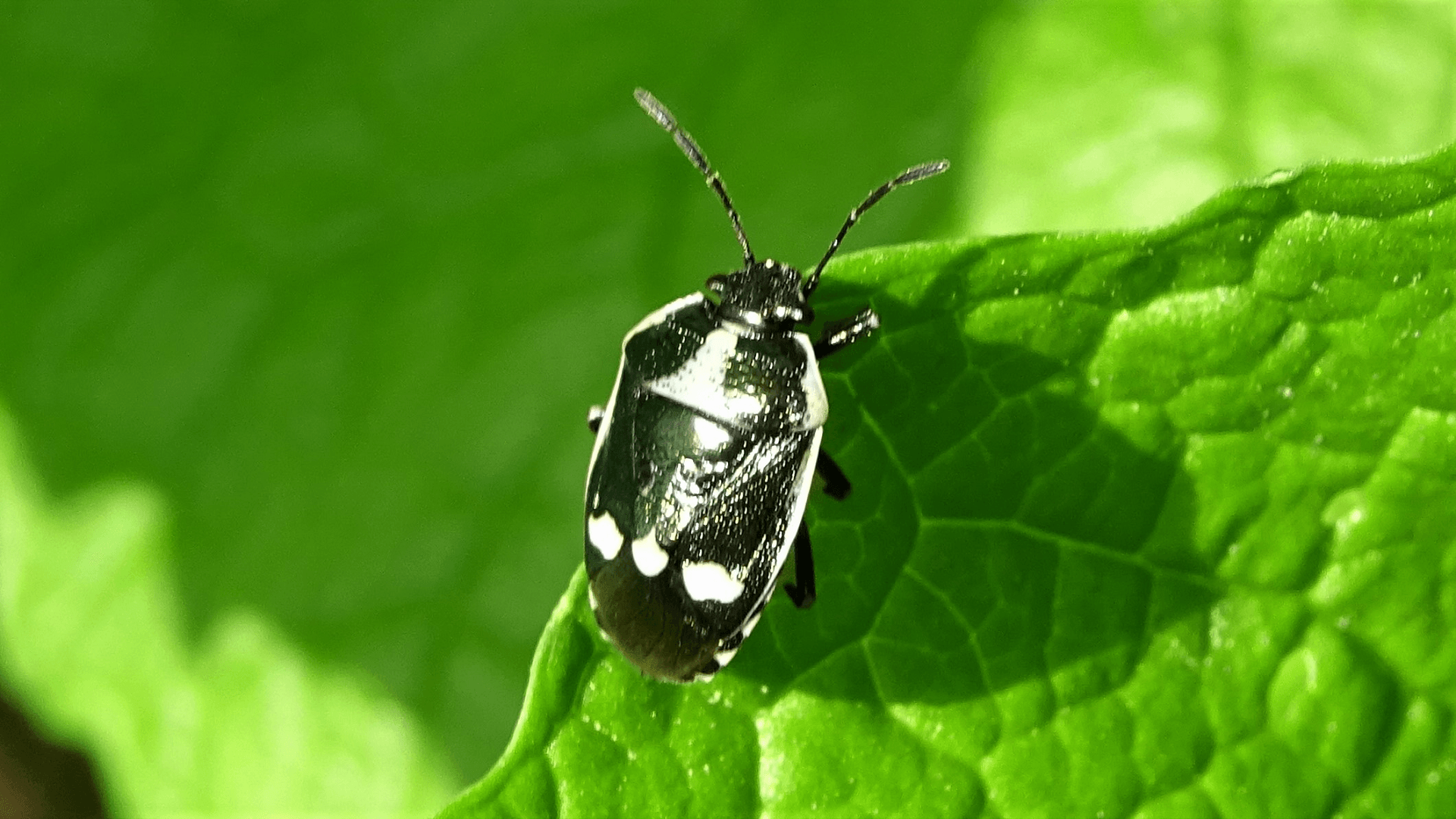
Markings can be different colours, including red, yellow, white, cream, or orange. Adults hibernate during the winter and emerge in the spring. Their food plants include garlic mustard and related species.
#
Gorse Shieldbug
Piezodorus lituratus
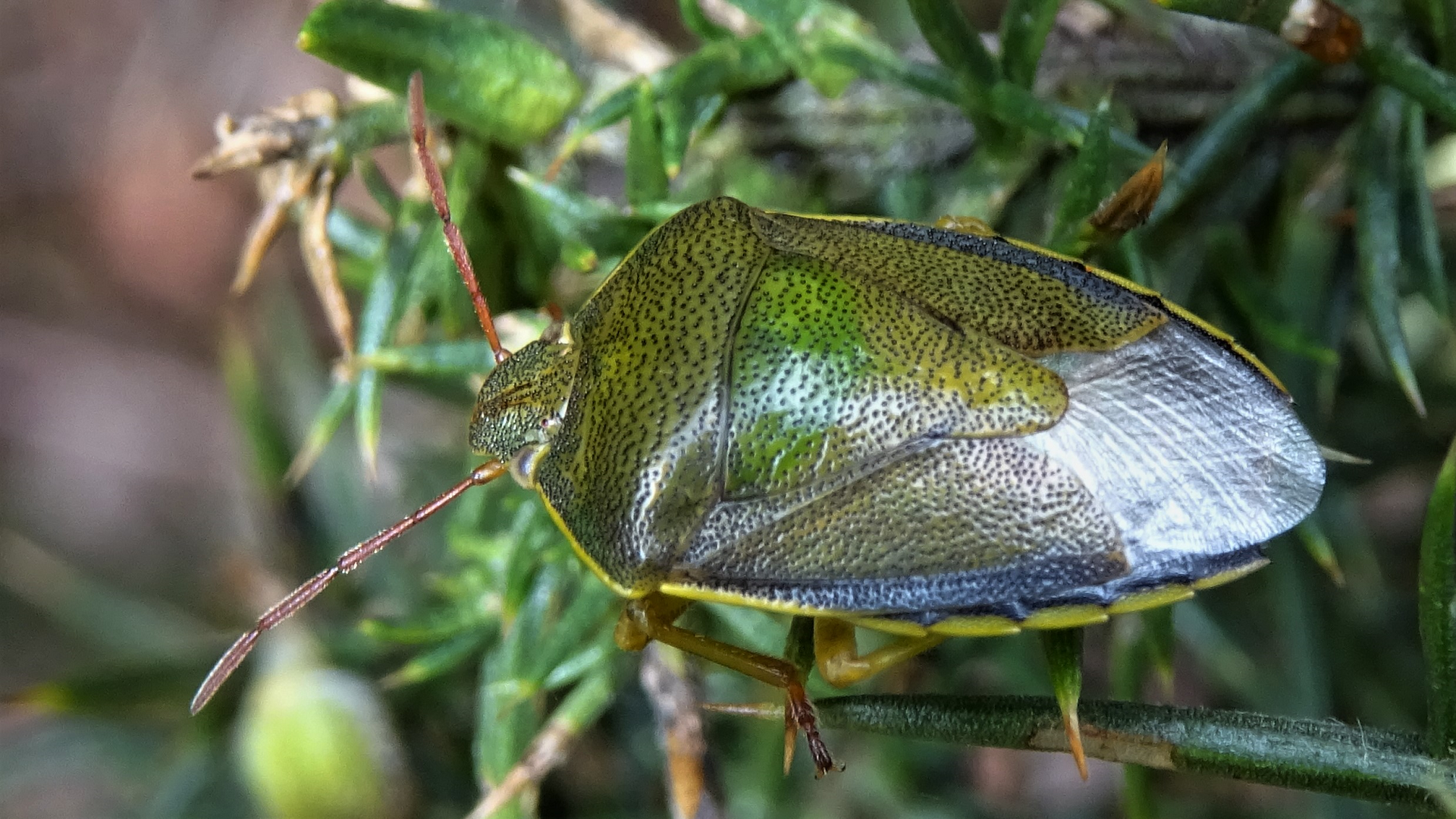
These shieldbugs are found on gorse bushes. The ones that emerge to mate in spring are typically green.
#
Hairy Shieldbug
Dolycoris baccarum
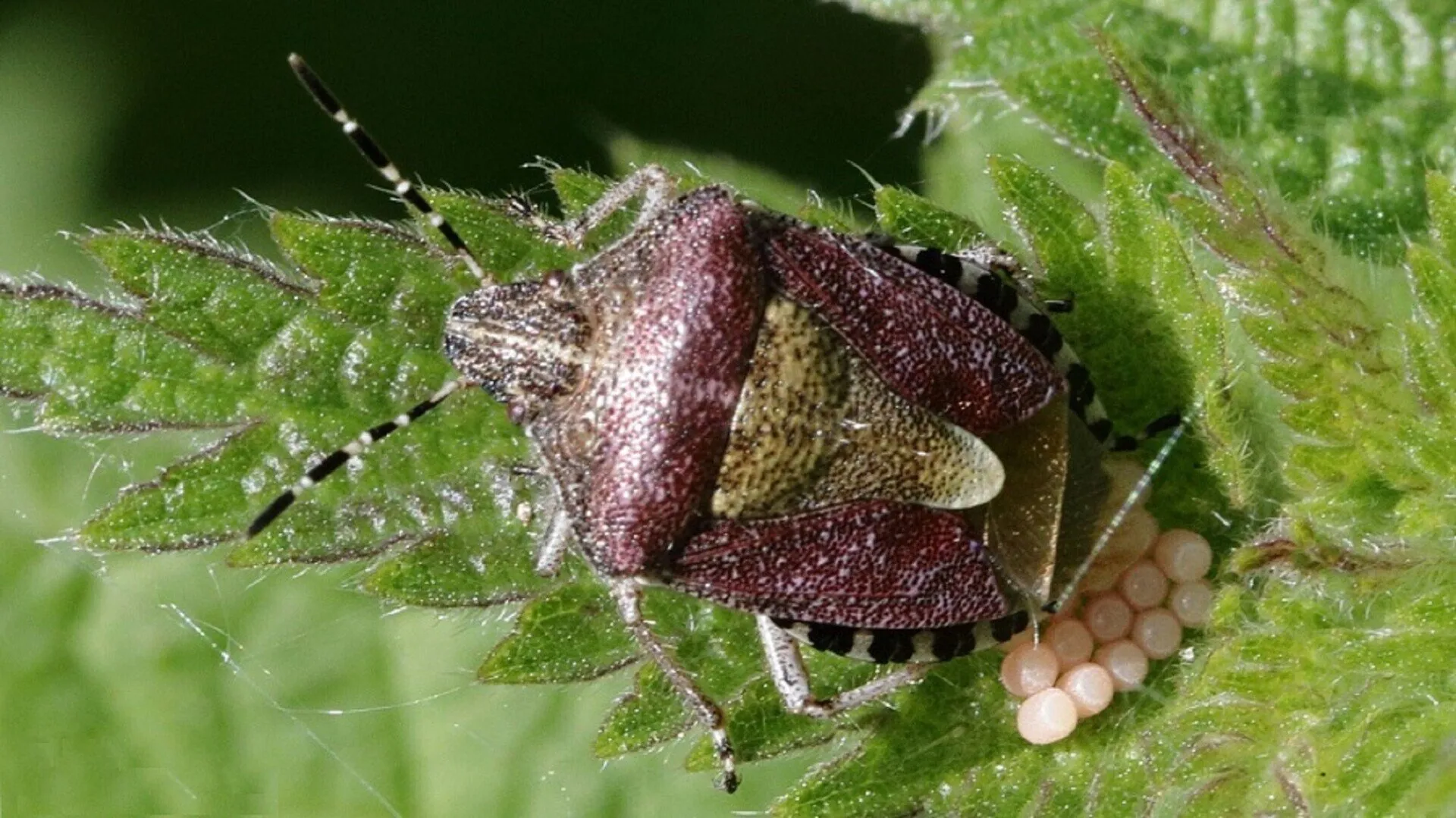
This shieldbug has purple-brown colouration with banded black and white antennae and connexivum. The base colour tends to fade during the winter months. It is covered in long hairs, which is why it is commonly called the 'Hairy Shieldbug.' Adults hibernate over the winter and become active in the spring, often found on plants such as garlic mustard, brambles, and thistles. Also known as the 'Sloe Shieldbug'.
#
Lily Beetle
Lilioceris lilii
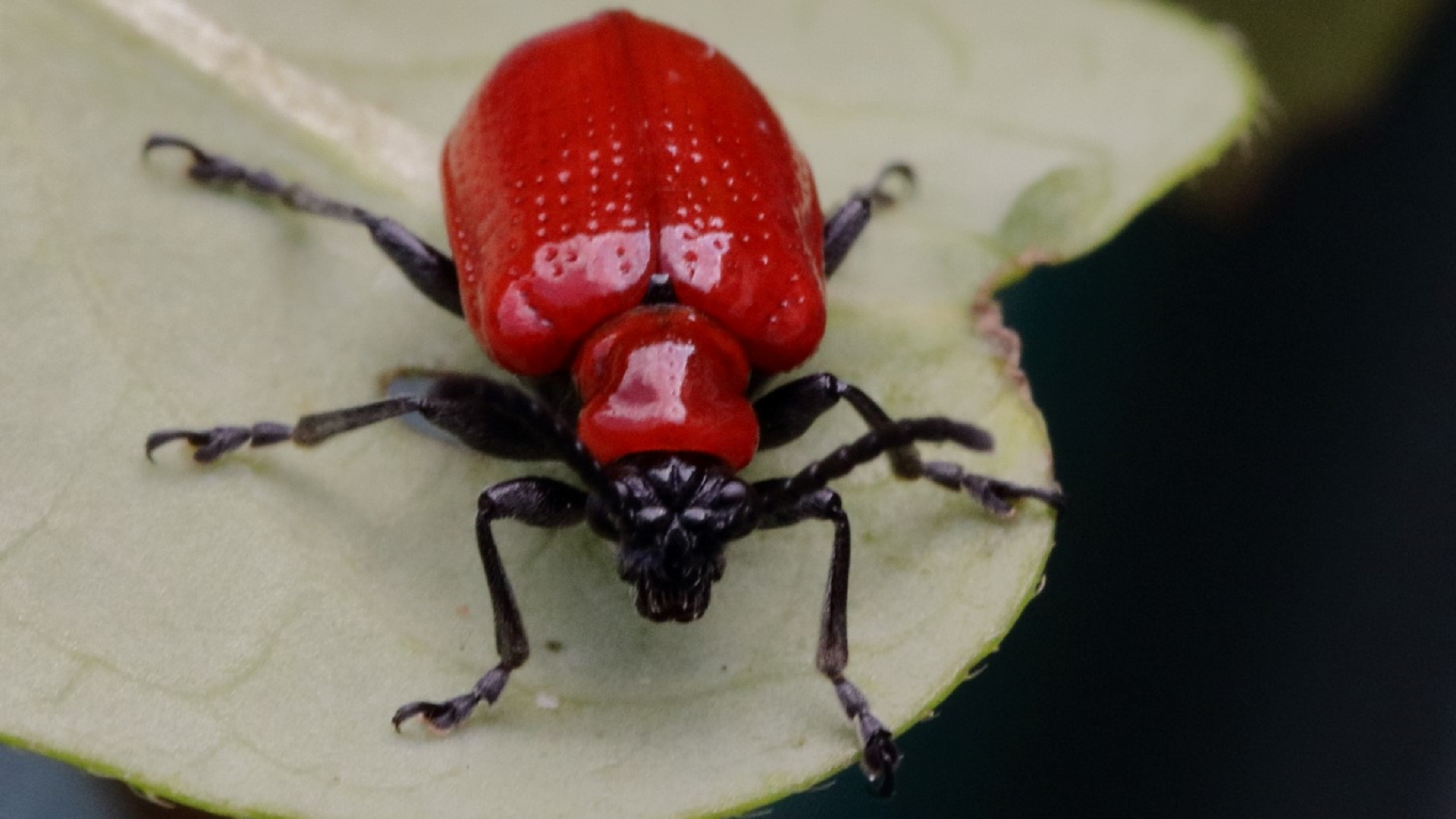
The Lily Beetle was first recorded in the UK in 1905 and measures approximately 10mm in length. Its shiny, bright red elytra feature rows of dimples on the surface. This beetle favours damp habitats, and adults are typically found from April to September. The small black larvae feed on Lily plants, causing noticeable holes. To avoid predation, the larvae cover themselves in excrement to resemble bird droppings.
#
Fat-thighed Beetle
Oedemera nobilis
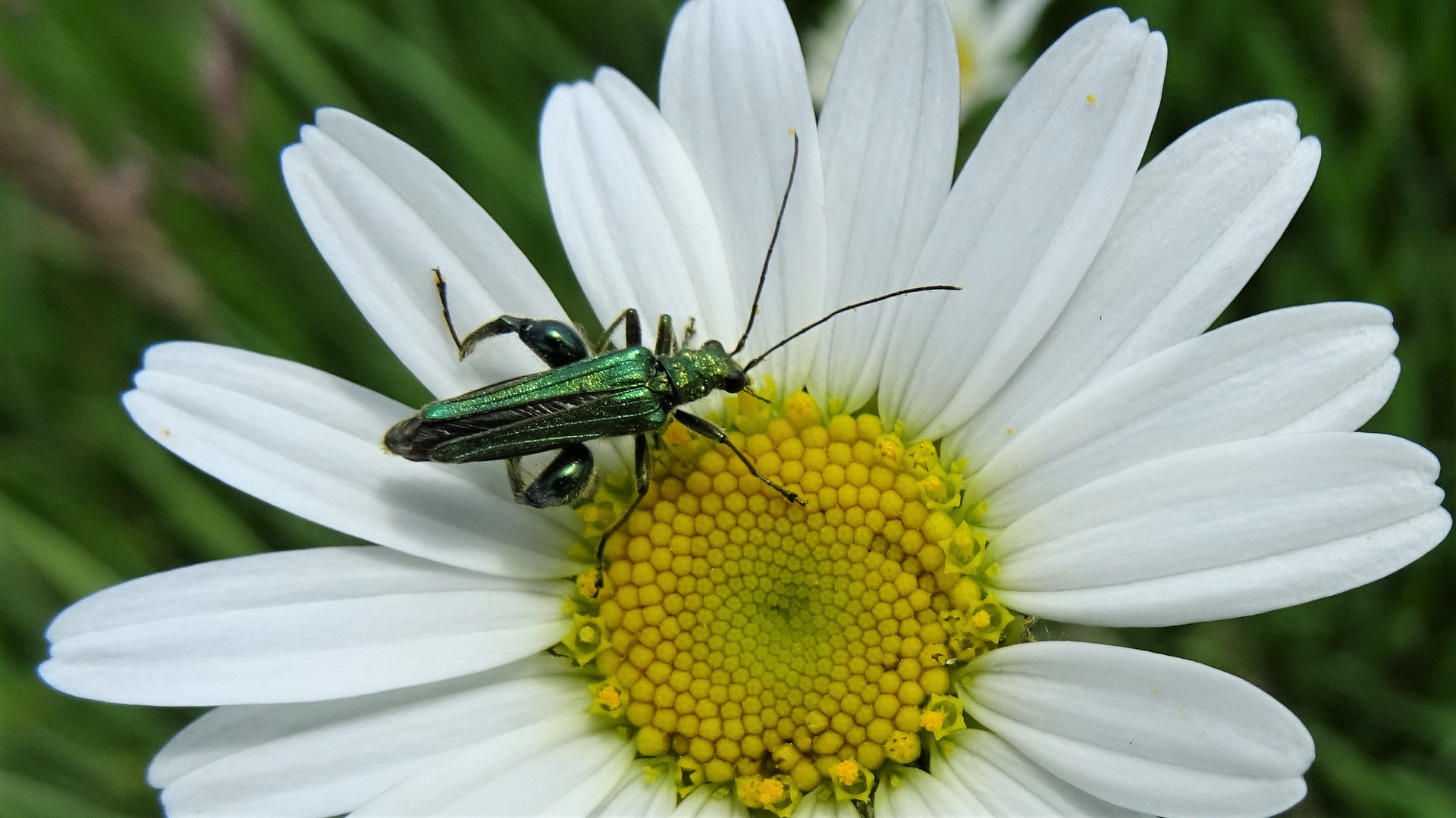
This metallic green beetle is seen on flower-heads on sunny days during spring and summer. Only males possess swollen hind femora. The larvae are rarely seen as they live inside the stems of thistles and other plants.
#
Red-headed Cardinal Beetle
Pyrochroa serraticornis
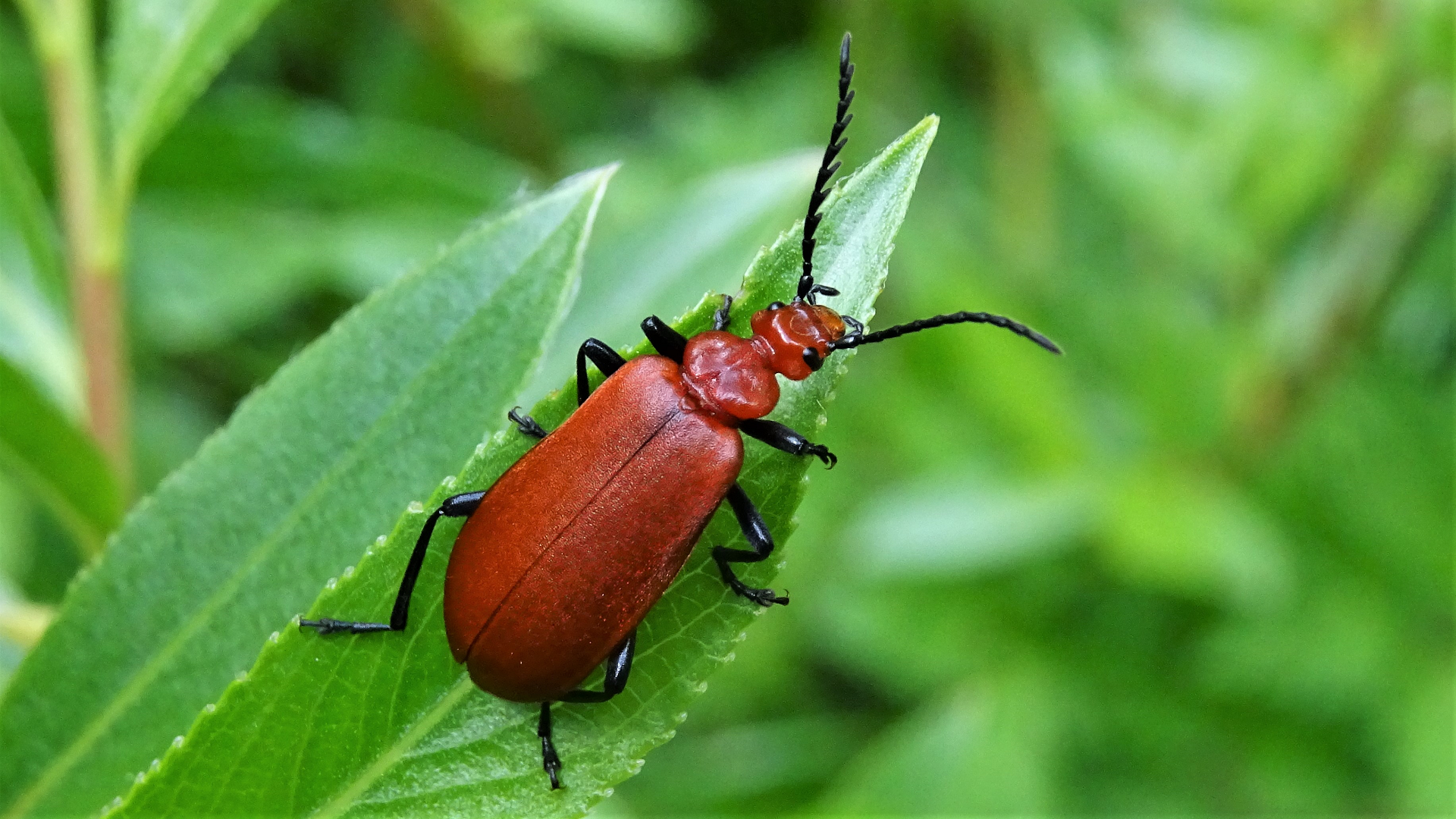
These beetles are commonly found in hedgerows within woodlands from May to July. They are predators that consume other insects. The larvae have a flat shape, which allows them to inhabit spaces under loose bark. The second part of their scientific name refers to their serrated antennae.
#
Common Groundhopper
Tetrix undulata
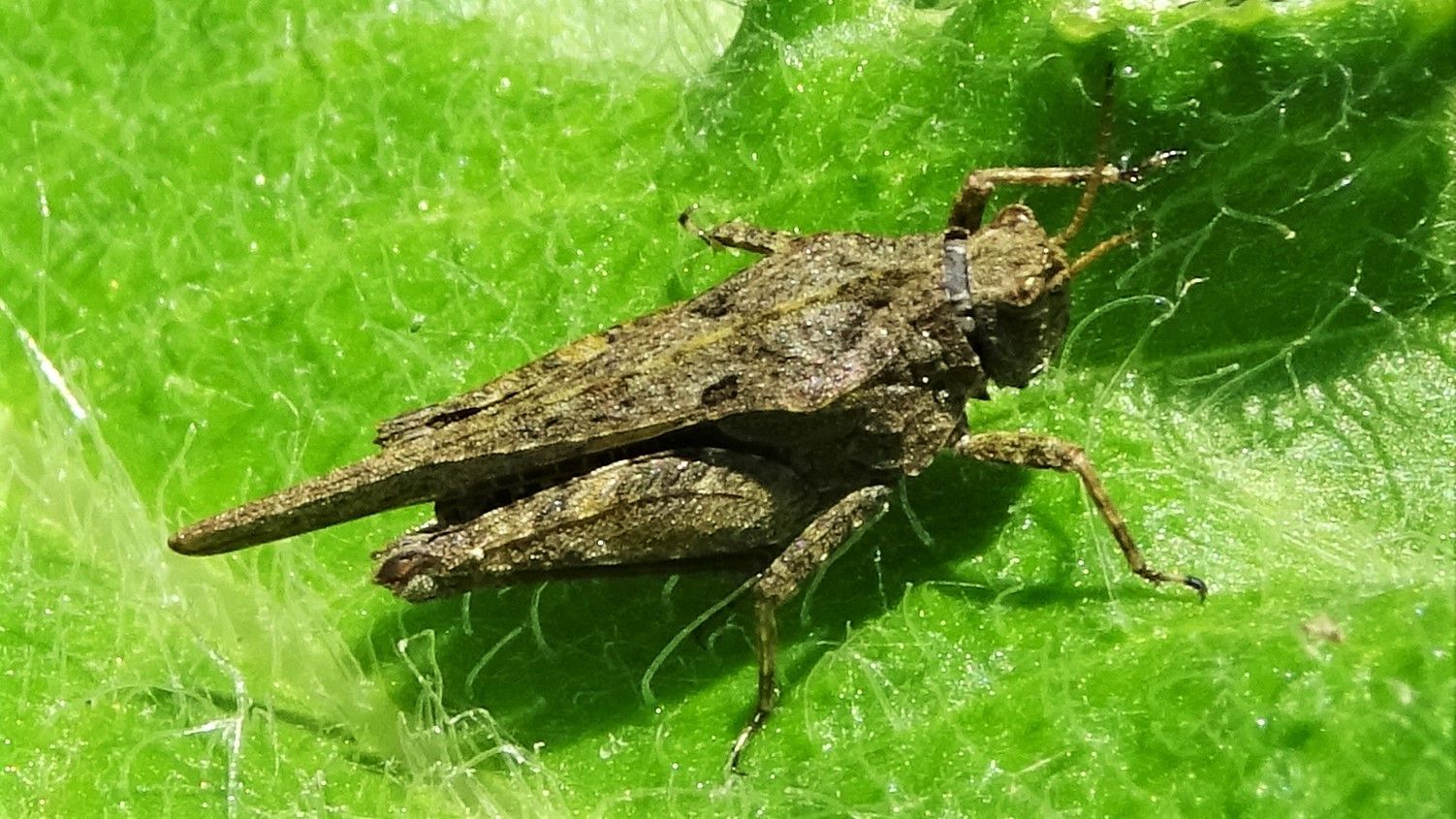
Groundhoppers are smaller and sturdier than grasshoppers. Unlike their close relations they do not produce sound so are not heard chirping.
They inhabit woodland and heathland with bare ground and short vegetation all year round. Their diet consists of decaying organic matter and mosses. There are three species in the UK, each measuring approximately 10mm long.
#
Gorse Seed Weevil
Exapion ulicis
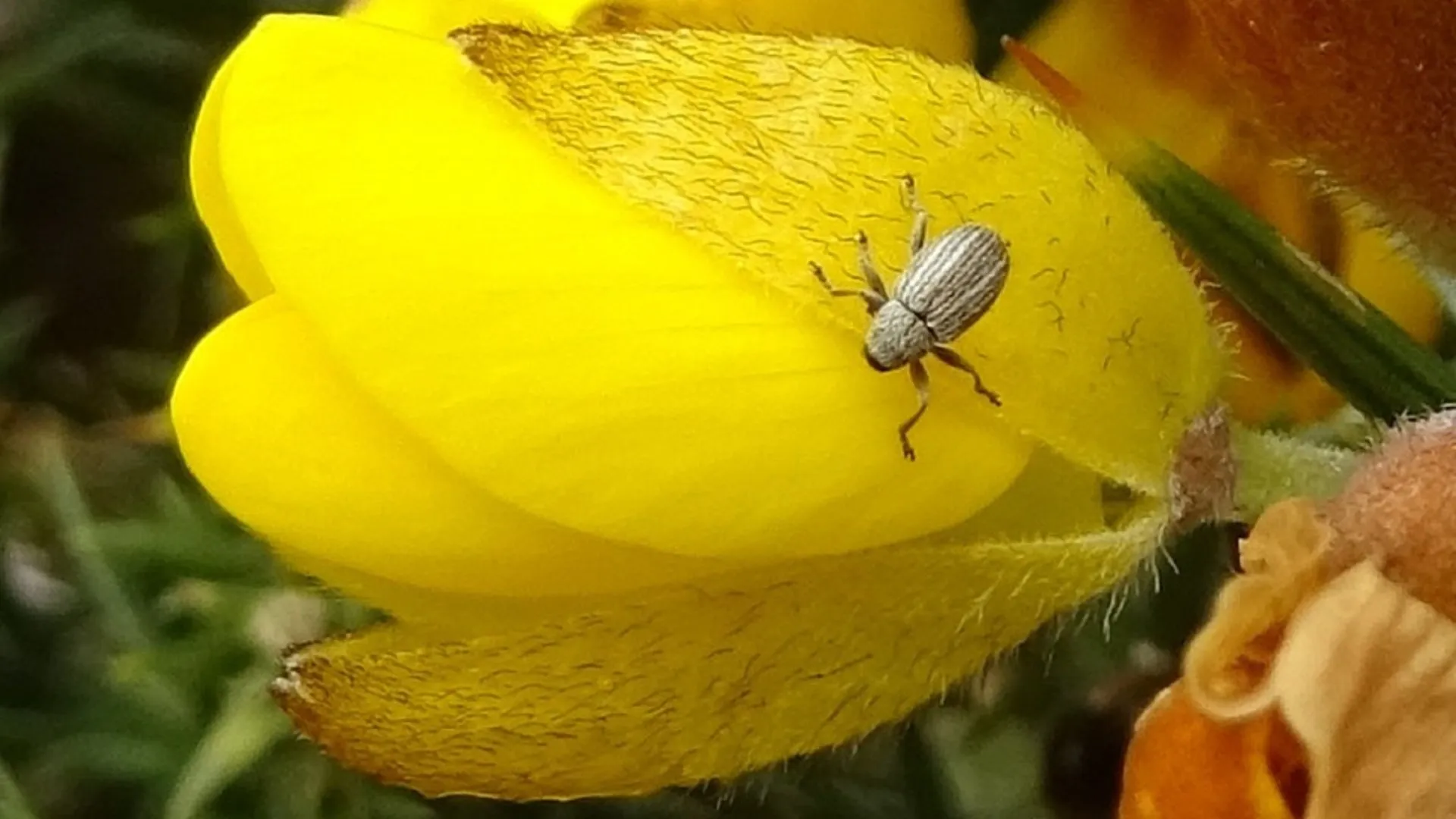
These are small beetles, 2-3mm in size, that inhabit gorse bushes from March to September. They use their snouts to create round holes in flowers and other soft tissues. The larvae develop within the seed pods, where they consume the seeds.
#
Jewel Wasp
Chrysididae
Members of the family Chrysididae are known as Jewel or Cuckoo Wasps. They are small (4-11mm) and their bodies often have a metallic iridescence. Their eggs are laid in nests of unrelated species. The larvae hatch to feed on eggs and young belonging to the host before eating the host's food supply. Chrysidids are always solitary, usually flying on hot, dry, sunny days. There are a number of similar-looking species.
#
Red Velvet Mite
Trombidiidae
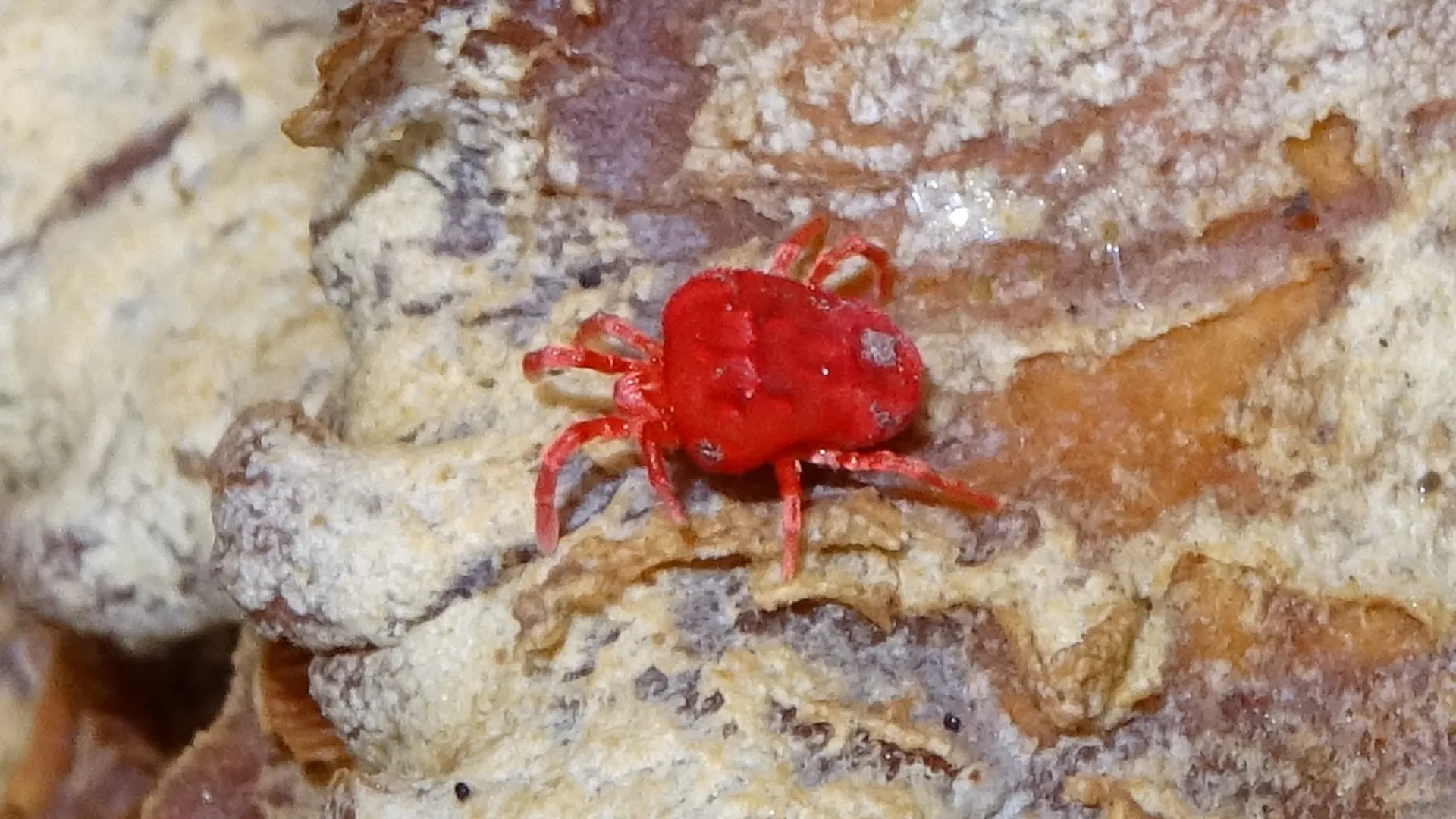
These small, brightly coloured arachnids are roughly 4mm in length. They live in plant litter. The adults are predators, while the early instars are usually parasites on insects.
#
Brown-lipped Snail
Cepaea nemoralis
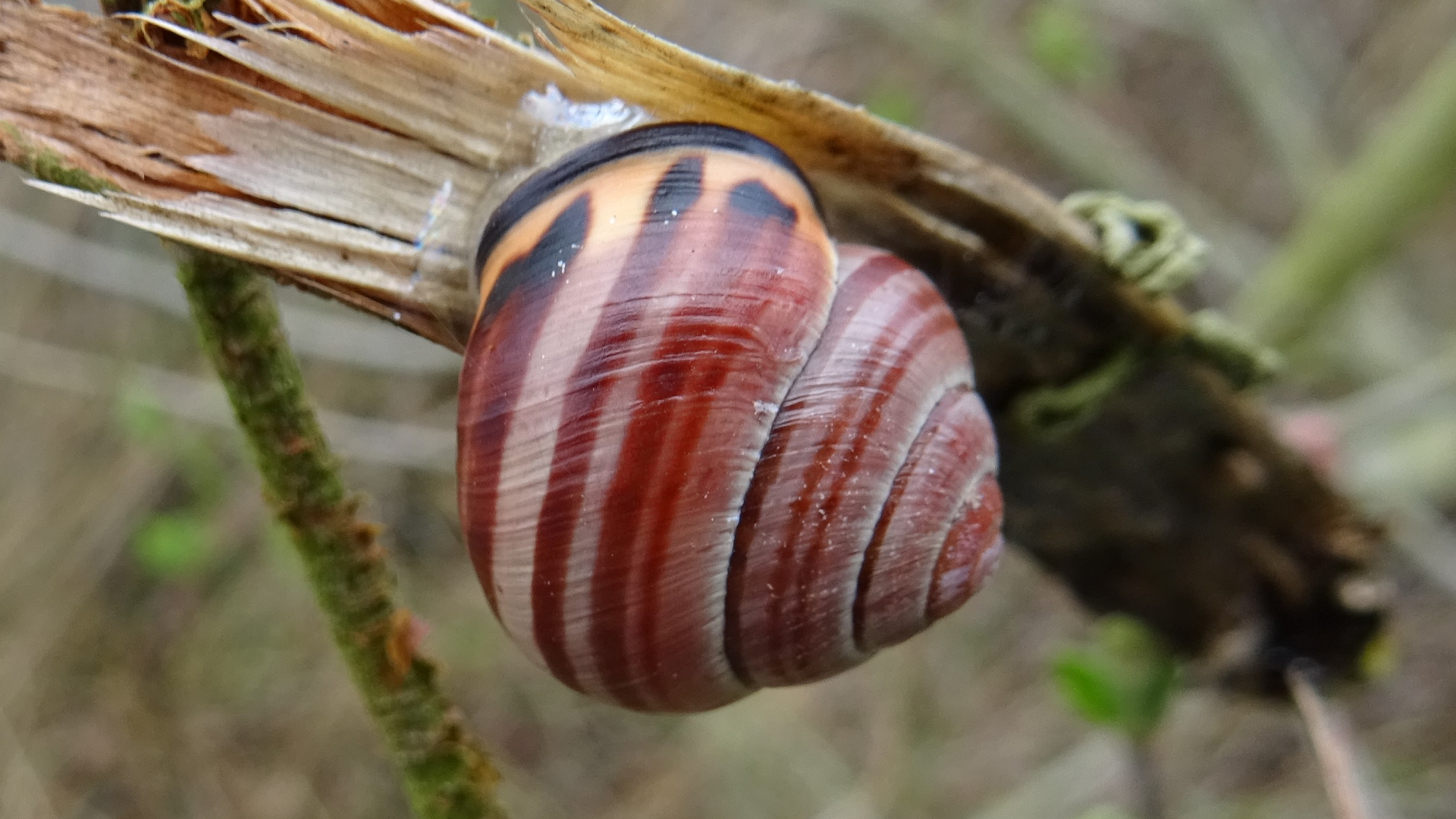
The shells come in various colours and feature a brown lip at the opening. This species favours moist habitats. It is important for snails to remain moist; they withdraw into their shells when conditions become too dry to conserve moisture.
#
European Rabbit
Oryctolagus cuniculus
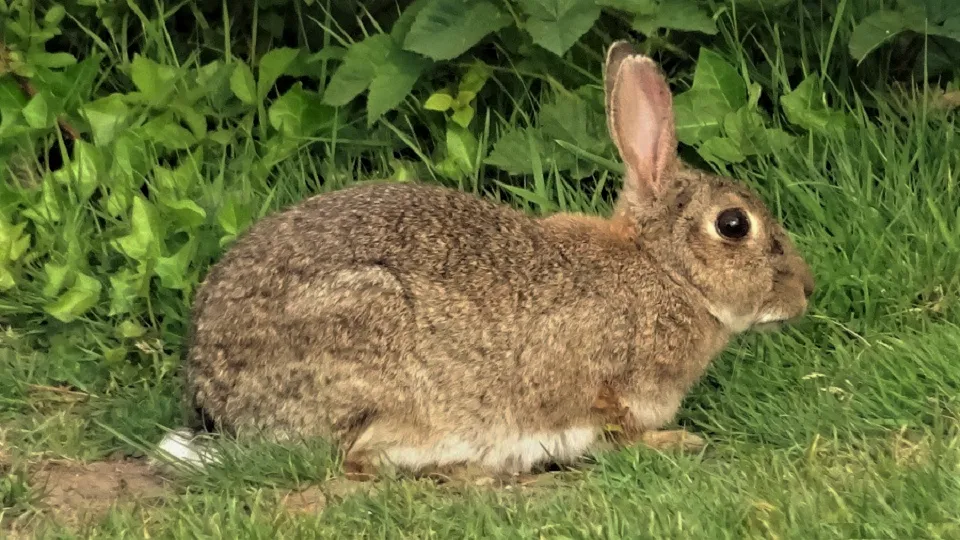
Rabbits are originally from the Iberian Peninsula and were brought to Britain by the Normans, becoming common from the mid-1700s. Male rabbits are referred to as 'Bucks,' females as 'Does,' and the young as 'Kittens.' A group of rabbits is called a 'Colony.' The primary breeding season occurs from April to June. Rabbits create underground homes in a system of interconnected burrows known as a 'Warren.' The entrances to these burrows typically range from 10 to 50 cm wide and are often located on sloping land. A short run is usually present in front of the entrance, allowing rabbits to see ahead and making it more difficult for predators to approach from the sides.
#
Muntjac Deer
Muntiacus
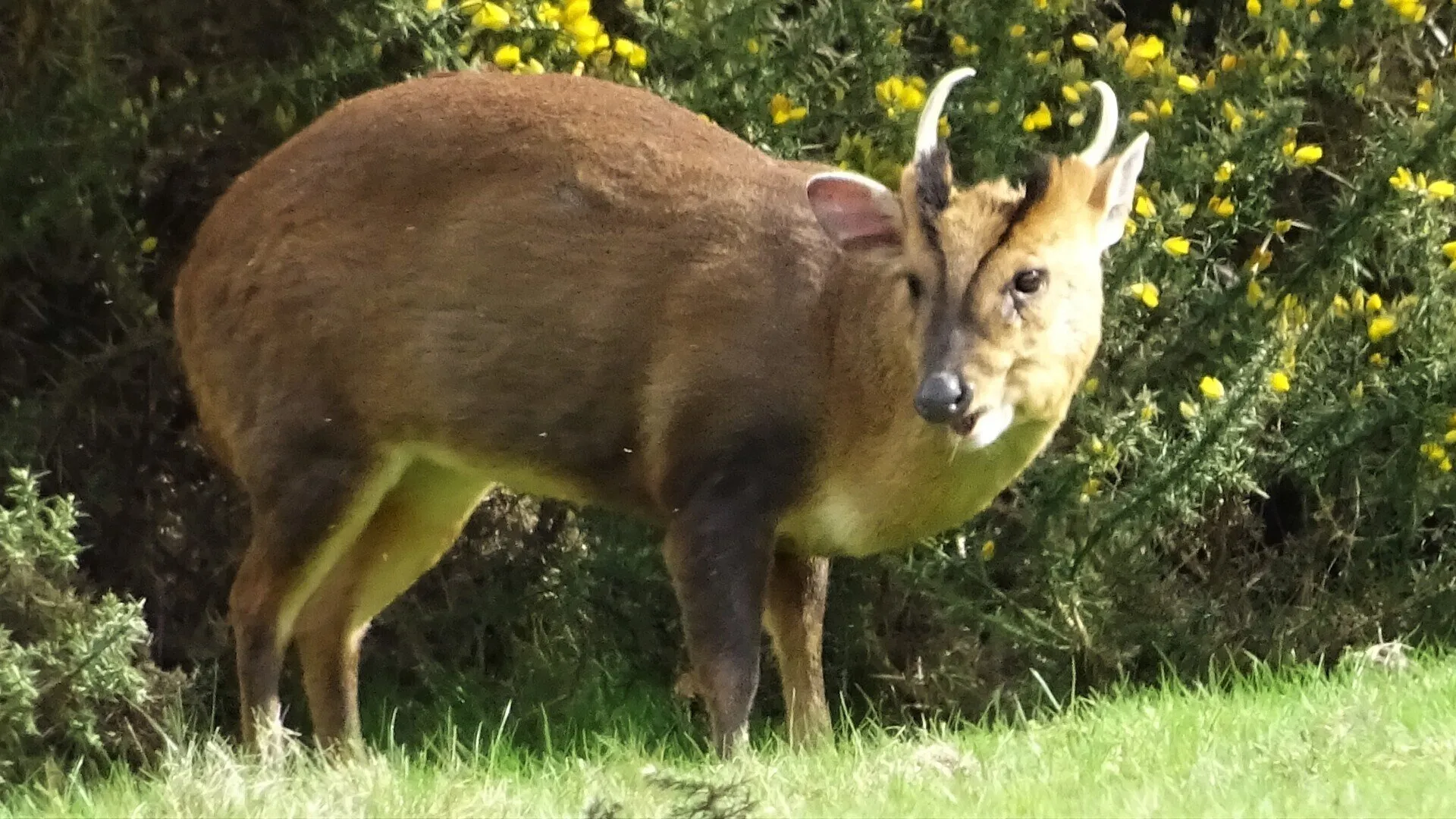
Muntjac deer were introduced to Woburn Park in Bedfordshire from China in the early 1900s. These small deer are now found throughout most of South East England due to some individuals escaping. Male muntjacs, referred to as 'bucks,' possess short, unbranched antlers that grow back each year, along with a pair of long canine teeth. Although males have antlers, they typically use their teeth to establish territory rather than engaging in antler-based fights. There is no specific breeding season, and females, known as 'does,' can mate throughout the year, usually giving birth to one offspring, called a 'kid,' at a time.
#
Foxburrow Farm
Suffolk Punch Horses
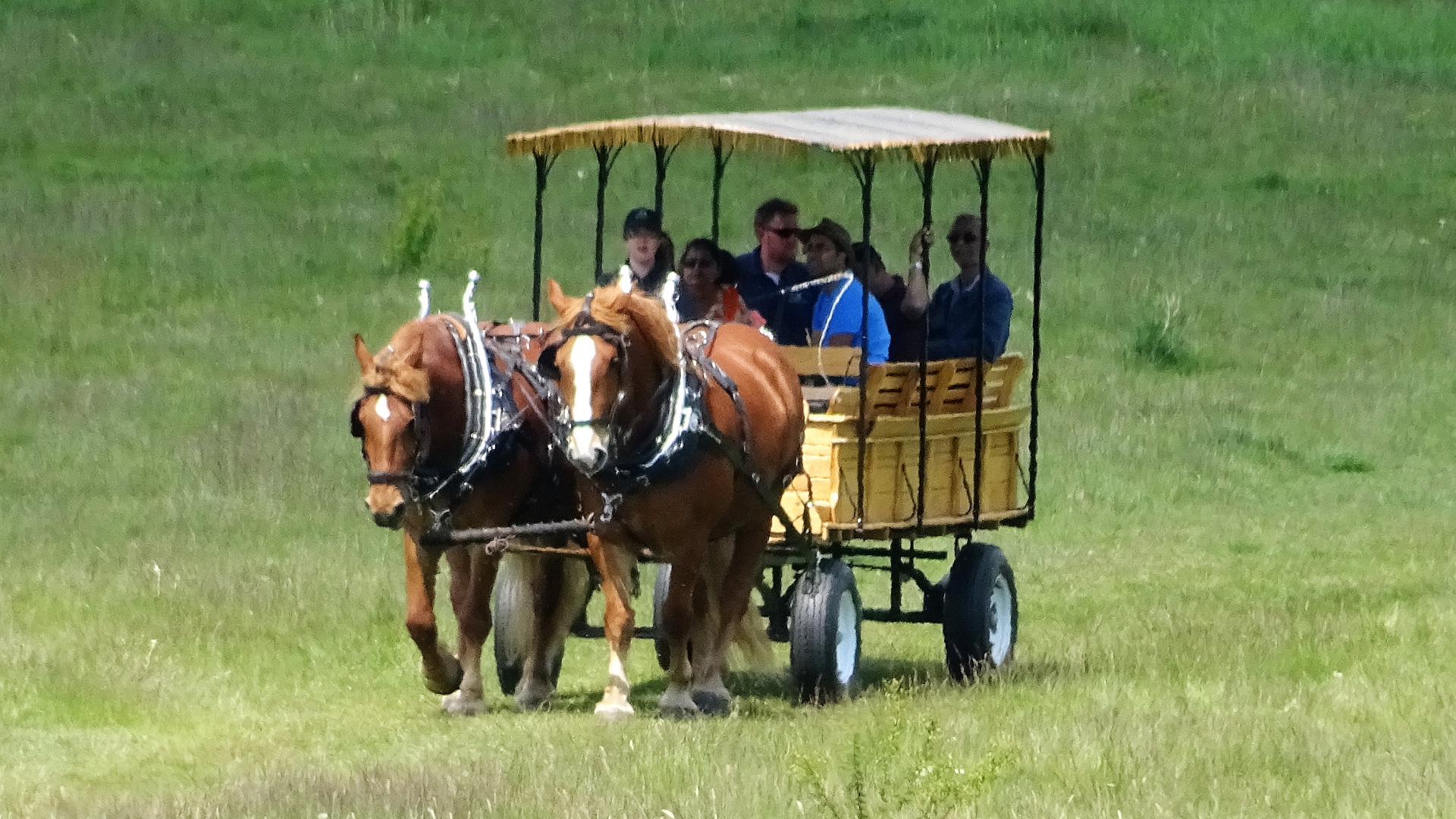
The Suffolk Punch is the oldest breed of working horse in England. They are always chestnut-brown in colour. 'Suffolk' refers to the county of Suffolk and "Punch" is an old English word for a short stout person. During May visitors to Hainault Forest were able to take trips from Foxburrow Barn to the top of Millennium Hill and back.
#
© hainaultforest.net. All rights reserved.
This website uses necessary cookies. It does not use targeting or advertising cookies.