

LAST QUARTER 2018
Angel Bonnet
Mycena arcangeliana
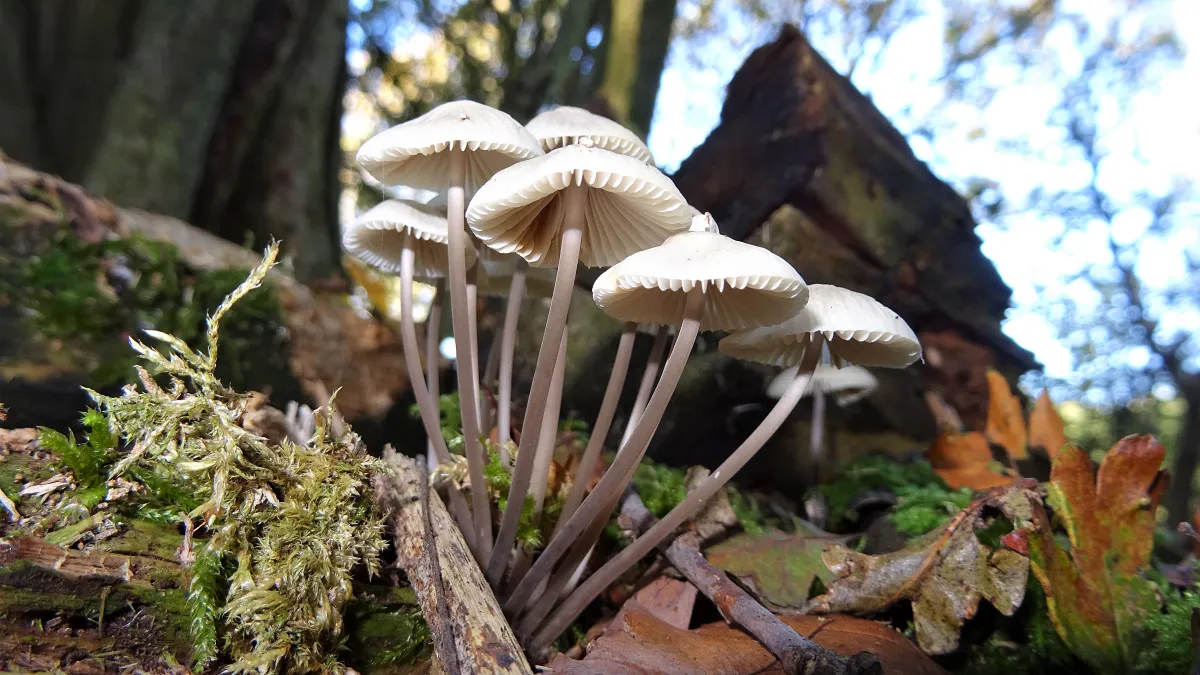
Usually found growing together in large numbers. The stipe has a whitish downy base. When crushed the smell of iodine is released.
#
Candlesnuff
Xylaria hypoxylon
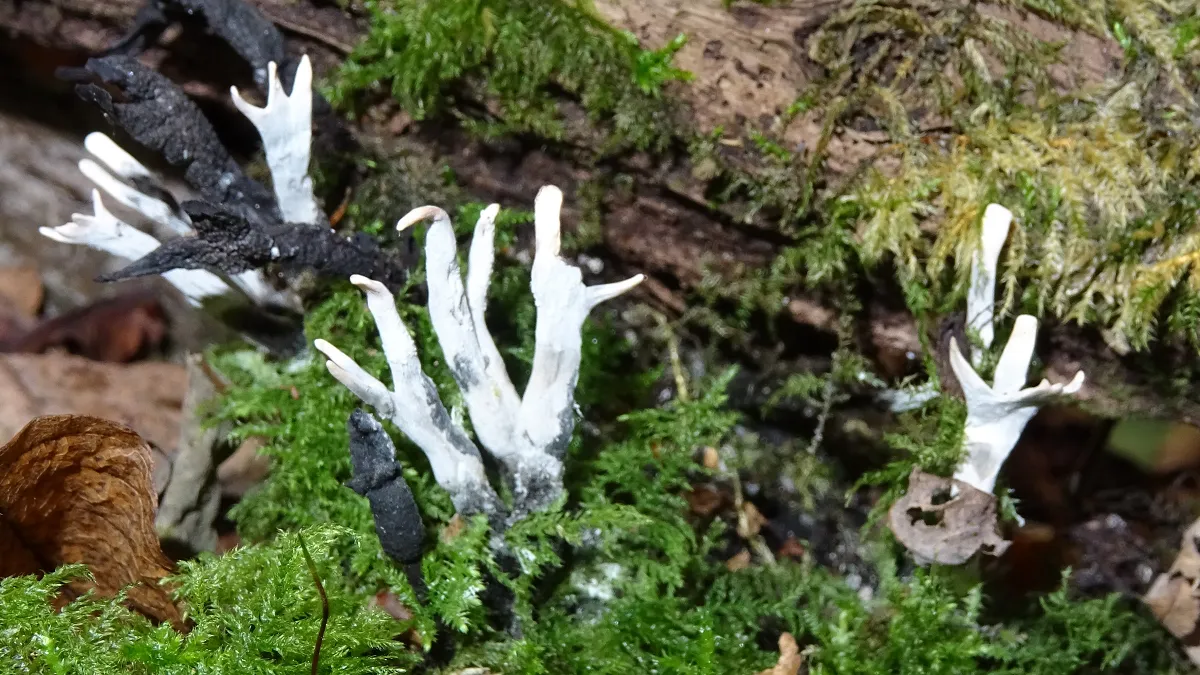
Very common wood-rotting fungus seen all through the year that has stick-like or forked fruiting bodies with black bases and white powdery tips. Height 10-60mm.
#
Smoky Bracket
Bjerkandera adusta
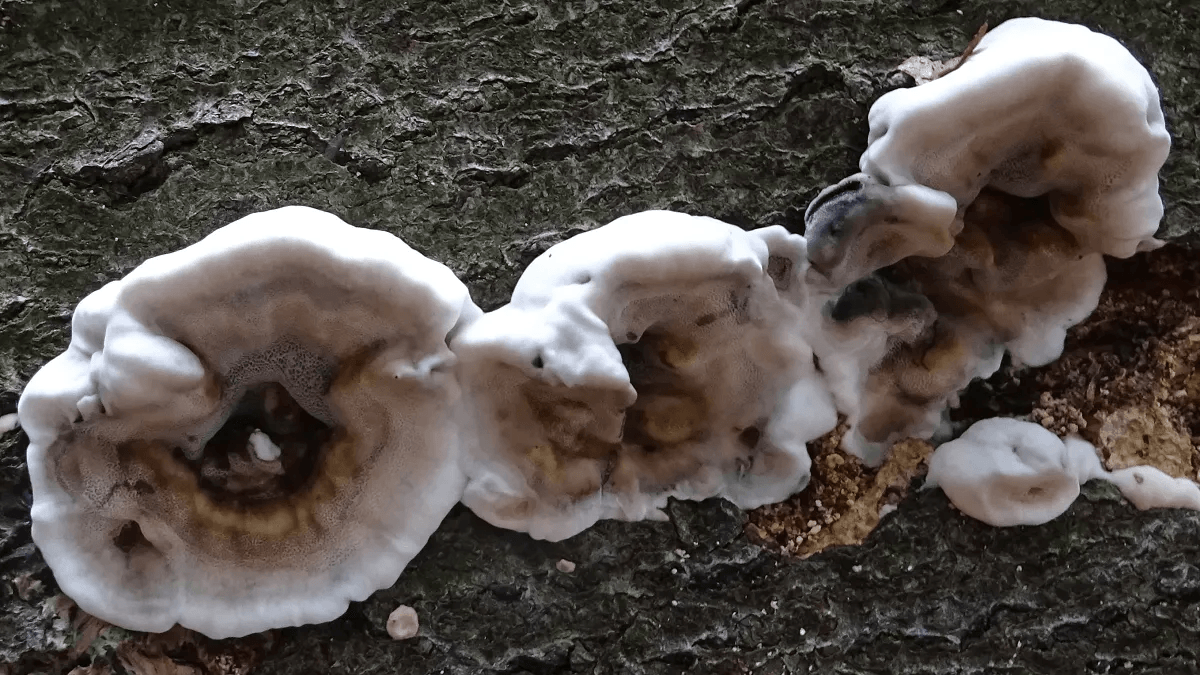
Wood-rotting fungus that appears on fallen hardwood trunks and branches. It is variable in shape, sometimes forming brackets up to 6cm across.
#
Orange Birch Bolete
Leccinum versipelle
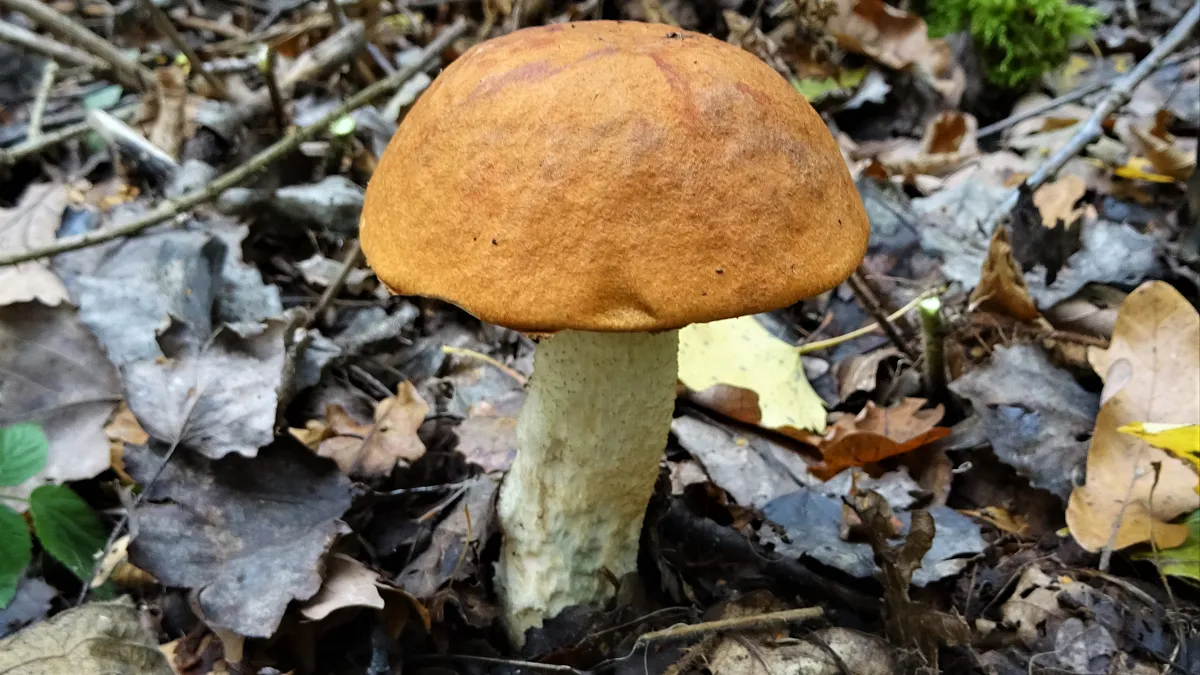
Grows in Birch woodland late summer and autumn. The orange cap is 80-200mm across. The white or pale grey stipe, up to 200mm tall and 20-40mm thick, tapers slightly towards the cap and is usually covered with dark scales. When damaged near the base it turns blue-green, then blackish. It has brown spores.
#
Penny Bun
Boletus edulis
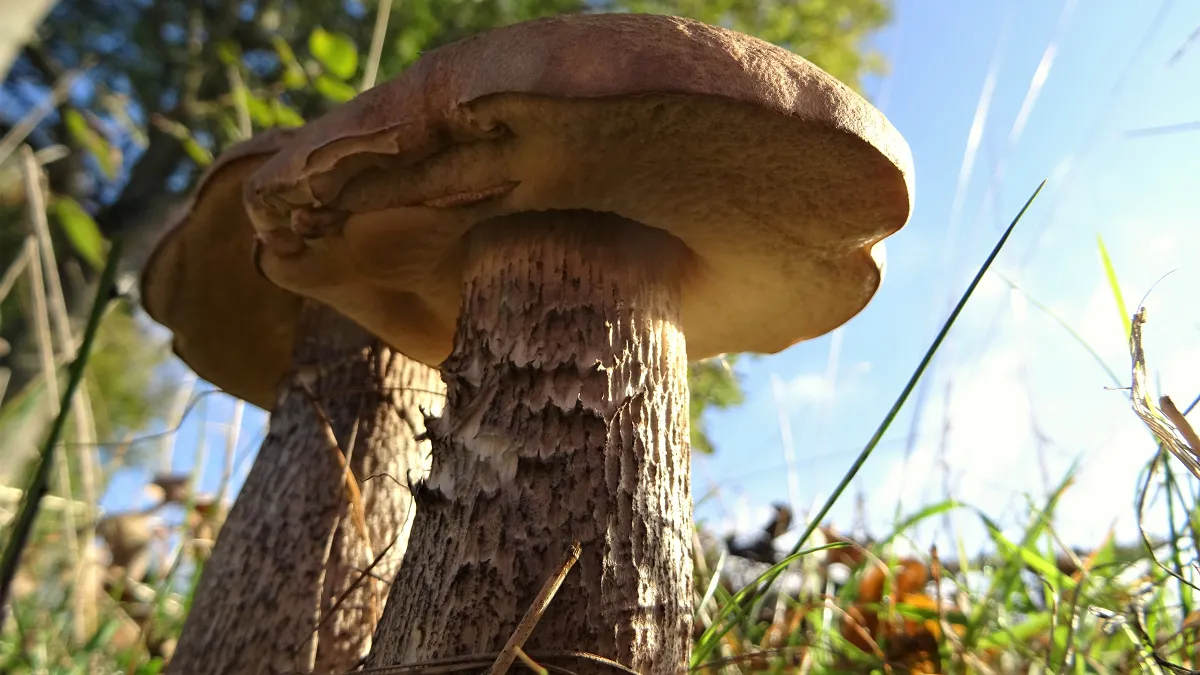
Grows on soil beneath trees, such as beech, birch and oak, during summer and autumn. The cap is bun-shaped, slightly greasy, yellow-brown to reddish-brown and 100-300mm across. The margin is usually paler than the rest of the cap. When cut or damaged the flesh remains white, with no sign of bluing. The club-shaped stipe is 100-200mm tall and up to 100mm across at the widest point. The surface is covered in a netted pattern. This fungus has whitish or yellowish pores and olive-brown spores. Also known as Cep.
#
Yellow Stainer
Agaricus xanthodermus
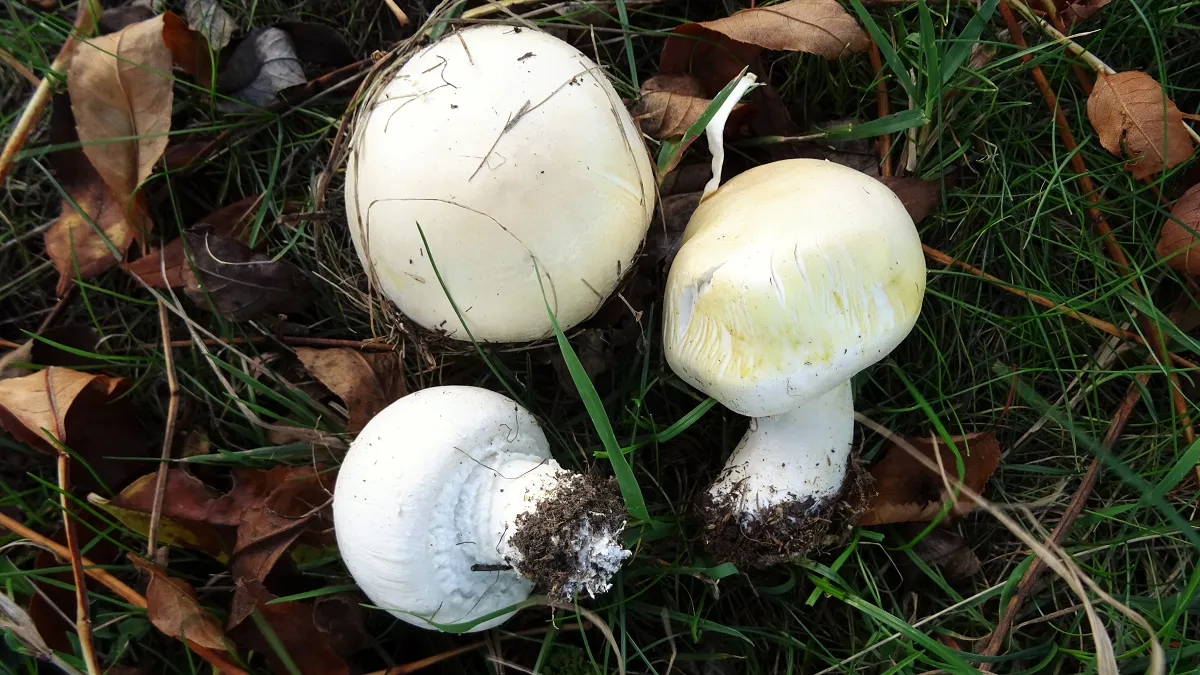
Saprobic mushroom found in disturbed grassland during summer and autumn. The cap, 50-150mm across, is globose, often with flattened top, becoming broadly convex. Matt white, then greying, the cap stains yellow when cut or damaged. The smooth and silky stipe, 150mm long, has a bulbous base. There is a large, white, ring that persists with age. Gills are free and off-white, then pink and grey-brown. Spores are dark brown.
#
Field Mushroom
Agaricus campestris
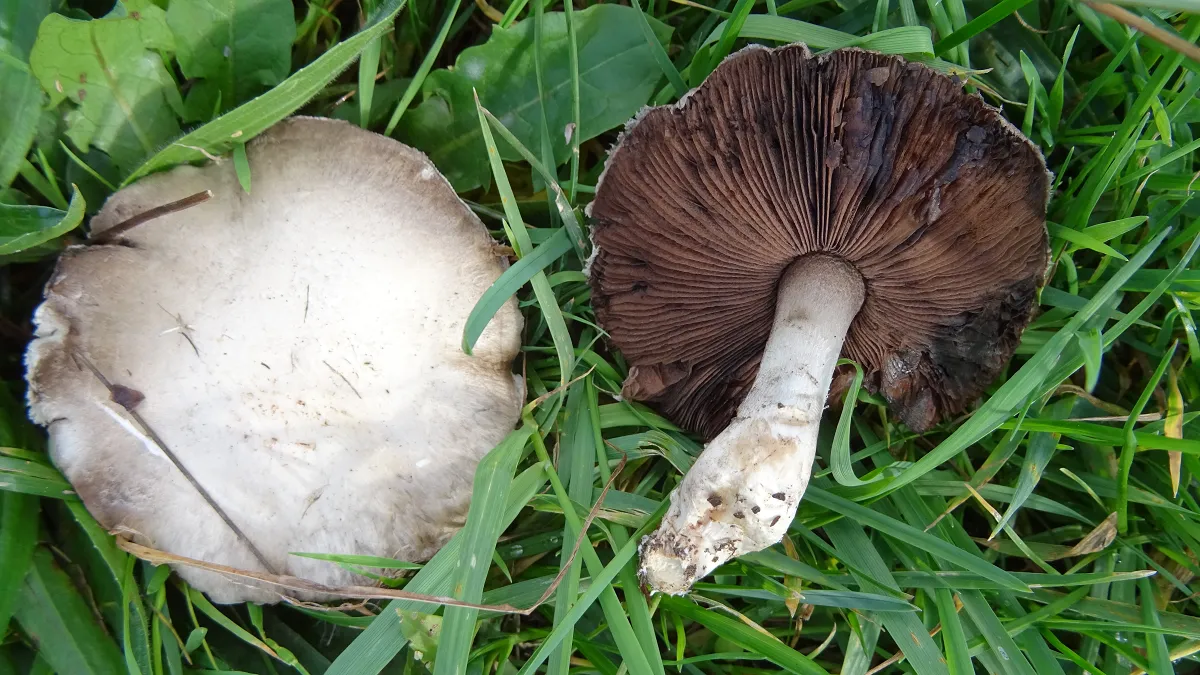
A saphrobic grassland mushroom found during summer and autumn. The cap, 30-100mm across, is thick and fleshy, creamy white and may develop small scales with maturity. It doesn't stain yellow when rubbed or damaged. The edge is normally down-turned or slightly in-rolled. The white stipe, 30-100mm tall, is smooth above the ring, scaly below and fairly parallel along the length. The ring normally vanishes before the fruitbody is fully formed. Gills are free and crowded, deep pink, turning dark brown, then blackish. Spores are chocolate brown.
#
Yellowing Knight
Tricholoma scalpturatum
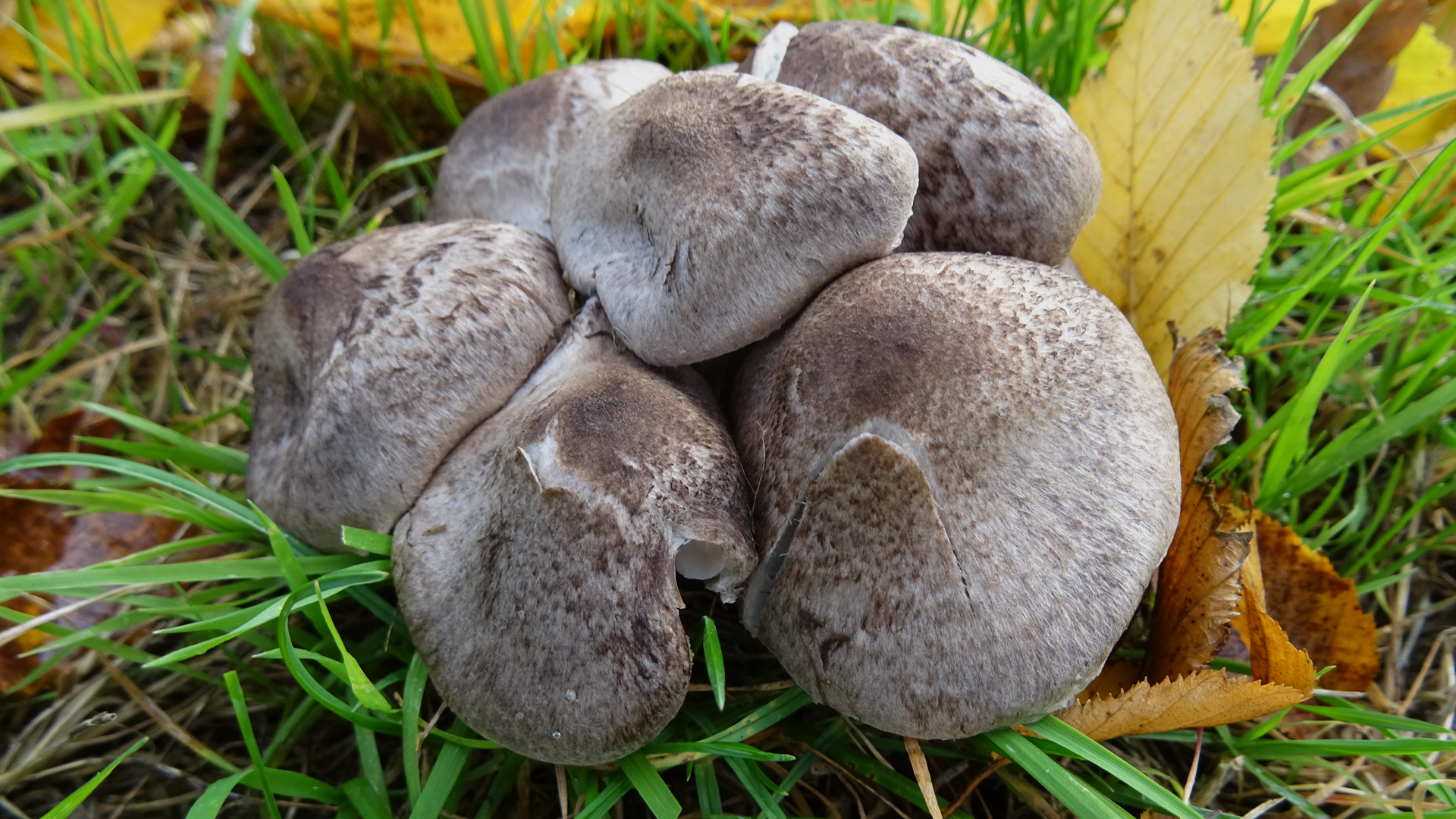
Yellowing Knight is usually found during the summer and autumn seasons in areas populated by beech, oak, and lime trees. The caps measure 40-90mm in diameter and are usually grey, with a darker centre and paler margins that tend to yellow over time. They are broadly convex, generally maintaining a downturned margin and a very shallow umbo. The surface has grey-brown fibrous scales that become progressively denser and darker (sometimes nearly black) towards the centre. The stipes, which are whitish or light grey, are finely fibrous and often present a faint ring zone. They may yellow slightly with age. The gills are well-spaced. This fungus grows near the old changing rooms and is likely to lose its habitat when the Hainault Restoration Project starts.
#
Birch Milkcap
Lactarius tabidus
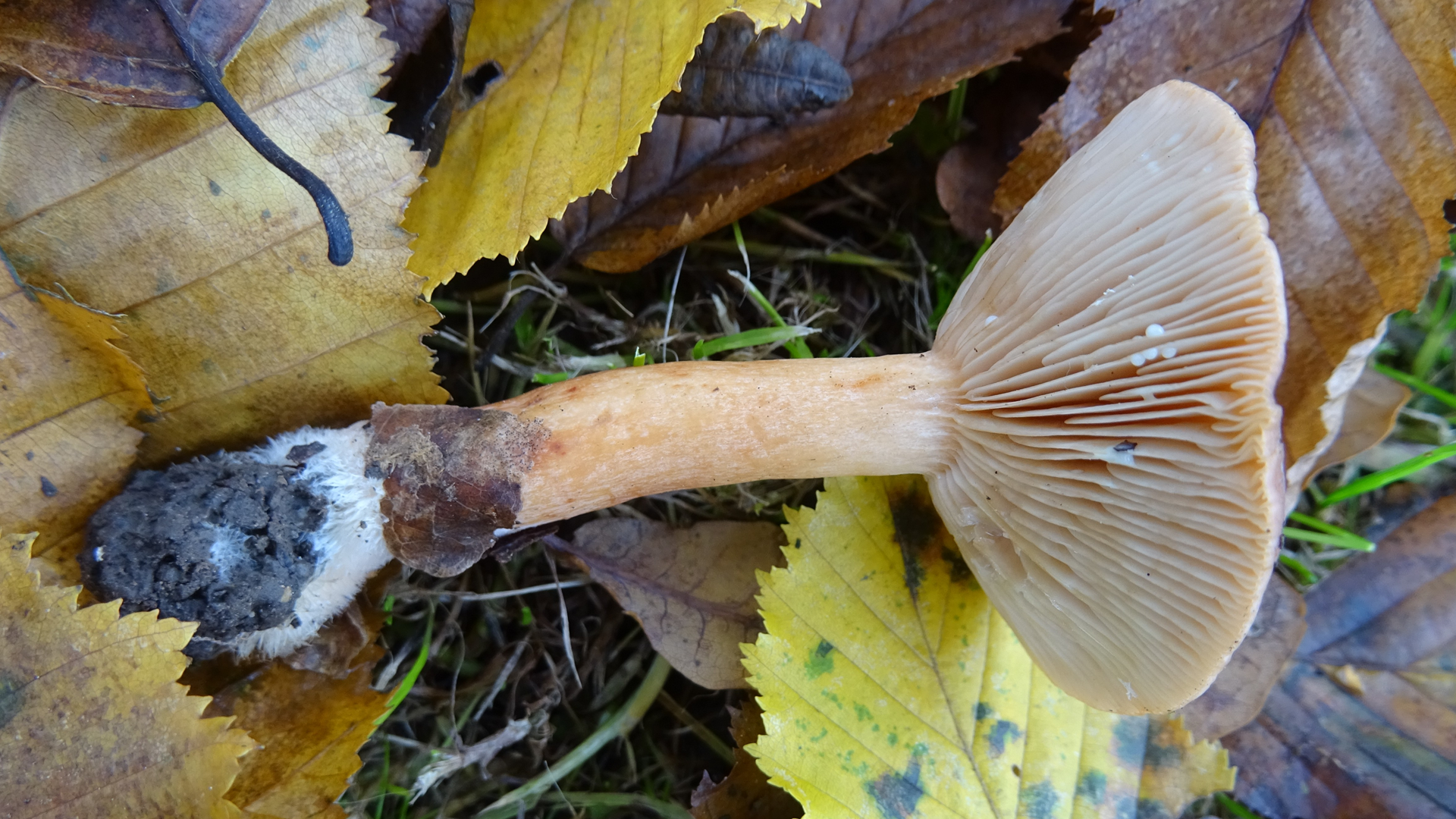
Birch Milkcap is found in birch woodland during the autumn season. The cap is brownish, darker at the center, and starts off convex before flattening or becoming funnel-shaped. The stipe is smooth and brittle, tapering towards the top, with colouration similar to the cap. It generally stands 30-70mm tall and has a thickness of 5-10mm, starting out solid and later becoming hollow. There is no ring present. The gills are weakly decurrent and crowded, often showing blotchiness as they mature. When the gills are damaged, they exude white latex, which gradually turns yellow when applied to tissue. This fungus produces creamy-pink spores.
#
Rosy Bonnet
Mycena rosea
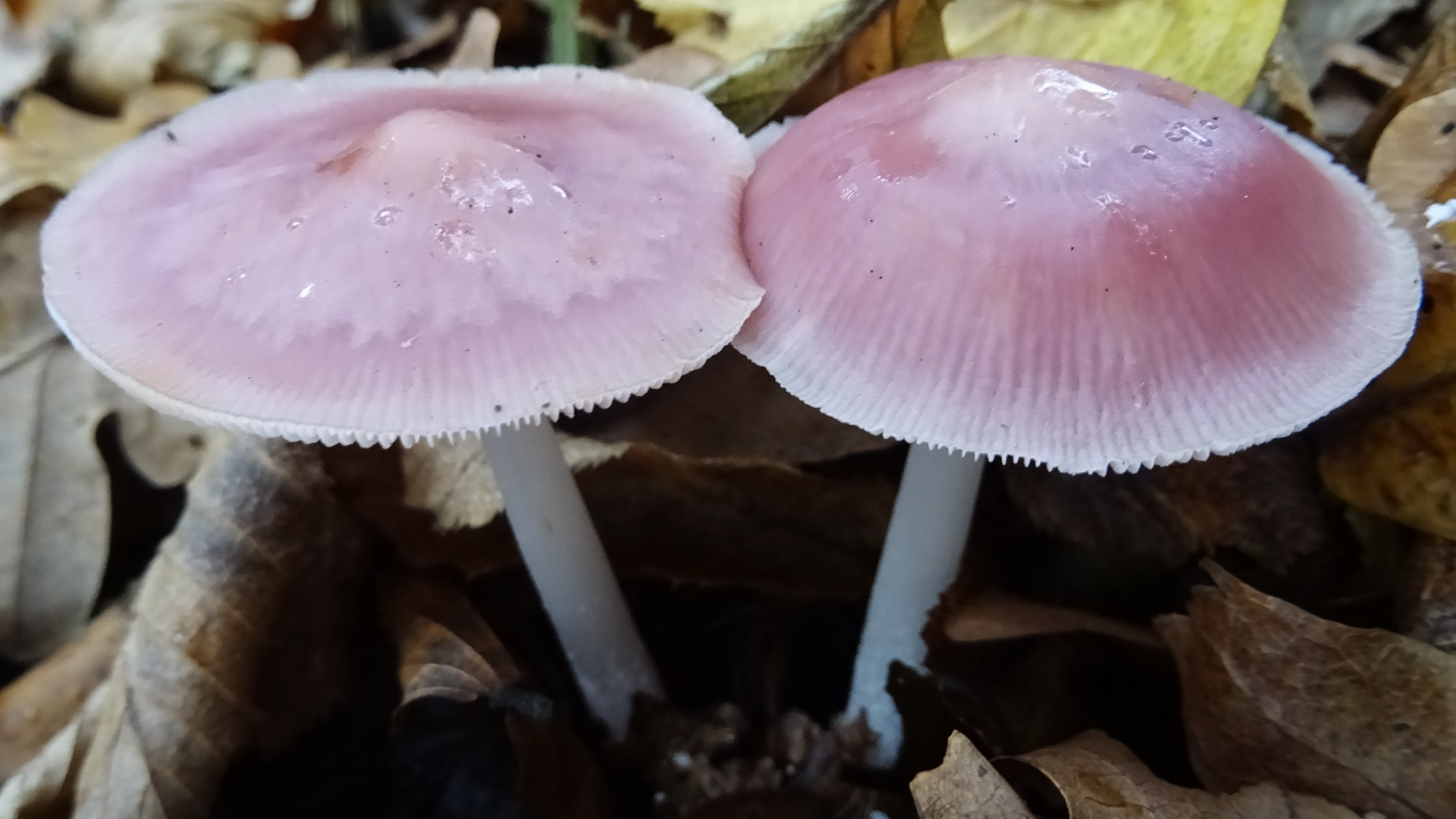
Common woodland species often found in leaf litter. Caps measure up to 60mm in diameter and are pinkish with a whitish margin.
#
Clustered Bonnets
Mycena inclinata
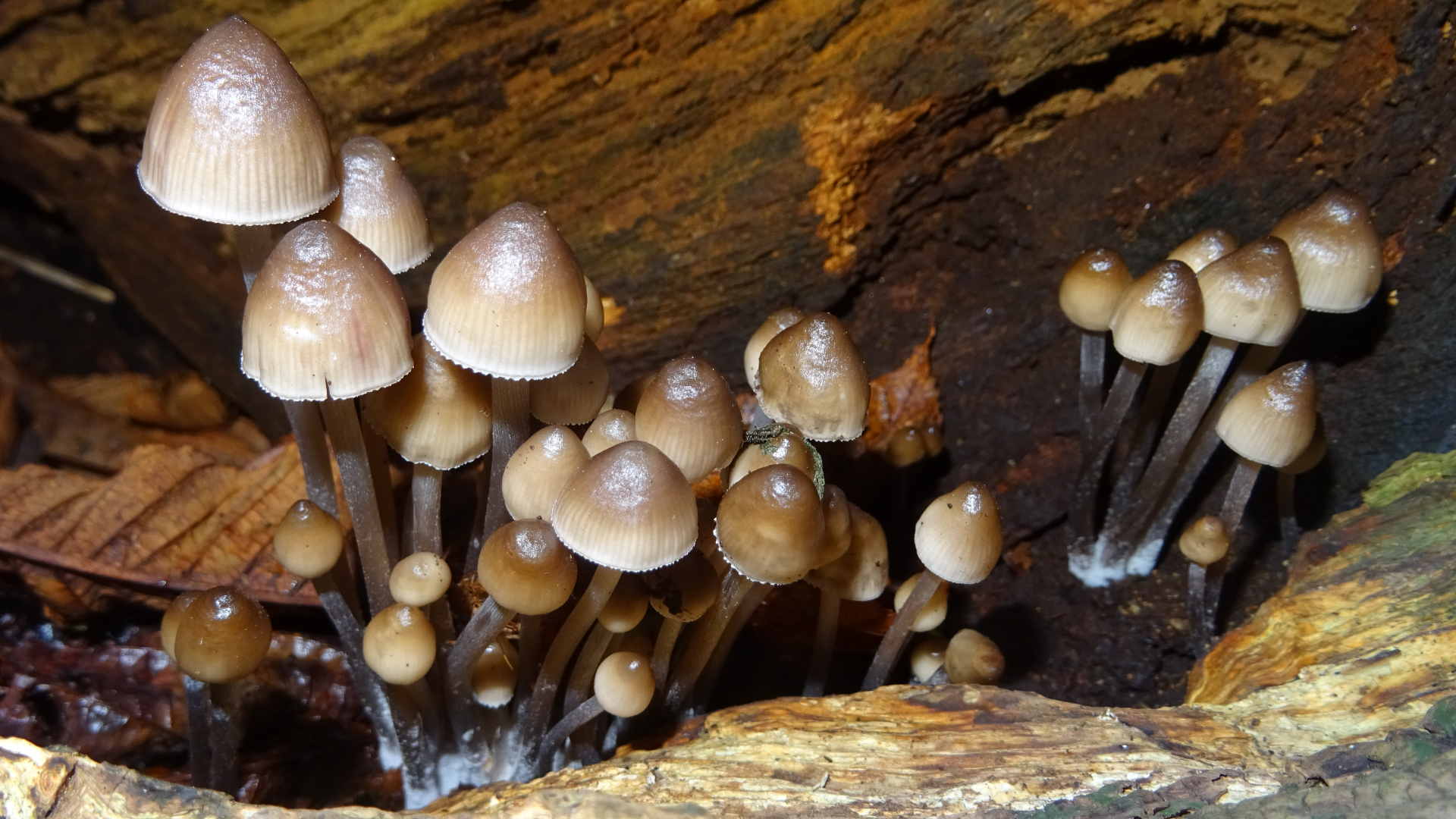
It is usually found on dead oak wood, which is why it is also known as the Oak Bonnet. It emits a rancid odour. The scalloped cap margin and the white woolly stem base are features that help distinguish this bonnet from other species.
#
White Milking Bonnets
Mycena galopus var. candida
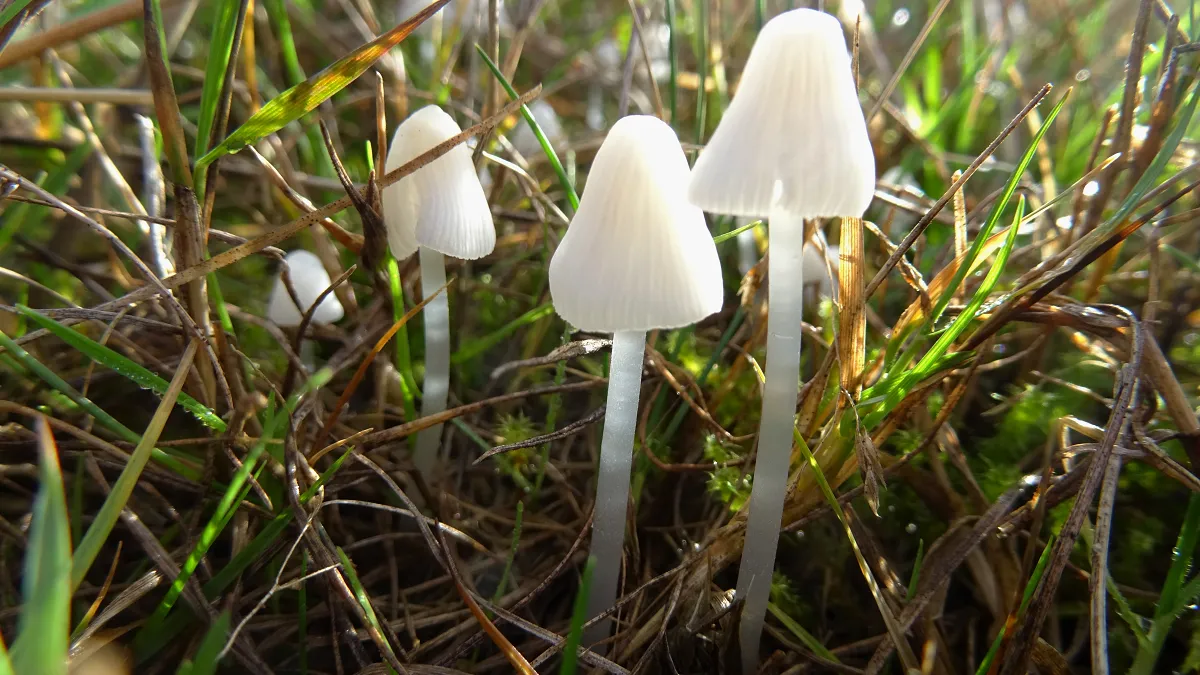
Small entirely-white mushrooms which have faintly lined, bell-shaped caps, measuring up to 25mm across. The stipe oozes whitish latex when broken.
#
Twig Parachute
Marasmiellus ramealis
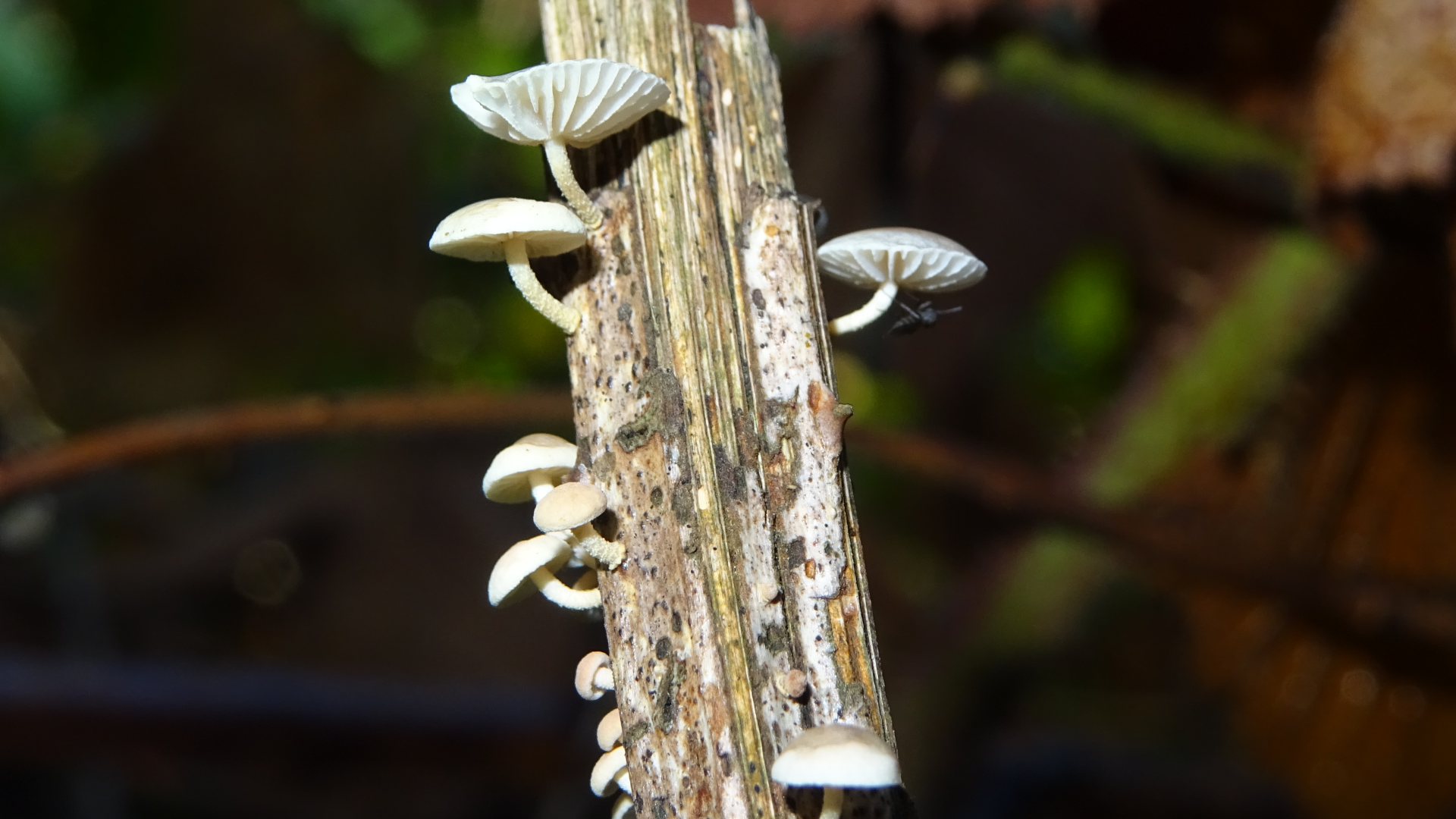
Twig Parachute grows on dead bramble stems and twigs during summer and autumn. The caps are white or pale cream, initially convex before flattening with age. They are radially wrinkled at the edges and range from 0.3 to 15 mm in diameter. The stipe darkens toward the base and measures 5 to 20 mm in length and approximately 1 mm in thickness. There is no ring present. The gills are pinkish-white, adnate, narrow, and spaced apart.
#
Butter Cap
Rhodocollybia butyracea
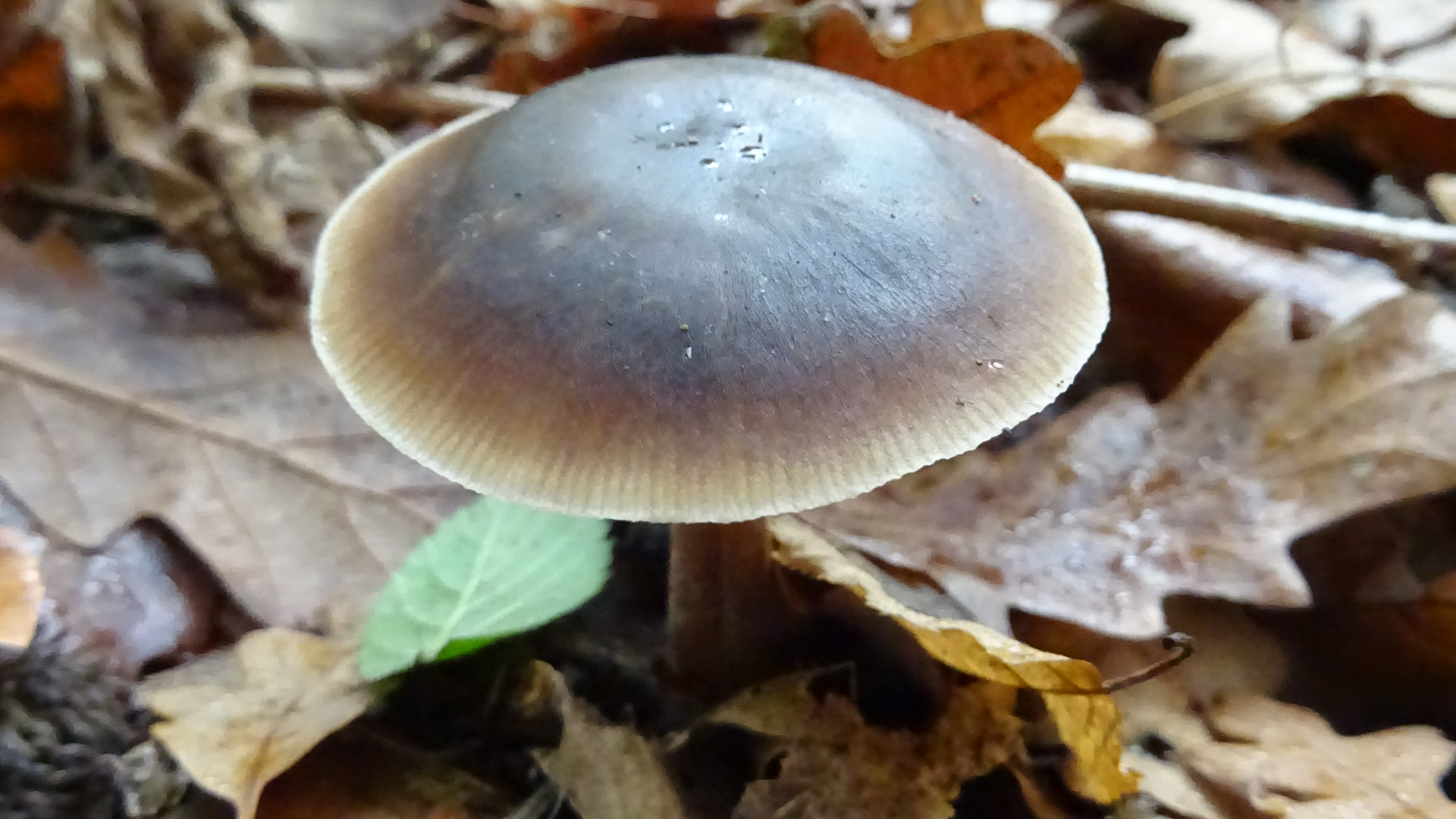
A woodland fungus that varies in colouration. Caps measure 40-80mm across. Initially convexed, they flatten with a slight umbo and with maturity the margin usually turns upwards. Sometimes referred to as Greasy Toughshank.
#
White Saddle
Helvella crispa
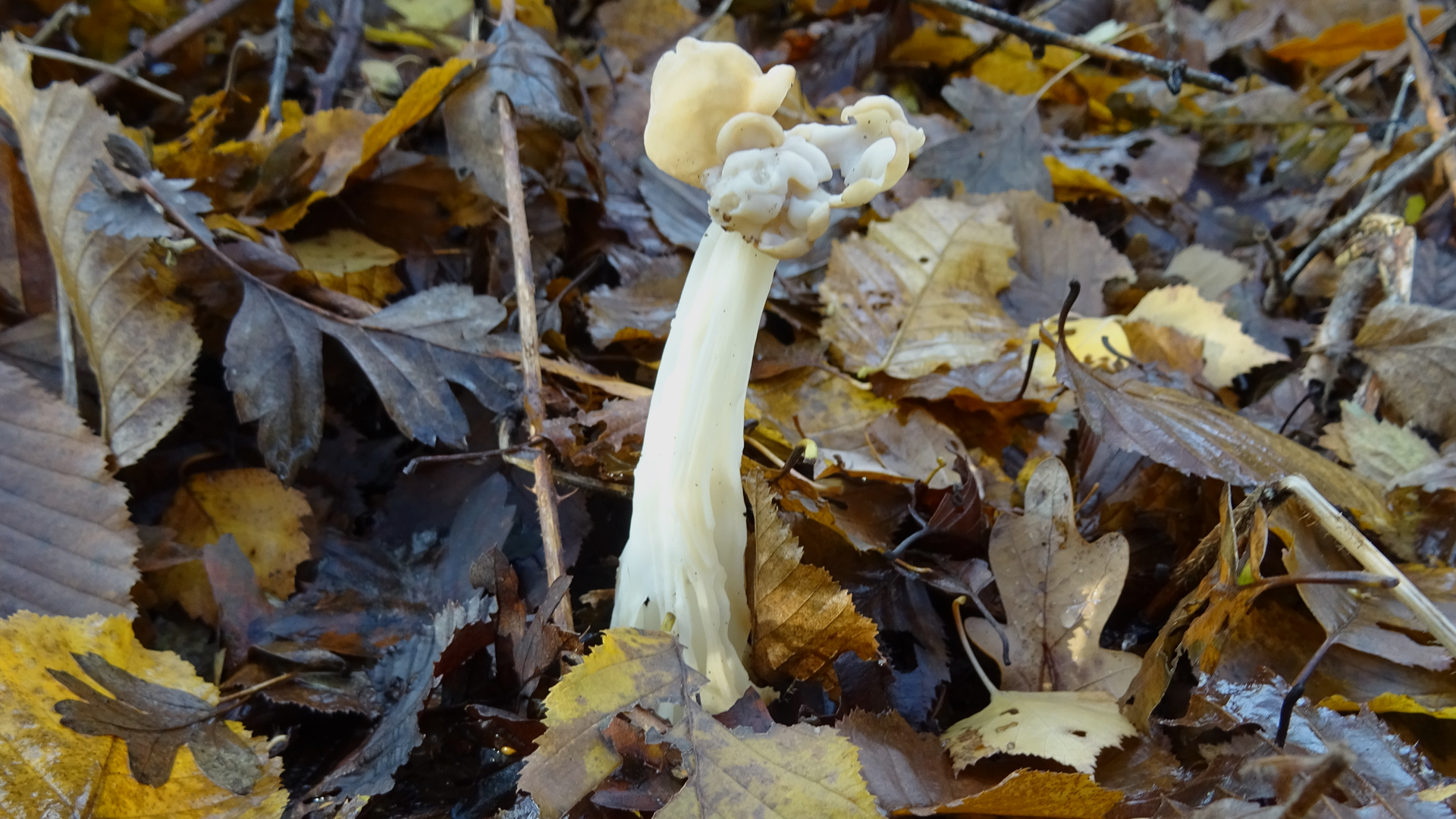
White Saddle is common in the forest during autumn. The caps, which are saddle-shaped and range from 30 to 80 mm in diameter, have a smooth upper surface and a slightly downy texture beneath. The furrowed stipe tapers towards the top and measures between 40 and 80 mm in length.
#
Dung Roundhead
Protostropharia semiglobata
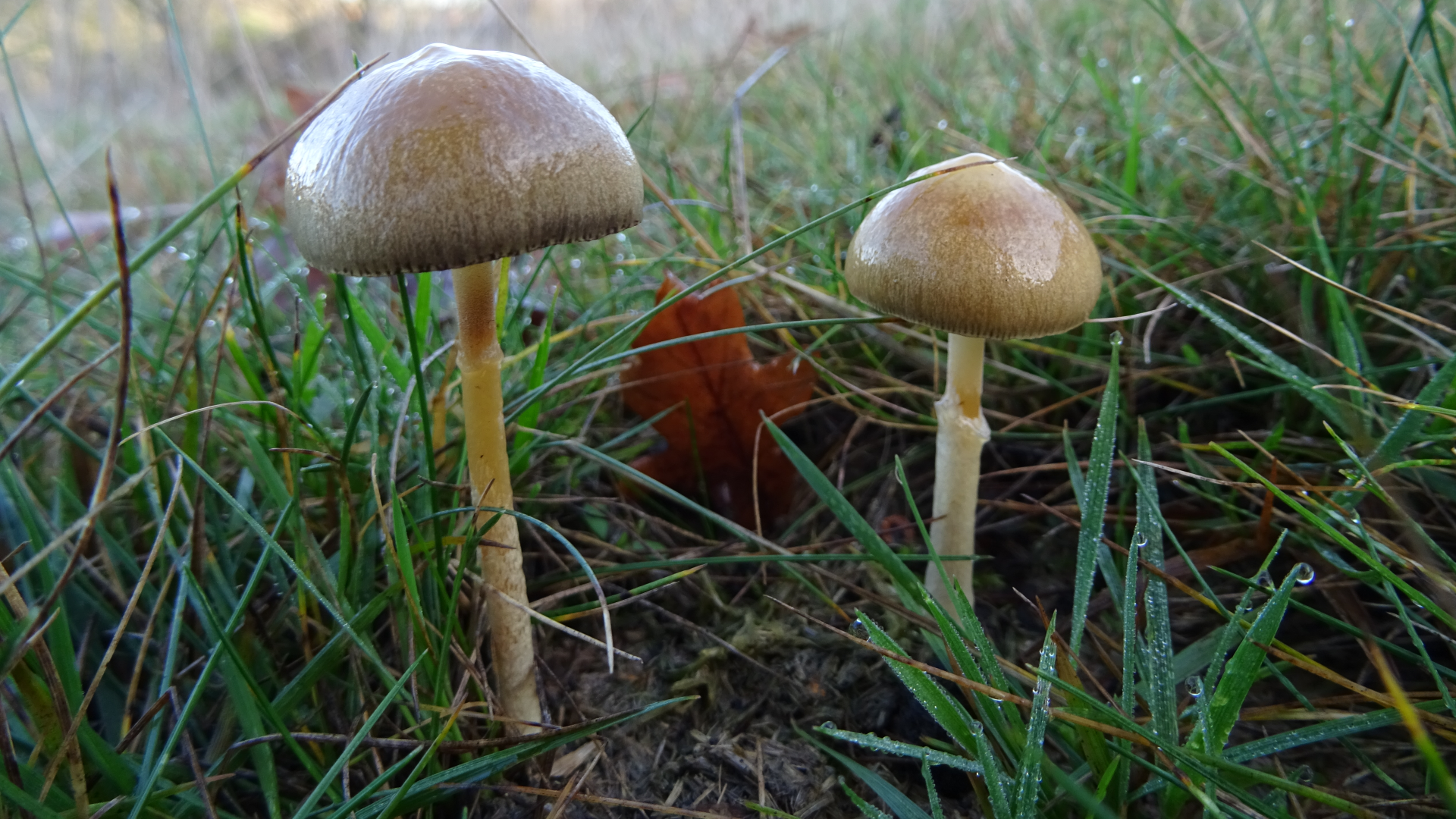
Saprobic grassland fungus that grows on animal dung and fresh manure during the summer and autumn seasons. The caps are hemispherical, measuring 10-30 mm in diameter, and are sticky when wet, becoming smooth and shiny when dry. The stipes are smooth and slender, ranging from 50-100 mm in height and 2-3 mm in thickness. There is a temporary ring present. The spores are purple-brown.
#
Yellow Brain Fungus
Tremella mesenterica
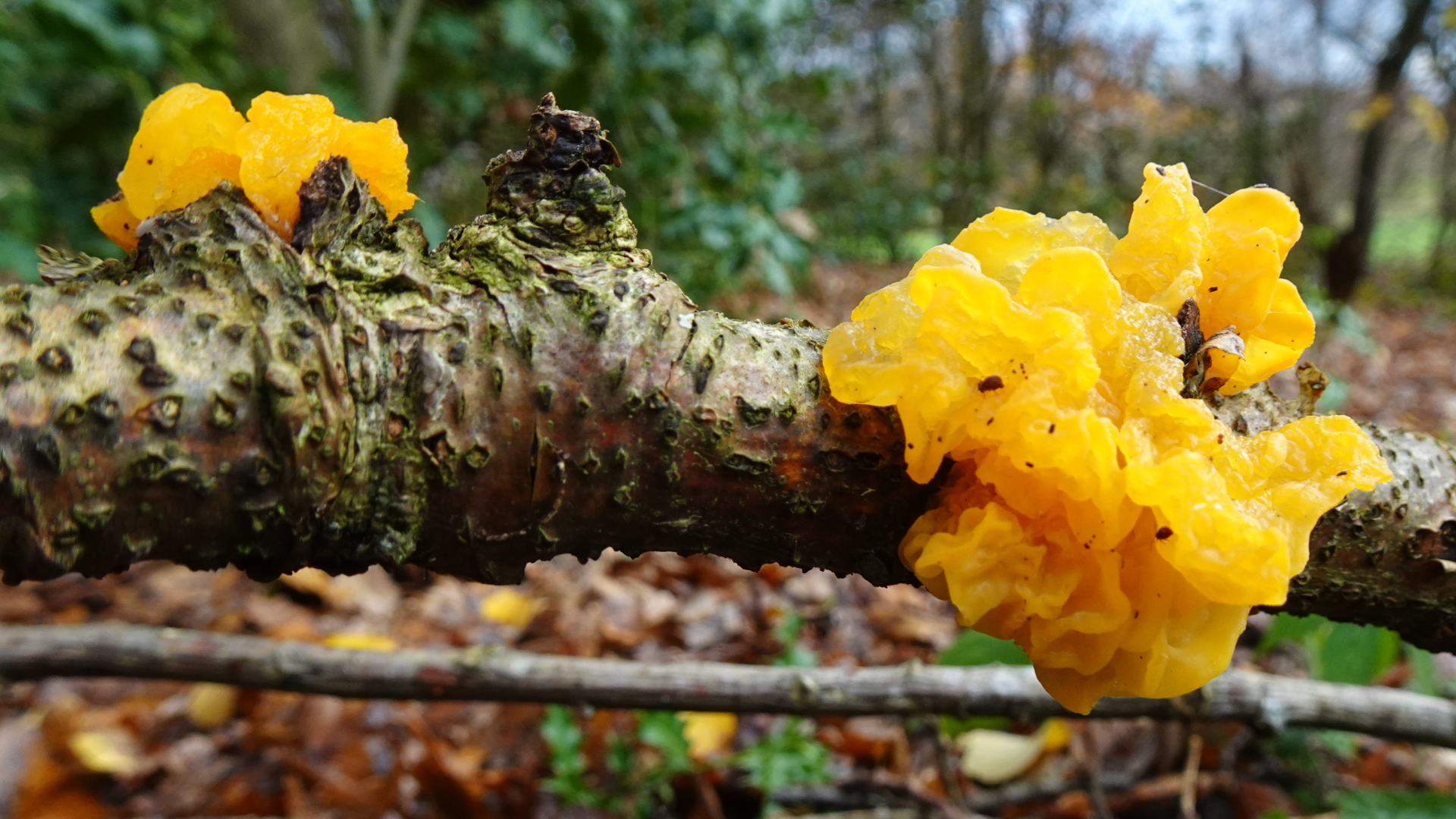
Yellow Brain Fungus normally appears during the autumn and winter on fallen deciduous branches. When dried, it becomes hard and orange.
#
Hoof Fungus
Fomes fomentarius
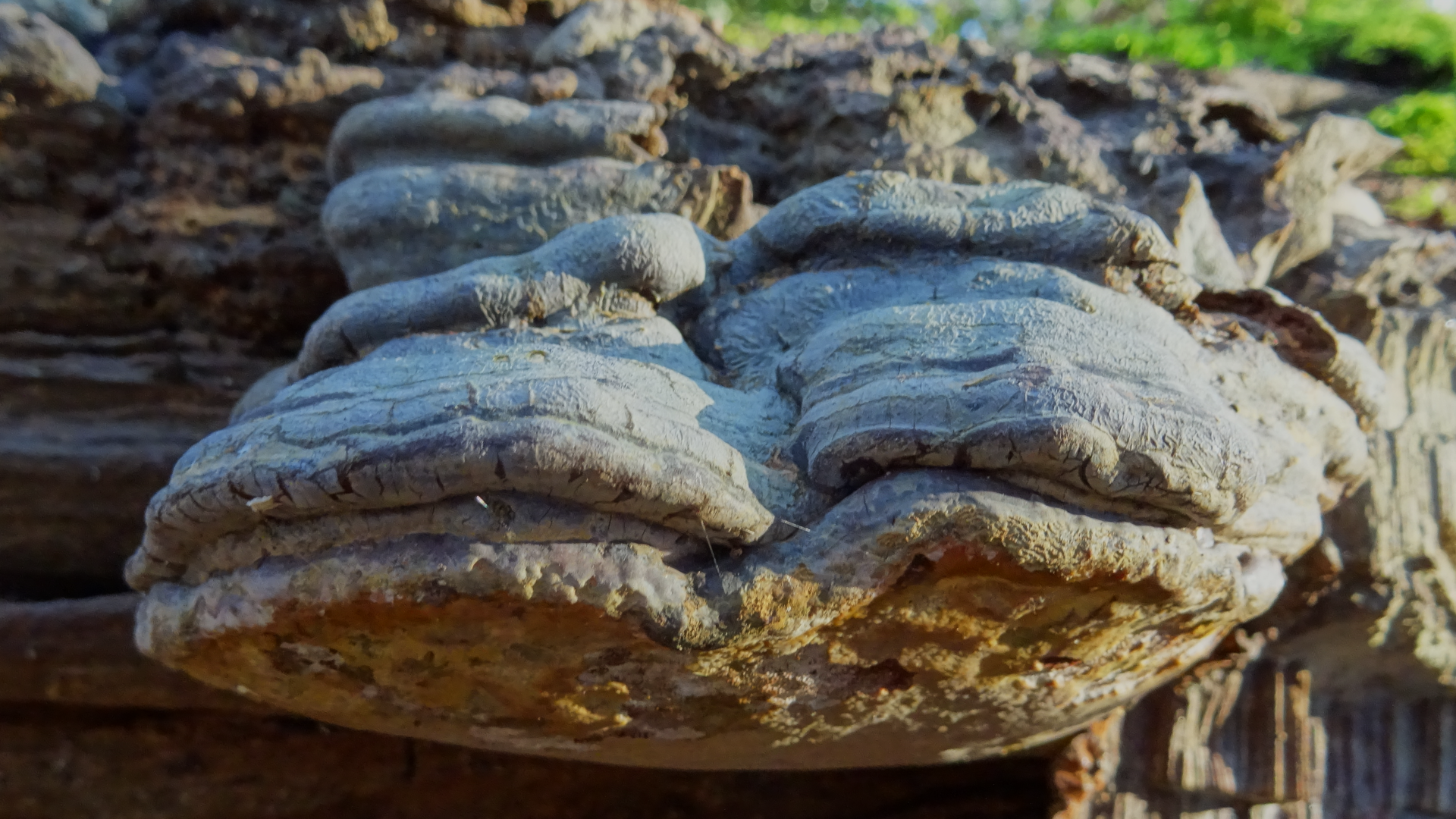
Hoof Fungus has a tough outer crust. New growth layers are produced each year, eventually creating a characteristic hoof shape. It is typically found on dead or dying beech and birch trees and is also referred to as Tinder Bracket.
#
Cup Lichen
Cladonia chlorophae
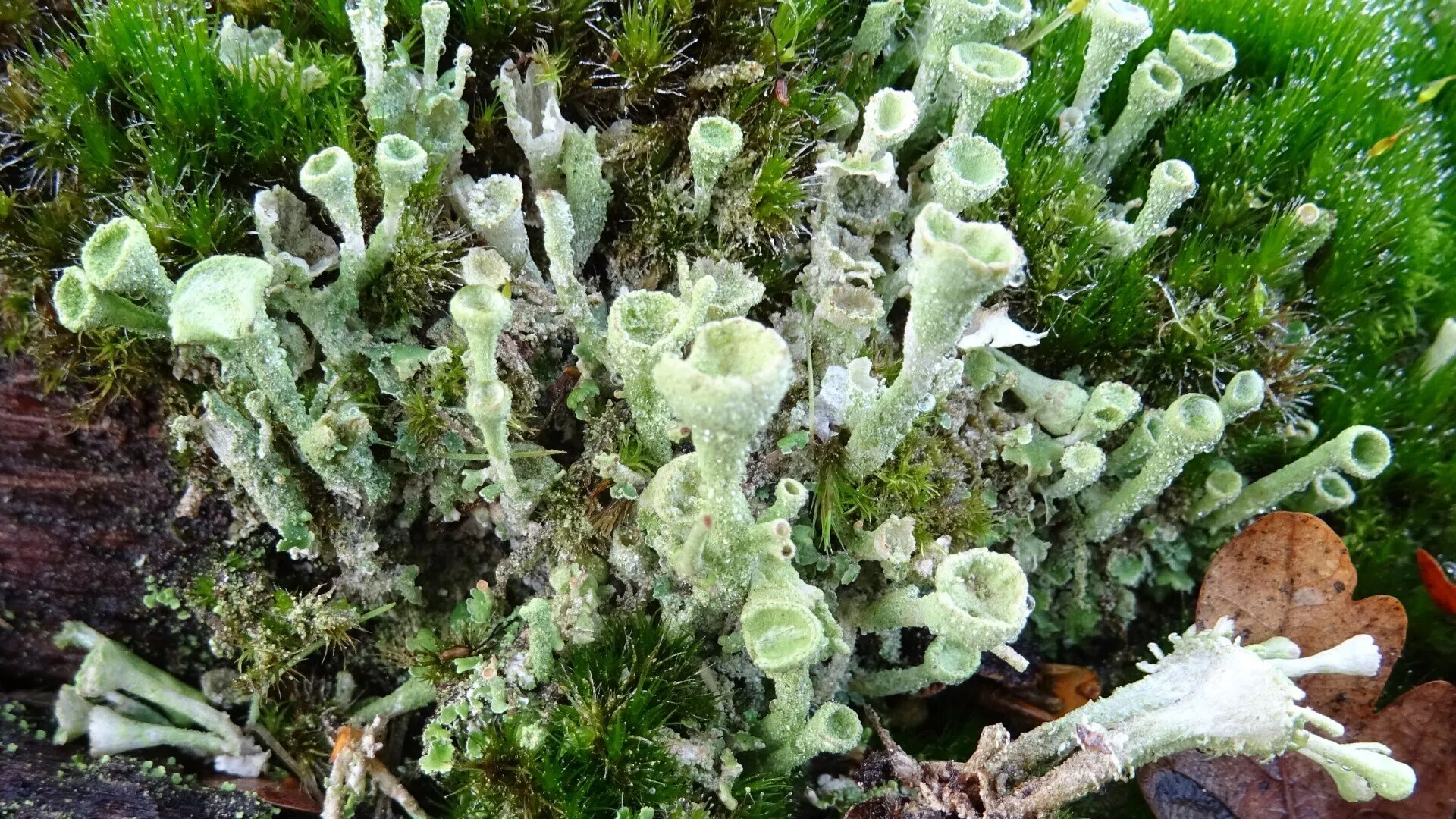
Cup lichen is located in mossy and shaded areas. The podetia, or stalks, and the interior of the cups have coarse soredia. Soredia are powdery structures that play a role in asexual reproduction.
#
Herb Bennet Leaf Gall
Cecidophyes nudus
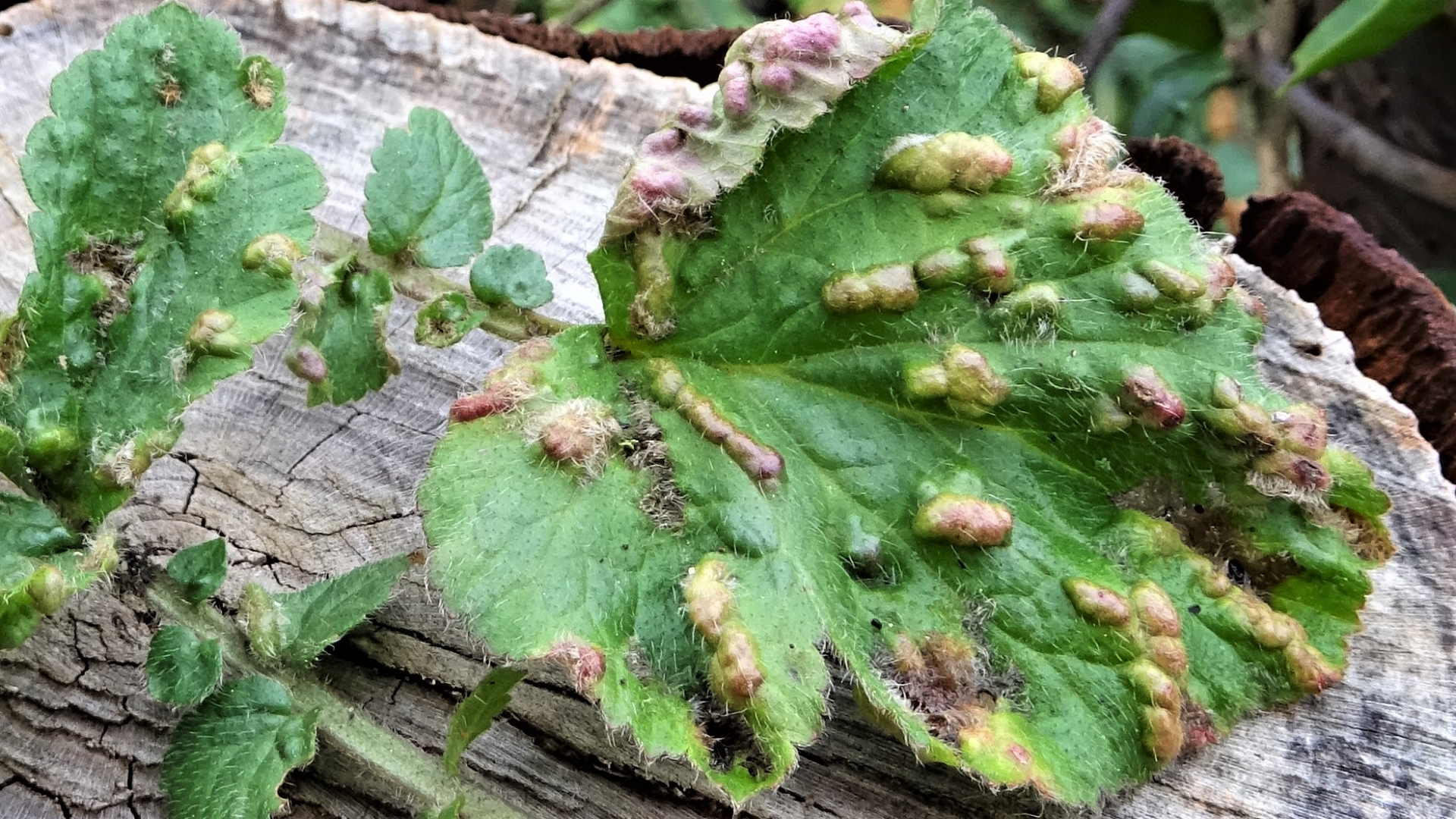
Leaf galls, which manifest as bulges on the upper side of Herb Bennet leaves, are produced by white mites known as
Cecidophyes nudus throughout the year. These mites reside on the undersides of leaves in abnormal hair growth called erineum and enter a dormant state during the winter. Thank you to Enid Barrie for her assistance with the identification.
#
Swollen Stem Gall
Lasioptera rubi
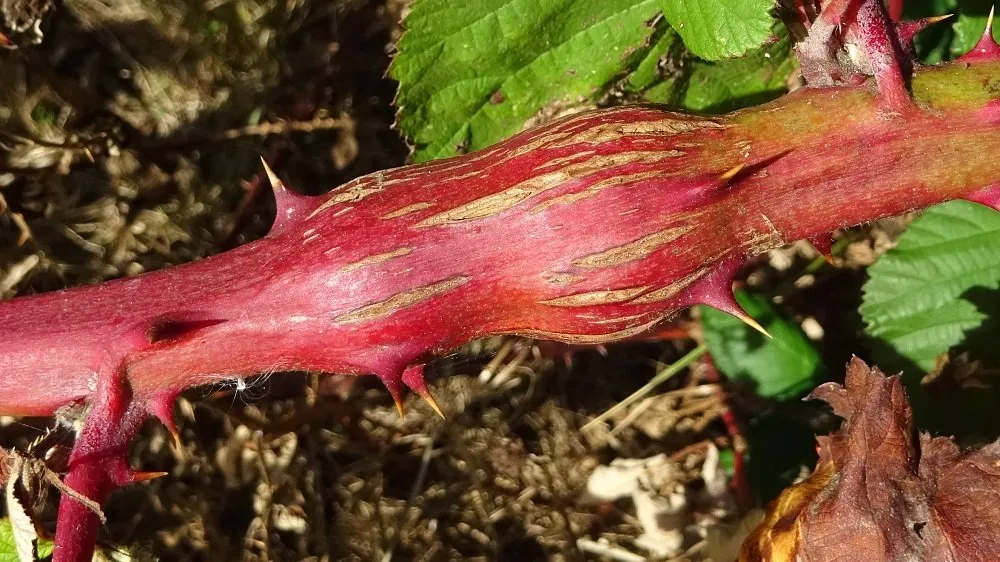
Swollen stem galls are abnormal growths on bramble stems that are caused by the midge
Lasioptera rubi.
#
Broad Buckler Fern Mophead Gall
Chirosia betuleti
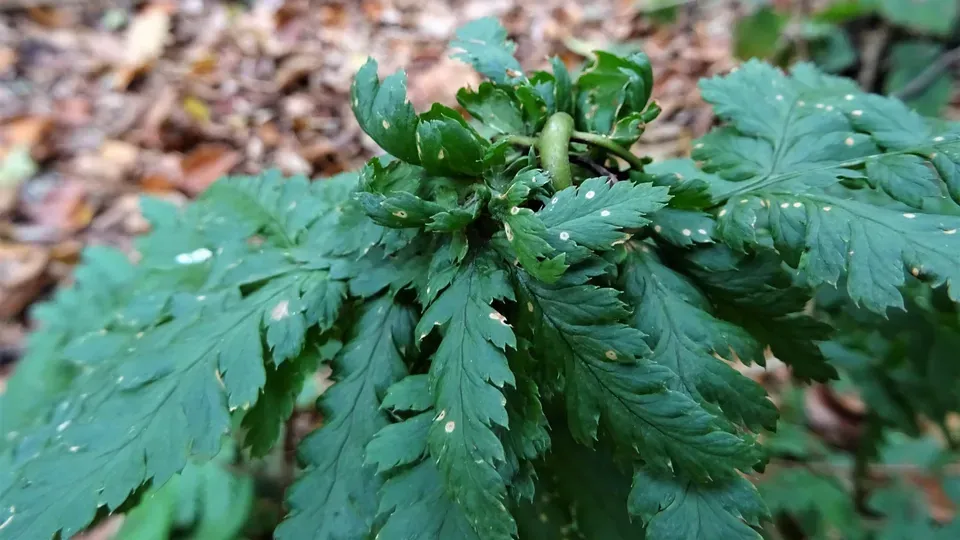
Mophead galls are found as knots on the tops of Broad Buckler ferns. They are caused by the midge
Chirosia betuleti.
#
Slime Mould
Badhamia panicea
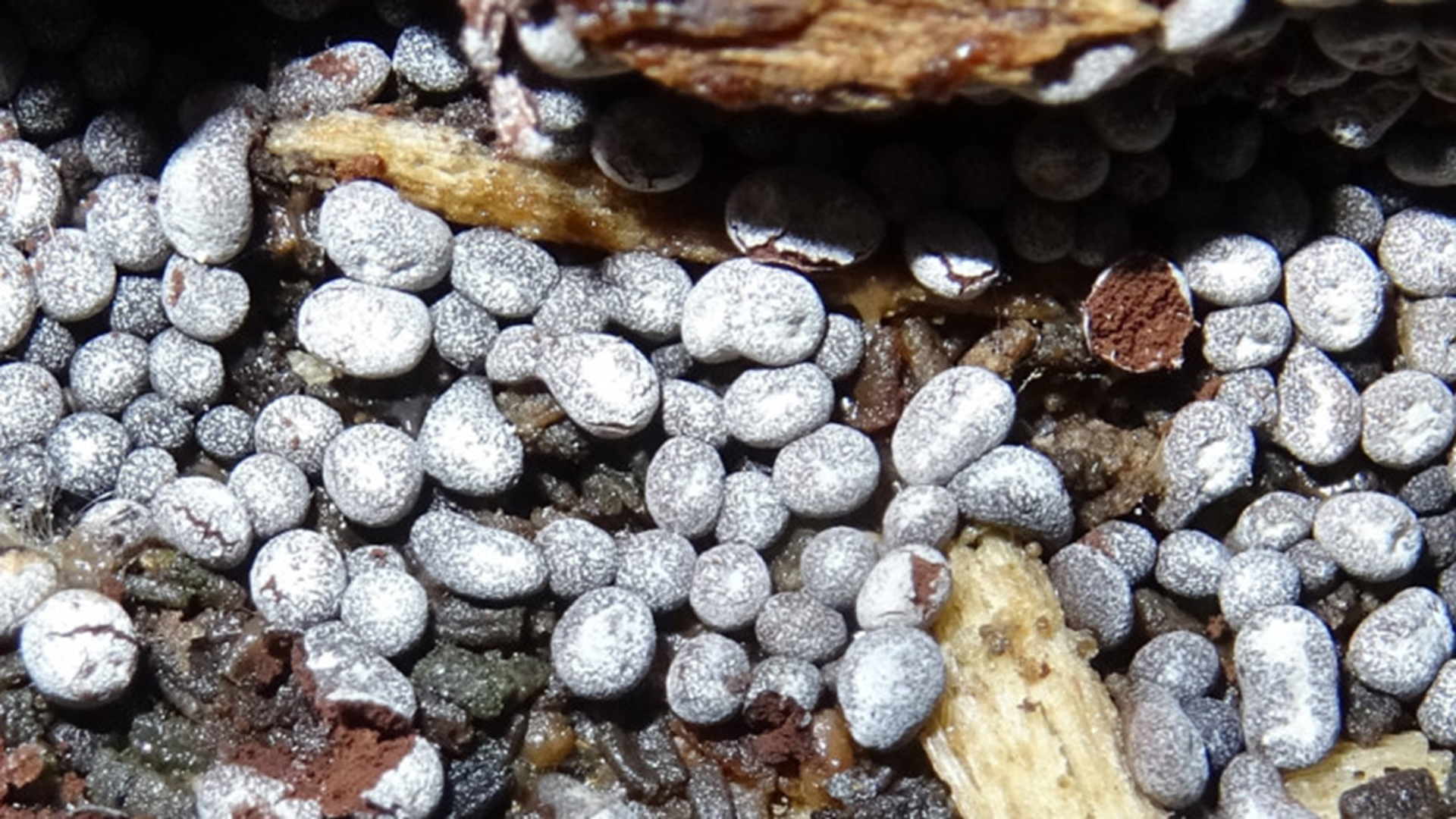
This slime mould usually has sessile sporangia resembling tiny pebbles that develop from white plasmodium. Sometimes they have short red stalks, however this is rare. This species is common on fallen tree trunks, especially beech. Thank you to Professor Bruce Ing for the identification.
#
Thank you to everyone who has contributed to this Journal.
© hainaultforest.net. All rights reserved.
This website uses necessary cookies. It does not use targeting or advertising cookies.