

SECOND QUARTER 2018
Common Spotted Orchid
Dactylorhiza fuchsii
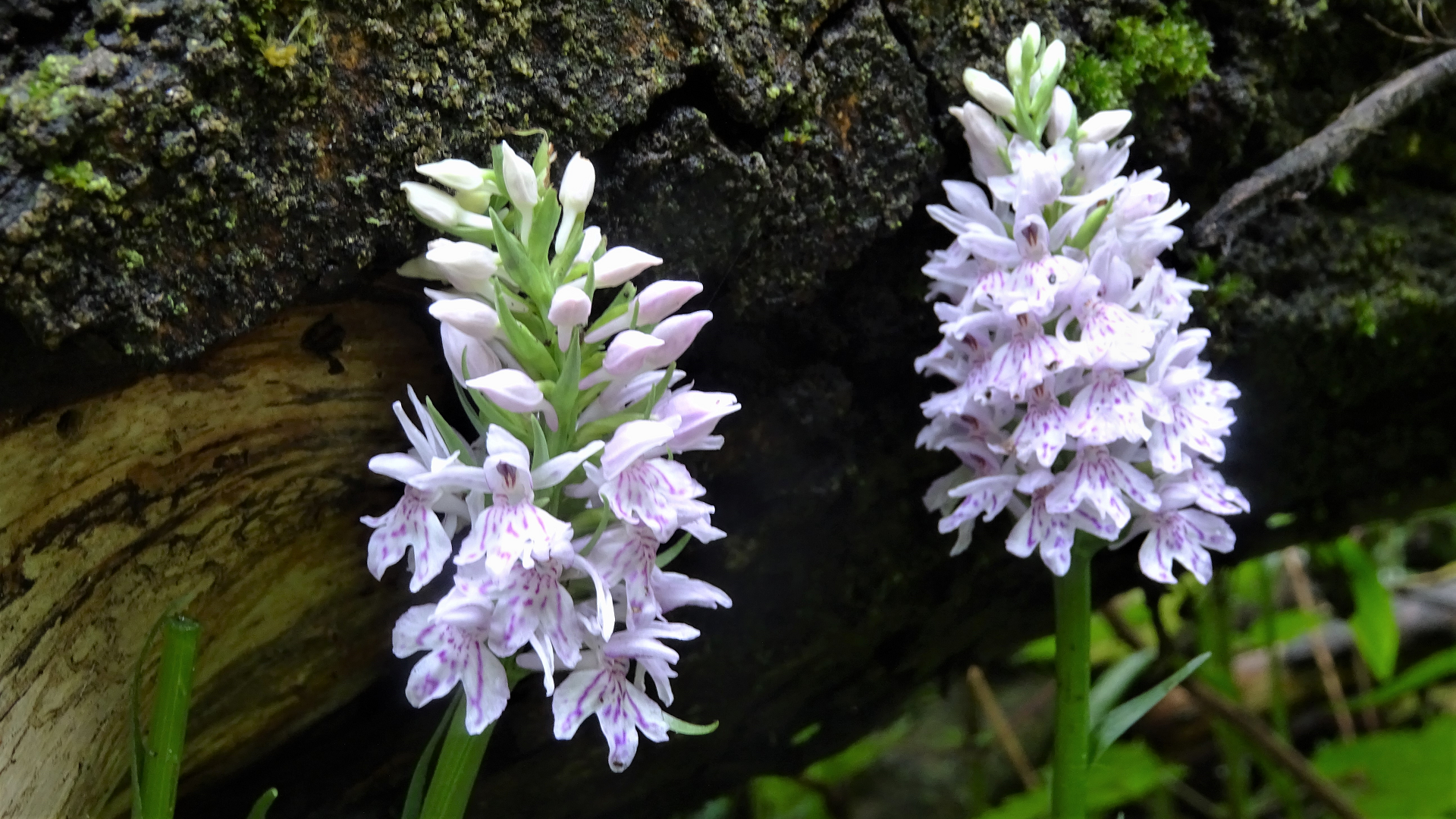
The Common Spotted Orchid has green purple-spotted leaves that form a basal rosette before the flower spike emerges. Flowers are seen from May to August.
#
Blackthorn
Prunus spinosa
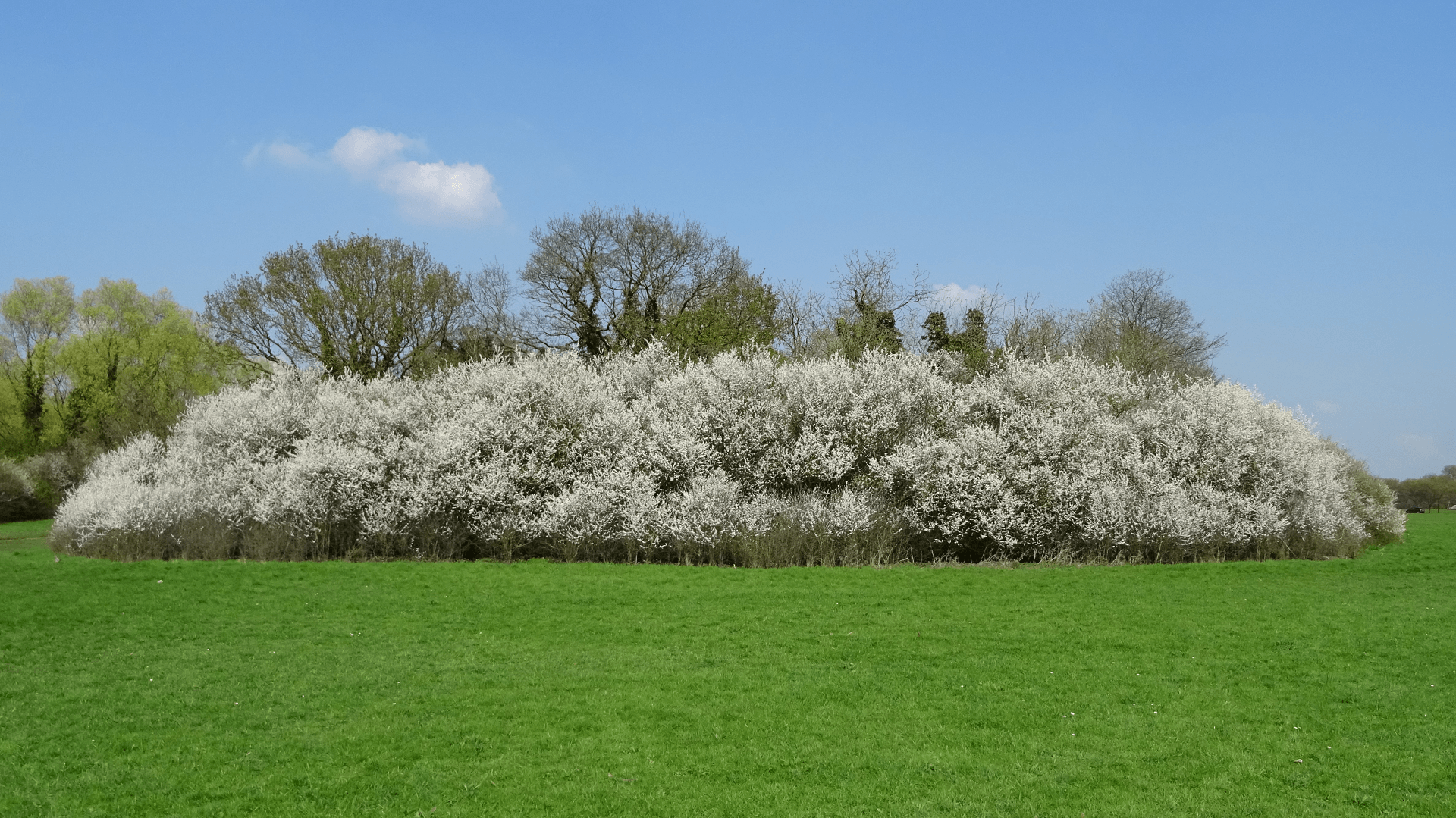
Blackthorn blossom usually emerges after cherry blossom and before hawthorn blossom. The three types of blossom share many visual similarities.
#
Blinks
Montia fontana
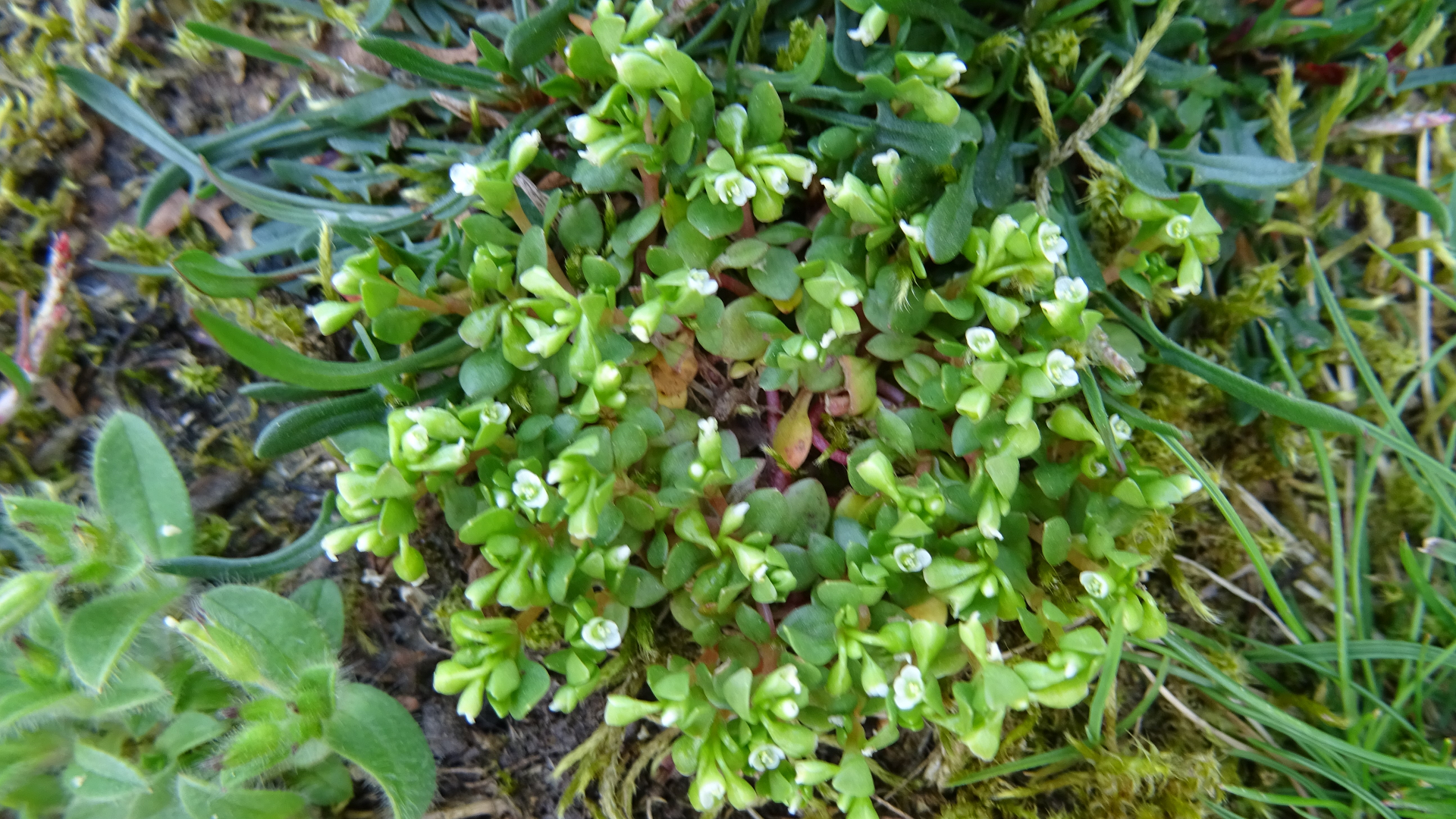
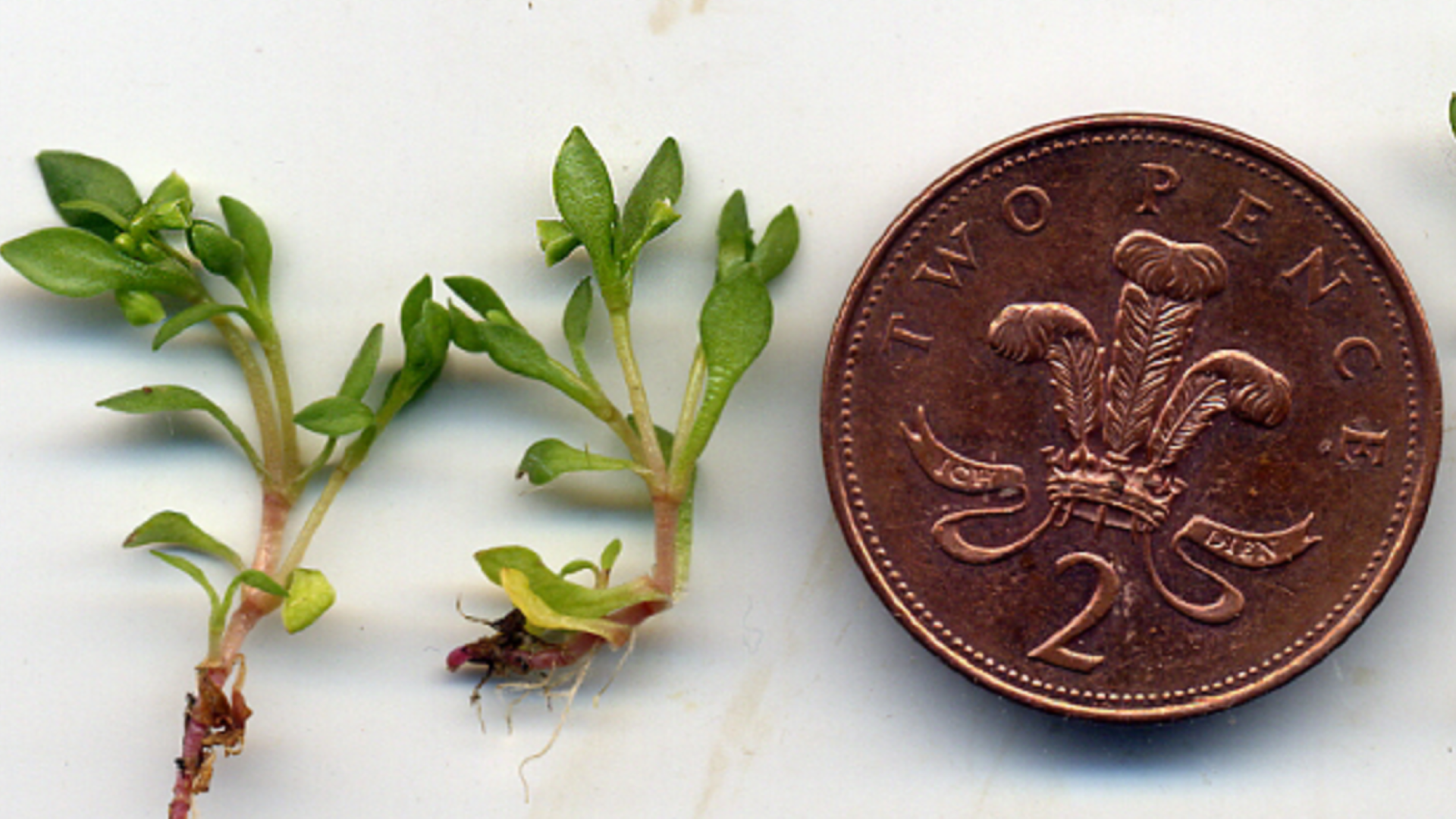
This low straggling plant is found on Hog Hill from April to October. It prefers damp, acidic soil. The small white flowers, measuring 2mm, can be hard to see. The leaves are arranged oppositely, and the stems are often reddish.
#
Cuckooflower
Cardamine pratensis
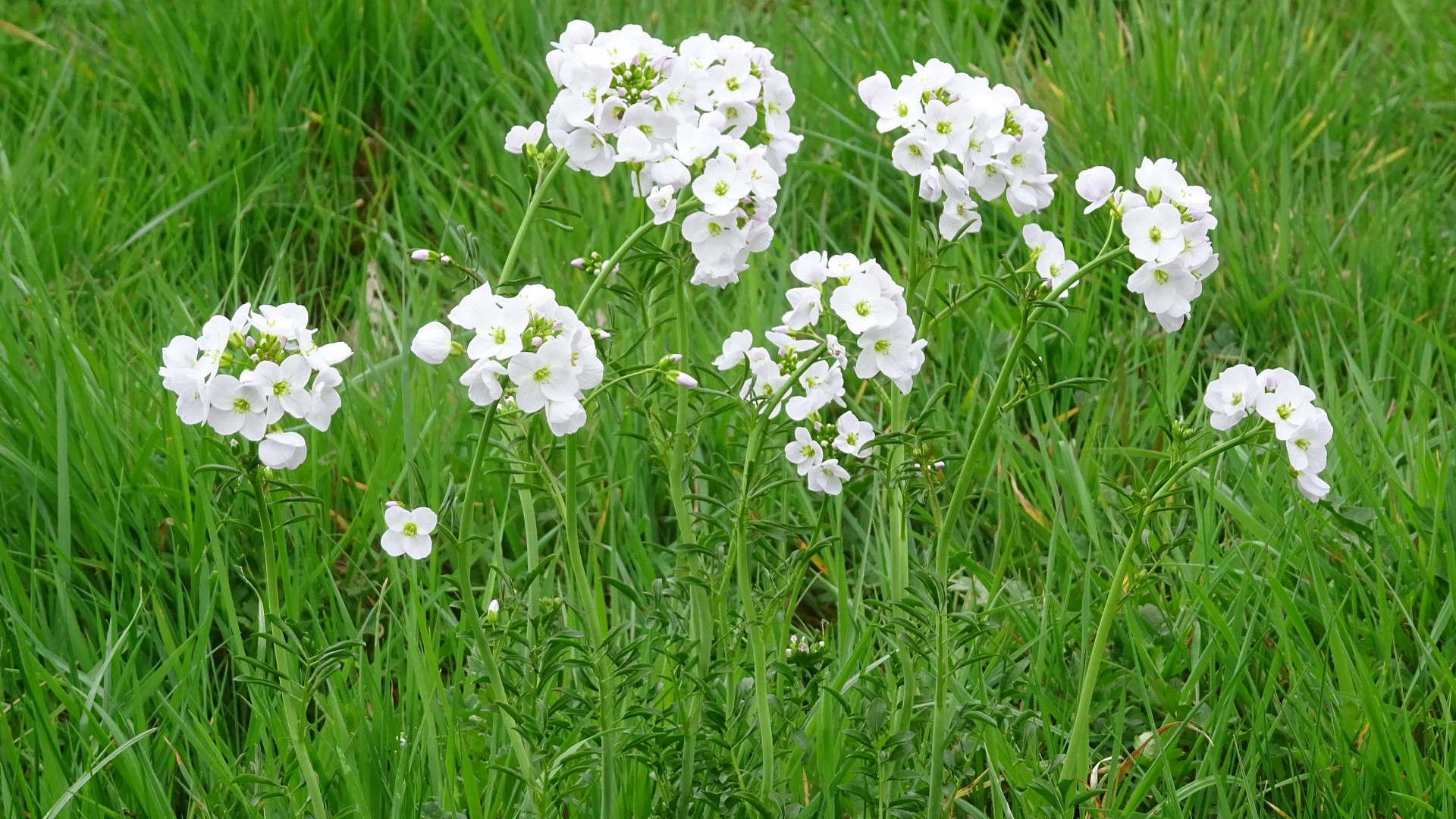
Also referred to as 'Lady's-smock', this perennial plant thrives in damp, grassy areas during spring. Its whitish-pink flowers bloom between April and June. This plant is commonly favoured by Orange-tip Butterflies.
#
Ragged Robin
Lychnis flos-cuculi
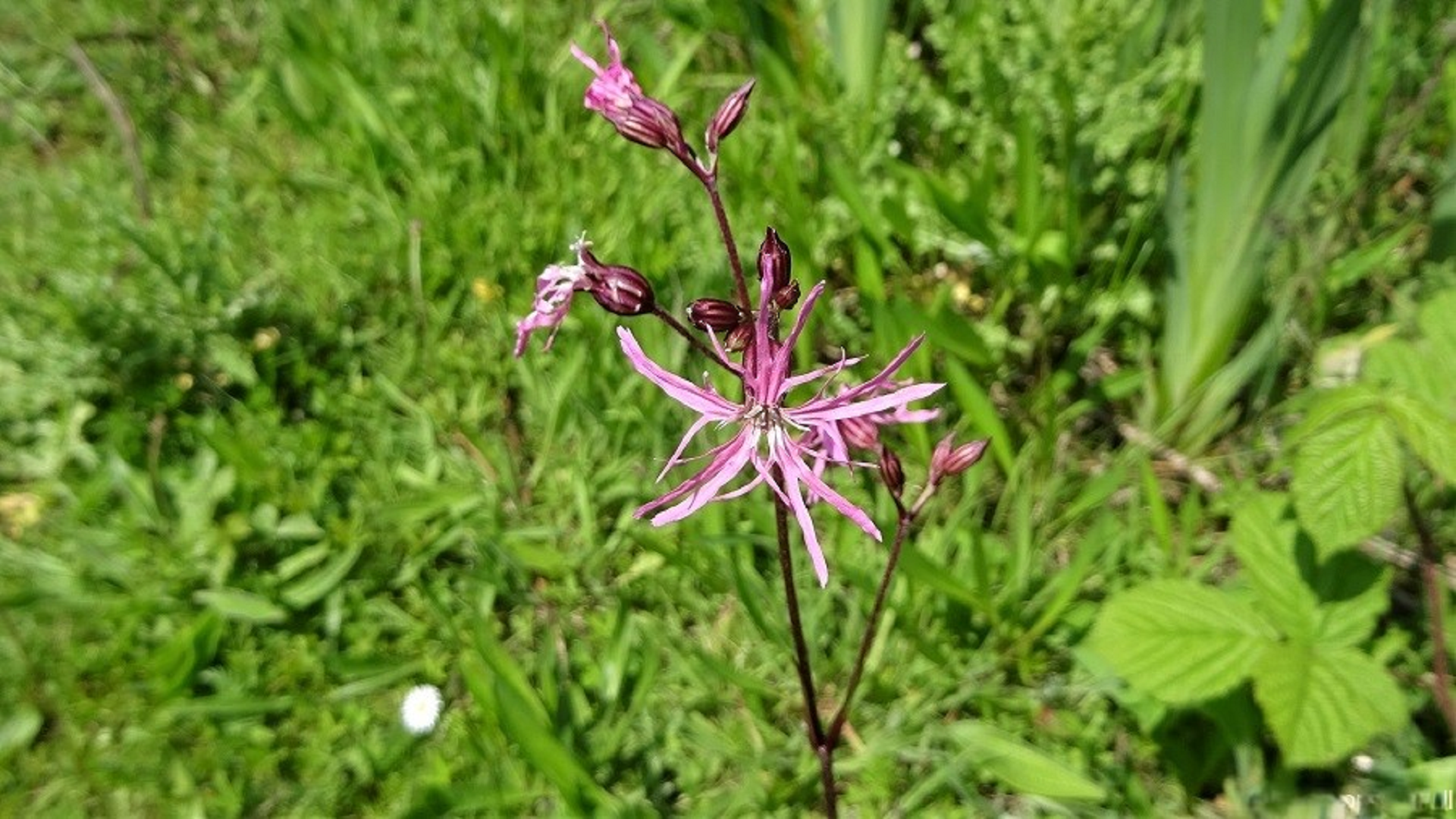
Tall perennial with narrow shiny leaves that are rough to the touch. The tatty-looking pink flowers (25-40mm) that appear from May until August are unlikely to be mistaken for anything else. Found in damp places and wetland habitats.
#
Meadow Cranesbill
Geranium pratense
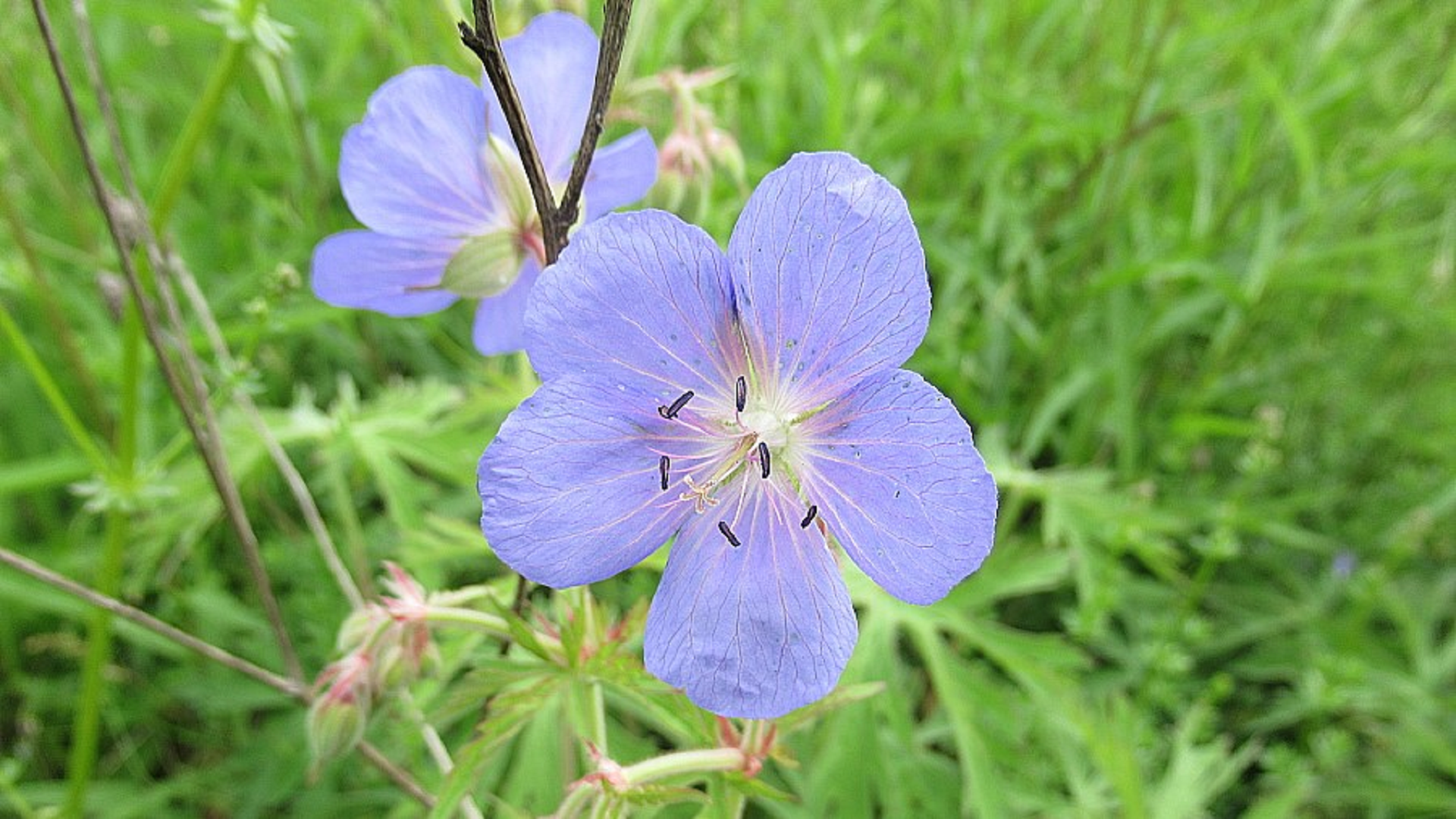
Found in meadows in sunny locations. Its large blue flowers change into pointed, bill-like seed pods. The leaves are lobed and deeply divided.
#
Hairy Bittercress
Cardamine hirsuta
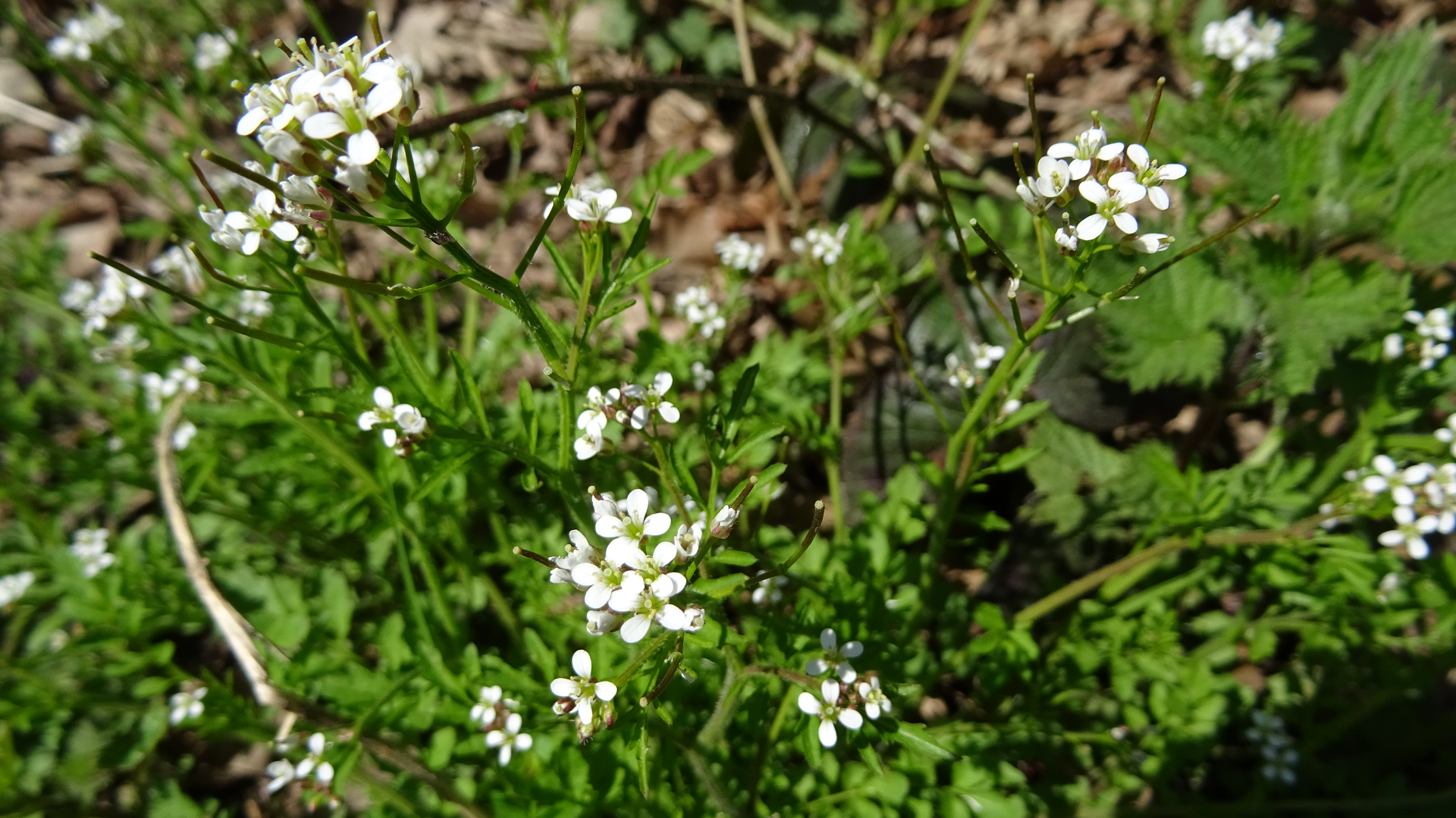
Hairy Bitter-cress is a widespread annual plant. Its elongated, slender seedpods can disperse seeds explosively, projecting them up to 75 cm away. Typically, the lifecycle of this plant is finished before the arrival of summer.
#
Three-nerved Sandwort
Moehringia trinervia
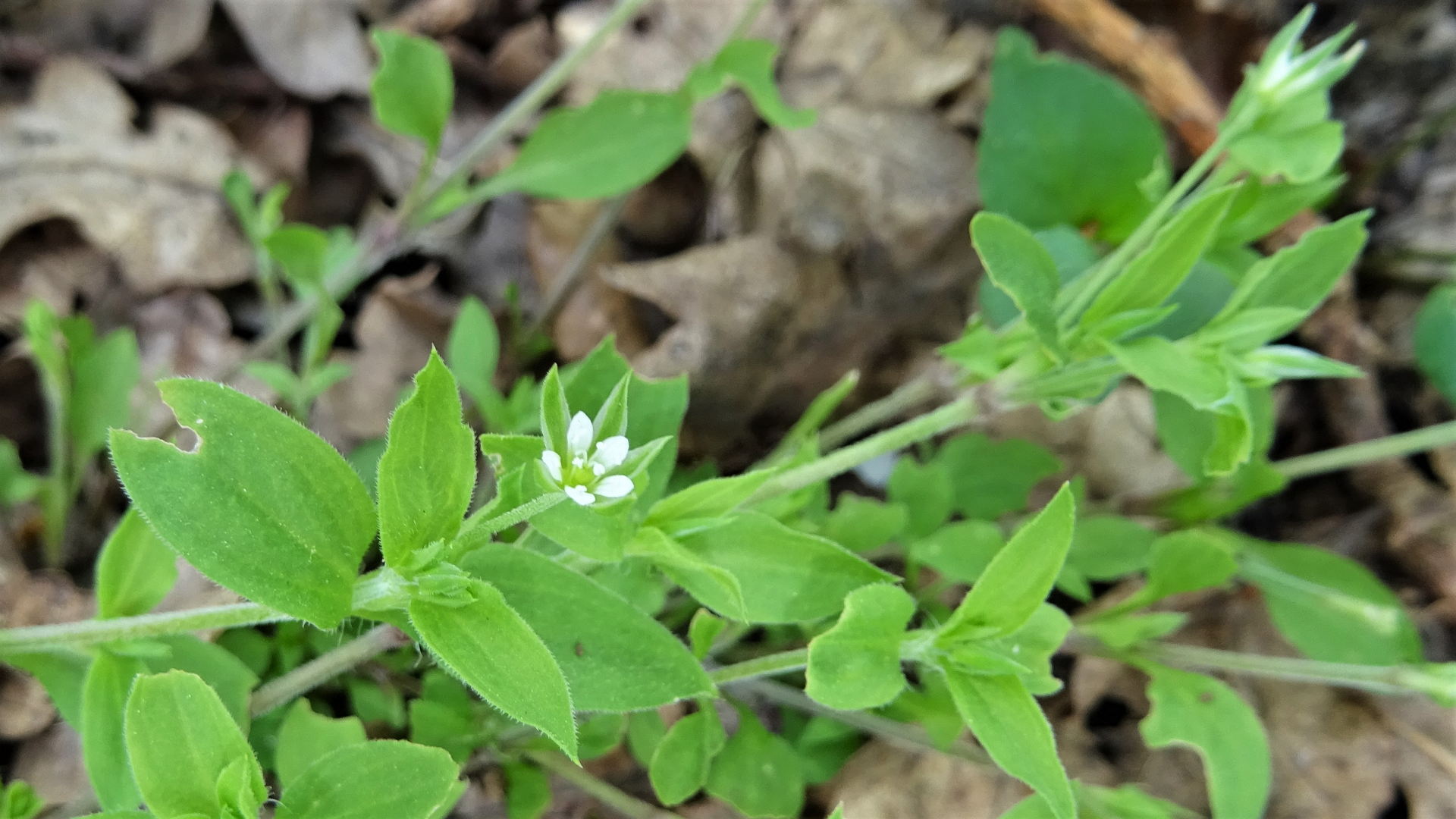
Similar to other members of the Chickweed family, this low-growing plant can be distinguished by its leaves, which have 3-5 distinct veins instead of a single central vein. It is commonly found in shaded areas.
#
Bittersweet
Solanum dulcamara
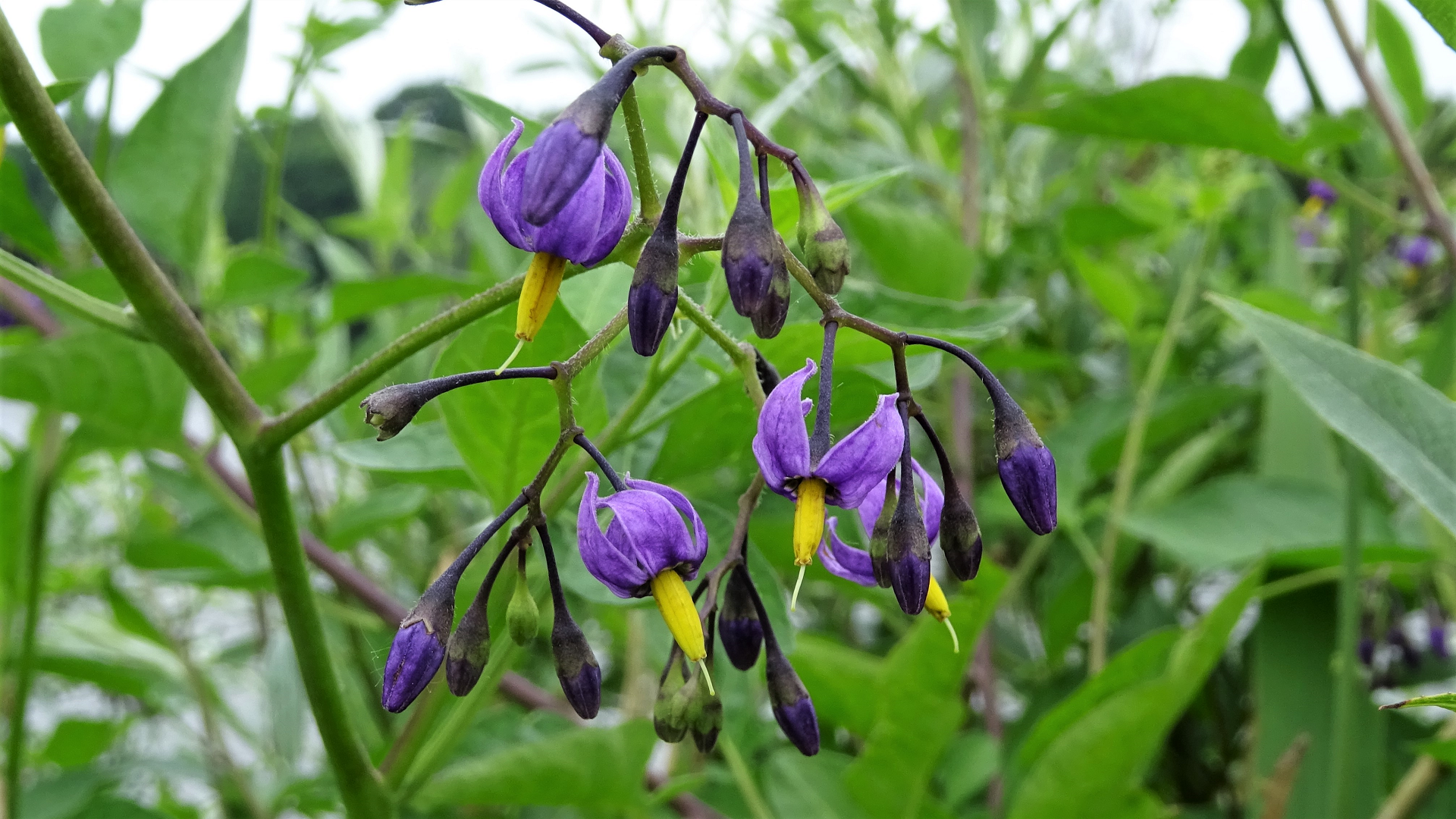
This hedgerow plant is part of the Nightshade family. It features distinctive purple flowers with yellow stamens. After the flowering stage, it produces clusters of bright red berries that are poisonous. It is also referred to as 'Woody Nightshade.'
#
Ground Ivy
Glechoma hederacea
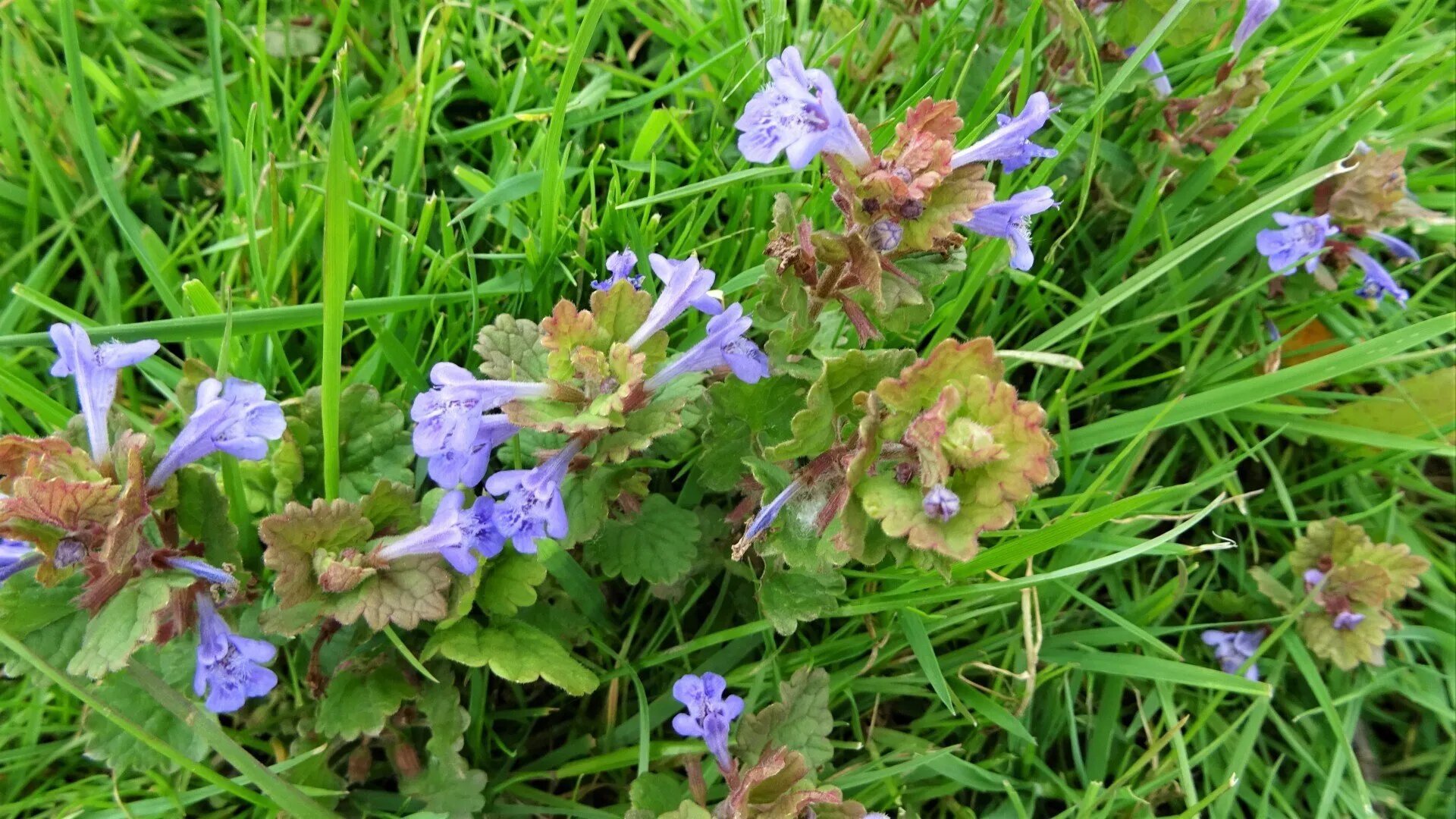
Ground Ivy is common throughout the forest. It is a softly haired creeping perennial with square leafy stems. It produces a strong aroma when crushed.
#
Field Madder
Sherardia arvensis
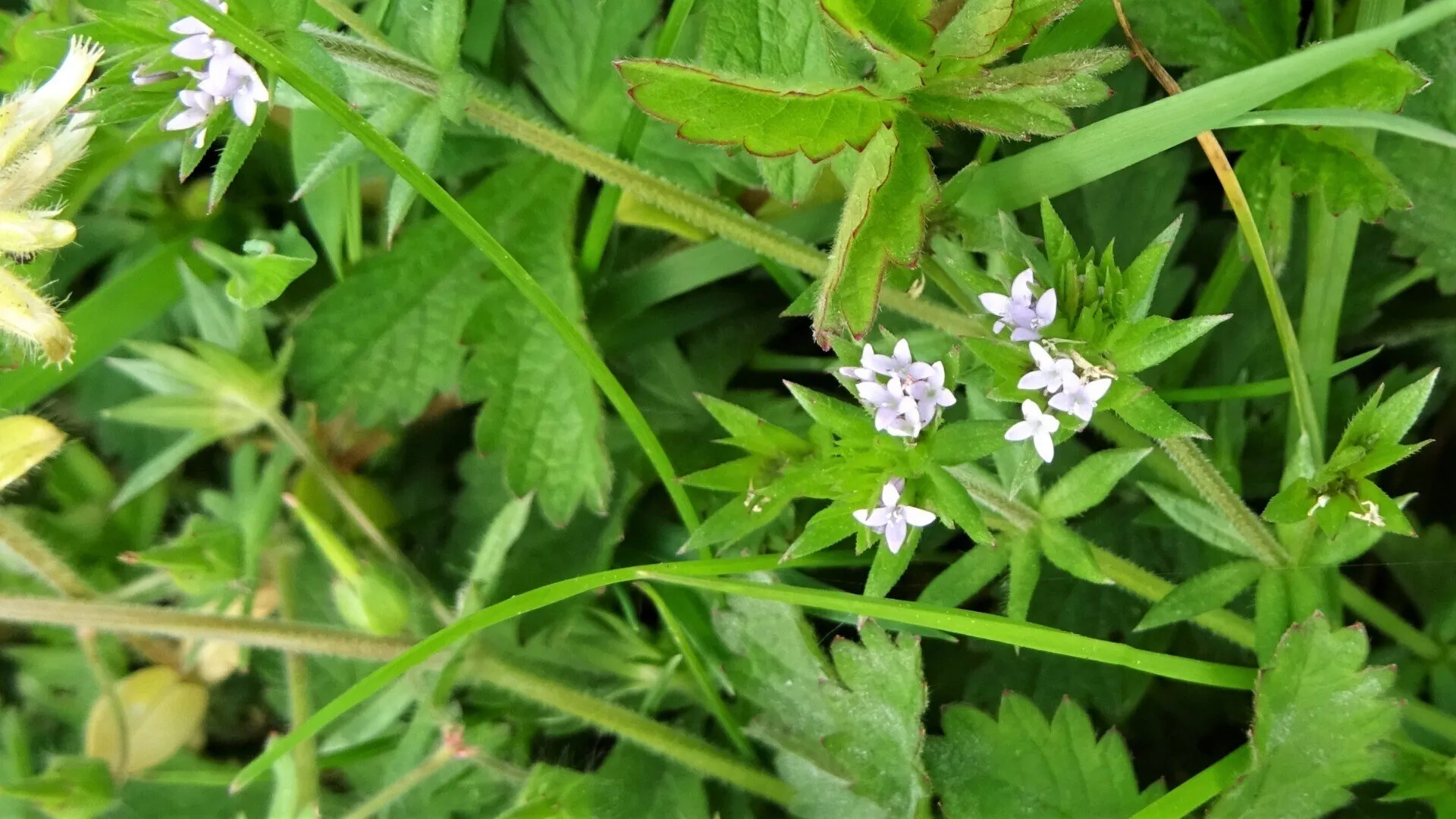
Field Madder is an annual plant that grows along the edge of Foxburrow Road from May to August. It features small, four-petalled lilac flowers. The leaves are arranged in whorls of four to six and may be hairless or have dense bristles.
#
Three-nerved Sandwort
Moehringia trinervia
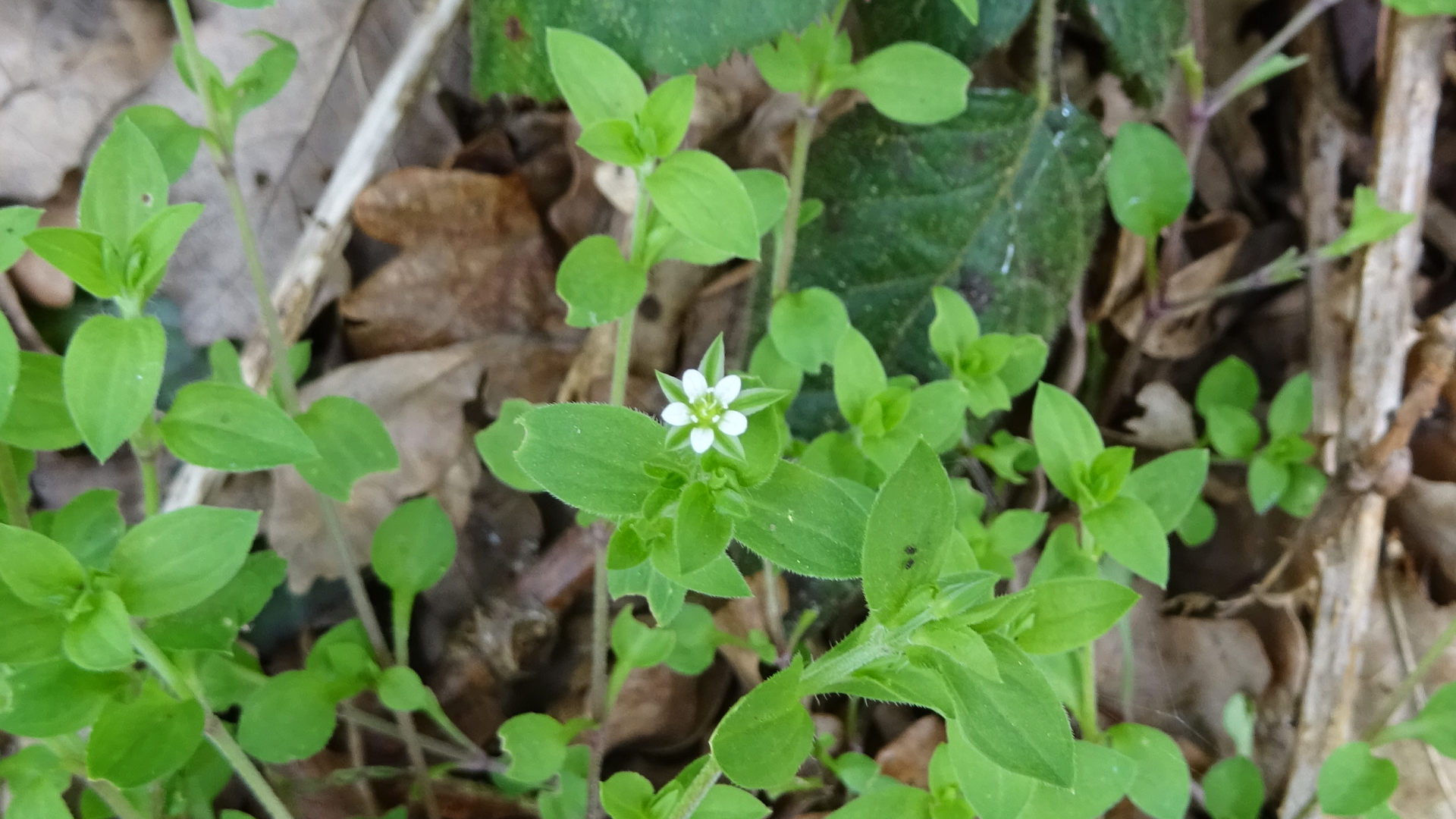
A low-growing annual found in shaded woodland during May and June. Instead of one central vein the oval leaves have 3-5 distinct veins. Its white flowers (4-7mm across) have five unnotched petals that are about half as long as the hairy-edged sepals.
#
Common Sorrel
Rumex acetosa
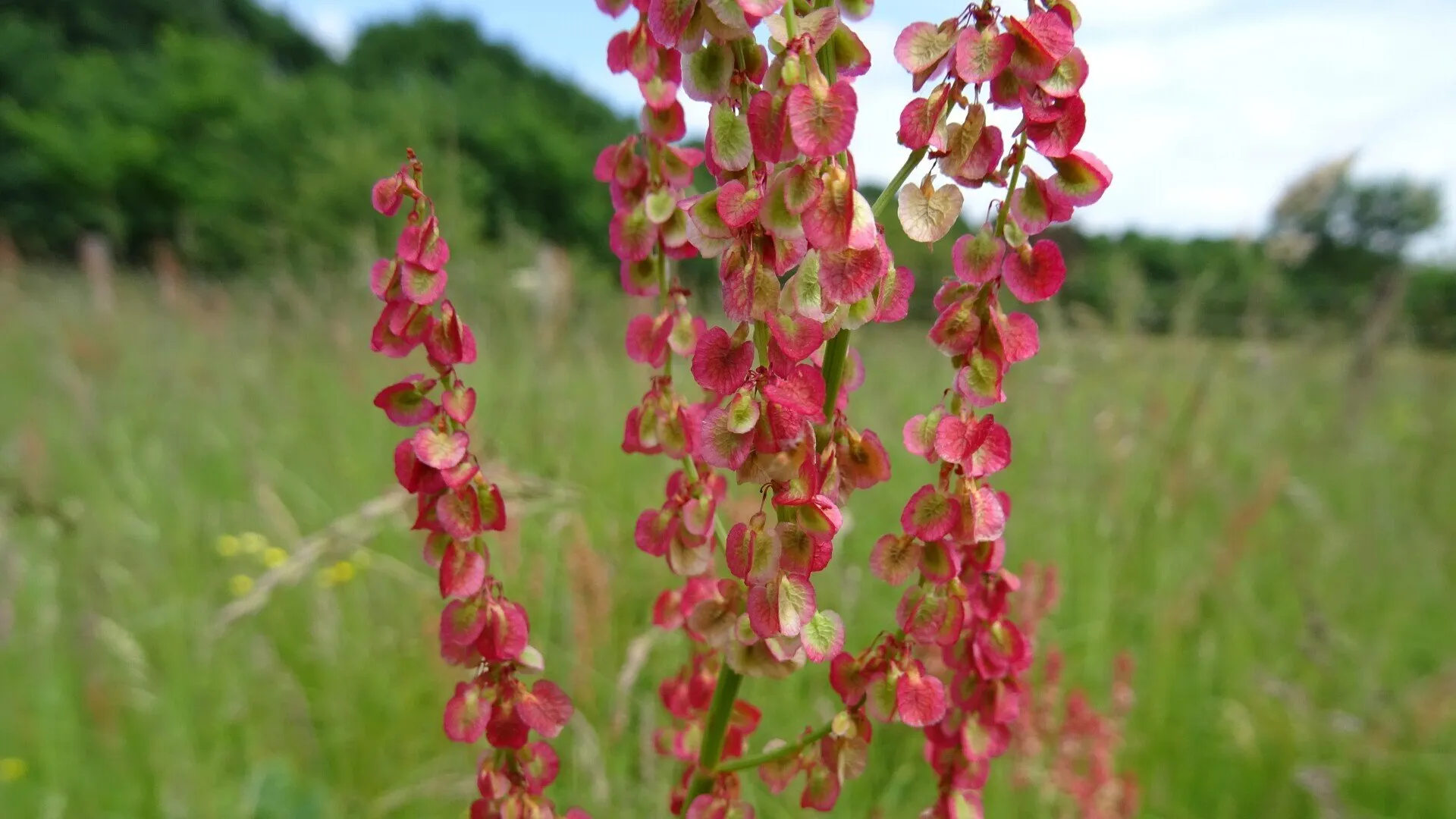
Common Sorrel is a tall perennial plant characterised by arrow-shaped leaves that normally grow from the base. It is widely found in meadows. The plant produces reddish flowers that are loosely arranged on spikes, blooming from May to July. As autumn nears, the bright red colour of the flowers diminishes. The fruit segments are round and lack swellings.
#
Field Rose
Rosa arvensis
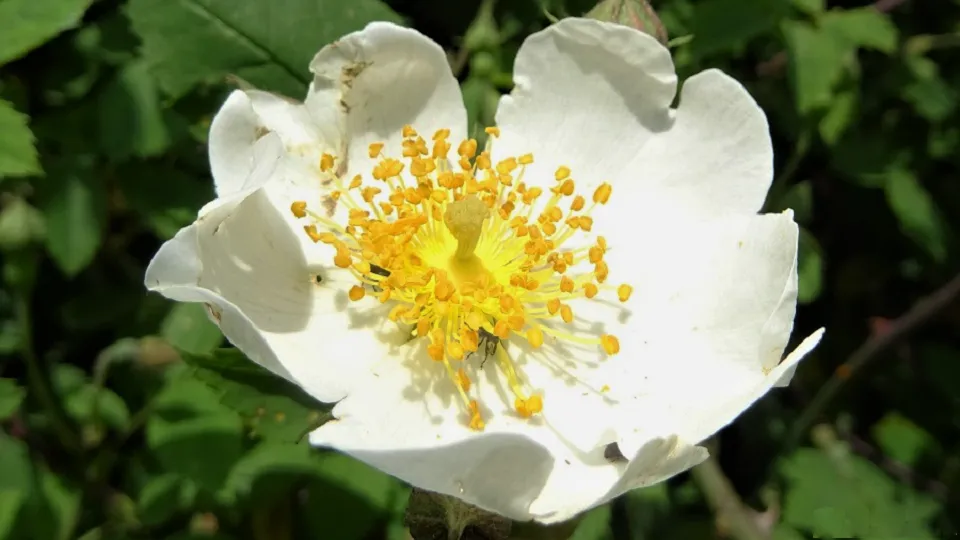
The Field Rose is a deciduous scrambling shrub found along hedgerows and woodland edges. It blossoms in summer; the flowers are always white and can be told apart from the Dog Rose by styles in the flower that are joined to form a long column.
#
Black Knapweed
Centaurea nigra
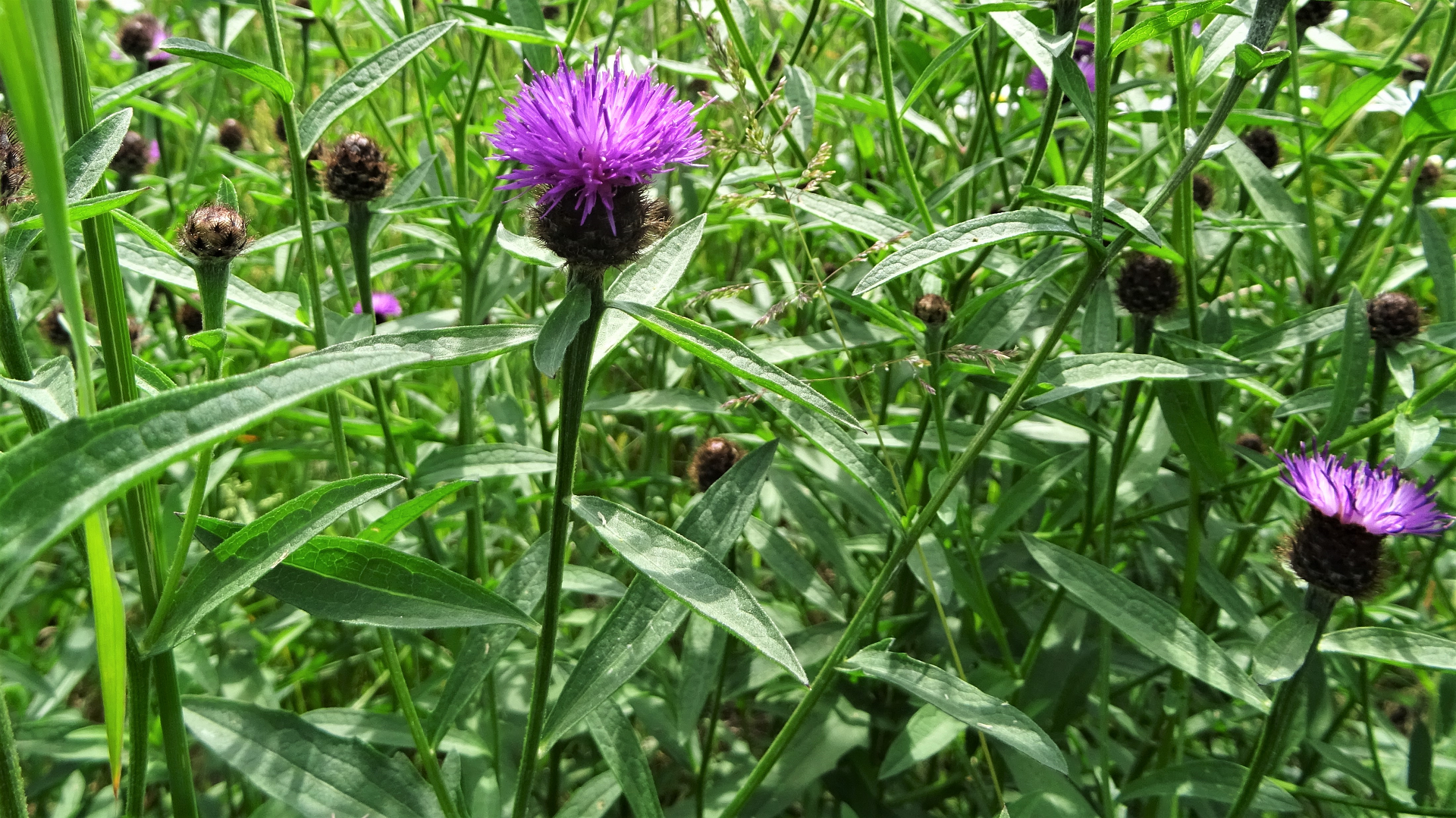
Black Knapweed has purple flower-heads resembling thistles. The flower-heads contain small flowers encircled by elongated, fringed, pinkish bracts. The oblong leaves are deeply divided. It is a common plant in scrub areas from June to September and attracts a significant number of butterflies.
#
Red Campion
Silene dioica
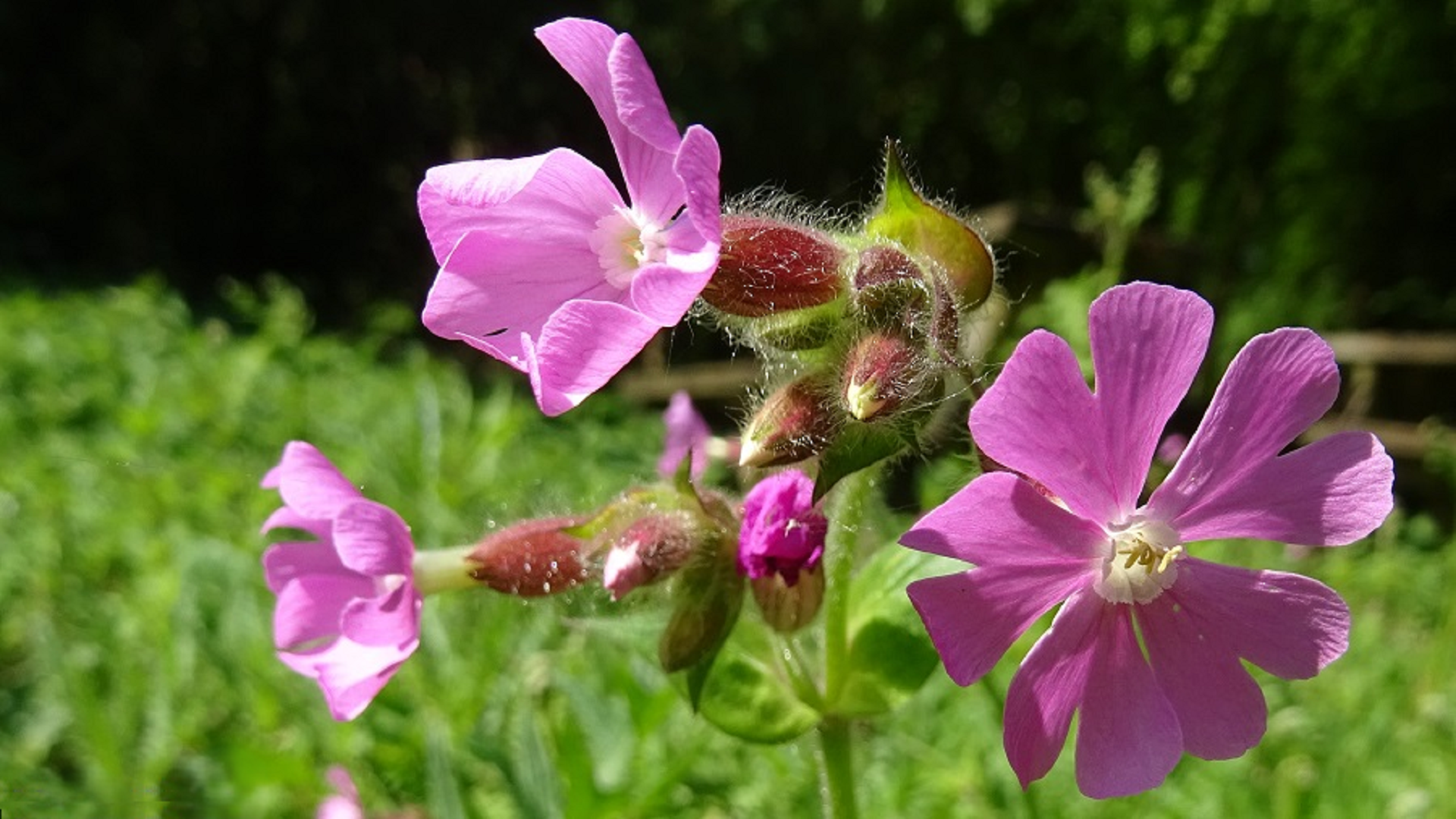
A tall, hairy perennial with overwintering rosettes of long-stalked oval leaves. Its flowers have five deeply-notched petals that are almost divided into two. The plants begin to bloom in spring.
#
Hemlock
Conium maculatum
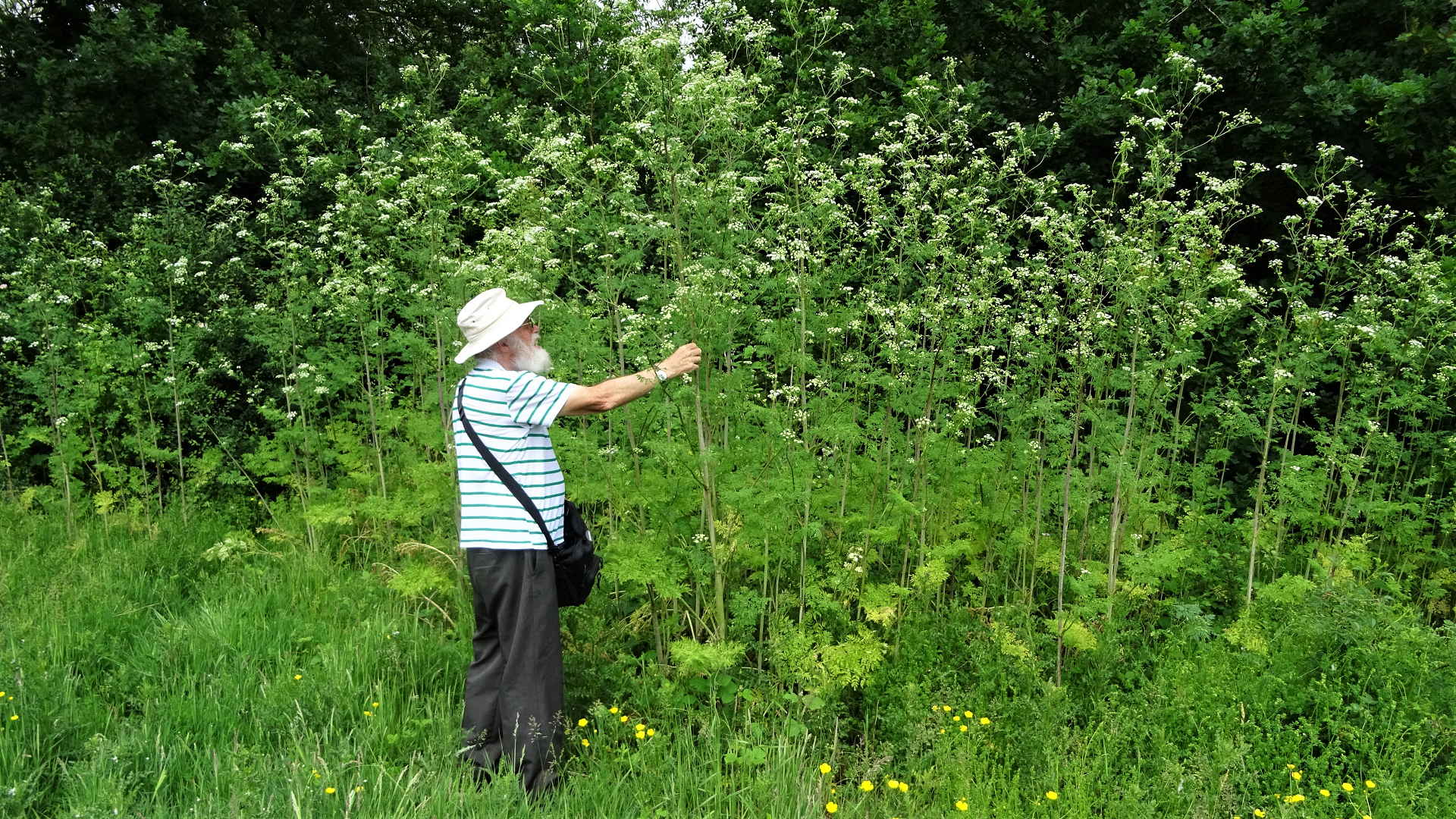
Brian Ecott inspecting hemlock on the boundary of the wildflower meadow. The purple-speckled stems of this biennial can reach up to two metres in height. In June and July, white flowers develop in umbrella-like clusters at the tops of the stems. The large leaves are finely divided. This highly poisonous plant is normally found in damp habitats.
#
Field Wood-rush
Luzula campestris
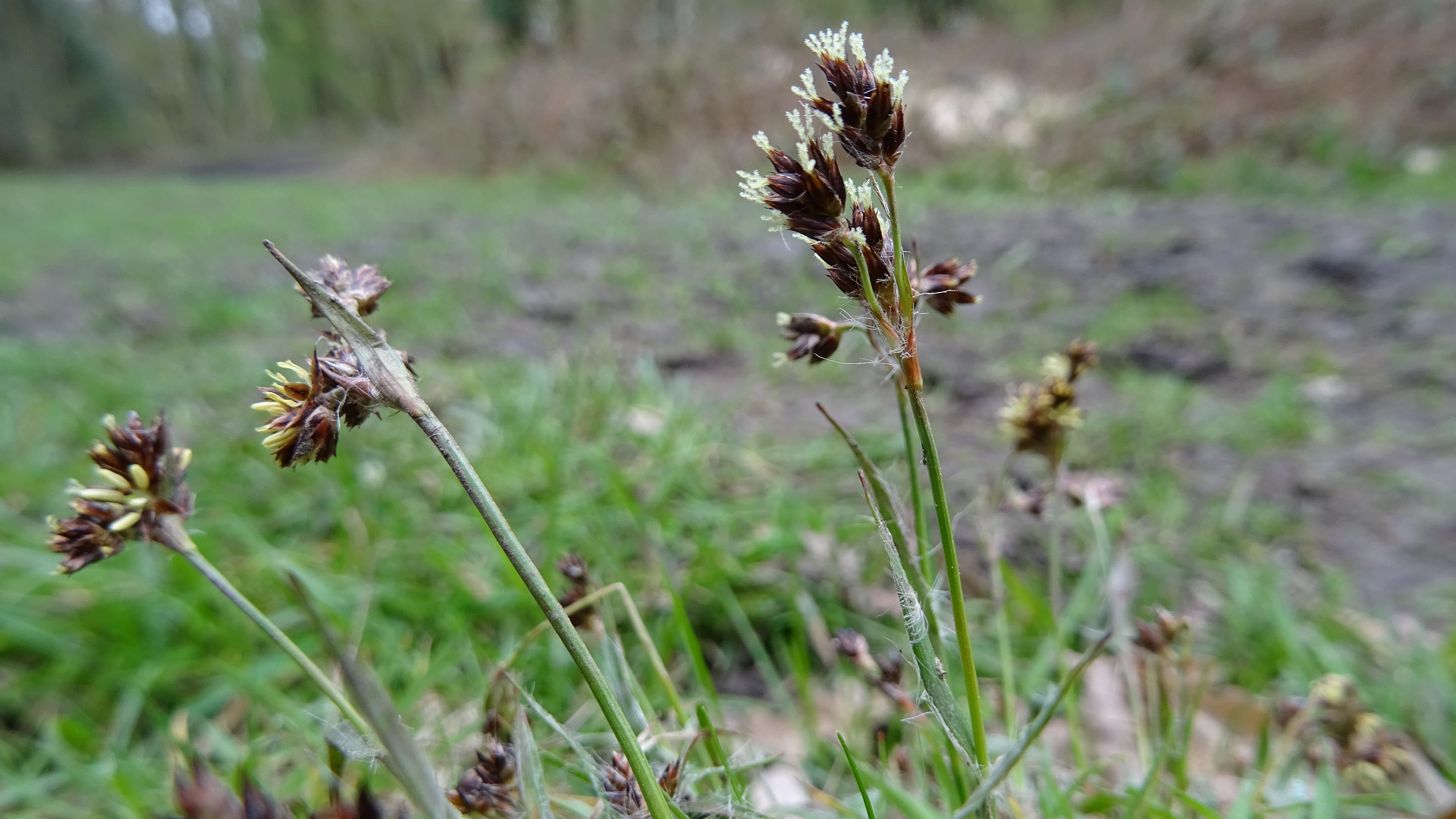
This is a common rush found in various types of grassland. It is sometimes known as 'Good Friday Grass' or 'Sweep's Brush.' It is relatively short, typically growing to a height of 5-15 cm. It spreads through short stolons (runners) and by means of seeds. The flowering period extends from March to June.
#
Weeping Willow
Salix x sepulcralis
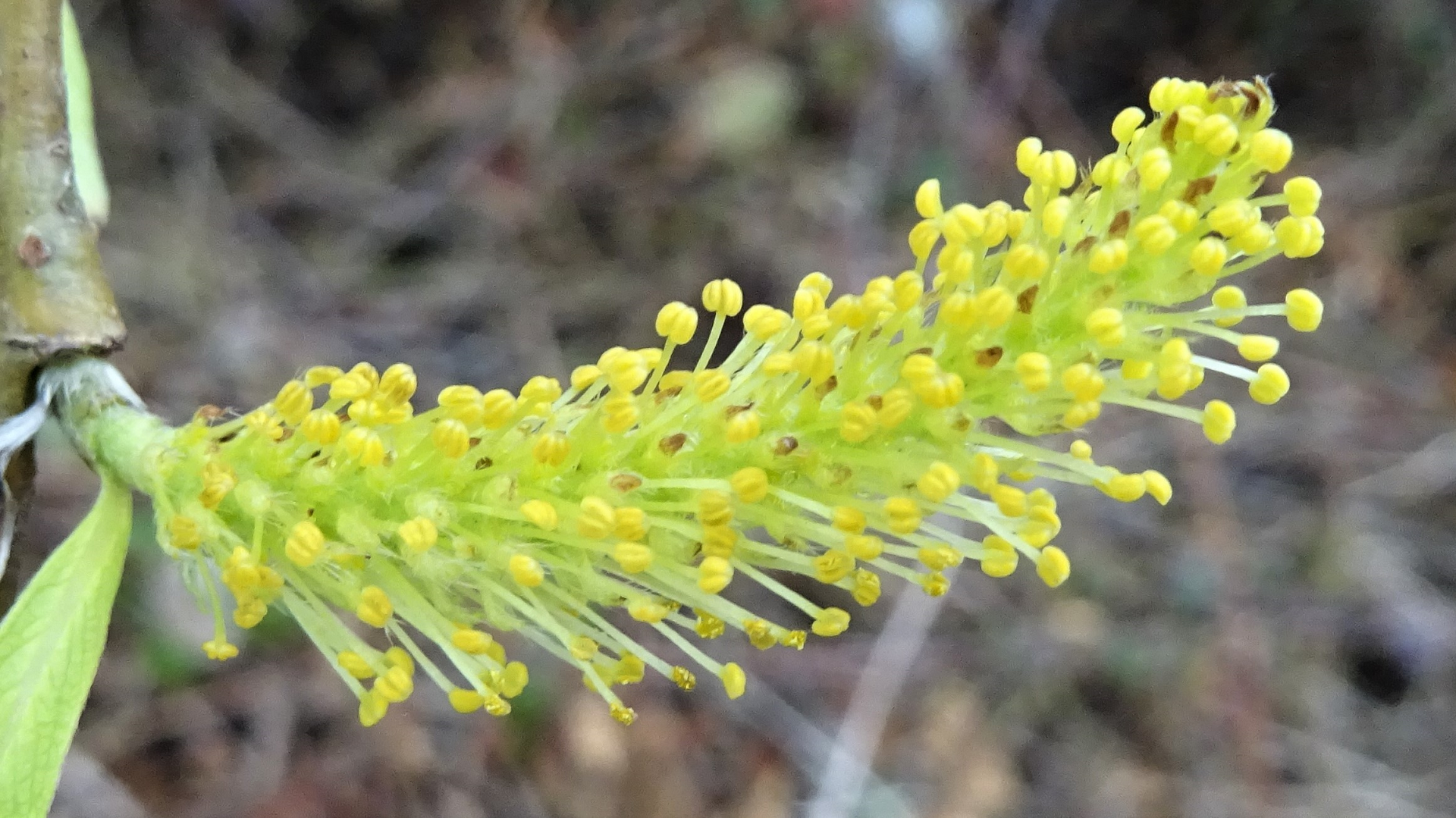
A male catkin on Weeping willow.
#
Copper Beech
Fagus sylvatica
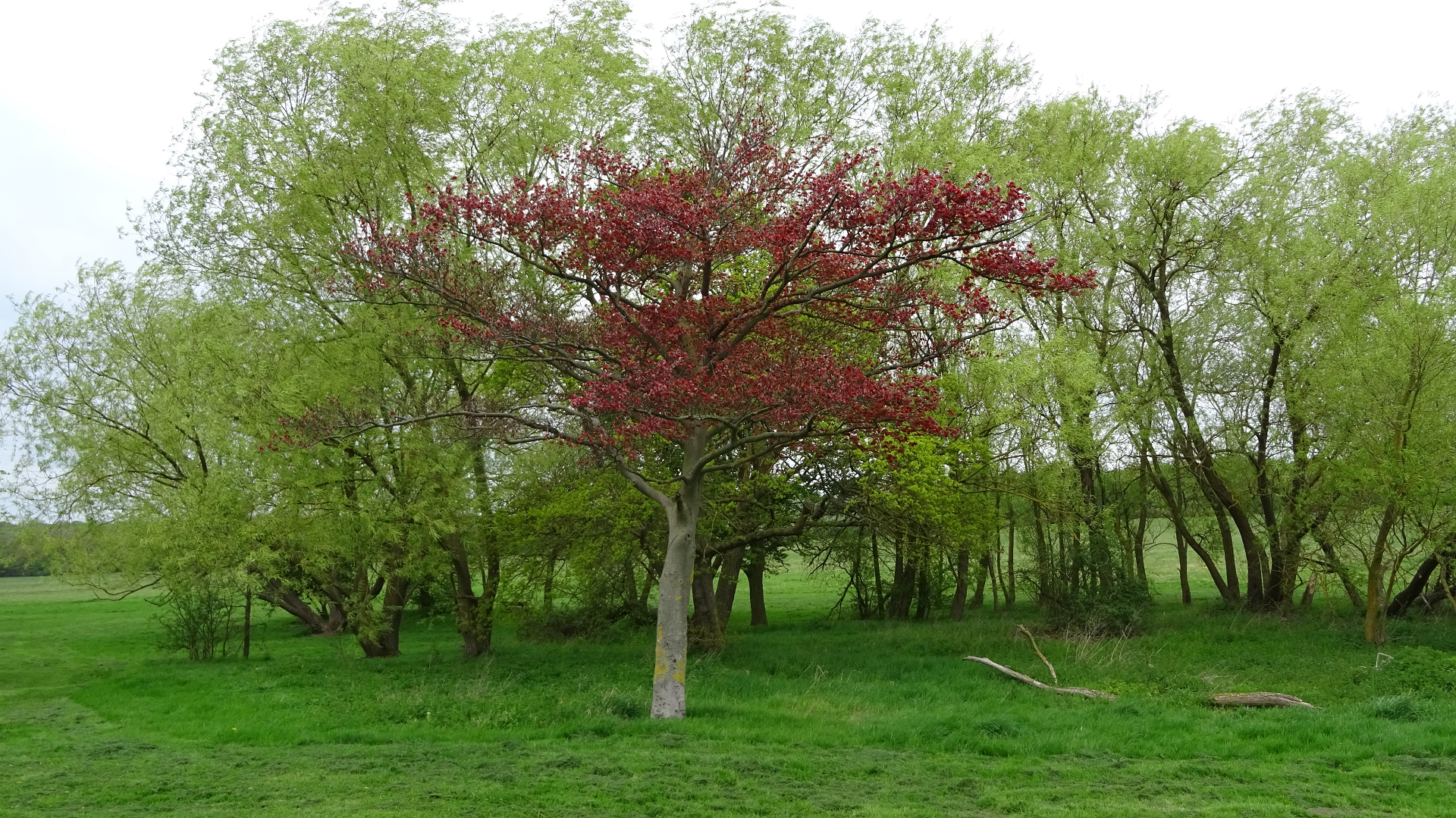
A splendid Copper Beech tree stands out against the green of crack willow in the background. During the 1930s a farm pond was located on the left. There are plans to chop down some of the willows so that the pond can be reinstated.
#
Nostoc
Nostoc commune
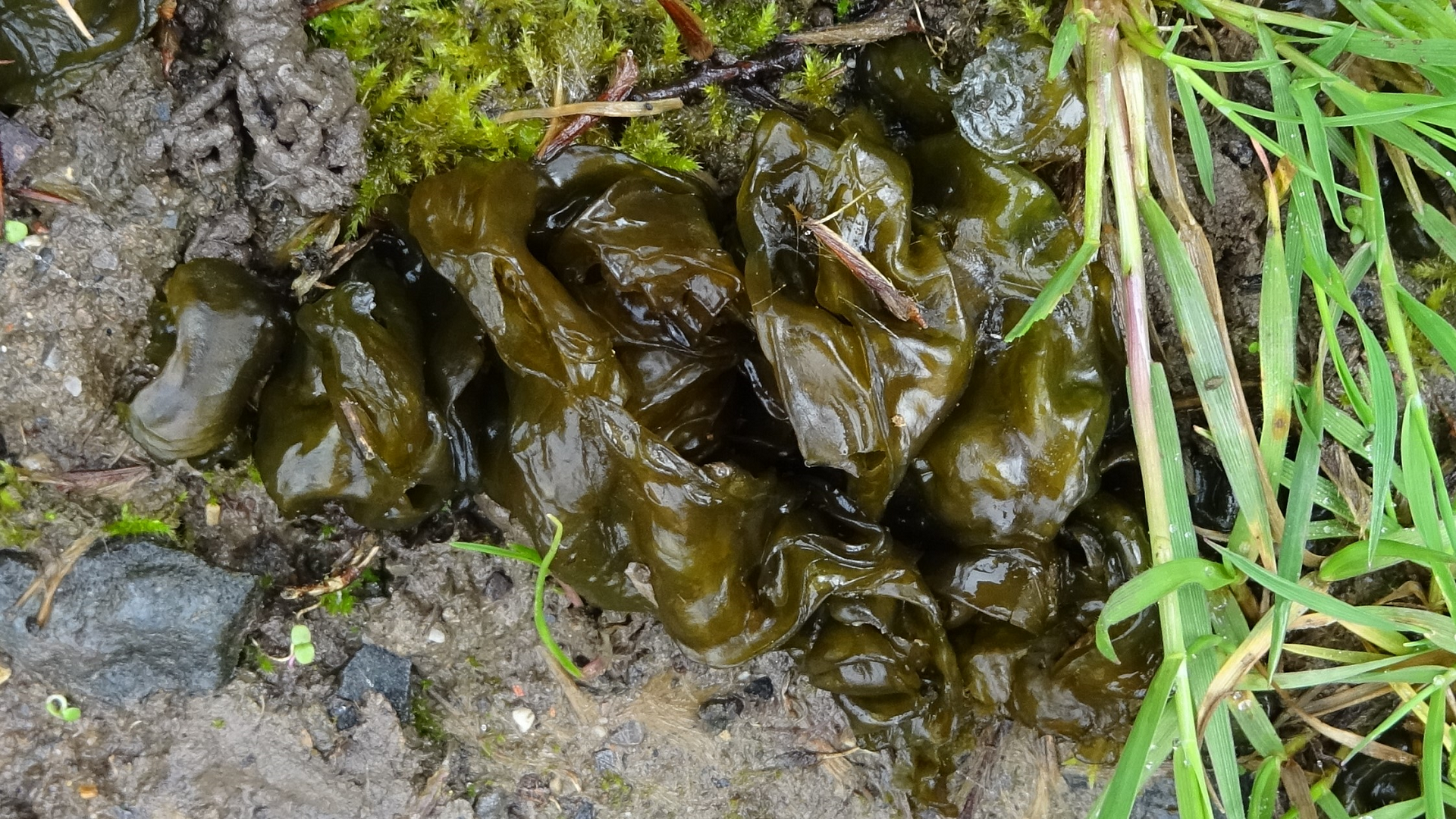
This is an early form of life on Earth, commonly found this year on pathways and bare soil. It is a communal blue-green alga, also referred to as a prokaryote or cyanobacterium. The cells lack a nucleus, and the genetic material is distributed throughout the cell. Fossil evidence indicates that they existed on Earth before the evolution of oxygen and were capable of nitrogen fixation. This species is believed to date back 3.5 billion years.
#
Foliose Lichen
Physcia tenella
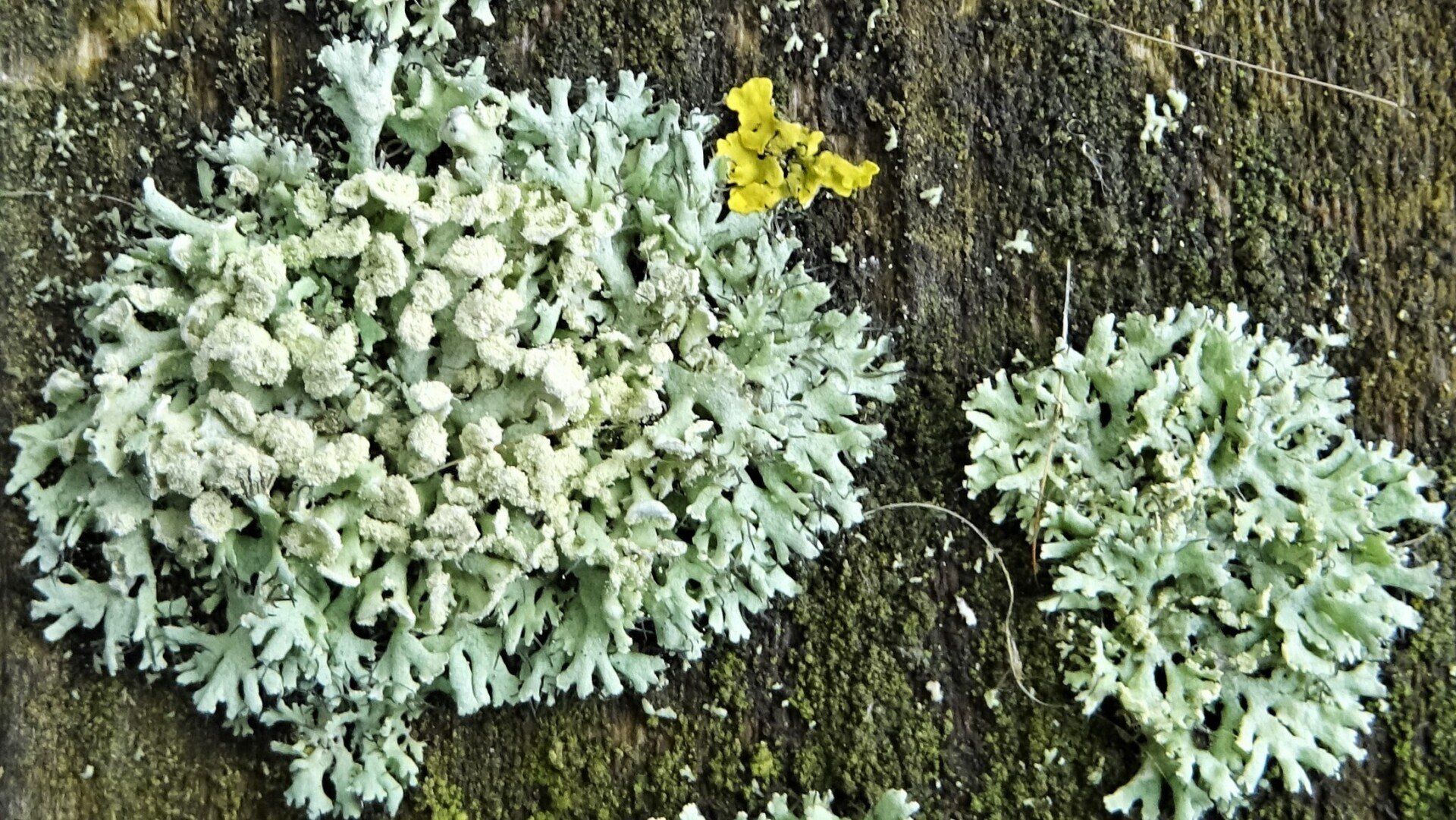
This lichen usually grows on hawthorn. The tips of the lobes split and fold back to expose soredia. This specimen found growing on a gate was about 20mm across.
#
Crustose Lichen
Candelariella aurella
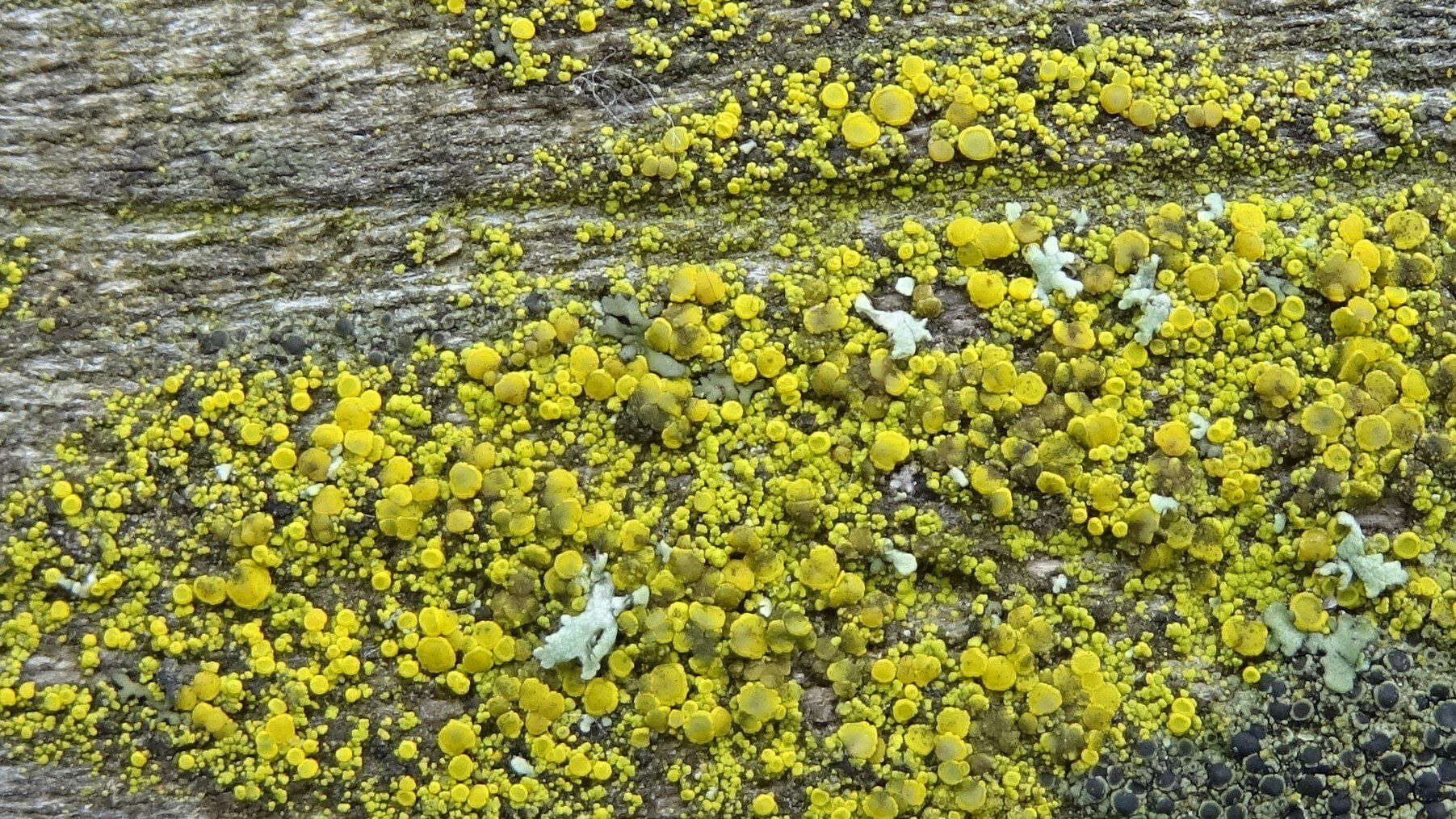
This mustard-yellow crustose lichen is known as the Hidden Gold-speck lichen, and also Egg-yolk lichen. It is commonly found on nutrient-rich calcareous rocks, bricks, mortar, and wood that receive sunlight. This particular specimen was growing on a wooden gate.
#
Cladonia Lichen
Cladonia coniocraea
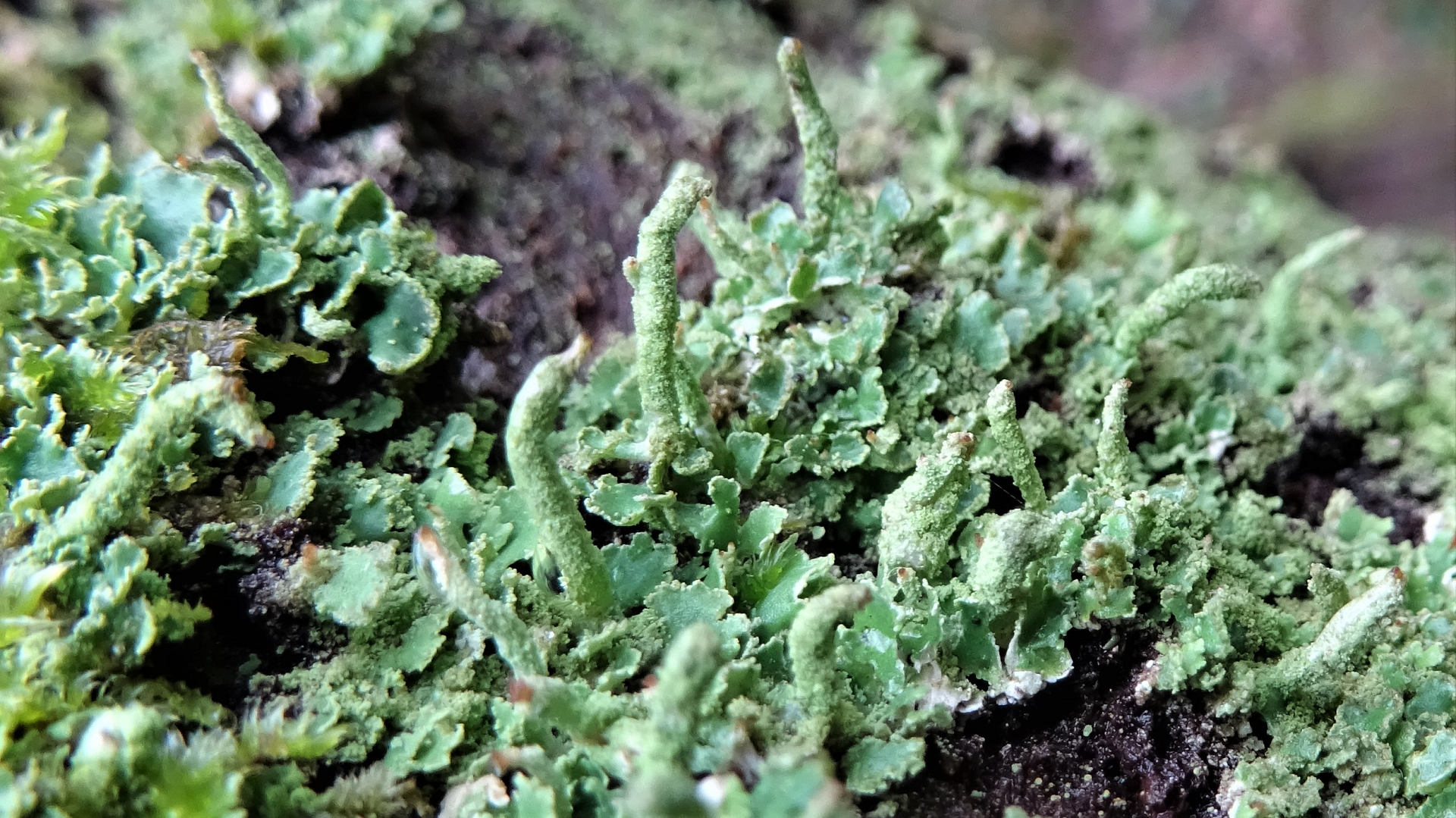
This very common cup lichen is often found on mossy trunks, rotten stumps and logs.
#
Dog Lichen
Peltigera
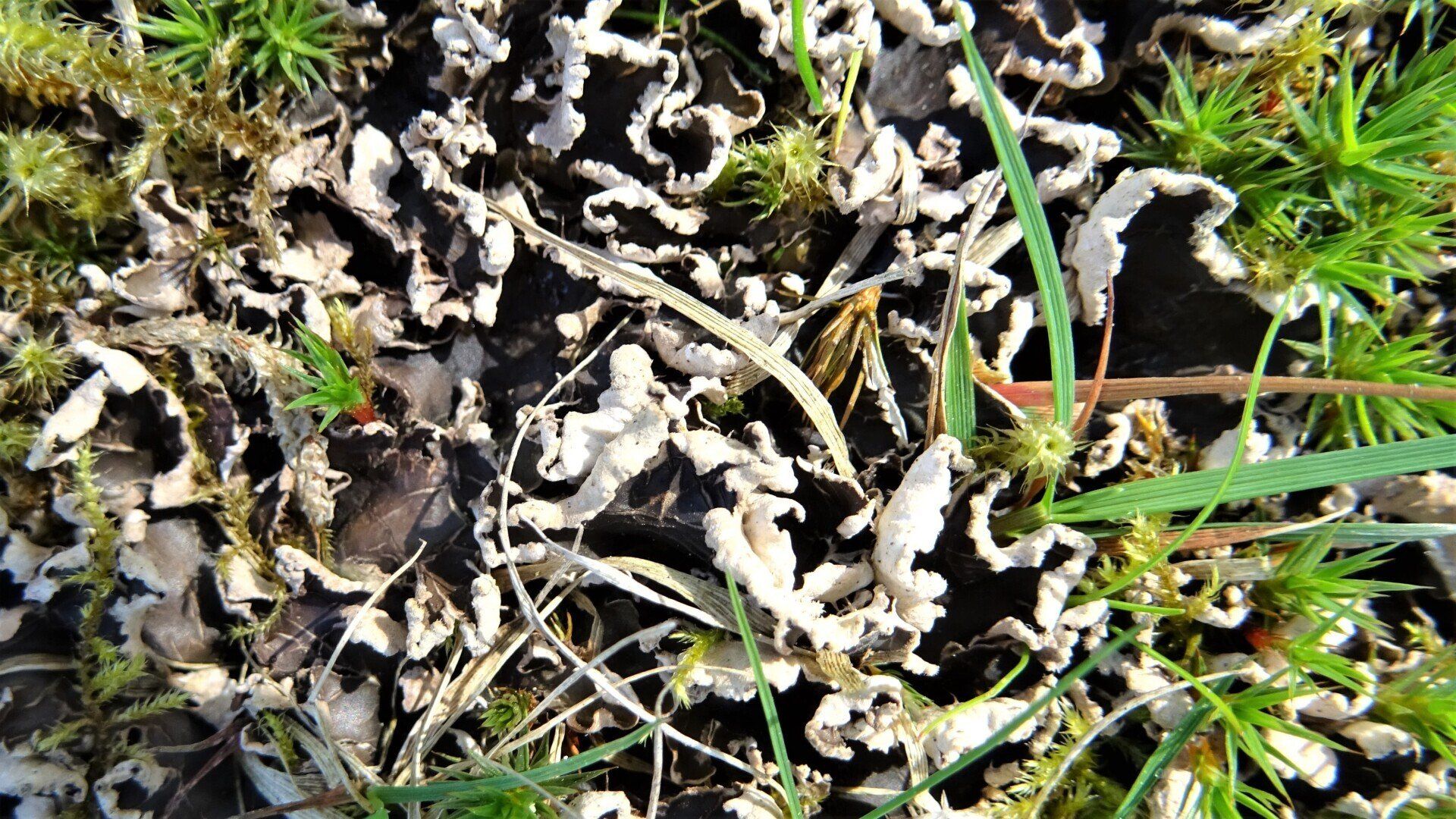
This lichen was discovered amongst grasses and mosses. Identification of the different types is difficult but this is probably Peltigera hymenina, the commonest Dog Lichen in Essex.
#
Oyster Mushroom
Pleurotus ostreatus
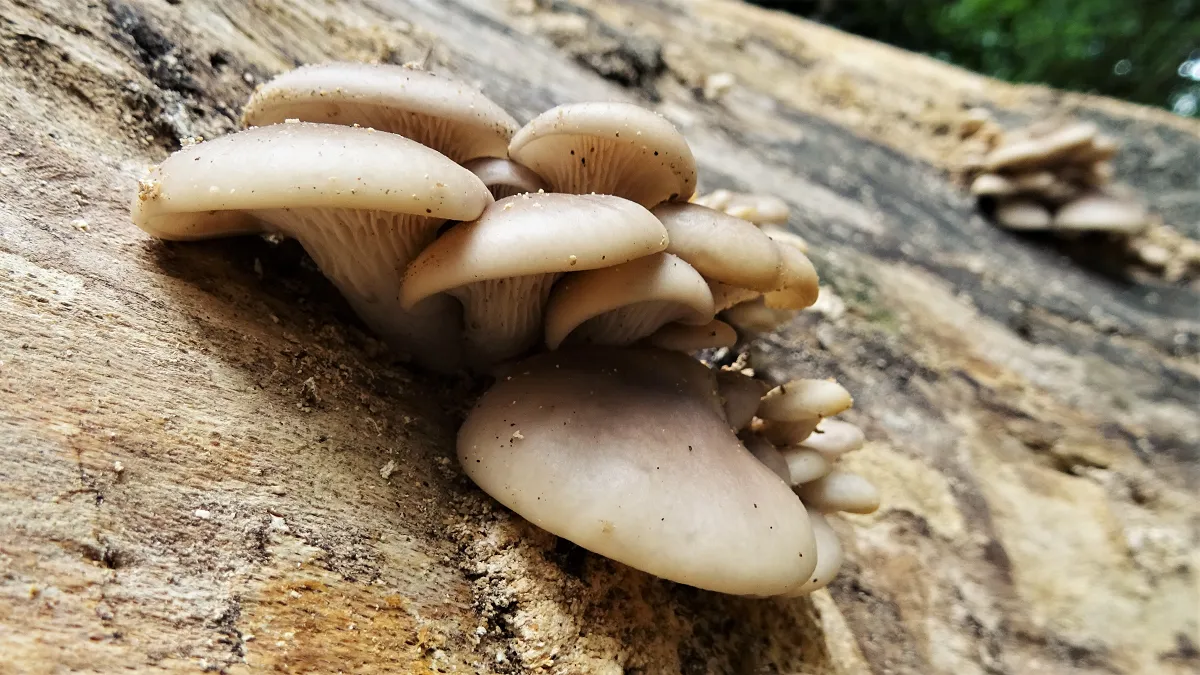
Oyster Mushrooms are shell-shaped with little or no stems. The cap flattens with age often becoming split or wavy at the edge. Caps come in various shades of grey or brown, sometimes very pale, sometimes dark. They measure up to 150mm across. They grow in groups on fallen trunks and stumps of deciduous trees.
#
Serpentine Leafmine
Stigmella aurella
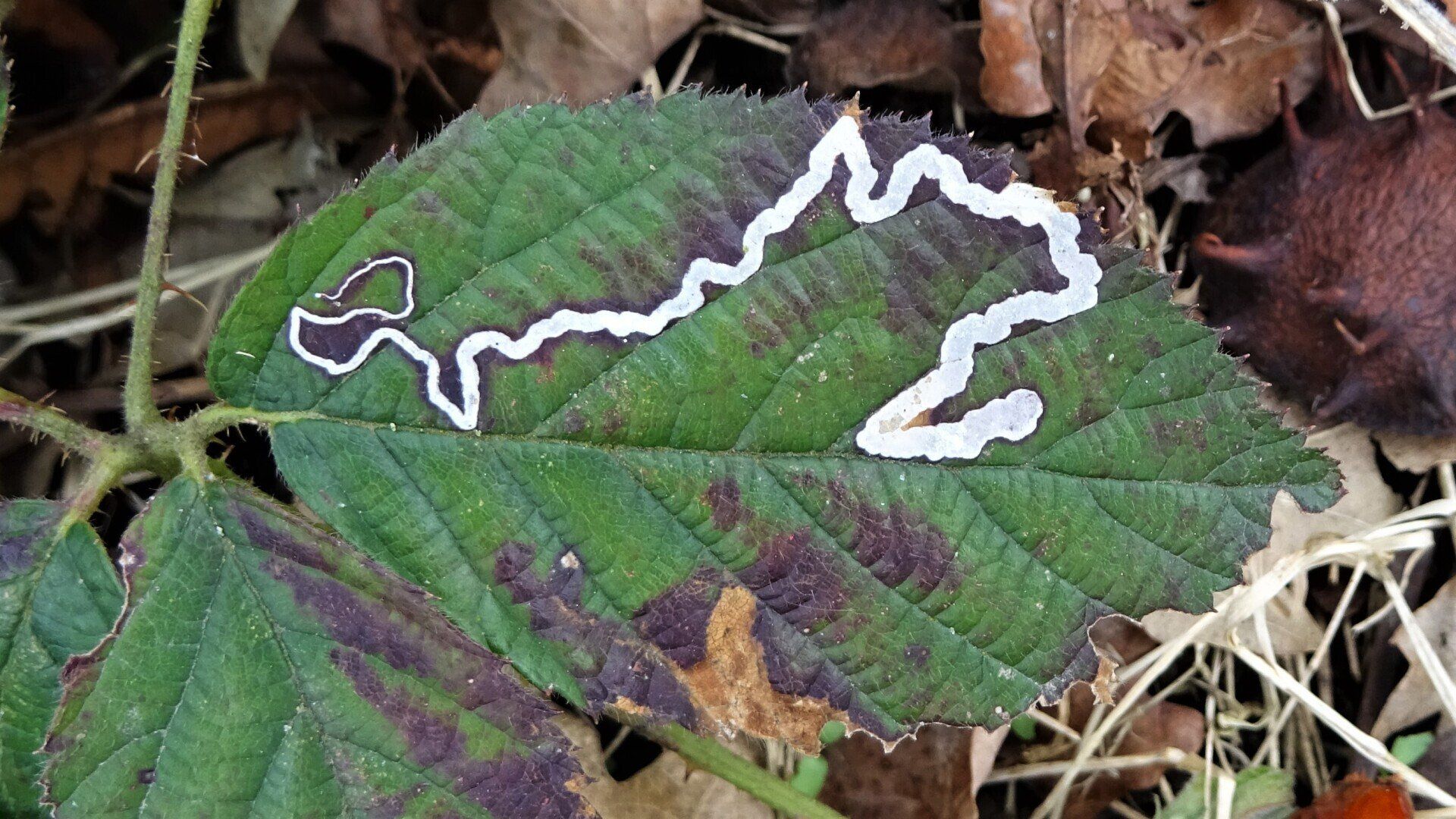
White, snake-like leafmines are commonly found on bramble leaves during the winter months. They are produced by larvae of the micro moth known as the Golden Pigmy.
#
Slime Mould
Enteridium lycoperdon

This slime mould is easily recognised during its reproductive phase when spongy aethalia develop from creamy-white plasmodium. The swellings typically measure 50-80mm across and generally appear on dead deciduous wood after heavy spring rain. Darkening indicates the beginning of a series of changes. The surface begins to peel away, and the aethalium becomes rock hard. Once spores are produced, the fruiting body disintegrates. It is commonly referred to as the False Puffball which may give the impression it is a fungus, but it is not! In Mexico, it is also called "Caca de luna" or "Moon's excrement."
#
Hainault Lake
Sunrise

Hainault Lake at dawn.
#
Thank you to everyone who has contributed to this Journal.
© hainaultforest.net. All rights reserved.
This website uses necessary cookies. It does not use targeting or advertising cookies.