

FIRST QUARTER 2020
This Journal covers the first quarter of 2020 from January to March.
Red Kite
Milvus milvus
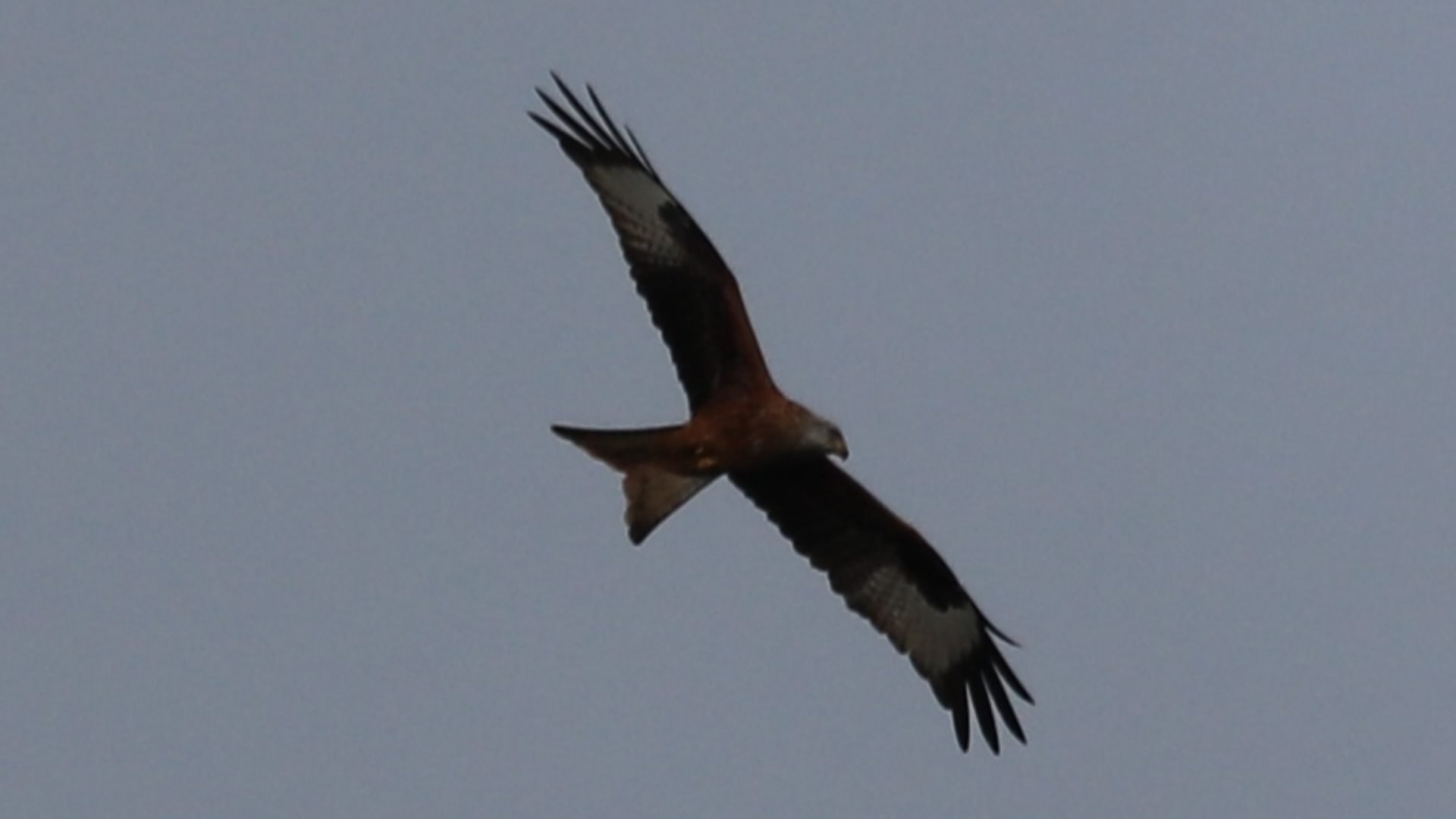
The Red Kite is a bird of prey characterised by its reddish-brown body, angled wings, and deeply forked tail. Its diet primarily includes carrion and worms, with occasional small mammals. Having once faced the threat of extinction, it is now experiencing an increase in numbers due to a successful protection program.
#
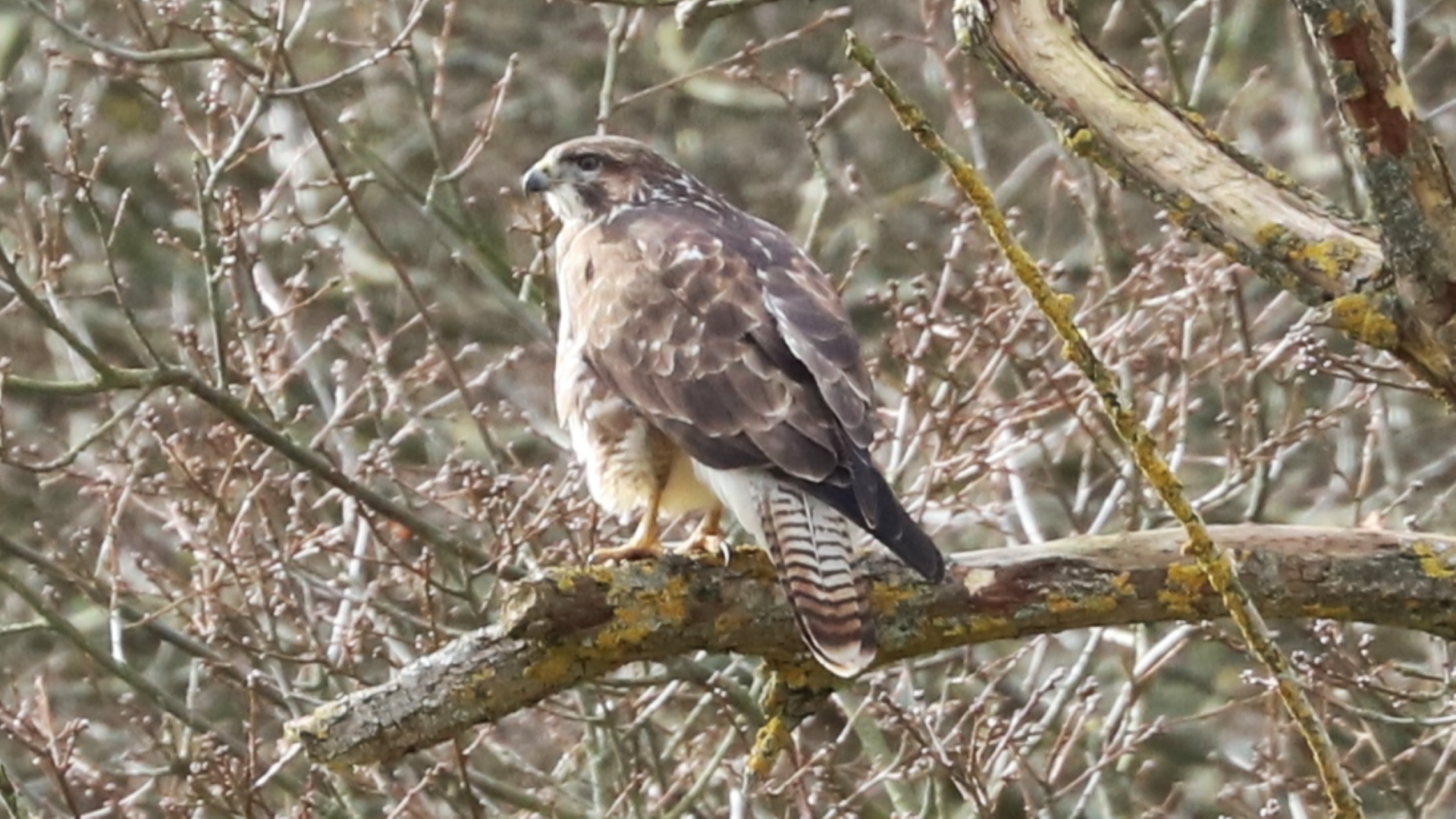
Buzzard
Buteo buteo
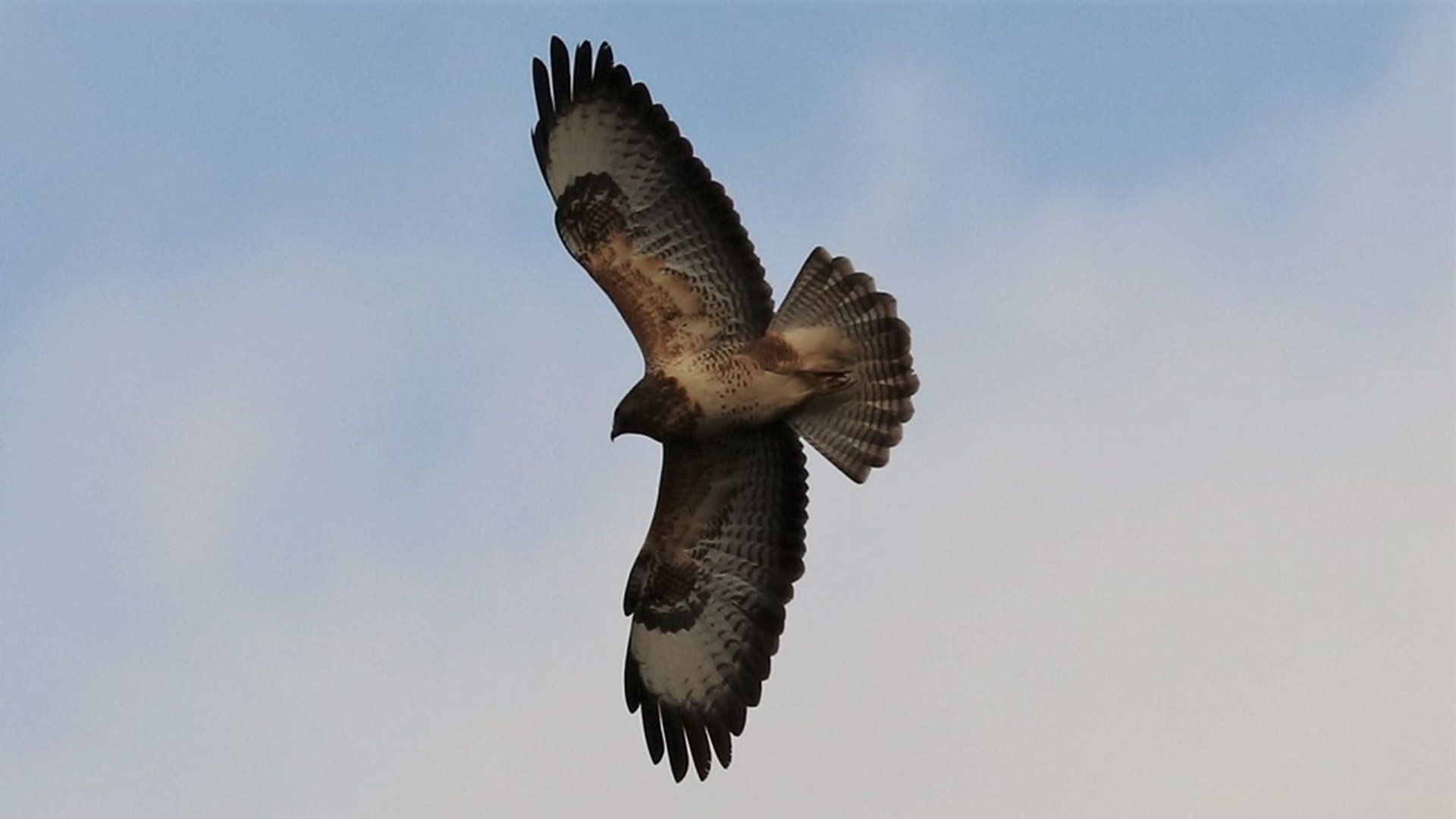
Buzzards often circle over the forest, they produce a call that slightly resembles a cat's meow. They are the most widespread bird of prey in Britain often observed in small groups. Their diet consists of small mammals, birds, carrion, invertebrates, and insects.
#
Kestrel
Falco tinnunculus
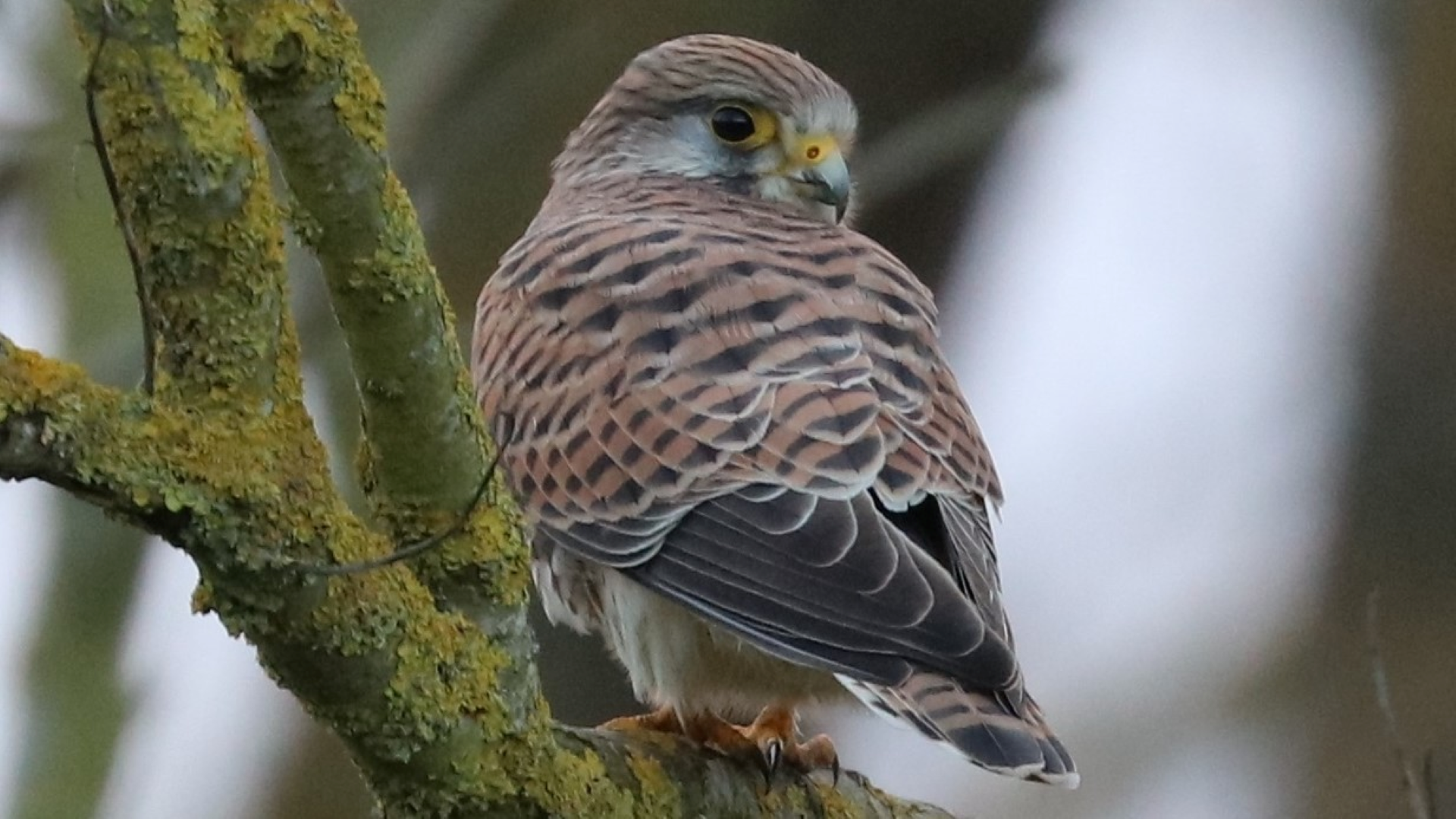
Kestrels hover over meadows near Hainault Lake seeking small rodents and birds.
#
Grey Wagtail
Motacilla cinerea
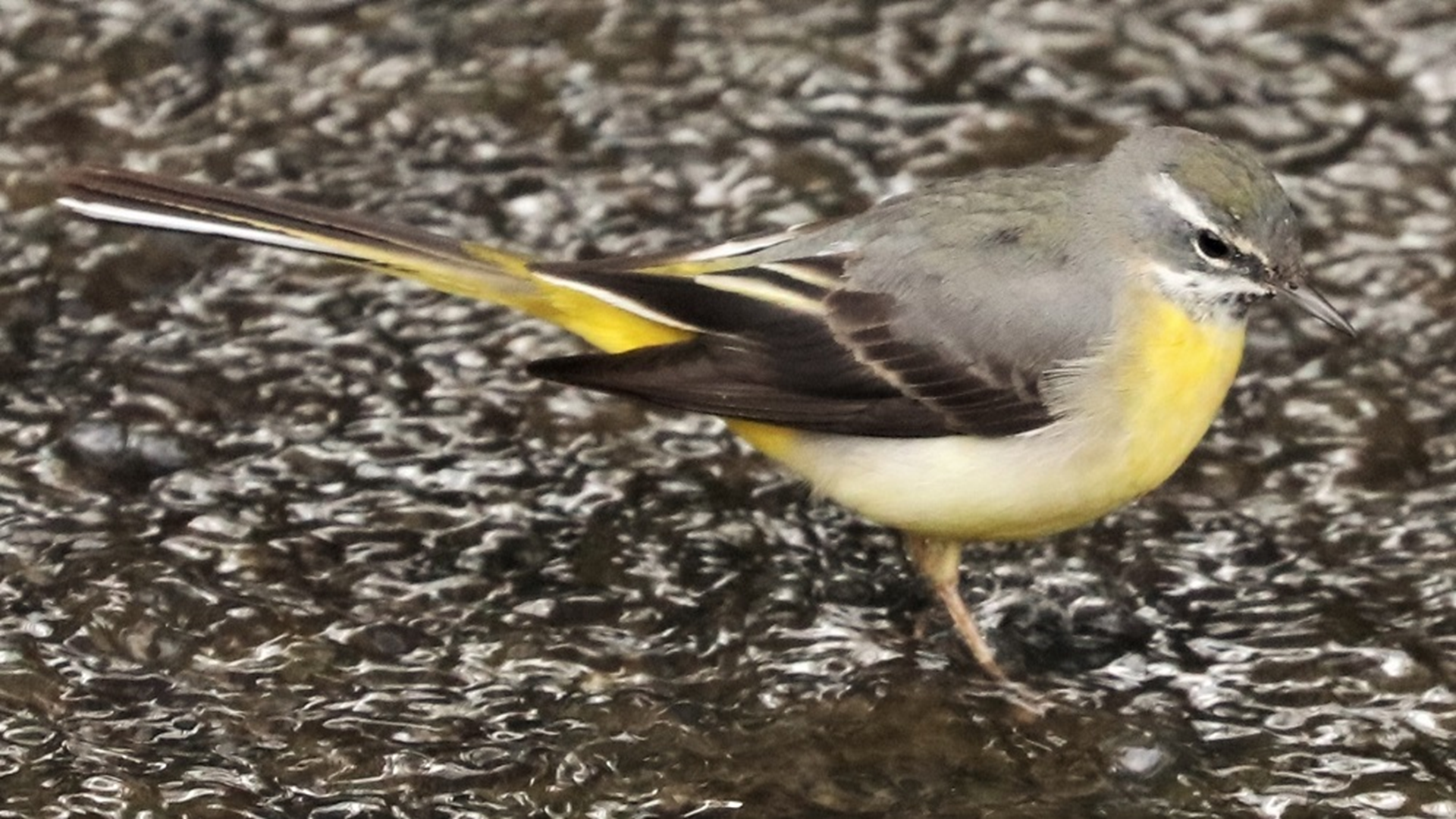
Grey wagtails are normally seen near streams where they feed on insects. Males can be differentiated from females by a black patch on the throat (gorget). Unlike Yellow wagtails this species has a grey back and a longer tail.
#
Magpie
Pica pica
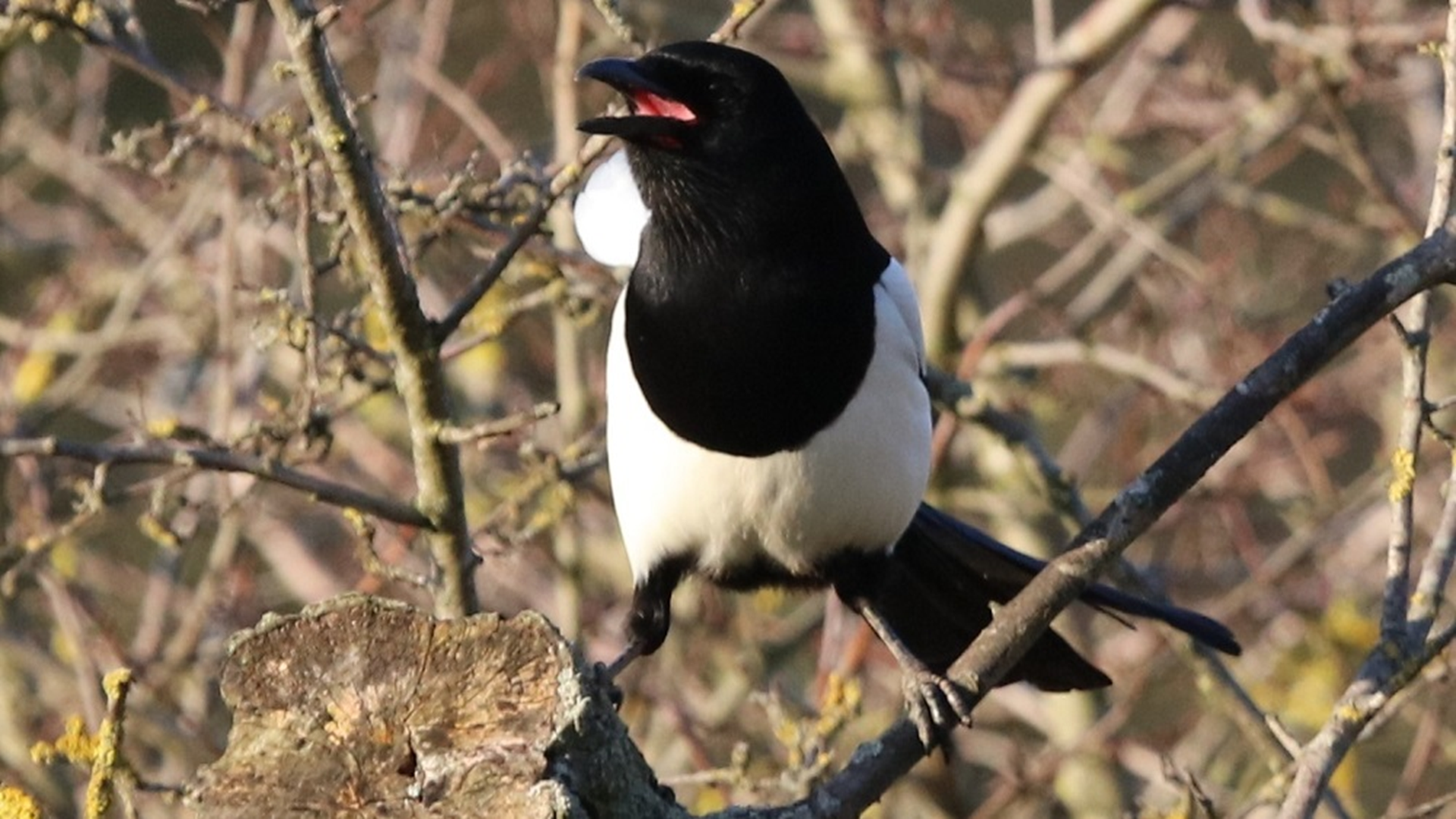
The Magpie is an easy to recognise member of the crow family, characterised by its black, white, and bluish feathers. They typically assemble in groups and are known for their vocalisations.
#
Jackdaw
Corvus Monedula
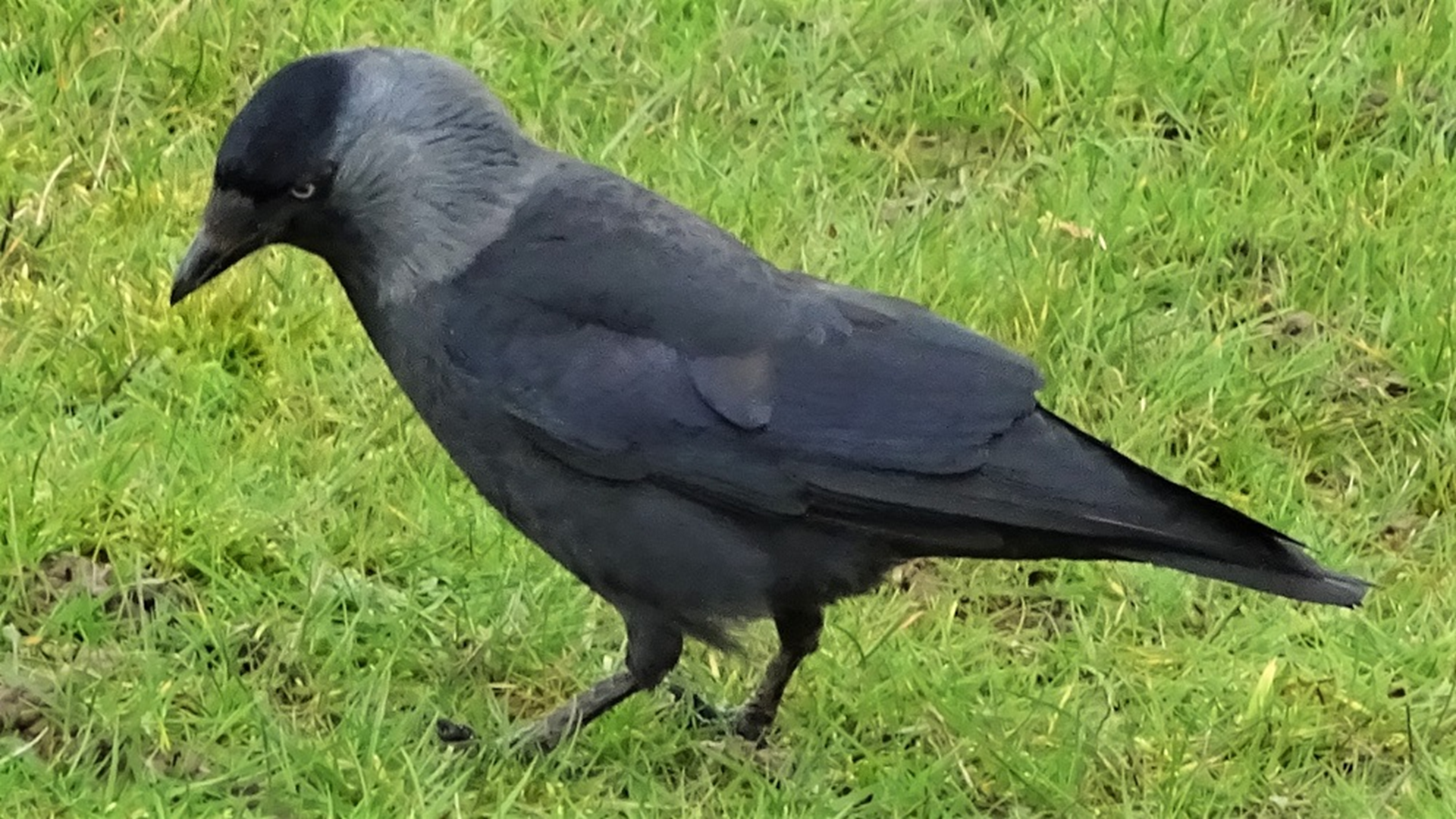
The Jackdaw is a small member of the crow family, characterized by its distinctive eyes and silvery hood. It is typically found in groups and feeds on insects, fruit, seeds, young birds, and eggs.
#
Goldfinch
Carduelis Carduelis
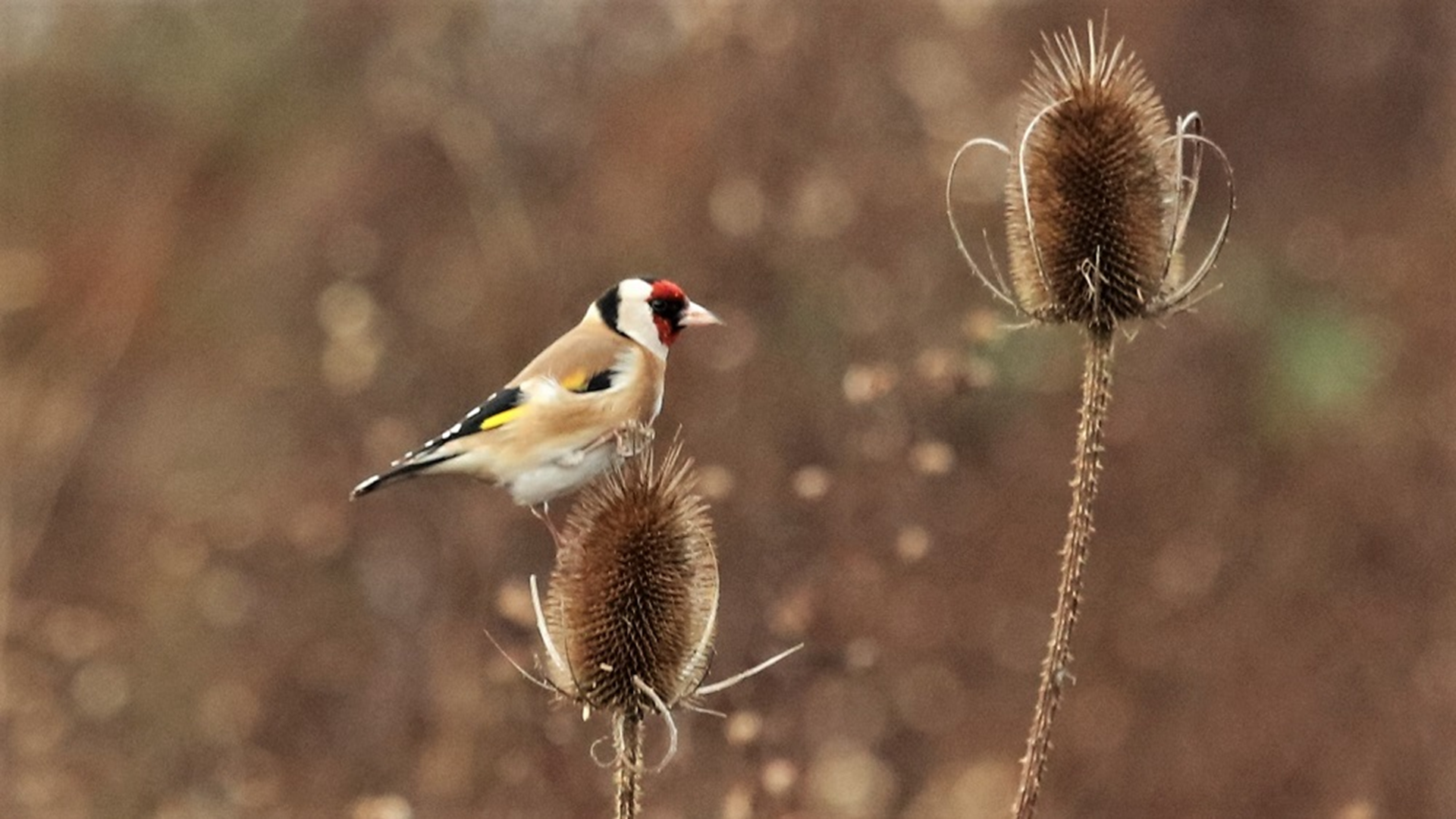
Goldfinches are a familiar sight in meadows near Hainault Lake, especially when thistles, teasels and michaelmas daisies are going to seed.
#
Canada Goose
Branta canadensis
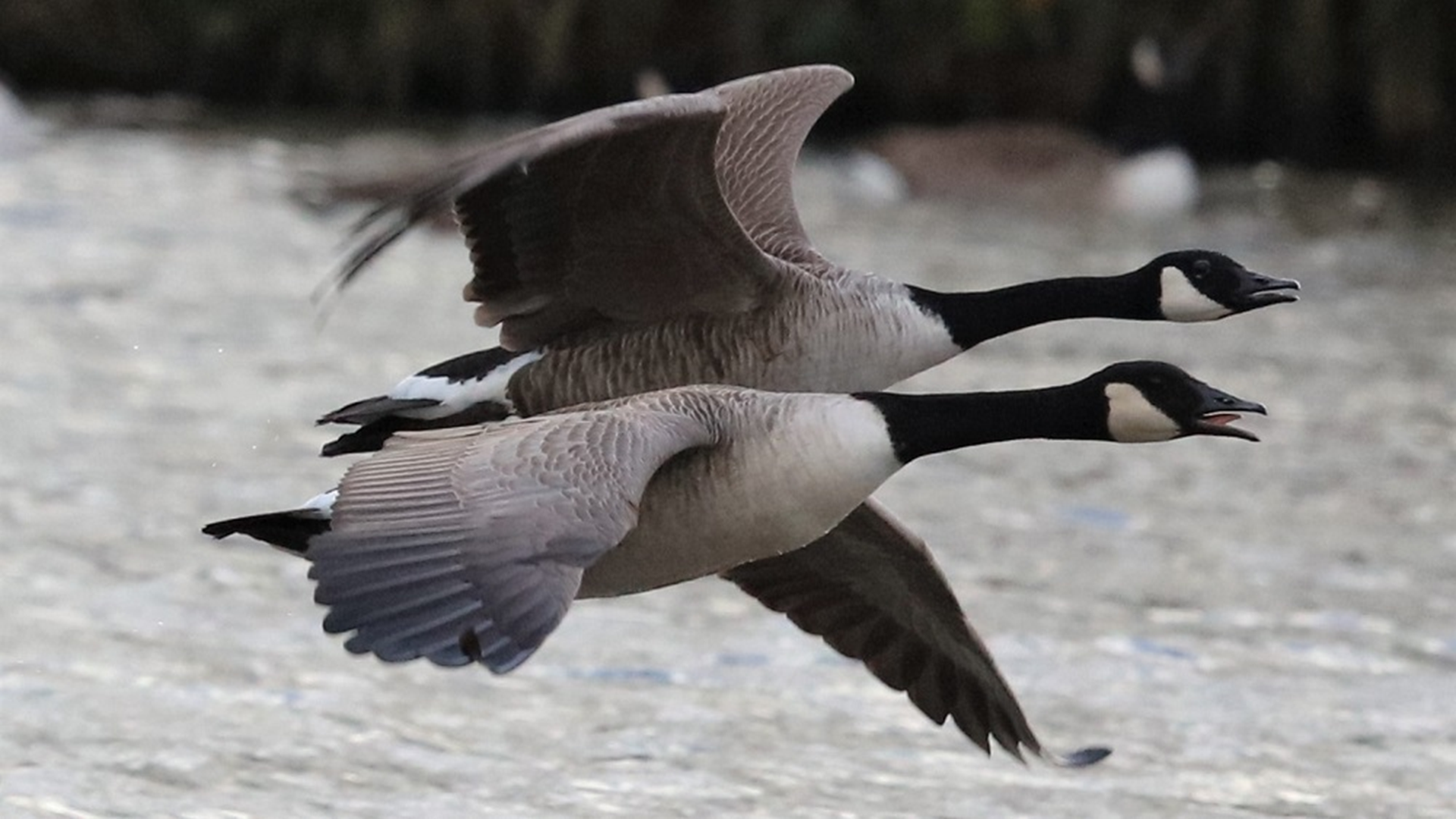
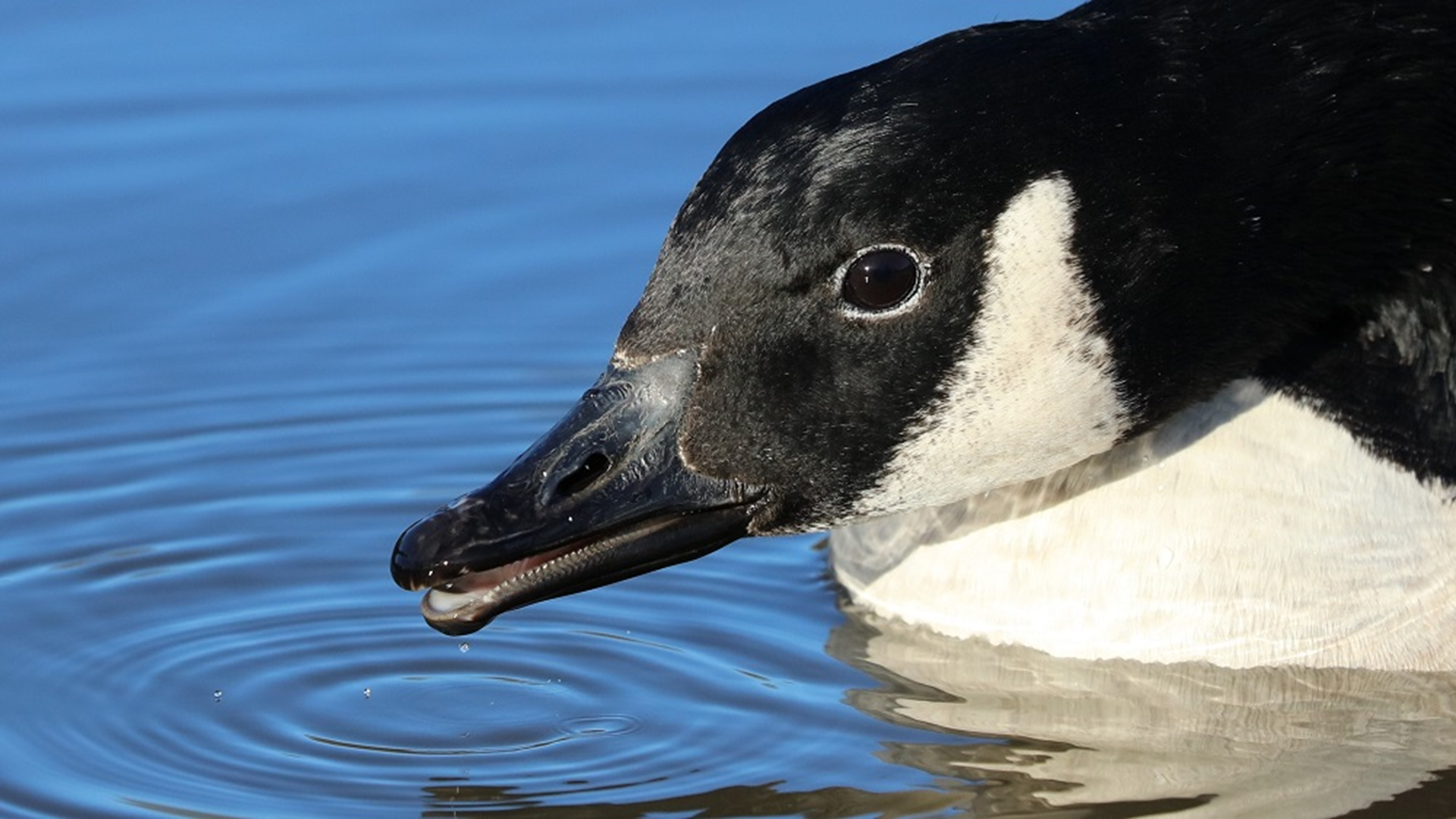
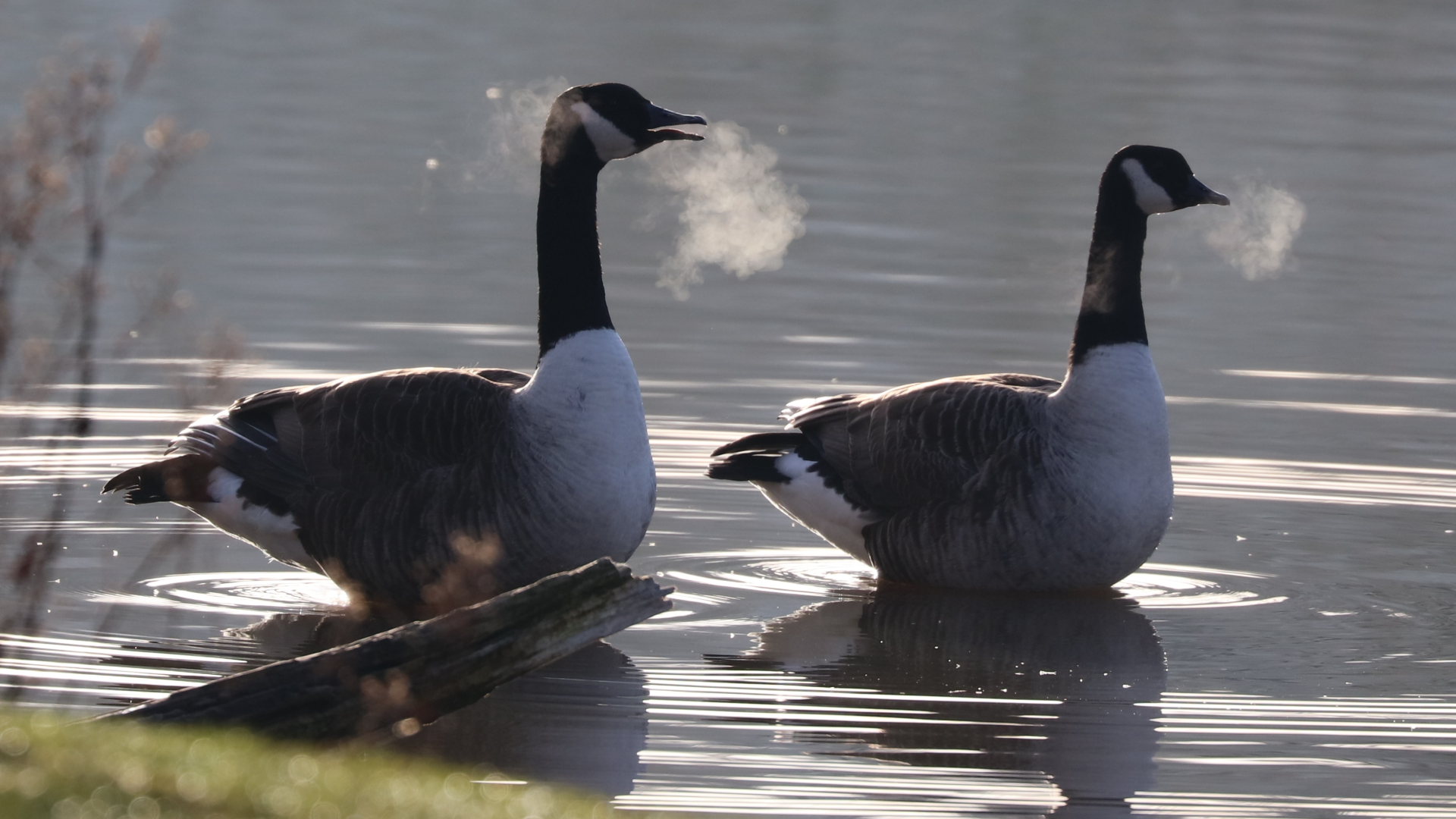
Canada geese are the largest of Britain's three black-necked geese species. They form large noisy flocks; the call is a loud double trumpeting. Canada geese have serrated bills made of cartilage that look like teeth lining the mouth.
#
Greylag Goose
Anser anser
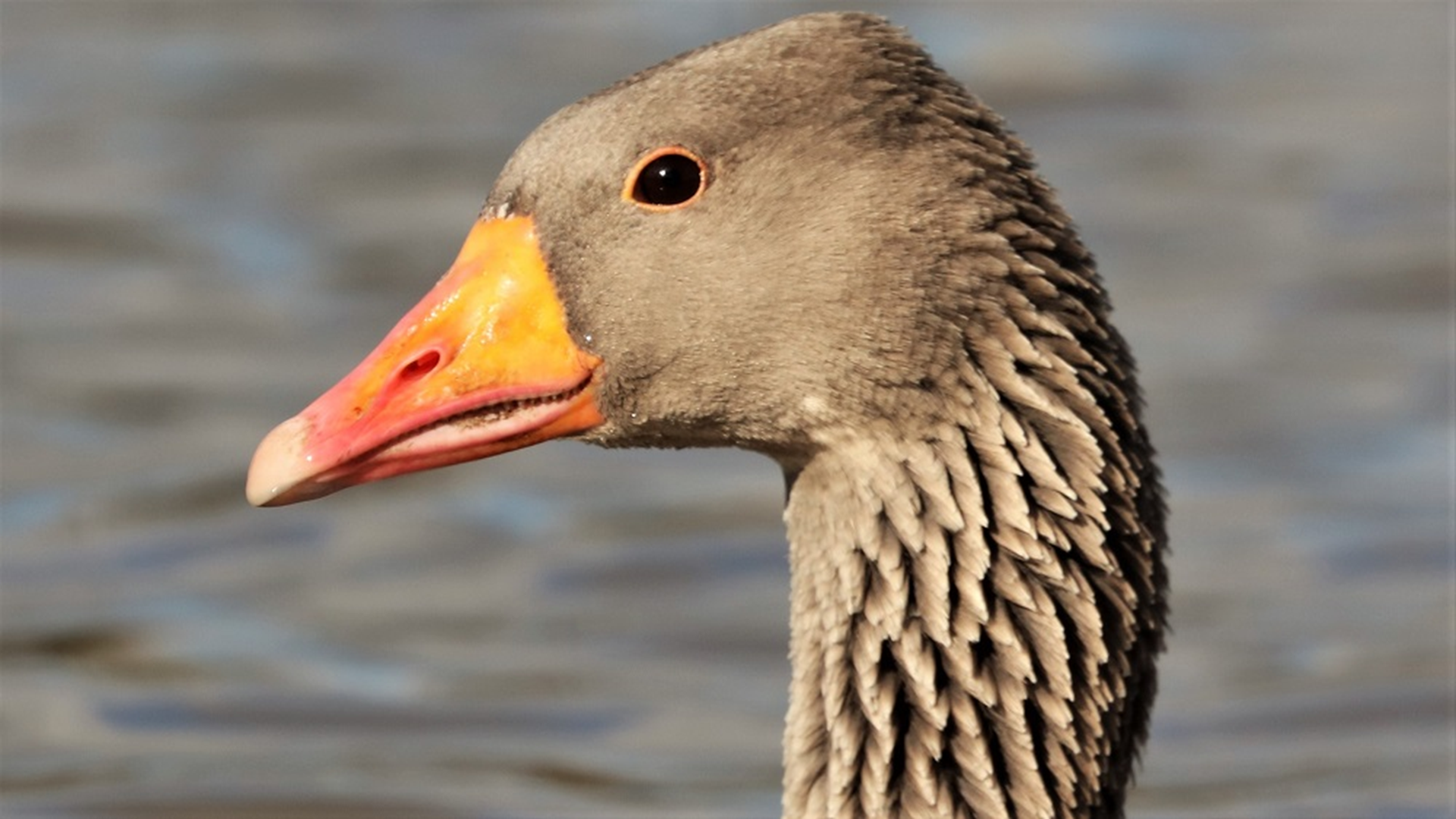
Greylags are the largest, heaviest grey goose species in Britain. They have grey bodies, orange bills and pink legs. The voices of these resident birds are similar to that of farmyard geese.
#
Swan
Cygnus olor
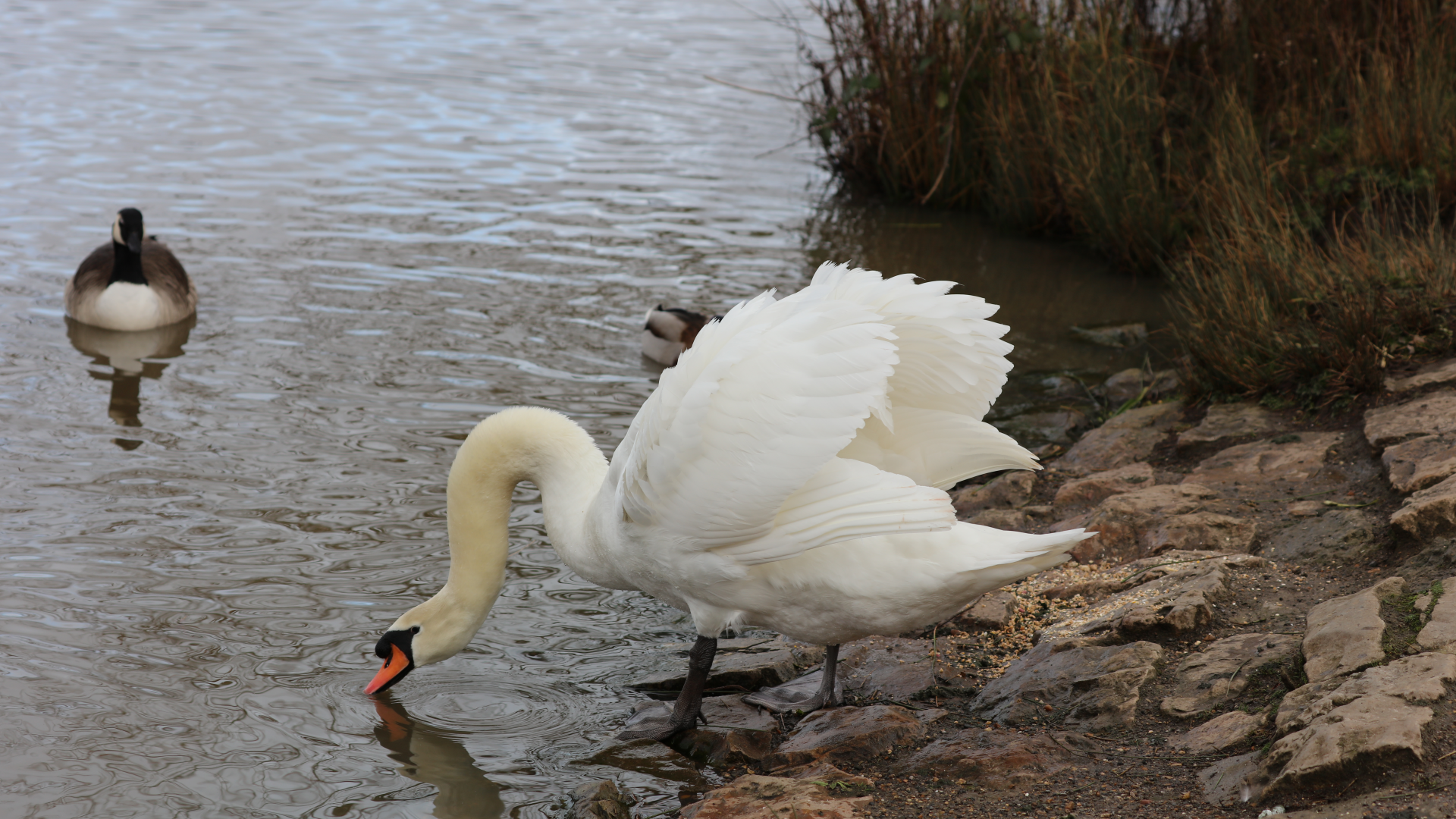
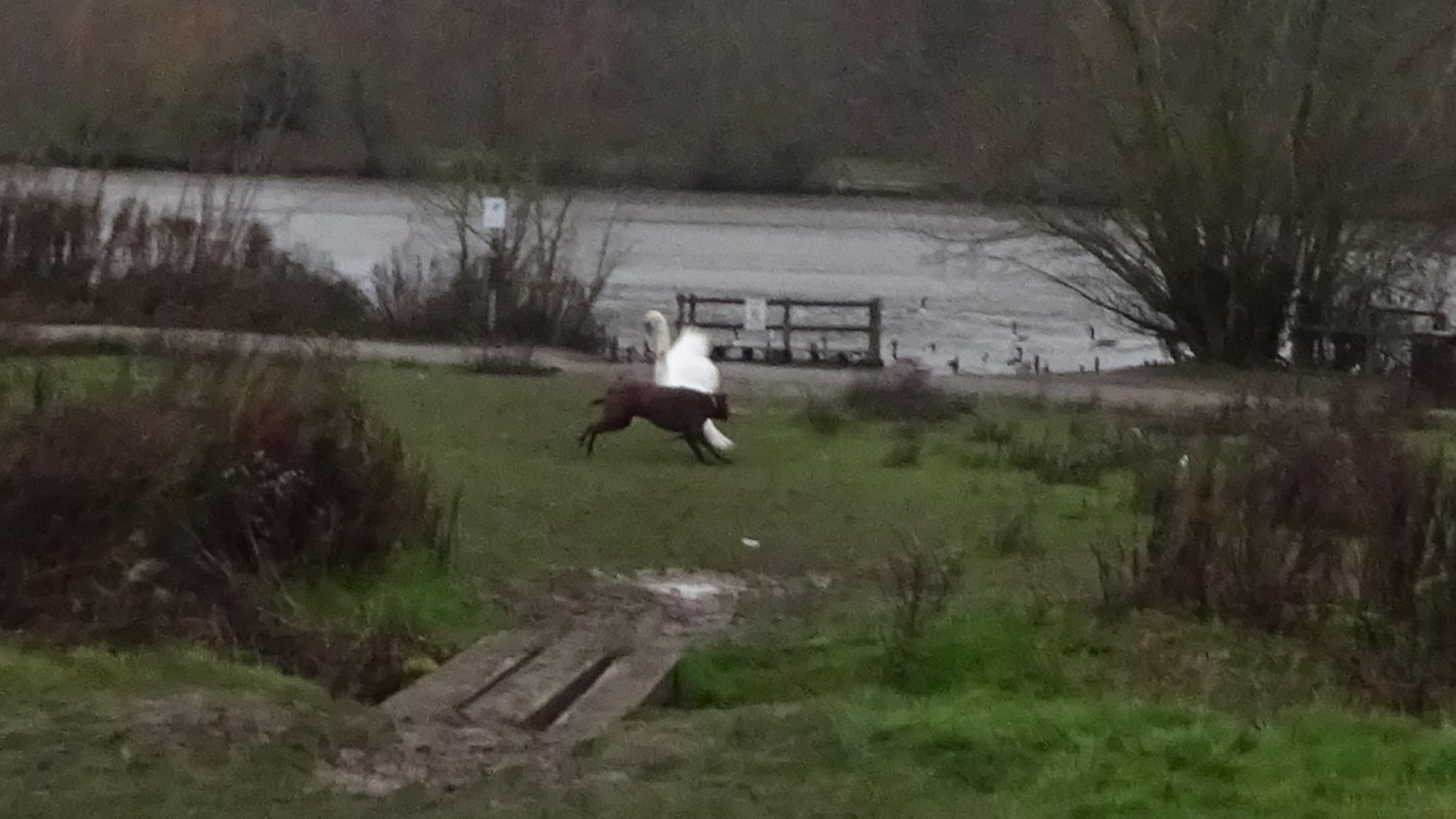
The mute swan has a distinctive orange bill with black knob which is smaller in females. Swans feed on water plants, seed, snails and insects. Many believe the Queen owns all the swans in England. This is not entirely true, however she does own every unmarked mute swan in open water. Unfortunately, having the royal blessing is not enough to protect them from being harassed, injured and killed by uncontrolled dogs owned by irresponsible owners.
#
Lesser Black-backed Gull
Larus fuscus
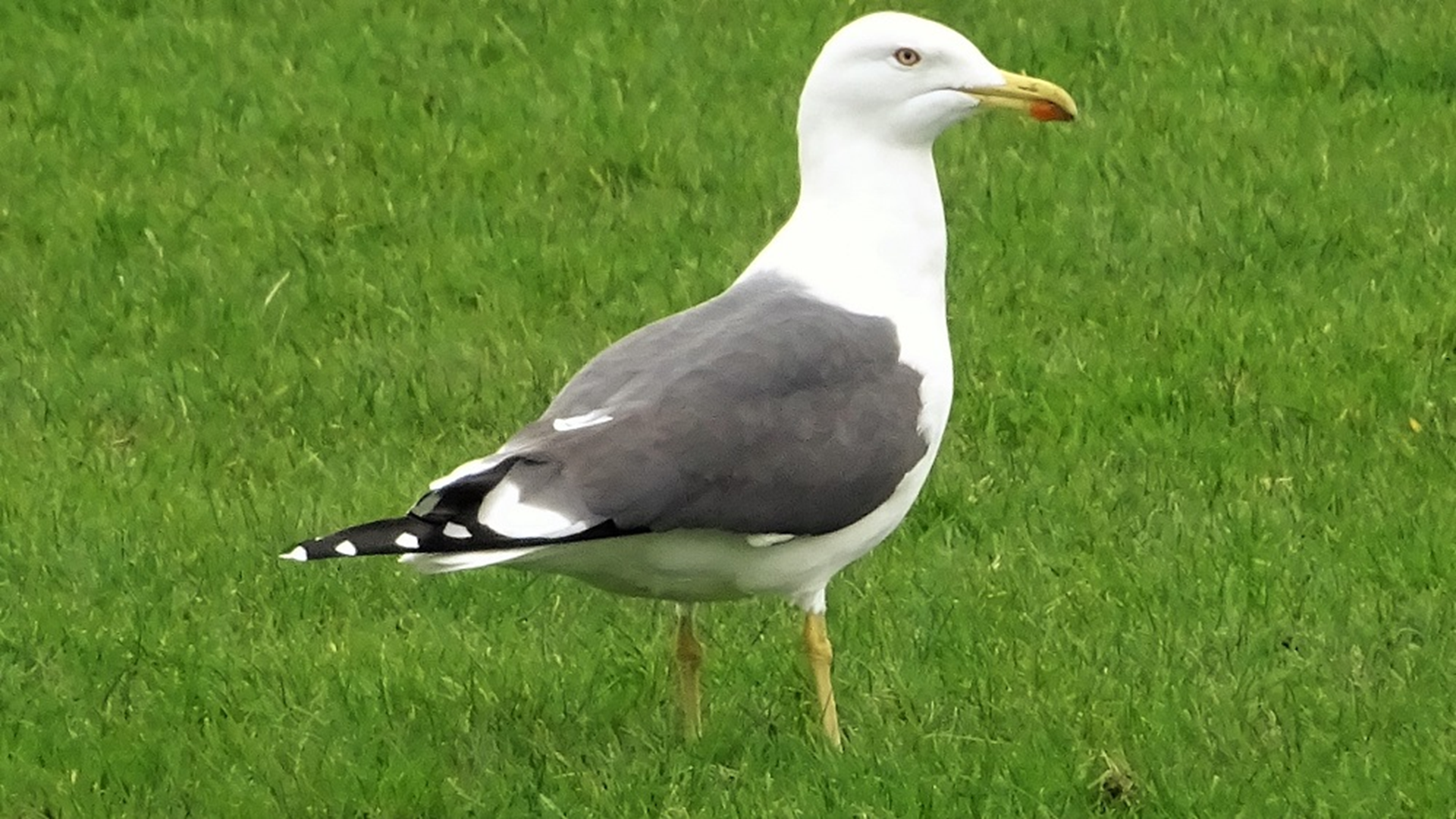
The Lesser Black-backed Gull features a greyish-black back and wings, along with a yellow bill and yellow legs. Its diet includes grass, roots, leaves, seeds, fish, molluscs, small mammals, carrion, and food scraps.
#
Cormorant
Phalacrocorax carbo
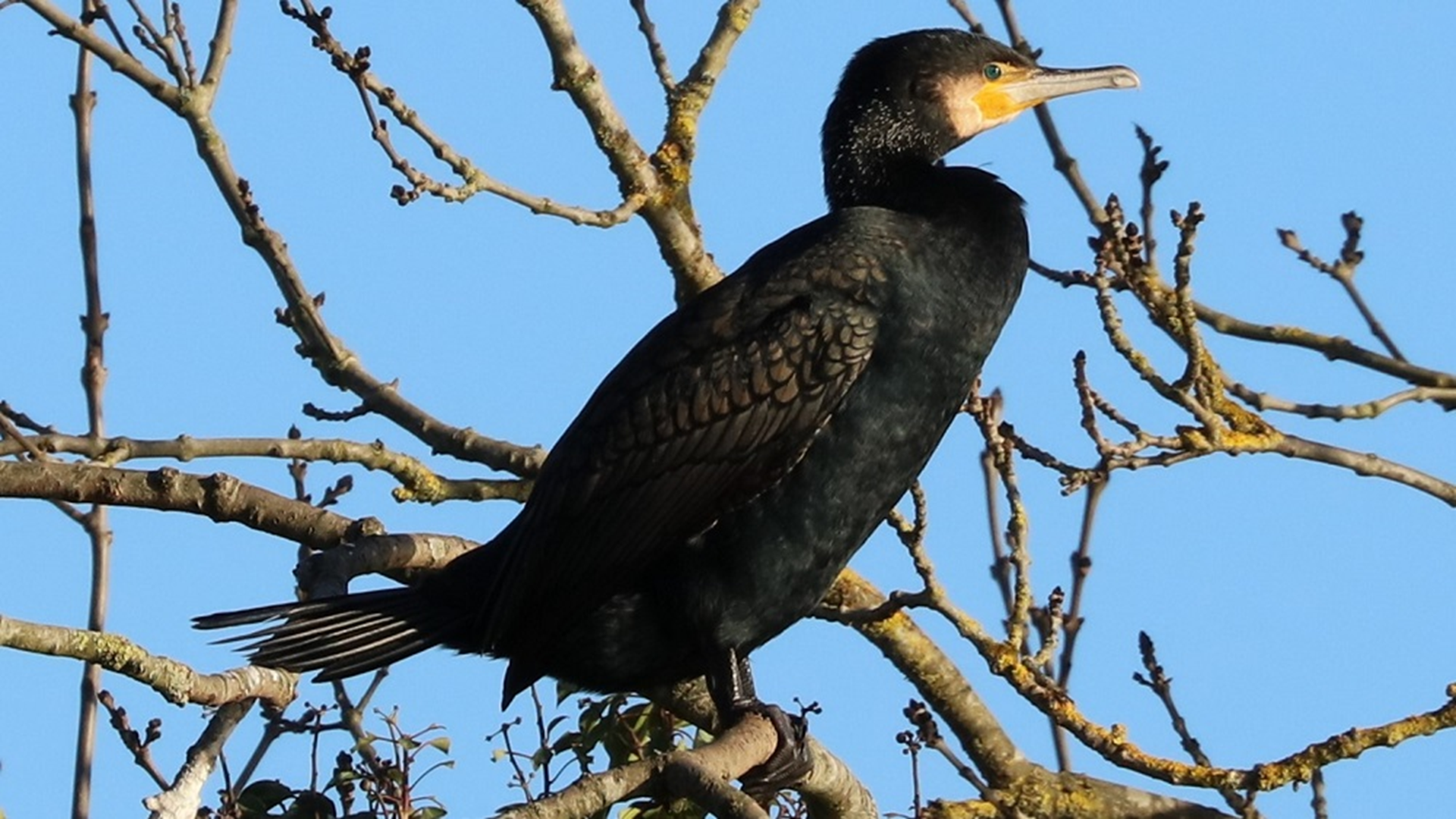
Cormorants visit Hainault Lake all year round, appearing in greater numbers during the winter months.
#
Garlic Snail
Oxychilus alliarius
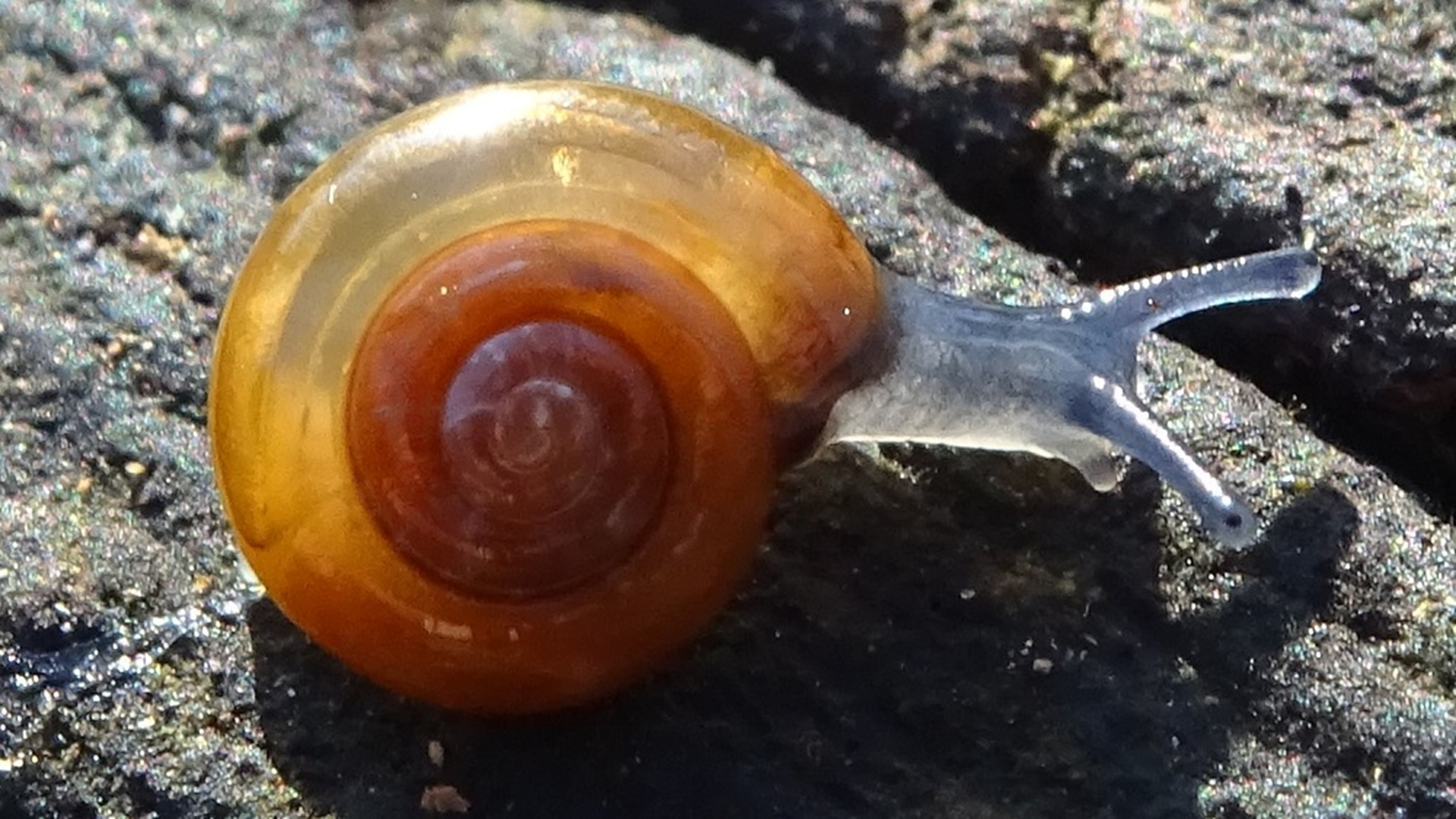
The Garlic Snail has a glossy translucent brown shell measuring 6-8 mm which is closely coiled with a low spire. The snail itself is bluish-grey. If picked up the snail produces a secretion that smells very pungent like garlic when handled. If the last part of the mantle within the shell were dark then it would be
Oxychilus navarricus helveticus, which also smells of garlic albeit slightly less strongly.
#
Hedgehog Slug
Arion intermedius
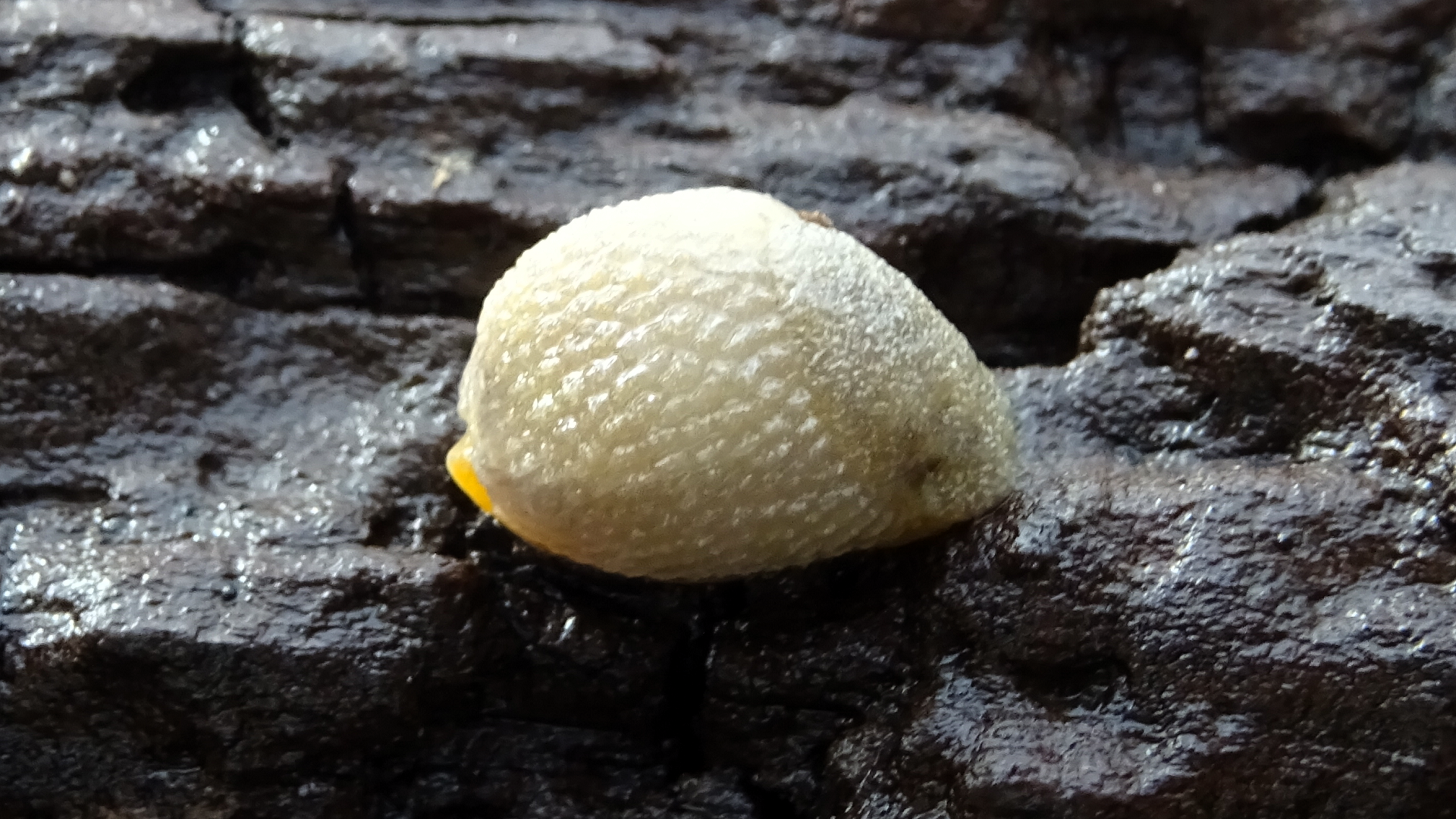
The Hedgehog Slug (1.5-2cm long) varies in colour and patterning. It may be white, grey or orange. The tentacles are grey and the sole is yellow or orange. When stimulated it becomes very compact and the body becomes roundish similar in shape to a hedgehog, with the tubercles on the dorsal surface somewhat resembling prickles. This species feeds on plants and fungi in grassland and forests.
#
Green Cellar Slug
Limacus maculatus
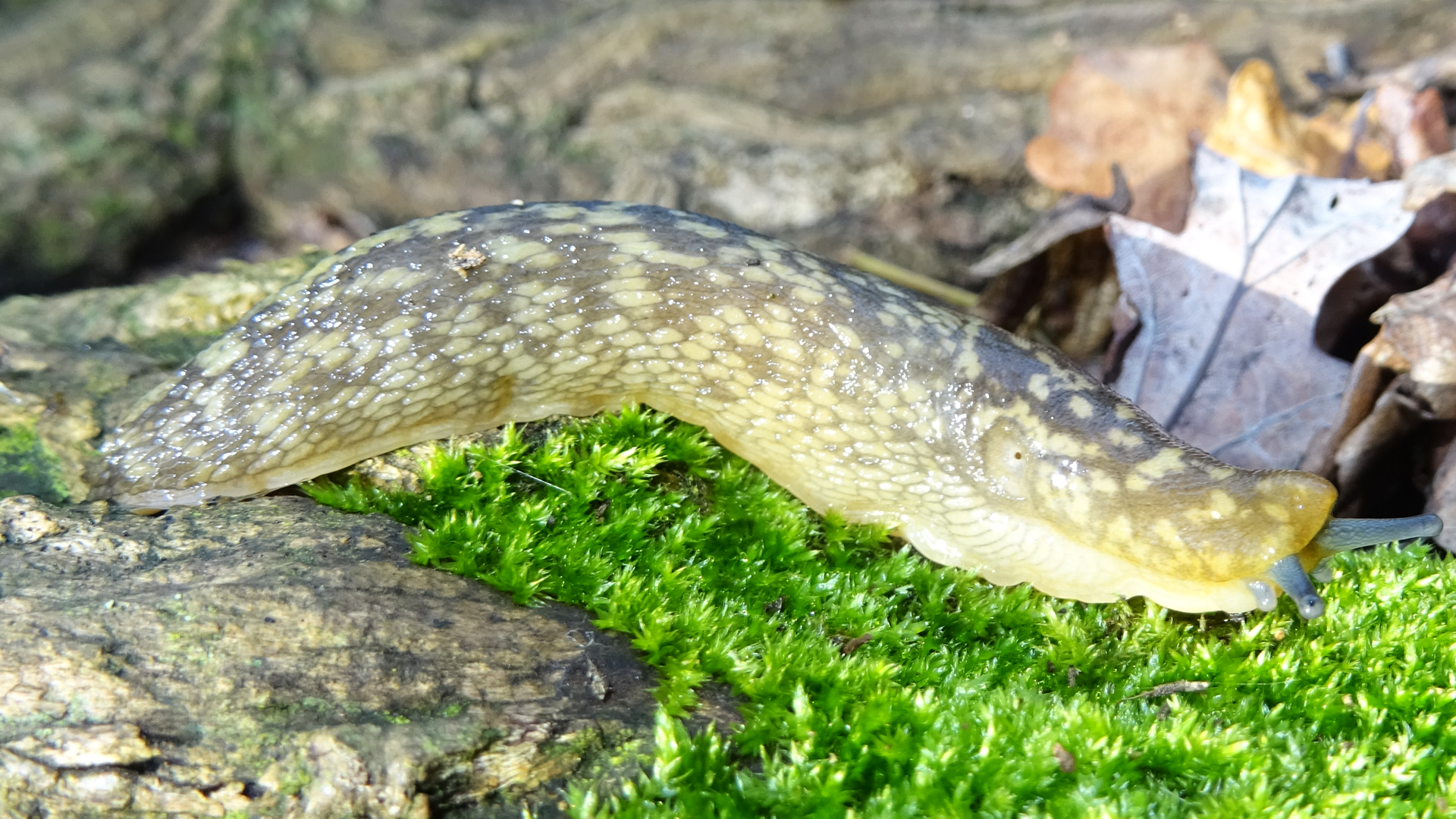
This species originates from the Caucasus and Black Sea Coast and has now spread across Europe. It feeds on decaying plant material and is not considered a pest because it does not feed on live plants. There is a fingerprint pattern on its mantle, greyish tentacles and a short yellow stripe at tail end. It is similar in appearance to Yellow Cellar Slug
L. flavus, however that species seems to be in decline. Both species produce clear yellow slime. The Yellow Cellar Slug has a long yellow stripe running along the centre of the tail that is absent on the Green Cellar Slug.
#
Tree Slug
Lehmannia marginata
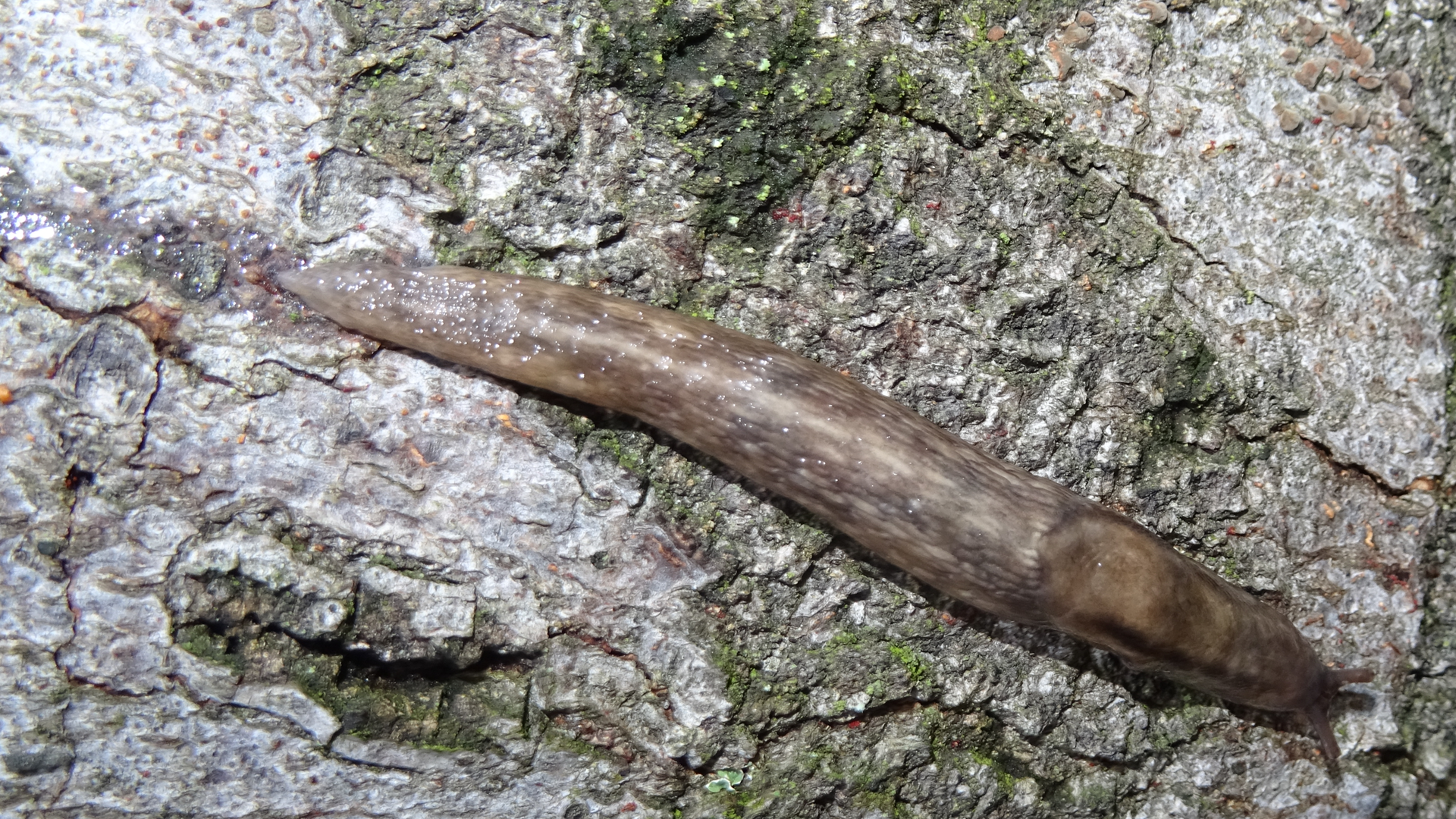
The Tree Slug is a common woodland species usually found during wet weather climbing trees where it feeds on fungi, lichens and algae. Due to its restricted diet it is not considered a pest species.
The Tree Slug measures between 6-9cm and has colourless mucus. This specimen was found about a metre up a beech tree which had beech woodwart and coral spot growing on the trunk. This one is rather more speckled than typical but this may depend on habitat, weather, food and probably genes too.
#
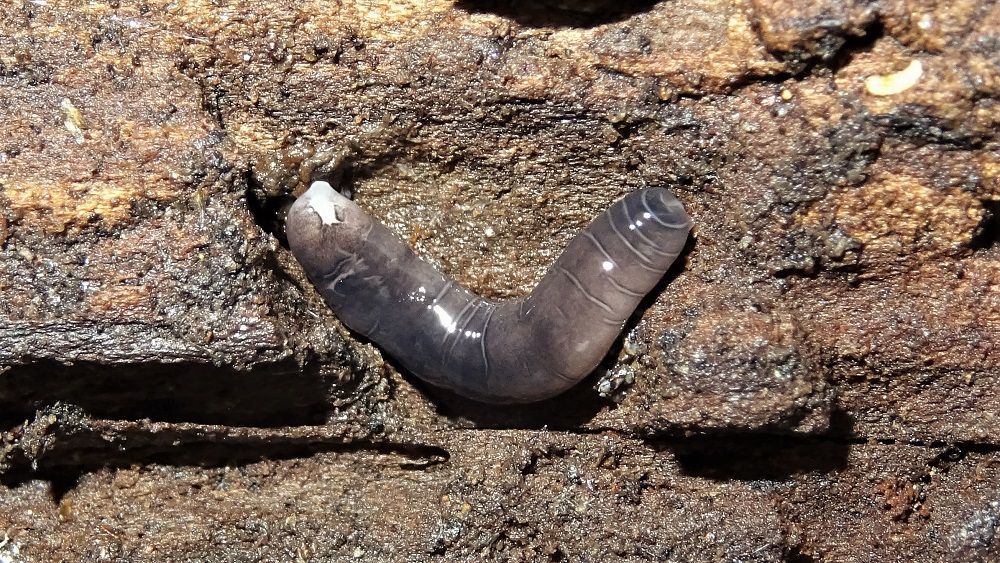
Land Flatworm
Microplana terrestris
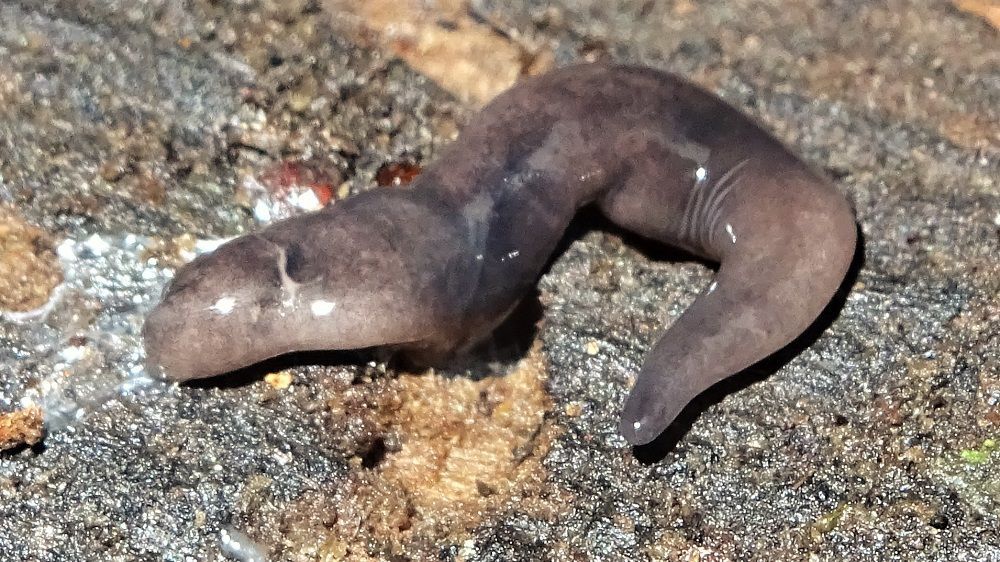
This is a common native species measuring 1 - 2cm when extended. It is a land flatworm that lives in damp habitats under logs, stones and leaf litter. This dark, shiny, and highly contractile worm is a scavenger that feeds on dead earthworms, snails and slugs. It is harmless to living plants.
#
Mottled Umber
Erannis defoliaria
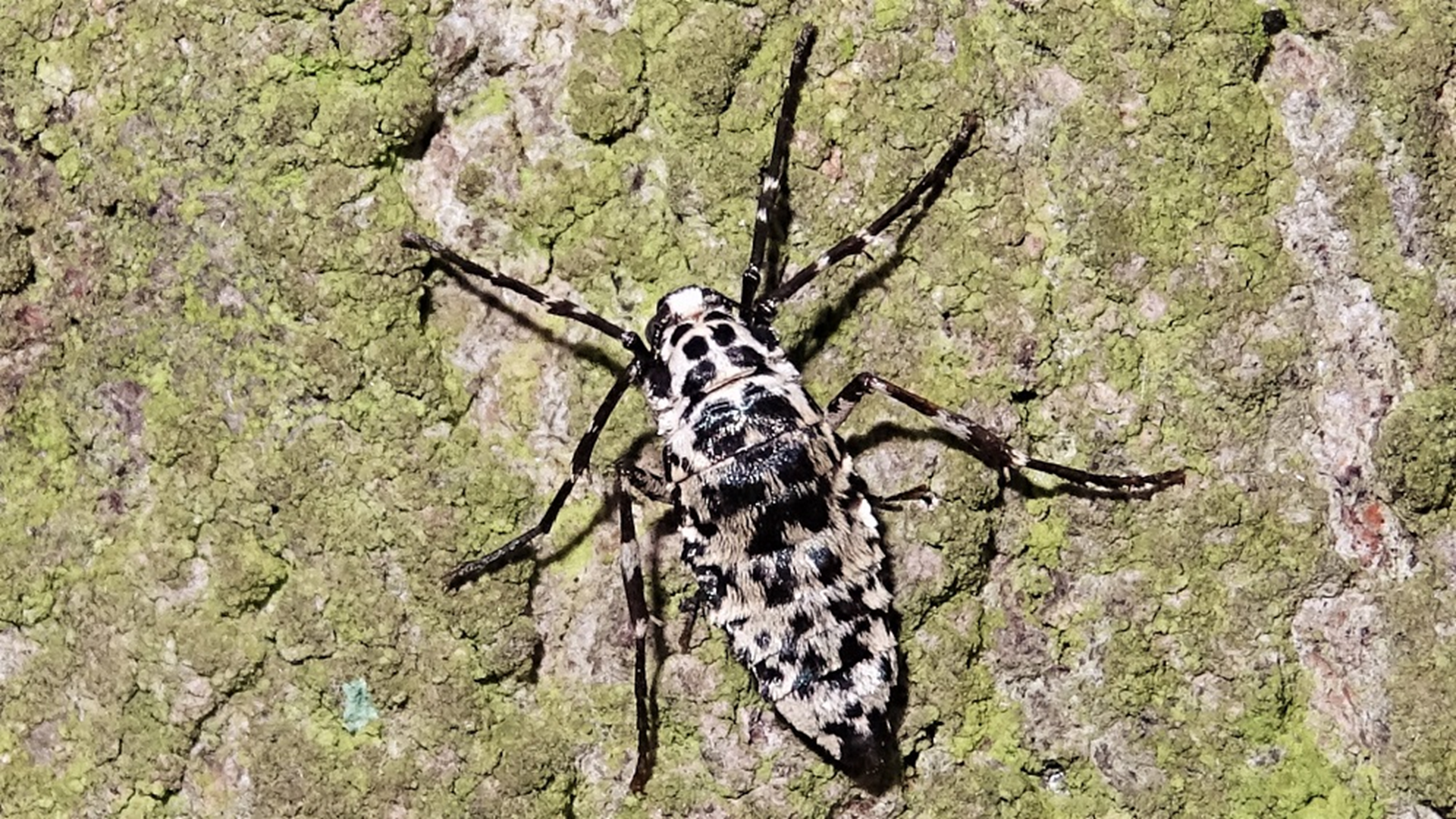
Mottled Umber females are wingless. This one was located on the sheltered side of a beech tree waiting to attract a male. After mating, the eggs will be laid around leaf buds. When the caterpillars hatch in spring this often leads to defoliation.
#
Common Quaker
Orthosia cerasi
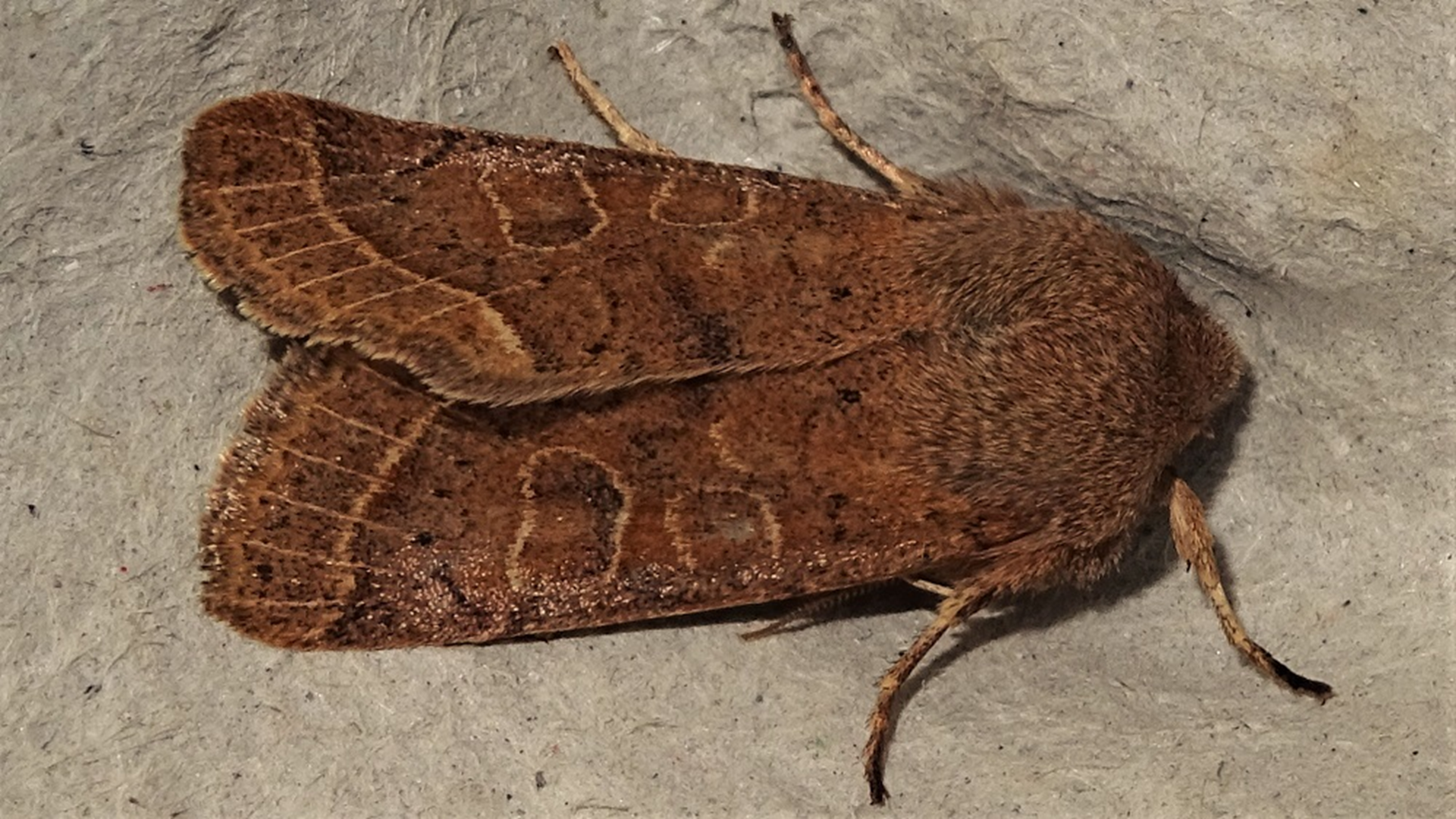
The Common Quaker exhibits considerable variation; some individuals have a uniform ground colour, while others possess a dark band on the forewing. All variants feature large markings with a light outline. These moths are typically active in March and April. The caterpillars feed on oak, sallow, and various other deciduous trees. Their wingspan measures between 35 and 40 mm.
#
Small Quaker
Orthosia cruda
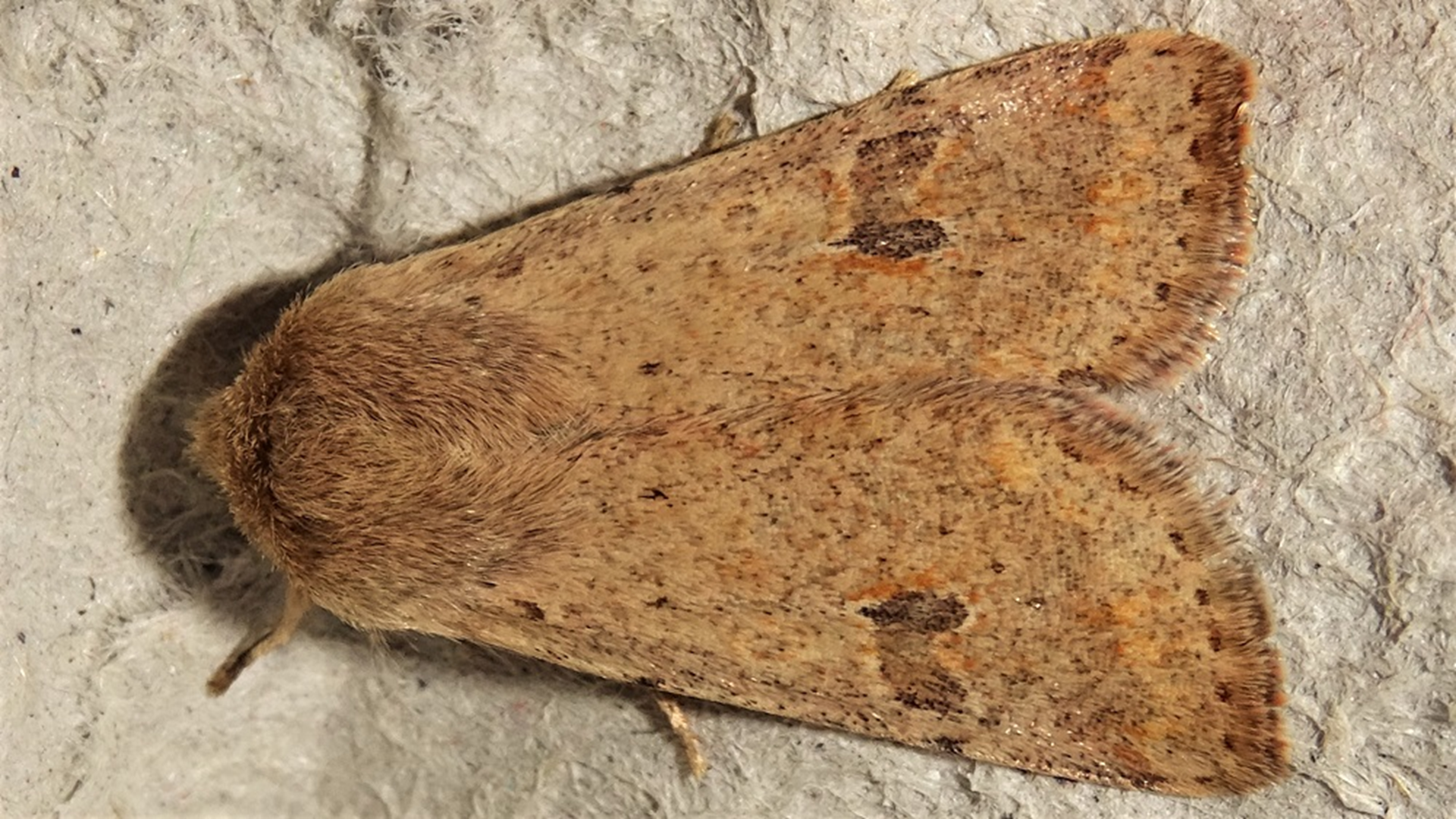
The Small Quaker is active in deciduous woodland during March and April, feeding on sallow blossom. Its wingspan ranges from 25 to 30 mm. The caterpillars consume oak, sallow, and various other deciduous trees.
#
Hebrew Character
Orthosia gothica
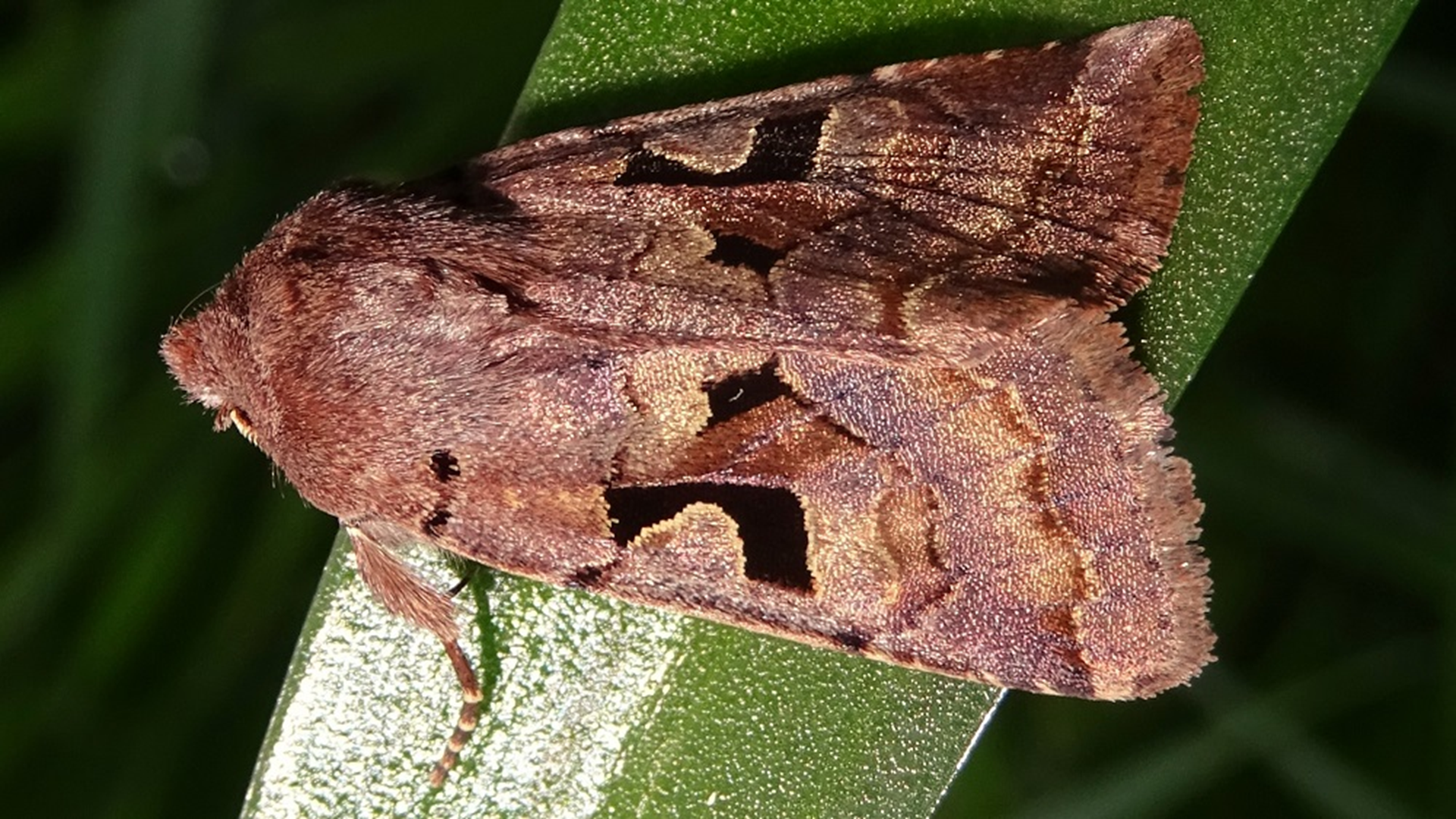
The Hebrew character is a widely occurring species that has several colour variations. A noticeable marking is present in the centre of the forewing. These moths are mostly active from March to May. The wingspan measures between 30 and 35 mm. Its caterpillars feed on a range of herbaceous plants, bushes, and trees.
#
Clouded Drab
Orthosia incerta
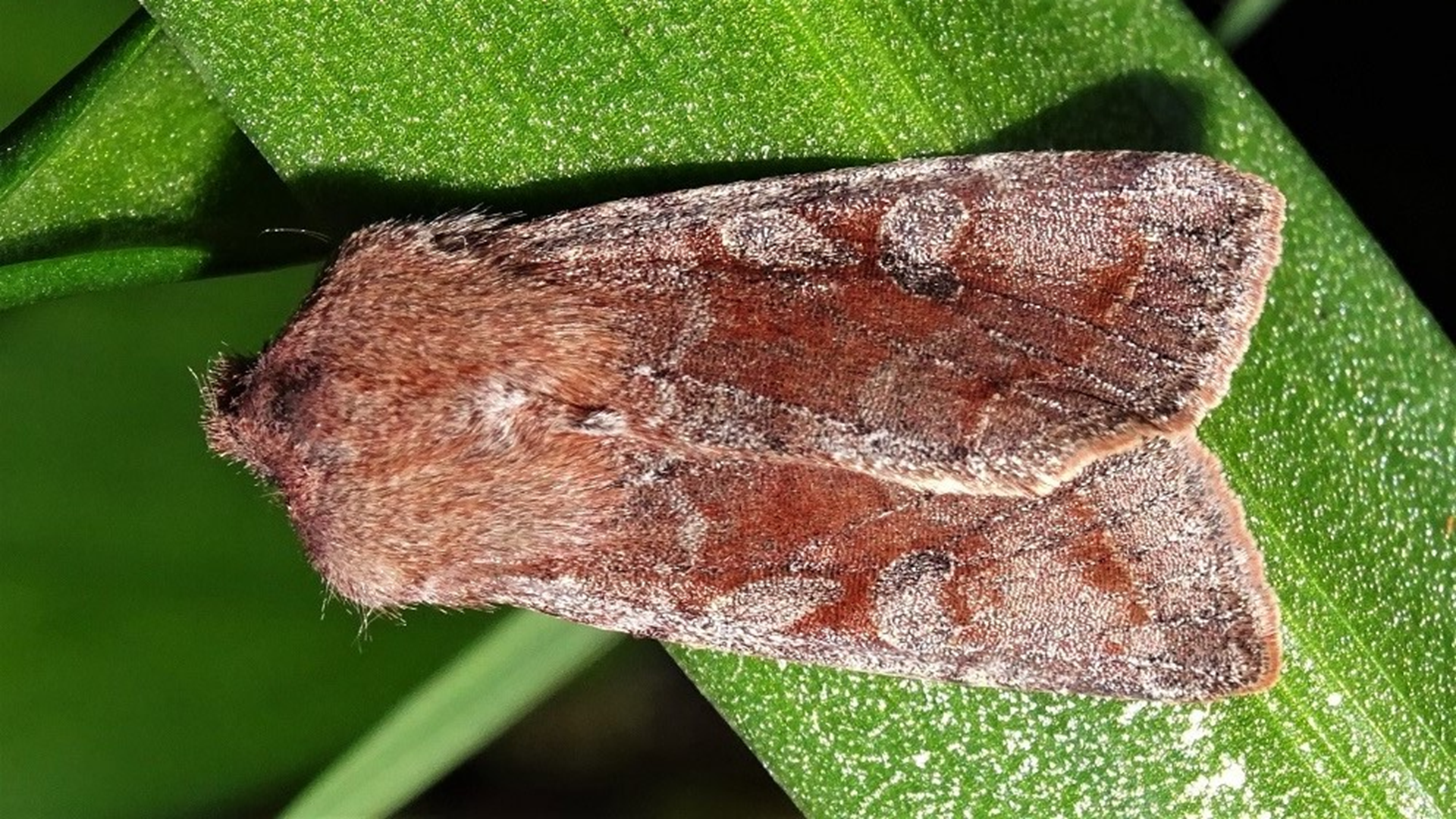
The Clouded Drab has a variable ground colour that can be grey, brown, orange, or reddish. The darker forms typically have forewings with a pale fringe. This species is active from March to May and has a wingspan of 35-40 mm. Its caterpillars feed on oak as well as various other trees and shrubs.
#
Spring Usher
Agriopis leucophaearia
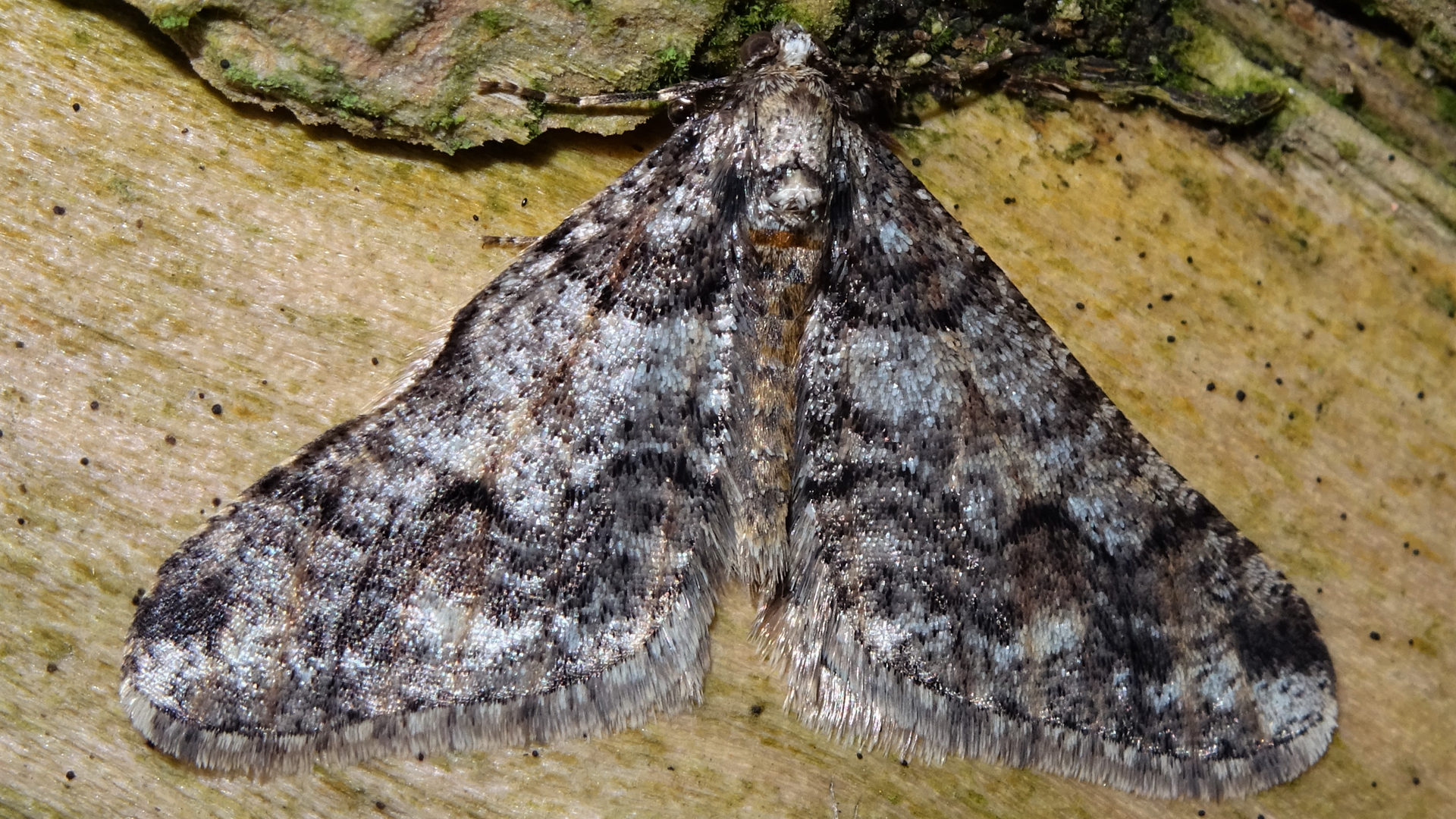
The male is a plain moth with colouration in different shades of black, white and grey. It inhabits oak woodland where it can be found sheltering on side of trees. The females of this species are wingless.
#
Oak Beauty
Biston strataria
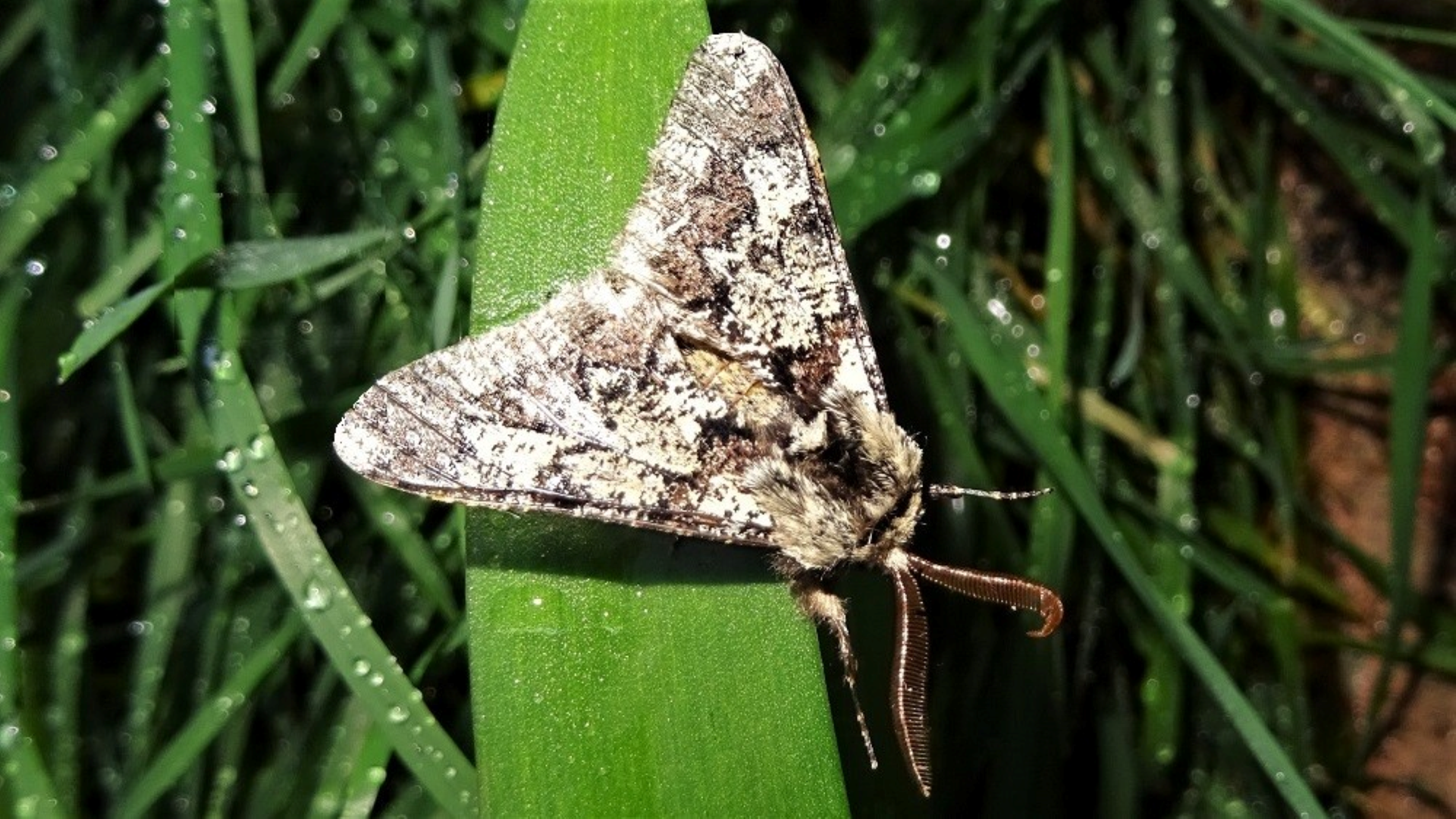
The Oak Beauty is a relatively large moth, featuring a wingspan of approximately 45mm. Its wings display bands of chestnut and white, with black speckles. This species typically flies during March and April and is commonly found in deciduous woodlands and gardens. The larvae of this moth feed on various deciduous trees, including oak.
#
Early Grey
Xylocampa areola
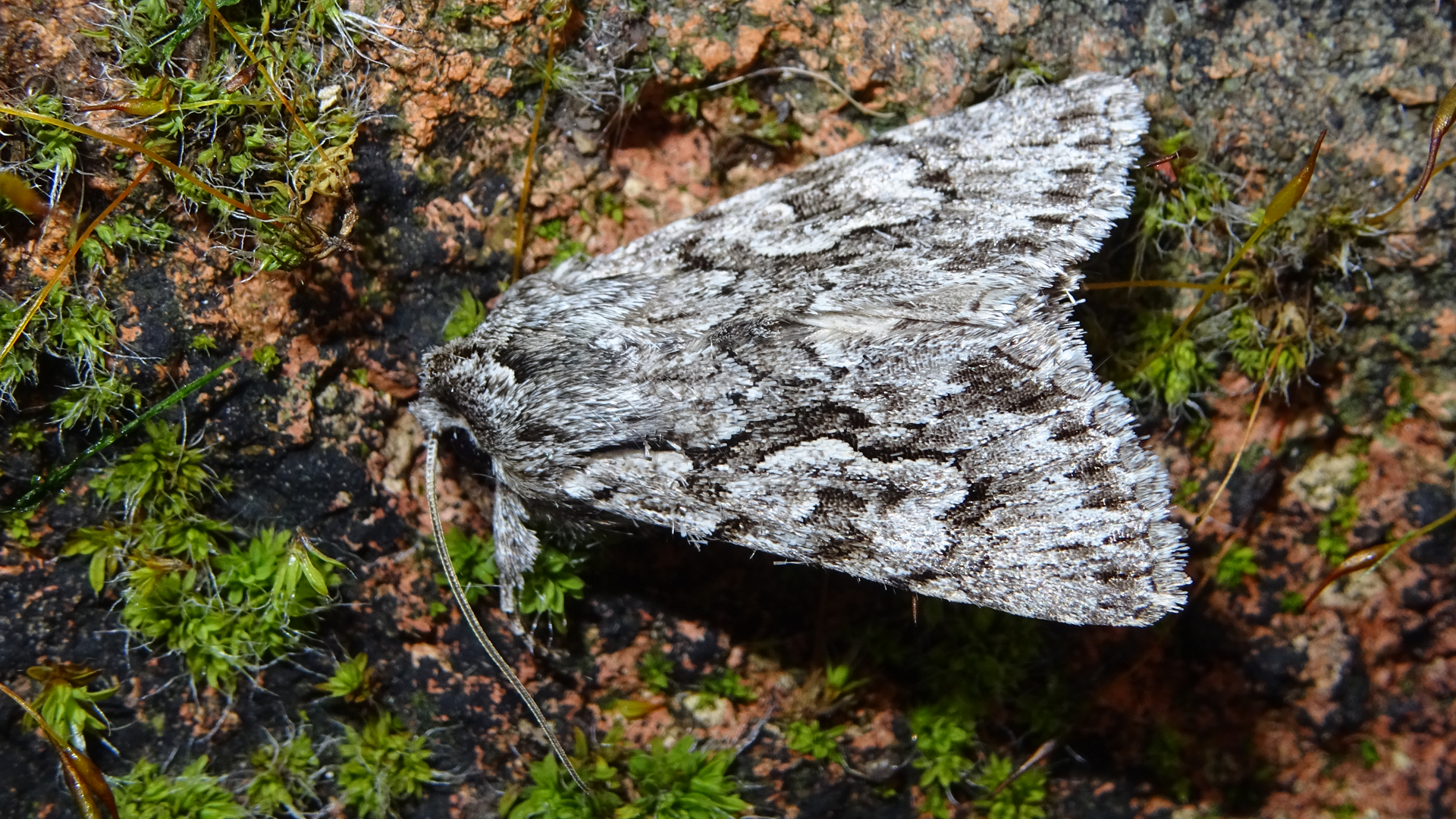
Early Grey is among the first moths to appear each year. It inhabits woodlands and occasionally visits gardens. The maximum wingspan of this moth is 40mm. Its yellowish-brown caterpillars mostly feed on honeysuckle.
#
Double-striped Pug
Gymnoscelis rufifasciata
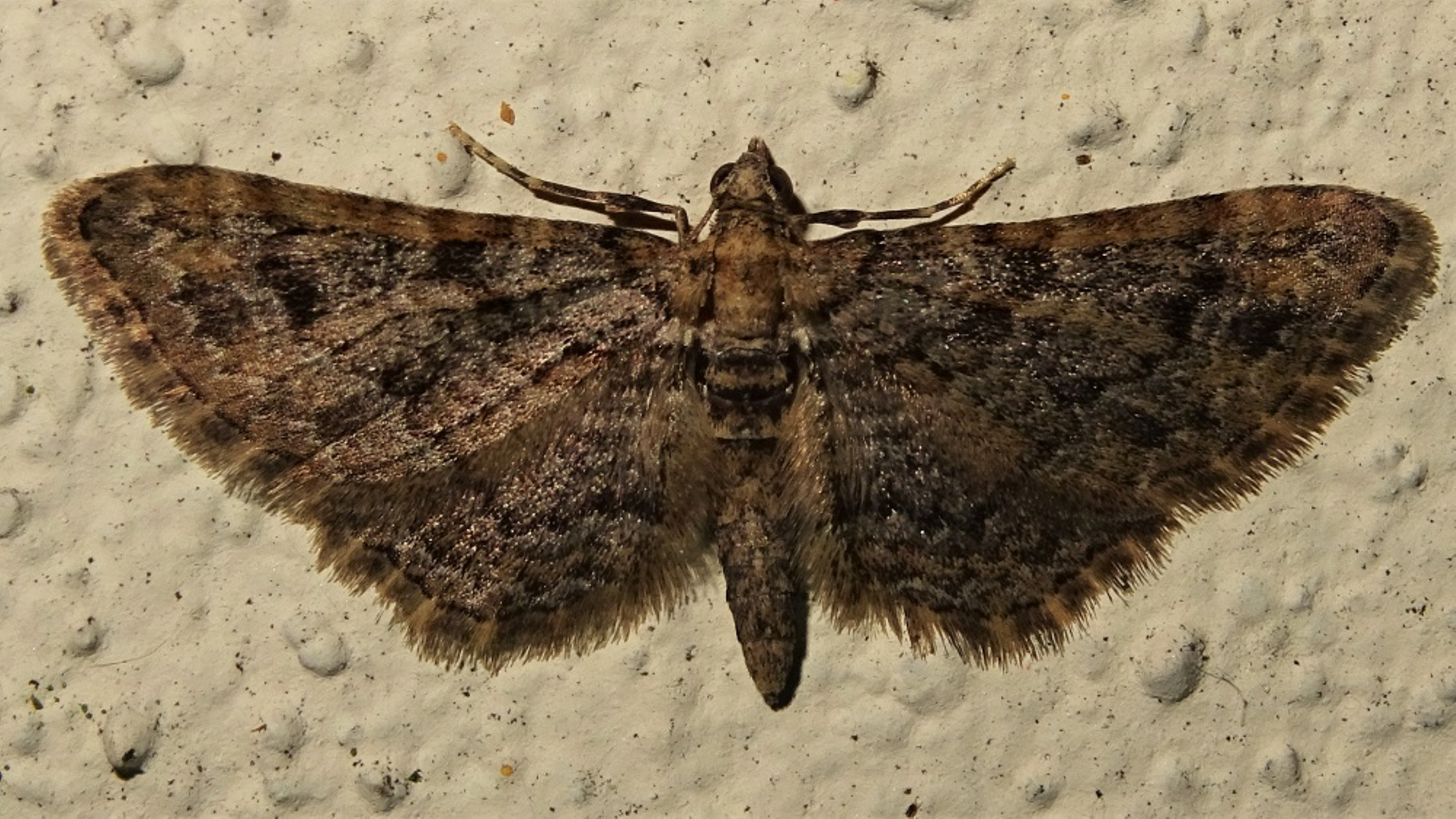
The Double-striped Pug is found in many habitats. It is easily disturbed during the day and is active on sunny days. Its main flight period occurs just before dusk, and it is subsequently attracted to light. There may be up to three generations each year, appearing from March to September. The larvae of this species feed on a variety of plants.
#
Brindled Pug
Eupithecia abbreviata
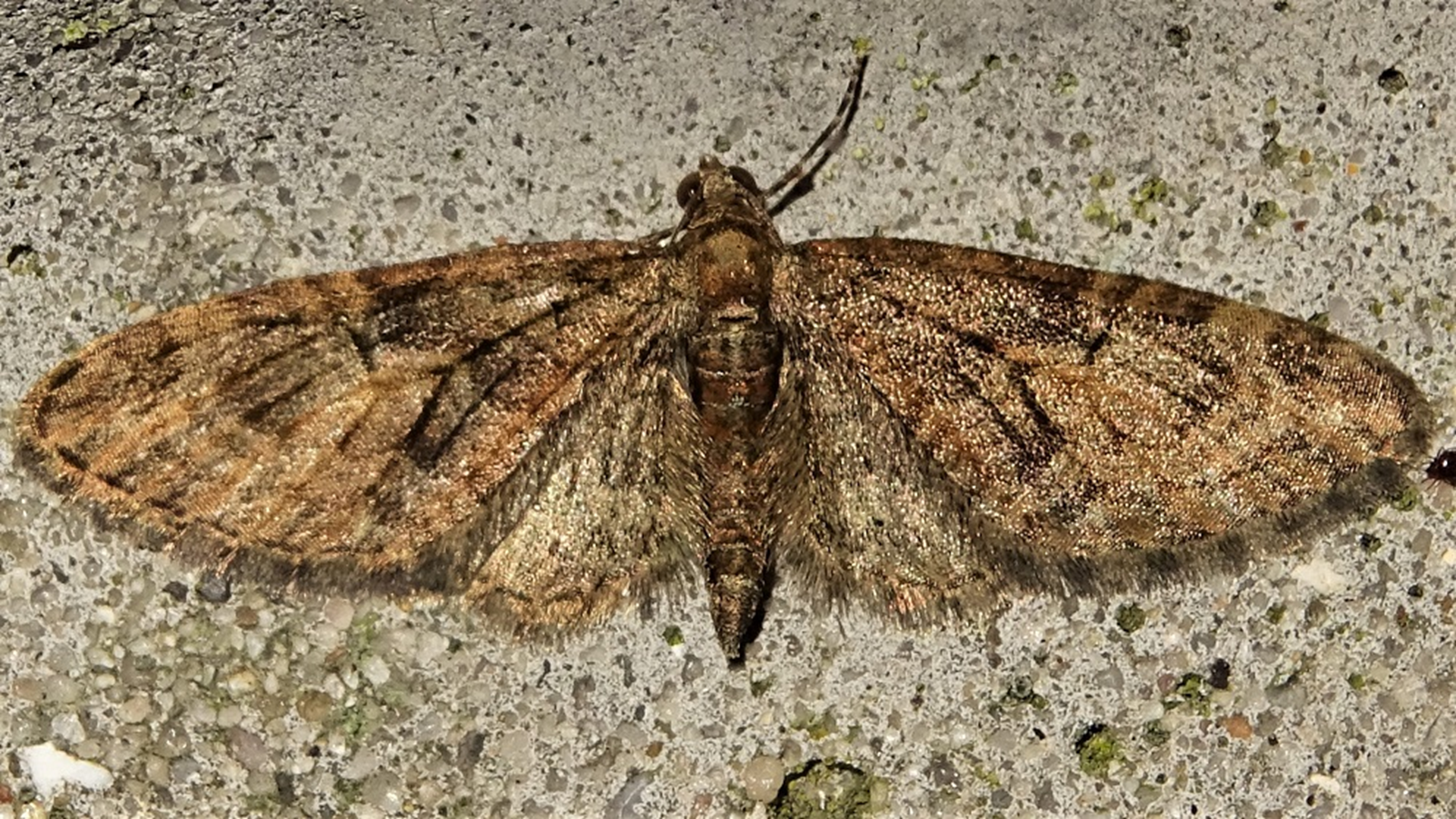
Brindled Pug is a small moth with a maximum wingspan of 22mm that is active from March to May. It is typically located in deciduous woodlands, where the caterpillars feed on oak and hawthorn. There is also a common melanic form known as
Eupithecia abbreviata ab. hirschkei, which is darker and has some markings absent.
#
Common Plume
Emmelina monodactyla
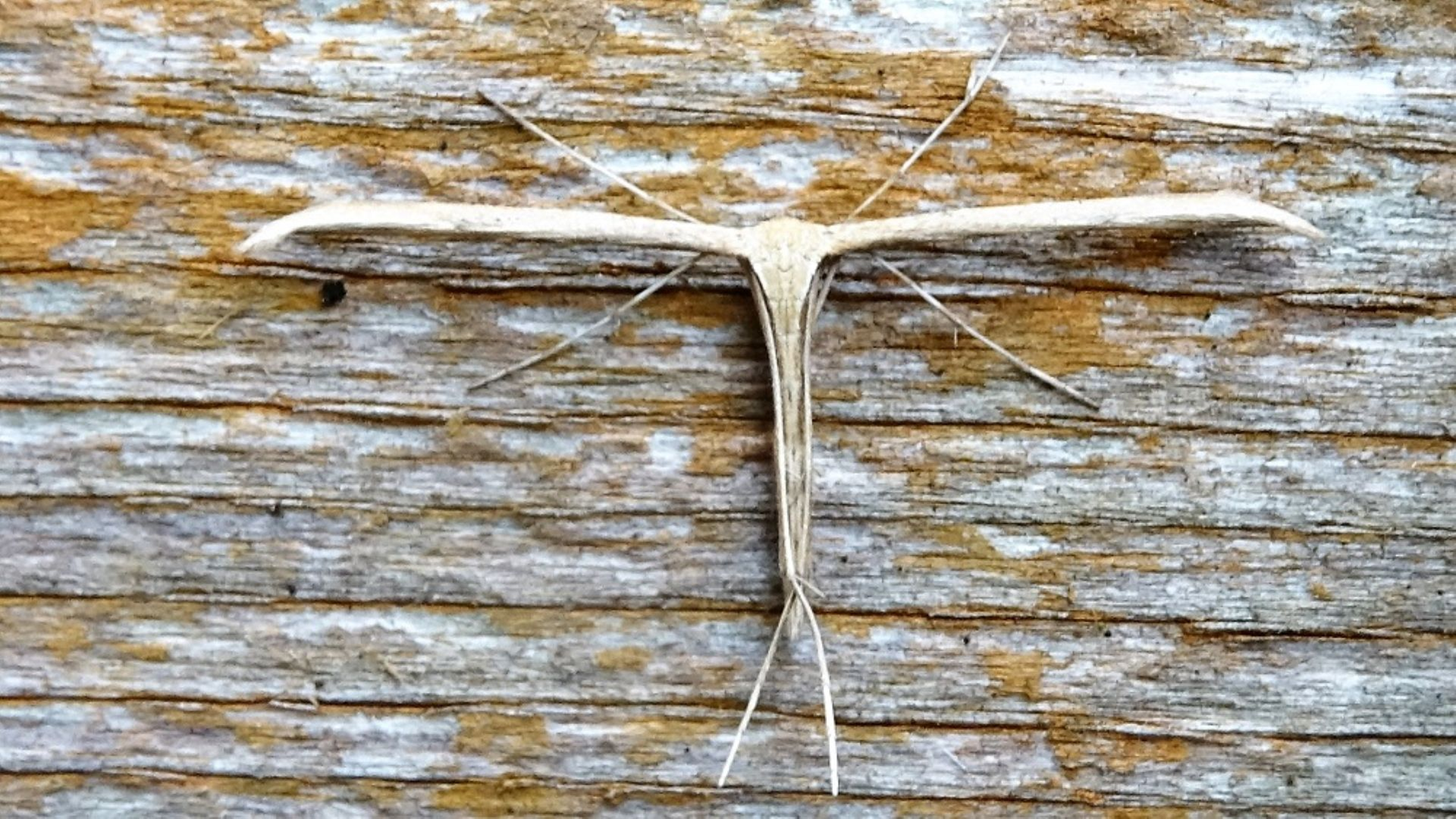
The Common Plume is present year-round, including during winter months. The wings range from off-white to light brown and are typically covered with darker scales. Only the outer third of each wing is split into plumes. When the wings are tightly rolled at rest they have a solid appearance. A dark central spot on the forewing is usually noticeable. The maximum wingspan reaches 27mm. Bindweed serves as the primary food plant for the larvae.
#
March Tubic
Diurnea fagella
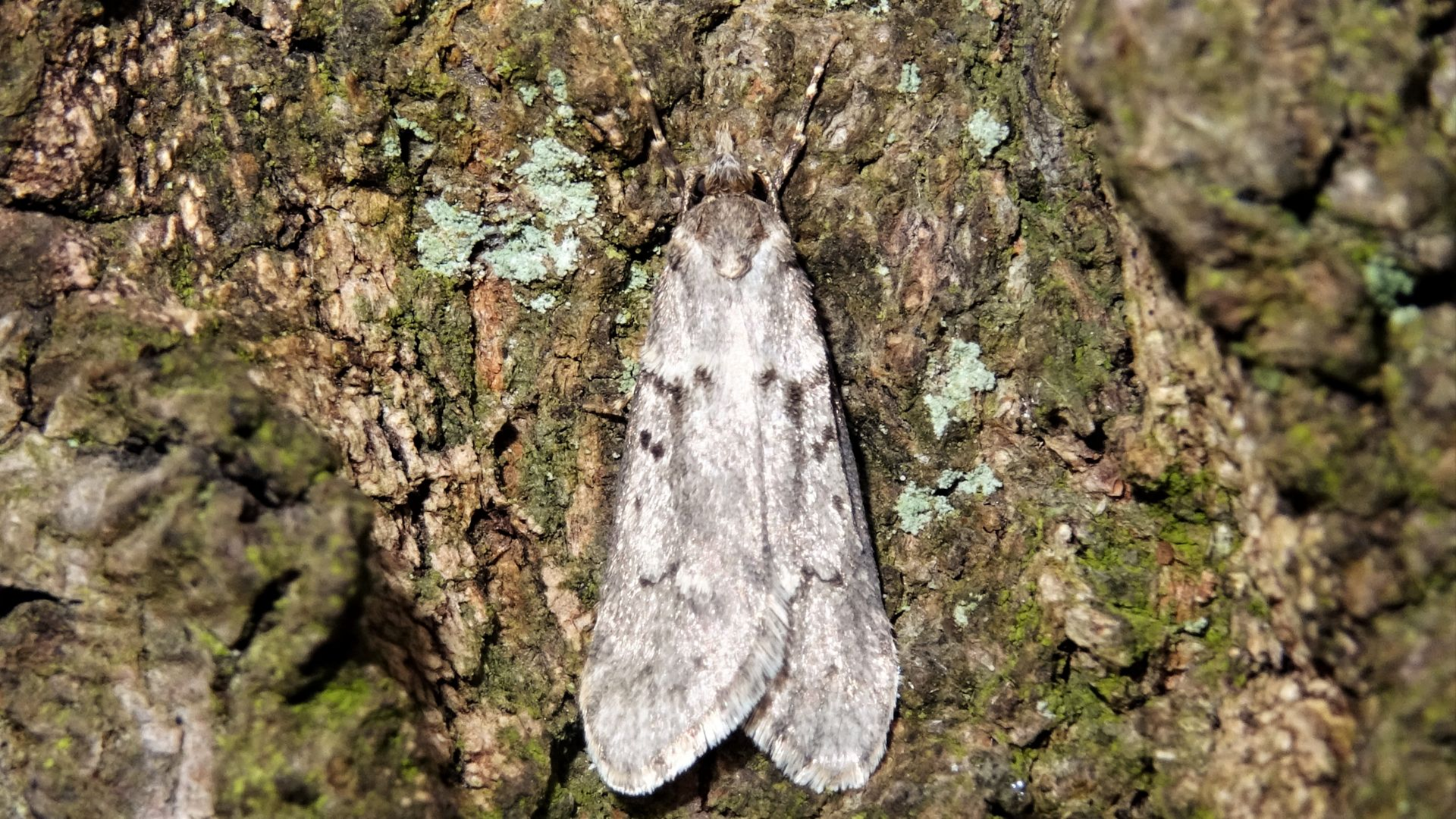
March tubic is a micro-moth typically seen in early spring. The male is often found resting on the bark of beech trees, with a maximum wingspan of 29mm. In contrast, females have reduced wings and are unable to fly, although they have been observed gliding to the forest floor. The larvae of this species feed on various deciduous trees. There is also a melanic form that occasionally appears in regions with high pollution.
#
Varied Tortrix
Acleris hastiana
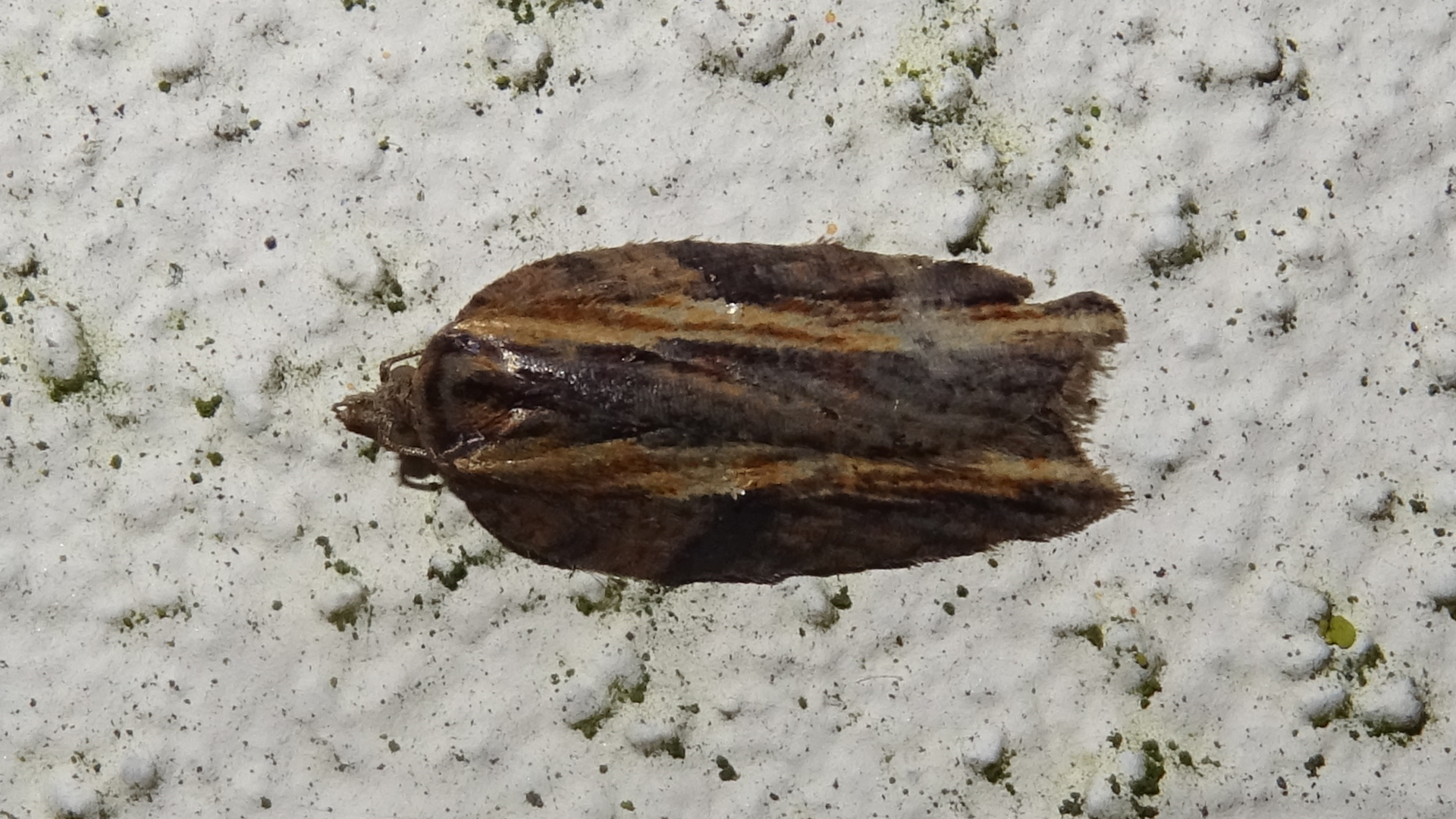
Found in a range of different forms, flying from April until September in two generations. Its larvae feed on small-leaved willows. It was originally known as the 'Sallow Button'.
#
Smooth Newt
Lissotriton vulgaris
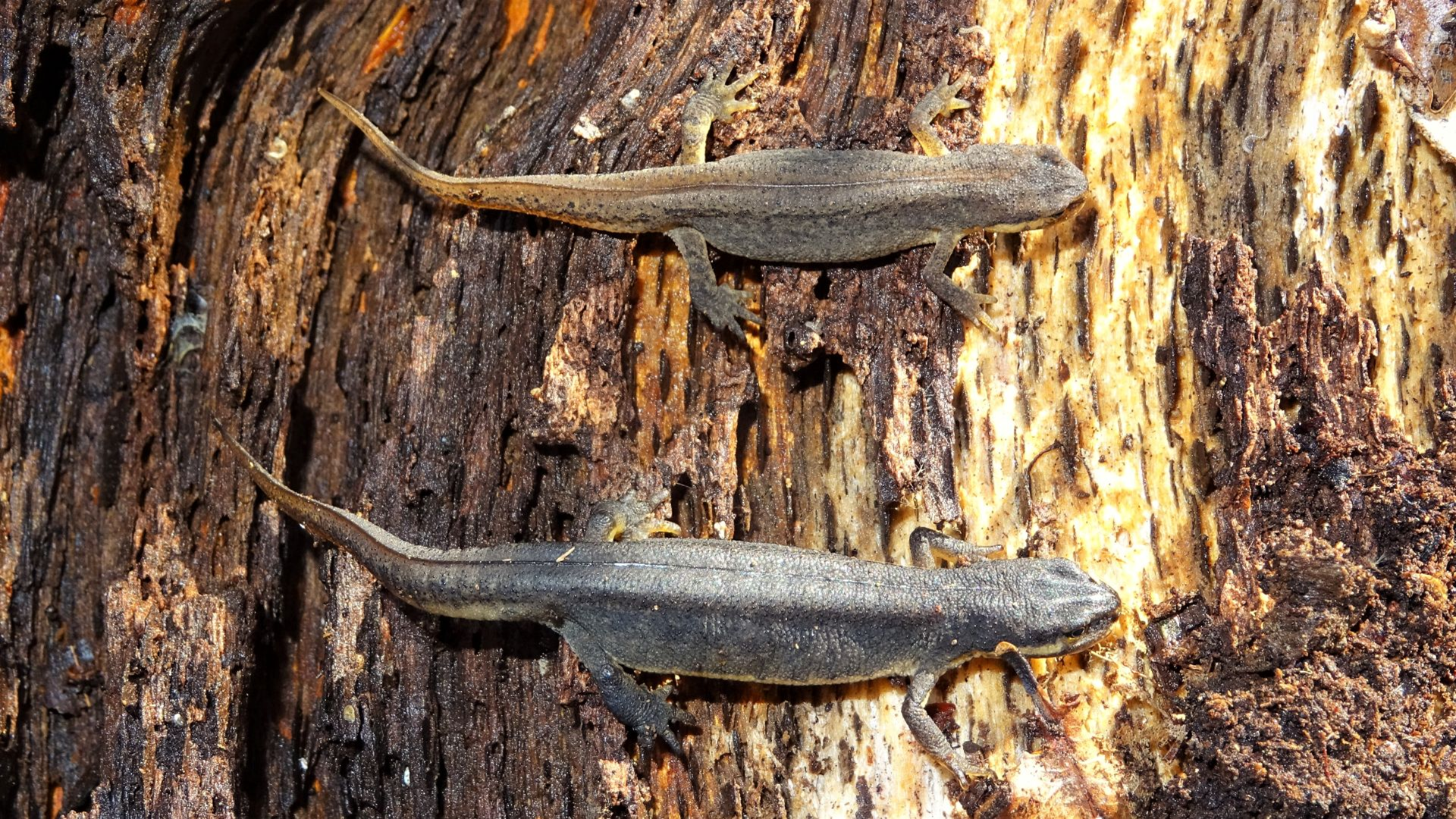
Out of three newt species in Britain this is the most common. They are most likely to be seen from March to October. Newts hibernate during winter among tree roots and under logs. They emerge during spring to breed in ponds. The remainder of the year is spent feeding in woodland and grassland. They are mostly active during night time. These two were accidently disturbed when a log was turned while searching for ascomycete fungi.
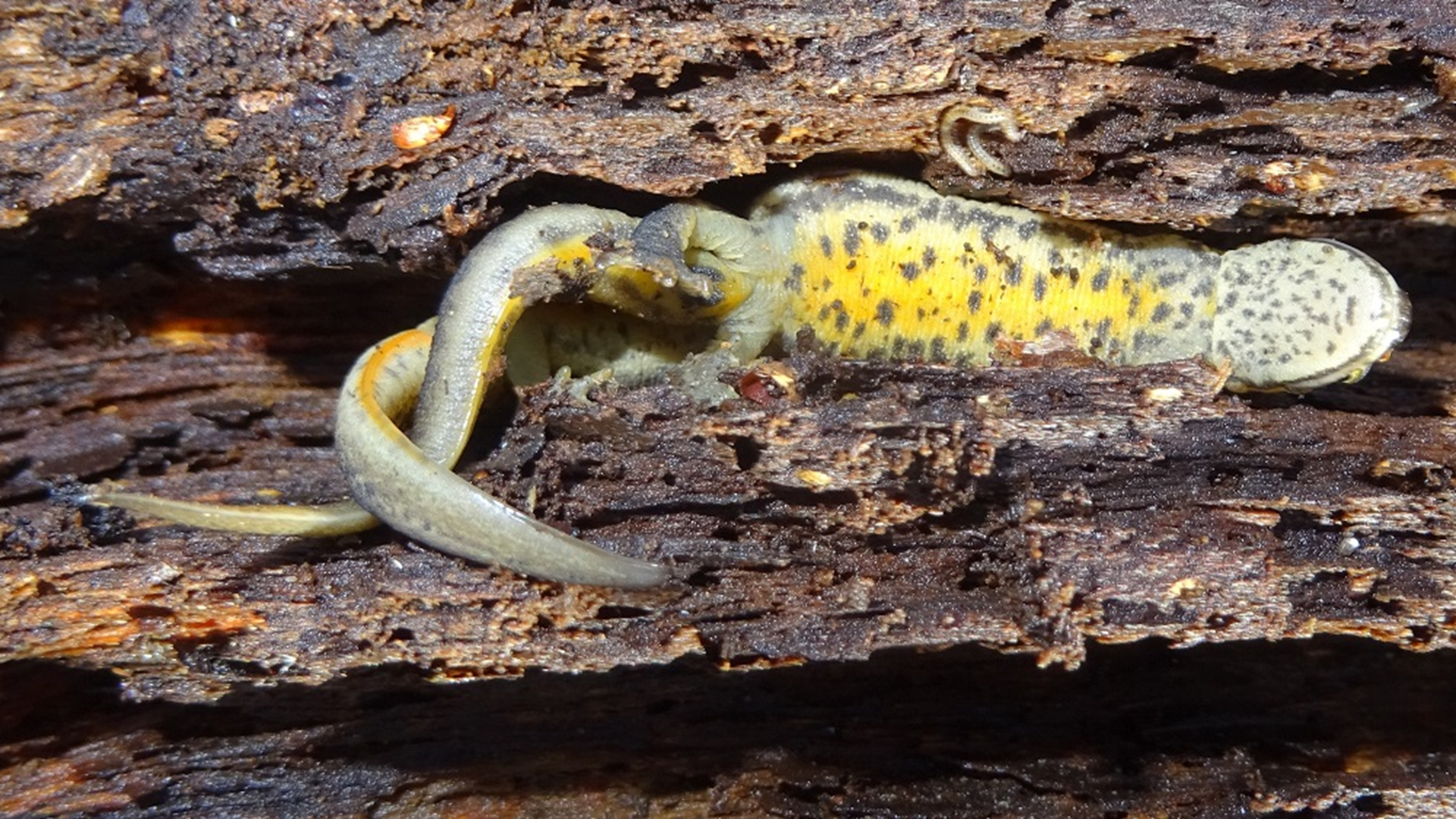
#
Smooth Newt
Lissotriton vulgaris
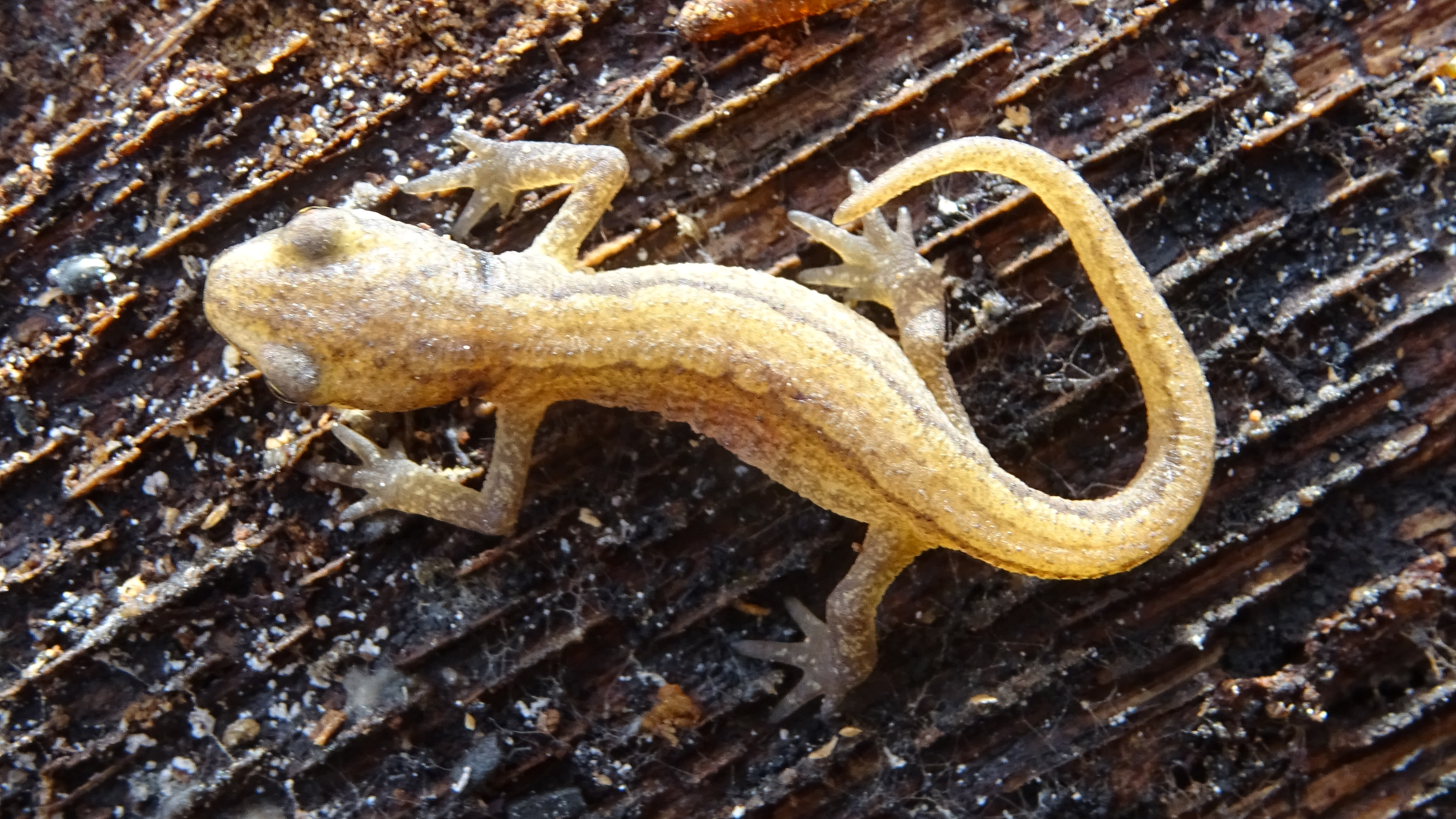
A young newt about 30mm long found under a log at the edge of Foxburrow road.
#
Common Toad
Bufo bufo
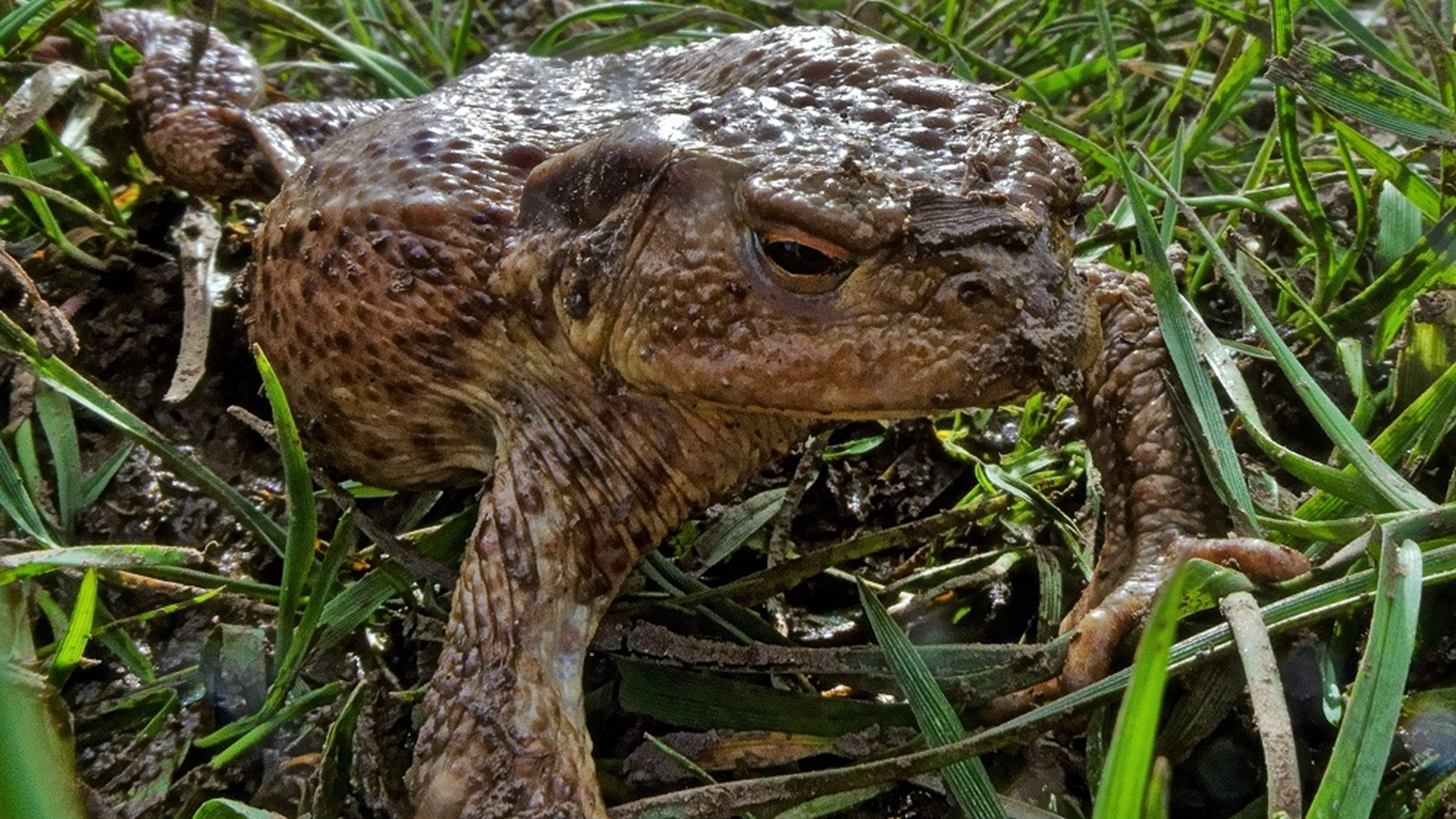
Late February and early March is the time when toads often migrate to water searching for a mate on the way. This normally starts on a wet night when the temperature rises to about 10 degrees C.
#
Frog Spawn
Rana temporaria
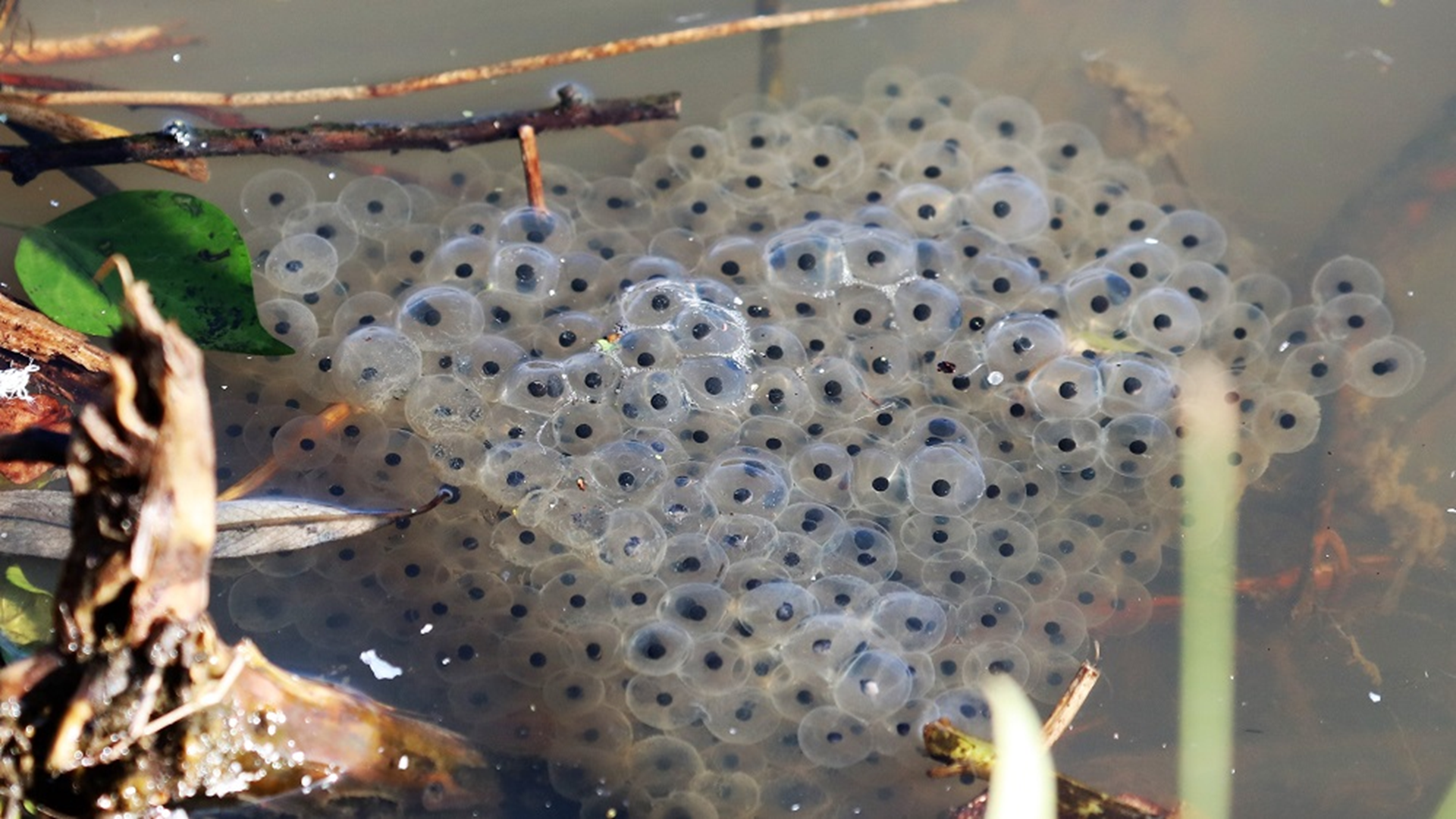
Frog spawn is laid in clumps. Before spawning a male frog jumps on a female's back and takes a tight grip. This hold may last several days until the female releases her eggs which is normally done at night in shallow water. A coating on the eggs forms a protective jelly when it gets wet. This is the first batch seen on Hainault Lake this year.
#
Terrapins
Trachemys
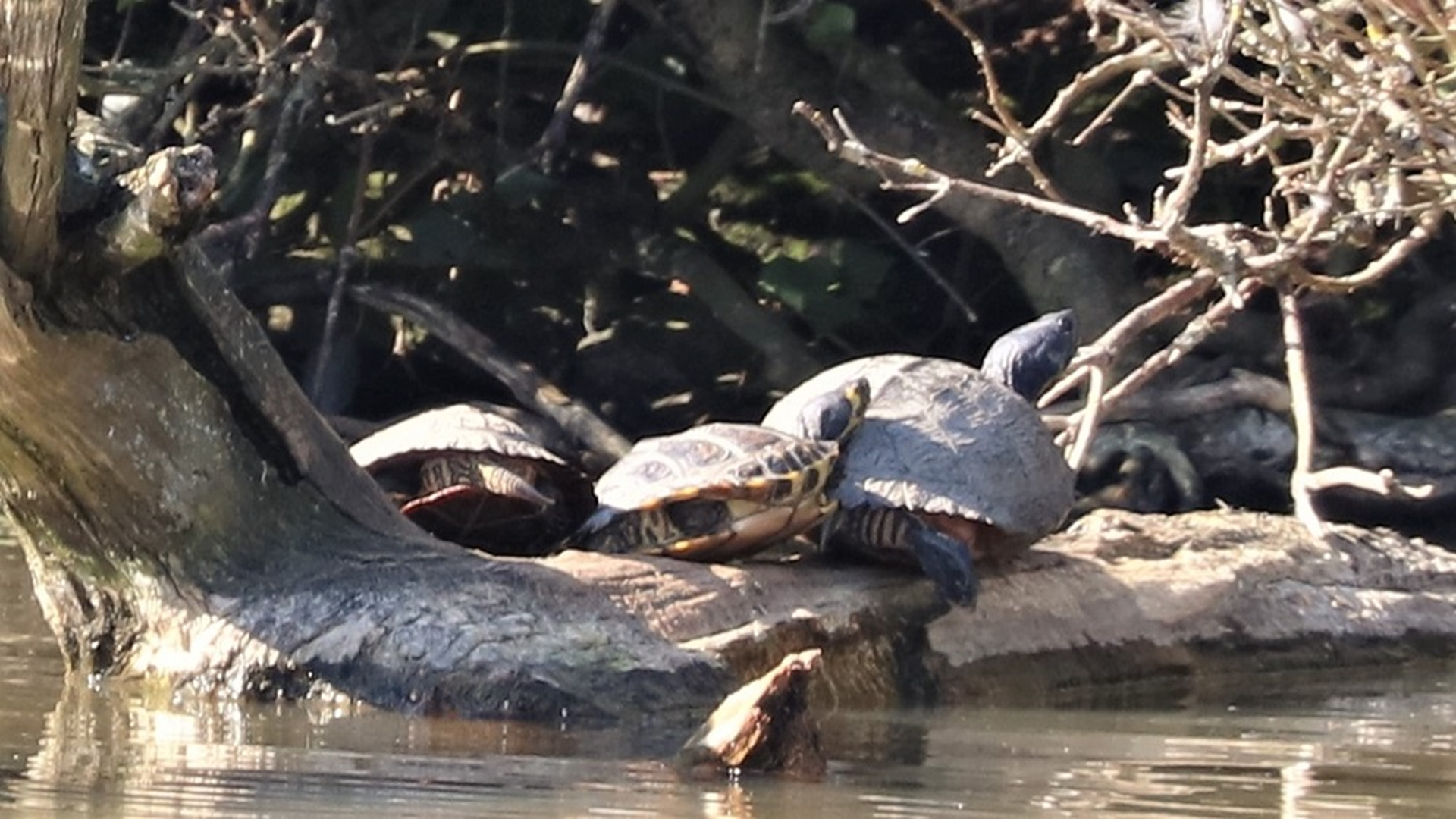
Sunny weather at the end of March attracted terrapins to bask on their preferred log in Hainault Lake. These terrapins are not native but are a consequence of the careless disposal of unwanted pets. It is important to take time when considering the purchase of a pet and to obtain as much information as possible beforehand to ensure proper care.
#
False Ladybird
Endomychus coccineus
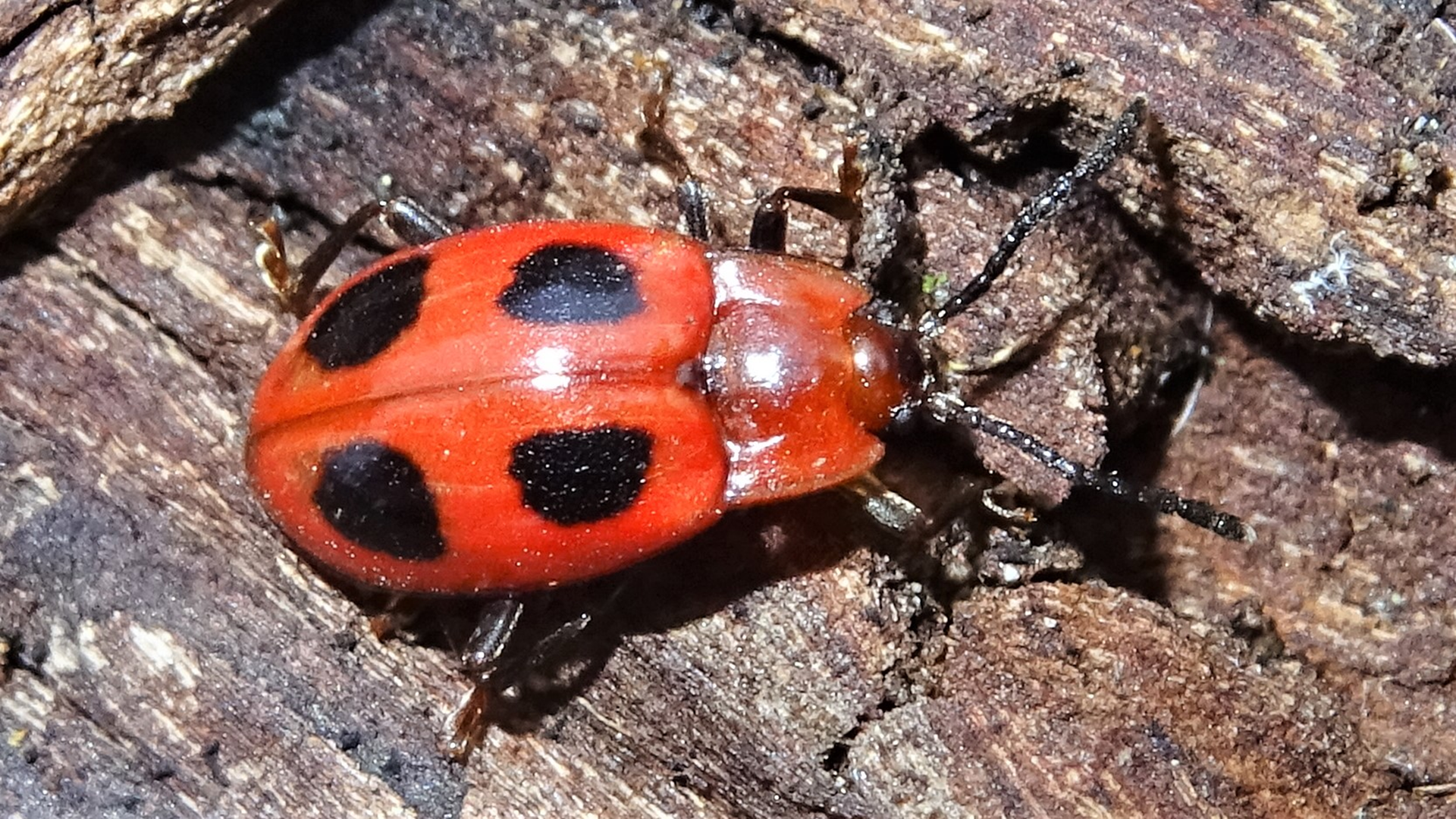
The False Ladybird is a red beetle characterised by four black spots on its elytra. It primarily feeds on fungus and is normally observed from April to September.
#
Gorse Shieldbug
Piezodorus lituratus
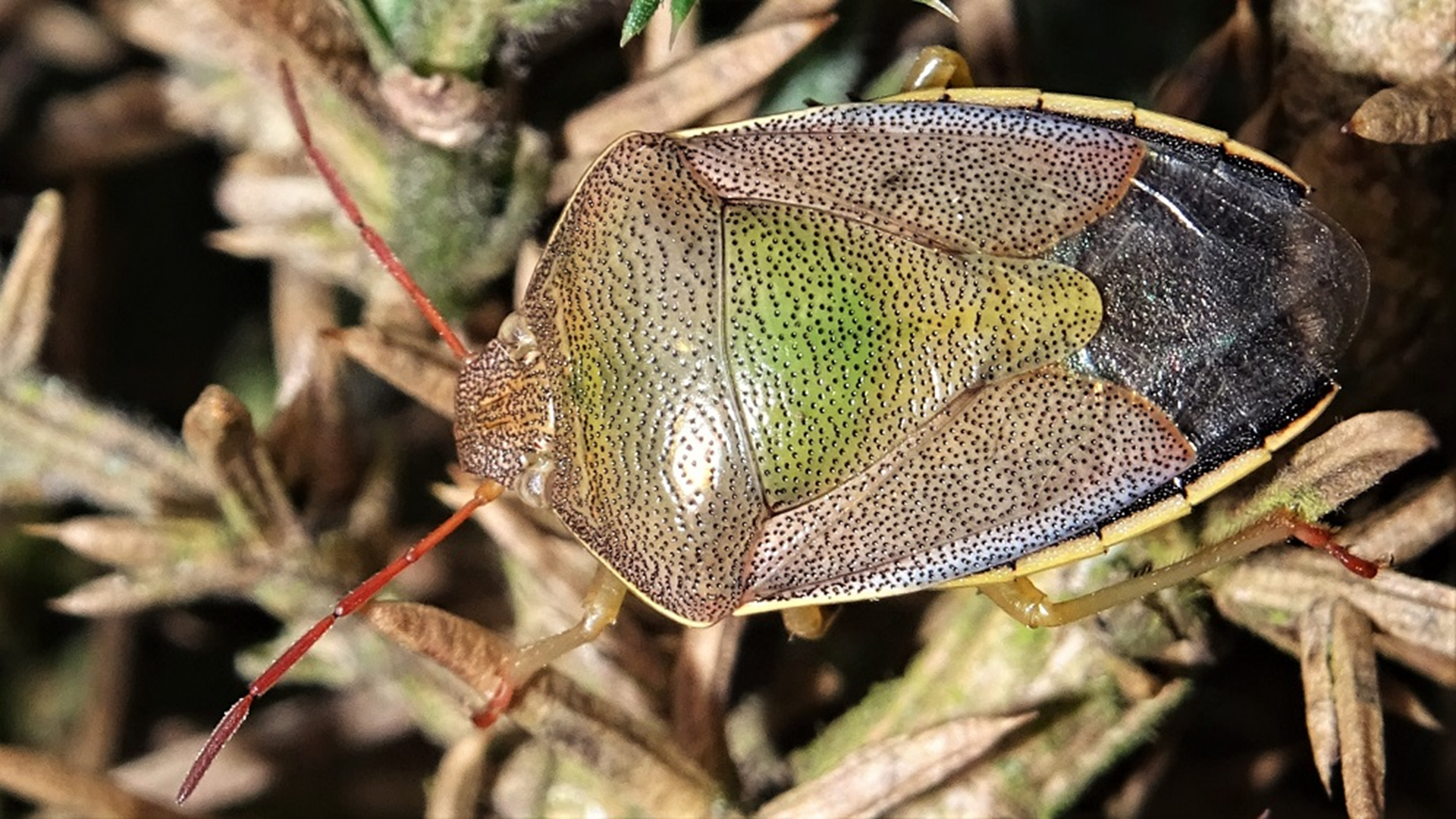
Gorse shieldbugs are usually seen on European gorse bushes. Those that emerge to mate early in the year are generally green in colour. They have an average size of around 13mm.
#
White-legged Snake Millipede
Tachypodoiulus niger
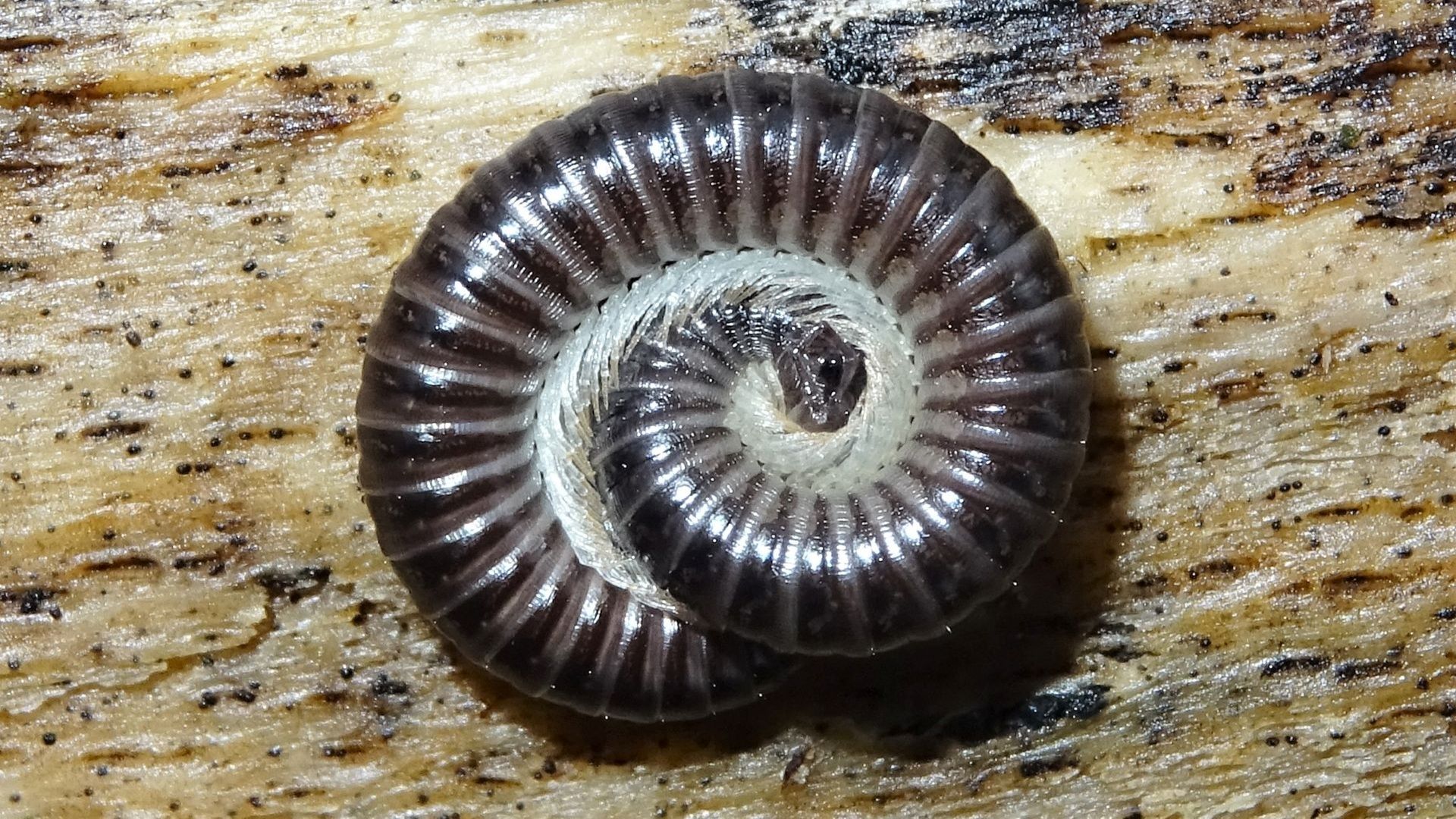
The White-legged Snake Millipede is a common species that can be observed throughout the year. It features a shiny black cylindrical body with approximately 100 pairs of white legs across 41 to 56 body segments. A projection extends backward from the rear segment. This millipede typically inhabits areas under bark, in moss, and within leaf litter. When it feeds, it recycles dead plant debris and algae into the soil. While it is generally active at night, it also shows activity during the afternoon in the summer. When threatened, it coils into a spiral with its head in the centre and its legs concealed. If given the opportunity, it can escape using sidewinding movements.
#
Brown Centipede
Lithobius melanops
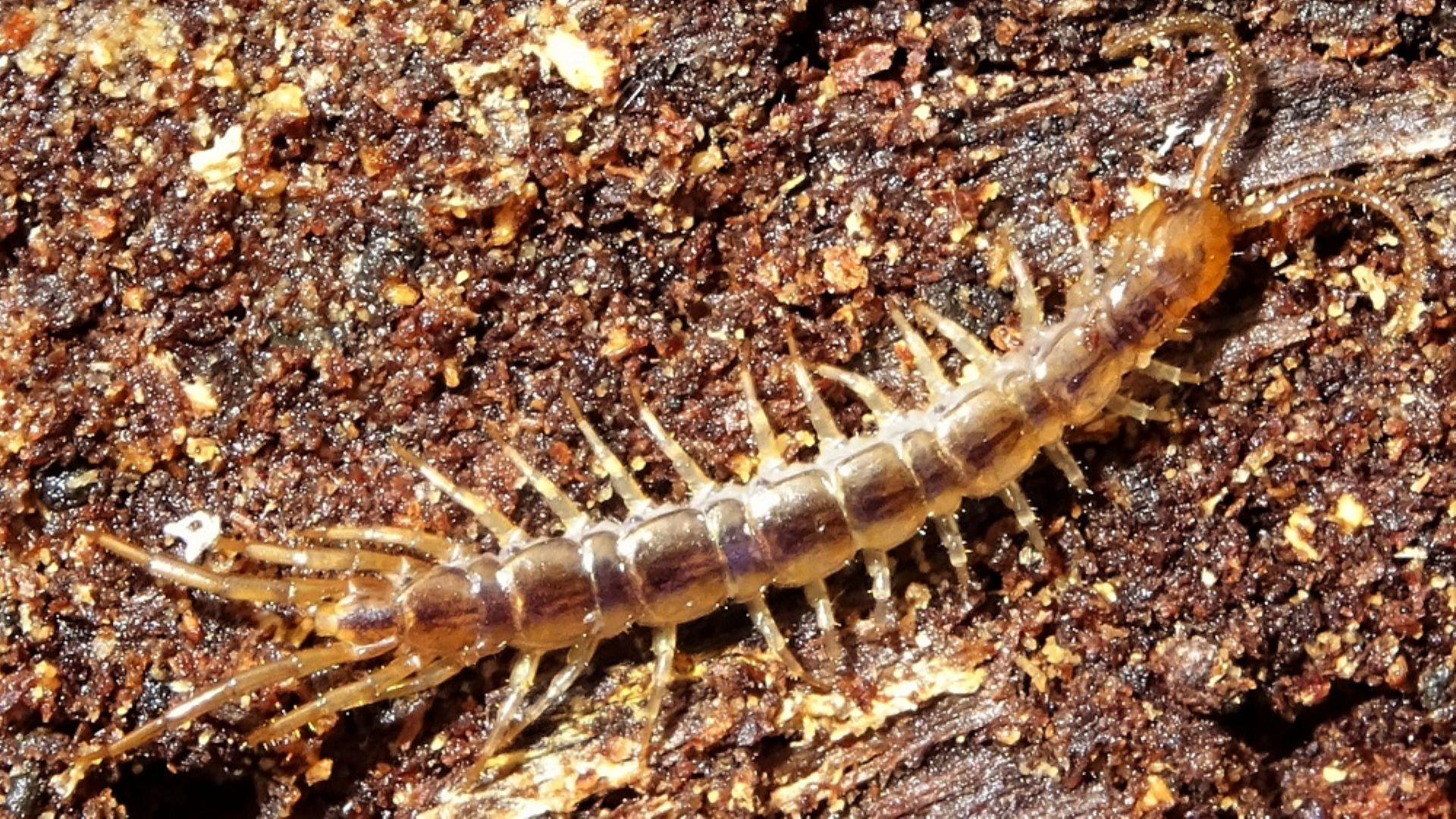
Centipedes from the family Lithobiidae are part of a broad group often referred to as brown centipedes, common centipedes, and stone centipedes. Most of these centipedes have similar characteristics, appearing brownish and measuring between 14-35 mm in length. Adults typically possess 18 body segments and 15 pairs of legs. This specimen discovered under loose oak bark, a typical micro-site for this species, exhibited a darker central stripe and lacked leg stripes. Approximately 15 mm in length.
#
Yellow Centipede
Geophilus flavus
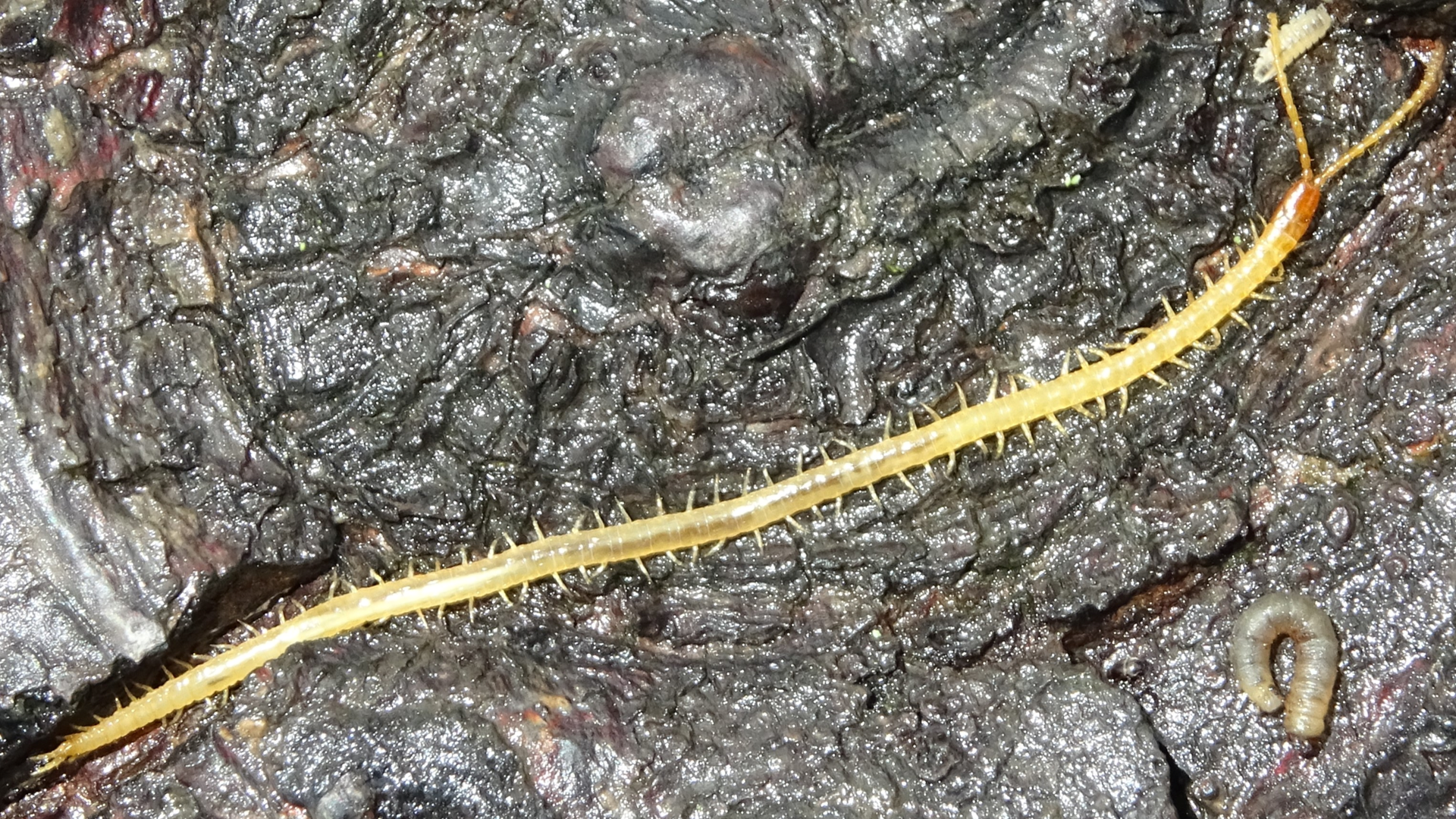
There are several species of yellow centipedes in Britain, which can be challenging to identify. A helpful method is to count their legs. This centipede observed under a log on grass had 53 pairs of legs and measured about 4 cm in length. It exhibited a reddish-brown head with relatively long antennae. After narrowing down the options to two species, Steve Gregory from the BMIG Centipede Recording Scheme suggested that due to the southeastern location and distance from the coast, Geophilus flavus was likely. This species typically has 45 to 57 pairs of legs and can be found throughout the year.
#
Blunt-tailed Snake Millipede
Cylindroiulus punctatus
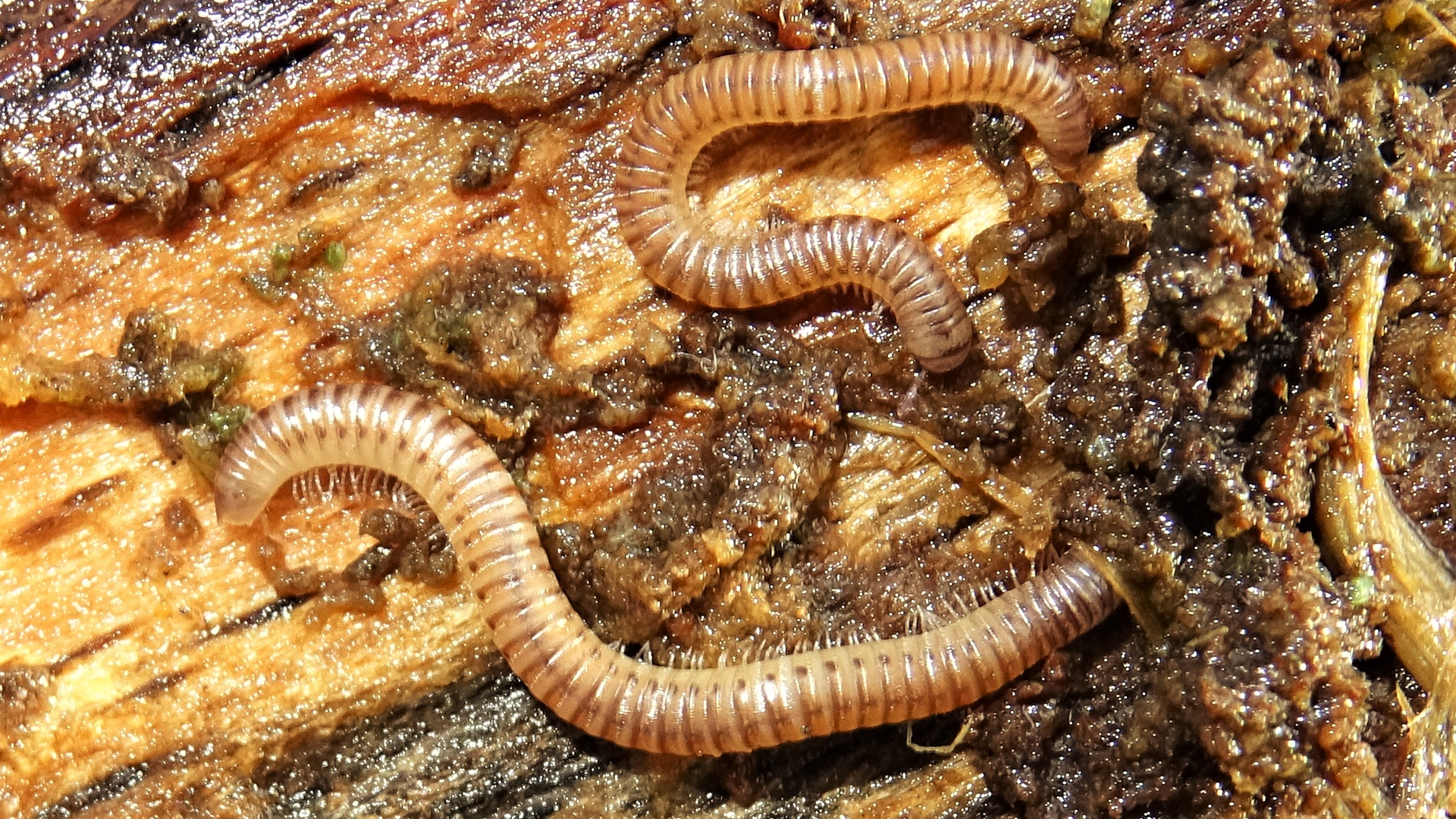
Blunt-tailed Snake Millipede has a pale brown base colour and features a club-shaped telson. They range in length from 13 to 28 mm and in width from 1.6 to 4 mm, consisting of 46 to 58 segments, with females generally being larger than males. The young hatch with a limited number of body segments and legs, gradually increasing these through subsequent moults.
#
Thrips
Thunderflies
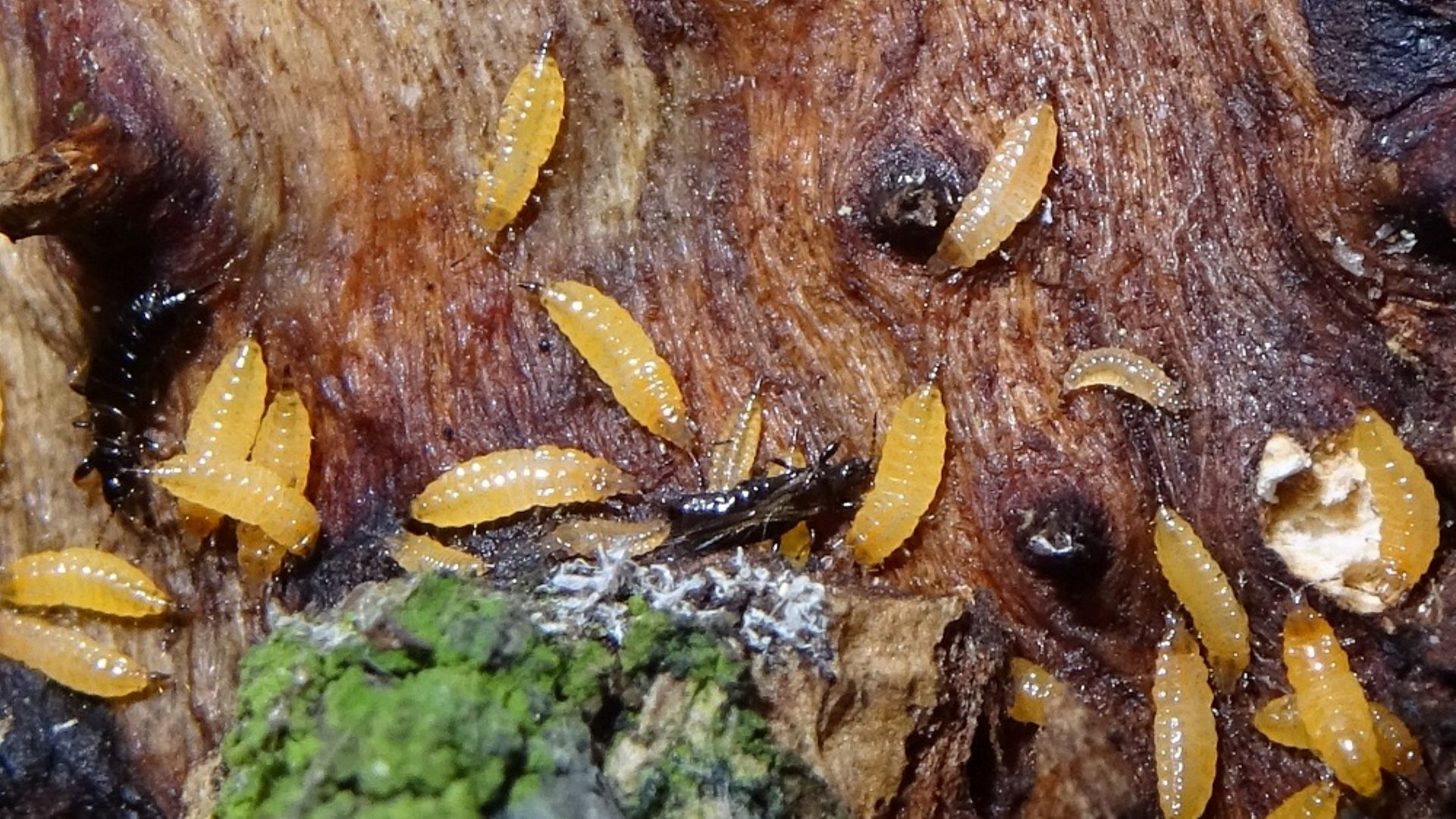
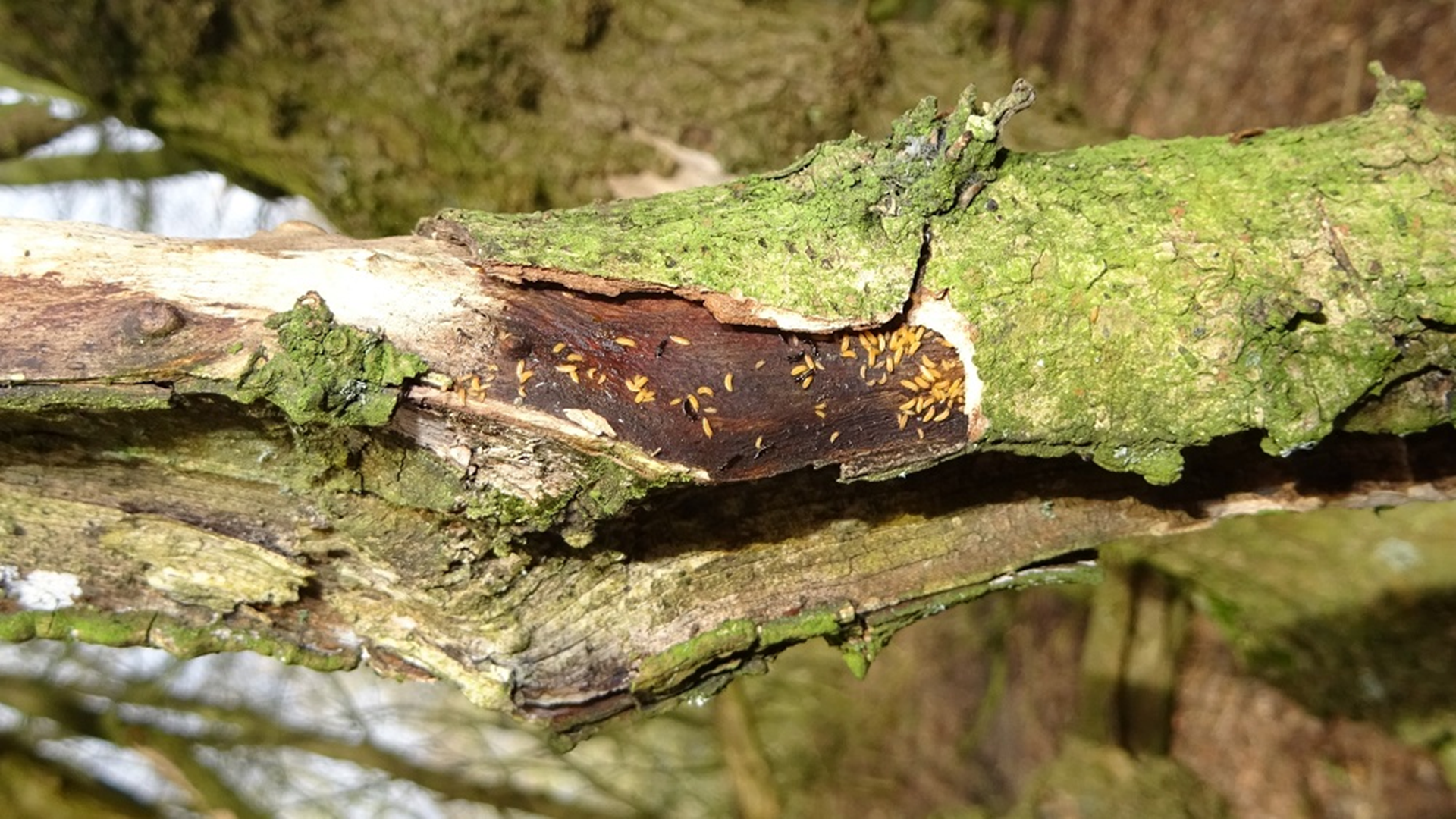
Storm Dennis dislodged a branch which warranted closer examination due to the presence of small larvae on its surface. The yellow larvae, characterised by their antennae and pointed tails, were identified as thrips. Commonly referred to as 'Thunderflies,' thrips tend to appear in large numbers during thundery weather. Adults have slender black bodies measuring 2-3mm in length and feature two pairs of narrow wings with fringed edges. Several species of thrips feed on sap by scraping soft plant tissue.
#
Dung Fly
Scathophaga
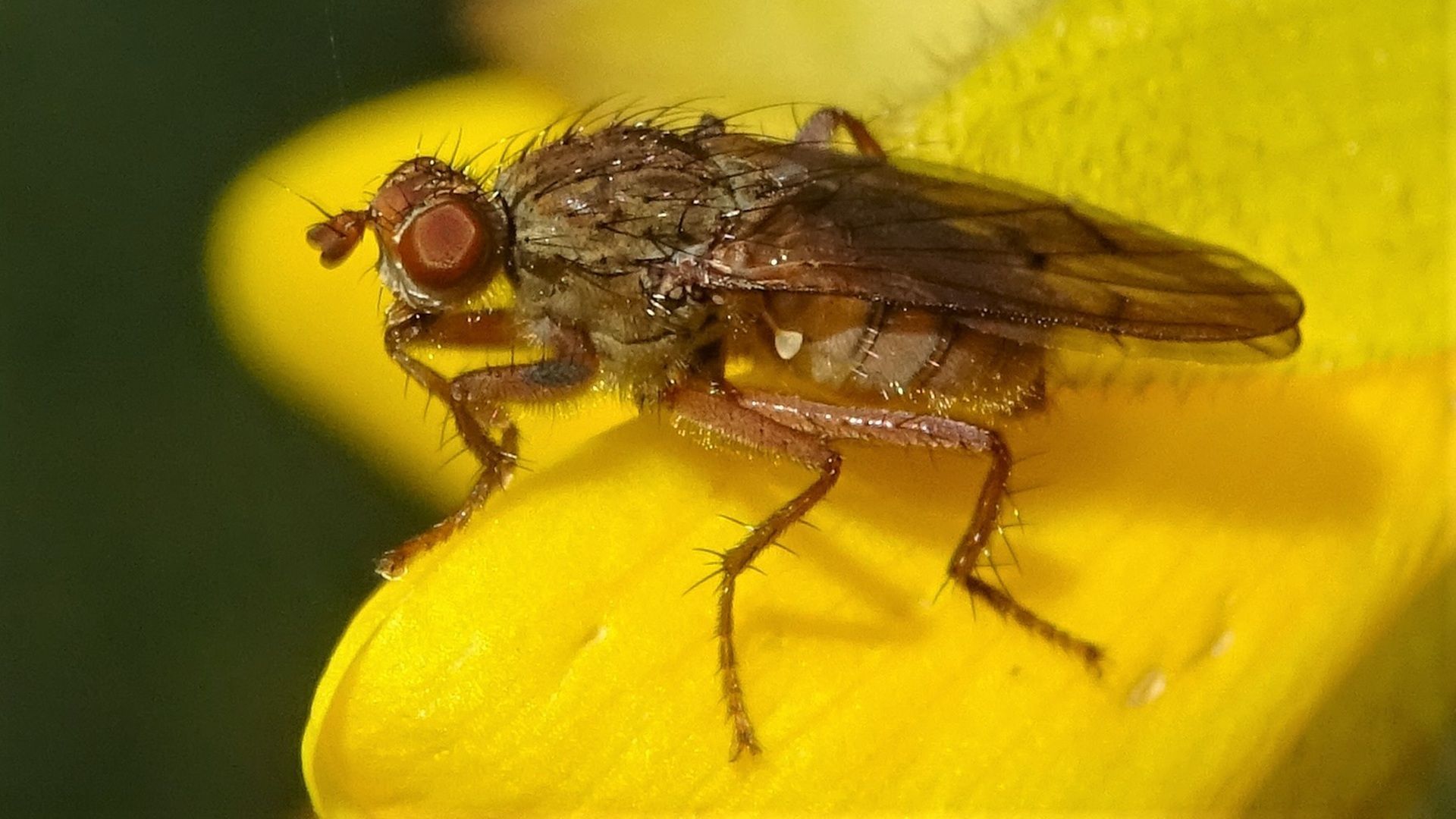
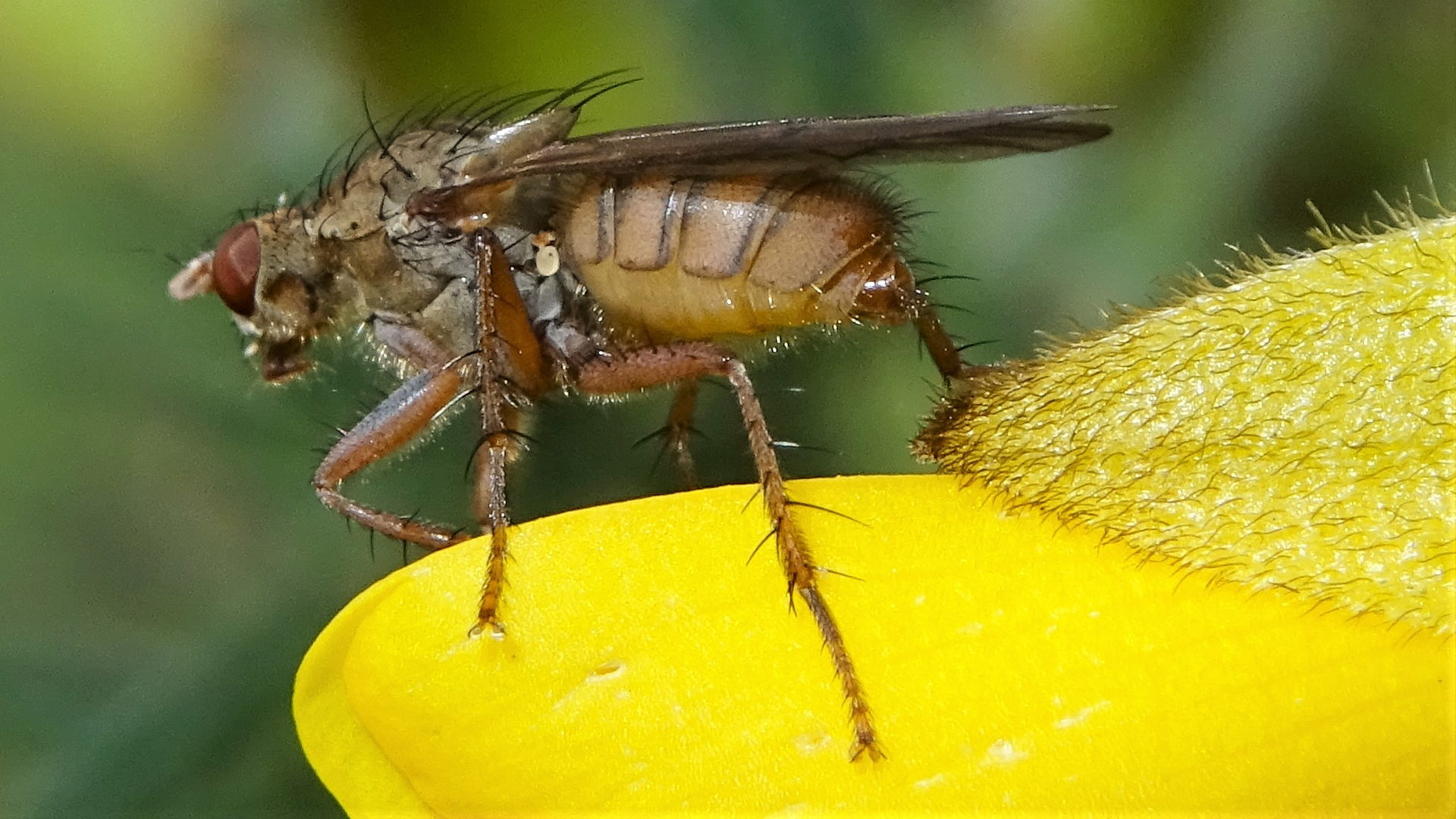
Members of the Scathophagidae are known as dung flies, however only several species of this family actually produce larvae that feed on dung. Males are typically golden-yellow and very furry, while females are duller and less furry. This is a female. Adults are primarily carnivorous, feeding on smaller flies and invertebrates, but also consume nectar. All true flies possess halteres and they were clearly visible on this specimen.
Halteres were once hindwings that have evolved over time to form balancing organs which vibrate during flight. Adults generally measure between 5 to 10 mm in length.
#
Fox
Vulpes vulpes
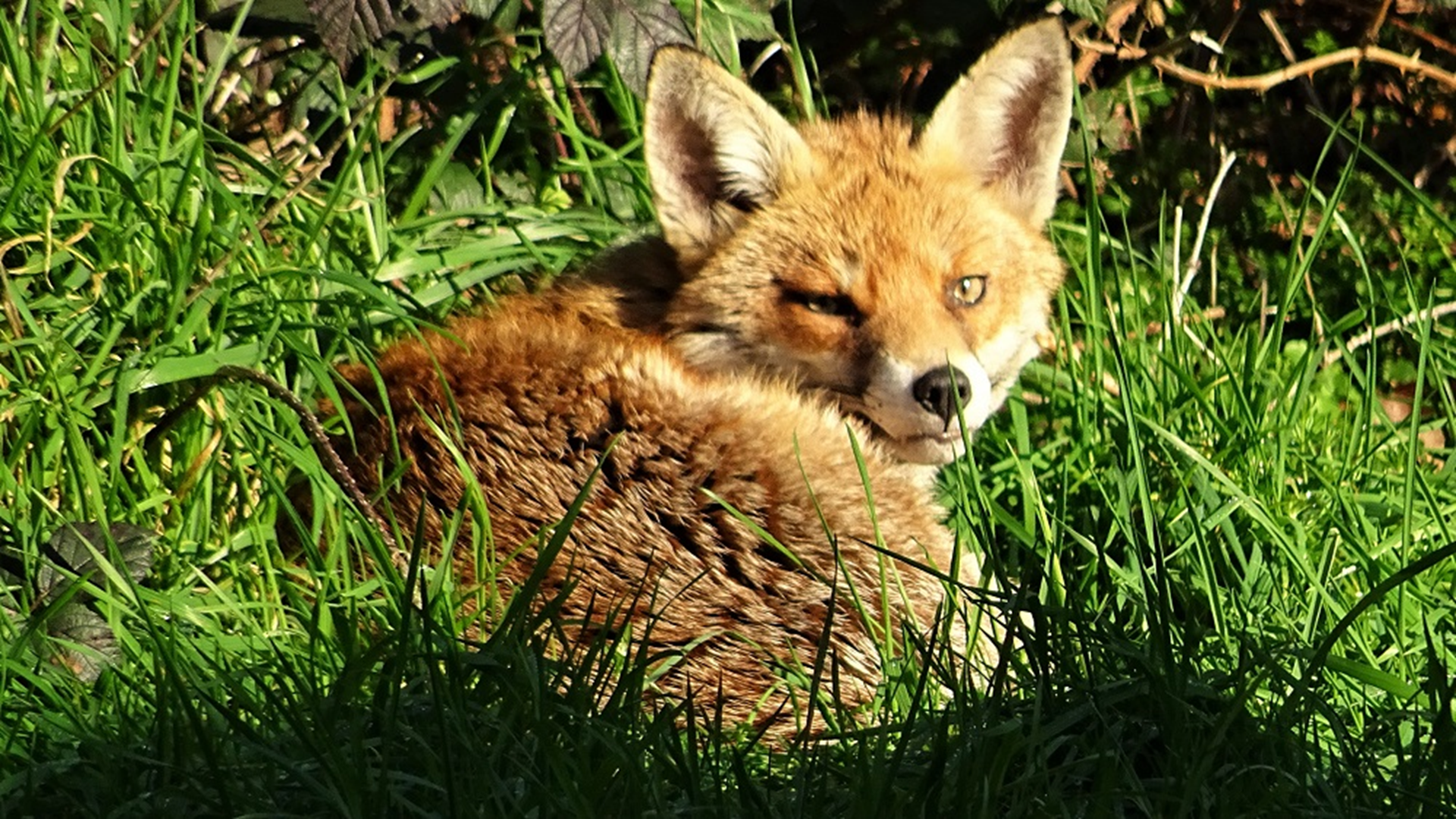
This picture shows a fox is resting in the sun. Males are referred to as dogs or reynards, while females are called vixens, and their young are known as cubs. A collection of foxes is called an earth or skulk.
#
Wood Mouse
Apodemus sylvaticus
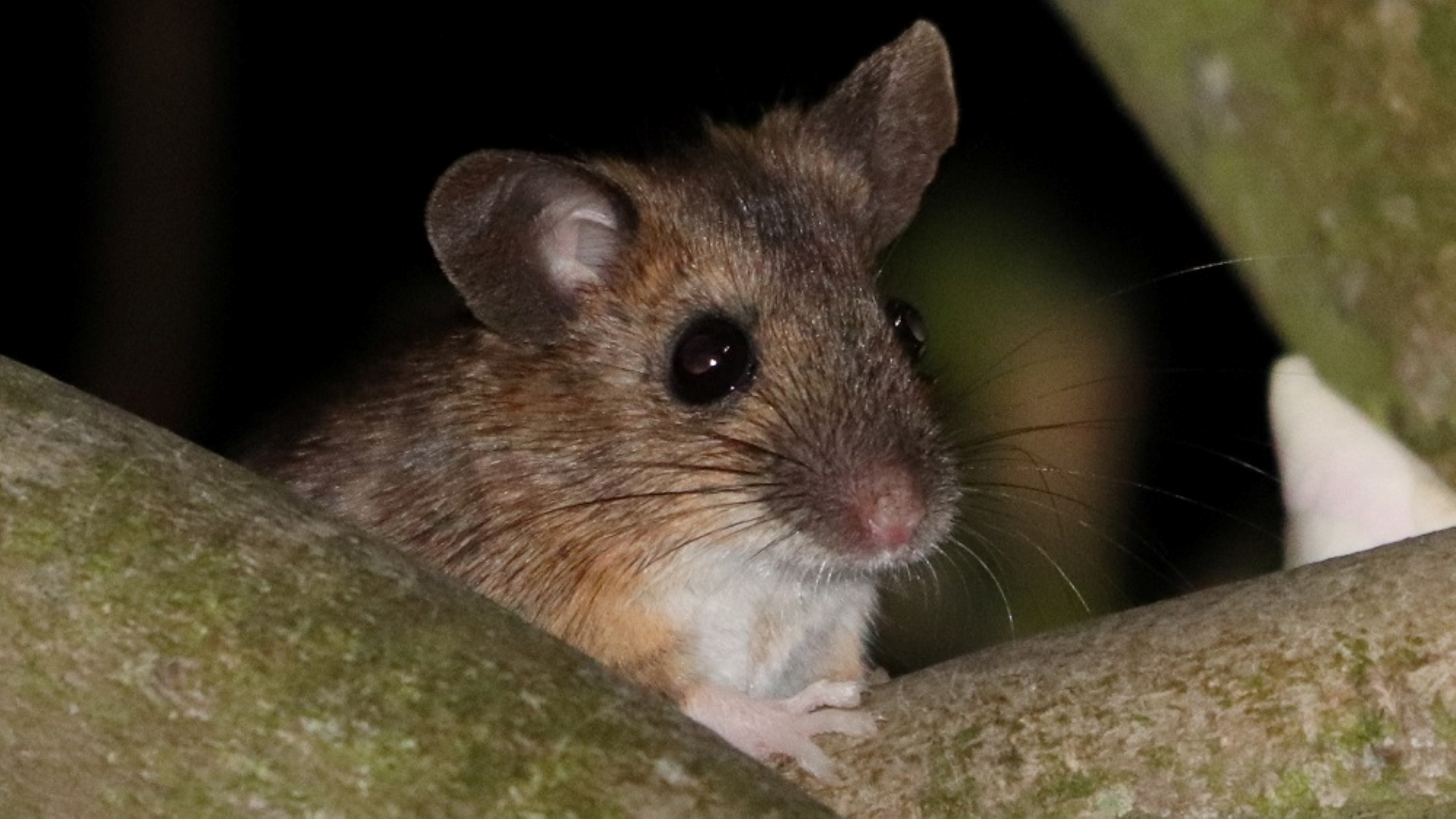
The Wood mouse is one of the most common rodents in Britain. It resembles the House mouse but has larger ears and eyes relative to its size. It can be observed throughout the year and is often found in gardens.
#
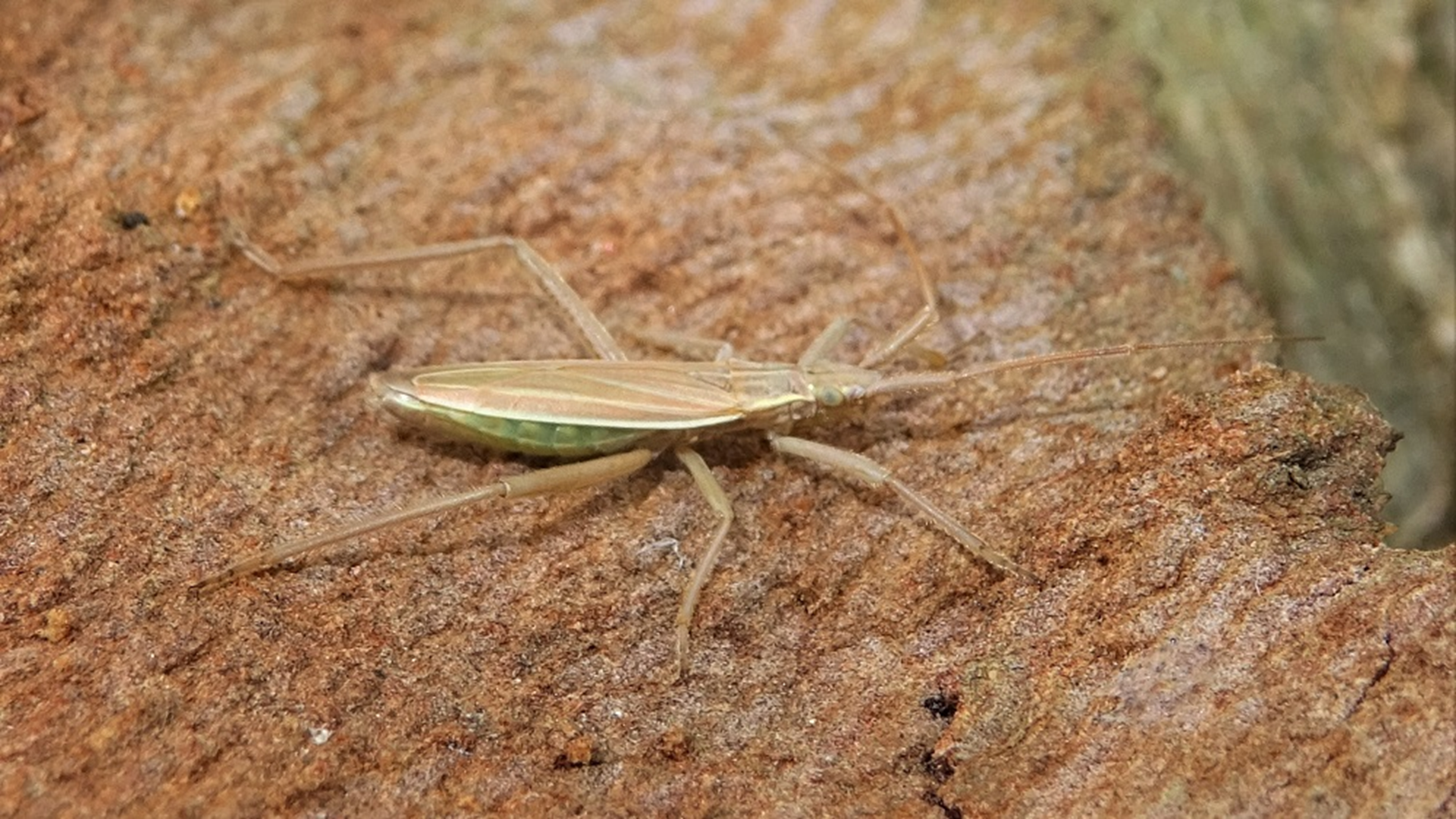
Mirid Bug
Notostira elongata
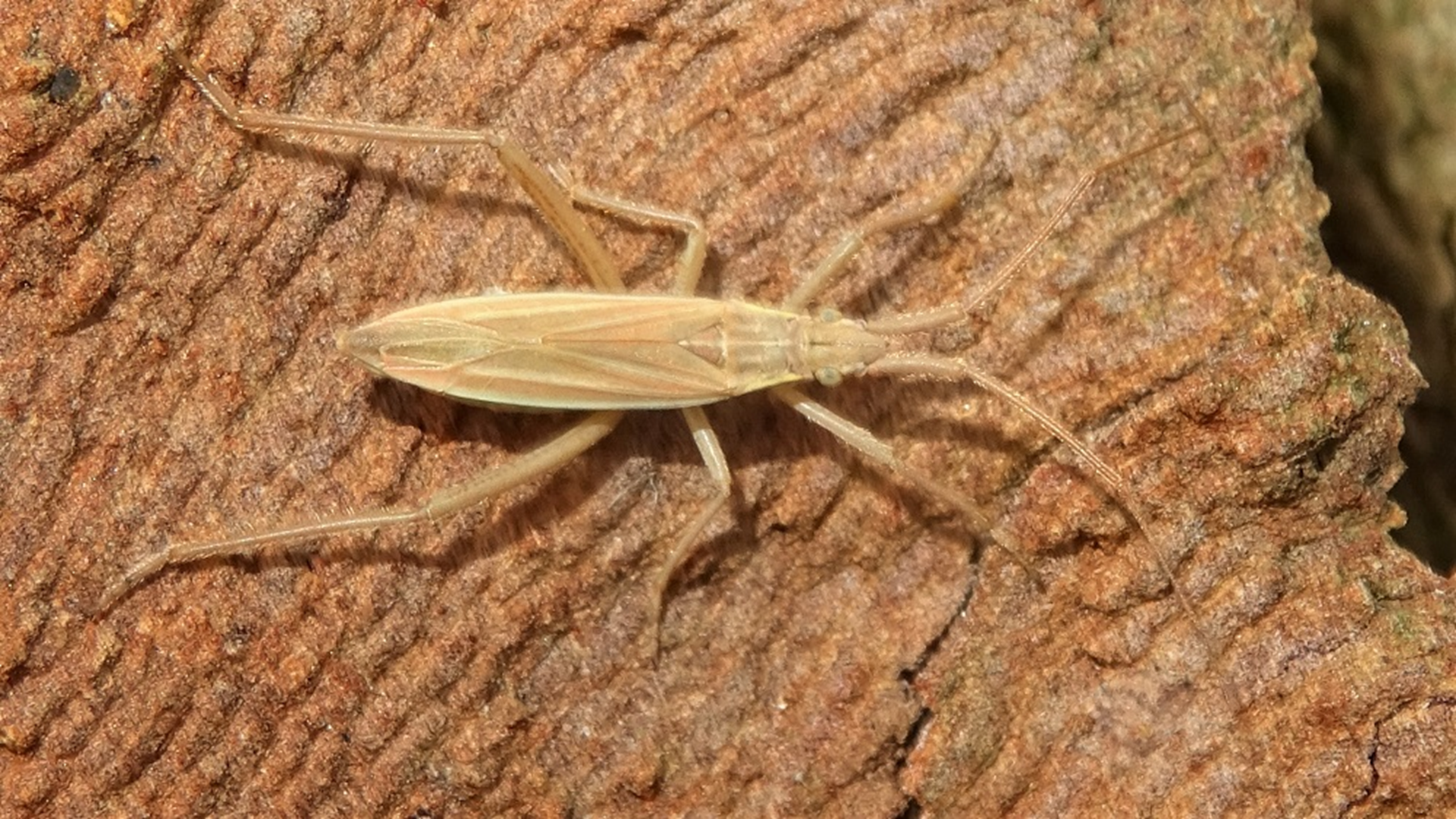
This is an elongated grass bug with a longitudinal furrow between the eyes. Females are pale, unlike males that are black on the upperside with yellowish-green edges. Adults are seen throughout the year and measure about 8mm. This one was found on a London plane tree.
#
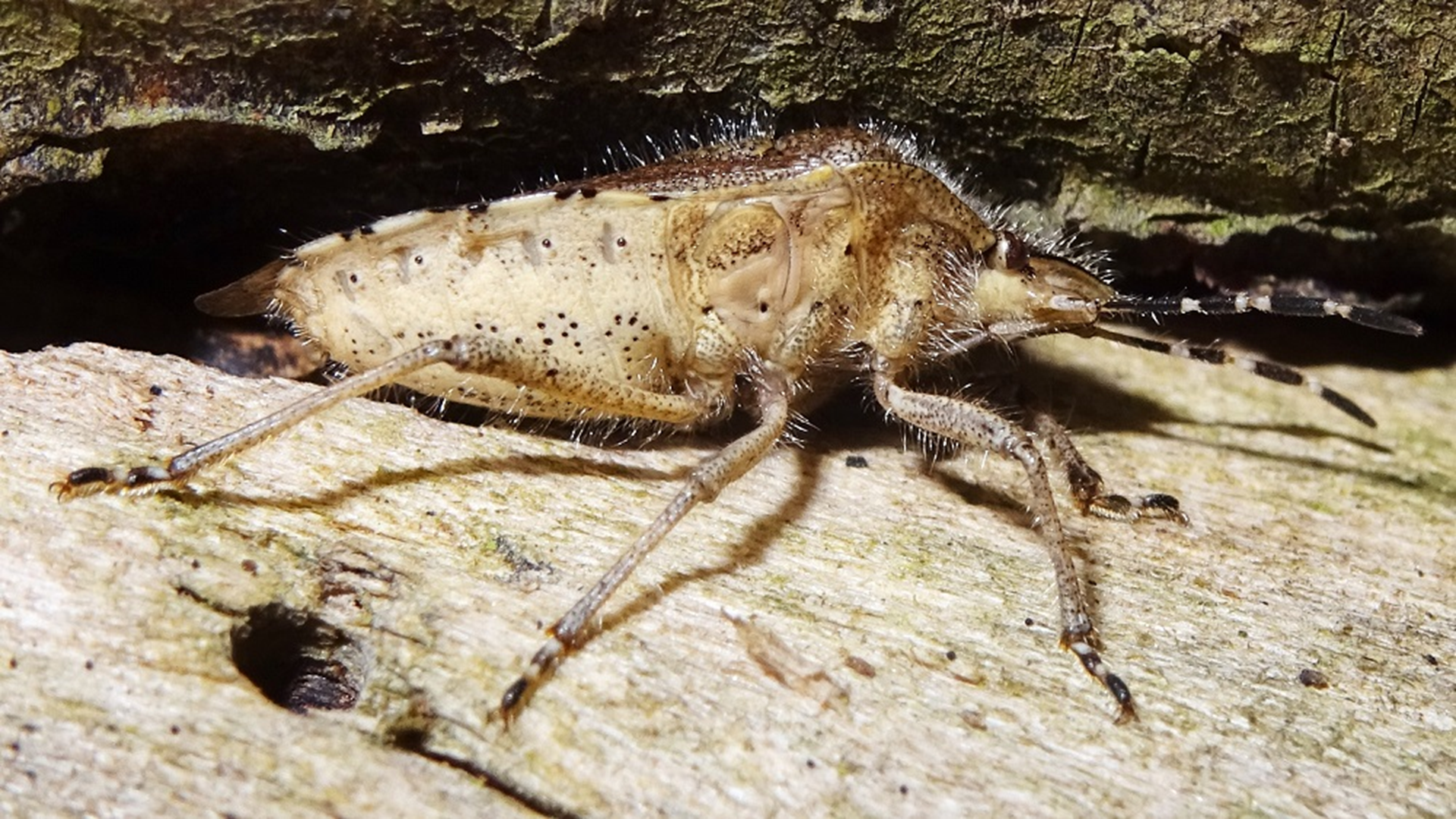
Hairy Shieldbug
Dolycoris baccarum
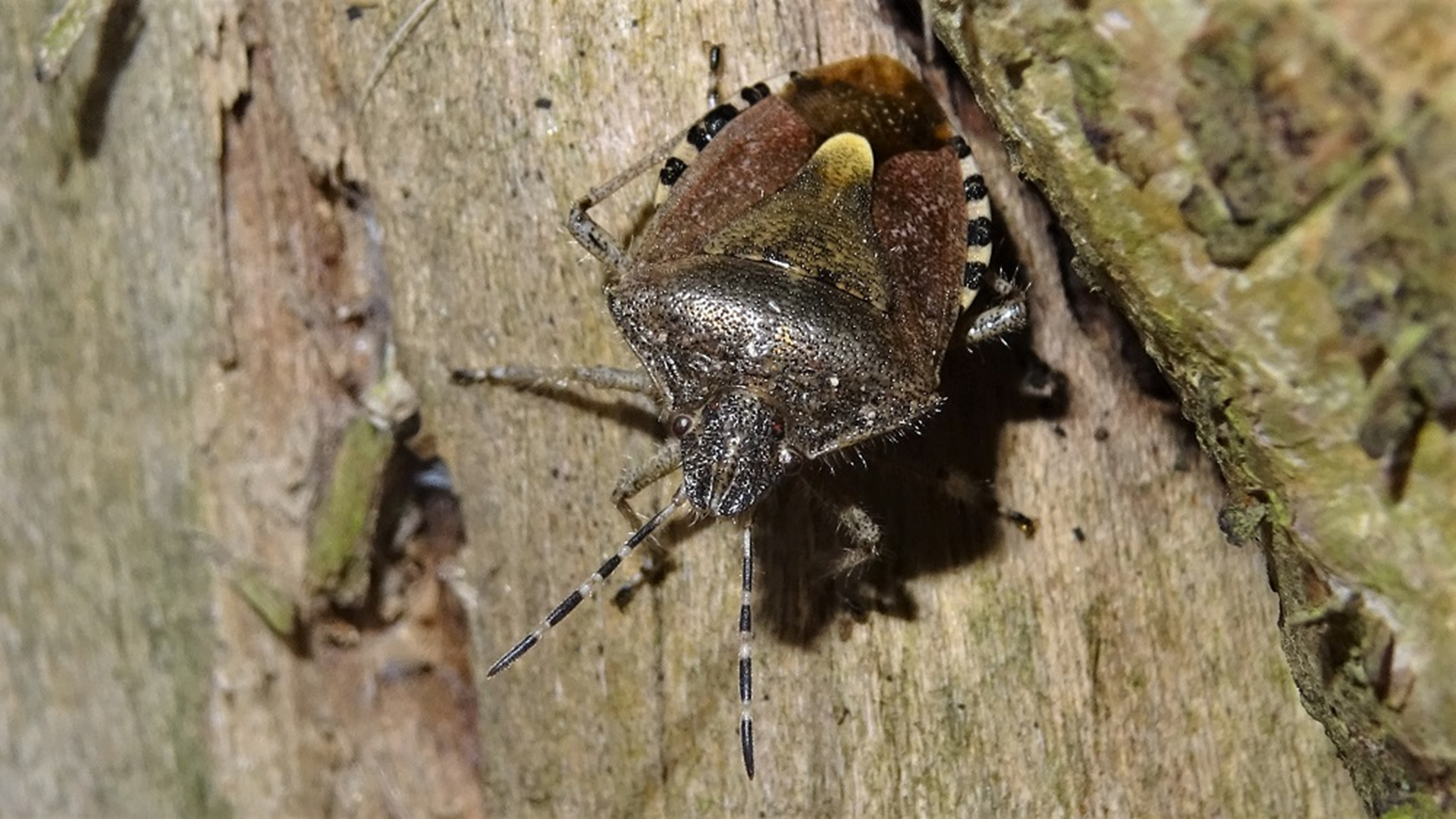
The Hairy Shieldbug is a distinctive bug covered with long hairs. It is purple-brown with banded black and white antennae and connexivum, the ground colour is duller during winter. Adults overwinter and normally emerge as spring approaches.
#
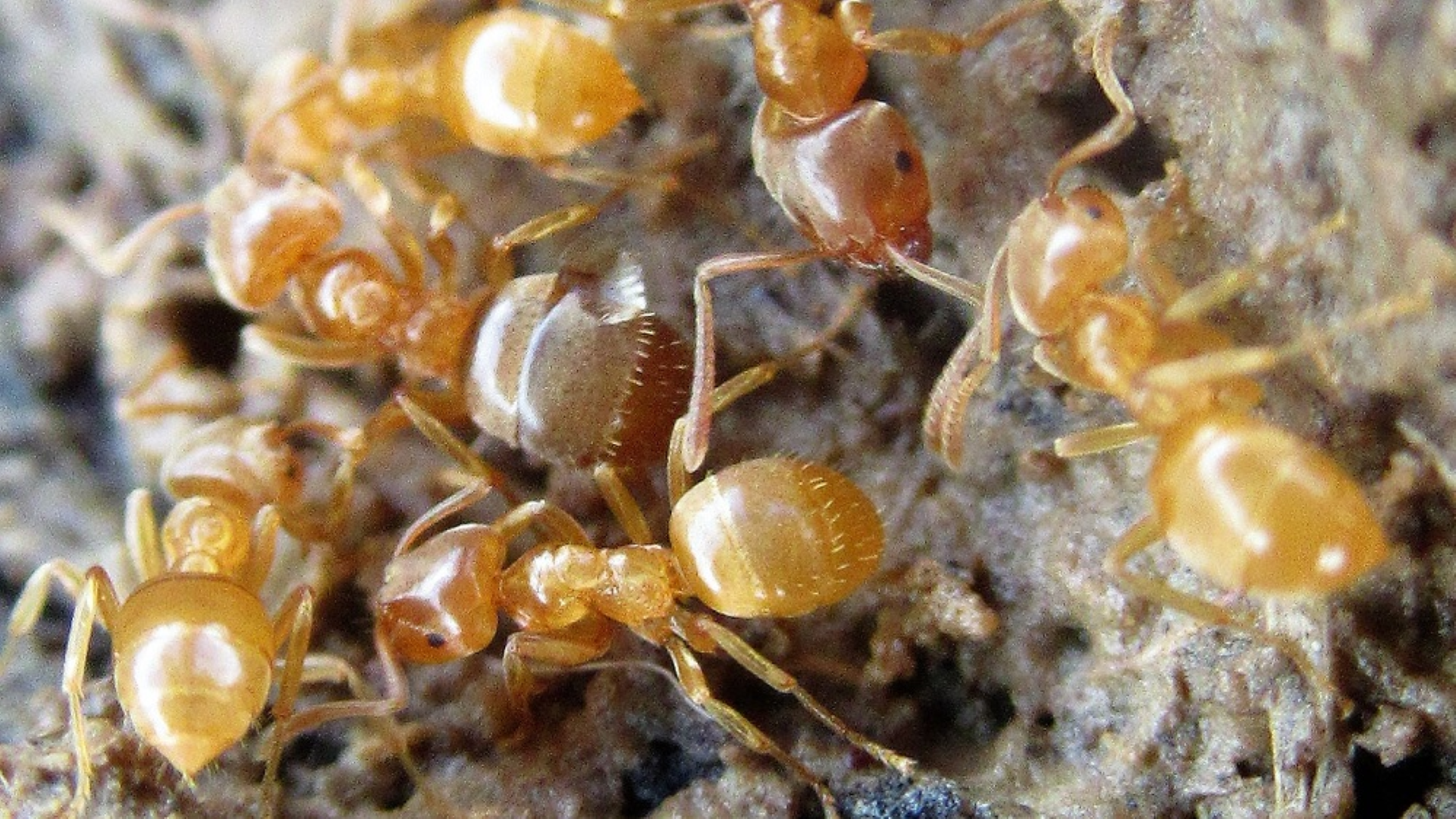
Yellow Meadow Ant
Lasius flavus
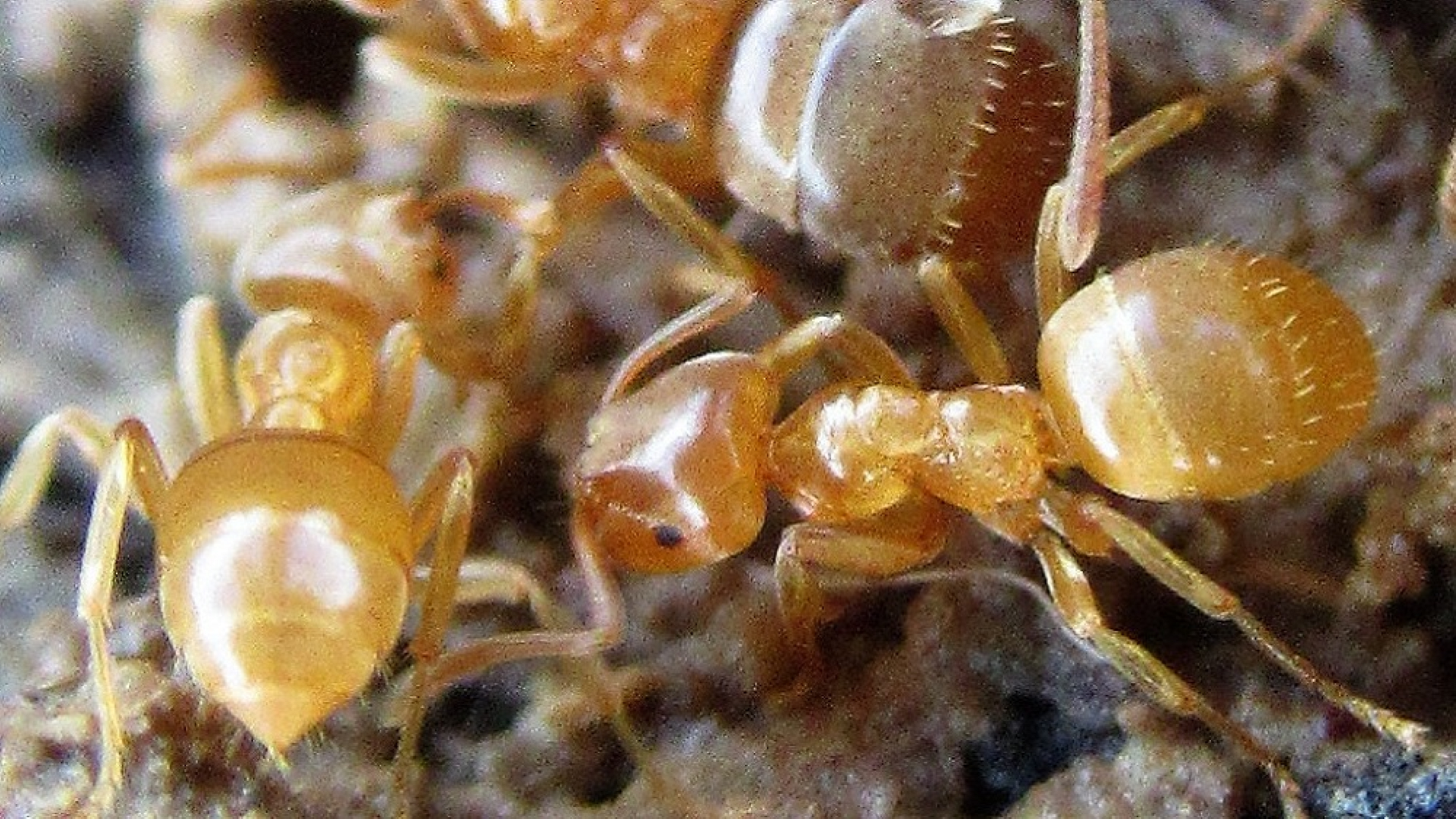
The Yellow Meadow Ant is the most prevalent yellow ant species in the UK and is known for constructing anthills in grasslands. They typically reside underground in grasslands and along forest edges, creating nests within the soil and beneath stones and logs. Their diet consists of small insects and honeydew generated by root-feeding aphids. Brian Ecott observed the following: "The ants had hairs at the tip of their abdomens, with a row of hairs across the middle section, as well as hairs on the outer segment of their antennae. Some exhibited abnormally shaped abdomens, which may indicate moulting."
#
Buff-tailed Bumblebee
Bombus terrestris
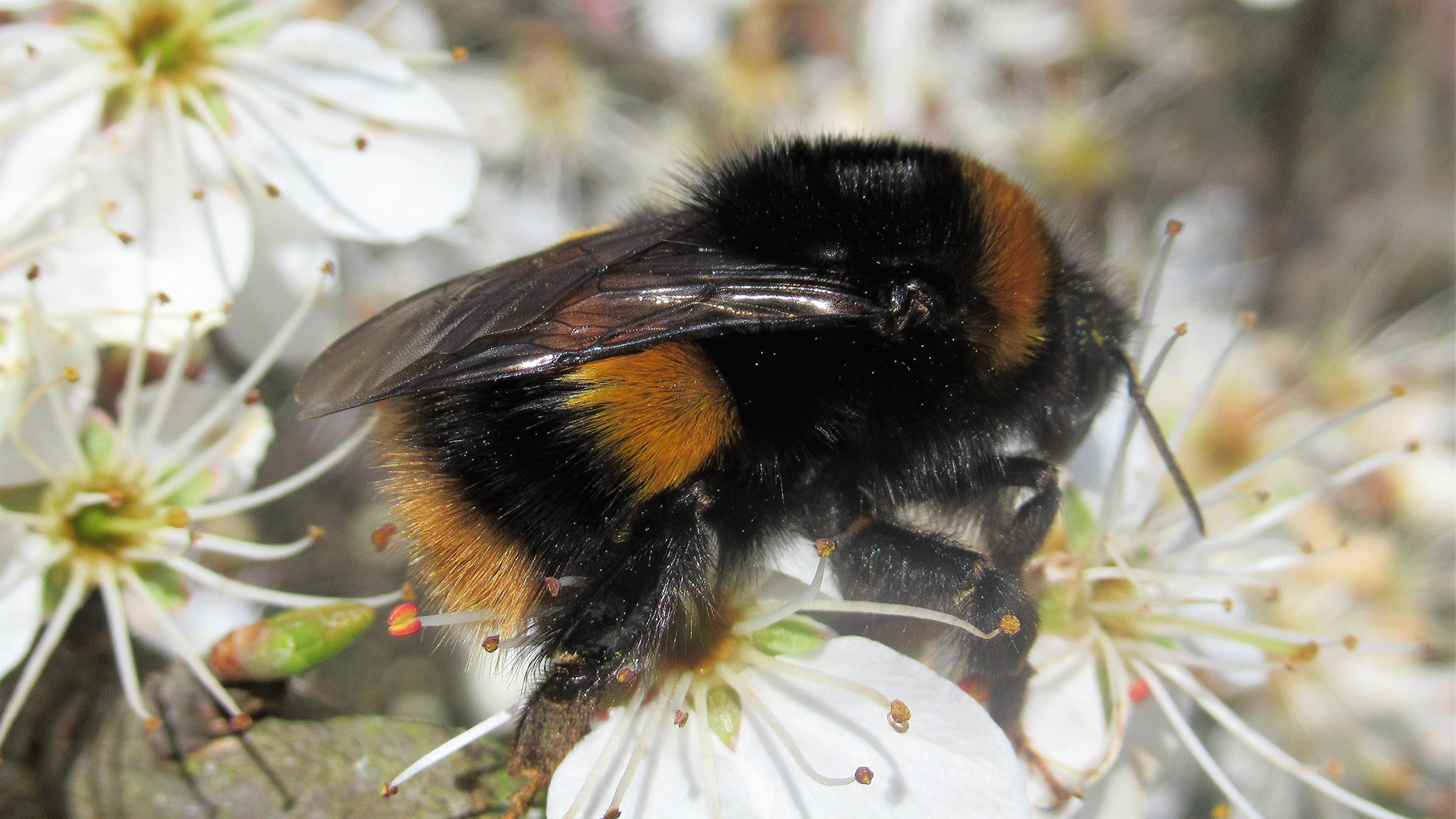
The Buff-tailed Bumblebee appears in February and March making it one of the first bees to emerge each year. This species builds nests underground often using vacated mouse nests.
#
Common Rough Woodlouse
Porcellio scaber
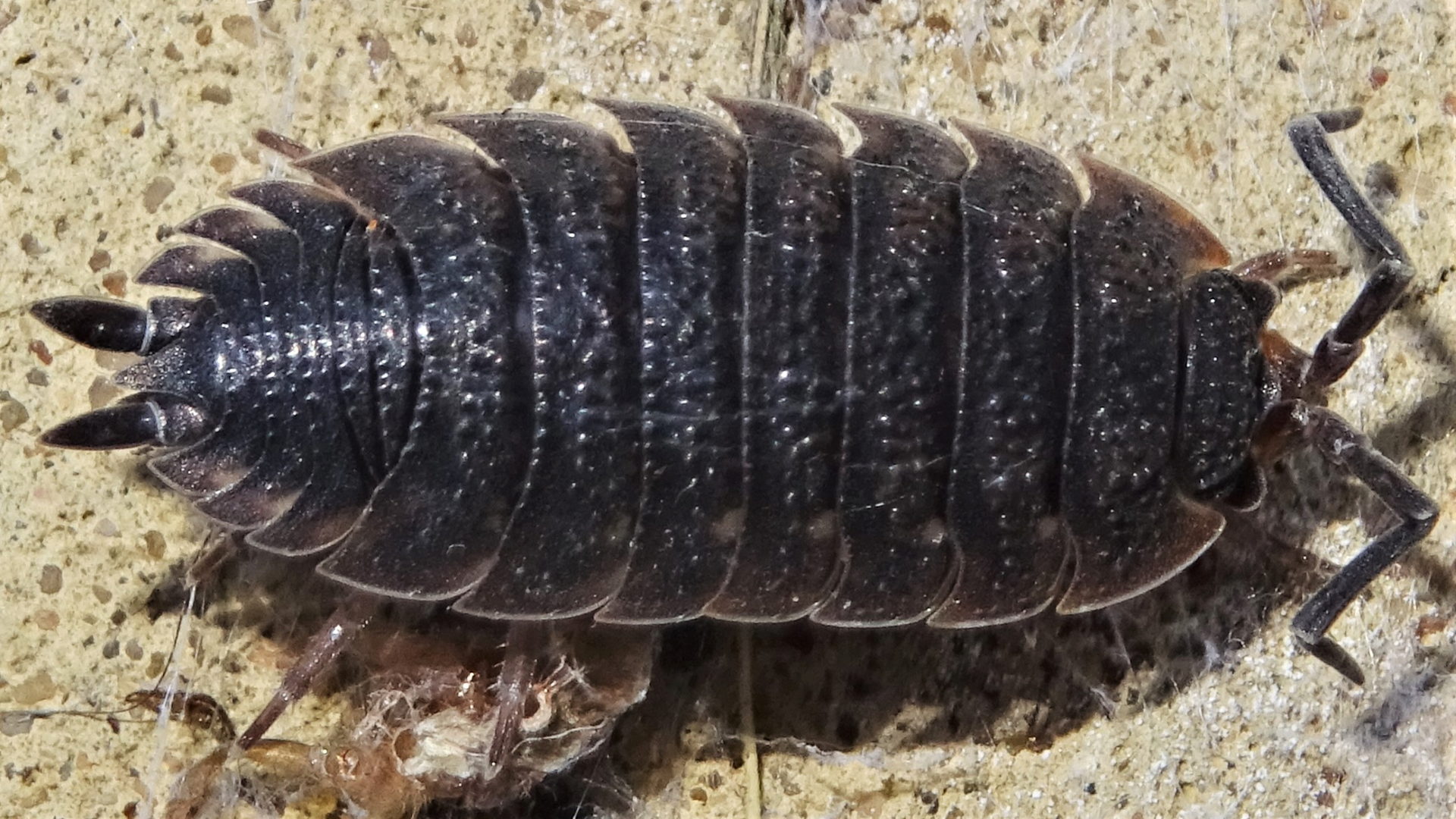
The Common Rough Woodlouse is one of the most commonly found woodlice species in the UK. If you lift a stone or log in the garden, you are likely to encounter one. They can reach a length of up to 17 mm.
#
Woodlouse Spider
Dysdera crocata
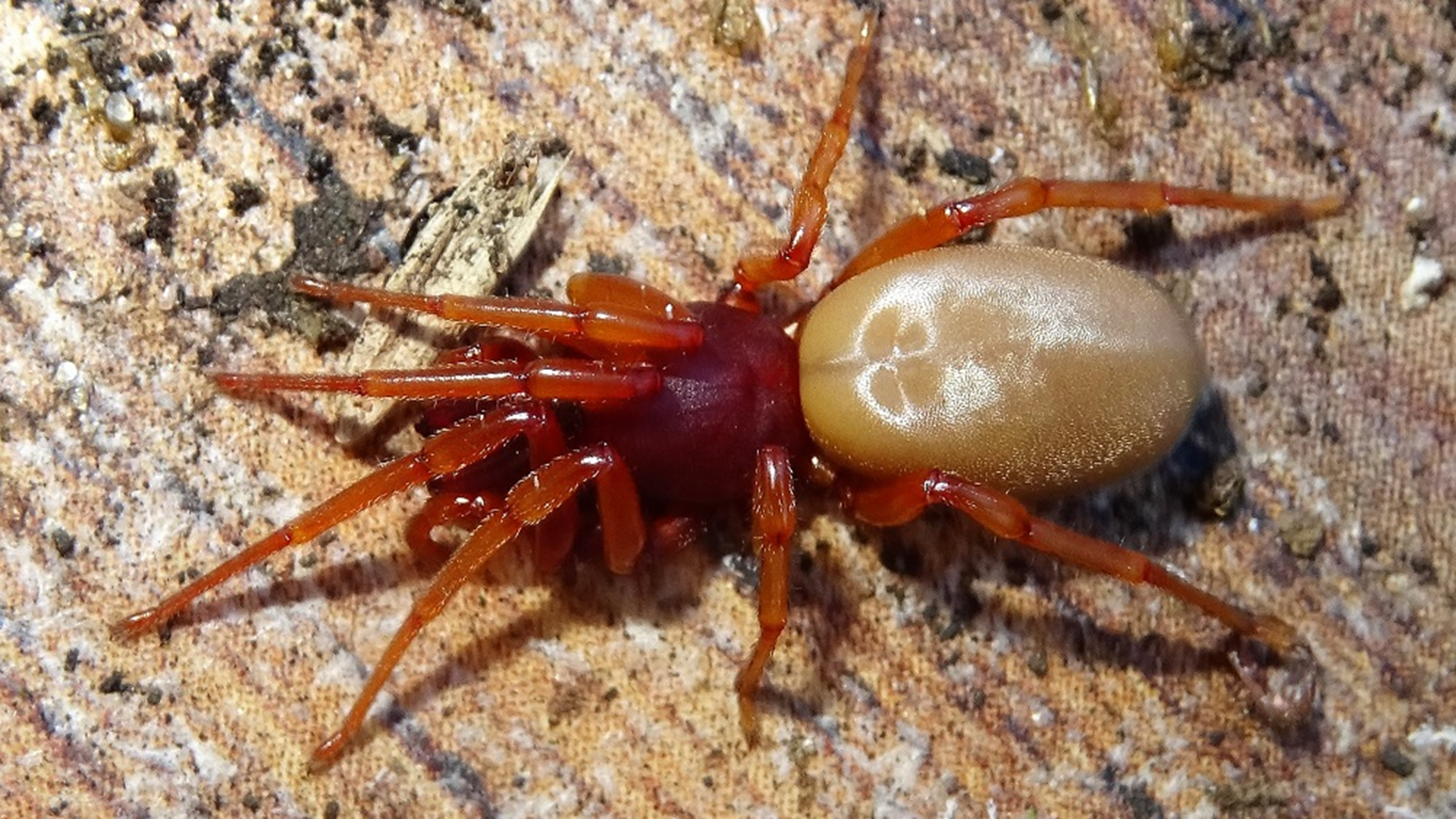
This spider, which belongs to the family Dysderidae, was discovered beneath a large stone alongside woodlice. It has distinctive colouration and primarily feeds on woodlice, leading it to usually inhabit similar damp habitats. The spider possesses a prominent pair of appendages in front of its mouth, referred to as chelicerae, which are capable of penetrating the armor of woodlice.
#
© hainaultforest.net. All rights reserved.
This website uses necessary cookies. It does not use targeting or advertising cookies.